

Message from the Dean

Prof Elsabé Loots Dean: Faculty of Economic and Management Sciences
The Faculty works towards this vision and mission by ensuring that the academic and research programmes conform to the highest standards, and that the national and international accreditation of its degrees by professional bodies is maintained.
I wish to highlight the following, to assure you that you have made the right decision by choosing the University of Pretoria to complete your studies.
The University employs highly qualified lecturers, skilled in innovative teaching methods.
The University offers state of the art facilities and lecture halls.
Students have the opportunity to interact in a highly diverse environment, which equips them well for the world of work.
91% of UP students are employed within six months of graduation.
We are ranked in position 277 worldwide by employers.
The
Faculty of Economic and Management Sciences aspires to be at the cutting edge of economic, financial and management education, as well as research and community engagement within the national, African and global context. Our mission is to advance relevant knowledge and develop employable, innovative and diverse graduates to co-create value for society.
Our key to success lies in our emphasis on the preparation of a new generation of business leaders, entrepreneurs, managers and government officials who can maintain an innovative outlook in their respective working environments.
The Faculty comprises eight departments: Accounting, Auditing, Taxation, Financial Management, Economics, Marketing Management (including Tourism Management), Human Resource Management and Business Management (including Communication Management), as well as the School for Public Management and Administration. Together, the departments and school present all the BCom and BAdmin degrees, as well as the postgraduate programmes at honours, master’s and doctoral level. The Faculty boasts active collaborations with several leading international institutions. Through these partnerships, the Faculty exposes students to the latest global trends in business education by enabling them to participate in various exchange
programmes. This is in addition to the numerous opportunities presented to students to put theory into practice, ensuring that our graduates are well rounded and equipped to enter the world of work.
To ensure that our students live a balanced life, the University and the Faculty offer a wide range of social, cultural and sporting activities in which you can participate. The Faculty houses eight student societies to assist you with your integration into Faculty and student life and the Faculty Student Advisors are available to assist you with problems related to academic performance.
We are looking forward to welcoming you as a Tukkie student! For more information about the academic offering of the Faculty, please visit: www.up.ac.za/bcom.
Tel +27 (0)12 420 2425
Email emsdean@up.ac.za

Undergraduate programmes
Important information on undergraduate programmes for 2020
The following persons will be considered for admission: candidates who are in possession of a certificate that is deemed by the University to be equivalent to the required Grade 12 certificate with university endorsement; candidates who are graduates from another tertiary institution or have been granted the status of a graduate of such an institution; and candidates who are a graduates of another faculty at the University of Pretoria.
Life Orientation is excluded when calculating the APS.
University of Pretoria website www.up.ac.za/ems
National Benchmark Test website www.nbt.ac.za Programmes
BCom (Accounting Sciences)
[3 years]
Closing dates:
SA – 30 September Non-SA – 31 August
Careers: First step towards qualifying as chartered accountants, external auditors, taxation professionals and advisors, and financial directors or managers
BCom (Investment Management)
[3 years]
Closing dates:
SA – 30 September Non-SA – 31 August
Careers: Fund managers, investment advisors, financial advisors, management consultants, stock brokers, investment analysts and investment bankers
BCom (Financial Sciences)
[3 years]
Closing dates:
SA – 30 September
Non-SA – 31 August
Careers with a focus on:
Financial accounting: Financial accountants, credit controllers, SAIPA (South African Institute of Professional Accountants) and ACCA (Association of Chartered Certified Accountants)
Financial management: Management accountants, management consultants, financial advisors, cost accountants and financial managers
Taxation: Tax advisors, tax auditors in public practice, tax policy designers, tax professionals, tax compliance managers, SARS auditors and tax risk managers
Internal auditing: Internal auditors, risk officers, forensic auditors, IT auditors, performance auditors, environmental auditors, compliance officers, government auditors and governance auditors
BCom (Econometrics)
[3 years]
Closing dates:
SA – 30 September
Non-SA – 31 August
Careers: Econometricians are employed by government, the central bank, private and commercial banks, leading stockbrokers and consultancies, both locally and internationally. Positions include analysts, consultants, researchers, traders or brokers, and academics. The work mostly entails statistical analysis (forecasting, structural and policy analysis) of economic and financial markets and interrelationships.
BCom (Economics)
[3 years]
Closing dates:
SA – 30 September
Non-SA – 31 August
Careers: Economists may specialise in banking, public finance, international trade and investment or economic development. Economists are employed by government, the central bank, private and commercial banks, stock brokerage firms and consultancies, both locally and internationally. Positions include analysts, consultants, researchers, traders and academics.
BCom (Law)
[3 years]
Closing dates:
SA – 30 September
Non-SA – 31 August
Careers: First step towards becoming attorneys, legal advisors, advocates, prosecutors, presiding officers (magistrate or judge) and law academics
BCom (Statistics)
[3 years]
Closing dates:
SA – 30 September
Non-SA – 31 August
Careers: Data scientists, statistical analysts in several industries, researchers, consultants and lecturers
PLEASE NOTE: Accountancy is not a subject requirement for any of the BCom and BAdmin programmes.
* Cambridge A level candidates who obtained at least a D in the required subjects, will be considered for admission. International Baccalaureate (IB) HL candidates who obtained at least a 4 in the required subjects, will be considered for admission.
Undergraduate programmes
BCom (Informatics) Focus area: Information Systems
[3 years]
Closing dates: SA – 30 September
Non-SA – 31 August
Careers: Managers in the information technology environment, computer software or hardware support, computer systems analyst, financial information systems analyst, business analyst, information facilitator, IT training officers, systems developer, business systems analyst BCom (Agribusiness Management)
[3 years]
Closing dates:
SA – 30 September
– 31 August
Careers: Agricultural economists and agribusiness managers at commercial banks, agribusinesses and other agricultural and food-orientated institutions, as commodity traders on future markets on derivatives, producer organisations, consultants, valuers, researchers, policy makers. As managers and project managers in the above.
BCom
[3 years]
Closing dates:
SA – 30 September
Non-SA – 31 August
Careers: The degree does not lead to a specific vocational outcome, but offers opportunities to determine your own career outcome, within limits. Students are able to compile their own curricula with a view to work opportunities in all sectors.
BCom (Business Management)
[3 years]
Closing dates:
SA – 30 September
Non-SA – 31 August
Careers: A wide variety of opportunities in administration, finance, marketing and human resource management, including teacher, lecturer, general manager, management consultant
BCom (Supply Chain Management)
[3 years]
Closing dates:
SA – 30 September
Non-SA – 31 August
Careers: The purpose of this programme is to equip learners of supply chain management with the ability to participate in functional management within an integrated supply chain. This includes the disciplines of supply management, production and operations management, warehousing, transport management and supply chain strategy.
BCom (Marketing Management) [3 years]
Closing dates:
SA – 30 September
Non-SA – 31 August
Careers: Product management, customer service management, customer relationship management, strategic marketing, sales management, brand management, advertising management, media planning, marketing research management and promotions management
BCom (Human Resource Management) [3 years]
Closing dates:
SA – 30 September
Non-SA – 31 August
Careers: Human resource practitioners, human resource consultants, mediators, labour relations specialists, human resource managers, personnel managers, training officers, liaison officers, psychometrists and industrial psychologists. In their capacity as human resource practitioners, graduates will be responsible for matters such as developing human resource strategies and policies, human resource planning, recruitment and selection of employees, training and development of staff, labour relations and personnel administration.
BCom – Extended programme [4 years]
Closing dates:
SA – 30 September
Non-SA – 31 August
Note: The first year of study is presented at the Mamelodi Campus. Admission is subject to selection. Careers: Career opportunities depend on the field of study chosen by students in their second year of study.
PLEASE NOTE: Accountancy is not a subject requirement for any of the BCom and BAdmin programmes.
* Cambridge A level candidates who obtained at least a D in the required subjects, will be considered for admission. International Baccalaureate (IB) HL candidates who obtained at least a 4 in the required subjects, will be considered for admission.
Undergraduate programmes
Programmes
BAdmin (Public Management and International Relations) [3 years]
Closing dates: SA – 30 September Non-SA – 31 August
Careers: Diplomats, political analysts, managers in the public sector, local government and the private sector, non-governmental organisations, international organisations and embassies. Graduates are often employed in human resource sections, planning divisions and in general administrative divisions.
PLEASE NOTE: Accountancy is not a subject requirement for any of the BCom and BAdmin programmes.
* Cambridge A level candidates who obtained at least a D in the required subjects, will be considered for admission. International Baccalaureate (IB) HL candidates who obtained at least a 4 in the required subjects, will be considered for admission.
To be able to register, National Senior Certificate (NSC)/IEB**/Cambridge candidates must comply with the minimum requirements for degree studies, as well as with the minimum requirements for the relevant programme.
The calculation of an Admission Point Score (APS) is based on a candidate’s achievement in any SIX recognised NSC 20-credit subjects, by using the NSC seven-point rating scale. Life Orientation is a 10-credit subject and may not be used for calculating the APS. Life Orientation is also not a faculty-specific subject requirement.
**Independent Examination Board (IEB)
National Senior Certificate (NSC) seven-point rating scale
National Benchmark Test (NBT)
The NBT is not compulsory for programmes, but all students are advised to write the test. The NBT is especially valuable if students meet the minimum requirements by a very narrow margin. For example, you need a level 6 (70%+) in Mathematics for access to BCom (Investment Management) and you currently have 70%. If you do not obtain 70% in the NSC examinations, your NBT results could ensure that you can still enrol for your degree of choice. Note that the Academic Literacy Test does not replace the NBT.
Contact information
Tel +27 (0)21 650 3523
Website www.nbt.ac.za
International Cooperation Division
Tel +27 (0)12 420 3111
Email ssc@up.ac.za
Website www.up.ac.za/international-cooperation-division
Undergraduate programmes

EMS staff and students collaborate on soft toy drive
EMS students are encouraged to get involved in various community engagement projects and make a difference. A recent collaborative effort between staff and students in the faculty was a drive to collect new and used soft toys. These will be distributed by our faculty house, Commercii, to children from a rural community where they are sure to put smiles on a lot of faces.
www.up.ac.za/ems
Take a step UP
A degree from the University of Pretoria’s (UP) Faculty of Economic and Management Sciences (EMS) could be the stepping stone to turning your passions into an exciting career. The wide variety of study options on offer are presented by highly qualified lecturers from across the globe who are leading experts in their fields.
from
= a
detailed admission requirements, please visit www.up.ac.za/bcom
the EMS page on Facebook: @upems
Financial Sciences
Are you…
Passionate about numbers
An innovative problem solver
A critical thinker and creative leader
What you can study
BCom (Accounting Sciences)
BCom (Financial Sciences)
The variety of roles fulfilled by professionals in financial sciences range from solving complex financial problems to managing investments. They are also expected to offer recommendations to help clients make wise financial decisions.
BCom (Investment Management)
Possible careers
Chartered accountant
Accountant
Financial manager
Forensic specialist
Management Sciences
Do you…
Work well with people
Enjoy thinking outside the box
Adapt well to change
What you can study
External/Internal auditor Tax professional Investment professional Business analyst
There are various management and support services functions that keep an organisation running smoothly on a daily basis. These essential tasks are performed by employees with specialised knowledge that ranges from hiring suitable staff to marketing the company’s goods and services.
BCom (Business Management)
BCom (Human Resource Management)
BCom (Marketing Management)
BCom (Supply Chain Management)
Possible careers
Corporate entrepreneur
Human resource consultant
Industrial psychologist
Labour relations consultant
Please note: Mathematics
Students can pursue postgraduate studies in Tourism Management and in Communication Management
Logistics manager
Management consultant
Marketing manager
Public relations manager
Researcher
Economic Sciences
Are you… Analytical Curious
Mathematically inclined
Possible careers
A career in economics entails uncovering and forecasting economic trends as well as the effects of policy changes on our society and the global economy. This is supported by econometrics, which is the collection, measurement and analysis of economic and social phenomena.
What you can study
BCom (Econometrics)
BCom (Economics)
QS World Rankings by Subject 2017 #1 in South Africa for Finance and Accounting = Top 4% in the world
Top 6% in the world for Economics and Econometrics
Public Management and Administration
Are you…
Enthusiastic about policy issues and current affairs
A leader who values ethics
Good at problemsolving
What you can study
Public servants who apply public administration and management principles make a significant contribution to the quest for excellence in service delivery. They also promote diplomacy by representing and protecting the interests of their country.
Possible careers
Diplomat Manager in a non-governmental organisation
Policy analyst
Public manager
Researcher
Municipal manager
BAdmin (Public Management and International Relations)
Additional programme and degrees offered in cooperation with other faculties:
BCom (Own choice): The degree does not lead to a specific vocational outcome but offers opportunities to compile your own curricula and determine your own career outcome. BCom (Agribusiness Management), BCom (Informatics) Focus area: Information Systems, BCom (Law) and BCom (Statistics).
Undergraduate programmes
BCom (Accounting Sciences)
Note: All first year students take the compulsory fundamental modules in academic information management and academic literacy for EMS, and all second year students take professional ethics.
Core modules (compulsory)
1st year 2nd year 3rd year
Financial accounting*
Financial management*
Commercial law
Informatics
Economics
Statistics
Business management
Financial accounting* Financial management*
Auditing* Taxation* Commercial law Informatics Communication management
Financial accounting*
Financial management*
Auditing*
Taxation*
* The specialisation modules of the first to third study years for BCom (Accounting Sciences) may only be taken by students who are selected for this degree.
BCom (Accounting Sciences) is an accredited programme that forms part of the requirements for training both as a chartered accountant (CA(SA)) and an auditor (RAA). The CA(SA) and RAA designations are the highest professional qualifications in accounting in South Africa and enjoy international recognition.

BCom (Investment Management)
Note: All first year students take the compulsory fundamental modules in academic information management and academic literacy for EMS, and all second year students take introduction to moral and political philosophy.
Core modules (compulsory) 1st
Graduates of this degree tend to pursue the following professional qualifications: Chartered Financial Analyst (CFA®)*, Certified Financial Planner (CFP®) and Chartered Alternative Investment Analyst (CAIA).
*CFA Institute and CFA are registered trademarks of CFA Institute.
Accounting students excel in the SAICA ITC
Students from UP have again taken the top position in South Africa with a stunning 99.5% cumulative pass rate for the January and June 2018 Initial Tests of Competence (ITC), the first of two national professional exams for prospective Chartered Accountants (CAs). This is the second year in a row for UP students to come out tops. In 2017 we achieved a cumulative pass rate of 98.5%. Two candidates from UP featured in the list of the Top 10 in this exam.
Financial Sciences students excel in the CFO Competition
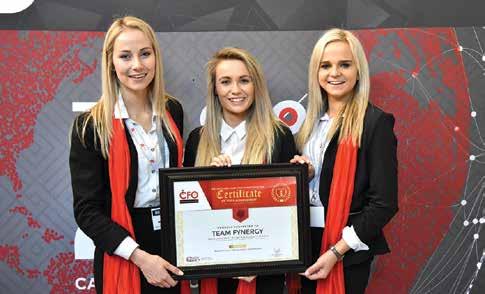
Final-year BCom (Financial Sciences) students Megan Henshaw, Marissa Smith and Zaneta Boshoff—collectively known as Team Fynergy— won second place in the international CFO Competition. There were 450 teams from 75 universities that participated in the 2018 leg of the global multi-stage business strategy and leadership-focused case study competition.
Undergraduate programmes
BCom (Financial Sciences)
Note: All first year students take the compulsory fundamental modules in academic information management and academic literacy for EMS, and all second year students take introduction to moral and political philosophy.
Core modules (compulsory)
1st year 2nd year 3rd year
Financial accounting
Informatics
Statistics
Economics
Business management
Financial accounting
Internal auditing
Taxation
Financial management
Informatics
Business law
*Students choose any three majors at third year level.
Financial accounting*
Internal auditing*
Taxation*
Financial management*
Graduates with a BCom (Financial Sciences) degree tend to pursue the following professional qualifications: CIA (Certified Internal Auditor), CIMA (Chartered Institute of Management Accountants), SAIPA (South African Institute of Professional Accountants), ACCA (Association of Chartered Certified Accountants) and SAIT (South African Institute for Tax Professionals).
The University of Pretoria is one of only eight universities in the world accredited as Centre of Excellence in Internal Auditing— the highest level of accreditation awarded by the International Institute of Internal Auditors.
BCom (Econometrics)
Note: All first year students take the compulsory fundamental modules in academic information management and academic literacy for EMS.
Core modules (compulsory)
Economics Mathematical statistics
Mathematics
Financial accounting
Business management Economics Mathematical statistics Mathematics Informatics Communication management
Economics
Mathematical statistics
BCom (Economics)
Note: All first year students take the compulsory fundamental modules in academic information management and academic literacy for EMS, and all second year students take introduction to moral and political philosophy.
Core modules (compulsory)
Economics
Statistics Business management Financial accounting
Mathematics
BCom (Law)
Economics Statistics Business law
Communication management
Statistics
Note: All first year students take the compulsory fundamental modules in academic information management, jurisprudence and English or Afrikaans.
Core modules (compulsory)
Financial accounting
Economics
Business management
Statistics
Roman law
Jurisprudence
Law of persons
Elective modules
Consumer protection
Law of contract
Law of succession
Specific contracts
Insolvency law
Law of things
Law of delict
Entrepreneurial law
Payment methods
(Refer to the online Yearbook: www.up.ac.za/yearbooks/home) 1st year
Business management
Business management
Economics
Financial management
Financial accounting
Taxation
Informatics
Statistics
Business management
Economics
Financial management
Financial accounting
Taxation
Statistics
Economics students visit the Big Apple
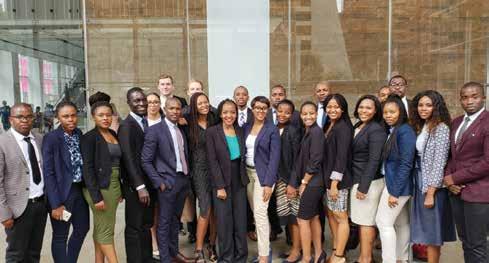
Postgraduate students studying economics at UP annually attend two courses in New York for six weeks, as part of the Fordham Emerging Markets and Country Risk Analysis programme. The students visit numerous financial institutions and experience American culture. The final leg of the programme takes place in Pretoria, when American students are hosted by the University of Pretoria.
Undergraduate programmes
BCom (Statistics)
Note: All first year students take the compulsory fundamental modules in academic information management and academic literacy for EMS.
Core modules (compulsory)
Statistics or Mathematical statistics
Economics
Financial accounting
Business management
Elective modules
Statistics or Mathematical statistics Communication management Statistics or Mathematical statistics
(Refer to the online Yearbook: www.up.ac.za/yearbooks/home)
Mathematics Informatics Financial management Economics
Computer science
Mathematics
Informatics
Agricultural economics
Actuarial mathematics*
Economics
Financial accounting
Introduction to moral and political philosophy
Mathematics
Agricultural economics
Actuarial mathematics* Economics Financial accounting
*Refer to the prerequisites for Actuarial Mathematics in the online Yearbook (www.up.ac.za/yearbooks/home).
Students in mathematical statistics who also want to be trained for the insurance industry, select the following modules, among others, as part of their core and elective modules:
Mathematical statistics
Economics Mathematics Computer science Financial management
Mathematical statistics Actuarial mathematics*
Mathematics Mathematical statistics Actuarial mathematics*
*Refer to the prerequisites for Actuarial Mathematics in the online Yearbook (www.up.ac.za/yearbooks/home).
Students in mathematical statistics who also want to be trained in the econometrics field, select the following modules, among others, as part of their core and elective modules:
Mathematical statistics
Computer science Mathematics
Mathematical statistics
Economics
Mathematics
Other students choose modules from any other subject or faculty according to their own specific career requirements.
BCom (Informatics)
Focus area: Information Systems
Note: All first year students take the compulsory fundamental modules in academic information management and academic literacy for IT, and all second year students take introduction to moral and political philosophy.
Core modules (compulsory) 1st year 2nd year 3rd year
Informatics
Financial accounting
Economics
Business management
Statistics
Elective modules
Choose one elective.
Informatics
Communication management
Business law
Communitybased project Informatics
(Refer to the online Yearbook: www.up.ac.za/yearbooks/home) 1st year 2nd year 3rd year
Marketing management
Marketing management
Business management
Internal auditing
Statistics
Financial accounting
Taxation
Informatics (accounting software)
Marketing management
Business management
Internal auditing
Statistics
Financial accounting
Taxation
The BCom (Informatics) Focus area: Information Systems degree is the only information systems programme that is accredited by the International Accreditation Board for Engineers and Technology (ABET) in Africa.
BCom (Agribusiness Management)
Note: All first year students take the compulsory fundamental modules in academic information management and academic literacy for EMS, and all second year students take introduction to moral and political philosophy.
Core modules (compulsory)
1st year 2nd year 3rd year
Economics
Statistics
Business management
Financial accounting
Marketing management
Economics
Statistics
Business management
Agricultural economics
Communication management
Business law
Economics
Agricultural economics
Undergraduate programmes
BCom
Note: All first year students take the compulsory fundamental modules in academic information management and academic literacy for EMS, and all second year students take introduction to moral and political philosophy.
Core modules (compulsory)
1st year 2nd year
Economics
Financial accounting
Commercial law (first year level) or Business law (second year level)
Statistics or Mathematical statistics
Business management
Elective modules
Business law
Communication management
BCom (Business Management)
Note: All first year students take the compulsory fundamental modules in academic information management and academic literacy for EMS, and all second year students take introduction to moral and political philosophy.
Core modules (compulsory) 1st year 2nd year 3rd year
Business management
Marketing management
Financial accounting
Statistics
Economics
(Refer to the online Yearbook: www.up.ac.za/yearbooks/home)
1st year 2nd year 3rd year
Marketing management
Industrial and organisational psychology
Public administration
Mathematics
Informatics
Business management
Marketing management
Industrial and organisational psychology
Public administration
Statistics or Mathematical statistics or Mathematics
Informatics
Economics
Financial accounting
Taxation
Financial management

Business management
Marketing management
Industrial and organisational psychology
Public administration
Statistics or Mathematical statistics or Mathematics
Economics
Financial accounting
Taxation
Labour relations
Labour law
Business management
Marketing management
Financial management
Business law
Design thinking and business innovation
Business creation
Responsible management
Business management
Marketing management
International business management
Business analytics
Responsible leadership
Human resource management
BCom (Supply Chain Management)
Note: All first year students take the compulsory fundamental modules in academic information management and academic literacy for EMS, and all second year students take introduction to moral and political philosophy.
Core modules (compulsory) 1st year 2nd year 3rd year
Business management
Marketing management
Financial accounting
Informatics
Statistics
Economics
Business management
Marketing management
Supply chain management
Financial management
Communication management
Business law
Business management
Supply chain management
International business management
This programme is accredited by the European Logistics Association (ELA), based on the ELA Standards level 4.
BCom graduate receives Award of the Vice-Chancellor and Principal
Emma Mashilo, an Honours student in Business Management, received the Award of the Vice-Chancellor and Principal for the best performance in the EMS Faculty at the UP 2018 Autumn Graduation Ceremony. She obtained her BCom (Supply Chain Management) programme with distinction following her successful completion of the BCom – Extended programme offered at the Mamelodi Campus to prepare students to cope with the academic demands of a mainstream three-year BCom programme.
Undergraduate programmes
BCom (Marketing Management)
Note: All first year students take the compulsory fundamental modules in academic information management and academic literacy for EMS, and all second year students take introduction to moral and political philosophy.
Core modules (compulsory)
1st year 2nd year 3rd year
Marketing management
Business management
Financial accounting
Statistics
Economics
Marketing management
Business management
Communication management
Financial management
Business law
Marketing management
Business management
International business management
BCom (Human Resource Management)
Note: All first year students take the compulsory fundamental modules in academic information management and academic literacy for EMS, and all second year students take introduction to moral and political philosophy.
Core modules (compulsory)
1st year 2nd year 3rd year
Industrial and organisational psychology
Business management
Economics
Financial accounting
Statistics
Industrial and organisational psychology
Business management
Communication management
Business law
Research
BCom – Extended programme
Industrial and organisational psychology
Business management
Labour law
Labour relations
BAdmin (Public Management and International Relations)
Note: All first year students take the compulsory fundamental modules in academic information management and academic literacy for EMS.
Core modules (compulsory)
1st year 2nd year 3rd year
Public administration
Politics
Economics
Public resource management
Elective modules
Public administration
Political science or International relations
Communication management
Public administration
Political science or International relations
(Refer to the online Yearbook: www.up.ac.za/yearbooks/home)
1st year 2nd year 3rd year
Industrial and organisational psychology
Economics
Statistics
The first study year is offered at the Mamelodi Campus. This is the ideal starting point for students who are interested in studying towards BCom in management and financial sciences. Students must apply during October of their first year to be transferred to the Faculty of Economic and Management Sciences on the Hatfield Campus. Placement in BCom (Accounting Sciences) and BCom (Investment Management) cannot be guaranteed. All first year modules must be passed to be able to transfer to any of the BCom programmes.
Core modules (compulsory)
1st year 2nd to 4th year
Academic information management
Language, life and study skills
Mathematics
Financial accounting
Statistics/Mathematical statistics
Business management
Complete outstanding modules as per chosen programme, which are presented on the Hatfield Campus.
Industrial and organisational psychology
Economics
Constitutional law
Legal interpretation
Industrial and organisational psychology
Economics
Administrative law
Language: German, English, French, Arabic, Mandarin, Russian and Spanish
Note: Candidates who did not obtain at least 4 (50–59%) in Mathematics in Grade 12, or who did not pass Statistics (STK) 113 and 123 may not include Economics (EKN) 120, 234, 244, 310 and 320 and Statistics (STK) 110 and 120 in their curriculum. Refer to the online Yearbook: www.up.ac.za/yearbooks/home.
Postgraduate programmes
The Faculty of Economic and Management Sciences offers postgraduate opportunities in numerous specialisation areas. Refer to the online Yearbook: www.up.ac.za/yearbooks/home or visit www.up.ac.za/bcom.

Student contributions

Marketing students gain hands-on experience
The Department of Marketing Management regularly collaborates with world-class brands in order to give students hands-on experience in the various modules. The final-year group worked on a project for leading tile manufacturer Italtile in the Personal Selling and Account Management Module. The collaboration concluded with a prizegiving function to reward the top performing students. Brittni van Zyl was selected to go on an all-expenses paid trip to Bologna, Italy to attend the annual “International Exhibition of Ceramic Tile and Bathroom Furnishings” along with the Italtile management team.
HR Tuks networking event a huge success
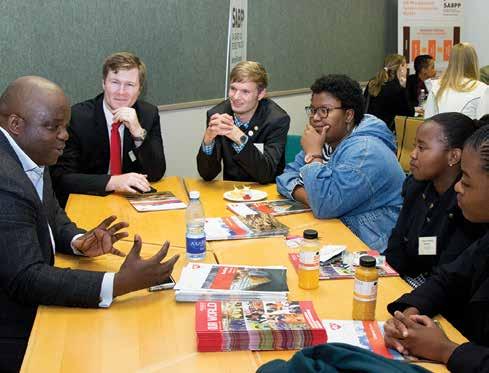
The Human Resource Management student society, HR Tuks, hosted a networking event that enabled students to engage with major recruitment companies. The event started with interactive presentations, where speakers informed students of their experiences in the field, their roads to success, as well as providing advice for students’ future careers. It ended with an innovative session of ‘speed networking’ where students were afforded an opportunity to meet with people employed by the companies represented at the event.
#FeedAHomelessHomie Initiative in collaboration with BAdmin@Tuks
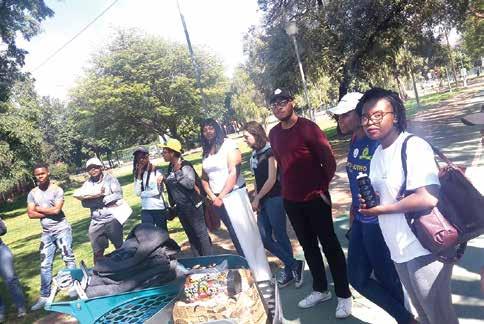
The BAdmin@Tuks student society collaborated with the #FeedAHomelessHomie initiative to feed the homeless around Hatfield and Sunnyside. On a quarterly basis the students make an effort to collect non-perishable food items and make sandwiches to give to the homeless. During the winter season an effort is also made to get shoes and blankets donated in order to keep the homeless warm.

University of Pretoria | Universiteit van Pretoria | Yunibesithi ya Pretoria
Private Bag/Privaatsak/Mokotla wa Poso X20
Hatfield 0028, South Africa/Suid-Afrika/Afrika Borwa
Tel +27 (0)12 420 4111, Fax/Faks/Fekse +27 (0)12 420 4555 www.up.ac.za