To be a leading researchintensive university in Africa, recognised internationally for its quality, relevance and impact, and also for developing people, creating knowledge and making a difference locally and globally.
Our goals
n to be a leading researchintensive university
n to strengthen the University’s international profile
n to strengthen the University’s impact on economic and social development
n to pursue excellence in teaching and learning
n to increase access, throughput and diversity
Business unusual in a dynamic context
For some time now, South African universities have been in the eye of a funding and transformation storm. The years 2015 and 2016 are likely to go down in history as the years when South African universities were shaken to the core by the protests of students.
The University of Pretoria (UP) has not been exempt from the various pressures and challenges facing higher education. Not a single South African university has been left untouched. I commend the management and Council of the University for the wisdom and humility with which they have steered the University through these challenging times.
UP recognises and embraces its national responsibility of creating a skilled workforce, an educated citizenry and the cultivation of science for development. The University is particularly cognisant
of its role in the promotion of redress and the elimination of preexisting inequalities.
Accordingly, providing educational opportunities to students from diverse backgrounds regardless of race, class and gender, is central to the UP mission. The improving success rate of UP students, across race, class and gender divides, is a welcome sign that the University is on course to making a great contribution in this regard.
The University’s approach to community engagement, which sees a great number of students involved
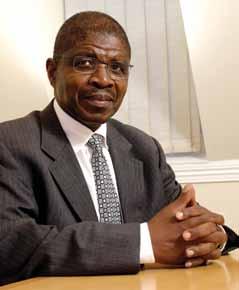
Professor Wiseman Nkuhlu was awarded an honorary doctorate in accounting sciences by the University of South Africa, for his remarkable achievements and exemplary leadership during a lifetime of service to higher education, his profession, the corporate and business world and the development of his country and continent.
Professor Wiseman Nkuhlu
in various interventions designed to assist the community, is one of its distinguishing characteristics. Then there is its high impact research which not only contributes to global scholarship but also changes lives locally.
The University’s Research Matters website gives one a tantalising view of the life-changing research in which UP academics and students are engaged.
It is pleasing to note how transformation has become central to everything that the University does, including its vision of becoming “a leading research-intensive university
in Africa, recognised internationally for its quality, relevance and impact, and also for developing people, creating knowledge and making a difference locally and globally”. Driven by this kind of ambition, the University can only grow from strength to strength.
Professor Wiseman Nkuhlu Chancellor
A year that tested our strategy
The national #FeesMustFall protests that overshadowed the tertiary landscape in 2015 as well as the second National higher Education Transformation Summit pointed to a need for better alignment between universities and societal expectations. A key lesson for all is that the pursuit of institutional goals must go hand in hand with the advancement of wider societal goals and national development objectives.
Challenging times can strain organisational strategies and goals. Council is pleased to report that UP’s strategic plan, UP 2025, was tested and not found wanting.
Our first goal – to be a leading research-intensive university in Africa – gained traction when the University was included in the Times Higher Education (THE) world rankings for the first time in 2015 while maintaining its position among South African and African institutions in the Quacquarelli Symonds (QS) world rankings for 2015/16. UP also improved significantly in the QS subject rankings.
Given the focus on transformation during 2015, Council was particularly pleased with UP’s continued growth in student access, throughput and diversity. As a Council, we participated in a number of sector initiatives in this regard. The University Council was represented at a meeting called by the Minister of Higher Education and Training with
the four former Afrikaans universities to discuss matters of transformation. Council was also represented at the second National Higher Education Transformation Summit held in October. The Vice-Chancellor and Principal was commissioned by the Department of Higher Education and Training (DHET) to write a background paper for the Summit. The paper focused on the role of university management, councils and student leadership in advancing institutional transformation.
Following on this, Minister Nzimande, at a symposium where he was the guest speaker, singled out UP as an example of a university striving to transform in the face of challenges shared by former Afrikaans universities.
The Summit resulted in the 2015 Durban Statement on Transformation in Higher Education, which acknowledged the gains made since 1994, such as the growth of black representation now exceeding 70% of all South African students; agreed
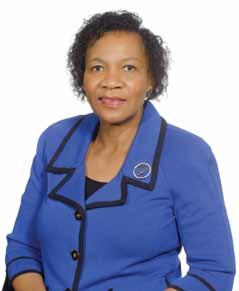
Ms Futhi Mtoba
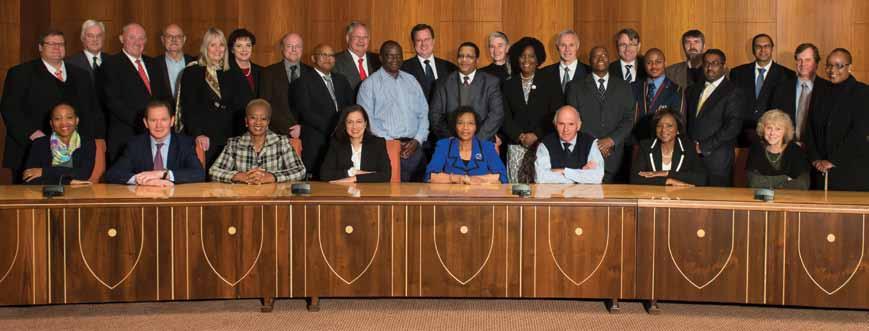
The UniverSiTy Of PreTOriA cOUncil
Front row (from left): Ms Neo Lesela, Professor Russell Loubser, Ms Vuyelwa Qinga, Professor Cheryl de la Rey (Vice-Chancellor and Principal), Ms Futhi Mtoba (Chairperson), Dr Piet Botha (Vice Chairperson), Ms Danai Magugumela, Dr Sanette Boshoff. Back row (from left): Professor Anton Ströh (Vice-Principal), Professor Antonie de Klerk, Mr Anton Botha, Mr Allan Taylor, Professor Carolina Koornhof, Professor Stephanie Burton (Vice-Principal), Professor Niek Grové (Registrar), Professor Norman Duncan (Vice-Principal), Mr Laurie Dippenaar, Professor Innocent Pikirayi, Dr Johan van Zyl, Professor Themba Mosia (Vice-Principal), Professor Maxi Schoeman, Ms Patience Mushungwa, Mr Appie Pienaar, Mr Israel Skosana, Mr Willie Spies, Mr Mosibudi Rasethaba (Student Representative), Professor André Boraine, Mr Subesh Pillay, Professor Sunil Maharaj, Mr Danie Behr, Dr Barbara-Ann Ribeiro. Absent: Dr Steve Booysen, Ms Marna de Jager (Student Representative), Mr Kuseni Dlamini.
on certain fundamental principles pertaining to higher education; identified areas of continued concern; and identified specific actions to be taken by the various stakeholders in the immediate and medium term to
address these concerns.
Council is pleased with the University’s performance in 2015 and is grateful for the positive trends, which are a credit to its capable and committed leadership and staff.
Ms Futhi Mtoba Chairperson of Council
Engaged, responsive and making a difference
Universities nurture the hopes of the world: from solving challenges that transcend borders to stimulating minds capable of imagining a world different to the one in which we live.
As we have witnessed in South Africa in 2015, one of the biggest threats to these hopes – as well as to the growth and well-being of higher education – is a financial one. As the ambitions and expectations of our youth rise, finance is a serious factor that constrains access to the platform of opportunity provided by a thriving higher education sector.
As a public university, our key mandate is to be at the forefront of securing the country’s future by developing highly skilled people in diverse professional fields and through our education and research contributing to local communities and advancing the country’s socioeconomic development. UP is one of the largest producers of graduates in a wide range of fields that are critical to the advancement of South Africa, such as veterinary science, engineering, financial sciences, life and physical sciences, teacher education and health sciences. Enrolments in Science, Engineering
and Technology (SET) fields remain high, and in 2015 accounted for 52,5% of all enrolments at UP.
Access must lead to success
In 2015, the University of Pretoria placed particular emphasis on raising funds for student financial aid in the form of bursaries and loans. Although the government significantly increased the allocation to the National Student Financial Aid Scheme (NSFAS) and the funding from NSFAS and similar agencies received by the University increased materially from 2011 (R185,5m) to 2015 (R298,1m), this remains inadequate to meet the demand. The University therefore substantially increased its own contribution to top up NSFAS funding. An amount significantly higher than the allocations for previous years from UP’s own provision for NSFAS funds, was made available to students from low-income households.
Access must be accompanied by a focus on student success and
Professor Cheryl de la Rey
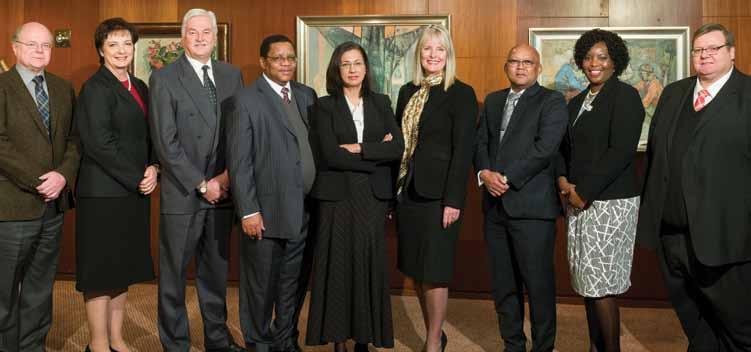
The UniverSiTy Of PreTOriA eXecUTive
the University’s commitment to achieving equity in student outcomes was a particular focus of the Task Team on Student Access and Success, an initiative of the Senate. Following the design of a conceptual framework, a coordinated set of interventions to improve student success was implemented. This included early identification of potential risk; focused academic orientation for all first-year students; tutoring; mentoring; the use of Faculty Student Advisors and the offering of foundation programmes in the form of extended degree programmes.
In addition, the Optimising Student Services project initiated in 2014 to review our students’ experience of our enrolment offering – from recruitment to application, admission, registration, study finance and residence placement –informed the high-level design of a new student services model that enables us to deliver an efficient and seamless experience to students. The implementation and roll-out of this model in 2015 saw the restructuring of the erstwhile Department of Academic Administration and the Client Service Centre to establish the new Department of Enrolment
Student funding has become a crucial issue and the University substantially increased its own contribution to top up NSFAS funding in order to increase access to affordable university education for deserving students.
From left: Professor Niek Grové, Professor Stephanie Burton, Professor Antonie de Klerk, Professor Themba Mosia, Professor Cheryl de la Rey, Professor Carolina Koornhof, Professor Norman Duncan, Ms Patience Mashungwa and Professor Anton Ströh.
Total students:
59 514
60,28% Black students
74% Black postgraduate students
and Student Administration, which began operating as such in September 2015.
It is pleasing to report that our efforts to stay focused on the five goals of our long-term strategy UP2025 have paid dividends and notwithstanding the challenges of 2015, the University delivered considerable improvements in its overall performance. Our total student enrolment increased to 59 514 and the examination pass rate for undergraduate students improved from 88,79% in 2012 to 90,26% last year. This is demonstrable evidence of enhanced access accompanied by enhanced success! Graduate output also improved markedly. Master’s graduates increased from 1 476 in 2013 to 1 897 in 2015, and doctoral graduates from 242 to 333, representing increases of 28,52% and 37,60% respectively.
The number of researchers rated by the National Research Foundation (NRF) increased from 393 in 2014 to 438, with a particularly pleasing increase in our number of Y-rated
researchers (promising young researchers), which reflects a healthy pipeline of young academics.
The quality of research produced by UP researchers has been recognised by an increase in the number of subject areas featuring in the QS subject rankings: from six in 2014 to eleven in 2015. Furthermore, exceptional research performance was evident in the 79 UP researchers who are now positioned in the top 1% of scientists globally, an increase of 51 (280%) since 2014.
UP’s commitment to becoming a gateway of opportunity for the full diversity of South Africa’s population and to increasing the diversity of our students and staff also gained traction in 2015. The percentage of black contact students (undergraduate and postgraduate) was 51,6% in 2015 and almost all of the 10 362 students enrolled for distance education were black, bringing the total representation of black contact and distance students at UP to 60,28%, and black postgraduate students to 74%. Of the total enrolment of contact students in 2015, 28,4% were
postgraduates, of which 56,4% were black. With respect to staff it was pleasing that the employment equity targets were achieved. The growth in the number of black academic staff remains a priority issue and we foresee opportunities to enhance progress through the Department of Higher Education and Training’s programme, the nGAP initiative, which was launched in 2015 specifically to help accelerate the pace of transformation within the corps of academic staff in the higher education sector.
Our commitment is to create an inclusive and enabling environment in which staff and students can thrive – an environment where individual and collective identities can find expression and, at the same time, where we can be outward-looking, engaged and responsive to the contexts in which we live, work and study.
Professor Cheryl de la Rey
Vice-Chancellor and Principal
Number of subject areas in which UP is listed in the top 200 globally
Source: Quacquarelli Symonds (QS) world rankings
No 1
GIBS is the top African business school
UK Financial Times Executive Education rankings
90,26% Examination pass percentage
MOVING FORWARD … WITH QUALITY EDUCATION
UP’s contribution to the economy is determined by both the input of its teaching and the output of its learning. This core mission is also the barometer of the University’s global status and recent developments have confirmed that our consistency in upholding quality is paying dividends.
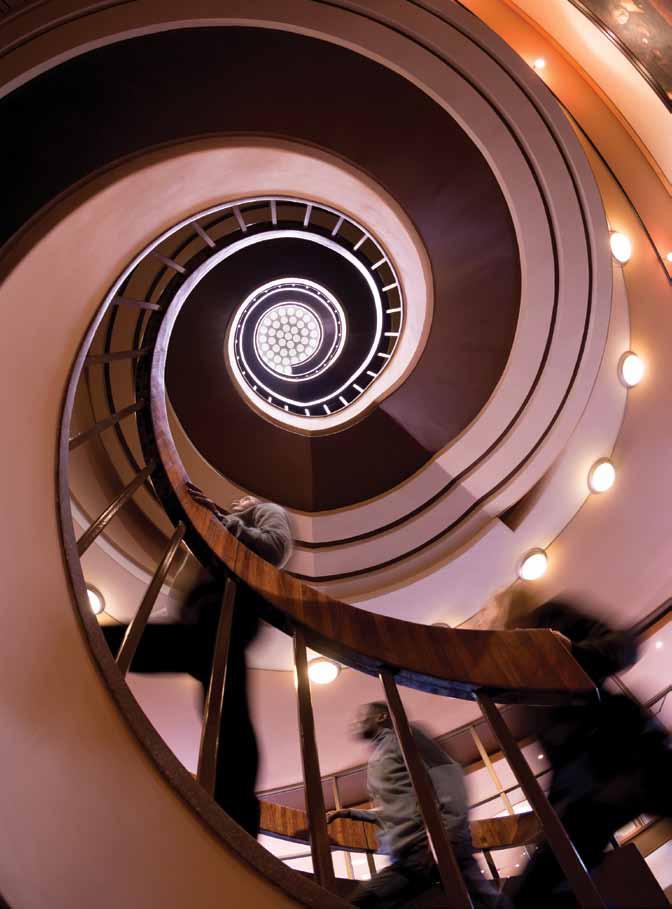
The spiral staircase in the Administration Building is a metaphor for the University’s steady upwards trajectory towards excellence in teaching, learning and research.
Developing students for success
UP’s ability to fulfil its public mission depends, in no small measure, on the quality of graduates that we produce. Therefore, the primary goal of our academic programmes is to produce graduates with attributes that go beyond mastery of their fields of study (which is a non-negotiable first requirement); graduates who can interact successfully in a globally interdependent world; who are prepared for the challenges of a diverse and changing world, and have a deep sense of critical citizenship and civic responsibility.
The extent of UP’s contribution to sustainable development nationally is perhaps best illustrated by the percentage of graduates produced by the university, especially in the scarce skills areas identified as crucial for the country’s socio-economic development. In 2014 (latest data available), the UP’s proportion of graduate outputs by all South African universities (excluding comprehensive universities and universities of technology) was as follows:
n 23,24% of engineering degrees,
n 15,26% of natural sciences degrees,
n 15,38% of health sciences degrees,
n 100% of veterinary science degrees (all universities including comprehensive universities and universities of technology),
n 13,00% of all three-year bachelor degrees,
n 13,20% of all four-year bachelor degrees,
n 18,00% of all master’s-level graduates,
n 14,00% of all doctoral-level graduates.
The number of UP PhD graduates increased by 41% – from 237 in 2014
to 333 in 2015 – while that of master’s graduates increased by 56% from 1 214 in 2014 to 1 897 in 2015), which illustrates the significant output of skilled graduates at the highest levels.
Equally important is UP’s commitment as a gateway of opportunity. In 2015, the University had a total of 59 514 students, 49 152 of whom were contact students and 10 362 who studied via distance learning in the Faculty of Education. The number of contact students increased by 2,3% from 2014 while that of distance students decreased by 23,4% in line with UP’s approved enrolment plans.
The University recognises that access is only meaningful if it leads to success. Foundation programmes, in the form of extended degree programmes, are one way to enhance success. Besides improving graduation rates, particularly among students from disadvantaged educational backgrounds, these programmes also provide a gateway into science and science-based degree programmes for students with potential, who would otherwise not have been admitted into these programmes.
Success is evident in the steady increase in the undergraduate examination pass percentage – from 88,79% in 2012 to 90,26% in 2015.
A very relevant corollary of our efforts is the employability of our graduates and 91% of our students are employed within six months of graduating from UP.
Retaining staff and maintaining excellence
Maintaining excellence in all of our core functions as an engaged university is to a significant extent dependent on the skills, abilities
and commitment of our academic, professional and support staff. Attracting, developing and retaining quality staff is therefore at the core of the University’s long-term vision and plan, UP 2025. The scarcity of highly skilled people in South Africa is equally experienced by UP, especially with regard to academic staff as we are competing with a growing number of higher education providers in a relatively small pool of academic talent.
In the face of these challenges, UP has identified opportunities to build a diverse and capable workforce that will make reaching the University’s strategic objectives a reality. We intend to build and strengthen the pipeline of postgraduate students as future academics; develop academics and support service staff as professionals; and create an environment in which staff and students can flourish.
Encouraging progress with our efforts is confirmed by the latest Department of Higher Education and Training (DHET) research evaluation report, which shows that UP has managed to increase the percentage of its academics with a PhD as their highest qualification from 54,02% to 62,45% in one year, putting us second in South Africa together with Wits and Stellenbosch University behind UCT’s 67%.
Two more University staff members received A-ratings from the NRF in 2015: Professor Andries Engelbrecht, Head of the Department of Computer Science, and Professor Erika de Wet, Co-director of the Institute of International and Comparative Law in Africa. Of our 438 NRF-rated researchers, 14 hold the highest A-rating.
To maintain high quality teaching and learning and enhance research, we need to grow staff levels to match growth in student numbers. One such way is through the DHET’s nGAP initiative. UP was allocated seven posts in the first phase (2015) of this programme, which it has matched with seven additional posts that will be funded from the University’s own funds. The University will continue to allocate additional resources to improve student:staff ratios.
Passionate educators are the lifeblood of any learning institution and at UP we recognise our educators through the Teaching Excellence and Innovation Laureate Awards. The Laureates are awarded to projects that show significant evidence of impact on student learning, are sustainable and can be replicated in other contexts. These projects contribute to best practice in teaching and display significant evidence of innovation that addresses the identified challenges.
Ms Astrid Schmulian and Professor Stephen Coetzee, from the Department of Accounting in the Faculty of Economic and Management Sciences, were winners of the Team Award for introducing Frameworkbased teaching. Funded by Deloitte, they entered the students’ universe, embracing YouTube, flipping the content of rule-based lectures out of class into cyberspace. They have implemented webinars for tutorials, consultation and crisis management when faced by disruptions to the formal academic programme.
They are jointly ranked 8th on the Brigham Young individual accounting education ranking for 2015, making a significant contribution to UP’s Top 5 institutional position in terms of this ranking.
Academic staff with doctoral degrees 62%
12%
International academic staff
STUdenT AchievemenTS
n The novel Die Skaalmodel by Anneli Groenewald, an MA student, was the winner in the debut division of the Groot Afrikaanse Romanwedstryd (the Great Afrikaans Novel Competition). The novel was written as part of her MA studies.
Ms Groenewald also received the NB Publisher’s prize for her M dissertation in Creative Writing and the Marius Jooste prize for the best master’s student in the Department of Afrikaans.
n yvonne Sihle mashaba, a final-year master’s student in Agricultural Economics, was selected as one of eight international student ambassadors of the Talloires Network.
n vincent ndebele and Paul Wombo were awarded two of the three top prizes at the South African Institute of Chartered Accountants (SAICA) Student Leadership Summit.
n Kenneth diole, a third-year political science and international relations student, became the first UP student to be awarded the Diplomacy Award for Best Delegate at the Harvard World Model United Nations Championship.
n dr Kenneth Ololade, a second-year MMed student in the Department of Nuclear Medicine, won the award for distinguished work at the International Atomic Energy Agency’s conference held in Austria.
n dr dorette Kritzinger of the Department of Odontology in the School of Dentistry won the Colgate Postgraduate research competition of the International Association for Dental Research (IADR) for her MSc.
n lara Theron in the Department of Taxation won the master’s degree category in the annual Norton Rose Fulbright Tax Thesis Competition.
n moses Kebalepile, a student in the Department of Health Systems and Public Health, won the overall prize in the Technology Innovation Agency (TIA) Inventors Garage Competition for his hand-held asthma grid which can predict asthma attacks.
n Jaco Weideman received the 2015 Economic Society of South Africa (ESSA) Founders Medal for his master’s research at ESSA’s Biennial Conference. Jaco
Professor Patricia Forbes won the Individual Award for promoting enquiry-based learning. An associate professor in Analytical Chemistry, she believes in encouraging students to develop an understanding of key fundamental concepts via active and inquiry-based learning.
Professor Forbes developed an affordable educational spectrophotometer (called the SpecUP), which students can assemble from a kit and then use to generate analytically useful results. The SpecUP has a unique, open design with moveable components to enhance hands-on and inquiry-based learning. With funding from the African Laser Centre (which promotes photonics in Africa), the Royal Society of Chemistry, and the Department of Science and Technology the SpecUP has been rolled out to numerous tertiary institutions in Africa.
Professor Forbes also received the prestigious international Wharton QS Reimagine Education Award for Presence Learning in 2015 for the SpecUP project.
UP’s Gordon Institute of Business Science (GIBS) maintained its status as the top South African and African business school in the UK Financial Times Executive MBA Ranking 2015. This annual ranking, which is in its fifteenth year, measures the top 100 Executive MBA programmes globally. According to the latest ranking, the GIBS modular and part-time MBA formats are positioned in 87th place worldwide. It is also worth noting that the latest rankings saw GIBS placed in joint first position in terms of the number of women represented on its board, and in 13th position globally for its female to male student ratio.
Weideman
moses Kebalepile
dr Kenneth Ololade
vincent ndebele
Anneli Groenewald
Internationalisation stimulates a broader view Staff and student exchanges are a central component of internationalisation. Academic staff benefit from opportunities to advance their scholarship by developing international networks with support from the UP Travel Abroad Programme, while the participation of visiting international scholars and students enriches our academic programmes and enhances UP’s diversity profile.
In 2015 UP had 68 staff and postgraduate student exchanges, which included eight visiting professors.
The 153 international academic staff in permanent and temporary full-time positions, make up 12% of UP’s academic staff.
An important dimension to UP’s internationalisation are postgraduate students. The University has experienced a steady growth in the number of international postgraduate
students over the past five years, from a total of 1 847 in 2011 to 2 149 in 2015 (23,2% growth).
A significant majority of UP’s international students are from other African countries, mainly from the SADC region. Enrolments from this region accounted for 53,1% of all international postgraduate enrolments in 2015.
The number of international postdoctoral fellows increased to 126 in 2015 (from 52 in 2011).
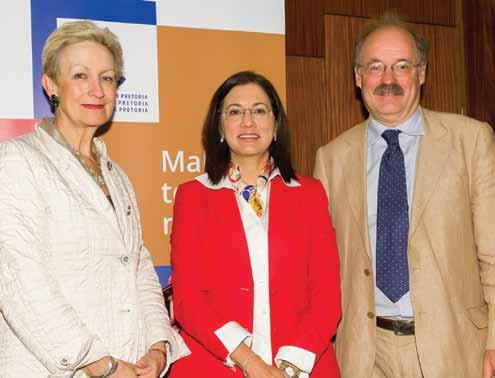
Complementing the contribution of international staff and students are the numerous international high-profile visitors and events hosted by the University. One notable example during the year was Sir Mark Walport, the UK Government Chief Scientific Adviser and Head of the UK Government Office for Science, who presented a public lecture dealing with innovation and policy-making in science and the management of associated risks.
Sir Mark Walport, the UK Government Chief Scientific Adviser and Head of the UK Government Office for Science, presented a public lecture dealing with innovation and policy-making in science and the management of associated risks. The British High Commissioner Dame Judith Macgregor (on the left) and the Vice-Chancellor and Principal, Professor Cheryl de la Rey, were at the lecture.
Using technology for enhanced learning
Technology is a major determinant of our learning approach and has helped us create an enhanced student experience from the first point of contact. By implementing the PeopleSoft system, online student registration has become much more effective and efficient and has significantly reduced response time. As a result, more than 50% of new first-year students registered online and over 80% of all new undergraduate student applications were submitted online.
The University has also been reviewing its teaching model, paying particular attention to developing a hybrid mode of delivery that incorporates online components. A series of conferences and workshops during the course of the year helped to further our approach:
n Flexible futures: UP hosted two conferences on the topic. In January, Shaping e-learning for higher education saw speakers from national and international universities and organisations address online teaching and learning, open educational resources and massive open online courses (MOOCs). UP staff were also given the opportunity to showcase teaching innovation and excellence using technology, particularly online learning. The second conference in November, Shaping a hybrid teaching model for UP, was hosted in the main on Blackboard Collaborate, a synchronous software, or used other online tools such as a blog.
n An iLab workshop for Deputy Deans stimulated innovative thinking about teaching.
Online learning, though, is not new to us. Some master’s programmes have been fully online for many years, one of them celebrating a decade online in 2014, namely a collaborative master’s in veterinary tropical medicine. More than 90% of our lecturers are linked to a module in our learning management system, Blackboard, branded as clickUP at the University. Lecturers are also using other platforms, such as Google Plus, effectively, as well as a variety of software. Classroom-based technology is used extensively with a growing emphasis on the use of personal response systems (whether clickers or cell phones) to engage students in large classrooms using a flipped classroom model where the focus shifts from the lecturer as the source of information to activities that engage students in the content.
A project launched to investigate the potential of presenting coursework master’s programmes online resulted in faculties identifying a number of master’s programmes where the online component could be significantly strengthened.
The University also launched the concept of Professional Online Development programmes (PODs), using short learning programmes from Continuing Education at UP and GIBS. Some PODs will be offered as free open online courses to the general public or to UP students, staff and alumni.
Improving infrastructure to support growth
In 2015, the deed of the Groenkloof Campus was formally transferred to UP, as a consequence of the incorporation of the Teachers Training College Pretoria into UP.
Generous infrastructure grants from the National Skills Fund made possible the construction, extension and refurbishment of facilities on the Prinshof and Onderstepoort Campuses, which continued through 2015 and will be completed in 2016 at a total cost of R438m. The work at Prinshof Campus comprised refurbishments and additions to the HW Snyman Building, the construction of the Tswelopele Building and TuksBophelong Residence, while the work at Onderstepoort comprised the construction of a new residence and the Lesedi Complex. This was necessary to accommodate increased intakes of medical and veterinary students, respectively, to meet national economic and development needs.
Other capital projects undertaken included renovations to postgraduate accommodation totalling more than R10 million; the continued roll-out of internet, WiFi and study facilities in the residences; the installation of emergency lighting in communal areas to address issues around electricity load shedding; and the replacement of leaking water pipes and lifts. Klaradyn and Jasmyn residences were upgraded at a total cost of R62,2m.
We are pleased with the progress made with respect to a number of long-term projects, such as the redevelopment of the Experimental Farm and the establishment of an Institute for Sport, Exercise Medicine and Lifestyle Research.
New facilities on the Hatfield Campus include the Makerspace in the Merensky Library, the first of its kind
in the country. The Makerspace is a collaborative research, experimentation and work space furnished with advanced and specialised equipment and technological aids such as 3D printers, for use across disciplines by UP staff and students.
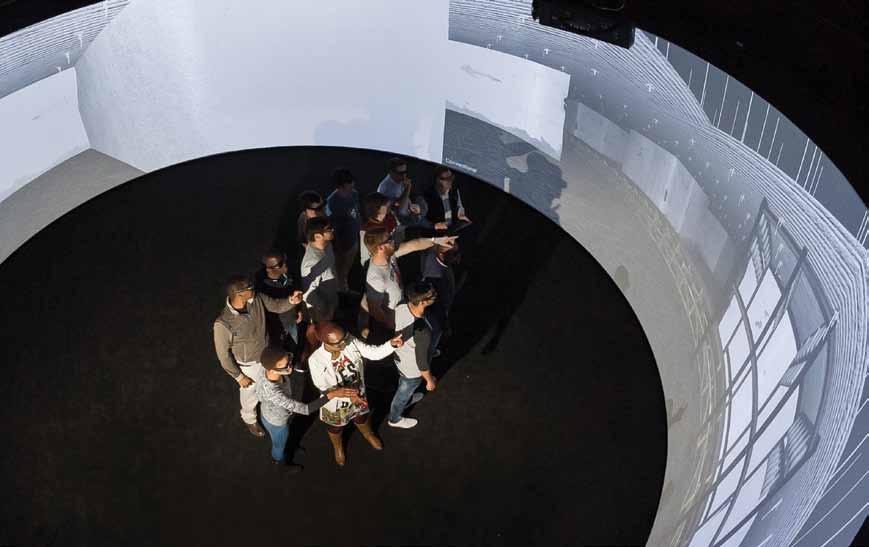
The first-in-Africa Kumba Virtual Reality Centre for mine design (VRC), which enables students to experience simulations of real-life mining situations and other operations, was officially opened. The VRC represents an R18,8m investment that took three years to complete. New offices for the Department of Mining Engineering and the Mining Resilience Research Institute (MRRI) were opened at the same event. This was followed later by the unveiling of the new African Rainbow Minerals Mining Exhibition Centre in the same department.
R18,8m
Investment in Africa’s first virtual reality centre for mine design
Kumba Virtual Reality Centre
MOVING FORWARD … ON STUDENT SUCCESS
UP provides a broad range of support to its students to ensure that they successfully complete their studies and have access to opportunities that enable them to become well-rounded, self-actualised and productive members of society.
Financial aid
R907m in bursaries and loans granted to UP students in 2015
The demand for financial aid is growing as a result of the rising costs of higher education and the challenges faced by students from disadvantaged backgrounds. Even with the increases from government funding sources, including significant increases in NSFAS funding announced after the #FeesMustFall campaign to counter the effect of the 0% increase announced by President Zuma, these sources are still inadequate to address fully the magnitude of the student funding challenge.
In 2015, UP awarded a total of R907m in financial aid – from various sources – to students in the form of bursaries and loans, and stepped up its own fund-raising efforts.
The Tuks Scholarship Fund, established in 2014, is used to fund financially challenged students to pursue their studies at UP with full bursaries. Through campaigns such as #100inamillion – to sign up at
least 100 donors each donating R100 per month – as well as once-off contributions from various alumni functions, the Fund raised R5,6m. At the end of 2015, the balance in the Fund stood at R14,9m.
Such efforts bolster an already comprehensive financial aid programme that supports financially disadvantaged students and provides merit-based financial aid to attract and support high-achieving students. The University furthermore maintains a strategic bursary fund to ensure that its diversity targets in undergraduate and postgraduate student numbers are met.
Significant scholarship funding from philanthropic foundations produced good results as the first group of UP beneficiaries under three major programmes to support financially disadvantaged students graduated. Eight students among the first UP cohort in the Michael and Susan Dell Foundation’s Young Leaders Programme obtained their
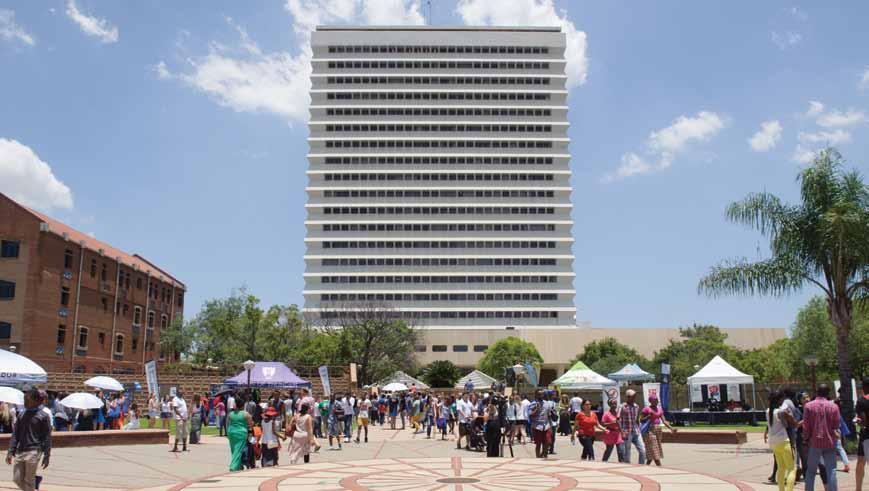
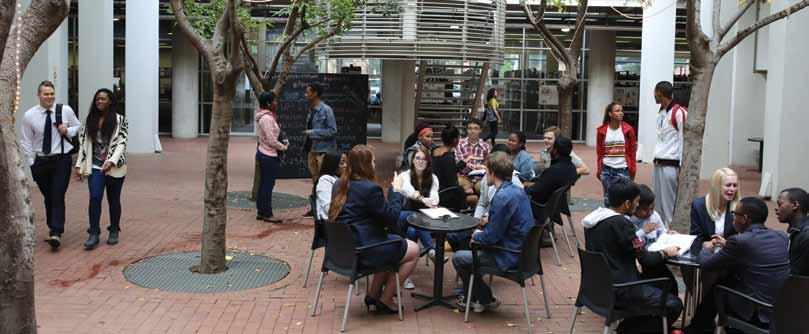
Visitors and students walk on the Piazza under the gaze of the Humanities Building.
bachelor’s degrees; Honour’s degrees were conferred on the first three MasterCard Foundation Scholars studying at UP, and the first two students awarded bursaries by the Keith Bothongo Foundation obtained BCom (Accounting Sciences) degrees. The Michael and Susan Dell Foundation and the MasterCard Foundation contributed R7,7m and R12,6m respectively for their programmes to continue at UP in 2015.
Academic success
Leadership in academic success for students resides with the Vice Principal: Academic, Professor Norman Duncan. Academic support is driven by the Department for Education Innovation and in individual faculties through the Deputy Deans and Chairs of Faculty Teaching and Learning Committees.
The University has an online compulsory university preparation programme (UPO) for all firstyear students to orient them to university life. They have access to UPO throughout their first year and are supported by Faculty Student Advisors (FSAs) to complete their assessments. In 2015, there were 13 FSAs across the faculties whose main focus was to provide support to students in the first year of study, so as to improve their chances of success.
A Community of Practice of FSAs met monthly and each FSA shared what they were doing with students. Areas of attention were time management, workload management, study skills, transfers to other courses within the University and/or career redirection.
Faculties employ tutors to enhance students’ performance. These tutors
are trained by the Department of Education Innovation.
The University was awarded a grant by the Kresge Foundation to improve success of undergraduate students through improved data analysis. UP was one of only five universities awarded this grant.
The Task Team on Student Access and Success continued to monitor student success in the university, paying particular attention to data on differential success rates for specific groups of students.
Student life
To help our students develop holistically as responsible citizens, the student life programme – filled with academic, social, sporting and cultural activities – is pivotal to the UP student experience.
Leadership development and participation
A co-curricular student leadership development programme has been developed to address three core levels of development: namely the interpersonal, intrapersonal and environmental levels.
In 2015 the primary target audience consisted of various levels of student leaders. Training focused on social change, transformation and transcultural issues, cultural intelligence, ethics, graduate attributes, gender and sexuality, as well as community engagement. In the residence environment the TuksRes Leadership Training Academy (TRLTA) supports student success by providing five levels of co-curricular leadership training and development focusing on the individual, the group and the community, from new first-years
Our student life programme – filled with academic, social, sporting and cultural activities – enriches the overall UP student experience.
entering the system through to senior elected leaders and former student leaders who can perform a mentoring role.
The Women in Leadership Programme was also launched in the residences in 2015 as a student-led initiative and will be integrated into the broader co-curricular programme offering. Residence leadership (house committees) and management structures (mainly heads of residences) in all the University residences work closely with the head of Student Life and Residence Management in the Department of Residence Affairs and Accommodation (TuksRes) overseeing the overall
Besides giving our students leadership and life skills, we also give them a voice. Students are represented through the Students Representative Council (SRC), on the major governance bodies of the University at faculty and institutional level. The leadership of the University also has ongoing engagement and consultation with the SRC and its substructures as well as the Residence Advisory Board on which resident students are represented on matters that affect students.
Regular consultations with the Executive Committee of the SRC afford the Executive a first-hand account of students’ experiences
institutional policies and decisions and jointly to seek solutions to pressing issues. In addition, the ViceChancellor hosts quarterly breakfast sessions with the SRC to offer students the opportunity to engage with management in open dialogue.
The Constitutional Tribunal is an important element of student participation at UP. It is a body of student “judges” appointed from the ranks of top performing senior law students, whose responsibilities include ensuring that students’ rights are protected in disciplinary processes.
In addition to the formalised structures on which students are represented and in which engagement
with students takes place, a student movement called #UPrising emerged during the #FeesMustFall campaign of October 2015. Considerable time was devoted to engaging the #UPrising movement and other student societies and structures during this time. These consultations culminated in a memorandum of agreement, signed on 26 October 2015, between UP and various established and emerging student structures, on issues relating to fees and financial support, residence food and accommodation, as well as the insourcing of non-core outsourced services.
Well-being
The Student Health Services Clinics support the physical well-being of our students and ran a number of health and wellness campaigns during 2015. A total of 19 685 clinic visits were recorded across the five campuses.
A multidisciplinary team of counselling, educational and clinical psychologists and social workers provided academic and psychosocial support to 8 024 students in 5 697 group and individual sessions. The Disability Unit in the Department of Student Affairs helped 557 students with disabilities through assistive technologies, special test and examination assistance, offering guidance to departments to assist them in providing reasonable accommodation for students with disabilities, as well as the provision of dedicated facilities.
Sport, Arts and Culture
Over 30 sporting codes are on offer at the University of Pretoria and the extensive state-of-the-art sporting
facilities add a valuable dimension to the holistic student life experience we offer our students. In addition, TuksSports’ focus on competitive sport and sport development, also through our world-renowned High Performance Centre (hpc™™), which collaborates extensively with national sporting bodies, is a major drawcard for student athletes to study at UP.
The TuksSport High School, which is affiliated to the hpc™, creates a valuable customised pipeline for student athletes to continue their studies at UP. In 2015 it moved into a brand new school building adjacent to the hpc™, erected by UP with generous funding from the Athletics Foundation Trust. The school has maintained a 100% matric pass rate in all but one year since its inception. Well-known sporting stars who matriculated from the school include George Maluleka (football: Kaizer Chiefs and Bafana Bafana), Thembi Kgatlane (football: Banyana Banyana), Wian Sullwald (triathlon: junior world champion) and Suzaan van Biljon (swimming: Olympian and SA and African record holder).
In 2015 UP again celebrated a number of remarkable achievements by our sportsmen and -women, of which the following are illustrative examples:
n BIS Student, Akani Simbine, won the gold medal in the 100m at the 28th Summer Universiade (the World Student Games) held in Gwangju, South Korea in July, setting a new Games record of 9.97s. This made him the holder of the SA record jointly with Tuks team mate, Henricho Bruintjies. He was one of 32 UP student athletes in the South African team. He also
received the 2015 Sportsman of the Year award at the Gauteng Sports Award function. Later in the year, Simbine further improved on his time to set a new SA record of 9.96s.
n Simbine, along with BSport Science student, Lenize Potgieter, were crowned UP Sportsman and Sportswoman respectively at the annual TuksSport Awards function. Lenize, a national Protea netball player, had a phenomenal year on the court, while still managing to balance academic demands. This saw her represent South Africa at the Netball World Cup in Australia, where she was the talking point of the tournament, maintaining a 89,5% goal scoring average. This consistency of scoring helped her guide the TuksNetball and SA Protea teams she represented to numerous USSA, Varsity Netball
and international successes. A number of exceptional team performances were also recorded in 2015:
n TuksCricket, the 2015 inaugural Varsity Cricket T20 champions and National Club Championship winners for a third consecutive year, emerged victorious for the second year running at the Red Bull T20 Campus Cricket World Finals in Dehadrun, India, being crowned World Champions.
n TuksRowing men’s A VIII crew won a seventh consecutive gold medal at the annual Universities Boat Race, while TuksRowing claimed seven new course records and secured the overall points trophy at the SA National Championships. The SA rowing team, comprising TuksRowers with numerous UP students and alumni, based at the UP Sport Campus, won two silver medals in Lucerne, Switzerland at the third
Above: Lenize Potgieter (right), a national Protea netball player, was named Sportswoman of the Year at the annual TuksSport Awards function.
Above, right: TuksCricket were crowned world champions at the Campus Cricket World Finals in Dehadrun, India.
World Cup event of the year.
n The AmaTuks reserve football team were winners of the MultiDiski Challenge as part of the PSL reserve league.
n The TuksFootball men first team became the 2015 University Sports SA (USSA) National Football Club Champions.
n UP won the Varsity Athletics competition for a third successive year, but this time jointly with NWU-Pukke.
n In Varsity Cup rugby, UP-Tuks were the winners in the Young Guns competition, with Tuks’s Mopanie winning the Steinhoff Residence Rugby Series.
n TuksRugby managed to score a hat trick when they won the Carlton Cup club competition for the third year running.
The University also prides itself on its commitment to supporting the arts and culture, and highlights
on the University’s 2015 calendar included a number of exceptional events. UP hosted a workshop on Art Conservation for national experts from universities and museums to strengthen academic initiatives that will underpin the planned donorsponsored Arts Centre at UP. It was agreed that UP will take the national lead in developing art conservation in SA and the Mellon Foundation has approved a grant to support planning activities for a new master’s programme in art conservation.
The Lerapo bone and ivory exhibit showed the worked bone and ivory assemblages found at the Iron Age sites of K2 and Mapungubwe Hill that date from between AD 1020 and AD 1290. The project to preserve this archaeological collection was funded by a grant from the US Ambassador’s Fund for Cultural Preservation in association with the US Embassy in Pretoria.
UP Arts, in collaboration with the Music Department, presented and hosted the Mimi Coertse Singing Competition in the Musaion, where scholarships were awarded to classical singers not older than 30, to further their vocal studies. The soprano Andiswa Makana from Pretoria was the winner and UP alumna Marina Botha (a former master’s student in the Department of Music), and UP student baritone Mzwandile Mabuza (a third-year music student at UP) were also awarded prizes.
The University’s campus radio station, TuksFM, walked away with five awards at the sixth annual MTN Radio Awards in April, including the Campus Station of the Year award for the fourth year running, which brings to 26 TuksFM’s MTN Awards tally over the last four years.
UP Camerata on stage during the 2015 Principal’s Concert that annually showcases the varied talents of staff and students.
MOVING FORWARD … ON RESEARCH IMPACT
One of the five strategic goals that frame the UP 2025 strategic plan is to contribute, through research, to an improved quality of life for all South Africans. At the same time, the University recognises that strengthening our international position with respect to visibility and impact remains important.
The spiral staircase whorls echo a sense of continuous movement and growth.
79
Number of UP scientists in top 1% of their fields globally
Astrong indicator of the University’s research and innovation culture is the 47 Research Chairs and Centres of Excellence that it hosts.
Building on areas of research strength
Building on areas where the University of Pretoria can distinguish itself nationally and internationally is reflected in several institutional strategies.
The focus on institutional and faculty research themes has enhanced capacity in specific research areas, resulting in increased productivity and postgraduate supervisory capacity, and in stronger national, regional and international networks and funding. Two institutional research themes have become Institutes, namely the Institute for Food, Nutrition and Well-being (IFNuW), and the Genomics Research Institute (GRI). Both have extended their research capacity through a deliberate focus on building a critical mass of researchers, visiting scholars, postdoctoral fellows and postgraduate students to foster maximum productivity and collaborative synergy.
Development and Well-being in Africa project, which forms part of the Future Africa initiative and will be led by Professor Lorenzo Fioramonti.
The inaugural Africa Science Leadership Programme (ASLP), run by UP in partnership with the Global Young Academy, was launched in 2015. Funded by the Robert Bosch Stiftung, the programme supports early to mid-career African academics in developing science leadership skills and to prepare the next generation of scientists for a changing science paradigm.
The Albert Luthuli Centre for Responsible Leadership secured funding from the UK High Commission to establish a Centre of Excellence in Integrated Reporting as one of ten successful bidders among 140 applications from various institutions.
UP and the French Agricultural Research and International Cooperation Agency, whose focus is sustainable development in the global South, signed a fiveyear agreement establishing the Centre for the Study of Governance Innovation (Govinn) as a joint centre.
Research chairs, frequency of citations and journal articles produced all showed growth during 2015, reflecting the University’s research impact.
The five interdisciplinary research themes in the Faculty of Humanities developed into productive research groupings: Enhancing the Well-being of Vulnerable Children; Peace and Conflict; Southern Modernities; Visual Technologies: Critical Encounters; and Human Economy.
Human Economy received significant funding from the Andrew W Mellon Foundation for the second phase of the initiative. The Foundation also approved a three-year grant for the Transdisciplinary Fellowship Programme on Governance,
A Memorandum of Agreement with the United Nations Educational, Cultural and Scientific Organisation was signed, cementing the continued partnership between UNESCO and the African Centre of Excellence for Informatics Ethics.
UP’s Centre for Sustainable Malaria Control also signed a Memorandum of Understanding (MoU) with the Chinese National Institute of Parasitic Diseases, paving the way for collaborative research on, and eradication of, malaria.
reSeArch chAirS AT UP
faculty name of chair
economic and management
South African Reserve Bank Chair In Monetary Economics Sciences
engineering, Built environment
SARChI Chair in Tax Policy and Governance
SARChI Chair in Fluoro-Material Science and Process Integration and information Technology
SARChI Chair in Advanced Sensor Networks
SARChI Chair in Artificial Intelligence
Transnet Freight Rail Chair in Railway Engineering
Sentech Chair in Broadband Wireless Multimedia Communication
Exxaro Chair in Energy Efficiency
WEIR Minerals and Exxaro Chair in Maintenance Engineering
Anglo-American Chair in Pyrometallurgy
Glencore Chair in Modelling of Pyrometallurgical Modelling
Harmony Chair in Rock Engineering and Numerical Modelling
Sasol Chair in Safety, Health and the Environment
Rand Water Chair in Civil Engineering
Rand Water Chair in Mechanical Engineering
Sedibeng Chair in Water Utilisation Engineering
CSIR Chair in Aeronautics
health Sciences
humanities
Rand Water Chair in Water and Public Health
Chair in Philosophy and Ethics of Mental Health
SARChI Chair in Animal Infectious Diseases (Zoonoses)
Jean Monnet Chair in Regional Integration and Governance Studies
Chair in Regional Integration, Migration and Free Movement of People law
SARChI Chair in International Development Law & African Economic Relations
Barclays Chair in Banking Law in Africa
UNESCO Chair in Education Law in Africa
SARChI Chair in International Constitutional Law natural and Agricultural Sciences
SARChI Chair in Statistics
SARChI Chair of Mammalian Behavioural Ecology and Physiology
SARChI Chair in Complex Systems
SARChI Chair in Mathematical Models and Methods in Biosciences and Bioengineering
SARChI Chair in Sustainable Malaria Control
SARChI Chair in Fungal Genomics
SARChI Chair in Indigenous Knowledge Systems
SARChI Chair in Carbon Technology and Materials
Mondi Chair in Tree pathology
Sappi and Mondi Chair in Forest Genomics and Biotechnology
SAFCOL Chair in Forestry
Exxaro Kumba Chair in Geodynamics
Barclays Chair in Agribusiness Management
Rand Water Chair in Water Microbiology
Barclays Chair in Actuarial Sciences
veterinary Sciences
Afrivet Chair in Primary Animal Healthcare (PAHC)
Research Chair in Poultry Health and Production
UP iS A memBer Of SeverAl AfricAn reGiOnAl OrGAniSATiOnS And reSeArch PArTnerShiPS.
TheSe inclUde:
n African Consortium for Malaria Vaccine Research, which includes the universities of Ghana, Ibadan (Nigeria), Nairobi (Kenya), Zambia, Makerere (Uganda) and Dar es Salaam (Tanzania)
n African Economics Research Consortium (AERC)
n African Network for Agriculture, Agroforestry and Natural Resources Education (ANAFE)
n African Network of Scientific and Technological Institutions (ANSTI), Nairobi, Kenya
n African Research Universities Alliance (ARUA)
n African Institute for Mathematical Sciences (AIMS)
n Association of African Business Schools
n Association of African Universities (AAU)
n African Network for Internationalisation of Education (ANIE)
n Australian and Africa Universities Network (AAUN)
n Council for the Development of Social Science Research in Africa (CODESRIA)
n International Centre of Insect Physiology and Ecology (ICIPE)
n Regional Universities Forum for Capacity Building in Agriculture (RUFORUM)
n Southern African Regional Universities Forum (SARUA)
n United Nations Africa Institute for Development and Economic Planning (IDEP)
Focus on Africa
We see ourselves playing a leading role in advancing the type of science needed to address the complex problems that confront Africa, its people and the environment. These include poverty, climate change and water, health, food and energy security.
Several research programmes have strong links into the continent, such as the work undertaken by researchers in the Institute for Food, Nutrition and Well-being and the Genomics Research Institute; the work of the Faculty of Veterinary Science in Mozambique and Tanzania and its membership of AfriVIP – the African Veterinary Information Portal that operates across parts of southern, eastern and central Africa.
Other institutes, centres and units at UP that supported research into the continent included the Institute for International and Comparative Law in Africa, the Centre for the Study of Governance Innovation, the African Tax Institute, the Centre for Mediation in Africa, the Albert Luthuli Centre for Responsible Leadership, the Sports Law Centre in Africa, and the African Centre for Gene Technologies.
UP hosted the 2015 Africa Forum for the Australia Africa Universities Network where Professor De la Rey is the co-Chair. This consortium of nine African and ten Australian universities promotes collaboration on research projects in the areas of health, food security, mining and education, and includes 20 researchers from UP.
Another measure of the University’s research impact is the frequency of citations as they
provide an indication of international visibility and the strength of collaborative research networks. In addition, international co-authorship is a strong indicator of strategic partnerships. In 2015 a total of 1 909 papers were published by UP researchers in journals indexed by the Web of Science (WoS), and of these, 900 were co-authored with international researchers.
The upward trend in research output continued, with a total of 1 580 journal article units produced (1 465 in 2014), 74% of them in Institute for Scientific Information (ISI) and International Bibliography of the Social Sciences (IBSS) journals.
The weighted per capita research output of 2.78 achieved in 2014
exceeded the DHET norm of 2.2 set for UP in 2014 and 2015. Further, the total research output units for research master’s and PhD graduates in 2014 placed UP in the top position in the sector, illustrating the University’s contribution to developing the next generation of knowledge workers.
A further indicator of international recognition relates to the WoS Essential Science Indicators (ESI) where the frequency of citations is used to position authors in the top 1% of scientists globally. By the end of 2015, 79 UP researchers were in this top 1% group, reflecting a significant critical mass of UP researchers recognised for their international impact.
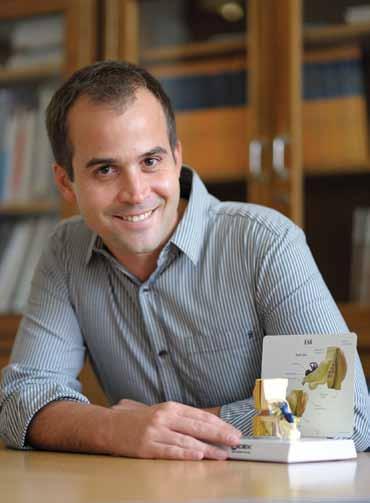
Professor De Wet Swanepoel (above left), Speech-Language Pathology and Audiology. Above: Hearing tests at Leeuwfontein School.
35 International patents filed 438 UP researchers with an NRF rating 47
Number of Research Chairs and Centres of Excellence
Global recognition increases
In 2015 UP was listed in two of the main global ranking systems. In the Quacquarelli Symonds (QS) World University Rankings for 2015/16, UP was ranked in the 501–550 band, which places the University fourth in South Africa, behind the University of Cape Town, Stellenbosch University and the University of the Witwatersrand. UP was also listed in the Times Higher Education (THE) world rankings for the first time, in the band 501–600 out of 800 ranked institutions, among a total of about 18 000 institutions worldwide.
In the QS subject rankings, the number of subject areas in which the University is listed in the top 400 increased from six in 2014 to 11 in 2015, with the addition of Biological Sciences, Medicine, Environmental Science, Communication and Media Studies, and Development Studies.
In addition, UP remained in the top 1% of institutions internationally in six of the 22 Essential Science Indicator (ESI) knowledge fields in Agricultural Sciences, Clinical Medicine, Engineering, Environmental Sciences/Ecology, Plant and Animal Sciences, and in Social Sciences.
Broadening the base of active researchers
A further measure of the quality and research activity of UP researchers is the number awarded a National Research Foundation (NRF) rating. This number increased from 393 in 2014 to 438 by the end of 2015. Of particular significance is the increase in A-rated scientists to 14 and B-rated scientists to 91.
Developing a growing cohort of young researchers is equally important and in 2015 the number of Y-rated (young) scientists increased to 77. This increase is in part attributable to the University’s continued focus on supporting early career researchers, and on broadening the base of productive and high-quality young researchers.
Growing the pipeline of master’s and doctoral students is crucial and figures show a steady growth in overall postgraduate contact enrolments to 13 951 in 2015. Compared to 2014, doctoral enrolments in 2015 increased by 124 students (5,75%) while research master’s enrolments declined by 11 students (0,54%).
Research Awards
External awards are a healthy indicator of the achievements of UP’s academics. Some of the highlights were:
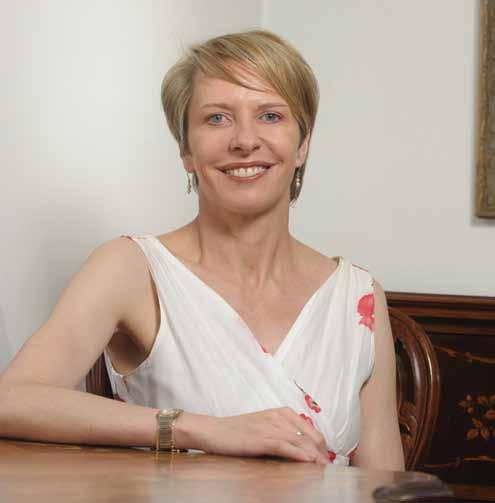
The DST-NRF SARChI Chair Awards UP was awarded four of the new SARChI research chairs for women scientists announced by the Minister of Science and Technology, Ms Naledi Pandor, in 2015. The recipients were: n Professor Erika de Wet: SARChI Chair in International Constitutional Law; n Professor Brenda Wingfield: SARChI Chair in Fungal Genomics;
n Professor Wanda Markotter: SARChI Chair in Animal Infectious Diseases (zoonoses); and
n Professor Namrita Lall: SARChI Chair in Plant Health Products from Indigenous Health Systems.
NSTF-BHP Billiton Awards
These annual awards recognise outstanding contributions by individuals and teams to science,
engineering, technology and innovation (SETI) and are among the most prestigious public SETI awards in South Africa. In 2015, UP had three winners:
n Professor Nigel Bennett, Department of Zoology, SARChI Chair in Mammalian Behavioural Ecology and Physiology, and the Austin Roberts Chair of African Mammalogy.
n Dr Thulani Makhalanyane, Centre for Microbial Ecology and Genomics, Department of Genetics.
n Professor Zander Myburg, Forest Molecular Genetics Programme, Department of Genetics, and Chair in Forest Genomics and Biotechnology in FABI.
Other prestigious national and international awards honouring our researchers included:
n Professor Brenda Wingfield, Deputy Dean of the Faculty of Natural and Agricultural Sciences, was
awarded the Christiaan Hendrik Persoon medal, the highest award of the Southern African Society for Plant Pathology (SASPP) recognising outstanding research achievements in Plant Pathology. Professor Wingfield is only the sixth person and the first woman scientist to receive this award in the 53-year history of the SASPP.
n Professor De Wet Swanepoel, Speech-Language Pathology and Audiology, was awarded the Southern African Association for the Advancement of Science (S2A3) British Association Medal (Silver), one of the highest awards for original scientific research in South Africa, for his innovative smartphone application “hearScreen™”.
n The John FW Herschel Medal, the senior medal of the Royal Society of South Africa, was awarded to Professor Robert Millar for his exceptional contribution to science in South Africa.
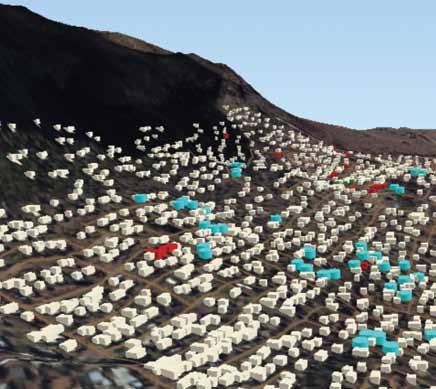
Above left: Geoformatics students in the Department of Geography, Geoinformatics and Metereology mapped the informal settlement of Alaska, Mamelodi East.
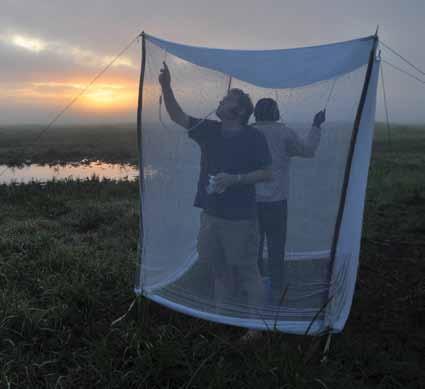
Above: The Centre for Sustainable Malaria Control conducts research on a wide range of aspects of malaria.
Professor Erika de Wet: SARChI Chair in International Constitutional Law
innOvATiOn fOr SUSTAinABle develOPmenT
In 2015, 24 new invention disclosures were made and 35 international patents filed under the Patent Cooperation Treaty system. UP’s patent portfolio currently comprises 52 granted patents and 86 patent applications.
Three important innovations by UP researchers:
n Professor Elsabe Kearsley’s research group in the Department of Civil Engineering developed a safe and super-strong concrete grid based on technology developed by the research group. The grid is used in road construction to cover water runoff culverts. This is the fifth year of commercialisation of this technology.
n Moses Kebalepile, a PhD student in the Faculty of Health Sciences, developed an electronic device that computes and grades the stages of asthma aetiology and severity. A South African provisional patent application was filed in 2015.
n Professor Mike Heydenrych’s team in the Department of Chemical Engineering and colleagues at the United States Department of Agriculture (USDA), have developed a fast pyrolysis unit that can convert dry biomass into crude oil in a single reactor. A number of local and international patents for the innovation have been filed, and the University is involved in negotiations with the USDA regarding a commercialisation agreement.
n Professor Josua Meyer of the Department of Mechanical and Aeronautical Engineering received the Chairman’s Award of the South African Institute of Refrigeration and Airconditioning for seminal research contributions over the past 25 years.
n Professor Sunil Maharaj, Dean of the Faculty of Engineering, Built Environment and Information Technology, and one of his students, Mr Pandelani Munyani, won the Best Paper Award at the 2015 Institute of Electrical and Electronics Engineers (IEEE) African Conference.
n Professor Rangan Gupta of the Department of Economics was ranked ninth globally among young economists who received their PhDs less than 15 years ago by Research Papers in Economics (RePEc), an organisation that keeps a decentralised online bibliographic database of research in Economics.
n Professor Terry Aveling from the Department of Plant Science received the 2015 SANSOR-Bayer Science for a Better Life Award. The prize is awarded by the South African National Seed Organisation and Bayer CropScience in recognition of leadership, innovation and positive contributions to the seed industry and agriculture.
Research funding
While the state subsidy received for research and postgraduate education makes a substantial contribution to the indirect costs of research, researchers are expected to seek external funds to support a wide range of research activities. The ability to secure third stream income is also an indication of research relevance and the competitive standing of UP at national and international levels.
In 2015, UP researchers and research partners secured R525,5m from external funders (compared to R405,0m in 2014).
The University further contributed a significant amount of its own resources (R102,3m) to support research, innovation and the training of postgraduate students and postdoctoral fellows.
Research infrastructure remains essential in providing a research environment in which our scholars can excel. Following the approval of four funding applications submitted to the National Research Foundation (NRF), the University acquired advanced research equipment awards to the value of R46,1m. Such grants are made on the basis of the cutting edge science undertaken at UP and represent a crucial investment in UP’s research infrastructure.
R46,1m
NRF advanced research equipment awards received
eXTernAl fUndinG incOme
DST, NRF, CSIR, Cancer Association, Eskom, MRC, ARC, WRC, TIA and other government agencies
Professor Bernard Slippers of the postgraduate research institute, the Forestry and Agricultural Biotechnology Institute (FABI)
MOVING FORWARD … ON ENGAGEMENT
Engagement is central to our identity as a public university that seeks to strengthen the country’s social and economic fabric. We work in partnership precisely because this allows us to do more to maximise our impact on society. The University’s key partners include local communities, the City of Tshwane, government, industry and international organisations.
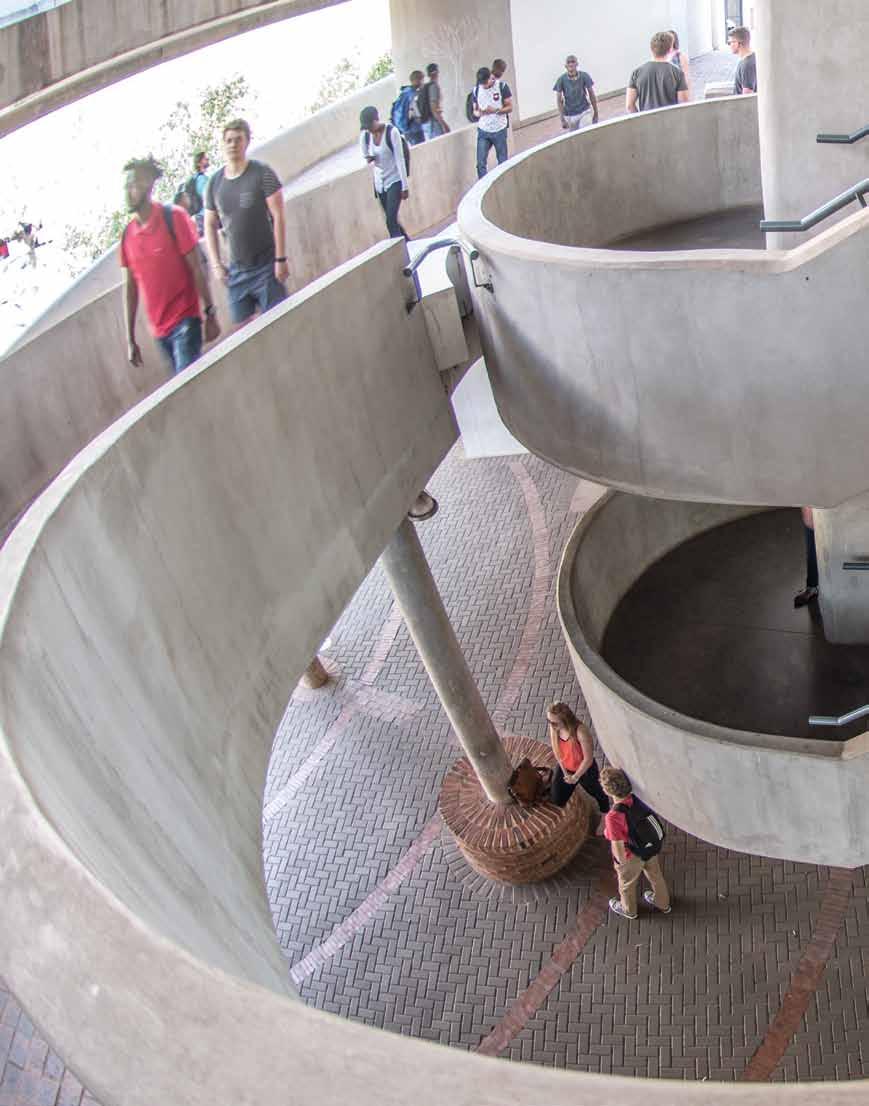
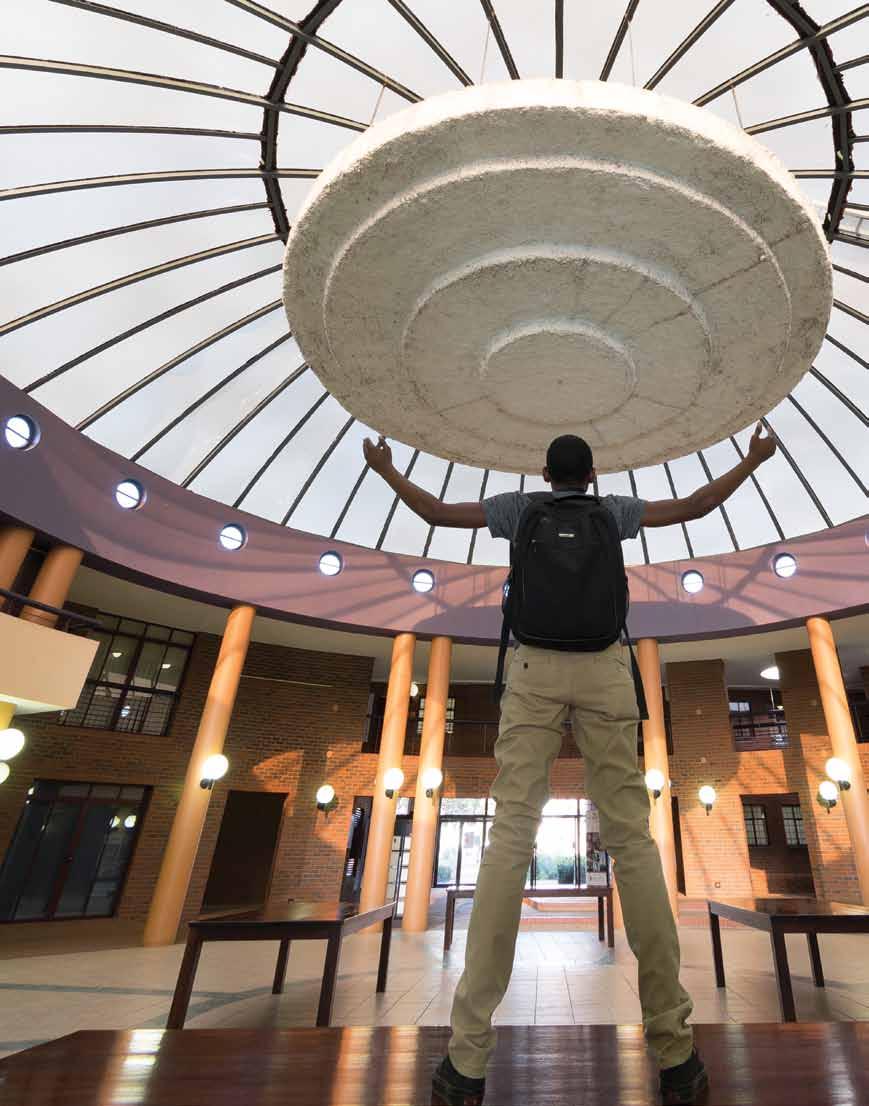
The vaulted ceiling of the Graduate Centre symbolises the expansive educational environment where all students have the best opportunity to succeed.
224
New agreements with industry partners
Partnering for progress
Collaborations and partnerships are strongly illustrated in UP’s work with industry, in the activities linked to innovation and knowledge transfer and in the number of industrysponsored Research Chairs.
In 2015 we entered into 224 new agreements with industry partners, with contracts providing R224,9m in support of research, including postgraduate student bursaries. Further support to the value of R21,5m was provided by the national Technology and Human Resources for Industry Programme (THRIP).
UP’s partnerships with industry and government are also reflected in the number of specialist Research Chairs funded by industry partners. In 2015, UP had 32 Research Chairs sponsored by industry and stateowned enterprises.
Our focus on productive international partnerships and international activities saw existing agreements and collaborative programmes strengthened with universities, research groups and institutions in Africa, Central and
Eastern Europe, Scandinavia and the Baltic countries, Asia, Oceania and the Middle East, as well as North and South America. Ten new institutional agreements and four faculty agreements were signed in 2015, bringing the total of institutional agreements to 221. UP also maintained a strong presence in a number of international organisations.
The central focus of UP’s internationalisation strategy is Africa and the University was invited as one of the 15 founding universities of the African Research Universities Alliance (ARUA) which was launched in Dakar, Senegal, at the high-level African Higher Education Summit. The National Assembly supported a motion of congratulations, which was later conveyed to UP in a letter from the Speaker of the National Assembly.
UP participated in the Summit, whose theme was ‘Revitalising Higher Education for Africa’s Future’. The Vice-Chancellor and Principal was a panellist and also coauthored with Professor T Maluleke, N Holtzhausen and J McKeller a background policy discussion paper on ‘Business, graduate employability and HE investment in Africa’ which fed into the Summit Charter published at the end of the Summit.
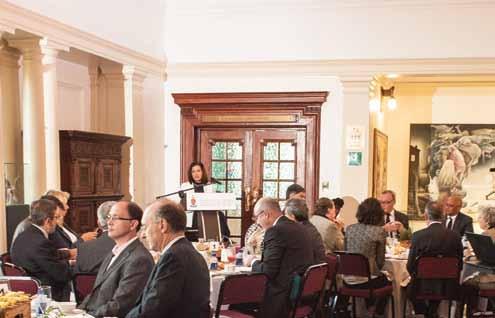
The Vice-Chancellor and Principal hosted the inaugural UP Ambassadors’ Breakfast Dialogue in 2015. This newly launched annual event provides a platform for ambassadors and high commissioners to discuss with UP experts topical issues that are of importance to South Africa and Africa. The first event focused on peace and security issues in Africa.
Ambassadors’ Breakfast Dialogue.
SOciAl reSPOnSiBiliTy And cOmmUniTy enGAGemenT
All faculties are involved in community engagement and community development, although the nature of their involvement varies. In some cases, curricular community engagement is mandated by the profession or accrediting bodies. The number of students undertaking community engagement modules has increased due to the increase in student intake. Community engagement modules include all work-integrated learning (WIL) as well as community-based learning and practical work modules.
In 2015, over 1 300 community sites of learning were used by approximately 15 500 students, of which about 13 000 were students doing work for credit within their respective curricula, while the others were volunteers.
The summary below gives an indication of the scope of curricular and voluntary community engagement activities in 2015, the first forming part of students’ formal programmes, and the second, activities and projects run by voluntary student groups.
The scope and scale of community engagement activities, 2015
Faculty Curriculum-related community
Voluntary student groups engagement modules/courses
* Although more than 10 500 students were registered for voluntary community engagement only 25% of the total were actively involved.
Number of institutional cooperation agreements
Emanating from the existing MoU between UP and the City of Tshwane (CoT), the US Federal Government funded a study tour to the USA to learn from successful city-university partnerships in the USA. Three CoT officials, including the Gauteng executive mayor and city manager, and five UP delegates visited Detroit and Philadelphia. As a result, later in the year, a visit to UP by three consultants from the Philidadelphia firm U3 Advisors was funded by a grant from the Kresge Foundation to advise on the rejuvenation of Hatfield and the surrounding area through the development of the envisaged UP Hatfield Precinct. The development of this university precinct will connect the Hatfield and Hillcrest campuses to create a research and business corridor in Tshwane.
A notable campus event earmarked UP’s unique infrastructure. His Excellency Mr Shigeyuki Hiroki, Ambassador
of Japan, presided over the official launch of the Centre for Japanese Studies, a hub for promoting mutual understanding and cooperation between South Africa and Japan. It is the first of its kind in South Africa.
Community engagement
The University has the largest community engagement programme of all South African universities. Approximately 15 500 students work at about 1 300 community sites of learning. About 13 000 students earn credits within their respective curricula, while the others are active volunteers. In this way the University contributes significantly to the local economy annually as well as towards sustainable socioeconomic upliftment of underserviced communities.
One such site, where curricular community engagement overlaps with work-integrated learning (WIL) and practical work, is the Mnisi Community Programme (MCP) in
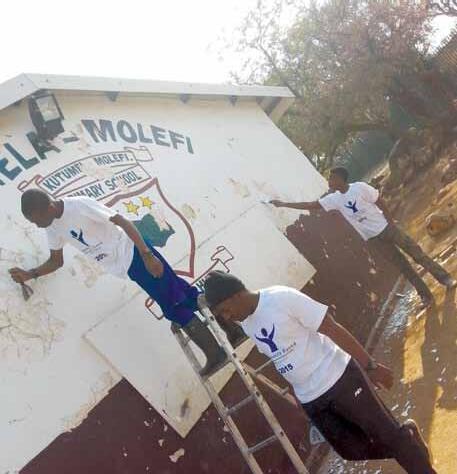
The UP chapter of Engineers Without Borders (EWB-UP) won the first ever Empowering Communities through Engineering Excellence Award presented by EWB-SA in 2015 for their projects at Kutumela Molefi Primary School.
Bushbuckridge, Mpumalanga, one of SA’s 14 rural poverty nodes. The programme, which is a component of the field-based One Health Platform of the Faculty of Veterinary Science, fosters multidisciplinary collaboration and partnerships at the interface between livestock and wildlife aimed at environmental, animal and human health improvements.
The various initiatives of the MCP have contributed to skills development and job creation in the area. An example is the Hluvukani Animal Clinic, a joint venture between UP and the Mpumalanga Veterinary Services, which first brought veterinary care to the area. The clinic forms part of final-year veterinary students’ clinical training and rural outreach. Members of the community have been trained to help run the clinic, in a range of scientific methods such as animal identification and record-keeping, various sampling techniques
and vegetation surveys, and in community liaison work.
Mnisi is also one of the rural areas in which the afrivet Chair in Primary Animal Health Care (PAHC) in the Faculty of Veterinary Science offers the PAHC Programme, which trains small-scale farmers and livestock handlers in primary animal health care. This programme not only uplifts and empowers rural communities, but has a positive impact on rural development and food security, both identified as priorities in the National Development Plan.
Further examples that indicate the variety and extent of the University’s commitment and efforts in this regard include:
n The UP chapter of Engineers Without Borders (EWB-UP) won the first ever Empowering Communities through Engineering Excellence Award presented by EWB-SA in 2015 for their projects at Kutumela Molefi Primary School.
n The Centre for Contextual Ministry in the Faculty of Theology at UP partnered with UNISA, the City of Tshwane and the Tshwane Homelessness Forum (consisting of a number of non-governmental organisations (NGOs)) to host the Tshwane Homeless Summit. The Summit brought together around 400 homeless people, city officials, politicians, NGOs, community and religious workers and representatives from the private sector to envision “pathways out of homelessness”.
n During the Africa Day celebrations led by President Zuma at the University’s Mamelodi Campus,
UP was recognised for its efforts at being socially responsive and impacting society positively.
Gauteng Premier David Makhura noted UP’s extraordinary contribution to enabling the local community and government access to high-quality facilities for critical community programming and support.
n In 2015, school principals from 12 schools of the Gauteng Department of Education’s Tshwane South District were beneficiaries of a Leadership Development Programme. Leadership development was extended to blind and visually impaired business leaders from across the world through training programmes in cooperation with the international organisation, Perkins, and the South African Council for the Blind.
UP also participated visibly in public social awareness drives on matters affecting the welfare of society. An illustrative example is the University’s response to the letter of the Minister of Higher Education and Training to all Vice-Chancellors condemning the xenophobic incidents which sprang up in the country towards the middle of the year and calling on them to safeguard against it. The University as well as the Centre for Human Rights both issued public statements condemning the xenophobic incidents, and the UP SRC, African Student Union and the various student societies, faculty houses and residences organised an anti-xenophobia week at UP comprising various activities aimed at spreading the message of antixenophobia.
MOVING FORWARD … WITH TRANSFORMATION
Initiatives to transform UP into an equitable, inclusive and diverse university are guided by an overarching framework known as the UP Journey for Change. The UP Journey for Change is anchored in the conviction that transformation is the engine of excellence and not its opposite. Through the UP Journey for Change, the University embraces transformation holistically and enthusiastically.
The University’s strategic intent is aimed at improving student success and enhancing transformation.
Our goal is to create a nondiscriminatory, inclusive and enabling environment in which staff and students can thrive, and enrich the University’s intellectual, social, work and study environments.
Formal planning frameworks help the leadership of faculties and support service departments to focus on transformation, such as achieving employment equity and developing and implementing strategies for the recruitment, retention and development of staff.
Key transformation focus areas in 2015 included:
Diversifying the student body
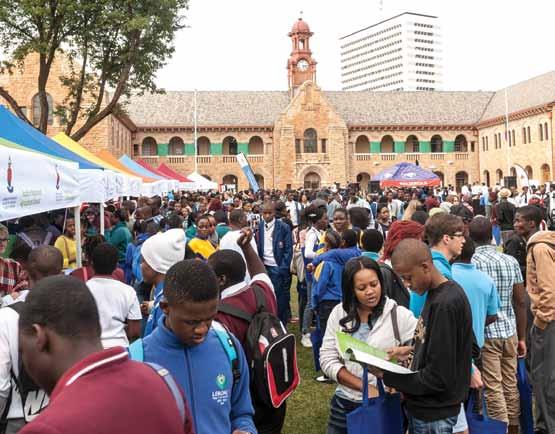
Driven by its appreciation of the value of a diverse student body, the University has continued to build relationships with prospective students in diverse communities, introducing the University to them and encouraging them to seek admission at UP. Whereas we visited 708 schools in 2014, a total of 829 school visits were undertaken in 2015.
Potential students have shown great interest in our JuniorTukkie programme, career exhibitions, open days and financial aid opportunities through the various UP bursary schemes. The Principal and ViceChancellor visited some schools where she engaged with principals and the pupils. In 2015, 60,28% of all our students were black while the majority of our students are female at 57%.
Accelerating staff diversity
Targeted interventions have paid off in diversifying the University’s staff profile. The percentage of black staff employed by the University in 2015
was 43,9%, compared to 38,4% in 2014. Black staff in support services comprised 55,2%, exceeding the target of 51,7%. The proportion of black academic staff was 20,4% by the end of 2015, also exceeding the goal of 19,3%. The University not only met its Employment Equity (EE) targets for 2015 but has raised them significantly for the 2016-2020 period of the new EE plan.
The
New Generation of Academics Programme
(nGAP)
The Department of Higher Education and Training (DHET) nGAP initiative provides for the funding of earmarked academic posts so as to facilitate change in the demographic profile of academic staff in the higher education sector. In 2015 the University of Pretoria was granted seven posts through the nGAP programme. All of the posts were filled and all of them were filled with black candidates.
Re-a-bua
The Re-a-bua (Sesotho for “we are talking”) is an open dialogue programme designed to create ‘safe spaces’ so that staff and students can tackle those issues they may lack space to broach in formal settings. Since its inception in September 2013 up to August 2015, a total of 2 008 staff members and about 300 students participated.
Student life, culture and leadership
The Platinum Leadership Programme, is a tailor-made programme designed to enhance the leadership skills of members of the Student Representative
Council (SRC) and other key student committees. Through this programme, student leaders are given training in such areas as cultural intelligence, ethical and responsible leadership, community engagement, gender justice and the skills necessary for understanding and tackling sexism and racism, among others. Additionally, various experts are invited to train and address residence-based students on tolerance, appreciation of diversity and inclusive behaviour.
A Student Life Lekgotla
Under the theme “Together, creating the ideal student life” a student life Lekgotla was held in the second semester of 2015. In this gathering of 125 student leaders and staff members from a wide range of structures and backgrounds, discussions focused on building a shared vision for student life at the University of Pretoria. There was a strong emphasis on how campus life can and should support students academically and how students grow
and contribute beyond their studies. The process involved appreciative interviews on the one hand and critique on the other, finally to arrive at a number of personal commitments and recommendations for implementation. The draft framework for implementation has since been developed, with responsibilities assigned, to receiving attention through various departments and structures, including the Senate Committee for Student Life.
Doing Difference Differently
This is an introductory module developed and first piloted in 2015. It deals with principles of nondiscrimination to equip students to be active citizens who advance democracy and social justice in broader society. Key to this initiative is the exploration of critical sections of the South African Constitution and what it means to live in a democratic society. The module is delivered online for first-year students in the second semester and enrolment is on a voluntary basis.
cOnTAcT STUdenT nUmBerS Per rAce GrOUP
* HemiS: Full-time equivalent students ** Department of Labour employment equity definition Total contact students: 49 152
28,4% Postgraduate contact students
56,4% Black postgraduate contact students
MOVING FORWARD … ON FINANCES
The financial management of the University is focused on the support of its strategic objectives, including its financial stability. During 2015, this focus ensured that the University was able to maintain its financial position, notwithstanding a decrease in real terms of its main source of income, namely the Government funded block grants, and a higher than inflation increase in expenses.
The University of Pretoria uses quality, relevance, diversity and sustainability as its navigational markers.
Financial statements
Annual financial review for 2015
Income and expenditure
The University’s total income increased during the reporting period by R429m to R6 406m.
The main source of income remains the block grant received from government, together with earmarked grants in respect of veterinary sciences, clinical training, foundation year programmes, research development and teaching development initiatives. The block grant of R1,65 billion in 2015 (2014: R1,59 billion) represents an increase of 3,8% on 2014.
The second source of income, tuition fees, increased by R262,97m (2014: R99,55m). Fees in respect of the University’s programme offerings have on average increased by 9,5% (2014: 9,5%). The increase in tuition fees can primarily be ascribed to this average increase, an increase in student numbers and introduction of new modules and programmes. The table below provides a summary of the University’s sources of income.
TOTAl incOme Of The UniverSiTy Of PreTOriA in 2015 And 2014
by 8,3% (2014: 6,4%), from R4,8 billion in 2014 to R5,2 billion in 2015. The main contributing factors to this increase in operating expenses were staff expenses, depreciation of assets, provision for bad debts and increased operational expenses related to utilities, rates and taxes, electronic media and licences.
Investments
The University has a diversified investment portfolio that is governed by the Investment Committee of Council. The figure below sets out the structure of the University in relation to investment matters.
Overall oversight
Responsible for investment strategy within the mandate agreed by Council
Responsible for ongoing monitoring and implementation
The University’s investment funds are designed to serve three purposes:
n Meet the short-term requirements of the University. These liabilities have a maximum term of 24 months. The risk profile emphasises the need for capital protection over such short periods, and a high degree of liquidity needs to be provided.
n Meet the long-term liabilities (five years and more) of the University. The main requirement here is a good return relative to inflation over the long term.
n Address a special class of the long-term liabilities in respect of post-retirement medical aid benefits.
The University aligns its investment philosophy to the term of the liabilities and the risk profile. To this end, three investment portfolios have been established:
n Money Market portfolio
n Long-term Capital portfolio
n Continuation Medical Aid portfolio
The University follows an investment strategy that rebalances between Long-term Capital and Money Market portfolios according to the cash flow requirements of the University, based on the working capital budget, which accounts for the cash flows of major projects over a rolling 15-month period.
The table below gives an indication of the University’s well diversified investment portfolio over the past three years.
UniverSiTy’S inveSTmenT POrTfOliO
The University of Pretoria has reported satisfactory results for the financial year ended 31 December 2015. The economic environment remained challenging, limiting, to some extent, the ability to raise third stream income especially in the form of donations, grants and bursaries.
The weakening of the rand to the dollar and the required VAT charge on media have also increased the cost of academic books, electronic media, software licences and research equipment.
The University has managed pressure to increase tuition fees by limiting the growth in operational costs, instituting a number of cost-saving initiatives and by using investment returns and other third stream income to fund the shortfall.
Consolidated Statement of Changes in Equity
for the year ended 31 December 2015
council-designated council-designated restricted
operating fund and restricted and restricted student funds – other property, plant and accommodation equipment
Universiteit van Pretoria | University of Pretoria | yunibesithi ya Pretoria
Privaatsak | Private Bag | Mokotla wa Poso X20 Hatfield 0028