



We’ve put together this guide to help you settle (or settle back) into life in Cornwall.
You can find advice, support and information on every aspect of student life that will be helpful throughout the year, not just the start of term.
We have tried to signpost you to all the student support services that are available to you, from wellbeing resources and the education welfare team through to help with study, academic skills, accessibility and living off campus. At the back of the guide you’ll also find a list of useful contacts for the University and beyond.
You might find it helpful to keep this guide handy so you can dip into it whenever needed.
We wish you the best of luck for your new academic year.
Register with a doctor in Cornwall
We recommend all students register with a doctor (GP). The Penryn Surgery serves the campus, visit penryn.co.uk/universitystudents to register online. If you’re living off campus you can find details of local doctors’ surgeries at exeter.ac.uk/students/ wellbeing/cornwall/resources/ doctors
Try the NHS App
The NHS App is an easy way to order repeat prescriptions, use NHS 111 online, find NHS services, view your GP health record and more. Visit: nhs.uk/nhs-app
Check your vaccines are up to date
Mixing with other students can mean you are more at risk of infectious diseases, so please ensure you are fully up to date with your jabs. These could include the MenACWY vaccine to help protect against certain types of meningitis, flu jabs or the HPV vaccine.



Have you had your MMR (Measles Mumps and Rubella) jabs?
Measles spreads extremely easily among those who are unvaccinated and, in some people, can lead to hospitalisation. Contact your GP Practice (Doctors’ Surgery) to check if you have had both MMR doses. It is never too late to catch up. The MMR vaccine is free on the NHS, whatever your age.
It’s important to be aware of the signs and symptoms of infections like meningitis and measles, so you can seek medical advice if you become concerned. If you feel unwell, try and stay at home and avoid mixing with friends so that you don’t spread any germs, particularly to those who might be more vulnerable than you.
Measles: nhs.uk/conditions/measles
Mumps: nhs.uk/conditions/mumps
Rubella (German measles): nhs.uk/conditions/ rubella
Meningitis is a life-threatening condition, so it’s important to make sure you’re vaccinated. Symptoms can appear in any order. Some may not appear at all. Early symptoms can include fever with cold hands and feet, headache, vomiting, diarrhoea, muscle pain and stomach cramps.
A new time limited Meningitis B (MenB) vaccination is available to anyone under 25 who is starting university for the first time in Autumn 2026. Search UKSHA MenB for the details.
Meningitis: nhs.uk/conditions/meningitis
Every time you have sex, you could get a sexually transmitted infection (STI). STIs such as gonorrhoea and syphilis have been on the rise across the UK in recent years.
Condoms can protect against STIs. In Cornwall, up to the age of 24, you can access free condoms from outlets in the Brook, Cornwall and Isles of Scilly’s free condom scheme. Turn up and ask for condoms at any of the free condom locations or order them by post. Visit sexualhealthcornwall.co.uk/more-services/ free-condoms.
If you’re aged over 24 condoms are available from any Brook Clinic sexualhealthcornwall. co.uk/visit-clinic, via The Eddystone Trust eddystone.org.uk/pages/condoms-direct or you can buy them low cost from freedomsshop.com. You can also pick up free condoms and other protection from The SU.



Peer support is designed to be a safe space where people, who have similar experiences, can come together to support each other. The following groups meet locally or on Penryn Campus:
For men who are struggling with any kind of mental health issues.
Georgia’s Voice
For young women with mental health concerns.
Let’s Talk About Loss
A group for students who have been affected by bereavement.
For further information on peer support groups visit: exeter.ac.uk/ students/wellbeing/ cornwall/resources/ peer-support
You can access a variety of resources to help you manage your wellbeing during your time with us. These include:
We provide a range of specialist support, information and guidance on welfare, wellbeing (including mental health support), disabled student support, and general student life advice. Services are available at the Penryn and Truro campuses.
Visit exeter.ac.uk/about/cornwall/students for more information on the support that is available to you.
The Wellbeing team is here to help you manage your mental health and wellbeing so you can make the most of your student life and your studies.
To request a wellbeing appointment:
n Complete our confidential wellbeing form at ex.ac.uk/ea8
n Email wellbeing@fxplus.ac.uk
n Call 01326 370460
n Visit the Student Helpdesk based in the Penryn Campus Library
Find more information at exeter.ac.uk/students/wellbeing/ cornwall/appointments
You can find more information on Wellbeing support in Cornwall at: exeter.ac.uk/students/wellbeing/ cornwall
This free confidential service for students in Cornwall gives you access to talking therapies without the need for a referral. They also provide a 24/7 helpline for immediate confidential advice and support, as many times as you need.
You can contact them:
n By phone
From the UK: 0800 031 8227
From outside the UK: 00353 1 518 0277
n On WhatsApp: Text “Hi” to 07418 360780
Visit exeter.ac.uk/students/wellbeing/cornwall/ resources/spectrum-life

Explore more resources and support including online community Togetherall, Men’s Mental Health Resources and our Wellbeing Toolkit at exeter.ac.uk/students/wellbeing/cornwall/ resources

Not sure what you need?
The Student Helpdesk is a student information service offering help and advice on any aspect of university life – whether you have a quick query or require specialist support.
Visit the Student Helpdesk on Level 1 of The Exchange Building, email: studenthelpdesk@fxplus.ac.uk, call: 01326 370460 or visit: exeter.ac.uk/ about/cornwall/students for further information on support.
Our Accessibility and Inclusive Learning team within Student Services supports and advises you if you have a disability, long term physical or mental health condition, autism, or other specific learning differences. They can help if you need adjustments to be made to accommodation, teaching methods or exam arrangements.
Mentors
Your department’s Pastoral Mentor can support you if you are facing challenges that impact your ability to study and be successful in your programme. They can help you find the right support and expert services that you need.
Visit exeter. ac.uk/students/ pastoralmentors
Email accessbility@fxplus.ac.uk or visit exeter.ac.uk/students/wellbeing/ cornwall/advice/disability
Welfare
Our Education Welfare Team can support you during your studies. They can help you if your mental or physical health is affecting your ability to learn or your study is creating health problems for you. They can talk to you in a confidential and non-judgemental way about any issues you may need support with.
Email welfare.penryn@exeter.ac.uk or find more information at exeter.ac.uk/ students/wellbeing/cornwall/education
If you are a home undergraduate student and have experience of being in care, are estranged, have caring responsibilities, are a displaced student or a mature learner living in the UK, you’re not alone. We’re here to help you succeed in your studies and can help with a range of pastoral and financial support. We offer various forms of financial support including specific bursaries and scholarships that you don’t need to pay back such as the care leaver and estranged student bursary or the mature student scholarship. We also have a travel fund for student carers and you will automatically receive our termly newsletter to keep you up-to-date.
To find out more about how the Exeter cares team can help you, visit exeter.ac.uk/students/wpsupport/exetercares or email exeter-cares@exeter.ac.uk
The Falmouth and Exeter Students’ Union (The SU) can provide confidential and unbiased guidance and support with any academic or wellbeing issues.
Email: info@thesu.org.uk or visit: thesu.org.uk/advice


The ResLife team hosts a calendar of social activities for students living in halls of residence, both on and off campus. They are a friendly face in halls for signposting you to wellbeing and support.
Email ResLife@fxplus.ac.uk
For updates follow @fxreslife @FXResLife

In an emergency dial 999 and ask for the police, ambulance, coastguard or fire service. For non-emergencies call the NHS on 111 for medical help or the police on 101.
In cases of overdoses and serious injury through selfharm you must seek immediate medical help by calling 999, even if you, or the person you are with, feels well.
In an emergency at the coast dial 999 and ask for the coastguard.
In situations where life is not at risk you can find the options for getting urgent medical treatment or advice in Cornwall here royalcornwallhospitals.nhs.uk/ your-care/where-to-get-treatment
If you are having suicidal thoughts and intend to act on them imminently, you should call 999 and ask for an ambulance.
More urgent help information
exeter.ac.uk/students/ wellbeing/cornwall/ urgentsupport
You can get urgent mental health support from the NHS by going to 111.nhs.uk and clicking on mental health help or access the urgent mental health helpline free 24/7 by dialling 111 and selecting option 2.
In a dental emergency, if you aren’t registered with a dentist here, you can call Smile Together on 0333 405 0290. A dentist can advise you about the dental problem, and if you require emergency treatment, they can refer you to an Urgent Dental Care Hub. If it is out of hours, call NHS 111.
You will find a welcoming and supportive space at the Multifaith Chaplaincy which is open to students of all faiths or none.
The Chaplaincy team organises and hosts a range of events throughout the year like crafternoons, drop-ins or film nights that are open to all. Visit fxplus.ac.uk/events to see what’s on.
The team also love to discuss questions related to faith, belief, worldview or spirituality. They can make connections with local faith communities for you and support you to practice your religion or spirituality on and off campus.
The Multifaith Chaplaincy space in Tremough Barton Cottage 8 is a place where students can come alone or with friends to relax or catch up. It also has a room for prayer and meditation which is open to all.
There is also a Muslim prayer room in Tremough House with dedicated washing facilities and space for men and women to pray. This is open 24/7 throughout the year.
Email: chaplaincy@fxplus.ac.uk for help accessing it or if you have any questions.
Visit exeter.ac.uk/students/wellbeing/ cornwall/chaplaincy or follow @multifaithchaplaincy




Welcome and welcome back to our International Community
Our International Student Experience programme involves regular cultural events like Diwali or the Lunar New Year and trips to visit local places and attractions in Cornwall.
You can join us at our Intercultural Café. It is a great opportunity for you to get together with other members of our International Community and meet new people in a relaxed and friendly environment. These activities are designed with international students in mind but are open to all students, researchers and staff in Cornwall. The café includes a free hot drink and cake and meets from 15:00-16:30 on Wednesdays in the Lower Stannary in term time.
Our popular International Social Football, is open to all students and staff on campus, but particularly welcomes our international students and those who have never played before. The mixed gender session takes place on Wednesday afternoons 17:00-18:00 at the MUGA on Penryn Campus.
Visit fxplus.ac.uk/events to find out what’s on.
Our International Student Support team offer a mix of online and in-person services in Cornwall. You can:
n Attend an in person drop-in during term time. In room B038-12 in the Science and Engineering Research Support Facility (SERSF) building. You can access the office via the SERSF main entrance (opposite Camborne School of Mines) or at the side entrance (opposite Stella Turk). You’ll need to use your student ID card to get in.
n Book a short online drop-in of 5-10 minutes to ask a quick question
n Book a longer 45 minute appointment for more complex queries like a visa application.
To find out more visit exeter.ac.uk/international-students/ contact-us
New students, we have a Welcome Programme designed to help you settle into life here in Cornwall. Visit exeter.ac.uk/ international-students/new-students/cornwall, if you have any questions regarding settling in to studying here email visaadvice@exeter.ac.uk
For students whose second language is English we offer a free programme of academic and general English courses; alongside 1-1 tutorials for language and skills advice on written work, presentations or any language skills related question. Email studyskills@fxplus.ac.uk for details or visit exeter.ac.uk/elscornwall


Falmouth and Exeter Students’ Union (The SU) works to ensure that every student has the highest quality education and the best student experience possible. All students on our Cornwall campuses are automatically members of The SU.
The union represents your views and values through elected course reps, student forum and your students’ union president and vice president. They make sure all student voices are heard, striking up conversations, and supporting student run projects to improve your experience.
With more than 120 sports clubs and societies there’s something for everyone to get involved with, from cultural and academic societies to creative groups and social meet-ups.
The SU can also help you connect with our wider community via their volunteering scheme. A great way to explore your interests and meet new people. Check out their profile on My Career Zone for the latest opportunities at mycareerzone. exeter.ac.uk
Your membership of the SU gives you access to their independent advice service if you need help with finances, housing, academic issues and university life.
For more information head to thesu.org.uk or follow:
Falmouth & Exeter Students Union
TheSUFalExe

The Sports Centre at Penryn Campus has a 90-station gym with qualified fitness advisors to provide advice and guidance. The studio offers over 40 weekly classes, including Bodypump, Spinning, Yoga and Pilates.
You can purchase a full membership or ‘pay as you go’. There is also a Sports Hall and the outdoor Multi-Use Games Area, (MUGA) on campus.
Opening hours for all facilities: Monday to Friday 06:30-22:00, weekend and bank holidays 08:30-18:00.
For more information visit fxplus.ac.uk/facilities-services/ flexsi-sports-centre email sportscentre@fxplus.ac.uk or phone 01326 370770
The Penryn Campus parkrun takes place every Saturday at 09:00, starting outside Tremough House. This is a free, friendly, inclusive event where you can run, walk or jog the 5K route at your own speed.
For more information, visit parkrun.org.uk/penryncampus or email penryncampus@parkrun.com


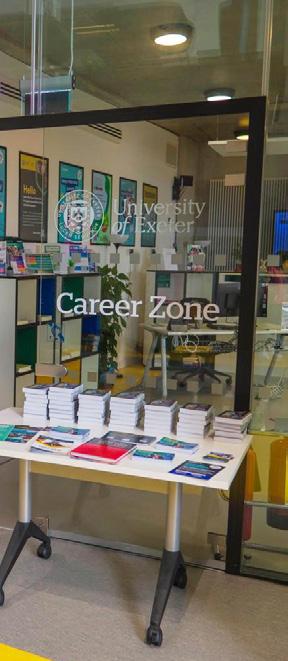
Your careers and employability experts.
You can see the Career Zone team as often as you like – no question is too small and you don’t need to have any clear career ideas before speaking to them, that’s what they’re here for.
They can help with CV advice, finding a part-time job, guidance for interviews and how to apply for graduate jobs or postgraduate study.
As soon as you join us, you’re encouraged to login to My Career Zone at mycareerzone. exeter.ac.uk where you can browse and apply for placements, internships and graduate jobs. You can also use My Career Zone to find events with employers, skills sessions, practice tools and careers fairs.
To stay up to date on career opportunities look out for their weekly email or follow:
@uoecornwallcareerzone

The Career Zone can help you find work if you are looking for a part-time job to help with the cost of living.
Part-time work has the added benefit of looking great on your CV too.
n Use My Career Zone to find local and work-from-home opportunities at mycareerzone.exeter.ac.uk
n Pick up the Part-Time Jobs Pack from Career Zone in the Exchange or access a digital copy at issuu.com/ universityofexeter/docs/part-time_jobs_pack_2026
n Take a look at the University’s Internship schemes to find paid roles on campus or locally at exeter.ac.uk/students/ careers/internships
n Apply to be a Student Ambassador – applications open in the summer at exeter.ac.uk/students/ambassadors
n Look out for jobs on campus like bar, retail or catering work. Visit jobs.falmouth.ac.uk/vacancies/vacancysearch-results.aspx
n Attend careers fairs and meet employers on campus. You can browse these events and book on My Career Zone
n Book an appointment with the Career Zone to get your CV, cover letter or application form checked
n Career Zone run Finding a Part-Time Job workshops to help you prepare for your job search – you can register for them on My Career Zone – mycareerzone.exeter.ac.uk
Contact the Career Zone via email careers@ exeter.ac.uk, call 01392 724493, via Live Chat at exeter.ac.uk/students/careers or drop into the Career Zone, Ground Floor, The Exchange Building, Penryn Campus.

International students, you can find guidance on part-time work here: exeter.ac.uk/careers/ jobsandworkplacements/ internationalstudents


Not sure what support you need?
The Student Helpdesk is a student information service offering help and advice on any aspect of university life – whether you have a quick query or require specialist support.
Visit the helpdesk on Level 1 of The Exchange Building, Penryn Campus email: studenthelpdesk@fxplus.ac.uk, call: 01326 370460 or visit: exeter. ac.uk/about/cornwall/students for further support information.
The Penryn Campus Library is open 24/7 during term time with access to study space, collections, and support.
You can find the Student Helpdesk in Penryn Campus Library, and the Archives and Special Collections on Level 0 of The Exchange. The Library houses both print and e-resources, alongside extensive film and multimedia collections. You can also use the library on Falmouth University’s campus at Woodlane.
If you need any help accessing resources ask a member of staff or check out your subject guide at libguides.exeter.ac.uk/?b=s
If you’d like further information or an orientation of Penryn Library, email library@fxplus.ac.uk
The Skills and Engagement team, based in the library, can help support your learning. They offer workshops and one-to-one appointments covering research, academic writing, referencing, and English language support. You’ll also find study guides, video tutorials, recommended tools, and practical resources to help you succeed at university. Find information at libguides.exeter.ac.uk/ studyteams or email studyskills@fxplus.ac.uk
Personal timetables become available on 7 September. There may be gaps in your timetable if you haven’t selected all your module choices, so it will fully populate once these have been finalised.
Download MyExeter (exeter.ac.uk/students/myexeter) to view your class times, locations, and module types from Welcome Week onwards.
Login online at mytimetable.exeter.ac.uk to compile your schedule, view group options, and export your timetable to other calendar apps (like Google Calendar, Apple Calendar, or Outlook).
Delays can happen if you have not finalised your module choices, registered online, or if your specific postgraduate course starts later in the year.
If you are changing your modules, you must continue attending the classes on your current timetable until the change has been officially processed and confirmed. Information on changing your module can be found here exeter.ac.uk/students/infopoints/ yourinfopointservices/modulechange
The University uses a specific week numbering system (e.g., T1 for Term 1, followed by a week number offset) instead of just dates to map out the academic year. Visit exeter.ac.uk/departments/timetable/ timetable202627/weeknumbers for week numbers guidance and to understand your schedule grid.

If you encounter timetable clashes, missing modules, or access issues, reach out to the Penryn Info Point in the Peter Lanyon Building at exeter.ac.uk/students/ infopoints/contact who can provide support and link you up with the timetabling team if needed.

Most study spaces on Penryn Campus are available without booking, including our learning lounges. These relaxed areas offer a mix of group tables and individual desks, ideal for both collaborative and independent study.
You’ll find Learning Lounges on the first floor of Peter Lanyon (PL) and in Daphne Du Maurier (DDM) on the top floor. There is also a Global Learning Lounge created with international students in mind on the ground floor of Peter Lanyon opposite the Photography Institute.
The Penryn Campus Library offers a range of study options, from group work areas to quieter spaces for focused study. You’ll also find study booths in the Exchange and tables in the Upper Stannary. Our campus cafés are another great place to work, and you’re welcome to study there without making a purchase.

When not in use for teaching, lecture theatres and seminar rooms are available for study. Check the monitors outside rooms for availability or use the free space checker tool to see what’s available mytimetable.falmouth.ac.uk/roomavailability
If you prefer to book ahead, you can access Planon in your browser at estateshelpdesk.fxplus.ac.uk to book a study space. See fxplus.ac.uk/campusnavigation/spaces-and-room-bookings for guidance on how to do this. If you get stuck, the Student Helpdesk can help you.
The Digital Hub on Penryn Campus is a good first point of contact for any digital queries including help with activating your IT account and using the MyExeter app. They offer an in-person drop-in service and are also able to signpost to IT Support.
You can find them just off the first floor of the Library towards the IT suite (ask at the Student Helpdesk if you get stuck).
Once you have activated your IT Account you’ll be able to access the Digital Hub SharePoint where you will find a range of guides on the University’s Digital Tools and be able to book one-to-one appointments with the Digital Hub team: universityofexeteruk.sharepoint.com/ sites/TheDigitalHub
You will also be able to log IT issues (for example computer hardware or email problems) with Exeter IT at: uoeitservicedesk-apps.easyvista.com/ s/selfservice



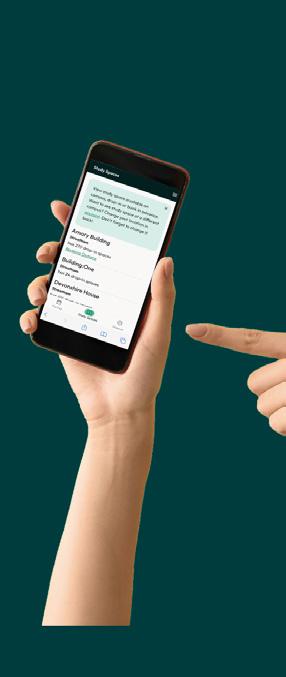
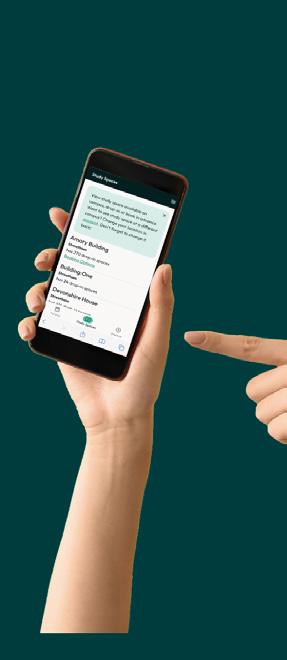
Our MyExeter app can support you throughout your university journey. Download it for free from the App Store and Play Store.
Find out more at: exeter.ac.uk/students/myexeter
n View your timetable in a user-friendly format with real time information on class times, locations, and durations. Get directions to class or use the link to join online sessions.
n Take a look at the bookable and drop-in study spaces available on campus.
n Access University updates and visit the events tab to see what is happening on and off campus.
n Get easy access to the Exeter Learning Environment (ELE 2), the student record system (SRS), and your emails. There’s also a handy list of the campus facilities and student support services available to you.
Some students are required to register their attendance, for example student visa holders. If you are asked to register your attendance using the MyExeter app, use the check-in button during your teaching sessions.
Whether it’s a hot breakfast, a coffee, a lunchtime meal or afternoon tea, everyone is catered for on campus, including meat, vegan, halal and gluten-free diets.
The Stannary Kitchen is the main eatery serving hot daily specials. Other campus outlets include the Sustainability Café, which has a vegan/vegetarian menu, ESI Café and AMATA Café, which all serve light lunches. Koofi serves snacks and pizzas alongside a variety of cold drinks and coffees plus Penryn Campus shop stocks food and essential items.
With so much on offer across our outlets, there’s something to suit all tastes and budgets.
We care about the impact we have on the environment and use local, Westcountry, or Fairtrade produce whenever possible. We encourage you to bring your own reusable cup into our cafés.
Please talk to our catering team if you have any specific dietary or allergen needs.
The Stannary Bar is your social hub on campus. Regular evening entertainment is provided with music, games and student nights to enjoy. Large music gigs are also organised where the whole of the Stannary is transformed into a club venue.
For details about all on-campus events, visit: fxplus.ac.uk/events
For news, updates and offers follow: @foodanddrinkoncampus @stannary



If you are interested in sustainability, find out about what the University is doing and how you can help us achieve our target of carbon net zero.
n Our University of Exeter Guide to Sustainability is a good place to start, it gives you ideas on what you can do and why. Access it at digital.exeter.ac.uk/ sustainability-at-uoe
n Confused about what to recycle and where? Page 44 has a great guide.
n Want to volunteer? Look out for groups and societies you can get involved in via the SU thesu.org.uk/activities or through initiatives like Gardening time with the Chaplaincy. They’re normally listed at fxplus.ac.uk/events
n Interested in adding to your CV? Green Consultants is designed to give you the additional skills and experience you may need to work in the sustainability sector, visit exeter.ac.uk/students/ careers/employability-schemes/greenconsultants
You can find information on sustainability on our Cornwall campuses at exeter.ac.uk/cornwall/sustainability
Keep up to date by following the Sustainability team on @uoesustainability or @uoe-sustainability
There are great transport links to get you around the local area and further afield.
Walking or cycling to campus is beneficial for our health and wellbeing, reduces stress and is environmentally friendly. We have bike shelters, storage areas and free bike maintenance areas plus e-Bikes available to hire. There are also plenty of showers and changing areas for you to use across campus. Visit: fxplus.ac.uk/campusnavigation/travel-and-transport/cycling
Penryn Station is a 10 minute walk from campus. A trip to Falmouth takes 10 minutes by train, while Truro and access to the main line is just 20 minutes away. Visit gwr.com for more information.
You can find someone to car share with in the “Penryn Campus Liftshare Community”. It’s for anyone working or studying at the University of Exeter, Falmouth University, Falmouth Exeter Plus and the Students’ Union in Penryn, Truro or Falmouth. You can join by downloading the app at app.mobilityways.com signing up with your University email address and selecting ‘Penryn Campus’ from the community dropdown menu.
You can get 1/3 off train tickets with a Young Person’s Railcard. So get away from essays for the day and explore what the beautiful South West has to offer. Visit 16-25railcard.co.uk for more information.



Go Cornwall runs the main bus lines across Cornwall. We recommend downloading the Transport for Cornwall app transportforcornwall.co.uk/app and signing up with your University of Exeter email address to get access to discounts, bus times and updates.
You can use your bus ticket on any bus across Cornwall, no matter what colour it is, or who’s driving. If you’re aged between 19-25, you might want to consider Transport for Cornwall’s Young person’s discount. Visit transportforcornwall.co.uk/youngperson for details. Please note some offers are better value than the Young Persons Discount - it’s always worth checking you’re getting the best price.
Currently, the following buses stop at Penryn Campus, but routes do change; you can check them at transportforcornwall.co.uk/services or on the app. On the App, the Penryn Campus bus stops are sometimes called Tremough, Falmouth Uni Penryn Campus.
Main buses that stop at Penryn Campus
32A - Falmouth to Truro
33A - Falmouth to Penryn Campus
33 - Falmouth to Redruth
3 - Falmouth to Helston
69A – Falmouth to Penryn Campus
We don’t recommend bringing a car to University. There is no parking available at any of our residences except for Blue Badge holders. Why not use one of the many sustainable means of transport available instead?
Where buses leave from
Stand A
32, 32A, 33 to Falmouth
33A to Falmouth Moor skips Penryn Town
Stand B
69A to Falmouth
Stand C
32A to Truro Bus Station
33 to Redruth
3 to Helston
Our Campus Safety and Support team are here to help you feel safe on campus.
The team are available 24 hours a day, 365 days of the year and are initial responders for first aid, welfare and any security concerns you may have. You can spot them in their blue uniforms and high vis jackets.
Their emergency line is 01326 254444, non-emergency 01326 255875, and they’re based in Glasney Lodge above Koofi. In an emergency, still dial 999.
SafeZone
Download SafeZone, your free on-campus safety app and register with your university email address. It provides a quick and easy way for you to contact the campus Safety and Support team if you ever need urgent help while you’re on Penryn Campus. Visit: fxplus.ac.uk/safezone
How to download SafeZone
On Cornwall campuses once you have downloaded and registered on the app for free from the Apple or Google store you will need to select Falmouth and Exeter Plus as the organisation.
Here are the steps:
n Download the app and sign in using your Exeter email address and password.
n From the top left-hand menu select ‘Add organisation’.
n At the bottom of the next screen add your email address and press search.
n Select ‘Falmouth Exeter Plus’.
n Re-enter your details.

Please secure bikes on campus with a chain or padlock and store them in the bike racks nearer the centre of campus, where there is CCTV and it is harder for thieves to go unnoticed.
Bike racks can be found in Car Park B next to the Information building, in the Peter Lanyon Courtyard to the right of the Penryn Info. Point, outside the Sports Centre and at Glasney Student Village. You may also want to consider other security measures, such as bike marking. Take a look at the Walk Wheel Cycle Trust bike security advice at walkwheelcycletrust.org.uk/ our-blog/get-active/bike-securityadvice

The best way to stay safe at night is to stick with your friends. It happens rarely, but students have been involved in incidents walking home alone.
Always remember:
n During darkness you are safest in well-lit and busy areas. Avoid badly lit car parks, underground walkways and open areas.
n Be careful of your belongings and cover up expensive looking jewellery, mobile phones, keys, cash and cards.
n Ensure you have a safe route home planned.
n If you find yourself in trouble the best form of defence is to get away and head towards busier areas.
n If you are trapped, bring attention to yourself and make as much noise as possible by shouting or screaming.
Strut Safe is a UK-wide phone line. If you’re walking alone on Thursdays 19:00-01:00, Fridays and Saturdays 19:00-03:00 or Sundays 19:00-01:00, their volunteers are a friendly voice to keep you company and help you feel safe until you are home.
Call 0333 335 0026. Calls are almost always free as they are included in phone packages with free minutes.
n In an emergency, call 999 as soon as it is possible to do so and never feel embarrassed about reporting something.
n If you choose to get a taxi, always use a licensed taxi. Check that they have their taxi license number on display. Never hail a taxi and never get into an unmarked, or unlicensed cab.
Visit: exeter.ac.uk/students/stay-safe for more tips to stay safe.
Cornwall is generally a safe place to live but it’s always best to be aware of potential risks and take some precautions.
Spiking
n Spiking is a crime and carries a maximum 10 year prison sentence. Find out more at devon-cornwall.police.uk/spiking
n Spiking involves putting alcohol or drugs into someone’s food, drink, vape or cigarette, or injecting them with drugs, without their knowledge.
n Don’t leave your drink unattended, don’t accept a vape from someone you don’t know, and never accept a drink if you haven’t seen it being poured/ opened.
n If you start to feel strange or more drunk than you should be, then get help straight away.
n Don’t be put off reporting because you’ve knowingly taken illegal drugs. Unless you’re driving, having illegal drugs in your system is not an offence and shouldn’t prevent you from reporting.
n Many bars will be able to test your drink to determine if it has been spiked including the Stannary bar.
n Find out more about recognising the signs of drink spiking and getting help at drinkaware.co.uk/ advice-and-support/help-to-support-someoneelse/drink-spiking-and-date-rape-drugs


The Stannary Bar on Penryn Campus and a number of other venues in Falmouth and Penryn operate the ‘Ask for Angela’ scheme. (It’s normally discreetly signposted.) Anyone in a vulnerable or uncomfortable situation who needs help can ask “for Angela” at the bar or to a member of staff, who will then discreetly ensure they are helped. This might be reuniting them with a friend, seeing them to a taxi, or calling venue security and/or the police.

Consent means that you give permission, or that someone has given you permission to engage in any intimate activity or sex. Any sexual contact without consent is illegal.
Consent is an essential part of healthy relationships and it’s really important to understand when it has been given. Consent can be retracted at anytime.
In addition to verbal responses, recognising and accepting non-verbal cues and body language are just as important when gaining consent.
All students are expected to complete the Consent training module found here: ele.exeter.ac.uk/course/ view.php?id=12256
You will need to activate your IT account first.
Find out more about Healthy Relationships here: exeter.ac.uk/students/staysafe/healthy-relationships
You can get advice and support from us at any time.
Find out more on the University’s Sexual Violence support pages here: exeter.ac.uk/students/wellbeing/cornwall/ resources/sexualviolence
Everyone has a right to be treated with dignity and respect.
If you witness or experience any unacceptable behaviour, such as discrimination, bullying, intimidation or harassment, including sexual harassment, you can seek support and report such incidents. If, for example, you experience racism, sexism or homophobia, then please report it.
There are three ways you can do this – anonymously, informally and formally. Please report any incidents so we can support those who are affected and get a clear picture of what is happening in our community, so we can take action.
All reports that are not anonymous are followed up by the Wellbeing team or Student Cases through Support and Report. For more information, including the support options available and the reporting form, please visit: exeter.ac.uk/students/support-report

You can help to support others who may experience harassment, bullying, intimidation or discrimination by learning how to safely and effectively intervene at our bystander intervention training which is available to all students. Visit exeter. ac.uk/departments/inclusion/support/ training/exe-changethenorm


A hate crime is any crime perceived to have been motivated by hostility or prejudice.
It can be committed against a person or their property based on:
n Disability
n Race or ethnicity
n Religion or belief
n Sexual orientation
n Gender identity
n Or any part of someone’s personal identity
Hate crimes can include things like:
n Being called names or other forms of verbal abuse
n Being sent offensive letters, emails or text messages
n Being attacked or threatened with violence
n Having your property interfered with or damaged
If it is an emergency where life is threatened, people are injured or offenders are nearby and you need an urgent response phone 999.
To find out how to report a hate crime to the police, or anonymously through a third party, visit exeter.ac.uk/ students/stay-safe
If any of these things are happening to you, you should report them to the police and also report them to the University at exeter.ac.uk/students/support-report.
The University and police take reports of hate crime seriously. We have a zero tolerance approach to hate crime and work together on this.
Keep yourself and your devices protected
When you’re online it’s important to stay safe and make sure you don’t share things that could put you in danger:
n Use secure and unique passwords for all devices and apps.
n Keep your antivirus software up to date.
n If you receive an email from a stranger, think before clicking on a link or an attachment – it could contain a virus
n We have advice on how to spot and report phishing attacks that try to trick you into sharing your personal details at exeter.ac.uk/departments/it/cybersecurity/phishing
n If you believe that your smartphone or computer has been hacked or compromised, stop using it immediately and get advice from a repair shop.
n Be careful who you chat to, if somebody you don’t know adds you as a friend, ignore them and delete their request.
n Don’t share personal information like your address or phone number with somebody you don’t know. Most importantly don’t share bank details.
n Think before you post something on social media.
For more tips visit: timeshighereducation.com/student/ advice/11-tips-stay-safe-online
Unfortunately, some criminals try to get money from students. Some of these scams are very convincing and persuasive so it can be frightening.

If you’re contacted by someone and it seems, unusual, unexpected or just odd, please end the call/communication. If the person who contacted you is genuine they won’t mind you checking and then getting back to them.
You can find examples of recent scams and what to do at exeter. ac.uk/international-students/livingin-the-uk/fraud-tricks-scams


“I had my laptop nicked last year –someone just opened my unlocked ground floor bedroom window and grabbed it. It wasn’t security marked and I had loads of personal stuff on there –including my dissertation…” 3rd Year Student
Opportunist thieves often target student houses:
n Always lock your windows and doors. Sounds obvious but if you don’t then you’re more likely to be burgled.
n Keep valuables out of sight, away from windows or doors and never leave them on show.
n Security-mark your valuables. Write your name and HOME postcode on them with a UV pen. Register your items for free at immobilise.com – so they can be traced back to you if they’re recovered.
n Don’t keep spare keys ‘hidden’ anywhere obvious. That includes the shed and garage as well as the disused flowerpot by the front door.
n Lock your bike, take a photo of it, know the frame number and register it. Find out how at walkwheelcycletrust. org.uk/our-blog/get-active/how-toregister-your-bike
Insurers often don’t pay a claim unless you’ve done the above.
Reporting crime help is easy, and the police will be happy to help.
You can:
n Email: 101@dc.police.uk or phone 101
n Report online and find answers to most questions at devon-cornwall.police.uk
n Sign up to Devon and Cornwall Alert, for all the latest events, crime information and help at alerts. dc.police.uk
n In an emergency always call 999
n Falmouth Police Station is open from 10:00-15:00 Monday to Saturday.
Over the holidays student houses can be vulnerable to burglary, so take your valuables with you, put them in secure storage or ask a friend to look after them.
Reduce the risk of fire and know what to do to help keep yourself and others safe.
In the event of a fire… get out… stay out… Call 999.
n If you hear a fire alarm leave the building immediately and don’t go back in until it is safe to do so.
n Make yourself aware of the way out of the building and don’t obstruct doors or corridors.
n Never remove or cover your smoke alarm or carbon monoxide detector.
n Take care when cooking, particularly with oil and don’t get distracted.
n It is not safe to cook when you have been drinking alcohol.
n Charge your devices on a hard surface and never on a carpet, chair or bed.
n Extension leads generate heat so should be used carefully. Do not overload sockets.
n Check your accommodation contract for any do’s and don’ts like smoking, vaping and candles.
n Contact your landlord if you have any fire safety concerns.



We understand that living in shared accommodation with new people can be a very big change and that living with friends you have known for a while can also be challenging.
The following advice has come from students who have lived in shared accommodation before:
n Meet regularly: Students in shared accommodation who meet regularly have a much better time. House/flat meetings can help air tensions, create an atmosphere of support and help to tackle practical issues more easily (like paying bills, addressing noise, etc.)
n Create a rota: Agreeing a rota for domestic tasks can be very helpful. In our experience, jobs like cleaning the house, taking out the bins etc. can quickly escalate and cause households to argue. Start with a plan!
n Ask for help: If things go wrong, it is also important to know when to ask for help. The following people can help you:
Book an appointment with the SU Advice team – if you have a question about your contract, finances or you are having some problems with housemates. Visit thesu.org.uk/advice/appointments
Email wellbeing@fxplus.ac.uk – if you have any concerns about your wellbeing or the wellbeing of other students at your address.
We remind you that while you live in Penryn, Falmouth and Truro, as well as being part of the University, you are part of the local community.
We’ve heard some lovely stories from residents about students showing them great kindness. Please continue to be mindful and considerate in the way you act; it makes a bigger impact than you realise.


Please also be aware that students must abide by our ‘General Student Regulations’ which sets out the personal commitments we must all make to keep our community safe. exeter.ac.uk/ staff/policies/calendar/part1/otherregs/genregs


If you’re moving from University accommodation into the community for the first time, this can be an exciting time.
Renting a house or flat with friends will be a big part of your university life and it’s a great opportunity to meet new people. However, it comes with new responsibilities and new neighbours.
It’s always important to maintain good relations within your community.
People in Cornwall are generally friendly and neighbourly. If you come from a big city you may not be used to talking to someone on a bus or walking by, but it’s quite common down here. So don’t be afraid to say hello.
This section of the guide has advice for living in the community, from how to introduce yourself to your neighbours to what to do with your rubbish and recycling.
On 1 May 2026, the Renters’ Rights Act brought big changes to renting, reshaping how students rent privately with stronger protections, more flexible tenancies and new rules for landlords.
n The types of tenancy changed, so there will no longer be fixed-term tenancies and instead, tenancies will not have a set end date.
n How your tenancy ends will change, both from a tenant and a landlord perspective.
n Payments also changed from 1 May 2026, so you will be required to pay your rent monthly, and a landlord or letting agent cannot ask for more than 1 month’s rent in advance of a new tenancy starting.
n Landlords are no longer able to give Section 21 notices, a “no-fault” eviction notice used to end a tenancy without providing a reason.
The Students’ Union has put together a guide explaining what the new renters’ rights mean for students visit thesu.org.uk/advice/ accommodation/rentersrightsact




Here’s the essential checklist of stuff to do now you’ve arrived in your new home:
n Meet your neighbours – It’s really important to get to know your neighbours. Why not introduce yourself by putting a note through your neighbours’ letter boxes with your names and a phone number to arrange a chat. Don’t forget to include the neighbours who live behind your home as well as the ones on either side.
n Check your inventory – your landlord should provide you with an inventory (if they don’t, make sure you write your own) so that you can both agree on the initial contents and state of the house.
n Read your meters – if your gas and electricity bills are quarterly you’ll need to do this asap so you don’t risk getting charged for the previous tenant’s energy use. Contact your gas and electricity providers to give them the reading and ask them to put the names of all the tenants on the bill. Check your meter even if your bills are included.
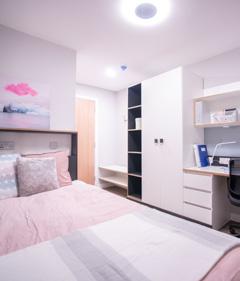
n Take date-stamped photos of every room –especially anything that’s not in good, clean condition. This means you’ll have evidence of what the house was like when you got the keys, which could save you issues later.
n Register to vote at your new address – You can vote in local and national elections if you are eligible and your name is on the electoral register. As a student you are entitled to register to vote at both your home and University addresses, but you can’t vote more than once in the same election. Find out more at: exeter.ac.uk/students/yourvoice/registertovote
n Something wrong? If it’s a dodgy doorknob or a window that won’t shut properly – inform your landlord in writing and keep a copy. List exactly what’s wrong and agree a reasonable deadline for when it should be sorted.
n Prescribed information – Your landlord is legally obliged to give you certain information such as the gas safety certificate, Energy Performance Certificate and deposit information. Most will do this without a problem, but if you are unsure, ask for help. Visit thesu.org.uk/advice/accommodation
n Make sure you pay your TV licence if you watch TV live. You need a TV Licence to watch or record programmes as they’re being shown on TV or streamed live on an online TV service. And that’s not just the BBC; it’s all channels and services. Unsure if you need one? Check: tvlicensing.co.uk/check-ifyou-need-one/for-your-home/students-aud1

You can use Studentpad to search for student houses, flats and lodgings in Cornwall.
Visit: cornwallstudentpad.co.uk/ accommodation for more information.
The lovely people at the Falmouth & Exeter Students’ Union (the SU) can give advice, information and support on a whole host of housing queries and questions about university life.
See their web pages at thesu.org.uk/advice/ accommodation for more information.

Think of your neighbours when walking to and from your property, particularly late at night. Street noise, or ‘transient noise’ can cause just as much disturbance to neighbours as sound equipment – particularly for those with children, or early morning work commitments.
The vast majority of students living in Cornwall have a really positive relationship with their neighbours.
When living off-campus it is important to be aware of the following facts:
n Student regulations clearly state that students are expected to have consideration and respect for neighbours.
n We can provide advice and support when students are the victims of issues that arise. Please get in touch with Student Support, email studenthelpdesk@fxplus. ac.uk or the SU Advice Team visit thesu.org.uk/advice
n Students also report noise/disturbance from other properties. It is important to consult with your neighbours before organising a party/social – including both your student and non-student neighbours.
n Excessive noise from any sound equipment can lead to legal action, which could result in a conviction/ seizure of the equipment.
ASB is defined as “Behaviour by a person which causes or is likely to cause harassment, alarm or distress to one or more persons not of the same household as the person”. (Antisocial Behaviour Act 2003 & Police Reform and Social Responsibility Act 2011).
n As the tenants of a property, you will be held accountable for the actions of those attending a gathering. Think about numbers. More people at a party means more noise and it will be more difficult to manage.
n If hiring DJs, you may also need to consider the need to apply for a Temporary Event Notice Licence.
See our party checklist on page 43, for how to host a gathering that respects your neighbours.
You can find out how Cornwall Council investigates noise nuisance here cornwall.gov.uk/environment/ environmental-protection/noise
Please remember that noise travels – follow the checklist to reduce the chances of a legal action from Cornwall Council.
Note that the checklist below applies to any significant gathering/party or pre-drinks.
n We have consulted with neighbours living all around our property two to three days before our gathering.
n We have ensured that start and finish times have been agreed with neighbours and, if neighbours are not at home, we have issued a letter with full details.
n We have taken into account our neighbours’ working hours/study commitments and/or childcare priorities.
n We have made preparations to keep windows closed, moved sound systems away from walls and reduced noise/ bass levels.
n We will manage guests appropriately and recognise that all tenants are jointly responsible for the conduct of any visitors.
n We will ensure that guests/tenants will not cause disturbances outside of our property – particularly at the start and end of our social.
n We have ensured that all tenants living at our address are fully consulted on any socials being arranged – even if only a minority of tenants are involved.
n We will not use high-bass/high decibel sound systems and acknowledge that increased noise levels could result in the issue of noise abatement notices.
n We will not permit student clubs/ societies to host large scale socials or pre-drinks at our address and accept that all registered tenants will be liable if such socials go ahead.
n We will provide neighbours with a way of contacting us if there are any issues.
Please be mindful not to make excessive noise even if you have followed the checklist.

Here are some tips for avoiding noise complaints:
n Neighbours who are on first name terms are far more likely to talk to you if there is a problem – and far less likely to raise formal concerns with the council or University. Introduce yourself to your neighbours – popping a note through the door followed by a chat over the fence or on the phone will help break the ice.
n There is no legal cut-off time for when ‘noise’ can or can’t occur. The best way is to consult with neighbours about what time limits work for them. Being able to evidence this will reduce the likelihood of a negative outcome.
n Students are increasingly complaining about noise from other students. Be cautious about student societies/clubs asking to host social events at your address, as guests are less likely to regulate their noise.
Important: Are you feeling pressurised into hosting a social/party at your address? Contact the Wellbeing team at exeter.ac.uk/students/ wellbeing/cornwall/appointments
n Front door won’t close properly? Fire-doors slamming inside? Poor insulation between your house and next door? If these issues are causing noise concerns for you and your neighbours, it might be that your landlord needs to take some action.
If you are living in the community, not a University residence, your rubbish and recycling collection is likely to be different to what you’re used to. You will need to put out:
n Your green outdoor food waste caddy every week
n Your rubbish bin or protective sack every fortnight
n Your recycling bags and box every fortnight on the week you don’t put out the rubbish
Visit cornwall.gov.uk/myarea to check your collection calendar.
If you live in a household with more than six people, you can apply for a review of your fortnightly rubbish limit to get an extra food caddy, rubbish bin or sack. Apply here forms.cornwall.gov. uk/Waste/additionalcontainer
Your rubbish needs to go in the black rubbish bin or a protective sack; bags won’t be collected if they’re not inside one of these.
If you are missing recycling bags or boxes, visit cornwall.gov.uk/rubbishrecycling-and-waste/recycling/ order-recycling-bags-andboxes for replacements.
Tetra pak’ cartons (oat/soya milk, passata, Pringles) and soft plastics (bread bags, crisp and biscuit packets, frozen food bags etc) are now recycled by Cornwall Council in their doorstep collections.
Rinse and squash your Tetra paks, and tie up your bag of soft plastics before placing in your red bag if you live in the community.
Recycling available on campus
If you live in University accommodation you can recycle tetra pak cartons in the special bin located just outside the campus shop.
There is a ‘special recycling’ bin located in the Exchange building up the steps from the library, for the recycling of pens, toothpaste tubes and medicine blister packs.

If you have access to a car the Falmouth and Penryn Household Waste & Recycling Centre is located 2 minutes from the campus, where you can drop off anything else that might be recyclable, including electricals, wood and garden waste. They also have an excellent (and cheap!) reuse shop on the site.
For any other advice on recycling please email recycling@fxplus.ac.uk.


Falmouth Town Council and Safer Cornwall are asking everyone to help keep Cornwall’s beaches safe for residents, visitors and marine life.
They promote these simple rules:
n No open fires on the beach – if permitted, use a BBQ instead. Don’t leave it unattended or forget to dispose of it safely. Often, BBQ bins are provided.
n If you have a dog, clean up after it and follow summer dog restrictions.
n Take your rubbish with you when you leave.
By leaving the beaches as you find them, you can help ensure Falmouth’s beaches keep their blue flag status, and we have a cleaner and greener environment for everyone.
Please report any concerns about safety on Falmouth beaches to admin@falmouthtowncouncil.com or call 01326 315559.
Cornwall’s coastline offers lots of great opportunities to head to the beach for some fun. The RNLI has a range of advice on how you can stay safe and enjoy all that a day at the beach has to offer.
Here are a few things to keep in mind:
n Go with others and look out for each other.
n Make sure your phone is charged so you can call for help if you or someone else needs it. In an emergency dial 999 and ask for the coastguard.
n Only swim where you feel safe. Often, that’s a lifeguarded beach where you can swim between the red and yellow flags.
n Check the tide times and heights so you don’t get cut off whilst exploring.
n Learn to understand waves and if the sea conditions are rough, enjoy them from a respectful distance.
For more information visit: rnli.org/safety/ beach-safety
We know it seems far away now but the year will fly by and if you’re in private rented accommodation it’ll soon be time to leave your house again.
Here are some things to remember:
n Change your address two to three weeks before the move so you don’t miss out on any essential post. Royal Mail can provide a re-direct service for a charge.
n Let utility providers like gas, electricity, water, broadband etc know your date of departure, otherwise they’ll keep charging you. Try to call them as soon as you know your moving out date and take meter readings on the day you leave.
n Check the photos from when you moved in to ensure that everything is still in order. This includes going through the house inventory.
n Take date-stamped photos of every room the day you move out. This can help save your deposit especially if the landlord contests the state of the property.
n Too much stuff? Old pots and pans you don’t need? Take your items to a charity shop – remember to check that they are able to accept donations.
n When you leave your property for the year, you could be due a refund on the months you’ve still got left on your TV licence. Find out more tvlicensing.co.uk
n Clean up! Book a day with all your house-mates to clean and put furniture back in the right place before you move. Share the work, don’t leave it all for the last person to do.
n Speak to the landlord to set up an inspection date when you are all still around to inspect the house together.
n Place your bins back inside your property boundary when you leave.
n If you have a disagreement with your landlord about money being taken from your deposit, you can get support from the Students’ Union Advice Team.

We know you may be feeling anxious about the cost of living, and managing your money at uni. Here are a few ideas to help you keep on top of your finances.
1. Consider opening a student bank account
Different banks and bank accounts offer different benefits and incentives. moneyhelper.org.uk and moneysavingexpert.com/students have advice on choosing the best account for you.
2. Work out your budget
You can find a number of free budgeting tools online including moneyhelper.org.uk/en/everyday-money/ budgeting/budget-planner. The Students’ Union can also help you with budgeting advice, visit: thesu.org.uk/advice
3. Make sure you’re getting all you’re entitled to Depending on your circumstances you may be eligible for extra financial support, bursaries or benefits. Find out more at exeter.ac.uk/students/financialhelp or ask your Students’ Union Advice Service.
4. Look out for deals and savings
We have information and advice to help you manage your finances, and support available if you’re struggling, on our Cost of Living web pages: exeter.ac.uk/students/ costofliving/cornwall
Lots of places offer student discounts and special deals. Check out savethestudent.org/student-deals for the latest deals and freebies, and see exeter.ac.uk/ students/costofliving/cornwall for deals and money saving tips on campus.
5. Up your income
Consider a part-time job if you can fit it around your studies. It could help you gain experience and earn money while studying, visit: exeter.ac.uk/careers and search ‘help finding part time work’ or see page 16.
6. Don’t be tempted to use loan sharks, illegal money lenders, or quick-money schemes that may not be legitimate. You could get scammed or end up in serious trouble. If you’re struggling, you may be able to apply to our Success for All Fund for help during your time at Exeter, visit: exeter.ac.uk/students/ financialhelp
7. Deal with your debt
Although it can be stressful, problems with debt only get worse if you ignore them. Talk to your creditors about your situation and try to negotiate an affordable payment plan. If you’re struggling with paying your tuition fees, or the rent on your University accommodation, talk to us. You can contact us through the Student Information Desk (SID) at exeter. ac.uk/students/sid
The SU Advice Service, thesu.org.uk/advice/ finance, can also give you advice on managing your debt. And we work with debt advice charity, StepChange, who can provide you with free, impartial and personalised support for money and debt worries: stepchange.org
8. Ask for help
If you’re worried about your money, or dealing with debt, don’t keep it to yourself. Please speak to your Students’ Union Advice Service. They can help find the right advice and support for you. If money worries are affecting your mental health don’t forget you can access support, visit: exeter.ac.uk/students/ wellbeing/cornwall



There are lots of ways that you will receive updates from the University. Key communications that are tailored to Cornwall Campuses are:
A weekly newsletter for students in Cornwall sent by email on Mondays, during term time, and posted here: exeter.ac.uk/students/news/inbrief
University of Exeter, Cornwall social media accounts share student information, news, updates and events. Follow @UniExeCornwall or on LinkedIn University of Exeter Cornwall.
Campus Service Updates

You can find updates on Penryn Campus food outlet opening times or any notices regarding disruptions at: fxplus.ac.uk/service-status
Stay Connected, Stay Informed: Download the My Exeter App from the App Store or Play Store. Find out more at: exeter.ac.uk/students/myexeter