Impact 2025
PHILANTHROPY AT THE UNIVERSITY OF TASMANIA
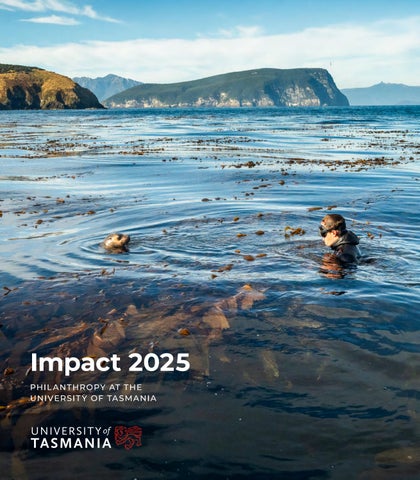
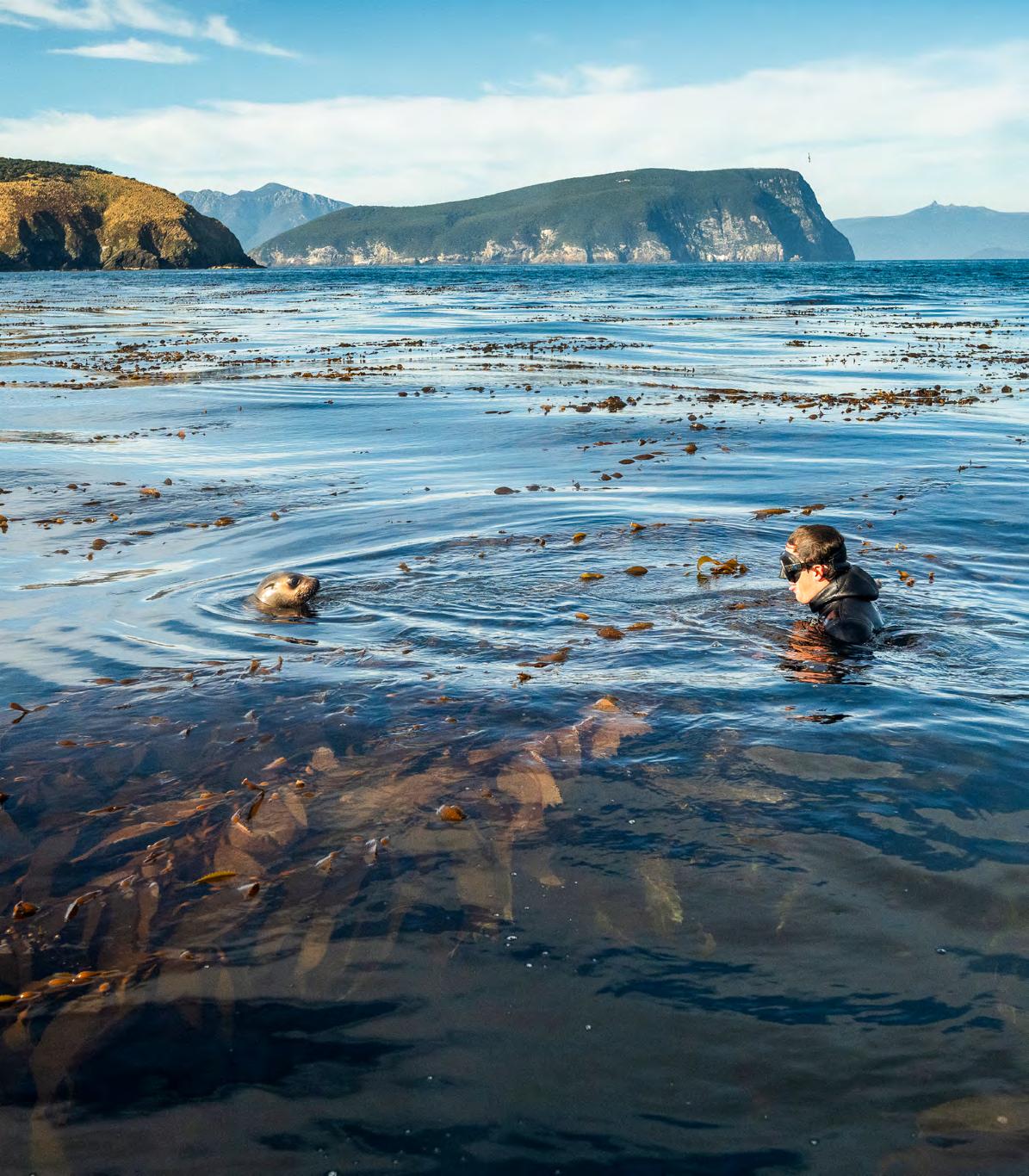
◀ Cover: PhD candidate Hunter Forbes meets a friendly seal during a field trip near Maatsuyker Island, Tasmania. Read this story on page 14 | Image: Scott Bennett
Acknowledgement of Country
We acknowledge the Palawa of Lutruwita/Tasmania and Gadigal people of Sydney, the traditional owners of the land upon which we live and work. We pay respects to Elders past and present as the knowledge holders and sharers. We honour their strong culture and knowledge as vital to the self-determination, wellbeing and resilience of their communities. We stand for a future that profoundly respects and acknowledges Aboriginal perspectives, culture, language and history.
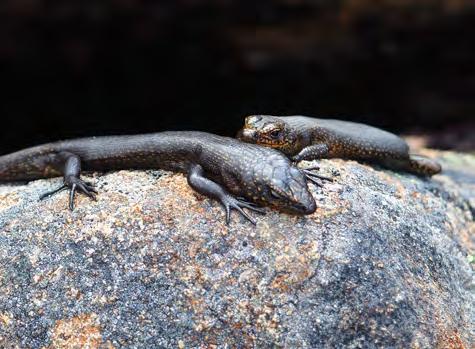
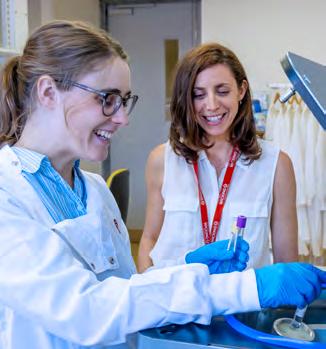
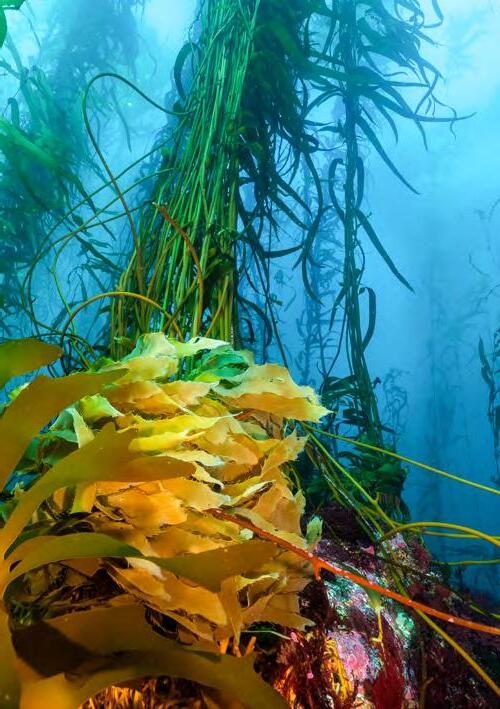
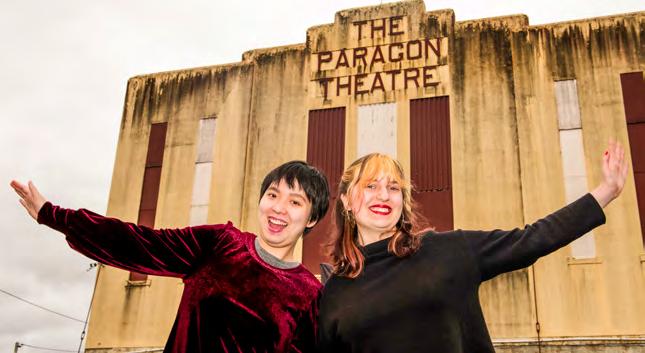
Image: Shantelle Rodman
Image: Georgina Anderson
Image: Peter W Allen
Image: Supplied
Image: Scott Bennett
From the Vice-Chancellor
Together we are making a real difference.
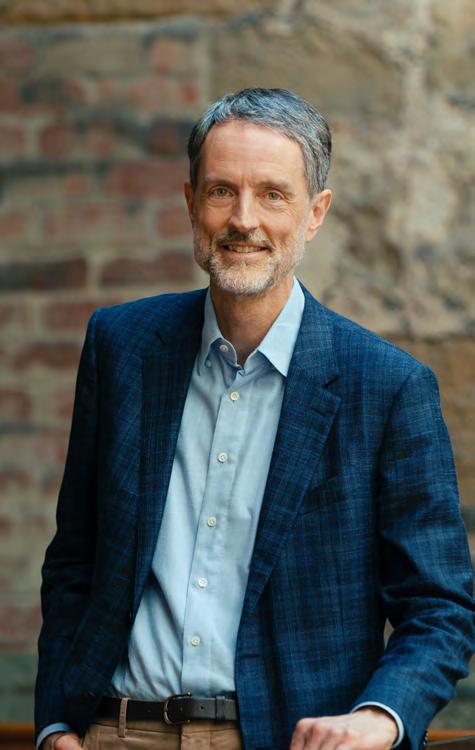
In early 2025 we refreshed our strategy, giving it even greater focus on our mission to make a difference for Tasmania, from Tasmania, and with Tasmanians.
Over the past year, we have worked hard to organise ourselves to deliver on this and are now firmly focused on driving the transitions we need to see Tasmania make by 2050.
Given the scale of local and global challenges we are facing – from climate change and biodiversity loss to widening inequality and declining productivity – this 25-year outlook gives us the best chance of success. That brings real hope and a renewed clarity and purpose to our work, which remains grounded in excellence in education and research for Tasmanians.
In partnership with our communities, our work is now centred on four critical transitions that will shape Tasmania’s future: raising educational attainment, improving health outcomes, transforming productivity, and leading in climate resilience and sustainability. Alongside these, we are nurturing and calling upon the deeply valued stories Tasmanians tell about each other, and the special place we call home.
These transitions are ambitious and essential. They reflect the areas where the University can make the greatest difference for Tasmania and Tasmanians while also offering distinctive global contributions, especially in sustainability and climate.
Philanthropy is vital to this endeavour. It is, at its heart, an act of hope. The generosity of our donors continues to open doors for students, particularly those from regional and disadvantaged backgrounds. It supports research that addresses urgent challenges and helps us build the capabilities Tasmania and the world will need in the decades ahead. Every gift, large or small, contributes to this legacy.
To all who support us, thank you. Your commitment strengthens our work and inspires all in our community.
Please enjoy this edition of Impact and its many stories about how, together, we are making a real difference.
Professor Rufus Black Vice-Chancellor
We value your support
The quiet power of philanthropy in action.
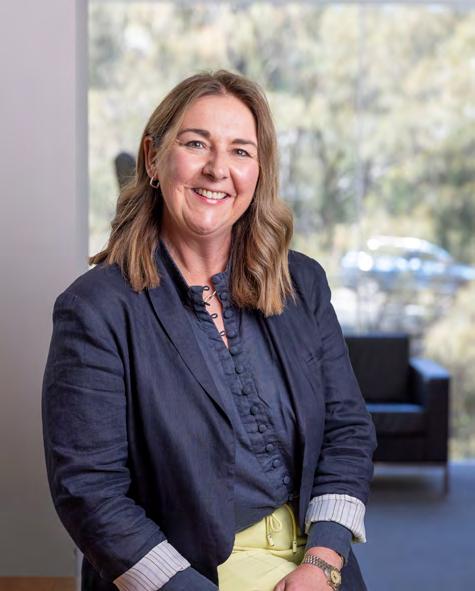
2025 was a wonderfully memorable and surprising year, rich with moments that revealed the quiet power of philanthropy in action.
One of the most striking moments was joining Institute for Marine and Antarctic Studies researchers as they prepared to enter purpose-built facilities and observing the care and ritual required to keep these work areas sterile. Here, the scientists pursue answers to some of the planet’s most urgent questions: climate change, marine diversity, and the health of our oceans. By examining ice-cores thousands of years old, they can stare into the deep past. Through sophisticated modelling, they trace the shifting patterns of the Earth’s systems, helping us understand why the climate is changing.
Another day, on a visit to the sandy northern beaches of Tasmania, I peered into the confines of a plastic research tube to discover a Tasmanian devil curled inside. I had joined donors on a field trip with scientists who are working on the frontline to track and combat the devastating devil facial tumour disease. To see these endangered creatures up close and to witness the impact of donor support was profoundly moving.
I felt a similar thrill when a group of music students ushered several supporters into the Hedberg’s Salon and shared how they used the unique space for rehearsals, recordings and intimate performances, shaping their artistic journey.
Throughout the year, I also had the opportunity to join hundreds of scholarship donors across the State as they met the students they support. They heard powerful and heartwarming presentations from scholars describing, firsthand, the impact of scholarships. I would like to echo the students’ gratitude for your generosity, vision and belief in the power of education.
Each of these encounters offered a window into the real difference philanthropy makes. This is evident when reflecting on the incredible success of the Sustain campaign, the University’s bold fundraising initiative. The vision is to raise $50 million dollars for our students and researchers over five years. At the conclusion of our third year, I am delighted that, with your support, $42.5 million has been received, a truly transformational milestone.
The Sustain campaign is focusing on five key areas of impact, guided by the United Nations Sustainable Development Goals and addressing world challenges that require a community to solve. Alongside a portfolio of funds worth $156 million, which have been gifted by our community of generous benefactors, philanthropy to the University enables us to turn ambition into positive action.
Wherever you choose to donate, your support resonates. It inspires. It challenges. It shapes a better world. Thank you.
Rebecca Cuthill Director, Advancement
A teacher’s powerful legacy
How a generous bequest is boosting support for a scholarship that is changing lives through the possibility of tertiary education.
After a lifetime of seeing the benefits of education, the late Sylvanie Morgan has left a generous $1.5 million bequest that will continue to create opportunity.
The donation is supporting Southern Lights Access Scholarships, which assist students who might not have otherwise had access to tertiary education. It is the largest ever bequest received by the University for access scholarships.
It is also timely. With over one third of Tasmanian students coming from the lowest SES quartile, they need our support.
Sylvanie, who studied teaching at the University of Tasmania, taught at high schools in Victoria, where she rose to VicePrincipal. Later, she began new and varied careers as a bookkeeper and entrepreneurial business owner – selling large-sized women’s shoes. But her commitment to education continued. She hosted female international students studying English at her home in Melbourne and was a long-term supporter of University of Tasmania appeals, including the annual Southern Lights Appeal.
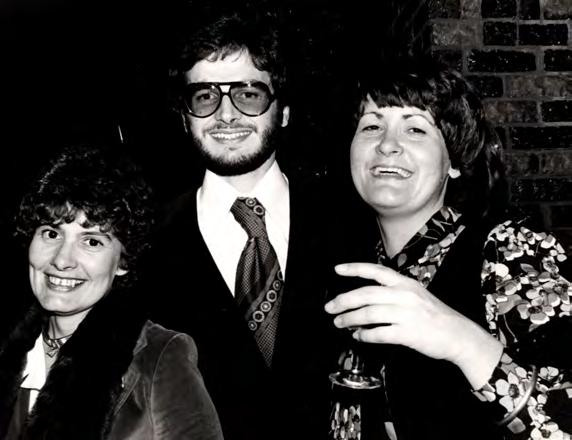
Sylvanie’s longtime friend and executor David Pietsch remembers her as a fierce supporter of Tasmania, the arts, quality public education and the University of Tasmania. “We met in 1971 in London where we lived in share houses with other Australians, many of whom were university graduates, and then shared houses again in Melbourne on our return to Australia,” he said.
When Sylvanie’s health began to decline in 2022, David and a group of five friends from their time in London, plus two others from Melbourne, formed what they called the ‘G7’ to care for her in her own home, until her death in 2024. While she could, Sylvanie continued to sew backpacks and quilts for children in need, showing her love in actions through gifts of service or produce from her garden or kitchen. The spirit of caring for others now continues after Sylvanie’s death through her bequest.
To date, more than 40 students have benefited from Southern Lights Scholarships, which were established six years ago.
One such student is Naren, who joined the University’s High Achiever Program and completed university-level psychology units while still in school. That same passion led him to begin a Bachelor of Medical Science and Doctor of Medicine, but the path wasn’t easy financially.
When he heard he had been awarded a Southern Lights Access scholarship, he says a weight lifted from his shoulders.
“I felt like the whole family could breathe for a moment.”
Naren
Naren is making the most of every opportunity. He volunteers through the Salvation Army’s STeP123 program, helping primary school students learn to read and, as part of the Aged Care Volunteer Visitors Scheme, he visits a war veteran with dementia, offering friendship, conversation and dignity.
◀ Sylvanie Morgan (right) with friends Jan Richards and David Pietsch Image: Supplied
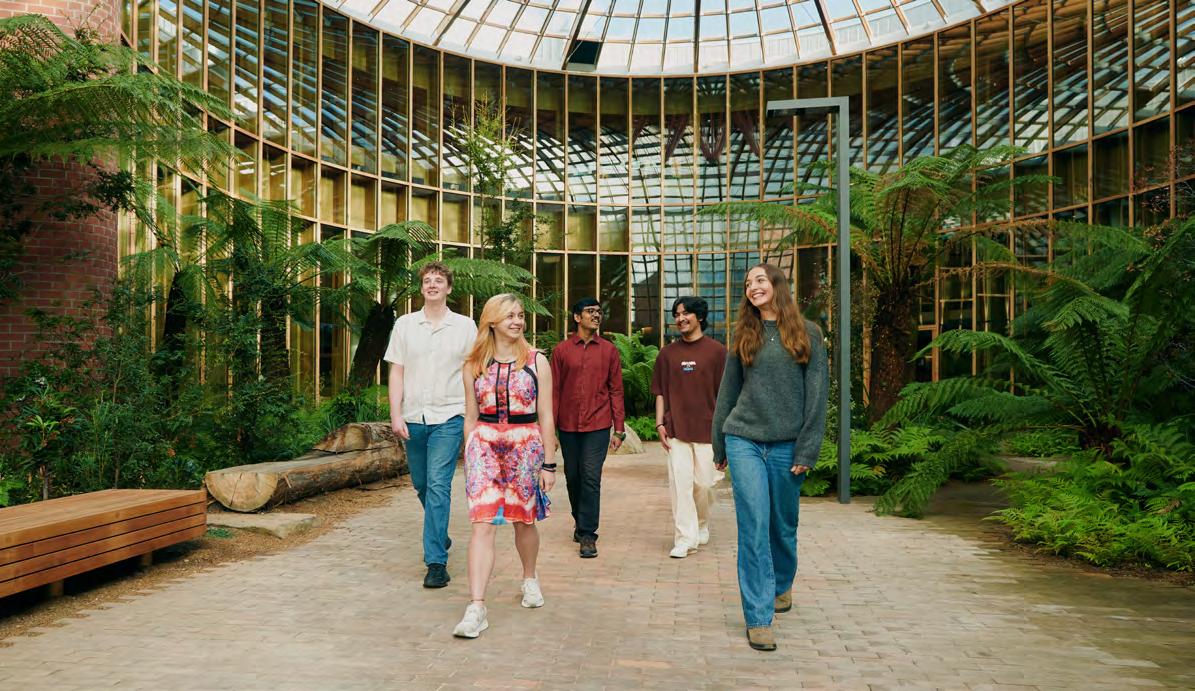
▶ 2025 Southern Lights Scholarship recipients (L to R): Hamish, Jasmine, Naren, Abhishek and Adella | Image: Oi Studios
Alongside his studies Naren is completing mental health and dementia care training, building the skills he’ll use as a clinician.
“Tasmania has done so much to help me, and I want to give back to my community. I want other people to have the opportunities that I’ve had,” he said.
Director of Advancement Rebecca Cuthill says the University is incredibly grateful for Sylvanie Morgan’s bequest, a generous gift from a teacher who believed in the power of education to change lives.
“Sylvanie was a longstanding and dedicated donor supporting University appeals, and this bequest adds to her earlier contributions and those of others in a powerful way,” Rebecca said.
“Each and every donation to these scholarships, no matter the size, is valuable as they contribute to a pooled fund and profoundly impact students’ lives.”
Leaving a gift in your Will is a powerful and lasting statement of your life, passion and values. Your generosity can make a vital impact for future generations. To find out more or for contact details please visit utas.edu.au/bequest
Our Bequest Society recognises donors who have confirmed their intention to leave a bequest to the University of Tasmania in their Will.
Aboriginal students cultivating country and caring for community
Supporting students to achieve their educational goals through the First Australian Higher Education Scholarship.
Caring for country and community is a powerful thread connecting Aboriginal students Dusten O’Neil and Imogen Jordan as they pursue degrees in agricultural science and nursing.
Both from Tasmania’s North-West Coast, they are recipients of the University of Tasmania’s First Australian Higher Education Scholarship, designed to support Aboriginal students with their studies.
The scholarship was set up with the support of the Riawunna Centre for Aboriginal Education.
David Warrener, Head of Service at Riawunna, said that by alleviating financial constraints, scholarships enable Aboriginal students to pursue their education and achieve their academic and personal goals.
Recipient Imogen Jordan grew up in Ulverstone, where her early experiences in hospitals with her family inspired her to study nursing.
“I remembered the lengths that the nurses would go to for their patients and how just one person could make a patient and their family feel better,” Imogen said.
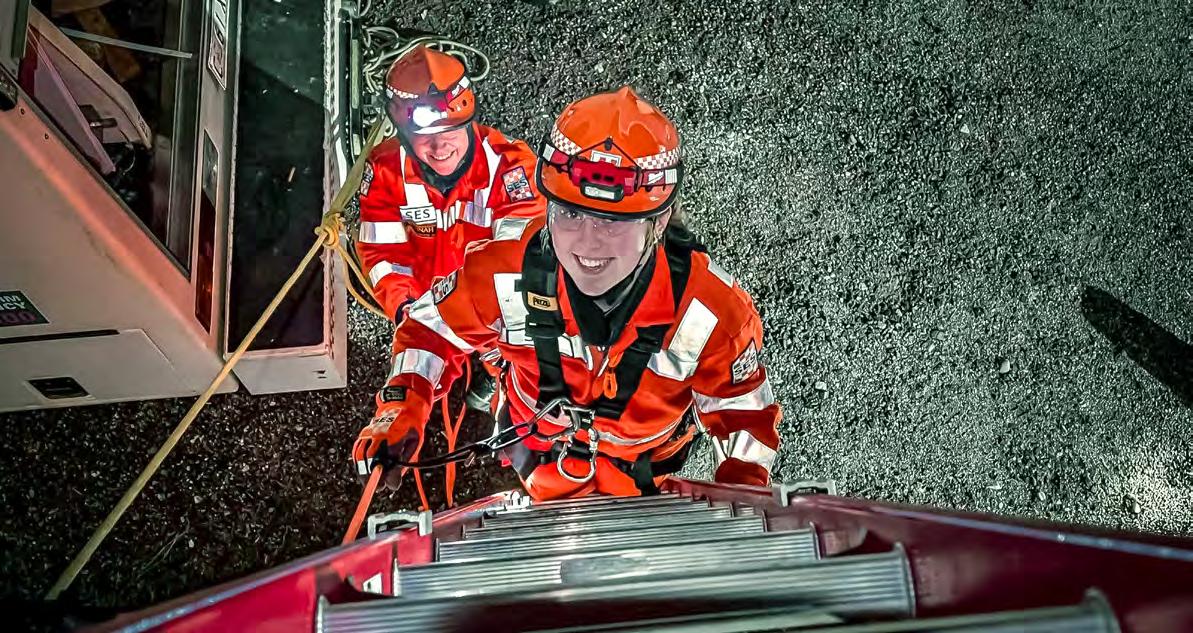
Volunteering with the State Emergency Service (SES) also gave her firsthand experience in helping people during high-stress situations, such as car accidents.
In the future, she wants to give back to the community, travelling to remote Aboriginal communities to improve healthcare and health literacy.
“As a proud First Nations woman, I believe that the perspectives and strengths I bring into my future nursing career involve cultural knowledge and a holistic approach to healthcare,” she said.
“I know that health includes social, physical, emotional and mental wellbeing, not just the individual's physical state.”
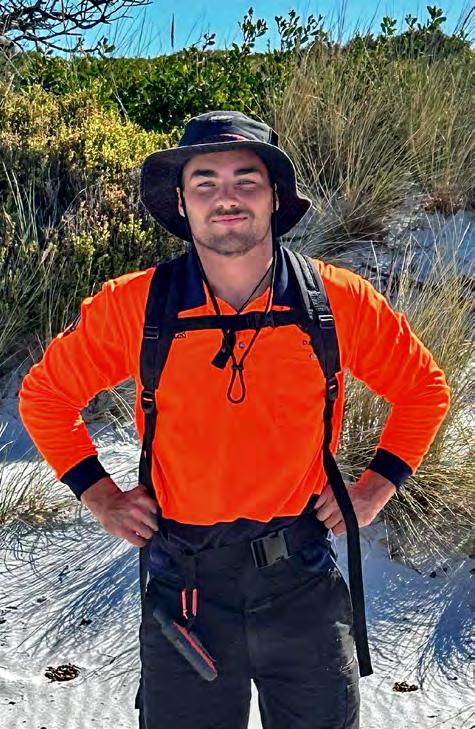
▲ Bachelor of Agriculture student and scholarship recipient Dusten O'Neil working as an Aboriginal ranger | Image: Supplied
◀ Bachelor of Nursing student and scholarship recipient Imogen Jordan volunteering with the SES | Image: Supplied
Imogen will have culturally responsive care at the forefront of her nursing practice. She says she knows how First Nations people were treated in the past, and that there may be patients who carry trauma from systematic racism. Importantly, she wants to make sure that she creates an environment that is culturally sensitive so that her patients don't feel threatened.
The scholarship has helped Imogen work less outside university and focus on her studies. She’s achieved a High Distinction in her first semester.
“To me, this scholarship means that someone has seen my story and believed that I can achieve my goals, and for that I will be forever grateful,” she said.
Dusten O’Neil brings a deep respect for country and a passion for landcare to his studies.
He worked as an Aboriginal ranger before enrolling in a Diploma of University Studies in 2025.
Dusten is now studying agricultural science in Hobart and said the scholarship had helped him with the relocation.
“I’m enjoying understanding soil and plant science and the different methodologies of agriculture,” Dusten said.
“What I like about agricultural science is that it's always looking for better farming methods; we’ll always need food and fibre.”
The scholarship was founded by Imogen Davies, a former doctor who is now a university lecturer in the United Kingdom (UK). Her late father studied and lived in Tasmania.
She acknowledges that her family benefited from opportunities in Australia, such as scholarships and work opportunities, which were not equally available to Aboriginal Tasmanians.
“It’s about acknowledging the advantages that I have from my dad and his family moving to Tasmania from the UK in the 1950s and trying to repair some of the consequences that my family’s move had on the First Australian people at that time,” she said.
“I wanted to make a positive difference by contributing directly to the Aboriginal and Torres Strait Islander communities and investing in their futures.”
Imogen Davies
David Warrener expressed gratitude to Imogen Davies for creating the scholarship. He also offered his congratulations to the inaugural recipients.
“There are many benefits of obtaining a scholarship for Aboriginal students, including financial support, which can alleviate the burden of university costs, such as accommodation and living expenses,” David said.
To support this scholarship, contact the University of Tasmania Advancement team (University.Giving@utas.edu.au).
Farming legacy supports over 170 scholarships
Soldier-settlement property owner gives back to the next generation.
After a successful farming life in Cressy, Tasmania, Bruce Wall’s legacy is living on through a perpetual trust that continues to grow and benefit people in Tasmania and beyond.
Among the beneficiaries are 131 students from northern Tasmania who were awarded Bruce Wall Springboard to Higher Education scholarships. The trust also supported 19 students through other undergraduate scholarships and 21 through honours scholarships.
“He has left a wonderful legacy for Tasmania, a legacy that will continue in perpetuity,” Trustee Brian Faulkner said.
Brian managed Bruce’s stock and share portfolio and was a trustee for his Will. It was a responsibility he and a fellow trustee have continued to honour for over two decades.
The farm was given to Bruce through the Soldier Settlement Scheme, which operated after the Second World War to provide returned servicemen with land to farm. Bruce would have been 27 or 28 years old at the time.
The 500-acre property, known as Lake House, is now part of the National Trust. The house had a cellar that was once a stop for convicts on their way between postings. Bruce went on to buy another 500 acres next door and ran Corriedale sheep, Poll Herefords and commercial cattle, as well as crops.
From the information the trustees have compiled, the success of this venture was largely due to Bruce’s positive and knowledgeable approach to agriculture, which included applying the latest methods and practices in farming.
“It was a beautiful farm with hawthorn hedges all around it that he trimmed himself,” Brian said.
Bruce was President of the Longford Golf Club and a dedicated member of the Tasmanian Farmers and Stockowners Association and the National Trust in Tasmania.
According to Brian, Bruce led a simple life. “When he came home from the war, he left his army trunk complete with all his gear and necessities in the centre of an upstairs room, and there it stayed until his death,” Brian said.
Upon Bruce’s death, the trustees, assisted by Brian’s wife, Wendy, put the property up for auction, having
sorted through and sold Bruce’s personal collection and memorabilia. It was to be one of the most complete and acclaimed collections of Tasmanian work and included furniture, paintings, literature and drawings. The army trunk was donated to the Longford RSL club.
Managing the estate and distributing the funds has been a labour of love for the trustees. “It’s all going to charity, which we’re very pleased with,” Brian said.
One former student who benefited from Bruce’s generosity is Tessa King-Grey.
Tessa received a Springboard to Higher Education Scholarship at the end of Grade 10 at Campbell Town District High School. The scholarship assisted her during Grades 11 and 12 at Newstead College in Launceston.
“The Springboard scholarship helped with living away from home costs and in purchasing textbooks and stationery,” Tessa said.
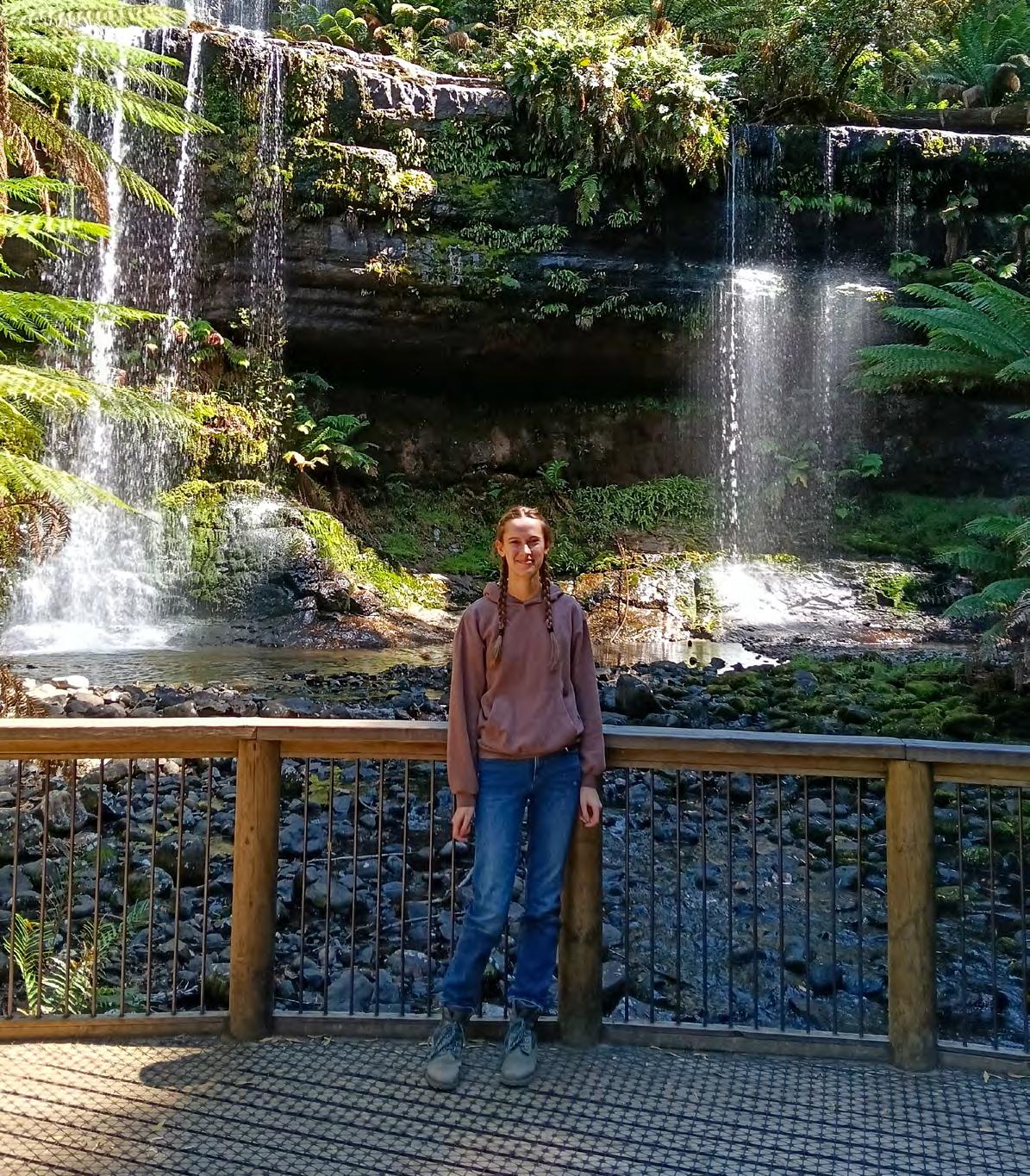
The Bruce Wall Trust then helped Tessa through her two degrees at the University of Tasmania, where she recently completed a Bachelor of Arts, majoring in sociology and criminology, and a Bachelor of Science, majoring in ecology.
“There was a while when I was sick and not able to work outside of my university studies,” she said. “The scholarship was very useful at that time.”
Tessa King-Grey
The support continued throughout her studies, with the scholarship providing a safety net, meaning she didn't have to go without essentials.
“It took off the financial stress so I could focus more on my studies, which benefited my grades and meant I could finish uni,” Tessa said.
“I want to say thank you. I’ve appreciated it so much, to have that support was so valuable.”
▶ Scholarship recipient Tessa-Gray on a study excursion to Mount Field | Image: Supplied
Opportunity through education and conservation research
How a dual commitment to providing access to education for North-West Coast students and a better understanding of Tasmania’s unique flora and fauna is benefiting our island.
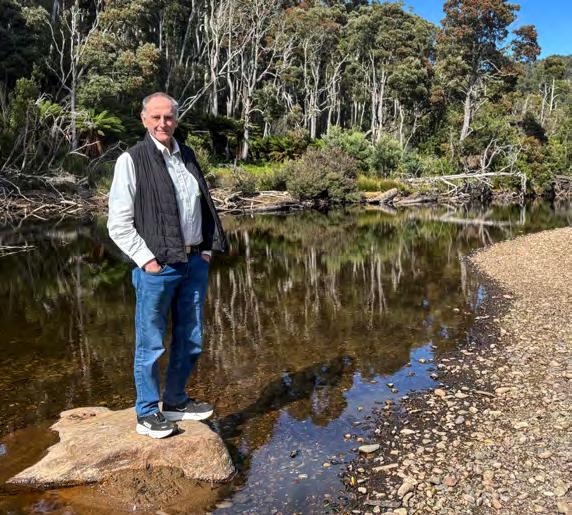
Having grown-up in the 1950s and 60s in a large workingclass family on Tasmania’s North-West Coast, Garth Whitehead was aware that few had the opportunity of a university degree. In fact, it was not even on most people’s radar.
“The main problem facing most families was that of available cash, and a trade was considered a healthy step up for the future,” Garth said.
However, as he set out to Europe as a backpacker in 1970, and made Singapore his home three years later, it became increasingly clear to the Tasmanian-born businessman that jobs and career paths were reserved for those with higher education. He believes that, in most cases, that remains the same today.
Garth said that the closure of major industries on the NorthWest Coast, and indeed in much of Tasmania, highlighted the difficulty for working class families to afford university and higher education, and laid the foundation for their scholarship support.
Through a family trust, Garth established the Whitehead Family West North-West Scholarship, which has benefited 22 undergraduate students from the West Coast and North-West of Tasmania, including King Island.
“It is our hope that the participating students will use their higher education to give support to the North-West Coast and Tasmania in general and provide skills to local industries.”
Garth Whitehead
In addition, the trust has supported 15 honours students through the Whitehead Family Honours Scholarship. Recipients are encouraged to complete their research on site at the family’s Highland Conservation agricultural properties at either Gunns Plains in North-West Tasmania or Cockatoo Hills in Tasmania’s Central Highlands.
“Our family trust is keen to engage honours students in the appropriate fields to take advantage of our highland properties to enhance their knowledge of that unique environment,” Garth said.
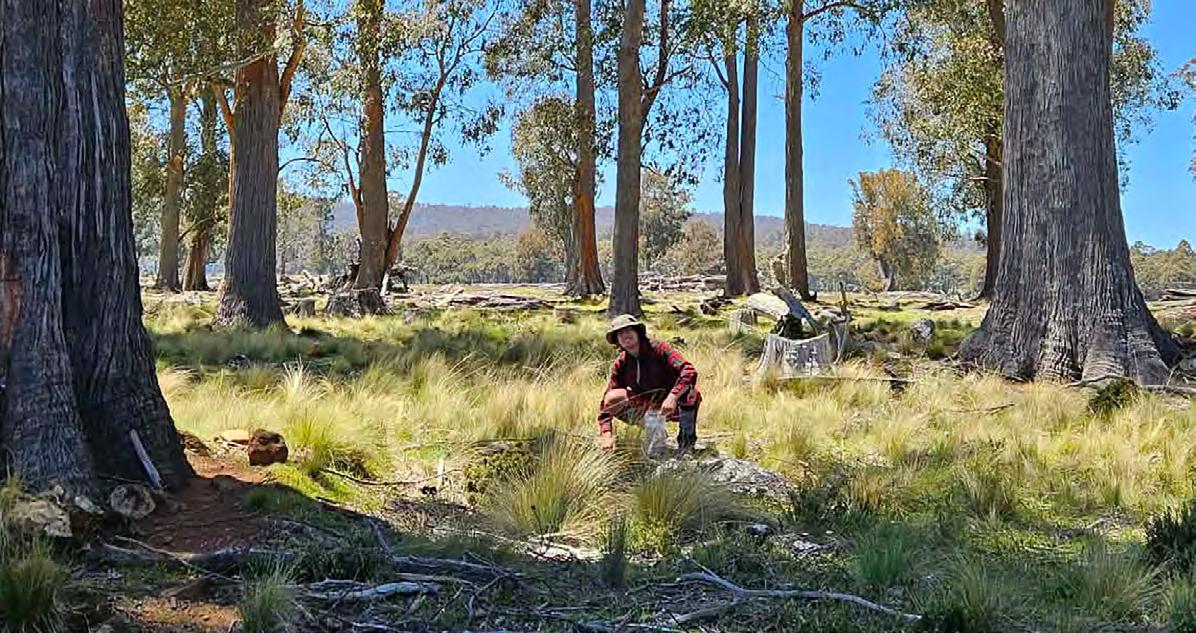
Current honours student Jamil Kay conducts field work on the Cockatoo Hills property where he studies the relationships between trees and the types of fungi associated with tree roots, called mycorrhizal fungi.
The fungi are essential for many plant functions, including nutrient acquisition.
“It’s a symbiotic relationship – the fungi provide nutrients to eucalypt species, and the eucalypts provide sugars from photosynthesis to fungal species. It’s a trade,” Jamil said.
Jamil adds that it’s valuable to have access to a conservation property because researchers need to have a baseline understanding of fungal communities before any disruption from invasion by non-native species such as pines.
Pinus radiata trees bring non-native mycorrhizal fungi, which could be a problem for other plant species, altering their growth rate or survival which can then have an impact on wider ecosystem processes.
Alongside income support, the scholarship has provided important research funding, which has enabled Jamil to purchase research equipment. He hopes to travel to a mainland conference to share knowledge and build on what we know.
The list of other research projects the trust has been able to support to date is impressive.
Garth says the family trust has been fortunate in being able to participate in some of the environmental and wildlife issues facing Tasmania, especially the Tasmanian devil program and the wombat mange eradication attempts.
“One highlight has been the participation in the reintroduction of the forester kangaroo to one of our Highland Conservation properties, along with cider gums and certain threatened native grass species,” he said. The kangaroo release was endorsed by the Department of Natural Resources and Environment Tasmania.
The family trust has also hosted undergraduate studies and the annual First Nation college student ‘Rosny Mob’ trip to Cockatoo Hills.
For Garth, coming from Tasmania is a positive part of his family’s story. The rugged environment, serene beauty, excellent food and the Tasmanian people – with their community spirit, general sense of humour and appreciation of life – have all left a strong sense of belonging to the State.
“I have been fortunate to meet many people in Asia who have studied in Tasmania, and indeed Australia,” he said. “It has provided an immediate pathway to conversation, friendships and business networking. It is important for our own population to participate in this education and its benefits.”
▲ Honours student Jamil Kay collecting soil samples at Cockatoo Hills where he is investigating the relationship between trees and the fungi associated with tree roots | Image: Supplied
◀ Garth Whitehead on a visit to North-West Tasmania | Image: Supplied
Protecting the ocean’s jewels
How a love for the ocean inspires jeweller Sarah Gittoes’ designs and her passion to give back to the marine environment.
Diving in giant kelp with marine scientists off remote southwest Tasmania might not seem like the natural habitat of a fine jeweller, but for Sarah Gittoes, it’s a perfect fit. It was also an experience she says she will never forget.
Sarah is the cofounder of Sarah & Sebastian, which crafts fine jewellery that draws its inspiration from nature, including from marine life.
“I first scuba dived when I was about twelve years old,” Sarah said.
“Ever since then it’s been a passion of mine. It naturally informed what I was doing, becoming an inspiration for Sarah & Sebastian and featuring in our jewellery design.”
Sarah grew up on the coast, south of Sydney. Her father was a surfer and a lifeguard, and she is a keen ocean swimmer.
The more the sea became a source of inspiration in her designs, the more she wanted to give something back to the fragile environment that had given her so much.
And so the Xanthe Project was born, a philanthropic initiative to donate $1M over 10 years to ocean conservation.
A lot of her team and their activities now contribute to ocean stewardship, with active participation in ocean cleanups or research projects.
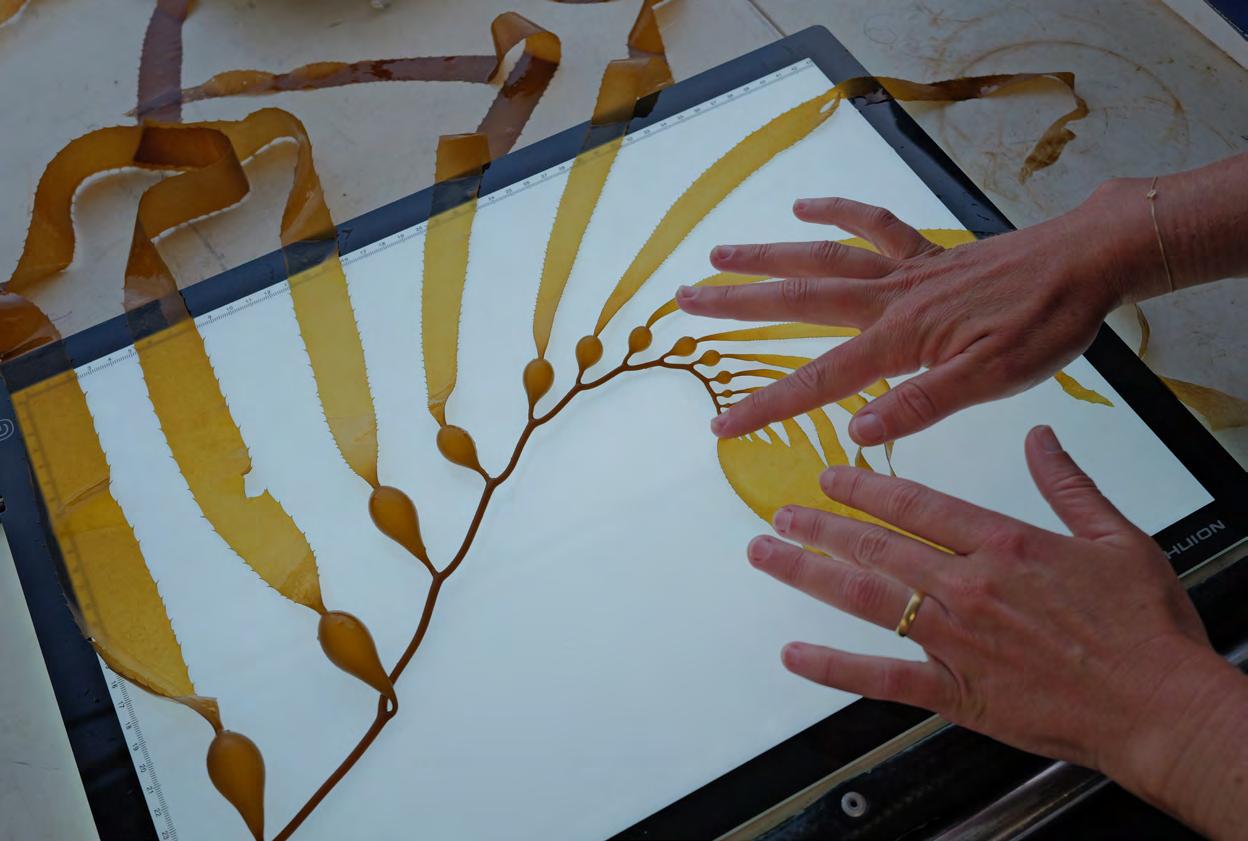
▲ Marine species, such as this giant kelp, is inspiring the designs at Sarah & Sebastian | Image: Matt Lennon
Among the projects being supported is research on the Great Southern Reef, a series of interconnected reefs that extend 8000 kilometres around the south coast of Australia from southern Queensland to Western Australia. Tasmanian research is being conducted through the University of Tasmania’s Institute for Marine and Antarctic Studies (IMAS) in Hobart, which is how the 12-day remote Tasmanian diving expedition that Sarah participated in in March 2025 came about. Also on board was Sarah & Sebastian’s Global Brand Director, Matt Lennon.
“I was so honoured and excited to be able to participate in the field work,” Sarah said.
Dr Scott Bennett led the IMAS expedition, which he said was made possible by the generous funding from Sarah & Sebastian.
“Sarah and Matt’s contributions on the trip were also invaluable, including dive surveys, kelp biobanking and seaweed pressing – and it will help advance the study and preservation of this remarkable region,” he said.
The expedition was a huge success, according to Scott, and focused on: surveying reef biodiversity at remote and previously unsurveyed reefs off southern Tasmania; surveying some of the last remnant giant kelp forests in Tasmania to record reference conditions for kelp forest restoration work underway; and revisiting historical sites within the marine protected area in Port Davey, to monitor long term trends in reef health.
For two IMAS PhD candidates, Hunter Forbes and Lizzi Oh, the trip provided critical data to inform their research into the macroecology of kelp forests and seaweed communities across Australia.
“ This expedition was an incredible opportunity to be part of an inspiring team and collect important scientific data.”
Hunter Forbes
Likewise for Sarah and Matt. “It was a mission expedition for us,” Matt said.
Sarah agrees. “Ecosystems and species are disappearing at a rate of knots, and we need to be supporting this work in the field,” she said.
A highlight of the trip for the pair was diving in Port Davey, a completely unique ecosystem because of the tannins in the water, which makes it dark so that you can see marine life such as sea pens that are normally only found at depth.
The other highlight was diving at the Acteons – where they saw giant kelp, which is disappearing.
Sarah and Matt dived with the scientists – Scott, Lizzi and Hunter – who explained what they were seeing. "They were like encyclopedias. Their knowledge was so extensive and their passion was so clear,” Sarah said.
“For them it is so much more than a career. It is their world. It was very special to see where the support goes. To see that in a tangible way and understand the impact.
“It was incredible to be able to see the work on species that are in decline, to collect data and to see what we’re losing. To be able to have new knowledge – knowledge is power –and to document that.”
Sarah hopes the information collected will be used to better inform government decisions and improve environmental policies.
“And if we can help bring giant kelp back, strains that can withstand ocean heating, that would be incredible. To be part of what they are working on, that’s what we have to support.”
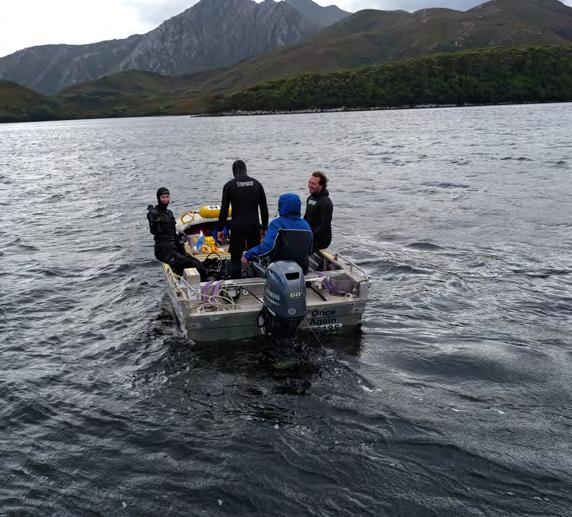
▲ Sarah & Sebastian supports IMAS's critical scientific work by funding Great Southern Reef expeditions. Here Sarah Gittoes assists researchers at Port Davey | Image: Matt Lennon
Maritime career lives on through the next generation
How a love of the sea and a passion for maritime affairs is inspiring young Australian leaders.
An interest in all things maritime – whether yachting or service to the Royal Australian Navy – inspired the late Geoffrey Evans to establish a trust to support young Australians to take up maritime pursuits and leadership opportunities.
For the last decade, the Geoffrey Evans Trust has benefited many individuals, communities and projects, from surf lifesaving, to supporting high-achieving maritime studies students, as well as early-career researchers working to look after the health of our oceans.
So where did the interest come from? One of four trustees, Bev Hattam, a second cousin of Geoffrey’s, said Geoffrey spent time as a boy at his grandfather’s holiday house at Barwon Heads, Victoria.
“My mother had a lot to do with Geoffrey growing up, and I think the Barwon Heads holiday house was where his love of sailing and the sea came from,” Bev said.
Geoffrey also spent a lot of time going out on barges with his grandfather to inspect the docks. His grandfather was the Geelong and Melbourne Harbour Trust Chairman.
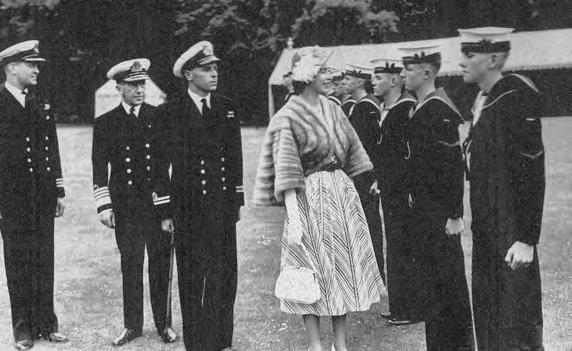
When WWII broke out, Geoffrey saw active service with the Royal Australian Navy (RAN), and subsequently joined the RAN Reserve, retiring with the rank of Commander. He was keenly interested in the Navy’s sea cadet movement, even taking a group of cadets to meet Queen Elizabeth II. Between 1956 and 1963 Geoffrey was Aide-de-Camp to the Governor of Victoria, becoming the Governor’s private secretary.
As Federal President of the Navy League of Australia, he sought to promote its aim of “maintaining the maritime wellbeing of the nation”, says Trustee Roger Blythman.
The support of the foundation established through his Will furthers that purpose and encouragement of young leaders. Geoffrey was made MBE for service with the RAN Volunteer Reserve and received an OBE for service to the Navy League of Australia.
It is fitting that one of the most recent recipients of the Geoffrey Evans High Achiever Scholarship has herself been part of the Navy throughout her undergraduate degree at the Australian Maritime College (AMC).
Mia Findlay said her passion for the sea started early.
“I grew up in Launceston around the water and boats. It sparked my interest in the maritime space, and my passion for puzzles and problem solving led to my interest in the logistics side of things,” Mia said.
These two influences led to her enrolling in maritime logistics at the AMC.
Mia said a highlight of her degree was an industry placement at Malaysia’s Port of Tanjung Pelepas, one of the largest ports in the world.
“We don’t have anything like that port in Australia. I went with a couple of people from my degree and the head of logistics at AMC – it was fascinating to see how massive that port is.
“I made lots of industry connections and saw how the theory we learn in class translates to real-world applications.”
Mia also took up opportunities for placements at the Australian Antarctic Division and Wave Shipping in Brisbane.

She was able to reduce the amount of paid work she did, get better grades at university and take up soccer.
“I think physical health is good to unwind and to maintain a positive mindset, enhancing educational and professional development,” she said.
“I wouldn’t have been able to do all of this without the Geoffrey Evans Trust Scholarship.”
Mia Findlay
The Geoffrey Evans Trust’s guiding principles include encouraging, promoting and/or educating young people on the importance of Australia’s maritime environment.
The Trust has also recently supported several early career researchers at the University of Tasmania’s Institute for Marine and Antarctic Studies.
Bev Hattan says she has been thrilled to be able to help people by distributing the Trust funds. “And my daughter has said she would like to continue in this role after me, to continue the legacy,” she said.
◀
▲ Scholarship recipient Mia Findlay, who studied maritime logistics at AMC, at Malaysia's Port of Tanjung Pelepas | Image: Supplied
Geoffrey Evans (third left) on parade during a visit to meet Queen Elizabeth II in July 1952 | Image: Supplied
On better caring for nature
How Mountain Air Foundation is looking after ecosystems through their support of research.
For Mountain Air Foundation, looking after nature is a simple and pragmatic choice.
They don't see it as any different to tending their home garden.
“Humans are part of nature. We look after ourselves and the people around us; looking after nature is an extension of that. If you can help, why wouldn’t you?” the foundation said.
“Humans have done many clever things, but there have been side effects, yet part of our evolution is to push things in the best possible direction we can. We can do better.”
It’s about increasing knowledge, they say, and increasing the action of people with scientific knowledge and energy, to improve human engagement with nature.
Two projects the foundation has recently become involved in are the replanting of giant kelp around Tasmania and improving the environment of the red handfish in the Derwent Estuary south of Hobart.
Professor Scott Ling said his team is incredibly grateful for the generous support, which is helping tackle one of Tasmania’s most urgent marine challenges, the restoration of our iconic giant kelp forests.
Support from Mountain Air Foundation is enabling pioneering research into natural, biodegradable alternatives to synthetic aquaculture twine. By trialling cotton, hemp, and blended fibres as substrates for hatchery-reared kelp propagules, the researchers aim to discover sustainable methods that allow young kelp to establish securely on reefs before the twine naturally breaks down. Scott says these trials, conducted across multiple sites on Tasmania’s east coast, are providing critical insights into how we can scale-up kelp reseeding while significantly reducing ecological impact.
“ We’re very grateful for the funding from Mountain Air, which has enabled us to demonstrate the utility of natural fibres in the replanting of giant kelp.”
Professor Scott Ling
“Thanks to the funding we have received, it is our hope that the research will contribute to making these majestic ecosystems more resilient in future."
The support is helping safeguard biodiversity and develop restoration technologies that can be applied globally to protect endangered marine ecosystems.
Dr Jemina Stuart-Smith says Mountain Air Foundation’s support is also helping to carry out vital reef restoration work at a red handfish research site.
“By experimenting with different boulder and habitat configurations, we are working to discover the most effective ways to rapidly expand and strengthen the reef,” Jemina said.
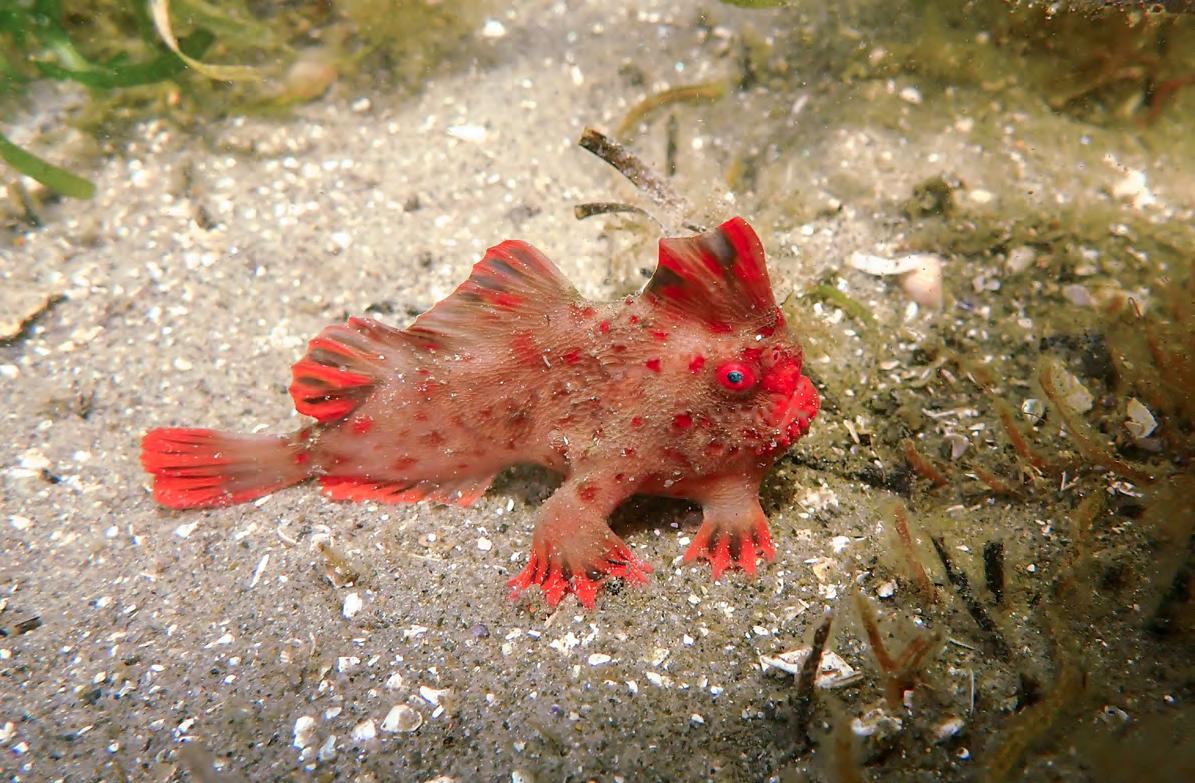
The funding from Mountain Air Foundation has enabled scientists to gather more knowledge about restoring critical habitat for the endangered red handfish.
The research has shown that restoring degraded habitats can help rebuild the ecological conditions required to support the species.
Jemina hopes that ecosystem restoration, coupled with targeted handfish recovery strategies, can provide a sustainable pathway for persistence of the red handfish, but acknowledges this will take time.
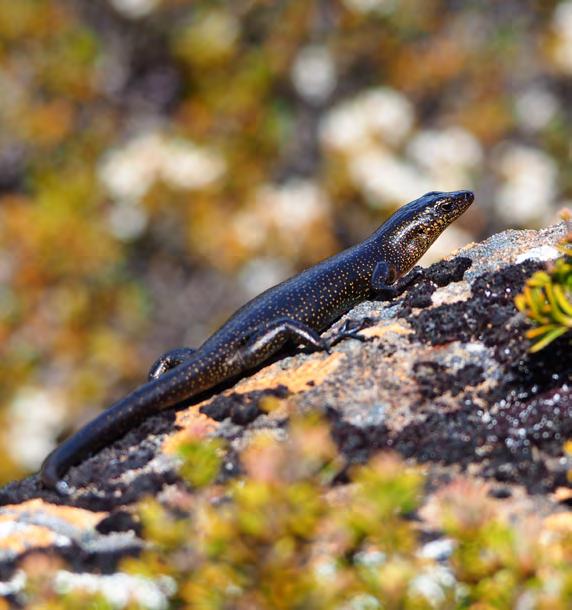
The foundation also has a particular interest and passionate love for alpine and subalpine areas and is supporting early career research grants to enhance the health, resilience and vitality of alpine and subalpine species, ecosystems and environments in Tasmania. Georgina Anderson has recently been awarded an early career research grant for research on northern snow skinks.
Mountain Air Foundation believes that stepping in with financial support for Scott, Jemina and others to gather information and take action to improve environmental outcomes is sensible and pragmatic thinking.
“They are passionate and put their life’s work into this research,” the foundation said. “For Scott’s work, if it is successful, the lobsters and abalone will come back, leading to commercially positive outcomes too. We want it to make it easier for them to do their jobs; their energy is infectious. Making a contribution is not hard, and it feels good.”
▲ Vital reef restoration research is underway to assist red handfish thanks to support from Mountain Air Foundation | Image: Jemina
◀ Mountain Air Foundation is supporting early career researcher Georgina Anderson's research on northern snow skinks | Image: Georgina Anderson
Stuart-Smith
The power of intergenerational giving
Wicking dementia research receives a boost thanks to the generosity of the Siganto Family Foundation.
The vision of the Siganto family has created a legacy of giving that spans the generations and is now enabling advances in dementia research.
When the late Dr Bill Siganto AM and Dr Marie Siganto AM established the Siganto Family Foundation two decades ago as a private ancillary fund, their vision was to create a vehicle for their family to support the arts, education and community needs.
Bill built a successful Queensland business and was deeply involved in vocational training, and Marie was a leader in the arts community.
They supported many organisations, particularly in their later years, through deep engagement and financial support.
Their foresight continues to shape the Foundation’s work today.
Now chaired by their grandson, Jack Coghlan, the Foundation has built a strong track record of funding research, scholarships and other areas that align with their family’s interests.
The Foundation has extended its support to dementia research, shaped by the family’s own experience with the disease.
Jack’s mother, Lisa Siganto, explains that when her mother, Marie, was diagnosed with dementia, she wanted to improve her understanding of the disease and learn how to support Marie to live with it.
Lisa enrolled in the world-renowned Wicking Dementia Research and Education Centre (WDREC) free massive open online course (MOOC).
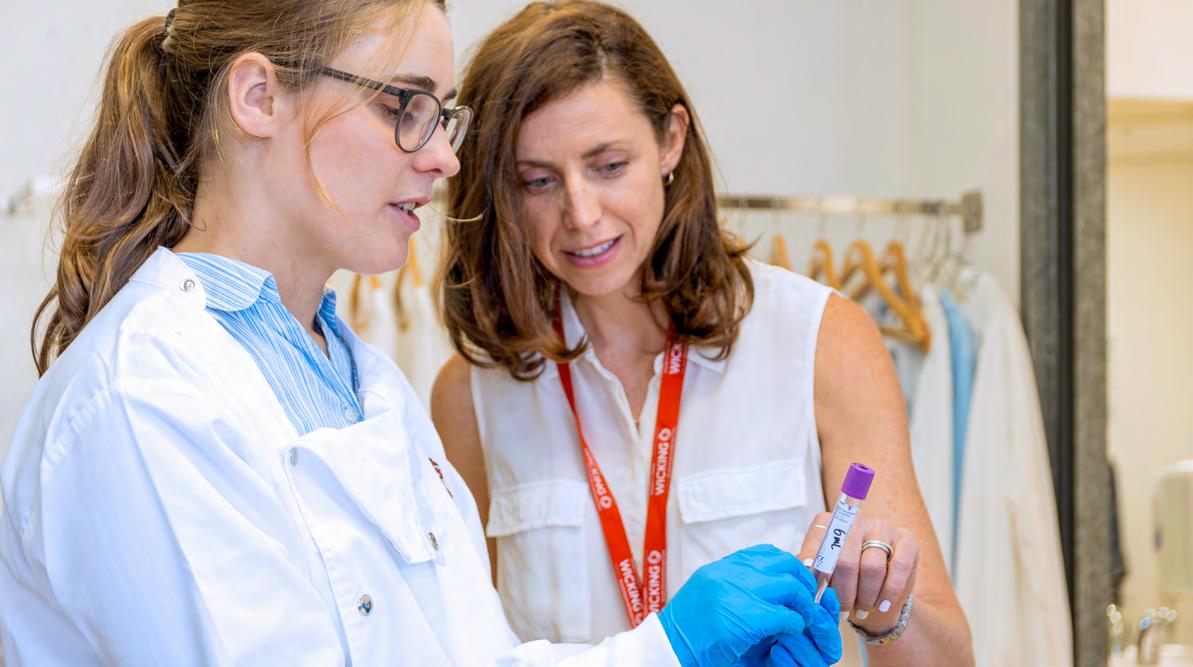
Dementia is the leading cause of death for Australians. While it can happen to anyone, it’s more common after the age of 65.
It’s a group of illnesses that cause a progressive decline in a person’s function, including loss of memory, intellect and physical functioning.
Wicking aims to help us improve our understanding of dementia and create evidence-based care through worldleading research. It also seeks to reduce dementia risk and educate the community.
Lisa’s experience inspired the Siganto Family Foundation to support Wicking by establishing career development opportunity scholarships for PhD students studying dementia.
“It’s been amazing to see how the funding has enabled the students to pursue a range of opportunities that may not have been possible otherwise,” Lisa said.
Recent recipients of the Siganto Foundation Higher Degree Research Career Development Scholarship in Dementia Research include Getachew Yitbarek and Stephanie Hutt.
Getachew’s research is on the link between frailty, when the body becomes weaker and less able to bounce back from illness, and dementia.
Stephanie’s work focuses on improving our understanding of the microglia, specialised immune cells that live in the brain.
The scholarship will help her learn to grow mini threedimensional brain tissues (brain organoids) from human stem cells, thereby fast-tracking dementia research.
Laura De Paoli and Amy Coates were the 2024/25 recipients of Siganto’s scholarships.
Amy recently spoke about the impact of the family’s support on her research, which explores strategies to support dementia risk reduction through behaviour change.
“Scholarships offer a quiet, powerful kind of belief: that our work matters, that we can grow into our potential, and that we’ll use the opportunity to do something meaningful. They also remind us that we’re part of something bigger – a legacy, a tradition, a community with a shared belief in the power of research to make the world a better place.”
Laura De Paoli has also benefited from scholarships as she pursued her goal of conducting research to improve the quality of life of people living with dementia.
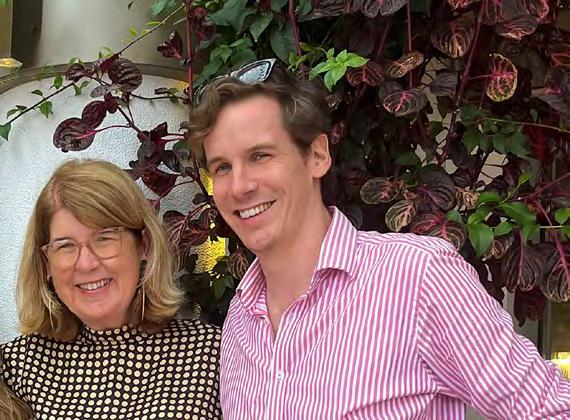
▶ Lisa Siganto and Jack Coghlan, Siganto Family Foundation | Image: Supplied
◀ Recipients of the Siganto Family Foundation Higher Degree Research Development Scholarship, Laura De Paoli and Amy Coates | Image: Peter W Allen
Laura’s PhD investigates blood biomarkers that may help diagnose dementia earlier and track disease progression and the effectiveness of therapeutics.
“The Siganto Scholarship gave me an opportunity for career development by enabling my visit to a research lab in New Zealand, where I learnt new techniques and formed connections with international researchers in our field.”
Laura De Paoli
She said that without their support, she wouldn’t have submitted her final manuscript late last year with as much experience, or as many skills or connections, which will help with her future career prospects.
“I want to say thank you,” she said.
“Your support changes lives, both for researchers you support and for the people who will benefit from our work.”
Backing bright minds and advancing medical research
How sustained support is helping Menzies transform lives and strengthen our community.
Inside the Masonic Lodge on Sandy Bay Road is a collection of special books.
These thick-bound theses detail the individual contributions scholars have made to medical research, ready for curious members to explore.
It’s not uncommon to find photographs of these authors displayed on the walls, celebrating their achievements.
This is just one of the many ways the Masonic Medical Research Foundation honours and maintains its connection to the scholars it supports.
The foundation has a long and proud history of supporting the Menzies Institute for Medical Research at the University of Tasmania.
Among their scholars, the story of Professor Tracey Dickson stands out.
Thirty years ago, Tracey, a promising young scientist from Burnie, watched her hopes for a research career fade when she narrowly missed out on a government-funded scholarship.
The foundation stepped in, offering to support her through her PhD and those uncertain early postdoctoral years.
“Without them, I would never have been able to do my PhD,” Tracey said.
Tracey’s PhD focused on uncovering early changes in the brains of people with Alzheimer’s disease.
Thanks to foundation support, Tracey has an impressive career as an internationally renowned neuroscientist studying diseases of the brain.
The backing not only changed her career path, it helped shape Menzies itself, as she is now the Director.
Tracey’s story is not unique.
The foundation has generously enabled more than 20 students and scientists to pursue world-class research into illnesses ranging from heart disease and multiple sclerosis to prostate cancer and arthritis.
“We are very grateful for their longstanding and significant support over many years for students and their research projects,” Tracey said.
“The depth of our ongoing relationship allows Menzies to fund research projects that would otherwise stall between grant cycles.
“It also allows us to give promising students top-up funds to continue their research, and they go on to have highly successful careers locally, interstate and overseas.”
The Masonic Medical Research Foundation was formed to mark the centenary of the Grand Lodge in 1990.
It was born out of a desire to create a perpetual foundation representative of the State of Tasmania that would benefit the whole community.
The foundation’s Chairman, David Louez, said that since its establishment, it has funded projects associated with ageing and alleviating the discomfort of the elderly.
Its leadership, volunteers with expertise in finance, business and science, assess each research proposal, ensuring it aligns with the Freemasons’ values.
“One of the things we want to demonstrate to the community through the foundation is that Freemasons care,” David said.
“Freemasonry is about being good citizens of the world and looking after our fellow human beings.”
Members take pride in the impact of their support.
“We are tremendously proud of Tracey,” David said.
“ She was the first recipient of a Masonic medical research scholarship, and to think that she's now the head of Menzies is just extraordinary.”
David Louez
Another notable scholar, Associate Professor Catherine Blizzard, leads research into neurodegenerative diseases and mentors the next generation of scientists as the Brain Health Lead at Menzies.
Foundation member Greg Jackson commended Catherine’s leadership in managing and directing new PhD scholarship students.
Catherine said the foundation now has students it has supported working to make a difference in medical research, not only in Tasmania but all around the world.
“It is an incredible legacy,” she said.
Since its inception, the foundation has provided more than $1.8 million to support research projects in Tasmania.
It speaks volumes about the work of the inaugural Treasurer of the foundation, Kerry Bowerman, who recently completed 40 years of financial management.
By investing in the projects and people that improve the health of Tasmanians, the foundation is continuing to build on the Freemasons’ legacy of care and community.
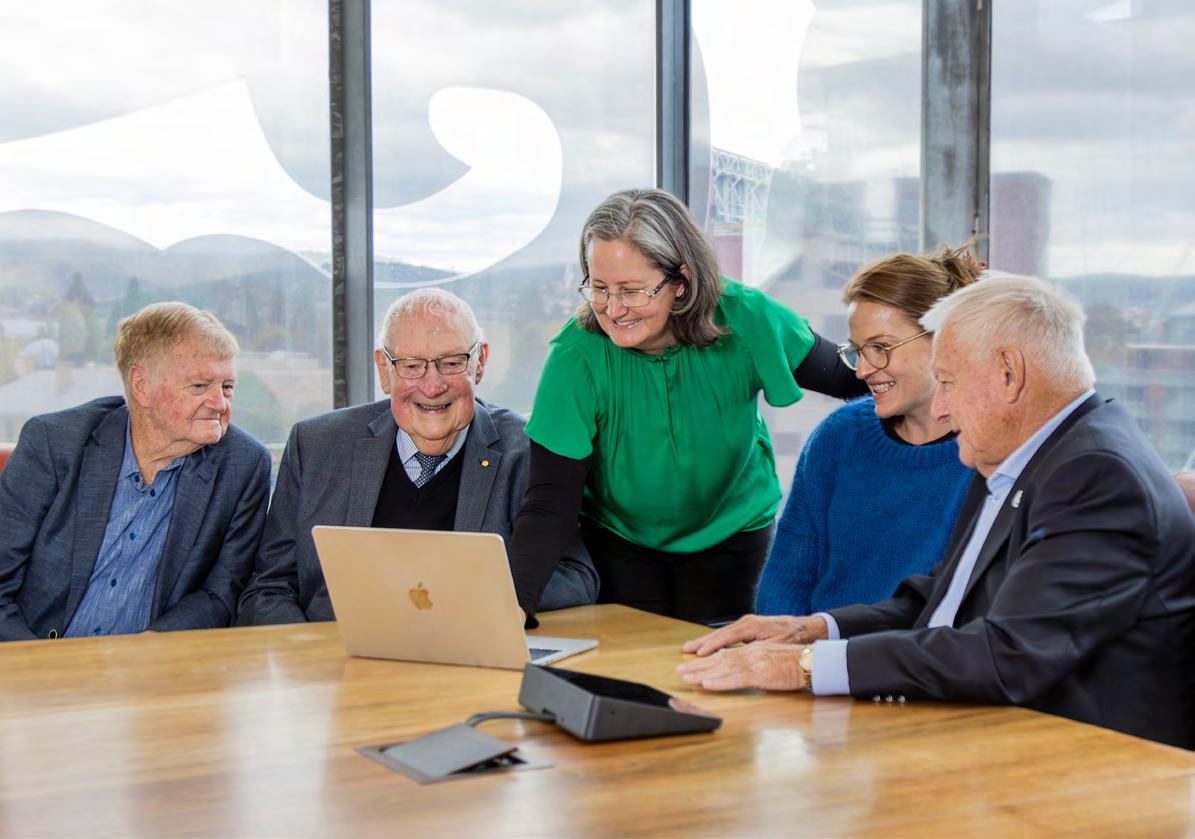
▼ Masonic Medical Research Foundation Board members, Greg Jackson, Kerry Bowerman and David Louez meet with Tracey Dickson and Catherine Blizzard from Menzies Institute for Medical Research | Image: Peter W Allen
Bringing back the glory days
How the gift of music is bringing joy to regional communities.
After growing up in homes filled with classical music, alumnus Dr Rod Roberts and his wife, Cecile Roberts, have found a unique way to share their love of the arts.
Since 2018, they have supported seven exceptional music performers through the Ossa Music Prize and showcased this talent in communities throughout Tasmania.
Named after Tasmania’s highest mountain peak, the prize supports a student or a small ensemble of students to pursue excellence in musicianship and performance, with additional support provided for a statewide tour.
“We play no part in the selection process, but we get a lot of joy from attending the performances and furthering the careers of performers,” Rod said.
Although Rod’s background is in commerce, he was drawn to supporting the arts and spreading the joy of live performance to regional communities.
“Writers, performers and musicians make important contributions to society. How many politicians do you remember from the 1700s?
"But most people remember Mozart."
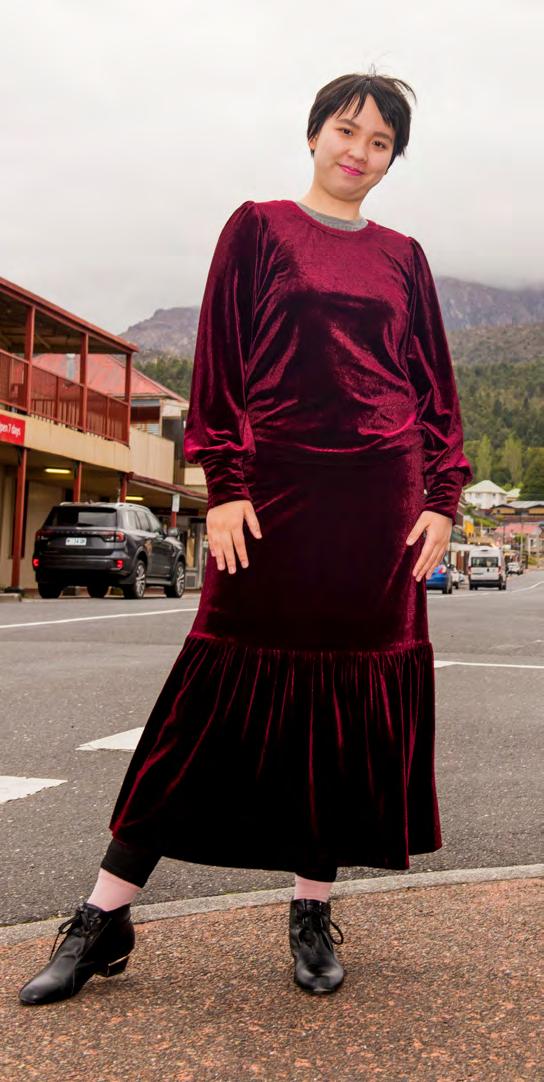
Pianist and recent University of Tasmania Bachelor of Music with Honours graduate Miffy Wang won the award in 2025 for an innovative performance that included a collaboration with, then fine arts honours student, Audrey Carter.
“I was grateful for the solo piano tour where I performed my program celebrating Tasmanian composers,” Miffy said.
“It felt very special because the Tassie music I chose was inspired by local landscapes and culture, so it resonated with the audience – it’s really a sonic expression of our unique outlook.
Two of the composers were Adjunct Professor Don Kay AM, who was previously the Head of the Conservatorium of Music at the University of Tasmania, and Associate Professor Maria Grenfell, a composer at the Conservatorium of Music.
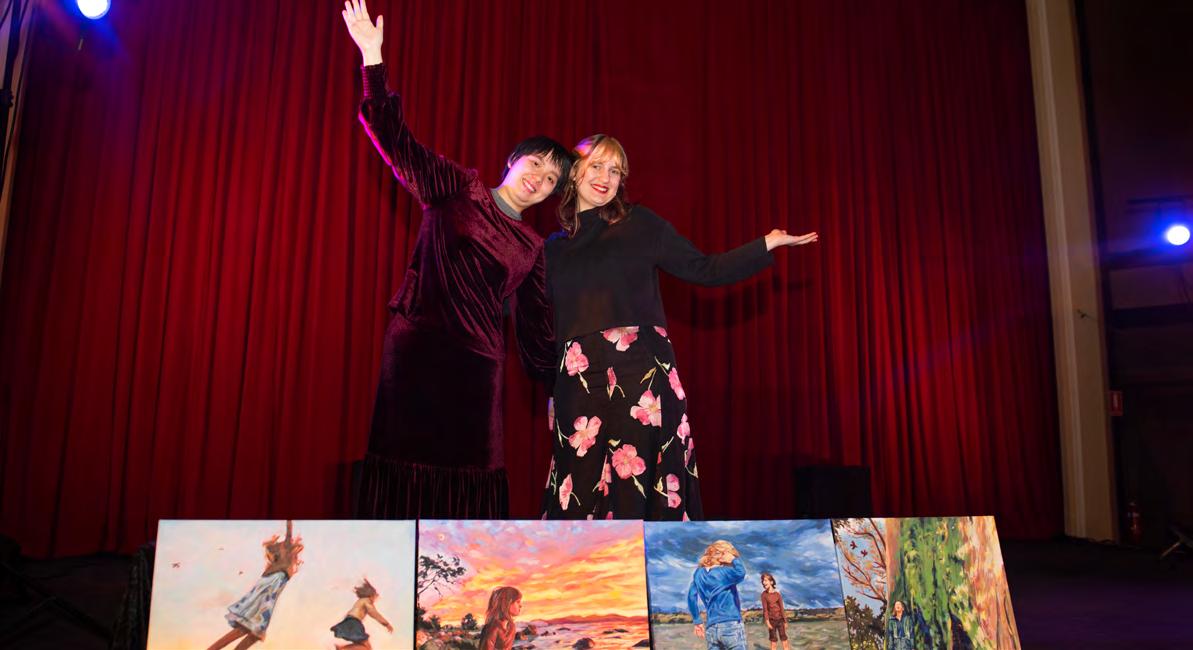
“It’s so special to perform pieces written by University of Tasmania staff,” she said. “I was also very grateful because the prize enabled Audrey and I to tour around the State –the audience absolutely loved it.”
Miffy commissioned Audrey to paint original works based on the music she played and on Audrey’s own experience growing up in Tasmania. The paintings were then exhibited while Miffy performed.
In addition to performing in Stanley, Launceston, Swansea and Hobart, Miffy performed in Queenstown, Tasmania, a tour extension made possible thanks to the generosity of the Stoermer family.
Their gift was in memory of Margaret Stoermer, an opera singer and pianist. Like the Roberts, music has always been in the Stoermer’s family.
Christian Stoermer, the son of Margaret, said, “We felt it would make Queenstown feel a little more valued or equal, with a greater sense of equality when it came to the arts, so they’re not forgotten.”
He believes the arts should be for all people – all ages and all social backgrounds. “Musicians of Miffy’s standard coming to Queenstown is very much appreciated. It’s capturing something of the glory days,” he said.
For Miffy, it was very special to perform up in Queenstown.
“I felt I was performing in memory of Margaret Stoermer – it made the performance even more memorable.”
Miffy Wang
Winning the Ossa prize has made a long-lasting impact on Miffy’s musical journey.
“This support has directly contributed to my achievements and has helped make my dream of further education come true,” she said.
“And touring Tasmania is such a fond memory, which I will remember forever.”
▲ Miffy Wang and fine arts alumna Audrey Carter with paintings inspired by music performed at the Queenstown concert | Image: Supplied
◀ 2025 recipient of the Ossa Music Prize, Miffy Wang, in Queenstown | Image: Supplied
The impact of your generosity in 2025
Thanks to your generosity, we have achieved outstanding outcomes over the last year.
2,575
Total donors $13.8M
$4.9M
Received from bequests
Total donations
$380K
Donations received through fundraising appeals
$156M Philanthropic funds under management across the University
$179K
Donations received from our staff, through our workplace giving program
$8.7M
Total donations supporting transformational research
733
New and continuing students supported by philanthropic scholarships, prizes and fellowships
$42.5M
Thank you. At the conclusion of its third year, your support has ensured that Sustain, the University's landmark philanthropic campaign, is on track to raise $50 million in five years. Your generosity is transforming lives and shaping a better future.
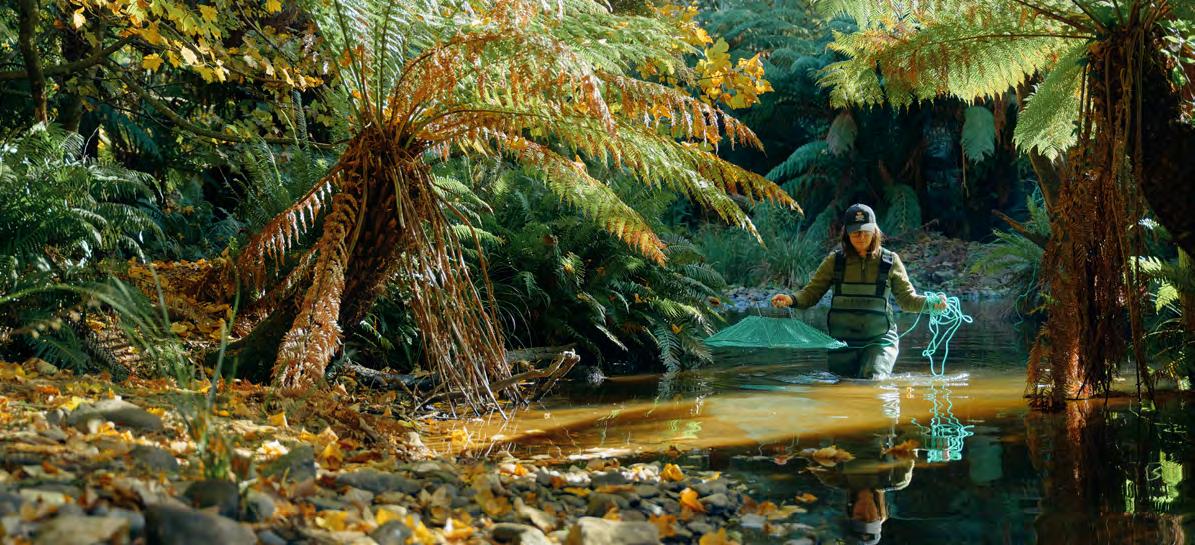
▼ Postgraduate researcher conducting fieldwork on endemic giant freshwater crayfish, Launceston
University Foundation Committee
Thank you to University Foundation Committee (UFC) members for volunteering their time and expertise in overseeing philanthropic management at the University.
The University Foundation Committee (UFC) acts to ensure that the University’s philanthropic practices and policies are consistent with its mission and strategic plan. It also ensures that trusts and funds provided through philanthropy comply with the wishes of donors and are used for educational, research and other approved purposes of the University. We are grateful to members of the UFC who volunteer their time to provide oversight and governance of philanthropic activity at the University. Of note was the committee’s strategic input into developing the philanthropic pipeline for the University and its consideration of opportunities for actively engaging philanthropy in the Sustain campaign’s philanthropic pillars. In 2025 the committee also provided ongoing oversight of philanthropic investments, management of endowed funds and the strategic direction and KPIs underpinning the work of the Advancement Office.
Two new members were welcomed to the committee in 2025. They are Professor Tracey Dickson and Lailani Mirkazemi. Professor Tracey Dickson is the Director of the University’s Menzies Institute for Medical Research and a University of Tasmania alumna. She brings incredible passion and knowledge of the impact philanthropy can make on research, as well as over 20 years of experience in leading neurodegenerative disease research work. Alumna Lailani Mirkazemi is a director of a private foundation and brings a considered approach to philanthropy and the rigour required to manage donors’ wishes.
The University aims to make a difference for Tasmania and a distinctive contribution from Tasmania. Philanthropy plays a key role in helping the University achieve these goals.
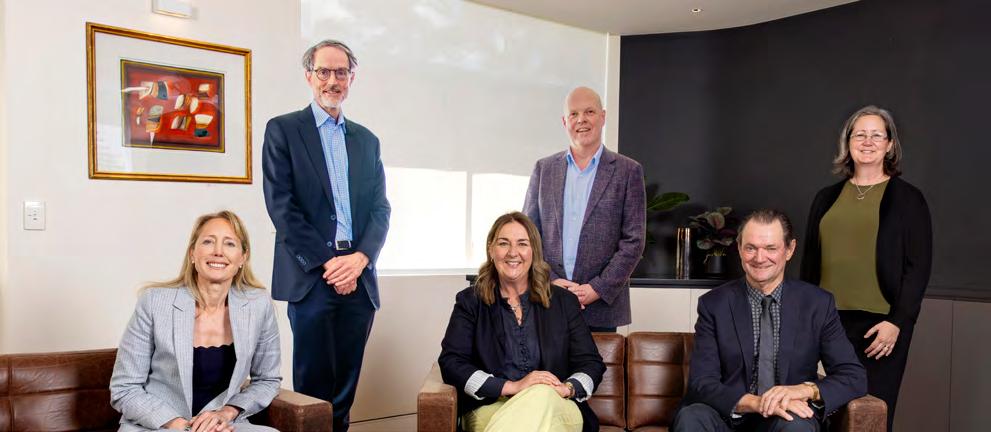
▼ L to R: Susan Gough, Rufus Black, Rebecca Cuthill, Ashley Townsend, David Warren, Tracey Dickson. Absent: Lailani Mirkazemi, Mark Habner
Thank you for
your
support of the University of Tasmania
We value your contributions and recognise donors’ generosity online in annual donor lists and giving membership categories at utas.edu.au/donors
For more information contact us: utas.edu.au/giving university.giving@utas.edu.au +61 3 6226 1920
University of Tasmania GPO Box 325 Hobart Tasmania 7001 Australia