The University received more than 24,000 applications to its Class of 2029. Its record-breaking selectivity rate is indicative of the growing interest in and popularity of the University as well as President Frederiksen’s focus on maximizing the ROI of students and families and creating transformational outcomes for graduates.
Keep up with these record-setting Chargers and read more U New Haven success stories at newhaven.edu/news/blog .
mouse-pointer

ISSUE 14 WINTER 2026
Editor In Chief
Elizabeth Rodgers
Senior Executive Director of Marketing and Communications Sue Pranulis
Marketing & Communications
Roger Castonguay, Dave Cranshaw, Tyler Hanson, Rachel Lloyd, Matthew McCullough, Carolyn Meyer, John Mordecai, Laura Norris, Kristen Ortega, Kaitlyn Pinheiro, Carol Regan, Chris Teodosio, Caitlin Truesdale
Design
Bria Mangione, Bria Loves Design LLC
Contributors
Steve Neumann, Doug Whiting
Photography
Defining Studios & Defining Properties, Don Hamerman, Len Rubenstein, University of New Haven Athletics
The University of New Haven Magazine is published twice a year by the Office of Marketing & Communications. Its mission is to connect alumni and other members of the University community to the University and to one another.
Reach us at: The University of New Haven, 300 Boston Post Road, West Haven, CT 06516 or at magazine@newhaven.edu.
The University of New Haven is committed to equal access to educational and employment opportunities for all applicants, regardless of gender, sexual orientation, race, color, personal appearance, marital status, civil union status, national origin, ancestry, religion, age, or physical or intellectual disability.
©2026 University of New Haven. All Rights Reserved. For permissions, please contact erodgers@newhaven.edu
In society today, the question of whether we are living a good life is increasingly outsourced to algorithmically moderated dashboards and streaks, to benchmarks and goalposts that seem to multiply the moment we reach them.
There is something quietly unsettling about this posture toward personal growth and fulfillment. It assumes that flourishing is something to be measured from the outside in, rather than experienced from the inside out.
As an antidote, I often find myself returning to the work of neuroscientist Robert Sapolsky and his theorizing about humanity’s “biological imperative to flourish.” Sapolsky argues that the human condition is shaped by a long, deterministic chain of biological and environmental factors. Setting debates about free will aside, what his thinking allows is an invitation to pause, look around, and take stock of the environments we inhabit most regularly, the circles we move within most often, and our openness to new perspectives and opportunities.
In other words: space (your environment) matters.
The question becomes this: what kind of space allows for the right balance of structure, safety, and flexibility to grow into one’s full potential?
We can see this principle at work in an unexpected place — the shoreline home of hermit crabs. Driven by the need for protection and room to grow, hermit crabs will try on multiple shells, assessing size, shape, and condition. Sometimes they change shells not out of necessity but curiosity, or because they feel safe enough to explore alternatives. Often, this process becomes social, a kind of vacancy chain where crabs line up to trade shells.
The lesson that Sapolsky and his unlikely crustaceous allies have for us is simple and
enduring: the environments we place ourselves in, and the company we keep, count.
This idea appears again in the concept of “collisions,” from Tony Hsieh, the former CEO of Zappos, that thoughtfully designed spaces can create opportunities for serendipitous encounters that fuel creativity, cohesion, and community. Hsieh famously shaped the Zappos workplace to maximize these moments, convinced that unplanned human connection was critical to the company’s success. Although that heyday was largely brick-and-mortar, the idea extends easily to our current reality.
Today, we also contend with invisible spaces: programming, technology, and systems that allow ideas, energy, and ways of thinking to collide and generate something new. In a sense, it is not unlike a small-scale Big Bang, where proximity and pressure give rise to entirely new forms.
Which brings me to this issue of the University of New Haven Magazine. On the surface, it may appear to be about the tangible external: dollars allocated, concrete poured, structures erected. What is less visible is the intentionality behind these architectural renderings: the dreams of the students, faculty, staff, and other members of our University community that will fill these spaces and the programming and technology that will animate them; the stories that have yet to be written through individual and collective experience; and the tomorrow shaped by what we build, and step into (both literally and figuratively), today.
And so, I welcome you to the Winter 2026 issue, where you’ll soon see — as neuroscience, marine wildlife, and the C-suite have revealed — that what we can most obviously and effortlessly engage with on the physical plane so often has the potential to yield something beyond our wildest imaginings.

Editor In Chief
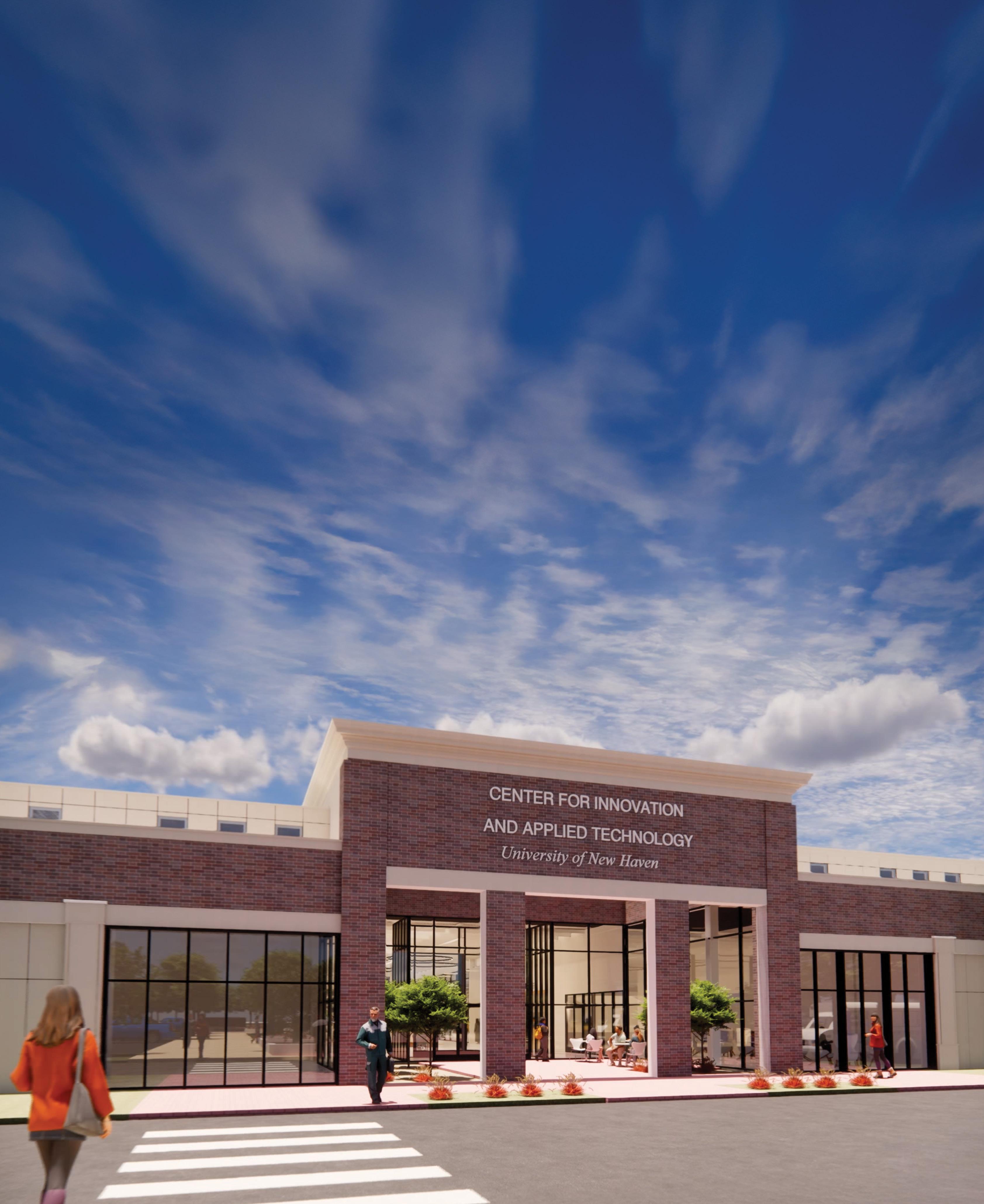
This past September, the University of New Haven announced it had secured an initial $10 million — toward its goal of raising $25 million — to renovate a 130,000-square-foot commercial property directly adjacent to its West Haven campus to establish a Center for Innovation and Applied Technology.
The initial amount raised, which is supported by a transformative $7.2 million anonymous
donation, builds on the excitement created by the University’s hiring of former State of Connecticut Chief Manufacturing Officer Paul Lavoie to serve as its inaugural vice president of innovation and applied technology to oversee the development of the Center. The University purchased the 130,000-square-foot property and 12-acre lot on Campbell Avenue, across the street from the south end of its campus, at the end of 2024.
Donor support will fund the development of collaborative spaces in the Center for Innovation and Applied Technology that incorporate technology, data, and human capital to develop solutions to evolving market demands while simultaneously enhancing students’ career readiness by creating opportunities to work alongside industry professionals.
The $25 million the University is working to raise will support the complete renovation of the site and the “white boxing” of the existing space. Creating a state-of-the-art infrastructural platform positions move-in ready industry partners to collaborate with faculty experts and provide real-world, hands-on learning opportunities for students.
The University is currently pursuing master research agreements and corporate partnerships with local, regional, and national entities, building on its reputation of being a sought-after partner for companies across a range of industries.
This past July, the University of New Haven proudly announced a transformational $5 million gift from alumnus and longtime benefactor Jeffery Hazell ’83 ’10 Hon., marking the single largest individual contribution to University of New Haven Athletics. The gift will directly support the University’s historic transition to NCAA Division I athletics and fund continued renovations and improvements to the Hazell Athletics Center, further solidifying the University’s commitment to excellence in athletics and student-athlete success.

This past June, the University of New Haven announced a $1 million gift to establish the Tagliatela Family High-Impact Scholarship for Engineering Students, a bold new initiative aimed at expanding opportunity, enhancing college access, and advancing innovation in the field of engineering.
The scholarship, supported by Board of Governors member Stephen Tagliatela ’13 Hon. and his siblings Patricia and Louis, will support high-achieving, high-need students from New Haven County who will pursue — or are pursuing — engineering degrees. This aligns with the University’s ambitious commitment to strengthening access to education and fueling economic development across the region.
The Tagliatela Family High-Impact Scholarship is designed to recruit and retain top engineering students from New Haven County, Connecticut, with a focus on increasing access for first-generation students and addressing gender disparities in the profession. Among the 344 Connecticut-based engineering undergraduates at the University of New Haven, more than 30% are first-generation students. Yet retention rates for in-state students currently lag behind their out-of-state peers.
This initiative is a key component of Project 85, the University’s strategic effort to increase its firstyear retention rate to 85%, ensuring more students persist through graduation and that they are prepared to excel in high-demand STEM fields.
Hazell’s latest investment represents his enduring belief in the power of sports to elevate the student experience and strengthen institutional pride. His name has long been synonymous with Charger athletics, and this new commitment continues a legacy of generosity that began with his leadership gift to name the Hazell Athletics Center in 2022.
The University of New Haven recently announced its move to NCAA Division I competition, a pivotal moment in the school’s athletic history. Hazell’s support will provide essential operational funding for the NCAA Division I transition while accelerating enhancements to the Hazel Athletics Center that will help attract top student-athletes and coaches from across the nation.
In recognition of Hazell’s enduring support, the University will continue to develop the Hazell Athletics Center as a central hub for Charger sports, enhancing the fan experience and providing world-class amenities for training, competition, and student-athlete development.
IN MEMORIAM
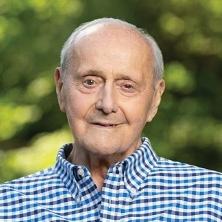
Leonard Tow ’16 Hon., a longtime University benefactor and honorary degree recipient, passed away on August 10, 2025, at age 97, leaving a significant legacy in journalism, medicine, and the arts. A prominent telecommunications figure and major philanthropist, Leonard and his late wife, Claire Tow, established the Tow Foundation in 1988, focusing on projects and collaborative ventures in fields where there are opportunities for breakthroughs, reform, and benefits for underserved populations, including their support of the Tow Youth Justice Institute at the University of New Haven. Leonard and Claire’s daughter, Emily Tow Jackson ’17 Hon., who was also recognized by U New Haven with an honorary doctorate in criminal justice, continues to carry on her family’s legacy as president of the Tow Foundation.

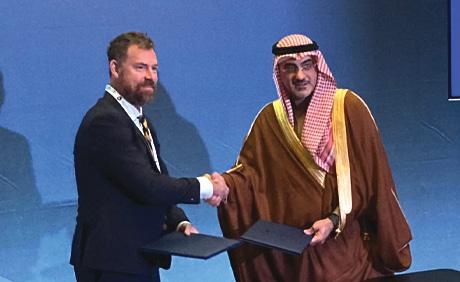
Coinciding with the Saudi Crown Prince Mohammed bin Salman’s visit to the U.S. this past November, U New Haven formalized a Memorandum of Understanding (MoU) with Takamol Holding — a government-operated company affiliated with Saudi Arabia’s Ministry of Human Resources and Social Development — that develops and delivers workforce and capability-building solutions to support the country’s labor market and its national economic transformation. Signed by President Frederiksen and Dr. Abdullah AlTuwaijri, Vice President of Takamol’s Skills Unit, the agreement establishes a strategic collaboration to advance leadership and workforce development initiatives in alignment with Saudi Arabia’s Vision 2030. As part of the MoU, the University will work with Takamol to design and deliver executive education and professional development programs for leaders and managers in key sectors of the Saudi economy. These programs will combine international best practices with locally relevant insights, focusing on leadership, strategic management, innovation, and digital transformation.
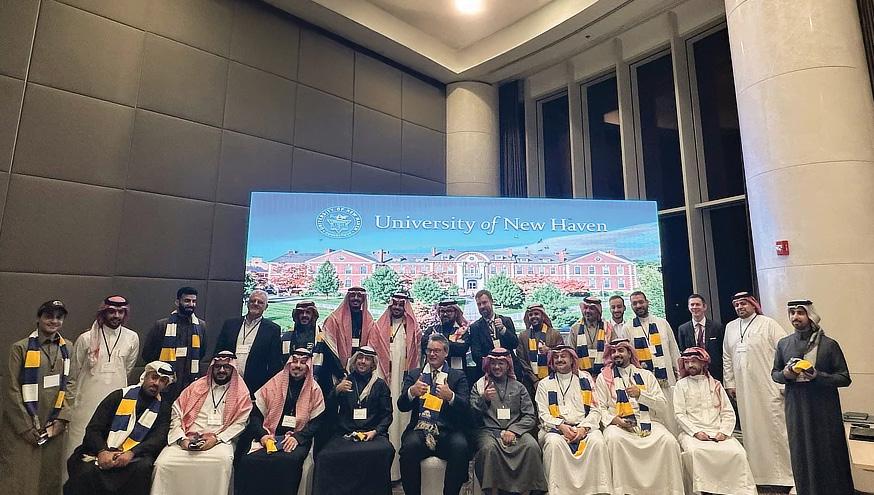
The University brought together Saudi alumni and friends this past December for its first official alumni gathering in Riyadh, held as preparations advance for the opening of U New Haven’s international branch campus in Fall 2026. As part of this special event, President Frederiksen outlined the University’s vision to offer Saudi Arabia industry-aligned, internationally accredited programs in business, engineering, and applied sciences that support the Kingdom’s transformative Vision 2030 and its human capability development goals. The University plans to continue hosting alumni-focused events in Riyadh to strengthen connections between graduates, support current and future students from the Kingdom, and foster deeper collaboration between the University and its partners in Saudi Arabia.
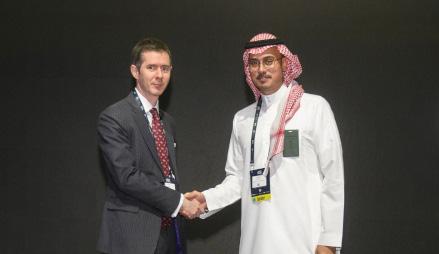
The Ministry of Investment of Saudi Arabia (MISA) and the University announced a strategic collaboration to build human capital for the Kingdom’s rapidly growing sports sector, following a joint announcement at the World Football Summit 2025, held in Riyadh this past December. The announcement was made by Basim Ibrahim of the Ministry of Investment and Dr. Leo Lester, Saudi Arabia Branch Manager for the University. Working in close coordination with the Ministry of Investment, U New Haven has already delivered pilot Sports Event Security courses on behalf of the Ministry of Sport and is working to expand its lifelong learning offerings in the Kingdom through professional training, executive education, and joint capacity-building initiatives.
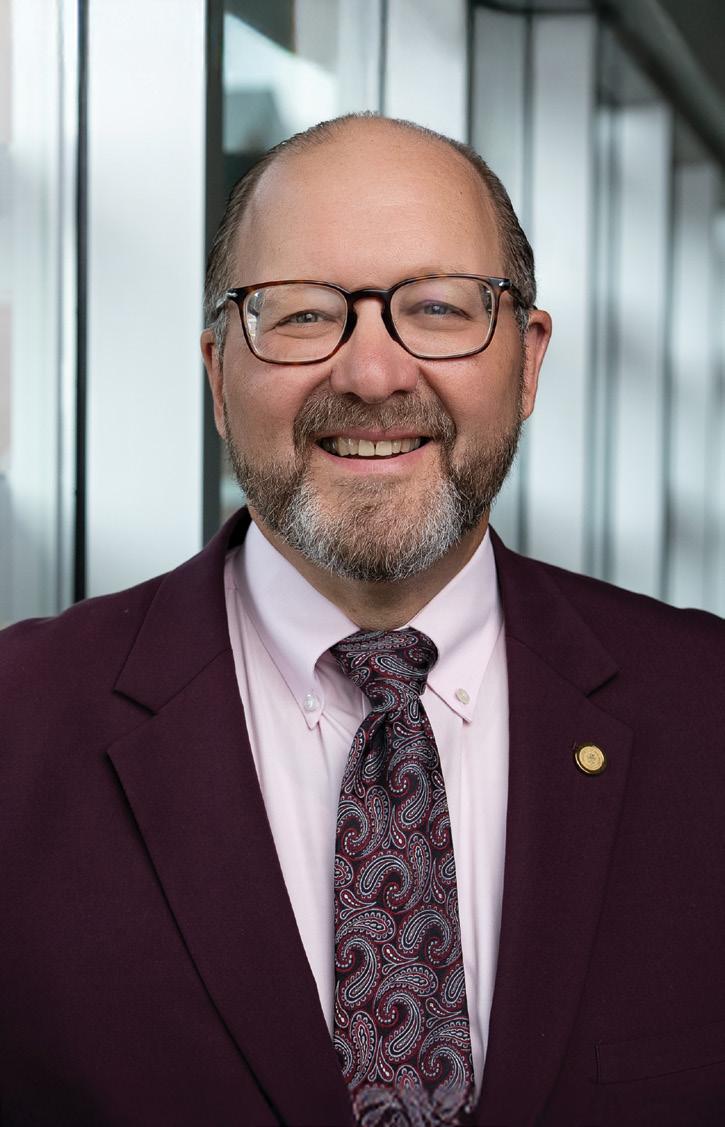
Paul Lavoie has been appointed as the University of New Haven’s first vice president of innovation and applied technology. Lavoie, who officially joined the University this past July, will oversee the formation of the University’s pioneering new Center for Innovation and Applied Technology, located in a reimagined 130,000-square-foot commercial space located directly adjacent to the University’s West Haven campus.
In 2024, Lavoie was named one of the Top 5 Chief Manufacturing Officers in the world by Manufacturing Digital Magazine, joining leaders from Michelin, General Motors, Ferrari, and Johnson Controls.
Pete Ganbarg, a two-time Grammy® Awardwinning record producer and an accomplished A&R executive and music publisher, has joined the University as an executive in residence in its music industry program for the 2025–26 academic year. A 35-year veteran of major label A&R, he currently serves as president of Pure Tone Music, a full-service music company. He previously served as president of A&R at Atlantic Records from 2008 to 2024.
Prior to his work at Atlantic, Ganbarg held senior A&R positions at Arista, Epic, and SBK/EMI. He originally formed Pure Tone Music in 2003,
prior to joining Atlantic, as an A&R consulting firm with clients ranging from Kelly Clarkson, Daughtry, and Chaka Khan to Santana, Train, Aaron Neville, Donna Summer, and more.
Songs published by Pure Tone include 2024’s Grammy® Award-winning Record of the Year “Flowers” by Miley Cyrus and Alex Warren’s No. 1 Smash “Ordinary” as well as hits recorded by Benson Boone, Charli XCX, Beyoncé, Lizzo, Justin Bieber, Maroon 5, Katy Perry, OneRepublic, Lewis Capaldi, Ed Sheeran, Andy Grammer, and more.
Ganbarg has won two Grammy® Awards for his production on theatrical cast albums: the 2020 Original Broadway Cast Recording of Jagged Little Pill and the 2017 Original Broadway Cast Recording of Dear Evan Hansen. He is also a board member of the Songwriters Hall of Fame and hosts a popular podcast interview series with legends of contemporary music titled Rock & Roll High School, which is soon to launch its fifth season.
Ganbarg was also named “International Music Person of the Year” in 2023 by the music industry organization MUSEXPO.
A Connecticut native, Lavoie was appointed by Governor Ned Lamont as the chief manufacturing officer for Connecticut in February 2022. The chief manufacturing officer position was created to coordinate efforts from the state and private sector to expand manufacturing in Connecticut. In November 2022, Lavoie assumed responsibility for the state’s economic development efforts for its clean economy, including offshore wind.
Lavoie has extensive industry experience, including serving as general manager at Carey Manufacturing in Cromwell, Connecticut. Prior to Carey, Lavoie owned two businesses and served in senior-level positions at publicly traded and privately owned businesses. He serves as the board chair of the Connecticut Wind Collaborative, cochair of the Governor’s Council on Women and Girls Subcommittee on Education and STEAM, an advisory board member of the Connecticut Technical Education and Career System, and an advisory board member of the UConn College of Engineering.

In the 2025 Carnegie Classification of Institutions of Higher Education, the University of New Haven has been elevated to the list of Research Colleges and Universities, which includes any institution outside of Carnegie’s R1 and R2 classifications that spends more than $2.5 million on research and development.
According to Carnegie, the new classification better reflects the “increased diversity of institutions and the learners they serve, making it more relevant and useful for policymakers, funders, researchers, and others who rely on the classification system for a comprehensive view of higher education in the United States.”
Continued external grant funding is the key metric that elevated the University’s research classification. In total, the University’s external grant expenditure was $8.2 million during the 2025 fiscal year and $6.5 million during the 2024 fiscal year, reflecting extremely steady growth year over year.
Hao Sun, Ph.D., assistant professor of chemistry at the University of New Haven and the recent recipient of a prominent National Science Foundation (NSF) CAREER Award, is leading an ambitious project to redesign plastics from the ground up.
At the heart of his work is a dual mission: to create sustainable materials and to engage a wide network of student researchers along the way. Industry collaboration is already on his mind. He has connections with companies such as Dow and Genentech and plans to include them in outreach programs and the summer STEM Polymer Academy he is creating at the University.
Dr. Sun is quick to credit his students for the momentum behind his success. Since joining the University of New Haven in 2021, he has built a collaborative, team-based research environment where students play an active role in shaping and executing projects.
The University of New Haven’s prestigious accreditation from the Association to Advance Collegiate Schools of Business (AACSB) International — the longest-serving global accrediting organization for business schools — has been extended through the 2030–31 academic year.
The renewal of the accreditation that the University originally earned from AACSB in 2015 — and that was renewed in 2020 — reaffirms that the Pompea College of Business continues to fulfill a rigorous set of standards. Only six percent of the world’s leading business schools achieve AACSB accreditation, recognizing them as trailblazers in teaching, research, and societal impact.
Fewer than 1,045 institutions — across 68 countries and territories around the world — have earned AACSB accreditation.

The University of New Haven has once again been named a College of Distinction, earning national recognition from a trusted resource for students, parents, families, and guidance counselors for the 2025–2026 academic year. In addition to being honored as a 2025–26 College of Distinction and a Connecticut College of Distinction, the University also earned specialized accolades in Business and Engineering.
These recognitions are based on the Colleges of Distinction’s four pillars: Engaged Students, Great Teaching, Vibrant Community, and Successful Outcomes. The University’s commitment to hands-on learning, industry-connected faculty, and strong student support stood out in every category.
This marks the 15th consecutive year that this respected national guide has recognized the University of New Haven, applauding the studentfocused, career-driven experiences offered across its curriculum.
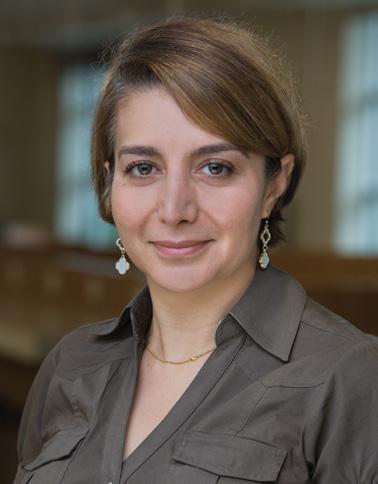

A new National Science Foundation-funded program led by Professors Goli Nossoni and Reihaneh Samsami offers hands-on, sustainable construction research for students with learning disabilities, combining technical innovation with inclusive mentorship.
Titled “Building a Greener Future: Sustainable Construction Research for Empowering Students With Learning Disabilities,” the three-year Research Experiences for Undergraduates program aims to advance sustainability while also supporting neurodivergent students, such as those with ADHD, dyslexia, and autism, through mentorship, research, and career preparation.
Each summer, eight students from across the U.S., including up to three from U New Haven, will conduct research on topics such as 3D concrete printing, solid waste combustion, water systems for net-zero shelters, and rapid construction modeling.
circle-arrow-right
U New Haven Partners With Innovative Connecticut Manufacturers to Launch Engineering Scholarship
A new scholarship program created in partnership with Microboard and PTA Plastics aims to support students pursuing degrees in engineering and technology-related fields. This initiative reflects the University’s continued commitment to preparing future innovators and both companies’ long-term commitment to strengthening Connecticut’s manufacturing workforce and investing in future innovation. The new scholarship also underscores the University’s expanding corporate partnership efforts, which connect students with industry leaders committed to building strong and sustainable talent pipelines.
More Than 300 Attend Open House for the Center for Innovation and Applied Technology
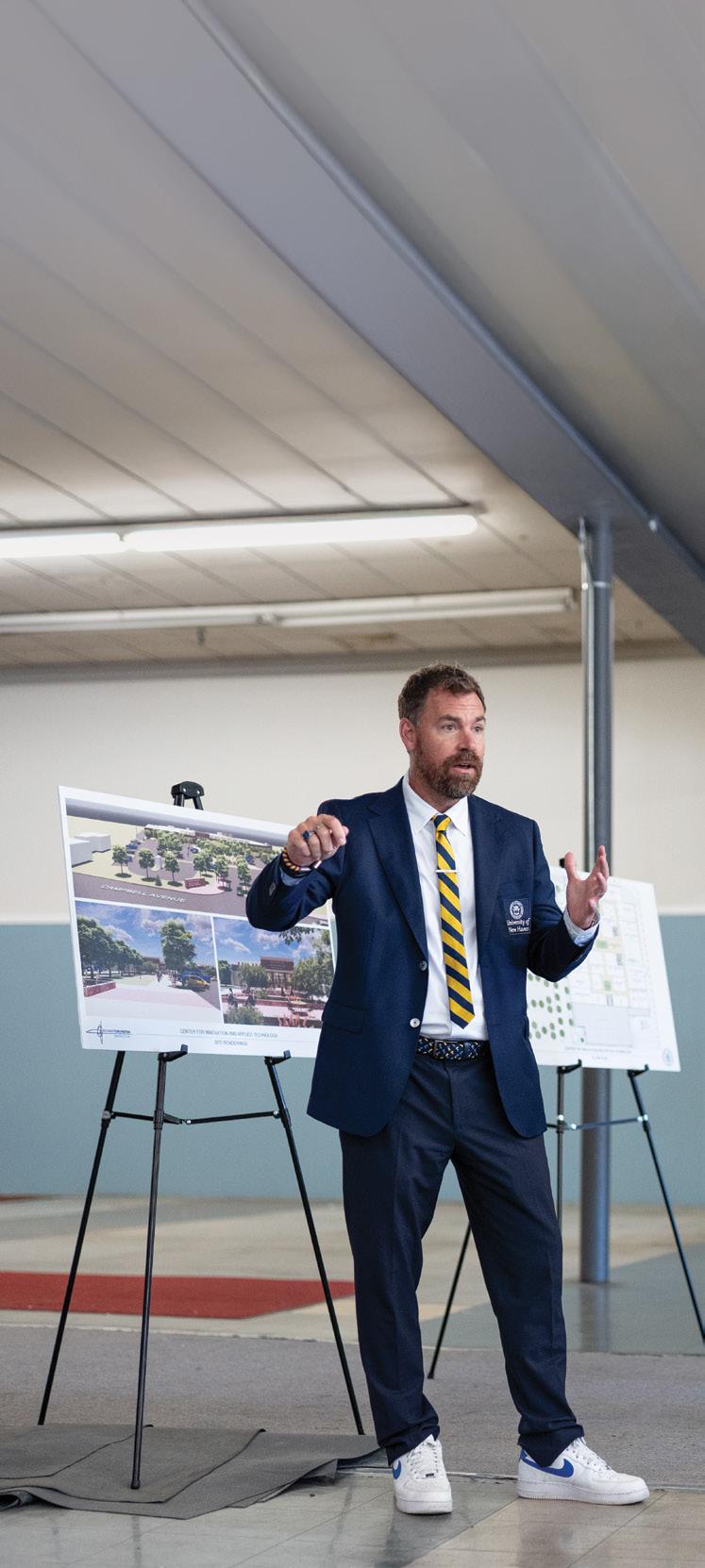
More than 300 individuals from across industry, academia, government, and the nonprofit sector visited U New Haven on Thursday, Nov. 13, for an open house showcasing the vision for the University’s pioneering Center for Innovation and Applied Technology.
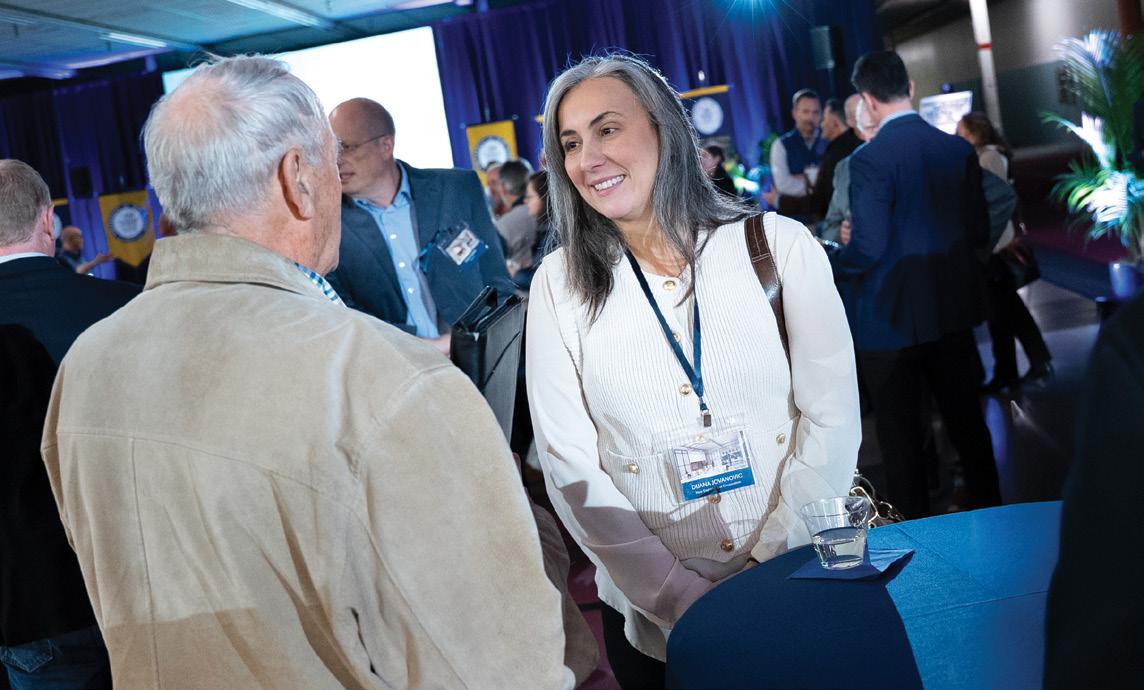
According to University leadership, this was an opportunity to illustrate how the University aims to redefine industry and academia collaboration, creating new opportunities for current students and the companies that will be looking to hire our graduates.
arrow-circle-left
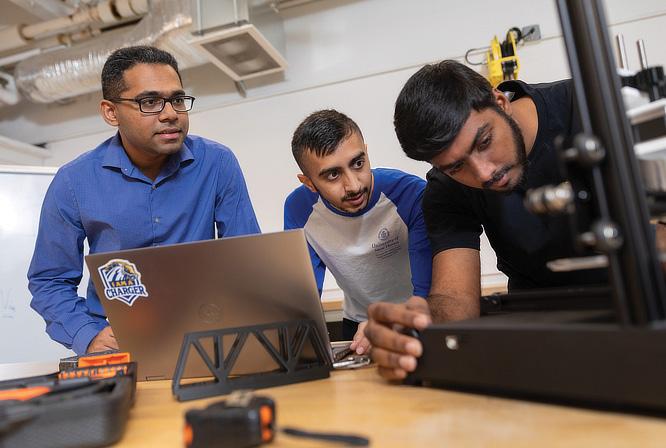
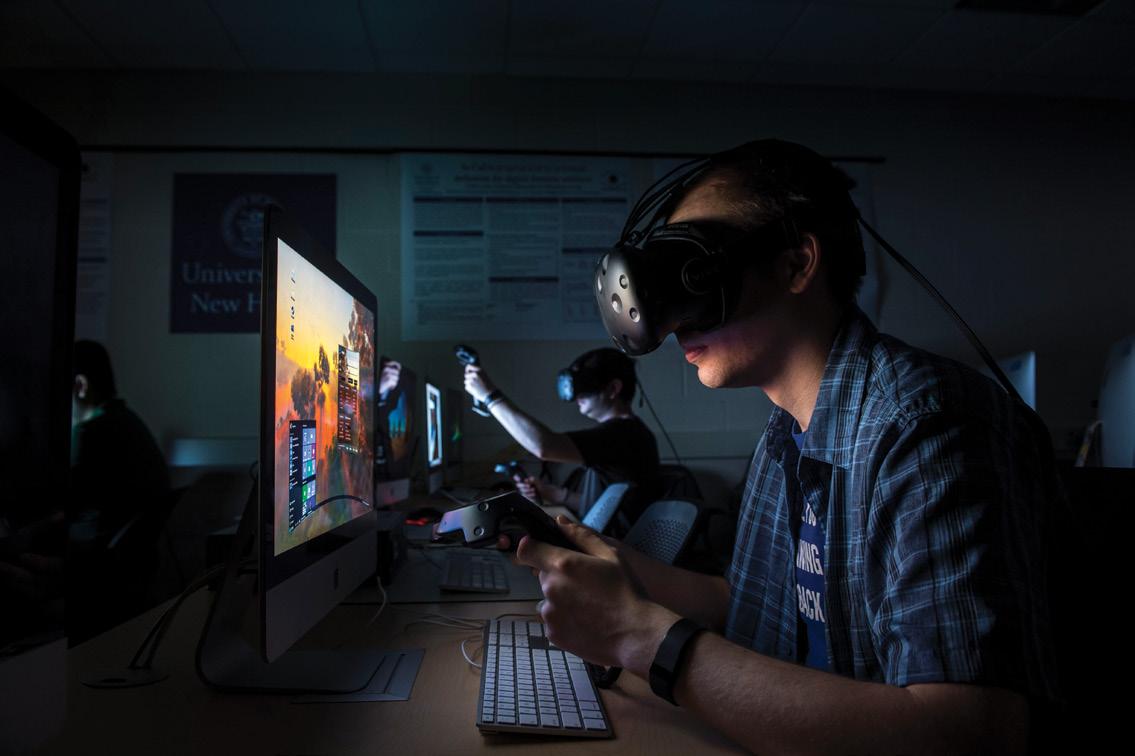
The University of New Haven is preparing to launch a Master of Science in Artificial Intelligence (AI) in Spring 2026, with the goal of training the next generation of engineers and developers who will lead this fast- and ever-evolving field.
Although the University already has a successful master’s program in data science, the pace of change in AI demanded a separate, specialized program. The new program will be offered both on-ground and fully online, making it accessible to students locally and globally.
Students will gain hands-on experience developing AI applications using industry-standard tools and infrastructure, working with both classical and cutting-edge technologies. Just as important, the curriculum emphasizes reliability and trustworthiness, key considerations in the ethical deployment of AI.
FUNDS
$10,195,891
$13,985,273
$9,349,287
$27,808,681
FISCAL YEAR 2025 was a record-setting year for the University of New Haven, with close to $30 million raised in private support from alumni and friends just 15 months after President Frederiksen’s first day on campus. FY’25
FACILITY UPGRADES
Center for Innovation and Applied Technology
The University acquired property to establish a center focused on advanced manufacturing industries with university research, innovation, and workforce development.
Center for Community and Civic Engagement
The University acquired a 10,000-square-foot building to house the Tow Youth Justice Institute and Center for Advanced Policing.
Pompea College of Business Returns to West Haven
Transformative contributions from generous donors will allow the University to relocate the Pompea College of Business to the main campus.
Marine Science Center
A collaboration with the City of New Haven, coupled with generous donor support, the University now has a space in the Canal Dock Boathouse for students pursuing degrees in marine and environmental science.
ACADEMIC ENHANCEMENTS
Student Health and Wellness
A new partnership with Hartford HealthCare supports student health and well-being as well as athletic training for our student athletes.
Bolstered by the hiring of Paul Lavoie and plans for the new Center for Innovation and Applied Technology, the University is working with corporate partners to provide essential training to students interested in the manufacturing field while filling workforce needs.
Internship Signing Bonus Program
With the support of a generous donor, the University is celebrating internships and doubling down on its commitment to creating pathways to industry.
Division I Athletics
In May 2025, the University accepted a full membership from the NEC and began transitioning to NCAA Division I during the 2025–2026 academic year.
The University became the first foreign entity to apply for a higher education license from the Kingdom to open an international branch campus in Riyadh.
The Pompea College of Business became the first official higher education partner of the New York Mets. The partnership will include student site visits, mentorship opportunities, and course collaborations.
A generous seven-figure gift established a scholarship for Afghan women that covers four years of tuition for undergraduate students and two years of tuition for graduate students.
Frederiksen Forum Speaker Series
Leaders from various sectors have come to campus to talk with students about leadership, public service, and finding their own paths to success.
BY DOUG WHITING
Even as the University of New Haven aggressively pursues strategies to take a strong position in international education — evidenced in part by its planned campus in Riyadh, Saudi Arabia; its continued presence in Prato, Italy; scholarships to bring Afghan women to campus; and the development of partnerships between the University and foreign entities as well as with U.S.-based companies with a global mission — it is also strengthening the foundation of its home campus in West Haven, Connecticut.
Together, these initiatives truly reflect President Jens Frederiksen’s vision of the University of New Haven as an institution with a local feel and a global reach.
Further, the measured but energetic efforts underway to continue to remake the West Haven campus are designed to undergird Frederiksen’s pillars of success for a U New Haven education: providing a transformative academic experience, a quantifiable return on investment (ROI), and excellent preparation for the elite careers of the future.
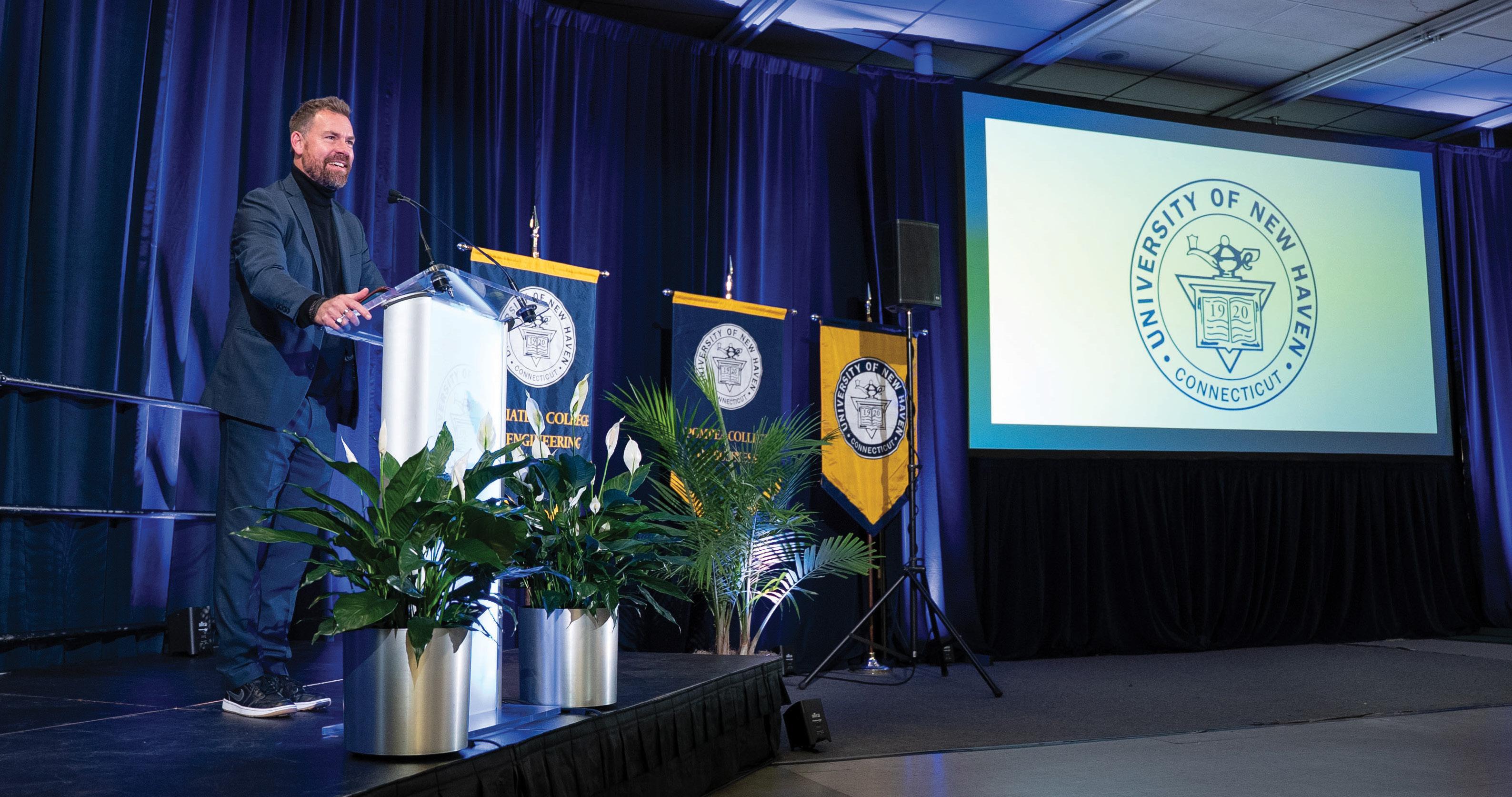
For Frederiksen, this isn’t simply a return to the aimless higher education arms race of the ’80s, ’90s, and aughts — where colleges and universities competed to have the best climbing wall or the most luxurious residence halls — but rather an intentional embodiment of the University’s value proposition and philosophy of doing what’s needed to prepare “better-than-ready” graduates who will lead full and meaningful lives.
Recent developments and plans for the near term — which cover a broad swath of the University’s operations, critical services, and programs — include the following:
+ The relocation of the Pompea College of Business from the Orange Campus to the West Haven campus in a brand-new, 50,000-square-foot state-of-the-art facility;
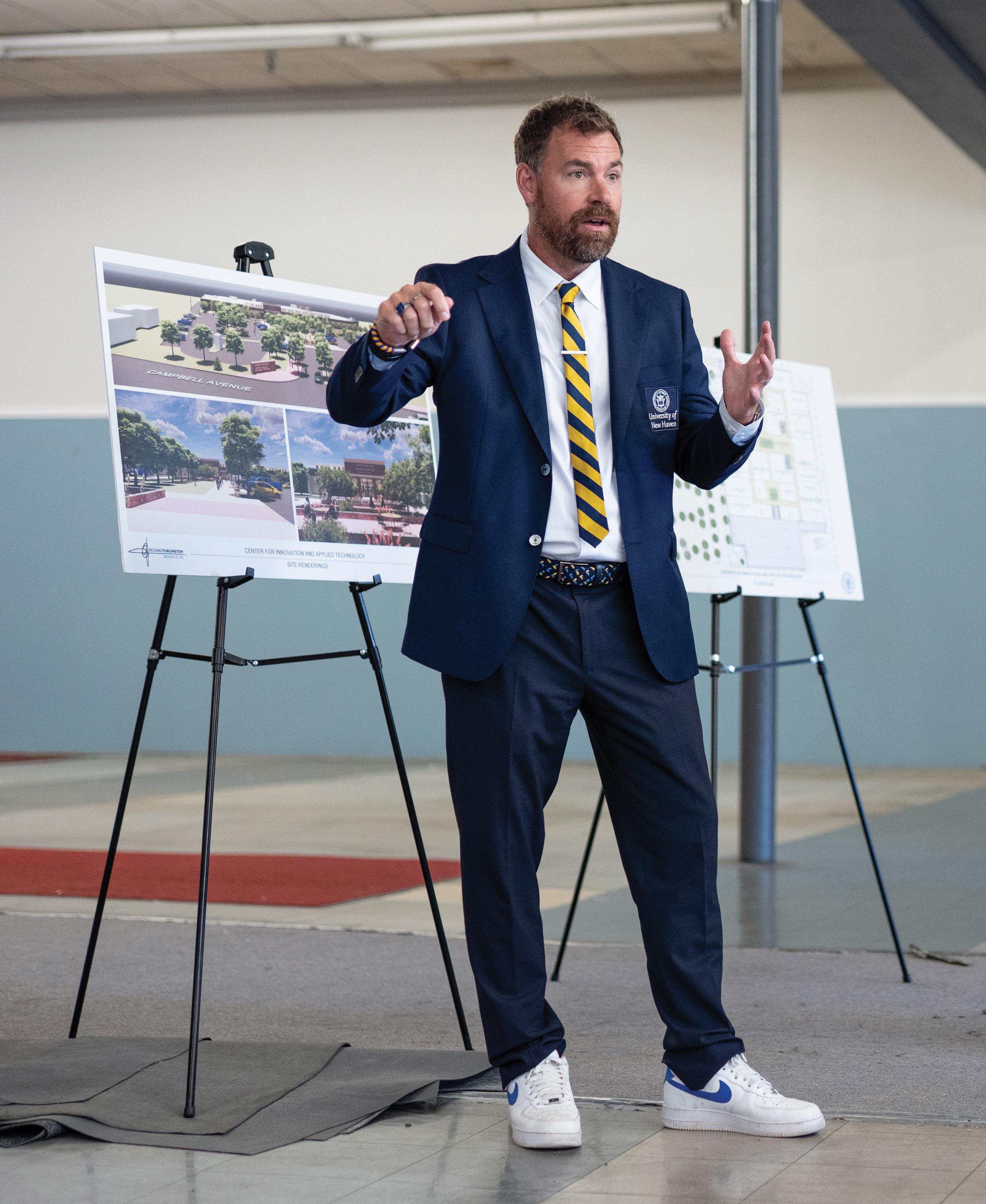
+ The renovation of a 130,000-square-foot commercial building adjacent to campus to establish a new Center for Innovation and Applied Technology;
+ A reconfiguration of and addition to both Bartels Hall and Bartels Student Activity Center;
+ Further buildout of space in the School of Health Sciences facility on One Care Lane to support a planned master’s program in physician assistant studies;
+ Remodeling the former CVS property into a center for community engagement;
+ Renovations to the Allingtown Library facility to support human resources and academic needs; and
+ Additional enhancements to the Jeff Hazell Athletic Center and the Peterson Performance Center to support the University’s move to Division I athletics.
As Frederiksen says, the initiatives will “impact students from West Haven to Kabul” — not simply enhance what he calls “the intellectual playground” or fortify technical job preparation, but will “meet the demand for an unparalleled return on investment” and transform lives.
Getting a job, Frederiksen says, is just one pragmatic piece of the puzzle for students. “What we are talking about, even more than just a job, is a career. But we also want students to graduate toward a successful life, with a service orientation, global knowledge and experience, worldliness, good mental health, elasticity, flexibility, agility.” That broader aim, he says, is what delivers on that “unparalleled ROI.”
Already, numerous signs point to an institution on the rise. The University recently received elevated status in the 2025 Carnegie Classification of Institutions of Higher Education, bringing increased
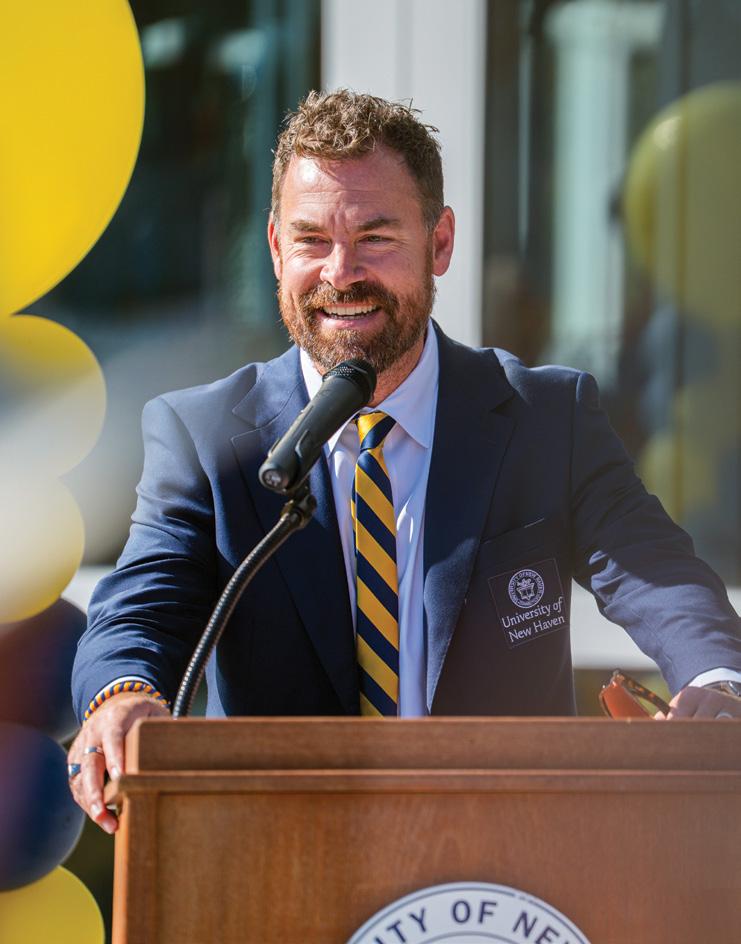
visibility as a research university. It welcomed the most selective first-year class in its history. Accepting a full membership invitation from the Northeast Conference Council of Presidents last spring, the University has begun the transition to NCAA Division I status for all athletic programs. Faculty members have been awarded prestigious national awards and grants, and students are competing at the highest levels in academic competitions in multiple disciplines. The feeling of an institution moving forward, quickly but strategically, is tangible.
Future momentum, though, is impossible without a significant and intelligent investment in the University’s infrastructure.
Some 40 years ago, at the direction of its president, Ernest L. Boyer, the Carnegie Foundation for the Advancement of Teaching oversaw a national survey of thousands of college students and parents, faculty members, and academic deans
We need to be the place where a family’s faith in us is justified by the civic and professional readiness of our graduates.
PRESIDENT JENS FREDERIKSEN
to understand the essence of the undergraduate experience in America.
Of many findings presented at a Harvard Colloquium on the topic, “a disturbing distance between the campus and the larger world” existed for too many students, according to Boyer. In words that resonate even today, Boyer offered a remedy: create a culture in which quality of life and community are central.
The study quoted one student who answered the survey: “I want a better life for myself. That means college.” Boyer said, “We proceed with the conviction that if a balance can be struck between individual interests and shared concerns, a strong learning community will result. … And perhaps it is not too much to hope that the college, as a vital community of learning, can be a model for society at large — a society where private and public purposes also must be joined. We suggest strengthening the connections between what is learned and how one lives.”
For Frederiksen and the leadership team at the University of New Haven, those decadesold insights help provide a blueprint for the ideal educational experience in 2026 and for the physical infrastructure needed to deliver on that experience — “the tangible as a gateway to the intangible,” in Frederiksen’s words.
In many ways, the University of New Haven is bucking national trends in higher education that lean toward a “preservationist” mode of operating, particularly in the present environment. Instead, the University is boldly stepping into what Frederiksen calls “the triangle of academia, private sector, and government,” evidenced most notably through the development of the Center for Innovation and Applied Technology but also through other “physical manifestations of our vision” that target the specific goal of giving students a kind of ROI that is different from many competitors.
By focusing on not only significant developments in the physical plant but also how facilities integrate with one another, addressing the sweep of academic and nonacademic offerings, and meeting both the University’s needs and mission, Frederiksen believes the University can provide a comprehensive, wraparound experience that will produce graduates who are career ready and equipped with the tools for a healthy and productive life.
He also believes that meeting these goals — the massive infrastructure program, partnerships with industry and government, and enhanced ROI for students — is a concrete way to respond to the intense criticisms of cost and outcomes that are clouding much of higher education’s future. For an institution like the University of New Haven, he says, the challenge is a much larger lift than at many wealthier colleges and universities, which largely serve a student population that has more means and better preparation. That means that for U New Haven, at least, which by mission serves a different demographic, the integration of appropriate and firstrate facilities, rigorous classroom instruction, plentiful workforce opportunities and other experiential opportunities, and personal care must be intentional and unwavering.
“Space matters,” he says, “but more importantly, the right kind of space matters, especially to an institution that traditionally might have been on its back foot.” Frederiksen posits that this intentionality allows leadership to be proactive in meeting its mission and anticipatory of the market dynamics of labor, industry, and higher education, rather than reflexively reacting to the latest trends.
“The University is one of the few places where young people can become what they are and what they want to be,” Frederiksen says. “We need to be the place where a family’s faith in us is justified by the civic and professional readiness of our graduates. That requires strategic investments in both facilities and student preparedness. It is an enormous responsibility, and one that we are addressing with utmost seriousness.”
BY DOUG WHITING
To walk through the University of New Haven campus today is to have an experience that would be unrecognizable even 10 years ago.
But as the old Bachman-Turner Overdrive song put it, you ain’t seen nothin’ yet.
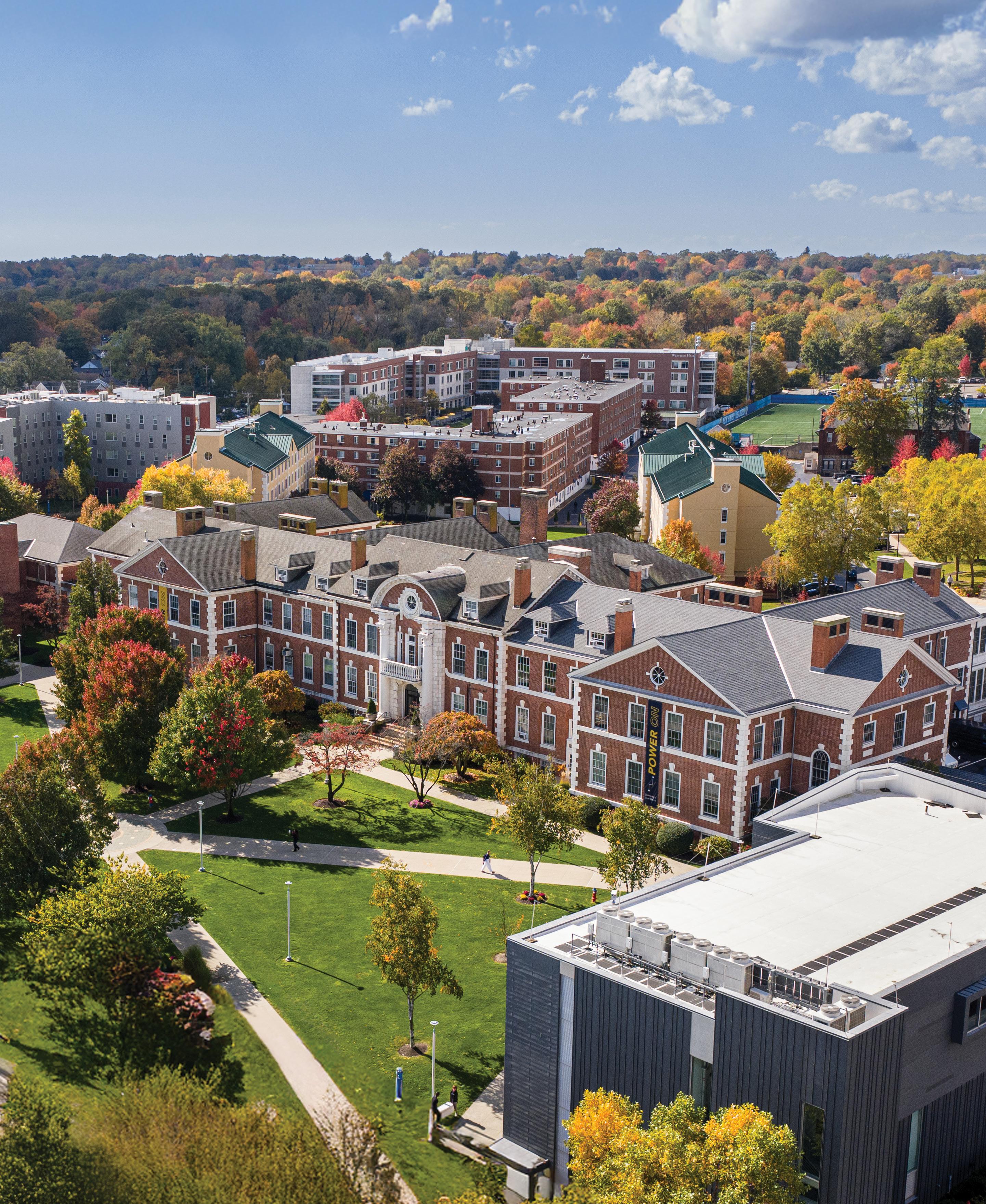
Just in recent years, the creation of the Bergami Center for Science, Technology, and Innovation and the Peterson Performance Center; new green spaces; and replenished athletics facilities, residence halls, and academic spaces have beautified the campus and provided students with a more fulfilling and complete collegiate experience.
At the direction of President Jens Frederiksen and his leadership team, the University will drive an aggressive, approximately $200-million agenda through 2027 to remake the campus in profound ways that are bucking national trends and creating a massive amount of momentum. “We are well positioned to do something truly extraordinary,” Frederiksen says.
“Coming off an historic fundraising year, my optimism is fueled by the extraordinary momentum we’re seeing in our fundraising efforts,” says Brian Otis, vice president of Advancement. “More than $70 million in charitable contributions from loyal alumni and friends have not only accelerated our capital projects — they’ve inspired others to join in supporting this transformative moment in the University’s history. It’s a powerful reminder of what’s possible when a community believes in its future.”
The makeover is designed to support both the University’s academic enterprise and its efforts to give students an immersive, wraparound experience that will help prepare them for productive citizenship, 21st-century careers, a global perspective, and a different kind of return on their investment in U New Haven.
Come back to our West Haven campus in a couple of years, and here’s just some of what you will see.
Several years ago, pressed for space and seizing on an opportunity to acquire ready-made facilities that could accommodate a business school, the University purchased property in Orange, Connecticut, and converted it to house the Pompea College of Business.
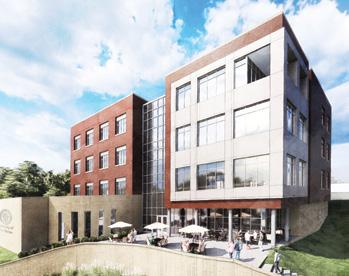
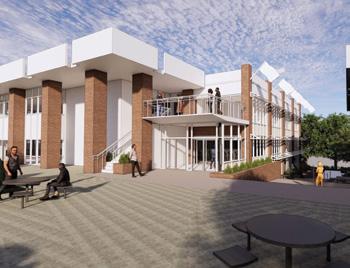
Having realized the drawbacks of large numbers of U New Haven students and faculty regularly operating miles from the West Haven campus, the University will break ground next spring on a new state-of-the-art, 50,000-square-foot facility for the Pompea College of Business on the main campus.
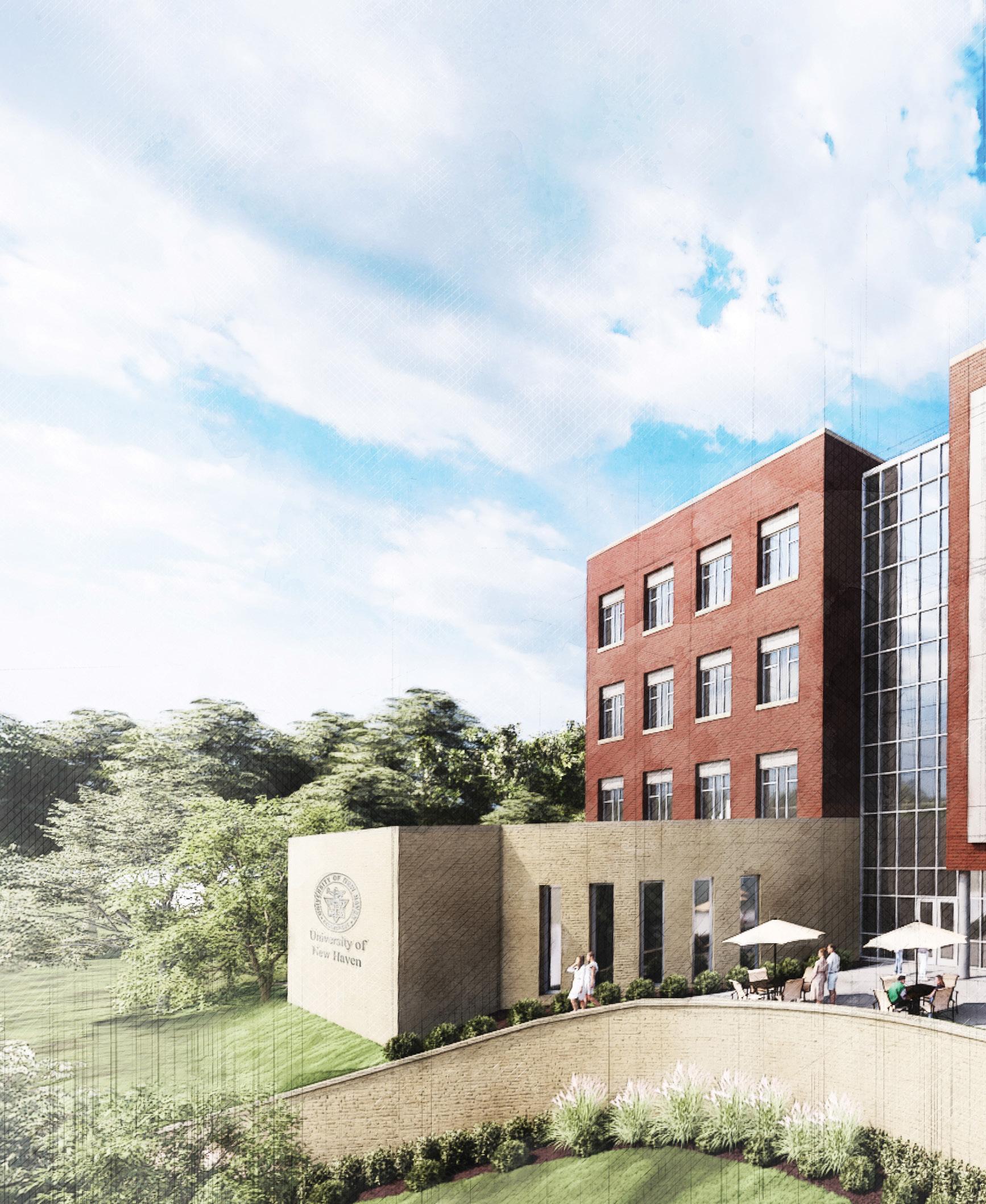
“Bringing the business college to the main campus will elevate the overall student experience and project our internationally renowned business programs across the entire curriculum,” Frederiksen says. He praised lead donors Dennis Martin ’81 and Charles Pompea ’71, who have set the fundraising tone and excitement for the project with gifts in excess of $5 million each. To date, just under $20 million has been raised toward the $45 million project.
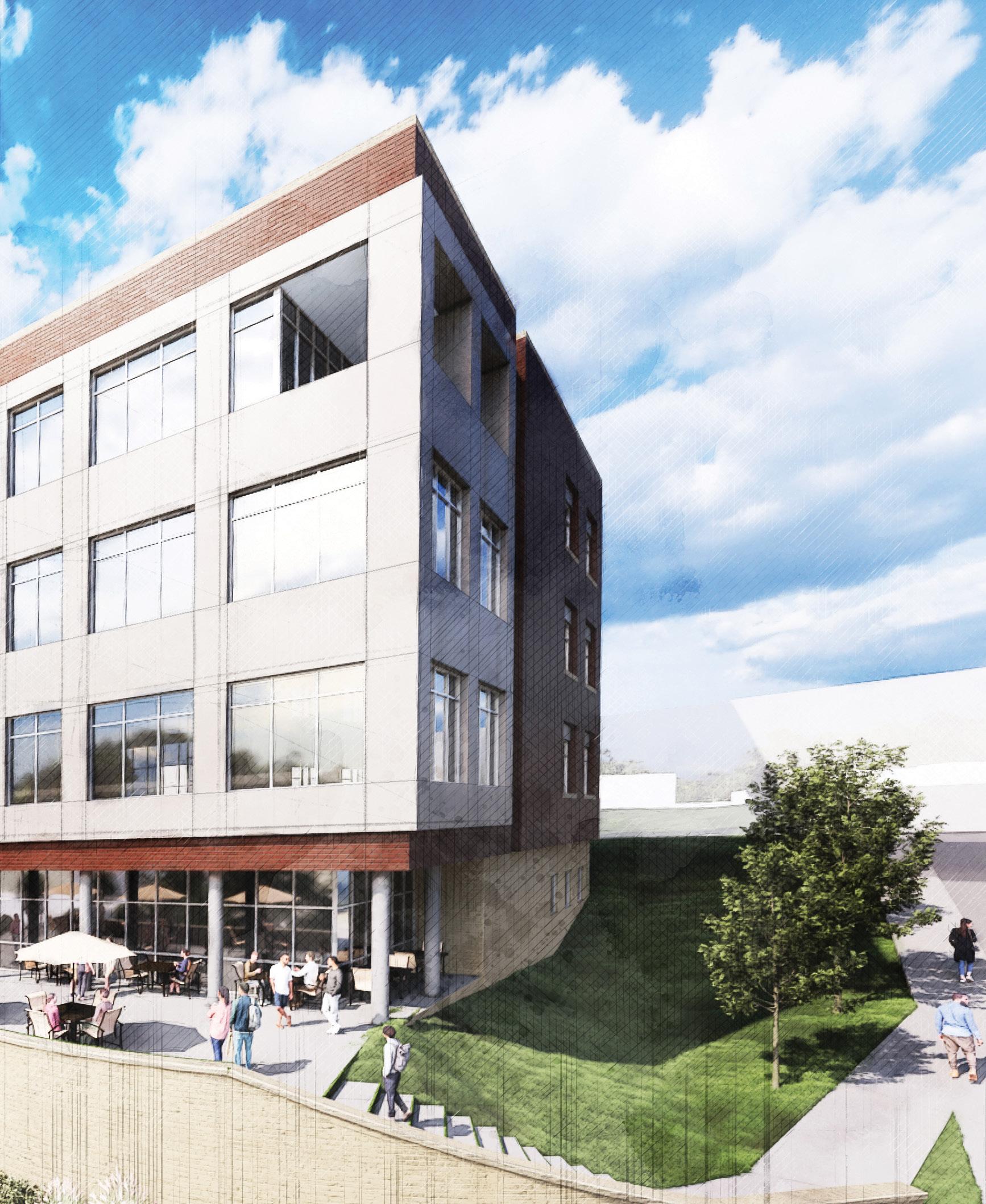
+ 50,000 sq. ft. state-of-the-art building on the main campus
+ Groundbreaking spring 2026 at Rudin St. & Campbell Ave.
+ $45 million project; nearly $20 million raised to date
+ Designed into a steep hillside as a new campus landmark
+ Features collaborative learning spaces throughout
+ Includes analytics and trading room and student success hub
+ Glass-enclosed café and 250-seat auditorium — first on campus
+ Upper levels with balcony, boardroom, and administrative suites
+ Will double incoming class size and transform South Campus
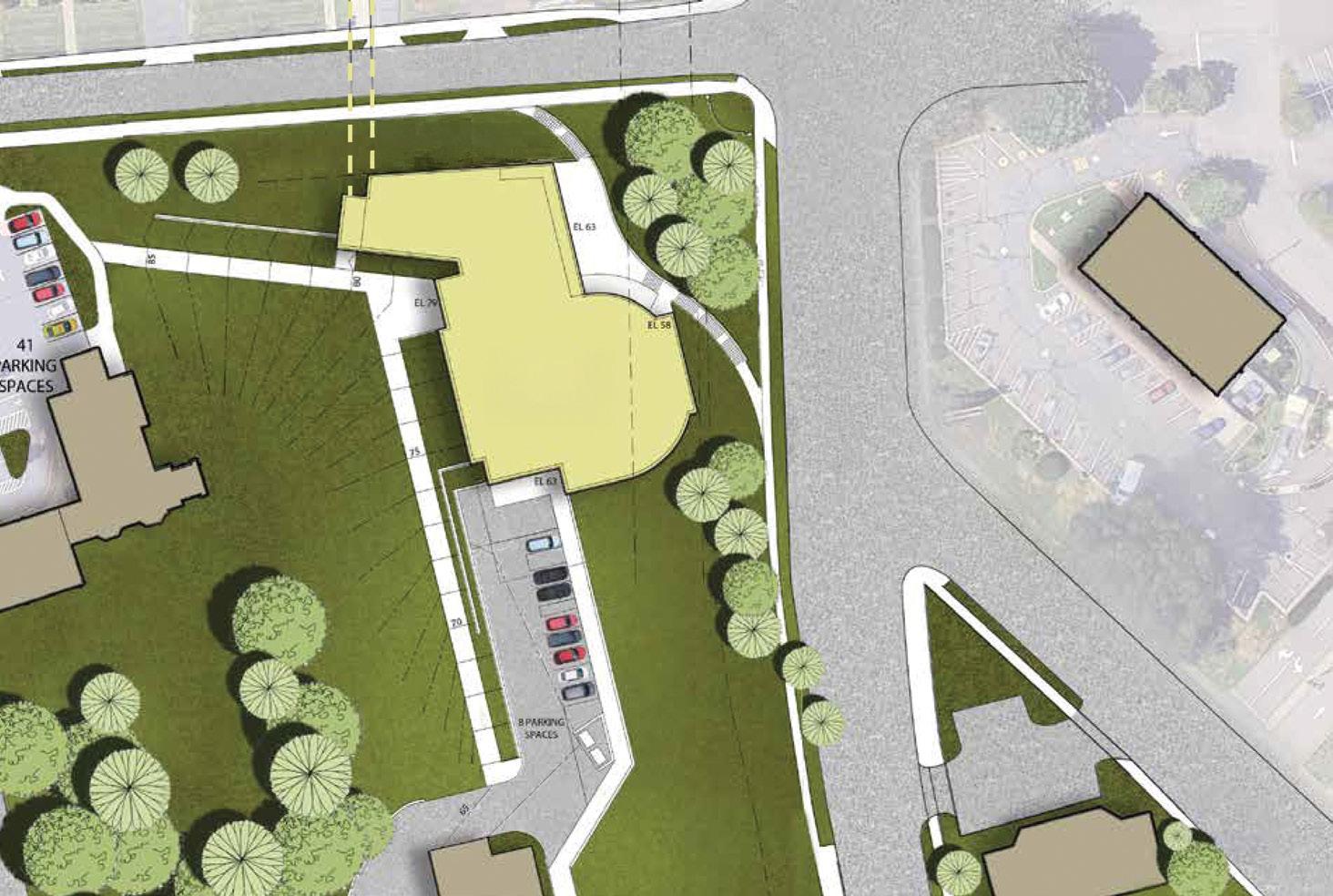
Brian Kench, dean of the Pompea College of Business, could barely contain his enthusiasm on a recent tour of the proposed site — to be built dramatically into a steep hillside location at the corner of Rudin Street and Campbell Avenue and to serve as a fresh beacon to those approaching campus from 1st Avenue.
Citing nationally and internationally ranked programs and a four-year undergraduate and MBA program that provide extraordinary ROI, Kench says, “We lead with our product because, unlike our competitors, we don’t currently have a physical facility to show prospective students and families on the main campus.” Even with that handicap, he says, the business college enrolled its largest first-year class in history this year. Buildings matter, he says, and with this new facility, the business college “will double the size of our incoming class, transform this quadrant of campus, and help grow the University.”
Envisioned for the new building are collaborative spaces throughout, an analytics and trading room, a club and graduate student advising space, and a one-stop shop that will give students “everything they need for success,” says Kench. Additionally, a glass-enclosed café and 250-seat auditorium, the first space of its kind on the campus, are planned.
The upper levels of the four-story structure will include administrative space, an outdoor balcony for events, and a board and conference room that will give students a taste of the real life of the business world.
According to Kench, the building’s architecture will integrate existing buildings and space on the South Campus and “create synergies with everything else we do at the University — from research and development to the health sciences, engineering, and other academic programs.”
Buildings matter — and with this new facility, the business college will double the size of our incoming class, transform this quadrant of campus, and help grow the University.
BRIAN KENCH, DEAN OF THE POMPEA COLLEGE OF BUSINESS

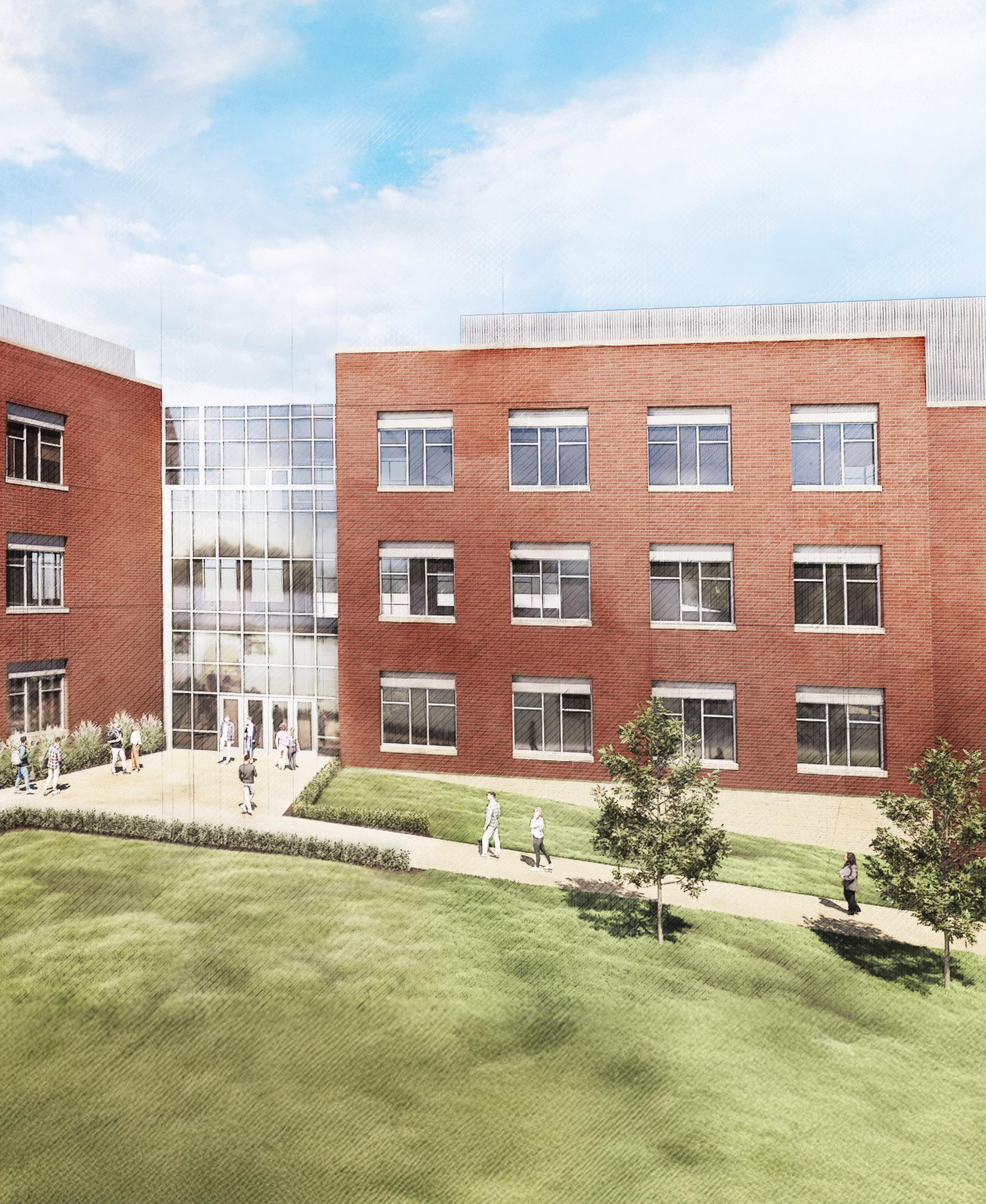

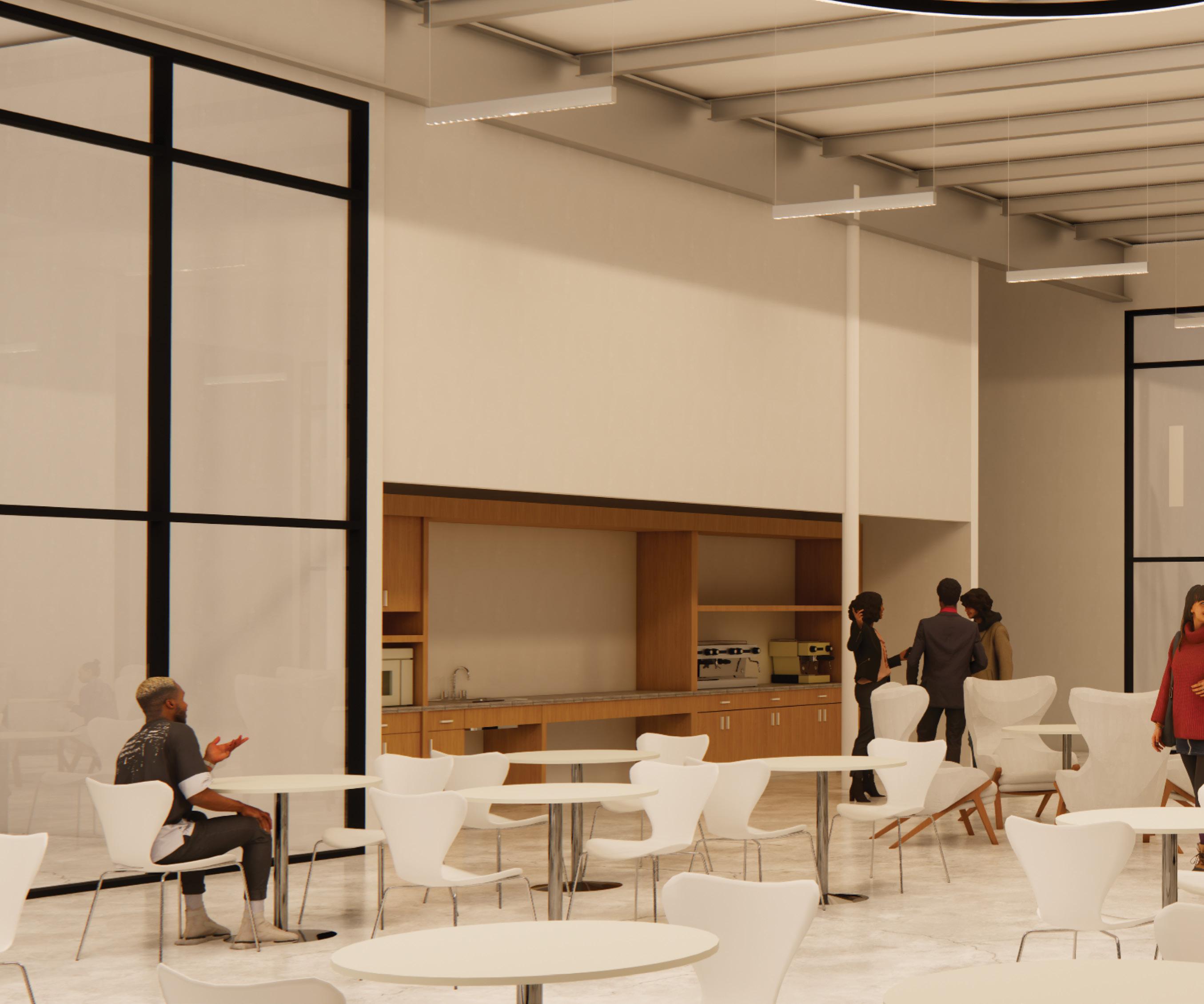
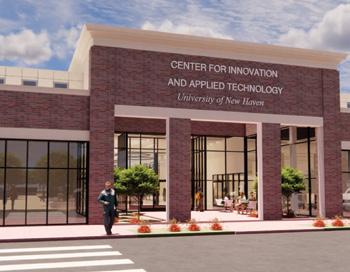
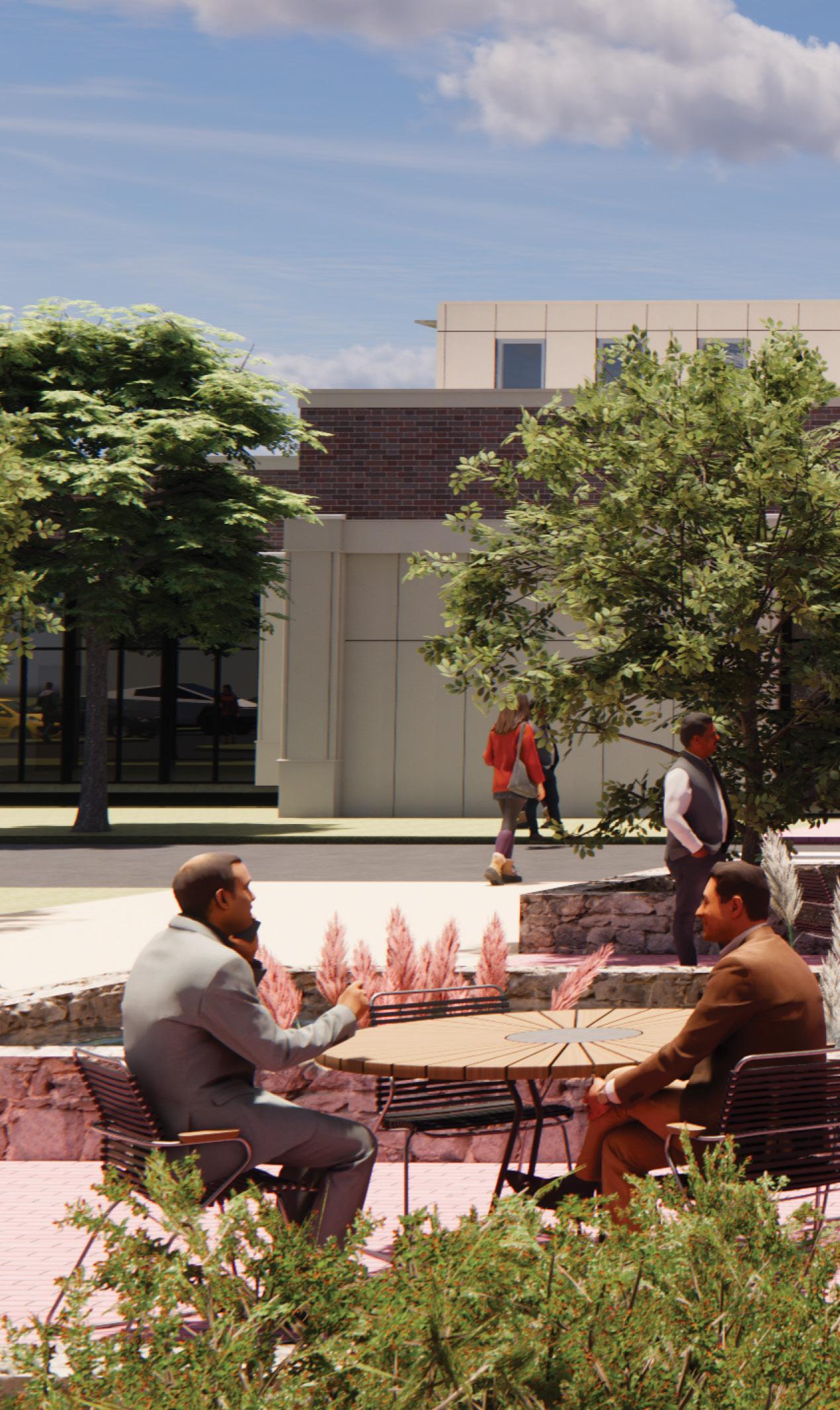
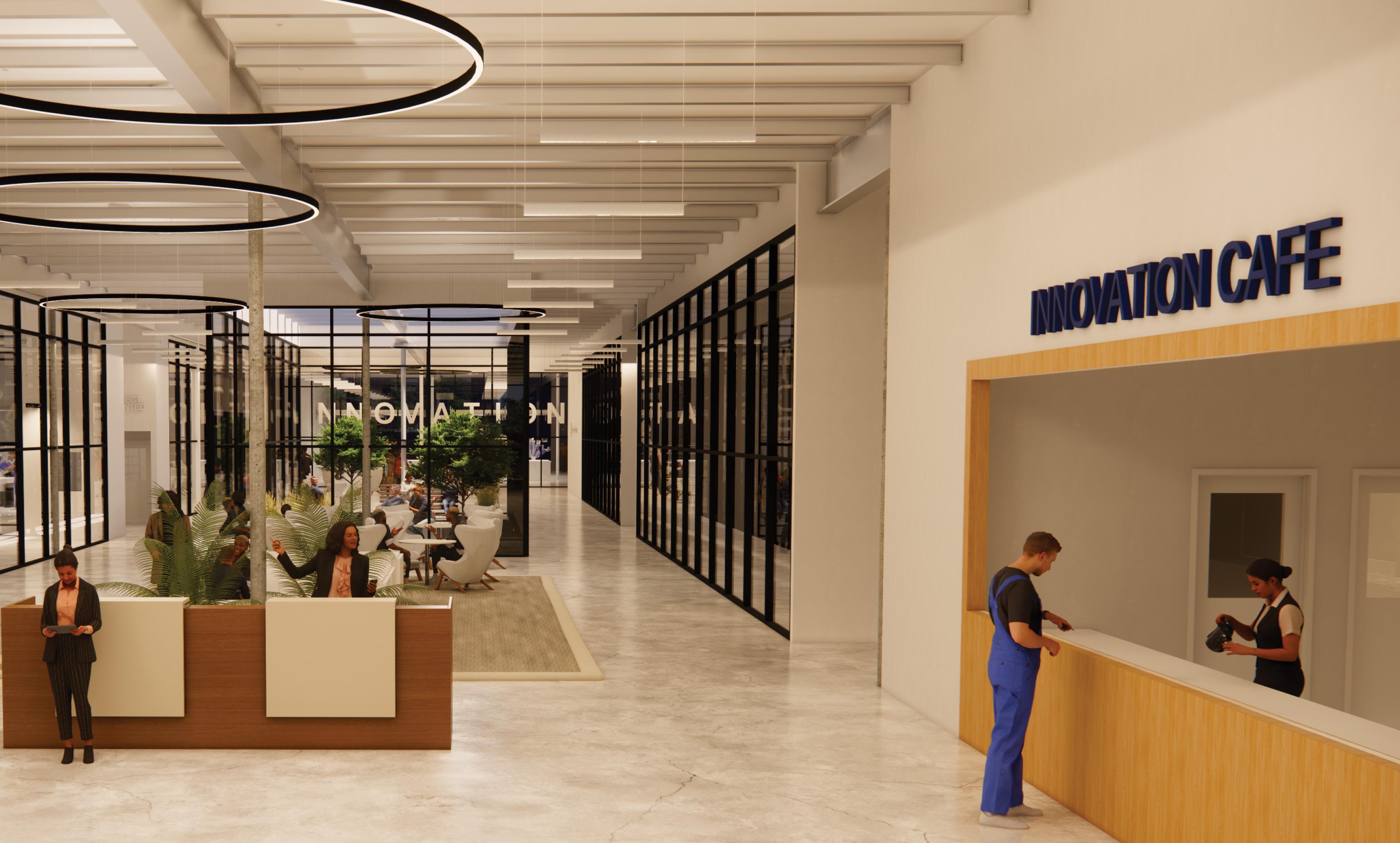
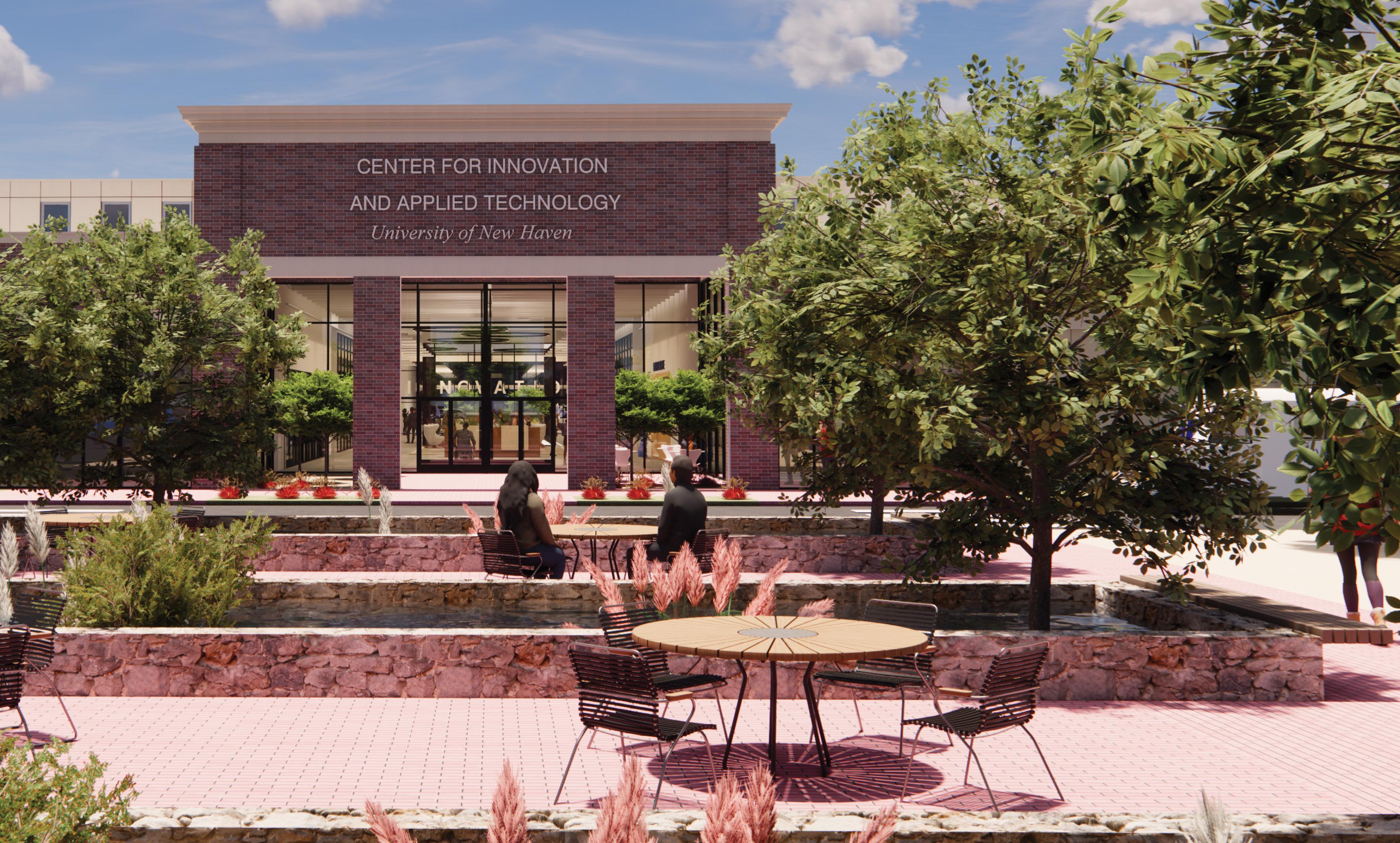
THE NEW CENTER FOR INNOVATION AND APPLIED TECHNOLOGY
+ 130,000 sq. ft. commercial property adjacent to West Haven campus
+ Renovation project to create the Center for Innovation & Applied Technology
+ $25 million goal for exterior construction; $10 million raised to date
+ Includes $7.2 million anonymous lead gift
+ Led by Paul Lavoie, vice president of innovation & applied technology
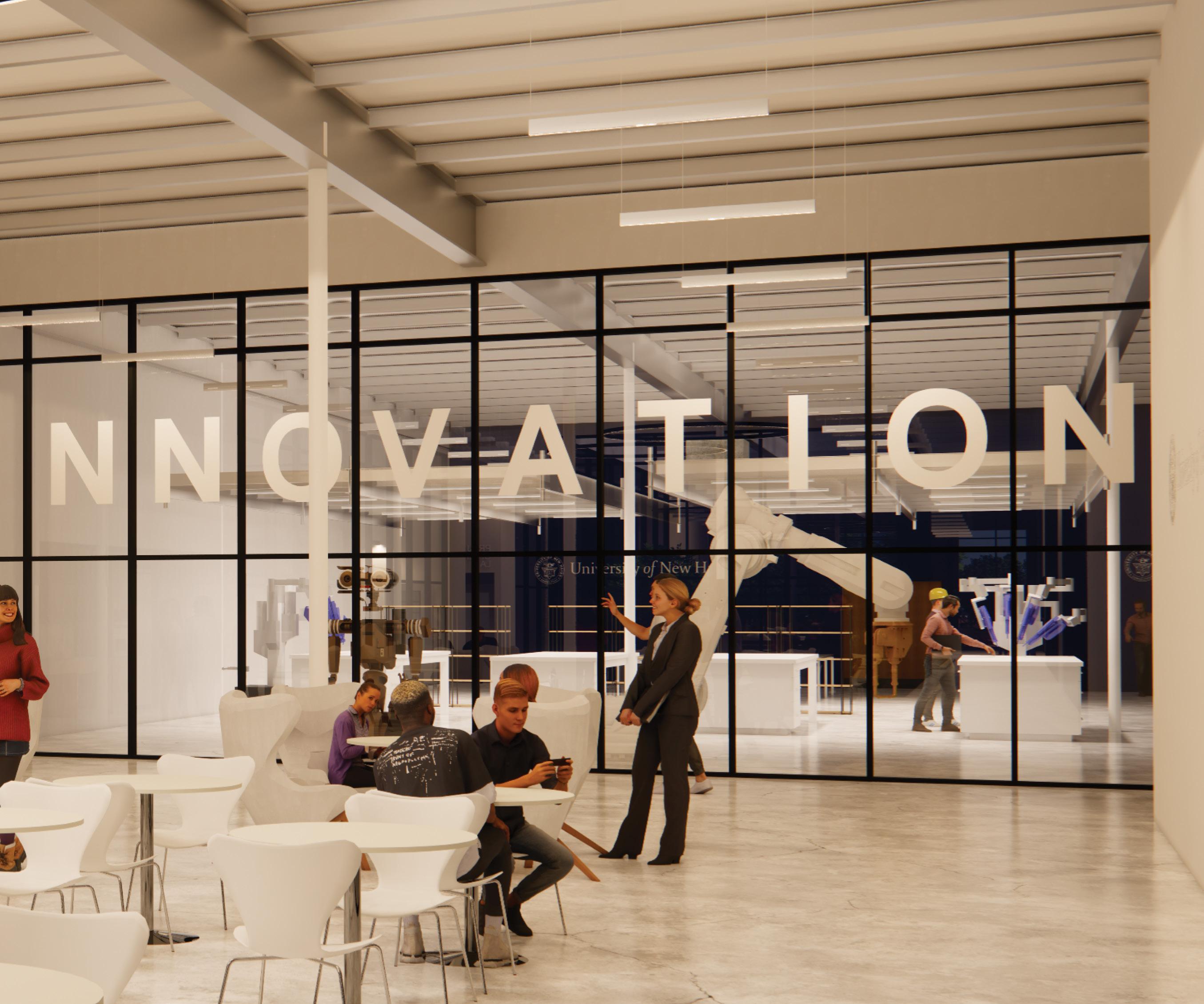
+ Centers of excellence in robotics, aerospace, maritime, and medical devices
+ Industry collaboration with nearly 5,000 manufacturers
+ Includes K–12 Inspiration Zone with STEM classrooms and programs
+ Construction beginning soon; full utilization expected 2027

In late 2024, the University announced that it had purchased a 130,000-square-foot commercial property directly adjacent to the West Haven campus with designs on creating a Center for Innovation and Applied Technology.
The vision, according to Frederiksen, is to create a “first-of-its-kind, best-in-the-nation center that maximizes Connecticut’s comparative advantages in advanced manufacturing and applied technology.”
Already, the initiative is generating support, with an initial $10 million — toward its goal of raising $25 million for construction of the facility’s exterior — in collaborative partnerships, grants, and donations to renovate the property, including a transformative $7.2 million anonymous donation. Combine that with the University’s hiring of Paul Lavoie, former chief
manufacturing officer for the state of Connecticut, to serve as its inaugural vice president of innovation and applied technology and oversee the development of the Center, and it becomes clear that the vision is on a fast track to reality.
“Our plan for the Center is resonating with our supporters and with companies focused on educating the elite global workforce of the future,” says Frederiksen. “The momentum created by this initial philanthropic support and the hiring of Paul Lavoie is positioning the University to build on its rich history of innovation and creating transformative experiences at the intersection of industry and academia. The Center puts us squarely at the forefront of delivering an unparalleled return on investment for our students and the companies that will partner
with us on this most impactful work.” Work on the structure is set to begin soon, and full utilization of the Center is expected in 2027.
Lavoie’s embrace of the project is evident as he lays out the plan for the Center.
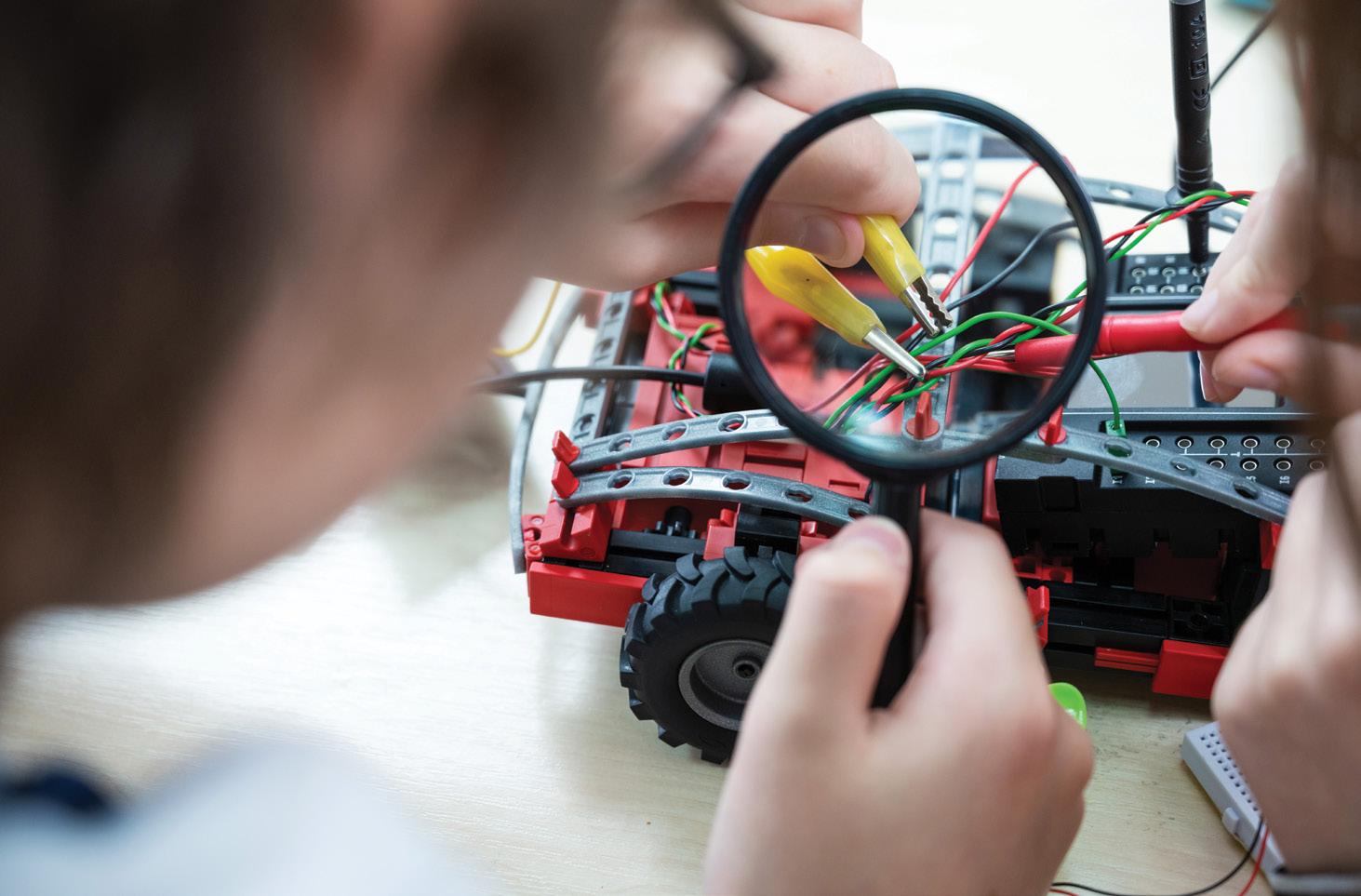
Through an Inspiration Zone — “a K–12 red carpet” complete with STEM classrooms, afterschool programs, and camps — Lavoie hopes the Center will “inspire the next generation of leaders in the manufacturing industry and ignite the fire in young people” about the possibilities of manufacturing.
The new Center for Innovation and Applied Technology will incorporate centers of excellence in disciplines where industry needs expertise, including robotics, maritime and shipbuilding
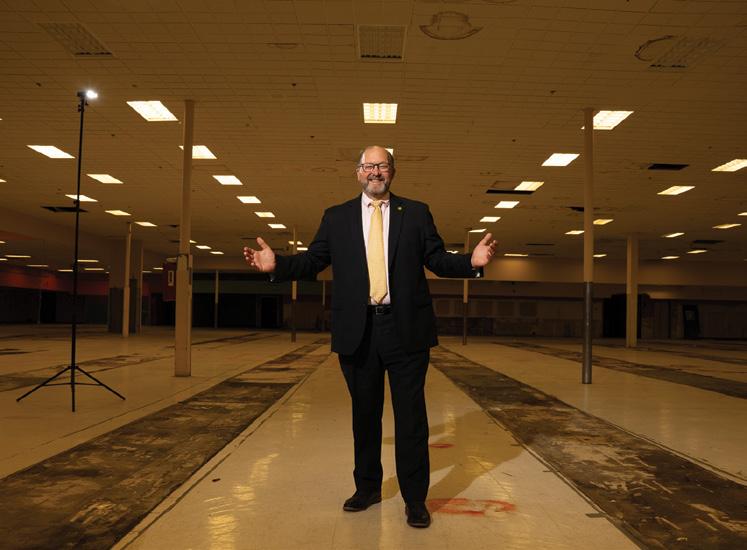
We are building pathways from the University directly into industry ... so that companies can come into the Center, work on projects with our students, and then hire them right out of our University.
PAUL LAVOIE
manufacturing, aerospace, and medical devices. Nearly 5,000 manufacturers will be invited to campus to connect with students and faculty on issues related to AI, cybersecurity, financial crimes, robotics, and animation. An innovation and entrepreneurship center will facilitate collaboration with students and faculty from the Pompea College of Business, and an automation center will help provide a “better-than-ready” workforce of U New Haven students and graduates.
On a recent tour of the planned facility, Mike Ambrose, chair of the Board of Governors, said that if the move to Division I athletics is one path to recognition of the University’s high level of excellence, then “the new Center for Innovation and Applied Technology will be the academic equivalent.”
“Connecticut is a manufacturing powerhouse in the U.S., and we punch well above our weight class as it relates to innovation, patent creation, and the manufacturing of some of the most advanced products known to humans,” explains Lavoie. “We are building pathways from the University directly into industry so that companies can come into the Center, work on projects with our students and train them, and then they’ll be able to hire them right out of our University with a couple of projects under their belt and with real-world experience working with that company.”

Built for a different time, educational philosophy, and student profile, Bartels Campus Center and Bartels Student Activity Center will undergo radical overhauls that will “reactivate the heart of campus and reinforce our University mandate to deliver a comprehensive return on investment for our students,” according to Frederiksen.
From dining to student clubs, from career development to cultural experiences, and from mental health and wellness care to global activities, these remodeled dueling student life centers will soon create both literal and figurative pathways and connections to an immersive campus experience. That experience, says Ophelie Rowe-Allen, vice president of student affairs and dean of students, integrates student life with academic life and enhances the spaces where students create communities and where they cultivate their personal and professional growth.
Frederiksen adds, “This vibrant hub will ensure our students graduate better than ready — equipped with knowledge, real-world experience, and the confidence to succeed. Strategically located in the residential heart of campus, this building will embed
the purpose-driven educational experience squarely in the on-campus living learning community.”
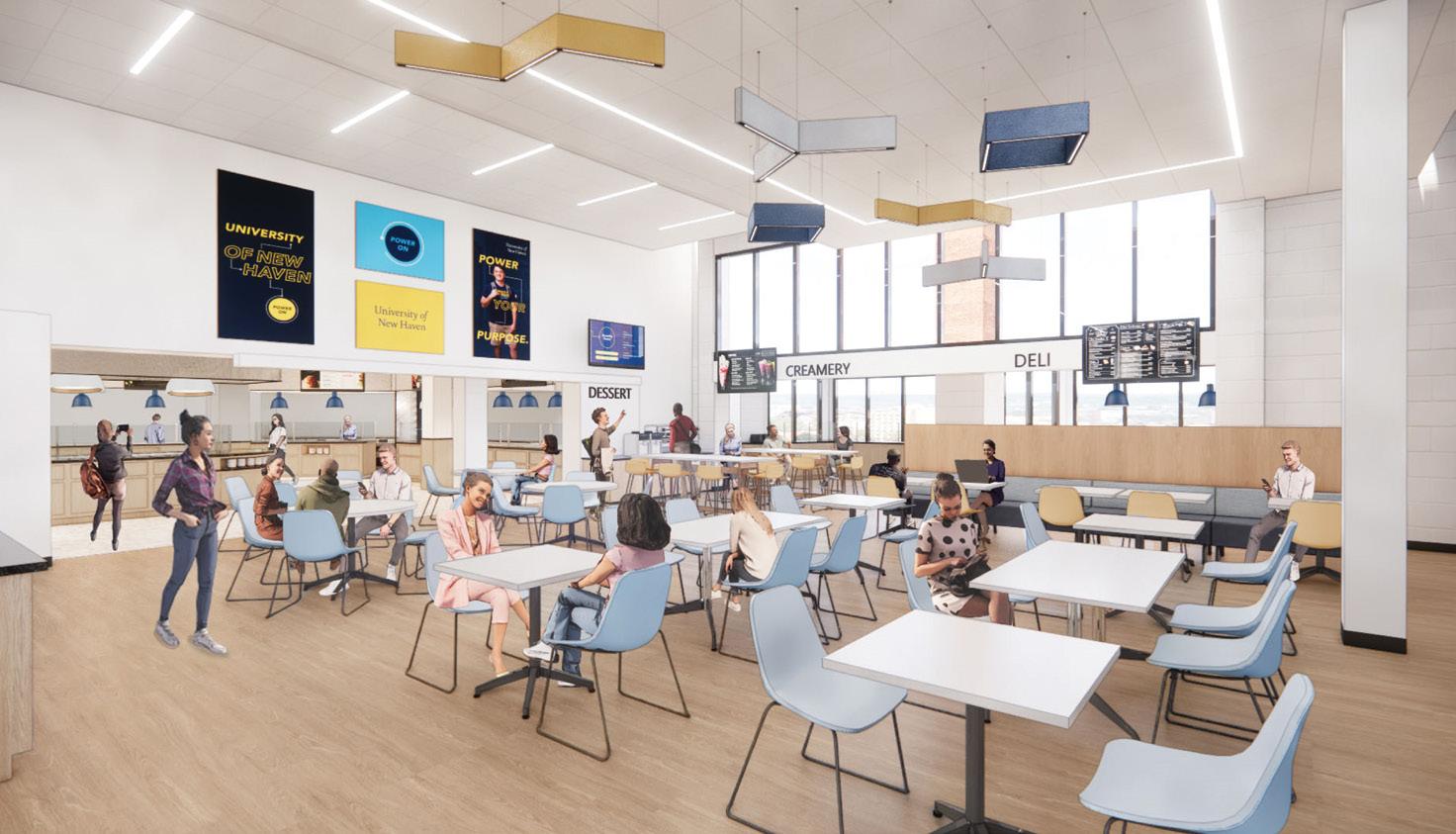
Major changes to the Bartels Campus Center include the addition of an extension to the south side of the structure, connections between the upper and lower levels, a discreet entrance to the food serving space, new atrium stairs, improved seating, and a connection to Buckman Hall, according to Louis Annino, associate vice president. An additional 5,000 square feet of space will be created for student clubs, offices, and meeting space, and refreshed dining space and exterior balcony space will be featured as well.
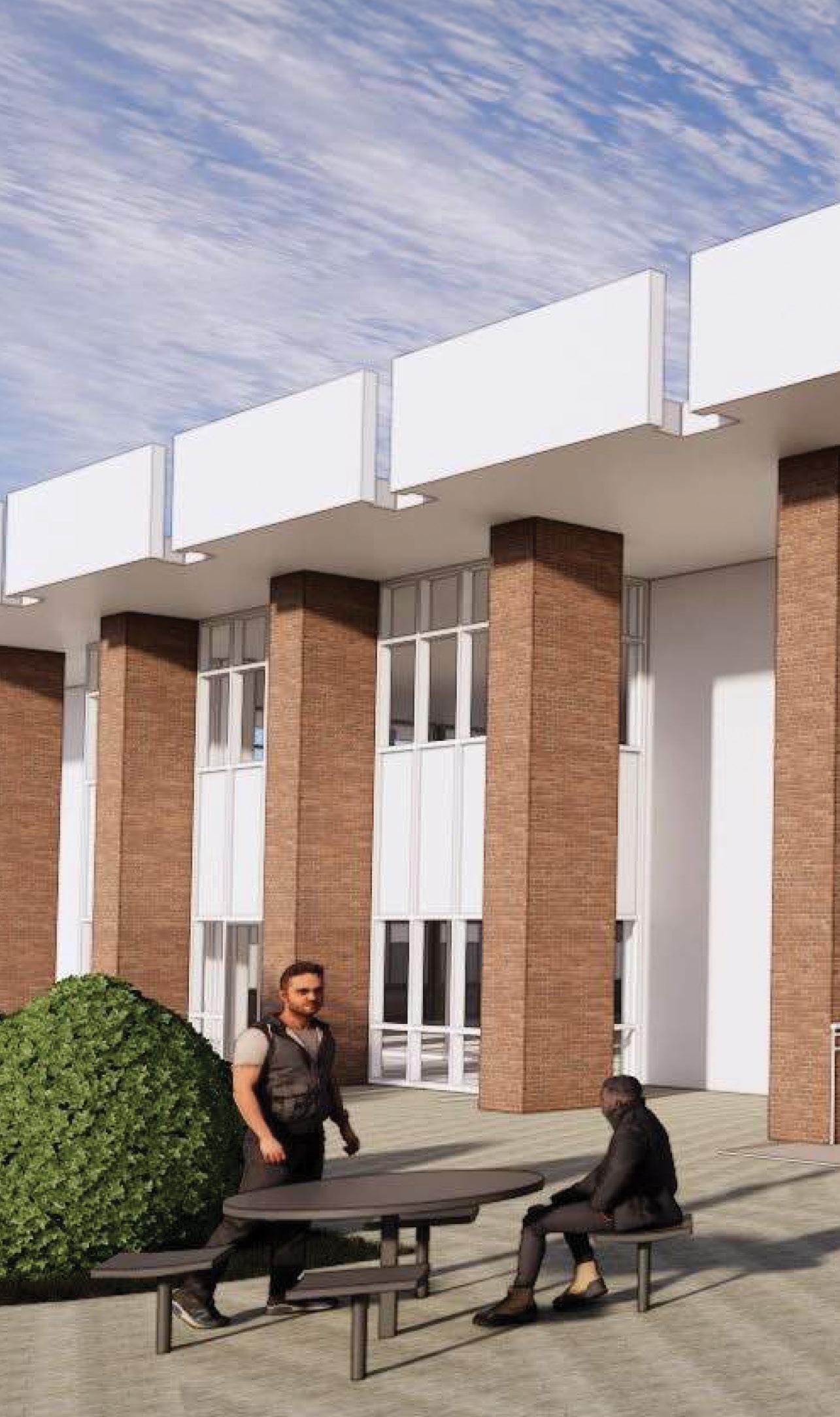
A reimagined Career Development Center will be accommodated in the new Bartels Student Activity Center, as the current singlestory structure will be enlarged to three levels. Based on that concept, the facility will open directly to other student spaces on campus, providing a more integrated and comprehensive experience for students.
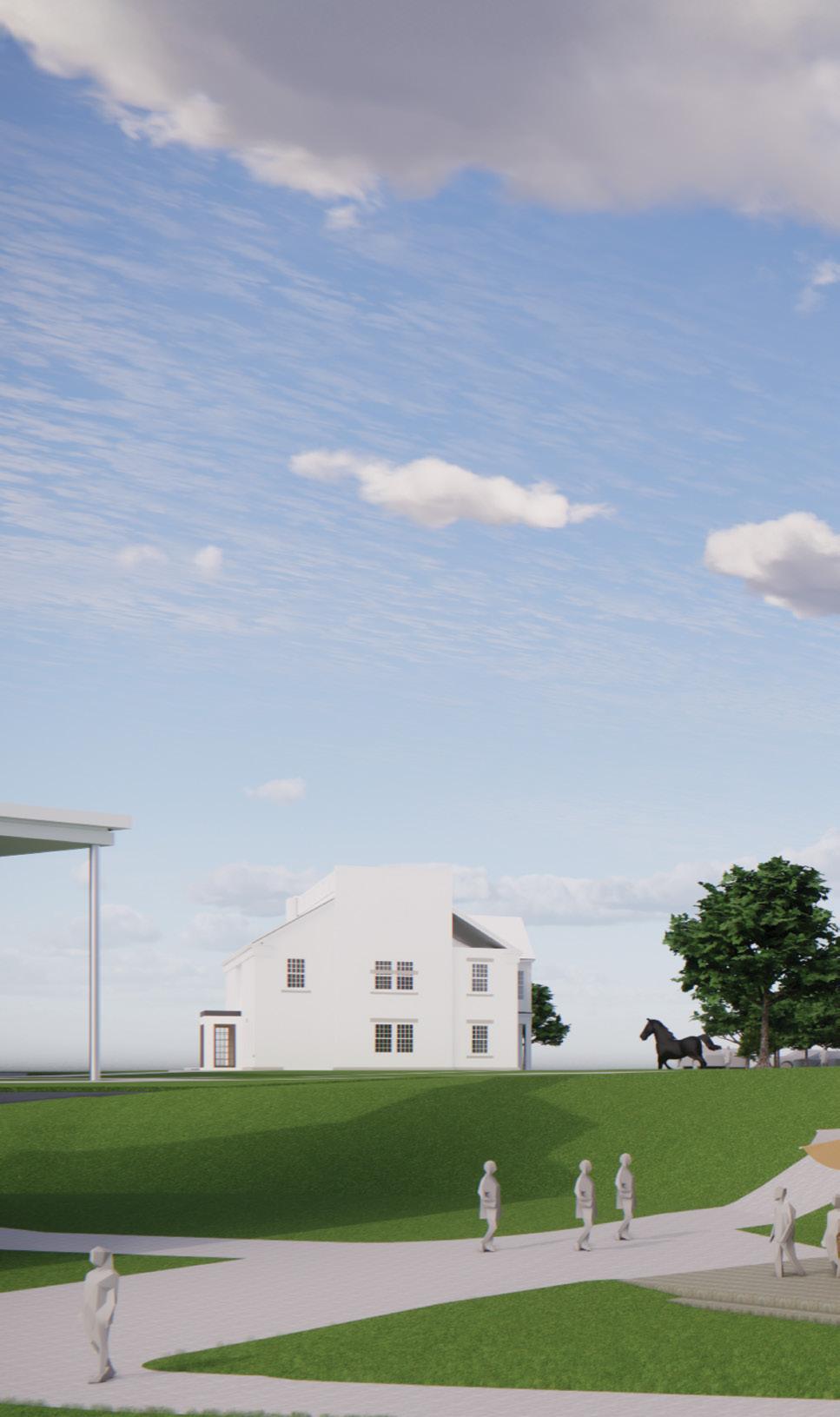
+ Transformation of current single-story structure into a three-level facility
+ New home for the Career Development Center, offering increased visibility and accessibility
+ Facility will open directly to other student spaces on campus, providing a more integrated and comprehensive experience for students
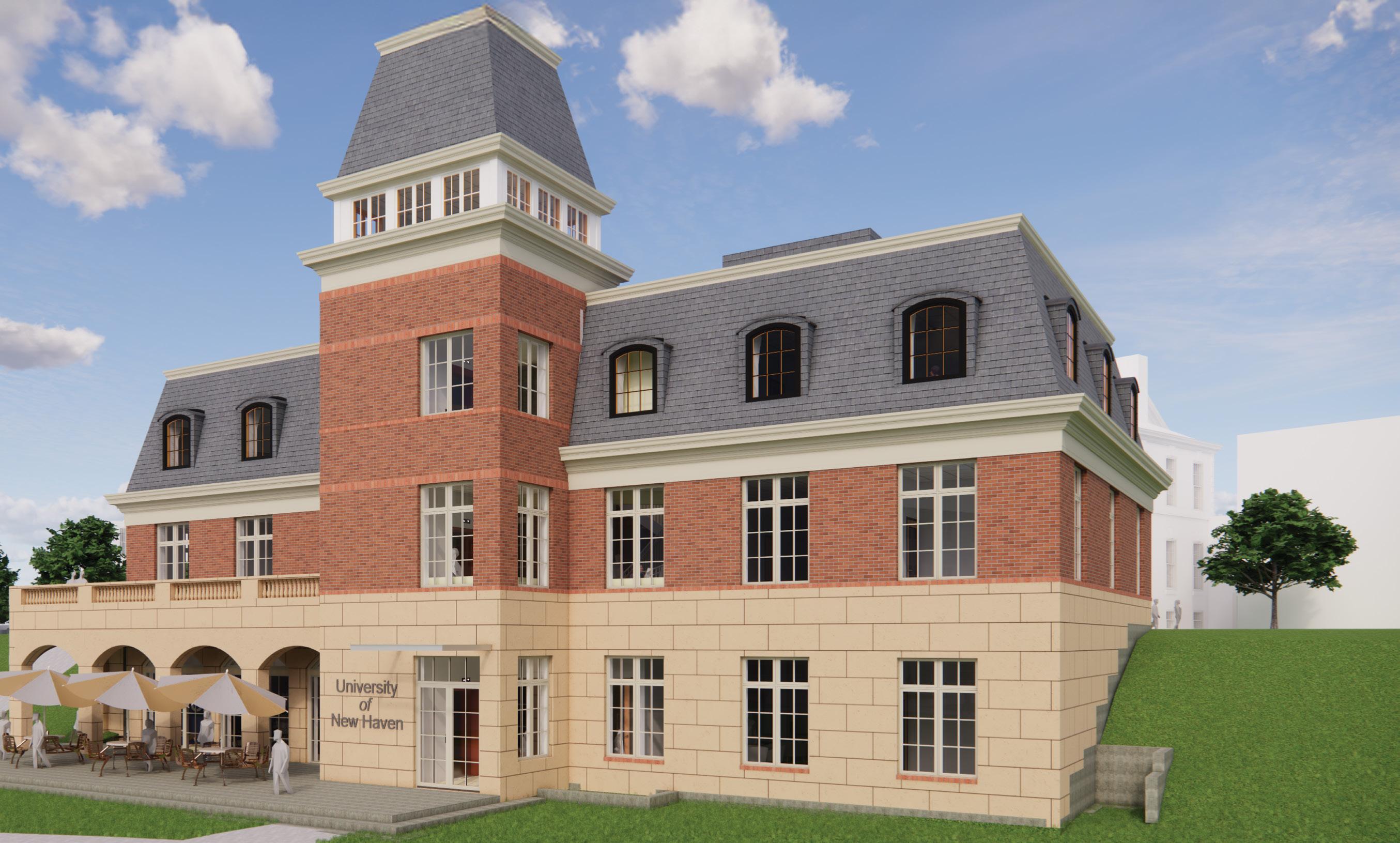
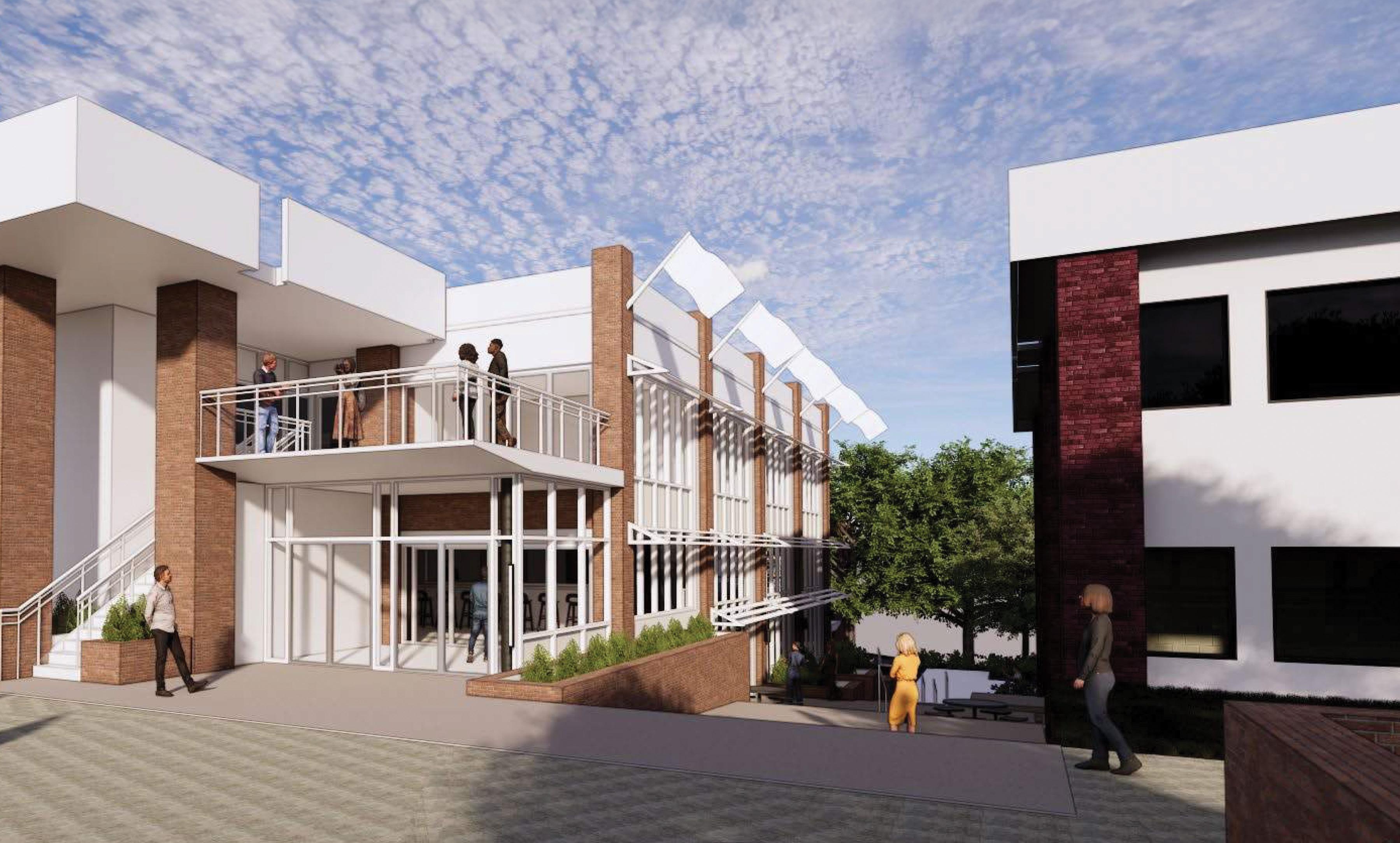
+ Major overhaul to reactivate the heart of campus and enhance student-life pathways
+ New south-side extension expanding footprint and functionality
+ Improved vertical connectivity with new atrium stairs and links between upper and lower levels
+ Discreet entrance to the dining serving area for better flow and experience
+ Updated seating, dining areas, and exterior balcony space
+ Connection to Buckman Hall to strengthen campus circulation
+ Additional 5,000 sq. ft. dedicated to student clubs, offices, and meeting spaces
+ Designed to support a more integrated, purpose-driven on-campus experience
A new Physician’s Associate (PA) master’s degree program, set to launch its first cohort in the fall of 2026, is the latest addition to the University’s menu of more than 100 programmatic offerings across five major colleges. In the words of Provost Nancy Savage, it will become the new signature program in the School of Health Sciences and will fulfill the University’s goal of “becoming an economic driver in this space.”
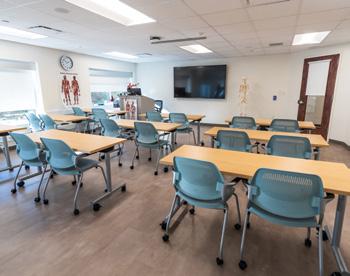
A major component of the PA program is the need for a variety of sophisticated lab spaces and examination rooms for 50 new students, and the final buildout of the 50,000-square-foot School of Health Sciences facility at One Care Lane will meet that need with the support of a $2 million charitable gift. The University will embark on the completion of the required laboratories starting this January.
+ Physician Associate (PA) master’s degree program launching fall 2026
+ Will become the signature program of the School of Health Sciences
+ Advances the University’s goal of becoming an economic driver in health sciences
+ Requires specialized labs and clinical examination spaces
+ Housed in the 50,000-square-foot School of Health Sciences facility at One Care Lane
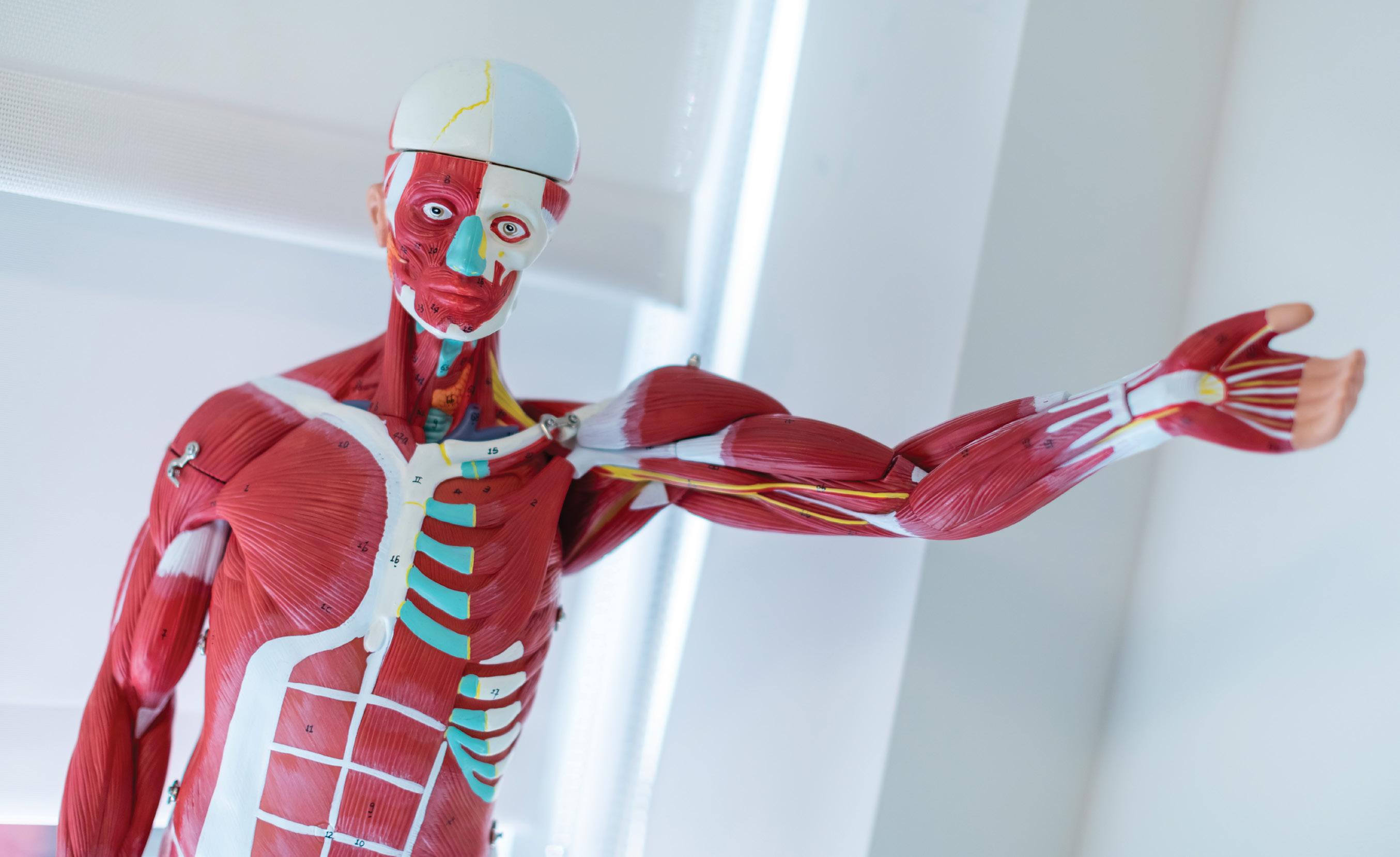
+ $2 million charitable gift supporting the buildout
+ Laboratory construction began January 2026
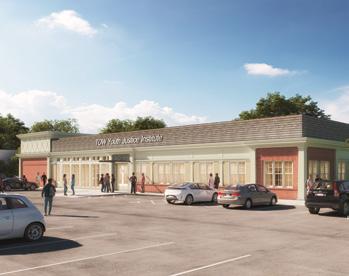
The University’s renewed focus on civic and community engagement will be fortified with the continued transformation of the former CVS property and Atwood/Parkview locale. According to Provost Savage, the creation of this new center signals that the University is part of and reaching out to the community at large.
The interactive center for community programming initiatives will support the nationally recognized Tow Youth Justice Institute, partnerships with Yale University (including the highly admired prison education program), and a center for data analysis that works closely with the Tow Institute and Lee College’s Center for Advanced Policing and Analytics.
In addition, a community room will be created to host gatherings with community groups and presentations with a community focus.
The $4 million fundraising goal for the renovation has nearly been reached, paving the way for construction to begin soon.
Frederiksen says, “We continue to strengthen our reputation as a University community with a local feel and a global reach.” He noted too that the new Center for Applied Justice is “strategically positioned as the gateway to campus,” as it marks the primary access point to the main campus for millions of vehicles each year.
+ Reinforces the University’s commitment to civic and community engagement
+ Home to the nationally recognized Tow Youth Justice Institute
+ Supports Yale University partnerships, including the prison education program
+ Includes a data analysis center collaborating with Tow Institute and Lee College’s Center for Advanced Policing and Analytics
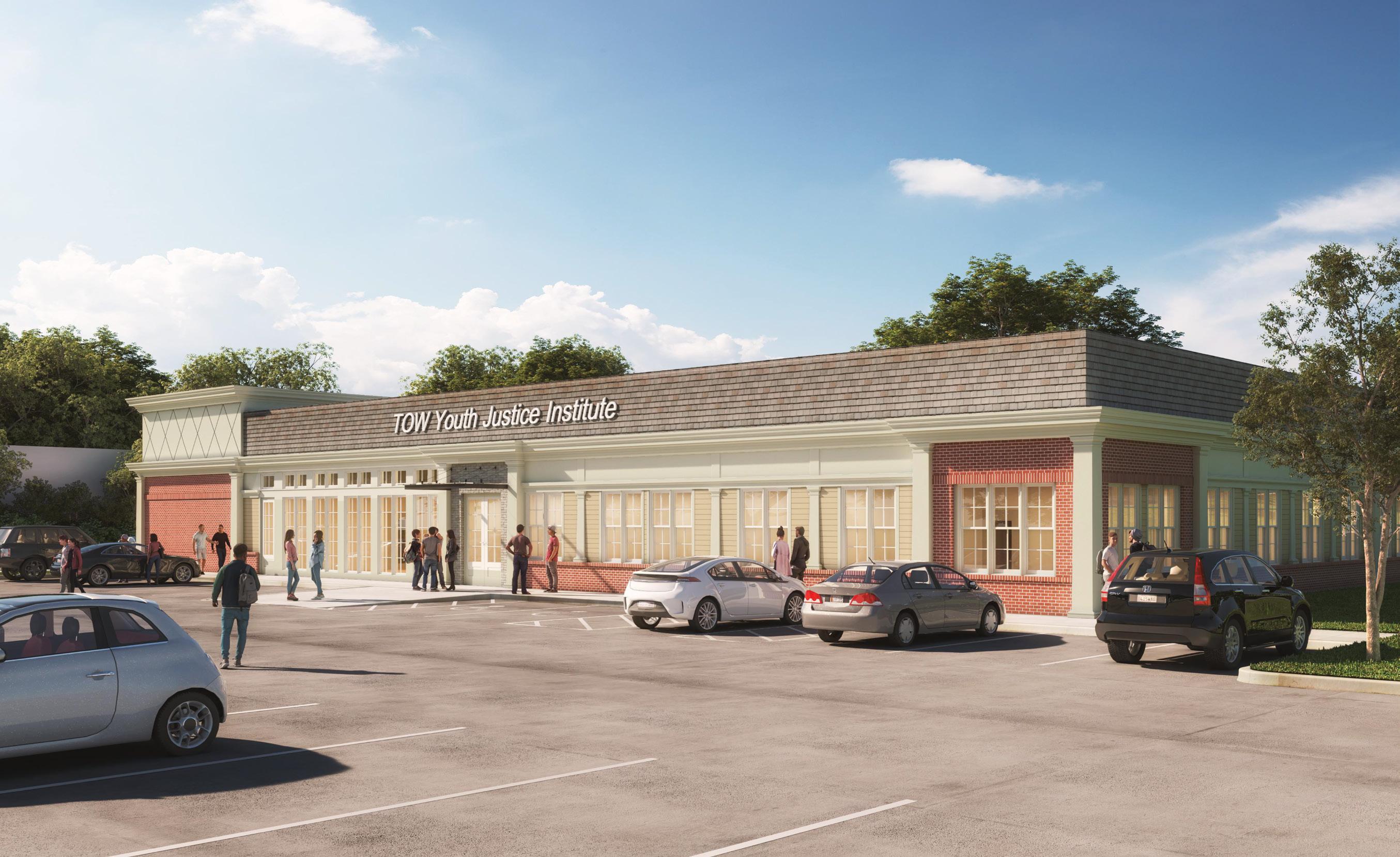
+ Features a community room for local gatherings and community-focused programming
+ $4 million fundraising goal nearly reached
+ Strategically positioned as a gateway to campus, serving as a primary entrance seen by millions annually
To hear Devin Crosby, athletics director, tell it, the University’s athletics complex — and in particular the Jeffrey P. Hazell Athletics Center and the Peterson Performance Center (PPC) — is an important “front porch” of the University’s campus, providing as it does a first impression.
And for students, it is a destination for concerts, lectures, orientations, postgraduation ceremonies, and other activities — and, of course, athletic competitions.
As the University transitions to Division I, bringing with it increased visibility and reputational shine,
the significance of these facilities is magnified. The University accepted a full membership invitation from the Northeast Conference (NEC) Council of Presidents last spring, began transitioning this academic year, and will attain full Division I membership in 2028–2029, following the NCAAmandated reclassification period.
That transition is being supported by significant enhancements to and completion of both the Hazell and Peterson centers — facilities that feature state-of-the-art spaces for training, nutrition, mental health, and personal development.
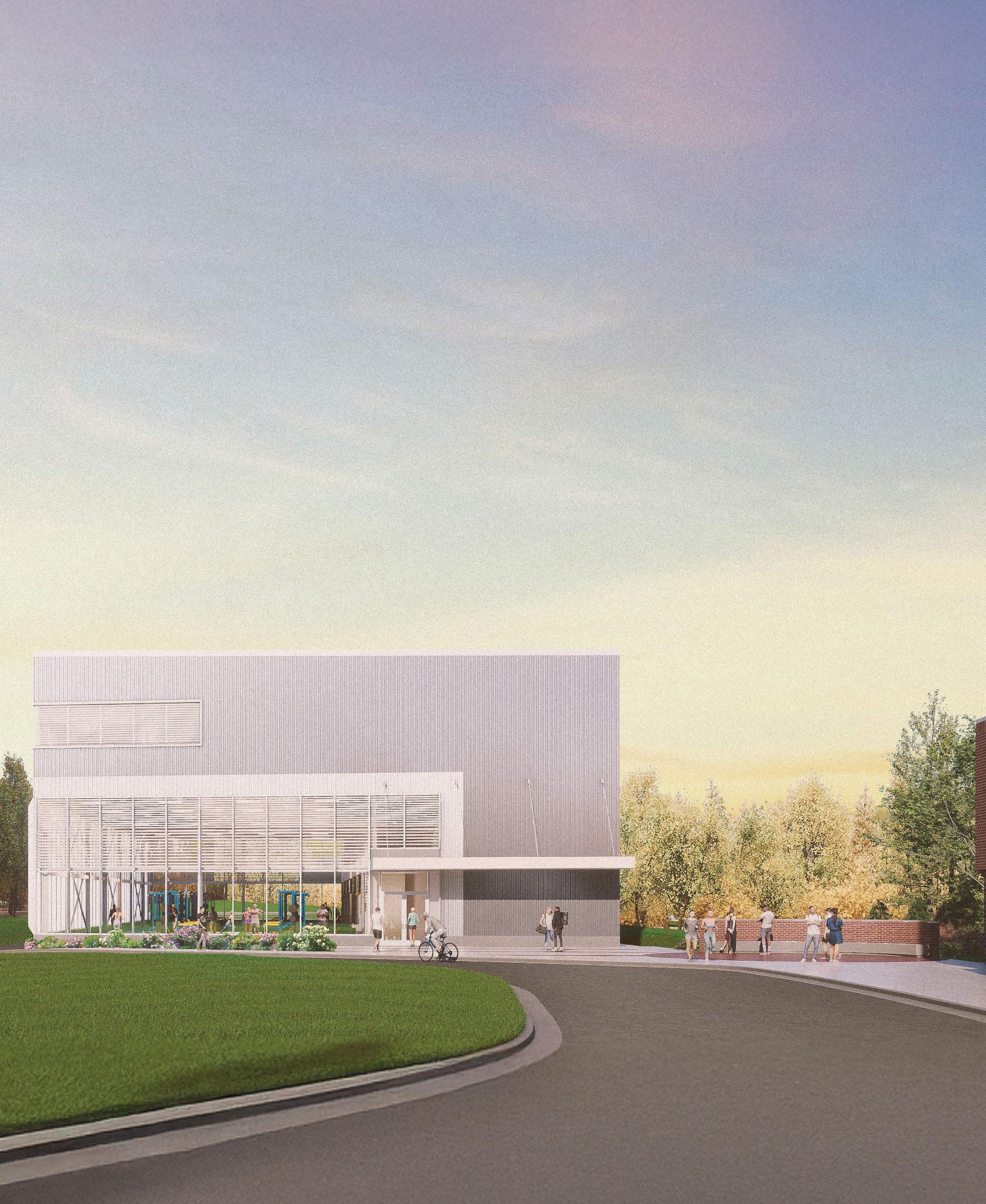
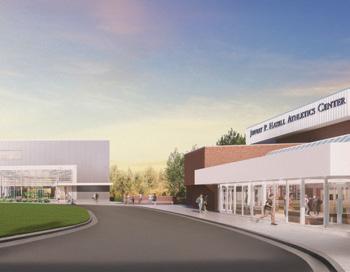
+ $25 million transformation, supported by a $5 million gift from Jeffrey Hazell ’83
+ New entrance and social gathering space
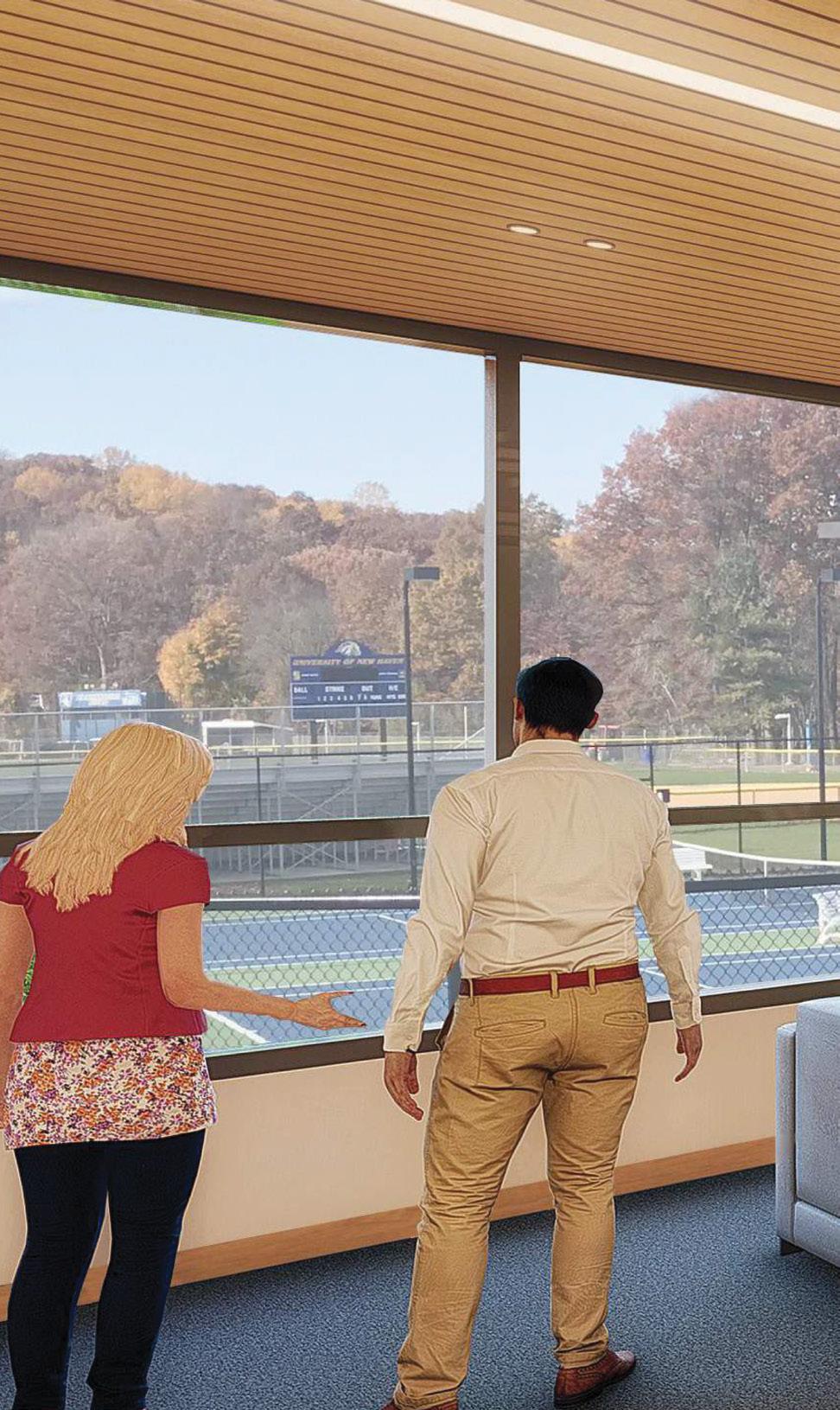
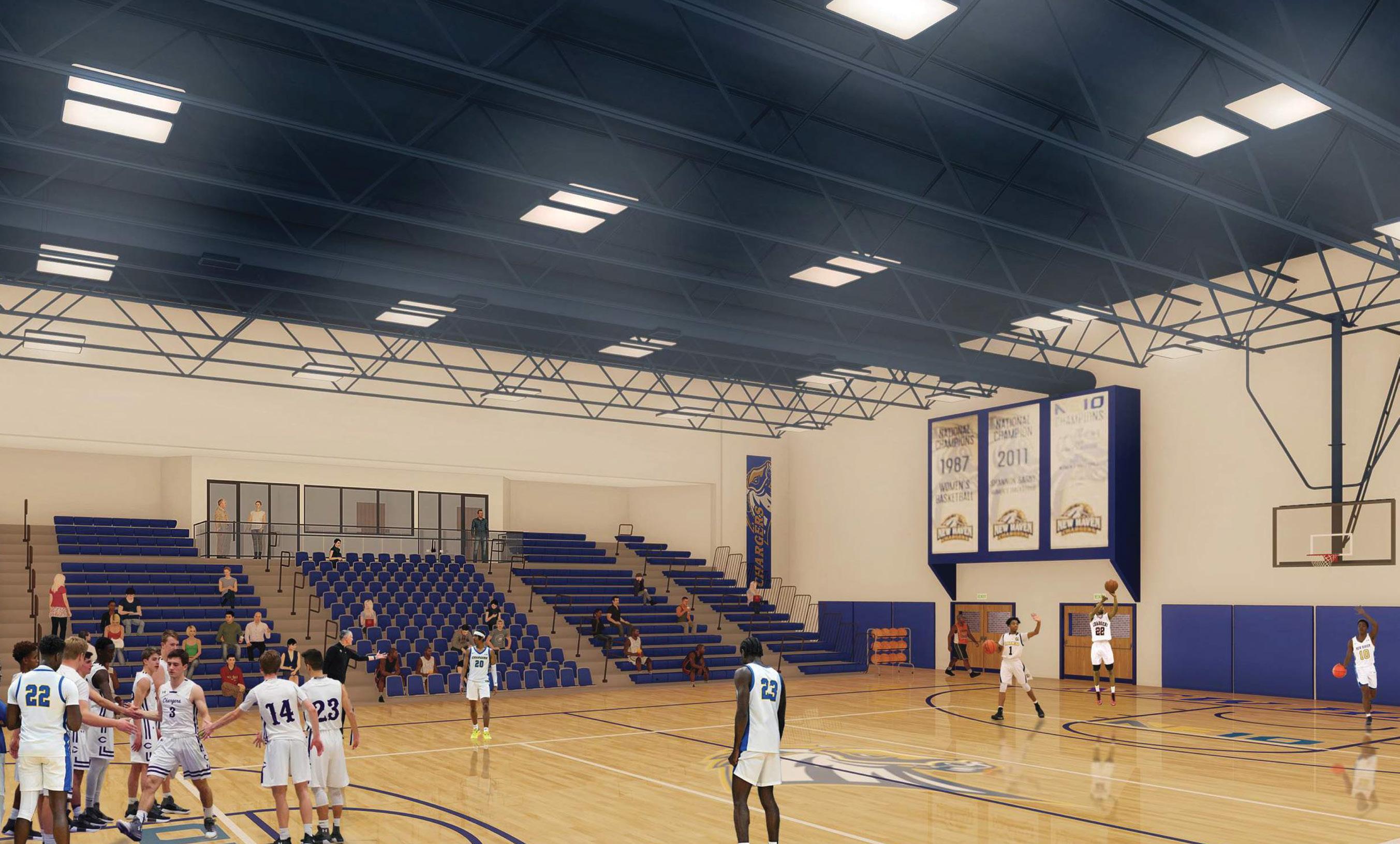
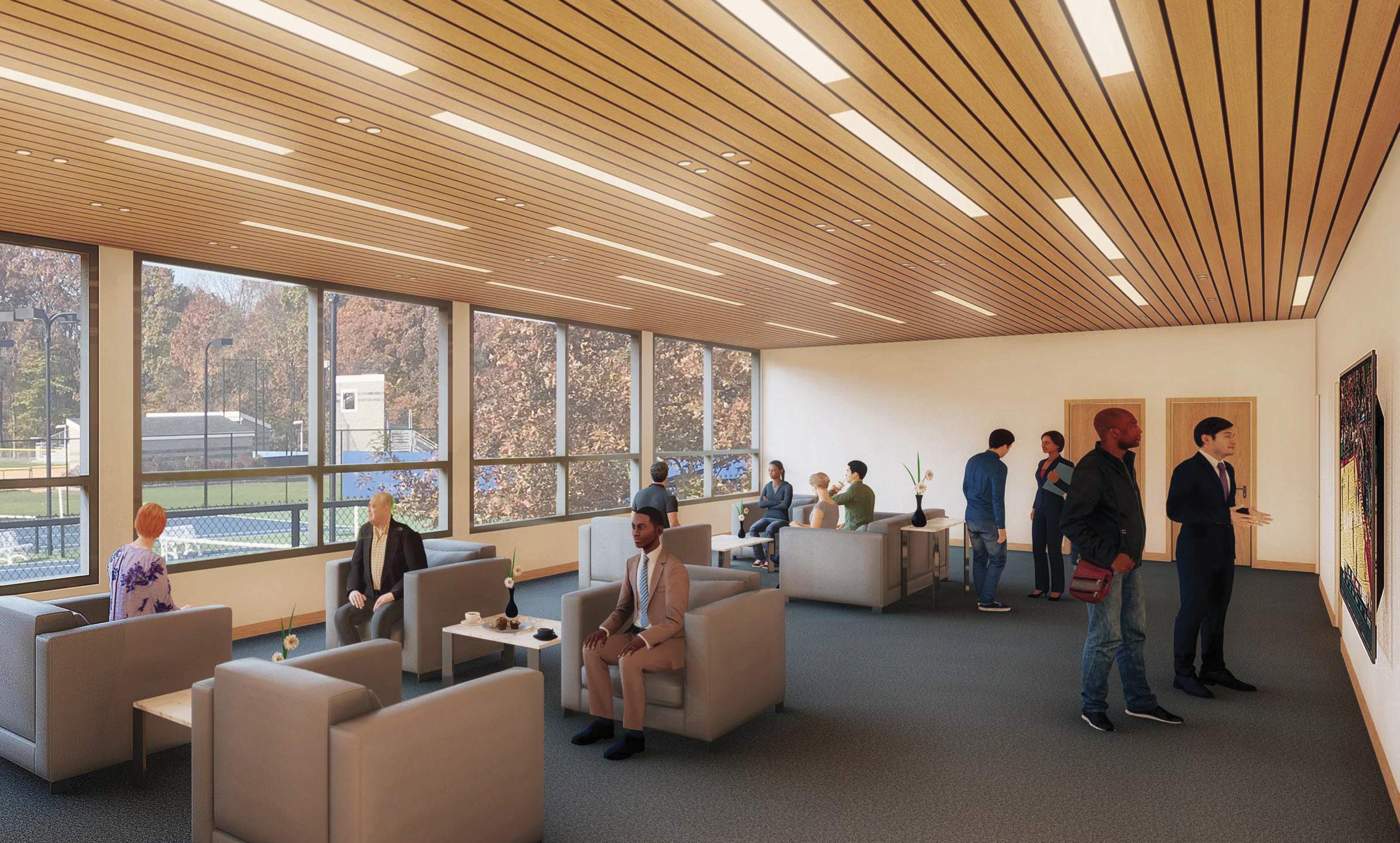
+ Expanded seating capacity with added luxury and press boxes
+ Upgraded locker rooms, coaching, and student-athlete spaces
+ Enhanced strength, conditioning, and agility training spaces
+ Expanded sports medicine, recovery, and wellness facilities
+ Continued investment in nutrition and holistic athlete development
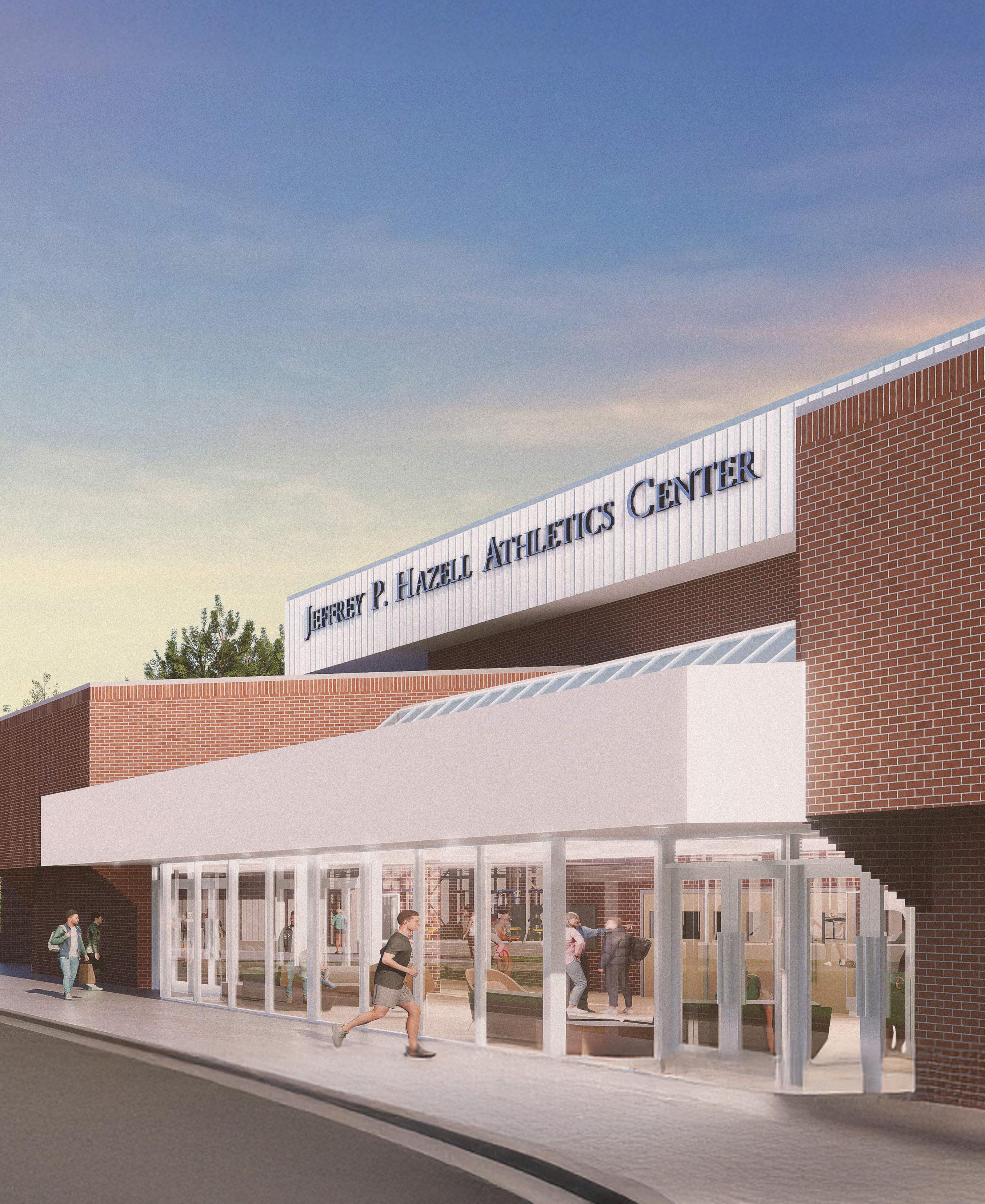
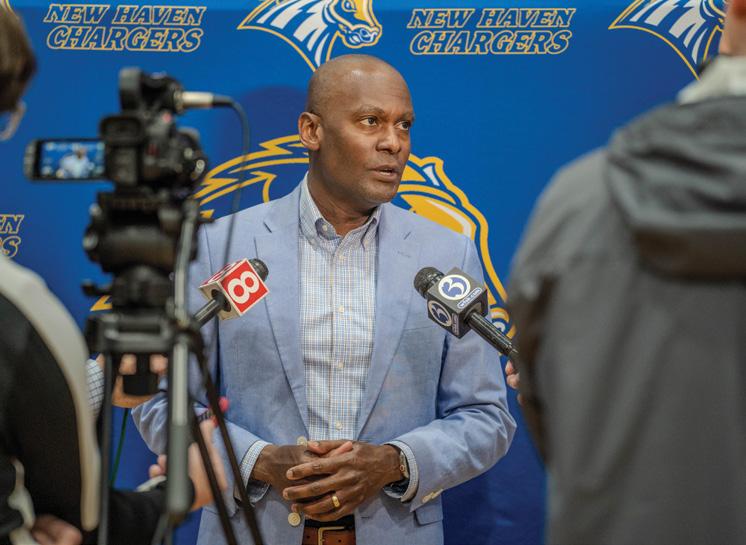
[on the Hazell Center]
Bringing a 1974 building up to today’s and tomorrow’s standards
DEVIN CROSBY, ATHLETICS DIRECTOR
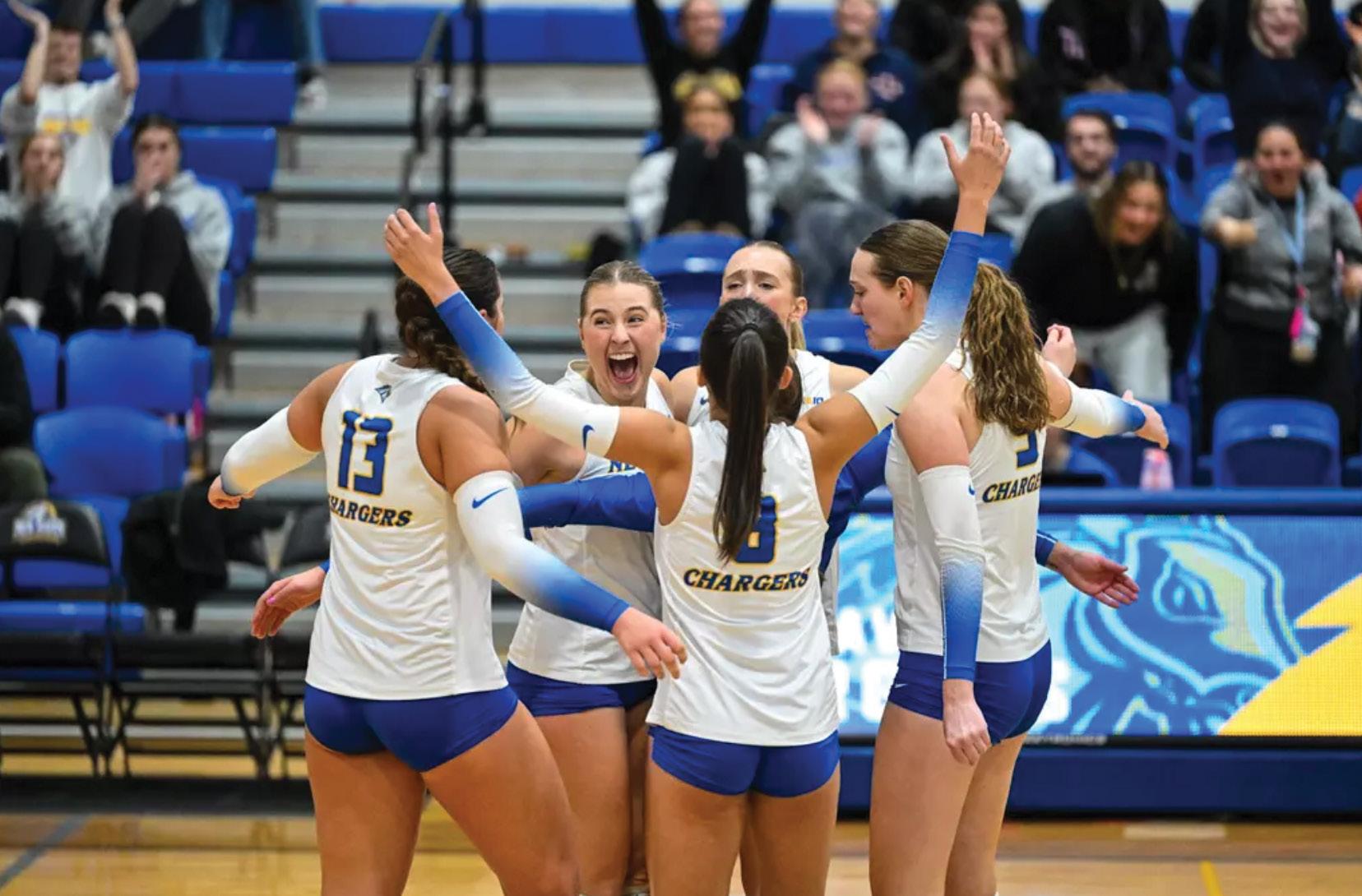
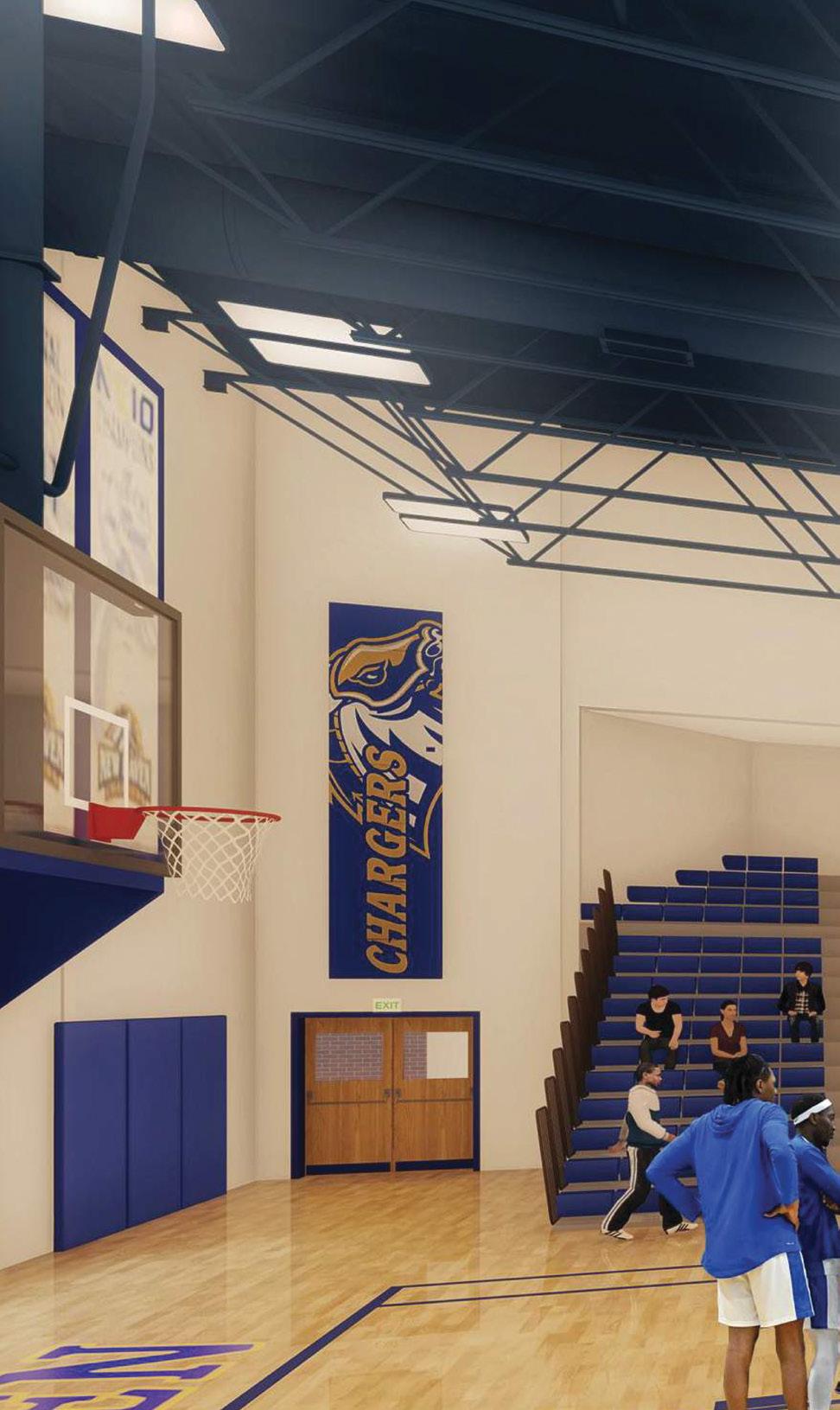
The Hazell Center — located on the University’s North Campus and formerly known as Charger Gymnasium — has long been the game site for men’s and women’s basketball and volleyball programs. It also houses locker rooms for all Charger varsity athletic programs, as well as athletic administration offices, offices for coaches, an equipment room, and a training center. The Center underwent a major renovation in 2019 that replaced the facility’s original wooden bleachers with new, retractable bleachers, and a new playing floor was installed.
The next phase of the Center’s $25 million evolution will begin following a generous $5 million gift from Jefferey Hazell ’83 — “bringing a 1974 building up to today’s and tomorrow’s standards,” according to Crosby — and will include new infrastructure; the creation of a new entrance space suitable for hosting social activities and serving as a welcoming venue; modifications to seating, including an increase in capacity; and the addition of new luxury and press boxes. Additionally, coach, administrative, and student spaces will be improved, and the locker rooms will see extensive renovations. For this next phase, consideration will be given to additional dining service options for our student-athletes, as well as other bold additions.
Frederiksen enthuses that the project is “creating ambiance and culture and contributing to an incredibly immersive space.”
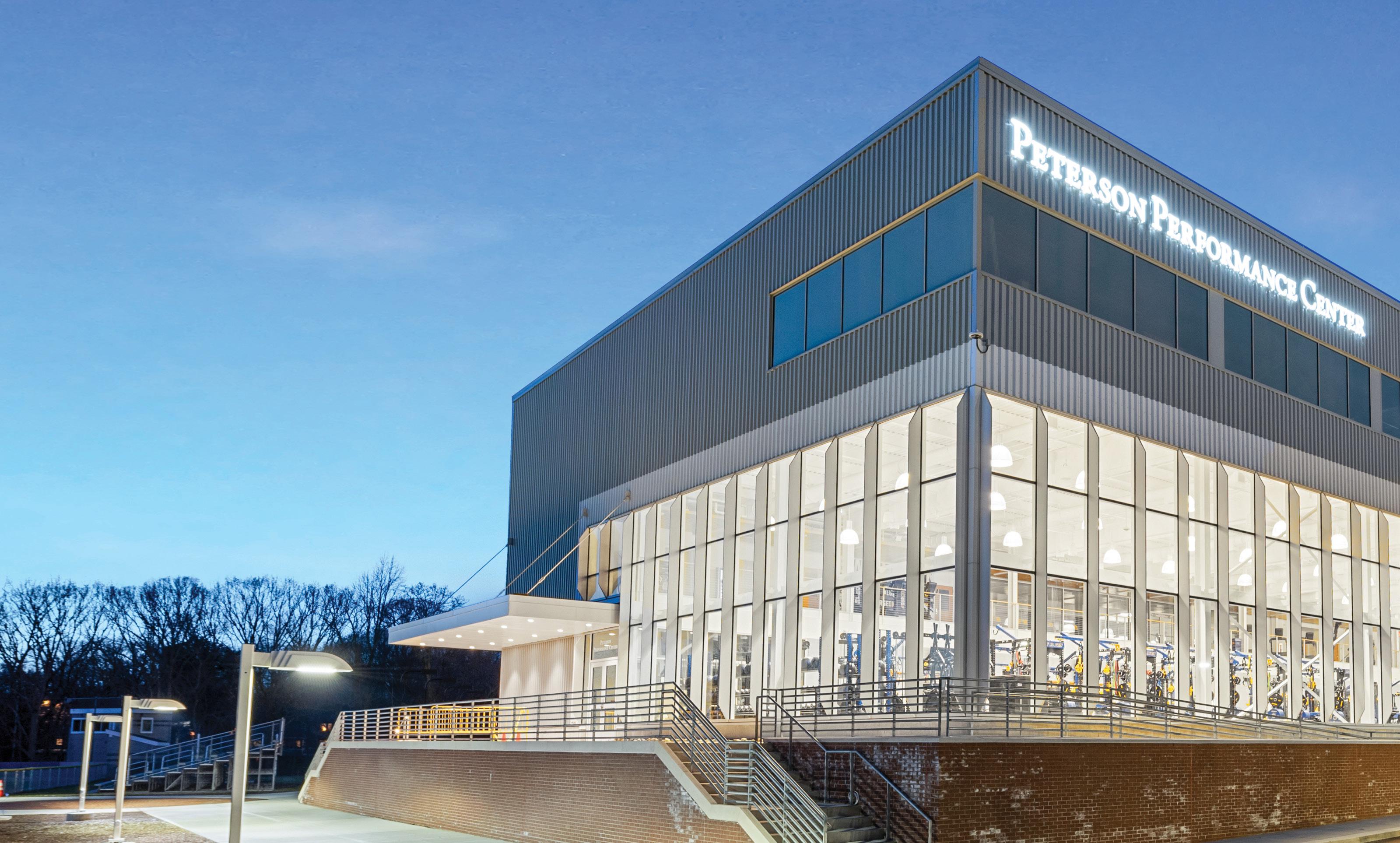
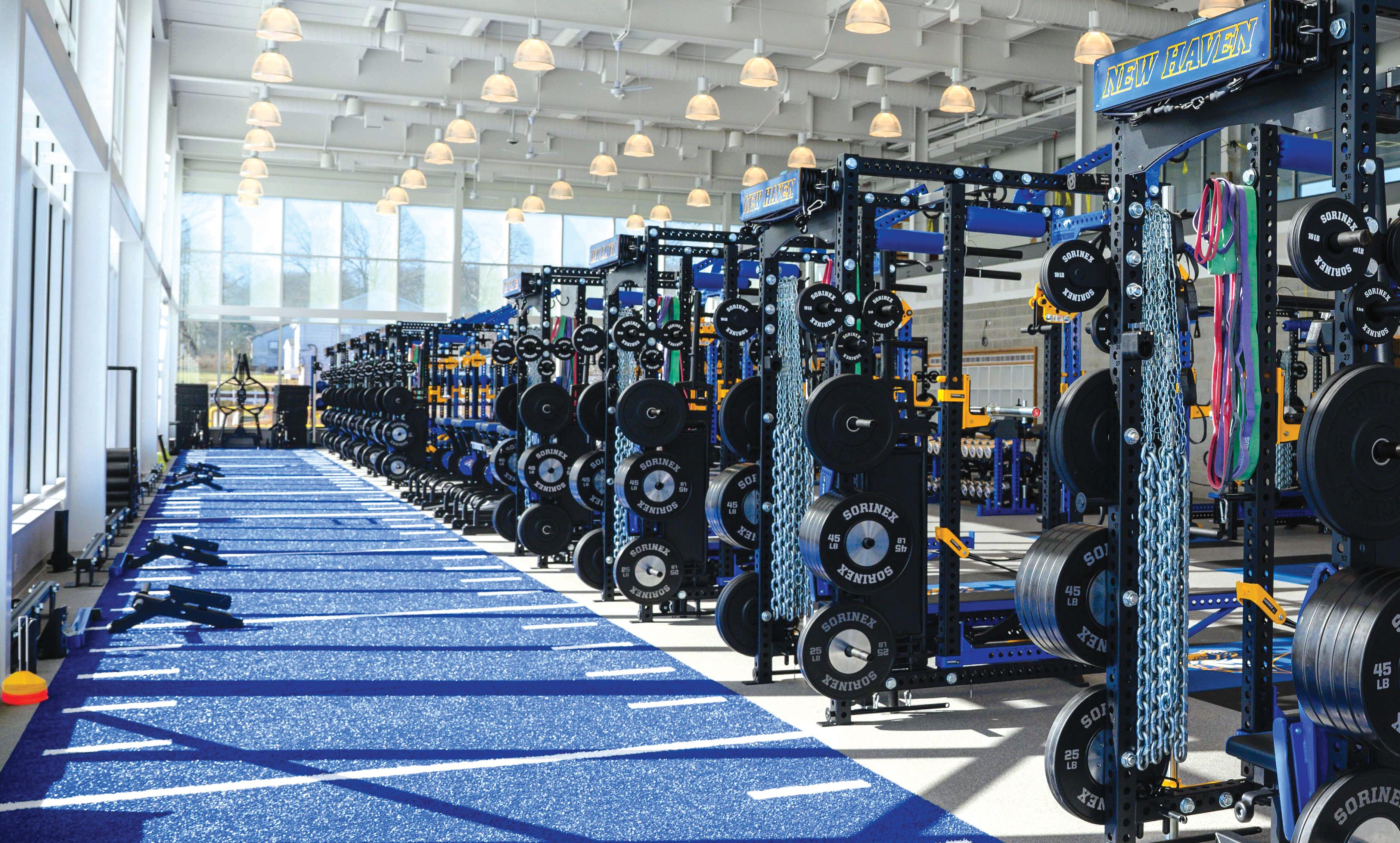
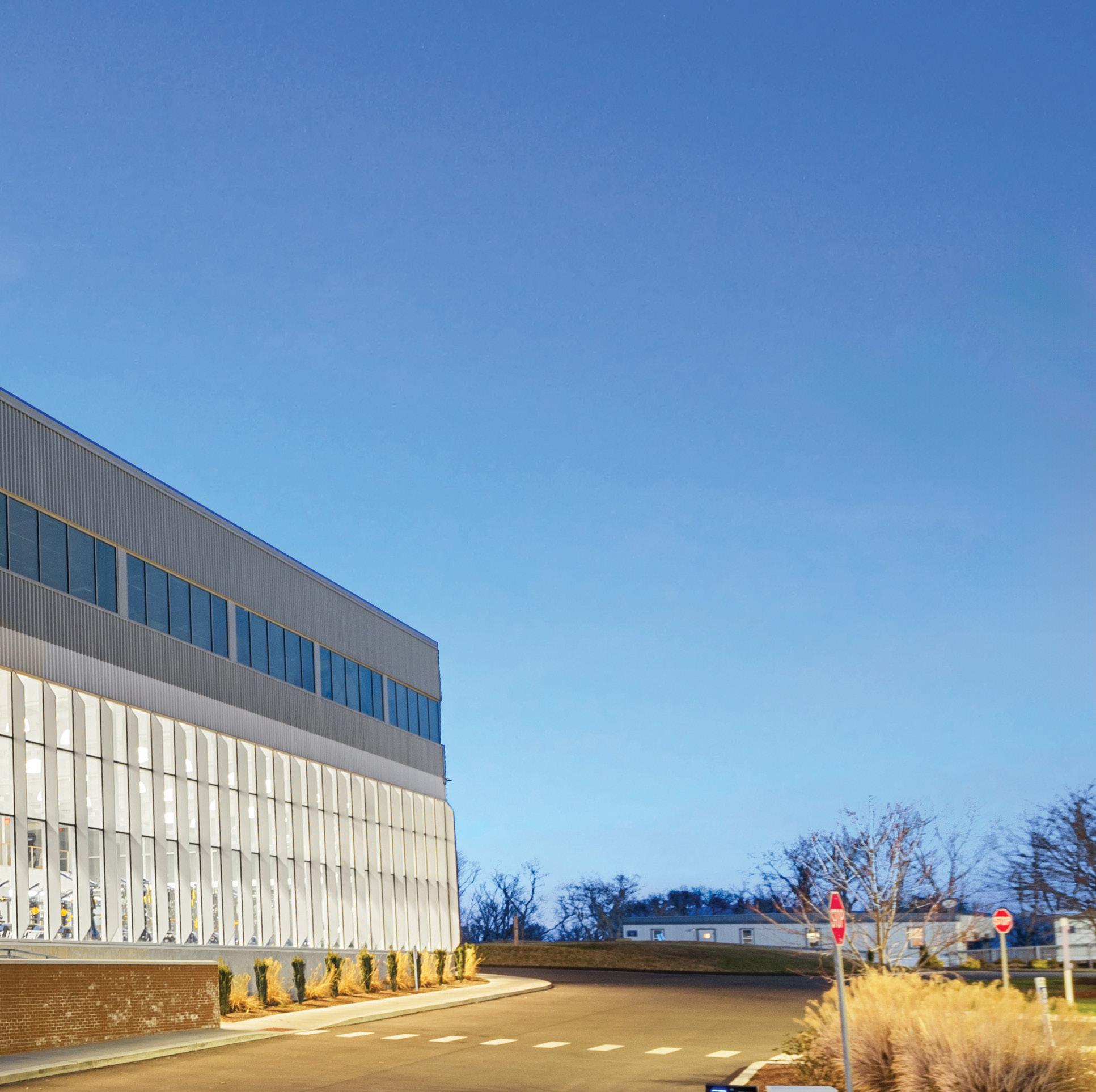
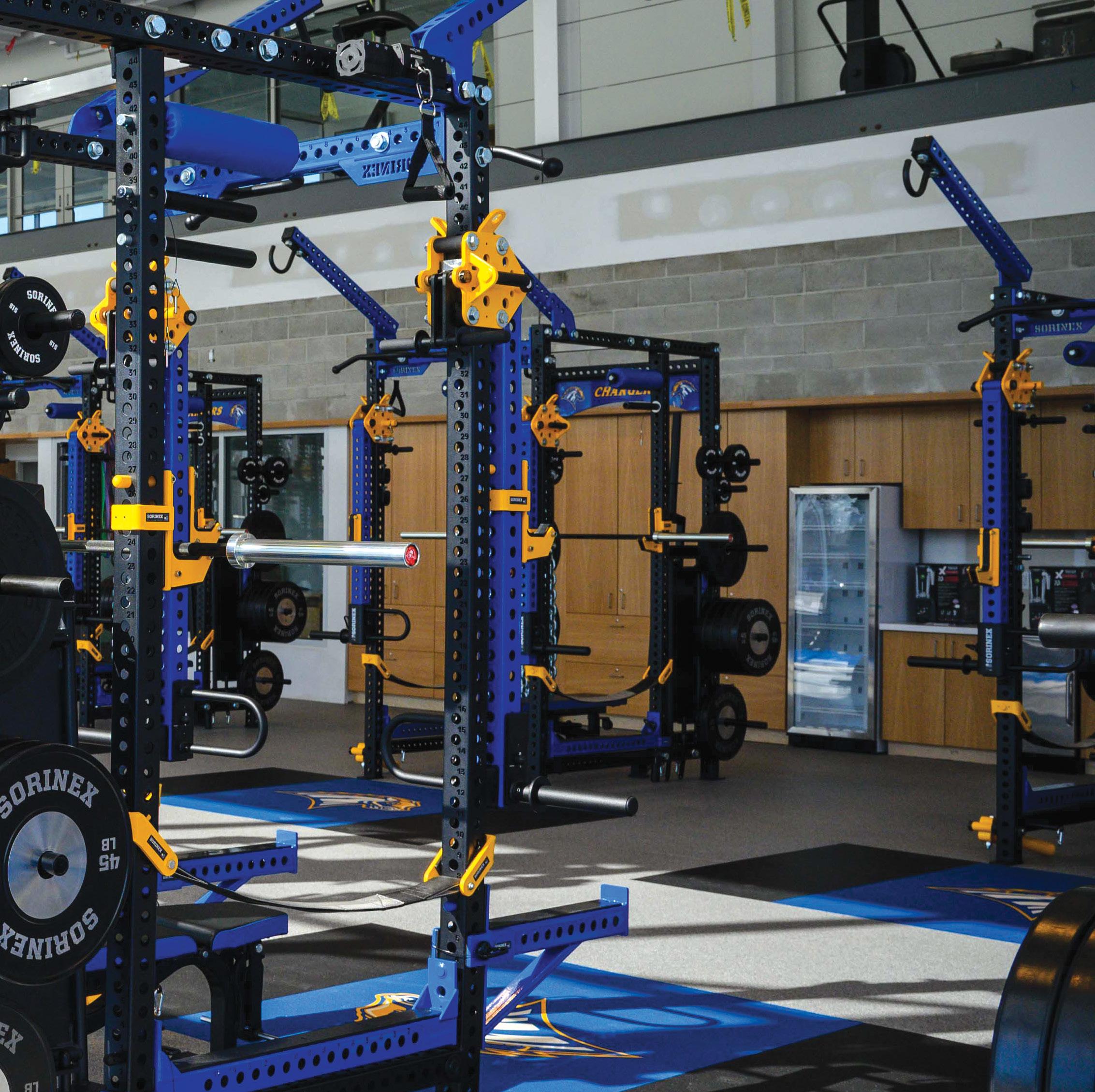

The Peterson Performance Center — opened in 2023 and adjacent to the Hazell Center — was considered a game changer for Charger Athletics, offering a world-class, 7,000-square-foot weight room featuring 20 Olympic-style weightlifting racks that can be configured for hundreds of different weight training exercises. The building also houses a 60-yard turf agility and conditioning area, a state-ofthe-art sport medicine center, and a football locker room that can support more than 125 studentathletes. The PPC is also home to the David ’91 & Penny ’91 Loane Nutrition Station.
Crosby maintains that through the generosity of donors David and Karen Peterson, the facility enabled the NEC to seriously consider the University’s application to join the conference and elevate to Division I status.
Reflecting on the totality of the “comprehensive and ambitious” remaking of the West Haven campus, Frederiksen says, “As a private university with a public mission and global focus, we are differentiating U New Haven in an ultracompetitive and ever-discerning marketplace. This campus transformation will distinguish us as a leading institution in higher education — and a powerhouse for preparing the next generation of elite talent to excel in the global workforce of the future.”
With the generous support of alumni and friends, Frederiksen continues, “Together, we are pushing the boundaries, accelerating the pace of change, and building a leading global university — one that delivers an unparalleled return on investment for the student body of the future. The future of higher education is being written right here at the University of New Haven — and there’s no ceiling on what we can achieve together.”
As a private university with a public mission and global focus, we are differentiating U New Haven in an ultracompetitive and ever-discerning marketplace.
To this end, we are launching a comprehensive and ambitious campus transformation that will distinguish us as a leading higher ed institution — and a powerhouse for preparing the next generation of elite talent to excel in the global workforce of the future.
The comprehensive and ambitious campus transformation is driven by your support. Together, we are pushing the boundaries, accelerating the pace of change, and building a leading global university — a university that delivers an unparalleled return on investment for the student body of the future.
The future of higher education is being written right here at the University of New Haven — and there’s no ceiling on what we can achieve together.

Become part of the momentum at newhaven.edu/give mouse-pointer
The future of higher education is being written right here at the University of New Haven — and there’s no ceiling on what we can achieve together.
PRESIDENT FREDERIKSEN
In the following pages, you’ll meet loyal University benefactors
Dennis Martin and Charles Pompea, shining examples of self-made success stories and true philanthropists.
Martin and Pompea’s unmatched generosity (both have made historic gifts in support of key institutional capital and infrastructure initiatives) is helping differentiate the University of New Haven and its value proposition at a time when the stakes could not be higher — catalyzing other trailblazing donors to step forward with gifts of their own as U New Haven seeks to drive an approximately $200 million agenda through 2027 to remake the campus in profound ways that are bucking national trends and creating a massive amount of momentum.
Although their giving will have a lasting impact on the University community for generations to come, both Martin and Pompea have expressed their incredible joy in watching their philanthropic support impact Charger Nation in real time.
Read on to learn more about these impressive individuals and their efforts to help the University of New Haven accomplish the truly extraordinary.
BY DOUG WHITING
It’s funny how simple conversations around the dinner table can impact a life.
As a youngster, Dennis Martin ’81 and his siblings would gather with their parents for their evening meal. Neither of his parents had finished college — his father took courses at Bates College, and his mother did the same at Bliss College — but both had a full appreciation for the value of learning. So night after night, Martin recalls, the family would sit down at the dining room table and “talk about how we were going to get an education and how we were going to make a difference.” He remembers his dad’s motto fondly: “Martins are leaders, not followers.”
Fast-forward to 2025, and not only did Martin get that education — completing his degree in industrial engineering and management at the University of New Haven 13 years after he’d started at another institution, gotten married, had three children, and begun an amazing career — but he is making a difference in the lives of thousands of current and future students through thoughtful consideration of how to leverage his success for others.
It’s a story Martin tells with matter-of-fact modesty but obvious pride.
Let his actions, then, do the boasting for him.
Earlier this year, Martin, former chairman of the board of Federal Signal Corporation, a manufacturer of public safety, security, and emergency systems and equipment, jumpstarted a campaign to raise funds for the creation of a new, on-campus facility for
the Pompea College of Business, with an incredibly generous eight-figure leadership donation. He calls the relocation of the Pompea College and the development of the new building and its vision a “game changer.”
As part of his self-described “evolving” relationship with the University, Martin had previously donated to its makerspace, providing support for new equipment. He was conferred an honorary doctorate in 2005. But this year he and his wife, Barbara, decided the time was right for a significant investment.
“One, we had the ability to do it,” he says understatedly. “Two, this new facility is a super deserving need for the University — to rejoin the business college with the main campus. And three, we hadn’t done a lot of this type of giving — our family philanthropy had been more impactful to individuals — but here we saw an opportunity, and we were able to meet it.”
Martin knows something about game changing — he’s achieved enormous success as a business executive, helping turn around struggling companies. In fact, he says his history was one of “taking jobs nobody wanted,” turning challenges into opportunities and ultimately success. At Federal Signal, where he served as president and CEO before taking on the role of chairman, he says, “we were near bankruptcy in 2010, but we innovated, were aggressive with acquisitions, and made investments — like welding
robots early on — even when we didn’t really have the money to do so.”
Calculated risk-taking has been a hallmark for years.
As he was considering where and how to finish his bachelor’s degree, Martin had relocated to Connecticut with Ingersoll-Rand, the giant industrial technology company. Lacking an engineering degree but acknowledging that he was “a pretty good salesman,” he “made a deal” with Ingersoll that if they hired him, he’d get his degree. He was attracted to the University of New Haven’s focus on hands-on learning, and the University gave him “the flexibility to get the combined industrial engineering and management degree, which was great because I’d already had 10 years of work experience.”
He would go on to hold leadership roles at Ingersoll-Rand and Illinois Tool Works, where he rose to become president of one of its billiondollar divisions. He later was recruited to lead the successful turnaround of the General Binding Corporation and after leading a consulting practice joined Federal Signal as a board member in 2008. Two years later, he was asked to step in as CEO. Spend even a few minutes with Martin, and it is evident that he remains highly motivated about and by his work, and he sees connections between that work and the Pompea College’s mission of preparing students for 21st-century careers.

A prime motivation for supporting the new building project is the importance of bringing the College back to the main campus so that business students can intermingle more easily with students from other disciplines, especially engineering. “This will help students develop teamwork skills, which is important. Their opportunities will be enhanced. [Locating the College in Orange] was a neat idea, but it has become isolating for the students.” Adding to his excitement is that the new facility will be proximate to the University’s new Center for Innovation and Applied Technology.
He sprinkles references to innovation, the common application of science in multiple industries, team building, and corporate adaptability throughout the conversation, qualities and characteristics he sees in a U New Haven education.
“The University was built on giving students a practical experience,” he says. “We were there by choice, we needed to work, and we wanted to advance in our careers. That ethos hasn’t stopped, and the message the University is delivering through its graduates is real.”
Says University President Jens Frederiksen, “Dennis is a remarkable individual who has enjoyed an extraordinary career. He is the definition of a selfmade success story and is a true philanthropist. His generosity is helping propel our vision of becoming a global powerhouse for preparing the next generation of elite talent to excel in the workforce of the future. His commitment will make a lasting impact on generations of students.”
BY DOUG WHITING
Even Inspector Jacques Clouseau would have an easy time finding the fingerprints of Charles E. Pompea ’71, ’90 EMBA, ’06 Hon., all across the University of New Haven campus.
There’s the obvious — the Pompea College of Business, named in honor of Pompea, his wife, Tamera, and his family in recognition of years of generosity to the University, including what was then the largest gift in the history of the University to support student scholarships and the enhancement and development of several groundbreaking programs in the College of Business.
Then there’s the less obvious but impactful giving that continues to benefit generations of U New Haven students. He contributed to the restoration of Maxcy Hall, the University’s centuryold signature building and centerpiece of campus. He supported the construction of the Bergami Center for Science, Technology, and Innovation; the Beckerman Recreation Center; and the Henry C. Lee Institute of Forensic Science. Pompea and Tamera joined former classmate Sam Bergami Jr. ’85 EMBA, ’02 Hon., and his wife Lois in supporting the University’s purchase of its campus in Orange, Connecticut, which has been dedicated as the Bergami and Pompea Graduate Center and is currently home to the College of Business.
And now, along with Dennis Martin ’81, he’s leading the charge to support the construction of
an exciting new facility dedicated to the College of Business on the University’s main West Haven campus.
Why is this retired president and CEO of Primary Steel of Middletown, Connecticut, who has also served the University’s Board of Governors for many years, including as chairman, so committed to his alma mater that bestowed an honorary doctorate on him in 2006?
Part of the answer is his enduring appreciation for the education he received at the University, especially when he returned for his Executive Master of Business Administration (EMBA), which he says “stimulated me and was a turning point in my career.”
Unassuming and quick with a warm smile, Pompea is also bullish on the direction of the University under President Jens Frederiksen and his leadership team. “I feel like the University is just starting again,” he enthuses. “I see the students — they’re intelligent, they’re here to work and go out and earn an income. I see young people who really want to learn, they really care, and they really want to make a difference.”
In turn, he’s committed to making a difference in their lives.
“Why not help people when you can, when you can watch your giving work for people, rather than waiting until you pass?” he asks. He has not forgotten his roots, growing up in Lyme, Connecticut, and
taking any job he could find — in the cafeteria, in the gym, cleaning locker rooms — while pursuing his undergraduate degree.
Then, uncharacteristically but not uncharitably, he drops the hammer: “I just don’t understand people of wealth who don’t give back,” he says. “There is great gratification in seeing your wealth helping someone out.”
He comes by these opinions honestly. Pompea is fond of recalling that he “didn’t have two nickels to rub together” when he was a student at the University, majoring in business management. He and several classmates applied for jobs at a steel company. One by one, they interviewed for sales representative positions, each sharing the same necktie.
Taking a job at Concord Steel, one of three offers he received before graduating, he moved from there after a year to Primary Steel. During the course of two decades, he moved up the corporate ladder, becoming president and then purchasing the business, where he increased annual sales significantly during his 15-year ownership and grew the company into one of the top five processors of steel plate distribution and processing in the country. He sold the company in 2007 and purchased the Springfield Falcons hockey team, selling the franchise to the National Hockey League’s Arizona Coyotes in 2016.
Beyond his support for the University, this kind and gracious father of four and grandfather of six
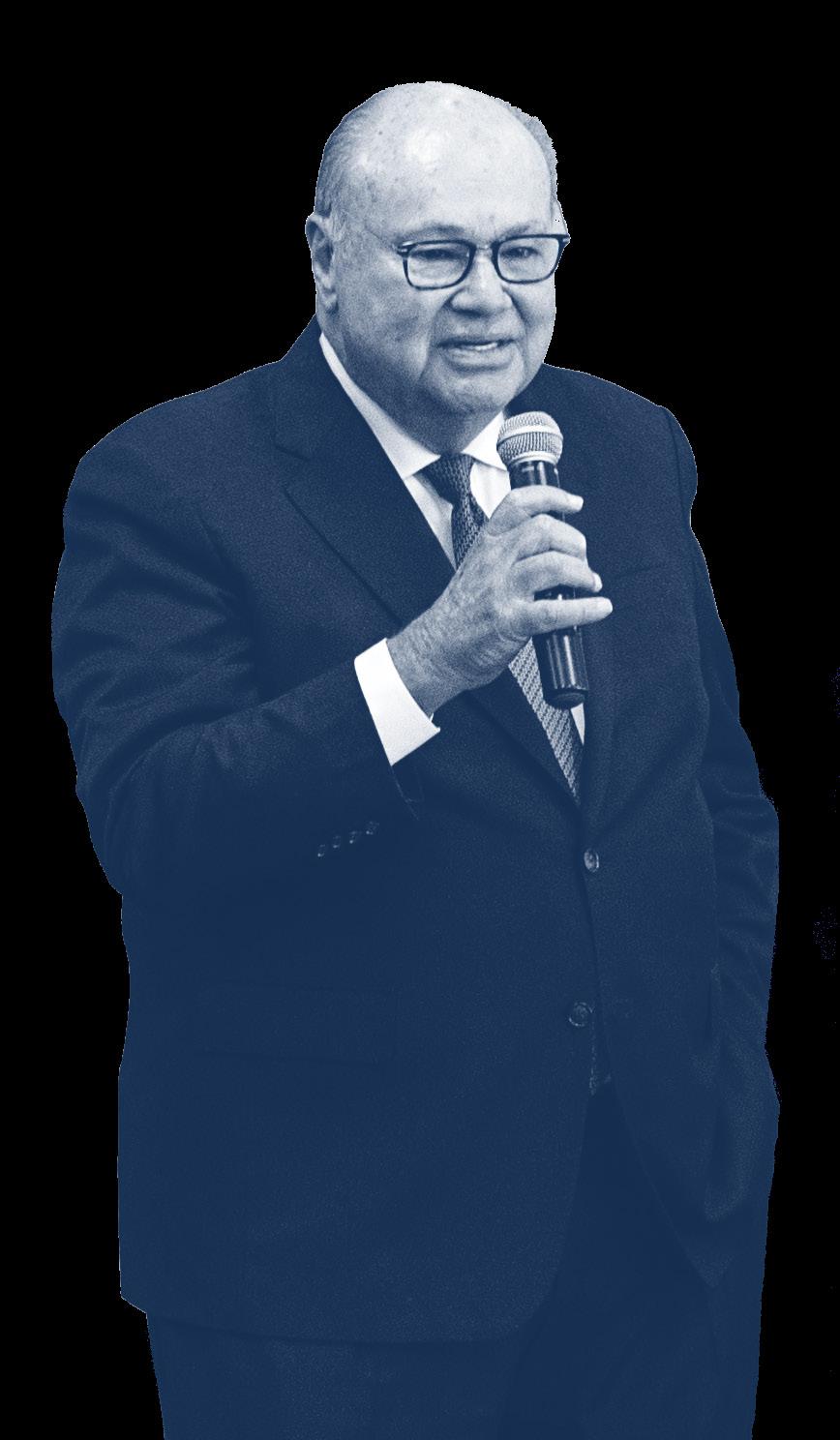
has been active in community service for years. A founding member of the Middlesex (Connecticut) Community Foundation, Pompea has supported Middlesex Hospital and the Connecticut River Museum. He served as chair of the Middlesex Chamber of Commerce and established the Springfield Falcons Charitable Foundation, supporting local and health-related agencies such as the YMCA of Greater Springfield, Habitat for Humanity, and the city of Springfield’s library system. Active in the President’s Club supporting Gary’s House, an affiliate of Mercy Hospital in Maine, he also supports the Center for Family Services in West Palm Beach, Florida.
Back at the University of New Haven, a belief that “you’ve got to have a passion for whatever you do” continues to drive him. So while he leaves his mark on the University in so many ways, he continues to look for other ways to boost its standing, musing about how the marching band can get more exposure, wrapping University-owned vans in school colors and messaging, and considering what’s needed to complete various ongoing campus refurbishments and how to enlist a thousand alumni in a student mentoring program.
“Set goals,” says the man who achieved so many. “Reach those goals, and then set them higher.”
HI CHARGERS,
I’m Leah Myers, and it’s an honor to serve as president of the Alumni Board of Directors at the dawn of a new era of transformation at the University of New Haven.
I would like to thank my predecessor, Reece Gleadle, for her service as president and for kickstarting the Alumni Board’s own transformation, including changes in structure and function and more integral participation in alumni events and giving campaigns.
I had the pleasure of experiencing the electric energy in the crowds at the first two Division I home football games of the season. One of those games was during Homecoming weekend, in which I enjoyed meeting up with alumni. Some of them were visiting campus for the first time since graduating within the past decade. I enjoyed hearing their excitement to return and already see changes the campus has undergone since graduation. They also told me they were invigorated to come back to campus more often and get more involved with the University as alumni.
There is a lot going on at the University of New Haven. We are fast approaching the anticipated
inaugural fall semester of U New Haven’s international campus at Riyadh, Saudi Arabia. In addition, back in West Haven, the University is also setting the path for numerous capital projects related to infrastructure and programming around innovation and applied technology, business, student life, civic and community engagement, Health Sciences, and Athletics. It truly is such an exciting time to be a Charger.
One of my goals as Alumni Board president is to increase the Board’s presence and determine a role the Board can take on in the University’s local and global expansion. I also hope the Board will continue to work together to boost alumni giving, which in turn will help current students. We knocked it out of the park for Giving Day 2025 last April, exceeding our fundraising goal by over $100,000 and establishing connections while campaigning to accumulate scholarship funding for first-year students seeking to return for sophomore year without financial worries.
Among the University’s transformations, the Alumni Board is continuing to optimize membership potential. We’re reimagining our e-board outside
of the traditional positions of vice president, secretary, and treasurer. Our new e-board will oversee establishing partnerships within the University and beyond, boosting engagement with alumni, strengthening communications within the Alumni Board, and pursuing the continuous recruitment of Board members.
Let’s power on to a great year ahead!

Leah Myers ’18 President, University of New Haven Alumni Board of Directors
2025–2026
ALUMNI BOARD OF DIRECTORS
Vice President of Recruiting
Vice President of Engagement & Communications
Kelly ’10, ’13 M.S.
Vice President of Partnerships Colin Weber ’17
Board Members
Djuana Beamon ’08 MBA Pasquale Cassella ’94 M.S.
. Joseph Cieplak ’72
. Tyler D'Amore ’14, ’16 M.S.
. Sarah Flynn ’20
. Frank Harper ’79, '85 M.S., ’85 MBA Olivia Lane ’19, ’22 M.S. Anna LaPointe ’19
. Brian LaSure ’11, ’13 MBA
. Lindsay Margiotta ’13
. Kelonda Maull ’12 MPA
. Christopher McWilliams ’93 George Melanson ’83 Nicole Pacapelli ’14, ’16 MBA
. Hannah Providence ’22
. Michelle Stephens ’17

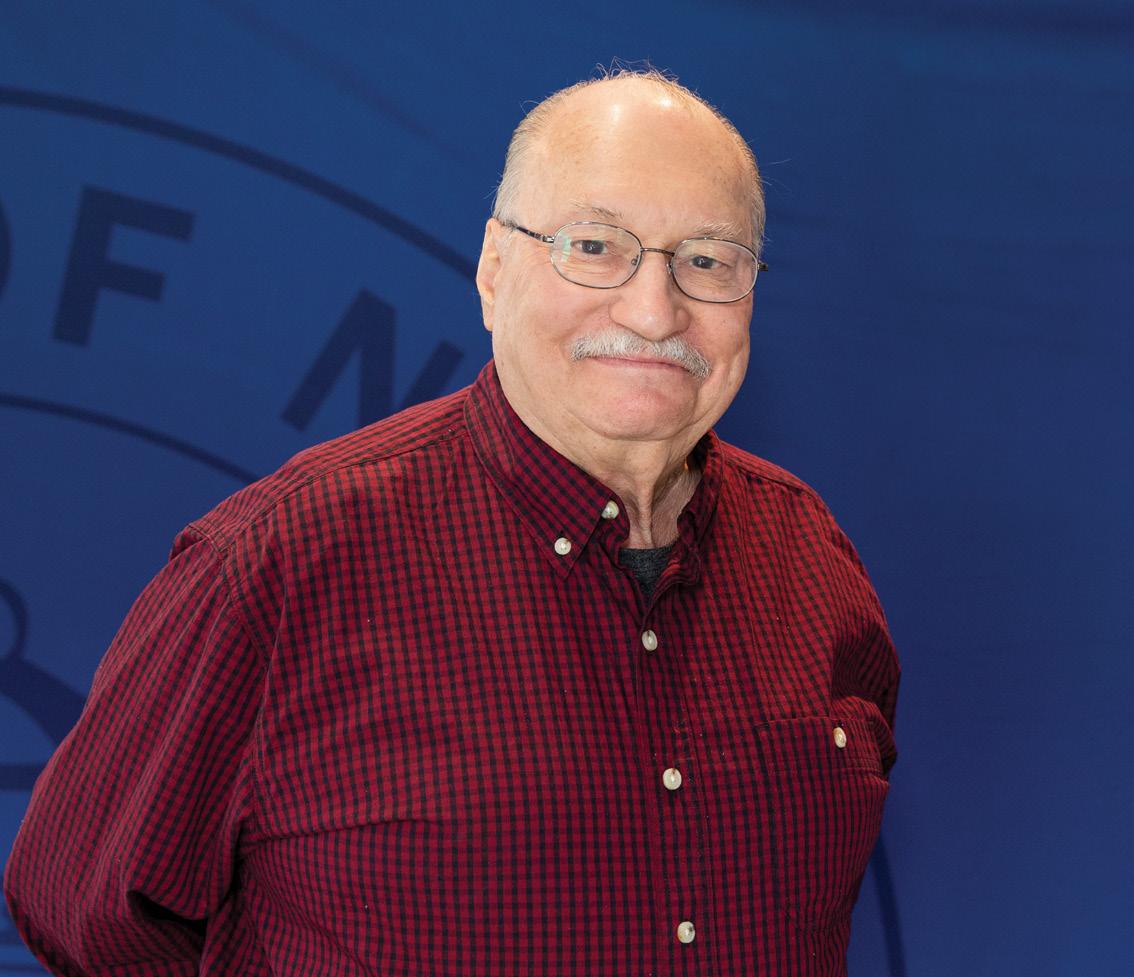
BY STEVE NEUMANN
Joe Cieplak ’72 was a shy kid without much direction. After graduating from high school in nearby Ansonia, he enrolled at Worcester Polytechnic Institute with the goal of becoming a mechanical engineer.
“I went there for two years, and I was struggling,” Cieplak said. “So I decided to stop wasting my dad’s money and volunteered for the draft. I figured I’d do my duty for my country and also give myself some more time to grow up.”
After two tours in Vietnam, Cieplak was ready to “get back into the real world.” Wanting to stay close to home after his military experience, Cieplak enrolled at U New Haven, then known as New Haven College.
“My life really turned around when I came back from Vietnam,” Cieplak
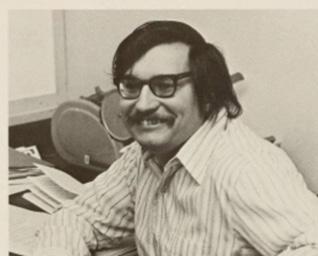
even became managing editor of the newspaper.”
Cieplak said one of his most rewarding experiences at U New Haven was working for WNHU, which he helped build—literally, in his case.
“I honestly can’t believe the university let us do that,” Cieplak said. “We walked in with hammers and nails and sledgehammers and saws and tore out half of the upper floor of the student center and built a radio studio.”
Cieplak’s hands-on experience with WNHU is one of the main drivers behind his personal philanthropic philosophy.
“One of the reasons I support the university is because I think the university itself, and the types of students they get, are there to get things done,” Cieplak said. “These kids are working hard for themselves and to help their communities thrive and grow. I believe education is the foundation of a healthy society and purposeful citizenship.”
In addition to his personal financial contributions to U New Haven, Cieplak has always made it a priority to give back through his time and expertise.
“One of the reasons I support the university is because I think the university itself, and the types of students they get, are there to Get Things Done. These kids are working hard for themselves and to help their communities thrive and grow. I believe education is the foundation of a healthy society and purposeful citizenship.”
JOE CIEPLAK ’72
be unable to come back because of financial issues — something that resonates with his own experience.
said. “I realized I was a different person and could do things I didn’t think I could do before—and it was the university’s environment that allowed me to do that.”
Today, Cieplak is the owner of a company that serves as a manufacturer’s representative for firefighting, EMS, life safety, and industrial safety equipment in the Northeast region.
Cieplak noted that, at the time he enrolled, New Haven College was young but growing, so there were many opportunities to take part in campus life.
“I did almost everything you could think of in the three years I was there,” Cieplak said. “I joined the ski club, played lacrosse, became president of the student government, and
As an example, shortly after his graduation Cieplak established the Lt. Paul Kane Memorial Scholarship in honor of his cousin, a Navy fighter pilot killed in the Vietnam War. Paul played hockey at what was then New Haven College. This is an endowed scholarship and is still awarded annually.
Another example is the WNHU Alumni Advisory Council, consisting of U New Haven alumni who worked at the station while they were students. Cieplak cofounded it at the 50th anniversary of WNHU in 2023.
“The council is there to offer its experiences and connections to the students at the station,” Cieplak said. “We’re very clear we’re not there to tell them what to do — they’re the students, they run the station — we’re there to offer advice.”
Cieplak is also the Philanthropy Lead for the Alumni Board. In 2024, he led the Board’s efforts to raise funds for the Bright Futures Scholarship Fund to support first-year students who might
“U New Haven students are often first-generation students like I was,” Cieplak said. “They know they have to work to get things done, and they’re willing to do it. They’ve already committed to the University, so we want to support that determination.”
As U New Haven continues to grow since its days as New Haven College, both through its programming and its physical infrastructure, Charger alumni such as Cieplak help lay the groundwork for the professional and personal growth of Chargers of the future.
And even at 80 years old, Cieplak shows no signs of slowing down in either his professional or philanthropic life.
“Through the Alumni Association, I get to attend a variety of events at the University, such as student seminars, convocations, and department open houses, and I really enjoy it,”Cieplak said. “I love listening to how young people think; it keeps me young.”
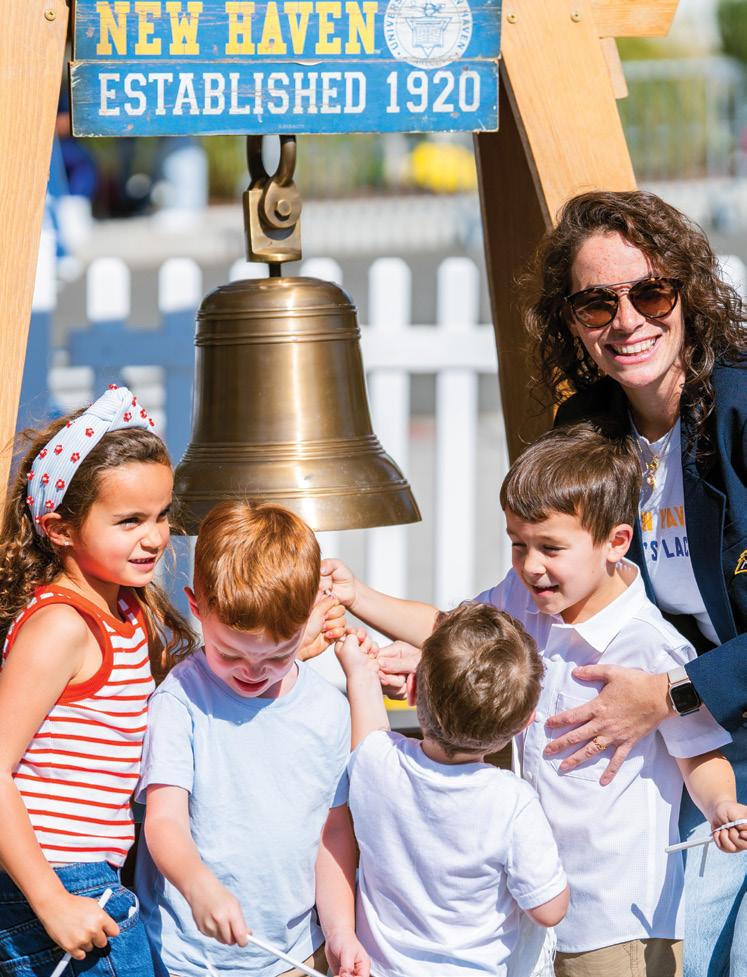
From selfies and smiles to touchdowns and tailgates, Charger Nation showed up strong for Homecoming 2025, celebrating the #BlueOut spirit that connects us all. During Homecoming, thousands of alumni returned to campus to get an inside look at the University of New Haven’s world-changing work, explore our ever-changing campus, and connect with affinity groups, clubs, and fellow alumni. As part of the weekend festivities, Charger Football celebrated a 28-14 victory over rival Pace University, commemorating the program’s move to the NEC.
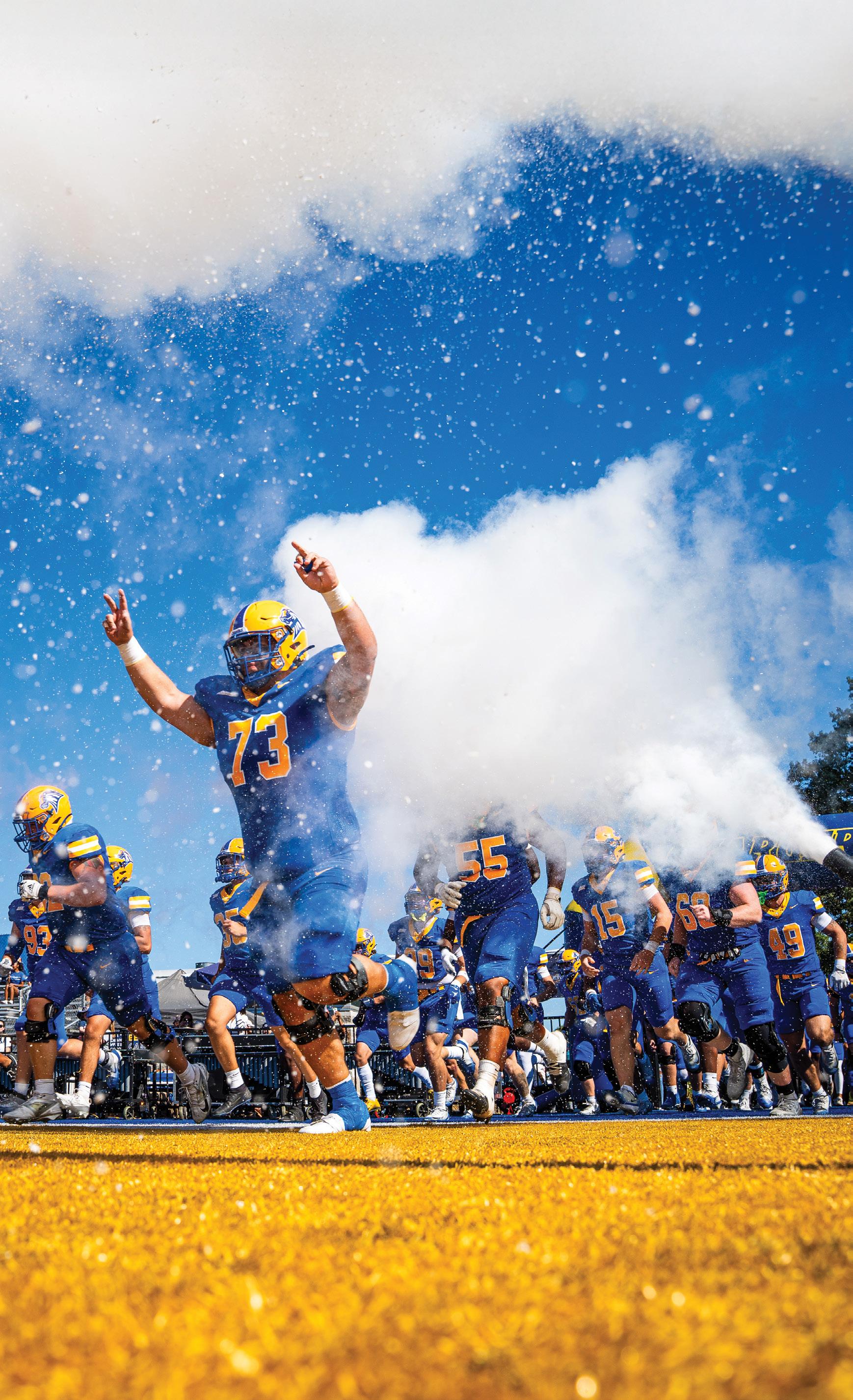

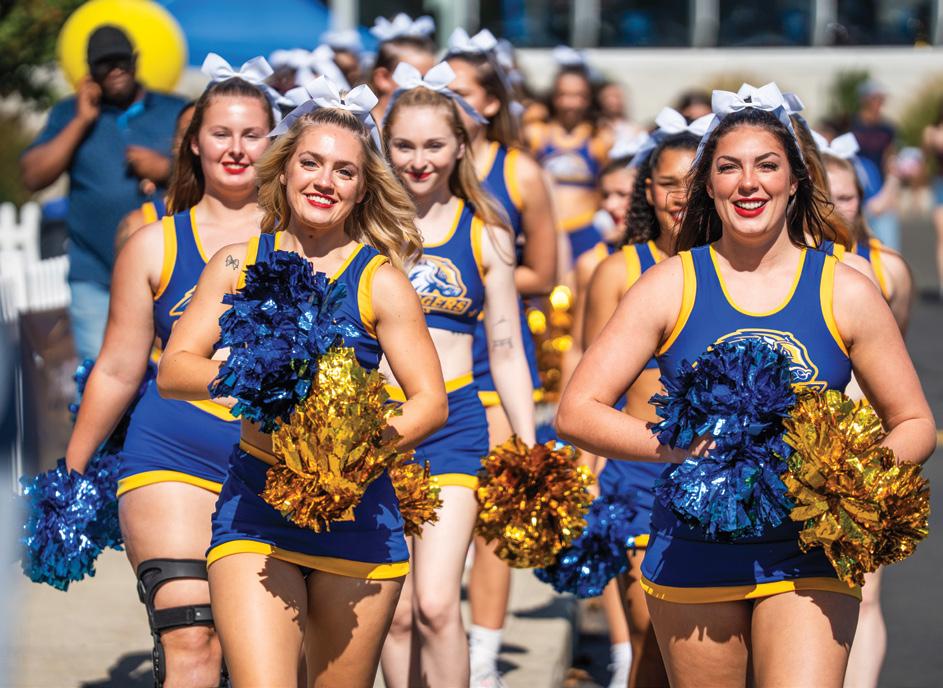
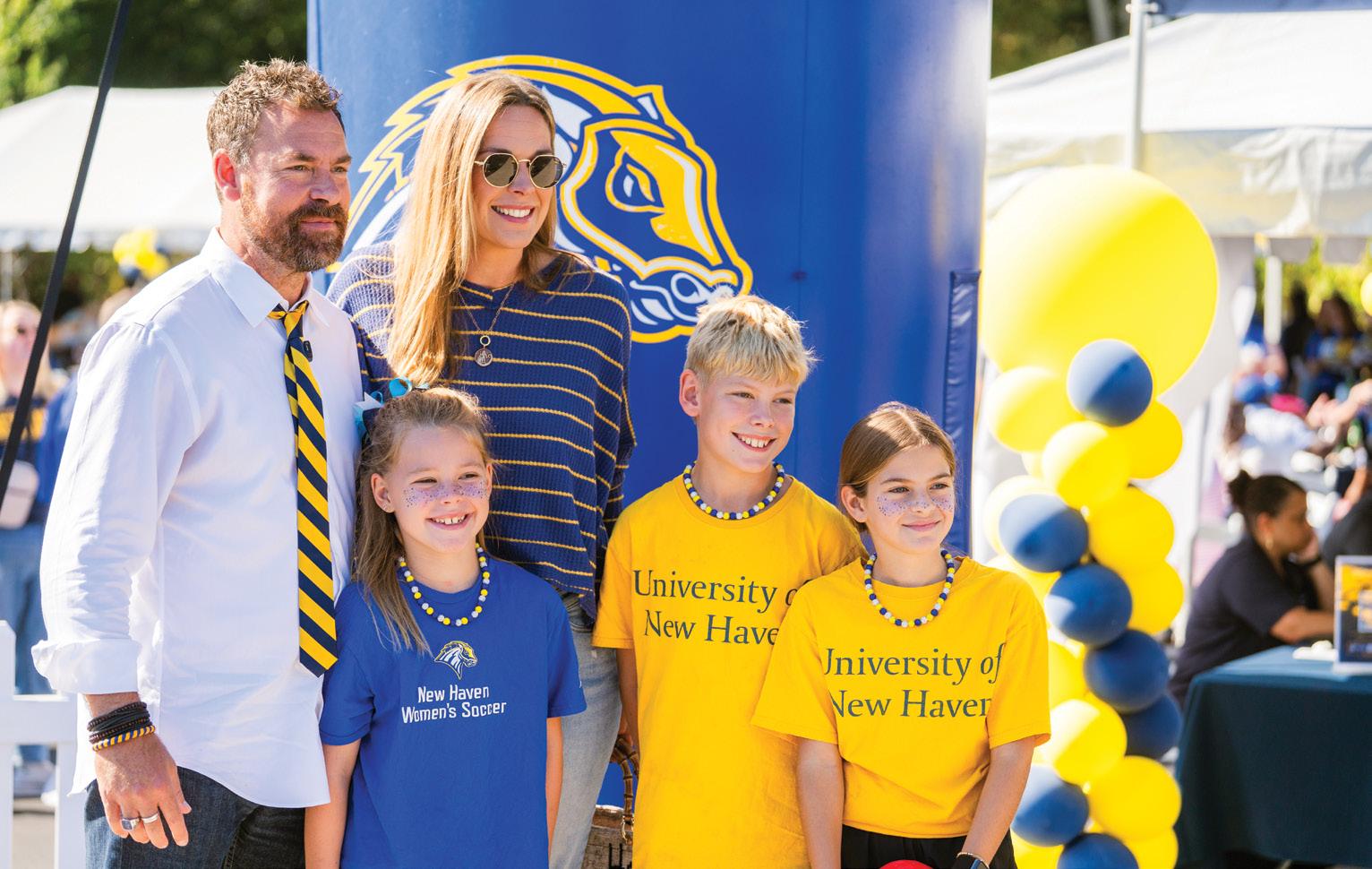
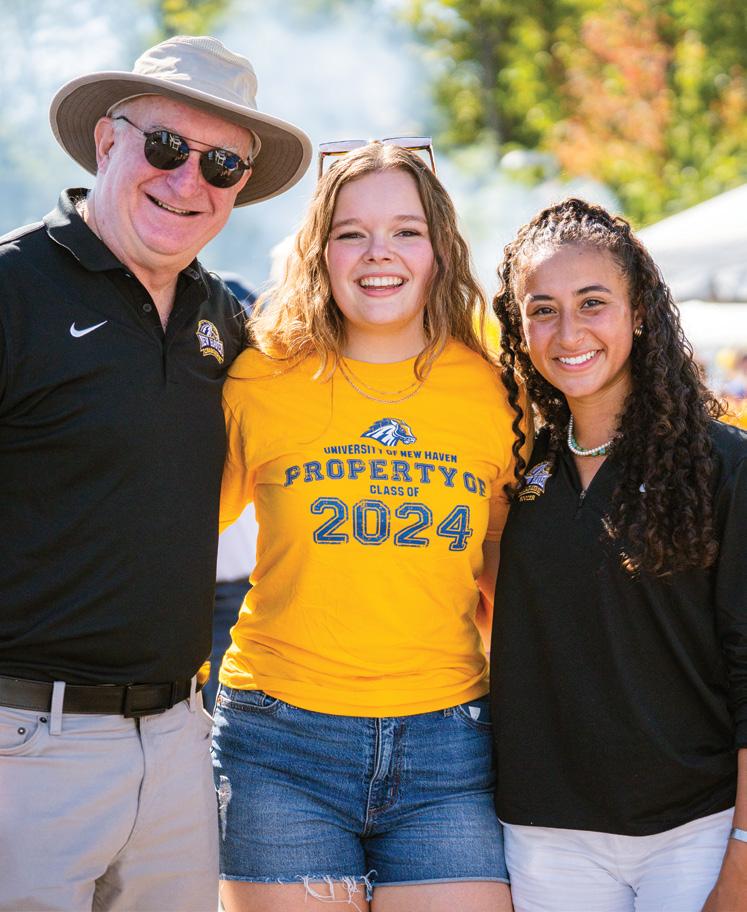
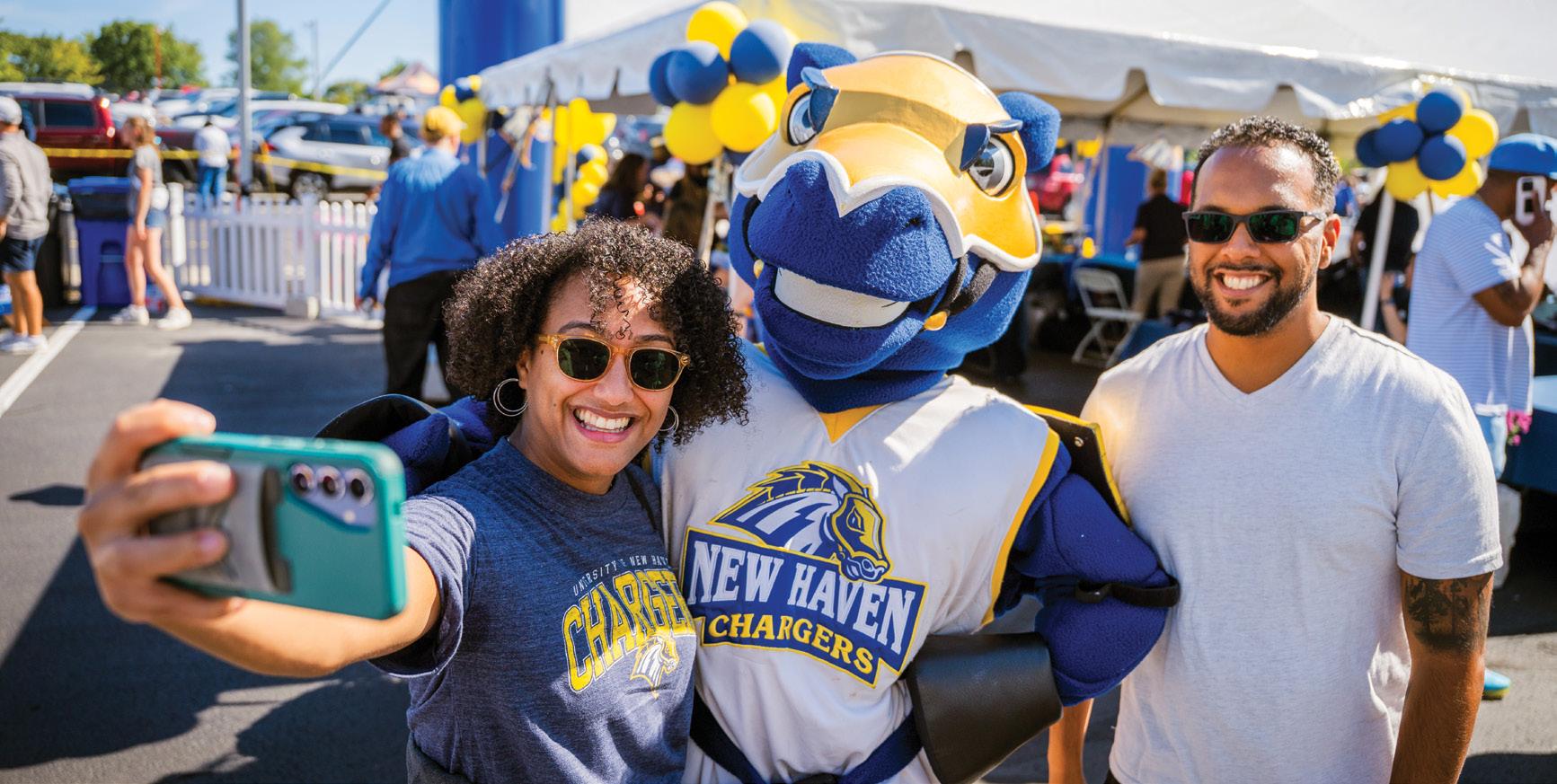
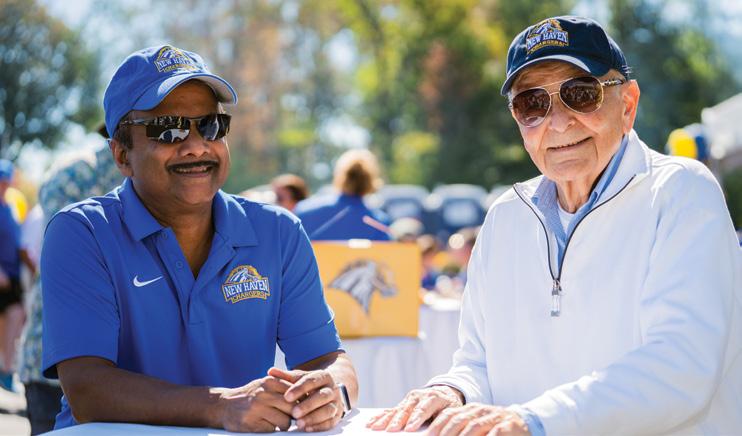
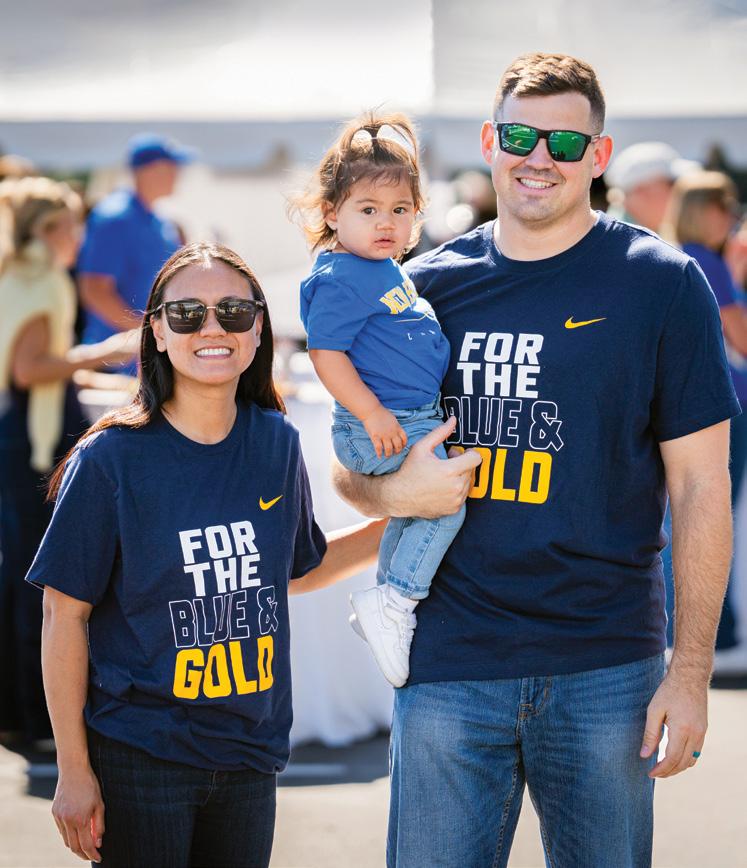
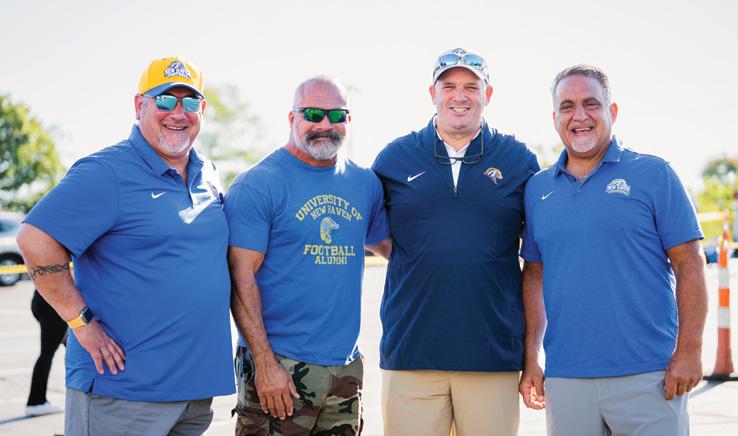

As part of Homecoming Weekend 2025, the University hosted a special ribbon cutting ceremony to officially unveil the Peterson Performance Center. A 30,000-square-foot state-of-the-art training facility, the PPC also features resources for nutrition, mental health and wellness, and personal development. The facility embodies our focus on fostering an environment around Charger Athletics built on one word: care. It is playing an instrumental role in driving our successful transition to Division I athletics. This incredible space was made possible by David Peterson Jr. ’88, ’17 Hon., the vice chair of our Board of Governors, a long-standing University benefactor, and a member of our Charger Athletics Hall of Fame, and his wife, Karen.
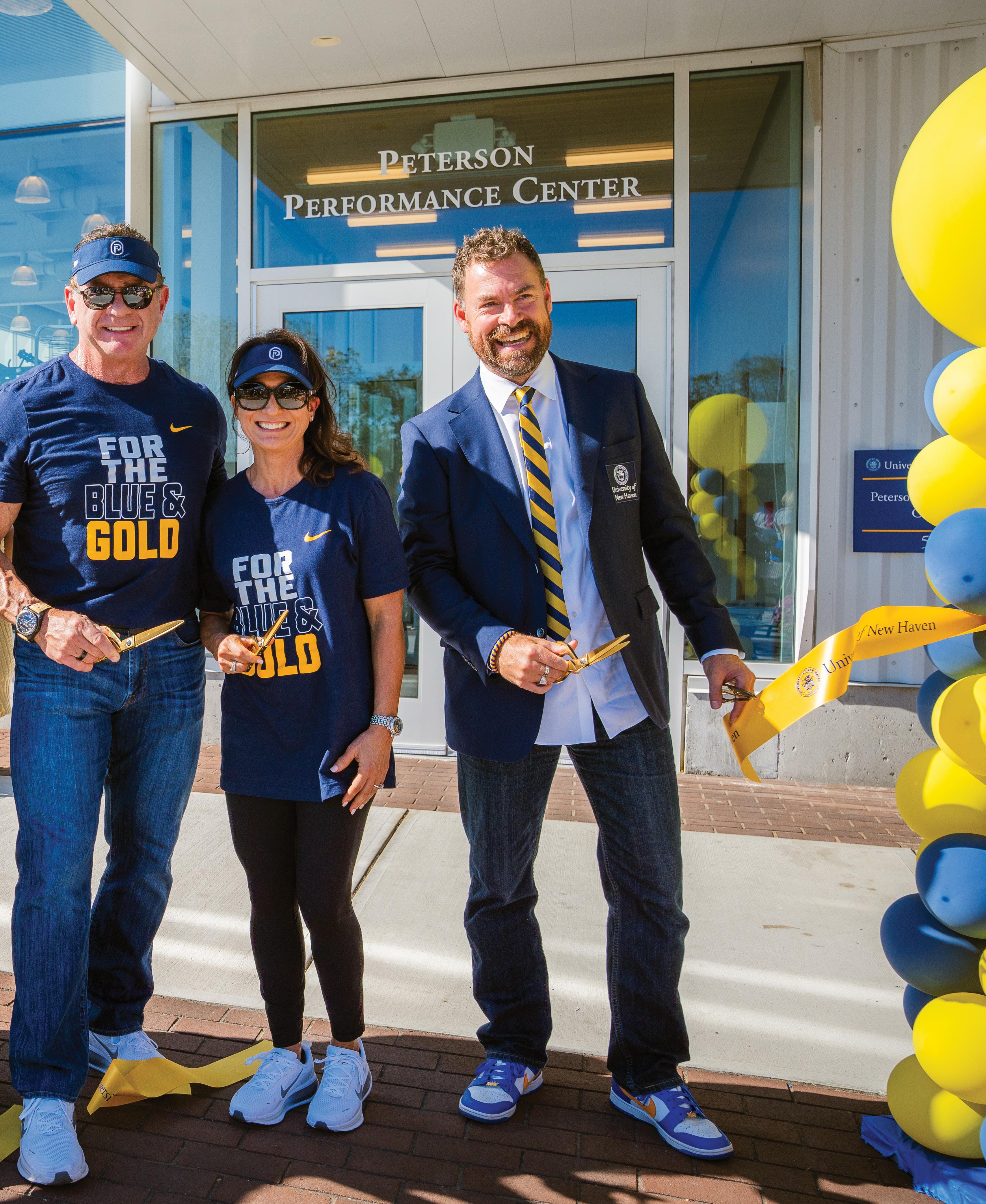

Football earned its first Division I win over UAlbany on Saturday, Sept. 13, thanks to a game-clinching sack by Sebastian Conwell and Pete Melle. It finished the year at 5-5, including a perfect 4-0 at Ralph F. DellaCamera Stadium. Mark Powell was promoted from interim head coach to head coach of the program on Friday, Nov. 7, before the season finale at home against Merrimack, a 41-31 win. A.J. Duffy won NEC Offensive Player of the Week three times, Liam Godwin won NEC Defensive Player of the Week, and more Chargers were named as Prime Performers by the NEC following strong contributions on game day.
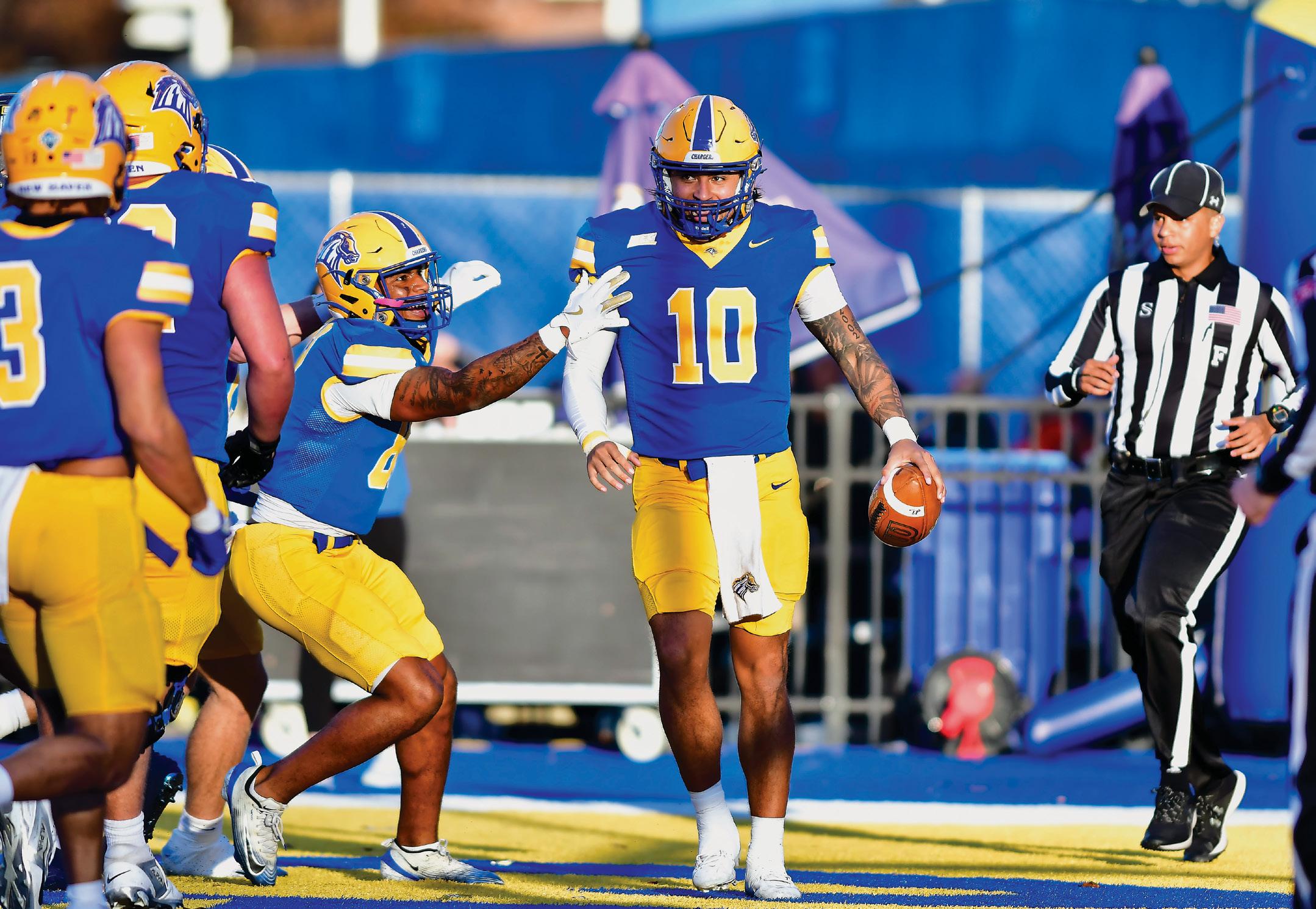

New Haven earned the NEC’s Team Sportsmanship Award. Freshman Anne Marie Martin cemented herself as the goalie of the future for the Chargers. Junior defender Allie Brown played a team-high 869 minutes.
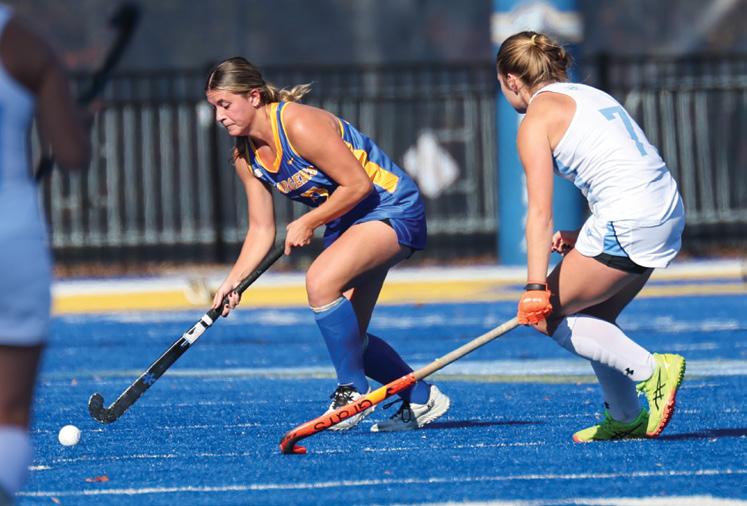

Women’s Tennis played a perfect fall, not losing a match. They earned their first Division I win over Stonehill on Sept. 13 before the match was cut short due to rain.
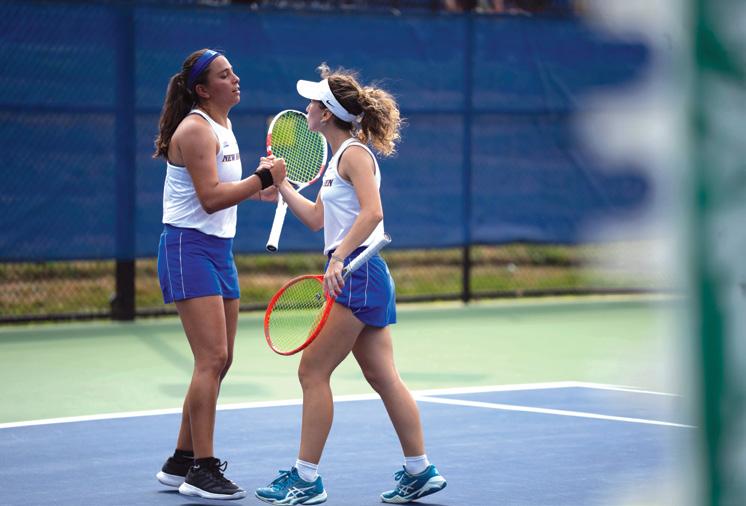
New Haven Rugby’s Sereana Vulaono is headed to Australia as one of six new athletes selected for Team USA’s first tournament in the Global Rugby Series. The Chicago native has continued to rise through the ranks of American rugby over the past three years, earning her a place among the country’s 18 most elite players that will be representing the U.S. on the international 7s stage.

Mohammed Abunar and Danielle Lynch ran to All-Conference status at the NEC Championships on Saturday, Nov. 1. Abunar was also named a Prime Performer by the NEC on Oct. 15 following a 31st-place finish at the New England Championships.

Women’s Golf competed in five tournaments in the fall, finishing as high as seventh overall at the Sacred Heart Fall Classic. Ella HammondBaveystock’s second round total at Quinnipiac of 76 was the team’s lowest of the fall.


Caitlin Daley set a program record for saves in a single season with 146, passing Megan Kilbride’s record of 144 set back in 2001. The Blue & Gold also had five players named to the CSC Academic All-Conference team: Daley, Janayah Body, Emma Mitchell, Caroline Ennis, and Lola Wood.

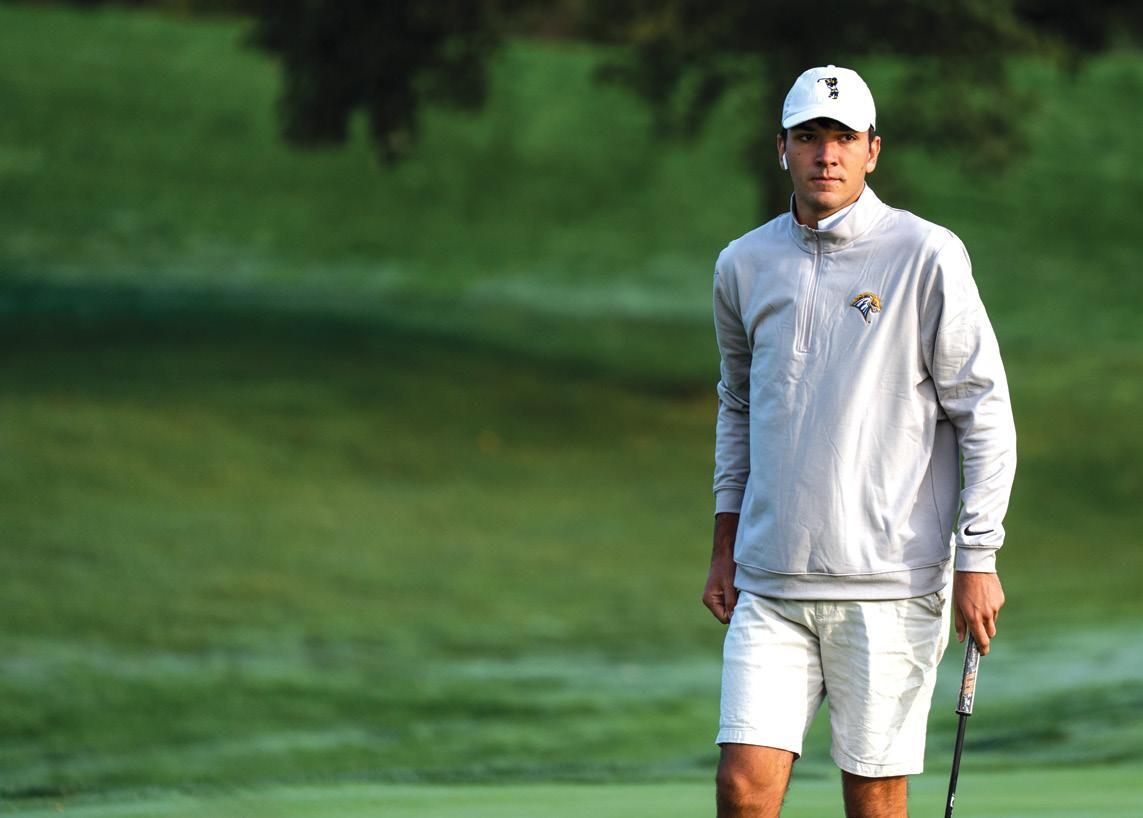

The program finished in the top five four times in five events during the fall, including a first-place finish at the Laker Fall Invitational on Monday, Sept. 15. Tommaso Rossin placed ninth at the SHU Men’s Fall Classic, first at the Laker Fall Invitational, second at the Red Flash Invitational, and third at the Crusader Invitational during a dominant fall season.
Men’s Soccer made history, becoming the University’s first program to get a win in Division I by defeating Monmouth, 2-1, on Thursday, Aug. 21. Just four days later, Lukian Lawro made ESPN’s top play of the day worldwide, scoring a bicycle kick goal in a 1-0 win at Providence College. The program would go on to finish with five wins and see Alessandro Bizzini and Guilherme Meira named All-Conference. Luke Fiscella and Daniel Ehlin were named to the CSC Academic All-District team.
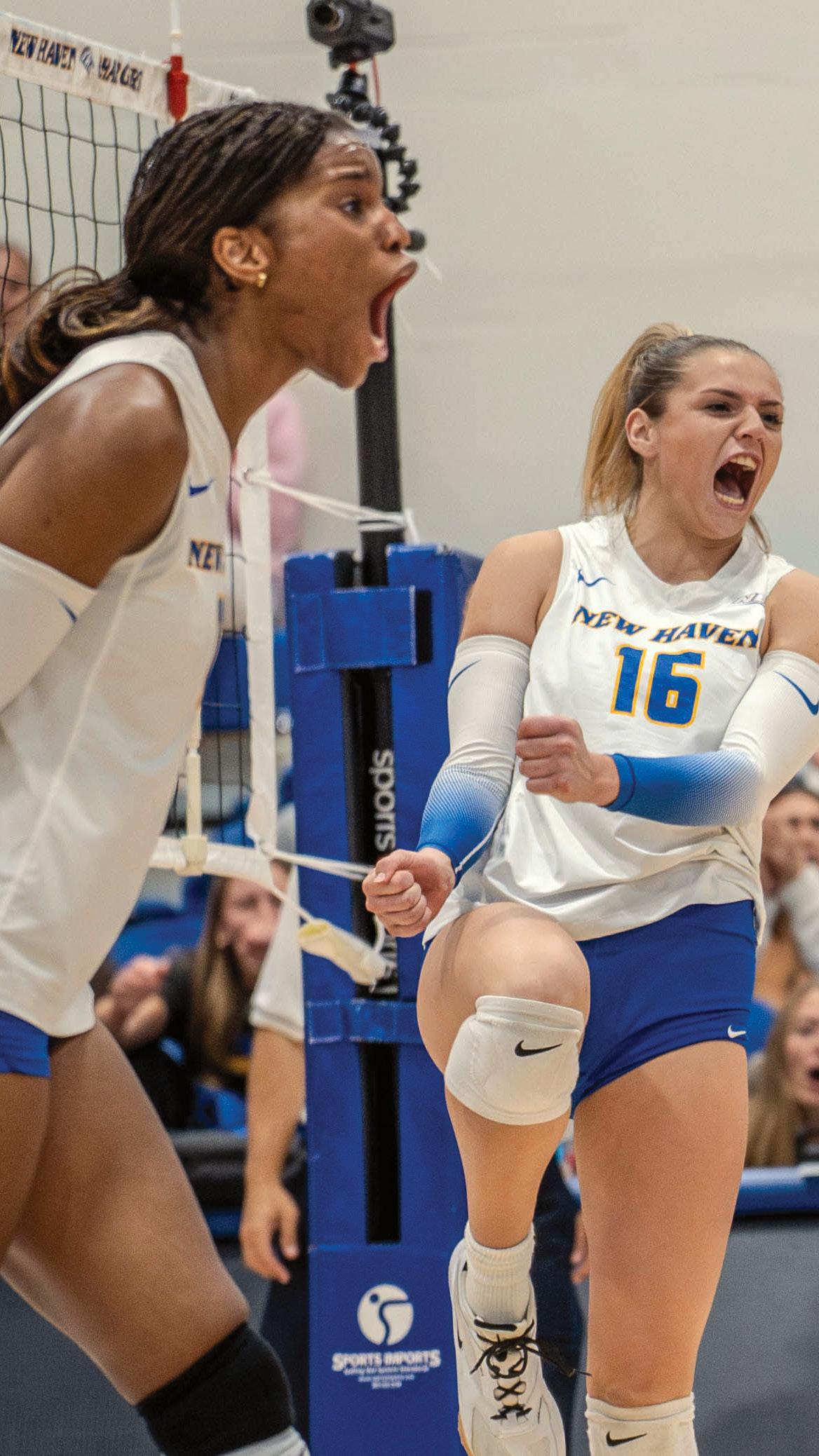

Volleyball collected its first Division I win on Friday, Sept. 5, over Columbia, 3-1. Peyton Malinoski, Naliah Grannell, and Josie Foster all earned NEC Defensive of the Week honors once throughout the season. Kassadi Avent was also named NEC Rookie of the Week once during the season.
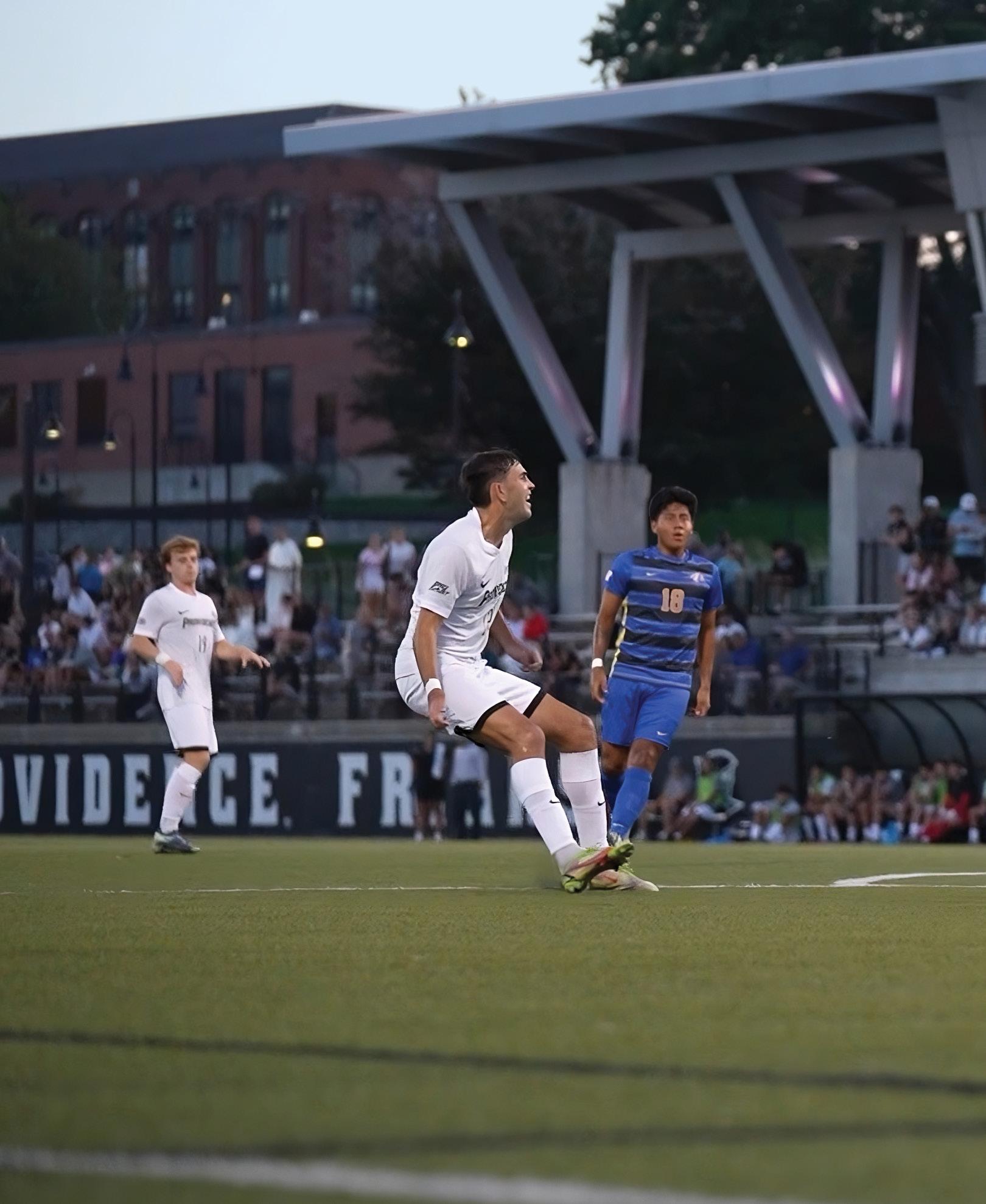
University of New Haven men's soccer player Lukian Lawro ’27 scored the No. 1 play on ESPN's SportsCenter Top 10 on Aug. 25, 2025, with a spectacular bicycle kick against Providence College, securing a 1-0 victory for the Chargers in their inaugural Division I season. The acrobatic goal became a national highlight for the program, garnering over one million views on social media, and was ultimately named Men’s College Goal of the Year by TopDrawerSoccer.com. President Frederiksen invited Lawro and videographer and fellow Charger Connor Deline to meet in his office and commemorate their well-earned celebrity. Brilliant both on the pitch and behind the lens!