All Rights Reserved. No part of this publication may be reproduced, distributed, or transmitted in any form or by any means, including photocopying, recording, or other electronic or mechanical methods without the publisher’s prior written permission.
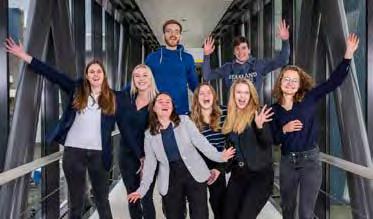
Text The yearbook committee with the help of Thomas Drop Cohort 2024-2025
Design Zuhaily Ras
Design cover Zuhaily Ras, Kiki Croeze
Final Editing Sandra van de Venne
Design Engelen & de Vrind, Leiden
Press-work Drukkerij de Bink, Leiden
Edition 90
Contact masterhas@lumc.nl
Leids Universitair Medisch Centrum
Albinusdreef 2
Postbus 9600
2300 RC Leiden
Health, Ageing and Society (MSc) - Universiteit Leiden
We are the creative, inspiring, and entrepreneurial minds behind the yearbook for the Master's of Health, Ageing and Society cohort of 2024-2025. As your yearbook committee, we want to extend our warmest greetings and heartfelt congratulations to everyone who made it to this milestone and graduated as part of this cohort. We are incredibly proud of our classmates and how each of you carved your path to success. We’d also like to express our gratitude to everyone who supported us throughout this journey. Your encouragement, contributions, and involvement have made this yearbook a beautiful memory for the future.
This year, we chose the theme “Bridging generations”. The theme reflects the importance of understanding and meaningful connections between people from different age groups, especially between young people and older individuals. It is about creating space to listen, learn, and grow together, celebrating the wisdom of experience and the power of new perspectives.
We have all invested our time and effort into creating this yearbook, and we hope it serves as a lasting keepsake of an unforgettable chapter in all our lives.
“In a world of growing variety, We strive for healthy ageing and society.”
With our best wishes,
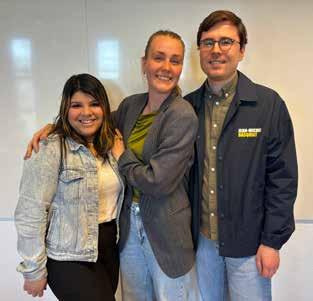
Damian Suchecki Marloes Krijger Zuhaily Ras
Thomas Drop
The yearbook committee 2024-2025
Jacobijn
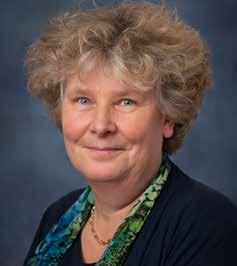
Gussekloo, Programme Director
Already during Future Perspectives, I was impressed by the content of the intergenerational interviews, and reflections afterwards. I really feel that you have showed there your interest, and you have opened your hearts. I hope this will give you lots of energy and inspiration for your career ánd life!
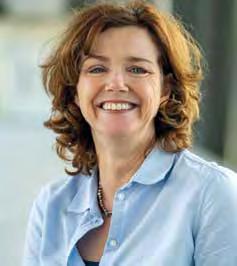
Sandra van de Venne, project coordinator
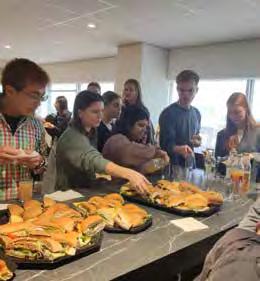
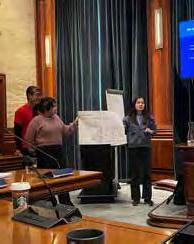
Amazing how quickly the year has passed! Although I’m mostly in the background, I do enjoy to spend time with you at social events and follow your progress in the master’s! I met you for the first time at the start of the programme. I remember it was a real sunny day where we all lined up on order of place of residence, house number, birthdays and so forth. The sun we had then, set the tone for the entire year. For me the study trip to Cologne was the highlight of the year. It was fun and very relaxing at the same time, since you were such a ‘good’ group: everyone was on time even so early in the morning! Also the OAS study trip was fun (and sunny). The lunch on the way to Ghent was the best we had in the year. The sandwiches were delivered to the bus when we were all at the European Parliament and we ate them outside on a parking lot under a sunny sky! To conclude, I take a big jump to the last week of the master’s when I saw you in action at one of your final assignments at the ministry of VWS. I was really impressed that everyone had such a professional pitch, since you only prepared it in the morning! Now the time has come to say goodbye. I wish you all the best for the future!
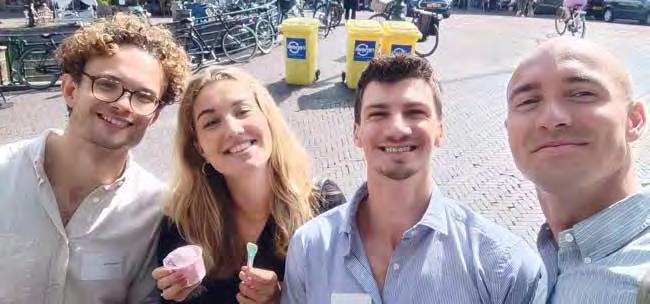
The Junior Lecturers, Thomas, Finley, Demi and Jake
Dear alumni,
We are happy to congratulate you on this fantastic accomplishment!
Although you did not always see us, we were also very busy behind the scenes with supporting the course coordinators and the senior staff members. Every Friday, Jake was the conductor for the part-time students. Next to teaching and organising the part-time program, Jake was also involved with innovations in the HAS-program for the current academic year and the upcoming years. The others, Demi, Finley and Thomas, were the conductors for the fulltime students. Besides the educational activities, Demi was in charge of the marketing and recruitment action to ensure HAS keeps growing in volume! Finley was the spokesperson
of the elderly board ZH-N and Thomas was the administerial and organizational individual. We all helped each other, shared morning coffees, LUMCrestaurant lunches and visited each other’s homes in our free-time. We became friends, not just colleagues.
We absolutely enjoyed being your junior lecturers. We taught you during the year, but we learned a lot from you as well through your openness during mentor meetings, critical and interesting questions during working groups and stimulating emails to HAS-mailbox. We wish you all the best in the future, and we hope we made your master's experience better for you ��.
Teacher AD - Fieke Harinck
At this moment, I feel like a bridge between generations –my parents are still with us, my children are students, and I find myself in the space between. In the classroom, teaching younger students to become all-round professionals who care for older generations, this role as a “bridge” feels fitting as well.
As this year marks the end of my time teaching in Health, Ageing, and Society, new horizons beckon. But the decision to leave is bittersweet, with deep affection for both students and staff. For me, HAS students (and staff) stand out for their enthusiasm, care for others, and open-mindedness, offering reassurance that the future is in good hands as we all eventually cross the bridge into older generations. So all the best to you and I wish you happy and fulfilling careers and lives, and I look forward to meeting you again when the time comes for me to join the ranks of the elderly.
Greetings from the Study Advisor
The master’s Health, Ageing and Society is a master’s with such a wonderful sense of community. It is amazing to see people from all generations and backgrounds come together and work towards improving care for the older generation!
Anna Bolhuis
Fieke
Harinck | Instructor Academic Development skills
Teacher R&E - Stella Trompet
Dear students,
Within the Research and Evidence weeks we have multiple opportunities to bridge generations. We started the year with the Quantitative research week. In this first week we incorporated the educational activities within the project “The Research Cycle”. You, as the master HAS students could design and develop a flashpoll about quality of life and their relation with positive health and vitality. Your flashpolls were discussed in a working group together with a member of the elderly advisory board. The flashpoll designed on technological advancements and relation with positive health will be sent to 500 older individuals of the elderly board Network in March 2025. And in April one of the master HAS students will perform her internship on these data!
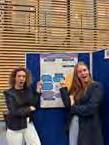
The second week in November was dedicated to Qualitative research. Here, you had an interview with an older individual with again “Quality of life and the relation with positive health and vitality” as theme. We learned from you that these interviews were very valuable! I was impressed by your creative ideas for qualitative research. The poster session was really one to remember, to see all these unique posters made with lots of creativity and inspiration for further research ideas.
Now you will start with your internships, good to hear that you all have found such different places to visit and work on inspiring projects, again hoping to eventually gain further knowledge in how to bridge generations. Hopefully you all feel prepared to perform your research. During the internship presentations it became clear for me that you are!!
I wish you good luck with your internship and all the best for your future career!
Stella Trompet | Line Coordinator Research and Evidence
Teachers CIS - Emma & Pauw
There's not been one specific moment over the year – what I love about HAS is how many different things you get to explore and try. It's great seeing everyone find their different strengths along the way, be it writing a scientific paper or giving the best presentation, there's so much room for growth and exploration in this degree. One of my favourite things is watching everyone discover their niche within all the different things they learn within the master, and carve out a path for themselves and a direction they want to go in.
Throughout the year, I was most struck by how consistently and thoughtfully the students kept the needs of older individuals at the centre of their writing, thinking and doing. In the brief videos made to introduce their innovations, for example, the students departed from their own experiences with grandparents and even acted as older persons themselves. I can’t think of a better way to engage in intergenerational learning than by listening to – and quite literally stepping into the shoes of – the very people you aim to support.
Pauw Vos
Emma Galloway | Line Coordinator Communication in Science
The Introduction Day: September 1st 2024
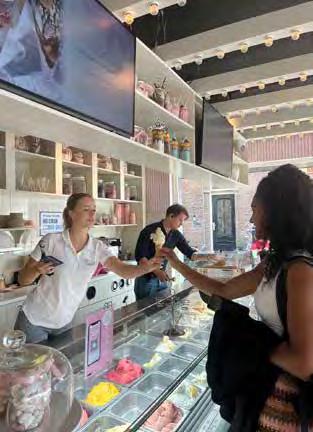
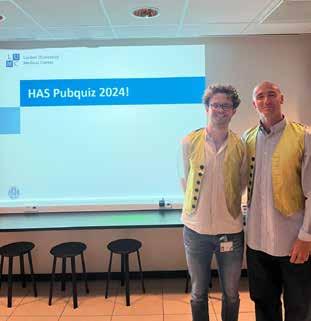
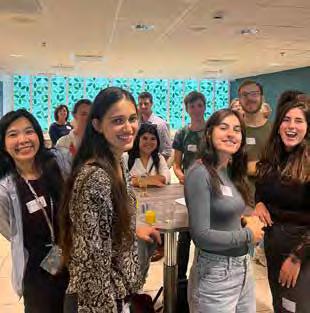
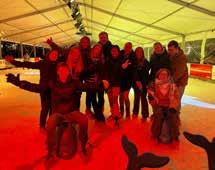
This is how we experienced our first day together! With ice cream and the fun of the Pub Quiz was the perfect way to bring everyone together.
Dearest class mates,
As we reach the end of this incredible academic year, we want to thank each and every one of you for the journey we have taken together. Thank you all for the energy, support, and friendships that made this experience so special. From the lecture halls to the karaoke bar, every step we took helped shape a year we will never forget. Over the past months, we have grown not just academically, but personally. We all tackled three unique and challenging courses - some easier, some tougher - but always together. Along the way, we supported each other through debates, group projects, study groups and internships.
We explored the professional world with visits to nursing homes, the municipality of Leiden and even the ministry of Volksgezondheid, Welzijn en Sports to get a taste of where our futures might take us. These opportunities gave us valuable insights and sparked new ambitions.
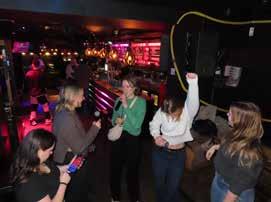
And then there were the study trips: two unforgettable journeys to Cologne and to Brussels (and Gent!). We learned a lot, yes, but we also laughed a lot, bonded over shared experiences and created memories we’ll carry with us long after graduation. Singing karaoke in a bar might not have been in the course book, but it certainly was part of the learning experience, about joy, friendship and having fun.
To our full-time group, thank you for sharing the notes, the shared stress and the countless little moments that made this year unforgettable. We have all made lifelong friends, and we will carry those connections with us no matter where we go next.
To our part-time students,
This year, we were delighted to welcome a large group of new students in both September and February, making our part-time group even more diverse and dynamic. From those pursuing a second master’s degree to professionals working in the field, this diversity has enriched our learning experience. We’ve learned a lot with and from each other! Whether you just started this year or are celebrating the completion of your studies: we are proud of you. Balancing study with other responsibilities is no small feat, and as part-time students, you've shown great dedication and perseverance. Well done!
To all HAS students of these academic years about to graduate, thank you for all the energy, support and most importantly your presence. Here’s to the future and all the good things still to come.
Warmest regards,
The Year representatives of 2024-2025
Lotte | Chair Madelief | Secretary
Luka | Treasurer & OLC Bjorn | GOES
Famke | GOES Anne | OLC & PR member
Karin | OLC Dionne | Activities member
Full-time & Part-time
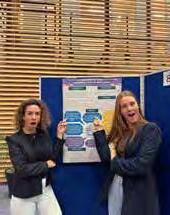
Poster presentations
Teachers BVA
Raymond Noordam and Diana van Heemst
As humans we always think to know what is best for others, which is not true most of the times. As healthcare professionals, either working in care, research or policy, we think to know how to best arrange the healthcare system and how lives should be lived. Although with the best intentions, we should be aware that this is frequently false. We should do it together! As was seen during the BVA Entrepreneurship session in PLNT, where the older people frequently had another opinion on a specific innovation than the team from the master’s or minor. We should be aware of the stakeholders - always!
Raymond Noordam | Line Coordinator Biology of Vitality and Ageing.
“Sleep is very important for your health, so if you feel like staying in bed for another hour, go ahead and do it :-)”
Famke van Zeijl
“Fasting is apparently very good for you.”
Luka van Kuijk
“Don’t shorten your telomeres by pulling all-nighters to finish BVA assignments!”
Nawasiri Siriprasert
“We should sleep enough to give our bodies time to repair our telomeres.”
Manaho Inayoshi
“This course broke aging down — cell by cell.”
Karin Stratingh
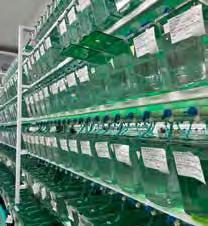
Zebrafish
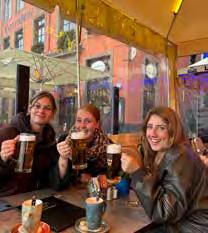
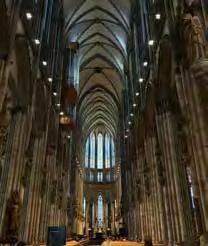
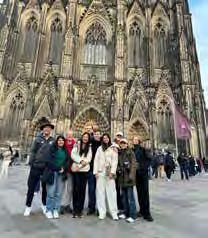
Drinking a German beer Cathedral of Cologne
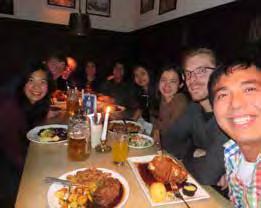
Dinner time
The beautiful Max Planck institute
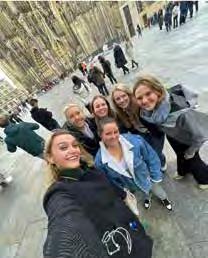
Exploring the city
Trip down memory lane in Cologne
“The drumstick during dinner.”
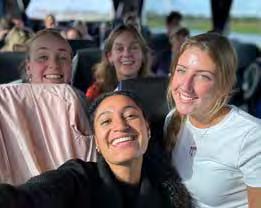
“My favourite memory of Cologne is that I wanted to study in the bus but ended up talking for 4 hours to one of my classmates.”
“The view of the pretty church.”
“The free time haha.”
“The basement in the hotel where there were lots of games to play.”
“The tour in the lab!!”
“Seeing all the high-tech labs was very interesting!”
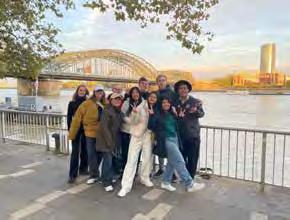
“I really enjoyed the first day when we walked around the city and took pictures together. It was my first time in Cologne, and the church was stunning. After walking, we were starving and couldn’t wait for dinner. The food wasn’t exactly what I expected, but I enjoyed the conversation and the moments with friends at the restaurant like Zuhaily gave a speech before we all started drinking, and Zack and Luka had a beer-drinking competition.”
Dear alumni,
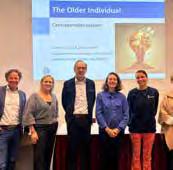
What a ride we had, and what a fun group of students you were to work with; heaps of enthusiasm and positive energy. Throughout the last year, or two, you worked your way through the modules and through the different disciplines that all interconnect with the older individual. You built a bridge from your own perspective on ageing towards the perspectives that older individuals themselves have of ageing. It was wonderful to see every one of you dive into all the knowledge presented during part 1 of The Older Individual (OI) and integrate the knowledge into your own discipline. Part 2 of OI helped you create a bridge between all this knowledge and the concrete reality of ageing by answering a wicked challenge with an effective innovation. Result? Besides some growing pains, paper after paper and video after video filled with creative and analytical impact. Ánd, worthwhile co-creation with older individuals: bridging generations in the best way possible.
Congratulations on completing your Master’s! I wish you all the very best.
Anneke
Julien | Line Coordinator The Older Individual
STUDENTS QUOTES ABOUT OI
“Internalized ageism is a real thing.”
Lisanne Poot
“Longevity is not just about adding years to life, but life to years.”
Rima Astari Purnamaningtyas
“Successful ageing is really just living life how you want to live it, but at an older age.”
Charlie Billiard
Switch your focus from “What is the matter with you?” to “What matters to you?”
Andrea Hoekman-de Vries
Lecture related to cultural narratives and meanings about later life: “We are aged more by culture than by chromosomes.”
Jil Bartholmy
“Healthcare is not a one-sizefits-all principle, but this course definitely fits me!”
Fien van de Kamer
Teachers OAS
During the module Organisation of the Ageing Society we organised intergenerational collaboration during the practical exam week. I heard from both generations - the students and the older adults - that they learned a lot from each other during that week. I really like when education is interesting for all participants!
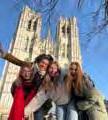
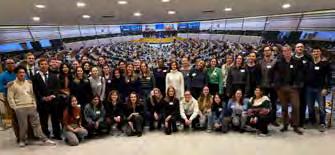
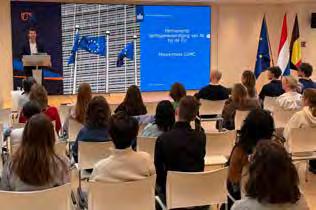
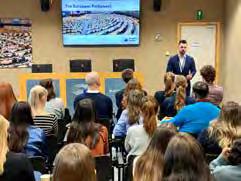
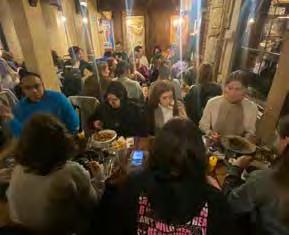
Beneath the shadow of the Berlaymont building and the European Parliament, our class stepped into the new building of the Netherlands Permanent Representation and we were treated with a Dutch lunch and insights on the role of member state governments in policymaking for better (public) health, ageing and society. In the EU Parliament’s glass labyrinth, we learned about the origins of the EU, evolvement of people’s rights and how the voice of European citizens is part of current health policy making. Evening debates at restaurant with reflection on Europe, generations, ageing, health, democracy and that they all go together: we need a multi-level, multi-dimensional approach to make this work. Departing Brussels, heading to Ghent University where we learned about health system resilience as well as older adults and sexual violence. Back in Leiden all tired but satisfied and happy after intense days: challenges, needs and emotions of current generations, from the past and the future generations are quite similar and solutions as well.
Guldemond | Bridging Generations: Lessons from Brussels and Ghent
Nick
Yvonne Drewes | Line Coordinator OAS and AD
“Policy making is very difficult with lots of rules.”
Luka van Kuijk
“That's a lot of acts dude.”
Anne Kooijman
“Seniors for seniors: combining experience and innovation for a brighter tomorrow.”
Karin Stratingh
“Health systems are only as good as the political ideals of their governing entities.”
Charlie Billiard
“Ageing is not a problem to be solved, but a reality to be planned for.”
Sam van Rossum
“We are a fragmented system and it's up to the future generation to solve it!”
Jetske Parée
“Deadline, deadline and oh look another deadline!”
Bjorn Stevens
Trip down memory lane in Brussels
“The visit to the European Parliament was awesome; a once-in-a-lifetime experience!”
“The European Parliament and seeing them debate.”
“Chocolate in Brussels was amazing!”
“Honorable mention: Karaoke bar was mentioned 9!!! times.”
“Browsing through Brussels on Monday afternoon.”
“Witnessing the live interpretation of a debate into all official EU languages.”
Dear students,
I really loved working with you all. I met you several times during the year, during lectures, internship example hours, working groups and walk-in hours. I loved helping you to find a suitable internship and supporting you to think of what life would look like after the Master’s.
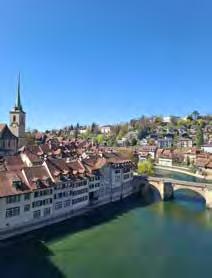
For me it was a unique experience to see how you didn't know what to do at the beginning and how quickly you took steps and found a suitable place to do your internship. During an internship information lecture Demi told you how she found and experienced her internship in Bern. It turned out that Bern was a very popular place this year ��
Many of you organised your internships abroad: in Germany, Switzerland (4x), Sweden, Norway, Brazil, Japan, Singapore and Aruba. Other students decided to stay in The Netherlands and organised internships at different depar tments at the LUMC and also at various organisations outside the LUMC. For example, at Erasmus mc, UMCG, Campus the Hague, Municipality of The Hague (2x), Santeon Utrecht (2x), HWW Zorg The Hague etc.
This year is the first time that four master HAS alumni will supervise five students! A unique inter-HAS-generational experience!
I look forward with great confidence to your internships and theses and the steps you will take in the continuation of your career. I wish you all the best for the future and good luck with your career wherever your inspiration takes you!
Carla Bakker | Course coordinator Science and Career
Insternship story by Lara
Nĭ hăo! Selamat datang! Vanakkam! Hello!
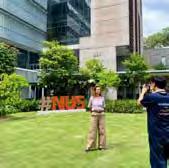
In the first week of the master I introduced myself to Carla by saying: “Hi! I am Lara, and I want to do my research internship in Singapore, and I want to bring my husband and kids”. Flash forward to today, and I am writing this from behind my desk at the National University of Singapore. So while I may have been (very, very) early with my internship plans: if you fail to plan, you plan to fail.
I reached out to a professor in Singapore, who also has research roots at the LUMC. She accepted my internship request and also invited me to join their Healthy Longevity Talent Programme – which would start just a week later. This gave me the chance to get a taste of Singapore and to get to know the research team I would be working with. I also made good use of the opportunity to
position myself in the field, and to pitch my research angle: ageism. I was also invited to join the Consortium’s monthly meetings ahead of my upcoming arrival in Singapore, which helped me get up to speed on the broader research project. So when I arrived in January, I could immediately dive into the dataset – which consists of over 3,000 participants.
I have come to really love doing data analysis, running statistical tests, and writing my manuscript – which will be submitted for publication soon as it is the first big study on ageism in Singapore. Next to my research tasks, I help out as an assessor in a clinical trial on biological ageing, I am currently working on a systematic review, and I co-wrote a white paper on healthy longevity in Singapore to guide policymaking. This gave me the opportunity to merge my previous academic background with my current one – a very rewarding and fun experience.
As this chapter as a HAS master’s student comes to a close, I feel extremely grateful and proud for all I have learned in these past 1,5 years. I have met some amazing, inspiring people – both teachers and fellow students – and I am certain that we will stay connected from wherever we are in the world. Finally, since we have learned you should always end with a key takeaway, let me leave you with this: be bold, be brave, and just a little bit stubborn sometimes – it can open up a world of amazing opportunities and experiences. Even “later in life” :). All the best!
Internship story by Famke (Switzerland)
During my internship, I had the opportunity to contribute to the LESS study at the Institute of Primary Care at the University of Bern. The research group I joined, focused, among other things, on improving the deprescribing process by identifying factors that might influence it among older individuals. Due to multimorbidity, older people often take multiple medications, making them more vulnerable to adverse drug events. That is why improving deprescribing strategies and mapping all contributing factors
My project focused on exploring the role of gender dynamics in a patient’s willingness to deprescribe, while also considering the trust relationship between patient and GP. I really enjoyed doing research and learned a great deal during the process. I hope I can take this experience with me and carry it forward into my future career.
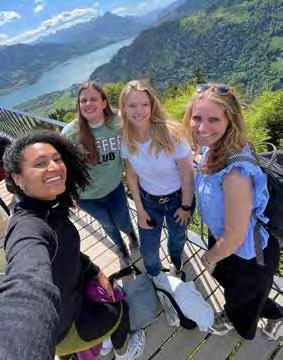
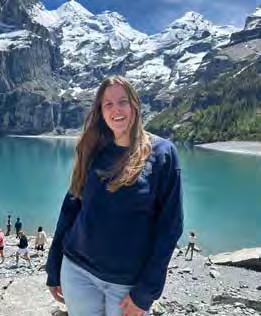
Beyond professional development, I also grew a lot personally. It was my first time living on my own, and in a foreign country no less! I could not recommend it more. Exploring Bern and the rest of Switzerland was an amazing experience. At first, I was on my own, but once the other girls (Anne, Mirthe, Julie) joined, it became even more special. Bern is such a charming old city, with lots of parks where I loved to meet friends and relax after a long day at the office. Every weekend, I tried to visit a new city or go hiking in nature. I made lifelong friends in Switzerland and will definitely go back. It is truly a beautiful country that now holds a special place in my heart.
This internship not only taught me valuable research skills but also gave me memories I will cherish forever.
Internship stories by Bjorn and Zack
Location: LUMC, Leiden, the Netherlands
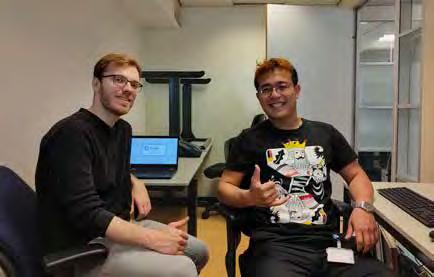
Hoi! We are Bjorn and Zack. We are BFFs so we decided to do an internship together in LUMC! (Kidding XD). Our supervisor was our BVA teacher, dr. Raymond Noordam.
We were both doing research analysis with the datasets from UK Biobank. For Bjorn’s research, he was using Factor Analysis of Mixed Data (FAMD) and Cox proportional hazards regression analysis, to identify which subgroups of cardiovascular disease patients are at greater risk of developing age-related neuro
psychiatric conditions like dementia, anxiety, and depression. For Zack’s research, he was also using Cox regression models, but analyzing if the longitudinal changes of sleep health are associated with survival rate and the incidence of various age-related chronic diseases.
How did our weekly schedule look like?
On Monday and Tuesday we were working in the student office in the Department of Clinical Epidemiology.
Wednesday to Friday we worked from home on our research analysis and theses. Every Monday we had an individual meeting with our supervisor to discuss our progress and questions. While every Tuesday was full of meetings and presentations with the department. We were able to see many presentations from the other staff or Phd and master students of the department.
Our internship was full of autonomy and own initiative. Performing statistical analysis on a huge dataset with R software for the first time could be very challenging, but we learned a lot and had quite some fun!
Internship story by Caitlyn (Japan)
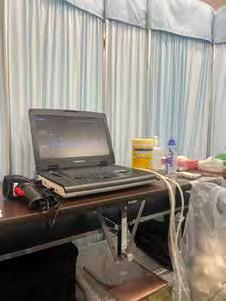
Hi! I am doing my internship at Nagasaki University in Japan. For my research I am assessing how multimorbidity affects the risk of using nursing care for older individuals living on the remote Goto Islands. I was lucky enough to be able to take a trip to the Goto Islands and see the island where the participants live. These patients participate in annual health check ups that assess several different aspects of their health such as dental, bone density, heart etc. I was able to observe the thyroid ultrasounds during the health check ups when I visited the island which was a really cool experience.
It was nice to be able to see first hand how the data that I am using is collected.
I am originally from the US and have a bachelors focused on Global Health, so for me it is really interesting to see the differences in population health comparing the US, the Netherlands, and now Japan!
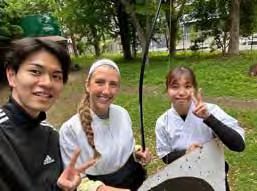
I have really enjoyed learning about Japanese culture, trying new foods, and seeing new places. The thing that struck me most about Japan is how clean and well maintained everything is. Another thing that surprised me is how active the older individuals are, they seem to live life the same as everyone else and don't let ageing stop them. I have been able to participate in several activities with the medical students such as volleyball club and traditional Japanese archery.
Everyone I have met has been so kind and welcoming and I would definitely recommend this experience to anyone who has the opportunity to do so. I think it gives a whole new perspective on health and ageing, as well as giving you an opportunity to learn more about yourself.
Internship story by Lotte van der Geest
My time at the Municipality of The Hague
During my internship at the Municipality of The Hague, I had the opportunity to explore how local policies are developed and implemented, especially in the field of health, ageing, and social support. I conducted qualitative research on the accessibility and organization of meal services for older adults in the city. As more older adults continue to live at home longer, it is increasingly important that support services are well aligned with their increasing needs and wishes.
Through interviews with care professionals, meal service providers, and older adults, I learned a lot about the daily challenges and opportunities faced by each of these
stakeholders. Based on my findings, I provided policy recommendations to improve access to meal support.
Besides gaining insight into policymaking, I learned what it’s like to work within a municipality. I experienced the practical side of innovation, especially the financial and collaborative aspects, enjoyed getting to know colleagues, and learned a lot from their work on senior-friendly communities and innovative care solutions. What stood out most was the strong motivation of municipal staff to improve care for older adults, as well as the high level of precision with which the municipality conducts its research.
I truly enjoyed my time at the municipality and appreciated the welcoming environment.
Almost everyone I approached for my research was willing to participate if their schedule allowed, which made me feel that my work was valued. I had the sense that my research was taken seriously and that some of its recommendations may contribute to future policy changes. Knowing that my findings could lead to practical improvements was very motivating.
My interest in policy is definitely strengthened by this experience and I hope to continue my career by contributing to future-proof and sustainable care solutions.
Internship story by Jil (Münster)
Hello everyone,
I wanted to share some insights from my internship experience in Münster, Germany, where I had the opportunity to contribute to the work of the Institute of Sport Sciences. The Institute consists of several research labs, including the Active Ageing Lab, which focuses on promoting health, social participation, and overall quality of life for adults and older adults. During my time here, I was involved in a project called AgeWell, an Erasmus+ initiative led by EduFit – an Irish company specializing in functional fitness and health education. The project is a collaborative effort between four EU countries: Ireland, Slovenia, Italy, and Germany. AgeWell consists of a series of sixteen on-demand, multimodal physical activity sessions and eight health education workshops delivered over an eight-week period.
The aim of the project was to evaluate the effectiveness of the AgeWell platform in improving physical performance and understanding par ticipants’ experiences. To measure this, a combination of
pre- and post-intervention assessments were conducted, including physical performance tests (e.g., Sit-to-Stand, Push-up, Walking, Balance), questionnaires, and focus groups. The great news is that the platform is set to expand across Europe soon, making it more widely
From day one, I was met with a warm, welcoming, and supportive environment. The positive and inclusive atmosphere made it a truly
Bridging Generations through the Elderly Board
“What is it like to be of age and what are the challenges of being old? This question is, among many others, to be answered by students that study Health, Ageing and Society (HAS). Of course there is a lot that can be learned from teachers, can be found in books and also on-line. But there is also another – perhaps better – way and that is speaking to older people and asking them what is an advantage of being old (and what is not).
For a number of years the master’s HAS chooses this one-to-one contact. Through these conversations students find out that not every older person is really old and that he or she needs a lot of care. On the contrary! Most of the participants are really ‘alive and kicking’, still interested in a lot of things and enjoy talking to young people. This is also a piece of advice I would like to give to the students: there is no such thing as ‘older people’. The group is too big and too different to consider its members as one.
I became involved in the Elderly Board of the master’s HAS through an article in Ouder en Wijzer, a magazine of the elderly organization Anbo-Pcob. My main reason for participating was that I still like to explore things. I myself find it most interesting to learn through the conversations about the subjects HAS is offering in the programme. It is also a good thing to find out that ‘these youngsters’ are willing to learn from me and from my fellow elderly participants. And, of course, to be able to pay a tribute to the quality of the master’s should also be mentioned.”
Dick Bruin
Rianne Peeters, involved in the master HAS as an older individual
How did you become involved in the Master HAS?
What were your reasons?
I received the Newsletter and read that new people for the programme were welcome. Since I worked 26 years in the LUMC (1982 - 2009) in the department for Social Work and the department of Specialist Nursing Education and nowadays being still rather busy in my living place in Leiden (Merenwijk), I felt I might be of interest to the students. My former experience as a trainer, as a former city council-member and nowadays involvement in policies for the elderly can offer an interesting scope.
How do you think the seniors contribute to bridging the generational gap?
I like it very much to work with the students; I try to support them from my experience as an older person and as an active participant in working groups in my living neighbourhood. The gap between young and old is not a scope from where we cooperate in the HAS-programme. That is not a focus. And should not be either. The focus has been the items where the students work on and how to support those.
What piece of advice would you give the students?
Central in any profession is to know what is the situation of your client, what kind of social situation including social policies are at stake, and know your own position in the midst of other professionals.
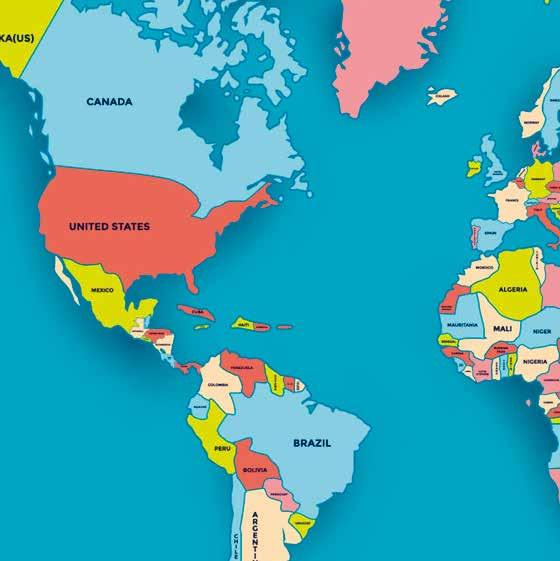
• Netherlands
• Aruba
• Indonesia
• Iran
• South-Africa
• France
• Taiwan
• Luxembourg
• Nigeria
• Japan
• Thailand
• Poland
• Brazil
• Hungary
• Singapore
Emma van Santbrink, 23
Living place & country you come from: Rotterdam, the Netherlands
Background: Health Sciences
Internship place: LUMC, will work on project called “verzorgingshuis nieuwe stijl”
Why did you choose this master's? I did a master's degree in health care management and it was very broad, but I wanted to specialize in 1 specific area of health care and that was elderly care.
How would you describe your time during HAS? It's a very diverse master with different kinds of how you get education. Also a very involved master's team that is really interested in you as a person.
What are your future plans after HAS? Do not know yet, maybe go into research.
If you could travel anywhere after university, where would it be? Thailand.
Andrea Hoekman - de Vries, 27
Living place & country you come from: Urk, the Netherlands
Background: Nursing
Internship place: That's still a mystery.
Why did you choose this master's? I chose this master's program because I really enjoy working with older adults. Additionally, I like studying and find the courses in this program very interesting. Since it aligns well with my work as a practice nurse, it seemed like a great combination to me.
How would you describe your time during HAS? I am really enjoying my master's program. Every Friday, I appreciate the nice atmosphere, the “gezelligheid” and the engaging lessons. I am very happy with this choice.
What are your future plans after HAS? I am still exploring my options. I will probably continue working as a nurse in practice and combine this with a more overarching role. However, I am not sure yet what that will look like.
What’s one goal you hope to achieve after graduation? Learning to play the piano.
What's the best snack/lunch item from the cafeteria? Soup.
Anne Kooijman, 24
Living place & country you come from: The Hague, the Netherlands
Background: Psychology
Internship place: Switzerland (Biham Institute). I will work on a project regarding polypharmacy
Why did you choose this master's? I chose this master's as a back-up plan to be honest. But I chose it because it seemed to be a broad study focusing on multiple topics and to get to know more about the healthcare system.
How would you describe your time during HAS? Busy, gezellig and educational! With my time on the JvT, OLC and study trips, this felt like a fun little community where I felt myself at home, while also getting out of my comfort zone and learning new things every day.
What are your future plans after HAS? After the Master’s I plan on doing a traineeship or possibly becoming a junior lecturer.
If your uni life were a movie, what would the title be? “Master of the Semester: A Planner’s Guide to Success”
Where do you see yourself in 10 years? In 10 years time I see myself living in my own house, with a motorcycle or two extra and together with my husband & a cat and a dog. I hope we both have fun jobs with flexibility and that we can travel the world. Maybe we will live in Aruba for some years then.
Bjorn Stevens, 27
Living place & country you come from: the Netherlands
Background: Medicine Bachelor
Internship place: Health campus Den Haag - Quantitative research on subclusters of atherosclerotic cardiovascular disease and their associated risk of neuropsychiatric disease.
Why did you choose this master's? I chose this master's to find out whether I want to go into research, policy or both. Additionally, I wanted to make use of my medicine background and contribute to taking care of older individuals.
How would you describe your time during HAS? I made lots of friends, attended thought provoking lectures and made great progress when it comes to self-development. The things you learn here will last you a lifetime, several if you are talented.
What are your future plans after HAS? Either I go for a Phd or I go for a traineeship. Whatever it is I do, it will be somehow related to research.
If your uni life were a movie, what would be the title? Friends
What’s one goal you hope to achieve after graduation? Buying a house (Super unrealistic I know).
Caitlyn Kunkle, 24
Living place & country you come from: Leiden, United States
Background: Public Health
Internship place: Nagasaki Japan
Why did you choose this master's? I chose this master's because I used to be a home care aid and became very interested in ageing and ways to promote healthy ageing.
How would you describe your time during HAS? Very involved and engaging.
What are your future plans after HAS? I’ll be doing a second masters then either staying in the Netherlands or going back to America to work.
What's the best snack/lunch item from the canteen? Coffee! Or the individual packets of cheese… very Dutch.
Who or what has had the most impact on you during HAS? Probably the ability to do an international internship so easily with the help of Carla.
Charlie Billiard, 21
Living place & country you come from: France, Aix en Provence
Background: Bachelor Liberal arts and Sciences: Global Public Health, Master Healthcare Management
Internship place: Santeon in Utrecht. Working on healthcare usage of Multimorbid patients aged 65+
Why did you choose this master's? I chose this master’s because I liked the student reviews on how interactive it was. I also really liked the combination of Biological, Societal and the Individual aspect of looking at the care system, not just for older people but also in general.
How would you describe your time during HAS? Well one thing is for sure, there was never a dull moment. It was an eventful time and there was always something to do. It was a lot of work, but the borrels at the end of every course, and the orientation visits in between were always a fun and welcome breather in between to socialise and explore the different possibilities for work after the master’s.
What are your future plans after HAS? After the master’s, I will be going to Australia for a bit less than a year. I do plan on spending some time in France (my home) before and after my gap year, because truthfully, I do miss the sun and the heat and even the French people. I do plan on coming back to the Netherlands to work once I've absolved my Gap Year.
What’s one goal you hope to achieve after graduation? Learning the Dutch language properly to be able to work for the Dutch government.
Damian Suchecki, 28
Living place & and country you come from: Delft, originally from Poland
Background: Psychology
Internship place: Municipality of The Hague, I will do qualitative research on the awareness and influencing factors among community-dwelling older adults in the use of social support services provided by the Servicepunten XL in The Hague
Why did you choose this master's? I wanted to get a broader overview of health and ageing, and I did not like my master’s in psychology, which felt very limiting and less holistic.
How would you describe your time during HAS? I would describe it as a pressure cooker as well! It is a lot within such a short amount of time, with lots of assignments and things to do. But luckily you’re with others who are in the same boat and everyone was super helpful and nice!
What are your future plans after HAS? I am not sure, I am still trying to figure that out. I do like the idea of becoming a civil servant and trying to make a difference that way. Or I probably will do something at a nursing home or other organisation that focuses on older adults.
What’s one goal you hope to achieve after graduation?
To live abroad for a while.
If you could travel anywhere after school, where would you go? Thailand!
Dionne Odijk, 25
Living place & country you come Leiden, the Netherlands
Background: Pedagogical sciences
Internship place: SEFAS, Norway and the development of a digital educational framework to enhance older adults’ knowledge and management of their complex chronic conditions
Why did you choose this master's? I have previously worked in nursing homes and really wanted to do something with older adults after this experience. Next to this, I really liked that this is a small master’s program that focuses on different aspects of ageing.
How would you describe your time during HAS? I loved the atmosphere in HAS, everyone really tries their best and as it is such a small master’s you know everyone which is great. So I really enjoyed the past year.
What are your future plans after HAS? First enjoy a nice summer and hopefully start a job from September that links to older adults.
Who or what has had the most impact on you during HAS?
I really loved the discussions with older individuals and the new perspectives that they gave on certain topics/ ideas.
Eliza van Walbeek , 26
Living place & country you come from: South Africa
Background: BSc Occupational Therapy (University of Cape Town)
Internship place: UNO Amsterdam. Working on a project called OTHER (Occupational Therapy at Home E-Rehabilitation).
Why did you choose this master's? The idea to study abroad was birthed after spontaneously visiting a friend in Sweden, who was doing a university exchange there at the time. My friend mentioned the idea of studying in the Netherlands, as I have lots of family here. One morning early in Oslo, I was googling master programs in the Netherlands. The HAS master jumped out at me immediately. The broadness and the diversity of things that the master’s offers got my attention. Three months after this, I was already in the Netherlands. I was able to apply, get accepted, pack up my life in South Africa and move to the Netherlands in the space of three months. Best believe those first few weeks were chaotic but the grace and favour I experienced was truly unmatched. I knew this master’s and the move to the Netherlands was the right choice.
How would you describe your time during HAS? Truly enjoyable. I loved that it had a small, intimate feeling. I loved that people were open and approachable, for friendships or just helping each other get things done.
What are your future plans after HAS? Junior lecturer for the HAS program.
Famke van Zeijl, 23
Living place & country you come from: Moerkapelle, the Netherlands
Background: Bio-pharmaceutical sciences
Internship place: Bern - The influence of gender on the attitude towards deprescribing
Why did you choose this master's? I wanted to learn more about research in general. I believed this master’s gave me the opportunity to keep pursuing research, specifically for a population that I wanted to learn from and help in the future.
How would you describe your time during HAS? To be honest, I loved every second of it (except when there were many deadlines in a short period haha). I have learned a lot and met amazing people who will be my friends for the rest of my life, and I am truly grateful for my time at HAS.
What are your future plans after HAS? First I want to travel during the Summer and explore new places. Then I hope to find a job and start my career as a researcher.
What’s the best snack/lunch item from the cafeteria? Ice Tea + appeltaart.
Where do you see yourself in 10 years? Thriving in what I do, I do not have any other wishes. Oh and I will have dog for sure.
Fien van de Kamer, 22
Living place & country you come from: Amsterdam, the Netherlands
Background: BSc and MSc Health Sciences
Internship place: Karolinska Institutet (Stockholm, Sweden) - Mental health, loneliness and life satisfaction among widows/non-widows aged 70+ in Sweden from 2014-2021
Why did you choose this master's? After my MSc Health Sciences, I wanted to extend my life as a student. The broad view on health focused on a specific population (older individuals) seemed very interesting. Even as the co-creation with older individuals, the small cohort, and the interdisciplinary, international, and intergenerational aspects of the master’s intrigued me.
How would you describe your time during HAS? First, I not only enhanced my academic and research skills but also focused on personal development. Second, I learned a lot about older individuals and all different aspects, from the cell to the organization of care, with some deeper insights during the co-creation sessions. Third I met many new people from all different backgrounds and countries and even made new friends. Last but not least, the personal touch from the junior lectures and professors gave me handles during the year.
What are your future plans after HAS? I am not entirely sure, I think I will pursue a position in the field of research, either as a junior researcher or by starting a PhD. In the end, my goal is to contribute to improving healthcare for everyone in the future
Hadassa Liefting, 24
Living place & country you come from: Rotterdam, the Netherlands
Background: Health Sciences & Healthcare Management
Internship place: LUMC - Building resilience in older cancer patients
Why did you choose this master's? I chose HAS because of the fact that the ageing population is something I was very interested in, and I believe it will be vital to address in the future.
How would you describe your time during HAS? My time at HAS was very enjoyable. I met a lot of nice people and I really liked the person-centred approach and teaching methods.
What are your future plans after HAS?
After HAS I would like to get into the field of healthcare management, possibly in consulting or a hospital.
What’s the best snack/lunch item from the cafeteria? Frikandel speciaal
If you could travel anywhere after school, where would it be? Peru
IJda Arendz, 54
Living place & country you come from: Nijega, Holland
Background: Bachelor of Nursing
Internship place: UNO UMCG
Why did you choose this master's? This Master’s keeps me updated in the field of elderly care in Ageing and the organization of care. I can use new knowledge in research and ageing in older individuals and what I have learned in my profession as district nurse.
How would you describe your time during HAS? Really fun and I have learned a lot. I am going to miss the contacts with the other HAS students. We learned a lot from each other and the Fridays in the parttime group were always exciting and familiar.
What are your future plans after HAS? Researcher in cancer or dementia maybe. Not sure yet, want to keep in contact with the older individuals at home as a district nurse. Would be nice to combine my job and research for example at UNO UMCG.
Where do you see yourself in 10 years? Haha - retired but with a lot of knowledge in care for older individuals.
Who or what has had the most impact on you during HAS?
Biology of Vitality in Ageing, I never thought there is already that much research and knowledge about dementia, tau in centenarians, ageing processes and how to stop ageing a bit.
Jen-Chi Ye (Zack), 29
Living place & country you come from: Taiwan
Background: Medicine (M.D.)
Internship place: LUMC. Identifying the relation of the changes of sleep health and the risks of getting ageing-related chronic diseases.
Why did you choose this master's? Because I want to be a geriatrician in the future.
How would you describe your time during HAS? Reading the module books and trying to catch up with the deadlines.
What are your future plans after HAS? Either do a PhD somewhere in Europe or finish residency in Taiwan.
What’s the best snack/lunch item from the cafeteria? Sadly no beer.
If you could travel anywhere after school, where would you go? Ibiza
Jetske Parée, 25
Living place & country you come from: Amsterdam, the Netherlands
Background: Cultural anthropology and developing sociology
Internship place: Uno Amsterdam.
Experiences of various stakeholders with cognitive screening of older individuals with a migrant background by elderly care specialists in primary care.
Why did you choose this master's? I chose this master’s program because I have always been passionate about caring for older adults and I knew I wanted to do something with it in my future job.
How would you describe your time during HAS? I really enjoyed this master’s program. I appreciated how personal it is and how it pushed me to become more confident in public speaking. I also valued the opportunity to work directly with older individuals and gain insights into every aspect of aging—the biological, individual, social, and systemic levels, among others.
What are your future plans after HAS? I am going to do a second master in Healthcare management at the Erasmus.
If your uni life was a movie, what would the title be?
Just keep swimming
What’s the best snack/lunch item from the cafeteria? Tosti Caprese
Jil Bartholomy, 24
Living place & country you come from: Muenster, Luxembourg
Background: European Public Health
Internship place: University of Muenster (Active Ageing Lab) working on the AgeWell project.
Why did you choose this master's? I chose this master's program because of its innovative and multidisciplinary approach, combining various fields of interest that align with my background in European Public Health. I particularly liked the opportunity for small teaching classes and working groups. Overall, I hope to contribute to healthier ageing trajectories and to creating ageingfriendly environments.
How would you describe your time during HAS? I would describe my time during HAS as “a remote student, but one who never felt alone”. Everyone made efforts to include me, remained accessible and communicative, I always knew who to turn to. Of course, being physically present in class offers a unique sense of belonging. Yet, even though I wasn't physically there, I still felt like a part of the community, for which I am extremely grateful.
What are your future plans after HAS? My plans after completing my studies are to work in the domain of active aging, with a particular focus on physical activity. Ideally, I would like to stay for an additional 6 months at my internship location to assist as a research assistant on various projects.
Julie Stokhof de Jong, 27
Living place & country you come from: Utrecht, Nigeria, Warri
Background: Pharmacy
Internship place: Switzerland, Bern. I will be working on a project which focuses on the examination of gender differences in post-hip fracture osteoporosis treatment among older adults above 65 years in a registry-based cohort study.
Why did you choose this master's? I really liked the courses. Also, it felt like a master’s where you are challenged in a more active way instead of only delivering papers.
How would you describe your time during HAS? HAS was very active and diverse, but an interesting master’s. It has broadened my perspective on healthcare.
What are your future plans after HAS? I am not sure yet. A lot to discover.
What’s the best snack/lunch item from the cafeteria? Poke Bowl
If you could travel anywhere after school, where would you go? Midden-amerika + Grand Canyon + Canada
Karin Stratingh, 26
Living place & country you come from: Groningen, the Netherlands
Background: Bachelor in Medicine
Internship place: I will work at the UMCG in Groningen on a project about the deimplementation of the double medication check during medication administration. I will do a qualitative study into the perspectives of nursing staff.
Why did you choose this master's? The combination of policy and research on ageing and the social perspective on issues related to ageing were the reasons for choosing this master's degree.
How would you describe your time during HAS? I had a really great time! Our lectures were always on Fridays, and I looked forward to those days. We had a great group of fellow students who challenged and supported each other in the best way. We also shared some fun experiences together, like the study trip to Cologne, which was definitely a highlight!
What are your future plans after HAS? To be honest, I don't have a concrete plan yet. I'm hoping to find something that fits me, a role where I can grow, contribute to society and be happy in the long term.
If your uni life were a movie, what would the title be?
Eat Pray Love (during the master I was challenged to think about what suits me and what makes me happy).
What’s the best snack/lunch item from the cafeteria? Vegetable croquette!
Lara Bruschinski, 39
Living place & country you come from: Muiden, the Netherlands
Background: International Public Policy
Internship place: National University of Singapore (NUS); will look into determinants of ageism in the Singapore population
Why did you choose this master's? Because I was frustrated with the healthcare system and how it doesn’t prioritise prevention and healthy ageing, and is filled with inequality and inequity.
How would you describe your time during HAS? Like a pressure cooker :)
What are your future plans after HAS? Short term: a PhD. Longer term: join the WHO expert committee on healthy ageing.
Where do you see yourself in 10 years? I want to use my background in public policy, and my tendency to speak up or ask the uncomfortable questions, and combine this with the knowledge I gained during the HAS master’s to change the future of healthcare around the globe. So in 10 years I will be on that WHO expert committee on Healthy Ageing and advising governments how to really care for their ageing populations. Ánd I want to show that you can do all this while also being a present and cool mom. ✌
Laura Bortolini Moschetta, 34
Living place & country you come from: Diemen, Brazil
Background: Medicine
Internship place: Veranopolis, Brazil
Why did you choose this master's? Opportunity to professionally grow and understand more about ageing.
How would you describe your time during HAS? Challenging.
What are your future plans after HAS? To become a geriatrician.
What is your favorite item from the cantine? Dutch cheese sandwich.
Who or what has had the most impact on you during HAS?
Rima: She is a mother, she speaks Dutch, she's a doctor and a very pleasant person.
Laurena Lau, 55
Living place & country you come from: Nijmegen, Singapore
Background: Engineering, Business Administration
Lisanne Poot, 23
Living place & country you come from: the Netherlands
Internship place: Don’t know yet.
Why did you choose this master's? Want to explore possibilities and widen my professional network.
What are your future plans after HAS? Set up facilities for older individuals with a Chinese background. Depending on the support I can rally, ranging from setting up nursing home facilities for Chinese speaking people with dementia to taking over existing activities.
What’s one goal you hope to achieve after graduation? I would go on a psychedelic trip.
Who or what has had the most impact on you during HAS?
Verpleeghuis de Nasi-eters: setting up a nursing home called “the nasi eaters” (inspired by van Gogh).
Background: Life Science & Technology
Internship place: Probably Erasmus MC! Dont know the project yet.
Why did you choose this master's? I chose this master’s because I really like to help people. It gives me fulfillment. Also I always enjoy my time spent with older individuals.
How would you describe your time during HAS? My time during HAS was like coming into a warm bath where everyone is very thoughtful and willing to help. You will get the support you need from the staff and also from you classmates as we all have a somewhat common goal.
What are your future plans after HAS? After HAS i want to keep working in healthcare. I don't know yet how exactly but I am sure that it will involve taking care of people and having a place in their lives to make it a little better than it is.
If your uni life was a movie, what would the title be?
Found myself in the end.
Who or what has had the most impact on you during HAS?
The warmness of the people in the master’s really stuck with me.
Lotte van der Geest, 25
Living place & country you come from: Oud-Ade in the Netherlands
Background: Bachelor Nutrition and Health in Wageningen
Internship place: At the municipality of The Hague, I will study whether the current way meal services are organised for older individuals are sufficient and what barriers and facilitators are experienced by various stakeholders.
Why did you choose this master's? Ever since my grandfather was diagnosed with dementia and I realised the impact this can have on a family, I was interested in how to change this. Also the smaller groups and the personalized approach were what drew me in.
How would you describe your time during HAS? Although I specifically searched for a 1-year master’s programme, I wish it could have lasted longer. The staff and students were all so kind, and in this short period of time, it felt like we were one small community together. This master’s made me feel like I am more prepared for the future.
What are your future plans after HAS? First, I will enjoy the summer holiday and time with family and friends. After this, I hope to start a traineeship (not sure which one).
If you could travel anywhere after school, where would you go? To New Zealand, where we will go in December :)
What’s one goal you hope to achieve after graduation? Hopefully start the traineeship or find a nice first job.
Luka van der Kuik, 22
Living place & country you come from: Leiden, the Netherlands
Background: Medicine
Internship place: I will do my internship at Santeon in Utrecht and will be about the organization of care of multimorbid patients.
Why did you choose this master's? I chose this master’s because I wanted to have a gap year before my internship to learn more about older people because I felt that that wasn't paid enough attention to during my bachelor.
How would you describe your time during HAS? Going with the flow while doing many other things.
What are your future plans after HAS? Doing my internships in medicine.
If your uni life was a movie, what would the title be? The Hangover.
If you could travel anywhere after school, where would you go? Thailand
Madelief van den Ent, 21
Living place & country you come from: Hazerswoude-Rijndijk, the Netherlands
Background: Health Sciences
Internship place: At the UNC-ZH on moving older individuals between nursing homes.
Why did you choose this master's? I chose this master's program because I genuinely love being around and working with older adults. My experiences in home care, at the fitness club, and the love for my grandparents have all influenced my decision to follow this program.
How would you describe your time during HAS? I love the program. It’s a close-knit, small group with wonderful and friendly people, and I truly feel at home here.
What are your future plans after HAS? There are many things I enjoy, but what matters most to me is working with older adults, talking with them, being around them, and supporting them. I don’t have a definite plan yet, but I know I want to be in a role where I can make a difference in their lives.
What’s the best snack/lunch item from the cafeteria?
The smoothies, I just love them, especially the red one ;)
If you could travel anywhere after school, where would you go? There are many places I’d love to visit, but Thailand and New Zealand are at the top of my list.
Marijn Willemse, 24
Living place & and country you come from: Leiden, Netherlands
Background: Biomedical Sciences and Medicine
Internship place: Geriatric department LUMC, working on stop criteria for anticoagulants/antihypertensiva in older patients with end stage cancer.
Why did you choose this master's? I liked an extra challenge in addition to my study of Medicine. I chose HAS to broaden my horizon and to learn more about the older population in our society.
How would you describe your time during HAS? I really like the personal contact between students. Furthermore, teachers are very willing to help with struggles or schedule issues.
What are your future plans after HAS? I am going to finish my medicine study and after that we will see!
If you could travel anywhere after school,where would you go? Beach.
What’s one goal you hope to achieve after graduation? Helping other people/patients.
Marloes Krijger, 23
Living place & and country you come from: Maassluis, the Netherlands
Background: Biomedical Sciences
Internship place: Erasmus MC, where we will look into different high-risk dementia prediction models and assess how many cases they would miss using data from the Rotterdam Study.
Why did you choose this master's? I have very broad interests, ranging from ageing to neuro-related subjects. During my Bachelor's internship, I realized that I didn't enjoy the fundamental aspects of lab research. This led me to HAS, where we learn about the biological sides of ageing and also social and organizational perspectives.
How would you describe your time during HAS? I really enjoyed it! I learned a lot academically, made new meaningful friendships, and learned about myself.
What are your future plans after HAS? To find a job that suits me well. Whether that is teaching, doing research, something creative, or a combination, I do not know yet.
What’s one goal you hope to achieve after graduation?
Run a half (maybe a full) marathon one day.
If you could travel anywhere after school, where would you go? Philippines to do a surfing camp.
Manaho Inayoshi, 30
Living place & country you come from: I'm living in Amsterdam. I'm from Japan.
Background: Nursing
Internship place: I will do my internship at LUMC. I will study the effect of technological advancements on old people.
Why did you choose this master's? When I was working as a nurse, I cared for many old people. That experience made me want to improve their care.
How would you describe your time during HAS? I really enjoyed it, especially when the problems I encountered in the clinical fields and lectures aligned. At the same time, it is quite challenging for me, as this is my first time studying abroad.
What are your future plans after HAS? I want to study in another master’s program to get a public nurse licence in Japan.
What’s the best snack/lunch item from the cafeteria? Soup
If you could travel anywhere after school, where would you go? Egypt
Mirthe Huissen, 22
Living place & country you come from: Woerden, the Netherlands
Background: Health Sciences
Internship place: I will go to Bern (Switzerland) to study older individuals' need for support in reducing polypharmacy by doing mixed-methods research :)
Why did you choose this master's? During my part-time job as a student, visiting older individuals, I realized how much I enjoy working with older people. At the same time, I saw the challenges they face and wanted to learn more about how to create better support systems for them.
How would you describe your time during HAS? Tiring but inspiring!
What are your future plans after HAS? Taking a break from healthcare and working at a cozy lunch spot.
Where do you see yourself in 10 years? Hopefully running my own healthy lunch café, but who knows what the future will bring!
What’s one goal you hope to achieve after graduation?
First things first: finally enjoying a vacation and finishing my kite-surfing lessons!
Nawasiri Siriprasert, 30
(but please just call me Nua ��)
Living place & country you come from: Bangkok, Thailand
Background: Medicine → Family Medicine
Internship place: LUMC (Department of Public Health and Primary Care); my project is about perspectives and experiences of immigrants regarding the Dutch Primary Care system!
Why did you choose this master's? After exploring several options across the world, I chose HAS for three main reasons: its holistic approach to ageing, its location in a country with an excellent education and healthcare system, and the warm, fun atmosphere reflected in previous yearbooks!
How would you describe your time during HAS? Heel leuk en gezellig! Apart from learning a lot about older people in every dimension, I truly enjoyed being a student again. I loved the warm atmosphere of the master’s, the openness and approachability of the lecturers, and the wonderful friendships I made. It’s been a once-in-a-lifetime experience I’ll always remember!
What are your future plans after HAS? I will go back to continue my work as a doctor and lecturer at Chulalongkorn University in Thailand, and do my best to utilize what I’ve learned in the medical field and education!
If your uni life were a movie, what would the title be?
Reliving My Lost Student Life
Prachsayapron Yodsombat, 26
Living place & country you come from: I’m currently living in Katwijk and I’m from Thailand
Rezvan Zamani Shahri, 40
Living place & country you come from: Iran
Background: Bachelor's and Master's of Optometry
Background: College of interdisciplinary studies in politics, economics, and philosophy.
Internship place: It’s at the LUMC on the topic of “Interrelation of positive health dimensions in older adults depending on complexity of health problems in The Netherlands”.
Why did you choose this master's? I have work experience in a geriatric center, and I’m interested in how health and social aspects change as people age. I visited the Netherlands before and really liked the city of Leiden, so I decided to come back to study what I’m passionate about in a place I enjoy. I also hope to find a job in the healthcare field that focuses on older adults.
How would you describe your time during HAS? My time studying for the Master’s in Health, Ageing, and Society has been bittersweet. It’s an incredible opportunity to study abroad, but the language barrier and different education system have been really challenging for me. In the beginning, everything felt intense, but as I adapted to life here, I realized that I had grown in ways I never expected. Looking back, the challenges helped me become a better version of myself.
What are your future plans after HAS? I want to work in the healthcare field, and I might start by looking for opportunities at international companies first.
Internship place: LUMC on the topic of Positive Health
Why did you choose this master's? I care about older adults. and I wanted to better understand how aging, the health system and society interact.
How would you describe your time during HAS? My study time was enriching and meaningful. I enjoyed all of the opportunities, especially challenges like innovation and writing a policy paper.
What are your future plans after HAS? I plan to pursue a PhD related to ageing, public health, or health policy, preferably at Leiden University.
If your uni life were a movie, what would the title be? From confused to committed.
Who or what has had the most impact on you during HAS? The older adults who work with us during the working group.
Rima Astari Purnamaningtyas, 34
Living place & country you come from: Indonesia
Background: Medicine
Internship place: MBESLIS, LUMC.
Why did you choose this master's? I chose this Master’s because it resonates with my passion for improving the lives of older adults, especially after seeing my family members go through early signs of dementia. As a doctor and a mom, I’m eager to contribute to research and policies supporting older adults' health and well-being. This program feels like the perfect way to gain the knowledge and skills I need to impact how we care for the ageing population.
How would you describe your time during HAS? It has been both challenging and rewarding. I’ve gained valuable insights into ageing and healthcare, combining my medical background with new perspectives on policy and research. While balancing my studies, family, and passion for cooking has been tough, it’s been incredibly fulfilling, and I feel better equipped to make a difference in this field.
What are your future plans after HAS? I’d love to dive into research and policies that make life better for older adults, especially in dementia care. I’m also excited to keep cooking and maybe even grow my own food business. Ultimately, I want to find a good balance between making a difference in the ageing field and enjoying family life.
Romée Nibbering, 29
Living place & country you come from: Haarlem, Netherlands
Background: Health Sciences
Internship place: UNO Amsterdam – I will do research on how care practices from the Do-Not-Recommend List and the Do-Recommend List are prioritized in palliative care units in nursing homes. Through interviews and focus groups, we will explore the factors that influence this prioritization.
Why did you choose this master's? During and after my first Bachelor's degree in Industrial Product Design, I was already working in elderly care. I knew I wanted to stay in this sector, but I also wanted to grow into a position that matched my interests and strengths better. When I was offered a position as a quality advisor after completing my Bachelor's in Health Sciences, this Master’s program – with the option to study part-time – was a perfect fit.
How would you describe your time during HAS? I would describe the past two years as an enjoyable and pleasant time. The atmosphere and way of working were very different from what I was used to during my Bachelor's in Health Sciences, much more personal. Even though the group of students changed over time, we really connected and got along well. I always looked forward to Fridays.
What are your future plans after HAS? The deadline for my thesis is on July 1st, and in the same month, I will start working full-time in my current position. It aligns well, and I am looking forward to the upcoming period where I can fully focus on my work.
Sam van Rossum, 22
Living place & country you come from: Sprundel, The Netherlands
Background: Health Sciences
Internship place: Not sure yet
Selina Voss, 22
Living place & country you come from: the Netherlands
Why did you choose this master's? I chose HAS because I needed to do a second master's program for my master’s in Philosophy, Bioethics, and Health. When I started looking for other masters I came across HAS, I was immediately sold.
How would you describe your time during HAS? So far, I have had a great time at HAS. This is mainly because of my fellow students and the older individuals we get to talk to regularly during the study program.
What are your future plans after HAS? I am not sure yet what I want to do after HAS. Hopefully I can combine my two masters and find a job in elderly care and ethics!
What’s the best snack/lunch item from the cafeteria? Loempia
If your uni life was a movie, what would the title be?
The Art of Looking Busy
Background: Medicine
Internship place: AMC Amsterdam. I will look at bone density on CT scans and the relationship with hip fractures.
Why did you choose this master's? To make my waiting time for my internship useful.
How would you describe your time during HAS?
Fun! This year felt so short. I guess time flies when you are having fun.
What are your future plans after HAS? Doing my medicine internship. But I also got interested in working outside the hospital.
What’s the best snack/lunch item from the cafeteria? Soup of the day
If your uni life were a movie, what would the title be? Growth
Sophie van der Kuyl, 24
Living place & country you come from: Leiden, the Netherlands
Background: Psychology & Medicine
Internship place: LUMC: the Long-lived Families of the Netherlands research
Zuhaily Ras, 28
Living place & country you come from: Aruba ⛱
Background: Social Work & Development
Why did you choose this master's? My unconventional educational path has led me to a profound interest in the intersection of health, ageing, and societal dynamics, so I hoped to equip myself with the knowledge and skills necessary to contribute meaningfully to this essential field.
How would you describe your time during HAS? Personal, fun and interesting.
What are your future plans after HAS? Masters in Medicine
What’s the best snack/lunch item from the cafeteria? Kroket
If your uni life were a movie, what would the title be? 48 hours in a day
Internship place: I will do my internship at the Leiden University Medical Center (LUMC) in the Ouderengeneeskunde afdeling
Why did you choose this master's? I chose this master’s because it connects very well with my life goals: advocating for the older population and bringing about changes such as policies and innovations for my small island. This master has taught me a lot about older individuals' safety, love, and belonging needs.
How would you describe your time during HAS? AMAZED!. There are no words to describe how thankful I am for this master’s and its team. Who would have thought that me coming from a small island could have witnessed a meeting session in the European Parliament. This is indeed a master’s of innovation and inspiration.
What are your future plans after HAS? After HAS, I want to work in the social field. I would like to bring all the important things that I’ve learned from this master to my daily work practice. #TeamValues&SocialJustice!
If your uni life were a movie, what would the title be?
‘The HAS Saga: From Padawan to Professional’.
What’s the best snack/lunch item from the cafeteria?
The soup of the day… mushroom soup, wonton soup, seafood soup, noodles soup, tomato-cream soup, erwten soup, paprika soup… and it is budget friendly.
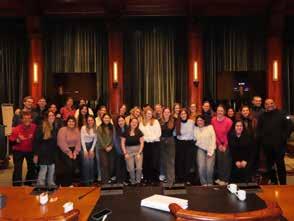
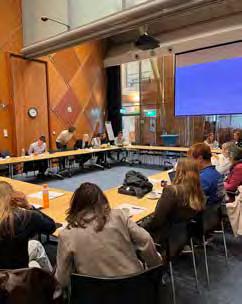
@ the Municipality of Leiden
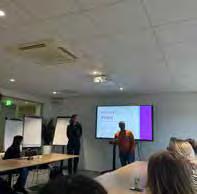
Lunch provided
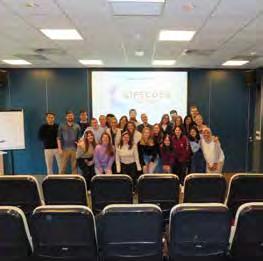
Life Code Solutions
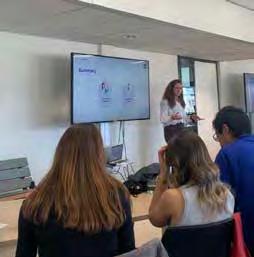
Pitching our policy at VWS’
Interesting visit at Actiz
Visiting Vilans
Most Likely to Be a Bridgemaker (Connecting People Everywhere!)
Eliza
Most likely to be Future Leader in Health & Ageing
Lara
Most Likely to Ask the Professor/Teacher a (Thought) Provoking Question
Luka
Most Likely to Publish ResearchGroundbreaking
Nua
Best Dressed for Professional Conferences
Julie
Most Likely to Ask the Professor/Teacher a (Thought) Provoking Question Sophie
Most Likely to Be a Bridgemaker (Connecting People Everywhere!)
Best Dressed for ConferencesProfessional Aaron
Most likely to be Future Leader in Health &
Most Likely to Publish ResearchGroundbreaking Karin
Jeannine
Ageing Romee
Farewell song Health, Ageing and Society
(melody: Glory glory halleluya)
Health-Ageing and Society, for án entire year
From the start fa-ná- tic, that was us soon ve-ry clear
Co-ming to the Netherlands or not so far a-way
To stu - dy, live and play
Refrain
Bee Vee Aa was cat-ching soon your time and interest, Eight weeks of bi-o-lo-gy, cells, sys--tems and the rest
As ‘bí- o -pro’ you wrote essays and did the final tests
Your team-work was the best!
Refrain
Vi- ta- li-ty, re-si-li-ence, and cope while you grow old
That’s what in the interviews the older people told
U-sing logic models, and be-come more cre-a-tive
Let’s be in-no-va-tive!
Refrain
So-ci-e-ty is a-geing, that’s what e-ve-ry one knows, you have learned to understand, and change the cur-rent flows
To im-prove so-cie-e- ty for better a-geing life
With know-ledge, skills and drive
Refrain
Co-ming weeks some will start thesís and internships
You will need your peers and staff for best and fi-nal tips.
Stay-ing calm, work, and en-joy this new ex-pe-rience
You bring this to the end!
Refrain
Here it will be different as you are all a-way
We as master staff will miss your pre-sence e-very-day.
Thus let’s par-ty now together, and enjoy the rest
We wish you all the best!
Refrain (all)
Health, Ageing and Soci-ety, Health, Ageing and Soci-ety, Cre’ating change with crea-tívity, To improve ageing life!