Funded by the European Union Views and opinions expressed are however those of the author(s) only and do not necessarily reflect those of the European Union or the European Education and Culture Executive Agency (EACEA) Neither the European Union nor EACEA can be held responsible for them.
issue58
Dear reader,
We live in an era in which the rise of extremist ideologies appears to intensify day by day, ideologies often rooted in thoughtlessness and a profound disregard for what coexistence truly entails, as well as for the fundamental values of human nature
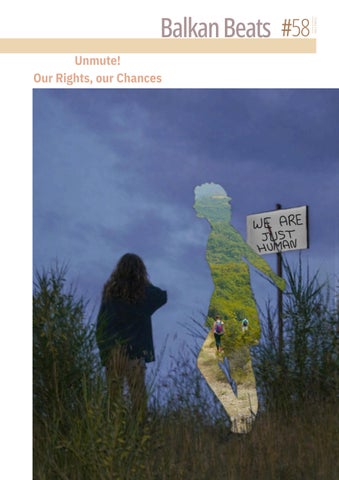
In this issue, we aim to remind ourselves of our rights, to reflect on what history has revealed about violent behavior and its consequences, and to question the values we choose to uphold What foundations are we laying for future generations? By speaking about ourselves, we seek reflection and reconciliation, while striving to establish common ground, one where coexistence and meaningful communication can flourish side by side. Violence against women, human rights, and personal stories drawn from lives shaped by volunteerism form the three central themes of this issue Through our words, we hope not only to speak for ourselves, but also to speak for you
The editorial team, Tarasova Tania and Stavrianos Petros.
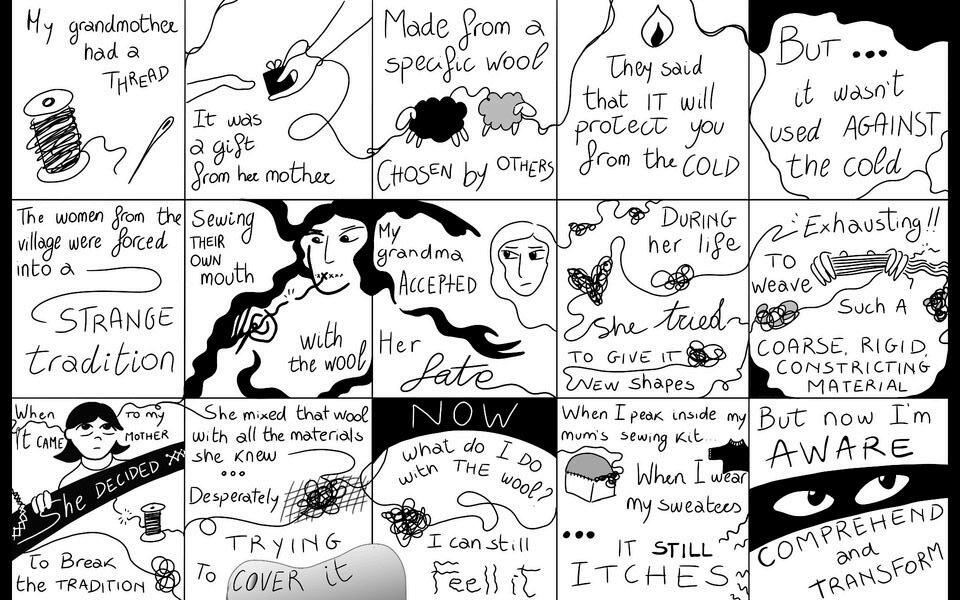
Generationaltrauma, limits
by Emma Donati
Canhandcraftingbeconsidereda feministacttoday?
Reflection on the role of sewing.
by Francesca Dal Ben
I have always loved handcrafting. When I was 12, I went through a phase where I was obsessed with upcycling. I used old sheets or clothes I found around the house and used them to make mainly skirts (since they were the easiest thing to make). I didn't have a sewing machine, so I looked for tutorials on YouTube such as “how to make a circle skirt without a sewing machine, without a serger, without an iron, without a tape measure”. Now I call them ugly (and they are), but through the eyes of a pre-teen with a passion, they were beautiful As happens to many, in the years that followed, I abandoned many passions, including sewing
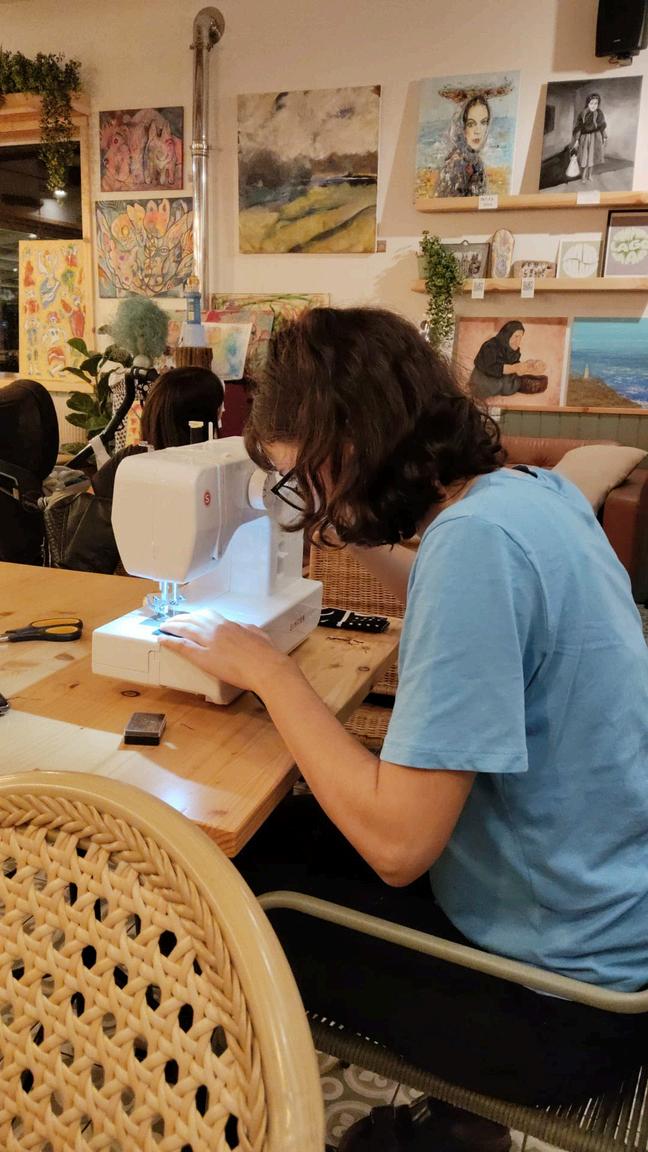
I rediscovered it a few years ago. In fact, when I finally enrolled in a sewing course, my love for handcrafting returned. I find myself doing things with the same passion I had when I was 12.
One day, I was talking to a seamstress from my village. She told me how she started sewing at the age of 10. Her mother sent her and her sister to work for the village seamstress, who was not known for her kindness or empathy They worked all day, cutting excess threads from garments, cleaning floors, and sometimes attaching buttons. They were paid the equivalent of €4 a day in today's money. At the time, there was no choice; my region was very poor, and the school enrolment rate, especially in small rural villages, was very low. Families sent their children to work immediately after compulsory schooling because they lacked financial resources, all in accordance with the sacred rules of gender roles: women in the home, men in the fields
Mrs M. ended up becoming a seamstress; this was what she had learned as a child, and this was what she would do as an adult. She probably never even asked herself what she wanted to do when she grew up.
Although I was well aware that for centuries, jobs related to dressmaking had always been the occupation of women confined to the home, I had never realised how much things had changed for me. Handcrafting became a chosen and desired practice; I see it on social media, in collectives, in various forms of activism, in art.
This radical change of direction, while giving me hope and instilling in me a general feeling of redemption, also prompts me to reflect on a number of issues As a self-proclaimed feminist, I wonder to what extent a tool that for centuries has degraded and rejected women can now be considered a tool for feminist empowerment, or whether it can be considered feminist in general .
Sewing (as well as embroidery, crochet, and knitting) was an activity relegated to women who stayed at home, almost a symbol of a gender marginalised and oppressed by patriarchy. Women learned from other women in a closed, domestic space, separated from the public and political sphere. It is not surprising that it is considered an activity in stark opposition to the goals of gender equality by the second wave of feminism. In those years, women were fighting for access to paid work, education, economic independence, and the right to leave the domestic sphere and enter the public sphere. In this context, therefore, claiming the right not to sew was in every way a political act, in which the activity was not despised as such but as an idea that it was the natural destiny of women.
Today, in a completely different context, those same practices have returned. Women who sew, embroider, and crochet decide to do so as a form of personal expression, as an alternative to fast fashion, as a hobby, or as a political gesture. In this respect, the American feminist activist bell hooks is right in saying that an act such as sewing can become emancipatory (and political in general) not because of its form, but because of the context, intention, and power relations in which it takes place
This is why handcrafting can be seen as a form of reappropriation of time and a critique of capitalist and consumerist logic. In a system that wants us to be efficient, highperforming, and monetisable at all times, dedicating hours to doing something “useless” with our hands just for the sake of it can be radical Another cornerstone of contemporary feminism, Silvia Federici, argues that recovering the value of reproductive and manual labour does not mean returning to traditional roles, but recognising their centrality and politicising them.
In recent years, there has been talk of craftivism (craft + activism). Embroidery as protest. Knitting as a political message. Hand-sewn banners. Craftivism subverts two stereotypes at once: first, that activism must be aggressive, rapid, performative, and second, that “feminine” activities are apolitical For example, embroidering a feminist phrase requires time, patience and care. It is a gesture that rejects the logic of urgency and claims another way of being in the public space.
Does all this endless soliloquy answer my question? I would say yes.
However, I would like to point out that, although I myself loudly proclaim my sewing as a feminist political act, I recognise that handcrafting is not always so For me, it is because I have chosen to do it and have had the opportunity to choose it as a hobby, but I am aware that for many women, these activities are still a necessity. After all, I still come from a privileged part of the world…
So perhaps, instead of asking myself whether sewing is feminist, I should ask myself: who sews, under what conditions, with what freedom, and for whom? If the answer to this question is that sewing is a conscious choice and not an imposition, then I shout loudly that I am proud to make it a feminist political act!
Howtodiscoverviolenceagainst womenandhowact
by Greta Nadolski & Charlotte Gumnior
Scapegoats of Crisis
by Petros Stavrianos
In 2009, Greece entered a new period in its modern history, one that lasted approximately nine years and whose consequences have, to a great extent, shaped the everyday reality of Greeks today The economically traumatic crisis brought unemployment, income reductions, and economic destitution to all, along with a series of political and ideological changes. Amid all this, feelings of instability, anger, and mass insecurity about the future prevailed; something which, as history relentlessly shows us, gives rise to rapid social changes
Naturally, from the individual level to the broader social framework, characteristics and behaviors emerged that shared a common denominator: marginalization, exploitation, and simplistic antagonism between classes, genders, and nationalities In short, there was a massive rise in populism, a surge of the far right (with the most pronounced example being Golden Dawn), and an intense sense of “us” versus everyone else, who were, for the most part, vulnerable populations The profound disappointment of the Greek people toward the establishment and traditional political parties thus created fertile ground for political behaviors rooted in hatred and rhetoric of exclusion, stigmatizing social groups as threats to national security.
Many tragedies, both small and large-scale, unfolded in the years that followed in Greece, predominantly affecting minorities. In 2012, all Greeks became witnesses to yet another tragedy, one that for many of us constituted the most shameful and degrading day in the modern history of the state
Opening Act - Threads of abuse, from the micro to the macro
In the months that followed, police action intensified against hundreds of women, who were subjected to forced medical examinations without any consent. Thirty-two of them were found to be HIV-positive, in tests that, once again, were conducted in rooms within police facilities These women were detained and prosecuted, with HIVpositive status itself serving as the basis for criminal charges. Amid all this, photographs of their faces and their personal details were broadcast by the media We are speaking of a complete violation of rights. From one day to the next, these women were considered guilty of a crime that never existed In fact, the prosecutor’s order was for the names and photographs of the women to be published so that Greek citizens could determine whether they had had sexual contact with them and proceed with the necessary medical tests
The true tragedy of the entire situation, however, lies in the fact that the women who were arrested had never been involved in sex work We are speaking of homeless individuals and/or people with severe substance dependencies The authorities’ interest was exclusively focused on identifying HIV-positive women, attempting by every means to prove and promote a fabricated narrative, showing complete indifference to the impact on these individuals’ lives, let alone to the truth. This “reality” was fully framed and supported by the mass media, which reported on the authorities' work with admiration. At the same time, figures such as Evangelos Liappis (a doctor at KEELPNO) served as chief architects of this tasteless propaganda by spreading baseless facts through the media outlets.
The victims were named perpetrators. The charges were extremely severe, and the HIV-positive women were deemed guilty of felonies involving “serious intentional bodily harm.” In essence, it was assumed that the accused had engaged in sexual relations with the intent to transmit the virus.
Of course, there was never any evidence to support such claims. Instead, a narrative prevailed that prioritized protecting the family man, one that aligned neatly with the broader insecurities of the era. We observe a state that claims to protect its citizens while using as punching bags individuals whose rights (and whose very lives) were of no concern to it, people whose degradation and exploitation constituted an easy target. Thus, we witness an attempt at institutional self-promotion, moral posturing, and the invocation of sentiments of order, all aligned with a traditional society whose ego appears more wounded than ever, following the failure of the Left and Greece’s descent into economic crisis. Every participant in this felony distorted reality, facts, statistics, and the application of the law, operating within a framework that was radically anti-human, illegal, and, of course, profoundly immoral, to achieve visibility and electoral success in the upcoming elections of that time Thirty-two women were convicted. Eight of them for felonies This was not a failure of the system, but its deliberate operation, at the direct expense of the most vulnerable.
For more information, watch the documentary “Ruins: Chronicle of an HIV Witch Hunt”, Zoe Mavroudi (2013)
Adultsintheroom
The unique podcast
by Tania Tarasova
I worked at a school. And I was listening to a podcast about violence against teenagers. The tension in my body came from the depth of the journalistic work, and from how closely my own story intersected with the one I was hearing I worked at a school, I worked at a children’s summer camp where similar things had happened, and I am someone who grew up in a family with a pedophile.
Journalist Nastya Krasilnikova released a podcast about sexualized violence against students that had been going on for years at one of Moscow’s best schools – School No. 57.
At the center of the investigation are the stories of alumni who, in 2016, accused a history teacher, Boris Meerson, of sexualized abuse and succeeded in having a criminal case opened against him.
This international investigation begins in Russia and continues in Israel, Germany, the United States, and Denmark It is an investigation into decades of violence against teenagers, betrayal, lies, and impunity It is about the courage and strength of extraordinary women and men who had to survive horrifying experiences. And it is about how the world, including the progressive and Western world, responds to requests for help from survivors.
You can listen to all 10 episodes on the website https://adultsintheroom.libolibo.me or wherever you get your podcasts (Spotify, Apple Podcasts, etc). The landing page also includes descriptions of each episode, along with photos and other materials referenced in the story
Opening
One of my favorite episodes is the seventh one, dedicated to institutional betrayal. Betrayal that occurs when people report violence committed against them, for example, by a teacher, and the institution does nothing, or more often, begins to resist This term was introduced by researcher Jennifer Freyd, whom Nastya interviews in the podcast.
Jennifer says:
“Over my lifetime, the world has gotten better. It’s a very uneven path, but overall, it has improved. Much of this is due to civil rights movements. I have witnessed these changes. When I was a child, I was not allowed to participate in sports competitions because I was a girl That changed in my lifetime When I was a graduate student, no one talked about sexualized violence or harassment in schools or universities It was a taboo topic. Now, relationships between teachers and students are scrutinized much more closely.
However, power exists. People who have power will always try to maintain it. Systems and institutions will strive to strengthen and expand their power Fighting this is not easy The only way to achieve change is to keep trying, again and again. It can take a long time. There are no guarantees that our efforts will work, but change does happen. If you look at the history of civil rights movements, you can see that they take time and are accompanied by many setbacks A bit of progress, and then another step back.”
It's a very long quote, but whatever, I love what she says.
This episode of the podcast is more informational, offering at least some respite from this heavy and profoundly important investigation.
I no longer remember what the man on the electric scooter looked like as he passed me, but I remember the sensations in my body I remember how this podcast made me feel: it changed me, gave me hope, inspired me, and left me disoriented at the same time.
This podcast matters to me. I do not want the planet to forget the names of people who successfully escaped justice after breaking several lives. I do not want to live in a world where vulnerable people have to gnaw their way toward justice, constantly overcoming resistance from respected individuals and powerful institutions. Please listen and share with your friends. Thank you.
Momentsinbetween
A poem for special connections
by Gwendolyn Knorr and Leonie Diehl
Learninglovethrough acceptance.
A self love note
by Mateusz Rostkowski
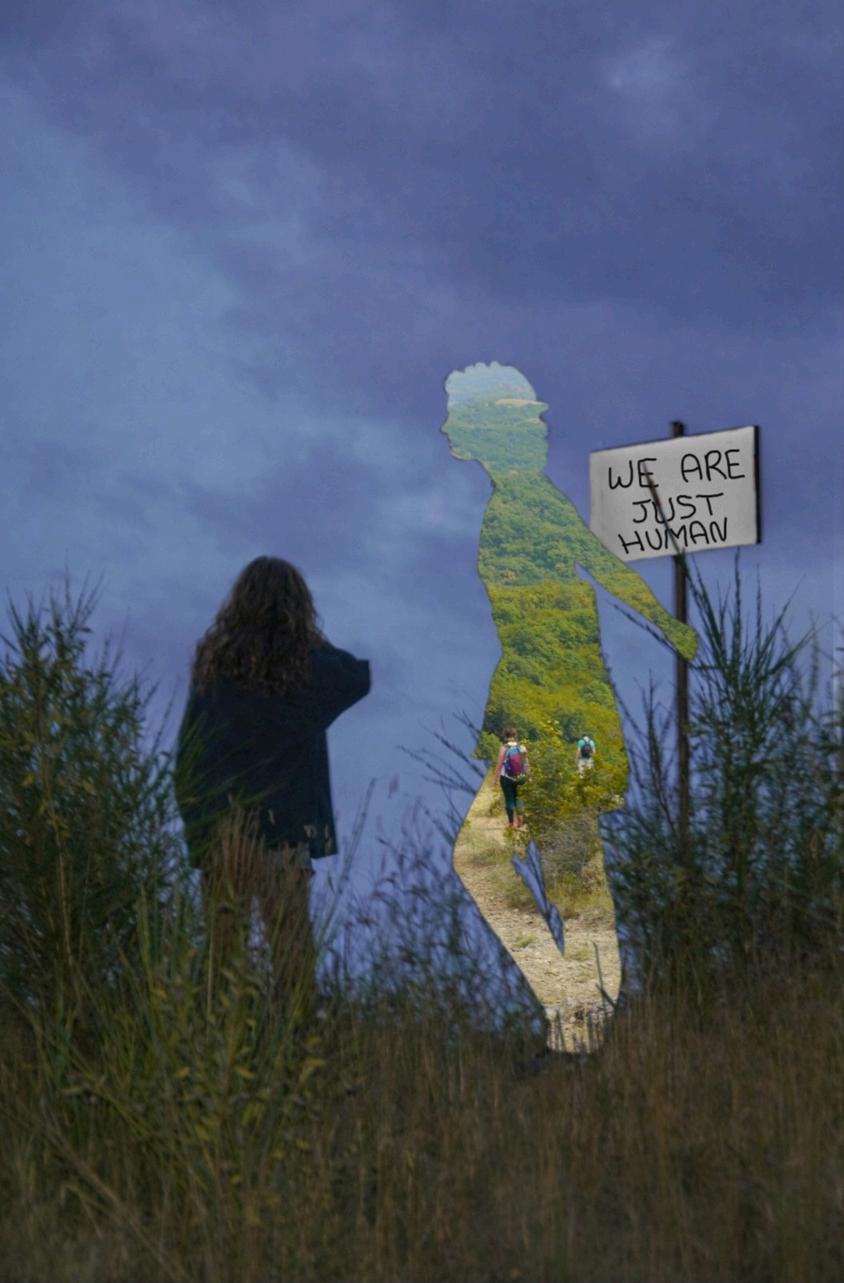
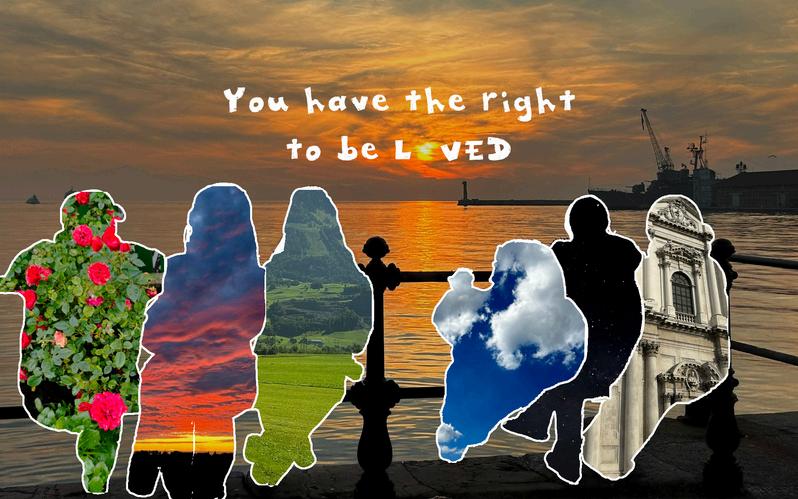
Many times in my life, I held myself back, unable to move forward because I lacked acceptance I forgot that love is not something we have to earn; it is a right we all possess simply because we are human I tried to force a change in my life and spent countless hours fighting myself, hoping to find the answer to one question: what is love? Is it only an emotion, a chemical reaction in our nervous system?
As humans, we have altered the fundamental definition of love As a feeling, everyone experiences it at some point in life because it is connected to our instinct to survive Love can appear as a calm and safe emotion, but it can also emerge from desperation during difficult times. Love itself cannot be taken away. It exists even in the most difficult conditions. What can be denied, however, are the conditions that allow love to be expressed safely and freely. Belonging, acceptance, and human connection are not matters of belief. They are fundamental to human dignity and should be protected as such.
Local Life Finding Meaning Through Experience
Over centuries, we have shaped the rules of an advanced civilization, expanding the meaning of love beyond a mere tool for survival or reproduction Because of this, we bear responsibility for accepting one another regardless of our differences We have a duty to ensure that everyone has a place where they can express their opinions and feel safe, both mentally and physically. As members of society, we should make sure that no one feels excluded from these principles or from the system itself.
It was only through volunteering in Greece that I truly understood this, as I experienced unconditional love combined with genuine acceptance there For the first time, I was able to define what “home” really means. Thanks to the people who showed me what love looks like in practice, I learned how to extend that love toward myself. I came to realize that everything around us reflects how we perceive the world in our own minds. Much depends on how we feel about ourselves, and understanding this allowed me to love. Love comes from within us, and selfacceptance, even in the face of our mistakes, helps spread love throughout society
The people I met helped me see that mistakes are not obstacles but steps along a path that reaches further than I can yet see Even when misunderstandings or differences of opinion arose, we were connected by trust and empathy Trust and belonging drive us, as humans, to explore, pursue our dreams, and strive for goals greater than ourselves. These qualities are what make us unique beings.
Life often teaches us that love must be earned. Parents, schools, teachers, and workplaces reinforce this belief. Many people see love only as a romantic feeling, but for me is also about belonging and acceptance These are not luxuries; they are fundamental human needs and rights
We have a responsibility to protect these rights, especially for those who cannot defend themselves. We must stand up for people who are harmed by their violation, those whose existence is in danger, and those who are discriminated against because of traits that make them seem different from others. Every person deserves love, understanding, and safety. Even the smallest gestures of empathy and support can have immense power in making the world a more compassionate place
FindingMyselfontheRails
My Interrail Story
by Georgia Tenzidou
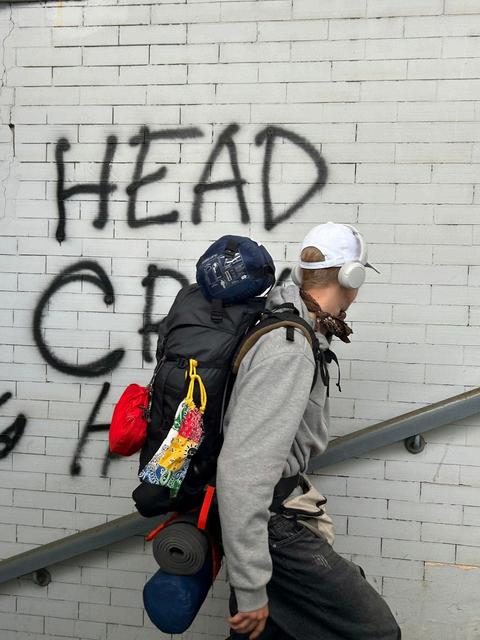
One 18 years old, 7 Countries and 3,239 km in 21 days
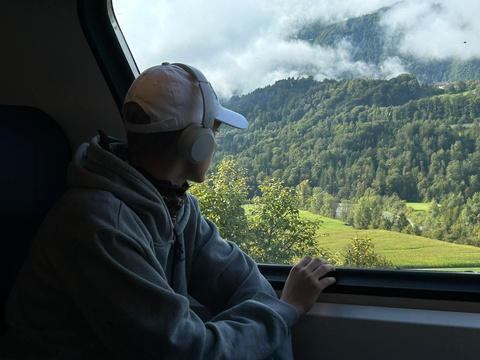
Having the opportunity to meet an 18-year-old who has already traveled to more countries than I have, I became curious to learn more From getting lost in a forest in Slovenia to badly cutting his finger in Switzerland, I realized there was so much to learn from Mateusz’s Interrail experience, especially as someone who hadn’t had the chance to experience all of that at such a young age.
What inspired you to go on an Interrail trip at just 18 years old?
I had just finished high school when I made the decision not to continue with the process of choosing studies and a university, but instead to take a gap year I was already aware of the Interrail opportunity through social media, friends, and other sources All in all, it was a very conscious decision, as I knew I wanted to dedicate a year to getting to know myself better, the world, and what I would like to do next in my life. I knew very well that choosing a field of study immediately after high school would probably be an irrational decision that I might regret later on.
Were there any fears or doubts before you left?
Before this trip, I had never traveled abroad I was afraid of both the travel process itself and of what I would be leaving behind at home: my family, my friends, and the experiences I would miss with them, during my time away. However, the feeling of excitement for what I was about to do overcame the feeling of fear
How did traveling through multiple countries change your perspective on Europe?
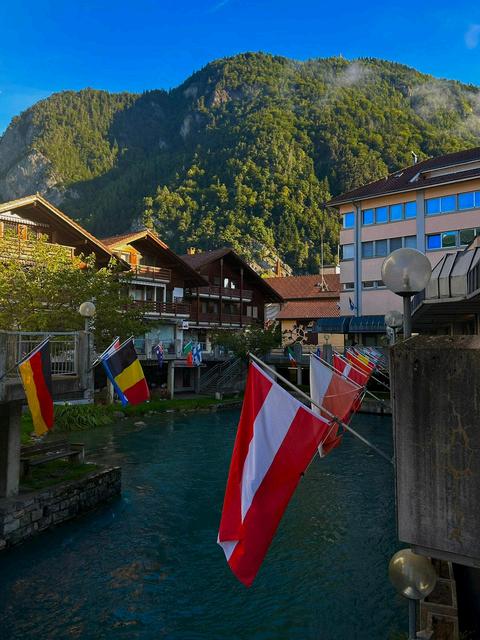
After this experience, I realized the strong connection between European countries and how easy it is to explore Europe. Moreover, my perspective on humanity changed I noticed all the elements that make each country different and unique, as well as the differences within each region The biggest cultural shock I experienced was in Switzerland, where I observed how smiling, kind, and willing to help you everyone was. Something that stood in contrast to what I have experienced in my own country, Poland
Personal Narrative Stories, Voices, and Representations
In what ways did the trip change you as a person? By exploring the world and the people within it, I changed both internally and interpersonally. Stepping out of my comfort zone multiple times, I noticed a significant increase in my self-confidence and self-image, feeling capable of doing anything. On a more interpersonal level, I overcame my anxiety of communicating with strangers and managed to reduce my egocentrism. Through conversations with a wide range of people, from different social and cultural backgrounds, I am now able to adjust my personal perspective more easily on various issues, as I have come to understand that I may not always be right. Overall, by traveling and discovering the world, I believe there is no other possible outcome than for one’s perspective to expand and broaden
That’s why you believe it's more important to have that experience at 18 years old?
Yes! There is a reason why the program is aimed at this specific age group When you are still so young, you are still in the process of shaping your perspective on the world, unlike later in life, when I believe your views may become more firmly established. Nevertheless, it’s a wonderful experience, no matter what age you choose to live it. It may not always be easy or simple, but even the less-than-ideal moments are absolutely worth it.
Looking back, would you change anything in your experience?
I don’t regret anything in my life, I like to think everything happens for a reason I believe that if I had done anything differently, I would not have had the same experience. I feel deeply grateful for this journey, as it became the driving force that encouraged me to travel even further by taking part in my first ESC program in Greece If someone had told me that this year I would be traveling abroad for the first time in my life and visiting seven different countries within a single year, I honestly would have thought they were crazy!
Personal Narrative Stories, Voices, and Representations
What advice would you give to another person thinking about Interrailing?
The truth is, I am not really a fan of giving people advice. From my point of view, advice can hardly fit everyone, because no one is (or will ever be) exactly in the same situation as someone else The only advice I could give to someone is to gain as many experiences as possible during the journey and (as much as you can) set aside your fears. Overcoming your fears is incredibly rewarding! You will definitely face challenges along the way: you might feel sad, scared or exhausted, but it’s not worth letting those fears stop you from trying. After all, you probably will never completely eliminate the sensation of fear; all you can do is take one step at a time The funny thing is that ,eventually, everyone will congratulate you for your courage, but deep down, you will always know that you were afraid the entire time. True bravery lies in doing something, despite feeling scared of it.
On a more practical level, I would suggest applying with friends. This makes the experience much more enjoyable and interesting I would also recommend bringing a tent if possible It’s a perfect way to spend time in nature. Along those lines, I would suggest not only visiting the big cities and the capitals, but also exploring the beauty of European nature. And finally, talk to people! Talk to strangers, talk to locals…Don’t just look at the sights and the views, but try to get in touch with people. That’s the only way to truly understand the culture of each country and to form meaningful connections that you’ll remember for a lifetime
United Societies of Balkans is a Non Governmental Organization, founded in Thessaloniki in 2008, by a team of active young people The organization was created as a response to the pressure of constant changes in the Balkan and Eastern European region and under the need for the creation of a better social environment. Key areas of the organization’s activities concern the defense of human rights, the organization of youth exchanges and training courses, which will bring young people from Balkans and Europe together, the organization of local educational seminars and multimedia production (webradio, videos, documentaries)
Main goals of the organization
To promote the values of non formal le- aring,volunteering, active citizenship and democracy for the creation of a better future for European youth
To promote human rights, solidarity and respect for diversity
To build healthy cooperation bridges between countries of the Balkan area and that of Eastern Europe with the rest of Europe
To locate and multiply the special cultural attributes of our societies
The break down of prejudices and stereo- types between Balkan countries
Property of Balkan Beats
The United Societies of Balkans, NGO, does not necessarily share the opinions expressed in Balkan Beats It is illegal to reproduce any part of this publication without referring to the source.
Balkan Hotspot is the ESC (European Solidarity Corps) project of “United Societies of Balkans”, a NGO founded in Thessaloniki in 2008 by a team of active young people
The Balkans and Eastern Europe are geographical regions with many cultural features which offer a broad spectrum of actions and youth involvement initiatives. The organiza-
tion was created as a response to the pressure of constant changes in the Balkan and Eastern European region and under the need for the creation of a better social environment.
Key areas of the organization’s activities concern the defense of human rights, the organization of youth exchanges and training courses, which will bring young people from Balkans and Europe together, the organization of local educational seminars and multimedia production
The volunteers responsible for this publication are hosted in Greece in the framework of the European Solidarity Corps This project has been funded with support from the European Commission This publication [communication] reflects the views only of the authors, and the Commission can not be held responsible for any use which may be made of the information contained therein
This magazine is distributed free of charge
General Directors: Aristodimos Paraschou | Christian Cibba