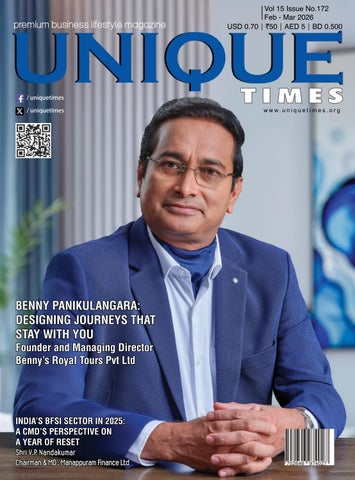
“It is only in adventure that some people succeed in knowing themselves – in finding themselves.” – Andre Gide
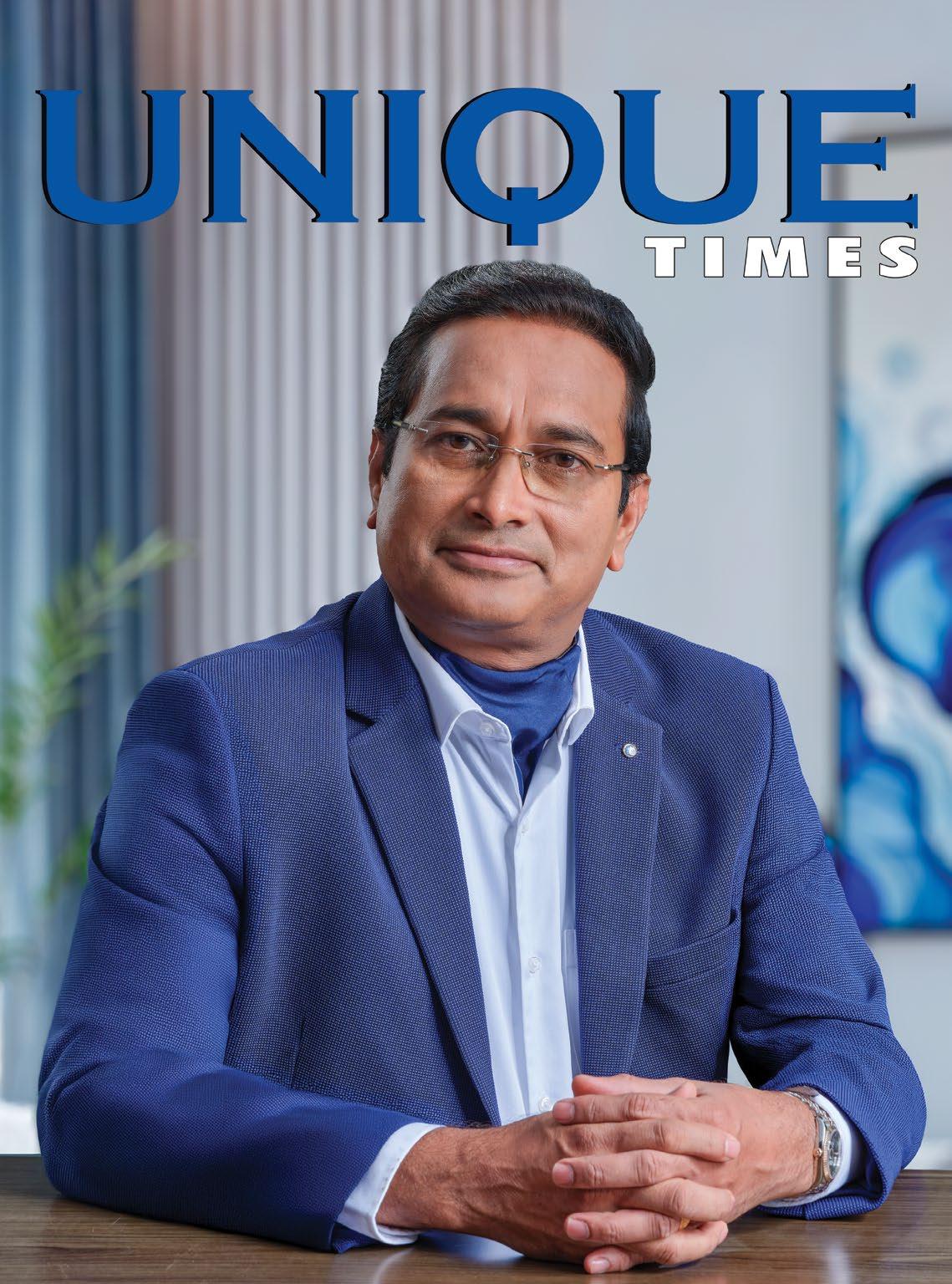
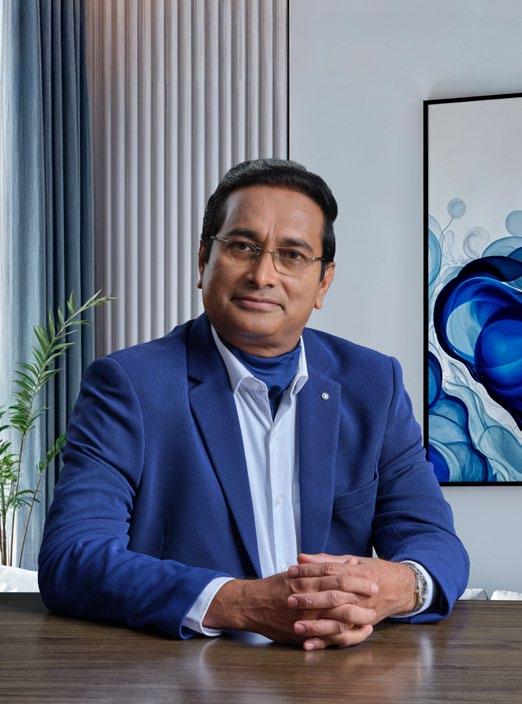
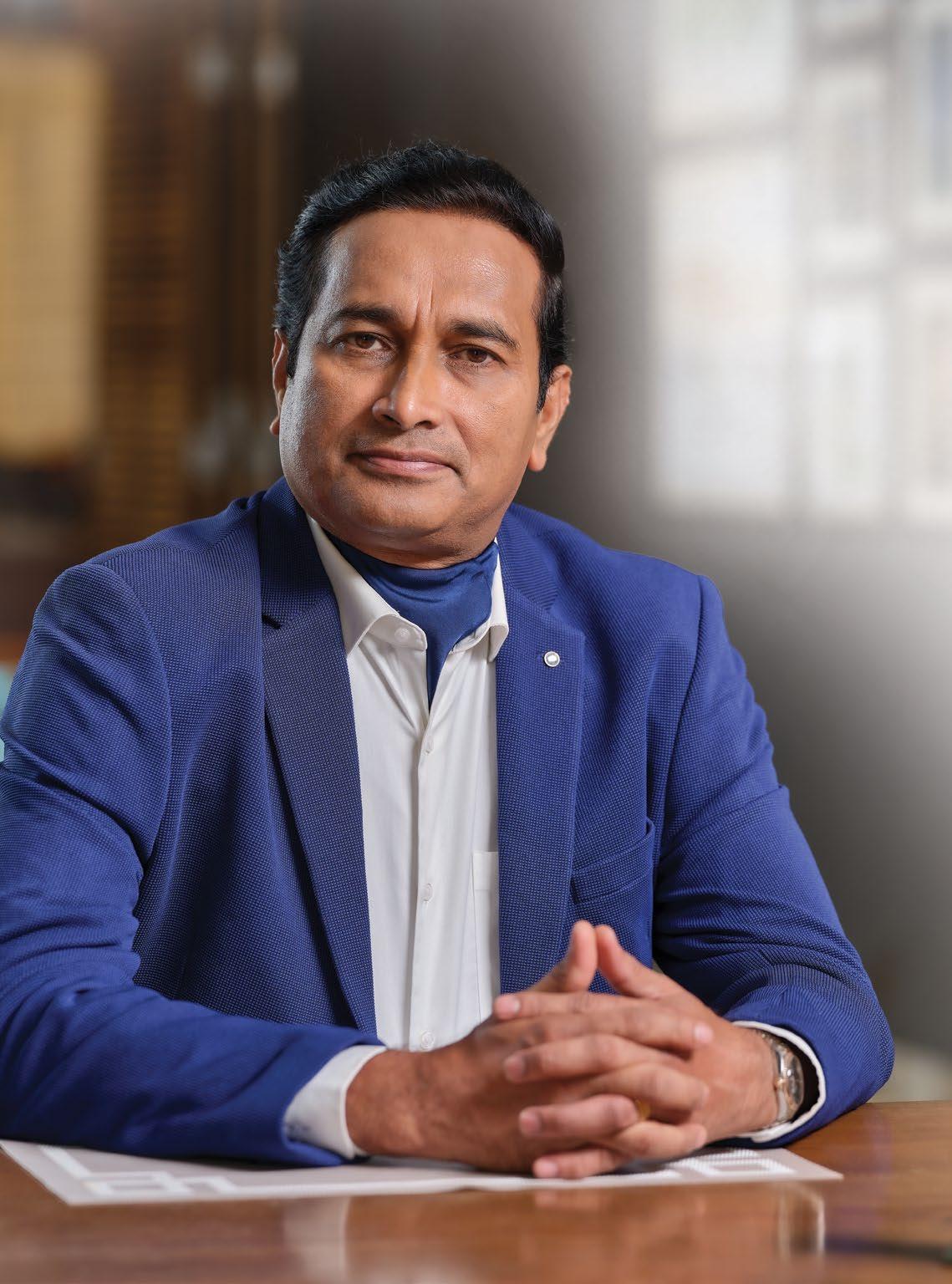
In a world where travel is often reduced to transactions and timetables, its true power still lies in connection, discovery, and the human stories woven between destinations. Beyond tickets and itineraries, travel can open minds, bridge cultures, and create moments that reshape perspectives for a lifetime. Meaningful journeys today demand more than logistics — they call for vision, responsibility, empathy, and a deep understanding of people, their comforts, emotions, and aspirations. Few embody this approach as distinctly as this month’s cover story personality, Benny Panikulangara, Founder and Managing Director of Benny’s Royal Tours Pvt Ltd. Guided by resilience, thoughtful innovation, and a passion for exploration, he shapes experiences that go beyond sightseeing to build comfort, confidence, and cultural connection, proving that travel designed with care and purpose becomes truly transformative.
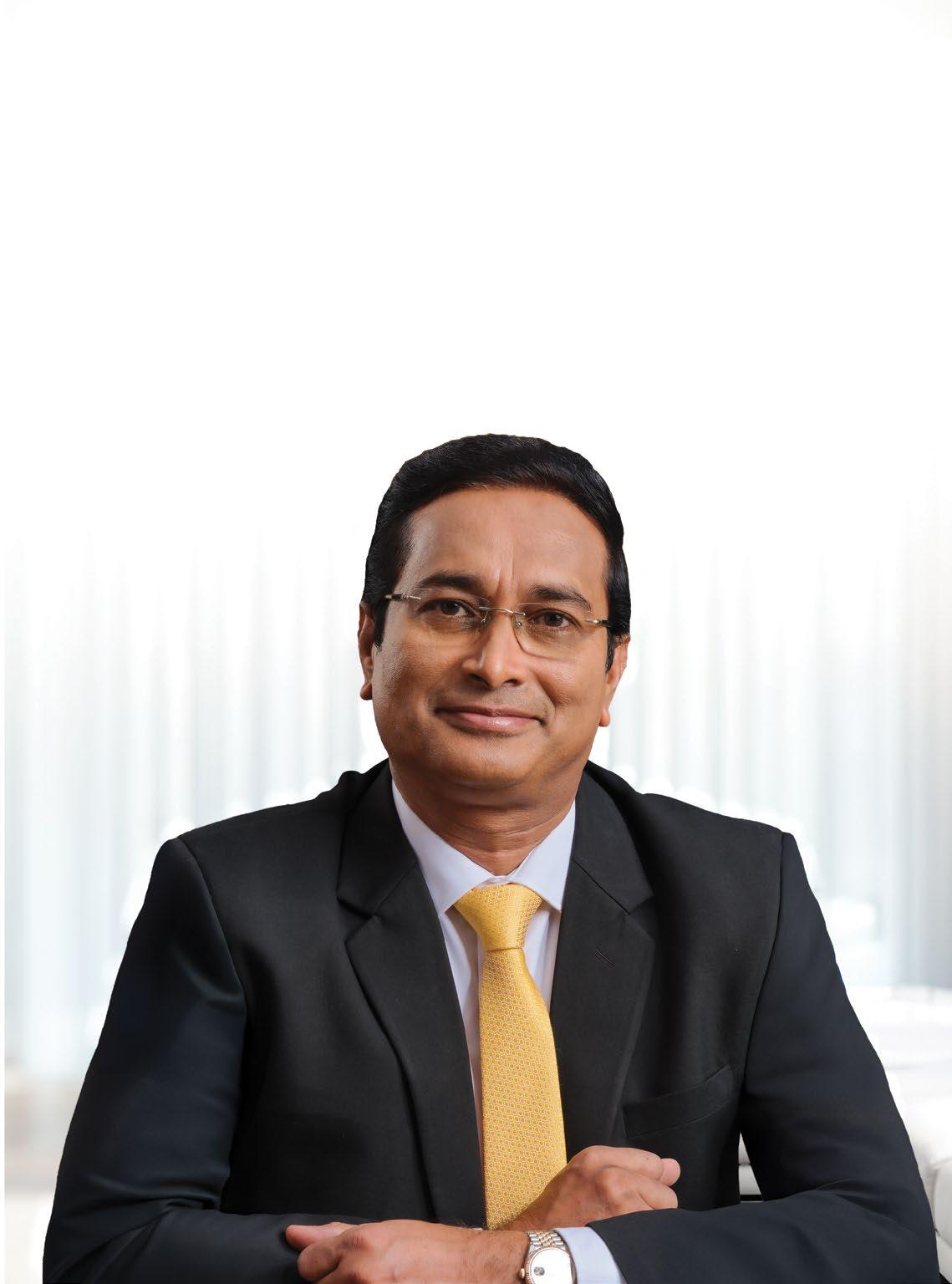
In this month’s edition, V.P. Nandakumar, Chairman & MD of Manappuram Finance Limited, shares his expert insights on ‘India’s BFSI Sector In 2025: A CMD’s Perspective on a Year of Reset.’
This issue also features all your favorite sections — from travel highlights to beauty insights and carefully curated selection of inspiring business stories.
“You will learn most things by looking, but reading gives understanding. Reading will make you free.”-Paul Rand
Have a Joyful Reading!
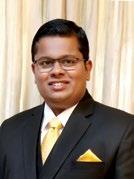
Cover Photograph
BENNY PANIKULANGARA
Founder and Managing Director
Benny’s Royal Tours Pvt Ltd
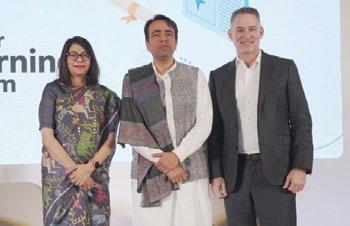
India Launches First AI-Enabled University with Google Cloud Partnership
India has launched its first AI-enabled university pilot to transform higher and vocational education. Announced on January 28, 2026, at the AI for Learning Forum in Delhi, the initiative is a collaboration between the Ministry of Skill Development and Entrepreneurship (MSDE), Google Cloud, and Chaudhary Charan Singh University (CCSU), Meerut. It supports the Viksit Bharat 2047 vision by creating a national framework for modernising education using AI and cloud technologies. CCSU, as the pilot institution, will deploy Google Cloud’s Gemini Enterprise platform to enhance teaching and administration. Students will access personalised AI tutors offering customised learning paths, skill-gap analysis, and multilingual support, while faculty can design interactive simulations, adaptive curricula, and multilingual teaching aids. Administrative processes will be streamlined with AI-powered automation. Placecom will manage technical integration. Insights from CCSU will inform a National Best Practice Framework for over 50,000 colleges and 1,200 universities, promoting AI adoption, self-credentialing, and industry-relevant skill development.
Hitachi India Plans to Hire 5,000 as It Bets on Infrastructure, Energy and AI
“Success
seems to be connected with action. Successful people keep moving. They make mistakes, but they don’t quit”
Conrad Hilton
Hitachi India plans to add over 5,000 employees in the next five years as it deepens its focus on India’s infrastructure, energy, and digital sectors, a senior executive said at the World Economic Forum in Davos. The expansion will support investments in energy, artificial intelligence, industrial automation, and resources, with operations linked to Hitachi’s global centres of excellence. Currently employing around 42,000 in India, Hitachi is positioning the country as a key growth market for manufacturing and digitally enabled services, leveraging strong government-led infrastructure and energy projects. The move comes amid global supply-chain disruptions and geopolitical uncertainties, prompting companies to diversify manufacturing beyond China. Hitachi views India’s energy, rail, digital, and AI sectors as well placed to benefit from this shift, aiming to develop solutions locally and scale them for export to global markets.
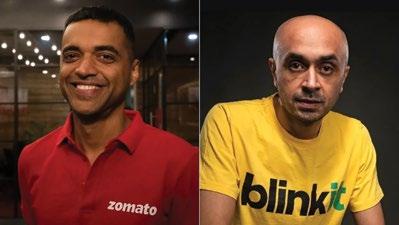
Indian food delivery and quick-commerce giant Eternal, formerly Zomato, announced a major leadership reshuffle, with founder Deepinder Goyal stepping down as CEO and managing director effective February 1. Albinder Dhindsa, head of Eternal’s quick-commerce arm Blinkit, will assume the CEO role, while Goyal will remain as vice chairman. Goyal, who founded Zomato in 2008 and led its 2021 IPO, stated that Dhindsa will oversee day-to-day operations, execution, and key business decisions, while he will focus on long-term strategy, culture, leadership development, and governance. The change highlights Eternal’s increasing focus on quick commerce, as Blinkit has become the group’s largest revenue driver amid growing demand for instant deliveries. The company recently reported a 73% rise in quarterly profit, with Blinkit achieving positive adjusted core earnings, reflecting its successful turnaround and pivotal role in Eternal’s growth strategy within a highly competitive market.
L’Oréal to Invest $383 Million in AI-Driven
Beauty Tech Hub in Hyderabad
“An entrepreneur is someone who has a vision for something and a want to create.”
David Karp
French cosmetics giant L’Oréal will invest over `35 billion ($383 million) to establish a beauty technology hub in Hyderabad, southern India. The facility will serve as a global center for AI-driven beauty innovation, accelerating the development and deployment of advanced digital beauty solutions. The hub is expected to create around 2,000 technology jobs by 2030 and enhance L’Oréal’s global capabilities in AI, data science, and beauty tech. CEO Nicolas Hieronimus formalized the partnership with the Telangana state government during the World Economic Forum in Davos. The investment underscores Telangana’s rising prominence as a technology and investment hub in India. It also reflects strengthening India-France economic ties, with bilateral trade reaching $15 billion in 2024, amid ongoing discussions to modernize the tax treaty in line with global transparency standards.
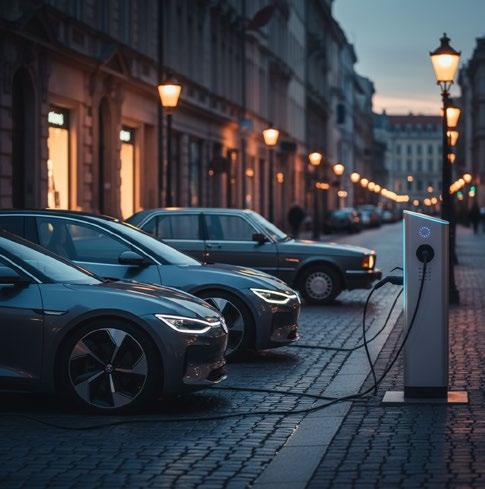
Electric Car Sales Overtake Petrol Vehicles in EU for First Time
For the first time, sales of fully electric cars in the European Union surpassed petrol vehicle sales in December, according to ACEA data. Battery-electric registrations also outpaced petrol sales across Europe, including Britain and Norway, as overall car sales saw a sixth consecutive month of year-on-year growth. Electrified vehicles—including battery-electric, plug-in hybrid, and hybrid models—accounted for 67% of all EU registrations that month. The milestone comes amid rising competition from Chinese automakers like BYD, Geely, and Changan, challenging European brands such as Volkswagen and BMW. Meanwhile, EU policymakers proposed easing emissions rules, including plans to drop a 2035 combustion-engine ban, responding to profitability and trade pressures. Despite regulatory uncertainty, analysts expect EVs to continue gaining market share, with European brands introducing affordable models and national incentive schemes. Some petrol sales decline reflects mild-hybrid reclassification, but the milestone marks a clear turning point toward electrification in Europe
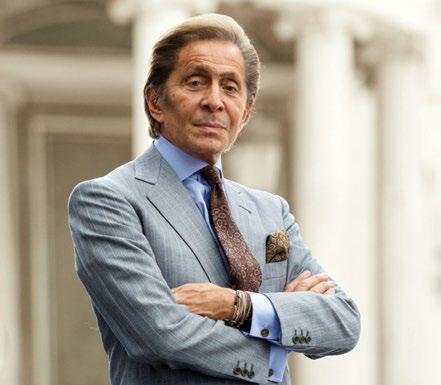
Valentino Garavani, Legendary Italian Couturier Who Defined “Valentino Red,” Dies at 93
Italian fashion designer Valentino Garavani, the founder of the iconic luxury house Valentino and creator of the signature “Valentino red,” has died at 93, his foundation announced. Known as the “emperor” of haute couture, Valentino passed away at his home in Rome; the cause of death was not disclosed. Emerging in the late 1950s, he became the first Italian designer to showcase on Paris’ elite haute couture runways, helping establish Italy’s global fashion reputation. His romantic, meticulously crafted designs dressed generations of leading women, including Jackie Kennedy, Elizabeth Taylor, Sharon Stone, and Penelope Cruz. His signature red gowns symbolized strength, beauty, and timeless elegance. Valentino retired in 2008 after a farewell couture show in Paris, having built a global fashion empire. Alongside lifelong partner Giancarlo Giammetti, he continued supporting the arts through initiatives like Rome’s PM23 gallery. Revered as one of the last great couturiers, his legacy is defined by craftsmanship, glamour, and devotion to beauty.
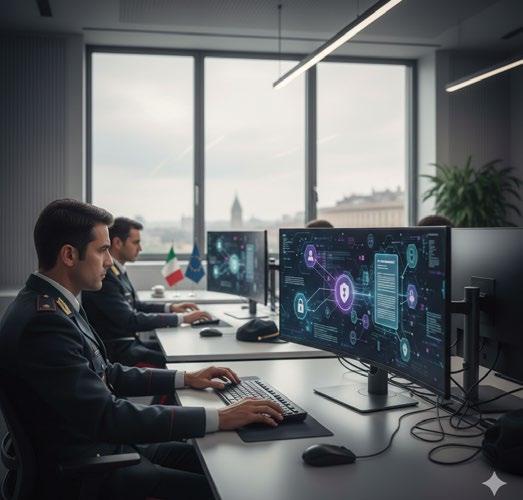
Italy’s Data Privacy Watchdog Faces Corruption Probe
Italian finance police have raided the headquarters of the country’s data protection authority amid a probe into alleged corruption and embezzlement. Rome prosecutors are investigating the agency’s president, Pasquale Stanzione, and three other board members over claims of excessive spending and irregularities linked to regulatory decisions. Stanzione told reporters he was “absolutely serene” but did not comment on whether he would resign. The opposition 5-Star Movement criticized the investigation for undermining the authority’s credibility and called for Stanzione’s resignation, increasing political pressure on the watchdog. The Italian data protection authority, or Garante, is one of the EU’s most active enforcers of digital privacy rules, having fined and temporarily banned OpenAI’s ChatGPT, blocked China’s DeepSeek chatbot over privacy concerns, and recently warned AI platforms—including Elon Musk’s Grok—about risks of generating deepfake images without user consent.
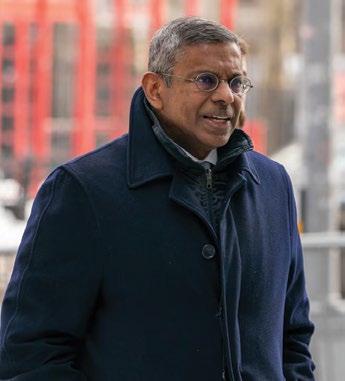
First Brands Founder Indicted on Fraud Charges After Bankruptcy Fallout
Federal prosecutors have indicted First Brands founder and former CEO Patrick James on multiple fraud-related charges, alleging he orchestrated years of deceptive accounting that led to the auto parts supplier’s collapse. The 61-year-old faces counts including bank fraud, wire fraud, money laundering conspiracy, and running a continuing financial crimes enterprise. His brother, Edward James, a former senior VP, has also been charged. Prosecutors say the scheme defrauded lenders of billions before First Brands filed for Chapter 11 in September with over $9 billion in liabilities. The indictment alleges the James brothers falsely portrayed the company as a thriving global business while concealing mounting debt and cash-flow stress, using tactics such as double- and triple-pledging collateral, faked invoices, and off-balance-sheet liabilities between 2018 and 2025. Former executive Andy Brumbergs has pleaded guilty and is cooperating. Patrick James denies all charges; Edward James’ lawyer vows to contest them. The case compounds First Brands’ bankruptcy turmoil, disrupting supply chains for automakers including Ford and GM, which are providing short-term financing to maintain critical operations.
BENNY PANIKULANGARA: DESIGNING JOURNEYS THAT STAY WITH YOU
Travel is more than movement across maps — it is a quiet dialogue between people and places, between curiosity and discovery. It has the power to reshape perspectives, build human connections beyond borders, and turn distant dreams into lived experiences. In a world where journeys are often reduced to bookings and schedules, true travel still lies in thoughtful planning, cultural understanding, and the assurance of being cared for along the way.
In a free-wheeling conversation, Benny Panikulangara, Founder and Managing Director of Benny’s Royal Tours Pvt Ltd, speaks about what truly goes into crafting unforgettable experiences in today’s fast-changing travel world. From challenges behind the scenes to the vision driving future journeys, this is a story about passion, purpose, and turning travel into something far greater than a destination — a memory that stays long after the suitcase is unpacked.
Having more than three decades of experience in the travel industry, what first sparked your passion for travel? How did it lead to the founding of Benny’s Royal Tours?
From a young age, I was fascinated by the history of places and driven by a deep desire to explore the world. The travelogues of Malayalam writers SK Pottekkatt and Paul Zacharia shaped
my belief that travel is more than movement — it is a journey of culture, stories, and human connections. That inspiration led me toward a career in the travel industry.
Even before the pandemic, I was already working in travel and tourism, running travel companies and staying closely connected to the industry. When global travel stopped, I viewed the situation not just as a disruption, but as a responsibility and a chance to support the sector’s recovery. That period became the turning point that led to the founding of Benny’s Royal Tours Pvt Ltd.
During the pandemic, our work focused on practical support. We introduced quarantine packages that helped stranded travellers return home safely and resume their jobs. Despite restrictions, we also operated several tour groups with careful planning and safety measures, including a trip to Murmansk in the Arctic region of Russia with 68 guests.
In 2021, we were honoured with the Best Tour Operator in India award, recording business volumes exceeding ` 10 crores during the pandemic. The recognition was an important milestone and encouraged us to continue strengthening our contribution to the travel industry.
We also launched Vision 2030, an initiative to explore all 200 countries worldwide by 2030, with support from ambassadors representing their respective na-
tions. This year, we plan to operate group tours to 140 countries, with the long-term goal of building a strong and lasting presence in the travel industry.
As Paulo Coelho says in The Alchemist, “When you want something, all the universe conspires in helping you to achieve it.” I have truly felt that force guiding my journey — from a curious child to the founder of Benny’s Royal Tours, driven by passion, resilience, and purpose. From a small venture to an internationally trusted brand, what was the toughest phase in your entrepreneurial journey?
Kerala is a land of passionate travelers, and as the saying goes, you can find Malayalees in every nook and corner of the world. I noticed that many travelers from Kerala were exploring the world individually through solo travel, but there was no dedicated group travel mentor in the industry to guide them toward unique global experiences. Even the most well-traveled individuals usually explore a maximum of 50 countries, while there are nearly 200 countries across the globe. This realization strengthened our belief that travelers need the right guidance and mentorship to truly experience the world beyond the usual routes. This insight led to the birth of Benny's Royal Tours, branded with a vision to take travelers to unexplored and extraordinary destinations. We became the first company
From a young age, I was fascinated by the history of places and driven by a deep desire to explore the world. The travelogues of Malayalam writers SK Pottekkatt and Paul Zacharia shaped my belief that travel is more than movement — it is a journey of culture, stories, and human connections.
from Kerala to visit the Amazon Rainforest and the Galápagos Islands, to land in Antarctica, and to cross both the Arctic and Antarctic Circles by sea. While solo travel may seem simple, managing international group tours— especially to such unique and challenging destinations—was extremely demanding. Each tour required meticulous planning, immense care, and calculated risk management. Above all, ensuring the safety of our guests and delivering consistent quality was crucial to maintaining the trust they placed in Benny's.
One of the toughest phases of my entrepreneurial journey was building trust while scaling the business. To uphold that trust, I personally traveled with every first group to each unique destination operated by Benny's Royal Tours. As we grew, maintaining quality and reliability became even more important. To strengthen our operational standards, we obtained ISO 9001 certification from TÜV NORD GmbH, Germany Accredited by Germany’s National Accreditation Body DAkkS. Today, we are proud to say that Benny's Royal Tours is the first travel company in South India to be certified by TÜV
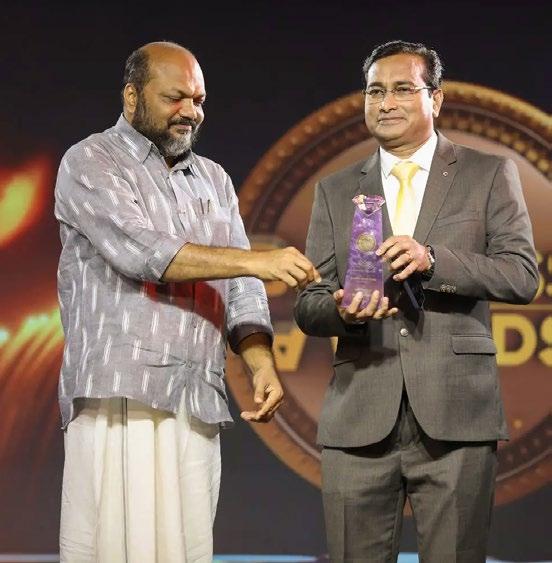
NORD, Germany. In recognition of our outstanding contribution to the travel industry, I was honored with the Travel Mentor Award by the Honorable Tourism Minister Sri. P.A. Mohammad Riyas in 2025 and Travel Icon Award in Tourism from Sri. P. Rajeev, Minister for Law, Industries and Coir during the 24 Channel Business Awards 2025. Travel trends change constantly. How have you adapted Benny’s Royal Tours to meet the expectations of modern luxury travellers and retirees?
The pandemic reshaped how people view life and travel, reminding many that saving money means little if dreams remain unfulfilled. I noticed that many retirees, though financially capable and eager to explore the world, lacked the confidence, support, and companionship needed to travel.
I realised that majority of the guests are passionate travellers, especially the elderly. The real barrier was not resources, but the need for personalised care, reassurance, and trust. In response, we shifted our focus to unique destinations, personalised itineraries, and thoughtfully paced
journeys—particularly for retirees and luxury travellers—with a strong emphasis on comfort, hygiene, emotional reassurance, and individual needs.
We also formed a dedicated support team to provide special attention to elderly and solo female travellers, ensuring they feel safe, valued, and fully supported. For us, travel is not just about destinations; it is about creating secure, meaningful, and joyful experiences for every individual.
This year, we have also launched a separate division dedicated to corporate incentive travel and MICE tours, along with curated luxury travel experiences, offering 24×7 personalised service to meet the dynamic needs of corporate and high-end clientele. Now, we are happy to share that Benny’s is the leading premium travel company in Kerala, delivering high-quality services to our valued customers. You’ve led tours to all seven continents, including Arctic and Antarctic expeditions. Which destination has challenged you the most, and why?
Among all the destinations I’ve explored, Antarctica stands out as the most challenging and unforgettable. Crossing the Drake Passage is a thrilling, unpredictable test of endurance, and expeditions to the Arctic push us further with extreme weather, complex logistics, strict safety protocols, and physical demands, especially with large groups.
These challenges make the achievements more meaningful. Today, we are among the rare Indian travel companies conducting both Antarctic and Arctic expeditions, and one of my proudest milestones is leading the largest group from India
to set foot on Antarctica.
Our exploration continues with a planned journey to Oymyakon this March with 15 travellers — possibly one of the first such expeditions from India. Beyond the polar regions, we’ve also operated tours to all Seven New Wonders of the World, the Seven Wonders of the Ancient World (that are historically accessible), and all Seven Natural Wonders of the World — reflecting our commitment to turning extraordinary dreams into reality. What makes a journey
“royal” in your definition — comfort, customisation, emotional experience, or something else?
A royal journey is not defined by luxury alone — it is defined by the care we extend to every valued guests. True royalty in travel lies in the experience of being understood, supported, and thoughtfully looked after at every step.
We design each tour around the unique interests and preferences of our travellers, offering personalised attention, clean and hygienic accom-
modations, comfortable transportation, and carefully selected dining experiences. Our dinners are often hosted in quality hotels and enriched with traditional cultural elements and authentic local cuisine, allowing guests to connect deeply with the culture of the destinations.
Every itinerary is meticulously planned to be smooth, stress-free, and inclusive of all must-see attractions, ensuring that travellers can focus on enjoying the journey rather than worrying about logistics. Guided by knowledgeable and
compassionate tour managers, our guests feel secure, respected, and emotionally at ease throughout the trip. When travel is guided by such thoughtful care, comfort, and human connection, the journey naturally becomes royal. What is one travel myth people believe that you wish to change?
I’ve often felt one of the biggest travel myths is the belief that life can be enjoyed later. Many parents spend their lives putting children and family first, convincing themselves that travel and personal happiness can wait. Most of their earnings go toward securing their children’s future, leaving little for their own dreams. Many never had a true honeymoon or a journey taken purely for joy.
By the time responsibilities ease, time has already moved on. Age, health concerns, and fatigue take over, and travel dreams remain incomplete. Many never see the world or experience freedom while they are still young enough to fully enjoy it — a quiet sacrifice that often goes unnoticed.
In many Western cultures, travel and holidays are viewed as essential to a balanced life. People intentionally take time to explore, recharge, and embrace new experiences without guilt. We are still learning to see stepping away from routine to refresh the mind and soul as necessary, not selfish.
The pandemic shifted perspectives. It reminded parents that life is fragile and moments aren’t guaranteed. Gradually, some have begun choosing memories over postponement and journeys over “someday.”
As Saint Augustine said, “The world is a book, and those who do not travel read only one page.” Travel isn’t about age or distance — it’s about allowing ourselves to live fully, feel deeply, and gather stories before time turns them into regrets. With increasing digital
booking platforms, why do you think personalised travel planning still matters?
Personalised travel planning still matters because travel is more than just booking flights and hotels. Digital travel platforms are not yet widely accepted in the mindset of many guests. Travellers, especially those visiting with their families, are often hesitant to take risks with their holidays. While digital platforms offer convenience, they cannot truly adapt to individual interests, comfort levels, cultural expectations, or emotions.
When something goes wrong, travellers do not want automated responses; they want a reassuring human voice that understands their concerns and genuinely cares. This personal connection, built on trust and empathy, is something technology can never fully replace. What has been your proudest moment as a travel entrepreneur so far?
Our journey has been marked by several proud milestones. Among the most remarkable was operating the largest leisure group from India to Antarctica, and setting foot on the Antarctic mainland twice with the largest expedition group from South India — achievements that reflect both trust and capability in handling extreme destinations.
We have also successfully led tours to around 120 countries, including pioneering expeditions from Kerala to the Amazon Rainforest and the Galápagos Islands, opening doors to some of the world’s most extraordinary ecosystems for our travellers.
On a personal level, it was a proud moment to be selected as a delegate of the Confederation of Indian Industry (CII), New Delhi, representing Indian tourism in Mauritius and Madagascar — a responsibility that highlighted our contribution to the global travel dialogue. Additionally, I had the honour of be-
ing chosen to represent Indian Tourism with the Ministerial Delegation led by H.E. Dr. Patrick Herminie, the President of Seychelles, Hon. Mrs. Amanda Bernstein, Minister of Tourism, Republic of Seychelle and Mr. Pierre Laporte, Minister for Finance Seychelles in New Delhi at the Confederation of Indian Industry (CII) Business Meeting held on 07th February at Taj Mahal Palace Hotel, Mumbai.
Today, we are also proud to be among the rare travel companies in India to have successfully covered all the New Seven Wonders of the World, the existing Seven Wonders of the Ancient World and all Seven Natural Wonders of the World — turning iconic global landmarks into real experiences for our travellers. Your company is known for specialised and high-end tours. How do you balance luxury with authenticity in travel experiences?
Luxury without authenticity feels incomplete. While comfort is important, I believe true travel should also create a deep connection with the culture, people, and spirit of a destination. For me, real luxury is not defined only by five-star hotels, but by meaningful experiences, genuine local interactions, and moments that stay with travellers long after the journey ends.
What is your long-term vision for Benny’s Royal Tours in the next 5–10 years?
Our long-term vision at Benny’s Royal Tours is to help travellers explore 200 countries by 2030, bringing the world closer to every adventurer we serve. Looking ahead, we aspire to establish Benny’s Royal Tours as a globally recognised travel brand, with a turnover exceeding ` 1,000 crore, while setting new benchmarks in luxury, personalised, and culturally immersive travel experiences.
Through continuous innovation,
sustainable practices, and exceptional care for our guests, our mission is to make every journey not merely memorable, but truly transformative — experiences that enrich lives, broaden perspectives, and create lifelong stories.
Your wife, Anna Shery Benny, is also part of Benny’s Royal Tours. How has working together as life partners and business partners shaped the company’s values and the way you design travel experiences?
My wife, is an integral part of Benny’s Royal Tours. Working together as life partners as well as business partners has shaped the very heart of our company. Shery complements me in every way — balancing my shortcomings, offering spiritual strength, and standing as a constant source of prayerful support. In many ways, she is the quiet force and guardian presence behind every success in my life. Her influence brings balance, compassion, and strong values into the organisation. Because of her presence, Benny’s Royal Tours is not just a business; it is a reflection of our shared beliefs in care, faith, integrity, and service. These values naturally guide the way we design travel experiences, ensuring every journey is handled with warmth, responsibility, and genuine concern for every traveller who places their trust in us.
After designing dream holidays for thousands, what does your own perfect vacation look like?
Do you ever truly “switch off” from work while travelling?
I never switch off completely while travelling, as the smooth functioning of the company and the comfort of our travellers always remain my priority. Still, I make sure to find moments for myself — especially to learn about new destinations and experiences.
For me, travel is not just work; it’s a true passion. I enjoy meeting people, building relationships, and exploring new possibilities. Even when challenges arise, the joy of creating something meaningful and new makes the journey truly worthwhile
Receiving the Travel Icon Award in Tourism from P. Rajeev, Hon’ble Minister for Law, Industries & Coir, at the 24 Channel Business Awards 2025.
One of the most visible shifts in 2025 was the transition from digital expansion to digital maturity. Digital transformation was no longer about adoption or reach; it became about optimisation and outcomes. Banks and NBFCs focused on improving straight-through processing, reducing manual interventions and embedding digital controls more deeply into core systems.
INDIA’S BFSI SECTOR IN 2025: A CMD’S PERSPECTIVE ON A YEAR OF RESET
As we reflect on the evolution of India’s Banking, Financial Services and Insurance (BFSI) sector in 2025, it is evident that the year represented far more than a phase of cyclical adjustment. It marked a structural reset—one in which the industry consciously moved away from the pursuit of scale at any cost towards a more balanced emphasis on sustainability, resilience and institutional depth.
After nearly a decade shaped by balance-sheet repair, rapid digitisation and heightened regulatory oversight, the sector entered a phase of consolidation and recalibration. What unfolded was not a single disruptive moment, but the convergence of several long-term forces that are collectively redefining the foundations of Indian finance.
From Digital Expansion to Digital Maturity
One of the most visible shifts in 2025 was the transition from digital
expansion to digital maturity. Digital transformation was no longer about adoption or reach; it became about optimisation and outcomes. Banks and NBFCs focused on improving straight-through processing, reducing manual interventions and embedding digital controls more deeply into core systems.
Artificial intelligence played an increasingly important role, though with welcome pragmatism. AI and advanced analytics were deployed where they delivered measurable benefits—particularly in underwriting, fraud detection, collections and customer service. Generative AI, while widely discussed, found selective and responsible application in internal knowledge management, customer communication and compliance processes. The defining feature of the year was not technological novelty, but disciplined and thoughtful integration.
Data as a Strategic Asset
In 2025, data governance and
data quality emerged as true competitive differentiators. With India’s digital public infrastructure generating unprecedented volumes of financial data, institutions increasingly competed on their ability to interpret, protect and responsibly monetise information.
Those that invested early in unified data platforms and real-time analytics gained sharper insights into customer behaviour, credit trends and early warning signals. Others found themselves constrained—not by capital, but by the absence of actionable intelligence. Data moved decisively from a support function to the centre of boardroom strategy, underscoring its role as a core strategic asset.
The Reassertion of Risk and Governance
If growth dominated the narrative in earlier years, risk and governance defined 2025. After an extended benign credit cycle, BFSI leaders became acutely aware of tail
risks—ranging from cyber threats and operational disruptions to regulatory and reputational exposures.
Boards demanded stronger second and third lines of defence, while senior leadership roles increasingly valued compliance expertise and governance credibility. Asset quality remained robust, supported by prudent underwriting and favourable macroeconomic conditions, yet there was no complacency. Retail credit growth, particularly in unsecured segments, was monitored closely. The year reinforced a fundamental lesson: strong balance sheets are built during good times, not repaired during downturns.
A Renewed Focus on Quality Earnings
Another important shift was the renewed emphasis on profitability and quality of earnings. Metrics such as net interest margins, cost-toincome ratios and return on assets regained prominence in investor and analyst discourse.
In the insurance sector, while premium growth continued, margins faced pressure from rising acquisition and servicing costs. This prompted insurers to reassess distri-
bution models, focus on persistency and invest in technology-led efficiency. Across BFSI, the message was clear and consistent: growth must be profitable and sustainable.
Fintechs: From
Challengers to Partners
The relationship between traditional institutions and fintechs also matured significantly. The era of adversarial disruption gave way to pragmatic collaboration. Fintechs increasingly operated as product specialists, infrastructure enablers or distribution partners rather than full-stack challengers.
Regulatory scrutiny during the year reinforced this shift, encouraging stronger governance, capital discipline and transparency among fintech players. The result was a more integrated ecosystem—one where innovation continued, but within clearer institutional and regulatory boundaries.
Payments and the Finan-
cialisation
of Daily Life
By 2025, digital payments had become invisible infrastructure— deeply embedded in everyday economic activity. The focus moved be-
yond scale to value-added services such as credit overlays, cash-flow analytics and merchant solutions.
This everyday financialisation expanded the addressable market for BFSI institutions, particularly in small-ticket credit, micro-insurance and savings products. Financial inclusion increasingly evolved from a policy objective into a commercially viable and sustainable business proposition.
Insurance and Long-Term Capital Formation
The insurance sector assumed greater macroeconomic relevance in 2025. Regulatory reforms and liberalised capital norms positioned insurers not only as risk underwriters, but also as long-term institutional investors. Life, pension and retirement products gained renewed attention amid demographic changes and growing awareness of long-term financial security.
Looking Ahead to 2026
As we move into 2026, three priorities merit sustained attention. First, digital maturity must translate into structural efficiency—lower costs, faster turnaround times and superior customer experience. This will require simplifying processes, not merely automating complexity.
Second, risk governance must remain central to institutional credibility. Cyber resilience, data protection and conduct risk will define trust in the years ahead. Boards and leadership teams must continue to invest in people, systems and cultures that value prudence alongside performance.
Third, the BFSI sector must deepen its contribution to longterm capital formation and inclusive growth—by expanding insurance coverage, strengthening retirement solutions, supporting MSMEs with smarter credit and aligning financial activity with sustainability objectives.
In many respects, 2025 was about resetting the foundations. The real challenge—and opportunity—of 2026 will be to build enduring institutions on those foundations: institutions that are profitable yet responsible, innovative yet prudent, and digital yet deeply human in their understanding of trust
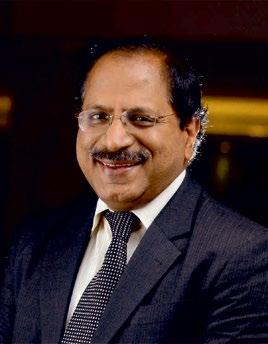
Rajesh Nair Partner, Ernst & Young LLP
Beneath every smart application is an AI Model. This is the core intel ligence, the trained algorithm that has learned from mountains of data to recognise patterns, generate text, or make predictions.
From Your Chatbot To The Power Plant: India's Blueprint For AI Sovereignty
At the recent World Economic Forum in Davos, Union Minister for Electronics and IT Ashwini Vaishnav presented a vision that cuts through the hype surrounding Artificial Intelligence. He didn't just talk about chatbots and self-driving cars; he laid out a five-layer structural blueprint for a nation's AI prowess. Think of it not as a single invention, but as the complete ecosystem required to thrive in the age of intelligent machines.
For a country like India, with its vast ambitions and unique challenges, this isn't just theory—it's a strategic roadmap for self-reliance, or "AI sovereignty." Let's break down these five levels, from the dazzling applications we see every day down to the fundamental force that makes it all possible.
Level 1: The Application Layer – The "What You See"
This is the tip of the iceberg, the part everyone interacts with. Applications are the AI tools and interfaces that solve specific problems or provide services.
• Layman's Example: Think of this as the car you drive. You don't need to know how the engine works to use it to get to work, drop kids at school, or go on a road trip. The car
(application) serves your direct need (transportation).
• In AI Terms: This is your ChatGPT answering a question, the Netflix algorithm recommending your next show, the facial recognition unlocking your phone, or a doctor's AI assistant analysing an X-ray. India is already a powerhouse here, with innovators creating agri-tech apps that diagnose crop disease from a smartphone photo, or fintech apps using AI to provide microloans.
The Insight: Minister Vaishnav emphasized that while India excels at building scalable applications for its billion-plus population, just being a user or a top-level creator isn't enough. True sovereignty requires mastery of the layers beneath.
Level 2: The Model Layer –The "Brain" Itself
Beneath every smart application is an AI Model. This is the core intelligence, the trained algorithm that has learned from mountains of data to recognise patterns, generate text, or make predictions.
Layman's Example: This is the engine and design philosophy of the car. Is it a fuel-efficient hybrid engine, a powerful V8, or an electric motor? The model defines the core capabilities, efficiency, and "personality" of the intelligence.
In AI Terms: Models like GPT4, Gemini, or open-source ones like Llama are the engines. They are trained on trillions of words, images, or data points. India's focus is on developing its own "Bharat-specific" models trained on diverse Indian languages, contexts, and needs— ensuring the AI brain understands local nuances, from legal jargon to regional dialects.
The Insight: Controlling the model layer means controlling the intelligence's bias, language, and cultural relevance. You can't build truly inclusive AI for India solely on a model trained predominantly on Western data.
Level 3: The Chip Layer –The "Physical Brain Matter"
Here we move from software to critical hardware. The Chip—specifically, the Graphics Processing Unit (GPU) and other AI accelerators— is the physical silicon where the AI model's calculations are run. It's the hardware that executes the brain's thoughts at lightning speed.
Layman's Example: This is the high-grade, specialised metal and alloys from which the engine is forged. You can't build a robust engine with soft clay. The quality and design of this material determine the engine's power and efficiency.
In AI Terms: Training a massive AI model requires thousands of these specialised chips working in concert for months. Currently, the global supply is dominated by a very few companies (like NVIDIA). Vaishnav stressed that India's $10 billion semiconductor mission is squarely aimed at this challenge—not just manufacturing, but eventually designing chips tailored for India's AI needs.
The Insight: Relying on imported chips for strategic AI is like relying on another country for fighter jet engines. It creates a critical dependency. India's push into semiconductors is a direct investment in this foundational layer.
Level 4: The Infrastructure Layer – The "Factory and Highways"
A single chip is useless. You need the Infrastructure—the data centres, the cloud networks, the highspeed connectivity—to link thousands of chips together and make their power accessible to those building models and applications. Added to this is the tax holiday announcement in the Union Budget.
Layman's Example: This is the factory where the car is assembled, and the national highway network on which it runs. Without the factory, you can't build the car at scale.
Without the highways, the car's utility is limited to your driveway.
In AI Terms: This is about building massive, secure, and energy-efficient "AI factories" (data centres) and ensuring robust digital connectivity (like 5G/6G) to deliver AI services to every corner of the country. India's rapid rollout of digital public infrastructure (like Aadhaar and UPI) shows its capability in building scalable, inclusive tech stacks.
The Insight: Superior infrastructure democratises AI. It allows a startup in Bengaluru and a research institute in Guwahati to access the same formidable computing power, fostering innovation across the board.
Level 5: The Energy Layer –The "Fuel"
This is the most fundamental layer, often overlooked. Energy powers everything. The AI stack is incredibly energy-hungry—from the electricity needed to run a massive data centre (infrastructure) to the vast amounts needed to manufacture a chip (chip) and train a large model (model).
Layman's Example: This is the petrol, electricity, or hydrogen that fuels the car. No matter how advanced your car, without fuel, it's a sculpture. The cost, availability,
and greenness of this fuel determine the entire system's sustainability and cost.
In AI Terms: A single query to a large AI model can use 10x more energy than a traditional web search. Minister Vaishnav linked this directly to India's massive push for renewable energy. Leading in AI cannot mean exacerbating climate change. India's strategy ties its renewable goals (500 GW of non-fossil fuel by 2030) directly to its AI ambitions, aiming to power its intelligence with clean energy.
The Insight: The future of AI is green. A nation's energy strategy is now a direct determinant of its AI competitiveness and its moral standing in the world.
The Integrated Vision: Why
This Stack Matters for India
Ashwini Vaishnav’s five-level framework is a masterclass in systems thinking. It recognises that you cannot win the AI race by only focusing on the top (applications) or by simply importing solutions.
Resilience: It builds a resilient supply chain, insulating India from global geopolitical shocks in chip supply or software sanctions.
Inclusive Growth: It ensures AI is built for India, addressing its specific challenges in healthcare, agriculture, governance, and education, in local languages.
Economic Domination: It creates a vertically integrated industry—from silicon to software— generating millions of high-value jobs and positioning India as a net exporter of the full AI stack, not just IT services.
Strategic Autonomy: In a world where AI will define economic and military power, this stack is the foundation of true strategic autonomy.
The 21st century will be shaped by nations that master the entire stack. India, through this blueprint, is not just preparing to adopt AI. It is methodically building the engine to power its own future—and perhaps, power the world's. Interesting times ahead!
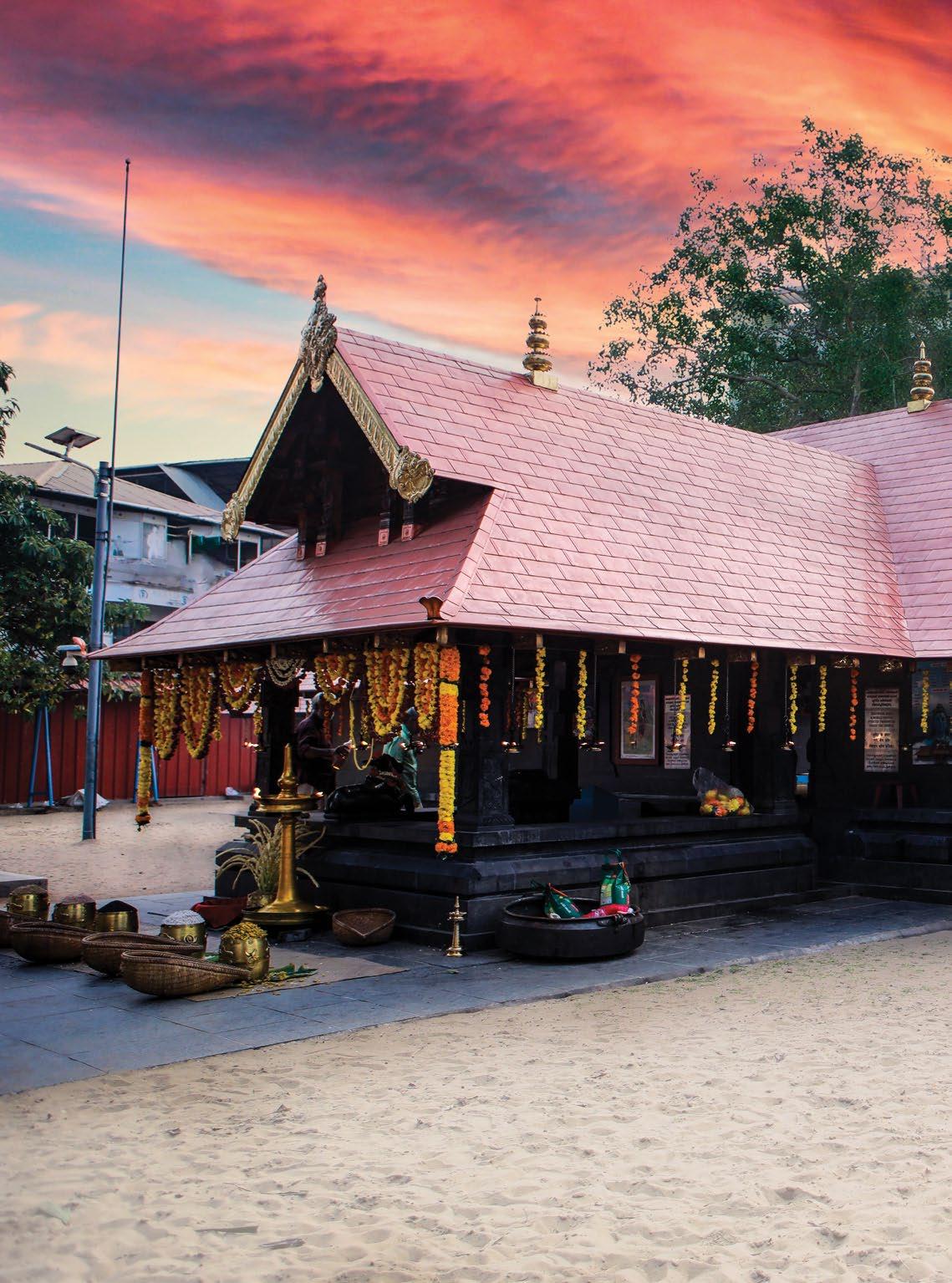
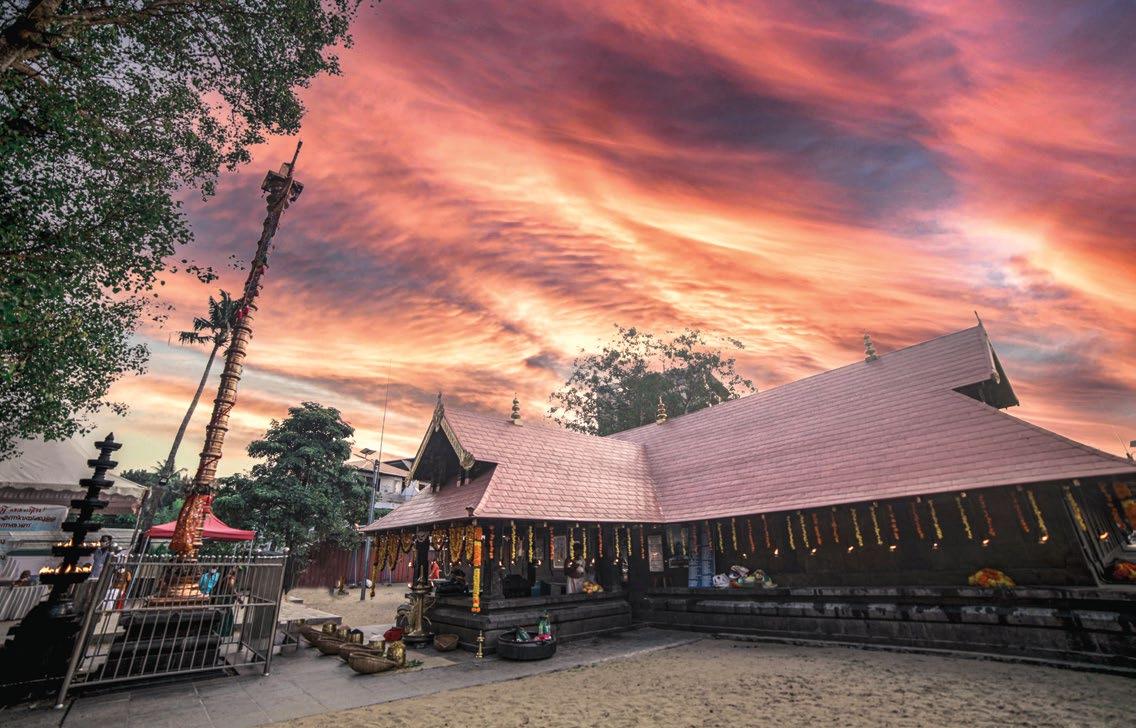
Thykkattu Sri Mahadeva Temple, located at Vennala in Ernakulam district, is considered to be one of the oldest temples in Kerala. Inscriptions found in the temple premises reveal the ancient history of the temple. The circular 'Sreekovil' of Lord Mahadevan
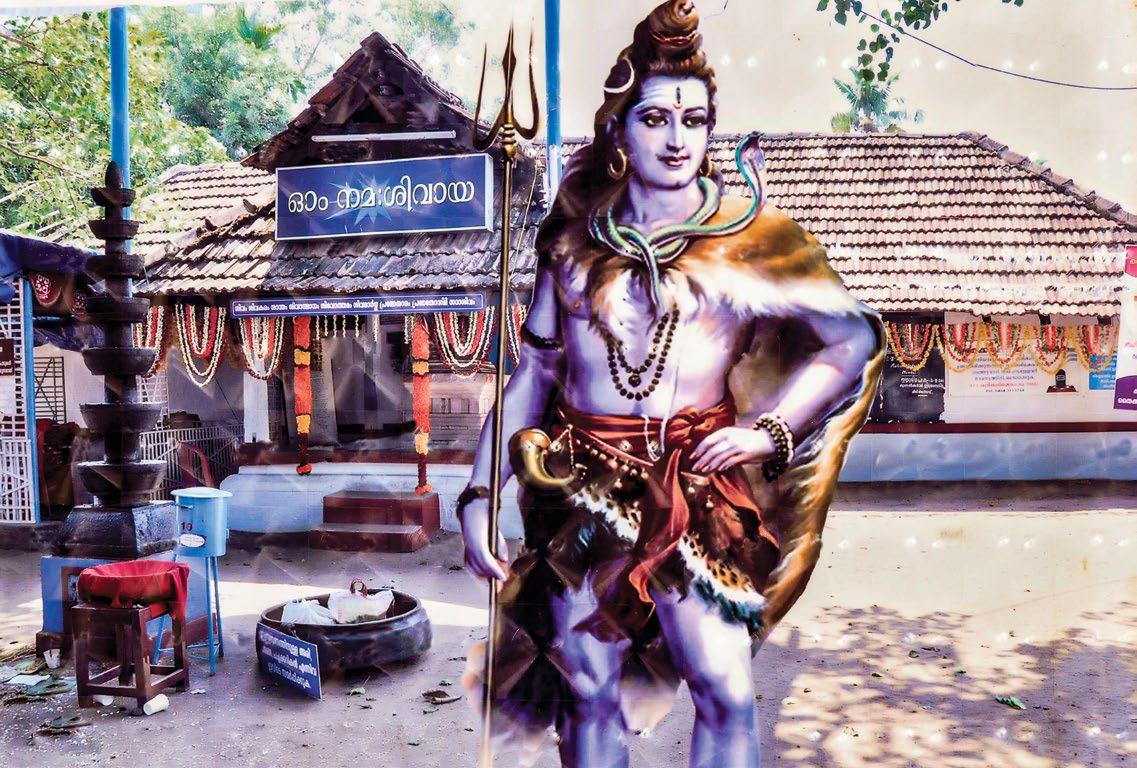
is the crowning example of ancient temple architecture. The temple is more than 2000 years old and is now in the care of the Thykkattu Devaswom Trust in Vennala. The main deity of the temple is Lord Shiva in the form of a savage. Locals and devotees consider and worship the deity in the form of
the serene and majestic Lord Shiva. The temple was renovated in 2017 and after the re-dedication and purification ceremony, it was decided to celebrate 'Shivratri' every year as an eight-day long festival and the practice continues to this day.
Traditionally, it is believed that the temple also has the presence of Lord Vishnu and Dharma Sastha (Ayyappan), who are worshiped in the temple. The Pandavas lived in a place called Hidumbavanam (this area is now known as Irumpanam) near Vennala after the burning of Arakkillam. It was in this area that Arjuna performed penance for Lord Mahadev in order to obtain the Pasupatastra. If the deadly weapon does not reach the hands of the deserving person, it will lead to the destruction of the world itself. Realising this, Mahadevan disguises himself as a forest dweller (kirathan) and arrives to test Arjuna. In this battle, Arjuna loses all
his weapons except his bow, Gandheevam. In a fit of rage, Arjuna tries to strike Mahadeva with a bow, but is stopped by an anonymous person, who seizes his bow. Unarmed, Arjuna realises that it is no savage standing in front of him but God himself and falls at his feet. Satisfied with Arjuna, Mahadevan appears in the form of Vishwaroopam and grants him the gift of Pashupata astra.
This is how the Thykkattu Sri Mahadeva Temple has come to be the resting place of Lord Mahadevan. Although the idol is brutal in nature, it has a relatively low intensity. There is also a legend of Perunthachan associated with the Thykkattu Sri Mahadeva Temple. A history of Perunthachan blocking the wind with a stone. On the west side of the temple was an extensive field to the south.
Due to the strong south-westerly winds, it was very difficult to keep
the fire on the lamp post on the west side of the temple. Perunthachan, who was once exhausted after a long journey, was bathing in the eastern side of the temple, and resting on the altar on the southern side when he noticed someone trying to light the evening lamp on the lighthouse. Despite repeated attempts, the lamp was extinguished by a strong southwesterly wind. Legend has it that Perunthachan saw this and placed a granite slab in the west corner of the lighthouse to block the wind.
History of Marble
History of Vennala Vediyoor Madam (Pankulam) is associated with Lord Vishnu. Legend has it that the place where butter is offered on the banana leaf, a favourite offering of Lord Vishnu, and where the leaves are kept in a heap, came to be known as the Vennayil Mala and gradually the name Vennala was derived from it.
Temple before restoration
The other tale is related to the Mahabharata story. The cave to which the Pandavas escaped when Arakillam caught fire also passes through Kakkanad, the nearest place to Vennala. Its remnants are still visible. The butter (venna) that had been stored in the fire melted and flowed out of the cave and created small ripples (ala).
The next tale is related to nature. The whole area was formerly a venilla forest. (Vennilla is a shrub with white leaves). As an example of this, there are still vennilla plants in the premises of the Thykkattu Shiva Temple. In addition, until about the 1980s, the entire area was covered with white sand dunes. The mountain of white sand is called Venmala and later this became Vennala.
Mahadevan,
the Supreme Being
A Brahmin couple, who were grieving the loss of their children, came to Thaikattappan and offered heartfelt prayers and bhajans. It is
Temple after restoration
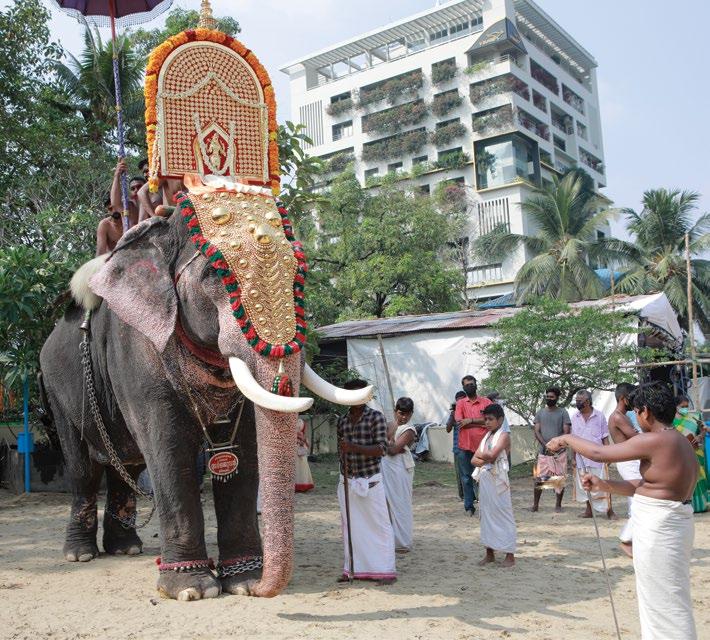
Placing the Deity's Idol (Thidambu) atop the Elephant
As per the concept of 'Kiratamoorthy', Maheshwaran bestows blessings on each and every one of his devotees. In this temple Puliyannoor Murali Narayanan Namboothiri is the Tantri and Iravimangalam Illam Santosh P Namboothiri is the Melshanthi. Devotees testify that the blessing of Thaikattappan can remove unwanted lust, anger and temptations of the human mind.
said that Lord Mahadevan blessed the couple with children. It is this experience that draws many to the temple. Devotees offer Umamaheswara Pushpanjali and Bhagyasooktha Pushpanjali to Thaikattappan for a successful marriage. Sahasrabhishekam and Udayasthamana Pooja are performed to fulfill various desires and for prosperity. Vaishnava Presence and Concept of Upadevata
A Brahmin woman who was a devotee of Thaikattappan used to visit the Sri Poorrnathrayesa Temple in Tripunithura regularly. According to legend, during her old age, she was unable to visit the temple due to her disability. It was decided to perform 'Deva Prasna' there to know the will of Bhagavad Gita and to perform poojas with equal importance to Vishnu. The presence of Lord Dharmasastha is also traditionally considered and worshiped. Inside the temple, Ganapati and Durga bless the devotees on both sides of the shrine. According to the clear instruc-
tions in 'Devaprasna', the Brahmarakshas found in 'Meenarasi' are especially invoked and worshiped properly. The Naga Prathishtha, located at the southwest corner (Kannimoola) of the temple courtyard, is also ritually erected. Mullakkal Bhagwati, enshrined on the outer wall of the temple at Kumbharashi, is a personification of the power of 'Sri Bhadrakali'. In ancient times, the Thykkattu Devaswom in Edappally South Village had 35 acres of land, but only the temple and its surroundings now exist. Besides rituals, offerings, and celebrations along with the Shivratri festival, in the Malayalam month of Karkitakam is observed as the Ramayana month and 'Akhandanamajapa' is performed. Ganapati Homa and Bhagavathyseva are also performed during the month of Karkitakam.
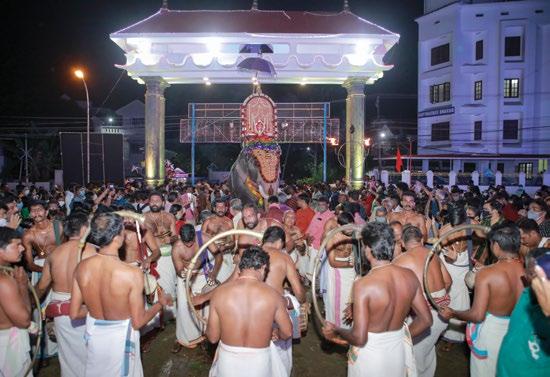
The 'Thalam' of the East has been a part of the temple festival since 1990. The main offerings of Lord Mahadevan are Pradosha Pooja and 1001 jugs and 101 jugs
of 'Jaladhara' in every Pradosh. Abhishekam is performed on Thiruvatira in the month of Dhanu and Rudrabhishekam on Shivratri. Other important offerings to Lord Mahadevan are Kadumpayasa Nivedyam, Dhara, Udayasthamana Pooja, Mritunjaya Pushpanjali and Ilanir Abhishekam.
As per the concept of 'Kiratamoorthy', Maheshwaran bestows blessings on each and every one of his devotees. In this temple Puliyannoor Murali Narayanan Namboothiri is the Tantri and Iravimangalam Illam Santosh P Namboothiri is the Melshanthi. Devotees testify that the blessing of Thaikattappan can remove unwanted lust, anger and temptations of the human mind.
To contact the temple: + 91- 484 -2805986, + 91-9562888888
Email: thykkattudevaswom@gmail.com
Web: www.thykkattudevaswom.org
Arise of festival
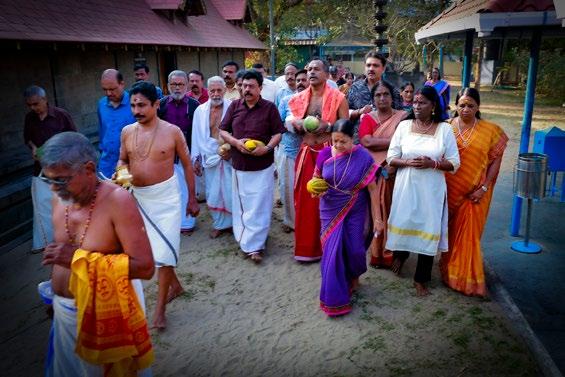
Pantry filling Ceremony of Sivrathri festival 2026
Dr Arun Oommen
MBBS, MS (General surgery), Mch (Neurosurgery, MRCS Ed (UK), MBA (Hospital administration). D Litt(h), DSc(h), PhD(h), ENLS. DMS
State Secretary. Neurological society of IndiaKerala Chapter www.arunoommen.com
Healthcare is moving into a phase where doctors remain central, but the nature of work, skills, and hierarchy will change dramatically.
HEALTH CARE SECTOR TO MAKE GIANT STRIDES IN THE NEXT 5-7 YEARS
The future of doctors and health care workers in the next five years will not be about replacement — it will be about reinvention. Healthcare is moving into a phase where doctors remain central, but the nature of work, skills, and hierarchy will change dramatically.
Let’s have a synthesised, realistic outlook based on current healthcare, AI, demographics, and market trends:
1. Major Changes in the Near Future
In the next five years, most regions will face doctor shortages, driven by:
2. AI Will Replace Cognitive Tasks, Not Doctors. AI Will Accelerate Diagnosis and Administrative Work
Tasks AI will handle:
• Radiology reads
• Pathology scanning
• Triage & symptom assessment
• Documentation & billing
• Treatment plan suggestions
• Physical rehab monitoring.
Tasks AI cannot replace:
• Surgery & interventional procedures (beyond certain robotic augmentations)
• Empathy-driven care
• Ethical decision-making
• Complex multi-organ management
• Patient trust.
So, health care workers who partner with AI will outperform those who resist.
3. Surgical Field Transformation
Surgery will shift into the robotassisted era.
In future we expect:
• More remote & telesurgery
• Higher precision navigation in neurosurgery, spine, and cardiac
• Augmented reality for planning & intraoperative guidance
• Simulation-based training replacing trial-based learning
• Surgeons will become system orchestrators, not just manual operators.
4. Healthcare Will Decentralise
Care will move from Hospital Home care, Ambulatory care and Digital care.
Chronic disease care will be
managed remotely with:
• Wearable sensors
• AI analytics
• Remote consultations
• Digital therapeutics
Hospitals will focus on:
• Acute care
• Complex surgeries and
• Critical care
5. Skills Profile of the Immediate Future Doctors
Beyond medical training, doctors will need:
• New skill layers
• AI literacy
• Data interpretation
• Technology-assisted diagnosis
• Bioethics
• Communication & empathy
• Systems thinking
• Interdisciplinary collaboration
Doctors who add leadership, research, or innovation get elevated influence.
6. Financial Landscape & Income Trends in Future Medical Care
Procedural specialties will earn more
Cognitive specialties augmented by AI earn stable but may compress Clinics shift to subscriptionbased & bundled models
Private hospitals gain dominance over government infrastructure
Countries like India will see:
• Higher private sector payouts
• Insurance-based care expansion
• Medical tourism surge (esp. surgery, fertility, rehab, oncology)
7. Global Migration Trend
The next five years will worsen global medical talent gaps.
Countries that will be absorbing doctors and healthcare workers include:
• UK
• Germany
• Canada
• Australia
• UAE
• Singapore
This will create brain circulation rather than brain drain.
8. Physician Identity Will Expand Beyond Clinical
Doctors and will also occupy roles such as:
• Innovators
• Medical entrepreneurs
• Device developers
• AI validators
• Chief Medical Officers
• Bioethics advisors
• Policy architects
• Medical educators
• Health influencers
9. The Doctor–Patient Relationship Will Become Premium
Ironically, AI abundance increases the value of human connection.
Patients will pay more for:
• Time
• Trust
• Continuity
• Empathy
• Interpretation of complex data
Human judgment becomes scarce — therefore premium.
So, in short, the future health care scenario is augmented, not replaced. More impactful, but transformed!
Adv Sherry Samuel Oommen: This article is authored by Adv Sherry Samuel Oommen. He specialises in the Constitution, tax and corporate laws and has also cleared the final exams of the Institute of Chartered Accountants of India, the Institute of Cost Accountants of India and the Institute of Company Secretaries of India. He has also completed his Masters's Degree in Commerce, apart from obtaining a Post Graduate Diploma in Business and Corporate Laws from Symbiosis, Pune. The views expressly are personal and should not be construed as a legal opinion. sherryoommen@nashcp.com.
Tax Sovereignty In A Globalized Economy – Its Assertion From An Indian Context
A Pivotal Shift in India’s Tax Jurisprudence
On January 15, 2026, the Supreme Court bench of Justices R. Mahadevan and J.B. Pardiwala delivered a landmark verdict in the consolidated appeals concerning Tiger Global International Holdings (reported in 2026 SCC Online SC 86). The judgment did more than just resolve a multi-billion-dollar tax dispute over capital gains from the sale of Flipkart; it orchestrated a fundamental recalibration of India’s judicial philosophy towards international taxation. By overturning the Delhi High Court and reinstating the Authority for Advance Rulings’ (AAR) rejection of the application, the Supreme Court decisively shifted the axis from a form-based, treaty-centric model to a substancebased, sovereignty-centric paradigm.
This ruling represents the culmination of a judicial and legislative journey that began with the controversies surrounding Vodafone and the subsequent statutory reforms, culminating in a clear declaration: India’s domestic anti-abuse legislation and its sovereign right to tax value generated within its economic geography are paramount. This article provides a comprehensive analysis of the judgment, dissecting the contentious issues, the Court’s intricate legal reasoning, and the profound implications for investors, policymakers, and the future of India’s tax treaty network.
The Court’s Analysis: A Methodical Unraveling and a New Doctrine
The views of the Hon’ble Court is a masterclass in statutory interpretation, meticulously navigating
the evolution of India’s tax law. The Court’s reasoning can be distilled into several groundbreaking propositions.
The Court explicitly stated that the circulars issued by the Central Board of Direct Taxes (“CBDT”), while binding under the regime prevailing at their issuance, “cannot override subsequent statutory amendments.” It held that Parliament, through the Finance Act, 2012, consciously altered the legal field. Section 90(4) & (5) of the Income-tax Act, 1961 (“the Act”) made a Tax Residency Certificate (“TRC”) a necessary condition but conspicuously omitted to call it “sufficient.” The simultaneous introduction of GAAR provided the tools to examine substance. Therefore, “the mere holding of a TRC cannot, by itself, prevent an enquiry.” This for-
The Court explicitly stated that the circulars issued by the Central Board of Direct Taxes (“CBDT”), while binding under the regime prevailing at their issuance, “can not override subsequent statutory amendments.” It held that Parliament, through the Finance Act, 2012, consciously altered the legal field.
mally ends the era where a TRC was a magic talisman against scrutiny. The GAAR Framework: Elevating “Arrangement” over “Investment”
The Court’s analysis of Rule 10U is crucial and complex. It accepted the Revenue’s interpretive distinction. It noted that Rule 10U(1)(d) uses the term “investment,” while Rule 10U(2) uses the broader term “arrangement.” The Court reasoned that this linguistic difference was deliberate. Grandfathering under Rule 10U(1)(d) protects the investment asset itself if acquired before the cutoff. However, Rule 10U(2) acts as a proviso, ensuring that GAAR can still apply to the overall arrangement or structure if it yields a tax benefit post-April 2017. The Tiger Global entities’ investment may have
been pre-2017, but the arrangement of using Mauritius conduits to sell shares of a Singapore company holding Indian assets—and obtaining the tax benefit—occurred in 2018. Hence, GAAR scrutiny was valid. The Continued Vitality of Judicial Anti-Avoidance (JAAR)
The Court affirmed that the doctrines of “substance over form,” “piercing the corporate veil,” and the “look at” test—collectively termed Judicial Anti-Avoidance Rules (JAAR)—continue to operate alongside and independently of statutory GAAR. It cited McDowell and Vodafone to reiterate that courts can disregard colorable devices and artificial structures meant solely for tax avoidance. This provides the Revenue with a dual arsenal: the
procedural machinery of GAAR and the inherent judicial power to examine abuse.
“Prima Facie” Bar under Section 245R(2) of the Act:
A Low Threshold for the AAR
The Court upheld the AAR’s rejection of the advance ruling application at the threshold stage. It emphasized that the proviso to Section 245R(2) bars a ruling if the transaction is prima facie for tax avoidance. The term “prima facie” means “at first sight”; it does not require conclusive proof. The AAR, based on evidence suggesting offshore control, lack of commercial diversity, and a structure targeting treaty benefits, had enough to form this prima facie view. The High Court erred, according to the Supreme Court, by delving
The purpose of DTAAs is to allocate taxing rights between sovereigns and provide predictability. An overly aggressive application of domestic substance doctrine, not mirrored in the treaty text, could be seen as violating the spirit of the inter national agreement.
into a full merits-based adjudication at this preliminary stage.
Concurring Opinion: Justice Pardiwala’s Doctrine of “Tax Sovereignty”
While agreeing with the outcome, Justice Pardiwala’s concurrence elevates the discourse to a constitutional and geo-strategic level. He articulates a powerful, standalone doctrine:
Sovereignty as Independence: Tax sovereignty is an indispensable attribute of a nation-state, crucial for economic independence and security.
Source-Based Taxation as a Right: The right to tax income arising from economic activities and assets within a nation’s territory is a default sovereign right, not a concession to be bargained away.
Against Perpetual Compromise: His Lordship cautions against long-term treaties that “cede” sovereignty, advocating for periodic reviews, strong renegotiation clauses, and the retention of unilateral policy space.
Anti-Abuse Rules as Security Tools: His Lordship frames robust GAAR and anti-evasion laws not just as revenue tools but as essential safeguards against threats to national security, such as roundtripping of illicit funds and money laundering.
This opinion signals a judicial willingness to view tax policy through the lens of national interest and strategic autonomy, po-
tentially influencing future treaty negotiations and interpretations. Critique: Between Assertion and Uncertainty, Substance and Overreach
Despite its doctrinal clarity, the Tiger Global judgment invites significant criticism and raises concerns about its potential consequences.
Retroactivity and the Erosion of Legitimate Expectation: The most severe critique lies in its impact on investor certainty and the principle of legitimate expectation. For over two decades, Circular No. 789 and the Azadi Bachao ruling formed the legal bedrock for the “Mauritius Route,” attracting hundreds of billions in FDI and through FII. By holding that these are effectively overridden by subsequent legislation for transactions post-2012/2017, the Court introduces a form of retroactive uncertainty. Investors who structured compliant, long-term investments based on the prevailing legal and policy framework now see the rules change mid-journey. This could disproportionately penalize passive, pooled investment vehicles (like the Tiger Global funds) that are inherently “holding” structures, chilling legitimate foreign capital flows.
The Tension Between Treaty Law and Domestic Overreach: While the Court pays lip service to the DTAA, its practical effect is to make domestic GAAR/JAAR the dominant lens.
There is a risk of unilateral treaty override through judicial interpretation. The purpose of DTAAs is to allocate taxing rights between sovereigns and provide predictability. An overly aggressive application of domestic substance doctrine, not mirrored in the treaty text, could be seen as violating the spirit of the international agreement. The balance tipped in Azadi Bachao towards treaty certainty; it has now swung decisively towards domestic enforcement, potentially destabilizing the treaty network.
Conceptual Difficulties in the GAAR/Investment Dichotomy: The Court’s distinction between grandfathered “investment” and scrutinizable “arrangement,” while intellectually elegant, is fraught with practical difficulty. For an investment holding company, its very raison d’être is the “arrangement” of holding and disposing of investments. Where does one draw the line? This dichotomy is likely to spawn extensive litigation as taxpayers and the Revenue debate whether a given set of facts constitutes a protected “investment exit” or an abusive “arrangement.”
A New Constitutional Settlement for Cross-Border Taxation
The Tiger Global judgment is more than a tax case; it is a constitutional settlement for India’s engagement with global capital. It draws a new line in the sand, declaring that India’s sovereign
right to tax economic value generated within its borders, as codified in its post-2012 anti-avoidance legislation, is non-negotiable.
For the Indian Revenue it is a powerful mandate. Assessing Officers and the AAR will be emboldened to dissect complex holding structures, demand proof of commercial substance, and invoke GAAR/JAAR with greater confidence. For Multinational Enterprises and Funds, the due diligence must intensify. Preexisting structures, especially those involving conduit jurisdictions and indirect transfers, require urgent review. Future investments must be underpinned by demonstrable nontax business rationale, authentic local management, and robust documentation of substance. The cost
and risk of purely tax-driven structuring have risen exponentially. For Tax Treaty Policy, this judgment reinforces India’s stance in treaty renegotiations. It validates India’s push for robust LOB clauses, Principal Purpose Tests (PPTs), and source-based taxation rights. Other treaties without such safeguards may be interpreted in light of this sovereign-centric philosophy. Justice Pardiwala’s concurrence adds a profound, long-term dimension. It frames tax sovereignty as integral to India’s strategic autonomy in a turbulent global order, a tool for economic security, not just revenue collection.
Ultimately, the Supreme Court has chosen a path of assertive sovereignty over predictable com-
ity. While this fortifies India’s defenses against tax avoidance, the challenge for all stakeholders, the government, the judiciary, and the investment community, will be to ensure this newfound assertiveness is applied with wisdom, proportionality, and a nuanced understanding that not every holding structure is a sham, and not every treaty benefit claimed is an abuse. The goal must be to foster an environment that deters abuse without stifling the genuine, long-term investment that fuels India’s growth story. The Tiger Global judgment has set the new rules of the game; the quality of its implementation will determine whether it secures India’s treasury without undermining its economic future
CA Sreejith Kuniyil Founder, PravasiTax & True Legacy
Budget 2026 proposes to extend the deadline for filing revised income-tax returns from the earlier date of December 31 to March 31 of the assessment year, subject to the payment of a nominal fee.
Union Budget 2026: What’s Changing for NRIs?
The Union Budget 202627, presented by Finance Minister Nirmala Sitharaman on February 1, 2026, continues the government’s focus on growth, simplification of tax compliance, and facilitation of investment. While the budget did not introduce sweeping new tax rate cuts, it incorporates important changes that could affect Non-Resident Indians (NRIs) - particularly in investment flex-
Revised Income Tax Return Deadline Extended to March 31
Budget 2026 proposes to extend the deadline for filing revised income-tax returns from the earlier date of December 31 to March 31
ibility and compliance norms. Below are the key direct tax changes relevant to NRIs: No Change in Basic Income Tax Slabs
Budget 2026 did not revise income tax slab rates for individual taxpayers. Tax rates and slabs applicable for FY 2026-27 under both old and new regimes remain unchanged. This means the basic structure for tax computation continues as before, and NRIs are
taxed on their India-sourced income at the prevailing rates. Staggered Income Tax Return Timelines
While the standard due date for most individual taxpayers (such as ITR-1 and ITR-2 filers) will remain 31 July, the Budget proposes to stagger return filing timelines for taxpayers with business income. The proposed timelines applicable for Non-Residents are as follows:
of the assessment year, subject to the payment of a nominal fee. This additional three-month window allows taxpayers more time to correct mistakes or include omitted income before the assessment year closes. Expanding the Scope of
Updated Returns
The scope of Updated Returns is also proposed to be extended to such cases where taxpayer is reducing the amount of loss in comparison to the amount of loss claimed in the Income Tax Return within the origi-
nal due date.
Budget 2026 has also proposed that Updated Return may be allowed to be filed in such cases where reassessment proceedings have been initiated. This measure is aimed at reducing litigation by giving an opportunity for taxpayers to voluntarily disclose income and comply with tax obligations.
Simplified Compliance in Property Transactions
To ease real estate transactions involving NRI sellers, the government proposed that residents purchasing property from non-resident sellers may now remit TDS using the buyer’s PAN-based challan, removing the prior requirement for the buyer to obtain a separate TAN. This is expected to simplify TDS compliance and reduce procedural delays in property deals for residents. However, it may be not-
ed that non-residents purchasing property from non-residents will continue to attract the requirement to obtain TAN to deposit the TDS.
Foreign Asset Declaration & Compliance Window
Many taxpayers have unknowingly failed to report foreign income or assets. This includes ESOPs or RSUs received by residents from overseas employment, old or lowbalance foreign bank accounts of former students, foreign savings or insurance policies held by returning NRIs, and assets held during overseas deputation. To address such unintentional non-disclosures, a one-time Foreign Asset Disclosure Scheme of six months is proposed.
Under this scheme, undisclosed foreign income or assets (up to specified limits) can be disclosed by paying tax, along with relief from
heavy penalties and prosecution. For instance, foreign assets having fair market value not exceeding `5 crores, acquired while being a non-resident but not reported in Income Tax Return after becoming a resident can be declared on payment of fee of `1 lakh.
The scheme is meant for small taxpayers such as students, technology professionals, and NRIs who have relocated back to India.
This scheme will be especially useful for returning NRIs who still have dormant foreign bank accounts that were not reported earlier.
Changes in TCS Provisions
Budget 2026 proposes amendments to the Tax Collected at Source (TCS) provisions in respect of two transactions that are particularly relevant from a nonresident perspective:
Harsher Penalties on Undisclosed Investments / Expenditure / Money
Budget 2026 has proposed changes to the taxation of undisclosed investments, expenditure or money, a provision often triggered in the case of non-residents investing in India. Non-residents investing in fixed deposits, real estate etc in India and not filing their tax returns in India, often find themselves faced with Income Tax notices seeking the source of such investments. Where the non-resident fails to prove the source / fails to respond to such notices, such investments are fully added to their income and taxed as “Undisclosed Investment”.
Budget 2026 has proposed that the tax rate on such additions be reduced from 60% to 30%, however, the penalty has been increased to 200% of the tax payable (as against 10% earlier). Accordingly, non-residents must ensure proper disclosure of their investments and timely responses to tax notices to avoid severe penal consequences.
Tax on Buybacks
Budget 2026 also proposes to change back the tax treatment of share buybacks by taxing the
consideration received by shareholders as capital gains, instead of treating it as dividend income. For ordinary shareholders, applicable capital gain tax rate shall apply. In the case of promoter shareholders, gains arising from buy-backs will be subject to an effective tax rate of 30% and in case of promoter companies at the rate of 22%.
Tax Exemption on Motor Accident Compensation and Interest
Budget 2026 also proposed to provide tax relief in respect of compensation awarded by the Motor Accident Claims Tribunal (MACT). The interest component received on such compensation by an individual or their legal heirs has been exempted from income tax, and no TDS will be applicable on such interest. This ensures that accident victims and their families receive the full benefit of the compensation without tax deductions.
Increased Investment Flexibility
for NRIs (Portfolio Investment Scheme)
Budget 2026 has also proposed higher equity investment limits for Individual Persons Resident Outside India (PROI) (which include NRIs and OCIs) investing through
the Portfolio Investment Scheme (PIS).
The individual investment limit has been increased from 5% to 10%, while the aggregate cap for all overseas investors in the listed Indian company has been raised from 10% to 24%. This change provides greater investment flexibility and significantly more headroom for individual overseas investors to participate in Indian equity markets, with investments continuing to remain freely repatriable.
Changes in Securities Transaction Tax (STT)
Budget 2026 proposes higher STT rates on derivatives trading, effective 1 April 2026. The increases are aimed at moderating speculative activity in the futures and options (F&O) segment of the stock market.
Revised STT rates under the new budget:
• STT on sale of futures in securities is increased from 0.02 % to 0.05 % of the traded price.
• STT on sale of options is raised to 0.15 %.
These changes mean that derivatives trading, especially frequent or high-volume F&O activity, will become costlier from the new financial year
Rajiv Ambat is a well-known speaker and the author of the best-selling book ‘The Midriff Crisis’. As a lifestyle expert, Rajiv leads the team at SOLVEMyHealth, which includes experienced dieticians, exercise specialists, and medical doctors. Together, they help clients manage a wide range of health concerns through structured, scientific, and personalised lifestyle interventions. The team specialises in treating and managing lifestyle-related conditions such as obesity, diabetes, high cholesterol, fatty liver, and PCOS through customised diet and exercise plans tailored to each individual’s needs.
Autoimmune Disease: When Genetic Risk Meets Environmental Triggers
Autoimmune diseases are conditions in which the immune system, which normally protects the body from infections, starts reacting against the body’s own tissues. This leads to ongoing inflammation and symptoms that may affect one organ or multiple systems in the body. Common examples include autoimmune thyroid disease (hashimotos, graves), rheumatoid arthritis, type 1 diabetes, lupus (SLE), inflammatory bowel diseases like Crohn's or ulcerative colitis, and multiple sclerosis. Over the last few decades, autoimmune diseases have become increasingly common across the world. Conditions that were once considered rare are now being diagnosed more frequently. For example, multiple sclerosis that was once diagnosed only among the Parsi community –that, too, as isolated cases a few decades ago, is now regularly diagnosed in neurological practice among other communities also. Similar trends are observed with autoimmune thyroid disorders, inflammatory bowel dis-
ease, and other immune-mediated conditions.
What Does “Genetic Risk” Really Mean?
Genetic risk means a person is born with certain genes that make the immune system more sensitive or reactive than average. These genes influence how the immune system recognises what belongs to the body and how strongly it responds to perceived threats. Having genetic risk does not mean a person will definitely develop an autoimmune disease. Many people carry these genes and remain completely healthy throughout their lives.
In autoimmune disease, genes mainly set the threshold at which the immune system loses tolerance. Whether that threshold is crossed depends on what the immune system is exposed to over time. This is why autoimmune diseases may run in families but do not affect everyone in the same way. Genetic risk creates vulnerability, but environmental and lifestyle factors determine if, when, and how that risk is expressed.
In short: Genetics loads the gun; environment pulls the trigger!
The environmental triggers include infections, sleep patterns, food habits, physical activity levels, gut health, stress exposure, and the overall pace and pressure of modern life.
What Do I Mean by “Environmental Triggers”?
In autoimmune disease, environmental triggers are factors that repeatedly activate or strain the immune system. These triggers do not act in isolation. They often overlap and accumulate over time, especially in people with genetic risk.
Common environmental triggers include:
• Infections (viral and bacterial): Infections strongly activate the immune system. In some cases, even after the infection clears, immune activity may remain altered. Certain infections can confuse immune recognition or lead to prolonged in fl ammation, increasing the risk of autoimmune activation or
disease flare-ups. A classic example is the increase in autoimmune symptoms and flare-ups seen after COVID infections, as well as after severe viral illnesses such as dengue or prolonged flu.
• Chronic stress and poor recovery: Ongoing psychological or physical stress keeps the nervous system in a constant “alert” state. When recovery is inadequate, stress hormones become dysregulated, sleep quality worsens, and immune signalling is disturbed. Over time, this reduces immune tolerance and increases inflammatory responses. Prolonged work pressure, financialuncertainty, emotional strain, major life events or trauma without time to recover, or always feeling “on edge” even at rest are all factors that can pull the trigger.
• Inadequate or irregular sleep: Sleep is essential for immune repair and regulation. Poor sleep duration or irregular sleep - wake cycles impair immune balance and increase inflammation.
Many autoimmune flare-ups are preceded by periods of poor sleep or disrupted routines. Sleeping less than 6 - 7 hours regularly, latenight screen use, rotating work shifts, frequent travel with disrupted sleep cycles are all factors.
• Gut health and digestion: A large portion of the immune system interacts with the gut. Problems such as altered gut bacteria, poor digestion, food intolerance, or increased gut permeability can expose the immune system to repeated stimulation, increasing immune reactivity.
• Hormonal changes: Hormonal shifts during puberty, pregnancy, the post-partum period, and menopause can sometimes affect immune behaviour. These phases are commonly associated with the onset or worsening of autoimmune symptoms, especially in women.
• Early-life immune exposures: The immune system is shaped early in life. Factors such as infections during childhood, antibiotic exposure, mode of birth,
and early nutrition can influence immune development. These early exposures can increase susceptibility to autoimmune disease later in life.
It's important to note that environmental triggers are not single events and not something to “fix overnight.” Autoimmune disease often reflects the cumulative effect of these triggers over time. Lifestyle management focuses on reducing unnecessary immune strain, improving recovery, and supporting immune regulation in a realistic and sustainable way.
Lifestyle management in autoimmune disease is not about curing the condition or replacing medical treatment. It focuses on reducing unnecessary strain on the immune system and improving the body’s ability to recover and regulate itself. Small, consistent changes matter more than extreme or short-term efforts.
Regular meals built around whole, minimally processed foods, adequate protein intake for tissue repair and proper immune regulation and fibre-rich foods that support healthy gut bacteria play a key role in immune communication and tolerance.
Nutrition: Supporting Immune Balance, Not Boosting Immunity!
In autoimmune disease, nutrition is not about “boosting” the immune system. The aim is to support immune balance by reducing inflammation, improving gut health, and avoiding repeated immune stimulation. What and how we eat in fl uences digestion, blood sugar control, and the signals the immune system receives every day.
Regular meals built around whole, minimally processed foods, adequate protein intake for tissue repair and proper immune regulation and fibre-rich foods that support healthy gut bacteria play a key role in immune communication and tolerance.
It is also important to note that food responses are individual. Some people notice symptoms worsening with certain foods, and identifying these patterns can be helpful. For example, gluten is known to cause symptoms to flare up in some people with autoimmune disease, particularly when gut health is already compromised. However, this response may be individual and need
not be universal for everyone with an autoimmune condition. Avoiding frequent blood sugar spikes is also important, as repeated fluctuations can increase inflammatory stress and worsen symptoms.
Physical Activity: The Right Dose Matters
Physical activity plays an important role in autoimmune disease because it helps regulate immunity, metabolism, and stress. Regular movement has been shown to reduce inflammation and is one of the most effective anti-in fl ammatory lifestyle practices available. It also improves circulation, muscle function, and overall energy levels, all of which support better immune regulation.
However, in autoimmune disease, more is not always better. While regular, moderate activity is beneficial, overtraining or repeated high-intensity exercise without adequate recovery can place additional stress on the body and trigger symptom fl are-ups. Activities such as strength training, walking, cycling, swimming, and other low-impact aerobic exercises are often better tolerated than prolonged or frequent
high-intensity workouts.
Physical activity also has a strong effect on mood and mental health. Movement improves stress resilience, supports better sleep, and reduces symptoms of anxiety and low mood, which are common in people living with chronic illness. The goal is not performance or pushing limits, but consistency and recovery. Exercise should leave the body feeling supported and energised over time, not drained or exhausted.
Sleep & Stress: Restoring Immune Regulation
Sleep and stress regulation are central to autoimmune management because they directly influence hormonal balance, inflammation, and immune control. Good-quality sleep allows the immune system to repair and recalibrate, while poor or irregular sleep increases inflammatory activity and weakens immune regulation. Consistency matters more than perfection. Regular sleep and wake times help stabilise biological rhythms and reduce unnecessary stress on the immune system.
When stress is ongoing and recovery is poor, the nervous system remains in a constant state of alert.
This disrupts immune signalling, alters cortisol patterns, worsens digestion, and interferes with sleep quality. Over time, this state increases the risk of symptom flare-ups and prolongs recovery after illness or exertion.
Stress management does not mean eliminating stress from life, which is not even a realistic goal. The goal is to improve recovery and calm the nervous system regularly.
Simple practices such as breathing exercises, short daily meditation, gentle yoga, stretching, time outdoors, and reducing mental overload before bedtime can help the body come out of constant alert mode.
Techniques like mindfulness meditation, guided relaxation, yoga, and breathing exercises help activate the parasympathetic nervous system, which supports immune regulation and recovery. Even a few minutes practiced consistently
can be effective. Giving the body enough recovery time reduces immune overload and supports better long-term control of autoimmune symptoms.
A Balanced Approach for Long-Term Management
While lifestyle factors play an important role in reducing immune strain and supporting recovery, it is important to note that they do not replace medical care. Medical management is essential to control inflammation, prevent tissue damage, and reduce the risk of longterm complications.
Ignoring medical advice or stopping prescribed treatment without supervision can be harmful. For example, poorly controlled rheumatoid arthritis can lead to permanent joint damage and disability. Conditions such as lupus or inflammatory bowel disease, if left untreated, can affect organs like the kidneys, intestines,
or blood vessels. These risks are not always felt immediately, which is why regular medical follow-up is important even when symptoms seem mild.
Lifestyle management works best when it supports, not substitutes, medical treatment. Nutrition, physical activity, sleep, and stress regulation help reduce flare-ups, improve treatment response, and enhance quality of life, but medication is often necessary to keep the disease under control. The most effective approach is an integrated one, where medical care and lifestyle strategies work together.
Autoimmune disease may be chronic, but it is manageable. With appropriate medical guidance and consistent lifestyle support, many people can control symptoms, prevent complications, and live active, meaningful lives over the long term
Anup V Menon Sports Analyst and Knowledge Partner
History shows that teams who have triumphed across formats are those that have bounced back strongest when pushed against the wall.
THE ROAD TO THE T20 CROWN: INDIA’S CHANCES
AMIDST ELITE RIVALS
Never in the history of the T20 World Cup has a team successfully defended its title, nor has any side lifted the trophy for a third time. That alone makes this campaign a compelling one for Team India, as they begin their journey to defend their crown and chase history on home soil.
The squad selected appears well-balanced across departments, and consistent performances in bilateral series over the last two years make India firm favourites going into this edition of the World Cup. Playing in front of a home crowd adds an extra layer of motivation and expectation, as the team looks to clinch the coveted title for a third time in familiar conditions.
The key talking point, however, will be the team combination and ensuring there are no loopholes in any department. India’s batting has been significantly bolstered by the advent of Abhishek Sharma at the top, whose fearless, high-impact approach has set the tone early in innings. The
philosophy of “no-fear cricket,” instilled by Suryakumar Yadav and Gautam Gambhir, is clearly rubbing off on the younger players, with recent performances showcasing remarkable intent and confidence. A potential batting line-up of Sanju Samson and Abhishek Sharma at the top, followed by Tilak Varma, who is set to return after an injury layoff, Surya, Hardik Pandya, Shivam Dube, and Rinku Singh forms the core of a formidable batting unit. Add Ishan Kishan into the mix, and it becomes a line-up that opposition bowlers would genuinely dread facing.
The bowling attack, meanwhile, looks equally reassuring. Jasprit Bumrah remains the master wrecker, ably supported by the ever-reliable Arshdeep Singh. The emergence of Harshit Rana adds freshness, while Varun Chakravarthy’s mystery spin remains a potent trump card, complemented by Kuldeep Yadav and Axar Patel. Hardik and Dube can roll their arms over as and when required. One area
the Indian think tank will closely monitor is death bowling, as overreliance on spin in crunch moments could prove costly against top quality opposition. That said, on paper, India appears to have all bases covered.
While home conditions offer a clear advantage, the pressure of performing in front of one’s own crowd cannot be understated. Success will depend on how the team handles off days with either bat or ball, without succumbing to the intense scrutiny this format invites. T20 cricket is a great leveller. Momentum can shift in a matter of overs and that unpredictability is its greatest charm. Staying in the moment and responding to situations, rather than reacting to pressure, will be crucial. History shows that teams who have triumphed across formats are those that have bounced back strongest when pushed against the wall.
The road to the Super Eights appears relatively smooth for India, though the marquee clash against Pakistan before that stage
promises to be a high voltage encounter. Based on current form and past trends, India start favourites, but such contests often defy logic. Beyond that, the Super Eights are likely to be fiercely contested, with several teams packing enough firepower to turn games on their head in the blink of an eye.
My picks for the semi-finals are India, Australia, New Zealand, and England, with Afghanistan having an outside chance of upsetting one of the established heavyweights. Each of these teams brings a unique strength to the tournament.
Australia boasts tremendous batting depth and a wealth of allrounders, allowing them to tailor their XI to conditions. Their extensive talent pool is a major
asset. However, injury concerns, particularly Pat Cummins missing the early part of the tournament could hurt their balance, leaving Josh Hazlewood as the lone experienced pacer initially. Their struggle to take wickets in the middle overs on flat tracks could also prove a vulnerability. New Zealand, on the other hand, presents a well-rounded unit. Their spin options extend beyond specialists, and their middle order is built for pressure situations. Matt Henry and Duffy offer wicket-taking ability across conditions. Injuries remain a concern, though, with Milne ruled out, and any further setbacks could weaken their pace resources. Inconsistency at the top of the order is another area they must address.
England, led by the enigmatic Harry Brook, remains a dangerous side. Their batting depth and the spin expertise of Adil Rashid form the backbone of their campaign. However, heavy dependence on key players like Sam Curran and Jofra Archer could be risky, and their ability to handle quality spin bowling will largely determine how far they go.
With just days to go before the T20 World Cup begins, it’s time to sit back, relax, and soak in the glorious uncertainties this format offers. Like every other Indian fan, I will be rooting for Team India to go all the way and etch their name into history once again.
Until we meet next time, Adios Amigos!!!
M R Rajeshkumar Lead - Partner, GatewaysGlobal Family Business Advisory. www.gatewaysglobal.com
Leadership choices are often influenced by long-standing traditions rather than a structured evaluation of skills, experience, and readiness. As a result, sons are frequently preferred by default, even when daughters are equally or better prepared.
Women Heirs in Family Businesses: Capability vs Convention
Mr Gupta sat quietly at the dining table long after dinner. The house was calm, but his thoughts were unsettled. The family business - now in its third generation - was under pressure. Markets were changing, competition was increasing, and the next leadership decision would shape the company’s future. Succession was no longer a discussion for later; it had become urgent.
Gupta had two children. His son had been working in the business for a few years. He knew the people, the routines, and the way things had always been done. His daughter, however, followed a different path. She had studied abroad, completed a postgraduate degree from a reputed international university, and worked with a Big Five consulting firm. She returned with global exposure, structured thinking, and professional leadership experience.
On paper - and in practice - she
was clearly prepared. Yet, as family discussions unfolded, the outcome felt almost decided. Relatives advised, “A business needs a man at the top.” Friends cautioned, “Employees may not accept a woman leader.” Even Gupta found himselfwondering, “What if she gets married and moves away? What if her priorities change?”
No one questioned his daughter’s capability. They questioned her continuity.
Despite knowing she was competent enough, Mr. Gupta - like many others - felt drawn toward the safer, more familiar choice: his son. This silent dilemma is not unique. It plays out repeatedly across Indian family businesses.
Succession Challenges for Women in Family Enter-
prises
Women heirs in family businesses often face a common set of challenges that are deeply rooted in
family structures and social norms. In many family businesses, there is limited awareness within the family about capability-based succession. Leadership choices are often influenced by long-standing traditions rather than a structured evaluation of skills, experience, and readiness. As a result, sons are frequently preferred by default, even when daughters are equally or better prepared.
At the same time, deep-rooted social norms continue to shape expectations around leadership. Society often associates authority, continuity, and control with men, while women are expected to prioritise family roles. These beliefs influence not only families but also advisors, employees, and business partners, creating resistance - often unspoken- to women taking charge.
Over the years, unequal exposure to business roles reinforces this gap. Sons are typically introduced early to operations, finance, nego-
tiations, and decision-making, while daughters remain on the sidelines. Later, this lack of exposure is mistaken for lack of capability.
Many crucial decisions are not made in formal meetings but informally. Exclusion from these influential conversations - during travel, dining tables, or family gatherings - reduces women heirs’ visibility and perceived involvement, further weakening their leadership legitimacy.
Repeated signals that leadership is “not meant” for them can take a toll. Internalised self- doubt develops over time, leading many women to question their own leadership ability despite strong qualifications and experience. This internal barrier can be as limiting as external resistance. These mindsets are often reinforced externally. Relatives, advisors, and senior employees may question a woman’s authority or long-term commitment, and when such opin-
ions are repeated, they begin to feel like practical concerns rather than bias.
In most cases, the hesitation is not about competence at all. The real concern is continuity - driven by assumptions around marriage, mobility, caregiving responsibilities, and changing life priorities. Together, these factors create a cycle where capable women are overlooked, not because they lack potential, but because awareness, systems, and mindsets have not evolved alongside their qualifications.
These challenges are not isolated. They form a pattern across family enterprises. More importantly, they represent a serious business risk. Poor succession planning remains one of the key reasons family businesses struggle beyond the second or third generation.
From Barriers to Solutions
Families that navigate succession successfully take conscious and de-
liberate steps.
Many real business decisions happen outside boardrooms. Start inclusion early - even at the dining table. Including daughters in discussions about growth, investments, risks, and long-term plans builds confidence and credibility over time.
Leadership readiness does not happen automatically. Create exposure, not assumptions. It must be built through operational roles, cross-functional exposure, and real responsibility - not judged selectively.
Succession decisions often get influenced by emotion. Shift from emotion to systems. Clear governance frameworks help reduce bias and ensure decisions are made in the best interest of the business.
To avoid confusion and conflict, formalise succession clearly. Family constitutions, role clarity, and leadership criteria help families move from personality-driven choices to principle-driven decisions.
When Women Lead: Evidence from Indian Family Enterprises
Indian family businesses already offer strong evidence that women-led leadership works when supported by systems and governance.
Across Indian family businesses, there is a visible shift in how nextgeneration succession is being approached, with several enterprises consciously including daughters as future leaders through structured planning. Well-known Indian examples such as Thermax, under the leadership journey of Anu Aga, and Apollo Hospitals, where Sangita Reddy represents secondgeneration leadership, demonstrate how daughters can take on significant responsibility when succession is planned early and supported by governance and professional management. The Muthoot Pappachan Group illustrates how Indian family businesses are formalising nextgeneration leadership through
structured governance, with fourthgeneration women being inducted into board-level and executive roles as part of a planned and professionalised succession process. Their induction reflects a capability-led succession model, built on structured preparation, operational exposure, and formal governance rather than assumption or tradition.
Alongside these established examples, GatewaysGlobal has worked closely with family enterprises that are actively shaping inclusive nextgeneration leadership pathways. Enterprises like the Manjilas Group (Double Horse), families have taken deliberate decisions to prepare daughters as next-generation leaders, with Annie Vinod Manjila holding a top leadership position as part of the next generation. These transitions are being enabled through structured governance practices, clear role definition, phased leadership exposure, and strong family alignment, rather than ad hoc or assumption-driven choices.
Together, these cases - both from industry and from GatewaysGlobal - supported transitions underscore a clear insight: when families invest in governance and consciously plan succession, choosing daughters as next-generation leaders becomes a strategic decision rather than an exception.
A Closing Reflection
Sustainable succession in family businesses is built on systemsnot assumptions. When leadership decisions are guided by capability, preparation, and clear governance, women heirs step forward as confident contributors to continuity and growth.
Inclusive leadership is not about changing tradition. It is about strengthening legacy.
When families choose systems over stereotypes, they secure the future of their enterprises - supported through structured governance, family constitutions, and succession frameworks implemented by GatewaysGlobal
Dr. Sureshkumar Madhusudhanan Chairman & Managing Director, Seagull International Group
One of the standout features of Budget 2026–27 is the significant increase in allocation for the Ministry of Skill Development and Entrepreneurship (MSDE). The ministry’s budget has been raised to `9,885.80 crore, marking a 62% increase compared to the previous year.
YOUR DEGREE IS A FOUNDATION, NOT A DESTINATION
Union Budget 2026–27 Charts India’s Journey to Becoming the Skilling Capital of the World
In a decisive shift from traditional fiscal priorities, India’s Union Budget 2026–27, presented by Union Finance Minister Nirmala Sitaraman puts skill development, youth employability and job creation at the core of the national growth strategy. She described this budget as driven by “Yuva Shakti” (Youth Power), a theme aimed at harnessing the demographic dividend that defines India’s economic future, and it is a welcome move by the Government of India.
Echoing the words of futurist Alvin Toffler, “The illiterate of the 21st century will not be those who cannot read and write, but those who cannot learn, unlearn and relearn,” this year’s Budget recognises that merely earning a degree is no longer sufficient in a rapidly evolving global economy. A degree may be the foundation, but skills and the ability to continually update them are the destination.
One of the standout features of Budget 2026–27 is the significant in-
crease in allocation for the Ministry of Skill Development and Entrepreneurship (MSDE). The ministry’s budget has been raised to `9,885.80 crore, marking a 62% increase compared to the previous year. This reflects a strong policy commitment to strengthening training ecosystems, industry-aligned curricula and employability pathways for India’s youth.
The budget reaffirms that education and skilling are not separate silos but interconnected pillars for future growth. With nearly 1.2 crore young people entering the workforce each year, bridging the gap between academic knowledge and job readiness is not just desirable, it is imperative.
Creative and Digital Skills in Focus: AVGC Labs
One of the most ambitious new measures is the establishment of AVGC (Animation, Visual Effects, Gaming and Comics) Content Creator Labs in 15,000 secondary schools and 500 colleges across the coun-
try. Supported through the Indian Institute of Creative Technologies (IICT), Mumbai this initiative aims to tap into India’s vast creative potential and position the country as a key player in the global “Orange Economy”.
These labs will introduce students at an early stage to creative technologies, storytelling, digital content creation and design. The AVGC sector is rapidly expanding, with projections estimating that it could require about 20 lakh skilled professionals by 2030. By bringing creative skill building into mainstream education, India aims to nurture a new generation of digital artists, designers and content creators capable of participating in global industries.
Modernisation of ITIs: Strengthening Foundational Vocational Training
Industrial Training Institutes (ITIs), long considered the backbone of vocational education in India, have received a substantial fund-
ing boost under Budget 2026–27. Around ` 6,140.5 crore has been earmarked to modernise ITIs nationwide, enabling them to offer contemporary and industry relevant training in areas such as advanced manufacturing, electric vehicle technology, robotics and automation.
This move is aimed at transforming traditional vocational centres into modern skill hubs that produce graduates who are industry ready on day one. By aligning ITI programmes with current market demands, India is setting itself up to supply globally competitive skilled talent across sectors.
University Townships:
Bridging Academia and Industry
Budget 2026–27 introduces a visionary initiative to establish five integrated university townships close to major industrial and logistics corridors. These hubs will bring together universities, research institutes, skill centres and industrial partners in a shared ecosystem to facilitate collaborative learning, internships
and applied research.
By integrating education with real-world experiences, these townships will help students transition smoothly from learning environments to employment opportunities. They will also promote industry-academia partnerships that ensure curricula remain dynamically aligned with emerging sectoral needs.
Healthcare and HumanCentred Skills: Meeting
Global Demand
Another significant area of investment is in the healthcare and caregiving workforce, recognising the global and domestic demand for trained professionals. The budget sets out plans to train 1 lakh allied health professionals and 1.5 lakh caregivers over the next five years. These roles, spanning allied medical disciplines, geriatric and home care support and technology-assisted health services, are in high demand in India and abroad.
Countries with ageing populations, such as Japan and many in Europe and the Gulf, are actively
seeking trained health personnel. India’s focus on healthcare skilling positions its youth to benefit from these global opportunities while strengthening the domestic healthcare delivery system.
Tourism Sector Skill
Building
The Budget also includes a pilot programme to upskill 10,000 tourist guides across 20 iconic sites, in collaboration with premier institutions for 12-week hybrid training modules. These programmes will focus on language skills, historical knowledge, soft skills, customer service and digital tools, preparing a cadre of professional guides capable of offering a world-class experience to both domestic and international travellers. Tourism is a major employment generator in India, and improving service quality at the grassroots level will enhance the country’s global appeal as a destination.
Beyond Employment: Fostering Entrepreneurship
India’s skilling push is tightly linked with efforts to strengthen entrepreneurship, especially in the MSME (Micro, Small and Medium Enterprises) sector, a critical engine of job creation. A dedicated `10,000 crore Champion MSME Growth Fund will support promising enterprises with growth capital, helping them scale and compete globally. This will ease access to equity funding, reduce dependence on debt, and foster innovation in small and medium businesses.
The Self-Reliant India (SRI) Fund aimed at supporting micro enterprises and early-stage ventures with growth capital has received an additional ` 2,000 crore infusion. This will strengthen financing channels for startups and entrepreneurs, especially those operating in Tier-II and Tier-III cities and rural areas.
To help smaller businesses navigate the complexity of regulatory compliance, the Budget proposes training short-term modular cours-
es through professional bodies like the ICAI, ICSI and ICMAI to create a network of “Corporate Mitras” trained advisors who can support MSMEs on taxation, compliance, governance and financial management at the local level. This is a significant step toward decentralising professional support, making it accessible and affordable for entrepreneurs outside major metros.
Supporting Students and Global Exposure
Budget 2026–27 also introduced relief measures for students pursuing higher education abroad. The Tax Collected at Source (TCS) on certain overseas education remittances under the Liberalised Remittance Scheme has been reduced from 5% to 2%, easing financial burdens on families financing global education. This reduction makes
international education slightly more affordable and reinforces the importance of global exposure in building future-ready talent.
India’s demographic advantage with a median age far lower than that of advanced economies, positions it as a key global supplier of skilled talent. While many countries face ageing populations and shrinking workforces, India’s growth prospects depend on turning its youthful population into skilled professionals, entrepreneurs and innovators.
However, this transition requires more than investments; it demands industry alignment, ongoing curriculum modernisation, continuous learning frameworks and integrated policy execution. The budget’s emphasis on skilling, entrepreneurship and global outreach sets a clear roadmap, but its success hinges on
implementation efficiency and partnerships between government, industry and educational institutions. A New Era of Human Capital Development
Budget 2026–27 marks a turning point in India’s pursuit of becoming the “Skilling Capital of the World.” With significant allocations for skill development, educational reforms, MSME support and global exposure, the country is laying the foundation for a workforce that is adaptive, employable and globally competitive.
In the words of Alvin Toffler, it is no longer enough to learn, one must be able to unlearn, relearn and adapt continually. Today’s youth, equipped with skills, enterprise and opportunity are poised not just to participate in the global economy but to lead it
Mr. Adeeb K T Chief Manager, Corporate & Institutional Credit in a Leading Public Sector Bank
An SME IPO allows a company to raise funds by offering its shares to the public and listing on designated SME platforms of stock exchanges. This transition from a privately held entity to a publicly traded company not only provides capital for expansion but also brings enhanced visibility, credibility, and long-term strategic flexibility.
SME IPOs in India: Advantages, Challenges and the Road Ahead
Small and Medium Enterprises (SMEs) form the backbone of India’s economy, contributing significantly to GDP growth, employment generation, and innovation. Despite their economic importance, access to timely and affordable capital remains a persistent challenge for many SMEs. While traditional funding avenues such as bank loans, private investors, and internal accruals continue to play a role, the capital markets particularly through Initial Public Offerings (IPOs) have emerged as a viable alternative for growth-oriented SMEs.
An SME IPO allows a company to raise funds by offering its shares to the public and listing on designated SME platforms of stock exchanges. This transition from a privately held entity to a publicly traded company not only provides capital for expansion but also brings enhanced visibil-
ity, credibility, and long-term strategic flexibility.
Understanding SME IPOs
An IPO is the process through which a company raises capital by issuing equity shares to public investors. For SMEs, this route offers an opportunity to finance business expansion, meet working capital needs, repay existing debt, or fund acquisitions. Additionally, listing on a stock exchange enables price discovery and liquidity for shareholders, transforming the company into a more transparent and accountable enterprise.
Eligibility Criteria for SME IPOs
Before opting for an SME IPO, companies must ensure compliance with regulatory eligibility norms. Key requirements include:
• The company must be incorporated under the Companies Act, 2013.
• Post issue, the paid-up capital should not exceed `25 crore.
• Net tangible assets must be at least `1.5 crore.
• A minimum operating track record of three years is required. If the business was earlier a proprietorship or partnership, the combined track record must also meet this criterion.
• The company should have recorded operating profits or positive EBITDA in at least two of the last three financial years.
• Promoters must retain their shareholding for at least one year post IPO.
• Promoters should have a clean regulatory record and must not be disqualified or suspended by any stock exchange.
SEBI’s Recent Reforms for SME IPOs
In response to rising concerns around governance and investor protection, SEBI has introduced several
important reforms:
• Cap on Promoter Offerfor-Sale (OFS): Promoter OFS has been limited to 20% of the issue size, ensuring promoters retain meaningful skin in the game post-listing.
• Higher IPO Size Threshold: The minimum post issue capital requirement has been increased to `10 crore from `3 crore.
• Enhanced Disclosure Norms: Detailed disclosures on the utilisation of funds are now mandatory, improving transparency and accountability.
• Increased Responsibility of Merchant Bankers: Merchant bankers must now underwrite at least 15% of the issue size, compelling stronger due diligence and aligning their interests with investors.
How SME IPOs Work
The SME IPO process typically involves the following steps: Appointment of an Under-
writer
The company appoints a merchant banker who acts as the underwriter, guiding the SME through pricing, documentation, and regulatory compliance.
Preparation of the Draft Red Herring Prospectus (DRHP)
The DRHP is a critical disclosure document detailing the company’s business, financials, risks, and objectives of the IPO. It is submitted to SEBI for review and approval.
Marketing the Issue
Once approved, the IPO is marketed to potential investors through advertisements and investor outreach, highlighting key details such as issue dates and price bands.
Allotment and Listing
After the subscription period closes, shares are allotted to eligible investors, followed by listing on the stock exchange, making the company publicly traded.
Advantages of SME IPOs Access to Growth Capital
SMEs often face lending constraints from banks due to limited credit history or collateral. An IPO provides access to a broader investor base without restrictive covenants, enabling funding for expansion, diversification, and debt reduction.
Enhanced Credibility and Market Visibility
Stock exchange listing significantly boosts a company’s credibility, helping to attract customers, suppliers, strategic partners, and institutional interest.
Exit Opportunity for Early Investors
SME IPOs offer liquidity to early investors, friends, family, and even founders, enabling partial or complete exits at market-determined valuations.
Employee Incentivisation
Listed equity allows SMEs to in-
troduce employee stock ownership plans (ESOPs), aligning employee interests with long-term company performance and improving retention.
Improved Valuation and Lower Cost of Capital
Publicly listed companies often command higher valuations, which can translate into cheaper access to debt and improved negotiating power with lenders.
Facilitating Acquisitions and Expansion
Listed shares can be used as acquisition currency, allowing SMEs to pursue inorganic growth without excessive leverage.
Key Challenges Facing SME IPOs
Overvaluation and PostListing Performance
A growing number of SME IPOs have debuted at inflated valuations driven by market hype. In 2025, nearly 37% of SME IPOs
closed below their issue price on the first day of trading, compared to around 9% in 2024. Moreover, the extraordinary listing gains seen in 2024 have become increasingly rare.
Governance Risks and Misuse of Funds
Governance failures have emerged as a significant concern:
• Diversion of IPO proceeds through related-party transactions and shell entities.
• Misleading disclosures, including inflated revenues and undisclosed pre IPO arrangements.
• Trading suspensions and illiquidity, with 10–12% of SMElisted companies facing compliance related suspensions, trapping investors in illiquid stocks.
Promoter Dominance
High promoter ownership and limited institutional oversight often result in concentrated control, increasing the risk of decisions that
prioritise promoter liquidity over long-term value creation.
The Way Forward
While SEBI’s recent regulatory interventions mark a positive step, their success will depend on rigorous enforcement and stronger gatekeeping by market intermediaries. Merchant bankers and Book Running Lead Managers (BRLMs) must significantly elevate their due diligence standards, as investors place substantial trust in their credibility.
Strengthening disclosure quality, enhancing accountability for issuers and intermediaries, and improving investor awareness are critical to restoring confidence. If executed effectively, the SME IPO framework can evolve into a transparent, credible, and sustainable capital raising platform which will be supporting genuine, growth oriented enterprises and deepening India’s capital markets
Dolly Neena
FOUNDER - GROUND DHARMA
Survival mode trains the nervous system to prioritise immediacy over meaning. Decisions are made to reduce discomfort rather than to build coherence.
FROM FIRE TO FOUNDATION
Most founders fail not because they lack intelligence, effort, or ambition, but because they live too long inside a mode that was never meant to be permanent. Survival is a brilliant short-term response. It sharpens instincts, increases speed, and collapses decision-making into what feels urgent and necessary. But survival, when extended, becomes an invisible prison. It begins to masquerade as productivity, hustle, and responsiveness, while quietly eroding vision, discernment, and sovereignty. “There is nothing so useless as doing efficiently that which should not be done at all.” – Peter Drucker.
The tragedy is that many entrepreneurs never realise they are imprisoned at all. They mistake pressure for purpose, motion for momentum, and urgency for importance. Their days are filled with decisions, yet their decades remain unshaped. They are constantly responding, rarely orienting. In this
state, time feels scarce not because there isn’t enough of it, but because it is never truly owned.
Survival mode trains the nervous system to prioritise immediacy over meaning. Decisions are made to reduce discomfort rather than to build coherence. The body learns to scan for threats instead of possibilities. The mind becomes addicted to firefighting because fires provide a sense of relevance. In this condition, founders often confuse being needed with being aligned. They answer every call, chase every opportunity, and react to every signal, slowly losing the ability to distinguish what matters from what merely demands attention.
This is the invisible prison: a life governed by reaction rather than intention, by urgency rather than direction. And because the outcomes may still include revenue, growth, or recognition, the prison is rarely questioned. It simply tightens, quietly.
The shift begins not with action,
but with diagnosis. To see the prison requires honesty that is uncomfortable. It requires asking whether one’s decisions are being driven by fear of loss or clarity of purpose. Whether the calendar reflects priorities or merely obligations. Whether the business is being built intentionally or assembled through a series of panicked yeses. Diagnosis is not selfcriticism; it is self-recognition. It is the moment a founder realises that exhaustion is not a badge of honour, but a signal of misalignment. “Between stimulus and response, there is a space. In that space is our power to choose our response.” - Viktor Frankl.
When founders begin to see clearly, something subtle but profound happens. The nervous system starts to downshift. The constant internal alarm softens. This creates space for reorientation — the movement from fire to foundation. Fire is reactive energy. It burns fast, illuminates briefly, and consumes what it touches. Foundation is slower, qui-
eter, and infinitely more durable. It does not react to every spark. It holds.
Reorientation is the moment a founder stops asking, “What do I need to fix today?” and begins asking, “What am I building over the next decade?” It is a recalibration of time itself. Days are no longer the unit of strategy; decades are. Decisions are no longer made to escape pressure, but to compound coherence. This does not mean abandoning ambition or speed. It means placing them inside a larger frame. A sovereign founder understands that speed without direction is just motion, and ambition without orientation is anxiety wearing a suit. Sovereignty is not control over everything; it is authorship over direction. It is the capacity to pause without collapsing, to wait without panicking, and to choose without rushing.
As this shift deepens, decisionmaking changes texture. Instead of reacting from urgency, founders begin to respond from presence. They notice that many decisions they once believed were critical were simply loud. They realize that not every opportunity is an invitation, and not every delay is a denial. The nervous system, no longer hijacked by threat, regains its ability
to sense timing rather than chase it. This is where long-term thinking becomes possible. Thinking in decades does not mean planning every detail; it means orienting toward enduring principles. It means building systems that do not require constant emotional heroics to survive. It means choosing strategies that align with one’s energy, values, and vision, rather than those that promise fast validation.
Founders who rebuild from this place often experience an unexpected phenomenon: things begin to stabilise without force. Relationships clarify. Opportunities become fewer but more precise. Decisions feel heavier, not because they are burdensome, but because they carry consequences. There is less noise, more signal. This rebuilding is not dramatic. It rarely looks impressive from the outside. But internally, it is revolutionary. The founder is no longer governed by fear of falling behind. Time becomes an ally rather than an enemy. The future stops feeling like a threat and starts feeling like a landscape.
What emerges from this process is sovereignty — not dominance, not isolation, but grounded authority. A sovereign founder does not need to rush to prove relevance. They do not beg for opportunities
or chase validation. They ask better questions. They wait when waiting is wise. They act when action is aligned. Their nervous system can hold responsibility without fear, and their identity is no longer fused with immediate outcomes. Perhaps the most profound shift is this: the founder stops living as if everything is temporary and starts building as if something is meant to last. Not just the company, but the self who leads it. The business becomes an expression of coherence rather than compensation for insecurity. “Someone is sitting in the shade today because someone planted a tree a long time ago.” - Warren Buffett
From survival to sovereignty is not a linear upgrade. It is an inner migration. It requires courage to step out of urgency, humility to slow down, and discipline to think beyond the immediate horizon. But for those who make the journey, the reward is not just a better business. It is a reclaimed life — one where time is respected, vision is stable, and decisions are made from wholeness rather than fear. And in that place, founders do not merely survive markets, cycles, or crises. They endure. They compound. They build legacies that are not rushed into existence, but are grown with intention
Dr Jolly Antony
Founder & CEO, Al Safina Travel, Vibe Munnar, Fog Resort Spa &
With sweeping reforms across infrastructure, skill development, heritage conservation, and experience-led travel, the Budget lays the groundwork for tourism to substantially contribute to India’s GDP and global standing.
Union Budget 2026: Repositioning Tourism as a Core Economic Growth Engine
The Union Budget 2026–27, presented by Finance Minister Nirmala Sitharaman on 1 February 2026, marked a pivotal moment for India’s tourism narrative. For the first time, tourism has been elevated from a peripheral service sector to a strategic economic engine, central to job creation, connectivity, cultural preservation, and sustainable development. With sweeping reforms across infrastructure, skill development, heritage conservation, and experience-led travel, the Budget lays the groundwork for tourism to substantially contribute to India’s GDP and global standing.
A
Strategic
Shift: Tourism at the Heart of Growth
Historically, tourism in India has leaned heavily on domestic travellers and seasonal peaks, with international arrivals fluctuating based on global conditions. The 2026 Budget, however, sends a clear signal: tourism is now a priority growth segment, intertwined with infrastruc-
ture expansion, employment, and cultural diplomacy. Officials from the Ministry of Tourism have welcomed the changes, noting that the Budget’s emphasis goes beyond token allocations to deliver transformative support across multiple fronts.
This repositioning reflects a deeper economic philosophy — one where tourism is treated not as a standalone vertical, but as a crosssectoral growth catalyst that supports hospitality, transport, small and medium enterprises (SMEs), and regional economies alike.
Connectivity Reimagined: High-Speed Rails and Regional Access
One of the most ambitious announcements in the Union Budget 2026 is the development of seven new high-speed rail corridors. These corridors are envisioned to connect major metro clusters and emerging urban hubs, drastically cutting travel time and unlocking new tourism circuits.
Routes such as Mumbai–Pune,
Pune–Hyderabad, Hyderabad–Bengaluru, Chennai–Bengaluru, Delhi–Varanasi, and Varanasi–Siliguri will bridge cultural heartlands, religious centres, and commercial cities, enabling easier access for weekend travellers, business tourists, and international visitors alike.
Improved rail connectivity is expected to:
• Expand offbeat destination accessibility
• Boost short-stay and weekend tourism
• Encourage seamless inter-state tourism circuits
• Reduce reliance on short-haul flights and overcrowded roads
By knitting together the nation’s diverse landscapes, high-speed connectivity may well redefine how Indians and global travellers experience the country.
Experiential Tourism: Trails, Heritage, and Nature Adventures
Beyond connectivity, the Budget has earmarked plans for thematic
Zeus Resort
and sustainable tourism trails across India. These include mountain treks in Himachal Pradesh, Uttarakhand, and Jammu & Kashmir, eco-nature circuits in the Araku Valley and Podhigai Malai, and wildlife-centric paths such as turtle trails along key coastal areas and bird-watching circuits around Pulicat Lake.
This new focus on experienceled travel acknowledges the global shift toward immersive tourism — where tourists seek deeper connection with culture, nature, and conservation. It also opens fresh avenues for local guides, adventure operators, and rural economies, creating jobs that are both place-based and sustainable.
Heritage and cultural tourism are also major beneficiaries. The Budget proposes upgrades at archaeological sites such as Sarnath and Hastinapur, transforming them into curated cultural destinations that preserve India’s rich civilisational legacy while attracting history enthusiasts and global tourists. Healthcare & Hospitality: Medical Tourism Gets a Boost
Recognising India’s potential as a medical tourism hub, the Union Budget proposes the development of five regional medical tourism centres
to harness the country’s competitive strengths in healthcare services and allied wellness tourism.
Medical tourism not only attracts high-value international travellers but also strengthens the domestic health ecosystem, creating opportunities in hospitals, rehabilitation centres, wellness retreats, and allied hospitality services. This dualimpact model aligns with global trends where healthcare and travel coalesce into longer stays and diversified spending patterns. Skills, Guides, and Human Capital Development
The Budget has also emphasised tourism workforce development — from a pilot scheme to train 10,000 tourist guides to elevating hospitality education. World-class training programmes are expected to uplift service quality, enhance customer experiences, and strengthen India’s competitive edge globally.
This focus on human capital ensures that infrastructure investments are matched with skilled talent, making India not just a more accessible destination, but one that offers world-class service standards. Challenges and the Road Ahead
While the Union Budget 2026 lays an ambitious roadmap, ex -
perts point out that policy clarity, marketing spend, and international outreach remain areas requiring sustained focus. Hospitality leaders have urged the government to complement infrastructure initiatives with stronger global promotion and ease-of-business reforms to fully realise India’s tourism potential.
The Budget’s success will depend on execution — from fasttracking project rollouts to ensuring that regional stakeholders are equipped to leverage new opportunities.
A New Era for Tourism Growth
Union Budget 2026 marks a watershed moment for India’s tourism sector. By embedding tourism within broader economic strategies — connecting cities, uplifting heritage and nature, and prioritising skill development — the government has laid a strong foundation for tourism not just to grow, but to transform India’s economic landscape.
As the world evolves into a more experience-driven travel market, India’s strategic recalibration signals that the nation is not just ready to welcome travellers — it intends to lead them through an unforgettable journey of culture, connectivity, and sustainable exploration
Essential Tips For a Clutter-free Work Station
Do you know that a wellmaintained workstation goes a long way in contributing to your daily energy levels and positivity? Imagine this scenario. You walk into you office in the morning and as you settle down in your cubicle, would you be inspired if you see scattered stationery items, piles of ledgers and sheaves of paper, coffee stained surface, and layers of dust and grime on the table? The very sight of such a disheveled work station can affect the enthusiasm, as such places that breed negative energy, as experts say. So here are some practical tips to keep your office space neat, organized, and bright to invite a pat on the back from your superior.
There is no room for lethargy or procrastination if you wish to keep your space squeaky clean. So, set up a daily ritual of cleaning. You can start by washing your coffee cup and removing stains, if any, and then proceeding to wiping your table with alcohol wipes to remove dust and dirt. Use a mild cleaning solution to wipe your keyboard and monitor to remove dirt, fingerprints, grime, and smudges.
Once a week, go for de-cluttering by trashing unwanted items like obsolete documents and keep-
ing only what is absolutely necessary. If you have items that you seldom use, it is ideal to store them in drawers or cabinets so that you can free up space on your desk and ensure less distraction.
Exercise some creativity in designating spaces to store different things. For instance, pens and pencils can go into a cute holder and smaller items like pins, clips, etc can be kept in a small box that goes into your draw. Doing so will help you remain focused on work and also enable tracking of supplies.
Go for desk organisers having accessible compartments and trays for sorting supplies and storing them, thereby giving your work station an aesthetic appearance. You can also go for drawer dividers to sort and store small items and other accessories of a personal nature. They are adjustable and can be tweaked to fit in drawers.
Another messy headache is the labyrinthine maze of cables running here and there. You can solve this once and for all by means of a cable management system to minimise the space and clutter caused by cables lying loose. There are clips, cable sleeves, and under-desk trays that cleverly hide cables and enhance the appearance of your
workstation.
If you have issues with the height of your computer monitor, go for a stand that can bring ease to your neck and shoulders, and also creates extra space to store files and books that you might need daily. In a similar manner, the space under the desk too can also be utilised by making sure that storage bins, boxes for files, and other items can be adequately taken care of. Keep only those that you need daily on your table.
To avoid time-consuming, messy searches, label each folder or box so that you know exactly what its contents are. This will make your daily work more efficient and your workstation meticulous to the core.
Last, but not least, get a whiteboard and a marker to jot down notes, to-do lists, and important deadlines and timelines of projects. This will help you prioritise tasks each morning before you switch on your system. You can also paste stick notes on it during impromptu discussions in your cubicle.
With a well-organised and visually pleasing workstation, you can start your activities each morning on a confident note, brimming with positive energy
RL Morris
NATURAL DOESN’T ALWAYS MEAN SAFE: THE TRUTH ABOUT DIY FRUIT & VEGGIE SKINCARE
In the beauty world, the word natural carries an almost magical appeal. If it comes from a fruit, leaf, or vegetable, many assume it must be gentle and harmless. But nature is powerful — and powerful ingredients, when misused, can irritate, damage, and sensitise your skin. While fruits and vegetables are rich in nutrients when eaten, applying them directly to your face without understanding their effects can backfire.
Here’s why your kitchen isn’t always the safest beauty lab.
The “Natural = Safe” Myth
The term “natural” refers only to origin, not safety. Many plant-based ingredients contain strong acids, enzymes, and active compounds that can disrupt the skin’s delicate barrier. Human skin maintains a slightly acidic pH and a protective layer that keeps moisture in and irritants out. Applying raw, unbalanced ingredients can throw this system off, leading to redness, inflammation, and long-term sensitivity.
Just because something grows on a tree doesn’t mean your skin can handle it.
Lemon: Brightening Hero or Skin Hazard?
Lemon juice is often recommended online as a natural remedy for dark spots. In reality, it is one of the most common causes of DIY skincare injuries. Lemon is extremely acidic and can cause chemical irritation. Even more concerning, it can trigger a reaction called phytophotodermatitis. When lemon-treated skin is exposed to sunlight, it can darken or develop painful patches instead of becoming brighter.
Ironically, an ingredient used to remove pigmentation may actually cause it.
Tomatoes & Citrus: Hidden Sun Risks
Tomatoes and citrus fruits contain compounds that increase skin sensitivity to ultraviolet rays. When applied before sun exposure, they can lead to irritation and uneven pigmentation. What feels refresh-
ing at first can result in long-term sun damage, especially in warmer climates where UV levels are high year-round.
This is why dermatologists emphasise sunscreen and caution against applying raw fruit acids before going outdoors.
Papaya & Pineapple: Enzymes That Go Too Far
Papaya and pineapple contain natural enzymes that help break down dead skin cells. In professionally formulated skincare, these enzymes are carefully measured. In raw fruit, however, concentrations are unpredictable. This can result in over-exfoliation, which weakens the skin barrier. When that barrier is compromised, the skin becomes prone to breakouts, stinging, peeling, and chronic sensitivity.
What starts as a glow-boosting attempt can leave the skin stressed and reactive.
Onion Juice & Hair Care Concerns
Onion juice has gained popu-
Dr. Elizabath Chacko, MD-Kalpana International
larity as a home remedy for hair growth. While it contains sulphur compounds that may support scalp health, it can also cause irritation and allergic reactions. A burning or itchy scalp is not a sign of effectiveness. In fact, inflammation can worsen hair fall and damage follicles over time.
When Nature Can Help
Some natural ingredients are gentler, such as cucumber, oats, and properly processed aloe vera. These can soothe and hydrate when used correctly. However, even mild
ingredients can cause reactions in certain individuals, which is why patch testing is always essential.
Why Formulated Skincare Is Different
Professional skincare products inspired by fruits and vegetables go through scientific processing. Experts control concentration, balance pH, remove irritants, and test safety. The strawberry extract in a serum is not the same as crushed strawberry pulp. Formulation is what turns a raw ingredient into a skin-safe one.
The Smarter Beauty Approach
Nature plays a beautiful role in skincare, but it works best when guided by science. Your skin is not a salad bowl — it’s a living organ that needs balance and protection. Choosing well-formulated, dermatologist-tested products ensures you get the benefits of nature without the risks.
Natural can be wonderful. Uninformed natural can be harmful. Beauty thrives where nature and science meet
Aruna Rathod
Feature Writer | Travel, Food & Lifestyle
South Germany is a destination that has something for everyone – it is a dream-come- true for any automobile enthusiast with its Mercedes Benz and Porsche museums, the quaint wine taverns and beer gardens to chill out, museums and buildings steeped in history, shopping streets, spas and amusement parks.
Stuttgart: Epitome Of German Excellence
From fast cars, to museums and markets, Stuttgart offers it all, and brand shopping at huge discounts
From the fast Mercs and Porsches on the autobahns to best technology
- Germany is a land of superlatives and Stuttgart, with its rich culture, history and amazing beauty is symbolic of the best that the Teutonic nation has to offer. It was curiosity that led me to this tech-savvy country and I was impressed. South Germany is a destination that has something for everyone – it is a dream-come- true for any automobile enthusiast with its Mercedes Benz and Porsche museums, the quaint wine taverns and beer gardens to chill out, museums and buildings steeped in history, shopping streets, spas and amusement parks.
One of the prime attractions in the city is the house where the famous philosopher Georg W F Hegel lived. Born in Stuttgart, he
in this house located in the heart of the city. Now a museum, Hegel’s residence houses his manuscripts, pictures and documents. The capital of Baden-Wurttemberg region, Stuttgart has the Konigstrasse (King’s Street) which is one of the longest shopping areas of Germany. Couples, children and families are always out when the sun shines. They walk, cycle or just have a picnic in the park feeding the swans and lazing around the fountains at the palace square. And when the sun is not out? That’s when residents prefer to sit and enjoy a quiet cup of coffee or converse with friends and loved ones over beer and wine, nibbling famous varieties of bread and meat.
Grand History
The market scene in Stuttgart is a big attraction for tourists. The main square is steeped
in history with several heritage buildings. Among them stands a castle which used to house the dukes and counts of Wurttemberg. Now a museum, its lovely courtyard hosts concerts. One can old spot an old granary with its pointed roof. While enjoying a meal or a beer, the old granary is visible from all angles and it seems to touch the sky. Called the big wine press, it once served as a warehouse for wine and grains and is now a museum for musical instruments. The castle is now the State Museum and has a lovely courtyard where concerts are held. The city also has Renaissance buildings and modern glass structures which house museums.
Charming Markets
Walking around the square is the best way to get the feel of the city’s fabric. We were lucky to ex-
perience the traditional markets, held on Tuesdays, Thursdays and Saturdays in the Marketplace and Schiller Square, which was once a tram depot. Summers are the season for fresh asparagus sold on carts. They come in both white and green shades and they are sold alongside tomatoes in various sizes, lettuce, cabbage, and strawberries. A visit to the flower market is a must, and to the permanent market for exotic grocery and home products, which is housed in the Market Hall across the road.
Fast, Efficient and Effortless Trains
The S-bahn (suburban rail) and the U-bahn (underground
rail) are well-connected to all parts of the city and within minutes you are at your destination. Depending on how long you will be in Stuttgart, pick up a threeday ticket or a single day pass that enables you to travel unlimited. Once you study the routes, it’s not difficult to find a station and what’s a nice thing is that people are friendly and ready to help.
Automobile Greats – Porsche & Mercedes
No visit to Stuttgart is complete without a visit to the Porsche and Mercedes Museums, both easily accessible and not too far from each other. The city is famous for its automotive his-
tory – it was the cradle of the automobile. A short distance from Stuttgart station is the Porsche museum. An imposing white structure, it houses around 80 Porsche beauties, right from the earliest models to the latest super-sleek models. If you would like to buy a Porsche you can do so from the showroom that’s across the road. The cars flaunt the Stuttgarter Rossle – the horse, the symbol of Stuttgart. The Mercedes Benz Museum is a class apart – the building is built in the form of a double helix, a nine-level display housing everything from the first automotive engine right up to the most powerful modern day
Though Germany is associated with beer and beer festivals, Stuttgart is a region famous for its wines. Go a few kilometres outside the city and you can find gently rolling hills full of grape vines in a neat row.
models. One of the section showcases Mercedes cars owned by celebrities and the car owned by the late Princess Diana is among them. The Queen didn’t approve of the Princess owning a German car and she eventually returned it to Mercedes. As you leave the building you are totally in awe.
Wine, Vineyards and Wine Museums
Though Germany is associated with beer and beer festivals, Stuttgart is a region famous for its wines. Go a few kilometres outside the city and you can find gently rolling hills full of grape vines in a neat row. Make sure you visit the Nesenbach and Neckar valleys with its grape vines. History has it that as far back as 300 AD Roman Emperors cultivated grapes here. Check
out the wine trails in Ulhbach if you have the time and visit the Stuttgart Viniculture museum there to know how the process of wine making was improvised over the years and how each region has its own speciality.
Besens are temporary wine taverns run by growers on a private basis and have a broom (besen) hung outside their entrance, which is a welcome sign for guests. There are more than 300 besens in the city.
Pig Museum
Called the Schweine museum, the world’s biggest – and probably the only - pig museum is a huge attraction with families. A charming idea of a single collector, it has 28 thematic rooms with pig artefacts in all shapes, sizes and materials – from piggy
banks and soft toys, to pigs in arts and culture, to myths and legends surrounding them. Displayed over two levels, the Pig Museum houses a whopping 40,000 exhibits –one commendable effort.
Shop Till You Drop
Not for nothing all of Germany and shoppers from all over the world flock to this small town on the outskirts of Stuttgart. Metzingen’s outlet city was a super surprise – every big brand worth its name has an entire building to itself, each selling wares at a minimum discount of 30 per cent. What began with just Hugo Boss opening a discount store for his employees is now the most happening value- shopping destinations of Germany