“Do what you love, and success will follow. Passion is the fuel behind a successful career.” – Meg Whitman
Clarity, structure, and disciplined execution often mark the difference between short-term growth and sustainable scale. Expanding across industries is not simply about identifying opportunities—it requires a cohesive system where each venture aligns with a broader strategic vision. Businesses that endure are those built on consistency, operational strength, and the ability to integrate diverse sectors into a unified framework. Among those who have exemplified this approach is Anish K. Joy, Managing Director of Klamy Cosmetics. His journey reflects a carefully structured expansion across multiple industries, where each venture is not an isolated success but a deliberate extension of a larger ecosystem. This month’s feature explores his strategic evolution, offering insights into the principles, decisions, and long-term vision shaping his growing and interconnected business portfolio.
This month’s edition brings you expert perspectives from V.P. Nandakumar, Chairman & MD of Manappuram Finance Limited, on the theme “Workforce Redesign: From Jobs to Skills Architecture.”
Alongside, the issue features all your favorite sections — including sports highlights, tourism and travel stories, financial insights, and a thoughtfully curated collection of inspiring business articles.
“Think before you speak. Read before you think.” – Fran Lebowitz Joyful Reading!
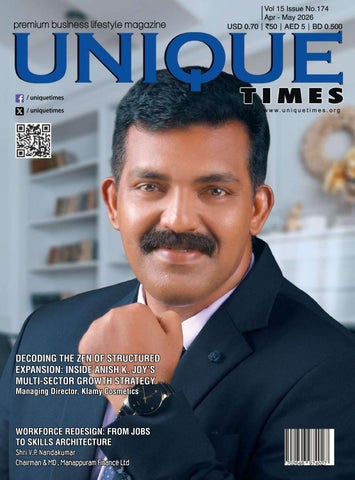
Cover Photograph
ANISH K.
JOY Managing Director, Klamy Cosmetics
GST 2.0 and the Ghost of Anti-Profiteering: Lessons From The Recent Ruling in The Case of Wai Wai
The Sovereign OS: Navigating the Alchemy of the Consciousness Age
Wonder: The Hydration Hero for Summer Skin
in Songkran and Easter in style in Thailand
India Focuses on Food Security, Fisheries at WTO MC14
India will push for reforms in the global trade system at the 14th Ministerial Conference (MC14) of the World Trade Organization (WTO), to be held from March 26 to 29 in Yaoundé, Cameroon. Commerce and Industry Minister Piyush Goyal, along with senior officials, will represent India and focus on safeguarding farmers and fisherfolk through public stockholding programmes for food security and fair fisheries subsidy rules. The conference agenda includes WTO reforms, dispute settlement updates, fisheries subsidies, investment facilitation, e-commerce discussions, agriculture negotiations, and development concerns of least developed countries. India is expected to defend special and differential treatment provisions for developing nations while maintaining support measures for agriculture. The meeting takes place amid broader challenges to multilateral trade, including US tariff tensions and the continued paralysis of the WTO’s Appellate Body since 2019.
Infrastructure Boom to Drive Sharp Rise in Land Prices in India’s Tier-2, Tier-3 Cities
To improve is to change; to be perfect is to change often.
Land prices in India’s Tier-2 and Tier-3 cities are likely to rise sharply over the next two to four years, driven by infrastructure development and industrial expansion, according to a Square Yards report titled “Realty’s Next Growth Engines: Tier-2, Tier-3 Markets in Focus.” The study estimates land value appreciation of 25% to 100% in emerging urban centres such as Bhubaneswar, Cuttack, Erode, Puri, Varanasi and Visakhapatnam as economic activity spreads beyond major metros. Land markets tend to respond faster than housing segments, with properties near metro corridors commanding premiums of 8% to 25%, while infrastructure projects like airports and expressways can boost values by 30% to 70%. High-growth peripheral areas and plotted developments may see gains exceeding 80% as connectivity improves. Square Yards CEO Tanuj Shori said India’s real estate sector is entering a structurally driven growth phase supported by infrastructure investment, job creation and financial stability, with mid-income housing expected to witness strong demand.
Winston Churchill
Advanced Gastroenterology Care
Gas Crisis Threatens Shutdown of Morbi’s $7 Billion Ceramic Industry
Morbi, Gujarat’s ceramic manufacturing hub on the banks of the Machchhu River, is facing a severe fuel crisis that threatens widespread factory shutdowns. The town produces nearly 90% of India’s ceramic goods and relies heavily on propane and natural gas for kiln operations. Supply disruptions caused by escalating Middle East tensions and shipping issues in the Strait of Hormuz have sharply reduced LPG and LNG availability. Industry sources say 200–250 factories, about a quarter of Morbi’s units, have already halted operations due to propane shortages. The cluster consumes around 55 lakh cubic metres of propane daily, while about 150 units depend on natural gas supplied by Gujarat Gas Limited. With LNG and propane deliveries reportedly stopped since March 10, factories are relying on limited pipeline gas supplies.
Vinci to Acquire Indian Toll Road Portfolio in
$1.6 Billion Deal
French infrastructure company Vinci has agreed to acquire a portfolio of toll road assets in India from Macquarie Asia Infrastructure Fund 2 for about $1.6 billion, marking a major investment in the country’s expanding transport infrastructure sector. The deal reflects sustained global investor confidence in India’s road network and long-term growth prospects. The acquisition includes nine toll road concessions spanning nearly 700 kilometres of highways across important routes nationwide. Among the assets is a key corridor linking Kolkata and Chennai, a vital route supporting both passenger travel and freight movement between eastern and southern India. Vinci stated that the portfolio offers strong long-term value potential, with revenues tied to traffic volumes and economic activity along these highways. The transaction highlights growing international interest in India’s infrastructure sector, supported by increasing mobility demand, economic expansion, and ongoing government efforts to modernise and expand the national road network.
Good business planning is 9 parts execution for every 1-part strategy.
Tim Berry
India Urges Automakers to Cut Fuel Use Amid Iran War Disruptions
India has asked automakers and auto component manufacturers to optimise production and reduce fuel consumption amid concerns over energy supply disruptions linked to the ongoing Iran conflict. The advisory urges companies to streamline operations, minimise idle fuel use, and improve efficiency as pressure rises on oil and gas imports from the Gulf region, underlining India’s vulnerability as a major energy importer. The Ministry of Heavy Industries has also encouraged firms to shift from oil-based fuels to electricity where possible and adopt cost-saving measures such as using recycled aluminium and alternative materials. These steps aim to ease demand pressures as rising fuel costs and shortages begin affecting industrial production. Gas supplies have already been prioritised for households, leaving industries with reduced access to energy. Auto suppliers linked to major manufacturers are reportedly facing gas shortages despite strong vehicle demand, raising concerns that prolonged geopolitical tensions could further strain supply chains and disrupt production across the sector.
Swiggy Raises Platform Fee to `17.58 as Competition with Zomato Intensifies
Food delivery platform Swiggy has raised its platform fee to `17.58 per order, including GST, a 17.27% increase from the earlier `14.99, matching rival Zomato’s effective fee structure. The hike, Swiggy’s fourth in seven months, reflects a broader trend of rising service charges across food delivery platforms as companies seek to manage growing operational costs. Introduced at about `2 in 2023, Swiggy’s platform fee has steadily increased through multiple revisions to its current level. The charge helps offset expenses related to technology, logistics, and platform maintenance. Despite strong demand, Swiggy recently shut down its 15-minute delivery service, Snacc, citing profitability challenges. The fee revision comes amid financial pressure, with the company reporting a 33% rise in consolidated net loss to `1,065 crore in Q3 FY26. In contrast, Zomato posted a profit of `102 crore, while Magicpin continues offering a lower platform fee of `12, highlighting varied pricing strategies in the competitive market.
The business model is the story of how an organization creates and delivers value.
Joan Magretta
Europe Retailers Warn of Price Surge Amid Middle East Conflict
European retailers are warning of rising prices and weakening consumer demand as the ongoing Middle East conflict drives up energy and transportation costs. Oil prices have surged above $100 per barrel, putting added pressure on global supply chains and raising concerns about inflation. Major companies, including H&M and Next, have indicated potential price increases in the coming months. While initial hikes may be modest, executives caution that prolonged conflict could push costs higher as manufacturing and freight expenses rise. Retailers are relying on flexible supply chains to manage uncertainty but acknowledge growing risks. At the same time, consumer confidence across Europe is declining, with retail sales and sentiment falling in countries such as the UK, Germany, and Italy. Chains like Co-op report that households are increasingly cautious amid rising living costs. Analysts warn that further escalation of the conflict could intensify inflationary pressures, dampen spending, and slow overall economic growth, challenging retailers’ margins and long-term planning.
Pope Calls for Ban on Aerial Bombings
PopeLeo XIV has strongly condemned aerial military strikes, describing them as indiscriminate and calling for a permanent ban. Speaking in the Vatican City, he stressed that no one should live in fear of destruction from the skies, highlighting the human cost of ongoing global conflicts. While not directly mentioning the US-Israeli war involving Iran, the pope criticised the continued reliance on airpower in warfare, calling it a regression rather than progress. He noted that the devastating experiences of the 20th century should have made such tactics obsolete. The pontiff has repeatedly urged a ceasefire in the conflict, recently calling it a “scandal to the whole human family.” His latest remarks were made during a meeting with staff from ITA Airways, the airline responsible for his international travel, reinforcing his longstanding message that military escalation and aerial bombardments violate human dignity and international peace.
Germany Turns to India to Tackle Skilled Worker Shortage
Germany is increasingly turning to India to address its growing shortage of skilled workers, driven by an ageing population and a shrinking domestic talent pool. The initiative began in 2022 when German trade bodies, struggling with hiring challenges, responded to Indian recruitment firms offering trained and motivated youth. Initially, just 13 Indian apprentices joined sectors like butchery, but the programme has since expanded to around 200 workers, with hundreds more expected in roles ranging from mechanics and bakers to road builders. Recruitment agencies such as Magic Billion and India Works have been key in linking Indian workers with German employers. Policy support, including the 2022 migration agreement and an increased skilled worker visa quota for Indians, has facilitated this growth. The collaboration is mutually beneficial: Germany fills critical labour gaps to sustain its economy, while Indian workers gain higher wages, financial stability, and global exposure.
Spain Seeks $208M Fine on BBVA Over Spying
Spain’s anti-corruption prosecutor has proposed a €181.8 million ($208.16 million) fine for BBVA over allegations that it hired a private investigation agency for illegal spying between 2004 and 2016, part of a broader probe into companies using the agency run by former police commissioner Jose Manuel Villarejo. BBVA has acknowledged engaging the agency but denied any evidence of spying, stating in its 2025 annual report that the facts under investigation do not indicate criminal liability. Some former executives are implicated, though no current board members face charges. The scandal has caused reputational concerns but limited direct business impact since the investigation began in 2019. Prosecutors are also seeking up to 173 years in prison for BBVA’s former chairman Francisco Gonzalez, whose sentence would be capped at 15 years under Spanish law; Gonzalez, who resigned in 2019 to protect the bank’s reputation, denies wrongdoing. Spain’s High Court has yet to formally open the trial.
DECODING THE ZEN OF STRUCTURED EXPANSION: INSIDE
ANISH K. JOY’S MULTI-SECTOR GROWTH STRATEGY
Some entrepreneurs build companies. Others build systems. Anish K. Joy’s business journey is best understood as the latter—a structured expansion across industries that, at first glance, appears unrelated, but on closer examination reveals a consistent blueprint. Electronics, food manufacturing, interiors, hospitality, and now beauty—each venture is less of an isolated pursuit and more of a calculated extension of a broader strategy.
At the centre of this evolution sits KLAMY—not as a departure from what came before, but as its most advanced expression.
Building the Foundation:
Execution Before Identity
Long before brand-building entered the picture, Anish’s early ventures were rooted in executiondriven markets. His work in air conditioning—spanning assembly, marketing, and servicing—placed him in a space where performance dictated survival.
There was no room for abstraction. Products had to function. Services had to deliver. This phase established a principle that would remain constant across all future ventures:
Credibility is earned operationally before it is communicated commercially.
It also provided something more valuable than early success—clarity. By understanding how customers interact with products at a functional
level, Anish built a foundation that would later allow him to scale with precision.
Servosonic: Creating a
Reliable Core
Servosonic marked the transition from hands-on service operations to a scalable product-driven business. Entering the competitive inverter segment, the company chose not to differentiate through aggressive branding but through reliability and consistency.
Its expansion was guided by a disciplined focus on delivering durable, performance-oriented products while steadily strengthening distribution networks and maintaining dependable after-sales support. This measured approach allowed the company to grow without compromising trust, an asset that later supported diversification into new sectors. Servosonic ultimately became more than a revenue generator—it evolved into a template for disciplined scaling.
Expanding the Model: Interiors and Infrastructure
Anish K. Joy’s expansion into office interiors and furniture, particularly in Bengaluru, reflects a strategic understanding of how businesses evolve alongside economic growth. As companies scale, their physical environments must also transform, with workspaces, layouts, and infrastructure becoming essential contributors to productivity and organisational identity. By entering this sector, he positioned his business
within the natural growth cycle of enterprises rather than limiting himself to traditional consumer markets.
This move was not diversification pursued for variety or experimentation. Instead, it followed a clear and deliberate logic rooted in identifying sectors supported by long-term demand, entering areas where operational execution could create meaningful differentiation, and building relationships that extend beyond single transactions. The interiors segment allowed for deeper engagement with clients, fostering partnerships that develop alongside the expansion of the businesses they serve.
As a result, the interiors venture added a new dimension to Anish’s broader portfolio. It enabled integration into business ecosystems, connecting his operations directly with corporate infrastructure and longterm enterprise development. This shift strengthened the overall system he was building, moving his portfolio beyond product-based engagement toward sustained, ecosystem-driven growth.
Sweet 17: Competing Where Trust is Fragile
The food industry introduced a completely different set of variables compared to Anish’s earlier ventures. Unlike electronics, where durability and performance are judged over time, food products are evaluated instantly and repeatedly with every purchase. Consumer trust in this sector is fragile, built through consistent quality rather than tech-
Over time, this approach transformed Sweet 17 into a habitual brand rather than a trend-driven one. Consumers began to associate the brand with consistency and everyday convenience, strengthening loyalty through routine consumption.
nical performance. Recognising this distinction, Anish approached the launch and growth of Sweet 17 with a strategy centred on reliability instead of rapid experimentation.
Rather than chasing trends or novelty, Sweet 17 positioned itself around clean and dependable production standards that customers could rely on daily. The brand focussed on creating products suited for regular household consumption, ensuring accessibility and familiarity across diverse consumer groups. This emphasis shifted the brand away from one-time appeal and towards sustained usage, encouraging repeat purchases as the foundation of growth.
Over time, this approach transformed Sweet 17 into a habitual brand rather than a trend-driven one. Consumers began to associate the brand with consistency and everyday convenience, strengthening loyalty through routine consumption. By prioritising stability in taste, quality, and availability, the company built trust that extended beyond marketing narratives and into daily life.
The brand’s expansion into international markets, particularly among Indian expatriate communities, further reinforced a key strategic insight: in the food industry, familiarity itself becomes a competitive advantage. By maintaining consistent standards across geographies, Sweet 17 ensured that customers experienced the same reliability regardless of location, allowing trust to travel across borders and strengthening the brand’s global presence. Hospitality: Experience
Anchored in Place
The Servosonic Resort in Josegiri, Kannur introduces a spatial and experiential dimension to Anish K. Joy’s business portfolio. Unlike product-based industries, hospitality is immersive and deeply connected to place, where customer value is shaped by emotion, environment, and experience. By positioning the resort as a destination wedding venue, the venture enters a segment driven not only by demand but by cultural significance and personal milestones, creating deeper engagement with consumers.
What makes the project particularly significant is its context—establishing a large-scale resort in his hometown serves both as a strategic investment and a symbolic statement. The venture creates assetbacked value while anchoring the brand within a physical location and opening the door to experience-led consumer interaction. In a portfolio largely built around products and services, the resort adds tangible presence, strengthening the overall ecosystem through long-term brand visibility and emotional connection.
KLAMY:
The Convergence of Everything Built Before
KLAMY represents the convergence of capabilities Anish built through his earlier ventures. While previous businesses focused on establishing operational strength and market credibility, KLAMY applies those learnings within a category that demands more than execution alone. The beauty and personal care industry operates at the intersection of science, identity, and perception, where consumer expectations are
rapidly shifting from standardised offerings toward personalised experiences tailored to individual needs.
Recognising this transformation, KLAMY emerges as a strategic response to changing consumer behaviour. By acquiring and developing a New York–based brand for the Indian market, Anish enters a highgrowth and highly competitive sector shaped by strong brand perception, deep consumer loyalty, and increasing technological influence. The move signals not just diversification but a deliberate step into a futurefacing industry aligned with evolving global trends.
What ultimately distinguishes KLAMY is not only its positioning but its structural approach. Rather than functioning as a traditional product brand, it is designed as a platform capable of integrating technology, personalisation, and consumer engagement into a unified model. In doing so, KLAMY brings together the operational discipline, market understanding, and scalability developed across earlier ventures into a single forward-looking enterprise. Personalisation as a Business Model
At the core of KLAMY is the integration of Artificial Intelligence into product discovery and usage.
This transforms the brand from a product provider into a solution platform.
Key elements include:
•AI-based analysis of skin and hair profiles
•Customised product recommendations
•Continuous refinement through user data
This approach aligns with a broader industry transition toward precision-driven consumption. Consumers are no longer passive buyers. They expect products that adapt to them. KLAMY is designed to meet that expectation at scale.
Why KLAMY Changes the Portfolio Dynamics
Within Anish’s multi-industry ecosystem, KLAMY introduces a fundamentally new form of engagement. His earlier ventures were largely necessity-driven in nature— electronics addressed functional requirements, food supported everyday consumption, and interiors enabled business operations. Each solved practical problems rooted in utility and reliability. KLAMY, however, operates in a category shaped not by necessity alone but by identity, self-expression, and personal aspiration. This shift transforms the role
the brand plays within the overall portfolio. Beauty and personal care encourage deeper emotional connections with consumers, resulting in higher engagement levels and stronger brand loyalty. Unlike traditional product cycles, the category supports recurring interaction and long-term customer relationships. As a result, KLAMY becomes a consumer-centric anchor capable of introducing higher-margin opportunities and sustained engagement cycles, factors that have the potential to reshape the economic dynamics of the broader business ecosystem.
Timing and Market
Positioning
KLAMY’s entry into the Indian market coincides with a pivotal moment in the evolution of the beauty and personal care industry. Consumer preferences are rapidly shifting toward premium and personalised products, supported by increased
digital adoption and growing awareness around skincare, wellness, and self-care. Technology has empowered consumers with information, raising expectations for products that respond to individual needs rather than offering one-size-fits-all solutions.
Despite rapid market growth, a clear gap remains between massmarket accessibility and genuine customisation. KLAMY positions itself precisely within this space, aiming to deliver personalisation without exclusivity. By balancing innovation with accessibility, the brand seeks to meet evolving expectations while remaining relevant to a broad and expanding consumer base.
Bridging Global Identity with Local Relevance
Introducing a globally originated brand into India requires careful strategic calibration. KLAMY’s approach reflects a deliberate balance
between preserving international appeal and adapting to local cultural and consumer preferences. Global identity creates aspiration and credibility, while localisation ensures relevance and adoption within a diverse market.
This dual strategy allows the brand to maintain its premium positioning without appearing disconnected from local realities. By aligning global standards with regional expectations, KLAMY strengthens its ability to scale sustainably while building authentic connections with Indian consumers.
A Portfolio That Functions as a System
When viewed collectively, Anish’s ventures reveal themselves not as independent successes but as interconnected components of a larger system. Servosonic contributes technical expertise and distribution strength, Sweet 17 builds large-scale
consumer trust, the interiors business integrates with enterprise ecosystems, and hospitality establishes physical presence and experiential engagement. KLAMY adds a new layer by introducing technologydriven personalisation and data-informed consumer interaction.
Together, these ventures form a diversified yet cohesive structure in which each business reinforces the others. The portfolio operates less as a collection of companies and more as an evolving ecosystem built on complementary strengths.
Leadership Beyond Visibility
Managing such a diversified system requires leadership grounded in structure rather than visibility alone. Anish’s approach emphasises building capable teams across verticals, delegating responsibility with accountability, and creating operational frameworks that allow independent
growth. This philosophy reduces reliance on centralised decision-making while ensuring strategic alignment across businesses.
By enabling autonomy within clearly defined systems, multiple ventures can scale simultaneously without losing direction or consistency. Leadership, in this context, becomes less about control and more about designing environments where growth can occur organically.
The Road Ahead:
Integration as the Next Phase
As the portfolio matures, the next phase of expansion is likely to focus not on entering new industries but on deeper integration across existing ones. Shared distribution networks, cross-industry operational efficiencies, and data-driven insights offer opportunities to strengthen connections between ventures and unlock new value.
KLAMY, supported by its technological foundation, may play a central role in this evolution by introducing data intelligence into a traditionally operations-driven ecosystem. Through integration rather than diversification, the portfolio moves toward becoming a unified business architecture—one where technology, experience, and operational discipline converge to define the next stage of growth.
Retail Expansion and Market Leadership
This approach to structured scaling is also reflected in the group’s retail expansion. Central Bazaar, which operates over 109 showrooms across Kerala, has steadily strengthened its position in the state’s retail landscape. Over the past five years, the brand has grown into the second-largest retail chain in Kerala, reflecting a consistent strategy of scale, distribution, and operational strength. The first anniversary of its Thodupuzha hypermarket marked a key milestone in this journey, highlighting both rapid growth and in-
creasing market presence.
With more than 1,300 employees and extensive retail and logistics infrastructure already in place, the group continues to expand its footprint through new outlets and investment-driven growth. Plans to add 40 new stores and achieve a turnover of `200 crore within the next coming years underline a clear focus on long-term market leadership. Anish K. Joy, serving as the Designated Director, plays a pivotal role in driving this expansion and strengthening the group’s overall operational reach.
The Power of Structured Growth
Anish K. Joy’s journey is not defined by a single industry, a sudden breakthrough, or a moment of disruption. Instead, it is shaped by a repeatable method—one built on patience, clarity, and calculated evolution. His approach follows a simple but disciplined philosophy: build steadily, expand logically, and adapt when the market demands change. Each venture represents a deliberate step forward rather than a departure from the past.
Servosonic established operational reliability and technical credibility. Sweet 17 transformed consistency into everyday consumer trust. Interiors and hospitality expanded the vision into spaces where businesses function and experiences are lived. Together, these ventures laid the structural foundation of a diversified yet interconnected ecosystem.
KLAMY brings these accumulated strengths into a single forwardfacing model, combining technology, personalisation, and deeper consumer engagement. It does not replace what came before; it refines and elevates it. In that progression lies the defining characteristic of his entrepreneurial story—not expansion for its own sake, but evolution with purpose. And within that evolution emerges the blueprint for the future of his business empire
The next phase of expansion is likely to focus not on entering new industries but on deeper integration across existing ones. Shared distribution networks, cross-industry operational efficiencies, and data-driven insights offer opportunities to strengthen connections between ventures and unlock new value.
The job-based model assumes relative stability. Roles change slowly, expertise develops within fixed domains, and organisational hierarchies remain predictable. Yet AI technologies are reshaping workflows at a pace that job descriptions cannot keep up with.
Workforce Redesign: From Jobs to Skills Architecture
For more than a century, organisations have been structured around jobs. Each job carried a defined role description, a hierarchy, and a set of responsibilities. Human resource management evolved around this architecture—recruitment matched candidates to jobs, performance evaluations measured outcomes within jobs, and compensation structures were tied to job grades.
However, the rapid diffusion of artificial intelligence, automation and digital platforms is fundamentally challenging this traditional model. In the emerging AI-driven enterprise—the shift from the boardroom to the botroom—the unit of organisational design is no longer the job but the skill. Workforce rede-
sign today requires building a skills architecture rather than merely managing job descriptions.
The job-based model assumes relative stability. Roles change slowly, expertise develops within fixed domains, and organisational hierarchies remain predictable. Yet AI technologies are reshaping workflows at a pace that job descriptions cannot keep up with.
Tasks that were once core elements of certain roles—data processing, routine analysis, documentation and even basic decision-making—are increasingly automated. Conversely, new capabilities are constantly emerging: prompt engineering, AI supervision, data interpretation, algorithmic ethics and cross-disciplinary problem-solving.
The consequence is a growing mismatch between rigid job structures and the fluid nature of work. A marketing analyst may suddenly require data science capabilities. A finance manager may need AI-assisted forecasting skills. A legal professional may increasingly interact with algorithmic compliance tools.
In such an environment, defining people solely by their job titles becomes inefficient.
The Emergence of Skills Architecture
A skills architecture reframes the workforce as a dynamic portfolio of capabilities rather than a collection of static roles. Instead of asking, “Which job does this person fill?”, organisations begin asking, “What skills does this individual possess,
and how can those skills be deployed?”
This approach breaks down work into smaller, modular components: tasks, competencies and skills. These can then be recombined across projects and teams depending on organisational needs.
For example, a single project might require:
• Data analytics capability
• Strategic communication
• Domain expertise
• AI tool supervision
• Ethical risk assessment
Rather than recruiting for a single “job role”, organisations assemble teams based on the precise mix of skills required.
The result is a far more flexible operating model in which talent can move fluidly across functions.
Artificial intelligence itself is accelerating the move towards skills
architecture. Advanced HR technologies now allow companies to map skills across their workforce with unprecedented granularity.
AI-driven talent platforms can analyse employee profiles, learning histories, project outcomes and performance data to generate skills graphs—dynamic maps of organisational capability. These systems help HR leaders identify skill gaps, predict future workforce requirements and redeploy talent more efficiently.
For instance, if a company plans to expand into AI-driven product development, the system may identify employees with adjacent capabilities—statistics, coding and systems thinking—who can be reskilled quickly.
This capability transforms workforce planning from a static headcount exercise into a continuously evolving capability strategy.
One of the most visible outcomes of skills-based workforce design is the internal talent marketplace. In such systems, employees are matched to projects, assignments or short-term initiatives based on their skills rather than their departmental roles.
This creates several advantages:
• Agility: Teams can form quickly around emerging priorities.
• Talent utilisation: Hidden or underused skills within the organisation become visible.
• Employee engagement: Individuals gain opportunities to apply diverse capabilities and build new expertise.
• Continuous learning: Work itself becomes a platform for skill development.
In effect, the organisation begins to function more like a dynam-
ic network than a rigid hierarchy. The Changing Role of HR Leadership
For HR leaders, the shift from jobs to skills architecture represents a profound strategic transformation. Traditional HR functions—recruitment, training and performance management—must now be redesigned around skills intelligence.
Key priorities include:
• Building a skills taxonomy: Clearly defining the capabilities relevant to the organisation’s strategy.
• Implementing skills mapping systems: Using digital tools and AI to identify current workforce capabilities.
• Embedding continuous reskilling: Creating learning ecosystems that allow employees to
update skills rapidly.
• Aligning incentives: Rewarding adaptability, learning and crossfunctional collaboration.
HR leaders increasingly act as architects of organisational capability rather than merely administrators of personnel systems.
While technology enables skills architecture, the transition also raises human and cultural challenges. Employees who have long defined themselves by professional identity—engineer, accountant or manager—may find the shift unsettling.
Organisations must therefore emphasise transparency and support. Skills-based models should empower individuals, not reduce them to interchangeable units of labour. Clear pathways for learn-
ing, career mobility and recognition are essential to building trust in the new system.
The Future Workforce
As AI continues to reshape industries, the concept of a fixed job will gradually give way to fluid capability networks. Organisations will operate less like pyramids of roles and more like ecosystems of skills.
In this new power structure— where boardroom strategy increasingly interacts with botroom automation—competitive advantage will depend on how effectively companies can identify, mobilise and evolve their human capabilities.
The organisations that succeed will not simply hire for jobs. They will design skills architectures capable of continuously adapting to the next wave of technological change
Rajesh Nair Partner, Ernst & Young LLP
Trust is built not merely through competence, but through proximity: repeated exposure, informal conver sations, shared moments of problem solving, and the subtle calibration of tone, intent, and credibility.
Hidden Cost of Hybrid Work on Business Development and Organisational Culture - When Distance Dilutes Contact
The rapid normalisation of hybrid and work from home models is one of the most consequential shifts in the modern history of work. Accelerated by necessity during the pandemic and sustained by employee preference thereafter, flexible working has delivered undeniable benefits: broader talent pools, reduced commuting stress, and greater autonomy over time and space. Yet, beneath these gains lies a quieter, more structural challenge—one that disproportionately affects full contact organisational activities. Nowhere is this tension more evident than in business development functions and in the slow, cumulative task of building an enduring organisational culture. At its core, the challenge is not technological but human. Hybrid work, for all its efficiency, weakens the density of human interaction. And it is precisely this density—of conversations, observations, rituals, and shared experiences—that full
contact activities rely upon.
Business Development: A Contact Sport Played at a Distance
Business development is often misunderstood as a transactional discipline—pipelines, proposals, and quarterly targets. In reality, it is a profoundly relational craft. Trust is built not merely through competence, but through proximity: repeated exposure, informal conversations, shared moments of problem solving, and the subtle calibration of tone, intent, and credibility. Hybrid work disrupts this ecosystem in three fundamental ways.
First, the erosion of apprenticeship learning. Traditionally, business development talent is forged through osmosis—junior team members absorbing how senior colleagues handle objections, read a room, or navigate ambiguity. In a remote setting, these moments are rarely observed in real time. What remains are scheduled calls and post hoc debriefs, which
strip away the nuance that differentiates a competent salesperson from an exceptional one.
Second, the flattening of internal energy. High performing business development teams thrive on collective momentum: the buzz of shared wins, the urgency of visible effort, and the competitive camaraderie that emerges when teams work side by side. Distributed work replaces this with isolated achievement. Targets may still be met, but the emotional contagion that sustains performance over long cycles weakens.
Third, the dilution of client intimacy. While digital channels are effective for maintaining relationships, they are less potent for deepening them—particularly in complex, high value B2B contexts. Informal interactions before and after meetings, shared travel, and spontaneous problem solving sessions often do more to cement trust than the formal agenda itself. When engagement becomes exclusively virtual,
relationships risk becoming efficient but thin.
The net effect is not an immediate collapse in performance, but a gradual hollowing out of capability—one that becomes visible only over time.
Culture Is Not Declared; It Is Absorbed
If business development suffers from reduced proximity, organisational culture suffers from reduced immersion.
Culture is not what is written in value statements or town hall presentations. It is what people observe being rewarded, tolerated, and
modelled—especially in moments of ambiguity. New employees, in particular, learn culture not through orientation decks but through everyday exposure: how leaders behave under pressure, how disagreements are resolved, how success is acknowledged, and how failure is treated.
Hybrid work fractures this learning environment.
In a dispersed setting, culture becomes episodic rather than ambient. Employees experience the organisation through scheduled interactions—meetings with agendas, curated communications, and per-
formance reviews. What disappears is the unstructured context in which norms are silently transmitted: overheard conversations, informal mentoring, and the tacit understanding of “how things are really done here”.
This has two consequences. The first is cultural drift. Different teams, operating semi-autonomously, begin to interpret values differently. Over time, the organisation risks becoming a federation of micro cultures, loosely aligned by policy but disconnected in practice.
The second is weakened emotional attachment. Belonging is forged through shared experience,
not shared calendars. When employees interact primarily through screens, their relationship with the organisation becomes more transactional. Commitment narrows to role and reward, rather than identity and purpose.
For senior leaders, this presents a paradox. Culture remains a strategic priority, yet the very conditions required to sustain it—proximity, repetition, and shared experience— are increasingly scarce.
The Asymmetry of Hybrid Work
It is important to note that hybrid work does not affect all roles equally. Individual contributor roles with clearly defined outputs often adapt well to remote settings. Full contact roles do not.
Business development, leadership development, innovation, and culture building are high context activities. They depend not merely on information exchange, but on interpretation, emotion, and trust.
These are precisely the dimensions most attenuated by distance.
This creates an asymmetry within organisations. Efficiency may improve, but coherence weakens. Flexibility increases, but shared identity thins. Over time, organisations risk optimising for convenience at the expense of capability.
Towards a More Intentional Hybrid Future
The implication is not that hybrid work should be reversed, but that it must be designed, not defaulted into.
For full contact activities, presence must be intentional. Business development teams may require structured in person rhythms—deal reviews, client strategy sessions, and collective prospecting days—where energy and learning are concentrated. Culture, similarly, must be reinforced through rituals that privilege physical co presence at critical moments: onboarding, leadership transitions, and strategic inflection points.
Above all, leaders must recognise that culture and capability are cumulative assets. They are built slowly, through repeated human contact. When contact diminishes, so, too, does the organisation’s ability to renew itself.
Hybrid and work from home models represent a profound evolution in how work is organised. Yet their impact is uneven. For full contact activities such as business development and culture building, distance imposes hidden costs—costs that accrue quietly, but compound relentlessly.
The organisations that thrive in the hybrid era will not be those that maximise flexibility alone, but those that understand where flexibility must yield to presence. In the end, some work can be done anywhere. But the work that builds trust, culture, and enduring advantage still demands that people come together—not occasionally, but meaningfully
Dr Arun Oommen MBBS, MS (General surgery), Mch (Neurosurgery, MRCS Ed (UK), MBA (Hospital administration). D Litt(h), DSc(h), PhD(h), ENLS. DMS
Senior Consultant Neurosurgeon VPS Lakeshore
Hospital. Kochi
State Secretary. Neurological society of IndiaKerala Chapter www.arunoommen.com
BWomen have unique nutritional needs, especially due to menstruation, pregnancy, and menopause. A balanced diet supports hormonal stability, energy levels, and disease prevention.
Seven Important Health Habits Women Should Prioritise
ased on modern medical understanding of women’s physiology, hormonal patterns, and long-term disease prevention there are certain health habits women should prioritise to lead a reasonably healthy life.
1. Prioritise Regular Preventive Health Screenings
One of the most powerful health habits a woman can adopt is staying consistent with preventive checkups. Many serious conditions—including Breast Cancer, Cervical Cancer, and Osteoporosis—develop silently in their early stages.
Routine screenings help detect these issues before symptoms even appear.
Key screenings include:
Pap smear (for cervical health)
Mammogram (for breast health)
Bone density scan (especially after menopause)
Blood pressure, cholesterol, and blood sugar checks.
For example, early detection of Cervical Cancer through Pap tests has drastically reduced mortality worldwide.
Habit Tip:
Schedule annual checkups and follow age-specific screening guidelines. Treat these appointments as non-negotiable.
2. Maintain a Balanced, Nutrient-Dense Diet
Women have unique nutritional needs, especially due to menstruation, pregnancy, and menopause. A balanced diet supports hormonal stability, energy levels, and disease prevention.
Essential nutrients for women:
Iron (to prevent Iron Deficiency Anemia)
Calcium and Vitamin D (for bone strength and preventing Osteoporosis)
Protein (for muscle and metabolic health)
Healthy fats (for hormone production)
Include:
Leafy greens, fruits, whole grains
Lean proteins like fish, eggs, legumes
Nuts and seeds
Avoid excessive processed foods and sugar, which can increase the
risk of Type 2 Diabetes and hormonal imbalances.
Habit Tip:
Follow the “rainbow plate” rule— eat a variety of colourful foods daily to cover micronutrient needs.
3. Engage in Regular Physical Activity
Exercise is not just about weight control—it’s essential for overall health.
Regular physical activity Improves heart health, strengthens bones and muscles, reduces stress and anxiety and helps regulate hormones. It also significantly lowers the risk of cardiovascular disease, which is one of the leading causes of death among women globally.
Recommended routine:
150 minutes of moderate aerobic activity weekly
Strength training 2–3 times per week
Flexibility and balance exercises (like yoga)
Habit Tip:
Choose activities you enjoy— walking, dancing, swimming—so consistency becomes easier.
4. Support Hormonal and Reproductive Health
Women’s health is deeply influenced by hormonal cycles—from menstruation to menopause.
Ignoring symptoms like irregular periods, severe cramps, or mood swings may lead to delayed diagnosis of conditions such as Polycystic Ovary Syndrome (PCOS) or thyroid imbalances.
Healthy practices include tracking menstrual cycles, managing stress (which affects hormones) or getting adequate sleep. Understanding your cycle can help you recognise early warning signs of problems.
Habit Tip:
Use a cycle-tracking app or jour-
nal to monitor patterns and changes over time.
5. Prioritize Mental Health and Emotional Well-being
Mental health is just as important as physical health. Women are statistically more prone to conditions like Depression and Anxiety Disorder due to hormonal fluctuations, social pressures, and life roles.
Key habits for mental well-being include Practicing mindfulness or meditation, maintaining social connections, seeking therapy when needed and setting boundaries in personal and professional life
Ignoring mental health can lead to burnout, sleep disorders, and even physical illnesses.
Habit Tip:
Dedicate at least 10–15 minutes daily to mental relaxation (meditation, journaling, or quiet time).
6. Ensure Quality Sleep and Rest
Sleep is often overlooked, but it is fundamental to health. Poor sleep can disrupt hormones, weaken immunity, and increase the risk of chronic diseases.
Lack of sleep is linked to Obesity, Type 2 Diabetes or Mood disorders.
Healthy sleep habits include aiming for 7–9 hours per night, maintain a consistent sleep schedule, limit screen exposure before bedtime and create a calm sleep environment.
Sleep also plays a crucial role in reproductive and hormonal balance.
Habit Tip:
Establish a bedtime routine— dim lights, avoid screens, and relax your mind before sleep.
7. Stay Hydrated and Avoid Harmful Substances
Hydration supports digestion, skin health, metabolism, and detoxification.
Women should aim for around 2–3 litres of water daily (varies by climate and activity). At the same time, avoiding harmful substances is critical.
Limit or avoid:
Smoking (linked to Lung Cancer and heart disease)
Excess alcohol (affects liver, hormones, and increases cancer risk)
Overuse of processed foods and sugary drinks
Hydration also helps reduce fatigue and improves concentration.
Habit Tip:
Carry a water bottle and track daily intake to stay consistent.
Conclusion
Women’s health is interconnected—physical, hormonal, and emotional systems all influence each other. Small, consistent habits practiced daily can prevent major diseases and improve quality of life over time. Instead of trying to change everything at once, focus on building one habit at a time. Over months and years, these habits compound into stronger immunity, better energy, and a healthier, more resilient life
From Six Boarding Gates to Shaping Thousands of Careers: The Transformative Journey of Jessy Abraham
In 1991, Dubai had just one airport terminal and six boarding gates. There were no mega concourses, no biometric immigration, no global rankings. It was a modest airport in a city still discovering its global identity.
And standing there was a young woman from Mumbai who had arrived for her sister’s wedding, not knowing she had just walked into the first chapter of her life’s real story.
At the time, Jessy Abraham was preparing for the All India Medical Entrance Examination. Medicine was her dream. Aviation was not even a distant thought. But during her short stay in Dubai, her sister enrolled her in an introductory course in Civil Aviation at the old Emirates headquarters.
Jessy excelled, graduating with distinctions. Soon after, she received an unexpected phone call from Emirates.
“Please come and sign the contract.”
She assumed it was for her course certificate.
Instead, she was being offered a role as a Passenger Services Agent, a highly competitive position that was difficult to secure, especially for a newcomer.
From medicine to aviation, the shift felt unreal. There was hesitation. There was doubt. But in July of 1991, Jessy said yes to her first job in aviation.
That single decision would define the next 32 years of her life.
The ‘Pattalam’ of Dubai Airports
Jessy entered the aviation world
with energy, discipline, and an unshakable work ethic shaped by her upbringing in Mumbai. Shift timings didn’t matter. Job titles didn’t matter. What mattered was doing the work and doing it well.
She quietly challenged stereotypes. She refused to accept “light duties” assigned simply because she was a woman. She believed respect had to be earned through action, not entitlement.
Her Malayalee colleagues soon gave her a nickname, ‘Pattalam’, a word meaning battalion or army.
In many ways, it was perfect.
Jessy became known as the one who never said no to responsibility, who volunteered for the toughest shifts, who treated every role big or small with the same seriousness. While others waited for opportunities, she created them.
Leaders noticed.
Breaking Glass Ceilings — One Role at a Time
Jessy’s passion for service and standards led to her first leadership opportunity, becoming a Trainer for major European airlines including KLM, Air France, Swiss Air, and British Airways.
Training awakened something deeper.
She loved seeing people grow.
From there, she went on to break multiple glass ceilings, becoming the youngest and first female Flight Supervisor and Duty Officer, later moving into complex operational and project leadership roles.
She was part of every major airport expansion in Dubai, Terminal 1, Terminal 2, Concourse A, B, C, D,
and Dubai World Central.
From six boarding gates to one of the world’s busiest aviation hubs, Jessy didn’t just witness history. She helped build it.
A Trainer, A Leader, A Transformer
After nearly a decade in operations, Jessy transitioned fully into learning and development.
At her peak, she was responsible for shaping the learning journeys of over 22,000 employees, from frontline staff to senior leaders.
She played a key role in building what would become the largest ground handling training organisation in the world, pioneering digital learning and Virtual Reality long before it became mainstream.
Her expertise took her across North America, Europe, and the Middle East, leading global station start-ups and delivering high-pressure projects with tight timelines, consistently achieving exceptional results.
But for Jessy, titles were never the reward.
Impact was.
The Final Corporate Chapter
Jessy’s final corporate role took her to Emirates Flight Catering, where she served as Head of Training and HR Business Partner, leading Employee Relations and HR Transformation projects for over 11,500 employees.
She drove large-scale culture change initiatives, leadership programmes, and next-generation learning solutions — including projects for EXPO 2020 and Emirates’
state-of-the-art First and Business Class kitchens.
On 14 February 2023, Valentine’s Day, Jessy chose a different kind of love.
She retired from corporate life.
Choosing Purpose: The Birth of Thrive
Stepping away from titles and organisations, Jessy built something deeply personal — Thrive.
Not a business. A belief.
Today, as an entrepreneur, leadership coach, and culture transformation specialist, Jessy works with global coaching clients and partners with private and government organisations across the UAE and the UK.
Her work spans manufacturing, construction, hospitality, automotive, retail, and services, helping individuals and organisations become better versions of themselves.
She holds an MBA from the University of Leicester, leadership certification from Harvard Business School, Boston, and is a Certified
NLP Practitioner, using neuroscience-based techniques to create lasting behavioural change.
Yet what truly defines her work is not certification but connection.
She listens deeply. She challenges gently. And she leaves people stronger than she found them.
Why This Story Matters
Jessy Abraham’s story is not about aviation alone.
It is about saying yes to the unexpected.
About breaking glass ceilings quietly but firmly.
About reinventing oneself at every stage of life.
And about proving that purpose does not retire, it evolves.
Today, Jessy Abraham is no longer defined by airport terminals or corporate titles.
She is defined by conversations that change mindsets.
By leaders who rediscover purpose.
By individuals who leave her ses-
sions believing more deeply in themselves than they did before.
From six boarding gates to thousands of transformed careers, her journey proves one thing:
Extraordinary lives don’t begin with perfect plans.
They begin with courage, consistency, and the willingness to say yes when life offers an unexpected door.
And this is a story worth sharing, not just in aviation, but in life itself.
Today, Jessy is deeply embedded in the UAE’s leadership and entrepreneurship ecosystem. She is an active member of several global and regional leadership communities, including the Dubai Business Women Council, the Irish Business Network, and the Harvard Business Review Council, while also serving as an Expert-in-Residence mentoring startups at the Sharjah Entrepreneurship Centre, lecturing at Dubai College of Tourism, and coaching leaders in partnership with Mercer
Adv Sherry Samuel Oommen: This article is authored by Adv Sherry Samuel Oommen. He specialises in the Constitution, tax and corporate laws and has also cleared the final exams of the Institute of Chartered Accountants of India, the Institute of Cost Accountants of India and the Institute of Company Secretaries of India. He has also completed his Masters's Degree in Commerce, apart from obtaining a Post Graduate Diploma in Business and Corporate Laws from Symbiosis, Pune. The views expressly are personal and should not be construed as a legal opinion. sherryoommen@nashcp.com.
GST 2.0 and the Ghost of Anti-Profiteering: Lessons From The Recent Ruling in The Case of Wai Wai
India recently unveiled a major overhaul of its Goods and Services Tax (GST) framework, popularly termed “GST 2.0”. The reforms, driven by the 53rd and subsequent GST Council meetings, aim to rationalize the multi slab rate structure that has long been a source of classification disputes and compliance burdens. The old five rate structure (0%, 5%, 12%, 18%, 28%) has been pruned: the 12% and 28% slabs have been removed, and over 500 articles have seen rate reductions, with more than 52 items now enjoying full exemption. Effective from September 22, 2025, the rationalization covers both essential goods and industrial inputs, intended to smoothen the rate architecture and support the “Make in India” initiative.
Yet, as businesses adjust their pricing to reflect the new rates—
whether by lowering prices, increasing quantities, or revising the MRP of unsold stock—a familiar and thorny question resurfaces: what happens to the benefit of a tax cut? The answer lies in India’s decade long experiment with anti profiteering provisions, a recent landmark ruling of the GST Appellate Tribunal against the maker of the well-known Wai Wai noodles [reported in TS-56GSTAT(DEL)-2026-GST], and the evolving post amendment enforcement landscape.
I. India’s Experiment with Anti Profiteering Provisions under GST
When the GST was introduced in July 2017, it brought a significant reduction in the effective tax burden on a vast range of goods and services. To ensure that these benefits reached the end consumer—and were not pocketed by businesses—
the Government inserted Section 171 into the Central Goods and Services Tax Act, 2017 (“the Act”). This provision mandated that any reduction in tax rate or benefit of input tax credit (ITC) must be passed on to the recipient by way of a commensurate reduction in prices.
A dedicated National Anti Profiteering Authority (NAA) was established to enforce the provision, supported by the Director General of Anti Profiteering (“DGAP”) as the investigative arm. From 2017 until its formal sunset, the anti profiteering mechanism remained perpetually disputed, primarily affecting fast moving consumer goods (“FMCG”) and construction companies.
II. Controversies and Challenges
The central controversy revolved around the lack of a consistent methodology. Neither the statute
When the GST was introduced in July 2017, it brought a significant reduction in the effective tax burden on a vast range of goods and services.
nor the rules prescribed a specific formula for quantifying how much benefit had to be passed on. Enforcement often varied: in some cases, the DGAP compared prices at the SKU level; in others, it examined product line or entity level margins. This inconsistency created uncertainty, leaving businesses unable to accurately calculate the required price reduction and vulnerable to investigation.
Moreover, compliance costs escalated. Companies were required to maintain meticulous records of pricing strategies, cost inputs, and ITC accumulation—often without clear guidance on what documents would satisfy the authorities. Non compliance, even if unintentional, could lead to hefty penalties and interest demands.
III. Judicial Scrutiny and the Sunset Date
The anti profiteering regime was challenged before various High Courts. In the landmark Reckitt Benckiser (India) Pvt. Ltd. v. Union of India (W.P.(C) 7743/2019) , the Delhi High Court laid down critical principles: while the NAA could examine whether a tax benefit was passed on, it had no authority to fix or control base prices arbitrarily. Suppliers remained free to revise prices based on commercial considerations, but any increase that offset a tax reduction had to be justified on a “cogent basis”—with contemporaneous evidence of cost escalations. The judgment also emphasized that due process and a transparent, consistent approach was a prerequisite.
After years of operation, the NAA was wound up in 2022, and its functions were transferred to the Competition Commission of India (CCI) and eventually to the GST Appellate
Tribunal (GSTAT). Finally, the 53rd GST Council meeting held on June 22, 2024, recommended a sunset date for the anti profiteering provisions. Consequently, April 1, 2025, was prescribed as the date after which no new anti profiteering complaints could be filed under Section 171. The provision was thus formally sunsetted.
IV. The Case of Wai Wai: C.G. Foods and the `90.9 Lakh Profiteering Finding
Even though the anti profiteering mechanism is under a sunset clause, the legal legacy it created continues to shape expectations. A prime example is the recent ruling by the GST Appellate Tribunal, Delhi, in DG Anti Profiteering v. C.G. Foods [TS 56 GSTAT(DEL) 2026 GST], pronounced on February 3, 2026. The case arose from a rate reduction that occurred years
earlier—yet its principles remain acutely relevant for the current GST 2.0 environment.
Background
On November 15, 2017, the GST Council reduced the rate on instant noodles (falling under HSN 1902) from 18% to 12% through Notification No. 41/2017 Central Tax (Rate). The reduction was intended to benefit consumers. However, a complaint filed by the Assistant Commissioner (State Tax), Dispur, Assam, alleged that C.G. Foods, the manufacturer of “Wai Wai” noodles, had not passed on the benefit.
Investigation and DGAP Findings
The DGAP initiated an investigation covering the period from November 15, 2017, to December 31, 2018. The analysis was invoice wise: the average base prices of affected SKUs during the pre rate reduction period (November 1–14, 2017) were compared with the actual base prices charged after the rate cut.
The DGAP found that, despite the 6% reduction in GST, C.G. Foods had increased the base prices of several products. For example, the “Wai Wai Chicken Noodles Mimi 35g” saw its per unit base price rise from `202.38 to `212.12, resulting in a net profiteering of `10.91 per unit. Aggregated across all impacted SKUs, the total profiteering amounted to `90,90,310.
Defence and Rebuttal
C.G. Foods argued that the price revision was necessitated by contemporaneous increases in raw material costs (wheat flour, palm oil, spices), packaging, and freight. It claimed that the 6% GST reduction was only a marginal relief compared to input cost surges of 40–50%. The company also pointed out that it had not changed the MRP during the period and that it faced intense competition.
GSTAT’s Reasoning
The Tribunal rejected the defence on several grounds:
• No Cogent Basis: While acknowledging that suppliers are free to fix base prices, the Tribunal— relying on the Reckitt Benckiser precedent—held that any increase offsetting a tax reduction must be
justified on a cogent basis. The cost increases cited by the respondent pertained largely to periods prior to the rate reduction and did not demonstrate that the entire 6% benefit was absorbed by contemporaneous escalations during the investigation period.
• Presumption Unrebutted: The presumption of profiteering under Section 171 remained unrebutted. The invoice wise comparison confirmed that base prices were raised immediately after the tax cut.
• Penalty and Interest: The Tribunal confirmed the profiteered amount but refrained from imposing interest or penalty. Interest under Rule 133(3) became effective only from June 28, 2019, and penalty under Section 171(3A) from January 1, 2020—both dates fell after the period of violation. Applying fiscal provisions retrospectively was held to be impermissible.
The Tribunal directed C.G. Foods to deposit the `90.9 lakh into the Consumer Welfare Fund, to be shared equally between the Centre and the States.
V. What Happened After the New Amendment: GST 2.0 and the Return of the Expectation
With the removal of the 12% and 28% slabs under GST 2.0, a fresh wave of rate rationalisation has taken effect from September 22, 2025. Businesses are now adjusting their prices, and the question of passing on benefits has resurfaced—but this time, the anti profiteering provision itself is no longer active.
No Formal Anti Profiteering, But No Blank Cheque
Although Section 171 has been sunsetted (with new complaints barred after April 1, 2025), the government has made it clear through other measures that profiteering from rate cuts is not expected to go unchecked.
In light of the rate rationalisation, the Department of Consumer Affairs allowed manufacturers to revise the MRP on unsold stock by stamping, affixing stickers, or on -
line printing—provided the original MRP remains visible and the revised price does not obscure it. This permission is valid until December 31, 2025. The underlying message is that businesses are expected to reflect the benefit of rate reductions in final prices.
2. Invocation of the Consumer Protection Act, 2019
The government has indicated that it may invoke the Consumer Protection Act, 2019, to ensure that tax benefits are passed on. Under that Act, consumers have a right to be informed about price changes, and unfair trade practices—including profiteering disguised as price adjustments—can be challenged. The Department of Pharmaceuticals issued similar instructions on September 12, 2025, underscoring the cross sectoral expectation.
3. Policy Expectation Remains - Even though the dedicated anti profiteering machinery has been dismantled, the policy intent behind Section 171 has not vanished. The 56th GST Council meeting further reduced the rate on items under HSN 1902 (instant noodles) to 5%, reinforcing the government’s commitment to passing on benefits. The absence of a formal mechanism does not give businesses a free pass; instead, it shifts enforcement to other legal frameworks and to public scrutiny.
VI.
Key Learnings from the Anti Profiteering
Era for Businesses
The decade long anti profiteering experiment—culminating in cases like C.G. Foods—offers three enduring lessons for businesses navigating GST 2.0:
1. Consistent, Documented Methodology Matters
The lack of a uniform formula was the Achilles’ heel of the old regime. Companies should now proactively adopt a consistent methodology for computing the benefit passed on—whether at SKU level, category level, or entity level—and document it meticulously. This avoids the ad hoc spreadsheets that often failed scrutiny.
2. Policy Expectation to Pass Through Rate Cuts Persists
The sunset of Section 171 does not eliminate the policy expectation. The government has repeatedly signalled, through MRP revision permissions and references to the Consumer Protection Act, that consumers are entitled to the benefit of rate reductions. Businesses that ignore this expectation risk reputational damage, legal action, and possible penalties under other statutes.
3. Documentation Is the Best Defence
What survived court scrutiny were contemporaneous records: how the benefit was calculated, what costs offset it, who approved pricing decisions, when MRPs were changed, and how customers were informed. Maintaining such an audit trail will be critical even in the absence of a dedicated anti profiteering authority.
VII. Key Considerations and the Way Forward
With GST 2.0 now effective, businesses should take proactive steps to manage both commercial and compliance risks:
• Revisit Contracts: Vendor and customer contracts should be reviewed to align pricing and tax clauses with the revised rate structure. Clear specifications on how tax benefits will be shared can prevent
later disputes.
• Plan Procurement and Supply Chain: The revised rate structure may affect sourcing decisions, logistics costs, and inventory management. Dual rate transitional periods require careful planning to avoid unintended stock holding or pricing anomalies.
• Devise a Clear Policy for Old Stock: Companies must decide how pre reform stock will be priced, re labelled, and marketed once new rates take effect. Transparent communication with distributors, retailers, and consumers is essential.
• Formalise a Pass Through Methodology: Whether using SKU level comparisons or entity level margin analysis, a consistent, board approved methodology should be documented. This serves as the primary evidence of good faith.
• Strengthen MRP and Label Governance: Revised MRPs must be promptly reflected on packaging and promotional materials, with date stamped evidence of compliance with the Department of Consumer Affairs’ directions.
VIII. Conclusion
GST 2.0 represents a welcome simplification of India’s indirect tax landscape. The removal of the 12% and 28% slabs reduces complexity
and aligns rates more closely with economic objectives. Yet, the ghost of anti profiteering continues to hover over the transition.
Although the formal mechanism under Section 171 has been sunsetted, the underlying principle—that the benefit of tax reductions should reach the ultimate consumer—remains firmly embedded in policy expectations and consumer protection laws. The Wai Wai case serves as a cautionary tale: even years after a rate cut, a failure to pass on benefits can lead to significant financial exposure and reputational damage, even if interest and penalty are not retrospectively applied.
Businesses would do well to view the current transition not as a regulatory vacuum, but as an environment where transparency, consistent documentation, and genuine pass through of benefits are the safest path forward. In the absence of a dedicated anti profiteering authority, the government appears prepared to deploy other tools—from consumer protection litigation to public disclosure requirements—to ensure that consumers are not short changed. Ultimately, the best defence against future disputes is a well documented, good faith effort to align pricing with the new GST structure
CA Sreejith Kuniyil Founder, PravasiTax & True Legacy
A Joint Will is simply one document signed by two individuals, usually spouses. It may look unified, but legally, each person retains control over their own share.
Is Your Will Clear Enough to Prevent Future Disputes?
In many Indian families, conversations about inheritance are often postponed, sometimes indefinitely. However, when the time comes, the absence of clarity can turn close relationships into legal battles. A recent decision of the Kerala High Court in Varnini Karthikeyan v. Padmakaran (2026 KER 18297) offers an important reminder: the way a Will is drafted can determine whether a family finds closure or conflict.
This judgment does more than settle a dispute. It quietly reinforces the most important truth in estate planning - clarity is everything.
A Simple Document, Powerful Consequence
A Will is a statement of intent, it expresses who should receive what, after one’s lifetime. It allows a person to distribute their self-acquired property according to their wishes, rather than leaving it to be divided under default succession laws like the Hindu Succession Act, 1956 or the Indian Succession Act, 1925.
But what appears simple on paper can become complicated in practice. In this particular case be-
fore the Kerala High Court, a husband and wife executed a Joint Will in 1992, distributing their assets among their sons. After the husband’s death, the wife later changed her mind and transferred her share to her daughters through a separate settlement. This led to a dispute on whether she had the authority to do so. The Kerala High Court answering this in the affirmative held that since the original Will did not restrict her from making changes, she had every authority to transfer the property according to her wishes.
Joint vs. Mutual Wills: A Subtle but Crucial Difference
One of the most important takeaways from the judgment is the distinction between joint and mutual wills, the terms often used interchangeably, but legally very different.
Joint Wills: Shared Document, Separate Freedom
A Joint Will is simply one document signed by two individuals, usually spouses. It may look unified, but legally, each person retains control over their own share.
This means that after one person
passes away, the survivor is generally free to change their portion unless the Will clearly states otherwise. Mutual Wills: Binding Promises
A mutual will goes a step further. It reflects a binding agreement between two people that neither will change their wishes after one of them dies.
This creates a form of legal commitment, almost like a contract layered within a Will. The Court made it clear that mutuality cannot be assumed, it must be explicitly stated. In the absence of such clarity, the law will not restrict the surviving person’s freedom.
What Makes a Will Legally Valid?
While the language of a Will can be simple, certain formalities are essential to ensure it stands up in Court. Under the Indian Succession Act, 1925, a valid Will must meet a few basic conditions:
• It should be in writing (typed or handwritten).
• It must be signed by the person making the Will.
• The signature should be made
in the presence of at least two witnesses.
• Those witnesses must also sign the document.
Registration is not mandatory, but it can add a layer of authenticity, particularly in jurisdictions where disputes are more common.
Common Pitfalls to Avoid
Many disputes arise not from intention, but from gaps in execution. Some recurring issues include:
1. Ambiguous Language
Phrases that seem clear to the writer may be interpreted differently by others. Courts rely strictly on what is written and not what was intended.
2. Silence on Key Issues
In the case discussed, the absence of a clause restricting the survivor’s rights became decisive. If a Will does not limit a right, the law generally assumes that the right exists.
3. Outdated Wills
Life changes like marriages, births, deaths, acquisitions should ideally trigger a review of the Will.
An outdated Will may no longer reflect current intentions.
4. Improper Execution
Failure to follow signing and witnessing requirements can render a Will vulnerable to challenge.
The Hidden Complexity of Revocation
Another lesson from the case relates to what happens after a Will is acted upon. Once property is transferred, especially through instruments like settlement deeds, it may not be easy to undo that transfer. Attempting to revoke such actions later can fail if legal formalities have already been completed. While intentions can change, completed legal transfers are far more difficult to undo.
A Practical Approach to Estate Planning
For families, especially where property ownership patterns and family structures can be complex, a thoughtful approach can prevent years of litigation.
Some practical steps include:
• Clearly identifying whether
the Will is intended to be joint or mutual
• Explicitly stating the rights of the surviving spouse
• Distinguishing between selfacquired and inherited property
• Choosing neutral witnesses
• Periodically reviewing the document
For more complex estates, families are increasingly combining Wills with Private Trusts, as it offers greater control, continuity, and privacy.
The judgment in Varnini Karthikeyan v. Padmakaran is not just about one family’s dispute. It reflects a broader principle: the law respects intention, but only when that intention is clearly expressed.
A well-drafted Will does more than distribute assets. It preserves relationships, prevents misunderstandings, and provides certainty in a moment of loss. In the end, estate planning is not merely a legal exercise. It is an act of responsibility, one that ensures your voice is heard, even in your absence
Mr. Adeeb K T Chief Manager, Corporate & Institutional Credit in a Leading Public Sector Bank
One of the most significant impacts of the DPDP Act on banks is the emphasis on explicit and in formed consent. Traditionally, banks relied on lengthy and complex privacy policies that customers often accepted without full understanding.
Impact of the Digital Personal Data Protection Act, 2023 on Data Privacy in Indian Banking
In an increasingly digital economy, data has become one of the most valuable assets, particularly in the banking sector where vast amounts of sensitive personal and financial information are processed daily. With the rapid growth of digital banking, mobile payments, and Fintech innovations, concerns surrounding data privacy and protection have intensified. Recognizing the need for a comprehensive legal framework, India introduced the Digital Personal Data Protection (DPDP) Act, 2023. This legislation marks a significant step toward safeguarding personal data while enabling lawful data processing.
The Indian banking sector, being heavily data-driven, is directly impacted by this law. Banks act as custodians of highly sensitive personal data, making them key stakeholders under the DPDP framework. DPDP Act, 2023
The DPDP Act, 2023, establishes a framework for the processing of digital personal data in India. It is built on principles such as consent,
purpose limitation, data minimization, and accountability. The Act classifies entities handling personal data as “data fiduciaries,” placing obligations on them to ensure lawful and transparent data processing. Key Highlights of DPDP Act 2023
• Consent-based data processing: Personal data can only be processed with clear and informed consent from individuals.
• Rights of data principals: Individuals have rights to access, correct, and erase their personal data.
• Data breach notification: Organizations must report data breaches to the Data Protection Board.
• Penalties for non-compliance: Significant financial penalties can be imposed for violations. Bank as Data Fiduciaries:
Under India's Digital Personal Data Protection Act 2023, banks act as "Data Fiduciaries" because they determine the purpose and means of processing customer data. They
are responsible for managing data securely, complying with consent requirements, and overseeing any data processors (like third-party vendors) they engage. Major banks are likely to be classified as significant data fiduciaries , requiring mandatory data protection officers and data protection impact assessments.
Impact on Data Privacy Practices in Indian Banking
1. Strengthening Consent Mechanisms
One of the most significant impacts of the DPDP Act on banks is the emphasis on explicit and informed consent. Traditionally, banks relied on lengthy and complex privacy policies that customers often accepted without full understanding. The Act requires consent to be:
• Free, specific, informed, and unambiguous
• Presented in clear and accessible language
This compels banks to redesign their consent frameworks, ensuring transparency in how customer data is collected and used. Digital inter-
faces such as mobile banking apps must now provide simplified consent mechanisms, improving customer awareness and control.
2. Enhanced Customer Rig hts and Transparency
The DPDP Act empowers customers (referred to as data principals) with greater control over their personal data. In the banking context, this includes:
• Access to stored personal data
• Correction of inaccurate information
• Erasure of data no longer necessary
Banks must establish systems to respond to such requests efficiently. This increases operational complexity but enhances transparency and trust. Customers are no longer passive data providers; they actively participate in how their data is managed.
3. Data Minimization and Purpose Limitation
Banks often collect extensive
customer data for various purposes, including risk assessment, marketing, and compliance. Under the DPDP Act, data collection must be limited to what is necessary for a specific purpose. This has several implications:
• Reduction in excessive data collection practices
• Improved data governance frameworks
• Need for clear documentation of data usage purposes
Banks must carefully evaluate their data collection strategies to ensure compliance, which may require restructuring existing databases and workflows.
4. Strengthening Cybersecurity and Data Protection Measures
Given the sensitive nature of banking data, cybersecurity is a critical concern. The DPDP Act mandates the implementation of reasonable security safeguards to protect personal data. As a result:
• Banks must invest in advanced security technologies such as encryption and tokenization
• Regular security audits and risk assessments become essential
• Incident response mechanisms must be strengthened
Additionally, mandatory data breach reporting increases accountability. Banks must not only prevent breaches but also respond swiftly and transparently when they occur.
5. Compliance and Governance Challenges
Compliance with the DPDP Act introduces significant governance responsibilities for banks. These include:
• Appointment of Data Protection Officers (for significant data fiduciaries)
• Establishment of grievance redressal mechanisms
• Data protection impact assessments and compliance audits
Banks must integrate data privacy into their corporate governance
frameworks, elevating it from an IT concern to a board-level issue. This shift requires cross-functional coordination between legal, compliance, IT and business teams.
6.
Impact on Digital Banking and Fintech Collaboration
The Indian banking sector has witnessed rapid digital transformation, with increased collaboration between banks and Fintech companies. The DPDP Act affects these partnerships by imposing strict data-sharing and processing requirements. Key considerations include:
• Ensuring third-party compliance with data protection standards
• Clearly defining data-sharing agreements
• Monitoring data processing activities of Fintech partners
While the Act may initially slow down innovation due to compliance requirements, it ultimately promotes a more secure and trustworthy digital ecosystem.
Challenges in Implementation
Major challenges for Indian Banks are discussed below:
1. Legacy Systems
Many banks operate on outdated IT infrastructure, making it difficult to integrate modern data protection measures.
2. High Compliance Costs
Upgrading systems, training staff, and conducting audits require significant financial investment.
3. Balancing Innovation and
Regulation
Banks must balance regulatory compliance with the need to innovate and remain competitive in the digital landscape.
4. Customer Awareness
Effective implementation depends on customer understanding of their rights, which is still evolving in India.
Opportunities for the Banking Sector
While the DPDP Act have various challenges, it also creates opportunities:
1. Building Customer Trust
Strong data protection practices enhance customer confidence, leading to increased loyalty and engagement.
2. Competitive Advantage
Banks that proactively adopt privacy-centric practices can differentiate themselves in the market.
3. Improved Data Governance
The Act encourages better data management practices, leading to operational efficiency and reduced risks.
4. Alignment with Global Standards
The DPDP Act aligns India’s data protection framework with global norms, facilitating international business and collaboration.
Penalties
for Non-Compliance of DPDP Act
The DPDP Act imposes hefty fines to ensure compliance. For se-
rious violations, penalties can reach up to `250 crore. For example, failing to implement reasonable security safeguards can attract a penalty up to `250 crore. Not notifying the Board or individuals about a breach (or mishandling children’s data) can incur fines up to `200 crore. Other violations (like not following procedures) can attract penalties up to `50 crore. In short, data breaches or rule-breaking by companies can lead to huge financial penalties. This is intended to make firms take data protection seriously.
Conclusion
The Digital Personal Data Protection Act, 2023 represents a transformative development in India’s data privacy landscape. For the banking sector, it introduces a comprehensive framework that reshapes how personal data is collected, processed, and protected. While the Act imposes significant compliance obligations and operational challenges, it also provides an opportunity for banks to strengthen customer trust and enhance their data governance practices.
Ultimately, the success of the DPDP Act in the banking sector will depend on effective implementation, technological adaptation, and a cultural shift toward prioritizing data privacy. As banks navigate this transition, they must view compliance not merely as a legal requirement but as a strategic imperative in an increasingly data-driven world
Rajiv Ambat is a well-known speaker and the author of the best-selling book ‘The Midriff Crisis’. As a lifestyle expert, Rajiv leads the team at SOLVEMyHealth, which includes experienced dieticians, exercise specialists, and medical doctors. Together, they help clients manage a wide range of health concerns through structured, scientific, and personalised lifestyle interventions. The team specialises in treating and managing lifestyle-related conditions such as obesity, diabetes, high cholesterol, fatty liver, and PCOS through customised diet and exercise plans tailored to each individual’s needs.
Drawing the Line Between Health, Fitness, and Bodybuilding
Ihave seen the terms - ‘health, fitness, and bodybuilding’ being used interchangeably in social media posts and conversation by many fitness influencers, as if they all are the same. However, in reality, all these terms are different and have different physiological meanings. Sadly, this confusion between these terms has led many of us to misunderstand what it actually means to be healthy or fit or muscular!
According to the World Health Organization (WHO), health is defined as “a state of complete physical, mental and social well-being and not merely the absence of disease or infirmity.” This definition highlights an important point: health is not simply about looking good or being physically capable. It refers to the overall functioning of the body and mind, including cardiovascular health, metabolic health, hormonal balance, mental wellbeing, and the ability of different organ systems to work efficiently together.
In common understanding, the word fitness carries a slightly different meaning. When people say someone is “fit,” they expect that
the person to look in a particular manner - athletic, lean and muscular, and be able to perform strenuous physical activities or yoga poses. Along with this, fitness also subtly carries the expectation that the person looks good physically.
It’s important to note the distinction - ‘Fitness and health are related, but they are not the same thing!’
Now, please do not get me wrong. I’m not against fitness; I myself am a fitness enthusiast and work-out regularly in a gym. It is also a fact that people who exercise regularly and maintain good physical fitness often have a higher probability of being healthy. Regular exercise improves cardiovascular function, insulin sensitivity, muscle mass, and metabolic health. So in many cases, fitness and health do overlap. However, being fit does not automatically mean a person is healthy.
For example, a person may have visible six-pack abs and appear very fit and muscular, but may still have elevated blood pressure, abnormal cholesterol levels, or poor metabolic markers.
The opposite situation can also
occur! A person may have normal blood pressure, normal blood sugar levels, and normal cholesterol values, indicating good metabolic health and he can be termed as ‘healthy’. However, ask him to perform ten push-ups on the floor and he may fumble!. In this case, the individual is medically healthy, but physically unfit. Such a person is at a higher risk of future health problems if he continues to be unfit.
This illustrates an important principle often discussed in science and statistics: correlation does not imply causation. Fitness and health are strongly correlated, meaning they often occur together. But one does not automatically cause the other. It is possible that a person can be fit and still be unhealthy, or healthy but physically unfit.
At SOLVEMyHealth, explaining this distinction to our patients and clients is often more difficult than expected. This confusion becomes even more pronounced when we look at the world of competitive bodybuilding. Professional bodybuilders often display extreme muscular development and very low body fat levels, which many people
assume represent the highest form of fitness and health. But this is hardly the case.
Is Bodybuilding the Same
as Fitness?
And more importantly, is bodybuilding actually healthy?
To answer these questions, it is important to clearly understand the difference between health, fitness, and bodybuilding, and how each of these represents a different objective with different physiological implications.
Bodybuilding, in its basic form, refers to developing the physique through structured resistance training and targeted nutrition. If bodybuilding is practiced using progressive strength training, sufficient protein intake, balanced nutrition, and proper sleep, it can contribute positively to body composition and physical capacity. Increased muscle mass improves metabolic health, insulin sensitivity, bone density, and functional strength. When practiced within reasonable limits, a natural body building along with nutritious
diet, and adequate rest and sleep can improve health apart from adding to strength, lean body mass, metabolic rate, and physical function.
However, the term “bodybuilding” in modern popular culture often refers to something very different. In contemporary fitness culture, bodybuilding is frequently associated with extreme muscular size achieved through pharmacological enhancement, particularly through the use of anabolic-androgenic steroids and other performance-enhancing drugs.
As a result, the physiques seen in professional bodybuilding competitions are often far beyond what can be achieved through natural training alone. A substantial number of body building competitions around the world and particularly in India, are done with such unhealthy practices and this is when and how the terms ‘bodybuilding’ and ‘health’ start to imply very different things.
The answer, hence, to the earlier question, is - NO! Bodybuilding and fitness are not the same, and body-
building is NOT healthy! Goals of Bodybuilding
Bodybuilding training focuses heavily on maximizing muscle hypertrophy (muscle growth) and muscular symmetry. Competitors are judged on several visual criteria, including the muscle size and definition, symmetry between muscles, proportion of upper body vs lower body, stage presentation and posing. Unlike other athletic sports, bodybuilding competitions do not really evaluate functional performance such as strength, endurance, speed, agility, or flexibility. The judging criteria are based almost entirely on visual assessment of muscular development and body fat levels. Because of this, the goal for a bodybuilder is to maximize visual impact rather than improve overall physical function or health.
Fitness requires a person to be not only muscular, but also to have good cardiovascular endurance, flexibility, and muscular endurance. Professional bodybuilding often gives much less importance to flexibility
Several studies have examined the long-term health outcomes of competitive bodybuilders and reported that professional bodybuilders had significantly higher cardiovascular mortality compared with the general population.
and mobility. As muscle mass increases and training focuses primarily on muscle hypertrophy (growth) and less on flexibility and mobility, range of motion around joints can become restricted.
This has led to a common observation in popular culture where extremely muscular bodybuilders are sometimes unable to comfortably reach certain areas of their body, such as the middle of their back. In fact, it is not uncommon to see jokes about heavily muscled individuals not able to apply soap or lather their own back while bathing! While humorous, this reflects a real issue - professional body building and fitness are not the same; and it is certainly not healthy.
Health Risks Associated with Professional Bodybuilding
The health risks in modern competitive bodybuilding arise largely from the use of anabolic-androgenic steroids and other performance-enhancing drugs such as growth hormone, testosterone derivatives, and stimulants. These substances significantly alter normal physiology and can affect multiple organ systems.
Some of the commonly observed medical risks include:
•Increased Packed Cell Volume (PCV) / Hematocrit: Anabolic steroids stimulate erythropoiesis, which increases the production of red blood cells. This raises the packed cell volume (PCV), also called hematocrit, which is the percentage of blood made up of red blood cells. When PCV becomes elevated,
the blood becomes more viscous (thicker). Thicker blood increases the risk of blood clots (thrombosis), which can lead to many conditions such as deep vein thrombosis, pulmonary embolism, heart attack, or stroke.
•Adverse Changes in Cholesterol Levels: Steroid use typically raises LDL (“bad”) cholesterol and lowers HDL (“good”) cholesterol. This imbalance accelerates atherosclerosis, the process where fatty plaques build up in blood vessels. Over time this significantly increases the risk of coronary artery disease and heart attacks.
•Cardiac Structural Changes: Long-term steroid exposure can cause left ventricular hypertrophy, meaning the heart muscle becomes abnormally thick. Steroid-induced enlargement can impair the heart’s ability to relax and pump efficiently, increasing the risk of cardiomyopathy, arrhythmias, and sudden cardiac death.
• Suppression of Natural Testosterone Production: External anabolic steroids suppress the hypothalamic–pituitary–gonadal axis, which reduces the body’s own testosterone production. This can lead to testicular shrinkage (hypogonadism), reduced sperm production, infertility, gynecomastia (man boobs), and long-term hormonal imbalance after steroid use stops.
• Liver Stress and Toxicity: Many oral anabolic steroids are hepatotoxic. Prolonged use can cause elevated liver enzymes, cholestasis (reduced bile flow), and in some cases even liver tumors.
•Psychological and Behavioral Effects: Steroid use has been associated with mood instability, irritability, aggression, anxiety, and depressive symptoms. Many individuals develop psychological dependence on anabolic steroids, and they severely impact their mental health.
Life Expectancy and Mortality in
Bodybuilders
Several studies have examined the long-term health outcomes of competitive bodybuilders and reported that professional bodybuilders had significantly higher cardiovascular mortality compared with the general population. They all highlight that long-term anabolic steroid users had an increased risk of cardiovascular disease, sudden cardiac death, and psychiatric disorders.
There have also been observational reports showing that the average age of death among professional bodybuilders is lower than that of the general population, with cardiovascular complications being one of the most commonly reported causes.
A study presented at the American Urological Association reported that the mean age of death among bodybuilders in the dataset was approximately 47.7 years, which is considerably lower than the life expectancy in the general male population. More recent research analyzing over 20,000 male bodybuilding competitors also found that sudden cardiac death and cardiovascular disease were among the most common causes of mortality in this group. These findings do not imply that all bodybuilders face premature death, but they highlight the potential long-
term risks associated with extreme muscle development, very low body fat levels, and the widespread use of anabolic steroids and other performance-enhancing drugs in competitive bodybuilding.
Conclusion
Let me reiterate - I am a strong supporter of resistance training and building muscle through exercise. Strength training has several well-established health benefits. Increased muscle mass improves glucose uptake, insulin sensitivity, metabolic rate, and functional strength. Skeletal muscle also plays an important role in metabolic regulation and healthy ageing, helping preserve mobility, bone density, and independence as people grow older. In that sense, going to the gym and building muscle through natural training is beneficial for health.
My disagreement is not with weight training or muscle building. It is with the form of bodybuilding that relies heavily on anabolic
steroids and other performance-enhancing drugs to achieve extreme levels of muscularity.
Whenever this topic is discussed, it often triggers strong emotional reactions, particularly from some gym trainers and steroid-using bodybuilding enthusiasts. The common responses are predictable. Someone will point to examples such as Arnold Schwarzenegger and say that he is still alive and doing well. Others argue that steroids alone do not build muscle and that achieving such physiques still requires discipline, motivation, and years of hard training.
Both statements are technically true, but they miss the central point. Steroids may not replace hard work, but they fundamentally change the physiological limits of muscle growth and introduce health risks that natural training does not.
There is also a well-known psychological phenomenon at play
here called Survivorship Bias. People tend to focus on the few visible success stories like that of Arnold, while ignoring the many individuals who suffer health complications but remain unnoticed. When someone points to one successful bodybuilder who appears healthy, they are often overlooking the broader data showing increased cardiovascular risk and premature deaths in that population.
Muscle built through natural training, proper nutrition, and adequate sleep & recovery, supports health and longevity. Muscle built through pharmacological enhancement may produce impressive physiques, but it does not necessarily translate into better long-term health.
Understanding this distinction is important. The goal of exercise should ultimately be a body that functions well for decades, not just a physique that looks impressive for a short period of time
Ravi Saini Associate Editor, Unique Times & CEO, RSW (Resetting Sustainable Wealth) Group
At a larger level, India must also break free from external factors— global pressures, capital biases, and legacy perceptions—that have his torically prevented it from claiming its rightful place in the global eco nomic order.
India Cannot Be an Investment Power Without Accountability
India wants to be the world’s next investment powerhouse. It speaks of scale, digital infrastructure, manufacturing strength, and policy ambition. Yet, beneath the optimism lies a structural discomfort that serious global investors quietly recognise:
India has strong tax laws—but weak accountability in how those laws are enforced.
This is not a technical flaw. It is a strategic vulnerability. Until this gap is addressed, India will continue to attract attention, but not always conviction.
The Private Sector Carries the Nation—But Bears the Risk Alone
Let us be candid.
The real burden of building the Indian economy lies on the private sector:
• It creates jobs
• It drives innovation
• It fuels tax revenues
• It absorbs economic shocks
And yet, when the system falters, it is this very sector that is:
• Dragged into prolonged litigation
• Exposed to arbitrary actions
• Forced to absorb financial and reputational damage
If India expects its entrepreneurs and global investors to carry the weight of economic growth, then the State must ensure that they are protected from institutional unpredictability.
At a larger level, India must also break free from external factors— global pressures, capital biases, and legacy perceptions—that have historically prevented it from claiming its rightful place in the global economic order. But that freedom will not come from policy slogans alone. It will come from internal strength— rooted in fairness, accountability, and trust.
There is little to no real consequence for the taxpayer:
• Delayed justice
• Locked capital
• Operational disruption
Even when vindicated, there is rarely compensation for the damage suffered. This is where India loses credibility—not in law, but in execution.
The Missing Link: The Law of Tort
The Law of Tort exists to answer one fundamental question: What happens when the State is
wrong?
In most advanced economies:
• The State can be held liable
• Officers can face consequences
• Compensation is meaningful and enforceable
In India’s tax ecosystem, this principle is largely absent in practice. The result is a dangerous imbalance: Authority is real. Accountability is optional.
Judicial Signals Are Clear—But Not Enough
Courts, including the Delhi High Court, have begun to send strong signals:
• Imposing costs on erring
Authority
Immediate power
Minimal accountability
Institutional protection
This is not sustainable for a nation aiming to lead the global economy. What India Must DoDecisively
Incremental reforms will not suffice. What is required is structural transformation.
officers
• Ordering timely refunds
• Criticising procedural violations
These are important developments—but they are reactive, not structural.
India cannot depend on the judiciary alone to correct what is fundamentally an administrative design failure.
Investor Reality: Trust Is Built on Protection, Not Promises
Global investors are not deterred by taxation.
They are deterred by uncertainty and lack of remedy. What they expect is simple:
• Fair enforcement
• Predictable outcomes
• Swift resolution
• Protection against wrongful state action
India risks being seen as: “A market of opportunity— with a system of unpredictability.” That perception has a direct cost:
• Higher risk premiums
• Slower capital inflow
• Conservative investment strategies
A Structural Imbalance That Must Be Corrected
India’s current system creates a one-sided framework
Private Sector
Delayed justice
Maximum exposure
Financial risk
1. Recognise Tortious Liability in Tax Administration
• Introduce clear provisions for compensation against wrongful actions
• Cover cases like:
• Illegal reassessment
• Unjustified asset sei -
zure
• Procedural violations Without consequence, power will always be misused.
2. Establish an Independent Taxpayer Protection Authority
• Autonomous and em -
powered
• Fast-track grievance resolution
• Authority to award compensation
This must be a decision-making body—not advisory.
3. Enforce Real Accountability for Officers
• Penalise repeated or proven misconduct
• Introduce financial and career consequences
• Protect honest decision-making
Accountability must be targeted—not generalised.
4. Introduce Automatic Compensation Systems
• Delayed refunds automatic interest + penalty
• Wrongful actions predefined compensation
Justice delayed should not require another legal battle.
5. Digitise Governance Accountability
India has digitised compliance— now it must digitise responsibility:
• Track administrative decisions
• Create transparent audit trails
• Use technology to flag misuse The system must monitor itself, not just taxpayers.
Breaking Free from Constraints—Internal and External India often attributes its slower global rise to:
• External economic pressures
• Geopolitical shifts
• Global capital biases
But the deeper constraint is internal inconsistency. To achieve its rightful global standing, India must:
• Eliminate institutional unpredictability
• Strengthen legal accountability
• Build investor trust at scale Global recognition does not come from ambition—it comes from credibility.
Accountability Is the New
Economic Reform
India stands at a defining moment. If the private sector is expected to:
• Create millions of jobs
• Drive economic expansion
• Compete globally
Then the State must:
• Ensure fairness
• Guarantee accountability
• Protect against misuse of power
The integration of the Law of Tort into tax governance is not optional—it is foundational.
Because in the end, the real question is not:
“How strong are India’s laws?”
But:
“How fair is India when those laws are applied?”
The answer to that question will determine whether India becomes:
Just another large market…….. or a truly trusted global investment destination
TSHIRT
Anup V Menon Sports Analyst and Knowledge Partner
Several teenagers are on the brink of breaking into their teams’ playing XIs, reflecting a growing trend among franchises to invest in fearless, high-impact youth.
From Prodigies to Pros – Young Talents to Watch in IPL 2026
As another season of the Indian Premier League kicks off, the cricketing world eagerly awaits the emergence of the next generation of superstars. Over the years, the IPL has been a goldmine for scouting raw talent. While established names and title battles draw the headlines, what truly keeps me hooked is the thrill of witnessing the birth of new stars.
This season promises exactly that, a potential generational shift. Several teenagers are on the brink of breaking into their teams’ playing XIs, reflecting a growing trend among franchises to invest in fearless, high-impact youth.
Among the many exciting names, Vaibhav Suryavanshi stands out at the forefront. Following his whirlwind performances in the U19 World Cup and domestic circuit, he has already made heads turn. The youngest player in the tournament’s history made a stunning statement last season with a century within his first seven matches, showcasing rare fearlessness. This year, he looks set to cement his place as a regular in the Rajasthan Royals lineup. Next in line is Ayush Matre, who offered a sneak preview of his potential last season with over 250 runs in limited opportunities. A blend of classical technique and explosive power,
Matre now appears ready to evolve from a promising youngster into a dependable performer. His ability to pace an innings and accelerate when needed could make him one of the top run-getters this season.
Then comes the buzz around Kartik Sharma, the 19-year-old wicketkeeper-batter who commanded a staggering ` 14.2 crore, the highest ever for an uncapped player in IPL history. Expectations are immense, but Sharma has the credentials to match the hype. Dominating sixhitting charts in both the Ranji Trophy and the Syed Mushtaq Ali Trophy, he has built a reputation as a fearless, destructive batter.
Sharing that record-breaking price tag is Prashant Veer, snapped up by the Chennai Super Kings. The 20-year-old all-rounder offers a compelling mix of lower-order power hitting and disciplined left-arm spin, making him a true three-dimensional asset. If he adapts quickly to IPL pressure, a star could be in the making.
From overseas, Kwena Maphaka is one to watch. The 19-year-old leftarm pacer, who was Player of the Tournament in the 2024 U19 World Cup, brings raw pace, steep bounce, and an attacking mindset. He could
add serious firepower to Rajasthan’s bowling arsenal.
Afghanistan continues to be a breeding ground for exciting talent, and Allah Mohammad Ghazanfar is the latest name to emerge. A mystery spinner who impressed in ILT20 with 15 wickets, Ghazanfar has already caught the attention of the Mumbai Indians, a franchise renowned for nurturing young talent. If given a consistent run, he could become a key middle-overs weapon.
Another exciting addition to Rajasthan’s youthful core is Lhuan-dre Pretorius. The 19-year old wicket-
keeper-batter was among the leading run-scorers for South Africa in the U19 World Cup. Known for his aggressive intent and strong off-side play, his dual skill set adds valuable flexibility to the squad.
And the list doesn’t end there. Talents like Sahil Parakh, Ashok Sharma, Tejaswi Dahiya, Naman Tiwari, Mitchell Owen, and Jacob Bethell are all primed to set the stage ablaze.
So sit back, relax, and enjoy as the stars of tomorrow begin to take over.
Until next time, ciao…
Dolly Neena
FOUNDER - GROUND DHARMA
The first realisation of the Sovereign Lead is the Principle of Mentalism: the understanding that the business is a persistent thought form.
The Sovereign OS: Navigating the Alchemy of the Consciousness Age
In the traditional landscape of commerce, we have been conditioned to view the enterprise as a mechanical construct—a machine of extraction fuelled by the linear accumulation of hours, the aggressive acquisition of market share, and the relentless optimisation of human capital. This paradigm, which we might recognise as the Industrial Ghost, operates on the illusion of separation, suggesting that the founder is distinct from the team, the strategy is distinct from the soul, and the market is an external wilderness to be conquered. However, as we transition into the Consciousness Age, the most successful entrepreneurs are realising that the business is not a machine, but a biological and metaphysical extension of their own internal frequency. To lead in this new era requires a radical departure from "hustle culture" and an entry into the realm of Sovereign Architecture, where the primary objective is not the management of people, but the
mastery of the Field.
This Field is the invisible connective tissue between your internal state and your external results, a space governed by the ancient principles of the Vedas and the precise mathematics of Quantum Physics. To understand this is to recognise that your revenue is a lag-indicator of your self-worth, your team is a specular reflection of your unintegrated shadow, and your bottlenecks are simply scaled-up versions of your own internal dissonances.
The first realisation of the Sovereign Lead is the Principle of Mentalism: the understanding that the business is a persistent thoughtform. In the ancient texts, this is referred to as Manomatra—the truth that the perceived world is a projection of consciousness. When a founder operates from a state of survival anxiety, that frequency permeates the entire organization, creating a culture of high-cortisol extraction where innovation is replaced by fear-based safety seeking.
To shift this, one must embrace the "Void," or Sunyata.
In physics, the Zero-Point Field is the state of lowest energy where all potentiality resides. For the entrepreneur, the Void is the strategic silence that must be cultivated to receive the next high-level signal. Most founders are terrified of an empty calendar, filling every gap with noise, yet original genius requires the "Vacuum" to land. By retreating into the Hermit Phase, the leader allows their nervous system to recalibrate, moving from the frantic, linear time of Chronos to the opportune, nonlinear moment of Kairos. In Kairos, time is elastic. One minute of action taken from a state of total coherence can collapse years of effort. This is the end of the forty-hour myth; it is the realisation that resonance, not exertion, is the true currency of the high-scale visionary.
As the founder begins to inhabit this silence, they inevitably encounter their own "Shadow." In the Consciousness Age, we recognise that
every recurring conflict in the office is an externalised version of a war happening inside the leader’s own psyche. This is the "Mirror of the Marketplace." If you find a specific trait in an employee unforgivable— be it laziness, chaos, or dishonesty— you are likely looking at a disowned part of yourself. This is the "Great Work" of Atma-Vichara, or Self-Inquiry.
When you stop "fixing" people and start integrating the parts of yourself you have suppressed to become "The Boss," the external system self-corrects. This is the alchemy of leadership: as the Architect heals, the structure follows. This internal alignment creates what we call "Phase-Locking" or Coherence. Just as a laser is simply light where all waves are aligned, a coherent company is one where the founder’s frequency is so clear that the entire team "entrains" to it. This makes traditional "management" obsolete, as the culture becomes a self-organising organism governed by
the "Membrane Principle." Just as a biological cell stays alive by being semi-permeable—knowing exactly what to exclude—the Sovereign Lead uses Pratyahara to withdraw from the noise, protecting the sacred space of their genius with a fierce, uncompromising "No."
This boundary development is not an act of aggression, but a biological necessity for growth. A "Yes" without a "No" behind it has no structural integrity. Many entrepreneurs suffer from the "Approval Virus," constantly seeking validation from investors or clients, which introduces latency into their vision and dilutes their authority. By mastering "Nishkama Karma"—acting without attachment to the fruits—the founder breaks free from the "Quantum Grip." In physics, the Observer Effect proves that the act of watching collapses probability; in business, "needing" a deal to close with desperation actually locks it into a state of "No."
The Sovereign Lead holds a mas-
sive vision with the intensity of the sun while remaining perfectly content if it all vanished by sunset. This detachment is the ultimate leverage. When you don't "need" the win to feel worthy, you become unshakeable, and the market naturally gravitates toward your stability. This is the "Open Hand" policy: you command the vision, but you release the timeline, trusting that the universe is a better project manager than your anxiety.
Furthermore, the Sovereign Lead understands the Law of Rhythm, or Rta. Success is not a constant upward trajectory; it is a pendulum swing. There are seasons for sowing and seasons for reaping. When the tide is out, the Industrial Ghost screams that you are failing, but the sage knows this is the time to repair the boats and refine the systems. By aligning with the "Sacred Ratio" of Force and Form—the Masculine energy of execution and the Feminine energy of receptivity— the leader becomes an unstoppable
current. If a business is all Force, it becomes brittle and breaks; if it is all Form, it becomes a puddle without profit. The goal is to become the "Sage-King," a master who can be fierce in boundaries and fluid in creativity. This balance leads to the realization of Atma-Tripti, or internal self-satisfaction. You cannot out-earn your self-image. Wealth is simply energy in motion, and if your internal container is small or cracked by self-doubt, the abundance will simply spill out. Winning life is the process of expanding your internal capacity for abundance until your "Net Worth" is a natural reflection of your "Self-Worth."
Finally, we reach the "Singularity," where the founder becomes the Master of the Two Worlds. You
no longer have to choose between spiritual peace and material power. You realize that "Success" and "Soul" were never separate. Your business becomes your Sadhana—your spiritual practice. You use your material wealth to expand your spiritual mission, and your inner peace to fuel your outer power. You operate through Wu Wei, the art of "Action through Non-Action," where scaling feels like falling forward because you are no longer fighting the natural gravity of the market. You recognise that every cause has an effect and every effect has a cause; therefore, you move away from "Extraction" and into "Resonant Exchange."
You become the most valuable soul in the room, knowing that the universe is a perfect accountant that
never misses a decimal point. This is the path of the Jivanmukta—one who is liberated while living, achieving a state of "Integrated Victory."
You are not just running a company; you are anchoring a frequency that transforms the collective field. You have moved from the "Grind" to the "Glide," navigating the complexities of the 21st century with the grounded wisdom of the ancients. You have become the Source. And in the Consciousness Age, the Source is the only thing that cannot be disrupted, copied, or defeated. You are the Architect of a reality that is both profitable and profound, standing as a beacon for all who are ready to wake up and lead. This is the Sovereign OS. Stay Grounded. Move in Dharma
Root Vegetables and Their Role in Energy and Digestion
Root vegetables have long been a staple in traditional diets across cultures, valued for their nourishment, affordability, and versatility. Grown underground, these vegetables absorb a rich concentration of nutrients from the soil, making them naturally dense in vitamins, minerals, and complex carbohydrates. From carrots and beetroots to sweet potatoes and radishes, root vegetables play a vital role in sustaining
energy levels and supporting digestive health.
A Natural Source of Sustained Energy
One of the key benefits of root vegetables is their high content of complex carbohydrates. Unlike refined sugars, these carbohydrates break down slowly in the body, providing a steady release of energy rather than sudden spikes and crashes. This makes root vegetables an excellent choice for maintaining
consistent energy throughout the day.
Sweet potatoes, for instance, are rich in complex carbs, fibre, and beta-carotene, offering both energy and immune support. Beetroots are known to improve blood flow and oxygen delivery in the body, enhancing stamina and physical performance. Carrots, besides being rich in vitamin A, also provide natural sugars combined with fibre, making them a balanced energy source.
Supporting Digestive Health
Digestive health is closely linked to overall wellbeing, and root vegetables contribute significantly in this area. They are naturally high in dietary fibre, which supports smooth digestion, prevents constipation, and promotes a healthy gut environment.
Fibre acts as food for beneficial gut bacteria, helping maintain a balanced microbiome. This, in turn, improves nutrient absorption and strengthens immunity. Vegetables like radishes and turnips also contain compounds that stimulate digestive enzymes, aiding in the breakdown of food.
Additionally, root vegetables are generally easy to digest when cooked, making them suitable for people of all age groups, including children and older adults. Boiled, roasted, or lightly sautéed preparations retain their nutrients while making them gentle on the digestive system.
Rich in Essential Nutrients
Root vegetables are packed with essential nutrients that support multiple bodily functions. Potatoes provide potassium, which helps regulate blood pressure and muscle function. Carrots are loaded with beta-carotene, essential for vision and skin health. Beetroots contain folate and iron, supporting blood health and preventing fatigue.
Many root vegetables also have antioxidant properties that help combat inflammation and oxidative stress, contributing to long-term health.
Versatile and Easy to Include in Daily Meals
One of the greatest advantages of root vegetables is their versatility. They can be used in a variety of dishes — from soups and stews to curries, salads, and snacks. Roasted vegetable bowls, mashed sweet potatoes, carrot salads, and beetroot soups are simple yet nutritious ways to incorporate them into daily diets.
Pairing root vegetables with proteins like lentils or legumes can create balanced meals that provide both energy and satiety.
A Simple Step Towards Better Health
In today’s fast-paced lifestyle, where processed foods often dominate, returning to simple, wholesome ingredients like root vegetables can make a significant difference. They offer a natural, sustainable source of energy while supporting digestive health and overall wellness.
Including a variety of root vegetables in everyday meals is not just a nutritional choice — it is a step towards a more balanced and healthier way of living.
Dr Jolly Antony
Founder & CEO, Al Safina Travel, Vibe Munnar, Fog Resort Spa & Zeus Resort
For years, sustainability was viewed as a costly commitment. Today, it is proving to be a high-return investment.
Green is the New Gold: The Business of Sustainable Tourism
Travel is no longer just about where you go—it’s about how you go. In an era shaped by climate awareness and conscious living, sustainable tourism has emerged as one of the most powerful forces reshaping the global travel industry. What was once considered a niche preference has now become a mainstream expectation, influencing everything from hotel design to destination marketing.
Today, “going green” is not just good for the planet—it’s also good for business.
The Rise of Conscious Travellers
Modern travellers are more informed and responsible than ever before. They are asking important questions:
Is this hotel eco-friendly? Does this destination support local communities? What is my carbon footprint?
This shift in mindset has led to a surge in demand for sustainable travel options. From eco-lodges in dense forests to solar-powered beach resorts, travellers are increasingly
choosing experiences that align with their values. Millennials and Gen Z, in particular, are driving this change, prioritising purpose alongside pleasure.
Sustainability Meets Profitability
For years, sustainability was viewed as a costly commitment. Today, it is proving to be a high-return investment.
Hotels and resorts that adopt eco-friendly practices—such as renewable energy, water conservation systems, and waste reduction—are not only cutting operational costs but also attracting a premium segment of travellers willing to pay more for responsible luxury.
Eco-luxury is the new buzzword. Think private villas built with natural materials, organic farm-to-table dining, and immersive nature experiences—all wrapped in sustainability. These offerings deliver highmargin revenue streams, proving that environmental responsibility and financial success can go hand in hand.
Destinations Rebranding Through Sustainability
Countries and regions across the world are actively rebranding themselves as sustainable tourism hubs. Destinations like Costa Rica, Iceland, and New Zealand have built global reputations around their commitment to preserving nature while welcoming visitors.
India, too, is embracing this shift. From the backwaters of Kerala to the mountains of Sikkim and Ladakh, eco-tourism initiatives are gaining momentum. Homestays, community-based tourism, and wildlife conservation programmes are not only enhancing tourist experiences but also empowering local populations. Community at the Heart of Tourism
One of the most impactful aspects of sustainable tourism is its focus on local communities. Instead of large-scale developments that often displace residents, sustainable tourism encourages inclusive growth.
Travellers today are seeking authentic cultural experiences—staying in local homes, participating in traditional crafts, and supporting small businesses. This not only enriches their journey but also ensures
that tourism revenue directly benefits the people who call these destinations home.
It’s a win-win model: travellers gain meaningful experiences, and communities gain economic stability.
Technology Driving Green Innovation
Sustainability in tourism is also being accelerated by technology. Smart energy systems, digital waste management, and AI-powered resource optimisation are helping hotels and destinations reduce their environmental footprint.
Booking platforms now highlight eco-certified properties, making it easier for travellers to make responsible choices. Carbon offset programmes and digital itineraries further enable tourists to travel more consciously without compromising convenience.
Challenges on the Road Ahead
Despite its rapid growth, sustainable tourism is not without challenges. Greenwashing—where businesses falsely claim to be ecofriendly—remains a concern. Additionally, maintaining a balance between tourism growth and environmental preservation requires careful planning and regulation.
Infrastructure, awareness, and consistent policy implementation are crucial to ensuring that sustainability efforts are genuine and longlasting.
The Future is Green—and Profitable
Sustainable tourism is no longer an option; it is the future of the travel industry. As environmental concerns continue to shape consumer behaviour, businesses that fail to adapt risk being left behind.
For investors, this sector presents a unique opportunity. The demand for eco-friendly travel experiences
is only set to grow, offering strong returns alongside positive environmental and social impact.
In many ways, sustainability has become the new definition of luxury. Clean air, unspoiled landscapes, authentic experiences, and responsible choices—these are the elements that modern travellers truly value.
A Better Way to Explore the World
“Green is the new gold” is more than just a trend—it is a reflection of a global shift in values. Sustainable tourism is changing how we see, experience, and impact the world around us.
As travellers become more conscious and the industry more innovative, the journey ahead looks promising. After all, the true essence of travel lies not just in discovering new places, but in ensuring that those places remain vibrant and beautiful for generations to come.
Five Effective Tips to Stay Motivated at the Workplace
Staying motivated during the daily grind from Monday to Friday is quite an uphill task for most people. The travails of commuting, the pressure of deadlines, and negativity are all part of the game, and so it is natural to feel your battery levels dipping.
Here are five effective tips to maintain momentum and to keep workplace blues at bay.
1. Plan a routine that suits you
Not all days are the same in the office. On some days, there are more client meetings, conferences, and presentations. Plan your daily schedules for each day in such a way that there is breathing space in between back-t0-back meetings. For example, if the meeting is scheduled for 60 minutes, tweak it in such a way that it gets over in 50 minutes. This will give you enough time to hydrate yourself, enjoy a cup of coffee with your pal, or even take a power nap. If routines for each day can be charted out, you can prevent burnout and lack of enthusiasm.
2. Set realistic objectives
One of the ways to prevent your motivation levels from crashing is to prepare a list of smaller tasks that can be finished in a day. Tick them off one by one as you complete them. There is no need to rush. Go at your own pace. Just remember to finish them all in a day. Once you have completed all tasks by the end of each day, you will feel a sense of accomplishment that is hard to explain. It provides enough fuel to keep you firing on all cylinders the following day. In the long run, you will achieve your long-term goals sooner than expected.
3. Make the workspace cool and comfy
Are you aware that your personal workspace can influence your mood and creativity? Picture this. How would you feel when you walk in every morning and park yourself in a cubicle or room where there are sheaves of paper lying on the table, a stained coffee mug grinning at you, books and stationery scattered around, and an overflowing trash
can screaming for attention? Will you be inspired to bring out your best or even log into your system and promptly answer all official emails?
Before leaving the office, devote 10 minutes to tidying your workplace. It hardly takes a minute to rinse your coffee mug thoroughly and place it on a coaster. Arrange files and books in the cabinet and clip together all loose sheets of paper. Make sure all stationery is in its right place. Keep cute little mementos, paintings or photos on the table and the wall, and see the impact they create. Leave instructions to the house keeping staff to mop the floor and clean your chair and table thoroughly. Now, see the difference the next morning when you arrive. You will surely notice the brightness in your workstation, which is enough to make you hum a tune and start working with joy.
4. Say Hi to your colleagues
As they say, no man is an island. Taking time to say Hi to your colleagues can reduce stress and make your workplace brim with positive
One of the ways to prevent your motivation levels from crashing is to prepare a list of smaller tasks that can be finished in a day.
energy. It is important to maintain cordial relations with your colleagues as it can enhance morale. Moreover, they are the first responders during a crisis situation. Once a week, go out with your closest colleagues for coffee or lunch. Giving small gifts on their birthdays and leaving congratulatory notes on their work anniversaries or promotions can go a long way in ensuring that
the office environment is harmonious and enriching.
5. Have a break
Knowing very well that deadlines are important and so are board meetings and presentations, it is important to realise that working non-stop can cause burnout and sometimes even a nervous breakdown. Taking short breaks of five or 10-minute duration can be refreshing. Go to an
open window to breathe some fresh air, do some light neck and eye exercises, and have a glass of water. This will recharge your battery and help you focus better when you get back to your laptop or computer. Instead of processed or junk food, keep some assorted dry fruits in your cabinet or draw to munch on when you take some time away from the screen
Watermelon Wonder: The Hydration Hero for Summer Skin
When the summer heat rises, our skin often craves one thing above all — hydration. While moisturizers and mists do their part, nature offers a refreshing solution that’s as delicious as it is effective: watermelon. Juicy, cooling, and packed with skin-loving nutrients, this summer fruit has quietly become a star ingredient in modern skincare, especially in the world of K-beauty.
A Splash of Hydration from Nature
Watermelon is made up of over 90% water, making it an instant hydrator for the body — and your skin reflects that internal hydration. When your body is well-hydrated, your skin appears plumper, smoother, and more radiant. But watermelon doesn’t just work from within; its extracts are now widely used in skincare products designed to deliver lightweight, refreshing moisture di-
rectly to the skin.
Unlike heavy creams that can feel sticky in humid weather, watermelon-based formulations are typically light, gel-like, and fast-absorbing — perfect for keeping skin calm and dewy during hot months. Why K-Beauty Loves Watermelon
Korean skincare, often referred to as K-beauty, is known for its focus on hydration, gentle ingredients, and achieving that coveted “glass skin” glow. Watermelon fits perfectly into this philosophy.
Watermelon extract is rich in vitamins A, B6, and C, which help soothe irritation, brighten the complexion, and support overall skin health. Its naturally cooling properties make it ideal for calming sunexposed or sensitive skin.
K-beauty brands often incorporate watermelon into sleeping masks, hydrating serums, and soothing gels, emphasizing a fresh,
radiant finish rather than heavy coverage. The result is skin that looks naturally luminous — as if lit from within.
Lycopene & Amino Acids: The Glow Duo
What truly makes watermelon a beauty powerhouse is its combination of lycopene and amino acids.
• Lycopene, the antioxidant responsible for watermelon’s red color, helps protect the skin from environmental damage caused by UV rays and pollution. It fights free radicals, which are one of the main causes of premature aging, helping to maintain a youthful appearance.
• Amino acids play a crucial role in maintaining skin elasticity and hydration. They support the skin’s natural repair process and help strengthen its barrier, keeping moisture locked in.
Together, these components create what can be described as a “youthful bounce effect” — skin
Dr. Elizabath Chacko, MD-Kalpana International
that feels soft, supple, and visibly refreshed.
How to Use Watermelon in Your Routine
Incorporating watermelon into your beauty routine is simple and versatile. Look for products like watermelon-infused gels, face masks, or lightweight moisturizers for daily hydration. These are especially beneficial if you have oily or combination skin, as they provide moisture without clogging pores.
For a quick DIY treat, you can apply fresh watermelon juice to your face as a natural toner. It helps cool the skin, tighten pores, and add an instant glow — perfect after a long day in the sun.
And of course, don’t forget to eat your watermelon. Staying hydrated internally is just as important as topical care when it comes to achieving healthy skin.
Watermelon proves that skincare doesn’t always have to be
complicated. With its high-water content, antioxidant power, and skin-repairing nutrients, it delivers exactly what summer skin needs — hydration, protection, and a natural glow.
Whether you’re sipping it, applying it, or both, this refreshing fruit is more than just a seasonal favorite. It’s a beauty essential in disguise, bringing you one step closer to that fresh, dewy, and effortlessly radiant skin all summer long
Feature Writer | Travel, Food & Lifestyle
Songkran marks a natural pause for both physical and emotional recalibration. nown around the world as “the big gest water fight,” Songkran is a joyful festival where people come together to wash away the past and welcome the year ahead.
Aruna Rathod
Ring in Songkran and Easter in style in Thailand
Right
from holistic treatments to sheer pampering of the palate with exclusive seasonal specialities, artisanal desserts and exotic locales, Thailand offers the best in April
The months of March and April mark new beginnings for many countries and communities – right from Gudi Padwa in India to Easter in Western countries to ‘Songkran’ which is the Thai New Year. Songkran marks a natural pause for both physical and emotional recalibration. Known around the world as “the biggest water fight,” Songkran is a joyful festival where people come together to wash away the past and welcome the year ahead. Rooted in the Thai New Year and marking the end of the rice harvest season, Songkran is also a time of reflection and tradition. This festival is celebrated over a few days and some resorts also offer a total rejuvenation journey of renewal, reflection, and holistic wellbeing.
Hua Hin
A quaint town and famous for its beach resorts, Hua Hin is away from the hustle and bustle of Bangkok. Chiva-Som at Hua Hin will be hosting guests from 11th to 18th April, with a special Songkran programme encouraging guests to reconnect with themselves, with nature, and with the country's rich cultural heritage.
On April 13, the Thai New Year begins with morning alms-giving, followed by the seasonal delicacy khao chae. The afternoon will unfold with a graceful water parade inspired by
Nang Songkran, the Songkran Goddess, symbolising auspicious beginnings and renewal. The celebrations continue with the Song Nam Phra ritual of bathing Buddha images to represent purification, and the Rod Nam Dam Hua ceremony, where scented water is gently poured over the hands of elders to receive their blessing.
The day concludes with an elegant evening BBQ dinner featuring performances of classical Thai dance and Khon theatre. During the week, guests can enrol for expert-led sessions which will talk about the themes of longevity, and emotional clarity, complemented by practices such as Sound Healing, Anapanasati Meditation. Besides healing practises, there will also be action-oriented programmes like including Muay Thai, Thai Classical Dance with Physiotherapy team, and a DIY Crystal Aroma Roller Workshop. Added to this are cultural workshops in garland-making and lotus-folding that will help in making moments of mindful creativity.
Koh Samui Easter and Songkran at Samujana, Koh Samui
Celebrations at an island are always fun, especially at Samujana. At Koh Samui, a visit to the Big Buddha & Wat Phra Yai is a must. The best sunrise and the best sunset are the highlights at the Big Buddha. During the day, a visit to the Na Muang Waterfalls, called the Purple Waterfalls, is a good bet, either for the hike or experiencing nature at its best.
Bophut Fisherman’s Village is famous for its night market besides its local flavour. Once a traditional fishing community, the village has kept much of its original charm with wooden shopfronts, narrow streets and beautiful sea views.
Ang Thong National Marine Park is accessible by boats and has absolutely pristine beaches. You can take a kayak through quiet coves, snorkel in crystal-clear waters or hike to viewpoints overlooking the islands. The bonus is the Emerald Lake which is a natural wonder.
Phuket – Close to Paradise
Phuket is also a great destination to experience the pristine blue seas and skies. Located along Phuket’s peaceful north-western coastline, Trisara offers an entire month – a season of culinary theatre and cultural celebrations.
From a rare Japanese Kaiseki residency and a Michelin-starred wine showcase, to lively beachfront celebrations for Easter and Songkran, the season brings together acclaimed chefs, fine wines and festive spirit — all against the backdrop of the Andaman Sea.
Easter is celebrated with a leisurely seaside celebration that balances indulgence with simplicity with an expansive brunch that includes premium seafood, seasonal specialties, artisanal desserts and live culinary stations — all curated with the resort’s signature finesse. A live jazz ensemble sets a relaxed tempo for the afternoon, while younger guests delight in a charming bunny hunt on the lower deck, ensuring the occasion remains family-friendly