Compass 1540 - ISSUE 5: Disrupting proliferation in finance and trade
THE JOURNAL DEDICATED TO THE OBJECTIVES OF UNITED NATIONS SECURITY COUNCIL RESOLUTION 1540 for preventing the proliferation of weapons of mass destruction by non-state actors
2024 | January 2026
THE JOURNAL DEDICATED TO THE OBJECTIVES OF UNITED NATIONS SECURITY COUNCIL RESOLUTION 1540 for preventing the proliferation of weapons of mass destruction by non-state actors
Dr Karim Ben Ali, Director, Technological Watch and Foresight Department, Military Research Centre, Tunisia | Amanda Cowl, Regional Coordinator for Asia and the Pacific, UNODA Nicolas Kasprzyk, European Diplomat, former 1540 Committee Expert | Marcelo Martínez, UNSCR 1540 Regional Coordinator, Inter-American Committee against Terrorism, OAS | Dr Todd Perry, Special Coordinator for UNSCR 1540, U.S. Department of State | Dr Kiwako Tanaka, Associate Professor, Toyo Eiwa University, former 1540 Committee Expert | Dr Sarah Tzinieris, Research Fellow, Centre for Science and Security Studies, Department of War Studies, King’s College London | Dr Andrea Viski, Founder & Director, Strategic Trade Research Institute (STRI)
If you wish to submit a letter to the Editor to be published in a future issue of the journal, or for any other enquiries, please contact: unicri-1540compass@un.org
You can find resolution 1540 in full here
If you would like more information about the work of the 1540 Committee, please see: https://www.un.org/en/sc/1540/
Volume 3, issue 1, published January 2026
DISCLAIMER
The opinions, findings, conclusions, and recommendations expressed herein are those of the authors and do not necessarily reflect the views and positions of the United Nations and UNICRI, or any other national, regional or international entity involved. Contents of the publication may be quoted or reproduced, provided that the source of information is acknowledged. The designations employed and presentation of the material in this publication do not imply the expression of any opinion whatsoever on the part of the Secretariat of the United Nations concerning the legal status of any country, territory, city or area of its authorities, or concerning the delimitation of its frontiers and boundaries.
In order to ensure the sustainability of the journal, the 1540 Compass is looking for financial contributions from other Member States and international and regional organizations.
The 1540 Compass was originally launched in 2012 by the Center for International Trade and Security (CITS) at the University of Georgia in hard copy format. Under the initial direction of Dr Igor Khripunov, and in cooperation with the UN Office for Disarmament Affairs, the 1540 Compass was designed to provide an accessible forum on the effective implementation of UN Security Council resolution 1540. Back issues of the 1540 Compass can be found at: https://spia.uga.edu/ departments-centers/center-for-international-trade-and-security-cits/publications/compass/
NOTE FROM THE EDITOR
EDITOR-IN-CHIEF | 1540 COMPASS
Francesco Marelli
UNICRI Head of Unit | CBRN Risk Mitigation and Security Governance
Dear Readers, Colleagues, and Contributors,
With a new year upon us, we also welcome a new issue of the 1540 Compass! We are overjoyed to share our fifth issue with you in our third year of publication.
The first half of 2025 was relatively quiet in terms of Committee activity, given the difficulty faced to select a new Chair. However, the election H.E. Eloy Alfaro de Alba of Panama in June as the new Chair of the Committee restarted efforts to promote full and effective implementation of the resolution. We are honoured to feature an interview with the new Chair in his national capacity on page 14, and to learn more about what the Committee has accomplished in 2025 under his stewardship, turn to our timeline on page 8.
Committee updates are not the only highlight of this issue; we have chosen to focus on the theme of ‘disrupting proliferation in finance and trade’, exploring topics such as proliferation finance, export controls and international financial standards. These are elements which have their foundations in operative paragraphs 2 and 3 (d) of resolution 1540.
If you want an introduction to proliferation finance, I recommend beginning with our special feature on page 12, which highlights the complexity of this topic, before delving into our expert interviews with Mitali Tyagi on page 20 and Jonathan Brewer on page 26. And, to learn more about the topic, this issue features a number of high-level contributions to explore, such as an article by Elisa de Anda Madrazo, the president of the Financial Action Task Force (FATF), the global body responsible for setting international financial standards.
Given that the 1540 Committee issued their first Voluntary Technical Reference Guide on export controls in 2025, we are also pleased to look at the disruption of proliferation in trade in this issue. Have a look at our infographic on page 10 to see what the first Guide entails, and then head to an article on page 48 by Todd Perry, the former US Department of State’s Special Coordinator for UNSCR 1540, for a more in-depth exploration of how 1540 Regional Coordinators support the implementation of export controls.
As we look to the new year ahead of us, we invite you to renew our collective commitment to preventing the proliferation of weapons of mass destruction by contributing your ideas, article, and voices to the 1540 Compass community.
Thank you for your continued engagement and support.
Warm regards,
Francesco Marelli
SIX MONTHS OF ACTIVITY BY THE 1540 COMMITTEE
The first half of the year was relatively quiet in terms of Committee activity, given the difficulty faced to select a new Chair. However, the election of Panama in June as the new Chair of the Committee restarted efforts to promote full and effective implementation of the resolution. Check out the timeline below to see what has been happening since June 2025.
JUNE
2 June 2025
Ambassador Eloy Alfaro de Alba of Panama is elected as 1540 Committee Chair, and Greece and United Kingdom of Great Britain and Northern Ireland as Vice-Chairs for 2025.
17 June 2025
The 1540 Committee convened its 106th meeting covering a number of topics, such as its briefing to the Security Council, potential Points of Contact trainings and the 2025 Open Briefing.
JULY
15 July 2025
The 1540 Committee held its 107th meeting focusing on assistance requests, updating the matrix template and more.
AUGUST
6 August 2025
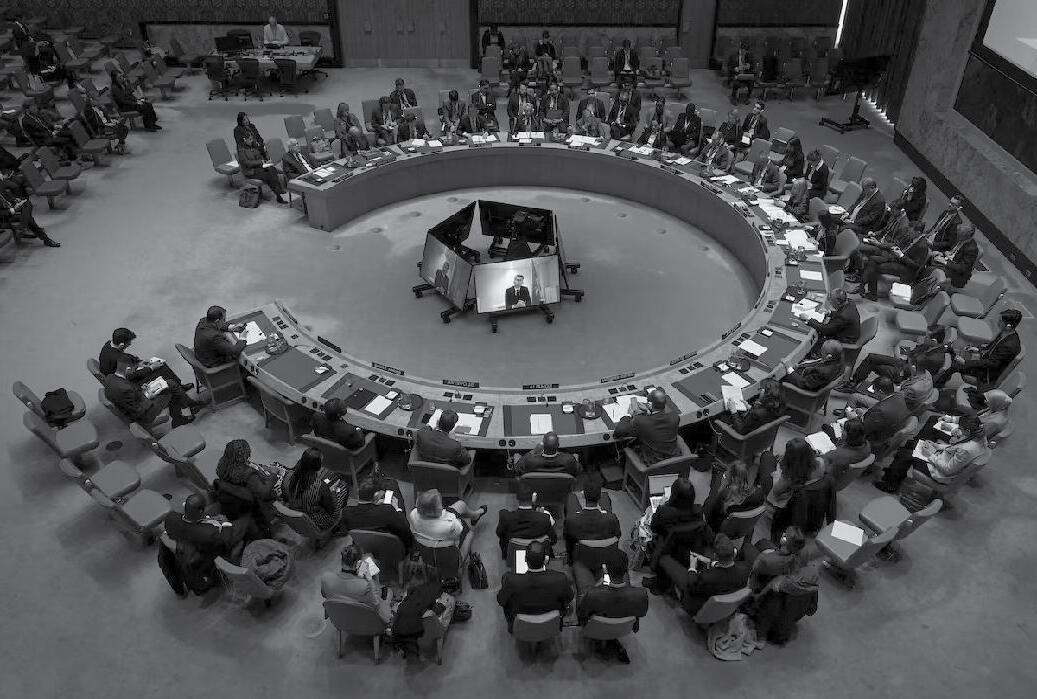
H.E. Eloy Alfaro de Alba gave his first briefing as Chair to the Security Council. The message was clear: while much progress has been made, the effective implementation of UNSCR 1540 is a long-term task.
SEPTEMBER
8 September 2025
The 1540 Committee adopted the first Voluntary Technical Reference Guide on the implementation of resolution 1540! The first guide focuses on export controls, an obligation established through operative paragraph 3 (d) of the resolution.
OCTOBER
1 October 2025
The 1540 Committee held its 109th meeting. This time, the agenda centred on the Committee’s multiyear programme of outreach and the Committee website, inter alia.
29 - 30 October 2025
The 1540 Committee Open Briefing of 2025! One of the main events in the Committee’s calendar, this year’s Open Briefing provided Member States, as well as international, regional and sub-regional organizations, with timely updates on the Committee’s progress.
NOVEMBER
19 November 2025
The Chair gave his second briefing of 2025 to the Security Council. In the briefing, he announced that the 1540 Committee will be co-hosting, with the Republic of Panama and supported by UNODA, a 1540 Points of Contact training course for Latin America and the Caribbean in Panama in December 2025.
DECEMBER
The Committee usually publishes its Annual Review report by the end of the year. Look out for it on the Committee’s website.
WHAT’S INSIDE THE COMMITTEE’S FIRST VOLUNTARY
TECHNICAL REFERENCE
GUIDE?
In September 2025, the 1540 Committee published the first in a series of Voluntary Technical Reference Guides. . These guides have been long awaited; they were first encouraged in 2022 by operative paragraph 13 of UNSCR 2663. However, given the technical nature of the subject matter and the difficulty in finding consensus on what to include, it has taken some time to finalize this first instalment on export controls. Looking forward, it is expected that the Committee will produce more of such guides, which offer Member States an “inventory of existing potential technical reference resources”.1
The obligation to establish, develop, review and maintain appropriate effective national export controls stems from operative paragraph 3 (d) of resolution 1540 (2004).
Three macro areas that Member States should consider:
Export Control Legislation
The national laws that prohibit the unauthorized transfer of sensitive materials, equipment, and technologies that could contribute to weapons of mass destruction.
Licensing Provisions & Authority
The procedures and designated government body responsible for reviewing, approving, or denying export requests involving controlled items.
Control Lists of Materials, Equipment & Technology
The official national lists that identify which items require oversight, usually based on technical specifications or HS codes.
1 United Nations, “Voluntary Technical Reference Guide – Export Controls”, Security Council Committee established pursuant to resolution 1540 (2004), available at https://www.un.org/en/sc/1540/national-implementation/vTRG-ExpCtrl-1.shtml (accessed 4 December 2025).
• Catch-All Controls – Measures which allow authorities to require authorization for the export of items not on control lists when there is reason to believe they could contribute to prohibited weapons programmes.
• End-User Controls – Measures which ensure that exports are checked against the identity, reliability, and activities of the recipient to prevent diversion to unauthorized or high-risk actors.
• Transit Controls – Regulations enabling governments to oversee and, if necessary, halt the movement of sensitive items passing through their territory without changing ownership.
• Trans-shipment Controls – Controls applied to goods moved through an intermediate country or port, ensuring that items at risk of diversion or misuse do not continue onward without proper authorization.
• Brokering Controls – Requirements for individuals or companies arranging deals for the transfer of controlled items to obtain authorization and comply with oversight mechanisms.
• Intangible Transfer Controls – Policies that regulate the non-physical transfer of controlled technology or know-how (e.g., via email, cloud storage, or technical assistance).
• Enforcement – The set of actions, such as inspections, investigations, penalties, and customs interventions, used by authorities to ensure compliance with national export control laws.
• Re-export Controls – Rules that require a foreign recipient of controlled items to obtain permission before exporting or transferring them again to a third country or end-user.
• Controls on Services related to Exports/Transshipments – Oversight of services, such as technical assistance, maintenance, and repair, that could enable the transfer of controlled items.
• Controls on the Financing of exports/ transshipments – Measures ensuring that banks, insurers, and other financial actors do not support transactions involving unauthorized or high-risk transfers of controlled items.
• Missile Technology Control Regime (MTCR)
• Nuclear Suppliers Group (NSG)
• Organisation for the Prohibition of Chemical Weapons (OPCW)
• World Customs Organization (WCO)
WHAT COMES TO MIND WHEN I SAY PROLIFERATION FINANCE?
UN sanctions
UN Security Council sanctions on State actors and the international system
WMD proliferation
Weapons of mass destruction and their means of delivery
Non-State actors
Terrorists and criminal organizations threatening global security
International financial standards
Measures to protect the international financial infrastructure
Dual-use goods, tech and material
Items which could be used for the design, development, production or use of WMD
International finance
The global financial system and the flow of assets and virtual assets
International trade
World trade economy hiding WMD procurement activity
After six months of deadlock, in June 2025, Panama was elected to assume Chairmanship of the 1540 Committee. Stepping into the role is H.E. Eloy Alfaro de Alba, a former Ambassador of Panama to the United States with a background in law. Speaking to the 1540 Compass in his national capacity as Permanent Representative of Panama to the UN, H.E. Alfaro de Alba shares insights into Panama’s strategic direction for the year ahead, the key messages emerging from the 1540 Committee’s recent briefing to the Security Council, and the importance of strengthening regional cooperation, particularly in Latin America and the Caribbean.
At a moment marked by renewed attention to capacity-building, reporting, and cross-border coordination, Panama has placed particular emphasis on ensuring that the Committee’s work remains dynamic, inclusive, and results-oriented. From enhancing the assistance mechanism to promoting voluntary peer reviews and reinvigorating engagement in developing regions, Panama’s vision reflects a pragmatic approach grounded in experience balancing competing international priorities.
Drawing on his broader professional experience, including his service on the Board of the Panama Canal Authority, H.E. Alfaro de Alba underscores in our interview the centrality of balancing security and trade in today’s interconnected environment. As he notes, “the Canal represents a critical global trade artery—its protection depends on strong regulatory frameworks, transparency, and constant adaptation to new risks”. Bringing this perspective to the Committee’s work, he emphasizes that effective implementation of resolution 1540 (2004) must reinforce both national security and international cooperation, adding that Panama’s aim is to support global efforts to prevent non-State actors from acquiring weapons of mass destruction “while maintaining open and secure international commerce”.
Panama assumed the Chairmanship of the 1540 Committee in June 2025, reflecting a longstanding commitment to supporting international security. What are some of Panama’s priorities in the area of countering WMD proliferation for the next year?
Panama has a longstanding commitment to supporting international security, as well as to disarmament and non-proliferation.
Panama will continue supporting initiatives aimed at countering WMD proliferation. Within the 1540 Committee, our priority will be to promote and encourage the implementation of resolution 1540 (2004) and resolution 2663 (2022) through practical and results-oriented engagement.
Our priorities include:
• Advancing the 1540 assistance mechanism while facilitating technical assistance and capacity-building, particularly in developing regions.
• Supporting Member States ahead of the 2027 Comprehensive Review, promoting early preparations and informationsharing.
• Promoting the submission of initial national reports and Voluntary National Implementation Action Plans (VNIPA).
• Strengthening coordination with international and regional organizations to promote a consistent and cooperative approach.
• Increasing the Committee’s visibility and outreach.
In the short term, we aim to set clear and achievable objectives, deepen engagement with national points of contact (PoCs), and ensure broader geographic participation, particularly among regions lagging in implementation. Panama also intends to make an extra-budgetary contribution to support Committee activities.
The 1540 Committee recently provided the first briefing to the Security Council in 2025. What were the most significant takeaways you wish to emphasize from this briefing?
The briefing reaffirmed the continued relevance of resolution 1540 (2004) in preventing non-State actors from acquiring WMDs and emphasized that full implementation remains a long-term task.
Key takeaways included:
• Progress in advancing the Committee’s mandate and sustained outreach efforts.
• Significant improvement in national implementation frameworks, with 156 Member States now having designated national PoCs, and renewed momentum in reporting and VNIPAs.
• Resumption of capacity-building activities for PoCs, with broad support for holding a regional course in Panama in 2025.
• Continued refinement of the 1540 assistance mechanism, along with
strong interest in facilitating technical assistance, including reviewing requests, to ensure they are properly addressed and effectively matched with available offers.
Committee members expressed strong appreciation for the Committee’s work and highlighted the essential role of the Group of Experts. The Committee’s commitment to cooperation, transparency, and inclusiveness in its work was emphasized.
Another takeaway was the importance of keeping implementation dynamic—strengthening synergies with related UN mechanisms and international and regional organizations to better adapt to new proliferation threats and pathways.
In the most recent briefing to the Security Council, the Committee highlighted the value of experience sharing, ‘including through voluntary peer reviews’. During your term, how does Panama plan to support States that wish to conduct peer reviews?
Peer reviews have proven to be one of the most effective ways for States to exchange experiences, identify best practices, and enhance national implementation measures. Panama has its own experience conducting such an exercise with the Dominican Republic, which provided valuable insights into national capabilities and cooperation.
During my term, Panama intends to continue encouraging voluntary peer reviews by facilitating exchanges of expertise, sharing methodologies, and providing technical or logistical support as needed.
Peer reviews have proven to be one of the most effective ways for States to exchange experiences.
We also aim to document and disseminate lessons learned from previous peer reviews, whenever possible, so that other States can draw on these experiences when planning their own.
The Committee has considered organizing targeted training for national PoCs in Latin American and Caribbean countries this year. In addition to this initiative, what other forms of engagement would you like to see from the 1540 Committee in your region during your term?
The planned training for national PoCs in Latin America and the Caribbean, which is scheduled to take place in Panama in December 2025, will be particularly significant—it will be the first activity of its kind in the region since 2016. This
event represents an exceptional opportunity to reinvigorate engagement, build technical capacity, and foster stronger cooperation among national authorities in the region.
It is essential for Panama that implementation contributes to regional security while also supporting economic growth and integration across Latin America and the Caribbean.
Beyond this, Panama would welcome broader and sustained regional dialogue—through workshops and open consultations—to explore complementarities between resolution 1540 and non-proliferation instruments in the nuclear, chemical, and biological fields; to advance crossborder cooperation on export controls; and to deepen partnerships with regional organizations such as CARICOM and the Organization of American States (OAS), together with their respective regional coordinators.
From Panama’s perspective, the Committee can play a key role in assisting Latin America and the Caribbean strengthen implementation of resolution 1540 by fostering greater understanding of how non-proliferation efforts align with broader regional priorities, including secure trade facilitation, enhanced border management, and sustainable development. As we stated in our national intervention during the August briefing, “our attention is especially directed toward the region of Latin America and the Caribbean.” It is essential for Panama that implementation contributes to regional security while also supporting economic growth and integration across Latin America and the Caribbean.
Eight Member States have yet to submit their first report to the Committee. In your view, how could these States be encouraged to participate more actively in 1540 implementation?
Each State has its own priorities and capacity constraints, and our engagement must remain respectful and responsive. Panama therefore intends to promote more active participation by continuing outreach through bilateral
consultations and, where appropriate, by encouraging country visits supported by the Committee’s Group of Experts.
We will work with partner States and relevant organizations to facilitate targeted technical and logistical assistance, including clearer guidance to help simplify the reporting process.
We also believe that workshops bringing together States that have not yet submitted their initial reports can help build confidence and deepen understanding of the process.
At the same time, we aim to highlight the tangible benefits of implementing resolution 1540—strengthened national security, increased international confidence, and improved access to cooperation—while encouraging the development of VNIAPs as a structured way to advance progress.
In light of your distinguished service on the Board of the Panama Canal Authority, in what ways might this experience serve to enhance and inform your current engagement with the work of resolution 1540?
My experience serving on the Board of the Panama Canal Authority has provided me with a solid background and deep appreciation for the balance between security, trade facilitation, and international cooperation.
The Canal represents a critical global trade artery—its protection depends on strong regulatory frameworks, transparency, and constant adaptation to new risks. Such perspectives are also relevant to the implementation of UNSCR 1540.
I intend to bring this perspective to my engagement in the 1540 Committee, emphasizing both the importance of effective controls and the value of maintaining open and secure international commerce, therefore, supporting with our Panamanian experience the international implementation of resolution 1540 (2004), a cornerstone of the global non-proliferation framework aimed at preventing non-State actors from acquiring weapons of mass destruction, particularly for terrorist purposes.
We
aim to highlight the tangible benefits of implementing resolution 1540.
INTERVIEW WITH: Mitali Tyagi
How Regional Organizations Support the Goals of Resolution 1540
The international community has shown an increasing awareness of the need to counter the financial dimensions of proliferation pathways, whether driven by State programmes or exploited by non-State actors. This can be seen by the emphasis placed on preventing proliferation financing by resolution 2663 (2022), which also renewed the 1540 Committee’s mandate for another 10 years. Resolution 2663 also welcomed the contributions of international and regional organizations— including those whose work draws on Financial Action Task Force (FATF) guidance—in supporting Member States’ efforts to implement resolution 1540 (2004). While the concept of proliferation financing has continued to gain prominence and become more technically elaborated through the work of the FATF and its regional bodies, States have long had obligations stemming from UNSCR 1540, which requires all governments to enforce prohibitions on the financing of activities that could contribute to the proliferation of weapons of mass destruction by non-State actors.
Within this context, the work of the Asia-Pacific Group on Money Laundering (APG) offers valuable insights for States strengthening their 1540 implementation. Although the APG’s focus lies primarily on targeted financial sanctions related to State-based proliferation programmes, it also works on inter-agency policy and operational coordination on combating proliferation financing, which extends to both State-based and non-State proliferation risks. APG’s analytical work on typologies, risk assessments, and the misuse of legal persons directly parallels many of the challenges States face in preventing proliferation by non-State actors. Combating issues such as beneficial ownership opacity, the abuse of intermediaries, and vulnerabilities in trade finance support implementation of 1540 obligations, even when seen from a sanctions, rather than a nonState actor, perspective.
In this interview, Mitali Tyagi, representing the APG Secretariat, reflects on emerging PF typologies in the Asia-Pacific region, the difficulties Member States encounter in mapping and mitigating PF risks, and how the Secretariat is preparing its members for the Global 5th Round of FATF Mutual Evaluations. Mitali Tyagi has been with the APG Secretariat for 10 years as an executive leader and, in that time, has led the APG’s work on FATF greylisting, research and implementation, typologies and technical assistance. She is an expert of the FATF framework and the conduct of mutual evaluations, having conducted mutual evaluations for Cambodia, Cook Islands, Philippines, Nauru and Singapore. Her insights underscore that while the APG and resolution 1540 operate in different normative spaces, the strengthening of financial-sector vigilance and sanctions implementation ultimately supports the broader non-proliferation architecture that resolution 1540 seeks to uphold.
DIRECTOR, SECRETARIAT OF THE ASIA-PACIFIC GROUP ON MONEY LAUNDERING
For our readers who may not be familiar with Financial Action Task Force-Style Regional Bodies (FSRBs) like the APG, can you explain your role in the global counterproliferation financing architecture?
FSRBs extend the reach of FATF to the far reaches of the globe. While FATF has 40 members, the Global Network covers over 200 jurisdictions across nine regional bodies. The APG is the largest body, by membership, in the Global Network with 41 active members, seven observer jurisdictions and 37 observer organizations. We bring the perspectives of our members, be they micro-states, least developed countries (LDCs) or large cultural and economic powerhouses, to the halls of the FATF plenary in Paris. At the same time, we bring the value and importance of the FATF standards to our membership, and advocate for their relevance in our region. These conversations occur in the context of capacity constrained bureaucracies or governments juggling urgent or competing priorities. We evaluate our membership under the FATF standards, but also provide consistent support and technical assistance to set our members up for success.
For individuals outside the financial sector, the distinctions between antimoney laundering (AML), counter-terrorist financing (CTF), and counter-proliferation financing (CPF) can sometimes appear blurred. Could you clarify the key differences and points of intersection among these three frameworks?
The key point of commonality across the three elements of the FATF standards is the illicit nature of financial flows. For example, funds or assets
originating as proceeds of crime, or heading to an illicit destination, or utilizing a mechanism that fuels criminal players or criminal activity.
With respect to ML, the FATF standards target the gatekeepers of finance: financial institutions, designated non-financial businesses and professions (DNFBPs) and virtual asset service providers (VASPs), otherwise known as “reporting entities”. FATF standards try to ensure governmental authorities have an effective partnership with these “reporting entities” in order to combat the flow of dirty money.
FSRBs extend the reach of FATF to the far reaches of the globe.
While the concern for AML (proceeds of crime) and CFT (funding terrorism) is broad, there is, in theory, a narrower targeted for target financial sanctions (TFS) (for TF and PF): designated persons or entities listed by the United Nations Security Council (UNSC) mechanisms. It’s an exhaustive list of identified individuals/entities. However, while the target is narrow, the weight of the obligation is heavier. TFS, for both TF and PF, are imported from the UNSCRs, and at that
source they place an obligation on everyone in a jurisdiction: natural person and legal persons. In order to achieve the outcome of depriving designated persons access to funds, governments must find a way to reach the theatres of activity at risk of PF or TF. The standards call for an astute understanding of risk, specific to each country, and targeted engagement with vulnerable sectors or individuals.
PF TFS have an element that is broader still, as they are targeting the financing activities of State-based regimes, such as the DPRK. The 1718 Sanctions List contains the names of 80 individuals and 75 entities, with several of the names being entities with State links or individuals in positions of governmental power. Extraordinarily, this extends to diplomatic relationships between DPRK and other countries. UNSCR 2321 (2016) OP 16 requires all States to take steps to limit the number of bank accounts to one per DPRK diplomatic mission.
What are typologies, and why are they important for CPF??
October 2020 marked a change in the way the FATF framework approached PF. Before then, FATF used ‘risk’ as a foundation to combat ML and TF, but not PF TFS. By adopting amendments to Recommendations 1 and 2 (R.1 and R.2) FATF extended this expectation to PF, and required jurisdictions and their reporting entities to identify and assess the risks of potential breaches, nonimplementation or evasion of TFS related to PF.
We have a diversity of governments in our membership, and for some, if not many, the paucity of ready information and intelligence related to PF poses a challenge. But we are also the region of DPRK, so members have experience
and cautionary tales to share with each other. Typologies provide a good mechanism to increase cooperation in the region and enrich our understanding of evolving methods and trends being employed by DPRK to evade sanctions. We welcome the renewed interest in APG’s Yearly Typologies Reports which routinely include a chapter on PF, and showcase the work of our observers, such as UNICRI, there as well.
Do you have any recent examples of emerging PF typologies that are prevalent in the Asia-Pacific region?
Over the last few years, the APG Secretariat and members have been considering the typologies of abuse of legal persons in relation to ML, TF, and PF. The extension of this typology to TFS evasion by the DPRK is a fresh point of inquiry for several jurisdictions, given the challenges posed legal persons (e.g. companies). Encountering a company with complex ownership translates to difficulties in transparency of beneficial ownership, and often acts as a dead-end to law enforcement activity.
For PF purposes, legal persons are able to obfuscate identity and allow control and ownership of assets. Worryingly, the goal for much of this activity appears to be access to the global banking system. Company ownership provides legitimacy and respectability, while also blurring the lines of who is in control. We have very interesting research coming out about the manipulation of management structures by the DPRK in expanding their access to trade and funds. These typologies are increasingly being picked up in PF risk assessments by jurisdictions preparing for the new round of mutual evaluations. While I can’t make a call on their prevalence, its certainly a space to watch intently.
What are some of the common challenges
APG Member States face in identifying and mitigating proliferation financing risks?
I’ve already touched on the importance of a solid understanding of PF risks before governments can target their engagement appropriately. This is easier said than done given the obligation to assess PF risks was inserted into the Standards a few years ago, and is only now being assessed under the Global 5th Round of Mutual Evaluations1
It is also challenging that TFS apply as widely as they do: they are applicable to persons and entities that act on behalf of or under the direction of designated persons or entities; are owned or controlled by designated persons or entities; and assist designated persons or entities in evading sanctions or violating resolution provisions. This is a large scope and requires an in-depth understanding of the threats and vulnerabilities that each member is facing. In particular the use of proxies and intermediaries (especially legal persons) for large scale and long term procurement makes PF TFS evasion hard to detect because transparency of corporate structures is a weak link in much of the world.
On a day-to-day basis, we hear of the challenges that border or law enforcement authorities face in identifying trade transactions that have a PF vulnerability without always having full information on the goods involved. The complexity and rapidly changing nature of technology that can have a dual-use capability is another consistent hurdle for governments.
International cooperation and shared research resources are critical to allowing governments to keep up.
Looking ahead, what strategic priorities does the APG Secretariat have in ensuring there are strong CPF frameworks across the Asia-Pacific region, and how do these priorities reflect the broader goals of UNSCR 1540?
The APG Secretariat has a long-standing tradition of raising awareness of PF TFS issues within our membership. It has not always been popular, and we have to advocate for attention amongst a crowded list of national priorities. However, with the support of our Observers (e.g. UNODC, UNICRI, 1540 Committee), we deliver technical assistance to build strength and share experiences. Our typologies work is another critical limb as it engenders international cooperation and knowledge sharing in relation to CPF efforts.
The APG’s clear priority at the moment is preparing our members for the Global 5th Round of Mutual Evaluations. This is a condensed round with larger numbers of members undergoing evaluations simultaneously, in peak years, and a stronger set of obligations through changes in the FATF standards. The assessors are also now adept at using Effectiveness as a threshold in mutual evaluations, which means our member governments require robust evidence to ground points of success.
1 The “Global 5th Round” refers to the FATF and FATF-style regional bodies’ upcoming cycle of mutual evaluations, which will assess countries’ technical compliance and effectiveness under the revised FATF Standards. This round is the first in which jurisdictions will be evaluated on their understanding and mitigation of PF risks, following the incorporation of PF-related obligations into the Standards in recent years.
On a day-to-day basis, we hear of the challenges that border or law enforcement authorities face in identifying trade transactions that have a PF vulnerability without always having full information on the goods involved.
INTERVIEW
WITH: Jonathan Brewer
Defining the Undefined in Proliferation Finance
As a former Coordinator of the 1540 Group of Experts and a leading expert on proliferation finance, Dr Jonathan Brewer has dedicated much of his career to countering the complex, transnational schemes employed to fund illicit weapons of mass destruction (WMD) programmes. He was also the financial expert on the UN Sanctions Panel on Iran between 2010 and 2015, and prior to that he was a member of the UK Diplomatic Service. In the Service, he spent time working on counter proliferation issues, although, at that time, financing issues were not a key area of work.
As Jonathan Brewer explains in this wide-ranging interview, the concept of proliferation financing has its foundations in resolution 1540, and awareness of it really took off from 2010, facilitated by the work of the Financial Action Task Force (FATF). While there is no universally agreed definition of the term, a 2010 FATF informal definition refers to “the act of providing funds or financial services which are used, in whole or in part, for the manufacture, acquisition, possession, development, export, trans-shipment, brokering, transport, transfer, stockpiling or use of nuclear, chemical or biological weapons and their means of delivery and related materials (including both technologies and dual use goods used for non-legitimate purposes), in contravention of national laws or, where applicable, international obligations”.1
Proliferation finance is not the only term that suffers from an ambiguous definition; Jonathan Brewer highlights that even core terms such as non-State actor are far more nuanced than they appear, especially when procurement networks blur the lines between private intermediaries and State-directed activity. Overall, this lack of clarity contributes to “a really great variety” of national approaches to counter proliferation and makes it “quite difficult for the international community as a whole to formulate a unified response.” In order to move forward, Jonathan Brewer calls for tailored 1540 guidance from FATF, which would “significantly strengthen States’ ability” to meet their obligations.
1 FATF 2010, Combating Proliferation Financing – A Status Report on Policy Development and Consultation, Financial Action Task Force (FATF), Paris, February 2010.
In your article in issue 1 of the 1540 Compass, you explored the absence of a universally agreed definition of proliferation finance. Could you provide a brief overview of how proliferation financing is defined across different frameworks and the gaps between the different definitions?
I think this is a key issue. When you look back, the UN has never provided a formal definition of proliferation finance, neither at the General Assembly level, nor at the Security Council level. The basis of the term really lies in resolution 1540, which was adopted in 2004. Resolution 1540 includes two operative paragraphs that touch on this subject. First of all, operative paragraph 2 prohibits States from providing any sort of support to non-State actors in connection with manufacturing, acquisition, possession, development, transportation, transferring or using nuclear, chemical, and biological weapons and means of delivery, as well as attempts to finance them. Then, operative paragraph 3 requires States to put in place controls related to those activities, but also export and transshipment services, such as financing.
I think the first definition of proliferation financing was proposed by the Financial Action Task Force. In 2008, the organization published a typologies report on proliferation financing with a number of case studies. Following on from that, a working group was set up and subsequently a report was published in 2010 with a recommended definition. That definition closely follows the wording of resolution 1540, but it adds a couple of activities, such as brokering and stockpiling.
I think it is a useful definition because it is very tightly focused on the production, development,
exploitation, and use of weapons of mass destruction themselves.
Then, 11 years later, in 2021, the Financial Action Task Force produced another definition in a guidance paper related to proliferation financing. It is similar to the 2010 definition, but with the addition of raising and moving funds. So, today, we effectively have two informal definitions published by the Financial Action Task Force.
When you look back, the UN has never provided a formal definition of proliferation finance, neither at the General Assembly level, nor at the Security Council level.
Both those definitions have been used by Member States in developing their own legislation and in producing risk assessments.
You also have a number of variations on these definitions that have been included by Member States in their guidance or legislation or risk assessments. Some States refer simply to the requirements of the relevant United Nations sanctions resolutions or they refer to designated individuals or entities, rather than defining proliferation financing. There are some States that include radiological in the definition. There are some States that simply refer to proliferation. There are some States that include a number of slightly different activities, or a subset of the 1540 activities. And there are some States that that have included the concept of being witting or not witting in the definition. So, you have a really a great variety here and I think that does make it quite difficult for the international community as a whole to formulate a unified response to proliferation financing.
And, what about the terms direct and indirect proliferation financing? What is your understanding of these terms?
The UK’s proliferation financing national risk assessment of 2021 uses these terms, as do a number of other national authorities. These terms broadly distinguish between directly funding procurement of prohibited materials by the DPRK or Iran, in other words, direct proliferation financing, and providing funds to front or shell companies that have been set up to support that sort of activity, in other words, indirect proliferation financing. This distinction seems quite complicated to me because if you’re actually trying to ship prohibited materials to DPRK, for example, you’re going to do it through
a front or shell company. You’re not going to be doing it under your own auspices because it’s prohibited. So, I think direct and indirect is an interesting idea, but perhaps complicated to differentiate in practice.
Non-State actor is another term that carries different interpretations across legal, financial and security contexts. Could you offer any insight into this ambiguity in the context of resolution 1540?
Resolution 1540 provides a definition of a nonState actor: an individual or entity not acting under the lawful authority of any State while engaging in activities covered by the resolution. This is typically associated with terrorist organizations or individuals involved in terrorism. However, the resolution makes clear that the definition extends beyond terrorism to include other actors as well.
The complexity arises when we examine what “lawful authority” means in practice. Does it require a formal contract authorizing procurement on behalf of a State? Or could it include informal arrangements, or covert authorizations? In the UK, the Intelligence Services Act allows activities that would otherwise be unlawful to be conducted lawfully by intelligence agencies. Does such a concept influence how we interpret “lawful authority” under 1540?
This ambiguity becomes even more pronounced when considering procurement networks for State WMD programmes. At the far end of these networks, private companies often attempt to acquire materials. Are they State actors if they lack a direct contract with the State but work through intermediaries? Do they even know they are acting on behalf of a State? These questions illustrate that while the term “non-State actor”
appears simple, its practical application is more nuanced.
Finally, I would add that, in most cases, individuals or entities are prosecuted based on their activities rather than their status. So while the definition is interesting and worth exploring, its practical significance may be limited.
In the previously mentioned article, you proposed that FATF could issue tailored guidance interpreting 1540-related proliferation financing obligations for its members. Why do you think this guidance would be particularly impactful?
FATF guidance would be highly valuable because FATF recommendations are subject to formal evaluations, and these assessments are publicized. States generally want to perform well in these reviews—poor results can signal weak financial regulation or even corruption. FATF is therefore an influential body in shaping global financial standards.
By contrast, the UN Security Council does not conduct systematic evaluations of how States implement its resolutions, including 1540. Existing FATF standards on proliferation financing primarily focus on sanctions compliance rather than 1540 obligations, though references to 1540 appear in some documents. However, FATF has never issued a dedicated guidance document on implementing 1540-related proliferation financing requirements. If it did, such guidance would likely be widely adopted as best practice, given FATF’s authority and the credibility of its standards. Ideally, the 1540 Committee would endorse FATF guidance but even if they did not, such guidance would significantly enhance States’ collective
implementation of1540 obligations.
If you were advising Member States directly, what would be your key recommendations for implementing 1540-related proliferation financing obligations?
My first recommendation would be to align national legislation and enforcement efforts with FATF’s 2010 definition of proliferation financing. It’s a robust and widely accepted standard, and adopting it would bring States into line with many others—subject, of course, to any future revisions FATF may introduce.
FATF guidance would be highly valuable because FATF recommendations are subject to formal evaluations, and these assessments are publicized.
Second, I would emphasize improving domestic coordination. FATF Recommendation 2 sets out strong principles for inter-agency collaboration, but, in practice, they often fall short. For example, when States form working groups on proliferation financing, these typically include representatives from finance ministries or financial intelligence units, but rarely involve customs authorities or licensing agencies. This is a missed opportunity because customs agencies can play a critical investigative role, and there are excellent case studies showing how customs-led investigations have uncovered proliferation financing schemes.
Ensuring that all relevant stakeholders—finance, customs, licensing, law enforcement—are “in the room” when developing strategies is essential. Better coordination will lead to more effective detection and disruption of proliferation financing activities.
In your experience, do you see States often considering 1540 obligations as part of their proliferation financing risk assessments?
Generally, no. Most proliferation financing risk assessments are driven by FATF’s revised Recommendation 1, which requires States— and the private sector—to conduct national risk assessments for proliferation financing. However, these assessments are based on FATF’s definition of proliferation financing risk, which is very narrow. It focuses on compliance with targeted financial sanctions under Recommendation 7, specifically addressing evasion, non-compliance, or failure to implement sanctions related to UN Security Council resolutions on the DPRK and Iran. There is no explicit reference to resolution 1540.
That said, some States have chosen to take a broader approach, looking beyond Recommendation 7. FATF’s June 2021 Guidance and June 2025 Report encourages this wider perspective. Still, I have not observed a consistent trend of States explicitly incorporating 1540 obligations into their risk assessments.
It’s worth noting, however, that if a State bases its assessment on FATF’s 2010 definition of proliferation financing, it is effectively covering 1540-related activities—even if this is not stated outright. In such cases, compliance with 1540 is achieved indirectly through alignment with FATF standards.
Looking more broadly at resolution 1540 implementation, you mentioned the 2022 Comprehensive Review in your article. Since then, what substantive developments have occurred in this area? How well do you think the 1540 Committee is tracking progress?
Resolution 2663, adopted following the 2022 Comprehensive Review, contains strong language in operative paragraph 12, stating that the Committee should continue to promote full implementation of resolution 1540, with particular attention to, amongst other issues, proliferation financing measures. That was a positive signal.
However, having reviewed publicly available information on the Committee’s website, there is little evidence that this priority has been actively pursued. For example, the Committee’s work programmes for 2023–2024 make no specific reference to proliferation financing. A few States—four, by my count—have submitted
national implementation reports since the review. One of these, India’s 2023 report, is noteworthy because it references updated legislation addressing proliferation financing. The other reports either omit the topic or mention it only in the context of counter-terrorist financing laws.
Two peer reviews have been published since 2022—one involving Central Asian countries and Mongolia, the other Singapore and the Philippines—but neither addresses proliferation financing. Resolution 2663 also required the Committee to produce three technical assistance guides. So far, only one has been issued, and it focuses on export controls. A guide on proliferation financing would be extremely valuable.
Looking ahead, what do you see as the biggest emerging threats in proliferation financing? And given the lack of momentum you’ve described, what more could be done to address these challenges?
The main strategic concern is whether additional States might seek to develop WMD programmes in response to evolving security dynamics. Such developments would attract significant attention, so these are unlikely to be covert threats, but they remain important to monitor.
On the non-State actor side, the risk of terrorist groups acquiring WMD materials persists, though known cases remain rare. Recent examples include the ISIS Caliphate and insurgents in Myanmar.
From a financial perspective, the most significant emerging issue—as represented by the FATF 2021 definition of proliferation financing—is the raising and moving of funds. This is where
cryptocurrency comes into play. North Korean actors, for instance, have stolen billions of dollars in cryptocurrency. What is not well understood is how these funds are converted into usable currency. Identifying where and how stolen crypto is cashed out—through over-the-counter traders, brokers, or intermediaries—should be a major focus for the international community. Without this knowledge, it’s difficult to disrupt the financial lifelines of WMD programmes.
Finally, in answer to your question about what more could be done to address challenges, members of the 1540 Group are familiar with States’ assistance needs and ideally could be given a more pro-active role in discussions with States about these needs.
Fom a financial perspective, the most significant emerging issue [...] is the raising and moving of funds. This is where cryptocurrency comes into play. [...] What is not well understood is how these funds are converted into usable currency. Identifying where and how stolen crypto is cashed out— through over-the-counter traders, brokers, or intermediaries—should be a major focus for the international community.
TACKLING PROLIFERATION FINANCING: A GLOBAL THREAT DEMANDS A GLOBAL RESPONSE
ABSTRACT
United Nations Security Council resolution (UNSCR) 1540 (2004) prohibits the financing of WMD proliferation, yet combating this threat remains challenging, as illicit financial flows often exploit the opacity of the global financial system. The Financial Action Task Force (FATF) helps to address this threat by establishing international standards for implementing targeted financial sanctions required by the United Nations and assessing countries’ compliance. Since 2020, FATF requires jurisdictions to identify, assess, and mitigate their proliferation financing risks. Yet, only 16% of assessed jurisdictions are currently substantially or highly effective in implementing related sanctions, revealing significant global vulnerabilities. Effective prevention demands comprehensive cooperation across governments, financial institutions, and international bodies. A coordinated, risk-based, and globally integrated approach is essential to safeguard the integrity of the financial system and to counter the evolving threat of WMD proliferation financing.
The proliferation of weapons of mass destruction poses a critical threat to global security, threatening peace and stability worldwide.
On April 2004, the United Nations Security Council (UNSC) unanimously approved resolution 1540. A key element to prevent the proliferation of weapons of mass destruction is to stop the financial flows that enable it, as reflected by
the resolution, which prohibits their financing in operative paragraph 2. Yet, preventing proliferation financing is particularly challenging as these financial flows often hide in the shadows—quietly undermining both the integrity of the international financial system and our global security.
The Financial Action Task Force (FATF) plays a central role in combating this threat by
1 FATF Recommendation 7 introduced in 2012 – see the FATF Recommendations.
THE AUTHOR: Elisa de Anda Madrazo
Elisa de Anda Madrazo has been the President of the Financial Action Task Force (FATF) since July 2024. As President of FATF, she has committed to continue to strengthen FATF’s work to tackle financial crime, including efforts to increase and update understanding of proliferation risks. She has over a decade of experience in leadership positions in countering illicit finance. In FATF, she has also served as Head of the Mexican Delegation, Co-Chair of the Global Network Coordination Group and as Vice-President. In addition to her FATF Presidency, she also serves as Director General in Mexico’s Ministry of Finance and Public Credit.
setting international standards for the implementation of targeted financial sanctions to comply with UNSC resolutions related to proliferation and its financing.1 This requires countries freezing funds or other assets of designated persons and entities to prevent, supress and disrupt the proliferation of weapons of mass destruction.
In October 2020, FATF introduced a requirement for countries to: 1) identify, assess and understand their proliferation financing risks and take proportionate action aimed at ensuring that these risks are mitigated effectively; and 2) require financial institutions and designated non-financial businesses and professions to identify, assess and take effective and risk-based action to mitigate their proliferation financing risks.2
In addition to setting the standards, FATF plays a key role in assessing their implementation as part of the evaluations conducted in each of the 200 jurisdictions that are part of the FATF Global Network. The assessments trigger two fundamental outcomes that support the prevention of proliferation: first, they provide a picture of the strength of our global defences; second, they give each jurisdiction a roadmap and recommended actions to address identified shortcomings and to strengthen their proliferation financing controls.
Regarding the first outcome, our last round of assessments revealed that only 16% of jurisdictions are substantially or highly effective in implementing targeted financial sanctions pursuant to the UNSCRs on proliferation. This performance simply does not meet the magnitude of the threat to the world’s security. Most countries have not yet developed the legal framework to implement, without delay, targeted financial sanctions related to proliferation financing. Countries are also experiencing shortfalls in: 1) identifying assets held by those acting on behalf of designated entities; and 2) communicating and enforcing clear policies related to listings/ delisting/exemptions for covered private sector entities.3 Stronger action is needed.
Another important point: the global context is rapidly changing with the emergence of new technologies, including payment systems. These changes also create new vulnerabilities in terms of proliferation financing, making it even
more crucial to strengthen preventative efforts against the proliferation of weapons of mass destruction.
To help tackle this critical threat, the FATF released the report “Complex Proliferation Financing and Sanctions Evasion Schemes”, earlier this year, which outlines current threats, typologies, and best practices for mitigating proliferation financing risks.4
This report sets out how both State and non-State actors exploit global trade and the financial system to facilitate the financing of weapons of mass destruction. For example, it identifies complex procurement networks, shell and front companies, and intermediaries as some of the methods used by bad actors to gain anonymity by obscuring beneficial ownership information and to evade sanctions. It also describes how trade finance and free trade zones are particularly vulnerable to abuse, and weak export controls and the maritime and shipping
2 Revised FATF Recommendation 1 and its Interpretive Note (R.1 and INR.1) – in this context “proliferation financing risk” refers strictly and only to the potential breach, non-implementation or evasion of the targeted financial sanctions obligations referred to in Recommendation 7. See the FATF Guidance on Proliferation Financing Risk Assessment and Mitigation. The new requirements to assess proliferation financing risks have been assessed for the first time under FATF’s new round of evaluations with the first results to be published soon.
3 FATF Report on the State of Effectiveness and Compliance with the FATF Standards (April 2022).
4 FATF report on Complex Proliferation Financing and Sanctions Evasion Schemes.
sectors are also targeted as a key part of the supply chain for weapons of mass destruction.
Understanding the methods used for proliferation financing is key for effective mitigation of such risks. To stay ahead of criminals and better protect the global community, I urge both public and private sectors, including academia and civil society, to take note of the common enforcement obstacles and practical advice highlighted in the report.
For example, the issuing of detailed alerts can make it easier for financial institutions to file Suspicious Activity Reports and Suspicious Transaction Reports. And by being alert to key risk indicators such as IP addresses not matching the customer’s reported location, competent authorities and the private sector can better detect evasion.
Indeed, the private sector is often on the front line of proliferation financing detection, and our report encourages au-
thorities to make use of public-private partnerships to improve information sharing.
With an increasing use of virtual assets (VAs) observed, our report also highlights how Virtual Asset Service Providers (VASPs) may be used to facilitate financial flows either directly to countries sanctioned by the UNSC or indirectly through intermediary third-party countries that may, willingly or unwillingly, not apply the sanction measures.
FATF-style regional bodies are crucial for ensuring global reach; Credit: FATF/OECD.
International and inter-agency cooperation are key to addressing all these gaps
To prevent the misuse of virtual assets, jurisdictions should ensure that VASPs are licensed or registered as well as regulated for AML/CFT/ CPF purposes, in line with the FATF recommendations. As of now, our analysis shows that three-quarters of jurisdictions are either non-compliant or only partially compliant with the FATF standards on VAs and VASPs—we are urging our Global Network members to close these gaps, and we continue to monitor progress through our annual targeted update and through our mutual evaluations.
International and inter-agen -
cy cooperation are key to addressing all these gaps—as success stories from around the world demonstrate.
For example, our report highlights instances of authorities of different jurisdictions working together t o jointly designate individuals and entities operating ac ross borders to facilitate financial transactions to ultimately support the DPRK‘s WMD programme. The transnational nature of this crime demonstrates the importance of a coordinated international response in enhancing the global impact of targeted financial sanctions
and countering proliferation financing.
To effectively safeguard the global financial system against the evolving threat of weapons of mass destruction, a 360-degree approach is crucial. This means regular risk assessments, robust interagency and private sector collaboration, effective export controls, and strong international cooperation.
In resolution 1540, the UNSC recognized “the need to enhance coordination of efforts on national, subregional, regional and international levels in order to strengthen a global response to this serious challenge and threat to international security”. Together, we should also work to address proliferation financing—it is a global threat that warrants a global response. That is why it is essential that we collaborate to identify proliferation financing threats and stop criminals in their tracks.
FATF Plenary 23 octobre 2024; Credit: FATF/OECD.
THE ROLE OF REGIONAL COOPERATION FOR ENHANCED UNSCR 1540
IMPLEMENTATION IN AFRICA
ABSTRACT
The effective implementation of United Nations Security Council resolution 1540 (UNSCR 1540) in Africa remains a critical yet understudied challenge in global non-proliferation efforts. This article examines the role of regional cooperation in strengthening compliance with UNSCR 1540 across African States, focusing on the unique security dynamics, institutional capacities, and transnational threats that shape non-proliferation outcomes. By analysing case studies from key regions such as the Sahel, the Horn of Africa, and Southern Africa, the study highlights both structural obstacles (e.g., limited resources, weak governance) and emerging opportunities (e.g., African Union-led initiatives, cross-border partnerships). It argues that a cohesive regional approach, supported by international actors and adapted to local contexts, is essential to mitigate proliferation risks posed by non-State actors and unstable regimes. The article concludes with policy recommendations to enhance legal frameworks, intelligence sharing mechanisms, and capacity-building programmes, offering actionable insights for policymakers and practitioners working at the intersection of security and development in Africa.
United Nations Security Council resolution 1540 (2004) mandates all States to prevent non-State actors from acquiring nuclear, chemical, and biological weapons and their delivery systems. While the resolution is global in scope, its implementation has varied significantly across regions due to disparities in governance capacity, technical resources, and threat environments.
Africa’s importance in the global non-proliferation landscape
is growing, particularly as the continent navigates transnational security threats such as terrorism, illicit arms trafficking, and porous borders. Despite these vulnerabilities, African States have made uneven progress in meeting 1540 obligations. Many continue to face serious structural challenges, ranging from limited legislative coverage to weak export control regimes.
Recent developments, however, offer new strategic opportunities. For example, the African
Ari Koutale Tila Boulama Mamadou is currently First Secretary at the Permanent Mission of Niger to the United Nations, in charge of disarmament, international security, and legal affairs. He is also the PoC of Niger (on behalf of Ministry of Foreign Affairs) to the 1540 Committee and a frequent speaker at international forums, including UN First Committee and the Moscow Nonproliferation Conference. With a master’s in international relations and security studies, he has extensive experience in non-proliferation, conflict management, and humanitarian diplomacy.
Continental Free Trade Area (AfCFTA), operational since 2021, creates a continent-wide institutional framework that could facilitate integrated trade-security monitoring systems. Aligning AfCFTA’s infrastructure with non-proliferation goals could reinforce compliance by embedding safeguards into customs, transport, and regulatory processes. Moreover, the African Union (AU) has advanced its role in coordinating non-proliferation activities through workshops and focal
Ari Koutale Tila
Boulama Mamadou
point networks in partnership with the United Nations Office for Disarmament Affairs (UNODA).¹
This paper investigates how regional cooperation anchored in AU frameworks, supported by Regional Economic Communities (RECs), and synergized with continental initiatives like AfCFTA, can catalyse enhanced implementation of UNSCR 1540 in Africa. Drawing on regional case studies and capacity assessments, it explores both barriers and enablers of compliance and concludes with tailored policy recommendations to strengthen legal, technical, and institutional mechanisms.
BACKGROUND OF UNSCR 1540 AND AFRICA
Adopted in 2004, UNSCR 1540 requires all Member States to establish domestic measures to prevent non-State actors from acquiring weapons of mass destruction (WMDs), their means of delivery, and related materials. This includes the adoption and enforcement of appropriate legislation, effective border and export controls, and regular reporting to the 1540 Committee on progress made. In Africa, however, the implementation
of these obligations remains uneven. As of mid-2025, only 27 of the AU Member States had submitted updated national reports, with several failing to submit initial ones. National legal frameworks often remain outdated or incomplete, while many countries lack the technical and institutional capacity to detect, track, or interdict proliferation-sensitive materials across borders.
Most AU Member States have ratified key non-proliferation treaties such as the Chemical Weapons Convention (CWC) and the Biological Weapons Convention (BWC). However, the translation of treaty commitments into enforceable domes tic legislation lags behind. For instance, the absence of integrated export control systems or criminalization measures continues to impede full compliance. Africa’s implementation landscape is further complicated by governance fragility, porous borders, and limited resources. Yet, the continent’s robust web of regional and sub-regional institutions provides a potential framework for enhancing compliance. These platforms, if effectively leveraged, can promote legal harmonization, build capacity, and support coordination across Member States.
THE ROLE OF REGIONAL COOPERATION
Regional cooperation has emerged as a strategic enabler for strengthening UNSCR 1540 implementation in Africa. Given the continent’s complex security environment and resource disparities, collective regional action offers a viable means of amplifying national efforts and addressing transboundary proliferation risks.
The AU, through its Peace and Security Council (PSC) and the African Peace and Security Architecture (APSA), plays an increasingly central role in security governance. Mechanisms such as the Continental Early Warning System (CEWS), the African Standby Force (ASF), and the African Centre for the Study and Research on Terrorism (ACSRT) provide platforms that could be further leveraged for non-proliferation objectives. These institutional frameworks are supported by RECs, notably the Economic Community of West African States (ECOWAS), the Intergovernmental Authority on Development (IGAD), and Southern African Development Community (SADC), which have developed mandates for border security, disarmament, and counterterrorism, though their
alignment with UNSCR 1540 obligations remains uneven.
While not originally designed for WMD-related mandates, African institutions possess latent capacity to harmonize legislative standards, promote intelligence sharing, and coordinate technical assistance. AU-hosted training sessions and REC focal points have demonstrated potential in localizing implementation. However, overlapping mandat es among organiza -
tions, especially in the Sahel, have at times produced duplication or institutional rivalry, underscoring the need for clearer role differentiation and coordination protocols.1
UNODA has encouraged institutional synergy by promoting model legislation, Points of Contact (PoC) networks, and joint workshops with AU and REC actors. These efforts are gradually fostering a regional compliance culture, but sustained progress will depend
on resource allocation, political will, and clearly designated institutional leads.2
CHALLENGES TO IMPLEMENTATION
The effective implementation of UNSCR 1540 across Africa is hampered by four interlinked obstacles: resource constraints, legal and institutional deficiencies, fragmented interagency coordination, and low political prioritization. These challenges reflect both
1 Baldaro, Edoardo & Lopez Lucia, Elisa. (2022). Spaces of (in-)security and intervention: spatial competition and the politics of regional organizations in the Sahel. Territory, Politics, Governance. 12. 1-19.
2 Information Note – African Union Workshop on the Implementation of UNSCR 1540 (2004), Addis Ababa, Ethiopia, 10-11 December 2013 (Doc. S/2013/86). New York: United Nations, 2013. Available at: https://www.un.org/en/sc/1540/ documents/Information%20Note%20Addis%20Ababa%20AU%201540%20WS%202013-86.pdf.
Dual-use industry is growing exponentially in Africa, increasing the importance of effective UNSCR 1540 implementation; Credit: Adobe Stock.
While a majority of AU Member States have ratified major treaties like the BWC and the CWC, many have not ransposed these into enforceable domestic legislation.
structural limitations and strategic gaps that impede sustained compliance.
First, widespread financial and human resource limitations severely restrict the ability of many African States to build and maintain national WMD non-proliferation systems. Most lack the capacity to develop specialized customs, border, and laboratory infrastructure needed to detect or control chemical, biological, radiological, and nuclear (CBRN) materials. This is particularly acute in conflict-affected or economically distressed States where even basic border management remains under-resourced.3
Compounding these constraints are legal and institutional gaps. While a majority of AU Member States have ratified major treaties like the BWC and the CWC, many have not transposed these into enforceable domestic legislation. As a result, frontline enforcement agencies often operate
without clear mandates, technical guidance, or interagency protocols undermining both detection and prosecution capabilities.4
Inter-ministerial fragmentation further weakens implementation. Non-proliferation d uties are typically divided among ministries of defence, foreign affairs, customs, and internal security, often without a designated national coordinator or integrated strategy. According to UNODA, numerous States still lack officially designated PoCs, limiting their engagement with the 1540 Committee and access to technical assistance and peer support.5 Finally, political will remains low. WMD non-proliferation is seldom framed as a national security priority, especially when set against more immediate concerns like terrorism, food insecurity, or economic recovery.
The abstract nature of the 1540 mandate and its perception as donor-driven further
3 UNODA, Strengthening the African Network of National Points of Contact on UN Security Council Resolution 1540 (2004), UNODA update, November 2024. Available at: https://disarmament.unoda.org/update/strengthening-the-african-network-of-national-points-of-contact-on-un-security-council-resolution-1540-2004/.
4 D.M. Stinnett, B.R. Early, C. Horne and J. Karreth, “Complying by Denying: Explaining Why States Develop Nonproliferation Export Controls,” International Studies Perspectives, vol. 12, no. 3, pp. 308–326, 2011.
5 UNODA, Strengthening the African Network of National Points of Contact on UN Security Council Resolution 1540 (2004), UNODA update, November 2024. Available at: https://disarmament.unoda.org/update/strengthening-the-african-network-of-national-points-of-contact-on-un-security-council-resolution-1540-2004/.
undermines local ownership. This detachment is exacerbated by overlapping donor initiatives and a lack of monitoring mechanisms to track progress and align external support with national needs. 6 Addressing these challenges will require coordinated legal reforms, institutional innovation, and the mainstreaming of non-proliferation into regional security and development agendas.
OPPORTUNITIES AND STRATEGIC ENTRY POINTS
Despite persistent challenges, Africa’s institutional landscape offers several underutilized entry points to strengthen UNSCR 1540 implementation. Strategic alignment between disarmament efforts and development priorities, coupled with enhanced regional cooperation, can serve as a catalyst for progress.
The AU and RECs are increasingly active in shaping the continent’s peace and
security agenda. Instruments such as APSA, the AU’s Master Roadmap of Practical Steps to Silence the Guns, and Agenda 2063 provide policy frameworks into which UNSCR 1540 goals can be integrated. Formalizing coordination between the AU Peace and Security Council and the 1540 Committee would enable regionally adapted approaches, such as harmonized model laws, risk-based compliance templates, and joint operational training.7
The security-development nexus offers another promising entry point. Regional and bilateral initiatives such as the EU’s CBRN Risk Mitigation Centres of Excellence and the US Cooperative Threat Reduction (CTR) programme demonstrate how non-proliferation measures can be embedde d within broader governance reform, border control, and development programming. National Action Plans (NAPs) for UNSCR 1540
could be aligned with existing national security strategies and development goals to ensure sustained funding and political traction.8
Trade integration under the AfCFTA presents a new frontier for synergizing economic growth and security. As intra-African trade increases, so too does the movement of dual-use goods and materials. Embedding WMD-related safeguards such as risk-based customs screening and traceable supply chains into AfCFTA’s implementation mechanisms would support both trade facilitation and proliferation prevention. Regional training hubs focused on WMD threat awareness for customs officials and border agents could further reinforce this linkage.9
Finally, peer learning and local ownership are critical enablers. The 2024 Addis Ababa training workshop for 1540 PoCs demonstrated the
6 E. Seiyefa, “Exploring lapses in West Africa’s security architecture and their implications for regional security,” South African Journal of International Affairs, 2024.
7 Information Note – African Union Workshop on the Implementation of UNSCR 1540 (2004), Addis Ababa, Ethiopia, 10-11 December 2013 (Doc. S/2013/86). New York: United Nations, 2013. Available at: https://www.un.org/en/sc/1540/ documents/Information%20Note%20Addis%20Ababa%20AU%201540%20WS%202013-86.pdf.
8 UNODA, Strengthening the African Network of National Points of Contact on UN Security Council Resolution 1540 (2004), UNODA update, November 2024. Available at: https://disarmament.unoda.org/update/strengthening-the-african-network-of-national-points-of-contact-on-un-security-council-resolution-1540-2004/.
9 VERTIC, Regional Approaches to the Implementation of UNSCR 1540, 2024. Available at: https://www.vertic.org/ programmes/nim/un-security-council-resolution-1540/regional-approaches/.
value of regional exchanges in clarifying responsibilities, sharing operational tools, and building institutional memory. Institutionalizing such peer-review platforms at the AU or REC level would help mainstream 1540 compliance into national systems while fostering African leadership in global non-proliferation efforts.10
POLICY RECOMMENDATIONS
To accelerate the implementation of UNSCR 1540 across Africa, national and regional actors should pursue coordinated, actionable measures across five core areas: legal harmonization, institutional coordination, operational capacity, regional cooperation, and oversight. Stakeholders should also support the development and adoption of African Union and REC-endorsed model laws to criminalize unauthorized WMD possession, facilitate ex-
tradition, and regulate dual-use goods. National customs and export codes should be aligned with global standards such as the Wassenaar Arrangement and the Nuclear Suppliers Group (NSG) guidelines.11
Each State should appoint a 1540 PoC and equip them with a formal mandate, budget, and interagency coordination authority. Regional networks of PoCs like those piloted in 2024 should be expanded to facilitate peer exchange and technical assistance.12
Priority investments should include mobile CBRN detection units, open-source intelligence platforms, and field-operational forensic labs. These should be embedded within national border agencies and connected to regional intelligence nodes hosted by entities such as AFRIPOL or ACSRT. Equally, it is crucial to establish secure communication protocols and
standardized reporting formats for regional threat data. RECs should host joint intelligence fusion cells to process trafficking alerts, license verifications, and interdiction reports in real time.13
UNSCR 1540 goals must be embedded in national development strategies and sectoral programmes, particularly those focused on governance reform, security sector modernization, and trade facilitation. Parliaments should oversee legislative implementation and allocate domestic funding to complement donor programmes.14
10 UNODA, Strengthening the African Network of National Points of Contact on UN Security Council Resolution 1540 (2004), UNODA update, November 2024. Available at: https://disarmament.unoda.org/update/strengthening-the-african-network-of-national-points-of-contact-on-un-security-council-resolution-1540-2004/.
11 VERTIC, Regional Approaches to the Implementation of UNSCR 1540, 2024. Available at: https://www.vertic.org/ programmes/nim/un-security-council-resolution-1540/regional-approaches/.
12 UNODA, Strengthening the African Network of National Points of Contact on UN Security Council Resolution 1540 (2004), UNODA update, November 2024. Available at: https://disarmament.unoda.org/update/strengthening-the-african-network-of-national-points-of-contact-on-un-security-council-resolution-1540-2004/.
13 VERTIC, Regional Approaches to the Implementation of UNSCR 1540, 2024. Available at: https://www.vertic.org/ programmes/nim/un-security-council-resolution-1540/regional-approaches/.
14 Inter-Parliamentary Union (IPU), Effective Implementation of Resolution 1540 in Africa: Opportunities for Parliaments, Regional Seminar Report, Abidjan, 22–23 February 2016. Available at: https://www.ipu.org/file/2232/download.
Regional cooperation anchored in African Union frameworks can enhance 1540 implementation; Credit: Solen Feyissa/Unsplash.
1540 REGIONAL COORDINATORS AS EXPORT CONTROL FORCE MULTIPLIERS:
A CASE FOR SUSTAINING 1540
REGIONAL COORDINATOR
FUNDING
ABSTRACT
In order to fully implement United Nations Security Council resolution 1540 (UNSCR 1540), many States benefit from the support of 1540 Regional Coordinators (RCs). These RCs— based within the OSCE, the OAS, and UNODA—act as vital force multipliers for export control implementation by bridging the gap between international assistance providers, the 1540 Committee, and States seeking to build export control capacity. However, current funding shortfalls threaten to end these positions by mid 2026, undermining global non-proliferation progress. Sustained RC funding is therefore essential to maintain momentum, strengthen developing States’ export control frameworks, and uphold UNSCR 1540’s objectives worldwide.
UNSCR 1540 sets out a range of requirements about how all States are obliged under international law to prevent WMD-related proliferation to and by non-State actors through the protection of WMD-related materials under Operative Paragraph (OP) (a)–(b) of the resolution as
THE AUTHOR: Todd Perry
Todd E. Perry, Ph.D., served as the U.S. Department of State’s Special Coordinator for UNSCR 1540 starting in May 2019 until he retired from U.S. federal service in May 2025. Starting in 2001, he established the U.S. Department of Energy National Nuclear Security Administration’s International Nonproliferation Export Control Program (INECP). Since then, INECP teams of engineers, scientists and social scientists have led export control- and enforcementrelated partnerships with US agencies and US, Japanese, and EU assistance programmes in over 50 countries as well with a range of regional and international organizations.
well as through use of export control and related border control measures as outlined in OP (c)–(d). In addition, the resolution calls for States to implement related measures like the development of export control lists.1
A brief survey of national implementation in the Committee’s 2022 Comprehensive Review document2 reveals that many countries in Europe and some in Asia and in the Western Hemisphere have demonstrated steady progress towards increasingly robust implementation of the resolution’s export
1 The expor t control and related border security requirements of UNSCR 1540 are contained in OP 3 (c)-(d). https://docs. un.org/en/S/RES/1540(2004), which “Decides” that these actions are binding upon States under Chapter VII of the U.N. Charter. Related language “Recognizing” the importance of national control lists, and “calling upon” states to engage industry can be found in paragraphs 6 and 8.d of UNSCR 1540, respectively.
control provisions.3 What the 2022 document does not show is that a minority of developing and under-resourced States in Africa, Asia, and the Western Hemisphere have started making gradual progress on export controls too, thanks in considerable measure to the work of the UNSCR 1540 Regional Coordinators.
A central challenge facing the 1540 Committee, especially when engaging developing States or answering their calls for assistance, is the fact that the resolution, and hence the Committee’s mandate, provides little if any guidance to States seeking to align their national practices with OP (c)–(d) requirements. As a result, while specialists who make up the Committee’s Group of Experts (GoE) often refer to a list of basic export control elements, like the licensing of tangible goods as well as of intangible “technology,” they are not allowed to explain how
these elements might be put into practice. States’ export control progress outlined in a “matrix”4 of data collected by the Committee from States’ voluntary reports consists only of national export control laws and regulations without any further indication of how States might give life to these laws. Laws themselves accomplish nothing if essential national export control organizational structures and methods are not adopted to support their implementation.
For example, the predominant way for States that manufacture or trade in a wide range of WMD-related “dual-use” products and technology to implement 1540 OP 3 (d), which prohibits the unregulated international transfer of these assets, is to adopt the European Union (EU) control list.5 This list comprises WMD export control regime listed goods and technology, which is delineated by detailed engineer-
ing or scientific specifications. And yet, the Committee is in no position to recommend the EU list or any other list, since doing so goes against Committee policy of not providing “how to?” information to States. To this point, the Committee cannot hold forth when other kinds of lists, including those based upon Harmonized System (versus engineering and scientific) nomenclatures, might be most appropriate. 6 The Committee is faced also with a compounding challenge: its consensus-based decisional rule prevents it or its GoE from engaging States unless they formally invite the Committee to do so.
In response to these challenges, several international and regional organizations (IOs/IROs) have established a loosely knit system of 1540 Regional Coordinators (RCs). The RCs are independently funded and therefore not subject to the Committee’s
3 Ibid, Comprehensive and Annual Reviews. By 2022, implementation of 3 c-d had increased overall by five percent since 2016. See Section E., pp. 11-13 and Annex XV, pp. 61-63 of the 2022 CR.
4 Op. Cit., Comprehensive and Annual Review, Annexes X-XVII, pp. 62-67.
5 Annex 1 of the EU expor t control regulation contains a control list, which cross references controlled items according to general type and use. https://policy.trade.ec.europa.eu/news/2025-update-eu-control-list-dual-use-items-2025-09-08_en.
6 The utility of HS nomenclature-based approach to control list development was first demonstrated in the “World Customs Organization’s Strategic Trade Control Enforcement Guide,” https://www.wcoomd.org/en/topics/enforcement-and-compliance/instruments-and-tools/guidelines/wco-strategic-trade-control-enforcement-implementation-guide.aspx. Its use in the development of corresponding control lists and training courses is discussed in James McColm et. al., “Where There’s a Way, There’s a Will: The World Customs Organization’s Capacity Building in the Field of Strategic Trade Control Enforcement,” Strategic Trade Review, Volume 5, Issue 7, Winter 2019 pp. 45—52.
engagement constraints. This allows the RCs to be prescriptive if only by ensuring that interested States are exposed through assistance providers, IOs, other States or the RCs themselves to the many ways in which the export control provisions of the resolution might be implemented.
There are currently four RCs that operate under various auspices, including: an Organization for Security and Co-operation in Europe (OSCE) Coordinator based in Vienna, a Western Hemisphere Coordinator based at the Organization of American States (OAS) headquarters in Washington D.C., and United Nations Office for Disarmament Affairs (UNODA) Coordinators for Asia and Africa based in Bangkok and Addis Ababa, respectively. These Coordinators have by necessity become students of all known approaches to 1540 export control-related implementation now or at one time offered by EU, German, Japanese, U.S. and World
Customs Organization (WCO) assistance providers.
Financial challenges are faced by all four RCs, which if not addressed by mid-2026, will lead to an end to their tenures and thus to their ability to further enable export control progress. The RCs serve as force multipliers for assistance providers and the Committee, including through 1540mandated outreach practices such as 1540 Peer Reviews (PRs) and 1540 National Action Plans (NAPs).
1540 REGIONAL COORDINATOR-ENABLED EXPORT CONTROL PROGRESS
OSCE 1540 Regional Coordinator
The OSCE was the first IRO to place an RC on its staff in 2011 using its regional project on 1540 implementation with funding from the United States and the United Kingdom. U.S. assistance programmes and a
number of additional donors7 provided follow-on funding, which enabled the coordinator to encourage Central Asian and Caucasus countries to adopt 1540-consistent export controls. 8 Many of these activities enjoyed support from leading regional export control specialists, including those from the Russian Federation, whose experts assisted with discussions about more difficult aspects of export control, such as intangible technology controls. The OSCE Coordinator also worked closely with EU and German assistance providers to organize export control-related activities in sub-regions of the OSCE with nascent systems of control, such as the Balkans.9
The presence of an RC at the OSCE fostered organization-wide interest in developing 1540 NAPs and in submitting UNSCR 1540 export control-related implementation data to the Committee on a voluntary basis. This took place during a period of substantial delay in
7 Additional donors included Switzerland, Austria, Lichtenstein, and Italy as well as the EU.
8 The term “U.S. expor t control assistance” refers to U.S. Department of State’s Export Control and Related Border Security (EXBS) programme and/or the U.S. National Nuclear Security Administration’s International Nonproliferation Export Control Program (INECP), which is located within the U.S. Department of Energy National Nuclear Security Administration.
9 “EU assistance” refers here to the EU Council’s Partner to Partner (“P2P”) outreach programme. The term “German assistance” is a reference to Germany’s trade and finance ministry’s (“BAFA’s”), role in support of P2P activities. BAFA also often provides additional financial support to the export control-related industry and academia outreach initiatives mentioned at the end of this article.
the Committee’s response to assistance requests, making the RC’s support to States in ensuring that their requests were answered vital to the continued inclusion of the GoE in sub-regional 1540 activities. As a result of the RC’s efforts, GoE participation was assured for 10 mostly export control-focused NAPs in the Balkans, Caucasus, and Central Asia regions through 2018.
The OSCE RC, again in partnership with ODA, also pioneered States’ use of—and GoE participation in—a series of 1540 PRs within and between OSCE sub-regions. Starting with the first-ever such review between Poland and Serbia in 2013, the RC helped catalyse three subsequent PRs involving various combinations of an additional seven countries. Some of these PRs were supported by EU experts as well as by Russian export control specialists and all served to reenforce U.S. export control-related support to most of these countries on a regional and bilateral basis.
OAS 1540 Regional Coordinator
The OAS was the next IRO to hire a 1540 RC, this time for the Western Hemisphere area (WHA) as a whole, rather than just CARICOM, where a 1540 Coordinator had worked in the early 2000s before leaving their position for lack of funding.10
The first OAS RC’s tenure began in 2015, was housed at OAS headquarters in Washington, D.C., and was sponsored by the United States through an ODA-managed voluntary trust fund. 11 This RC then moved to the OAS’s Inter-American Committee Against Terrorism (CICTE), and the new Coordinator was selected from the OAS’s staff.
The RC’s presence at the OAS has cemented a broader understanding of potential WMD-related threats in the region, thereby aligning their definition with UNSCR 1540’s requirements. This broader, organization-level understanding has enabled the RC, with help from the WCO and U.S.
assistance programmes, to expose WHA States to a variety of export control and related border security methodologies, including control lists based both on HS nomenclatures and on EU list-based technical specifications. This has, in turn, fostered an OAS-wide conversation about the potential utility of a region-wide control list that leverages the best of both approaches.
The OAS RC has further raised the salience of UNSCR 1540 region-wide by enlisting regional leaders with mature systems of control to support regional assistance provider-, OAS-, and ODA-led activities, most all of which have included Committee and GoE participation. Brazil, Chile and Mexico are increasingly serving as regional anchors for export control-focused 1540 activities that include smaller regional States like Costa Rica, Ecuador, Panama, and Paraguay. The RC and ODA have enabled Committee support for six submitted NAPs and three PRs, with their efforts strength-
10 The CARICOM UNSCR 1540 Regional Coordinator was funded by U.S. assistance programmes. This RC was unable to make much progress in the export control realm due to the very small and under-resourced governmental structures common in the CARICOM region and due to the fact as noted later in this article that many of the tools like HS system-based control lists that might have been of use to CARICOM customs administrations had not yet been fully developed.
11 Operative Paragraph 29 of UNSCR 2663 (2022) that renews the 1540 Committee’s mandate until 2032 encourages states “…to contribute funds, on a voluntary basis, to finance projects and activities, including through the United Nations Trust Fund for Global and Regional Disarmament Activities…”. The fund was created in 2011 pursuant to the prior 10-year renewal of the Committee’s mandate under UNSCR 1977. https://www.un.org/en/sc/1540/assistance/facilitating-assistance.shtml.
ened by the fact that the last three Committee Chairs come from the diplomatic ranks of Mexico, Ecuador, and, currently, Panama.
ODA Asia 1540 Regional Coordinator
The next 1540 RC was funded by joint U.S. and EU contributions, starting in 2022, to the ODA-managed trust fund, which placed the RC at one of its offices in Bangkok. The Bangkok location gives the RC access to SE Asian States already known to have an interest in 1540-related export control support due to the region’s large trade flows and history of intensive interactions with EU, Japanese, and U.S. export control assistance programmes. Recently, the RC’s activities have expanded beyond SE Asia to include South and Central Asia. Last year, the second of two Chinese-hosted and EU-funded 1540 PoC trainings included countries from these regions, as well as nearly all SE and NE Asian countries.
Singapore already in place, and with rapidly maturing systems of control in countries like Malaysia and the Philippines emerging as the result of intensive assistance, the RC has leveraged the combined expertise of regional export control leaders to help interested States develop 1540 NAPs and help arrange Asia’s first ever export control-focused 1540 PR. Of the dozens of export control-related activities per year in the region, a growing number have been organized or facilitated by the RC, including activities in several SE and NE Asian States that were previously averse to export control engagements except under 1540-based auspices.
ODA Africa 1540 Regional Coordinator
An Africa 1540 RC based in Addis Ababa was appointed by ODA in March 2021 through funding from the U.S. and later the EU. Despite widespread and growing political-level commitments to UNSCR 1540, only a few African States have the governance capabilities needed to establish full systems of control. Still, WMD proliferation
vulnerabilities exist amongst nearly all of them due to one or more of the following: pockets of WMD proliferation-relevant economic activity, transit and trans-shipment trade that could be diverted to and by non-State actors, and the presence of non-State armed groups and terrorist organizations.
South Africa was the only country with a mature system of control on the continent when the RC began their work. However, two countries, Kenya and Morocco, are now well along in their efforts to develop systems of control thanks to U.S. and EU bilateral assistance, sometimes with South African technical support. These precedents have allowed the coordinator to raise export control awareness in other African States with favourable results.
A key milestone to this end was achieved in 2023 when the RC worked with the South African Institute of International Affairs (SAIIA) to produce a policy brief exploring the interplay between UNSCR 1540-related border security and export control requirements and the African Continental Free Trade
With regional export control champions like Japan 12 and increasingly South Korea and 12 Japanese expor t control outreach is implemented primarily by its Ministry of Economics and Trade or “METI.”
Area (AfCFTA).13 The document highlights regional trends in the peaceful application of nuclear, chemical and biological science and technology and their potential impact in fuelling regional demand for dual-use goods and technologies. The report is the first in the region to demonstrate the feasibility of enlisting customs administrations in national efforts to establish HS-based controls. This in turn has underscored the urgency for renewed regional export control cooperation.
the 1540 Committee’s GoE. South Africa’s willingness to host the event is especially propitious, given its historical 1540-inspired efforts to help Southern Cone of Africa customs administrations monitor transfers of dual-use goods used in regional mining activities.
OTHER 1540-RELATED EXPORT CONTROL INITIATIVES
While RCs help States draw upon support from the Committee, ODA, and assistance programmes on a regional basis, other forms of export control assistance remain on offer globally. For example, Germany’s 1540related “Weisbaden” initiative, focusing on government-industry outreach has helped e ducate stakeholders in all four regions and beyond. Germany has expanded this approach under the so-called “Erlangen” initiative to cover the unique kinds of outreach needed to protect WMD-related goods and technology in academic institutions. These regularly scheduled events help the RCs encourage States to adopt effective export
control outreach practices as a vital complement to nascent licensing systems.
Examples of outreach focusing on customs administrations and trade ministries alike underscore an important additional role played by the RCs in promoting interagency cooperation at the national level. The 1540 Committee, as a subsidiary body of the UN Security Council, invariably sees States’ Ministries of Foreign Affairs (MFAs) as the Committee’s normal national-level counterparts. But, with a few exceptions, States generally administer export controls through their Ministries of Trade and usually enforce them through their customs administrations. MFAs are often neither responsible for, nor conversant in, the fundamental aspects of export controls or related border security implementation. The advent of the RCs has slowly changed this MFA-only Committee dynamic within the Committee and with partner States, all the while ensuring that designated national (mostly MFA) 1540 PoCs remain apprised of their activities.
The Africa, Asia, and Western Hemisphere RCs have played key roles in highlighting the importance of analysis like AfCFTA’s, which shows how trade data containing dual-use goods can be used to target and detect select items from the EU control list on a regional basis. This broadened approach to 1540related export control implementation will be discussed in an EU-sponsored, Africa-wide export control and en forcement engagement hosted in South Africa this December, with 15 countries participating and with support from the RC and 13 “Resolution 1540 and the African Continental Free Trade Area: Policy options to strengthen nonproliferation controls and secure trade,” UNODA and the South African Institute of International Affairs (SAIIA July 2023. Available at: https://publications.unoda.org/ar/resolution-1540-and-the-african-continental-free-trade-area.
WHERE TO FROM HERE?
The United States has recently reduced export control assistance funding and has also pulled back what remained of contributions from the trust fund used to support ODA-managed RCs in Africa and Asia. Japan and the EU have stepped up their short-term RC funding in response to the U.S. pullback, but their funding is time limited. If this funding crisis is not addressed, the most immediate impact of each Coordinator’s pending departure will be a slowdown in developing States’ ability to draw upon capacity building resources, especially the
exceptional export control expertise that currently resides within the 1540 Committee’s GoE.
The timing of this funding crisis could not be worse in relation to 1540’s original intent of broadening the use of export control practices worldwide. Often due to the RC’s good offices, developing States are becoming aware of new HS-related export control implementation methodologies ranging from control list development and the identification of relevant industries to customs targeting and risk management strategies. And yet the RCs are poised to disappear.
To prevent this eventuality, and to expand the number of 1540 RCs to regions like the Middle East, where a 1540 RC is sorely needed, advocates for their continued work should remind regional export control leaders in particular that all States’ WMD-related dual-use trade is at risk of entering unregulated trade flows or jurisdictions if 1540-aligned assistance cannot be sustained. A collective push by these leaders should be launched on an urgent basis to ensure continued RC funding. UNSCR 1540’s requirement that States reduce WMD proliferation risks by preventing WMD-related transfers to and by non-State actors demands nothing less.
1540 Regional Coordinators play a crucial role in organizing capacity building events; Credit: 1540 Committee.
VIRTUAL ASSETS: THE “WHOLESALE” MARKET FOR WMD PROLIFERATION FINANCING
ABSTRACT
The international counter-proliferation financing regime has traditionally relied on chokepoints within the global banking system to disrupt the procurement of weapons of mass destruction (WMD). The rapid maturation of the virtual asset ecosystem is increasingly eroding the effectiveness of this approach. This article examines how cryptocurrencies, stablecoins, and decentralized finance (DeFi) are reshaping the proliferation financing landscape by enabling peer-to-peer value transfer and sophisticated laundering techniques that bypass correspondent banking controls. Despite limited information linking non-State actors directly to crypto-enabled WMD proliferation, State-linked activity offers empirically grounded insights into emerging typologies, risk indicators, and modus operandi relevant under UNSCR 1540.
The global effort to counter the proliferation of weapons of mass destruction has long relied on the financial choke points of the international banking system. By identifying and severing the financial flows that enable the procurement of dual-use goods and services, the international community aims to raise the cost and complexity of proliferation. However, the efficacy of this strategy is being eroded by
the rapid growth of the virtual asset ecosystem.
For non-State actors, as well as individual or entities designated under UN Security Council sanctions regimes related to WMD proliferation, virtual assets offer a strategic workaround to the global correspondent banking network. Unlike traditional wire transfers (SWIFT), which can be blocked by a single intermediary, virtual
Amr Rashed is the Head of the International Cooperation Dept. at the Egyptian Money Laundering and Terrorist Financing Combating Unit (EMLCU). He is currently the Chair of the Training and Technical Assistance Working Group in the Egmont group of FIUs. Amr has obtained several internationally recognized certificates in the field of virtual currencies. He holds a Doctorate degree in the field of cryptocurrencies. Amr has participated in the FATF work in drafting the Virtual Assets Risk Based Guidance and Virtual Assets Red Flag Indicators and has been involved with the process of National Risk Assessment of Virtual Assets and Non-Proliferation Financing.
asset transactions are peer-topeer and settle with finality and almost real-time on distributed ledgers. This allows proliferators to bypass controls imposed on financial transfers, moving value directly to underground suppliers or laundering it into fiat currency through jurisdictions with weak or non-existent regulations.
In 2016, virtual assets were a niche concern for counter-pro
The lifecycle of a proliferation financing operation involves three distinct phases: Raise (theft or revenue generation), Obfuscate (laundering), and Procure (conversion to fiat or goods).
liferation financing (CPF) professionals and an experimental conduit for proliferation groups alike. By 2025, virtual assets had become mainstream. Also, Bitcoin previously accounted for the vast majority of illicit volume; recent years have seen a massive turn into stablecoins and decentralized finance.
Despite the limited information on non-State actors using virtual assets to fund WMD proliferation, the risks of crypto-enabled proliferation financing are vividly exemplified by State actors, such as North Korea. The volume of assets stolen by DPRK-linked actors has reached a level that significantly impacts the nation’s GDP. In 2025, North Korean hackers were responsible for the theft of over $2 billion in cryptocurrency. To put this in perspective, this figure competes with the country’s legitimate annual export revenue.
In 2025, the DPRK achieved record-breaking theft volumes despite conducting fewer total attacks than in previous years. This efficiency is driven by a focus on “high-value or wholesale targets”—specifically centralized exchanges and large DeFi protocols—rather than smaller “retail” scams on crypto
markets or even in traditional finance. The notorious February 2025 compromise of the Bybit exchange, which netted approximately $1.46 billion, stands as the largest single crypto heist in history.
To create a veneer of legality, DPRK cyber squads utilize a common set of laundering tools (e.g., Sinbad.io, Tornado Cash) and often collaborate on largescale operations. The 2025 data from Elliptic highlights a concerning shift: the majority of hacks are now perpetrated through social engineering rather than technical flaws. Hackers build elaborate fake personas—recruiters, investors, or professionals—to trick victims into deploying malware, proving that the “human layer” remains the weakest link in the security chain.
A critical insight from recent forensic investigations is the DPRK’s abandonment of Bitcoin as the primary laundering vehicle. While Bitcoin remains a store of value despite its volatility, its transparency and the sophistication of Bitcoin analytics tools have made it less attractive for high-speed laundering. Instead, the regime has tapped into the TRON network and the Tether (USDT)
stablecoin benefitting from relatively recent and incomplete expertise to have them traced.
In the context of United Nations Security Council resolution 1540 (2004) (UNSCR 1540), analysing publicly documented case studies involving State actors and virtual assets, like those mentioned above, can provide valuable indicators of potential modus operandi and typologies that non-State actors could adopt to successfully proliferate. Furthermore, many State-sponsored proliferation schemes rely on the services of non-State actors, such as organized criminal groups, to function, underscoring the relevance of analysing these cases in the context of UNSCR 1540.
With this in mind, the lifecycle of a proliferation financing operation involves three distinct phases: Raise (theft or revenue generation), Obfuscate (laundering), and Procure (conversion to fiat or goods). The mechanics of these phases have become increasingly sophisticated to evade global oversight. Once funds are stolen, the immediate priority is to break the “on-chain link” to the victim. To have this implemented efficiently, State (and
non-State) actors have some cards up their sleeves:
1) MIXERS
Mixers (or tumblers) are the first line of defence for the launderer. By pooling funds from thousands of users, mixers obscure the source of any specific output. Despite aggressive enforcement actions by the US Treasury’s Office of Foreign Assets Control (OFAC) against mixers like Tornado Cash (August 2022) and Sinbad.io (November 2023), these tools remain central to the DPRK’s use. It is ironic that even if these services are sanctioned, their architecture as decentralized smart contracts makes them immune to blockage. Moreover, when one mixer is sanctioned, those actors migrate to clones or new services to avoid tainting their coins by this mixer’s attribution.
2) CHAIN-HOPPING AND BRIDGES
Chain-hopping involves converting assets from one blockchain to another (e.g., swapping Ether for Bitcoin). This is often facilitated by “cross-chain bridges.” These bridges are attractive for two reasons:
• Obfuscation: Tracing funds across chains breaks the continuity of the transaction graph for less sophisticated investigators. It requires specialized tools (along with patience, expertise, and luck, sometimes) to link a burn on the Ethereum chain with a mint on the target chain.
• Decentralized access: It allows hackers to move funds to networks that are decentralized and thus cannot be frozen by a central authority. Think of DAI rather than USDT coins.
3) PEEL CHAINS
To move large sums without triggering automated and perhaps threshold reporting alerts, launderers use “peel chains.” A large wallet sends a small portion of its balance (the “peel”) to a destination (e.g., an exchange deposit address) and the remaining balance to a new “change address.” This process is repeated hundreds or thousands of times. To the uninitiated observer, it looks like a series of unrelated payments. Advanced Blockchain clustering tools are required to identify
that the sequence of change addresses represents a single entity moving a large amount of funds.
4) DECENTRALIZED FINANCE (DEFI)
DeFi protocols, which facilitate financial services without intermediaries via smart contracts, present a dual-use challenge. As a target, DeFi protocols often hold billions of dollars in “Total Value Locked” (TVL) in opensource smart contracts. If a vulnerability is found, the entire pool can be drained instantly. This was the primary theme for the major hacks of 2022. As a laundering tool, Decentralized Exchanges (DEXs) allow for the instantaneous swapping of tokens. A hacker holding a blacklisted token (like USDC or USDT, which can be frozen by the issuer) can use a DEX to swap it for an uncensorable asset like DAI or ETH (some current arguments are taking place on whether Ethereum can create “forks” that technically freeze sanctioned/stolen coins). Because DEXs do not require KYC, there is no identity check at the point of initial or final conversion. This allows for the rapid “cleaning” of the asset portfolio before the funds are moved to a mixer.
5) OVER-THE-COUNTER (OTC) BROKERS
Proliferators cannot always be lucky enough to find a seller accepting crypto for their merchandise. Alternatively, proliferators usually need to cash out crypto into fiat, which often occurs through illicit OTC brokers. These are individuals or entities—2.0 hawaladar operators—who facilitate trades between crypto and fiat outside of regulated exchanges. These brokers may be accomplices or wilfully blind, charging high fees (often 10-20% or more) to process “high-risk” coins without asking questions. State-sponsored proliferators relying on illicit OTC brokers— acting in a non-State capacity— to convert stolen cryptocurrency further reinforces the relevance of UNSCR 1540.
6) LAPTOP FARMS
This new scheme involves thousands of highly skilled North Korean IT professionals dispatched to third countries or operating via facilitators. These workers use stolen identities to apply for remote freelance jobs at Western technology companies. They forge passports, create fake LinkedIn profiles with extensive histories, and even hire “others” to sit
in on video interviews. Once hired, they perform legitimate software development work, earning salaries that are paid in fiat or cryptocurrency. This revenue is then laundered back to the regime.
A newer trend to bypass geolocation checks that would reveal their true location, DPRK affiliates use “laptop farms.” This typology illustrates the link between non-State actors and State proliferators: a (nonState) facilitator in Europe, the US or even elsewhere (witting or unwitting) hosts dozens or hundreds of laptops in their home or office. The North Korean worker logs into these laptops remotely using legitimate software, creating an innocuous IP address within the United States, consistent with the stolen identity provided. Indictments in 2024 and 2025 revealed operations generating over $17 million in revenue from a single cell, impacting hundreds of US companies.
THE REGULATORY RESPONSE AND ITS LIMITATIONS
The global regulatory architecture for virtual assets is in a state of catch-up. While the FATF has established clear standards, the decentralized
and borderless nature of technology shows constant weaknesses in enforcement. The most significant structural challenge is the “Sunrise Issue.” This refers to the uneven implementation of FATF standards across different jurisdictions. As of mid-2025, while 99 jurisdictions have passed (or are in the process of passing) legislation implementing the “Travel Rule” (FATF Recommendation 16), effective enforcement remains a question mark.
Proliferators exploit this uneven landscape through jurisdictional arbitrage. They actively seek out VASPs in countries that have not yet implemented the Travel Rule or have weak or non-existent supervision. This allows them to cash out funds without their identity travelling with the transaction. The FATF notes that these gaps create “significant loopholes” that are actively exploited by rogue actors. Even when a compliant VASP attempts to send data, if the counterparty VASP is in a non-compliant jurisdiction, the data transfer may fail, leading to “trapped” information.
POLICY RECOMMENDATIONS
Traditional financial regulation, promoted by the FATF and
financial supervisors, relies on the “intermediary” model: the regulator oversees the bank, and the bank oversees the customer (and their customers, perhaps). DeFi challenges this premise. In a truly decentralized protocol, there is no central entity to license, fine, or compel to perform KYC. FATF Recommendations do not apply to DeFi arrangements. Regulators in the EU (via MiCA) and the US are struggling to define the “responsible person” in a DeFi arrangement. MiCA initially excluded fully decentralized protocols, creating a potential haven for illicit activity. The US Treasury has noted that DeFi services are often used to launder illicit proceeds because they lack the AML/CFT controls of centralized exchanges.
The battle against WMD proliferation financing in a virtual asset age requires a comprehensive strategy that spans Technology, Regulation, and International cooperation (TRI). Rather than trying to force DeFi into a banking world, a matter that creates further resistance, regulators should encourage the use of “more compliant” smart contracts that provide risk scores for wallet addresses on-chain. This could allow DeFi protocols to block or, rather, flag sanctioned addresses au-
tomatically. Stablecoin issuers, in particular, have a unique wild card (the ability to freeze assets) that should be used aggressively in coordination with trusted intelligence providers to disrupt proliferation networks. International cooperation (a multi-faceted one) between regulators, leading VASPs, and law enforcement agencies, while sponsored by international government organizations (the UN and the FATF), should be facilitated to understand, first, and to mitigate the risks of this relatively “new” entrant.
The global regulatory architecture for virtual assets is in a state of catch-up
DISRUPTING PROLIFERATION IN FINANCE AND TRADE: A PRIVATE SECTOR PERSPECTIVE
ABSTRACT
Proliferation finance exploits the same banking, trade and professional services that underpin legitimate global commerce, frequently intersecting with sanctions evasion, money laundering and trade-based financial crime. From a private-sector perspective, disrupting proliferation in finance and trade requires an integrated application of sanctions implementation, anti-money laundering controls and export control awareness. The UK has a robust counter-proliferation finance architecture in place, which relies, inter alia, on sustained public–private partnerships. This article examines how the UK national experience can offer transferable lessons for States seeking to strengthen implementation of counter-proliferation finance measures in the context of UNSCR 1540.
Disclaimer: The views expressed in this article are those of the author and do not necessarily reflect the views of their employer or any affiliated organization.
INTRODUCTION
United Nations Security Council resolution 1540 (2004) (UNSCR 1540) places a clear obligation on all States to prevent non-State actors from developing, acquiring, manufacturing, possessing, transporting, transferring or using weapons of mass destruction (WMD), including nuclear, chemical or biological weapons and their delivery systems. While export controls and physical security measures are often the most
visible elements of implementation, the financial system is an equally critical domain. Proliferation finance (PF) exploits the same banking, trade and professional services that underpin legitimate global commerce, frequently intersecting with sanctions evasion, money laundering (ML) and tradebased financial crime.
From a financial sector perspective, disrupting proliferation in finance and trade requires an integrated application of
Anila is the Sanctions Lead within the Financial Crime Risk Team at the NatWest Group, a UK headquartered bank serving over 20 million customers across retail, commercial, and private banking. Prior to joining NatWest, Anila served as the Principal for Sanctions and Export Controls at UK Finance, the trade body representative for over 300 firms.
sanctions implementation, anti-money laundering (AML) controls and export-control awareness. The UK provides a mature example of how these regimes can be aligned through a risk based approach, sustained public–private partnerships and close cooperation with international partners. Drawing on learnings from national risk assessments, supervisory practice, sanctions enforcement and international engagement, including through the Financial Action
THE AUTHOR: Anila Haleem
Task Force (FATF) and initiatives such as the UK Counter Proliferation Programme, this article examines how national experience can offer transferable lessons for States seeking to strengthen implementation of UNSCR 1540.
REGULATORY FOUNDATIONS
A defining strength of the UK approach is the explicit incorporation of counter-proliferation financing (CPF) obligations into the AML regulatory framework. Amendments to the Money Laundering, Terrorist Financing and Transfer of Funds (Information on the Payer) Regulations 2017 (MLRs), in force since September 2022, place clear and enforceable duties on regulated firms to identify, assess and mitigate PF risks.
Under the MLRs, PF is defined as the provision of funds or financial services relating to the manufacture, acquisition, development, export, trans-shipment or transport of chemical, biological, radiological or nuclear weapons and their delivery systems. This explicit definition operationalizes UNSCR 1540 obligations by translating high-level international commitments into firm-level compliance require-
ments. It ensures that PF risk is not treated as a residual concern but as a defined regulatory priority across the financial and professional services sectors.
Regulation 18A of the MLRs requires all relevant persons to conduct a PF risk assessment that is proportionate to the nature, size and complexity of their business. In practical terms, this requires banks and other regulated firms to move beyond reliance on sanctions screening lists and to consider how their specific products, services and delivery channels could be misused to support WMD programmes.
Firms are expected to assess risk across multiple dimensions, including customer profiles, geographic exposure, the nature of products and services such as trade finance or correspondent banking, and transactional behaviours or delivery channels involving intermediaries or non-face-to-face relationships. Crucially, these firm-level assessments must be aligned with the findings of the UK PF National Risk Assessment. This
alignment allows supervisory authorities to test whether national security risks identified at the strategic level are being meaningfully translated into operational controls within individual institutions.
NATIONAL RISK ASSESSMENTS WITH A BROAD SCOPE
A central lesson drawn from the UK experience is that PF cannot be addressed in isolation from other forms of financial crime. The UK’s national risk assessments identify PF as a high-risk area and embeds it firmly within the broader AML and sanctions landscape. This reflects the reality that proliferation-related activity rarely appears in segregation and often manifests through familiar typologies, including misuse of corporate structures, opaque beneficial ownership arrangements, tradebased financial crime and the abuse of professional services.
National risk assessments have highlighted vulnerabilities in sectors such as trust and company service providers (TCSPs), the use of “off-theshelf” companies and complex cross-border trade arrangements. These vulnerabilities are directly relevant to UNSCR 1540, as shell companies and
nominee arrangements are commonly used to obscure end-users, end-uses and links to sanctioned proliferation networks. For financial institutions, the practical implication is the need to integrate PF risk indicators into existing AML risk assessments, customer due diligence processes and transaction monitoring systems, rather than creating parallel frameworks. Other States can draw on this approach by ensuring that PF is clearly reflected in national risk assessments and communicated effectively to the private sector through supervisory guidance.
SANCTIONS AS A CORE TOOL AGAINST PROLIFERATION FINANCE
Sanctions implementation is a central pillar of countering proliferation financing (CPF). In the UK, the Office of Financial Sanctions Implementation (OFSI) plays a key role in translating UN Security Council and domestic sanctions obligations into enforceable financial measures, supported by practical guidance for the private sector.
A significant development has been the introduction of strict liability for civil breaches of financial sanctions under the
Economic Crime (Transparency and Enforcement) Act 2022. OFSI may impose monetary penalties without needing to demonstrate that a firm knew or suspected it was breaching sanctions. This has materially altered risk management behaviour within financial institutions, elevating sanctions compliance as a frontline defence against PF.
In parallel, sanctions circumvention constitutes a criminal offence in the UK. Where evasion activity generates financial benefit, it may also constitute the proceeds of crime under the Proceeds of Crime Act (POCA), enabling asset restraint, confiscation and criminal prosecution. This dual civil–criminal framework strengthens deterrence and reinforces the seriousness of sanctions breaches linked to WMD proliferation. Detecting such activity requires both sanctions screening and AML analysis, identifying unusual payment patterns, inconsistencies between customer profiles and services provided, and indirect links to high-risk jurisdictions. These cases demonstrate how sanctions enforcement disrupts revenue streams linked to State-sponsored WMD programmes. Robust enforcement supports UNSCR 1540
objectives by constraining the operating space available to non-State actors, including organized criminal networks, that are often implicated in enabling State-led proliferation activities, while also ensuring meaningful legal consequences for assisting proliferation.
ENFORCEMENT LED COLLABORATION: THE UK MODEL FROM A FINANCIAL SECTOR PERSPECTIVE
A defining feature of the UK response to PF is the close operational collaboration between the financial sector, law enforcement agencies and government authorities. This collaboration is anchored in the Economic Crime Plan 2023–2026 and coordinated through the National Economic Crime Centre, providing both strategic direction and operational coordination for disrupting sanctions circumvention and proliferation-related illicit finance.
From a financial-sector perspective, this represents a shift from reactive compliance to proactive disruption. Banks are no longer expected merely to report suspicious activity but are increasingly engaged as intelligence partners, contribut-
ing data, analytical capability and sector-specific insight to enforcement-led priorities. This model recognizes that PF threats are too complex and diffuse to be addressed effectively by any single institution acting in isolation.
THE ECONOMIC CRIME PLAN AND STRATEGIC ALIGNMENT
The Economic Crime Plan explicitly identifies the need to reduce illicit finance flows that threaten national and international security, including PF. Its objectives include improving data quality, strengthening international cooperation and providing technical assistance to partner countries.
For financial institutions, the plan provides clarity on national priorities and signals where enhanced due diligence and specialist controls are expected. It reinforces the expectation that sanctions evasion and PF risks, particularly those linked to State-sponsored weapons programmes, should be addressed through integrated AML, sanctions and fraud frameworks rather than through fragmented or siloed approaches.
THE ROLE OF THE NATIONAL ECONOMIC CRIME CENTRE
The National Economic Crime Centre (NECC) is central to the UK’s approach to tackling economic crime, bringing together law enforcement, intelligence agencies, regulators and the private sector. In the context of PF, its primary contribution lies in enabling collaboration and improving threat visibility through data-fusion initiatives.
By integrating transactional data from financial institutions with law-enforcement and intelligence-led insights, the NECC supports the identification of complex sanctions evasion and PF networks that would otherwise remain undetected.
Joint public–private analytical teams have proved particularly effective in identifying techniques such as ownership dilution, layered payment flows and the use of intermediaries to evade screening thresholds. This approach generates actionable intelligence that supports prioritization and targeted disruption measures, including asset freezes, account closures and enforcement action.
SYSTEMS, DATA AND PROLIFERATION FINANCE VISIBILITY
A persistent challenge in CPF is that related risks are often obscured within broader AML and sanctions monitoring systems. Unlike fraud or terrorist financing, proliferation finance indicators may not be clearly tagged or visible, limiting the ability of firms and authorities to produce meaningful management information or trend analysis.
UK authorities, working in partnership with the private sector, have recognized the need to enhance systems and analytics to surface PF risks more explicitly. Developing clearer indicators, tagging mechanisms and reporting pathways enables more effective escalation, strategic analysis and prioritization. These efforts align closely with FATF guidance and support the practical, operational implementation of UNSCR 1540.
PUBLIC–PRIVATE PARTNERSHIPS IN ACTION
The UK’s enforcement-led public–private partnerships
The UK’s enforcementled public–private partnerships demonstrate how collaboration can translate into tangible outcomes.
demonstrate how collaboration can translate into tangible outcomes. Data-sharing initiatives between law enforcement agencies and major financial institutions have identified previously unseen illicit finance networks, disrupted complex sanctions evasion schemes and produced actionable intelligence. In practice, these initiativ es have enabled the
mapping of complex ownership structures, the identification of diluted shareholdings designed to evade screening controls and the tracing of multi-jurisdictional payment flows linked to sanctioned entities.
While not limited solely to PF, these mechanisms provide a scalable model for addressing it. They allow in -
stitutions to move beyond i solated suspicious activity reporting to coordinated action supported by timely feedback from enforcement agencies, an approach that is particularly valuable for complex and low-frequency threats such as PF.
INTERNATIONAL COLLABORATION
International cooperation significantly amplifies national efforts. UK participation in G7 initiatives on export controls and dual-use technologies reinforces the link between trade controls and financial due diligence, reducing the risk of regulatory arbitrage. At the global level, engagement with FATF has been instrumental in embedding proliferation finance considerations within AML and sanctions frameworks.
FATF guidance encourages States to assess PF risks, prioritize high-risk jurisdictions and adapt controls to em erging threats, including the misuse of virtual assets and increasingly sophisticated sanctions evasion techniques. For financial institutions, FATF standards provide a common framework that supports cross-border cooperation and consistent risk management.
KEY THREATS AND PRACTICAL CHALLENGES
Several persistent threats continue to complicate efforts to disrupt PF. Sophisticated sanctions evasion schemes exploit layered corporate structures and in -
ternational trade routes, while uneven application of export controls increases the risk associated with dual-use goods. The growing significance of intangible services, such as illicit IT work linked to State-sponsored programmes, demonstrates how proliferation-related revenue can be generated without the movement of physical goods.
Addressing these challenges requires more than formal regulatory compliance. It demands sustained collaboration, investment in specialist expertise and a willingness to evolve controls and partnerships as threats adapt.
KEY TAKEAWAYS
The UK experience highlights several transferable lessons for States seeking to strengthen implementation of UNSCR 1540 through financial and trade controls:
• Embed PF within AML and sanctions frameworks: Treat PF as an integrated financial crime risk, not a standalone issue, ensuring alignment between AML supervision, sanctions enforcement and export controls.
• Mandate firm-level PF risk assessments: Require regulated entities to assess PF risks in line with national risk assessments, with clear supervisory accountability.
• Strengthen sanctions enforcement: Robust sanctions regimes, supported by strict liability and practical guidance, are essential to disrupting Statesponsored proliferation networks, which are frequently sustained by non-State intermediaries who facilitate procurement or evasion activities.
• Prioritize high-risk sectors and activities: Trade finance, TCSPs, shipping, aviation and dual-use goods require enhanced scrutiny and specialist expertise.
• Invest in public–private partnerships: Structured information sharing and sustained engagement with the financial and professional services sectors amplify
detection and disruption capabilities.
• Leverage international coordination: Alignment with FATF standards and cooperation through G7 and other multilateral forums reduce opportunities for regulatory arbitrage.
CONCLUSION
Disrupting proliferation in finance and trade requires a coordinated and operational response that bridges UNSCR 1540 obligations, sanctions
implementation and AML controls. The UK experience demonstrates how international commitments can be translated into practical impact through national risk assessments, enforceable regulatory frameworks, proactive sanctions authorities and sustained public–private collaboration.
For other States, the central lesson is that the financial sector should be viewed not merely as a compliance audience but as an essential partner in preventing the financing of WMD programmes.
By aligning AML and sanctions regimes, embedding PF risk into supervisory expectations and fostering trusted collaboration across government and industry, States can significantly constrain the ability of non-State and State-sponsored actors to finance proliferation. In an increasingly interconnected global economy, such integrated approaches are indispensable to the effective implementation of UNSCR 1540.
The central lesson is that the financial sector should be viewed not merely as a compliance audience but as an essential partner in preventing the financing of WMD programmes.
THE TUNISIAN EXPERIENCE IN BUILDING NATIONAL UNDERSTANDING AND RAISING AWARENESS OF THE RISKS OF WMD PROLIFERATION
ABSTRACT
This article examines Tunisia’s national initiatives to counter the financing and proliferation of weapons of mass destruction. It highlights Tunisia’s efforts to align with international frameworks, including UN Security Council resolutions and Financial Action Task Force (FATF) standards, particularly Recommendation 7 and Immediate Outcome 11. The paper outlines Tunisia’s preparation for the 2026 mutual evaluation, the establishment of a national risk assessment team, and ongoing training programmes to strengthen interagency coordination. Overall, the Tunisian national team aim to build a comprehensive understanding of proliferation financing risks and reinforce resilience against emerging threats.
The financing and facilitation of the proliferation of weapons of mass destruction is one of the most significant modern threats facing financial and commercial systems at the national and international levels. Proliferation networks seek to exploit loopholes in banking systems and legitimate supply chains to facilitate access to sensitive materials and technologies, particularly those with dual-use applications. The growing awareness of the seriousness of this phenomenon has led to a shift from merely tracking
suspicious transactions to anticipating and preventing them through national and sectoral risk assessments and effective national coordination.
INTERNATIONAL OBLIGATIONS REGARDING TARGETED FINANCIAL SANCTIONS TO PREVENT PROLIFERATION FINANCING
UN Security Council resolutions and FATF recommendations are the cornerstones of the in-
THE AUTHOR:
Mohamed Karoui is the Deputy Director of the unit responsible for implementing UN resolutions on combating terrorism, suppressing its financing, and preventing the proliferation of weapons of mass destruction at the National Counter Terrorism Commission (NCTC) http://www.cnlct.tn/fr/.
ternational framework aimed at preventing the proliferation and financing of weapons of mass destruction. For example, resolution 1540 sets out comprehensive and binding requirements for all Member States, without targeting any specific country, and focuses on preventing non-State actors from acquiring, developing, transferring or using weapons of mass destruction and their means of delivery. These obligations are imposed under Chapter 7 of the UN Charter, which grants the Security
Mohamed Karoui
Council the authority to take action to maintain or restore international peace and security.
FATF RECOMMENDATIONS AND IMMEDIATE OUTCOMES
FATF recommendations are the global benchmark for combating money laundering, terrorist financing and the financing of the proliferation of weapons of mass destruction. They set out the measures necessary to facilitate the implementation of Security Council resolutions related to the prevention of proliferation financing, as contained in Recommendation 7 and Immediate Outcome 11.
Recommendation 7 emphasizes the prompt implementation of targeted financial sanctions imposed by the Security Council, and the immediate freezing, without prior notice, of funds and assets belonging to persons, organizations and entities designated in UN lists, and the prevention of any funds or other assets being made available to them, directly or indirectly, while ensuring that financial institutions and designated non-financial businesses and professions establish effective policies
and procedures to comply with these sanctions without delay.
Immediate Outcome 11 also aims to ensure that the State and relevant enforcement agencies take the necessary measures to fully comply with targeted financial sanctions and have the capacity to prevent or detect any financial transactions that may be used to finance the proliferation of weapons of mass destruction.
THE TUNISIAN EXPERIENCE
In 2026, Tunisia is preparing to undergo a mutual evaluation of its national system for combating money laundering, preventing terrorist financing and preventing the financing of the proliferation of weapons of mass destruction, as part of the evaluation programme carried out by the Middle East and North Africa Financial Action Task Force (MENAFATF).
In this context, the various national structures concerned are currently working to strengthen compliance with international standards, particularly those relating to the application of targeted financial sanctions and the implementation of Recommendation 7
and Immediate Outcome 11 of the Financial Action Task Force, which concern the prevention of proliferation financing.
TOWARDS A COMPREHENSIVE NATIONAL UNDERSTANDING OF RISKS
A national team has been set up to prepare a proliferation financing national risk assessment. It is composed of experts in the field, particularly from departments involved in the control of trade in dual-use materials and technologies, structures responsible for shipping and maritime transport, border crossings responsible for the control and transport of dangerous materials, and national centres for radiation protection, nuclear science and technology, and physical and chemical research and analysis centres. The assessment provided an understanding of the nature and level of risks faced by the State in the area of proliferation financing and identified the sectors most vulnerable to such risks.
A training workshop was organized for the benefit of the national team’s experts, with technical support from
an international expert in the field, during which the definitions related to the prevention of proliferation financing were discussed and the methodology to be adopted for the issuance of the proliferation financing national risk assessment was presented. The workshop took place from 14 to 16 May 2025. Twenty-seven experts in their respective fields participated in the training workshop, representing the public and private sectors and the regulatory bodies of various overlapping sectors.
Other courses undertaken by members of the national team include:
• A 2021 training course for security structures in the field of “nuclear and radiological security”, conducted under the supervision of the Office of Radiological Security (ORS) and the Office of Nuclear Smuggling Detection and Deterrence (NSDD) of the U.S. Department of Energy.
• Training course in 2023 on how to monitor goods related to chemical, biological, radiological, nuclear and explosive (CBRNE) materials and enhance practical understanding of the associated threats.
COMMITMENT TO THE INTERNATIONAL NONPROLIFERATION REGIME
Tunisia is actively involved in countering the proliferation of weapons of mass destruction
Tunisia will undergo a mutual evaluation by MENAFATF/MOANGAFI in 2026; Credit: FATF/OECD.
and has ratified several international treaties and conventions in this area, the most important of which are:
• Comprehensive Nuclear Test Ban Treaty (1969)
• Treaty on the NonProliferation of Nuclear Weapons (1970)
• Convention on the Prohibition of Biological Weapons (1972)
• Convention on the Prohibition of Chemical Weapons (1993)
The National Counter Terrorism Commission (NCTC) i s responsible for implementing tar geted financial sanctions related to preventing the financing of weapons of mass destruction. It was established within the Office of the Prime Minister pursuant to Chapter 66 of Organic Law No. 26 of 7 August 2015 on countering terrorism and preventing money laundering, as amended by Organic Law No. 9 of 23 January 2019.
Its tasks include:
• Monitoring and implementing Security Council resolutions
• relating to countering terrorism and preventing the financing of weapons of mass destruction proliferation.
• Freezing the funds and economic resources of persons and entities listed by the United Nations in connection with countering terrorism, preventing its financing and preventing weapons of mass destruction proliferation financing.
• Issuing guidelines and procedures aimed at enhancing compliance with targeted financial sanctions and preventing weapons of mass destruction proliferation financing.
RAISING NATIONAL AND SECTORAL AWARENESS OF RISKS
As part of the implementation of the national risk assessment, a guidance manual was prepared for those involved in the implementation of targeted financial sanctions related to combating proliferation financing. It aims to develop a basic understanding of proliferation financing, highlight the methods used, and identify risk indicators and measures to be taken to avoid them, in line with the risk-based approach recognized as an internal best practice.
Work is underway to strengthen the export and trade control system for dual-use items.
STRENGTHENING INTERNATIONAL TRADE CONTROLS
In the context of supporting national efforts to prevent proliferation financing, work is underway to strengthen the export and trade control system for dual-use items, in line with the requirements of UN Security Council resolution 1540 (2004) and internationally recognized standards.
These efforts have included updating the lists of controlled items and strengthening coordination between the relevant trade structures to ensure prior verification of the nature of highly sensitive goods and commercial transactions. The authorities responsible for monitoring goods have an effective understanding of the risks associated with the proliferation of weapons, and monitoring is carried
out in advance by screening cargo data before the goods arrive. Commercial vessels are also monitored in territorial waters and inspected on arri val at ports, where their cargo manifests are checked, in addition to field inspections of all containers and goods on board, verification of their origin, determination of their tariff classification, and verification of their compliance with authorized activities.
Commercial vessels are monitored in Tunisian waters and inspected on arrival at ports; Credit: Adobe Stock.
TACKLING TODAY’S NON-STATE ACTOR THREAT: PROLIFERATION FINANCE AND ORGANIZED CRIME
ABSTRACT
Since the adoption of United Nations Security Council resolution (UNSCR) 1540 (2004), the threat from non-State actors (NSAs) involved in weapons of mass destruction (WMD) proliferation has evolved from terrorism-focused concerns to complex, profit-driven networks. Modern NSAs exploit financial systems, front companies, and transnational supply chains, resembling organized criminal groups as defined by the Palermo Convention (2000). Viewing proliferation finance through the lens of organized crime reveals shared characteristics—structured collaboration, financial motivation, and cross-border operations. Effective countermeasures therefore require systemic disruption strategies drawn from anti-organized-crime frameworks, such as network analysis, disruptive tools and interagency coordination. Integrating these recommendations into domestic policy could strengthen global non-proliferation efforts against an increasingly interconnected and financially driven threat.
Over the two decades since United Nations Security Council resolution (UNSCR) 1540 (2004) was passed, the world has evolved and so have WMD proliferation non-State actor (NSA) threats. When UNSCR 1540 (2004) was adopted, the prospect of terrorist organizations acquiring and using weapons of mass destruction (WMD) was of particular concern. Additionally, the resolution referred to a ‘new dimension’ of the WMD pro -
liferation threat, namely the illicit trafficking of WMDs and related materials, equipment and technology, which could be used for their design, development, production and use. This trafficking was not limited to terrorist motivations, it extended to NSAs driven by alternative motives, such as financial gains. The case of A.Q. Khan’s network, which created a transnational black market for nuclear technology, was the most exemplary case
THE AUTHOR:
Giuseppe Di Luccia
Giuseppe Di Luccia is a Senior Fellow at the United Nations Interregional Crime and Justice Research Institute where he focuses on WMD nonproliferation and countering its financing. He has developed his expertise working in research centres, in international organizations, as well as in the private sector.
of how NSAs can undermine global non-proliferation norms for reasons beyond ideological terrorism. So, what does the current NSA threat look like today? And what can be done to counter such a threat?
Successor resolutions reflect the evolution of the WMD proliferation threat. For instance, UNSCR 1810 (2008) highlighted the emerging importance of countering proliferation financing (CPF), recognizing
the foundational work of the Financial Action Task Force in addressing the financial underpinnings of WMD-related activities.1 Subsequently, UNSCR 1977 (2011) reiterated the need for sustained international cooperation to disrupt the trafficking networks enabling WMD proliferation, signalling a persistent and global concern with illicit movement.2 By 2016, UNSCR 2325 (2016) linked both the terrorist and the trafficking aspects of the threat to the exploitation and misuse of “the rapid advances in science, technology and international commerce to that end”.3 Most recently, in 2022, UNSCR 2663 (2022) stressed the concern of WMD-related materials being trafficked, thus emphasizing the need for States “to strengthen export controls, to control access to intangible transfers of technology […], to prevent proliferation financing and shipments and to secure sensitive materials”.4
IDENTIFYING TODAY’S NON-STATE ACTORS
The combined reading of the elements emerging from the most recent UNSC resolutions offers a characterization of the current WMD proliferation threats. As global awareness grows around the tactics employed by proliferators to pursue their goals, illicit trafficking has become an increasingly prominent concern.5 Sophisticated schemes designed to exploit traditional and alternative financial systems, economic interconnectivity and advanced technologies involve a number of different operators often based in several jurisdictions, each playing a distinct role.
Contemporary NSAs encompass natural and legal persons engaging in the manufacture, acquisition, possession, development, export, transport, or stockpil-
ing of WMD-related materials, as well as assisting with or financing such activities. Crucially, these actors operate without any legal authorization from a State, consistent with the definition of non-State actors set forth in UNSCR 1540 (2004).6 Misidentifying or overlooking these actors risks misrepresenting the nature of the threat, thereby weakening the overall effectiveness of counter-proliferation strategies and enforcement measures.7
In the context of illicit trafficking, examples highlight t he operational structure of these networks often involving unwitting subjects: front companies supplying goods, materials or technologies; brokers or other intermediaries arranging transactions; shipping companies ma terially moving strategic items. All of which ultimately benefit WMD proliferators. Equally pivotal to the realization
1 United Nations Security Council res. 1810 (25 April 2008), UN Doc S /RES/1810 (2008).
2 United Nations Security Council res. 1977 (20 April 2011), UN Doc S /RES/1977 (2011).
3 United Nations Security Council res. 2325 (15 December 2016), UN Doc S/RES/2325 (2016).
4 United Nations Security Council res. 2663 (30 November 2022), UN Doc S/RES/2663 (2022).
5 See for example Financial Action Task Force, Complex Proliferation Financing and Sanctions Evasion Schemes, FATF, Paris, 2025.
6 UNSCR 1540 (2004) refers to non-State actor as “individual or entity, not acting under the lawful authority of any State in conducting activities which come within the scope of this resolution.”
7 In 2023, for example, a supervisory and regulatory entity in one jurisdiction published guidance on counter-proliferation financing (CPF), which provided an inaccurate definition of non-State actors. By considering intergovernmental organizations and epistemic communities as NSAs, the institution shifted the focus of supervised entities onto subjects less relevant to CPF.
of WMD proliferation plans are institutions providing funds or financial services (e.g., banks, insurance companies, virtual assets service providers), as well as businesses and professions facilitating instrumental operations such as establishing shell companies and opening bank accounts in offshore jurisdictions (e.g., trust and company service providers, lawyers, accountants).
PROLIFERATION FINANCE AND ORGANIZED CRIME
Until now, we have considered NSAs individually, but what happens when they operate collectively, as parts of a system? Proliferation and proliferation financing schemes are usually executed through well-organized networks that exploit countries’ or economic sectors’ vulnerabilities. From this perspective, a comparison can be made between PF networks and organized criminal groups. To frame this analogy, we
draw upon the most widely accepted and internationally recognized definition of organized criminal group, as outlined in the United Nations Convention against Transnational Organized Crime, also known as the Palermo Convention (2000). As per the Convention, such a group is defined as a structured group of three or more persons, existing for a period of time and acting in concert to commit one or more serious crimes in order to obtain a financial or material benefit.8
8 United Nations Convention against Transnational Organized Crime (UNTOC), article 2, letter (a), available at https://treaties. un.org/pages/viewdetails.aspx?src=treaty&mtdsg_no=xviii-12&chapter=18&clang=_en.
The defining feature of this concept is its teleological nature, notably the pursuit of financial or material gain as the primary objective. This purpose-driven characteristic closely aligns with the goals of the above-mentioned NSAs involved in WMD proliferation and related trafficking activities. At first glance, the structural aspects of the definition recall mafia-style syndicates where large groups of persons are ranked according to a precise hierarchy, which defines a lasting and rigid structure. Indeed, documented cases exist of established criminal organizations such as the Triads’ or Yakuza’s affiliates directly or indirectly providing or conspiring to provide material and financial assistance to WMD proliferation programmes in East Asia.9
However, the scope of the definition of organized criminal group is broader. The Palermo Convention, in fact, describes structured groups as “not randomly formed for the immediate commission of an offence and that does not need
to have formally defined roles for its members, continuity of its membership or a developed structure”.10 This more flexible framework allows for the inclusion of more loosely connected networks of NSAs that collaborate across borders to coordinate procurement and financing schemes in support of WMD programmes; hence, for example, cases involving representatives of import-export companies brokering deals between legitimate manufacturers and front companies operating on behalf of entities involved in WMD programmes. These transactions are often settled through shell companies located in less transparent jurisdictions exploited to obfuscate proliferators’ identity. Such a network fits squarely within the Palermo Convention’s definition of an organized criminal group, even in the absence of a conventional structure.
DISRUPTION STRATEGIES
Criminal organizations have for decades tried to grow and extend their reach by infiltrating foreign business environ-
ments through illicit activities such as drug trafficking, human trafficking, money laundering and other transnational crimes. They have operated either independently or in support of other entities or organizations pursuing unlawful objectives. In response, law enforcement agencies and judicial au thorities have developed and tested strategies based on the principle of network disruption, which assimilate proliferation and proliferation finance networks with transnational organized crime. Given these parallels, in addition to the national measures adopted to implement United Nations Security Council resolution 1540 (2004), States should consider disruption strategies traditionally targeting adversarial networks such as terrorist groups, mafia-style organizations or drug cartels.
The nature of such organizations—where members operate in coordinated roles like interlocking gears in a machine— requires a systemic approach. This begins with identifying the key nodes, their functions, and
9 See, for example, Christian Davies, Primrose Riordan, Chan Ho-him, “Inside North Korea’s oil smuggling: triads, ghost ships and underground banks”, Financial Times, London, 23 March 2023, available at https://ig.ft.com/north-korea-oil-smuggling/. See also U.S. Department of Justice press release on January 8, 2025: Japanese Yakuza Leader Pleads Guilty to Nuclear Materials Trafficking, Narcotics, and Weapons Charges, available at https://www.justice.gov/archives/opa/pr/japanese-yakuza-leader-pleads-guilty-nuclear-materials-trafficking-narcotics-and-weapons.
10 See note 8, Ar ticle 2, letter (c).
their relationships, while also understanding critical dynamics such as how resources, goods, and information move across the network. By mapping these flows, authorities can trace supply chains and financial pathways that sustain proliferation activities, providing the foundation for effective disruption strategies. The development of an effective disruption plan follows steps akin to those used against criminal enterprises: employing network analysis techniques, deploying disruptive tools (such as financial sanctions, law enforcement actions, and public-private sector collaboration) and evaluating the likely impact of intervention measures.
This systemic approach is applicable across the full spectrum of proliferation activities, including procurement efforts for CBRN-related materials, as well as t heir delivery systems such as missiles and unmanned mobile vehicles. The effectiveness of these disruption efforts increases significantly with broader stakeholder participation. Each participating authority may hold pieces of critical intelligence, and when these insights are integrated, a more comprehensive and actionable picture of the
network emerges. Interagency cooperation also allows for multi-layered initiatives that strengthen operational reach. Moreover, as with other forms of transnational crimes, regionally coordinated efforts can add to the understanding of the interests and the modus operandi of the organized criminal groups while preventing the creation of unvoluntary “safe havens” for the targeted networks.
Contemporary NSAs in the form of organized criminal groups have developed ‘business models’ offering access to country knowledge, cutting-edge financial technology and distribution channels, not to mention control over segments of global supply chains. This makes them attractive business partners for actors seeking to advance WMD programmes. While the increasingly blurred boundaries of illicit trafficking, international sanctions evasion and transnational organized crime is contributing to this ‘new dimension’ of the WMD proliferation and proliferation finance threat, successful countermeasures that have proven effective against one type of crime should be adapted and replicated to address this evolving challenge.
The nature of such [criminal] organizations— where members operate in coordinated roles like interlocking gears in a machine— requires a systemic approach.
BUILDING PUBLIC-PRIVATE
PARTNERSHIPS TO PREVENT
WMD PROLIFERATION
ABSTRACT
While State-based regulation and enforcement have helped to prevent the proliferation of chemical, biological, radiological, and nuclear (CBRN) materials, malicious non-State actors are increasingly infiltrating global supply chains, commercial networks, and financial systems. Here, the private sector is simultaneously a potential conduit of risk and an indispensable ally in mitigating that risk. This paper examines the contribution of public-private partnership in combating CBRN proliferation, focusing especially on the proliferation of dual-use CBRN items, trade of goods, financial activity, and new technologies. It describes the overall roles of a number of key industries—chemical, biotech, logistics, advanced manufacturing, banking-financial services—and analyses the barriers to cooperation. The article concludes by providing a set of policy recommendations that draw on field experience and best practices that will improve cooperation between government and industry. Confidence-building, tailored assistance, and a risk-based model can allow public-private partnerships to be a cornerstone of effective implementation of United Nations Security Council resolution (UNSCR) 1540 and beyond for non-proliferation frameworks.
The CBRN threat is evolving, the proliferation risk of CBRN weapons has become more complex, and non-State actors may aim to seek knowledge within industrial systems to become capable of obtaining dual-use material. Although global measures continue to be State-centric, the role of the private sector is paramount in terms of both vulnerabilities and response. Industries ranging from chemicals and biotech to
logistics and manufacturing to finance are often on the front lines—whether they know it or not. In order to address this potential lack of awareness, significant public-private collaboration is critical. UNSCR 1540 requires States to take effective measures to prevent weapons of mass destruction and their means of delivery from falling into the hands of non-State actors.1 Yet the successful execution of the resolution is directly dependent on the active engagement of
1 United Nations Security Council, Resolution 1540, S/RES/1540 (2004).
Since 2018, Ulviye Ersoy Yalçın has served as the Head of the CBRN Working Group within the Civil Defense Department at the Disaster and Emergency Management Presidency (AFAD). Ulviye Ersoy Yalçın holds a bachelor’s degree in Chemical Engineering from Istanbul University and a master’s degree from Middle East Technical University. In 2017, she earned the designation of CBRN Specialist upon completing her thesis on the risk assessment of chemical weapons.
private parties. This article describes why this type of cooperation and the involvement of relevant sectors is important. It also highlights challenges to effective engagement and actions to strengthen cooperation.
WHY PUBLIC-PRIVATE COOPERATION MATTERS
Many CBRN proliferation threats derive from dual-use items, which are those that can be used for both civilian and
military purposes. Typically, these are manufactured, developed, and brought to market by private enterprise. Consequently, it is often businesses that are the first to see signs of misuse, detecting unusual procurement patterns, suspect end-users, or attempts to evade licensing controls. No government is able to police all aspects of international trade, scientific and technical cooperation, and invention. Leveraging
the private sector can help mitigate these monitoring shortfalls and more quickly identify suspicious activities. It also creates a wider culture of compliance and accountability in all industries. By turning private corporations into knowledgeable partners, States gain a powerful ally in stemming the exploitation of lawful commercial channels for unlawful ends.2
KEY SECTORS AND THEIR ROLES
There are some industries that are particularly relevant in the field of CBRN non-proliferation. For example, the chemical and pharmaceutical industries deal with precursors that could be weaponized. 3 Companies in such industries need to understand their products’ diversion possibilities, and they should have
2 Jonathan B. Tucker. Innovation, Dual Use, and Security: Managing the Risks of Emerging Biological and Chemical Technologies. Cambridge, MA: MIT Press, 2012.
3 Brian Finlay, Minding Our Business: The Role of the Private Sector in Managing the WMD Supply Chain (Washington, DC: Stimson Center, February 2009).
Logistics and transportation companies are a vital part of the supply chain; Credit: Adobe Stock.
effective export licensing and compliance systems in place.4 Biotechnology firms face similar challenges. Synthetic biology, gene editing, and DNA synthesis are evolving rapidly, and so is the fear that it will be used for malicious purposes. Businesses need to vet customers and limit their access to sensitive data or services.
Logistics and transportation companies are another vital part of the supply chain. These companies may unknowingly be moving high-risk cargo as they are frequently used to transport goods across borders. Logistics providers can help prevent diversion by integrating risk profiling tools into their procedures and training their staff.
Producers of laboratory instruments and dual-use technology, such as centrifuges, fermenters, and radiation sensors, are also significant. These companies need to screen customers, validate end-use, and comply with national and international licensing systems.
Proliferation finance is an increasing concern for financial institutions and virtual asset service providers (VASPs). Proliferators can obscure the origin of funds through shell companies, elaborate transactions, or cryptocurrencies. Banks and fintech platforms need to include proliferation-relevant signals into their compliance systems and identify suspicious activities to authorities.
As described above, the supply chain is broken down into different areas, most of which involve the private sector in some capacity. Each area involves specific vulnerabilities and responsibilities.5 By cooperating with governments, the private sector can help support a broader, more proactive non-proliferation system.
BARRIERS TO EFFECTIVE COOPERATION
In spite of the increasing awareness of the role that the private sector has to play, some constraints are still undermining effective involvement. First, many companies do not realize
that they may be inadvertently contributing to the proliferation of CBRN materials. This visibility gap is particularly pronounced among smaller players that generally do not have any dedicated compliance staff.
Second, private companies will hesitate to disclose information out of concern for liability, and the possibility of sensitive information and projects becoming public. Companies may also be concerned that they will lose business if they report suspicious activity.
Third, the lack of clear and consistent industry-specific guidance adds to the uncertainty and leaves many que stions unanswered. The regulatory framework itself is very technical and complex, and it may not be possible to interpret it without the help of experts. This is especially challenging for companies that need to operate across organizations with different controls.
Fourth, lack of resources and capability, especially in developing countries, might
4 Hamilton, James. 2020. Engaging the Whole Community: The Role of Industry and Academia in Implementing UNSCR 1540 United Nations Security Council.
5 Ian J. Stewar t and Jonathan Brewer, “Engaging the Private Sector in Nonproliferation: Reflections from Practitioners,” Strategic Trade Review 2, no. 3 (2016): 143-152.
hamper the capacity of governments and industry to implement effective control measures. Firms often prefer lean operations with limited margins. Often, staff do not have the luxury to invest in technology to help them comply or the staff to retrain. And yet, rapid technological evolution has far outpaced regulatory evolution. Emerging technologies, such as gene synthesis, 3D printing, and decentralized finance, add novel risks which are not adequately considered within prevailing control systems. Addressing these barriers requires an ongoing effort to support learning and alignment; to earn the trust of public and private partners.6
BEST PRACTICES FOR ENGAGEMENT
There are a number of promising strategies that can help further strengthen public-private collaboration. Sector specific outreach and training efforts have been successful in disseminating information and in promoting compliance. Governments and multilateral organizations can offer scenario-based guidance, risk maps, and multilingual communication materials to help
in this process. There is also value in voluntary compliance programmes. Efforts such as “trusted exporter” programmes or public-private compliance partnerships encourage companies to rise above legal requirements. They may, in exchange, get rewards: fast-track licensing, recognition, or access to government resources.
Exchange of joint risk assessments is another useful instrum ent. By including private actors in national or sector-specific assessments of threats, authorities get both a more accurate and operationally useful picture. This partnership makes it possible to adjust control mechanisms in line with practical and operational realities. Anonymous and secure reporting protects companies that want to report suspicious behaviour from retaliation. Anonymous tip lines or special portals can provide safe methods of relaying information to enforcement agencies.
Recognition and rewards also support a culture that promotes compliance. The government can also encourage firms to implement non-proliferation
measures by only awarding contracts to firms that are certified by the government after providing public acknowledgment and other incentives.
Lastly, the global convergence of standards and procedures plays a significant role in avoiding regulatory overlap, as well as facilitating cross-border cooperation. Harmonization of the criteria for licensing, risk indicators, and the formats in which to report can facilitate implementation of controls in a manner that is consistent across the members of a multinational enterprise.
POLICY RECOMMENDATIONS
To implement the public-private partnership aspects of UNSCR 1540, States may need to conduct a number of specific actions. Firstly, national action plans should clearly spell out the roles and responsibilities of the private sector as well as sectoral engagement strategies and resource allocations. This turns cooperation into a structured, accountable goal rather than a soft target.
In the second place, regulators need to produce industry-by-in-
6 Louise I. Shelley, Dir ty Entanglements: Corruption, Crime, and Terrorism (Cambridge: Cambridge University Press, 2014).
dustry guidance documents that remove ambiguity. These should be available in several languages and adapted to the technical level of the chosen audience.
Third, capacity-building efforts should include SMEs, particularly in sectors with high proliferation relevance. Governments and global institutions can offer e-learning tools, electronic compliance schemes, and financial support to help them do so.
Fourth, authorities should provide proliferation finance typologies, customer risk indicators, and training for financial institutions to detect illicit transactions. Regulators should also revise their anti-money laundering regimes to more consistently include proliferation-related risks.
Lastly, States should provide platforms for regional and international dialogue that bring together both public and private stakeholders. They represent important platforms for sharing best practices, lessons learned, and joint approaches to challenges that are common.7
CONCLUSION
Stopping the proliferation of CBRN materials goes beyond laws and checks. It requires a strategic collaboration between governments and the sectors that create, manufacture, transport, and finance dual-use products. Cooperation that was once limited to public entities has evolved into public-private partnerships—a shift that is increasingly necessary. If the private sector is welcomed as a true partner rather than a nominal stakeholder, companies can do a lot to support national and global non-proliferation. Building trust, through transparency and co-responsibility, will enable the international community to shift from a reactive to a preventive, risk-based model. Non-proliferation is in fact given a legal mandate under UNSCR 1540. But it is through pragmatic, ongoing public-private collaboration that its promise will be maximized.
Stopping the proliferation of CBRN materials goes beyond laws and checks. It requires a strategic collaboration between governments and the sectors that create, manufacture, transport, and finance dual-use products.
7 Gregory D. Koblentz, “Dual-Use Research as a Wicked Problem,” Frontiers in Public Health 8 (2010): 10–17.
UPCOMING
February 2026 March 2026
Palasamudram, India
10/ 13
India–UNODA Capacity Building Program on Implementation of UNSC Resolution 1540 and Strategic Trade Controls
Organizer: Government of India & UNODA
Following the success of last year’s event, this three-day workshop will bring together Member States to bolster implementation of UNSCR 1540 and strengthen the export control regimes and update its national report.
10/ 11
Washington, D.C., USA
Joint CBRN Symposium
Organizer: DSI Group
This event brings together leaders from across the Department of Defense, federal agencies, state and local government, academia, and industry to address the evolving landscape of CBRN threats.
TBD
Bandar Seri Begawan, Brunei Darussalam
Senior Officials Dialogue on UNSCR 1540 and Strategic Trade Management
Organizer: EXBS, EU P2P & UNODA
This high-level dialogue aims to enhance national implementation of UNSCR 1540 and align strategic trade controls with non-proliferation objectives.
April/May 2026June 2026
New York, USA
NPT Eleventh Review Conference
Organizer: UNODA
Every five years, States parties to the Nuclear Non-Proliferation Treaty meet to review its implementation. 27 APRIL 22 MAY
09/ 12
Kuala Lumpur, Malaysia
Global Health Security Conference
Organizer: Global Health Security Secretariat
Global leaders, researchers, policymakers, and practitioners come together to exchange knowledge, strengthen partnerships, and shape the future of health security.