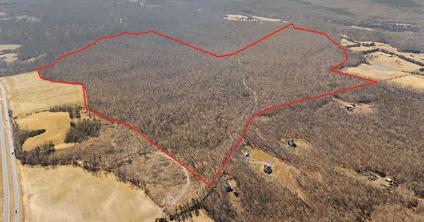
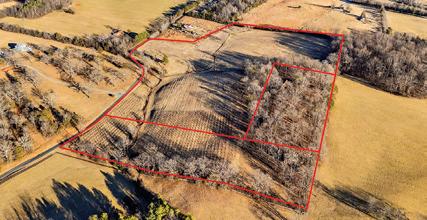
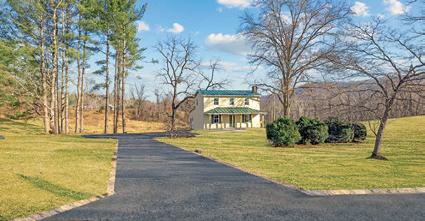
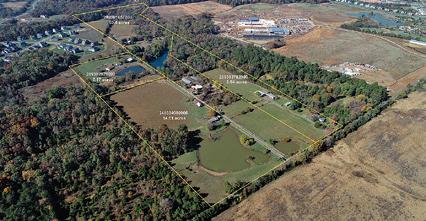
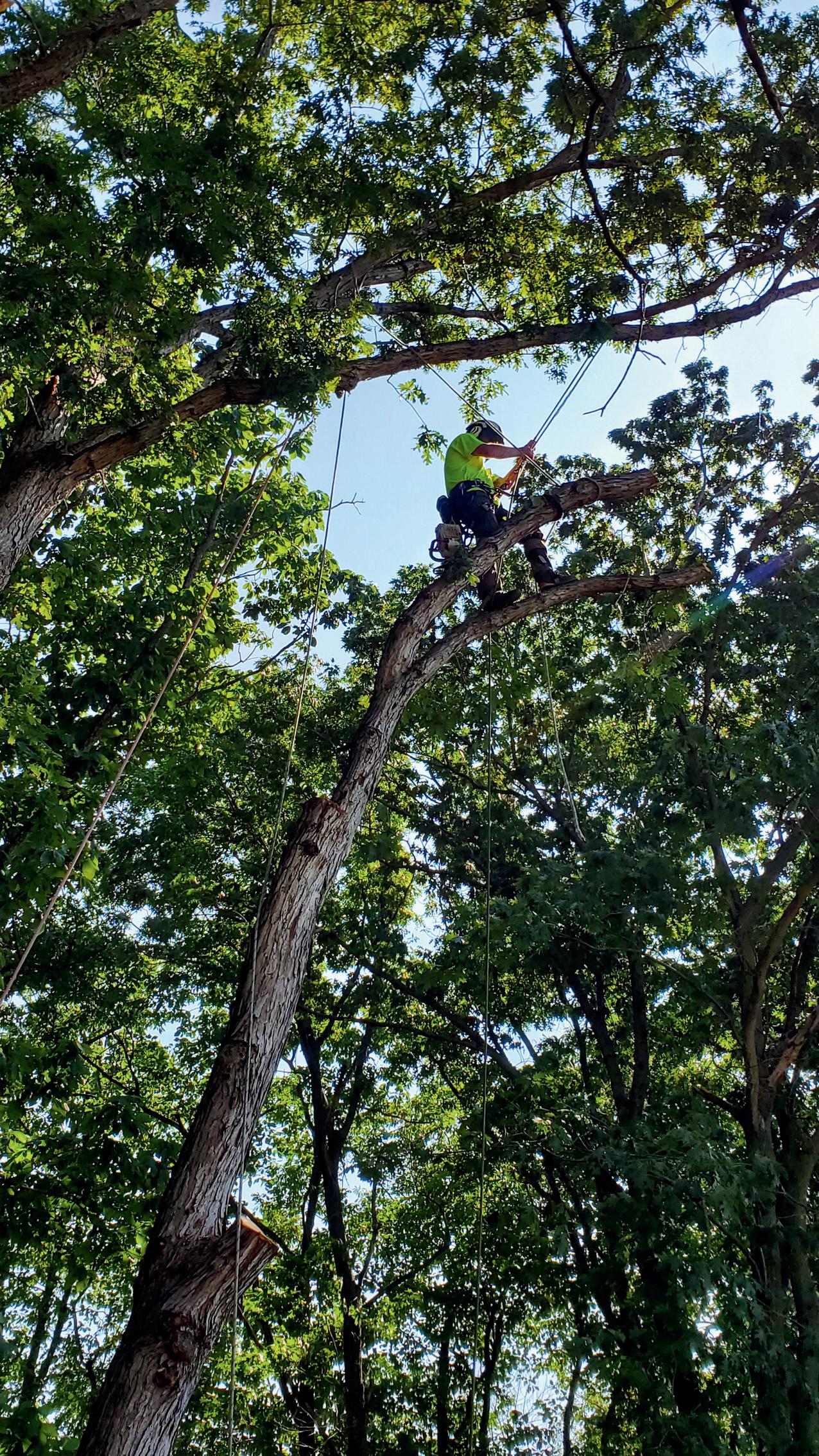
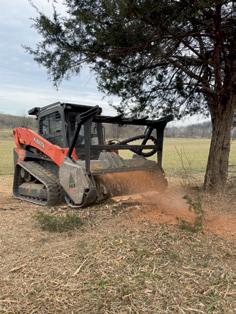
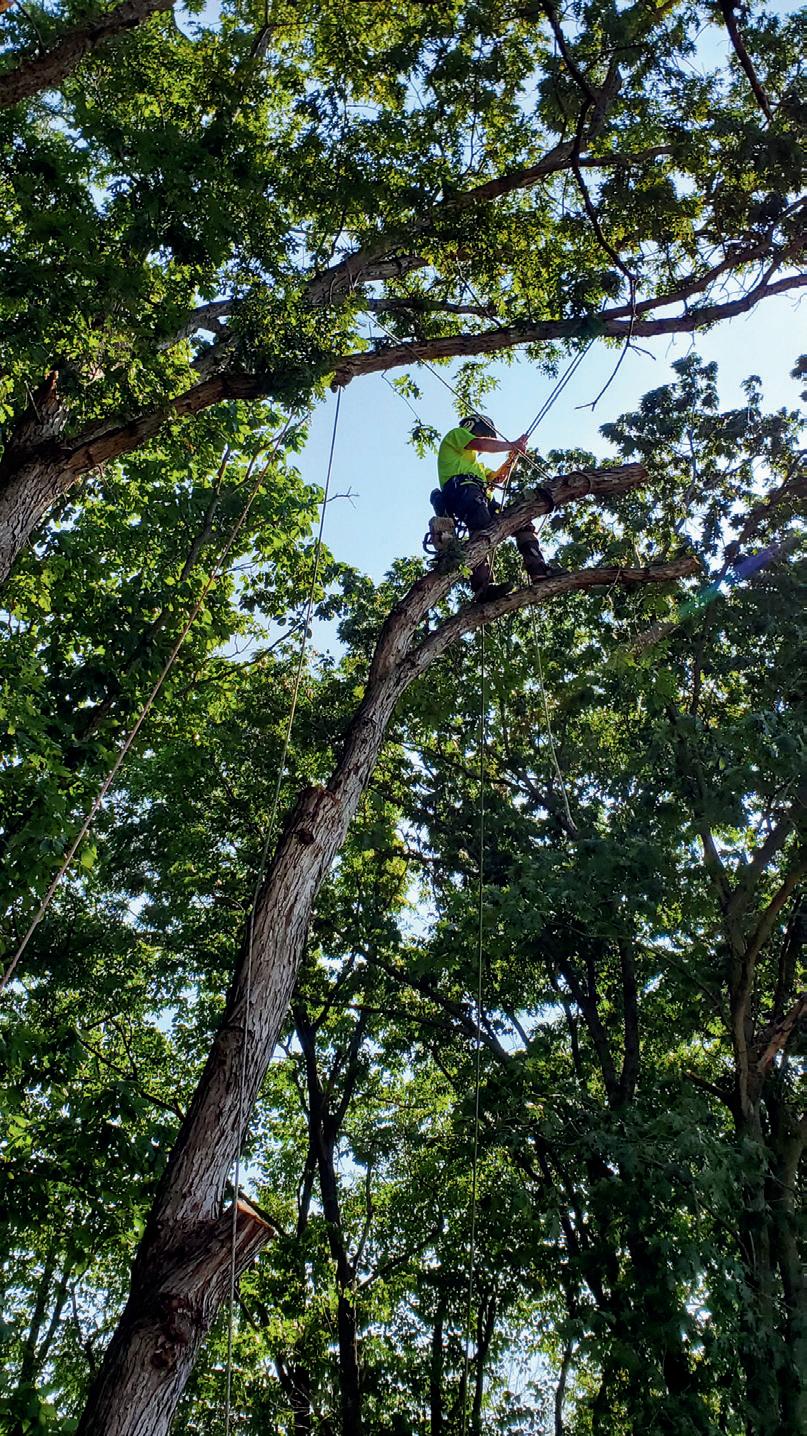
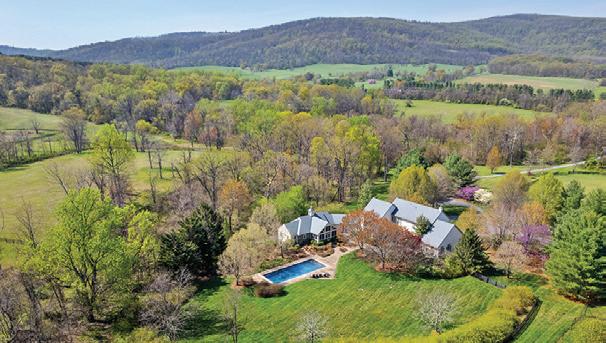
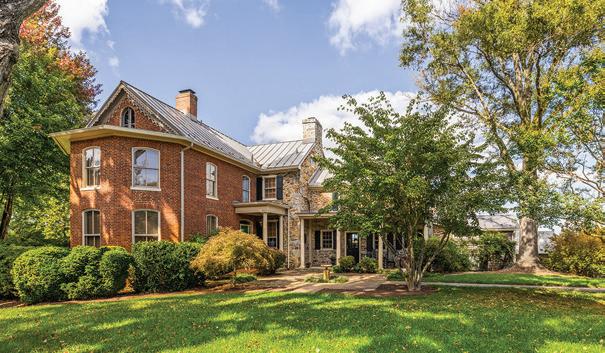
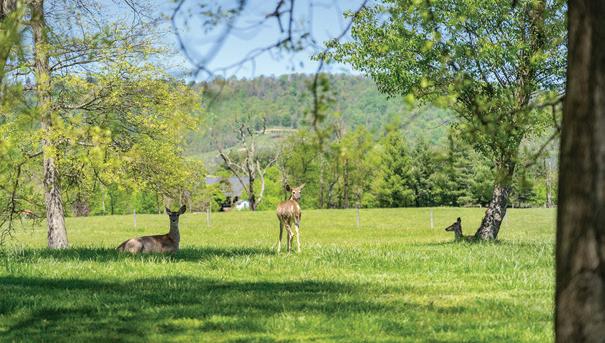
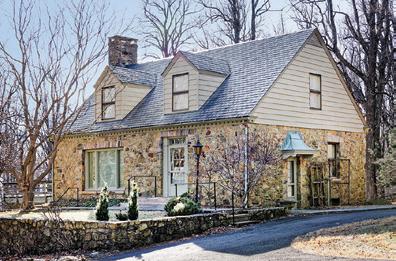
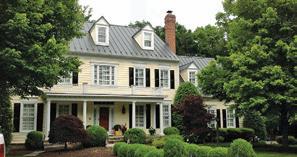
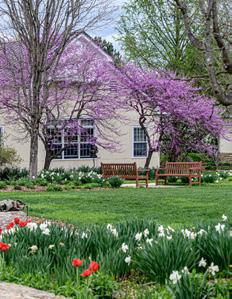
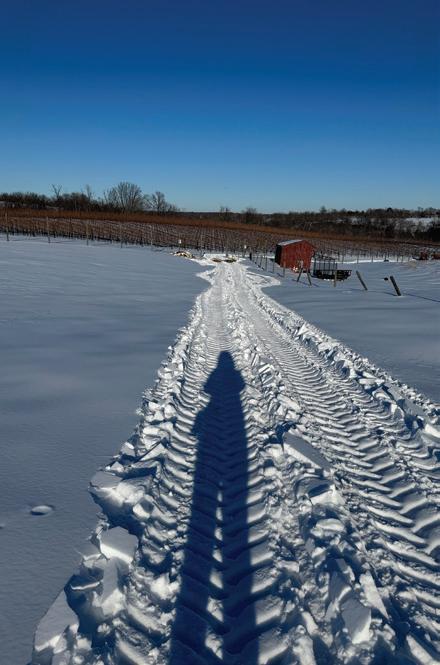
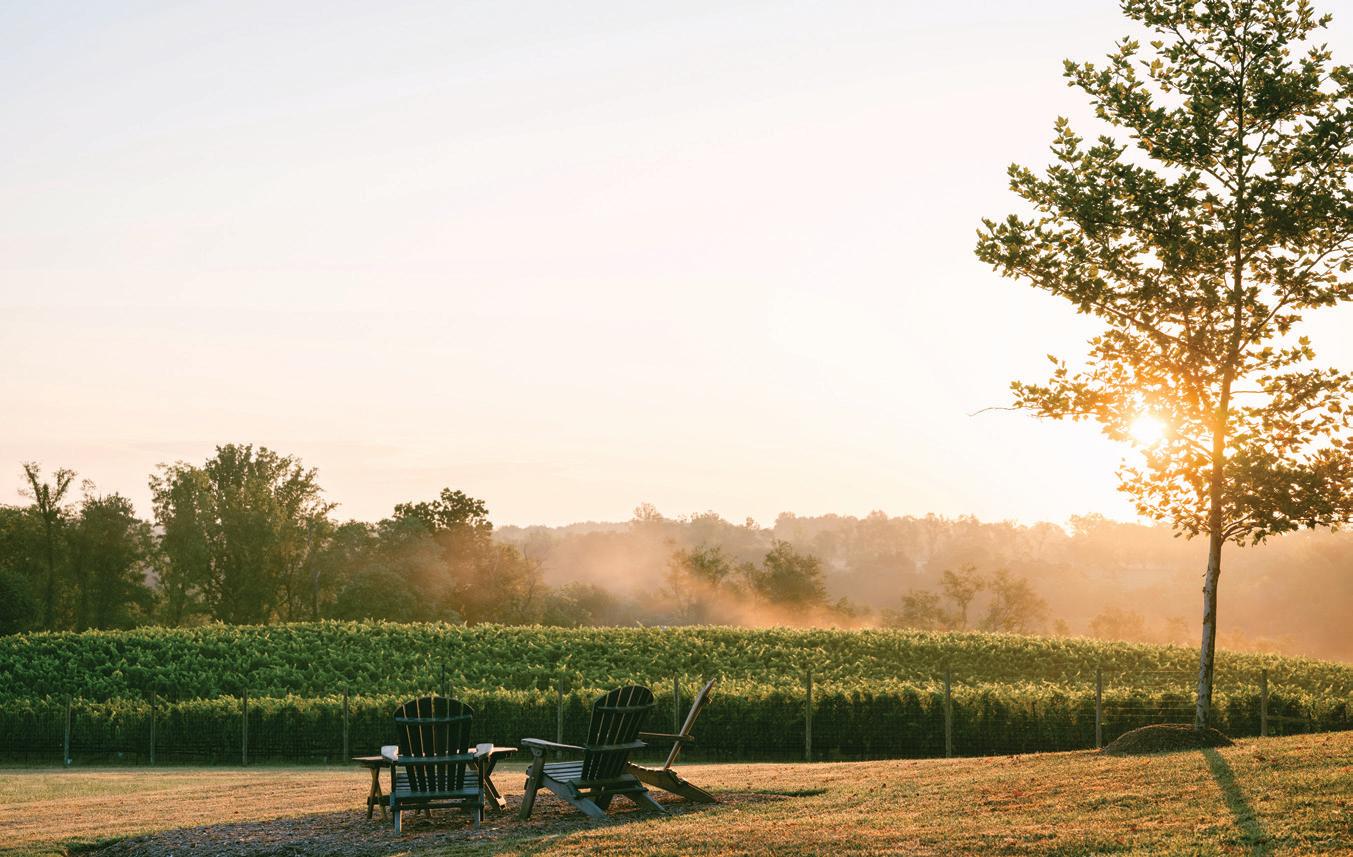
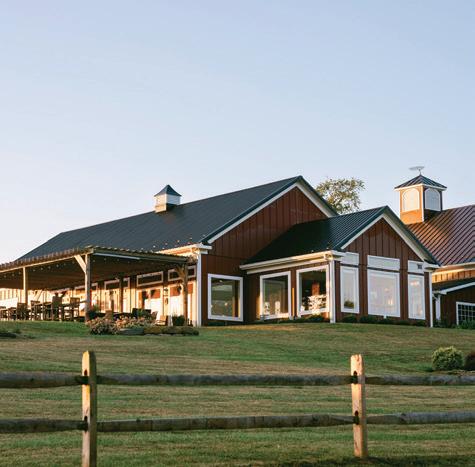
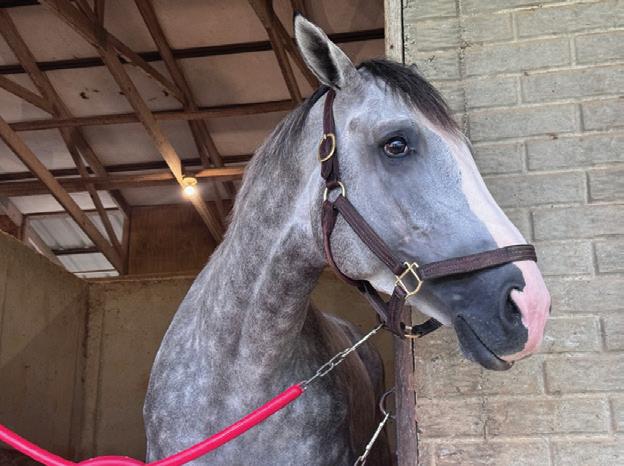
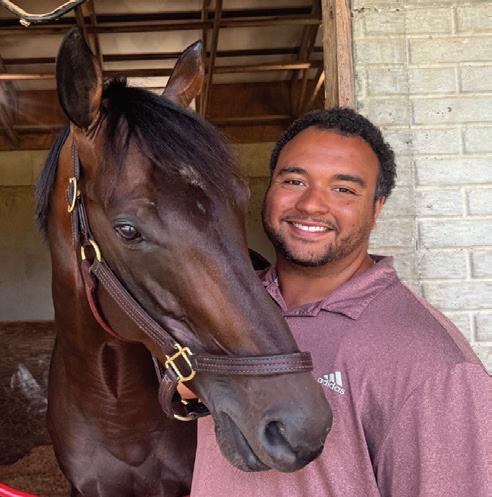
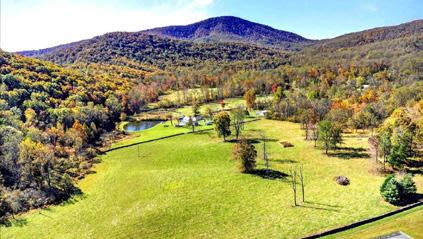
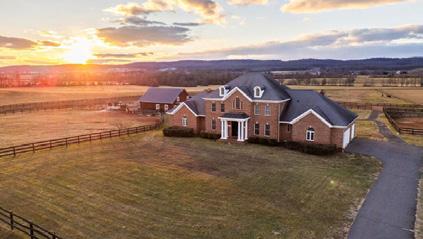
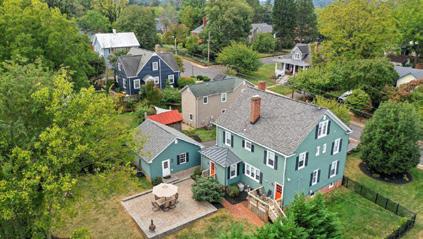
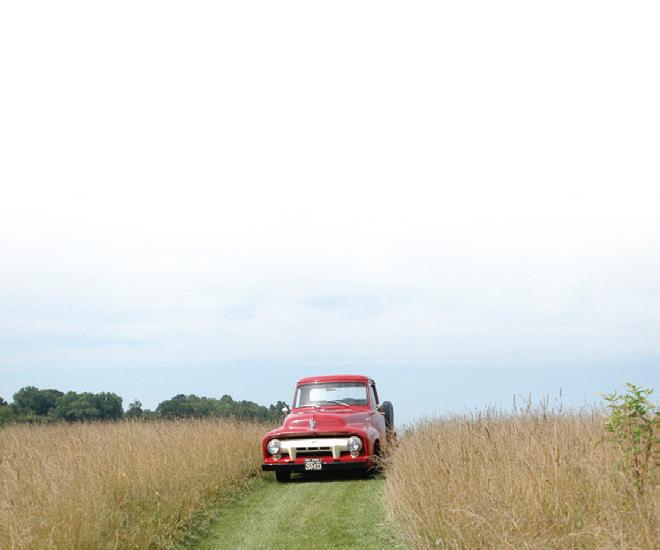
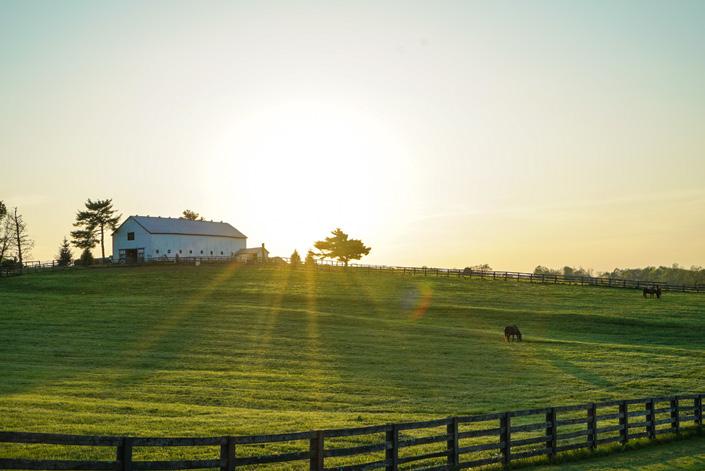
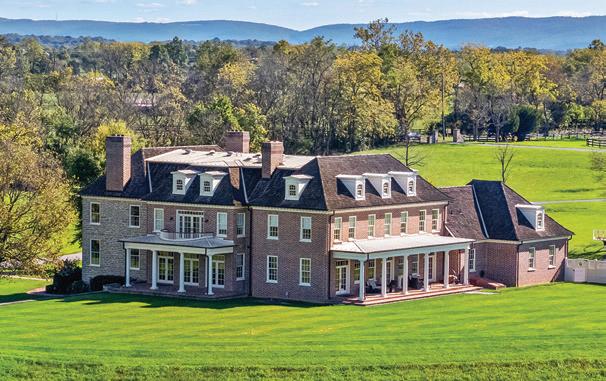
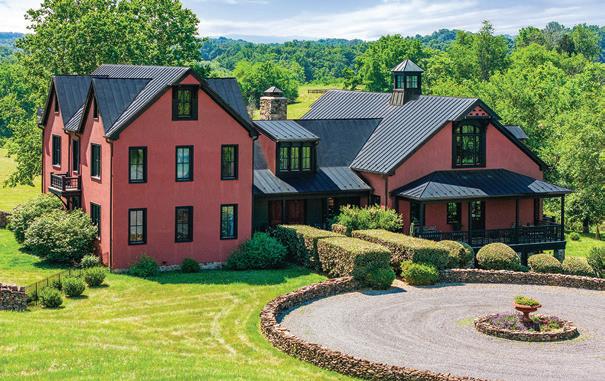
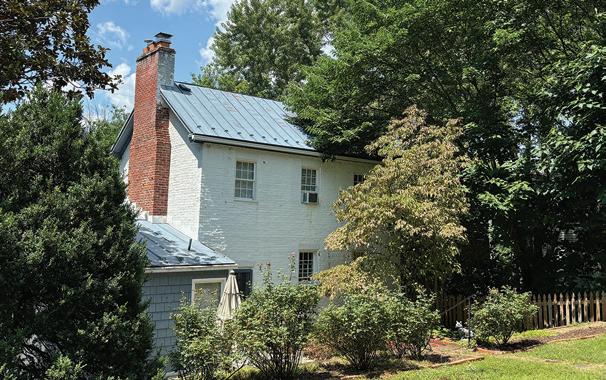
404.71 wooded acres between Warrenton and Fredericksburg, recorded in three parcels | Frontage on Deep Run with access to the Rappahannock River | Zoned Rural Agricultural with zoning letters for up to 21 potential lots | Long-term family ownership with valuable timber and Hunt Club lease
$9,000,000
Paul MacMahon 703.609.1905
Brian MacMahon 703.609.1868
BURNLEY VINEYARDS
BARBOURSVILLE, VIRGINIA
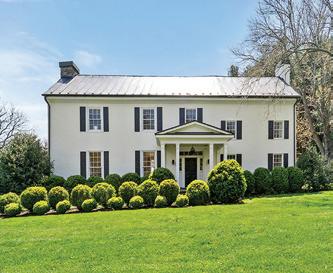
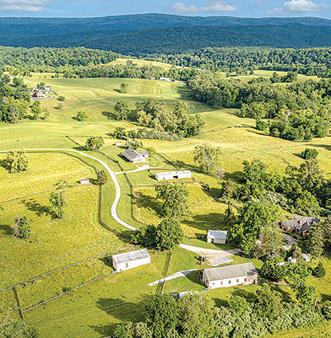
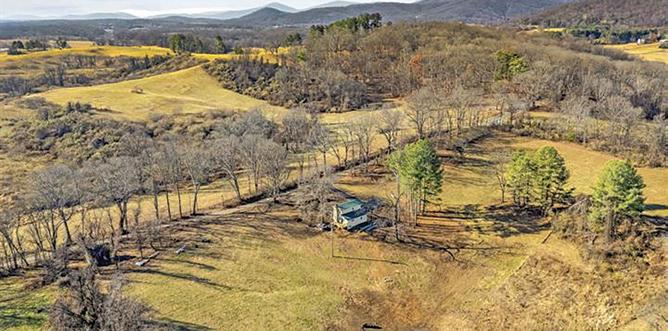
One of Albemarle County’s oldest farm wineries | 35 acres across 3 parcels in prime location Easy access to Charlottesville; approx. 90 minutes to Northern Virginia 22 acres of producing vineyard (plantings dating to 1977) Avg. yield approx. 2 tons/acre | 2,000 cases annually | Three residences with mountain views: main house, guest house & manager’s residence Winery building with tasting room, office, kitchen & event space | Production facility plus 40’ x 60’ warehouse | Turnkey operation with strong potential for events, expansion & multiple income streams
$2,500,000
Paul MacMahon 703.609.1905
Brian MacMahon 703.609.1868
DELAPLANE, VIRGINIA
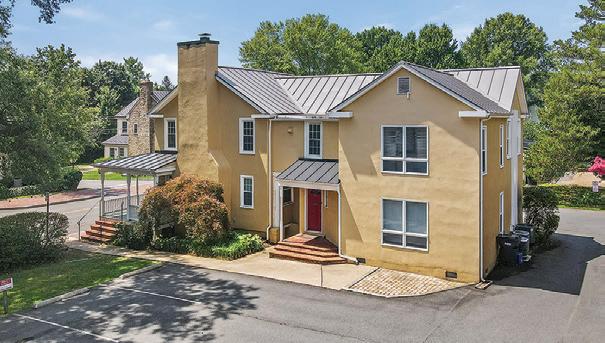
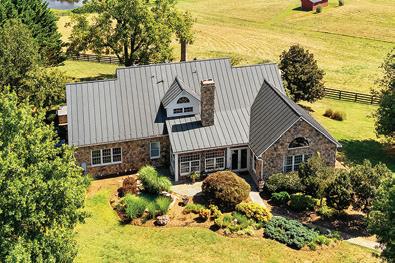
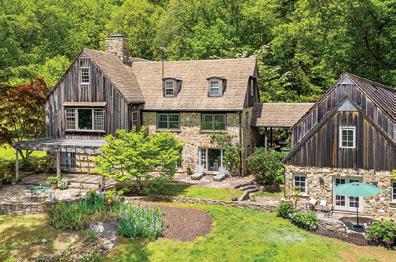
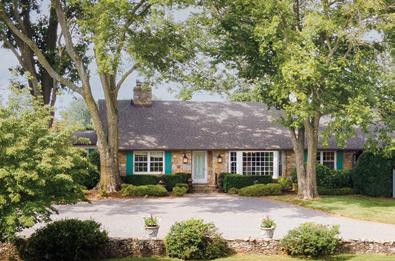
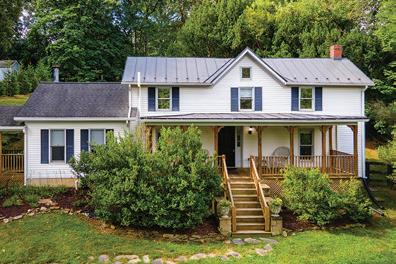
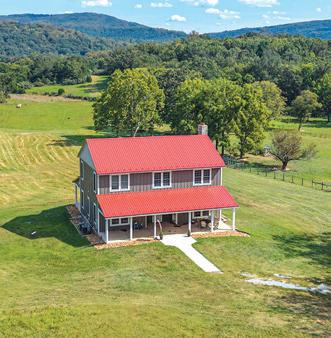
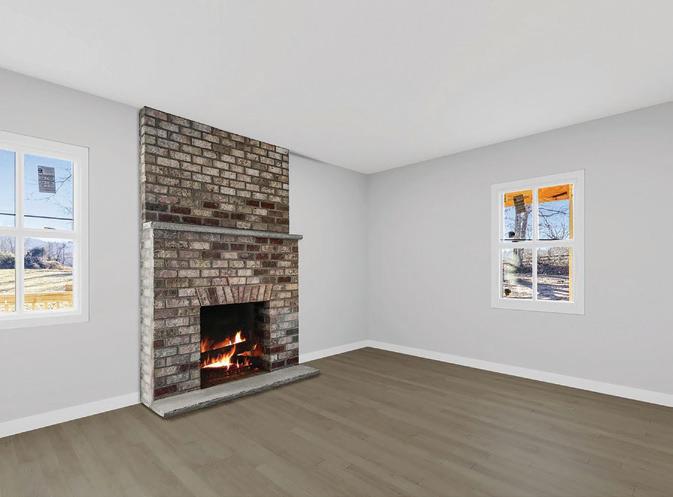
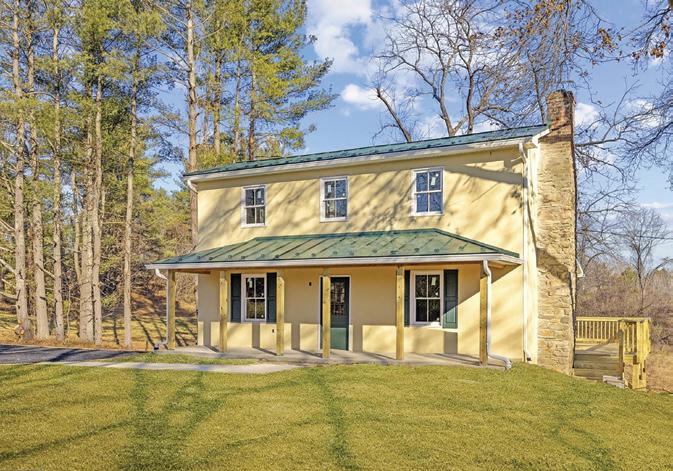
Circa 1875 farmhouse, fully restored | 3 BR, 2 BA, 1 fireplace | Stucco-over-frame; longtime family property | 9.50 acres, open and rolling | Mountain views; surrounded by large conservation easement farms | Natural spring on property (possible pond site) Historic barn and family cemetery | Family connection to Mosby’s Rangers
$950,000
Paul MacMahon 703.609.1905
Brian MacMahon 703.609.1868
ADA ROAD
MARSHALL, VIRGINIA
240.10 acres in 4 lots | Property is in a Virginia Outdoor Foundation Conservation Easement and may be subject to one division | Stunning views, 120+ acres of highly productive farm land | Remaining acreage is pasture-fenced for cattle or horses | 6-bay equipment building, feed storage, & workshop | Barn with an apartment $3,750,000
lynn Wiley 540.454.1527
MASON FARM, LIGHTRIDGE FARM ROAD
ALDIE, VIRGINIA
20+/- acres in fast growing Loudoun location | Currently zoned TR3UBF | Willowsford, South Riding, Stone Ridge, minutes away New county high school next to property | Currently improved by 2 residences, 2 ponds | Northstar Blvd around corner
$3,462,000
Paul MacMahon 703.609.1905
Brian MacMahon 703.609.1868
Luxury homes, Virginia horse properties and hunt country real estate in all price ranges.
This is where we live and work… full time. We cover the countryside.
LINDEN, VIRGINIA
37.59 wooded acres Private, secluded setting surrounded by large tracts | Elevated build site with potential long-range views Easy access to Route 66 | Abundant wildlife & mature timber — a hunter’s paradise | Great for outdoor recreation or a peaceful retreat Established drive/easement for convenient access
$750,000
Paul MacMahon 703.609.1905
Brian MacMahon 703.609.1868
SNAKE CASTLE ROAD
SUMERDUCK, VIRGINIA
191.5 wooded acres ideally located between Warrenton and Fredericksburg, held by the same ownership for generations | Features marketable timber and is not in a Conservation Easement, offering excellent flexibility for future use | Enjoy access to the Rappahannock River with parkland bordering two sides for exceptional privacy and natural beauty | County subdivision letter on file
$1,915,000
Paul MacMahon 703.609.1905
Brian MacMahon 703.609.1868
CARLETON’S LANE
THE PLAINS, VIRGINIA
Special opportunity to own 10 wooded acres and bring your vision to life | Ideally located with quick access to Route 17 and Route 66 | This property offers convenient proximity to Warrenton, Marshall, The Plains, and all that the Virginia Piedmont has to offer | Backs to over 90 acres of protected land under conservation easement, providing added privacy and scenic surroundings | Parcel may not be subdivided
Distributed and mailed throughout the Virginia countryside and in Washington and at key Sporting Pursuits and Celebrations
MAILING ADDRESS: P.O. Box 798
Middleburg, Virginia 20118
PHONE: 410-570-8447
Editor: Leonard Shapiro badgerlen@aol.com
Advertising Director Vicky Mashaw
Art Director
Meredith Hancock
Hancock Media
Contributing Photographers:
Doug Gehlsen
Crowell Hadden
Sarah Huntington
Douglas Lees
Karen Monroe
Tiffany Dillon Keen
Donna Strama
Official Fine Artist
Linda Volrath
Contributing Writers:
Khris Baxter
Emma Boyce
Bill Cauley
Sean Clancy
Denis Cotter
Philip Dudley
Mike du Pont
Valerie Archibald Embrey
Michele Husfelt
Alissa Jones
Laura Longley
Hunt Lyman
M.J. McAteer
Jan Mercker
Linda Millington
Joe Motheral
Jodi Nash
Chris Patusky
Tom Northrup
Ali Patusky
Melissa Phipps
Pat Reilly
Linda Roberts
John E. Ross
Constance Chatfield-Taylor
John Sherman
Peyton Tochterman
John Toler
Leslie VanSant
Mike Wipfler
Louisa Woodville
For advertising inquiries, contact: Vicky Mashaw at vickymashaw@icloud.com or 409-381-0441
Leonard Shapiro at badgerlen@aol.com or 410-570-8447
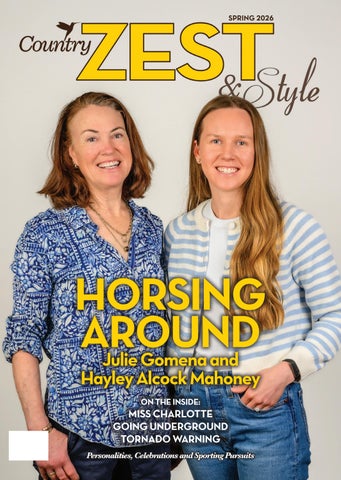
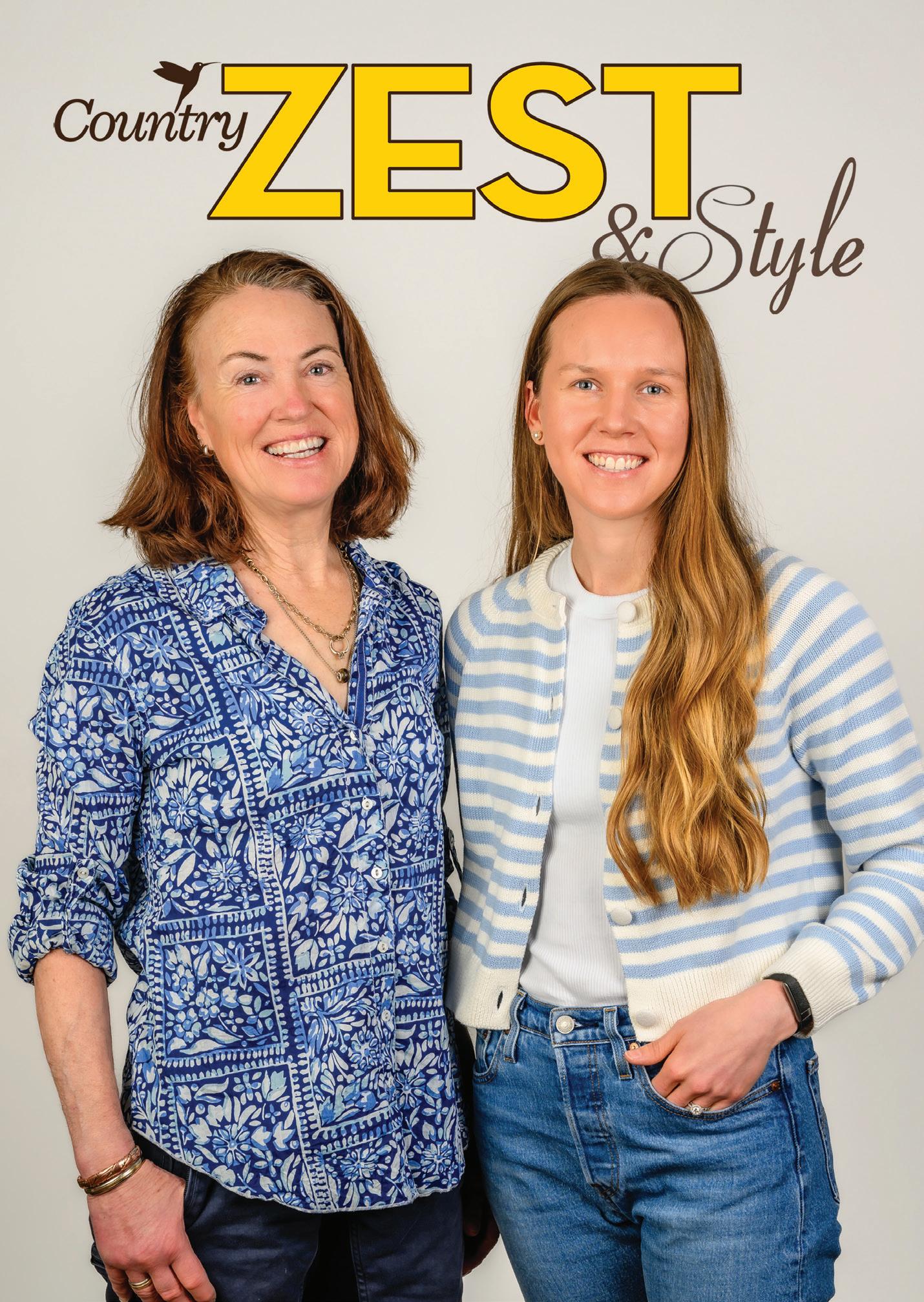
ON THE COVER
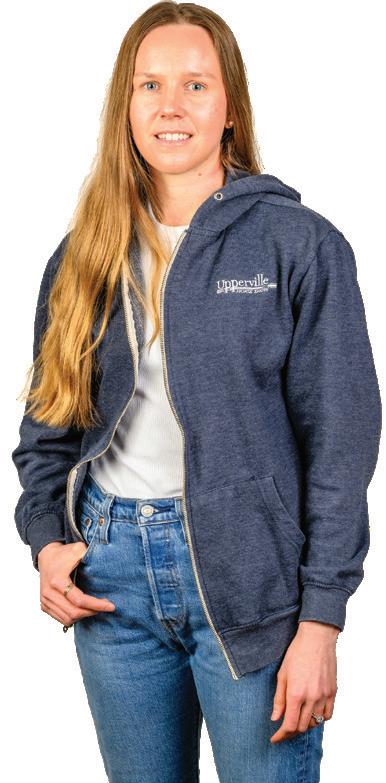
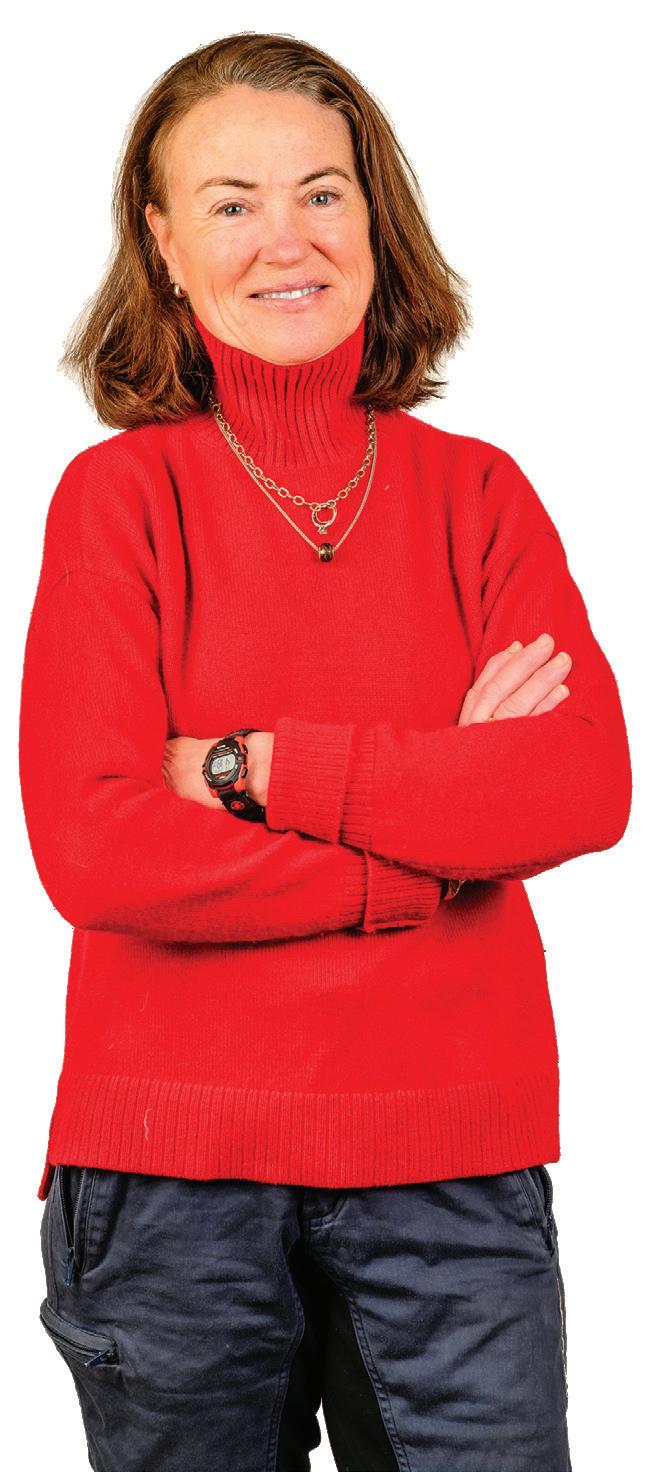
The cover for this issue of Country ZEST could well have featured a headline reading “The Ladies of Spring.” What could be more exciting than the welcome arrival of this new season, along with the Middleburg spring races, Gold Cup and the Upperville Colt and Horse Show? And what a pleasure to have Julie Gomena and Hayley Alcott Mahoney in the studio for this month’s photo shoot.
/ Country Zest and Style / @countryzestandstyle / @countryzestand1 www.countryzestandstyle.com
of NOTE
BE ON THE LOOKOUT through this issue of for the hummingbird.
He appears in two ads and the first two readers to find him (one each) will receive a gift from THE RED TRUCK Rural Bakery, with locations in Warrenton and Marshall. Send your reply to badgerlen@aol.com
THANKS FOR THE MEMORIES
By Leonard Shapiro
We made a conscious decision when we began publishing Country ZEST in 2019 not to include obituaries on our pages, far more appropriate and timely in local newspapers and websites than our general interest lifestyle magazine that comes out every two months. Still, I’d be remiss not to mention the recent passing of two well-known and widely admired men in our community, Robert Duvall and Malcolm Matheson, both being the very definition of long and productive lives so well lived.
As arguably the finest film character actor of his time, Duvall years ago chose a farm in The Plains, not a Hollywood mansion, as his beloved home base.
He was a familiar figure all around this area for many years, a regular spectator at countless horse events, a generous supporter of local good causes and a totally unpretentious, thoroughly approachable good guy.
The same also could be said of my friend and occasional golfing companion Malcolm Matheson, a proud Princeton graduate, successful Washington area businessman and probably best known in these parts as a long time MFH of the Orange County Hounds. Master Malcolm cut a most impressive figure mounted on his favorite horse, going tally ho as a fearless rider galloping hither and yon across our gorgeous countryside.
Rest in peace gentlemen, and many thanks for so many special memories.
We hope our spring issue of ZEST offers a few lasting memories, as well. Denis Cotter has contributed a fabulous look back at the life and times of the late Charlotte Haxall Noland, better known simply as “Miss Charlotte,” the legendary founder and long-time head of school at Foxcroft, one of the leading all-girls boarding schools in America.
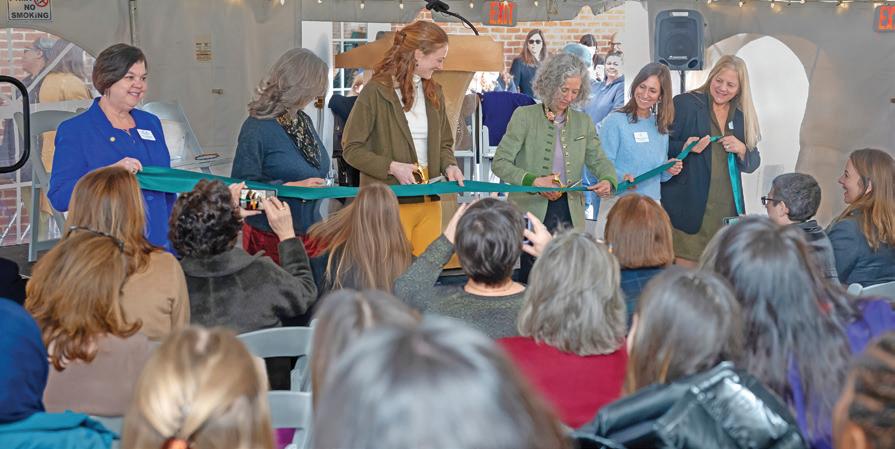
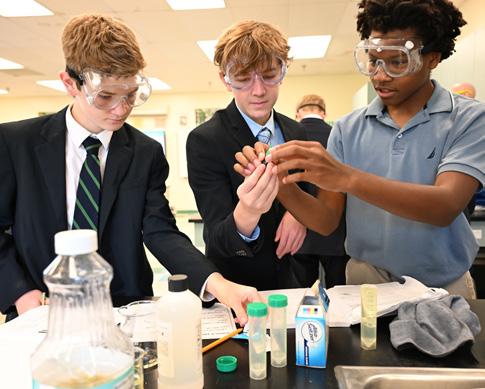
We also have photos and a story on the recent ribbon cutting for Foxcroft’s stunning new STEAM building (as in science, technology, engineering, arts and math) and the people who made it happen. Miss Charlotte would have been so proud.
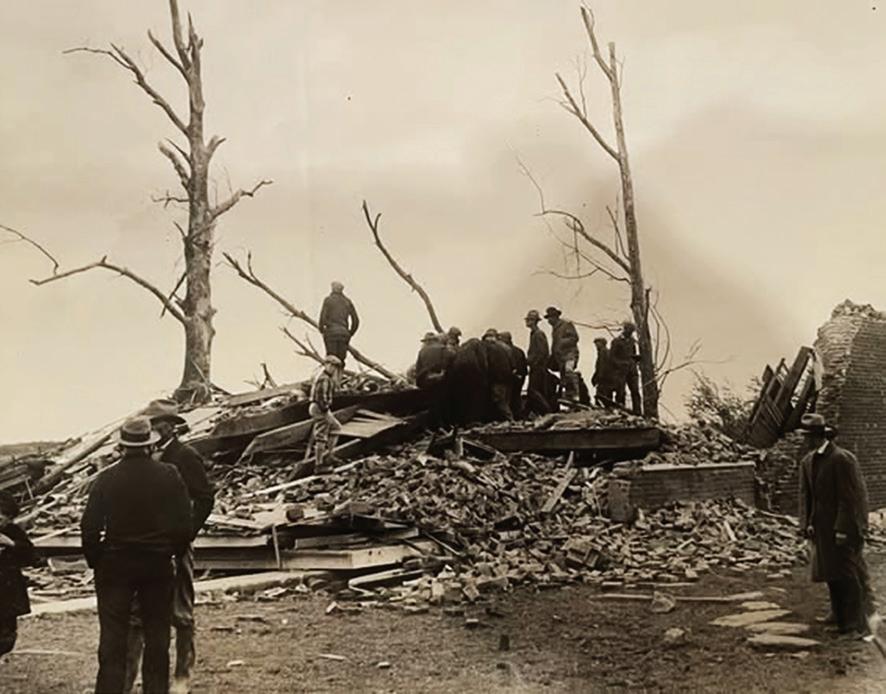
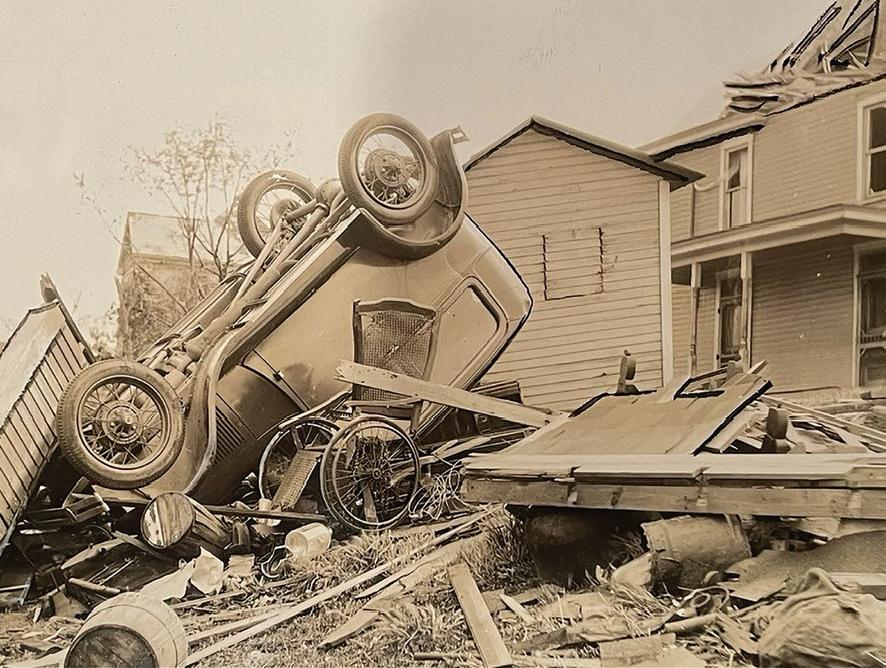
We’re finally putting a run of brutal winter weather behind us, but it was nothing compared to what Mother Nature inflicted on five southern states in May of 1929, including Virginia and a large swath of Fauquier County. John Toler looks back at those devastating and deadly local tornadoes, with 42 Virginians killed, over 300 injured and countless homes, schools and businesses flattened all around. Memo to one and all: take tornado warnings seriously, and then take cover.
There are far more pleasant possibilities as we head into spring and begin focusing on events in this horse happy region. For starters, we have terrific stories on our cover subjects—highly-regarded steeplechase trainer Julie Gomena and Hayley Alcott Mahoney, the new director of Operations for the Upperville Horse Show, with plenty more inside to add a little extra ZEST to your reading pleasure.
Leonard Shapiro Editor badgerlen@aol.com 410-570-8447
Doug Gehlsen and Karen Monroe of Middleburg Photo
Robert Duvall with some kids and the hounds.
FClaws for Paws
Photos by Tess Croce
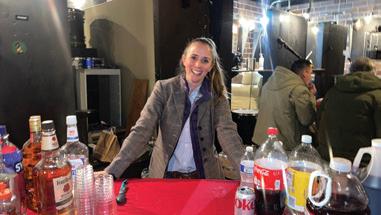
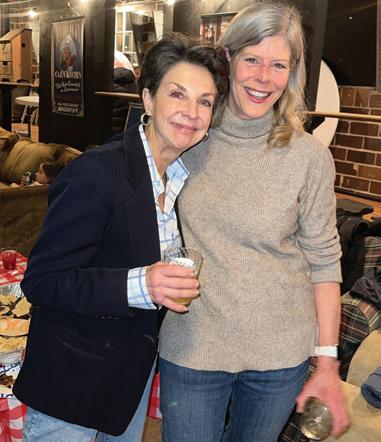
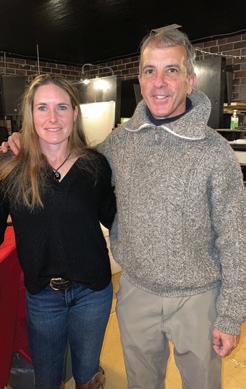
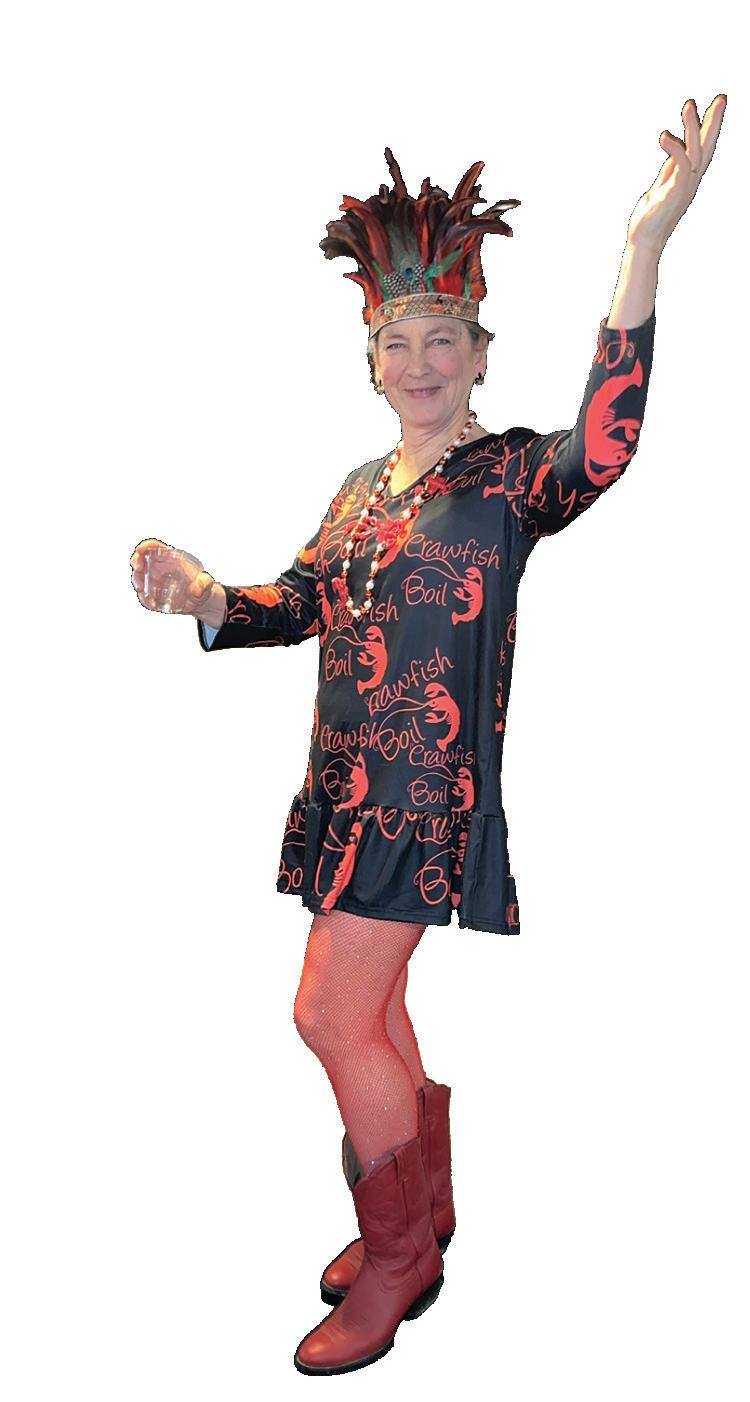
riends, family and followers of the Snickersville Hounds gathered in the Dairy Barn at Sunnybank for a fun fundraiser. It was yummy as all get out…lobster, corn on the cob and more. And, according to whip Daphne Alcock: “We hunt hard, ride hard and eat well. There is great camaraderie and a lot of the foxhunters are hands on when it comes to their horses.”
Julie and George Lula and Lani Newcomb
Darcy and Josh Bart
Laurie McClary and Vicki Bendure
Amy McNeely
Amy Brown and Gregg Ryan
Daphne Alcock, is a whip with Snickersville and “loves it”, here with her daughter Nancy Alcock
Mayor Bridge Littleton: A Stirring Speech to Mark a Special Year
FA Memo from the Mayor
riends and neighbors, distinguished guests and fellow citizens. Today is not a single moment. It is the opening chapter of a yearslong tribute—to our nation, to our town, and to the enduring idea of self-government.
Two hundred and fifty years ago, a group of ordinary people dared to make an extraordinary claim—that liberty was not granted by kings, but inherent to human beings; that governments existed to serve the people, not rule them; and that legitimacy flowed not from force, but from consent.
That ideal is what makes us citizens, it’s what makes us Americans. And it is no accident that we
Middleburg Mayor Bridge Littleton recently gave the inspiring opening address to help launch the town’s year-long celebration of America’s 250th anniversary as a nation.
The text of his stirring speech follows:
Levin Powell, our founder, embodied that spirit. A militia officer during the Revolution and later a leader in Virginia’s civic life, Powell understood something timeless: that liberty is not sustained by speeches, but by steady commitment at the local level. He helped lay the foundation for a town that would endure because it believed in service, duty, and shared responsibility to the greater community.
The Declaration of Independence tells us that governments are instituted “to secure these rights, deriving their just powers from the consent of the governed.”
Those words were revolutionary then—and they remain so today.
Here in Middleburg, consent is not an abstraction. It is lived. It is neighbor to neighbor. It is citizen to council member. It is disagreement handled with respect, and consensus built through conversation, and progress made together.
James Madison wrote that the strength of our republic lies not in eliminating differences, but in managing them through institutions grounded in representation and trust. Middleburg has practiced that principle for generations. Our town government has never been about division. It has always been about connection—bringing people together around shared problems and shared hopes and a belief that the best days lay ahead.
Mayor Bridge Littleton
This is the essence of civitas—the ancient idea that citizenship is not merely a status, but a responsibility; not merely a right, but a bond. In Middleburg, civitas lives in how we show up for one another. In how we care for our neighbors. In how we preserve our history while welcoming the future. That civic spirit has carried us through our most difficult chapters.
During the Civil War, Middleburg found itself once again at the center of national conflict. Armies marched through these streets. Battles were fought nearby. Yet even in the midst of division, this town tended to the wounded on both sides. Compassion here did not recognize uniforms. Humanity came first.
That choice—to care rather than condemn—left a legacy far greater than any single allegiance. A century later, as our nation confronted the moral reckoning of segregation, Middleburg again faced a pivotal moment. The integration of our town in 1961, the first in the Commonwealth, was not without challenge, but it was met with determination and dignity. Progress here did not come through spectacle, but through resolve— through families, teachers, and leaders who understood that equality is not negotiable, and justice delayed is justice denied.
Institutions like Windy Hill grew from that same principle of caring. They reflected a simple but powerful belief: that every person matters;
that dignity does not depend on wealth, status, or circumstance; and that a community is measured by how it treats those most in need.
These are not small accomplishments. They are defining moments. They remind us that even a small town can help shape the moral direction of its corner of the world.
As we launch this America 250 celebration, we do so with humility and purpose. This anniversary is not about nostalgia. It is about stewardship. It is about asking ourselves what it means—here and now—to live up to the promise of the Declaration.
It is a re-dedication to the founding principles of our great nation
Abraham Lincoln later called this nation “of the people, by the people, for the people.” Those words endure because they are demanding. They ask something of us. They require participation, empathy, and vigilance.
In Middleburg, we understand that democracy is not something that happens to us—it is something we do. It happens when we attend meetings, volunteer, preserve our land, support our schools, and look out for one another. It happens when we disagree without dehumanizing. When we remember that our neighbor is not our enemy. It is a clique, but never more important to remember, that which unites is far greater than that which divides us.
Our town government reflects those values. It is
small by design—not because small is weak, but because small can be close. Close enough to listen. Close enough to care. Close enough to remember that behind every policy is a person, and behind every decision is a community, and behind every kind act is a life changed.
Over the next year, Middleburg will mark America’s 250th anniversary with events that tell our story—stories of founding and faith, of struggle and progress, of resilience and renewal. We will honor those who came before us, engage those who walk beside us, and inspire those who will carry this town forward.
Because the American story has always been a local story first.
It is written in places like Middleburg—where liberty is balanced by responsibility; where tradition and progress walk hand in hand; and where the consent of the governed is renewed not every generation, but every day.
So let us begin this tribute with gratitude—for the courage of our founders, for the strength of our community, and for the opportunity to serve one another in this remarkable place.
And let us commit, together, to ensuring that when future generations gather for the 300th anniversary, they will say that we, too, were faithful stewards of the great American experiment.
Thank you.
And welcome to America 250 in Middleburg.
HOME IMPROVEMENT
Designing a Home for Every Season
In the Mid-Atlantic region, where summers are humid and winters are damp and cold, it’s important to think about creating spaces in your home that are comfortable all year long. A space that delights in one season but underperforms in another isn’t working as hard as it should.
Designing with all four seasons in mind means considering how natural light shifts throughout the year, how to manage heat in summer and cold in winter, and how your transitional indoor-outdoor spaces will be used as the weather changes. Clearly, great design supports daily life in January just as well as it does in June.
Light plays a key role in how a room functions throughout the seasons. In winter, good lighting helps offset short, gray days. In summer, thoughtful lighting design allows you to control glare and balance strong daylight, so rooms feel serene rather than overexposed. The goal is to create a home that feels bright and uplifting on a snowy afternoon, yet calm and comfortable when the sun is high and the shades are drawn.
When planning for light year-round, it can help to think in terms of a simple checklist:
Map your natural light: Track where and when sunlight enters each room throughout the day and across seasons. This helps you decide which spaces need additional brightness in winter and more control in summer.
Choose window treatments that you can adjust: Sheer shades, cellular shades, and solar shades all filter light differently. Look for options that soften glare, provide insulation in colder months, and reduce heat on bright summer days.
Use architectural elements to manage sun: Overhangs, deep window sills, and recessed openings can help block higher summer sun while still allowing lower winter light to enter.
Layer different types of lighting: Consider ambient lighting to give a room an overall glow, task lighting for focused activities such as reading, and accent lighting to help create depth and warmth.
Homes feel most livable across seasons when indoor and outdoor areas are planned together. Instead of treating patios, porches, and terraces as separate spaces, intentional design can turn them into true extensions of everyday life. When creating an indoor-outdoor connection that works year-round, it can help to consider:
Creating a clear path outside: Focus on how easy it is to step out and use your outdoor space. Simple updates like adding a durable doormat, outdoorrated entry lights, or a small landing with a bench can make the transition feel more intentional.
Shade and shelter where you need it: Covered outdoor zones are more comfortable in both hot and cold weather. Pergolas, porch roofs, or retractable awnings can provide shade in summer and some protection from rain or light snow in cooler months. Adding outdoor curtains or screens can also help block wind and create enclosed spaces.
Basic heating and cooling: Consider simple additions like portable heat lamps, built-in gas or electric heaters, or an outdoor fireplace. In warmer months, ceiling or standing fans can make covered areas more comfortable.
At BOWA, we design with the whole year in mind. By considering light and indoor-outdoor connections from the start, we help homeowners create spaces that feel comfortable, functional, and welcoming year-round. Jeff Weeks is a Bowa project manager.
Jeff Weeks
SPRING FORWARD WITH THE POWER OF A BOC HELOC
Put your home’s equity to work this season When you apply for a Bank of Clarke HELOC and enroll in Automatic Payments, you’ll receive 0 25% off your interest rate giving you flexible access to funds for home projects, unexpected expenses, or what’s next
*Offer is only available for “NEW” Home Equity Line accounts when automatic payments are set up and maintained from a Bank of Clarke deposit account The credit line established will be based on the amount of lendable equity in your home Some restrictions may apply Refinance of an existing Bank of Clarke Home Equity Line is NOT eligible for this offer Subject to credit approval, ask for more details
A Perfect Home Grown Addition for Virginia Piedmont Heritage
By Alissa Jones
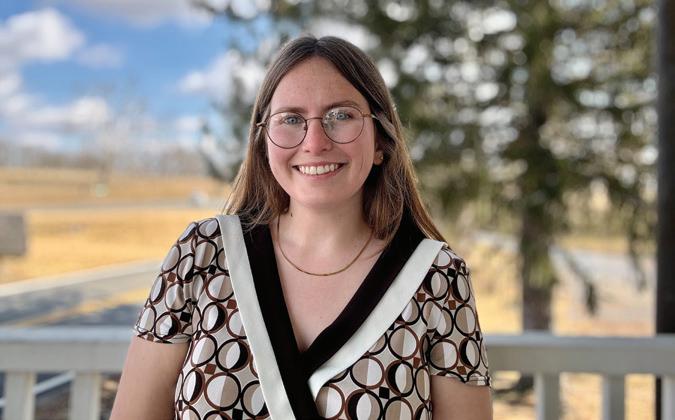
Hannah Schetselaar, with a deep appreciation for the rich history of the area where she was born and raised, recently became the new public programs coordinator for the Virginia Piedmont Heritage Area (VPHA). Based in Atoka, the VPHA works to preserve the history and legacy of the Northern Virginia Piedmont and lower Shenandoah Valley region.
A native of Gainesville in Prince William County, she graduated from Roanoke College in 2022 with a Bachelor of Science in psychology, and a minor in history. A series of factors stirred her longstanding love for history and ignited a passion to pass on its legacy to future generations. Schetselaar decided to go back to school and she received her Masters in History from Virginia Tech in May, 2025.
Schetselaar believes that embracing this mandate to educate and steward the legacy of the cradle of the nation paves the way to give others the opportunity to learn about and develop a deep appreciation for early American history.
“I wanted to help others move past any barriers they have about history and help them connect with it,” she said.
Turning her passion into purpose, Schetselaar took a position as an education assistant at Oatlands, an 1804 plantation nestled off Route 15 in Leesburg. Her role involved planning lessons and organizing field trips, summer camps, and house tours that aligned with Oatlands’ commitment to preserving and sharing the stories of the land. As a National Trust of Historic Preservation site, Oatlands spans a massive 400 acres.
When she heard about an opening at the VPHA, she applied and began working there this past December. “Being born and raised in Gainesville, I wanted to do more to keep our land and our history alive,” she said. “VPHA aligns perfectly with that.”
Each day brings a variety of opportunities to educate and foster awareness, but Schetselaar said VPHA aims to offer at least two programs a month. Her role involves planning and then executing those projects, securing venues, ordering refreshments and whatever else is needed for the projects.
“Researching, prepping, planning events is under my wheelhouse,” she said, adding that she works closely with Executive Director Ian MacDougall and Director of Education Travis Shaw and the board of directors to decide on events for the year.
Schetselaar said that as a historian, her major focus involves connecting the dots that paint a clear picture about the history of the region for the community. This year, The VPHA will center events around the country’s 250th celebration as a nation.
While going through the archives of court cases from the 1640s through to the 1680s, Schetselaar said she noticed the same names of people she was currently in contact with in her work at the VPHA. It caused her to ponder generational legacies and how power is passed down.
“The more I learn about this area, the more I see connections,” she said. “I am fascinated by the network in this area.”
Going forward, Schetselaar and the VPHA are focusing on strengthening partnerships, education and leaving the legacy of America’s great history to the community and its generations.
Schetselaar continues to live in Gainesville and, “It still holds my heart,” she added. “I’m invested in this area. It means something personal to me.”
Hannah Schetselaar
Up, Up and Away at a Model Plane Airfield
By Joe Motheral
The model plane airfield located in Banshee Reeks Nature Preserve southeast of Leesburg is sponsored by the Loudoun County Aeromodelers Association (LCAA) along with the Academy of Model Aeronautics (AMA).
The extensive airfield plays host to pilots of model airplanes and is open to the public. Visitors and pilots alike can observe model planes taking off,
looping, landing and other various flying patterns, all controlled remotely. And the planes’ buzzing lends an added sense of realism.
Paul Burnett, one of the model plane pilots, has been at it since childhood.
“When I was 10 years old my grandparents got me a controlled flying plastic airplane,” he said. “As a kid I learned how to fly and got fixed on it in the 1970s. That first plane was attached to a string and flew in circles. It taught me the basics.”
Burnett said he comes out to the airfield “three or four times a week. I probably have maybe 10 planes.” They’re either gas driven or electric powered and the airfield has solar panels, the source for charging the electric driven planes.
A typical scene at the airfield consists of a few model planes waiting to take off, several more landing and pilots preparing for their next flight. Visitors are always welcome and there are plenty of parking spaces for the public along with chairs to sit and watch the action. Most of the best action takes place on weekends.
Burnett said there are specific rules on noise levels of the aircraft. “We test the decibels 10 feet away and it must be under 96 decibels,” he said. “The planes are radio controlled and you can control surfaces, use the elevator feature, the rudder and you can add flaps. We each have a transmitter.”
And how to make that sky high loop?
“Basically,” he said, “Just give your elevator the
‘up’ control.”
The model plane field is fully certified and Burnett said a basic rule is that “you have to be able to see your aircraft at all times. We can fly with an ID from the Federal Aviation Administration (FAA).”
Each year, about 100 members are eligible to fly and “we’re always looking for members,” Burnett said. “We have six or seven people here who are instructors. Anyone who wants to can come here and learn how to fly. We even have planes that are available. Most people bring their own. They then can set up a flight box system. The instructors can take over the controls if necessary. We encourage youngsters and have helped students from the Loudoun high schools.”
Members of the club also handle the maintenance of the field with their own mowers. And occasionally, they have to shoo away a visiting deer, rabbit, bird or other pesky wildlife.
“The average cost of a model plane for flying is $500 and to add the motor another $ 250,” Burnett said. “These planes fly at a speed of 100 mph.”
Recipient of the United States Department of the Interior Citation for Public Service
(Visit our online catalog)
Purchasing and consigning quality antique arms of all types since 1957. Appraisers to the Smithsonian, the National Park Service and the National Firearms Museum. Recipient of the U.S. Department of the Interior’s Citation for Public Service. Visit our shop!
109 E. Washington St (Rt. 50) Middleburg, VA 20117
We are always looking to buy vintage guns,daggers, swords,knives,bayonets,uniforms,flags,medals,belts, buckles and other collectable militaria.We also purchase sporting gun and military related books,gun related tools,vintage ammunition,etc.If you have any antique or collectable military or gun items that you want to sell please contact us for more information on our appraisal services,consignment rates or outright sale.
Mailing Address: Post Office Box 7 Middleburg, VA 20118
109 E. Washington St. (Rt. 50) Post Office Box 7 Middleburg, VA 20117 Middleburg, VA 20118 Tel. 540-687-5642 Fax 540-687-5649
Email: info@davidcondon.com www.davidcondon.com
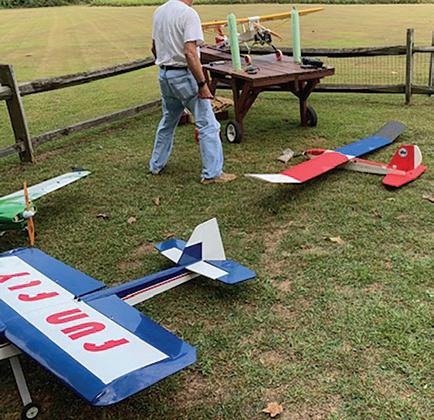
Photos by Joe Motheral Planes being prepared to takeoff at the model plane airfield near Leesburg.
At the Space at Grace
6507 Main Street The Plains, VA 20198 www.gracetheplains.org
Sunday, May 3, 2026 5:00 pm
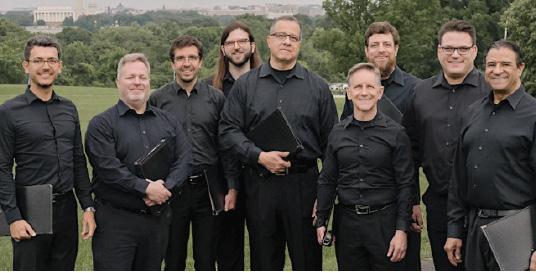
The Suspicious Cheese Lords
For thirty years, the Suspicious Cheese Lords have specialized in Renaissance choral music, seeking out works by less familiar composers. The group’s name is derived from the Tallis motet, Suscipe quaeso Domine.
For tickets please visit: http://gracetheplains.org/ 6507 Main St, The Plains, VA 20198
A Welcoming Touch of India at The Plains Market
By Michele Husfelt
When Gappu Patel and her husband, Pappu, took over The Plains Market & Deli last fall, they were not seasoned business owners with a long résumé. Rather, the couple had gained experience working at a gas station in Winchester for the past eight years.
Before moving to Virginia in 2018, they lived in their native India. The gas station/deli world was new territory. But when friends mentioned the Market in The Plains was looking for new owners, the opportunity felt right. They decided to make the leap, and the community is beginning to see the results.
5 pm
At the Space at Grace
6507 Main Street The Plains, VA 20198 www.gracetheplains.org
Sunday, Mar. 15, 2026
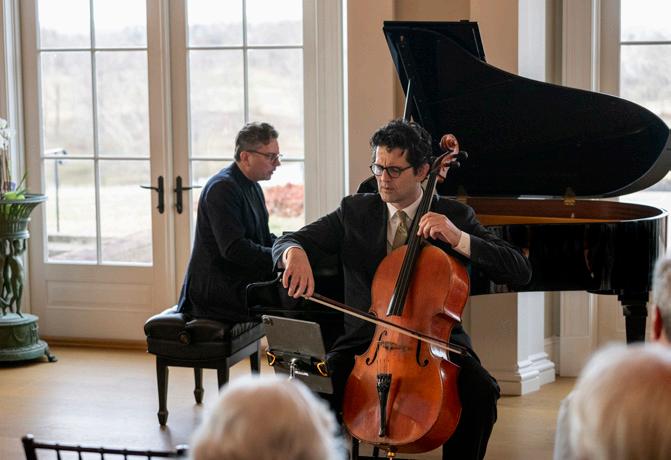
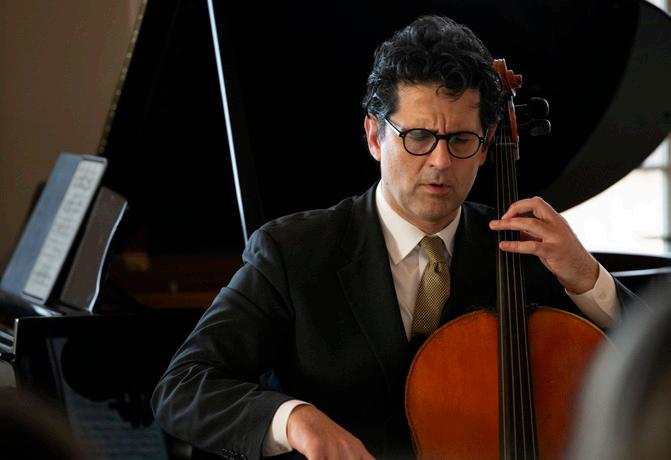
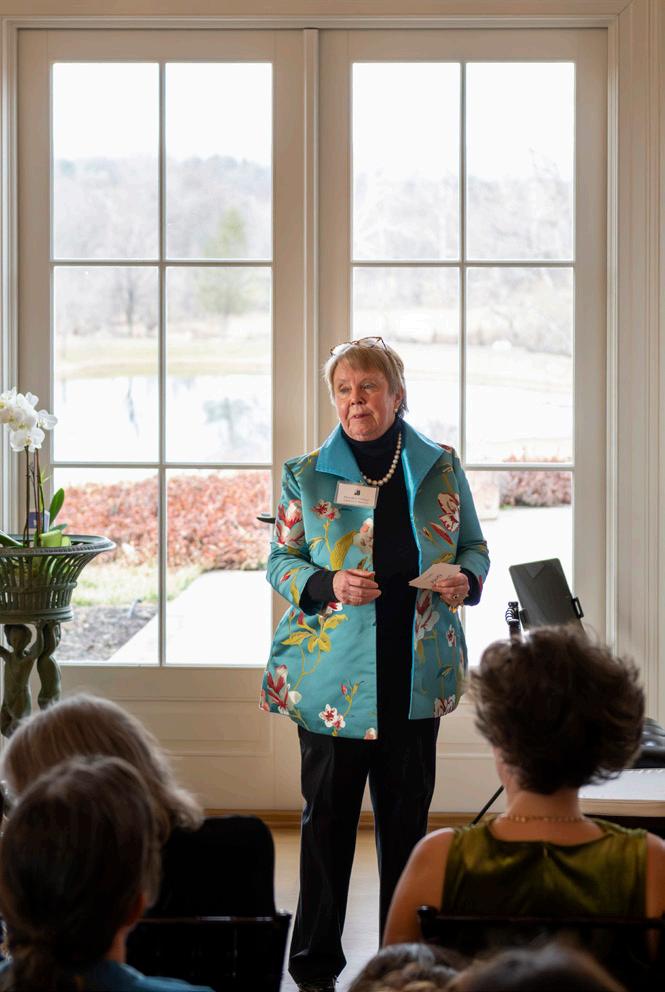
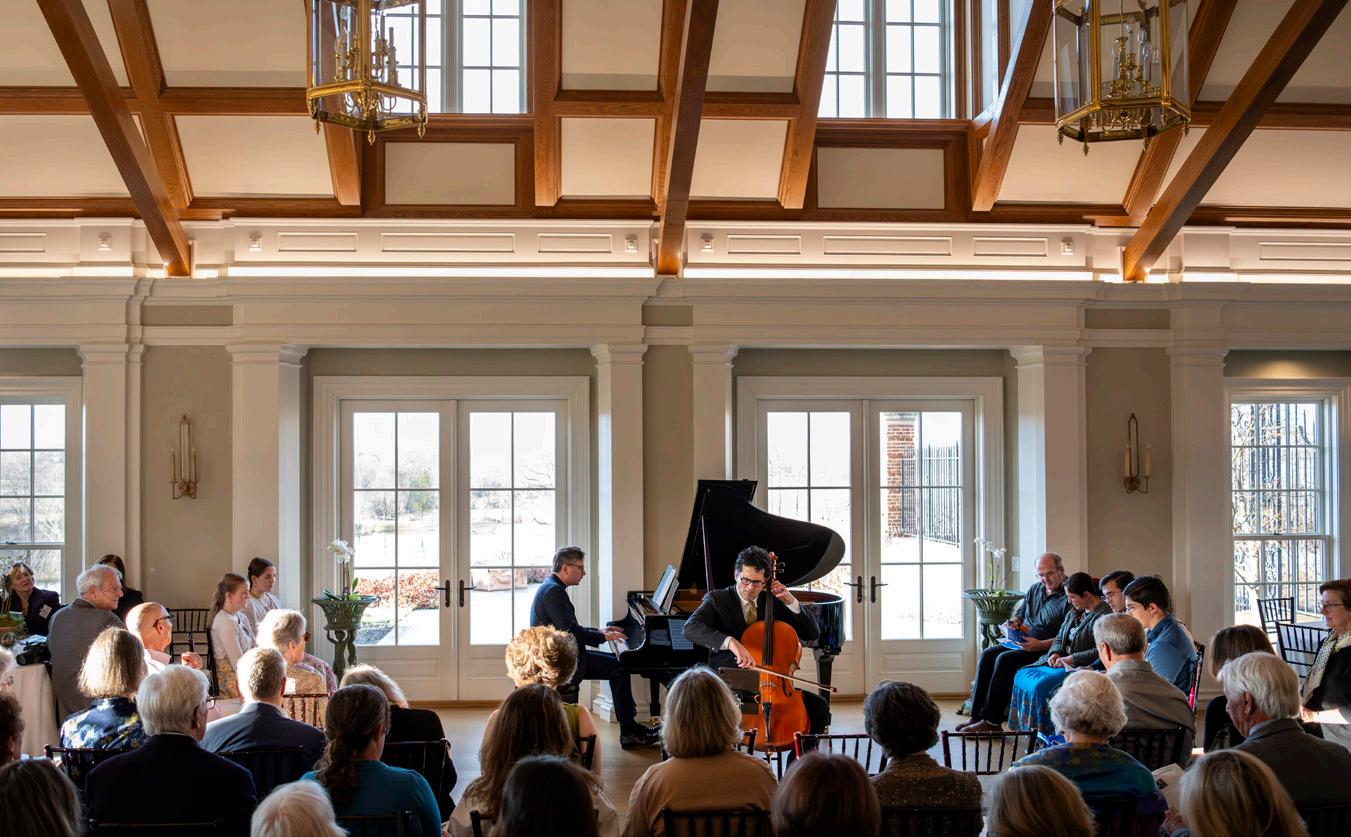
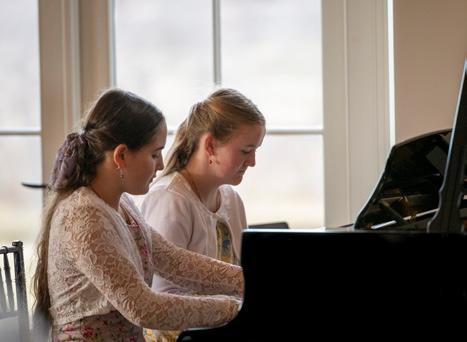
Amit Peled and the CelloGang
Since taking ownership, the Patels have steadily introduced changes that make the market more than just a quick stop for fuel. One of the biggest additions is a hot case stocked daily with ready-to-go items. Customers can still order from the menu, but the hot case offers a convenient alternative: warm sandwiches, pizza slices, and other grab-and-go options at reasonable prices. It’s ideal for anyone who doesn’t have time to wait in line, whether that’s a local on a lunch break or a commuter passing through.
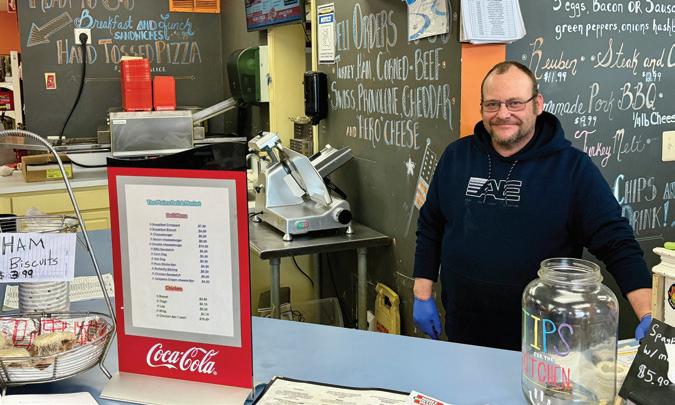
Behind much of the food is Chris Moriarty, a familiar name in The Plains. A local resident, Moriarty has worked at several restaurants in town and brings both experience and hometown pride to the kitchen. He specializes in fresh sandwiches and hearty, comforting sides. On any given day, customers might find spaghetti, macaroni salad, potato salad, ham biscuits, and other rotating specials. The beef and sausage used at the deli are fresh and sourced from a farm in Winchester, underscoring a commitment to quality ingredients.
Dance through History with the CelloGang. A night of dance music for cello choir. Tango, blues, salon dances and much more. A CELLOBRATION you don’t want to miss!
Break from the city- this spacious home offers moun directions and fantastic commuter access. There is and Internet reception here. Spacious 1st fl. owner’s suite plus a connecting bathroom to one of the 2nd fl. bedrooms. LR w/ gas FP, formal DR, screened-in gazebo off the rear deck. Walk-out lower level is finished with 3 rooms and full bath. Can be sold fully or partially furnished. Hardwood floors on main level. 2 car attached garage. Rear yard level for golf practice and play area. Many wineries, fruit orchards and farms stores near by. Call for a private showing of this great home.
Moriarty said he appreciates the new ownership and the atmosphere they’ve created. He feels valued for his cooking skills, and that mutual respect shows. Gappu Patel, in turn, is quick to express her gratitude for his work. By all accounts, she’s a kind and attentive manager who takes care of her employees and genuinely cares about the people who walk through the door. In a small town, that matters.
5 pm
Sunday, May 3, 2026
The Suspicious Cheese Lords
For thirty years, the Suspicious Cheese Lords have specialized in Renaissance choral music, seeking out works by less familiar composers. The group’s name is derived from the Tallis motet, Suscipe quaeso Domine.
For more information please contact : Joyce Gates 540-771-7544 cell 540-338-1350 office joyce.gates@LNF.com 11530 John Marshall Hwy. Markham, VA
For tickets please visit: http://gracetheplains.org/ 6507 Main St, The Plains, VA 20198
The updates extend beyond the kitchen. The Patels have expanded the store’s wine and beer selection and broadened the range of other beverages available. They’ve also updated and refreshed the restrooms, a detail travelers and regulars alike can appreciate. And they’re not finished. Plans are underway to add a space where customers can vacuum their cars, further enhancing the market’s role as a practical stop for people on the go.
While the market clearly caters to locals, it also serves a steady stream of commuters and travelers. Positioned conveniently for those fueling up or passing through town, it has become a reliable place to grab both gas and a satisfying bite to eat. On a recent visit, a contractor from Northern Virginia working on a house just down the street stopped in for lunch. He asked about local rentals and remarked, “I’m just getting a feel for the area.” It’s the mix of familiar faces and new ones that gives the market its energy.
The Patels have already begun shaping The Plains Market & Deli into something that reflects both their work ethic and the community’s needs. With fresh food, thoughtful upgrades, and a welcoming approach to customers and staff alike, they are building more than a business. They’re building relationships.
Photo by Michele Husfelt
Chris Moriarty handles the kitchen at The Plains Market & Deli
At Middleburg Humane, Every Kindness Matters
By Michele Husfelt
Tucked away off the beaten path in Marshall sits one of the community’s true treasures: the beautiful 23-acre Middleburg Humane Foundation (MHF) facility, which has quietly served animals and the people who love them for decades.
Since opening its current location in 2019, the organization has continued to expand its reach and impact. At the center of that leadership is Kim Zimmerman, its chief operating officer, who began at the Humane Foundation in 1998 as an administrative assistant and has held many roles over the years, learning the organization from the ground up.
Today, she oversees the MHF’s overall direction, guiding its mission while ensuring daily operations run smoothly. Animal care is led by Dr. Matt Galati, DVM, the staff veterinarian who joined the team in 2025. He oversees the animals’ medical care and overall well-being, bringing both expertise and compassion to his work.
One of his newest initiatives is a free or reducedcost vaccine clinic offering essential vaccines and microchipping, held quarterly, thanks to a grant that covers the costs.
The Humane Foundation is a no-kill shelter, reflecting its belief that every animal deserves time, care, and the opportunity to find a loving home. While many shelters focus solely on cats and dogs,
the shelter to make room for other animals in need.
Behind the scenes are more than 30 volunteers who make much of this work possible. They transport animals, take them to emergency veterinary visits, clean kennels, do laundry, assist with socialization, and spend time walking dogs and comforting animals.
As volunteer Terri Bell sat on the floor recently, stroking a sleepy post-op puppy, she explained with a satisfied smile, “This is how I get paid these days.”
People of all ages are encouraged to volunteer. Many retirees devote generous time to the shelter, and high school students and others in the community also play an important role. This broad volunteer base strengthens the connection between the MHF and the community it serves.
this facility is uniquely equipped to care for a wide range of animals.
With 23 acres, it’s one of the few humane foundations in the region able to take in horses and other large animals. Over the years, it has also cared for cows, pigs, goats, chickens, rabbits, ducks, and guinea pigs, as well as dogs and cats.
Foster care is another important part of the mission. Many cats and dogs spend time in foster homes, where they can live in a nurturing environment rather than being confined to a kennel. Foster families help animals become better socialized and more comfortable in a home setting, often leading to more successful adoptions. Foster care also allows
The Humane Foundation’s work is made possible by that very community — through volunteering, fostering, adoption, and financial support. As Zimmerman and her team look ahead, their focus remains on compassionate care and responsible leadership.
The facility also depends deeply on community support. They encourage local residents to visit the facility, spend time with the animals, and see firsthand the impact they are making.
As Zimmerman said, every act of kindness matters, “and together, as a community, we can save countless animals and ensure they find the loving homes they deserve.”
Photo by Michele Husfelt
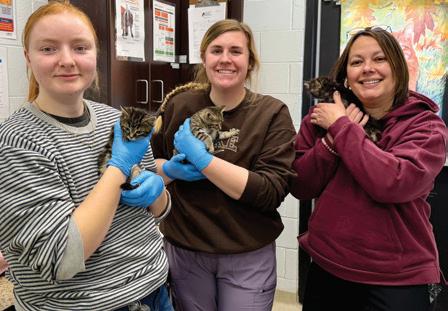
Middleburg Humane staffers Jane Clark and Kayla Kibler and Executive Director Kim Zimmerman.
For Hill School’s PTC, It Takes a Community
“Parents and the school need to be philosophically aligned from an educational perspective ... When that alignment exists, students thrive.”
Kelly Johnson, Hill’s director of enrollment and liaison to the school’s vibrant Parent-Teacher Club (PTC)
By Leonard Shapiro
As The Hill School continues its Centennial Celebration, a defining thread woven through its 100-year history is its deep commitment to community. For a century, Hill has understood that educating children well means partnering closely with the families who entrust them to its care.
“Parents and the school need to be philosophically aligned from an educational perspective,” said Kelly Johnson, Hill’s director of enrollment and liaison to the school’s vibrant Parent-Teacher Club (PTC). “When that alignment exists, students thrive.”
At Hill, the PTC is more than a volunteer group — it is a cornerstone of school life. All parents of Junior Kindergarten through eighth grade students are considered members, and participation is both encouraged and accessible. Whether organizing events, supporting teachers, welcoming new families, or simply showing up, every parent has a place.
Jill Hottel, who has served as PTC president for the past two years, first became involved when her daughter Adelaide enrolled in Junior Kindergarten in 2019. Hottel stepped forward as a room parent in Kindergarten and again in first grade, serving as a bridge between teachers and families.
“Our model is a little different from a traditional PTA,” Hottel said. “Everyone is already a member. We simply invite people in. Everyone has a different style of giving and different availability — and we try to make it all work.”
The PTC operates under the Education School Life Committee (ESLC), a standing committee of the Board of Trustees, made up of a collaborative group of parents and staff members dedicated to strengthening the fabric of the Hill community. Together, they help shape programming that reflects parent feedback and student needs.
That spirit of connection comes to life in the traditions and shared experiences that shape daily life at Hill. Some are joyful and whimsical, others reflective and purposeful, but all are designed to bring students, parents, faculty, and alumni together in meaningful ways.
These moments — whether they happen on a wooded trail, in the amphitheater, or around a table in conversation — reinforce that Hill is not
simply a place where children attend school, but a community they belong to.
The PTC plays a central role in cultivating that sense of belonging. Through thoughtfully planned gatherings and opportunities for dialogue, it creates space for families to connect with one another and with school leadership. Conversations sparked through community-wide initiatives often extend beyond the event itself, encouraging ongoing partnership around the intellectual, social, and emotional growth of students.
Faculty and staff feel that same spirit of care and appreciation. The PTC’s quiet but consistent support ensures that educators feel valued and sustained throughout the year. Small gestures — expressions of gratitude, shared meals, or simply a well-stocked lounge on a long day — communicate a powerful message: the adults who guide Hill’s students are part of the community, too.
While Hottel is quick to note the distinction
between parenting and professional education, she embraces the PTC’s role as a constructive channel for parent voice. “There’s a clear delineation — I’m a parent, not an educator,” she said. “But if I can help build understanding and strengthen relationships, I’m happy to do it.”
For Hottel, the greatest gift of her service has been proximity — witnessing the daily interactions between students and faculty and forming lasting friendships with fellow parents.
As Head of School Treavor Lord has noted, “We have created a community that connects our students, our families, and our faculty and staff through the shared mission of helping children get started on the path to being strong and happy adults.”
As The Hill School steps into its second century, that sense of shared purpose — parents and educators working side by side — remains one of its most defining strengths.
Hill School Parent-Teacher Club members (left to right) include Devlynn Gates, Ryan Christensen, Bryant Hottel, Jen Rammes, Marti Bigley and PTC President Jill Hottel.
Windy Hill Foundation provides safe, decent, and affordable housing to low- and lower- income families and the elderly in Loudoun and Fauquier Counties, and encourages self-improvement and self-sufficiency among our residents
Sip & Celebrate!
Join us for a relaxed and festive Spring soirée to celebrate our Windy Hill community and honor those who have shaped our mission.
THURSDAY 6 TO 8 PM
A P R I L 9 T H
SALAMANDER RESORT & SPA 500 N PENDLETON STREET MIDDLEBURG, VA 20117
Together, we will induct our newest Emeritus members, Bob Dale and Ann Northrup.
Scan the QR CODE to register:
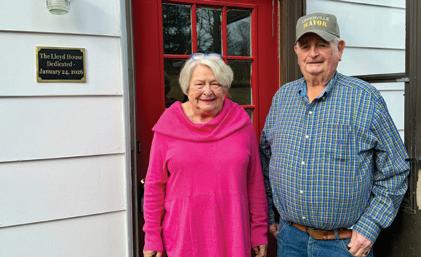
Upperville Methodist Church Dedicates Lloyd House
By Michele Husfelt
The Upperville Methodist Church recently celebrated a meaningful milestone with the dedication of the newly acquired Lloyd House, a home purchased just behind the church to expand its ministry opportunities and deepen its service to the community.
The house has been dedicated to Donna Kay and Larry Lloyd, whose lives have long been intertwined with Upperville and the church.
Donna Kay grew up in Upperville, deeply rooted in the community she would later help sustain. Larry grew up just north of town and became an Upperville resident after their marriage. Together, they built not only a life but a legacy of faithfulness, generosity, and service.
Over the years, the Lloyds have invested their time, energy, and hearts into the Upperville Methodist Church and the broader community. Pastor Cindy Rainger reflected on their impact, saying, “Without the Lloyds, the church never would have survived.”
Donna Kay worked, taught, and faithfully held various positions within the church throughout the years, helping to shape its ministries and nurture its congregation.
The dedication service itself was a heartfelt tribute. UMC Music Director Jack Wood played Donna Kay’s favorite hymn, while local singer Lori Daly offered a moving rendition.
Wood also shared that when he began serving as music director ten years ago, he was still a teenager. Larry and Donna Kay took him in and made him feel like part of their family — a reflection of the warmth and encouragement they have extended to so many.
Pastor Mike Husfelt of Upperville Baptist Church spoke about how valuable the Lloyds are, not only to their own congregation but to the entire community, and how deeply they are appreciated for their tireless dedication. Jimmy Kenny, caretaker at Ivy Hill Cemetery, added, “Over the years, if it weren’t for Larry, I would not have been able to do what I do.”
Christine Lewis, whose husband, Philip, has pastored Mt. Pisgah Baptist Church for 35 years, shared how warm and kind the Lloyds have always been to their church and family, supporting so many of their events. She also reflected on the home’s former owner, Jerry Ann Dade, who deeply loved and appreciated the Lloyds. Lewis said Dade would be so happy to see her home become a place of ministry and outreach.
The Lloyds’ service extends far beyond special events. For 35 years, they have faithfully supported the Churches of Upperville Outreach Program. On four Saturdays each year, the program packs bountiful boxes of food for more than 25 local families. For most of those Saturdays, beginning promptly at 7:30 a.m., Larry and Donna Kay have been there, ready to pack and load the boxes.
Larry’s devotion to Upperville is perhaps most visible in his everyday acts of care. He is often seen driving his golf cart along Route 50, ensuring that sidewalks are cleared after snowfall, that leaves are raked in the fall, and that postal workers always have a friendly ear. These simple yet meaningful gestures reflect the spirit that has defined both Larry and Donna Kay’s lives.
The dedication concluded with a ribbon cutting, followed by a hearty meal and fellowship, a fitting celebration for a couple whose lives have been centered on bringing people together.
The Lloyd House is already serving its intended purpose. It now houses the food pantry for the new Tree of Life Piedmont Region and provides space for bible studies and fellowship meals. As ministry continues within its walls, the home stands as a lasting testament to the Lloyds’ enduring commitment to faith, service, and the Upperville community.
to by Michele Husfelt
Donna Kay and Larry Lloyd
The Rabbit Hole Brings Cool Books, Hot Soup and Warm Hearts to Marshall
By Jody Warfield
Kimmy Lewis grew up in Reston and Hume, where she fell in love with horses and living in the country. While attending the London Academy for the Performing Arts, she then fell in love with the cafes of the British capital.
Upon her return to Virginia, she dreamed of bringing the warmth and community of the London cafes back to horse country. Pairing the café vibe with her love of books eventually led her to found The Rabbit Hole in Marshall.
The shop at 8393 West Main is only open on weekends for now (10 a.m. to 5 p.m.) as Lewis and her team complete renovations of the old building that was very much like a rabbit warren. “It was little rooms and many doors,” she said. “Some of it was log cabins, with walls covered in horse hair plaster. We found cans in the walls that had been built on top of other walls. And there were two cement slabs, one on top of the other.”
While braving an extreme version of what every old home renovator around here knows all too well, Lewis and her mom – Babs Husson – have given their winter-weary town a place to gather to
brought local cooks together with their individual Instant Pot creations for St. Patrick’s Day trivia, prizes and more.
The next gathering is on April 12 for “Alice in Wonderland: Tea Party Edition.” Tickets include 30 percent off the Alice in Wonderland cookbook, from which attendees will select a dish to prepare and share at the event. Themed outfits are encouraged for the costume contest, with prizes also offered for the Wonderland trivia contest and best Tea Party dish.
When complete, The Rabbit Hole will include a spacious book store and a full service café with an inviting bay window in front.
share gourmet soups from The Warrenton Wellness Kitchen and to peruse the book and gift selections.
Most exciting for Marshall are the unique special events The Rabbit Hole is offering.
In March, Lisajoy Sachs visited for an author talk and signing of her newest book, “Bright One,” the story of her great-grandmother and her fierce love, resilience and courage in the face of the unimaginable darkness of anti-semitism in 1930s Romania.
The very next day brought the St. Patrick’s Day version of The Rabbit Hole’s “Cook the Book” events, which meld cooking, cookbooks and community in a very creative way. The “Instant Pot o’ Gold” event
“We’ll have crepes, soups, sandwiches, salads, paninis and a full espresso bar,” Lewis said. “We also plan a journaling club, jewelry making, and a college cookbook event for everyone going off to school next fall.”
The Rabbit Hole has big book orders on hold pending the finish of their renovation. For now, their very nice children’s section has wonderful books, toys and gifts for Easter.
What does Lewis love most about her endeavor?
“Being surrounded by books,” she said.”My generation wants bookstores – we want the physical books, and the community.”
Photo by Jody Warfield
Kimmy Lewis at her Marshall shop, The Rabbit Hole.
New Paris Market Helps Fill A Gap
By Linda Roberts
Ad the door opens at Mountain Gap Market, a visitor is immediately engulfed in the tantalizing aroma of freshly baked doughnuts. This seems too good to be true; how about a dozen? Or more?
Behind the counter, proprietor Andrew Taylor, sporting a wide grin, welcomes customers into his family-owned business perched atop Ashby’s Gap on Route 50 where Clarke and Fauquier counties meet. Ashby’s Gap played a significant role in the Civil War and was the scene of battles between the North and South.
Leading a tour of the attractive and neatly organized market, Taylor points out the background of some of the enticing items and explains how each is reflective of the community and the season of the year. Winter squash and fall apples are across the aisle from cold cases where grass-fed, locally raised beef and lamb cuts are frozen in clear wrap. Local honey, homemade cider, jams and jellies, candies, and dried fruit line the shelves, and the list goes on and on.
“We’re not really a convenience store,” Taylor said with a smile, but the market does stock many locally recognized items a visitor can “grab and go.” Well-loved Route 11 potato chips and the much-acclaimed Wizzes Ice Tea are attractively displayed, as is South Mountain creamery butter.
Mountain Gap Market also caters to those early morning commuters heading east to Northern Virginia and Washington. Text or call your order in and it will be waiting for you to pick up at the store’s outside window as you zip down Route 50. The tantalizing smell of coffee and the just-prepared donuts drift out the order window and you may find yourself adding a few of these to your order along with the sandwich you just ordered for for your lunch.
Taylor has photos chronicling his family’s renovation of the building, which in years past has been a restaurant, a gas station, an office, and, most recently, a fabric and upholstery shop.
“We make good food convenient,” said Taylor, who relates a little of his family’s story behind Mountain Gap Market. Local residents are finding the market quite convenient said one shopper who only needed milk and a loaf of bread and didn’t want to make the trip east or west to find a grocery store.
Taylor’s background is in farming. He grew up in Round Hill, lives with his family near Bluemont and said he felt a calling to create the market. A man of faith, Taylor felt that he and his family had been “presented with an opportunity” which opened for them last year when the fruit trees he was tending had all their fruit killed by a frost.
“Now, this is our path,” he said. “And we are blessed.”
Details: Mountain Gap Market is open 6 a.m. to 5 p.m. weekdays and 8 a.m. to 5 p.m. Saturdays. The market is closed on Sundays. Visit the website at mountaingapmarket.com.
Fresh donuts offer sweet options at Mountain Gap Market.
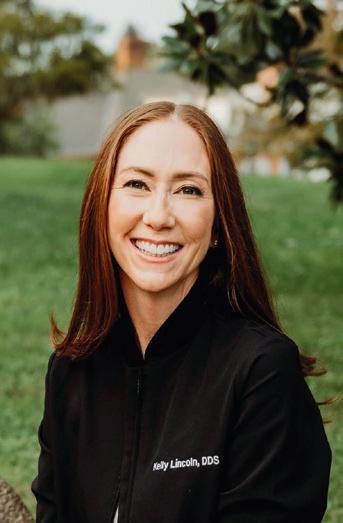
DR. KELLY LINCOLN
A New Chapter for Wakefield Squash
By Zachary Mahevich
Wakefield School, a JK–12 independent school in The Plains, began the 2026 squash season with a new partnership with Bee Squash, a high-performance training program based at The St. James School in Springfield. This collaboration allows Wakefield students to continue receiving professional coaching, with Henry Beach stepping in as head coach.
Beach has been playing squash since childhood, reaching a top ranking of No. 7 in the U.S. junior division. Following his own successful junior squash career, he took an unconventional break from the sport to play bass guitar for the indie rock band Larkins.
He eventually returned to squash, rediscovering his passion for the game and developing a strong desire to help other young players succeed at the sport. Most recently, he competed in his first PSA Pro Match at the Bee Squash Expression Open.
Former Wakefield head coach Mark Broekman accepted a position as an assistant coach at the University of Virginia after leading his 2025 team through a successful season and victory at the 2025 Division 6 National Finals in Philadelphia.
Following that championship run, the majority of the 2025 team graduated the following spring. Only two players, both sophomores, remained for the 2026 season, with the new roster composed almost entirely of underclassmen. This year’s team advanced to the national tournament again, playing in Division 8 (two levels lower) and finished fifth.
Building a competitive squash team from a relatively inexperienced group was a major challenge, and Beach’s coaching and enthusiasm quickly earned the respect of all the players and drastically elevated each athlete’s level of play.
The two veteran sophomore players, Wyatt Wood and Nathan Torres, moved
from being the youngest players near the bottom of the roster the prior year to this year’s No. 1 and No. 2 positions. Both took on roles as co-captains, demonstrating strong leadership and a deep interest in the improvement of every teammate.
“Coach Henry really filled the massive shoes of my old coach and built a team that had previously been filled with graduating seniors,” Wood said. “My expectations this year were low, but this team really surprised me with the chemistry and energy we had by the end of the season. I’m really excited for the future [of this] team and coach because I truly believe we will be the best team my school has seen.”
Wakefield students have the J.B. Rich Squash Center on campus and receive professional coaching during the squash season. This is a unique opportunity that has created many new squash enthusiasts each year.
Wakefield currently competes in both the Chase Interclub Varsity League (CIVL) and the Mid-Atlantic Squash Organization (MASO), alongside schools such as Woodberry Forest, the Potomac School, and Mercersburg Academy. All are much larger boarding schools that offer coached play throughout the academic year.
Wakefield’s smaller student body and relatively remote location have always created challenges for the team. However, the students’ love for the sport and fierce commitment beyond the season have kept it highly competitive and undeterred. Those challenges have also created an unbreakable sense of camaraderie and lasting friendships. With many years to come for this young team, they have great potential for more success.
Zack Mahevich is a freshman at Wakefield and a member of the varsity squash team.
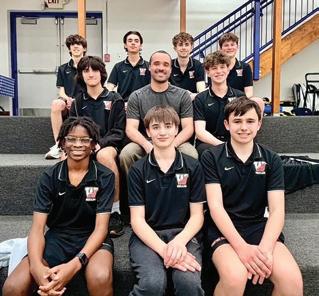
The Wakefield squash team with Coach Henry Beach (center). Clockwise from top left: Cameron Roberts, Nathan Torres, Wyatt Wood, Zack Mahevich, Noah Crahan, Braedan White, Lucas Parker, Timothy Bray, Ibrahim Raja.
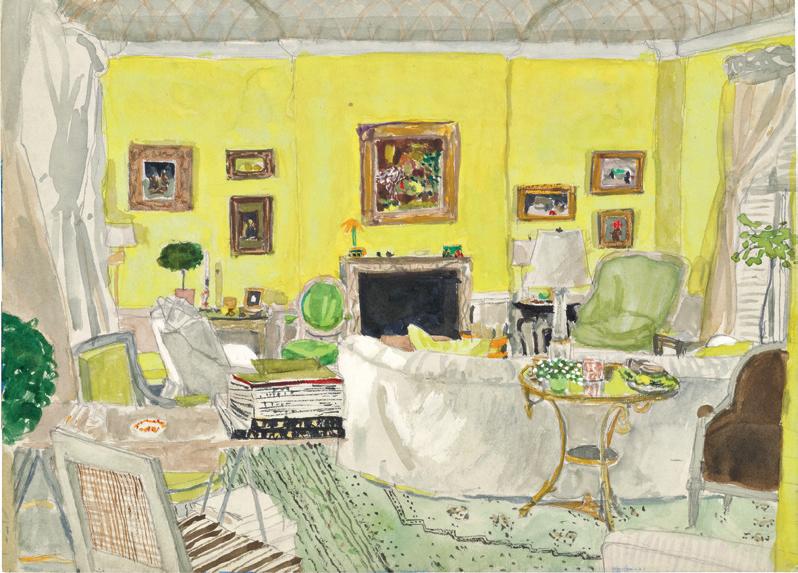
THE ENCHANTING INTERIORS OF BUNNY MELLON: Paintings by Snowy Campbell
The houses of Bunny Mellon and her husband Paul have become icons in the field of interior decoration, filled with fine antiques, blue-chip works of art (a Van Gogh left unframed and propped on a mantel), personal mementos, and exquisite objets d’art, all displayed in Mellon’s inimitably sophisticated yet charming way. Snowy Campbell was employed by Mellon in 1970 for six years, just after college, to document in paint several residences of the Mellons—presented in this book as a group for the first time.
This book—a project that was started by Mrs. Mellon but never realized until now—presents Campbell’s paintings that capture the colors, light, and ambiance of rooms and gardens, as well as intricate patterns and details of furnishings in spaces put together with help from renowned decorators John Fowler and Bruce Budd. Three residences—in New York City; Washington, DC; and Upperville, Virginia—are the focus, with texts by society chronicler James Reginato describing Mellon’s decorating style and the ways the Mellons used each property. Opening the doors to a life of superb connoisseurship, this volume is an homage to the interiors of a renowned couple and the extraordinary work of a young artist.
Charlotte Moss is an interior designer and philanthropist. Peter Crane is president of the Oak Spring Garden Foundation. Frank Langella is an actor and longtime friend of Bunny Mellon. James Reginato is writer-at-large for Vanity Fair. Contributions by Nancy Collins and Elinor Crane, April Swain Mora and Tony Willis. Published by Rizzoli and available: https://www.rizzoliusa.com/search/?q=bunny+mellon
The refined rooms of American philanthropist and aesthete Bunny Mellon (1910–2014)—interiors influential for their ability to combine magnificent collections of fine and decorative art with an ambiance of comfort and ease—were documented by artist Snowy Campbell, a lasting tribute to Mellon’s impeccable taste.
stone main house w/ over 3,800+ sq. ft. Swimming pool, bocce ball court, and flagstone firepit. 5-stall center aisle barn, barn apt. 3 fenced paddocks w/ waterers.
Middleburg
Markham – Renovated stone and cedar house with stunning views of the Cobbler Mountains. Includes 2-car garage, separate office/studio, pool house & pool. 3 BR / 2 BA log cabin. Pond. Starlink internet
Middleburg – 2 BR / 2 BA condo in Ridgeview. Bright, open floor plan, covered patio, wooded views, furnished or unfurnished. Comcast internet, pets considered, parking, move-in ready.
Bluemont – 1939 stone residence in Bear’s Den Rural Historic District. 3 BR / 3 BA, Starlink internet available. Separate three-car garage, cleared fire pit area, storage shed, and mature gardens.
Middleburg – One level
It Takes A Community at Middleburg Charter
By Katie Charnley
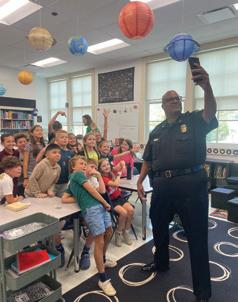
Stop by Middleburg Community Charter School almost any day of the week, and you’re likely to see a Middleburg Police Department officer making rounds in the hallway to greet students, parents, and teachers.
Officers are familiar and friendly faces on campus, building positive relationships with students, participating in school events, and proudly representing houses within MCCS’s house system. It’s a simple moment, but one that reflects something much bigger. In Middleburg, the school isn’t just part of the community; it is the community.
In Middleburg, community is a way of life. Neighbors know one another, local businesses support shared causes, and the success of the next generation matters to everyone. Nowhere is that spirit more visible than at Middleburg Community Charter School (MCCS), where the word “community” is not only in the school’s name but woven into the heart of everything it does.
From the moment students walk through the doors, they’re surrounded by people who believe in their success. Not only teachers and staff, but also local businesses, civic leaders, and organizations have embraced MCCS as a shared investment in Middleburg’s future.
One partnership example is the school’s thriving garden program. With support from the Nature Composed shop, students explore sustainability, environmental stewardship, and the science behind
growing food. They’re learning firsthand the importance of caring for the natural world.
The love of learning also extends into the pages of books.
Middleburg Books has helped refresh the school’s library collections while also serving on the school’s mission team, helping guide MCCS’s longterm vision. Another strong supporter, The PlayRoom, has donated
countless incentives celebrating student effort and achievement, and also serves on the mission team.
That partnership extends well beyond the school walls. Throughout the year, local businesses open their doors to MCCS students for field trips that bring classroom learning to life. Students see how math, science, and communication skills apply in real-world settings as they build everyday life skills. The connection flows both ways, especially during the holidays when students travel through town, singing carols and spreading cheer.
Some businesses have created particularly memorable learning experiences. At Tilley’s Pet Store, students learn about responsible pet ownership
and animal care. Middleburg Millwork partnered with students during a storm-preparedness unit, allowing them to explore tools and materials used to prepare for severe weather as they developed their own storm preparation plans.
Middleburg’s rich history and natural environment also shape the MCCS experience. The Piedmont Historical Society hosts historic sessions each year, while the Oak Spring Garden Foundation offers a range of unique horticultural and artistic lessons.
Artists in Middleburg has supported the school through grants and creative opportunities, and students from Foxcroft School regularly volunteer their time with events. Country Zest Magazine has also helped share the story of MCCS, highlighting the work happening inside what many affectionately call “the little school that could.”
Civic learning comes to life thanks to the Middleburg Town Council, which allows students to conduct mock town council meetings as part of their government studies.
The school’s deep connection to the community has also gained national recognition. MCCS was selected as a recipient of the Building Hope Impact Award for Community Engagement, highlighting the powerful partnerships that define the school.
Taken together, these relationships tell a powerful story. Middleburg Community Charter School is not simply a school located in a town–it is a school built with its town.
As Middleburg Police Chief Shaun Jones often likes to say: “One town, one team, one community.”
EVERY TUESDAY
Fauquier Livestock Exchange
Sale start time 1:30pm Take In on the day of sale 7am – Noon
7404 John Marshall Highway Marshall, VA
SPECIAL COW SALES
Dates to be announced 4-6/year as announced on Facebook and mailings
Sale start time 6:00PM
Take in Monday before sale 7:00AM3:00PM Fauquier Livestock Exchange, INC 7404 John Marshall Highway Marshall, VA
FAT CATTLE
Can be sold any Tuesday
Sale start time 1:30PM
Take in day of sale 7AM-12PM
FAUQUIER LIVESTOCK EXCHANGE, INC
7404 John Marshall Highway Marshall, VA
MARSHALL FEEDER
CATTLE ASSOCIATION
State Graded Feeder Cattle Sale
2nd Friday of every month
Marshall Sale Barn – 10:30AM
Take in Thursday before 7AM-3PM
Fauquier Livestock Exchange, INC
7404 John Marshall Highway Marshall, VA 20115
Photo by Katie Charnley
Middleburg Police Chief
Shaun Jones is a frequent and popular visitor at the school.
Spring Leads Into Amphibian Nights
By Michael Kieffer
Spring-a rapid and sudden emergence. A burst of life is synonymous with the season. Warm rains and daylight are key ingredients, but the amphibians act as the true harbingers.
Male upland chorus frogs (Pseudacris triseriata), pickerel frogs (Rana palustris), spring peepers (Hyla crucifer), and wood frogs (Rana sylvatica) sing their harmonious nuptial displays.
Frogs are sleek, large-mouthed amphibians with two powerful, oversized back legs. With this design, frogs have a means to eat and to escape being eaten. For 350 million yearspredating the dinosaurs—frogs have endured mass extinctions, ice ages, and the shifting of continents.
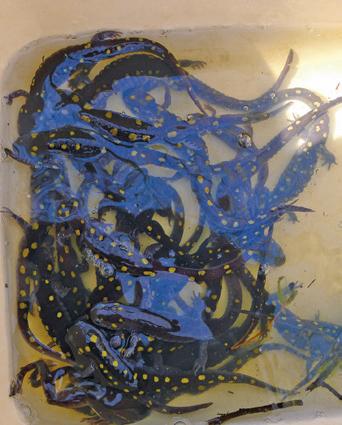
Spotted salamander migrations are one of the most awesome sites in nature. While the event is predictable, it remains weather dependent.
Salamander lovers would be wise to grab your red lights and boots and remain ready. The first warm rains of late winter will begin this migration, the majority of which can occur in just one night and can only last a couple of days. Watch males dance and lure females to pick up their nuptial gifts in one of the many Piedmont vernal pools.
Amphibians provide a major transfer of invertebrate and plant energy to animals higher up the food web such as fish, reptiles, birds, and mammals that are unable to access these food sources directly. They expend little energy for bodily maintenance because they are ectothermal vertebrates (cold blooded), highly efficient in biomass conversion.
Unlike endotherms (warm blooded vertebrates), they lose very little energy to heat. Most species mature slowly compared to endotherms of similar size, and are long-lived. In many ways, they are like plants, acting as energy reserves within ecosystems.
Amphibians are good bio-indicators of ecosystem health because of their life cycle, absorptive surfaces, exposure to ultraviolet light, food habits, susceptibility to cold and drought, fragmented distributions, sequestered tissue contaminants in relation to metamorphosis, and breeding cycle.
Amphibian declines have become dramatic as a result of many cumulative anthropogenic impacts including spreading the chytrid fungus disease, ozone depletion, increase temperatures of water and air due to climate change, chemical assaults from pesticides and herbicides, and most impactful here, where we live in the Piedmont, is habitat destruction.
Spotted salamanders are fossorial, living a subterranean life. Next time you see a tree that has fallen, look at all the roots and caverns on the root mound still attached to the stem. That’s where they live.
Imagine now thousands living in a hundred acre woodlot. When that woodlot is cleared for a data center or housing development, no one sees the scores of salamanders that are killed.
As terrestrial vertebrates, amphibians historically had more biomass than all reptiles, birds, and mammals combined because of their unique abilities to live in a multitude of environments. As you watch the next woodlot disappear, it is not just the trees that are lost.
This season enjoy these important creatures and take part in programs in your area that connect you with their life cycles. It’s about time we listen to their plight. After all, humans and amphibians are part of the same fabric.
HOLY
AND EASTER
SUNDAY, MARCH 29
PALM SUNDAY
ONE SERVICE AT 10:30 AM
JOIN US IN WELCOMING OUR NEW PRIEST-IN-CHARGE, THE REV. SANTIAGO RODRIGUEZ
TUESDAY, MARCH 31
CHRISM MASS
ONE SERVICE AT 10:00 AM BISHOPS AND CLERGY GATHER DURING HOLY WEEK TO REAFFIRM THEIR VOWS FOLLOWED BY LUNCH IN THE PARISH HALL
THURSDAY, APRIL 2
MAUNDY THURSDAY
ONE SERVICE AT 7:00 PM
FRIDAY, APRIL 3
GOOD FRIDAY
ONE SERVICE AT 12:00 PM
SUNDAY, APRIL 5
EASTER DAY
9:00 AM SERVICE WITH CHORAL BRASS
FOLLOWED BY AN EASTER EGG HUNT ON THE PARISH GREEN
11:00 AM SERVICE WITH CHORAL BRASS
FOLLOWED BY A FESTIVE COFFEE HOUR
A gaggle of spotted salamanders.
Appleton Campbell Celebrates 50 Years of Service
By Jody Warfield
“We want to be known as the people who are taking good care of our employees and our customers.”
That’s how Michael Appleton – CEO and greatgrandson of the founder of Warrenton-based Appleton Campbell—describes his company’s mission. He and his dad, Mike, the company president, are proud of the training and opportunities they offer to their employees, and the prompt and personalized service they provide their customers.
Fifty years ago, founder Jim Appleton “left his job with a tool box in each hand and started our company,” according to Michael. Starting as a small family business, it has become a leading residential plumbing, heating, air conditioning, and electrical service provider in Northern Virginia.
“Now we have over 140 people,” Michael said, “and we’re using artificial intelligence (AI) to help track our jobs and support our technicians in the field.”
Michael, along with company vice president Scott Wayland, speaks glowingly about their training program. “We always have an excess of work, and the labor force challenges are real,” he said. “We send everyone to the Ultimate Tech Academy in Arkansas to learn the basics for one to three weeks. Then we utilize our experienced people here for the rest of
their training—our in-house ProPath program.”
Wayland and Mike and Michael Appleton all love that they’re able to offer the option of a well-paying career to local young people right out of high school. They say older, more experienced staff members enjoy passing on their advanced skills to the younger crew. Meanwhile, the younger generation’s comfort with computers and digital apps makes for a smooth entry into the company’s increasingly computerized job management system.
“Learning in my 20s was way different than it is now,” Mike said with a smile. “Everything has computers now, and you need a phone to scan a QR code on the units to access tech support.”
Still, the younger technicians are excelling in this end of the work, said Michael, and the experienced
staff learn from them, as well.
“We are always trying to get better,” said Wayland. “Our people have a growth-oriented mindset. Everyone is willing to share their knowledge, and help others. But the best part is our free ice cream!”
Mike, who helped his grandfather launch the company 50 years ago, is proud of how they carefully select their management staff, focusing on those they believe will be team players.
“If they don’t fit our culture,” Wayland said, “they aren’t here long.”
All three Appleton-Campbell leaders are proud that the majority of their team has been with the company for decades. Michael added, “We just honored 43 people who’ve been here for five years. Many are over 20. They came here right out of high school, got married, and we helped welcome their first kid, first car, first house. And they’re still here.”
“Our people are the foundation of our success,” said marketing director Heather Appleton. “We’re proud to have team members who have grown their careers here over many years. That sense of stability and teamwork is something our customers feel the moment they interact with us.”
And now with 6,000 service agreements and over 20,000 residences on their client list, AppletonCampbell is definitely planning on another successful 50 years, as well.
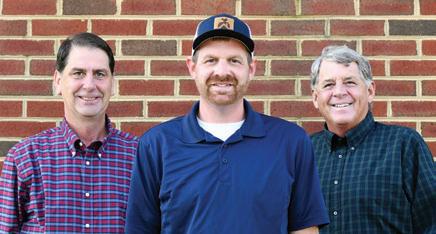
Appleton Campbell Vice President Scott Wayland, CEO Michael Appleton and President Mike Appleton.
Highland Students Attend National Cancer Prevention Day
By Susan Pragoff
How many professionals does it take to reduce cancer? The answer is complex and nuanced, but at the center is an experienced coordinator with a unique and straightforward perspective.
In February, Highland School students attended the National Cancer Prevention Day Workshop on Capitol Hill, produced by Less Cancer, a charitable 501c3 nonprofit. This year’s gathering was intentionally designed as a smaller, student-centered experience while maintaining national reach through digital distribution.
Next Generation Choices Foundation (more commonly known as Less Cancer) is a public charity founded in 2004 by Detroit native Bill Couzens, now a resident of Fauquier County, and focused on a mission of cancer prevention. Less Cancer is widely known as the founder of National Cancer Prevention Day, the National Cancer Prevention Workshop, and the United States Bipartisan Congressional Cancer Prevention Caucus — initiatives designed to elevate prevention as a national priority.
Couzens grew up in an area where many neighbors were plagued with cancer. Although he witnessed its impact in his community, the disease later struck even closer to home. His mother, sister, and brother were all diagnosed with cancer and ultimately succumbed. Those personal losses deepened his commitment to understanding preventable risk and advancing cancer prevention.
A self-proclaimed “C student” without a formal scientific background, Couzens assembled a multidisciplinary team of experts across science, medicine, law, journalism, public policy, and community leadership to help people better understand the role of individuals and community could have in lowering a cancer risk.
The connection between Less Cancer and Highland School spans nearly a decade and traces back to the nationally recognized “Tan Less, Shine More” prevention campaign, which grew from Highland’s emphasis on student leadership. Highland graduate Catherine (Trueting) Cooney (2015) was inspired to found “Tan Less, Shine More” after attending one of the first National Canter Prevention Day Workshops in Washington. Catherine went on to work with Couzens on the “Tan Less, Shine More” campaign for her senior internship at Highland.
During this year’s workshop, speakers demonstrated how cancer prevention requires integration across disciplines. Public health is complex. It requires education, research, environmental awareness, behavioral insight, community engagement, and at times policy reform.
When public health systems function well, they are often invisible. Clean drinking water standards, food safety protocols, tobacco regulations, cancer screening guidelines, and vaccine safety monitoring create conditions in which people can live their lives with fewer preventable risks. It’s not about restricting freedom; it’s about creating safer environments so freedom can operate responsibly.
The diversity of speakers reflected the breadth of expertise required to advance cancer prevention. Physician Tricia Petzold emphasized the relationship between food access and prevention. Nurse practitioner Caleb Runyon shared his “Closer Look Project,” which trains hair stylists, tattoo artists, nail technicians, and makeup artists to identify potential warning signs of skin cancer among clients who may not regularly see a dermatologist. Miles O’Brien reported live from Antarctica, connecting fossil fuel combustion, climate change, and air pollution to long-term health consequences.
Throughout the workshop, speakers emphasized the importance of bipartisan collaboration. Cancer prevention cannot belong to a single political party; it must remain a shared national priority. The collective insights presented during the workshop demonstrated that cancer prevention requires coordinated effort across disciplines, communities, and generations.
Sunday, April 12 - 3PM
Singer, songwriter, and guitar virtuoso Raul Midón—hailed for his “unrivaled combination of chops, soul, and warmth”—joins the Piedmont Symphony Orchestra for an unforgettable afternoon of genre-defying music.
Fresh off back-to-back GRAMMY® nominations—first for Bad Ass & Blind, and secondly for his orchestral album If You Really Want with the Metropole Orkest— Midón brings a breathtaking program blending jazz, soul, and pop with signature brilliance. Blind since birth, he has forged a trailblazing international career, including collaborations with Vince Mendoza and the National Symphony Orchestra, where he participated in a PBS tribute to Joni Mitchell.
UPCOMING PSO PERFORMANCES
ROCK-maninoff: June 7 - 3PM Carlos César Rodriguez, piano
PSO is Generously Funded in Part By:
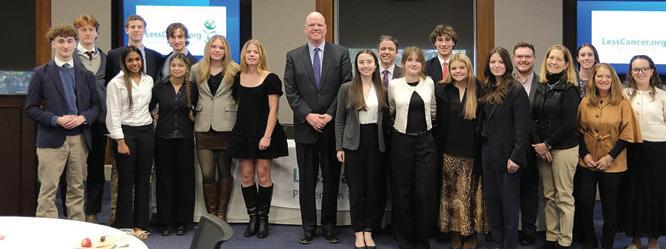
Highland School students joined Less Cancer founder and Fauquier resident Bill Couzens at a recent workshop in Washington, D.C.
The
Luminescence Foundation &
The Ben-Dov Family
The Margaret Spilman Bowden Foundation
Nicolaas and Patricia Kortlandt Fund
The Wise Foundation
The Crossfields Group
Middleburg Museum Hosts At Buchanan Hall
Photos by Charlotte deButts
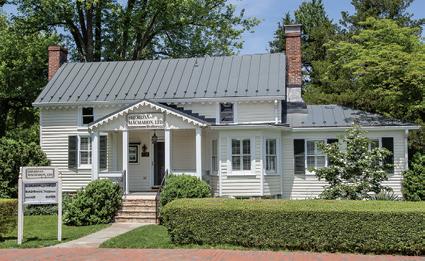
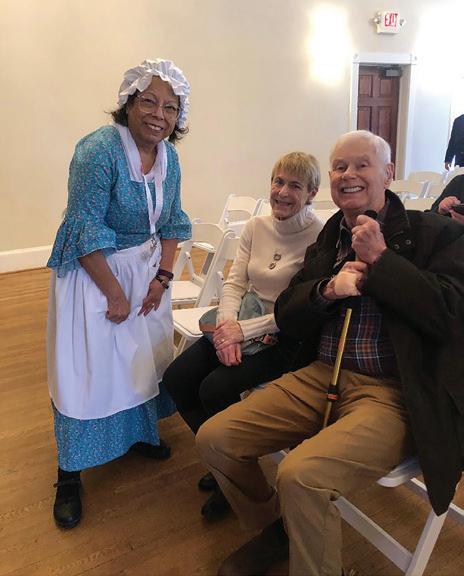
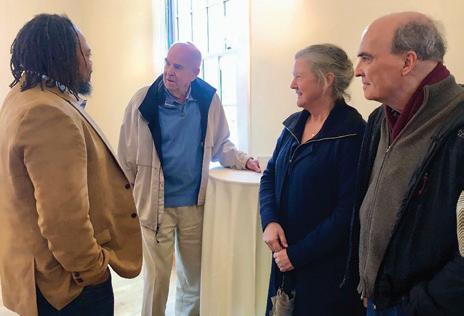
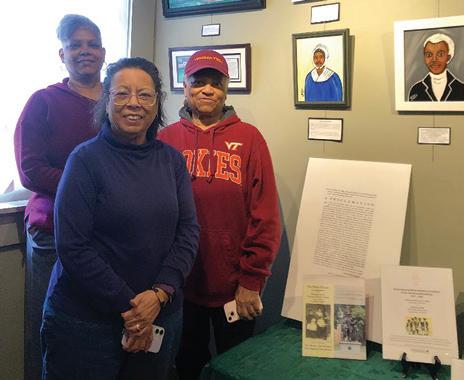
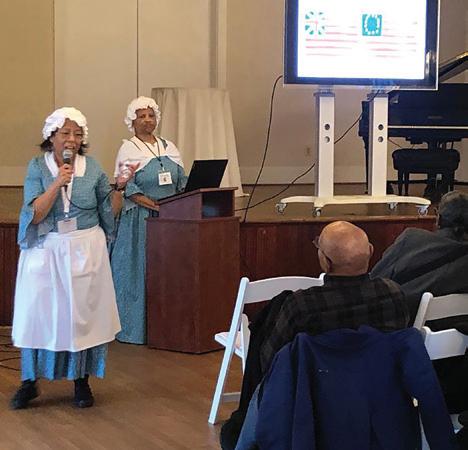
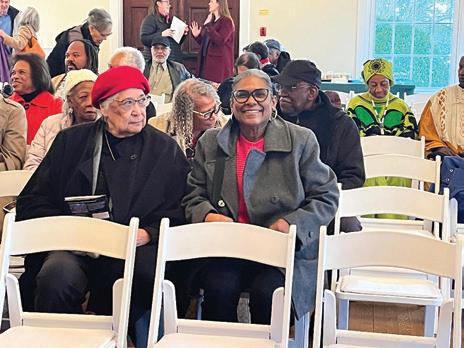
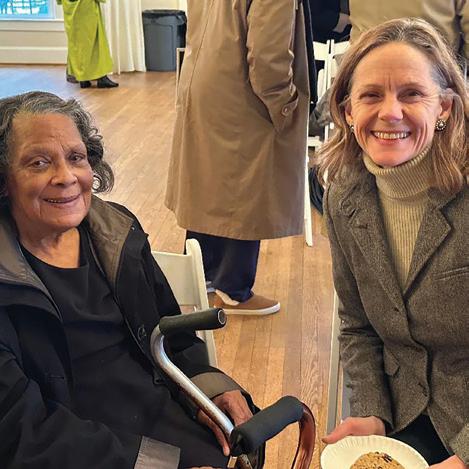
Buchanan Hall friends recently gathered to hear the fascinating and seldom told story of the Black Patriots and Loyalists of the Revolutionary War. The presentation was hosted by the Middleburg Museum in partnership with the Black History Committee of the Friends of the Thomas Balch Library and the Virginia Piedmont Heritage Area Association. The presentation included an exhibition of paintings by local artist Gertrude Evans on display at the Middleburg Museum. And, The Middleburg Museum has recently announced the addition of two new members to its Board of Directors: Jason Arwine of Upperville and Patty Callahan of Rectortown.
Alicia Cohen with Martha and Rick Boardman.
Tony Thomas, Middleburg Museum Board members Tucker Withers and Vicky Lewis, and Andy Lewis share thoughts on the presentation.
Ann Brooks Lee and Rebecca Schaefer.
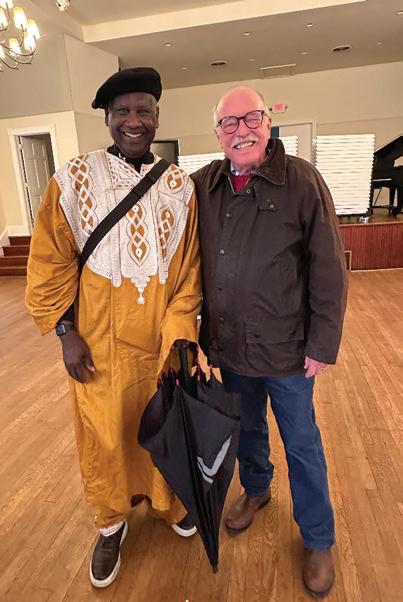
Willie Boykins and Jeff Millington during the meet and greet after the event
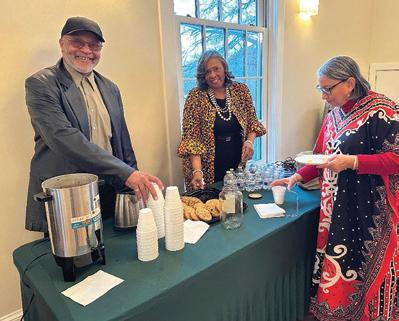
Steve Gibson, Event Coordinator Merley Lewis, and Earline Coleman prepare refreshments.
Presenter and Friends of Balch Library Black History Committee member Alicia Cohen and artist Gertrude Evans in period costume for the presentation.
Barbara Evans Scott and Adrienne Evans
Exhibit Coordinator Alicia Cohen (front), Diane Evans Coates, and Artist Gertrude Evans at the Middleburg Museum
APRIL 25, 2026
10AM - 2PM
10K, 5K & KIDS FUN RUN at 8:30AM
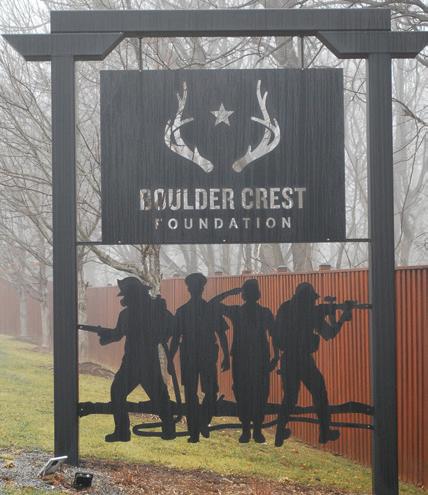
Boulder Crest Still Doing Heroic Healing Work
By M.J. McAteer
For Maggie Lushina, “fine” was a four-letter word. When people asked how she was doing, that word was always her answer. She wasn’t fine, though, and far from it.
“I was feeling unworthy, unloved and numb to everything,” said the former first responder. “I was planning my funeral.”
It took a stay at the unique Boulder Crest retreat in Bluemont, she added, to stop that downward slide. Boulder Crest has been around since 2013. The brainchild of retired Navy ordinance specialist and Master Chief Petty Officer Ken Falke and his wife, Julia, the facility initially focused solely on providing combat veterans with a stay in a serene environment, free of charge, and the opportunity to find some help with healing old wounds.
What many may not know about Boulder Crest, however, is just how it has gone about fulfilling that mission. Instead of drug therapy or traditional psychotherapy, it relies on PTG, or post traumatic growth training. PTG encourages people to embrace their struggles as the
Photos by M.J. McAteer
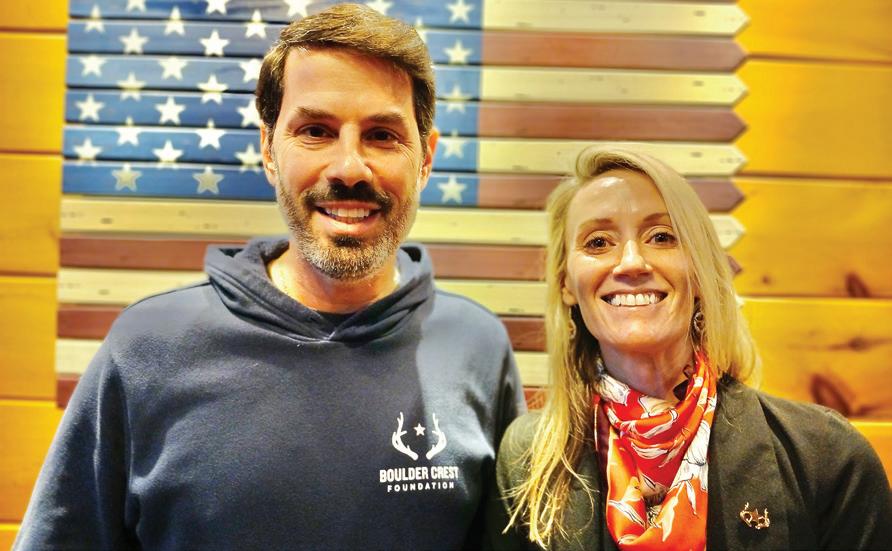
Boulder Crest CEO Josh Goldberg and executive director Carrie Nelson.
Geraldine Carroll
Charles Carroll IV, MD
path toward the lives that they want and deserve to have.
“In trauma, there is value,” said Josh Goldberg, CEO of Boulder Crest. While at the Bluemont retreat, he went on, people “can take a knee, reflect on the journey in life and make peace with it.”
Lushina went through Boulder Crest’s signature program called “Warrior PATHH” (standing for Progressive and Alternative Training for Helping Heroes). It begins with five intensive days at Boulder Crest followed by 90 days of virtual training and support.
Although Warrior PATHH initially was available only to veterans, it gradually has expanded to include first responders like Lushina, mental health professionals, educators and healthcare workers. It teaches all of them the PTG method for handling the anxiety, depression, drug dependency and various other problems that are associated with post traumatic stress disorder.
Boulder Crest also has added programs for families, teenagers and couples affected by a loved one’s trauma.
During the on-site part of Warrior Pathh, participants stay in one of four large and comfortable cabins on site. Their days generally start at 6:30 a.m. and run as late as 8:30 p.m. In group sessions, participants learn about wellness practices, such as meditation and reflective journaling, and they talk with their peers about the values of accountability, acceptance and community.
The sessions are led by people who have known
trauma themselves, which provides a connectivity that is central to the PTG approach, especially for ex-military members.
“Once they leave the service, many veterans feel isolated,” Goldberg explained. “Strangers for them are people who haven’t served. Fellow veterans (on the other hand) get each other.”
When not in training, Boulder Crest clients are encouraged to tap into the healing properties of nature. The retreat sits on 37 bucolic acres at the base
of the Blue Ridge, and it provides opportunities to enjoy lots of outdoor pastimes—archery, kayaking, fishing, hiking, even working with some retired horses that live on site.
One unusual activity involves walking a labyrinth. The labyrinth’s pathway is intentionally narrow, said Carrie Nelson, executive director of the Bluebonnet facility, so it must be walked slowly, the better to encourage introspection.
Many labyrinth walkers leave items behind when they are finished, such as dog tags or rocks or even pieces of shrapnel, she said. These offerings are symbolic of their determination to shed whatever it is that is stopping them from thriving.
About 183,000 people have gone through one of Boulder Crest’s programs thus far, most arriving through the positive word of mouth from alumni.
During the past 13 years, the nonprofit has grown, and it now operates retreats in Arizona and Texas, as well as in Bluemont, with a fourth in development in Wyoming.
Boulder Crest also partners with veteran support organizations, such as Operation Second Chance, to provide PTG services at other locations.
“I was able to share things that I wouldn’t have otherwise,” Lushina said about her time at Boulder Crest. “I learned that recovery has to start with us being the light for ourselves.
“Am I all sunshine and roses now? Absolutely not. But I keep up the practices and find gratitude in the moment. I feel lighter now because I was able to let go of what was weighing me down.”
PIEDMONT ROOFING Standing
Photos by M.J. McAteer
The front entrance to the Bluemont facility.
Belonging and Connecting A Key to Competence
“What is connection or what I sometimes call connectedness? It is a feeling of being part of something larger than yourself. That something may be a friendship...a team… a school or an activity that you love.”
From
the book “Connect”
(1999) by Dr. Edward M. Hallowell
By Tom Northrup and Mike Wipfler
Tom: Mike, I’m sorry I missed your recent panel discussion with five Hill School alumni who are now well-launched adults— ranging in age from their early 30s to mid-40s. I understand you were leading a conversation about what they believed to be the most important school-related conditions and experiences which they felt contributed to their development as adults.
You and I have worked together for a quarter of a century so you are well aware of my interest in and thoughts on this topic. I’m eager to hear the perspectives of these alumni.
Mike: It was a great evening, Tom. The panel discussion was done in conjunction with many of Hill’s parents in the audience having read Dr. Edward Hallowell’s “The Childhood Roots of Adult Happiness (2002).” If the author ever decides to publish a second edition of his book, I believe he’d be wise to get an audio copy of our panel discussion. The participants’ reflections and anecdotes highlighted what parents and schools can do to provide the optimal conditions for children to grow into deeply satisfied adults.
Tom: Over the past 35 years Dr. Hallowell has made significant contributions to the development of Hill’s educational philosophy and the school’s emphasis on providing a safe and respectful community for both children and adults.
I recall hearing him speak at a conference in the early 1990s where he offered a simple and profound insight. He said that the two tasks of childhood are the development of competence and connectedness and that connectedness comes first. In essence, the likelihood that children will become competent in anything—whether reading and writing or learning to make a friend–will be much greater if they feel a sense of belonging and connection.
Mike: In one of our earlier conversations, you quoted the 18th century English philosopher Samuel Johnson who said, “we don’t need to be taught so much as we need to be reminded,” and I think that is true in this case too.
When I think about the different social environments I’ve inhabited at various schools, jobs, and camps, it was the communities where I felt known and psychologically safe where I stepped out of my comfort zone, took risks, and grew as a student and person. As Hallowell says, “The only... learning disability is...fear. Fear, and its cousins shame and embarrassment, are what hold children back from doing their best and from learning new skills.”
When students feel a sense of connectedness to their teachers and peers, they are more willing to try new things, and if they feel supported, they are less likely to give up when they encounter setbacks and disappointments.
Back when we were teaching and coaching together, we referred to this as “keeping the student on the playing field.” If the level of challenge and expectations are appropriate, students who “stay in the game” and continue to practice will ultimately develop a level of competence or mastery.
Tom: Mike, thanks for reminding me of a few of my core beliefs—especially Hallowell’s belief that the only learning disability is fear. I’ve observed many children who were labeled as “learning disabled” become high achieving and successful adults in every way—not only vocationally, but as parents and citizens. I’m also curious as to what you heard for our five alumni.
Mike: Even though most of the panelists graduated over 25 years ago, they all felt a strong connection to The Hill School community and recognized the significant role Hill played in shaping the values, attitudes, and mindsets they
have today. Many of the moments were very touching.
One panelist acknowledged that he struggled to complete his work and to stay focused in class. He spoke about how meaningful it was that his teacher, who surely was frustrated with his behavior, required him to stay after school with her to make sure he completed and understood the assignments.
Another panelist spoke about her English teacher, and how his high expectations, coupled with his high support, helped her become a published author. She remembered how her papers would be returned with multiple red marks, and how she needed to edit the same paper over and over.
But she also recalled how proud she was to see her work on his classroom bulletin board. And how meaningful it was years later, after her first work was published, to receive a letter from him which said, “I am honored to call myself your teacher.”
Tom: At the time when these teachers expected more from these children, I’m confident that the boy was not pleased to be staying after school or the girl to reedit her composition.
And, I’m also pretty sure that their parents were grateful for the respect, care, and love that these teachers were showing for their children.
Mike Wipfler and Tom Northrup
Lucy Zimmerman Is All About Planning for the Future
By Cara Crawford
Lucy Zimmerman’s new office in the heart of Middleburg, tucked away behind the Common Grounds coffee shop, reflects the privacy and discretion she values with her clients.
As a Certified Financial Planner ™ for the Winchester based firm Buttonwood Wealth, Zimmerman’s main objective is simple: to help her clients live a life free from financial trouble.
A Hollins University alum, Zimmerman, 39, has worked in the financial industry for 15 years, beginning her career in an administrative role at a planning firm in Warrenton, VA before earning her own financial planning certifications. Her technical as well as emotional understanding of the financial world sets her apart through her personalized approach.
She focuses on creating clear and concise plans to help her clients reach short- and long-term goals. She offers an unbiased perspective when financial situations become complex or even emotional.
Upperville attorney Mildred Slater, who has known Zimmerman and her family for many years, recently described her as “a brilliant young woman. She is helping me set up 529 accounts for my youngest grandchildren to ensure they have good educations.”
In all aspects of her work, she takes the time to understand each client’s financial circumstance, recognizing that no two financial paths are the same. Her personalized approach allows her clients to “feel supported rather than overwhelmed.”
Whether it’s saving for college or planning for retirement, she tries to guide clients through financial turmoil and stress to prosperity. She emphasizes preparation and adaptability, ensuring her clients feel confident even during uncertain times.
“I love meeting with my clients knowing that they feel confident about their finances and path going forward,” she said. Her authentic demeanor and ability to simplify complex topics allow clients to take control of their financial futures.
A native of Warrenton, North Carolina, Zimmerman made Middleburg home after meeting and falling in love with her husband in college 16 years ago. Ted Zimmerman, a long-time Middleburg resident, is owner of a tree moving company, Instant Shade Tree Movers LLC. Their two children, Anna (7) and Robert (9), are students at The Hill School and already are pursuing typical local pursuits, including riding and playing sports.
Zimmerman clearly has great affection for Middleburg. From trail riding in the countryside to frequenting the local book and chocolate shops, she said she appreciates the familiarity embedded in this tight-knit community
She enjoys friendly conversations, even with strangers visiting the village, as well as the smiles and talk with friends and neighbors just walking down the street, something she said she never takes for granted. Living in Middleburg fuels her drive to give back to the community she now calls home.
She also believes in the Buttonwood mantra of “Live Your Legacy,” emphasizing the significance of planning not only for personal success but also to leave a positive lasting impact for future generations.
Lucy Zimmerman has a new office in Middleburg.
Plenty of STEAM at Foxcroft Building Celebration
More than 170 alumnae and community members were on hand to celebrate the grand opening and ribbon-cutting ceremony for Foxcroft School’s newly completed Mars STEAM Building on Jan. 23.
“Standing here today looking at this incredible building, I’m struck by the power of a shared vision,” offered Bernadette Victoria Russell (2003), one of four women in the Mars family to donate to the project. “The building is not just about the brick and mortar … It’s our way of ensuring that the next generation of Foxcroft girls has the tools to lead in fields that may not even exist yet.
“I’m most proud of the fact that this building was built by women for women, supported by a multigenerational legacy. Girls, I hope you feel the weight of the support behind you. We believe in your intellect, your creativity, and your future.”
In 2023, sisters Victoria Beth Mars (’74) and Pamela Mars Wright (’78), and their daughters Bernadette Victoria Russell (’03) and Charlotte Audrey Rossetter (’12), all Foxcroft alumnae, together gifted the school $22 million to launch the construction of the building.
“I’m always impressed by the transformational nature of [this] School,” said Wright. “It’s a unique place for young girls to come and find out who they really are or who maybe they want to become, and that’s done without the constraints of being told what they can or can’t be. Now add a building that encourages girls to delve into areas not commonly associated with their supposed areas of expertise, and you have all the ingredients needed to inspire magic from the students. Foxcroft is a magical place … I’m so excited to see what it can do for the future.”
The two-story, nearly 18,000-square-foot Mars STEAM Building houses biology, chemistry, and physics labs, two STEAM classrooms, student project spaces, an over 1,700-square-foot garden with an outdoor blackboard and composting bins all accessible to the biology lab . It also features a completely modernized dark room outfitted with dry and wet labs, a construction shop with machinery for engineering projects, a finishing shop with a painting spray booth and an electric drying cabinet to put the final touches on projects.
“Victoria, Pamela, Bernadette, and Charlotte, you have shown important leadership and care for your alma mater,” Head of School Dr. Lisa Kaenzig said at the dedication. “You have set a powerful example for our past, present, and future students with your strong and sustained support for Foxcroft. …we as a community cannot thank you enough for this tremendous gift.”
In addition to the four Mars alumnae, there were several others whose generosity allowed spaces and classrooms to come to life, including Kaye Durham (’81), Mary Park Durham (’17), the Edgerton
Sisters Pamela Mars Wright (’78) and Victoria Beth Mars (’74), and their daughters, Bernadette Victoria Russell (’03) and Charlotte Audrey Rossetter (’12), stand outside Foxcroft School’s Mars STEAM Building, named in honor of their multi-generational gift.
Foundation and Lauren Edgerton (’04), the estate of Barbara Lawrence Garside (’52), Kate Hastings (’78), Hope Haskell Jones (’52), Hope Haskell Jones (’82), Jackie Kleinhans (’05), Anne Michele Kuhns (’87), Diana Hardin Walker (’59), and the Class of 1964, which donated in honor of Dr. Stephanie Briggs Bennett (’64).
“The world is evolving rapidly across every area
of STEAM — science, technology, engineering, the arts, and mathematics,” said Board of Trustees Chair Elizabeth Lester (’88). “The future will belong to those who can learn, adapt, and think creatively across these disciplines and fields. This building is where the future begins to unfold and where Foxcroft’s enduring, ever-growing legacy continues to take shape.”
Foxcroft School students enjoy the bright, airy space of their new physics classroom and lab. More than 50 pieces of glulam were used to create the beautiful vaulted ceilings on the building’s second floor
Foxcroft Head of School Dr. Lisa Kaenzig, Pamela Mars Wright (’78), Charlotte Audrey Rossetter (’12), Victoria Beth Mars (’74), Bernadette Victoria Russell (’03), and Foxcroft Board of Trustees Chair Elizabeth Lester (’88) cut the ribbon to officially open the Mars STEAM Building.
Foxcroft School’s two-story, nearly 18,000-square-foot Mars STEAM Building.
CHARLOTTE NOLAND: A Foxcroft Legend
By Denis Cotter
Charlotte Haxall Noland (1883-1969), the beloved founder of Foxcroft School, was a legendary presence in her native Middleburg. She remains so today.
She was a great-great-great granddaughter of Revolutionary War veteran Lieutenant Colonel Leven Powell, who established Middleburg in 1787. The third of seven children born to Rosalie Haxall Noland and Cuthbert Powell Noland, she was the first girl in the family.
From the time she started her prestigious, all-girls, private boarding school in 1914 at age 31, she was known to everyone in the community simply as “Miss Charlotte.” Her name also quite easily could have been “Miss Octavia.”
Born during a fierce Feb. 1 snowstorm, the conditions hampered communications between Middleburg and Richmond, the home of her mother’s mother, Octavia Haxall. When the weather improved and the mail resumed, Mrs. Haxall declared that she did not want a child named after her. Octavia was quickly re-named Charlotte, honoring an aunt who had married Robert E. Lee, Jr. and who had died young.
Miss Charlotte was born at Burrland, a 274acre estate on The Plains Road, a mile south of Middleburg. Her parents had been given the property as a wedding present by her father’s father, Confederate Major Burr Noland. He built the main house for them, and they named the property Burrland after him.
Burrland was a childhood Eden for Miss Charlotte and her siblings. She loved the rural landscape and was a high-spirited, creative, fun-loving, resourceful tomboy, full of mischief. Formal education consisted of a handful of private tutors for the boys and girls.
In the mid-1890s, Mrs. Noland determined that her children needed a proper education. The family moved first to a house on G Street in Northwest Washington, D.C., then a few years later to a house on Linden Street in Baltimore.
In D.C., Miss Charlotte was enrolled at the Force School at 1740 Massachusetts Avenue NW, near Dupont Circle in the fashionable west end of the city. The public school opened in 1880, named after Peter Force, a renowned Washington editor and mayor. Among its distinguished graduates—President
Theodore Roosevelt’s son Quentin, and aviation pioneer Charles Lindbergh. Miss Charlotte did not graduate.
She often was late to school and frequently a truant. She detested being indoors and what she thought were idiotic rules. She learned little and was eventually expelled.
She had a happier experience at a small, nearby school run by a Miss Middleton and her sister. Seventy years later, Miss Charlotte recorded her memories of Miss Middleton:
“She was a wonderful person. She saw I had no regulation in me, no education, but she found out the things I liked and taught me those. Then, just her advice and her wonderful wisdom got me interested in reading stories and understanding history. She really was a person who gave me a pick-up in my life about learning something, though I didn’t learn much except that I wanted a school of my own.”
Summers were spent at beloved Burrland. Miss Charlotte had a literary and dramatic bent, with a special talent for comic verse. She entered an Ivory
Miss Charlotte on her favorite horse, Rokeby.
Oil painting of Charlotte Noland by Ellen Emmett Rand.
Soap ad contest and won $25 for a poem based on Lady Macbeth’s “damned spot.”
The 14-year-old used the money well. Keziah Thomas was the African-American daughter of a Burrland employee. Keziah had been entrusted to Miss Charlotte’s care as a child and was her dear friend. She was born with a cleft lip and Miss Charlotte used the $25 to pay for an operation to correct the congenital defect.
In Baltimore, Miss Charlotte became interested in becoming a physical education instructor. In the spring of 1903/1904, she lived with an aunt in Richmond, doing the standard social routine of attending cotillion dance classes and being a social debutante. There were a number of gentlemen admirers, but her heart was set on becoming a teacher and opening a school.
She opened a gymnasium above an automobile garage in central Baltimore, then landed her first teaching job, as an athletics instructor at St. Timothy’s in Catonsville, nine miles away. Founded by two sisters in 1882, St. Timothy’s was an all-girls, private Episcopalian boarding school.
Miss Charlotte noted that St. Timothy’s girls were split into two intramural divisions—the Brownies and the Spiders—for sports purposes. When she founded Foxcroft a few years later, she divided students into Foxes and Hounds, a defining Foxcroft characteristic, then and now. She herself was a Fox.
Miss Charlotte taught at Baltimore’s Bryn Mawr School, a preparatory school for Bryn Mawr College in Philadelphia and founded by five Baltimore women in 1882. She also taught athletics at Oldfields, 30 miles north of the city in Glencoe, the heart of Maryland horse country and founded by Anna Austen McCulloch in 1867.
Between 1905 and 1908, Miss Charlotte twice attended summer training programs at Harvard’s
Sargent School of Physical Education. She obtained certifications and also learned to referee women’s basketball. She earned scholarships from Sargent for two consecutive years to travel to Berlin, Germany where she spent several months in rigorous athletic programs.
In the early 1910s, Miss Charlotte started summer camps for girls at Burrland. One of the campers, known as “Farmerettes,” was Wallis Warfield, who Miss Charlotte taught at Oldfields. She would become Wallis Simpson, the Duchess of Windsor, the American wife of the abdicated British King Edward VIII.
By 1912, Miss Charlotte had become good friends with Daniel Cox Sands and his wife, Edith, who had moved to Virginia horse country from New York. The Sands owned a historic property at Pot House, four miles northwest of Middleburg. Miss Charlotte decided to acquire the property next door, Locust Lawn, and start her long-hoped for school there.
With financial help from family, friends, and a gentleman admirer at Peoples Bank in Leesburg, she succeeded. The school opened in 1914 and Keziah Thomas joined her on the staff.
The name “Foxcroft” came to her during a visit to Oxford, England and she stowed it away for her future school. Miss Charlotte chose as her school’s motto a Latin phrase from the Roman poet Juvenal: “mens sana in corpore sano”—a healthy mind in a healthy body.
The outbreak of World War I made the safe, protective Foxcroft environment an attractive alternative for well-to-do parents who would have sent their teenage daughters to European finishing schools. By the late 1920s and early 1930s, Foxcroft had developed into an established, nationally-known, highly selective, and well-regarded institution.
Miss Charlotte was the driving force, but her personal life also had some sorrow. A romance with
Joe Thomas, another New York émigré, fox chaser and owner of nearby Huntland, did not last. Later, the only man she was ever engaged to died in combat in France a few hours before the 1918 armistice.
Still, Foxcroft was her great joy. She built a solid academic program to complement the athletics. Many events she created became school traditions: the annual in-house horse shows; a Christmas pageant including live animals; the Fox/Hound winter basketball competition; the multi-day riding trip to Luray Caverns and back; the October coon hunt; the Sunday evening sermons; the Halloween ghost stories; the giving back to the community through her girls’ civic engagement.
Forty-one years after she founded the school, she retired in 1955. Eighteen years earlier, she had incorporated the school as a non-profit institution and had given it outright to the alumnae.
In 1958, Columbia University conferred on her an honorary doctorate of humane letters. She had often joked that the only letters after her name were MFH—Master of Foxhounds. She held that position as joint master of the Middleburg Hunt with Daniel Sands, from 1932 to 1946.
After retiring, Miss Charlotte moved to Winter Park, Florida and lived with her younger brother, Phillip. She had a fishing boat named The Sea Fox. In the space race years of the early 1960s, she remarked, not entirely in jest, she’d like to be the first woman on the moon. She passed away on July 9, 1969, a few days before Neil Armstrong stepped onto the lunar surface.
Miss Charlotte was buried in the small Foxcroft Cemetery on the school’s grounds. She joined former teachers and old friends, including Keziah Thomas.
Her tombstone includes a quote from the Book of Kings: “Lo, I have given thee a wise and understanding heart.” She had often prayed for that very same thing.
Joint Master Charlotte Noland with Daniel Sands.
The Auction Reception features works of fine art by a talented, professional group of local artists. The proceeds are divided evenly between the Middleburg Montessori School and the artists, thus supporting both the school’s nonprofit mission and the local art community.
ART OF THE PIEDMONT = ART AFICIONADOS
Bill Ferster of Middleburg creates functional marquetry, where thin layers of exotic wood veneers are carefully glued onto three-dimensional wooden shape.
Welcome to a COMMUNITY that develops CHARACTER and grows CONFIDENCE in all students
The Hill School offers an education as unique as your child. Come visit our community to learn how our program of Total Education – strong academics and meaningful participation in art, music, sports, and theater – helps build character and confidence in our students and gets them started on the path to being happy, successful adults.
Voted Best Private School in Loudoun County for Seven Consecutive Years
thehillschool.org
Kiernan and Chris Patusky with BethAnn Slater and Bobby Slater
Aoife Brazil, Lauren Matusiak, and Erika Reynoso
Jacquie and Jacob Porter and Brandy Greenwell
Ramziya Shakirova, Gomer Pyles, and Nadya Gordon
Audrey Fitzgerald, Gabriella Banagan, Charlie Josephson and Eloise Fitzgerald from Middleburg Montessori A room full of Art Aficionados
PHOTOS BY
Doug Gehlsen of Middleburg Photo
SPORTING LIFE AT SPORTING LIBRARY
Six Burghley titles.
Five Olympic Games. Fourteen five-star victories
Photos by Nancy Kleck
WILLIAM FOX – PITT, born in 1969, began riding at a young age and moved to eventing at age 15. Both his parents had competed at Badminton and Burghley, and he represented Britain throughout his teens, winning individual silver at the Junior Europeans in 1987, Young Rider team gold medals in 1988 and 1989 European Championships. His first Burghley win established him as a regular on the senior British Team and guaranteed a trip to the 1996 Atlanta Olympics. He has participated in five Olympic games: team silver in London 2012, team silver in Athens in 2004, team bronze in Beijing 2008 team silver and Individual bronze in 2014 at World Equestrian Games in Normandy, Individual bronze at the 2013 European Championships in Malmo, team gold and Individual silver in 2010 World Equestrian Games in Kentucky, team silver at the 2006 World Equestrian Games in Aachen, and team bronze at the 2002 World Equestrian Games in Jerez. He has won seven team gold medals at the European Championships and has been the British No. 1 rider 11 times.
In 2011, Fox-Pitt was the first rider to win a record six Burghley titles and was one of the first riders to ever win a CCI*, CCI**, and CCI*** at the same event on the same day—in Tattersalls, Ireland.
Elizabeth von Hassell president and CEO of the NSLM, William Fox-Pitt, Julie Kenny Banner and Jim Newman, who underwrote the program.
Jacqueline B. Mars and guest speaker William Fox-Pitt.
Franny Kansteiner, William Fox-Pitt and Emily Hannum with Julie Banner, Clarice and Robert H. Smith Education and Marketing Director. The always affable Ambassador Richard Viets and Shannon Davis.
Photo courtesy
William Fox Pitt, the first British riders to reach World No. 1 and one of the most decorated equestrians of all time recently spoke at the NSLM.
Appreciating Our Winter Wonderland
By Kiernan Slater Patusky
Winter Storm 2026 likely will reside in our collective memory as the one that covered the landscape with impenetrable ice and stuck around for weeks under sub-freezing temperatures.
Five days after the initial snow and sleet, our daughter, Ali, had to spend a couple of hours with a friend digging and chipping her car out of its parking space in Charlottesville with an ice pick of sorts. As she finally reached Crenshaw Road, then drove over the plowed path up the winery driveway to loop around to home, she marveled at the beauty.
“The fields are perfect,” she said. “They look like they’re covered in meringue!” What a sweet shift in perspective from the word we had all been using: “snowcrete.”
My dad, Bob Slater, and our vineyard foreman, Antonio, worked long hours on tractors to plow a path from our houses to Route 50, and we had all devoted many hours to shoveling, I felt so incredibly lucky to live where we do. Once the wind died down, we could get outside again—into the vineyard to continue pruning, walking along Crenshaw with our
Photos by Kiernan Slater Patusky
dog Louie, and up to the winery to welcome guests who braved the weather to come share a glass.
We also undertook a bigger project with Fritz Reuter to clear invasive species (like trees of heaven) from the lines surrounding the winery parking area. Fritz grew up locally, helping maintain his own family’s farm, Glenstone Gardens, before beginning a conservation landscaping business, Virginica.
He understood our goal without explanation: to enhance the beauty of the space while also encouraging an enduring ecosystem of native plants and animals. He assured us that the remaining hardwood trees would thrive without the competition and also explained the value of the second stage of the project: planting native grasses and plants under the tree canopy that will provide both shelter and food sources for the many animals who live in our fields and forests. Over the next few weeks of frozen ground, we could see how important that habitat is. As a I sat inside, working on my computer with a cup of hot tea next to big bright windows, I got to view the very best parade of our animal friends.
Like scenes from a beautifully illustrated children’s book, I witnessed a fox at the tasting room, hunting for his dinner at dusk. There were constant waves of turkeys outside our kitchen
window. They’re comical to watch, like middle schoolers trying to play basketball, lurching forward with more power than coordination, but making it work as they marched down the plowed driveway in their motley crew. Deer jumped fences, somehow able to land gracefully on top of the ice without breaking through.
On Crenshaw, birds fluttered around the plowed edges, hoping to turn up some lunch. A woodpecker demanded attention with his jackhammering long enough to show himself high in a tree with distinctive markings so bright and actions so animated it’s no wonder he inspired his own cartoon character.
The special nature of this place begs you to slow down when you turn off the highway on to roads like Crenshaw. Speed bumps (aka mud puddles) force you to notice the community you’ve entered. Wave and move over for our two- and four-legged neighbors who might be walking their dogs or riding their bikes or horses. And if it’s just a little bit warm, roll down your windows and listen for the peepers, which have just recently emerged. You can be comforted by their announcement—more than any groundhog or meteorologist—that spring really is on its way.
Kiernan Slater Patusky and her husband, Chris, own Slater Run Vineyards in Upperville.
Mr. Fox made his way across the vineyard field. A meringue covering at Slater Run Vineyards Plowing through the “snowcrete.”
Candlelight Concert 2026
PHOTOS BY MADELEINE WALLACH
Amit Peled on cello - Martin Labazevitch on piano
Amit Peled
Martha Cotter, executive director of the CMSP, gives opening remarks
Amit with the Abernathy sisters
Annabel and Rachel Abernathy - CMSP students
Anne Marstiller and Cathy Howland
Austin Weatherford, Lena Scott, and Olivia Troye
Guests watch CMSP students Annabel and Rebecca Abernathy
Young At Heart at Plains Community League
By Laura Longley
On a wintry day in The Plains, the sprawling John Page
Turner Community House at the junction of Main and Loudoun streets is remarkably quiet—but only because it’s Friday and February.
Visit after school on a Tuesday or Thursday and this home to The Plains Community League (TPCL) would be chock full of children and volunteer tutors. And when school’s out? It’s time for summer camp.
The TPCL has long been appreciated for its “neighbors helping neighbors” programs like “A Day in The Plains,” the Thanksgiving Basket project, Christmas and Easter events, scholarships for students in The Plains 20198 zip code, and the fee-free tutoring service created by board member Robin Melton’s parents.
But the building really started jumping three years ago when the board, under the leadership of then-President Nono Fisher, hired part-time program coordinator Erica Young as TPLC’s full-time executive director.
Now, when school’s out and tutoring wraps up, some 25 children, ages 7 to 13, fill the facility and spill out on the lawn ready for fun activities that often come with a healthy dose of learning—and the chance for neighbors and nearby businesses to join in.
From June to August between 9 a.m. to 5 p.m. five days a week, the camp is testament to just how committed, generous, and ingenious The Plains community is.
That goes double for Young. Growing up in Upperville, she returned to the area after studying at Oldfields followed by course work in early childhood development and education, which she continued while teaching at the Middleburg Community Center with Loudoun County Parks. Her deep knowledge of the community meant she already knew the people who could help make things happen, and she didn’t hesitate to ask for help.
“I knew if I could pull this off, it was going to be a miracle,” Young said. “But as I was walking around the community, people were giving me ideas for what we could do right in town, because at that time we had no transportation to go anywhere. So, we went to the post office every day. The kids helped me check mail. They met business owners and would shake their hands and ask them about their work.
“We did pottery with the Newquist family. We visited someone who had chickens and learned about chickens and eggs. The Oak Spring Garden Foundation came here, and we planted a little garden. We were busy, busy, busy, busy. The hardest work of my life, those eight weeks.”
In-kind support has been essential, from lunches of pasta, pizza, and deli sandwiches courtesy of the town’s restaurants to an invaluable motion-sensor paper towel dispenser provided by Bistro at The Porch, which has saved cash and countless trips to the Food Lion.
“Financial support for the camp and tutoring comes from the community,” said Young. “Everyone I’ve met with has been more than generous. The funds raised help cover the cost of two staff members—young people who could work somewhere else for the summer and deserve the money. As for the volunteers, we couldn’t survive without them.”
Young is now gearing up for this summer’s camp with children’s applications, volunteer enlistment and stepped-up fundraising. For Young, it’s about meeting the challenge and supporting the children.
“All you have to do is look at their faces,” she said. “I just hope I can keep doing what the community needs. It is such an honor.”
Photo by Erica Young
It’s all about the kids at the Plains Community League.
CUP of COFFEE
The Middleburg Training Center Sale: Just Say No
By Sean Clancy
This is an excerpt from a speech ZEST’s long-time columnist gave at a recent meeting of local Middleburg area citizens deeply opposed to a potential sale of the Middleburg Training Center to the U.S. Army.
My wife, Annie, George Grayson, Maria Tousimis and I met at the Middleburg Training Center this winter to see our filly Air Kiss. Purchased at Timonium in October, it was a natural to send her to the Training Center to learn her trade and to join the Virginia Certified Program. A win/win for everyone. You know the kind of day all too well. Cold. Gray. Wet. We stepped out of our cars, looked around and George said, “Wow. This is beautiful. I’ve never been back here.” A lifelong horseman, a lifelong local horseman. We paused, looked up and looked around. A couple of geese flew past, Barry John Foley and his set ambled past and our filly, Air Kiss, walked out. It was indeed beautiful.
From Paul Mellon to Chuck Kuhn. It has been beautiful. Sure, there were some years there that it slid into something not so beautiful. Luckily and thankfully, those years are in the rear-view mirror. Mostly, thanks to the Kuhn Family and the Virginia horse community.
I was at the meeting when we were dreaming up ways to somehow keep Virginia racing afloat, keep in business as other states raised the bar. Virginia could not compete with the flash of Florida, the cache of Kentucky or the slot-induced coffers of state-wide breeding programs.
And then the late great R. Larry Johnson began a jag, which only he could, about a plan, a statewide bonus program for horses residing in the state. From it came the Virginia Certified Program. Stay six months in the state and reap the rewards. We jumped in and here we are. That conversation would not have gotten far without the Middleburg Training
Center in the mix. A place where the state could compete with other states for the all-illusive horse. And so, we have.
The Middleburg Training Center website says it best, “Middleburg’s premier Thoroughbred training venue.” It is exactly that.
But now it’s in peril. The Army wants to buy it and keep their caisson horses stabled there, and only those caisson horses. Everyone else will have to leave and take their horses with them.
I asked owners and trainers who have horses at the Training Center. Where will you go?
Madison Meyers will pack up her two kids, Kieran, and her barns full of horses and go to Fair Hill Training Center in Maryland. She will be the last great success story of the Middleburg Training Center. Hoist the Flag, Spectacular Bid, Colonial Affair, Demonstrative and Madison Meyers. A hardworking horsewoman getting a shot and making it count. Looking at her next move, a forced move, she said it best, “There is nowhere else to go.” Certainly not in Virginia.
Chris Kolb…probably retire, I guess. A lifer. Enjoying a rebirth with good horses, good payers. One from Riverdee and a bunch from the oldest breeding farm in Maryland, Country Life Farm. Imagine, the oldest breeding farm in Maryland sending horses across state lines to Virginia. That’s the Mason Dixon Line of horse racing. That’s how good our program is these days.
Cary Frommer. The Serena Williams of 2-yearold consignors. She moved here from Aiken, South Carolina to continue her prowess as one of the best at developing young horses. That’s how good our program is. Where will she go? Back to Aiken, I guess. She’s not staying, that’s for sure.
Centennial Farms. They’ve been here since 1986. A Belmont Stakes winner. A Met Mile winner. A Woodward winner. A Jockey Club Gold Cup winner. And a favorite for this year’s Kentucky Derby. Yes, Nearly is nearly there. Where will they go?
Don Little Jr. sighed when I asked him. “We are old school. We have always been old school. We like going up and down hills, going for long walks to and from the track, we believe in that. And it’s worked.” When asked, when forced, he said, “I guess we’d do what everyone else does and go to Florida…” He said it while in Florida. That’s what he thinks of Virginia. Barry John Foley, Zoe Valvo, Larry Curtis, Neil Morris and all the rest, where will they go?
Where will the horsemen go? Where will the horses go? Most will leave the state. That is a certainty. And with them, all the economic impact and good will. Lose the Training Center and lose the horses and horsemen who have contributed to the rebirth of horse racing in Virginia.
Like bell bottom jeans and fax machines. They’re not coming back.
The Army Corps of Engineers found “No Significant Impact” on the proposed purchase of the Training Center. Well, they didn’t ask us. The people who make this community, the people who contribute to Virginia horse racing and they certainly didn’t ask the St. Louis community. In St. Louis, we host town hall meetings about dangerous pedestrian crossings, undrinkable water, broken wells and dialup internet.
So, yes there will be Significant Impact. On a group of local horsemen, on a rural village and on a sport which a state has been built upon.
When we sit around and talk about the Training Center, the sky’s the limit. Food Truck Saturdays. The Middleburg Trials, like the Aiken Trials. A steeplechase schooling venue. Show rings in the infield. An all-weather strip. Turf gallops. A place for foxhunters to leg up and get ready for the upcoming season. An equine therapy center. A rest stop for weary travelers. Walking trails for horses and people…A bastion for what this community is about.
No one ever talks about an Army base in the center of horse country.
Photo by Tracy Meyer
A memorable morning dawn at the Middleburg Training Center.
LIVING FIT & WELL
Reversing Muscle and Strength Loss in Aging
By Mark Nemish
I’ve previously discussed the detrimental effects that muscle and strength loss (sarcopenia) can have on many older folks in terms of loss of functional strength, worsened balance, increased risks for frailty and falls, possible accelerated cognitive decline, and accelerated mortality.
There are many things you can do regardless of age to help mitigate sarcopenia. As you age past 50 years, a sedentary lifestyle contributes greatly to these negative adaptations and underscores the notion that if you don’t use those Type II muscle fibers, you’ll lose their function.
Studies for decades have found resistance training (RT) programs that incorporate a spectrum of loading from heavy to light and fast movements can significantly improve strength and power regardless of age.
A 1998 study found that sis months of heavy RT along with lighter, faster movement RT produced significant gains in both maximal strength and squat jump power in 70-year-old men and women. In fact the rate of improvement in these physical parameters were similar to the gains made in the 40-year-old male and female groups.
Increases in the neural activation of the subjects’ leg muscles for all age groups paralleled their strength/ power gains. While muscular size did increase for
some in the groups, the gains were not as robust as for their strength gains and nervous system activation. This indicates that even for the elderly, when training properly, gains in functional strength without increasing muscle size can occur.
Strength trained masters athletes (average age 73) when compared to recreational adults in their 20s exhibit similar Type II muscle characteristics. Those in their 70s who are either endurance trained, or exercise recreationally, display significantly reduced size and proportion of Type II fibers than master athletes who are strength trained. Thus RT, not endurance training, later in life is crucial for reducing the sarcopenic effects of aging.
Improving strength through RT has huge benefits, especially for reducing the incidence of falls and hospitalizations for older people. For postmenopausal females, the inclusion of a structured RT program will have positive effects on bone mineral density (BMD) as bone remodels itself based on the loading placed upon it.
Combining lower body RT with specific core training will further improve balance and fall prevention. Many of my older, personally trained clients have experienced huge improvements in their quality of life that have paralleled their gains in strength and balance, i.e., walking stairs, getting out of a chair quicker, and managing heavy luggage when traveling.
As sports like pickleball have become more popular among older participants, heavy RT may be a means of improving one’s physical capacity to play. Studies have shown a 30 to 294 percent higher rate of force development (RFD) of master’s athletes in comparison to age-matched elderly controls.
RFD contributes to moving faster and more efficiently and underscores the fact that Type II fibers can be “reawakened” with RT. Furthermore, many senior citizens do not eat enough protein, especially at breakfast. Along with RT, sufficient dietary protein intake aids further in maintaining muscle mass, something I’ll focus on in my next article.
Mark Nemish is currently the owner/director of Precision Health Performance in Round Hill, dedicated to optimizing the health and fitness of people in need of lifestyle change. For 22 years, he was head strength and conditioning coach for the Washington Capitals (2007-23) and Nashville Predators (1998-04) in the National Hockey League.
Mark Nemish and the Washington Capitals’ Stanley Cup.
Riverdee Stable Dominates Steeplechase Awards
More than 100 guests from the area’s steeplechase community recently gathered at the Middleburg Community Center for the 40th Annual Virginia Steeplechase Association’s awards dinner to honor the 2025 winners. Among the highlights of the evening was the induction of long time public address announcer Michael Hughes into the Virginia Steeplechase Hall of Fame. Hughes retired in 2025 after decades of supporting the Virginia steeplechase community.
Middleburg’s Riverdee Stable, owned by Sean and Annie Clancy, left the premises with a number of plaques and trophies, including Open Leading Owner, Virginia Leading Owner, Open Leading Hurdle Horse (Cool Jet), Virginia Leading Hurdle Horse (Cool Jet), Virginia Leading Timber horse (POTUS and Penicillin Success) and Virginia Leading Hrse on the flat (JHirsch).
Cool Jet also was named Virginia Steeplechase Horse of the Year and Keys Discount, owned by Mrs. John Fisher, earned Steeplechase Horse of the Year.
VIRGINIA STEEPLECHASE ASSOCIATION 2025 AWARDS
Open Leading Owner Riverdee Stable
Open Leading Trainer Jack Fisher
Open Leading Rider Evan Dwan
Open Leading Hurdle Horse Cool Jet (Riverdee Stable)
Open Leading Timber Horse Keys Discount (Mrs. John Fisher)
Virginia Leading Owner Riverdee Stable
Virginia Leading Trainer Neil Morris
Virginia Leading Rider Gerard Galligan
Virginia Leading Hurdle Horse Cool Jet (Riverdee Stable)
Virginia Leading Filly/Mare Hurdle Horse Avakate (Ballybristol Farm)
Virginia Leading Timber Horse Penicillin Success and Potus (Riverdee Stable)
Virginia Leading Horse On The Flat Jhirsch (Riverdee Stable)
Virginia Owned Steeplechase Horse Of The Year Cool Jet (Riverdee Stable)
Steeplechase Horse Of The Year
Keys discount (Mrs. John Fisher)
Jack Fisher received awards for Keys Discount as top Virginia Timber Horse, Virginia Horse of the Year and Virginia Open Leading trainer.
Sean Clancy with one of many Riverdee awards at the Middleburg Community Center Virginia Steeplechase Association awards party.
Michael Hughes, announcer retired in 2025, inducted into Virginia Steeplechase Association Hall of Fame. Shown here with daughter Michele at the table.
“I’ve known Esters for a long time,” said Joe Fargis, president of the Upperville Horse Show. He’s a great horseman and a good sport.”
Esters Sims first hopped on a plow horse as a youngster growing up in Greenwood in Albemarle County Virginia. That experience embedded a lifelong passion for horses and riding. Now, seven decades later, he recalled that his grandfather, Estes Jones, once informed him that “some day, you’re going to be doing great things.”
Now 85, he has an impressive, proficient and memorable lifetime with horses. And he’ll be among the many equestrian devotees participating at this year’s Upperville Horse Show, June 1-7. After many years of competing here, he’s now working as a coach and trainer.
Although horses were his first love, Sims had a long career at a frozen food corporation in Crozet, where the very popular Morton chicken pot pies were produced for many years. In every spare minute, he was consumed with horses. He began to go on long rides with a neighbor in an unfamiliar English saddle and early on got jumped out of his seat while going over a ditch.
He crawled back on the horse he named Medicine, which became a gift. In the mid-1950s, he took a mare named Lady to the upper crusty Farmington Hunt Club Horse Show in Free Union. However, as a Black rider, he was turned away at the ingate. “We don’t let your kind show here,” Sims recalled being told.
When Sims later took the same horse to the very same show, he was welcomed through the ingate with open arms but the horse was hesitant. The fences were 3 feet, 6 inches high and as they proceeded around, it didn’t go well. The horse bolted and Sims took a digger and the bridle came off with him.
The judge that day was Penny Flynn, a respected member of the horse community in the area. He remounted and finished in the top ribbons in the following two classes of forty-plus entries.
He acquired a mare called Mercedes that began as a dressage horse before he worked with her during the 1990s as a jumper. In 1996, they took a tumble and both had injuries. By the next year, they returned and won an exciting jump-off at the Keswick Horse Show for the Saturday night jumper event, traditionally a high spot on the schedule.
He now says, “God was with me.” His daughter, Indiia Wilmott Turner, told The Chronicle of the Horse, “he was always the only Black horse owner and rider, and I watched people overlook him, show after show. He was usually mistaken for a groom.”
Clearly, not any more.
Esters Sims
Crown the Occasion
From sweeping portrait brims to chic fascinators and hatinators, our collection—crafted by distinguished English and American milliners—offers the finishing touch your outfit deserves. Bring your dress. We’ll find the hat that makes the entrance.
Horse Country
(540) 347-3141
60 Alexandria Pike, Warrenton, Virginia 20186
Store Hours: Monday-Saturday 10AM-5PM
Mahoney to Lead Operations at the Upperville Horse Show
By Jennifer Webster
Hayley Alcock Mahoney has become the Upperville Colt & Horse Show’s new director of operations, following Emily Day, who served as executive director since 2019 and left in December to join the Virginia Horse Industry Board.
“We couldn’t have found a better person,” show president Joe Fargis said of Mahoney. “It was serendipitous- and that’s a word I don’t use very often. We were at the right place and the right time and so was she. And she’s totally capable.”
Mahoney first worked for Upperville under longtime Show Secretary Ginny McCarty while still completing online high school classes in 2013-2014. After graduating from Bridgewater College with a business degree, she rejoined the team in 2022, becoming full-time in 2023 and serving most recently as administrative director under Day. That role offered first-hand experience in managing all aspects of the show.
It takes an entire year to plan for nine days of active competition, from the local Jump4Fun weekend, which offers the local horse community to experience Upperville in a more casual format, to a full week of U.S. Equestrian Federation (USEF) premier hunter/jumper level competition that brings nearly 2,000 horses and 10,000 participants and spectators to Grafton and Salem Farms the first week of June.
Mahoney works directly with Tommy Lee Jones, the show’s longtime facilities and operations manager, to ensure the grounds are repaired after the past year’s show and rebuilt and improved. Together with Show Manager Stephanie Lightner, the event schedule for the coming year is examined and adjusted in accordance with U.S. Equestrian and FEI rules and guidelines.
She collaborates on a weekly basis with the public relations, communications, and sponsorship teams, and serves as liaison between the horse show staff and its
Mahoney’s connection with Upperville runs deep. She’s a past recipient of the Theodora Ayer Randolph Sporting Scholarship for young fox hunters who aspire to pursue competitive horse sports and improve as horsemen. She also has competed multiple times in the Upperville American Standard Grand Prix. She rode in her first lead line class in 2000 on her family’s beloved Farnley Poker Face and competed in many family classes with her cousins, siblings, and grandmother. That would be local equestrian icon Nancy Dillon, a Wall of Honor member (2008) and the 2024 recipient of both the Randolph Perpetual Trophy
A native of Philomont, horses and horse sports have always been a large part of Mahoney’s life. She’s the daughter of professional horsewoman, Daphne Dillon Alcock, and Graham Alcock, an English-born steeplechase jockey turned equine dentist. Her first ponies, “Poker” (Farnley Poker Face) and “Purple” (Farnley Purple) were purchased by her parents from Farnley Farm before she and younger sisters Nancy and Beverly were
Her mother and grandmother were among her first riding instructors and the family could regularly be seen fox chasing together in the local countryside. She even met her husband, Michael, through Fargis.
Upperville Colt & Horse Show
June
FEATURING:
CSI FEI 4* SHOW JUMPING CLASSES
TOTALING OVER $325,000 IN PRIZE MONEY
$25,000 USHJA INTERNATIONAL HUNTER DERBY
$25,000 THOROUGHBRED HUNTER DERBY
SATURDAY UNDER THE OAKS FEATURING LADIES’ SIDESADDLE & LEADLINE CLASSES HORSES & HORSEPOWER CLASSIC CAR SHOW
OVER 90 UNIQUE BOUTIQUE VENDORS & EATERIES
2O26 GENERAL ADMISSION & PARKING: FREE
JULIE GOMENA: Going Fast and Kicking On
By M.J. McAteer
Julie Gomena loves almost every aspect of her job as a steeplechase trainer-the 6 a.m. feedings, the bracing morning gallops, and, most of all, the thrill of turning an also-ran that she bought cheap off the track into a winner over fences.
She doesn’t even mind the grunt work that is involved with her chosen profession, like picking stalls, which, when you have 30 equine athletes to tend to, involves shoveling a lot of the you know what.
Her job does have a downside, though. “I’m a worry wart,” Gomena said, and that means that she rarely gets much sleep on the night before one of her horses runs. On the day of a race, she still is often so nervous that she can hardly stand to watch.
Still, lots of other people have been watching as Gomena’s horses, based at Over Creek Farm in Middleburg, have galloped and jumped their way to victories. Equibase, a data source for thoroughbred racing, reports that Julie Gomena Racing has made 552 steeplechase starts and won 56 of them, placing in the money many more times for total winnings of close to $2 million.
Gomena follows a formula that has turned out to be a winning one for her. She likes a project and prefers to start her horses, always thoroughbreds, from the ground up.
“They are all characters,” she said. “I like to figure them out.”
Balance the Budget was one of her best characters. When she bought him in 2013 for $16,000 in a claiming race, she got “a big, skinny, not very happy” horse, she recalled. But after training with Gomena, the gelding won nearly $100,000 during his steeplechase career.
One of her more recent projects, a thoroughbred with the apt name of Risk Taking, would have looked like another unpromising prospect to most people. He came to Gomena from the track as a “raging, screaming stallion,” she said, but, last fall, he won more than $70,000 in a pair of hurdle races.
Barring the unforeseen, the now-gelded and somewhat calmer Risk Taking will run as a novice at the Virginia Gold Cup races on May 2.
Ironically, considering how good she is at it, becoming a trainer was never on Gomena’s wish list. Adamantly not on the list. Her love was for riding. Period.
“I like going fast and kicking on,” she said. She grew up horse-crazy in Oregon, not exactly an epicenter of equine sports, so, as a young woman she moved east to find highlevel training in her chosen discipline, the three-day event, a formidable challenge made
up of cross country jumping, show jumping and dressage.
It is not for the faint-hearted. Gomena trained with the best: first with Olympic gold medal eventer Bruce Davidson in Pennsylvania, and, later, after moving to Middleburg in 1985, with the late Olympic coach Jim Wofford at his farm in Upperville.
Their guidance and her hard work eventually paid off big time when she won the most prestigious three-day event in the country, Rolex Kentucky, in 1994. And Gomena did it on Treaty, a thoroughbred off the track that had managed to win only $30 in his career as a flat racer.
One of the main rivals that she and Treaty beat in that Rolex competition? Her mentor, Bruce Davidson.
When eventing changed its format to disfavor her beloved thoroughbreds, Gomena retooled. She began to gallop steeplechase horses for Dot Smithwick at Sunny Bank Farm off Sam Fred Road and soon was competing in
Being a jump jockey was another great fit for her gofast-and-kick-on approach to equine sports, but a horrific accident during a 2004 race put an end to all that. Gomena hit her head so hard in a fall that she was in a coma for days and the hospital for many months. She experienced longlasting confusion and anxiety, too, and had to learn to walk and talk all over again.
Just the same, her husband, Robert Bonnie, now a joint master of the Piedmont Hunt, had to read Gomena the riot act when she expressed her intentions to resume steeplechase racing.
Reluctantly, she listened to reason and, more than 15 years ago, turned her focus to training mostly steeplechase horses, and some fox hunters, too. These days, she has partnered with Sam Cockburn, another lifelong equestrian and jump jockey with deep roots in the area.
“I’m good with the horses,” she said. “Sam’s very good with the people.”
A few years back, Gomena had to have a hip replacement and was unable to mount up for a record nine months.
“Being on the ground was frustrating,” she said. But now, she is back on top of a horse just about every day. It’s essential to her success, she said, because, from the saddle, she can tell when something is off with a horse’s movement.
“I’m a trainer by feel,” she explained, adding that even after so many years of competing and training, the excitement and satisfaction of making something out of nothing much remains “unbelievably fulfilling. I’m really happy doing what I’m doing.”
COLONIAL DOWNS THOROUGHBRED RACING
• Summer Meet: June 25 - September 7 every Thursday thru Sunday afternoon
• Located in New Kent, VA at I-64, Exit 214 halfway between Richmond & Williamsburg
• Free Parking/Free Admission with wagering on all races
• Enjoy steeplechase races on June 29, July 23, Aug. 13 & Sept. 3 (details at colonialdowns.com)
SHENANDOAH DOWNS HARNESS RACING
• Spring Meet: April 11 - May 24
• Fall Meet: September 19 - November 1
• Located in Woodstock, VA at I-81, Exit 283 halfway between Winchester and Harrisonburg
• Free Parking/Free Admission with wagering on all races (details at shenandoahdowns.com)
STEEPLECHASE RACING/TAILGATING
• Point-to-Point Meets: Weekends in March & April
• Middleburg Spring Races: April 18 at Glenwood Park
• Foxfield Spring Races: April 25 in Charlottesville
• Virginia Gold Cup: May 2 at Great Meadow in The Plains (details at nationalsteeplechase.com)
Doug Barnes Has a Passion for Polo
We recently sat down with Doug Barnes of Destination Polo to learn about what’s going on at Phipps Field and Great Meadow this summer.
How did you end up in Virginia?
I came at the kind invitation of Dr. Stephen Seager. I went to Texas A&M with his son, Adair, and spent the summer of 1994 here, also the first year of Great Meadow Polo. Like most, I fell in love with the area and grateful to call it home 32 years later. The first 25 were split between Wellington, Florida and Virginia. Recently fox hunting and extending the polo season into December has kept me here longer.
How has polo changed locally over the past 30 years?
It’s absolutely taken off. It’s one of the best places for horses year round and the polo community has grown so much. There used to only be the Great Meadow arena and a couple of fields. Now there are almost twenty fields and ten arenas. It’s awesome to see the growth.
Tell us about your purchase of Phipps Field.
It’s been a lot of work but also one of the most rewarding ventures I’ve ever done. It’s nice to solidify a place to play and teach polo. I can structure it so it’s healthy both for the sport and my friends and colleagues who play. After the sale, Donald Brennan, the previous owner, told me to be a good steward of
the land. At the time I didn’t understand, but three years later I’m starting to. Polo has always been there for me and it’s my turn to make sure it continues for others. Phipps Field had been placed into conservation easement. The way it’s been for the last 102 years is the way it will be forever.
What’s your role at Great Meadow Polo?
I’ll be working with Great Meadow to run the polo program as well as Saturday Night Polo. Being there since Year One has given me a fantastic perspective. When I first thought about organizing
POLO GREAT MEADOW
such a long running event, honestly, it was a little scary. I soon realized that if you want to help steer something, the best course is to pick up a shovel and get to work. I’m super excited about growing it in a healthy way that includes more of our community.
What does Great Meadow mean to you?
Like so many, people I have countless memories there. I want to see it succeed at levels it’s never been. I used to laugh when people spoke about conservation easement, but the reason our area is so rich in history and heritage and so unique is that years ago, someone made the effort to preserve it all so everyone can enjoy it. We’re 45 minutes from the Nation’s Capital and when you get off Exit 31, there are four corners of farmland. No lights, no gas stations, no houses. Saturday nights are about watching polo, but also enjoying the preserved open space, the sun set and the moon rise. Being part of such a diverse and rich community to me is equally important. The dream that founder Nick Arundel had was visionary and its message is at the heart of it all. Preserve, protect, pass it on.
Any last few words?
Yes, for those in a position to put your land into conservation easement, don’t leave the decision to your children to protect what we all hold dear. They won’t understand it now, but in 32 years, they’ll say thank you.
Upperville historians consider Silver Crest the greatest horse of his time. Foaled in 1908, his record has been published many times, including an article by Alexander Mackay-Smith (1903-1998), the editor of The Chronicle of the Horse for 24 years [1952-1976]. For an “Account of the Origin and Early Days of This Famous Old Show,” he wrote about this iconic horse.
“This is the record of Silver Crest, who was shown and hunted in Virginia until he reached the age of 11 when he began his remarkable career on the national show circuit. From 1919 through 1925, his record according to the official Horse Show Blue Book, was as follows: At 46 shows, he won 14 championships, 14 reserve championships, 171 firsts, 32 seconds, $6,769.45 in prize money and $1,350 worth of plate. In 1922, he jumped exactly 100 consecutive fences without a fault. At Newport in 1922, he won nine hunter and jumper classes, all that he entered. And, the same year, won seven consecutive classes at Monmouth County, New Jersey. By Black Dick out of Kathleen, Silver Crest, a half bred, was foaled on the Upperville Horse Show grounds and owned by Frederick McElhone and his wife Rebecca Dulany, who lived at Grafton.”
Silver Crest was ridden to a record number of victories by Becky Lanier. Her father was Charles Day Lanier (1868-1945) and he wrote “A Bridle Path and Hunt Club,” at that time they lived in Greenwich, CT. He also wrote an article in the November, 1894 issue of Harper’s magazine called “On the trail of the wild turkey” and also in the October, 1893 issue called “Our national game-bird “.
Becky married David Bunting Sharp in 1930, and served as master of the Treweryn Beagles, foot pack. and took over as master of the Nantucket Beagles, which, in 1964, combined to form the Nantucket-Treweryn Beagles. The pack remains nationally recognized and is based in Berryville, VA. Becky died at age 81 in 1987, a result of gunshot suicide in Middleburg.
Silver Crest is buried in Ring Two at the Upperville show grounds. He was bred by Richard Hunter Dulany, son of Richard Henry Dulany, founder of the Upperville Horse Show, and the horse was among the original group of Wall of Honor inductees in 2005.
Silver Crest was born, raised, shown, retired and buried at the horse show grounds.
CHESTNUT FORKS: The Rest of the Story!
FIREPLACE STORE
By Jodi Nash
Ayear ago, Country ZEST featured an article on Chestnut Forks Athletic Club (CF) in Warrenton and its remarkable “50th” anniversary—a look at how it started, adapted, and lasted in the competitive world of fitness franchises and emerging new sports trends.
On March 15, 2025, just weeks later, CF faced another unexpected hurdle. On a busy Saturday around 11 a.m., Derek Maloney’s 16-year-old niece, Mailee Frye, a part-time employee at the club, called him.
“The club is on fire. Like a REAL fire!!”
Derek, who, with his wife, Beth, took over the club from his father, Chip Maloney, in 2010, dashed over in eight minutes. He confronted a true nightmare— black, sooty, billowing smoke was pouring out the front doors, obscuring everything.
“It seemed like the whole place was going up,” he recalled.
Racquet sport director Collin Vera-Casavan had grabbed the fire extinguisher, trying to locate the source of the flames. He couldn’t see or breathe. The Fire Department arrived simultaneously with Derek, and within ten minutes, managed to put out the fire, but the damage was done.
Although it was contained to only a 10 foot by 10 foot area in the downstairs fitness space, the soot and smoke damage throughout the club was extensive. It had started in four-foot long overhead fluorescent tube light in the ceiling that melted and dropped on to the black rubber floor matting below, which ignited in flames.
Chestnut Fork owners Derek and Beth Maloney in the fitness center.
T. Huntley Thorpe III
Karen E. Hedrick
Robin C. Gulick
Beth recalled smelling a sulphur-like odor shortly before, but they moved on it immediately. “We checked all our washers, dryers, electrical outlets and appliances, gas lines, but found nothing – and the circuit breakers never tripped,” she said.
And so began a long, arduous journey back. First came a fire marshall inspection. Then the commercial property insurer and the full-time job of working with claims adjuster Mitchell Malcheff to survey and assess the total damage.
“We were lucky,” Derek said. “We had no water damage, but soot and smoke destroyed our exercise equipment, furniture, our café and kitchen equipment…it coated walls, floors, ceilings—everything in the club. We had to catalogue all our contents, clean, restore and then we faced reconstructing.
Looking back, Derek and Beth said the Paul Davis Restoration company was both professional and “empathetic” through the process. Similarly, they were impressed with Restronics, restoration specialists dealing with electronics and specialty items to remove smoke and soot damage and deodorize salvageable equipment.
“We had to identify every single piece of equipment lost or damaged, right down to hairdryers and pencils, and then wait to see what could be restored,” Derek said.
That meant inventorying stationary bikes, treadmills, squat racks and benches, basically every individual piece of exercise equipment, plus free weights, stability balls and foam rollers, eight TVs, defibrillators, computers, refrigerators and more.
The good news: CF now has brand new state of the art premium equipment for both cardio and strength training. The club also came out of pocket to upgrade electrical systems and bring everything (previously grandfathered in) up to code. “We closed and gutted the gym space,” Derek said. “We removed all the insulation and every single ceiling tile, and repaired a structural wall we found out was damaged.”
Beth had her hands full managing account credits for suspended or paused memberships. They held on to their loyal staff through reconstruction, paying two essential employees who schedule/manage classes and clinics. There was some loss of income, still to be determined by insurance accountants, but the couple remains undaunted.
“It was the face lift we didn’t know we needed,” Beth said with a smile.
Though the indoor tennis courts opened a month later in April (and were eventually able to continue group exercise classes) the newly outfitted fitness gym only recently re-opened, a year after the fire.
Delayed by permitting issues on the re-build, it’s now a source of pride for the entire staff. Best of all, it comes with an impressive new addition, Marcus Tines, the new personal training director.
A full-time Fairfax County firefighter, Marcus is a lifelong Fauquier County resident and former standout football and track field athlete with a 25-year background in athletic training/fitness and coaching.
“We’re really excited about Marcus, he’s the missing piece for CF,” Derek said. “He’s a personal trainer, but also offers small group training for adults and kids, designed to cater to ‘sports specific’ team needs.”
Incorporating weight training, speed and agility exercises, cardio, flexibility and mobility, Marcus also works with active older adults recovering from injuries or surgeries. Beth has known “Marco” for years, but reconnected with him when they both sat on the board of the Fauquier Youth Football League.
“He really wants to work with future young footballers here at CF and he’s dedicated to his vision for youth in sports, Beth said, adding that Chestnut Forks is now “a one-stop sports facility – true sports enthusiasts. We offer it all. Tennis and pickleball camps and clinics, group exercise classes, personal and small group training, and we have a nursery and café. And soon the swimming pool opens and our Blue Marlin Swim Team starts up”
It’s evident why CF has lasted 50 years and is looking to a bright future.
“Hard work and stubbornness” Derek said. Not to mention fun, family, friends and true resilience. They nimbly pivot, pass the ball, and move on down the field, time and time again, fires included.
WOMEN PLAYED A VITAL ROLE IN REVOLUTIONARY WAR
By Travis Shaw
“Remember the Ladies, and be more generous and favorable to them than your ancestors.”
This now famous line was penned by Abigail Adams in a letter to her husband, at the time working tirelessly in Philadelphia serving in the Continental Congress. While her husband was away, Abigail remained home in Massachusetts, managing the family home and finances, as well as acting as a vital confidant and consultant for her husband’s political opinions.
She intended her letter as a plea for greater rights for women living in whatever new government the Congress was creating. Today, 250 years later, the letter serves as a poignant reminder of the role that women played in the political, economic, and military story of the American Revolution.
Women living in colonial Virginia lacked traditional political representation but were often able to participate in politics through other means. As the crisis of the 1760s and 1770s deepened, one of the most common tactics used by Americans to voice their opposition to British taxation was nonimportation. Boycotts banning the importation of British goods or the export of American materials were calculated to harm Britain’s merchant class and push for changes in policy.
In 1774, British diarist Nicholas Cresswell recorded the effects of non-importation in northern Virginia, writing, “Committees are appointed to inspect into the Characters and Conduct of every tradesman, to prevent them selling Tea of buying British Manufactures.”
Many Virginia women were the primary consumers of imported goods, as they managed the operation of their households or independent businesses, so they often took on conspicuous roles in these movements. One example occurred in Williamsburg in 1769, when scores of women wore gowns made of
“homespun” fabrics to a ball, rather than imported cloth. By eschewing imported fineries, women could express solidarity against Britain, both visually and financially.
When the war began in the spring of 1775, many married women found increased responsibility at home as men from across the region entered military service. This could mean not only managing the household but taking on farming and manufacturing work to support the war effort. Evidence for this can be seen in public claims records, where numerous local women are documented providing goods and services to the army.
In Loudoun County, Jane Hamilton provided food, lodgings, firewood, and a drum to Continental soldiers traveling through the area. Others, like Fauquier’s Elizabeth Scott and Hannah Jennings, or Loudoun’s Phebe Muir and Elizabeth Triplett, were among dozens of women providing grain and livestock to the war effort.
Some women did not remain on the home front, and found employment in the army. Civilians were an essential part of any 18th century army, performing many necessary logistical duties. Both the British and Americans employed large numbers of women, mainly as laundresses and nurses, but also as teamsters, artisans, and in foraging for supplies.
Laundry in particular was vital to the army’s health. Although there was no understanding of germ theory at the time there was a direct understanding that cleanliness led to less illness, and soldiers were expected to have their clothing washed multiple times a week to eliminate vermin.
As the 3rd Virginia Regiment recruited in
Loudoun, Fauquier, and Prince William Counties, they advertised in the Virginia Gazette for “women who can wash, mend, etc.” to join the regiment. For these and other tasks, women were paid and fed by the army and were also subject to the same discipline as soldiers. In some cases, there could be as many as one woman for every ten soldiers in the army, which at once led George Washington to complain that, “The multitude of women…are a clog upon every movement.”
Despite this complaint, Washington and other leaders knew the army could not function effectively without women’s work. For many women, army life offered an opportunity to stay with a loved one, or as an economic necessity. When her husband William was called into service in 1780, Loudoun resident Margaret Higgons “immediately followed him to the camp of the American army and followed the camp” for the next sixteen months.
For enslaved women, army service could also be an avenue for emancipation. When the British began offering freedom to enslaved people in exchange for service, thousands of men, women, and children flocked to their lines.
Betsy Willoughby was among them. Enslaved near the “Blue Mountains” of Virginia, she escaped in 1777 and found work with the Royal Artillery. At the end of the war, she relocated with other emancipated people to Nova Scotia.
As we commemorate the semiquincentennial of the American Revolution, it’s important to remember the every day contributions of those who lived and served through that era – both men and women, free and enslaved, soldiers and civilians.
Details: Travis Shaw is the Virginia Piedmont Heritage Area director of eduction. Over the next several months the VPHA will be sharing these and other stories to highlight this region’s revolutionary past. Visit www.piedmontheritage.org/events for more information.
A sketch of Continental Army soldiers and camp followers in 1777 from the Museum of the American Revolution.
An advertisement from the June 28, 1776 Virginia Gazette.
290
3
4
Jeremy Dalpiaz is an Associate Broker in both VA and DC with over a decade of experience. Prior to his real estate career, he spent 15 years in government and government relations as a Capitol Hill staffer and then as a financial services lobbyist and regulatory advocate. He is an active community leader who was appointed to the Virginia Real Estate Board in 2024. He graduated from Michigan State University and holds a Master of Public Policy degree from George Mason University. Jeremy prides himself on client communication and advocacy. He lives with his family in Western Loudoun County.
If you are thinking about making a move, contact Jeremy today. Tel. 703.785.5721 | jeremy.dalpiaz@corcoranmce.com | teamlegatogroup.com
A Virginia Syrup With a Sweet Bark
Out a quiet backcountry road, just outside of Winchester, sits an unassuming home on a wooded lot. To the left of the house is a small building that has a commercial kitchen that was once a wood-shop. This small commercial kitchen is where one of the few hickory syrup producers in the area processes their product.
This is where the magic happens. And the magicians are Dan and Robin Timmons.
Falling Bark Farm is a small, artisan producer of hickory syrup. It comes from the bark of the Shagbark Hickory that is hand selected only after the tree has shed it.
By Chip Newcome
The bark grows “in long sheets, and as the tree ages, and the older it gets, the longer the strips are,” said Robin Timmons. They do not cut trees specifically for the bark. It is a sustainable process in which they use bark that has already fallen or collect the bark from a tree that has already fallen.
“This process came from the Native Americans who used hickory because it was high in magnesium,” Robin added. “They used it for medicinal purposes. They would shave off a thin layer (of hickory bark) and put it on cuts to help heal the cuts. So it was an herbal medicine.”
Dan Timmons has become versed in the art and history of collecting hickory bark as he and Robin have learned to make the smoky syrup.
They also have local individuals who help them gather the bark for the syrup.
“The Virginia Department of Agriculture is one of the first places we contacted,” Dan said, adding that the VDA helped point them in the right direction in terms of gathering and harvesting the bark.
The bark is then aged, dried, cut, and cleaned before it’s added to water and cooked down in order to extract the flavors. It’s strained, then goes back into the pot in order to be cooked down some more.
“There is a standard process,” Robin said. “You take bark, add water, and cook it until you have an extract. You then remove the bark and filter it at some point. You add sugar, and then you go ahead and bottle it.”
They also have learned some trade secrets that make their hickory syrup stand above the rest.
Often when someone thinks of syrup, they automatically focus on maple syrup.
“We have the theory that, when we are at shows, we let everyone taste test our syrups,” Robin said. “And usually everyone is very surprised. We have a lot of people who are maple syrup lovers who try our syrup. And they really enjoy the flavor of the hickory syrup.”
Falling Bark Farm has many flavors of hickory syrup, including Barrel Aged, Sassafras, and Brandy Vanilla. You can find their products at Farm Stores across the Northern Virginia region
Details: For more information, visit fallingbarkfarm.com.
Photo by Chip Newcome
Dan Timmons surrounded by hickory syrup.
MODERN FINANCE
Excuse Me, Is That Dino Juice?
By Philip Dudley
Arecent trip to the Permian Basin got me thinking about the lower 48 oil and gas exploration and production and the everpresent bottlenecks associated with the main byproduct— water. The basin, located in western Texas and southeastern New Mexico, is the highestproducing oil field in the U.S.
Every barrel of oil extracted brings several barrels of produced water which is a saline byproduct with little inherent market value. Across much of the basin, the oil-to-water ratio, or water cut, typically is 3 to 4 in the best producing zones. So, what to do with the water?
It requires collection, transportation, treatment, recycling, or re-injection into deep subsurface formations via saltwater disposal wells (SWD). Unlike oil or gas, produced water lacks a natural end market apart from reuse in hydraulic fracturing, but the industry has made significant strides here, with recycled produced water now supplying over 50% of fracking water needs in the Permian.
Re-use for fracking is great but there still is a massive need for water management and available pore space (non-producing geologic formations) which leads to an integrated pipeline network and SWD wells.
For decades, deep geological formations in the Permian have offered near-limitless water disposal capacity, absorbing millions of barrels a day. But the massive scale of Permian development due to the boom in horizontal drilling has pushed this system to its limits.
For instance, certain parts of the basin are experiencing unsustainable rising reservoir pressures. That has led regulators in Texas and New Mexico to restrict injection volumes and outright suspend deep injections in high-risk zones, that have experienced heightened seismicity (earthquakes).
It’s become clear that pore space is finite and careful stewardship is warranted as the link between oil prices and output growth are strained. Future expansion of the basin increasingly hinges on efficiencies related to transport, treatment, and disposal of produced water.
Operators and midstream firms are responding through expanded pipeline networks to shift water from constrained areas. Still, these measures offer only partial relief because as volumes rise, the
Nic Fiddian Green
disposal system grows more intricate and expensive.
There’s another factor adding to the challenge. As the Permian matures, the prime producing zones (Tier 1 rock) are aging and new production must seek lower producing zones with a higher water cut which translates to lower economics.
As an example, a Tier 1 well might produce 1,000 barrels of oil per day which equals 3,000 barrels of water. At approximately $1-2 per barrel for transport and disposal, water management adds about $3-6 per barrel of oil produced. A lower-tier well producing 750 barrels of oil a day with a water cut of six generates about 4,500 barrels of water.
The costs are the same across the production train but the well economics are worse because less oil is produced with a higher water cut. Additionally, water management costs are rising with all the inherent challenges regarding the disposal of this water.
In most oil fields, efficiencies improve with maturity but not in the Permian. Produced water in causing the opposite effect, bringing to light that pore space is nearly as vital as the hydrocarbons themselves.
The Permian holds vast remaining resources and geology isn’t the bottleneck … the management of water is. Bottlenecks create pricing power and pricing power is how one makes money. Pass the Dino Juice please.
Nic Fiddian Green (British, b. 1963), Apollo Maquette (detail), 2026, bronze, 8 inches tall (excluding base), On loan from the artist
Philip Dudley
Baby Season: How to Deal With Young Wildlife
EBy Annie Bradfield
very spring, wildlife rehabilitators brace for what we call “baby season.” As temperatures warm and trees begin to leaf out, wildlife across Virginia begin raising their young.
At Blue Ridge Wildlife Center (BRWC), a nonprofit wildlife center in Boyce, this time of year marks the start of our busiest period. In fact, nearly 80 percent of the wildlife patients we treat arrive between April and September, when young animals are learning to navigate the world for the first time.
During these months, our hospital sees a steady stream of tiny patients, most commonly baby rabbits, squirrels, and songbirds. Many arrive because well-meaning people mistake normal wildlife behavior for abandonment. Understanding how these animals raise their young can help ensure that baby wildlife stays where it belongs: with its parents.
Eastern Cottontails are one of the most commonly misunderstood springtime animals. Eastern cottontail rabbits build shallow nests on the ground, often in lawns, gardens, or landscaping beds. The nest is typically lined with fur and covered with grass or leaves, making it nearly invisible. Mother rabbits visit their nests only a couple of times a day, usually around dawn and dusk, to nurse their babies quickly before leaving again. This strategy helps avoid attracting predators to the nest. Because the mother is rarely seen, people often assume the babies have been abandoned. In reality, if the babies are warm, quiet, and nestled together, their mother is almost certainly nearby and caring for them.
Eastern Gray Squirrels are another frequent visitor during baby season. Gray squirrels typically raise their young in tree nests, called dreys, or in natural tree cavities. Spring storms, tree trimming, or strong winds can sometimes knock nests loose, leaving babies on the
A baby bunny in its nest.
ground. In many cases, the best solution is simply to give the mother a chance to retrieve them. If the babies are warm and uninjured, placing them in a small open container at the base of the tree can allow the mother to safely carry them back to a new nest. Mother squirrels are devoted parents and will often return within a few hours once the area becomes quiet.
Songbirds also bring a burst of activity each spring. Young birds go through a stage called “fledging,” where they leave the nest before they are strong flyers. Fledglings often spend several days on the ground or low branches while their parents continue to feed and protect them. These fluffy, awkward birds may look vulnerable, but this stage is a normal and important part of their development. Unless a fledgling is clearly injured or in immediate danger, the best thing people can do is keep pets away and allow the parents to continue caring for their young.
At BRWC, we admit thousands of wildlife patients each year, and baby season brings both joy and challenges. While many young animals truly need medical care, a significant number arrive simply because they were mistakenly believed to be orphaned. The good news is that a little knowledge can make a big difference.
If you find a baby wild animal, the first step is often simply to pause and observe. Is the animal injured? Is the nest destroyed? Are the parents nearby? In many cases, the best action is no action at all.
However, if a baby animal has had any interaction with a dog or cat, it should be evaluated by a wildlife rehabilitator as soon as possible. Even a small puncture wound, scratch, or exposure to saliva can introduce bacteria that quickly lead to life-threatening infections. In these cases, contacting a wildlife rehabilitation center right away can make all the difference.
When in doubt, call a licensed wildlife rehabilitator such as BRWC (540837-9000) for guidance, and avoid feeding wildlife under any circumstances, as improper food can cause serious harm.
Spring is a remarkable time to witness wildlife raising the next generation. By understanding how these animals care for their young, and by giving them a little space, we can help ensure that baby season remains a success story for wildlife across our region.
Annie Bradford is executive director of the Blue Ridge Wildlife Center.
A fledgling robin is definitely grounded.
Jane’s Lunch, A Clarke County Treasure
By Bill Cauley
For a snapshot of what life has been like in Berryville over many decades all the way back to the Civil War, one need only make a stop at Jane’s Lunch.
Located at 3 East Main Street in Berryville, this Clarke County treasure is an eatery that has never allowed itself to get caught up in a fast-paced world. The atmosphere is simple, easy, laid back, and the prices are absolutely right, a big delicious breakfast with coffee between $10 and $12 and terrific hamburgers in the $5 range.
It’s a great way to start the day and there are many ways Jane’s Lunch can be described—all good. That’s just the way owner Mitzie Myers wants it.
“Nothing fancy, schmancy,” said Myers, the thirdgeneration owner of the eatery. “It’s been the success formula for this place ever since it opened.”
Jane’s Lunch features many photos on the wall throughout the restaurant. Each one offers a glimpse of what life has been like in this close-knit Clarke County seat, including photos and paintings depicting Berryville, and Clarke County history during the Civil War era.
Myers said these bits of memory and history came into the hands of the restaurant in a number of ways. Some were brought there by family members. Others were donated by complete strangers wanting a place where they could be displayed to the public.
“We’ve had people bring pictures in from houses where families were cleaning up after a family member passed away,” Myers said. “They thought it would be nice if we could have it on display here.” Myers said it also would offer a little bit of history regarding families in the Berryville area.
Gage Shiley, a waiter at Jane’s Lunch, said a look around the place is sort of like a quick history lesson for patrons.
“You can learn a lot just by what you see in the photos on the walls here,” said Shiley, who’s been working at Jane’s Lunch for about two years, one of several members of his family who have been employed by the restaurant. “But I was coming here long before that as a customer.”
The history of Jane’s Lunch goes back to 1943, when Esther Clark Ashby opened the business, naming it after her daughter, Jane Elizabeth Ashby. Originally located on West Main Street in Berryville, Jane’s Lunch moved around a few times before settling in at its present location.
In 1979, Ashby, then Esther Clark Ashby Howe, died and Jane Ashby Stoneberger, took over the eatery. In 1997, Myers, Stoneberger’s daughter, became owner of Jane’s Lunch when her mother died. She, along with only two other employees, operate the restaurant.
“Our busiest times are usually between 6-9:30 a.m. each day,” Myers said. “We get folks heading to work stopping in to get breakfast.”
Like many businesses hit hard during the Covid Pandemic in 2020, Jane’s Lunch had to restrict its production to carry-out orders only. Myers worked the restaurant by herself, preparing countless to-go orders ready.
She had to lay off her other employees during that time. “I didn’t enjoy that, but I didn’t have a choice,” Myers said. “It was tough on all of us, but we got through it.”
The uniqueness of Jane’s Lunch is its limited hours, typically 6 a.m. until 2 p.m., offering breakfast and lunch only. The eatery also is a cash-only operation, no credit cards accepted.
“That cuts down on a lot of overhead,” Shiley said. “You don’t have to fool with those credit card processing fees.”
Myers doesn’t spend a lot of money on advertising. “Mostly, it’s by word of mouth,” she said. “That word gets around pretty quick.”
The limited hours also allow Myers the freedom to spend time with her children and grandchildren, some of whom are involved with soccer and other youth sports. “I’m 73 and I still keep busy,” she said.
The keep-it-simple approach to running a business has been what’s kept Jane’s Lunch going all these years. And hopefully, for years to come.
Details: Jane’s Lunch is located at 3 E. Main St. in Berryville. Hours are Monday through Friday 6 a.m.-2 p.m., Saturday 6-11:30 a.m. and closed Sunday.
Photo by Bill Cauley
There’s nothing fancy-schmancy about Jane’s Lunch.
McINTOSH & ELDREDGE
Boyce
In Middleburg, Moore Is Planning For the Future
By Alissa Jones
Will Moore was promoted to deputy town manager of Middleburg in 2019, and continues to serve as the town planner and zoning administrator, a position he’s held since July, 2014.
According to Virginia code, every locality must have a comprehensive plan, a long range document that looks at the idealized use of land in the town over a longer period of time.
“It’s an aspirational document as opposed to a zoning or subdivision ordinance, which is regulatory, “ said Moore, “It begs the question, ‘What would we like to look like in 20 years?’
It is required that plan be reviewed at least once every five years.”
The Middleburg Planning Commission, comprised of seven town residents, six of whom are appointed by the Town Council and one town council liaison, is a body appointed per the code of Virginia. Its members include Chair Morris “Bud” Jacobs, Vice Chair Don Woodruff, Kimberly H. Basinger, Carolyn Hersh, Drew MacMahon, Michael Rocconi, and Town Council representative Chris Hersh.
According to Moore, when someone applies for a special use permit, or a site plan because they want to develop a property, the Planning Commission is sometimes the approval authority and sometimes the recommending authority.
The commission also is tasked with preparing that long range plan and then forwarding it to the Town Council for consideration. The commission last adopted a plan in 2019, with a minor update a couple of years later and is currently concentrating on that comprehensive plan.
“They are doing a chapter by chapter review of it,” he said. “They started on that in 2025 and we expect them to submit an updated recommendation sometime this year. That’s their focus right now.”
Moore came to Middleburg after 13 years both in the planning and zoning and public works departments of the City of Winchester. His educational background includes a Masters in management from Liberty University and a Graduate Certificate in Public Management from Shenandoah University.
Amy Rogers recently came onboard with the title of planner.
“She’s a veteran in the industry,” Moore said. “She worked as the chief of Zoning for Fauquier County, and we’re happy to have her on board. Sometimes Amy and I provide technical support, and recommendations, but most times we provide data and professional guidance as to what might be the implications of decisions made.”
Moore pointed out that Loudoun County has been experiencing a prolonged drought, which has heightened concerns among the rural population about power, water, and resources. Moore explains that whenever significant water usage is required for development, the rural area is closely monitored.
Additionally, there are times when transmission lines have to be built through the rural part of the county. “Even though we might be isolated from the development itself, we are always monitoring what’s going on,” Moore said.
As for the future development of Middleburg, Moore believes it will most likely be characterized more as redevelopment, as the commission modifies parcels already built upon, whether it’s a building coming down or going up, or additions or updates.
As Middleburg rapidly approaches a built-out state, Moore said there are few vacant parcels of land left and they will probably stay vacant because they are either agriculturally zoned or under a conservation easement, preventing further development.
Will Moore has a plan.
History Restored at Delaplane Farmhouse
Step back in time—without sacrificing modern comfort—in this beautifully restored circa 1875 farmhouse, a rare offering that has remained in the same family for generations. Crafted in stucco-over-frame construction, the home has undergone a thoughtful, top-to-bottom restoration that preserves its rich history while elevating its livability for today.
Inside, there are three charming bedrooms, two full baths, and a welcoming living room fireplace, all blending period character with refreshed style and comfort.
Set on 9.59 acres of gently rolling, mostly open land, the property enjoys bold, unobstructed mountain views and is surrounded by large conservationeasement farms, ensuring enduring privacy and rural beauty. A natural spring on the land offers potential for a future pond.
Additional historic features include an old frame-and-stone barn and a family cemetery, adding to the unique story of the property. One family member was a soldier in Mosby’s Rangers during the Civil War, deepening the home’s historical connection.
This is a special opportunity to own a piece of Virginia’s past revived for the next century.
11066 Moreland Road Delaplane, Virginia
Property: 9.59 acres
Price: $950,000
Agent: Paul MacMahon 703-609-1905
Brian MacMahon 703-609-1868
Sheridan-MacMahon Realtors
110 E. Washington St. Middleburg, VA 540-687-5588
A birds-eye view of the property.
A spacious master bedroom with lots of closet space.
A working fireplace makes for a comfy, cozy living room.
The view from a new back deck.
This fabulous historic farmhouse on 9.50 acres has been completely restored.
Fun Shop Transformation Includes Italian Restaurant and a Club
By Leonard Shapiro
The question inquiring minds in Middleburg have been asking since the summer of 2023—“what’s next for the empty Fun Shop and its 1.2 downtown acres”—has definitively been answered by a Loudoun County developer who recently purchased the property and has a grand plan that’s already under early construction.
Kevin Ash, the 53-year-old founder and owner of Clay Construction as well as the swanky boutique 39-room Hotel Burg in Leesburg, has submitted a mixed use plan to the town of Middleburg that is expected to be approved.
It includes an Italian restaurant on the ground floor of the old Fun Shop building on West Washington Street, a private members-only social club on the second floor and rooftop, as many as eight new apartments out back and the renovation of three single family homes already on the property.
“Middleburg has always been near and dear to my heart,” Ash recently told Country ZEST. The son of a Marine stationed at Quantico, he grew up and attended high school in Prince William County and lived in Middleburg for several years in the early 1990s.
He began an early real estate career and built homes on Locust and Walnut streets in the village. And now he believes he can complete most of the current Fun Shop project, including the restaurant and club, in seven or eight months by this fall.
The property at 115 and 117 West Washington Street housed the Allen family’s Fun Shop for 66 years until the popular retail store closed in July, 2023 when owners Betsy and Page Allen decided it was time to retire. The property was initially acquired by the owners of the Piedmont Steakhouse in Culpeper, who planned to open a second location there, along with a pub.
“It just didn’t work out for the Culpeper people,” Ash said, without elaborating. “Doing what we’re
doing is not easy. There are a lot of moving parts. I’ve been doing it for 32 years and it’s still not easy. I started out in construction, I love the design process and I know how to get it done.”
According to the Clay Construction website, Ash “has overseen over $2 billion of construction as a general contractor and developed over $150 million of his own projects. He has over three decades of experience in projects spanning single-family homes, multi-family residential housing, rehab projects, and low and mid-rise construction.”
Ash wants an Italian restaurant “because the town has pretty much one of everything else,” he said, adding that it will be open for lunch and dinner. The social club will be an extension of the Hotel Burg’s Chase Club that now has 400 members, with plans for Middleburg’s first rooftop garden for club members.
Ash said members will pay between $2,000 and $4,000 to join with monthly dues in the $200 range. They will have use of he facility during the day, priority seating in the restaurant, a separate bar, an area to do remote business related work, and access to more than 70 events a year, on and off the site.
Kevin Ash transforming the Fun Shop.
Citizens For Fauquier Has a New Leader
By Laura Longley
When Mary Page took the reins from Kevin Ramundo as president of Citizens for Fauquier County last fall, she knew what she was in for: carrying on the fight against data centers and everything that comes with them, from towering transmission lines to exorbitant residential and small business energy prices due to data center electricity consumption.
In fact, first on the 2026 agenda of the nonprofit-nonpartisan organization is a lawsuit involving the Warrenton site for a data center and its proposed occupant, Amazon.
“The fight with Amazon was never about Amazon itself,” Page explained, “but about the procedure and approval of a special use permit by the town. Our beef was with the procedure and the way the town approved that special use permit. Then Amazon petitioned the courts and asked to be added as a defendant, because at that point they owned the property, and the court said yes, they could be a part of it.”
CFFC filed the lawsuit on March 16, 2023, and last month both sides were asked by the judge to send in their final briefs by May 8 and to come to court on June 15 to make their oral arguments. Page said the board feels confident in the lawsuit’s outcome given CFFC’s position and support from generous donations.
Not that CFFC will ever be able to let their guard down when it comes to development.
“We’ve watched Loudoun and Prince William swell with more than 100 million square feet of data centers in operation, but we are no longer sitting on the sidelines,” its website states. “Our key priority is to mitigate the threat of data center spread and make sure this industry doesn’t think they can have their way in Fauquier.”
Certainly not on Mary Page’s watch.
A Scott District resident and CFFC board member for nearly 20 years, Page and her family live on a farm near New Baltimore with a stable of horses. A native of Pittsburgh and graduate of the University of Pittsburgh, she taught riding in Pennsylvania and Illinois, where she coached students who went on to earn awards in regional and national competitions. Locally, she founded RideFauquier, a pioneering initiative that created a public riding arena and trailhead outside Warrenton.
When Page and the CFFC board can finally look to a life after Amazon, they plan to focus on three strategies that surfaced in a recent retreat:
• Strengthen CFFC’s outreach to support the agricultural industry in Fauquier. “We are a rural community, and we need to do whatever we can to support agriculture in Fauquier County,” Page said. “So we don’t need tax revenue from data centers. When you talk about agriculture, you’re talking about horses, but also about trailers and the people fixing trailers, and all the vets and the blacksmiths and the fence repair guys and the massage therapists and the feed stores. It goes on and on. That’s probably the biggest chunk of the pie we’d like to see reorganized.”
• Enhance website and media presence: CFFC currently communicates with Fauquier at large through a website and Facebook page, but the group is ready to expand its reach.
• Strengthen relationships with County Board of Supervisors and staff by meeting more regularly.
“We currently have a specified board member for each of the five magisterial districts,” she said.. “That person is tasked with staying in touch with their planning commissioner and their supervisor to keep abreast of kind of what’s coming down the pike in their particular magisterial district.”
No doubt what comes down the pike in the years to come will include data center proposals, but Mary Page and CFFC’s talented board—what she calls “our superpower”—are ready for them.
Mary Page, the new head of Citizens for Fauquier County.
A New Champions Pool for Salamander Middleburg
Salamander Middleburg is set to officially unveil its new Champions Pool, a landmark amenity that represents a vibrant new chapter for the iconic triple Forbes Five-Star resort.
Set amid the shaded woodlands and rolling hills of Virginia’s historic horse country, the spectacular Champions Pool will open in mid-April and reimagines the traditional resort pool setting as a multi-tiered natural experience designed for connection, replete with family and adult pool decks and a new outdoor dining venue: The Stirrup Cup. It is accessible exclusively to resort guests and Residences at Salamander homeowners.
“Champions Pool reflects the spirit and direction of Salamander Middleburg’s future,” said Sheila Johnson, Founder and CEO of Salamander Collection. “From the beginning, my vision has been to create fun spaces where people can connect deeply—with nature, with each other, and with themselves. This newest addition continues that promise. It further elevates our standards, expands the ways guests and Residences Members can experience the beauty of Middleburg, and symbolizes the next chapter for our resort. I am incredibly proud of what we have built and look forward to opening this extraordinary new oasis.”
Across the stunning new space, 145,000 gallons of purified water gently flow through a series of heated bodies of water, anchored by a dramatic 40-foot infinity-edge waterfall linking the upper-level family pool to the tranquil adults-only pool below.
A retail boutique offers stylish accessories and premium sun protection.
Within the new surroundings are tastefully decorated cabanas equipped with fans, fridges and luxurious amenities. At the adults-only pool, there are wellness-specific cabanas designed for restorative treatments and sensory wellness experiences. All seating, including the numerous daybeds and loungers, are draped with custom-sewn, Egyptian cotton coverings, while both pools feature in-pool loungers and hot tubs.
Complementing the pool is The Stirrup Cup, a new 2,000-square-foot outdoor dining experience serving an elevated poolside menu and featuring a full-service kitchen and bar. Designed by the resort’s Five-Star culinary team, the menu will feature a selection of salads, small plates, pizzettas, burgers, sandwiches, desserts and frozen treats, while beverage options will
showcase a wide array of cocktails, mocktails, Virginia wines and craft beers. With ample poolside seating and space for 20 at the fire pit, The Stirrup Cup creates an inviting all-day environment.
“At Salamander Middleburg, our focus is to elevate the experience in meaningful ways every day,” said Resort Managing Director Scott Little. “Champions Pool and The Stirrup Cup embody that promise— uniting thoughtful design, attentive service, and moments of genuine delight. We are also enhancing our health and wellness programming to meet the evolving needs of today’s leisure, family, and group travelers. The resort’s nearby sports and pickleball courts allow for seamless recreation opportunities and a unified lifestyle zone.”
The entire Champions Pool deck has a private-event capacity of up to 400 guests and is ideal for special events and celebrations, corporate outings, weddings and rehearsal dinners. The area was specially engineered to accommodate three tented locations including a lawn space and a VIP Village. Additionally, it includes two ADA ramps and ADA-accessible bar seating, ensuring inclusive access, outdoor showers, and separate men’s and ladies’ restrooms.
Situated on 340 scenic acres in historic Middleburg, the 168-room Salamander resort is one of five properties in the U.S. and 16 worldwide to earn separate Forbes Travel Guide Five-Star distinctions for its accommodations, restaurant and spa.
The new Champions Pool at Salamander.
CYNTHIA JEFFERY From Hong Kong to Great Meadow
By Khris Baxter
There’s a moment in many careers when the path you thought you were on quietly dissolves. Not with drama, or a grand announcement. Just a subtle shift—a new opportunity, a different city, an unexpected challenge that pulls you somewhere you hadn’t planned to go. For Cynthia Jeffery, that moment has happened more than once.
Photo by Khris Baxter
Cynthia Jeffery had a word of experience before taking over last year as executive director at Great Meadow in The Plains.
“Horses and open spaces have always been in the background of my life ... My sister and I grew up around horses.”
At first glance, Jeffery’s résumé reads like a collection of unrelated chapters. Finance graduate. Jewelry retailer analyst. Cosmetics executive in China. Digital startup founder. And now, executive director of the Great Meadow Foundation in The Plains.
“They’re similar in more ways than you might think,” she said. “All are about understanding people, building a brand that resonates, and creating experiences and connection that make people want to return.”
Jeffery’s career began with a plan—or something close to one. After graduating from the University of South Florida with a degree in finance and management, she moved to Dallas and took a job as a financial analyst with Zale Corporation, the nationwide jewelry retailer.
It was not a happy start.
“I was miserable,” she said. “But I had no experience, so I had to sit there for two years and pay my dues.”
Then came a small classified ad in the Sunday paper.
Jeffery was flipping through the Dallas Morning News when she saw a job listing for Mary Kay Cosmetics. The problem: she didn’t meet the qualifications. “They wanted five years of experience. I had two,” she recalled. “They wanted an MBA. I had a BA.”
Still, she applied.
A colleague offered to review her résumé and mentioned he had a friend at Mary Kay. The friend passed the résumé along with a simple recommendation: “You need to hire this girl.”
And they did.
Jeffery thrived there. Her work caught the attention of company leadership, who encouraged her to pursue an MBA and offered to help cover the cost. She enrolled at the University of Texas at Dallas, focusing on international business while continuing to work full time.
Many of Jeffery’s graduate case studies centered on a single question: what would it take to start a cosmetics company in China? Mary Kay was exploring international expansion, and China was emerging as a massive new market. It seemed like a logical subject for academic work.
Then she shared those studies with her boss.
“I’d give him different versions—marketing, finance, operations,” she said. “Eventually he said, ‘Why don’t you do a feasibility study for launching Mary Kay in China?’”
It was a daunting assignment. But Jeffery had already done much of the groundwork through her coursework. Then the project became real. At 23, she was sent to Hong Kong to help launch Mary Kay Cosmetics in China.
“I really had no one to lean on,” she said. “Every time I called my boss for advice, he’d say, ‘Figure it out.’ And there was no delegating—it was mostly just me doing everything.”
What she thought might be a short assignment became a life chapter. Jeffery would spend the next 23 years in Hong Kong. And building a business in China required more than strategy and spreadsheets. It required cultural fluency. Precision. Awareness of details that, to outsiders, might seem almost invisible.
“There’s a certain cadence to meetings,” Jeffery explains. “Your place in the room. How introductions happen. Even how you present your business card— holding two corners and offering it with a slight bow.”
And then there were the meals. Jeffery remembered one business lunch at a local restaurant where the host ordered the dishes for the table. Jellyfish. Chicken feet. Even monkey brains.
“You did what you had to do,” she said. “The jellyfish tasted like rubber bands.”
Eventually, Jeffery’s time with Mary Kay came to an end. But by then, Hong Kong had become home. Instead of returning to the U.S., she stayed and helped launch an internet startup focused on international digital brands.
When the dot-com crash of 2000 brought that venture to an abrupt end, another opportunity emerged. Jeffery became Director of Business Development for Reuters and the Financial Times, focusing on Asian markets. It was demanding work in one of the most intense business environments in the world, and by 2005, Jeffery needed a break.
That summer she flew to Virginia to spend time with her sister, who owned a training and boarding facility in Hamilton. The visit had an unexpected effect.
“I immediately fell in love with the area,” she said. Open land. Horses. Quiet roads. A rhythm far removed from Hong Kong’s relentless pace. Then, in 2010, something happened that changed everything. While visiting Virginia, Jeffery’s four-year-old son, Lucas, was kicked in the head by a horse. He was airlifted to a nearby hospital and given a five percent chance of surviving.
“Oh God,” Jeffery said quietly. “That changed everything.”
From that moment forward, her priorities shifted completely.
“My entire focus became making sure Lucas was going to live—that he was going to be okay.”
The accident prompted Jeffery to buy a house in The Plains later that year. Over time, the area became more than a retreat. In 2017, she became a full-time resident. The connection, she says, felt natural.
“Horses and open spaces have always been in the background of my life,” she said. “My sister and I grew up around horses.”
Her entrepreneurial instincts started early. In sixth grade, while living in Springfield, Jeffery took a paper route to earn money for her first horse. “I delivered the Washington Post with a little red wagon,” she recalled, and looking back, she sees that experience as her first small venture.
Running a route. Managing customers. Delivering a product consistently. In its own way, a business.
These days, Jeffery runs a very different kind of operation. In May, 2024, she became executive director of the Great Meadow Foundation. And once again, she found herself stepping into uncertainty.
That year, a severe drought forced cancellation of the fall Gold Cup at Great Meadow, costing the foundation a major source of revenue. The event had to be moved to Glenwood Park, and her response was immediate and practical. She arranged for two new wells to be drilled on the property—an investment designed to make Great Meadow effectively droughtproof moving forward.
Running a nonprofit, she said, requires a different kind of leadership. “Fundraising. Managing stakeholders. Working with a board of twelve members. And doing it all with a lean staff.”
Still, Jeffery approaches the challenge with the same mindset that carried her across industries and continents. Understand the people. Build the experience. Create something worth coming back to.
The future of Great Meadow includes several new initiatives. A renovation of the Summer House, planned for fall 2026, will create a gathering space for members and a venue for smaller cultural events—music, films, lectures, and food and wine programs.
She also sees potential in expanding youth activities. One example is the American Rocketry Challenge, which Great Meadow hosted last year. The winning team went on to compete at the Paris Air Show.
“And they won,” Jeffery said. “How cool is that?”
The organization will also continue many of its signature events: the spring and fall Gold Cup races, Saturday polo matches, Saturday Night Arena Polo, the Fourth of July celebration, Music in the Meadow, Movies in the Meadow, and the Scottish Games.
Behind all of it lies a practical reality Jeffery understands well from her background in finance.
“At the end of the day,” she said, “a lot of our decisions come down to the financials.”
It’s a lesson Jeffery has carried with her from Dallas to Hong Kong to Virginia.
Different industries. Different cultures. Different missions. But the underlying principle remains the same.
Understand the people. Build the experience. And create something they want to return to.
A Hard Working American Dream Come True
By Peyton Tochterman
There are men who announce themselves with chrome and swagger and a whole lot of hot air. And then there are men like Ignacio Godoy, who built a life the way a fence line gets mended: one pass at a time, one long day after another, until something solid is standing where before there was only hope.
If you’ve lived around this area here long enough, you’ve probably seen him without realizing you were witnessing something bigger than lawn care. A trailer rattling behind a truck. Mowers strapped down. Ignacio moving from one property to another with the quiet focus of a man who understands that good work, repeated often enough, becomes a kind of language.
He grew up in Florencia, Zacatecas, Mexico, a small town where life revolved around family and responsibility, not self-invention or image. As the oldest son, he learned early that life was not mainly about asking what you wanted but about understanding what was needed. He worked beside his grandfather on the farm, harvesting crops and tending the land, learning lessons that don’t come from business seminars. Lessons about weather, patience, duty. Lessons with dirt under the fingernails.
In March, 1996, at age 16, Ignacio came to the United States and went to work on a horse farm in Upperville, where the labor was real and the hours were long. He stayed more than 20 years, eventually becoming the farm manager. That alone would be a full life by most standards.
But somewhere in the margins of those years, the evenings, weekends, and the leftover scraps of time when lesser men might have sat down and called it enough, he began mowing lawns on the side. Not as some grand declaration. Just work. Honest work.
The side work grew too steady, too full of possibility to stay tucked into weekends. “I realized that if I wanted to keep growing and give my clients the quality they deserved, I needed to focus on it full time,” he said.
So he did. And of course it was hard.
The beginning of any small business is a test of faith disguised as a test of endurance. Ignacio built his reputation the same way he built everything else: by showing up and doing the work well.
Today his business grows the old-fashioned way. Word of mouth, neighbor to neighbor. Ask him what matters most, and he doesn’t talk about money. He talks about relationships and community.
“What feels most meaningful is the relationships I’ve built in the community,” he said with a smile, which feels exactly right. Because the finest lives are often built without spectacle, and through family, sacrifice, courage, and the stubborn refusal to quit. Ignacio Godoy hasn’t just created a successful landscaping business.
He’s also, by example to his children, telling one of the oldest stories this country has told, does tell, and will always tell. A story about work, dignity, and making a future with your own two hands.
Ignacio Godoy
Vibecoding Also Offers Good AI Vibrations
By Hunt Lyman
It’s virtually impossible to read the news today without encountering another alarming story about Artificial Intelligence. Will AI take everyone’s job? Is AI harming children? Will AI usher in the apocalypse? Regular readers of this column know I’m well aware of the dangers of this new technology, but it’s also important to see the positive side and have some fun, which is why I’m writing about vibecoding.
Hunt Lyman
In an earlier column I described how AI chatbots could produce funny Shakespearean sonnets about hamburgers and help me write a tribute song for The Fun Shop to honor the Allen family that owned and ran it for 66 years. The most recent AI models now offer opportunities to use chatbots to create computer code, which means individuals with little or no coding experience can create webpages or even applications that meet their personal or professional needs.
As a lover of language, I have to note that “vibecoding” is a neologism describing this new capability: creating code based on the user’s “vibe” of what they’re looking to accomplish. Once you have an idea in mind, it’s increasingly simple to describe your objective in natural language and let the AI chatbot generate code and instruct you how to use it.
This can all seem pretty abstract, so over the past few weeks I’ve explored this new frontier and met with “success unexpected in common hours” (in the words of Henry David Thoreau). I began by entering some of my interests, including kayaking on Goose Creek and the Shenandoah River, playing bluegrass guitar in a church band, and finding good healthy meals based on chicken, beef, shrimp, and pork that incorporate lots of fresh vegetables. Within a surprisingly short time, AI chatbots generated for me:
• A webpage that tracks in real time the depth of both Goose Creek in Middleburg and the Shenandoah River in Millville, along with weather forecasts for the present and future.
• A webpage for my band incorporating videos posted on Facebook, a list of songs, and contact information. In addition, this information was also reflected in a vibecoded business card with contact information and an original logo.
• A menu generation application that runs directly on my computer and on the web, offering more than 50 recipes that can be adjusted for the number of people and searched by protein choice. I’ve been eating these meals for the past two weeks, and they’ve worked better than any cookbook for me.
• Instructions for creating a free domain and posting these webpages online.
Of course, these examples of vibecoding are based on my interests, but the point is that everyone is invited to explore this playground to see if something might work for them. Do you need to track the schedules for your horses’ turnout and feeding? Recreate a video game from your youth to play on the computer? Develop your own personal website or blog? A session with an AI chatbot will quickly generate suggestions that might prove both helpful and entertaining.
Sometimes people worry they’ve fallen behind the technological curve and feel intimidated by the prospect of having to catch up. But the reality is that increasingly sophisticated technology is often easier to use. Vibecoding offers the possibility of successfully creating webpages and applications without a deep understanding of coding, simply by using natural language to describe what you want. It can be a lot of fun.
After all, if the apocalypse really is coming, at least we should enjoy ourselves while we still can.
www.greersconservation.com
www.greersconservation.com
House
November 8 & 9, 2014 10am-4pm
Talking About Giving Blood, Hounds
By Leslie VanSant
Organizations like the American Red Cross have been collecting donations of human blood since 1940. What you may not know— the first recorded successful blood transfusion occurred in England in 1665 when physician Richard Lower kept dogs alive by transfusion of blood from other dogs.
Many people choose to give, motivated by knowing someone in their family or friend circle who received donated blood or blood products. In emergency and trauma situations, donated blood and blood products can literally be the difference between life and death. Blood is also used to treat chronic illnesses like cancer, blood disorders (e.g. sickle cell anemia), severe anemia and during childbirth.
November 8 & 9, 2014 10am-4pm
37627 Allder School Road Purcellville, VA 20132 540.338.6607 greersant@gmail.com
www.greersconservation.com
37627 Allder School Road Purcellville, VA 20132
37627 Allder School Road Purcellville, VA 20132 540.338.6607 greersant@gmail.com
540.338.6607 greersant@gmail.com
Since the 1940s the science behind human blood donations and transfusions has gotten safer, and the uses for blood and blood products has expanded, such that the American Red Cross estimates on its website that 13.6 million units (pints) of blood were donated in 2025.
Open Monday - Friday 9-4 & Weekends by Appointment Museum Level Conservation and Custom Furniture for 44 years
Open Monday - Friday 9-4 & Weekends by Appointment Museum Level Conservation and Custom Furniture for 50 years
www.greersconservation.com n
Open Monday - Friday 9-4 & Weekends by Appointment Museum Level Conservation and Custom Furniture for 44 years
37627 Allder School Road
37627 Allder School Road Purcellville, VA 20132 540.338.6607 greersant@aol.com
Purcellville, VA 20132
Regular hours are by appointment only
540.338.6607 greersant@aol.com
Regular hours are by appointment only
Like people, animals—dogs, cats, horses—also can receive blood through transfusion. They need them for reasons similar to humans: blood lost during trauma, surgery or for animals suffering from severe anemia. But the ability to collect and store animal blood, primarily donated dog and cat blood, has only been practiced since the late 1980s.
Like human blood, animal blood and blood products have a limited shelf life, with whole blood lasting 28 to 31 days refrigerated. Without willing volunteer donors, pets that need blood might not survive.
The North American Veterinary Blood Bank (NAVBB) was founded, like most things, out of necessity, when, in 2017 vets in an emergency situation needed blood but none could be found. Once a month, since 2020, the NAVBB team has been traveling to Middleburg to collect blood donations from local canine volunteers.
The original drive was set in honor of local resident and animal lover Mary B. Schwab’s 75th birthday by her friends. Since 2021, the monthly drives have been happening in Unison at Howard and Flip Wilson’s aptly named “Lazy Dog Farm.”
Becoming a volunteer donor dog is easy. Dogs must be healthy, between the ages of one and seven, and weigh more than 50 pounds. They need to have a friendly, willing temperament in a veterinary environment and be up-to-date on core vaccinations. They must take regular flea/tick/heartworm preventative medications and have no past history of receiving a blood transfusion.
This reporter’s canine companion, Angus, has been giving blood at Lazy Dog for just over a year and can attest that the experience is positive. Donor dogs are never sedated, and the team of dedicated NVABB staff has worked through Angus’ wiggles, rewarding him with big pats, ear scratches, and biscuits and cheese. And of course, there is the unquantifiable pride in being a hero, saving two lives with each donation.
Donor dogs also benefit from complementary annual blood work, and an exam on donation day to ensure their health and safety as well as that of future recipients. As a bonus, donor dogs also are given flea/tick/heartworm preventive medications.
At the blood drive in January, NVABB gave the Wilsons a notice that last year, 154 donations were collected at Lazy Dog Farm, saving 455 lives.
Details: To learn more about how your dog can become a volunteer blood donor, visit www.navbb.com or contact them at donate@navbb.com. If you’re interested in donating your own blood, visit www.redcrossblood.org.
Photo by Leslie VanSant Angus is an enthusiastic Middleburg blood donor.
Sue Foote: A Community Center Jewel
By Carina Elgin
Sue Foote, Middleburg Community Center (MCC) director of operations, loves Middleburg and said she feels privileged to have a job where she can give back. She’s passionate about this town and its people, and it shows in her friendly, determined outlook.
In her 20s, Foote moved to Virginia from near Binghampton, New York, when her father was transferred to a job in this area. She started waitressing at Rappahannock’s Four and Twenty Blackbirds, but later joined a friend at Middleburg’s Magpies restaurant. She’s been in Middleburg ever since, married for 25 years to Hastings Foote and raising their children here.
as an executive assistant at the MCC. In 2024, she moved over to work for the Middleburg Town Office, and loved that too. “There are so many nice people in this town,” Foote sad, adding that she could have stayed in that job forever.
In 2025, the MCC asked her to come back, as director of operations. Elizabeth Rose had been hired as the new director of development and events, and the board thought Foote would add invaluable “institutional knowledge” knowing the MCC’s history and the community.
As board member Lynn Wiley explained, “Sue is in charge of the money that goes out, and Elizabeth makes the money come in.”
Foote delights in helping visitors and one-onone conversations, always a friendly face looking out of her main floor office. She wants everyone to feel welcomed, so that, “We can build a community together, something especially needed right now.”
Foote said the current board is extremely passionate and very “hands on.” There also are many projects in need of funding, and the MCC is e always looking for volunteers.
She suggested checking out the “new and improved” website at www.middleburgcenter.org. There’s a questionnaire for ideas and suggestions, as well as a way to become a “member” to support the center.
In her spare time, Foote enjoys gardening and quilting. She’s also interested in herbology, making her own teas and wonderful lotions. In fact, she likens her job at the Community Center to her passion for gardening. She compares her role at MCC to “getting the garden bed tilled, so stuff can grow.”
She has wonderful memories of bringing her son and stepsons to the Community Center pool on so many hot summer days. They would doze off in the back of the car for a few minutes of peace, but woke up rambunctious as soon as they got home, she laughed.
In 2018 she applied at the last minute and got a job
Foote loves community programming, overseeing the many free events, including the return of Senior Lunch, where over-65 residents are regularly treated to a free lunch served by Foxcroft School students. The New Neighbors events bring new residents together with anyone who wants to attend. The free Summer Concert series will soon get underway.
Foote said she truly feels privileged to have what she considers her perfect job, “having gotten out of it as much as I’ve put in.”
She’s definitely working on her long-term goal of leaving Middleburg and the MCC better than before. Feel free to stop by and look over her office Dutch doors to see her friendly face.
is at our Community CORE.
We’re here for you – and we mean it. With local loan approvals, real people here to answer your call, and a deep commitment to the communities we serve, we’re more than your financial services provider we’re your neighbors.
oakviewbank.com |
Photo by Carina Elgin
Sue Foote has her dream job at Middleburg Community Center.
Middleburg Wellness Day Set for April 25
The Town of Middleburg will host Middleburg Wellness Day on Saturday, April 25 from 10 a.m. until 2 p. m. at the Middleburg Community Center at 300 W. Washington Street. The event is a celebration of the town’s commitment to healthy eating and active living.
It promises to be a fun and informative day for all members of the community as well as visitors. Attendees of all ages will learn more about health and fitness from local professionals and can visit over 20 vendor booths. Vendors include May Aesthetics, Middleburg Acupuncture and Apothecary, Salamander Middleburg, and Middleburg Smiles, to name a few.
The day begins with a 10K race, a 5K race and a Kids Fun Run at 7:45 a.m. The race course will take participants through the town of Middleburg and will start and finish behind the Middleburg Community Center.
Race registration is $55 for the 10K, $35 for the 5K and there is no fee for the Fun Run (ages 12 and under). Refreshments will be available for all runners and supporters after the race. White Hall Hounds will also host “Hugs with Hounds” at the finish line.
NEWS & NOTES
Sip & Celebrate
Windy Hill’s annual Sip & Celebrate fundraiser on Thursday, April 9 from 6-8 p.m. at Salamander Middleburg is a signature community event that brings together neighbors, partners, and supporters for an evening of fellowship and purpose.
This gathering showcases the heart of Windy Hill’s mission—providing safe, affordable housing paired with on-site resident services that strengthen individuals, families and build stability. Guests enjoy a welcoming atmosphere at Salamander while learning more about the lives transformed through Windy Hill’s work across local communities.
Proceeds directly support critical programs and help sustain resident services such as after-school enrichment for children, wellness initiatives for seniors, financial literacy coaching, and communitybuilding activities that reduce isolation and promote long-term success. These programs ensure that residents are not only housed, but supported with the tools and resources they need to thrive.
Each ticket purchased, sponsorship secured, and contribution made helps preserve affordable housing and sustain vital programming for individuals and families served by Windy Hill. Through this annual event, supporters play an essential role in advancing stability, opportunity, and hope for the communities Windy Hill calls home.
To register, go to: https://secure.qgiv.com/for/ windyhillfoundation/event/2026sipandcelebrate/.
Together We Win
Oatlands is sponsoring an upcoming living history weekend, “Together We Win: Shared Sacrifice and the Struggle for Justice in the World Wars,” taking place April 25–26.
As communities across the country begin reflecting on the 250th anniversary of American independence, Oatlands is using this moment to explore how the nation’s founding promises have been tested and redefined over time.
Together We Win invites visitors to step into the World War I and World War II eras to consider how the ideals articulated in 1776 were defended abroad, debated at home, and expanded through the service and sacrifice of ordinary Americans.
Through engaging interpretive encampments, live demonstrations, and thought-provoking talks, visitors will encounter the stories of soldiers and civilians across lines of race, gender, and nationality— many of whom fought for freedom overseas while continuing the struggle for equality at home.
Full details are available at www.oatlands.org
A FAUQUIER TORNADO:
‘Indescribable death, destruction and devastation’
By John Toler
On May 2, 1929, a six-tornado outbreak that originated in Oklahoma spread to the northeast, hammering communities in five southern states before dissipating in Maryland. According to contemporary news accounts, 42 people were killed and over 300 injured.
The highest state death toll was in Virginia, with 23 killed. The destruction started in the far southwest, with the obliteration of the Consolidated High School in Rye Cove, Va., at about 12:30 p.m. Thirteen students and one teacher died, and nearly 100 students and staff injured. Roaring up the Appalachians, the outbreak soon caused damage in Alleghany and Bath counties.
By mid-afternoon, four of the six original tornadoes were near the foot of the Blue Ridge.
“The path of the giant twister could be easily noted,” according to a witness in the May 9 Issue of the Culpeper Exponent. “It was 150 yards wide, and came to the ground a half-mile from Woodville.” According to those who were caught in its wake, the tornado came following the darkening of the sky and a heavy downpour of rain.
Quickly destroyed were the homes of Mrs. A. T. Botts and Lillard Pulliam; St. Paul’s Episcopal Church “crumbled in on all sides,” a fate soon shared by the Baptist church. The Methodist church was blown off of its foundation.
But the greatest damage was to the four-room Woodville School, which served about 35 children in grades 1-7. Situated on the crest of a hill, the schoolhouse bore the full force of the storm and its destruction was complete.
“The children had just been dismissed and were preparing to leave the building when the tornado struck,” according to the Exponent. Teachers Mary Starke and Mrs. Lewis Browning suffered severe cuts, and students – some carried away by the wind – received injuries ranging from a punctured liver to broken arms and lacerations. Young Pres Pulliam suffered a badly cut lip requiring stitches, leaving a scar that lasted his lifetime.
Telephone communication was knocked out, requiring a Woodville man to drive five miles to Boston, where he summoned authorities in Culpeper to bring help and medical aid at once.
Richmond Times-Dispatch
After a fatal strike at Rye Cove, in southwest Virginia, the tornado came up the Blue Ridge. It eventually roared into Woodville in Rappahannock County before hitting Fauquier County. Shown in the center of this photo are the remains of the Botts and Lillard homes, and at right, the site of the destroyed Woodville Baptist Church.
Rescue and evacuation of the injured began. Debris from the village was scattered for miles; the school clock was recovered from the wreckage, and had stopped at 3:10.
For the next five hours, no tornadoes were reported, but the weather conditions that caused them were still out there. News of the catastrophe in Woodville soon spread, but no one knew if – or where – another tornado would strike. The answer came at 8:30 p.m., when the sky turned black and the wind began to howl over southern Fauquier.
As reported on the front page of the May 4, 1929 edition of The Fauquier Democrat, “Indescribable death, destruction and devastation lay in the wake of a tornado that struck like a bolt from heaven the little hamlet of Weaversville , one mile south of
Catlett Thursday night. The storm covered a space of about a mile or more in length, and about a quarter to one-half mile wide.”
At the time, Weaversville was home to 35 people, and the tornado completely destroyed four of the village’s seven homes and most of their outbuildings. Notable was the total destruction of Henry B. and Blanche Laws’ large home – the only brick structure in Weaversville – and Luther Allen’s store across the road.
The death toll stood at four: Henry B. Laws (b. 1894) who died when his house collapsed on top of him. The home of Charles and Dessie Allen nearby was demolished “…as if it were swept off its foundation by a giant broom,” according to the Democrat.
In an interview with Arabelle Laws Arrington (1921-2010) conducted by Waterford historian Eugene M. Scheel, she shared her recollection of the Weaversville tragedy.
It had rained all day, and her father picked up Arabelle, her brother Winfield, known as “Pete” (1918-1996), and their cousin Layton Laws at the Catlett school, and brought them home. The sky became dark, and the wind was growing stronger, and shortly after 8 p.m., they heard “...a terrible noise, and saw boards flying by the window,” the remnants of the Laws outbuildings and the Blackwell and Robinson homes.
“It (the tornado) just went up-and-down, hopping from place to place,” she recalled.”It cut through the woods like they had put in a power line. My father, my brother and I started upstairs, maybe to get my mother and Layton. At the same time we started upstairs, my mother and cousin were coming down the stairs. We met on the first floor landing. Then the house fell in on us. I remember I was lying on top of my mother, and she was screaming ‘Help’ over and over. We were under eight feet of brick and mortar.
“They (neighbors) knew we were there, but couldn’t get us for a while. But soon my mother could see some light. We think a beam hit my father in the back of the head. My brother and cousin didn’t have a scratch.”
After she and her mother were rescued, “Fox Riley took off his coat in the pouring rain, covered me up and put me in Harry Wilson’s car. He drove me to the Warrenton hospital,” where her mother, who had head injuries, was also taken in critical condition, according to the Democrat.
Damage to the Laws farm was nearly total. Their
entire dairy herd of 25 cows was killed, along with the farm’s four work horses, the children’s four ponies, 17 hogs and many of their chickens. Wire fences were yanked up with their posts and twisted into balls of matted wire and wood, and thrown for distances.
It was reported that the large concrete silo on the
Laws’ farm “…went down as if it were made of paper, and two new Chevrolet cars owned by the Laws and Cowne families were picked up, hurled and twisted into masses of metal,” according to the Democrat. Moving northeast, the tornado came down again at Nokesville, damaging the Marstellar, Hooker and Armstrong homes. Next hit was Herndon, where Henry Laws’ coat was found in a tree, 28 miles from Weaversville. Still powerful, the tornado touched down north of Hamilton and drifted into Waterford. It finally dissipated in the upper air near Adamstown in Frederick County, Maryland.
Funds to buy replacement houses came from a tornado relief committee organized in Warrenton on May 13, with the goal of raising $15,000.
Blanche Laws was determined to rebuild after the tragedy. “With some of the money, she started up with one little shed back on the farm, and started raising calves,” Arabelle recalled. “That’s when I learned to cook. Soon she had a small dairy herd. Then she had a barn built. By 1939, mom bought another 225 acres, Maple Hill, near Calverton, and sent me to college – Mary Washington.”
Blanche and Pete ran the farms until Pete began a career in local law enforcement, first as a Warrenton Police officer, then as a deputy with the Fauquier County Sheriff’s Office before going to work for the Division of Motor Vehicles.
Blanche ran the dairy farms until Pete returned to join her. “My grandmother never really retired,” said W. Boyd Laws Jr. “She helped run the farm until she was in her late 80s. She was a hard-working woman.” Blanche died in 1987 and Pete in 1997.
The tragedies of May 2, 1929 would not be forgotten. For obvious reasons, the National Weather Service of Virginia later designated the first week of May as the Commonwealth’s Severe Storm Awareness Week.
Acme Newspictures.
The large brick home of Henry B. and Blanche Laws at Weaversville near Catlett was completely destroyed and the Laws family trapped under the wreckage. Henry Laws was killed and his wife and daughter Arabelle were injured.
Acme Newspictures.
Four homes in Weaversville were completely destroyed, as were many outbuildings, agricultural structures and the community’s general store.
LETTER FROM PARIS
By George, What A Life
By John Sheman
Ifirst met George Hadida in 1971 at his brother’s farm in the southern lake district of Chile where I took the train down from Santiago to fish for trout. George was a reticent man then in his 50s. He had no memorable features that I can recall.
The following stories were not told to me by George, but off and on by his family. Fifty-five years later, you’ll forgive my omissions and, perchance, some additions.
George grew up in Valparaiso on the coast where sits Chile’s Naval Academy. His father was the British counsel and he and his wife took in boarders from the academy. In the late 1930s, his boarders included three young German cadets. When war broke out, the Germans returned home.
Although Chile was yet to enter the war, George joined the British Merchant Marines, setting sail for Europe. On his first voyage, George’s ship was torpedoed and sunk off the coast of North Africa. He was one of the few survivors who managed to climb aboard a lifeboat, their bodies and faces covered with slick, black oil.
The German U-boat surfaced close by. Men emerged from below decks. The heavy machine-gun was unsheathed, because many German captains of the day murdered all survivors.
The captain appeared on the conning tower and made his way onto the deck, looking out on his prey. A few moments passed. Suddenly, George stood up, wiped as much oil from his face as he could. He stared straight at the captain. A minute passed; George remained standing.
The captain showed no recognition—-although, as a cadet, he had shared an abode and friendship with George back in Valparaiso. An inflatable boat was brought around filled with food, water and medical supplies. It was another ship sunk by the Atlantic wolfpack. And another soul saved.
They were three weeks at sea; whatever the U-boat captain gave them was gone. The lifeboat was crammed. By the time they were rescued by a British destroyer, most men had died—-some from wounds, some by suicide from deprivation.
George was dropped off in Gibraltar and was suffering from acute amnesia. He didn’t know his name. He couldn’t remember the sinking. The only clue to his identity was his English. After several months in hospital, he slowly regained his memory.
During George’s five years at sea, he had been on four ships that had been attacked and sunk. On his last voyage, his transport was among a flotilla of 34 headed for Russia. Only five made it through.
At age 30, George returned to Chile, a man broken by the war. He wanted to get as far away from civilization as possible. Anywhere. The dry, hot north held no interest. To the south spread the territory of the Mapuche Indians. They had gained history’s fame when they stopped Spanish occupation for 300 years at the Bio Bio River; they were later incorporated into Chile in the 19th century.
George obtained from the military a grant to map parts of southern Chile, known today as Patagonia. After Tierra del Fuego to the south, it’s the most remote region of the country.
He also obtained a license and badge as a national game ranger, giving him the charge of finding and halting widespread poaching over a vast Mapuche terrain.
For some years, George lived in the wilderness with a horse, a shelter tent and a pistol. He depended on a compass and sent his infrequent cartography drawings back to Santiago. He rarely encountered a European; it was mostly small villages of indigenous Mapuches also known as Araurocanos.
If he was lonely, he had only to remember the war, and why he signed up for this remote venture.
The Mapuches were known to suspect and confront any government officials
from the north. It was their land and those sent south from the capital to meddle in their affairs were only grudgingly allowed into their locale. It’s unlikely they had a word for poaching—-stealing game protected by law.
Their prey were trout, abundant in the rushing rivers flowing down from the Andes toward the sea. (Fact: Chile stretches down the Pacific coast the equivalent distance from New York to Los Angeles.)
George, being resourceful and an intrepid man, was as wary of the Mapuche as they were of any intrusion. A slight man alone coming to read them the law against their traditions was to invite insolence. What swam was theirs.
George had improvised a way of gaining grudging entrance into villages. He would stick a pencil through an apple before approaching a village. There, the elders would gather around to listen to the nature of his warrant. The law carried limits of how many fish any man could take.
The push-back came and grew to threats. George quietly dismounted, took the apple from his saddlebag, showed them the shiny side and told them to step back.
He threw the apple into the air pulled out his six-shooter, aimed at the falling apple and fired. It was an elder who always picked up the apple. To the amazement of those gathered around, George had put a bullet right through the apple.
Every village, marveling at his marksmanship, draped him with the cloak of respect from then on.
The last I heard of George, he was fishing for sharks way north—-nearer the equator. His was not so much a life lived, but a life survived.
George Hadida, holding the catch of the day, and a fellow fisherman.
The Upperville Post Office building is a charming stone structure that reflects distinctive design, including old brass mailboxes and a graceful upper-level dormer, and has served as a vital fixture in the community for over two centuries.
The build-out includes a retail customer area with individual mailboxes and a service counter, an office area, a mail sorting room, one bathroom, storage, and a conference room upstairs. This building has been cherished by the Fleming family since the 1950s.
While the property is zoned for both residential and commercial use—with special exceptions and permits—the seller envisions a future where it continues to operate as a post office, serving the community that she holds dear.
To facilitate a smooth transition, the seller has committed to a lease agreement with the post office that will transfer to the new owner, ensuring continuity for its operations and the community it serves.
This property is not only a testament to Upperville's history but also offers potential for new ventures.
Boyce – Federal style manor house refinished, updated and expanded. Guest house, restored bank barn, and Opequon Creek complete an estate designed for fine living and equestrian pursuits.
John Coles | 540-270-0094
Middleburg – Pristine 4 bedroom / 4.5 bath home in the coveted Melmore Community. Desirable one-level living, Chef’s kitchen, new paint, lighting and custom window treatments. 3-car garage. Move-in ready.