As the county seat of Clarke County, Berryville occupies 2.3 miles within its town limits, and was home to more than 4,500 residents in the last census taken in 2020.
Its small downtown and busy Main Street offer a wide variety of services, shops and restaurants with street parking and some parking lots as well. It’s one of America’s quaint small towns, where children still ride their bicycles on the sidewalks and friends greet one another while coming and going on errands.
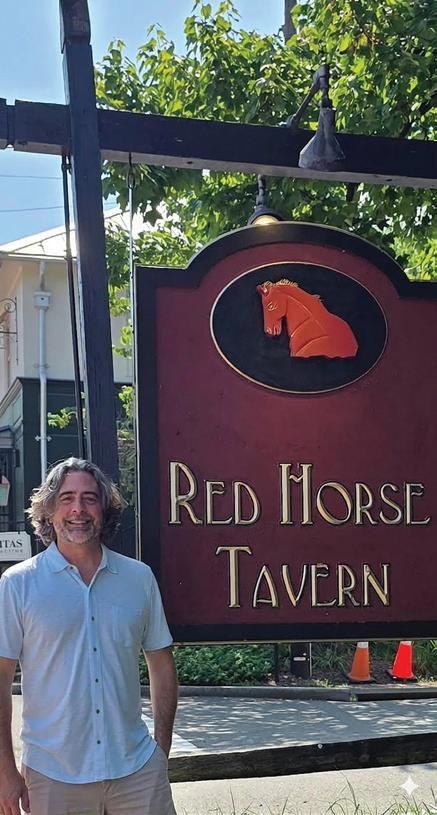
Perhaps unique, Berryville also offers ballroom dancing lessons at two privately owned dance studios, drawing local residents as well as those who live outside the town, for weekly instruction. Michael Blake, who owns and teaches a variety of dances at Stardust Ballroom Dance Studio at 22 E. Main Street, said, “we strive to provide fun, friendly and quality instruction.”
Blake still recalls telling his mother as a teenager that he wanted to either be a chef or operate a dance studio. He’s been instructing the art of dancing for over 15 years. Now 38, Blake specializes in private dance instruction, and Stardust opened in the former Coiner’s department store in 2014.
While Stardust fulfills the dreams he had as an 18-year-old, Blake went to culinary arts school before signing on with an Arthur Murray dance school to explore this permanent career choice. Eventually, he said he “fell in love with dancing” and forgot about making a career in the culinary arts. Blake later worked at Social Graces as an independent contractor until taking the leap to open his own studio.
At 639 East Main Street, Freddie Ciampi operates his Social Graces ballroom dance studio. When I asked if he’d do an interview for Country ZEST, he invited me to take a complimentary lesson.
Even though I feel like I have “two left feet,” I accepted without hesitation. There were other dancers in the mirror-lined studio that day, yet I felt as if my concentration on Freddie’s extremely patient instruction was totally fascinating, and at the same time, extremely challenging.
When the hour was up, I was surprised to hear that I had actually done the steps to learn the groundwork for the Rumba. And, despite being a neophyte to any type of ballroom dancing, I was pleased that I never once stepped on Freddie’s feet.
At Social Graces, I learned that, “Ballroom dance generally refers to any dance style that two people do together.” Dances at Social Graces include the waltz, foxtrot, tango, mambo/salsa, cha-cha, rumba, East Coast and West Coast swing. Private lessons, group classes, weekly dance events and a yearly formal event, competitions, and wedding packages to complete the bride and groom’s expectations for their special day, are popular at Social Graces.
Age doesn’t hamper one’s ability to dance, said Blake, noting that an 87-yearold woman and a seven year-old child are among his students. “We strive to provide fun, friendly, and quality instruction,” he said. “Our number one goal is to teach you to dance.”
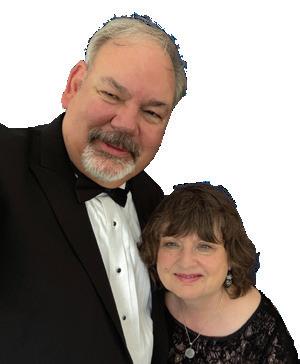
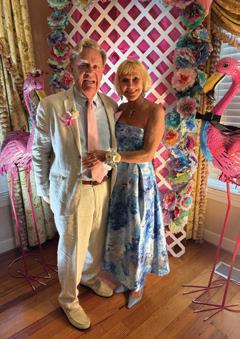
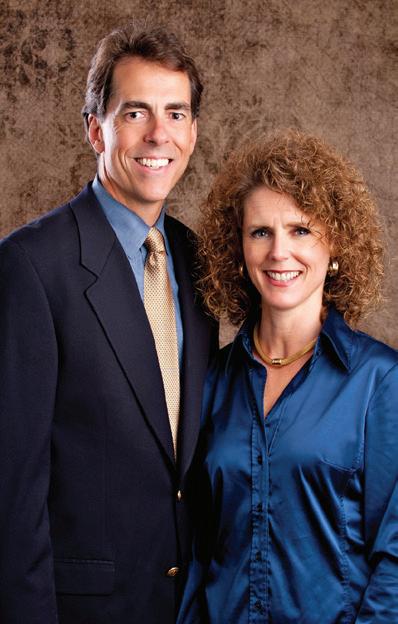
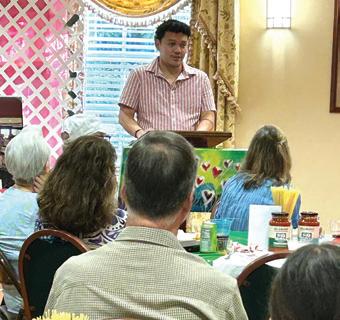
This is Stardust Ballroom Dance Studio with Michael Blake and Jennifer Buff.
Distributed and mailed throughout the Virginia countryside and in Washington and at key Sporting Pursuits and Celebrations
MAILING ADDRESS: P.O. Box 798 Middleburg, Virginia 20118
PHONE: 410-570-8447
Editor: Leonard Shapiro badgerlen@aol.com
Managing Editor: Vicky Moon
Advertising Director Vicky Mashaw
Art Director
Meredith Hancock Hancock Media
Contributing Photographers:
Doug Gehlsen
Crowell Hadden
Sarah Huntington
Douglas Lees
Karen Monroe
Tiffany Dillon Keen
Donna Strama
Official Fine Artist
Linda Volrath
Contributing Writers:
Khris Baxter
Emma Boyce
Bill Cauley
Sean Clancy
Denis Cotter
Philip Dudley
Mike du Pont
Valerie Archibald Embrey
Michele Husfelt
Alissa Jones
Laura Longley
Hunt Lyman
M.J. McAteer
Jan Mercker
Linda Millington
Joe Motheral
Jodi Nash
Chris Patusky
Kiernan Slater Patusky
Tom Northrup
Ali Patusky
Melissa Phipps
Linda Roberts
John E. Ross
Constance Chatfield-Taylor
John Sherman
Peyton Tochterman
John Toler
Leslie VanSant
Jody Warfield
Mike Wipfler
Louisa Woodville
For advertising inquiries, contact: Vicky Mashaw at vickymashaw@icloud.com or 409-381-0441
Leonard Shapiro at badgerlen@aol.com or 410-570-8447 / Country Zest and Style / @countryzestandstyle / @countryzestand1 www.countryzestandstyle.com
ON THE COVER
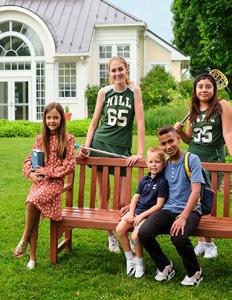
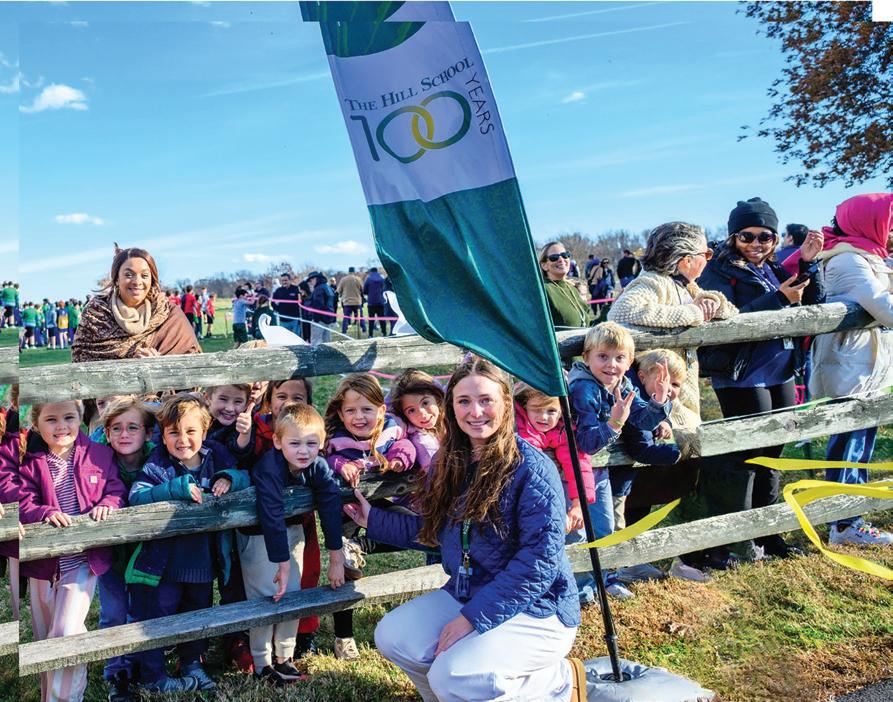
It was a pleasure to work with The Hill School to help celebrate and highlight its centennial. It's always a challenge to arrange and light large groups in a small space, but we think everything fell into place magnificently, and we're looking forward to the next session. Many thanks to Hill’s Kelly Johnson for rounding up the children, providing props and getting them all to the studio right on time!
BE ON THE LOOKOUT through this issue of for the hummingbird.
He appears in two ads and the first two readers to find him (one each) will receive a gift from THE RED TRUCK Rural Bakery, with locations in Warrenton and Marshall. Send your reply to badgerlen@aol.com
HAPPY ANNIVERSARY
By Leonard Shapiro
Our August/fall issue of Country ZEST is always one of my favorites, mainly because it represents yet another year we’ve published what so many of our readers, friends and advertisers keep telling us is the best publication in the area.
This edition marks our eighth anniversary as ZEST, and if you count the two years we produced “Country Spirit” for the Fauquier Times, it’s our tenth year putting out a lifestyle magazine filled with a local history, horses, conservation, business, art, education, religion, fashion, food, fitness, sports, fancy dances, parties, home and self improvement, and so much more.
We couldn’t do any of it without our awesome advertisers, and many have been with ZEST right from the start. We can’t thank them enough for supporting the magazine and their commitment to local journalism. And more of the same gratitude goes out to our dynamic contributing staff of talented writers, photographers and designers, as well.
One of those writers has been contributing to ZEST since her sophomore year at Fauquier High. This summer, Ali Patusky, now a rising junior at the University of Virginia, has been interning with the magazine and has done three outstanding sto-ries for this edition.
Our cover for this issue focuses on another significant milestone for a beloved local institution. That would be The Hill School, celebrating 100 years since 1926, when a half dozen children first gathered in a small second floor classroom in what then was the Middleburg Bank and now is the King Street Oyster Bar.
The story inside also tells you why Hill is so revered by so many. It’s all about kindness, a value that’s long been woven into the fabric of the school’s community. This spring, as part of its Centennial, Hill aimed a spotlight on those everyday moments through an effort called “Celebrate Kindness.”
There’s plenty of kindness among area adults, as well, including the founders and many volunteers at the Holistic Haitian Alliance. As M.J. McAteer writes, the Alliance has provided much needed assistance to residents—and particularly children —in that impoverished Caribbean nation for many years.
For equine enthusiasts, we have stories previewing the International Gold Cup and Middleburg Fall Races, and the West Virginia Breeders Classic at Charles Town. Check out some terrific tales from the iconic Upperville Horse Show, as well.
History buffs will savor Denis Cotter’s story on Charles Fenton Mercer, the founder of Aldie and a Revolutionary War patriot. John Toler offers a center spread story on the infamous Bill Clatterbuck, who perpetrated the worst mass killing in Loudoun County history in 1943 at the inappropriately named Love Farm in Purcellville.
That of course, will not be an anniversary worth commemorating, but it’s a fascinating story nevertheless designed, as always, to add a little more ZEST to your reading pleasure, or, in this gruesome case, perhaps some displeasure, as well.
Leonard Shapiro Editor badgerlen@aol.com 410-570-8447
Doug Gehlsen and Karen Monroe of Middleburg Photo
Ali Patusky
The Founder of Aldie: It’s a Complicated Mercer Story
By Denis Cotter
FIRST OF TWO PARTS
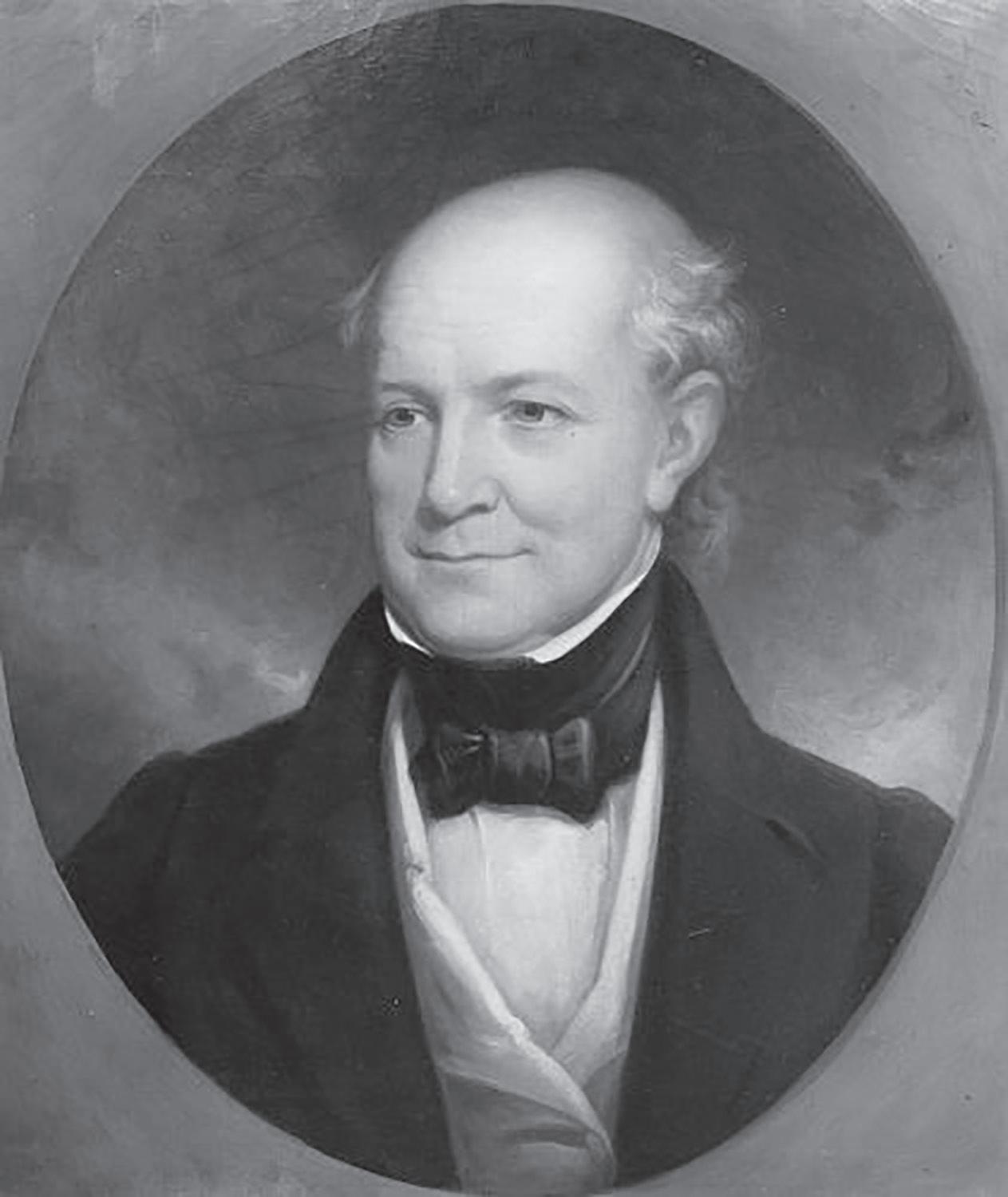
Charles Fenton Mercer (1788-1858), the founder of the village of Aldie, and the builder of Aldie Mill, was born in Fredericksburg and had quite the distinguished pedigree.
The Mercer family traced its ancestry back to Ireland, then England, and eventually to Scotland. Around 1350, John Mercer, a member of an influential merchant family from Perthshire, married Aldia Murray, daughter of Sir William Murray of Tullibardine.
Aldia’s dowry included lands and a castle. Mercer named the castle after his lady wife and took on “Mercer of Aldie” as his official baronial title. Aldie Castle still stands today in Perthshire, twenty miles as the crow flies across the Firth of Forth from Edinburgh.
The Mercer family retained the estate into the 1700s. The Mercer who founded Aldie, Virginia— Charles Fenton Mercer (CFM) – received his middle name from his Irish great-grandmother, Grace Fenton (1680–1763). At 19, Grace married John Mercer at St. Catherine’s Church on Thomas Street, Dublin in 1699. Grace lived to be 82 and died at her son John Fenton Mercer’s Marlborough Plantation in Stafford County, Virginia. Grace had fifteen children, the last at the age of 50. All but five of them died in infancy.
John Fenton Mercer (1704-1768 and CFM’s grandfather) was Grace’s fourth child and the first to survive to adulthood. John was an enterprising soul. At 16, he came across the Atlantic to the British colony of Virginia. In the New World, he had a brilliant, successful career as a lawyer (King’s Counsel), plantation owner, enslaver, and land speculator. George Washington was one of his legal clients.
He also married well. In 1725, he joined the First Families of Virginia by wedding Catherine Mason (1707-1750), a first cousin once removed of Founding Father George Mason IV. One of the properties John acquired was nearly 4,000 acres on both sides of the Bull Run Mountains, including the future village of Aldie. By the time he died, he owned 18,000 acres of Bull Run Mountain and its environs.
In 1748, John built a mill on the land near Little River. That same year, along with many other Virginia landowners, he became involved with the newly-founded Ohio Company of Virginia. This was a land speculation company organized for colonizing the Ohio region and trading with Native Americans.
France also claimed the Ohio region and attempts by the Ohio Company to block French expansion into the territory led to the outbreak of the French and Indian War (1754-1763).
Three of John’s sons served in that war – George, John, and James (CFM’s father). James (17361793) was born at Marlborough Plantation. His father originally apprenticed him to become a master carpenter and builder, but law ran in James’ blood. He received private schooling at home, then graduated from the College of William and Mary in Williamsburg in 1755.
After graduation, James was offered a commission in the Virginia Regiment of the Virgiia Provincial Forces. His two older brothers, George and John, had already received commissions in the same unit. At the Battle of Fort Necessity on July 3, 1754, in southwest Pennsylvania – the opening engagement of the war – his brother George was wounded, but survived, and was promoted to captain shortly afterwards.
James’ other brother in the war, John, was not so fortunate. On April 18, 1756, John and his men were lured into an ambush near Fort Edwards in present-day Capon Bridge, West Virginia. Mercer and sixteen soldiers under his command at the scene were killed and John was scalped. The incident
became known as the “Battle of the Great Cacapon River” or “Mercer’s Massacre.”
James himself had a relatively easy time of it. He worked closely alongside his brother George, who was Colonel George Washington’s aide-de-camp. Washington oversaw the design and construction of Fort Loudoun in Winchester, the central command center, refuge, and supply depot for Virginia’s frontier defenses.
James was appointed commander of Fort Loudoun, then left military service in 1757. He read law under his father’s guidance, passed the bar exam and established a private practice in booming Hampshire County – now West Virginia –a frontier region with enormous settlement and land speculation opportunities.
His father, at age 55, had a son with his second wife and also named him John. That child, John Francis Mercer (1759 – 1821) went on to be a member of the U.S. House of Representatives and became the tenth governor of Maryland.
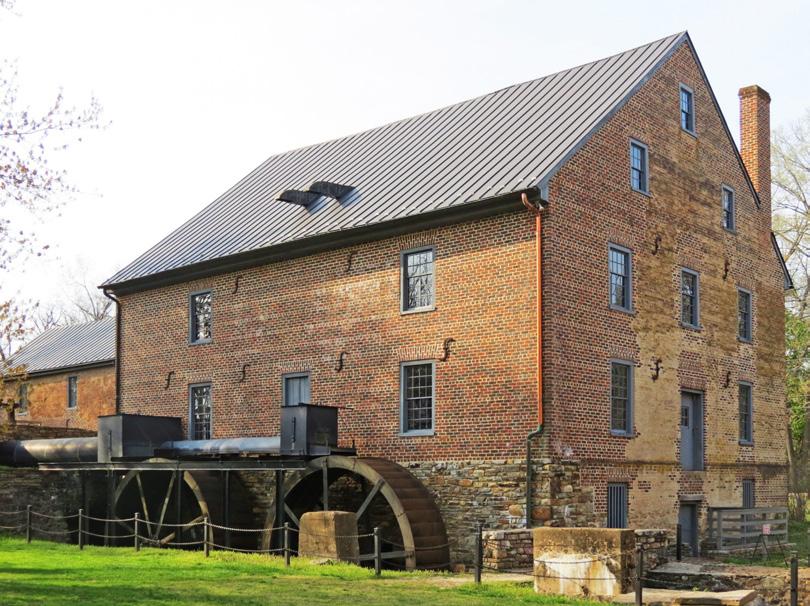
John’s much-older half-brothers, George and James, continued in their father’s entrepreneurial ways. In 1764, they built a small gristmill mill, known as Mercers’ Mill, at the spot where Aldie Mill stands today.
The location was ideal, built beside the Little River, a tributary of Goose Creek, at a natural gap in the northern end of the Bull Run Mountains. Two strategic colonial trade routes intersected there— the Belhaven Road from Alexandria to Winchester and the Mountain Road to Snicker’s Gap and the Shenandoah Valley beyond.
These roads were primary pathways for settlers moving west and for merchants moving agricultural goods east from the Loudoun and Shenandoah valleys to the seaports.
Fourteen years later, on June 16, 1778, Charles Fenton Mercer entered the world, the fourth and youngest son of James and Mary Mercer.
To be continued.
Virginia Department of Historic Resources
The Aldie Mill
National Portrait Gallery Charles Fenton Mercer
It All Went Right for Bluman and Hummer Z
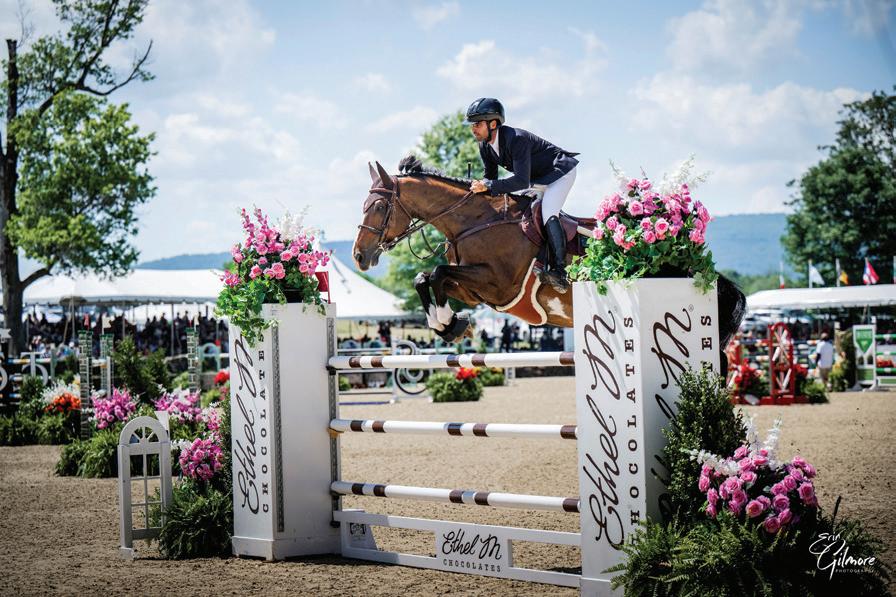
Daniel Bluman, who has represented Israel in several international competitions, grew up and lives in Davie, Florida. He piloted Hummer Z, owned by Abigail Wexner, to victory after a jump-off in the $200,000 (FEI CS14*) Upperville Jumper Classic on the final Sunday of the 2026 edition. Hummer Z (Harley VDL x Tulana) is a 12-year-old Zangersheide gelding. “It’s nice to win so you can be together with the great horses and riders that came before you,” Bluman noted.
Bluman, 36, (born March 15, 1990) was in a jumpoff of six riders from an original field of 19 and turned in a speedy round of 34.95 seconds. The class was presented by Lugano and Ethel M.
“It was just one of those afternoons when things just go your way. It went just the way I wanted it to,” Bluman recalled. “He’s jumped so many clear rounds, he’s just a great horse. Everyone who lives in the U.S. knows this is a great Grand Prix with great riders and horses every year.”
“I don’t think I rode the jump off very well,” said Bluman. “But he really wanted to win and I’m so glad for him.” On the course, Bluman added that Hummer Z fixed the distances for them. “And then I knew I was going to win,” he added.
“The first time I came to Upperville was 18 years ago. It was the first show I did outside of Florida,” Bluman recalled. “I jumped in that ring on the other side in the High Juniors on Friday and I had
eight rails down. It was a very different start to my experience in Upperville. Everyone who lives in the United States knows about this grand prix and how many great riders and horses have won it. It’s nice to win so that you can be together with those great horses and riders that came before you.”
Sponsors of the 2026 Upperville Colt & Horse Show presented by MARS EQUESTRIAN™ include Ethel M. Chocolates, Dr. Betsee Parker, Michael Smith, Lugano, The Salamander Collection, B&D Builders, Markel Insurance, Delta Air Lines and the Postage Stamp Farm Foundation.
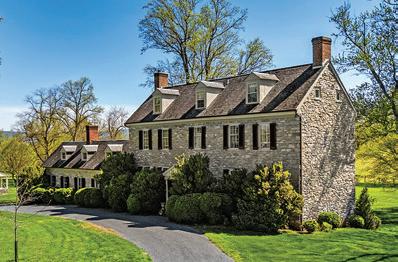
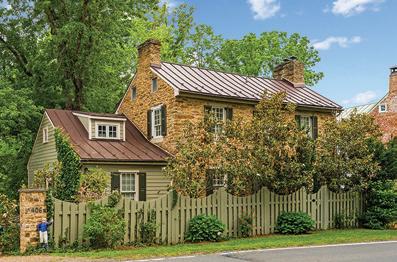
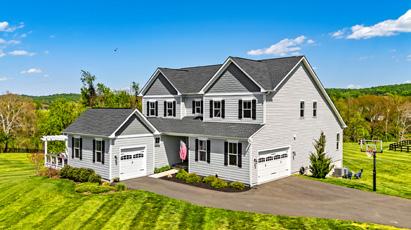
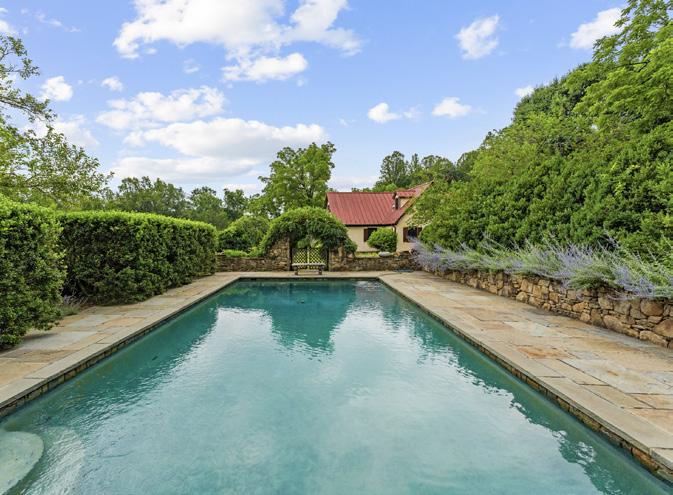
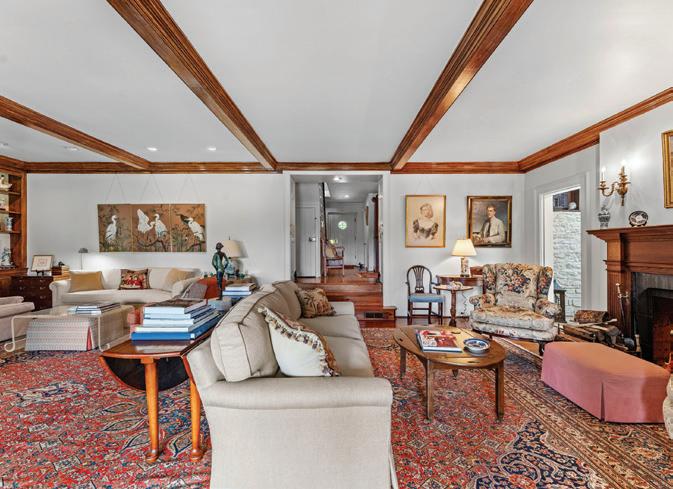
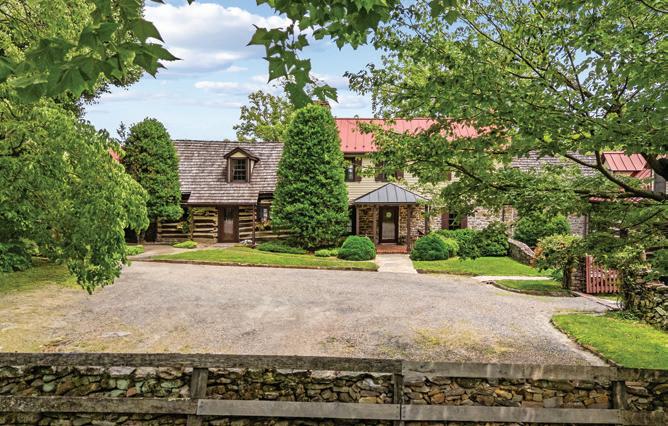
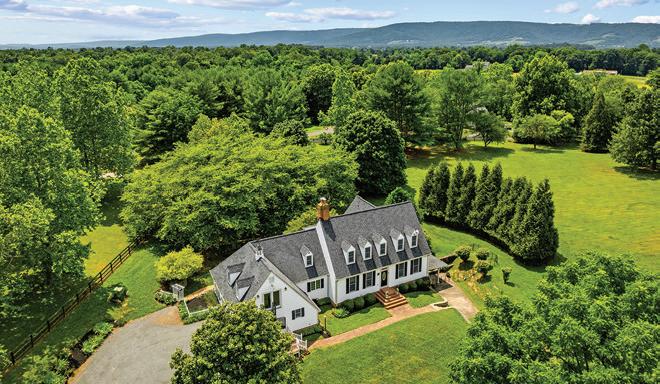
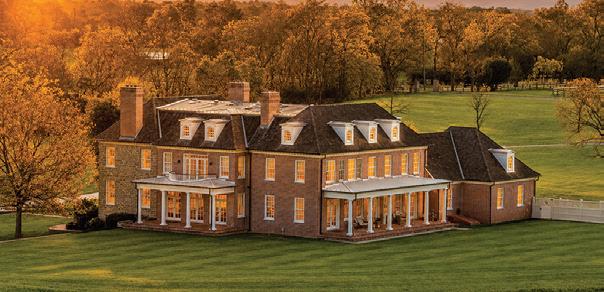
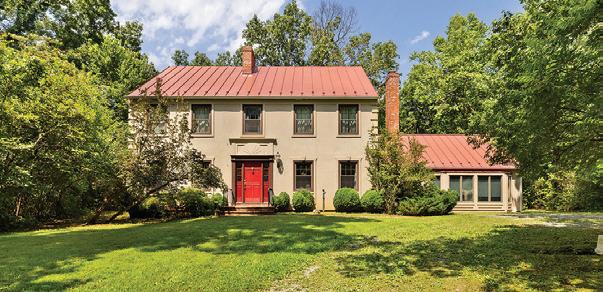
Berryville – Elegant 4 BR, 3/1 BA stone manor c. 1782, w/ views of mountains and farmland. High ceilings, fireplaces w/ period mantels. 2 cottages, 4-car garage w/ apt, several other outbuildings.
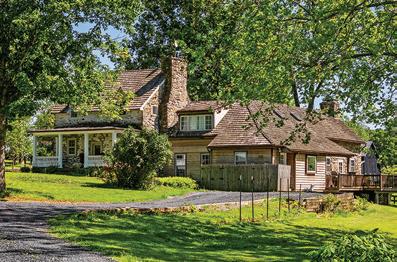
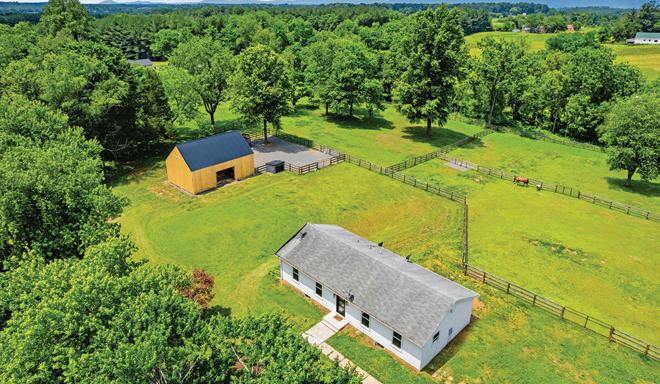
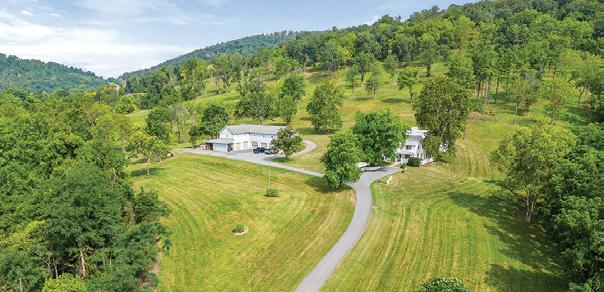
– Offering a variety of living arrangements. 2 cottages combined function as a single residence, or as separate but connected living spaces. 6-stall barn, ring, paddocks, and studio apt.
Middleburg – Extensive improvements. 3 BR, 2 BA main home + separate guest suite. Artisan finishes, designer kitchen. Private, fenced, backyard oasis w/ pool and hot tub. 35 min. to
Middleburg – Skip the wait. Custom luxury, now. A move-in ready, 6,000+ sq. ft. French transitional masterpiece in exclusive Banbury Cross Reserve. Extensive upgrades and custom features.
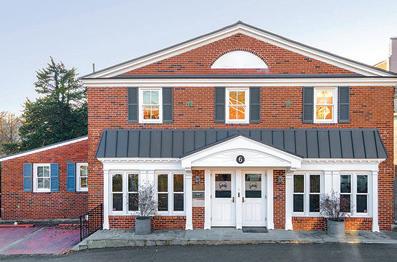
– Commercial opportunity in the heart of downtown. Over 5,500 sq. ft. w/ flexible work areas, conference rooms, 3 half-baths, and large break room. 2 parking spaces. Zoned C-2.
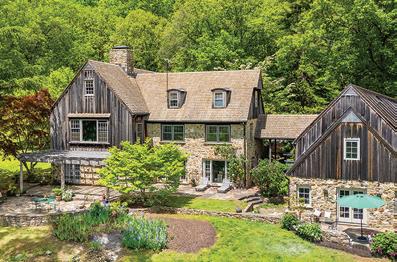
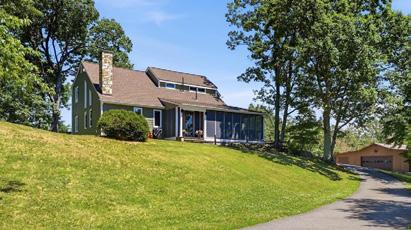
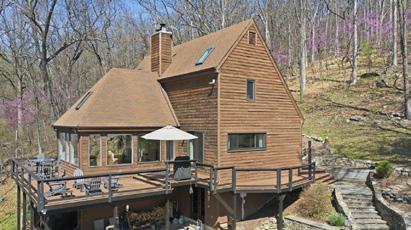
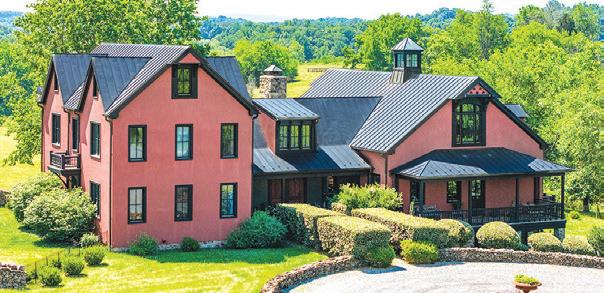
– Renovated stone and cedar house w/ stunning views of Cobbler Mountains. 2-car garage, separate office/studio, pool house and pool. 3 BR, 2 BA log cabin. Pond. Starlink internet.
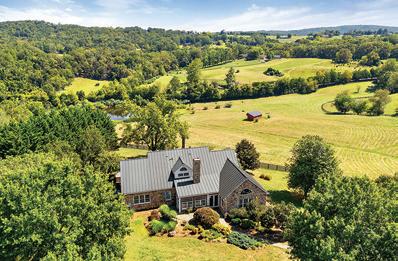
Marshall – In Bellevue Farms, w/ 30+ miles of trails. Custom 7,700+ sq. ft. stone 5 BR, 5/1 BA house w/ great views. Guest house, horse barn w/ barn apt, ring, paddocks, and pond. In 2 parcels.
Markham
Upperville
Middleburg
In Aldie, Another Kind of Horsepower
By Stefan Schetselaar
Out past the black cattle and the long fence rows of a 3,500-acre farm in Aldie, there’s a 62-year-old man who, most days, trades his cattle hat for a top hat.
For 39 years, Mark Duffell has run the cattle operation at Whitestone Farm, building it from nothing into the kind of operation that gets a man inducted into the Virginia Tech Cattleman’s Hall of Fame.
He came north from a farm in Lynchburg, and when the owners here handed him the keys, they told him plainly: we don’t know anything about raising cattle, do what you will. So he did. Now, he manages 800 to 1,100 internationally-famous head, with the help of only three full-time hands.
That part of the story, the cattle part, would be enough for most people’s resume. For Mark, it’s just the day job.
The real story started 13 years ago on a trip that had nothing to do with horses at all, and everything to do with karma. Mark went up to New York to consult on a herd. That farm happened to belong to David Rockefeller (yes, THOSE Rockefellers). When the visit was over, Rockefeller’s coachman hitched two Morgan horses to a carriage and asked Mark if he’d like to ride along.
He would. And that was that.
“The bug kind of bit me,” he said. So, he tracked down a trainer named David Saunders, who just happened to have spent 20 years teaching Prince Philip how to drive carriages (yes, THAT Prince Philip). His reasoning was solid. “If I’m going to do this,” he said to himself, “I want to learn from someone who knows how to do it.”
Saunders flew in for a weekend and showed Mark the ropes. By his third class at his very first show, he’d already won.
These days, Mark owns 15 carriages, including a “going-to-cover” carriage built somewhere between 1895 and 1905. It’s the same kind of rig George Washington would have climbed into on his way out to chase a fox. But Mark doesn’t park it in a barn. He drives it, just as he drives something almost every day, weather and cattle schedule permitting.
This November, he’ll hitch up and head to the International Carriage Show, one more stop for a man who now serves as executive director of the Four-inHand Club and sits on the board of the Carriage Association of America. Not bad credentials for a cattleman who only meant to watch somebody else drive a carriage once.
Mark doesn’t drive for hire. He’s not looking to build a business. But he’ll harness up a pair for a customer, a friend, or even a visitor passing through, just to share what he loves. Foreign dignitaries have climbed into his carriages.
For 39 years, Mark Duffell has run the cattle operation at Whitestone Farm, building it from nothing into the kind of operation that gets a man inducted into the Virginia Tech Cattleman’s Hall of Fame.
So have neighbors from just down the road. He’s donated carriage rides to charity auctions, complete with a picnic lunch by the pond.
Ask anyone who’s taken a ride with him, and they’ll say the same thing: nobody ever gets off that carriage unhappy.
Ask him today about the horses themselves, and the cattleman seems to drop away entirely.
“Horses love routine,” he said.
For instance, there’s a horse named Dylan who, one recent morning, simply refused to work. Wouldn’t budge. But Mark didn’t push him. He just waited. Turns out there was a big black bear in the pasture near the barn. Horses hate bears and can smell them a mile away. Dylan was telling Mark, in his own quiet way, that he did not want to take him in that direction.
“Each horse and I have a bond, and I know what that bond is,” he said, the way a man talks about an old friend whose moods he’s learned to read without asking.
It would be easy to file this away as a hobby, a wealthy farm’s eccentric flourish, a man playing dress-up with antiques. But spend enough time around Mark and that reading falls apart. The hat and the apron aren’t costumes. They’re a kind of devotion, the same devotion he’s spent 39 years giving to cattle, just pointed somewhere quieter.
“I love all animals,” he said. “But I truly love the horses.”
Tomorrow, Dylan will go back to work, whether he wants to or not, because that’s what the routine calls for. And routine, Mark will tell you, is its own kind of love. Out at Whitestone, where the fences run on for miles and the work never quite seems to end, one man has found a way to keep something much older than himself alive, one quiet drive at a time.
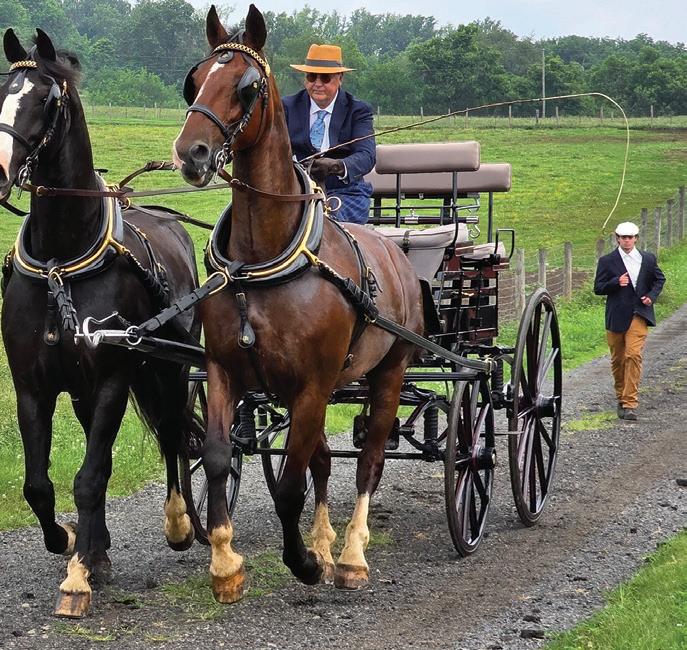
Mark Duffell driving his 1890 Brewster Phaetan carriage behind Roman (left) and Dylan.
Photo by Stefan Schetselaar
INTRODUCING
The Benefits of Equipment Leasing:
Offering 100% financing.
NEWS & NOTES
A New Leader at Virginia Piedmont Heritage
The Virginia Piedmont Heritage Area Association (VPHA) Board of Directors has elected Tom deButts as its new chair. A member of the VPHA board for six years, he succeeds Jim Little.
An international trade lawyer who lives in Delaplane, deButts has deep roots in Fauquier and Loudoun counties and is a strong advocate of historic and land preservation. He also serves as president of the Friends of the Hollow, a non-profit corporation dedicated to the preservation of Chief Justice John Marshall’s boyhood home in Markham.
“I’m honored to step into the footsteps of the many notable predecessor chairpersons of VPHA to continue our focus on preservation through education.” deButts said. “We’re fortunate to have a superlative staff and active board that will continue to provide student and adult historic education, as well as preservation initiatives in the 1,800 square mile living museum we call the Virginia Piedmont Heritage Area.”
Replacing deButts as vice chair is Catherine Johns Berg of Purcellville.
The Virginia legislature has voted to accept Gov. Abigail Spanberger’s amendment to the budget to include the acquisition of Oak Hill, the former home of President James Monroe just off Route 15 near Aldie. It is expected to become Virginia’s and Loudoun County’s newest state park.
Del. John McAuliff, a Democrat representing parts of Fauquier and Loudoun counties, introduced the idea in the 2026 legislative session via House Bill 500.
Allows for upgrades or additional equipment and conservation of capital.
Reduces the risk of equipment obsolescence. Complements
credit
“After many years of attempts, I promised to get Oak Hill preserved as a State Park during my first term,” McAuliff said in a press release. “After heavily lobbying the governor, the House and Senate, I made good on that promise in time to celebrate America’s 250th birthday.”
The acquisition will preserve more than 1,200 acres of farm and forest land as well as the last privately held home of a founding father. The property was privately owned by Tom and Gayle DeLashmutt, who meticulously preserved the mansion, outbuildings and gardens.
The Town of Middleburg has hired Jennifer Bell as its new director of community engagement. She served the past seven years as tourism manager for Harrisonburg. Prior to that, she served over six years as downtown manager for the City of Winchester and over five years as the executive director for the Main Street Program in Salem, Massachusetts.
“We’re excited to have Jennifer join our team,” said Will Moore, Midddleburg’s acting town manager. “She comes to us with a wealth of experience in destination marketing, downtown revitalization, event management, business support, and community engagement.”
Her position focuses on implementing the Town’s efforts around tourism and community-centric events, business support and partnerships, marketing, and other economic development programs.
Gov. Spanberger recently visited the Piedmont Environmental Council’s Community Farm at Roundabout Meadows in Aldie to sign legislation that officially defines the term “agrivoltaics” in the code of Virginia.
Agrivoltaics integrates solar energy into agricultural production and is crucial for well-developed, properly-sited agrivoltaics.
“By establishing clear, enforceable definitions of agrivoltaics in the code of Virginia, we’re protecting farmers,” Spanberger said. “We’re making clear that the use of agrivoltaics prioritizes agricultural productivity, keeps land in production for the life of the solar array, and is part of an existing farm business.”
Photo Courtesy of VPHA Outgoing Virginia Piedmont Heritage Chair Jim Little, left, and newly elected Chair Tom deButts.
Simply Classic
SATURDAY, OCTOBER 10, 2026
ALMOST HEAVEN, West Virginia Chamber Music
By Alissa Jones
In 2021, as the world slowed to a glacial pace because of the Covid pandemic, Katie Tertell’s imagination soared. Sensitive to the yearning of the sequestered community to connect with others, Tertell envisioned a platform to facilitate and nurture relationships through the power of music, and established the Appalachian Chamber Music Festival (ACMF).
As the founder and artistic director, Tertell said the ACMF is not marketed as a classical music festival, but rather as a venue where people can connect and explore the abstract ideas that are personal to them, through a variety of music.
“I’ve found that when visitors come not knowing what kind of genre to expect, they end up leaving happy and feeling connected,” she said.
Jefferson County, West Virginia, the corner of the world the ACMF calls home, has long been a magnet for Grammy award winners, international soloists from other countries, and concert masters of leading European orchestras. Tertell explained that, “creatives love nature, and we definitely offer that here.”
To commemorate its fifth anniversary in 2025, the ACMF chose a theme that revolved around the region’s rich history, captivating natural beauty, and vibrant culture. This year, Tertell said they have selected “Metamorphosis” as their theme because, she added, “I believe it holds greater relevance in today’s rapidly changing world.”
Reflecting on West Virginia’s rich tradition of porch concerts and old time music, Tertell said this year they will blend the emotion of a laid back summertime vibe with world class music.
“It will be communal and very relaxed,” Tertell said. “We have so much to offer in that regard; we’ve already had remarkable community feedback.”
In August, The ACMF also will visit Berryville and Winchester.
“We go to Berryville every year and Winchester is the closest venue to Middleburg,” she said. “We hope that community will come out.”
The Winchester concert will feature 12 world class musicians over a two week period from August 5-16.
“Relationships within the music arena are like extended family, it’s usually one degree of separation,” said Tertell, reflecting on the many friendships she has made here and abroad.
The Winchester concert is scheduled on Sunday, August 9 at 5:30 p.m. and another one at the 868 Vineyards in Loudoun County on August 5.
Terrell said Jefferson County, less and an hour’s drive from Middleburg, also has several thriving music nonprofit programs that support education endeavors in the region. The ACMF currently offers a week of educational programs, a camp for 12-18 year olds and an adult education program during the year that caters to adults who play music. They also offer free tickets to their concerts for those under 18.
The ACMF partners with local non profit organizations and collaborates with groups like the Contemporary American Theatre Festival. Around Christmas and New Years they offer family friendly concerts.
“I think there’s a hunger for more programs like this because it creates true connection with people,” Tertell said. “And our community is very responsive, it’s a reciprocal thing.”
Details: www.appalachianchamber.org.
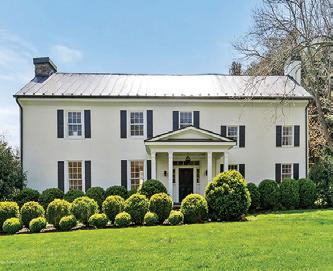
Middleburg – 3 level stucco residence has been spectacularly reimagined with top-tier architectural upgrades, offering a flawless turn-key lifestyle for the discerning buyer.
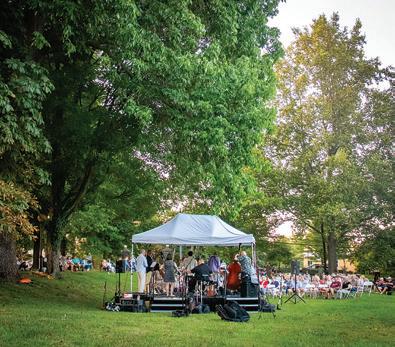
Chamber Music outdoors on a West Virginia lawn.
VIRGINIA
No Horsing Around for Front Royal Remount Depot
By Travis Shaw
In front of the National Sporting Library and Museum in Middleburg stands a sculpture of an emaciated, broken down horse, a stark reminder of the often overlooked suffering inflicted on millions of equines during the American Civil War.
The names of some of the more famous horses are remembered today – Traveler, Little Sorrel, Rienzi, Old Baldy – but those tend to be mounts used by famous generals. The armies of the Civil War were largely horse powered, relying on equine muscle to haul artillery, pull supply and ambulance wagons, and as cavalry mounts. It’s estimated that over a million horses and mules died during the conflict.
The end of the Civil War did not end the U.S. Army’s need for quality horses, but it wasn’t until 1908 when a concerted effort was made by the Quartermaster Corps to replace wartime bloodstock losses. Within a few years three permanent remount depots were established, with the eastern depot located at Front Royal.
Construction of what became known as the Ayleshire Quartermaster Remount Depot began outside Front Royal in 1911, and by 1915 the depot was operational. Eleven barns and stables were erected, along with other supporting structures and a rail depot. The facility was responsible “for the purchase, receipt, quarantine, and conditioning for issue of animals required by the Army in the eastern zone.” Remount officials worked with private horse breeders to collect animals suitable for military service, or for breeding at the facility.
The Remount service took on increased importance in April,1917, as the U.S. entered the First World War. Although trench warfare on the western front made mounted cavalry largely impractical, horses were still vital for transportation and for moving artillery and supplies.
Just a month after the U.S. entered the war, the War Department issued orders for the purchase of 250,000 horses and mules, and dozens of additional depots were established across the country. Thousands of these animals passed through Front Royal, where they were loaded on trains bound for Newport News.
One local who served in the Remount service was Major Bolling Haxall, Jr. Descended from a prominent Virginia family, Bolling was an established member of the local equestrian community.
An avid huntsman, he had participated in the Great Hound Match of 1905 and was well known for the quality of his horses and horsemanship. As such, he was a natural choice for an officer’s commission
in the newly formed 303rd Remount Squadron.
In February, 1918 the 303rd began training in Florida before moving to New Jersey to prepare for overseas service. On April 30, Haxall and the 303rd departed from Hoboken, arriving in France a dozen days later and establishing themselves at the French army school at Coëtquidan.
In the fall of 1918, the 303rd was attached to the 5th Corps of the American Expeditionary Force during the massive Meuse-Argonne offensive. While at the front, the remount squadrons performed the vital work of providing veterinary care for wounded and sick animals, including equines suffering from gunshot and shrapnel wounds as well as poison gas attacks. They also rehabilitated equines suffering from exhaustion, starvation, and those worn out by military service.
This work continued after the end of the war, as the American army participated in the occupation of Germany. Stationed near the city of Coblentz, the 303rd managed a facility for over 500 animals, rehabilitating them for post-war service.
While in Coblentz, several remount squadrons took over an abandoned German cavalry facility and hosted a horse show featuring hundreds of equines between April 23 and 27, 1919, described as “one of the best ever held in the United States Army.” Sadly, while the show was in progress, Major Haxall came down with a case of “blood poisoning” and died April 25 at age 36. The following year his remains
were returned to Middleburg, and he is buried at Sharon Cemetery.
In the years leading up to World War II, the Army sought to reduce its dependence on equines. Nearly all of the cavalry arm was mechanized by 1940, and trucks gradually replaced wagons for transportation. Combat experience, however, would show that there were certain situations where horses and mules were preferable to wheeled vehicles.
In western Europe, the Army was almost exclusively mechanized, but in the trackless jungles and unforgiving terrain of the Pacific and southeast Asia, horses and mules were necessary.
The Remount Depots continued to meet the demand for equines in this theater of the war, and in 1945 alone over 7,000 foals were born at Remount facilities. Over the course of World War II over 50,000 equines were used by American forces, but the war also marked the end of horses as an important part of American warfare.
The adoption of mechanized and air-mobile formations changed the nature of cavalry forever. As a result, the Remount Service was disbanded in 1948. The property where the Front Royal Depot was located was given over to the Department of Agriculture and is now the home of the Smithsonian Institution’s Conservation Biology Institute.
Where horses and mules were once bred for war, this facility now carries on vital work in preserving threatened species from around the world.
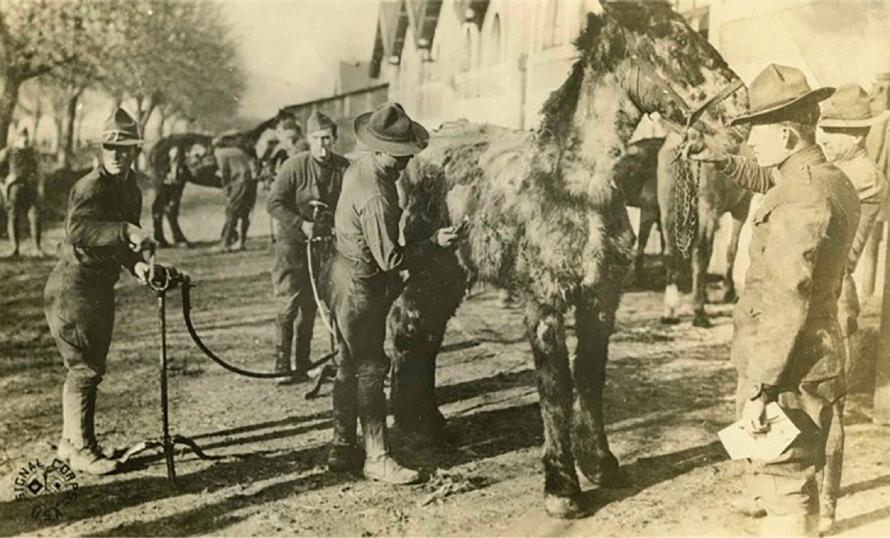
Courtesy of National Museum of Health and Medicine Remount squadrons caring for horses in France during World War I.
Spend a day in the beautiful Middleburg countryside with plenty of open space for your enjoyment.
Enjoy steeplechase racing at its best at Glenwood Park – the oldest continuous race course in Virginia. The Virginia Fall Races: Rich in tradition of the understated elegance and sportsmanship of jump racing.
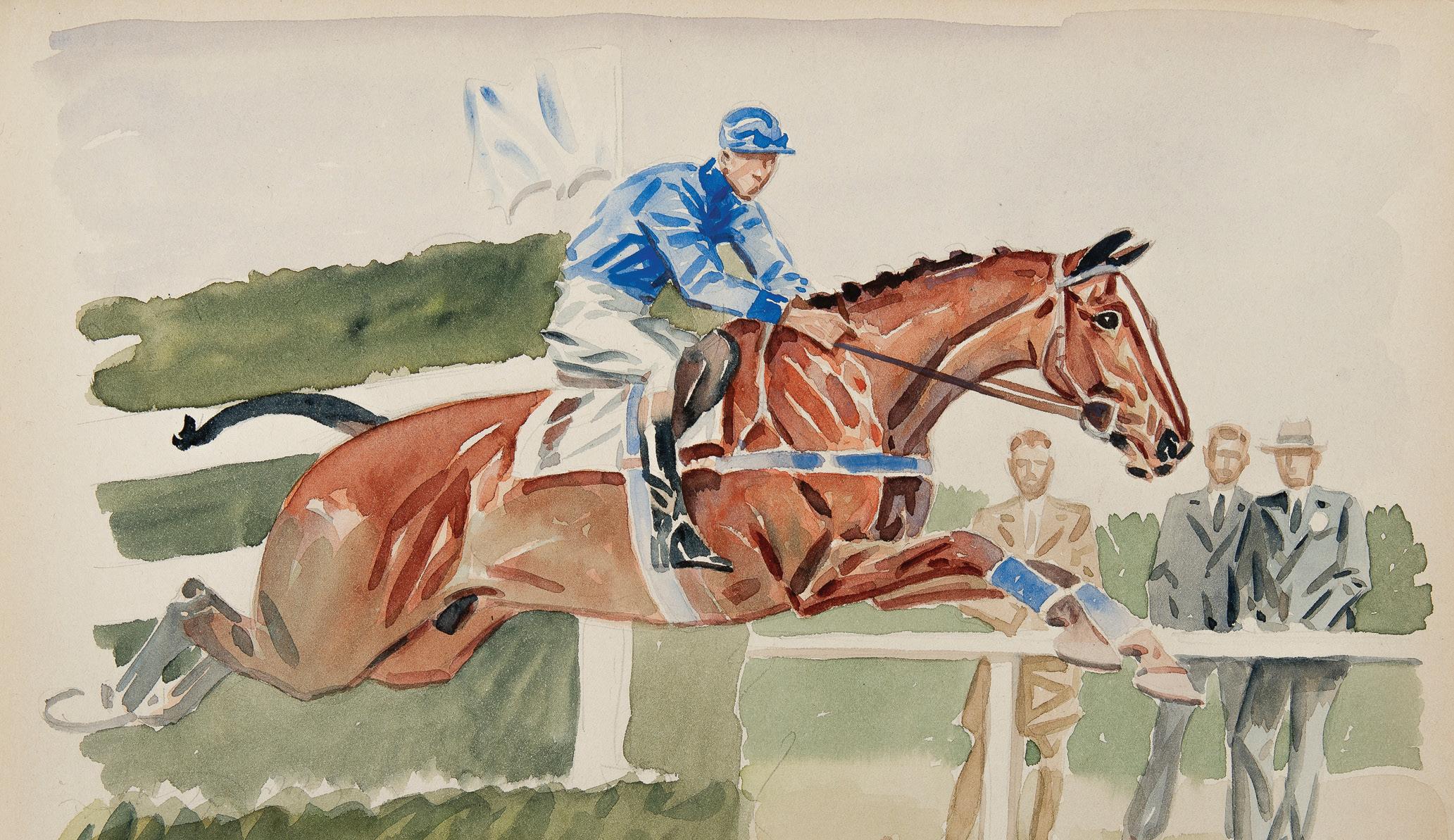
Paul Desmond Brown (American, 1893-1958) Sketch from “Daubs” Sketchbook (page 37), 1944, watercolor, 7 1/2 x 9 3/4 inches
Middleburg Library Advisory Board Scholarships Total $19,000
It’s been a busy few months for the Middleburg Library Advisory Board (MLAB), with more to come, including its annual summer social event on August 13 from 4 p.m. to 6 p.m. at the library located on the appropriately named Reed St.
In May, the MLAB announced the recipients of its annual scholarships for local students, both in high school and college. There were seven recipients of awards totaling $19,000.
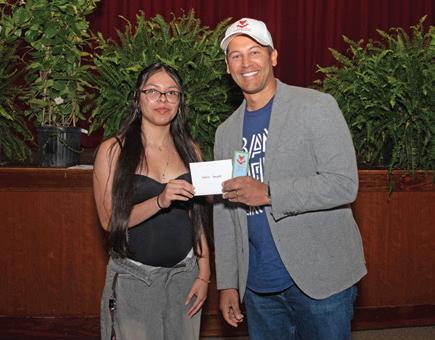
Madeline Gonzales of Loudoun Valley High School in Leesburg was awarded the Eura Lewis Scholarship for high school seniors and received a grant for $4,000. Winley Turner, a 2025 graduate of Foxcroft School and going into her second year at the University of Tennessee, received a $3,000 Lewis scholarship awarded to current college students.
Five awardees were selected for the Charles Plante Book Scholarship. They included Amelia Haws of Loudoun Valley High ($3,000); Macklin Gaffney of Loudoun Valley High ($2,500); Catherine Merchant of Highland School ($2,500); AnnaRose Ramos of Loudoun Valley High ($2,500) and Hailey Hendershot of Loudoun Valley High ($2,500).
The MLAB awards several scholarships each year to area students pursuing education at an accredited post-secondary institution. Scholarships are available to seniors in high school who will graduate in the spring or to past graduates who wish to resume their education. Applicants need not be graduating from
Middleburg Library Advisory Board co-president Robert Carter, the principal at Banneker Elementary, presents Madeline Gonzalez of Loudoun Valley High School with her Eura Lewis $4,000 college scholarship.
high school in the current academic year.
The recipients were presented their scholarships at the library on July 29, and several of them also were also honored at award events at their respective schools.
The MLAB also continued its popular local author series in June when an appreciative audience heard a fascinating presentation by Middleburg author and Country ZEST contributor John Ross. His book, :The Forecast for D-Day: And the Weatherman behind Ike’s Greatest Gamble,” focused on the men who had to get the forecast right before the D-Day invasion
on the beaches of Normandy, France on June 6, 1944, the beginning of the ultimate end of Nazi Germany.
The weathermen and General Dwight Eisenhower did, obviously, and so did Ross, who entertained more than 60 attendees at the Emmanuel Episcopal Church Parish House with his talk and question and answer session. The next local author lecture is tentatively scheduled for October, with a date and guest still to be determined.
In 1983, a group of Middleburg citizens decided to create a non-profit corporation—The Regional Library of Middleburg. The goal was to have a small branch library rather than a bookmobile service provided by Loudoun County.
Those citizens raised funds locally, purchased new books and furniture, and renovated the Middleburg Health Center space donated by the Town of Middleburg to provide local library services. The grand opening was in July, 1984.
In 1986, this library became a branch of Loudoun County Public library and the former board for the Regional Library of Middleburg became the Middleburg Library Advisory Board.
Tax-deductible charitable contributions enable the MLAB to continue their efforts to enhance the library’s outreach and to make learning fun, rewarding, and accessible to all.
Details: For more information go to Middleburgreads.com
is
Community CORE.
We’re here for you – and we mean it. With local loan approvals, real people here to answer your call, and a deep commitment to the communities we serve, we’re more than your financial services provider we’re your neighbors.
LIVING FIT & WELL
Good News on Latest Weight Loss Drugs
By Mark Nemish
We can’t watch a television program for more than 10 minutes without seeing a commercial for some form of weight loss drug, especially GLP-1 receptor agonist peptides (GLP-1).
Many Americans have struggled with weight loss for decades and as a result have battled various diseases such as Type II diabetes. For many, losing weight through dietary and exercise interventions has been extremely difficult, especially with respect to long term weight loss. Now, the advent of GLP-1 drugs has been a miracle for many in their quest to regain their health.
The benefits of these drugs are being felt beyond combatting obesity (a 12-18 percent weight loss on average). For example, GLP-1s have been found in studies to improve cardiovascular disease outcomes.
In addition, new research examining the possible benefits of GLP-1s on Alzheimer’s and kidney disease have emerged. And since GLP-1s work on the reward centers in our brains, the use of these drugs in combatting alcohol and cocaine addiction may be promising for the future.
Still, it’s also important to mention possible downsides. First, the rapid and large decreases in body weight that can occur with their use can result in very rapid and large increases in weight gain once the drugs are stopped.
Furthermore, when rapid weight loss does occur, there is the potential for a significant portion of this weight loss to be muscle loss. Side effects such as nausea, vomiting, diarrhea, and constipation can and do occur.
Due to some of the limitations of GLP-1s, it’s been widely advised to accompany their use with lifestyle counseling. It’s more likely that after a period of use (1-3 years), the majority of GLP-1 users will eventually go off the drugs.
If changes in lifestyle, such as nutrition, exercise, sleep, etc. are not coached and regularly integrated into the person’s weight loss regime, the potential for weight
Studies also show that embarking on a regimented weight training program is crucial to reduce the potential for muscle mass loss and loss in bone mineral density. Embarking on a higher fiber diet may help with some of the gastrointestinal problems incurred with GLP-1 drugs in addition to naturally stimulating the same receptor agonists that help curb appetite. This, in addition to eating sufficient protein, will help curb appetite naturally when and if the person stops the use of GLP-1 peptides.
While conferring the benefits of weight/fat loss, GLP-1 drugs do not confer the same benefits as improving cardiovascular fitness (CV). Thus, in addition to weight training, it’s crucial to also find time to improve CV fitness through either steady aerobic training, high intensity interval training, sprint interval training, or playing athletic games such as tennis and pickleball.
Mark Nemish is currently the owner/director of Precision Health Performance; a business dedicated to optimizing the health and fitness of people in need of lifestyle change. He spent 22 years as the head strength and conditioning coach for the Washington Capitals (2007-23) and Nashville Predators (1998-04) in the NHL.
Mark Nemish
MODERN FINANCE
Call It Tokenomics
We have a new term in the era of artificial intelligence (AI) and it’s called Tokenomics, basically the study of who captures the value when the world switches from token maxing to token optimization.
AI users are slowly moving away from always selecting the best AI model offered by leading newer frontier labs (think Anthropic or Open AI) to the broader stack with lower optimization. This may very well create one of the strongest structural advantages for the so-called “hyper-scalers”— Microsoft, Amazon, and Google.
Imagine a highway toll road. Automakers produce the vehicles we drive and the profit margins are good, but the tollbooth owner collects the same fee from the driver of a Ferrari or a Yugo (those of us old enough remember the Yugo). When drivers downgrade their vehicle to save money, car sales suffer, but people drive far more miles and the
tollbooth thrives on higher volume.
In the world of AI, the labs are the automakers and hyper-scalers are the tollbooth operators and with enterprises shifting from “token maxing” to “token optimization,” total usage is dramatically increasing.
Until recently, companies routed every workload to the top AI model during pilot stage usage and ignored the cost for the most part. That phase is ending as companies are burning through annual AI budgets in weeks.
Sam Altman has recently highlighted how AI efficiency concerns from companies has gone from rare to pervasive and this concern has been echoed by others.
The shift to optimization means routing 80 per cent of simpler requests to cheap open-sourced models (Llama, DeepSeek, etc.) and escalating only complex tasks to frontier models (Claude, Open AI) which accelerates token consumption to millions of tokens per session, not thousands.
The data confirms this surge as Microsoft and Google are scaling their monthly volume by huge multiples. So, the costs for equivalent performance is dropping while total tokens is growing several-fold
annually. This, dear reader, is Tokenomics.
Long term sustainable margins definitely favor infrastructure providers. Frontier labs are currently capturing enviable gross margins as high as 70 percent but optimization is squeezing these margins as routine tasks are routed to the broader stack where the hyper-scalers are processing more data at around 30 percent operating margins.
Lower margins but more share is the secret sauce to durability as volume explodes, lifting net profits. It’s Cloud economics 101.
Amazon’s Bedrock and Microsoft’s Azure are optimizing billions of tasks at the enterprise level while keeping data and compliance in the cloud as models become interchangeable components of their service offering.
Vast computer shortages, management complexity, and cybersecurity further entrench these companies, who gained early access to advanced defensive models.
Ultimately, all of these factors will contribute to the compression of margins and the big three will monetize surging volume across the cloud economy and own the platforms that will ultimately win.
Philip Dudley
America’s Bird Still Needs Our Help
By Annie Bradfield
As the nation celebrates its 250th anniversary, few symbols are as instantly recognizable or deeply woven into the American story as the Bald Eagle.
Once on the brink of extinction, this iconic bird has become one of the greatest conservation success stories in our nation’s history. But even today, the future of Bald Eagles depends on the choices we make every day.
In May, Blue Ridge Wildlife Center (BRWC) admitted two juvenile Bald Eagles after a powerful storm swept through Stafford County. We suspect these young birds were found grounded after severe weather left them soaked, exhausted, and unable to return to their nest and their parents. The birds were discovered only a few hundred feet apart and were almost certainly siblings.
While many people expect Bald Eagles to have brilliant white heads and tails, these birds look quite different. Bald Eagles do not develop their iconic adult plumage until they are about five years old. Juveniles are mottled brown with varying patches of white, a pattern that often surprises people who don’t realize they are looking at our national bird.
One of the young eagles had simply become wet, cold, and exhausted. After drying out and regaining the condition of its waterproof feathers, it was healthy enough to be returned home.
The other sibling faced a more difficult road. A physical examination revealed a fractured keel, the avian equivalent of a human sternum. Fortunately, the fracture remained well aligned and was naturally stabilized by the surrounding muscle, allowing it to heal without surgery.
After several weeks of strict cage rest, pain management, and carefully monitored flight conditioning, the eagle regained the strength needed to survive in the wild and was successfully released back into Stafford County.
This successful outcome would not have been possible without the dedicated animal control officers from the Stafford County Sheriff’s Office and our incredible volunteer transporters, who work tirelessly to ensure injured wildlife can reach our hospital and, when possible, return home.
These stories are encouraging reminders of how far Bald Eagles have come. During the mid-20th century, widespread use of the pesticide DDT caused eggshells to become so thin, they often broke before chicks could hatch. By the early 1960s, fewer than 500 nesting pairs remained in the continental U.S. Following a DDT ban in 1972 and decades of habitat protection and conservation efforts, Bald Eagle populations rebounded dramatically. They were removed from the federal endangered species list in 2007.
Today, one of the greatest threats is lead poisoning. More than 90 percent of the Bald Eagles admitted to BRWC have elevated blood lead levels. Eagles are opportunistic scavengers, often feeding on retrieved game animals or remains left behind after hunting. Even tiny fragments of lead ammunition can be deadly when ingested.
Tragically, the day after this juvenile eagle arrived at our hospital, another Bald Eagle from the same county was admitted suffering from severe lead poisoning. Despite emergency treatment, that adult died within 24 hours.
As we commemorate 250 years of American history, the Bald Eagle stands as a symbol of our nation’s resilience and a reminder of what conservation can accomplish. By switching to non-lead ammunition and non-lead fishing tackle, each of us can help ensure that future generations will continue to see Bald Eagles soaring over America’s rivers, forests, and fields for centuries to come.
Annie Bradfield is executive director of the Blue Ridge Wildlife Center.
Kevin Kessler and Susan Lindholm attended the Emanuel Episcopal Church Prom Night. The parish hall resembled a school dance with streamers and homemade paper flower decorations. Food and beverages were complimentary and there were also handmade corsages. Donations were accepted for a food pantry and Susan made 35 wrist corsages. It was a lovely, budget friendly and fun event, with live music. It was a room filled with smiles, and many women wore fancy prom dresses. Ages ranged from one ten-year-old to several grandmas and grandpas, and a few musicians in their mid-80s.
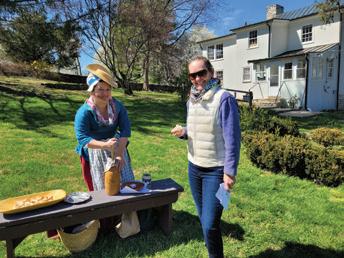
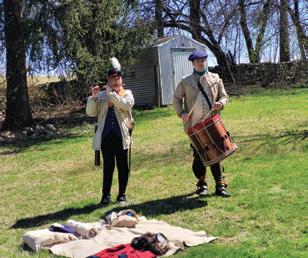
The Virginia Piedmont Heritage Area recently held an open house on exploring the Virginia Piedmont’s vital role in the early fight for American Independence, where bold ideas, local voices, and history itself intersected. Set in early 1776, the event brought to life the push for liberty’s rapidly building momentum, with living history reenactors, limited time exhibits, and interactive storytelling at th
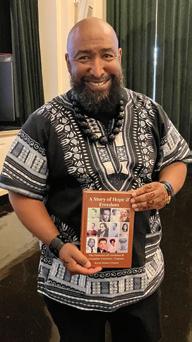
As the nation celebrates its 250th anniversary, the Middleburg Library has launched an American history series featuring presentations by local authors and historians. Author Kevin Dulany Grigsby recently spoke about his book, “A Story of Hope & Freedom,” at the Middleburg Community Center.
Nicki Foronda (left) and Liz Billings (right) discuss butter making.
Thomas DeRose (left) and Ian MacDougall (right) demonstrate colonial era fife and drum music.
Photo by Donna Strama
At Grandeur Antiques, a Collector Treasure Trove
By Leslie VanSant
Most humans spend a lifetime collecting things. Over the years, one’s list of possessions often grows to include furniture, art, decorative arts, jewelry, clothing and more. Items can be useful, decorative, whimsical or a combination of all three. Still, when one’s time on this earth comes to an end, our relatives and friends have been facing the same question since the Stone Ages: What do we do with all of this stuff?
Enter Rachel Harshman. She’s been a part of the local equestrian and social scene for decades, but last November, she opened Grandeur Antiques at 7 West Washington Street in Middleburg. She expanded it in June to also include a vintage clothing boutique.
But it’s her “side hustle” that makes the shop stand out.
Estate sales.
She described a journey that started by attending estate sales looking for antiques, to one of helping families divest. Now, she handles the sale of estates of all sizes and shapes, usually 20-25 per year, across the mid-Atlantic. A typical estate takes anywhere from two to six months to disperse, depending upon the items.
“All estates have a mix of wonderful and not-so-wonderful items,” Harshman said. “Tastes change over time and periods go in and out favor in the marketplace, but craftsmanship never goes out of style.”
This fall, Harshman will offer select clothing and other items from the estate of the local equestrian, philanthropist, and conservationist, the late Rose Marie Bogley. She was known for her style and grace, with outfits designed for her by Bill Blass and Oscar de la Renta among others.
“We’ll be hosting an evening event in the shop to showcase this collection,” Harshman said, so stay tuned f0r further details Middleburg.
Not all of Harshman’s estate clients are deceased. She also offers the same services to the living who recognize that not all of their treasures will be appreciated or needed by their loved ones. Their adult children or nieces and nephews may not have room for more things. The shop provides a way to disperse and clean out, giving new life to old things.
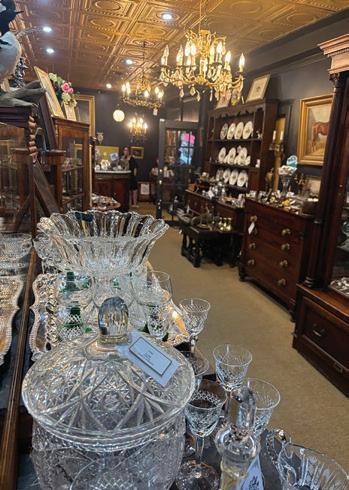
Visitors to the shop can find statement pieces of furniture, entire sets of china, smaller items and the clothing boutique. A wedding registry is offered for couples seeking unique items to start their lives. A set of mid-20th Century sterling silver and porcelain coasters with a variety of birds, the result of a collaborative effort between Frank M. Whiting Silver Co., Delano Studio and the naturalist Dennis Puleston, is an example of a unique and useful gift that can be found in the shop.
“Every object has a story, a history,” Harshman said. “And it’s nice to showcase them.”
Photo by Leonard Shapiro Grandeur Antiques offers a wide variety of must-have collectables.
Art Comes to Life at MCCS
By Katie Charnley
Art is not simply something to observe. It’s something to experience, question, create, wear, explore, or share.
That spirit came to life at Middleburg Community Charter School (MCCS) during ArtFest, a special evening of hands-on learning and creativity held in conjunction with Art in the Burg in May.
The event brought together scholars, families, educators, and community partners for an evening celebrating the arts and connecting creativity to history, innovation, sustainability, and experiential learning.
For MCCS, ArtFest was a natural extension of the school’s Arts Integration mission. Throughout the evening, scholars and families moved between interactive experiences designed to make learning visible, memorable, and engaging.
One of the evening’s highlights was the Trashion Show, where scholars transformed recycled and repurposed materials into wearable works of art. Students took to the runway in original creations that demonstrated imagination, problem-solving, and a new way of thinking about everyday materials.
What might have been discarded became the foundation for fashion, design, and artistic expression. The result was an energetic celebration of student voice and ingenuity, and a reminder that art often begins with seeing possibility where others may not.
Families also had the opportunity to engage with visiting educational partners, including the Learning Adventure Bus and Educational Enrichment for Young Patriots, which added interactive experiences connecting learning, history, and exploration.
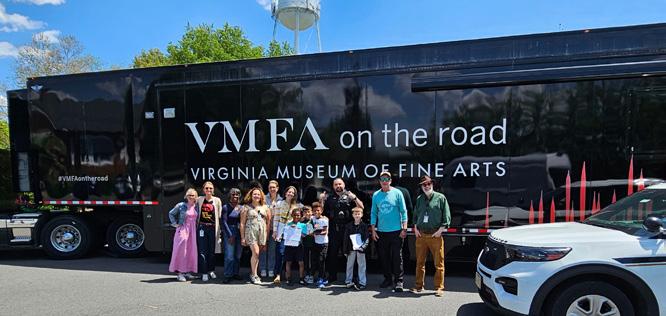
The centerpiece of the evening, however, was a visit from the Virginia Museum of Fine Arts Mobile Museum, bringing a museum experience directly to the MCCS community.
The mobile exhibition, connected to the commemoration of Virginia’s 250th anniversary, offered scholars and families an opportunity to explore art and history in a setting that felt both accessible and immersive. Rather than learning about Virginia’s story only through textbooks, students engaged with art as a lens for understanding the Commonwealth’s history.
The timing of ArtFest made the evening especially meaningful. Because it was held during Art in the Burg, the event connected MCCS to Middleburg’s broader celebration of artists and creativity. It reinforced one of the school’s core beliefs: the community itself can be an extension of the classroom.
For elementary-aged students, experiences like these matter. Bringing opportunities directly into the school community removes barriers and makes meaningful learning available to families in a shared space.
At MCCS, arts integration is not limited to an occasional project or special event. It’s part of how children make connections across disciplines, communicate ideas, and develop deeper understanding. ArtFest offered a visible example of what that philosophy can look like when schools, museums, educational organizations, families, and the local community come together.
From recycled fashion on the runway to Virginia history explored through museum-quality art, the evening celebrated creativity in many forms.
Perhaps most importantly, ArtFest gave students the chance to see that art is not separate from learning or from the world around them. Art can tell the story of a place. It can challenge us to rethink what we throw away. It can connect generations. It can transform a school, a community, and a child’s understanding of what is possible.
For one special evening in Middleburg, art truly came to life.
Experience the Exhibition Everyone is Raving About
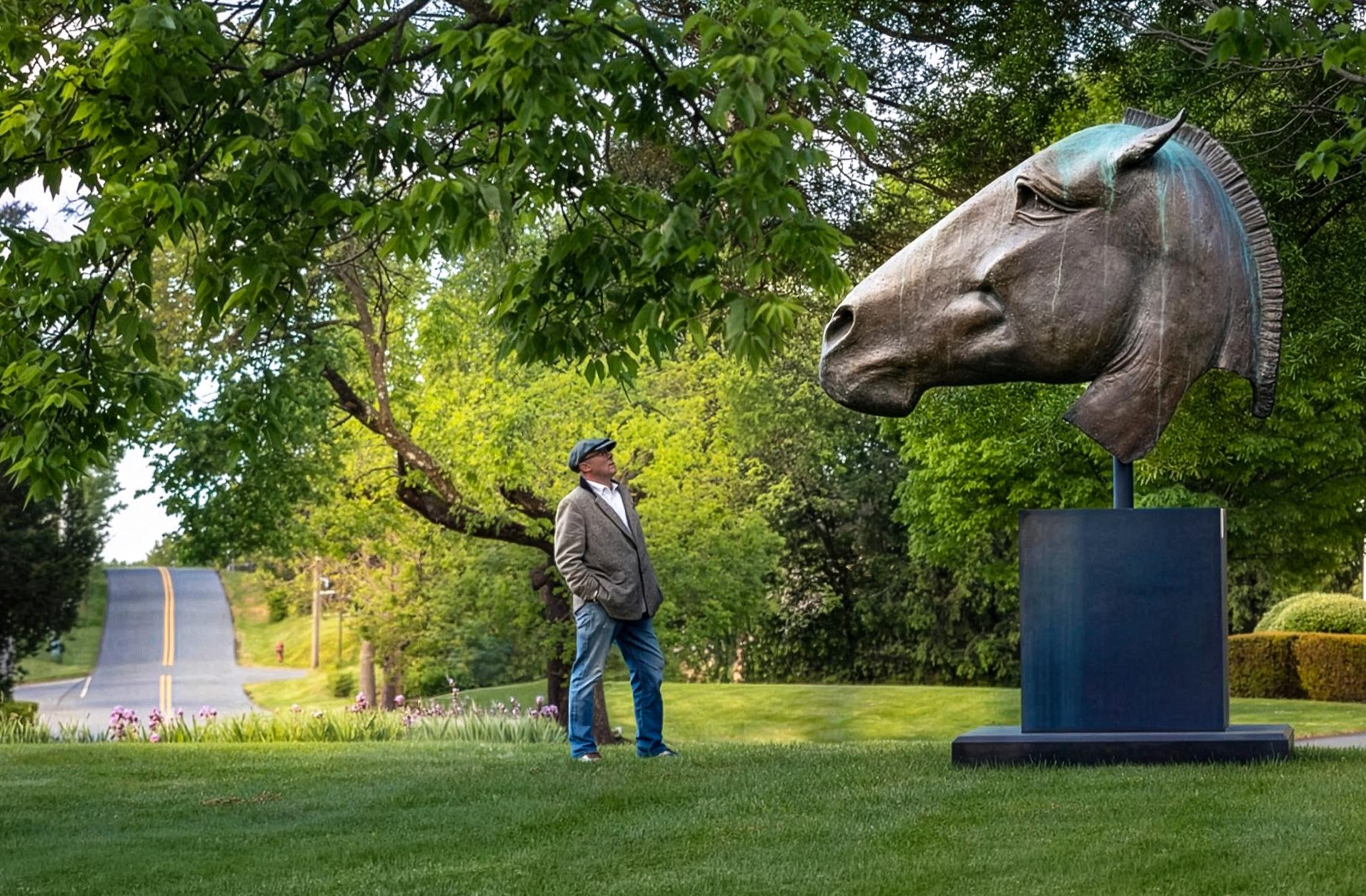
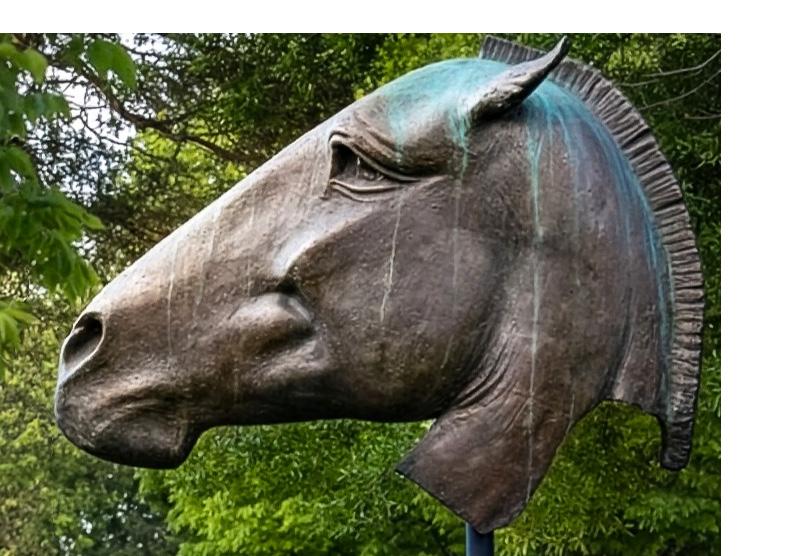
Photo by Hugo Bernand Nic Fiddian Green (British, b. 1963), Trojan Head cast 2018, bronze, #3 of edition of 3, 6 feet high, (excluding base), on loan from the artist
Middleburg Charter students had the Virginia Museum of Fine Arts Mobile Museum come to the school.
For Want of a Nail, the House was Lost
By George Rosenbaum
The year was 1987, Middleburg’s 200th birthday, when Mayor Loyal McMillan asked for my help. He was close to retirement and trying to convince the Town Council to create an Historic District Review Committee (HDRC). He told me he hoped it would be one of his last and most enduring official acts.
Middleburg had been designated as a historic district some years before. Mayor McMillan’s goal was to create a committee to review plans and grant Certificates of Appropriateness for construction within the historic district, which was two blocks wide by five blocks long.
At the time, a contractor had just taken down an old structure at the corner of Madison and Federal streets. Removal and upgrade plans were easily approved. Historic district documentation identified the structure as a small, insignificant house from the 1920s.
All the buildings in the historic district were surveyed during the documentation process. This 1920s house was not considered a contributor to the historic district. But once the building was razed, as a long-time builder myself, I could see the survey was incomplete. And I wondered if the documentation had been written haphazardly.
Almost all my work during that era involved restoration of old structures in Loudoun, Fauquier, Rappahannock counties, and the surrounding areas. One day, I heard that an old log building in town was coming down. I ran to the site and asked the contractor if I could have what was left. He obliged and we negotiated its transportation and delivery.
From the newly air-stacked log pile behind my house, I collected 50 or 60 hand forged nails, rusty and bent in odd ways. Each had a strange looking head and a flattened bottom for easier entry into the log, a true example of the forger’s craft.
On closer inspection, I identified three different types of hand forged nails. Of those three types, the majority were from the mid-1700s. It would seem
that the historic district survey misidentified that razed building on Federal St., probably because of exterior stucco updates made during the 1920s.
But behind that stucco façade, the logs, pegs, and nails told me a very different story: this was more than likely a 200-year-old Middleburg original in-town log home, crafted entirely by hand, perhaps by the town’s very first inhabitants.
Fast forward to 1987 and much of the historic district was now in the town’s residential area. On the site for these new homes sat a historic tollhouse, a building constructed well before most toll companies were replaced by the State of Virginia. But there had been no historic review committee to point that out.
We devised a plan for the next Town Council meeting: to give each member a small bag of these hand forged nails, our way to show them a piece of local history that needed to be protected. Eventually, the HDRC was created and I like to think those nails provided support and stability for past, present, and future residents.
At that point, a compromise was also reached to preserve the historic tollhouse. The HDRC made the arraignments and prepared to move it to a new location. It was lifted by crane and deposited on a truck while we held our collective breath hoping it would stay in one piece. We deeply inhaled
again as it took off across the new site, basically a field on the north side of Route 50.
But that was not its final resting place. The tollhouse now resides, completely restored, behind the Upper Crust Bakery on Pendleton Street.
By 1991, the HDRC also had the opportunity to restore the Pink Box on Madison St., now the site of the Middleburg Museum. Everything inside was moved upstairs so that the space could be used as a visitor’s center.
It was a fairly quick job with most of the work being done to the outside. We used heavy paint brushes and a low-pressure sprayer to apply the whitewash, a mixture of lime, water, and a small amount mortar to make it stick. To finish the look, we removed half the whitewash by hand with stiff brushes after it dried overnight.
And what happened to those hand-forged nails from the razed log house on Federal St.? They’re now on display at the Middleburg Museum. They all tell an interesting story. And they allow visitors to imagine handmade log homes and what life might have been like for the very first residents of the town of Middleburg.
George Rosenbaum’s daughter, Harley, a member of the Middleburg Museum board, also contributed to this story.
Photo by Harley Rosenbaum
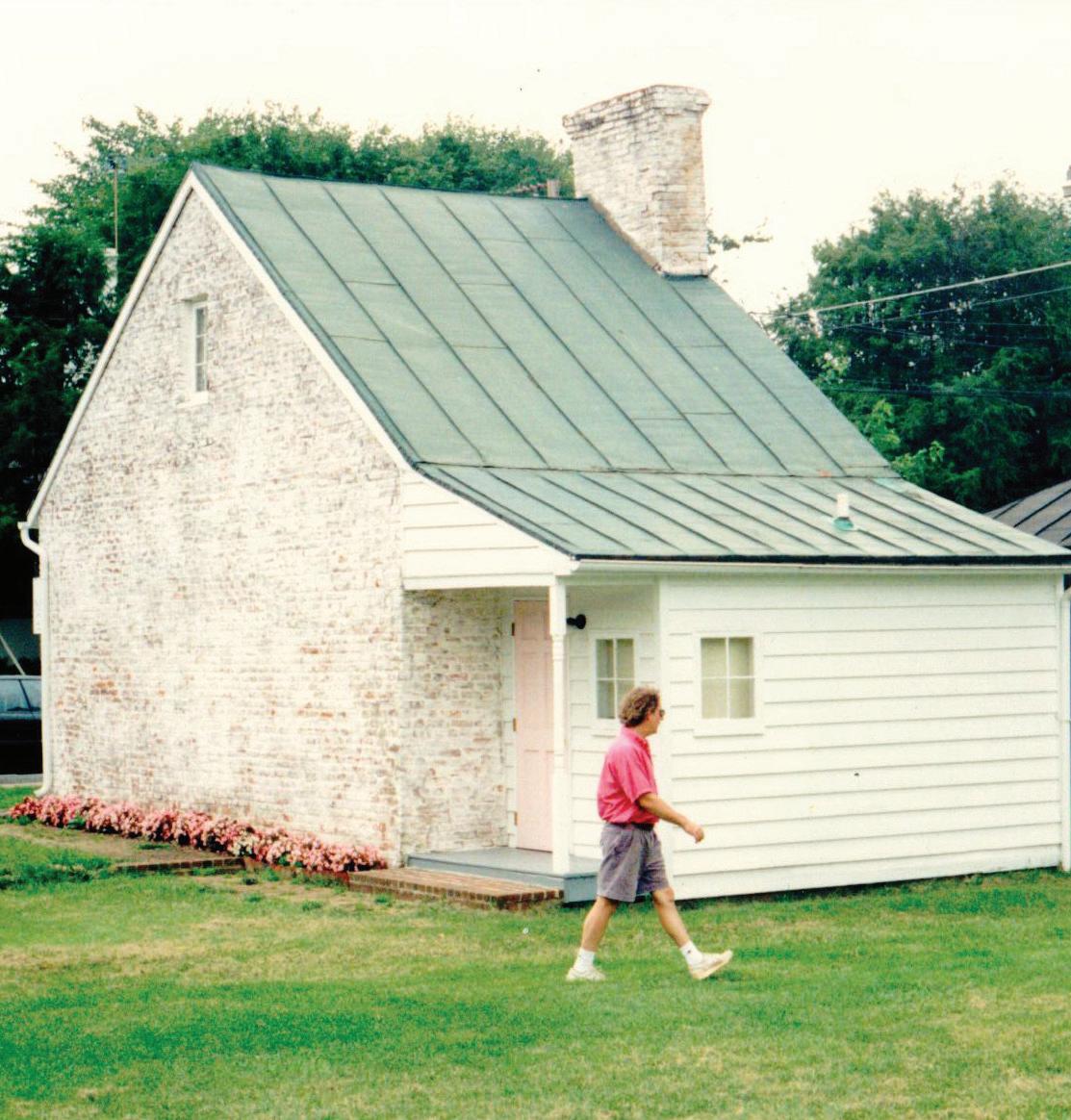
George Rosenbaum standing on the lawn of the Pink Box during is restoration in 1991.
By Poyntz Tyler
(Editor’s note: This story appeared in a 1939 edition of the New Yorker magazine)
Middleburg itself looks so much like a fugitive from a slum clearance program that at first it is hard to realize it is the center of what is probably the richest hunting country in the United States.
The chief landmark is a junkyard, many of its buildings are on the verge of collapse and sidewalks are almost a novelty, yet some of the proudest names in Dunn and Bradstreet collect their mail at its rickety post office and horses worth more than the assessed value of the town walk what are laughingly called its streets.
Yes, miscegenation of wealth and apparent poverty is one of many paradoxes that go to make it the most delightful community west of Greenwich, for absolutely nothing seems to be conducted in a normal or even reasonable fashion.
The bookmaker and the Boy Scouts dwell across the hall from one another in peace and amity. The liquor store and the Methodist Church share the same backyard without conflict in activities or ideals, and the mayor has been trying to ease himself out of office for the past six years.
Bill Luck, His Honor, is not lacking in a sense of civic responsibility, but is simply getting tired of being told that the municipal water tastes like carbonated gasoline (which it does) and dislikes fining his customers and friends for breaches of the alleged peace. At this writing, he feels hopeful that if Courtland Smith, the famous rider who has just moved into town, can be lured off the wagon for a few days, the robes of office can be slipped over his shoulders while resistance is low. This strategem failing, the incumbent swears that so far as he is concerned, Middleburg can revert to anarchy.
The police and fire department, under the direct authority and direction of Mr. Luck, are organized with a simplicity that might well be copied elsewhere. The former consists of a Chief of Police (until recently it was the thrifty custom to fill this position with the man otherwise most likely to become a public charge), and the latter consists of everybody in town who happens to be sober when disaster strikes. Modern equipment and the conglomerate good humor of the members has made this a force to be admired, but training by the trial and error method has brought its share of chaos.
Looking for the key to the station house is the most frequent cause of delay, but a minor inferno once raged merrily, while the vamps discovered that the apparatus couldn’t be maneuvered around a sturdy “No Parking” firehouse sign which they had erected out front in a laudable attempt to keep automobiles from blocking the entrance. The loss was fully covered by insurance and the sign has been moved up the street where it can be seen and ignored by everyone.
OH, LITTLE PARADOX IS MIDDLEBURG
Fox hunting and it’s byproducts are the main industry (the estimated cost of killing each fox under this system is just south of $60,000 and there is treasonable talk among the farmers about it).
The business section is not without variety and bustle. Four grocery stores cater to customers of any color or creed, and the daily business of each is determined more by the personality of the clerks than excellence of merchandise or comparative prices. Two drugstores guard the local health (and substitute for the ABC shop on Sundays) and two hardware stores, facing each other, and selling exactly the same thing, represent heavy industry. The town’s only restaurant, where some very nice Greeks serve very monotonous meals at prices borrowed from the Colony Club, has captured the prepared food market by the simple expedient of leasing all available locations that might tempt a competitor.
These, with a bank, three filling stations, a clothing store, two antique shops, a Five-and-Ten and two gift shops (one of them under the roster of trade) while the arts are served by a newsstand, whose proprietor was married through a lonely hearts club advertised in a slow moving item on his own shelves and a newspaper which invariably seems like last week‘s issue under a new dateline.
The most recent manifestation of civic enterprise is a free clinic, which was equipped and presented to the town by Paul Mellon. Outside of the liquor store and the bank it is the most imposing lay edifice on the skyline, but since Mr. Mellon has guaranteed its upkeep for only two years, it may die of malnutrition at the end of that period. So far its outstanding success has been the discovery of an alarming prevalence of spirokeets in the servant’s wing of every house in the neighborhood.
Save in the question of establishing a state liquor store (everybody in town signed the petition at least twice) the community of 300 has split diametrically on every important issue since the unanimous vote for secession in 1861. Schism, for example, reared its ugly head recently when Henry Frost Jr. sold a hunter to Errol Flynn right under Liz Whitney’s nose and it is likely to stay rampant until some decision is reached in the matter of dial telephones—the current controversy.
One school holds that despite the phenomenal advance of science, no dial has yet been invented that can give you a tip on the races while locating an errant husband, and the other maintains, with some heat and justification, that no operator has yet been born who can perform those chores and still give you the right number—or sometimes any number.
That, ladies and gentlemen, is Middleburg. It’s the “heart of the Hunt Country,” but not one citizen in ten can ride a horse and were it not for the signs on the road, not one tourist in one million could tell it from Pine Needles, Arkansas.
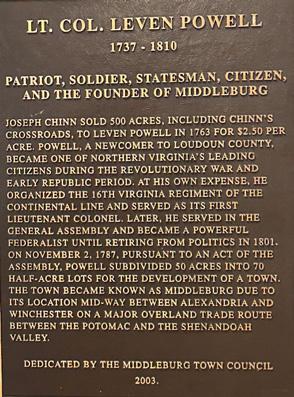
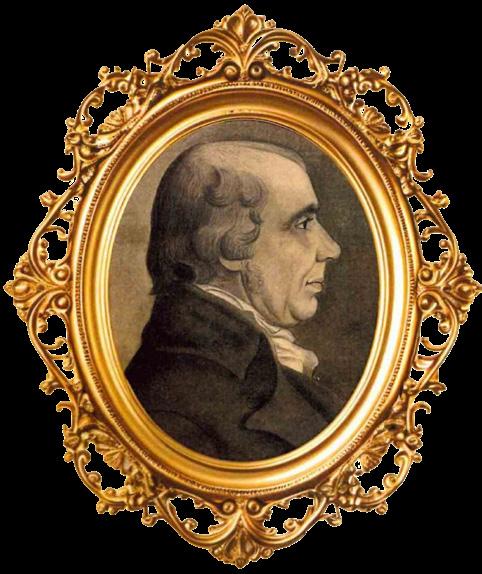
TOWN, THE PARADOX THAT MIDDLEBURG Lt. Colonel Powell, Founder of Middleburg
By Dorsey deButts, president of the Middleburg Museum
The Middleburg Museum offers shared histories, interests, and values that hold our community together, for example: the history of native Americans who inhabited the area; the history of African Americans in the community; the Goose Creek watershed environment; the Revolutionary and Civil Wars. Lt. Colonel Powell, founder of Middleburg and noted Federalist is the subject of a new exhibit at The Middleburg Museum. Included in the display is the history of the Powell family and the story of enslaved American Hagar Randall among numerous items. A portrait of Powell donated by descendant Tim Dudley and a Fairfax Harrison map of the area loaned by the late Tucker Withers are included. The exhibit will remain on display through Fall 2026.
11 AM - 4 PM Friday - Sunday
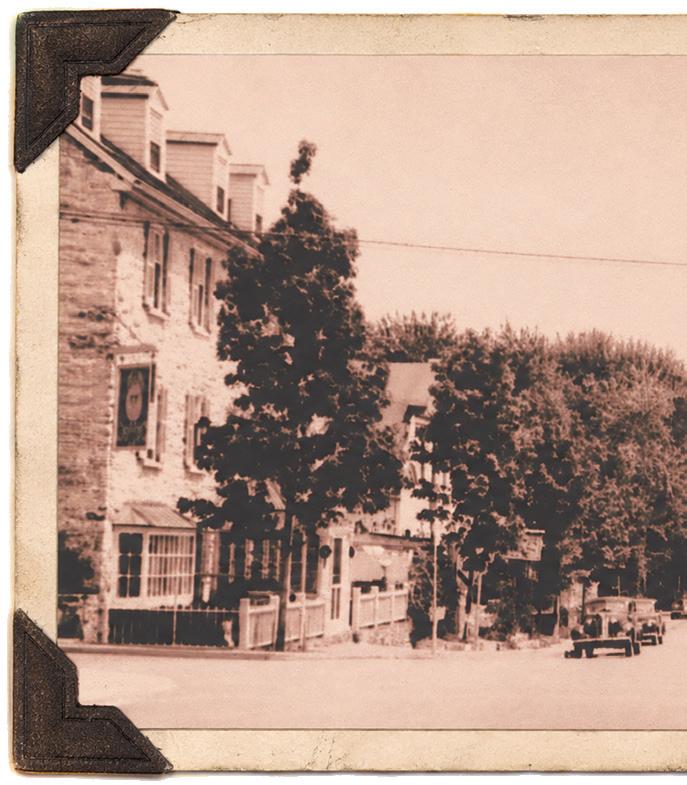
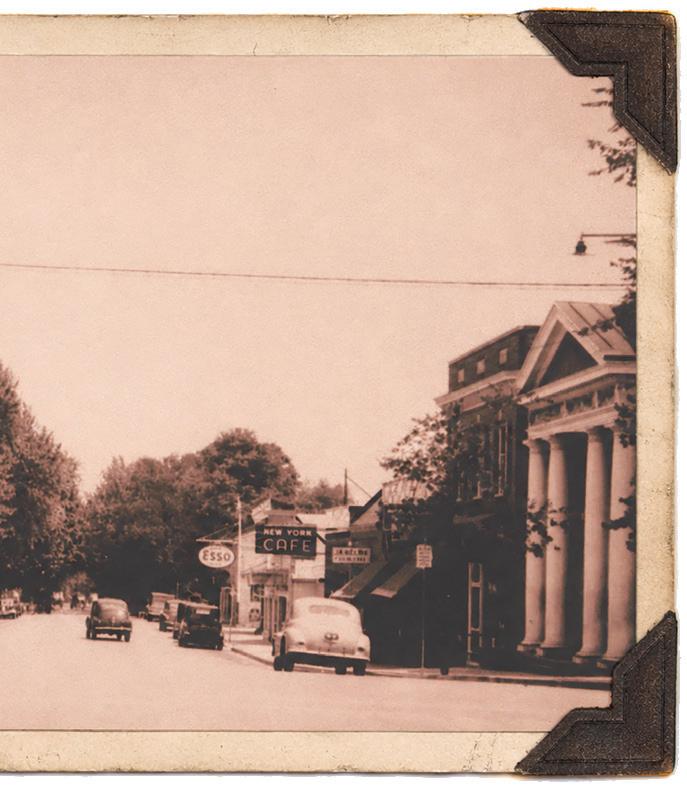
Photo courtesy Town of Middleburg Downtown Middleburg back in the day, complete with the New York Cafe, Esso gas station and the Middleburg Bank.
COLONIAL DOWNS THOROUGHBRED RACING
• Summer Meet: June 25 - September 7 every Thursday thru Sunday afternoon
• Located in New Kent, VA at I-64, Exit 214 halfway between Richmond & Williamsburg
• Free Parking/Free Admission with wagering on all races
• Enjoy steeplechase races on June 29, July 23, Aug. 13 & Sept. 3 (details at colonialdowns.com)
SHENANDOAH DOWNS
• Spring Meet: April 11 - May 24
• Fall Meet: September 19 - November 1
• Located in Woodstock, VA at I-81, Exit 283 halfway between Winchester and Harrisonburg
• Free Parking/Free Admission with wagering on all races (details at shenandoahdowns.com)
STEEPLECHASE RACING/TAILGATING
• Point-to-Point Meets: Weekends in March & April
• Middleburg Spring Races: April 18 at Glenwood Park
• Foxfield Spring Races: April 25 in Charlottesville
• Virginia Gold Cup: May 2 at Great Meadow in The Plains (details at nationalsteeplechase.com)
West Virginia Breeders Classics Will Celebrate 40 Years
By Bill Cauley
The late Sam Huff ’s vision of a major horse racing event in West Virginia’s Eastern Panhandle is celebrating a special birthday this fall.
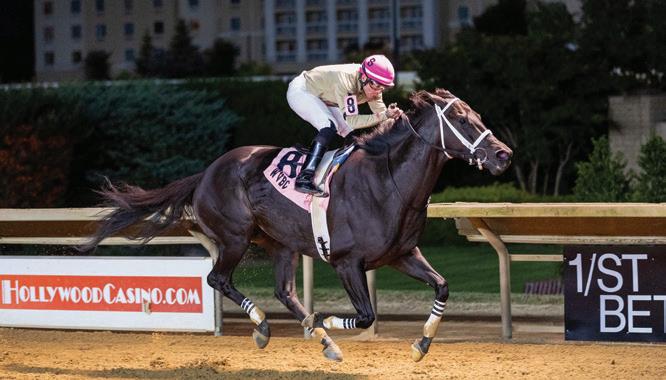
The 40th West Virginia Breeders’ Classics series will be held Saturday, Oct. 10 at Hollywood Casino at Charles Town Races. This gala event has become a multi-million dollar operation, growing in popularity and has been credited with saving the horse racing industry in the Mountain State.
While it’s the 40th edition of this prestigious venture, the number “10” is quite prominent when describing what’s in store for owners, trainers, jockeys and the local horse racing circuit.
“The Classics will be held on 10/10 (Oct.10) and there will be 10 races on the card,” said Carol Holden, president of the WVBC. “We’re still putting things together in advance of the races. There are a lot of things in the works and we’ve got a lot of work ahead of us as we continue to get ready for what is going to be another exciting event.”
It all got started in 1986 after Huff and Holden attended the Maryland Million at Pimlico Race Course in Baltimore. Knowing horse racing in West Virginia at the time was struggling, Huff wondered why West Virginia couldn’t put on such a successful event.
An NFL Hall of Famer who lived in Middleburg, Huff’s career included successful stints with the New York Giants and Washington Redskins (now Commanders). He worked his magic behind the scenes, convincing horse racing folks in the region this could be a successful venture.
The first WVBC races took place in 1987, with Onion Juice winning the featured race. This year’s total purse is expected to be around $1 million, Holden said. The featured race is now called the Sam Huff Classic, with an estimated purse of $300,000.
“We don’t know just yet where the featured race will appear on the card,” Holden said. “But I do know it will be one of the later races.”
In addition to the scheduled races and all of the festivities on the racetrack grounds that day, two popular horses will make their final appearance at the track. Although, neither horse will be running, Muad’dib and No Change are retiring and will make one final parade in front of the grandstand.
Muad’dib won back-to-back Huff Classics in 2021 and 2022. No Change won the last three Onion Juice Breeders’ Classics’ races.
We’ve done this before, have some former winners parade on the track when they’re retiring,” Holden said. “It’s kind of a nice thing to do.”
Race day activities at the track include live entertainment, lots of food and drink, a kids’ area and other events celebrating what has turned out to be a big day in Charles Town, as well as the rest of the state.
In advance of race day, the event is featuring its annual gala on Friday, Oct. 9 at Beau Ridge Farm in nearby Kearneysville, a thoroughbred breeding facility. There’s also the annual Sam Huff Golf Classic on Friday, Oct. 9., at Locust Hill Golf Club in Charles Town.
That event also benefits numerous charities in the area and draws some former Washington NFL players coming to play golf as well as share memories of many past good times, on and off the field.
Details: Go to wvbc.com.
Photo by Tim Sudduth of Eclipesportswire.
Last year’s winner of the Sam Huff Classic
The Power of “Special Arts”
By Laura Longley
by Sarah Huntington
What perfect timing for a “Special Arts” show. Just as the nonprofit Artists in Middleburg (AiM) began surveying area teachers about their art needs for the fall of 2026, its Middleburg gallery opened photographer Sarah Huntington’s “Special Arts” exhibit spotlighting the thriving arts inclusion program at Loudoun Valley High School.
The Hill School offers an education as unique as your child. Come visit our community to learn how our program of Total Education – strong academics and meaningful participation in art, music, sports, and theater – helps build character and confidence in our students and gets them started on the path to being happy, successful adults.
Voted Best Private School in Loudoun County for Seven Consecutive Years
Photos
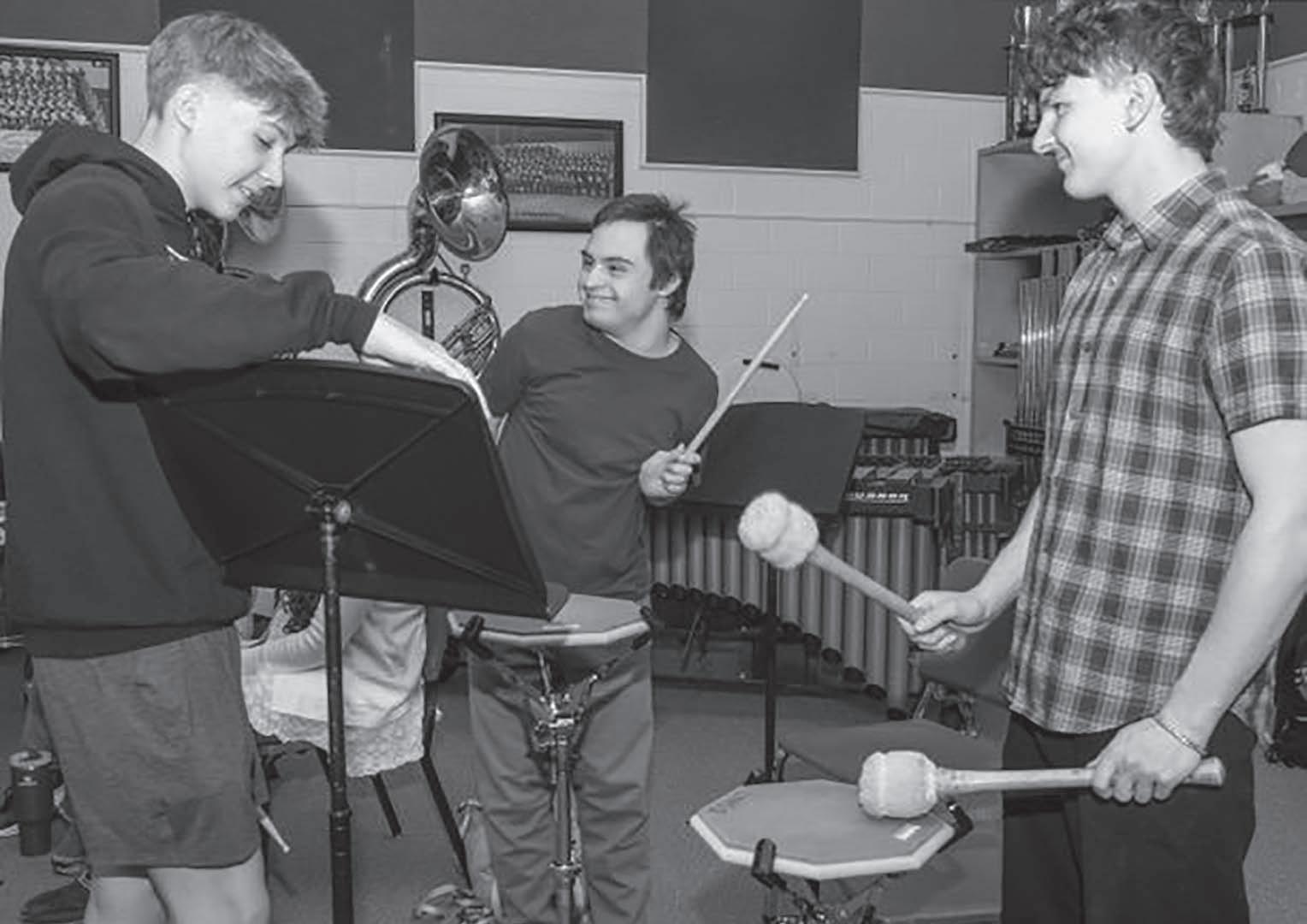
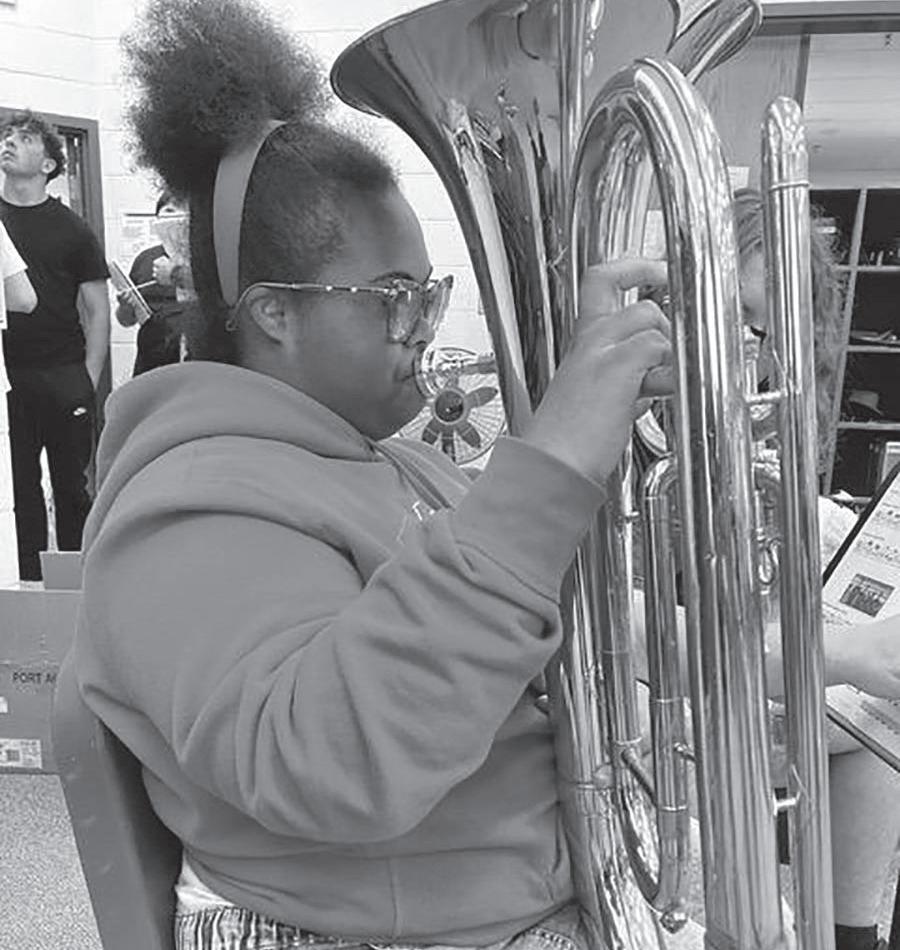
“A United Sound” class at LVHS where percussion is contagious.
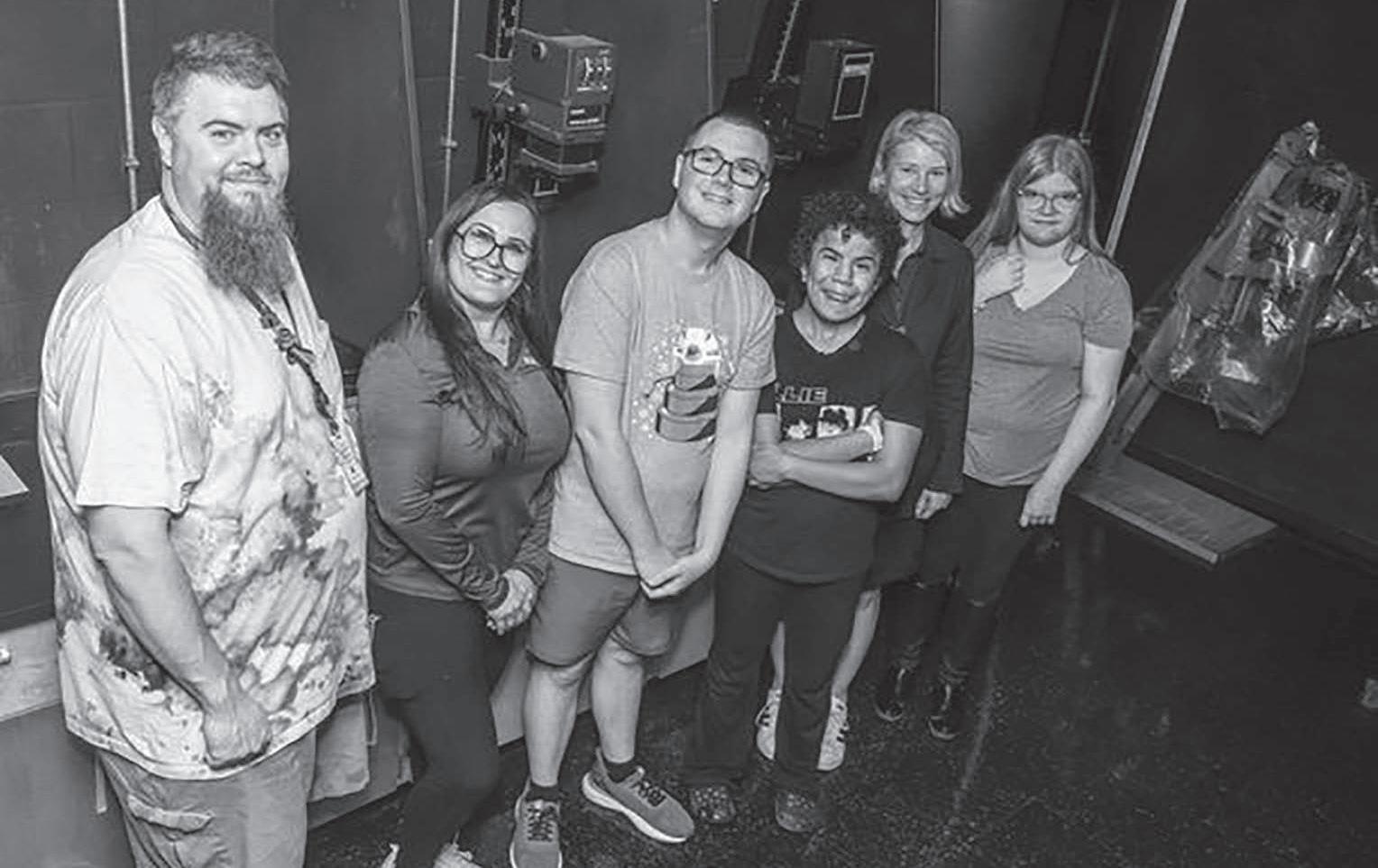
Watching what develops In the photography dark room.
Huntington, also an LVHS teaching assistant, told the opening crowd in June about her inspiration for the series of black-and-white images as she highlighted the supportive culture at Loudoun Valley High School.
“Over my nine years at Valley, I’d become very impressed with what the kids were doing in the arts classes,” she said. “Then, last Christmas, I attended a Capital Winds concert that featured some of our students and their mentors from the LVHS United Sound program. I was so moved by their joy and performances that I told myself I should document the programs to show how both the visual and performing arts are essential to each and every student’s education.”
“A program like Valley’s can succeed only with the support of the parents, teachers, and principal—and at Valley that’s principal Sue Ross, fine arts chair Matthew Herbert, visual art teacher Courtney Kincaid, and Megan Stallings, who heads the music inclusion and peer mentor program.” Huntington made a
particular point of introducing special education teacher Ella Hopson, who has focused on supporting students with diverse learning needs throughout her 40year career in Loudoun schools.
With private donations and grant support from organizations such as Middleburg Charitable and PATH foundations, AiM’s member artists currently collaborate with Foxcroft, Banneker and Middleburg Community Charter. Since 2017, AiM has conducted art therapy programs at Claude Thompson Elementary School.
In particular, AiM executive director Sandy Danielson hopes that itslatest outreach effort to area principals will lead to more connections that help make the arts an integral part of all local students’ learning.
Details: Learn more at sarahhuntington.com and theartistsinmiddleburg.org.
The essence of expression in the painting and drawing class at Loudoun Valley High School.
The power of brass.
BEVERLY AND WAKEFIELD: A Match Made in Horse Heaven
By Ali Patusky
Most students earn their physical education (PE) credits in a gymnasium. At Wakefield School in The Plains, some earn it in the saddle.
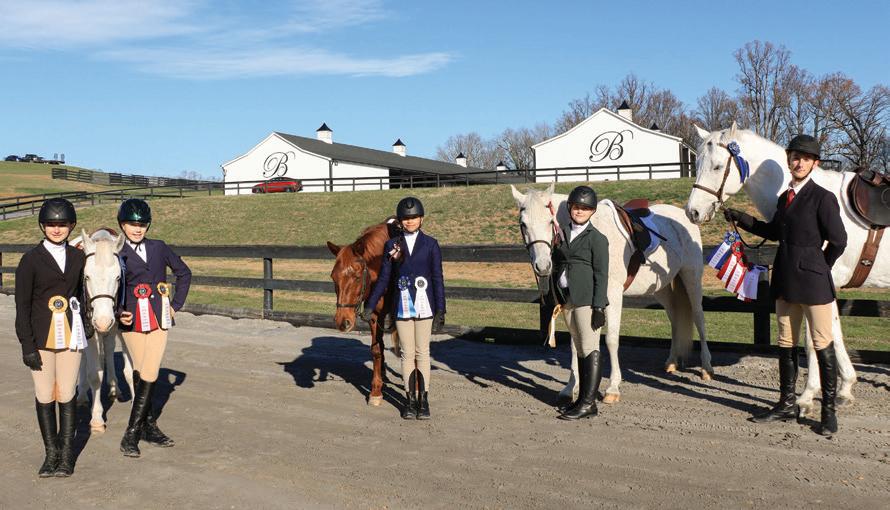
Since 2014, Wakefield has offered an option to its Middle and Upper School students to travel offsite to nearby Beverly Equestrian to take lessons on horses provided by the barn and to compete. Middle schoolers leave during their PE block for lessons at the farm twice a week, while Upper School students practice after school two to three times a week.
“They’re real student athletes,” said Darrin Mollett, owner and founder of Beverly Equestrian and the team’s program coordinator. She began collaborating with Wakefield when then-Head of School Brian Oliver reached out to her with the idea, given Beverly’s high quality facilities and proximity to the school.
The team competes in Interscholastic Equestrian Association (IEA), Virginia Horse Show Association (VHSA) and United States Equestrian Federation (USEF) shows. IEA offers competition levels from classes on the flat to those over cross rails to 2-foot, 6-inch jumps. The tricky part is that riders have to “catch ride,” meaning they arrive at a barn, pull a horse’s name out of a hat and compete with little to no warmup.
Mollett explained how coach Siobahn McBride helps prepare the team for this challenge.
“IEA is based on the rider’s equitation, not the horse, like in hunters,” she said. “Only the rider is judged because they’re not bringing their own horse. So we focus a lot on correct position, effective use of the aides, poles, correct diagonals, picking up the correct lead, good
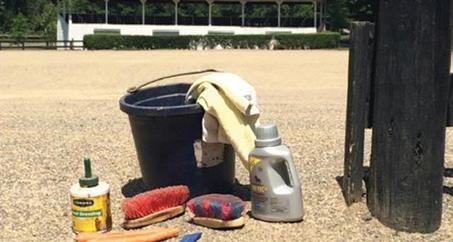
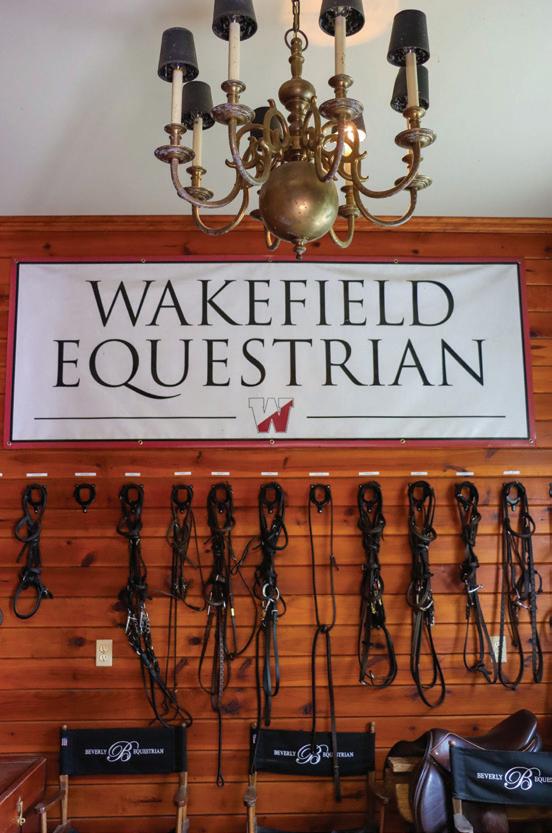
Plenty of tack for the Wakefield students.
approaches, things like that.”
Hazel Smith, a rising eighth grader who had been riding for five years before joining the team last year, said she’s had the opportunity to learn from lots of horses, including her favorite, a chestnut mare named Ruby.
“I was able to ride so many unique horses, and it really helped my riding,” she said. “They’re all really sweet and they take care of you. My whole life I’ve loved horses, and when my school has an equestrian team, I don’t want to miss the opportunity. It sounded like a really fun experience, and it was.”
Beverly also offers on-site shows for riders to get competition experience beyond IEA. That’s especially beneficial for beginners.
“A lot of our riders who were very committed couldn’t actually compete on the IEA team because they weren’t ready,” Mollett said. “It just wouldn’t be safe to take a beginner and put them on an unknown horse. So we started using the Beverly at-home shows for them to get some show mileage on a familiar horse in a familiar environment, and that was great.”
Despite problems with shows cancelling last season, Mollett added that those who did attend helped develop the skills of riders in the saddle and as people.
“Our thing is the Wakefield Way which is to have good sportsmanship,” she said. “Equestrian sports being both male and female, all ages, you can have a sixth grade boy and a 12th grade girl and they’re all practicing together. All the divisions work together towards a common goal.”
Tess Finley, a rising junior who had only ridden a handful of times before joining the team, said her
favorite part is the “camaraderie.”
“I like riding on the Wakefield Team at horse shows in all kinds of weather,” she said, “including freezing cold, hot and humid, rain, sleet and snow. This always leads to fun memories.”
And she’s learned plenty in the program.
“I had two involuntary emergency dismounts in one week but did not get discouraged,” she said. “This made me realize that I can do anything I set my mind to, despite the difficulties. I love riding because it is a happy place for me as my mind is quiet and I
AVAILABLE SALES
MARSHALL GRADED SALE
Drop off Thursday, the day before the sale – 7:00AM-3:00PM Friday, August 14th @ 10:30AM Friday, September 11th @ 10:30AM 7404 John Marshall Highway Marshall, VA 20115 540-364-1566
MARSHALL POULTRY AND SMALL ANIMAL AUCTION
Animal Take-in day of the sale from 8:00AM- 11:00AM
Contact: The Office (540)-364-1566
No Puppies or Kittens
No out of state birds
All poultry to be in cages -25% commission on ALL ITEMS
Held at the Fauquier Livestock Market
CULPEPER GRADED SALE
Drop off Thursday, the day before the sale – 7AM-3PM Friday, August 7th @ 10:30AM Friday, September 4th @ 10:30AM 10220 James Monroe Highway, Culpeper, VA 22701 See Culpeper Sale Barn Tab For More Information!
QUESTIONS:
STAN STEVENS (540) 631-3523
PO BOX 247, Marshall, VA 20116 7404 John Marshall Hwy, Marshall, VA 20115 (540) 364-1566 FauquierLivestockExchange.com FauquierLivestock@yahoo.com CALL NOW TO CONSIGN YOUR ITEMS!
get to hang out with beautiful horses.”
Looking ahead to next season, Mollett said this type of exposure to horses is the core of the program.
“The goal is what we’re achieving—making great, capable riders that have good attitudes and work really hard,” Mollett said. “So it’s not about making it to finals, although we’ve had some do that. It’s really about getting great experience, exposure to horses and representing the school. We’re grateful to the school for all their support, and all the parents. We love the program.”
Wakefield students (l-r) Hazel Smith, Kiera Enloe, Lilliana Royster, Leah Simonett and Landon Nilson.
PRESTON THOMAS: A Scientist Turned Winemaker
By Kiernan Slater Patusky
Dreams of becoming a trauma surgeon and playing collegiate golf led Slater Run Winemaker Preston Thomas to the University of Tennessee.
As he was finishing his dual degree in biochemistry and molecular biology, he was accepted into the Medical College of Georgia in Augusta, where he believed his ultimate aspiration had come true: attending a great medical school located in the city that hosts The Masters, one of the most prestigious golf tournaments in the world. What could possibly top this scenario?
A late-night conversation revealed that wine was the answer.
During Thanksgiving break, Thomas and a friend tapped into a box of Franzia White Zinfandel found in the family fridge, which spurred conversation that bled effortlessly into the night. From there, he began to appreciate the unique social quality of wine.
“I got into wine as much as I could in college,” Thomas said. “Every Friday, I would buy wine to try to educate myself. I really got into it once I realized that there was a science behind it.”
As Thomas finished his senior year, he changed his mind about medical school. He considered a PhD in genetics, but then a friend suggested, “You really like wine. You have a science background. Why not winemaking?”
Thomas had never considered it, but thought, “What’s the harm in doing a harvest internship?” He was offered several opportunities, and chose the one that provided housing and moved into a camper in the vineyard at Andis Wines in Amador County, California, in 2015.
As an intern, Thomas started with basic labor, like walking “around the property, morning and night, with a bucket of citric sulfur and a toothbrush, to clean bird poop off of everything I saw.”
Eventually, he was invited into the cellar by Winemaker Mark McKenna.
“I was able to see how my science education could apply,” he said. “I started to realize that there’s so many moving parts and so many things you can’t control about grape growing and winemaking that I’ll never perfect it. That really drew me in.”
McKenna encouraged Thomas’s growth by helping him get his next job as a cellar hand at Domaine de la Terre Rouge under one condition: “Every Friday I would come with a six-pack of beer and a list of questions that I had asked the winemaker at Terre Rouge, and then I would ask Mark the same things. His idea was that you should always have at least two answers to the same question, because there are many ways to go about this job. The more different ways you can understand how to do it, the quicker and more efficiently you’ll find your way to make wine.”
After a few years, Thomas wanted to return to the East Coast to be closer to family. He had a one-year stint outside of Asheville, North Carolina, and then landed at Stone Tower Winery in Leesburg, where he
progressed from Associate Winemaker to Director of Winemaking and Viticulture during his sevenyear tenure.
“It was cool to take it from the 45 producing acres made in one facility when I started to the 100 acres planted and in two facilities when I left,” he recalled. “It was difficult to leave because a lot of who I became also happened in conjunction with Stone Tower becoming who it is. I think I became an adult at Stone Tower.”
In 2024, Thomas moved from Stone Tower to Florida with his wife, Ali, and their two children to advance her career. While Thomas kept his hand in wine through barrel sales and by starting his own canned wine company, Tirage, he was excited to get back into the cellar and back to Virginia when Ali’s training ended. This time, he landed at Slater Run Vineyards to
work full time with Head Winemaker Katell Griaud. Griaud lives in Charlottesville and comes to Slater Run about once per week, so Thomas manages the day-to-day operations.
As he gets to know Slater Run, he will take on duties beyond the cellar. Thomas will bring his experience to all aspects of the business: helping to monitor the vineyard health, refining complicated business metrics, and interacting with guests to share his expertise as a winemaker.
Thomas is a scientist, but he knows that wine is more than chemistry: “The best bottle of wine is not just the best tasting,” he said. “It’s the wine that’s associated with the strongest memory. It’s the company, the dinner, whatever the atmosphere is. I believe that.”
Kiernan Slater Patusky and her husband Chris Patusky founded and own Slater Run Vineyard in Upperville.
Photo by Christopher Patusky Winemaker Preston Thomas
The 1943 Murders at The Love Farm
By John Toler
At the close of the September, 1943 murder trial of Thomas William “Bill” Clatterbuck, Loudoun County Prosecutor Charles F. Harrison described the brutal killings at the Love home near Purcellville as “…the worst crime in the history of this county.”
Killed during Clatterbuck’s brief frenzy of violence were A. Morris Love, 58, his wife, Ruth Love, 55, and their son James, 22. Clatterbuck then ambushed farm worker Walter Russell, 38, in the field near Loves barn, then shot Russell’s wife, Katheryne, 28, in the kitchen of their tenant house. The Loves’ daughter, Sarah, a teacher at Aldie High School, was spared because she was at school grading papers on the morning of the murders.
Circumstantial evidence, eyewitness accounts and a detailed confession by Clatterbuck shortly after his arrest on June 2, 1943 proved that he had acted alone. And while the case was solved quickly, the trial and conviction took far longer.
Clatterbuck was a casual friend of the Loves, and operated a stone crushing and hauling business in Loudoun. His business grew slowly, but got a boost when he secured a contract to haul sand and gravel to the Army hospital under construction in Martinsburg, West Virginia.
Needing more money for his business, Clatterbuck borrowed heavily from five local banks, exhausting
his available credit. He borrowed from his brothers, John and Meredith, and forged their names as cosigners to get new loans, including $2,500 from Morris Love.
Due to wartime scarcities, it became difficult to get tires and gasoline for his trucks. Later, the two men driving for him were called up for military service. Bedridden for weeks with knee problems, Clatterbuck was down to one truck when he returned to work. The Army was slow to pay him, and took their business elsewhere.
A hearing about the forgeries was scheduled for June 1, 1943 before Loudoun County Trial Justice W. A. Metzger, but Clatterbuck managed to have it postponed. However, what happened at the Love farm that day was far worse than anyone could have imagined.
The night before, Clatterbuck called the Love home, and told Ruth that he was coming by at 8:30 a.m. the next day to “settle up” with her husband. A neighbor on the party line, Annie B. Lawson, unintentionally listened in, and recognized both Ruth’s and Clatterbuck’s voices. As events later unfolded, the overheard conversation would be crucial to the case.
Clatterbuck arrived at the Love home at 8:30 a.m. on June 1 in his 1939 Chevrolet. Entering the front gate, he saw Morris and James entering from a lower gate, and joined them, engaging in small talk as they entered the house through the dining room porch door. Morris soon returned alone to the front porch,
where Clatterbuck was waiting, and produced a copy of Clattterbuck’s loans.
The conversation began calmly, but when Morris told Clatterbuck he was going to have him prosecuted for forgery, Clatterbuck grabbed a mallet from a croquet set behind Morris, and struck him on the head at least twice, killing him. He then gathered the loan documents and checks and covered the body with a mattress ticking.
As he walked toward the dining room, Clatterbuck was confronted by James, carrying a .22 caliber single-shot rifle. Unaware of the murder that had just taken place, James asked Clatterbuck what was going on. Clatterbuck grabbed the rifle, struck James with the gun and then shot him in the chest. As James lay bleeding on the dining room floor, Clatterbuck hit him in the head with the rifle butt.
As he stood over James, Rose walked in from the side porch. Witnessing the scene, she screamed, and Clatterbuck shot her at close range, then left the house looking for the Russells. He was sure they had heard the shots.
Hiding the rifle behind his back, Clatterbuck approached Walter Russell, who was in the field thinning corn. He engaged Russell in small talk until he was about four feet away, then pulled out the rifle and shot him in the chest, then delivered several blows to his head with the rifle butt before leaving to find Russell’s unsuspecting wife.
Entering the tenant house, Clatterbuck
Main house of the Love family near Purcellville, photographed in 1943.
Winslow Williams PhotoCollection, Thomas Balch Library, Leesburg, Va. Loudoun Sheriff Paul Alexander
encountered Katheryn Russell at the kitchen sink. He moved close and shot her in the torso and then the head.
In a futile effort to frame Walter for the murders, Clatterbuck placed the rifle and unspent cartridges next to his body, and put the billfold he had taken from Morris in Russell’s pocket.
He then returned to his car and headed to Leesburg. In an effort to destroy any evidence, Clatterbuck drove into the lane that led to the courthouse parking lot, then tore up and burned the letters and checks he had taken from Morris.
Back at the scene of the crime, door-to-door salesman Worth T. Blevins had just completed an order at the home of Mrs. Fenton Piggott, who lived across the road from the Love farm. He noticed a car stopped inside the gate, and saw the driver exit and re-enter the vehicle from the passenger side. From the distance, neither he nor Mrs. Piggott could identify the driver.
Blevins then walked over to the Love farmhouse, and while on the porch, quickly spotted Morris Love’s body. He ran to the Russell tenant house for help, but he found no one there.
He returned to Mrs. Piggott’s house and told her something terrible had happened. They went over to the Love house, and finding the bodies of James and Rose, called the police and the coroner. When the police arrived, they went to the tenant house and discovered the body of Katheryn Russell. Later they found Walter’s body in the field.
At first there appeared to be no apparent motive or clues to the identity of the perpetrator, but the case started to come together when investigators, aided by Sarah Love, went through Morris Love’s ledgers and found the information regarding Clatterbuck’s loans was missing.
Loudoun Sheriff Paul Alexander and members of the Virginia State Police worked on the case all day June 1. Armed with the financial records and interviews with neighbors, including Annie Lawson
and Mrs. Piggott, by 6 p.m. Clatterbuck became the prime suspect. Around 11 p.m., he was arrested at his home and taken to Leesburg for questioning. After the interview, he was allowed to return home, but as more was learned about his activities on June 1, he was re-arrested at 8 p.m. on June 2.
The questioning resumed, and Clatterbuck surprised everyone by confessing. He was then taken back to the Love property to re-enact the crime for the police.
A murder warrant was issued by Judge Metzger, and Clatterbuck was transported to the Winchester City Jail and interviewed by Commonwealth’s Attorney Charles F. Harrison. He described in detail what he had done. The interview, transcribed and typed by a stenographer, ran five full pages.
Harrison wanted a speedy trial, and a grand jury quickly indicted Clatterbuck for the five murders. They started with the homicide of Walter Russell, since premeditation of that killing could be most easily established.
At his arraignment before Judge J.R.H. Alexander, he was read the charges and asked if he had an attorney. He did not, and Harrison moved to ask for imposition of the death penalty. The trial was set for June 30, 1943.
The situation changed dramatically when Warrenton attorney Robert A. McIntyre, 81, was hired by the Clatterbuck family. His first action was to delay the trial so he could prepare, and informed Harrison he was going to mount an insanity defense and ask for a change in venue.
The trial was moved to July 26, and McIntyre’s defense included testimony from Clatterbuck’s family regarding his “overwrought” mental state, and analysis by mental health practitioners as expert witnesses. McIntyre also asked that the trial be moved out of Loudoun County.
On Sept. 2, Judge Alexander ruled that the trial would be held in Leesburg, but allowed for the jury to be brought in from elsewhere. Finally, a jury of 12 men was selected from Madison County, and the
trial was set for Sept. 14, 1943.
Central to the prosecution was Clatterbuck’s confession, copies of the checks Love gave Clatterbuck, the torn-up loan papers recovered from the clerk’s office parking lot, and the bullets recovered from the bodies of the victims.
McIntyre countered that Clatterbuck was insane now, and insane the day of the murders. Dr. G. T. Strother of Brunswick, Md., claimed that Clatterbuck suffered from dementia praecox, a form of insanity that prompts the sufferer—especially one with “a weak mind”—to kill.
A succession of witnesses for the prosecution followed. Dr. D. S. DeJarnette, former superintendent of the state mental hospital at Staunton, testified that Clatterbuck was sane at the time of the murders, disputing the testimony of the doctors called by the defense.
During cross-examination, McIntyre attacked the accuracy of the transcribed confession, maintaining that the coherent narrative could not have been Clatterbuck’s own words. He then questioned if Clatterbuck had been offered the benefit of counsel, and sought to establish duress during the fastmoving investigation.
The jury retired after hearing two days of testimony, and deliberated less than an hour before returning a guilty verdict and recommending the death penalty. He was formally sentenced to death on Sept. 24, with execution to take place on Dec.10. However, McIntyre filed a writ of error with the State Court of Appeals, claiming that the confession “was not free and voluntary.”
The execution was postponed until Feb. 14, 1944, but three reprieves granted by Gov. Colgate Darden pushed the date to June 16, 1944. This time, there was no reprieve. Clatterbuck died in the penitentiary’s electric chair that morning. His body was picked up by his family, and buried in a cemetery in Hillsboro. This story was condensed from a four-part series published in the Loudoun Independent in 2009.
Bill Clatterbuck is escorted to the Winchester City Jail on June 2, 1943, by Sgt. Harry Howe and Sgt. Charles Blue, Virginia State Police.
Loudoun Commonwealth’s Attorney Charles F. Harrison
Judge J. H. R. Alexander
Sam’s The Man Who Knows Your Name
By Laticia Headings
For anyone who grew up watching “Cheers,” the wildly popular 1980s TV show with its cast of witty characters and charming, occasionally prickly owner, Sam Malone, the importance of a neighborhood watering hole is evident, especially in a small town.
It’s a local gathering spot where you’re always guaranteed to see a familiar face, sip an adult beverage and everybody knows your name. In Middleburg, that would be the Red Horse Tavern, and, ironically, the pub’s proprietor is also named Sam, as in Sam Rogers.
He’s a listening ear to many, but when it comes to sharing his life outside of the work, he mostly keeps it private. Rogers was born in Virginia and his family moved to Kentucky and later Texas before permanently settling in Fauquier County at age 15. At Liberty High in Bealeton, he started playing golf and discovered a lifelong passion.
After college, Rogers, a new father, settled in Warrenton and took a bartending job at Molly’s Irish Pub. His close friend, Phillip Hughes, also worked there, and the two bonded over their love of live music and golf, playing 18 holes together every Monday.
At 23, Rogers eventually found his way to Middleburg in 2007 when Hughes recruited him to work at the newly opened Red Horse Tavern. Hughes was a bartender, and his band, Street Legal, played on a regular basis.
Rogers began behind the bar and was promoted to general manager in 2010. He became known for his keen ability to remember patrons’ favorite orders even when they couldn’t recall it themselves.
He and his staff worked hard to turn the establishment into a popular eatery frequented by locals, tourists, motorcyclists, and visitors from all over the world. With its prime location, live music on the weekends and TVs throughout the pub, the Red Horse became a popular go-to destination.
“I’ve traveled all around the globe,” Rogers said, “and I still think Middleburg is one of the most beautiful places in the world.”
In 2010, Hughes was diagnosed with an aggressive form of leukemia and sadly passed away the following June. Devastated, Rogers and friends from Molly’s Irish Pub were driven to action. Laurie Enight, Casey and Nick Ward, and Phil’s sister, Michelle Hughes,
created The Philip Hughes Foundation (PAHF).
They wanted the foundation to focus on supporting youth programs and deserving children who demonstrate a passion and aptitude for the musical arts in Fauquier, Loudoun, Culpeper and Rappahannock counties.
Each year, roughly 50-60 students apply for the program and recipients are determined by a selection committee resulting in $500-1500 scholarships. Applications can be found at the Red Horse, Molly’s Pub, or on the foundation’s website.
The main fundraiser is an annual golf tournament, an homage to Hughes and the game he loved. “A bad day on the golf course,” Rogers said, “is better than a
good day at work and it’s all done in fun.”
The organization also donates money to The Catoctin School of Music, Piedmont Symphony Orchestra, Hill School, and Middleburg Charter School’s music program.
The tournament will be held Oct. 26 at Dominion Valley Country Club followed by a dinner, and an awards ceremony. It’s one of the few days the Red Horse is closed.
This year, the tournament will be dedicated to the late Brad Santmyer, a long-time Red Horse employee known for his cheerful disposition and reputation for being “a friend to all who knew him.”
Santmyer passed away in early January. In his honor, Rogers closed the pub on May 27 to host a celebration of life that drew a large gathering of friends, family and members of the community.
“Brad was such a big part of the Red Horse family and it will never be the same without him,” Rogers said. “It just made sense to honor him for this year’s tournament.”
As the Middleburg area continues to grow, Rogers wants the Red Horse Tavern to remain a small, welcoming neighborhood establishment.
“I want to keep the pub affordable and communitybased, as well as open to visitors,” he said. “I’ve been watching kids come in here since they were two years old with their parents. Now I’m serving them their first adult beverage at age 21.”
Rogers’ own son, Jackson, now 23 and a recent graduate of Carolina Coastal University, also has been a pub regular, working there during summers and breaks from college.
That sense of continuity and connection is what Rogers values most. For him, the tavern is more than a business, it’s a place where generations gather, memories are made, and friends become family.
“For me and everyone who loved him, it’s important to keep Phil’s memory alive,” Rogers said. “The foundation is one of the driving forces in my life each year, and I’m grateful to play a role in continuing his legacy while helping young people discover the same joy in music that meant so much to him.”
Details: Don Woodruff also contributed to this article. For more information on scholarships and the 2026 tournament, visit www.philapalooza.org
Sam Rogers has turned the Red Horse Tavern into a go-to destination.
A Middleburg Marathon Man Had an Ooh La La Run
By Leonard Shapiro
Middleburg Town Council member Chris Bernard will not soon forget the first of what surely will be many more marathons in his running future. It had little to do with his time or his finish, but rather so many sweet memories made, and a few bittersweet, as well.
A Warrenton native and member of the Town Council since 2018, Chris was one among 60,000-plus Paris Marathon participants this past April 12. The race started and finished near the Arc de Triomphe, with a stretch down the ChampsÉlysées on a route that passed by countless historic sites—the Louvre, Notre Dame, the Eiffel Tower—over its 26.2 miles.
There also we’re thousands watching all along the way, including his wife, Michelle, and their eight-year-old son, Maverick. The day before the real marathon, Maverick ran in the Paris “Marathoon,” an 800-meter race (about a half mile) for kids with his parents obviously cheering him on.
“That was so cool,” Chris said, and even cooler still was his own participation the next day in the iconic Paris Marathon. At the three-mile mark, Maverick spotted his dad, ran onto the course and hugged him. At 13 miles, Chris, wearing an earpiece and never slowing down, managed to connect on a telephone call to his father, Paul, back in Warrenton.
There was a bit of the bittersweet.
Paul Bernard had previously been diagnosed with pancreatic cancer, and in the months preceding Paris, Chris had spent considerable time with his father both as a frequent companion and occasional caregiver. He knew the phone call from the race would surely boost his dad’s spirits, and add a little extra push for himself to make it over the marathon finish line.
Once he completed the course, running 10-minute miles along the way, Chris immediately called his father again to let him know that it was mission accomplished.
“I was actually talking to him on the phone while somebody was handing me the finishers medal,” Chris said with a wide grin. “That was pretty cool, too.”
There was another reward, as well. Chris and about 80 runners from the U.S. entered that day in Paris also were raising money for the American Cancer Society. In the months before the race, the group had actually been involved in several Zoom calls with their fellow Americans to discuss marathon training. Many of them met for lunch again the day before the race and talked about why they were running for the cause.
Chris raised $2,000 in pledges from friends and neighbors back home, and the entire group raised $150,000 for cancer research and families and caregivers of cancer patients.
“Myself and some of the ACS guys ran together and they’ll be my friends for life,” he said. “The best part about so many of these events is the people you meet and the friends you make. You don’t really care about winning or who’s ahead of you or what your time will be. You just run and enjoy it. Just a great experience.”
There will be more.
Chris and a friend recently signed up to do a grueling 30-kilometer run (about 19 miles) at Bryce Canyon in Hatch, Utah in September. It’s a trail race held in one of the world’s most unique locations on paths at high elevation, where many miles are between 7,000 and 9,000 feet.
“I turn 40 in August,” Chris said, “and I wanted to do something fun and interesting. Piece of cake, right?”
And kind of cool, too.
Photo by Michelle Bernard Maverick Bernard and his dad, Chris, a couple of marathon men.
TALKIN’ TRASH, 2025
By Dr. Willie McCormick
The year 2025 was the 24th consecutive year of volunteer action to control trash on the Foxcroft Road.
I’ve been conducting this survey as a single observer. The numbers noted are somewhat understated because there must be other individuals who pick up trash on these roads.
The course of collection is a 4.6mile route of dirt and hard road that includes portions of Polecat Hill Road (Rt. 696), Foxcroft Road (Rt. 626), Goodstone Road (Rt. 744) and Millville Road (Rt. 743). It ends at the St. Louis Road.
These country byways provide a representative sample of our roads in Loudoun and Fauquier counties that surround Middleburg.
The trash totals have been fairly consistent over the last five years. There are some individual products that appear more often than others and the major producers are ranked in their relative capacities in the second table.:
BY PRODUCT:
1.Paper Towels 99 (8.5% of the total trash)
2.Water Bottles 97 (8.3%)
3. AB InBev 87 (7.0%)
4. Generic Cup 75 (6.4%)
5. Plastic Bags 67 (5.8%)
6. Soft Drinks 64 (5.5%)
7. Modelo 55 (4.7%)
8. McDonalds 44 (3.8%)
9. Starbucks 37 (3.1%)
10. Car Part 28 (2.4%)
The solution? It depends on multilayered action by all the principles, including consciousness raising, corporate responsibility, individual and state participation, recycling, enforcement of existing laws, and the alluring goal of litter free country roads.
Picking up road trash is a convenient opportunity to reaffirm one’s faith in society. To paraphrase Steven Dubner of National Public Radio, “Take care of your road, and, if you can, take care of somebody else’s road too.”
Or, to put it another way, as Walt Kelly’s Pogo would say, “We have met the enemy and he is us.”
Surely we can all do our part in the retrieval and recycling of road trash.
Dr. Willie McCormick is a long-time Middleburg area veterinarian and trash collector, extraordinaire.
HOME IMPROVEMENT
Modern Mudrooms Can Sparkle, Too
By Jeff Weeks
Mudrooms may not be the first spaces homeowners dream about during a renovation, but they are emerging as some of the most valued areas in the house.
As daily routines become increasingly busy, homeowners are looking for ways to create greater organization and efficiency. Mudrooms have evolved far beyond a simple place to store shoes and hang coats. These days, they serve as command centers that help families navigate the transition between the outside world and home life.
If you’re considering incorporating or reimagining a mudroom, the following design considerations are worth keeping in mind.
Design Around Your Daily Routine: A successful mudroom starts with understanding how your household moves through the space each day. Consider what enters and exits your home regularly, from backpacks and sports equipment to pet supplies, reusable shopping bags, and seasonal outerwear.Identifying these everyday habits first allows you to create storage that supports your routine instead of forcing your routine to adapt to the space.
Create a Place for Everything: Once you’ve identified what needs to be stored, design dedicated spaces for each item. Built-in cabinetry, cubbies, hooks, and benches remain popular because they can be customized to fit a family’s specific needs.
Whether it’s individual lockers for children, concealed storage for pet supplies,
or accessible shelving for frequently used items, giving everything a designated home helps reduce clutter and makes the space easier to maintain.
Think Beyond the Basics: After the core storage needs are addressed, consider the features that could make daily life even more convenient. Many of today’s mudrooms incorporate charging stations, designated areas for organizing mail, family calendars, and everyday essentials, hidden laundry hampers, pet washing areas, or even secondary refrigerators. These additions transform the space from a simple entry way into a functional hub that supports the entire household.
Choose Durable Materials: Because mudrooms are among the hardestworking spaces in the home, the finishes should be selected with durability in mind. Flooring materials such as porcelain tile or slate, cabinetry finished with durable catalyzed lacquer, and low-maintenance quartz or quartzite countertops help mudrooms maintain their appearance while standing up to moisture, dirt, and every day wear.
Don’t Overlook Style: Once the functionality is in place, thoughtful design details help the mudroom feel like a natural extension of the home. Decorative lighting, statement tile, white oak cabinetry, and custom millwork with built-in seating and tailored storage can elevate the space without sacrificing practicality, creating a room that is as inviting as it is hardworking.
The most successful renovations are often the ones that improve how a home functions on an every day basis. While mudrooms may not be the most glamorous spaces in the house, they can have an outsized impact on reducing stress, supporting routines, and helping families feel more organized.
Sometimes, the hardest-working spaces are the ones working quietly behind the scenes.
Weeks is a Bowa project manager.
Jeff
Jeff Weeks
A Walker Who Found the Way to Washington
By Joe Motheral
At age 87, Leesburg resident Bill Walker still plays golf regularly, frequently goes sailing, loves to watch baseball on TV, writes novels and can look back on an illustrious career on the national stage.
A native of Chicago, a graduate of Wesleyan University with a law degree from the University of Virginia, he always had a great love of politics. In 1968, he said, “I was asked to run the Evanston (Illinois) re-election campaign of Congressman Donald Rumsfeld.”
His association with Rumsfeld led him to the White House. When President Richard M. Nixon appointed Rumsfeld as the Director of the Office of Economic Opportunity, an offshoot of President Lyndon B. Johnson’s War on Poverty. Rumsfeld asked him to join him.
Walker was a practicing attorney at the time and had to resign from his law firm and moved to Washington. “I worked for Don and Dick
Cheney for several years,” he said. “I was later Deputy Director of the President’s Office of Consumer Affairs.
Following the Arab embargo on oil in 1973, Nixon appointed Walker as deputy counsel of the newly established Federal Energy Office which later became the Department of Energy.
After Nixon’s resignation in 1974, Gerald Ford became president and Rumsfeld became his chief of staff, with Cheney as his deputy. President Ford then asked Walker to run the Presidential Personnel Office, with the responsibility, he said, for “presidential appointments to cabinet and subcabinet offices.
“I would meet with Ford in the oval office several times a week.to advise him and we became well acquainted,” Walker recalled. “It was exciting to be able to work at this high level. As a result, I developed a strong relationship with the President.”
Ford appointed Walker as Ambassador and Chief U.S. Trade Negotiator. He was representative at the
Tokyo Round of Multilateral Trade negotiations in Geneva. He was nominated and confirmed by the Senate and he spent 1975 to 1977 as a resident in Geneva conducting negotiations with the other members of the GATT. He says, “This was a challenging and rewarding assignment.”
When Ford lost the 1976 election to Jimmy Carter, he left the government and became a partner in a large Wall Street law firm.
“I spent years pursing business interests in the former Soviet Union,” he said. “I ended that because of endemic Russian corruption.”
In 2001, he built a business around advising U.S. and foreign construction companies in Afghanistan, Iraq, the Middle East and elsewhere. “I had tried and failed to secure financing to rebuild Ukraine in the wake of the Russian invasion,” he said. “Very frustrating exercise.”
Following his retirement, he began writing and so far has produced six novels, the last one—“War Ups the Ante”— about political intrigue. It’s a subject he obviously knew very well.
of collectors throughout the region for exceptional custom framing. Today, the business begins a new chapter as Douglas & Son Framing Company.
Under new ownership, Gina continues to work alongside master framers Alice and Becky with Doug and Alex, preserving the same tradition of craftsmanship, experience, and thoughtful care that has defined the shop for decades.
Whether preserving an important work of fine art, framing a family heirloom, or helping a collector complete a new acquisition, every project receives the same thoughtful attention and conservation techniques.
We invite you to visit us at our beautiful new location in Front Royal… and during your visit, we hope that you will also tour the adjoining Melissa Ichiuji Studio Gallery just steps away from the framing studio.
and Son Framing Company
Wednesday–Saturday 10:00 AM–5:00 PM or by appointment
For more than thirty years, Joan of Art, founded by Gina, earned the trust
Douglas & Son Framing Company, an independent custom framing studio serving collectors, artists, designers, and the Shenandoah Valley community.
Douglas
Melissa Ichiuji Studio Gallery
HUMAN INTELLIGENCE
A Human Touch Will Always Survive AI
By Hunt Lyman
This spring, I was honored to speak at Highland School’s graduation in Warrenton, and it may not surprise anyone that my remarks touched on artificial intelligence. In the weeks beforehand, I had read of graduates booing speakers who raised the subject, and I considered cutting AI references rather than have my first and likely only commencement speech punctuated by displeasure.
I kept the speech as written, and the Highland seniors were as gracious as I should have expected. Perhaps that’s because I emphasized my firm conviction that AI will never replace people. The world is going to need and welcome these graduates’ talents.
Hunt Lyman
As a recent piece in The Atlantic reminded me, people warned in the early 1900s that the player piano would put musicians out of work, but we still fill rooms to hear human beings play. You can hear the finest recording of any Bruce Springsteen song at home, but people pay thousands of dollars to be in the same room as Bruce.
Still, young Americans are largely apprehensive about AI, and it’s not hard to see why. We are told it will erase millions of jobs, with no plan and little discussion about the disruption to come. The scientists building it warn of its apocalyptic potential.
Data centers are opposed across the country for threatening to raise electric bills, drain water supplies, and destroy the landscape. And in a nation already wrestling with inequality, the prospect of handing trillions of dollars to a handful of entrepreneurs is alarming.
Optimists like to reach for history. What became of the workers who once fed and stabled thousands of horses in American cities? The telephone and elevator operators? Technology replaced them, the argument goes, and they found better work.
But the stable hand put out of a job was not much consoled by the certainty that someone, somewhere, would eventually be hired to do something else. The disruption is real, and our leaders owe us a serious search for a future that serves everyone, not only the few at the top.
My primary concern, though, is a little different. I believe only humans bring gifts to the world that will only grow more valuable: creativity, passion, empathy, friendship, and caregiving. What worries me is quieter: the way technology keeps thinning out the time we spend with one another.
I pump my own gas now and scan my own groceries. I call a doctor’s office and brace for a menu of options rather than a voice. When my son and I canvassed for a recent election, an app steered us only toward people who already basically agreed with us. In line at a store or on the train, we reach for our phones instead of saying hello. In a hundred small ways, technology quietly replaces human contact.
AI can accelerate this, and in far more personal ways. Soon we may rarely need to speak with our doctor, our lawyer, or our accountant. Already, for some, AI plays the counselor, the trainer, even the friend, with a believable voice that always says just what we long to hear.
We need to decide, deliberately, what we’re not willing to automate. A recording can carry Springsteen’s voice across the country, but it cannot put you in the room.
The graduates I spoke to will build good lives not by out-computing the machines, but by doing the irreplaceably human work: teaching a child, generating genuinely new ideas, sitting with a friend who needs one. Technology will keep offering us convenience, what looks like an easier path. Our task, and theirs, is to keep choosing each other.
Thoroughbred Derby Goes to a Worthy Winner at Upperville
By Ali Patusky
When long-time Middleburg
resident Sue Lyman and her horse, Kensington Court, also known as “Kenny,” captured the inaugural $25,000 Thoroughbred Hunter Derby at the 2026 Upperville Colt and Horse Show in early June, she was intimately familiar with the trophy that came with her popular victory.
Prevailing against an extremely competitive field of 57 horse and rider pairs wasn’t Lyman’s only impressive feat in that event. She had also sculpted the winner’s trophy, a model of her thoroughbred stallion Simbalu who she galloped as a racehorse before retraining him to be a winning hunter jumper and breeding stallion.
This lifelong appreciation for Thoroughbreds led Lyman to be a core part of the U.S. Hunter Jumper Association’s Thoroughbred Task Force, the group that facilitated the first Upperville Derby. It was reestablished last year to generate interest in Thoroughbreds in a hunter jumper landscape dominated by warmbloods.
“Everybody has been talking about this for a long time,” Lyman said. “I was in Florida this winter and we did a little social media thing on Facebook that said ‘the thoroughbred derby is going to happen at Upperville’ and it went viral. It’s been exciting to be a part of this and make it happen.”
Kenny, a 14-year-old who raced until he was eight, came to Lyman from Julie Gomena, a professional rider and trainer at Overcreek Farm in Middleburg who ran him successfully as a steeplechase horse. But even then he showed hunter potential.
“He was the most beautiful, old fashioned hunter mover,” Gomena said. “And when we started to jump him he was an absolute natural. I ran him over fences for a couple years, and he was my first and only winner at Saratoga, the toughest place to run.”
Even with Kenny’s natural talent, it took hours of work to convert him to a hunter. Peter Foley, a professional rider and trainer at Woodhall Farm in Aldie, helped Lyman prepare Kenny and her other horse, Ifwhizkycouldtalk, who finished eighth, for the Derby.
“Her first time that I helped her with him, she came to Florida and we worked for five weeks,” Foley said. “He went from being sort of a just off the track racehorse to the point where we could jump little courses. And she just kept working and working and working. She turns the corner, she can put her hands up the neck, and she knows exactly where she is all the time.”
Foley also shared what made Kenny such a competitive horse in the Derby. He said judges of these classes often look for smoothness in pace,
Middleburg’s Sue Lyman on her horse, “Kenny,” was the winner of the first $25,000 Thoroughbred Hunter Derby at the Upperville Colt and Horse Show in June.
accuracy in number of strides between jumps, clean flying lead changes and “a very good style over fences.
“He takes a beautiful picture, whereas some horses might have a smooth round but not quite the same sharpness in the air,” Foley said. “He really jumps the jump. He picks his knees up. So he has a lot of pluses on his side.”
Lyman may be the most important plus of all.
Foley attributed Lyman’s success with her horses to the “countless hours” she spends in the barn with them. And Lyman believes the nature of the Thoroughbred is often to her advantage.
“I love Thoroughbred horses because to me, they’re easier to ride,” she said. “I like the fact that I don’t have to show them the jumps in the morning... They appeal to my style of riding because I don’t like to ride with my hands. I just like to leave them alone and let them do it. And I don’t think any other breed you can really do that with.”
Classes like the Derby also help incentivize better after-care for Thoroughbreds, whose racing careers often end at a young age, by creating competitive, mainstream opportunities for them as show horses. They become more attractive to riders, particularly those looking for a more financially “accessible” horse to compete with. It also gives them what Foley described as a “second life” after the racetrack.
An enthusiastic crowd that packed the grandstand at Upperville certainly matched the competitiveness and excitement of the class. Tommy Lee Jones, the show’s long-time facilities manager and a Thoroughbred lover, also helped get the class on the schedule.
“It was a big success,” he said, “and you knew it was a knowledgeable crowd because every time a horse hung its leg or something the whole grandstand would groan.”
Jones also had a major hand in establishing the still popular Thoroughbred hack classes at Upperville, both for ex-racehorses and Thoroughbreds who have never raced. He called the events “Back From the Track Hack” and “Too Slow To Go” respectively, beginning in 2006.
After a lifetime of riding Thoroughbreds himself, Jones said their accessibility and feel are ultimately unbeatable for him, as well.
“I think that you can go to the racetrack and find horses that you can buy reasonably,” he said. “I was the huntsman at Casanova for 50 years. Every horse I hunted was a Thoroughbred. I had one warmblood that I hated for one season. You know, [Thoroughbreds] are agile and they take care of you. You can go up, down, through the trees. They’re looking out for you, whereas the warmbloods, they’ll bounce off a tree and scrape you off.”
FROM MONTGOMERY TO MIDDLEBURG:
The Moores Unveil The Boyd B&B
By Laura Longley
How in the world does a couple from Montgomery, Alabama, end up buying a 1780 real estate office building in Middleburg, Virginia, then turn it into a bed and breakfast?
For Paul and Jennifer Moore, the story behind The Boyd Bed & Breakfast, just opened on Washington Street, is one of pure serendipity, perseverance, and positivity.
Paul Moore, a cardiologist, grew up in Fairfax, earned his undergraduate and medical degrees at the University of Virginia, then moved to Montgomery where he’s practiced for decades. Jennifer Moore, a nurse practitioner for 30 years, hails from the small town of Troy, Alabama. They share five adult children and a Cavalier King Charles Spaniel. The adorable dog, Fess Parker so called for the California wine they shared upon bringing him home is already on duty at The Boyd’s front door.
The Moores’ leap of faith from Montgomery to Middleburg began with a trip down memory lane.
“We were up here in late 2023 for Paul’s Annandale High School reunion,” Jennifer said. “Afterward he says to me, ‘I want to take you for a drive out Route 50. I’ve always loved that area.’ He and his buddies would come out this way to go to the Shenandoah River to kayak and canoe.”
Driving west through Middleburg, they noted Washington Fine Properties’ historic building but only noticed its “For Sale” sign as they headed back to Dulles Airport.
“We get to the airport,” Jennifer continued, “and Paul’s perusing the internet, and he says, ‘That big white house is actually on the market.’ Well, the next thing you know, a month later we’re coming back.”
Now it’s one thing to buy a 250-year-old property that you know you’ll have to renovate. It’s another thing entirely when you live 800 miles away and also have to
clear the town’s hurdles for the property’ s use like how many rooms you can rent and whether it can be manager- as well as owner-occupied.
“With Paul still working in his Montgomery practice four days a week,” Jennifer explained, “we just wanted the ability to take an occasional vacation while keeping the B&B open.”
Ultimately, the town approved four bedrooms and their management plan. It was then time to tackle more down-to-earth problems, like water in the basement. “What we discovered,” she said,” is that the ground elevation at the back had risen over the centuries. You know, you plant a tree or garden, and you bring in more topsoil.”
Fortunately, they’d entrusted the renovation of the property and restoration of the stone and stucco structure to Middleburg’s Veritas Contracting. For furnishings, they tapped none other than their longtime friend and renowned decorator Jimmy Sellars, acclaimed for his transformation of the Alabama Governor’s Mansion.
Today, the reimagined real estate office named for the property’s 18th century owner, John Boyd is an elegant luxury retreat that honors the manor’s timeless Federal architecture while offering a warm, relaxing atmosphere for guests. Whether it’s a couple staying for one night or a family renting the whole place for a reunion, said Jennifer, “we just want people to walk out the front door, stroll the streets of Middleburg, and love it like we do.”
Details: https://theboyd1780.com/
The Boyd B&B owners Jennifer and Paul Moore, with Middleburg Mayor Bridge Littleton at their recent ribbon cutting.
JAMES CORUM: Caring for Sacred Ground
By Laura Longley
You know what the dog days are like in Middleburg. It’s bad enough just stepping out to water those pathetic plants at the front door. Now imagine stepping out into that stifling air you can wear knowing you’re about to spend the next four hours mowing all around hundreds of headstones at historic Solon Cemetery.
“It’s the toughest job I have,” admitted James Corum, who owns Corum’s Lawn and Landscaping in Marshall. And that’s saying something given that Corum’s company manages the landscapes of more than 100 clients throughout Loudoun and Fauquier counties. But, for James, the work at Solon Cemetery is his way of giving back to his community and honoring multiple generations of his ancestors.
If you’ve never visited, Solon may be one of Middleburg’s least known and most beautiful spots to spend a quiet hour or two. Driving west on Washington Street, just a short distance beyond the National Sporting Museum and Library, look to your left for a narrow drive flanked by black board fences.
The cemetery was established in 1883 to serve Middleburg’s African American community, when segregated burial grounds were the norm.
Many of the people buried here were members of Shiloh Baptist Church; they were farmers, horsemen, craftsmen, teachers, domestic workers, business owners, and veterans. It’s supported by a nonprofit organization of local leaders, who recently received a grant from the Loudoun Preservation Society to remove a huge tree stump and rebuild one of Solon’s two entrance columns. The funds gave them the opportunity to do some repairs, so they put in a call to Corum.
If the name Corum also rings a few bells, it might be because you’re an NFL football fan and have followed the career of James Corum’s son, Blake Corum. Now in his third year as a running back for the Los Angeles Rams, Blake is also a former Michigan All-American also spent many a sweltering summer day helping his dad at Solon Cemetery.
Blake has always said he wouldn’t be the player he is today without his dad and mom, Christina, literally the driving force in his career: For him to play highly competitive high school football, they enrolled him in St. Vincent Pallotti High School. That meant driving to and from Laurel, Maryland twice a day via I-66 and I-495.
James did the evening round trip; Christina, did the morning run. That also left James to get their girls——Starr, Skye, and Rainn—off to school. “I got really good at doing girls’ hair,” James said with a smile.
The Corums put 280 miles on the car every school day. Although his son is now married and a father himself as of last February, James remains a major player in Blake’s life. A few years ago, they began investing in area real estate together and today own and manage numerous single family homes and townhouses.
At age 50, James has no intention of putting his mowers and tractors out to pasture.
“I think I’ve got another 10 years in me before I retire,” he said—no doubt good news to the Solon Cemetery board, supporters, and visitors.
2026 | 2027 CONCERT SERIES
For tickets visit: gracetheplains.org
Friday, October 16, 2026; 7:00 PM VOCES8
Sunday, November 15, 2026; 5:00 PM Charm City Junction (Bluegrass)
Sunday, March 14, 2027; 5:00 PM Thomas Dreeze, baritone
Sunday, April 11, 2027; 5:00 PM Katarina String Quartet
Date: To Be Announced
Members of the Washington National Opera Orchestra
In memory of Malcolm Matheson, a devoted Angel sponsor whose generosity helped sustain the Grace Church Concert Series This special performance by Charm City Junction celebrates his love of bluegrass
Photo by Leonard Shapiro
Blake Corum (blue shirt) and his father, James (white shirt), watched the 2024 NFL draft together with an appreciative local audience at Salamander Resort. Blake was taken in the third round by the Los Angeles Rams.
School Hill Garden –Embedded in the Land
By John E. Ross
From grandparents to grandchildren, for six generations since 1916, Terri Teeter’s family has been raising crops on the site of Unison-Bloomfield School. Her grandmother Mary Francis Wiley, who grew flowers there, was the first. Today, along with scores of lovely perennials and flowering shrubs, Terri and Jim, her husband, raise 74 different vegetables including 25 varieties of tomatoes, 7 kinds of fruits, and 13 species of herbs.
These items, along with beef, pork, chicken, and ducks raised on their farm, and turkey and lamb from nearby organic farms, they offer for sale in their year-round farm store—School Hill Garden on Bloomfield Road midway between Unison and Bloomfield.
Starting in 1917, every weekday morning from September to June, the countryside heard UnisonBloomfield School’s bell ringing from top of the hill, wrote Howard Lewis in LoudounNow. Terri’s grandmother graduated from the school in 1922 and married Joshua Craun. He was the huntsman for Piedmont Hunt, and they lived at the hunt kennels.
The school bell was silenced when fire, allegedly started during custodians’ drunken card game, destroyed the building in 1944. All that was left was the stone shell of the basement. Terri’s grandparents, “caught wind that the property was going to go on the market,” Terri said, “and bought it in 1945.”
Unison-Bloomfield School was modern for its times. After the fire, the basement retained three core features that made it habitable: running water, indoor plumbing, and electricity. Wood stoves provided heat. The couple roofed the basement with lumber and tarpaper. And, though the floor was dirt, they moved in.
They had plenty of room, and after a few months, invited Terri’s mom and dad – Bob and June Craun – who were renting a house across the road, to move in with their one-year-old son, John.
The water came from the hand-dug 52-foot well by the building’s front steps. In a shaded nook between the well and foundation, her grandmother planted a Peace Rose. Today, the well provides water for the trim white house Amanda and Cornelius built over the foundation, and early every summer, the rose she planted greets guests with its creamy yellow blossoms faintly edged with pink.
By the mid-1950s, Terri’s parents had moved to a house they’d built on Foxcroft Road, and her grandparents moved back into the house over the cellar. That’s where they were living when Terri was born on Christmas day. At the time, her mother was the cook at Middleburg Elementary where Terri started her education.
With integration, Terri was able to transfer
to Banneker School in St. Louis. It was closer to home, and that’s where she developed her love of teaching. After elementary school, she attended Blue Ridge Middle School in Purcellville, and eventually graduated from Loudoun Valley High in 1977.
‘Twas the Age of Aquarius. She married Jack Dudley and they had three children. Terri, now a selfdescribed “earth muffin,” and Jack moved to Idaho
near Coeur d’Alene. On the edge of the forest, they built a house without running water or electricity and took up environmentally savvy farming.
The marriage crumbled, leaving Terri with their three small children. She moved her family to a 10acre farm closer to town where she raised and sold produce and meats. One weekend, she held a yard sale, and Jim Teeter came by looking for a generator and a wood stove. “The rest is history,” she laughs. Six months later they married.
In the middle of all this, Terri earned her elementary education degree from the University of Idaho. Jobs were scarce. In 2000, her mom called and said Loudoun County was desperate for teachers. Terri hopped on a plane, was interviewed the next day, and immediately accepted the job offered at Apple Pie Ridge Elementary in Winchester. Two years later, she returned to Banneker Elementary, where she taught for 36 years.
In 2013, Terri and Jim bought the family homestead on School Hill. They specialized in heirloom species and were selling produce and meats at farmer’s markets.
When Covid constricted farmer’s markets in 2020, Terri and Jim sold produce from tents and tables along the road by the farm. In 2024, they opened the farm store. Today customers can purchase a season’s subscription for $600 and for 20 weeks come and select $30 worth of whatever they want from the store. Or they can stop by when the store is open— Monday to Saturday—and purchase what they’d like.
For more about School Hill Garden, visit https://www. schoolhillgarden.com/.
Photos by John E. Ross
Flowers abound as you’d expect, and some species date back to the days of Terri’s grandmother.
Terri Teeter stirs pickles, one of her specialties at School Hill Gardens’ farm store.
It’s Off to the Races at Glenwood and Great Meadow
One might consider the Middleburg area as the steeplechase capital of the nation.
Great Meadow in The Plains will be the site of the 89th annual International Gold Cup Steeplechase series on Saturday, Oct. 26. Two weeks earlier on Oct. 10 at Middleburg’s Glenwood Park comes the 72nd running of the Virginia Fall Races.
The Gold Cup is expected to draw more than 25,000 spectators to watch competition among some of the greatest steeplechase horses in the world. This event complements the spring Virginia Gold Cup series, which also draws a huge crowd at Great Meadow on the first Saturday in May.
By Bill Cauley
Steeplechase racing can be traced back nearly three centuries to Ireland, where riders would race from one church steeple to another, cross country, using church steeples as landmarks, hence the name “Steeplechase.”
Those races weren’t easy. The course, through rolling countrysides, featured stone walls, fences, ditches, streams, just about everything riders would rather not have to encounter on a brisk run with their favorite horse.
Through the centuries, this type of competition became popular and soon, the sport crossed the Atlantic Ocean into the U.S, where its popularity continued to grow.
Around 1844, steeplechase racing began in Fauquier County at White Sulphur Springs near Warrenton. Virginia Hunt Clubs and horsemen loved it. The region was slowly becoming a hotbed for Steeplechase racing in the country.
On April 3, 1922, the modern version of the Virginia Gold Cup was taking shape, featuring a four-mile race on a course in Warrenton. Eight horsemen participated. A little over a month later, on May 2, 1922, the first official Virginia Gold Cup was held at Oakwood, an estate near Warrenton, which overlooked the Blue Ridge Mountains.
Over time, the Virginia Gold Cup has grown in popularity and has changed locations. The first move was in 1924 to Broadview Farm near Warrenton. In 1984, the venue relocated to its present location in The Plains, thanks to the purchase of this 500-acre property two years earlier by the late Arthur W. (Nick) Arundel, a media executive and philanthropist.
Meanwhile, the races at Glenwood Park are expected to draw a crowd of 10,000. The event also will include a Family Fun Fair featuring a petting zoo, bounce house, and a plethora of kid-friendly activities. Spectators can also explore a diverse array of booths at the Vendor Village.
Glenwood Park is the oldest continuous racecourse in Virginia. Established in 1911, this 150-acre park is protected in perpetuity through a conservation easement. It’s also a testament to the legacy of Mr. Daniel C. Sands, a passionate fox hunter and sportsman and founder of the facility.
In 1955, when Loudoun County had a mere 22,000 residents, the Virginia Fall Races embarked on its inaugural run at Glenwood Park. Conceived by George L. Ohrstrom, Russell M. Arundel, and Alexander Mackay-Smith, the event was a response to the realization that the autumn season in Virginia was too short.
Summer life at private schools can be exciting, especially when prospective transfer students express an interest in making a change. This was never more true than the summer of 2023 when a young basketball player named Nate Ament was on campus working out in our gym.
I had the opportunity to meet this shy, reserved and well-mannered young man and will never forget our first encounter. Well beyond his basketball skill, it was obvious that Nate was special. With an eyeto-eye greeting, a firm handshake and a beaming smile, I immediately knew he would be successful.
I also watched him glide gracefully in basketball drills, making sure to master every single detail. His work ethic was admirable, and his desire to improve quite evident.
Fast forward to the first day of school. Nate was eager to start his new adventure and equally balance academics, athletics, family, faith and friends. As the school year progressed, I watched him become more involved in school activities and draw the admiration of his teachers. The same work ethic he demonstrated on the court was also prevalent in the classroom.
Nate’s transfer to Highland drew significant scrutiny from the local community and media. His state and national basketball status was moving rapidly up the charts. High profile major college basketball coaches were showing up to watch and speak with Nate about lying for them
He, in turn, was an expert at not showing his hand, treating every coach with respect and appreciation for the time they were spending with him. I answered
the same question from multiple coaches. “Is he like this all the time?”
The short answer was “yes.” And my enthusiastic endorsement really resonated with each coach. Nate, then a sophomore, was still growing and he was closing in on a top fivc national ranking while
chasing a near perfect grade point average.
On Saturday mornings during the winter, our basketball teams assist with our Young Hawks Basketball League. They serve as coaches, mentors and referees. Despite Nate’s profile, he was typically the first player to arrive. His connection to our community was incredible.
Often, I would see him working on a young player’s individual skills in an attempt to improve not only their game, but their confidence. His reward was always a soft spoken thank you and attendance at home games to cheer him on.
From Highland, Nate’s journey landed him at the University of Tennessee. I was fortunate enough to travel to Knoxville to attend one of Nate’s games, and it was quickly confirmed that Nate maintained his community commitment there just as he had done before.
He was prevalent in local ads, community events and quickly became one of the most popular players on his team. After a successful year at Tennessee, Nate now enters a completely new opportunity with the NBA. Without hesitation, I can assure the Milwaukee Bucks community that Nate will be, once again, a tremendous asset to both the team and their community outreach.
Nate Ament is an incredible person and his future success will be a direct reflection of being raised in a loving and supportive family, coupled with a commitment to his faith and his drive to win because of doing things the right way.
Go Nate, Be Great!
Gary Leake is the Highland School Director of Athletics Operations
Geraldine Carroll
Charles Carroll IV, MD
Courtesy Highland School Nate Ament during his brilliant high school days at Highland School.
A Passion For Writing After A Need For Speed
By Linda Roberts
Mention the name Wayne Armbrust around Clarke County and many people link this longtime resident to classic race cars and the auto racetrack in nearby Summit Point, West Virginia.
“It’s true, I always loved cars… something that I inherited from my father,” he said. “And when we (Armbrust and his wife Linda) moved to Clarke County I was retired and became involved with closed road racing (on a racetrack) and bought my first Corvette.”
It became a full-time hobby for Armbrust until injuries over the years caused him to look elsewhere for another passionate past time.
Photo by Linda Roberts
Wayne Armbrust holds a copy of his first novel, “Cibola,” with the map behind him showing the actual route noted in his historical novel.
Just as the race cars had become his all-consuming interest, it wasn’t long before Armbrust found himself diving into another vocation where research, study and writing became his all-consuming interests.
A native of the Sonoran Desert region of the southwestern United States, Armbrust served time in Vietnam while in the military. When his service ended, Armbrust returned to employment in the primary metals mining industry in the western U.S. and Alaska.
His interest and curiosity about great historical events and the southwest, combined with his knowledge of minerals and mining, led Armbrust to delve into events of the 16th century and the shaping of his first historical novel entitled “Cibola.”
Never leaving a stone unturned, Armbrust packed a bag and headed to the southwest to travel the routes taken by the characters in “Cibola.”
“This book is about change…it changed my understanding of the early history of the southwest,” he said, adding that it’s about the “unexpected changes in an unremarkable man turned leader…It’s about changes in the international economic policies of a world power.”
His curiosity about the antecedents of great historical events, an interest in minerals and mining, and the motivation of people to capitalize natural resources were important factors in creating his book.
As Armbrust said simply, he wanted, “to know the background of how things came to be.”
Set in the 16th century in central Guatemala, Armbrust’s novel follows Franciscan Friar Marcos de Niza through unexpected events and turns of fortune as he becomes the leader of a massive expedition commissioned by the Viceroy of New Spain. He blazes a trail into history with historical fiction that triggers a shift in Mexico and the southwestern United States.
“I find research results inspiring, often reshaping my beliefs and opinions,” Armbrust said. “That it’s what is worth writing about.”
To those who have an interest in writing a book,” Armbrust advised, “have patience. Stay after it…and don’t give up. It will all be worth it when you have a book in your hands.”
Armbrust plans on taking his own advice and already has the makings of a second book outlined. And putting on his marketing hat, he said his book is now available from Barnes & Noble, Amazon, some area bookstores, and the Oracle Historical Museum on the San Pedro River.
It’s available in hardback, paperback and digital form. Armbrust recently gave a talk at the Barns of Rose Hill in Berryville and on Aug. 14 he’ll be at the Winchester Book Gallery from 11 a.m. to 1 p.m. to sign copies.
From Haymarket to Haiti, A Remarkable Alliance
By M.J. McAteer
Debbie Harvey has had a gun pointed at her, was once “menaced by 30 guys waving machetes” and been arrested on trumped-up charges and threatened with years in jail. None of that has stopped her from traveling to Haiti to continue the work she and her husband, Bill, started there in 2008 to help poor Haitians build better lives.
“It’s a crazy story,” she said, describing how she and Bill came to be operating a charity on that notoriously beleaguered island.
For several years before they founded their Haymarket-based charity, Bill Harvey would travel to Haiti on humanitarian missions, building wells for orphanages. She never went. They had three children, one of them not well, and she was not handy or medically trained.
When she finally did give in to her husband’s cajoling and decided to visit the country, she was haunted by what she saw. It wasn’t just the abject poverty, but starving children with bloated bellies and hair that had turned orange from lack of food. Some even had open wounds.
When the Harveys returned home to Virginia, they agreed to think about the situation for six months, before deciding what to do. But Debbie Harvey didn’t last anywhere near that long. At 3 a.m. one morning, after many sleepless nights, she made up her mind: She and Bill were going to help those children.
Thus began their grass-roots, faith-based mission to house and care for orphaned and abandoned Haitian children. Initially called Helping Haitian Angels, their nonprofit was recently rechristened the Holistic Haitian Alliance as the scope of the mission expanded to include support for families and young adults in the surrounding rural community.
All the alliance’s work takes place at Kay Anj Village, which in Creole means “Village of the House of Angels.” The 40-acre compound is on the north side of the island, near Cap-Haitien, which Harvey said is a less dangerous area than the south.
Few would describe it as safe—her own experiences have shown that—so, by necessity, the village is protected by a perimeter fence topped with wire and patrolled by security 24-7.
Inside the fence, the alliance provides housing and primary, secondary and vocational education. The compound has five farms to help feed the people and medical and dental facilities. Informing all that the alliance does is Kay Anj’s evangelical Hope Church. They now serve 14,000 meals a month in the
village, a godsend in a country where food insecurity is rampant. Its schools have so far educated 557 students, another blessing in a country where education is a luxury. The village also has hired about 100 Haitians, no small matter in a country with 70 percent unemployment.
Mike Hoover, the alliance’s executive director and chief fundraiser, said all the services at the village are supported by 800 or 900 regular donors who give “everything from $25 to six figures.”
Even with that generous help, it’s been far from easy to create a safe haven in Haiti. Just getting there is a challenge. In 2020, The U.S. State Department labeled the island a Level 4 destination, meaning that Americans should not go there under any circumstances because of the extreme risk to their safety.
Since then, major air carriers have stopped service to Haiti, and the Harveys have to fly to Turks and Caicos Islands and connect from there.
The distances they’ve traveled for their mission
have been more spiritual than physical. The village brought together “two different cultures, two different mindsets,” said Dominique Georges, a Haitian doctor who is the village operation’s manager.
That clash produced some uncomfortable moments, like when the alliance bought solar ovens for residents, thinking it would make their lives easier. Instead, the stove’s recipients sold them.
“Thinking like Americans” led to a number lot of early mistakes, Harvey admitted. But Georges said her boss--“this lady from Northern Virginia”--has persevered and made it all work.
“If God had shown me back then what I was getting into, I would have pulled the covers over my head as it would have been too overwhelming,” Debbie Harvey said. “But he didn’t, and she didn’t. It’s all part of God’s plan.”
Details: For more information on the Holistic Haitian Alliance (P.O. Box 692, Haymarket, Va., 20169) go to info@holistichaitianalliance.org
Two young girls are learning computer skills through Haitian Holistic Alliance.
P.O. Box 389
J. DREYER’S EXCAVATORS &
Upperville, VA 20185
&
(540) 338-2684
Cell: (540) 295-5947
JDX1@rocketmail.com
LAND CLEARING • ROADWAYS • PONDS
RIDING ARENAS • DEMOLITION • FOUNDATIONS
DRAINAGE SOLUTIONS • LARGE PIPE & STREAMS CROSSINGS
BOULDER PLACEMENT • UNDER DRAINS
STORM DAMAGE CLEANUP • LARGE STUMP REMOVAL
LASER FINE GRADING • EARTH SCULPTING
TOP SOIL • FILL DIRT • STONE HAULING
FAST, RELIABLE, PROFESSIONAL SERVICE SINCE 1981
LOANS FOR:
Homes and land
Construction
Livestock
Land improvements
And much more!
TEDDY ZIMMERMAN: Rooted in Results
By Michele Husfelt
Just after sunrise, Teddy Zimmerman eases his Mack truck onto a winding country road, an 80-inch tree spade towering behind him.
Before the day is over, a mature oak, elm, or dogwood will be growing in a new location, giving a property the appearance of having been established for decades. It is physically demanding work, but for Zimmerman, there is nothing quite like watching a landscape come to life.
For many homeowners, planting a tree means buying a small sapling and waiting years for it to mature. Zimmerman offers another option.
Using a specialized tree spade, he relocates mature trees directly from a nursery or from a client’s own property. The same machine that digs the tree in the nursery also digs the hole at the tree’s final destination.
This offers a huge advantage because it creates a perfect fit for the root ball, minimizing the tree’s transplant shock and allowing it to establish more rapidly and with less overall risk than the more common balled-and-burlapped technique. Zimmerman’s journey into the business began long before he ever climbed into the driver’s seat.
His grandmother owned a Christmas tree farm and purchased a tree spade in the 1980s. Years later, the equipment found its way into the hands of a successful tree mover who eventually offered Zimmerman and his cousin the opportunity to buy the business. At the time, Zimmerman was working in real estate but was ready for a change.
“I wanted to do something where I could actually see the results of my work,” he said.
Today, Teddy runs the business largely by himself, maintaining his equipment with meticulous care and often sharing the cab of his truck with his favorite coworker, his Labrador retriever, Raisen.
Some of his favorite projects involve relocating mature trees already growing on a client’s property. Together they walk through wooded areas, selecting trees that can be moved to line a driveway, frame a home, or create natural privacy. One memorable project involved relocating fifteen dogwoods from a wooded area to transform a long driveway.
As Loudoun County continues to grow, Zimmerman believes thoughtful landscaping can preserve the rural beauty that draws people here in the first place. Rather than relying on small nursery trees that may take decades to make an impact, he encourages homeowners to think long term.
“When you plant a big tree, you’re buying time,” Zimmerman said. “Instead of waiting 20 or 30 years for your landscape to mature, you can enjoy it now.”
The greatest satisfaction comes long after the work is finished. Teddy often drives past properties where he has planted rows of oak, elm, and ginkgo trees. Seeing them healthy, thriving, and perfectly aligned reminds him why he chose this path.
“I like leaving a place better than I found it,” he said. “When I drive by and see those trees thriving, that’s the best part of the job.”
For Zimmerman, every tree represents more than a landscaping project. It’s an investment in the future, one that will continue to grow and be enjoyed for generations.
Details: For more information, visit www.moveabigtree.com, or call 540-905-5874.
Photo by Michele Husfelt Teddy Zimmerman and his very big machine.
Uribe Giving Back Via Viva Community
By Peyton Tochterman
Andres Uribe still remembers what it felt like to need help and have someone show up.
Growing up in Colombia, Uribe says he benefited from people who stepped in during hard times, clearly a debt he’s spent years trying to repay in a small Virginia town far from where he was raised. That debt is now called Viva Community, a mission project of Emmanuel Episcopal Church in Middleburg Uribe founded to support families he met through his work in the region.
“I had people help me out of hard situations,” Uribe said of his motivation, a line that’s become a founding project principle.
Uribe’s path to Viva Community ran through a Northern Virginia nonprofit called INMED, which worked with under-served families, many of them Latino. That’s where he first saw up close how much need existed, and how little of it was visible to people who didn’t go looking for it.
interest in painting and drawing. The organization has provided Spanish-toEnglish interpretation for families navigating unfamiliar systems, and has helped households cover a broken appliance or an overdue bill that stood between a family and access to health care.
Today Uribe lives near Middleburg and works full-time in graphic design and events at A Place to Be, a music therapy nonprofit founded by his partner, Tom Sweitzer. He runs Viva Community on the side. The project has grown family by family, across Middleburg and its surrounding communities, and partners with St. Gabriel’s Church in Leesburg and The Plains Community League to reach households that might otherwise fall through the cracks.
Viva Community has no large staff or big office. Instead, Uribe spends much of his time simply getting to know families and figuring out what they need. Sometimes it’s money, sometimes guidance, sometimes just someone to call. Needs vary widely. In one case, it helped cover the cost for a youngster to play travel soccer. In another, it supplied art supplies for a child pursuing a budding
“¡Hablamos Español!” reads one line on the organization’s materials—“we speak Spanish”—which speaks to who Uribe is trying to reach: people who feel isolated, looking for friendship and support, and may not always find it easily in English.
This summer, that hands-on approach has taken up roughly 60 hours of Uribe’s time, largely spent running a camp for local children. Viva Community has partnered with the Alamo Drafthouse movie theater in Winchester, which donated free showings for children in the program.
The organization describes its mission as strengthening communities by connecting people, supporting local organizations, and creating opportunities for youngsters, adults and families through education, arts, cultural experiences and acts of service.
That mission shows up in backpack drives before school starts, Christmas toy drives, seasonal support and emergency assistance. It also includes sponsorships that let kids try sports, art classes or camps their families might not otherwise afford. And it shows up in community dinners, cultural celebrations and small gatherings meant to fight the isolation Uribe said is often at the root of the families’ struggles.
Viva Community lists its core values as belonging, diversity and inclusion, kindness, service, culture, creativity, collaboration and community. These are words that, for Uribe, trace back to a simpler idea: everyone deserves the kind of help he once received himself.
For now, Viva Community remains a small operation. His hope is that it keeps growing. One family, one favor, one summer camp movie night at a time.
Andres Uribe addresses a recent Viva Community event at Middleburg’s Emmanuel Church.
THE NIGHT GODZILLA CAME TO HUNT COUNTRY
By Brandy Greenwell
There are storms... and then there are the storms that become landmarks in conversation.
“Were you here for the June ‘26 storm?”
On the evening of June 12, our area around Middleburg took a direct hit. The stretch of Route 50 from Atoka to The Plains looked as though Godzilla had lost his keys and decided to look under every 200-year-old root ball until he found them. Giant oaks lay on their sides like fallen soldiers. Massive knots of exposed roots stood taller than pickup trucks. Roads disappeared. Power poles snapped. For days, the soundtrack of summer wasn’t birds singing—it was chainsaws grinding.
By some miracle, there were no serious injuries. Considering what Mother Nature threw at us, that feels nothing short of extraordinary.
In total, our farm lost more than 25 trees. Some had stood watch over this property for generations. My sweet seven-year-old son wasn’t worried about the cleanup or the cost. He kept asking where all the displaced woodland creatures were going to live now. My father, on the other hand, was already mentally adding up chainsaws, cranes, and invoices. Funny how age changes your perspective.
Then came one of those moments that reminds you exactly why people choose to call this special place home.
A crew of tree workers, heading home after what had undoubtedly been an exhausting day, came upon Zulla Road. Without being asked, without expecting payment, they stopped, unloaded their equipment, and cleared enough of the road so neighbors could
get through. They waved, climbed back into their trucks, and drove away.
No invoice. No fanfare. Just neighbors helping neighbors.
Meanwhile, just down the road, the Middleburg Tennis Club was hosting what should have been one of those perfect country summer nights. There was a special dinner planned, live music on the deck, an exhibition match with professional players, and friends gathering over cocktails as the sun began to set.
Then Mother Nature politely RSVP’d.
I had actually planned to be at the party that evening. Instead, I was stranded just across the road, watching Mother Nature audition for a disaster movie. After a tree branch flew past my window, I remembered every emergency preparedness article I’d ever ignored. “Get in the bathtub,” they all say.
So there I stood, staring at my bathtub, wondering if it was really going to save me from a 200-year-old oak tree. We never quite made it into the tub, but I won’t lie—it crossed my mind more than once. By the time the storm passed, massive old trees had fallen across our driveway, trapping us at home.
Meanwhile, back at the Tennis Club, a tree branch crashed through the front window of the main clubhouse. The power went out. Enormous trees blocked the entrance, leaving everyone inside wondering how—or if—they were getting home.
It’s amazing how quickly a fun Friday night can turn into an episode of Survivor: Middleburg.
And then, in the way this community always seems to do, something remarkable happened. Nobody panicked. The band kept playing.
The staff instantly transformed from servers into caretakers, handing out water, checking on guests, keeping everyone calm, and somehow making an impossible situation feel just a little less scary. Flashlights replaced chandeliers. Complete strangers checked on one another like old friends.
Someone later joked that it felt a little like the orchestra aboard the Titanic—continuing to play while the world around them was falling apart. Thankfully, this story has a much happier ending.
Storms have a funny way of exposing what’s underneath. Sometimes it’s a 200-year-old root system. Sometimes it’s the character of a community.
We spend a lot of time talking about why we live in such a special place. We admire the old stone walls, the rolling pastures, the historic homes, and the towering trees that have stood watch for centuries. They’re beautiful, and they’re part of what makes this place feel timeless.
But June 12 reminded me that those aren’t the things that make this area extraordinary.
It’s the band that keeps playing.
It’s the restaurant staff who become caretakers.
It’s the tree crew that stops to clear a road without ever asking for a dime.
It’s a little boy worried about where the squirrels and birds are going to sleep that night.
It’s neighbors checking on neighbors before they check on themselves.
Long after the limbs are chipped and the power lines restrung, that’s what I’ll remember most. I’ll remember that the deepest roots around here were never the ones beneath the trees.
They’ve always been the ones that connect the people who call this place home.
Brandy Greenwell surrounded by major tree damage at her Zulla Road farm.
At Hill School, Kindness Was Worth Celebrating
“The goal was never to just count acts of kindness. The goal was to notice them.”
– HEAD OF SCHOOL TREAVOR LORD
ABy Leonard Shapiro
t Hill School, kindness isn’t a new initiative. It’s part of daily life.
Whether it’s an older student helping a younger child find their classroom, a classmate offering encouragement to a friend, or a simple act of holding a door open, kindness has long been woven into the fabric of the Hill community. This spring, as part of Hill’s Centennial celebration, the school took the opportunity to shine a spotlight on those everyday moments through a school-wide effort called “Celebrate Kindness.”
The idea began during a conversation between two Hill parents, Amy Miller and Jade Pulliam, both members of the school’s Education School Life Committee (ESLC). They wondered how Hill might recognize and celebrate one of the values that already defines the community.
Students in Junior Kindergarten through Grade 8 were encouraged to notice acts of kindness— whether performed by themselves, classmates, teachers, family members, or friends—and record them on slips of paper that were collected in jars placed throughout campus.
The original goal was to recognize 101 acts of kindness in honor of Hill’s 100th year. Students quickly surpassed that benchmark, filling jars across campus with stories of generosity, empathy, and thoughtfulness.
“The most exciting part wasn’t how quickly we reached the goal—it was watching students begin to notice kindness all around them,” said Miller. “Once they started looking for it, they realized how much of it already exists within our community.”
For Head of School Treavor Lord, the initiative highlighted something fundamental about the school’s mission.
“One of the things that makes Hill special is the emphasis we put on character,” Lord said. “Kindness, respect, leadership, empathy, courage, and responsibility are not separate from education— they are an essential part of it.”
The acts themselves ranged from simple gestures to meaningful moments of care and inclusion: holding a door open, greeting a teacher, helping clean a shared space, offering a compliment, inviting someone to join a game, or sitting with a different student than usual during lunch.
To launch the effort, Kindergarten teacher and Hill alumna Hannah Finn led a school-wide assembly introducing the challenge and sharing examples of what kindness can look like in everyday life.
In many classrooms, teachers read students’ submissions aloud, sparking conversations about empathy, gratitude, and the impact of small actions.
One of Finn’s favorite examples came during a Kindergarten field trip to Dinosaur Land.
“Five minutes after we left the school, one child said he didn’t have any water,” Finn recalled. “Another child heard him and said, ‘I have a big water bottle and I can share it with you.’ Then he also offered water to anyone else who needed it. That’s an act of pure kindness when you’re six years old.”
Experiences like that reinforced what Finn sees every day in her classroom.
“Young children have a wonderful way of showing kindness without expecting anything in return,” she said. “Once we started talking about it, our students began noticing that even the smallest actions can make someone else’s day better.”
Cristin Wipfler, a Hill alumna, current parent, and chair of the Education School Life Committee helped coordinate the month-long effort and collect the hundreds of submissions shared by students.
“What made this initiative special was that it
wasn’t asking students to be something different,” Wipfler said. “It simply highlighted a value that has always been part of the Hill experience and gave us an opportunity to celebrate it together.”
Perhaps the most meaningful outcome was not the number recorded (over 400 for the record), but the conversations that followed. Students became more intentional about noticing kindness, expressing gratitude, and recognizing the positive impact they can have on others.
The initiative may have begun as a Centennial celebration, but it ultimately became a reminder of something that has defined Hill School for generations: a community where students are known, valued, and encouraged to care for one another.
As Treavor Lord reflected, “The goal was never to just count acts of kindness. The goal was to notice them.”
And what the Hill community discovered was something it already knew: kindness is alive and well at Hill School—a value that has shaped the school for the past 100 years and will continue to define it for generations to come.
KIndergarten teacher Hannah Finn helped organize the Kindness challenge.
6
5
Plenty of Sweet Music on the Way
By Alissa Jones
Thirty years young, the Piedmont Symphony Orchestra (PSO) remains a cherished part of Fauquier County. And so, too, is the concert series held at the Grace Episcopal Church in The Plains.
Both have tantalizing schedules filled with all manner of magnificent music over the 2026-27 season.
PSO conductor and Music Director Glenn Quader, along with the Board of Directors, have been diligently working through the summer to plan the new schedule and prepare for two major early season performances.
The PSO has been focused in recent years on rebuilding their patron base after a challenging postpandemic season. “We haven’t yet truly recovered,” Quader said. “And we are eager to reconnect with our patrons, and with the young families in the area, parents looking for good activities for their kids.”
Quader said he’s looking forward to two significant events in the next two months. On August 12, the PSO will be doing a presentation at the Warrenton Newcomers meeting.
“The format will feature discussions and be a show and tell about the orchestra,” Quader said. “We may also have some performers.”
On September 12, the PSO will be at the Barking Rose Brewery in Warrenton. Its owner, Matt Rose, is
Piedmont Symphony Orchestra
Conductor Glenn Quader
a PSO Board member and Quader added that “this will be a first for us, it’s an all inclusive community event, with activities for little kids, and our rock band will play in the small beer garden on the property. It will be lots of fun and geared toward people who have not really heard of the PSO, but are into breweries.”
Quader said the PSO is excited to reintroduce an outreach mentoring program with the local schools that was previously implemented during the lockdown. The PSO recently received a grant from the PATH Foundation, enabling them to reboot it.
“We send our principle strings players to the schools in Fauquier County to do an up close individualized instruction with the orchestra,” said Quader. “And then I come in and work with them during a rehearsal. We then bring them together for a concert. It’s very successful.”
A little further north in the Plains, Grace Episcopal Church, a venue that has hosted musicians from across the globe for over two decades, is preparing for a variety of musical events, including their biggest
sellout of the year.
Jason Farris, director of music and choir director, said that in August, the 2023 grammy nominated British vocal ensemble VOCES8 will hold an a cappella concert at the church called “Give Me Your Stars.”
The group of eight, known for their versatility and diverse musical expression, will invite guests into a convergence of heavenly wonders, and human experiences. They’ll perform mostly classical, with a few Broadway arrangements.
“We are one stop of many on their fall, 2026 America tour,” Farris said.
In November, Grace will host the Baltimore based Bluegrass acoustic quartet ensemble, Charm City Junction.
Said Farris, “they’ll share a combination of their Irish, old time and bluegrass melodies. Their sound is soulful and distinct, and we have a great venue here, our acoustics are excellent.”
In March, baritone Thomas Dreeze and Pianist Matthew Umphreys will visit Grace.
“Thomas will sing a mix of Broadway songs, and operatic arias,” said Farris. “The evening will feature songs from The Golden Age of Broadway, the American Songbook, and more.”
A young ensemble, the Katarina String Quartet, is on the calendar in April, with Letters to a Young Poet, and in May Grace will welcome members of the Washington National Opera Orchestra.
Invasion of the Ladybird Beetle
By Michael Kieffer
Why plants or animals sometimes become invasive and why some do not has been difficult to pin down.
Many species can naturalize, establish self-sustaining populations but integrate peacefully into local ecosystems without causing harm. However, some become invasive and spread aggressively, causing significant ecological, economic, or human health damage.
With invasive plants and animals costing governments billions of dollars in environmental damage, it’s become imperative to understand what factors contribute to a successful invasion.
As summer progresses, gardeners are in full swing pulling weeds, adding mulch, and monitoring leaves for pests. Their long time friends of the garden and pest controllers, the ladybird beetles, a.k.a. ladybugs, are a welcome sight.
However, across the world, native species are being out competed by the harlequin ladybird beetle, Harmonia axyridis, which is native to central Asia and introduced in many countries for pest control. The ladybirds that smell when crushed in your house are these non-native invasive harlequins.
The harlequin beetle helps elucidate how some animals become invasive. This widely seen insect has dominated the ladybird fauna wherever it has been introduced. This worldwide invasion depends on the presence of a pathogen that the invader can tolerate but the native ladybirds cannot.
It turns out the Harmonia’s hemolymph contains strong antibacterial (harmonine) defenses throughout development, a trait rare among ladybirds. Harmonine is an alkaloid that broadly inhibits a variety of pathogens, including human pathogens such as Mycobacterium tuberculosis (TB) and Plasmodium falciparum (malaria) and has been and is currently being studied for drug development.
It appears that the harlequin ladybird has developed an antibacterial defense to keep microscopic fungus nascent and/or dormant.
This expenditure of calories to produce such a defense has only evolved in concert with the pathogen. In doing so, this extra immune defense has allowed it to compete in new environments. The defense proves to be adequate to deal with the microsporidia, as well as any new parasites that native ladybirds harbor.
One problem for the native ladybirds is that the harlequin ladybird brings the microsporidia with them, a fungus other native ladybirds have not evolved with and have no immune defense against.
When one ladybird species comes into contact with another they both look to eat each other’s young. Most indigenous ladybirds have a competitive advantage over the introduced harlequin and thus feast on the harlequin young.
By eating the harlequin larva, the native ladybirds infect themselves with a fungus they have not evolved with and have no immunity against, which leads to their death. The native ladybirds were never pressured by the fungus to develop a more advanced immune system. The world has come full circle and many native ladybird species are left helpless.
As we learn how species evolved and now get remixed, it can be a story of tragedy. Understanding how the harlequin beetle has come to dominate the native ladybird beetles through a fungal pathogen illuminates the vast range of species interactions. In this case, it can be seen right in your own garden.
Michael Kieffer is executive director of the Bull Run Mountains Conservancy.
The harlequin ladybug beetle.
A Playground Makeover for Piedmont Child Care
By Leonard Shapiro
The Piedmont Child Care Center in Upperville opened in 1984 in the basement of the Trinity Episcopal Church and, since the mid-1990s, has been housed in a far more spacious building across the street, complemented by a frequently used and much beloved outdoor playground.
After 25 years of countless energized children climbing, sliding, and swinging all over the aging equipment, the center’s playground was updated recently with new structures, surfacing and fencing, thanks to the generosity of a number of local residents and several grants.
On May 31, the non-profit school’s capital campaign that had started four months earlier raised over $230,000. That effort provided the funds for the much-needed playground upgrade and also added to the school’s endowment fund, the better to help many of its families with tuition payments that can run between $1,100 and $1,600 a month depending on the age of the child.
“This was a collective effort for people to invest in the community and in our children,” said Eloise Repeczky, a member of the Piedmont board and executive director of Windy Hill, who’s toddler son, Alexander, has happily been enrolled at the center since infancy. “It was great to do the campaign because it also reconnected us with many people who had been there at the start and had their own now adult children enrolled.”
Added Diana Lichliter, Piedmont’s director since 2020 and a staff member since 2012, “we are just so grateful for this support. We couldn’t have done it without all these wonderful people. And our board is so supportive of the administration and staff. The funds also make sure that we can provide fair pay and benefits for our staff so that they stay. And they do. That’s a great advantage.”
About 50 area families, many with two working parents, now have between 60 and 70 children enrolled in the center, which operates Monday through Friday from 7 a.m. to 6 p.m. There are five learning rooms divided by age, starting with child care for infants as young as six weeks old through 12 months. The teacher-to-child ratio ranges from 1:4 to 1:10 depending on the age group.
The toddler room is for children 12 months to two years, followed by all-day preschool for 3- to 5- year-olds, with an emphasis on academic skills and kindergarten readiness. The center also provides before and after school care for kindergarten students through age 12.
And there definitely is no summer recess. Programs include week-by-week summer camp sessions for elementary students through age 12. And for
working parents, there is drop-off care available as space allows. Care also available during the regular school year for snow days, teacher workdays, and school holidays.
“My son, Luke, is a second grader at Banneker Elementary,” said Piedmont board chair Erica Perez. “When he’s out of school, and I’m still at work, I can get him to Piedmont. To have that back-up as a parent when the regular school is closed is just great.
“We have families coming from as far away as Bluemont, Front Royal and Purcellville. The draw is the great hours, the cost, and the incredible quality of our staff. There are very few places that offer infant care, and that is a great attraction, too. We have a large waiting list. In fact, we get calls from moms
when they first get pregnant.”
In addition to support from its donors, Trinity is still involved with the center, helping provide maintenance for the building and grounds. There is volunteer help, and students from The Hill School and Foxcroft also regularly visit the school to work with children in the outside gardens near the new playground.
“The little kids just love it when the big kids come around,” Eloise said. “Our son could not be happier.”
Details: Though its capital campaign ended on June 1, donations to the Piedmont Child Care Center are always welcome. For more information, visit their website at https://piedmontchildcare.org/.
The new playground equipment at Piedmont Child Care
A Summer of Opportunity at Windy Hill
For many children, summer is a season of fun and relaxation. At Windy Hill, it is a time to connect families with opportunities that help children learn, discover new interests, build confidence, and create lasting memories through educational scholarships and community partnerships.
Education has always been a cornerstone of Windy Hill’s mission. Through the Horizon Scholarship Fund, the Nest to Wings Scholarship Program, and summer camp scholarships, the Foundation has invested more than $490,000 in educational initiatives that support residents of all ages —from early childhood education to college, workforce training, and continuing education.
Learning continues beyond the classroom. Each summer, Windy Hill helps families access affordable and enriching summer camp experiences through scholarships and community partnerships. This year, Windy Hill provided six scholarships to Wakefield School’s Summer Camp Program, four enrollments in The Plains Community League’s Summer Camp, one scholarship to The Hill School, and one scholarship to Piedmont Child Care Center. Families also had access to additional opportunities through partnerships with the YMCA and Fauquier Community Child Care.
Through these partnerships, children explored science, dance, art, outdoor adventures, swimming and leadership while creating friendships and building confidence. One of those children is Aurora, who attended The Plains Community League’s (“TPCL”) Summer Camp throughout the month of June. For Aurora, camp was filled with new friendships, exciting adventures, and accomplishments she will remember.
“One of my favorite parts of camp was meeting new friends! Organizing fashion shows with them was so fun! I loved when we went to a farm and met a painter. She taught us to express ourselves through art. We also ate some really good food at camp; my favorite was the quesadillas. Going to the pool was amazing. The counselors helped me learn how to swim. I learned that if I really want to do something and I keep trying my best, I can do anything!”
For Aurora’s mother, Veronica, the experience meant much more than simply keeping her daughter active over the summer.
“I think this camp is great for kids in our community. It keeps them busy and learning. This has been an incredible experience. She absolutely loves Ms. Erica and the counselors. She cannot wait to go again next year.”
Aurora’s experience reflects the mission of TPCL, who's free eight-week summer camp gives children the opportunity to learn, explore and grow through arts and crafts, outdoor activities, educational experiences, swimming, and fieldtrips. Campers also receive daily snacks and lunches thanks to the generosity of local restaurants, organizations, and community members.
TPCL, Executive Director Erica Young, says the program is a community effort.
“TPCL is able to provide a full-day summer camp program throughout June and July only because of the incredible generosity and dedication of these organizations, foundations, families, and volunteers. It is an honor for me to help and provide a dun and memorable summer for so many children.”
For the second consecutive year, Wakefield School generously provided six full scholarships for its 2026 Summer Camp Program, giving Windy Hill children access to camps including Broadway & Hip-Hop Dance Camp, STEAM Lab Camp, Disney Adventure Camp, and Out & About Field Trip Camp.
Bonnie Piper, Windy Hill Foundation Board Member and Director of Strategic Communications at Wakefield School, says the partnership reflects Wakefield's belief that education extends beyond the classroom.
“Wakefield’s commitment to community partnership is rooted in the belief that education extends beyond the classroom. Providing camp scholarships is one meaningful way Wakefield can help remove barriers, build connection, and invest in the growth and well-being of children in our community.”
Piper says summer enrichment gives children opportunities to stay curious, build confidence, develop friendships, and explore new interests while ensuring more families have access to meaningful learning experiences.
Whether children are learning to swim, exploring science, expressing themselves through art, performing on stage, or making new friends, these experiences help build confidence and create lasting memories. Through partnerships with The Plains Community League, Wakefield School, The Hill School, Piedmont Child Care Center, Fauquier Community Child Care, and the YMCA, Windy Hill Foundation is expanding access to opportunities that help local children learn, grow, and thrive. Every scholarship represents more than financial assistance—it opens doors for children, supports families, and strengthens the community.
Scan the QR code to support Windy Hill’s mission to provide safe, decent, and affordable housing to low- and lowerincome individuals and families, including older adults, in Loudoun and Fauquier Counties, while also encouraging selfimprovement and self-sufficiency among its residents.
windyhillfoundation.org 540-687-3997
info@windyhillfoundation.org
Aurora enjoying summer.
TPCL campers on a fieldtrip.
Middleburg Celebrated The Fourth of July
Photos by Donna Strama
Merley Lewis, a member of the Middleburg Museum board, was resplendent in red, white and blue for July 4th festivities around the village.
Recipient of the United States Department of the Interior Citation for Public Service
We are always looking to buy vintage guns,daggers, swords,knives,bayonets,uniforms,flags,medals,belts, buckles and other collectable militaria.We also purchase sporting gun and military related books,gun related tools,vintage ammunition,etc.If you have any antique or collectable military or gun items that you want to sell please contact us for more information on our appraisal services,consignment rates or outright sale.
VA 20117 Mailing Address: Post Office Box 7 Middleburg, VA 20118 Te. 540-687-5642 • Fax 540-687-5649 • Email: info@davidcondon.com Hours: Tues.-Fri. 10-5:30 • Sat. 10-3
Kevin Daly, a member of the Middleburg Town Council, in appropriate Colonial attire, with police Corporal Paul Davis.
Vian Perl and Athikan Peri read from the Declaration of Independence.
Opera singer Briggs Williamson, who grew up in Middleburg, performed at the town office on Independence Day.
Contemporary Country Living at The Tannery
The Tannery has evolved gracefully over more than two centuries, each generation adding thoughtfully while preserving the integrity of what came before.
Originally dating to the late 1700s, The Tannery is an extraordinary country estate where authenticity, craftsmanship, and understated elegance come together in a way that simply cannot be recreated.
At its heart is the original native fieldstone residence, joined by two hand-hewn log cabins dating to 1831 and 1850. A series of seamlessly connected additions has created a home of exceptional warmth and character while flowing effortlessly for modern living.
Lovingly maintained and expanded, the main residence sits in an elevated position on rolling and well-maintained forest and meadows.
This residence has been well loved with tremendous respect for its origins; the home retains an extraordinary collection of original materials and architectural details, including exposed hand-hewn beams, interior stone walls, wide-plank flooring, seven fireplaces, and historic millwork that reflect the craftsmanship. There are two primary suites, three additional bedrooms, seven full baths and two half baths.
The principal gathering spaces overlook a large spring-fed pond, with expansive picture windows framing sweeping views across hunt country and the stone springhouse. A generous rear porch provides the perfect setting for entertaining or quiet afternoons enjoying the landscape.
6143 Coon Tree Road The Plains, VA 20198 Price: $6,250,000 Lynn Wiley 540 454 1527
Outside, the grounds are exceptional, with immaculate foundation plantings, mature specimen trees, and iconic Virginia stone walls. A lovely swimming pool and cabana are perfectly tucked within a private boxwood and lavender garden.
Equestrian amenities include a six stall stable complex, multiple paddocks, and a separate four-bedroom, two-bath log residence, offering exceptional flexibility for guests or extended family.
Set on 93 private acres in the heart of The Plains and the Orange County Hunt territory, The Tannery is a property of remarkable beauty, authenticity, and permanence. Opportunities to acquire an estate of this caliber—where history has been so thoughtfully preserved while providing every comfort for contemporary country living—are exceedingly rare.
One of two master suites.
The dining room in natural light.
The pool is framed by a gorgeous boxwood and lavender garden.
A beautifully beamed living room ceiling, and a fabulous fireplace.
The Tannery from the front.
PIEDMONT ROOFING
“Customer Service that Sets the Standard” Northern VA 800-594-8180 Leesburg 703-777-5050 • Warrenton 540-364-6180 www.piedmontroofing.com
Pay Attention and Pass The Praise
“What exactly is the human moment? The two prerequisites are people’s physical presence and their attention. That’s it. Two or more people together paying attention to one another create a human moment.”
— Dr. Edward Hallowell in his
book “Connect”
By Tom Northrup and Mike Wipfler
TOM: Mike, I think Dr. Hallowell’s definition of a “human moment” is a good way for us to resume our conversation on Chip and Dan Heath’s “The Power of Moments.”
In the previous issue of Zest, we explained that the Heaths contend that our most impactful experiences in life can be classified in four elements–elevation, insight, pride, and connection, and we discussed and gave some personal examples of “elevation” and “insight.”
We both felt that the Heath’s framework has merit in helping us better understand ourselves and how we can be more effective in helping others.
I re-read Hallowell’s “Connect” which has had a major impact on my educational and life philosophy as has his Childhood Roots of Adult Happiness (2002) which we discussed a few months ago.
An important link between Heath’s “power of moments” and Hallowell’s “the human moment” is that these “moments” are never virtual.
MIKE: It’s interesting that Hallowell was writing about the importance of attention in 1999, well before the advent of smart phones. Jonathan Haidt, whose work we’ve also covered in previous articles, gave the commencement address at NYU in May, in which he said:
“Paying attention is, in fact, one of the most challenging and meaningful things you can do. Because what you pay attention to shapes what you care about. And what you care about shapes who you become...so treasure your attention more than the people who want to take it from you. Never forget what it’s worth. For Meta, it’s a trillion dollars. For you and your life, it’s priceless.”
TOM: I hadn’t read the NYU address–his advice seems spot on to me and applicable to our conversation today.
Paying attention and living in the moment has always been a challenge for human beings. Haidt’s work has highlighted the current obstacles caused by technology and provided families and individuals with some strategies to avoid living a virtual life.
Let’s explore how Hallowell’s understanding of the importance of “human moments” relates to what the Heaths describe as moments of “pride” and “connection”.
In “Childhood Roots of Adult Happiness,” Hallowell developed a cyclical model to explain the conditions which help children thrive. I love its simplicity and
Mike Wipfler and Tom Northrup
its effectiveness in helping us understand how we should nourish our children, students, and colleagues. Connection–Play–Practice–Mastery–Recognition— then back to connection and the cycle repeats.
Recognition and connection are cornerstones, and I believe directly relate to what the Heaths describe as moments of “pride” and “connection.”
MIKE: While an individual can feel pride in a job well done or a personal act of courage, a lot of our moments of pride are either created or amplified through the recognition we receive from others—especially those we admire and respect.
Importantly, for recognition to have a lasting effect, it needs to be both authentic and specific. Telling someone, “Good job” is nice, but it is much more powerful if you can highlight something specific that was noteworthy or impressive.
One of the reasons I really like Hallowell’s cycle illustrated above is that recognition and connection are not siloed. In fact, recognition begets connection. Or perhaps I should say reconnection, and the cycle repeats. And both recognition and connection are rooted in “human moments”---being truly present with another.
TOM: Hallowell’s model is effective in explaining how to develop children’s habits and help parents and teachers understand the importance of connection and recognition.
When children work hard (practice) in any area (reading or learning to ride a bicycle), their effort will often result in a level of mastery. Then, having an important peer or adult recognize their achievement, they would feel pride, and be more likely to repeat the cycle in other areas of interest.
MIKE: It was interesting to me that the Heaths applied these principles to the workplace. They explained that studies of employee satisfaction performed over nearly five decades found that only one factor was cited as among the top two motivators.
Recognition from the leader— full appreciation of work done.
TOM: Yes, and always given in person—a human moment.
The Story Behind an Unspoken Love Story
Editor’s Note: The following is a portion of the author’s note written at the end of her recently published novel, “Unspoken” now available at Amazon and Barnes & Noble. The author and her husband, David Rochester, are long-time Middleburg area residents.
By C.K. Rochester
The characters of George Kozlow and Tomi Aoki are based on my late parents, two people from opposite sides of the globe who serendipitously met during wartime. Sometimes something beautiful can arise from something as horrible as war.
When I was cleaning up Mom‘s estate, I found an old scarred trunk stashed in her garage. It turned out to be a treasure chest containing many of her precious possessions, such as our school report cards, bronzed baby shoes, my baby chopsticks, diaries, Mom‘s special kimono, and hand fans that my parents loved. But the greatest treasure of all was a box of my parents love letters that my mother had kept sealed and safe for over 40 years. Letters I had no idea existed.
That night, my husband, David, and I sat together on the floor and started reading them. The first one I picked up had a sentence that I will forever remember. It said,“I know someone is reading this letter to you, so I can’t really say what I want to say, but you know how I feel.”
That sentence struck me like lightning. I knew my parents didn’t speak each other’s language when they met. But I didn’t know they held their love together with pen and paper and overseas mail for over two years. Held together with intimate letters that had to be translated, sometimes by strangers.
Koi No Yokan—the phrase George mis-hears during his blind date and wonders about in the book—is a Japanese phrase that has no English translation. It roughly means that someone sweeps you off your feet, and you know you will fall in love. Like love at first sight. That is what happened when they met in 1952. Their letters portray a beautiful journey of love, intense, heartache, faithfulness, and devotion – – a love that prevailed against all odds and kept alive with unspoken words. Here’s one I think provides a fitting postscript:
18 Aug, 1957
Hi honey,
Well, I got back to Okinawa and all is fine. I am in our new house now, and I am buying a few things that we will need so that when you come, everything will be here for you. I am always nice to you.
Right now, a typhoon is coming our way and it is beginning to rain hard, and the wind is getting very strong. I think tomorrow it will hit us. I wish you were here because I will be very lonely.
I will write you again after the typhoon. You will hear about it on the radio. Please take care of yourself. I love you.
George—san
That letter was the last written correspondence between Mom and Dad until 1960, after I was born, when Dad‘s frequent travels re-commenced for a couple more years. Mom and Dad were married for 27-plus years until Dad died at age 55, leaving Mom a young widow at age 54. She died 13 years later. I believe they are together in heaven; as Dad said in one of his letters, “Don’t forget that I love you with a love that is eternal.”
George and Tomi
A Proper Sign of the Times For Howardsville
By Kim Hart
On April 22, 2026, Thomas Reid celebrated his 81st birthday. But even more important than that to Thomas was that after a lifetime of waiting, his home village of Howardsville, Virginia in Loudoun County finally got a sign.
“How come,” Thomas had asked one day, “Howardsville doesn’t have a sign?“
We don’t need to look too far back into Loudoun’s past to suggest a possible answer to that question. What is important to say now is that this past April, Loudoun Supervisor Laura Tekrony and Board of Supervisor Chair Phyllis Randall eventually got that problem fixed.
Where is Howardsville? From Unison, take Bloomfield Road West until it dead ends into Airmont Road at Bloomfield. Turn left toward Upperville. In about a mile, at Trappe Road on the right, Fairmont Road turns into Greengarden Road, and that is the start of Howardsville.
In 1861, William and Mary Stephenson purchased a 28-acre wood lot on what is now called Greengarden Road. After the Civil War, they broke up this parcel and sold lots to freed slaves and their children, making these buyers many of the first African-American land owners in Loudoun County.
In 1874, nine years after the end of slavery, Jacob Howard and Andrew Causeberry purchased four acres of land that had been part of the Stephenson plantation, where they had both been enslaved. Others followed and the community of Howardsville was established. Jacob Howard and his wife Sophia built a home, raised a family, and made a new life in freedom.
For the intervening 165 years, this community called Howardsville has hung on through much adversity. Amazingly, all but two of the current residents of Howardsville can trace their ancestry directly back to one of the eleven original lot owners.
Because of original dwellings dating back to the late 1800s and the rich history of Howardsville as an example of the extraordinary growth of Black farm ownership from in the area 1870 to 1910, the Virginia Department of Historic Resources
(DHR) has already recommended Howardsville as “eligible for listing on the National Register of Historic Places.”
Then, in 2008, Howardsville became part of a second historic area, the National Park Service’s newly created Battle of Unison Battlefield District. With this designation, according to DHR, Howardsville is now eligible for a second listing on the National Register.
Howardsville is a very special part of Loudon County and obviously well worth preserving. Now, it also has a sign so you can find it.
This story originally appeared in the summer edition of the Unison Preservation Society’s newsletter.
Unison Preservation Society
Long time Howardsville resident Thomas Reid and Loudoun County Board Chair Phyllis Randall and the town’s new street sign.
Wet and Wild at the Old Swimmin’ Hole
By Leslie VanSant
Summer in the Piedmont.
Hazy, sunny, humid days. The kind that when you wake up, head outside to do chores around the farm, walk the dogs or even just to enjoy coffee on the patio, leave you damp, glistening, with a sheen lingering on your skin such that dryness seems to be a far off dream or luxury few can afford. When the thermometer climbs into the near triple digit range, it’s time to cool off and cool down. But if you seek more adventure than what’s offered poolside at the Middleburg Community Center. So, here’s a list of of fun ways to get your summer-time cool on.
HOW ABOUT A SWIMMING HOLE?
American poet James Whitcomb Riley (18491916) described the magic of a swimming hole in his poem of the same name:
Oh! the old swimmin’ hole! whare the crick so still and deep Looked like a baby-river that was laying half asleep, And the gurgle of the worter round the drift jest below Sounded like the laugh of something we onc’t ust to know
Numerous swimming holes in a variety of sizes can be found within a one- to two-hour drive of Middleburg, and you can be rewarded with a refreshing dip following a short hike or a paddle up river. The Mountain Run Swimming Hole located at Fridley Gap just east of Harrisonburg offers a wide
Stay cool with a dip into the Shenandoah River.
pool fed by a waterfall. (https://virginiatrailguide. com/2013/04/28/fridley-gap-loop/)
Trout Pond Recreational Area is just over the border into West Virginia. Two chilly lakes offer swimming and fishing. (https://www.fs.usda.gov/ r08/gwj/recreation/trout-pond-recreation-area)
White Oak Canyon Trail is located just south of Sperryville. The waterfall on the trail promises cool refreshment. (https://www.nps.gov/thingstodo/ upper-whiteoak-falls.htm)
HOW ABOUT A RELAXING FLOAT?
Lazing your way down the iconic Shenandoah River is a great way to beat the heat. There are numerous places to launch your inner tube, from Front Royal up to West Virginia. Along the way you’ll see bald eagles, lovely vistas and places where history
happened. Secluded pools can be found when creeks enter into the river and are worth exploring. Outfitters make the journey easy, providing all the equipment and safety items for a day on the river. You bring the snacks and sunblock!
Front Royal Outdoors (https://frontroyaloutdoors. com/) and River & Trail Outfitters in Harpers Ferry (https://www.rivertrail.com/) are two options. CREEK WALKING IS ANOTHER REFRESHING OPTION.
In 1976, the Virginia Department of Conservation & Recreation named the Goose Creek a State Scenic River. The Goose Creek and its tributaries flow for more than 48 miles around Loudoun and Fauquier counties before dumping into the Potomac River. You don’t need any special equipment, save for a pair of shoes you don’t mind getting wet, to enjoy a cool creek walk. There’s a splendid spot to wade in just past Benton’s Bridge on Foxcroft Road, about two miles north of Middleburg. ANOTHER OPTION WOULD BE A WATER ADVENTURE PARK.
The Harper’s Ferry Waterpark combines the fun of an inflatable playground with the outdoor cool of a swimming hole. ( https://www. harpersferrywaterpark.com/ )
No matter how you choose to cool down—at the pool, a swimming hole, or floating in the river— be sure to pack water, snacks, sunblock and insect repellent to make your outing comfortable and create a summer memory for the ages.
Additional images can be found on https://www.etsy.com/shop/DKPSketches
Tiffany’s artwork includes everything from horses to starfish, pigs, ducks and bunnies dillonkeenphotography@gmail.com
Tiffany was born and raised in Loudoun County, Virginia. She began competitively riding horses at the age of two with her grandmother, Nancy Dillon. She enjoyed hunting with Piedmont Fox Hounds, competing in local horse shows, trail riding and team chases. She graduated from Loudoun Valley High School in 2005, and afterward went on to double major at Virginia Intermont College. While there, she met the love of her life Richard Keen. They were married in 2011, and welcomed their first child, River Dillon Keen in 2016 and their second Blake Ryan Keen in 2018. Each day is a new adventure!
Leah Palmer: A Horse Happy Designing Woman
By Ali Patusky
The turn radius of a tractor trailer may not seem like important information for a barn designer to know, but Leah Palmer recognizes that this is the type of detail that’s actually essential to consider when designing equestrian spaces.
At her Middleburg-based firm, Horse Country Design, she combines a lifetime of horse experience with design and project management expertise to create a streamlined experience for her clients.
When professional show rider Conor O’Regan needed to build a new barn, it’s no surprise she was ready for the job.
Palmer, a New Jersey native, moved to Middleburg in 1993 as a rider and barn manager. At 30, she enrolled at Catholic University in Washington to take architecture classes, galloping race horses in the morning to pay for the gas for her commute.
“As a single white female over 30 and not Catholic, I was in the minority, and they gave me a scholarship,” she said. “Engineering was always kind of in me. Physics was why I was a good horse trainer, seeing the structure and how it moved and how the energy works. And then I honestly just woke up one morning and went ‘that’s what it is, architecture.”
When the O’Regans sent Palmer a “pencil sketch” of a polo barn she had designed at Woodrow Farm in Middleburg with a few edits for their show jumping operation in Upperville, she immediately was “all in.”
The two-aisle barn was completed in April, 2025 and features 24 stalls, four grooming stalls, a powder room big enough for easy clothing changes and well placed view lines so that the horses can be seen clearly in the ring, grooming stalls and paddocks from the tack room.
“One of the most interesting things about doing a barn like this is you kind of have to
start with the details and work your way back out, “ Palmer explained. “They have these travel grooming trunks, and they’re a certain size. So we designed the grooming stalls so the trunks could just wheel in and fit right there in the front like they’re supposed to be there. We’ve also got the deliveries into the feed room through a door from the outside, so feed never has to come through the barn and disrupt your operation.”
Backpack hooks, space for two freezers for ice boots, and storage spaces hidden behind sliding doors that blend into the walls were other details Palmer made sure to include in the barn’s design. She even pulled from knowledge of how windows in libraries are often north-facing to avoid glare in order to have “really good light” throughout the space, especially in the grooming stalls.
“It’s like lighting a warehouse,” she said. “You’re looking at a horse in its stall or you’re mucking the stall, and you need to see everything. It can’t be dim. And in Conor’s there are four groom stalls. The windows behind them face to the north so there’s never any glare. If there’s sunlight streaming in your face while you’re trying to figure out if the horse is clean or not, it’s harder.”
In addition to her design work, Palmer offers stormwater pollution prevention planning, permit expediting, and project management and planning services to clients to provide a consolidated process from start to finish.
“I manage the big picture for the client and all the pieces that would be missing if they just hired an architect,” she explained, “An architect would say ‘it should go here’ on a site, but they’re not working with Dominion Power for six months to get you electric. They’re not even going to tell you where to put the drain field, or the well, or probably not even the driveway. They might show a driveway, but there’s a difference between showing it and designing it.”
The O’Regan’s barn was completed after just seven
months, right in time for their horses to return from Florida.
“It just flows really nicely,” said Julia O’Regan, adding that she and Conor tend to ride four to six horses each per day, a process which the barn’s efficient design simplifies.
And for Conor O’Regan, the “stability” of having such a well-planned space during his transitions between the Florida and Virginia show seasons is secondary only to the “happiness” of the horses when it comes to his favorite parts of the barn.
“The most important thing was that the horses were comfortable,” he said. “Having it quite bright and airy, good ventilation, and then obviously with this being a professional set up, to make sure everything logistically worked well for the staff, for the clients, for myself. More functional than flashy.”
He also appreciates “the view from the central aisle right out to the ring and the paddocks. You can see everything going on, so that part of it is probably my favorite.”
And he credited Palmer for making their vision come to life.
“Trying to get what you are thinking in your mind on paper is probably the easy part,: he said. “But then putting it into reality is hard, and that’s exactly how it all went. There’s nothing I would change with the design and set up of the barn ultimately.”
The barn also won the National Frame Building Association’s competition for Building of the Year, attesting to the quality of Palmer’s work. With her lifelong experience with horses and range of design and project management abilities, Palmer is prepared for any project.
“I’ve worked in and walked so many steps through different barns and operations,” she said. “I think having an understanding right out of the gate of what that particular group of horses does for a living and how they operate gives me a big advantage over how I set up the building.”
An award-winning barn designed by Leah Palmer for show rider Conor O’Regan.
Leah Palmer definitely knows horses.
LETTER FROM PARIS
Put Me In Coach, I’m Ready To Play
By John Sherman
Al Sadusky came to Bethesda-Chevy High School with a pedigree. He was a large man by any measure. He made it out Pennsylvania’s coal region, had actually played some pro football as a defensive tackle and coached in college, as well.
He stood about 6-feet-4 and weighed around 250. He was bald, with a growl for a voice and massive hands. He would get down on all fours and challenge anyone to budge him.
He taught drivers ed. And coached varsity football. Just kicked out of a boys boarding school, I would spend my senior year at B-CC. It was 1958, the cold war, segregation and the Explorer launch led the news. Compared to today, post war America was moving at a steady pace.
I showed up the first day of summer tryouts. I was a pretty average athlete. But I knew that a varsity letter would get me a standing in this new school—and probably some chicks, too.
The practice field lay behind the school. The late summer heat and grinding dust gave the days a special torment. The first day of sprints and calisthenics gave Sadusky a brief look at his candidates. Sheaves of hand-drawn plays—-all Xs, circles and arrows—-were passed out. “These are your orders,” or something like that. “Learn ‘em.” Dunces who figured they could wing it paid with laps and push-ups until they dropped.
Reminders of last year’s final game loss still nagged returning players. For Sadusky, it burned. The team went into the game with a 9-0 record. Their opponents were the first team of a new school. Score tied, an error cost the team two points, and the game.
I soon came to know my teammates’ names and how they played. A natural comradeship developed as days under Coach’s “program” ground on. We were shackled oarsmen to his drum beat.
“Butch” McCarty, who went on to marry a cheerleader, at quarterback; “Buddy” Clemmons at fullback; Mike Prentiss and Mike Reese held the defense center; and Mike Trainer and Jim Skaar were the ends. Back in those days we played a singlewing formation with four in the backfield. I played tailback off to the left.
Sadusky had lost none of his rough edges or his tolerance. Memories of that season concluded that, after his years as a pro, he never quite got it that he was managing a bunch of teenagers. No surprise came the handle “Sadistic.”
His habit, laying out new plays, was to squat down
and have us bend over him to see. One morning, a bee was trapped in our huddle with no exit. We found ourselves dodging and waving. Aware of the distraction, Coach suddenly whipped his hand up, grasped the bee and squashed it. He never even took his eyes off the play sheet.
One morning, after the practice month was up, Coach announced that we would be having a scrimmage tomorrow. “Get here early.” He never allowed who we were playing.
We got to the gym early. Dressed for the first in our blue and gold game uniforms, we felt a real brotherhood. Bring it on.
Instead of the dusty practice field, we were going to play on the game field. It couldn’t have been 7 a.m., after our warm ups, when a large bus pulled up. Our opponents. The bus door opened and a team of Black players stepped off. They had ridden half the night from south Philly.
Whoa.
Sadusky’s mind: “Now, you smart White boys from the suburbs are going to get a taste of real life football.”
By the final whistle, this team from nowhere had opened a margin that no one bothered to count. The local high school niceties of high-fives and “Good game” never happened. It was senseless. They charged up the hill to their bus and took off.
The only thing Coach had to say was, “See you boys tomorrow.”
We went 10-0 that fall. The final game against the team that beat us last year showed why Sadusky
never got high school ball. We had run up a lead of more than 40 points. It’s when the booing erupted from fans of both sides of the field. Only then, with less than five minutes to play, did he pull out the first string. In I went, steeled. I got one handoff and was instantly buried. I welcomed the pile on, testimony to my charge for glory.
Years later, I met up with a few teammates for a tour of the newly renovated high school.
Our last stop was the new athletic building, which housed the sanctum santorum of B-CC’s athletic greats. Some were college football stars; a couple went on to the NBA. Buddy drew me to a photo of the only undefeated team in our region. There we were, row on row of this 1958 team of champions. And I, second row off center, looked pretty tough in my No. 24 jersey.
Buddy put his arm around my shoulder. “You know, if someone who hadn’t seen this photo before would have no idea that I was the hero fullback—and you never got off the bench.”
The last time I saw Al Sadusky was at my thirtieth reunion. I hadn’t been to any before; I went out of curiosity. By that time I had left Washington for down town Paris, Virginia. The night was an echo chamber of, “God, you haven’t changed a bit.” Even to a couple who had walkers.
Seated at a far table, he sat circled by five or six of my old teammates, including Buddy and Butch McCarty. I edged in to shake Coach’s hand and reintroduce myself. “Yea,” he brightened, drawing a blank, “welcome back.” Then he turned back to his stars.
Round Hill – Two full separate living spaces with private entrances make this the ultimate multi-generational home.
• 4 BR, 4/1 BA with nearly 5,000 sq. ft. of living space. Hardwood floors, formal living room, family room with wood-burning fireplace, elegant dining room, gourmet eat-in kitchen, sunroom, and a main-level primary suite.
• PLUS an upper level, open concept living space
• Lower Level walkout living space — perfect for guests or in-laws
• Stone wall landscaping, side patio, 2 garden sheds
• NO HOA Purcellville – This main-level living farmette blends modern comfort with country charm.
• Hardwood floors, updated stainless kitchen, 3 main level BRs, 2 updated BAs, finished basement with private entrance, bonus room, and updated full bath
• For horses: New oak-board fencing, dual paddocks with run-in shed, automatic waterers, and brand-new 24' x 36' timber-frame barn shell ready to customize
• Peaceful setting, with easy access to town
Berryville – This 2 BR, 1 BA home has been beautifully updated and is just moments away from shopping and dining options, and also convenient for commuters.
• Refinished hardwood floors, freshly painted interior, new light fixtures, updated BA, new windows
• Newly installed metal roof on the back of the house, upgraded landscaping, and a spacious backyard ideal for relaxation or entertaining