Body Copy - no indent 1st paragragh. Drop 1st letter x4. Indent paragraphs after first
For over 30 years, Worth Magazine has been an authority on the intersection of business, finance, and innovation.
Uncorrelated attendees will receive a free one-year subscription to Worth Magazine. Scan the QR Code to claim your subscription. For more information about worth and to sign up for our newsletters, visit Worth.com
To lead what’s next, you need to think differently now.
Investment professionals leading today’s markets aren’t just knowledgeable—they bring clarity, judgment, and a deep understanding of where capital is moving next.
The CAIA Charter gives you all three.
If you want to stay relevant, build influence, and earn the confidence to navigate what’s coming next, CAIA is where you start.
Learn more at caia.org.
Next isn’t coming. It’s here.
TOKENIZATION FOR REAL-WORLD ASSETS
BY DOUGLAS SPENCER
Monetaforge
Tokenization modernizes the system of record for real-world asset (RWA) ownership. It brings issuance, transfers, and lifecycle administration onto automatically updated ledger, reducing operational friction and reconciliation work across issuers, administrators, legal counsel, and investors.
Tokenization of RWA needs to be implemented in compliance with regulations and usually knowing who holds the token.
Tokenization of real-world assets (RWA) is enabling a legal entitlement of a crypto token to assets,
such as equity, bonds, company profit sharing, payroll, portfolios, mutual or private funds, real-estate, gold, securities, royalties, oil/gas well investments, or just about anything.
Purpose and Lifespan
Clearly defining purpose, entitlements the token will represent, lifespan, and target holders, are the first steps.
What will tokens represent?
• 5-year bond with quarterly interest payments
• Mutual or Private Funds participation
• Shareholder equity, requiring a member registry
• SEC Reg D 506c Offering for US Accredited Investors
• Payroll with blockchain stablecoins payments
• Real-Estate, artwork, gold, or other physical assets
• Capital Raise or Business profit sharing
Target Jurisdictions
It’s important to identify and understand the jurisdictional regulatory requirements of where the token is issued from as well as each targeted jurisdiction to be marketed and sold.
Record of Ownership
As the financial industry embraces Tokenization, a key requirement for most RWA tokenization projects is the need to establish and maintain a record of token holders. This requirement often coinsides with a need to qualify or enable permission or control of who is eligible to purchase or hold the tokens, such as being an Accredited Investor.
Payroll, shareholder equity, bonds, funds, etc. are examples of tokenization projects requiring a token holder registry, administration support, and possibly tax reporting.
Blockchain
Blockchain is an internet technology that manages a “ledger” keeping track of all token transactions with a distributed and immutable database ensuring accurate accounting. The secure, efficient, scalable, transparent, immutable nature of blockchain technology is what
makes tokenization work.
Selecting the appropriate blockchain network is fundamental. Key considerations include choosing the blockchain suitable for the target market, designing smart contracts, fees, and if needing to use standards like ERC-20 and ERC-3643.
Ethereum-based blockchains are popular due to their mature ecosystem, ability to run smart contracts, and compatibility with Layer 2 solutions such as Arbitrum and Optimism, as well as sidechains like Polygon.
ERC-3643 standard enables on-chain identity management, claims or rules permissioning that can restrict token access based on qualifications and apply other rules unique to the token. ERC-3643 enables self-custody of RWA tokens while still enabling the tracking and record of ownership.
Onboarding, Subscriptions and Issuances
Onboarding token holder investors needs to cover KYC / AML, sanctions screening, beneficial ownership, and jurisdiction-specific requirements.
On the tax and reporting side, information reporting and automatic exchange of information regimes such as CRS / FATCA and CARF may be relevant depending on the structure, investor base, and jurisdictions.
Once eligibility is established and subscription funds are received, tokens can be issued subject to permissions aligned to the offering terms and applicable restrictions.
Marketplace
Launching a new token issuance, such as a Primary Offering, is usually done via a Marketplace for marketing and purchase process. A Marketplace enables a workflow process to manage subscription agreements, qualifying purchasers, onboarding token holders to collect KYC, direct payment, and provide information to purchasers.
Secondary Market
After the Primary Offering and seasoning (holding) periods end, resale or secondary trading will need to be supported.
For tokens with expected high trading volumes,
listing on exchanges may be appropriate. Conversely, tokens with limited holders or low trading activity require other ways for posting buy/sell offers for resale and peer-to-peer transfer.
Exchange vs Self-Custody
There are tokenization providers that are a combination broker-dealer crypto exchange. This exchange model enables onboarding, collection of funds, issuance, primary offering and secondary exchange-based trading. Exchanges only operate within their authorized jurisdictions. Typically, this exchange model requires all tokens to be held on the exchange to enforce regulatory rules and administration.
Self-custody model is enabled by tokenization providers that implement permission standards, like ERC-3643. This allows for token holders to reside in any jurisdiction plus a choice of wallet providers. All requirements of onboarding, KYC, AML, regulations, mint / burn / recovery, token holder records, administration of distributions, etc., are still taken care of. There is greater flexibility for secondary trading and choice of exchanges to list on, if and when needed.
Since the FTX collapse, best practices dictate using crypto exchanges only for trading or small, temporary balances, while using self-custody wallets for long-term storage to mitigate risks of hacks and loss. Secure self-custody by storing seed phrases offline, using reputable hardware wallets and multi-factor authentication for large amounts.
Legal Documentation
Legal considerations include properly drafting the core documents, such as Statement of Entitlements (aka Master Token Agreement), White Paper (technical description), Private Placement Memorandum (offering document), Subscription Agreement, and marketing materials. Ensuring documents align with jurisdictional regulations helps mitigate legal risks and provides clarity to investors.
Good legal counsel can also advise on specific regulatory requirements and assist with regulatory filings.
Regulation
Depending on the type of tokenized RWA and ap-
plicable jurisdictions, there will be various regulations to comply with.
For securities tokens issued to US investors, US SEC and other jurisdictional seasoning periods, plus the need for the investor to be Accredited may need to be enforced.
As of early 2026, at least 48 jurisdictions have implemented Crypto-Asset Reporting Framework (CARF), which is similar to FATCA / CRS reporting, but for Crypto.
Cayman Islands, a leading jurisdiction for Private and Mutual Funds, is implementing new legislation for tokenized Funds, requiring record-keeping, transaction monitoring, disclosure, transferability controls, and supervisory access.
Administration
A token administration infrastructure is essential. This includes initial minting, issuance, burn, recovery, payment distributions (dividends, interest, royalties, payroll etc.), maintaining OnChain IDs, token holder KYC, ongoing AML screenings, wallet sanctions check, and regulatory reporting.
Tokens may have a fixed term, such as a 5-year bond, requiring provisions for termination (burning). There may be need for token re-issuance, or cross-chain deployment. Token holder voting can enhance governance.
If a token holder loses access to their wallet, it’s important to have the ability to confirm a token holder identity and legitimate situation, then enabling an authorized token recovery or forced transfer of their tokens to a new wallet.
Stablecoins and Crypto linked Debit / Credit Cards
Distributions, like payroll or dividends or interest payments, can be easily and reliably, with full KYC record, sent via the blockchain directly to recipient wallets by sending stablecoins, such as USDC or USDT.
Card providers offering VISA or Mastercard linked to crypto wallets, make it ultra-easy for recipients of stablecoins to receive, spend or transfer funds. They offer basic banking functions like FIAT transfers and interest paid on balances.
World Bank estimates 1.5 to 2 billion adults don’t have bank accounts. There are businesses who pay their employees in cash, which is risky. Stablecoins and crypto debit cards are solutions that provide basic banking and avoid the risks.
Provider
Selecting a suitable tokenization provider or Virtual Asset Service Provider (VASP) capable of executing your tokenization project in compliance with regulations and ensuring all the considerations listed above are taken care of, will enable a successful tokenization.
Douglas Spencer Founder Monetaforge
Monetaforge is a Virtual Asset Service Provider (VASP) registered with and regulated by the Cayman Islands Monetary Authority (CIMA), offering global tokenization of real-world assets in compliance with the US SEC, CIMA, and other jurisdictional regulations.
Monetaforge VASP services include design, mint, issue and administration of permissioned tokens.
www.monetaforge.ky
Marketplace is for posting Primary Offerings, Token Information, and a workflow process for qualification and subscription agreements.
Interchange is for token holders to post offers to buy/ sell tokens, confirm deals and communicate.
Smartransfer enables peer-to-peer transfer exchange without need for trust between parties
RESPONSIBLE AI OR REGULATORY RISK? A PLAYBOOK FOR PRIVATE FUND MANAGERS
BY SILVER REGULATORY ASSOCIATES
Artificial intelligence (AI) has evolved from an experimental concept to a central catalyst for global transformation. Entering this decade, AI emerged as a leading disruptor, promising unparalleled efficiency, intelligence at scale and the potential to re-engineer foundational business processes. Today, that promise is playing out in real time. AI-driven systems are changing how work gets done; how decisions are made; how risks are assessed; and how firms think about competitive advan-
tage across the financial services ecosystem.
As AI systems and tools further gain traction across the financial services industry, investment advisers and particularly, private fund managers, are increasingly exploring ways to leverage AI in their operations. While these technologies offer significant benefits for research, investment analysis, improved client experiences and administrative efficiency, they also introduce complex legal, regulatory and fiduciary challenges.
For private fund managers, implementing these technologies could pose challenges under the Investment Advisers Act of 1940 (the “Advisers Act”) and other areas under the SEC’s watchful eye. Advisers must understand the unique risks of the rapidly changing technology to navigate the regulatory framework. Before integrating AI into an advisory business, advisers should consider a range of factors, including technological limitations, regulatory compliance, governance frameworks and more. The speed at which AI is evolving, combined with the intricacies of capital markets regulation, has created a new frontier of risk that demands stronger diligence, governance and transparency.
The SEC has made clear that while it supports responsible innovation, it will not tolerate ambiguity, misinformation or insufficient controls around AI. As advisers increasingly incorporate AI into their operations, they must recognize that they are entering a regulatory environment defined by heightened expectations, broad exam priorities and an unmistakable focus on oversight. At the same time, firms that implement AI responsibly may unlock efficiencies and strategic advantages that competitors will struggle to match. The question is no longer whether firms should adopt AI, but whether they can document and govern it at the level of rigor regulators now expect.
As a follow up to our “Where Innovation Meets Oversight: Managing Artificial Intelligence, Crypto and Cybersecurity Compliance”1, Silver’s Regulatory Compliance Team and Sustainability Risk and Strategy (SRS) Team outline a pragmatic, risk management-based playbook and key considerations for private fund managers that seek to use, or are using, AI tools, with a focus on compliance obligations, governance practices and practical steps to help mitigate legal and regulatory risk.
Where Do We Begin? The New Frontier
AI is not simply another tool competing for a place in the adviser’s tech tool bag. It represents an entirely new class of analytical infrastructure, one capable of ingesting vast data sets, generating insights autonomously and influencing decision-making at a scale like never before.
As AI-driven tools expand into functions such as portfolio modeling, due diligence, market analysis, compliance monitoring and client communication, firms must understand that every AI-generated output has regulatory implications. For example, AI-generated investment commentary may inadvertently constitute marketing content subject to the SEC’s Marketing Rule. AI-generated insights may rely on alternative data sources the adviser does not control or fully understand — raising concerns around data provenance, bias or accuracy. Even the use of ChatGPT-like tools for basic research can trigger recordkeeping requirements under Rule 204-2, which mandates the retention of any communication related to recommendations, portfolio advice or client interaction.
To adopt AI responsibly and maintain superior risk management, leadership must translate policy into proof with clear rules, validated safeguards and auditable outcomes that align with fiduciary duties. If your organization handles regulated or confidential information, AI adoption must be paired with genuine oversight.
On the ESG investing front, private fund managers are facing tighter ESG enforcement and growing scrutiny around greenwashing and more, with AI-driven monitoring reshaping the entire regulatory landscape. When AI-generated ESG messaging outpaces evidence is when following the correct AI and risk management protocols becomes even more important and vital to avoid repercussions.
The SEC’s Expanding Focus: What Regulators Expect Today
The SEC has consistently emphasized the importance of transparency, risk management, disclosure accuracy and supervisory controls over automated sys-
tems. Its interest in AI is not based on speculation but on concrete ways AI can impact investor protection, data integrity and market stability. Even though a broad rule related to how advisers use predictive data analytics was withdrawn earlier this year, the SEC has reiterated that AI remains a cornerstone of its regulatory priorities. Rather than stepping back, the SEC has embedded AI oversight into examinations, disclosure expectations and future rulemaking signals. For example, the SEC’s Fiscal Year 2026 Examination Priorities2 specifically note an ongoing focus on the use of automated investment tools, AI technologies and trading algorithms or platforms and the risks associated with the use of emerging technologies and alternative sources of data.
One area of particular focus is disclosure accuracy, as the SEC expects firms to provide specific, contextualized details about how AI is being used within advisory operations. Generic descriptions such as “advanced AI capabilities” or “proprietary algorithms” are considered inadequate and potentially misleading. Disclosures must accurately describe the role AI plays in investment analysis, client servicing, trading or risk management. Firms must also disclose material risks associated with AI, including operational risks, model inaccuracies, data bias, reliance on third-party systems and limitations inherent in the underlying technology.
Another focus area is the rise of “AI washing,” in which firms exaggerate the sophistication or effectiveness of AI tools or where they imply capabilities the technology does not actually possess. The SEC views AI washing similarly to greenwashing, an area already subject to heightened enforcement.
A third SEC emphasis area is recordkeeping. Under Rule 204-23 of the Advisers Act, certain AI-generated content may constitute a “record” subject to retention requirements. This includes prompts, outputs, decision support materials, client-facing messages, research summaries, investment recommendations, marketing content and any AI-assisted documentation used in the advisory process. The SEC views AI-generated content similarly to emails or research notes: if it relates to the firm’s advisory activities or communications, it may require retention. This remains true even if the AI system is external or cloud-based. Platforms with integrated archiving or vendor-supported capture capa-
bilities may streamline compliance, but the firm, not the vendor, remains accountable for ensuring SEC retrieval.
Additionally, the SEC has stringent risk management and compliance expectations. The SEC expects advisers to develop risk management programs specifically tailored to the challenges of AI tools. This includes identifying operational, data and model risks; building processes to evaluate AI-produced recommendations; and ensuring AI outputs cannot compromise fiduciary obligations.
Advisers must adopt robust practices to guard against model failures, hallucinations, misinterpretation of data or unintended algorithmic biases. These risks can impact investment decisions, client or investor communications and portfolio due diligence. Firms should maintain policies and procedures that include how the adviser documents review processes, tests protocols and employs human oversight of all AI-driven activities.
Advisers can and should also demonstrate their AI risk management controls through well-documented, AI-specific components of their Rule 206(4)-7 annual compliance reviews. Each component of the adviser’s policies related to AI usage can be tested, on at least a sample basis, during the annual compliance review. This may also require integrating AI oversight into more routine testing frameworks, internal audits and supervisory procedures. Upon the conclusion of the annual compliance review, advisers should consider how to incorporate relevant findings to annual, or targeted and functional, compliance training.
Additionally, advisers must conduct due diligence on AI vendors or other service providers that provide their services using AI, particularly if the vendor handles nonpublic personal information covered by Regulation S-P. This includes reviewing the vendors’ governance practices, data sources, information security protocols, model documentation and bias mitigation controls. Overall, internal testing, including testing during the annual compliance review, employee training and vendor due diligence, can help demonstrate alignment with the SEC’s expectations and the adviser’s fiduciary duty.
In short, the SEC expects advisers to demonstrate a clear understanding of the risks associated with AI tools, the data driving those tools and the controls in place to prevent harm. This requires a level of oversight
many firms have not historically applied to technology.
Responsible AI
Responsible AI refers to designing, developing and deploying AI systems in ways that are transparent, fair, accountable and aligned with societal values. Although no universal definition exists, the concept reflects convergence across international bodies, standards organizations and industry groups. The aim of responsible AI is to minimize risks such as bias, privacy violations, opacity and security vulnerabilities while maximizing societal and organizational benefits. Frameworks like the OECD AI Principles4 and ISO guidance5 emphasize fairness, transparency, robustness, privacy and inclusiveness, supported by practices such as representative training data, traceability of model decisions, human oversight and continuous monitoring. Ethical AI complements this by addressing broader societal impacts, including employment, social equity and environmental considerations. ISO guidance underscores the need to embed these values throughout the AI lifecycle through strong data governance and clear accountability. Together, these frameworks provide a foundation for operationalizing trustworthy AI.
AI-Related Regulation
The UK has adopted a sector-led, principles-based approach rather than a single comprehensive AI law. The Department for Science, Innovation & Technology and the Office for Artificial Intelligence’s 2023 White Paper6 instructs existing regulators to apply high-level AI principles within their domains, while the Office for Artificial Intelligence continues to support the implementation of the 2021 National AI Strategy. Political pressure has spurred proposals such as the Artificial Intelligence (Regulation) Bill, reintroduced in March 2025, which would create an AI Authority and codify principles into statute, if passed.
The EU has taken a different path with the EU AI Act7, which was finalized in 2023 and is the world’s first comprehensive AI law. The Act applies to any company operating in or supplying AI to the EU, and establishes a risk-based structure: minimal-risk systems face no obligations; limited-risk systems (e.g., chatbots) must meet transparency obligations; high-risk systems (e.g., credit scoring) must meet strict testing, documentation,
data-governance and oversight requirements; and unacceptable-risk systems (e.g., real-time biometric surveillance in public spaces) are banned. The Act also creates obligations for General Purpose AI (GPAI) providers, including documentation, training-data summaries and copyright compliance, with additional systemic-risk obligations for large-scale GPAI models. Implementation is phased: prohibited-system bans took effect in February 2025; GPAI obligations begin August 2026; and high-risk requirements roll out from August 2026 to August 2027, overseen by a new EU AI Office.
In the U.S., as of December 2025, there is no comprehensive national AI law. Federal policy has shifted toward promoting innovation: Trump’s Executive Order 141798 rolled back the Biden-era AI governance framework9 and replaced it with directives aimed at accelerating federal AI adoption. In the absence of federal mandates, states have created a growing, but inconsistent patchwork of rules addressing transparency, discrimination, deepfakes and high-risk model governance, most prominently California’s 2025 Transparency in Frontier AI Act10. This state-by-state approach is expanding, but inconsistent, which creates operational and compliance complexity for organizations with nationwide exposure. Importantly, existing federal laws and regulations in the U.S. impact the use of AI. For example, laws related to data privacy, discrimination, civil rights and consumer protection have and will continue to apply to the use of AI.
Implications for Asset Managers
Asset managers operate in a rapidly evolving AI landscape. In the EU and UK, responsible AI expectations are strengthening through formal regulation and supervisory focus, while the U.S. has moved toward deregulation and innovation-first policy. Global firms integrating AI into investment research, trading, risk management and client servicing must navigate these divergent regimes and ensure compliance with both AI-specific and foundational legal obligations.
Takeaways for Silver’s clients with global operations:
• Ensure AI models are traceable and governed with sufficient oversight to mitigate risks such as bias,
data misuse and operational vulnerabilities
• Strengthen model-risk management
• Enhance due diligence of third-party AI providers
• Embed thorough and well-documented AI processes to maintain trust and meet regulatory obligations in different jurisdictions
What This Means for Private Fund Managers – Key Takeaways
For private fund managers, the implications of AI adoption extend far beyond operational efficiency. AI introduces regulatory, fiduciary and transparency obligations that advisers must manage with the same rigor applied to any core component of their business. The following key takeaways summarize the practical steps, and supervisory expectations, that firms should keep top of mind as they integrate AI into their investment, research and operational processes.
• Advisers are accountable for EVERY aspect of AI use: From the data that enters the AI system to the recommendations or insights that exit it, managers bear responsibility for all inputs, outputs and decisions influenced by AI systems, which requires comprehensive governance, rigorous due diligence and continuous oversight of all tools, workflows and outside vendors.
• Firms must establish clear AI governance structures: This includes developing clear policies and procedures on permissible use; ongoing compliance training; defining roles and responsibilities for AI supervision; performing detailed evaluations of data sources; creating continuous documentation around model assumptions and limitations; and ensuring that all AI-generated content is archived in accordance with regulatory expectations.
• Responsibility cannot be outsourced to vendors: Vendors can provide tools, but they cannot bear fiduciary duty. If the AI vendor path is taken, ensure all contracts have strong confidentiality provisions to protect client, investor and other firm data from being used inappropriately, with particular attention to nonpublic personal information. And be sure to implement strict access controls and data segrega-
tion within the firm to limit data visibility by role or department. No matter what, the firm must ensure that AI systems align with client and investor interests those systems are appropriately supervised; and AI systems do not introduce hidden risks.
• Transparency is becoming a competitive and regulatory expectation: Regulators and industry analysts are also noting that AI is increasingly affecting how investors evaluate private fund managers, which further prioritizes transparency. This means accurately describing in the Form ADV, marketing materials, ESG claims, investor communications and due diligence questionnaires how AI tools are used; what their limitations are; what human oversight is in place; and how the firm monitors risks such as bias, inaccuracies or operational failures. Transparency is not merely about compliance; it is about trust and trust will be the differentiator for advisers who rely on advanced AI technologies.
• Regulators expect documented, proactive oversight: The SEC will look for evidence not just that oversight exists, but that it is deep, frequent and tailored to AI-driven risks. Firms should assume that AI governance will be evaluated through the same lens as other technology-related compliance obligations.
• Programs must evolve alongside technology, regulations and firm operations: Effective AI risk management requires ongoing updates, cross-functional coordination (compliance, legal, tech, investment teams and leadership) and integration into the firm’s core business strategy, not a static or checkthe-box approach.
• AI can enhance performance only when supported by strong governance: The most successful private fund managers will be those who pair innovation with a control framework that is as sophisticated and future-proof as the AI systems they deploy.
Overall, the best programs are not static. They evolve in tandem with the technology, the regulatory landscape and the firm’s own operating environment. They incorporate cross-functional collaboration among compliance, legal, technology, investment professionals and senior leadership. And most importantly, they embed AI risk management into core business strategy, not
as a box-checking exercise, but as a necessary component of fiduciary excellence. The message to private fund managers is unequivocal: AI may enhance performance and efficiency, but only if supported by a governance framework that is as sophisticated as the technology itself.
AI Will Define the Future, Yet Only Responsible AI Will Endure
The rise of AI represents one of the most profound shifts the financial services industry has ever encountered, offering private fund managers the ability to unlock new insights and achieve unprecedented efficiency. It also introduces complex risks that require thoughtful, disciplined governance.
The firms that succeed in this new world will not be those that adopt AI the fastest, but those that adopt it the most responsibly. They will be the organizations that balance innovation with oversight, speed with scrutiny, and ambition with accountability. They will understand that AI is not simply a tool, but a strategic asset that must be managed with the same rigor as any other core component of their business.
As AI continues to evolve, so too will the expectations of regulators, investors and the broader market. This is not a temporary trend; it is a long-term transformation of how advice is formed, how decisions are made and how fiduciary duty is upheld. The private fund managers and firms who recognize this early, and who build resilient and responsible AI governance frameworks accordingly, will be best positioned to lead the industry into the next era of innovation.
Silver helps advisers turn uncertainty into strategic advantage. Whether you are evaluating new AI tools, tightening supervisory controls or preparing for evolving exam priorities, our Compliance Team can help you build and maintain a governance framework that meets regulatory expectations. To discuss your firm’s needs, contact ComplianceInfo@silverreg.com.
Silver prepares investment firms for success under regulator examination and investor due diligence. We combine multifaceted industry expertise and innovation savvy to align firm processes with regulator and investor expectations without creating unmanageable complexity. Silver’s customized guidance of private equity, venture capital, hedge fund and crypto/digital asset firms reflects each client’s size, strategy and culture.
Our stringent, yet practical, approach reflects Silver’s roots in regulatory compliance rigor and investment firm business realities. We calibrate best practices with business considerations to find sustainable approaches for each client. Silver gets to know a client quickly and becomes an extension of their team. We take on ownership and the heavy-lifting, carrying out the routine and most time-consuming tasks.
CROSSING THE CHASM: KEY TAKEAWAYS FROM THE UNCORRELATED CRYPTO MASTERMIND -PUERTO RICO 2026
HOW CRYPTO FUND MANAGERS, ALLOCATORS, AND TRADITIONAL
FINANCE
VETERANS ARE NAVIGATING THE BRIDGE BETWEEN DIGITAL ASSETS AND INSTITUTIONAL CAPITAL
BY DAN HUBSCHER
Changing Market Strategies LLC
DISCLAIMER: This commentary is provided for general informational and educational purposes only and reflects current views on macro trends in crypto and blockchain,which are highly speculative,rapidly evolving, and subject to extreme historical volatility. Any examples, projections, or forecasts are illustrative only, may reflect exaggerated upside or downside scenarios, are not guarantees of future results, and should not be relied upon as investment advice or as a prediction of actual market performance.
At a Glance: Three Key Findings
The second Uncorrelated Crypto MasterMind, held in Puerto Rico in April 2026, brought together crypto fund managers, digital asset allocators, and traditional finance professionals for a closed-door discussion on bridging the gap between digital assets and institutional capital. Three findings stood out.
1. The barrier has shifted from education to access. Bitcoin is no longer unknown—it has been around for more than a decade and is widely recognized. The group's consensus was that the primary obstacle to broader adoption is no longer convincing people that digital assets exist or matter, but making them available through the platforms and brokers that traditional investors already use. The ETF launches of late 2024 were cited as a critical inflection point, but participants argued that much more frictionless access is needed.
2. AI may become the interface that makes blockchain invisible—but trust remains the unsolved problem. Participants described a future in which AI-powered smart wallets manage portfolios autonomously, potentially democratizing access to sophisticated trading strategies. However, the session surfaced a fundamental tension: mainstream adoption likely requires institutional trust mechanisms— insurance, backstops, regulatory frameworks—that may conflict with the decentralization principles at the core of crypto's value proposition. Participants debated whether some form of "FDIC for AI" is necessary, and whether such a mechanism would strengthen or undermine the ecosystem.
3. Puerto Rico has the talent but lacks the venue. Multiple participants observed that the island has a growing concentration of crypto-native entrepreneurs, AI programmers, and favorable tax structures—but no professional-grade trading venue to channel that talent. The group identified this as both a gap and an opportunity, particularly in light of evolving regulatory clarity around decentralized exchange platforms.
Setting the Stage
On April 16, 2026, at Vivo Beach Club in Carolina, Puerto Rico, the second Uncorrelated Crypto MasterMind convened as an invitation-only closed-door roundtable. Following the groundbreaking Miami 2026 pilot, the Puerto Rico session brought together crypto fund managers, digital asset allocators and service providers, and TradFi investors for an extended 1.5-hour exchange on reaching capital beyond the crypto ecosystem. Dan Hubscher, Managing Director and founder of Changing Market Strategies, moderated the session. While Miami explored market cycles and risk management, Puerto Rico zeroed in on the operational question every fund manager faces: How do I credibly reach allocators outside the crypto ecosystem?
The room included hedge fund managers with both directional and market-neutral approaches, blockchain subject matter experts who had transitioned from major accounting and technology firms, venture investors, government-facing engineers, and long-time Puerto Rico residents who have observed the island's crypto ecosystem evolve firsthand.
The session was conducted under Chatham House Rules—no participants are named and no one is quoted directly. The ideas shared were intended to prompt discussion, reveal things about the industry that are beneficial for the world to know, and help all participants grow.
Key Takeaway: The Puerto Rico MasterMind marked a deliberate shift from Miami's market-cycle and risk-management focus toward a distribution-first lens—asking not whether digital assets work, but how to get them into the hands of traditional allocators who have not yet participated.
Crossing the Chasm: Access Before Education
The session opened with the central question: how does the digital asset industry bridge the gap between crypto-native practitioners and traditional finance allocators?
The room quickly converged on a counterintuitive consensus. Participants observed that Bitcoin is no longer an unheard-of asset—it has been around more than
a decade and is widely recognized. The primary barrier is not education but access. The ETF launches at the end of 2024, which made Bitcoin accessible in standard brokerage accounts, were cited as a critical inflection point. One participant working in Bitcoin data infrastructure articulated a pragmatic perspective: mass adoption is unlikely to come from trying to get people to stake altcoins or engage in esoteric on-chain activities. Rather, it will come from providing access to Bitcoin and Ethereum through traditional brokers and then helping people understand why those assets may be valuable.
Supplemental Explanation — "Crossing the Chasm": The phrase "crossing the chasm" originates from Geoffrey Moore's 1991 technology adoption framework, which describes the gap between early adopters of a technology and the mainstream majority. In the crypto context, participants used it to describe the persistent difficulty of moving digital assets from a niche held by crypto-native enthusiasts to broad acceptance by traditional institutional and retail investors. Several fund managers acknowledged the difficulty of the current environment. Participants described it as an admittedly tough market where sometimes you just have to grind it out. One manager described how delivering flat or neutral performance during a broad market decline actually attracted investor interest, as peers were reportedly experiencing significant drawdowns. Participants also reflected on the ETF discussion from the Miami session, examining whether ETFs have truly disrupted the industry and whether there remains room for private placement structures alongside the growing ETF ecosystem.
Key Takeaway: The group's consensus was that the adoption barrier has shifted from education to access. What matters now is whether traditional platforms and brokers can make digital assets available to investors who are already curious but lack frictionless entry points.
The Language Problem: Why Crypto Still Can't Speak TradFi
The conversation shifted to messaging, revealing what many described as perhaps the most persistent ob-
stacle to institutional adoption: the industry's inability to communicate in the language of traditional finance. Several participants who began their careers in traditional technology and finance environments described the difficulty of translating blockchain concepts into plain business English. One participant emphasized that the industry needs to simplify its communication—focusing on use cases and low friction rather than leading with jargon. A recurring pattern emerged: the people who have successfully bridged the gap have generally not been the traditional teachers of the financial industry—not the broker-dealers or the product packagers—but the programmers and technologists who learned the technology hands-on and then translated it into financial terms. That dynamic creates a puzzle: the people most capable of explaining the technology often do not think like marketers, and the marketers often do not understand the technology deeply enough to explain it credibly.
Supplemental Explanation — "TradFi": "TradFi" is industry shorthand for "traditional finance"— referring to the established financial system of banks, broker-dealers, asset managers, exchanges, and regulatory bodies that predate blockchain and digital assets.
The lesson, as participants framed it, was clear: fund managers seeking institutional capital should consider leading with outcomes and portfolio benefits rather than protocol specifications.
Key Takeaway: Crypto's language problem remains largely unsolved. Bridging this gap will require a new generation of communicators who can translate blockchain's potential into the financial language that traditional allocators already speak.
The TradFi Skeptic Speaks: Understanding the Visceral Trust Gap
One of the most valuable moments came from a participant who channeled the perspective of a traditional finance outsider—an engineer by training with government-sector experience who had never worked in financial markets.
This participant explained that his relationship with money is direct and visceral—he knows how
much a dollar is worth because he has worked for it. He described blockchain as a technology and accounting mechanism to be trustworthy, but said his concern was not the technology itself—it was the perceived origin of value. Bitcoin, from his perspective, appears to be produced without meaningful human effort beyond mining, and the result feels disconnected from intrinsic value. Crypto-native participants pushed back, arguing that Bitcoin possesses unique properties that no other asset or commodity shares, and that the younger generation increasingly recognizes this because they have grown up on social media, conducted their own research, and developed an awareness of how inflationary policies may erode purchasing power.
Supplemental Explanation — Bitcoin's Emission Mechanics and Scarcity: Bitcoin's supply is governed by its protocol code, which enforces a predictable and declining issuance schedule. Approximately every four years, the reward paid to miners for validating transactions is cut in half—an event known as the "halving." This mechanism means that new Bitcoin enters circulation at a decreasing rate, with total supply capped at 21 million coins. Proponents argue that this programmatic scarcity distinguishes Bitcoin from fiat currencies, which can be expanded at the discretion of central banks. For a deeper exploration of Bitcoin's halving cycle, see the companion article from the inaugural Miami session: https://www.uncorrelatedalts.com/articles/scaling-distribution-in-the-digital-asset-era-perspectives-from-the-uncorrelated-crypto-mastermind
A critical distinction emerged. One participant emphasized that not all assets on blockchain automatically inherit the properties of blockchain itself. Bitcoin is unique in that its security is robust and its emission rate is tied to its own internal mechanics. Certain stablecoins, by contrast, were described as centralized entities holding real-world assets to collateralize their issuance—a fundamentally different proposition. This distinction, participants noted, applies to virtually every other token with an off-chain counterpart, where centralized intermediaries may weaken the trust model relative to a fully decentralized asset.
Key Takeaway: The trust gap is not primarily about blockchain technology—it is about the perceived origin and durability of value. Fund managers seeking
traditional capital may benefit from framing digital assets in terms of scarcity, utility, and relationship to inflation, rather than technical novelty.
AI as the New
Interface:
Smart Wallets and the Democratization of Strategy
The conversation took a forward-looking turn toward the convergence of artificial intelligence and blockchain infrastructure.
Participants envisioned a future in which interacting with decentralized technology becomes seamless— where users would operate on chain via AI agents using applications as intuitive as the next generation of payment apps, without needing to understand the underlying mechanics of smart contracts, gas fees, or hardware wallets.
Supplemental Explanation — Smart Wallets and AI Agents: A "smart wallet" refers to a cryptocurrency wallet enhanced with programmable logic—the ability to automate transactions, enforce spending rules, or execute strategies without manual intervention. "AI agents" refer to autonomous software programs powered by artificial intelligence that can make decisions and execute tasks on behalf of a user.
The vision that emerged was striking: an AI agent within a smart wallet could continuously optimize a user's portfolio, execute trades, and rebalance allocations. Participants described wallets that embed strategy and optimize asset allocation while the user sleeps. The consensus among several in the room was that the traditional advisory model would eventually be fundamentally disrupted. The analogy was drawn to the ETF revolution, which allowed any investor to own gold through a fund wrapper. The next evolution, some argued, could allow any individual to connect to open-source trading strategies published by leading quantitative minds—strategies historically accessible only to institutional players.
One participant cautioned that humans change at a fundamentally different pace than technology. A counterpoint was offered that holding dollars in a traditional savings account is already a losing proposition given inflation, and that the fundamental case for smarter deployment of idle capital may already be compelling.
A capital allocation problem was also identified: venture capital in crypto has disproportionately flowed toward speculative token projects capable of delivering rapid returns, rather than toward building real infrastructure— smart wallets, professional venues, and AI integration tools—that could enable sustainable industry growth.
Key Takeaway: AI may emerge as the bridge that makes blockchain accessible to non-technical users—but the industry faces a chicken-and-egg problem. Building that bridge requires patient capital, while the crypto venture ecosystem has historically rewarded speculative speed.
The Trust Paradox: Can You Stack Blockchain, Crypto, and AI?
As the session approached its conclusion, a participant posed the defining question of the day: in order for mass adoption to happen, digital assets need to be easy and accessible, and AI might serve as the new interface. But there seems to be a fundamental tension between trust and the emerging technology stack—blockchain that many people don't understand, crypto on top of that, and AI that many view with apprehension. How is that entire stack going to be trusted?
The room offered three distinct responses. One participant proposed that the industry may need something functionally equivalent to an FDIC for AI—a backstop or insurance mechanism that provides the kind of trust infrastructure that has historically enabled the traditional financial system to function. In the view of those participants, they were invoking a powerful historical precedent: the idea that a formal guarantee or backstop mechanism can transform public fear into institutional trust, enabling mass participation in a system that would otherwise feel too risky for ordinary users.
Supplemental Explanation — FDIC and the Insurance Analogy: The Federal Deposit Insurance Corporation (FDIC) was created in 1933 during the Great Depression after approximately 9,000 banks suspended operations between 1930 and 1933, wiping out the savings of countless families. The FDIC introduced federal deposit insurance—initially guaranteeing up to $2,500 per depositor—to restore public confidence in the bank-
ing system. The current coverage limit is $250,000 per depositor, per insured bank.
A second participant agreed that some form of backstop would help, but argued that ultimately, if the product provides a better experience, people will adopt it—even if they haven't fully done their homework on the underlying technology. A third perspective introduced a fundamental philosophical tension. This participant argued that the whole purpose of crypto and blockchain is decentralization—and that when you introduce insurance, backstops, and regulation, you risk destroying the foundational principles of what makes crypto valuable in the first place.
The exchange revealed the participants' view of a potential paradox at the heart of crypto's distribution challenge. To reach mainstream adoption, the industry may need to embrace some of the institutional trust mechanisms—insurance, regulation, centralized oversight—that its core philosophy was built to reject. Yet embracing those mechanisms too fully could undermine the very properties that make digital assets distinctive. This tension echoes a theme that emerged during the Miami MasterMind, where participants debated whether ETFs and institutional access vehicles represent progress or a fundamental compromise of Bitcoin's founding principles. (See the companion Miami MasterMind article: https://www.uncorrelatedalts. com/articles/scaling-distribution-in-the-digital-asset-era-perspectives-from-the-uncorrelated-crypto-mastermind )
One participant invoked a historical analogy: successful platforms have always depended on some form of insurance—people wanted to bet on ships crossing the Atlantic, but they also wanted protection if those ships didn't come back. Insurance, this participant argued, is fundamental to any functioning economic system.
The session ran out of time before the group could resolve this tension, and participants agreed to carry the discussion forward to the next MasterMind in Beverly Hills.
Key Takeaway: This trust paradox may be among the most important unresolved questions in crypto's path to mass adoption. The industry must find a way to make a three-layer technology stack—blockchain, crypto, and AI—feel safe enough for mainstream us-
ers, without sacrificing the decentralization that gives these technologies their distinctive value. Whether that balance is achieved through insurance mechanisms, superior user experience, or some combination remains an open question.
Puerto Rico as a Launchpad
The session's location was not incidental. One participant argued passionately that Puerto Rico is full of smart people—AI programmers, market-minded practitioners, and crypto veterans—but lacks a professional venue to channel that talent. What it does not yet have, in this participant's view, is a proper, professionally operated trading venue—one that could compete with existing decentralized exchanges while maintaining fair execution practices. The participant envisioned an opportunity for the community to come together, build a proper venue, build the applications that connect users into that venue, and build the wallets that bring the product to the public.
Another participant noted that a previous attempt to launch a crypto exchange on the island—the San Juan Mercantile Exchange—had failed several years ago, but argued that the landscape has fundamentally changed since then. In the participant's understanding, recent SEC guidance had clarified that decentralized exchange platforms that never custody client funds may not need broker-dealer registration—a development that, if interpreted as described, could open new pathways for ventures of exactly this kind.
As the session closed, one participant offered a final comment that captured the room's energy: build this stack—the wallets, the AI layer, the venue—and build it in Puerto Rico.
Key Takeaway: Puerto Rico's concentration of crypto talent, tax-efficient structures, and evolving regulatory environment position it as a potential launchpad for next-generation digital asset infrastructure. However, translating that potential into reality requires patient capital, professional execution standards, and a willingness to build institutional-grade infrastructure rather than chasing speculative returns.
Looking Ahead
The founding pilot phase of the Crypto Master-
Mind concludes with the May 2026 Uncorrelated Beverly Hills session, after which the series moves to an annual membership model. The intention is to grow the group while keeping it at a productive size, with a focus on fund managers as the center of distribution for digital asset strategies, while also generating actionable takeaways for investors and service providers.
The questions raised in Puerto Rico—how to build trust across a layered technology stack, how to speak the language of traditional finance, and whether the industry can build real infrastructure alongside its speculative culture—will carry forward into future sessions. The Crypto MasterMind's value lies not in resolving these tensions in a single sitting, but in creating a recurring forum where the people closest to these challenges can think through them together.
Dan Hubscher Founder and Managing Director Changing Market Strategies LLC
Changing Market Strategies (CMS) provides middle market FinTech product, service, and data providers with additional sales and marketing resources to scale their distribution. FinTech firms access the CMS platform for industry introductions to financial market participants including broker dealers, fund managers, investment advisors, exchanges, and trading technology vendors, to name a few. Market participants can also discover new innovations, and gain collaborative insights about new technologies in quant, crypto, blockchain, AI & alternative data.
ONE YEAR LATER: IS CHATGPT FINALLY WORTH USING FOR QUANTITATIVE ANALYSIS?
BY RADOVAN VOJTKO
Quantpedia
One year ago, in our article “Can We Finally Use ChatGPT as a Quantitative Analyst?”1, we explored the feasibility of leveraging ChatGPT for quantitative analysis. Since then, a lot has changed: newer models are now available (from OpenAI and also other vendors), and the ecosystem around AI-assisted analysis has evolved significantly. Back then, we encountered numerous challenges, ranging from model hallucinations and faulty code generation to excessive overfitting. In this article, we revisit these issues to assess what has improved and what remains unresolved, with the goal of finally answering whether we can use LLMs to assist with quantitative analysis tasks.
How to start a conversation
To set a solid foundation, it is crucial to provide ChatGPT with clear initial instructions. These instruc-
tions must be precise, include all necessary information, and constrain the model to operate strictly within the scope we consider reasonable.
The 1st prompt: I need to test your capabilities as quant analyst. I will upload you excel file with data (equity curves of 4 etfs – EEM, SPY, IEF and GLD). We will build daily trading model that trades specifically EEM etf. The model can use ONLY data provided by me. Give me 10 ideas for trading strategies, that can be build with the use of data I provided you. They should be swing trading strategies (so holding period only a few days).
When using LLMs, our observation is that it’s a good idea to ask directly for multiple proposals for the solution of the problem we want to solve (in this case, it’s finding a trading strategy) right at the beginning. A key strength of LLMs lies in their ability to draw on an internal network of knowledge to generate a diverse
set of candidate ideas. Rather than converging prematurely on a single solution, this breadth of output allows us to leverage human judgment and domain wisdom to survey the landscape of possibilities and select the most promising candidates to explore in greater depth.
The initial proposals to generate EEM trading strategies spanned a diverse set of approaches. Several relied on momentum and relative strength, such as short-term leadership rotations, simple momentum combined with defensive filters, or cross-market lead-lag signals, aiming to capture directional moves in emerging markets. Other strategies adopted a mean-reversion or snapback perspective, seeking to exploit short-term divergences from benchmarks or between related assets. Some focused on regime and risk-on triggers, entering trades when market conditions or safe-haven behaviors signaled favorable risk appetite. A further group emphasized volatility and breadth signals, using metrics like relative volatility expansion or aggregated shortterm trends across multiple assets to time positions. Finally, more complex composite factor models combined multiple normalized predictors into a single signal, effectively creating a linear timing model derived entirely from the dataset.
Auto-filter
Although ChatGPT proposed ten distinct strategies, manually evaluating each one can quickly become a time-consuming task. To streamline this process, we aimed to test the model’s ability to perform an initial exploratory analysis on its own. Specifically, we asked it to generate key performance metrics on an intuitive basis, such as annualized returns, volatility, Sharpe ratio, and similar indicators that are standard in quantitative finance. Many of these strategies also included parameterized filters, and we are particularly interested in assessing the robustness of these parameters under different scenarios.
By automating this first-p-ass evaluation, we can quickly identify which strategies fail to produce meaningful results, allowing us to focus our attention on the most promising candidates and discard the less useful ones without excessive manual work.
One of the most promising developments at this stage is ChatGPT’s ability to produce summaries in
formats beyond simple interface text. In our case, it was able to generate performance summaries directly as tables in Excel, rather than just listing metrics in the chat window.
Evaluation of selected trading approaches
For the next phase of our analysis, we decided to focus on the following strategies.
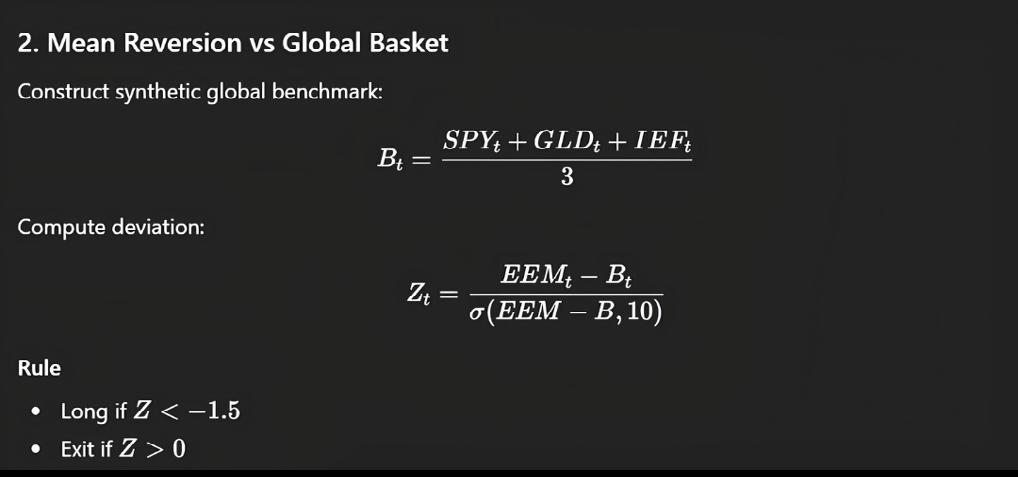
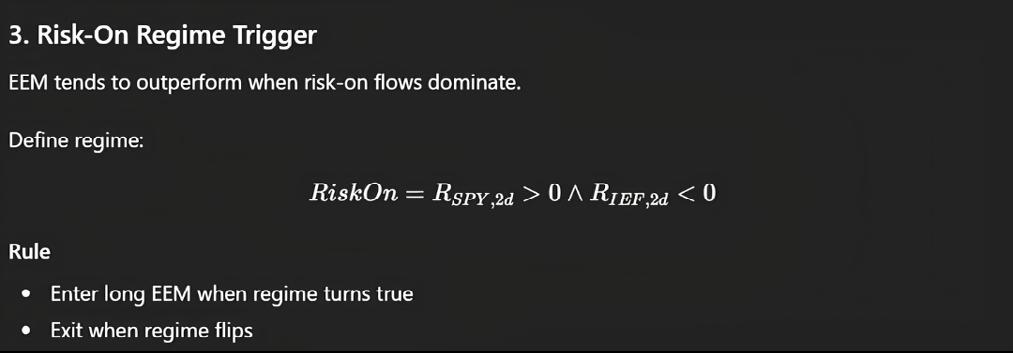
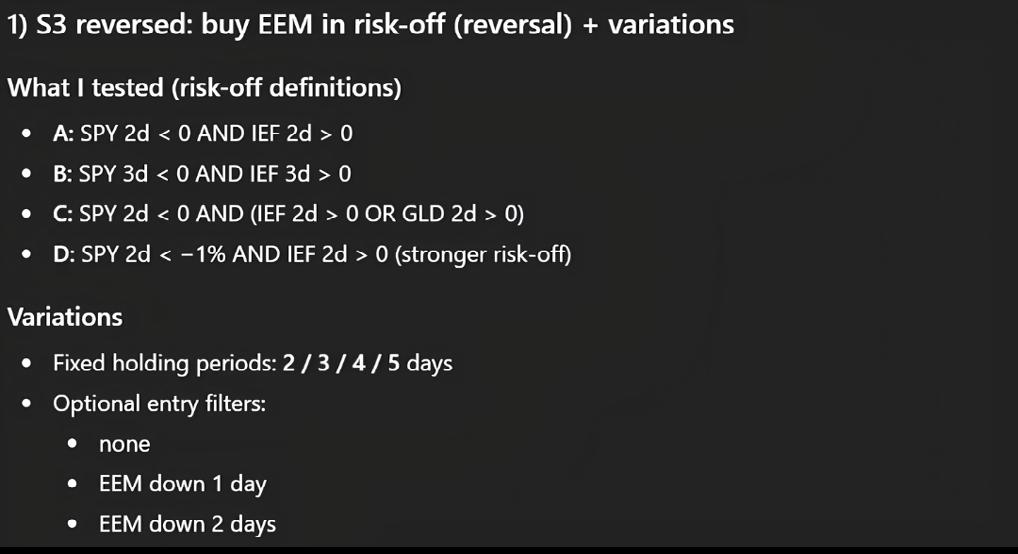
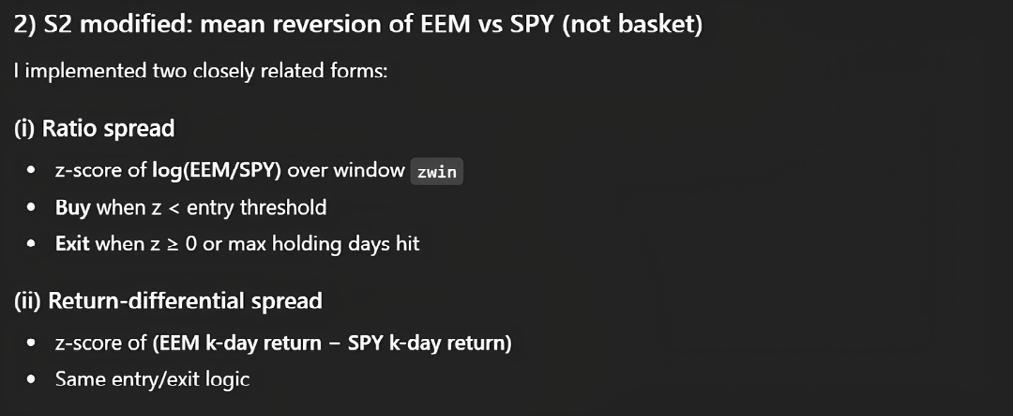
First, we take Strategy 3 (Risk-On Regime Trigger) and invert it: instead of buying EEM in a risk-on regime, we will buy during a risk-off regime to test a short-term reversal approach, exploring some variations. Second, we take Strategy 2 (Mean Reversion vs Global Basket) and adjust it to focus on mean reversion relative to SPY alone: when the spread between EEM and SPY widens, we will buy EEM for a short-term trade.
Figure 1: Proposed strategy to evaluate.
Figure 2: Proposed strategy to evaluate.
Figure 3: Evaluated models of modified Strategy 3.
The best-performing variation of Strategy 3 emerged as a model corresponding to a 3-day risk-off window without any additional EEM-down filter. It achieved a Sharpe ratio of approximately 0.524 (after accounting for 5 bps transaction costs).
The best performer in set of Strategy 2 modifications was a strategy, which uses a 5-day return differential (EEM − SPY), a 20-day z-score window, an entry threshold of −1.25, and a maximum holding period of 5 days. It achieved a Sharpe ratio of approximately 0.483 (including 5 bps transaction costs).
Handling and modifying the code
Another key objective was to investigate whether the model might be “misleading” us, given that a year ago it frequently produced hallucinations. To test this, we requested the underlying code. ChatGPT provided it in Python, complete with comments and reasonably well-formatted, making it straightforward to follow.
Having the code in hand, the next step was to check it for errors. We wanted to see if the model could identify mistakes on its own. To our pleasant surprise, it successfully caught the most obvious issues. The primary problem was a one-day shift in execution, which wasn’t necessary. Additionally, it suggested solutions for certain edge cases that, while not relevant to our specific analysis, demonstrated a proactive approach to potential anomalies. Overall, this exercise highlighted that ChatGPT can not only generate code but also self-audit it to a meaningful extent, improving reliability for subsequent quantitative testing.
This was really an upgrade in comparison to the analysis we ran approximately a year ago.
Avoiding optimisation
What became apparent in further testing of the process of the quantitative analysis is that the model generally tends to over-optimize. In practice, this manifests as an excessive widening of the search space, the addition of numerous filters, and an overall increase in model complexity. While these adjustments may seem like attempts to improve performance, they often have the opposite effect. Overcomplicated models are more prone to overfitting, capturing noise in the historical data rather than true predictive patterns. This makes the resulting strategies less robust and less likely to generalize to new, unseen market conditions. In other words, although the model may appear to produce highly refined signals, the apparent improvements can be misleading, and the real-world performance of such overengineered strategies is usually disappointing.
Fortunately, we can counteract this tendency through carefully designed prompts. If we instruct the model to limit parameter adjustments relative to the current model state, it readily adapts to this constraint. The simplest approach is to explicitly specify which parameters we consider redundant or unnecessary. By doing so, ChatGPT can focus its analysis solely on models that align with our preferences, avoiding unnecessary complexity and overfitting.
In practice, this process of constraining the model is straightforward. For example, the original Strategy 2 strategy contained too many parameters, which risked overfitting. By simplifying it, we can reduce the model to just two degrees of freedom. One parameter represents the EEM versus SPY return over X days, and the other defines the holding period, restricted to 1 – 3 days. All other parameters, such as the z-score window or additional filters, are removed. This minimal configuration allows for a clean, controlled test of the core strategy logic, reducing complexity while preserving the essential dynamics we want to evaluate.
What we find particularly useful is that when we provide these constraints, ChatGPT is able to generate a clear summary of the effects of each parameter. Instead of sifting through a long list of raw outputs, we receive a structured overview showing how changes in the holding period or the EEM versus SPY return affect
Figure 4: Evaluated models of modified Strategy 2.
performance metrics such as Sharpe ratio.
5: Summary of model parameters influence.
Figure 6: Profiles of equity curves – tests of robustness.
Benchmarking
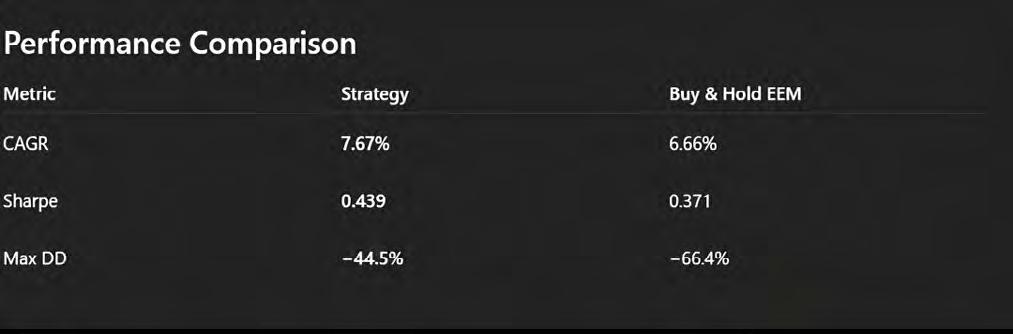
Once we have a working model, the next logical step is to benchmark its performance against a simple baseline, such as a buy-and-hold strategy on EEM. This comparison allows us to evaluate whether the strategy adds any real value beyond passive exposure.
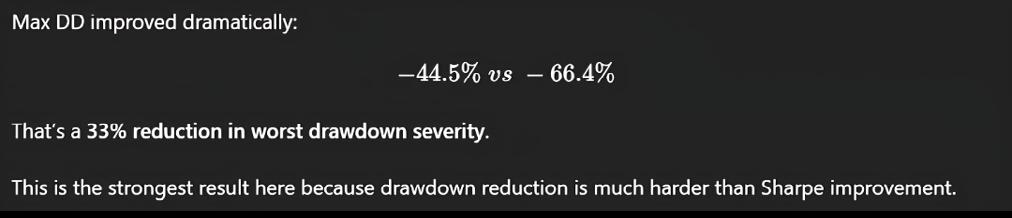
A key benefit of this approach is that, beyond receiving summary statistics for both the model and the buy-and-hold benchmark, we can also obtain a direct interpretation of the differences. ChatGPT can highlight which factors contribute most to outperformance or underperformance, contextualize risk-adjusted returns, and point out where the strategy adds value compared to passive exposure. This interpretive layer provides actionable insight, helping us decide whether pursuing this modeling direction is worthwhile, or whether ad-
justments are needed before further exploration.
Figure 7: Summary statistics of benchmark and modified Strategy 2.
8: Example of metric interpretation.
The same approach can be applied to the third strategy as well. By generating summary statistics and direct comparisons against the buy-and-hold benchmark, we can evaluate both absolute and risk-adjusted performance.
From idea to robust strategy
So far, our exploration has focused on a single asset class and a single dataset. The expectation, however, is that if there is a truly interesting pattern in the data, it should be robust enough to persist across different datasets. To test this, we kept EEM as the primary asset but expanded the dataset to include IEF, UUP, and SPY, allowing us to explore the influence of U.S. dollar movements via the UUP ETF.
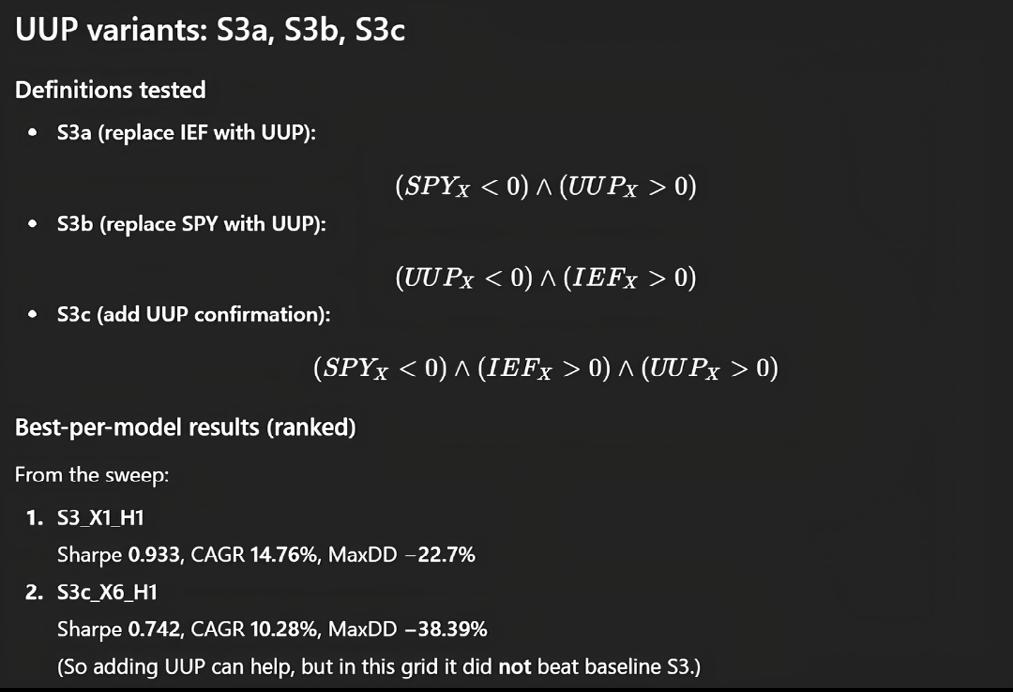
We started by running Strategy 3 (S3) on this expanded dataset, again limiting it to two parameters for clarity and interpretability: the risk-off definition, defined as SPY X-day return < 0 AND IEF X-day return > 0, and the holding period Y (1 – 3 days). This setup allowed us to see how the core strategy performs on a shorter, slightly different data range.
Next, we considered ways to incorporate UUP into the model. Several options were explored:
• S3a: Replace IEF with UUP in the risk-off definition.
• S3b: Replace SPY with UUP.
• S3c: Add a UUP-based signal alongside SPY and IEF.
Figure
Figure
By comparing the original S3 with these variations (S3a, S3b, S3c), we assessed whether the inclusion of UUP improves robustness, enhances predictive power, or simply adds complexity without meaningful gains. This approach allowed us to examine the stability of the pattern across related market signals and refine our understanding of which macro factors are genuinely informative for emerging-market positioning.
Figure 9: Summary of the first iteration of analysis using new data with UUP added.
At first glance, these results do not appear particularly compelling. However, rather than dismissing them immediately, it is useful to examine them more gradually and in greater detail. By looking at the outcomes step by step, we can try to identify specific situations or market conditions in which the strategies may still provide useful signals. Even models that seem weak in aggregate performance can sometimes reveal localized patterns or regime-dependent behavior, where their signals become more informative. This incremental analysis allows us to better understand when, and under what circumstances, the strategies might still offer practical value.
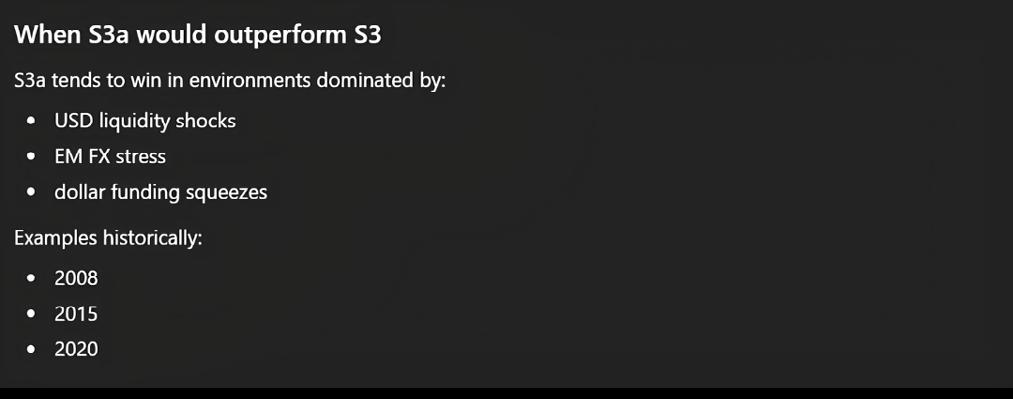
At the same time, for each strategy we also received suggestions on how it might be used more appropriately given its internal structure. The model attempted to interpret when a particular signal could be more relevant
and under what conditions it might perform better.
Figure 10: Examples of events and proporties of model S3a that can create an advantage.
The same analytical procedure can also be applied to the S3b and S3c strategy variants. Among these, the results for S3c appear somewhat more interesting, which motivates a deeper follow-up analysis.
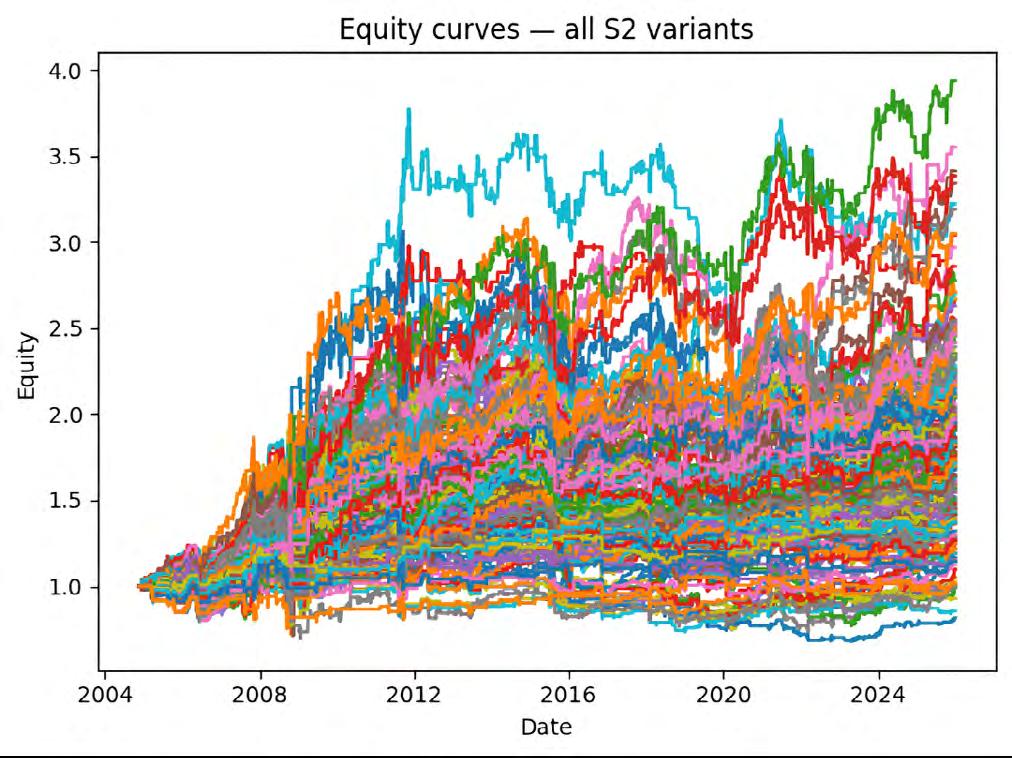
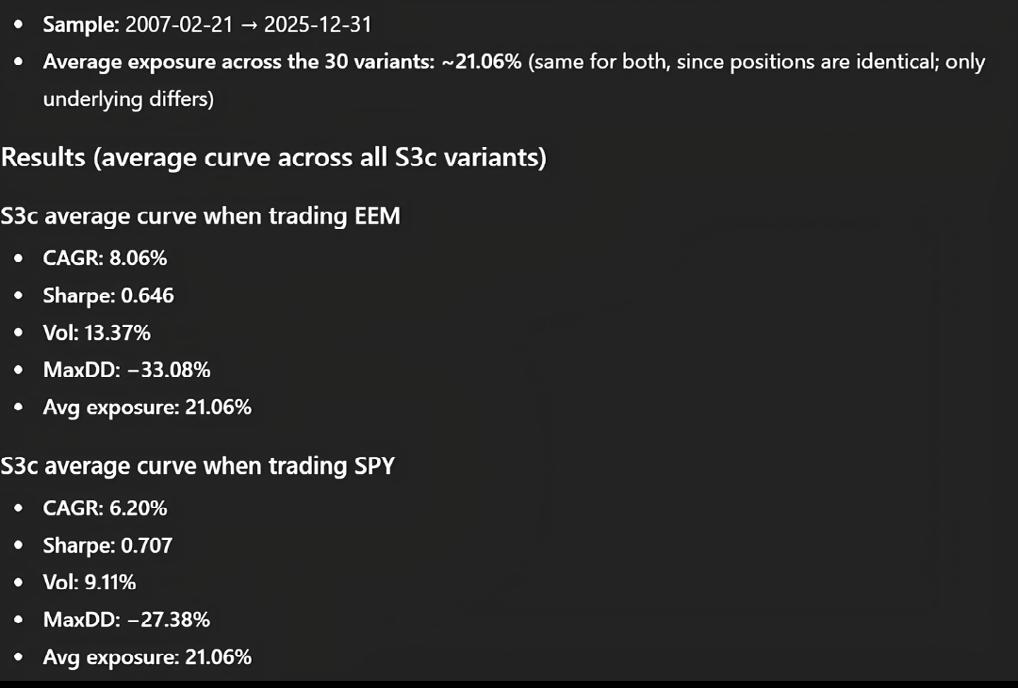
As a next step, we asked ChatGPT to compute the average equity curve across all S3c parameter configurations. From this aggregated curve, it then calculated the corresponding risk and return characteristics, providing a summary view of how the strategy behaves on average rather than focusing on individual parameter combinations.
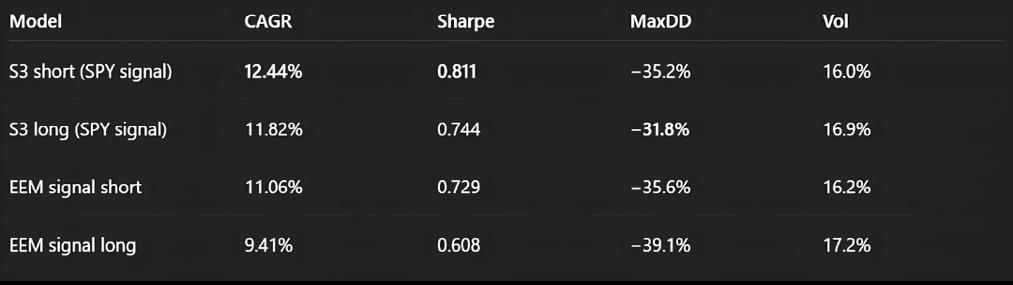
To further test the robustness of the signal, we performed an additional experiment. We kept the same S3c signal structure, but changed the underlying asset from EEM to SPY, effectively applying the strategy logic to a different market. ChatGPT then repeated the analysis: it calculated the average equity curve for the SPY-based S3c variant and derived the same set of risk and return metrics.
Finally, the results of both experiments were compared. This allowed us to evaluate whether the signal embedded in the S3c framework is specific to emerging markets (EEM) or whether it also retains explanatory power when applied to a broader market proxy such as SPY. Such comparisons help determine whether we are observing a genuinely transferable pattern or merely a
dataset-specific artifact.
their summary statistics.
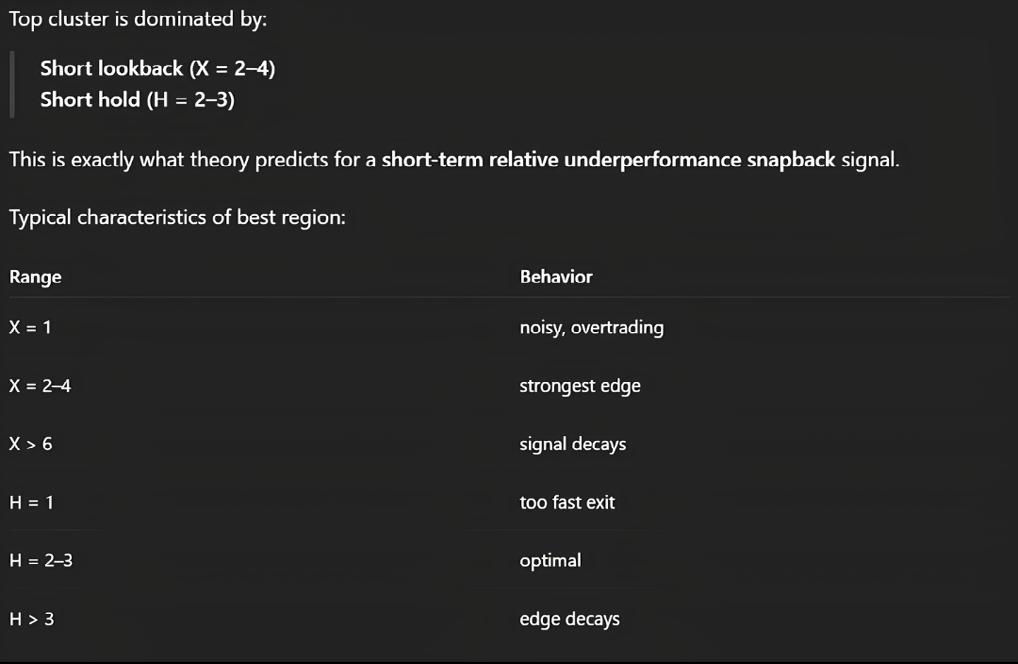
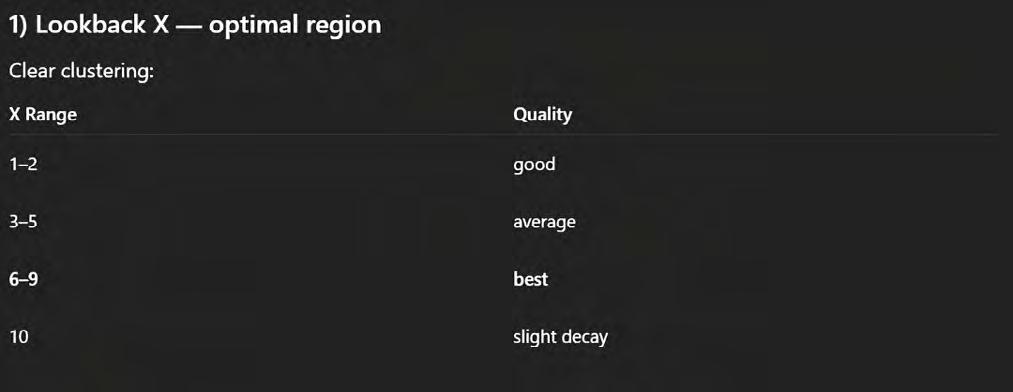
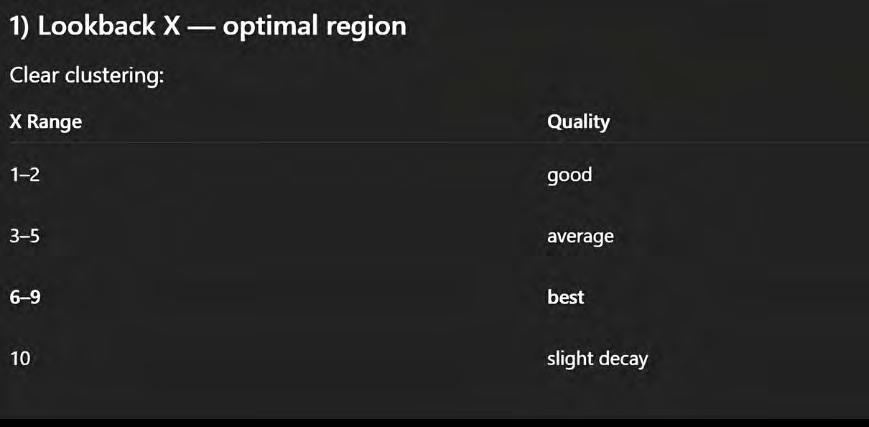
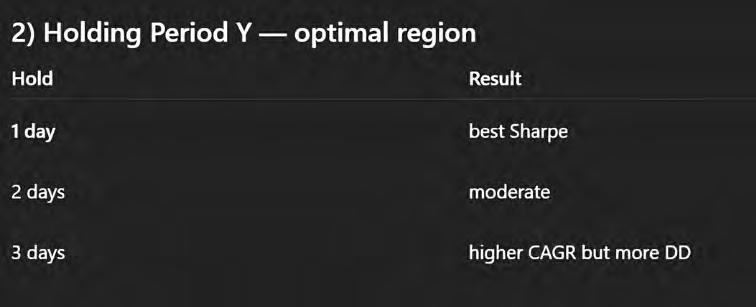
We then proceeded with a more structured analysis of the S3c strategies applied to EEM. Specifically, we asked ChatGPT to produce a table summarizing the key performance metrics across all tested parameter combinations. The goal was not only to review individual results, but to better understand whether certain clusters of parameters tend to perform more consistently than others.
In particular, we were interested in identifying patterns related to the length of the sorting period and the holding period. By organizing the results in a tabular format, it becomes possible to observe whether strategies with shorter or longer signal windows systematically lead to better outcomes, and whether performance improves when positions are held for shorter or longer durations.
This type of clustering analysis helps move beyond evaluating isolated parameter combinations and instead reveals broader structural tendencies within the strategy space. In other words, it allows us to identify whether certain regions of the parameter grid appear more promising, which can guide further refinement and testing of the model.
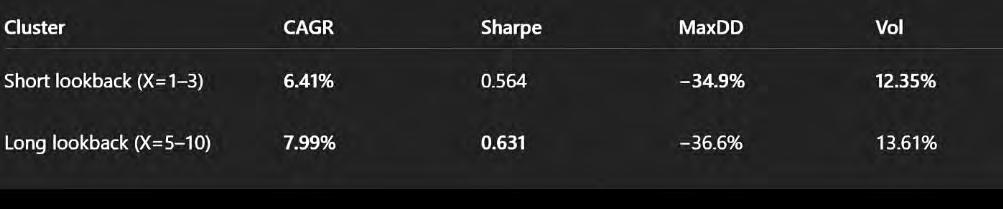
Based on these results, we can explore portfolio combinations by mixing parameter variations. Following the new instruction, we created two sets of portfolios:
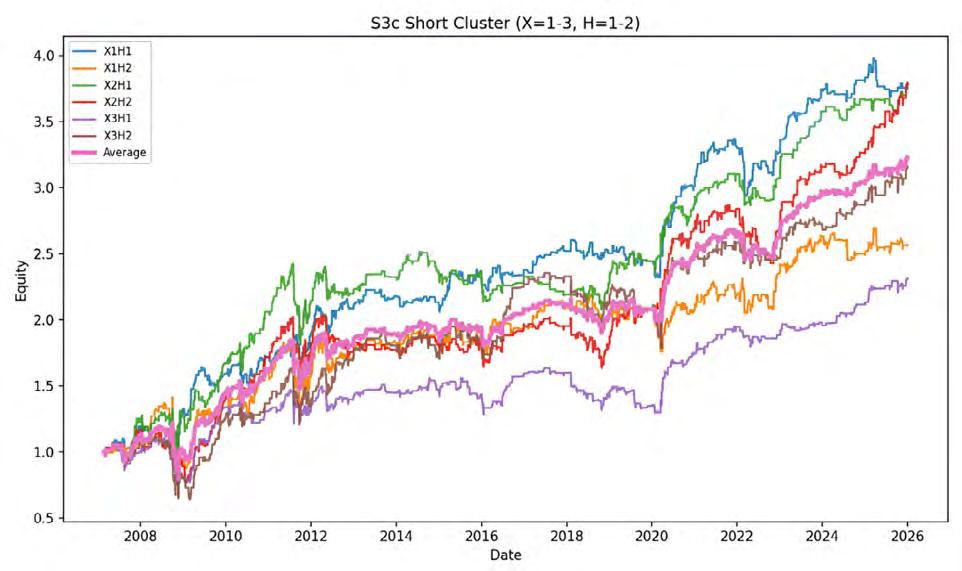
1. The first set includes variants with 1, 2, or 3-day sorting periods and 1 or 2-day holding periods. ChatGPT then generated a single chart displaying all individual curves alongside the average curve for this group.
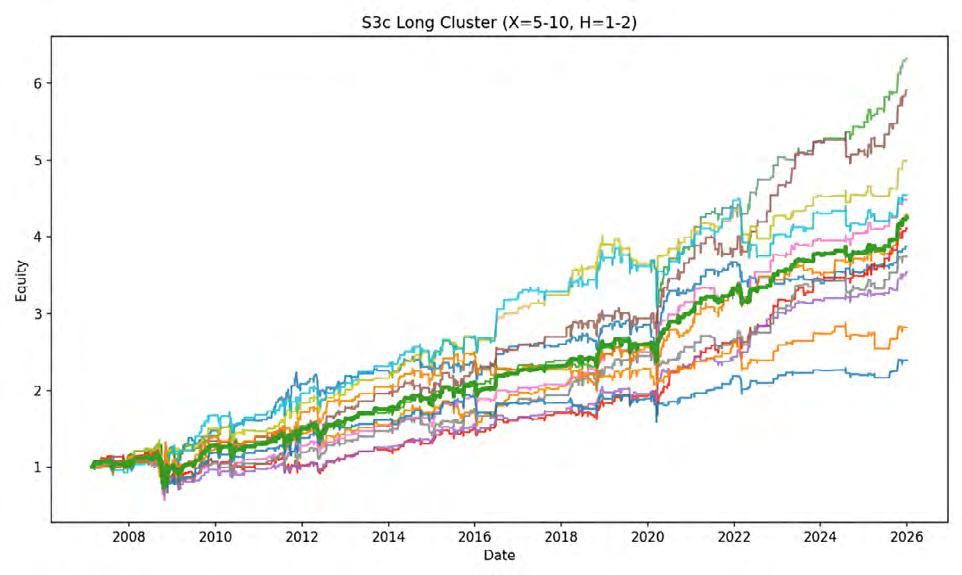
2. The second set includes variants with 5 – 10-day sorting periods and 1 or 2-day holding periods, again displayed in a single chart with the average curve.
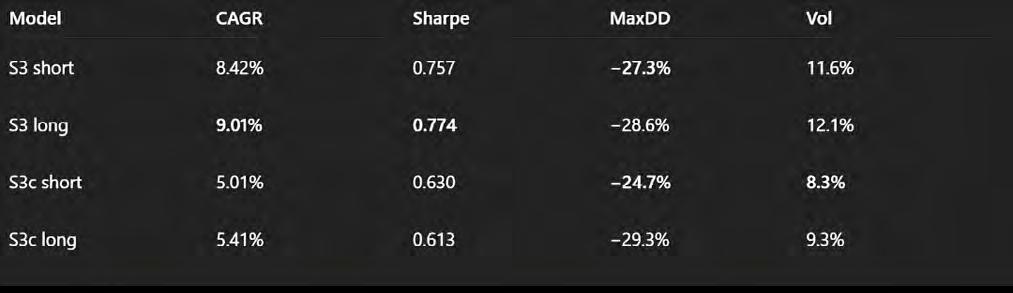
For both average curves, ChatGPT also calculated risk and return metrics, which were summarized in a table.
It is also a good idea to visualize equity curves of individual strategies and their averages as quantitative analysis progresses. Visualizations often help uncover patterns and relationships that may not be visible from pure statistics and tables.
Figure 11: Information about the strategies and
Figure 12: Performance of 10 best strategies sorted by Sharpe ratio.
Figure 13: Cluster analysis – Lookback.
Figure 14: Cluster analysis – Holding period.
Figure 15: Mixed portfolios performance.
To test whether including UUP truly adds value, we repeated the same clustering analysis for the original S3 variant without any UUP signal.
By comparing the two variants, we see that S3c only shows an advantage over S3 in terms of volatility, suggesting that adding the UUP signal may not necessarily be beneficial. In effect, it appears to act as a trade suppressor, filtering out too many opportunities and possibly over-constraining the model.
To explore this further, we ask the same question in a different context: which is more reasonable, S3c or S3, when applied to a different underlying asset. We repeat the same clusters and analyses. But instead of EEM, we now use SPY as the underlying.
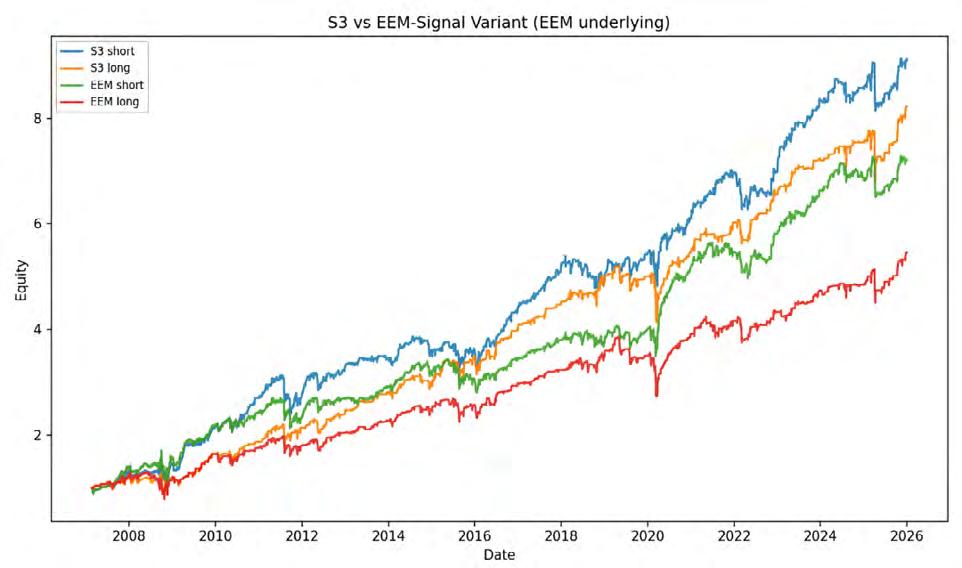
We now proceed to implement a slight modification to the S3 strategy. In this variant, we replaced SPY with EEM in the signal generation: instead of evaluating the past performance of SPY and IEF, the model now considered EEM and IEF.
Takeaway from the robustness testing
There were other tests we did (transaction cost analysis etc. etc.), however, the picture is clear by now. We can stop our analysis here.
There definitely exists a short-term reversal effect in the EEM ETF that we can profit from. Plus, there are multiple different variants of trading strategies that we can use to capture this inefficiency and which one to use is really at the discretion of each individual trader.
However, our goal was not to find the best-performing trading strategy, but to assess whether we can use the LLMs as assistants in our backtesting tasks. And can we?
We would say that yes, we finally can.
The technology is not without faults, but it finally provides a net benefit. We can finally invest time into LLM-assisted research and come out ahead — both in terms of speed and net productivity — rather than losing time debugging LLMs’ hallucinations and correcting flawed outputs, which was often the case just 6–12 months ago.
Figure 16: S3c strategies – Short Cluster
Figure 17: S3c strategies – Long Cluster
Figure 18: Mixed portfolios performance – no UUP.
Figure 19: Mixed portfolios performance for SPY.
Figure 20: Mixed portfolios performance for EEM with modified criteria from SPY + IEF to EEM + IEF.
Figure 21: Final variants of S3 strategy.
Why did we perform so many variation tests? The reason is simple – our goal was not to over-optimize, but to stress-test the reversal strategy. We wanted to understand which EEM predictors are better and which are unnecessary. Plus, we wanted to understand if those predictors also work in the SPY market, which is highly correlated with EEM.
And here comes the catch.
In a lot of the steps, the LLM tried to “help” with the robustness testing; however, it usually had the tendency to over-optimize the strategy instead of testing robustness. The LLM kept suggesting steps that were adding additional degrees of freedom to the strategy. We knew what we wanted to test and how we wanted to use the LLM in the analysis process. However, if we were just simply following suggestions from LLM, we would end up with an over-optimized, fragile backtest.
This is one of the greatest dangers of LLMs at this moment – they have improved a lot over the last year; however, their suggestions for the next step in the analysis are very often way off. It is dangerous to let LLMs run analysis in a loop without supervision.
Summary
Over the past year, our analyses with ChatGPT (and other LLMs) have shown progress. Several of the issues we encountered previously, such as data corruption and model hallucinations, have become less frequent, likely due to the controlled environment where we can review the underlying code. Interaction efficiency has improved, allowing us to reach results faster than before.
However, oversight remains necessary. For exploratory analysis, ChatGPT can be a helpful tool, but before using or publishing its models, it is still advisable to either manually validate results or implement and verify the final models independently. This ensures that small errors do not lead to significant problems.
The problem of over-optimization has not disappeared entirely. While it can be mitigated with careful guidance, the model still tends to add complexity, which requires analyst supervision. Overall, the progress is really noticeable, but the workflow remains far from fully automated: we can explore multiple options more quickly, but selecting, validating, and implementing
promising candidates still requires human judgment. In short, ChatGPT cannot replace a quantitative analyst, yet. However, it can really assist with exploratory tasks, potentially saving time and giving structured insights, provided that the analyst remains in control and interprets the results in the context of economic reality. The net benefit in terms of time spent is finally positive! However, the tool should still be used cautiously rather than relied upon unconditionally as a substitute for careful analysis.
Radovan Vojtko is a former Systematic Portfolio Manager, in the past, he worked for the Tatra Asset Management company (which is the biggest asset management company in the Slovak Republic and it has over 2.5 billion EURs of assets under management). He personally managed over 300+ million EUR in several quantitative funds. These funds were focused on multi-asset managed futures and trend-following strategies, global tactical asset allocation, market timing, and volatility trading. He made his next big step in 2015 and became CEO of Quantpedia.com - The Encyclopedia of Quantitative Trading Strategies, a quant research company with a mission “to turn financial academic research into a more user-friendly form to help anyone interested in algo/quant trading and systematic investing”.
THE
SEARCH YOU DIDN’T KNOW YOU SCREENED OUT OF: WHAT EVERY
ASSET MANAGER NEEDS TO UNDERSTAND ABOUT
CONSULTANT DATABASES
BY PATRICIA O’DONNELL IMSS, LLC
There is a moment that nearly every asset manager eventually confronts. The strategy is working. The performance is there. The team is executing well. And yet the phone isn't ringing — not from consultants, plan sponsors, or allocators who should, by any reasonable measure, be paying attention.
No letter of rejection arrives. No feedback. Just silence.
That silence has a cause. And for most managers, it starts long before a single conversation ever takes place. It starts — or more precisely, it ends — inside a consultant database.
Databases 101: The Starting Point That Most Managers Underestimate
Here is the reality that underpins virtually every manager search: it begins with a database query, not a phone call.
Investment consultants advising pension funds, endowments, foundations, and family offices are managing a research burden that grows every year. To handle that volume efficiently, they rely on structured databases as the primary starting point for discovery. Platforms like Nasdaq (eVestment), Morningstar, Informa, HFR, Blackrock (Preqin), Bloomberg and WithIntelligence, each serve as the first filter through which capital flows — or doesn't.
When a consultant receives a mandate, the process is highly consistent: the investment need is defined, structured filters are applied, the database returns eligible managers, and only then does deeper analysis begin. Those filters are typically quantitative and categorical — strategy classification, AUM range, track record length, liquidity terms, fee schedule, risk and return metrics. If a manager's data satisfies the criteria, they appear. If the data is missing, incomplete, or misaligned, they don't. There is no second chance at this stage. No one flags the exclusion. No one sends a note saying your strategy looked interesting, but your AUM field was blank. The filter runs, the list populates, and the managers who aren't on it simply don't exist for that search. It's worth sitting with that for a moment: you can
be running an exceptional strategy and be entirely invisible to the consultants who could transform your trajectory — not because they evaluated you and passed, but because the data infrastructure that would have surfaced you was incomplete.
Key Takeaway: Consultant databases are not a marketing channel. They are a key screening infrastructure. Showing up in searches requires a complete database profile, not just a quality strategy.
Visibility Is Binary — At First
Early in the search process, consultants are not evaluating narrative, philosophy, or other differentiation. They are determining eligibility. You either meet the filter criteria and appear in results, or you don't.
This binary nature is why database reporting quality matters far more than managers realize. Qualitative conversation, the one where your investment philosophy, process, investment team depth, and risk management discipline get the proper evaluation — only happens for managers who first passed the quantitative screen. That deeper dive comes later, but only if you clear the gate.
The data categories that most commonly drive initial discovery screens include:
Strategy classification and sub-strategy taxonomy. Foundational. If your strategy is misclassified — or if you haven't mapped it to the database's taxonomy — you may be excluded from searches that should logically include you. This is more common than managers expect, particularly in alternatives where classification conventions vary by database.
Audited Performance track record. Most consultants apply a minimum track record threshold. Three years is standard; five is sometimes required. Gaps, inconsistencies, or errors in reported performance history can create apparent disqualification even when the underlying record qualifies.
Assets under management — Firm, strategy, and vehicles. Reporting Assets Under Management is critical for investment firms because it directly affects how consultants evaluate credibility, scalability, risk, and fit for client mandates. Inaccurate or stale figures — especially in markets where assets have moved — can misrepresent where a manager sits relative to mandate size
requirements.
Risk and return metrics. Consultants rely on risk and return data to answer the most fundamental question: Is this manager delivering attractive returns relative to the risk taken? Raw returns alone are not meaningful without context; risk metrics provide that context. They are the primary basis on which consultants evaluate, compare, and recommend managers - missing these can remove you from a mandate consideration.
Portfolio transparency. This is one of the most consistently underreported areas. Many managers resist disclosing holdings, viewing their portfolio as proprietary. But the absence of portfolio data raises red flags with consultants conducting due diligence — and in some databases, incomplete transparency data removes a manager from the peer universe entirely.
Fee schedules, vehicle structure, and liquidity terms. As consultants advise an increasingly diverse range of client types, these fields have grown in importance of screening. A manager offering multiple vehicles needs each represented accurately and separately.
Key Takeaway: A 90% or higher database completion rate should be the operational target. Databases with completion or fill-rate indicators will tell you where you stand — but only if you're paying attention to them.
The Operational Reality: Why Maintenance Is Where Managers Struggle
Completing an initial database profile is time consuming but manageable. Maintaining it accurately
across multiple platforms, over multiple reporting cycles, with evolving data requirements is where the real work lies.
The volume of demands are significant. Most consultant databases require monthly and/or quarterly updates. Performance must be verified, formatted correctly, and submitted to tight deadlines. Missing a performance deadline doesn't just affect search activity — it can affect quarter-end publications and reports that consultants prepare for their own clients, compounding the visibility problem downstream.
The inconsistency problem makes this harder. Each database has its own taxonomy, field definitions, and structural requirements. A submission optimized for Blomberg may require meaningful translation to align with Albourne’s internal structure or Morningstar’s field architecture. A manager who assumes clean portability between platforms is accepting risk they may not be tracking.
And the feedback loop is nearly nonexistent. Databases do not notify managers when their data is failing to surface in searches. Outdated information can trigger an "inactive" or "stopped" status in certain platforms — quietly removing a manager from searches without any notification. The only signal is absence, and absence is silent.
A few operational realities that matter in practice: Dedicated ownership changes everything. Managers who assign a specific individual — internal or external — to own the database reporting process see meaningfully better outcomes. That person develops system fluency, understands the structures, builds relationships with database contacts (who can be invaluable
resources when navigating platform-specific nuances), and maintains the consistency of process that due diligence rewards.
Templates and internal tracking are underutilized tools. Most databases offer Excel-based upload templates that, once understood, dramatically accelerate the update process. Maintaining an internal tracker that maps each product to its database presence, update frequency, and submission status transforms what can feel like an unmanageable burden into a structured workflow.
Alerts exist for a reason. Many platforms surface alerts when data is flagged as incomplete or potentially disqualifying. Managers who monitor and respond to these alerts stay visible. Those who don't may find themselves quietly removed from peer universes they didn't know they had left.
KeyTakeaway:Databasereportingisanongoing operational discipline, not a one-time project. The managers who treat it as infrastructure — with dedicated ownership,documented processes,and consistent timelines — consistently outperform those who approach it reactively.
The Compounding Cost of Invisibility
Some managers treat database reporting as an administrative obligation. The risk of that framing is underappreciated because the cost of invisibility is indirect, delayed, and nearly impossible to trace in real time.
Consider how consultant influence works. A single consultant may advise dozens of institutional and retail clients over multiple mandate cycles over years. A manager who is well-represented in a consultant's database is considered for opportunities they will never directly know existed. A manager absent from that database is excluded from conversations that never begin — and has no awareness of potential missed opportunities.
This divergence compounds quietly. Years later, a competitor firm with a comparable strategy and similar performance has three times the AUM and a dozen consultant relationships. Part of that gap traces back to a discipline around database infrastructure that one firm built and the other deferred.
The acquisitions reshaping this space — Nasdaq's
purchase of eVestment, BlackRock's investments in institutional data infrastructure — underscore how seriously the industry's largest institutions view this layer. These platforms are not niche tools. They are the commercial rails on which institutional and other capital discovery runs.
Key Takeaway: The cost of database invisibility is not a single missed search — it is a compounding exclusion from conversations that shape AUM trajectories over years. The opportunity cost is real and difficult to recover.
The Next Evolution: AI Is Raising the Bar
The infrastructure described above is already changing and managers who are not paying attention will face a steeper visibility challenge in the years ahead.
Artificial intelligence and machine learning are being integrated into research workflows at an accelerating pace. Traditional database searches relied on structured filters and manually mapped data fields. The next generation of platforms is moving beyond that model entirely.
AI-enhanced systems are now capable of interpreting narrative responses, identifying behavioral strategy patterns, recognizing thematic alignment, detecting data inconsistencies, and comparing peer groups algorithmically. Natural language search is increasingly part of the interface. A consultant may now query a system with something like: "Show me global equity managers with lower downside capture, strong ESG integration, and experienced teams who have navigated inflationary periods." The system attempts to interpret meaning and intent — not just match exact field values.
This changes the nature of visibility itself.
For managers, it means that narrative quality now has a direct influence on discoverability — not just in a qualitative due diligence context, but at the initial screening stage. Strategy descriptions that are vague, generic, or inconsistent across platforms will surface less reliably in AI-driven searches that are trying to detect thematic alignment. Systems that flag anomalous or missing data will surface gaps that previously passed without notice. Peer group comparisons that run algorithmically will be less forgiving of data that is present
but inaccurate.
The managers who will thrive in this environment are those who treat their database presence as a comprehensive, living data asset — not just a populated profile. That means investing in the quality and coherence of narrative content alongside structured data, maintaining consistency across platforms, and staying current with evolving database requirements as AI capabilities expand.
KeyTakeaway:AI-drivendiscoveryisraisingthe bar from "complete your data fields" to "ensure your entire database presence — structured and narrative — accurately and coherently represents your strategy." Managers who act on this now will have a meaningful head start.
What Good Database Hygiene Actually Looks Like
For managers serious about AUM growth, the operational standard has four dimensions:
Completeness. Every required applicable field populated — not just the fields that feel important to the manager, but every field the database surfaces in search filters. Know your fill rate. Target 90% and above. Accuracy. Performance data reconciled to audited records. AUM figures current within reporting cycles. Benchmark assignments reviewed for alignment with how consultants categorize the strategy.
Consistency. The same strategy described, quantified, and categorized in a manner that is internally coherent across platforms — even as terminology adapts to each database's taxonomy. Inconsistencies surface in due diligence and raise questions.
Currency. Data refreshed on each platform's required timeline, with dedicated process ownership to ensure nothing falls through the cracks. Stale submissions signal operational weakness. Current submissions signal the opposite.
The Starting Point
Understanding consultant databases is not a technology conversation. It is a capital strategy conversation.
The institutional and other allocations that define a manager's trajectory often trace back to a search that occurred without any direct contact — a query run by
a consultant on behalf of a client, filtered by criteria the manager may not have known existed, returning results the manager may never have known they missed.
Dozens of databases exist, some broad, some highly specialized by asset class, region, or vehicle type. Not all of them are relevant to every manager. The strategic discipline is not to maximize volume, it is to maximize fit. Identify the platforms your target consultants use, audit your current representation within them, and build the operational infrastructure to maintain that representation consistently over time.
The biggest risk in asset management is not a bad quarter. It is a quiet exclusion from conversations that could have changed everything — and never knowing it happened.
Patricia O’Donnell Founder & CEO IMSS, LLC
Investment Management Support Solutions (IMSS) provides investment firms with a cost-effective, endto-end solution to consultant database reporting. Data-Centrix, IMSS’s legacy technology provides traditional and alternative managers with an end-to-end solution to database onboarding, continuous reporting, complete oversight, and comprehensive manager database reviews. Built as an extension of the firm’s legacy platform, IMSS’s newly launched Alt-Centrix technology provides alternative managers with a targeted approach to fund data distribution as a fully automated solution to fund onboarding and a single template with one click uploads that automatically delivers data seamlessly to several of the largest industry alternative databases.
UNLOCKING VALUE FROM LIFE INSURANCE POLICIES
HOW LIFE SETTLEMENTS CREATE OPPORTUNITIES FOR SENIORS AND ASSET INVESTORS
BY MICHAEL FREEDMAN Lighthouse Life
“[L]ife insurance has become in our days one of the best recognized forms of investment and self-compelled saving. So far as reasonable safety permits, it is desirable to give to life policies the ordinary characteristics of property…
To deny the right to sell except to persons having such an [insurable] interest is to diminish appreciably the value of the contract in the owner’s hands.”
— United States Supreme Court, Grigsby v. Russell, 222 U.S. 149 (1911)
Every year, seniors across the United States make a decision that costs them — on average — hundreds of thousands of dollars. They lapse or surrender a life insurance policy they no longer want, need, or can afford, and walk away with nothing, or with a fraction of the policy’s fair market value. Based on life insurance company industry data, between eight and ten million seniors each year are faced with lapsing or surrendering their life insurance policies that could qualify for a life settlement.1 Those policies have real economic value — for the senior and their families, as well as for asset investors. Under more than a century of settled law — affirmed by the Supreme Court in Grigsby v. Russell — a life insurance policy is personal property, freely tradeable and assignable like any other financial asset its owner holds.
Asset investors have increasingly recognized life settlements — the sale of an in-force policy by its owner to a third-party investor — as a distinct and durable asset class. The opportunity is large, the demographics are favorable, and the supply is growing. What has held the market back is not supply of assets but operational friction that made the small-and-mid-size policy segment — which is the vast majority of the addressable market — economically impractical. That friction is now being addressed, by Lighthouse Life.
Why Life Settlements Are an Uncorrelated Asset
The defining feature of life settlement investment is the source of the return. Cash flow is triggered by mortality — the timing of one biological event on a
contract whose payment is obligated by an A-rated U.S. life insurance carrier. It is not driven by interest rates, equity earnings, credit spreads, oil prices, or geopolitics. That distinction has practical investment consequences. A 2022 Society of Actuaries study found statistically insignificant correlation between life settlement fund performance and the S&P 500, U.S. Treasury yields, and commercial real estate indices.2 Mortality does not move with macro variables; it follows actuarial tables.
That is why allocators have increasingly treated life settlements as part of the “resilience bucket” — alongside private credit and infrastructure — as a structural counterweight to public-market volatility.3 Conning’s 2025 Life Settlements Investor Sentiment survey of 256 institutional respondents found that 88% of current investors plan to maintain or increase their allocations, 65% plan to increase by more than 1.5x, and 15% intend to more than double. Institutional satisfaction is high: 53% of current investors rate their life settlement allocations nine or ten out of ten, and 34% of respondents plan to make their first life settlement investment in 2026.4
A second source of resilience is what backs the contract. The carriers issuing policies that asset investors acquire through the life settlement market include MassMutual, MetLife, AIG, Lincoln Financial, Equitable, Transamerica, and Mutual of Omaha — issuers whose risk-based capital ratios sit above the broader life insurance industry average. The death-benefit obligation is theirs. The asset is paid by a highly rated counterparty, the timing is mortality-driven, and the regulation is ma-
ture. That combination is unusual among alternatives.
The Market Opportunity
The supply underpinning this asset class keeps growing. The U.S. age-65-plus population will continue expanding through 2040, reaching roughly 81 million Americans by then.5 Conning estimates the addressable market — net death benefit on senior-held in-force policies that could qualify for life settlement — at approximately $224 billion annually, or $2.4 trillion over the next decade.6
Against that potential, approximately $4.72 billion transacted in the most recent year — the highest level since 2010, a mere rounding error against the addressable pool of lapsing and surrendering policies owned by seniors.7 Current annual life settlement volume represents significantly less than 0.5% of in-force net death benefit.8 The market is operating at roughly two percent of its potential.
The gap exists for one principal reason: complexity. Historically, even a small-face-value policy required a minimum six-week underwriting process — carrier illustrations that took three weeks, life expectancy reports that took four to six. The unit economics of the legacy life settlement market only worked on the largest cases. The average in-force U.S. senior policy carries a death benefit of just $150,000.9 Most of them have been ignored. Industry data shows the average life settlement transaction face value at approximately $1.36 million — a clear reflection of where the intermediary market has historically chosen to play, and where the market opportunity exists.10
The underserved middle of the market — policies with face amounts between $100,000 and $1 million — is where the largest pocket of trapped value sits. Lighthouse Life estimates that segment alone at approximately $85 billion of net death benefit annually.11 Closing the gap between $4 billion transacted and $224 billion of annual potential is, at its core, an operational problem.
Unlocking the Margin
The traditional life settlement transaction looks more like a real-estate deal from the 20th Century than a financial-technology transaction in 2026. A broker
sources the policy. A provider marks it up. A separate valuation vendor prices it. A separate servicing vendor handles premiums and mortality tracking. A separate audit firm checks carrier statements. A separate portfolio-management system holds the data. Each intermediary takes a fee. By the time an investor owns the asset, the friction has compressed the spread.
The thesis behind LHL Strategies, Inc. — the parent of Lighthouse Life — is that vertical integration eliminates most of that friction, and that what gets eliminated flows to the asset investor in the form of higher net yield.
LHL is a vertically integrated provider of assets, services, and solutions for longevity-risk investors worldwide. Through its subsidiaries, the firm operates across the full life cycle of a policy. Lighthouse Life Solutions acquires policies directly from seniors in the regulated life settlement market and resells them to asset investors worldwide. ClearLife Limited, LHL’s wholly owned subsidiary, operates the leading cloud-based software and data platform for asset managers and market participants to value and manage life policy portfolios. ClearLife Servicing handles ongoing asset-servicing functions. The firm is investing in AI-driven underwriting, operational efficiency, and consumer experience, drawing on one of the largest proprietary data sets of policy and health information in the industry.
That integrated stack matters for two reasons. The first is speed. The traditional life settlement underwriting process takes four to ten weeks. LHL’s AI-driven approach is converging on zero to two days, with a goal of instant offers comparable to the experience consumers already have in adjacent consumer-finance categories. Lead intake, premium modeling, mortality screening, medical record review, life expectancy assessment, and offer generation — each step that historically required hand-off between siloed parties — is being collapsed into a single integrated workflow. In a market where the seller is comparing one provider’s offer against another, speed is the competitive advantage that turns pipeline into closings.
The second reason is what speed and integration unlock economically. Because LHL owns origination, valuation, servicing, and portfolio infrastructure, each policy generates revenue at multiple points in its life
cycle while removing the intermediary fees that historically compressed investor returns. The same underlying asset, with the same death benefit and the same carrier counterparty, can yield more to the uncorrelated asset buyer simply because fewer hands have touched it on the way. That is the margin Lighthouse Life is built to unlock.
LHL focuses on policies with a death benefit between $100,000 and $1 million — the underserved segment that intermediaries built around large cases have historically ignored, and where vertical integration changes the unit economics most. Policy acquisitions have grown for four consecutive years, and the firm expects to rank among the top three life settlement companies in the United States in 2026.
The Setup From Here
The case for life settlements as an institutional asset class has matured. In 1911, the Supreme Court held in Grigsby v. Russell that a life insurance policy is personal property — freely tradeable, assignable, and saleable — entitled to the same protections as any other financial asset. That legal foundation has never been challenged. The Society of Actuaries quantified the lack of correlation with public markets. Conning has documented rising asset allocations. State regulators have produced a multi-year run of low consumer complaint rates. And the demographic supply — 81 million Americans aged 65 and older by 2040 — keeps growing.
What remains is execution at scale. The next phase of the market belongs to firms that can source policies in the segment everyone else ignored, underwrite them in days rather than weeks, and deliver them to alternative asset investors without the fee stack that historically captured the spread. That is the operational opportunity Lighthouse Life is built to capture — and the opportunity allocators evaluating the resilience bucket should be sizing now.
About the Author
Michael Freedman is Co-Founder and Chief Executive Officer of Lighthouse Life. He has spent more than 25 years as a senior executive in the life settlement market and was the driving force behind the enactment of every state and federal law currently governing life settlements, including more than 60 individual statutes.
1American Council of Life Insurers, 2025 Fact Book, p. 92, Table 7.1; p. 94, Table 7.4.
2Society of Actuaries, study on life settlement fund correlation with major asset classes, 2022.
3Conning, Inc., Unlocking Value: Insights into Life Settlements Investment Trends (December 2024).
4Conning, Inc., Life Settlements Investor Sentiment 2025 (December 2025).
5Administration for Community Living, Projected Future Growth of Older Population (May 5, 2022).
6Conning, Inc., Life Settlements: A Pause for Now (November 2025).
7LISA's 2025 Annual Market Data Released, May 19, 2026 (https://www.lisa.org/article_content. asp?edition=3§ion=4&article=49).
8Conning, Inc., Life Settlements: Steady On (November 2024); industry data on 2024 aggregate face value transacted.
9American Council of Life Insurers, 2025 Fact Book.
10Donna Horowitz, “Life Settlement League Tables,” TheDeal.com, June 9, 2025.
11Lighthouse Life internal estimate.
12NAIC, Closed Confirmed Consumer Complaints by Reason, https://content.naic.org/cis_agg_reason.htm.
Michael Freedman Co-Founder
& CEO
Lighthouse Life
LHL Strategies, Inc. is a vertically integrated provider of life policies and life policy services to longevity-risk asset managers and investors. LHL delivers value to consumers and investors through fast, efficient, and transparent life settlement transactions, and provides full lifecycle life policy services to asset investors worldwide. LHL companies include Lighthouse Life Capital, LLC, Lighthouse Life Solutions, LLC, Lighthouse Life Direct, LLC, Harbor Life Settlements, LLC, Settlement Benefit Holdings, ClearLife Limited and its subsidiary, ClearLife LLC. LHL.
LHL Strategies, Inc., provides life policies, platform services and solutions, and portfolio servicing to longevity-risk asset investors. LHL purchases life policies from individual policyowners via “life settlement” transactions and resells them to asset investors. LHL is the industry’s only platform for (i) policyacquisition and trading, (ii) policy and portfolio valuation and management and (iii) life policy portfolio servicing.
Services
Policy Origination, Acquisition and Resale
• Licensed throughout the US covering 97 percent of US population
• Originate via DTC Advertising and B2B Marketing
• Bundle and resell for above-average returns
Growing Supply
Growing Senior Population:
• 65+ Population continues to grow until 2040 to 81M seniors
Unrealized Benefit:
• 92.5% of all life polices issued will lapse or surrender, providing little or nothing to the policyowner
Massive Potential:
• $2.24T gross market potential of life policies that could qualify for a life settlement through 2033
Servicing
Portfolio Management Services
• Policy and Portfolio Pricing/Valuation
• Policy and Portfolio Management
• Consulting on portfolio structuring, complex policies and other matters
• Trading
Portfolio Servicing
• Premium payments
• Maturity tracking
• Death benefit processing
Stong Demand
• 65% of current investors report plans to increase allocations by more than 1.5x with 15% plan to more than double allocation
• Strong geographic diversity: 45% US, Europe 28%, Middle East 15%, Asia-Pacific 12%
• 27% of respondents manage under $100M AUM, showing greater accessibility
• 53% report satisfaction scores of 9 or 10 out of 10 for existing allocations
Ways to Invest with LHL:
• Gr o w t h
• Asset Acquisition
• Warehouse Facility
Contact us to learn more
Contact Information
10 DO’S & DON’TS OF ALTERNATIVE MARKETING
BY PETER MURRUGARRA
Inti Advisors
No. 1 DO TRANSPARENCY
Consider as part of your marketing, transparency and trust are of utmost importance, whether you are an emerging manager or an established bellwether manager. Increasingly, fivesiars want to know what their funds are investing in. In some cases, they are even investing side by side on select deals. This still fits in line with keeping elements of the “secret sauce” secret, but fosters a path to identifying investors that may also be partners in some select, but increasingly more common scenarios.
No. 2 DO NOT
LONG VOICEMAILS
Do not leave a 10-minute voicemail going over the highlights of your strategy, performance and so on. An
allocator’s time is increasingly compromised. A quick soundbite is all that is needed with your contact details.
No. 3 DO THOUGHT LEADERSHIP
Take action on building your web presence here. Private investments are generally restricted to qualifying investors prior to sending out materials. This is a different way to get awareness of your existence out there. Find your messaging niche and have it available on your website and/available on LinkedIn. But don’t overdo it, manage your exposure effectively.
No. 4 DO NOT ASK ABOUT E-MAILS
Once you get the opportunity to connect with an allocator, do not ask about “my email I sent last Tuesday at 8:32am which shows that you opened and read it”. Facilitate and be friendly with gentle reminder. Over 1000 new funds launch in any given year in hedge funds alone, an allocator may get anywhere from 2-400 emails a day. It may not be true in theory, but an allocator can easily move on to the next opportunity.
No. 5 DO
CRAFT YOUR STORY
Find your story that you can connect your audience with. Are you another Long/Short Equity manager who focuses on “GARP” or a “Warren Buffet” style approach to equity investing? There are over 5000 other funds that have the same message. Why are you different. How are you different?
No. 6 DO NOT WASTE TIME
Take up significant time when having the opportunity to meet an allocator at a networking event. I have personally seen and experienced where a salesperson is pitching their fund later on at night, with the allocator simply looking to exit the conversation. Tell the story in a brief manner, tie in some personal banter, whether it is about yourself “My kids would have loved to be here
in Florida with me, do you have kids?” and then end the conversation after exchanging cards.
No. 7 DO CONSIDER ASSET SOURCE
Consider the kind of assets that are coming into your strategy/fund. Not all assets are the same, and may exit at the first sign of a drawdown. Also, consider what kind of questions you may have to answer one year, three years and five years down the road. Anything that takes away significant time from the message and strategy you are marketing , even if it’s only ten minutes, is ten minutes taken away from your story.
No. 8 DO NOT REACH OUT ON THE WEEKEND
Reach out to an allocator during the weekend, especially if it’s their mobile, unless you are actually good friends with them. This has happened many times over the years, I have both experienced and heard of these stories. They never paint the salesperson, and by default, the fund in a good light.
No. 9 DO PUBLIC RELATIONSHIPS
Public relations continue to be an under-utilized area by alternative asset management firms. Why not make yourself stand out as an extension of your messaging, whether it’s a new thought piece, key new hire, and so forth? Make sure you work with a PR group that is tuned into your target audience.
No. 10 DO NOT ASSUME
Assume that your strategy is the ideal fit for every allocator. Allocators are fiduciaries to their end clients, and need to ensure that the portfolios they construct meet the goals of their underlying clients. But this can lead to a DO. Learn what they are interested in, you may have a friend in your net-
work that fits what this investor is looking for. Benefits of such a relationship may not end in a direct allocation right away, but it could lead to an investor introduction to a group who may be looking for your strategy right now.
Peter Murrugarra Co-Founder & President Inti Advisors
Since 2010, Inti has crafted bespoke alternative investment solutions, empowering pension consultants, fundof-funds, select wealth managers, and family offices. Inti has also extended their expertise to alternative asset managers, advising on best practices.
In 2023, Inti shifted focus and launched Inti Advisors to work exclusively with the wealth management space, bringing our team’s specialized expertise and services in alternative investments to directly benefit wealth managers and the clients they work with.
Inti serves the wealth management space, seeking to empower their clients with long-term investment success. Through our expertise in sourcing, selecting & conducting due diligence on individual managers, and comprehensive platform buildout, we help wealth managers make informed decisions that drive exceptional client outcomes - and a best fit for their wealth management business. This enables them to strengthen their value proposition to end clients and thrive in the competitive wealth management landscape.
WHY ALLOCATORS PASS ON YOU BEFORE THE FIRST MEETING
BY DAN SONDHELM Sondhelm Partners
Astrong introduction reaches an allocator who backs your kind of fund. The email gets opened, and then nothing comes back. You tell yourself the strategy wasn't a fit, or the timing was wrong, and you move to the next name on the list. What happened was simpler than that. Before the allocator decided whether to reply, they looked you up, and what came back told them not to bother.
You never saw it happen, which is the trouble with the most important screen in any capital raise. It runs without you in the room.
The Search You Never See
Every founder raising a private fund knows the formal diligence process, the forty-page questionnaire, the reference calls, and the operational review that treats your back office like a forensic exam. You prepare and staff for all of it.
The screen that decides whether you ever reach that stage is the one nobody prepares for. An allocator hears your name from a peer, a capital introduction, or a panel, and the first thing they do is type it into a search bar. In a 2025 survey of 400 limited partners re-
ported by FundFire1, 97 percent said they regularly find new managers through public channels. Almost none of them wait for your deck, and they go looking first.
Allocators vet you in public before any relationship starts, and what you control is what they find when they look.
Same Pedigree, Opposite Outcome
Picture two founders raising a first fund. Both spun out of larger firms with a strong track record, a disciplined process, and a clear edge, and on paper they
are interchangeable.
The first does everything right on the raise. A partner lines up a warm introduction to a family office that backs this kind of manager, and the allocator does what allocators do before a first call. They search, and what comes back is a one-page website built the month before, a LinkedIn profile still listing the old firm, and a fund name that returns nothing. No commentary, no coverage, and no sign the manager exists outside his own pitch. The call never gets scheduled, and the founder assumes the strategy wasn't a fit, never learning he was cut in ninety seconds by a search he didn't know
was happening.
The second spent the prior year making herself useful to a few reporters who cover her corner of the market. She earned a feature on the launch that walked through her background and the thinking behind the strategy, added a quote when a sector dislocation hit, published a short piece under her own name on what she saw in the data, and kept a LinkedIn feed active with sharp, specific observations. When the same kind of allocator looks her up, they find a credible voice in the space before the first email is returned. The coverage didn't raise a dollar, but it got her into the room already half-trusted, so the conversation began from credibility instead of zero.
Same pedigree, same strategy, and opposite outcomes. The only variable was what an allocator found when they searched.
The Reputation You Think You Have
Most founders push back here. You run money, not a marketing department, and you figure your returns and background speak for themselves while the rest is noise for bigger firms with marketing budgets.
Returns get you considered, but they rarely close the decision. When those limited partners ranked what matters most2 in choosing a new manager, the top answer was a positive public perception of the firm's leader, named by 41 percent, up from fifth place a year earlier. A high-quality leadership team came second at 40 percent, and a leader's visibility and media presence rated as a critical differentiator for 28 percent, the same share that named track record and performance. Among the people deciding where the capital goes, a manager's public presence pulls even with the numbers.
The consultants who advise on these decisions put the logic plainly. Returns look backward while the reputation of the people running the firm looks forward, and an allocator committing to a private fund is signing up for a relationship that can run a decade or more, reading every signal about who you are first.
The cruelest version hits the founders most convinced they are immune. A manager who spent years at a name-brand shop, quoted and profiled and visible across the industry, comes to believe the visibility was
his. It never was. The firm had a communications team whose job was to make its people findable, and he was the talent others built the presence around. When he spins out, the pedigree comes along and the machine stays behind, so the new firm's name returns nothing an allocator can use until he builds that presence again himself.
The Capital Is Going to Names People Know
This would matter less if capital were spreading out, but it is doing the opposite. Capital keeps concentrating with the largest managers, and the share going to smaller funds keeps shrinking. McKinsey's latest private markets report3 shows funds under $500 million raised 17 percent of total fundraising in 2020, and by 2025 that figure had fallen to 13 percent. The biggest platforms keep pulling in a larger slice while smaller and first-time funds compete for what's left.
The same report warns that smaller vehicles lose the traction they once had without clear differentiation, and it raises pointed questions about whether a manager has access to the right capital channels and is distinct enough to thrive. McKinsey stops at the diagnosis. We go further. The differentiation and access it describes come from marketing and a brand an allocator can find and trust, built before the raise rather than during it. The skills that raise capital today reach beyond the portfolio.
If you are a founder in this part of the market, the math is unforgiving. Allocators have more managers to choose from and a habit of moving capital toward names they recognize, so an emerging manager who can't be found isn't competing on equal terms. He was ruled out before he knew he was in the running.
Start With the Pages You Control
This is the layer you own, and it costs a few days and nothing else. When an allocator hears your name, they search before they reply, pulling up your website, your LinkedIn, and whatever else exists. They want to confirm that you run the fund they were told about, that your background fits the strategy, and that nothing contradicts the introduction that sent them looking.
For a founder who spun out of a known firm, this
is where the raise quietly leaks. Often there is no website at all. When there is one, it looks like your teenage nephew built it, or it went up to check a box, a site that exists rather than one built to engage investors. The bio still headlines the old shop, and the LinkedIn went quiet the month you launched. Each of those tells an allocator the operation is not ready for their money, and they move on without a word.
A current presence does the reverse. The site names the fund you are raising now and says in plain terms what it does. Your bio is built around this fund, the prior firm sitting underneath as supporting credibility rather than the headline, and your LinkedIn stays active and tells the same story. None of it takes a budget or an agency, and you can fix the whole layer in a week. Once it is right, the search stops working against you and starts confirming what the introduction promised.
There is a ceiling to this. Your own pages prove you exist, but they cannot prove that anyone outside your firm believes in you, because you wrote every word of them. The credibility an allocator weighs most is the kind you cannot publish about yourself.
Where Credibility Comes From
It comes from the news media, and it costs nothing but your time. These are conversations you are equipped to have right now, because they are about what you think about all day. There are three ways in.
Talk to reporters about your background, your launch, and why your fund exists. The ones who cover private markets need voices who hold a position and have a view, and a founder with conviction and a clear story is more useful to them than most of what they hear in a week.
Become a source on the asset classes, sectors, and deals you live in, since many reporters cover a beat rather than a single firm. When one needs someone who understands private credit or secondaries, you want to be the name already in their contacts, and that happens through a few early conversations where you are helpful rather than promotional.
Ride the news when your investments are the news, and move before the window closes. SpaceX is the obvious example. For years it stayed private while climbing
toward what became the largest IPO in history, and the managers who held it had a rare opening to be the voice on a company drawing nonstop coverage. That window closed in June 2026, when SpaceX went public and the conversation passed to the mutual funds that now own it. So when a company in your book is private and turning into news, that is your moment to explain why you are in it, and it ends the day the company belongs to the public market.
Which outlets matter depends on what you run.
A hedge or alternatives manager thinks about Institutional Investor, Opalesque, FundFire, and With Intelligence, while private equity, private credit, and real estate founders each read a trade press built around their own beat. Nearly everyone in private markets sees the Wall Street Journal, Bloomberg, and Barron's, where one mention reaches allocators across every asset class.
One worry stops a lot of managers before they start, and it is compliance. Raising a private fund comes with rules about solicitation and performance claims, so the safe-looking move is to say nothing in public. The line is more workable than it looks. Talking to a reporter about a sector, a deal, or how you read the market is commentary rather than an offer, as long as you stay away from fund performance, return targets, and anything that sounds like a pitch. Treat public remarks the way you treat any outward communication. Run them by compliance, keep them about ideas rather than the fund, and you can build a presence without crossing a line.
What One Reporter Relationship Gives You
A single placement looks like a small win, but a reporter relationship works differently, because it pays you more than once and keeps paying.
Once a journalist trusts you, they think of you first when a story breaks on their beat, so coverage starts coming to you. It runs the other way too, since you can bring a reporter a good idea and the support to make the piece work, which most managers never try. The day a story runs, you borrow the publication's audience, and long after, you keep its credibility and put it to work in your decks, your emails, and your conversations with allocators. The coverage stacks up on a news page on
your own site, which becomes what an allocator finds when they look you up, and every piece becomes timely content you can send in an email or post to your feed. That is a return most marketing spend never matches. Coverage gets your name in front of an allocator, but it won't, by itself, win the allocation. The full diligence still decides that, and it should. Visibility gets you into the conversation, so the work you have already done on the portfolio gets a chance to speak.
None of this asks you to think about logos or taglines. It asks you to be useful to the people who shape what allocators find, and the presence builds as a byproduct. When an LP runs your name, the work shows up on its own. In the same LP survey, 31 percent of allocators said they learn about managers through industry publications, 27 percent through industry awards, and 23 percent through conferences. The room you are standing in is one of those channels, along with the panel you sat on and the article that carries your byline.
Two Founders, Two Outcomes
Go back to the two founders. A year from now, one of them is the name an allocator recognizes when a peer mentions the fund, the one whose search results back up every introduction her partner makes. The other is still doing strong work in private, still assuming the next stalled meeting was about fit or timing, and still invisible at the moment someone is deciding whether to take him seriously.
You are becoming one of those two founders right now, in the conversations you are having or not having with the people who cover your market. The capital is moving toward managers allocators can find, and the only question is whether they can find you.
You've done the work on the portfolio, and the raise sits with you and your partners. When an allocator looks you up, there isn't enough behind your name to move them from curious to convinced.
If that sounds familiar, set up a strategy session4 with me. We'll look at what an allocator finds when they search your firm today, what's missing, and the few moves that would put a credible presence behind your
name over the next six months. No deck, no pitch, just a straight read on where you stand and what to do about it.
Book a strategy session5
Dan Sondhelm is the CEO of Sondhelm Partners6, a firm that helps boutique fund managers attract investors, start conversations with allocators, and build recognizable brands in crowded markets. Much of that work comes down to what this article is about, making sure a strong manager is easy to find the moment an allocator goes looking.
Sondhelm Partners helps boutique asset managers and private fund managers build visibility, establish credibility, and get in front of the investors that matter. We work with emerging and established managers to sharpen their story and create the kind of presence that turns attention into allocations. Our team brings 30 years of experience helping managers at every stage compete and win against firms many times their size.
WHY FUND LAUNCH FAILURES ARE RISING ACROSS THE INDUSTRY
BY STEVE ARNOLD STP Investment Services
Launching a fund isn’t complicated because of one big task—it’s complicated because there are a dozen small tasks that all have to be done on time. But over the past few years, failure modes that used to be occasional are showing up with more frequency: launch dates slip, investors onboard late, bank accounts aren’t ready, reporting isn’t wired, service-provider handoffs break down, and the “first NAV” becomes a scramble.
This isn’t about any one manager or vendor. It’s a structural shift in how fast funds are being formed, how
complex the operating environment has become, and how little slack exists in the launch timeline.
Below is what’s driving the increase—and why many managers and vendors are seeing more launches stall or require rework than they did even a few years ago.
1. More funds are being launched, which expands the failure surface area
When the number of launches rises, the number of launches that go sideways rises with it.
Hedge Fund Research (HFR) has been tracking a meaningful pickup in new fund formation: HFR estimated 479 hedge fund launches in 2024 and reported that 2025 was on pace to exceed that level, alongside industry capital approaching a $5 trillion milestone.
More launches also means more first-time managers and more one-off structures—each adding operational complexity.
2. New entrants are launching with institutional expectations but “emergingmanager” infrastructure
The bar for operational readiness is higher than ever. Smaller or first-time managers are expected to have institutional-grade controls: independent fund administration, robust valuation governance, documented workflows, investor transparency, and evidence that operational risk is being managed proactively.
At the same time, investor ODD is getting deeper, more standardized, and more data-driven. (SBAI’s 2024 ODD practices work highlights how embedded operational due diligence has become in allocator processes.)
The result: managers can “raise interest” quickly, but the launch breaks when the operational foundation isn’t ready for ODD scrutiny, onboarding requirements, or reporting expectations.
3. Compressed timelines collide with launch execution
The timeline pressure is real, whether driven by a
seed deal, a CIO start date, a strategic market window, or investor urgency. But the gating items that determine whether a fund can actually operate on Day 1 have not gotten faster:
• legal entity formation and governing docs
• bank account opening and treasury controls
• broker/primes, counterparty onboarding
• reporting configuration
• tax and audit setup
• investor subscription processing + AML/KYC
• data integrations, portals, and document workflows
And AML/KYC is increasingly a hard constraint. A recent CSC study reported that 63% of GPs have lost investors or reinvestments due to AML/KYC shortcomings, with common drivers including documentation gaps and onboarding delays.
In practice, this means “we’ll handle it after launch” is no longer viable for many managers—because investor onboarding and operational readiness are part of whether the launch can happen at all.
4. Outsourcing is rising, but
“outsourced”
does not mean “instant”
Outsourcing to administrators1 continues to grow. For many managers, it’s the only realistic way to meet investor expectations without building a full internal ops team. Industry commentary and surveys continue to show the outsourcing trend accelerating as complexity rises.
But outsourcing shifts launch risk into a coordination problem: multiple firms, multiple systems, multiple handoffs, and sometimes unclear ownership. Launches fail more often when:
• requirements are ambiguous or keep changing
• data sources aren’t stable (or don’t reconcile)
• responsibilities across vendors aren’t crisply defined
• “standard reports” aren’t actually standard for the strategy/structure
• the fund assumes tech will behave like a plug-in, but it behaves like a project
Launch failures are rising not because the industry
forgot how to launch funds—but because the industry is launching more funds, with more complexity, at faster speeds, under stricter investor and compliance expectations.
Managers and vendors who treat launch as a coordinated operating program—rather than a date on a calendar—are the ones most likely to start clean and stay clean.
Steve Arnold VP, Fund Accounting STP Investment Services
STP Investment Services is an award-winning technology-enabled services company that provides middle, back-office, and compliance solutions to investment managers, hedge and private equity funds, family offices, wealth managers, and asset owners. STP’s end-toend investment operations, Blueprint technology, and expertise provide a partnership to clients that enables them to grow revenue while optimizing processes and protect their business. STP provides a range of services with capabilities to process all asset classes and meet ever-evolving regulatory requirements.
The Power of Integrating Technology and Investment Operations
GLOBAL ACCESS | RELATIONSHIP-FOCUSED APPROACH | DATA-DRIVEN ADVISORY
Ikonic Yachts is redefining the yachting experience as a fully integrated yachting ecosystem with a focus on extraordinary service, investment-level advice, and industry-leading asset management and valuation.