Body Copy - no indent 1st paragragh. Drop 1st letter x4. Indent paragraphs after first
For over 30 years, Worth Magazine has been an authority on the intersection of business, finance, and innovation.
Uncorrelated attendees will receive a free one-year subscription to Worth Magazine. Scan the QR Code to claim your subscription. For more information about worth and to sign up for our newsletters, visit Worth.com
To lead what’s next, you need to think differently now.
Investment professionals leading today’s markets aren’t just knowledgeable—they bring clarity, judgment, and a deep understanding of where capital is moving next.
The CAIA Charter gives you all three.
If you want to stay relevant, build influence, and earn the confidence to navigate what’s coming next, CAIA is where you start.
Learn more at caia.org.
Next isn’t coming. It’s here.
Access to differentiated managers, backed by real diligence.
Ever y manager on U-Al ts cle ars independent investment and operational due diligence before investors engage. Approved funds c ar r y the “U-Al ts Listed” mar k.
✓ Independent IDD + ODD on ever y listed manager
✓ A standardized, investor-facing diligence repor t
✓ Ongoing monitoring of the manager relationship
✓ Managers keep their existing fund structure
WHEN THE INFRASTRUCTURE BECOMES INVISIBLE: KEY TAKEAWAYS FROM THE UNCORRELATED CRYPTO MASTERMIND - BEVERLY HILLS 2026
HOW BLOCKCHAIN INFRASTRUCTURE, BANKING ECONOMICS, REPUTATIONAL RISK, AND REGULATORY EVOLUTION ARE RESHAPING THE PATH TO INSTITUTIONAL DIGITAL ASSET ADOPTION
BY DAN HUBSCHER
Changing Market Strategies LLC
(DISCLAIMER: This commentary is provided for general informational and educational purposes only and reflects current views on macro trends in crypto and blockchain, which are highly speculative, rapidly evolving, and subject to extreme historical volatility. Any examples, projections, or forecasts are illustrative only, may reflect exaggerated upside or downside scenarios, are not guarantees of future results, and should not be relied upon as investment advice or as a prediction of actual market performance.)
At a Glance: Three Key Findings
The third Uncorrelated Crypto MasterMind, held in Beverly Hills in May 2026, brought together crypto fund managers, digital asset allocators, traditional finance professionals, and banking infrastructure specialists for a closed-door discussion on the operational and structural barriers standing between digital assets and mainstream adoption. Three findings stood out.
1. Digital assets are already infrastructure—not just investments. Blockchain-based settlement and treasury management tools are already operating inside financial institutions, often invisibly. Participants argued that the industry's future depends not on persuading people to buy crypto, but on making the underlying technology so embedded in financial plumbing that users never need to know it is there.
2. Banking digital asset clients remains economically challenging. The compliance, technology, and operational costs of serving crypto-native clients are substantial. In participants' view, the economics make it difficult for most banks to profitably serve all but the largest digital asset firms—creating a structural gap that legislation alone may not close quickly enough.
3. Reputation is the industry's most underappreciated headwind. Scandals, market manipulation, and politically connected ventures have eroded public trust and, in participants' view, diverted capital away from legitimate blockchain projects. Participants warned that until the industry addresses its reputational deficit, distribution to traditional allocators will remain constrained.
Setting the Stage
On May 5, 2026, at the Fairmont Century Plaza in Los Angeles, the third Uncorrelated Crypto MasterMind convened as an invitation-only closed-door roundtable. The Beverly Hills session concluded the founding pilot phase that began in Miami in January 2026 and continued in Puerto Rico in April 2026. Dan Hubscher, Managing Director and founder of Changing Market Strategies, moderated the session. The room included crypto fund managers, digital asset media and research professionals, banking infra-
structure specialists, and investors with experience across both traditional and digital asset markets. While Miami explored market cycles and risk management (see: Scaling Distribution in the Digital Asset Era — Miami 2026 — https://www.uncorrelatedalts.com/articles/ scaling-distribution-in-the-digital-asset-era-perspectives-from-the-uncorrelated-crypto-mastermind) and Puerto Rico focused on distribution and access (see: Crossing the Chasm: Key Takeaways from the Uncorrelated Crypto MasterMind — Puerto Rico 2026 — https://www.uncorrelatedalts.com/articles/crossing-the-chasm-key-takeaways-from-the-uncorrelatedcrypto-mastermind-puerto-rico-2026), Beverly Hills shifted to the structural question beneath both: What does the financial system's plumbing actually need to look like for digital assets to function at institutional scale?
The session was conducted under Chatham House Rules—no participants are named and no one is quoted directly. The ideas shared were intended to prompt discussion, reveal things about the industry that are beneficial for the world to know, and help all participants grow.
Key Takeaway: The Beverly Hills MasterMind marked a shift from distribution strategy toward infrastructure reality—asking not how to sell digital assets to traditional finance, but whether the banking system, regulatory framework,and technology stack are ready to support them.
Digital Assets as Infrastructure
The session opened with a perspective that reframed the entire conversation. One participant argued that digital assets should not be thought of primarily as investments or speculative instruments. In this participant's view, they are tools—useful for smoothing transactions, moving money instantaneously, and settling across borders—but meaningless until they can be converted back into dollars or used to purchase something in the real world. Stablecoins, participants noted, are central to this function—digital representations of fiat currencies such as the U.S. dollar that enable crypto and digital assets to circulate globally across blockchain networks, but that must ultimately land back in a tradi-
tional currency to complete the transaction cycle.
◊ Supplemental Explanation — Stablecoins: A stablecoin is a digital asset designed to maintain a stable value, typically by being pegged to a fiat currency such as the U.S. dollar and backed by reserves of cash, short-term government securities,or similarly liquid assets. Stablecoins serve as a bridge between traditional currencies and blockchain-based transactions, enabling faster settlement and cross-border transfers without the volatility associated with other digital assets.
This framing led to a broader observation about how blockchain technology is already operating inside financial institutions—often without anyone outside those institutions realizing it. Participants described large institutions using blockchain-based platforms to move funds between their own internal accounts in real time, conducting what amounts to corporate treasury management on a blockchain rail while the underlying transactions remain denominated in dollars. Participants noted that over half the transactions on one such platform occurred outside the hours when the Federal Reserve's payment window was open, underscoring, in their view, the importance of 24/7 settlement capability.
◊ Supplemental Explanation — Corporate Treasury Management: Corporate treasury management refers to the practice of managing a company's cash, liquidity, and financial risk, including the movement of funds between accounts,subsidiaries,and geographies.
One participant also described attending a meeting convened by a major stablecoin issuer, where CFOs and CEOs of Fortune 100 companies were being presented with the issuer's view that corporates could conduct all of their treasury activity without relying on traditional banking relationships—a proposition that, if it gains traction, could fundamentally alter the role banks play in corporate finance.
The discussion also surfaced an important distinction. Participants observed that blockchain technology itself is broadly useful—as a ledger, as an audit trail, as a settlement mechanism—but that many people conflate the technology with speculative cryptocurrency trading. The group's consensus was that the industry's path to mass adoption runs not through convincing people to buy tokens, but through embedding the technology so deeply into financial infrastructure that end users never
need to know it is there. One participant observed that stablecoins have been operating in the background of everyday commerce for years, and that a typical credit card transaction has probably already traveled over a digital rail without the cardholder's knowledge.
Key Takeaway: Blockchain is already functioning as invisible infrastructure inside major financial institutions.The industry's challenge is not to sell the technology, but to make it so embedded that it disappears into the financial plumbing—just as the internet disappeared into everyday commerce.
The Banking Chasm
The discussion then turned to one of the most persistent structural barriers in the digital asset ecosystem: the difficulty of getting banks to serve crypto-native clients.
Participants with experience in blockchain-based banking infrastructure painted a sobering picture. In their assessment, the compliance, technology, and operational costs required to serve digital asset clients are significant—encompassing enhanced compliance personnel, specialized know-your-customer technology platforms, and dedicated settlement infrastructure. One participant felt that unless a bank deliberately chooses to serve the largest players in the space, the economics simply do not work. The revenue generated by smaller crypto clients, who typically use banks only to convert digital assets back into dollars, does not justify the cost of serving them.
This economic reality, participants argued, creates a structural chasm. The digital asset industry needs banking access to function—every transaction must eventually bridge back to fiat currency—but most banks have little financial incentive to provide it. The discussion also highlighted a global competitiveness gap: participants observed that the rest of the world has moved ahead in adopting regulatory frameworks that accommodate digital assets, while the United States continues to lag. In jurisdictions such as Singapore and Hong Kong, participants noted, crypto is regulated and integrated into the banking system in ways that remain unavailable domestically.
Participants also raised concerns about the potential for significant consolidation in the U.S. banking
sector, driven in part by payment companies capturing market share that banks once controlled. One participant suggested that the number of U.S. banks could eventually be cut in half, and that the banks that survive will be those that find sustainable models for integrating new technologies—including blockchain.
KeyTakeaway:Thebankingchasmfordigitalassets is not primarily a regulatory problem—it is an economic one. Until serving crypto clients becomes profitable for a broader set of banks,the industry will continue to face structural barriers to mainstream adoption.
Reputation Under Siege
The conversation shifted to what participants described as perhaps the most damaging and underappreciated barrier to institutional adoption: the industry's ongoing reputational crisis.
Participants observed that crypto has lost much of its early narrative appeal. The perception of digital assets as a populist, democratizing force has been undermined by a series of high-profile scandals, criminal convictions, and what participants described as visible market manipulation. Several participants pointed to the pattern of large holders moving markets in ways that retail investors cannot anticipate or understand, drawing parallels to the dynamics that have eroded trust in meme stocks.
The group also discussed the emergence of prediction markets as an unexpected competitive force, diverting speculative capital—particularly from younger retail participants—away from crypto and into alternative platforms. One participant expressed frustration that this trend is starving legitimate blockchain projects of the funding they need, while the industry's speculative image continues to repel the institutional capital it seeks to attract.
Politically connected ventures and ongoing controversies were identified as a particular risk. Participants expressed concern that certain high-profile projects with political ties could produce scandals that would set back the entire industry's credibility—not just the entities directly involved. The consensus was that scandals in financial services are inevitable, and that the next major crypto scandal could be especially damaging given its potential political dimensions.
Key Takeaway: The industry's reputation problem is not merely a perception issue—it is actively constraining capital flows.Until the digital asset ecosystem demonstrates that it can police itself and attract institutional-grade operators, traditional allocators will remain cautious regardless of the underlying technology's merits.
The regulatory discussion revealed a nuanced and somewhat divided perspective. Participants acknowledged that meaningful legislative progress has been made, citing the GENIUS Act and the forthcoming CLARITY Act as important developments. However, the group was divided on whether legislation alone would be sufficient to close the gap between digital assets and traditional banking.
◊ Supplemental Explanation — The GENIUS Act and the CLARITY Act:The GENIUS Act (Guiding and Establishing National Innovation for U.S. Stablecoins) was signed into law in July 2025 and created the first federal regulatory framework for stablecoins, including requirements for 100% reserve backing and consumer protections. The legislation was advanced out of the Senate Banking Committee with bipartisan support (see: https://www.banking.senate.gov/ newsroom/majority/fact-sheet-the-genius-act-protects-consumers). The CLARITY Act is comprehensive market structure legislation establishing a clear regulatory framework for digital assets, the product of more than ten months of bipartisan negotiations (see: https://www.banking.senate.gov/newsroom/majority/ the-facts-the-clarity-act-protects-main-street-unleashes-responsible-innovation-and-cracks-down-on-fraudand-money-laundering).
In participants' view, banks are not being prevented from engaging with digital assets—they are choosing caution because the regulatory environment remains uncertain and no banker wants to face the consequences of a policy reversal. Several participants observed that while the current legislative momentum is bipartisan and likely durable, the regulatory posture of agencies
such as the OCC could shift with future political changes, and banks are positioning themselves accordingly.
The group also discussed the tension between legislative progress and regulatory posture. One participant noted that even if the legislative framework holds, the real variable is how aggressively regulators choose to enforce or expand their mandates in future administrations. The result, in participants' view, is a banking
sector that is watching and waiting rather than actively building.
Key Takeaway: Legislative progress on digital assets is real and bipartisan, but participants cautioned that the regulatory posture of enforcement agencies remains a wild card.Banks will not commit significant resources until they are confident the rules will not change beneath them.
AI Revisited: Promise, Pollution,
and a Telling Double Standard
The Beverly Hills session revisited the artificial intelligence theme that had emerged in Puerto Rico—but from a markedly different angle. Rather than focusing on AI as a future interface for blockchain adoption, participants surfaced a series of concerns about how AI is already interacting with the digital asset ecosystem— and not always constructively.
One participant described how AI-powered bots are already present in crypto community channels, impersonating real people and running scams at scale. The concern was not theoretical: participants reported firsthand experience with automated fraud attempts targeting their own communities. The group observed that AI may be making the trust problem worse rather than better, particularly on the front end of investor engagement where the appearance of legitimacy matters most.
Participants also noted what they described as a striking double standard in how regulators have treated blockchain versus AI within banking. In their experience, regulatory efforts had aggressively targeted blockchain activity at banks—treating the digital asset community and its associated accounts as inherently suspect—while AI vendors entered the same banks positioning themselves as tools for fighting fraud and were welcomed without comparable scrutiny. The contrast, as participants described it, was jarring: blockchain, which creates an immutable and auditable record of every transaction it processes, was met with suspicion, while AI—which is far less transparent in its internal operations—was invited in with open arms. One participant pointed to the experience of a major bank where blockchain-based settlement technology processed trillions of dollars in transactions over several years without a single operational failure. When the bank was shut down, the regulator chose to keep the blockchain system running because the data was immutable and the record-keeping was superior to anything else available.
The implication, as the group framed it, was not that AI should face greater resistance, but that blockchain has never received credit for what it has already proven it can do—and that the regulatory double stan-
dard has materially slowed adoption.
KeyTakeaway:AI's interaction with the digital asset ecosystem is a double-edged sword—simultaneously promising as infrastructure and dangerous as a tool for automated fraud. Participants argued that the regulatory treatment of blockchain versus AI within banking reflects an inconsistency that has slowed blockchain's institutional adoption despite its proven track record.
Product Structuring and Tokenization: The Search for Use Cases
The final substantive discussion centered on product structuring—specifically, what investment vehicles and tokenization frameworks are needed to enable digital assets to scale within traditional finance.
◊ Supplemental Explanation — Tokenization of Real-World Assets (RWA):Tokenization creates a digital representation of a real-world asset on a blockchain, enabling fractional ownership, increased liquidity, and transparent on-chain ownership records.
Participants explored several tokenization concepts, including the fractional ownership of real estate, the tokenization of intellectual property and personal brands, and the use of smart contracts to attach ongoing royalty streams to creative works. The discussion revealed both enthusiasm and skepticism. On one hand, the idea of tokenizing real-world assets—recording ownership on a blockchain to increase liquidity, reduce transaction costs, and enable fractional investment—was widely seen as compelling. Several participants noted that major financial institutions have launched tokenization initiatives, signaling institutional interest, though the group acknowledged that widespread adoption remains early-stage. On the other hand, participants observed that the gap between the vision and production-ready implementation is still significant.
A recurring concern was the quality of products currently available in the market. Participants observed that many tokenized products suffer from structural problems—including unlimited short exposure and a lack of connection to underlying asset fundamentals— that make them unattractive to serious allocators. The group noted that institutional adoption of tokenization
will require not just regulatory clarity, but genuinely well-designed products that solve real problems for real investors.
The discussion also touched on Bitcoin as collateral—a use case that participants noted is gaining traction despite initial resistance from banks. Borrowers who hold Bitcoin are increasingly seeking to borrow against it rather than sell it, and some banks have begun accommodating this demand, though participants raised concerns about margin call dynamics and the volatility risk inherent in crypto-collateralized lending.
Key Takeaway: Tokenization holds significant long-term promise, but the current product landscape is immature. Institutional adoption will require better product design, regulatory clarity, and a shift from speculative token issuance toward genuinely useful financial instruments.
Looking Ahead
The Crypto MasterMind series now moves to an annual membership model, with the intention of growing the group while keeping it at a productive size for substantive discussion. The focus will remain on fund managers as the center of distribution for digital asset strategies, while generating actionable takeaways for investors and service providers as well.
The questions raised across all three sessions—how to build trust in a layered technology stack, how to speak the language of traditional finance, whether the banking system can profitably accommodate digital asset clients, and how to build real infrastructure alongside a speculative culture—remain open. The findings from all three sessions share a common thread: the digital asset industry's path to mainstream adoption runs not through better marketing, but through better products, better infrastructure, and a willingness to meet the traditional financial system on its own terms.
The Beverly Hills session added a new dimension: the recognition that blockchain technology has already proven itself inside the very institutions that publicly resist it, and that the gap between what the technology has demonstrated and what the market perceives may be the most significant chasm of all.
The Crypto MasterMind's value lies not in resolving these tensions in a single sitting, but in creat-
ing a recurring forum where the people closest to these challenges can think through them together. If Beverly Hills made one thing clear, it is that the industry's future depends less on whether blockchain works—it demonstrably does—and more on whether the broader financial ecosystem is ready to acknowledge that, and build accordingly, so that blockchain and digital asset technologies are broadly recognized for their potential as reliable and transparent financial infrastructure.
Dan Hubscher Founder and Managing Director Changing Market Strategies LLC
Changing Market Strategies (CMS) provides middle market FinTech product, service, and data providers with additional sales and marketing resources to scale their distribution. FinTech firms access the CMS platform for industry introductions to financial market participants including broker dealers, fund managers, investment advisors, exchanges, and trading technology vendors, to name a few. Market participants can also discover new innovations, and gain collaborative insights about new technologies in quant, crypto, blockchain, AI & alternative data.
DUAL MOMENTUM ALLOCATION BETWEEN PHYSICAL GOLD AND BITCOIN (DIGITAL GOLD)
BY RADOVAN VOJTKO
Quantpedia
From the trading desk to the portfolio committee, investors face a familiar question: how should alternative stores of value fit into a diversified portfolio? This research explores that question through a systematic dual-momentum framework comparing Bitcoin and physical gold in a rulesbased tactical allocation model. Rather than debating ideology, we focus on practical portfolio construction and risk-adjusted returns. The goal is to examine whether “digital gold” can complement its physical counterpart
within a disciplined investment process, and whether the distinct behavior of these assets can be used to build a more effective systematic strategy.
Related Literature
Gold’s millennia-spanning role as a store of value rests on fundamental supply dynamics: annual mining production adds merely 1-2% to existing above-ground stocks, creating a naturally constrained supply schedule that has underpinned its monetary premium across civi-
lizations (Erb & Harvey; 20131, 20162). Bitcoin’s protocol-encoded scarcity mirrors this characteristic, with its halving mechanism ensuring that new issuance similarly represents a diminishing fraction of total supply, leading proponents to christen it “digital gold” (Baur et al.; 20183, 20184). However, empirical evidence complicates this narrative: Bitcoin exhibits a significant correlation with risk assets during periods of stress, undermining its purported role as an uncorrelated store of value (Corbet et al.; 20185, 20186). This tension between theoretical promise and realized behavior motivates our investigation into whether systematic momentum-based allocation can extract the benefits of both assets while mitigating their respective weaknesses.
Data and Methodology
Investment Universe and Data Construction
The analysis employs liquid, exchange-traded vehicles to ensure implementability in live trading environments. For physical gold exposure, we use the SPDR Gold Trust (GLD), the world’s largest physically backed gold ETF with superior liquidity. Bitcoin exposure is lastly captured through the iShares Bitcoin Trust (IBIT), which replaced its previous tracking vehicle, the ProShares Bitcoin Strategy ETF (BITO), after the introduction of a spot Bitcoin ETF, due to IBIT’s robust liquidity profile.
Raw BTC/USD price data originates from the Bitfinex exchange (hourly bars), which we resample into a continuous series aligned with GLD’s data sample start date, December 31, 2018. This data pipeline—Bitfinex hourly → IBIT/BITO proxy → GLD alignment—creates a unified dataset for comparative analysis spanning from December 31, 2018, through April 2026, encompassing multiple complete market cycles, including the COVID-19 crash, the subsequent bull market, and the crypto winter of 2022-2023.
Prior to merging, we screened GLD for valid NYSE trading days to pre-filter, then matched each selected GLD observation to its contemporaneous Bitcoin timestamp. The raw Bitcoin dataset was subsequently filtered strictly for GLD closing times on NYSE exchange —this timestamp serving as the definitive settlement price for Bitcoin and used in confluence
with GLD data to ensure session-aligned, point-intime consistency across the paired time series.
We employ weekly rebalancing at Wednesday’s close—a deliberate choice balancing competing practical concerns. Daily rebalancing incurs prohibitive transaction costs and noise from intraday volatility, while monthly frequencies prove too sluggish to capture momentum signals effectively in fast-moving cryptocurrency markets. Wednesday minimizes holiday-related market closure artifacts, as mid-week holidays are statistically less frequent than Monday or Friday observances, ensuring consistent execution across the backtest period. This weekly frequency represents the sweet spot between signal responsiveness and implementation feasibility.
Benchmark Portfolios
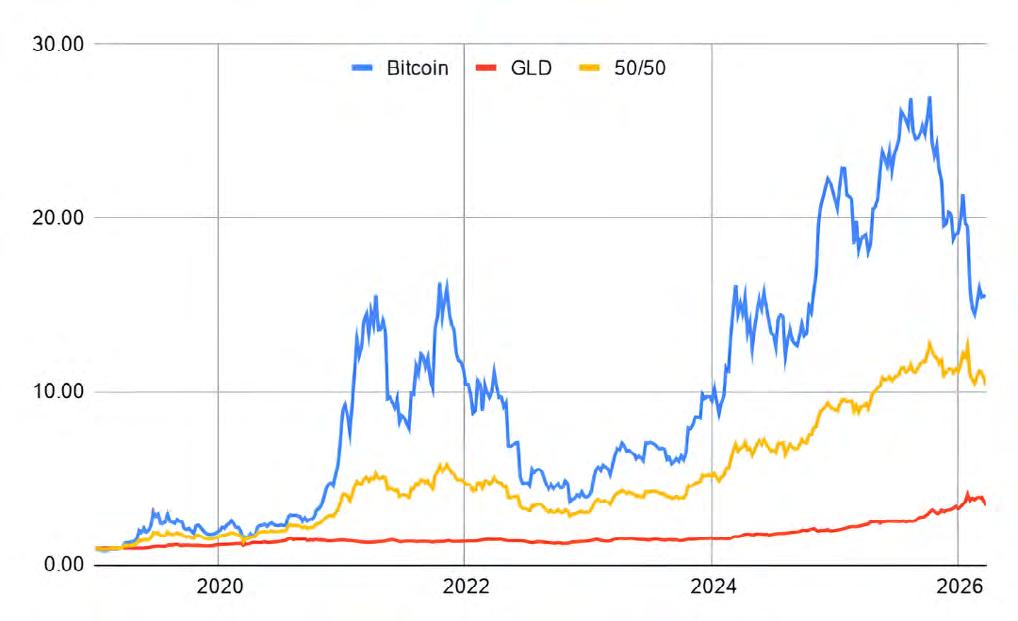
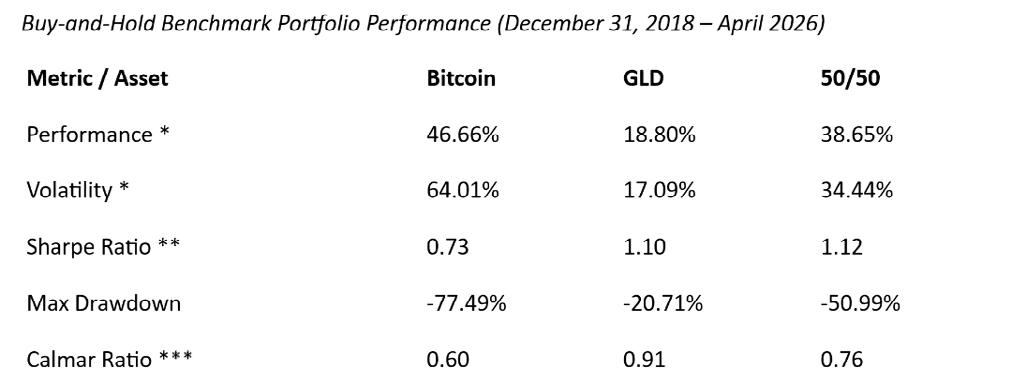
We establish three passive benchmarks for performance attribution and context:
The benchmarks reveal the classic risk-return dichotomy with stark clarity: Bitcoin delivers superior absolute returns (46.66% p.a.) but at the cost of extreme volatility (64.01%) and catastrophic drawdowns
(-77.49%), while gold provides stability (17.09% volatility, -20.71% drawdown) at the expense of return potential (18.80% p.a.).
The 50/50 blend offers intermediate characteristics but fails to resolve the fundamental tension between the two assets—it captures only 38.65% returns while still suffering a -50.99% drawdown, demonstrating that naive diversification cannot solve the Bitcoin-gold allocation challenge.
Methodological Framework: Dual Momentum
Our systematic model draws inspiration from Antonacci’s (2014, 20167) dual-momentum framework and the paired-switching methodology documented in the quantitative finance literature. The strategy employs a single tunable parameter: the lookback period X (measured in weeks) for momentum calculation, tested at 1, 2, 3, 4, 6, 8, 12, 20, 24, and 28 weeks.
The allocation rule operates as follows at each Wednesday rebalancing:
• Long IBIT if: (IBIT return over X weeks > GLD return over X weeks) AND (IBIT return over X weeks > 0%)
• Long GLD if: (GLD return over X weeks > IBIT return over X weeks) AND (GLD return over X weeks > 0%)
• Flat (cash at 0%) otherwise
This structure embeds both relative momentum (choosing the stronger performer between the two assets) and absolute momentum (requiring positive returns as a threshold), with the flat position providing implicit downside protection when neither asset exhibits positive momentum. The strategy can thus switch among Bitcoin, gold, and cash, but never hold both assets simultaneously—this is a tactical, not strategic, allocation framework.
Volatility Targeting
Mechanism
Recognizing Bitcoin’s extreme volatility relative to gold, we further implement a volatility cap to constrain portfolio risk to a maximum of 20% annualized volatil-
ity. This is not a target to be achieved, but rather a hard upper bound that cannot be exceeded.
At each Wednesday rebalancing, after the dual momentum signal selects an asset (IBIT or GLD), we calculate its 12-week rolling standard deviation and annualize it by multiplying by √52 (the square root of the number of weeks per year, approximately 7.21).
The position sizing formula is: Position Weight = min(20% ∨ Annualized Volatility)
This ensures the portfolio volatility never exceeds 20%. For example:
• If the selected asset exhibits 23% annualized volatility, we allocate 87% (20%/23%) of portfolio capital to that asset, with the remaining 13% held in cash.
• If the selected asset exhibits 15% annualized volatility, we allocate 100% of portfolio capital (capped as the full investment).
• If the selected asset exhibits 40% annualized volatility, we allocate only 50% (20%/40%) to that asset.
This mechanism provides systematic, rules-based risk control that automatically reduces exposure during high-volatility regimes—precisely when drawdown risk is elevated. The 20% volatility cap is chosen to approximate the risk profile of a traditional equity-like portfolio, making it familiar to institutional investors while still allowing meaningful participation in the underlying assets’ returns.
Results
Pure Dual Momentum Strategy
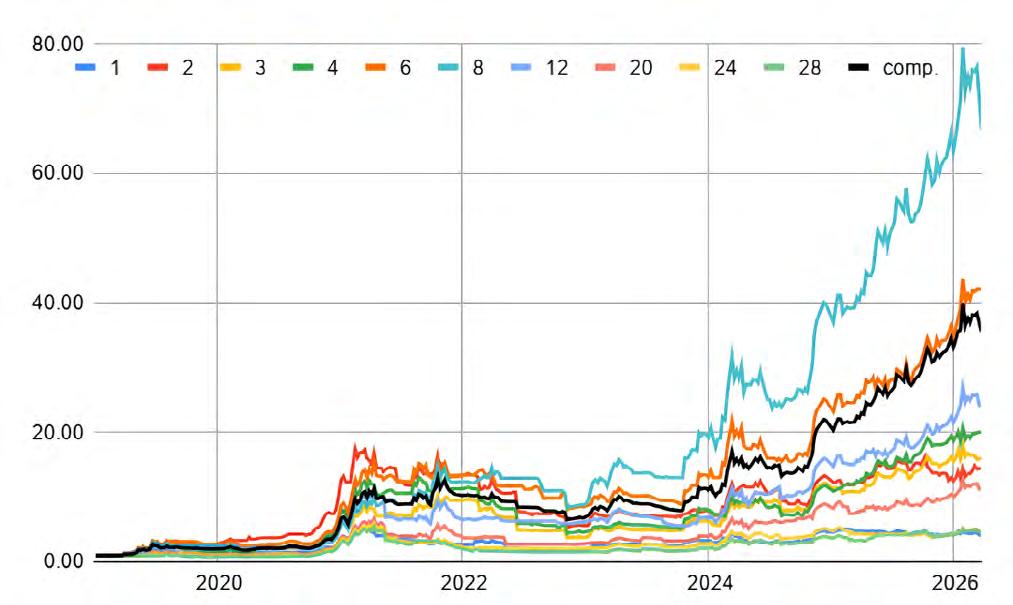
Figure 2. Pure Dual Momentum Strategy Performance Across Lookback Periods
Table 2
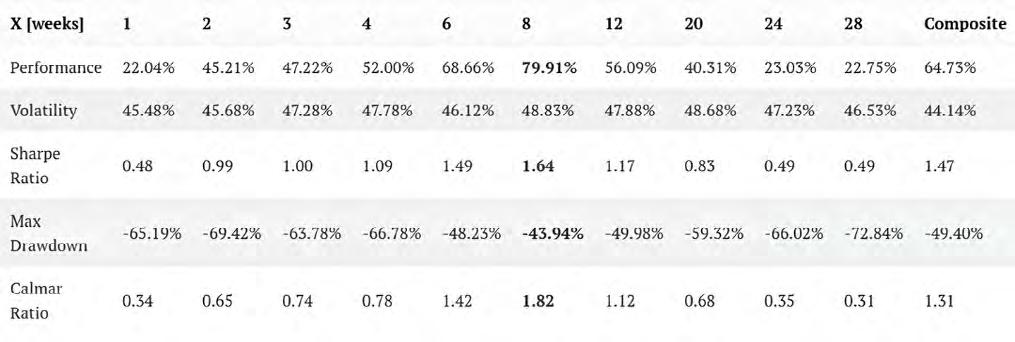
Pure Dual Momentum Strategy Performance Across Momentum Lookback Periods (December 31,2018 – April 2026)
Note. Bold indicates the optimal single parameter; Composite represents the equal-weighted average of the 4-, 8-, and 12-week strategies.
The pure dual momentum strategy exhibits a pronounced performance “sweet spot” between 4 and 12-week lookback periods, with the 8-week variant delivering exceptional 79.91% annualized returns and a Sharpe ratio of 1.64—substantially outperforming both the 50/50 benchmark (38.65% returns, 1.12 Sharpe) and pure Bitcoin buy-and-hold (46.66% returns, 0.73 Sharpe).
To mitigate this parameter sensitivity risk, we construct a composite strategy averaging the 4-, 8-, and 12-week variants, which delivers robust 64.73% annualized returns with a Sharpe ratio of 1.47 and a maximum drawdown of -49.40%—still quite risky, but capturing substantial upside participation if we compare this with benchmark performance. The strategy’s inability to prevent drawdowns approaching 50% underscores a critical limitation: while dual momentum successfully navigates between assets based on relative and absolute strength, it cannot escape systemic risk when both Bitcoin and gold decline simultaneously, as occurred during the 2022 risk-off environment.
Volatility-Capped Dual Momentum Strategy
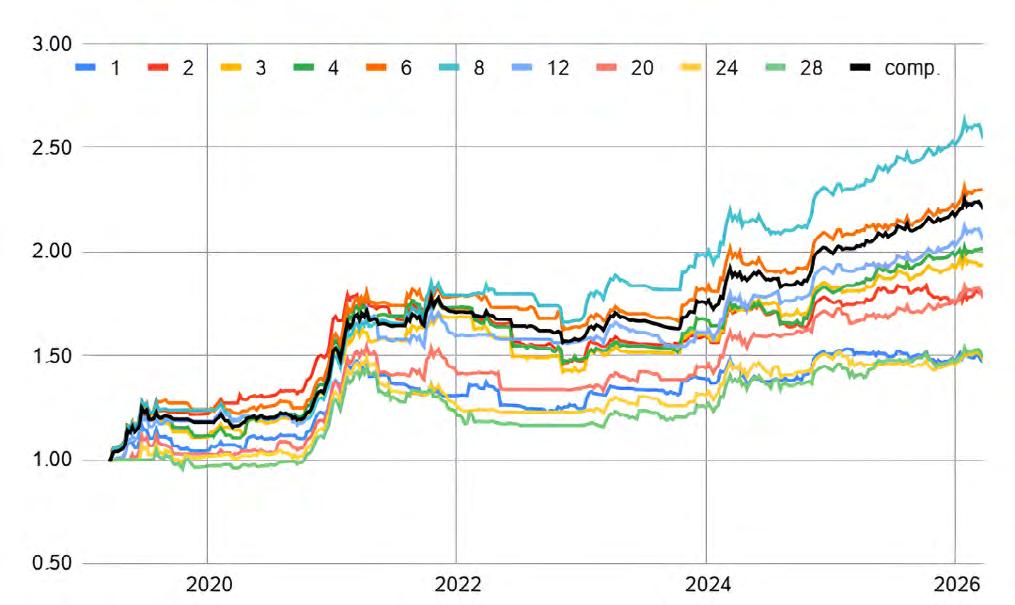
Figure 3. Volatility-Capped Dual Momentum Strategy Performance Across Lookback Periods
Table 3
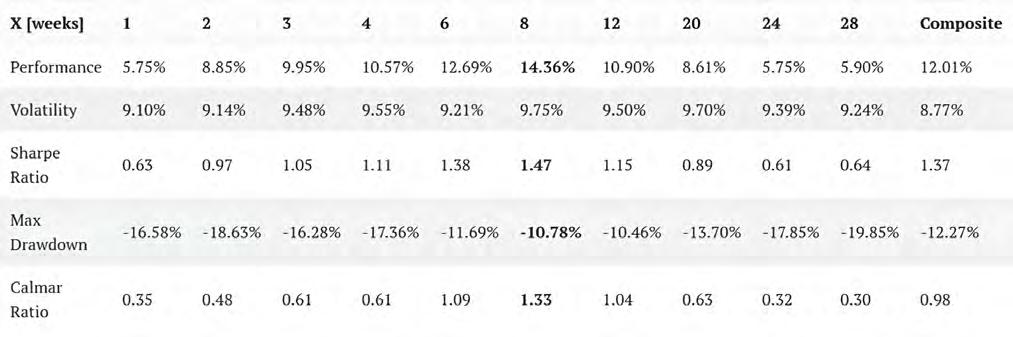
Volatility-Capped Dual Momentum Strategy Performance Across Momentum Lookback Periods With 20% Maximum Annualized Volatility Constraint (December 31,2018 – April 2026)
Note. Bold indicates the optimal single parameter; Composite represents the equal-weighted average of the 4-, 8-, and 12-week strategies. Portfolio volatility is capped at 20% annualized.
The introduction of the 20% volatility cap fundamentally transforms the strategy’s character, reducing the composite version’s annualized volatility from 44.14% to just 8.77%—remarkably lower even than gold’s standalone 17.09% volatility—while constraining maximum drawdown to a tolerable -12.27%, a dramatic improvement over the pure strategy’s -49.40% drawdown. This dramatic risk reduction comes at the predictable cost of absolute return, with the composite strategy delivering 12.01% annualized performance versus the pure strategy’s 64.73%. Critically, however, the risk-adjusted metrics remain attractive: the volatility-capped composite achieves a Sharpe ratio of 1.37 and a Calmar ratio of 0.98, demonstrating that systematic volatility control can extract meaningful alpha while maintaining risk parameters suitable even for more conservative mandates.
Conclusions
The empirical evidence reveals a fundamental truth that every practitioner must confront: there is no free lunch in quantitative finance, only explicit trade-offs between return, risk, and implementability. The pure dual momentum strategy’s spectacular 79.91% annualized return (8-week lookback) tempts the greedy, but its -43.94% maximum drawdown terrifies the prudent. The volatility-capped variant’s modest 14.36% return may disappoint return-hungry investors, but its -10.78% drawdown comforts risk-averse investors. Which is “better”? The question itself betrays a misunderstanding—the answer depends entirely on the specific mandate, constraints, and portfolio context in which the strategy operates. Each variant, implemented with rigor,
appropriate expectations, and honest acknowledgment of limitations, can add value to the sophisticated practitioner’s toolkit as we navigate the uncertain frontier where digital assets meet traditional portfolio construction. The data speaks clearly: systematic rules beat discretionary intuition, risk control enables survival, and there are no shortcuts to disciplined investing.
Radovan Vojtko is a former Systematic Portfolio Manager, in the past, he worked for the Tatra Asset Management company (which is the biggest asset management company in the Slovak Republic and it has over 2.5 billion EURs of assets under management). He personally managed over 300+ million EUR in several quantitative funds. These funds were focused on multi-asset managed futures and trend-following strategies, global tactical asset allocation, market timing, and volatility trading. He made his next big step in 2015 and became CEO of Quantpedia.com - The Encyclopedia of Quantitative Trading Strategies, a quant research company with a mission “to turn financial academic research into a more user-friendly form to help anyone interested in algo/quant trading and systematic investing”.
WHEN INTERNAL OPERATIONS STOP SCALING
BY DAVID GOLDSTEIN STP Investment Services
We hear it all the time: “Our internal operations just can’t keep up with the work.”
What begins as a manageable process at launch can quickly become a major constraint as a fund grows,
particularly for firms that choose to self-administer. Scaling internal operations is rarely straightforward, and without the right structure, it can introduce significant operational risk.
For managers of closed-end funds, the first fund often starts with a limited number of investors and in-
efficiency. Falling short of those expectations can put the investor-manager relationship at risk.
While self-administration may work for some firms at certain stages, scaling internal operations requires careful planning and significant investment. For many managers, partnering with operational experts allows them to focus on what they do best, investing, while ensuring their infrastructure is ready for growth.
Preparing for scale isn’t optional. The question is whether to build it yourself or rely on specialists who already have it in place.
1https://stpis.com/services/reconciliation/
The Power of Integrating Technology and Investment Operations
LHL Strategies, Inc., provides life policies, platform services and solutions, and portfolio servicing to longevity-risk asset investors. LHL purchases life policies from individual policyowners via “life settlement” transactions and resells them to asset investors. LHL is the industry’s only platform for (i) policyacquisition and trading, (ii) policy and portfolio valuation and management and (iii) life policy portfolio servicing.
Platform Services
Policy Origination, Acquisition and
Resale
• Licensed throughout the US covering 97 percent of US population
• Originate via DTC Advertising and B2B Marketing
• Bundle and resell for above-average returns
Growing Supply
Growing Senior Population:
Life Policies
• 65+ Population continues to grow until 2040 to 81M seniors
Unrealized Benefit:
• 92.5% of all life polices issued will lapse or surrender, providing little or nothing to the policyowner
Massive Potential:
• $2.24T gross market potential of life policies that could qualify for a life settlement through 2033
Servicing
Portfolio Management Services
• Policy and Portfolio Pricing/Valuation
• Policy and Portfolio Management
• Consulting on portfolio structuring, complex policies and other matters
• Trading
Portfolio Servicing
• Premium payments
• Maturity tracking
• Death benefit processing
Stong Demand
• 65% of current investors report plans to increase allocations by more than 1.5x with 15% plan to more than double allocation
• Strong geographic diversity: 45% US, Europe 28%, Middle East 15%, Asia-Pacific 12%
• 27% of respondents manage under $100M AUM, showing greater accessibility
• 53% report satisfaction scores of 9 or 10 out of 10 for existing allocations
Ways to Invest with LHL:
• Gr o w t h
• Asset Acquisition
• Warehouse Facility Contact us to learn more
Contact Information
Michael Freedman CEO, LHL Strategies, Inc
1100 E Hector Street, Suite 415 Conshohocken, PA 19428
Tel: (445) 200-5650
mfreedman@lighthouselife com www.lighthouselife.com
GLOBAL ACCESS | RELATIONSHIP-FOCUSED APPROACH | DATA-DRIVEN ADVISORY
Ikonic Yachts is redefining the yachting experience as a fully integrated yachting ecosystem with a focus on extraordinary service, investment-level advice, and industry-leading asset management and valuation.