BEFORE the AMERICAS
UNIVERSITY OF MARYLAND GLOBAL CAMPUS / ARTS PROGRAM
BEFORE the AMERICAS
UNIVERSITY OF MARYLAND GLOBAL CAMPUS ARTS PROGRAM
George Mason University
Gillespie Gallery
Art and Design Building
4515 Patriot Circle
Fairfax, VA 22030
August 25–November 15, 2025
University of Maryland Global Campus Arts Program Gallery 3501 University Boulevard East
Adelphi, MD 20783
February 15–May 10, 2026

On behalf of University of Maryland Global Campus (UMGC) and the 100,000 learners we serve each year, I am honored to introduce a very special exhibition: Before the Americas.
For more than 75 years, UMGC has embodied the belief that learning is not confined to classrooms or course materials. Rather, it is a lifelong journey of exploration, discovery, and transformation. Our mission is to inspire hope, empower dreams, and transform lives . . . one student at a time—and the arts play a vital role in that mission.
Before the Americas underscores this belief in the role of the arts, inviting us to see the world—and ourselves—through a broader, more discerning lens. It brings together artists whose works transcend borders and time, illuminating the enduring threads of memory, migration, and cultural connection. These works challenge us to reconsider what we think we know and to engage with histories and perspectives that have too often been overlooked. Art has the power to expand our understanding and awaken empathy. It helps us connect across differences and reminds us of our shared humanity. Through our Arts Program, UMGC is proud to support exhibitions like this one, which enriches our community and also reflects the global, inclusive spirit of our university.
I hope that you find Before the Americas as inspiring and thought-provoking as I do and that it sparks curiosity, conversation, and a deeper appreciation of the ways that art can preserve our rich history, strengthen our connections, and shape our world.
KATHERINE LAMBERT
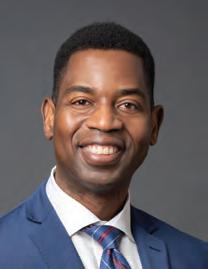
GREGORY W. FOWLER, PhD PRESIDENT
UNIVERSITY OF MARYLAND
GLOBAL CAMPUS

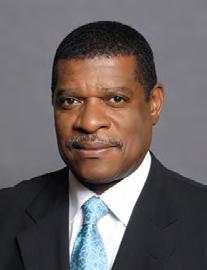
ERIC KEY DIRECTOR, ARTS PROGRAM UNIVERSITY OF MARYLAND GLOBAL CAMPUS
Cheryl Edwards, curator of Before the Americas, is one of the region’s most enthusiastic artists and art activists. She sees art as a means to educate and to exchange ideas and experiences. Her passion for seeing the purity in each art form is evident in the body of works of this exhibition. Edwards carefully selected the artworks with the predetermined goal of sharing the cultural riches of the artists’ inspiration—their story, their experiences, and their background—with a larger audience.
This exhibition embraces art history through approximately 40 thought-provoking works by Caribbean, African, Latino, Afro-Latino, and African American artists. The artists selected for this exhibition explore racial and colonial constraints in their works. Generally, the participating artists are or have been working artists in the greater Washington, DC; Maryland; and Northern Virginia area. Many of them also share an invisibility within the art narrative, yet their art speaks volumes.
There are four themes for this exhibition: genetic memory, migration, invisibility, and interconnectivity. Genetic memory reflects the artist’s ability to create a work that has historical reflections of a specific moment in time that the artist has not experienced firsthand. Migration alludes to the displacement of an artist, voluntarily or involuntarily, from one place of residence to another. Invisibility is a common thread for artists of color. They are overlooked, are obstructed from the conversation, or have not been considered artistically relevant. For this project, interconnectivity refers to the artists’ connections to one another without even knowing each other and to their collective creative ability to produce a work of substance.
In the end, this is the essence of culturally diverse artists in America. They create works of art that are relevant to the arts narrative and their community.
Before the Americas debuted last year at George Mason University, where it was on view from August 25 through November 15. UMGC is pleased to host this exploratory presentation of cultural exchange through art as the Arts Program's first exhibition of 2026. On behalf of everyone involved, I want to thank Cheryl Edwards for her vision, determination, and hard work in pulling this body of works and artists together for the benefit of all.

CURATOR’S STATEMENT
BEFORE THE AMERICAS
Before the Americas is a comprehensive historical survey featuring 41 artworks created by Afro-Latino, African, Latino, Caribbean, and African American artists. The exhibition includes works from artists born between the 1800s and the 1990s, representing 14 different countries.
The exhibition examines the histories and contributions that predate the colonial idea of the Americas as a unified entity. It explores the identity, heritage, and artistic expressions of Afro-descendant communities, showcasing their cultural evolution over centuries. The show aims to highlight the artistic achievements of Afro-descendant communities and emphasizes the importance of redefining the frameworks through which artistic contributions are evaluated, allowing for a more thorough understanding of cultural heritage.
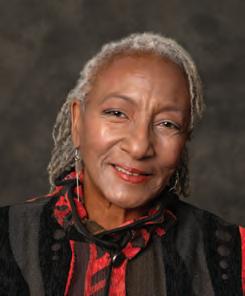
The showcase of artists explores themes like ancestral memory, migration, invisibility, and interconnectivity. It examines the relationship between historical erasure and contemporary representation, urging viewers to rethink art history’s narratives. The focus is on highlighting Afro-descendant artists’ achievements within global artistic innovation.
The geographical reach of the artwork encompasses North, Central, and South America, including the Dutch, Anglo, and French Caribbean. The exhibition features works by Afro-Latino and Caribbean artists from private and public collections, as well as pieces created by African American, Caribbean, African, Latino, and Afro-Latino artists from the District of Columbia, Maryland, and Virginia.
Before the Americas is a dialogue between interconnected historical paths, emphasizing African aesthetics’ influence. The works use bold colors, patterns, and symbolism to challenge traditional narratives and engage viewers with art as a record of identity and collective memory.
The dialogue encourages universal and personal themes, addresses historical erasure, and celebrates artistic resilience. It highlights Afro-descendant artistry, exploring inherited experiences and cultural legacies through visual language. The works blend ancient African traditions with contemporary perspectives, challenging conventional boundaries and redefining artistic discourse.
The display presents a variety of artistic mediums, including sculpture, painting, printmaking, video, book art, and performance art. It bridges historical gaps and creates a continuum that spans centuries and continents. The works promote dialogue and provide perspectives on the resilience and influence of African aesthetic traditions.
This interplay examines how art history has often overlooked contributions from Afro-descendant communities. These artists often confront racial and colonial constructs, challenging the invisibility of their contributions within art history. The exhibition creates a space where historical narratives can be questioned, reconstructed, and highlighted, allowing these artists to redefine their position within the global artistic sphere.
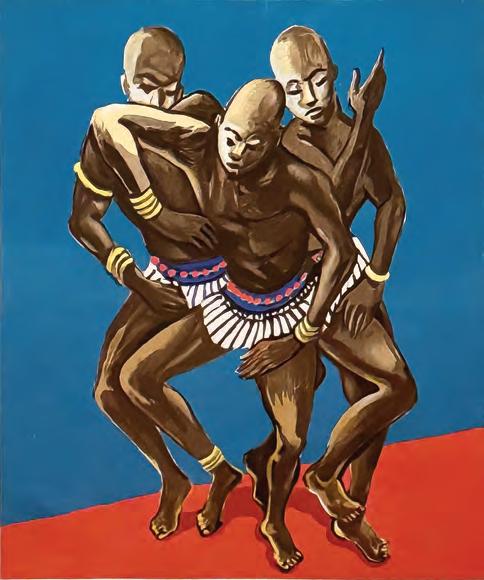
Lois Mailou Jones, Untitled (African Dancers), 1996, Silkscreen print, 271/4 x 24 inches, Collection of Leslie Oliver Ellison
CHERYL D. EDWARDS ARTIST-CURATOR, SCHOLAR, EDUCATOR
Intersections in heritage and innovation are highlighted to explore intangible cultural legacies. Ancestral memory reveals the blend of individual and collective experiences, transcending limits of geography and time. These visual narratives showcase the resilience and creativity of Afrodescendant communities, critically examining artistic conventions and celebrating their contributions to global art history.
Before the Americas is an exploration of how genetic memory, migration, invisibility, and interconnectivity influence the participating artists’ work.
GENETIC, ANCESTRAL MEMORY AND ARTISTIC EXPRESSION
Genetic memory typically refers to ancestral memories passed through epigenetics, shaped by repeated generational experiences. However, Before the Americas explores the possibility of ancestral memories that manifest remembrances which encompass information that assists in providing tools of persistence and resilience.
Lois Mailou Jones incorporated African aesthetics into modernist art, while Curlee Raven Holton explored meanings in African scarification practices, like those of the Kuba people of the Democratic Republic of the Congo.
Artists from various cultures, including those of Africa, the Caribbean, and the Americas, use unique elements to connect their work to African heritage. Artists like Alonzo Davis, James Phillips, Nelson Stevens, Michelle Talibah, and Renée Stout challenge the limitations of Western art traditions.
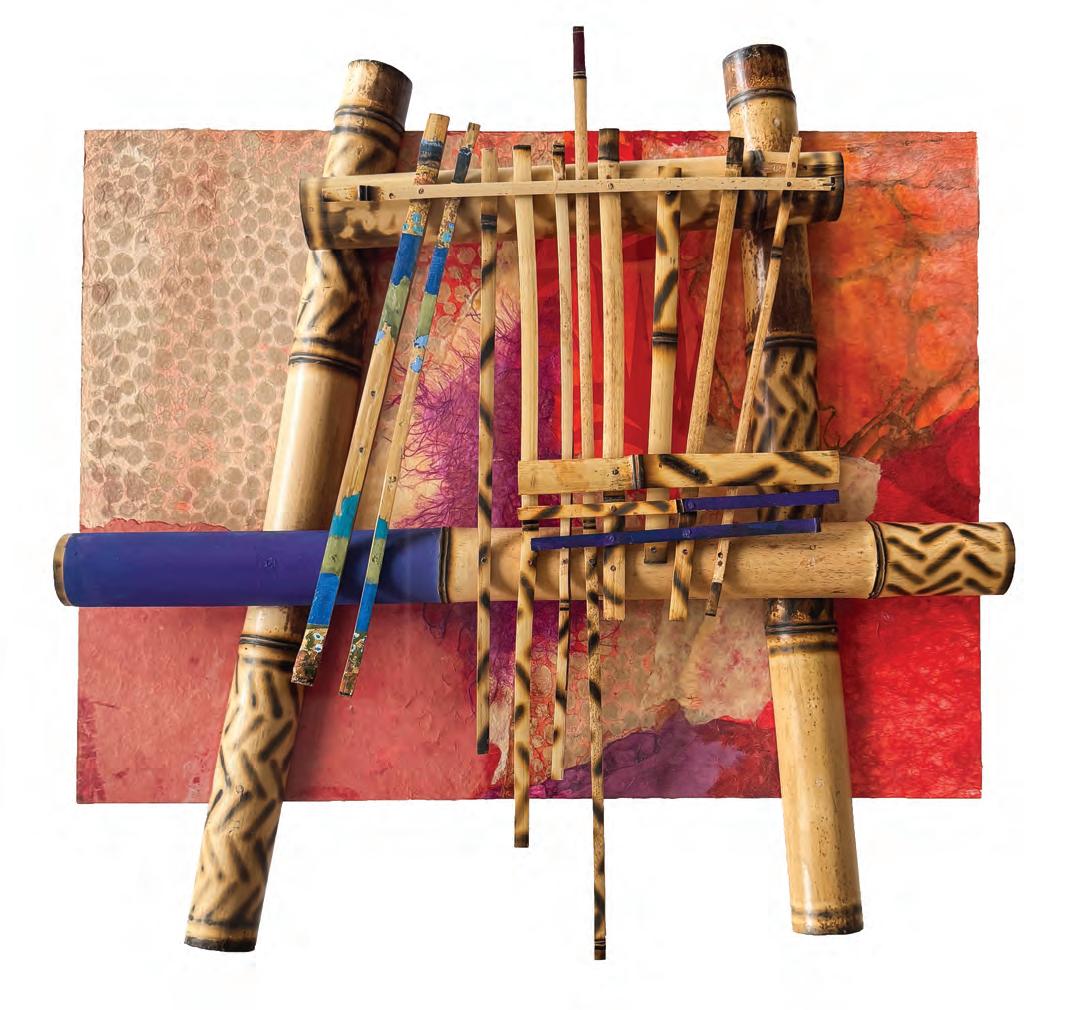
Alonzo Davis’s work integrates cultural influences from Brazil, Haiti, and West Africa. AfriCOBRA members Phillips, Stevens, Stout, and Talibah highlight ancestral memory through vibrant patterns and colors, linking to pre–transatlantic slave trade connections. Their work challenges traditional Western interpretations.
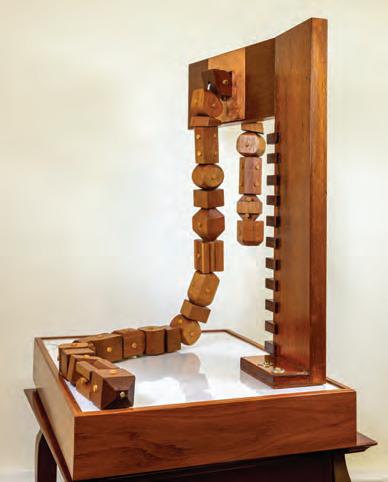
Several artworks by Stanley Greaves, Luis Vasquez La Roche, and Georges Liautaud directly address slavery through materials and concepts linked to African ancestral commemoration. Greaves’s sculpture, Slave Stock and Whip, uses mahogany, Brazil cherry, and pine. Liautaud’s iron sculpture, Crucifixion, features two serpents entwined on a figure on a cross. La Roche’s performance piece, The Cleanse (La Limpieza), involves using a whip as a metaphor in tribute to his Trinidadian African orisha. It was initially performed at Documenta Fifteen in 2022 in Kassel, Germany.
These artists engage with cultural heritage and historical accountability by imbuing their works with intricate, multidimensional meanings. Their creations challenge the binary frameworks established by colonial ideologies, instead embracing diverse expressions that capture the complexity of African history and its diasporic reflections. This in-depth examination of ancestral memory is further enhanced by a focus on the transformative power of materials and concepts deeply embedded in cultural identity.
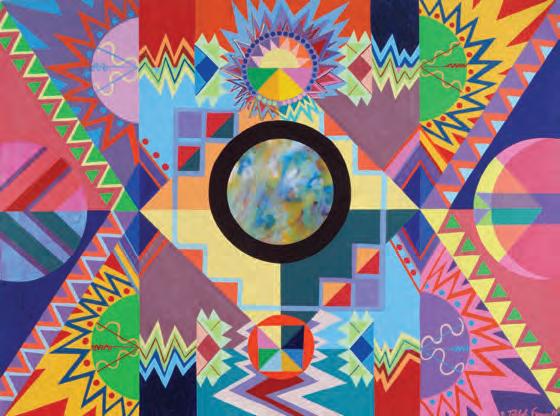
Above: top to bottom: Michelle Talibah, One, 1979, Acrylic on canvas, 36 x 48 inches, Collection of New Door Creative Gallery; Stanley Greaves, Slave Stock and Whip, 2018, Mahogany, copper, plexiglass, nylon cord, Brazil cherry, and pine, 30 x 19 x 24 inches, Collection of the Art Museum of the Americas
The exhibition explores how artists use their heritage to innovate, creating a link between history and the present. Their art acts as a medium for intellectual and cultural exchange.
Artistic expression involves using art to convey thoughts, emotions, and experiences. Artists in this exhibit employ color usage that challenges the notion of the colonial gaze. The palettes of Sam Gilliam, David Driskell, Alma Thomas, John Beadle, and Martha Jackson Jarvis deconstruct this gaze within their work. They use color as a language to communicate emotions, stories, and cultural nuances. In Africa, this usage serves to transcend time and space and transmits ancestral knowledge and historical narratives.
By incorporating scarification patterns, vibrant colors, or materials with historical significance, these artists navigate the intersection of tangible and intangible heritage, offering perspectives on African and diasporic narratives.
MIGRATION AND IDENTITY
Migration significantly influences artistic expression. The dynamic interaction between cultural heritage and contemporary artistry embodies broader themes of migration and identity that are fundamental to the human experience. Artists featured in this exhibit transcend geographic and temporal boundaries, skillfully integrating their personal histories with broader cultural narratives. By addressing the complexities of displacement, belonging, and memory, their works prompt a reevaluation of what it means to forge an identity in a constantly evolving world.
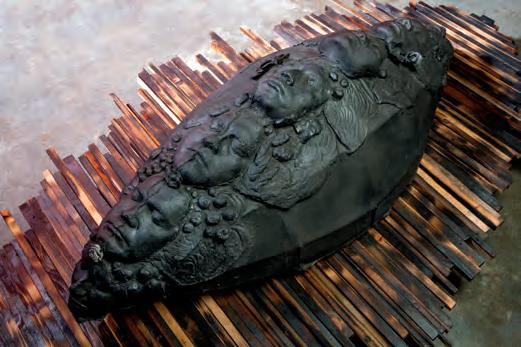
Julio Valdez, originally from the Dominican Republic, explores themes of migration and home through his art, reflecting his experiences in the United States. Wilfredo Valladares, from Honduras, and Elizabeth Catlett, born in the United States, depict the effects of displacement and cultural adaptation in their artistic endeavors.
Irene Clouthier combines her experiences living in the United States with exhibitions in Washington and her birthplace, Mexico, using new media and sculpture to present a rich visual language. Alexander “Skunder” Boghossian, an Ethiopian artist who worked and taught in Ethiopia, France, and Washington, DC, developed his visual language inspired by Fransisco Goya, blending modernism with his cultural perspective and incorporating iconography from the Coptic church.
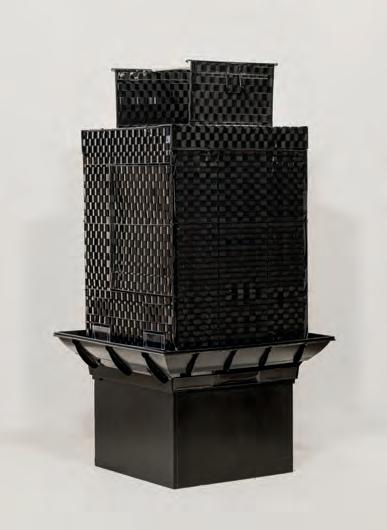
Fabiola Alvarez Yurcisin's connections to her birth country are primarily seen in her use of materials, which are derived from her native Mexico. Yurcisin creates sculptures using typewriter ribbons, funerary ribbons, and Mexican amate paper. Her close relationship to her land of origin through materials is analogous to the way in which Afro-descendant artists create.
Fabiola Alvarez Yurcisin, Black Cage, 2020, Videocassette tape, double-sided adhesive tape, mirror, and wood base,
Wilfredo Valladares, Unmasked, 2014, Cast iron and wood, 6 x 4 feet
41 x 17 x 21 inches
Left to right:
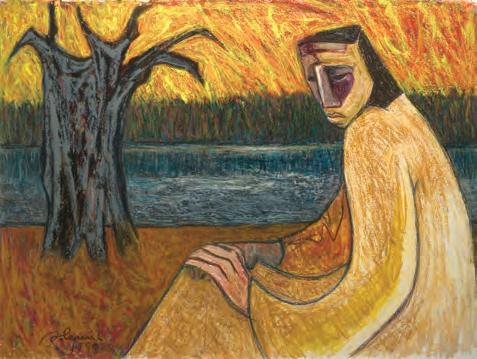
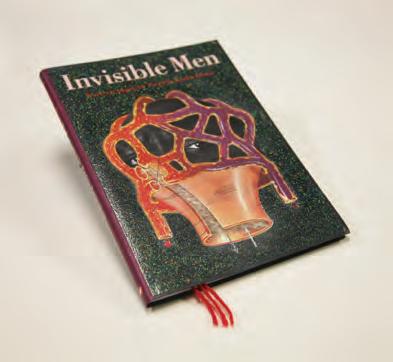
Samella Lewis, Bayou Woman, 1999, Oil stick on paper, 24 x 30 inches, Collection of Eric Key; Patricia Kaersenhout, Invisible Men, 2009, Digital prints, bound book, ed. 750, 101/4 x 7¼ inches,
INVISIBILITY AND REPRESENTATION
This exhibit critiques the historical marginalization of multicultural artists within Western and European art traditions. Colonial and Eurocentric narratives often excluded African and Afro-descendant perspectives, neglecting the cultural influence found in their artwork.
Before the Americas offers a global perspective, viewing these artworks through various lenses, incorporating ancestral memories into the art. These artists dismantle colonial legacies’ frameworks of invisibility, celebrating African heritage’s multifaceted dimensions and its diasporic expressions. Their works resonate with themes of resilience, adaptation, and self-discovery, drawing on ancestral wisdom and cultural rituals to construct narratives that are both personal and universal.
Artists such as Samella Lewis, Elizabeth Catlett, and Martin Puryear infuse African origins into their work, challenging erasure and redefining their place within art history. The Africanity in the work of EJ Montgomery, Joyce Scott, Roberto Diago, and Bernadette Persaud speaks to their expression of Africaness.
Georges Liautaud, Everald Brown, and Jallim Eudovic, despite not attending art schools because of prohibitive costs or access issues, resisted indoctrination and maintained intuitive creativity within their work.
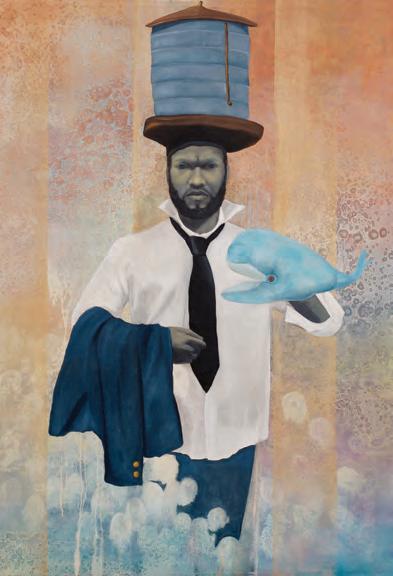
Patricia Kaersenhout, of Surinamese descent, confronts invisibility in her artist book Invisible Men, inspired by Ralph Ellison’s novel, exploring the discovery of invisible men in her life through layered materials. Amy Sherald’s Puppet Master painting depicts a Black man holding a puppet, interpreted as code-switching— a necessity for Afro-Latino and African American artists to participate in the Western art canon while creatively navigating career challenges.
Collection of the Art Museum of the Americas
Amy Sherald, Puppet Master, 2008, Oil on canvas, 74 x 521/8 inches, Collection of DC Commission on the Arts and Humanities
Left to right:
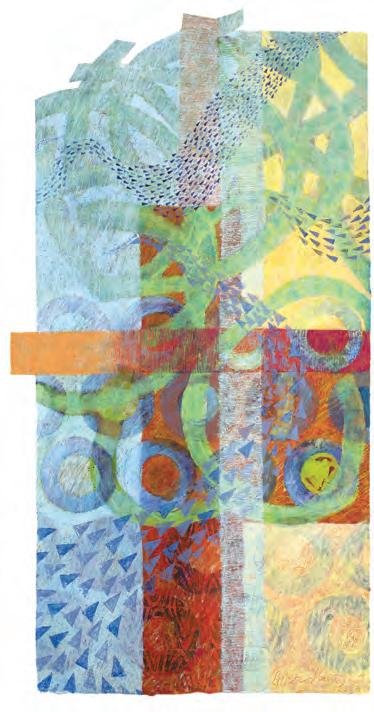
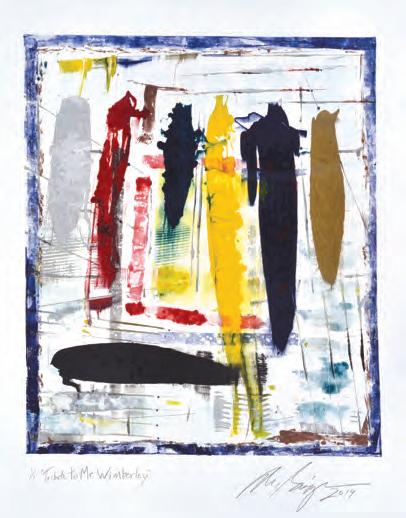
Claudia “Aziza” Gibson-Hunter, You Got to Give Up the Stuff That Holds You Down, 2023, Acrylic paint and colored pencil on paper, 98 x 503/4 inches; Alec Simpson, Tribute to Mr. Wimberley, 2019, Monotype print on paper, Unframed: 60 x 42 inches, Framed: 653/4 x 48 inches
INTERCONNECTIVITY AND CULTURAL CONTINUITY
Interconnectivity among these artists reveals shared heritage and collective traditions. Claudia “Aziza” Gibson-Hunter, Lou Stovall, M. P. Alladin, Jacinto “Coco” Galloso, and Alec Simpson reflect their Afro-Caribbean, African American, and African roots through abstraction, conceptual designs, and vibrant use of color. Melanie Royster combines African-Caribbean iconography with Western techniques, creating a visual language bridging cultural divides.
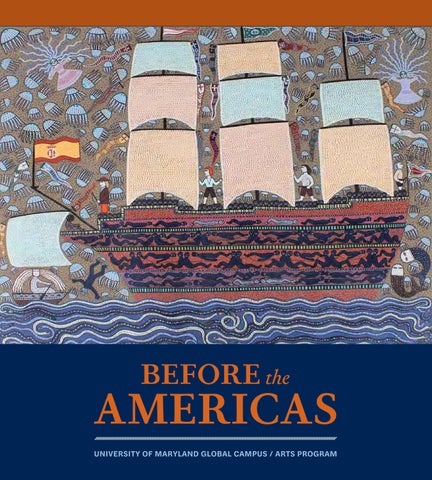
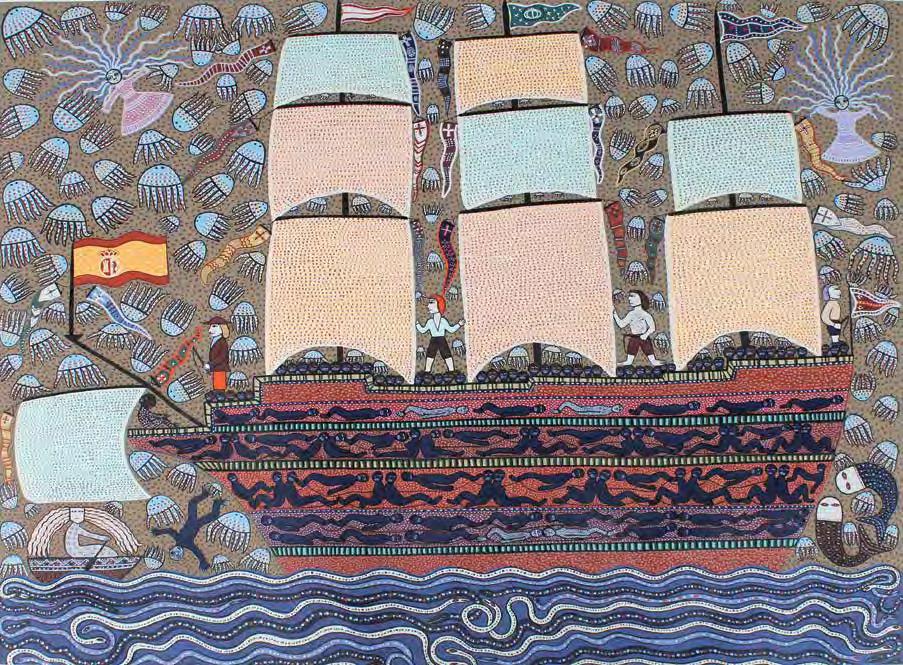
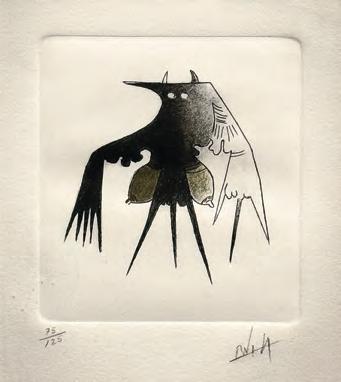
Manuel Mendive, an Afro-Cuban artist, anchors the exhibition with his artwork entitled Barco Negrero, recognizing Afro-Cuban elements and religious content and demonstrating African spirituality’s significance before slavery. Wifredo Lam, another Afro-Cuban artist, blends Afro-Cuban religious traditions into his art, informed by his Chinese and Afro-Cuban ancestry.
By engaging with ancestral memory and narratives of cultural resilience, the artists showcased in Before the Americas establish profound connections between individual and collective identities. Their works transcend geographical and temporal boundaries, skillfully integrating elements of African, Caribbean, Latino, African American, and Afro-Latino legacies with contemporary artistic practices. These creations challenge dominant historical frameworks, offering alternative perspectives that celebrate the richness and contributions of historically marginalized voices to the artistic canon.
Through the synthesis of traditional iconography and innovative techniques, these artists exemplify the intersection of heritage and contemporary expression. Their thematic explorations—whether centered on migration, invisibility, or interconnectivity—coalesce to form a cohesive narrative tapestry that resonates across cultures. By examining the threads of memory and adaptation, this exhibition invites visitors to a space where history evolves into a dynamic dialogue, reinterpreting the past while envisioning transformative possibilities for the future.
Wifredo Lam, Croiseur Noir, 1972, Etching, ed. 75/125, 13 x 101/2 inches, Collection of Leslie Oliver Ellison
SUMMARY
The interconnected narratives of artistry and heritage underscore how ancestral memory continues to infuse vitality into the global art landscape. These works honor their cultural roots; these artists shape a future in which Africanity enriches and redefines art discourse. Their innovation exemplifies culture’s transformative power to transcend boundaries and establish new paradigms.
Before the Americas, hosted by the UMGC Arts Program and George Mason University’s Gillispie Gallery, features African, Afro-Latino, Caribbean, Latino, and African American artists who explore themes of ancestral memory, migration, invisibility, and interconnectivity. The exhibit highlights African heritage’s influence, colonial challenges, and cultural continuity, offering a platform to reinterpret history and amplify marginalized voices in the art world.
In conclusion, Aimé Césaire poetically sums it up: “It is hard to imagine all is lost Since the energy of ashes is still here and blows from time through the debris.”
BIBLIOGRAPHY
Akbar, Na'im. Know Thyself. Mind Productions and Associates, 1988.
Césaire, Aimé. The Collected Poetry. Edited and translated by Clayton Eshleman and Annette Smith. University of California Press, 1984.
Clifton, Lucille. Quilting: Poems 1987–1990. Copper Canyon Press, 2000.
Fanon, Frantz. The Wretched of the Earth. Translated by Richard Philcox, with a preface by Jean-Paul Sartre, Grove Press, 2021.
Ortiz, Maria Elena, Marla Price, and Annette K. Joseph-Gabriel. Surrealism and Us: Caribbean and African Diasporic Artists Since 1940. DelMonico Books, 2024. Exhibition catalog.
It is hard to imagine all is lost
Since the energy of ashes is still here and blows from time through the debris.
—AIMÉ CÉSAIRE
Rabaka, Reiland. The Negritude Movement: W.E.B. Du Bois, Leon Damas, Aimé Césaire, Leopold Senghor, Frantz Fanon, and the Evolution of an Insurgent Idea. Lexington Books, 2015.
Roberts, Mary Nooter, and 'Wande Abimbola. Secrecy: African Art that Conceals and Reveals. Museum for African Art, 1993. Exhibtion catalog.
Stewart, Jeffrey C. Beauty Born of Struggle: The Art of Black Washington. Yale University Press, 2023.
Van Sertima, Ivan. They Came Before Columbus: The African Presence in Ancient America. Random House Trade Paperbacks, 2003.
Vergès, Françoise. A Programme of Absolute Disorder: Decolonizing the Museum. Pluto Press, 2024.
African Diaspora Artists Shaping and Defining Art in the Americas
LANITRA M. BERGER, PhD
ASSOCIATE PROFESSOR, HISTORY AND ART HISTORY
DIRECTOR, AFRICAN AND AFRICAN AMERICAN STUDIES PROGRAM
GEORGE MASON UNIVERSITY
IN TEACHING ABOUT THE AFRICAN DIASPORA, I notice that students are often surprised to learn that enslaved Africans brought their culture and beliefs with them to the Americas and that these beliefs not only helped them to survive but also shaped the new places they called home. The dominant narrative of the transatlantic slave trade is that the voyage was so traumatic that enslaved people forgot, abandoned, or “lost” everything about their cultures and values. Both extensive scholarship and cultural knowledge disproves this assertion: African ideas and values are foundational to the richness and texture of societies throughout the Americas.
Before the Americas is a powerful, educational, and aesthetically stunning exhibition that contributes to our understanding of the role that African diaspora artists have played in shaping and defining the arts in the Americas. Each artist represents a unique interpretation of their own experiences producing art from the Black perspective, but it is the combination of their work together in this exhibition that reinforces its core themes so persuasively. Curator and artist Cheryl Edwards has brilliantly assembled works from public and private collections that address the themes of migration, ancestral memory, invisibility, and interconnectivity.
The artwork in Before the Americas embodies the ways in which artists of African descent draw on their ancestral heritage and memory to help them understand and interpret the world in which they live. It demonstrates how artists have confronted both personal and political obstacles to share messages of hope and resilience.
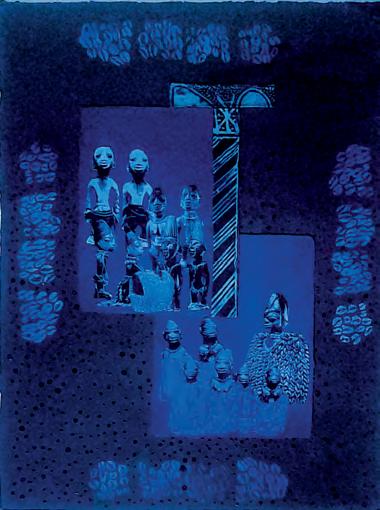
For example, a 1997 work by African American artist EJ Montgomery (who is now an ancestor) titled Ibeji Twins–Yoruba Blue connects directly to a shared sense of ancestral memory among people of African descent. It uses several shades of deep blue to illuminate a series of wooden sculptures called ere ibeji, which commemorate twins. Nigeria has one of the highest rates of twins in the world, as well as one of the highest infant mortality rates. Twins are viewed as auspicious, but unfortunately, it is also common to lose a twin. Ere ibeji are intricate wooden sculptures, often adorned with cowrie shells, blue kaolin powder, and jewelry to memorialize a lost twin. In Montgomery’s work, the color blue also becomes a featured character. This deep, almost meditative hue connects the blue colors of African organic materials such as kaolin to the cultural significance of blue and its evocative feelings in Black American culture: “haint blue” paint colors, blues music, indigo, and Miles Davis’s iconic jazz album Kind of Blue, to name a few.
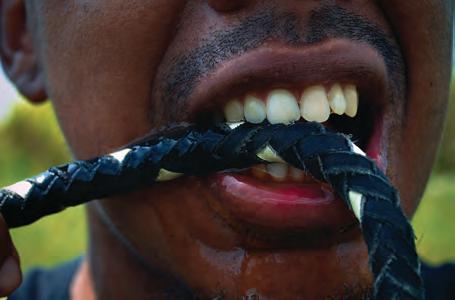
Bridging the themes of ancestral memory, migration, and interconnectivity, George Mason University faculty member Luis Vasquez La Roche connects slavery’s violent past with an Afrofuturist’s ability to envision new societies buoyed by support from the ancestors in his 2022 performance
Above, top to bottom:
EJ Montgomery, Ibje Twins–Yoruba Blue, 1997, Mixed media on paper, 30 x 221/2 inches, Collection of Juanita and Mel Hardy; Luis Vasquez La Roche, The Cleanse (La Limpieza), 2022, Performance/video
work, The Cleanse (La Limpieza). Based in Trinidad and Tobago and Virginia, La Roche explores how enslaved people experienced plantation life in both places, creating ritual performances to Oya, a Yoruba orisha, or goddess, from Nigeria. Because enslaved people were not allowed to honor orishas publicly in Trinidad and Tobago until 1951, La Roche’s performance work occurs on plantation sites that have been converted into schools, golf courses, and other public spaces. In this sense, the interconnectivity between Virginia and the Caribbean prompts questions about slavery’s legacies in our own public spaces.
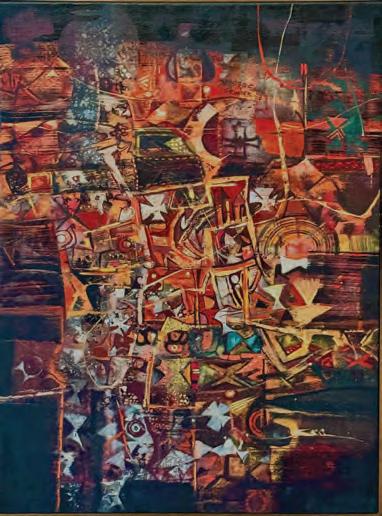
Ethiopian American artist Alexander “Skunder” Boghossian’s work bridges modern art in the Americas and the African continent. Born and educated in Ethiopia, Boghossian traveled the world, with stays in Paris and London before settling in the United States. Inspired by Coptic religious traditions and a desire to connect to Ethiopia’s rich biblical history, Boghossian’s 1967 painting Axum refers to the city and ancient kingdom known for its towering obelisks and as a resting place for the tablets upon which the Ten Commandments were inscribed. Throughout his life, Boghossian named American jazz music as another important influence on his interest in improvisation, rhythm, and color in his own work.
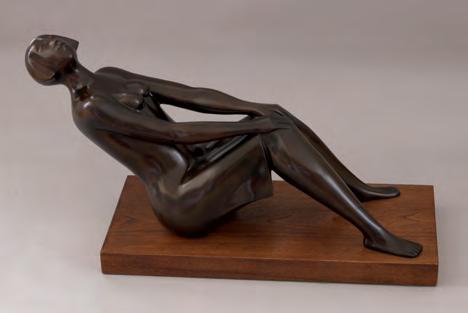
Elizabeth Catlett, one of America’s preeminent sculptors and printmakers, embodies the essence of Before the Americas as an exploration of Black artistic expression across space and time. A DC-born and educated artist who also lived in Chicago and New York before moving to Mexico for the rest of her life, Catlett devoted most of her work to illuminating Black women’s struggles and contributions to building better societies. Her exquisite bronze sculpture, Mahalia, pays homage to gospel singer, businesswoman, civil rights advocate, and Black cultural icon Mahalia Jackson. Like Catlett, Jackson was only one generation removed from slavery and had to endure relentless discrimination to achieve career success. Yet Catlett’s sculpture depicts a more vulnerable Jackson in a seated position, with her hands on her knees and her head tilted backward in a moment of dynamic movement, transmitting the message that Black women also deserve rest and moments of repose.
Artists have the vision and the perspective to spark conversation and community dialogue about important subjects, which is why the arts have always been central to a well-rounded education. George Mason University has been an institutional leader in humanities inquiry through its embrace of using the curriculum to teach students how to ask critical questions, accept uncomfortable truths, hold their composure amidst discomfort, and search for information that is often hidden in plain sight. Our university’s Memorial to the Enslaved People of George Mason is one important example of these humanities principles in action. A historic exhibition such as Before the Americas is in the right place at the right time. For this exhibition to open in Virginia, where the narratives of freedom and enslavement are forever intertwined, connects the exhibition themes to public discourse about the state of our democracy and how we will work together to create “a more perfect union.” Art is a powerful tool in this discussion. All of the artists in Before the Americas have devoted their careers to this pursuit, and their collective voice through this exhibition is yet another opportunity for discussion about our hope and dreams, as well as our resilience during times of struggle.
Above, top to bottom: Alexander “Skunder” Boghossian, Axum, 1967, Oil on canvas, 451/4 x 311/2 inches, Collection of Eric Steven Wray; Elizabeth Catlett, Mahalia, 2002, Bronze, 15 x 11 x 30 inches, Collection of Eric Key
i am accused of tending to the past as if i made it, as if i sculpted it with my own hands. i did not. this past was waiting for me when i came, a monstrous unnamed baby, and i with my mother’s itch took it to breast and named it History. she is more human now, learning language everyday, remembering faces, names and dates. when she is strong enough to travel on her own, beware, she will.
Before the Americas: A Sanctuary for the Spirit
ARIANA A. CURTIS, PhD
MUSEUM CURATOR, LATINX
STUDIES
NATIONAL MUSEUM OF AFRICAN AMERICAN HISTORY AND CULTURE
BEFORE THE AMERICAS DOES NOT SEEK to fill historical gaps or correct the discriminatory Western art historical canon. It is not a recentering of Blackness. It does not intervene to reclaim Black narratives. That is not the spirit from which this exhibition emerged. And there is no need to reclaim what was never lost.
Jamaican-born cultural theorist Stuart Hall asserted, “People have to have a language to speak about where they are and what other possible futures are available to them.” Curator Cheryl Edwards has arranged artwork from public and private collections that do just that. This curated convocation of works by Afro-descendant artists is a self-articulation of possibility and belonging. Collectively, these works deliver a visual voice and emotional echoes through the themes of migration, interconnectivity, invisibility, and ancestral memory. Edwards proves that we can evoke, articulate, affirm, connect, and imagine with or without words.
The Washington, DC, metropolitan area, with its history of promoting Black education and cultural expression, is an ideal location and context for this exhibition. It became a Black majority city in the late 1950s and remained so into the 2010s. For many Afro-descendant migrants, the Blackness of DC is not happenstance; it is desirable. The legacy of Chocolate City continues today. It is noteworthy that the artists in this show include those born in the Washington, DC, area; those who adopted the area as home; and those whose works live in DCbased institutions, like museums.
DC native and Howard University graduate Elizabeth Catlett (1915–2012) focused her art on people. Mahalia (2002), for gospel singer Mahalia Jackson, is deftly sculpted from bronze. Niña (1957) is a color linocut of an unnamed Mexican girl. Together they represent the material diversity of her artistic skill and her commitment to her “two peoples,” African Americans and Mexicans. Mahalia and Niña characterize Catlett’s feminist lens and dedication to representing all women with dignity, from the famous to the quotidian. Catlett, among other artists in this exhibition, valued community access to her work. Redefining who “the art world” includes, she created work about and for everyday people.
Abstract painter Alma Thomas (1891–1978) moved to Washington, DC, from Columbus, Georgia, as a teenager. In 1924, she became the first graduate from Howard University’s Department of Art,
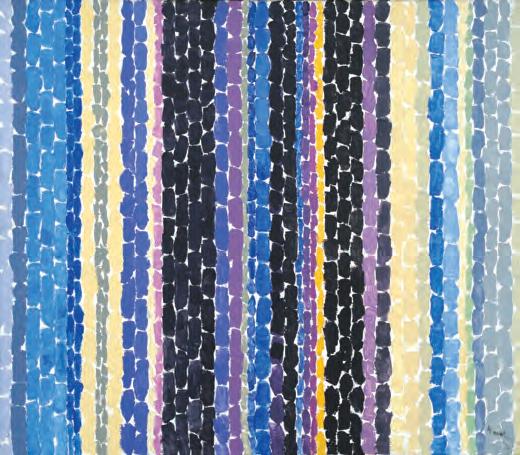
Alma Thomas, Lunar Surface, 1970, Acrylic on canvas, 34 x 391/8 inches, Collection of Katzen Arts Center, American University
—LUCILLE CLIFTON
a department and university that cultivated the talents of multiple generations of artists in this show. Thomas’s signature style, repetitive daubs of color, feels rhythmic, as if, in the words of Sonia Sanchez, “looking at sound.” The beauty of nature inspired her art, from the natural environment to the celestial, like the cool palette of Lunar Surface (1970). Like Thomas, printmaker Lou Stovall (1937–2023); multimedia artist David Driskell (1931–2020); and Thomas’s fellow Washington Color School artist, abstractionist Sam Gilliam (1933–2022) have legacies rooted in DC, though they migrated from elsewhere.
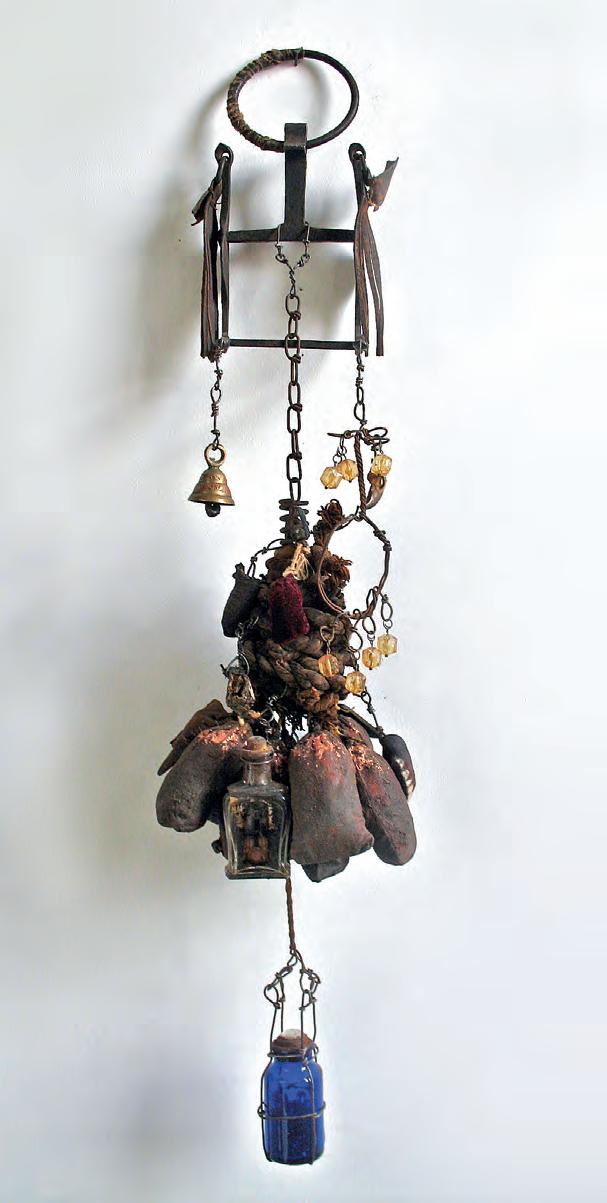
In addition to colleges and universities, DC museums have served as homes and platforms to local, national, and international audiences. Eleven of the works on view belong to the collection of the Organization of American States. They challenge the national interpretation of the term “American” and highlight themes with global histories and impacts like the transatlantic slave trade, Blackness, place and belonging, and African origins. African inheritance is echoed in the unconventionally titled Self-Portrait (2012) by sculptor and assemblage artist Renée Stout (b. 1958).
In 1993, Stout was the first African American artist to have a solo exhibition at the Smithsonian National Museum of African Art. In 2016, portraitist Amy Sherald (b. 1973) became the first woman and the first African American to win the Smithsonian National Portrait Gallery’s triennial competition. Though her fame skyrocketed after her portrait of First Lady Michelle Obama was unveiled, the Baltimore-based contemporary artist largely focuses on everyday people. Sherald’s signature style challenges color-as-race by painting skin tone in grayscale. Puppet Master (2008) employs this technique. The costumed male protagonist, wearing a white-collared shirt and loose tie, exists against a muted palette of whites, blues, and browns. With its subject balancing a navy jacket on his right arm and a blue whale puppet on his left, this painting questions ideas of power, control, respectability, diversion, and performance.
The DC area is home to people from all over the world. To that point, the contribution of Mexican-born multidisciplinary artist Irene Clouthier (b. 1974) is singular and unequivocal. Her bright red neon-like LED sign asserts, “No Human Is Illegal,” adding an explicit statement to legal discussions of human migration. Before the Americas, in title and practice, rejects nation-states and political borders as determinants of belonging. It is a reminder that African American, Caribbean, and Latin American are all African diasporic identities rooted and flourishing concurrently in the past, present, and future. On the site of a sugar plantation, now a multiuse development, the performance of artist and George Mason professor Luis Vazquez La Roche (b. 1983) embodies the perpetuity of history articulated by Lucille Clifton. Through an ancestral ritual to Oya, once banned in his native Trinidad and Tobago, The Cleanse (La Limpieza) is a healing and offering for the futures created by slavery and a refusal to disremember Black pasts, neither the earthly nor the divine.
Visual art is a language of memory, belonging, and possibility. The process of creation moves the artists. Experiencing the art, in turn, moves us. In this current, and frankly in any, sociopolitical moment, art can be restorative. Art can redefine our relationships with ourselves and the world around us. Before the Americas creates a sanctuary for the eyes, mind, and spirit. The artistic representations are diverse. The artists span centuries, media, cultures, languages, origins, and geographies to reinforce the exhibition themes. The variety also underscores the essence of the exhibition itself: that, at any period of history in any place on Earth, Black creativity is boundless.
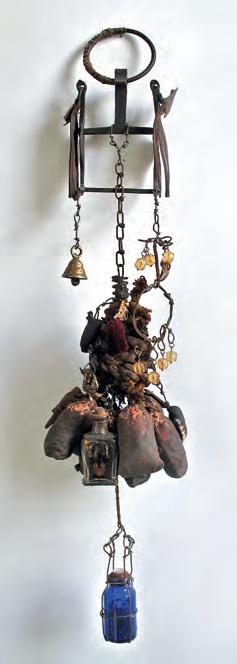
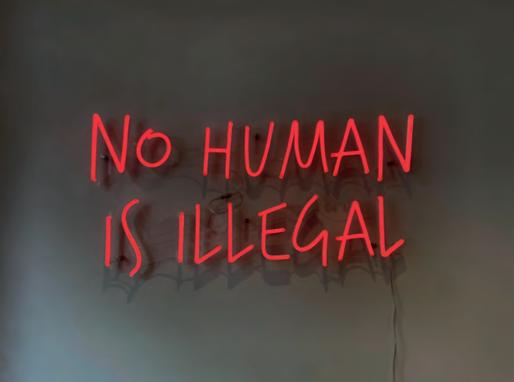
Above, top to bottom: Renée Stout, Self-Portrait, 2012, Mixed media (metal and found objects), 33 x 9 x 11 inches, Collection of Dean Dalton; Irene Clouthier, Neon-Like LED Sign, 2022–23, Neon, 30 x 35 inches
Genetic, Ancestral Memory and Artistic Expression
John Beadle
Alonzo Joseph Davis Jr.
David Driskell
Sam Gilliam
Stanley Greaves
Curlee Raven Holton
Martha Jackson Jarvis
Lois Mailou Jones
Wifredo Lam
Luis Vasquez La Roche
James Phillips
Nelson Stevens
Renée Stout
Michelle Talibah
Alma Thomas
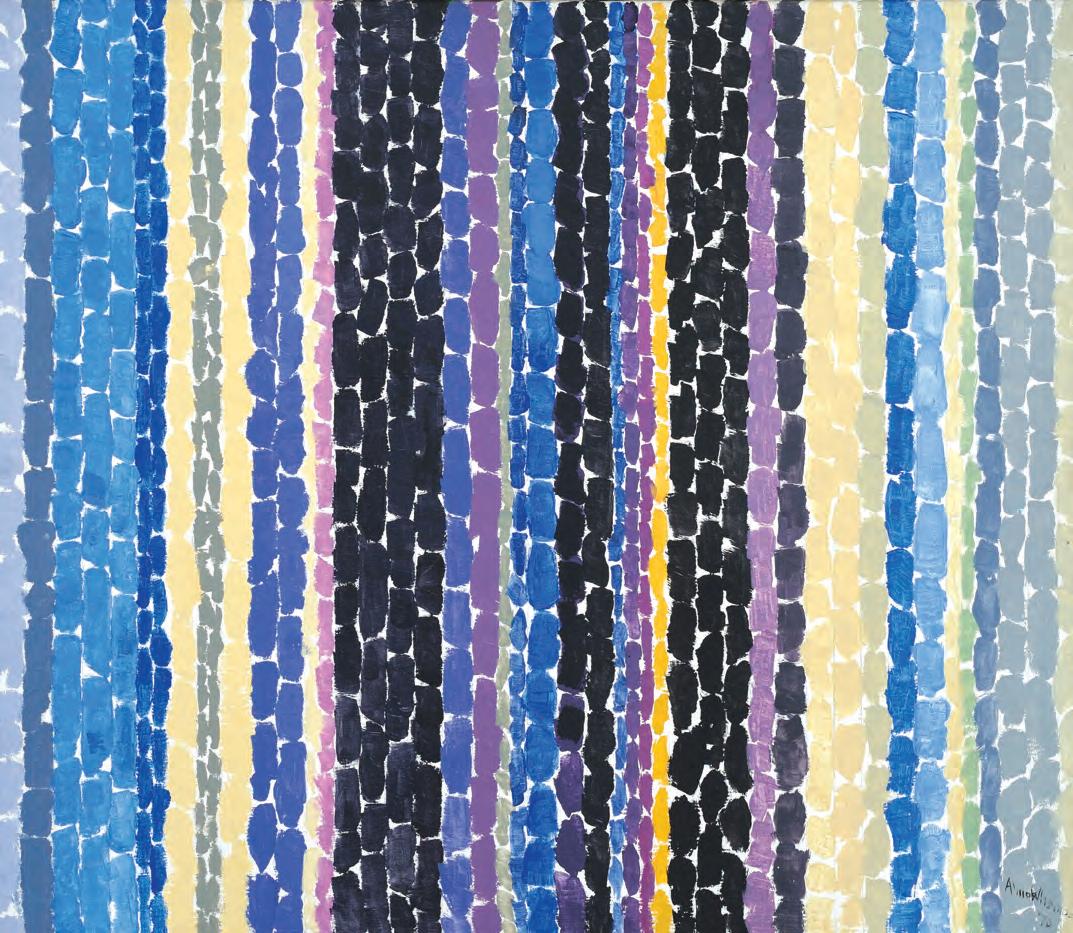
ALMA THOMAS, LUNAR SURFACE, 1970, ACRYLIC ON CANVAS, 34 X 391/8 INCHES, COLLECTION OF KATZEN ARTS CENTER, AMERICAN UNIVERSITY
KATZEN ARTS CENTER, AMERICAN UNIVERSITY
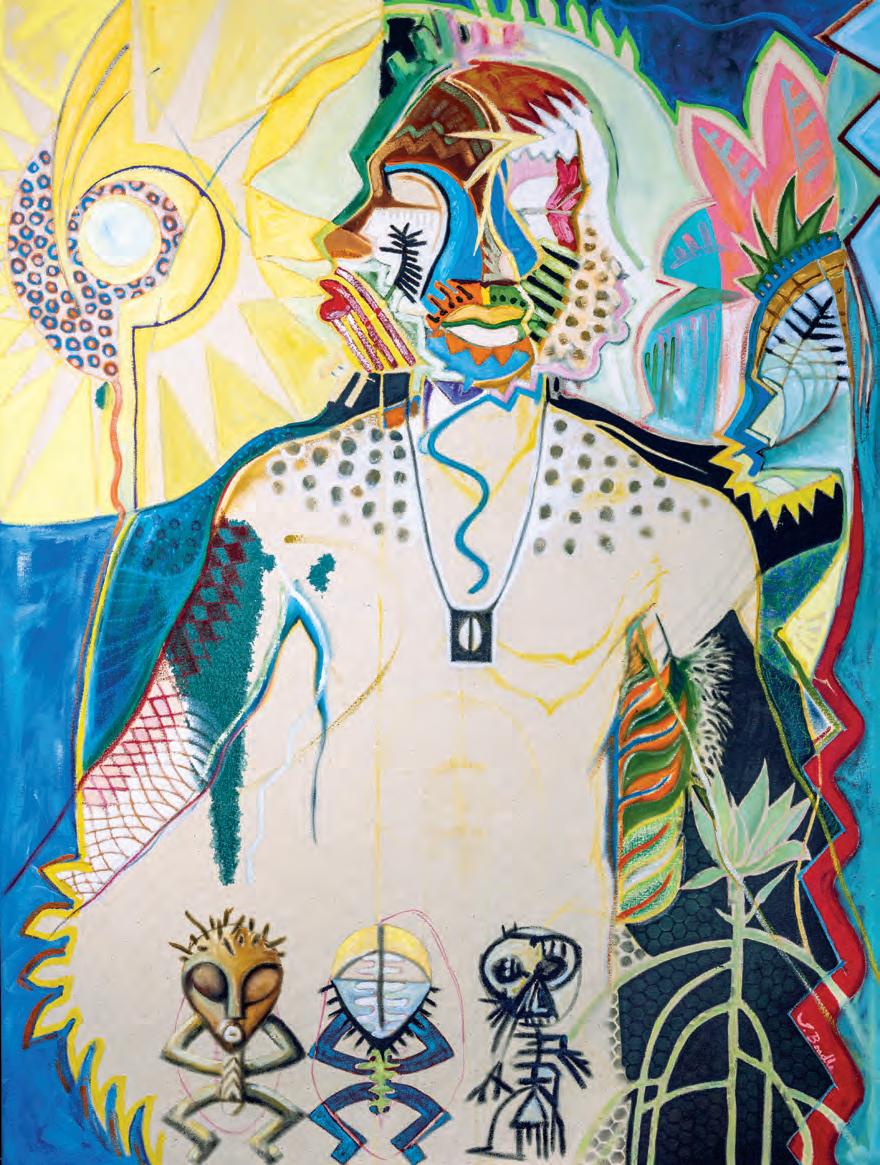
JOHN BEADLE, FOUR GODS OF THE MOON, 1991, OIL ON CANVAS, 48 x 36 INCHES, COLLECTION OF THE ART MUSEUM OF THE AMERICAS
OAS AMA, ART MUSEUM OF THE AMERICAS
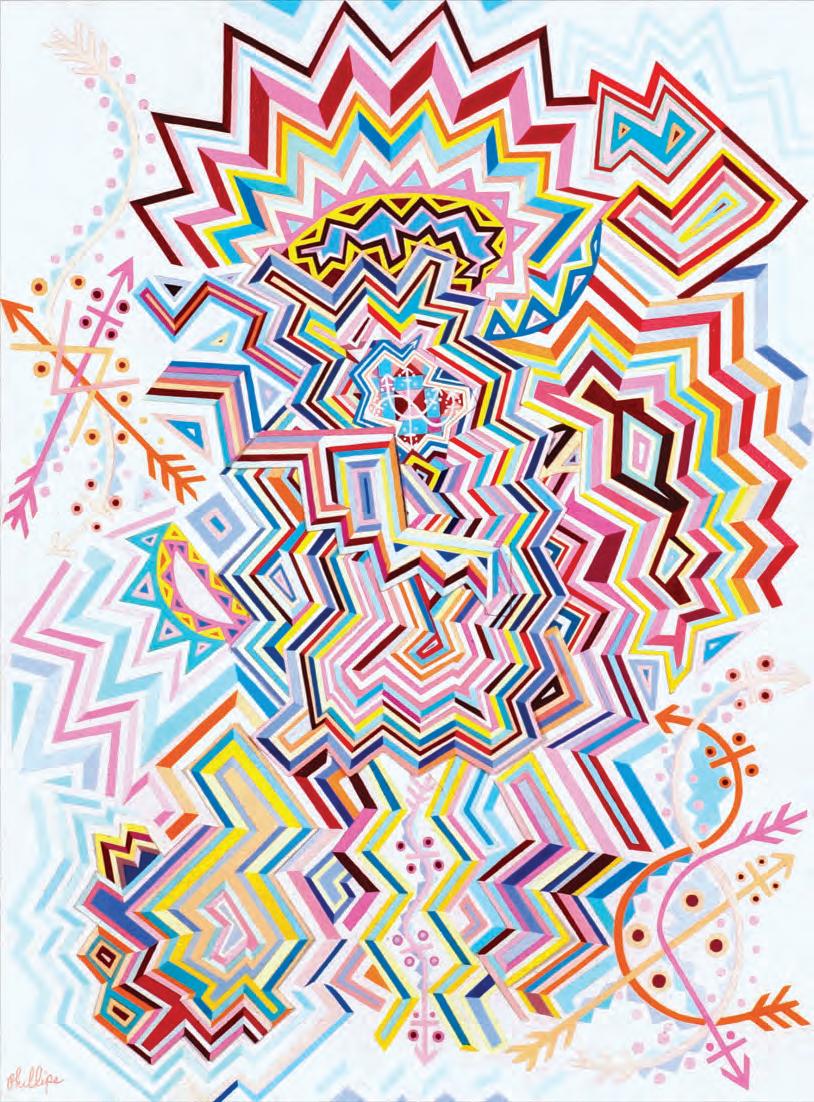
JAMES PHILLIPS, THE OTHER JOHN, 2014, ACRYLIC ON PAPER, 303/4 x 223/4 INCHES, COLLECTION OF NEW DOOR CREATIVE GALLLERY
JOHN WOO
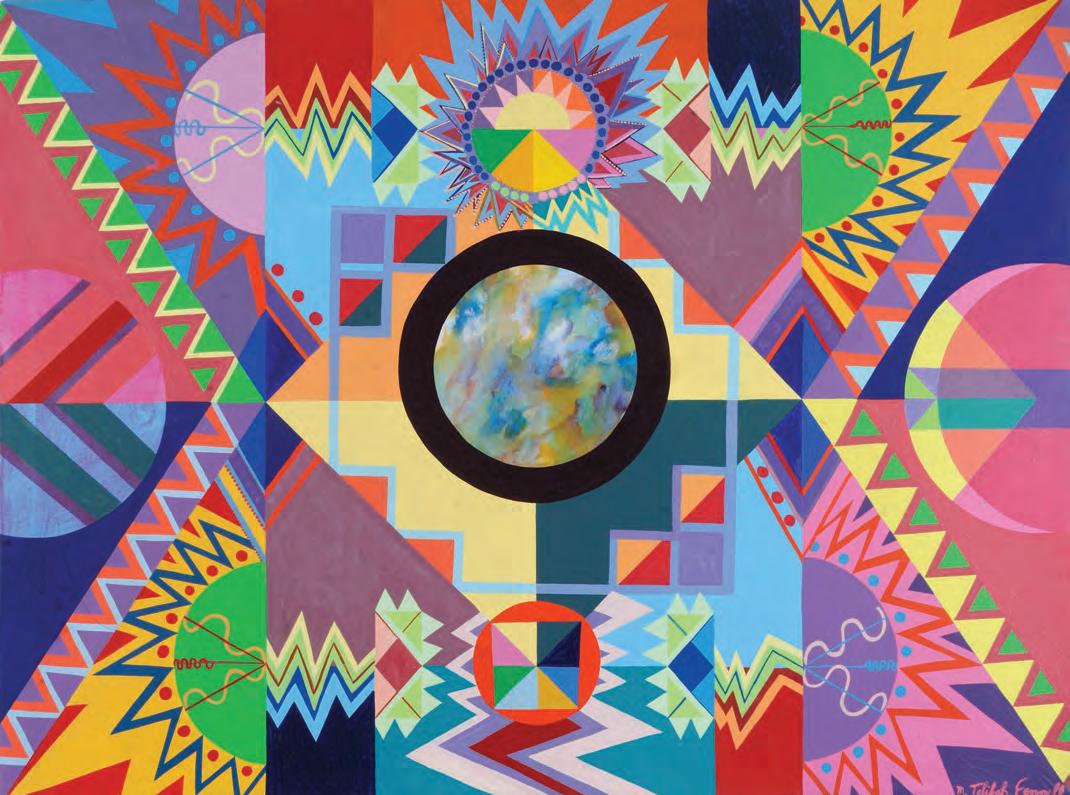
MICHELLE TALIBAH, ONE, 1979, ACRYLIC ON CANVAS, 36 x 48 INCHES, COLLECTION OF NEW DOOR CREATIVE GALLERY
MICHELLE TALIBAH
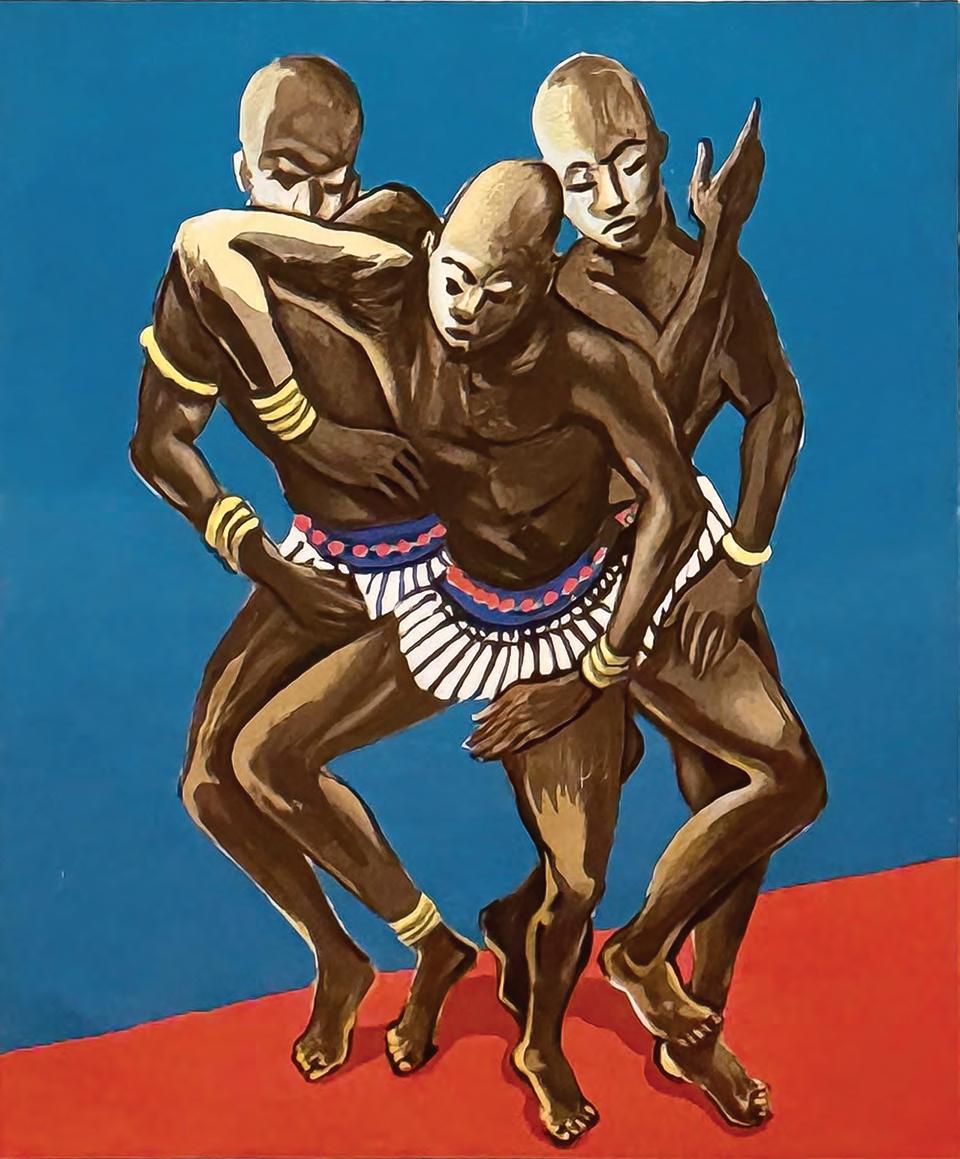
LOIS MAILOU JONES, UNTITLED (AFRICAN DANCERS), 1996, SILKSCREEN PRINT, 271/4 x 24 INCHES, COLLECTION OF LESLIE OLIVER ELLISON
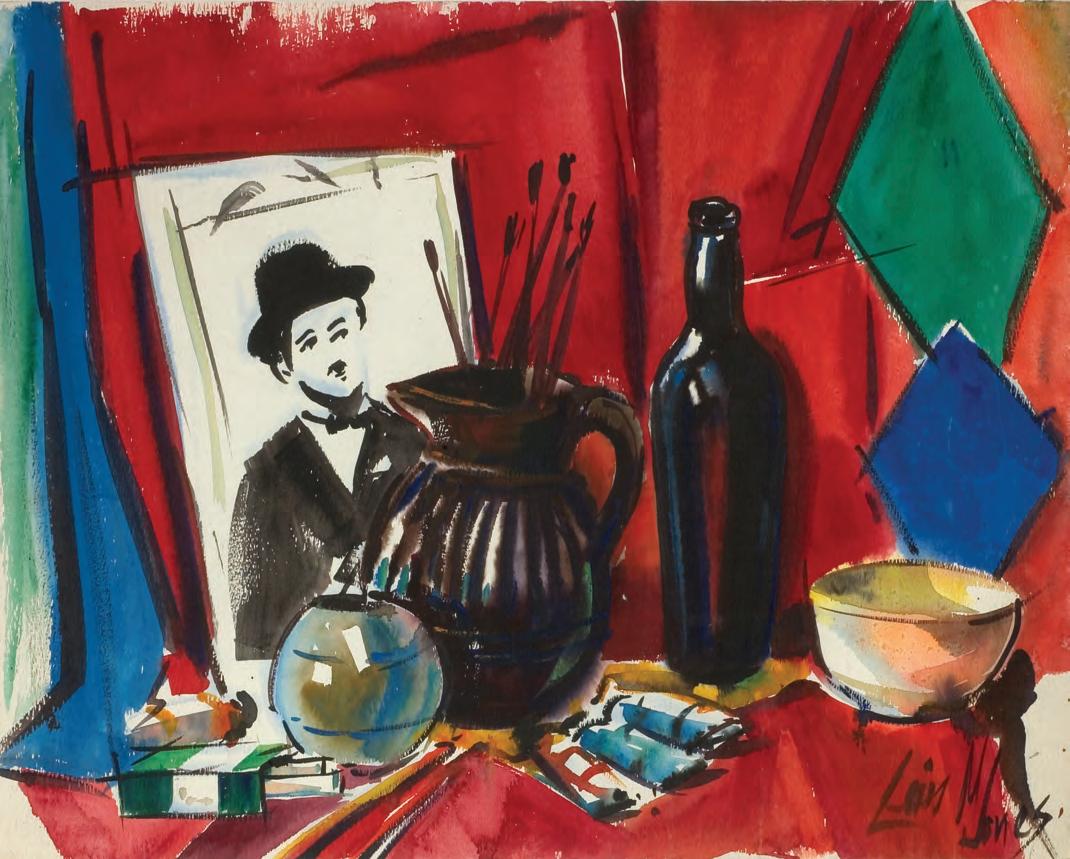
LOIS MAILOU JONES, STUDIO STILL LIFE, 1970, WATERCOLOR ON PAPER, 19 x 24 INCHES, COLLECTION OF ERIC KEY
JOHN WOO
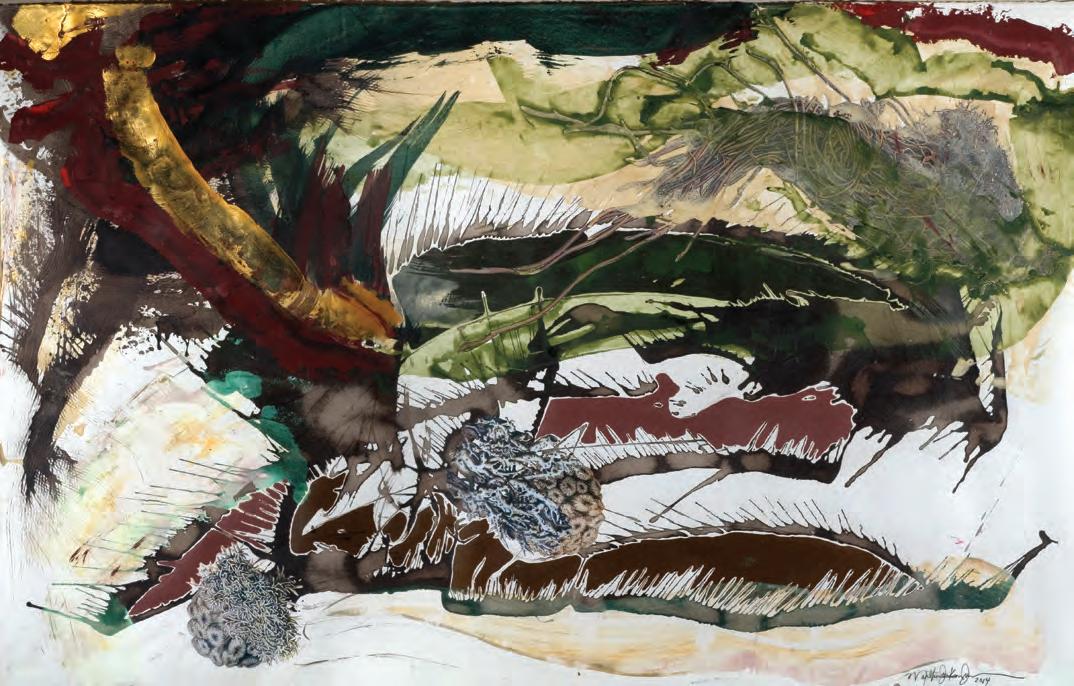
MARTHA JACKSON JARVIS, ANCESTOR’S BONES: SOUNDS FROM THE SEA III, 2014, MIXED-MEDIA DRAWING: BLACK WALNUT INK, WATERCOLOR, OIL, RAW PIGMENT, COLLAGE, AND PHOTO TRANSFER, 42 x 67 INCHES
JOHN WOO
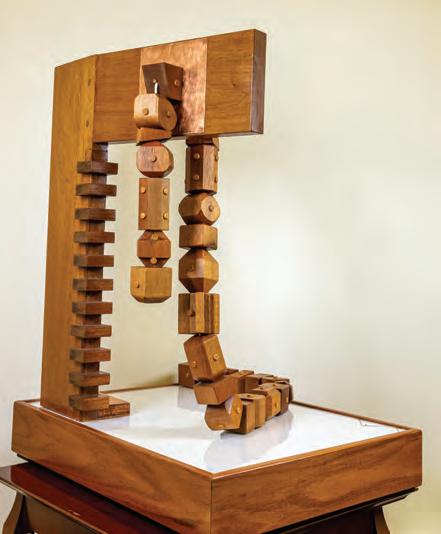
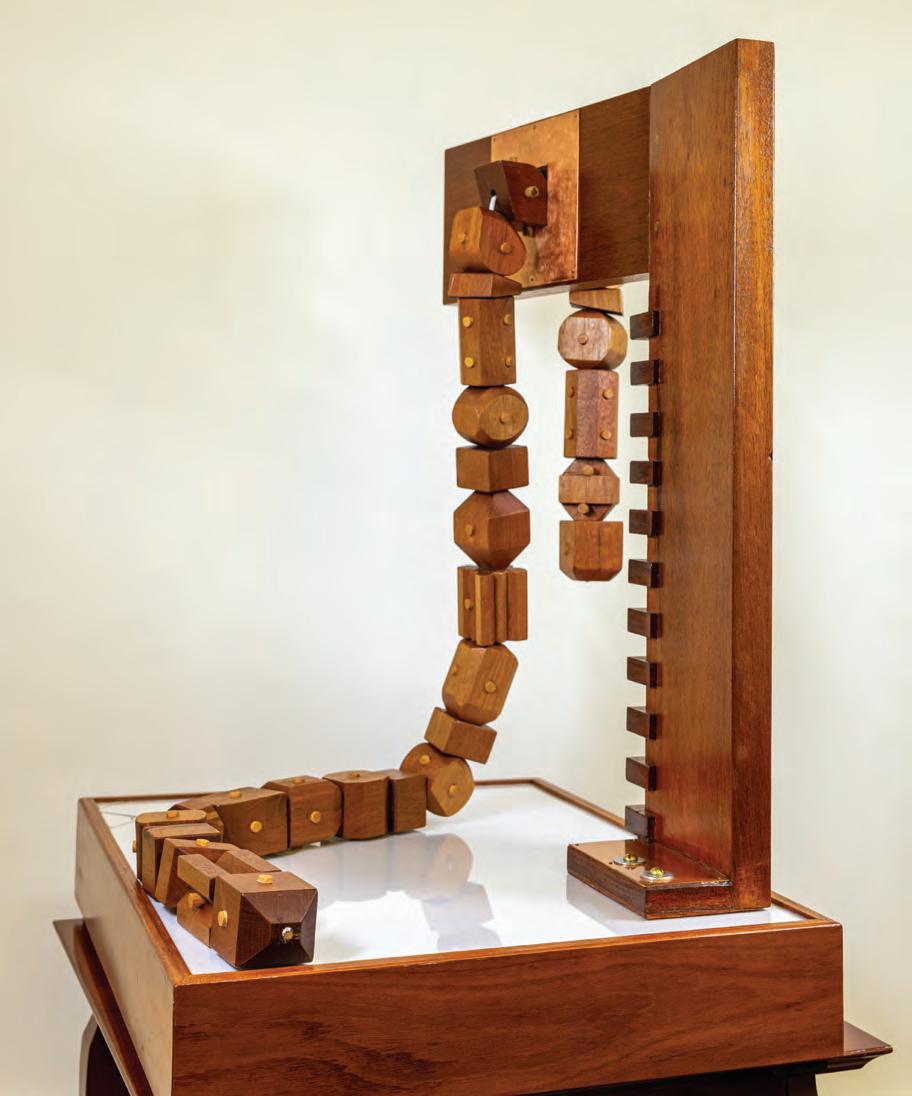
STANLEY GREAVES, SLAVE STOCK AND WHIP, 2018, MAHOGANY, COPPER, PLEXIGLASS, NYLON CORD, BRAZIL CHERRY, AND PINE, 30 x 19 x 24 INCHES, COLLECTION OF THE ART MUSEUM OF THE AMERICAS OAS
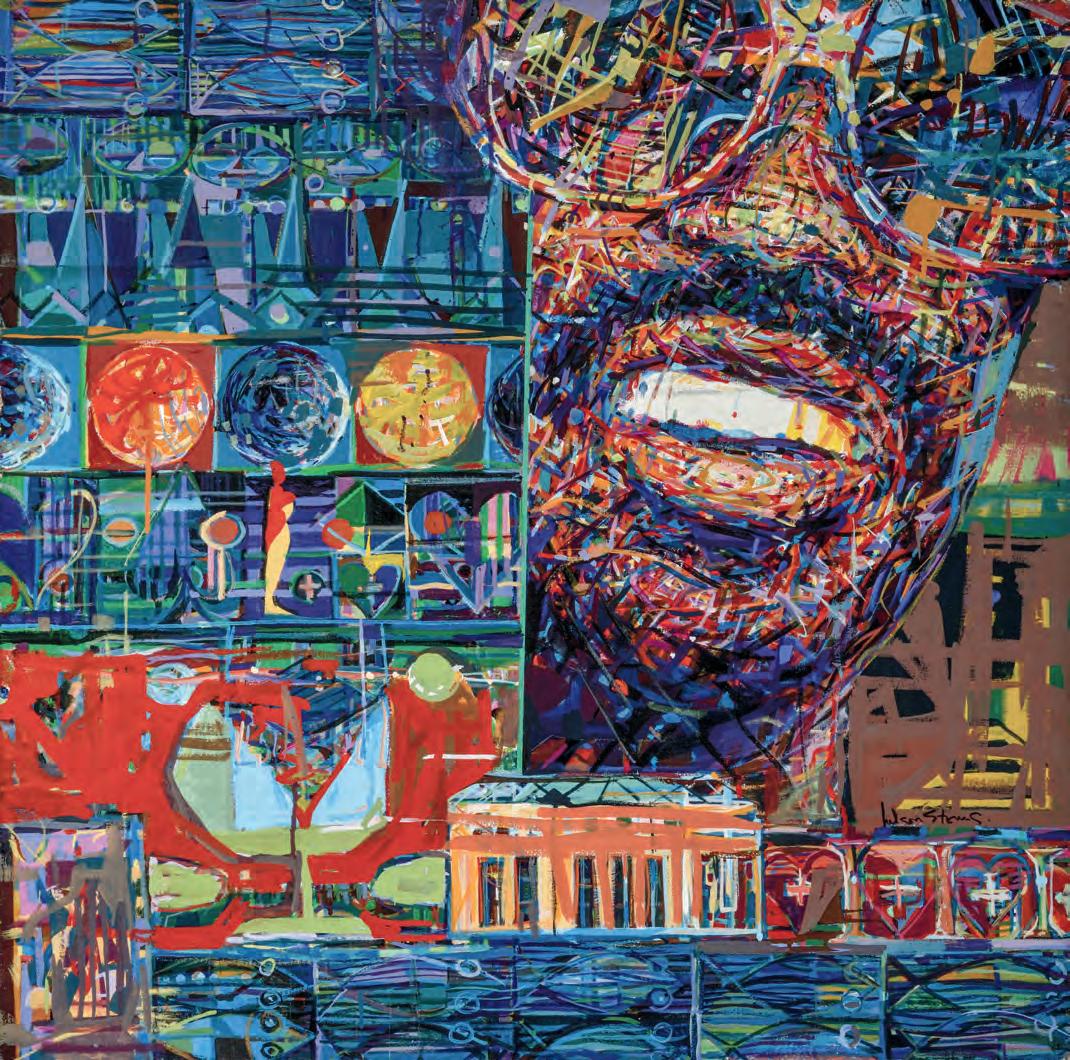
NELSON STEVENS, EIGHTH WONDER, 1980, ACRYLIC ON CANVAS, 40 x 40 INCHES, COLLECTION OF ERIC KEY GREG
RENÉE STOUT, SELF-PORTRAIT, 2012, MIXED MEDIA (METAL AND FOUND OBJECTS), 33 x 9 x 11 INCHES, COLLECTION OF DEAN DALTON
REN É E STOUT
DAVIS
SERIES #8, 2015,
CONSTRUCTION WITH COLLAGE AND PAINT ON BOARD, 27 x 33 x 71/2 INCHES, COLLECTION OF DC COMMISSION ON THE ARTS AND HUMANITIES
ALONZO JOSEPH
JR., KALIMBA
BAMBOO
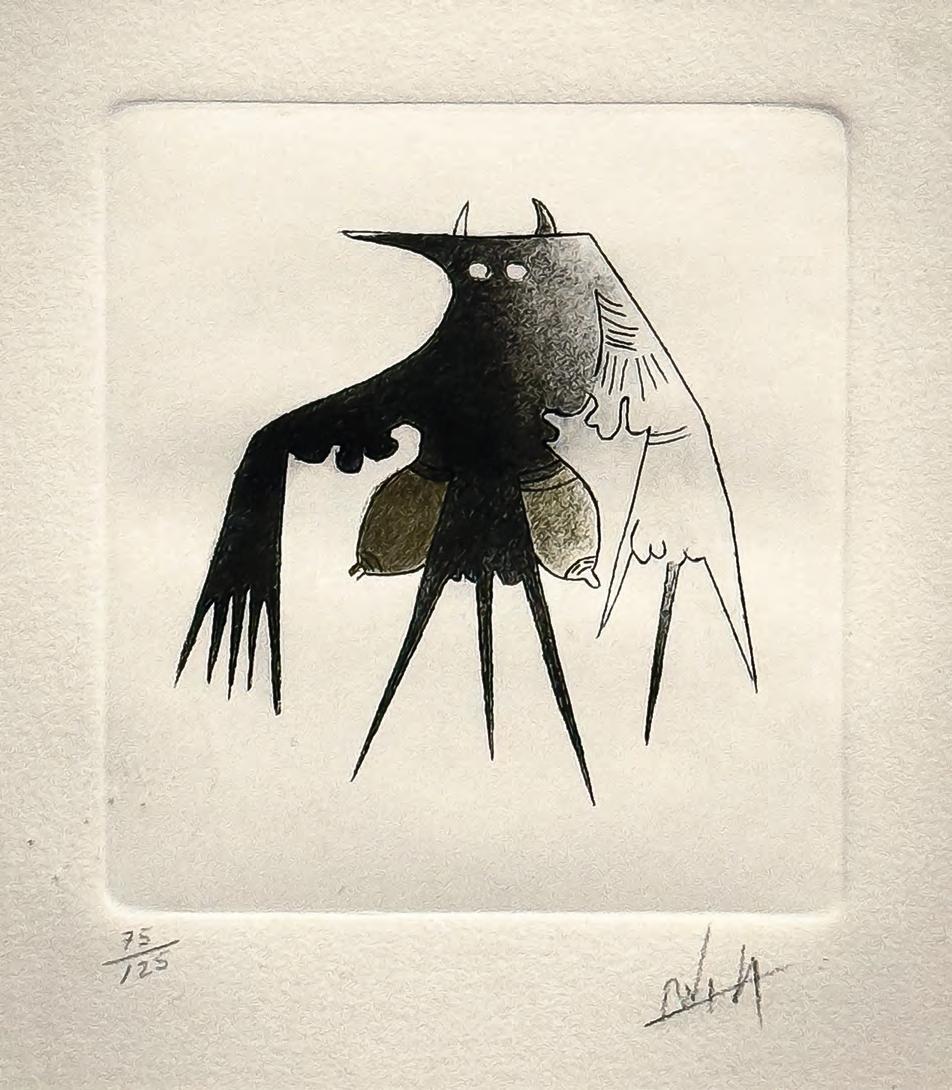
WIFREDO LAM, CROISEUR NOIR, 1972, ETCHING, ED. 75/125, 13 x 101/2 INCHES, COLLECTION OF LESLIE OLIVER ELLISON
SOPHIE BAE
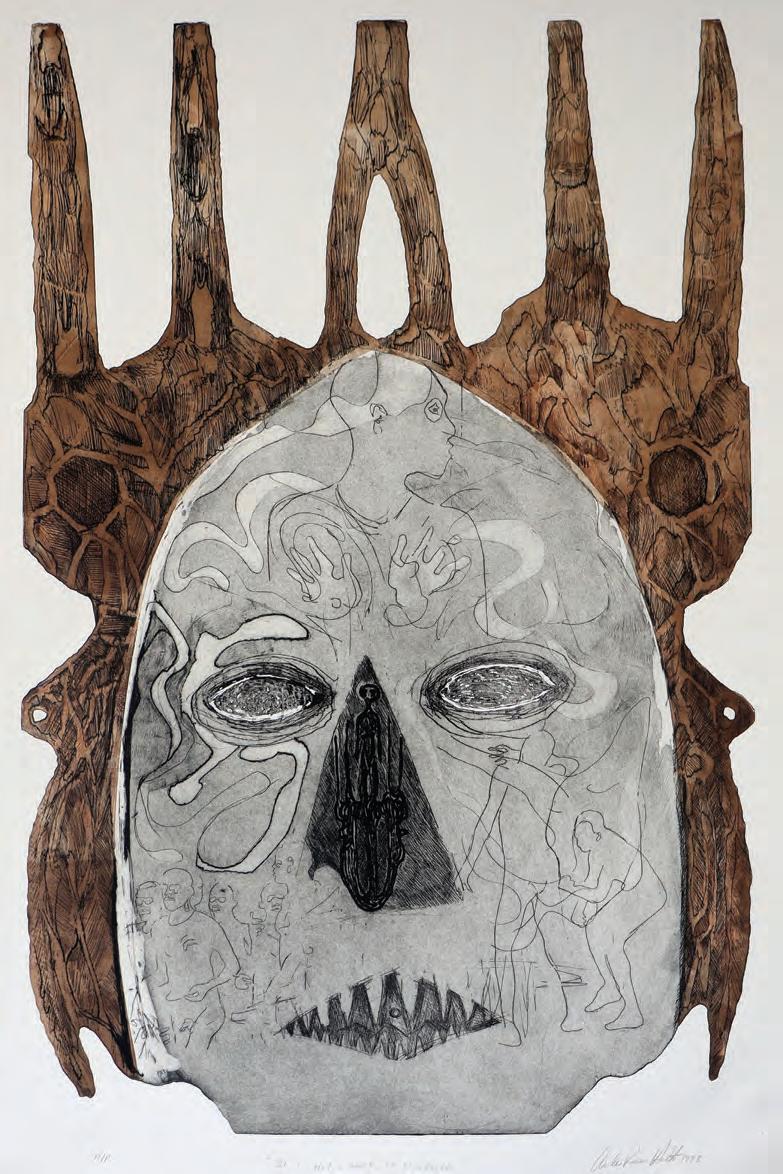
CURLEE RAVEN HOLTON, IT IS NOT A MASK, IT IS A FAITH, 1993, CUT-PLATE ETCHING ON WOVE PAPER, 37 x 27 INCHES
ANANDA HOLTON
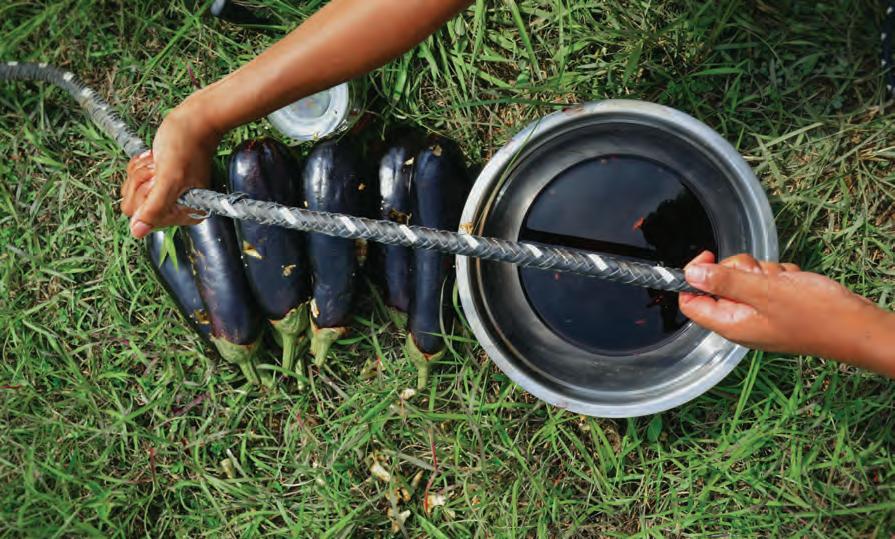
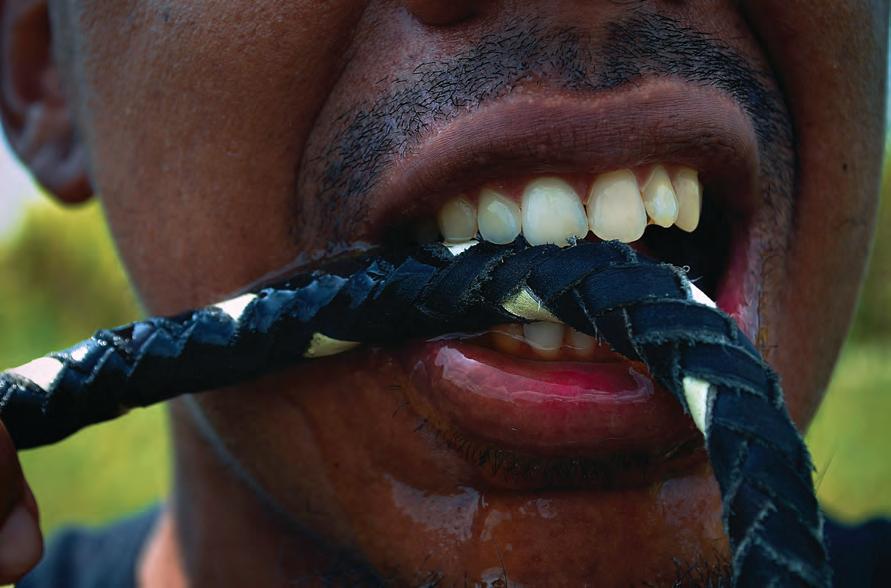
LUIS VASQUEZ LA ROCHE, THE CLEANSE (LA LIMPIEZA), 2022, PERFORMANCE/VIDEO
LUIS VASQUEZ LA ROCHE
MASON UNIVERSITY
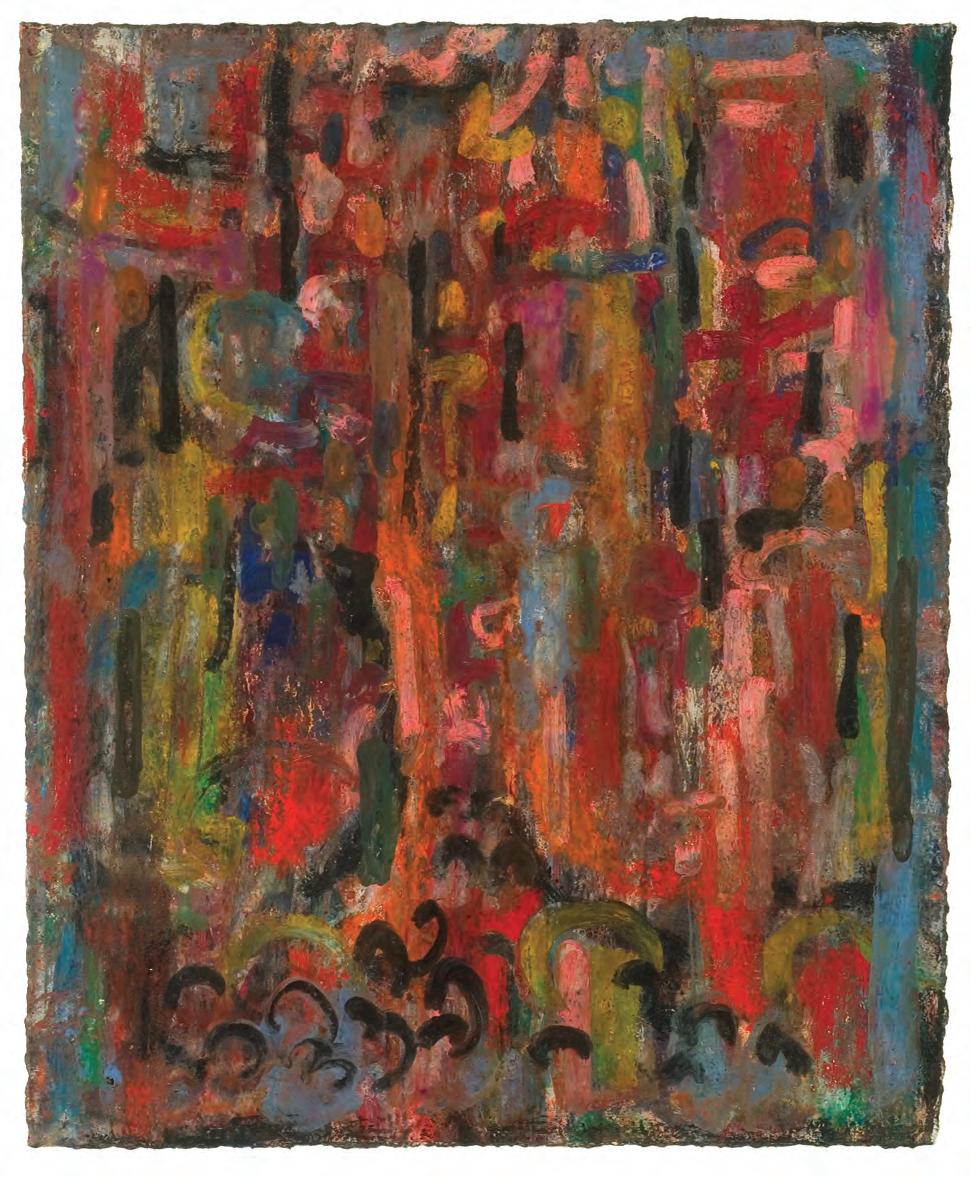
DAVID DRISKELL, LANDSCAPE, 1980, ACRYLIC ON PAPER, 14 x 11 INCHES, COLLECTION OF ERIC KEY
JOHN WOO
Migration and Identity
Alexander “Skunder” Boghossian
Elizabeth Catlett
Irene Clouthier
Julio Valdez
Wilfredo Valladares
Fabiola Alvarez Yurcisin
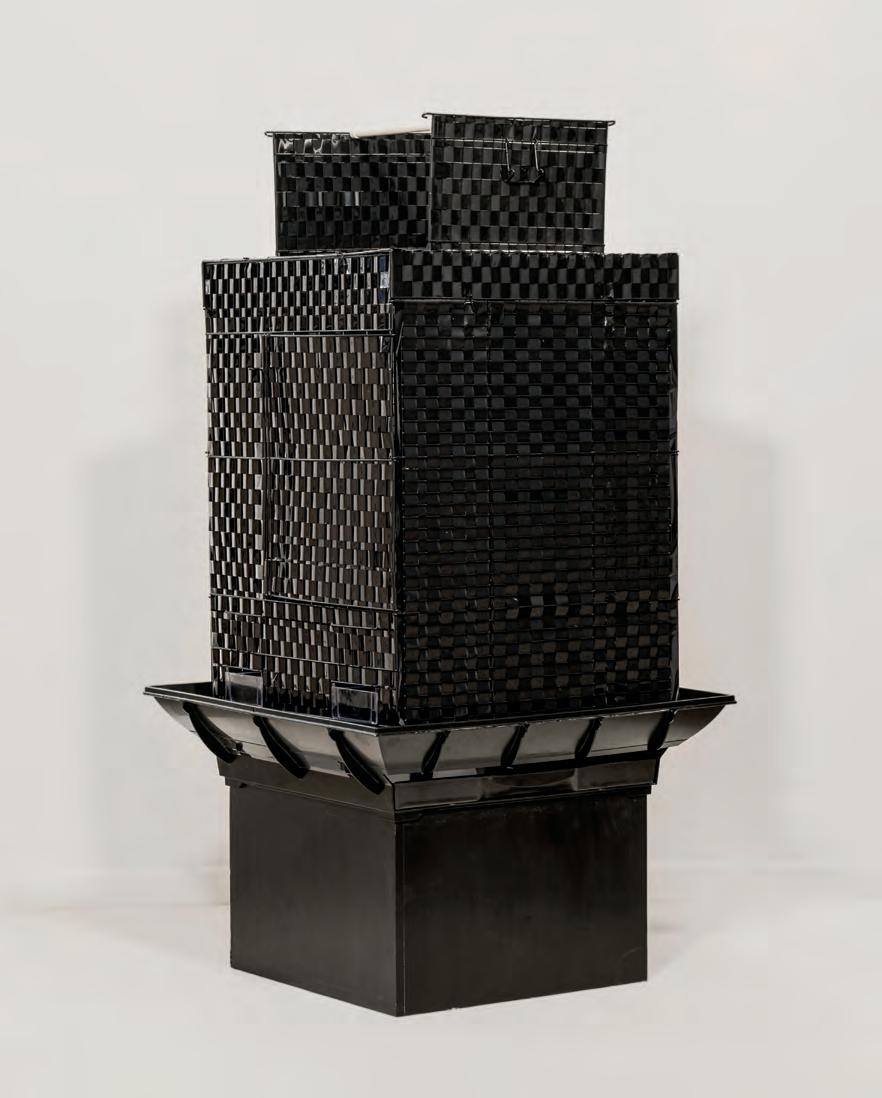
FABIOLA ALVAREZ YURCISIN, BLACK CAGE, 2020, VIDEOCASSETTE TAPE, DOUBLE-SIDED ADHESIVE TAPE, MIRROR, AND WOOD BASE, 41 x 17 x 21 INCHES
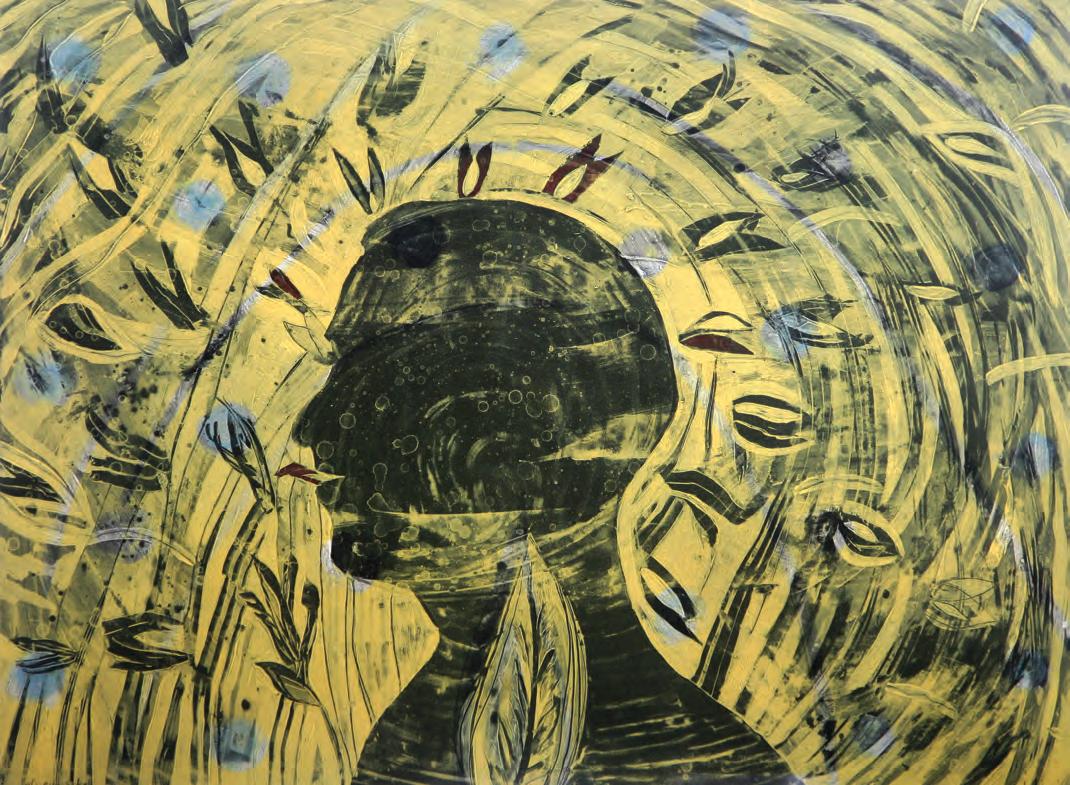
JULIO VALDEZ, THE GREY ECHO (EL ECO GRIS), 2002, SILK AQUATINT AND MONOTYPE ON PAPER, 37 x 471/4 INCHES, COLLECTION OF THE ART MUSEUM OF THE AMERICAS OAS
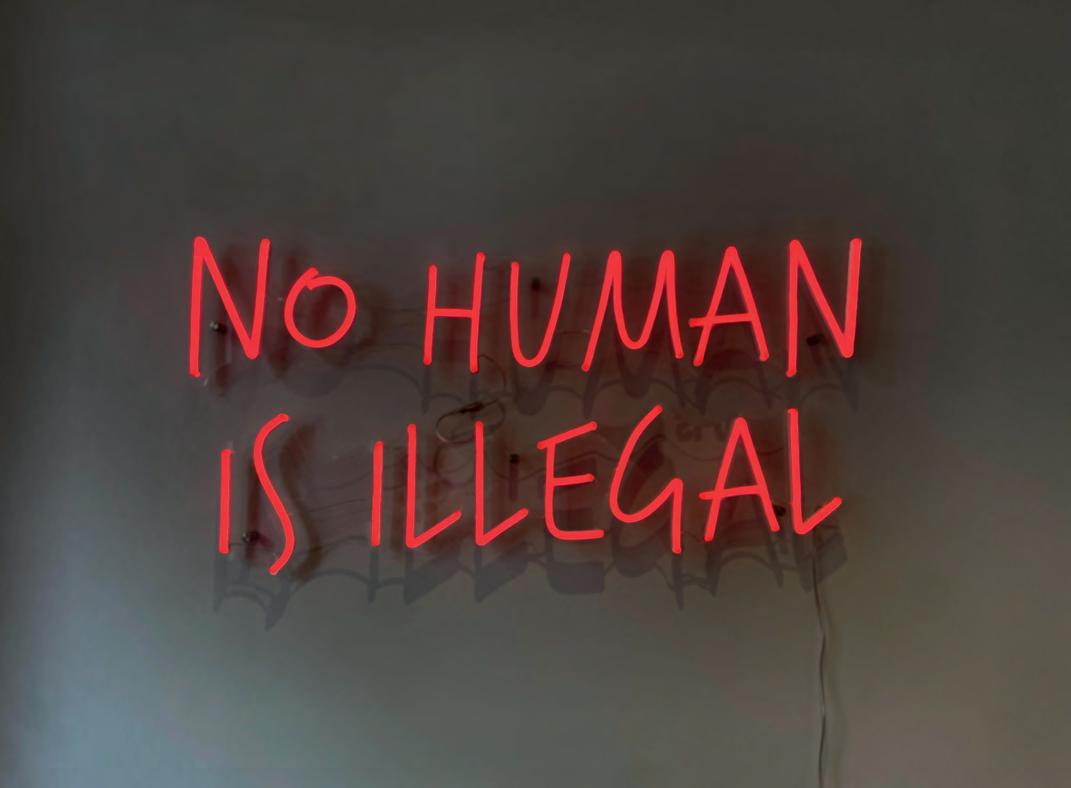
IRENE CLOUTHIER, NEON-LIKE LED SIGN, 2022–23, NEON, 30 x 35 INCHES
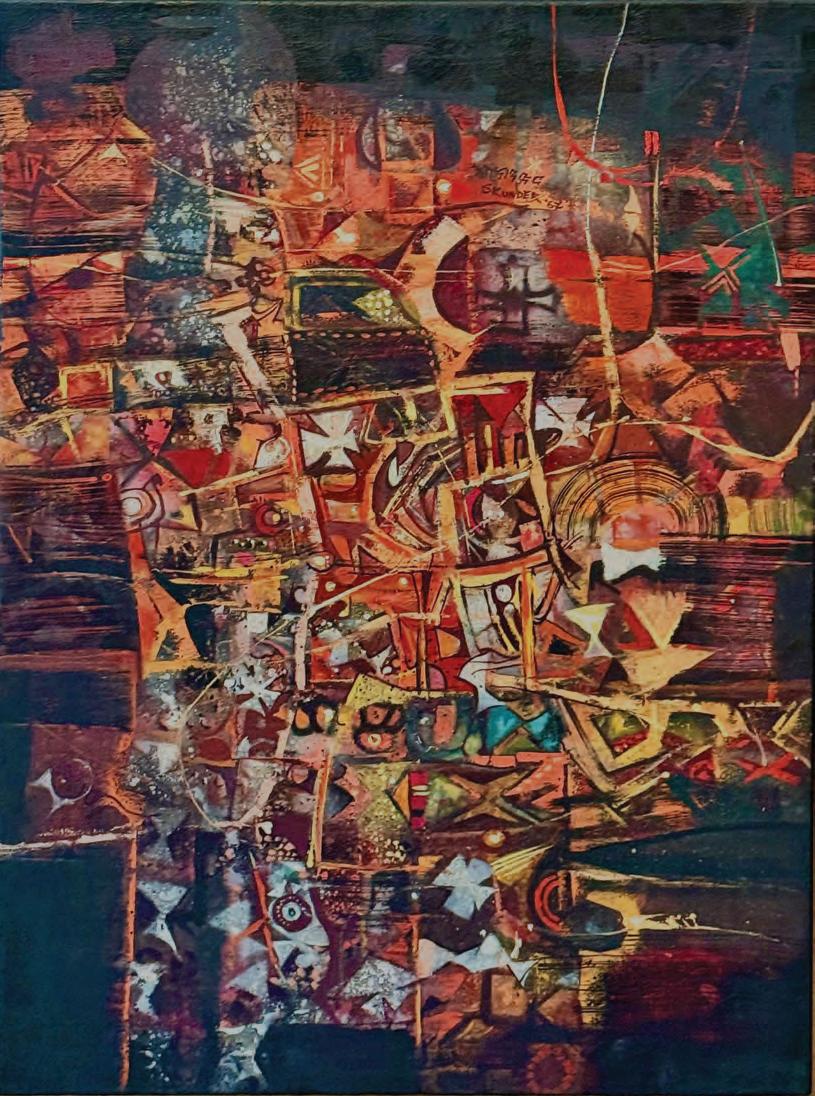
ALEXANDER “SKUNDER” BOGHOSSIAN, AXUM, 1967, OIL ON CANVAS, 451/4 x 311/2 INCHES, COLLECTION OF ERIC STEVEN WRAY
E.S. WRAY AND H.J. FERRAND
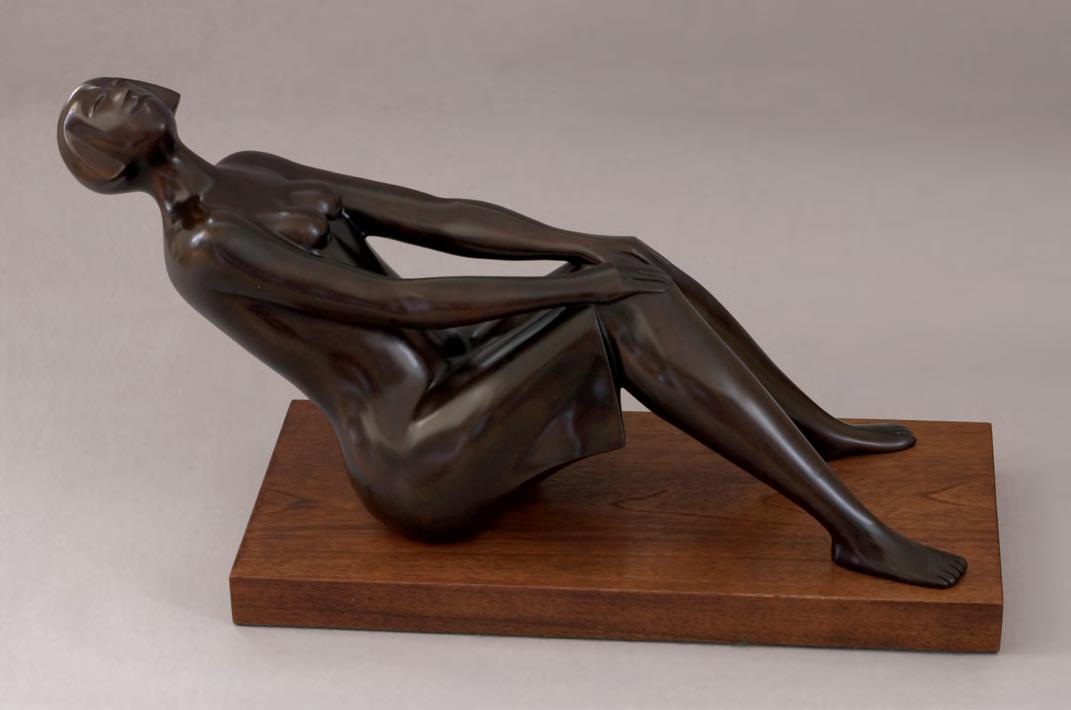
ELIZABETH CATLETT, MAHALIA, 2002, BRONZE, 15 x 11 x 30 INCHES, COLLECTION OF ERIC KEY
JOHN WOO
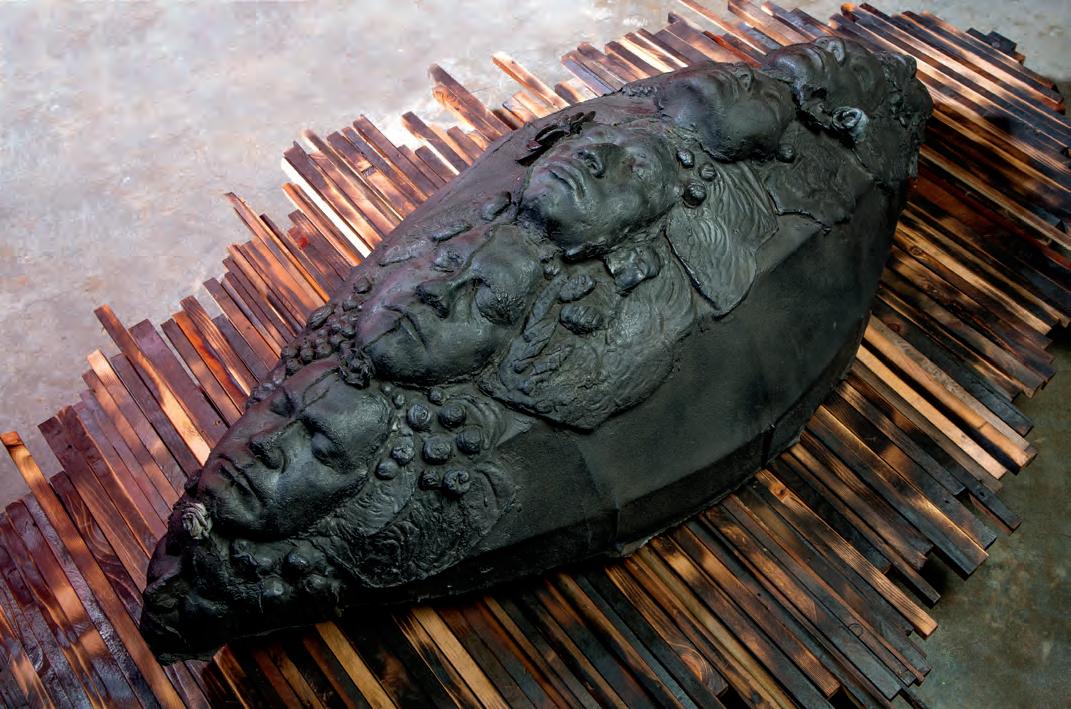
WILFREDO VALLADARES, UNMASKED, 2014, CAST IRON AND WOOD, 6 x 4 FEET
Invisibility and Representation
Everald Brown
Elizabeth Catlett
Roberto Diago
Jallim Eudovic
Patricia Kaersenhout
Samella Lewis
Georges Liautaud
EJ Montgomery
Bernadette Persaud
Martin Puryear
Joyce Scott
Amy Sherald
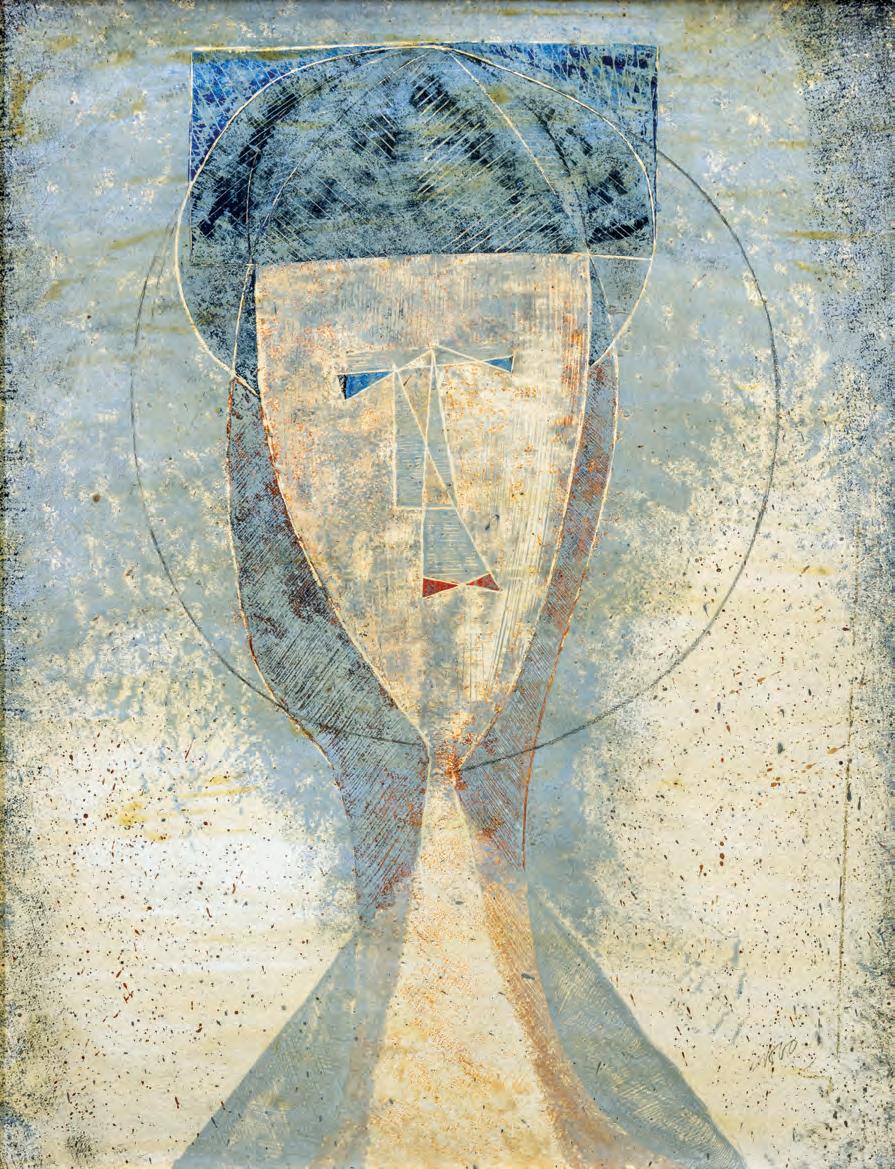
ROBERTO DIAGO, FACE II, 1950, OIL ON CARDBOARD, 131/2 x 101/2 INCHES, COLLECTION OF THE ART MUSEUM OF THE AMERICAS
OAS AMA, ART MUSEUM OF THE AMERICAS
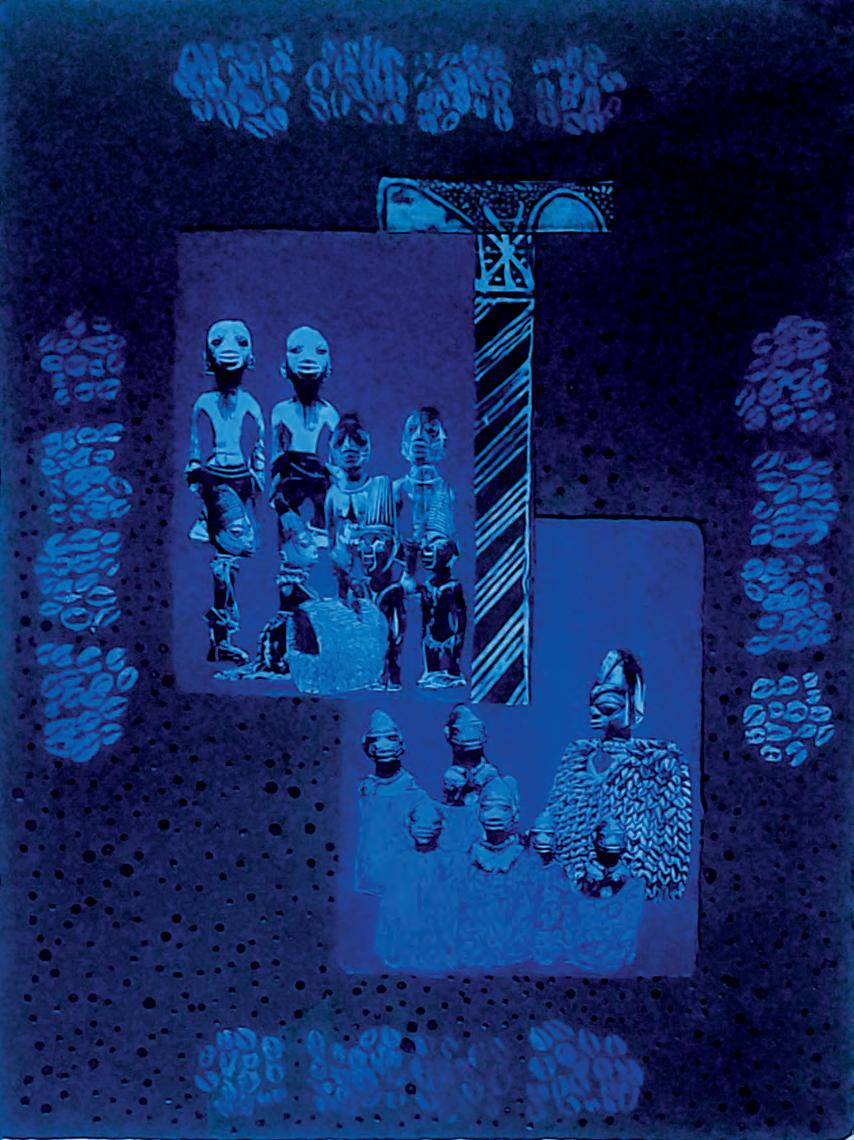
EJ MONTGOMERY, IBJE TWINS–YORUBA BLUE, 1997, MIXED MEDIA ON PAPER, 30 x 221/2 INCHES, COLLECTION OF JUANITA AND MEL HARDY
HENRY
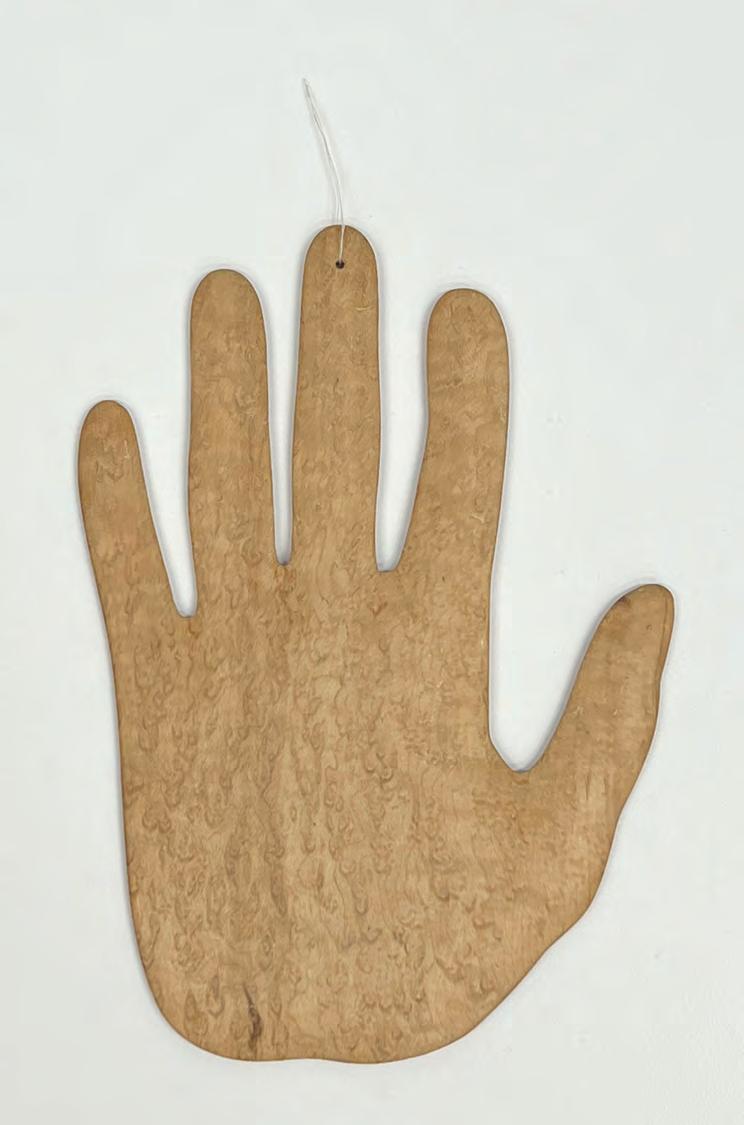
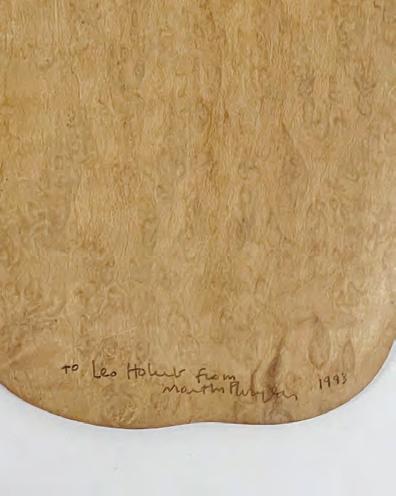
ABOVE: MARTIN PURYEAR HAND SCULPTURE (BACK, DETAIL)
LEFT: MARTIN PURYEAR HAND SCULPTURE, 1993, WOOD, 17 x 11 INCHES, COLLECTION OF MARTIN LUTHER KING JR. MEMORIAL LIBRARY
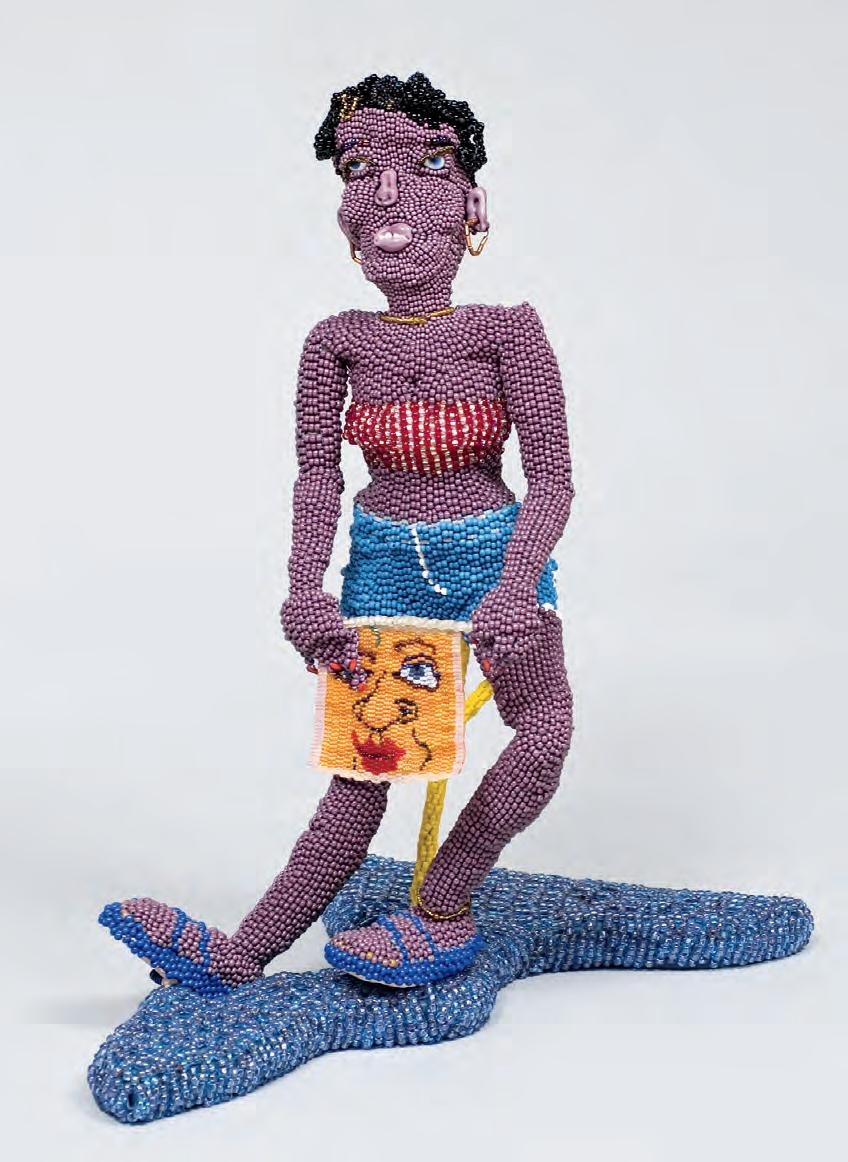
JOYCE SCOTT, HAVE YOU SEEN THIS CHILD?, 2010, GLASS BEADS, THREAD, WIRE, AND WOOD, 19 x 12 x 161/2 INCHES, COLLECTION OF UNIVERSITY OF MARYLAND GLOBAL CAMPUS
JOHN WOO
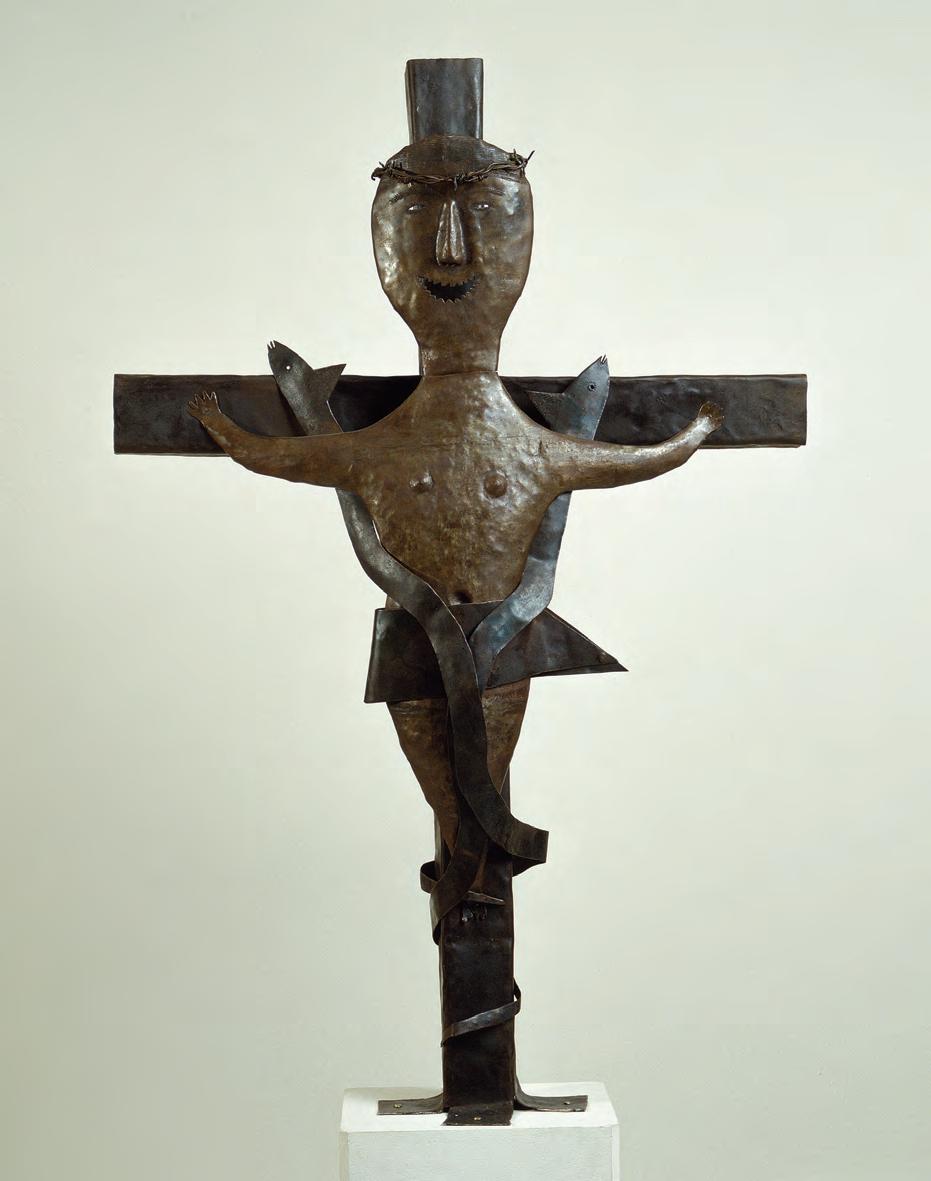
GEORGES LIAUTAUD, CRUCIFIXION, 1959, CUT AND HAMMERED IRON, 46 x 401/2 x 9 INCHES, COLLECTION OF THE ART MUSEUM OF THE AMERICAS
OAS AMA, ART MUSEUM OF THE AMERICAS
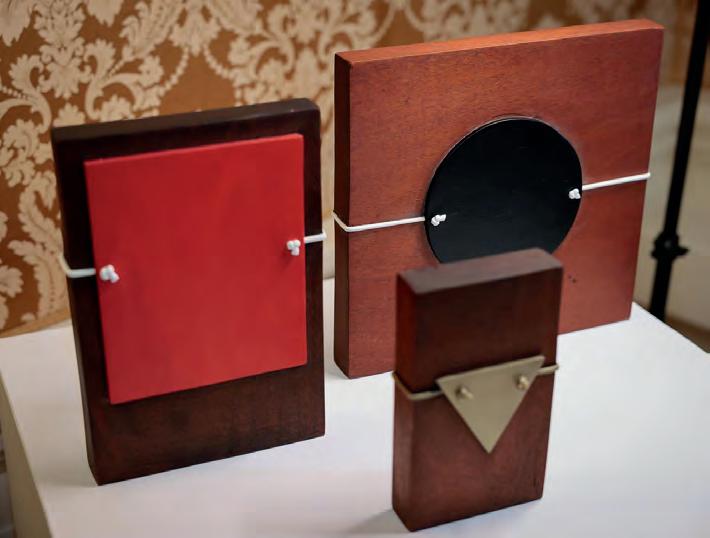
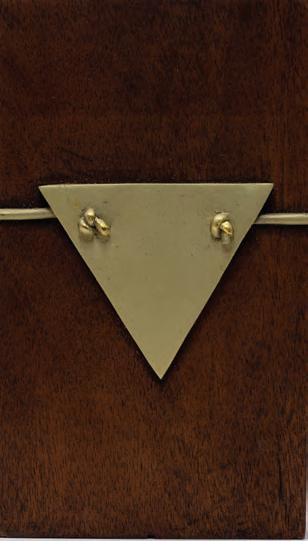
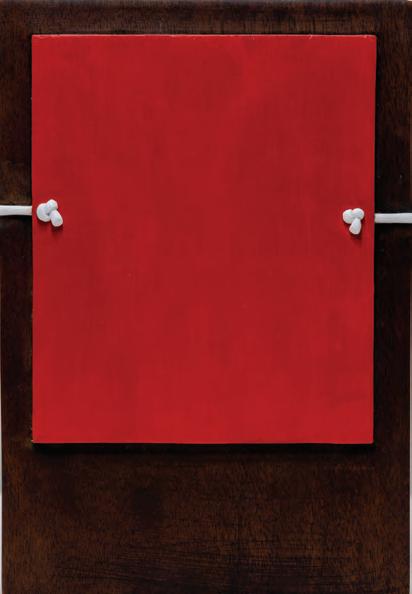
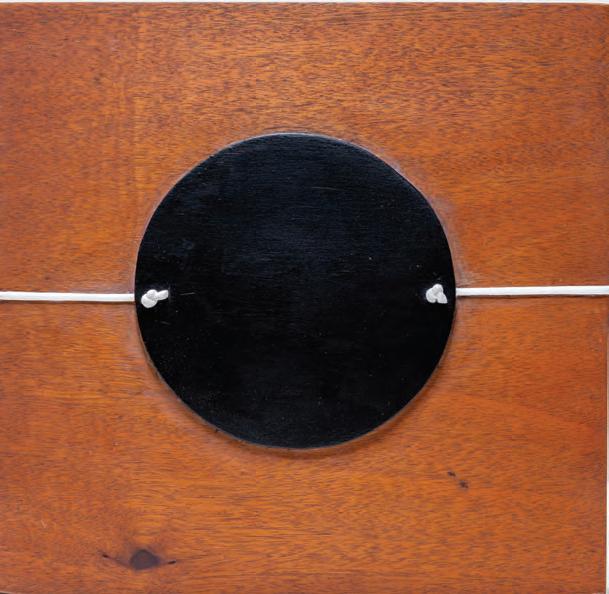
JALLIM EUDOVIC, SPIRITUAL MECHANICS, 2022, METAL, WOOD, AND ACRYLIC, THREE PIECES: 75/8 x 43/8 x 11/4 INCHES, 11 x 73/8 x 13/4 INCHES, 113/8 x 12 x 11/8 INCHES, COLLECTION OF THE ART MUSEUM OF THE AMERICAS
OAS AMA, ART MUSEUM OF
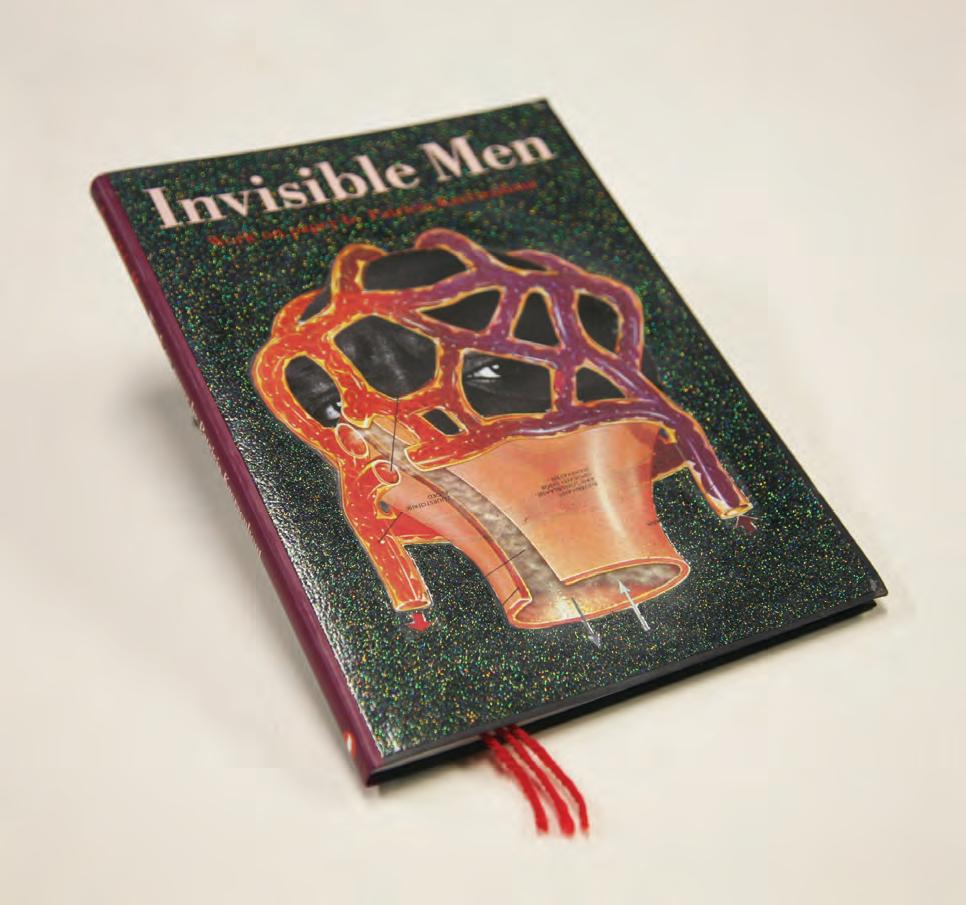
PATRICIA KAERSENHOUT, INVISIBLE MEN, 2009, DIGITAL PRINTS, BOUND BOOK, ED. 750, 101/4 x 7¼ INCHES, COLLECTION OF THE ART MUSEUM OF THE AMERICAS
OAS
AMA, ART MUSEUM OF THE AMERICAS
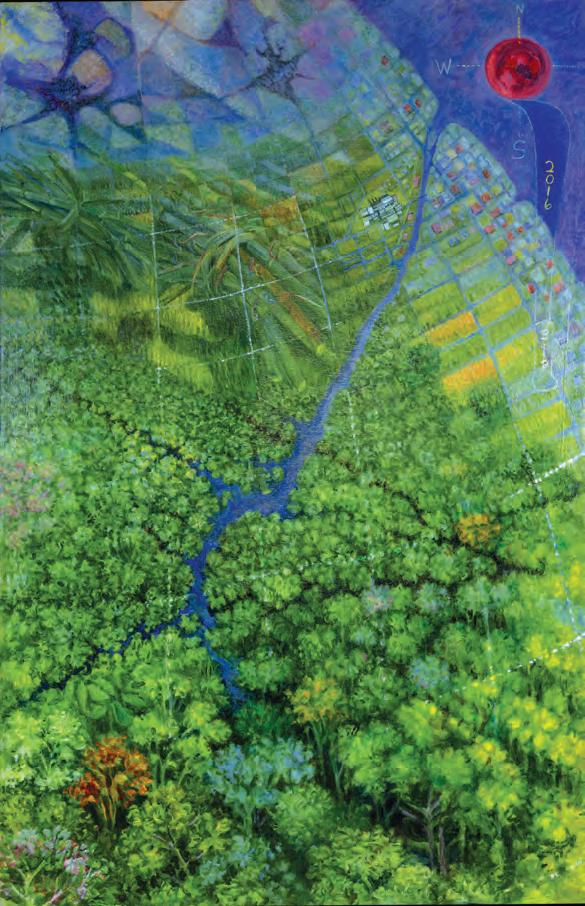
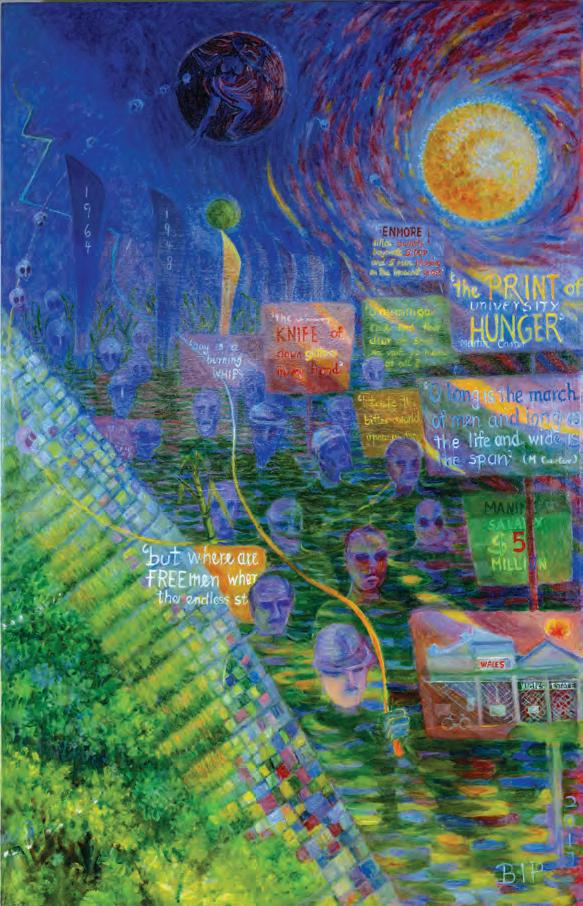
BERNADETTE PERSAUD, GENTLEMAN UNDER THE SKY (GULF WAR), 1991, OIL ON CANVAS, DIPTYCH, 50 x 74 INCHES, COLLECTION OF THE ART MUSEUM OF THE AMERICAS
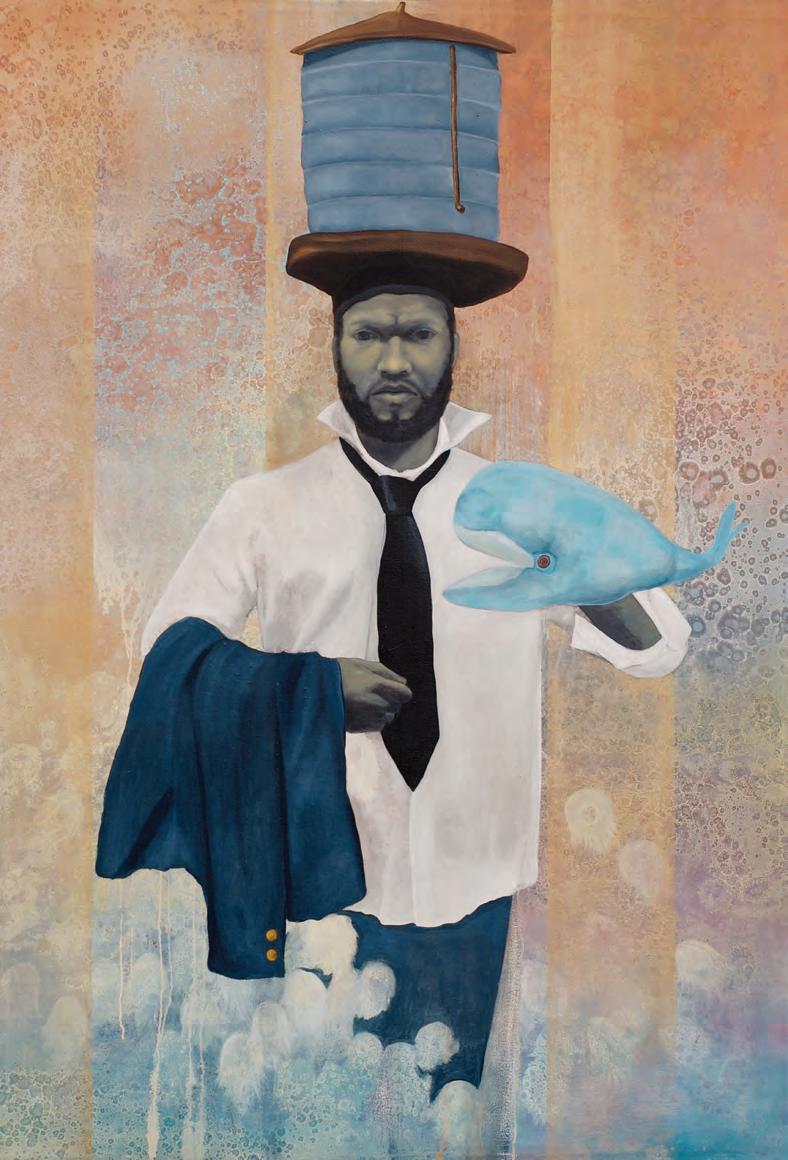
AMY SHERALD, PUPPET MASTER, 2008, OIL ON CANVAS, 74 x 521/8 INCHES, COLLECTION OF DC COMMISSION ON THE ARTS AND HUMANITIES
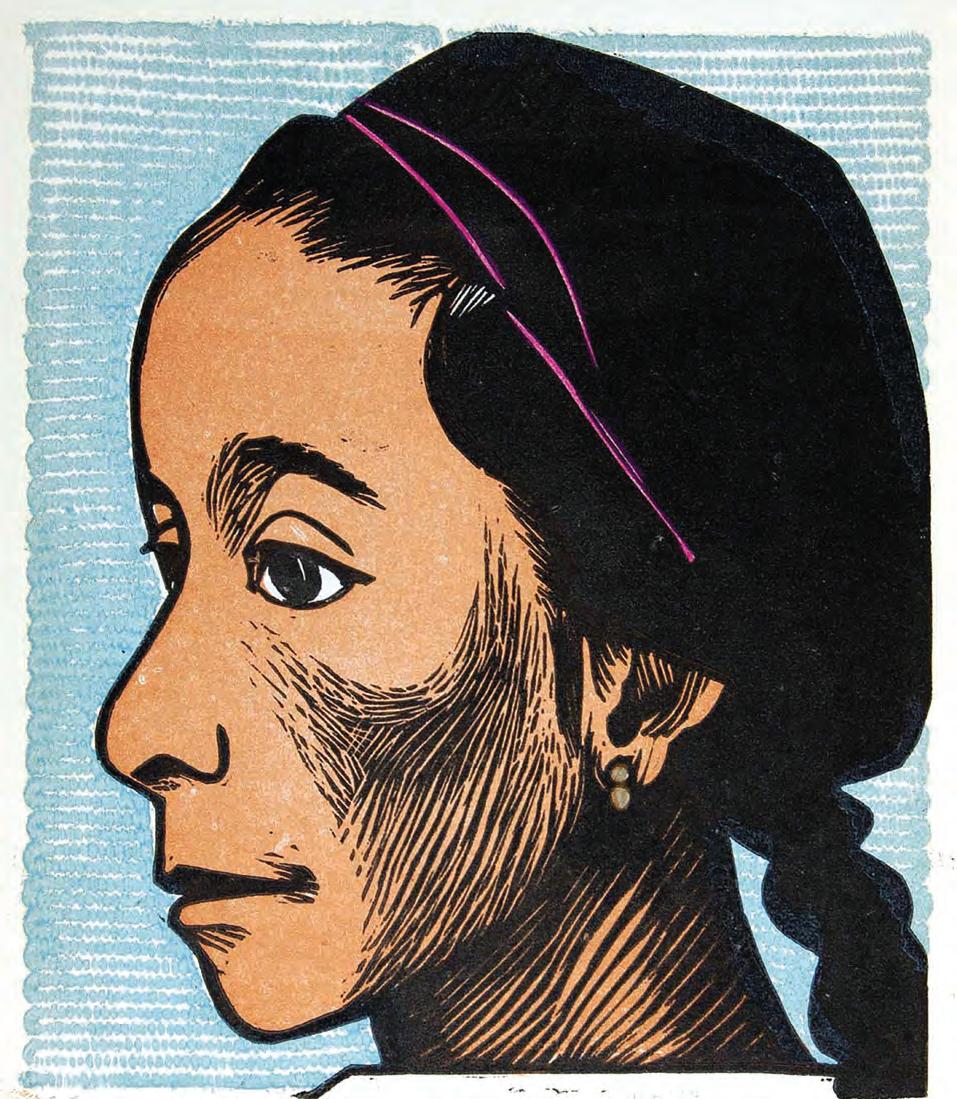
ELIZABETH CATLETT, NIÑA, 1957, COLOR LINOLEUM CUT ON WOVE PAPER, ED. 87/100, 7 x 51/2 INCHES, COLLECTION OF ROMY SILVERSTEIN
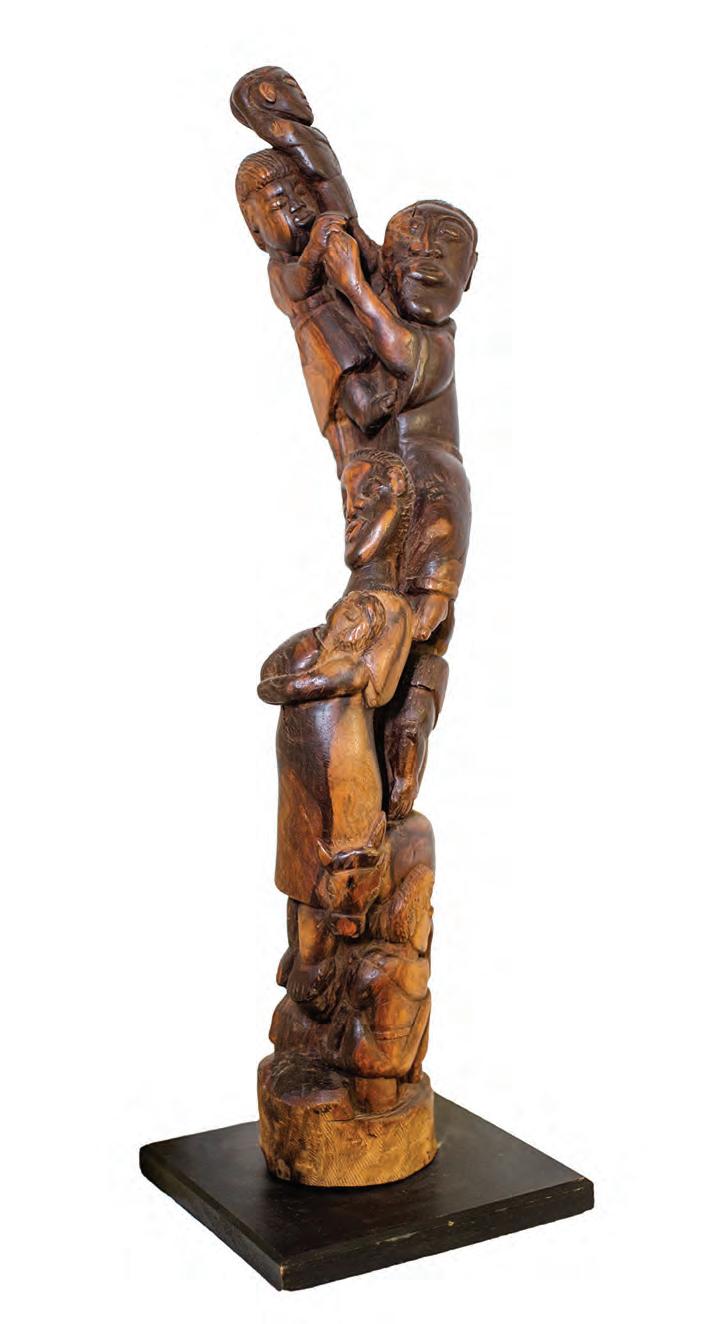
EVERALD BROWN, TOTEM, 1972, WOOD, 36 x 5 x 9 INCHES, COLLECTION OF THE ART MUSEUM OF THE AMERICAS
OASAMA,ARTMUSEUMOFTHEAMERICAS
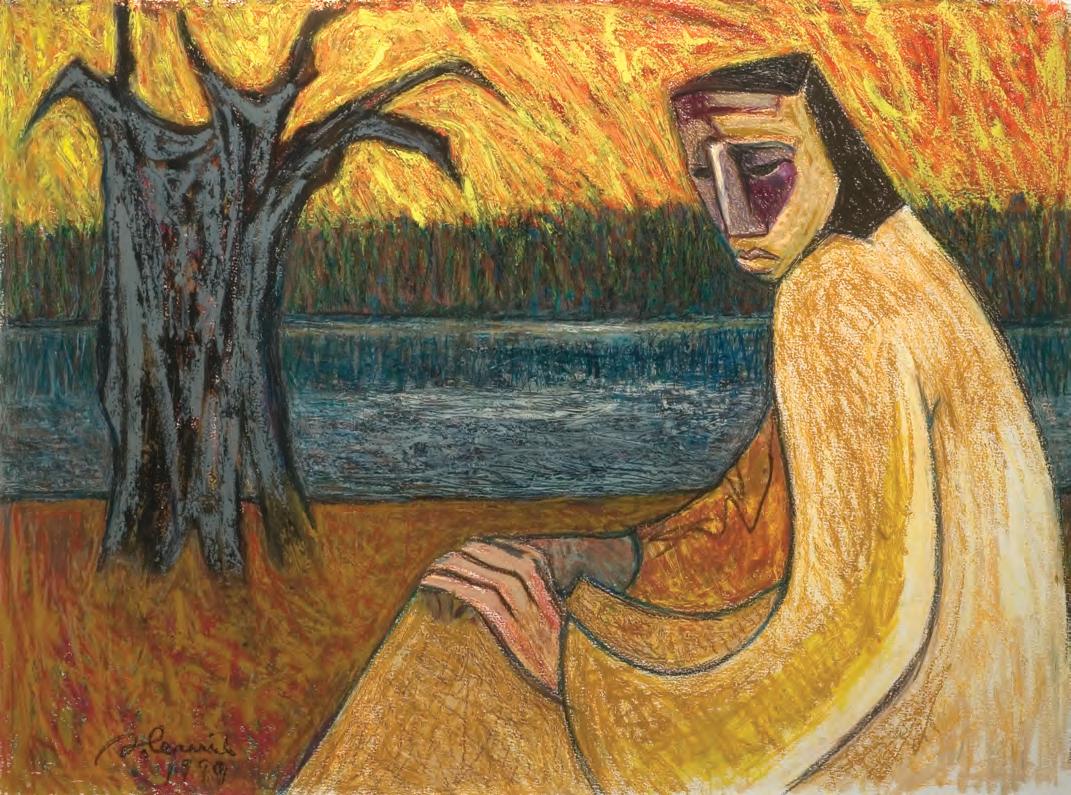
SAMELLA LEWIS, BAYOU WOMAN, 1999, OIL STICK ON PAPER, 24 x 30 INCHES, COLLECTION OF ERIC KEY
JOHN WOO
Interconnectivity and Cultural Continuity
M. P. Alladin
Jacinto “Coco” Galloso
Claudia “Aziza” Gibson-Hunter
Manuel Mendive
Melanie Royster
Alec Simpson
Lou Stovall
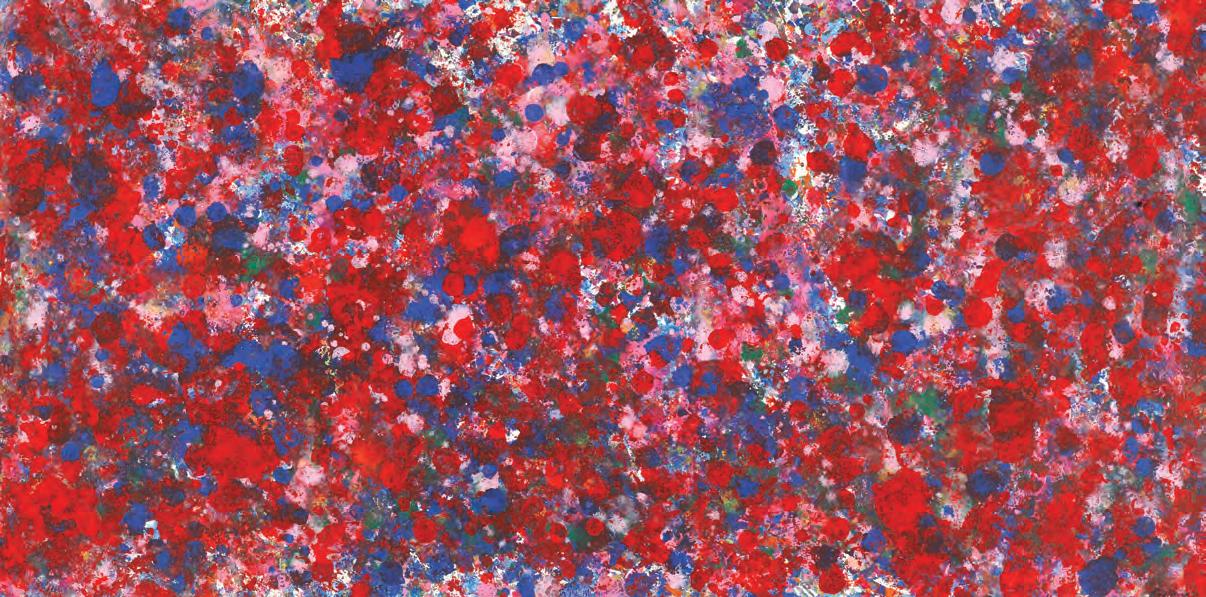
LOU STOVALL, IN THE MOMENT, 2012, SILKSCREEN ON PAPER, 20 X 40 INCHES, COLLECTION OF ADDISON/RIPLEY FINE ART GALLERY
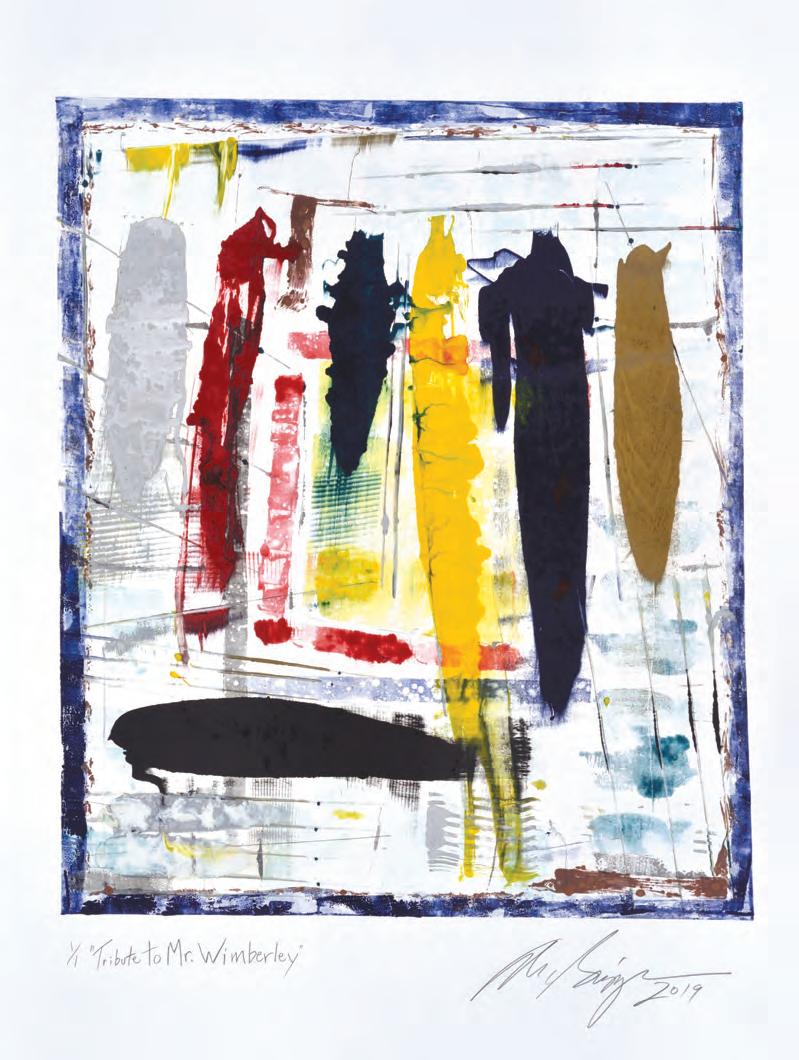
ALEC SIMPSON, TRIBUTE TO MR. WIMBERLEY, 2019, MONOTYPE PRINT ON PAPER, UNFRAMED: 60 x 42 INCHES, FRAMED: 653/4 x 48 INCHES
JOHN WOO
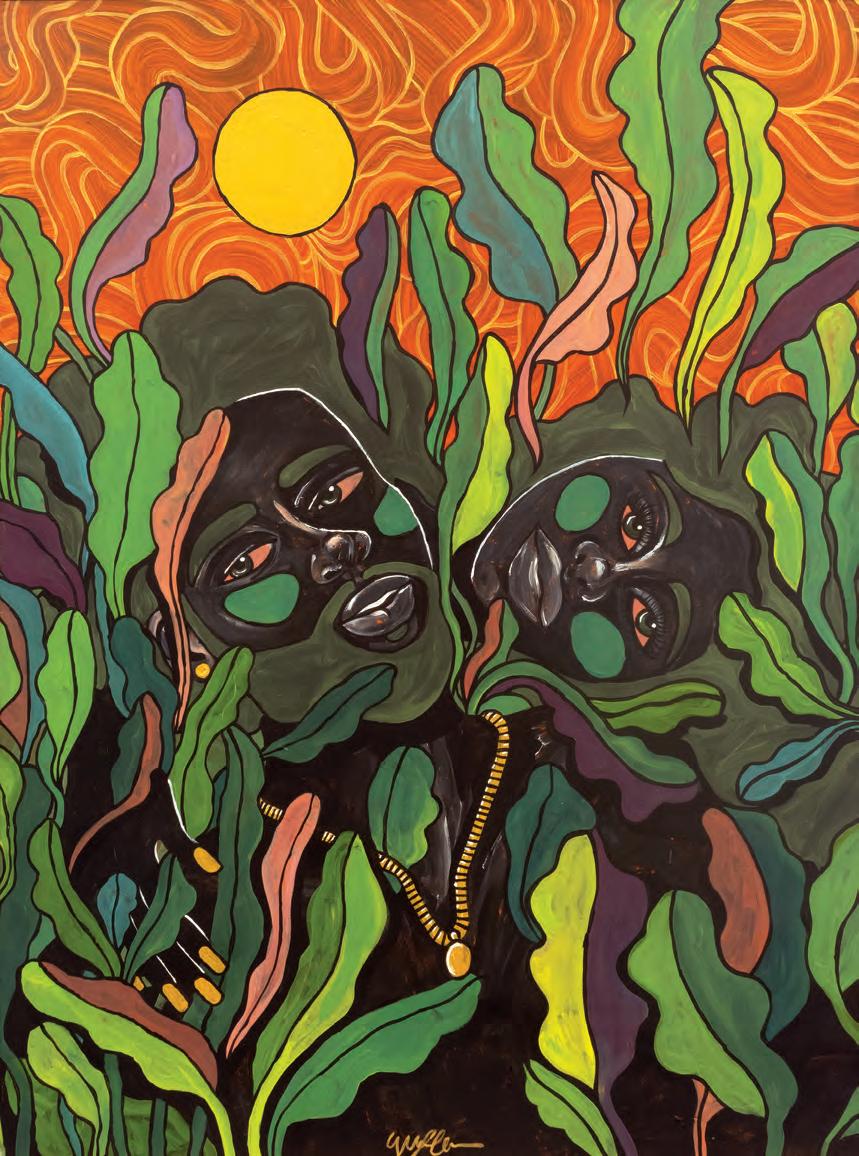
MELANIE ROYSTER, SUMMER’S SUNSET, 2023, ACRYLIC ON CANVAS, 40 x 30 INCHES
JEFFREY KENNEY
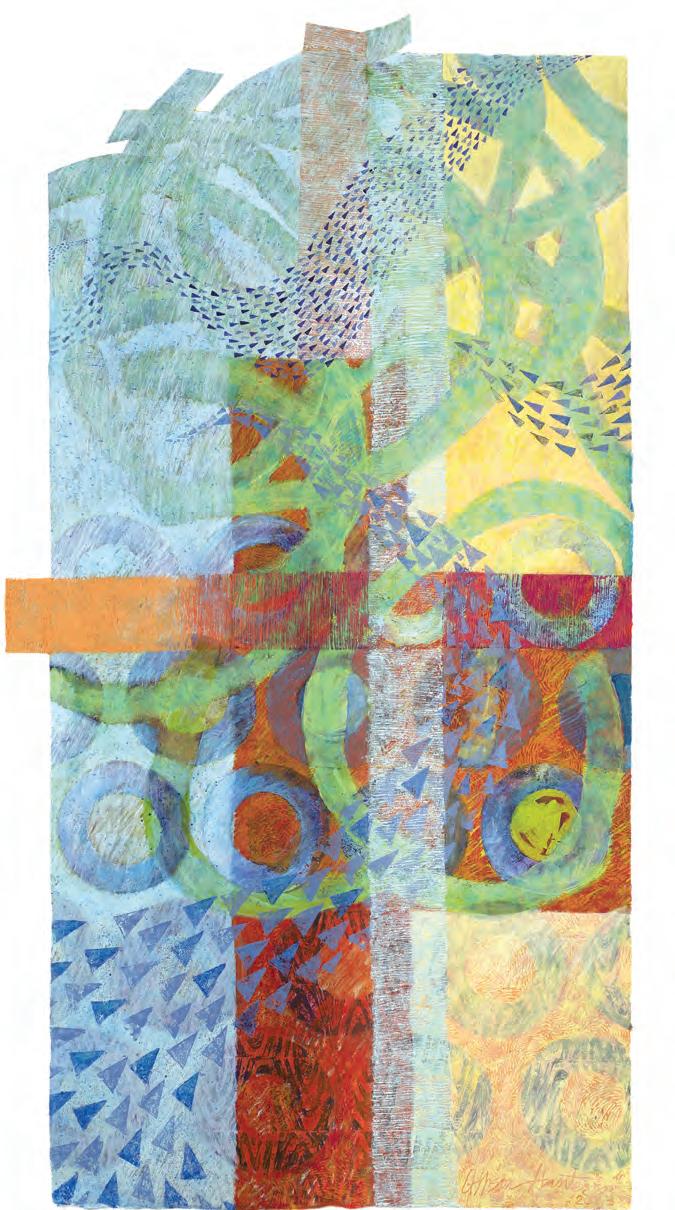
CLAUDIA “AZIZA” GIBSON-HUNTER, YOU GOT TO GIVE UP THE STUFF THAT HOLDS YOU DOWN, 2023, ACRYLIC PAINT AND COLORED PENCIL ON PAPER, 98 x 503/4 INCHES
JOHN WOO
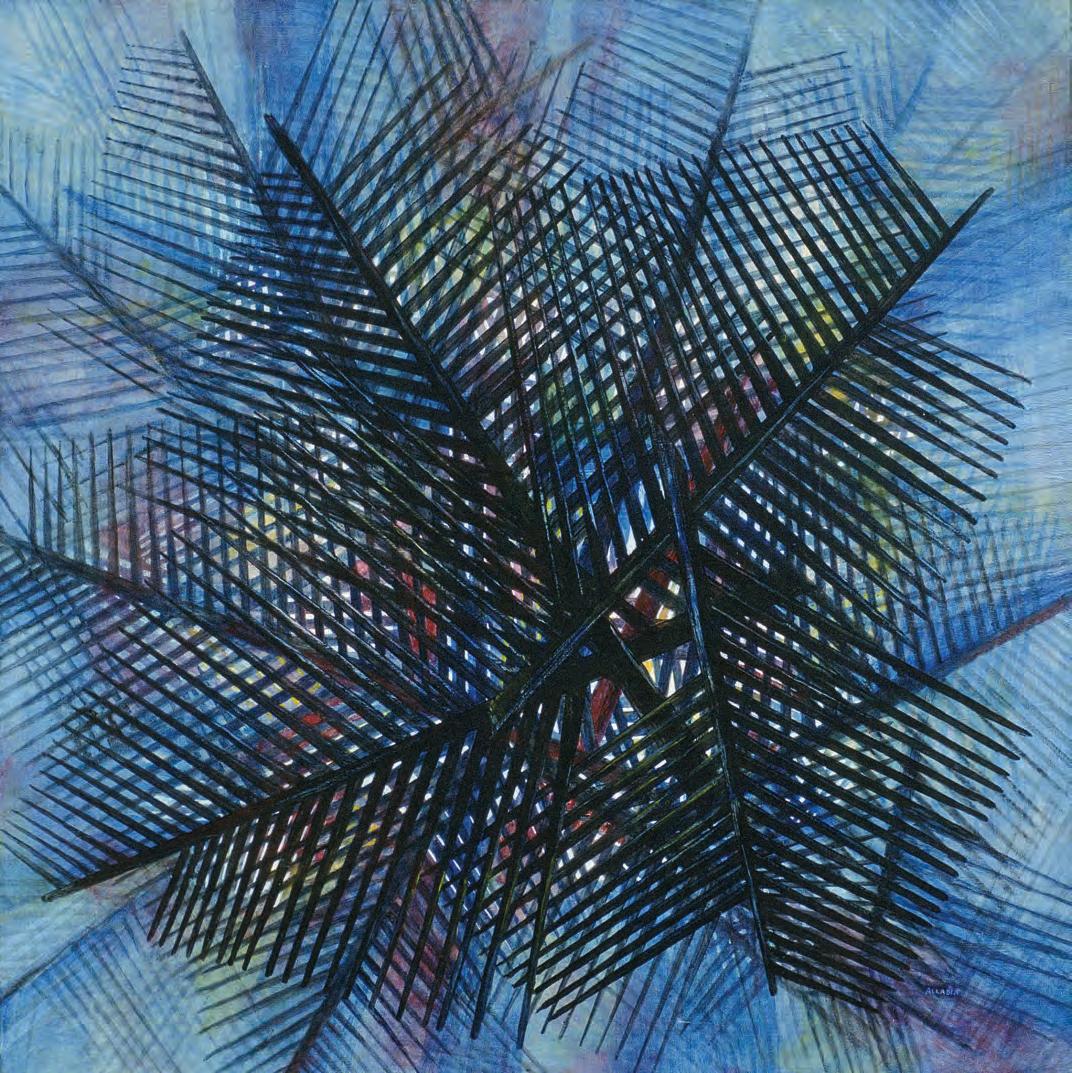
M. P. ALLADIN, LAS PALMAS (THE PALMS), 1973, ACRYLIC ON CANVAS, 48 x 48 INCHES, COLLECTION OF THE ART MUSEUM OF THE AMERICAS
OAS AMA, ART MUSEUM OF
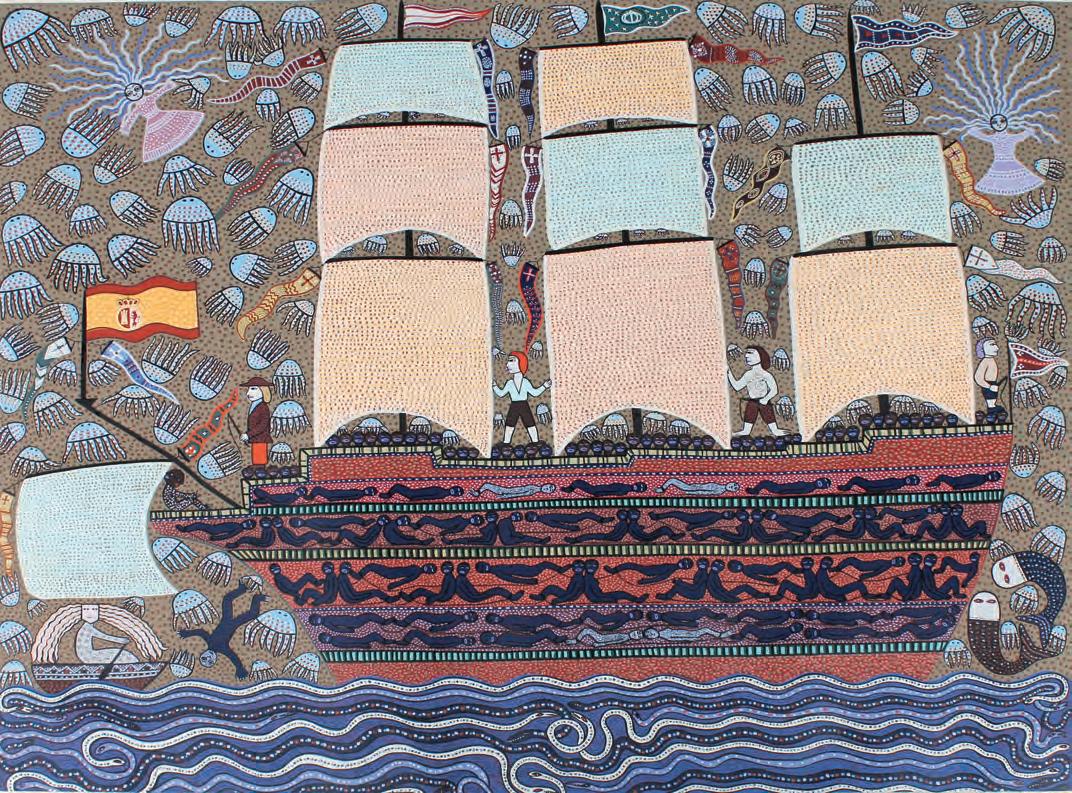
MANUEL MENDIVE, BARCO NEGRERO, 2012, SERIGRAPH, 18 x 24 INCHES, COLLECTION OF ADLAI L. PAPPY, MD
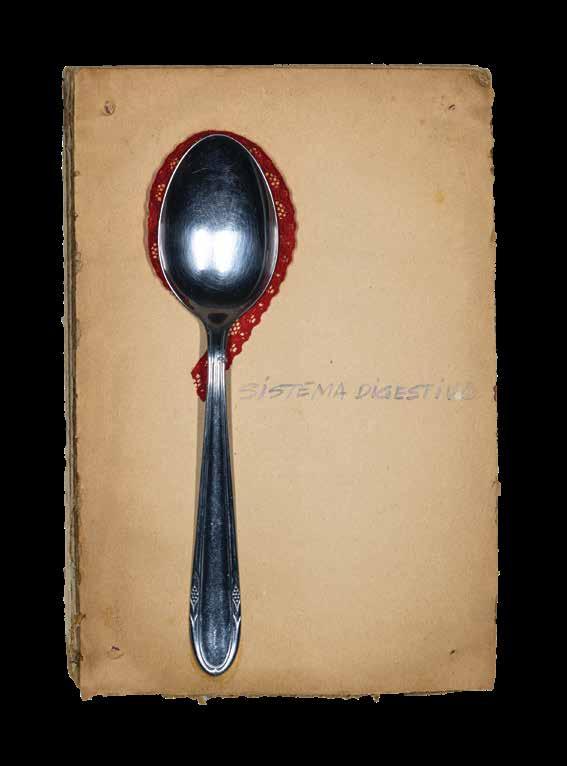
OAS AMA, ART MUSEUM OF THE AMERICAS
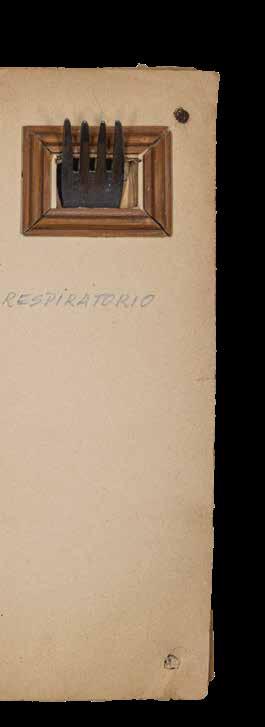
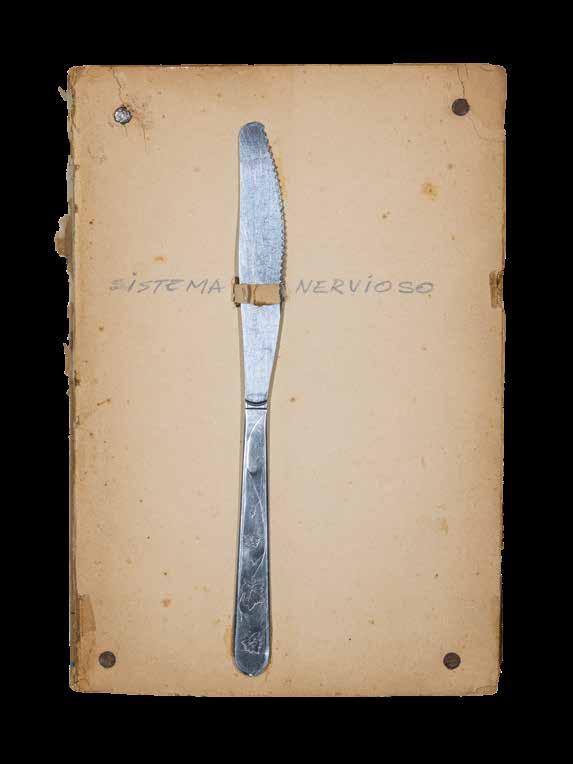
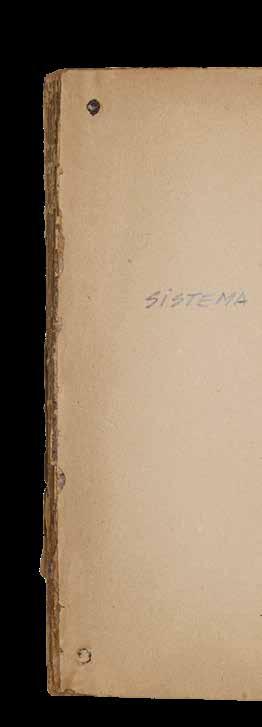
JACINTO “COCO” GALLOSO, DERECHO A LA VIDA: SISTEMA DIGESTIVO, SISTEMA NERVIOSO, SISTEMA RESPIRATORIO, 2016, ACRYLIC ON CANVAS, THREE PIECES: 9 X 6 INCHES EACH, COLLECTION OF THE ART MUSEUM OF THE AMERICCAS
EXHIBITION LIST
M. P. Alladin
(Mahmoud Pharouk Alladin)
(Trinidadian and Tobagonian, 1919–1980)
Las Palmas (The Palms), 1973
Acrylic on canvas
48 x 48 inches
Collection of the Art Museum of the Americas
John Beadle (Bahamian, 1964–2024)
Four Gods of the Moon, 1991
Oil on canvas
48 x 36 inches
Collection of the Art Museum of the Americas
Alexander “Skunder” Boghossian (Ethiopian, 1937–2003)
Axum, 1967
Oil on canvas
451/4 x 311/2 inches
Collection of Eric Steven Wray
Everald Brown (Jamaican, 1917–2002)
Totem, 1972
Wood
36 x 5 x 9 inches
Collection of the Art Museum of the Americas
Elizabeth Catlett
(American, active Mexico, 1911–2012)
Mahalia, 2002
Bronze
15 x 11 x 30 inches
Collection of Eric Key
Elizabeth Catlett
(American, active Mexico, 1911–2012) Niña, 1957
Color linoleum cut on wove paper, ed. 87/100, 7 x 51/2 inches
Collection of Romy Silverstein
Irene Clouthier (Mexican, b. 1974)
Neon-Like LED Sign, 2022–23
Neon
30 x 35 inches
Alonzo Joseph Davis Jr. (American, 1942–2025)
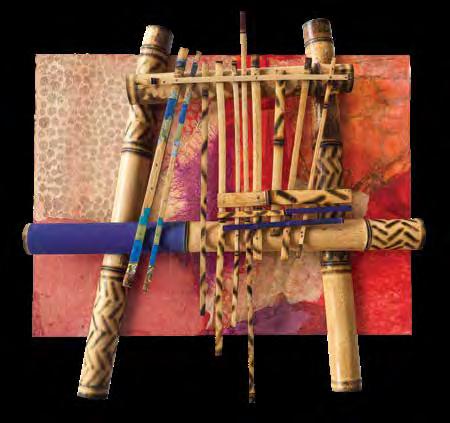
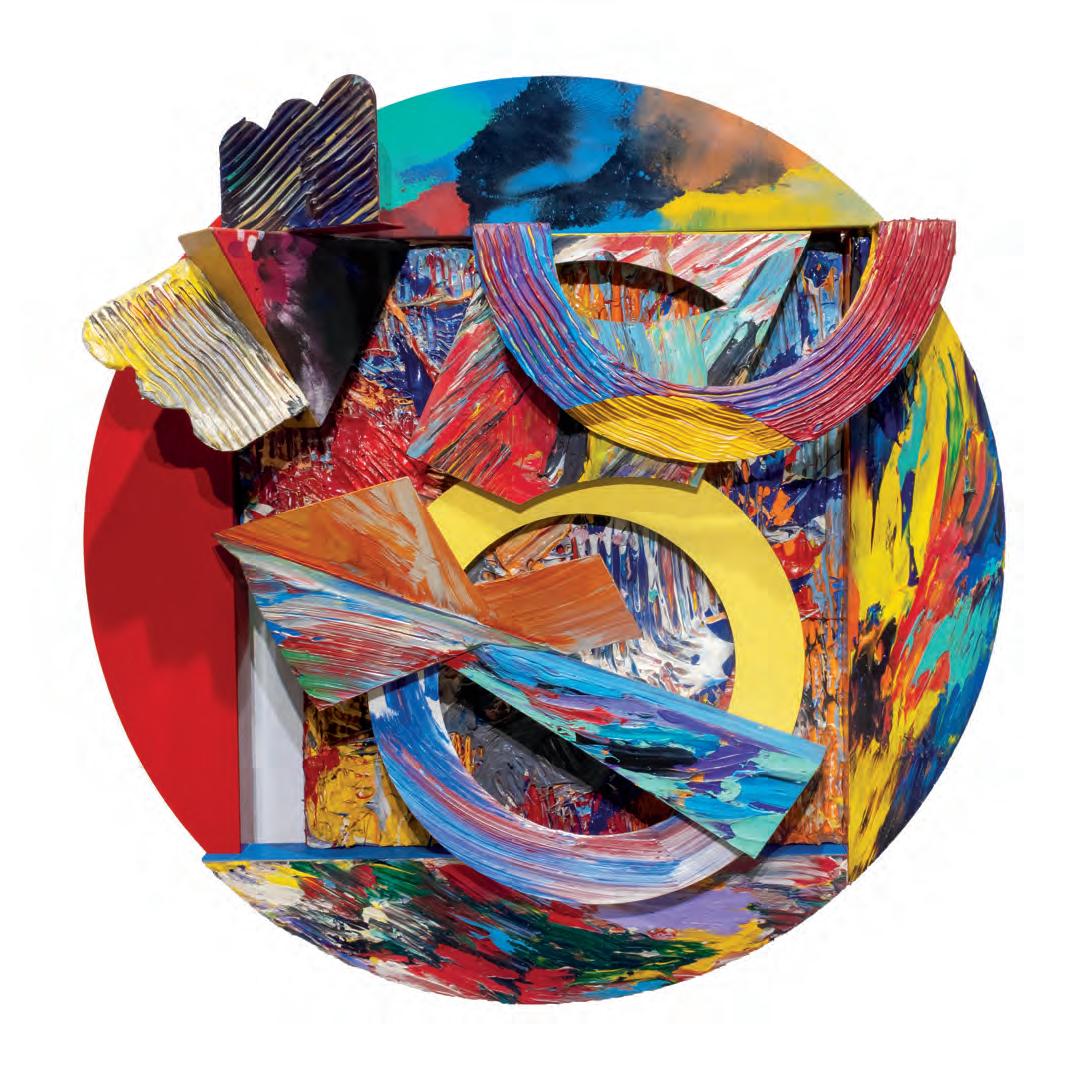
Kalimba Series #8, 2015
Bamboo construction with collage and paint on board
27 x 33 x 71/2 inches
Collection of DC Commission on the Arts and Humanities
Roberto Diago
(Roberto Juan Diago y Querol)
(Cuban, 1920–1955)
Face II, 1950
Oil on cardboard
131/2 x 101/2 inches
Collection of the Art Museum of the Americas
David Driskell (American, 1931–2020)
Landscape, 1980
Acrylic on paper
14 x 11 inches
Collection of Eric Key
Jallim Eudovic
(St. Lucian, b. 1980)
Spiritual Mechanics, 2022
Metal, wood, and acrylic
Three pieces: 75/8 x 43/8 x 11/4 inches, 11 x 73/8 x 13/4 inches, 113/8 x 12 x 11/8 inches
Collection of the Art Museum of the Americas
Jacinto “Coco” Galloso (Uruguayan, b. 1957)
Derecho a la Vida: Sistema Digestivo, Sistema Nervioso, Sistema Respiratorio, 2016
Acrylic on canvas
Three pieces: 9 x 6 inches each
Collection of the Art Museum of the Americas
Claudia “Aziza” Gibson-Hunter (American, b. 1952)
You Got to Give Up the Stuff That Holds You Down, 2023
Acrylic paint and colored pencil on paper
98 x 503/4 inches
Sam Gilliam
(American, 1933–2022)
Ain’t More Than Music, 1989
Acrylic and enamel on aluminum
60 x 50 x 10 inches
Collection of George Mason University
Stanley Greaves (Guyanese, active U.S., b. 1934)
Slave Stock and Whip, 2018
Mahogany, copper, plexiglass, nylon cord, Brazil cherry, and pine
30 x 19 x 24 inches
Collection of the Art Museum of the Americas
Curlee Raven Holton (American, b. 1951)
It Is Not a Mask, It Is a Faith, 1993
Cut-plate etching on wove paper
37 x 27 inches
Martha Jackson Jarvis (American, b. 1952)
Ancestor’s Bones: Sounds from the Sea III, 2014, Mixed-media drawing: black walnut ink, watercolor, oil, raw pigment, collage, and photo transfer
42 x 67 inches
Lois Mailou Jones (American, 1902–1998)
Studio Still Life, 1970
Watercolor on paper
19 x 24 inches
Collection of Eric Key
Lois Mailou Jones (American, 1902–1998)
Untitled (African Dancers), 1996
Silkscreen print
271/4 x 24 inches
Collection of Leslie Oliver Ellison
Patricia Kaersenhout (Suriname, active Netherlands, b. 1966)
Invisible Men, 2009
Digital prints, bound book, ed. 750
101/4 x 7¼ inches
Collection of the Art Museum of the Americas
Wifredo Lam
(Cuban, 1902–1982)
Croiseur Noir, 1972
Etching, ed. 75/125
13 x 101/2 inches
Collection of Leslie Oliver Ellison
Luis Vasquez La Roche (Trinidadian and Tobagonian, active U.S., b. 1983)
The Cleanse (La Limpieza), 2022
Performance/video
Samella Lewis (American, 1923–2022)
Bayou Woman, 1999
Oil stick on paper
24 x 30 inches
Collection of Eric Key
Georges Liautaud (Haitian, 1899–1991)
Crucifixion, 1959
Cut and hammered iron
46 x 401/2 x 9 inches
Collection of the Art Museum of the Americas
Manuel Mendive (Cuban, b. 1944)
Barco Negrero, 2012
Serigraph 18 x 24 inches
Collection of Adlai L. Pappy, MD
EJ Montgomery (American, 1930–2025)
Ibje Twins–Yoruba Blue, 1997
Mixed media on paper
30 x 221/2 inches
Collection of Juanita and Mel Hardy
Bernadette Persaud (Guyanese, b. 1946)
Gentleman Under the Sky (Gulf War), 1991
Oil on canvas
Diptych, 50 x 74 inches
Collection of the Art Museum of the Americas
James Phillips
(American, b. 1945)
The Other John, 2014
Acrylic on paper
303/4 x 223/4 inches
Collection of New Door Creative Gallery
Martin Puryear (American, b. 1941)
Hand Sculpture, 1993
Wood
17 x 11 inches
Collection of Martin Luther King Jr. Memorial Library
Melanie Royster (American, b. 1993)
Summer’s Sunset, 2023
Acrylic on canvas
40 x 30 inches
Joyce Scott (American, b. 1948)
Have You Seen This Child?, 2010
Glass beads, thread, wire, and wood
19 x 12 x 161/2 inches
Collection of University of Maryland Global Campus
Amy Sherald (American, b. 1973)
Puppet Master, 2008
Oil on canvas
74 x 521/8 inches
Collection of DC Commission on the Arts and Humanities
Alec Simpson (American, b. 1944)
Tribute to Mr. Wimberley, 2019
Monotype print on paper
Unframed: 60 x 42 inches
Framed: 653/4 x 48 inches
Nelson Stevens (American, 1938–2022)
Eighth Wonder, 1980
Acrylic on canvas
40 x 40 inches
Collection of Eric Key
Renée Stout
(American, b. 1958)
Self-Portrait, 2012
Mixed media (metal and found objects)
33 x 9 x 11 inches
Collection of Dean Dalton
Lou Stovall (American, 1934–2023)
In the Moment, 2012
Silkscreen on paper
20 x 40 inches
Collection of Addison/Ripley Fine Art Gallery
Michelle Talibah (American, b. 1954)
One, 1979
Acrylic on canvas
36 x 48 inches
Collection of New Door Creative Gallery
Alma Thomas (American, 1891–1978)
Lunar Surface, 1970
Acrylic on canvas
34 x 391/8 inches
Collection of Katzen Arts Center, American University
Julio Valdez (Dominican, b. 1969)
The Grey Echo (El Eco Gris), 2002
Silk aquatint and monotype on paper
37 x 471/4 inches
Collection of the Art Museum of the Americas
Wilfredo Valladares (American, b. 1968)
Unmasked, 2014
Cast iron and wood 6 x 4 feet
Fabiola Alvarez Yurcisin (Mexican, active Maryland, b. 1973)
Black Cage, 2020
Videocassette tape, double-sided
adhesive tape, mirror, and wood base
41 x 17 x 21 inches
CONTRIBUTORS
LaNitra M. Berger is an associate professor of history and art history and director of African and African American Studies at George Mason University. From 2010 to 2022, she was the senior director of the Office of Fellowships at George Mason. Since joining George Mason in 2010, Berger has helped students secure more than $2 million in external funding for national scholarships and fellowships such as the Boren, Fulbright, Gilman, Truman, National Science Foundation, and Critical Language Scholarship.
Ariana A. Curtis is dedicated to building inclusive frameworks that disrupt systemic marginalization, misrepresentation, and erasure. She is the first curator of Latinx Studies at the Smithsonian National Museum of African American History and Culture (NMAAHC). In this role, she leads museum research and collections that center Latinidad through an African American lens. She is curator of the award-winning NMAAHC Latinx collections portal and has held leadership roles in major Smithsonian initiatives including Our Shared Future: Reckoning with Our Racial Past and the American Women’s History Initiative. Additionally, Curtis is a founding member of the Black Latinas Know Collective and a board member for Duke University Libraries, the National Association of Latino Arts and Cultures (NALAC), and the Museums Association of the Caribbean.
Cheryl D. Edwards, an African American artist-curator, scholar, and educator, was born in 1954 in Miami Beach, Florida. She began her studies in art in 1987 in New York City in a class at the Art Student League taught by Ernest Crichlow. Edwards holds a BA in political science from Boston University; was an MA candidate in Black Studies (Boston University); and has a JD from Syracuse College of Law. She has been living in Washington, DC, for the past 30 years. Edwards has exhibited in many shows in the United States, the Netherlands, Germany, Monaco, Costa Rica, Denmark, and Hong Kong. Her media are oil, ink, printmaking, mixed media, and acrylics. Edwards is a recipient of the Excellence in Mentoring Award given by George Mason University, Arts Management program. She is a 2024 (also 2023, 2022, 2021, and 2015) DC Commission on the Arts and Humanities Fellowship Awardee. Edwards received a fellowship award from the Long Run Foundation and is the winner of the Black Writers Fellowship: Reporter awarded by Hand Papermaking, Inc. She is an awardee in the Art Cart: Saving the Legacy project selected by the Research Center for Arts and Culture. The Art Cart Project resulted in the archiving of her artwork in Columbia University's Academic Commons archive. Edwards was also a senior advisor to the executive director of the David C. Driskell Center (2015–2023, University of Maryland), a member of the Education Committee of the McClean Project for the Arts, an advisor to the Washington Sculptors Group, and a board member of the Washington Print Club.
UMGC EXHIBITION
Eric Key
Director, Arts Program
Cheryl Edwards
Guest Curator
Treston Sanders Curator
Olya Kalatsei
Senior Web and Graphic Design Manager
Jennifer Norris
Senior Web and Graphic Designer
Sandy Bernstein
Senior Writer/Editorial Director
Barbara Reed Senior Editor
Laurie Bushkoff Senior Account Manager
Scott Eury
Print Production and Vendor Relations Manager
René A. Sanjines Fine Arts Technician
Tawanna Manago
Administrative Assistant
MASON EXHIBITIONS
Donald H. Russell
Director, University Curator
Jeffrey Kenney Associate Curator
Yassmin Salem Programs Manager, Murals at Mason
Alissa Maru
Associate Curator, Exhibition Manager
Stephanie Grimm
Art and Art History Librarian and Fenwick Library Gallery Manager
Soojung Paek
Graduate Professional Assistant, Provisions Research Center for Art and Social Change
Steven Luu
Assistant Registrar, Documentarian
Ben Bowen Exhibitions Associate
Justin Rogers Collections Associate Interns
Chloe Brackens
Allison Erdelyi
Alice Farinhas
Isabel Grewatz
Clara Mattick
London Poor Thunder
SPECIAL THANKS
Sophie Bae
Curatorial Assistant
LaNitra M. Berger, PhD Symposium Panelist
Helen Chason Director, Kreeger Museum
Payton Crain Curatorial Assistant
Ariana A. Curtis, PhD Symposium Panelist
Sarah Gordon Symposium Panelist
Bill Hill
HMB Art Transfer
Eric Key Symposium Panelist
Michelle May-Curry Symposium Panelist
MOSAIC Printer
Adriana Ospina
Director, Art Museum of the Americas
Adlai L. Pappy, MD Symposium Panelist
Antoinette Peele Symposium Panelist
Jayson Reynolds Symposium Panelist
Greg Staley Photographer
Pablo Zuniga
Former Director, Art Museum of the Americas
DONORS
Christopher Addison
Maria Barbosa
Reem Bassous
Juliette Bethea
Julia Bloom
Cellar.com
Helen Chason
Irene Clouthier
Raymond Compres, Mecho's Dominican Kitchen
Michael and Judith Cotter
Richard Dana
Tabrina Davis
Mary Early
Nicole Fall
Sharon Fishel
Cianne Fragione
Helen Frederick
Claudia “Aziza” Gibson-Hunter
Margery Goldberg
Sarah Gordon
Wendy Grossman
Juanita and Mel Hardy
Mira Hecht
Ellen Hill-Godfrey
Nancy Hirshbein, Esq.
Sandrine Konig
Karenga Lemmons, MD
June Linowitz
Kirsten Magwood
Sandra Magwood
Alissa Maru
Adlai L. Pappy, MD
Ellen Pechman
Marie Ringwald
Kenneth Romero
Milton and Ingrid Rose
Lisa Rosenstein
Laura Roulet-Hernandez
Nancy Sausser
Schneider's of Capitol Hill
Kenneth Simonson
Alec Simpson
Michael Smith
Gregory Staley
Lynn Sylvester, Esq.
Michelle Talibah
Joan Weber
Antonia Williams-Gary
Fabiola Alvarez Yurcisin
ABOUT UMGC
University of Maryland Global Campus was founded more than 75 years ago specifically to serve the higher education needs of working adults and military servicemembers. Today, UMGC is the largest provider of postsecondary education in Maryland and continues its global tradition with online and hybrid courses, more than 175 classroom and service locations worldwide, and more than 135 degrees and certificates backed by the reputation of a state university and the University System of Maryland. For more information, visit umgc.edu.
ABOUT THE ARTS PROGRAM AT UMGC
Since 1978, UMGC has proudly shown works from a large collection of international and Maryland artists at its headquarters in Adelphi, Maryland, a few miles from the nation’s capital. Through its Arts Program, the university provides a prestigious and wide-ranging forum for emerging and established artists and brings art to the community through special exhibitions and its own collections, which have grown to include more than 3,000 pieces of art.
Artworks are on display throughout the College Park Marriott Hotel & Conference Center and the Administration Building in Adelphi. The main, lower-level gallery in Adelphi is open to the public from 9 a.m. to 9 p.m. seven days a week, and the Leroy Merritt Center for the Art of Joseph Sheppard is open to the public from 9 a.m. to 7 p.m. seven days a week. More than 75,000 students, scholars, and visitors come to the Adelphi facilities each year.
ARTS PROGRAM MISSION STATEMENT
The UMGC Arts Program is dedicated to furthering the university’s objectives by creating a dynamic environment in which our diverse constituents, including students and the general public, can study and learn from direct exposure to our art collections, exhibitions, and educational programs.
COVER ARTWORK:
Manuel Mendive, Barco Negrero, 2012, Serigraph, 18 x 24 inches, Collection of Adlai L. Pappy, MD
Photo by Xavier Thomas International Consulting
TITLE PAGE:
Alonzo Joseph Davis Jr., Kalimba Series #8, 2015, Bamboo construction with collage and paint on board, 27 x 33 x 71/2 inches, Collection of DC Commission on the Arts and Humanities
Photo by Jeffrey Kenney
Catalog published in conjunction with the exhibition Before the Americas
George Mason University Mason Exhibitions
Gillespie Gallery August 25–November 15, 2025
University of Maryland Global Campus Arts Program Gallery February 15–May 10, 2026
© 2025 University of Maryland Global Campus. All rights reserved. Copyright credits and attribution for certain illustrations are cited internally proximate to the illustrations.
ISBN: 979-8-9932665-0-3
UNIVERSITY OF MARYLAND GLOBAL CAMPUS
3501 UNIVERSITY BOULEVARD EAST
ADELPHI, MD 20783-8000 USA
UMGC.EDU/ART
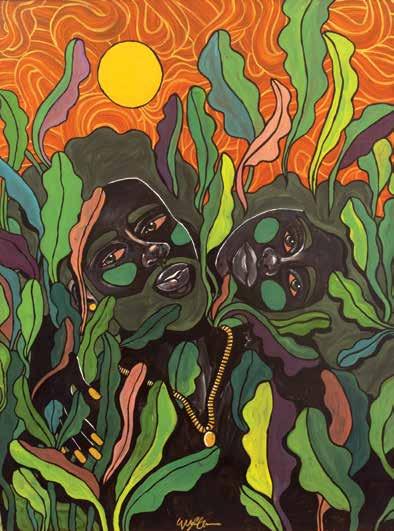
Melanie Royster, Summer’s Sunset, 2023, acrylic on canvas, 40 x 30 inches