NEWS & NOTES
Future Cystic Fibrosis Treatment with New Science: mRNA and CRISPR Explained
Samya Z. Nasr, MD, CF Center Director
What Is Cystic Fibrosis (CF)?
Cystic fibrosis is a genetic disease, meaning it’s caused by changes in a person’s DNA resulting in CF. This change keeps the body from making a healthy protein called Cystic Fibrosis Transmembrane Conductance Regulator (CFTR). Without healthy CFTR, mucus gets thick and sticky, which causes breathing problems, infections, and trouble absorbing nutrients.
Since the diagnosis of CF, doctors managed CF with medications, physiotherapy, and special diets, but couldn’t fix the actual problem—the faulty gene.
Now, two exciting new types of treatment—mRNA (messenger RiboNucleic Acid) -based therapy and CRISPR (Clustered Regulatory Interspaced Short Palindromic Repeat) gene editing—are being developed to target the disease at its source!
That would especially help treat people with CF (pwCF) who don’t qualify for the CFTR modulators, like pwCF who have class 1, and others who develop side effects from the modulators or are not benefiting from them.
mRNA-Based Therapies: Teaching Cells to Make the Right Protein
Imagine cells as factories. In a healthy person, each cell follows a recipe (your DNA) to make the correct CFTR protein. In CF, the recipe has a typo, so the factory turns out a broken protein.
mRNA therapy hands the cell a fresh copy of the correct recipe.
How Does It Work?
• Scientists make healthy CFTR instructions using mRNA (think of mRNA as a temporary blueprint).
• They package these instructions into tiny bubbles (called lipid nanoparticles) or other ways to carry the healthy CFTR into the lungs, which keep them safe in the body.
• CF patients can breathe in these bubbles as a mist, letting them reach lung cells.
• The lung cells read the new mRNA instructions and start making the healthy CFTR protein—just like a factory following a corrected recipe.
What’s So Special About This?
• It doesn’t change your DNA, so it’s safe and temporary.
• It could help anyone with CF, no matter what specific genetic typo they have.
• The effect wears off after a while, so treatments need to be repeated.
What’s Happening Now?
• Clinical trials and studies show it’s safe, and some patients start making more healthy CFTR protein in their airways.
• Scientists are working to make mRNA last longer, work better, and be easier to give.
CRISPR Gene Editing: Fixing the Recipe Forever
Now, imagine you could walk into the factory and fix the error in the actual recipe, so the cell makes the right protein from now on.
That’s what CRISPR gene editing aims to do.
How Does CRISPR Work?
• CRISPR is like GPS-guided scissors for your DNA.
• It finds the spot where the CF gene has a typo.
• It snips the DNA at the mistake, then helps the cell patch it up with the correct sequence—or even insert healthy genetic material.
continued on page 2
NEWS FROM THE FRONT
What’s Special About CRISPR?
It’s potentially a permanent solution—like fixing a recipe so it’s never wrong again.
It could help people whose CF gene mistakes cannot be fixed by other medicines like people with class 1 mutations.
What’s Happening Now?
• Most research is still in the lab, using cells and tiny “lung organoids” (mini organs grown from patient cells).
• Animal studies are promising.
• Scientists are working out how to deliver CRISPR safely to lung cells, and how to make sure it only fixes the desired gene without causing any accidents or unintended results.
What Do These Therapies Mean for People with CF?
Both approaches are at the cutting edge of medicine and not yet widely available. But they show real hope for treating, or possibly fixing, CF at its genetic roots.
mRNA therapy provides temporary fixes, helpful for everyone and repeatable as needed.
CRISPR gene editing could one day offer a lasting cure.
Together, these treatments could mean future generations of people with CF will live healthier, freer lives—with fewer medicines, fewer hospital visits, and a chance to leave CF’s troubles in the past.
Final Thoughts: Hope and Progress
Science is still young, but the progress is exciting:
Instead of just managing symptoms, researchers are repairing the actual genetic error.
These approaches are being tested and improved every year.
If successful, people with CF may soon have treatments that help their bodies work correctly—rather than just dealing with the consequences.
Stay tuned—this is an unfolding story of hope, persistence, and science turning dreams into reality. The important message now is, please consider participating in any trials if asked to participate, to allow these new tools to be available for pwCF sooner than later.

Adult Program Updates
Thomas Sisson, MD, Adult CF Program Director
Happy 2026 to our patients and families! I hope everyone had a relaxing and healthy holiday season. We have had another incredible year in our Adult CF Program. The number of people with CF (pwCF) that we are taking care of in our clinic continues to grow, and this growth has necessitated an expansion of our provider team. We have also had a retirement and a departure from our care team, and we have initiated a primary care clinic! In this
year’s newsletter, I will detail these changes and update you on a few of our team’s quality improvement initiatives.
At the end of February 2025, our CF Center was reviewed by a representative from the Cystic Fibrosis Foundation (CFF) in what is called a ‘site visit.’ Our site visitors were very impressed with the care provided by our Pediatric and Adult teams and with our commitment to quality improvement. As a result, the
CF Center’s full accreditation by the CFF was continued, and both teams received Quality Improvement Certificates at the 2025 North American Cystic Fibrosis Conference.
At the time of our site visit, our Adult CF program cared for over 400 pwCF, and our patient numbers have since continued to grow. In fact, over the past 10 years, our program has steadily grown by approximately 10 adult pwCF per
year. With an expanding patient population, the site visitor also recommended that we increase our number of providers in social work, dietary care, and nursing. This recommendation has resulted in the following additions and plans for our clinic:
Social Work: Katie Hall will continue to provide social work support while serving in her primary and irreplaceable role as our Program Coordinator.
NEWS FROM THE FRONT

Brynn Arnall, who transitioned from our inpatient service to the outpatient clinic last year, has been splitting her time between the CF program and the general pulmonary clinics. With our adult CF clinic’s growth, Brynn will now provide full-time CF social work support. Mari Pitcher, who we were fortunate to have as our Mental Health Coordinator for the past seven years, has recently retired. Additionally, our team is actively interviewing candidates for an additional social work position. This new hire will provide mental health support and additional social work needs for our adult patients.
Dietary Care: Eeyeen Ong, who has worked tirelessly to support the dietary and nutritional needs of our patients over the past 10 years and has been a key member of our quality improvement team, will continue in a full-time role as our clinic’s dietitian. In addition, we have asked for institutional approval to hire another dietitian to work with Eeyeen. Once approved, our team will begin interviewing candidates for this position.
Nursing: Our clinic is fortunate to have Ronnie Downer continue in her full-time role as a clinic nurse for our adult CF program. Prior to our site visit, Ronnie was receiving part-time support from Joy Dettore, who was spending the rest of her time helping the general pulmonary clinics. In response to our site visitors’ suggestion for additional nursing in our adult CF clinic, our clinic has now brought Joy on as a fulltime CF nurse. Going forward, Ronnie and Joy will work in tandem to assist with ‘sick calls’ and with care coordination during clinic visits.
Respiratory Therapy, Physical Therapy, and Pharmacy: As a reflection of the cohesiveness of our team under the direction of Katie Hall, we have experienced remarkable stability in our clinic providers. Although I am not anticipating further expansion in respiratory therapy, physical therapy, and pharmacy over this next year, I am extremely grateful to have a group of compassionate and dedicated individuals continue in these roles. Specifically, Becca Aiello remains in her position as our team’s respiratory therapist, and she is also a leader in our quality improvement processes. Kristen Keith, our team physical therapist, is invaluable in helping our patients cope with and recover from musculoskeletal concerns. Kristen Klein guides us on a daily basis with her immense expertise on medication dosing and drugdrug interactions.
Providers: In addition to our outstanding care team, I am fortunate to work with a group of outstanding, dedicated, and compassionate providers including Drs. Sarah Brown, Shijing Jia, Michael Coffey, and Cyril Grum. Although our physician group has observed remarkable stability over the years, our team is preparing for the departure of Dr. Yvonne Huang in March of 2026 as she pursues an exciting opportunity at the University of Wisconsin. We have plans in place to continue to care for Dr. Huang’s patients. Denyse Stepka, a nurse practitioner who came to our outpatient practice from our inpatient pulmonary service, will play a major role. Denyse is already very experienced in CF care from her time on the inpatient
unit and through her outpatient clinic experience while covering previous maternity leaves and sabbaticals. In support of Denyse, Drs. Jia, Brown, and I will help fill Dr. Huang’s shoes after she starts her new job. Beyond this core group of CF providers, we also are fortunate to work with Dr. Rommel Sagana in supporting our lung transplant clinic. Finally, Drs. Brown and I continue to supervise our CF pulmonary fellows’ clinic and oversee the care of two amazing pulmonologists in training, Drs. Meghan Loser and Jesse Resnick.
Primary Care Physician: I wrote in last year’s newsletter that the CFF is supporting our center (through their PACE Award Program) to incorporate a primary care physician into our practice. We identified Dr. Dale Mazer to take on this role. She is a long-standing University of Michigan primary care provider who has worked at the Briarwood Clinic location. Dr. Mazer, with the support of Katie Hall, has made outstanding progress in establishing a primary care clinic for our pwCF, located in the same clinical space as our CF clinic. To date, over 60 pwCF from our clinic have expressed interest in seeing Dr. Mazer, and she has already started providing primary care!
As our clinic grows, it is increasingly important that we engage in quality improvement to make certain our patients are receiving the best care. To accomplish this goal, a group of our adult team meets weekly to work on projects. We are currently addressing infection control in our clinic, adherence to diabetes screening recommendations, reproductive
health, and clinic appointment adherence. This quality improvement work is benefited by feedback from our patients. Therefore, you can anticipate our team periodically sending out surveys, and we ask for your patience and help in filling out these survey requests.
To conclude, I am very much looking forward to the rest of 2026 and welcoming our new team members. With more provider capacity, our team will continue to bring you wonderful care. Our adult clinic is committed to improving the quality of your care through quality improvement projects and through better access to primary care by a provider who works with the CF team. Here is to wishing you all a joyful and healthy 2026!
Thomas Sisson, MD, Adult CF Program Director

WHAT’S NEWS
CYSTIC FIBROSIS NIGHT
Join us for another amazing night filled with conversations, connections, dinner, and cystic fibrosis education for families and friends of people with CF.
Wednesday, April 29, 2026, 4:00-8:00 pm
Kensington Hotel
3500 South State St, Ann Arbor, MI 48108
4:00 pm Registration and Open Vendor Tables
5:30 pm Dinner
6:00 pm Welcome and CF Foundation Update
Cystic Fibrosis Foundation
6:05 pm Pediatric Program Update
Samya Nasr, MD
CF Center Director
6:25 pm Adult Program Updates
Tom Sisson, MD
Adult CF Program Director
6:45 pm Complications of CF: CF Related Liver Disease
Jacob L. Bilhartz, MD
Interim Medical Director, Pediatric Liver Transplant
7:05 pm Personal Experiences with CF
Cameron Hain, Adult living with CF
R.S.V.P.
Respond by Wednesday April 15, 2026 using the QR code to the left or email UM-Peds-CFCenter@med.umich.edu
Include in RSVP:
• The name of the person with CF you are connected to that is seen at our center (if applicable)
• Your relation to a person with CF (parent, spouse, sibling, friend, etc.)
• The names of each person attending (Max 6 attendees per family/friend group)
***Only 1 (one) person with cystic fibrosis may attend this event and they will be our main speakers’ family.***
This event is open to the public.
U-M’s YouTube channel will post the recording in the weeks following the live event.
Staff Introductions
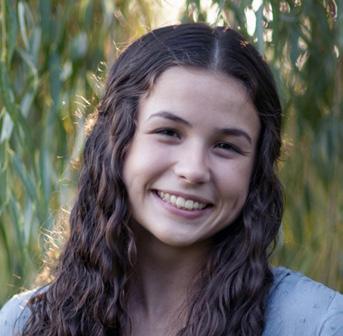
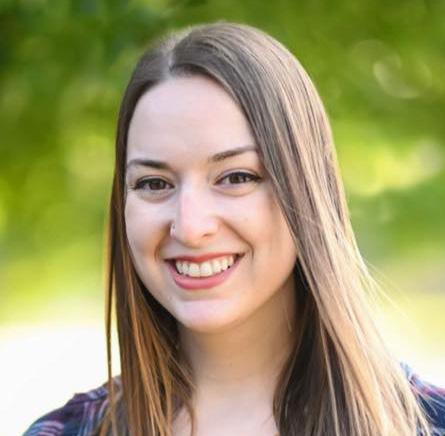
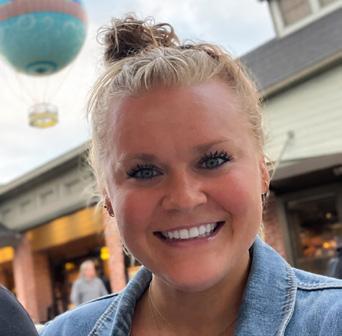
Sidney Streetman, BS, graduated from the University of Michigan in 2025 with a Bachelor of Science in Biology, Health, and Society. Over the past two years, she has worked with Dr. Nasr on various projects in the pediatric cystic fibrosis clinic before joining the Cystic Fibrosis Center’s research team as a research assistant in early 2026.
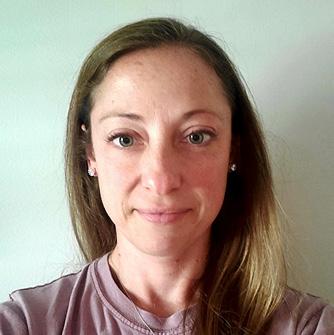
Sheila Malone, MS, BSN, RN, began her career on the inpatient unit 12 East, where she worked for 13 years. She pursued and completed her master’s degree in nursing education in 2024 and joined the Pediatric CF Clinic team in 2025. Something a lot of people may not know about Sheila is that she has an identical twin sister who is also a nurse!
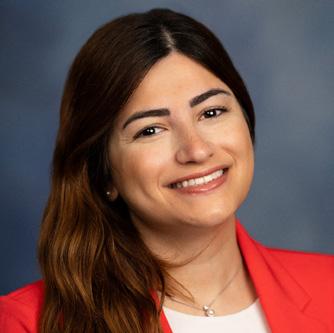
Sally Essoh, MD, completed her medical degree at the Jordan University of Science and Technology. She trained as a resident at Corwell Health and completed her fellowship training in the Pediatric Pulmonology Department at U-M in 2025. Dr. Essoh officially joined the Pediatric CF Team as a Pediatric Pulmonologist in 2025 where she continues to provide excellent care to people with pulmonary conditions, including CF.
Brynn Arnall, LMSW, Clinical Social Worker, joined the Adult CF Program at Michigan Medicine in August 2024. She was previously the adult inpatient CF social worker at Michigan Medicine for two years before moving to the outpatient clinic.
Jordan Dreyer, LMSW, Clinical Social Worker, has joined the Adult CF Program at Michigan Medicine. Jordan has worked as an inpatient social worker at Michigan Medicine, providing support across various medicine units and multiple ICUs over the last six years. Her background also includes experience in sub-acute rehabilitation, inpatient psychiatry, and maternal-infant health, which has given her a broad foundation in helping patients and families navigate complex medical and emotional challenges.
WHAT’S NEWS
Fighting Infections with Phage
Lindsay Caverly, MD, Pediatric CF Program Co-associate Director
What are phages?
Bacteriophages, or phages, are naturally occurring viruses that infect bacteria and can kill bacteria. They are found all over the environment, wherever bacteria exist. Phage therapy is a very old approach to treating bacterial infections. Phages were first used to treat human infections in 1919, before antibiotics were even available. Phage therapy continued to be used in the 1920s and 1930s but then fell out of favor by the early 1940s, when antibiotics became publicly available. In more recent years there has been a renewed interest in phage therapy for difficult-to-treat infections, including CF lung infections.
Why do I keep hearing about phage therapy?
Phage therapy offers several potential advantages over currently available antibiotics, including the ability to treat infections that are resistant to antibiotics, the potential for fewer side effects, and the ability to specifically treat the targeted bacteria (as opposed to antibiotics which typically impact the microbiome more broadly, beyond the targeted bacteria).
How might phage therapy help people with CF?
Despite the potential advantages of phage therapy, there’s a lot we don’t know yet about how phage therapy can best help CF lung infections. Phage therapy is not first-line treatment for CF lung infections.
Rather, phage therapy is considered when standard antibiotics and other treatments aren’t working anymore and is most often used in clinical research trials. Several earlystage clinical trials have been completed to evaluate the safety of phage therapy to treat chronic Pseudomonas aeruginosa infection. Other studies are currently being conducted for phage therapy to treat Mycobacterium abscessus, Burkholderia, and Achromobacter infections in CF. The treatment approach differs by infection type; some phages are given through an IV, and some are nebulized. Similarly, the length of phage treatment differs by infection type, and can range from several weeks to up to a year.
What don’t we know about phage therapy?
Phage therapy is a promising avenue for new treatment approaches to difficult to treat CF lung infections, but, like all new treatments, there are many unanswered questions to be addressed before becoming a more standard approach. These questions include how often infections may develop resistance to phage, how the immune system responds to phage therapy, and if combining phage therapy with antibiotic treatment can be even more effective. The University of Michigan CF Center has been an active participant in phage studies and is continuing to participate in the current clinical trials of phage treatment. Clinical research studies will help us answer these and other questions and will help us better understand the safest and most effective approach to phage therapy.
Your Voice Matters
Did you know that there is a Family Forum meeting before the North American CF Conference initiated because of the voices of some of our advisory board members? If you are a parent, caregiver, or family member of someone with CF and are going to NACFC in Atlanta, GA this year, you can register for the Family Forum as part of your conference registration. Ask your Social Worker if you want to learn more.
Are you interested in opportunities to advocate to state and federal lawmakers in Michigan? Contact Mariel Bouza at the CF Foundation Michigan chapter at mpodracky@cff.org for more information.

PATIENT SPOTLIGHT
The Power of Movement Cameron Hain, Adult Living with CF
By the time I turned seven, I had already been hospitalized eight times. For most kids, early childhood memories are made on playgrounds or in schoolyards. Mine were made in hospital rooms—hooked up to machines, learning early that breathing wasn’t something everyone had to think about.
I was born with cystic fibrosis. I didn’t know life without it, but I did know what it felt like to be different—to watch other kids run without coughing, to get tired faster, to always have an invisible line I wasn’t supposed to cross.
Everything changed when I was eight years old.
That was the year I started swimming.
At first, swimming wasn’t about competition or athletic goals. It was just something I could do. In the water, breathing became rhythmic and controlled. I could push my lungs in a way that actually made them stronger instead of weaker. Over time, the effects were undeniable. My endurance improved. My health stabilized. Hospital visits became almost nil. For the first time, my body felt like something I could build, not just protect.
Exercise became a constant in my life—and eventually, a turning point.
As I got older, swimming taught me discipline and consistency. It gave me confidence that carried over into everything else. I learned that cystic fibrosis didn’t automatically mean limitation; it meant adaptation. I didn’t train like everyone else, but I trained with intention. Movement became part of my treatment plan, just as important as medications and therapies.
Eventually, swimming led me to running.
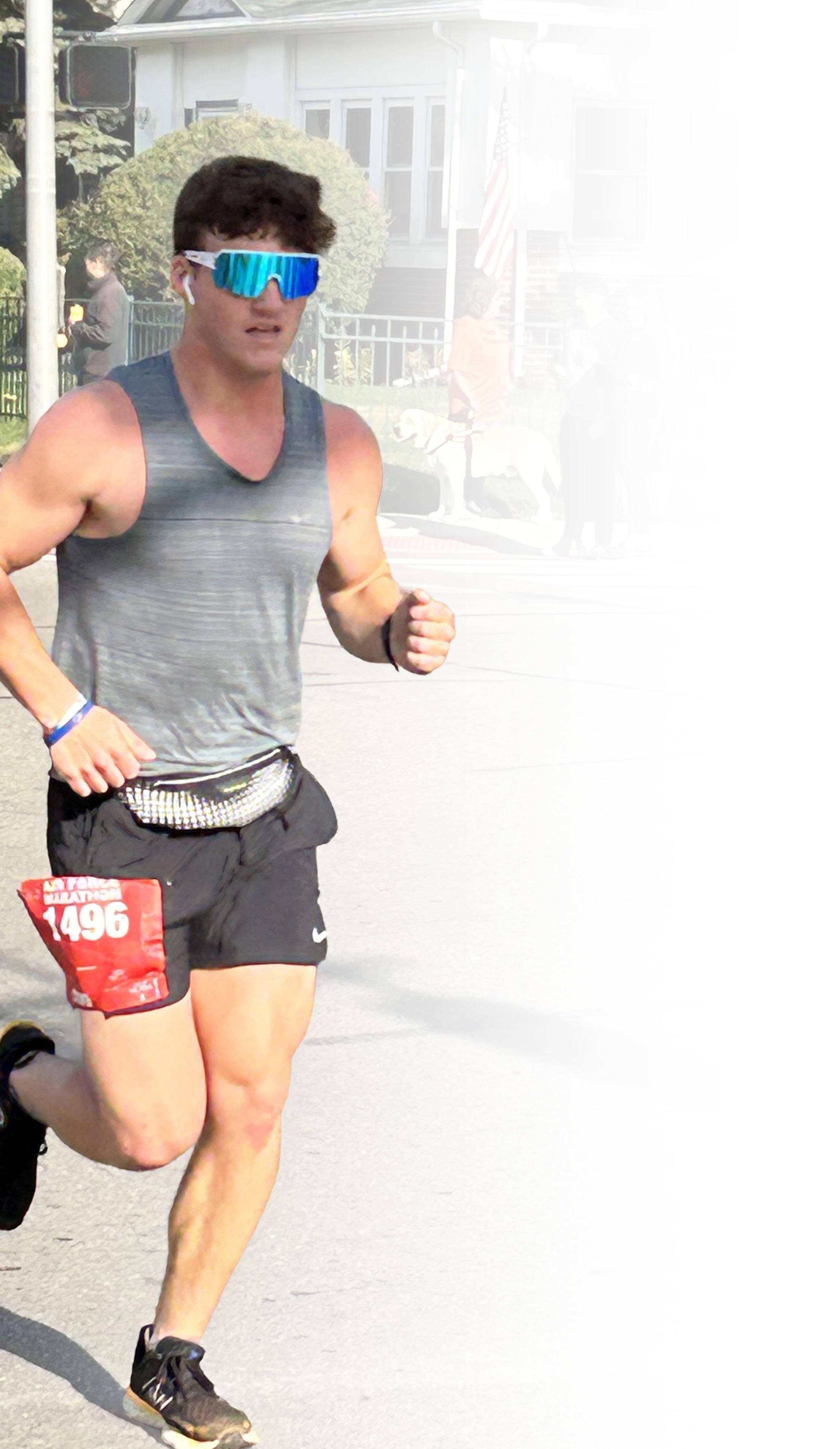
Running with cystic fibrosis isn’t easy. Every mile forces you to confront your breathing, your pacing, and your mindset. But that’s also what makes it powerful. One mile turned into five. Five turned into structured training. Before I knew it, I was lining up for races I once thought were impossible.
Today, at 21 years old, I’m an endurance athlete.
I’ve completed two ultramarathons (50+ miles), four marathons, a half Ironman, and I’m currently training for a full Ironman, which is a 2.4-mile swim, 112-mile bike, and a 26.2-mile run. Every race reminds me how far I’ve come—not just physically, but mentally. There’s something grounding about pushing your body for hours and realizing it can handle more than you ever expected.
Exercise didn’t cure my cystic fibrosis—but it changed my life.
It strengthened my lungs, improved my overall health, and gave me a sense of control in a disease that often feels unpredictable. More than that, it reshaped how I see myself. I’m not defined by hospitalizations or diagnoses. I’m defined by effort, discipline, and resilience.
My ultimate goal is to qualify for the Boston Marathon.
For a lot of runners, Boston is about prestige. For me, it represents possibility. It represents the distance between a kid who struggled to breathe and a young adult who trains with purpose. To me this race is about showing that anything is possible no matter what challenges you face. I want everyone out there who is diagnosed with cystic fibrosis to know that it is not a limitation and it shouldn’t deter you from anything. I don’t share my story to suggest that everyone with cystic fibrosis should become an endurance athlete. But I do believe in the power of movement. Whether it’s swimming, biking, walking, or running, exercise has the ability to give people with CF something the disease often tries to take away: confidence in their own bodies.
Cystic fibrosis is part of my life—but it doesn’t get to decide how big my goals are.
I’m still breathing.
I’m still training.
And I’m just getting started.
Every Day Is a New Day Sara Barth, Parent of Children with CF
In 2010, I was given the opportunity to write a Parentto-Parent article focused on raising young siblings with cystic fibrosis. At the time, our family was navigating enzyme tantrums, “stinky poops,” and chest percussion with a three-yearold and a five-month-old. It’s surprising to realize that many of those same conversations still take place in our household today—now with Riley (18) and Teagan (16).
One of the most constant truths of living with CF is that every day is a new day. Raising more than one child with CF has been a blessing in disguise for our family. Beyond the typical sibling disagreements, Riley and Teagan have become each other’s greatest cheerleaders and most reliable support system. They don’t hesitate to hold one another accountable (mostly with the goal of getting the other into trouble)—whether that means reminding the other to complete a treatment or pointing out medications still sitting on the counter. Watching them learn to advocate for themselves, ask thoughtful questions, and define what “healthy” looks like for each of them has been a true privilege.
That privilege, however, also brings our greatest anxiety. As parents, we always knew the day would come when the decisions and choices would no longer be ours to make. Gone are the days of simply doing what Mom & Dad say, replaced by questions
or outright refusal. Most of the time we still prevail, but there are obstinate days where we feel defeated by strong-willed children. Our hope is that we have modeled the steps they need to take in order to successfully balance everyday life with CF.
The journey with older siblings has introduced new milestones: working a job, starting college, immersing themselves in theater, driving, and spending more time with friends. As parents, our role has shifted from leading the charge to standing on the sidelines—ready to answer questions and offer support in ways that best serve each of them as individuals.
In the early years, parenting meant learning how to complete countless tasks and working tirelessly to manage both girls’ needs in the same way. As they’ve grown, we’ve learned that their needs are vastly different. Being a fair parent hasn’t meant handling every situation the same, but rather allowing each child to have their own experience. One clear example of this was our decision to move to separate exam rooms during clinic visits. While they are each other’s greatest support, appointments often became more about tattling on one another than discussing medical care. Separate rooms have allowed each of them to have their own voice heard, their own questions answered, and treatment plans developed based on what works best for them individually.
As is the case with most children, one of the greatest teachers is letting them learn via failure. It’s also one of the hardest things to do as a parent, since we only want to protect them and watch them thrive. Once we relinquished the majority of treatment and medication responsibility to the girls, we had to watch them fail at those same tasks that we constantly ensured took place. We also got to watch them learn and absorb the reasoning and knowledge of why Mom & Dad made them do what we made them do (and, if I might say, with a bit of smug satisfaction at times) to keep themselves

healthy, such as initiating extra percussive vest treatments when not feeling well and taking medications to keep feeling well.
Next up is looking forward to what adventures are coming for each of the girls. The best part is that there is a future, options are endless and there are no limits on what they may accomplish. Travel, trade school, college degrees, marriage and maybe babies (no time soon). As CF parents the landscape will be ever changing and our jobs will be to always remain supportive, offer advice when asked and help them to lead their healthiest lives possible.
TEAM UPDATES
Ann Arbor May 2
Metro Detroit May 3
Grand Rapids May 3
Toledo May 9
Montrose May 16
Grand Haven May 17
CFF Great Strides!
The Cystic Fibrosis Foundation Michigan Chapter holds several fundraising events including Metro Detroit’s Fall Ball and Great Strides walks throughout Michigan and Northwest Ohio. Visit greatstrides. cff.org for more details!
For more information on how you can get involved and Commit to a Cure, please call the chapter office at 248-269-8759 or email us at Michigan@cff.org
Pediatric CF Program Advisory Council Update
The Pediatric CF Clinic’s Family Advisory Council has had a busy year of creating content for the CF Community. With the help of U-M’s Communications Department, the Pediatric Advisory Council has been working hard on a new CF-specific podcast. Episodes will include topics like CF nutrition, transitions from pediatrics to adult clinics, and experiences of a young adult with CF, among other things. Watch U-M social media for the release of this podcast, “CF Airwaves,” in 2026 on your favorite listening app.
Members of our Council have also been diligently working on connecting people with CF and their families across the nation at the North America CF Conference. Leading the Family Forum session prior to the conference has been a great success, but connecting outside of the conference is also important. To begin tackling this disconnect, a Discord server has been started for people with CF and their families to connect online. You can find topics to discuss from the conference and beyond. Download the app and join here: discord.gg/ rYkvdRtN5W
Adult Patient Advisory Board Update
Over the past year, the Adult Cystic Fibrosis Program’s Patient Advisory Board has worked closely with our care team to identify opportunities for improving clinic operations and enhancing the overall patient experience. Together, we have focused on enhancing infection control practices, refining rooming procedures, and reducing wait times to support the health and comfort of our CF community. We have also introduced a dedicated primary care provider for CF patients and continued with quarterly newsletters to keep patients and families informed and connected.
We invite patients and family members who are interested in making a meaningful impact to consider joining the Adult Cystic Fibrosis Program’s Patient Advisory Board. Participation offers a valuable opportunity to assist in clinic decision-making, share feedback, and give back to the CF community. If you would like to learn more or get involved, please reach out to Katie Hall at aultkath@med.umich. edu—we would love to hear from you!
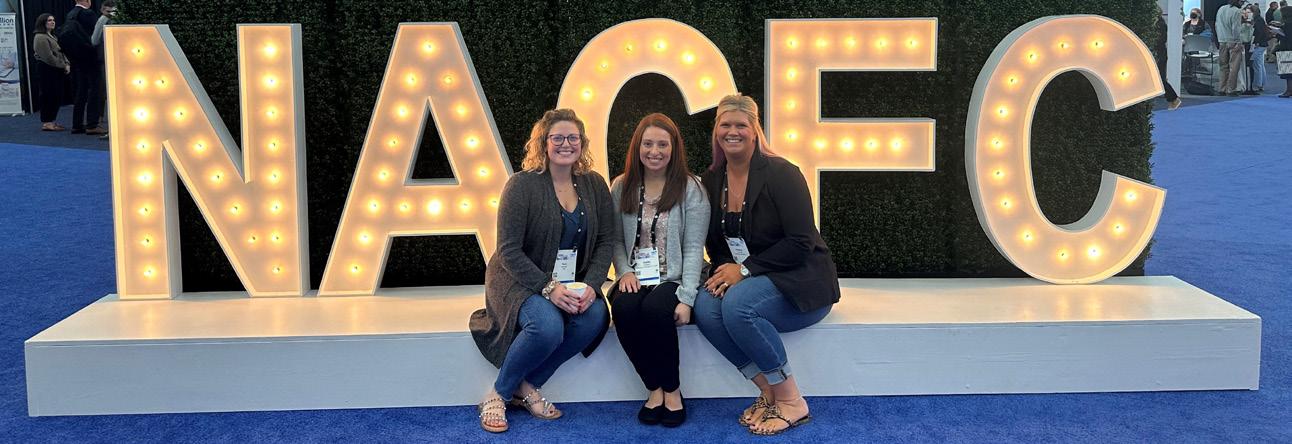
Tara Fahrner (left) and Heather Trammell (right), both Family Advisory Council members, with Gabby Quintana (middle), a Pediatric CF Program social worker at the North American CF Conference.
TEAM UPDATES
The CF Foundation’s Therapeutics Development Network (TDN) is a driving force in CF research. Michigan Medicine is a CF TDN Center, which helps us get involved in multicenter clinical research so we can contribute to making improvements in CF treatments and therapies. Our center has been doing our own research as well. However, we can only accomplish that with the participation of our patients! If you have questions about our research program, contact Marisa Linn at mlinn@med. umich.edu and Dawn Kruse at dmkruse@med.umich.edu
If you are interested in research participation, but don't see anything for you here, try browsing the CF Foundation’s Clinical Trial Finder (apps.cff. org/trials/finder). Contact Dawn or Marisa if you see something you are interested in so we can help you navigate the referral to another CF Center to participate in the study (your general CF care will continue to stay with us!).
Enzyme Studies:
ANG003-25-201: A Phase 2, Multicenter, Randomized, Activecontrolled Study to Assess the Safety and Efficacy of ANG003 at Two Different Dose Levels in Subjects with Exocrine Pancreatic Insufficiency dueto Cystic Fibrosis (age 12+, enrollment pending)
Gene Therapy Studies:
KB407-02: A Phase 1 Study of inhaled KB407, a ReplicationDefective, Non-Integrating Vector Expressing Human CFTR, for the Treatment of CF (age 18+, now enrolling)
Modulator Studies:
Below are brief summaries of research we are conducting at Michigan Medicine.
Antibiotic/Antimicrobial Studies:
1. STOP360: Standardizing Treatments for Pulmonary Exacerbations in Patients Being Treated for Pulmonary Exacerbation and Pseudomonas aeruginosa (age 6+, now enrolling)
2. STOP PEDS RCT: Streamlined Treatment of Pulmonary Exacerbations in Pediatrics Randomized Controlled Trial (age 6-18, now enrolling)
Bronchiectasis Studies:
AIRTIVITY®: A Phase III, randomised, double-blind, placebo-controlled study to assess the efficacy, safety, and tolerability of BI 1291583 2.5 mg administered once daily for up to 76 weeks in patients with bronchiectasis (age 18+, now enrolling)
3. HOPe:CF Aim 2: Health Outcomes of Parents with Cystic Fibrosis (now enrolling adults with CF)
4. CHEC-OB-17: CFTR Modulated Changes in Sweat Chloride and Outcomes- for patients currently taking an FDAapproved CFTR modulator (enrollment on hold)
5. NTM-OB-17: Evaluation of a standardized approach to diagnosis (PREDICT) and treatment (PATIENCE) of nontuberculous mycobacteria (NTM) (age 6+, now enrolling)
1. VX20-121-104: A Phase 3, Open-label Study Evaluating the Longterm Safety and Efficacy of VX-121 Combination Therapy in Subjects with Cystic Fibrosis (enrollment closed)
2. VX25-828-101: A Phase 2, Randomized, Double-blind, Controlled Study to Evaluate the Safety and Efficacy of VX-828/Deutivacafor With and Without Tezacaftor in Subjects Aged 18 Years and Older With Cystic Fibrosis (age 18+, enrollment pending)
Observational Studies:
1. RETRIAL: Restarting Triple Therapy with Robust Monitoring for Adverse Events (ages 6+, now enrolling)
2. REACH-OB-23: A Research Study to Advance the CF Therapeutics Pipeline for People without Modulators (age 12+, now enrolling)
6. BEGIN: A Prospective Study to Evaluate Biological and Clinical Effects of Significantly Corrected CFTR Function in Infants and Young Children (enrollment closed)
7. Mayflowers: To characterize changes in FEV1 over the course of pregnancy based on cumulative CFTR modulator use while pregnant along with defining other factors that may influence changes in pulmonary function including duration of prepregnancy modulator use, baseline FEV1, genotype, history of exacerbations, and pre-existing co-morbid conditions. (enrollment closed)
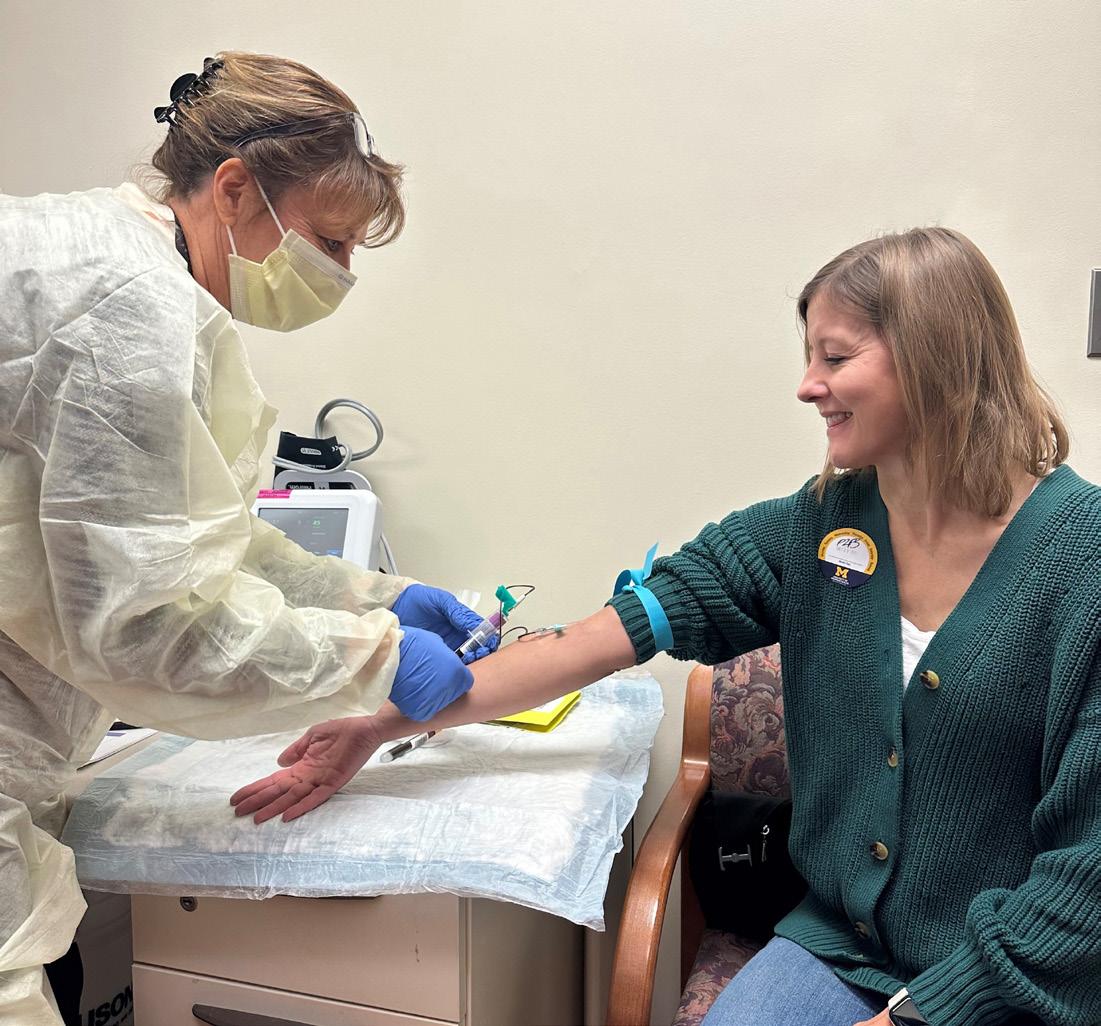
Dawn Kruse, research manager, collects blood for research from Betsy.
TEAM UPDATES
A Closer Look at CF Research at University of Michigan Health
Shijing Jia, MD, Adult CF Program Co-associate Director
At the U-M CF Center, research is a core part of how we improve care. A lot of our research is designed to answer questions that come directly from patient experiences. The following research studies are led by U-M and are hoping to shed light on those unique experiences of people with CF (pwCF).
Iron Deficiency in People with CF:
The clinicians at our CF Center are often faced with the question of how to treat our patients with iron deficiency or iron deficiency anemia. This is because people with CF may have different responses to side effects of iron therapies. Over the past several years, we have set out to try to answer these questions. We have led 12 CF Centers across the US to collect data from people with CF (pwCF) to help understand the impact that iron deficiency and iron deficiency anemia has on their health. Additionally, we have used this data to help design a clinical trial of treatment for iron deficiency in pwCF.
Now, we are leading a multicenter clinical trial across five CF centers, with funding from the National Institutes of Health (NIH) and the CF Foundation. The primary goal of this clinical trial will be to determine if oral (taken by mouth) or intravenous (taken via blood) iron is better for the treatment of iron deficiency and iron deficiency anemia in pwCF. We will start enrolling for participation in this study in 2026 at U-M and across the US.
Asthma Overlap in CF:
Many adults and children with CF experience symptoms that overlap with symptoms common in asthma. These symptoms include cough, wheezing, and chest tightness. Abnormalities in spirometry can also overlap in CF and asthma. Therefore, it is challenging to figure out which patients with CF would benefit from asthma treatments. To help answer this question, we have recruited 10 total CF Centers across the US and Canada to collect data from patient experiences. So far, we have found
that in a subset of carefully selected pwCF, advanced treatments targeted at asthma may decrease the need for antibiotics used for CF pulmonary exacerbations. We will be collecting more data and hope to have more definitive results in 2026.
CF and Non-CF Bronchiectasis:
The CF Foundation is interested in more clinical trials that include both people with CF lung disease (CF bronchiectasis) and those with non-CF related bronchiectasis. They hope that this will ultimately provide more therapies for pwCF by increasing the number of participants in clinical trials of drugs or treatments that would benefit both groups (those with CF bronchiectasis and non-CF bronchiectasis).
U-M is now an accredited Bronchiectasis and NTM (Nontuberculous Mycobacterium) Care Center since early 2025. We are proud to say that we were one of the first hospital systems to receive this competitive designation through an application and peer review process. As part of the Bronchiectasis and NTM Center, we offer clinical trials to people with non-CF bronchiectasis, some of which also include participation from pwCF. You may have already heard from our research team about some of these opportunities.
Additional Studies:
We also continue to offer clinical trials and observational research opportunities to pwCF. Among these, in the Fall of 2025, we started the first gene-based therapy study at U-M. Our research team will continue to reach out to eligible participants. If you’d like more information about available studies, please email CFresearch-inquiries@ umich.edu

CF Peer Connect is a peer mentoring program for people with cystic fibrosis and CF family members age 16 and older. Through this program, you’ll be matched with a peer mentor who has experience with topics that are important to you. Together, you can connect over video, phone, or email.
Visit: cfpeerconnect.com/about
CLINICIAN'S CORNER
Starting CFTR Modulators: Care Team Support and Emerging Therapies
Cystic fibrosis transmembrane regulator (CFTR) modulators improve the function of the defective CFTR protein that causes cystic fibrosis (CF). For many individuals, these therapies have been life-changing, leading to better lung function, fewer exacerbations, improved nutrition, and a higher quality of life. Beyond the short-term effects, these medications have been shown to slow the progression of lung disease. However, starting a new medication can raise concerns about potential side effects, long-term impacts, and whether the medication is the best fit for a child’s unique health needs. Some families may worry about how their child will tolerate this new therapy, especially if previous medications have led to side effects or reactions. Additionally, starting a CFTR modulator can feel overwhelming, as it often comes with more monitoring and bloodwork, and adjustments to daily life. For parents, there’s also the understandable anxiety about putting hope into something new; balancing optimism about better health with the fear of disappointment.
How Your CF Care Team Can Help
Your CF care team plays an important role in helping individuals start and continue CFTR modulators safely. After treatment begins, your physician, pharmacist, and care team will:
• Provide guidance on what side effects to watch for and when to call clinic
• Help distinguish short-term adjustment effects from more serious side effects
• Adjust timing, dosing strategies, or supportive medications
• Monitor liver enzymes and other labs closely
Many side effects can be managed successfully when identified early, and with the support of the care team, individuals do not have to navigate these challenges alone.
Some individuals have previously taken a modulator, such as Trikafta® (elexacaftor/tezacaftor/ ivacaftor), and experienced side
effects that limited their ability to continue treatment. These experiences can be discouraging and decisions about starting or retrying a modulator are highly personal. Reassuringly, your CF care team has the experience and tools to help navigate these decisions with confidence.
Alyftrek as an Option
In December 2024, a new CFTR modulator, Alyftrek™ (vanzacaftor/tezacaftor/ deutivacaftor), was approved by the FDA for people with CF ages six and older who have at least one F508del mutation or additional responsive mutations. Alyftrek is a highly effective CFTR modulator and may be an option for individuals who did not tolerate Trikafta. While both medications are modulators, they differ in some of their drug components, so individuals may respond differently to each. Some patients who experienced side effects with one modulator may find another more tolerable.

Ongoing Research: The RETRIAL Study
To better understand how individuals who did not tolerate Trikafta respond to Alyftrek, the Cystic Fibrosis Foundation is supporting the RETRIAL study. This observational study includes people with cystic fibrosis ages six years and older who stopped taking or required a dose adjustment with Trikafta because of new or worsening mental health or cognitive symptoms (such as mood changes, anxiety, sleep issues, or brain fog) and/or elevated liver enzymes.
Our adult and pediatric CF programs are proud to be participating sites for this study. RETRIAL follows participants before they start Alyftrek and for 12 months after, collecting information about mental health and/or liver function. The goal is to better understand how individuals who did not tolerate Trikafta tolerate Alyftrek and to help guide future treatment decisions.
Intolerance to previous modulators does not rule out the possibility of benefitting from a different modulator, so discussing past experiences in detail with your care team can help determine whether Alyftrek is an option to consider.
Looking Ahead
While starting a new modulator can feel intimidating, especially after past challenges, patients and families do not have to face these decisions alone. With the support of their CF care team, many individuals are finding new possibilities for improved health and quality of life.
If you have questions about Trikafta or Alyftrek, side effect management, or ongoing research opportunities like RETRIAL, please reach out to your care team.
Cystic Fibrosis Center
Department of Pediatrics
C.S. Mott Children’s Hospital
L2221 UH South
1500 E. Medical Center Dr. Ann Arbor MI 48109-5212
MICHIGAN MEDICINE CYSTIC FIBROSIS CENTER CLINICAL STAFF
PEDIATRIC CF PROGRAM PERSONNEL
Samya Z Nasr, MD, Director, CF Center
Amy Filbrun, MD, MS, Associate Director, Pediatric CF Program
Lindsay Caverly, MD, Associate Director, Pediatric CF Program
Catherine Enochs, BSN, RN, CF Program Coordinator
Fauziya Hassan, MD, Pediatric Pulmonology
Marc Hershenson, MD, Pediatric Pulmonology
Toby Lewis, MD, MPH, Pediatric Pulmonology
Carey Lumeng, MD, PhD, Pediatric Pulmonology
Antonia Popova, MD, Pediatric Pulmonology
Ixsy Ramirez, MD, MPH, Pediatric Pulmonology
Thomas Saba, MD, Pediatric Pulmonology
Saumini Srinivasan, MD, MS, Pediatric Pulmonology
Tara Havens, MD, Pediatric Pulmonary
Saly Essoh, MD, Pediatric Pulmonology
Emmanuel Kumar, MD, MS, Pediatric Pulmonary Fellow
Adeeba Afrah, MBBS, Pediatric Pulmonary Fellow
Nellie Hani, MD, Pediatric Endocrinology
Jennifer Butcher, PhD, Pediatric Psychologist
Sheila Malone, BSN, RN, Pediatric Pulmonary Nurse
Jourdan Stiffler, BSN, RN, AE-C, Pediatric Pulmonary Nurse
Katie Wait, BSN, RN, AE-C, Pediatric Pulmonary Nurse
Courtney Iwanicki, MS, RDN, CSP Outpatient Nutrition Specialist
Stacey Fogarty-Brown, MA, RDN, CSP Outpatient Nutrition Specialist
Julie Lehrmann, LMSW, Clinical Social Worker
Gabby Quintana, LLMSW, Clinical Social Worker
Lisa Kincius, Pediatric Pulmonology
Kimberly Christman, Pediatric Pulmonology
Taylor Winn, Division Administrator, Pediatric Pulmonology
Rusteena Mills, Pediatric Pulmonology
Jennifer Feister, Pediatric Pulmonology
Devon Parker, RN, MSN, CPNP-PC, Inpatient Nursing
Chris Tapley, MS, PT, Pediatric Physical Therapy
Valerie Kersey, Pulmonary Lab
Lisa McGuire-Nuttle, Pulmonary Lab
Jodie Bowman, RRT, Respiratory Therapist
Brittney Rankin, RRT, Respiratory Therapist
Victoria Kiss, RRT, Respiratory Therapist
Kelsey Rajala, RRT, Respiratory Therapist
Breanna Bell, RRT, Respiratory Therapist
Hanna Phan, PharmD, FCCP, FPPA, Clinical Pharmacist
Nour Kadouh, PharmD, Clinical Pharmacist
Ashley Sabourin, PharmD, CSP, Clinical Pharmacist
Charita Marshell, Certified Pharmacy Technician
Adelyn Beil, MS, MPH, CGC, Pediatric Genetics
Heather Trammell, Parent Partner
Tara Fahrner, BSN, RN, Parent Partner
ADULT CF PROGRAM PERSONNEL
Thomas Sisson, MD, Director, Adult CF Program and Co-Center Director
Shijing Jia, MD, Associate Director, Adult CF Program
Katie Hall, LMSW, Adult CF Program Coordinator and Clinical Social Worker
Eeyeen Ong, MS, RD, Adult CF Program Coordinator and Outpatient Dietitian
Sarah Brown, MD, Adult Pulmonology
Michael Coffey, MD, Adult Pulmonology
Cyril Grum, MD, Adult Pulmonology
Yvonne Huang, MD, Adult Pulmonology
Veronica Downer, RN, Adult Pulmonary Nurse
Mari Pitcher, LMSW, Mental Health Coordinator
Brynn Arnall, LMSW, Adult Social Work
Becca Aiello, BAS, RRT, Outpatient Respiratory Therapy
Kristin Keith, MS, PT, Adult Physical Therapy
Kristin Klein, PharmD, Adult Pharmacist
Joy Dettore, RN, Adult Pulmonary Nurse
Callie Drohan, Pulmonary Fellow
Heather Schofield, Pulmonary Fellow
Rommel Sagana, MD, Adult Transplant Physician
Krysta Walter, PharmD, BCTXP, Adult Pharmacist
Amy VanZee, LMSW, Transplant Social Work
Stephanie Zaientz, LMSW Transplant Social Work
Jennifer Wyckoff, MD, Adult Endocrinology
Zahrae Sandouk, MD, Adult Endocrinology
Matthew DiMagno, MD, Adult Gastroenterology
Dale Mazer, MD, MPH, Primary Care, Internal Medicine
Cathy Vancamp, BSN, Adult Inpatient Nurse Supervisor
Vikas Sood, RN, NP, Adult Inpatient Nurse Practitioner
Todd Georgia, RRT, Adult Respiratory Therapy
Gomati Kanphade, PT, Adult Physical Therapy
RESEARCH DIVISION PERSONNEL
Samya Nasr, MD, Professor
Lindsay Caverly, MD, Assistant Professor
Amy Filbrun, MD, MS, Associate Professor
Shijing Jia, MD, Assistant Professor
Alexandra Piotrowski-Daspit, PhD-BME, Assistant Professor
John LiPuma, MD, Professor
Carey Lumeng, MD, Professor
Dawn Kruse, CCRC, Clinical Research Program Manager
Candace Flaherty, Research Coordinator
Marisa Linn, BGS, CCRP, Clinical Research Coordinator
Jessica Carey, Clinical Research Coordinator
Sidney Streetman, Clinical Subjects Associate
Mary Jo LaPointe, Data Safety Monitoring Board Coordinator