MFRI RESCUE TRAINING IN ALASKA: STRENGTHENING SKILLS IN THE LAST FRONTIER
MFRI instructors regularly travel across the U.S. and abroad to train first responders, but teaching in Alaska required our instructors to adapt to the remote terrain, challenging weather conditions, and limited resources.
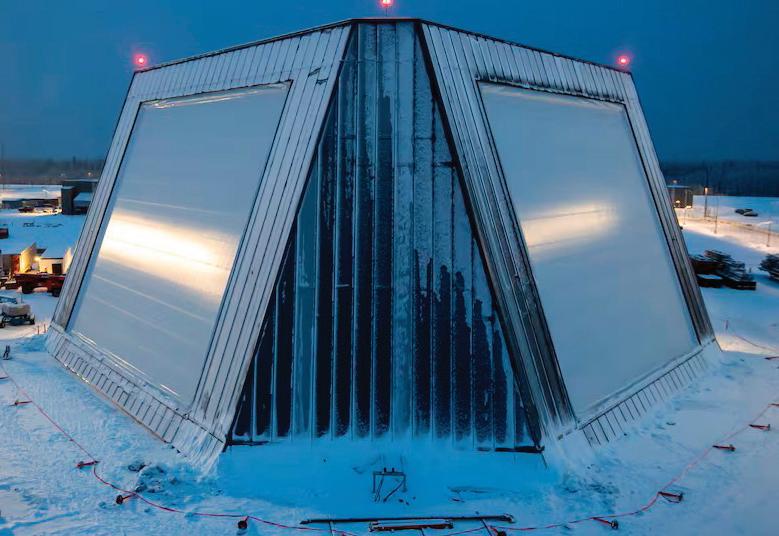
In July, lead instructor Ed Rachinskas, joined by Jimmy Artis, Rick Hartle, and Ron Beyerlein spent ten days teaching Confined Space Rescue at Clear Space Force Station, about 80 miles south of Fairbanks. Situated on an 11,000-acre site, Clear Space Force Station plays a vital role in national security. Its service members track intercontinental ballistic and sea-launched missiles and also detect and track about 30,000 space objects daily.
“At the space station, everything is top secret,” said Ed. “No radio communication, Bluetooth, location services, phones, or smartwatches are allowed. If you need backup, you can’t call for help.” Additionally, since there are a very limited number of first responders, all of them have to be well-rounded and trained in fire, EMS, rescue, and HazMat.”
Despite the challenges, all of the students passed the class.
“Emergency response in Alaska looks nothing like it does in the lower 48,” Ed explained. “Four people go out on a call. You might get three more from a ‘neighboring’ station. The average ambulance call is 80 miles away and can take four to five hours.”
Ed also explained that the equipment is totally different and they use different terms for equipment. Some fire engines are jacked up to enable transport through the terrain and snow.
There are no fire hydrants. There is no daylight during the winter and there are no lights when it’s dark. The average winter temperature dips to -20°F.
The trainers also traveled three and half hours east to Fort Greely picking up instructor PJ Cusic along the way. Fort Greely also plays a critical role in national defense and missile detection. MFRI instructors were on base for three and half weeks teaching Common Passenger Vehicle Rescue and Trench Rescue.
photo: MFRI Instructors brought Confined Space Rescue training to Clear Space Force Station in Alaska. The top-secret space station is a challenge for first responders as no communication technology is permitted in their buildings.
The Maryland Fire and Rescue Institute of the University of Maryland is the state’s comprehensive training and education system for all-hazard responses. The Institute plans, researches, develops and delivers quality programs to prepare agencies and individuals to protect life, the environment and property.
The Maryland Fire and Rescue Institute Bulletin (MFRI) University of Maryland (ISSN 1074-2298) is published quarterly by the Maryland Fire and Rescue Institute of the University of Maryland, College Park, MD 20742. Periodical postage paid at College Park, MD 20740. Postmaster: Send address changes to Maryland Fire and Rescue Institute, Bulletin, 4500 Campus Drive, University of Maryland, College Park, Maryland, 20742.
The MFRI Bulletin is distributed as a public service of the University of Maryland. The Bulletin is dedicated to the publication of information that will help educate its readers on the subjects of fire protection, emergency medical services, rescue, leadership and training. This publication may contain some articles and illustrations provided by readers. MFRI does not necessarily agree with information nor endorse any products depicted in the Bulletin. Address all communications to Editor at MFRI. For change of address, send mailing label and new address.
The MFRI Bulletin is produced entirely in house. We extend our sincere gratitude to our contributors who make this publication possible.
EXECUTIVE DIRECTOR’S MESSAGE
In July, as we entered a new fiscal year, the Institute launched a strategic planning process designed to guide MFRI into the next decade. Modeled after the customer-centered planning approach, the initiative involves three phases of self-assessment that engaged students, staff, faculty, and partners.
To date, our student and partner organizations have been surveyed. In addition, our faculty and staff completed a SWOT analysis, as well as a benchmarking process utilizing the Center for Public Safety Excellence (CPSE) self-assessment model. This document is widely used by various emergency services organizations to gauge their individual organization’s activities against this consensus standard that identifies service gaps in current operations.
The final step in this process will bring together faculty, staff, instructors, and partners to review the Institute’s vision, mission, and value statements during a one-day retreat. The group will also analyze the self-assessment, SWOT analysis, and student/partner group surveys to develop a summary of major goals and objectives and critical issues that will drive our focus for the next five years.
The future here at the MFRI promises to be exciting as we usher in a new era of instruction, improved processes, and excellence!
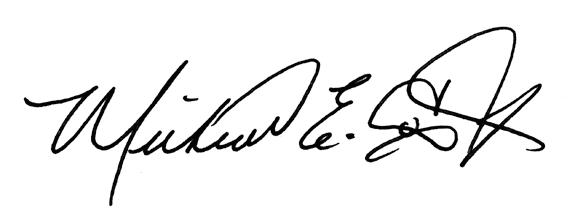
Michael
E. Cox Jr.
PAID INTERNSHIP PROGRAM AIMS TO CREATE A PIPELINE OF NEW CADETS
On September 10, seven interns began training at MFRI through a paid internship program with the Maryland Department of Service and Civic Innovation.
The students are training in EMS and fire at MFRI’s Lower Eastern Shore Regional Training Center. Funded through the state, the interns will earn national certifications and prepare for careers in public safety. Interns will train full time and earn $15 an hour as they progress toward certification.
“We interviewed 17 candidates and selected the top applicants,” said Jay Jester, Coordinator for MFRI’s Lower Eastern Shore location. “Once they finish the program, they should be able to step into departments across the state and successfully navigate the testing process.”
The initiative is designed to establish a strong pipeline of skilled, certified first responders who will serve communities across Maryland.
Alaska continued from front page
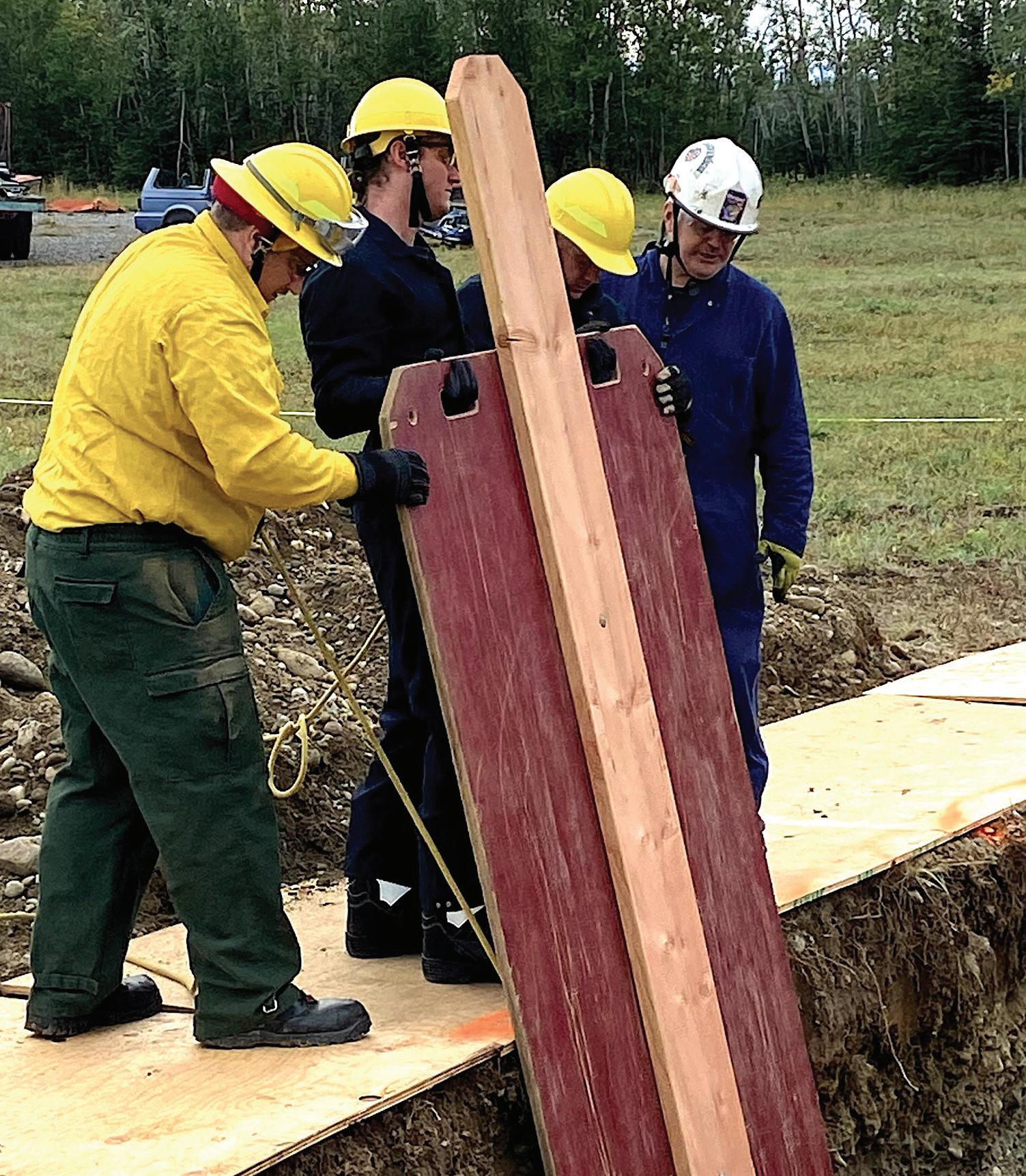
Dave Barcenas and Rick Hartle taught the trench rescue class. “There were a lot of obstacles to overcome but I was not surprised,” said Dave. “I knew the soil was going to be an issue. It was very unstable. There was a lot of sand and silt, and water aquifers run underground. We had to adjust our teaching based on what we were presented with.”
“As an instructor, it was concerning. I’d clean out the trenches and dirt would fall back in. There was a tremendous amount of rock and stone. Because the ground wasn’t flush, the students had to learn on the fly how to adapt.”
“One day the Delta Junction winds came through at 75 mph. We were carrying plywood to line the trench but it wanted to take off like a kite,” Dave recalled.
All 34 students passed the class, “I had a great time with them,” said Dave.
The instructors taught six days a week. On their Sunday off, they sometimes made the six-hour roundtrip drive to Walmart to stock up on necessities.
They also carved out time to explore Denali National Park to see the highest peak in the U.S., which rises more than three and a half miles from its base. They
took in the sweeping landscapes and wildlife, passing mountain goats and moose.
MFRI will return to Alaska in 2026 to teach Structural Collapse.
photo: Despite the Delta Junction winds and challenging soil in Alaska, 34 trench rescue students employed the essential rescue skills and passed the class.
MARYLAND LITHIUM-ION COMMISSION EXAMINES BATTERY USE IN TRANSPORTATION
The Maryland Commission to Advance Lithium-Ion Battery Safety, which was established by legislation in 2024, met recently at MFRI to study and develop recommendations for improving safety standards related to Lithium-ion batteries.
The meeting brought together industry experts from multiple disciplines to discuss emerging challenges and risks.
A significant focus of the discussion was the growing volume of Lithium-ion batteries in commerce and the hazards they pose during transportation.
The Port of Baltimore, a primary entry point for goods, regularly receives cargo containing Lithium-ion renewable energy batteries.
On container ships in particular, some shippers mis-declare battery-powered products to avoid paying hazardous materials fees.
According to the National Cargo Bureau (NCB), 6.5% of containers inspected were found to contain mis-declared dangerous goods Additionally, tugboats are increasingly using Lithium-ion batteries as they boost energy density, charge quickly, and reduce emissions and noise levels.
The Port of Baltimore is also the top importer of automobiles. In 2023, the port received 847,158 vehicles, many powered by Lithium-ion batteries.
Once unloaded, cargo often moves from port to railway as Baltimore serves as a key
gateway to the Midwest, Ohio Valley, and Eastern Seaboard of the U.S. and Canada. Ensuring batteries are safely transported by rail car is essential.
In addition to carrying cargo with Lithium-ion batteries, more commercial trucks now have the batteries embedded in vehicle tires. The batteries collect heat from the road and convert it into power. The sensors also monitor tire pressure and temperature, and transmit data to the vehicle’s dashboard. This usage presents new safety concerns, as extreme temperatures or a tire blowout could increase the risk of fire.
As Lithium-ion battery technology continues to expand, it’s essential that firesuppression tactics keep pace.
ABU DHABI CIVIL DEFENSE DELEGATION TOURS MFRI
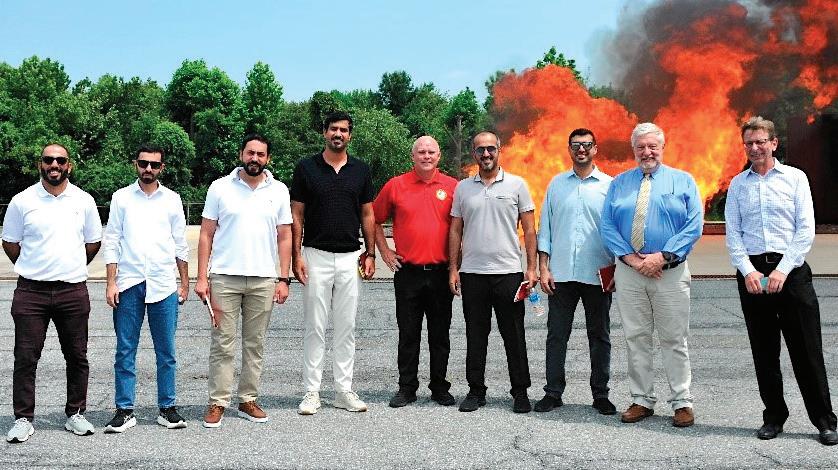
In August, MFRI welcomed a delegation from the Abu Dhabi Civil Defense Authority. The visiting officials oversee a wide range of functions for their country, including hazardous materials response, firefighting, engineering, fire protection, equipment management, fire investigation, inspection, and quality assurance/quality improvement.
During their visit, the delegation toured MFRI headquarters, gaining a deeper understanding of our training practices and programs, as well as the extensive range of courses we provide.
THE IMPORTANCE OF POLICIES AND PROCEDURES IN FIRE, RESCUE, AND EMS TRAINING
by Michael McAdams, MFRI QA/QI Manager
MFRI’s mission is to deliver consistent, high-quality training to fire, rescue, and emergency medical personnel statewide. With six regional facilities and a diverse student body, clear policies and procedures are essential for safety, accountability, and professionalism.
Policies provide the framework that guides instructors, staff, and students. In high-risk environments, they reduce variability, mitigate hazards, and ensure compliance with standards such as NFPA 1403. Procedures translate these policies into consistent practice, helping prevent injuries and unsafe behaviors.
Beyond safety, policies and procedures set instructional and performance expectations across regions, ensuring every course meets the same high standards. They also support quality assurance by offering benchmarks for evaluation, transparent resolution of concerns, and continuous improvement.
For MFRI, strong policies safeguard compliance with regulations and accreditation requirements, while also preserving institutional knowledge as personnel change. Documented standards ensure that new instructors and staff can uphold the Institute’s integrity and mission —they are the foundation of MFRI’s commitment to preparing firefighters, rescuers, and EMTs to serve with competence, confidence, and care.
NEW ACADEMIC ACHIEVEMENT AWARD
HONORS CHIEF JOHN CARNEGIS’ LEGACY
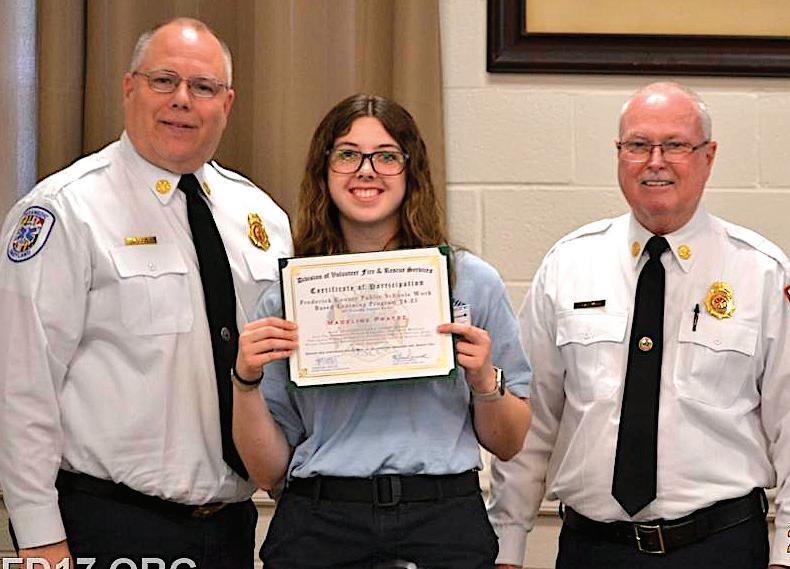
Nearly a year after his passing, the legacy of former MFRI QA/QI Manager Chief John Carnegis endures through the inaugural John Carnegis Academic Achievement Award. Known for his passion, mentorship, and dedication to the fire and rescue service, Chief Carnegis continues to inspire others.
Madelyn Prabe of the Libertytown Volunteer Fire Department was honored as the first award recipient for her exceptional performance in the High School Internship Program and her “No Surrender, No Defeat” attitude. The award plaque will be displayed at the Training Academy, with recipients receiving a Class “A” ribbon and certificate. photo (left to right): Chief Tom Coe, LVFD member Madelyn Prabe, and Deputy Chief Shane Darwick. Source: https://www.lvfd17.org/news/253/Congratulations-to-Madelyn-Prabe-for-Receiving-Academic-Achievement-Award-
MFRI EMPLOYEE SPOTLIGHT
JONATHAN HART has been appointed Manager of Special Programs at MFRI. Serving state, federal, military, and commercial entities nationally and internationally, Special Programs provides education, training, and consulting expertise for first responders.
In FY2025, Special Programs trained more than 5,000 students. In his new role, Jonathan is focused on expanding the group’s industrial client base and providing new program offerings.
SYDNEY HOWARD joined MFRI as the North East Regional Training Center Program Administrative Specialist. She brings administrative and program coordination experience from her roles with the U.S. Department of Education and Towson University. Sydney received her Bachelor of Science in Political Science from Towson University.
INSTRUCTOR HUCK HEDRICK COMMENDED FOR DEDICATION
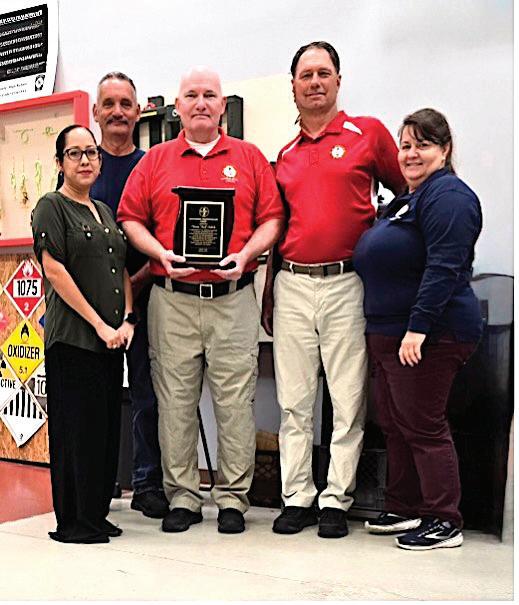
The Southern Maryland Regional Training Center (SMRTC) is proud to recognize one of its most dedicated instructors, Thomas C. “Huck” Hedrick, with the Outstanding Professionalism Award. This welldeserved honor, presented by Coordinator Edward T. Rachinskas and the entire SMRTC staff, celebrates Huck’s immense contributions to the center and to the next generation of fire service professionals.
Huck’s impact on SMRTC is undeniable, marked by an exceptional commitment to education and mentorship. In just the last six months, he has led and assisted with countless fire classes, accumulating over 279 teaching hours. This recent effort adds to an already impressive career total of over 2,010 teaching hours since he joined MFRI.
Huck’s dedication extends beyond the classroom. He consistently arrives early to set up and prepare for classes and is always the last to leave, ensuring everything is secured and in place. This level of diligence is a testament to his strong work ethic and respect for the training environment.
Going beyond his role as an instructor, Huck has committed himself to guiding new educators and helping them succeed. He has completed classes to become a mentor and an instructor evaluator—roles that allow him to pass on best practices and help new instructors develop into effective leaders. This commitment to mentorship is crucial for maintaining the high standards of SMRTC and fostering a culture of excellence.
Huck’s willingness to always step up and help when needed makes him an invaluable asset to the SMRTC and its staff. His professionalism, expertise, and unwavering dedication are an inspiration to all.
photo: MFRI instructor Huck Hedrick (center) was recently recognized by the Southern Maryland Regional Training Center. left to right: Linda Carrillo, Jeff Williams, Ed Rachinskas, and Mary Ann Arhar.
INSTRUCTOR HIGHLIGHT
“Like most of us in the fire service, we seem to have the innate ability and desire to help others,” said MFRI Instructor Phil Hebert. “Whether it was through scouting or my local volunteer fire company, I always seemed to be ‘that guy’ showing others how to accomplish things.”
“I saw great value in mentoring others and developing their skills and knowledge,” he said. As his career in the fire service progressed, Phil worked alongside people who struggled to grasp the concepts and practices that make the job safer—and, to him, more rewarding. “The line between being a mentor and a teacher began to blur,” Phil explained.
Becoming an instructor not only solidified Phil’s credibility but also opened the door to continued professional growth.
In 2014, while in the career service, he had the honor of being appointed a Master Instructor for HazMat by the IAFF. In 2016,
PHIL HEBERT
Phil became a MFRI instructor. He primarily teaches HazMat classes and also provides support to other instructors.
“Early last year, I was asked to assist with the SIM Center, and having seen the value and benefits of simulations, I am excited to extend my instructional capabilities to this great learning method,” said Phil.
He approaches teaching as a shared commitment between instructor and student. In the classroom, Phil integrates realworld examples and scenarios to help students build a foundation of core concepts. He then weaves those concepts into practical applications.
“I was teaching a series of lectures about HazMat Chemistry,” recalled Phil. “There was a student in the class who aspired to go on to nursing school, but she was becoming increasingly unsure of herself during the course. She told me that she just didn’t understand
the concepts and doubted that she would ever be able to understand the science of how the body worked.”
“As a paramedic, I saw the opportunity to present the concepts of chemical and physical properties in a way that she could relate to the physiological processes in the body. I saw a profound change in her understanding, and she went on to become much more confident and engaged.”
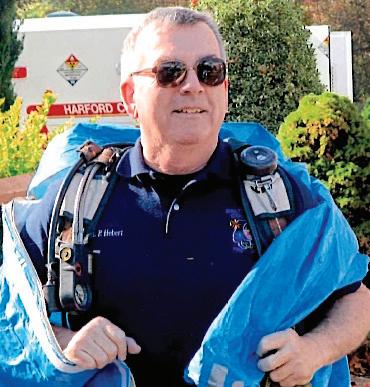
Phil values the variety of backgrounds his students bring to class as well as their challenges. He is an active member of the Special Operations Team in Harford County, which is also where he resides. Phil has been a long-serving board member and financial officer for the Owings Mills Volunteer Fire Company. He is a ham radio enthusiast and also enjoys technical problems and their solutions. photo: Phil Hebert gears up for 18 holes of golf in a Level A suit to practice dexterity skills and maintain competency.
GET READY FOR 2026:
MARYLAND WEEKEND AT THE NATIONAL FIRE ACADEMY RETURNS
FEATURED COURSES:
Join Us for Maryland Weekend at the National Fire Academy, February 21–22, 2026 | Emmitsburg, MD
Command and Control for the Company Officer
Exercising Leadership
Ethically
Seize this exciting opportunity to grow your skills and connect with fire service professionals
Maryland Weekend at the National Fire Academy returns to Emmitsburg for two dynamic days of advanced training, professional growth, and unparalleled camaraderie among Maryland’s finest emergency responders. Each year, fire service professionals from across the state converge on the historic National Fire Academy campus to engage in high-impact learning experiences led by nationally recognized instructors. Whether you’re a firefighter, EMT, hazmat technician, or rescue specialist, this event offers something for everyone passionate about service, safety, and excellence.
Strategic Considerations
FEBRUARY 21 & 22, 2026
Participants will have the opportunity to choose from a diverse lineup of courses tailored to today’s most pressing emergency response challenges. These hands-on, scenario-based sessions are designed to elevate your skills, deepen your knowledge, and help you lead with confidence in the field.
Creating Environments for Professional Growth
But Maryland Weekend is more than just training—it’s a celebration of community and shared purpose. Beyond the classroom, attendees will connect with peers from departments across the state, share real-world insights, and build lasting professional relationships in a collaborative, supportive environment.
Challenging Issues
Fire as a Weapon
WHO SHOULD ATTEND:
Open to all fire, rescue, hazardous materials, and EMS personnel, ages 18 and older, who are ready to take the next step in their professional development. Don’t miss this chance to sharpen your edge, strengthen your network, and be part of a proud tradition that honors Maryland’s emergency services community.
FEATURED COURSES:
Command and Control for the Company Officer
Exercising Leadership
Ethically
Strategic Considerations
Creating Environments for Professional Growth
Challenging Issues
Fire as a Weapon
FEBRUARY 21 & 22, 2026
Seize this exciting opportunity to grow your skills and connect with fire service professionals
HAVE QUESTIONS? Contact Todd Dyche tdyche@mfri.org