A MAGAZINE FOR UMASS BOSTON ALUMNI AND FRIENDS Winter 2026
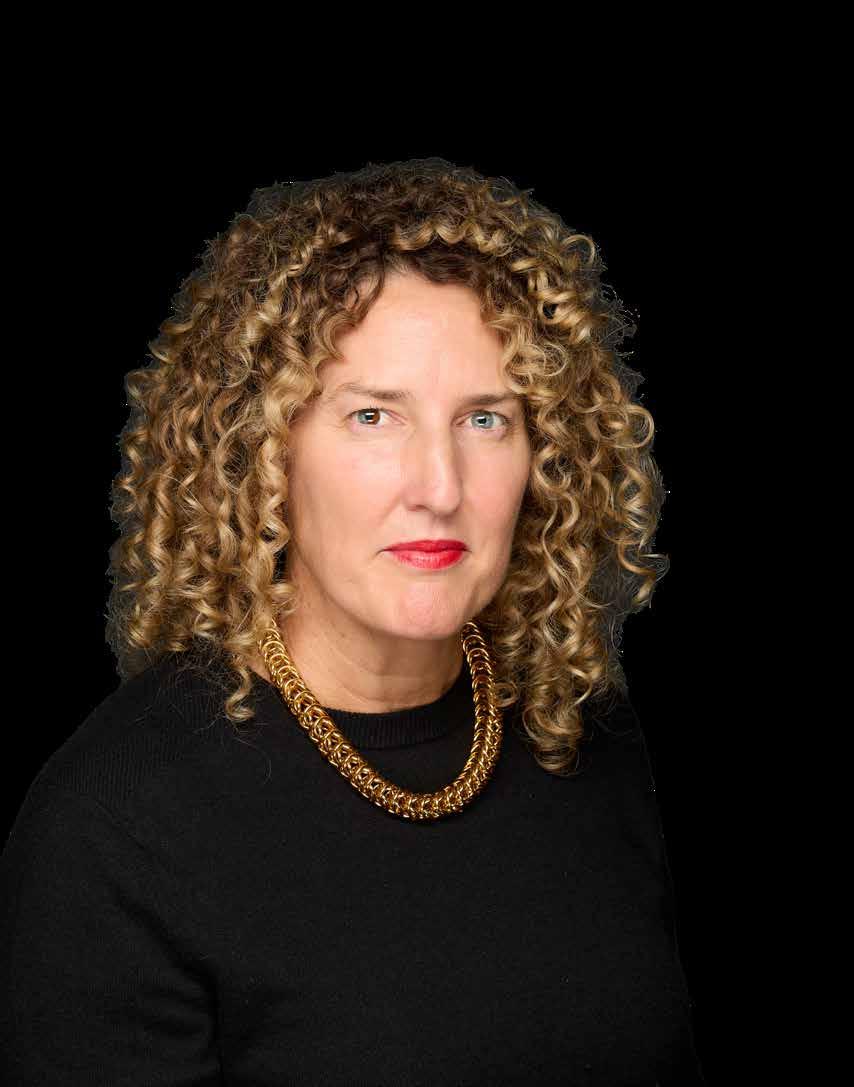
As photo director for National Geographic, Alex Pollack ’97 shapes the way we see the world—one extraordinary image at a time.
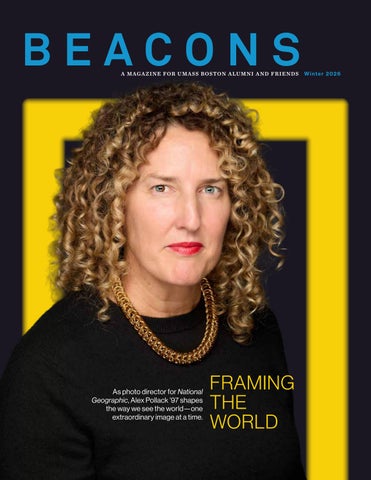
As photo director for National Geographic, Alex Pollack ’97 shapes the way we see the world—one extraordinary image at a time.
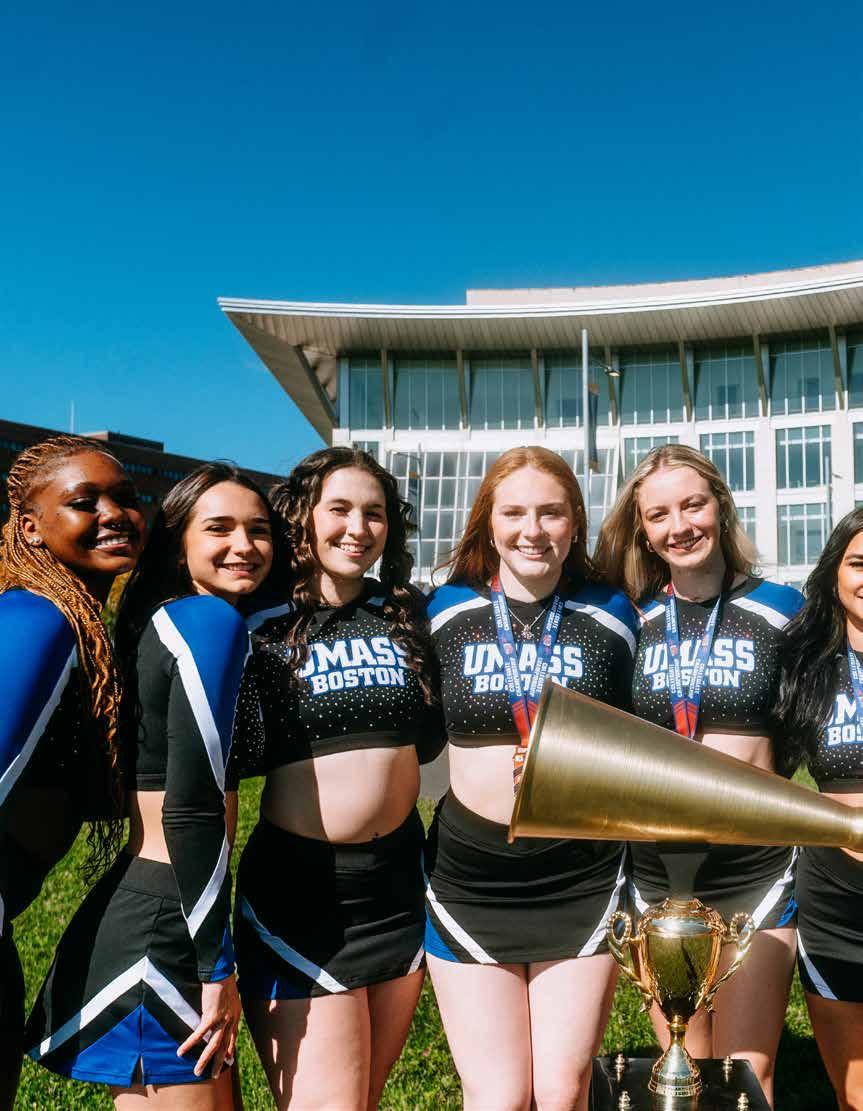
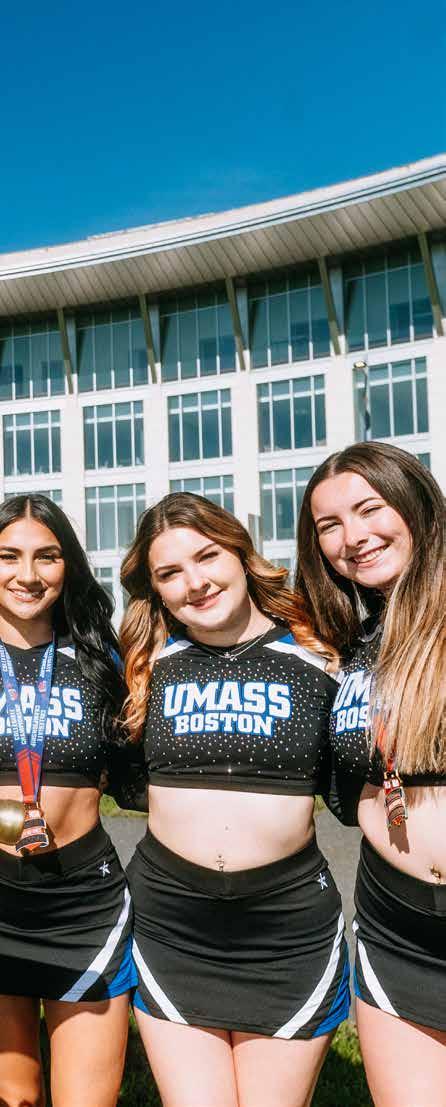
The Beacons cheer team brought home UMass Boston’s first cheerleading national title in May, competing in the Intermediate Small Coed Division III category of the 2025 National Cheerleaders Association College Nationals in Daytona Beach, Florida. The team delivered a “hit-zero” routine—one with no mistakes or deductions—on both days of the meet, a feat that none of the nine other competing teams could match.
The cheer champions assert that the victory was made sweeter by teamwork. “One of the biggest highlights … was not only making UMass Boston Cheerleading history,” said team captain and treasurer Ella Reardon, “but being able to accomplish it with my best friends.”
“We are genuinely like a family,” agreed second-year flyer Ava Hunt. “Everyone on the team and my coaches push me to be my absolute best self on and off of the mat.”
16
Framing the World
Alex Pollack ’97 blends curiosity, cultural insight, and a keen eye to develop visual storytelling that influences the way we see the world.
22 Hope Level Rising
Driven by innovative science and bolstered by a new $10 million gift, the Stone Living Lab continues to lead the charge toward climate solutions that matter in the Commonwealth—and around the globe.
26 A Taste of Triumph
From grassroots organizing to a Chopped victory, Laurence Louie G’11 traces his journey from Columbia Point to chef-owner of one of Metro Boston’s most beloved Asian bistros.
30 Cause & Effect
With a generous bequest to UMass Boston’s Critical & Creative Thinking program, Christina Fasciana G’99 honors the opportunity that shaped her future while opening doors for generations to come.
COVER
In her role as National Geographic’s photo director, Alex Pollack ’97 is curating the images that inform, inspire, and expand perspectives. Photo by Mark Thiessen.
See page 16
For this issue of Beacons, we asked:
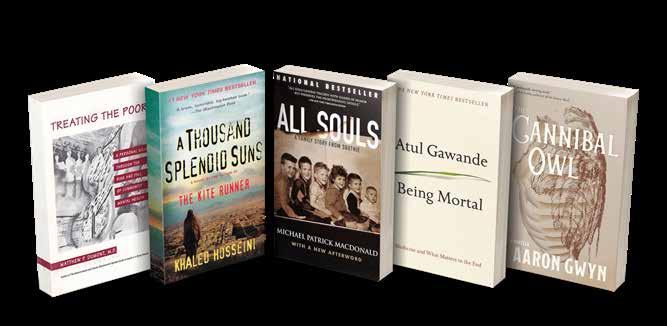
Judith Goldberger ’07
Treating the Poor: A Personal Sojourn Through the Rise and Fall of Community Mental Health by Matthew P. Dumont
“Dr. Dumont’s powerful stories of individual clients, combined with sharp analysis of the impact of policy decisions on their health and wellbeing, continue to prompt me to look for the social forces shaping the lives of patients in my care, and for opportunities to advocate at the community and policy level.”
What was your first job, and what did it teach you?
Visit umb.edu/yourtake to submit your answer! Submissions are edited for length and clarity.
Amy Cardoso G’17
All Souls: A Family Story from Southie by Michael Patrick MacDonald
“This gripping story about poverty, addiction, family, the pressures of Irish Catholicism, working for Whitey Bulger, forced busing, and general life in South Boston from the 1960s to 1980s is eye-opening and raw! I have met the author twice and enjoyed sharing with him that I teach his book to my high school seniors in Woburn.”
Andrew Harte G’21
Being Mortal: Medicine and What Matters in the End by Atul Gawande
“This book validated my own experiences in health care and sparked a passion that has led me down a career path helping patients plan for and face the end of their lives with comfort, dignity, and support. Bonus that the bestselling author is in Boston!”
Jean McGinty ’08
The Cannibal Owl by Aaron Gwyn
“A story about coming of age, identity, acceptance, and survival, this story takes place in the American Texas frontier of the 1800s. The prose is wrought with a depth that made me read slowly, holding this slim book with care and reverence, both in my hands and in my heart.”
Reshmeen Chowdhury ’22
A Thousand Splendid Suns by Khaled Hosseini
“A Thousand Splendid Suns is one of the most powerful books I have ever read and has had a lasting impact on me. It is an incredible story about the lives of two women in Afghanistan—Mariam and Laila—and how their paths in life eventually converge. The lives of these two literary characters leave you with a sense of hope because of their resilience during a time of such unbearable hardship. The author does an amazing job of capturing the strength of these two women and takes you on an emotional rollercoaster. I think everyone should read this book at least once in their lives.”
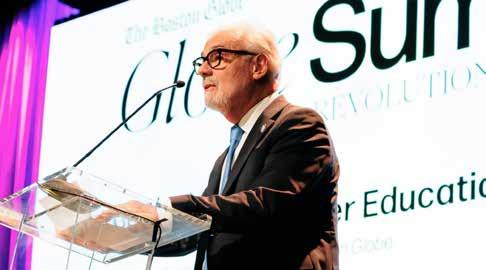
FOR GENERATIONS, students have come to UMass Boston to acquire the skills, knowledge, and sensibilities they need to excel as professionals, promote social progress, and advance the public good.
An education at UMass Boston welcomes our Beacons to the humanities, where they learn, imagine, and create; into the STEM disciplines, where they develop the tools to unlock the mysteries of the physical world and extract truths from nature; and into the social sciences, where they learn to critically analyze human behavior, economy, and society to offer better alternatives to enhance human flourishing.
The UMass Boston experience unites people who bring different perspectives and bodies of knowledge to address the great issues and challenges of our time. On our harbor campus, at once local and global, our Beacons practice the art of integrating these ways of knowing so they are ready to be original thinkers, makers, and doers.
In this issue of Beacons magazine, we feature alumni who dared to explore fields of study that sparked their curiosity as students and, in doing so, opened paths to lives filled with purpose and happiness. Over time, doors opened, opportunities appeared, and careers evolved. Each alum found innovative ways to share what mattered most to them, bringing their UMass Boston education to life through service, creativity, and leadership in their communities.
Our cover story follows the journey of Alex Pollack ’97, who, with courage and grit, turned her studies in anthropology and history into a career as a photographer, storyteller, and guardian of authenticity at the iconic National Geographic magazine. Her remarkable work capturing people and places around the world showcases the curiosity, cultural understanding, and deep appreciation for human diversity cultivated here at UMass Boston.
You will also meet Christina Fasciana G’99, whose early experience in our Critical & Creative Thinking program paved the way to becoming an educator and problem-solving changemaker. Through her generous gift to the program, Christina honors the opportunity that shaped her future and now pays it forward to the next generation of Beacons who will imagine better worlds and help bring them to life.
You will read about Laurence Louie G’11, who transitioned from a degree in American studies to community organizing, and, ultimately, to the culinary arts as a James Beard-nominated chef and owner of one of Metro Boston’s most lively Asian bistros. In building his restaurant, Laurence incorporates the culinary traditions of his Chinese American family, blending memory, heritage, and hospitality.
Finally in this issue, we are proud to celebrate a transformative $10 million gift to the Stone Living Lab which will enable UMass Boston to continue advancing climate solutions that matter, in the city of Boston, across the commonwealth, and around the world. This visionary investment from the Stone Foundation consolidates our role as a national model for coastal urban research universities working at the front lines of building climate resilience.
Together, the stories in this edition of Beacons highlight the core spirit of UMass Boston: the pursuit of truth, dedication to service, deep respect for the full range of human diversity, and a steadfast belief in the inherent dignity of every individual. These values—more vital now than ever—are alive and thriving at Columbia Point.
Sincerely,

MARCELO SUÁREZ-OROZCO Chancellor
Chancellor
Marcelo Suárez-Orozco
Provost
Joseph Berger
Vice Chancellor for University Advancement
Adam K. Wise
Assistant Vice Chancellor for Alumni Engagement
Allison Duffy
Senior Director of Alumni Engagement
Steven Whittemore
Communications Specialist
Vanessa Chatterley
Art Direction
Red Ink Design
Contributors
Elizabeth Deatrick
Mike De Socio
Madeline Kaprich G’24
Sandra Kendall G’92
Andrea Kennedy
Kim Kobersmith
Catherine LeBlanc
DeWayne Lehman G’15
Austyn Ellese Mayfield
Gray Milkowski ’18
Paul Nuti
Crystal Valencia G’14
Photos and Illustrations
Bartosz Kosowski
Robin Lubbock | WBUR
Melissa Mahoney
Javier Rivas
Sindayiganza Photography
Mark Thiessen
Beacons magazine celebrates the accomplishments and impact of the UMass Boston community and the lasting connection alumni and friends have with UMass Boston, Boston State College, and our legacy schools.
We welcome your inquiries, ideas, and comments! Please share them with the UMass Boston Alumni Engagement team at 617.287.5330 or alumni@umb.edu.

This fall, UMass Boston welcomed its largest-ever class of in-state first-year students, with 1,994 newcomers drawn to Boston’s only public research university, its historic free-college
A large-scale renovation has transformed the Clark Athletic Center into a modern, unified hub for UMass Boston athletics, featuring state-of-the-art locker rooms, coach and staff offices, and cutting-edge technology enhancements. “This project is about more than just bricks and mortar—it’s about building a better future for our student-athletes and advancing the legacy of excellence of our alumni,” said Jacqueline Schuman, vice chancellor and director of athletics. “The enhancements to the
Beacon Pledge, and its sustained growth in academic excellence.
From a record-breaking pool of more than 22,000 applicants, members of the Class of 2029 come from within Dorchester and across Boston, the Commonwealth, and around the globe. Their enrollment marks a milestone in the growth of UMass Boston as the city’s premier public institution for academic excellence and diverse learning opportunities.
In addition, as a Carnegie-classified R1 research university that invests more than $70 million in research initiatives each year, UMass Boston is committed to advancing research that directly enriches the academic experience for its students. The Carnegie Foundation has identified UMass Boston as one of 49 universities nationwide and one of seven in the Northeast as R1 research universities that also provide high access.
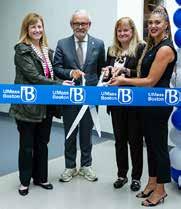
Clark Athletic Center ensure we’re providing first-class resources that match the excellence of our programs.”
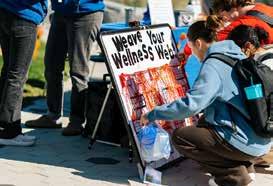
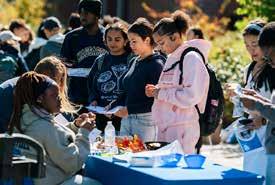
The Beacon Wellness Initiative—focused on fostering health, promoting well-being, and building community— hosted its annual Wellness Walk in October, drawing over 1,000 attendees to the campus. Students, faculty, and staff immersed themselves in interactive stations that highlighted eight dimensions of wellness.
Emphasizing a strategic commitment to inclusion and belonging, health and wellness, and sustainability, the Beacon Wellness Initiative aligns its principles with the Okanagan Charter, formally adopted by the university in April 2024. The charter has two calls to action: to embed health into all aspects of campus culture across the administration, operations, and academic mandates, and to lead action and collaboration in health promotion locally and globally.
This year’s Wellness Walk connected participants with more than 25 campus departments that support a balanced lifestyle through a “Wellness Journey” passport experience. Each department’s station emphasized dynamic engagement, from physical health activities to social, emotional, intellectual, financial, and spiritual well-being.
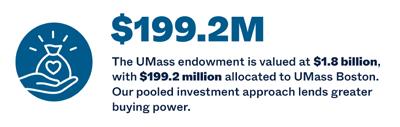
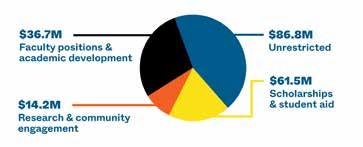
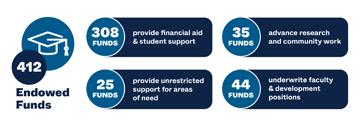
In a significant demonstration of her enduring commitment to UMass Boston, longtime supporter Anne Verdon ’78 has made a $500,000 gift to endow the College of Liberal Arts (CLA) Faculty Development Fund. This transformational contribution ensures that critical faculty research and professional development activities will be sustained in perpetuity.
Since 2014, with support from Verdon, CLA’s faculty development fund has provided more than $160,000 to sponsor faculty scholarship and travel across all disciplines in the college, from the performing arts to the social sciences. Verdon’s new endowment will permanently secure this impact by generating approximately $20,000 each year in award funding. The awards will help launch research projects, advance early-career faculty, and support scholarly exploration that enriches both teaching and public understanding.
“The CLA Faculty Development Fund is transformational for our faculty as they conduct innovative research in the social sciences, humanities, and arts,” said CLA Dean Pratima Prasad. “The funding is a cornerstone of their scholarship and professional development as faculty. And when they bring the fruits of their research to the classroom, it deeply enriches the education of our students as well.”
Donors to the UMass Boston Annual Fund powered priorities in every corner of campus during the 2025 fiscal year, supporting academics, research, campus life, and more.
Through 10,334 gifts, our campus received $2,786,687 in donations, with an average gift of $176.
Our 5,651 donors ranged in class years from 1951 to 2025, representing 12 countries and 50 states, with 70
in Massachusetts.
The Massachusetts Technology Collaborative (MassTech), alongside the Massachusetts Executive Office of Economic Development, has awarded UMass Boston a $3.8 million grant to build upon the state’s leadership in the “Second Quantum Revolution.” This funding will support emerging technologies such as quantum computing, sensing, communication, and cryptography, all of which are poised to transform industries ranging from cybersecurity and finance to pharmaceuticals and materials science.
$481,675
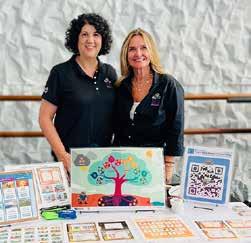
Lori Cooney, program director of inclusive education and curriculum design at UMass Boston’s Institute for Community Inclusion (ICI), was awarded a second-year contract of $481,675 from the Oklahoma State Department of Education’s Plan Your Way OK initiative, funded by the Rehabilitation Services Administration. This year’s award builds on a prior $249,650 contract and is part of a four-year partnership totaling $1.39 million.
As principal investigator, Cooney is leading efforts to implement Future Quest Island-Explorations (FQI-E) in elementary schools across Oklahoma, while also collaborating with FableVision Studios to develop a new interactive career simulation game, Future Quest-Journeys, for students ages 13 to 22. FQI-E was initially developed through a Stepping-Up Technology grant (2018–2024) from the U.S. Department of Education’s Office of Special Education Programs. The work was led by ICI’s Meg Grigal, PhD, as
The new grant builds on an initial $1 million investment from MassTech in 2022, which launched a partnership between UMass Boston and Western New England University, and helped establish a statewide network of quantum research centers to accelerate quantum hardware development and commercialization.
The project also launches the Quantum Jumpstart seed grant program, designed to accelerate product development and validation. By leveraging seed funding combined with the expertise of the collaborative network and the UMass system’s core facilities, grantees will gain a powerful platform to bring new technologies to market.
A central pillar of the initiative is quantum workforce development. By connecting local industry with university researchers and students, the program will help train the next generation of quantum engineers and technicians.
principal investigator and co-principal investigator Cooney, in collaboration with FableVision Studios and the Education Development Center.
“The Future Quest projects really show how inclusive design and early career awareness through game-based learning can open new pathways for all learners, especially students with disabilities,” said Cooney.
“This project exemplifies the Institute for Community Inclusion’s commitment to creating accessible, evidence-based tools that help all learners prepare for success,” said Cindy Thomas, ICI director. “Lori’s leadership and collaboration with national partners ensure that inclusive career exploration opportunities reach students who might otherwise be left behind.”
The Future Quest series honors the memory of Debra Hart, the project’s original principal investigator and former director of ICI’s education and transition team.
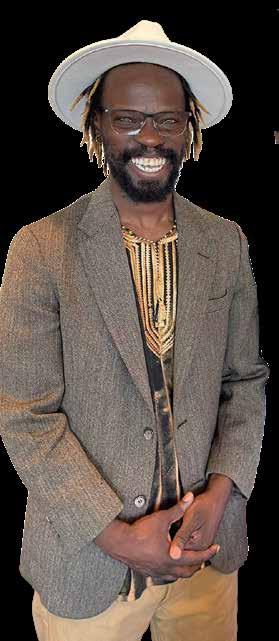
To further his career goals in international sports policy, Anthony Owuor ’24 enrolled in UMass Boston’s Global Governance & Human Security (GGHS) program after earning his bachelor’s degree in international relations. The program has been transformative and instrumental in shaping his vision as a global leader. As a complement to his studies, Owuor serves as president of the Graduate Student Government, where he and his peers advocate for student voices and drive innovative initiatives that enhance the graduate experience.
Q: What made you choose to attend UMass Boston?
I decided to enroll at UMass Boston and continue my studies here because the campus reflects the values I uphold: accessibility, fairness, and a global mindset. The university provides a unique blend of academic excellence and practical involvement that aligns with my dedication to make a positive impact on communities in the U.S. and in Kenya.
Q: How did UMass Boston play a role in where you are today?
UMass Boston has sharpened my vision and equipped me with the necessary tools to translate purpose into actionable strategy. Every class, discus sion, and challenge propels me toward be coming a versatile global leader. I’m learning how to navigate between high-level policy settings in Boston and grassroots sports arenas in Nairobi.
Q: As a graduate student at UMass Boston, how has your overall experience been?
My journey has been nothing short of transformative—intellectually stimulating, emotionally enriching, and professionally uplifting. The GGHS program encourages me to think ambitiously about human security and instills in me the confidence to actively seek out leadership positions that drive tangible change.
Q: In addition to your studies, what other activities are you involved in on campus?
In my role as president of the Graduate Student Government, I am dedicated to amplifying student voices, fostering a sense of community, and enhancing opportunities for all students. Additionally, I work closely with faculty and departments to im-
prove the overall graduate student experience and drive innovative initiatives forward.
Q: What benefits do graduate students gain by participating in campus clubs and organizations?
Active engagement is truly transformative. By taking on leadership roles in clubs or registered professional associations or participating in projects, students expand networks, gain valuable mentorship, and build momentum that goes beyond a traditional
Who at UMass Boston has had the most influence on your experience?
Throughout my academic journey, numerous faculty members, such as Professor Catriona Standfield, have played a pivotal role in shaping my growth. The most impactful mentors have been those who inspired me to adopt a global perspective while taking action at a local level. These professors push me to question my assumptions and refine my research while facilitating access to new and promising career avenues.
Q: What advice would you give a prospective student?
Prepare yourself for personal growth. UMass Boston is more than just an educational institution—it serves as a springboard for your aspirations. This campus has the power to amplify your potential in ways that may surpass your expectations.
Q: Is there anything you’d like to add?
UMass Boston provides me with a platform to seamlessly integrate my passion for sports diplomacy, youth empowerment, and global governance into a cohesive career vision. This university has been instrumental in helping me not only explore my capabilities but also in shaping the person I aspire to be.

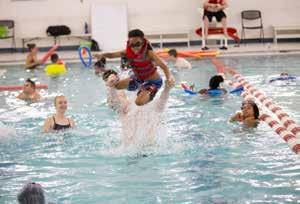
Camp Shriver at UMass Boston Celebrates 20 Years of Inclusive Play

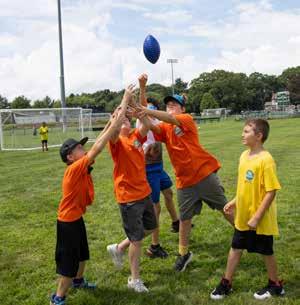
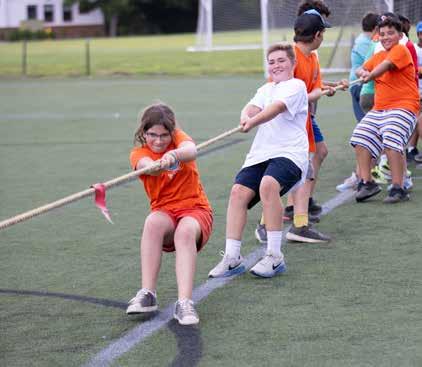
LAST SUMMER, UMass Boston’s Camp Shriver celebrated its 20th anniversary, commemorating two decades as a national leader in inclusive recreation for children with and without disabilities. Since opening its doors in 2006, this free summer day camp has welcomed more than 2,500 Boston-area children—offering a community for campers of all abilities to play, learn, and grow together.
Camp Shriver marked the milestone with a celebration at the Charles River Campus of UMass Amherst, home to the program since 2021. The event brought together leaders from
across the University of Massachusetts system, including President Marty Meehan and UMass Boston Chancellor Marcelo Suárez-Orozco, along with dozens of longtime supporters and friends.
“Spending time with the kids at Camp Shriver is one of the highlights of my summer,” President Meehan shared during one of his earliest visits to the camp. “What happens [here] is inspirational, and all of us at the University of Massachusetts are proud to support it.”
Camp Shriver’s roots trace back to a single phone call from Eunice Kennedy Shriver, founder
of the Special Olympics and a lifelong advocate for people with disabilities. As her 85th birthday approached, Shriver reached out to Dr. Gary Siperstein, founder of UMass Boston’s Center for Social Development & Education, and asked: “How big is your chancellor’s backyard?” Shriver
was determined to bring her original Camp Shriver—first held in her own Maryland backyard in 1962—to communities nationwide. “From her backyard to run back our backyard,” Siperstein remembers fondly.
Camp Shriver has since grown into an award-winning national model for
inclusive play, serving up to 150 campers each summer. The camp welcomes an equal number of children with and without intellectual and developmental disabilities, fostering social skills, confidence, and lifelong friendships through sports like soccer, basketball, and tennis.

Many campers return year after year, with some, like Brayden Gero and Liam Rousmaniere, eventually returning as counselors to mentor the next generation.
Camp Shriver Director Mark Spolidoro credits the camp’s enduring success to steadfast support from UMass Boston leadership
and community partners. “The past 20 years have been extraordinary—but we’re just getting started,” said Spolidoro. “Camp Shriver looks to the future with hope, energy, and a renewed commitment to creating a world where every child, regardless of ability, feels like they belong.”
“ The past 20 years have been extraordinary—but we’re just getting started.”
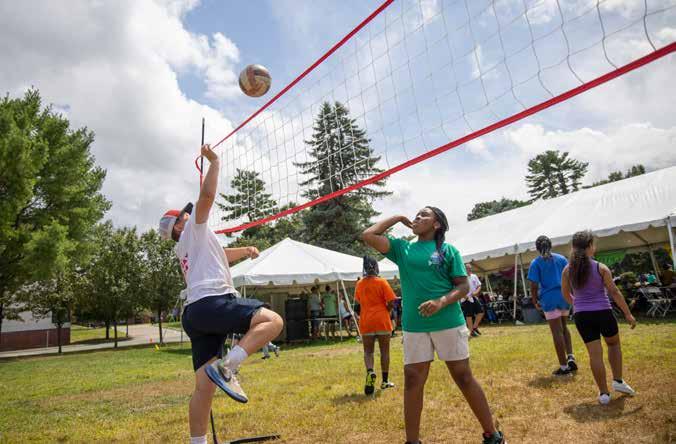
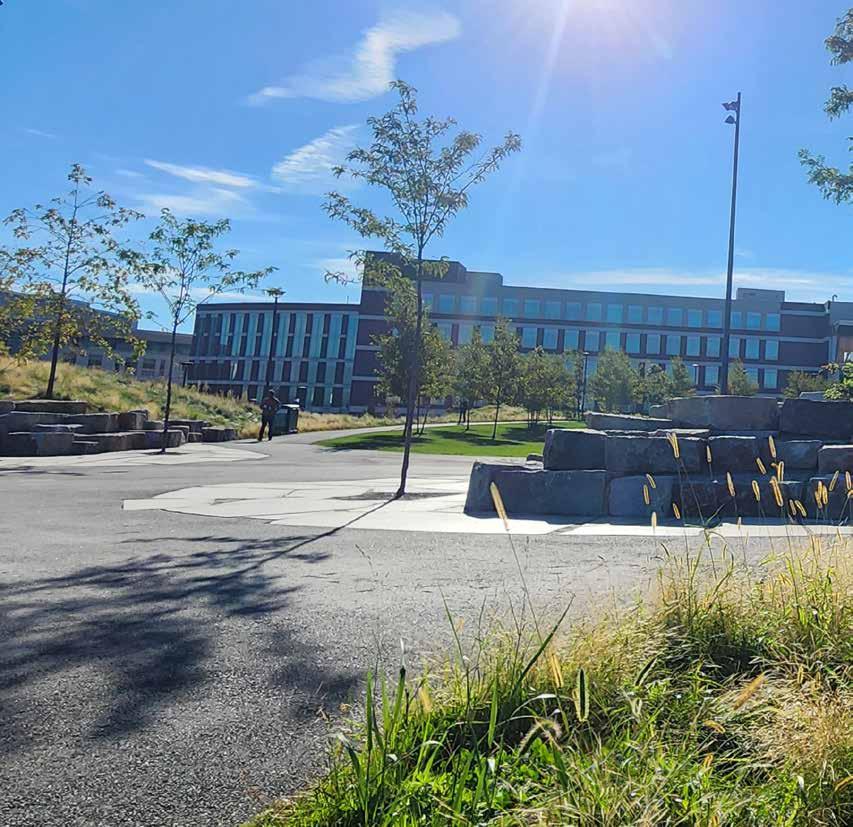
This spring, the UMass Boston Quad turns one, completing its first full cycle of New England seasons. Since opening in April 2025, tree limbs have extended their reach, fauna have found new places to nestle, and the campus has made itself cozy around a thriving, living landscape. Shaped by intention and sustained by care, the Quad invites students, faculty, staff, and visitors into a space designed to grow and evolve in harmony with the world around it.
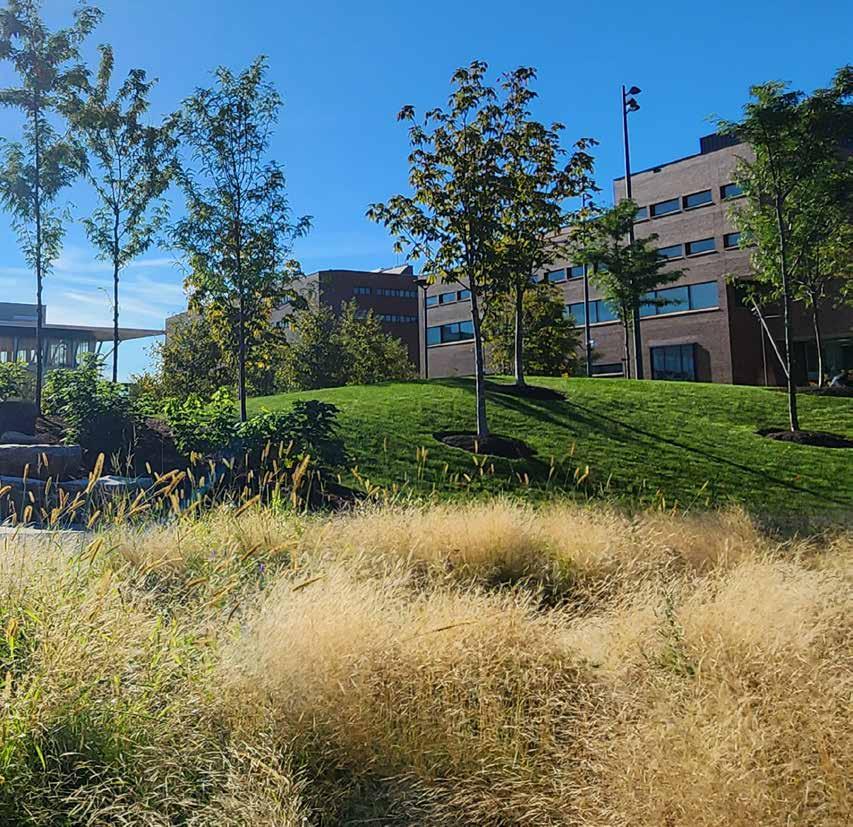
Tall meadow grasses frame active lawns where people picnic, play, and pause between classes or meetings. Native plantings and young trees anchor the space visually as their roots strengthen soil health and support biodiversity. Stone seating and winding paths encourage both stillness and movement, making the campus more accessible and interconnected.
Every element of the Quad reflects a sustainability-driven approach to design. Native meadows require fewer inputs than traditional lawns, reducing water use and additional treatments while protecting the nearby harbor from runoff. Beneath the surface, bioswales serve as a natural sponge—absorbing stormwater, minimizing flooding, and cooling the surrounding environment. Over time, growing tree canopies will further reduce heat-island effects, creating a more comfortable campus environment.
The result is a space that is equal parts purposeful and welcoming. And one that models how form and function can blend to enhance campus life today while setting the stage for many beautiful seasons ahead.
The Quad’s native meadows and plantings support pollinators, improve soil health, and require less water and maintenance than traditional lawns. Native species make landscapes more resilient while increasing biodiversity. Whether on a campus or in a backyard, planting native helps create healthier, more vibrant environments—above and below the surface.


• Attracts pollinators
• Wildlife habitat

• Habitat restoration
• Erosion control
• Filters toxins

• Drought tolerant
• Erosion control
• Erosion control
• Maintains biodiversity
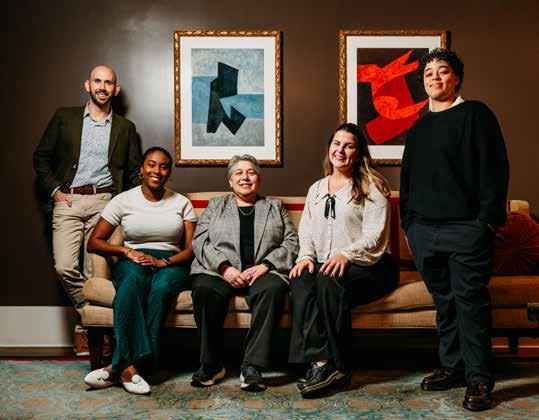
If you’ve ever stepped foot on the UMass Boston campus, chances are DIANE D’ARRIGO ’92, G’04 shaped your experience—often in ways you never even realized.
Your commute. The welcome you received walking into the Campus Center. The events you attended. Even what you grabbed for lunch. In ways visible and invisible, D’Arrigo had a hand in it.
Now, after three decades on Columbia Point, she is stepping away from her role as Assistant Vice Chancellor for Campus Services, where she oversaw much of the university’s day-today operations.
During her time at UMass Boston, D’Arrigo has been a true believer in the university’s mission and fierce ability to change lives. She understands that impact because she lived it. Her story is quintessentially UMass Boston. From a working-class background, raised in
humble beginnings and unsure of what direction life might take, she arrived on campus as many UMass Boston students do: a first-generation, adult learner searching for her path. Before enrolling, college didn’t even seem like an option.
“I didn’t even know what a bachelor’s degree was,” she recalled with a laugh.
But like so many who find their way to UMass Boston, D’Arrigo found purpose. She discovered her love of learning, which quickly became a love of teaching. That passion carried her through several roles until she came to lead campus services.
In that role, she oversaw the dining program, shuttle and parking operations, thousands of on-campus events, and the management of the Campus Center—the hub of the university. And since joining the master plan effort in 2006, she has had a hand in every major construction project for nearly 20 years.
No problem was beneath her attention. If a stove in the dining hall wouldn’t light at dawn, D’Arrigo got the call. If the Campus Center
Ballroom was too warm, she found the right person to cool it down. If a catering order went awry, she was the one who made it right.
Her problem-solving abilities are legendary —but the true magic of D’Arrigo is the effortless humility and optimism she brought to her work. She greets first-year students with the same warmth she offers the Chancellor (she’s worked with nine of them). When she walks through a bustling kitchen serving hundreds of people at an event, she joyfully greets every person on staff.
D’Arrigo’s optimism ripples throughout stories in every corner of the campus she helped shape.
At one Welcome Day, she greeted a new student with a smile and a kind word. Months later, when that student was overwhelmed and on the brink of withdrawing, she reached out to D’Arrigo—remembering only that moment of kindness.
D’Arrigo didn’t hesitate. She connected the student with mental health resources, helped her regain her footing, and watched her go on to graduate and pursue a career in college health and wellness.
That student now works on the university’s wellness team—helping today’s students stay on track, just as D’Arrigo once helped her.
As she steps away from her leadership role, she leaves behind a transformed dining program, a vastly improved shuttle system, and her influence on every major building erected in the last decade. More importantly, she leaves indelible marks on the lives of the countless people she has taught, mentored, guided, and inspired.
While D’Arrigo is retiring from her full-time role, she plans to continue teaching—helping to shape lives rooted in purpose, opportunity, and service, just as the university shaped hers. Looking ahead, she hopes the institution she loves will continue to hold fast to what anchored her journey from the day she first arrived: its teaching soul.
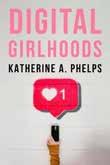
In Digital Girlhoods (Temple University Press), KATHERINE PHELPS PHD’19 explores how American tween girls engage with social media as a space for identity formation, content creation, and community building. Through in-depth interviews, she highlights the agency of these young users, showing how even simple acts reflect deeper questions about self and belonging. Phelps emphasizes the gendered nature of digital participation and the contradictions tween girls navigate online.
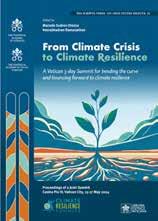
From Climate Crisis to Climate Resilience (co-edited by UMass Boston Chancellor Marcelo Suárez-Orozco) captures the urgent, solution-focused dialogue from a groundbreaking three-day climate summit at the Vatican. Bringing together mayors, governors, scholars, and faith leaders from around the world, this volume explores hands-on strategies for building resilience in the face of climate change. With contributions spanning public health, migration, energy, and youth engagement, the book introduces the MAST framework— Mitigation, Adaptation, and Societal Transformation—as a roadmap for global and local action. This timely work stands as a call to action for those committed to a more just, sustainable, and climate-resilient future.
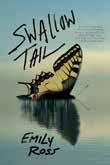
EMILY ROSS ’75 plunges readers into the gritty seaside city of Quincy, Massachusetts, in her gripping new mystery, Swallowtail (Galiot Press). When a teenager on her daughter’s dance team is murdered, Detective Samantha Star is forced to confront the trauma of her own abduction two decades earlier. The investigation spirals as clues hint at a serial killer obsessed with Surrealism and Greek myths, forcing Sam to untangle the mystery of her past to protect her daughter— before it’s too late.

KAREN A. ROMANKO ’78 delivers a spellbinding tale in North End Girl (Raven Electrick Ink), set in the heart of Boston in 1949. Nicole, a young elevator operator at the glamorous Hotel Manger, is quietly harboring a secret ability—one she never intended to use outside her family circle. But when she steps in to help a friend who may become something more, her act of kindness sets off a cascade of events: a kidnapping, a plot to steal diamonds, and a collision with a mysterious woman who’s suddenly making waves in the city’s criminal underworld.
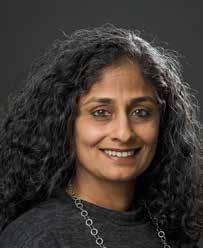
PRATIMA PRASAD, PhD, was named dean of the College of Liberal Arts (CLA), after serving in the interim dean capacity for the past two-and-a-half years with great skill and dedication. Prasad began her tenure at UMass
Boston as a faculty member in the Department of Modern Languages, Literatures, & Cultures. She has held several key administrative roles, including department chair, associate dean, and most recently interim dean of the college. Her research focuses on the intersections of French and francophone literature, colonialism, and race.
As associate dean, Prasad streamlined personnel processes, expanded undergraduate research participation—tripling engagement— and established data-driven practices in staffing, scheduling, and faculty mentoring across CLA. Prasad received the Chancellor’s Award for Distinguished Service in 2022. During her term as interim dean, she spearheaded the development of a comprehensive 10-year strategic plan
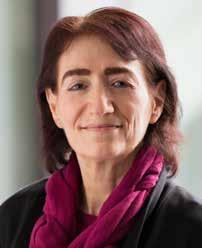
scholar. Sive joins UMass Boston from Northeastern University where she served as dean of the College of Science from 2020 to 2025. For 29 years prior, she was a professor of biology at the Massachusetts Institute of Technology (MIT), member of the Whitehead Institute, and associate member of the Broad Institute. A native of South Africa, Sive focuses her groundbreaking research on neurodevelopmental disorders, as well as fundamental processes underlying brain and craniofacial development.
As dean of science at Northeastern University, Sive promoted excellence through innovation in science research and education, amid an overarching culture of belonging and respect. She promoted a framework of the “Good Power of Science” that commits to responsible research
that articulates a forward-looking vision for CLA’s teaching, research, and service mission.
Search committee vice-chair Reef Youngreen, professor and chair of Sociology, said, “The committee was confident that Pratima is the right leader for the college. Her record of thoughtful stewardship, collaborative leadership, and bold vision—demonstrated throughout her service as associate dean and interim dean—positions CLA for an exciting next chapter.”
Prasad remarked, “I am honored by this appointment and deeply grateful for the trust the university has placed in me. CLA’s faculty, staff, and students inspire me every day, and I look forward to continuing our work together to advance an innovative, inclusive, and forward-looking liberal arts education.”
and to communicating the essential contributions that science research makes to everyone.
“Throughout our comprehensive search process, it became evident that Dr. Sive possesses an exceptional blend of scholarly excellence, proven leadership, and ability to balance innovation with values,” said Professor Rachel Skvirsky, chair of the Biology Department, who served as vice-chair of the search committee. “We’re thrilled to have her join our community.”
Sive is deeply committed to public higher education, and notes, “I’m honored to join UMass Boston, with the goals of empowering education for the next generation of science professionals, and of advancing crucial research across disciplines, together benefitting our region and the world.”
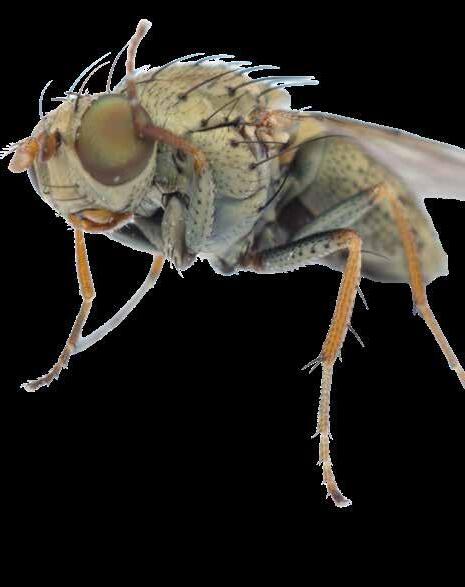
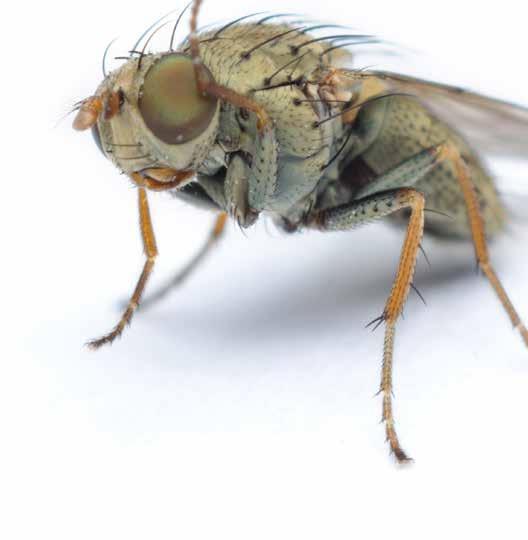
Prof. Jens Rister and his student researchers are looking to fruit flies to learn more about human vison
BY ELIZABETH DEATRICK
Fruit fly eyes and human eyes look very different. But the way they see is surprisingly similar, according to Jens Rister, an associate professor in UMass Boston’s Biology Department.
This fall, Rister was awarded more than $1,700,000 in funding from the National Eye Institute to research a protein that guides the development of color vision in fruit flies. By understanding the underlying mechanisms, Rister hopes to gain insight into the causes of diseases that affect the human eye.
Shedding light on how we see
Humans see color using specialized photoreceptor cells called cones, which are scattered across the center of the retina, the light-sensing layer that lines the back of the eye. Each of the three kinds of cone detects a particular color: blue, red, or green.
Rister’s lab is investigating how cone cells develop into a specific kind of color sensor by studying Hmx, a protein that plays a key role in nerve cell development in many different organisms, including worms, sea urchins, mice, and humans. Despite being widespread in the animal kingdom, Hmx was relatively understudied until recently. “There was very little known, other than the fact that it’s expressed in nervous systems— especially about what it could do in developing eyes,” said Rister.
While he was a PhD student in Rister’s lab, Joe Bunker G’24 discovered that Hmx controls how color-sensing photoreceptors develop in the eyes of fruit flies—which, being small, quick to reproduce, and well understood genetically, make good proxies for humans in genetic research. With the new National Eye Institute grant, the Rister lab will be able to continue its investigations into the mechanism involved.
Understanding more about how Hmx functions could help families that carry Hmx mutations, which can lead to severe eye and ear disorders in humans, such as Oculoauricular Syndrome. The Rister lab’s prior research also revealed that Hmx interacts with a signaling pathway that suppresses tumors in fruit flies.
“When you find a novel regulator for a cancer-related pathway, you get very interested, obviously,” Rister said, stressing that this work is still in its early days. “Humans also have [this pathway], and it’s linked to cancer in humans as well.” It is possible that studying how Hmx regulates the pathway in fruit flies could open some doors in human cancer research.
Students with vision
Rister’s research is supported by a team of UMass Boston students at the undergraduate and graduate level.
Mhamed Bashir G’22, has made significant contributions. In addition to providing preliminary data, Joe Bunker was involved in writing the proposal for the current grant and received the biology department’s award for outstanding PhD thesis research for this work.
“It’s really exciting and rewarding to have UMass Boston’s extremely talented students contribute at all levels of the scientific process,” said Rister.
Small and quick to reproduce, fruit flies make good proxies for humans in genetic research.
How Alex Pollack ’97
Leads
National
Geographic ’s
Visual
Storytelling
BY VANESSA CHATTERLEY

Behind every magazine headline, there are really two stories— the words on the page and the imagery that brings them to life. The latter is where visual storytellers like Alex Pollack ’97 come in. As National Geographic’s director of photography, Pollack is shaping the way we see the world—one extraordinary image at a time.
Pollack’s career as a photo director has taken her from museums and glossy magazines to celebrity shoots and, finally, to the magazine known for its distinctive yellow border. She’s led photography teams at some of the most prominent names in publishing—including Bon Appétit (which won a National Magazine Award for photography under her leadership), Goop, Apple, Bustle Digital Group, and New York magazine. Joining National Geographic in 2024 felt, to Pollack, like coming full circle.
“After I graduated from UMass Boston, I had so many different jobs and wore so many hats,” she said. “I was an anthropology major with a history minor. People and cultures have always interested me. I went through a career in photography, covering all kinds of content before coming back to the subjects I’ve most wanted to explore. It’s a dream, honestly.”
That dream comes with a high bar, even for someone with Pollack’s depth of experience. National Geographic, she said, is a world apart from any other publication. For more than a century, it has set the gold standard for visual storytelling, guided by a mission that spans beyond the page. Founded in 1888 as a nonprofit scientific and educational organization, the National Geographic Society supports scientists, conservationists, and storytellers—
known as “Explorers”—whose work inspires people to care about the planet and each other.
An insistence on authenticity is foundational to the magazine’s identity, and it’s something Pollack admires.
“I appreciate the care we take as an entity for authenticity. We don’t retouch images,” she explained. “We never alter a journalistic image. It’s just a rule.”
Pollack is quick to point out how radical that policy is in an age of digital manipulation, filters, and AI-generated imagery. For someone who has spent years in the sphere of lifestyle and celebrity photography, the absence of retouching is both a challenge and a point of pride.
“At National Geographic, authenticity is non-negotiable. The image begins—and largely ends—with what the camera sees. Any refinements are rare, subtle, and always in service of truth,” she said.
This ethos extends beyond pixels to the core of how stories are built at National Geographic. Rather than simply handing out assignments, Pollack and her team often collaborate closely with photographers who come to them with passion projects—sometimes years, even a lifetime, in the making.
Take, for instance, a recent story on India’s Similipal Tiger Reserve. The photographer, Prasenjeet Yadav, grew up in the region, his life shaped by the animals he set out to document. He returned to India and spent 120 days in pursuit of a single goal: to capture the perfect image of a rare pseudo-melanistic tiger.
For Pollack, translating the work of someone like Yadav into a powerful 25-page magazine feature is both daunting and exhilarating. That balancing act—between
honoring a photographer’s vision and upholding National Geographic’s rigorous standards—calls for editorial intuition and discernment across her team.
“It’s a group effort across the magazine,” Pollack explained. “Like any editorial team, we’re always asking how to make a story resonate—how to show urgency, find a human entry point, and get people to care. What’s specific to National Geographic is the mandate to create wonder alongside that—to
pull readers in emotionally while staying rooted in truth.”
With her team of 22 and a nonstop influx of pitches from fellow visionaries, Pollack relies on her sharp eye for talent. She’s constantly on the lookout for photographers whose work stands out—those who can deliver an extraordinary image and a portfolio with a creative voice. Every week, her team reviews work from across the globe, always searching for something truly special,
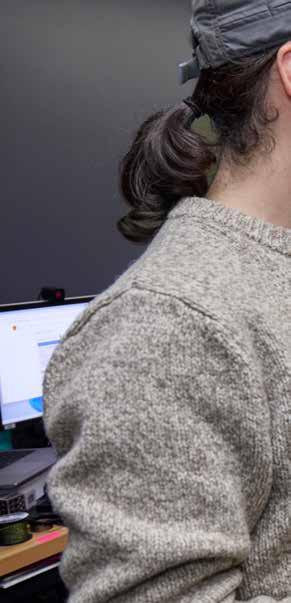
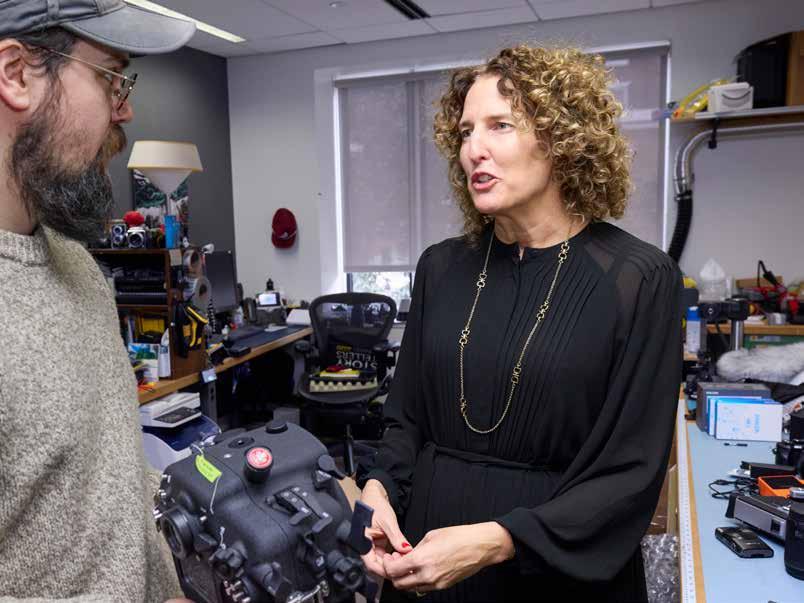
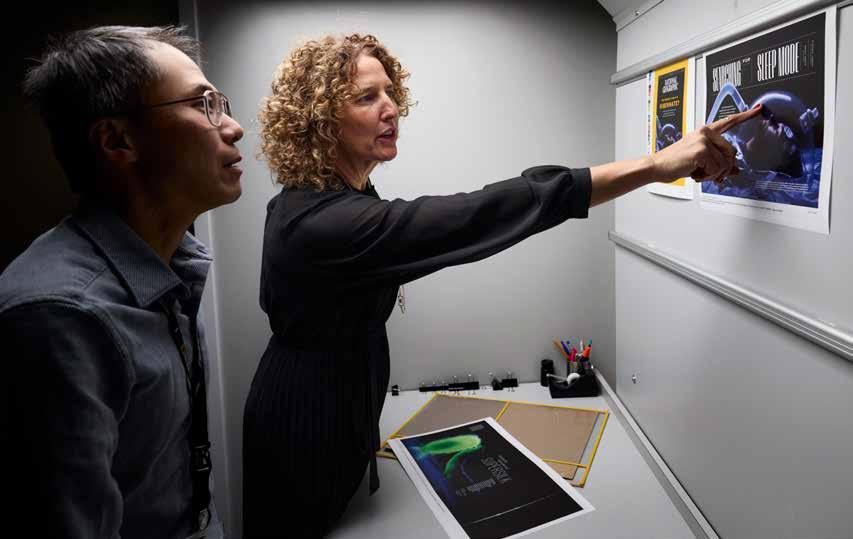
The National Geographic photo department includes a dedicated Photo Engineering team. Assistant Photo Engineer Eric Flynn works within the engineering department alongside Senior Photo Engineer Tom O’Brien, where together they design and build inventive, custom solutions that push the boundaries of how—and where—stories can be visually told.
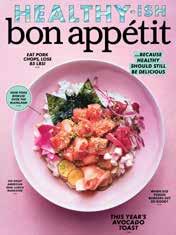

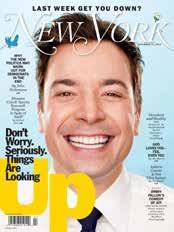
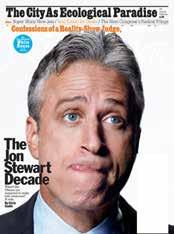
“ I went through a career in photography, covering all kinds of content before coming back to the subjects I’ve most wanted to explore. It’s a dream, honestly.”
whether it’s a fully formed idea or a single outstanding piece.
“If you send me a truly exceptional image, I’m going to track down who you are and explore the rest of your work,” Pollack said. “For us, it has to be something that really stands out— something distinctive and compelling.”
Pollack believes strongly in creating opportunities for new voices in photography. One initiative she supports is the National Geographic Society’s Second Assistant Program, which pairs experienced professionals with emerging photographers, offering them a meaningful entry point into photojournalism and documentary storytelling.
“Shooting for National Geographic can feel out of reach for many,” she said. “I want to help change that. My goal is to make the process more equitable and open doors for those who’ve historically had a harder time breaking through.”
Technical mastery remains non-negotiable at the magazine—particularly in specialized fields like underwater photography. “You can’t just jump into the water with a camera and expect to capture the shot,” Pollack said. “It requires a deep understanding of both the craft and the environment.”
But while technique is essential, it’s the stories themselves, and the work behind the lens, that are central to Pollack’s work. In the past year alone, she’s worked with scientists involved in medical breakthroughs like the first successful pig-to-human kidney transplant; field researchers uncovering new animal adaptations that challenge long-held assumptions; and photographers returning from remote corners of the world with images of beavers reshaping river systems in mere days. All the while, she’s followed ambitious, years-long projects like Yadav’s exploration of tiger migration across India. Each story arrives with its own set of unique challenges, and each demands a visual narrative that can carry its full weight.
“It’s true storytelling. You have to go from the beginning and figure out, ‘How are we going to capture this?’” Pollack said.
For all her editorial acumen, Pollack’s proudest achievements revolve around something beyond the pages of any publication: her ability to foster connection.
“I really care about people and cultures deeply. Every place I’ve gone, I’m proud that I have brought people together and bridged gaps. I’m a good connector,” she said.
This people-first philosophy traces back, in part, to Pollack’s formative years at UMass
Boston. Within the university’s classrooms, and through relationships with faculty who recognized her spark, her dual passions for anthropology and storytelling began to emerge.
“A couple of the teachers I had at UMass Boston really helped steer this career and my love of anthropology. I had an independent study with one professor who was amazing. I just remember so much of what he talked to me about one-on-one. It was a wonderful experience. And a history professor, Dr. Bookbinder— just the way he told stories about World War II brought the material to life in a way I had not experienced previously. I felt like I wanted to make my own documentary films of these stories after I’d come out of his class.”
Those early lessons—about the power of storytelling, the importance of human connection, and the thrill of learning something new—have stayed with Pollack ever since. It’s what makes National Geographic such a natural fit for her: There’s always another question to uncover, another world to explore.
“The opportunity to hear about these fascinating subjects, cutting-edge stuff like new animal adaptations, new archaeology, new ways to think about our world, new discoveries that are changing the way we thought about everything… it’s just fascinating content day to day. I’m constantly learning. That’s the best part. And I hope everyone has some part of that in their day-to-day work.”
“A couple of the teachers I had at UMass Boston really helped steer this career and my love of anthropology.”
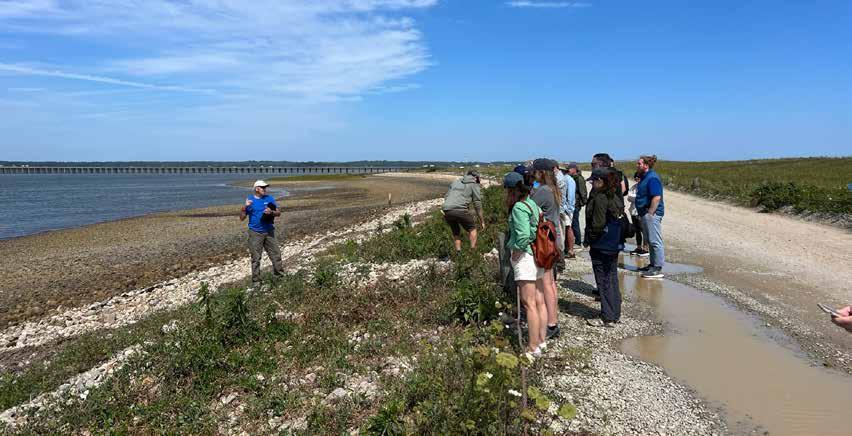
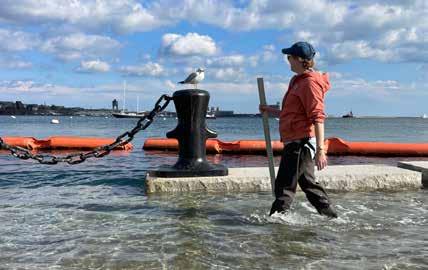

In 2019, the James M. and Cathleen D. Stone Foundation, UMass Boston, and the nonprofit Boston Harbor Now launched an innovative coastal resilience partnership built on a bold idea: that safeguarding Boston’s shoreline from impacts of climate change could not just protect the city, but also make it a more beautiful, healthy, and equitable place to live. With a new $10 million investment, the foundation is propelling the Stone Living Lab into its next five years of impact.
N DECEMBER 2025, Woods Hole Oceanographic Institution released a study reporting that climate change—and the resulting ocean warming and sea-ice melting—is raising global sea levels at a quickening pace.
Rising seas and climate change increase the risk of flood damage for coastal cities in the northeast U.S. and around the world. Boston, which has built out into its harbor on filled marshes and mudflats over its 400-year history, is no exception.
Scientists and planners are increasingly looking to nature for defenses against rising waters and increased storm frequency and intensity. Emulating features of natural systems that have evolved over millennia to withstand sea-level change, nature-based approaches to coastal resilience adapt to changing conditions and offer valuable benefits like increased biodiversity, public access and carbon sequestration.
But experimental evidence showing how nature-basedapproachescanbenefitcold,high-waveenergy environments like Boston’s coast is scarce. The Stone Living Lab is beginning to change that.
BY ANDREA KENNEDY
By Andrea Kennedy
In 2019, the James M. and Cathleen D. Stone Foundation, UMass Boston, and the nonprofit Boston Harbor Now launched an innovative coastal resilience partnership built on a bold idea: that safeguarding Boston’s shoreline from impacts of climate change could not just protect the city, but also make it a more beautiful, healthy, and equitable place to live. With a new $10 million investment, the foundation is propelling the Stone Living Lab into its next five years of impact.
In December 2025, Woods Hole Oceanographic Institution released a study reporting that climate change–and the resulting ocean warming and sea-ice melting–is raising global sea levels at a quickening pace.
Rising seas and climate change increase the risk of flood damage for coastal cities in the northeast and around the world. Boston, which has built out into its harbor on filled marshes and mudflats over its 400year history, is no excep-
tion.
Scientists and planners are increasingly looking to nature for defenses against rising waters and increased storm frequency and intensity. Emulating features of natural systems that have evolved over millennia to withstand sea-level change, nature-based approaches to coastal resilience adapt to changing conditions and offer valuable benefits like increased biodiversity, public access and carbon sequestration.
But experimental evidence showing how nature-based approaches can benefit cold, high wave energy environments like Boston’s coast is scarce. The Stone Living Lab is beginning to change that.
Launched over six years ago with support from the James M. and Cathleen D. Stone Foundation, the lab has quickly earned a reputation as a leading source of data, expertise, and action on nature-based approaches.
“Nature is our best defense to climate change,” said Melissa Hoffer, Massachusetts Climate Chief. “UMass Boston’s Stone Living Lab plays a vital role in developing and demonstrating the efficacy of coastal nature-based solutions. Their research is showing the world that these innovative approaches work—keeping communities, infrastructure, and ecosystems saf-
With increased funding from the James M. and Cathleen D. Stone Foundation, the Stone Living Lab will develop and test a widening variety of nature-based methods for protecting Boston’s shoreline from rising seas—many with side benefits like increased marine habitat and recreational space. Alongside the lab’s education programs and efforts to build international networks of practice, these studies will address local challenges and inform best practices for coastal resilience worldwide.
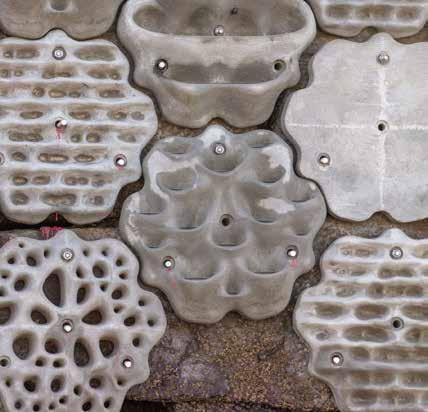
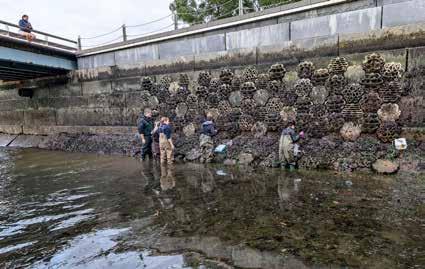
The flat, vertical surfaces of the concrete seawalls that line Boston Harbor offer few footholds for marine life. Since November 2024, the lab has been testing the impact of covering these structures with Living Seawalls panels that mimic the natural shoreline grooves and pools where coastal plants and animals thrive. Co-invented by SLL Director Katherine Dafforn, Living Seawalls panels installed in East Boston and the Seaport are already boosting biodiversity and identifying which panel shapes local species like best. Next, the lab plans to create and test new panels designed to reduce wave energy and erosion and to investigate whether installing panels preferred by water-filtering seaweeds and animals, like mussels, can improve local water quality.
Submerged expanses of scattered boulders break up waves before they reach the shore, reducing storm surges and slowing coastal erosion while also providing homes for many plants and animals. The lab plans to investigate whether installing boulder fields in erosion-prone areas can reduce wave energy, keep sediment in place, and boost biodiversity. Human-made and natural granite boulders will be tested to see which has the greatest impact.
Natural landscapes act as sponges, soaking up excess water that can cause flooding in highly paved urban areas. This project will test nature-based innovations designed to slow down and spread out storm water, allowing it to seep safely into the ground rather than rushing across hard surfaces. (Sponge-like solutions also offer co-benefits like new wildlife habitat and cooling effects.) Experimental approaches could include restoring wetlands, building rain gardens, and channeling stormwater with bioswales, gently sloped, vegetated channels that slow and absorb runoff.
The lab actively seeks new innovations that could work in Boston Harbor’s cold, high-energy coastal environments. Graduate students at the lab comb scientific journals for approaches that can be tested locally, such as oyster reef restoration and offshore kelp farming that flattens waves and provides habitat. The lab is also launching a prize to fund startups and other innovators with promising nature-based coastal resilience concepts.
Boston has become an international leader in urban harbor data monitoring thanks to the lab’s sensor network, which provides real-time wave, water, and weather data used by the city, the public, and scientists to evaluate changing climate, storm conditions, and coastal flooding. With support from the Stone Foundation and the Commonwealth of Massachusetts, the lab is growing its network of sensors, developing new ways to share the information—including an online dashboard and interactive apps—and conducting training sessions with the City of Boston, local neighborhoods, and other relevant stakeholders.
er, and saving millions in avoided costs.”
The lab—a partnership among the UMass Boston School for the Environment, the nonprofit Boston Harbor Now, the National Park Service, the Massachusetts Department of Conservation and Recreation, the Massachusetts Executive Office of Energy and Environmental Affairs, and the City of Boston, in collaboration with members of the Massachusett Tribe at Ponkapoag—is structured to tap the expertise of researchers, educators, government agencies, and community representatives. This collaboration-driven framework is purpose-built to yield practical, evidence-based, and public-minded climate solutions for the region’s coastal communities. Now, thanks to a transformative new investment of $10 million from the Stone Foundation over the next five years, the lab is poised to dramatically accelerate the development and testing of coastal protections. “Time is of the essence. We need more innovation within the field of nature-based approaches.

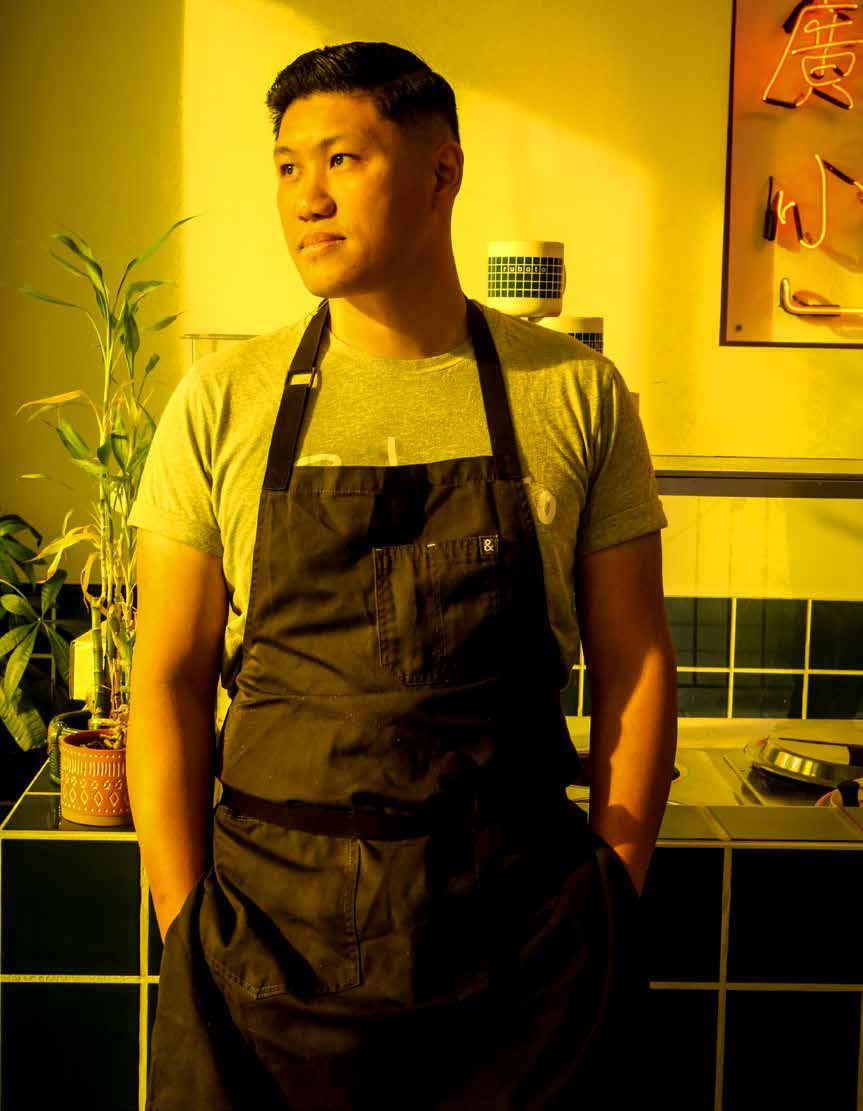
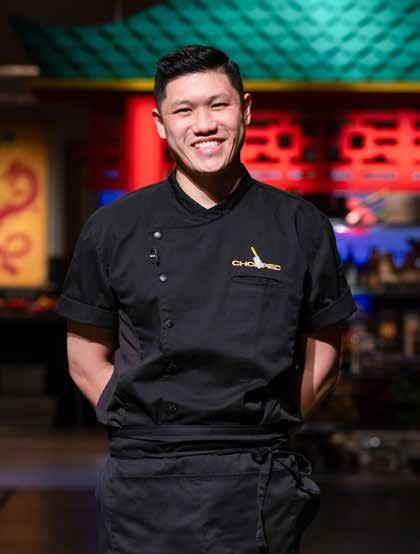
Champion of Food Network’s Chopped, Laurence Louie G’11 shares his journey from UMass Boston grad to nationally recognized chef and acclaimed owner of North Quincy’s Rubato.
BY MIKE DE SOCIO
as he stepped into the
In the aptly named episode “A Little Taste of China,” Louie was tasked with transforming baskets of surprise ingredients— wonton wrappers, pak choi, ground chicken, and the sweet crunch of bingtang hulu—into something unforgettable. Working quickly, he coaxed creativity, elegance, and flavor from every dish, all under the watchful eyes of a panel of celebrated chefs.
As the rounds heated up, so did the competition. Louie’s butterpoached salmon with fried milk breadcrumb and bitter melon pilaf earned praise from the judges in the entrée round. For dessert, he crafted a complex jackfruit tart with milk tea crème pâtissière and a chow mein cookie crumble. Outlasting competitors Katie Chin, Justine Ma, and David Wang, Louie emerged victorious, bringing home $10,000 and national bragging rights to his Quincy-based restaurant, Rubato.
For regulars at Rubato, Louie’s Chopped win was thrilling but not at all surprising. Since opening its doors in August 2022, the café has become a magnet for food lovers from all over Greater Boston, thanks in part to its expansive menu of Hong Kong and
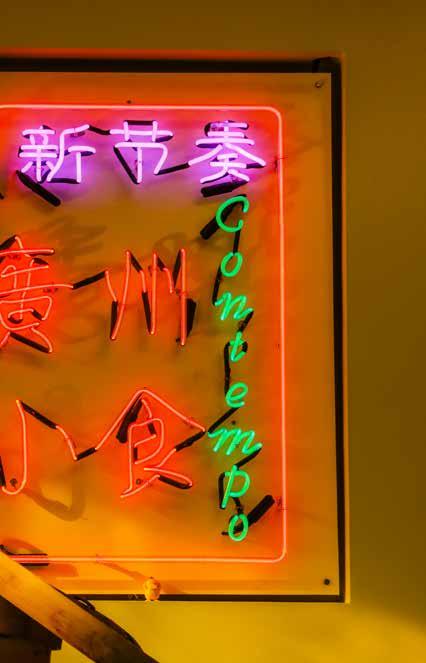
Cantonese comfort food. Housed in the former Contempo Bakery— run by Louie’s mother for more than two decades—Rubato draws a daily crowd for its buttery bolo bao sandwiches, pork-stuffed buns, and Hong Kong–style French toast. The café—and Louie—has scooped up accolades along the way, landing on Bon Appétit’s Best New Restaurants list and earning a spot among Plate magazine’s Chefs to Watch. In 2024, Louie was named a semifinalist for the prestigious James Beard Award—an honor often described as the culinary world’s equivalent of the Academy Awards—for Best Chef: Northeast. Most recently, he was named a contestant for the upcoming season of Top Chef, set to premiere on March 9.
So, how did Louie go from being a UMass Boston graduate in American Studies to a James Beard Award–nominated chef? It wasn’t always a clear path, but it somehow deposited Louie exactly where he needed to be.
His career, during and after his time at UMass Boston, began in the world of grassroots organizing. Louie worked for a nonprofit that served the Chinese community in Boston, which helped him connect
what he was learning in the classroom to practical issues in the city. He continued this work after graduation, and although he found it fulfilling, started to wonder if he wanted to stay in the field long-term.
“I didn’t have the answer to those questions,” Louie said, so he took a year off to travel to China and think about his future. “Food was always in the peripherals, so the year off allowed me to do some internal reflection.” He studied Mandarin, played a lot of basketball, and apprenticed with a local cook who taught him to how to make hand-pulled noodles.
When he arrived back in the United States, he decided to try to pursue a career in food. It would build on his family’s longstanding connection to cooking: His mother owned a Chinese bakery in Quincy for two decades, and food was central to every gathering Louie’s family hosted growing up.
Louie was 27 years old and jumped in feet-first, sending emails and job applications to any restaurant in Boston that had more than a four-star rating on Yelp. He explained to each potential employer that, while he lacked professional culinary
“Food was always in the peripherals, so the year off allowed me to do some internal reflection.”
training, he was willing to work hard to learn.
He was lucky enough to land a job at Oleana in Cambridge, at first completely unaware that its executive chef, Ana Sortun, was a James Beard Award winner. He was also lucky that Oleana’s kitchen proved to be a uniquely supportive and nourishing environment for a young chef. “It was very welcoming and allowed me to grow and really get introduced to a kitchen,” he said. Louie took this foundation with him to London, where he spent years working his way to a head chef position in London’s cutthroat restaurant scene. He was poised to help lead the expansion of a restaurant group there, when
the chance to reinvent the bakery as something new, while continuing to build his family’s legacy in the Chinese community of Quincy.
COVID-19 struck and shifted his path homeward to Boston.
The pandemic decimated the London restaurant world, prompting Louie and his wife to reconsider their life in the city. Around the same time, Louie’s elderly mother called to ask if Louie would come home and take over the family bakery.
“Originally I said, ‘No,’ because the training and the experience I had were more in upscale, sit-down restaurants,” Louie said. “I was very comfortable with an eight-course tasting menu. … It’s kind of like, ‘I’m a real chef, Mom.’”
But setting his ego aside, Louie began to think the opportunity made perfect sense for him: He was maturing as a chef and had
In many ways, Louie was positioned ideally to open a restaurant like Rubato. He grew up in an immigrant family that spoke Chinese, had lived in China for a year, had spent his early career organizing in the local Chinese community, and had even earned a master’s degree in American studies.
“It felt, viscerally, like the right moment,” he said.
Rubato opened in the old bakery space about three years ago now and, despite its format as a small-scale, counter-service restaurant, has made a name for itself as an innovative culinary outpost in Boston.
“I’m not a preservationist; my goal is not to be a food historian,”
Louie said. Instead, he looks at food through the nuanced lens he found in the American Studies program: one that acknowledges the history and influence of Chinese Americans, while also making room for its present.
In this way, the restaurant builds on his family’s legacy of working in restaurants—often out of economic necessity, not necessarily passion—but adds his unique culinary perspective.
“I’m the first generation, at least in my family, that has the privilege to say, ‘Yes, I love food because of that, and I’m willing to take that to a whole other level,’” Louie said, calling the experience “a full circle moment.” “I’m able to put it back into the world in this kind of nuanced way that speaks directly to my experience as a Chinese American.”
And in front of millions on Chopped, he did exactly that.
Christina Fasciana G’99 Commits $500K Bequest to UMass Boston’s Critical & Creative
UMASS BOSTON ALUMNA
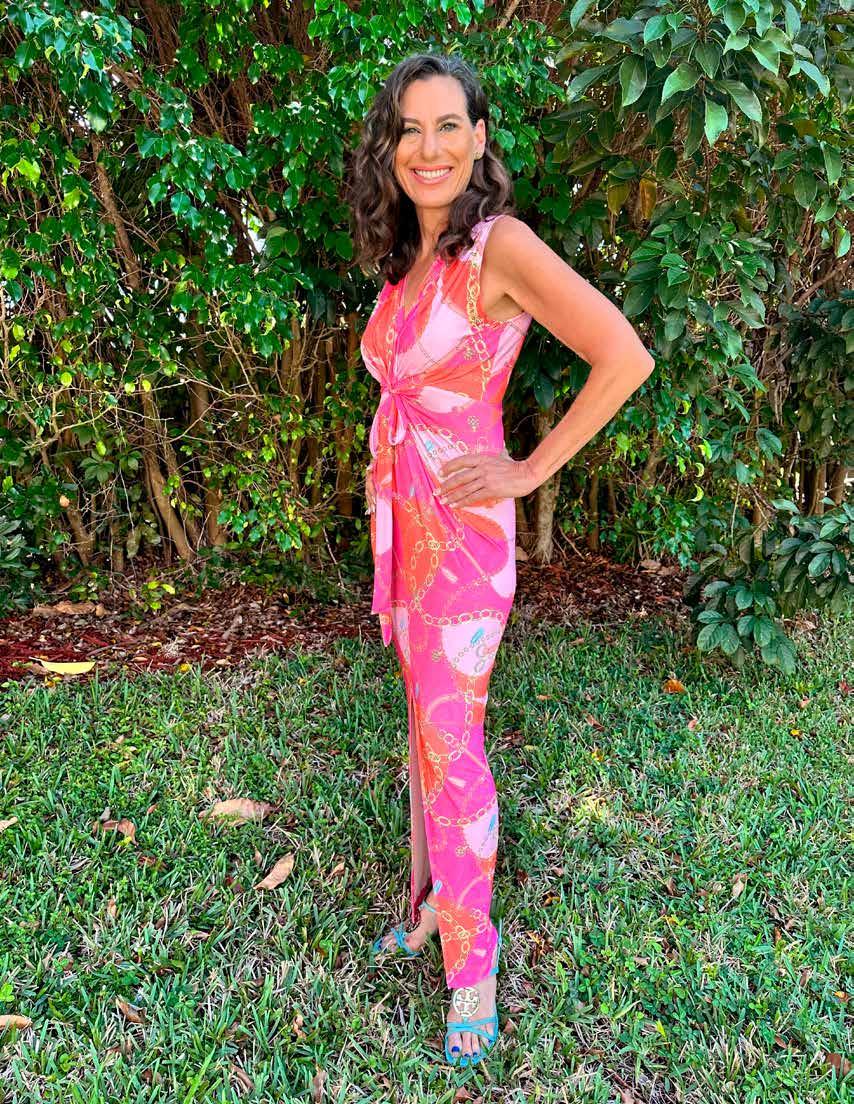
CHRISTINA FASCIANA G’ 99 recently made a decision that will impact countless futures at UMass Boston: a $500,000 bequest to the Critical & Creative Thinking (CCT) program— the same program she credits with reshaping her own path.
“UMass Boston gave me an opportunity to earn my master’s when other doors might have been closed,” Fasciana said. “That degree is the reason behind every career move I’ve made. I wanted to make sure future students have the same chance to change their lives.”
As a CCT student, Fasciana benefited from a graduate assistantship that covered her tuition and provided a much-needed stipend—a lifeline that supported her growth in and out of the classroom.
“That was huge. I was working as a course assistant, doing research, helping faculty— gaining skills and a community while they paid for my degree. I’ve never forgotten what it meant to have that kind of support,” she said.
After earning her master’s degree, she spent a decade in the classroom before moving into behavioral health and addiction recovery. Today, as alumni coordinator at Flagler Health and Wellness and MindFree Therapy Center
in West Palm Beach, FL, Fasciana creates events and support groups that offer hope to families and individuals alike. The CCT program, she said, is tied into everything she does.
“UMass Boston’s Critical & Creative Thinking program gave me the mindset I needed to see problems from every angle and to create solutions where none existed before,” she explained. “I built entire curricula and alumni programs from scratch. That takes creative and critical thinking.”
Fasciana’s gift is also a tribute to Professor Delores B. Gallo, the CCT program’s longtime leader and mentor, whose legacy lives on through an endowment bearing her name.
“Dolores was a huge part of that program. She worked with me as a student, and that’s really where the money is going—her endowed fund,” Fasciana said. “It gives her legacy even more possibilities, and it guarantees this program’s future. There’s no other master’s degree program like it in the world.”
To the CCT students who will benefit from her gift, Fasciana offered this advice: “Embrace the experience. The program has so many dimensions. Be present, soak it all in, and let it shape the way you see the world.”
1960
Rev. Louis Bier G’62 was honored with the Council Duty to God Award by the Boy Scouts of America in June 2025 during a meeting of the Spirit of Adventure Council. He also celebrated the 66th anniversary of his ordination to the ministry of the Evangelical Lutheran Church. Ordained on August 3, 1959, Rev. Bier has served his community with dedication for more than six decades.
Russell Dupont ’71 released his latest book, One Foot in Front of the Other: Poems by Russell Dupont, now available on Amazon. The collection features poems that capture the joys, sorrows, and complexities of daily life.
Demetrios Giannaros ’72 was inducted into the 2025 Immigrant Heritage Hall of Fame, which honors individuals whose lives and contributions reflect the rich legacy of the immigrant experience in America. Giannaros served as deputy majority leader and was the first foreign-born Deputy Speaker in the Connecticut General Assembly. He is also a former president of the World Hellenic Interparliamentary Association and co-founder of the National Immigrant Heritage Center.
Gina McCarthy ’76, former EPA administrator and the first White House national climate advisor, delivered the keynote address at the 2025 Colorado School of Public Health Convocation in May 2025. She also received the distinction of the A.J. Kauvar Visiting Professorship for her distinguished leadership in public health and climate change.
Robert Tucker ’76 published his third novel, Darkness Has a Name, a young adult fantasy set in 1960 that follows a boy named Theo as he’s swept into a battle between two colliding worlds. The book marks a genre shift for Tucker, who previously released two successful detective mysteries.
George Drugas ’82 joined the Commercial and Industrial Banking team at Needham Bank as first vice president, small business team leader. A seasoned strategist with leadership experience at HarborOne and Citizens Bank, Drugas is dedicated to developing new opportunities and strengthening client relationships.
Thomas C. Proctor G’84, director of institutional research at McLennan Community College in Waco, Texas, received the 2025 National Institute for Staff and Organizational Development’s Excellence Award. This prestigious national honor recognizes individuals who demonstrate extraordinary dedication and impact on their campuses.
1990
Vanessa Calderón-Rosado G’94, PhD’00 was named one of the Boston Business Journal’s 2025 Icon Awards: Women Who Mean Business signature honorees. As CEO of Inquilinos Boricuas en Acción, she is a leading voice in the fight against housing displacement in Boston’s South End, steering a nationally recognized community development
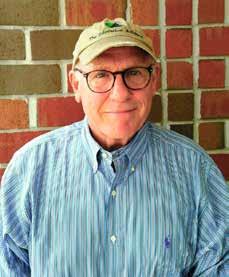
JAMES E. SAMELS ’69 is the founder and CEO of The Education Alliance and The Samels Group, and founding partner of Samels Associates, a law firm serving independent and public colleges, universities, foundations, nonprofit and for-profit higher education organizations across the globe. A noted authority on higher education mergers and institutional strategy, Dr. Samels is also advancing models for charter colleges and vocational preparation, partnering with districts to empower graduatecredentialed high-school faculty to deliver college-level instruction.
corporation. She was also a BBJ Power 50 honoree in 2024.
Sam Folta G’94 completed his 31st year as a professor, teaching at universities and schools across Northeast China. Throughout his career, he has dedicated himself to cross-cultural education and building connections between students in China and the wider world.
Jane Parks Gardner G’99 published The Wreck of the Circus Ship Royal Tar: Tragedy in Penobscot Bay, a nonfiction account of the 1836 steamship disaster that explores the immigrant experience, 19th century traveling circuses, and the perils of sea travel.
Karen Hart ’92 published What Is the Deep State? 10 Steps You Can Take Right Now to End Its Influence: A Citizen’s Guide to Taking Back Power. In this urgent and accessible guide, Hart unpacks the hidden forces shaping government and media and offers readers practical steps to reclaim transparency and accountability. Hart also served as a producer on the 2024 Netflix series The Program: Cons, Cults, and Kidnapping.
Sharon Hartley G’93 retired after more than 50 years in education as a teacher,
principal, policy advisor, and school committee chair. A Mattapoisett native, she began at Rochester Memorial School and later earned her master’s degree from UMass Boston. She served in Lt. Governor Evelyn Murphy’s office, led two Cape Cod elementary schools, and returned to Rochester to advocate for students on the school committee.
U-Meleni Mhlaba-Adebo ’98, poet, educator, and filmmaker, debuted her short film, Reclamation: This is My Country, This is My Land, at the Roxbury International Film Festival in June 2025. Written and directed by Mhlaba-Adebo, the film explores themes of identity, heritage, and connection to land through poetry and spoken word, set against the backdrop of Zimbabwe’s Eastern Highlands.
Rekha Singh G’96 joined Aura as chief technology officer, bringing over 30 years of experience building enterprisegrade, scalable platforms. Prior to joining Aura, Singh served as senior vice president of engineering, analytics, and data science at GoPuff and as vice president of engineering at TripAdvisor.
Gemima R. St. Louis ’93, G’96, PhD’98 was elected as a distinguished fellow of the National Academies of
Practice. This honor recognizes professionals who have excelled in their field and are committed to advancing interprofessional education, scholarship, research, practice, and policy in support of interprofessional care.
Jasmine Trillos-Decarie ’93 was inducted into the Legal Marketing Association Hall of Fame. As chief client officer at Lathrop GPM, a top-ranked national law firm, Trillos-Decarie leads firmwide client-experience strategy and business development.
Jed Davidson ’06, vice president at Brown and Brown Insurance, has been appointed as one of six new board members to the Boston Arts Academy Foundation. The foundation supports Boston’s only public high school for the arts, and Davidson’s leadership will help advance its mission of providing an enriching, arts-intensive education.
Margo Gabriel ’09 was awarded a fully funded fellowship from the European Union and Next Generation to participate in The Break, a prestigious program for women entrepreneurs. As a member of the 2023 cohort, Margo joined 1,000 participants from across the EU in a hybrid training experience that culminated in a month-long work retreat at various locations throughout Spain.
Angelo Gomez, Jr. ’00 was designated by Governor Maura Healey to serve on the Massachusetts Parole Board. A seasoned criminal justice professional with over 30 years of experience, Gomez previously served as chief parole supervisor for Field Services, where he oversaw statewide parole operations and reentry efforts.
Jeffrey B. Lappin CER’05 was appointed director of student services for Medway Public Schools. With over two decades of experience in special education administration, Lappin most recently served as assistant director of student services for Sudbury Public Schools. He brings expertise in inclusive programming, therapeutic services, and trauma-informed practices,
with a strong record of advancing educational equity.
Nicole Lyons ’02, artist and designer, debuted a collection of upcycled apparel and accessories at New York Fashion Week in September 2025. Lyons’ one-of-a-kind pieces are inspired by the urban landscape, graffiti, and classic vintage patterns. She has a background in theater costume design and training and has built a career as both a designer and freelance photo stylist, collaborating with top fashion houses at New York Fashion Week and beyond. Her work has been worn by celebrities and featured in national and international publications.
Jessica Murphy ’00, partner at Tarlow, Breed, Hart & Rodgers, P.C., was named a 2025 “Go To Construction Lawyer” by Massachusetts Lawyers Weekly in recognition of her outstanding work in construction law. An accomplished civil litigator, Murphy focuses on commercial disputes and construction issues and has been a dedicated member of the National Association of Women in Construction for over a decade.
Rick Musiol, Jr. G’00 was appointed chief external affairs officer at The Home for Little Wanderers, New England’s oldest child and family service agency. In this newly created role, Musiol leads government relations, community engagement, and external partnerships to strengthen The Home’s impact across the region.
Iroghama B. Ogbeifun ’07, managing director and CEO of Starzs Investments Company Limited, was appointed to the Governing Board of the Nigerian Maritime Administration and Safety Agency by President Bola Ahmed Tinubu. With more than 11 years of experience in maritime operations, Ogbeifun has grown Starzs’ fleet from three to 11 vessels and played a pivotal role in securing $15 million in funding for business expansion. She also serves as chair of the Technical Committee of the Shipowners Association of Nigeria.
Heidi Siefkas G’04 released Look Up—Global Stories of Resilience, a collection of over 20 true stories from
around the world that highlights how individuals overcome life’s greatest challenges. Inspired by her own journey through personal tragedy—including a broken neck and broken heart—Siefkas explores how people turn pain into purpose through the power of perspective.
Rachel Skerritt G’07 was appointed to the Boston School Committee by Mayor Michelle Wu. Skerritt is the chief strategy officer at Attuned Education Partners, an organization that provides technical assistance to public and charter school systems. She is also a former Boston Public Schools teacher and district administrator and served as Boston Latin School head of school from 2017 to 2022.
Tara Smith ’00, CEO of Smith Farm Sales, was honored with inclusion in Marquis Who’s Who in July 2025 for her expertise in agriculture, accounting, and business. A sixth-generation leader of
her family’s enterprise, Smith has guided the company since 2008, quadrupling revenue and expanding its market reach. She is active in several industry organizations, including the International Fresh Produce Association, and supports initiatives like Brighter Bites and Mind Your Melon to promote healthy food access and farmer well-being.
Yonas Tamene ’07 was named assistant medical director of Medical Services at WillowBrooke at Tanner Medical Center in Villa Rica, Georgia. A triple board-certified internist and family nurse practitioner, Tamene blends clinical excellence with academic leadership, also serving as an assistant professor at Mercer University and a board member at Herzing University.
Eliza Wilson ’09 was appointed to the Brockton Redevelopment Authority by Mayor Robert F. Sullivan and elected to serve as chair through 2030.
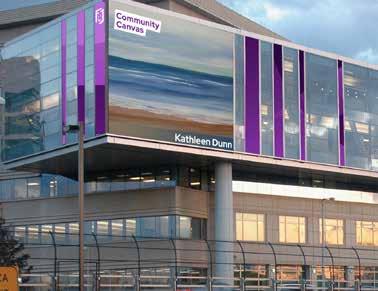
KATHLEEN DUNN ’83 was featured in WGBH’s Community Canvas initiative, which showcases local artwork on the station’s digital mural overlooking the Mass Turnpike. Her painting High Tide was displayed in summer 2025, reflecting the influence of the scenic coast where she resides.
Alexander Lee Bevans ’14 joined Snell & Wilmer’s Tucson office as an associate in the Litigation, Investigations, and Trials practice group. Bevans brings experience in complex commercial litigation, intellectual property disputes, and government investigations, representing clients across industries from biotechnology to financial services.
Elizabeth Chen G’14, PhD’16 was appointed the inaugural program director of the new online Master of Health Administration degree at the UMass Amherst School of Public Health and Health Sciences. A seasoned executive with leadership experience across the biotech, academic, and public sectors, Chen most recently served as secretary of the Massachusetts Executive Office of Elder Affairs.
Haywood Fennell ’10, a U.S. Army veteran, was honored by the Massachusetts Cultural Council for his contributions to the arts. He is the founder of the Tri-Ad Veterans League and the Oscar Micheaux Family Theater Program Company. A published author of four award-winning books and twelve plays, Fennell also leads the Coota Literacy Program, promoting arts appreciation and literacy in the community.
Meghan Fitzgibbons ’13 was named to Vegas Inc.’s 2025 40 Under 40 list, which recognizes rising leaders shaping the future of Southern Nevada. A former critical care nurse from Boston, Fitzgibbons now serves in a leadership role at Intermountain Health, where she oversees operations for a specialized heart failure clinic delivering high-quality, cost-effective care.
Anne Harvey Gross PhD’10, senior vice president for Patient Care Services and chief nursing officer, has been named the inaugural Ning Zhao Chair of Nursing at the Dana-Farber Cancer Institute.
Serap Kantarci G’14 founded 17 Healers Multicultural Mental Health Organization, a Massachusetts-based nonprofit dedicated to providing affordable, culturally sensitive mental health services for immigrant families, international students, and diverse communities. In addition to counseling, 17 Healers offers workshops, psychoeducational programs, and support groups that empower individuals to build resilience, promote wellness, and maintain their cultural identity.
Tariana V. Little ’12, G’17 and her partner, Jonas Meyer ’14, are the proud owners of EmVision Productions, a social impact media agency recently honored as the 2025 Massachusetts Microenterprise of the Year by the U.S. Small Business Administration and the 2025 Small Business of the Year in Cultural Excellence by the Greater Boston Chamber of Commerce.
David Lun ’11, a former UMass Boston student-athlete, was named head coach of the UMass Boston women’s hockey team, returning to his alma mater after leading the Salve Regina Seahawks to their first winning season in nearly a decade. Lun earned NEHC Coach of the Year honors in 2025 after guiding the team to a 17–10–0 record and a conference semifinal appearance.
Krunal Panchal G’15 published a research paper titled “Sensor Fusion Using Machine Learning for Robust Object Detection in Adverse Weather Conditions for Self-Driving Cars.” The project, inspired by his work in self-driving car engineering, explores how AI can tackle real-world safety challenges.
Nivia Piña-Medina G’10 was appointed vice chair of the Urban College Foundation Committee, where she’ll help lead fundraising and community engagement efforts for Urban College of Boston. A longtime champion of bilingual and multilingual education, Piña-Medina draws on her experience as an educator, entrepreneur, and advocate for nontraditional learners. She is also co-founder of the 3 Islas Group, a portfolio of acclaimed Latin restaurants in Massachusetts.
Kate Price PhD ’19 released her memoir, This Happened to Me: A Reckoning, in August 2025. The book traces her journey from a childhood marked by generational trauma in rural Pennsylvania to her academic and personal transformation in Cambridge. Both a personal reckoning and a call to action, the memoir chronicles her path from survival to advocacy as she returns to her hometown to help protect vulnerable children.
Jonas Roessel ’14, founder and managing partner of Roessel Joy, LLC, celebrated a second consecutive year of recognition on the Boston Business
Journal’s Fast 50 list, which honors the fastest-growing private companies in Massachusetts. This recognition reflects Roessel Joy’s impressive revenue growth from 2021 to 2024 and its commitment to delivering innovative, high-impact solutions.
Milton Santiago EdD’14 was appointed interim president of New York City College of Technology, effective July 2025. With more than 30 years of leadership experience across multiple CUNY institutions, Santiago most recently served as interim president of Bronx Community College.
NATHAN HUTTO ’01 was promoted to chief operating officer at The Trustees. Formerly serving as chief people officer, Hutto now oversees statewide operations, including business operations, human resources, education, engagement, and stewardship. He brings a strong background in organizational leadership, having previously held dual roles as COO and CPO at Last Mile Health and served as CPO at LabCentral.
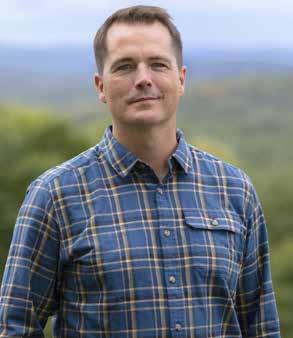

Dudley Waddle CER’13 was appointed director of patient care services at Fountain Palliative Care in Knoxville, Tenessee. A board-certified family nurse practitioner with additional certification in hospice and palliative care, Waddle brings over a decade of clinical and leadership experience to his new role.
Nancy Zhou ’11, owner of Silver Whisk Bake Shop, announced the bakery’s first permanent location in Waltham, Massachusetts. Known for her award-winning custom cakes and inventive confections inspired by her Chinese American heritage, Zhou has built Silver Whisk into one of Boston’s most beloved dessert destinations. The new location opened this past fall, offering pre-booked pickups, weekly pop-ups, and even more creative flavors.
Akiba Abaka ’20 was appointed interim executive director of the National Center of Afro-American Artists in Roxbury, Boston’s premier institution for Black and African diasporic arts and culture. A celebrated theater producer and arts administrator, Abaka was handpicked by the board to lead the center into its next era.
Rifat Canca ’23 co-owns Lazuri Taqueria and Chicken n’ Pizza with his brother and shares ownership of Lazuri Cafe with his father, Ziya, as part of his family’s growing group of halal restaurants in Allston. The group operates four neighboring eateries whose mission is to expand halal dining options in Boston while fostering a welcoming community space that celebrates their Turkish heritage.
Ken Casey ’21, frontman of the Dropkick Murphys, traveled to Ukraine as part of a humanitarian aid convoy. The Dropkick Murphys raised funds for Ukrainian aid efforts by donating 100 percent of proceeds from special merchandise sales. Casey, who also founded The Claddagh Fund in 2009, said the trip was about showing solidarity and seeing the impact firsthand.
Melanie Garvey G’23 was named archivist at the Robert C. Byrd Center for Congressional History and Education in Shepherdstown, West Virginia. A historian and educator with over a decade of museum experience, Garvey previously served as archivist and historian for the Clarke County Historical Association in Virginia. She also teaches history and archives courses as an adjunct at Shepherd University.
JOE MILLER ’14 , a member of the Young Alumni Council, recently proposed to his fiancée, HULERIE MCGUFFIE ’16 , in a surprise moment at the Boston Public Garden. The couple met as student athletes at UMass Boston—McGuffie as an All-American and national champion sprinter, and Miller as a lacrosse captain who also competed on the track team.
Deysi Gutierrez ’21 was named coalition organizer at Partners in Democracy, a nonprofit leading democracy renovation efforts in Massachusetts and beyond. In this role, Deysi builds and manages partnerships with community and advocacy organizations across the state.
Kamala Kiem PhD’23 was appointed dean of undergraduate student life at Columbia College and Columbia’s School of Engineering and Applied Science. She joined Columbia from Clark University, where she served as associate provost for student success and dean of students. Kiem brings more than two decades of experience in higher education, with a focus on equity, student engagement, and academic policy.
Norma Marotta G’24 was named the director of community relations at The Branches Assisted Living in North Attleboro, Massachusetts. Marotta began this new chapter just months after graduating with her master’s degree in management of aging services from UMass Boston’s Gerontology Department.
Zenobia Morrill PhD’21, a criticalliberation psychologist and professor, was recently featured on the Mad in America podcast, where she discussed reimagining psychology to challenge mainstream perspectives and promote social justice. Morrill’s work centers on the psychotherapy process, ethical practice, and expanding the stories psychology tells about distress and healing.
Keelin Severtson G’20 was named the assistant coach for Brandeis University volleyball. Severtson previously coached at Macalester College, helping the Scots achieve their best conference finish in two decades, and spent four seasons at Albion College, where she guided multiple all-conference and all-region honorees.
Sean Terrill G’21 joined the Massachusetts Division of Marine Fisheries in February 2025 as a habitat restoration specialist in the Fisheries Habitat Program. Previously a marine ecologist with the U.S. Army Corps of Engineers, Terrill conducted ecological research and field studies across marine and freshwater environments. In his new role, Terrill supports planning, permitting, and monitoring efforts for collaborative restoration projects throughout Massachusetts, drawing on his extensive field experience in aquatic habitat restoration across New England.
Milton Valencia ’21, criminal justice editor at The Boston Globe, has been selected for the 2025 cohort of ProPublica’s prestigious Investigative Editor Training Program. He joins a national group of 13 journalists receiving intensive training and mentorship to strengthen investigative reporting in newsrooms across the country. At the Globe, Valencia oversees coverage of crime and public safety and has led impactful reporting teams, including the Pulitzer Prize–winning coverage of the Boston Marathon bombings.

It has saddened us to learn of the passing of the following members of the UMass Boston community since our last issue.
ALUMNI
Naomi Gernes Axelrod ’80
Steven W. Besaw ’67
Dorothy Ann Bowler G’71
James E. Boyce G’94
Barbara M. Brooks ’58, G’61
Professor Barbara A. Burke G’79
Amanda J. Buttitta ’97
Richard T. Cawley ’60
Louise Aronian Chinian ’54
John J. Coates ’84
John P. Comerford ’70
Thomas J. Crowley ’75
Peter S. Cullinane ’71
Paul J. Dee ’72
Joanne Marie DePalma ’12
Phillip J. DiChiara ’74
Grace Welchlin Donahue ’59
Edward D. Donnelly ’77
Stephanie A. Doucette ’96
Robin Rogers Drayer ’84
Joyce F. Eno ’89
Norma Ethier CER’95
Lawrence F. Fallon Jr. ’86
Gerald J. Feeley ’88
Richard E. Frankfurt ’71
Patricia A. Sullivan Furia ’69
Stephen Gaspar ’74
Dominic A. Gizzi ’77
Marjorie M. Gorman ’69
Betsy J. Gunn ’84
Kevin F. Hager ’90
James E. Hegarty ’69
Barbara Hennessey ’67
Fraidoon Hovaizi ’83
Kimberley J. Jaeger ’85
Marjorie A. Jones ’72
James A. Kearney ’79
Janice C. Kenneally ’94
Stephen J. Kennedy ’72
Paul F. Kenney ’70
Bernice Tattlebaum Kohn ’65
Mary M. Leno CER’94
Philip G. Levendusky ’68
William G. Leydon ’75
James T. Lodge ’66
Arthur S. Lynch ’69
William J. MacLellan Jr. ’88
Edward C. MacRae ’77
Francis Manning ’58, G’60
Luis F. Martinez ’77
William T. McDonough ’66, G’68
Robert T. Milling ’65, G’70
Timothy J. Murphy ’76
Virginia M. Neely ’50
Daniel F. O’Connell ’90
Diane M. O’Neill ’95
Paul J. Pellegrino ’78
Dominic M. Perrelli ’07
Diana V. Phillips ’95
Walter Punch G’80
Shirin Nouvelle Rhyno ’72
Jeanne Rogers Rosengard ’54
Jon W. Sanders ’09
Albert Shaw ’77
Renee A. Simmons G’13
Linda F. Stepper ’69
Mary Hall Terrelonge ’98
Elizabeth A. Van Atten G’92
Ruth Whitman ’68
FACULTY AND STAFF
Professor Emeritus Spencer M. Di Scala
Mary Heatley
Professor Daniel M. Hodges
Prudence C. King
Professor Mary A. Oleskiewicz
Ludwin C. Brown
Norma Fenochietti
John Finn
John J. Finnegan
Laurence Haar
Broovelt L. Lacet
Dennis Mattos
Marilyn McElaney P’01
Kathleen McCullough Mosco
Guntram B. Mueller
Mary Parker
Robert Redford H’90
John passed away on October 17 in Seattle, Washington, at the age of 76. Born in Boston and raised in Neponset, he embraced life with joy, faith, and curiosity. He attended Boston College High School before graduating from the University of Massachusetts Boston in 1970, later helping to found and chair the Alumni Association during the merger with Boston State College. A lifelong learner, John earned a doctorate and five master’s degrees, with studies at Harvard, the University of Cambridge, and the University of London. John served in the Army and Air Force; worked in Boston government; and joined the Carter Administration, where at the age of 29, he was appointed by President Carter as the founding president of the National Consumer Cooperative Bank. He later led two commercial banks and held senior roles in the investment and insurance industries. John is survived by his wife, Sheila Preston Comerford; daughter, Kayla Preston (Bud Dieken); cousin, Jay McLaughlin (Weezie); and many beloved nieces, nephews, and godchildren. In lieu of flowers, donations may be made to UMass Boston.
After 85 full and accomplished years, Prudence passed peacefully on October 26. Born in New York City and raised in Chicago, she earned her undergraduate degree from Mount Vernon College, later earning a master’s degree from Boston University and a doctorate in education from Harvard. She began her career as a high school teacher known for her humor and ability to connect with students. Prudy spent 25 years at UMass Boston, first as a professor and later as the assistant to the vice chancellor of administration and finance, where she played a key part in designing the Master Plan that brought new buildings to the campus. She eventually returned to her passion—teacher preparation—as director of the Undergraduate Teacher Education Program. Her personal life was enriched by her deep bond with her husband, Dan; together they kayaked, sailed, biked, and filled their lives with lively conversation. A devoted lifelong learner and volunteer, Prudy’s warmth, wit, and courage leave a legacy.
A beacon of love and wisdom, Marilyn passed away peacefully on June 1, 2025, surrounded by her adoring family. Born in Boston to Arthur and Henrietta Ryan, Marilyn was a proud alumna of Girls Latin School and went on to earn both her undergraduate and graduate degrees from Boston College. She later served in BC’s Development Office, reflecting her lifelong commitment to education. Marilyn nurtured her love of learning as an active and joyful member of the Osher Lifelong Learning Institute (OLLI) at UMass Boston, where she remained engaged until her final days. Family was the center of Marilyn’s world. She was predeceased by her beloved husband, Frank, and leaves her children Carol Corbett G’01 (Charles) and Michael (Lorna) McElaney; her grandchildren Andrea, Neil (Julie), and Matthew (Leah); and great-grandchildren Chip and Millie. She also cherished her extended family and many lifelong friends. An avid reader and curious mind, Marilyn’s warmth, kindness, and generous spirit will be lovingly remembered by all who knew her.
The parents of Monica Herwald ’83 modeled a love of learning and a curiosity about the world. In her 40s, with six children, her mother graduated from nursing school as one of the highestranking students in her class.
Motivated by her example, Monica attended college while caring for her mother. She chose UMass Boston because of its reasonable cost, proximity, and excellent reputation. The education she received gave her the confidence to excel.
“I loved UMass Boston,” she said. “It was a real mixed group of people who were older, working people, parents, veterans, you name it. As an older student myself, these were my people.”
After earning her master’s in social work, Monica applied her training to helping people in a range of community-based and inpatient hospital settings, including bereavement support. Much of her career focused on geriatrics and under-served populations: She created an innovative bilingual hospital-based service for Russian immigrants and support programs for a growing Chinese elderly population.
Monica and her husband, Steven Herwald, recently created a $400,000 bequest to establish the Herwald Family Scholarship Fund, open to any student at UMass Boston in need of financial support. Their strong belief in the power of educational access to transform lives was central to their decision to make a substantial investment in the work of the university.
“We don’t have children and want to do something meaningful with whatever is left when we are gone,” she said. “UMass Boston came to my mind first during our estate planning. I would not have been able to get through school without support, and I want to offer that to other people.”
At our annual Beacon Awards Dinner in November, we honored five distinguished alumni who have gained distinction through success in their professions, contributions to their communities, and dedicated service to the university.
SHUBHANKAR “SHUBI” JOSHI ’17
UMass Boston Emerging Leader Award
Joshi’s path from Honors College graduate to first-year pediatrics resident at Wellstar Children’s Hospital of Georgia has been marked by academic achievement and a passion for giving back. Awarded the Chancellor’s Scholarship as an incoming student, Joshi led several honor societies, welcomed new students as an ambassador, and devoted countless hours to volunteer work. Since graduating summa cum laude in biochemistry, he’s stayed focused on his goal of becoming a pediatrician while remaining active in his community—whether volunteering at Mission Grammar School, leading youth seminars, or working with the American Red Cross. After earning his medical degree at the University of Vermont, Joshi matched into a pediatrics residency and continues to stand out for his dedication to both medicine and service.
MARY TREANOR THISTLE ’83
UMass Boston Outstanding Service Award
Thistle has been a staunch advocate and supporter of UMass Boston’s College of Management for more than four decades. She began her career as a certified public accountant before rising to senior leadership in the life sciences industry, most recently serving as special advisor at the Bill & Melinda Gates Medical Research Institute. Beyond her executive roles, she has been a steadfast mentor, workshop leader, and supporter of student success, establishing the Mary Thistle ’83 and Wes Thistle Family Endowed Scholarship and being inducted into the university’s Founders’ Circle in 2024.
ROBERT G. HARRINGTON G’75
Boston State College Outstanding Service Award
Harrington’s career in educational and school psychology has spanned four decades and transformed countless lives. Harrington began his studies at Boston University before earning his master’s degree at Boston State College. He later earned a doctorate from the University of Iowa and became a professor at the University of Kansas, where he taught, published, and focused on topics including bullying prevention and intervention.

Harrington credits his professors at both UMass Boston and Boston State College for inspiring his lifelong pursuit of truth and social justice.
B. STEPHANIE SIEGMANN ’94
UMass Boston Distinguished Alumni Award
Siegmann is a first-generation college graduate whose father, an Air Force serviceman, died when she was an infant. That loss inspired her lifelong commitment to service. After earning her degree in history and psychology from UMass Boston, she went on to serve as a Navy JAG prosecutor and became the first woman to lead the National Security Unit in the U.S. Attorney’s Office for the District of Massachusetts. Now a partner at Hinckley Allen, she chairs the firm’s International Trade & National Security Practice and co-chairs its Cybersecurity, Privacy & Data Protection, and AI Practice Groups.
JAMES “JIM” KELLEHER ’78
Boston State College Distinguished Alumni Award
Kelleher’s career has been dedicated to leadership, mentorship, and giving back. After earning his
degree in management and economics from Boston State College, Kelleher attended St. John’s University School of Law before embarking on a distinguished career at Liberty Mutual Insurance, where he rose to executive vice president and global chief legal officer. He has served as an advisor to the UMass Boston chancellor, supported students through scholarships, and volunteered his time on civic and nonprofit boards including the John F. Kennedy Library Foundation and Breakthrough Greater Boston.
“I am genuinely grateful to receive the Beacon Award from UMass Boston,” Kelleher said. “Boston State College and UMass Boston were instrumental in providing my brothers and me with affordable, purpose-driven educations. Having the opportunity to give back by supporting current and future students is a privilege and, consistent with UMass Boston’s values, a meaningful way to strengthen the university’s legacy for generations to come.”
The 2026 Beacon Award nominations open on February 1, 2026, and close on June 15, 2026. To nominate an alumnus/a from UMass Boston, Boston State College, or any of our legacy schools, please visit umb.edu/beaconawards.
We host several alumni events throughout the country, in over 20 different cities. Check out photos from our most recent events and be sure to join us the next time we’re in your city! Join us at an upcoming event!

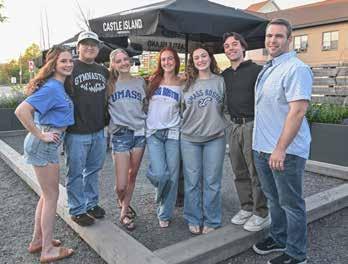
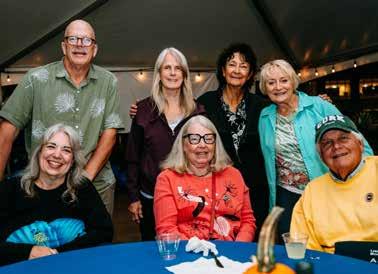
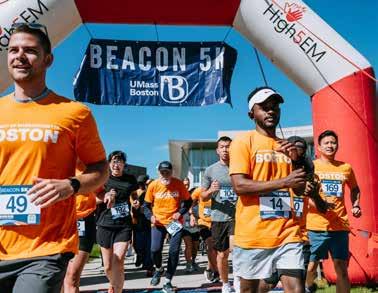
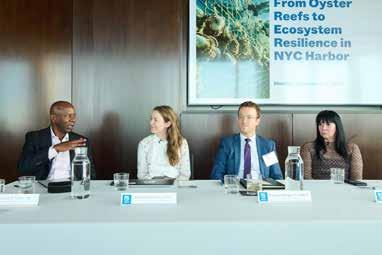
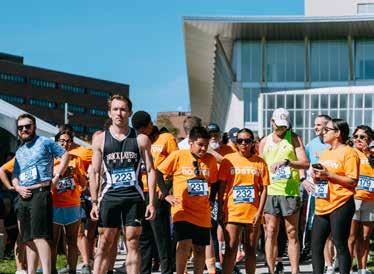
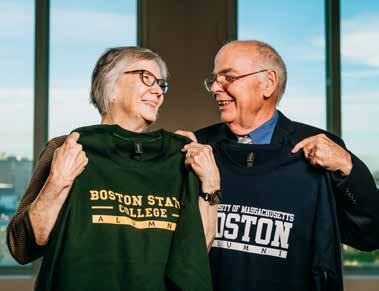
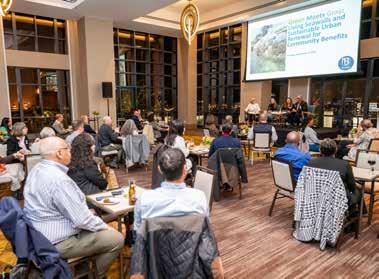
As you flipped through our event pages, you may have seen us in your city. Stay in the know and find an event that fits your schedule and location by visiting alumni.umb.edu or following us on social media.
From gatherings on campus to meetups across the country, our alumni events bring the spirit of our community to life all year round. Whether you’re reconnecting with classmates, or meeting new fellow alumni, our events are designed to spark meaningful conversations and lasting connections. Professional panels, social receptions, volunteer opportunities, and family-friendly celebrations offer something for everyone—no matter where you are or what stage of life you’re in.
We look forward to seeing you soon!

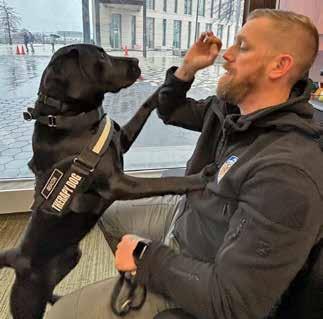
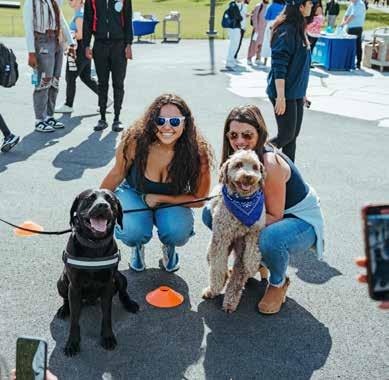

become very popular on campus thanks to a four-legged, furry recruit: Beacon, a black Labrador retriever who joined the department in 2023. As the university’s first comfort K-9, Beacon helps first responders promote wellness and safety for students in crisis and the campus as a whole. “Beacon aims to reduce stress and build connections,” said Student Affairs Vice Chancellor Karen Ferrer-Muñiz. “He’s been a very positive contribution to our commitment for a healthy community.” Beacon is assigned to Officer Mark Cikacz, a nine-year veteran of the UMBPD. “Whether it is a random sighting of Beacon or a scheduled visit, the community has expressed their love of him,” Cikacz said. “We have been able to achieve new and lasting friendships with many active students and staff thanks to Beacon.”
1
Before Beacon came to Columbia Point, he lived with a professional trainer who gave him intensive, structured coaching multiple times per day. His training focused on environmental exposure, agility, and confidence-building drills. Beacon attends one professional training session each month to ensure he stays current with best practices.
EOD training twice per month.
3
After an unconfirmed report of shots fired on campus caused a large first responder presence, Beacon helped UMass Boston Health Services and the UMBPD provide stress relief and mental health support for our students, staff, and faculty.
4
Although he doesn’t have office hours, appointments with Beacon are available to UMass Boston students, faculty, and staff. The UMBPD does its best to accommodate requests to ensure that Beacon is serving the community!
5
Beacon’s ongoing training, veterinary needs, food, and daily care are almost entirely funded by the generosity of the UMass Boston community.
Interested in supporting Beacon? Visit umb.edu/beacon to view a video and learn more!
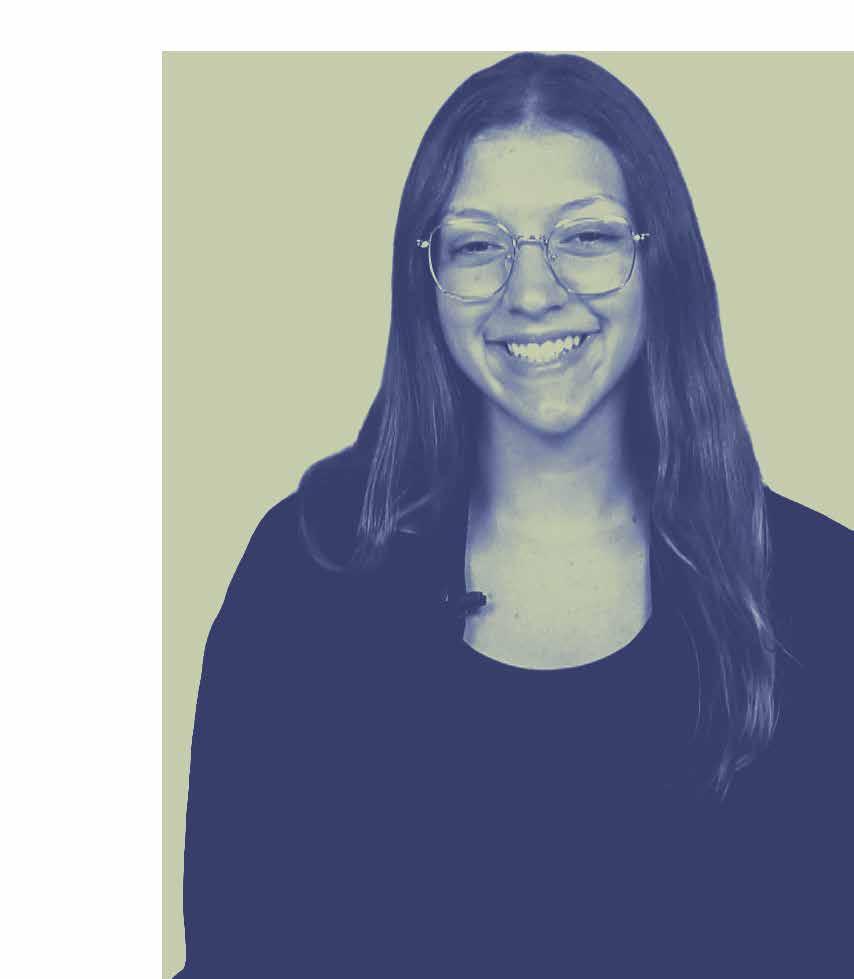
What really kept me going was support and just being able to be connected with different advisors who just poured into me. I don’t think that would have been possible without my scholarships, so I’m really grateful.
– Jackelyne Abranches ’26
Access opens doors. Community builds belonging. Opportunity shapes futures. Confidence carries students forward.
Your gift to UMass Boston helps provide them all.

Make your 2026 gift today at umb.edu/beaconjourney or scan the QR code!
“It’s true storytelling. You have to go from the beginning and figure out, ‘How are we going to capture this?’”