PILOT
IN THIS ISSUE










Engineered for a Pilot’s journey – ladder climbing, vessel transfer and port operations
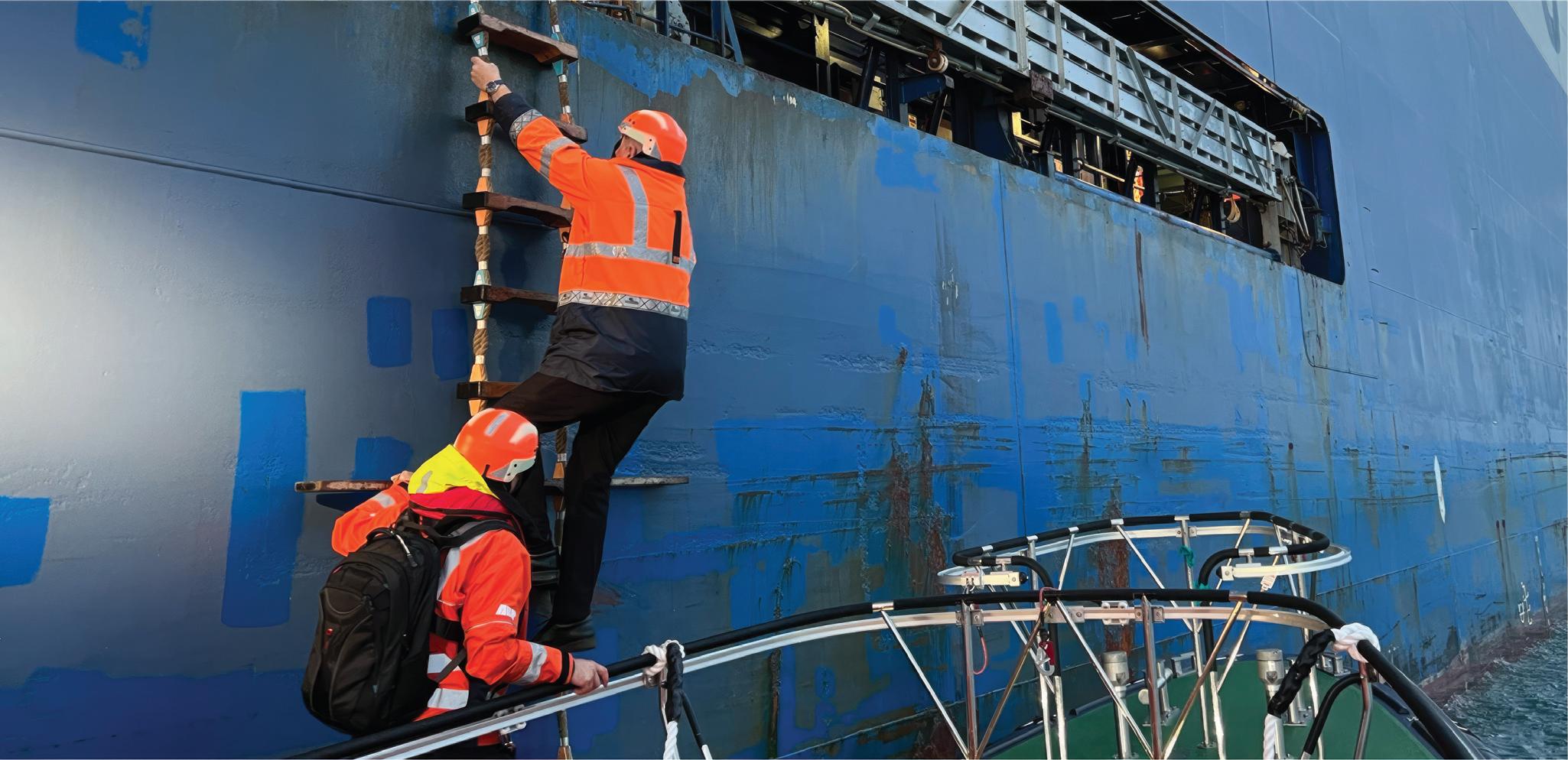
• Operating in ports / quays - EN 16473
• Naval Institute of Medicine
Safe entry into water
4
• Climbing / Boarding vessels - EN 12492
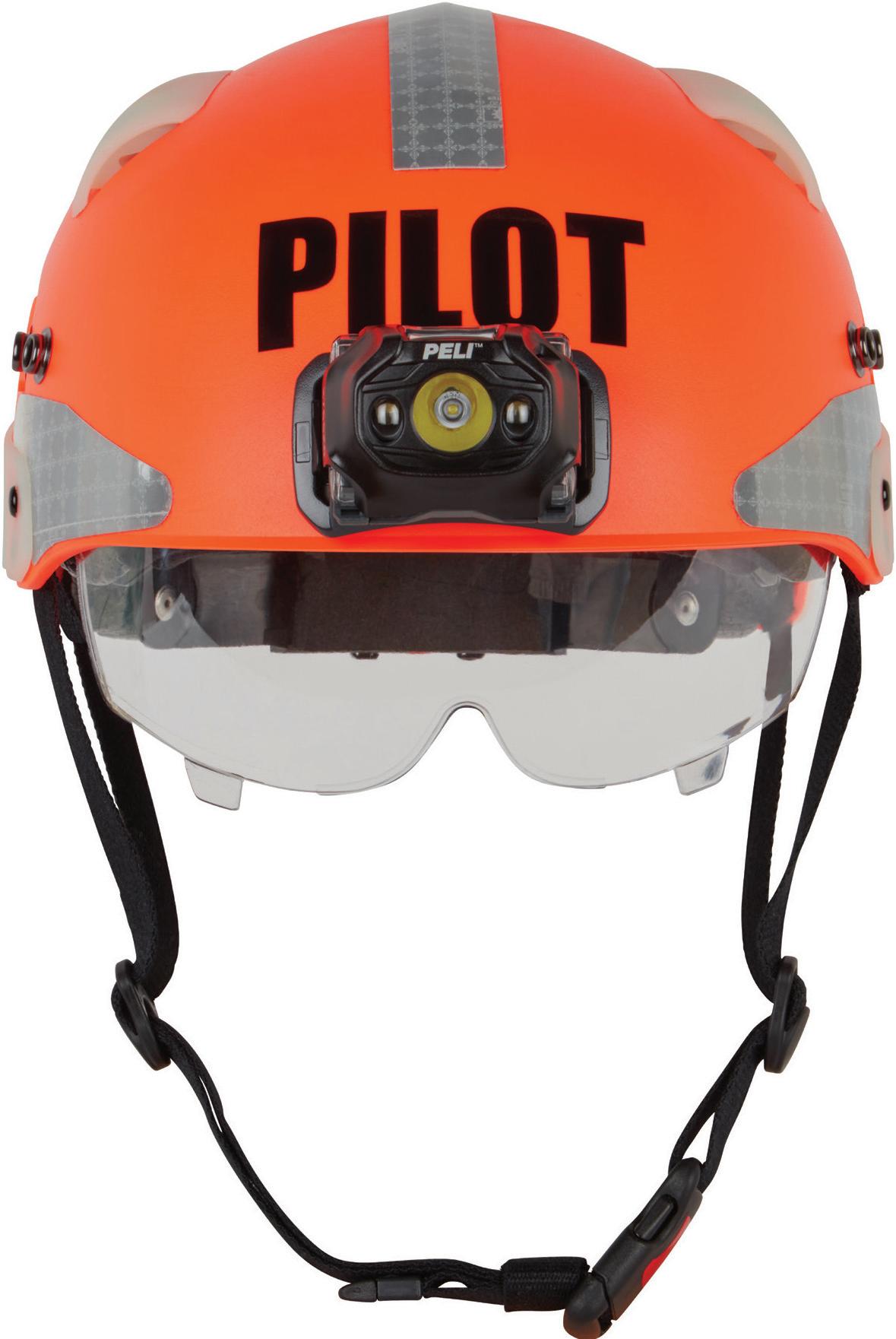

• Marine / Pilot operations PAS 028
Without doubt, a pilot’s job is one of great skill and plays an important role in marine safety. As pilots, we do not think of our job in this way, we just undertake each pilotage act safely and efficiently from one day to the next.
As The Pilot magazine continues to grow and the number of subscribers continues to rise worldwide, I have focused the main theme of this edition on our unique skill base. Numerous magazine subscribers are not pilots but are related to our industry in various ways.
Along with the UKMPA executive board, I would like to thank all the authors who have contributed to this magazine. Our thanks are extended to advertisers who continue to place adverts year after year in the magazine.
When I first took over as editor, I mentioned it was always my childhood ambition to be a pilot. One of the reasons for this was the influence my family had on me when I was very young. I was regularly taken down to the riverbank to observe various skilful manoeuvres in the Humber pilotage district, in particular Hull Docks, River Trent and Goole Docks during the 1990s.
This ambition was intensified in 2004 when Harbour Masters on the River Hull, known locally as the Old Harbour, allowed me to go on board small coastal tankers transiting the river under pilotage. This was a unique skill of ‘back and filling’
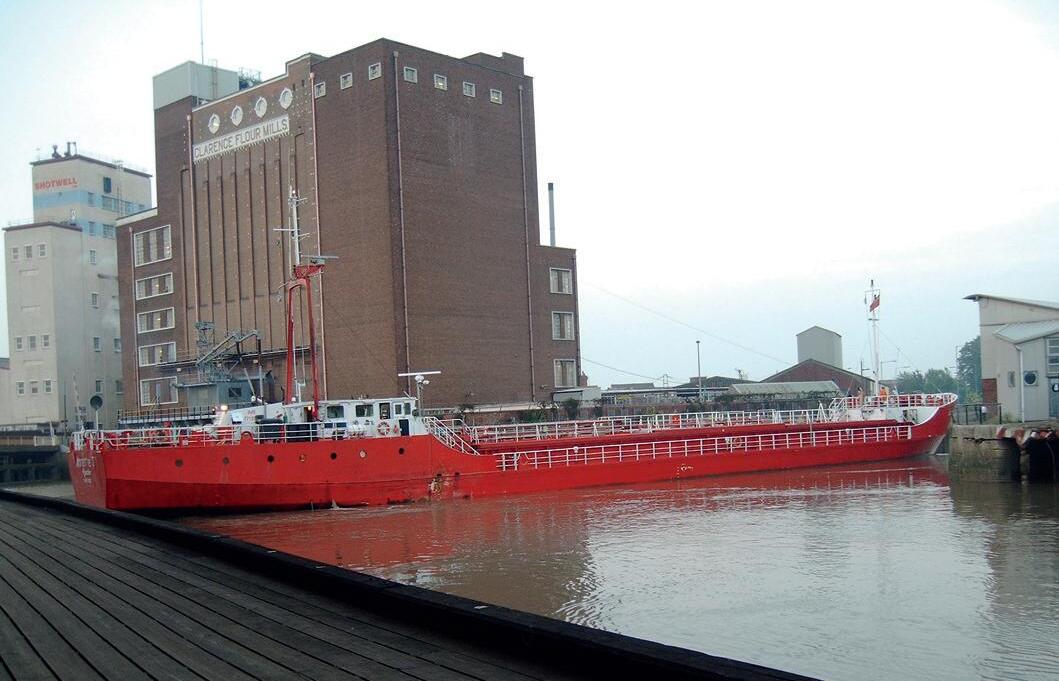
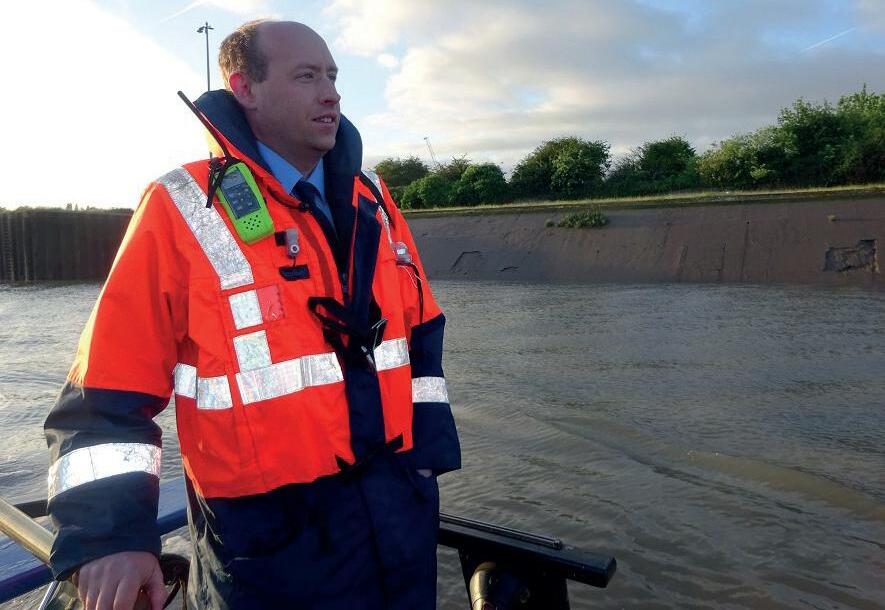
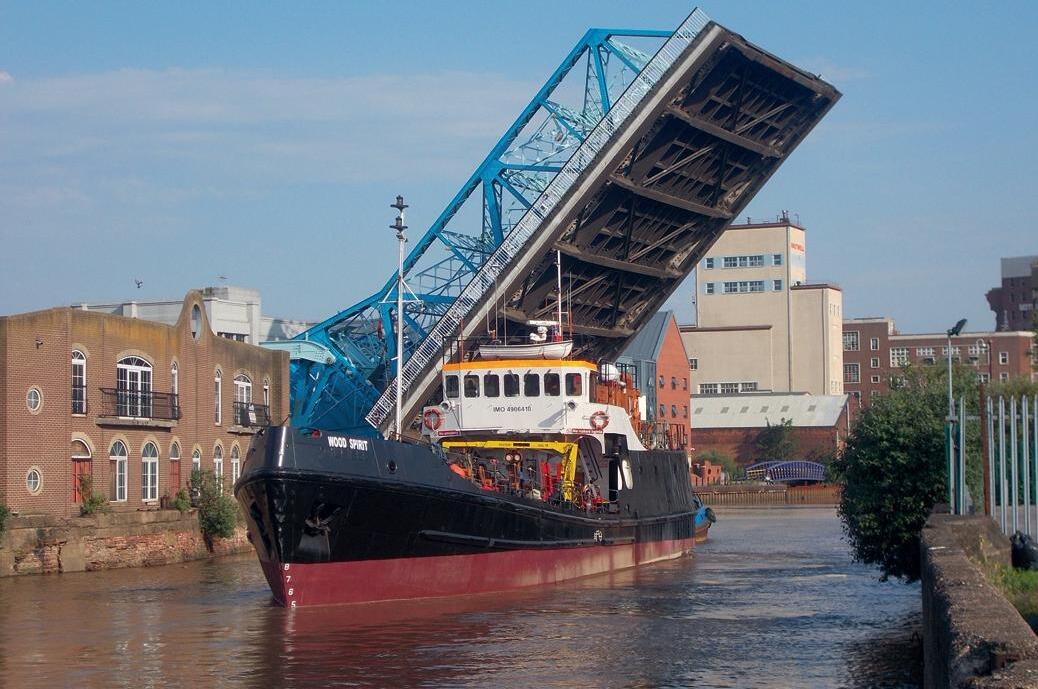
through various bridges without a bow thruster. Sadly, the trade does not exist now but observing the skills of River Hull pilot Tom Berry remains with me to this day.
An excellent article by George & Grant Livingstone provides an insight into shiphandling in this edition, in particular the aspect of ‘feel’ while manoeuvring a vessel.
An aspect of our pilotage role is training and how to transfer our skills to the next pilot. When a pilot trains another pilot, this can be in the form of mentoring. Captain LeGoubin has kindly written an article for this edition on his expertise in mentoring.
While a pilot is under training, the trainer pilot has considerable responsibility legally. This is outlined in another well-written article by Keith McLean of Human Factors.
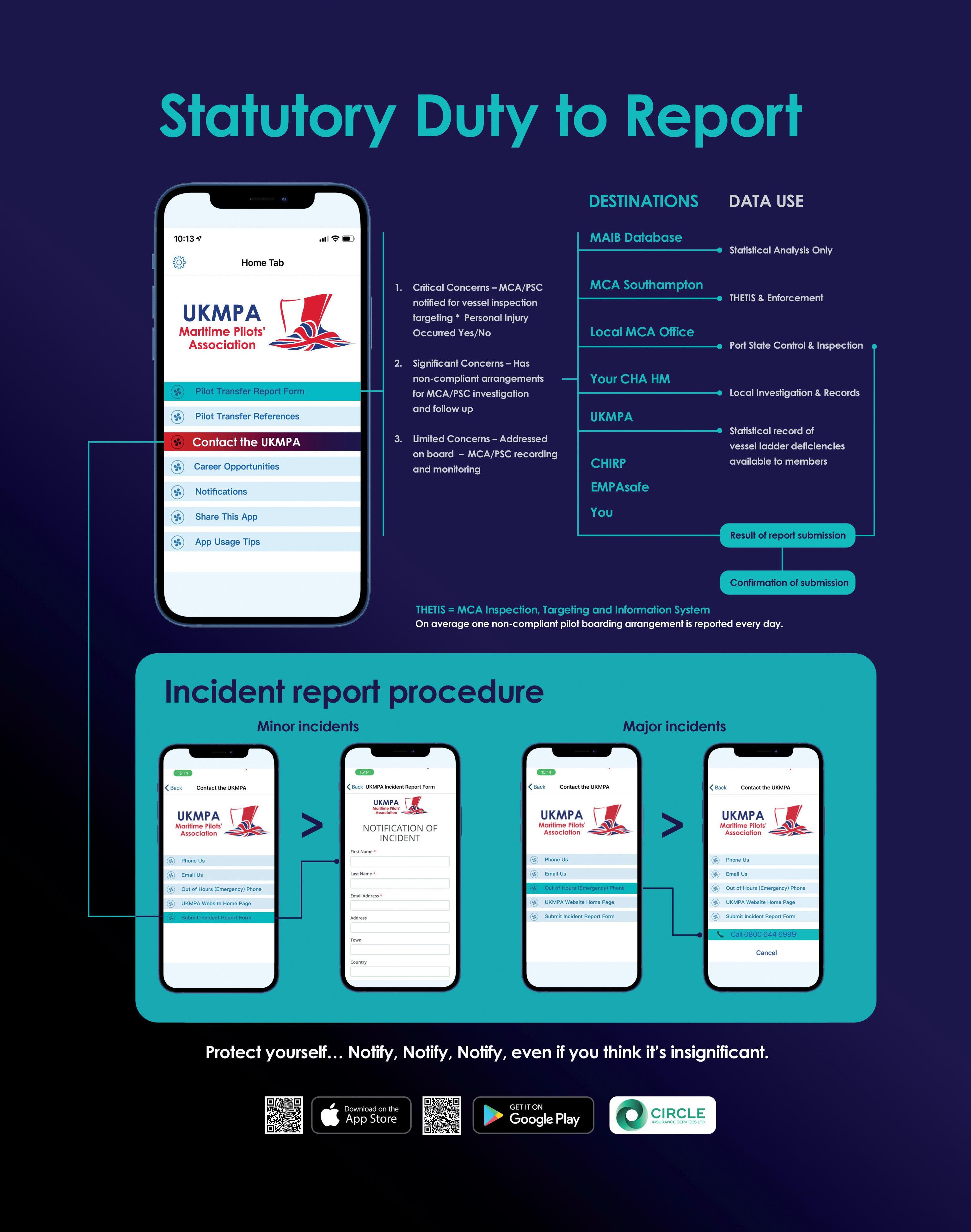
Other articles include how successful the UKMPA Pilot Reporting App is to the MCA when leading to Port State Control inspections. I thank MCA surveyor Alun Thompson for his time writing this article.
As technology continues to influence a pilot’s role, the magazine looks at how technical data is used in accident recordings to assist with new preventative measures being put in place. Oceancaster provides all the details.
The UKMPA is hosting its next conference in November in Bristol. The executive board will be most grateful to see as many pilots as possible attend and would like to say thank you for those, in particular sponsors, who have contributed to the conference preparation so far.

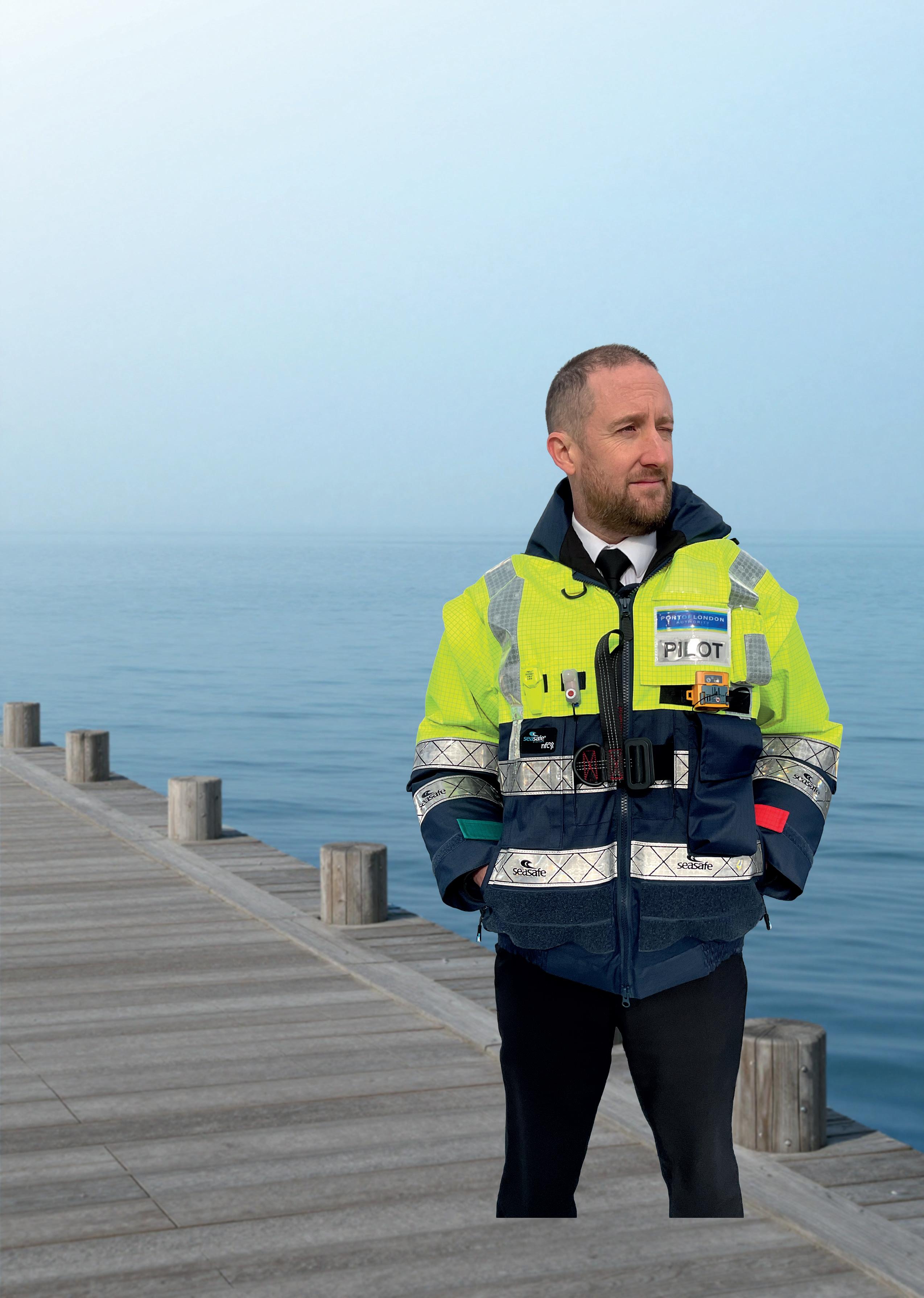
We’re proud to introduce the new 2026 SeaSafe Sea Explorer Blouson Pilot Coat with Zip-Out Sleeves and integral automatic inflation system — setting a new benchmark in marine safety and versatility.
Designed for professional marine environments, the new Sea Explorer Blouson Pilot Coat features:
Zip-out sleeves for adaptable wear in changing conditions
Integral automatic inflation system for enhanced safety
Integrated latest-generation PLB — the Ocean Signal M200
Built for pilotage, port operations, and demanding maritime use
Colour Options


This launch represents the next evolution in professional marine PPE — combining performance, compliance, and innovation in one streamlined solution.
The Strait of Hormuz does not need much introduction. A narrow passage, a chokepoint and the knowledge that one serious incident there can ripple through global trade within hours. We tend to think of our own ports differently – as working environments rather than strategic vulnerabilities. That distinction is worth questioning, and so is the judgement of those who cannot see it.
A pilot is not a cost on the balance sheet of port operations. A pilot is the asset that keeps the berth occupied, the channel open and the port trading. Those who frame pilotage as a commercial burden rather than a commercial safeguard are not making a financial argument. They are making an error; one whose consequences tend to arrive without warning and at someone else’s expense.
Section 2 of the Pilotage Act 1987 makes the obligation plain. Every competent harbour authority has a duty to keep under consideration what pilotage services are needed to secure the safety of ships and to provide those services accordingly. The articles in this issue focus on pilotage skills, insurance outcomes and the legal duties of harbour authorities. They show in detail what that obligation looks like in practice and what it costs when those in authority choose not to meet it.
The Port Marine Safety Code is supposed to prevent standards from drifting. The Designated Person role exists to give Section 2 its practical force, providing independent assurance that pilotage and the wider safety system are functioning as they should.
The best in the industry understand that genuine independence is a competitive advantage, not a compliance burden, and those who have embraced it are recognised as such. The standard has been set. The only question is who chooses to meet it. Stay Safe!
Christopher Hoyle / Chairman, UK Maritime Pilots Association
Chair Christopher Hoyle chairman@ukmpa.org
Vice Chair Jason Wiltshire vice.chairman@ukmpa.org
Area 1 Executive Alan Stroud area1@ukmpa.org
Area 2 Executive Chris Grundy area2@ukmpa.org
Area 3 Executive Peter Lightfoot area3@ukmpa.org
Area 4 Executive Kurtis Rogers area4@ukmpa.org
Area 5 Executive Neville Dring area5@ukmpa.org
Area 6 Executive James Musgrove area6@ukmpa.org
Treasurer Alan Stroud treasurer@ukmpa.org
Secretary James Musgrove secretary@ukmpa.org
Membership Chris Grundy membership@ukmpa.org
Web Captain James Musgrove webcaptain@ukmpa.org
Technical & Training Chair John Slater technical@ukmpa.org
Area 1 Deputy Simon Lockwood deputy1@ukmpa.org
Area 2 Deputy Mike Robarts deputy2@ukmpa.org
Area 3 Deputy Alan Jameson deputy3@ukmpa.org
Area 4 Deputy Ross McCauley deputy4@ukmpa.org
Area 5 Deputy Paul Schoneveld deputy5@ukmpa.org
Area 6 Deputy Matthew Finn deputy6@ukmpa.org
Circle Insurance Ian Storm Ian.storm@circleinsurance.co.uk M: 07920 194970
Insurance Queries Claire Johnstone claire.johnstone@circleinsurance.co.uk
Incident Reports Via UKMPA app insurance@ukmpa.org
UNITE Maria Ball maria.ball@unitetheunion.org
Editor Matthew Finn photos@ukmpa.org
Mental Health James Musgrove area6@ukmpa.org
IMPA VP Paul Schoneveld paul.schoneveld@ukmpa.org
EMPA VP Peter Lightfoot Peter-lightfoot@empa-pilots.eu
Minor incident 0141 249 9914 insurance@ukmpa.org
Major incident 0800 6446 999 insurance@ukmpa.org
Incident Reports insurance@ukmpa.org
Mental Health Support
Safe Haven Hotline 0800 433 2163 Visit www.ukmpa.org for further details
John Cassidy London
Lloyd Mason London
Craig Sneddon London
Sathar Sulaiman London
Gareth Armstrong DSP
Adrian Allery DSP
Michael Irvine Sullom Voe
Thomas Doyle Manchester
Aidan Osmialowski Tees
Chris Parkin Humber
William Beagrie Peterhead
Joe Morgan Peterhead
Geraint Owens Milford
Dominic McCall Bristol
Steve Elias London
Andrew Sime London
Steve Ford London
Tony Crews Manchester
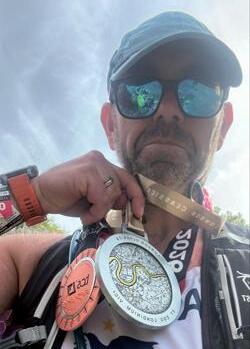
Alan Stroud crushed the 2026 TCS London Marathon, raising an incredible £10,000 for the Sailors' Societythe charity that supports seafarers and their families worldwide. Part of a powerhouse team that collectively smashed £36,000 and for Alan completing the final part of the London Classics. Alan's effort proves that one person's determination can make waves far beyond the finish line. A truly outstanding achievement for a truly worthy cause.
As vessels continue to grow in size and ports operate ever closer to their physical and environmental limits, maritime pilotage has become one of the most critical risk control mechanisms in global shipping.
For insurers, harbour authorities and shipowners alike, high levels of pilot skill, derived from experience and supported by structured, continuous training, are not merely a regulatory necessity but a demonstrable means of reducing claims frequency, limiting loss severity and enhancing overall safety.
Increasingly, marine insurers point to pilotage competence as a decisive factor in port-related claims performance.
Pilotage and the insurance risk landscape
From an insurance standpoint, the most expensive and disruptive maritime incidents frequently occur in pilotage waters. Groundings, collisions, heavy berthing impacts and damage to port infrastructure typically arise during arrival and departure phases –despite these phases representing only a small proportion of voyage time.
International P&I clubs and UK P&I clubs consistently report
By Roger Darkins / Circle Insurance Branch Director
that over 60% of port-related claims involve human factors, with pilotage decisionmaking, communication or shiphandling judgement cited as primary contributors. Where pilots are highly trained and wellsupported, insurers observe sharply improved loss outcomes.
Key pilot skills that reduce claims
Advanced shiphandling and vessel dynamics – ultra-large container ships, LNG carriers and high-windage ships –behave in fundamentally different ways from traditional tonnage.
Simulation-based training now plays a critical role in ensuring pilots remain proficient in handling extreme momentum, hydrodynamic interaction, squat and tug limitations. Insurance claims reviews frequently identify speed mismanagement or delayed corrective action as decisive factors in high-cost incidents – particularly during berthing. Breakdowns in communication between pilot, master and bridge team remain one of the most common causal elements in claims. Effective bridge resource management (BRM) training empowers pilots to establish authority while fostering collaboration, challenging unsafe assumptions and integrating Tugmasters and VTS into
shared situational awareness. Insurers note that ports mandating formal BRM refresher courses experience substantial reductions in contact damage and near-miss escalation.
Pilotage incidents often unfold rapidly. Engine failures, sudden weather shifts, or tug underperformance demand decisive, informed action.
Training that incorporates high-stress simulation scenarios improves pilot resilience and directly reduces claim severity.
Why insurers pay close attention to pilot training Marine underwriters increasingly assess pilotage services as part of their port risk evaluation. Factors typically reviewed include:
• Recruitment and assessment standards
• Frequency and quality of simulator training
• Fatigue and workload management
• Incident and near–miss reporting culture
Ports that can evidence strong pilot training frameworks are widely regarded as lower-risk insureds, often benefiting from more stable premiums, lower deductibles and stronger long-term insurability.
The financial case for training investment
From an insurance perspective, the costbenefit equation is clear. A single port collision involving infrastructure, environmental exposure and business interruption can easily exceed tens or even hundreds of millions in total loss. Against this, the cost of regular pilot refresher training is modest.
Insurers increasingly view pilot training expenditure as active loss prevention, not discretionary spend.
Pilot competence as a cornerstone of risk reduction
The relationship between pilot skill, structured training and insurance-claims outcomes is well established. As ships grow larger and margins tighter, the consequences of error escalate rapidly.
For insurers, ports and ship operators alike, high-quality pilotage training represents one of the most effective mechanisms available to reduce risk, control claims and ensure safe navigation.
A major Northern European port experienced a recurring pattern of low-to-medium-severity berthing damage claims, averaging seven incidents per year, many involving container vessels above 18,000teu. Claims analysis by the port’s P&I club identified late speed reduction and conservative tug deployment as frequent contributory factors.
Intervention:
• Mandatory full-mission simulator refresher training every 18 months
• Focus on large-vessel energy management and tug co-ordination
• Enhanced BRM assessment during pilot licensing renewal
Outcome:
• Berthing damage claims reduced by approximately 35% over three years
• Average claim severity reduced due to earlier corrective action
• Insurers reported improved loss ratios and greater underwriting confidence
An Asia-Pacific port operating in tidal, riverine conditions faced several near-grounding incidents that escalated into high-cost salvage claims. Insurer investigation highlighted inconsistent application of tidal windows and under-keel clearance margins between pilots.
A large, multi-terminal port suffered a major allision involving gantry cranes during departure. Although the pilot was technically experienced, insurers concluded that ineffective communication and unchallenged assumptions between the bridge team and tug masters were decisive.
Intervention:
• Standardised passage planning framework
• Local knowledge workshops focused on seasonal river behaviour
• Simulator scenarios including unexpected tide and current deviations
Outcome:
• No grounding claims recorded in the subsequent four-year period
• Insurers cited the port as a “materially improved risk”
• Reduced need for restrictive insurance conditions during monsoon seasons
Intervention:
• Mandatory BRM re-certification for all pilots
• Inclusion of tug masters in simulator-based training
• Introduction of a challenge-and-response communication protocol
Outcome:
• Contact damage incidents reduced by over 40%
• Improved incident reporting and near-miss disclosure
• Insurers observed improved claims defensibility when incidents occurred
INVESTMENT IN PILOT COMPETENCE IS NO LONGER OPTIONAL – IT IS A COMMERCIAL, OPERATIONAL AND INSURANCE IMPERATIVE.
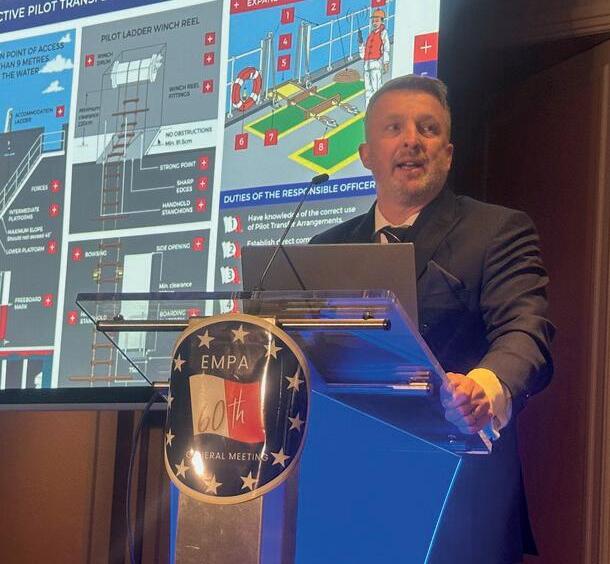
The historic city of Ghent set the stage for a landmark gathering as maritime leaders, pilots and policymakers convened for the 60th general meeting of the European Maritime Pilots’ Association (EMPA). Under the theme ‘Navigating the Past, Steering the Future’, the event brought into sharp focus the evolving challenges and opportunities facing pilotage in an increasingly complex global maritime landscape.
Opening perspectives: a shared vision for safety and service
The meeting opened with addresses from EMPA president Captain Miguel Veira De Castro, Ghent’s vice-mayor Sofie Bracke and Harbour Master Wim Van Bogaert of the North Sea Ports cluster. Their remarks underscored the strategic importance of ports not only as economic engines but also as critical nodes of safety, security, and sustainability.
A compelling intervention followed from IMPA president Captain Simon Pelletier, who highlighted upcoming IMO standards for pilot transfer arrangements set to become mandatory in 2028. Emphasising the profession’s exceptional safety record – over four million pilotage acts worldwide annually, with 99.95% completed without incident – he reinforced the indispensable role of wellregulated, independent pilotage services. Capt Pelletier cautioned against market-driven competition in pilotage, arguing that it risks increasing costs and compromising safety, while reaffirming IMPA’s commitment to supporting its members globally.
Highlights from the EMPA 60th General Meeting, Ghent, Belgium, 14-15 April 2026
A keynote address by Torsten Klimike, head of unit for Ports, Security, and Inland Navigation at the European Commission, provided insight into the EU port strategy. This was followed by a panel discussion exploring the intersection of port policy, industrial maritime strategy and implementation challenges.
Central to the debate was how to unlock available funding and translate strategic ambition into operational reality. Participants highlighted the need for alignment between regulatory frameworks and the practical needs of port stakeholders, with pilotage positioned as a key enabler of safe and efficient maritime operations.
The afternoon sessions turned to human capital resilience and port security within a shifting geopolitical environment. One of the standout themes was the importance of collaboration – particularly through joint tabletop exercises involving pilots, port authorities and other stakeholders.
Pilots were recognised as the ‘eyes and ears’ of the port, playing a crucial role in identifying and reporting security
concerns. This perspective gained further urgency during discussions on emerging threats and operational vulnerabilities.
A particularly engaging session examined ‘The role of the pilot in a changing geopolitical environment’, featuring contributions from pilots across the Netherlands, Poland and Norway. Tomasz Dobrzynski of Gdańsk Pilots delivered a striking presentation on the increasing prevalence of GPS jamming and spoofing in the Baltic region.
The key takeaway was clear: while digital systems enhance efficiency, over-reliance on them introduces risk. Delegates stressed the need to maintain and continually practise analogue navigation skills to ensure resilience in the face of technological disruption.
The Dutch delegation shared insights from extensive tabletop exercises simulating large-scale failures, including a hypothetical 72-hour power outage. Such scenarios highlighted the importance of preparedness and adaptability in maintaining essential pilotage services under extreme conditions.
The day concluded with a formal dinner, offering delegates an opportunity to strengthen professional ties in a more relaxed setting.
The second day focused on EMPA’s internal business and strategic direction. Discussions within the Deep-Sea Pilot Committee addressed concerns regarding unregulated advisors, with efforts underway to resolve these issues in co-operation with EMPA and national authorities. A significant development was the approval of affiliate membership for deep-sea pilots.
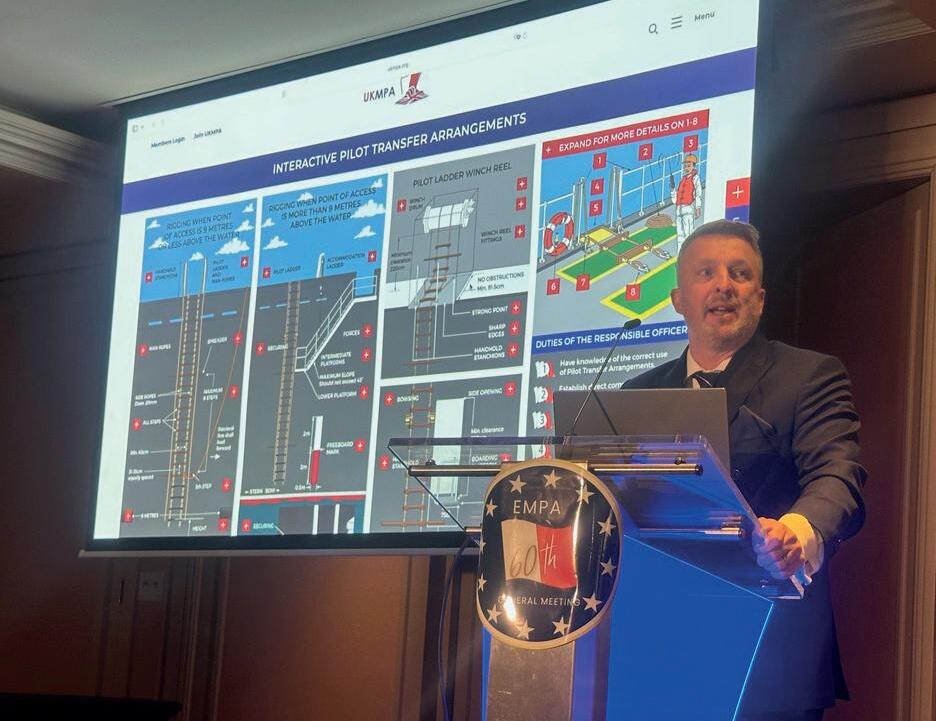
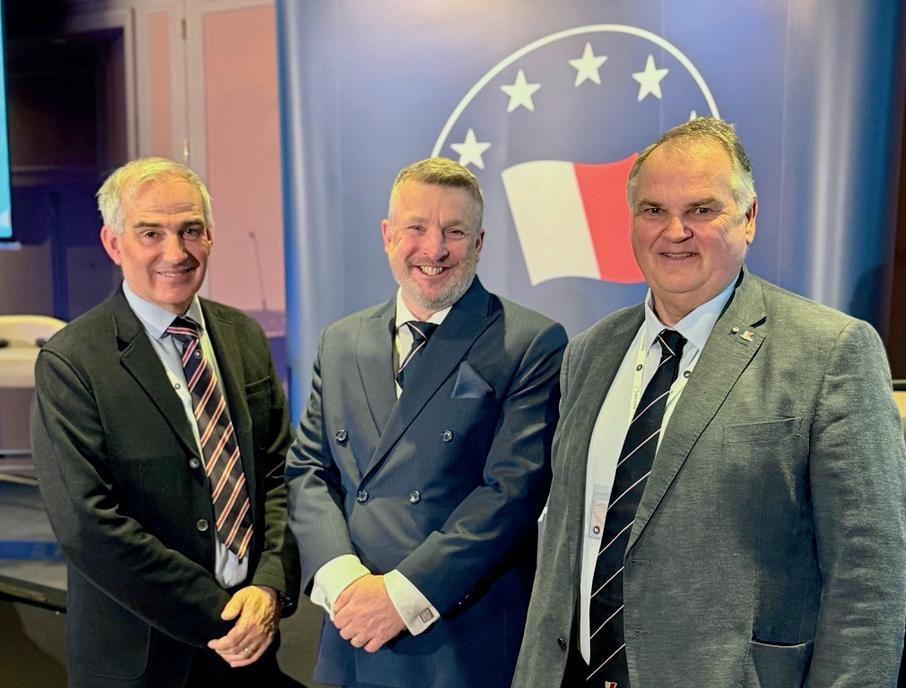
The training & technology session featured presentations on advancements including updates to the EMPA Safe app, developments in the EGNOS satellite
navigation system and a legal analysis of pilot liability across Europe. The latter revealed notable disparities in national regulations, with Spain and Italy reporting
the highest number of claims. The findings reinforced calls for greater harmonisation of liability frameworks across EU member states.
Additional presentations included Chris Hoyle’s introduction of an interactive pilot poster, reflecting efforts to modernise training and engagement tools.
Members approved EMPA’s position paper on ‘Pilots of the Future’, signalling a forward-looking commitment to innovation and resilience. However, concerns remain on the horizon.
Romania’s recent legal setback in the European Court, where judges ruled in favour of increased competition, sparked debate about the broader implications for pilotage independence across Europe. Security concerns were also raised regarding the role of Russian nationals holding pilot exemption certificates (PECs) or serving as captains, particularly among delegates from the Netherlands, Belgium and Norway. The meeting concluded with the approval of EMPA’s accounts and budget, ensuring continued support for its initiatives.
As the maritime sector continues to evolve, EMPA’s role in shaping policy, promoting safety and supporting pilots remains vital. Plans are already underway for future gatherings, including a sailing competition in Marseille in early May 2027 and the next general meeting on Spain’s Costa del Sol.
From regulatory shifts to technological disruption, the discussions in Ghent made one thing clear: pilotage stands at the intersection of tradition and transformation. Navigating this balance will be key to steering the future of safe and sustainable maritime operations.
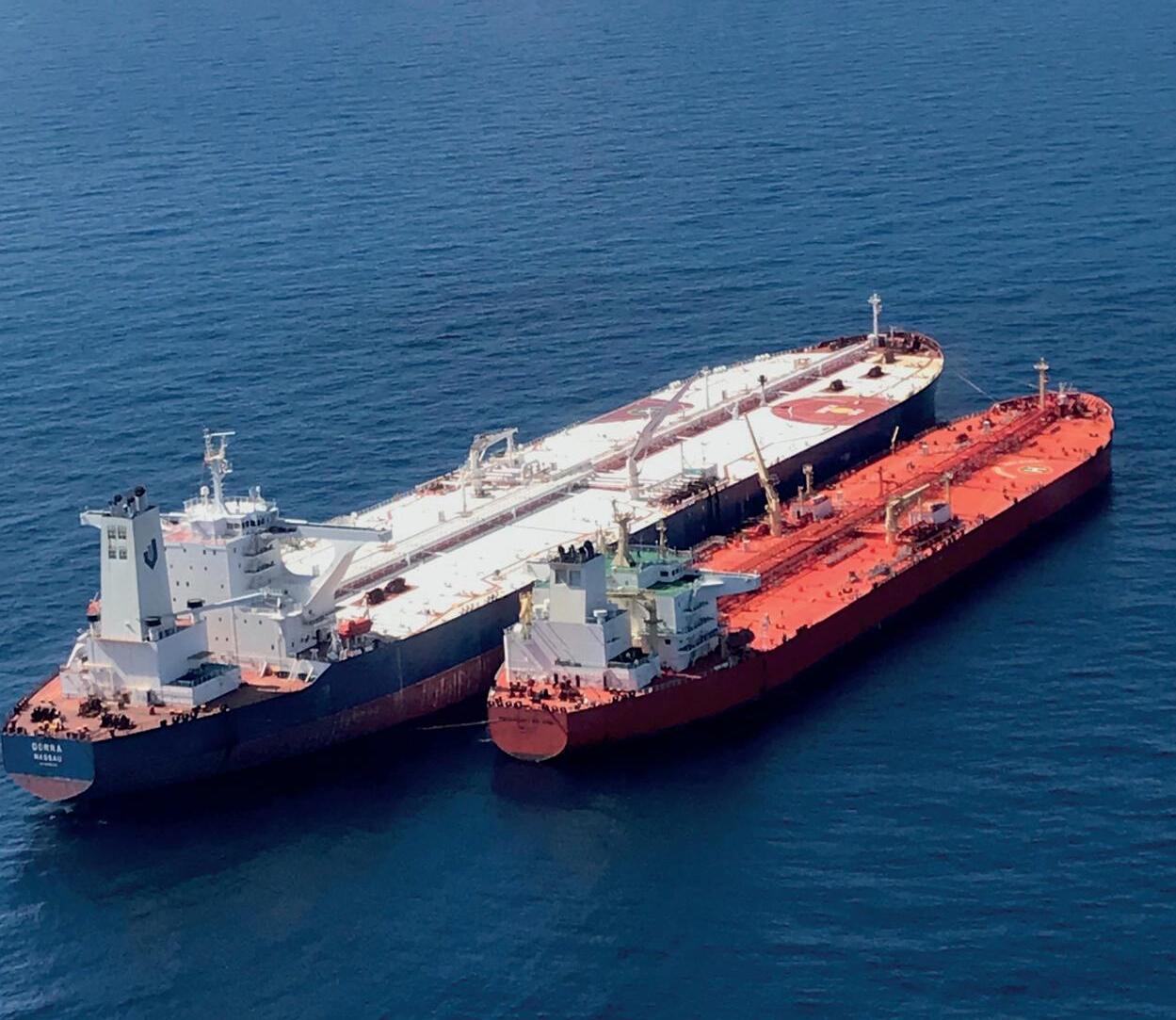
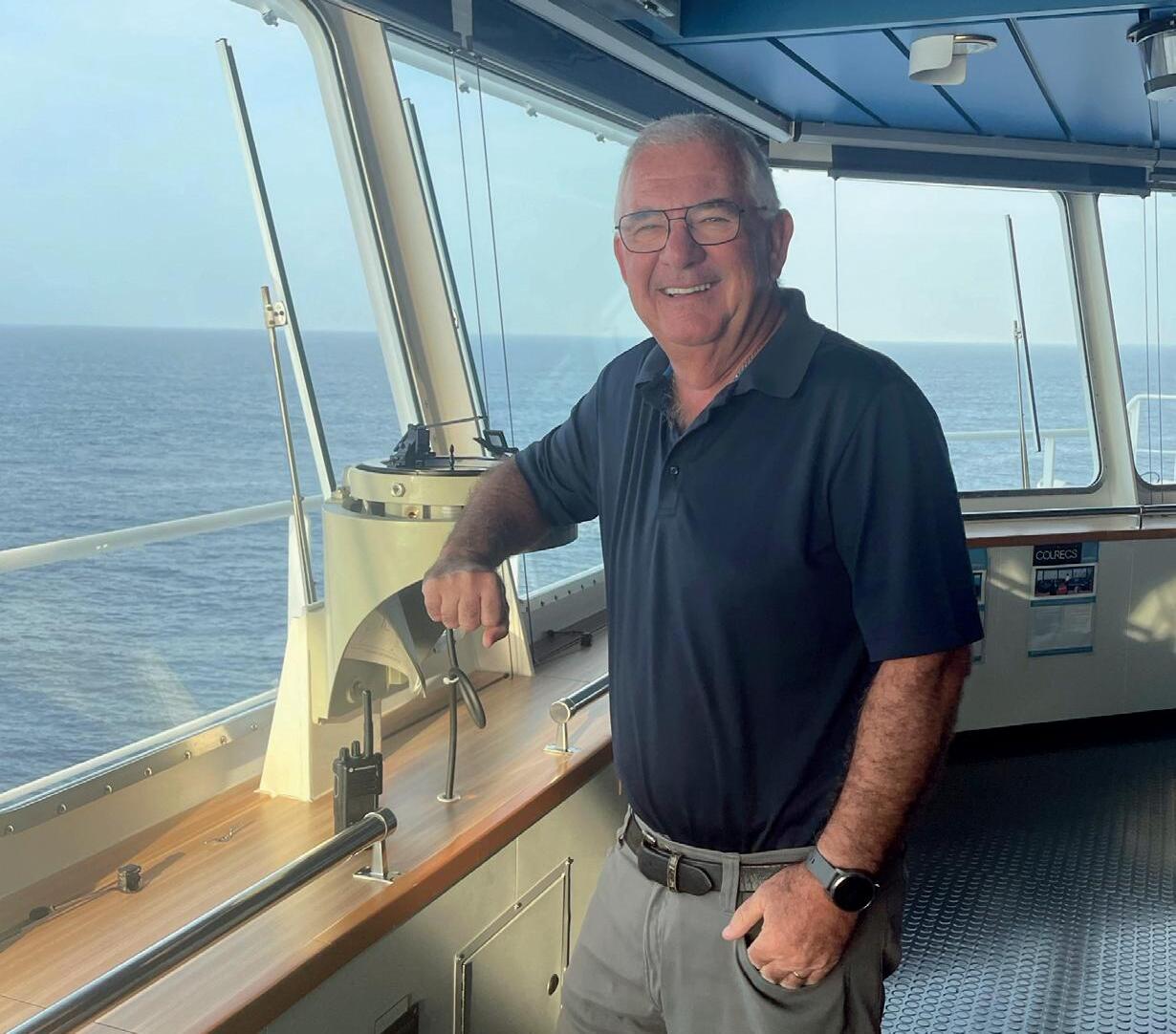
We all know that piloting is one of the oldest professions, but I believe mentoring, that is the sharing of experiential knowledge (knowledge gained from experience and reflected upon) probably precedes piloting by a significant time.
The Greeks are well known historically as some of the first seafarers and the work functions of a pilot in Greece can be traced back to when locally experienced harbour captains, mainly local fishers, were employed by incoming ships’ captains to bring their trading vessels into port safely.
References to pilots and pilotage can be found in books from as far back as the 6th century BCE and references are found in some of the well-known and major works of Greece since then. The Oxford English Dictionary describes a mentor as ‘an experienced and trusted advisor’. It sources the origin of the word as from the name of ‘the adviser of the young Telemachus [in Homer’s Odyssey]’. So, it’s possible that piloting and mentoring originally came from the same geographical area.
Some pilotage organisations have a more formal system of mentoring where trainee pilots are allocated a senior pilot
to be their mentor, who will help and guide them through their training and often beyond. Generally, pilots who become mentors do it because they want to, not because they have to.
When I joined the Port of London Authority (PLA) as a trainee pilot in April 1999, they did not have a formal system of mentoring in place to complement their training programme. As part of the programme, I was required to do 50 trips prior to authorisation and, to be honest, I can’t really remember many those trips. What I do remember is many, many of the pilots I tripped with. I believe this is because of the experiential
knowledge they shared with me and the difference it made then and now. I could list their names, but I won’t as I know some of them may be reading this and I don’t have their permission, but they know who they are. To me, those pilots were my mentors.
Not all pilots were good at this and one or two (literally) did not want you there and did not want to share their knowledge. Most were happy for you to be on board and shared their experiential knowledge as they felt able. It didn’t matter how much as each “gem of wisdom”, as a friend of mine so eloquently put it, helped me build a strong foundation of knowledge sufficient to become London pilot No241 and which, although I moved on from London Pilotage many years ago, I am still building on today as an STS mooring master and pilot.
It wasn’t just my initial trips; it was all through the four classes up to Class 1. When as an approved pilot I was considering doing something out of the ordinary or stepping out of my comfort zone, I would seek out one of the senior pilots and run what I was considering doing past them. They took the time to help and offer me advice, even if they didn’t have the answer. Although the term probably
hadn’t been invented then, there was a ‘culture of mentoring’ within the PLA, which I hope still exists and, to some degree, exists in every pilotage organisation globally.
Is there a place for mentoring in today’s new-generation pilot training where so much technical information is available at our fingertips through our PPUs, mobile phones, etc? I believe there is. YouTube is a wonderful tool for learning but watching someone manoeuvring a ship online or even in person is not the same as doing it yourself under the watchful eye of an approved pilot who is prepared to let you have a go but will not let you get into too much trouble or scare the Master.
How many of you reading this remember when you were tripping and you got to put your first vessel alongside as a trainee pilot? Most, if not all, I am sure. I certainly do: a fairly small car carrier onto Purfleet lower berth on a flood tide. Pilot MW, if you are reading this – thank you.
This is the difference between teaching, coaching and mentoring. Teachers are paid even if their pupil fails. Coaches have a vested interest and are from outside the organisation. For mentors, you do this from within the organisation and because you want to, not because you must. I have always held that there is no designated reward for mentoring, but this caused quite a lot of discussion and, at times disagreement, as some believe there is. That’s fine; it’s just my opinion.
Mentoring is not just practical. So much experiential knowledge can be passed on during an informal conversation. Just being open when you are asked a question or engaging a mentee in a conversation while traveling to or from a job can be so beneficial.
Many seafarers say to me that mentoring is not for them, they could never do that. That’s OK, it’s not for everyone, although personally I believe everyone can be a mentor if they want to. I am not asking you to be a long-term mentor or to enter a professional relationship with your mentee; I am just asking you to give it a go.
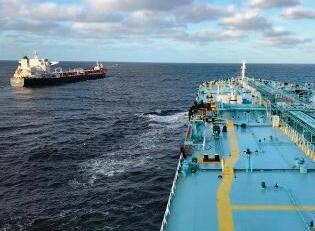
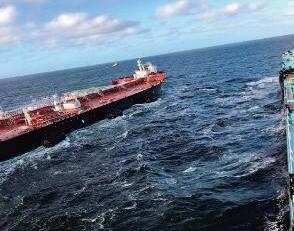
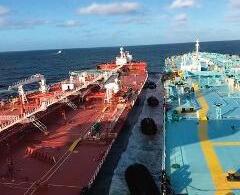
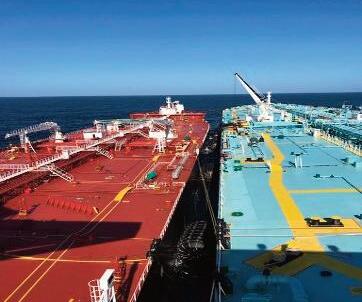
Start small and share a piece of experiential knowledge on a skill you do well. Perhaps it’s the best way to approach a difficult berth or how to allow for the windage on a high-sided carrier – just two examples; the list is endless. This may come from a near miss
©
in your past (as my examples do) or an incident, but it is the knowledge that you are sharing, not the actual experience, so there is no embarrassment. It’s just you sharing your knowledge so it doesn’t happen to someone else.
What knowledge you choose to share, how much and how you do it is entirely up to you. We are all individuals; what works for me may not work for you and vice versa. There is no blanket approach and the mentee must fit in with your style of mentoring, not the other way around.
Don’t be afraid to praise, as you have been doing this for a while and they are just learning. I have learnt recently when undertaking my instructor training that if you do need to be critical, use the ‘ham sandwich’ approach. Start and end on a positive note and keep the critique to the middle.
We all want to be patient, calm and collected when mentoring, but believe me it is not easy especially when things are not going as well as you hoped. When to step in and take over is a decision only you can make, although the Master’s body language may be helping with your decision. Try to do this in as gentle a way as possible so as not to damage or destroy your mentee’s confidence.
“I’m sorry, I didn’t realise the conditions were as strong as this” or something similar goes a long way as you take over. Do keep your mentee with you and talk them through what you are doing to counteract the conditions if you feel able.
Outside a formal mentorship scheme, mentoring in a pilotage organisation needs to come from within and to grow organically because people want to take part, not because they have to. I hope that your employers at the highest level believe in mentoring and in the value of having a culture of mentoring within the workplace. Those who want to be an informal mentor should encourage, recognise and support them, but please don’t insist on it, audit it or, even worse, create a mentoring check list (which I have seen suggested).
Mentoring is a system of knowledge transfer as old as seafaring itself. I believe as masters of our trade we have a traditional duty to pass our experiential knowledge on and give our next generation of pilots the opportunity to learn from our experiences, just as we did.
I hope that all of today’s new generation of pilots have access to their seniors’ experiential knowledge, just as I did through mentoring (or whatever you want to call it). That ‘gem of wisdom’ that you share could save a person’s life, avoid a collision or prevent a grounding. Maybe that’s a bit dramatic but perhaps that trainee pilot will drive home tonight smiling and really looking forward to tomorrow.
By Captain Andre L. LeGoubin MNM MA FNI
By Grant & George Livingstone / retired pilots, authors of Shiphandling; The Beautiful Game
There are important common denominators for shiphandlers to be mindful of when transiting in shallow waters and confined port spaces. There are 8 representative squat formulas cited below from the study – Eryuzlu, Huuska, Guliev, ICORELS, Hooft, Yoshimura, Romisch and Soukhomel.
The first and possibly foremost is appropriate speed. The student shiphandler may be surprised to learn that ‘appropriate speed’ is hotly debated among shiphandlers. As with every element of shiphandling, appropriate speed is dependent on numerous varying factors. If the transit is close to a final berth, for example, appropriate speed is dependent on distance off the berth. The closer to the final berth, the slower the ship speed. Some speed over the ground is required to get alongside any berth but must be zero when alongside the berth. It is common for any veteran shiphandler but, when written, the challenge is evident. The student will never get the ship alongside the berth if they do not continue moving towards the berth. All the while, the veteran shiphandler is admonishing “don’t hit the dock!”
Appropriate speed while navigating in shallow water is dependent on several factors but as a general guideline, it is relative to the depth and width of the waterway’s UKC, the draught and beam and the displacement of the vessel transiting (and the wind and current), visibility and traffic.
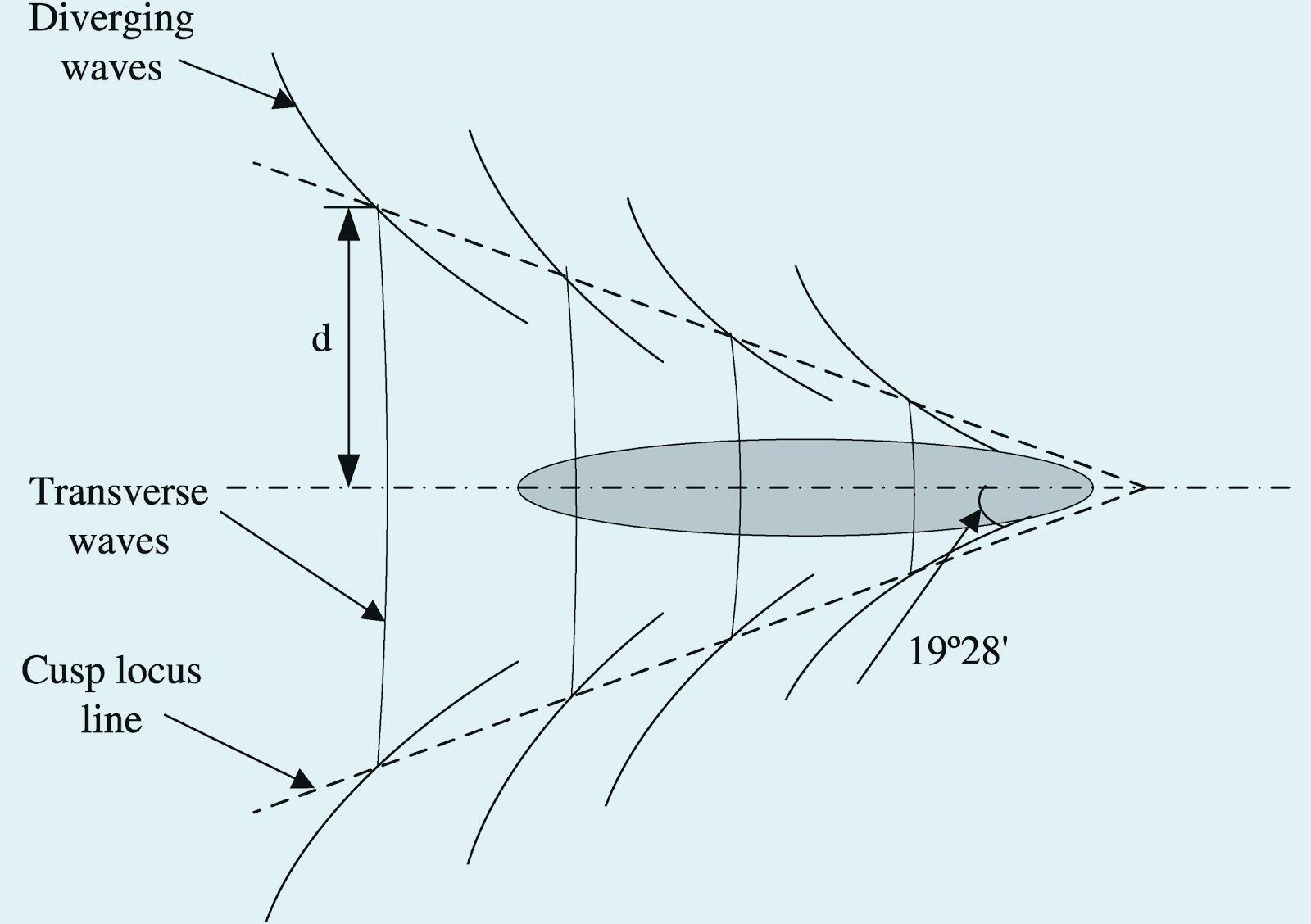
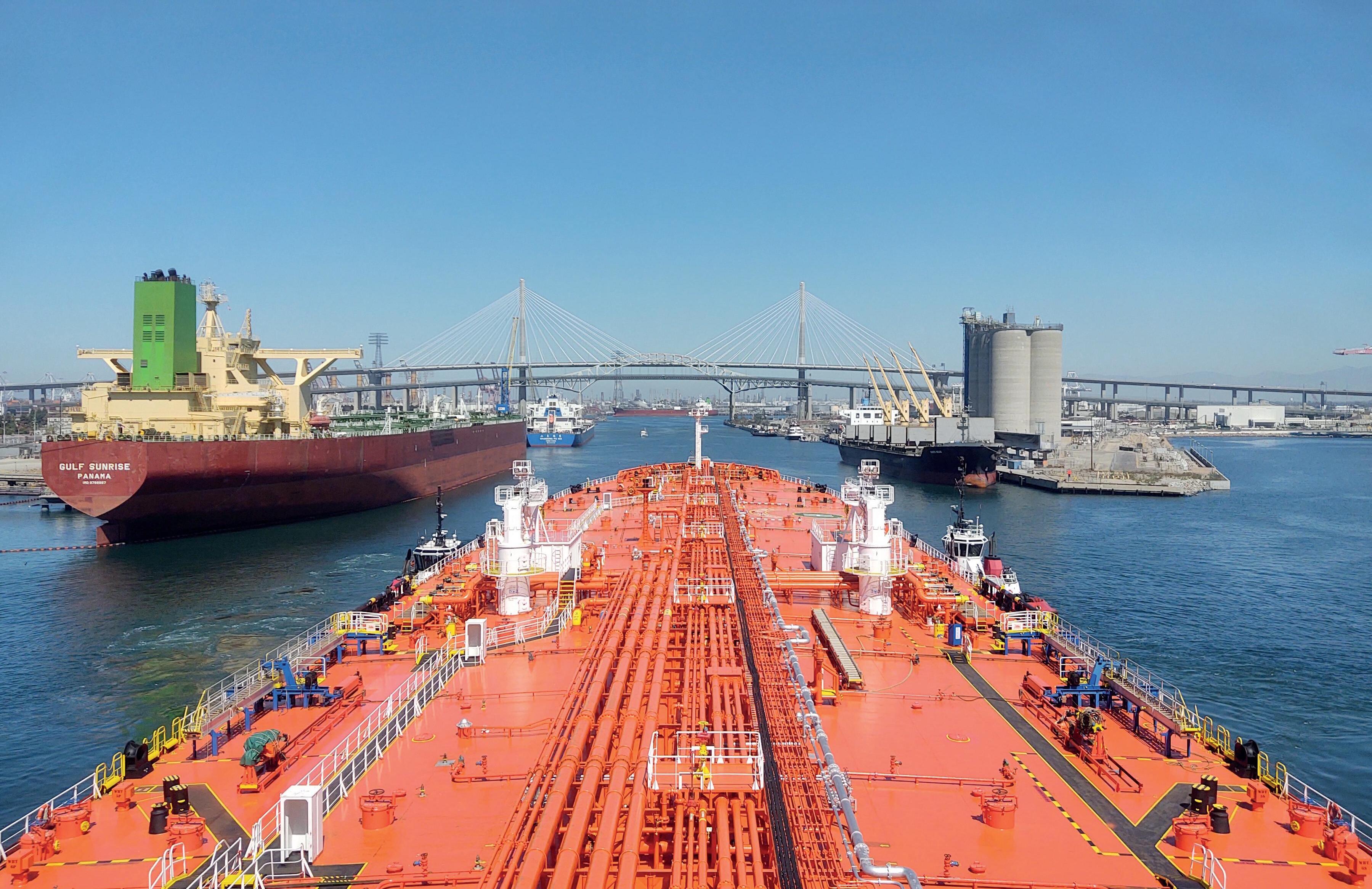
The shiphandler needs to determine UKC with accuracy. While not a universally agreed standard of care, 10% UKC may be closest to a standard minimum. UKC of 10% should command the attention of any shiphandler. The draught of the vessel is 90% of the available water depth.
What is the beam vs LOA? A greater beam-to-LOA will take up not only vertical UKC but horizontal channel clearance and create much greater bottom/channel interaction than the same vessel with less beam. The result of this is often a ship that is difficult to control without significantly reducing speed.
For the student shiphandler, imagine the view of the ship’s hull below the waterline at current draught, as if there
were an underwater camera viewing the ship from the bottom of the channel. The immersed portion of the ship’s hull displaces 90% of channel depth under the keel and 90% of the available channel port and starboard. In that case, the immersed portion of the ship must displace (think move) 90% of the volume of water in the channel ahead of the ship. That water has to move around and under the hull with a good portion pushed ahead of the ship. That hydrodynamic interaction becomes a powerful hydraulic force acting against the ship’s hull, under-keel and to port and starboard. Squat, suction and cushion forces act against the ship independent of orders the shiphandler is executing while conning.
Slower transit speed becomes an important factor at 10% UKC. But slower is relative to more than just draught, beam, displacement, wind and current. Other factors must be considered:
• Is the transit across an open bay with 10% UKC and no anchored ships or through a crowded anchorage?
• Is the transit in a narrow channel at 10% UKC?
• Does the shiphandler have assisting tugs? If so, how many? And what type and bollard pull?
• If it is a narrow channel, are there other vessels berthed in the narrow channel that must be passed?
• If there are vessels berthed along the channel, how far off is your vessel when you pass?
• Has the shiphandler determined the speed and safe distance to eliminate interaction passing the berthed vessel(s)?
• Is the ship’s ECDIS and radar functioning well and accurately?
• Does the shiphandler have a PPU?
In these examples, a narrow river channel may be between 100 and 200m. Most or all will see squat, bank cushion and bank suction effects. Most are familiar with the squat formula in enclosed waters:
Squat will vary significantly depending on the particulars of any narrow channel or river, which may result in calculated squat being very different from actual. Simply asking the pilot what the anticipated squat will be is a good start. Vibration will increase significantly if squat is reducing UKC. The ship’s wake will also start moving out and forward, perhaps even to the point of being nearly on the beam.
Reduction in speed will occur even if the engine RPMs are not reduced. All of these are easy indicators regarding the effect of squat on a ship when transiting inbound or outbound a harbour using restricted or narrow channels, running engine bells anywhere from dead slow to manoeuvring full.
We thank
As to bank suction, watch the rudder. When in narrow channels or rivers, if the ship’s stern gets closer to one bank or the other, it will require rudder to hold the stern off the bank and on course. If the quartermaster is holding any port or starboard rudder (5-15°), the ship has moved towards that side of the channel. For example, if the rudder stays on starboard 5-10°, the ship is nearer the starboard bank and vice versa if port rudder. This is an easy way to determine if the ship is off-centre in a channel.
Breaking bank suction can be assisted by bringing the rudder back to midship, allowing the stern to move closer to the outboard side of the channel and allowing the bow to point to the channel centre. That alone may bring the ship back to centre. If not, briefly adding one bell should help. Always keep a bell up your sleeve in narrow channels or rivers, especially going into turns. The death knell regarding bank suction is too much speed. If the ship is going too fast to begin with and bank suction occurs, the ship is in a very bad spot. Already at full ahead, there is no more reserve power to notch up and break away from the bank suction.
Bank cushion occurs when the ship’s bow gets closer to a bank and is pushed off by hydrodynamic forces. The bow hits a hard wall of water being compressed hydraulically between the bow and the bank. The steeper the bank, the greater the hydraulic compression and effect. This occurs most often in narrow channels or rivers just prior to entering turns. If not in a turn, cushion effect will be likely to follow a bank suction event that was not brought under control.
The initial bank event causes the ship to shear across the channel or river until the hydrodynamic cushion on the opposite bank pushes the ship away. The ship is now in an almost uncontrolled situation, where it careens from one bank to the other until the angle of approach to a bank is finally so great that it simply ploughs in. Always watch the speed and be prepared to temporarily drop bells when necessary to keep hydrodynamic forces stable and under control.
This precludes the use of sea speed
during these transits. If the ship has a long, straight run with lots of room and needs speed for good reason, then 10 or 15-minute notice is not off the table. In most cases, where it is necessary to manoeuvre for the safety of the vessel with little notice, keeping the ship on manoeuvring bells is advisable.
We defined a narrow river channel as roughly 100 metres, which may or may not be what the reader considers narrow. Narrow river transits can be just a few miles or dozens of miles. If you find yourself on an 80-mile transit in a 100mwide channel, that is a narrow transit.
Assume you have a 40-mile transit up a river to a final port destination. Being a river, the transit may include many turns on the way up- or downriver. Every turn will require careful approaches, usually starting the turn so as to allow some bank suction, which will assist making the turn. This must be done approaching every turn.
In a 100-metre-wide river channel, that leaves little room for error and the ship will be unlikely to be in the exact right position going into the turn. Watching the rudder closely on this kind of transit is imperative. Any time the rudder remains off midship (either way), it indicates the ship is off-centre towards the direction the rudder. Going into turns, it is frequently helpful to let the ship get closer to the bank opposite the intended direction of turn. That allows bank suction to assist in making the turn, but this is much about feel.
A common issue in this kind of transit is the quartermaster going the wrong way after a helm order. The mate on watch must watch the rudder on every turn to ensure the correct helm order is executed. There is not enough room in narrow rivers to have a wrong helm order. The ship will quickly get too close to one bank or the other, inducing bank suction or cushion, either of which could lead to grounding.
Speed is another factor: in many cases, it might not be safe to bring the ship to full manoeuvring. Half, slow, even dead slow bells might be all that can be used. Always leave one bell up your sleeve!
By George & Grant Livingstone, Retired Pilots, Authors of Shiphandling: The Beautiful Game.
What is shiphandling?
Every shiphandler that has moved ships has an answer based on their real-world shiphandling experience. It is the rare shiphandler that is not opinionated about shiphandling. They have good reason to be. In the beginning, shiphandling is naturally trial and error, often with less than desirable results. This can leave strong impressions, particularly if there were incidents.
Near-misses generate the same level of anxiety as an accident, because one isn’t sure it’s a near miss until it is. Those kinds of experience leave an indelible mark in the minds of shiphandlers. That becomes formative to their definition of shiphandling. The lasting emotional imprint validates strong shiphandling opinions, resulting in thousands of varying and valid definitions of shiphandling. The student shiphandler quickly discovers the first rule of shiphandling is that there is an exception to nearly every rule.
The professional debate on shiphandling will continue but it is fair to say mariners universally agree on one goal: safely moving ships. Maintaining control of the ship (when possible),
keeping it in safe water and not hitting docks, rocks, other ships, boats or obstructions. But how to keep control?
Student shiphandlers soon discover there are literally hundreds (thousands?) of shiphandling executions with just as many variations per execution based on different conditions, elements and factors. From the student’s view point, it can feel daunting if not overwhelming. How can one learn hundreds of shiphandling manoeuvres with variations and exceptions for every manoeuvre? Where does one begin?
Science versus feel
Shiphandling is science. The best shiphandlers endorse the science but

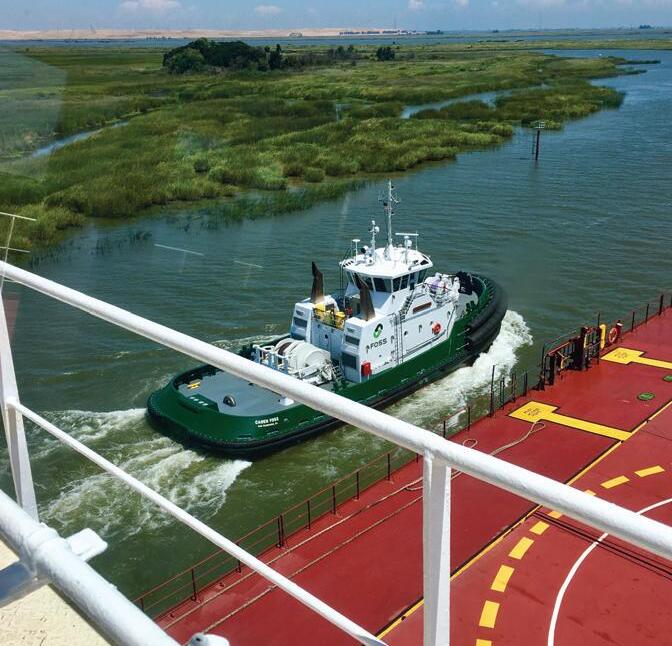
nearly always talk about the feel. That is the remarkable way that the human brain assimilates knowledge and experience that turns developed motor skills and cognitive deduction into seemingly effortless and potentially artistic execution.
‘Feel’ is a word most professional athletes understand. Feel is discovered through execution. Like the best professional athletes, the best professional shiphandlers ‘feel’ what is happening and are able to make lightning quick adjustments in execution. Feeling is the simplest way (after reaching higher levels of skill and execution) to describe the brain’s instantaneous analysis of what is happening now along with effective solutions and options. While feel may be interpreted as non-scientific, nothing could be further from the truth. Feel is born of facts. It’s science, aptitude, mentoring, application, dedication and time. The trouble is, feel is intangible and difficult to define. There is remarkable research being accomplished in neuroscience regarding creativity and the human brain.
Learning and training parallels between professional athletes and professional shiphandlers are very similar. Training and learning philosophies and techniques that are highly effective for professional athletes can be applied with equal success to professional shiphandlers. Focus on solid fundamentals, repetitive drills, mental preparedness, multiple game plans and execution while never taking one’s eyes off the mission. For professional athletes, the mission is winning. Winning for professional shiphandlers is the safe and successful manoeuvring of the ship. All else is predicated upon that.
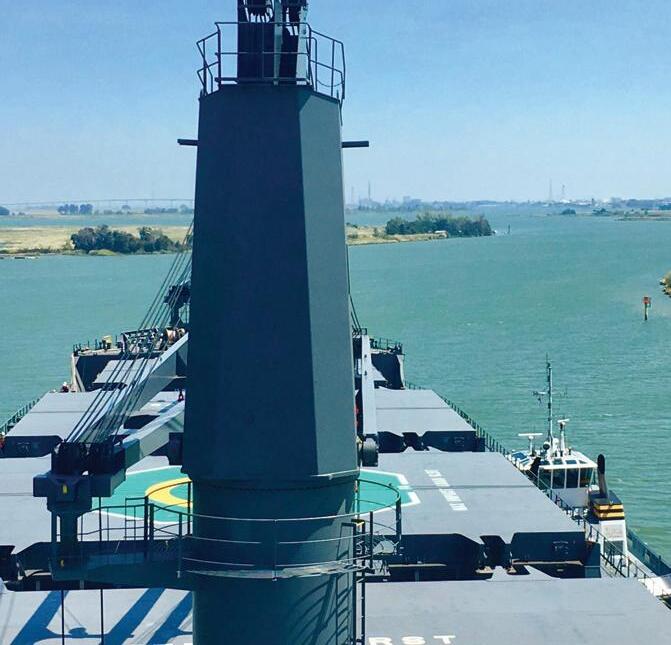
The advantage of having piloted over 18,000 ships is the gift of enough time to discover what doesn’t work. Unsurprisingly, what doesn’t work is often universal. It doesn’t work for anyone. Through the process of eliminating what doesn’t work, one discovers what does.
What professional shiphandlers can learn from the best professional athletic coaches is the philosophy of coaching for success. Catch trainee shiphandlers doing the right things. Begin with what was done correctly. When tackling what went wrong, let the trainee talk the pilot through the manoeuvre after the manoeuvre is over. Give the trainee the opportunity to learn how to objectively analyse manoeuvres. Start asking the trainee questions that the pilot would ask themselves had they done the manoeuvre.
An excellent exercise to improve coaching and learning is to ask the student questions only. Help the trainee
to determine and analyse facts. The philosophy of ‘Thou shalt do thus” is excellent for task-specific memorising –emergency procedures for example –but not for developing critical thinking skills that successful shiphandlers will depend on for the rest of their careers. Telling the trainee ‘Never do that!’ can be a method that only changes one mistake in one manoeuvre. But teaching the student shiphandler how to identify and analyse facts in each manoeuvre is the most effective method to mitigate mistakes in any future manoeuvre.
While not prescriptive, here is a general framework for shiphandling training;
1. Pilot executes, trainee observes 2. Pilot executes, trainee assists
3. Trainee executes, pilot assists 4. Trainee executes, pilot observes
Pilot executes, trainee observes Trainee observing pilots can be highly effective, particularly if the pilot is able to think aloud during the manoeuvre. If the pilot is not able to think aloud (giving brief reasons for certain orders, be that rudder or assist tug or ship bells, etc), then often the new trainee becomes a passenger on a tour of the harbour. Possibly that is good if the trainee is not familiar with the local harbour. But when the new trainee is familiar with the harbour, just observing with no interaction from the pilot is a missed learning opportunity.
There may be a good reason for the pilot not interacting with the new trainee, for example, the manoeuvre demanding every minute of the pilot’s attention. But there is a simple mental tool to turn every trainee pilot observation into a learning experience. That is for the trainee to mentally assume the conn. This is a critical learning tool that most trainees miss. You are the trainee observing the pilot. The shiphandling answer key is right there in front of you: the senior pilot with the conn. Trainees observing mentally take the conn, executing mental orders that would otherwise be verbal. Now trainees are able to compare their shiphandling decisions and orders directly with the senior pilot’s orders in real time as they happen. What an opportunity!
But it is not easy. The student shiphandler might be surprised to discover that it takes mental discipline and concentration to simultaneously
give mental commands while listening for the pilot’s verbal commands. But that is just at the beginning. The trainee will quickly become adept at running their own mental orders concurrently with the pilot’s verbal orders.
Every time a trainee steps on the bridge they can take the conn mentally, thus, being able to compare their timing and judgement with that of the senior pilot in real time. When did you mentally begin the turn and with how much rudder? When did the senior pilot begin the turn and with how much rudder? If the orders were to the same degree and timing that’s very good news. If the timing and degree were off, that’s also good because you have identified a specific execution that requires attention and adjustment.
It’s a great learning opportunity and a fast track to mastering, continuing that throughout the job including assist-tug use, etc. Eventually, this habit of mentally having the conn becomes second nature. Veteran shiphandlers observing another shiphandler routinely have a mental conn of that ship. Eventually it can become a bit challenging for the observing shiphandler to observe another without interjecting!
Pilot executes, trainee assists
There are numerous training advantages when the trainee assists the pilot with the conn (assuming the trainee has had a sufficient number of manoeuvres observing the pilot with the conn). Before getting underway or after berthing, the
trainee has the opportunity to begin the long process of familiarisation with various radar and ECDIS manufacturers. While not underway, getting a quick tutorial from a mate (with the master’s approval) can be very educational. In a long piloting career, being conversant with various radars and ECDIS can be more than just useful.
Also, the trainee has the opportunity to become familiar with any PPUs the pilots may have in use. The trainee may have the opportunity to study the route in greater depth while underway. The trainee has freedom of movement across the bridge and bridge wings to observe first-hand, whatever may be taking place – and should do so.
Go out on the bridge wing and observe the assist tugs approaching and sending lines up to the ship. When the senior pilot gives a tug command, if the tug is visible, watch how the tug captain responds. Develop the habit of regularly walking onto the bridge wings, looking fore and aft. Are there any vessels astern of you that you were not aware of? Are there any obstructions beyond the ship’s port or starboard side that might interfere with berthing? Does the ship’s crew have the gangway or pilot ladder ready and prepared correctly? The habit of constantly observing can become well embedded when the trainee is assisting the pilot with the conn.
One of the best learning opportunities when a trainee is assisting pilots with the conn is route driving. That is when the pilot with the conn allows the trainee to conn the ship from waypoint to waypoint, possibly making turns along the route. Having the conn while underway on a route gives the trainee a good feel for how that class of ship at that speed and draught responds to rudder orders and wind and current.
Route driving is not berthing and unberthing. The senior pilot would take the conn back to berth or unberth. The goal of route driving is becoming familiar with the next class of ship the trainee may be doing with pilot observing, but free of the added pressure of berthing or unberthing the ship. It allows the trainee to learn that next class of ship by splitting it into smaller parts: first route driving underway and later berthing and unberthing. It is a practical and effective method for the trainee to naturally begin learning the next class of ship. Route driving is so effective that it should be adopted into pilot trainee programmes.
Trainee executes, pilot assists
Having interviewed dozens of trainees from around the world, trainee executing with pilot assisting is often where effective learning can be derailed. Effective learning requires effective teaching and coaching. Yes, the student matters, but let’s begin accountability at teaching.
As the senior pilot, resist the temptation to tell the trainee what they were thinking and why they did something. This may sound obvious but it is a real issue and an impediment to successful training.
Professional counsellors often advise not to use ‘you’ messages to avoid relational conflict. For example, the master tells the pilot the bow thruster is working. When next to the berth, the pilot discovers the bow thruster is not working. Very common is for the pilot to tell the master, “You said the bow thruster was working.” That is a ‘you’ message. Take the ‘you’ out of it: “Captain, the bow thruster is not working” is factual. “You said the bow thruster was working” implies that the master was lying. When talking to trainees, stick to the facts. Resist the temptation to make assumptions and tell the trainee why they did something. Most human beings cannot read minds so it’s best to get out of the bad habit of implying that one can, particularly between pilot-trainee and pilot-master. Effective teaching is objective, regardless of first names or personalities. Keep negative emotions and getting too personal out of shiphandling instruction as much as possible.
When the trainee begins piloting on a new class of ship, try departures only as much as practical. This has many advantages for the trainee.
1. Concentrating on ‘departures only’ reinforces all procedures for departures which accelerates learning. Very similar to professional team sports concentrating on specific plays while training.
2. The manoeuvre is beginning at DIW not 8-12 knots.
3. Low-speed manoeuvring is as much a learned skill as high-speed, but with the obvious advantage of beginning at slow speed. If one is teaching someone how to drive a car, starting at stop then 10kmh is far easier for the student than starting at 150kmh.
4. The trainee will become familiar with how that class of ship at that draught accelerates and handles at low speed. If it takes a long time to get the ship to speed, the trainee can be assured it will also take a long time to slow it down.
5. The trainee has extra time to carefully observe the ship secured to that berth, which is important information when arriving at that berth.
6. The trainee has extra time to assess best tug placement.
7. The trainee has extra time to discuss matters with the pilot.
These are just a few of many advantages to ‘departures only’ when a trainee is executing on a new class of ships, pilot observing. Once the trainee is executing well on departures with a class of ships, it is a natural and an effective learning transition to begin arrivals on that class of ship.
© Authors collection
Trainee executes, pilot observes
The key for a pilot observing a trainee is clearly identifying what is style and what is substance – perhaps one of the greatest challenges for pilots observing. It can be difficult to separate style from substance. The key metrics are: was the ship at a safe speed at all times? Was the ship in safe water at all times? Was the ship under control at all times? etc. So how does one delineate substance from style?
One effective method is an overhead view, for example, a PPU or ECDIS replay. Watching the replay of any manoeuvre takes personalities out of play. The viewers see position, course, speed and projection.
Watching a replay on ECDIS or PPU is an excellent training tool. If the ship was always in a good position relative to channels, berths and other vessels, and always at appropriate speeds from POB to all-fast, that is substance not style. Substance is what matters most when training fundamental shiphandling. Style can make a difference and style can be learned and can make the manoeuvre go far more smoothly from a functioning
bridge-team standpoint. But when the goal is fundamental shiphandling, the concentration needs to be on shiphandling.
If the training pilots were successful, by this point in the trainee’s career, shiphandling execution should be safe at least. That gives the pilot observing more latitude to relax and just observe. If possible, allow the trainee to complete the job as if the pilot observing were not there. There are key advantages to this approach. Foremost is that most trainees can actually forget there is a pilot observing. Now the pilot observing will see exactly what the trainee would do if they were executing the manoeuvre solo. Post-manoeuvre, the pilot observing has a great opportunity to discuss anything that did and or did not go well.
The other advantage to remaining in the background is not distracting the trainee. This cannot be overstated. Often trainees executing a new or challenging manoeuvre are using all of the available grey matter in their shiphandling brain. They may not be executing at the level the observing pilot would like to see, but it is taking most of their concentration to do so. Interrupting that concentration to interject a matter that the trainee was not thinking about often derails what concentration they did have. Some can multi-task in conversations but others will scramble mentally and emotionally to catch up with a manoeuvre that wasn’t going swimmingly before they were interrupted.
The pilot observing quietly also encourages a calm presence on the bridge. Unsurprisingly, when trainees are in the presence of a calm pilot observer their shiphandling improves. Yes, trainees need to learn how to execute under duress. If possible, take that on after they have good fundamental shiphandling habits well established.
Successful shiphandling is a numbers game if the shiphandling fundamentals and training are sound. The more ships one moves, the better a shiphandler one becomes. If the shiphandling fundamentals are not sound, it will take more than just moving more ships to become proficient. Professional shiphandlers, like professional athletes, should be constantly improving. From year-to-year, professional shiphandlers, like professional athletes, should see notable improvement in their execution.
Entry qualifications to start training as a marine pilot in the UK vary enormously between ports, as do pilot training programmes. Many require a Master’s Certificate of Competency and command experience before training can begin. Other ports require little in the way of formal marine qualifications. No national standard is enforced, unlike in other countries such as the Netherlands. This article examines the human factors involved when a trainee is on board with an authorised pilot, regardless of the training programme being followed.
The UK’s Port Marine Safety Code Guide to Good Practice (4.5.23) (PMSC GTGP) states that pilot assessors should have received “an appropriate level of training” prior to carrying out any assessment. However, “appropriate” is not defined. Assessor training around UK ports varies from none at all through to specific Marine Pilot Assessor Training. Unlike in many other professions, such as medicine, few pilots receive specific training to be mentor pilots.
A watershed moment for pilot training in the UK was the Apollo incident in the Thames in 2013 (MAIB report 15/2014). The incident happened during a trainee pilot assessment. Heavy contact was made with a container terminal.
One of the recommendations of the report was that best-practice guidelines be developed for the conduct of pilot examinations. The guidelines are contained in the PMSC GTGP –paragraph 4.5.24. They are rather rudimentary, but they do give a general framework indicating how practical pilotage examinations, check rides and acts where the trainee has the conduct should be carried out.
WE LOOK AT THE
With a trainee pilot on board a vessel, the act of pilotage takes on new dimensions that require careful consideration. The human factors and risk management become more complex, although the pilot and trainee may not be conscious of this. These areas need to be managed carefully at the same time as optimising the trainee pilot’s development.
Trainees will be given the conduct of a vessel at different stages of their training based on their level of experience. Whether the trainee has the conduct or not may be specified in the port’s training programme or left to the discretion of the supervising pilot.
The training provided to mentor pilots, pilot assessors or supervising pilots can vary from extensive to none at all. Pilot training in the UK varies as much
between ports as the ports themselves, whereas other countries take a national approach.
Legally, during training or an assessment trip, the supervising pilot retains conduct of the vessel if the trainee is not authorised for that vessel. During a Check Trip, such as an authorisation revalidation assessment, the pilot under assessment retains legal conduct of the vessel.
The pilot must divide attention between managing the pilotage of the vessel and the trainee during a training trip, whether the trainee has the conduct or not. Division of cognitive resources (multitasking) is a key human-factor consideration. Research in human factors consistently shows that divided attention increases the risk of missing weak signals such as a slightly increasing rate of turn or the development of a set towards a hazard.
Communication and a shared mental model between the pilot, trainee and bridge team are essential. The trainee may feel hesitant to speak confidently, particularly in front of an experienced captain or under the scrutiny of the supervising pilot.
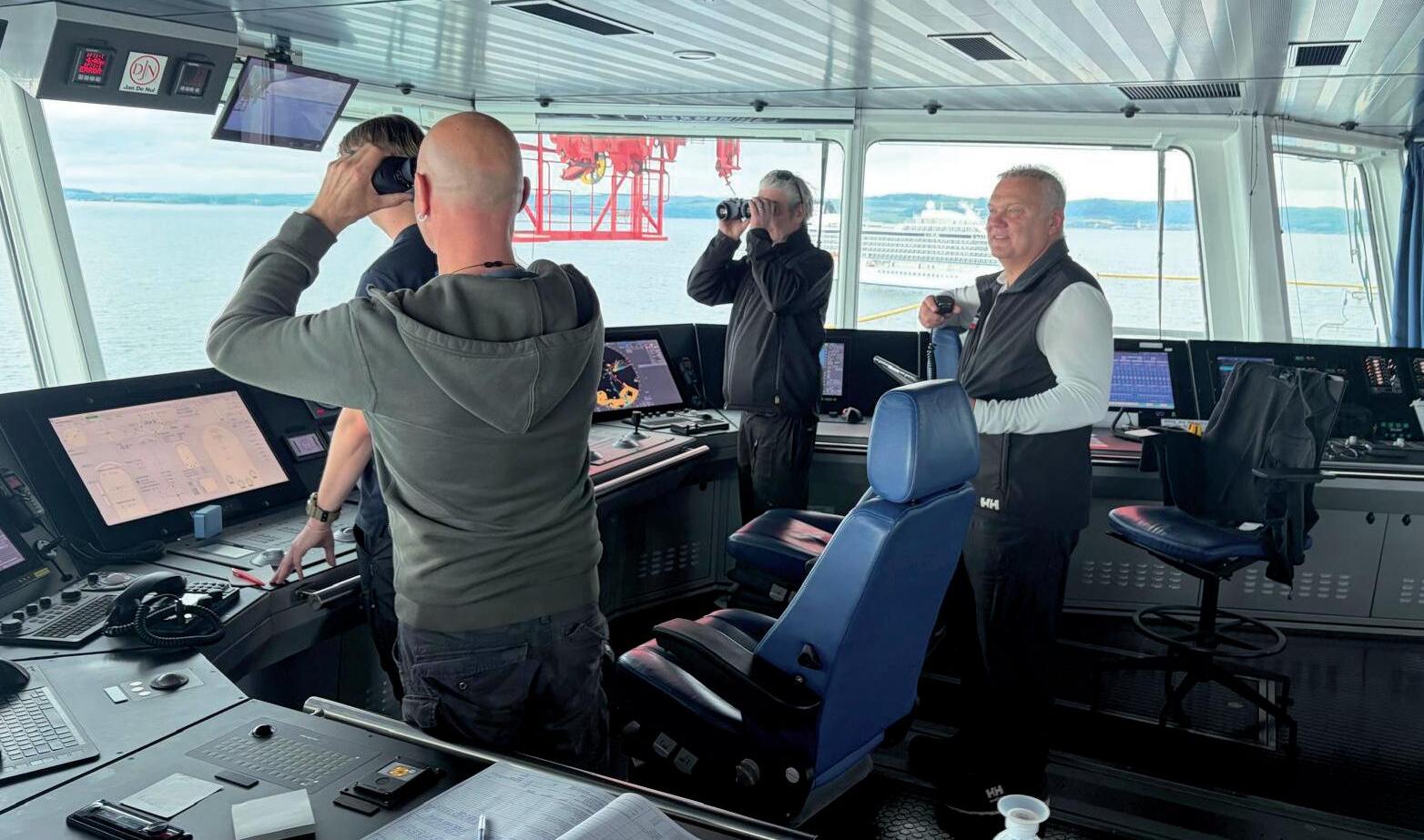
The trainee must be empowered to speak confidently and be listened to. The master may be unsure whether to direct questions to the trainee or the supervising pilot. Ambiguity in authority gradients can emerge. Authority gradient refers to the perceived difference in status between individuals.
If the gradient is too steep, the trainee may avoid asking questions or admitting uncertainty. If it is too flat, confusion about decision-making authority may arise.
A shared mental model and bridge resource management (BRM) framework mitigates these risks. It is essential to define roles clearly. The supervising pilot should explicitly state who has the conduct and clarify that ultimate responsibility remains with the authorised pilot. This transparency reduces ambiguity and potential confusion.
Stress and workload also shape performance. For the trainee pilot, each assignment may feel like an examination. The presence of a mentor evaluating every decision could elevate stress levels. Moderate stress can sharpen focus, but excessive stress can impair working memory and decision-making.
A trainee who becomes overloaded might fixate on a single parameter such as speed while losing awareness of cross-track error or wind effects. The supervising pilot must gauge the trainee’s capacity and adjust the level of autonomy accordingly.
Supervising pilots must remain vigilant not only about the trainee’s technical performance but also about subtle signs of fatigue, hesitation, reduced scanning or diminished engagement.
A supervising pilot should develop a clear learning culture. A psychologically safe environment encourages the trainee to ask questions, admit uncertainty and reflect openly on mistakes. If the supervising pilot adopts an overly critical tone, the trainee may become defensive or withdrawn. This could hamper learning and degrade safety.
An environment that tolerates excessive risk in the name of training is equally dangerous. The balance needs to be struck between instructional freedom and operational conservatism.
If the trainee has the conduct, then timely and appropriate intervention by the supervising pilot becomes the key element. Too much early intervention for minor inconsequential reasons will undermine confidence, but one intervention too late or not at all can lead to increased risk or at worst a serious incident. The trainee pilot should give a continuous and clear narrative as to their intention, so as to allow the pilot and bridge team to have a shared mental model.
Intervention by the supervising pilot is best carried out using the PACE model (Probe, Alert, Challenge, Emergency).
• Probe, or Find Out, means simply asking the trainee for clarification of their intentions.
• Alert is the next level, such as “be careful, the rate of turn is increasing”.
• Challenge is the next level: “You need to reduce the rate of turn” or similar.
• Emergency is the last resort where the pilot takes the con from the trainee.
Steps in the PACE model do not need be consecutive. Sometimes it will be appropriate for the supervising pilot to take the con from the trainee without going through the first three steps. When the trainee does not have the con, the supervising pilot should guard against becoming distracted by the trainee. It is essential that the supervising pilot maintains their situational awareness.
When there are multiple pilots on the bridge, whether trainees or in a dual-pilotage situation, it is easy for the Master and bridge team to become isolated, particularly in a multi-cultural environment without a common native language. The supervising pilot should ensure that a professional and inclusive atmosphere is maintained and that the Master and bridge team are empowered to voice concerns.
Technology has introduced additional human-factor considerations, and these can be accentuated when a trainee is on board.
Younger pilots and trainees may be familiar with (and reliant on) Electronic
Chart Display & Information Systems (ECDIS), Portable Pilot Units (PPUs), radar overlays and advanced manoeuvring aids such as azipods. This technological reliance may result in the trainees being less comfortable with active scanning of the external environment and interpreting visual cues and prompts, such as transit marks. The supervising pilot must encourage balanced information gathering, integrating instrument data with visual and experiential cues.
Ultimately, the presence of a trainee marine pilot on board transforms an act of pilotage and adds a dimension. It is not merely about shiphandling; it is about mentoring under pressure. The supervising pilot must manage workload, situational awareness, communication, authority gradients, stress, fatigue, cultural diversity and technology integration, all while ensuring that the act of pilotage is conducted to the same high level as when they have sole conduct of the vessel.
In the high-consequence world of pilotage that leaves little room for error, the effective management of human factors is crucial. Having a trainee on board adds additional human-factor considerations. Training the next generation of pilots is essential but should not be at the expense of safety. By having an awareness of the human factors involved, individual pilots, pilotage companies and harbour authorities can ensure that trainee pilot development and operational safety can co-exist. High-quality training for senior pilots to progress to become Mentor Pilots and Assessor Pilots is a worthwhile investment in the future for ports and pilot organisations.
By Keith McLean and Jodie Dix
Keith McLean is Chartered Master Mariner. He is Marine Advisor to Integrated Human Factors and has been a marine pilot for 33 years.
Jodie Dix MSc is a senior human factors consultant with Integrated Human Factors.
By Humphrey Guest - VTS Officer Bristol Port Company
AVessel Traffic Services
Operator (VTSO) is responsible for the safe, orderly and efficient movement of vessels within a defined port or coastal VTS area. Working in a VTS centre, the operator monitors marine traffic using radar, AIS, CCTV and VHF communications, providing essential information and, in exceptional circumstances, navigational assistance (NAS).
The role is internationally standardised under the framework set by the International Association of Marine Aids to Navigation and Lighthouse Authorities (IALA), ensuring that VTS personnel are trained and certified to a globally recognised benchmark.
Becoming a competent VTSO is not simply a matter of learning how to operate equipment. It requires maritime knowledge, sound judgement, calm decision-making under pressure and a deep understanding of navigational safety and port operations.
Typically, candidates must have:
• A minimum standard of English
• Strong IT literacy
• Excellent verbal communication skills, particularly the use of SMCPs (Standard Marine Communication Phrases – see elsewhere in this issue)
• The ability to pass medical and eyesight standards
However, the most competitive candidates usually hold recognised maritime qualifications or significant marine experience.
Recognised maritime qualifications
While not always mandatory, many employers prefer or require one of the following:
• Officer of the Watch (OOW) Certificate of Competency
• Master Mariner Certificate of Competency
• Royal Navy (or international equivalent) navigational qualifications
• Harbour Master or pilotage experience
• Coastguard or maritime operations background
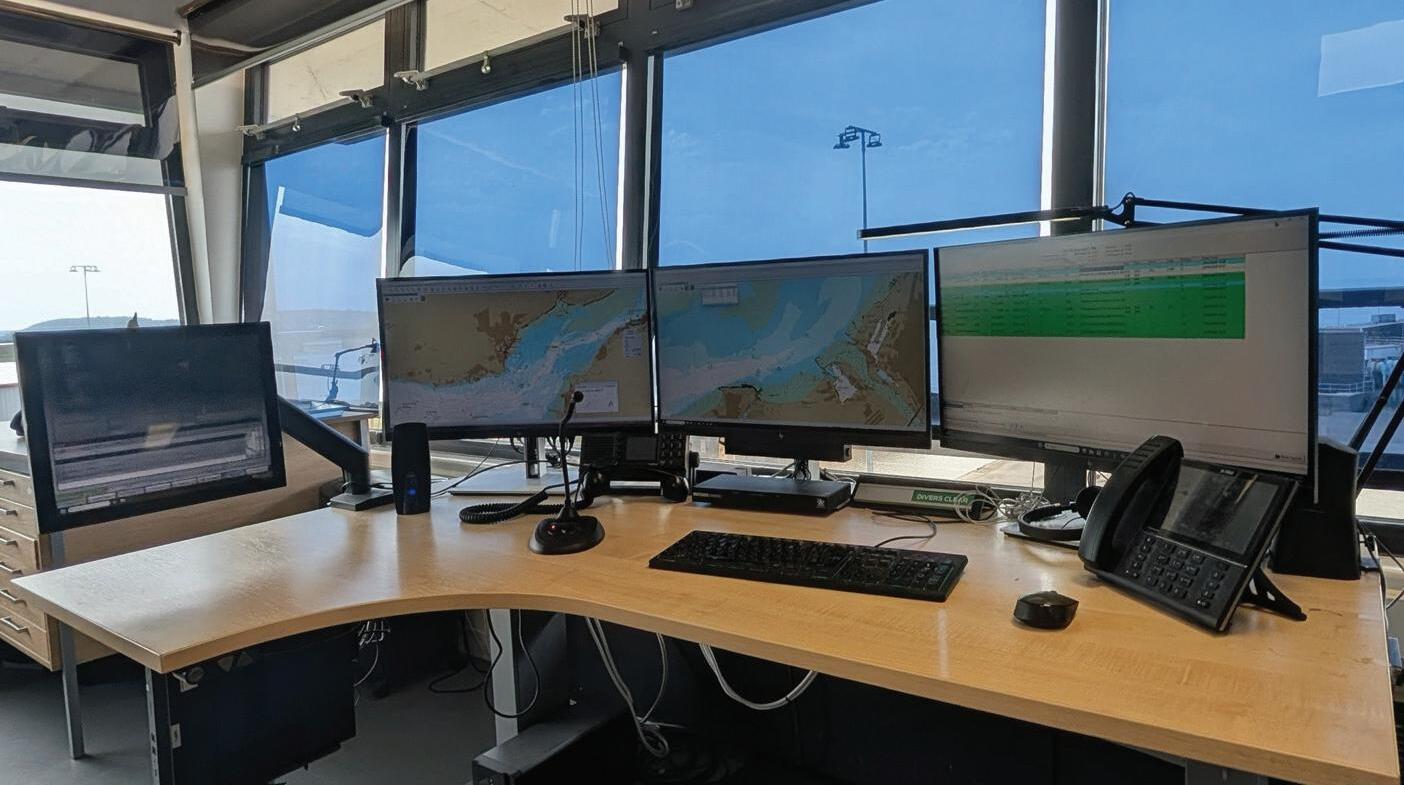
These qualifications demonstrate knowledge of:
• The International Regulations for Preventing Collisions at Sea (Colregs)
• Bridge watchkeeping principles
• Radar plotting and navigation
• Passage planning and situational awareness
Candidates without seagoing certification may still be accepted if they have substantial port operations experience combined with strong aptitude and technical ability.
The internationally recognised qualification required to become a certified VTS Operator is the MCA C0103-1(V-103/1) – Vessel Traffic Services Operator Certificate. This qualification is delivered by an MCA-accredited training organisation and forms the foundation of a VTSO’s professional certification.
C0103-1(V-103/1) Course Content
The C0103-1(V-103/1) course covers both theoretical and practical elements, including:
• Role and responsibilities of a VTS Authority
• Legal framework and liability
• Radar and AIS operation and limitations
• Traffic organisation techniques
• Communication procedures and standard marine phraseology
• Emergency and incident management
• Human factors and situational awareness
• Risk assessment and safety management
Training involves classroom instruction, simulation exercises, scenario-based assessments and practical traffic management simulations.
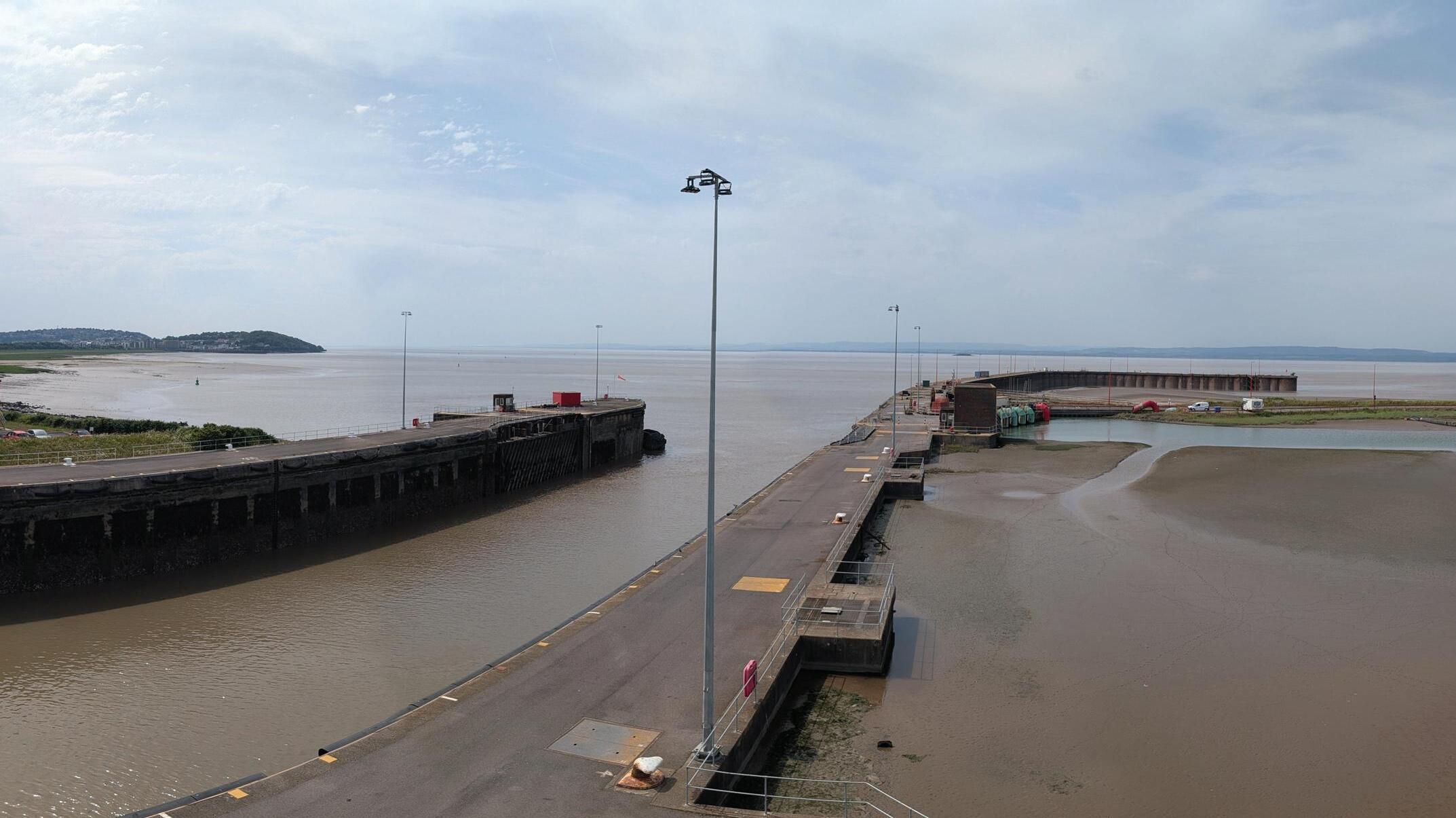
Only when all elements are signed off by an authorised assessor will the operator receive full certification.
Continued Professional Development (CPD) Professional competence must be maintained throughout a VTSO’s career. Maritime environments evolve, technology advances and traffic complexity increases. As a result, CPD is essential.
Ongoing development typically includes:
• Annual emergency exercises (groundings, collisions, pollution incidents)
• Major incident simulations
• Refresher radar and AIS training
• Human factors and fatigue-awareness training
• Legislative and procedural updates
• Equipment conversion training when systems are upgraded
Under MCA recommendations, VTS qualifications require you to undertake recurrent training at an MCA-accredited training centre every three years. There is career progression once you become a VTSO, typically working your way up within your VTS organisation.
Such a pathway would include:
• Senior VTSO
• VTS Supervisor (requiring C0103-4 (V-103/4) qualification)
• VTS Manager
• Harbour Master pathway
Overview of the VTS Operator’s role
The VTSO is required to:
• Provide timely and relevant information
• Manage ship traffic
• Respond to developing unsafe situations.
The operator must constantly maintain situational awareness across their entire VTS area. This involves:
• Monitoring radar and AIS targets
• Cross-checking vessel intentions
• Communicating clearly via VHF radio
• Co-ordinating with pilots, tug operators and port control
• Escalating safety concerns where necessary
The role demands:
• High levels of concentration
• Decisive but measured judgement
• Calmness under pressure
• Strong teamwork within the VTS unit
• A proactive safety culture
Unlike seagoing navigation, where decisions are made from the bridge of a single vessel, a VTSO must manage the ‘bigger picture’, ensuring that all traffic within the sector moves safely and efficiently.
The VTS Operator plays a critical role in preventing incidents, protecting life at sea and safeguarding the marine environment. In increasingly congested and technologically advanced ports, the VTSO remains a vital link between vessels, port authorities and maritime safety management systems
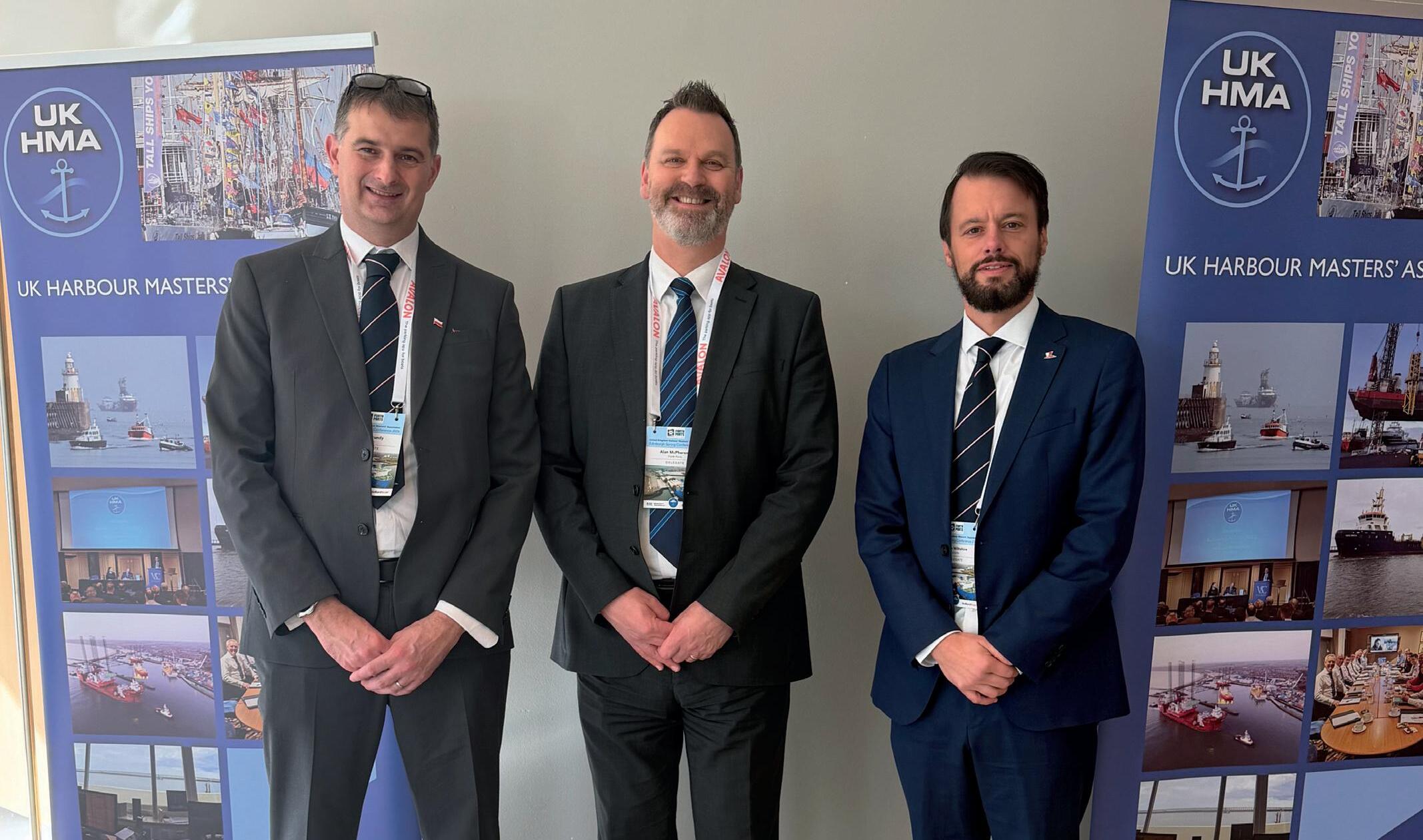
Chris Grundy and Jason Wiltshire were delighted to represent the UKMPA at the UK Harbour Masters’ Association (UKHMA) spring conference in Edinburgh; an event that once again proved valuable for both insight and engagement across the sector.
The keynote address was delivered by Stephen Hennig, Secretary of State's Representative for Maritime Salvage and Intervention (SOSREP), who reflected on the challenges of managing recent marine casualties, including the Stena Immaculate. His remarks highlighted a broader concern around diminishing levels of experience within the industry, offering valuable insight and practical perspective.
Stephen Hennig has been invited to speak at the 138th UKMPA conference in Bristol (18-20 November 2026), where his experience is expected to be of considerable interest to members.
The conference programme extended into wider port industry matters. Legal experts provided updates on the Employment Act 2025 and the Seafarers’ Wages Act 2023, while the MCA introduced its new ports and VTS Manager, Will Fellows. This led to a useful exchange on the Port Marine Safety Code (PMSC) and the MCA’s inspection regime.
A presentation from ABPmer explored key pilotage considerations, including the process for determining compulsory pilotage, and generated discussion around situations where a vessel’s Master may not fully recognise the pilot’s legal status under UK law.
Members may find it helpful to revisit Circular 07/2015 as a refresher.
James Fanshawe (UK MASS Regulatory Working Group) provided an update on Maritime Autonomous Surface Ships, with developments progressing steadily and a 70-metre vessel expected to visit a UK port later this year.
As ever, the UKHMA conference offered an excellent opportunity to strengthen relationships across the industry. Engagement with a wide range of stakeholders continues to deliver real value to the association and its members.
All the best, Chris Grundy (UKMPA Executive)
By Paul Schoneveld / UKMPA / IMPA Vice President
As the maritime industry accelerates towards digitalisation and autonomy, the International Maritime Pilots Association (IMPA) is working to ensure that safety, practicality and professional expertise are at the heart of developments. Across global regulatory bodies and standards organisations, IMPA’s recent work conveys a consistent message: navigation is complex and pilots are central to its safe execution.
Sounding the alarm on bridge alerts
One of IMPA’s most pressing areas of focus is bridge alert management. Working initially alongside the Cruise Lines International Association (CLIA), IMPA engaged with the IMO Sub-Committee on Ship Design and Construction to ensure that work on engine-controlroom alerts did not pre-empt or undermine future efforts to tackle alerts management on the bridge. That concern has since sharpened. Following an extensive survey of maritime pilots worldwide, IMPA submitted an independent paper to the IMO Sub-Committee on Navigation, Communications and Search and Rescue (NCSR 13). The findings highlight a serious and growing safety issue: poorly designed and excessive bridge alerts that distract, rather than support, safe navigation. The submission will be considered by the IMO in June, marking an important step towards formal international action to reform alert management on the bridge.
Challenging simplistic visions of autonomy
As Maritime Autonomous Surface Ships (MASS) continue to move from concept to reality, IMPA has played a significant role in ensuring that the complexity inherent in the maritime domain and environment is not marginalised. Contributing extensively to chapters on remote control and autonomous navigation in the draft non-mandatory MASS Code being developed by the IMO, the association has worked to challenge perceptions and narratives that safe navigation is simply following a line. Navigation is more complex than that, particularly when it is recognised that it is executed under conditions of uncertainty.
IMPA remains concerned that the forthcoming non-mandatory MASS Code, expected to be adopted in 2026, is too high-level to ensure consistent global standards. In particular, the residual risks to navigation safety posed by MASS approved under the Code remain unclear. Looking ahead, IMPA is advocating for a robust, experiencebuilding phase – long enough to allow ships to be designed, approved, constructed, certified and operated
properly under the new framework. While a mandatory Code is unlikely before the mid-2030s, preparatory work on this experience-building phase is set to begin in 2026.
The transition to S-100-based navigation products is another area under close watch. The IMO is developing guidance for member states on the IP-based distribution of these products, which appear to exceed the needs of bridge teams and are, in practice, more relevant to specialist users, including pilots with portable pilot units (PPUs).
IMPA is closely monitoring this work to assess how this guidance may affect the availability and usability of S-100 products for pilots. Although the guidance is expected to be finalised in 2026, its implications remain uncertain – who will implement such a system if it is only recommended rather than required? What is clear, however, is that pilots represent the most meaningful use case for advanced S-100 functionality –a reality that IMPA continues to emphasise.
Drawing firm lines at IALA
At the International Organization for Marine Aids to Navigation (IALA), IMPA has taken a strong stand on two critical issues. During the 2025 sessions of the VTS Committee and the Digital Technology Committee, IMPA successfully collaborated with likeminded stakeholders to challenge proposals that would have encouraged competent authorities to amend pilotage legislation to accommodate MASS. The outcome was decisive: IALA will not issue guidance recommending
changes to pilotage regulations to accommodate autonomous ships.
A similar result followed discussions on remote pilotage. In response to a proposal from a northern European pilot service provider, IMPA pushed back against calls for IALA to develop standards, recommendations and guidance in this area. The association’s arguments prevailed and were supported by the detailed technologyreadiness assessment already conducted as part of IMPA’s authoritative international study on remote pilotage (R-Pilot).
IALA agreed to take no action and instead would await further work from IMPA, which may help identify where IALA could contribute while respecting the specialist domains of both organisations. With this outcome, IMPA has helped shape the narrative, ensuring that remote pilotage is approached with caution rather than technical enthusiasm alone.
Beyond policy, IMPA’s influence continues through international standards bodies. Following amendments to Solas regulation V/23, IMPA will co-convene work within ISO to revise the relevant standard, ensuring it supports consistent global implementation. A revised standard is expected by June 2027.
At the same time, periodic reviews of ISO 799-2:2021 and ISO 799-3:2022 are imminent. IMPA intends to use these opportunities to reinforce alignment with the new IMO requirements, supporting clarity and consistency for pilots worldwide.
IMPA has also achieved liaison organisation status with IEC Technical Committee 80, which develops standards for shipboard navigation and communications equipment. This will allow pilots’ technical expertise to inform future developments, improving how bridge equipment supports both pilots and bridge teams during acts of pilotage.
IMPA’s reach extends further still. It has been invited by the International Chamber of Shipping to review draft revisions to the Bridge Procedures Guide, due in early 2027. The anticipated changes are limited, primarily reflecting the findings of the UK MAIB investigation
into the Ali Ka incident, but IMPA’s involvement ensures that pilotage sections remain aligned with the realities of pilotage, including the duality of pilotage (guidance in some jurisdictions, conduct in many others) and that the pilot is not part of the bridge team.
With OCIMF, IMPA is contributing to guidance on personal transfers at sea, with a focus on reducing falls into the water. While pilots are formally excluded from the scope of the work, IMPA is providing guidance on safe rigging and the appropriate use of pilot-transfer arrangements for other personnel, reflecting the new emphasis in Solas regulation V/23 on the full range of personnel who may use them.
Against a backdrop of resurgent interest in deregulation and competition in pilotage in some jurisdictions, IMPA continues to support member organisations facing these pressures.
Advocating against deregulation and competition means explaining to decision-makers the features of a properly regulated system of pilotage
and how this can deliver a 528-times reduction in navigation risk (TEMS, 2022) and create value with its cost-benefit ratio approaching 1:60 (https:// marinepilots.ca/news-docs/ CanadianPilotage-Cost-Benefit-Analysis-2023.pdf)
To support the Association’s work on this, and as part of R-Pilot, the University of York’s Centre for Assuring Autonomy has been tasked with building an evidence-based understanding of pilotage as a complex sociotechnical system.
Finally, the formal approval of the IMPA Foundation by the UK Charity Commission marks a significant milestone. The Foundation’s mission is clear: to foster a global maritime community where talent, not background, determines opportunity. In an industry facing rapid transformation, IMPA’s work – technical, regulatory and philanthropic – underscores one enduring truth: safe navigation depends on human expertise at its core.
23–28 August
The 27th IMPA Congress 2026, in Bali, Indonesia, unites maritime leaders, experts and innovators with global speakers, exhibition, industry insights, future trends and valuable international connections.
BOOK YOUR PLACE
www.impabali2026.com/registration
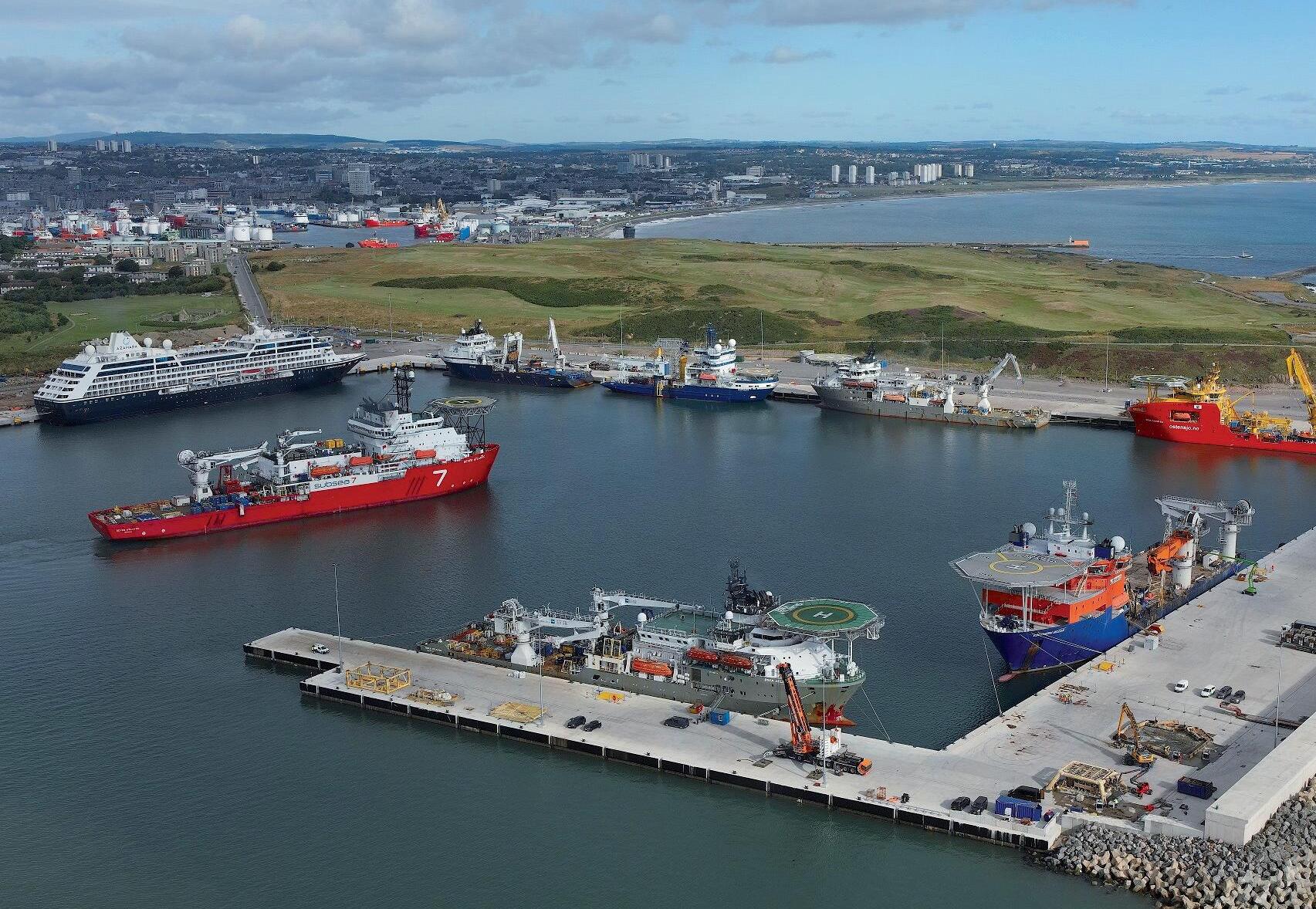
From construction through to operations, Port of Aberdeen’s South Harbour expansion has been a learning experience for our pilots, navigating a new harbour and movements with a size and scale of vessels not handled by the port before.
The new harbour, built out from a natural bay, added 1.5km of deepwater berths for vessels up to 300 metres and vast laydown areas. The reduced tidal restrictions and large turning basin enable more flexibility in scheduling and manoeuvres.
Previously, we were piloting vessels up to a maximum of about 165 metres in North Harbour. Now, within the space of two years we’re up to 290 metres, and tonnage-wise that’s around 113,000gt.
That includes Handymax bulk carriers, jack-up rigs, casualty vessels, decommissioning work, project tows and cruise vessels.
Training for our pilots to work within South Harbour was years in the planning. Simulation was used heavily in the early stages, and we also attended the five-day manned model course through Solent University at Timsbury Lake. The feedback from all the pilots who have attended so far has been very positive, and it has certainly given us the correct tools.
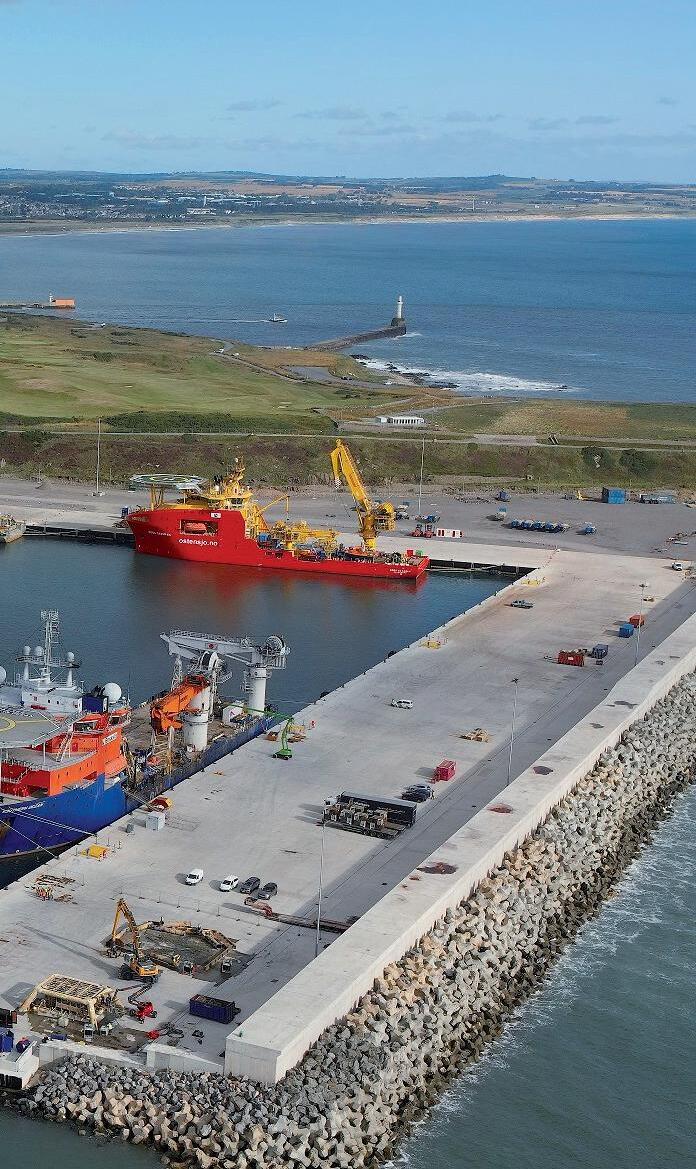
But nothing beats the real thing, and once we started piloting vessels in South Harbour the real learning started. There was a phased opening as each section of quayside was completed, which helped build familiarity and allowed us to share our experiences with the wider team.
From the opening stages, we recognised that the tidal set across the entrance at South Harbour was significant at different states of the tide – and different from North Harbour.
As a mitigation, we would take the larger vessels in at slack water. We then used an acoustic doppler current profiler, which identified the slack-water window timings and offered increased operability windows beyond simply working to high- and low-water slack tidal set.
We had also anticipated that South Harbour would not receive the same shelter as North Harbour. This was a big consideration for the pilots and for vessels in marginal conditions. It led to additional anemometers being fitted at South Harbour and on each berth.
If one movement really showed what South Harbour can do, it was the arrival of the Solong casualty vessel. When news broke of the collision involving Solong and Stena Immaculate, the possibility that Solong would come to Aberdeen was not really on our radar. Once we had confirmation that Solong would be towed to South Harbour, pilot involvement began.
It was quite a sombre job for the pilots and those going on board afterwards. You could see the destruction that had been caused and how catastrophic the incident had been. From a pilotage point of view, nothing prepares you for towing a burntout casualty vessel into your harbour.
The owners, insurer’s representatives and salvage company were excellent throughout. They had already done their checks offshore and the information coming back to us was reliable and trustworthy. The damage sustained to the bow of the Solong from the impact meant the vessel had to come stern-first into South Harbour. We put our own mitigations in place, including using the harbour tugs on the bow to control
• £420m ($565m) investment
• 1.5km of quayside
• Minimum depth -9m to -10.5m Chart datum (CD)
• Vessels up to 300m-long
• Channel width 165m
• 125,000m² laydown area
manoeuvring it as it came round Crathes Quay and into the turning basin. South Harbour really proved itself for this type of operation.
Looking ahead, I think offshore wind, particularly construction and O&M jack-up vessels, will be well served by South Harbour, given its location. Cruise is also growing and the feedback has been very positive. One of the biggest strengths of South Harbour is that it is adaptable to what our customers need.
From the pilotage side, being agile, adaptable and safe is what I am most proud of. During the construction phase and phased opening, we were doing things that were completely outside the norm for us at the time and we were learning as we went. A lot went on behind the scenes to make that happen, and I think all the pilots should be proud of themselves.
By Ross Docherty, Pilotage Supervisor, Port of Aberdeen
For pilots, the safe and efficient conduct of navigation depends on far more than their expertise on the bridge. It relies on the supporting marine safety management system (MSMS) required under the Ports & Marine Facilities Safety Code (PMSC) and reinforced by the Health and Safety at Work Act 1974 (HSWA) functioning as intended. The PMSC requires that competent harbour authorities (CHAs) must fully discharge their duties if safe navigation is to be maintained. The ability to provide a safe pilotage service is only as strong as a CHA’s commitment to do so.
CHAs are required to continually assess the need for pilotage services to ensure the safety of ships and provide those services accordingly. This is done by issuing compulsory pilotage directions whenever the pilotage risk assessment justifies them and clearly defining the ships, areas and circumstances to which they apply.
Critically, CHAs must authorise suitably qualified pilots, determine and uphold competence standards, regulate pilotage exemption certificates (PECs) fairly and ensure that pilot training and revalidation meet minimum international and national occupational standards.
These duties form an integral element of the safety management framework in which pilots operate to navigate ships safely and protect critical infrastructure. Where CHAs fail to meet their duties, pilots are forced to operate in a system that is structurally unsafe. The PMSC is clear that commercial pressures must be managed without undermining the safe provision of pilotage services.
Safe navigation is also underpinned by the conservancy duty, which remains one of the fundamental responsibilities of a harbour authority. Harbour authorities must ensure their harbour is fit for use.
This includes:
• Surveying to appropriate standards
• Monitoring the seabed for changes
• Maintaining aids to navigation in optimum condition
• Marking navigable channels
• Ensuring that hydrographic information is published promptly
When surveys are infrequent, when piers and jetties are allowed to deteriorate or when Notices to Mariners are delayed or incomplete, it is pilots who shoulder the operational risks. Conservancy failures create long�term, accumulating hazards that manifest in groundings, near‐misses and vessel damage. The PMSC reinforces that the Duty Holder must ensure that resources are made available and that conservancy obligations cannot be diluted to satisfy budgetary pressures.
The requirement to maintain marine infrastructure is closely linked to conservancy and is essential for pilot safety. Authorities are responsible for ensuring that all facilities within their area are kept in good repair and are fit for purpose. For pilots, this includes safe access to pilot vessels, structurally sound landing points, well lit and properly maintained embarkation areas and suitable berthing for pilot launches.
Under HSWA, harbour authorities exercising landlord duties are required to ensure that dock premises are structurally safe and fit for purpose. This obligation includes identifying, assessing and managing maintenance requirements through suitable and sufficient risk assessment.
The HSE’s Safety in Docks Approved Code of Practice (L148) translates these general duties into clear expectations for dockside environments, including the provision and maintenance of safe access, adequate lighting, properly maintained ladders and effective life saving equipment wherever people routinely work adjacent to water.
Where embarkation areas, jetties or piers fall below these standards, pilots are exposed to foreseeable and preventable risks that arise not from pilotage operations but from failures within the harbour authority’s statutory control. Effective integration between the MSMS and dock safety arrangements is therefore essential.
Pilot boat operations form another essential part of the safety system. The PMSC requires that all marine operations, including pilot boat activity, are formally risk‐assessed, supported by competent personnel and fully integrated into the MSMS. Authorities retain responsibility even when launch services are outsourced. Vessels must be fit for service and crews properly trained.
For many pilots, transfer operations represent the most hazardous part of the job. A harbour authority’s commitment to a safe, reliable launch service is therefore a direct measure of its commitment to pilot safety.
Safe navigation also relies on the continuous flow of accurate, timely information. The code emphasises the importance of ensuring that users are promptly informed of any changes affecting navigation, including hydrographic updates, alterations to aids to navigation and any condition changes within the harbour. For pilots, whose decision�making depends heavily on reliable, current information, any delay or omission in communication can introduce serious risk. Notices to Mariners are an integral part of risk‐control communication.
Under the PMSC, although safety is a shared endeavour, accountability is not. The Duty Holder remains ultimately responsible for ensuring that statutory duties are met, resources are available and that continuous improvement is achieved. Pilots play a crucial role, but they should not be placed in the position of compensating for failures in harbour authority oversight.
The PMSC provides a clear framework for CHAs to deliver safe and effective marine operations. However, safe pilotage cannot exist in isolation. It depends on a broader structure of statutory responsibilities, risk management, an effective MSMS and maintained infrastructure. The PMSC applies the same Plan–Do–Check–Act approach to marine operations that the HSE mandates for managing health and safety risks under HSWA, reinforcing the expectation that marine safety risks are managed systematically rather than reactively. When CHAs fulfil these duties, they ensure a solid foundation upon which every safe act of pilotage is built.
By Daniel Wood / ABL Managing Director Maritime / Europe & West Africa
Maritime pilots operate in some of the most demanding environments at sea, where rapid response can make all the difference. Zelim’s integrated safety technologies help crews detect, track and recover persons in the water faster and more safely than traditional methods.
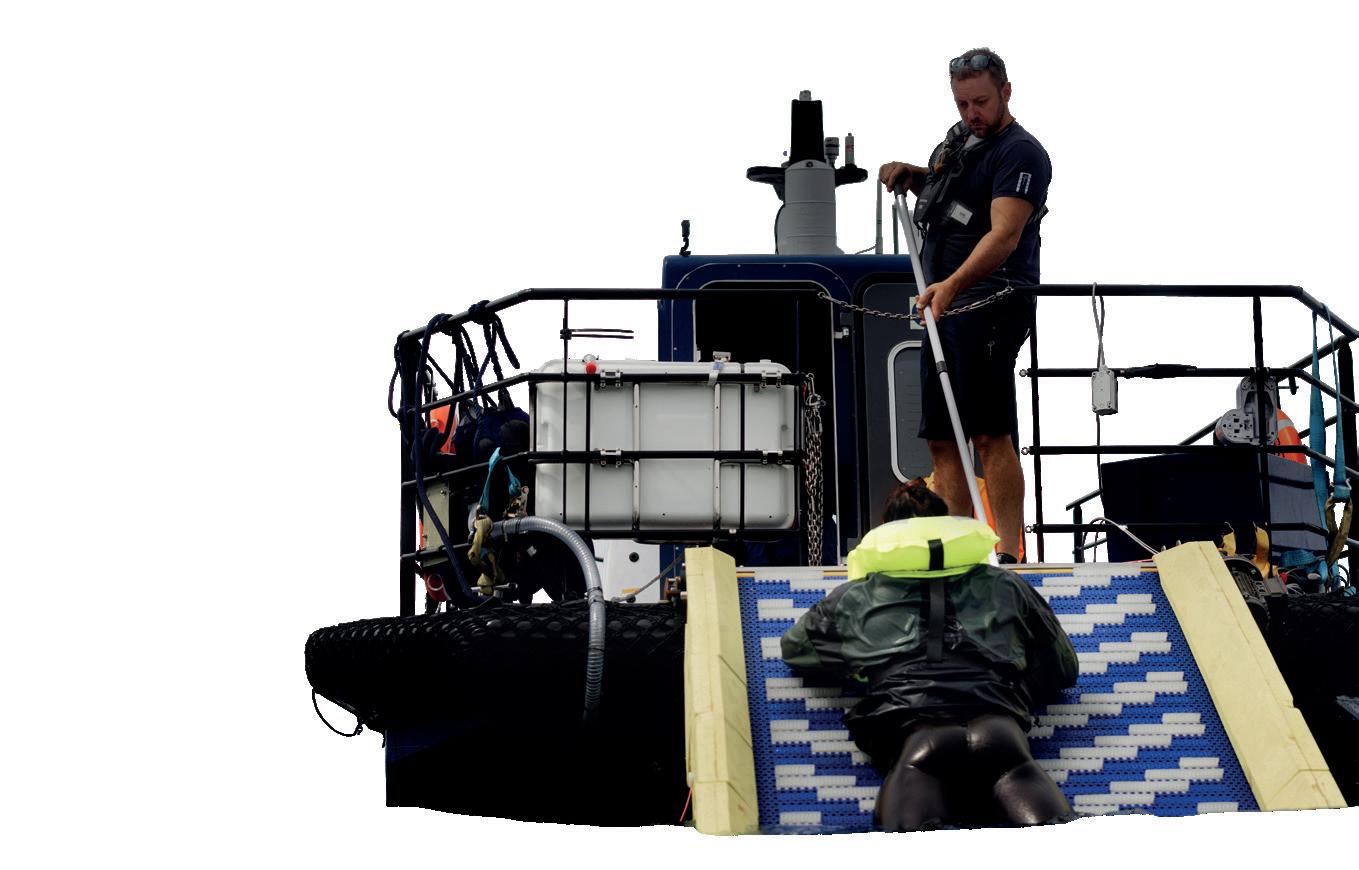
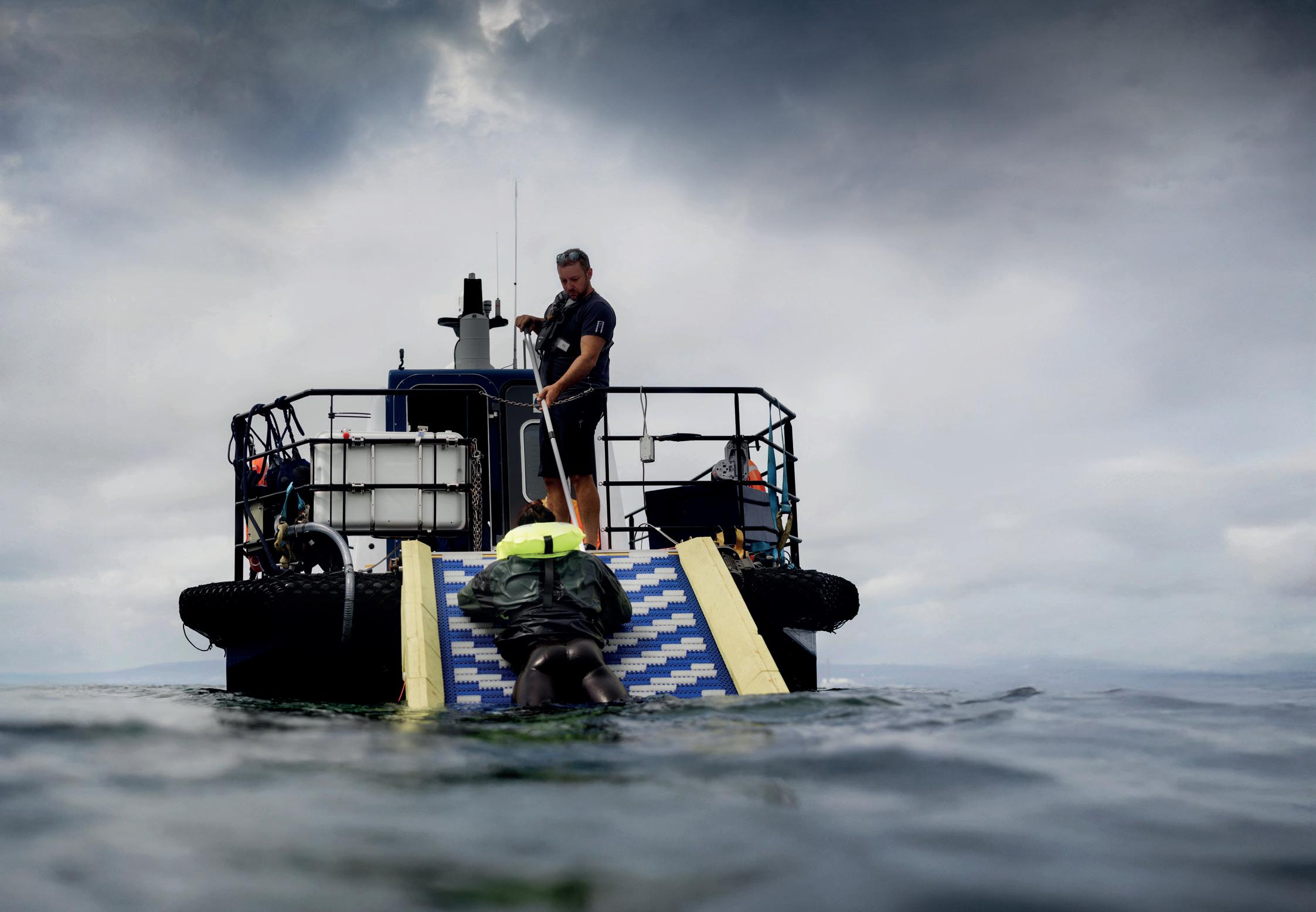
RAPID MAN-OVERBOARD RESCUE CONVEYOR
Fast deployment, recovering casualties in under 20 seconds
Reduces risk to rescuers and casualties
Operable by a single crew member
In use on pilot boats, workboats and commercial vessels
AUTOMATED MAN-OVERBOARD DETECTION
Immediate visual and audible bridge alerts
World’s first type-approved automatic MOB detection system, certified to ISO 21195:2020
Proven 97% detection accuracy
Trusted by leading maritime operators enquiries@zelim.com ZELIM.COM
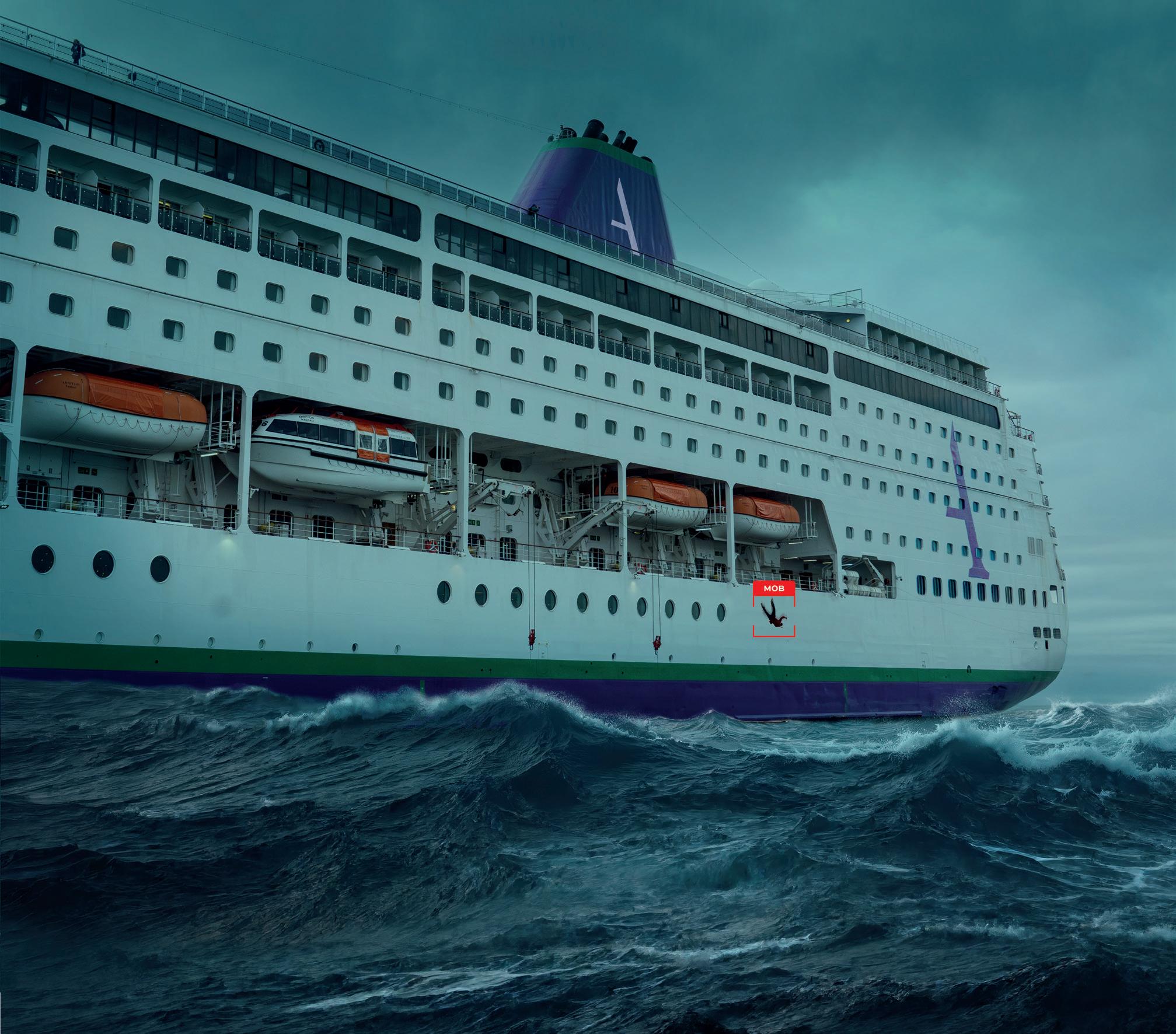
By Captain Dennis Robinson - Trinity House Hull
In the United Kingdom, applications for Deep Sea Pilotage certification are made through the UK Association of Deep Sea Pilotage Authorities (ADSPA). The statutory authorities empowered to grant Deep Sea Pilotage Certificates under Section 23 of the Pilotage Act 1987 are:
• Newcastle Trinity House
• Hull Trinity House
• London Trinity House
These authorities are responsible for examining candidates and issuing Deep Sea Pilotage Certificates.
Definition of Deep Sea Pilotage
Deep Sea Pilotage is defined as the provision of navigational assistance to the Master of a seagoing vessel by a pilot holding a valid Deep Sea Pilotage Certificate issued by the relevant Authority.
A Deep Sea Pilot acts strictly in an advisory capacity. The Master of the vessel retains sole responsibility for the safe navigation, conduct and manoeuvring of the ship at all times.
Deep Sea Pilotage Certificates are valid only in waters outside the seaward limits of designated local pilotage areas.
Eligibility requirements
Candidates seeking certification must satisfy the following requirements:
• Hold a valid STCW Regulation II/2 Master Mariner (Unlimited) Certificate of Competency
• Where the Certificate of Competency has been issued by a foreign administration, demonstrate an adequate command of the English language during the examination process
• Have completed a minimum of three years’ service as Master or Chief Officer while holding a Master’s Certificate, including at least one year of sea service as Master
• Possess recent and relevant experience in the waters for which certification is sought
In practice, recent experience is normally demonstrated through the completion of a minimum of three supervised training voyages with a qualified Deep Sea Pilot.
In addition, candidates must:
• Hold a valid ENG1 medical certificate (or equivalent)
• Provide appropriate professional references
• Demonstrate affiliation with a recognised Deep Sea Pilotage Agency
• Maintain a comprehensive Bridge Book. In modern practice, this is typically supported by a Portable Pilot Unit (PPU) containing current charts, Notices to Mariners, tidal information, navigational warnings and detailed routeplanning data
Examination
The examination process is standardised across all three certifying authorities. It has been developed to assess both the technical knowledge and professional judgement required for Deep Sea Pilotage.
The assessment is conducted by an examining committee and is based on structured voyage scenarios supported by chartwork and passage-planning exercises. Candidates are required to demonstrate:
• Thorough knowledge of relevant routes and reporting procedures
• Competence in passage planning and risk assessment
• Sound decision-making in a range of navigational scenarios
Particular emphasis is placed on the Deep Water Route through the Dover Strait and the Southern North Sea towards Europoort, including the helicopter boarding area west of the Eurogeul channel outside Rotterdam.
A certificate is issued once the examining committee is satisfied that the candidate has demonstrated the required level of competence. Successful candidates are also issued with
a Deep Sea Pilot Identity Card in accordance with IMO Resolution A.1080(28).
Where appropriate, operational limitations relating to vessel size or draught may be applied during the initial period of service, depending on the pilot’s prior experience.
All Deep Sea Pilotage certificates are subject to annual revalidation in January.
Professional oversight and standards
In response to instances of unlicensed individuals offering advisory services, the UK authorities, in co-operation with their counterparts in the Netherlands, Germany and the Baltic States, are developing a shared database of properly certified Deep Sea Pilots. This initiative is intended to uphold professional standards and ensure that only duly qualified personnel provide Deep Sea Pilotage services.
Practical pathway to certification
Prospective candidates typically begin by approaching a recognised Deep Sea Pilotage Agency. Subject
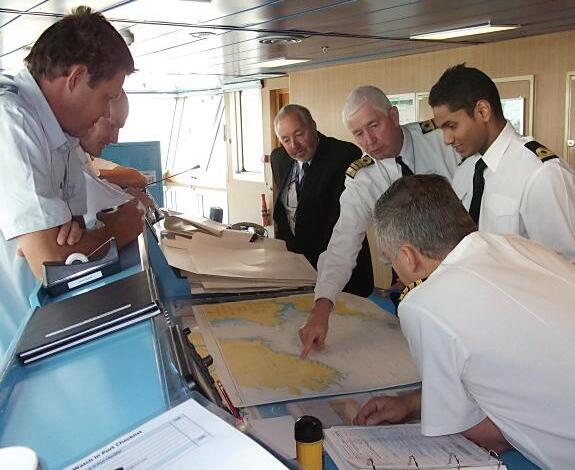
to operational requirements and availability, the agency will arrange supervised training voyages with experienced Deep Sea Pilots.
During this period, mentoring pilots provide guidance on route knowledge, passage planning standards and the preparation of the candidate’s Bridge Book and associated equipment.
A minimum of three supervised voyages is generally expected, including at least one deep-draught passage.
When both the candidate and the mentoring pilots consider that the required standard has been achieved, the candidate submits an application to the chosen Trinity House authority via the ADSPA application process. The examination date is then formally arranged.
Successful completion of the examination leads to certification and entry into professional practice as a UK Deep Sea Pilot, a role requiring the highest standards of navigational expertise, judgement and professional conduct.
IMO Resolution A.1080 (28):
https://wwwcdn.imo.org/localre sources/en/KnowledgeCentre/In dexofIMOResolutions/Assembly Documents/A.1080(28).pdf
MGN 506:
MGN 506 (M) Amendment 1
Navigation: Deep-Sea Pilotage in the North Sea, English Channel, and the Skagerrak - GOV.UK
By Lee Sample / Seaham Harbour Pilot
Seaham harbour is a port steeped in history, with the first foundation stone being laid in 1828. Since then, it has been expanded from its original design several times to what we see today.
Originally designed and built to export coal from the nearby collieries for export to Europe, the cargo that
the port now handles is very different. At its height, the port was handling over two million tonnes of coal per year in the 1930s. This is impressive, given the size of the facility itself. However, with the decline of coal in the UK, the port had to diversify. The port handles a variety of different cargoes today, from solid bulk cargoes and timber to building supplies and steel.
The port is situated in the cliffs of the North East of England and is protected by a series of breakwaters, with the pier entrance facing the southeast.
Dangerous rock patches litter the approach to the entrance and we operate around the periods of high water. The port has just invested significant funds in refurbishing the harbour gates, which has been an ambitious undertaking in restoring Victorian-style engineering and has secured the port’s longevity.
The port is small and specialised, and so is the marine team that works there. We have a small, dedicated team of local, multi-skilled maritime professionals. They crew the pilot boat, they operate our gate system and they service the vessels that enter the port. The pilots here are no different. We are a two-man team: me (Lee Sample) and Nick Lewis. Nick learned from one of Seaham Harbour’s longest-serving marine pilots, the late Chris Cambridge. He had been navigating in and out of the harbour for close to 40 years. Nick then taught me the district.
I took an unconventional path into pilotage, which perhaps is indicative of
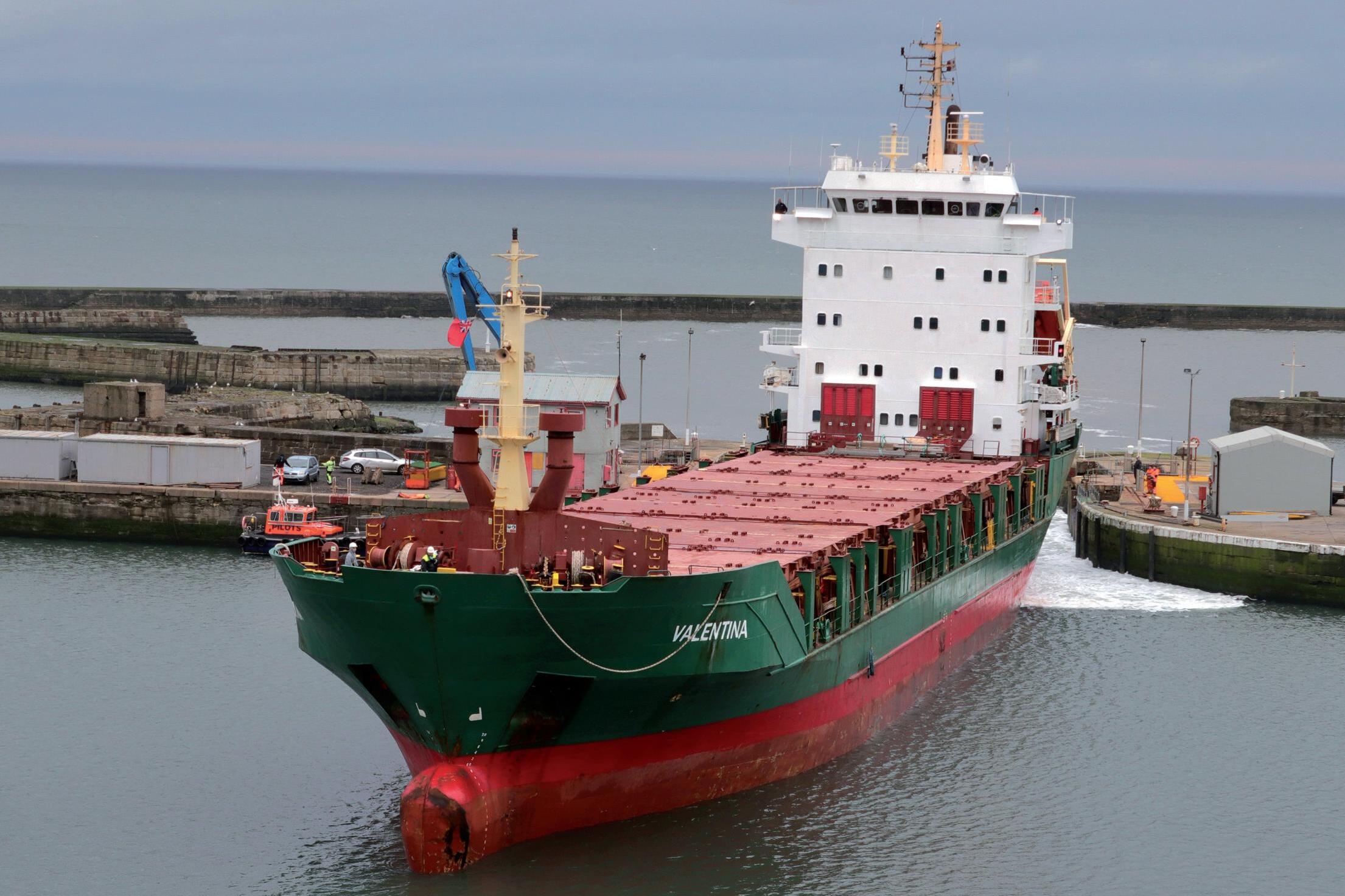
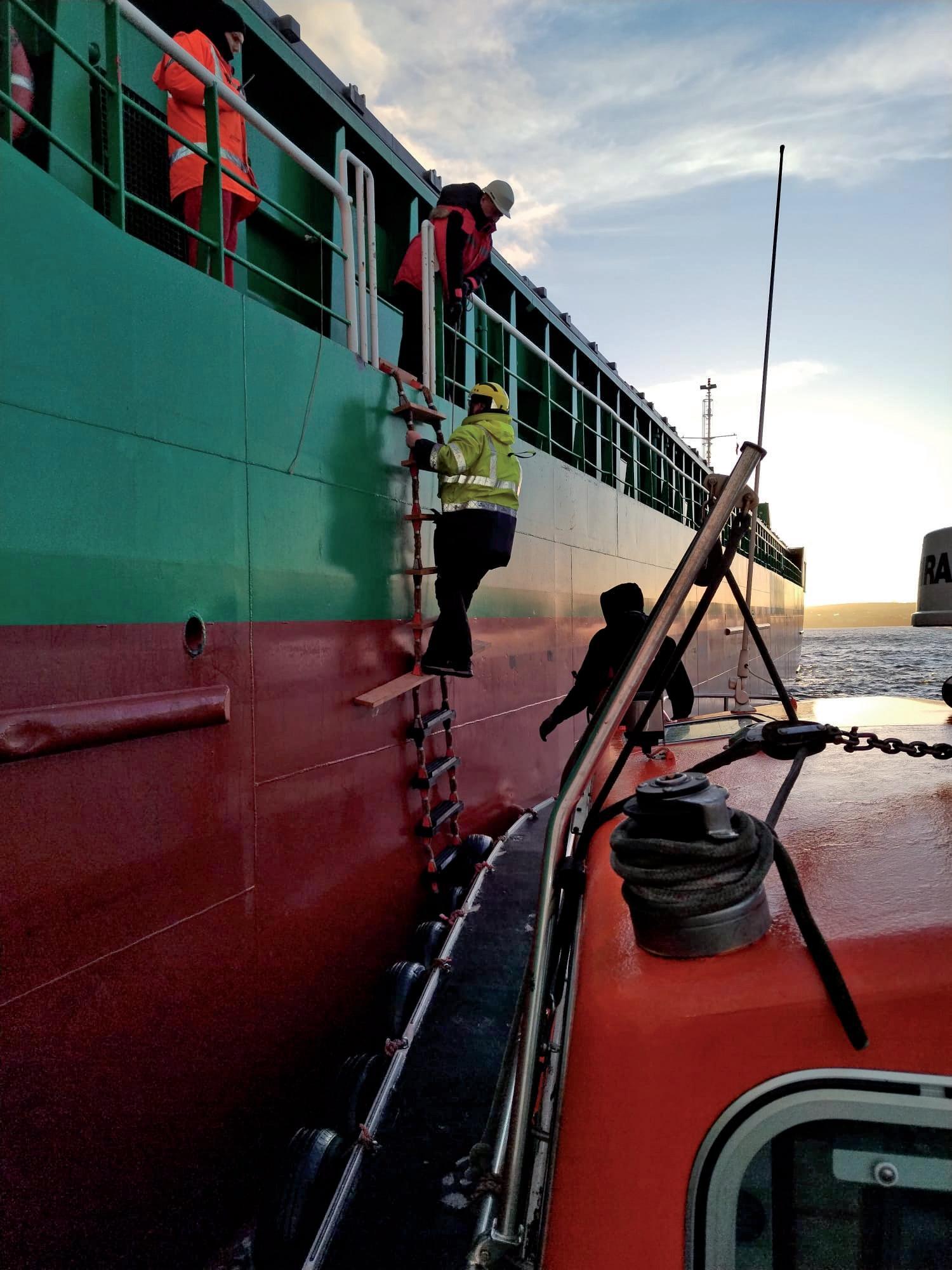
the challenges the maritime industry now faces with many more people coming ashore far earlier in their careers than ever before and transitioning into marine pilotage.
The training was intense. A Seaham harbour pilot requires at least 50 training acts including a mixture of day and night pilotage. There are no simulators for training: everything is learnt from the pilot you are with. Authorisation requires ten assessment trips with no written exams. From starting to authorisation requires four months. The minimum entry qualification required at Seaham is OOW.
The port itself may be small but the vessels we bring in are almost twice the size that the original harbour architect had in mind. The approach to the breakwater piers requires a steady hand and a keen awareness of the tide that you are experiencing at the time. Use of engine has to be highly disciplined: overuse of the engine may give you better heading control but also more speed, which you will be unable to easily scrub.
A set of over 40 degrees is not uncommon, then once inside the piers you need a controlled swing to port immediately to line the vessel up to the 19-metre-wide dock head gap. Speed control is key, as once in the harbour you need to stop in a very short space and spin the vessel on the pivot point before proceeding to one of our seven berths in the south harbour.
This is naked ship handling at its finest: no tug and lumpy seas and tide to the piers to contend with. Close-proximity manoeuvring thereafter makes it a very interesting district to operate in. The lack of room inside the harbour itself will give you instant feedback on what it is you are doing, whether intentional or not.
At a small-port operation like this, Nick and I also are relied upon to assist in other duties. Like our marine team, we also assist in the operation of the gates when required. We have been known to take the lines of a vessel mooring or departing on occasion when not piloting ourselves. We run the port’s pollution response plan and assist with the dredging plan and licence.
Seaham has seen some brilliant pilots come and go over the years. It’s an amazing place to learn the trade with its unique challenges, which I balance with studying for my chief officer unlimited CoC, self-funded and remote.
If you want to know more, I have a social media page ‘Seaham Harbour Pilots’ on Facebook, which shows various acts of pilotage and insights from our operation here in the Northeast.
SEAHAM PORT IS SMALL AND SPECIALISED, AND SO IS THE MARINE TEAM THAT WORKS THERE
By Alun Thompson, Marine Surveyor, Hull Marine Office (MCA)
The role of the regulator in the marine industry is a challenge. Knowing which ships need the most focus and making sure we get maximum impact with our attendances requires a team working together to make the industry safer for all.
Reports from those seeing the vessels in their day-to-day jobs help us to target our efforts on vessels that might need special attention to protect health, safety and the environment.
Pilots and port authorities are legally obliged to report anomalies that prejudice the safe navigation of the ship or may pose a threat of harm to the marine environment. As valuable protectors of the safety of our water and seaways yourselves, we also want to keep you safe. Some risk could be carried by each boarding, which you do willingly in your roles to protect the safety of navigation, so our work must ensure that substandard vessels are targeted to help keep you safe, as well as the ships, their crews and the environment.
A pilot report goes further than just that one report. It helps the MCA to build up a picture of industry trends and inform regulatory development and also allocate resources so as to best target what we can in our huge task. Even if on that occasion we are not able to attend the vessel, the report remains with us and if a pattern begins to emerge on that vessel, the cumulative information may lead to an intervention and a good outcome, improving the safety of all.
In this article I intend to explain how the MCA processes pilot reports and how that information impacts inspections, and give an overview, using some case studies from my own experience as an MCA surveyor and port state control officer, of how pilot information has been used to directly influence inspections.
The MCA receives a wide range of reports and complaints. All reports are reviewed and considered individually and, with vessels where multiple reports have been received, collectively. Pilot reports are one of the MCA’s most valuable resources because of the experience and knowledge behind them.
The reports we receive are diverse, covering safety and environmental concerns such as navigational nearmisses, weighted heaving lines, incorrect pilot boarding arrangements and poor crew competency. Security concerns, shoreside issues and areas from other government departments are also received, which we forward to the relevant departments for their consideration. This has key benefits for us.
Unfortunately, we are unable to follow up on issues in the foreign-flagged fleet if they are only guidance rather than statutory, so we need to establish if the reported issue is one we are able to act on. Even if it is considered to be only guidance, the issue remains logged so we can track cumulative reports or issues for the vessel. Pilot ladder guidelines are set to be given legal force internationally with amendments to Solas V/23 Pilot Transfer Arrangements coming into force on 1 January 2028 (IMO MSC.1/Circ.1428/Rev.1).
In an age of data-driven decisionmaking, even those reports that we
cannot action have value. Proposed changes to regulations, policies and resource allocation need to be backed up by a logical argument of necessity. Any additional data helps our colleagues responsible for making policy to make a clear, data-driven argument for changes. Information received from pilots helps feed into this regulatory development.
If the reported issue has a statutory backing, the approach then varies depending on whether the vessel is foreign-flagged or British.
For British vessels (those of the UK flag and the Red Ensign Group), we are able to exercise more control as the flag state by engaging and intervening with the companies directly to ensure rectification. We can also trigger what is known as a general inspection on these vessels, since we cannot intervene via the Paris Memorandum of Understanding (MOU), as marking our own homework is frowned upon. For foreign-flagged vessels, we would use the MOU processes described below. Secondly, a pilot report can have a direct impact on the inspection process and priority for the ship in question through the addition of a message attached to the vessel’s profile in the Paris MOU’s inspection database, THETIS. At this point, it is worthwhile to take a closer look at how inspection priority is determined.
As part of our commitment to effective targeting, the UK is a signatory to the Paris MOU. This regional agreement covering European states and Canada allows us to share information on foreign vessels and build on this shared network. Even if a pilot report cannot be actioned by the UK (for example, due to a short port call or the finding occurring on the outbound voyage), reports logged
via the Paris MOU are available for all member authorities to consider targeting the vessel at their ports, extending the scope of jurisdiction and reach of a report.
The frequency of routine inspections is calculated based on the vessel’s risk profile, which is calculated based on the factors listed in Annex 7 of the Paris MOU. These include generic and historical parameters such as type of ship, age of ship, flag-state performance, Recognised Organization performance, company performance, deficiency index and detention index (Paris MOU Annexes 7 & 8). As a result of the ship’s risk profile, ships will become eligible for inspection initially as Priority 2, meaning they can be inspected, eventually entering the time window for Priority 1, meaning they must be inspected. Pilots’ reports, along with other reports, add an additional layer to the above.
Reports considered as meeting the criteria are then put into the Paris MOU reporting structure and will automatically trigger a change in the inspection priority of the vessel.
Depending on the nature of the report, the vessel will become a Priority 1
or a Priority 2 for inspection in the region. Groundings, collisions, alleged pollution and erratic manoeuvres all fall into the category of ‘overriding factors’, which raise the vessel to Priority 1.
Pilot reports other than for the situations above are raised in their own dedicated sub-category. These, a type of ‘unexpected factor’, once entered automatically raise the vessel to Priority 2 for inspection and appear on the database as messages for the attending port state control officer and those allocating ships for inspection.
Other examples of unexpected factors include previous deficiencies regarding safety management, previous detentions (both of which automatically make a vessel Priority 2 three months after the last inspection) and complaints about the ship made by anyone with a legitimate interest in the safety of the vessel and those on board.
Once on board the vessel, there are differing levels of scope for an inspection. A Factor Message automatically increases the scope of the inspection to a more detailed level, involving a close look at the items that caused the report and other selected
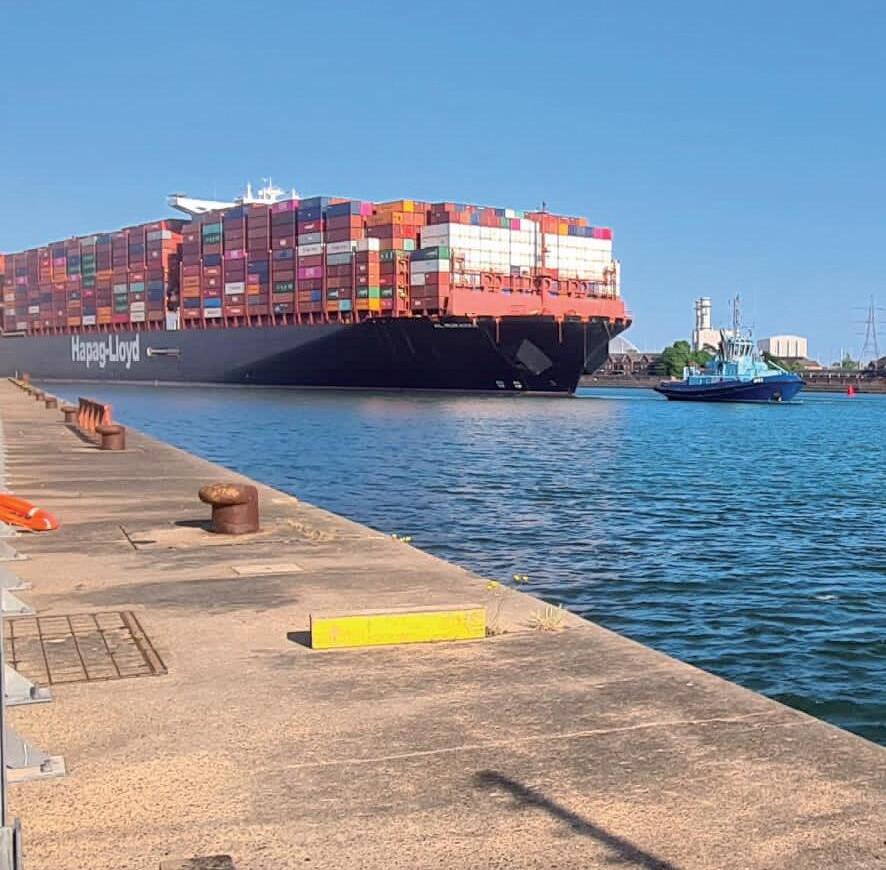
areas at random. Therefore, although a pilot report might be about a specific navigational or ladder issue, this may be the tip of the iceberg that uncovers more problems, which might not otherwise have been checked to that level.
A detailed pilot report of concerns can therefore have a direct impact and provide justification for the MCA to conduct an inspection by triggering a change in the vessel’s priority for inspection. Any findings as a result of the inspection are also fed back into the ship’s risk profile and could lead to an increase in the ship’s perceived risk and therefore the frequency of routine inspections too.
Vessels marked as Priority 1 are considered the most critical to inspect within the region, with member authorities having to provide written justification centrally every time they miss such a vessel calling at their ports without an inspection. Priority 1 vessels that also have a Factor Message, from a pilot report or other, are prioritised, in that we have a clear reported reason to believe the risk of this vessel is one we must consider. We then would conduct a more detailed inspection to allow a thorough look at the vessel.
An inspection can lead to several outcomes:
• Detain the vessel until it can demonstrate compliance if we consider the issues so severe we need to personally oversee it
• A deficiency on the report
• No further action upon investigation
We can also consider if the finding is related to systemic safety management issues. It is important to stress that just because the MCA has boarded for an inspection and not got any findings relating to the complaint, it does not mean that it was not worthwhile. Pilots are always encouraged to raise concerns onboard, or indeed to refuse to board if it is not considered safe, and some companies thankfully take that action immediately. Therefore, they have already learnt from the pilot’s contribution and the vessel is safer as a result.
To illustrate how the process works in practice, I have chosen a few case studies from my time with the MCA to demonstrate the value of pilot reports.
A priority 1 bulk carrier had an unexpected factor message: As there was a Factor Message, a more detailed inspection was conducted, increasing the scope of the work from the outset. As a result of this, the inspection went into more detail on pilot boarding arrangements, including the rigging of the pilot ladder for demonstration.
In this case, it appears that remedial action had already been taken by the company regarding the pilot boarding arrangements prior to our inspection. Consequently, since I as a port state control officer can only verify and therefore act upon the condition of the ship at the time of inspection, the report was archived in the vessel’s history.
Vessels that have been detained need to have satisfactorily rectified the deficiencies prior to release. In some cases, the work required to rectify cannot be undertaken at the port of detention so they have to sail elsewhere with a number of flag mitigations in place.
In a general cargo ship case study, such an agreement was reached and then, unbeknown to the MCA after this agreement was reached, the vessel was sold, invalidating certificates, and crew were changed before sailing, leading to an unfamiliar crew.
The pilot refused to leave the dock and brought the vessel back alongside when they recognised the lack of familiarity. The pilot reporting in allowed the MCA to re-detain the vessel. Their detection and actions also allowed subsequent action on serious breaches of maritime legislation. The pilot’s contribution to maritime safety was invaluable.
Factor Report by pilots and port authorities or bodies
Due date for PII Defined by System
Status Open
Title Pilot transfer arrangements
Message Problem with Pilot Transfer Arrangements occurred during embarking; Means of transfer : Pilot ladder; Pilot transfer Arrangement remark : Ladder not properly fixed to deck. Instead secured with two thin polyprop flaglines!
The difficulties with reports such as the one below is that the conditions are not able to be replicated when a vessel is alongside, and it is outside the remit of Port State Control to take the vessel out. In this case, however, the subsequent inspection triggered directly as a result of the report led to a vessel detention as various other deficiencies were also identified.
As demonstrated above, reports from pilots provide valuable contributions to the enforcement of maritime safety, even beyond the report itself. Notably, port state control officers seldom see how a ship is actually being navigated or operated at sea, as by necessity our inspections are limited to the vessel when it is in port. Pilot reports too are varied in detail. Those that are of particular value generally contain one or more of the following points:
• A check of who can deal with the issues encountered. A lot of issues can and do fall within the jurisdiction of the Harbour Master, for example, rather than the MCA’s remit to enforce, particularly with regard to navigational practices often covered by bylaws. On occasion, tailoring reports to the relevant party can be more effective.
• Specific details of what you are reporting. As a port state control officer I can only act upon deficiencies that are present on the vessel when I attend. The PSC inspection is by its very nature a snapshot of the vessel at that time and location. Knowing the precise defect on the precise piece of equipment makes the investigation of it much easier.
• The relevant background details – particularly with regard to crew problems and transient equipment failures. If you have a failure during pilotage, give a brief description of the relevant conditions around it.
• Details of how the issue was identified: were the crew aware, concerned about it or otherwise?
CASE
Factor Report by pilots and port authorities or bodies
Due date for PII Defined by System
Status Open
Title Electrical failure while navigating in close waters
Message Electrical power loss twice whilst approaching berth, requiring tug assistance. Reason given by Master - Transient Electrical Response due to the bow thruster being stopped without the proper reduction in RPM. (Pilot stated bow thruster not in use at the time the loss occurred).
I hope the information above reaffirms just how valuable pilot reports can be and how much they are appreciated by those of us tasked with enforcing maritime regulations. On occasion, by changing the priority of the vessel, they provide the clear grounds required to take necessary action in support of our mutual safety as seafarers. Great work at the IMO comes about from having these case studies of when we have wanted to act but under regulation have not been able to, leading to lasting changes in the future of maritime and improved safety.

Supporting professional development for pilots, tugmasters and bridge teams operating together in complex conditions. Delivering immersive, bridge-team scenarios with realistic hydrodynamics, communications, and emergency drills to build proficiency.






Find out more www.bmt.org/REMBRANDT


By Capt Vikram Hede
The Great Barrier Reef is the world’s largest coral reef system, stretching over 2,300 kilometres along the northeast coast of Queensland and covering an area greater than the United Kingdom, Switzerland and the Netherlands combined. With more than 3000 individual reefs, 600 islands and 600 coral cays, it is as breathtaking as it is navigationally demanding – a complexity that has made licensed reef pilotage not only essential but compulsory since 1991.






With over 150 years of history, Great Barrier Reef pilotage ranks among the most demanding coastal pilotage operations in the world. Transits extend up to 500 nautical miles, undertaken single-handed through one of the planet’s most environmentally sensitive and navigationally complex marine environments. Pilots may board vessels by helicopter up to 120 nautical miles offshore, and on cruise ships may remain aboard for several days while the vessel calls at multiple ports within the reef.
A reef pilot assists the Master and bridge team in safely navigating through the Great Barrier Reef and Torres Strait –areas defined by coral reefs, shallow shoals, narrow channels and strong tidal streams. Despite advanced onboard technology, local knowledge remains essential.
Working closely with the bridge team, the pilot plans and monitors the passage, manages risk and advises on tides, currents and traffic. In the Torres Strait, this includes ensuring compliance with the minimum 1.0-metre under-keel clearance for vessels over 9.0 metres draught (up to 12.5 metres), using realtime data via the Under Keel Clearance Management (UKCM) system operated by the Australian Maritime Safety Authority (AMSA).
Pilotage is supported by riskmitigating services such as Reef Vessel Traffic Services, high-quality charts, accurate bathymetry, effective bridge resource management, AtoN (aids to navigation) and AIS. The Master always retains command.
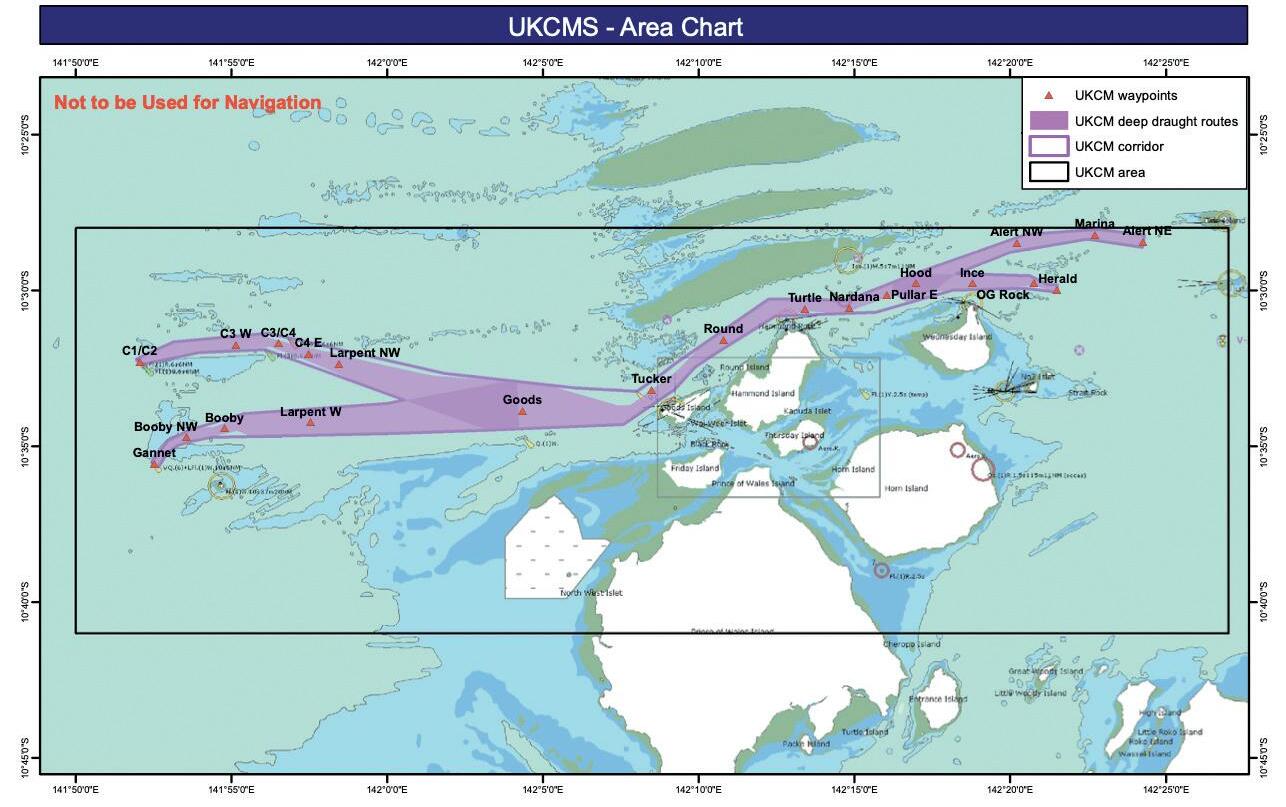
When is pilotage required?
Under the Navigation Act 2012, vessels over 70 metres in length – and loaded oil tankers, chemical carriers, and liquefied gas carriers regardless of length – must embark a licensed coastal pilot when transiting compulsory pilotage areas. Naval vessels are exempt. Pilotage services are provided by two licensed providers, Auriga Pilots and Torres Pilots, with just under 90 licensed coastal pilots operating across five designated areas. The reef handles approximately 420 piloted voyages per month –over 5,000 per year – of which around 35% transit Hydrographers Passage.
The five compulsory coastal pilotage areas are marked in the diagram.
Entry requirements
Pilotage is governed by Marine Order 54 and overseen by AMSA.
Applicants must:
• Hold a Master’s Certificate (≥3,000gt)
• Have at least 36 months’ sea service (including 18 months in the past five years)
• Maintain current medical fitness
• Complete Advanced Marine Pilot Training and BRM courses
• Have the right to work in Australia
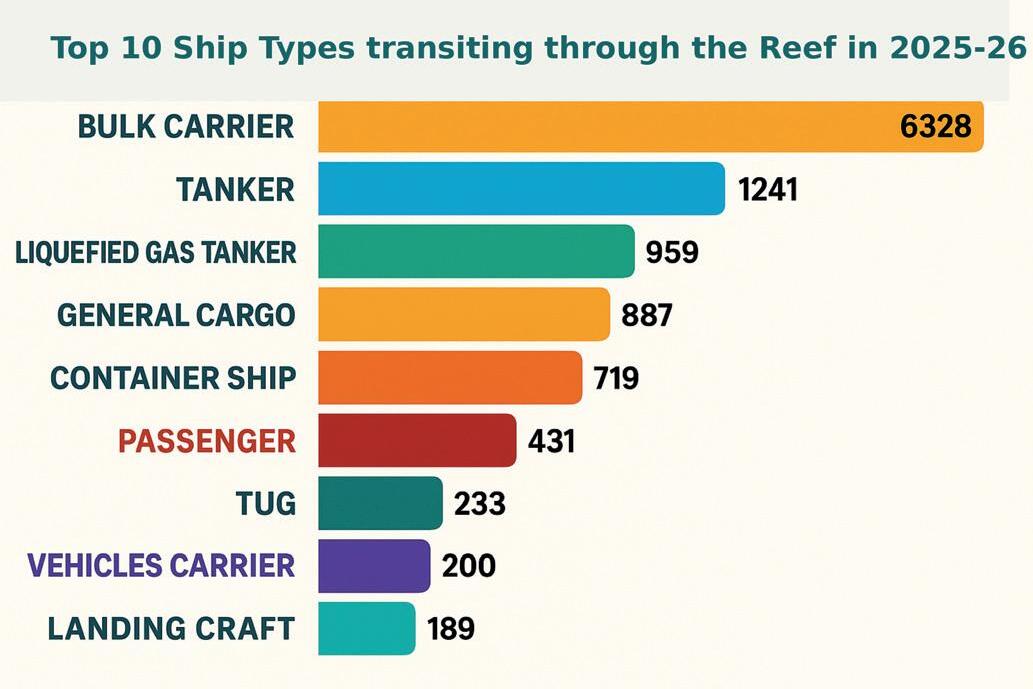
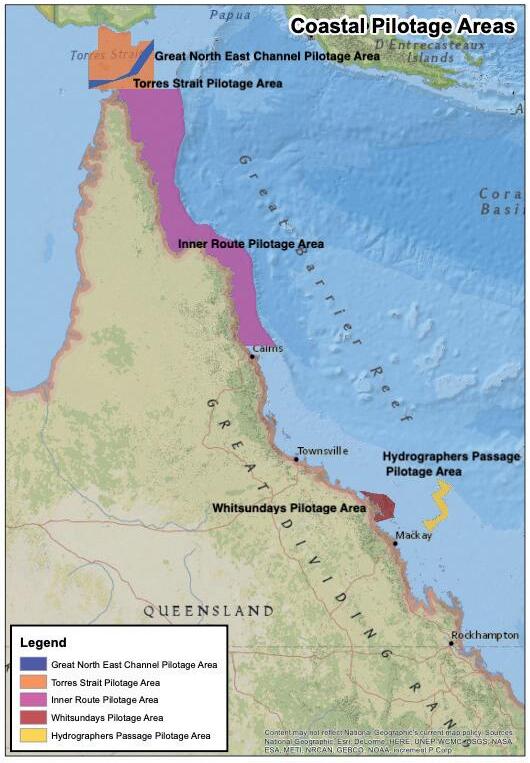
Marine Order 54 is currently under review, with alternative pathways being explored that recognise a candidate’s broader experience and competency.
Training and progression
The pathway from trainee to fully licensed pilot is rigorous. Trainees complete the Queensland Coastal Pilotage Training Programme, including supervised voyages with training and mentor pilots.
Training covers pilotage regulations, environmental protection, route planning, risk management, UKCM and simulator exercises for complex and emergency scenarios.
A Restricted Licence requires competency assessment, AMSA written and chart exams and UKCM and Fatigue Risk Management courses.
An Unrestricted Licence follows once sufficient experience is gained, including required transits and a Check Trip with an AMSA-nominated Check Pilot.
Transit requirements include 24 transits (Inner Route + Great North East Channel) and 20 transits (Hydrographers Passage).
Licence renewal and CPD
Renewal requires current medical fitness, approved training and a minimum of 40 CPD points accumulated over the preceding four years. Pilots must also demonstrate recent operational activity –generally at least eight transits within two years for the Inner Route and Hydrographers Passage and four for the Great North-East Channel, each including a check pilot voyage.
A unique profession
Reef pilotage sits at the intersection of deepsea navigation and precision coastal shiphandling. Every transit carries a dual responsibility – for the safety of vessel and crew and for the protection of one of the world’s most precious natural ecosystems. For those fortunate enough to undertake the role, it remains both a considerable challenge and a genuine privilege.
By Naomi Harper / Port of Dover Comms Executive
At the Port of Dover, pilot transfer is recognised as one of the highest-risk routine activities within marine operations. Like many ports, Dover continues to learn from pilot ladder incidents and near misses, whether they occur locally, elsewhere in the UK or internationally.
Dover is a very busy ferry, cruise and cargo port, but its pilotage team is relatively small, with six qualified pilots. Developing and maintaining a dedicated pilot ladder training facility solely for Dover was not considered practical, but the port was clear that pilots and marine teams needed access to realistic, high-quality training.
Working with the Maritime Skills Academy, a local training facility, provided the right solution.
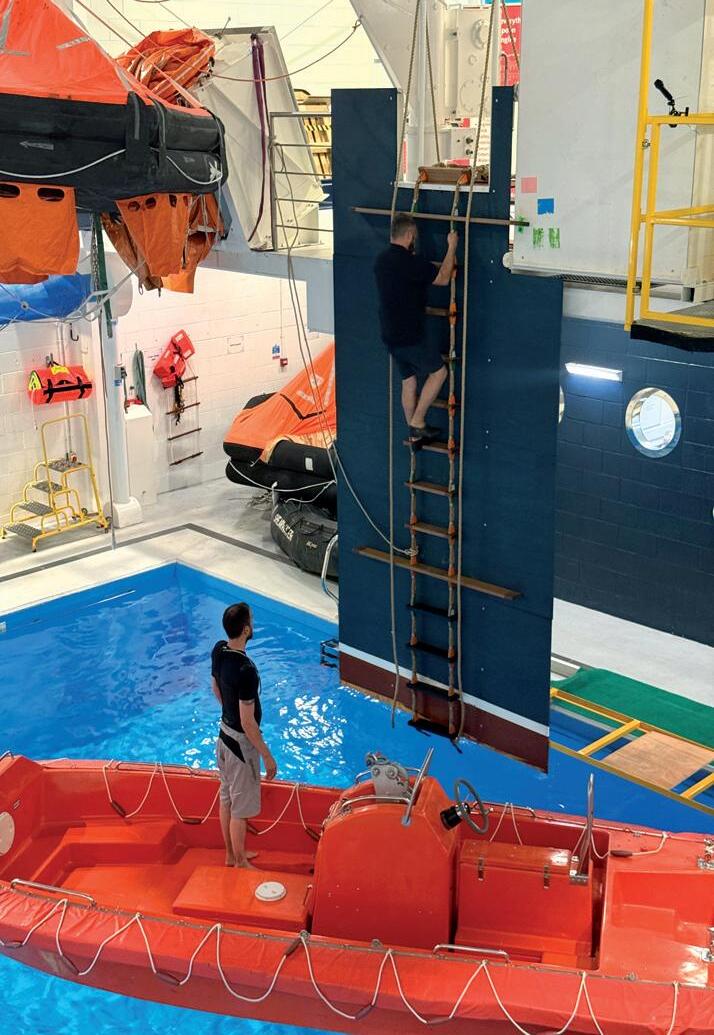
In collaboration, we developed a full pilot ladder and transfer platform over water, creating a realistic but controlled environment for practical training.
The initiative was led by Guy South, one of Dover’s Class 1 pilots and our pilotage manager, working closely with Dean Stores, head of training at the MSA, to deliver the project. The course combines classroom learning with practical transfer training, focusing on ladder rigging, inspection, maintenance and effective risk management procedures for marine personnel.
Following successful training with Dover pilots, MSA’s course became the first pilot ladder training programme to receive UKMPA endorsement.
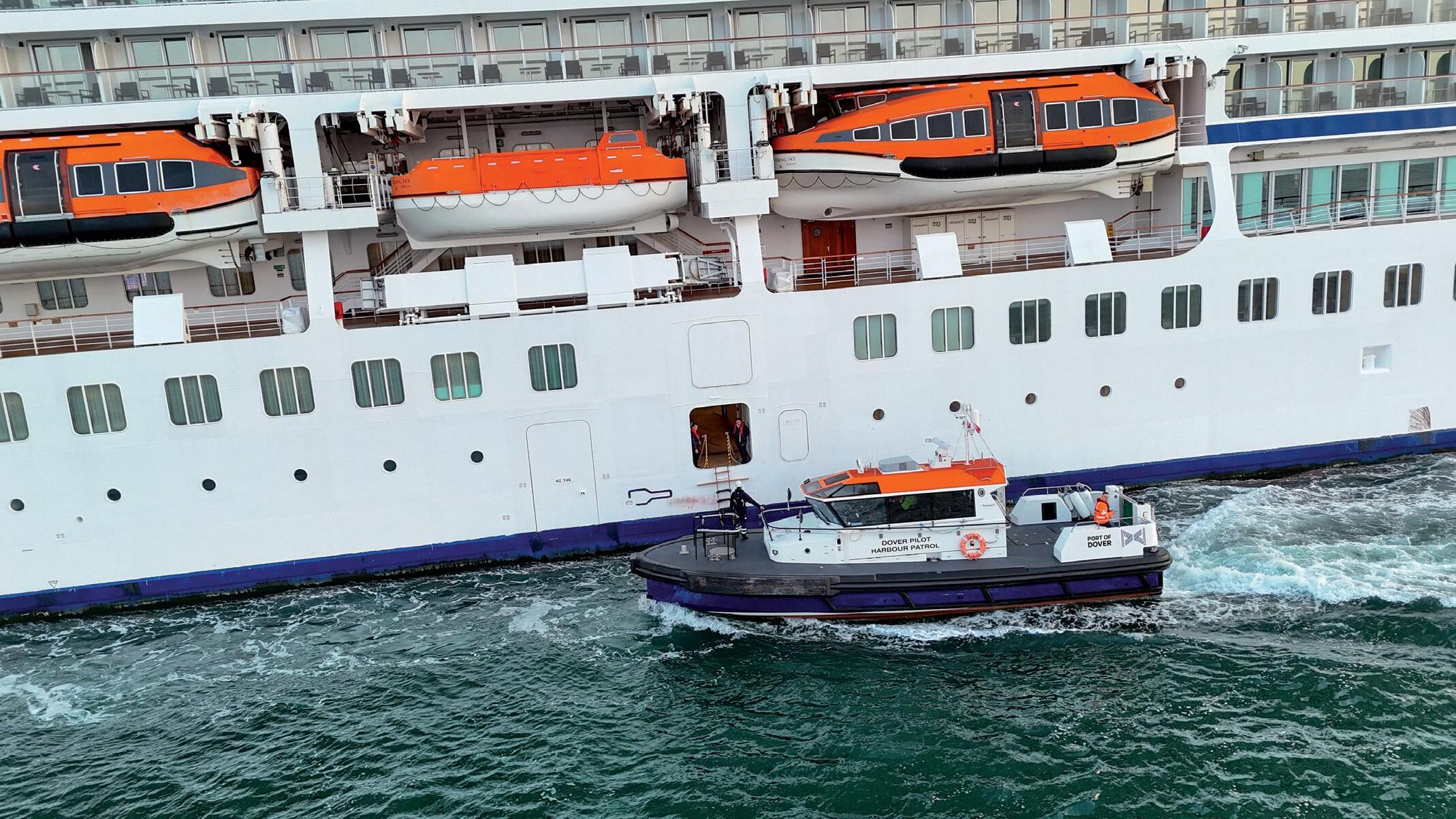
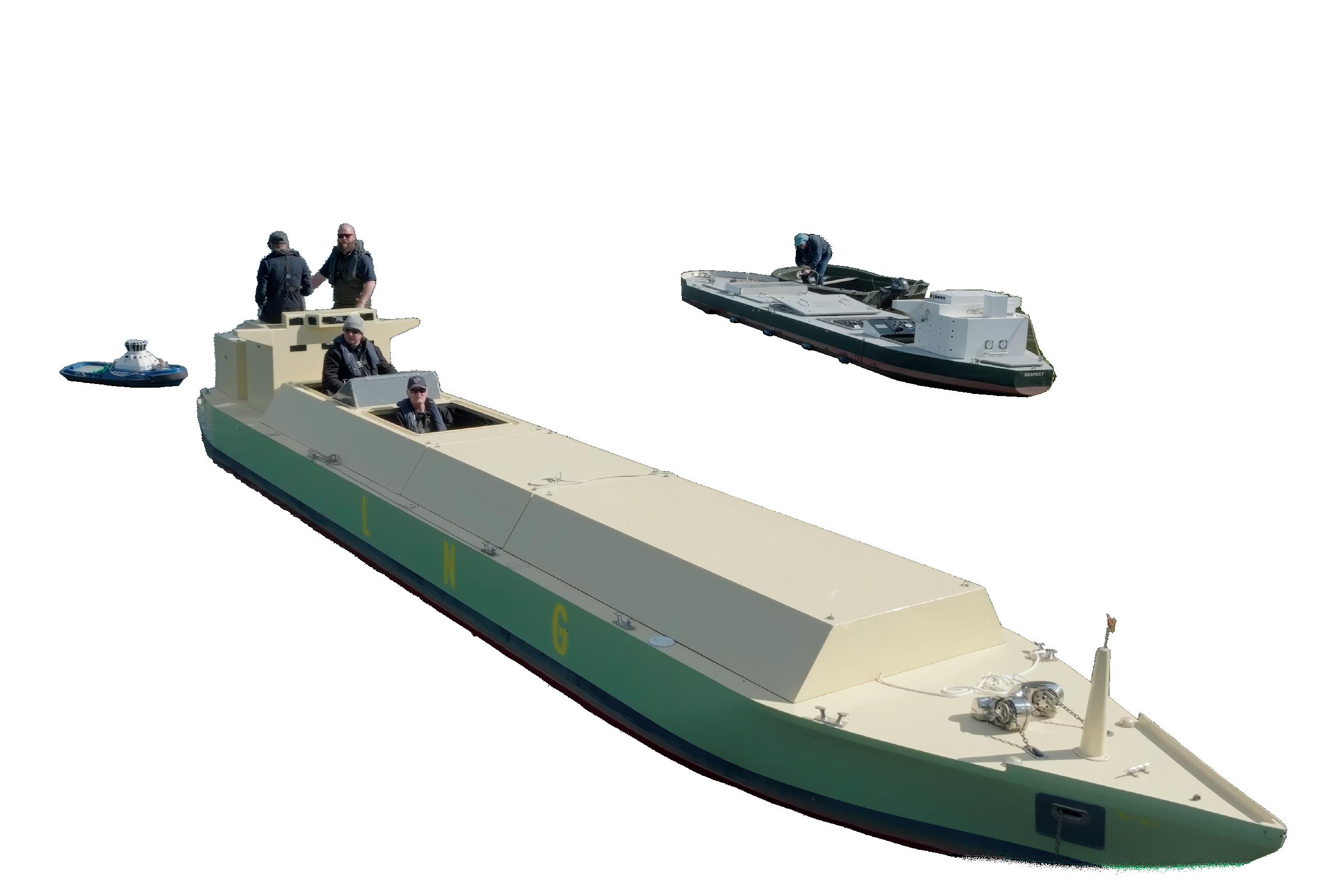
Scaled models of real single and twin-screw ships, replicating the hydrodynamics and handling characteristics of an actual class of vessel.
Warsash Maritime School’s manned model ship handling centre and simulation centre offer the perfect way to keep your skills sharp, combining world-renowned training with a realistic, safe and controlled piloting environment.
• Our ship handling centre is unique in the UK, and one of just a few worldwide.
• Scaled models of real single, twin-screw and azimuth drive propulsion ships, replicating the hydrodynamics and handling characteristics of an actual class of vessel.
• Buoyed channels, a four-mile scale-length canal, turning basins and 22 flexible berths for any shiphandling scenario.
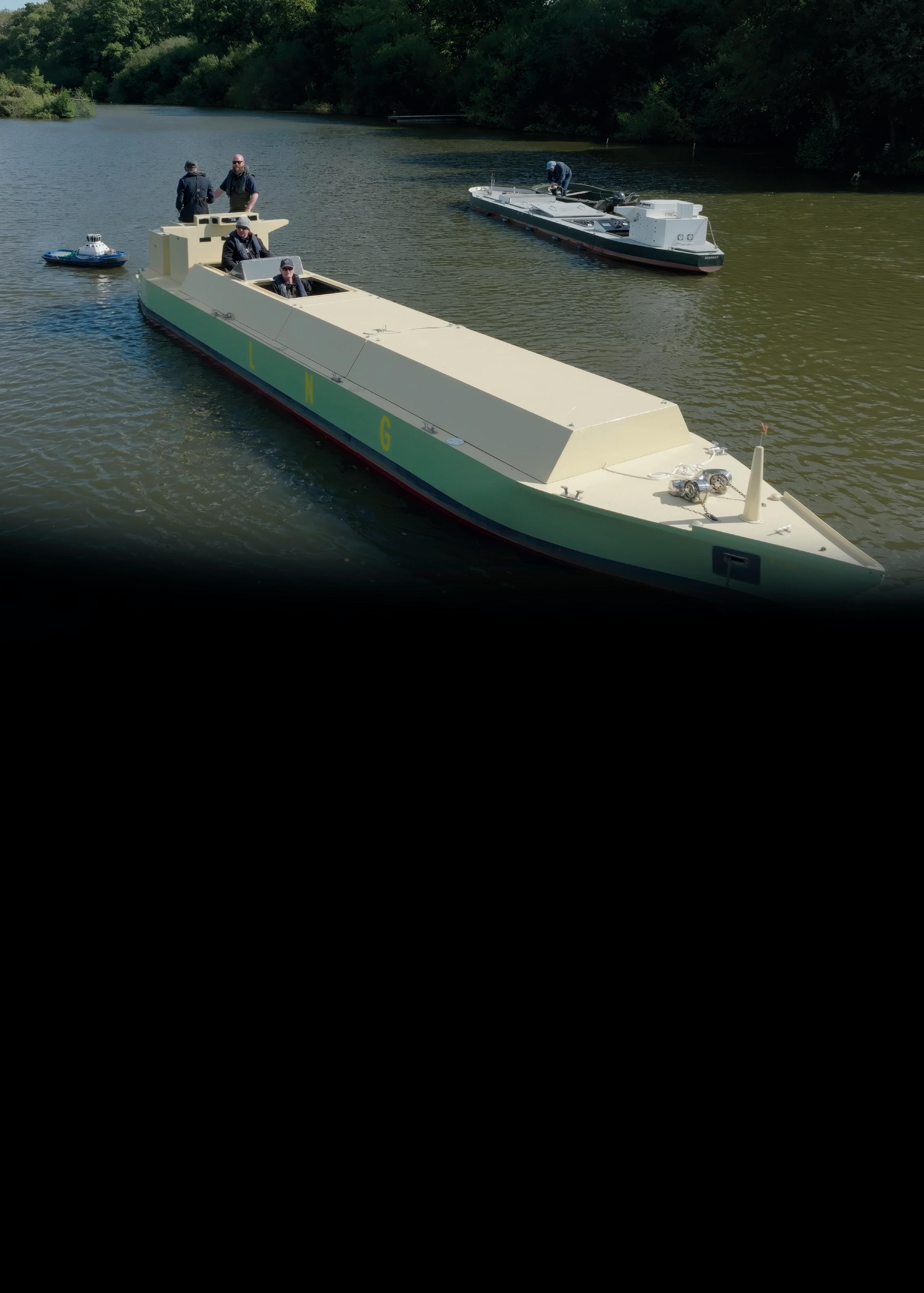
• Radio-controlled tugs, jack-up oil rig and portable current generators for specialist training.
• Dedicated twin-screw course for superyachts.
• Seven full-mission linkable bridge simulators, with digital twinning.
Find out more at maritime.solent.ac.uk/ship-handling
On 26 January 2026, the Royal Institute of Navigation published a report revealing the impacts of GNSS Interference in the maritime sector. Survey data was compiled from over 100 sector experts and 300 vessel captains, supported by interviews with dozens of people involved in the operations and supply chain of vessels that regularly encounter GNSS interference.
GNSS interference refers to anything that disrupts a ship’s satellite-based positioning signals and is usually caused by:
Jamming: blocking or overwhelming the satellite signals with noise so the receiver can’t get a position at all.
Spoofing: feeding the receiver false satellite signals so it reports a wrong position that looks legitimate.
GNSS interference is escalating. Hundreds of vessels each day now encounter navigation disruption, with numerous documented collisions and groundings in 2025.
By Dr Ramsey Faragher / Royal Institute of Navigation
The new report reveals that dozens of onboard systems, not just navigation, fail or degrade under interference, posing safety-of-life and liability risks. With 80% of mariners reporting interference and most with the opinion there has been no improvement, the report issues practical guidance, checklists and recommendations for operators and regulators.
In 2025, collisions and groundings linked to GNSS interference were reported in regions such as the Baltic, Strait of Hormuz and the Red Sea. With hundreds of vessels being affected daily, the RIN report details for the first time the scale of the problem on modern digital vessels whereby GNSS jamming and spoofing present a significant cybersecurity vulnerability and urgent risks to maritime safety.
Operating in regions of known GNSS interference carries serious safety-of-life and liability implications, as key systems are likely to fail or malfunction in these conditions. The report also highlights unnecessary dependencies between GNSS receivers and a range of onboard electronics including radar, radios (VHF/MF/HF), NAVTEX, speed logs, ship clocks and satellite communications. Many of these do not require GNSS data for their primary function, creating avoidable points of failure and compounding operational risk.
GNSS interference exploits the inherent weakness of satellite signals. The satellites broadcast their messages with a transmission power of around 100 Watts, but these signals then travel over 20,000km to reach Earth from orbit. By the time a receiver picks those signals up, the power level has dropped to a quadrillionth of a Watt. This means it is very easy to overpower them with stronger nearby transmissions.
If a bad actor is simply denying the use of GNSS to a particular region, then they will employ GNSS jamming. Jamming can be detected by a number of methods:
• The ‘number of satellites in use’ metric displayed on GNSS receivers (on some systems this will be in a menu setting or on a secondary display) will be reading zero or a very low number; much lower than is normal for outdoor operations.
• ‘GNSS lost’ or ‘GPS lost’ messages or alarms may be triggered.
• Nearby vessels can be contacted using VHF radio or other means to confirm if the issue is widespread jamming or if there is a malfunction local to the vessel.
• Within the GNSS receiver, the Automatic Gain Control (AGC) will typically be set to its lowest value, but the number of satellites will remain low or zero. This is the clearest indication of jamming, as it suggests that the receiver is being ‘deafened’ by a
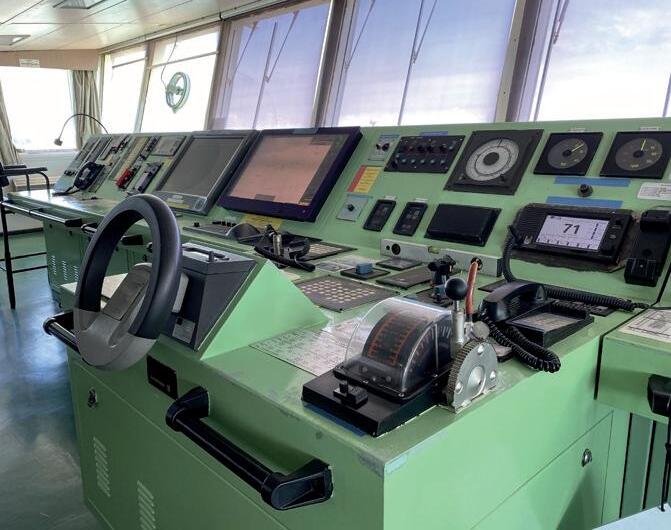
large input power level (and so has turned the gain down to the lowest setting) and also cannot detect any signals. If the antenna was disconnected or the vessel had moved under cover (e.g. under a bridge), then the AGC would move up to the highest setting to attempt to pick up weak signals. The AGC settings are unlikely to be available for the end-user to view, but this assessment should be carried out as a basic feature of future GNSS receivers to raise a GNSS jamming alert or warning message, or it should be used to provide a clear ‘jamming present’ warning message.
2.Chart Licences/Pay to Sail* 3.X-Band Radar 4.S-Band Radar 5.Gyrocompass*
7.Speed Over Ground 8.Auto-Pilot* and Track Pilot*
10.Ship’s Log (Speed Through Water)
1.Voyage Data Recorder 2.Ship’s Clock* 3.Echosounder* 4.Weatherfax* 5.Wind Gauges*
(ROV / USV AUV)
1.Shipment Tracking 2.Custody Transfer Systems
Beacon
2.AIS-Search & Rescue Transponder 3.
4.Ship’s Whistle*
(Built into Radios)
Internet/Phone/LRIT/FBB 7.Terrestrial Internet/Phone
9.Ship Security Alert System
Ship’s Systems 1.Stability / Loading Computers
Safety Systems*
Water Separator
Water Treatment System
Recorders / Logs
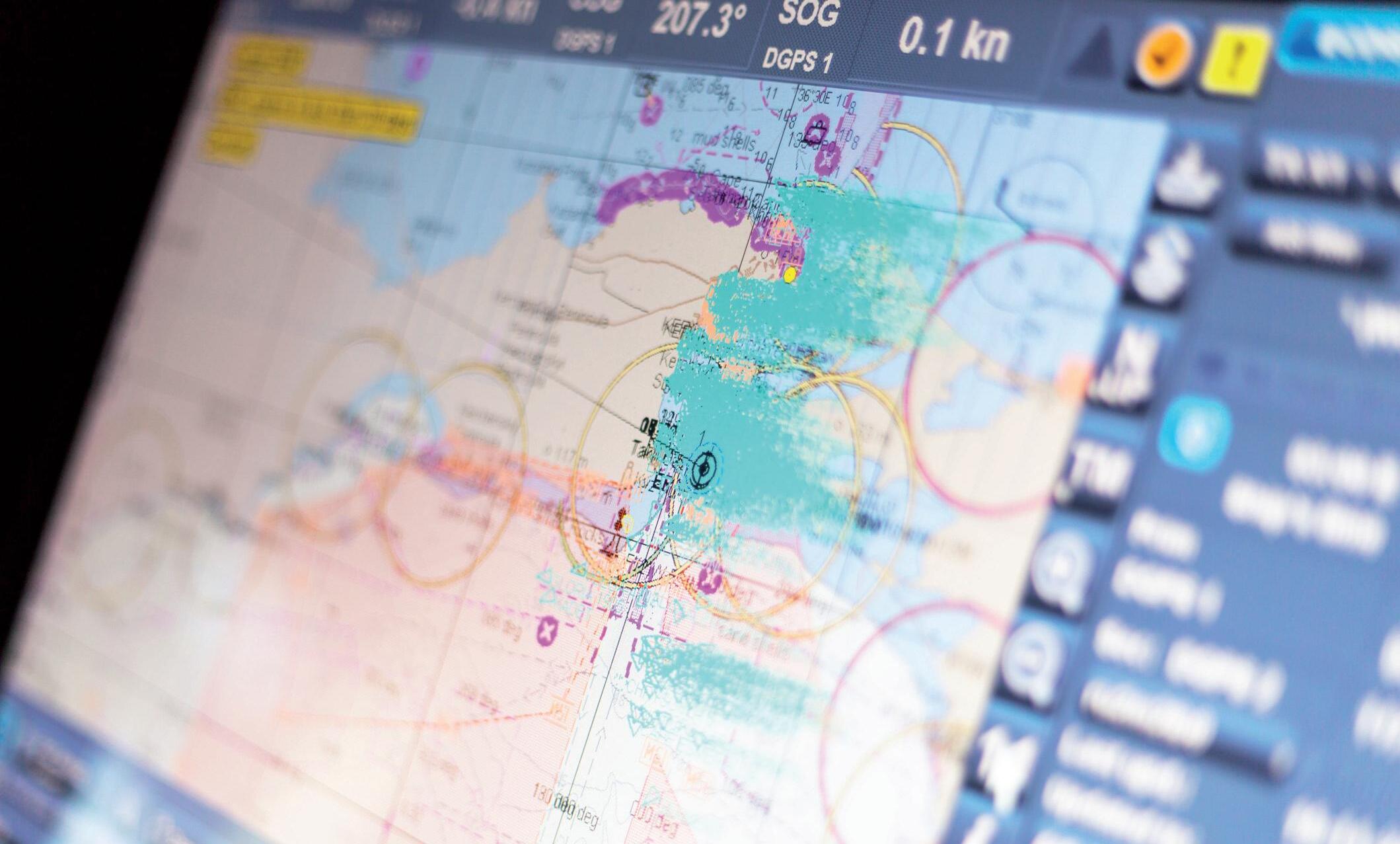
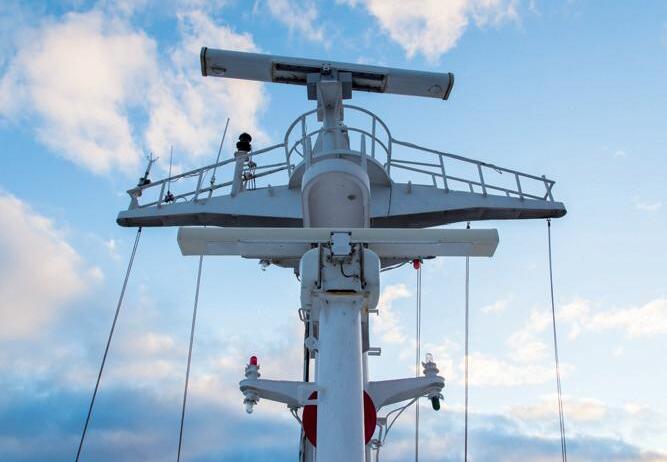
The report’s recommendations include:
• Urgent addressing of the vulnerability to GNSS spoofing of Solas-mandated systems, including GMDSS, EPIRB, AIS-SART and MOB quick-push buttons. These safety systems are mandated by the IMO but are not currently expected to operate as designed when undergoing GNSS spoofing attacks. This endangers life at sea and puts both the mariner and rescue services at risk, including delaying assistance and rescue, which could cause loss of life or environmental damage. Equipment providers are urgently recommended to assess their products against these vulnerabilities and ensure marine operators are made aware of them. It is further recommended that the IMO, in collaboration with the IEC, looks to provide further guidance, policy and regulation on equipment standards to address the issue of GNSS interference.
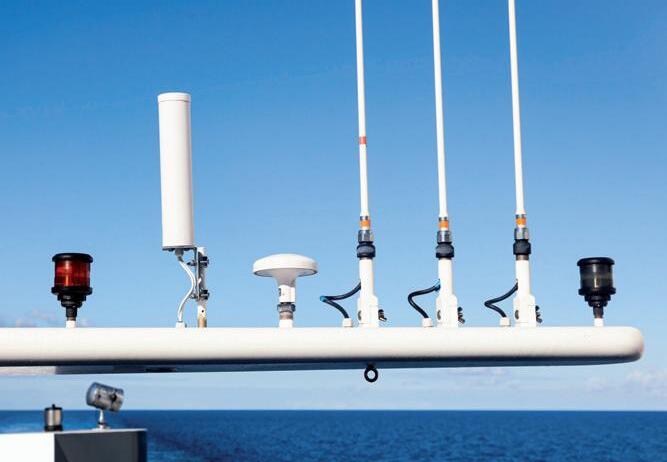
• NAVAREA Coordinators to use the World-Wide Navigational Warning Service to issue navigational warnings on the subject of GNSS interference in their areas. This report demonstrates the impact of GNSS interference on safety of life at sea and deems this interference to meet the criteria for “new navigational hazards and failures of important aids to navigation” as well as “significant malfunctioning of radionavigation services and shore-based MSI radio or satellite services”, as determined by the Joint IMO/IHO/WMO Manual on Maritime Safety Information.
• Establishment of a real-time, global GNSS monitoring and mapping capability in order to provide timely data to mariners, which they can use for both passage planning and situational awareness. With the advent of the new S-100 data standards from the IHO, data layers, such as a GNSS
interference map, can be overlaid on an electronic chart system or ECDIS.
• Adoption of industry-wide improvements to GNSS receiver designs and their validation and testing, especially when used in safetycritical applications. This will reduce the probability of GNSS receivers succumbing to simple spoofing attacks and will reduce the overall effectiveness of the current GNSS interference techniques in use.
• The removal of unnecessary connections to open GNSS signals by hardware manufacturers. This will reduce the number of systems that can be disrupted by processing incorrect timing or positioning data from a spoofed GNSS receiver.
Equipment providers are urgently recommended to assess their products against these vulnerabilities and ensure marine operators are made aware of them.
The Royal Institute of Navigation will continue to work with report partners (GLA, IALA, Nautical Institute and others) and regulatory bodies to provide expert guidance to mitigate these issues and to establish industry-wide adoption of solutions to this problem.
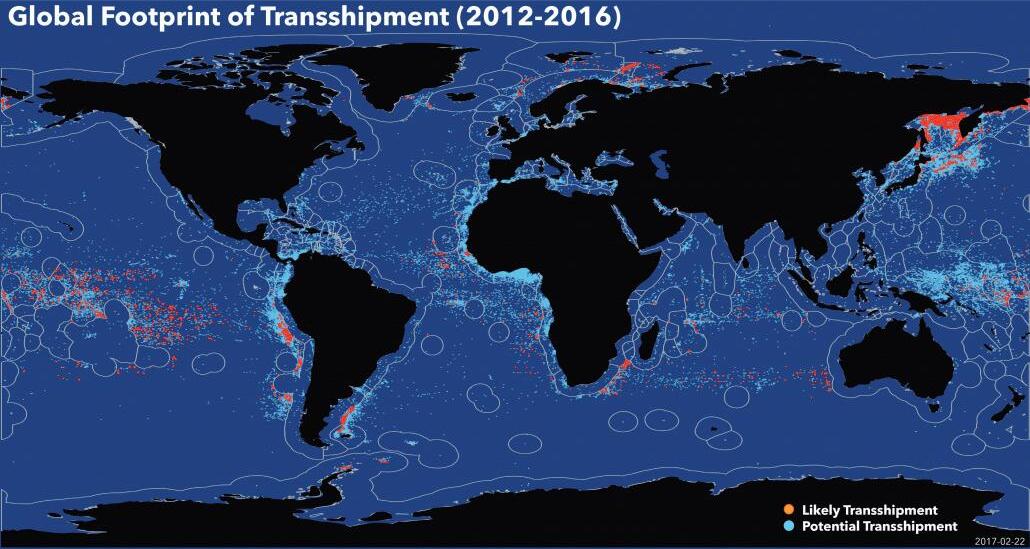
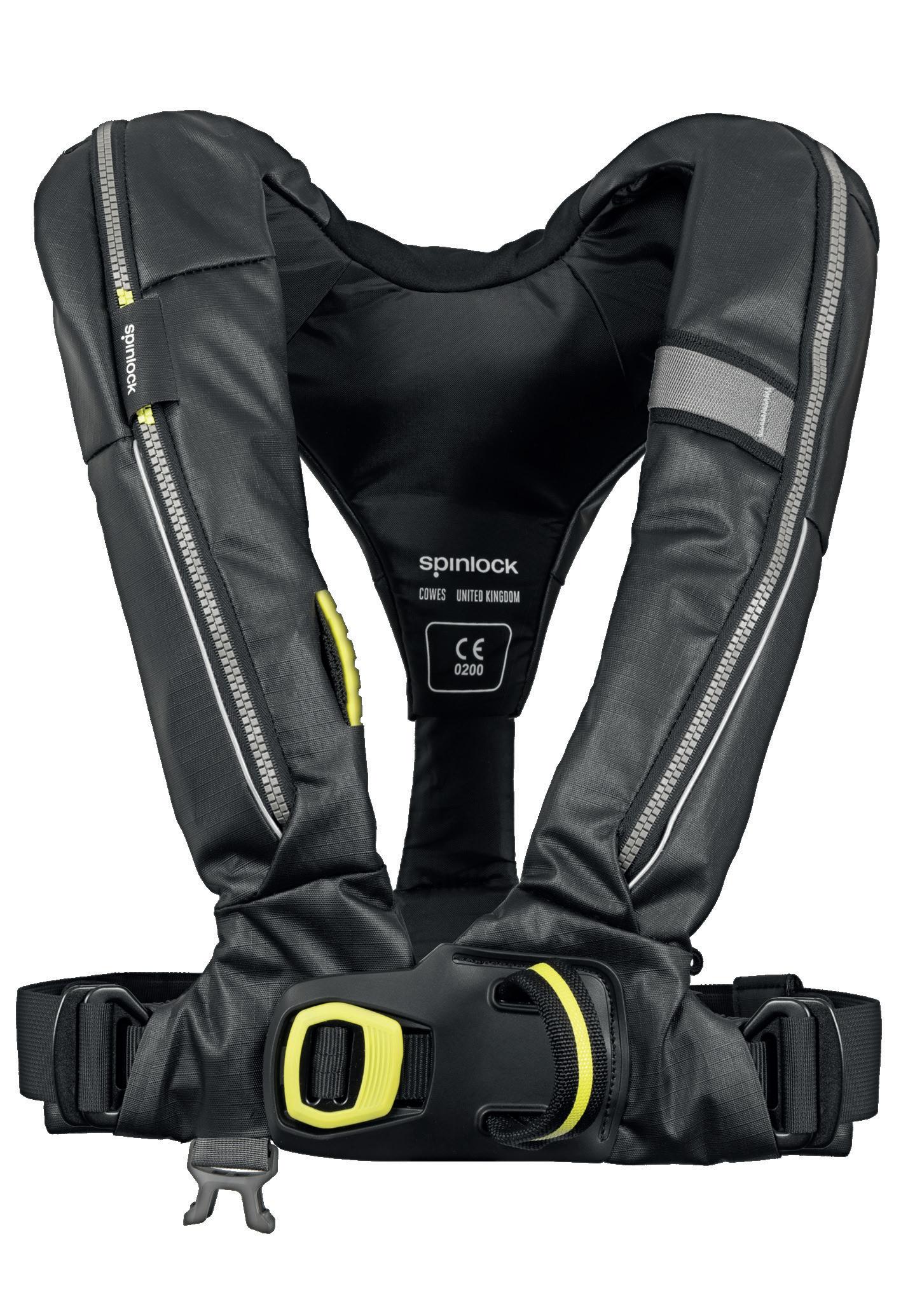


By Kym Hughes / Oceancaster / Digital Evidence Specialist
Clive Humby said that “data is the new oil”. Just like oil, however, data must be extracted, stored, transported and processed to unlock its true value.
On a modern vessel, it is generated and shared by almost all of the equipment on the bridge. The GPS, for example, shares its data with other systems such as ECDIS, Radar, Automatic Identification System (AIS) and even the gyro compass. Sharing is accomplished through standardising data into National Marine Electronics Association (NMEA) sentences, which contain a prefix (e.g. GPS latitude & longitude) followed by the data.
With standardised sentences circulating around a ship’s network, storage and preservation simply require compatible equipment to log the raw sentences. The gold standard is the Voyage Data Recorder (VDR), which is essentially a computer with a storage medium.
Alongside the NMEA sentences, there is a secondary data stream generated by AIS. AIS sentences containing your own vessel’s data are known as ‘own-ship’ sentences and are circulated in the same way as other NMEA sentences, allowing them to be used or recorded by compatible equipment.
Most pilots are familiar with these sentences as one of the sources of data used by a Portable Pilot Unit (PPU).
The VDR is often the best source of primary data available. However, access is limited so it is not usually available for training or educational purposes.
Pilots, however, are in a unique position because they gain direct access to the ship’s AIS pilot plug, providing access to the own-ship AIS sentences alongside AIS sentences received from other vessels. By recording this data, ports and pilots gain access to a highresolution dataset from the vessel they are aboard, alongside a lower-resolution dataset of transmitted data from other vessels.
For anyone else, the best available resolution comes from the transmitted AIS data sentences alone, recorded within other VDRs, PPUs of nearby pilots or external third-party repositories.
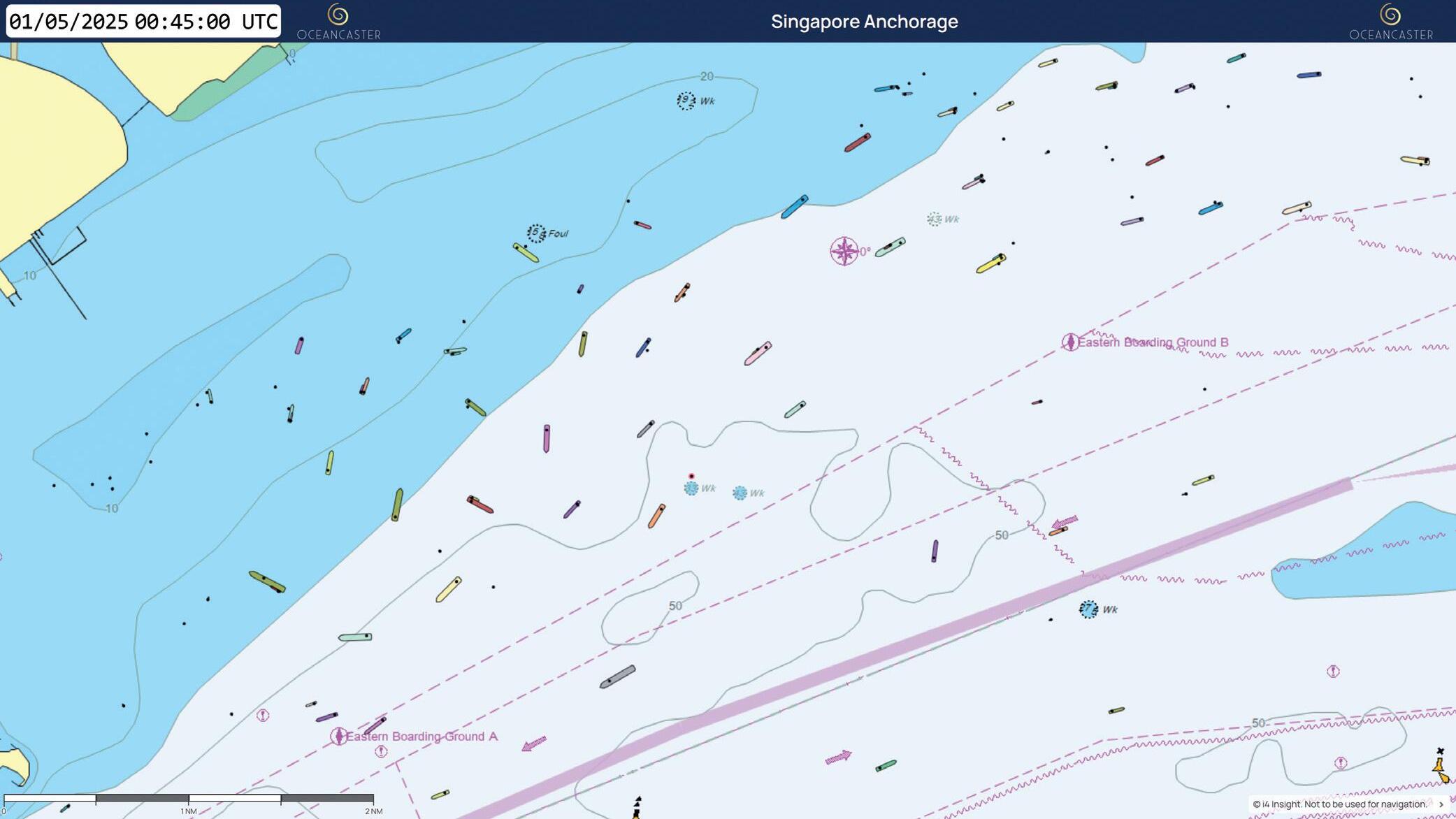
By connecting to a vessel’s Pilot Plug, a PPU gains access to the vessel’s ownship AIS sentences. The major advantage of these sentences is that they do not rely on the normal transmission-rate constraints of AIS, so their resolution is comparable to a live data stream.
Conversely, other-ship sentence resolution depends on the transmission rate of the other vessel, which depends on factors including the other vessel’s speed, status, rate of turn and class of AIS.
To create a reconstruction, the core data fields required are position, course, speed and heading. They are contained either within the NMEA sentences stored by a VDR or within AIS sentences stored elsewhere. Effectively, any data source can be used to create a reconstruction; the difference being the resultant resolution.
Widely available, third-party AIS data is used to create lower-resolution reconstructions, with the AIS transmission and reception rate being the resolution constraint.
Own-ship AIS offers much higher resolution, often with one datapoint every second. The difficulty is that it is harder to source, often only available from the vessel’s VDR or directly
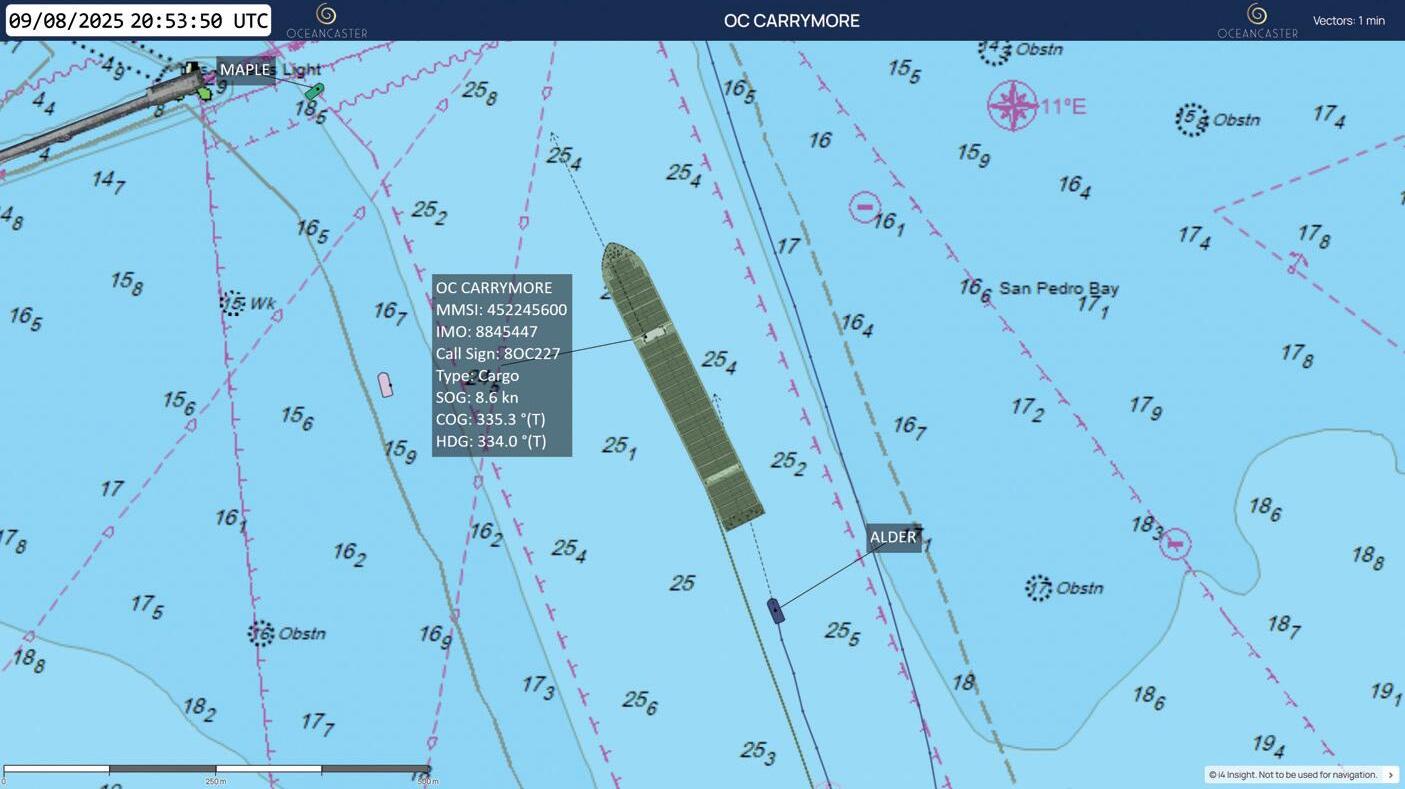
connected sources like a PPU.
The highest-resolution reconstructions are primarily available using a ship’s VDR; however, access is tightly restricted. Not only does VDR data offer the highest resolution, it often also includes logs from a vessel’s machinery, screenshots from radars and ECDIS displays, and audio from microphones around the bridge.
Although reconstructions have historically been used for post-incident investigation, opportunities are opening up for detailed reconstruction and
analysis for other purposes as data is becoming easier to collect and analyse. One example is for education and risk reduction in transits of structures such as locks, bridges or cuts. When installing new fendering, detailed analysis can identify typical vessel speeds and determine whether a proposed installation is going to be sufficient. Processing data increases its value by unlocking additional insights to learn from. In this case, the data tells us about recorded vessel speeds across an entire year, which can be used to assist in port infrastructure design, development of policies or for evidence-led training.
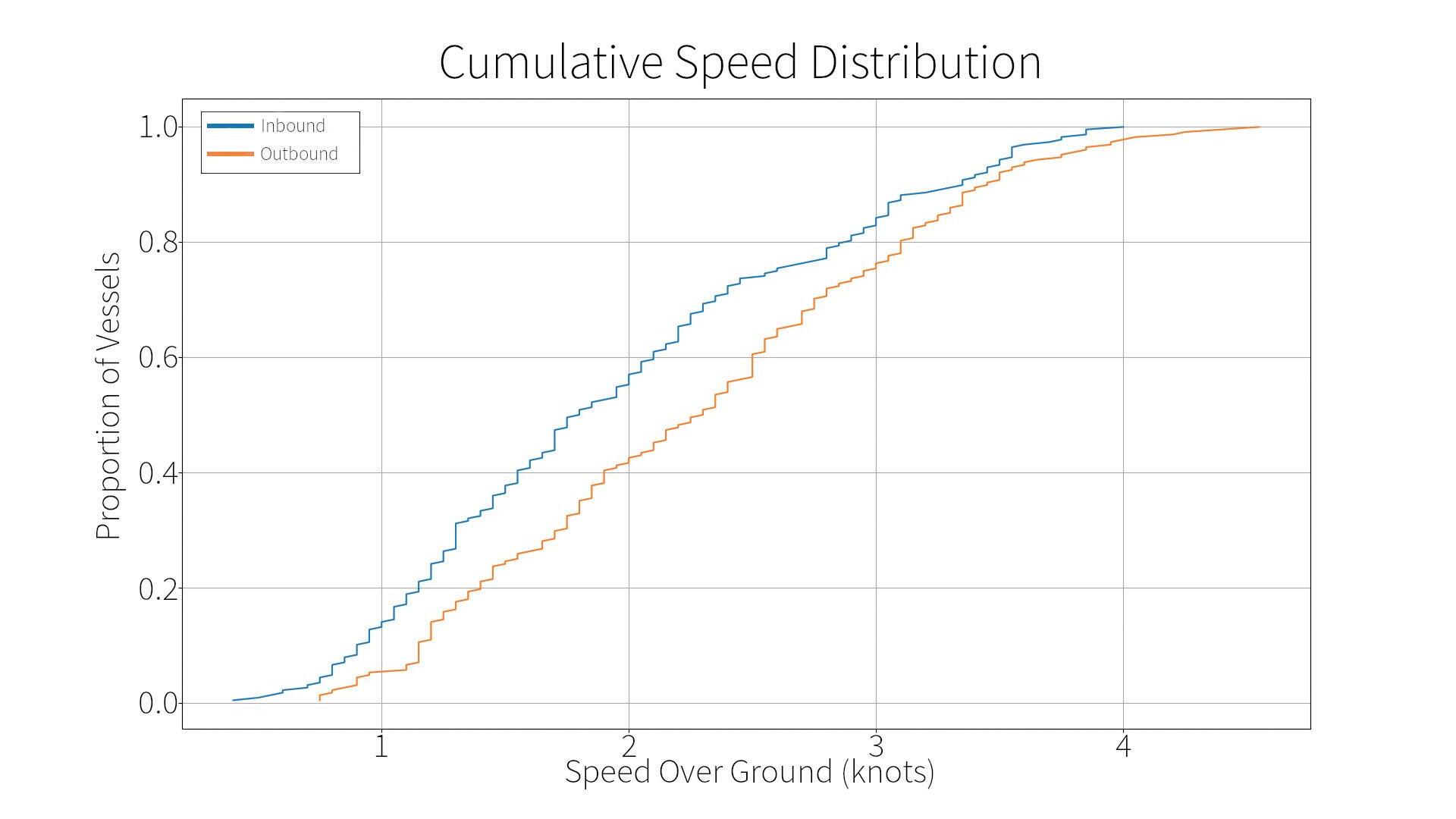
By Sam McDonald
For many members of the European maritime pilot community, the annual EMPA football tournament is far more than just a football competition –it is a celebration of friendship, teamwork and professional camaraderie. Having finally attended my first tournament in Ålesund, Norway, I can honestly say it exceeded all expectations.
Since joining Tees Bay Pilots, I had often been asked if I would attend the EMPA football tournament. Unfortunately, previous commitments prevented me from going but this year I finally took the plunge and travelled to Norway alongside my wife Helen, my colleague Jonathan Davison, and Jonathan’s son Austin.
Ålesund proved to be the perfect host city. With its rich maritime heritage, stunning scenery and beautiful Art Nouveau architecture, it provided a spectacular backdrop for the tournament. Our Norwegian hosts were outstanding from the moment we arrived, welcoming around 300 delegates and more than 60 partners to what was a superbly organised event.
The opening reception and tournament draw took place at Fjellstua on Mount Aksla, overlooking the town and surrounding fjords. It was a fantastic evening and a great opportunity to meet pilots from across Europe before the football began.
Preparations for the tournament took an unexpected turn when one of our UKMPA players was delayed, leaving us short of numbers. In true EMPA spirit, we joined forces with the German pilots from the Baltic ports to form a combined team.
As a first-time attendee, I was immediately struck by how welcoming all my teammates were throughout the weekend. From the very beginning, everyone made me feel part of the squad and the wider EMPA community, which added enormously to the overall experience.
The following morning, we travelled through Norway’s breathtaking countryside to the tournament venue, where 11 teams competed across two 4G pitches. Matches consisted of two 12-minute halves, making every game highly competitive.
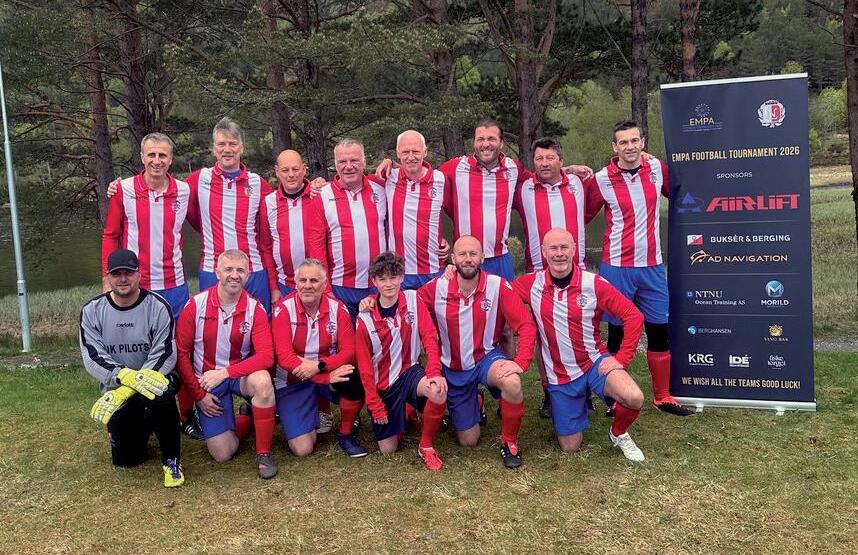
We started strongly with a 1 –0 win over Belgium before earning a solid 0 –0 draw against Germany Kiel to secure our place in the quarter-finals. There we faced Spain in a repeat of the 2025 final, but despite a hard-fought performance we narrowly lost 1 –0.
The placement play-offs were decided by penalty shoot-outs. Despite our confidence with German teammates in the squad, we lost 4 –3 to France before bouncing back with a 5 –3 victory over Italy to secure seventh place overall.
The final saw hosts Norway defeat Belgium 2 –0; a particularly popular result after previous disappointments in earlier finals. The football throughout the tournament was played in excellent spirit and great fair play.
While the football took centre stage for the players, the partner programme was equally impressive. Guests enjoyed a boat trip aboard the MS Bruvik through the magnificent Hjørundfjord and Norangsfjord before joining supporters at the final and later celebrations.
The weekend concluded with a superb gala dinner hosted by EMPA and the Norwegian pilots. The food showcased the very best of Norwegian hospitality and local traditions and, following the presentation of the trophies, players, partners, and guests danced well into the small hours to music from the live band.
On behalf of all the UKMPA players, I would like to thank the UKMPA for its continued support, along with EMPA and our Norwegian hosts for organising such a memorable tournament.
One thing is certain – this first EMPA football tournament will definitely not be my last. In fact, after such a fantastic experience, I am already looking forward to next year’s tournament in Sines, Portugal, on 19–20 June 2027, where I plan to bring the children along to enjoy the experience with us, as we saw so many families there enjoying the tournament this year.
In preparation for Portugal, a number of social football games will be organised for UK pilots in the UK. Pilots of all ages and standards are welcome to come along, meet the lads, enjoy a game and get involved ahead of the tournament.
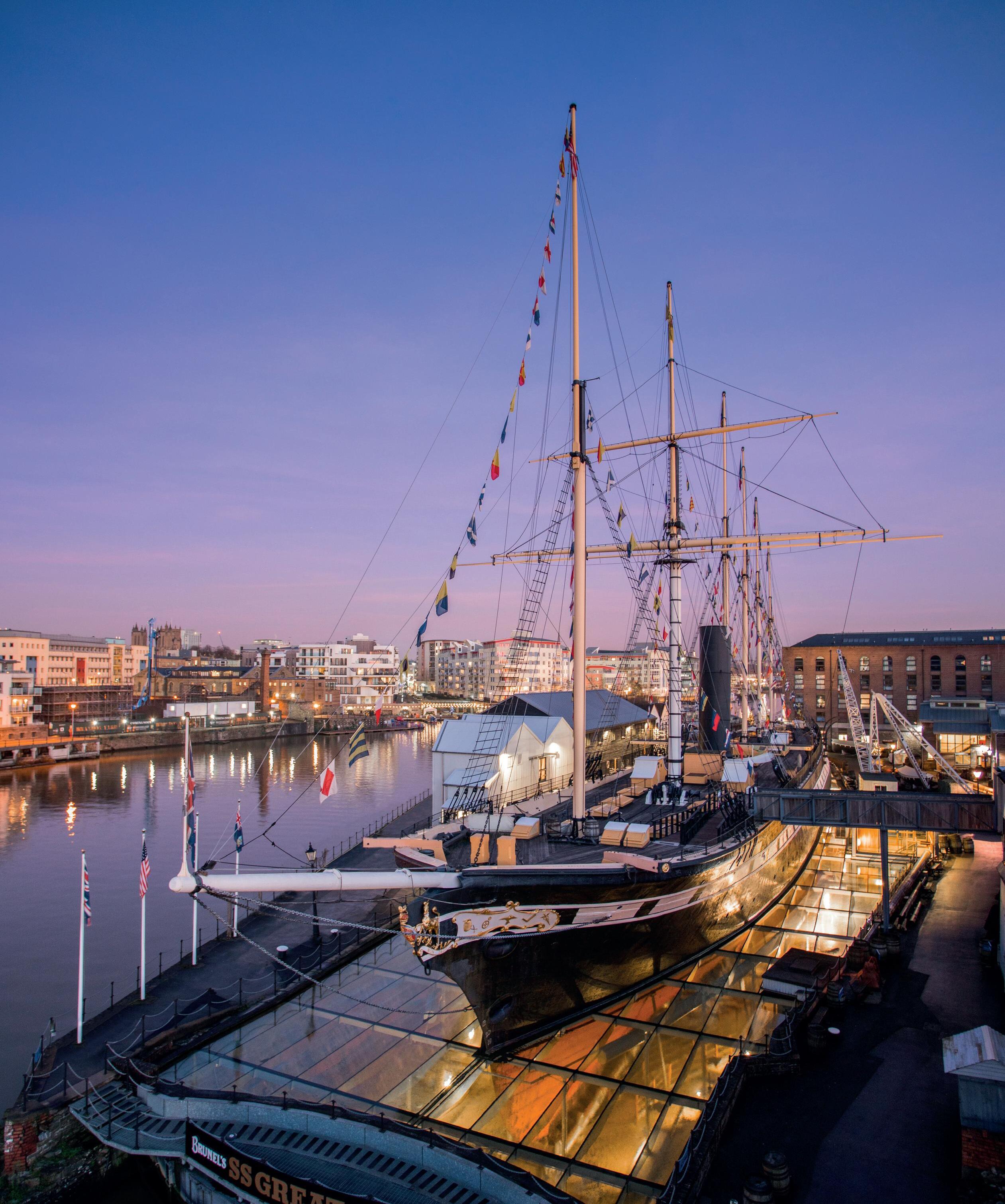
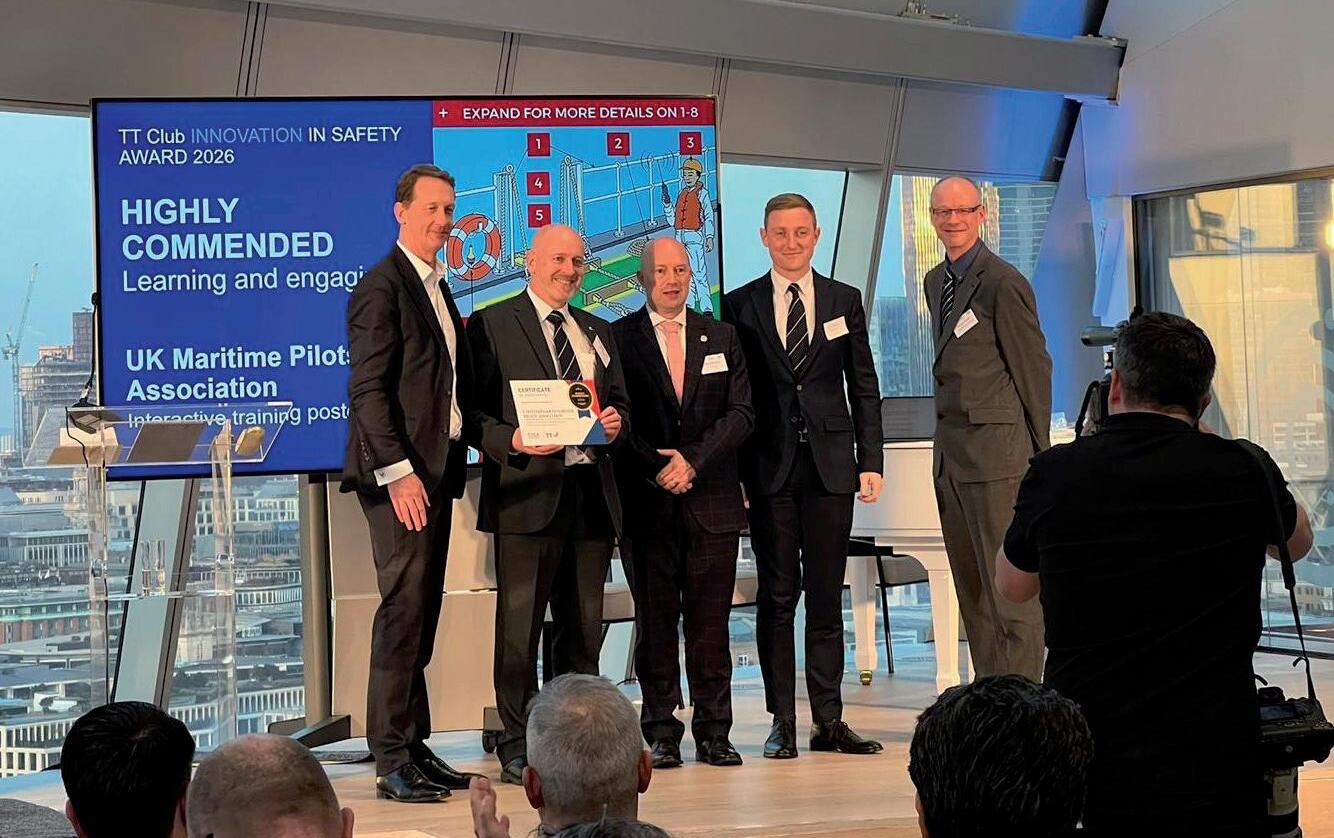
By John Slater / Liverpool Pilot / Chair of Technical & Training Committee
We are proud to share that the UK Maritime Pilots Association (UKMPA) has been awarded Highly Commended at the TT Club Innovation in Safety Awards for the recently released Interactive ladder poster.
This event takes place each year in February and is delivered in partnership with ICHCA International and hosted by TOC Worldwide, bringing together leaders and innovators committed to advancing safety across ports and logistics.
As we move closer to the implementation dates of the updated
Solas V/23 regulations, our poster is being increasingly referenced as a freely available tool for educating all stakeholders on the new, safer standard, while the relevant new regulations are also viewable in full. We are honoured to have our work recognised alongside so many forward-thinking safety initiatives.

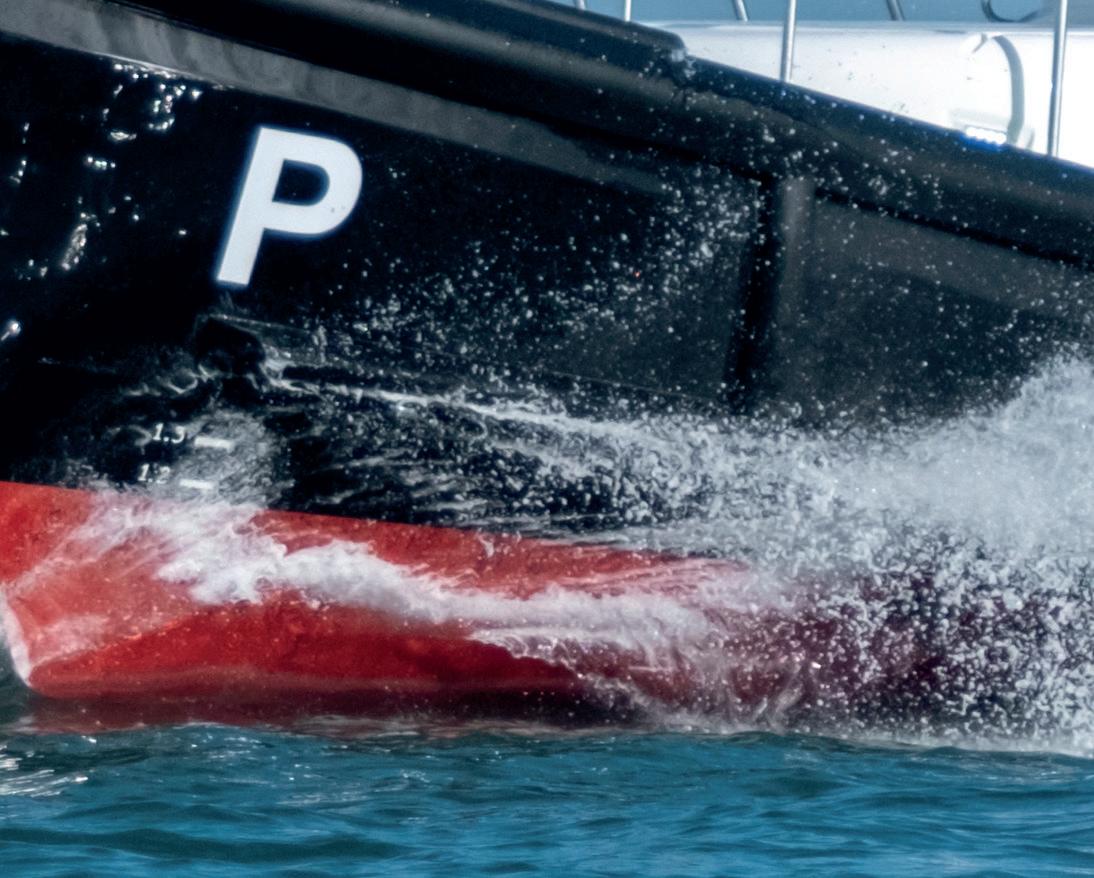


Agile and efficient, the HN35 combines manoeuvrability and advanced safety systems for precise pilot operations in busy ports and harbours.

The Multi-Role Patrol Vessel (MRPV) is a robust, reliable platform designed to support coastguard, police and government authorities. Engineered for reliability in demanding coastal and offshore environments.
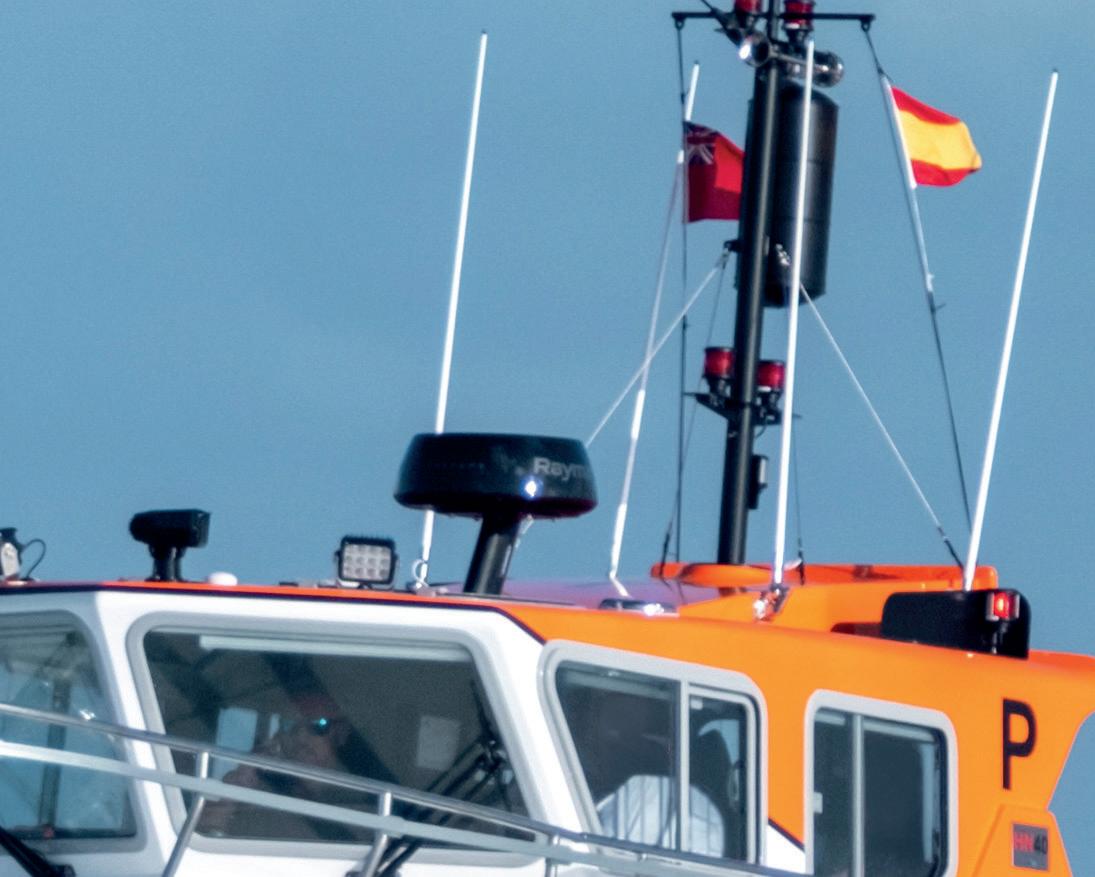

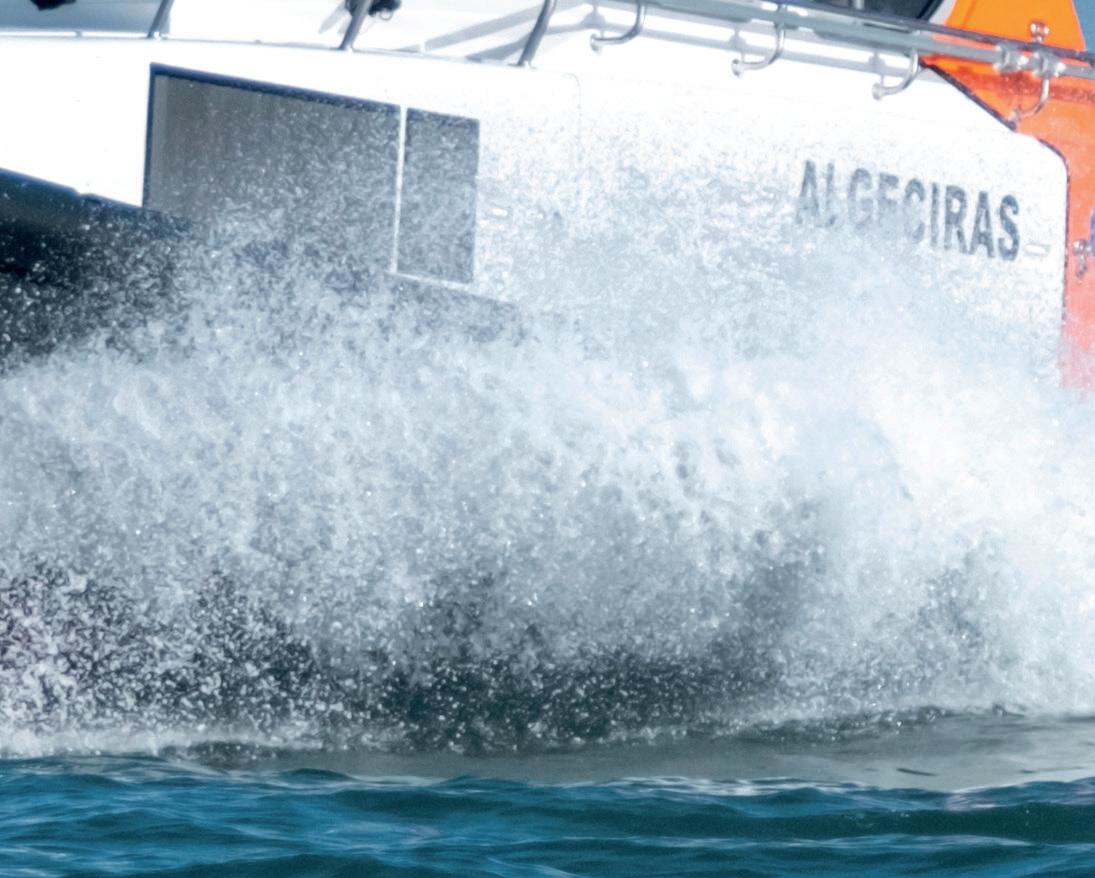

Built for endurance, the HN40 balances robust construction with optimised performance, ensuring reliable operation even in challenging coastal and offshore conditions.



The HN35-WB has a single or twin engine configuration with a generous forward wheelhouse and large open cockpit which makes it ideal for any number of operational roles.




The flagship of the fleet, the HN42 offers maximum capacity, built for bigger seas and engineered for extended missions in the most demanding maritime environments.

Absolute Marine builds pilot boats and commercial workboats for demanding marine environments. Manufactured in Cowes, Isle of Wight, UK, our Halmatic Nelson, HN-Range delivers outstanding performance, safety and reliability.