





Chr is Lyon

Haley Bartel
Jewish community has long extended beyond geography, linking people across continents who often recognize a shared sense of belonging.
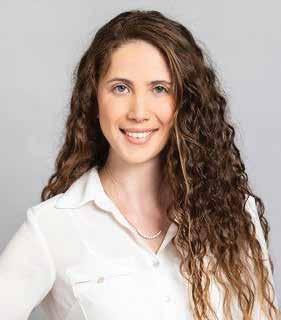
Liora Zerbib knows about this feeling of belonging after spending several weeks with a Jewish host family in Ghent.
Zerbib, an Israeli medical student in her final year at the Azrieli Faculty of Medicine at Bar-Ilan University, is one of two Israeli students participating in a monthlong exchange program in Norfolk. The program was founded by obstetriciangynecologist Dr. Steven Warsof.
visits gradually developed into a student exchange supported by local donors.
“It’s been one of the highlights of my professional career,” says Warsof. “The relationships are real. The students gain exposure to a different healthcare system, and the host families gain meaningful personal connections. It’s rewarding on both sides.”
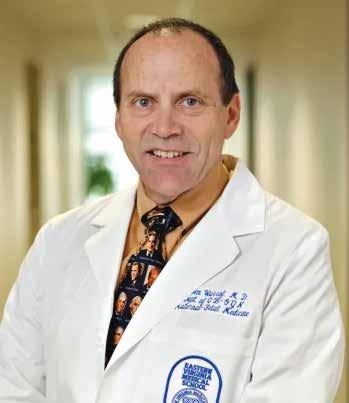
Through the exchange, Israeli medical students shadow obstetricians and gynecologists at EVMS, gaining firsthand exposure to American women's healthcare while forming tight knit, sometimes unexpected connections with local physicians and the Jewish community.
“Coming here, you’re a little bit cautious, like ‘Should I be my true self, should I share this identity?’” she says, describing the uncertainty many Israelis feel when traveling abroad during a time of heightened tensions. “And then when the director of the program and the families that are hosting you make you feel like you can... you feel like you’re with family in some sort of way, even though you’re far away from your actual family.”
The program began more than a decade ago after Warsof learned about a new medical school in Safed, Israel, and reached out to establish a professional collaboration. What began as lectures and
Warsof believes the program’s value extends beyond medicine. “People get to meet Israelis as individuals, not headlines,” he says. “They see students, future doctors, people who are living real lives. That kind of connection matters, especially now.”
Another participant, final-year medical student Anna Sirota, says the experience offers insight into both American medicine and Jewish community in the United States.
“I think this program is great, not only for our medical education, but also by bringing us here and letting us see how a Jewish community functions in America,” she says.
Sirota says she is struck by the diversity of Jewish practice she has encountered in Norfolk.
“We have a lot to learn from Jewish communities
in America because they’re so open to other people’s view of religion,” she says.
Zerbib echoes that sentiment. “It’s been nice to hear their opinions and the way they see Judaism,” she says. “I’ve really appreciated their openness and acceptance.”
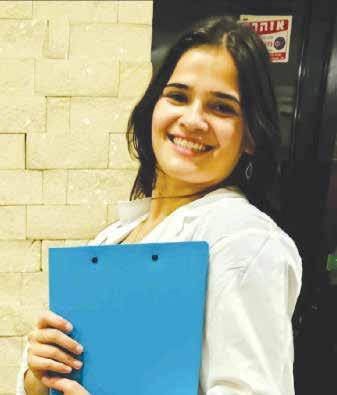
While long-distance community building is a central goal of the program, the students also gain firsthand experience with a healthcare system very different from their own.
“These comparisons are important because they broaden your worldview,” Zerbib says. “People think the American system is the most advanced, and in some ways that’s true.. but in Israel, preventive care is very common, and community medicine is very strong. Each system has things the other can learn from.”
Sirota says she was impressed by communication systems in U.S. hospitals and the benefits of shorter physician shifts, but noted the prevalence of chronic illness among younger patients.
“I was surprised to see the volume of patients that had very complicated background diseases,” she says.
“For us in Israel, it’s relatively rare for women in their mid20s and 30s to have conditions like Type 2 diabetes, chronic hypertension, and
chronic kidney disease.”
The exchange comes as many Israeli medical students complete portions of their education amid war and instability.
Sirota recalls taking exams during missile alerts.
“During those tests, you suddenly hear a siren,” she says. “You stop the test, go to the shelter, come back after 10 or 15 minutes, and then you have to continue the test.”
This reality, she says, required constant mental adjustment. “You have to change your mindset very fast. You’re in danger, and suddenly everything is okay, and you have to be focused for your test.”
Those experiences have shaped the students’ understanding of the role physicians play during times of crisis.
“During war, patients don’t always come just for physical symptoms,” Zerbib says. “Sometimes they come just to talk, to share the stress they’re feeling. The doctor might be the only person they speak to that day. The human connection becomes much more important during times of uncertainty.”
Warsof says programs like this one serve as a reminder that those connections can endure despite distance and conflict.
“Medicine, education, and community don’t stop during war,” he says. “Relationships continue. Learning continues. And those connections help strengthen Jewish communities on both sides of the ocean.”
For both students, the impact is immediate.
“It really felt like when we got here that there’s some sort of flow of connection that’s being kept through us just coming here,” Zerbib says.
Haley Bartel
From postpartum recovery to perimenopause, women experience a range of life stages that can affect hormones and overall health.
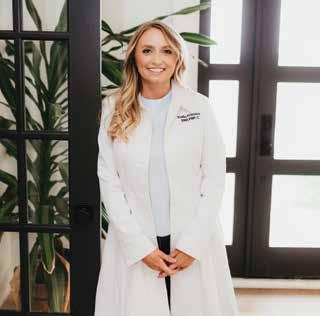
Dr. Kellie Frissora, a nurse practitioner and mother of three young children, understands how easily personal health can take a back seat during these life stages.
“I commonly saw patients for the same issue repeatedly,” Frissora says. “I heard over and over again, ‘My primary care said that my labs are normal, but I just don’t feel like myself. I don’t have the energy I once had. I’m just getting more exhausted than I usually do.’”
This reality led her to launch Frissora Functional Wellness, a fully virtual concierge functional medicine practice focused on hormone health and whole-body wellness. Frissora conducts all patient visits through virtual consultations.
Frissora worked as a nurse in a primary care setting for three years before becoming a nurse practitioner.
She earned her Doctor of Nursing Practice degree as a family nurse practitioner in 2019 and has since worked in primary care and medical weight loss settings. She has also completed additional training through the Institute of Functional Medicine and the Bioidentical Hormone Replacement Therapy Training Academy.
Frissora says she often encountered patients whose symptoms persisted despite standard treatment. Many reported ongoing fatigue, brain fog, weight gain, anxiety, sleep issues, and other concerns – even when routine lab work appeared normal.
Those experiences steered her toward functional medicine, an approach that seeks to identify underlying causes rather than simply manage symptoms.
“Functional medicine really gives you not only the education but the desire to figure out why the patient is feeling the way they are and help get to the root cause,” Frissora says.
Unlike traditional visits that may center on a specific
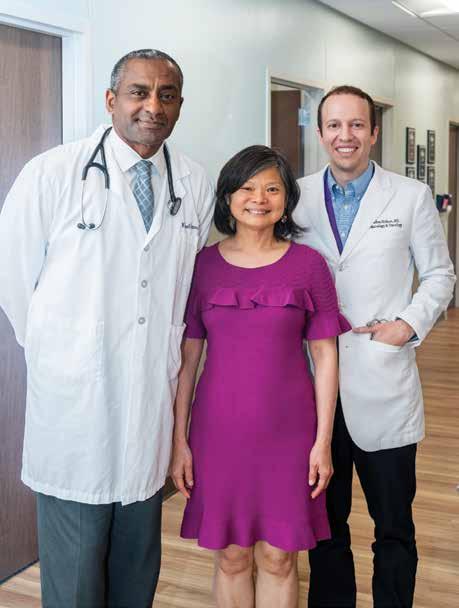
At Virginia Oncology Associates, we recognize all of our patients as individuals with a need for caring, personalized treatment. We are dedicated to finding new and better ways to treat cancer through ongoing research and clinical trials. Our team of specialized physicians and sta work together and collaborate to create a plan that will help navigate each person’s journey.
diagnosis, Frissora says her approach explores multiple systems at once.
“We look at your lifestyle factors and your environmental factors, because what people don’t realize is that if they have a thyroid issue or a gut issue, or a hormone issue, it’s usually just one piece of the puzzle,” she says.
Frissora emphasizes that hormones affect people of all genders, influencing everything from brain and bone health to metabolism and stress response.
While functional medicine is sometimes viewed as alternative medicine, Frissora says her practice remains grounded in evidence-based care.
“We still use evidence-based medicine. We still use lab testing. We still go by clinical guidelines,” she says.
The process begins with a free 15-minute discovery call to determine whether a patient’s needs align with the services offered. Patients then complete a comprehensive wellness consultation, typically lasting about 90 minutes, during which Frissora reviews medical history, symptoms, and health goals before ordering individualized laboratory testing.
fog. She had previously been told her lab work was normal, but her symptoms were significantly affecting her quality of life.
Using a functional medicine approach, Frissora evaluated nutrition, blood sugar regulation, stress, sleep habits, hormone balance, and lifestyle patterns. The patient was given a personalized plan that included targeted nutrition changes, lifestyle interventions, and evidence-informed supplementation.
We still use evidencebased medicine. We still use lab testing. We still go by clinical guidelines, she says.
Services are not covered by insurance and are paid for out-of-pocket.
Depending on the testing required, results are generally reviewed within two to four weeks. From there, patients receive personalized recommendations that may include lifestyle modifications, nutritional support, and supplements or prescriptions when appropriate.
Frissora tells of an anonymized example of a patient who benefited from this approach:
A woman came in experiencing fatigue, weight gain, poor sleep, and brain
Over time, the patient experienced improvements in energy, sleep quality, mental clarity, and overall well-being.
Frissora notes that while results vary, this type of approach can help identify contributing factors that may not be addressed in traditional symptomfocused care.
Frissora emphasizes that patient safety remains central to her practice.
“If I identify a condition that requires further evaluation, specialized treatment, or urgent medical attention, I coordinate care with the patient’s primary care provider and appropriate specialists,” she says. “This may include cardiology, oncology, endocrinology, gastroenterology, mental health providers, or other specialists.”
She says she views functional medicine as complementary to conventional care, with the goal of ensuring patients receive comprehensive treatment that addresses both medical conditions and lifestyle factors.
“It’s a partnership,” she says. “I want you to be as invested in your health as I’m going to be.”
Ultimately, she says, the aim is not just to treat symptoms, but to help patients return to a place where they feel good in their bodies.
“They can still feel like themselves. They can feel good, and they can love the way they feel.”
The Feldman Family Medical and Health Professions Student Scholarship
AWARDED TO 2 STUDENTS EACH YEAR!
Apply by July 1 to Secure up to $40,000 in Scholarship Funding
Up to $10,000 a year for each recipient
The Feldman Family Medical and Health Professions Student Scholarship is awarded to Jewish students, or those who identify as Jewish, entering a qualifying Health Care Degree Program. Recipients must currently reside in Southeastern United States, with a preference for residents of Hampton Roads.
Apply at: foundation.jewishva.org


A strong community is a healthy community.
Thursday, October 29, 6 pm Sandler Family Campus
Julie Kievet
To support Tidewater’s growing Jewish community, Jewish Family Service of Tidewater is partnering with JScreen to host a life-saving educational event this fall. Whether planning a family or looking to understand personal hereditary cancer risks, proactive screening and access to preventative genetic testing can help secure healthier futures.
Centuries of shared ancestry mean that people of Ashkenazi Jewish descent face significantly higher genetic health risks than the general population. Consider:
• One in three to one in four Ashkenazi Jews carry a gene mutation for serious recessive conditions such as Tay-Sachs or Canavan disease. This is 10 times higher than the general population.
• No symptoms. Most carriers show zero symptoms. Testing is the only way to know one’s status.
• A 25% risk. If both parents carry the same recessive gene, there is a one-in-four chance their child will inherit the disease.
• Cancer risks. Ashkenazi populations also face a much higher prevalence of BRCA gene mutations, which are linked to hereditary breast and ovarian cancer.
The event offers affordable genetic testing, emphasizing that knowledge is a key tool in early prevention and proactive health management. Attendees will gain insights into two primary screening options:
1. Hereditary Cancer Testing: Screens for BRCA1, BRCA2, and more than 60 genes associated with inherited cancer risks.



2. Reproductive Carrier Screening: Tests for Tay-Sachs, cystic fibrosis, and more than 260 other conditions passed to children.
Participants will receive genetic test kits to provide and submit a sample directly at the event. The kits can also be mailed from home using a prepaid mailer. Once submitted, Jscreen’s partner, Myriad Genetics, will provide a personalized cost estimate for the test. Since some insurance carriers do not cover the cost of the test, participants can self-pay a flat rate of $249. JFS will have limited financial assistance to cover the cost of testing for participants who cannot afford the fees.
Knowledge is one of the most powerful tools when it comes to protecting one’s personal health and supporting future generations. Bringing JScreen to Tidewater gives individuals and families access to information that can truly save lives.
And, since October is Breast Cancer Awareness Month, this is the perfect time to make the commitment to dive into this important information. An $18 subsidized event entry fee covers case review and physician test order. The standard fee is $49.
Pre-registration is highly encouraged so testing kits can be prepared in advance. On-site registration will also be available.
For additional information, contact Julie Kievit, Jewish Community Relations Manager at JFS of Tidewater, at jkievit@jfshamptonroads.org.
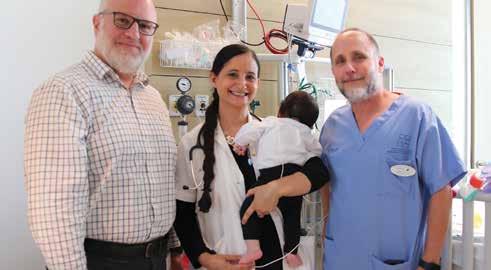
An eight-month-old baby from Israel is the first human ever to receive an experimental gene therapy designed to replace a missing gene responsible for a devastating neurological disease that until now offered no hope of survival.
The treatment was performed at ClalitSchneider Children’s Medical Center, part of Clalit Health Services, Israel’s largest health organization running 14 hospitals and 1,600 community clinics nationwide. It took part after an extraordinary international effort involving physicians, researchers, regulators, and biotech leaders who moved urgently to make the impossible possible for one small child.
The breakthrough began with Dr. Naama Ornstein, head of genetics unit at Clalit-Schneider, who immediately recognized the rare disorder after the baby was hospitalized with seizures and severe developmental decline. Years earlier, Dr. Ornstein had treated another child with the same condition, but at the time, the experimental therapy had not yet been



• Family owned and operated since 1917
• Affordable services to fit any budget
• Advance funeral planning
• Professional, experienced, caring staff
• Flexible burial options
• Flexible payment options


available, and the child died. Alongside the genetic team, Dr. Dror Kraus, senior physician in the Neurology unit at ClalitSchneider Children’s Medical Center and an epilepsy specialist, had been closely monitoring and treating the child since the day he arrived at the hospital.
Determined not to lose another patient, Ornstein reached out to the scientist who originally developed the therapy, Professor Rami I. Aqeilan, an Arab researcher from the Hebrew University of Jerusalem, whose academic discovery had since evolved into a clinical treatment acquired by a U.S. biotech company led by an Israeliborn physician and CEO.
Together, the unlikely team crossed borders, systems, and bureaucracies to secure special emergency approval for the treatment, despite the fact that it had never before been administered to a human being.
In a delicate neurosurgical procedure, Dr. Ido Ben Zvi, from the Neurosurgery Unit at Clalit-Schneider Medical Center, injected a functioning copy of the missing gene
Approved by all area Rabbis and Chevrah Kadisha
directly into the baby’s brain, using a specially engineered viral vector designed to deliver the healthy gene into the central nervous system.
The operation required unprecedented medical and regulatory coordination, including special approvals from Israeli health authorities and international oversight bodies. Doctors say even the dosage calculations were extraordinarily sensitive, as the amount had to be tailored precisely to the infant’s brain size.
“This was much more than a medical procedure,” says Ornstein. “It was a fight for a child’s chance to smile, develop, and live. Families often ask us: if a child is missing a
working gene, why can’t we simply give them one? Usually, we have no answer. This time, for the first time in the world, we could.”
The baby has since been discharged home, while doctors continue closely monitoring his neurological condition.
At Clalit-Schneider Children’s Medical Center, the case is already being described as a landmark moment in the future of personalized genetic medicine, and a rare story of science, humanity, and cooperation overcoming every possible barrier in order to save a child’s life.
Many people invest considerable time and effort in physical exercise with the goal of losing weight, but the results often fall short of expectations. A new and groundbreaking international study led by researchers from Tel Aviv University provides a comprehensive scientific explanation for a question that troubles many: Why doesn’t physical activity alone lead to significant weight loss, despite sustained training efforts?
The researchers found that, as exercise increases, the body becomes more energy-efficient. Key energyconsuming organs, such as the liver and kidneys, shrink in size, while energy expenditure in other daily activities declines.
The study was led by Dr. Tzachi Knaan as part of his doctoral research
in the laboratory of Professor Yftach Gepner of the School of Public Health at TAU’s Gray Faculty of Medical & Health Sciences and Sylvan Adams Sports Institute. It was conducted in collaboration with Professor Ed Melanson of the University of Colorado, Professor Gal Dubnov-Raz, Professor Carmit Levy, Professor Chen Luxenburg, and other students from the participating laboratories. The findings were published in the journal Communications Medicine.
Participants who were overweight were recruited for the study and completed a supervised aerobic walking program over a 12-week period. Throughout the study, energy expenditure, activity levels, dietary intake, and even changes in body
Our community funds support all kinds of causes, such as the arts, education, and civic leadership.
You can donate in honor of a friend or loved one for any special occasion.
HamptonRoadsCF.org/ giving-your-way/giving-today
composition were precisely measured using advanced technologies.
Despite burning hundreds of calories per week through physical activity and improving their overall fitness, participants did not lose weight. However, they did show improvements in body composition, with reductions in fat and increases in muscle mass.
So why didn’t their body weight change? According to the researchers, the body simply adapted to the new situation. Among other findings, they observed a decline in resting metabolic rate, indicating that the body offset the increased activity by burning fewer calories at rest. In addition, participants became more efficient in their movements, expending less energy while performing the same daily activities.
Another surprising finding concerns the body’s internal organs. The researchers found a decrease of about 5 percent in the volume of the liver and kidneys — major energy consumers — while the brain remained unchanged. The implication is that the body reduces its internal energy expenditure to compensate for the increased demands of physical activity.
Physical activity is very important for good health, but when it comes to weight loss, it is not always sufficient on its own.
itself to maintain balance,” Dr. Knaan explains. “Physical activity is very important for good health, but when it comes to weight loss, it is not always sufficient on its own. The implication for the public is clear: Exercise is a vital component of a healthy lifestyle — it improves fitness, reduces fat, and improves health indicators — but to see significant weight loss, it must be combined with the appropriate nutrition.”
The researchers note that the new study sheds light on one of the major questions in health and fitness and may even change the way we think about weight loss. Instead of relying on exercise alone, the most effective approach is likely to involve a proper combination of physical activity, nutrition, and an understanding of the body’s mechanisms.
However, contrary to common assumptions, the researchers found no significant increase in food intake. In other words, the observed compensation does not stem from eating more, but from physiological and metabolic adaptations that reduce total energy expenditure.
“The human body is extremely sophisticated — it knows how to adapt
“This study offers a window into an evolutionarily rooted mechanism of energy compensation,” Professor Gepner adds. “In the past, when food was not available near the tribe, hunters and gatherers had to travel considerable distances, necessitating a reduction in energy expenditure to successfully return to the tribe with food. The central message is that physical activity alone is not designed to reduce weight. For years, science has shown that weight loss resulting from exercise is more limited than commonly expected, and in this study, for the first time, the mechanism of organ shrinkage that explains this phenomenon was observed. It is important to emphasize that physical activity has unique and substantial health benefits — but it is not intended, on its own, to lead to weight loss.”
A Jewish not-for-profit organization, Sharsheret is looking for volunteer bakers to coordinate local bake sales in their communities.
Sharsheret’s Pies for Prevention bake sale is part of the organization’s efforts to raise awareness about ovarian cancer and support women and families affected by the disease.
Launched in 2008 by sisters Adeena Sussman and Sharon Wieder in memory of their mother and grandmother, both lost to ovarian cancer, Pies for Prevention sales take place in cities across the country in the days leading up to Thanksgiving. Proceeds benefit the Stephanie Sussman and Ann Nadrich Memorial Jewel and Sharsheret’s Ovarian Cancer Program.
“The first year I baked for Pies for Prevention at my own home, after all the measuring and mixing and baking was done, I discovered the unexpected joy of distribution day,” says Julie Fax.
“All day, as I prepared for my own




Asaf Elia-Shalev (JTA) — A growing number of Americans are injecting themselves with peptides they ordered online, often with no idea what’s in the vial, hoping to cure ailments and reverse aging. And for reasons that will soon be made clear, some of the peptides that make their way into the faddish and often gray-market concoctions have what appear to be Yiddish names.
But first, Pinchas Cohen, the pioneering scientist responsible for the naming quirk, wants to say a few words about the real potential for mitochondrial-derived peptides.
Peptides represent a revolution in medicine, with potential for major new drug discoveries, the University of Southern California professor says. And the gray market fad worries him.
“These are potent biological molecules,” Cohen says. “They should be used under the supervision of a physician, and when they’re being produced in reliable manufacturing facilities — most of which is not happening right now.”
That said: about those names.
Cohen’s lab at USC has given the world SHLP (pronounced “schlep”), SHMOOSE, MENTSH, and a few others not yet published — including one called NOSH and another PUTZ. Each is a legitimate scientific acronym, carefully reverseengineered to land on a Yiddish word.
SHLP stands for Small Humanin-Like
Peptide. SHMOOSE expands to Small Human Mitochondrial ORF Over SErine tRNA. The names are light-hearted, but the science is serious. Naturally occurring SHMOOSE has been linked to a 30% increased risk of Alzheimer’s disease. MENTSH, after Cohen also named a company he founded, shows promise for treating diabetes.
Cohen has a rule that he doesn’t name things himself. That’s the students’ job. “I always give the students and postdocs the chance to name the project they’re working on,” he says. “But I get veto power. They’ve already learned that the best way to get me to say yes is to come up with something really cute.”
Not every Yiddish name comes from a Jewish lab member. MENTSH was coined by a Taiwanese-American colleague who grew up in the Bay Area. “Surrounded by Jews,” Cohen notes. “He probably knows more Yiddish words that I do.”
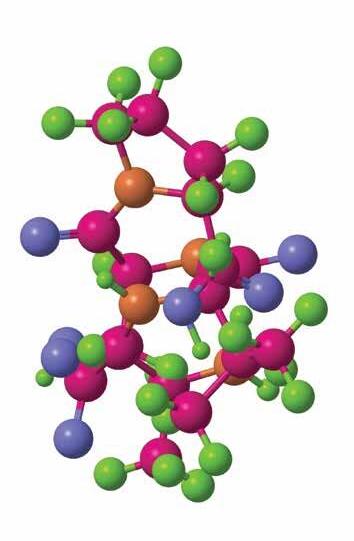
second was Cohen’s subtle nod to Jewish tradition. MOTS-c, pronounced “mots-see,” was quietly crafted to echo the Hebrew word motzi, as in the blessing over bread. “That was subtle,” Cohen says, “but it was on purpose.”
The Yiddish names, he says, are less about heritage than about fun, and about giving his team a sense of ownership over their work.
The discovery of MOTS-c and the peptides that followed represented something genuinely new in science. Researchers had known about peptides for generations — insulin, the diabetes treatment, is one — but those were found through conventional means, in glands and tissues where scientists knew to look. Cohen’s innovation was finding that mitochondrial DNA, the tiny separate genome inside mitochondria long thought to encode only energy-related proteins, secretly harbored an entirely hidden library of bioactive peptides. In places scientists weren’t looking, and in parts of the genome dismissed as structural, there were functional molecules with potential to treat disease.
institutions in pre-state Israel.
Cohen did his medical training at the Technion in Haifa, then Stanford, then the University of Pennsylvania and UCLA, before joining USC 14 years ago as dean of the Leonard Davis School of Gerontology.
Though his family is Ashkenazi, Cohen didn’t grow up speaking Yiddish — his father studied at Berkeley, his mother at the London School of Economics — and his accent bears little trace of his origins. The Yiddish names, he says, are less about heritage than about fun, and about giving his team a sense of ownership over their work.
“My identity is deeply rooted in my Jewish and Israeli heritage,” he says. “I am delighted your publication took an interest.”
The key to healthfully aging, Cohen says, is diet and exercise. “And the best diet is the Mediterranean diet,” he says, noting Israel’s high life expectancy.
He belongs to Kehillat Israel synagogue in Pacific Palisades, though the fires that swept through the neighborhood last year, he says, “slowed things down a bit.”
The first peptide Cohen co-discovered was named by someone else — a Japanese scientist who called it humanin. But the

Uncover root causes, restore balance, & build lasting health Book your complimentary discovery call today! FrissoraFunctionalWellness.com

His lab has now published about a dozen such peptides, with another dozen or two in preparation. The number of these microproteins that may ultimately exist in the human genome, Cohen says, could reach into the millions, transforming biology in ways that are only beginning to be understood.
Cohen, who goes by the nickname “Hassy,” was born in Israel and moved to the United States at 14, when his parents were posted to the Israeli embassy in Washington. He comes from deep Zionist roots. His father’s family has been in Israel since the 1880s, among the founders of the first Jewish community in Haifa. His grandfather studied biology in Berlin in 1904 and helped establish agricultural
Despite Cohen’s warnings about treatments that are so far unproven, wellness influencers keep pushing peptide treatments, and Health Secretary Robert F. Kennedy, Jr. has vowed to loosen regulations on peptides. The Food and Drug Administration announced that it will hold a meeting to weigh easing restrictions on more than a half dozen peptide injections.
Cohen is careful not to let enthusiasm for the science bleed into endorsement of the wellness industry that has appropriated it. Each peptide, he says, is its own unique compound with its own effects and risks, not a supplement to be ordered from a TikTok link. The revolution he envisions runs through clinical trials and FDA approval, not gray market vendors and cryptocurrency payments.
But he is optimistic. Somewhere in the vast molecular landscape his lab is mapping, he says, there are more discoveries waiting, and, almost certainly, more Yiddish words to find them.
A new study led by Tel Aviv University (TAU) offers new hope to millions of people affected by spinal cord injury (SCI), a devastating condition in which damage continues to spread after the initial trauma, often resulting in longterm and irreversible disability.
The study, published earlier this year, in the journal Inflammation and Regeneration, presents an innovative therapeutic approach that reduces post-injury damage to nerve cells, reduces inflammation and scar formation, and significantly improves functional recovery. The study was led by Dr. Angela Ruban of the Stanley Steyer School of Health Professions at TAU’s Gray Faculty of Medical & Health Sciences and Sagol School of Neuroscience, together with Dr. Yona Goldshmit and students Josef Levin, Rosemary Lavender, Alexander Yakovchuk, Evgeny Banyas, and Ruth Baltovska.
One of the main problems in SCI is a process that occurs within minutes of the injury: the accumulation of a neurochemical called glutamate that further damages nerve cells, generating a local inflammatory response and degeneration that lead to scarring and extensive progressive damage. To date, no treatment has been approved by FDA/EMA to stop this process and prevent a permanent disability. This is where TAU’s novel therapeutic approach comes in: Instead of attempting to block harmful activity in the brain, the researchers found a way to remove excess glutamate through the bloodstream in the first hours after injury.
In experiments using animal models, the new treatment dramatically reduced post-injury glutamate levels, minimizing inflammation and nerve cell death, and preserving the structure of neural tissue, such as axons and synapses. Perhaps most impressive was the functional outcome: The treated animals showed marked improvement in walking and movement abilities within two days, achieving up to 80% of normal motor functioning two months after treatment, compared to around 30% in the untreated group.
Another important advantage is
the wide therapeutic time window. The researchers found that the treatment remains effective when given as long as eight hours after injury, a timeframe considered realistic in real-world medical emergencies. Administered via a simple intravenous injection, the treatment may feasibly be provided by first responders in the field, thereby halting the damage cascade in its earliest stages.
Dr. Ruban notes that the importance of the study “is not only the functional improvement, but the very ability to impact secondary damage — for which no effective treatments have been discovered so far. This suggests a potential for halting the ‘chain reaction’ that aggravates patients’ condition, thereby preserving neural functions that would otherwise be lost.
If we are able to confirm our results in humans, the new approach will represent a true paradigmatic shift — from supportive care alone to treatment that actually reduces and maybe even completely prevents the extent of the damage.”
Dr. Goldshmit, an expert in SCI treatment and rehabilitation, adds that this novel method can revolutionize treatment not only for SCI, but also for other brain injuries, caused for example by stroke or trauma. Significantly reducing neural damage, the new treatment can enable much more successful rehabilitation later on.
“Our main findings show that it is possible to intervene in the harmful process occurring immediately after injury — not just try to deal with its consequences after the fact,” Ruban says. “By reducing excess
glutamate, we were able to protect nerve cells and significantly improve motor/ cognitive functions in multiple preclinical models. If we can obtain similar results in humans, this study can potentially revolutionize the therapeutic approach to SCI and other neurological conditions. Together with other advanced medical and rehabilitation technologies being introduced into clinics, our innovation can help create a future in which SCI no longer condemns individuals to life in a wheelchair.”
Tel Aviv University (TAU) is a globally topranked university, a leading research institution, and a center of discovery. As Israel's largest public institution of higher learning, TAU is home to 30,000 students, including 2,100 international students from over 100 countries.


"Recently my mother required 12 hour per day personal care assistance On short notice, Changing Tides Home Care provided the necessary assistance. They have been responsive to my mother's needs and have kept the family informed by telephone, text and portal. I am very pleased with their services."

Haley Bartel
The Simon Family JCC Fitness Center recently upgraded its cardio equipment with new treadmills, ellipticals, and rowing machines featuring iFit technology. These machines offer interactive global workouts and studio classes, with systems that automatically adjust incline, decline, and speed to match terrain or instructor guidance.
The new Freemotion incline trainers allow users to move between a -3% decline and a 30% incline, expanding the range of workout intensities.

Users can also access interactive coaching programs that simulate real-world routes, such as running or cycling through cities (the streets of Barcelona, for instance) or along mountain trails, with the machine adjusting resistance and incline in real time. For high-intensity workouts, 1-Step controls allow quick adjustments to speed
To reduce strain on joints, the machines include Freemotion’s Reflex deck, designed to absorb impact during each stride and provide added support for knees, hips, and ankles.
“The equipment is built for high-traffic use, a feature that helps improve durability and reduce downtime for maintenance,” says Tom Purcell, director of fitness
The new machines feature 24-inch screens that, in addition to the coaching programs, offer entertainment options such as Netflix, Pluto TV, Spotify, and Google Maps, allowing users to stream content or virtually explore different locations while working out.


Members have responded positively, Purcell says, while many are still familiarizing themselves with the new features.
“There’s a learning curve with all the technology and what it can do,” Purcell notes. “It’s similar to getting a new computer or new vehicle—you have to get used to it.”
And the way to get used to it, of course, is to use it.