Est ate Planning


I tend to be a do-it-yourselfer. My preference, for example, is to craft my own cards for special occasions, plant each year’s new plants in the pots in front of my home, and map out my own vacations.
When it comes to estate plans and wills, however, for me, it’s time for the professionals. With laws constantly changing and evolving. . . and even if they didn’t . . . I know how much I don’t know. I also know that in order to enjoy a secure financial future, planning is paramount – not just saving. And that’s why attorneys, financial planners, insurance agents, accountants, and bankers all provide guidance to my family, using their expertise to design appropriate plans for us.
Within this section, you’ll find articles that offer advice for preserving your funds and talking to your family about your financial plans and desires, as well as pieces about considering philanthropy in your estate plans. Plus, Judy Rosenblatt helps explain the process of probating a will on the next page.
If you haven’t chosen your professional advisors, perhaps this section will give you some ideas and maybe even the impetus to get moving. . .before there’s a crisis of any sort.
Here’s to making a plan!
Terri Denison Editor

After more than 100 years as a law firm, Kaufman & Canoles understands the importance of building a legacy that lasts. Our experienced Estate, Trust & Wealth Transfer team has had the honor of counseling families (sometimes even three and four generations of the same family) to strategically preserve wealth for the future. Now we can help you transform your personal goals into a holistic long-term action plan–one that merges business and financial advice with proactive planning and smart tax solutions. We can. And we will.®
Terri Denison
Probate is the court-supervised legal process of validating a deceased person’s will, settling their debts, and distributing their assets to beneficiaries. It can be, but not necessarily, a confusing procedure, and therefore something to consider when making estate plans and when seeking professional assistance from an attorney.
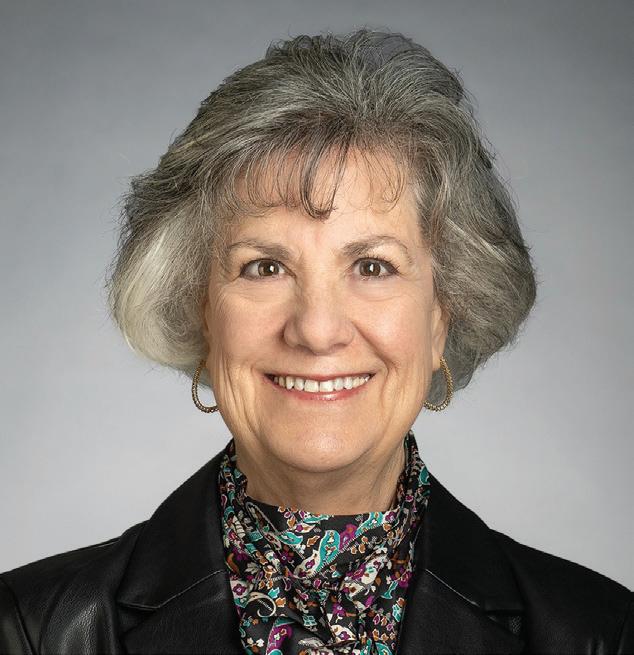
To help Jewish News readers understand probate, Judy Rosenblatt, a Commissioner of Accounts for the Virginia Beach Circuit Court, agreed to answer some questions concerning the process. In her role as Commissioner of Accounts, Rosenblatt supervises fiduciaries and audits accountings and other filings by administrators and executors of estates, trustees of trusts, and foreclosure trustees, among other proceedings.
Jewish News: What is the first thing the family needs to do?
and witnessed properly).
The term “probate” is also used in reference to the processes involved in qualifying as a personal representative and administering the decedent’s estate.
JN: How do you know if a will must be probated?
a will is not always necessary.
Judy Rosenblatt: Find the will. If the will is not with the decedent’s other important papers, contact the bank or investment institution the decedent used or an attorney, if known.
JN: What is probate?
JR: “Probate” specifically refers to the act of submitting the will to the Clerk of the appropriate Circuit Court and “proving” with appropriate documentation or testimony from witnesses that the will is valid (that is, that it was signed
JR: Probating a will is not always necessary. For example, there may be no property that passes by will or the amount passing by will is less than $50,000. Additionally, qualification is not necessary to transfer a motor vehicle title. In these circumstances, the will is probated and proved and recorded and nothing further is done. Other instances where formal qualification or administration may not be required are joint accounts with right of survivorship in banks, savings institutions, or credit unions.
life insurance proceeds, IRAs, retirement plan benefits, and other accounts or assets made payable to a specific person also do not need to be probated. The transfer of real estate to a surviving spouse also occurs outside of the estate.
JN: Where should the will be probated?
JR: The person who wants to qualify takes the original will and original codicils (if any), a certified death certificate, driver’s license or passport, and a personal check to the Clerk’s Office of the
Circuit Court that has jurisdiction over the will.
Virginia does not have a separate probate court. The will should be probated in the Circuit Court of the city or county where the decedent resided or where the decedent owned real estate; or if none, where the decedent died or has any estate.
If the decedent died in a nursing home or similar institution, then that person’s residence is presumed to be where he or she resided prior to becoming a patient at such home.
JN: What types of reports are required by law?





beneficiaries and heirs that the will has been probated.
Inventory: The personal representative files an inventory which lists all probate assets at their date-of-death values. This is done within four months.
Accountings: The personal representative files an accounting every year. The accounting details what has occurred in the estate since the last report and lists all assets of the estate, all distributions and ending assets which remain.
JN. Any other advice?
JR: All cities in Virginia have a good website to assist you as you go through this process. Both Norfolk Circuit Court and
mation online to assist you. Norfolk has a



























More than 150,000 people worldwide have pledged $5.9 billion to secure the future of Jewish life, philanthropy, and the State of Israel, according to the Jewish Future Promise. The milestone took place in late 2025 amid a global rise in antisemitism and follows the second anniversary of the October 7 attacks, underscoring the growing urgency to preserve Jewish identity and values for generations to come.
“Reaching 150,000 promisers is a powerful reminder of what can be achieved when the Jewish people unite around a shared purpose,” says Mike Leven, JFP founder. “You don’t learn how to give unless you’re exposed to givers. My philanthropic foundation was my grandfather. Every Friday, he would drop
a dime or a dollar into the Jewish National Fund box at our door; whatever he had, he gave to help others. That lesson stuck with me. Years later, mentors like Bernie Marcus and Sheldon Adelson broadened that sense of responsibility and helped spark the Jewish Future Promise.
“Each promise represents a commitment not only to the future of Jewish life, but to the moral and spiritual legacy that binds us as a people,” says Leven. “Whether it’s a dime in a JNF box or $10 million from a donor-advised fund, contributing to others is a privilege, and our goal remains to inspire millions to make this promise and secure a vibrant Jewish future.”
“This is more than a milestone; it’s a reflection of what happens when

the Jewish people come together around a shared purpose,” says Hadara Ishak, president of Jewish Future Promise. “Each promise represents not only a commitment to the future of Jewish life, but to the legacy of giving that connects generations. From the small acts of kindness we witness growing up, to the larger commitments we make as adults, each is part of the same sacred thread of responsibility and care. Our focus is on deepening engagement, strengthening our global community, and inspiring new generations to give with purpose, pride, and an enduring connection to the Jewish people and Israel.”
The funds promised through JFP are earmarked to support a wide range of Jewish causes, including educational
initiatives, community development, social services, and cultural preservation, both in local communities and the State of Israel. Notable foundations, such as the Charles & Lynn Schusterman Family Foundation, the Marcus Foundation, and the deToledo Family Fund, have contributed significantly to this historic achievement.
JFP is a powerful response to a 2017 study that found a mere 11% of donations from key Jewish benefactors were invested in Jewish causes. JFP is a catalyst for change, and through its efforts, JFP has created an alliance of philanthropic family foundations, individuals, and families to secure billions in future commitments for various Jewish causes.
The Jewish Future Promise does


not receive any of the pledged funds directly. Instead, it serves as a catalyst for meaningful intergenerational dialogue, inspiring families to reflect on their values, discuss their legacies, and ensure that a significant portion of their estate or planned giving supports the Jewish community and the State of Israel. Beyond the financial commitments, JFP’s impact lies in the conversations it sparks between generations, as parents, children, and grandchildren share their stories, beliefs, and hopes for the Jewish people. Through these exchanges, JFP strengthens the continuity of Jewish giving, identity, and purpose for generations to come.
Jewish Future Promise asks signers to make a moral commitment; if any charitable contributions are made upon passing, whether it be $10 or $10 million, at least half will support Jewish causes and/or the State of Israel.
A visionary global initiative dedicated to preserving and enriching the Jewish heritage for future generations, the Jewish Future Promise asks signers to make a moral commitment; if any
charitable contributions are made upon passing, whether it be $10 or $10 million, at least half will support Jewish causes and/or the State of Israel. JFP is embraced by notable philanthropists, including Bernie Marcus and Charles Bronfman, who pledged to direct their estate’s philanthropic gifts toward Jewish and Israel-focused causes.
Extending its reach, JFP also inspires young adults, through the Jewish Youth Promise for 13- to 24-yearolds, to promise lifelong engagement with the Jewish community. JFP’s impactful work is supported through partnerships with major Jewish organizations, including the Jewish Federations of North America, JNFUSA, Israel Bonds, the Orthodox Union, and a host of local federations across the United States.
For more information: www. jewishfuturepromise.org and www. jewishyouthpromise.org.



"Recently my mother required 12 hour per day personal care assistance On short notice, Changing Tides Home Care provided the necessary assistance. They have been responsive to my mother's needs and have kept the family informed by telephone, text and portal. I am very pleased with their services."





Today, we honor our Legacy donors whose vision and commitment are already shaping a strong and enduring future for the Tidewater Jewish community. Your generosity creates lasting impact, sustaining our community today while ensuring its strength and vitality well into the future
Names displayed in BLUE signify those who have formalized a Life & Legacy gift through the Tidewater Jewish Foundation, thereby empowering our cherished organizations to pursue their missions with renewed vigor Thank you for your dedication to shaping Jewish futures in Tidewater and beyond.
Bertram* Aaron
Laurent Abitbol
Rachel & David Abraham
Rachel & Marc Abrams
Adelle & Herman* Adler
Helen & Warren Aleck
Janice Aleck
Kimberley & C Earl Allsbrook
Benjamin* & Candace Altschul
Sylva B Altschul*
Jasmine Amitay
Tamar & Rabbi Jeffrey Arnowitz
Karen Ashkenazi
Patricia* & Avraham Ashkenazi
Leslie M Auerbach
Rosalyn Levy August
Gail & Thomas* Bachman
Jody Balaban
Linda & Leigh Baltuch
Babbi & Brad Bangel
Bessie Banks*
Roslyn & Michael Barney
Elena & Gary Baum
Bobby & Jack Barr*
Helen Jayne & Melvin Barr*
Dolores & Alan Bartel*
Gary Bartel
Marlene Bass*
Susan & Jon Becker
Linda & Calvin Belkov*
Lisa Benjamin
Gail & Bill Berger
Marcia & Amos Berkovich
Carole & William Bernstein*
Richard Beskin
Roy Beskin
Frances Levy Birshtein*
Paula & Michael Blachman
Leyba & Herman Blumenthal*
Moira Wright Bodner
Bonnie & David Brand
Rashi & Rabbi Levi Brashevitzky
Isabel & Louis Brenner*
Bernice & Percy Brill*
Elyssa Brinn
Joan Brock
Edmund Brodie*
Wendy Jo Einhorn Brodsky &
Ronald Brodsky
Eleanor & Leonard Brooke
Marjorie & Robert Brotman
Beryl & Steven Brown
Carol & Allan Brum
Larry Bublick
Norbert Bublick
Kelly Burroughs
Aaron Busch*
Alice E. Buxbaum
Marilyn & Stuart* Buxbaum
Stephanie Calliott
Elyse & David Cardon
Rose & Armond Caplan*
Deborah Mancoll Casey
Marsha Chenman in Memory
of Sol & Bertha Chenman
Jeffrey Chernitzer
Charlene & David* Cohen
Leo Cohen
Ronnie Lynn Jacobs Cohen
Ruth & Aaron Cohen
Sol W Cohen*
Barbara & Harvey Coleman
Barry Comess*
Jean* & Allan Comess
Raizy & Rabbi Velvel Cook
Allison & Jeff Cooper
Minette & Charles* Cooper
Monica & John Cooper
Ann & Robert Copeland
Robin & Todd Copeland
Edward Cross*
Stuart Davis*
Lisa & Mark Delevie
Renee & Arthur Diamonstein*
Esther & Glenn Diskin
Judy & Larry Dobrinsky
Susan & Allan Donn
Ronald Dozoretz*
Abby & Mark Draluck
Leora & Nathan Drory
Bronia Drucker*
Barbara Dudley
Ingrid & David Edery
Susan & James Eilberg
Lois & Barry* Einhorn
Susan & Martin* Einhorn
Devorah & Morris Elstein
Dianne Epplein
Adrienne Lehman-Winkleman


Shayne R Evans
Thelma Fantuch*
Jeffrey Feld
Mary & William Feldman
Freda & Jules Feuer*
Barbara & Andrew Fine
Jan* & Morris Fine
Karen & Matthew Fine
Hyman Fine*
Minnie S Fine*
Nancy & Sheldon Fineman
Kim & Andrew Fink
Mandi & Ross Firoved
Gail & Joel Flax
Mona & Jeffrey Flax
Anne Fleder
Esther & Alan Fleder* Gail Fleder
Joseph Fleischmann*
Nataly & Seth Fleishman
Barbara Fletcher*
Kristy & Adam Foleck
Sandra & Pete Forte-Nickenig
Colleen & Andy Fox
Helen Frank
Rita Frank
Edwin Franklin
Barbara Fried
Harry Fried
Cantor Wendi & Gigi Fried
Kathleen & Walter Fried*
Claire & Marvin Friedberg
Beverly & Alan Frieden
Rosa Frieden* Alicia London Friedman & Robert Friedman
Celia & Jay Friedman
Debbie & Mark Friedman
Jerome Friedman
Leslie Friedman
Shari Dozoretz Friedman
Ann & Louis Friedman* Fannie & Milton Friedman*
Margaret & Leonard* Frierman
Penny & David* Gallo
Sidney Gates* Karen Gershman
Helen G Gifford* Amy Ginsburg
Pam & Arty* Gladstone
Martha Mednick Glasser
Rose Frances Glasser* Hara Glasser-Frei
Pearl Glassman* Carly Glikman
Gail L & Donald Gogan
William Goldback* Farideh & Norman Goldin
Charles Goldman
Elaine Goldman
Jane Klein Goldman
Beatrice & Harry Goldman*
June & Joseph Goldman*
Lawrence Goldrich* Steven A Goldstein
Laura & Keith Goldstein of blessed memory* | as of April 4, 2026
Bootsie & Morty* Goldmeier
Beth Hirsch Berman
Rita Cogan*
Epstein & Edwin S Epstein
Jodie & Jack Frieden
•Family
•Divorce
• Property Settlement
•Child Custody
• Estate Administration
• Estate Litigation





(StatePoint) Money management is not only a logistical challenge for many families, but it can also be an emotional one too, especially when it comes to transferring wealth from one generation to the next. Open, honest conversations about fi nancial values and intentions can cut through some of the stress, and help family members avoid resentment, confusion, and even legal strife down the line.
“With American Boomers poised to transfer an estimated $68-$124 trillion dollars to their Gen X, Millennial, and Gen Z heirs by 2048, the time to have the conversation with your family about money and inheritance is right now,” says Heather Hunt-Ruddy, divisional leader, Wealth & Investment Management at Wells Fargo. “It starts with letting go of the notion that money is a topic to avoid.”
Hunt-Ruddy offers these tips to facilitate productive communication with family:
conversations where you discuss goal setting, review milestones, and go over any updates or changes to your plans. It’s helpful to know in advance what topics you’d like to cover and who you’d like to be present for each conversation.
Set the tone: It’s important that fi nancial conversations go beyond just numbers on the page. By maintaining a collaborative tone and leading with open-ended questions, you can foster a multi-sided dialogue that ensures everyone’s voices are heard, concerns are aired, and values are shared.



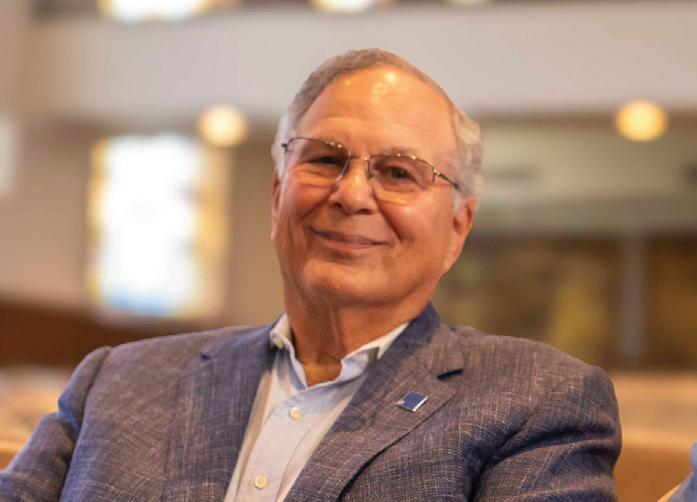
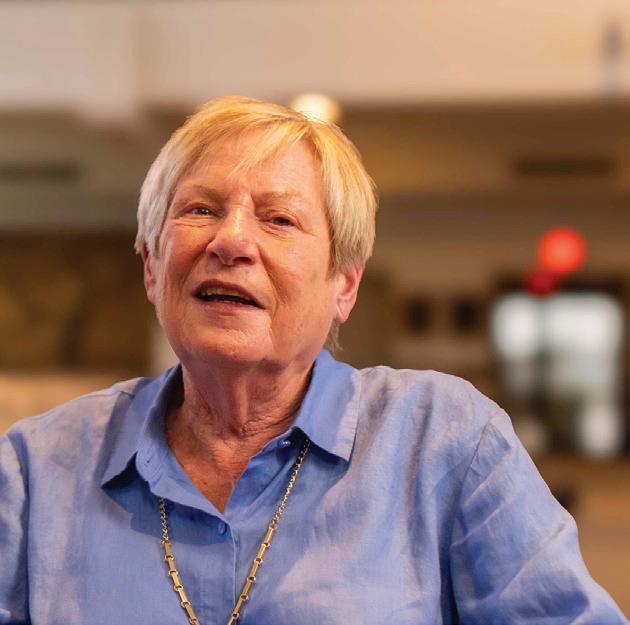
For Jay and Joyce Kossman, giving is rooted in purpose Their approach is strategic by supporting institutions that educate, strengthen communities, and shape future leaders
Guided by tikkun olam, they believe investing in people is how we repair the world That’s why they value early Jewish experiences where identity, connection, and belonging begin
In partnership with Tidewater Jewish Foundation, they are putting those values into action



Don’t wait to plan: Don’t postpone key decisions about your health, caregiving, and estate until there is a crisis. Pressure can cloud judgment and lead to snap decisions. Worse still, a sudden illness or accident may leave you unable to speak for yourself. Get your house in order now – drawing up or updating an estate plan and other legal documents, selecting a power of attorney, and developing an advantageous strategy for wealth transfer – so that your wishes can be carried out as intended.
Prepare the next generation: Many younger adults lack fi nancial knowhow. To empower the next generation to manage the inheritance you leave them, as well as navigate their own fi nances, consider introducing them to the team that helped create your estate planning strategy, such as your attorney, fi nancial advisor, and CPA. It’s also helpful to recognize that their needs and preferences may differ from yours. For example, younger individuals may prefer holistic fi nancial advice delivered digitally. Ultimately, you’ll want to ensure your children or other beneficiaries have both basic fi nancial experience and are set up with a team they trust.
“To honor the values, hard work, and hopes for the future that your wealth represents, don’t give the matter short shrift. Balance the art and science of preserving generational wealth not only with a smart fi nancial strategy, but by inviting the next generation into the conversation early and often,” says Hunt-Ruddy.




Don’t wait to share: Emergencies are also not the best time to share important decisions about your estate with your family. Begin the conversation intentionally and calmly.
Keep it up: Once the ice is broken, get into a rhythm of recurring fi nancial
More insights on generational wealth and other financial topics can be found by visiting wellsfargoadvisors.com.
(StatePoint) – Have you ever lamented how much of your earnings go to taxes? One way to ensure that more of your money benefits you, your future, and your estate is by making strategic contributions to taxadvantaged savings accounts.
By opening and contributing to a Health Savings Account (HSA) and Individual Retirement Account (IRA), you can substantially reduce your taxable income. Not sure if these accounts are right for you? Consider these insights from Fidelity:
An HSA is an account that can be used to pay for qualified medical expenses, including copays, prescriptions, dental care, contacts and eyeglasses, bandages, X-rays, and a lot more. It’s “tax-advantaged” because your contributions reduce your taxable income; the money isn’t taxed while it’s in the account, even if it earns interest or investment returns; and as long as you use your HSA funds for qualified medical expenses, you won’t owe taxes when you take money out of the account.
This triple-tax advantage is powerful, but it’s not the only reason why HSAs are so popular. Unlike a flexible spending account, an HSA is not “use-it-or-lose-it,” meaning it doesn’t need to be spent within a certain timeframe. If the money in the HSA isn’t needed for current medical expenses, you can save and invest it until you do and even take the account with you when you leave an employer. Just keep in mind that to open and contribute to an HSA, you’ll need to be enrolled in an HSAeligible health plan.
An IRA refers to a tax-advantaged account designed to help you save for retirement on your own, independent of an employer. There are several types of IRAs, but when people say “IRA” alone, they often mean a traditional IRA. That’s a type anyone with
earned income can open and contribute to. Traditional IRAs allow you to save on income taxes now and pay them later in retirement, when you could be in a lower tax bracket and therefore owe less in taxes.
Fidelity estimates that you may need 55% to 80% of your pre-retirement income in retirement. Because an employersponsored savings plan might not be enough to accumulate the savings you need due to annual contribution limits, investing through an IRA could help you save more for the future.
Before opening an IRA, check out a few different firms that offer them. Find out whether they offer helpful support and a user-friendly experience, plus whether they charge any fees or minimums. Then, once
the account is open, decide how much you want to contribute and how often.
“Setting up automated contributions can make saving for retirement into a habit that requires very little effort,” says Rita Assaf, vice president, Retirement at Fidelity. “It’s also a good idea to regularly check your asset mix to see if it is still a good fit for your goals, risk tolerance and time horizon.”
For additional financial resources and insights, visit https://www.fidelity.com/learning-center.
With a smart strategy that involves directing your income into tax-advantaged accounts, you can build more wealth for future needs and wants.







• Family owned and operated since 1917

TJF Staff
Jay Kossman doesn’t think about legacy as something distant or abstract.
For him, it’s a daily practice shaped by intention, experience, and a deep sense of responsibility to others.
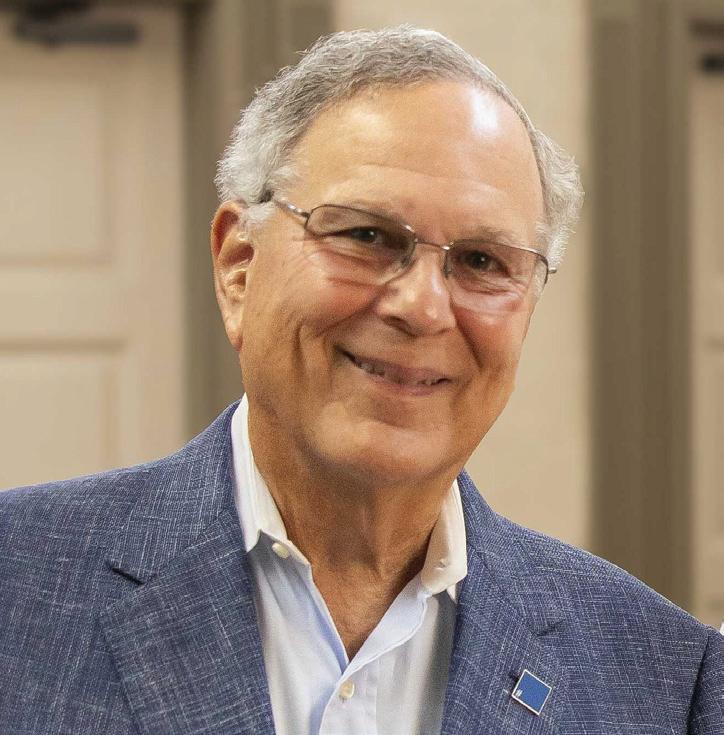
Growing up in Norfolk’s West Ghent neighborhood, Kossman’s early connection to Jewish life was more cultural than religious, he says. It wasn’t until he spent nearly 30 years away, primarily in Connecticut, that his understanding of Judaism began to take shape in a more meaningful way. Through study and guidance by a Chabad rabbi, he developed a deeper appreciation for the principles that continue to influence him today.
Among them is tikkun olam: the call to repair the world.
“That idea isn’t theoretical,” Kossman says. “It’s something you’re meant to live out in how you show up, how you support, and how you contribute.” That belief has become the foundation of his philanthropic philosophy.
Alongside his wife, Joyce,
Kossman takes a strategic approach to philanthropy, prioritizing institutions that educate, equip, and create lasting impact. Their giving reflects a belief that strong organizations don’t just meet immediate needs; they shape people, strengthen communities, and extend their influence over time.
That commitment has not gone unnoticed. In 2025, Kossman was recognized as a Distinguished Alumni by Old Dominion University, an acknowledgment of his sustained contributions of time, talent, and resources in service to the broader community.
Rather than focusing on shortterm outcomes, Kossman is drawn to long-term influence. “We focus on supporting institutions that help people learn how to think and lead,” he says. “If you invest in that, the return isn’t immediate, but it is lasting.”
That same thinking shapes his views on sustaining Jewish life. Kossman believes some of the most important
• Affordable services to fit any budget
• Advance funeral planning
• Professional, experienced, caring staff
• Flexible burial options
• Flexible payment options
Approved by all area Rabbis and Chevrah Kadisha





investments happen early, through experiences such as Jewish day school and camp. “That’s where identity starts to take hold,” he says. “It’s where relationships are formed, where people build lifelong friendships, meet their partners, and begin to understand what it means to be part of something bigger than themselves.”
In those environments, he sees more than education or recreation. He sees continuity taking root. “You have to invest early,” he adds. “Those experiences stay with people, and they shape how connected they feel later in life.”
As a member of Tidewater Jewish Foundation’s board of directors, Kossman brings this same strategic lens to conversations around legacy giving, particularly when it comes to engaging future donors. “One of the biggest challenges is helping people understand the ‘why,’” he says. “If you can connect people to the purpose behind giving, if they understand the impact, that’s what sustains it.”
For Kossman, legacy isn’t about a final gift or a single decision. It’s about aligning values with action, again and again.