

camp & SUMMER
Dear Readers,
Pools are about to open and summer declared “in session” over Memorial Day weekend, even though the season doesn’t officially begin until June 21, on the astronomical summer solstice, the longest day of the year. Never mind the calendar details. School’s almost out, beaches are already filled with sunbathers, kids (or rather, their parents) are preparing for camp, and restaurants’ outdoor seating areas are at a premium. Sounds like summer to me!
A recent conversation with a friend who was showing her sister and brother-in-law around town reminded me how fortunate all of us are in Tidewater. As seen through the eyes of visitors, we have plenty of wonderful and beautiful resources to occupy us throughout the year, but especially during the summer months.
Even with all our area has to offer, summer remains a favorite time to travel – especially for those with families. An article on page 16 suggests some travel mistakes to avoid, providing the best chance of having a great trip experience. Afterall, why go to the expense of a vacation and have an easy-to-miss oversight mess it up?










How to prepare children for new environments – especially those that are not as structured as they are accustomed to in school – is an important read on page 15 as well as the piece on how summer camp can positively impact a child on page 19.
However you intend to spend the summer, now is the time to make and solidify those plans before camps, flights, and tours are completely booked. And, if that happens, remember how lucky we are in Tidewater – we’re where others want to visit!
Thanks for reading,

Terri Denison Editor


camp & SUMMER
Toras Chaim brings internationally acclaimed child safety program to students, staff, and families
Rabbi Aryeh Kravetz
As summer approaches and children prepare for camps, day trips, and new environments, Toras Chaim Day School is making sure its students head into the season with something more than sunscreen and a packed lunch.
This spring, the school brought in Debbie Fox and the Magen Yeladim International Safety Kid Program to equip students, parents, and staff with the knowledge and language children need to stay safe.
The transition from the structured school year to the relative freedom of summer is one of the most vulnerable periods for children. New settings, unfamiliar adults, and less-supervised hours can create situations where children are unsure of how to respond or who to turn to. The Safety Kid program addresses that gap head-on by giving children a clear, memorable framework and the confidence to use it.
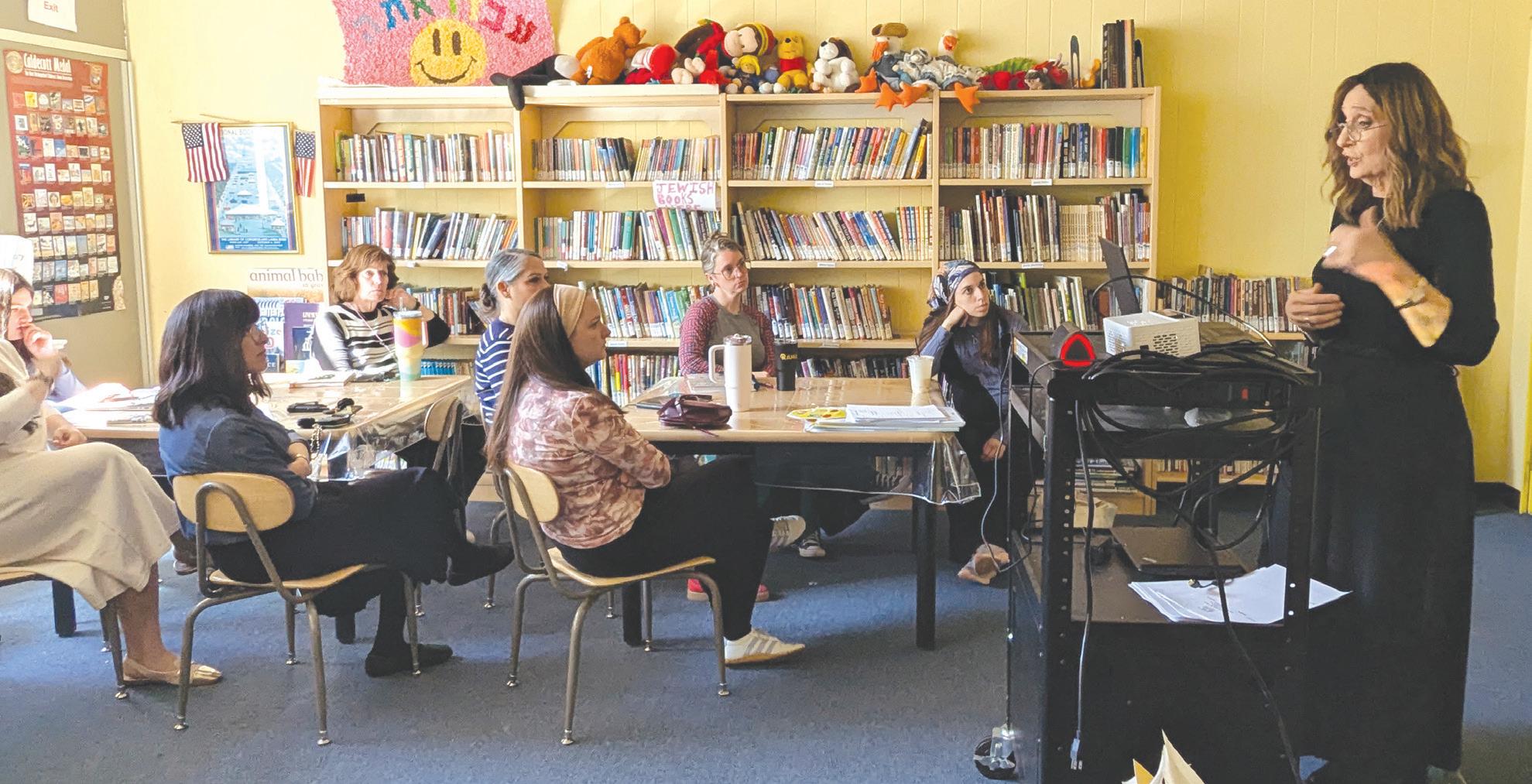
Fox, who consults and speaks internationally on the topic of child abuse prevention, led a comprehensive series of trainings that touched every level of the Toras Chaim community. Teachers participated in professional development sessions designed to help them recognize warning signs and reinforce safety concepts throughout the school year. Parents were also trained, giving families the vocabulary and conversation starters to continue these discussions at home, with a key element focusing on how to create a home environment where children feel safe and comfortable sharing about their day and raising any struggles they may have come across. Finally, a cohort of staff members participated in a “train the trainer” program, training in the Safety Kid approach to ensure the program can be sustained and delivered to students from year to year.
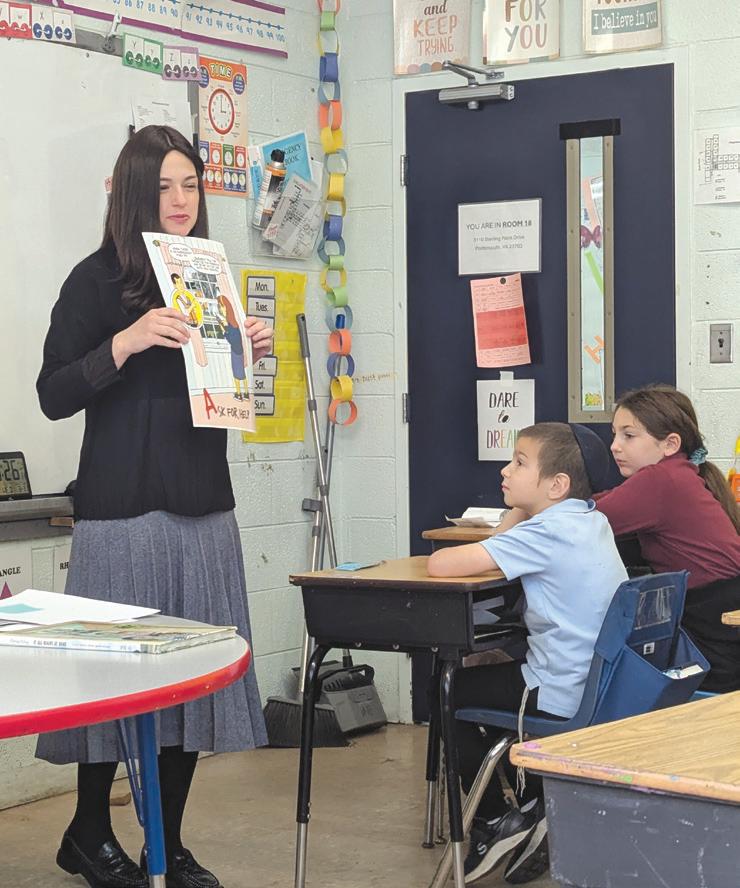
At the heart of the program are the ABCs of Safety: Ask for help, Bring a friend, Check first, and Do Tell. These four principles were taught directly to students in ageappropriate classroom sessions and are designed to be immediately actionable. Rather than relying on abstract warnings, the ABCs give children concrete steps they can
take in real situations.
Students learned practical emergency skills: how to call 911, how to speak clearly to safety personnel, and, critically, how to stay on the line until help arrives. They were taught what to do if they become separated from their group or get lost in a public place, and how to communicate changes of plans to a parent or trusted adult. Scenarios included a child at a summer camp, on a family outing, or in any new setting a child might genuinely encounter.
Perhaps one of the most lasting lessons involved identifying a trusted adult. Students were taught how to recognize which adults in their lives they can turn to when something feels wrong or makes them uncomfortable, and that speaking up is not only permitted but expected. This message is especially vital for children navigating new social environments during
the summer months, where the trusted figures of the school year may not be present.
The Magen Yeladim International Safety Kid Program has earned wide recognition from law enforcement officers, mental health professionals, and school administrators for the way it delivers critical safety information in ways that are dignified, age-appropriate, and culturally sensitive. It has been equally praised by parents and children themselves; a reflection of how carefully the program is designed to empower rather than frighten.
For Toras Chaim, bringing the Safety Kid program to the entire school community reflects a commitment to the whole child, not just academic excellence. As families finalize summer plans, the school encourages all parents to help their children know what to do and who to talk to when a situation feels uncomfortable, making sure their children know who the child’s trusted adults are at camp or in new settings. But perhaps the most important thing for parents is to be present and create a happy and comfortable home environment where the parent-child relationship is a healthy and supportive one.
Rabbi Aryeh Kravetz is Head of School at Toras Chaim.
Debbie Fox teaches the Safety Kid Program at Toras Chaim.
Students learn the ABCs of safety.
& SUMMER
HERE ARE SOME NEW TRAVEL MISTAKES –AND HOW TO AVOID THEM
Christopher Elliott
One of the newest mistakes travelers make is also one of the oldest: forgetting their paperwork.
It happened to Katharine Nohr when she tried to fly to New Zealand. Nohr, an attorney from Honolulu, was so used to traveling to Europe that she assumed she didn't need a visa to enter New Zealand.
But she did.
“I couldn’t check in for my flight,” she remembers. “The agent waved me away rudely and said I had to get a visa online.”
Travelers are making all kinds of new mistakes. These include failing to do research or worse, outsourcing it to an AI, and not giving themselves enough time to make a fl ight connection. But one mistake towers above all of them –and I’ll tell you about it in a moment.
WHY VISAS ARE AN OLD PROBLEM – AND A NEW PROBLEM
Visas are a constant problem because the requirements keep changing.
I remember booking a flight to Australia a few years ago when the country didn't have a visa requirement. But before I left, the requirement changed, and when I arrived at the airport, my airline wouldn’t let me check in. Fortunately, there’s an Australian ETA smartphone app that lets you apply for the necessary permission online, and you can get your approval within minutes.
Nohr wasn’t so lucky. She tried to secure a visa but couldn’t get it in time. Her flight left without her – an expensive lesson.
“Now I always check for visa requirements online,” she says.
That’s good, because this year, even the EU will require a little paperwork for visitors. After repeated delays,
the European Travel Information and Authorization System (ETIAS) authorization will go into effect at the end of 2026. It’s a pre-entry requirement that will involve an online application, a fee, and screening to enhance border security for short-term stays (up to 90 days).
OTHER NEW MISTAKES TRAVELERS WILL MAKE IN 2026
Here’s a short list of the errors travelers will be making this year, and how to avoid them.
FAILING TO RESEARCH YOUR DESTINATION
It’s an easier mistake to make than you might think. Say



camp & SUMMER
you’re traveling to a place in Canada or Mexico that you’ve been to many times. It would be easy to say, “I know this place, no need to do any research.” But times change, and especially in 2026, you can’t make any assumptions. “Always research the destination thoroughly, including local customs, laws, and cultural norms,” advises Frank Harrison, regional security director for the Americas at World Travel Protection.
LETTING AN AI PLAN YOUR TRIP
This is a growing problem, according to Joe Cronin, CEO of International Citizens Insurance. He says travelers are using ChatGPT or Gemini to generate itineraries that turn out to be riddled with hallucinations and errors. “These tools don’t always know if a local spot is closed,” he says. “We’ll get calls from people who missed a connection because it wasn’t physically possible to pull it off in time.” The fi x? If you use an AI, make sure you verify the details. Otherwise, you might miss an attraction or a flight connection.
NOT GIVING YOURSELF ENOUGH TIME
As travelers try to cram more activities into less time, their schedules can become too ambitious which can potentially waste time and money. “For example, flying on the same day of the cruise can result in missing the port departure,” says Elad Schaffer, CEO of Faye Travel Insurance. Rather than waiting until the last minute to book activities, such as dinner reservations or spa appointments, his advice is to plan ahead and give yourself plenty of time, especially if you’re taking a cruise.
PACKING YOUR SENSE OF SKEPTICISM
A lot of travelers are stumbling into their next destination, oblivious to what awaits them, experts say. And the problem is getting worse. Susan Sherren, founder of luxury travel agency Couture
Trips, says it’s more important than ever to bring critical thinking skills to your next trip. “For example, airlines are using algorithms and AI to pair connecting flights,” she says. “Don't always accept the suggested pairing without leaving at least two hours for some connecting flights, especially if you are connecting to an international flight.” She says these flights usually board at least an hour before departure. The same thing extends to anything people will tell you when you’re on vacation. Just because you see a five-star rating on a hotel doesn’t mean it’s great. Verify everything.
WAITING TOO LONG TO BOOK YOUR TRIP
One of the worst new mistakes that travelers make is waiting too long to book their vacation. After the pandemic, there were plenty of last-minute deals available. But those days are over, some experts say. Consider your average ski vacation. “People wait until the ski season gets going to plan their trip and buy their lift tickets at the window on the day they want to ski,” says Sarah Beatty, a spokeswoman for Colorado Ski Country USA, a trade group that represents the Colorado ski industry. “The ski industry is just like any other travel industry: the more you plan ahead, the more flexibility you have to find a better deal on lift tickets, lodging, and lessons.”
So, if you're reading this now and you still want to go skiing, you’ll find the best deals in Argentina and Chile in July during the Southern Hemisphere winter. Or, start looking now for options in 2027.
THE BIGGEST MISTAKE: NOT TRAVELING AT ALL
The experts are right, but there’s one more mistake –and it may be the biggest mistake of all. It’s letting all the travel worries keep you home. Truth is, you can skip the research, wait until the last minute to plan your trip, hire Mr. ChatGPT as your travel agent, and accept everything at face value – but


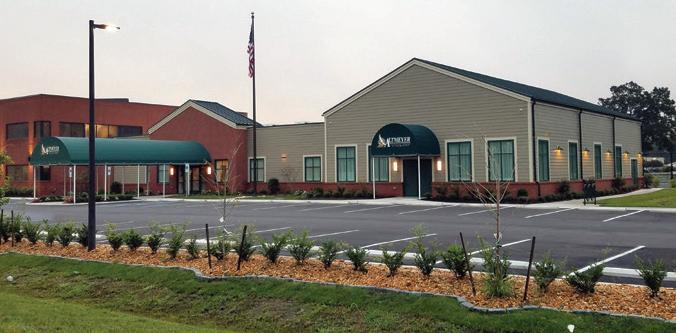

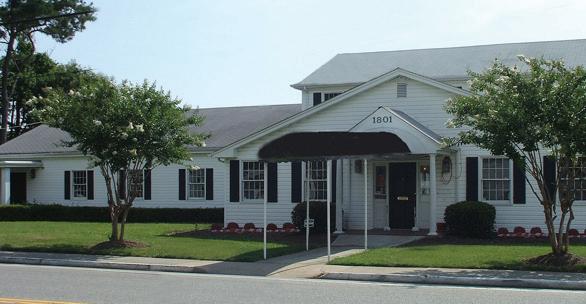

• Family owned and operated since 1917
• Affordable services to fit any budget
• Advance funeral planning
• Professional, experienced, caring staff
• Flexible burial options
• Flexible payment options
Approved by all area Rabbis and Chevrah Kadisha






taking the trip is still better than not taking it.
I know because I’ve been to some places that I didn’t care for. I wasn’t a fan of chaotic Bangkok, and there were parts of Australia’s Red Center that missed the mark. Also, I don’t like Tokyo’s always-crowded subways. But I wouldn’t give up any of those experiences.
All the chaos and uncertainty of this year might leave you tempted to avoid any travel. Don't give in to it. After
all, a misadventure is still an adventure.
Christopher Elliott is an author, consumer advocate, and journalist. He founded Elliott Advocacy, a nonprofit organization that helps solve consumer problems. He publishes Elliott Confidential, a travel newsletter, and the Elliott Report, a news site about customer service. He can be reached at chris@elliott.org.
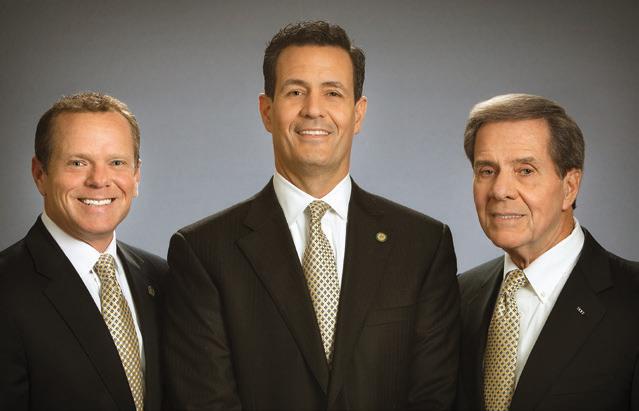
Chris Sisler, Vice President, Member of Ohef Sholom Temple, Board member of the Berger-Goldrich Home at Beth Sholom Village, James E. Altmeyer, Jr., President, James E. Altmeyer, Sr., Owner Chesapeake
camp & SUMMER
6 tips from docs to keep kids safe at summer camp




(StatePoint) When getting ready to send kids to summer camp, the American Medical Association (AMA) is encouraging parents to follow these tips to make sure children are prepared for a safe and healthy experience:
Be sun aware: Kids will spend a good portion of their day outside. Protect children from damaging UV rays by applying a broad-spectrum sunscreen of at least SPF 30 before camp each day. Send a bottle with them so they can reapply every 2-3 hours. Also consider UV protective clothes and hats.


Avoid bug bites: The summer months bring out the bugs, and kids will likely encounter them at summer camp. To keep kids safe from insect bites and insect-borne diseases, have them wear loose-fitting, lightweight long sleeves and pants when possible and avoid clothes with bright colors and floral prints, which often attract bugs.
Using an EPA-registered insect repellent is an effective way to protect from mosquito and tick bites, particularly in the early morning and at dusk. Avoid choosing products that combine bug spray and sunscreen, because they are most effective when applied separately. Always check a child’s skin for ticks after being outdoors as insect repellent doesn’t kill ticks, and they can remain on clothes and skin long after the camp day is done. Ticks are most likely to attach to areas where clothing is tight to the skin, like the waistband of pants, as well as the hairline and behind the ears.
More information about bug safety from JAMA Pediatrics can be found at https:// jamanetwork.com.
Prepare for allergies: Seasonal and food-related allergies can spoil a child’s fun. Be sure to pack a child’s EpiPen or other allergy medication. If a child comes in contact with a food or environmental allergen that has been known to cause an allergic reaction, ensure they and camp supervisors know to act quickly.
Pack healthy lunches and snacks: When packing lunch and snacks, include fruits, vegetables, lean proteins, and whole grains. Try to pack at least two-thirds of the meal with plant-based foods. Strive to include lean protein or plant-based protein and avoid processed meats and sugar-sweetened drinks such as soda and juice. Hydration is also important in the summer sun since kids, especially when physically active, are at a higher risk for heat-related illnesses. Make sure they have plenty of water in reusable containers.
Get up to date on MMR vaccination: The United States is seeing the highest number of measles cases in more than 30 years, and measles spreads very easily, often before realizing someone is sick. Measles is more than a rash. It is an extremely contagious, airborne virus that can cause severe health complications, particularly for babies and young children— including pneumonia, brain swelling, blindness, and even death. The MMR vaccine is the best way to avoid spreading measles, mumps, and rubella and prevent children from getting sick. There is no treatment for these infections, so vaccination is the best defense. Nearly everyone who doesn’t get the MMR vaccine will get sick if exposed to measles, mumps, or rubella. Be sure to get children vaccinated to protect against severe complications. Doing so will help keep them from missing out on summer camp and help parents and families from missing work to care for a sick child.
Arrange medications in advance: If a child needs to take a prescription medication while at camp, talk with camp organizers and counselors before camp begins to make sure there’s a plan in place for safely storing and administering the medication.
For more health tips and resources visit ama-assn.org.
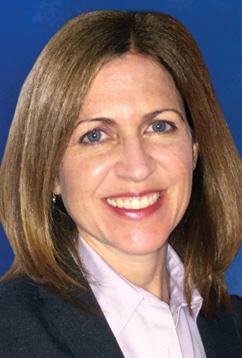
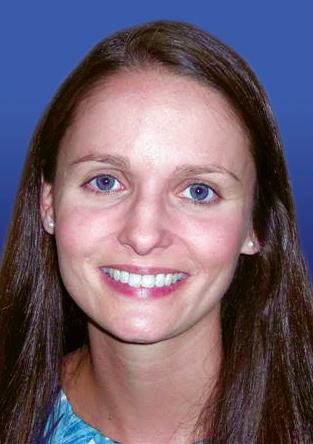
Dr. Gary MossDr. Greg PendellDr. Craig Koenig Lisa Deafenbaugh PA-C
Dr. Marguerite Lengkeek
camp & SUMMER
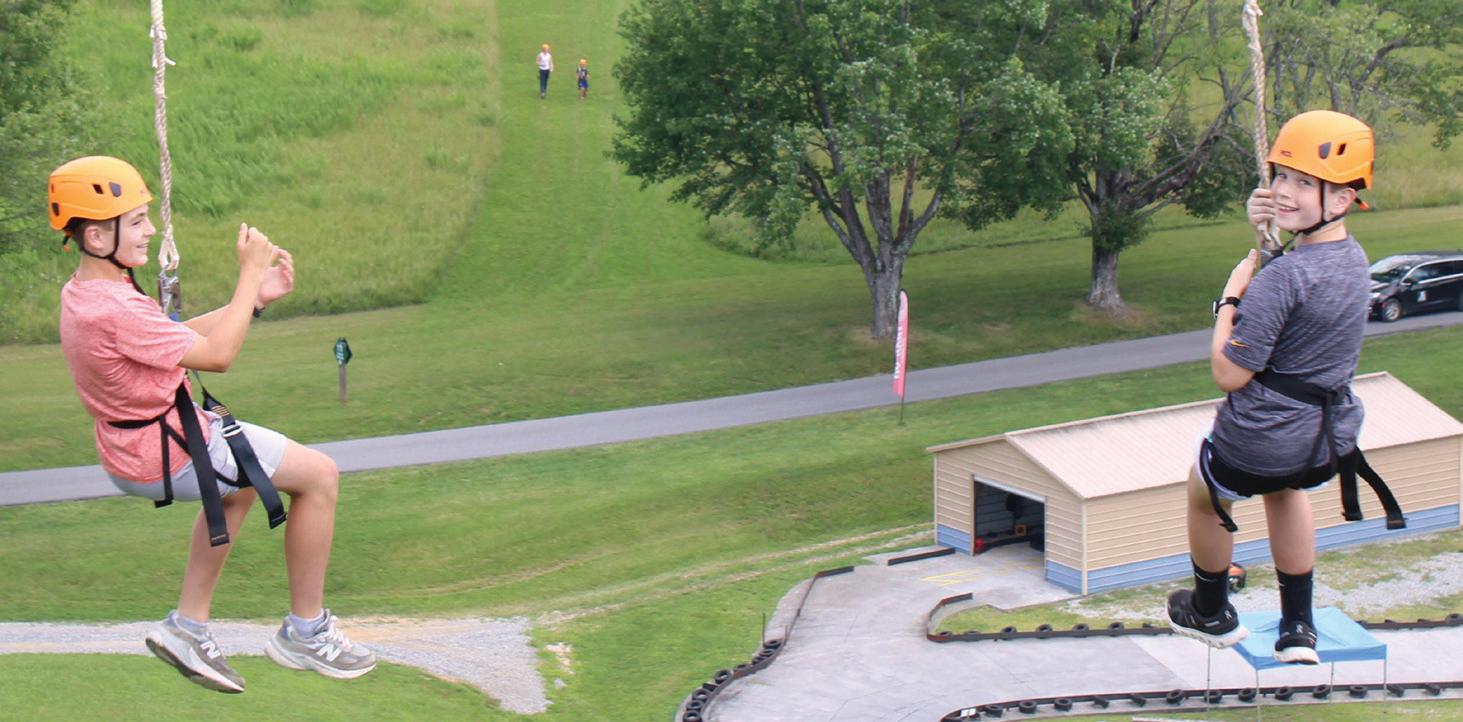
TJF staff
What if there were a place where Jewish children could safely explore and express their heritage? A place where the values and traditions learned at home are not only reinforced but shared and lived among peers. A place where identity is not questioned but cultivated. Where friendships take root, and over time, grow into something lasting.
For the Hoffman family, that place was Jewish camp.
When Summer Hoffman attended BBYO International Kallah through a One Happy Camper grant, the experience became far more than a summer away. It became a turning point. As her father, Jason Hoffman, says, “BBYO Kallah gave Summer the space to explore what being Jewish means to her… it helped her connect with our community and ultimately led to her decision to embrace her Jewish heritage.”
That transformation is the very reason Jewish camp remains one of the most powerful investments a community can make in its future. At a stage in life when young people are still forming their sense of self, they are also the most open to influence. Jewish camp meets them in that moment. It surrounds them with shared language, ritual, and belonging, creating an environment where identity is not taught in theory, but experienced in real time.
Those early experiences, says Jay Kossman, a Tidewater Jewish Foundation board member, are “where identity starts to take hold… those experiences stay with people, and they shape how connected they feel later in life.”
Through the One Happy Camper program, TJF provides one-time, up to $1,000 scholarships to children who do not attend Jewish day school, ensuring more families can access this formative experience. It is not simply a grant, it is an intentional step along what TJF calls “The Journey,” a lifelong path of connection, leadership, and giving.
Now, TJF is looking ahead. With the goal of creating an endowed fund to support 20 campers annually, the Foundation is inviting the community to think beyond a single summer and toward a sustained investment in Jewish continuity.
That camp experience can become part of a donor’s legacy, extending forward so that the next generation has the same opportunity to discover, connect, and belong. Afterall, the question is not just where children spend their summers. It is who they become because of them.
To learn more about supporting One Happy Camper or to begin a conversation about establishing a lasting legacy through this initiative, contact Naomi Limor Sedek at Tidewater Jewish Foundation, nsedek@tjfva.org or 757-965-6109.

Archer Harrell and Elon Richmon at Camp Airy.
SUMMER AT THE ACADEMY FEATURES WIDE RANGE OF CAMP OPTIONS
Mike Connors
Norfolk Academy’s Summer at the Academy camps offer six weeks of excitement for students of all ages.
Starting this year on June 22 and running through the end of July, summer camps offer a perfect mix of adventure, learning, and lasting memories.
From exciting outdoor activities and creative arts to team-building games and hands-on learning, programs are designed to keep kids engaged, active, and growing.
With experienced staff, including many Norfolk Academy teachers and coaches, as well as former campers who return to lend a hand, camps create a safe and welcoming environment. The camps focus on building confidence,
friendships, and independence, and leave students wanting to come back year after year.
Athletics offerings include the ever-popular bike camp, as well as baseball, flag football, girls

The call to do good. The commitment to one another. The values that define who we are.
This Shavuot, we honor what we ’ ve received, and the legacy we continue to build together.
If you ’ re thinking about how to pass your values down, we ’ re here to help.


with sticks, and new this year, Zumba. If the fine arts are more the camper’s speed, offerings range from poetry, yoga, and theater to broadcasting, comic book creation, and of course, Slime Time.
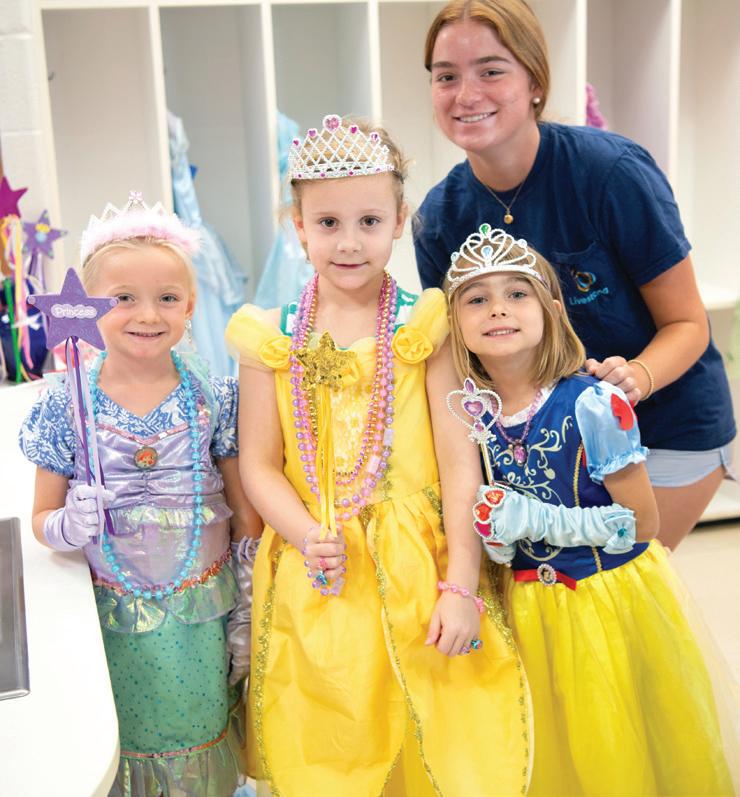
Camps are available for students entering kindergarten through 10th grade and are not limited to Norfolk Academy families. Children throughout Hampton Roads may attend and busing is available.
For more information, including the full list of 2026 offerings, and to register, visit Norfolk Academy’s website: https://www. norfolkacademy.org/summer.
Mike Connors is the digital and social media specialist at Norfolk Academy.
New manager for Camp JCC
Kate-Lynn Cipolla
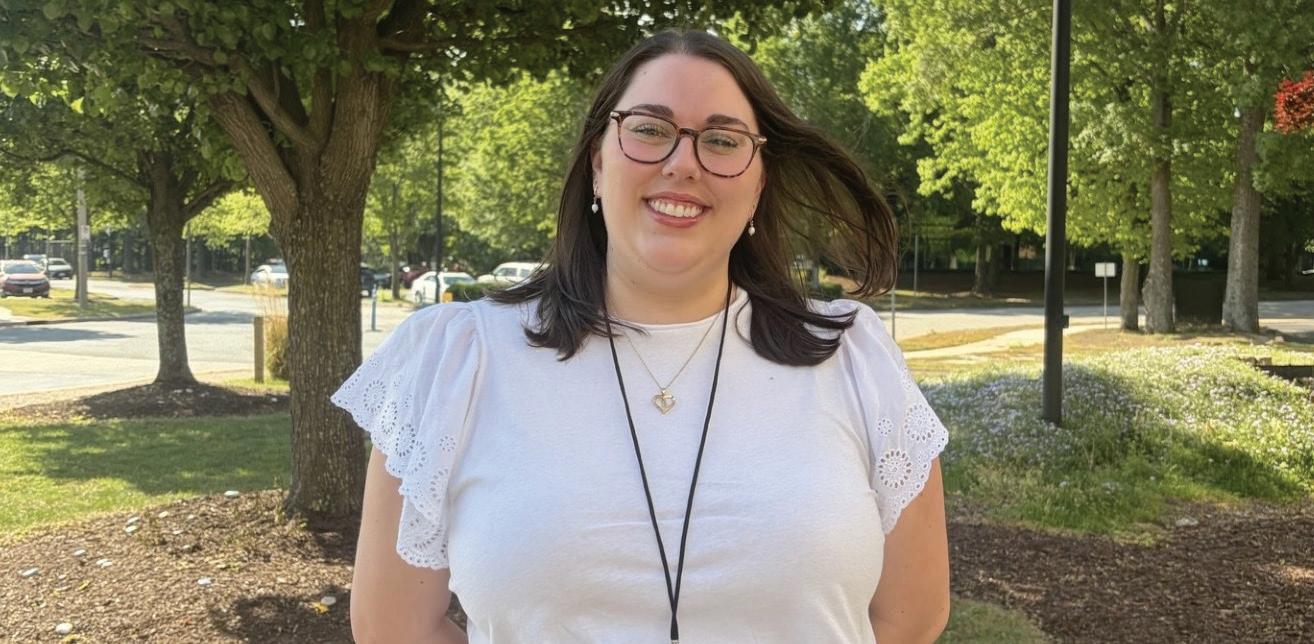
Christine Carnahan, Camp JCC’s new manager, will oversee daily camp operations as well as support campers and staff. She will also provide year-round support for the Simon Family JCC and related programs.
A Virginia Beach native, Carnahan’s background is in retail management. She most recently managed Book Exchange Red Mill. During her time there she engaged in community outreach and reading programs with local schools.
Carnahan says she is “looking forward to engaging with and building connections with families and campers.”
Start the conversation. Build your legacy. foundation@tjfva.org | 757-965-6111 | foundation.jewishva.org
uild ation.j . ewishva.org
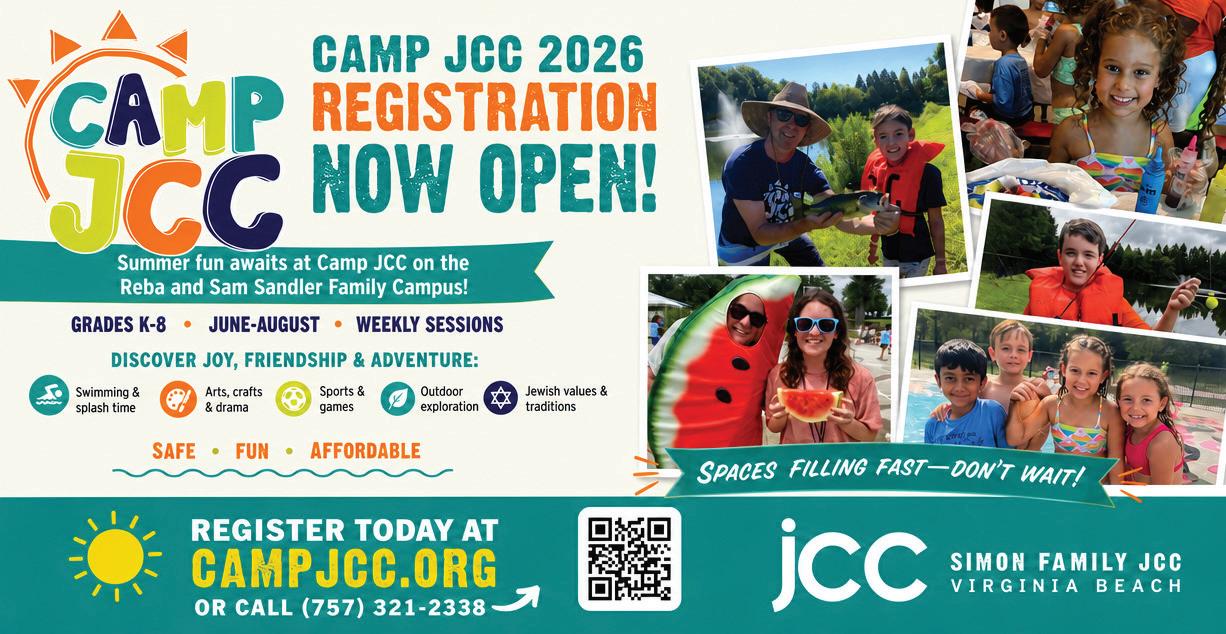
To learn more about Camp JCC, Kids Night Out, School Days Out, children’s classes, and more, contact Christine Carnahan, Camp JCC manager, at ccarnahan@ujft.org or 757-452-3182.