This month’s attack at Temple Israel in West Bloomfield, Michigan is a stark reminder that antisemitic threats are real. The attack on the same day at Old Dominion University, though not targeting the Jewish community directly, hit close to home and underscores the importance of vigilance and preparedness.
Through United Jewish Federation of Tidewater’s partnership with Secure Community Network, Tidewater is part of a national security initiative. We work closely with law enforcement and Jewish institutions across the region to strengthen security, share information, and coordinate response efforts. This ongoing coordination helps ensure that Jewish institutions are prepared, connected, and supported in maintaining a safe and secure environment.
We remain in constant contact with local, state, and federal law enforcement and actively monitor the threat landscape. We also remain in close contact with all our Jewish institutions and are assessing opportunities to further improve our security preparedness and infrastructure. As a precaution, additional patrols are being conducted around Jewish institutions in Tidewater. At press time, there is no information indicating a specific threat to local Jewish institutions.
As always, we encourage organizations and community members to remain aware of their surroundings and report any suspicious activity—both to law enforcement and through our incident reporting link: JewishVA.org/incident.
See something, say something.
Your awareness is the first line of defense. Report suspicious activity immediately: JewishVA.org/incident.
Why it matters.
The West Bloomfield incident demonstrates how training, preparation, and vigilance save lives. Every action you take contributes to keeping Tidewater safe.
Bring SCN to your synagogue for a training session. SCN’s gold-standard curriculum empowers participants with hands-on training and life-saving skills to prevent, respond to, and recover from potential incidents. To schedule a session, email mgoldsmith@ ujft.org or call 757-965-6125.
Eight best practices for community safety.
As recommended by JFNA, SCN, and the ADL:
• C oordinate with law enforcement and SCN Regional Security Advisor
• Extend security perimeters wherever possible
• Limit events to pre-screened attendees
• Require registration and verification for public events
• Share event details only with confirmed attendees
• Control access to known participants
• Stay alert and report suspicious activity
• Add armed law enforcement, private security, or trained volunteers
Thank you for your vigilance and commitment to keeping our community safe. Working together, we strengthen the security of our entire community.
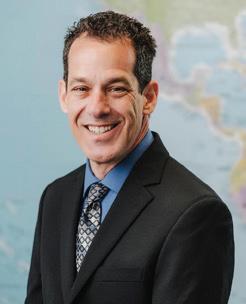
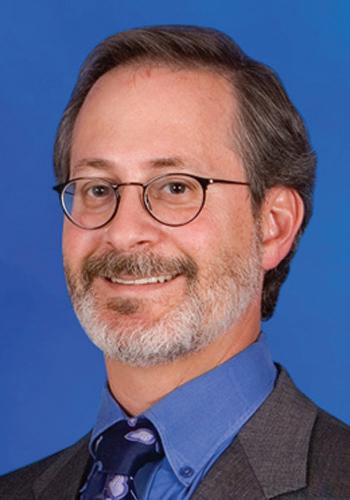
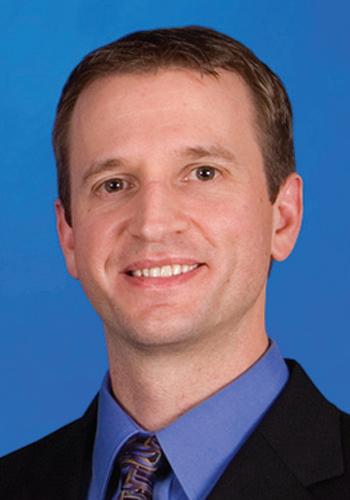
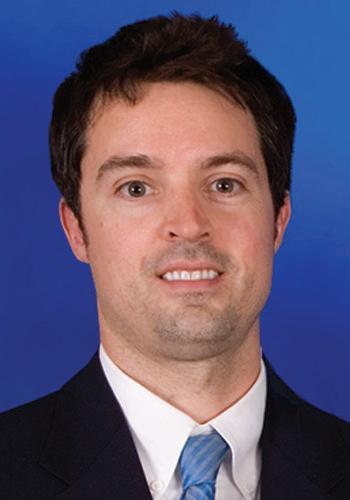
Mike Goldsmith is Tidewater’s Secure Community Network’s regional security advisor. He may be reached at mgoldsmith@ujft.org.
jewishnewsva.org
Published 18 times a year by United Jewish Federation of Tidewater.
Reba and Sam Sandler Family Campus of the Tidewater Jewish Community
5000 Corporate Woods Drive, Suite 200 Virginia Beach, Virginia 23462-4370 voice 757-965-6100 • fax 757-965-6102 email news@ujft.org
Terri Denison, Editor
Michael McMahon, Art Director
Sandy Goldberg, Ad Sales
Patty Malone, Circulation Teresa Knecht, Digital Manager
United Jewish Federation of Tidewater Mona Flax, President Jason Hoffman, President elect Robert Friedman, Secretary Alvin Wall, Treasurer Betty Ann Levin, Executive Vice President JewishVA.org
Subscription: $18 per year For subscription or change of address, call 757-965-6115 or email pmalone@ujft.org
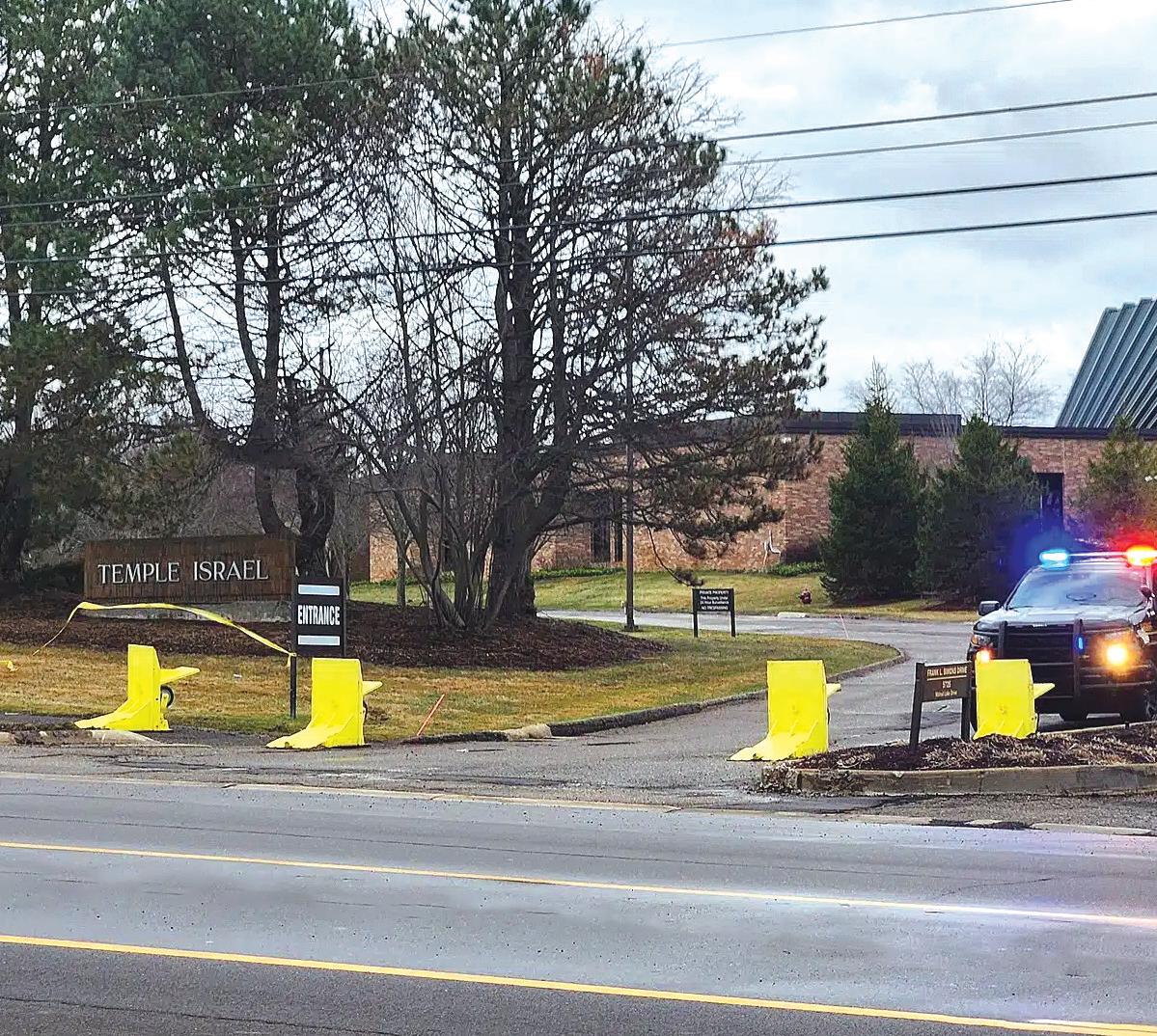
About the cover: Temple Israel in West Bloominfield, Michigan. Photo: 42-BRT via Wikimedia Commons.
BRIEFS
1,100+ rabbis sign letter supporting immigrant rights: ‘Do Not Oppress the Stranger’
More than 1,100 Jewish clergy from across the United States have signed onto a letter affirming their support for immigrant rights and calling on leaders not to “wrong or oppress the stranger.”
The letter published by the Jewish refugee aid group HIAS comes as Jewish communities are grappling with the Trump administration’s aggressive immigration enforcement policies.
“To be a Jew is to advocate for law to be just, compassionate, and fair, and cry out when power is wielded with cruelty,” the letter reads. “In every generation, the Jewish soul is marked by the memory of migration. In this moment, that memory calls us to courage: To reclaim and recenter our moral compass. … To declare to our leaders: Do not wrong or oppress the stranger.”
The letter follows one in January from Jewish organizations and synagogues in Minnesota opposing the “volatile” status of immigration enforcement operations in the area, writing, “There are too many stories of lives upended by what the government itself refers to as the ICE surge.”
Citing biblical passages and calling on leaders not to “wrong or oppress the stranger,” the new letter was signed by Jewish clergy from 45 states and released March 11 in advance of HIAS’ annual “Refugee Shabbat.” The group has contracted some of its operations because of the Trump administration’s efforts to end refugee admissions to the U. S.
The letter’s signatories included Amy Eilberg, the first woman to be ordained by the Conservative movement; Irving Greenberg, the prominent Modern Orthodox rabbi, and David Wolpe, the rabbi emeritus of Sinai Temple in Los Angeles. It also includes a host of rabbis working inside and beyond traditional congregations.
Fueled by an awareness of their roots as perpetual refugees and recent immigrants and by Jewish scripture, American Jews have long been at the forefront of immigration advocacy in the United States and have tended not to support draconian immigration policies, even from candidates they may otherwise support. (JTA)
Hebrew-speaking Israelis in San Jose, Calif. assaulted
Jewish leaders in California are condemning an assault on Hebrew-speaking Israelis outside a San Jose cafe on March 8 that has sparked viral video and a police investigation.
The J. Jewish News of Northern California obtained multiple videos of the assault and its immediate aftermath and spoke to the Israeli men, who said the two groups had not interacted before the incident. One of them said he recalled hearing one of the assailants say “f—ing Jew” during the attack.
The videos show three men punching an older man as diners look on, some shouting but none intervening. One of the assailants loses his shoe and retrieves it before he and the other two men with him run off along Santana Row, a thoroughfare lined by outdoor dining. The videos do not show what happened immediately before the assault began.
The J. also spoke to multiple witnesses, including a retail worker whose parents were born in Iran and said he heard one of the assailants speaking Farsi, the language spoken there.
The incident comes at a time of high alert for Israelis and Jews because of the U.S-Israel war on Iran, which has a record of staging attacks on Jewish targets around the world. It also adds to a string of incidents, many in Europe, in which Israelis abroad say they have been assaulted because of their national identity when someone has heard them speaking Hebrew.
Police in San Jose say they are investigating the incident as a possible hate crime.
“Antisemitism and all acts of hatred have no place in San Jose,” Mayor Matt Mahan said in a statement. “I have been in touch with our police department and leaders in the local Jewish community regarding this deeply disturbing incident and will continue to monitor the situation closely as the investigation continues.”
Jewish Silicon Valley, a nonprofit serving the region, said it was working with a range of local groups and officials to respond to the incident, including Chabad of Almaden, where the Israeli men said they first met; the Israeli consulate; and County of Santa Clara District Attorney Jeff Rosen, whose online biography notes that he has been the president of his synagogue. (JTA)
ADL: Holding colleges accountable
The latest update to ADL’s groundbreaking Campus
Antisemitism Report Card was rolled out earlier this month. It is now expanded to 150 colleges and universities.
The Report revealed that in 2024, under 24% of the schools received As and Bs. This year that total reached 58%. ADL engaged in consultations or webinars with 78% of the schools in the Report Card; many implemented better policies and improved practices to support Jewish students and faculty. This means that college administrators didn’t just listen to ADL. They acted.
For example, NYU told the media: “We’re proud to have earned an A. We are a community that takes antisemitism seriously.” And American University announced their A grade and thanked their community for helping get them to that point.
As a new companion survey revealed, nearly half of non-Jewish students reported witnessing or experiencing anti-Jewish behavior on campus or
in digital campus-related spaces in the past year. That’s a sobering reality. And as ADL CEO Jonathan Greenblatt noted in an interview with Fox News, there may be more challenges on the horizon. “I worry that as this [Iran] war goes on, blaming the Jewish state or the Jewish people will amplify, and those voices will grow louder.” (ADL)
Amsterdam Jewish school bombed, in 2nd attack in days on Dutch Jewish institution
Ablast Friday, March 13 outside a Jewish school in Amsterdam has Dutch police racing to safeguard Jewish institutions after two attacks in two days.
As in a blast outside a synagogue in Rotterdam the day before, there were no injuries in the Amsterdam explosion, which caused damage to the school building’s outer wall.
“This is a cowardly act of aggression towards the Jewish community,” Amsterdam Mayor Femke Halsema said in a statement. “I understand the fear and anger of Jewish Amsterdammers. They are increasingly confronted with antisemitism, and that is unacceptable. A school must be a place where children can receive lessons safely. Amsterdam must be a place where Jews can live safely.”
Prime Minister Rob Wetten condemned the attack. “Terrible. In the Netherlands, there must be no place for antisemitism,” he said. “I understand the anger and fear and will quickly engage in talks with the Jewish community. They must always feel safe in our country.”
Calling the incident a “cowardly attack,” David Van Weel, the Dutch security minister, said in a statement, “Thanks to measures and alertness, greater damage has been prevented. The safety of Jewish institutions has our full attention.”
The same group that took credit for the Rotterdam incident as well as a synagogue attack in Belgium said in a video that it was responsible for the Amsterdam blast. The group, Islamic Movement of the Companions of the Right, was previously unknown, but watchdogs say its tactics and statements bear hallmarks of affiliation with Iran’s global network of terrorist cells.
Iran has warned that it plans to retaliate across the globe against both U.S. and Israeli targets in response to the war initiated by the U.S. and Israel on Feb. 28. Jewish security watchdogs say “the most elevated and complex threat environment” in recent history has resulted.
The school targeted, an Orthodox school of about 120 students founded in the 1970s amid an effort to restore Jewish life after the Holocaust, has a tall, thick security wall as well as bollards meant to prevent vehicles from coming close, according to photographs online. The school’s website says, “The Jewish education and the necessary security of the school are paid for from its own resources and subsidies.” (JTA)
ANTISEMITISM
Statement from Mayors and Municipal Leaders in Solidarity with the Jewish Community Following the Attack in West Bloomfield, Michigan
Temple Israel in West Bloomfield, Michigan was the site of a violent and deeply alarming attack when an armed suspect drove a vehicle into the synagogue, breaching the building, with the intent to kill Jews. We, the mayors, councilmembers and municipal leaders of the Combat Antisemitism Movement (CAM) coalition, are horrified by this targeted act of violence. An attack on a house of worship is an attack on the very foundations of our communities.
By signing this statement, mayors and municipal leaders across North America are reaffirming a shared commitment to stand in solidarity with the Jewish community and lead with clarity and resolve in the face of antisemitic violence. Jewish residents must be able to gather, pray, educate their children, and celebrate their faith without fear.
We are grateful to the municipal leadership, law enforcement officers, security personnel, and first responders who acted quickly and decisively to protect lives and secure the scene. Their vigilance and professionalism remind us how essential strong partnerships between local government, community institutions, and law enforcement are in moments like this.
This incident is also a sobering reminder that the threat of antisemitism and violence directed at Jewish institutions remains real. Cities have a responsibility to confront that threat directly.
As municipal leaders, we stand firmly against antisemitism and extremism. Today, we also stand with the Jewish community in West Bloomfield and with Jewish communities everywhere. Your safety, dignity, and freedom to live openly as Jews must never be in question.
In leadership and solidarity,
CAM Mayor and Municipal Network
Area signers (As of March 18, 2026) include:
Michael Berlucchi
Stacy Cummings
David Hutcheson
Joashua F. “Joash” Schulman
Vice Mayor Rosemary Wilson
Virginia Beach City Council
Mayor Paul Kaplan
Franklin
See something wrong? Report it!
Report an antisemitic incident at www.Federation.JewishVA.org/IncidentReporting
In an emergency, always call 9-1-1 first.
If online reporting is not practical, contact local law enforcement and/or the relevant suspicious activity reporting authority.
Also contact Mike Goldsmith, Tidewater’s SCN Regional Security Advisor, at MGoldsmith@ujft.org or 844-SCN-DESK.
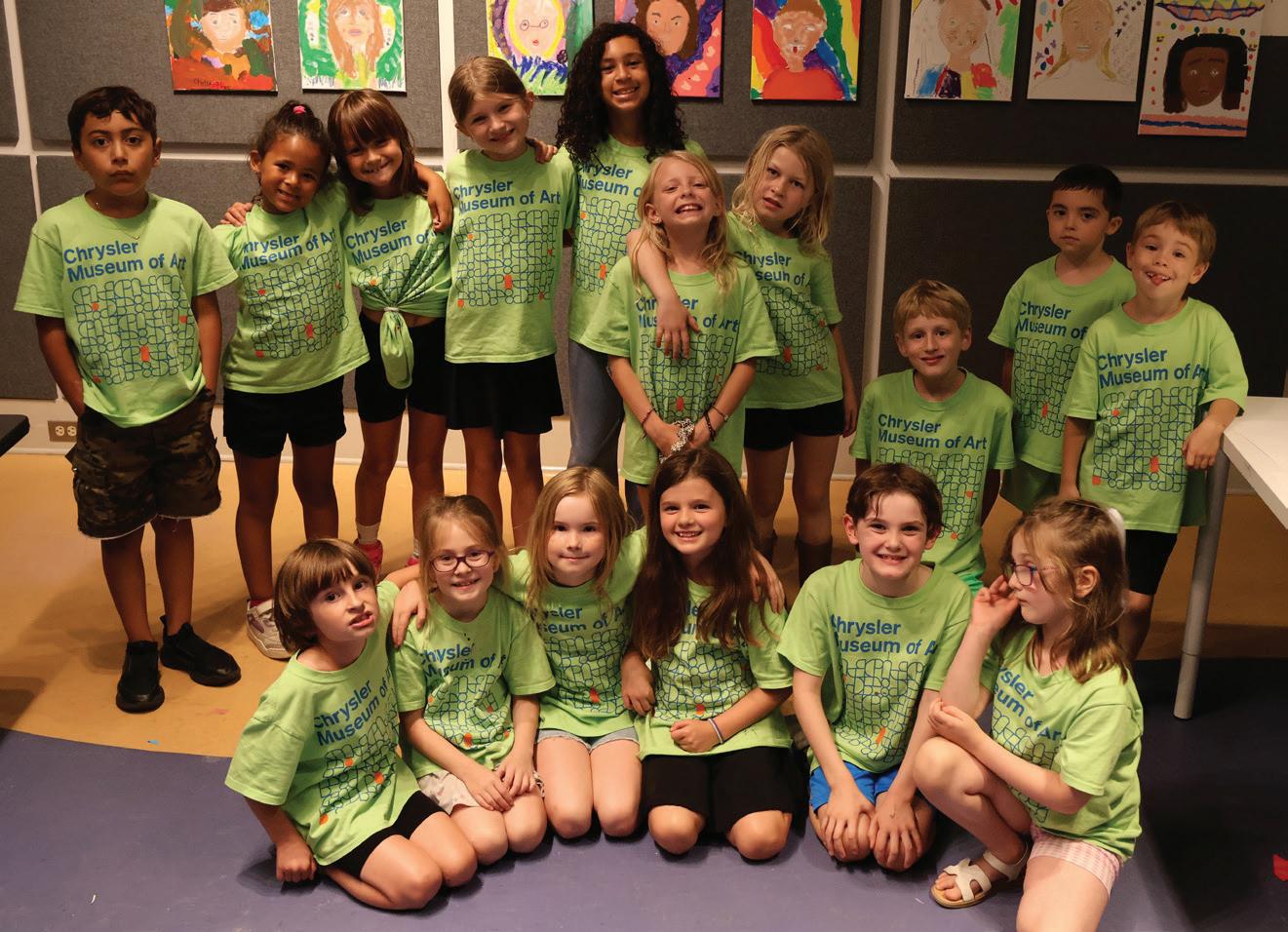
Camp Art Stars
Led by art educators, each camp session is bustling with hands-on artmaking, material experimentation, workshops with professional artists, and collaborative learning experiences.
Monday-Friday, 9 a.m.–4 p.m. Ages 6+ | Member Discounts Available chrysler.org/art-camp
Trump’s counterterrorism director resigns over Iran, blasting ‘war manufactured by Israel’
Andrew Lapin
(JTA) — The director of the U.S. National Counterterrorism Center resigned on Tuesday, March 17, citing his objection to the Iran war and claiming that Israel tricked the United States into entering.
“I cannot in good conscience support the ongoing war in Iran,” Joe Kent wrote in his resignation letter, which he addressed to President Donald Trump and shared on social media. “Iran posed no imminent threat to our nation, and it is clear that we started this war due to pressure from Israel and its powerful American lobby.”
Kent continued, “Early in this
administration, high-ranking Israeli officials and influential members of the American media deployed a misinformation campaign that wholly undermined your America First platform and sowed pro-war sentiments to encourage a war with Iran.”
He also accused Israel of having also drawn the United States into the Iraq War in the 2000s and said he had lost his wife, who died in a 2019 suicide bombing in Syria linked to ISIS, “in a war manufactured by Israel.”
Kent, who has past connections to the far-right influencer Nick Fuentes, is the first senior Trump official to
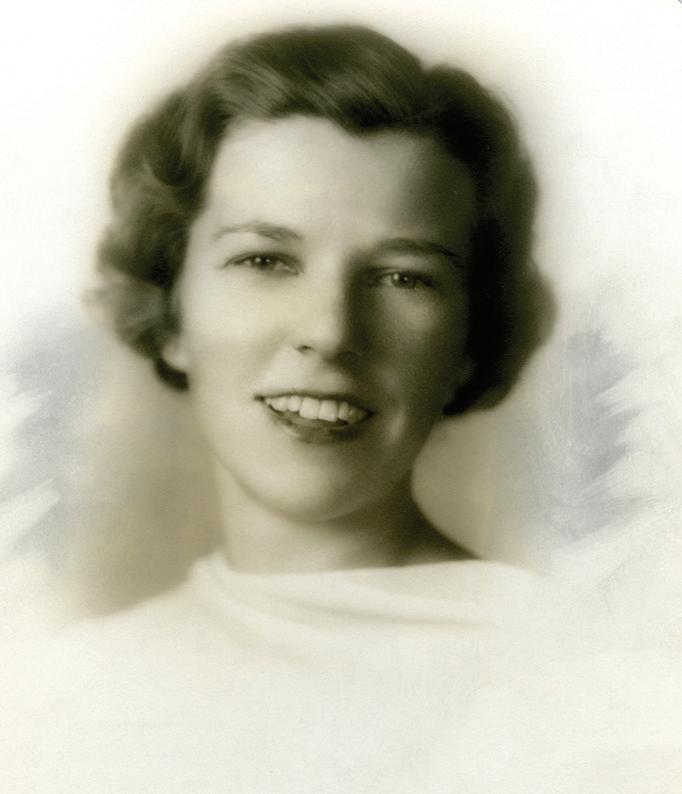
Rebekah Huber died in 2007, but her love for the arts and other causes lives on through her donor-advised fund at the Hampton Roads Community Foundation.
Rebekah Huber
Donor-advised funds let you recommend grants to organizations you care about.
You can name successor advisors to carry your legacy forward after your lifetime.
To learn more about donor-advised funds and all the ways we can help you create your legacy of caring, visit HamptonRoadsCF.org/giving-your-way or call 757-622-7951.
resign over the war. His words reflect a deepening and conspiratorial antiIsrael sentiment on the right, where the two-week old U.S.-Israel war on Iran is fracturing Trump’s MAGA coalition.
“Joe Kent is an American hero, patriot and veteran,” the far-right personality Candace Owens wrote on X. Buckley Carlson, Tucker Carlson’s son who works for Vice President JD Vance, also tweeted that Kent was an “American hero.”
Trump, however, said he was glad Kent had resigned, while a White House spokeswoman said there were “many false claims” in Kent’s letter.
And Jewish leaders across the political spectrum condemned the letter, with some saying that even principled opposition to the Iran war could not justify its antisemitic tropes.
Polls show that most Americans oppose the war, which has sparked a global fuel crisis and appears to threaten the economy more broadly. And some of Kent’s allegations appeared to echo what even some senior Trump administration officials have suggested: that Israeli officials manipulated Trump into believing both that Iran was a present danger to the United States, and that there was a swift path to victory.
But he went further, saying that the dynamic reflected “the same tactic the Israelis used to draw us into the disastrous Iraq war that cost our nation the lives of thousands of our best men and women.” And he blamed Israel for a personal tragedy, too.
A former U.S. Representative from Washington state, Kent was nominated by Trump to be the counterterrorism center’s director last year. Kent was previously a Libertarian and a Democrat before shifting his party to the GOP in 2021 and backing Trump.
Kent is also a U.S. Army Green Beret and combat veteran who fought in the Iraq
War, including in the Battle of Fallujah. He has credited the catalyst for his backing of Trump and belated opposition to the War on Terror to the death of his wife Shannon Smith, a military cryptologist, in a 2019 suicide bombing in the northern Syrian city of Manbij.
At the time, the bombing was connected to the first Trump administration’s campaign against ISIS. But in Kent’s telling now, the ISIS fight, too, could be chalked up to Israeli misinformation.
“As a veteran who deployed to combat 11 times and as a Gold Star husband who lost my beloved wife Shannon in a war manufactured by Israel, I cannot support sending the next generation off to fight and die in a war that serves no benefit to the American people nor justifies the cost of American lives,” Kent wrote in his letter.
To veteran Middle East policy experts, Kent’s framing of Israel as the secret manipulators of recent global conflicts are a blend of nonsensical and dangerous.
“It strips away any sense of agency on the part of the United States, all of these charges,” Aaron David Miller, a senior fellow at the Carnegie Endowment for International Peace and former State Department negotiator on Arab-Israeli relations, told the Jewish Telegraphic Agency. “And it reposits that agency in the form of a clever, willful Israeli prime minister who somehow manipulates America into going to war.”
Miller said that Trump was capable of entering a disastrous war on his own, “wanting to make history” by ending America’s decades-long tensions with Iran and assassinating its leader, Ayatollah Ali Khamenei. “Netanyahu may be affecting the timetable of the war, but not the war itself,” he theorized.
Kent’s allegations about Israel having “manufactured” the Iraq War and the Syrian civil war, Miller said, had no basis in fact.
“As to Iraq, there was a little event called 9/11,” he said. “Syrian civil war, I have no idea what he’s talking about.” The framing, he said, reminded him of decades of hearing from various partners in his line of work that the U.S. Congress was “Israeli-occupied territory.”
In his letter, Kent does not blame Trump for the war, instead urging the president to rethink his approach.
“I pray that you will reflect on what we are doing in Iran, and who we are doing it for,” he concludes his letter. “The time for bold action is now. You can reverse course and chart a new path for our nation, or you can allow us to slip further toward decline and chaos. You hold the cards.”
The White House rejected Kent’s claims. “As President Trump has clearly and explicitly stated, he had strong and compelling evidence that Iran was going to attack the United States first,” White House Press Secretary Karoline Leavitt wrote in a statement.
Leavitt added that Trump “ultimately made the determination” to strike Iran in “a joint attack with Israel,” and called the charge that Israel manipulated the president “absurd.”
Asked about Kent directly at the White House, Trump said, “I always thought he was a nice guy but I always thought he was weak on security.”
He added, “It’s a good thing that he’s out because he said Iran was not a threat. Every country recognized what a threat Iran was.”
But Kent was celebrated for resigning by figures on both the left and right, with the loudest voices coming from the fringe.
In addition to Buckley Carlson and Owens, who called the war “Bibi’s Red Heifer War,” other avatars of the far-right praised Kent. Marjorie Taylor Greene, the former congresswoman, called him “a GREAT AMERICAN HERO.”
Some more liberal and centrist voices were also approving of Kent, without referencing his antisemitism.
“I didn’t support Kent’s nomination. Yet I’m glad he is willing to acknowledge the truth – there was NO imminent threat to the United States, and this war was a terrible idea,” Sen. Mark Warner of Virginia, a Democrat and vice chair
criticize the Israeli government & oppose the war without engaging in dangerous conspiratorial tropes.”
“You can resign and ostensibly make it about Iran, but scapegoating Israel and its ‘powerful American lobby’ for Trump’s decision to go to war puts Jews in danger,” Halie Soifer, CEO of the Jewish Democratic Council of America, wrote on X.
A statement from Brian Romick, head of Democratic Majority for Israel, similarly called Kent’s letter “deeply antisemitic” and added, “It is deeply alarming that a man holding one of the most sensitive national security positions in the United States government harbors these antisemitic views.” Romick also said Trump “made the decision to use military force against Iran.”
“There is no place in public service for traffickers of antisemitic tropes such as Mr. Kent,” the Combat Antisemitism
Movement, which has supported war with Iran, said in a statement. “For generations to come, the world will be a safer place as a direct result of the decisive military actions that have been taken by the U.S. and Israel.”
Prior to his confirmation as national counterterrorism director, Kent served for a time as acting chief of staff to U.S. Director of National Intelligence Tulsi Gabbard. In that role, he was included in the 2025 “Signalgate” group chats in which highly sensitive planning of bombings in Yemen were mistakenly sent to a journalist.
Kent has also had past associations with Fuentes, whom he admitted to calling in 2022 to discuss electoral strategy for his House bid that year — though he disavowed Fuentes. Kent’s wife, Heather Kaiser, has contributed to The Grayzone, a site founded
Kent has also spread conspiracy theories about the 2020 election and defended Jan. 6 rioters. While running for congress in 2022, Kent also talked to pro-Israel lobbyists AIPAC for support, according to a policy paper shared by a Jewish Insider reporter.
In that paper, Kent states, “The United States and Israel share common enemies in the Middle East, from terrorist groups like Hamas and Hezbollah to the totalitarian government of Iran,” later adding that he would “bolster the coalition that stands in opposition to Iran.”
Kent concluded, “Further, I will introduce legislation to strip the most vile antisemites in Congress from their committee assignments.”
by anti-Zionist Jewish writer Max Blumenthal.
A VIEW FROM ISRAEL /FIRST PERSON UNLESS YOU’VE WALKED IN THEIR MOCCASINS OR SLEPT IN THEIR BEDS. . . VISITING ISRAEL DURING THIS LATEST IRAN WAR. FEBRUARY 25-MARCH 8, 2026
Linda Snyder Brownstein
While we knew there was a chance a war might break out, our nephew and niece were having a baby, and we were meeting our sister and brother in Zichron Ya’akov to celebrate. Zichron, as the Israelis call it, is an idyllic, small hill town 30 minutes south of Haifa with great ice cream. Just before our arrival, our great nephew was born after two girls. We were to be there for the Bris. Then things started to change.
• Israeli airspace closed.
• Our sister and brother’s flight was diverted to Athens two hours outside Tel Aviv.
• We were thrown into Israeli wartime life.
this was Zichron.
If you look at the Home Front Command app warning map, which is new for each missile/rocket launched, Zichron is among the safest places in Israel as it is out of the range of the Hezbollah rockets and not a place of interest for Iran with few people and no strategic sites. Still, people are vigilant and take all this seriously.
Each night we had dinner at our nephew and niece’s home with their three children. Our nephew made delicious meals as we gathered around their table.
The Bris became a private event for 30 as public gatherings were not allowed. It was still marvelous with a joyous welcome to our newest family member, Noam Avraham Levin. The maternal Safta grew up in Egypt in the Karaite community, so we experienced his rich traditions for a Brit melah where the ceremony parallels a Jewish wedding…heartfelt and meaningful.
War in Zichron Ya’akov
We were staying at the beautiful ELMA Luxury Art Hotel overlooking the Mediterranean Sea. The hotel has three shelters. One in the underground parking lot (-4); one in a more comfortable building but without internet; a safe room in the gym. To get to -4 was a 15-minute walk. We got it down to 6 minutes. BUT if it’s a rocket you only have 90 seconds to get there safely. So, after many trips to -4, we opted for the gym, which was under 90 seconds from our room and more comfortable, if not quite as safe, but
Accompanied by music, the baby was escorted in by the mother carrying him on a pillow and flanked by the maternal and paternal grandmothers. He was presented to the mother’s uncle who walked back and forth seven times.
The baby was then placed on the father’s lap on the pillow.
With 35 years of experience, the most amazing mohel performed the circumcision in the blink of an eye with nary a peep from the baby.
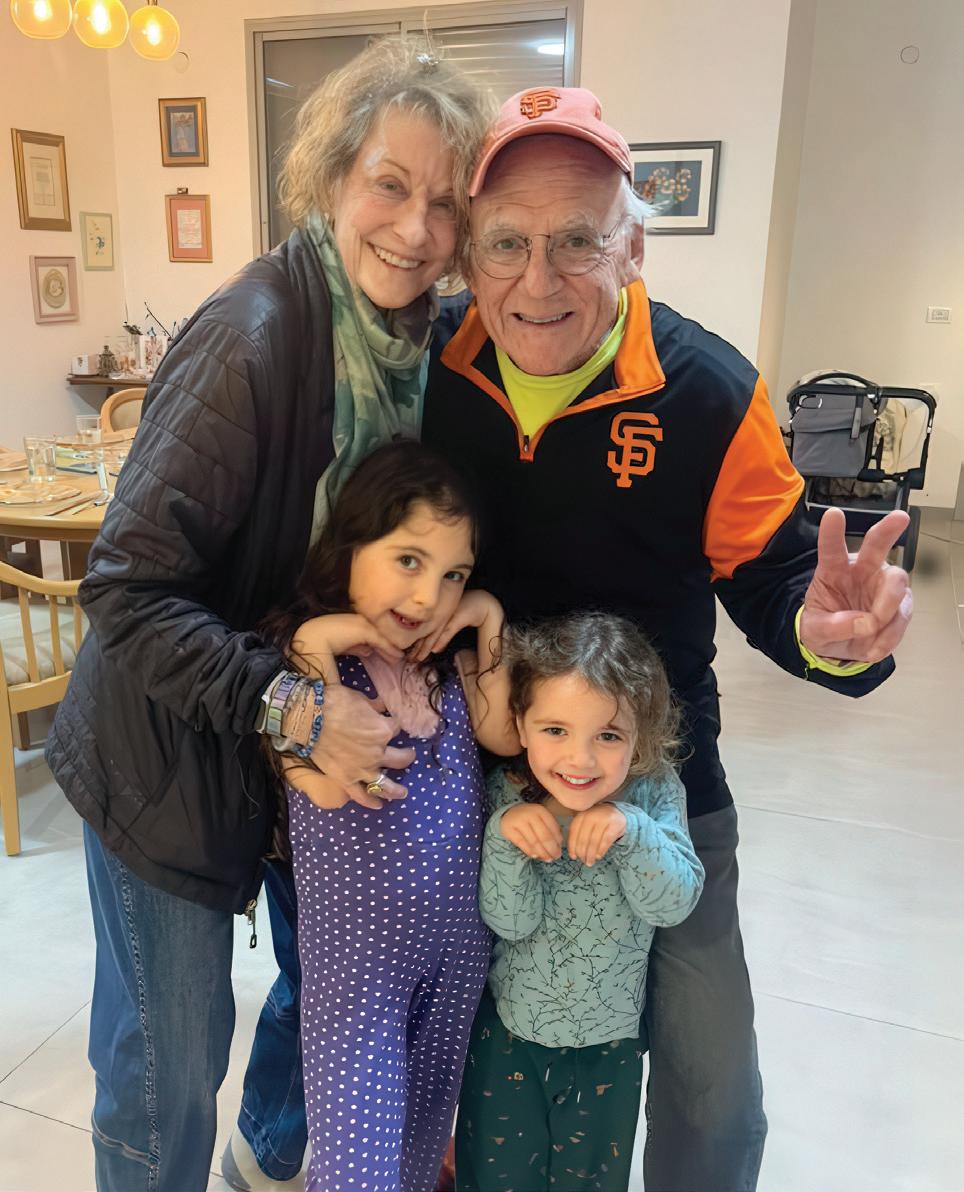
Both grandfathers delivered beautiful tributes to the baby and family. Neill and I were honored to be stand in grandparents for our diverted sister and brother.
Since it was Purim, our nephew had arranged a chanting of the Megillah. With 13 grandchildren, parents, and grandparents, the groggers sounded loud each time Haman’s name was mentioned. Kids and some adults were
in costume, many with face paint.
Midway through the Megillah reading we got an email from our hotel that they were closing the next day after breakfast. We would deal with that later. It was a gorgeous day, so we decided to walk the mile and a quarter back to our hotel.
Visitors to Zichron
Our first visitor of the afternoon was a close friend we call “Mr. Israel”. During his drive to Zichron from Tel Aviv, he had to stop under an overpass as a siren sounded. He showed us a video of the Iron Dome intercepting a missile right next to where he was. Incredible! He counseled us to move to Tel Aviv, and we set a plan to help us exit the country in time for my upcoming scans and next chemo infusion.
Our second visitor was a friend who now lives in Caesaria, 10 kilometers south of Zichron. We had a heartfelt catch up and were all grateful for the time together. He came
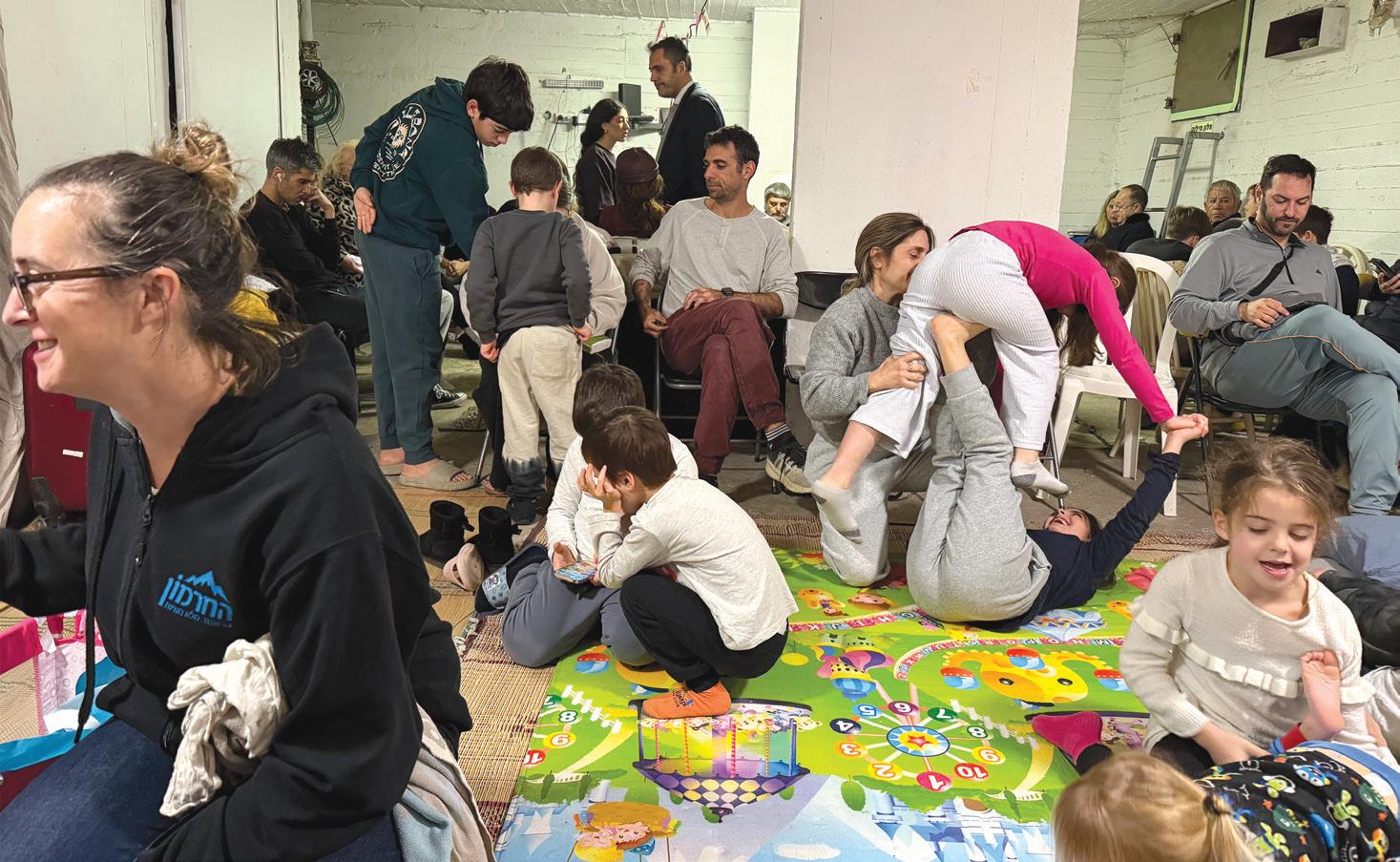
A scene in a shelter on Shabbat.
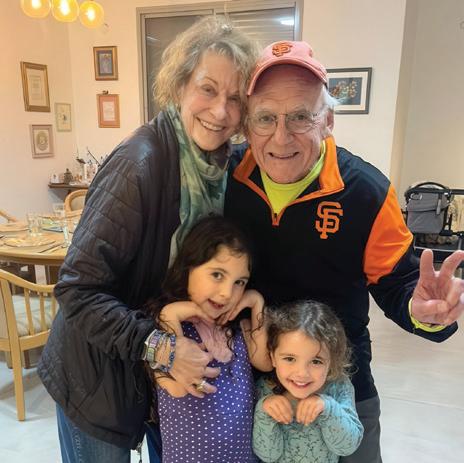
Linda and Neill Brownstein with their Israeli cousins.
ISRAEL
despite his daughter’s concern. His Sabra wife understood.
The next morning our beloved driver, Moti, picked us up to drive to Tel Aviv. Thankfully, it was uneventful.
Tel Aviv – a horse of a different color
Within our first five hours in Tel Aviv, we were in the shelters more times than we were in five days in Zichron. By now, Hezbollah had entered the war. The northern Galilee towns were once again evacuated. As the Upper Galilee is the San Francisco Bay Area Federation’s sister community, we were all too familiar with what that meant. Both Neill and I served on the San Francisco Jewish Federation’s Overseas Committee (me as chair), and we have visited Israel more than 40 times.
A member of our hotel’s security team educated us on the difference between a missile from Iran which takes 9 to 10 minutes to arrive in Israel, and a rocket from Southern Lebanon fired by Hezbollah, which arrives in 90 seconds. While the Iron Dome, David’s Sling, and other interceptor systems are amazing, they are not perfect so one MUST do exactly as prescribed to remain safe.
Our new hotel in Tel Aviv had a mamad-like shelter on each floor. These are inside the building; the rooms have no windows and a special door that protects from the bombs should they hit where you are. It’s what most people have in their homes. Then there is a -4 underground parking shelter, which is the safest, but takes longer to get there, and a Safe Room at -2. We were in all of them for one siren or another. Staff was wonderful making sure everyone got into the shelter and the door was properly closed. Everyone goes into the shelter, and anyone outside who wants to come in is included. People talk to each other and exchange stories. It’s instant camaraderie.
Tel Aviv is a top place of interest for Iran so many missiles came our way, and we experienced many days of in and out of the shelters. On Shabbat they particularly wanted to disrupt our special day; seven times in the shelter from Shabbat dinner until 5 am the following morning. We were having Shabbat dinner with our cousin and her family when the first alarm
sounded just as we were finishing our soup. Down we went to the shelter where the many children instantly started to play.
Like 10 million Israelis, we trusted the IDF to protect us and to let us know exactly when we needed to head to a shelter. Two apps guide you.
Life goes on
As the U.S. and Israel weakened Iran and Hezbollah, restrictions in Israel began to loosen. Our most amazing highlight was a remarkable visit to the National Library
of Israel in Jerusalem. We were privileged to have more than two hours with the chair of the board and CEO of NLI. We left with a deep understanding of this most remarkable institution by, for, and of the people of Israel and the Jewish Diaspora. If you have not been able to visit, put it at the top of your list. If you can’t visit, sign up for free and explore their website (nli.org.il) to your heart’s content. We promise it is like no other library you will have ever visited. If you think we are exaggerating, ask my childhood friend, Art Sandler, who serves
on the NLI U.S.A. board.
We enjoyed a bonus visit with our family in Jerusalem before heading back to Tel Aviv. The next day we had more visits with family and friends, including another childhood friend from Norfolk, Joyce Bigio, who lives in Tel Aviv.
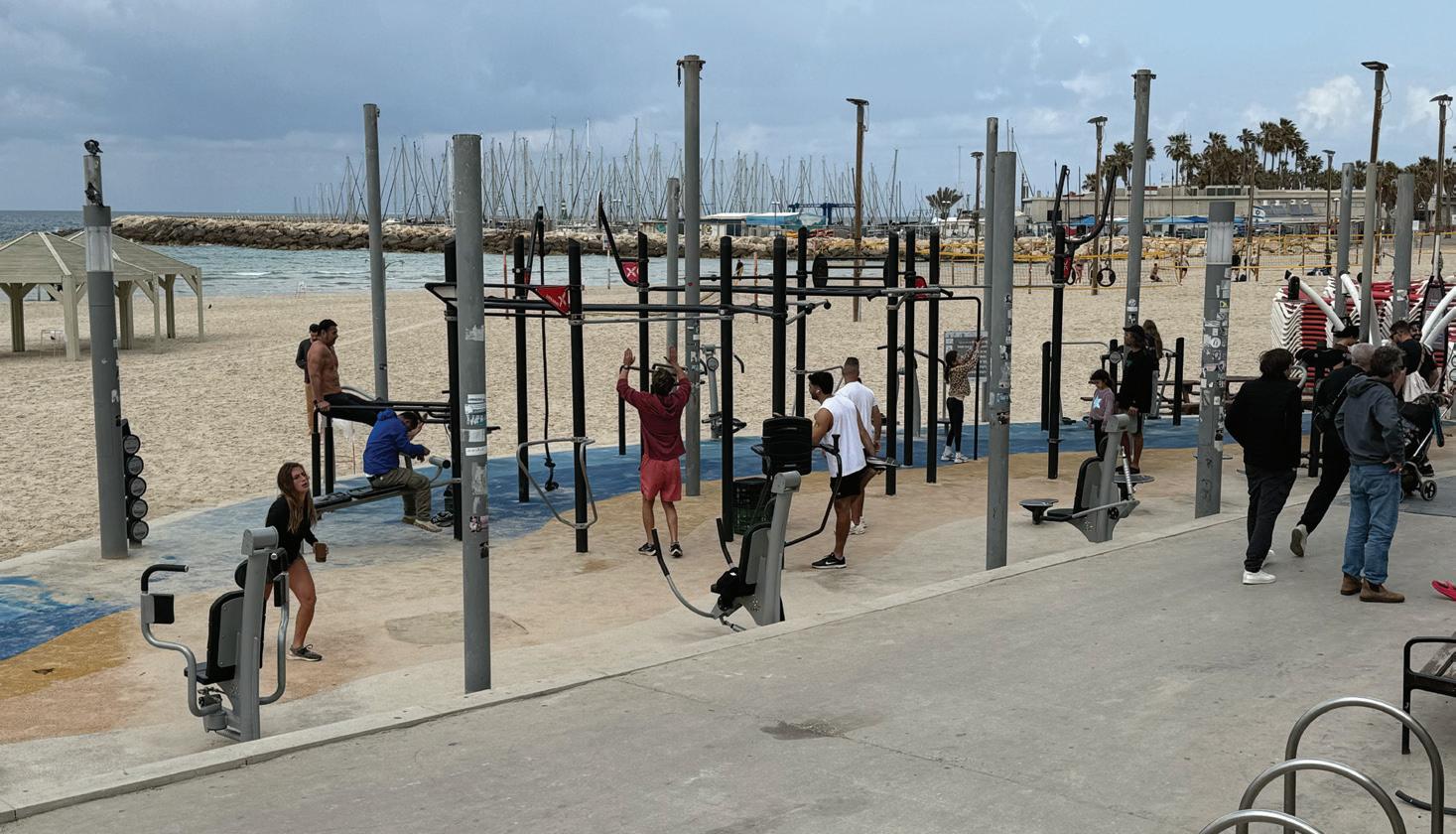
Tel Aviv also claims one of the most beautiful waterfront promenades, and we took advantage of getting some fresh air and watching everything from yoga to volleyball to beach paddle ball, fitness training, joggers, and dog walkers all enjoying Shabbat in their own way.
The two weeks passed so quickly and despite our unique circumstances of war, we chose to make lemonade out of lemons with every step. Although we were diligent, we were never afraid. Israelis are strong and brave and grasp life like no one else. We tried to follow in their footsteps.
Am Yisrael Chai.
A Norfolk native, Linda Snyder Brownstein and her husband, Neill, live in Deer Valley, Utah
Tel Aviv’s promenade on Shabbat.
NATION
A gunman rammed a Michigan synagogue. Its security preparations may have saved lives.
Grace Gilson, Asaf Shalev, Jackie Hajdenberg, Joseph Strauss (JTA) — Ayman Mohamad Ghazali, a U.S. citizen who immigrated from Lebanon 15 years ago, armed with rifles and smoke bombs, who rammed into Temple Israel on Thursday, March 12 encountered a synagogue that was well prepared for just such an attack.
He hit and injured the congregation’s security director, Danny Phillips, with his car as he plowed through the synagogue’s doors and drove down a hallway. But he didn’t manage to harm anyone else after he was shot by members of Temple Israel’s armed security team.
And because the rest of the staff knew exactly how to respond to an active shooter threat.
“We always worry that you can plan and plan and plan and practice and practice, and it won’t matter, because it will be something else, but it feels like a miracle that everything worked the way it was supposed to, that our team was so incredibly brave, local law enforcement’s been amazing, and that everybody’s OK,” Rabbi Jen Lader of Temple Israel says.
security guards on the premises at all times as well as a remote security system that is able to secure different areas of the building during threats.
In late January, FBI agents also visited Temple Israel to train clergy and staff about how to respond to an active shooter.
Michael Masters, the national director and CEO of the Secure Community Network, an organization that coordinates security for Jewish institutions nationwide, including in Tidewater, says that the outcomes of the attack reflected the preparedness of Temple Israel.
“To be working on these issues, and then to see it come home to roost in my own community, in my own synagogue, in my hometown that I represent is, frankly, just like my worst nightmare.”
While Arbit praised the response by security and law enforcement as the attack unfolded, he said he was “outraged and enraged and deeply pained that it was necessary in the first place.”
“Jewish communities across the country and world have watched, you know, for the past decade, as our institutions have congealed into fortresses,” he said. “We are now forced to live behind, basically, you know, militarized, institutionally securitized institutions, and what a shame that is. It’s not just a shame, It’s unfathomable, it’s unforgivable.”
Oakland County Sheriff Michael Bouchard and West Bloomfield County Police Chief Dale Young immediately praised the security response in the wake of the attack.
Bouchard noted that the security team had “neutralized the threat” before police officers arrived.
“I am deeply proud of the response, not only from the security that was on site, but also of all the police officers and the firefighters that are here right now, we train on active shooter events a lot,” Young said during a press conference outside the synagogue. “I think that training certainly helped to mitigate what happened here today.”
Indeed, it was a situation that Jewish institutions across the United States have trained for, as antisemitism and threats of violence have ticked up in recent years, especially following the 2018 synagogue shooting in Pittsburgh that killed 11 Jews during Shabbat services. The rabbi of a synagogue in Colleyville, Texas, credited security training with enabling him to respond when a man took him and three congregants hostage in 2022.
“Everybody flees danger, and our team went straight toward it, and they were the ones who neutralized the terrorist and saved everybody,” says Lader. “And our teachers followed, you know, to the absolute letter, our active shooter training and lockdown procedures, and saved every kid.”
Beyond the synagogue’s full-time director of security, Lader says Temple Israel also has a full team of armed
“Investing in security is an investment, it’s a down payment on the Jewish future,” says Masters. “The community that made up the synagogue, the larger Detroit Jewish community, has been making that investment for years and years, and today, that investment paid off and lives [were] saved.”
Among the security measures that Masters says his organization recommended were “bollards or fences or natural obstructions” to the building, controlling access to the facility through reinforced doors or windows and having a security presence.
“What we hope this reaffirms is that security needs to be an ongoing investment in order to allow Jewish life, faith-based life, to thrive,” says Masters. “And very much that investment can result, and did result, in Jewish lives being saved, and so we all need to recognize that and commit ourselves as members of the community at every level to be a part of making that investment at whatever level we can.”
In the wake of the fatal shooting of two Israeli embassy staffers in Washington D.C. in June, the synagogue hosted a town hall on hate crimes and extremism.
Among the speakers at the town hall was Noah Arbit, a lifelong congregant of Temple Israel who represents West Bloomfield in the Michigan House of Representatives. Arbit said in an interview that after he first learned of the attack while working on the state house floor, he immediately began to cry and raced down to his home synagogue.
“I campaigned on taking on hate crimes,” said Arbit.
For Rabbi Mark Miller of Temple Beth El, another Reform synagogue a 20-minute drive away in Bloomfield Hills, the attack on Temple Israel served as a stark reminder of why security infrastructure was essential for Jewish institutions.
“This is one of those moments when, for years and years, we have bemoaned that we have to put so much time and energy into security for our institutions,” says Miller. “And this is one of those days that reminds us that we don’t have a choice.”
Miller’s synagogue had a recent security crisis of its own, when a man drove through its parking lot in December 2022 and shouted antisemitic threats as parents walked their preschoolers into the building. The assailant, Hassan Chokr, was sentenced to 34 months in prison in September for illegally possessing multiple firearms inside a gun store after leaving the synagogue.
“It’s a terrifying day, obviously for a lot of people, especially for parents with their kids at not only Temple Israel but at ours and other temples and Jewish institutions,” Miller says.
Lader says that among her congregants, two competing sentiments had jumped out: Those who “never, in a million years, in our heart of hearts, thought it was ever going to happen to us” and others who “knew it was only a matter of time before it knocked on our door.”
But another feeling was even stronger, she says.
“I think the overarching sentiment, and the one that I want to make sure gets out there, is our absolute gratitude to our internal teams, our amazing staff, local law enforcement and our teachers for really, like, a building full of absolute heroes, who were able to keep us safe,” Lader says.
Security funding that Jewish groups call crucial is being held up by DHS
Asaf Elia-Shalev (JTA) — A shutdown at the Department of Homeland Security since Feb. 14 is halting the review of millions of dollars in security funding for nonprofits, leaving Jewish institutions and other vulnerable groups in limbo at a moment of heightened concern about antisemitic threats.
The most recent threat came Thursday, March 12 when an armed assailant rammed his vehicle into a large synagogue in suburban Detroit, where trained security forces shot at him and he was killed before he could injure anyone.
The closure stems from a political standoff over immigration enforcement: Senate Democrats are refusing to fund DHS unless the bill includes new oversight and limits on ICE operations, while Republicans and the Trump administration insist on passing funding without those changes. The dispute intensified after the killings of U.S. citizens during recent immigration operations.
Applications for the federal Nonprofit Security Grant Program, which helps synagogues, schools, and community centers pay for security guards, cameras, reinforced doors and other protections were due Feb. 1. But because the program is administered through the Federal Emergency Management Agency, a
component of DHS, the ongoing shutdown has frozen the process before applications could be reviewed. An effort to end the shutdown failed in the Senate on March 12.
(As of press time, the shutdown continues)
That means organizations that spent months preparing proposals are now waiting indefinitely to learn whether they will receive funding, at a time of rising anxiety and threats.
The grant program has become a cornerstone of security planning for Jewish institutions across the United States, especially in the wake of sometimes deadly attacks.
Demand for the grants has surged in recent years as antisemitic incidents have climbed and security costs have soared.
According to data from the AntiDefamation League, antisemitic incidents in the United States have reached historic highs in recent years, with Jewish institutions frequently targeted with threats, vandalism and harassment.
Community leaders say the uncertainty surrounding the grants is arriving at precisely the wrong moment.
The NSGP is designed to distribute hundreds of millions of dollars annually to nonprofits considered at high risk of attack. Organizations submit detailed applications outlining their vulnerabilities and the security improvements they hope to fund, which FEMA then reviews and
Local Relationships Matter
MEET: Paul R. Hernandez
“This area is our home and we are committed to supporting it. Our lawyers are actively involved by donating their time to programs that help the community, especially in the schools with young drivers. I am very involved with End Distracted Driving, spending 20 days a year in the schools educating students about the dangers of using a cell phone while driving. The other major program we work on is Every 15 Minutes which highlights how every 15 minutes someone dies in a car crash and helps teens understand the consequences of drinking and driving.”
“Payday is very forward thinking and is always up on potential changes. We have also been impressed by Payday’s contingency planning. Whenever there is a potential natural disaster in our region, such as a large storm, Payday is proactive and works with our staff to make sure that everyone will be paid without interruption.”
client relationships are anything but transactional. We are long-term partners, dedicated to the success of our clients, and most importantly, their people.
But during a federal shutdown, most DHS personnel responsible for reviewing those applications are furloughed. As a result, the process has effectively stalled.
For many nonprofits, the delay creates practical and financial uncertainty. Security upgrades such as surveillance systems, bollards, access-control systems, and trained guards often depend on the grants, and institutions typically plan their budgets around the expectation of federal support.
Jewish communal security groups say the program has been one of the most successful federal efforts to help protect
religious institutions. Michael Masters, CEO of the Secure Community Network, a Jewish security nonprofit, says Jewish organizations rely on federal funding to cover essential security needs, saying that it was “a challenge” that DHS was currently not processing security grant applications.
“There’s no other faith-based community in the United States that needs to spend $760 million a year, at a minimum, on security that we do,” Masters says. “That’s a reality of the threat environment that we have to adapt to, that we have adapted to.”
PROTECT YOUR VISION TODAY AND THE YEARS AHEAD
Your eyes carry you through everyday
Preventive care helps protect your vision from daily strain and long-term damage.
Regular
WHAT’S HAPPENING
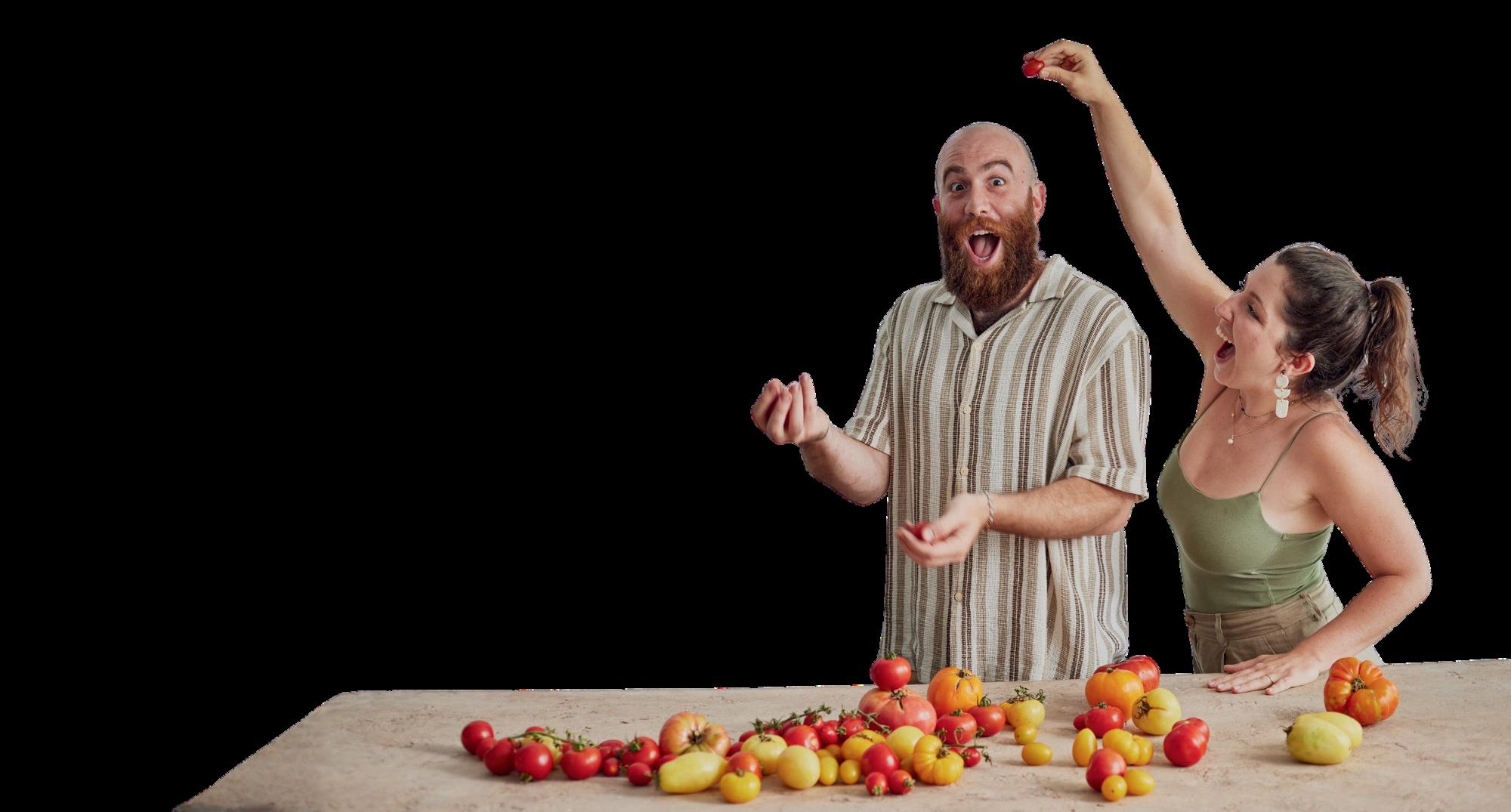
Tidewater to celebrate Israel at 78 Israeli Chef’s Table
Monday-Friday 8:00am-5:00pm
Wednesday, April 22, 7 pm
Sunday, April 26, 12 – 3 pm Sandler Family Campus
Nofar Trem
As Israel continues to face a difficult moment, the bond between the nation and Jewish communities around the world feels especially powerful. Marking Yom Ha’Atzmaut, Israel’s Independence Day, is both a celebration and a meaningful show of solidarity—an opportunity to remember the sacrifices that led to the establishment of the State of Israel, honor those who safeguard it today, and renew a commitment to its future.
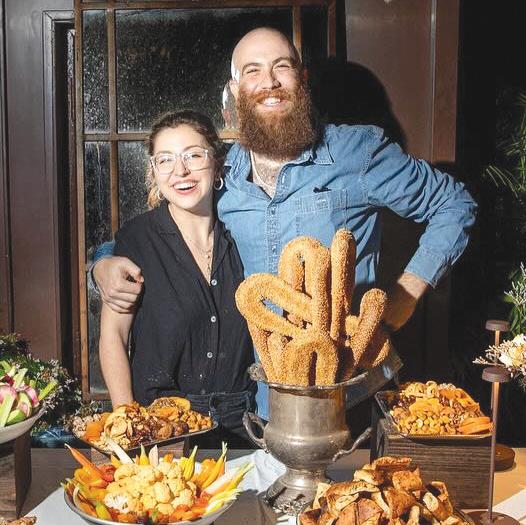
Jewish Tidewater kicks off its Yom Ha’Atzmaut celebrations with the third annual Israeli Chef’s Table Experience on Wednesday, April 22. This signature event highlights Israel’s rich culinary culture while creating space for community. Guests will enjoy a kosher three-course menu crafted by this year’s chefs-in-residence, Ben and Zikki Siman-Tov, the rising culinary stars behind New York City’s Buba Bureka and authors of the acclaimed cookbook Eat Small Plates. Their cooking reflects the spirit of modern Israel—deeply rooted in tradition while shaped by diverse regional influences. Throughout the evening, the chefs will share personal stories that highlight the deep ties between food, culture, and heritage, creating an experience that celebrates the flavors and spirit of Israel around the table.
“Small plates, for us, are not necessarily about the size. It’s about the concept of sharing with others and creating on a table, dishes that are meant to be eaten all together, and the joy of people combining different flavors and textures and building their own bites,” says Ben Siman-Tov. His philosophy — that food is interactive, communal, and celebratory — is at the core of Eat Small Plates and the way the two
of crafted items will include artisanal chocolates, olive oils, jewelry, and Judaica, allowing for great shopping.
Together, these events reflect the many ways Israel’s culture, creativity, and spirit continue to inspire Jewish communities around the world. From the flavors of Israeli cuisine to the music, traditions, and stories that define the country’s vibrant society, Yom Ha’Atzmaut brings the community together to celebrate Israel’s independence, as well as the resilience and unity of the Jewish people.
To purchase tickets or a table for the Israeli Chef’s Table, go to JewishVA.org/YH.
To learn more about the Yom Ha’Atzmaut volunteer opportunities, events, and registration, visit JewishVA. org/YH or contact Nofar Trem at NTrem@UJFT.org.
YOM HASHOAH
In honor of Yom HaShoah: Charlotte’s story
Alice Titus
How will the history of the Holocaust be told when the last witness, the last child or grandchild of a survivor has passed away? The records of the Holocaust are preserved in archives throughout the world. And sometimes archives are able to take an active role in memorializing the Holocaust and its victims.
That was the case in October 2020, when a representative of Rosenheim, Germany, contacted Ohef Sholom Temple about a former congregant and Holocaust survivor. He said the city wanted to honor her family and requested documents or photographs of her life in America and the name of any of her relatives. The temple put him in contact with her nephew, and the OST Archives provided the documents.
Moos’s parents fled in 1938 following Kristallnacht; her half-sister Katharina left in 1939. One couple committed suicide; the others had escaped or were arrested.
The former congregant was Charlotte Moos. Born in Rosenheim in 1914, she fled to Czechoslovakia in 1936 and the Philippines in 1940. She married another Jewish refugee, and following the Japanese invasion of the Philippines, she became a prisoner of war. Widowed after her husband’s death, she was released at the end of the war and transported to the mainland in a Liberty Ship. Moving to the Washington, D.C. area, she worked for the U.S. government, met and married a fellow Holocaust survivor, and moved to Norfolk, Virginia.
When Adolph Hitler came to power in 1933, Rosenheim was a city of almost 20,000 inhabitants, 38 of whom were Jews. Six years later, on the eve of World War II, only seven remained.
Moos’s father, Alexander, had been born in Czechoslovakia, and perhaps that’s why the family sought refuge there. But when the Germans invaded, Moos’s mother, Frieda, was deported to the Zamosc ghetto in Poland and murdered. Alexander was killed in the Majdanek death camp. However, Moos was one of approximately 1,300 Jews rescued by the Philippines, then a self-governing commonwealth of the United States. The rescue plan was most likely proposed by U.S. High Commissioner Paul McNutt, who got the idea from a friend whose brother worked for a Jewish relief agency. McNutt took the idea to Philippine
President Manuel Quezon, and with the help of the Philippine Jewish community, Quezon put the plan into action. The original plan included visas for 10,000 Jews, but the 1941 Japanese attack and occupation of the islands halted all immigration for the remainder of the war.
Moos was interned in a POW camp in Manila, probably the former Santo Tomas University. She would have been surrounded by many other refugees, including the cantor of Manila’s Temple Emil. Initially, conditions were fairly good, but they quickly deteriorated. As a citizen of a Japanese ally, Moos would have been exempt from internment, but the 1935 Nuremberg Laws had revoked the citizenship of all German Jews.
The camp was liberated in February 1945. The war ended in August, and that fall, Moos, recently widowed, left the Philippines and found a new home in Alexandria, Virginia. Her husband, Leo, had been part of a group of 14 Czech civilians who had fought with the U.S. Armed Forces. Captured on Bataan, he endured the infamous
Bataan Death March, was transported to Japan on the “Hell Ship” Hokusen Maru, and died in a Japanese POW camp in Fukuoka in April 1945. He’s buried under a Star of David in the American Cemetery and Memorial in Manila. Living in Alexandria, Charlotte found work as a secretary for the federal government, and in 1950, she married another Holocaust refugee, Henry Moos. He had immigrated to the United States in 1938, sponsored by his father’s first cousin, Albert Einstein. The couple moved to Norfolk, and in 1954, they joined Ohef Sholom Temple. Henry was active in and an officer of the Men’s Club, and Charlotte served on the Sisterhood Board. Charlotte died in 2000 at the age of 85, and Henry died in 2009, aged 96.
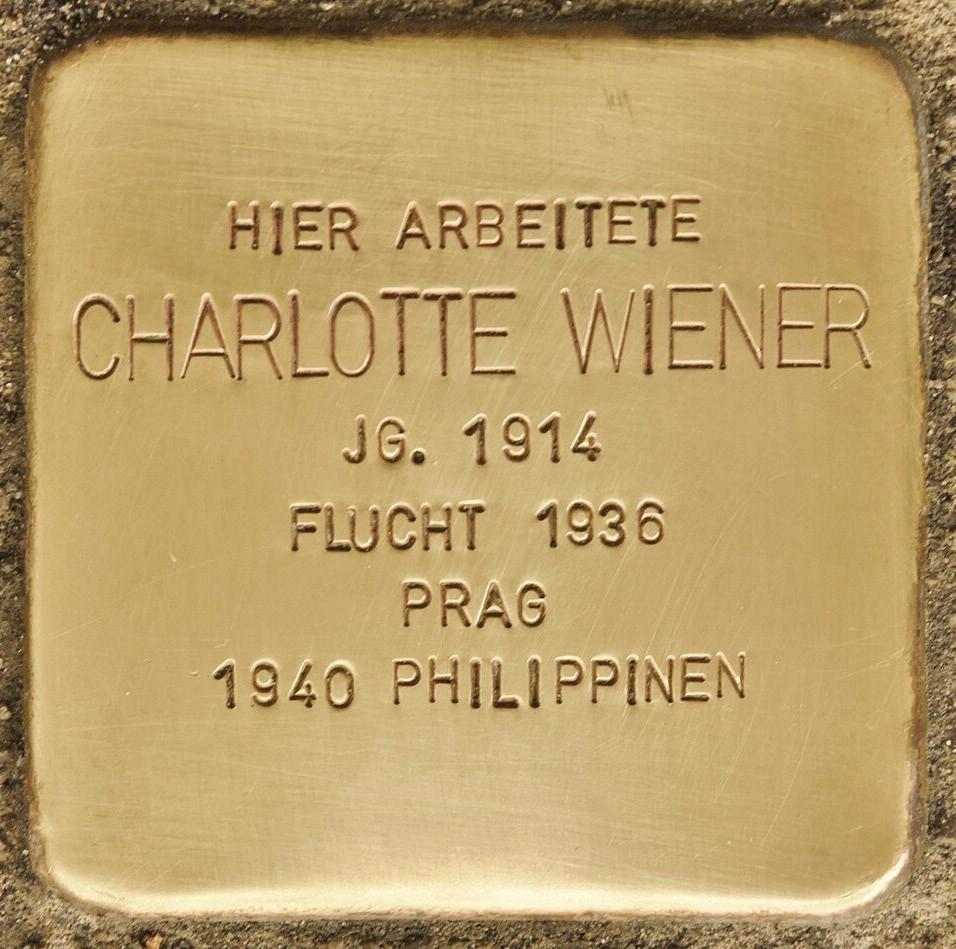
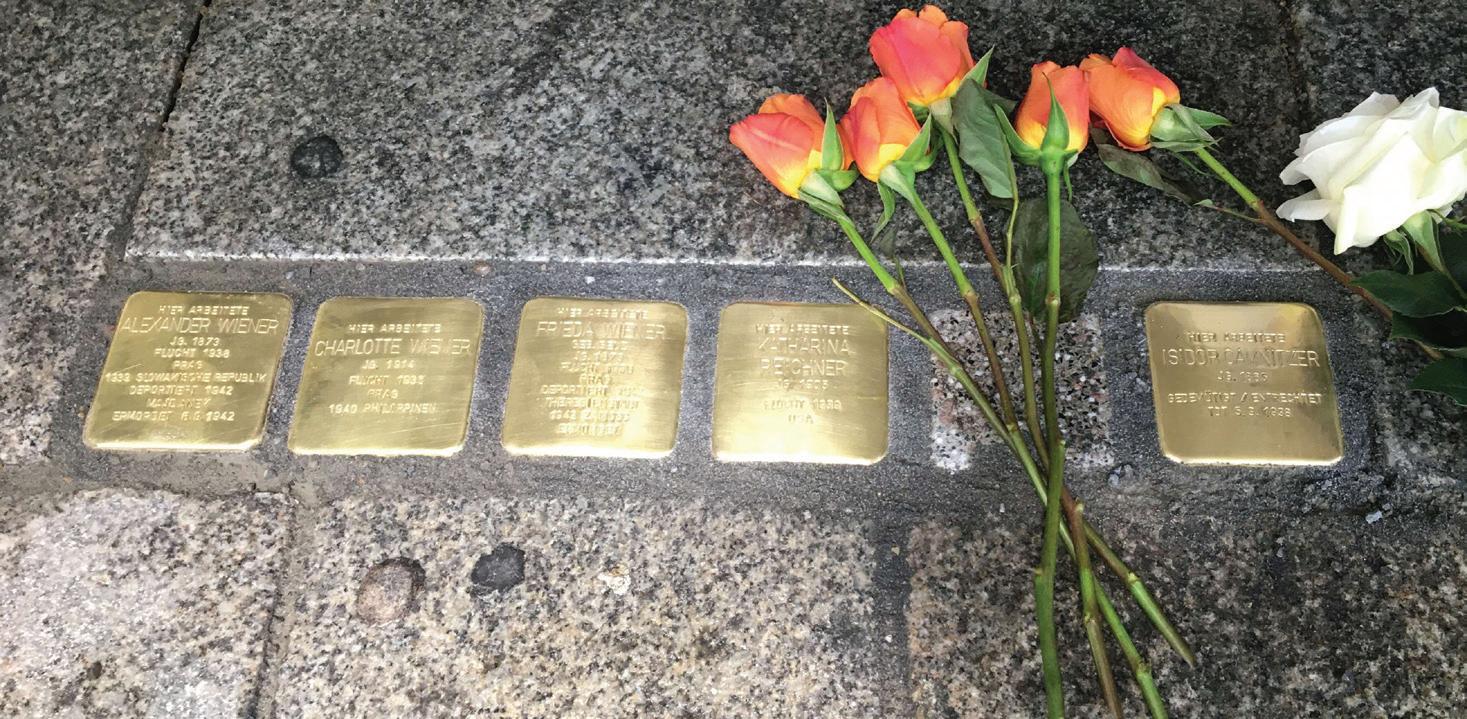
In 2021, the city of Rosenheim memorialized Moos and her family by installing stolpersteine (“stumbling stones”) for them. Each “stone” is a 4” x 4” block, topped by a brass plate engraved with the name, birth date, and fate of the honoree. The blocks are installed in the street where someone victimized by the Nazis lived or worked. The idea was initiated by German artist Gunter Demnig in 1992, and today there are more than 107,000 stolpersteine in 30 countries. In Rosenheim, there are stones for Moos, her parents, and her half-sister, Katharina. Katharina, known here as Kate, and her husband, another Holocaust survivor, had also found refuge in Tidewater. Moos’s story had come full circle; the city she had fled almost 100 years ago is now one of 1,900 municipalities helping to ensure the Holocaust is not forgotten.
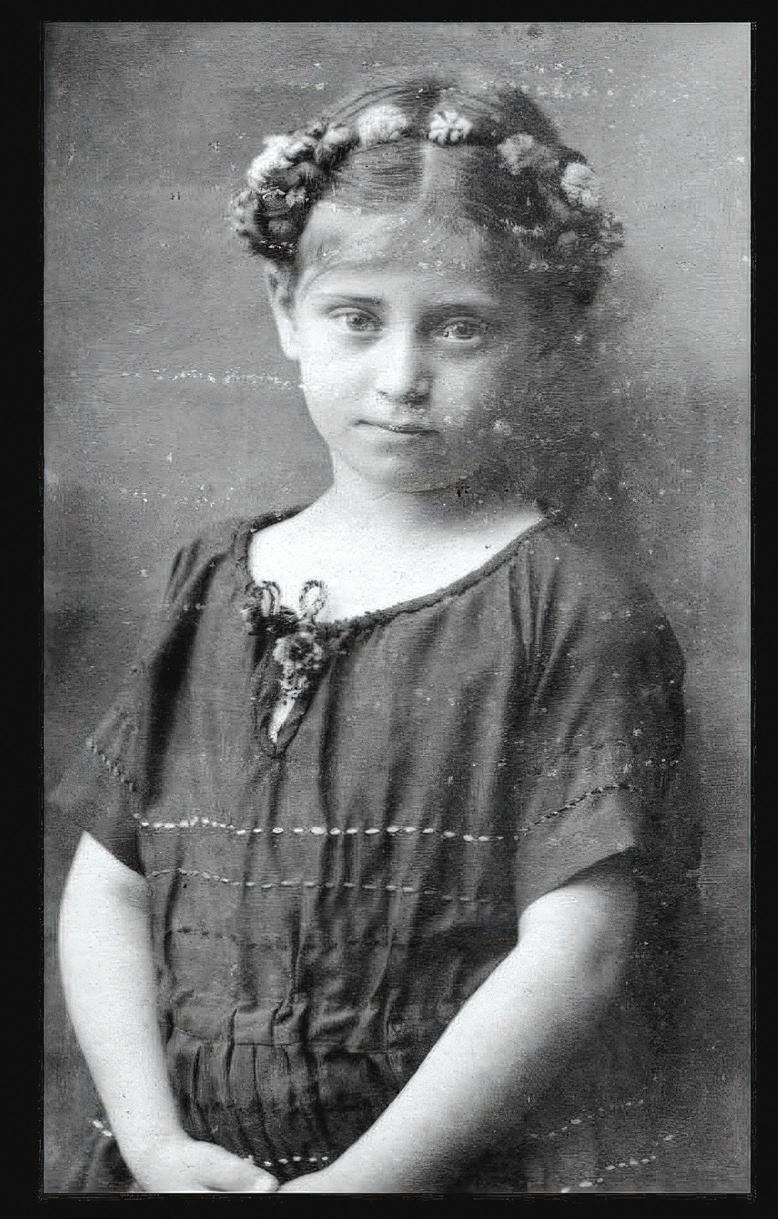
Charlotte Moos, aged 8. (Initiative for Remembrance Culture and Stolpersteine in Rosenheim.)
Stolpersteine for the Wiener family: Alexander, Charlotte, Frieda, and Kathe Richter Kohn. The stone on the far right is for a colleague of Alexander’s named Isaak Camnitzer. The empty spot may be for a member of his family or an employee who hasn’t been identified yet. Kate’s husband may be memorialized elsewhere. (Initiative for Remembrance Culture and Stolpersteine in Rosenheim.)
Charlotte Moos Stolpersteine. (Initiative for Remembrance Culture and Stolpersteine in Rosenheim.)
NO ONE SAVES MORE LIVES IN ISRAEL IN TIMES OF CRISIS.
There are many ways to support Israel and its people, but none is more transformative than a gift to Magen David Adom, Israel’s emergency services system. Your gift to MDA isn’t just changing lives — it’s literally saving them — providing critical care and hospital transport for everyone from victims of heart attacks to rocket attacks. Donate today at MagenDavidAdom.org or call 866.632.2763.
PASSOVER
Dear Readers,
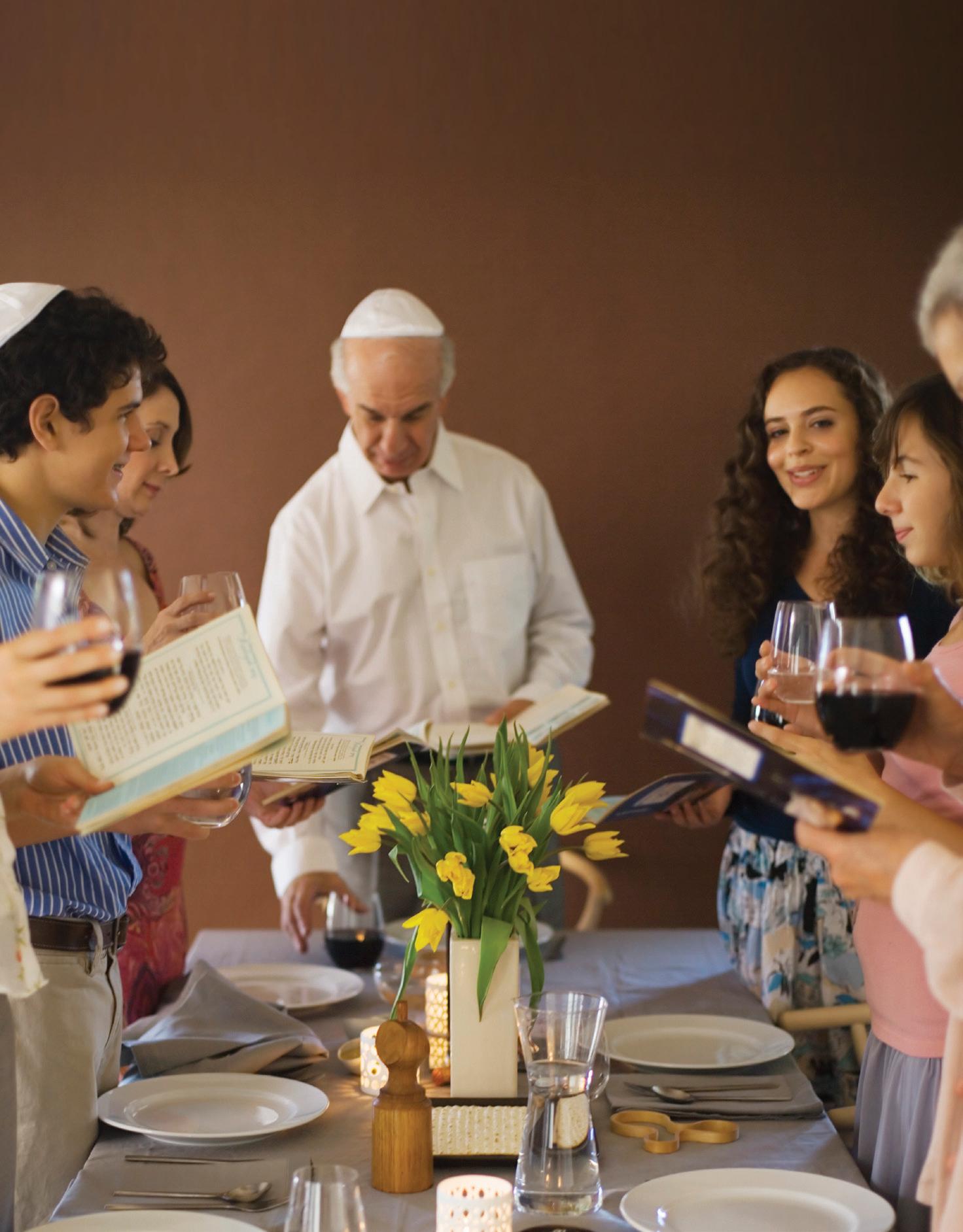
A recent article in Kveller referred to hosts of Passover seders as “saints.” While I’ve been a host and would never call myself a saint, I get the reference. It’s A LOT of work: planning, cooking, and cleaning for so many courses.
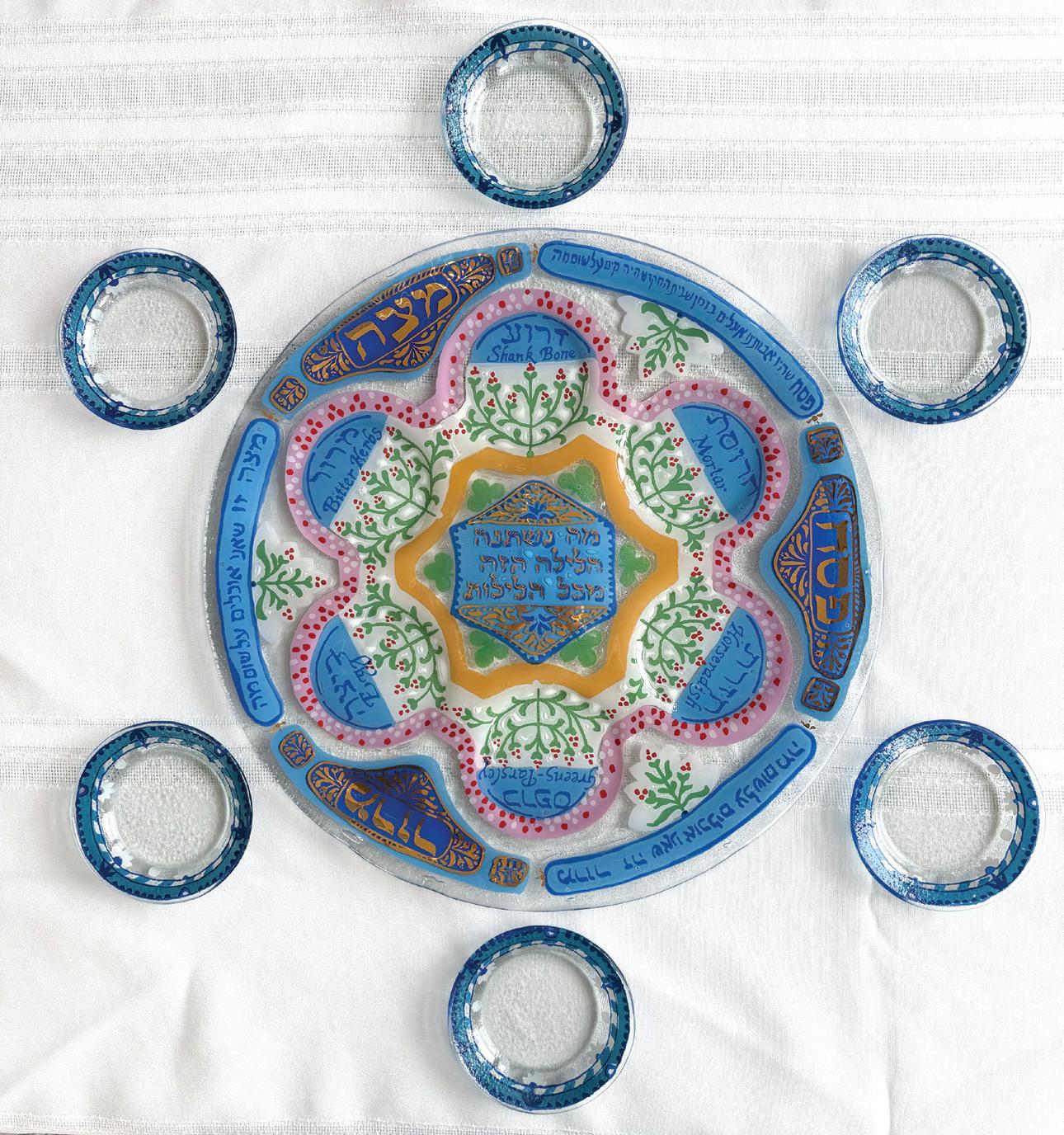
Still, this favorite holiday for so many (including me) also provides a lot of pride (think of all the photographs hosts post on Facebook of their Passover tables) and pleasure – both recalling and making of new memories. One piece that is central to the Passover table and to the memories, is the seder plate. The article that begins on the next page features several locals and their treasured plates.
The root of the holiday, however, is not about presentation, but rather about perseverance, patience, and a willingness to move from the familiar to the unknown in the quest for freedom. The seriousness of the Passover story makes it easy to get down in the weeds in relating the story (like nearly every Jewish holiday) to the news of the day. Persecution, antisemitism, refugees, battles. . . it is everywhere.
May I suggest, however, that while we find meaning in the words of the Haggadah, that we focus instead on the joy of being with family and friends and observing and celebrating together with the knowledge that across the globe, families are doing the same around their own tables with their own customs. We can return to the dismal news after the holiday; it will almost certainly still be there.
All of us at Jewish News wish you a peaceful holiday.
Chag Pesach Sameach,
Terri Denison Editor
PASSOVER
Seder plates, oranges, and memories
Terri Denison
A beautiful, high-end fancy seder plate might be the perfect centerpiece at the table. Other times though, the attraction might radiate from the memories of a beat-up, or a child-made, or an artistic piece that when placed on the table, manages to bring loved ones who aren’t around, to their seats. . . at least in our hearts.
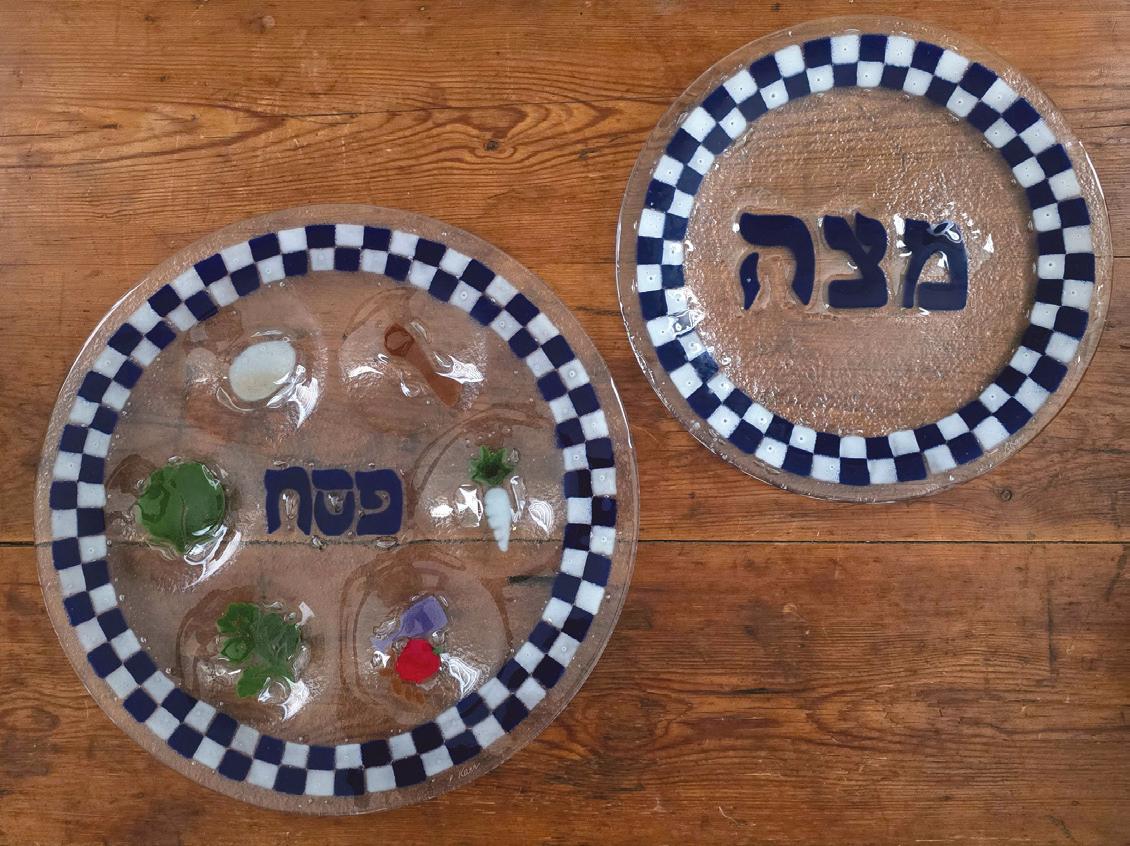
My own seder plate does just that. On my first trip to Israel when I was 17, I purchased a seder plate for my grandparents. Eventually, it made its way to my mom’s table. Then, when my husband and I held our first seder, my mom happily handed it over, as she was thrilled to pass the task of hosting this holiday on to us. “You keep it,” she said without a hint of
hesitation or appearance that she might ever take it back. After cleaning it that first year, I realized I had basically bought a souvenir. The back of the plate has a hook for easy hanging on the wall! Never mind, all these decades later, it remains in good condition, with clearly labeled space for everything needed – the parsley, haroset, egg, etc. And when it goes on my seder table, it reminds me of so many memories and relatives. . . and does the job!
I’m not alone in my affection for the “not so perfect” piece of Judaica for the holiday.
Susan Cohen, Lynn Shoenbaum, and Sharon Grossman share images of their seder plates here, and the stories that go along with them.
Susan and Andy Cohen
“We have a seder plate that I really love — we bought it from the Judaica shop at our synagogue in Northern Virginia,” says Susan Cohen. This was the plate, she says, that she and her husband, Andy, used “since our kids were young” at their annual Passover seders.
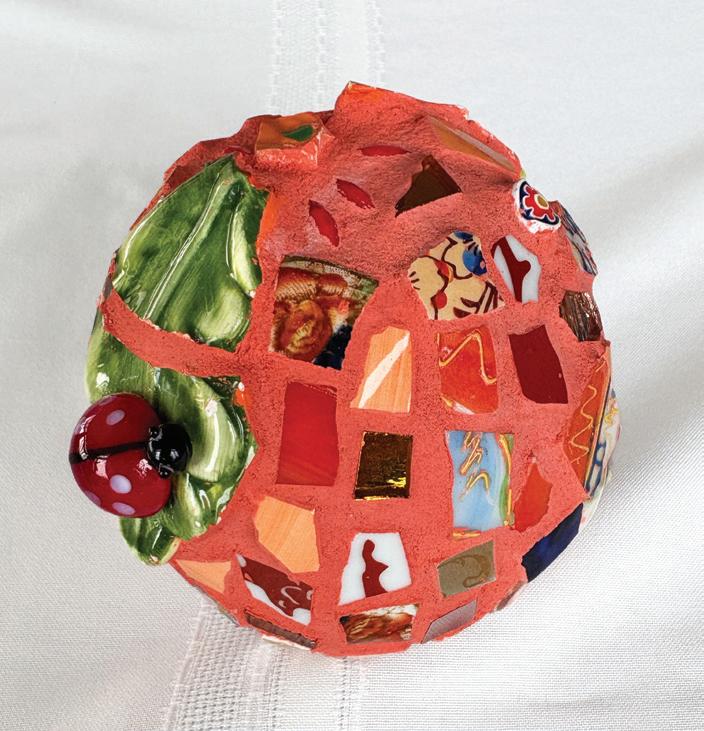
An even more special treasure for Cohen, however, is a mosaic orange that her Aunt Alice (of blessed memory) created for her family “that we display on the seder plate each year. My aunt was a very talented artist who studied Kabbalah. That inspired her,” says Cohen, “to create the orange to emphasize the centrality of women in Jewish families – in response to the apocryphal story of a rabbi who dismissively said a woman belongs on the bima the way an orange belongs on a seder plate.”
Cohen says, “I smile and think of her every year when I place it on our table.”
PASSOVER
Lynn Schoenbaum
Old and ‘newish’ seder plates comprise Lynn Schoenbaum’s collection. The older plate is made of metal. Schoenbaum’s mother, Ruth Ann, set this one on her table at family seders in Newport News and later in Williamsburg.
“My grandfather always sat at the head of the table,” recalls Schoenbaum. “I remember him raising the plate to describe the significance of each item placed on it. “My Uncle Louis used it at a recent seder, and it brought back many fond memories.”
The ‘newish’ glass plates are from The Paisley Hippo, an artsy gift shop, that Schoenbaum owned in Ghent.
And now, the plates, with much different looks occupy distinct but equally important memories of seders for Schoenbaum.
Sharon Grossman
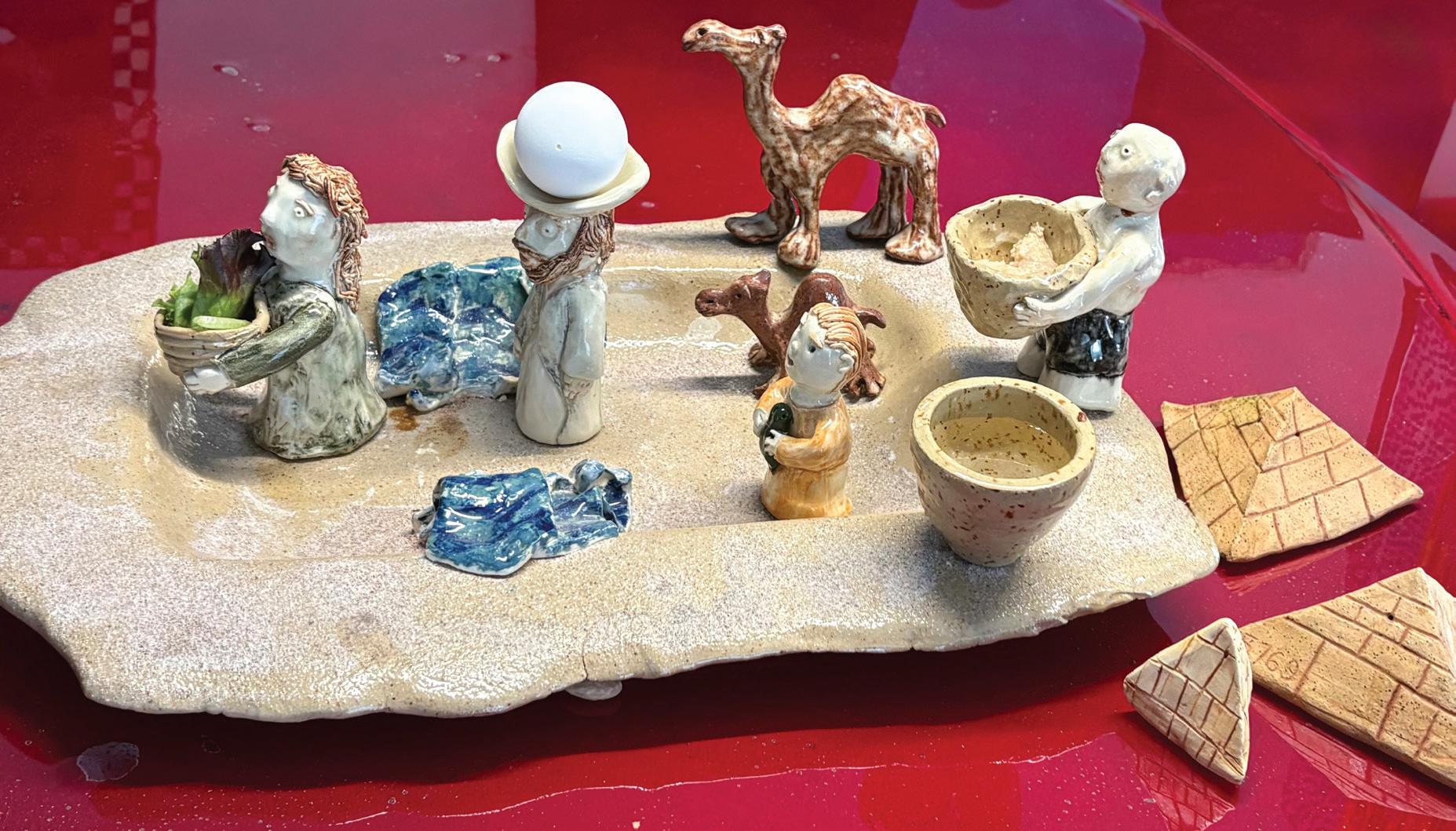
“I actually made my ceramic seder plate and all ‘the pieces,’” says Sharon Grossman, a local artist.
Grossman says she made it in the 1990s and has used it since. “I just got inspired to make something meaningful. I’m very proud of it.”
The plate depicts the children of Israel crossing the desert with the Red Sea parting. A former slave carries a roasted egg on his head, for instance, and a little boy holds a frog. To create the plate, she even used sand to conjure up the desert.
In addition to lots of camels, Grossman’s seder table includes pyramid salt and pepper shakers, which get left behind in Egypt.
PASSOVER
Why there’s always wasabi at my seder
At my Japanese-Jewish table, maror looks a little different…
Melissa Uchiyama
This story originally appeared on The Nosher. Shank bone, check. Haroset, check. Everything is there, on smooth pottery, but wait — is that… wasabi? This is the one item on my seder plate that draws smiles, and I get it. It’s not the norm. It’s my take on a bitter herb, maror. Welcome to our Passover in Japan!
Wasabi is a must at our JapaneseJewish table. It’s simply what happens when any of us live our Jewish life in a specific cultural stream and land: We make do with what’s available. To not include it at my Passover seder would be harder. I’d have to be oblivious not to use what is here, growing locally.
To be Jewish in Japan is to look for the connectors. After all, I am raising children who are proud and aware of their heritage – being wholly Jewish, Japanese, and American. Food is one of the best avenues to express who we are because of its tangibility. Our hamantaschen feature the classics, like Nutella or apricot, sure, but also, matcha with a sakura crust, or a red bean/anko, a chestnut. Any chance I have to celebrate our children’s full identity, I’m taking it. When I could not source the white or red horseradish I was used to growing up in the U.S., I saw a great big wasabi root, nearly a foot long, in my local Tokyo veggie shop and thought, “bingo.”
Wasabi, the one you know from sushi,
grows in moving streams of fresh water. The white horseradish you’re probably familiar with, does not grow this way, in the wet ground of streams. Every wasabi root is different – twisty, thick, spicier than others, alive. It’s this plant before it’s the plastic packet in the sushi section of your Trader Joe’s or Prager’s.
Grate fresh wasabi with a traditional porcelain (or shark-skin) grater, and you’ll get it: bitter tears. Wasabi affects the olfactory/nasal passages, same as horseradish, clearing out sinuses. If you really go for it, spreading it on thick on your matzah, you may cry harder than the white, or definitely the purple horseradish. It is the strongest choice out there.
Of course, wasabi, an intrinsically Japanese plant, is a natural bridge between my life in the U.S., in Japan, and the Passover story, but it also stirs something in me about leaving my family and community for life in Japan. How do you tear away from such hugs? Sixteen years later, and it is not much easier.
I wish for there to be no ocean between us, no time zones or longing. I relate to the Israelites who missed the gorgeous leeks when they moved into their long journey. I wanted everything just so for those first holidays away from my home in the U.S., but to be happy, we shift and adapt.
I include wasabi to not sink down
Happy Passover
Save on what you need for a joyous holiday.
in bitter tears, but consciously embrace where I am and the life I continue to make and choose. I look at my children, at their precious identities, palettes, humor –their full heritage. Every parent wants to affirm their child’s identity. Fusion is not a gimmick if there is meaning and personal context. Then it is seamless.
Last year, I discovered that I could order powdered white horseradish. I was shocked to notice that the label said “yama no wasabi,” or “mountain wasabi.” Turns out, horseradish is simply the cousin or sibling of Japanese wasabi – the family member who lives on a drier home in the mountains. Call it the same kind of plant
but locally sourced.
All my searching and wanting to source this ingredient and it was there all along.
I now want the spiciest, greenest wasabi. Or any horseradish, really. Why was I even on the hunt for something to make us cry when tears producing tears was never the problem? This year, like every year before, I’ll hold the sweet with the bitter, together.
This article was produced as part of The Nosher’s Jewish Food Fellows Program, which aims to diversify the voices telling Jewish food stories in media spaces.
PASSOVER BANANA BREAD MATZAH BREI
Paperno
This story originally appeared on The Nosher.
There’s something about the comfort of a warm slice of banana bread with some butter that never gets old. If there are a million ways to consume the flavors of banana bread, I can assure you I’ll find them.
During Passover, when we’re meant to be reflecting on our liberation from slavery in Egypt and avoiding hametz, I find myself craving my favorite comfort food — banana bread. Though I love some of the standard Pesach fare like matzah ball soup and spoonfuls of charoset, the decadence of banana bread is something I yearn for. I have fond memories of waking up to the smell of matzah brei wafting from the kitchen downstairs as a child. Last year, I finally decided to set out to learn how to make matzah brei myself.
After several rounds of my standard favorite (plain matzah brei topped with a mound of butter and sugar), I looked at the slowly browning bananas in my kitchen and decided to do some experimenting. With the power of sheer hunger and willpower on my side, banana bread matzah brei was born. It’s a simple matzah brei recipe that you can whip up in under 20 minutes, with the addition of all the
flavors that make banana bread so great. Overripe mashed bananas paired with cinnamon and butter make for a Passover breakfast that I’ll be coming back to for years.
I traded out my standard butter and sugar for butter and maple syrup to make it a more traditional pancake experience, however, you’re welcome to top them in whatever way you see fit. However you choose to enjoy them, I hope they bring all who try them the same comfort that they bring me.
• cinnamon-sugar • walnuts • bananas • sliced maple syrup
Instructions
1. In a large bowl, crush matzah and soak in hot water for 15 seconds before draining excess water.
2. In a separate bowl, combine the bananas, eggs, vanilla, cinnamon and salt.
3. Into the large bowl of drained matzah, add the egg and banana mixture, and stir to combine.
4. In a small pan over low heat, melt about 1 Tbsp of butter (per pancake), then use a 1/2 cup to measure out your pancakes. Flatten with a spatula and fry until golden brown on each side, about 3-5 minutes. Repeat with remaining batter.
5. Top with cinnamon sugar, walnuts, bananas and maple syrup.
Hannah
PASSOVER
Passover seders around Tidewater
Compiled by Konikoff Center for Learning
Looking for a Passover seder to attend this year? Check out these options and make a decision soon to secure a spot, as Passover begins at sundown on Wednesday, April 1.
B’nai Israel Congregation
Anyone who would like home hospitality for a Passover Seder can contact the congregation’s office: office@bnaiisrael.org
Chabad of Tidewater Community Seders
April 1 and April 2, 8:30 PM RSVP at chabadoftidewater com/ sederrsvp
JCC Model Passover Seder March 25, Wednesday, 12 – 2 pm
Active Adults are invited for an interactive Passover experience filled with storytelling and traditions led by Cantor Jennifer Rueben of Ohef Sholom Temple. Open to people of all faiths. Lunch and seder: $10. Sandler Family Campus. Register by March 23 at jewishva.org/seder. Contact Sarah Cooper for more information at SCooper@ujft.org.
Ohef Sholom Temple Congregational Second Night Seder
Thursday, April 2, 6 pm
Join Ohef Sholom Temple’s family for a meaningful and joyful Second Night Seder led by Rabbi Roz and Cantor Jen. Together, share the story of the Exodus through song, tradition, and community, while enjoying a beautifully prepared holiday meal Plan to arrive by 5:45 pm, as the Seder will begin promptly at 6 pm.
Join Temple Emanuel as Rabbi Ari leads a meaningful, music-filled Passover seder.
$45 for members ages 13+, $60 for non-members; $30 for children ages 5-12; Free for those under age 5.Subsidized tickets are available. Register by March 23 at TEVB.org.
Jewish Virginia Beach Community Passover Seder
Wednesday, April 1, 6:45 pm
A welcoming and meaningful Passover Seder with traditional dinner and insights for Jews of all backgrounds. Everyone is welcome. No membership or prior knowledge needed. Cost is flexible – no one will be turned away due to financial limitations. Those who need assistance can contact Rabbi Meir at Rabbi@ jewishvb.org. Security will be present for everyone’s safety. Registration required at: JewishVB.org.
PASSOVER
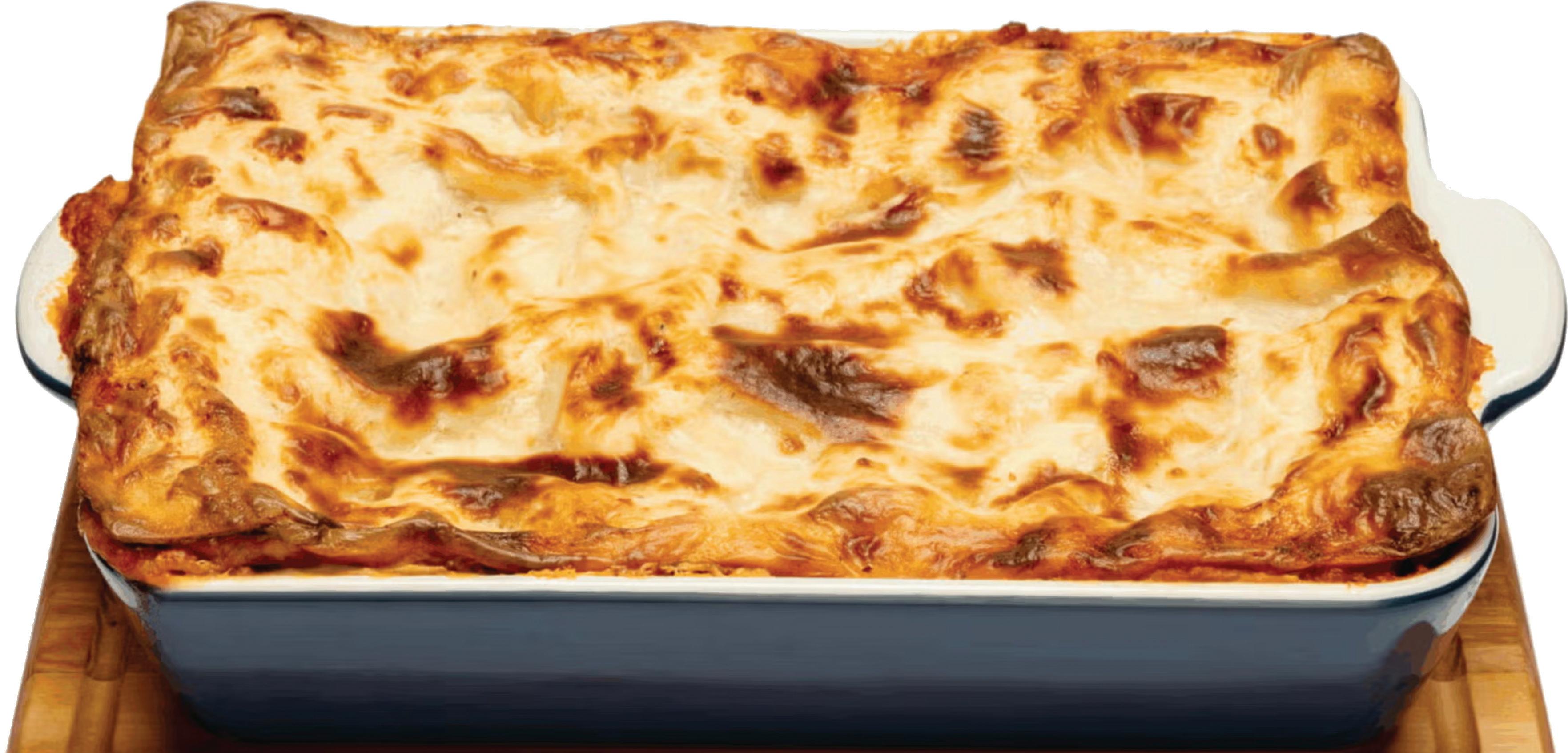
A year-round favorite reimagined for Passover. Passover Spinach and Cheese Lasagna
Adeena Sussman
This story originally appeared on The Nosher. Lasagna for Passover? You bet.
After days of preparing two (probably meat-based) seders, this dairy dish will be a welcome change — especially on a holiday where pasta is strictly forbidden.
Matzah makes a suitable replacement for lasagna noodles, and the moisture released by the marinara sauce and the cheese softens the stiff, unleavened boards, resulting in a tender lasagna with layers just as delicious as one made with conventional, wheat-based noodles.
I decided to keep this recipe simple, using frozen spinach and store-bought marinara sauce. If the inspiration strikes you, by all means make your own sauce. One cup of sautéed mushrooms would also be a welcome addition, but the goal here was to liberate cooks from hours in the kitchen. Since ricotta cheese is difficult to find with kosherfor-Passover certification, cottage cheese is substituted. If you’d like a more ricotta-like consistency, whip the cottage cheese in the blender or food processor for a few seconds before combining with the other ingredients.
Note: This recipe constitutes gebrochts, the Yiddish word for “broken” which refers to matzah products that have come into contact with liquid. Some Ashkenazi
Jews do not eat gebrochts on Passover, believing that liquid causes the matzah to rise, rendering it unfit for Passover consumption.
Total Time: 1 hour 25 minutes
Yield: Serves 4-6
Ingredients
• 8 –9 whole boards matzah (regular or whole-wheat)
2. C ombine cottage cheese, 11/2 cups mozzarella, parsley, salt and pepper in a bowl and stir to incorporate. Reserve.
3. Using your hands, squeeze excess moisture from
spinach and separate spinach until it is no longer clumped (you should end up with about 31/2-4 cups spinach). Reserve.
4. Spoon ¾ cup marinara sauce into the bottom of a disposable, high-sided lasagna pan. Fit matzah to cover as much of the bottom of the pan as possible, breaking into pieces where necessary. Pour 11/2 cups sauce on top of matzah and distribute evenly.
5. Spoon about 1 cup of the cheese mixture onto the matzah and distribute evenly. Sprinkle about 1¼ cups of the spinach on top of the cheese, then sprinkle 2 Tbsp parmesan cheese. Repeat matzah-sauce-cheesespinach-parmesan process two more times, then cover with a fourth layer of matzah.
6. Pour remaining 11/2 cups sauce on top of matzah.
7. Let lasagna rest for 15 minutes before baking to allow matzah to moisten slightly. Cover lasagna with foil and bake for 35 minutes.
8. Remove foil and sprinkle remaining 11/2 cups mozzarella on top of lasagna.
9. Reduce oven temperature to 350°F and bake lasagna an additional 30 minutes, until cheese is bubbly and browned around the edges.
10. Remove from oven, let rest for 5 minutes and serve hot.
PASSOVER
Pesach Q&A with OU Kosher
On any given day, Rabbi Zvi Nussbaum, the rabbinic coordinator responsible for managing OU Kosher’s year-round consumer hotline, fields about 150 kashrus-related phone calls.
With just weeks until Pesach — OU Kosher’s busiest season — that number will double, as Yom Tov-based shaylos stream in from Jews worldwide. Along with Rabbi Nussbaum, Rabbi Chanoch Sofer, OU Kosher rabbinic coordinator, also known as the Webbe Rebbe, is poised to address more than 3,000 Pesach-themed questions expected to arrive via email.
“We’re the only hashgacha with a live hotline, and it’s our pleasure to serve the tzibbur,” says Rabbi Eli Eleff, OU Kosher managing director of marketing and community relations.
“Each year, to meet the high demand for Pesach support, an additional 30 rabbanim join our team in the week before Yom Tov, and hotline hours are greatly extended. For more detailed guidance, consumers are also encouraged to consult our OU Guide to Pesach, our dedicated Pesach website, oupassover.org, and the OU Kosher app.”
Rabbi Eleff shares some frequently asked Pesach questions posed by consumers:
May I buy any kosher raw fish for Pesach, or does it need to be labeled with an OU-P?
OU Kosher-certified raw frozen fish is acceptable for Pesach, if it is plain, additive-free, and neither smoked, spiced, nor seasoned.
What are the guidelines for purchasing meat and poultry?
While OU Kosher-certified factories always pack unprocessed raw meat and poultry on equipment that is chametz-free year-round, ground, cooked, or broiled meat and poultry may be processed on equipment that also handles chametz products. Accordingly, the following guidelines should be observed:
• Raw meat and poultry sold in original, factory-sealed packages may be used for Pesach when bearing an OU (even without an OU-P).
• Meat and poultry that are repackaged by a local supermarket or butcher should not be used for Pesach, unless there is a special Pesach program in place.
• Ground, cooked, or broiled meat and poultry (including liver) are only kosher for Pesach when bearing an OU-P or another reliable supervision. Exceptions to this rule are listed in the OU Guide to Pesach.
My pet’s food contains chametz. What should I do for Pesach?
Since it is forbidden to own or benefit from chametz during Pesach, food that contains chametz may not be fed to pets. However, it is permitted to give pets food that contains kitniyot.
If one is unable to procure pet food that does not contain chametz, some rabbinical authorities allow for a sale, which would transfer the ownership and responsibility of caring for your pet to a non-Jew. Consult your rabbi for guidance.
I take vitamin C (ascorbic acid) daily. May I take it on Pesach?
Non-chewable, unflavored OU Kosher-certified vitamin C tablets or pills are acceptable for Pesach, since non-chewable pills are inedible, and swallowing pills for medicinal purposes is not considered eating chametz. Moreover, since most ascorbic acid manufacturers do not produce it from wheat glucose, one can generally assume that the vitamin C pill being consumed is from that majority.
In cases when an OU Kosher-certified vitamin C tablet is unavailable, any unflavored tablet, pill, or vegetarian capsule of vitamin C is acceptable during Pesach.
Chewable vitamin C tablets or other flavored vitamin C supplements should be avoided for Pesach. In addition to the issue of the ascorbic acid, a number of other ingredients used to compose these products can be chametz as well.
Yom Hashoah
April 13 • 27 Nisan • 6:45pm Congregation Beth El
On this solemn night, our community gathers to remember the Six Million—mothers, fathers, and children whose lives were taken, yet their stories continue to guide us.
Together, we honor the survivors whose resilience reshaped their shattered worlds, and we renew our collective commitment to confronting hatred in all its forms.
Featured Speaker, Dr. Milton Zweig
A descendent of Holocaust survivors who has made it his mission to preserve family memories to ensure they are never forgotten.
Advance registration and photo ID are required. For the safety of our community, enhanced security measures will be in place. Please allow additional time for arrival and check-in.
PASSOVER
Renewal and responsibility: A partnership to sustain community impact
TJF Staff
Each Passover, families gather around the seder table to retell the story of the transformation of a people moving from oppression to freedom and into a renewed sense of responsibility to one another. That spirit of renewal is guiding a meaningful partnership between Beth Sholom Village and Tidewater Jewish Foundation.
Beth Sholom Village has transformed to meet the evolving needs of seniors in Tidewater by reimagining how it carries forward a longstanding commitment rooted in one of Judaism’s enduring values: l’dor v’dor, from generation to generation. For decades, the Jewish community invested in Beth Sholom Village and its earlier iterations to ensure that seniors could live with quality, dignity, and meaningful opportunities for engagement.
Today, that legacy continues through a new philanthropic model. Beth Sholom Village is now a grantmaking organization focused on supporting programs that improve care, foster engagement, and ensure lives of dignity for seniors, particularly Jewish seniors, while also addressing senior needs throughout the greater Hampton Roads community.
By partnering with Tidewater Jewish Foundation to steward and administer the program, Beth Sholom Village is ensuring that these philanthropic resources are managed thoughtfully and positioned for long-term sustainability. While the Beth Sholom Village Grants Committee continues to guide funding decisions, TJF provides philanthropic expertise, administrative infrastructure, and investment stewardship that help charitable funds grow and continue supporting seniors.
For TJF, the partnership reflects its broader mission of working alongside Jewish organizations to strengthen philanthropy and sustain community impact. “Passover reminds us that transformation is part of the Jewish story,” says Naomi Limor Sedek, TJF president and CEO. “Our community’s institutions must also evolve so their values and generosity can continue to make a difference. We are proud to partner with Beth Sholom Village to help ensure that its legacy of caring for seniors continues to support our community for generations.”
“Beth Sholom Village has long been committed to supporting organizations that care for seniors and strengthen Jewish life in our region,” says Edie Schlain, chair of Beth Sholom Village’s Grants Committee. “Working with Tidewater Jewish Foundation allows us to continue that mission while ensuring our charitable resources are stewarded responsibly and positioned to create lasting impact.”
Like the Passover story, the partnership reflects a belief that renewal, when guided by purpose and community values, can lead to a stronger future.
Organizations navigating change or seeking to strengthen their philanthropic impact are encouraged to contact Tidewater Jewish Foundation to explore how partnership and stewardship can help sustain their work in perpetuity. Naomi Limor Sedek may be reached at nsedek@tjfva.org or 757-965-6109.
Naomi Sedek
Edie Schlain
Dr. Gary MossDr. Greg PendellDr. Craig Koenig
Lisa Deafenbaugh PA-C
Dr. Marguerite Lengkeek
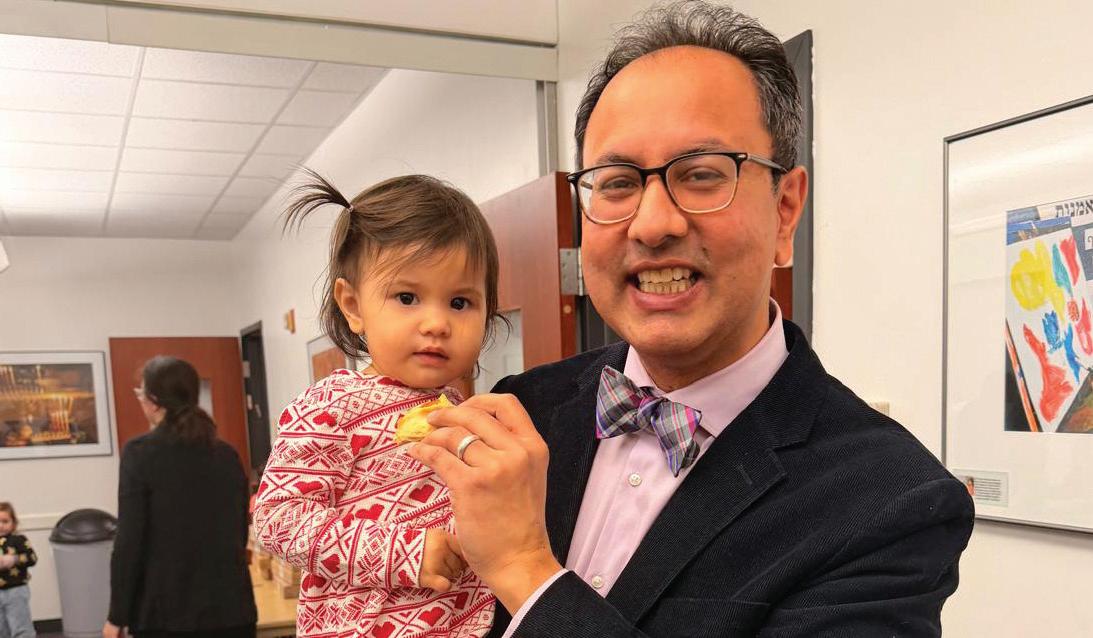
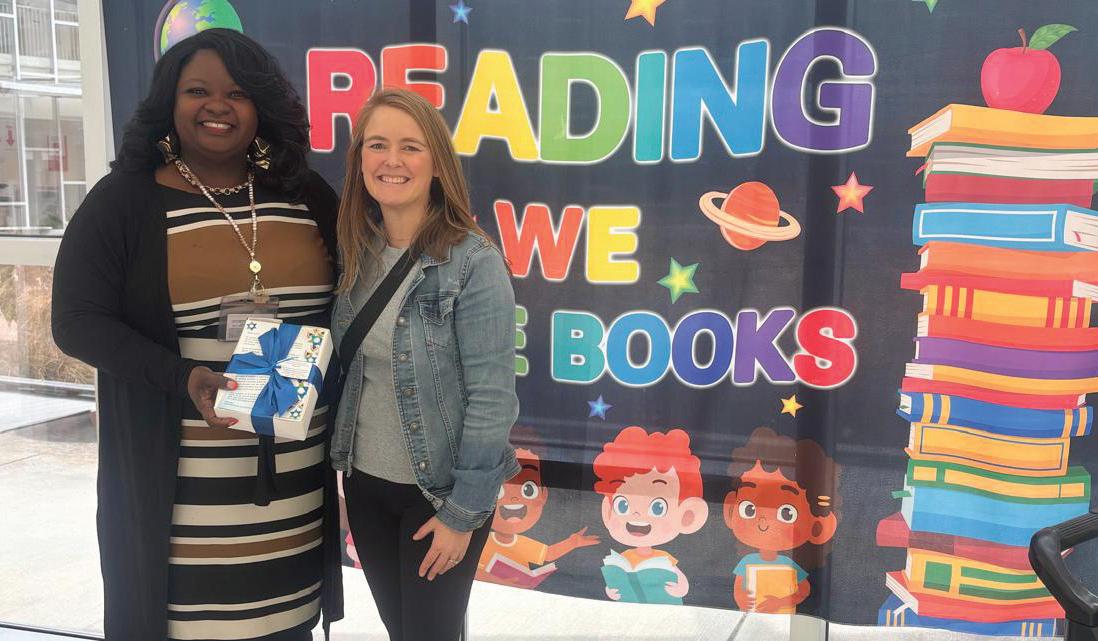
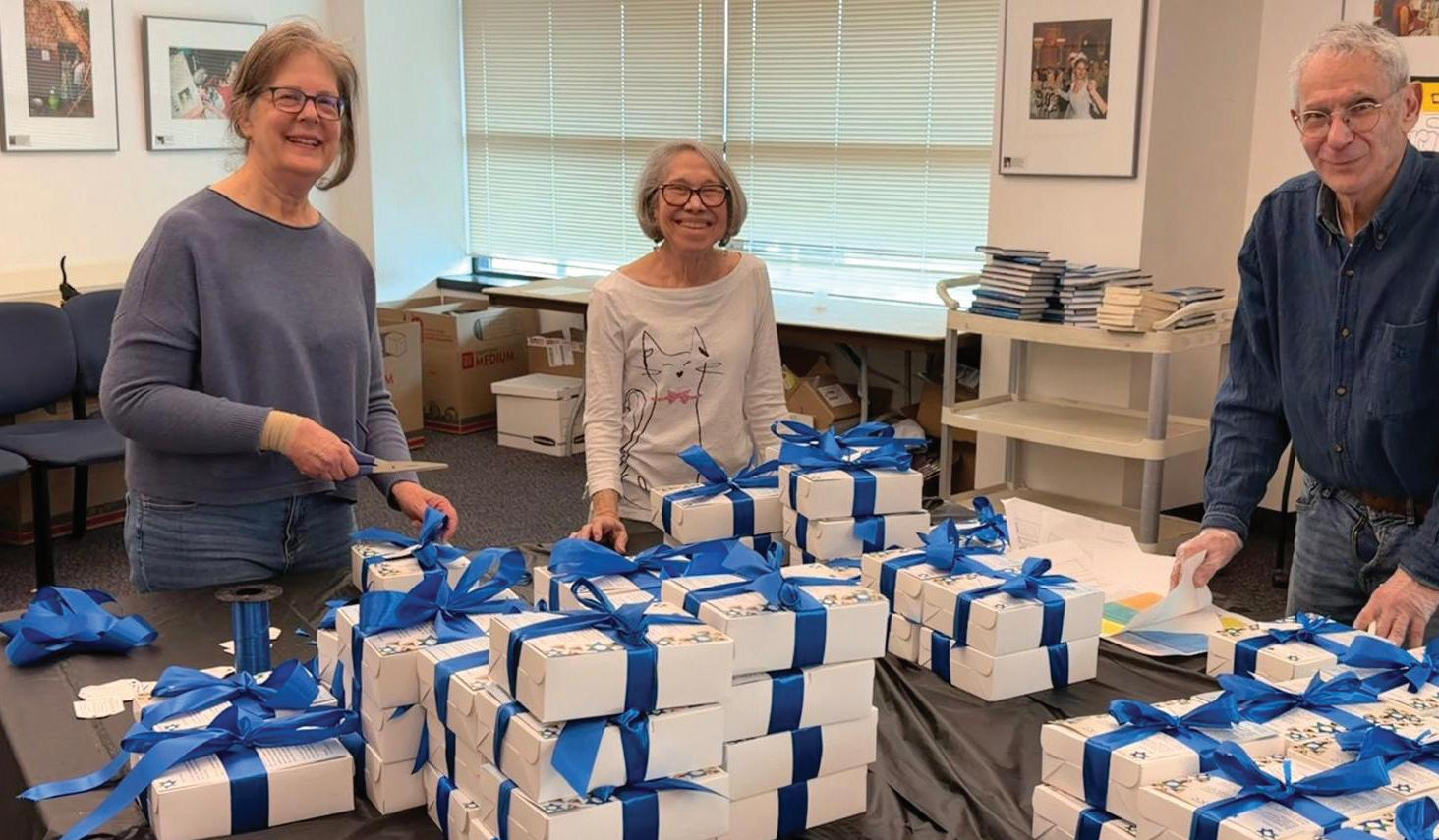
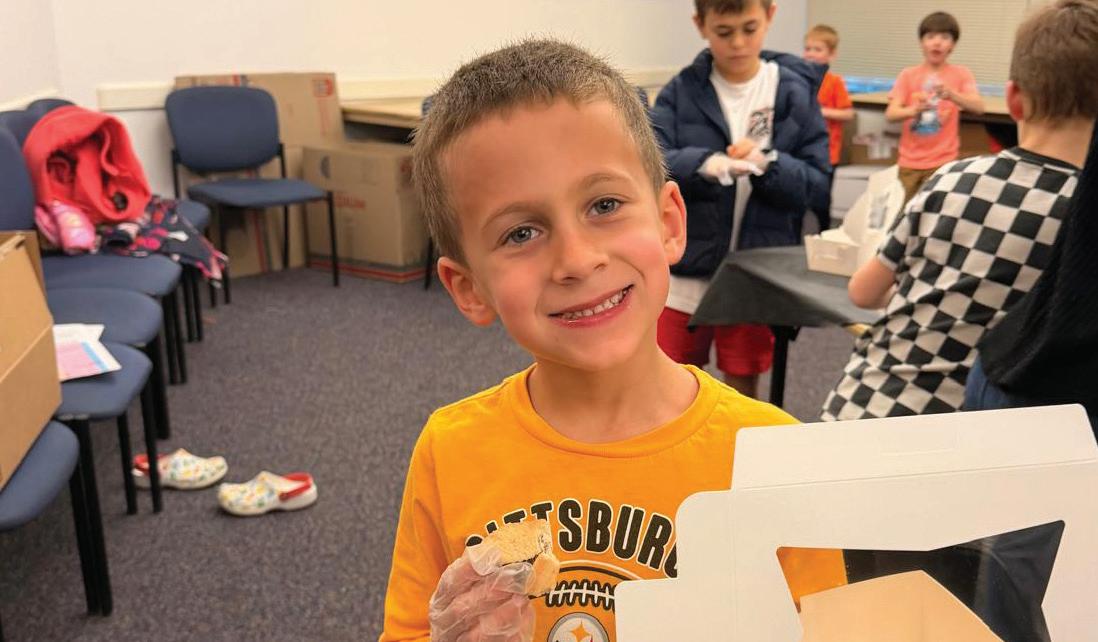
A sweet tradition: Operation Hamantaschen 2026
Blake Sisler and Kate-Lynn Cipolla
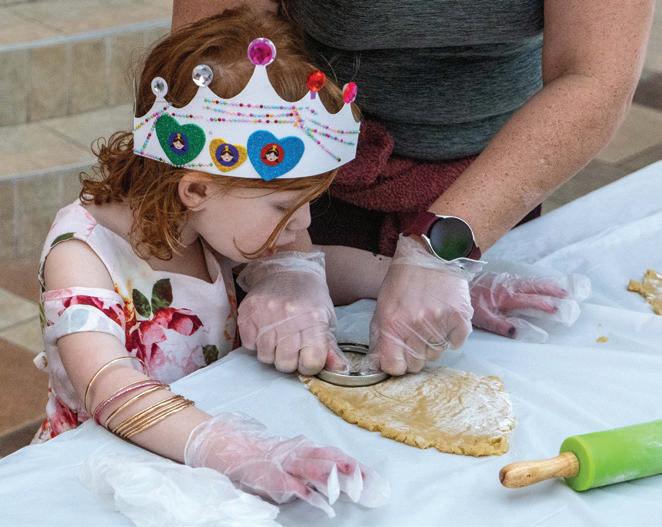
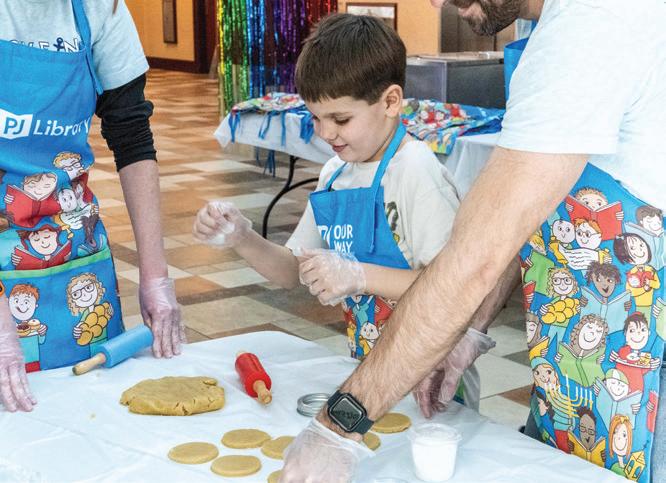
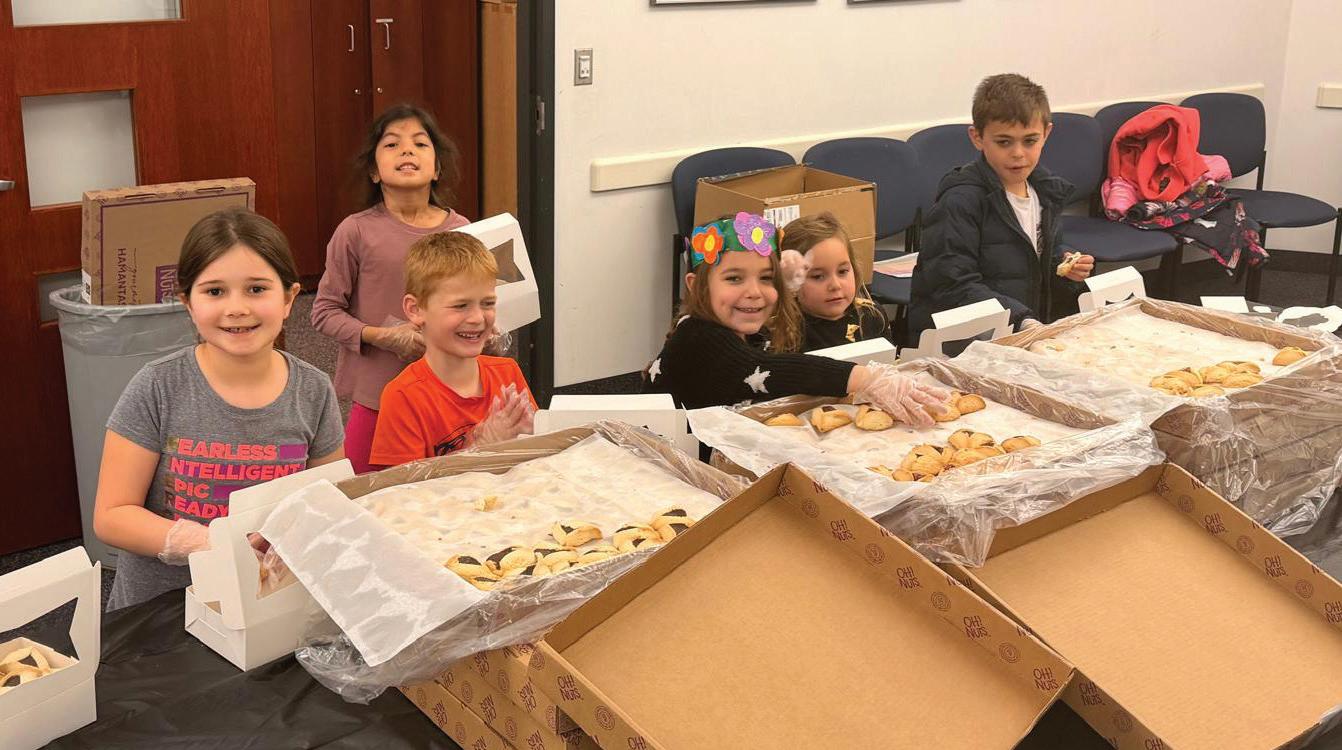
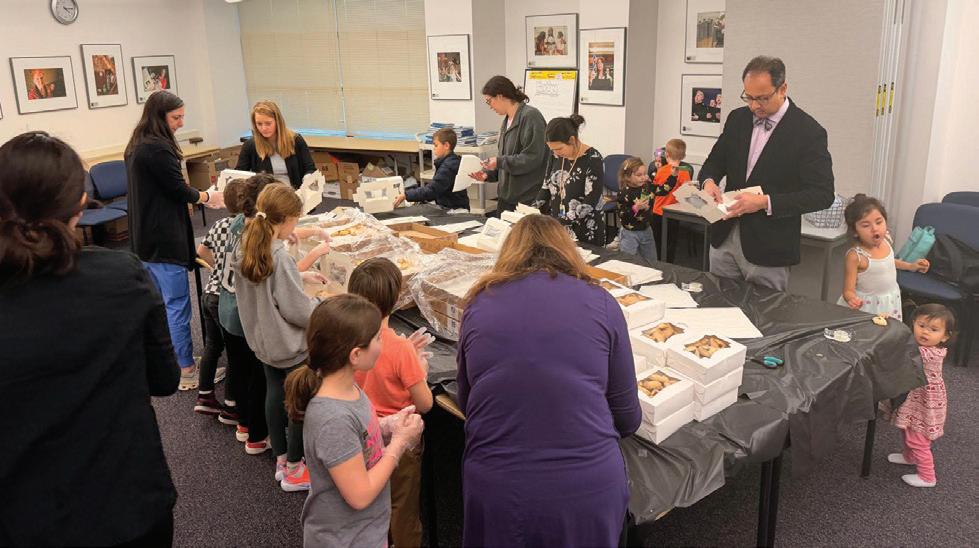
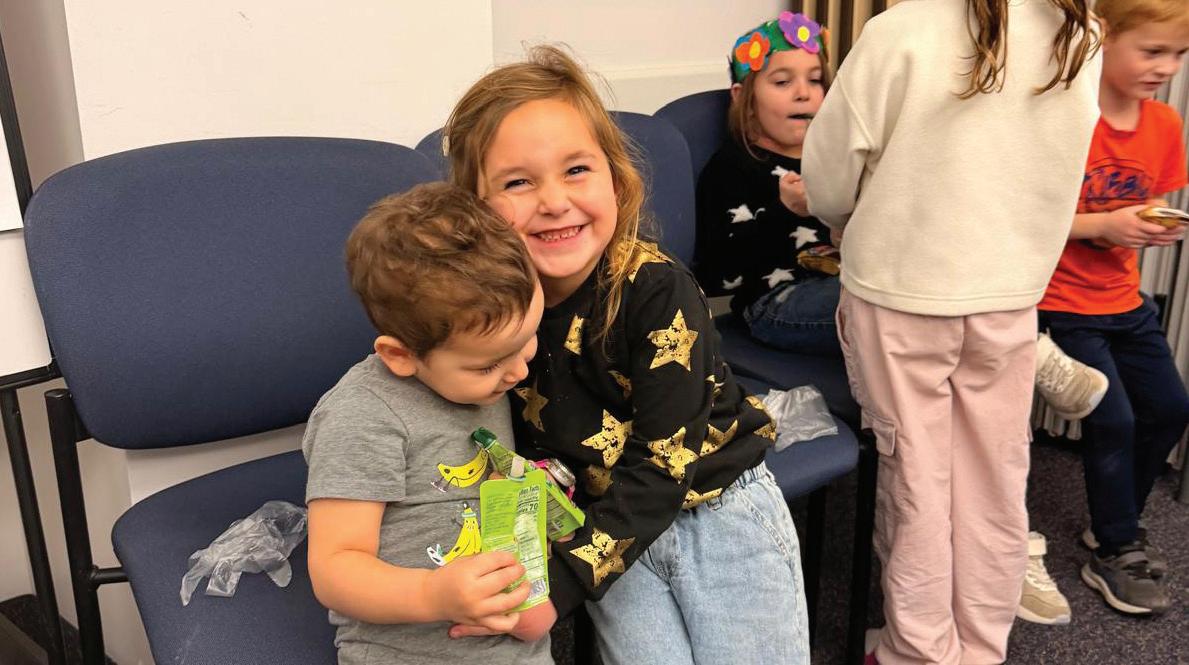
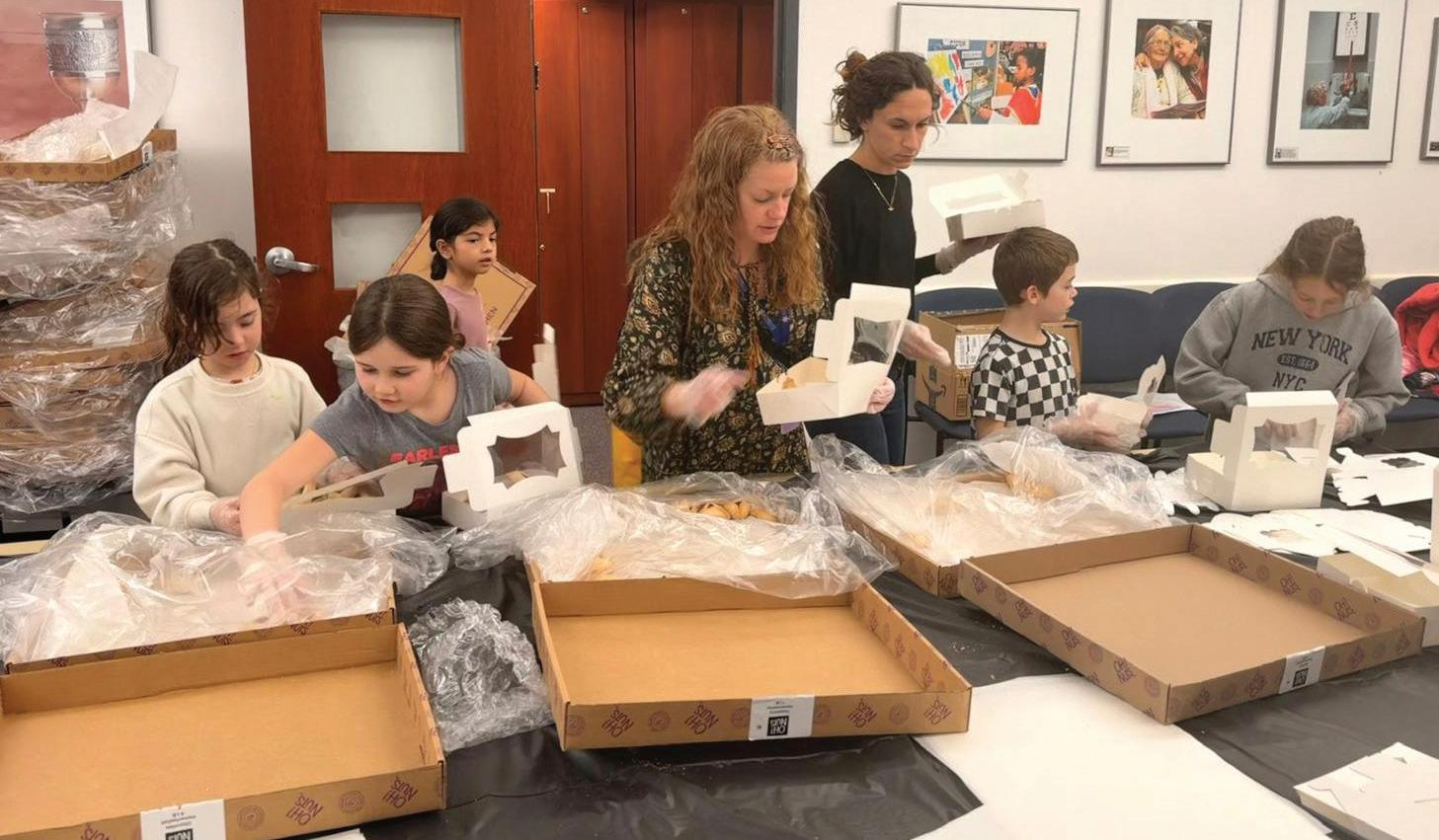
The Simon Family JCC welcomed families for Operation Hamantaschen on Sunday, March 1 – transforming the building into a vibrant hub of Purim celebration and connection.
As families arrived, long rows of tables with rolling pins, flour, and an assortment of sweet fillings were ready for the baking prep. The air was thick with the scent of apricot, raspberry, and chocolate, inviting everyone to take part in the beloved tradition of crafting these iconic three-cornered pastries. Families gathered to roll dough and pinch corners into the signature shape before sending their trays off to the ovens. Laughter filled the room as children and adults worked side-by-side, sharing techniques and tasting the occasional stray chocolate chip.
The day’s success relied on a dedicated network of community members. BBYO teen volunteers worked alongside adult kitchen staff, sharing the responsibility of transporting heavy trays, monitoring baking times, and resetting stations for incoming families. This multi-generational effort was the heartbeat of the event; teens offered encouragement to young bakers while adults managed the logistics of the industrial ovens.
Beyond the flour and dough, the celebration extended into a full Purim festival. Creative stations allowed children to design colorful masks and craft festive groggers.
Adding to the excitement, Tidewater’s Shinshinim hosted a prize wheel activity with a chance to spin the wheel and win prizes ranging from trendy slap bracelets to various fidget toys and more. For those with extra energy to burn, inflatable games sparked friendly competition. Children tested their skills at the inflatable basketball toss, while others faced off in a high-speed reflex race, scrambling to touch glowing, colorful lights faster than their opponent to rack up points.
Operation Hamantaschen remains a cherished tradition because it transcends the simple act of baking, with families leaving the JCC with boxes of warm, freshly baked treats and the lasting memory of a community united by heritage and joy.
Rowan Krouse prepares her hamantaschen.
The Lord family share smiles at Operation Hamantaschen.
The Rotklein siblings smile while they cut dough together.
Philip Sheehan wears a PJ Library apron while making hamantaschen.
IT’S A WRAP
Virginia Festival of Jewish Film: powerful stories and shared experiences
Hunter Thomas
For 10 days in February, audiences across Tidewater gathered in theaters not just to watch films, but to experience them together. The 33rd Virginia Festival of Jewish Film, presented by United Jewish Federation of Tidewater and the Simon Family JCC, transformed moviegoing into a communal event rooted in conversation, reflection, and connection.
As one of the longest-running Jewish film festivals in the country, the Virginia Festival of Jewish Film continues its mission of engaging Jewish and non-Jewish audiences through world-class cinema inspired by Jewish history, culture, and values. This year’s festival featured six films screened at various venues, including Virginia Wesleyan University, Cinema Café Kemps River, Naro Expanded Cinema, Cape Henry Collegiate, and Cinema Café Pembroke Meadows.
Two Israeli films anchored the festival in real-world history and urgency.
The Stronghold, a historical narrative set during the Yom Kippur War, followed an Israeli army company trapped in the Sinai Desert, forcing viewers to confront the human cost of war and the moral dilemmas faced under siege. Actor Michael Aloni, known for his roles on the Netflix series Shtisel and We Were the Lucky Ones attended and was interviewed following the film by Mark Robbins, festival screening committee chair.
The following Sunday, audiences watched The Road Between Us: The Ultimate Rescue, a documentary chronicling a harrowing, real-life rescue mission following the October 7, 2023 attacks in Israel, preceded by a message from the film’s director and producer, who helped set the stage for the screening.
spark conversation long after the credits roll.
This film, while featuring no explicitly Jewish content and only a short scene featuring an Israeli character, was chosen by the film screening committee
The festival’s signature event, the Big Saturday Night Celebration of Jewish Film, featured Tatami, a political sports thriller centered on an Iranian judo champion and her coach facing an impossible choice during an international competition. The screening, followed by a dessert reception, embodied what has become a hallmark of the festival: films that
Both the Road Between Us and
were attended by special guests from the Embassy of Israel.
Michal Ofek, director of Cultural Affairs, was joined by Efrat Hochstetler, Counselor for Public Diplomacy, who spoke before each film about how meaningful it is to see Israeli art shared in the U.S. during such a tumultuous time, and about the universality of art.
because of its relevance to today’s world. It is the first film to be directed by Israeli and Iranian co-directors, and highlights the strict pressures placed on Iranian citizens by the oppressive regime. It proved especially meaningful given the real-world events that quickly followed.
The festival’s narrative features offered a wide emotional and geographic range. The Ring explored the lingering echoes of the Holocaust through a father and daughter’s journey to uncover their family’s past, while For the Love of a Woman wove together romance and historical mystery across decades in Israel. In The Blond Boy from the Casbah, audiences were transported to Algiers, where memories of a vibrant Jewish community unfolded through the eyes of a filmmaker reconnecting with his childhood roots.
Beyond the films themselves, what set the 33rd festival apart was the collective experience of watching together. In an era when films are often consumed alone on small screens, the festival reaffirmed the power of shared storytelling and the importance of gathering in community.
“Thank you to our wonderful community for your enthusiastic support,” says Beth Scharlop, festival co-chair. “It’s not a festival without your attendance, conversation, and feedback. It motivates us to continually improve our programming.”
Virginia Festival of Jewish Film is presented by the Alma & Howard Laderberg Virginia Festival of Jewish Film Restricted Fund of the Tidewater Jewish Foundation and funded in part by the citizens of Virginia Beach and Norfolk through grants from the City of Virginia Beach Arts and Humanities Commission and the Norfolk Arts Commission.
For information about the festival, contact Hunter Thomas, director of Arts + Ideas at the United Jewish Federation of Tidewater: HThomas@UJFT.org or 757-965-6137.
Tatami
Linda Laderberg Baltuch, Sheila Laderberg Tarasiuk, Mallory Stark, Harry Laderberg, and Romney Laderberg. Judy Soldinger and Laura Gross.
Troy Boyd and Betty Moritz.
Michal Ofek and Efrat Hochstetler. Marc Cardelia, Linda Ausch, and Cara Novick.
David Proser, Lorna Orleans, and Alene Kaufman.
IT’S A WRAP
neon magic
The Sandler Family Campus was glowing with energy on Saturday, Feb. 21 for Neon Eras Kids Night Out. To set the mood, children were encouraged to arrive decked out in their brightest neon attire. Whether it was head-to-toe 80s fluorescent, 90s electric grunge, or shimmer, those bold colors popped spectacularly under the blacklights, transforming the crowd into a sea of vibrant, glowing light.
The night was a whirlwind of high-energy activity, with the ultimate glow party as kids dove into a variety of neon games with music. Between dance sets, many gathered at the crafting stations for bracelet making, creating personalized neon mementos of the evening. The constant laughter and the music’s rhythm created an unforgettable atmosphere where every child had the chance to shine, play, and express their creativity in a safe, fun-filled environment that celebrated friendship
As the festivities ended, a cinematic finale helped wind down the evening, with Encanto on the big screen. The transition from a vibrant dance party to a cozy experience was the perfect way to end the event, especially with plenty of popcorn to go around.
To learn more about Kids Night Out, School Days Out, Camp JCC, children’s classes, and more, contact Kate-Lynn Cipolla, Camp JCC director, at klcipolla@ujft.org or 757-321-2306.
BeAR:
A year of growth, gratitude, and a little bit of
magic
In its 26th year of serving students in Norfolk and Virginia Beach Title I schools, BeAR has experienced meaningful change. This year, the program said goodbye to several devoted mentors whose steady presence shaped young readers in lasting ways. Their absence is deeply felt, and their impact endures.
Yet in the face of transition, something inspiring happened.
Many experienced mentors chose to expand their commitment, welcoming a second student into their weekly sessions. While BeAR has traditionally followed a one-to-one model, these small reading groups have created a new kind of energy. Children are not only building literacy skills, but they are also learning alongside a peer, encouraging one another, sharing stories, and growing together.
What could have been a setback, became an opportunity.
Each week, caring adults continue to show up. And when they do, confidence grows. Struggling readers begin to see themselves differently. Over time, those steady, consistent moments build into progress – academically and emotionally.
Recently, at Larrymore Elementary School two of BeAR’s valued philanthropic partners visited to see this work firsthand. They observed the connection between mentor and student and saw how their support provides high-quality books and essential school supplies, resources many children might not otherwise receive, turning generosity into opportunity.
To be part of that impact and begin a new chapter, step forward and contact Robin Ford at 757321-2304 or rford@ujft.org.
Theodore Bernadt shows off his mustache prop at the glow party.
Robin Ford
JCRC shares Purim spirit with community partners through mishloach manot
Nofar Trem
This Purim, the Jewish Community Relations Council of the United Jewish Federation of Tidewater took the joy and spirit of the holiday outside the Jewish community through its Purim Boxes, or mishloach manot, initiative. Rooted in the Purim tradition of sending gifts of food to friends and neighbors, the project was a way to share the holiday with the many community partners and organizations that support and work closely with Tidewater’s Jewish community
throughout the year.
In the days leading up to Purim, volunteers assembled festive boxes filled with hamantaschen, the traditional triangular pastries enjoyed during the holiday, along with warm Purim greetings. The volunteers then delivered the boxes to local leaders, partner organizations, and community institutions that collaborate with and stand alongside the Jewish community across the region.
Purim celebrates the Jewish people’s survival in ancient Persia as told in the Book of Esther, and is
marked by joy, costumes, festive meals, and giving. By sharing mishloach manot throughout the community, the JCRC extends the celebration beyond its walls, offering a gesture of gratitude to the individuals and organizations that strengthen and support the local Jewish community.
Virginia Beach Sheriff Rocky Holcomb and Commanding Officer of the Virginia Beach Third Precinct, Captain James Gordon, were among the many recipients who sent their heartfelt appreciation for being included in this
initiative and for the community’s steadfast partnership.
In addition to receiving festive mishloach manot, all recipients were invited to join Jewish Tidewater’s Yom Ha’Atzmaut Community Celebration on April 26 at the Sandler Family Campus.
For information on the Jewish Community Relations Council, Community Volunteer Days, and the Tidewater Yom Ha’Atzmaut Community Celebration, visit JewishVA.org or contact Nofar Trem at Ntrem@UJFT.org.
Assembling boxes together.
Dr. Catrina Manigo, College Park Elementary School principal, and Shikma Rubin. Nolan Casson.
Smiling faces assemble boxes.
Parents and children assemble boxes.
Theodore and Emilia St. Pierre.
. Angeline and Ian Persaud.
Rebecca Tabakin, Jill Mitcham, and Arnold Abrons.
Shikma Rubin and Lisa Suter, Tallwood Elementary School principal.
Purim with a purpose: Community delivers joy to area seniors
Jewish Family Service of Tidewater always looks forward to celebrating Purim, but this year felt especially meaningful. In addition to celebrating, the community made sure seniors living in assisted living facilities knew they were not forgotten.
Purim is a holiday filled with joy, costumes, laughter, and of course, mishloach manot — gifts of food shared with friends and neighbors. JFS wanted to be certain those gifts also reached area seniors who may not have family nearby or who are unable to participate in community celebrations.
To include as many people as possible in this effort,
WHAT’S HAPPENING
JFS partnered with two congregations and welcomed volunteers to its offices to assist.
During B’nai Israel’s Purim carnival, between the games and festivities, children and families created handmade cards and wrote notes to include in mishloach manot baskets. Watching little hands carefully decorate cards and write messages such as “Happy Purim” and “We are thinking of you” was a beautiful reminder of what Jewish Tidewater is all about.
At Ohef Sholom Temple’s Purim carnival, JFS staff spoke about the meaning of tzedakah and the important ways Jewish Family Service helps the community every day. JFS staff spoke about how it supports seniors, feeds families facing food insecurity, and cares for the most vulnerable. They also shared how community members can partner with JFS — through volunteering, donating, and acts of kindness — to make a difference in someone’s life.
At JFS’s office, volunteers assembled the baskets. Tables were filled with hamantaschen and other
treats, and the room buzzed with conversation and laughter as community members packed each basket. Every package represented more than just holiday goodies — it carried warmth, kindness, and connection.
The celebration didn’t stop there. Many dedicated volunteers helped deliver the baskets to seniors throughout Tidewater. For some recipients, the visit was just as meaningful as the treats. Smiles, stories, and even a few tears were shared at doorways and in common rooms.
Purim reminds of the importance of community, generosity, and taking care of one another. This year, those values came to life in tangible ways. From the children who made cards, to the volunteers who packed and delivered, Jewish Tidewater ensured that no one was forgotten.
Julie Kievit is Jewish Community Services manager for Jewish Family Service.
TEMPLE ISRAEL TO STAGE A MAGICAL GALA SUNDAY, MAY
3, 1 PM, TEMPLE
ISRAEL
Philip Walzer
A magical afternoon is planned for Temple Israel’s Annual Gala, an event that includes a deluxe luncheon and entertainment from Philadelphia magician Mike Miller.
Miller, a past president of the Society of American Magicians, says the show will delight all ages, from five to 105, and will feature significant audience participation. He has performed at Atlantic City casinos, including Caesar’s, Showboat, and Tropicana, and before sports organizations such as the Philadelphia Eagles and 76ers.
To see Miller in action, go to www.mikemillersmagic.com.
Linda and Jonathan Longman, members of Temple Israel, attended Miller’s show at Massanutten Resort in Virginia last summer.
“He was an excellent magician!” the Longmans say. “So wonderfully unusual were some of his tricks that we could not begin to conjure a way in which he could do many of these feats of magic. It was a truly memorable show that kept us entertained and feeling a sense of wonderment well after it was over.”
Norman Soroko, Temple Israel’s president, says, “The past five spring galas under my watch have been most successful. I’m confident that this
year’s event will be an even bigger hit.”
Tickets are $54 each. Sponsorships are also available:
• Houdini - $7,500 (with 12 free tickets)
• Elphaba and Glinda - $5,000 (10 tickets)
• Penn and Teller - $2,500 (8 tickets)
• Harry Potter - $1,000 (6 tickets)
• Merlin - $750 (5 tickets)
• Wizard - $500 (4 tickets)
• Sorcerer - $250 (2 tickets)
Don’t let this opportunity disappear. To purchase tickets, make sponsorships, or for any questions, contact Temple Israel’s office at 757-489-4550 or templeisraelva1954@gmail.com.
Julie Kievit
Rabbi Pinchas, Meira, and Tani Zimmer at B’nai Israel.
Avi and Amy Weinstein at Ohef Sholom Temple.
WHAT’S HAPPENING
WHAT ’ S HAPPENING
Beth El partners with 92NY to bring world-Class programming to Norfolk
Monday, April 6, 7:30 pm
Congregation Beth El
Congregation Beth El recently launched a partnership with the 92nd Street Y (92NY) in New York City, one of the world’s most respected cultural and intellectual institutions. Through this collaboration, Beth El will host monthly livestream events featuring nationally renowned speakers, thinkers, authors, and musicians, bringing world-class programming to Tidewater’s Jewish community.
The partnership allows Congregation Beth El to offer access to highcaliber conversations and musical performances that would otherwise require travel to major metropolitan areas. Each month, Beth El opens its doors for a communal viewing experience, complete with light refreshments, creating opportunities for participants to gather, connect, and engage with ideas shaping contemporary life.
Lemann will discuss his memoir, Returning: A Search for Home Across Three Centuries, which reflects on his experience growing up Jewish in New Orleans.
Lemann, a son of German Jews who grew up in a world of privilege, had an unconventional Jewish upbringing. Aware of the contradictions of being Jewish in the South, Lemann chafed at its strict racial hierarchy and his relatives’ eagerness to be accepted in a subtle but distinctly antisemitic environment. The memoir follows Lemann’s path as he rejects assimilated society, embraces Judaism, and chooses to raise his children in a Jewish world.
Spring Break Aventure awaits at
- 4
Programs in the series explore topics such as democracy, literature, history, culture, and current affairs. Speakers come from leading roles in journalism, academia, public policy, and the arts. The series reflects Beth El’s ongoing commitment to lifelong learning, Jewish values, and thoughtful engagement with the wider world.
In April, Beth El will livestream a 92NY conversation between The New Yorker correspondent Nicholas Lemann and New York Times investigative reporter Jodi Kantor.
“We are thrilled to bring the energy and excellence of 92NY programming to Norfolk,” says Beth Berman, Beth El’s coordinator for the series. “This partnership creates a wonderful opportunity for our congregation and the wider community to come together around meaningful ideas, music, and shared conversation.”
Congregation Beth El is located at 422 Shirley Avenue in Norfolk. Admission is $5. RSVPs are encouraged. Details are available at www.bethelnorfolk.com.
Free Mazel Tov listings!
Tell Jewish Tidewater about your simchas and have a photo published in Jewish News to remember for years to come. Up to 100 words and photo at no charge. Send your listing and photo to speck@ujft.org with Mazel Tov in the subject line. If you do not get a response or have a question, call 757-965-6100.
Kate-Lynn Cipolla
The countdown to Spring Break is officially on, with Camp JCC ready to transform a week away from the classroom into a memorable adventure. Designed specifically for children in kindergarten through fifth grade, the program offers a safe, inclusive, and vibrant environment where kids can truly be kids. Every day is curated with exciting themes to ensure that no two days feel the same. Campers can look forward to a jam-packed schedule that includes free swim sessions in the indoor pool, Gaga matches, and creative arts and crafts projects.
Spring Break serves as the ultimate “sneak peek” for the upcoming summer season. Many beloved summer counselors will be on-site, giving campers a chance to reconnect with their favorite counselors and get excited for the sunshine ahead. Each day features unique highlights, such as the “Camp Takeover,” where campers will dive into tie-dye and host mini color run competitions. Campers will also embrace the outdoors with guided nature hikes around the pond and building-wide scavenger hunts.
Understanding that every family has different needs during the break, enrollment flexibility is offered. Parents can choose to register for individual days or dive into the full experience with a 5-day package. For those who need a bit more time, an extended care option is available, 8 am - 6 pm.
Register: www.campjcc.org.
To learn more about Camp JCC, Kids Night Out, School Days Out, children’s classes, and more, contact Kate-Lynn Cipolla, Camp JCC director, at klcipolla@ ujft.org or 757-321-2306.
Jodi Kantor.
Nicholas Lemann.
WHAT’S HAPPENING
Chrysler Museum of Art presents: Architects of Being: Louise Nevelson and Esphyr Slobodkina Through May 31, 2026
A groundbreaking exhibition showcasing works by two pioneering female artists, Architects of Being: Louise Nevelson and Esphyr Slobodkina, is on view through May 31 at Chrysler Museum of Art.
Organized by the Arkansas Museum of Fine Arts (AMFA), this exhibition brings artists Louise Nevelson and Esphyr Slobodkina in direct dialogue for the first time. Both artists were Eastern European Jewish immigrants who worked in midcentury New York and developed distinct visual languages and identities within a male-dominated American art world. While Nevelson is known primarily as a sculptor and Slobodkina as a painter, both explored cubism, surrealism, and constructivism, with assemblage as an essential unifying theme throughout their careers.
Featuring 77 works, including sculptural assemblages, abstract paintings, collages, and garments they designed and wore, Architects of Being reveals the parallel journeys of women who
helped transform American abstraction.
Programming for Architects of Being invites visitors to explore the exhibition’s central theme: how identity is constructed and expressed. By examining material choices, personal style, and visual composition, these programs provide audiences with a deeper understanding of the artists’ evolving voices, creative processes, and the social and historical contexts that shaped their work.
For information about exhibitions, programs, and events, visit chrysler.org or follow the Chrysler Museum on social media @chryslermuseum.
The Chrysler Museum of Art is located at 1 Memorial Place in Norfolk.
Louise Nevelson (American, b. Russia (now Ukraine), 1899–1988), Dawn s Presence, 1972–1975, painted wood, Chrysler Museum of Art, Gift of Walter P. Chrysler Jr. 77.1241
WHAT’S HAPPENING
Yom HaShoah to commemorate, remember, and reaffirm
Monday, April 13, 6:45 pm,
Ellen Rosenblum and Susan Schwartzman
This year’s Yom HaShoah commemoration, presented by United Jewish Federation of Tidewater’s Holocaust Commission, features Dr. Milton Zweig as the keynote speaker.
Yom HaShoah is a day of commemoration for the six million Jews murdered in the Holocaust, as well as a remembrance of those who survived, including those who made Hampton Roads their home.
The child of Holocaust survivors, Dr. Zweig will share his family’s story of resilience and survival. His parents and grandparents faced incredible challenges and loss during Kristallnacht and while fleeing Germany. After more than 50 years of preserving the stories of this dark period
Congregation Beth El
in history, his mission to ensure that the voices of those who can no longer speak are not forgotten, remains steadfast. Zweig leads the Zweig Foundation, which is dedicated to Holocaust and genocide education.
In addition to Zweig’s inspiring presentation, the evening will include recognition of the student winners of the Elie Wiesel Writing and Visual Arts Competition, as well as the Excellence in Education Awards, honoring
teachers for their dedication to furthering Holocaust education.
As the number of Holocaust survivors decreases, the Holocaust Commission is committed to including second- and third-generation survivors in Tidewater. The community is encouraged to attend to help remember, reflect, and honor the lives and legacies of those impacted by the Holocaust, as well as reaffirm a shared responsibility to stand against hatred and intolerance.
Congregation Beth El is located at 422 Shirley Avenue in Norfolk. Because the well-being of the community is always a top priorty, advance registration is requested from all attendees. For information and to RSVP, go to JewishVA.org/YomHashoah2026.
CALENDAR
MARCH 24, TUESDAY
Dream Doctors: Humanity in Action. When the world feels fractured, Israel’s Dream Doctors offers a reminder of what brings people together. Gain insight into this group’s innovative, evidence-based approach to healing that blends medicine, humor, creativity, and empathy. They will share stories about doctors and professional medical clowns who bring comfort, dignity, and resilience to patients and communities in moments of crisis. Presented as part of the Jewish Community Relations Council of the United Jewish Federation of Tidewater, Simon Family JCC, and Community Partners’ 15th Annual Israel Today Series. Sandler Family Campus. 7:30 pm. Information: JewishVA.org/IsraelToday or contact Nofar Trem at NTrem@ujft.org.
MARCH 25, WEDNESDAY
JCC Model Passover Seder. Active Adults are invited for an interactive Passover experience filled with storytelling and traditions led by Cantor Jennifer Rueben of Ohef Sholom Temple. Open to people of all faiths. Lunch and seder: $10. Sandler Family Campus. Register by March 23 at jewishva.org/seder. Contact Sarah Cooper for more information at SCooper@ujft.org.
MARCH 26, APRIL 16, 23, THURSDAYS
Baby & Me. A relaxed hour of coffee, treats, and playful activities for babies up to 24 months. Connect with other caregivers while little ones explore and play with friends. Free, no registration or membership required. 9 – 10 am, Simon Family JCC. Information: JewishVA.org/PJ or Blake Sisler at BSisler@ujft.org.
MARCH 29, SUNDAY
Middle School Bowling and Beading. An afternoon of bowling and beading at Pinboys at the Beach. Participants can hit the lanes, create fun beaded crafts, or enjoy a mix of both while spending time with friends. It’s a great chance to socialize, try something new, and enjoy a little friendly competition. 12:30 – 2:30 pm. Information and registration: JewishVA.org/bowling or contact Blake Sisler at BSisler@ujft.org.
APRIL 6-APRIL 10
Spring Break Camp. During Spring Break, or other School Days Out, campers can look forward to arts & crafts, sports, games, gaga, free swim, and more. Camp JCC is open to all children, from all schools, currently in kindergarten through 5th grade. 9 am – 4 pm, with an extended care option, 8 am – 6 pm. Limited capacity. Register: JewishVA.org/SDO. Register for one day or for all. Information: Kate-Lynn Cipolla, KLcipolla@ujft.org.
APRIL 7, TUESDAY
Yiddish Club. Embrace Yiddish culture, language, and history through music, film, poetry, and literature. Usually meets on the first Tuesday of each month. 1 pm. Sandler Family Campus. Information: www.jewishva.org/Adults or contact Sarah Cooper at SCooper@ujft.org.
APRIL 13, MONDAY
Yom Hashoah. Honor Holocaust survivors and remember those who perished. 6:45 pm. Congregation Beth El. Information: Holocaustcommission.org or contact Elka Mednick at EMednick@ujft.org.
APRIL 15, WEDNESDAY
Senior Club. Join active seniors to find out what is going on in the community and how to get involved. This meeting will include a fun Mock Trial activity. Meets every third Wednesday of the month at 12 pm. Sandler Family Campus. Information: www.jewishva.org/Adults or contact Sarah Cooper at SCooper@ujft.org.
APRIL 16, THURSDAY
Roundtable Conversation. For those who love a spirited debate, join community members of all ages for conversations involving current events, politics, and more. Meets every first and third Thursday of the month at 1 pm. Sandler Family Campus. Information: www.jewishva.org/Adults or contact Sarah Cooper at SCooper@ujft.org.
APRIL 16, THURSDAYS
On Our Way to Mount Sinai: Inspiring and Uplifting Thoughts for Living. Join Jewish educator Amy Lefcoe for 6 weeks of inspirational learning during this auspicious time of year known as the Omer period. Discover how to apply Torah and mitzvot to create a life filled with vitality, transcendence, and powerful joy. 12 pm. Sandler Family Campus. $36 for JCC members, $45 for potential members. Register at JewishVA.org/KCL. Cost includes lunch. Scholarships available. Information: Sierra Lautman at SLautman@ujft.org.
APRIL 20, MONDAY
Book Club. The book of the month is The View from Lake Como by Adriana Trigiani. The group meets every third Monday of the month at 1:30 pm. Sandler Family Campus. Information: Jewishva.org/Adults or contact Sarah Cooper at SCooper@ujft.org.
APRIL 21, TUESDAY
Yom Ha’Zikaron Ceremony. Join Tidewater’s Shinshinim for a meaningful Yom Ha’Zikaron (Israel Remembrance Day) ceremony to support, honor, and remember the Israeli civilians and soldiers who have died in battle and terror attacks. Through shared remembrance and solidarity, help ensure their legacy lives on in hearts and actions. Stand together as a community with respect and gratitude. 8:30 am. Sandler Family Campus. Information and registration: JewishVA.org/Shinshinim or Nofar Trem at NTrem@UJFT.org.
APRIL 21, TUESDAY
Happy Hour with Ben and Zikki Siman-Tov, Yom Ha’Atzmaut Chefs-in-Residence. Ring in Israel Independence Day with these rising culinary stars, the creative voices behind @BenGingi, NYC's BUBA Bureka, authors of Eat Small Plates. Get to know them, hear what inspired their work, and what they have planned. 6 pm. Information and registration: JewishVA.org/YH or contact Nofar Trem at NTrem@UJFT.org.
APRIL 22, WEDNESDAY
Annual Israeli Chef’s Table Experience, a signature Yom Ha’Atzmaut celebration that brings Israel to life through food and connection. This year’s chefs-in-residence are Ben and Zikki Siman-Tov, the chefs behind New York City’s Buba Bureka and the acclaimed cookbook Eat Small Plates. Their cooking reflects the spirit of modern Israel — rooted in tradition, shaped by regional influences, and centered on warmth and hospitality. Guests will enjoy a kosher three-course menu designed especially for this event and inspired by authentic Israeli flavors. The chefs will share stories that highlight the deep ties between food, culture, and heritage. 7 pm. Sandler Family Campus. Information and to purchase tickets: JewishVA.org/YH or contact Nofar Trem at NTrem@UJFT.org.
APRIL 26, SUNDAY
Yom Ha’Atzmaut Community Celebration, a joyful festival honoring Israel’s 78th Independence Day and the strong connection between Israel and Tidewater’s Jewish community. This community-wide event brings together families, friends, and organizations from across the region for an afternoon of Israeli culture, music, food, and interactive activities for all ages. Sandler Family Campus. 12 - 3 pm. Information and registration: JewishVA.org/YH or contact Nofar Trem at NTrem@UJFT.org.
OBITUARIES
Marjorie
Jane Berger
VIRGINIA BEACH – Marjorie Jane Berger, born September 11, 1946, passed away on February 3 at the age of 79.
She is survived by her brothers, Dr. Jeff Berger and Dr. Keith Berger, nine nieces and nephews, and her beloved cat, Willow.
Margie was a devoted daughter, taking excellent care of her parents, Dr. James Berger and her mother, Evelyn, in their later years making it possible for them to live out their years while remaining at home. Before that, she worked as a receptionist for Dr. Bergers’ medical office for over 20 years before retiring.
Margie mostly led a private life, surrounded by few close friends and her immediate family, and, of course, Willow.
Loyal, heartfelt, loving, genuine, playful, patient, caring, and lighthearted are a few words that come to mind in remembering Margie. It is hard to describe the feeling of loss when we think about her.
A private burial service was held. She is missed by all. Online condolences can be made to the family at hdoliver.com.
Harold “Hal” Delevie
LOS ANGELES, CALIF. – Harold “Hal” Delevie, a beloved husband, father, and community member, passed away on February 8, after a very long and fulfilling life.
He is survived by his devoted and loving wife, Roberta “Bobbi” Delevie, his children Mark (Lisa) and Liz Gayle, and his grandchildren, Nathan (Izzy), Jen (Will), Nicole (Will), Matt (Makayla), and his greatgrandchild, Lily.
A dedicated member of the Stephen Wise Temple, Hal was a part of the early founding generation of the community. As such, he played a vital role in the growth and nurturing of the Temple community. His commitment to service extended beyond the Temple, as he was actively involved in various organizations
in service of the community including bar associations (where he served as president), The Guardians of the Jewish Home, and LACMA, believing in the importance of giving back.
Hal was a respected lawyer, yet his humility and shy demeanor never overshadowed his impact on those around him. His quiet acts of kindness and dedication stood as a testament to his character, emphasizing his commitment to faith and community.
In remembering Harold “Hal” Delevie, his family reflected on his values of integrity, compassion, and genuine connection. The presence of many Wise members at Hal’s memorial indicated his lasting and meaningful connection to Wise temple. His love and support will be missed, but his spirit will continue to inspire those touched by his kindness.
Harvey David Eluto
RALEIGH, N.C. – Harvey David Eluto passed away on March 10, 2026.
Harvey Eluto was the oldest child of Jerome and Ida Eluto. He is survived by his brother Larry of Brooklyn, N.Y. and sister Susan of Baltimore, Md. He is also survived by his wife, Harriett Snyder Eluto, of 62 years and his two children, Sherry (Stuart Kaskawits) of Raleigh, N.C. and Moshe Lev Elutovich (Miriam) of Jerusalem, Israel. Harvey is also survived by seven grandchildren Ryan, Natalie, Shmuel Yisrael, Yitzchak, Bracha Sara, Yocheved, and Yosef Sholom. Harvey was a member of Temple Beth Or in Raleigh and Kehillat Bet Hamidrash, in Virginia Beach, Virginia.
Harvey owned Bargain Books and Book Distribution Center before retiring to Raleigh in 2021. Harvey enjoyed years of volunteer work such as with United Jewish Federation of Tidewater, Brith Sholom, KBH, FBI Citizens Academy, Stratford Chase Civic League, Citizens Advisory Board of the Virginia Beach Police Department, and Greater Wards Corner Business Association of Norfolk. Harvey was in the Coast Guard from 1963 to 1971 with active duty for six months, and for the remainder he was in the Reserves. He was a graduate of Granby High School’s “Lost Class of 59.”
A graveside service was held at Forest Lawn Cemetery in Norfolk. The funeral
was officiated by Cantor David Proser. Arrangements were entrusted to Altmeyer Funeral Home.
Gerald Maury Hankin
VIRGINIA BEACH – Gerald Maury Hankin, better known as “Jerry,” a man of unwavering determination and boundless generosity, passed away peacefully on February 21, 2026, at the age of 80, in Virginia Beach, Virginia.
Born on December 30, 1945, in Camden, New Jersey, Gerald lived a life filled with purpose, passion, and love.
With a sharp mind and an entrepreneurial spirit, Jerry carved his own path in the insurance field before fulfilling a lifelong dream of starting his own nursery. It was a testament to his relentless work ethic that he personally purchased the land, planted each plant, and nurtured his business until it flourished. His dedication to quality and service made his nursery a cherished establishment until he decided to retire and cap a distinguished career by closing his business.
Beyond his professional achievements, Jerry was a devoted family man who cherished every moment spent with his loved ones. From trips to Disney World, Hawaii, California, Las Vegas, Canada, and Buffalo, New York, his adventurous spirit was contagious. He was an avid golfer, seizing opportunities to play during his travels and sharing his enthusiasm for the game with everyone around him. A skilled poker player, Jerry was known not only for his winning hand but also for his friendly spirit and sportsmanship at the table.
A natural athlete, Jerry excelled in shot put during his college years and was a standout basketball player in high school. His passion for sports later led him to assist with coaching basketball and softball, and when his daughter Ryan developed an interest in basketball, he proudly shared his knowledge and encouragement.
Those who knew Jerry knew him as a man of immense knowledge and wisdom, particularly in history and botany. Even after retiring from his nursery, he generously shared his green thumb with his daughters, grandchildren, friends, and neighbors, helping them create beautiful landscapes and gardens filled with life.
Jerry was preceded in death by his
OBITUARIES
loving parents, Philip and Ethel Rose (Sipers) Hankin, and his brother Arthur Hankin. He leaves behind a legacy of love, strength, and kindness, carried on by his loving wife, Lynn Hankin; his cherished daughters Ryan (Dan) Miller and Kari Amuial; his adoring grandchildren, Cameron, Jordan, Devon, Molly, and Jackson; his beloved nieces Megan (Steven) Zuckerman and Shaye (Glen) Arluk; and his sister-in-law Leslie (Larry) Siegel. The family is asking donations be made to The University of Pittsburgh; Division of Pulmonary, Allergy and Critical Care Medicine COPD (Emphysema) Fund. In remembering Gerald, we celebrate a life well-lived, full of laughter, wisdom, and an unyielding commitment to nurturing both plants and people. His spirit will continue to inspire all who had the privilege of knowing him.
Arnold “Arnie” Unterbach
VIRGINA BEACH – Born in Brooklyn in
1946, Arnie Unterbach died on Mach 9, 2026.
Arnie was the son of Louis Unterbach and Hilda Saltzman, both of whom immigrated from Warsaw Poland in 1927. Arnie’s first career was as a jazz bass player and toured with the USO band to Greenland. He then went on to have a long and esteemed career as a social worker, therapist, trainer, adjunct professor, or social work and agency executive. His intellect and emotional attunement were remarkable as he chose to work with some of the most challenging people, many of whom were seen as social outcasts and/or unable to be helped.
He enjoyed 25 years as a resident of Virginia Beach and embraced the third act of his life. He enjoyed music and was always known as a kind, generous, and compassionate mensch of a man.
Memorial contributions have made to KBH or Jewish Family Service.
Andrea Weiss, trailblazing Reform rabbi who merged scholarship and activism
(JTA) — Rabbi Andrea Weiss, a former provost of Hebrew Union College-Jewish Institute of Religion who made history as the first woman to ordain rabbis in the Reform movement, has died.
Weiss died on Tuesday, March 3 surrounded by family at her home in Lower Merion, Pennsylvania, following a year-long battle with cancer. She was 60.
Weiss’ death strikes another blow for the leadership of the Reform movement, which has also buried two leaders of HUC who died prematurely while Weiss worked there — Rabbi Aaron Panken, then the seminary’s president, in 2018, and Rabbi David Ellenson, its past president, in 2023. The school of sacred music, meanwhile, is named for another luminary of the movement who died prematurely at 59 in 2011.
Born on Sept. 9, 1965, Weiss was raised in San Diego where her family belonged to Temple Emanu-El. In 1987, Weiss received her bachelor’s degree from the University of California, Berkeley, and was ordained as a rabbi at HUC in 1993.
Weiss joined the HUC faculty in 2000.
• Family owned and operated since 1917
• Affordable services to fit any budget
• Advance funeral planning
• Professional, experienced, caring staff
• Flexible burial options
• Flexible payment options
During her tenure at the school, Weiss led multiple initiatives including a curricular redesign, the launch of the Virtual Pathway for Rabbinical students, and the creation of the Seminary Hebrew Program.
Approved by all area Rabbis and Chevrah Kadisha
Weiss received her PhD from the University of Pennsylvania in 2004, where her research centered on metaphor and biblical poetry, scholarship that informed her later work including her 2006 book, Figurative Language in Biblical Prose Narrative: Metaphor in the Book of Samuel.
In 2008, Weiss won the National Jewish Book Awards Book of the Year as the associate editor of The Torah: A Women’s Commentary, the first comprehensive collection of Torah commentary written entirely by female scholars. Sen. Elissa Slotkin chose the text to be sworn in on last year.
In 2016 and 2020, Weiss led a nonpartisan, interfaith initiative titled “American Values, Religious Voices” that brought together 100 faith leaders to write letters to former President Joe Biden and President Donald Trump as well as
Congress during the first 100 days of their administrations. The letters were later published as two books.
Weiss described the initiative at the time as “a national, nonpartisan campaign created from the conviction that scholars who study and teach our diverse religious traditions have something important to say about our shared American values.”
In 2018, Weiss was appointed as HUC’s provost, becoming the first female rabbi to ordain rabbis in the Reform movement.
Weiss is survived by her husband Alan; her two children, Rebecca and Ilan; her father, Marty; her siblings, Mitch, Laura, and Roger; her sister-in-law Catherine; and her nieces, nephews and cousins.
Chris Sisler, Vice President, Member of Ohef Sholom Temple, Board member of the Berger-Goldrich Home at Beth Sholom Village, James E. Altmeyer, Jr., President, James E. Altmeyer, Sr., Owner
Grace Gilson
JEWISH TIDEWATER
America’s 250th Birthday Quilt may include blocks from two Hampton Roads Jewish residents
Joel Rubin
Darva Gruber and Sharon Grossman share something besides their long membership at Temple Israel. They both love crafting. So, when Gruber became aware that Visit Williamsburg, as part of the nation’s 250th Commemoration, intended to create The Great American Birthday Quilt with content submitted by people from across the country, she was in. And when she told her friend that she, too, could submit one, both women put on their thinking caps, picked up their needles, thread, and cloth, and got to work.
“The directions said we could take inspiration from anywhere such as inspiring people, places we love, landmarks, quotes, or historic events,” says Gruber. “For me it was an easy choice.” Turns out the Hawaiian-born third generation Filipino American and so-called “Army brat” was married to Larry, a Jewish sailor whom she met in New Jersey. “So, I was a Navy wife and then became an Army mom” when her twin sons enlisted, one
Selena Coles, Public Relations Specialist, Sharon Grossman, and Ann Bowe, director of Membership and Development, Greater Williamsburg Chamber of Commerce.
JEWISH TIDEWATER
of whom subsequently graduated from the U.S. Military Academy at West Point.
considering how many Jews came to America to escape persecution.”
In fact, 26 of her family members have been in one military uniform or another, having collectively given 300 years of service to their country. “And I was a procurement analyst for the Navy for 22 years,” adds Gruber, “so clearly I have a feel for these men and women.” Indeed Larry was assigned to ships for 17 of his 22 years in the Navy, “so I had the main role in raising the kids.” No wonder Gruber opted to include the logos of all five military branches in her quilt pattern. “I hope it inspires more people to respect those who serve and thank them and their families for their sacrifices.”
Grossman’s late dad was in the Navy, but the Hopewell/Petersburg native chose to highlight the plight of those of her faith in her design. “Frankly I am very upset with how our government is treating immigrants today,
Grossman’s 16”x20” block (same size as Gruber’s) reminds that Jews fled pogroms in Eastern Europe and came to this country, most passing by the Statue of Liberty, erected in the New York harbor in 1886. “As most of us know, Emma Lazarus’ poem called The New Colossus, which is on the statue, includes the words, ‘give me your tired, your poor, your huddled masses yearning to breathe free.’ Those words speak to me, so I decided to use the welcoming of foreigners, and particularly Jewish ones, as my theme.”
A former president of her synagogue, Grossman sewed a pair of ships on her piece. The first one is coming to America over blue waves in the early 1900’s, its passengers greeted by a hand offering friendship. The second boat, however, recalls ones that
brought Holocaust refugees to America’s shores, through dark and ominous seas, and were turned away. “I don’t know whether anyone else sending in quilt blocks will focus on religious freedom, but it is a very important issue for me.”
Visit the project website at visitwilliamsburg.com to see what others have submitted.
Sometime this year, Visit Williamsburg will stitch the sections, as many as 4,000 are expected, into one huge birthday quilt, unveil it in April and then display it at the Colonial Williamsburg Visitor Center. No doubt these two Hampton Roads Jewish crafters will drive there to see how hundreds of other creative countrymen and women chose to commemorate this nation’s rich diversity.
Connect, celebrate, and experience Israel through a multi-course culinar ourne ou won’t ind an where else.
78
YOM HA'ATZMAUT CHEF’S TABLE
YOM HA'ATZMAUT CHEF’S TABLE
Connect, celebrate, and experience Israel through a multi-course culinary journey you won’t find anywhere else. with Ben Zikki Siman-Tov with Ben Zikki Siman-Tov
WEDNESDAY, APRIL 22 • 7PM
Celebrate Israel Independence Day with the creative voices behind @BenGingi, NYC's BUBA Bureka, and authors of Eat Small Plates
Reserve your seat or purchase a table for you and your friends! Get your tickets before they sell out at