



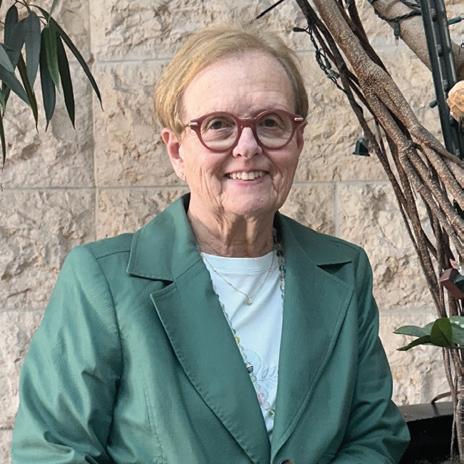
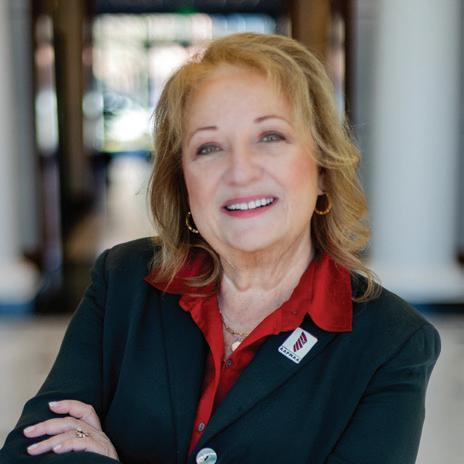




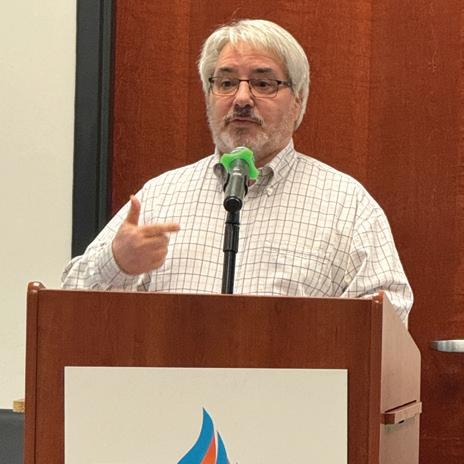














Grace Gilson (JTA) — More than 500 rabbis, cantors, and Jewish communal leaders signed onto a letter calling on Israel’s ambassador to the United States, Yechiel Leiter, to rescind and apologize for remarks describing J Street as a “cancer within the Jewish community.”
The letter, which J Street shared with the Jewish Telegraphic Agency, accused Leiter, a Netanyahu appointee and former settler leader, of using language that “dehumanizes fellow Jews” during his remarks in Washington, D.C., on Monday, May 18.
J Street is the leading liberal pro-Israel lobby, and has increasingly staked out positions that have departed from other mainstream pro-Israel groups. In April, the group announced its opposition to continued U.S. military aid to Israel, which Leiter decried in his remarks.
The signatories wrote that while Judaism embraces vigorous debate, disagreements must be conducted with “humanity, humility, and respect for the dignity of every Jew.”
“At this painful and polarized moment in Jewish life, leaders on both sides of the ocean bear a heightened responsibility to lower the flames rather than fan them further,” the letter read. “We therefore call on you to retract your remarks and issue a public apology to the many American Jews, rabbis, cantors, and communal leaders who have been hurt by them.”
Among the signatories were New York Rep. Jerrold Nadler, former U.S. ambassadors to Israel Daniel Kurtzer and Tom Nides, National Council of Jewish Women CEO Jody Rabhan, Union for Reform Judaism President Rabbi Rick Jacobs, and Rabbi David Saperstein, director emeritus of the Religious Action Center of Reform Judaism.
J Street President Jeremy Ben-Ami told JTA that his initial reaction to Leiter’s comments was “simply dismay on behalf of Israel and on behalf of the Jewish community.”
“It’s a shame, because Israel, right now, needs all the friends it can get, and it really needs diplomats who seek to open doors and not slam them in people’s faces,” Ben-Ami said.
The Israeli Embassy did not immediately respond to a request for comment from JTA.
The comments from Leiter follow a long history of criticism of the lobby from pro-Israel officials. In 2017, former U.S. ambassador to Israel David Friedman called the group “worse than kapos,” a reference to Jews who aided the Nazis during WWII.
While Ben-Ami said that the latest attack was “not new,” he felt spurred to craft a communal rebuke of Leiter’s rhetoric because he felt it was “breaking” not just the US-Israel relationship, but the relationship between the “American Jewish community and the Israeli Jewish community.”
“Within 24 hours we had hundreds and hundreds of people, and I think it just shows what a raw nerve Ambassador Leiter has touched here, and just what a big mistake it is for the Israeli government to write off the majority of Jewish Americans who are deeply critical of the government but supportive of the state and the people,” Ben-Ami said of the number of signatories.
The letter comes as J Street has also faced scrutiny from across the political aisle, with the Zionist Organization of America calling for Hillels, Jewish Community Relations Councils, and federations to cease relations with the group, while the student government of Sarah Lawrence College rejected an application to form a chapter of the group on its campus.
Looking ahead, Ben-Ami said that he hoped the letter would serve as a reminder that Jewish leaders need to make room for ideological differences rather than treat dissent as disloyalty.
“The message more broadly here is, we need to embrace the diversity of opinion,” BenAmi said. “We need to embrace our disagreements and recognize that that is indeed part of Jewish tradition.”
Ami Eden
(JTA) — Reading the polls and listening to conservative podcasts, you would understandably think that Republicans are souring on Israel and poised to start voting like Democrats on the issue. At least a little. But the congressional primary results last month in Philadelphia and northern Kentucky tell a more nuanced story (at least for now).
Chris Rabb’s win in the Democratic primary for a congressional seat representing sections of Philadelphia reinforced the view that staunch anti-Israelism is arguably the most potent force in Democratic politics today. The Pennsylvania state representative executed the progressive playbook perfected by New York City Mayor Zohran Mamdani, showing how tough talk on Israel and AIPAC can galvanize the party’s left-wing base.
In Mamdani’s case, however, he was running against several candidates with strong pro-Israel records and deep pro-Israel support – for a position that has long served as a key public cheerleader for Israel in the United States. Rabb, on the other hand, proved that the strategy can be the winning ticket in a race ostensibly having nothing to do with Israel or AIPAC.
Unlike the New York mayor’s race, the primary in Philadelphia consisted of candidates with similar views on affordability issues, while Rabb’s opponents weren’t exactly waiving the pro-Israel flag or raking in major pro-Israel dollars. But, to borrow from 1964 GOP presidential candidate Barry Goldwater, for an increasing swath of Democratic voters (and D.C. lawmakers), when it comes to standing up for the Palestinians and rejecting U.S. support for Israel,
extremism is no vice and moderation is no virtue.
On the Republican side, U.S. Rep. Thomas Massie’s flameout in the GOP race for Kentucky’s 4th District suggests that while there may be a gathering storm of discontent over Israel, the main force that matters when it comes to the ballot box remains
Donald J. Trump.
Massie tried his best to make his race a referendum on Israel and the influence of pro-Israel money, rather than Trump’s decision to go all in for challenger Ed Gallrein. It didn’t work.
“I’m walking to an airplane to rejoin the most expensive congressional race in U.S. history. It’s turned into a referendum on whether Israel gets to buy seats in Congress,” Massie said a few days before an election that saw record spending by groups both supportive and critical of the Jewish state. After Massie’s defeat, he quipped: “I would have come out sooner but I had to call my opponent to concede and it took a while to find Ed Gallrein in Tel Aviv.”
Despite such rhetoric, the biggest reason Massie will be leaving Congress in January is that Trump wanted him gone – in part over his criticism of the Iran war, but more generally over a range of issues that the Kentucky lawmaker has broken with Trump on.
Unfortunately for Massie, the GOP for the time being belongs to Trump and his loyal followers, not the growing number of young conservatives who want an end to U.S. support for Israel.
The views and opinions expressed in this article are those of the author and do not necessarily reflect the views of JTA, its parent company, 70 Faces Media or of Jewish News or United Jewish Federation of Tidewater.
jewishnewsva.org
Published 18 times a year by United Jewish Federation of Tidewater.
Reba and Sam Sandler Family Campus of the Tidewater Jewish Community 5000 Corporate Woods Drive, Suite 200 Virginia Beach, Virginia 23462-4370 voice 757-965-6100 • fax 757-965-6102 email news@ujft.org
Terri Denison, Editor
Michael McMahon, Art Director
Haley Bartel, Copywriter Sandy Goldberg, Ad Sales
Patty Malone, Circulation Teresa Knecht, Digital Manager
United Jewish Federation of Tidewater Mona Flax, President
Jason Hoffman, President elect Robert Friedman, Secretary Alvin Wall, Treasurer Betty Ann Levin, Executive Vice President JewishVA.org
The appearance of advertising in the Jewish News does not constitute a kashrut, political, product or service endorsement. The articles and letters appearing herein are not necessarily the opinion of this newspaper. ©2026 Jewish News. All rights reserved.
Subscription: $18 per year For subscription or change of address, call 757-965-6115 or email pmalone@ujft.org
Argentine official who investigated death of AMIA prosecutor charged with cover up
The former prosecutor who led the investigation into a mysterious 2015 death that unnerved Argentina’s Jewish community has been charged with concealing evidence in the case.
Viviana Fein was indicted on May 12 on charges of “aggravated concealment” over her handling of the investigation into the death of Alberto Nisman, a special prosecutor appointed to investigate the 1994 bombing of the AMIA Jewish community center in Buenos Aires that killed 85 people.
On Jan. 18, 2015, Nisman was found dead in his Buenos Aires apartment with a bullet hole above his right ear, having been shot at point-blank range. His body was discovered hours before he was scheduled to present evidence before Argentinian lawmakers accusing then-President Cristina Fernández de Kirchner and other senior officials of allegedly covering up Iran’s role in the AMIA attack.
At the time, Fein declared Nisman’s death a suicide, but in May 2016 she slightly amended her view saying that he may have been forced to kill himself. Then, in 2017, forensic investigators issued a report stating that Nisman was assassinated. Jewish institutions have also maintained that he was murdered.
Under the Argentine Penal Code, a person charged with aggravated concealment must not have actively participated in the original crime but joined in the aftermath, and Judge Julián Ercolini ruled that Fein allegedly failed to properly preserve the crime scene at Nisman’s apartment.
According to court filings, dozens of people entered and exited the apartment without proper controls, potentially contaminating evidence and compromising the investigation.
The controversy surrounding the handling of the original crime scene has persisted for years.
Fein, who could face up to three years in prison if found guilty, has denied any wrongdoing.
The prosecution comes as Argentina’s government takes a newly aggressive stance against Iran and Hezbollah, which are widely understood to have planned the bombing. Since Javier Milei, a conservative supporter of Israel, was elected in 2023, the country has officially declared Iran and Hezbollah responsible for the AMIA attack and another attack two years earlier on the Israeli embassy; designated Iran’s Revolutionary Guard a terrorist organization; and decided to pursue a trial in absentia for suspects implicated in the case. (JTA)
Israel’s Noam Bettan takes 2nd at Eurovision, buoyed by public vote
The Israeli contestant in last month’s Eurovision Song Contest won second place for the second year in a row, drawing a strong public vote despite protests over Israel’s inclusion in the contest.
Noam Bettan and his song, Michelle, ranked third
in the public vote and eighth in the jury vote, which combined to give him second place behind the entry from Bulgaria, which won the contest for the first time.
Bettan thanked his fans in a post on Instagram after leaving the stage.
“I’m still processing everything and trying to find the words for this incredible journey. You guys are amazing and this is all because of you. I love every single one of you!” he wrote.
Five countries boycotted the contest this year over Israel’s inclusion, citing Israel’s military operations in Gaza. After the competition, a spokesperson for VRT, Belgium’s national broadcaster, said the country was unlikely to participate next year unless the European Broadcasting Union, which runs the contest, makes “a clear statement against war and violence and for respect for human rights.” Belgium came in 21st of 25 competitors in the final.
Bettan faced a smattering of boos both during the semifinal and during the final in Vienna, as well as when Israel briefly led the leaderboard during the announcement of the audience votes.
Israel scored 220 points in the public vote after drawing a formal warning from the EBU for its campaign urging supporters to send all 10 of their votes to Bettan. Israel’s broadcaster called off the campaign after being told it was “not in line with our rules nor the spirit of the competition.”
Israel also drew 123 points from national juries, more than twice what it earned last year when 22 countries awarded Israel no points at all in a result seen as driven in part by political tensions. (JTA)
Harry Styles to ‘Viva Palestina’ concertgoer in Amsterdam: ‘Correct’
On the opening night of his world tour beginning in
Amsterdam on May 16, global superstar Harry Styles backed a brief pro-Palestinian chant from the crowd. It was his first public comment on the Israeli-Palestinian conflict, after years of expressing an affinity for Jewish culture.
The Amsterdam concert was the first of his Together, Together tour, held at the Johan Cruijff Arena.
Following Styles’ remarks about “changing the world together,” in between songs, an attendee shouted, “Viva, Viva Palestina” (meaning, “Long Live Palestine”), to which Styles replied, “Correct.”
It’s the first time the 32-year-old has made any public remarks on the conflict, but one of Styles’ tour charity partners is Choose Love, a humanitarian organization that works with displaced communities around the world, including those from Gaza.
Styles is newly engaged to actor Zoë Kravitz, who is Jewish, and as a teenager, he often tweeted transliterated Hebrew well wishes for various Jewish holidays. While competing on the British talent show The X Factor in 2010, where he rose to stardom, Styles stayed with the Orthodox Jewish Winston family, with whom he became close and
considers mentors. In 2014, Styles announced that his New Year’s resolution was to learn Hebrew. (JTA)
Jewish Rep. Cohen will not run again after Tennessee GOP redraws his district
Rep. Steve Cohen, the Jewish Democrat from Tennessee at the center of a controversial Republican-led redistricting push, will not seek reelection.
Cohen, whose Memphis-area district is being splintered into three different districts, is one of a handful of Jewish Democratic casualties of the mid-decade redistricting sprint engineered to push the GOP’s House advantage in this year’s midterm elections.
“I don’t want to quit. I’m not a quitter. But these districts were drawn to beat me,” Cohen said in his press conference last month announcing his decision.
In addition to Cohen, a cohort of three Jewish Democratic congresspeople in Florida are facing new uphill battles for reelection following that state’s GOPled redistricting. Reps. Debbie Wasserman Schultz, Lois Frankel, and Jared Moskowitz have all seen their districts become more favorable to Republican challengers after the state’s congressional map was redrawn.
But the Tennessee state house’s last-minute redrawing of Cohen’s district, which is majority African American and the state’s sole Democratic U.S. House seat, has spurred the most controversy. Tennessee’s 9th has one of the highest concentrations of Black voters in the country. Cohen has represented the district since 2006.
The congressman left the door open for a run pending a lawsuit, filed by the Tennessee Democratic Party and other organizations, asking for a temporary restraining order on the redrawing. But he also appeared resigned to the possibility that those lawsuits would not prevail.
Cohen also took a swipe at Tennessee GOP Rep. Andy Ogles, who, he said, “referred to me the other day as ‘an old, white Jewish guy,’” while defending the state’s redistricting plan on Newsmax.
Ogles, a hardline conservative congressman who has served Tennessee’s 5th Congressional District since 2023, is currently facing a primary challenger while also remaining under scrutiny for alleged campaign finance violations tied to his campaign in 2022.
“Well, I guess I’m old and I’m Jewish and I’m white. But why [did] he have to say, ‘white Jewish guy,’ as distinguished from a Black Jewish guy, Sammy Davis and a few other people?” Cohen mused. “As far as ‘white Jewish guy,’ does that mean there’s something different among Jewish people and white people? I don’t know what he’s saying. He doesn’t either.”
The other congressman from Memphis, Republican David Kustoff, is also Jewish. (They both attend the Reform congregation, Temple Israel.)
A 2010 redistricting moved most of Memphis’ Jewish community, estimated at about 10,000 and including the largest Orthodox congregation in the United States, into Kustoff’s district, Tennessee’s 8th. (JTA)
Jackie Hajdenberg
(JTA) — Jewish groups are denouncing a fatal shooting at a mosque in San Diego in which three people, including a security guard, were killed. They are also saying the incident, which follows attacks on synagogues, underscores a need for more federal funding for security at houses of worship.
Police in San Diego said they are investigating the attack on the Islamic Center of San Diego as a hate crime. San Diego Police Chief Scott Wahl said two teenagers, ages 17 and 19, who appeared to have carried out the attack were found dead of self-inflicted gunshot wounds in a car nearby.
“We are heartbroken by today’s attack on the Islamic Center of San Diego. Islamophobia has no place in California or anywhere in this country,” Jesse Gabriel, chair of the California Legislative Jewish Caucus, said. “We are committed to working with our colleagues to strengthen protections for houses of worship and combat hate-motivated violence.”
The attack sent five area schools into lockdown, including a Hebrew charter school.
“We’re safe and we’re following the direction of the police,” a representative for Kavod Hebrew Charter School told Jewish Telegraphic Agency. Kavod is a non-religious bilingual K-8 school that employs a number of Jewish and Israeli educators.
A synagogue that houses a school in an adjacent neighborhood also said it was briefly locked down in the immediate aftermath of the shooting.
The mosque attack comes two months after a man rammed an explosives-laden truck into one of the largest synagogues in the United States, Temple Israel in Michigan. There, the synagogue’s robust security training was credited with halting the attack. Children were inside the adjacent preschool at the time.
“The images coming from San Diego are all too familiar to us,” Temple Israel said in a message to its community that it posted to social media. It said that one of its rabbis, Jen Lader, was in Washington, D.C., to lobby for $1 billion in federal security funding for houses of worship. (See article on page 7.)
“To anyone who feels this is excessive, what happened to Temple Israel two months ago, and now, the Islamic Center of San Diego, proves that it is not optional funding,” Temple Israel said. “Every dollar will be necessary to protect houses of worship all over the country.”
Imam Taha Hassane of the Islamic Center of San Diego, which includes a mosque and the adjacent Al Rashid School, said during a press conference the day of the shooting, “At this moment, all that I can say is sending our prayers and standing in solidarity with all the families in our community here, and also the other mosques and all the places of worship in our beautiful city. They should always be protected. It is extremely outrageous to target a place of worship. Our Islamic Center is a place of worship. People come to the Islamic Center to pray, to celebrate, to learn.”

In an emergency, always call 9-1-1 first.
If online reporting is not practical, contact local law enforcement and/or the relevant suspicious activity reporting authority.
Also contact Mike Goldsmith, Tidewater’s SCN Regional Security Advisor, at MGoldsmith@ujft.org or 844-SCN-DESK.















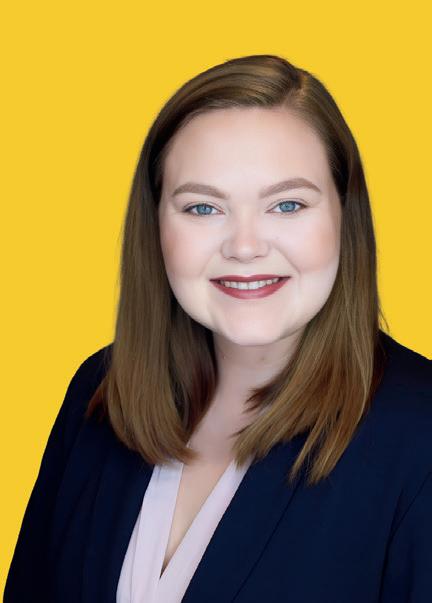

Sierra Lautman
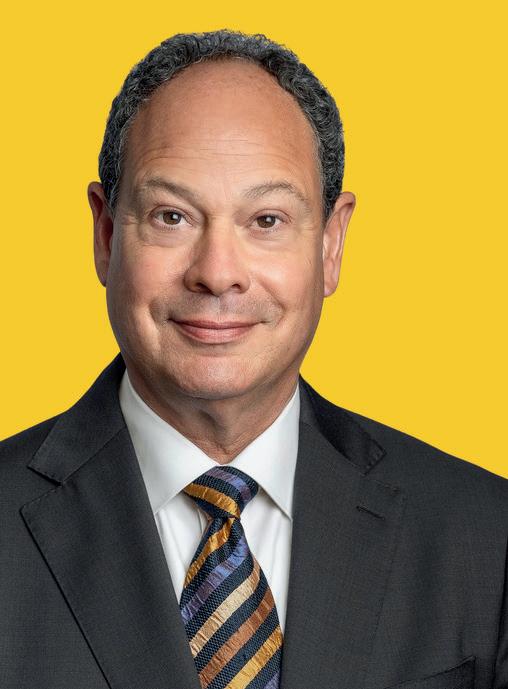
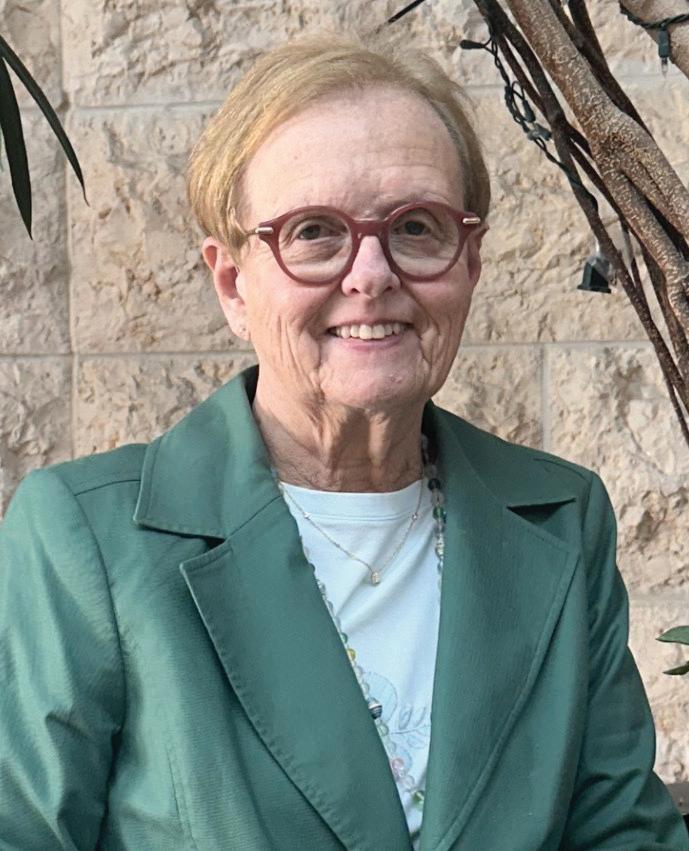
Dorothy Salomonsky never expected that an effort to help a few vulnerable community members would grow into one of Virginia’s leading public guardianship programs. But more than 30 years after helping launch the JFS Personal Affairs Management (PAM) program at Jewish Family Service of Tidewater, her work has touched thousands of lives.
In honor of America at 250, Salomonsky is being recognized by United Jewish Federation of Tidewater as an Outstanding Jewish American in Tidewater.
In the mid-1990s, while Salomonsky was working part-time for the Jewish Community Center, Jewish Family Service of Tidewater received a grant for a part-time “bill payer” position to assist
older adults who needed help managing finances. Salomonsky took the job. From that position, she began encountering people who required guardianship services, but there was no local model for how to assist them.
“We had Jewish community members who needed guardianships, and nobody really knew how to do it,” Salomonsky recalls.
Working alongside Harry Graber (then JFS CEO), and local attorneys, Salomonsky helped create a structure that would eventually shape public guardianship across Virginia. The model, in which an agency serves as guardian with oversight from an advisory committee, became the foundation for the state’s public guardian law.
Our community funds support all kinds of causes, such as the arts, education, and civic leadership.
You can donate in honor of a friend or loved one for any special occasion.
HamptonRoadsCF.org/ giving-your-way/giving-today
Today, JFS’s guardianship program serves more than 1,200 clients and employs approximately 75 staff across local and remote teams.
“We knew from the beginning there was a need,” Salomonsky says. “In the late 90s, we had 10 clients. Then in 2005, we had 60. Now we keep a steady number over 1,000 clients year after year.”
For Salomonsky, however, success is not measured in numbers. The heart of the work is dignity.
“But when he’s sick, or there’s a storm, he calls us,” she says. “He knows someone will be there for him.”
Salomonsky’s sense of communal responsibility stretches back generations. Both her family and her husband’s family have deep roots in Tidewater – since the early 1900s. In fact, her grandfather was among the founders of Brith Sholom Lodge.
“By the time someone comes into the guardianship program, they’ve already gone beyond their worst day,” she says. “The point is for them to still feel human. They need to feel seen.”
That philosophy shapes the program’s approach to care. The guardian representative acts not just as a case manager, but as a friend.
One story from the late 1990s remains with Salomonsky.
A former Navy nurse with dementia had recently moved into a facility. When she turned 100, JFS staff attended a large celebration for her at the facility, complete with decorations, food, and entertainment. But throughout the party, the woman sat quietly, staring at her hands.
Then, her guardian representative brought her an assortment of Hershey chocolate bars, and suddenly the woman lit up, spending the rest of the afternoon happily arranging and admiring them.
“It taught me that the big party didn’t matter,” Salomonsky says. “What mattered was that someone knew her well enough to know she loved Hershey bars.”
That same commitment to individualized care extends to clients living on the margins. Salomonsky describes one man who chooses to remain homeless, despite the program’s efforts to help him find housing.
Her great-grandfather, Abraham Silverman, owned a fish market in Norfolk and on Friday nights, he would often bring newly arrived Jewish immigrants home from the port to share Shabbat dinner with the family.
“My great-grandmother would make huge trays of gefilte fish from the market,” Salomonsky says. “I grew up hearing those stories from my mother, and they taught me that you show up for your community. You welcome people in.”
That’s a way of way of life
Salomonsky has lived with her husband, Edwin, and modeled for her four children and seven grandchildren.
Though she never initially planned to become a Jewish communal professional, Salomonsky says helping others through the Jewish community always felt natural.
Now, decades after helping build a program that changed lives across the Commonwealth, Salomonsky remains focused on the same simple lesson she learned from her family and from the clients she has served: meaningful care starts with truly seeing another person.
Her advice to future Jewish leaders is equally straightforward:
“Get involved. And don’t be afraid to try something new.”
Interested in nominating someone to be recognized as an Outstanding Jewish American in Tidewater? Visit JewishVA.org/ TidewaterHeroes or contact Sierra Lautman at SLautman@UJFT.org.
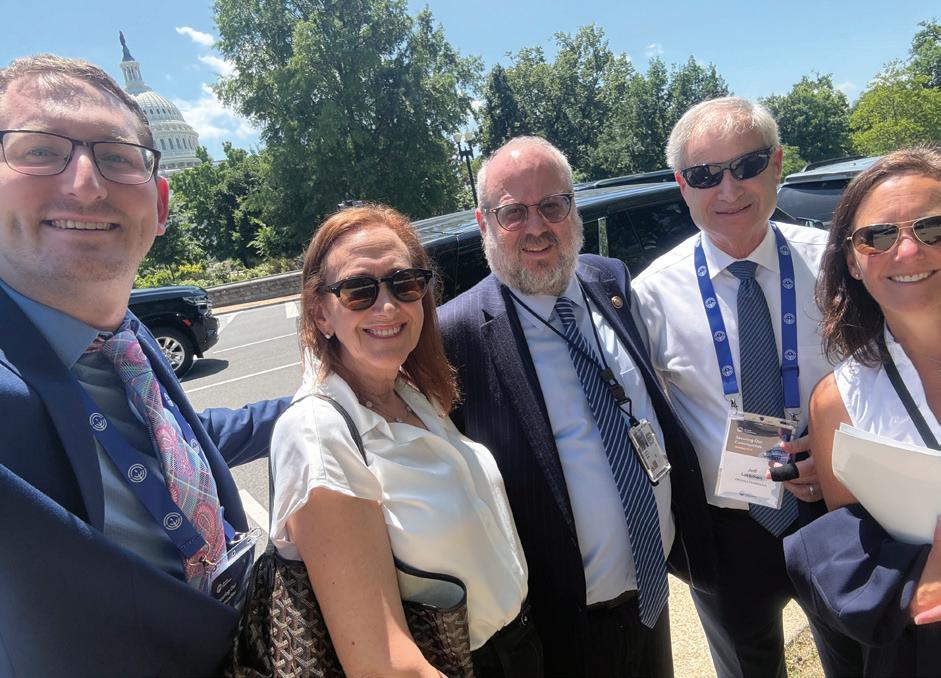
Amid rising threats to the American Jewish community, Jewish Federations of North America brought more than 400 Jewish leaders from 82 different communities across the country to Capitol Hill to hold over 200 meetings with key Congressional leadership late last month. The Jewish leaders also championed the landmark bipartisan Jewish American Security Act, which was introduced earlier in the day.
Mona Flax, president, United Jewish Federation of Tidewater, Robin Mancoll, UJFT’s chief program officer and senior director, Jewish Community Relations Council, and Rabbi Jacob Herber were among the participants.
The bill would boost Nonprofit Security Grant Program funding to $1 billion that can be used by Jewish communities, create a new grant that can be used for places of worship, require the Department of Education to designate an antisemitism coordinator, and lay out new regulations to combat antisemitism at colleges that receive DOE funding. Additionally, the measure would require new disclosures about how online platforms moderate and respond to antisemitic content.
and CEO of Jewish Federations of North America.
“This legislation represents one of the strongest congressional responses we have seen to the alarming rise in antisemitism and targeted violence against the Jewish community,” Fingerhut continued. “It sends a clear and unmistakable message: protecting Jewish Americans is not optional — it is an urgent national priority. We are proud to support this effort and urge Congress to act swiftly, because no American should have to live in fear simply for being Jewish.”
In Michigan this March, a terrorist crashed a car filled with weapons into Temple Israel, where more than 120 preschoolers hid in fear. If not for critical security training and personnel, this near massacre could have become one of the worst attacks on American soil since 9/11. This incident is one of many that underscores the tragic need for increased security to ensure Jewish Americans can gather safely and openly practice their faith.
Goldman expressed their support for the bill, discussing how they can champion Jewish safety in their states and around the country.
“The historic moment that we are in right now, here today, that we have come to through all of this, calls for an equally large effort, and that’s why today we are proud to introduce our bipartisan bill in the Senate and in the House to launch an aggressive and comprehensive domestic approach against antisemitism through our bipartisan Jewish American Security Act,” said Senator Rosen. “We will help keep Jewish students safe, will help secure Jewish community institutions, and we will help fight antisemitism online.
“In the last decade, we’ve seen record-breaking year after record-breaking year of antisemitic incidents. We’ve seen vandalisms, attacks, murder, threats on Jewish communities at schools and our college campuses, at Jewish-owned businesses, at our places of worship. But this last year has been one I will never forget,” continued Senator Rosen. “We must agree that intimidation, discrimination, violence, and even murder of Jews is always wrong and always unacceptable.”
Over the last 12 months, Jews have been deliberately targeted with violent attacks threatening Jewish religious expression. In fact, during the week prior to the meetings, members of Congress received antisemitic death calls, and a commander of an Iranian-backed militia was charged with plotting to attack Jewish sites in the United States. This need for security funding extends beyond American Jewish communities – with three people killed last month in the shooting at the Islamic Center of San Diego, including a security guard.
Americans of all faiths deserve the right to gather safely with their communities, which is why Jewish leaders joined Senator Jacky Rosen (D-NV) and Representative Dan Goldman (D-NY-10) on Capitol Hill to discuss the rising domestic security crisis and support the Jewish American Security Act. The Act is co-sponsored by Rosen and James Langford, a Republican from Oregon.
“Jewish communities across the United States are facing a real and growing security crisis, and the federal government has a responsibility to ensure that all Americans can gather, worship, and live openly and safely as who they are,” said Hon. Eric D. Fingerhut, president
“The Nonprofit Security Grant Program is the federal funding stream that helps houses of worship and community centers protect themselves,” Temple Israel’s Rabbi Jen Lader told the gathered members of Congress and Jewish leaders. “In our case, prior investment in our security infrastructure was the difference between the destruction of a building and an unspeakable tragedy. This funding is without exaggeration a matter of life and death.”
Jewish communities are being forced to choose between programs like schools, camps, food banks, and social services to meet increased security needs while demand outpaces the federal program Congress built to help. Proper funding ensures that all communities of faith will have access to critical security dollars, allowing all religious groups to practice freely.
“The importance of fighting antisemitism, though, is not just for Jewish Americans, because we know through history that antisemitism may strike first, but it never strikes last....it may start with Jews one day, but it will go to another group the next day, and we saw an example of this in San Diego with a horrific attack on the Islamic Center,” said Representative Dan Goldman.
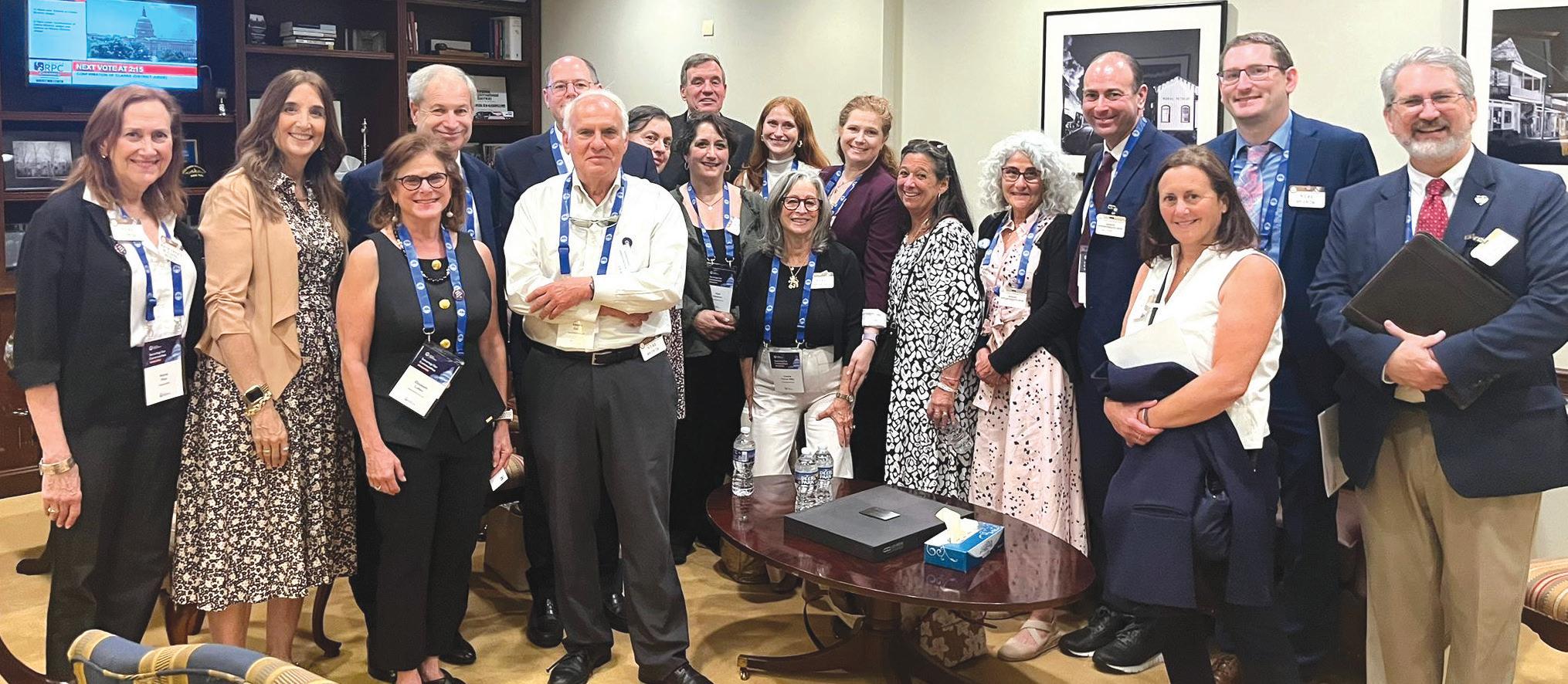
Senator Jacky Rosen and Representative Dan
“My biggest takeaway” from the meetings, says Mona Flax, “was how engaged and interested Senator Mark Warner’s, Senator Tim Kaine’s, and Congressman Bobby Scott’s aides were. Most of them were aware of the antisemitism but I could tell many were surprised by how personal the issue has become for all Jewish Americans. Telling personal stories brought the issue home.”
BSV Staff Writer
What does it mean to age with dignity? Sometimes, it means having transportation to the grocery store or a doctor’s appointment. Sometimes, it means sharing a meal with friends, participating in a wellness program, or simply feeling connected to a community. Often, it’s the small moments and everyday support that make the greatest difference in helping older adults remain active, engaged, and cared for.
For Beth Sholom Village, that understanding has long been at the heart of its mission to care for seniors with compassion and dignity. This spring, that mission expanded with the launch of Beth Sholom Village’s community grant program, supporting nonprofit organizations serving seniors throughout Tidewater.
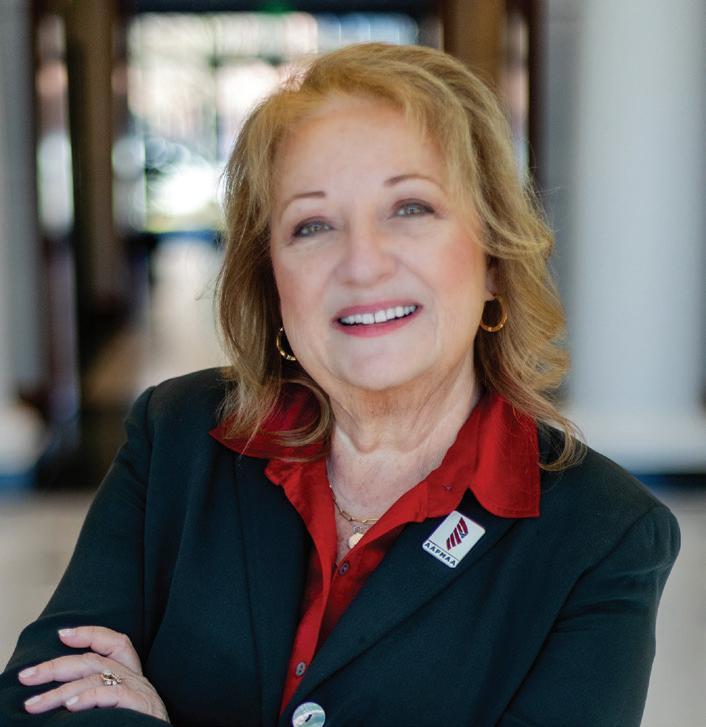
created to support organizations serving Jewish seniors, the inaugural grant cycle also reflects Beth Sholom Village’s broader commitment to strengthening the lives of older adults across the community. Applications were received from a diverse group of nonprofit organizations addressing some of the most important challenges facing seniors today.
grant recipients.
“For over 40 years, Beth Sholom Village has been caring for older adults with kindness, compassion, and dignity,” says Fay Silverman, board chair of Beth Sholom Village. “Through this grant program, we are proud and honored to extend support to organizations that are helping seniors remain active, connected, engaged, and cared for throughout our community.”
While BSV’s grant program was primarily
Following a review process led by Tidewater Jewish Foundation’s staff and Beth Sholom Village’s Grant Committee, the organization’s board of directors approved the slate of
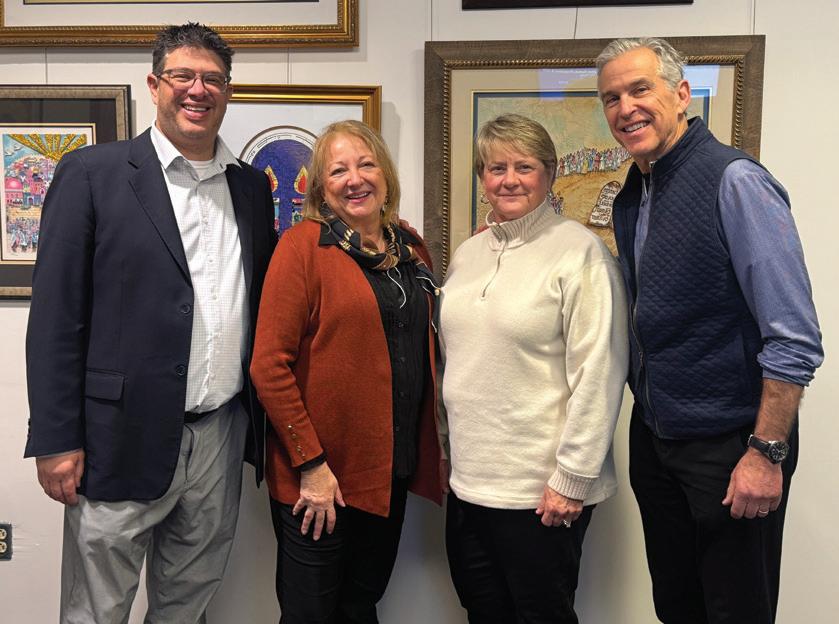


The grants will support a wide range of needs, including caregiver support, indigent Jewish burials, expanded transportation options, outreach services, reducing social isolation, food insecurity, home improvements, emergency assistance, and visitation programs.
Edie Schlain, chair of the Beth Sholom Village Grant Committee, says the process highlighted both the growing needs of seniors and the extraordinary dedication of the diverse local organizations working to meet them.
“Beth Sholom Village is here to help seniors with food, housing, transportation, and connection,” Schlain says. “Our commitment to caring for older adults remains as strong as ever.”
Grant recipients will be formally recognized during a special community celebration hosted by Beth Sholom Village on June 17.
A full list of grant recipients can be viewed at: https://bethsholomvillage.com.
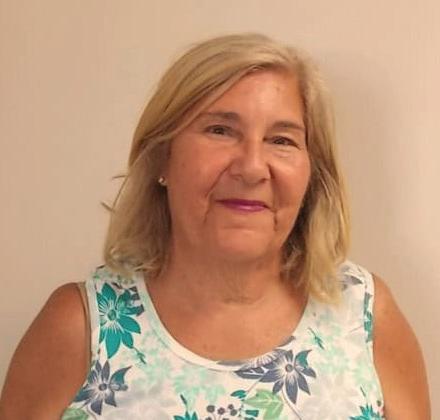
Kramer
Two years have flown by. My term as chair of Tidewater Jewish Foundation is nearing its end. I have served with some of the most dedicated board members and staff anyone can ever be privileged to have, and it has been an honor I will never forget. Our Jewish community in Tidewater has some of the most amazing people to learn and work with. Thank goodness for my predecessors, who were always willing to listen and advise on a moment’s notice. The same can be said for my board and committee members. Their intelligence and wisdom are guiding lights, keeping this institution on course and doing everything it possibly can for the community it serves.
TJF’s staff are some of the hardest working, dedicated professionals I have ever been associated with. I hope everyone has experienced the results of their work as we try to help our organizations become thriving institutions able to address the needs of our community.
Those of us who serve at TJF have a singular motivation. We all hope we can secure our Jewish future by building strong foundations for the institutions that allow us to live Jewishly here in Tidewater. These accomplishments require hard work, sacrifice, vision, and perseverance. Legacy is not simply about dollars and cents. It is about making sure future generations have the same opportunities to gather, worship, learn, celebrate, and support one another that we have today.
I served with Ron Kramer, Jerry Miller, Alvin Wall, Lawrence Steingold, Jody Wagner, and Charlie Nusbaum, and each generously shared their vision while helping me understand how important TJF is to our community. Hopefully, I’ve been able to keep that vision alive in some small way while helping prepare those who follow.
TJF has, by any metric, been incredibly successful. In six years, we have grown our consolidated assets from $104 million at the end of 2020, to almost $200 million with almost $68 million in promises. Several years ago, Jody and Charlie helped develop a long-range plan calling for a tripling of assets and stronger succession planning.
Today, TJF has set its sights on an even bolder goal; reaching $500 million in assets under management to help secure the long-term strength of Jewish life in Tidewater. Naomi Sedek, TJF’s president and CEO, has worked tirelessly to implement this vision, and we are in far better shape because of her and TJF’s professional team. I leave TJF in capable hands. Paul Peck will be a fabulous chair, and our succession plan is strong. My more than 20 years of service has been among the most rewarding experiences of my life, and I thank you for allowing me to serve.
“This area is our home and we are committed to supporting it. Our lawyers are actively involved by donating their time to programs that help the community, especially in the schools with young drivers. I am very involved with End Distracted Driving, spending 20 days a year in the schools educating students about the dangers of using a cell phone while

“Payday is very forward thinking and is always up on potential changes. We have also been impressed by Payday’s contingency planning. Whenever there is a potential natural disaster in our region, such as a large storm, Payday is proactive and works with our staff to make sure that everyone will be paid without interruption.”
Our client relationships are anything but transactional. We are long-term partners, dedicated to the success of our clients, and most importantly, their people.
PD-ad-three-eighths-V-color-Jewish News-111320.indd 8

Uncover root causes, restore balance, & build lasting health
Book your complimentary discovery call today! FrissoraFunctionalWellness.com info@FrissoraFunctionalWellness com @frissorawellness You do not have to settle for feeling “fine ”








Tidewater Jewish Foundation is often a convener, bringing together organizations, ideas, and opportunities to strengthen the community. Sometimes, projects such as the Maria A. Mansbach Memorial Student Motivation Program and the Elie Wiesel Writing Competition intersect, ensuring the meaning of tikkun olam, repairing the world, comes into focus. Through educational opportunities supported by TJF, students both within and beyond the Jewish community are empowered to think critically, find their voice, and shape a better future.
For Janae Loudon, that impact is personal.
The rising ninth grader recently earned top honors in United Jewish Federation of Tidewater’s Holocaust Commission’s Elie Wiesel Writing Competition. Loudon is also one of the newest participants in the Maria A. Mansbach Memorial Student Motivation Program, a mentorship and enrichment initiative facilitated through An Achievable Dream and funded by a supporting organization of Tidewater Jewish Foundation.
Loudon, who enjoys reading, creative writing, crafts, and spending time in nature, says entering the writing competition allowed her to challenge herself and express ideas.
“My essay was about learning from history and understanding others,” she says. “I chose it because I think people should learn from the past.”
Loudon says she felt both surprised and proud when she heard she had won.
The Mansbach Scholars program supports fifth through 12th grade students in Title 1 schools in Norfolk through mentorship, academic support, life-skills development, enrichment activities, and college preparation experiences. Students participate in workshops, field trips, collaborative projects, and exposure to college campuses and career pathways designed to help them envision a successful future.
“My favorite part has been hearing advice from mentors and learning about college,” Loudon says. “The program helped me feel more confident in myself and my writing.”
The Mansbach program recently expanded through a partnership between TJF and An Achievable Dream, a nationally recognized educational organization focused on helping students succeed regardless of socioeconomic background. Together, the partnership aims to equip students with the skills, confidence, and mindset needed for college, career, and life.
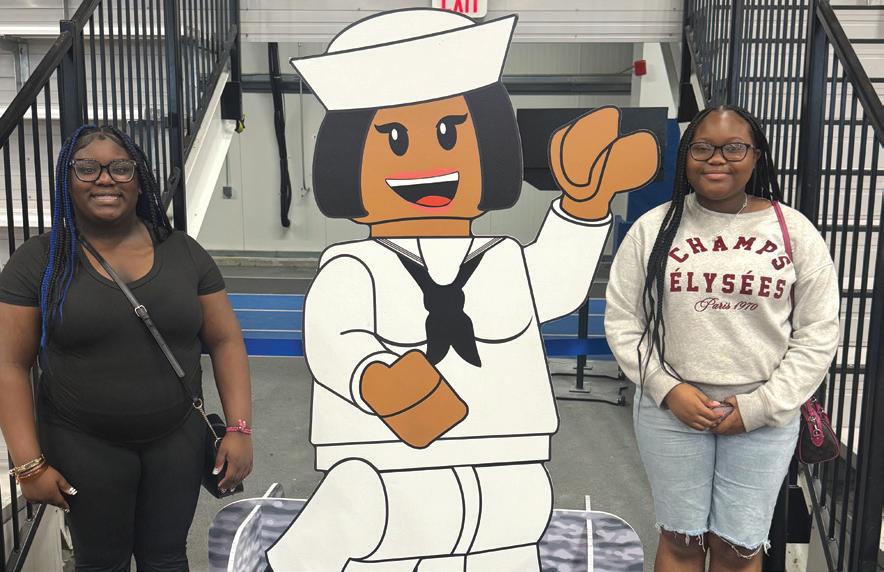
Elka Mednick, director of the Holocaust Commission, says, “For nearly three decades, the Elie Wiesel Writing and Visual Arts Competition has encouraged students to engage not only with the history of the Holocaust, but with its relevance today. Inspired by Elie Wiesel’s legacy of remembrance and moral responsibility, the competition invites young people to reflect on how lessons from the past can shape the choices they make in the present.”
Naomi Limor Sedek, Tidewater Jewish Foundation president and CEO, says Loudon’s achievement reflects the shared mission behind both programs.
“When organizations and programs come together around education, mentorship, and opportunity, we begin to see real community impact,” Sedek says. “The Mansbach Scholars program and the Elie Wiesel Competition both help students develop confidence, compassion, and critical thinking skills; qualities that shape individual futures in addition to strengthening our broader community.”







With graduations and closing award ceremonies taking place nearly daily, there’s much for families to celebrate. A glance at the 33 graduates we’re acknowledging in this issue, beginning on the next page, exemplifies the range of study and ages of Tidewater’s students – from high school diplomas to doctorate and dental degrees and from teens to parents. Jewish Tidewater’s graduates are impressive and clearly prepared to tackle their next challenges. Mazel tov!
Switching to Father’s Day (Sunday, June 21), we feature two men who not long ago were celebrated for their own outstanding achievements (in addition to their roles as dads).
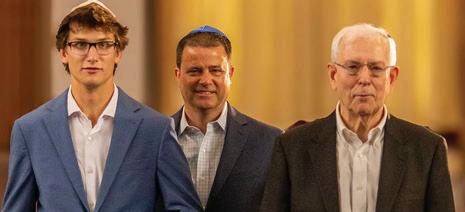
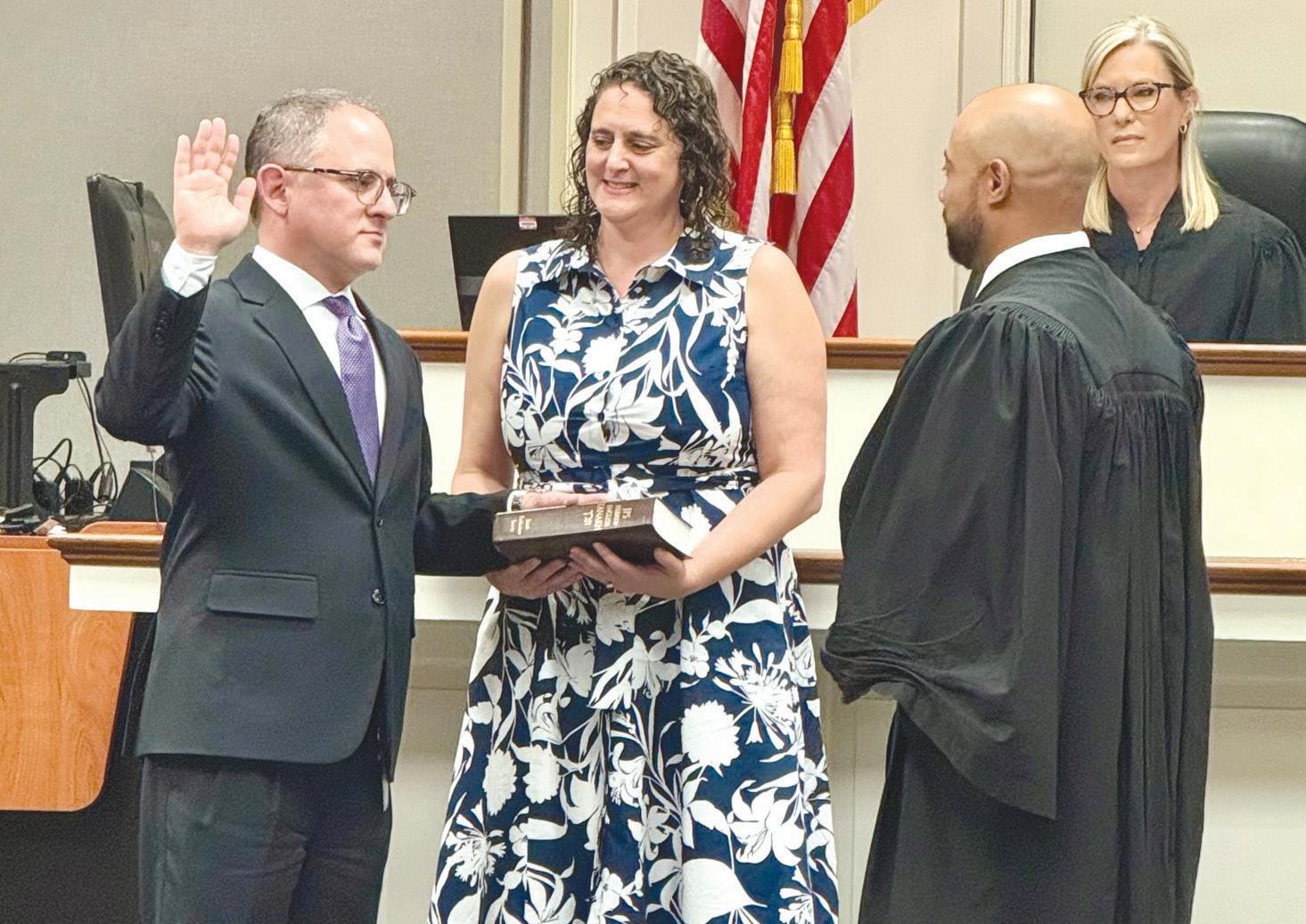
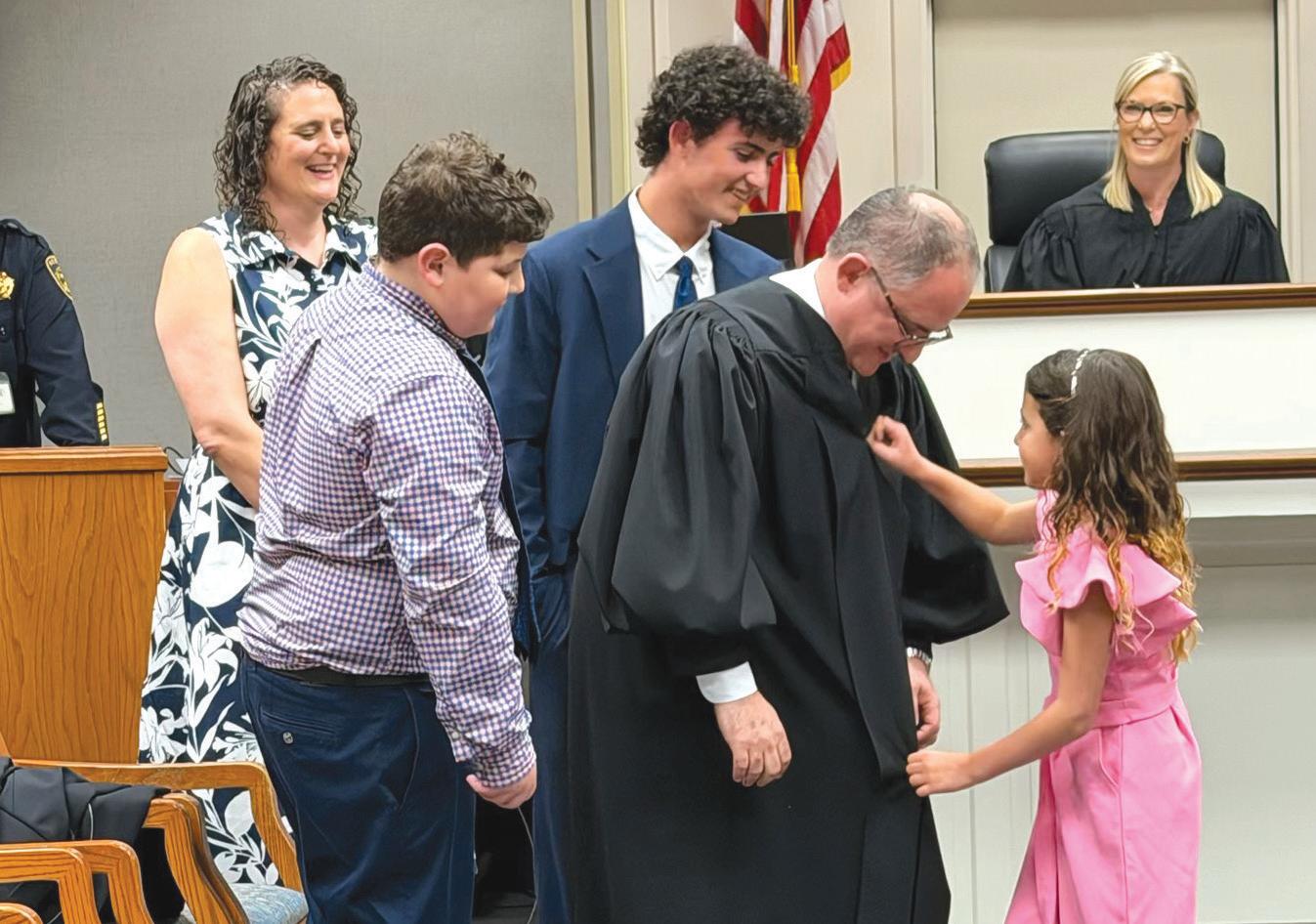
The Honorable Aaron F. Kass was recently sworn in as a Judge of the Virginia Beach General District Court. His Investiture last month was attended by many in the community – family and friends. The photograph of his family assisting him with his robe is a treasure.
Skip Sacks, a long-time contributor to Jewish News (as was his late father, Hal Sacks), was honored earlier this year with HRACRE’s 2026 F. Craig Read Service Award. The article is on page 19.
Whether celebrating dads or grads, there’s something about those meals cooked on grills. We’ve got an article about some new trends; and for those who prefer to stay away from the heat, several advertisers in the section offer great places for dining.
Happy Father’s Day and Happy Graduation Days!
Thanks for reading,

Terri Denison Editor

Graduations are a time to recognize achievements, formally bid farewell to schools, prepare for the next steps along life’s journey, and of course, celebrate! Jewish Tidewater has much to applaud with its graduates – the awards, impressive degrees, and outstanding plans are all worthy of celebrations. Mazel Tov to all these graduates and their families!
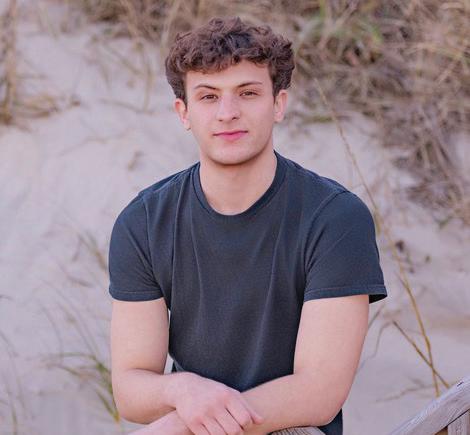



Avi B. Cardon
Tidewater Collegiate Academy



Earned Advanced Diploma, along with Virginia Wesleyan University dual enrollment.


Next: Avi is staying local, excited to dive into the intersecting worlds of business and the creative trades


Avi is the son of Elyse and David Cardon.




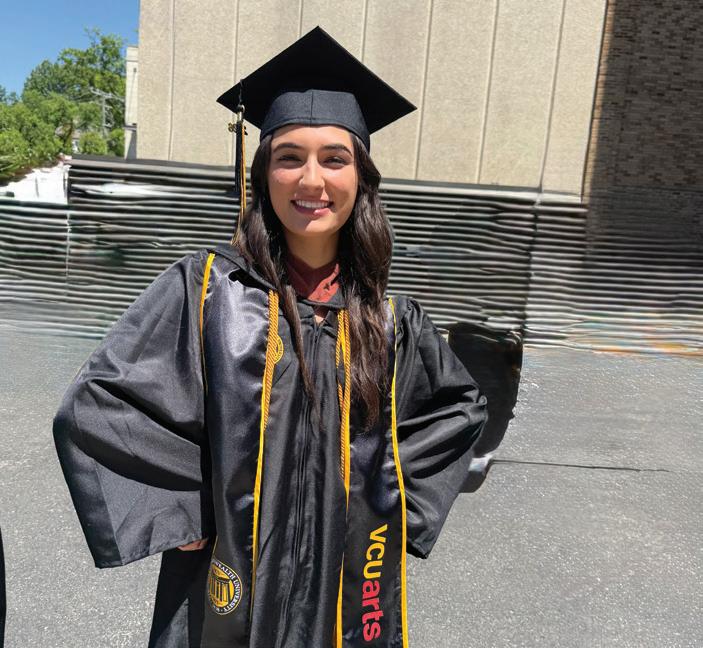
Virginia Commonwealth
University School of the Arts
Magna Cum Laude BFA
Next: After some travel abroad, Bella will continue living in Richmond to expand her multi-disciplinary visual art practice while providing families lifestyle management support through expert home organization, personal assistance, and nannying
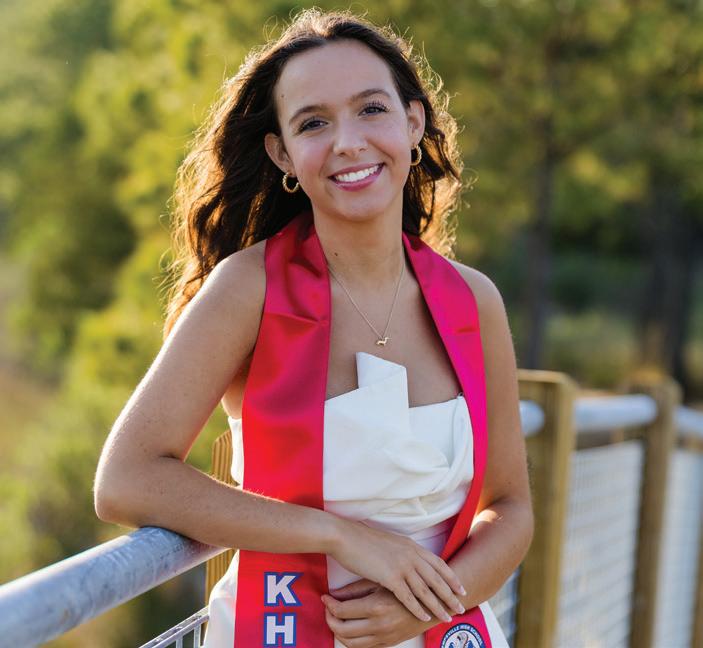
Madeline “Maddie” Elyse Acosta
Kempsville High School
Graduating with Highest Honors, Varsity Field Hockey, All Region honorable mention
Next:Christopher Newport University majoring in Biology/ Health Science
Maddie is the daughter of Alison and Bernard Acoste and granddaughter of Bonnie and Bob Rothschild.
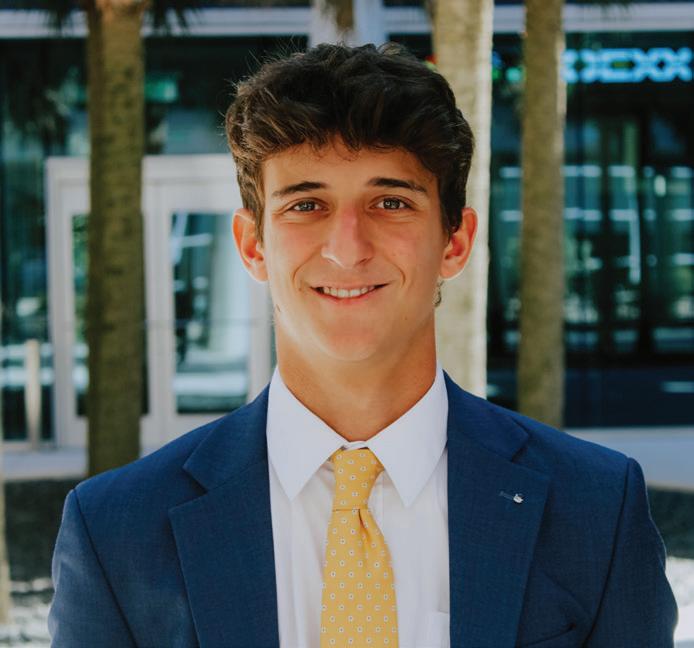
University of South Carolina
Bella is the daughter of Elyse and David Cardon.
Bachelor of Science in Business Administration with majors in Finance, Business Economics, Real Estate, and Risk Management – Insurance University of South Carolina
Outstanding Senior Award and graduated summa cum laude
Next: Brian will work as an advisor analyst at J.P. Morgan Private Bank in Palm Beach, Florida
Brian is the son of Lisa and Joel Cohn.
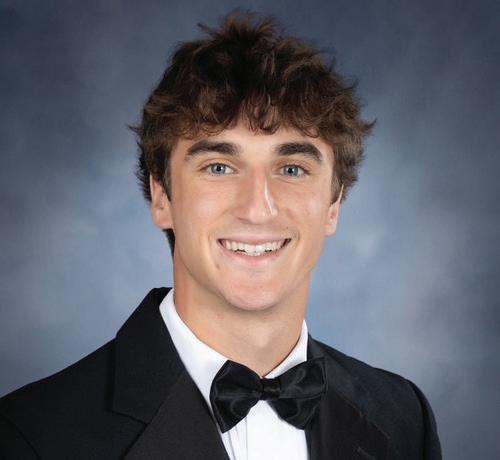
Hayden Caplan
Cape Henry Collegiate
Peer leader to the Class of 2029 at CHC; BBYO Regional Board Gizbor
Next: University of Arizona, Eller College of Business
Hayden is the son of Stacie and L.T. Caplan.
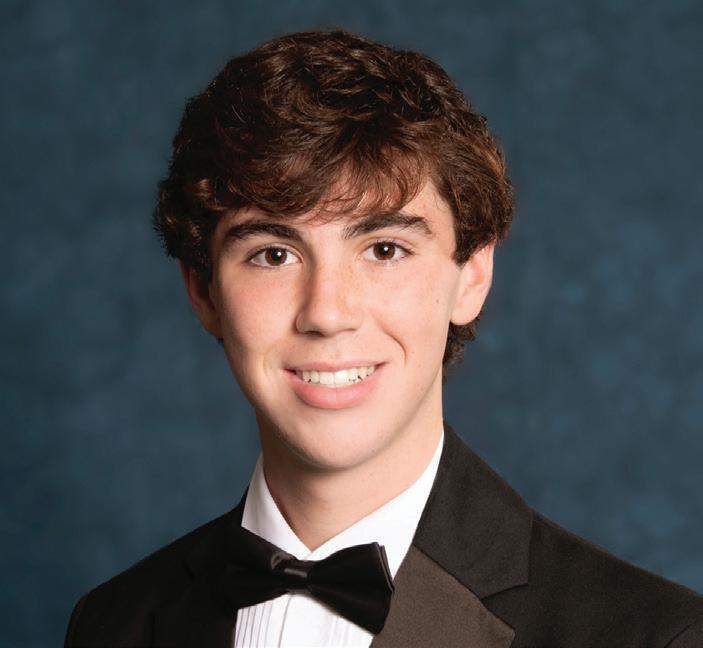
Kempsville High School
ATC Advanced Technology Center
Honor Roll
Next: JMU for Engineering
Jordan is the son of Dennis and Rochelle Cubitt.


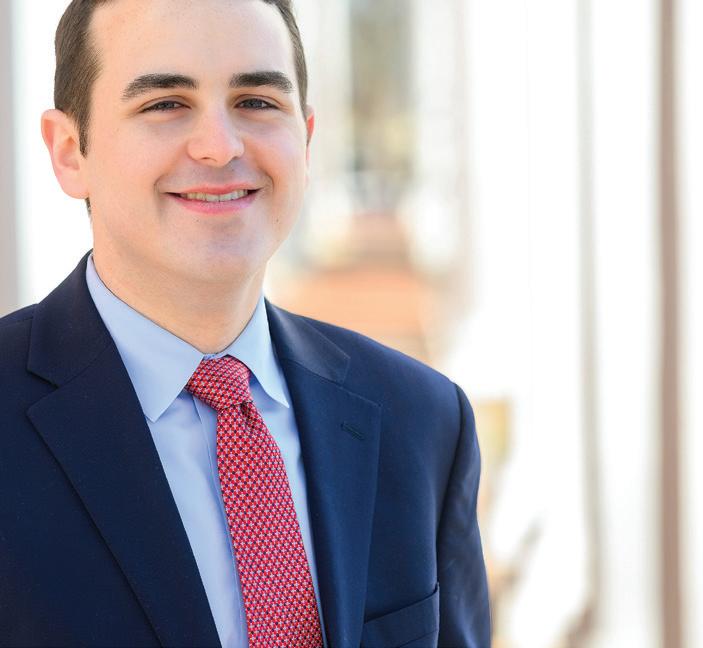










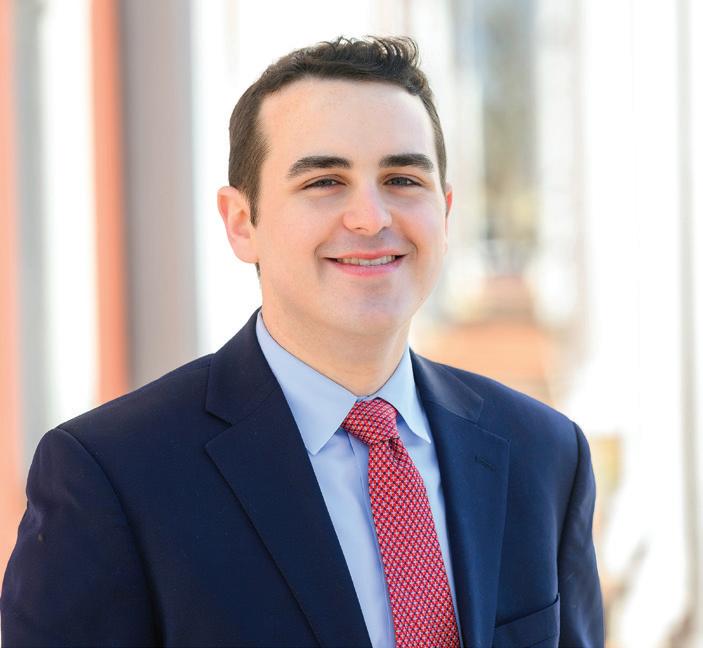
Washington and Lee University
Phi Beta Kappa, Omicron Delta Epsilon, Honors in Economics, Johnson Scholarship for Leadership and Integrity, Reynolds Scholarship in Business Journalism, John McKenzie Gunn Economics Scholarship
Next: Two-year Research Assistantship at the Federal Reserve Board of Governors
Joshua is the son of Beth and David Darrow.
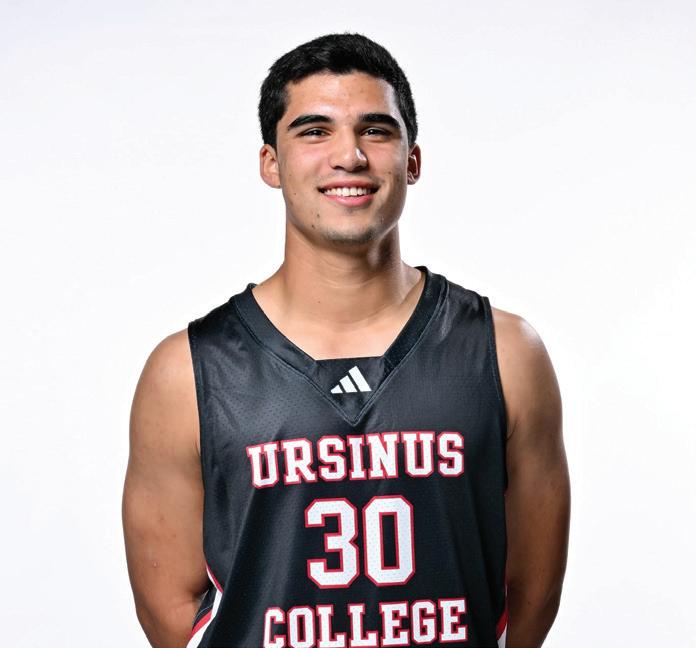
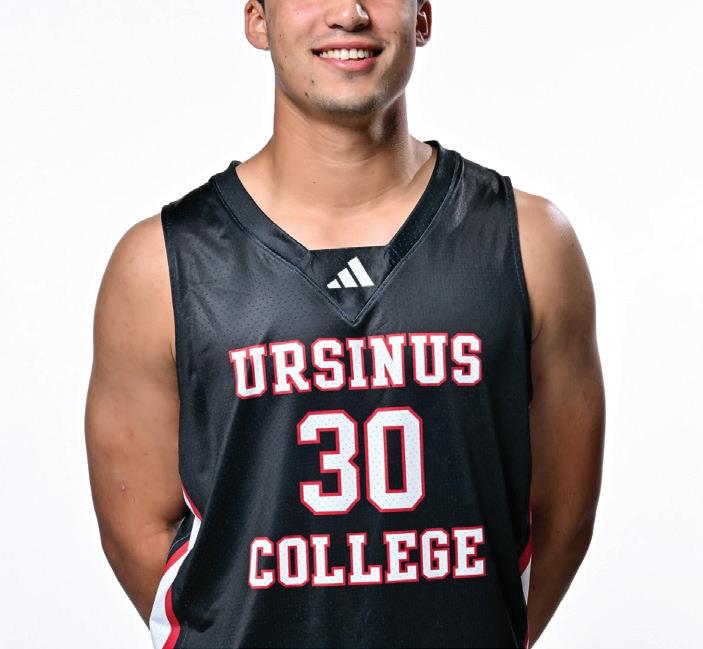
Ursinus College
Bachelor of Arts in Finance
Next: Assistant Basketball Coach at Ursinus College
Gram is the son of Donna and Seth Eilberg and grandson of Susan and Jim Eilberg.

James Madison University
College of Business-Accounting with Honors
Next: Working at the accounting firm, Stewart & Company in Virginia Beach
Lindsey is the daughter of Tammi and Jerry Foer.
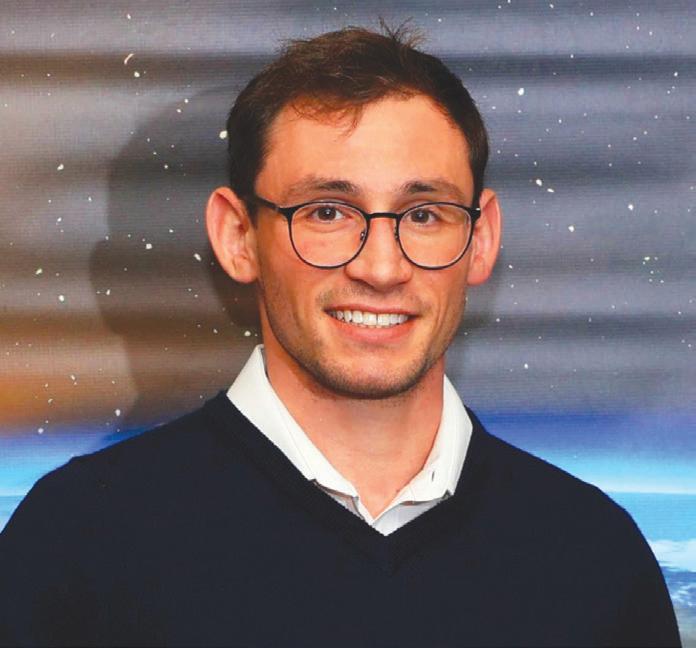
Dr. Ari Goldman
Auburn University
Ph.D. Aerospace Engineering
Next: Seeking a position designing and testing rocket propulsion systems Ari is the son of Dean and Dr. Ilene Goldman.

First Colonial High School
Honor graduate
Next: James Madison University
Lainey is the daughter of Stacey and Todd Goldman.
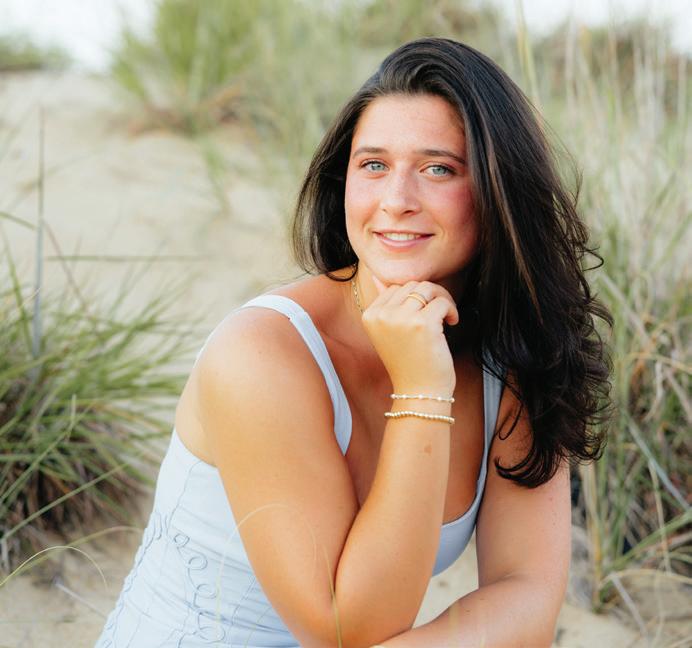
Cape Henry Collegiate
Cum Laude Society, Karl Tewes Award
Winner, First team TCIS lacrosse recipient
Next: University of Georgia
Ella is the daughter of Amy and Scott Goodove.
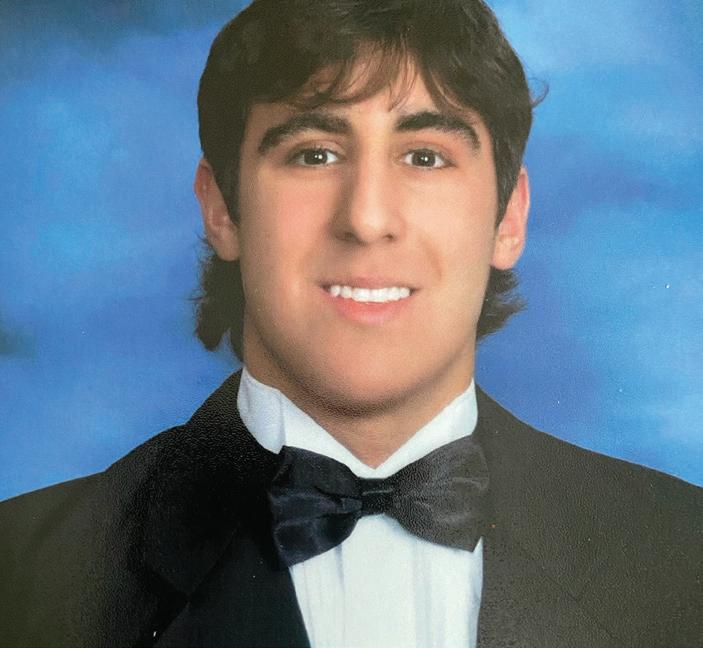
Frank W. Cox High School
Next: Loyola University New Orleans to study Entrepreneurship in the College of Business. He was selected as a MAGIS Scholar and awarded Loyola’s merit-based Cardoner Opportunity Grant
Charlie is the son of Kim and Michael Gross.
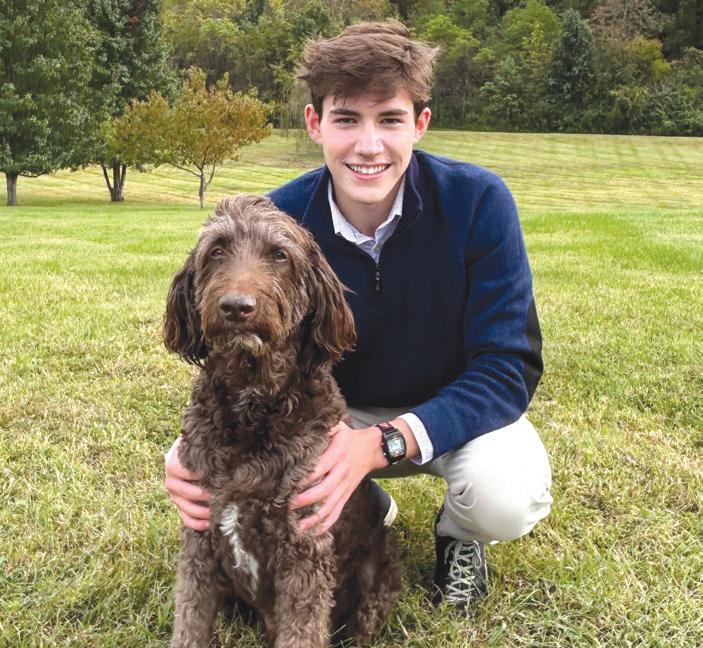
Western Albemarle High School
Oscar F. Smith High School
International Baccalaureate, National Honors Society, National Science Honors Society, Mu Alpha Theta (National High School and Two-Year College Mathematics Honor Society), Section Leader for the Mighty Marching Tigers
Next: Virginia Tech Honors College on a Pamplin Leadership Scholarship
Sammi is the daughter of Shayna and Peter Jankell.
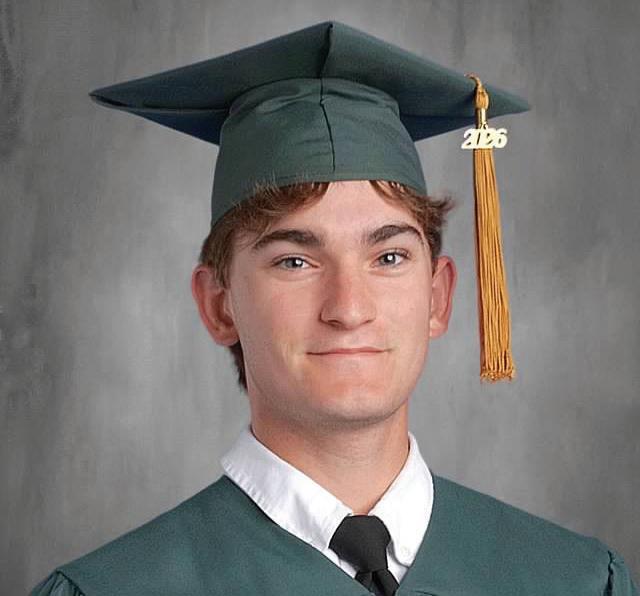
Frank W. Cox High School
Senior class president, member of National Honor Society, National English Honor Society officer, member of National Math Honor Society, National Science Honor Society, and National Social Studies Honor Society
Next: University of Virginia
Ethan is the son of Bradley and Sonnia Kesser and grandson of Kay and Barry (of blessed memory) Kesser.
Next: University of Richmond as a D1 pitcher
Martin is the son of Shawn and Ashley Lemke.
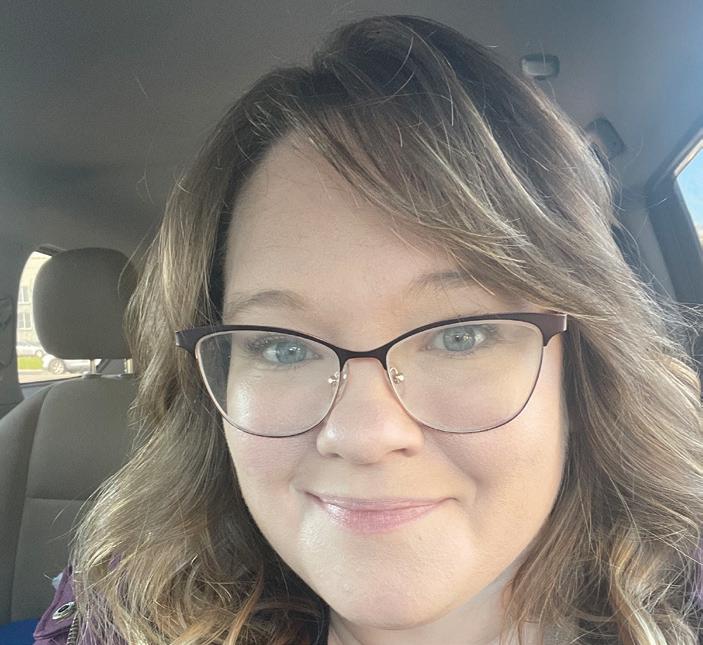
Baylor University-Doctorate of Pediatric Nursing
DNP project presented at 2024 NAPNAP Virtual Symposium
Next: Pursue position in pediatric primary care setting
Brittany is the daughter of Brian and Katherine McCann.
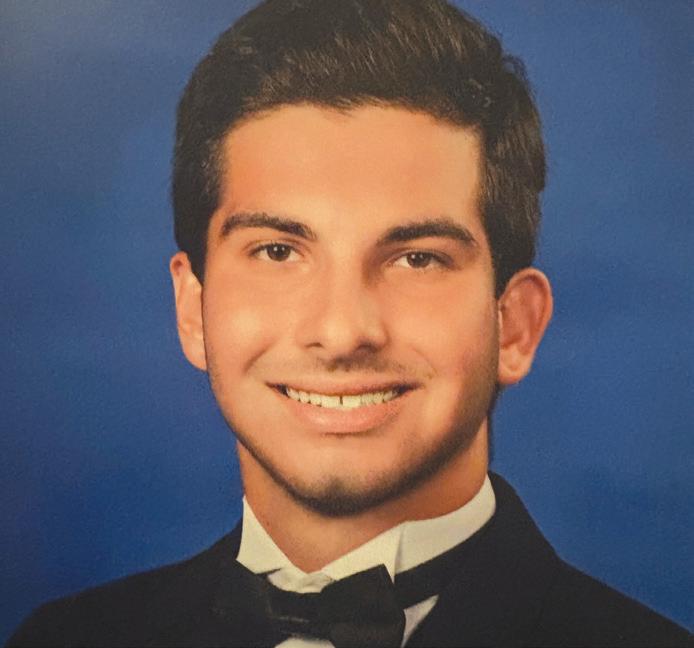
First Colonial High School
Next: Virginia Tech, majoring in Entrepreneurship, Innovation and Technology Management, Pamplin College of Business
Sam is the son of Betty Ann and Scott Levin and grandson of Susan and Mayer Levy, Carol Levin, and Elaine and Herbert Levin (both of blessed memory).

Western Branch High/ Cosmetology at Chesapeake Career Center
Graduating with Honors
Next: University of Mary WashingtonBiology major, Spanish minor
Carolena is the daughter of Steven and Brittany Johndrow.
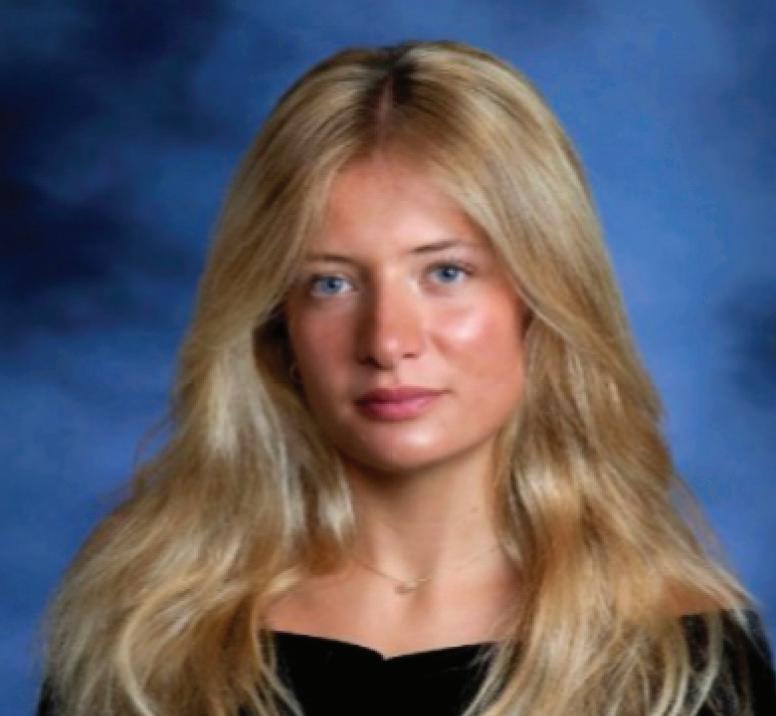
Ocean Lakes High School
Math and Science Academy, Brock Center Environmental Studies Program, National Honor Society Publicity chair, and Bayfront Advisory Commission student member
Next: Virginia Tech to study Agribusiness
Reese is the daughter of Karen and Adam Longwater.
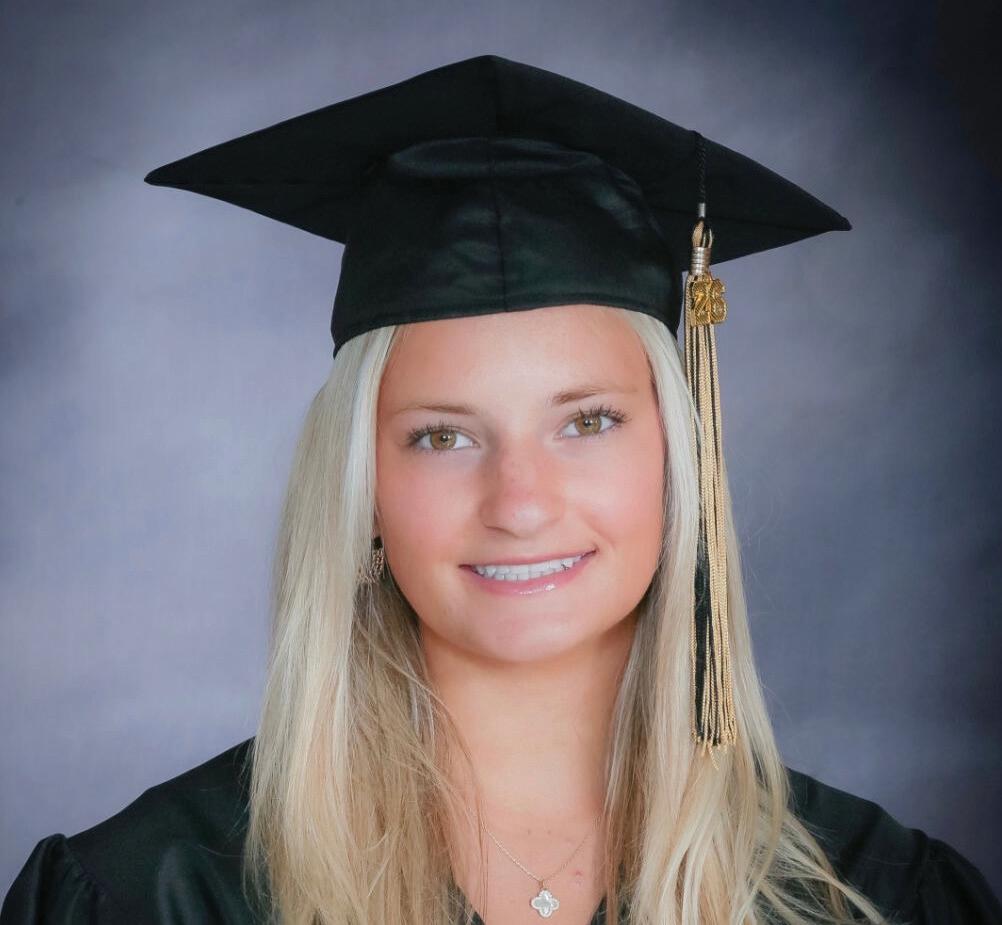




Bishop Montgomery High School, Torrance, California

Next: University of Alabama


Kendall is the daughter of Jim and Danielle McKechnie and granddaughter of Anne and Sandy Goldberg.





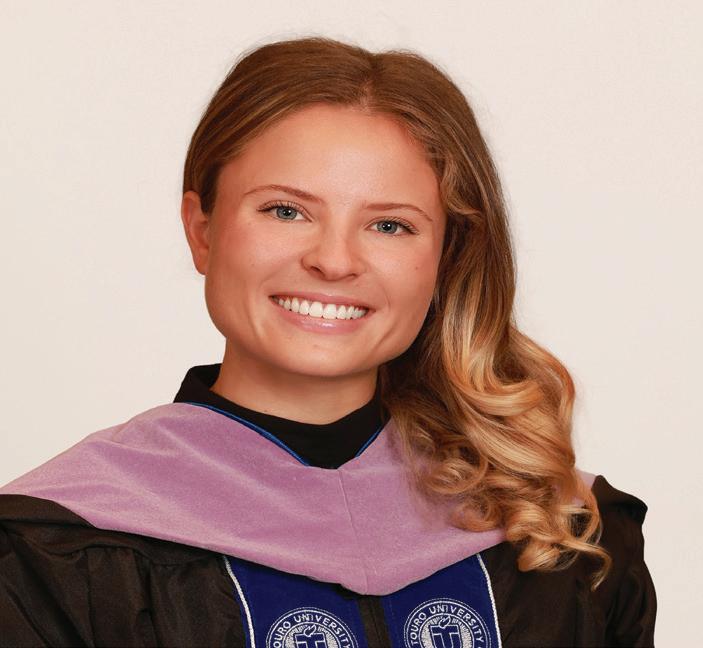
Doctor of Dental Surgery
Next: Advanced Prosthodontics residency and Masters of Oral Sciences, University of Illinois at Chicago
Anna is the daughter of Margaret Baumgarten and Max Mirovski.
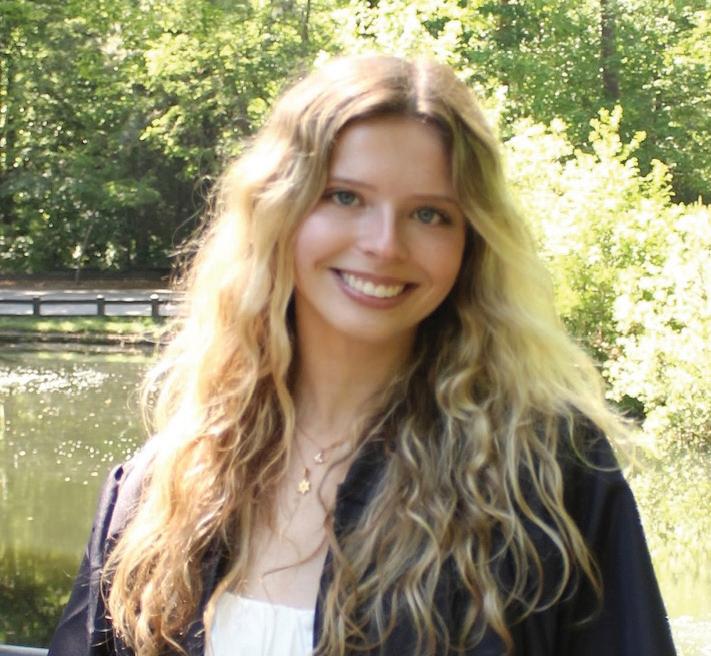
Sophia Mirovski
College of William and Mary
Bachelor of Arts in Psychological Sciences, Summa Cum Laude
Next: Master’s in counseling, University of Virginia School of Education and Human Development
Sophia is the daughter of Margaret Baumgarten and Max Mirovski.
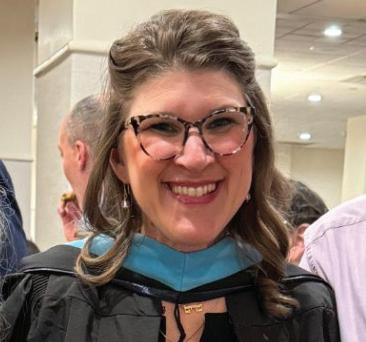
Hebrew Union College
Executive Master of Arts in Jewish Education
Next: Continue serving as director of Lifelong Learning at Ohef Sholom Temple
Alyson is the daughter of Martha and David Javinsky.
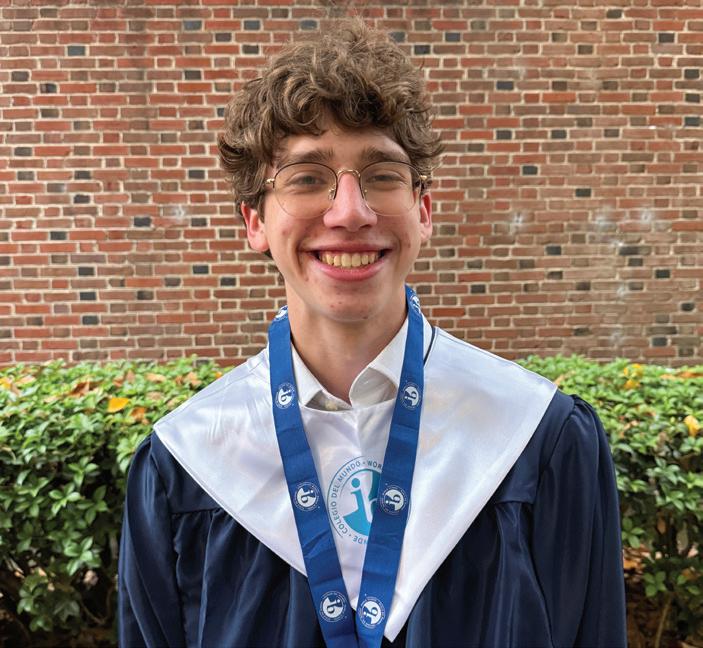
Elijah Morrissey
Granby High School
IB Graduate, Eagle Scout
Next: Old Dominion University
Elijah is the son of Alyson and Chris Morrissey.
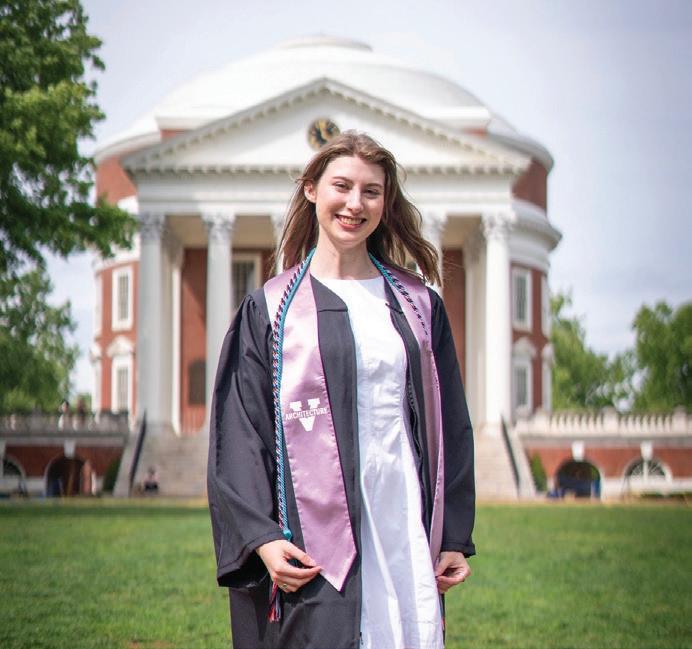
University of Virginia
Bachelor of Science in Architecture, minors in Architecture History and Global Sustainability, High Honors
Next: Architectural Designer at Tymoff & Moss in Norfolk
Leia is the daughter of Alyson and Chris Morrissey.
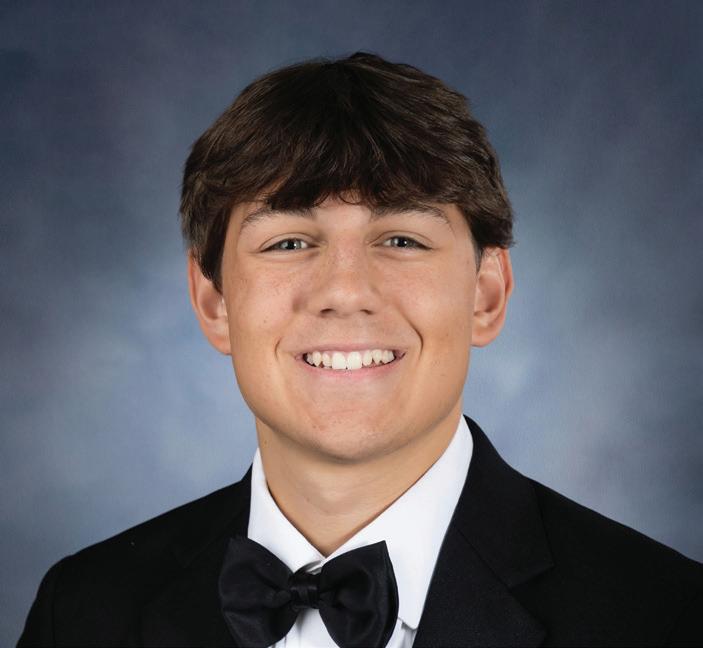
Elijah Muhlendorf
The Hague School
International Baccalaureate diploma
Next: University of Virginia Elijah is the son of Alyssa and Jonathan Muhlendorf.
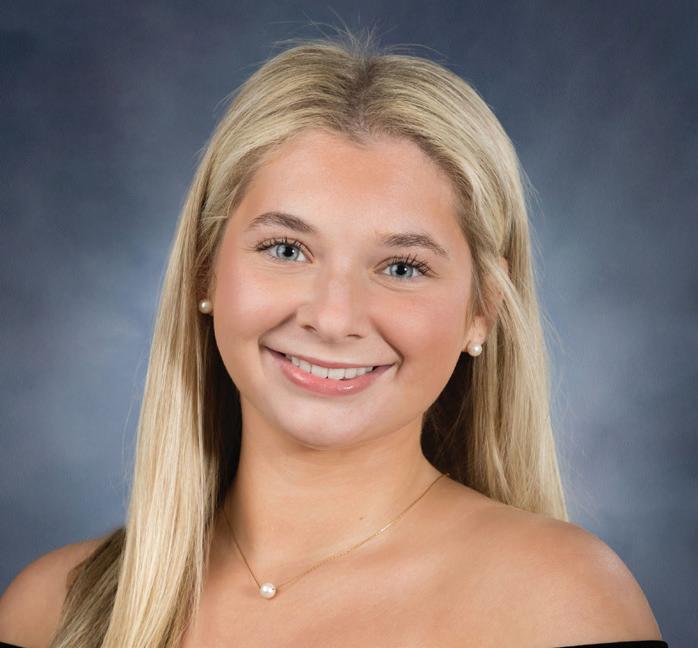
Caroline Wainger
Norfolk Academy
Next: Tulane University
Erin is the daughter of Jill and Brian Wainger and granddaughter of Kathy and Jerry Kantor and Patti and Jules Wainger.
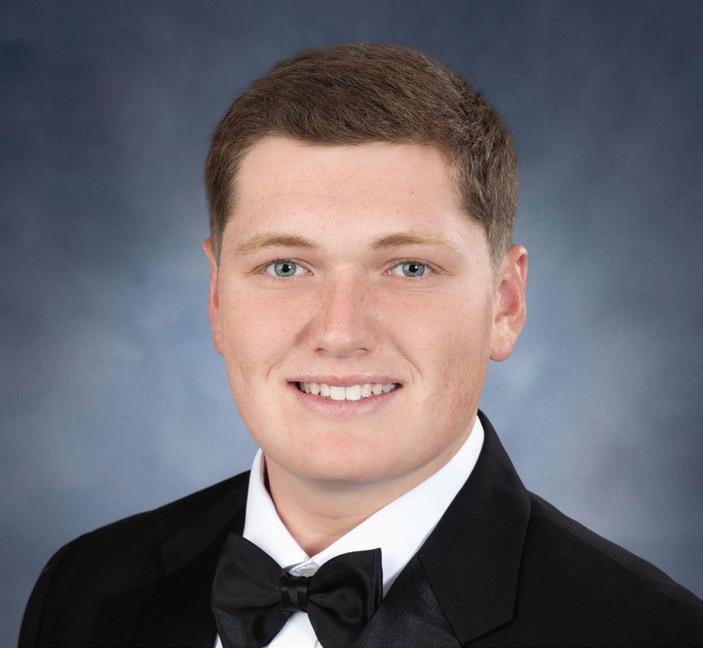
Max Salomonsky
Cape Henry Collegiate
National Honor Society, Spanish Honor Society, Health and Medical Science Program Scholar, Senior Peer Leader, University of Maryland President’s Scholarship
Next: University of Maryland, majoring in Biology
Max is the son of Daniel and Jill Salomonsky.
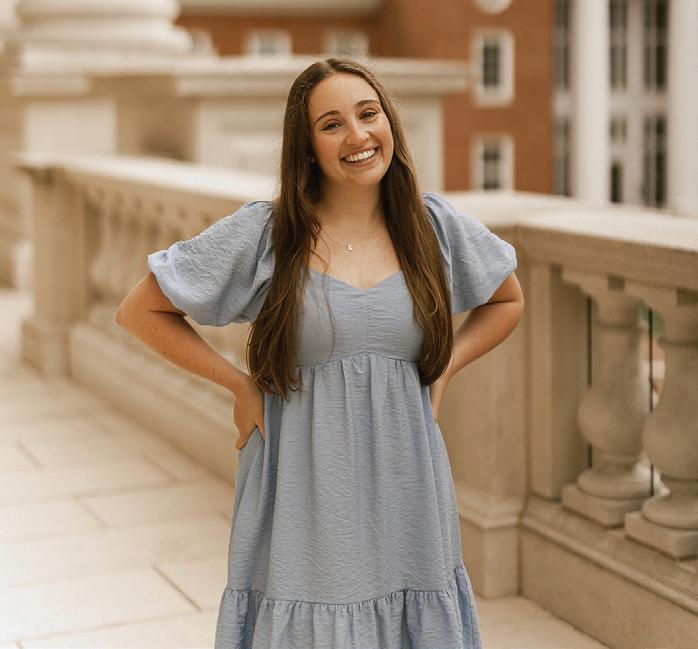
Emily P. Weinberg
JMU Graduate Psychology Program, Applied Behavior
Analysis Concentration
Master of Arts
Next: Board Certified Behavior Analyst for Augusta County Public Schools following the completion of her certification exam
Emily is the daughter of Lauren Lantz.
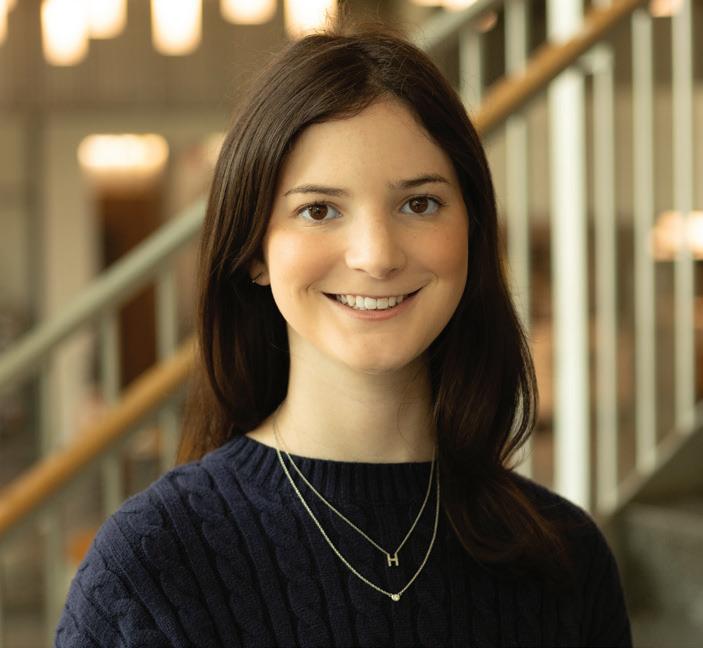
Helene Schulwolf
Tulane University
Major in Psychology and Linguistics, Summa Cum Laude, Phi Beta Kappa, Excellence in Linguistics Award, co-president of ACEing Autism, research assistant in lab, Dean’s List at eligible semesters
Next: University of North Carolina at Chapel Hill, Master’s in Speech Language Pathology
Helene is the daughter of Lisa and Neal Schulwolf.
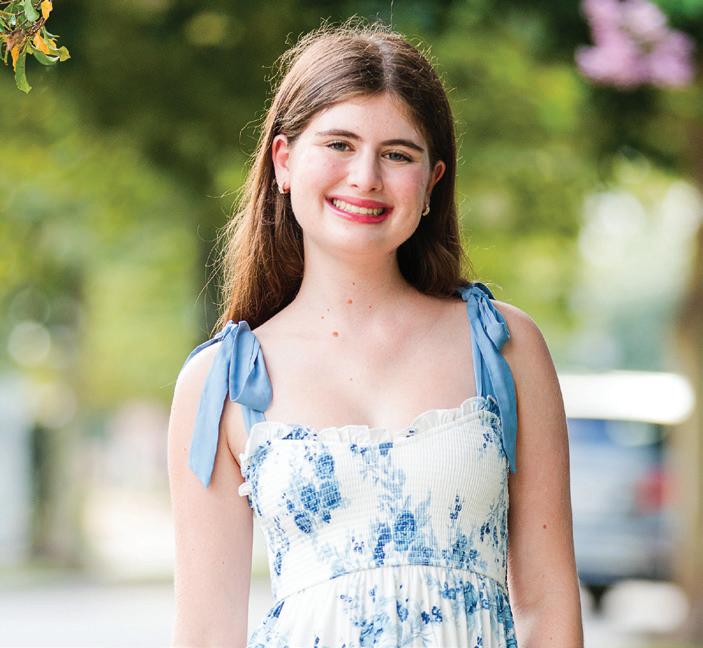
Chloe Rose Zuckerman
First Colonial High School and Governor’s School for the Arts, Musical Theatre Department
4-year Principal’s List graduate; GSA, Musical Theatre Department Graduation Speaker; numerous GSA and Virginia Musical Theatre productions
Next: Emerson College, BFA in Comedic Arts
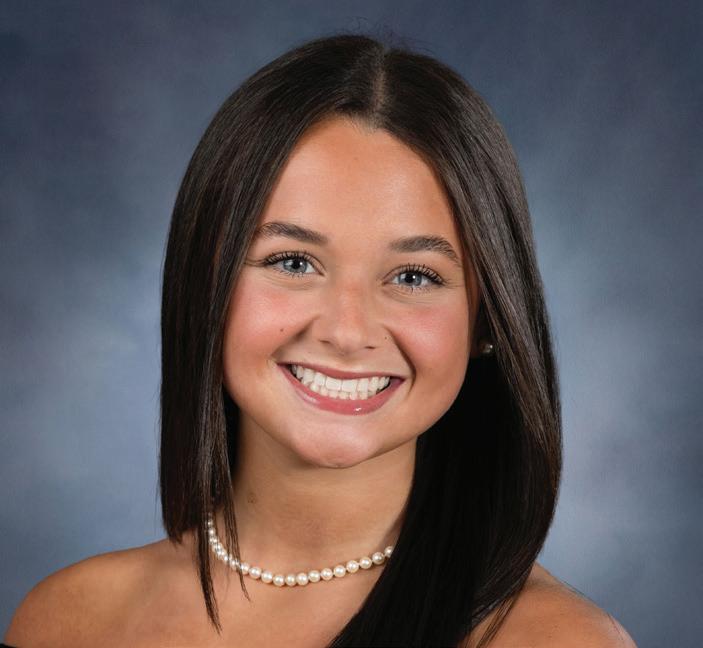
Norfolk Academy
Next: University of Maryland
Erin is the daughter of Jill and Brian Wainger and granddaughter of Kathy and Jerry Kantor and Patti and Jules Wainger.
If your graduate is not included here, submit their information by June 15 for the July 13, 2026 issue.
Chloe is the daughter of Megan and Steve Zuckerman and granddaughter of Leslie and Larry Siegel and Phyllis and Bob Zuckerman.
Include: Graduate’s name, school, achievements, what’s next, and parents’ names.
Email the information, along with a photo to news@ujft.org.
Be sure to put GRADUATE in the subject line.


Haley Bartel
The Honorable Aaron F. Kass was sworn in on Friday, March 27 as a Judge of the Virginia Beach General District Court.
“Outside of being Melissa’s husband, and Jonah, Micah, and Alexa’s father, there is no greater privilege than this role,” Judge Kass said at his formal investiture on Friday, May 1 at the City of Virginia Beach Judicial Center. Together, his family assisted him in putting on his robe, an act symbolizing their support.
The opening invocation was led by Rabbi Jacob Herber of Congregation Beth El, and remarks were given by Joshua Baker of Waldo & Lyle, PC, David Lacy of Christian & Barton, LLP, and Matthew Foster of Bangel, Bangel & Bangel, LLP.
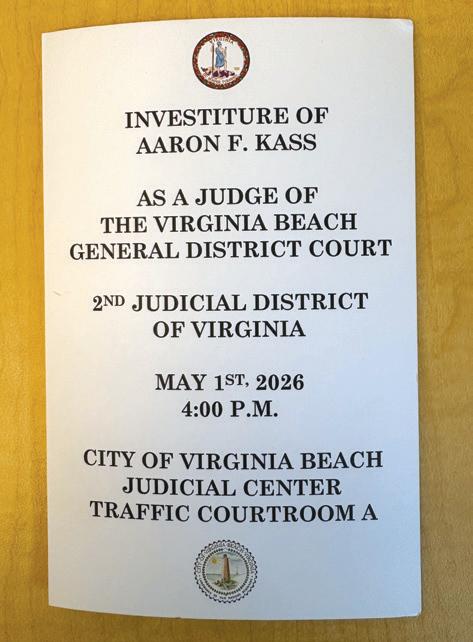
Kass formerly worked as a personal injury lawyer for Kass Law Firm, P.L.C. He is a graduate of the Marshall-Wythe School of Law at the College of William and Mary, and he obtained a Bachelor of Arts degree from Georgetown University.
In his speech, Kass emphasized the importance of recognizing that attorneys face mental health struggles, such as anxiety and depression, at alarming rates, approximately 2-3 times greater than the general population.
“I hope, that while I’m ensuring the parties on both sides, on some of the most stressful days of their lives, feel heard and achieve justice, that I never forget that those of you advocating on their behalf have stressors as well. As the saying goes, you never know what someone has going on,” he said.
Kass extended his heartfelt thanks to his family, friends, and colleagues. “To say this is a team sport is an understatement, and you all are wonderful teammates,” he said, addressing the packed courtroom.
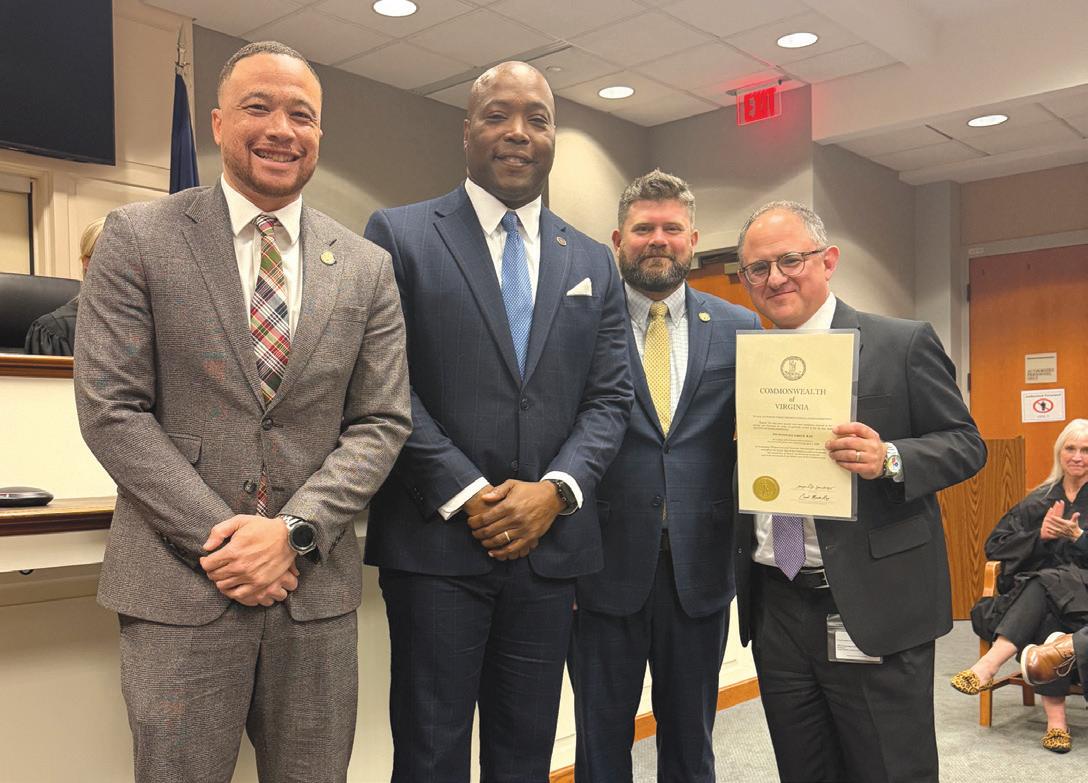
Delegate Michael Feggans, Senator Aaron Rouse, Delegate Andrew Rice, and Judge Aaron Kass.
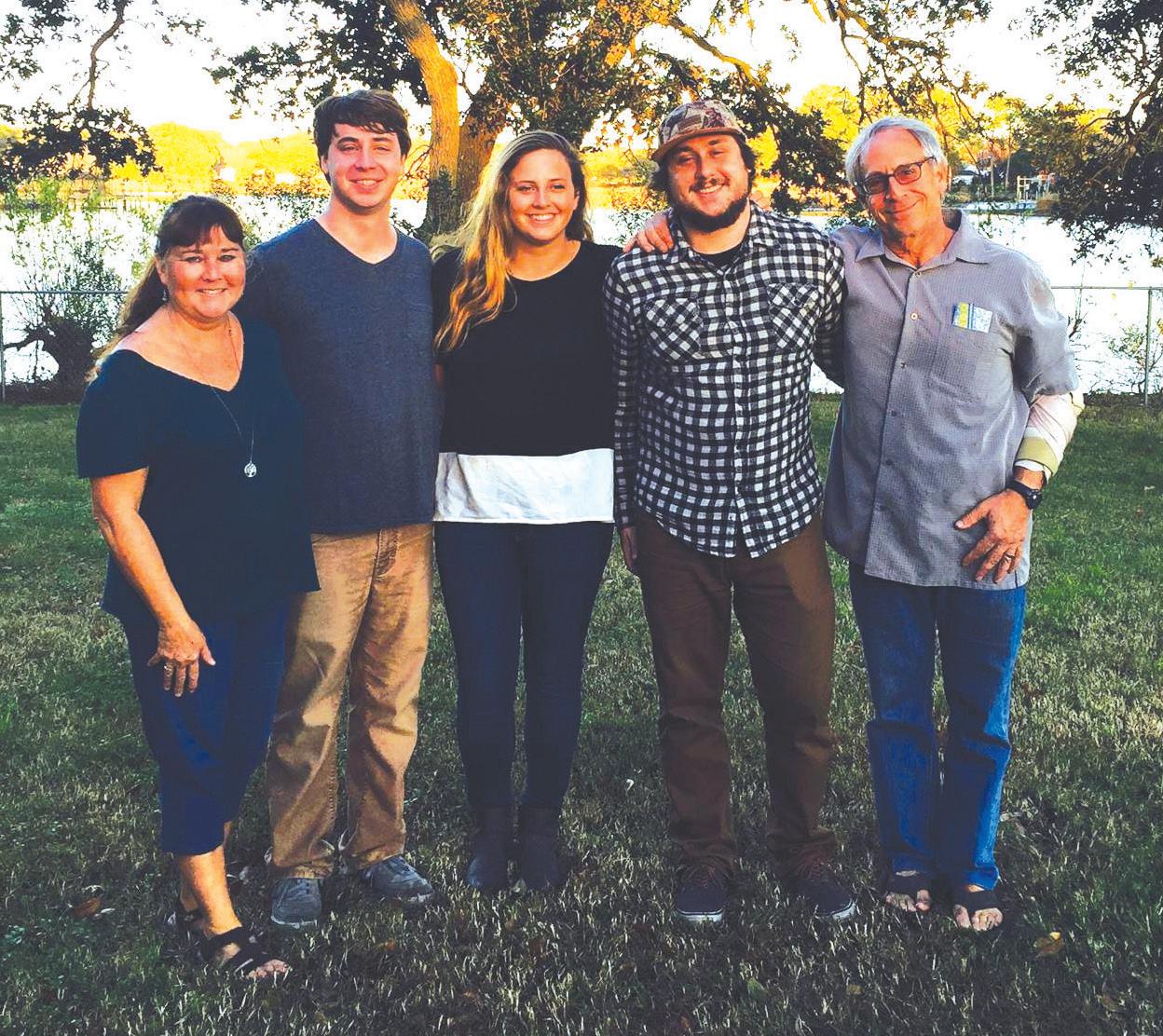
Earlier this year, Hampton Roads Association for Commercial Real Astate presented Skip Sacks with the 2026 F. Craig Read Service Award in recognition of “his exceptional service and long-standing commitment to the organization and the commercial real estate community.”
The F. Craig Read Service Award honors individuals who have demonstrated sustained leadership, volunteerism, and dedication to HRACRE’s mission. Sacks exemplifies those values through decades of involvement and impact.
Sacks became involved with HRACRE in the mid to late 1990s, first serving on the Programs Committee and later chairing the committee for many years. In 2006, he and Scott Adams established the HRACRE Internship Program, which Sacks chaired for many years and helped shape into one of the organization’s most impactful initiatives.
In 2008, Sacks participated in HRACRE’s Strategic Planning Process, contributing to key initiatives that strengthened the organization’s role in the region, including enhanced legislative efforts, the revitalization of the HRACRE Presidents Council, and some of the earliest joint meetings among regional economic development offices. Sacks served on the HRACRE
board and executive committee for many years and was president in 2013. In 2013 and 2014, he taught “Legal Aspects of Commercial Real Estate” at Old Dominion University as part of HRACRE’s outreach efforts. His class, which frequently featured HRACRE members as guest lecturers, became the model for the expanded Internship Program. He says he is especially proud of the positive feedback he received from students, noting with humor that he never earned a single “chili pepper” on Rate My Professor.
In 2019, Sacks received the Robert M. Stanton Real Estate Teacher of the Year Award from ODU’s Strome College of Business.
In addition, Sacks served on the HRACRE REACH Foundation Board for several years and was president in 2024. During his tenure, he led the effort to create a permanent endowment for the HRACRE Internship Program. This endowment secures the program’s future, ensuring that students will continue to have access to meaningful commercial real estate internships for generations to come. The Internship Program endowment stands as one of Skip’s most significant and lasting contributions to HRACRE.
Along with all these volunteer efforts for HRACRE, Sacks finds time to occasionally write book reviews for Jewish News and assume the chair of Tidewater Jewish Foundation’s Gift Acceptance Committee And, of course, he and is wife, Ellen, are the proud parents of Sam, Nate, and Hannah.
HRACRE is a commercial real estate organization serving Hampton Roads, focused on networking, education, and industry engagement. The organization brings together professionals across the commercial real estate sector to support collaboration and growth.




For generations, Beth Sholom Village has cared for older adults with compassion, dignity, and a deep commitment to community.
Today, through its inaugural community grant program, Beth Sholom Village is proud to support nonprofit organizations helping seniors across Tidewater/Hampton Roads remain active, connected, engaged, and supported
or fo Tidewater/ r Hampton a tion,
Rooted in the Jewish value of tikkun olam, repairing the world through care and action, this initiative reflects a shared commitment to strengthening the lives of older adults throughout our region
Congratulations to the 2026 Grant Recipients
'nai Hospice House Service







B'nai Israel Congregation • Chabad Lubavitch of Tidewater • Congregation Beth El • Dozoretz Hospice House of HR • Habitat for Humanity of SHR • Hampton Roads Community Action Program
• Jewish Family Service of Tidewater (JFS) • Jewish Virginia Beach
• Judeo-Christian Outreach Center
• Meals on Wheels Chesapeake
• Chesape ke e h Sho illa ongratulations
• Meals on Wheels Virginia Beach • Mercy Chefs • Ohef Sholom Temple • Peninsula Agency on Aging • Primeplus Senior Centers • Senior Services of Southeastern Virginia • Seniors Unlimited Lifestyles • Strelitz International Academy (SIA) • Temple Israel • United Jewish Federation of Tidewater (UJFT) • Va Veterans Services Foundation • VB Home
Now • Virginia Opera Association • Virginia Symphony











buy this Father’s Day
year for my Jewish dad
My dad doesn’t want scotch, barbecue tongs or whatever else you might find on a curated gift guide. He just wants these socks.
Daci Platt
I’ve just scrolled through my first Father’s Day gift guide of the season and, once again, wondered why no one has ever made a gift guide for my specific brand of Jewish dad.
He’s not a barbecue dad or a sports dad. He’s undeniably a funny, silly Jewish dad, but he doesn’t want a book about Jewish humor — he tells the jokes, his way. He’s a golf dad, but he doesn’t want to read about golf, and he’s been playing for decades — why should he accept gear from someone who quit the high school golf team and falls asleep the moment the golf channel turns on (sorry Dad, but could you have picked a hobby with a little more energy)? He loves tech, but only when he discovers it and can tell me about it. He would not take kindly to my trying to introduce him to a new gadget. (See: His lackluster response to an Aura digital picture frame.)

My Jewish dad wants one thing and one thing only: socks with pictures of his family on them.
I know this because one year, after feeling guilty for sending him the same pair of socks with rotating photos of myself, my husband, and my kids year after year, I tried sending him a gourmet version of a treat he likes. He texted me: “Thanks. Next year please send socks with pictures on them.”
Message received, Dad! I went back to my old standby: Divvyup, a truly seamless service for printing photo gifts. Just choose your product (they used to only do socks, but have branched out into blankets, can coolers, stickers, and more), upload your photos and pick a color or pattern. They even have a pretty robust Hanukkah section with options that work for any time of year. (Pro move for a goofy Jewish dad: If you buy two different colors of socks with different photos on each, your dad might take it upon himself to wear one of each color — two Kveller dads have pulled this move.)
Now if you’ll excuse me, I need to go sift through my camera roll for this year’s perfect sock photo. You should too, so you can order your gift in time for it to arrive on Father’s Day!
This article first appeared on Kveller
Daci Platt is a pop-culture obsessed writer, amateur illustrator, audience engagement associate at Kveller, and mom of two girls. Like many social media managers, she has all but stopped posting on her personal accounts but you can find her in most places @dacijaye.

The Feldman Family Medical and Health Professions Student Scholarship
Apply by July 1 to Secure up to $40,000 in Scholarship Funding
Up to $10,000 a year for each recipient
The Feldman Family Medical and Health Professions Student Scholarship is awarded to Jewish students, or those who identify as Jewish, entering a qualifying Health Care Degree Program. Recipients must currently reside in Southeastern United States, with a preference for residents of Hampton Roads.
Apply at: foundation.jewishva.org AWARDED TO 2 STUDENTS EACH YEAR!

We pride ourselves with the same high standard of exceptional care you have come to expect. Please come by for a tour…we’d love to show you around!

(StatePoint) Playing with fire has never been hotter when it comes to flavor and summer grilling. A new grilling trend report, released by the McCormick brand, spotlights three red-hot trends centering on new ways grillers are layering flavors, expanding the sizzle beyond steak, and taking advantage of the transformation of appliances.
“Above all, flavor complexity will become the new standard in grilling with global flavor layering, and grillers are continuing to delve beyond meat, poultry, and fish with barbecued vegetables and sweet ingredients,” says Jordan Carfagno, executive chef at McCormick, which distributes herbs, spices, seasonings and condiments globally. “New technology is also powering our prediction that smart, modular grills will redefine when and where consumers grill.”
Here are top findings from McCormick’s Fire & Flavor 2026 Grilling.



This trend celebrates the intentional build of flavor, where rubs, marinades, glazes, and finishing sauces work in concert to create depth, contrast, and complexity. This comes at a time when there’s been a 78% increase in social media mentions for “umami” compared with just two years ago, according to Datassentials, and a 53% increase in U.S. consumers interested in “swicy” – sweet and spicy combinations, according to research from the Food Institute.
Layering flavor is part of a gourmet trend emphasizing intentional, creative, and personalized grilling experiences. Flavor transformation happens within three different stages – Base, Build and Finish. Flavor layering techniques draw inspiration from global cuisines like Indian tandoori, Korean bulgogi, and Moroccan tagines.













From jackfruit to peaches, unexpected ingredients are expanding the boundaries of BBQ. The experts at McCormick predict that grillers will continue to embrace global flavors, vegetables, and sweet ingredients, noting that millennials grill fruit two times more than the average griller.
Favorite flavors beyond steak include juicy bone-in cuts of chicken grilled to the perfect tenderness level, smoky and caramelized veggies enhanced with warm spices and honey for bold, irresistible flavor, and fresh salad made with crisp, ripe tomatoes charred to perfection.
Grilling is being redefined by smart technology and modular design, turning grills into adaptive, multifunctional hubs that cater to modern lifestyles.
Developments, such as loT-enabled grills with Wi-Fi and Bluetooth, allow remote temperature control and monitoring via mobile apps for perfect cooking. Modular grills provide customizability with interchangeable surfaces offering versatile cooking options catering to diverse styles and preferences.
The experts at McCormick note that appliance-enabled flavors include the use of smokers beyond the classic cuts, enhancing deep, complex flavors of various proteins and elevating everyday staples. Flat tops also unlock new extra crispy textures and allow for new techniques. They also note that the global portable grills market is projected to continue to grow, driven by the rise of home entertaining and tailgating.
This season, grill masters should consider innovative ways to level-up summer cooking with global flavors and new techniques.
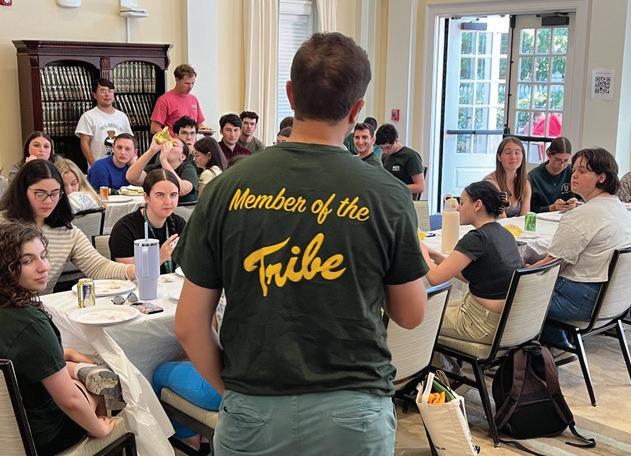
William & Mary has had a Hillel on campus for more than 60 years. Yet, 10 years ago there were only about 20 - 30 Jewish students attending programs annually. Meetings were held mainly in classrooms, and Entenmann’s and Krispy Kreme donuts was the fanciest kosher food offered.
Eight years after building the Shenkman Jewish Center, William & Mary Hillel’s engagement has exploded with success. During the 2024-2025 academic year, more than 440, out of the university’s approximate 650 Jewish students, attended programs at W&M Hillel at least once, and 90 students attended six or more events. During the 20252026 academic year, 525 Jewish students attended programs or events at least once and 101 students attended six or more programs. This massive increase in engagement is being celebrated as a significant achievement in Williamsburg.
Engagement success, says Rabbi Gershon Litt, executive director of W&M Hillel, has to do with teaching leadership and empowering students to succeed. The
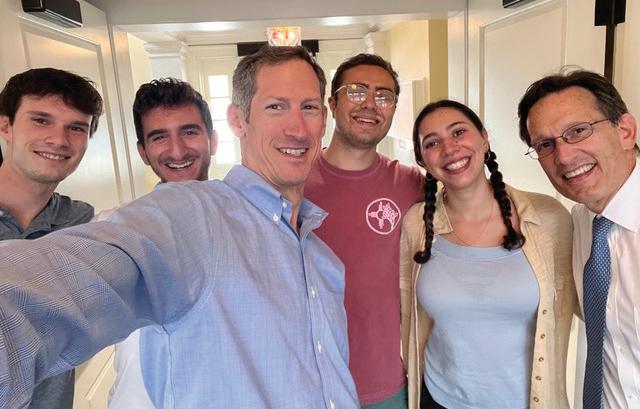
programs need to be engaging, recruitment strategies need to be in place, but the work on campus today is to find Jewish students wherever they may be both physically and philosophically and be willing to meet them there.
“Many Jewish students are not ready to come to a Jewish institution the first day on campus,” says Litt. “Their experience with Jewish institutions has not always been positive. A relationship can take time, and we need to go to where they are and help Jewish students see what Judaism and the Jewish people have to offer.”
This academic year, Rabbi Litt hired a part-time engagement professional to assist with student recruitment. A W&M Hillel success story, Lilly Tanenbaum became the president of the Hillel student board, graduated in 2025, and decided to stay at W&M to obtain her master’s degree in psychology. Tanenbaum was hired to add an engagement lens to everything that takes place at Hillel.
“Most of our programs are planned and facilitated by our student leaders. Lilly exemplifies the best of the best and she is now utilizing her skills to engage more Jewish students as staff,” says Rabbi Litt.
In addition to success in engagement, W&M Hillel saw incredible success in the Israel education space. Yeela Mimrod was the full-time Israel Fellow at W&M Hillel for the past two years and worked with Rabbi Litt, Tanenbaum, and the student board, to create a dynamic and inspirational Israel education program.
The Israel education program at W&M Hillel brought together students virtually every day of the academic year to examine the relationship between Jews in America and the Jewish state. Yeela had one-on-one coffee meetings, large classes, experiential cooking events, Hebrew classes, Israeli
history and politics events, and much more. While Yeela will be leaving the area, W&M Hillel is looking forward to continuing the program with a new educator in the fall. Even during the recent wars, Rabbi Litt has not stopped leading Taglit Birthright Israel trips. His last Birthright trip was in January and his next trip, traveling with 37 students, is scheduled for June 8.
Engagement of Jewish students on college campus today is one of the toughest nuts to crack. William & Mary Hillel has not only cracked it but exploded in success. W&M Hillel needs more support to keep up with the growing need.
To learn more about Jewish life at William & Mary or how to support the Jewish students on campus, contact Rabbi Gershon Litt at rabbilitt@wmhillel.org.
William & Mary Hillel is a recipient agency of United Jewish Federation of Tidewater.
Ghillian Porter-Smith, media specialist/ librarian at Norfolk’s Larchmont Elementary School, wrote last month to express appreciation for books the school received from United Jewish Federation of Tidewater.
“Thank you very much for the generous gift of books!” Porter-Smith wrote. “Our students are already checking them out! One student in particular who is very proud of his Jewish faith
and heritage was over the moon when I showed him the new titles.”
The books were sent as part of The Jewish American Heritage Month (JAHM) Book Project, which brings Jewish stories to thousands of local students each year, many encountering this history and culture for the first time.
Carefully curated by a diverse volunteer committee of educators and community members, this year’s
selections highlight the breadth of Jewish life while exploring universal themes such as identity, empathy, courage, and belonging.
Spanning elementary through high school, the books invite students to engage with meaningful questions, connect personal experiences to larger historical narratives, and develop a deeper understanding of both Jewish and American identity. The project is
provided by United Jewish Federation of Tidewater’s Konikoff Center for Learning, with generous support from the family of Rita Frank, in memory of Abraham E. Frank, and powered by local volunteers who help prepare and distribute the books. Through this collaborative effort, the initiative continues to foster curiosity, compassion, and meaningful conversation across classrooms throughout the region.
Danny Rubin
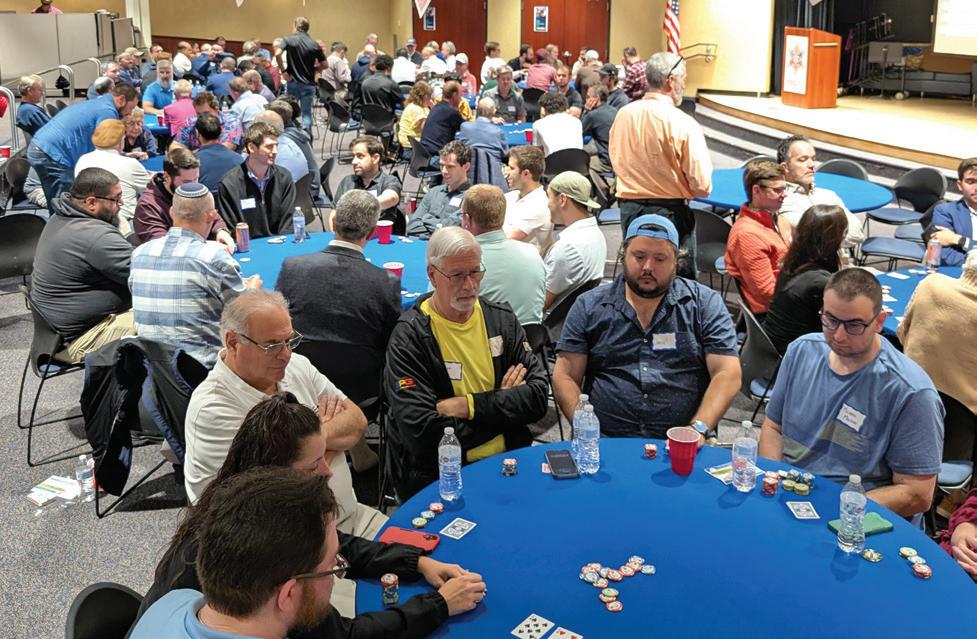
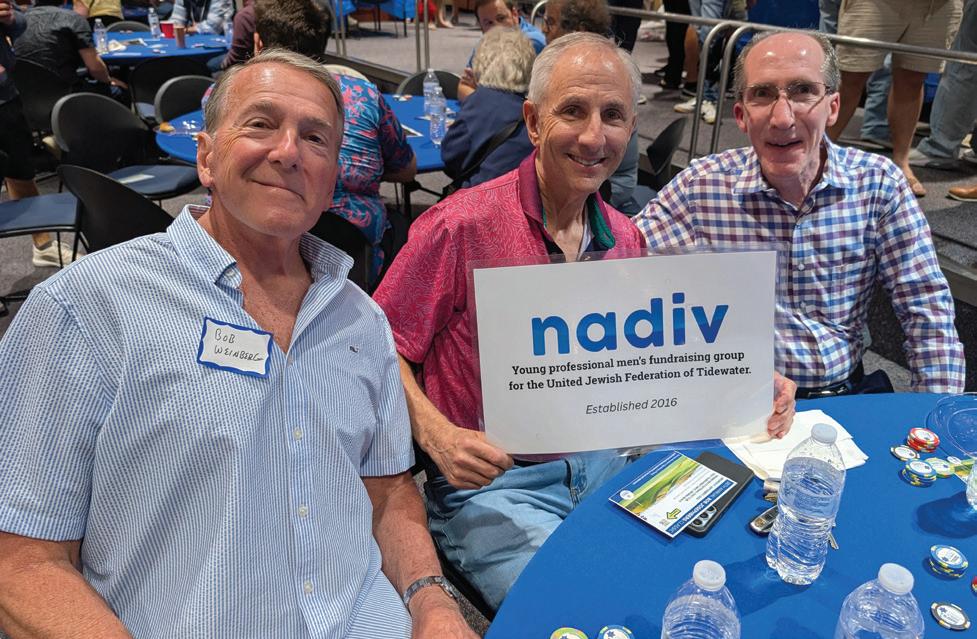
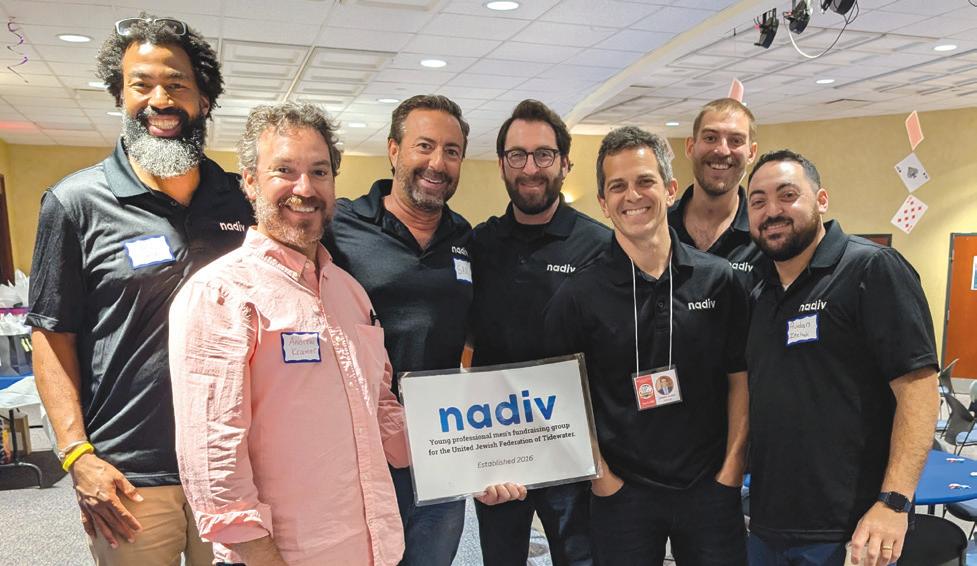
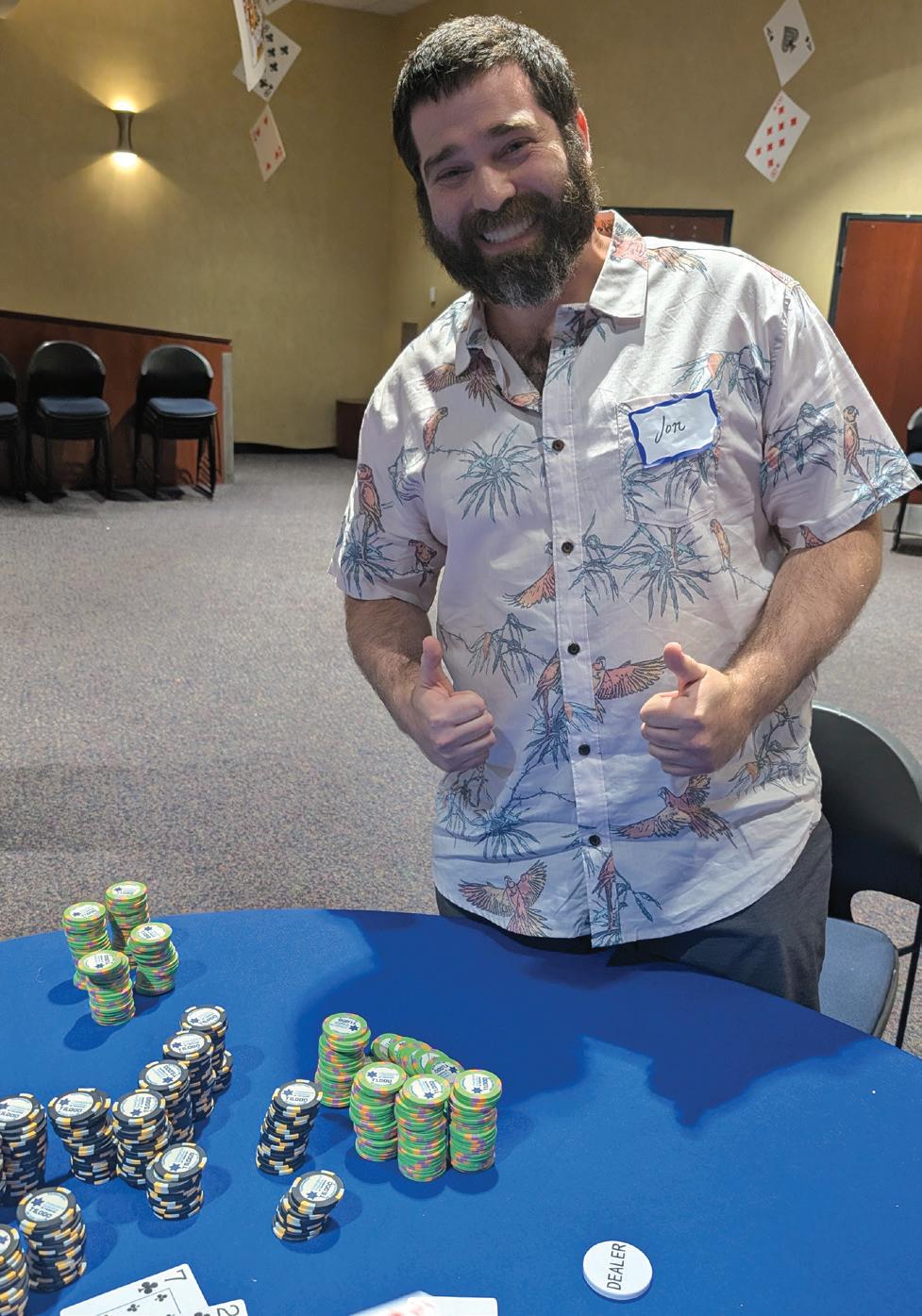
Ninety-seven poker players filed onto the Sandler Family Campus to compete in Nadiv’s Texas Hold ’Em tournament for the chance to win various prizes, including a $500 Amazon gift card on Tuesday, May 12.
The event raised more than $25,000 with most of those funds going to support PJ Library in Tidewater. PJ Library sends families free, high-quality Jewish storybooks each month.
The tournament winner, Jon Horwitz, fended off Jason Hoffman at
Tournament Sponsors
Andrew Nusbaum
Anonymous Corporate Sponsor
Asure Software - Eyal
Goldstein
Beth Sholom Village
Calliott, Demeter &
the final table to take first place.
Many Nadiv members set up the room and managed the event all night (ending at 11 pm). Special thanks to the dealers who kept the table action moving and to Tom Edwards, JCC athletics director, for running a

flawless tournament.
A young professional men’s fundraising group through UJFT, Nadiv is open to men ages 22-50. Interested in joining? Contact Amy Zelenka at AZelenka@ujft.org.
Harrell Investment & Wealth Advisors
(Byron Harrell)
Cary Street Partners
David Konikoff
Family Vision Care Floor and Decor -
Hampton Location
Jay Klebanoff
Jody Balaban
Miles and Sandra Leon
Nathan Jaffe
Robert Friedman
Robert Low
Ron Kramer
Ron Spindel
The Foleck Center
The Miller Group
Todd Copeland
Prize Donors
Anonymous Gift Card
Donation
Cinema Cafe
Coopers Hawk Winery and Restaurant
D-BAT Virginia Beach
Festevents - Norfolk
Handsome Biscuit
Virginia Beach
IHOP Kempsville
Kempsville Greens Golf Course
Latitude Climbing and Fitness
Norfolk Botanical Gardens
Norfolk Tides
Pet Benefit Solutions
Q-Master Billiards
Total Wine and More Virginia Beach
Trader Joe's UJFT Jewish Film
Festival
Virginia Opera
Virginia Stage Company
Virginia Symphony Orchestra
Pati Oliszewski
Every year, we count the Omer between Pessach and Shavuot. Seven weeks. Forty-nine days.
For many of us, it can feel like just another Jewish ritual quietly tucked between two major holidays. But this year, through Amy Lefcoe’s six-week class, On Our Way to Mt. Sinai, I realized something deeper: the journey itself is the point.
Pessach is not only about freedom from Egypt. It is about asking ourselves a much harder question: What am I still a slave to?
Maybe it is anger. Ego. Fear. The need to control outcomes. The need to always be right. Maybe it is judgment. Maybe it is the endless distractions that keep us far from who we want to become.
The Omer invites us into a process of refinement. Not perfection — refinement.
Week after week, we explored the idea that Judaism does not expect us to erase our difficult character traits. We are human beings. We were created with complexity. But we are also expected to work on ourselves constantly. In Judaism, personal growth is not self-help. It is spiritual work.
One sentence from the class stayed with me: “We are not what our nature is.”
That idea is both comforting and challenging. We may naturally lean toward impatience, arrogance, resentment, anxiety, or anger — but those traits do not define us. They are simply the material we were given to work with.
And perhaps that is why the people in our lives are there, too.
Sometimes the people who challenge us the most are also the people helping us grow the most. Judaism teaches that our relationships become mirrors for our character. They expose what still needs healing.
One of the strongest discussions we had centered around anger. Amy Lefcoe referenced the plague of frogs in Egypt: it began with one frog, but every time it was hit, it multiplied. Anger works the same way. Once we start “hitting the frog,” it grows bigger and louder and harder to stop.
And often, anger comes from ego — from unmet expectations, from feeling unseen, unheard, or not in control.
Judaism offers another path: humility.
Not humiliation. Not thinking less of ourselves. But recognizing that we are not the center of everything.
One insight I loved was: “Don’t take pride; take pleasure.”
We are not the creators of every success in our lives. We are simply “cashing the check” that God gave us the opportunity to receive. We are responsible for the effort. God is responsible for the outcome.
That shift changes everything.
Because once life becomes less about “me,” gratitude naturally enters the picture.
And gratitude is one of Judaism’s greatest foundations.
It begins every morning with Modeh Ani, thanking Hashem for returning our soul to us for another day. Gratitude appears throughout our prayers, our blessings, our traditions. We are constantly reminded to notice the good. To recognize that even difficult moments may contain opportunities for growth.
Lefcoe spoke often about bitachon — trust in God. Not passive trust, but active trust. The understanding that we still pray, try, work, and show up… while also recognizing that not everything is ours to carry.
We hold so much weight on our shoulders. But maybe part of spiritual growth is learning to put some of it down.
None of this is easy.
But perhaps that is exactly what the journey to Mt. Sinai is supposed to teach.
Receiving the Torah was never only about standing at the mountain once, thousands of years ago. It is about asking ourselves, every single year:
Who do I want to be when I arrive there?
More humble?
More grateful?
Less judgmental?
More trusting?
Closer to God?
Closer to the person I was meant to become?
The truth is, we are all still on our way to Mt. Sinai.
Still learning.
Still refining.
Still trying.
And maybe that is the holiest part of the journey.
For more information about classes offered by United Jewish Federation of Tidewater’s Konikoff Center for Learning, visit JewishVA.org/KCL or contact Sierra Lautman at SLautman@ujft.org.
With the knowledge that many hate crimes go unreported due to fear of retaliation, a high school sophomore gets a bill passed that protects the anonymity of victims.
Haley Bartel
Nationwide, hate crimes continue to affect not only the Jewish community, but several marginalized groups.
Randall Nied, a sophomore at Cape Henry Collegiate, bothered by this statistic, took matters into his own hands by creating a bill protecting the anonymity of hate crime victims.
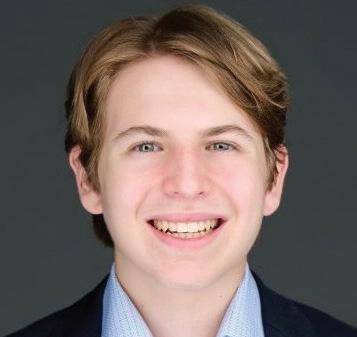
“I was inspired to make this bill when I saw that hate crimes were on the rise in Virginia,” Randall says. “I saw that there were protections for anonymity for victims of sex crimes and then looked into it and saw there was nothing like that for hate crimes, even though fear of retaliation is a main reason people don’t report hate crimes.”
The bill, HB459, won 93-4 in the Virginia House of Delegates and 38-0 in the Senate. It was then signed into law in April by Governor Abigail Spanberger.
It’s worth noting that Randall is not the only Nied sibling with a strong political drive. His sister, Simone, inspired HB167, a bill that called for the removal of tax exemptions for Confederacy-affiliated groups.
“My sister had made a bill previously, and without her doing that I probably wouldn’t have thought that going to my representatives to get a bill passed would be a feasible option,” he says.
Simone’s bill was previously blocked by former Governor Glenn Youngkin. However, under Gov. Spanberger, both HB459 and HB167 have been signed into law.
Now, Randall is actively trying to get the bill passed outside of Virginia.
The interactive map on helpstopthehate.org shows that several states don’t even provide the option of anonymity to sexual assault and abuse victims, and Virginia is the only state so far to protect victims of hate crimes.
“It is the first bill of its kind, and it would be awesome if it would be spread throughout the nation,” Randall says.
Tuesday, July 21 – Wednesday, July 22





As the school year winds down, many educators are already looking ahead, reflecting on what to maintain and what to change for the next year. In today’s classrooms, that reflection often includes navigating difficult conversations, addressing bias, and ensuring that every student feels safe and respected.
The 2026 Tidewater Inclusive Educators’ Conference is designed with those realities in mind. Hosted by the Virginia Center for Inclusive Communities, in partnership with the Jewish Community Relations Council and Holocaust Commission of the United Jewish Federation of Tidewater and United Jewish Community of the Virginia Peninsula, this two-day experience brings together educators from across the region for focused, practical learning.
Educators are often called to respond to bias in real time—whether it arises in classroom comments, student interactions, or broader questions of identity and belonging—and this conference centers on what they need most: clarity, confidence, and practical strategies.
Participants will explore how to address antisemitism and identity-based bullying, facilitate meaningful conversations, and build stronger engagement across diverse classrooms. Just as importantly, the conference helps educators turn difficult moments into opportunities for learning, equipping them to approach sensitive topics with intention, guide students through tension, and foster environments that are both inclusive and accountable. The focus remains on immediately applicable skills that shape not only individual student experiences, but the broader culture of schools.
A central element of the conference is its focus on connecting historical understanding to present-day student experiences. On the second day of the conference, participants will take part in a guided visit to the Virginia Holocaust Museum in Richmond, using this experience as a professional tool to deepen context and support more meaningful classroom discussions. By grounding contemporary challenges in historical reality, educators are better equipped to foster empathy, critical thinking, and informed dialogue among their students.
For educators, this is an opportunity to strengthen practice alongside peers who understand the realities of today’s classrooms and to leave with tools that can make an immediate difference. Professional development that is both relevant and practical, can be difficult to find; this conference is intentionally designed to meet that need.
Educators should consider registering today. If not an educator, consider sharing the conference with a teacher, administrator, or counselor. Encouraging participation helps extend the conference’s impact, reaching classrooms and students across the community.
The registration fee (early bird fee of $25 through June 15) of $40 includes all materials, meals, transportation, and 13.5 Continuing Education hours. Scholarships are also available.
The conference is made possible by a grant from Tidewater Jewish Foundation.
For more information or to register, visit InclusiveVA.org/tiec2026.

Join us for a fascinating tour of the Edgar Cayce Museum and A R E campus in Virginia Beach Learn about the life and work of Cayce, view rare reading transcripts, and explore a large metaphysical library You’ll also have time to enjoy the peaceful A R E grounds
Pre-registration is required Details and sign up below ewishVA.org/Edgar

JUNE 2, TUESDAY
Yiddish Club. Embrace Yiddish culture, language, and history through music, film, poetry, and literature. Usually meets on the first Tuesday of each month. 1 pm. Sandler Family Campus. Information: www.jewishva.org/Adults or contact Sarah Cooper at SCooper@ujft.org.
JUNE 4 AND 11, THURSDAY
Baby & Me. A relaxed hour of coffee, treats, and playful activities for babies up to 24 months and their caregivers. Connect with other caregivers while little ones explore and play with friends. Free, no membership required. 9 –10 am. Simon Family JCC. Registration required: JewishVA.org/BAM or Blake Sisler at BSisler@ujft.org.
JUNE 4 AND 18, THURSDAY
Roundtable Conversation. Join community members of all ages for conversations involving current events, politics, and more. Meets every first and third Thursday of the month. 1 pm. Sandler Family Campus. Information: www.Jewishva.org/Adults or Sarah Cooper at SCooper@ujft.org.
JUNE 5, FRIDAY
PJ Library in the Neighborhood. Enjoy a pre-Shabbat afternoon at Woodstock Park. Swing by after school for some outdoor play, connect with other families, and kick off the weekend together. 4 – 6 pm. Information: Bsisler@ujft.org or Jewishva.org/Neighborhood.
JNextGen Pop-Up Shabbat. Join Shabbat gatherings hosted in homes across the community for young adults (and their families), designed for those roughly ages 22–45(ish). Enjoy a warm evening of Shabbat traditions, meaningful conversation, and a shared meal in a relaxed, welcoming setting. To see dates and host information, visit JewishVA.org/PopUpShabbat.
JUNE 10, WEDNESDAY
Ancestral Allyship. In recognition of LGBTQ+ Pride Month, Mike Moskowitz, Orthodox rabbi and Scholar-in-Residence at the world’s largest LGBTQ+ Jewish congregation, will delve into Torah with a fresh twist: Exploring allyship. Rabbi Moskowitz will illuminate how to stand up, support others, and make a difference. This is a new way to see timeless texts through the lens of belonging, empathy, and connection. Presented by Arts + Ideas at the United Jewish Federation of Tidewater in partnership with Konikoff Center for Learning. Sandler Family Campus. 7 pm. Registration required at JewishVA.org/Pride.
JUNE 15, MONDAY
Book Club. The book of the month is Astoria by Peter Stark. The group meets every third Monday of the month at 1:30 pm. Sandler Family Campus. Information: Jewishva.org/Adults or contact Sarah Cooper at SCooper@ujft.org.
Camp JCC opens its doors for the first day of summer camp. Campers will dive into a full day of classic camp fun, including sports, swimming, arts, outdoor adventure, and community building with friends old and new. Held on Sandler Family Campus, this kickoff day sets the tone for a season filled with energy, friendship, and unforgettable experiences. Registration and information: CampJCC.org or Kate-Lynn Cipolla, Camp JCC Director at KLCipolla@UJFT.org.
JUNE 17, WEDNESDAY
Edgar Cayce Museum Tour. Join the JCC Senior Club and take a tour of the Edgar Cayce A.R.E. Campus. Membership of the Senior Club is not required. $10 plus lunch. Bus will board at the Simon Family JCC at 12 pm and return by 4 pm. Information and registration: www.JewishVa.org/Edgar or Sarah Cooper at SCooper@ujft.org.
Hunter Thomas
In his book, Ancestral Allyship, Rabbi Mike Moskowitz draws on the weekly Torah portion to explore allyship as a spiritual practice.
At its most basic, allyship is defined as the state or condition of being an ally; supportive association with another person or group. It is most often used in recent years to describe support or association with members of a marginalized group to which one does not belong.
Rabbi Moskowitz grew up in a family affiliated with the Conservative movement, holds three ordinations from two prominent Orthodox yeshivas, and most recently served a New York congregation unaffiliated with any movement.
That synagogue, Congregation Beit Simchat Torah, describes itself as the world’s largest synagogue committed to serving members of the LGBTQ+ community. Borrowing language from that community’s experience, he describes his religious journey as, “I was assigned secular at birth, came out and identified as ultra-orthodox, and now I’m some version of religious non-conforming.”
Moskowitz served the congregation for seven years as Scholar-in-Residence for Trans and Queer Jewish Studies, during which he published more than 130 articles and five books. A longtime advocate of teaching that all people are created b’tzelem Elohim – in the image of God – Moskowitz began speaking out publicly about LGBTQ+ issues in 2015. Until then, he had published blog posts with the Jewish LGBTQ+ organization, Keshet, under a pseudonym, and worked quietly with Orthodox families raising gay children. It just so happened at the same time he began speaking out publicly about his views, a family member came out as transgender.
In a 2022 interview with Tablet Magazine, Moskowitz said, “I was 37 years old at the time, and I had the same sensation I experienced at 17 when I became Torah observant, which is if I know this to be true, do I have enough faith to follow through with what I know is right and deal with the precarity and the consequences?”
He describes that moment as a turning point, one that led him to speak publicly and more directly about allyship. He now uses his knowledge of Jewish law, halacha, to guide others to do the same. For the Torah portion, Behaalotecha (Numbers 8:1-14), Moskowitz writes in Ancestral Allyship about Aaron feeling disappointed that he is not called upon to contribute to the tabernacle. He writes that, “knowing that we each have a special offering to share with the world encourages us to be open to the inspirational truths that are found in others.”
Comparing that to the act of allyship, he writes, “Celebrating pride is acknowledging that we each have love to give. By assisting the world in embracing the love of others, we are acting as a partner in the ongoing creation of a more connected and involved society that knows better than to hate what is different.”
Rabbi Moskowitz is speaking for United Jewish Federation of Tidewater’s second annual recognition of LGBTQ+ Pride Month. The event is presented by UJFT’s Arts + Ideas and Konikoff Center for Learning and funded in part by the citizens of Virginia Beach through a grant from the City of Virginia Beach Arts & Humanities Commission. It is held in coordination with the Jewish Book Council, Hampton Roads Pride, and the LGBT Life Center of Hampton Roads.
For information, contact Hunter Thomas, director of Arts + Ideas at UJFT, at HThomas@UJFT.org.
Irving Alperin
VIRGINIA BEACH – Irving Alperin, age 95, passed away on April 30, 2026.
He was born on June 12, 1930. Irving retired from US Department of Defense in 1995 after more than 31 years, where he worked for the US Information Agency Voice of America, Naval Sea System Command SUPSHIP, Naval Air Rework Facility, and as a US Army soldier. His assignments took him to Navy ports around the world, from which he always returned with stories and gifts for his wife, daughter, and twin boys. While waiting for his wife to retire, Irv drove tour and school buses in Maryland.
After he and Jackie retired to St. Petersburg, Florida, he drove Pinellas County Florida school buses with his buddy, Stan. After retiring, Irv and Jackie lived in a Point Brittany, Saint Petersburg 12th floor condo with water views for 16 years. They explored at least 90% of the restaurants and all the flea markets on Florida’s Gulf Coast and cruised the Caribbean many times. In early
retirement, they made high-speed drives up I-95 to visit Benay, Darin, and Suzanne in Pennsylvania and Maryland; and in later years flew to Singapore and Los Angeles to visit Adrian, Mandy, and Bella.
His interests and hobbies included car repair and resale; Ham radio; boating and fishing the Chesapeake Bay with Jackie and his kids; camping in North Carolina at Lazy B; touring on his Honda Gold Wing with Jackie sleeping on the back; hot dog stand owner and operator featuring a secret (and delicious) chili sauce; sharing time shares with his children in Mexico and Las Vegas; cruising with family and friends; and being the best pal of Poochie, Toto, and Toto2. Memberships and affiliations included FCC Amateur Radio License W3SEX; 50.7 Amateur Radio Catfish Network WA4IYJ; and LP Club Amateur Radio Leg Pullers Club membership.
He was predeceased by his father Nathan Alperin, mother, Belle (Horwitz) Alperin, and brother and sister-in-law, Willie and Billie Alperin. Survivors include



Jacqueline Hecht Alperin, wife of 65 years; children Darin (Suzanne Baker) Alperin, Adrian (Mandy Holloway) Alperin, and Benay Alperin; and grandchild Bella Alperin-Holloway.
A memorial service was held at Altmeyer Funeral Home Southside Chapel. Following the service, his cremains were buried at Forest Lawn Cemetery in Norfolk.
In lieu of memorial donations/ contributions; spend a week at sea with your spouse, relatives, or friends.
Leslie Herbert Friedman NORFOLK – Leslie (Les) Friedman died at the age of 89 on May 15, 2026. He was born on April 26, 1937, and was a lifelong resident of Norfolk. He was the devoted son of Fannie Gurfein Friedman and Milton Levisohn Friedman, who were successful business owners of the Milton Music Company and other Norfolk business ventures. Leslie was a member of Ohef Sholom Temple in Norfolk.
Leslie attended schools in Norfolk: Taylor Elementary, Blair Junior High, and graduated from Maury High School. He attended University of Virginia, graduating in 1961 with a Bachelor of Science degree in Commerce.
Leslie grew up in a home with his parents where music and art was much more than a business venture; music and art were a passion for his parents and through them, Leslie developed a passion and appreciation of music and art in all forms. Leslie, like his parents, was a strong supporter of the art communities, especially Virginia Symphony Orchestra, Virginia Arts Festival, Virginia Stage Company,
Virginia Opera, and Chrysler Museum, as well as many other charitable organizations.
The Virginia Symphony Orchestra honored Leslie at their November 2014 Annual Dinner as the longest serving VSO board member, as well as a sponsor of the Young Audiences of Virginia –supporting young musicians in the Hampton Roads area.
Leslie also had a love of the United States Navy. This passion came from his years as a boy and young man boating the East Coast of the United States with his father, Milton, in the family motorboats. After graduating from University of Virginia, Leslie joined the Navy on Active Duty and served aboard a U.S. Navy aircraft carrier for four years and qualifi ed as a Surface Warfare Officer and “drove” the aircraft carrier! After leaving Active Duty, Leslie transferred to the Naval Reserve where he served for 30 years, achieving the rank of Captain with numerous Command tours.
He returned to Norfolk following the Navy to work with his parents in their various business ventures. After the passing of his parents, Leslie served as the director of The Fannie Milton and Leslie Friedman Family Foundation, which is a philanthropic organization established in 1996 and recognized for its commitment to voluntarism and philanthropy.
Leslie leaves behind many friends and his love of the art communities in Norfolk.
A memorial service was held at Ohef Sholom Temple. Donations may be made to the Virginia Stage Company.
f
May the Source of Peace send peace to all who mourn, and comfort to all who are bereaved. f
Ron Kampeas (JTA) — Barney Frank, the irascible longtime progressive who strove for equal rights for LGBTQ Americans and coauthored the last major finance reform bill, has died at 86.
The former Massachusetts congressman died in hospice care at home in Ogunquit, Maine, where he lived with his husband, Jim Ready, close family friends said.
Frank was the apotheosis of a Jewish American type that now seems quaint: A Zionist whose support for the Jewish state dovetailed with his progressive values. He liked to tell people — at least until the U.S. Supreme Court dramatically advanced gay rights in a series of decisions — that he would enjoy greater freedoms as an out gay man in Israel than he would in the United States.
Frank “represented a generation of public servants who combined sharp intellect, moral conviction, and an unmistakable voice,” William Daroff, the CEO of the Conference of Presidents of Major American Jewish Organizations, said in a statement. “He broke barriers as one of the first openly gay members of Congress, shaped financial policy for decades, and remained proudly and unapologetically Jewish throughout his public life.”
A onetime aide who wrote with Frank’s biography in 2009 titled it with the phrase Frank used to describe himself: Barney Frank: The Story of America’s Only Left-Handed, Gay, Jewish Congressman.
In 2006, while “don’t ask, don’t tell” was still the policy for gays in the U.S. military, he told Haaretz that he held Israel up as an example to Americans to belie claims that gays in the military undermined morale.
“The IDF is clearly an effective fighting
force,” he said then. “This undermines the argument that there is something corrosive about serving in the military.”
Raised in Bayonne, New Jersey, in a household infused with Labor Zionism, Frank in more recent years — like many other progressive Zionists — had grown disillusioned with years of right-wing rule in Israel. One of his final calls was for the United States to cut off defense assistance to the government of Prime Minister Benjamin Netanyahu.
“I guess I held on longer than I should have to, ‘Well, we can work with them,’” he said of the Netanyahu government in an interview with the Jewish Telegraphic Agency less than two weeks before his death. “But it’s become clear to me, particularly due to what they’re allowing to happen in the West Bank, that it is important morally and politically to repudiate the policy of supporting Israel’s military activity.”
Frank was born in 1940 to a family with Mafia ties – his father ran a truck stop. “Because Bayonne was such a sleazy place, nobody knew whether Barney was going to wind up in Congress or in jail,”
Alan Dershowitz, the famed constitutional lawyer who knew Frank in his teenage years, told The New Yorker in 2009.
Instead of the mob, Frank made it to Harvard University (although he said his father’s Mafia friends were “very helpful” when he took a year off from university to settle his father’s estate). He graduated from Harvard Law School after spending a summer in 1964 in Mississippi to register Black voters.
There, he worked on legal briefs, recalled his older sister Ann Lewis, because his Bayonne accent was inscrutable to southern Black voters. “Once he got there, there was something of a failure of communication,” she said.



• Family owned and operated since 1917
• Affordable services to fit any budget
• Advance funeral planning
• Professional, experienced, caring staff
• Flexible burial options
• Flexible payment options
Approved by all area Rabbis and Chevrah Kadisha





His interest in equal rights came early, said his sister, who drew the family into Zionism after she spent a summer at a Habonim camp, and who later in life led communications for the Clinton White House.
“He’s a big Yankees fan,” she recalled before Frank’s death, describing an incident in 1950, when Barney was a child. “Our uncle, Rosie, who was the sports editor of the Bayonne Times, of blessed memory, brings home a talent scout, somebody who works for the Yankees. And we were invited over to meet this very important person. And Barney, maybe he was 10, asked the
Yankee Scout why the Yankees didn’t have a Black player, why they were so late.”
She recalled beaming at her little brother’s gumption, and the anecdote explained why he soon grew tired teaching law — he was on his way to a PhD at Harvard — and opted instead to take his skills to the legislative arena, serving in the Massachusetts House of Representatives from 1973 to 1981, when he was elected to Congress, where he served until 2013.
“He chose to run for office to be a candidate, and to take that, to take everything he believed in into competition. And that’s really important, beyond just
writing memos or being an academic, he chose the much harder” path, she said. “Ultimately, for all of us, we are all better off that he chose to do that because of the legislation he was able to get passed, but also the example he set.”
Frank soon earned a reputation as a fighter. When Republicans won the U.S. House of Representatives in 1994, and the new speaker, Newt Gingrich, relentlessly sought to obstruct and embarrass President Bill Clinton, Frank was the lead Democrat leading the counterattack, including during Clinton’s impeachment trial.
It was his reputation as a fighter for his constituents that saved him during the worst moment in his career, in 1989, when his boyfriend was found to be running an escort service out of the apartment he shared with Frank.
“Barney spoke to it. ‘This is what happened, and I was wrong.’ He had a difficult and painful year,” Lewis said. But then he won reelection in his economically diverse district because, she said, voters decided, “he worked hard. He messed up — so does everybody once in a while.”
As a result, Frank became the first openly gay member of Congress, and led the campaign for reforms, including the repeal of “don’t ask, don’t tell,” allowing gay soldiers to serve openly in the military.
Frank more recently said his party was pushing some cultural reforms too far, at the expense of his passion, which was closing the income gap. He gave a series of interviews before his death touting his final book, coming out in September, titled The Hard Path to Unity.
“We succeeded in bringing the mainstream of the left into a concern with inequality, we also enabled people who wanted to use that as a platform for a wide range of social and cultural changes, some of which the public isn’t ready for,” he told CNN last month. “They make a mistake by taking the most controversial parts of the agenda and turning them into litmus tests.”
Frank’s proudest accomplishment, the legacy he hoped to be remembered for, was Dodd-Frank, the 2009
overhaul of the financial system he co-wrote in 2010 when he was chairman of the powerful House Financial Services Committee, with then-Sen. Chris Dodd of Connecticut.
“I think we have been vindicated against our critics from both the left and the right,” he told Politico about the bill, which introduced multiple oversight mechanisms for the finance industry, and which institutionalized consumer protections.
He was not afraid to take on controversy in the Israel and Jewish arenas as well, traveling to Israel frequently and speaking in its defense on college campuses after the PR drubbing the country endured during the second intifada. He championed the release of Jonathan Pollard, the spy for Israel, leading congressional pressure on the Obama administration in 2010. (President Barack Obama commuted the sentence in 2015.)
Barney Frank
“The justification of this is the humanitarian one and the notion that the American justice system should be a fair one,” Frank said in 2010.
Asked in May 2026 if he regretted his advocacy considering the path Pollard chose once he emigrated to Israel, where he has launched a far-right party, Frank was adamant: not a bit. “There was no further harm that he could commit,” he said, referring to the life sentence Pollard was serving at the time.
That was a characteristic response, his sister Ann said. “He did understand that you can’t expect or demand that people are angels before you try to help them,” she said. “We’re all better off when the system works.”
Frank had a lacerating wit, always delivered deadpan, and he had little patience for long-windedness, even admonishing Holocaust survivors to cut it short when they were testifying about the negligence of Holocaust-era insurance companies.
His many quotes were gathered in a 2006 book, Frank Talk: The Wit and Wisdom of Barney Frank. He was frequently ribald. Jeffrey Toobin recalled in his 2009 New Yorker profile sitting at a table with a mortified priest, listening to Frank address a real estate group.
“There are three lies politicians tell,” Frank said. “The first is ‘We ran against each other but are still good friends.’ That’s never true. The second is ‘I like campaigning.’ Anyone who tells you they like campaigning is either a liar or a sociopath. Then, there’s ‘I hate to say I told you so.’ Everybody likes to say, ‘I told you so.’ I have found personally that it is one of the few pleasures that improves with age. I can say ‘I told you so’ without taking a pill before, during, or after I do it.”
Steve Rabinowitz, a family friend and longtime public relations strategist for Jewish groups, described Frank’s legacy as thus: “Being on the left and a Jewish identifier at the same time and showing that one can one can be both.” Frank did not want to be known solely as one or the other. In 1990, when the Quincy, Massachusetts, PatriotLedger was seeking comment about the closeness between Nelson Mandela, the South African leader and hero to civil rights advocates, and Yasser Arafat, the Palestinian leader who at the time was still seen by Jews as a terrorist, he was incensed that he was described in the article only as Jewish, and omitted his job.
“Hello,” he told the reporter in a call after publication. “It’s the Jew.”
But Jew was not a label he hesitated to embrace. After days of phone tag, he called this reporter at 6 pm on a Friday evening, 12 days before he would die. “Shabbat shalom,” he said as he signed off.
Grace Gilson (JTA) — An American-born former Israeli soldier who was wounded in a West Bank attack has died by apparent suicide, according to Israeli media reports.
Alex Miller, 23, died last month in Miami, where he had been living after he was discharged from the military. In October 2022, while serving in the Israel Defense Forces’ Kfir Brigade, Miller was moderately wounded in a car-ramming attack in the West Bank.
After undergoing a rehabilitation process, Miller returned to the military, according to the Katzrin Regional Council in the Golan Heights, where his father, Danny Miller, lives. A spokesperson for Israel’s defense ministry told Haaretz that Miller requested and received recognition for physical wounds sustained in the attack, but not for mental trauma.
The council said that Miller was also affected by the June 2025 death of his close friend, Noam Shemesh, who
was killed by anti-tank fire in Gaza.
“I don’t get it. I have invested my entire life in raising and nurturing him. We had a lot of conversations about the attack, but apparently, the attack and Noam’s death broke him. Even though he didn’t admit it, he suffered a lot,” Miller’s father said, according to Israel National News.
Miller’s death comes amid growing concern over the mental health toll of Israel’s ongoing conflicts. In 2025, 22 active-duty IDF soldiers died by suicide,
marking the highest number since 2010, according to Haaretz. Between January 2024 and July 2025, 279 active soldiers attempted suicide, according to a report published by the Knesset Research and Information Center last October.
“The invisible trauma that he quietly carried with him, without letting others know of its volume, eventually defeated the young warrior who had his whole life ahead of him,” the Katzrin Regional Council said in a statement, according to Haaretz
(JTA) — A raucous crowd of football fans filled the narrow strip of grass between Tel Aviv’s music center and Bloomfield Stadium, home to the Maccabi and Hapoel Tel Aviv soccer teams. Threading their way through them toward the concert hall was an incongruous procession of young musicians in eveningwear, lugging cases of every shape and size for contrabasses, violins, ouds, cellos, and darbukas.
Inside the concert hall, a small audience of friends, siblings, parents, and music lovers let out a swell of whoops and claps more in keeping with a soccer game than the polite demeanor usually reserved for orchestras.
The concert was the public culmination of a youth project composed of Jewish and Arab performers run by the Jerusalem Orchestra East & West, known as TJO, the Israeli orchestra led by conductor Tom Cohen that blends Western orchestral music with Middle Eastern, North African, and Andalusian traditions. TJO has shared the stage with major Israeli artists including Matti Caspi, Danny Sanderson, and Ehud Banai, and is due to perform at the Concordia Summit in New York in September.
The program brings youth orchestras from across the country under TJO’s guidance, training young musicians to carry forward the musical language Cohen has spent years developing. He describes that language as part of an evolving “Israeli sound,” comprised of “everything that began with our grandparents in the various diasporas around the world and arrived with them here in waves of immigration.”
It grew out of his own journey from Western classical music into the music of the Maghreb and the Middle East, and “brings together elements from East and West without losing the identity and distinctiveness of either one,” he says.
“We’re creating something new that is greater than the sum of its parts,” Cohen says. Still, he is careful to add that the sound was not his orchestra’s invention, but part of “an evolution, not a revolution that erases what came before it.”
Last month’s concert brought together 80 musicians, ages 9 to 20, from half a dozen youth orchestras around the country, with some ensembles numbering in the dozens and others only a handful. Cohen says the project is meant to train a next generation of musicians who could one day join TJO, named the country’s leading orchestra by the Culture Ministry in 2022, while also sending them out as “ambassadors of its language” in their own work.
Ensemble Sdot, a nine-member group from the Sdot Negev Regional Council in southern Israel whose players mostly wear kippot, took the stage first to perform a reworked song by the late Israeli singer-songwriter Meir Banai. In the audience, waiting for his own performance, Youssef Sarhan, a 9-year-old violinist from Majd al-Krum, an Arab town in northern Israel, bobbed his head along from his seat. He had begun studying a year and a half earlier with Fadel Maana, a veteran violinist in the Arabic tradition from the same town and one of TJO’s senior musicians, who later brought him into the youth orchestra.
Addressing the young musicians from the stage, Cohen says he usually resists the familiar exercise of identifying who came from which community.
“This nonsense of saying who’s from where, it’s so unnecessary,” he says. But the mix is part of what makes the music work, he says, with Jewish, Muslim, Christian, and Druze youth “backstage trading information about Umm Kulthum,” the revered Egyptian singer; maqams, the melodic modes used in Arabic and other Middle Eastern music; and other musical references.
“Even if you’ve never spoken to each other in your lives, when two children sit together on stage, catch each other’s eyes while they’re playing and creating something together, the connection that’s forged there is as deep as family,” Cohen says.
Cohen, who lives with his family in Brussels, says the years of war changed his relationship with his work, which had always been his greatest source of joy.
“It’s a feeling I can’t describe, a feeling of being outside of time,” he says. “But the last three years took that away from me.”
As an Israeli conductor who plays Arabic music, Cohen says, his international career went quiet amid growing hostility toward Israel abroad, while in Israel it became harder to enjoy performing when, as he put it, “half an hour away, the world is falling apart.”
The youth project offers a way back. Cohen says he found comfort in the connection between musicians “who come from completely different religions, backgrounds, and places,” and came to see the orchestra as “a symbol of real hope, not just a professional artistic institution.”
Malak Aboufdaly, a teenage bassoon player from Acre, says that after years of war, she felt a responsibility to give the audience a measure of relief.
“It’s my job to make you feel how I play. Sad or happy,” she says. “But I think it’s really important that we can make people happy after two or three years of war.”
At the concert, Shoval Hayak, a 17-year-old wearing a black evening gown, was excitable and effusive, not long removed from being a regular high school student in Moshav Hosen, near Israel’s northern border. After Oct. 7, her family was evacuated to Tel Aviv, where she threw herself into singing. She joined the youth orchestra framework and later performed with the Israeli hip-hop and funk band Hadag Nahash.
At the concert, she sang Hallelujah with Nihaya Safadi, a singer and viola player also from Acre, in an arrangement Cohen wrote during the orchestra’s first summer seminar.
“I didn’t believe I could ever be a singer,” she says.
Some of her peers, she says, tried to escape the reality of war and displacement through recreational drugs. Hayak found her escape in music.
“I gave my heart and soul to this project. I got sucked into it more and more,” she says. “I truly believe that if I give my whole heart, all the small details that make everything shine come to the surface. Each time I go on, there are tiny improvements that I’m not even aware of at the time.”
She speaks warmly about the people around her: her mother, who she calls “my support system”; Cohen, who she says had become like a father to her; and her boyfriend, Yair. “Bless his soul, I adore him.”
The same affection extended to the other young musicians she performs with. “They’re the best family I could ever ask for,” she says.
Cohen says watching young musicians like Hayak “become professional and be captivated by the magic of music” is part of what keeps him invested in the project, which he took on as a volunteer effort. The next step, he says, is to give the program a larger stage and bring in more students.
The youth evening ended with all the young musicians together playing Fatouma, a Lebanese piece arranged and led by Cohen, who bounced on the balls of his feet, twirled on stage and flashed theatrical expressions at the players as he conducted.
“I was looking for a way back to my happiness and I found it in this world of children,” he saysd. “When I’m with them and making music, I go back to real, deep joy. Like a child.”