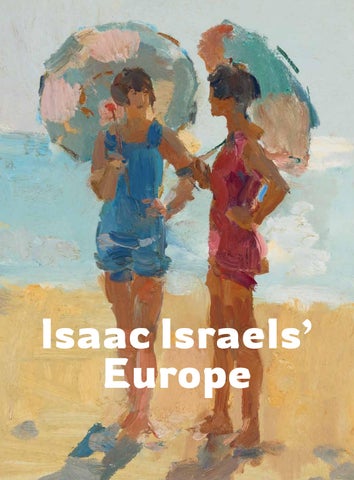
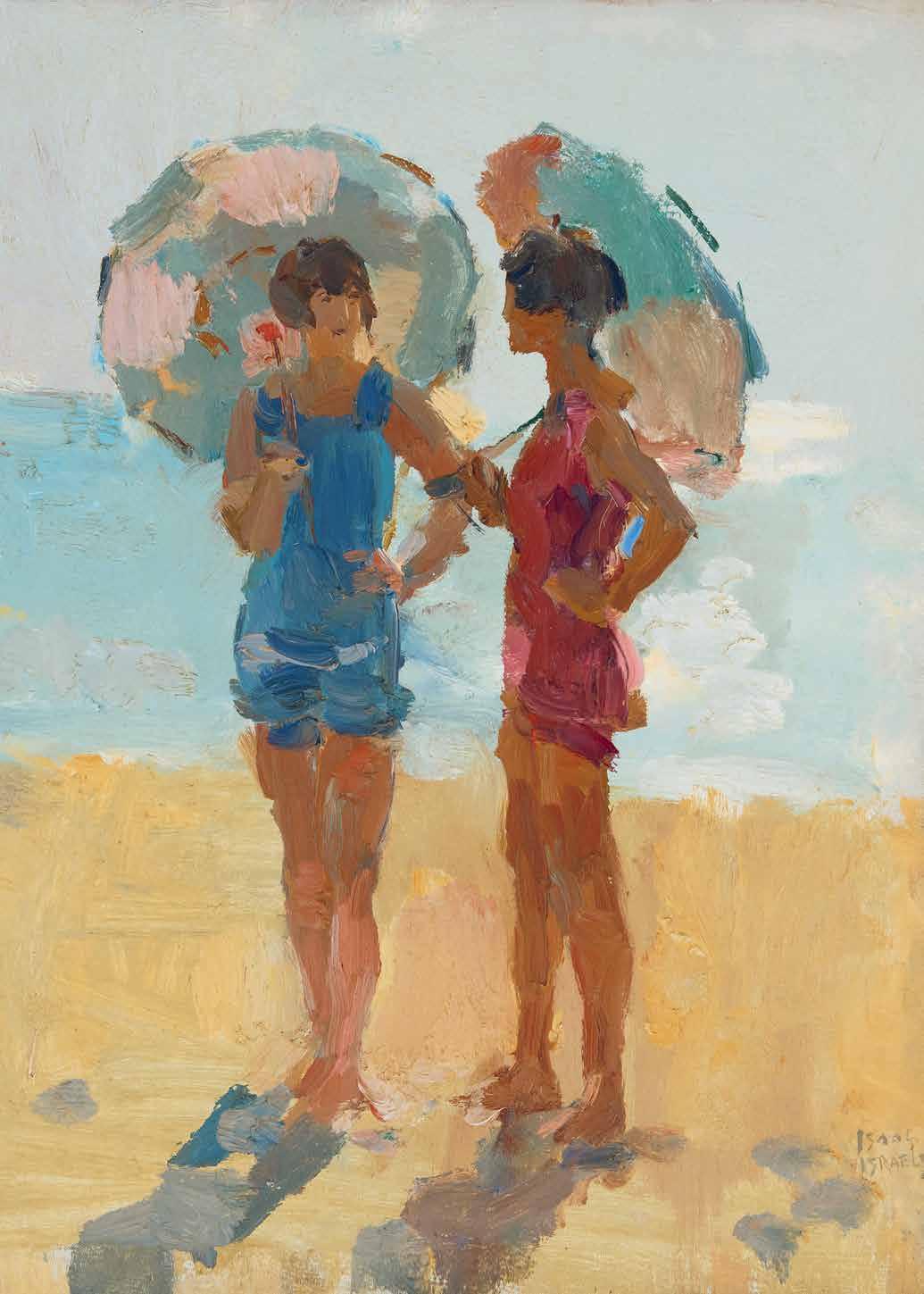
Europe Isaac Israels’
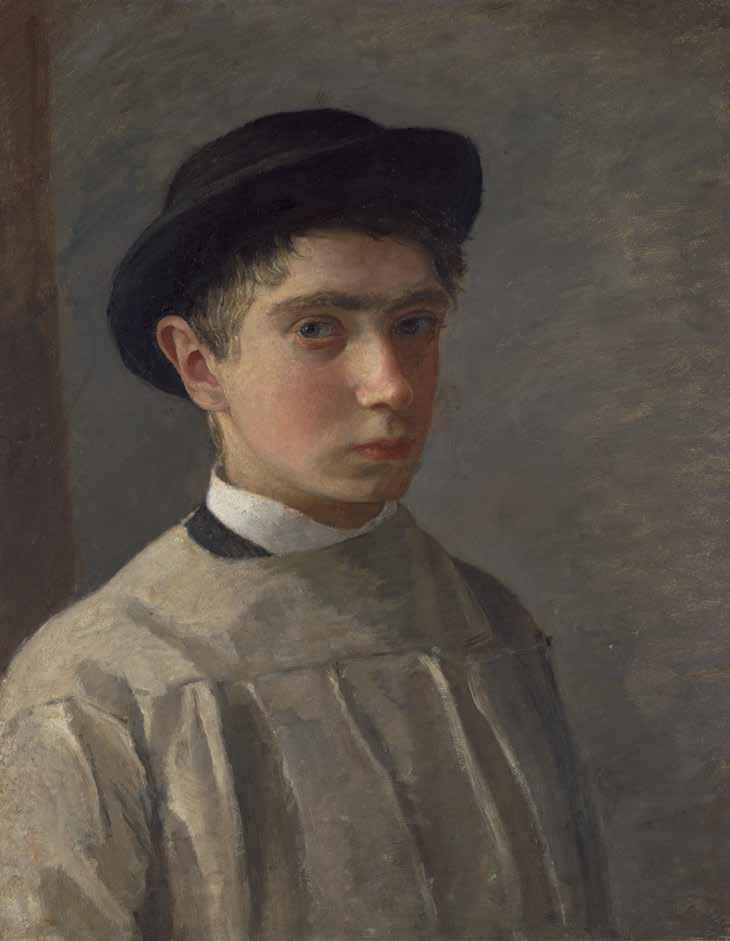
Fig. 1 Self-Portrait with a Bowler Hat, 1882
Private collection
Foreword
From an early age, Isaac Israels was regarded as a virtuoso artist in Dutch art history. He was already receiving recognition for his talents by the age of sixteen. The artist has therefore never lacked attention, either during his lifetime or posthumously. Even so, there are still aspects of his oeuvre that deserve more attention. That is a testament to his versatility. With this exhibition and publication, the Kröller-Müller Museum hopes to contribute to a greater understanding of the life and work of one of the most talented artists of his generation.
It is entirely fitting that this exhibition is being held at the KröllerMüller Museum. Helene Kröller-Müller and her advisor, Henk Bremmer, admired Isaac Israels for his keen observation and mastery of technique, which enabled him to capture the essence of his chosen subject sketchily and in a short space of time. With 23 paintings and almost 300 drawings, his work is abundantly represented in the collection of the Kröller-Müller Museum.
In Bremmer’s words:
‘He truly sees; he does not casually look at things as most people do, and if one manages to grasp his approach, if one can allow oneself to be guided by what he presents to us in his work, as images of the world projected through his eyes, then one encounters a rich array of surprises.’ [Bremmer n.d., p. 5]
Several exhibitions about Israels have been organised in recent decades, including Breitner vs. Israels (2020), Father and Son (2008) and Isaac Israels in Fashion (2002), all at the Kunstmuseum Den Haag.
This is not without reason, as that museum also holds a fine collection of works by the artist. Other recent exhibitions include Israels in Amsterdam (Amsterdam City Archives, 2012), Israels by the Sea (Frans Hals Museum, 2007) and Isaac Israels – Hollands Impressionist (Kunsthal Rotterdam, 1999). Despite the extensive collection at the Kröller-Müller Museum, there have only been a few exhibitions dedicated to this artist here. The most recent was Isaac Israels, Chronicler of Flowing Life in 1999. The first was in 1927, when it was still called Museum Kröller on Lange Voorhout in The Hague.
Isaac Israels’ Europe brings together a wonderful selection of works from museums and private collections. On display are paintings and a wide variety of works on paper: watercolours, pastels, chalk drawings and numerous sketchbooks.
Exhibitions such as this are only possible thanks to the generosity of many and the expertise and dedication of specialists. Israels’ work is not only amply represented in Dutch museums, but is also a highly sought-after collector’s item. I am therefore grateful to the various art dealers and auction houses for their mediating role in tracing works that the public can now enjoy, both in the exhibition and in the catalogue.
Private lenders have entrusted their beloved works to the museum, allowing us to tell the story of Israels’ travels through Europe. By doing so, they have made this exhibition possible, for which I am extremely grateful. Museums have also generously loaned items. My thanks go to all my colleagues who have made this possible.
The exhibition was conceived by curator Renske Cohen Tervaert. The design, by Raw Color, transforms the exhibition into a journey through Israels’ work.
The catalogue is published by Waanders and beautifully designed by Saiid & Smale. Esther van Maanen was responsible for the image editing. The result is a gem that will remain a testament, even after the exhibition closes, to all the work of curator and compiler Renske Cohen Tervaert and trainee curator Julie van Loon, which has yielded a valuable addition to the existing knowledge about the artist.
The articles are written by Michael Wintle, Frouke van Dijke, Julie van Loon and Renske Cohen Tervaert. I am grateful to them all for sharing their insights on Isaac Israels, which are truly valuable additions to the already impressive literature on the artist.
Benno Tempel, director Kröller-Müller Museum
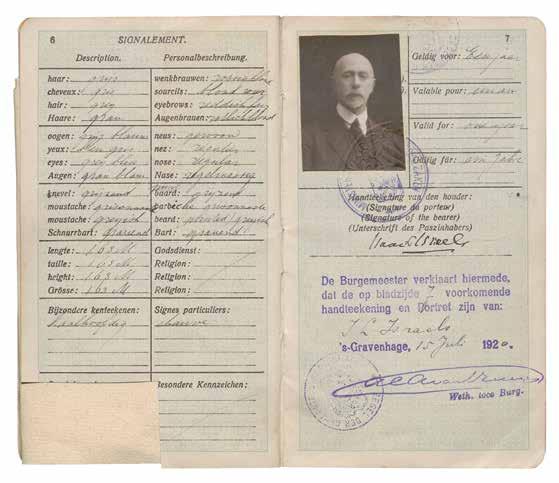
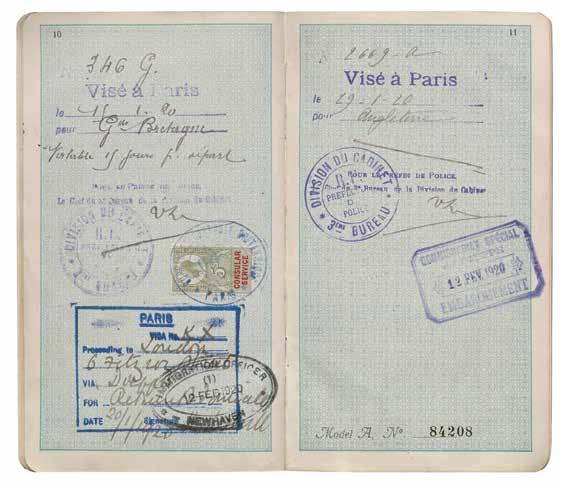
Cat. 1 Isaac Israels’
Dutch passport, The Hague, 15 July 1920
Haags Gemeentearchief, The Hague
Cat. 2 Isaac Israels’
Dutch passport, The Hague, 9 July 1919
Haags Gemeentearchief, The Hague
Isaac Israels, a traveller
Renske Cohen Tervaert
On the borders of Europe
Spain and Russia through Isaac Israels’ eyes
Julie van Loon
Where paths cross
Israels and his globetrotting circle
Frouke van Dijke
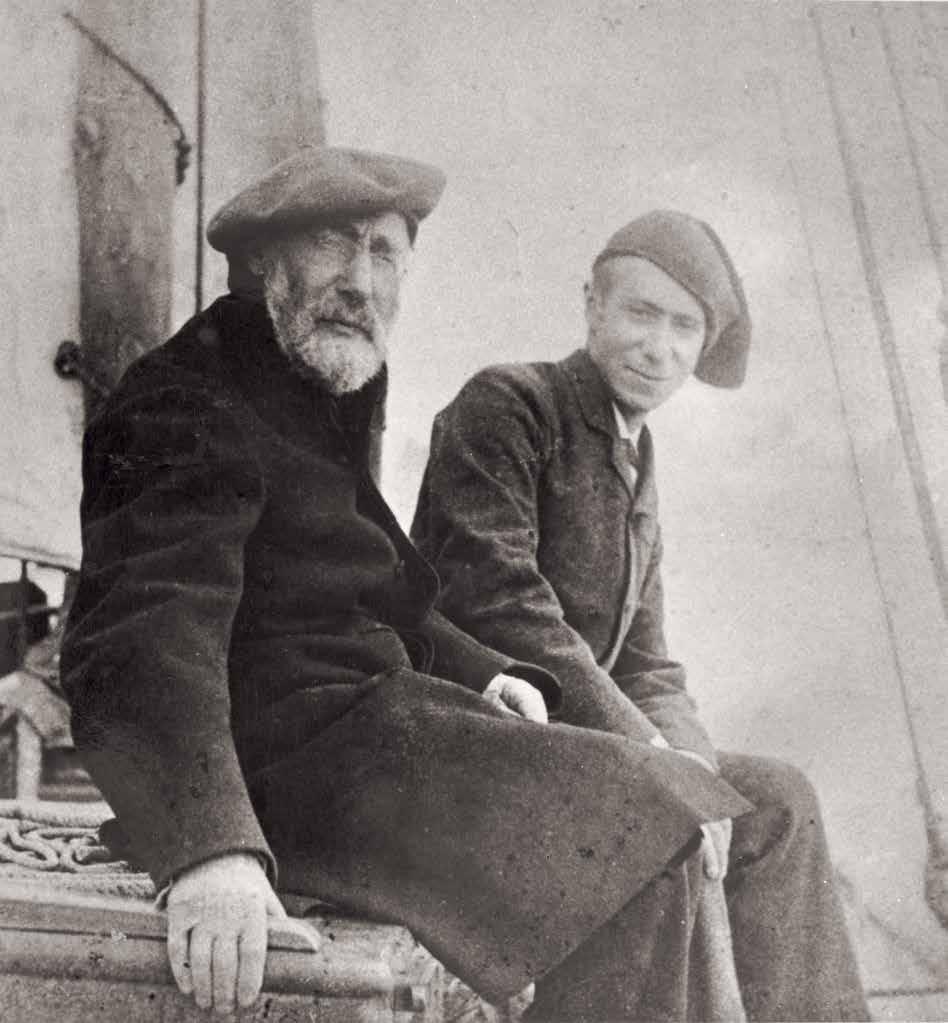
Fig. 2 Jozef and Isaac Israëls aboard the Lady Bird, 1883 Haags Gemeentearchief, The Hague
Isaac Israels and Europe
1877 − 1879
The first European trips with his family begin in 1877. In addition to Paris and London, they travel through Germany, Switzerland, Austria and Italy, including an audience with Pope Pius IX in Rome. From this point on, he attends the Paris Salon every year.
1885
Together with Rudolf Steinmetz to the Belgian mining region of the Borinage and Charleroi.
1889
Five weeks in Paris with Frans Erens, many visits to famous writers and artists.
1891
A trip to Hamburg to see Arij Prins in October.
1894
With Jozef Israëls and Erens via Antwerp, Brussels, Paris and Avignon to Spain. From San Sebastián, Burgos, Madrid, Toledo, Córdoba, Seville, a short crossing to Tangier (North Africa) and via Gibraltar to Granada, Valencia and Barcelona.
1895 − 1899
Visits to Paris, Berlin, Kassel, and other cities. A dream trip to Russia is cancelled.
1900
Paris with a visit to the World’s Fair.
1903 − 1913
Increasingly longer stays in Paris. From 1906 onwards with his own studio at 9 Boulevard de Clichy (10 Rue Alfred Stevens), which he keeps until around 1925. Short trips from Paris to places such as Spa, Chartres, Biarritz, the Spanish Basque Country, Venice, Rothenburg and Nuremberg.
1913 − 1914
Stays in London with his own studio at 6 Fitzroy Street. The First World War begins on 28 July 1914. Returns to the Netherlands in late 1914.
1915
Travels to Switzerland twice, staying in Bern and trips to Fribourg, Morat (Murten) and the Jungfrau. In July he visits Paris, followed by a brief trip to his studio in London.
1919 − 1920
Several visits to his studios in Paris and London. In the summer of 1920, a trip to Copenhagen and Stockholm together with Sophie de Vries-Dalberg.
1921 − 1922
In the summer of 1921 he visits Baden-Baden and Berlin. In October 1921 he travels via the ports of Southampton, Genoa and Port Said (Egypt) through the Suez Canal and Colombo (Sri Lanka) to the Dutch East Indies, where he stays for a year.
1923
Summer in St. Moritz and Pontresina.
1924 − 1934
Visits the British Empire Exhibition in London. Until around 1931 he makes several trips to Italian cities such as Florence, Venice and Rome, and the beaches of Viareggio, Lido-Venice, Rimini, Portorož and the French Juan-les-Pins/ Antibes.
Newcastle upon Tyne
Burgos
London
Dover Folkestone Newhaven
San Sebastian Hondarribia Biarritz
Bruges
Calais Antwerp
Brussels
Charleroi Borinage
Spa
Paris
Copenhagen
Gothenburg
Malmö
Gedser
Warnemünde
Lübeck
Hamburg
Kassel
Berlin
Dresden
Neurenberg
Rothenburg
Baden-Baden
Munich Innsbruck
Chartres Rimini
Murten
Pontarlier
Bern Freiburg
Sankt Moritz
Milan Aix-les-Bains
Turin
Avignon Antibes Juan-les-Pins
Perpignan
Barcelona
Madrid Aranjuez
Toledo
Córdoba
Sevilla Ronda
Gibraltar Cádiz
Algeciras
Granada
Valencia
Pontresina
Venice
Verona
Genoa
Pisa
Viareggio
Florence
Rome
Portorož
Stockholm
Vienna
Napels
Belgium
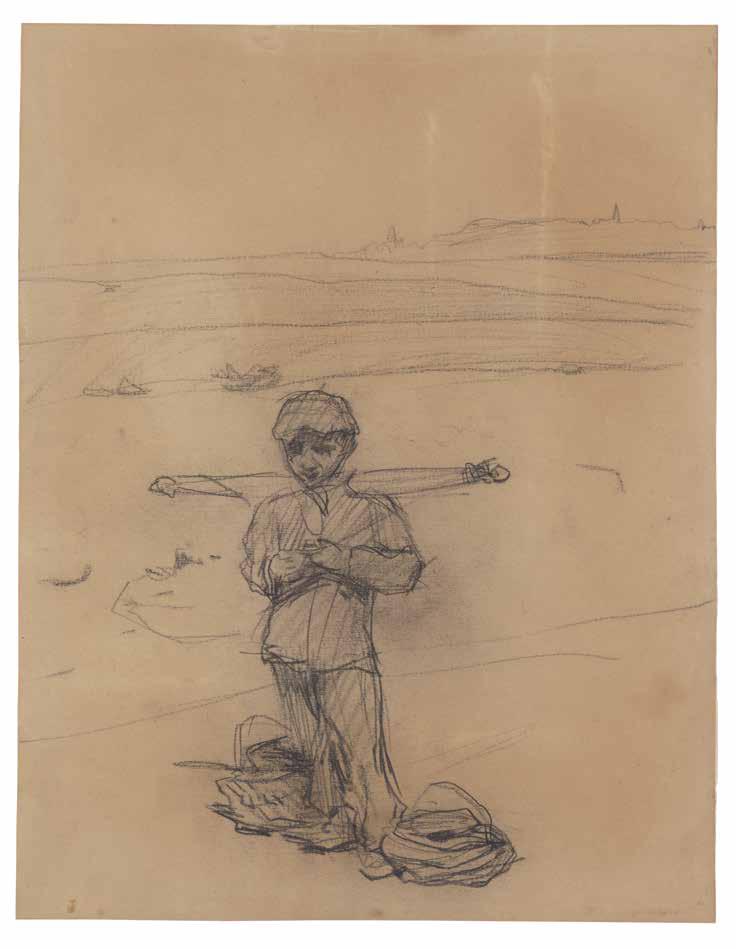
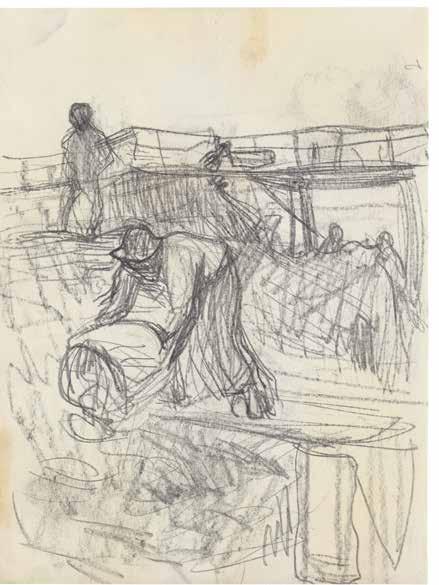
Cat. 3 Factory Boy with Yoke, Borinage, 1885 Kröller-Müller Museum, Otterlo
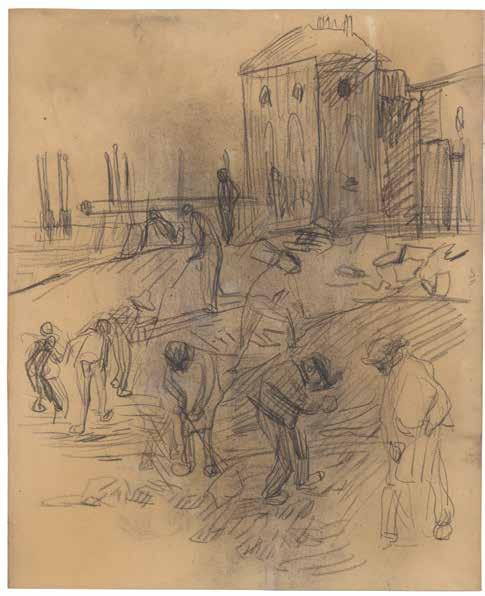
Cat. 4 Landscape with Workmen, Borinage, 1885
Kröller-Müller
Cat. 5 Construction Site with Workmen, Borinage 1885
Kröller-Müller
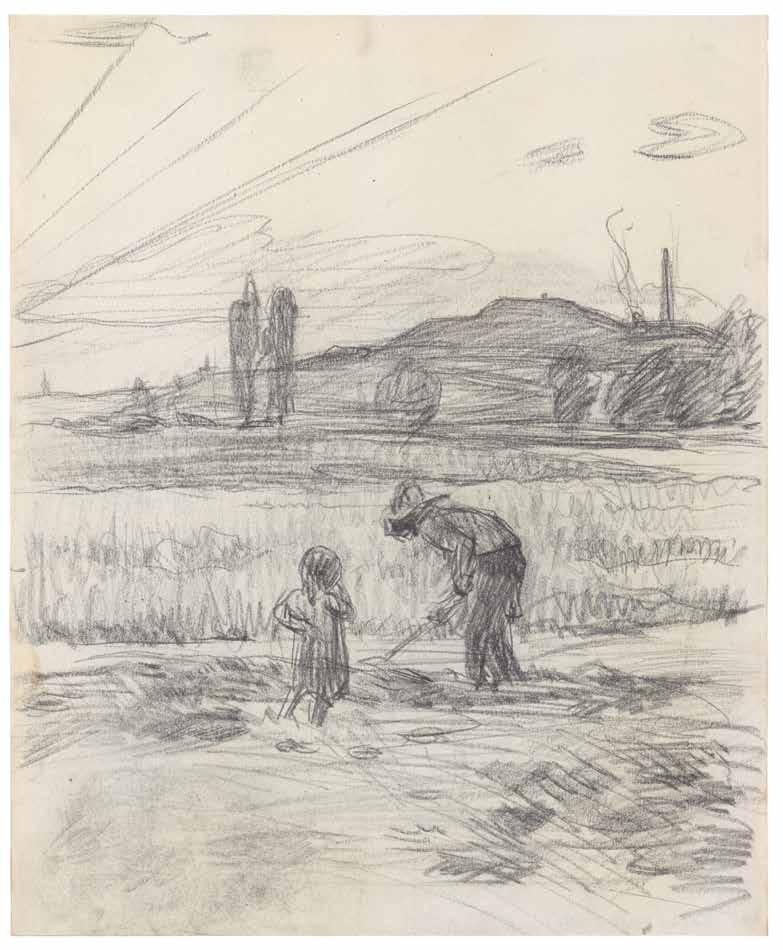
Cat. 6 Landscape with Farmer and Child, Borinage, 1885
Kröller-Müller Museum,
Museum, Otterlo
Museum, Otterlo
Otterlo
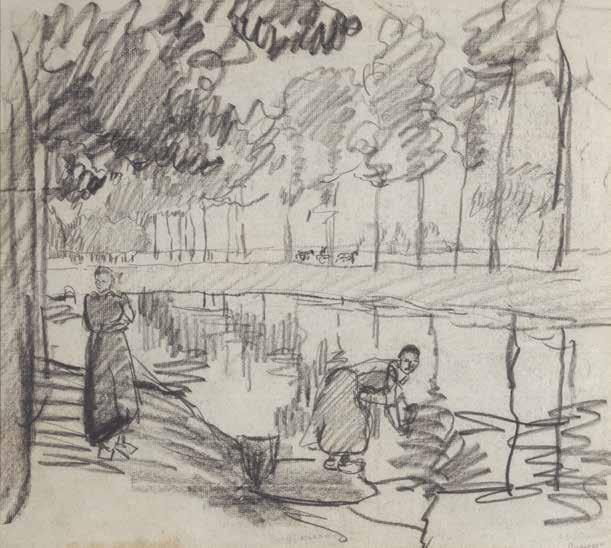
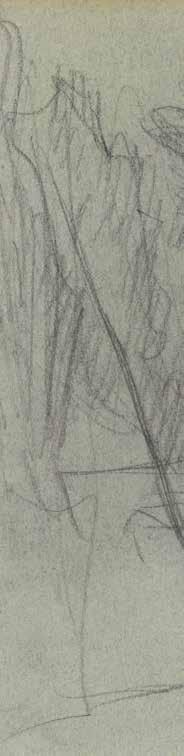
Cat. 7 Landscape with Women Doing Laundry, Borinage, 1885
Private collection
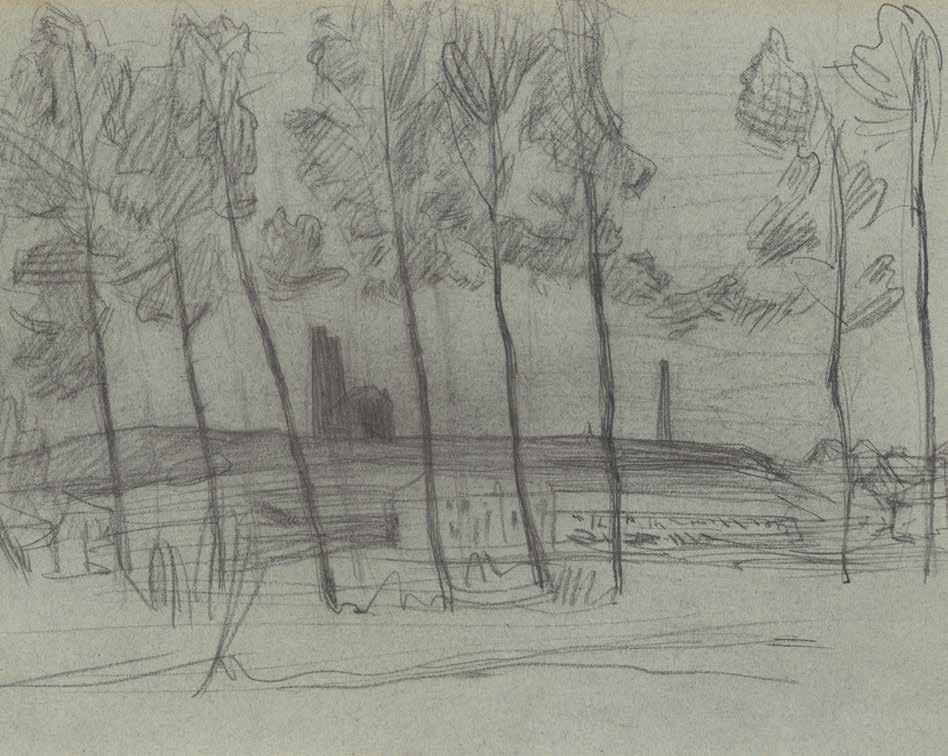
Cat. 8 Landscape with Factory Building, Borinage, 1885
Kröller-Müller Museum, Otterlo
Germany
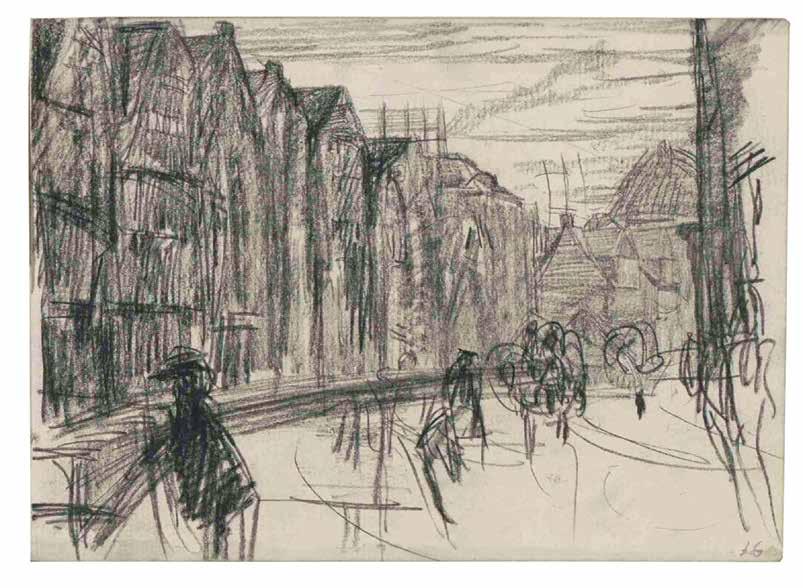
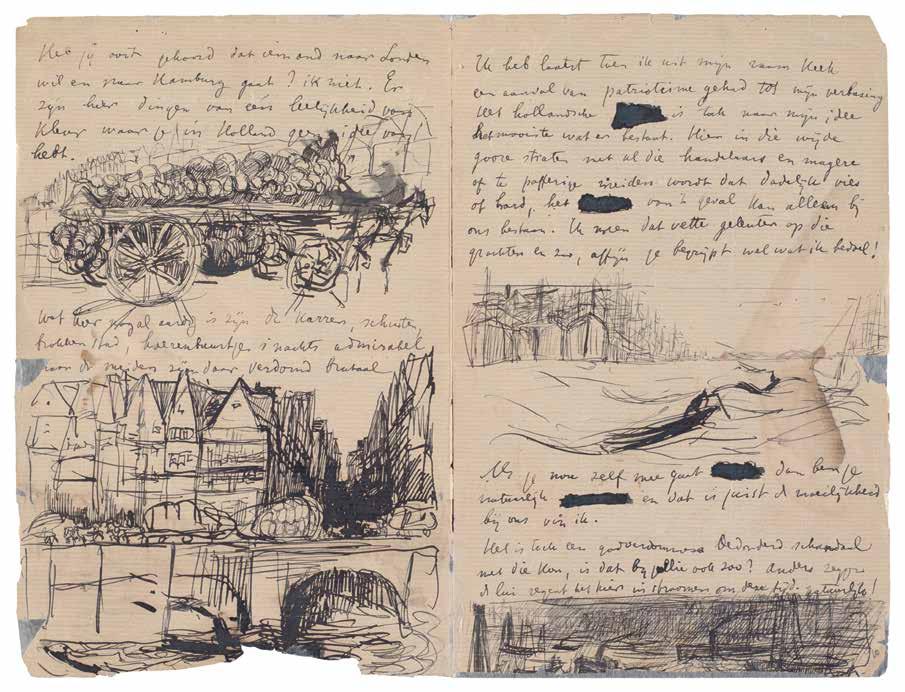
Cat. 9 Cityscape of Hamburg, in Sketchbook XXXI, 1891
Rijksmuseum, Amsterdam
Cat. 10 View of Houses and a Bridge, Hamburg, 1891
Private collection
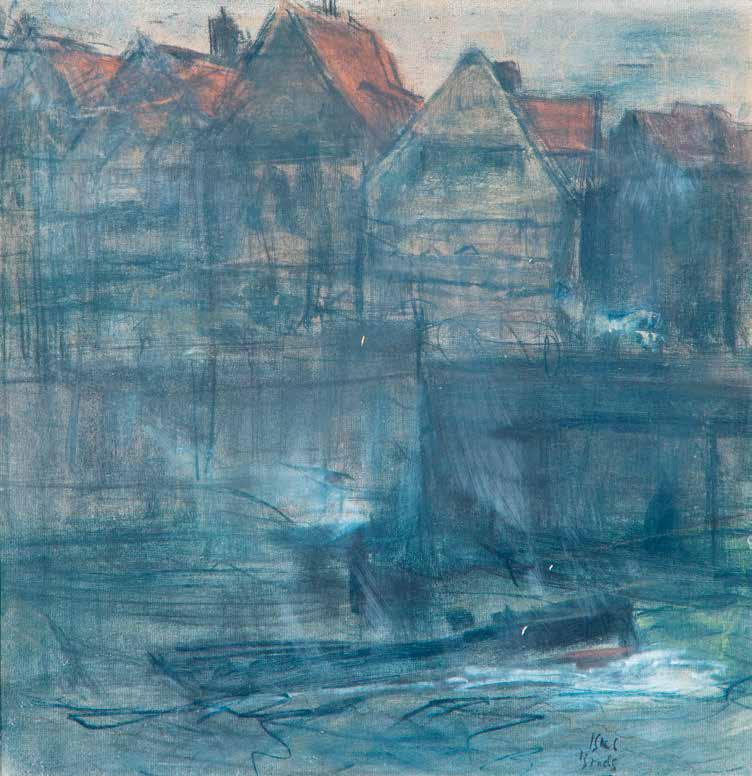
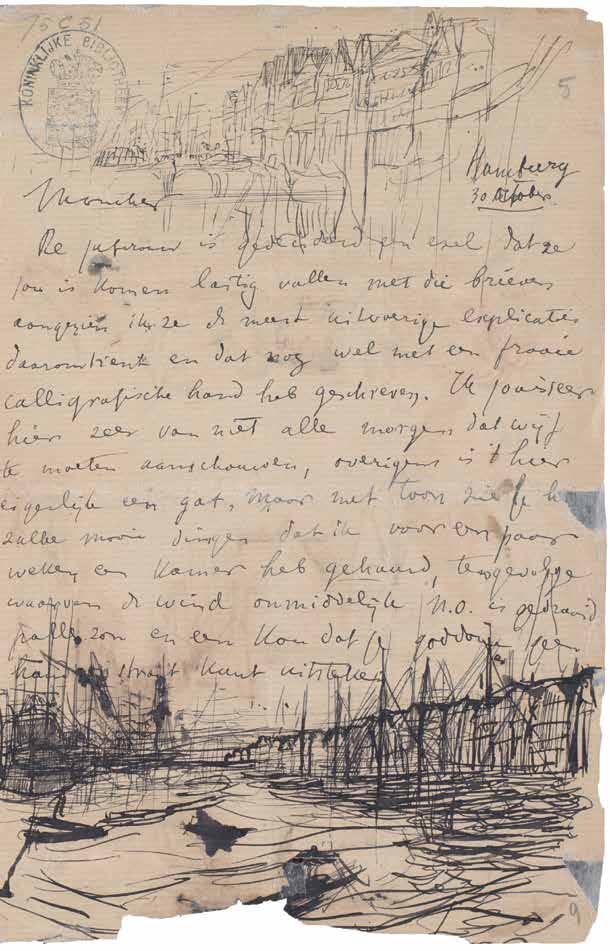
Cat. 11 Letter from Isaac Israels to Willem Witsen with sketches of Hamburg, 30 October 1891
KB – National Library of the Netherlands, The Hague
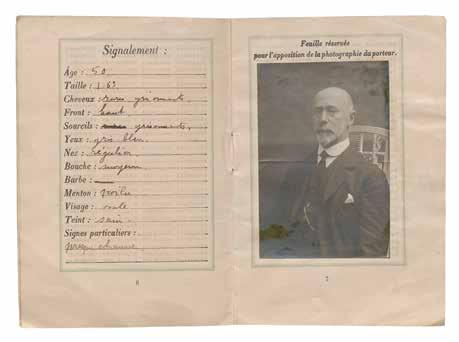
Cat. 12 French passport of Isaac Israels issued by the French Embassy, Bern, 23 June 1915
Haags Gemeentearchief, The Hague
Isaac Israels, a traveller
RENSKE COHEN TERVAERT
Alla mia cara sorellina Mathilde
The two travellers
Two friends set off, though rather drained Into the Harz and towards the Rhineland.
One went, as all decent men take a tour
The other pursued his heart’s desire.
And upon their return it wasn’t long
Before a flurry of questions greeted them,
As cousin and niece were eager to learn
What they had seen on their journey.
‘Seen?’ says the one, releasing a yawn,
‘Nothing much really, believe me;
Some valleys, some mountains, the Harz, the Rhine,
Some blue sky and sunshine’.
But the other, upon whose joyful face
A gleam of delight still remains,
Cries: ‘Mountains! – valleys! – oh! – the Harz –the Rhine!
Such a blue sky! – such sunshine!’
Your loving brother, I.L. Israels.
The Hague, 12 May 1876
Travelling as an inspiring adventure or as a pragmatic activity: this contrast is central to De twee reizigers (The Two Travellers) by the Dutch poet and children’s book author Jan Goeverneur (1809–1889).1 On 12 May 1876, a year before his first major trip through Europe, Isaac Israels (1865–1934) wrote this poem in the poetry album of his sister Mathilde (1864–1945). Did the twelveyear-old budding artist already suspect that travel would play such an important role in his life?
In his youth, Israels did not need to leave home to realise that the world was bigger than his
hometown of The Hague.2 From 1873 onwards, his home was the stately residence and studio of his world-renowned father, the painter Jozef Israëls (1824–1911), on the Koninginnegracht [fig. 1]. His parents’ hospitable nature meant that ‘celebrities, royalty, artists, writers, patrons and admirers from all corners of the world’ were frequent visitors, from Queen Sophie of the Netherlands (1818–1877) to artists such as Thérèse Schwartze (1851–1918) and Edouard Manet (1832–1883).3 The desire to travel, both physically and through the imagination, was instilled in Israels from an early age by his mother, Aleida Israëls-Schaap (1843–1894). In addition to opening up their home, the travelloving Israëls-Schaap recognised the importance of visiting art collectors and major exhibitions abroad for her husband’s success, and she was the driving force behind these trips. Her second great passion was European literature, particularly French and German authors. She encouraged her children to immerse themselves in this at an early age. She believed that knowledge was gained by reading a lot – not at school but in real life.4
The Israëls children knew their classics and were proficient in several languages. According to his best friend Frans Erens (1857–1935), Israels had read the works of the poet and philosopher Dante Alighieri (1265–1321) in Italian and the works of novelist and playwright Miguel de Cervantes (1547–1616) in Spanish before he turned sixteen. He understood Russian and could even recite Horace in Latin.5 Before every trip he undertook in his later years, Israels made an effort to learn the language of his destination country. For example, in sketchbooks from just before his departure for the Dutch East Indies,
there are various lists of words in Malay scribbled in pencil. He was annoyed that ‘the language issue is taken so lightly in our country; it is simply impossible to be here [...] if you do not have a good knowledge of Malay. It is the same story that you know so well in Italy or Spain with French and in Sweden with German!’6 When he returned home, he tried to keep practising so as not to forget the language.
Early travels
His first European trips with his family took place from 1877 onwards. Travel had become faster and cheaper with the invention of steam-powered trains and boats. Nevertheless, until the early decades of the twentieth century, it remained mainly the preserve of the wealthy class, to which the Israëls family belonged.7 In addition to Paris and London, they travelled through Germany, Switzerland, Austria and Italy. In the earliest dated sketchbook of the more than three hundred that Israels filled during his lifetime, a number of impressions have been preserved, such as those of Piazza San Marco in Venice and of a mountain landscape [cat. 74]
The long train journeys were put to good use by reading extensively. According to an anecdote passed down within the family, one of them would hold the book and the pages that had been read would be torn out, passed on, and thrown out of the window by the last reader.8 Even in later life, Israels attached little importance to having his own library. His books ‘flew through his studio at random, sometimes scorched by starting a fire, or serving as a pillow for the weary head of a model from the slums, or as a base for a plate of hot fried steak. Once read, the books gradually disappeared without a trace, one after the other’.9
The knowledge gained from the countless books he devoured proved useful, even when it came to mischief. Israels confessed to his friend, the literary scholar Albert Verwey (1865–1937), that during a stay in Genoa with his parents, he threw notes out the window of his hotel room inscribed with verses from Dante’s Inferno that he
had memorised. In these lines, Dante lambasted the Genoese, and ‘Ietje had the greatest delight in the world when he saw a man, probably a sincere Genoese, pick one up and read it, and then look up with an angry expression’.10
A book was the deciding factor in his decision to undertake his first journey without his family: Germinal by French author Emile Zola (1840–1902), one of twenty novels in the Les RougonMacquart series that appeared as a serial in the French magazine Gil Blas in 1884–1885. In it, Zola denounces the appalling conditions of miners’ lives in a realistic and therefore shocking manner. Israels was so moved by this that in 1885 he visited the Belgian mining region of the Borinage and the heavy industry of Charleroi with its glassworks, to see it with his own eyes. Like many other artists of the time, Israels made sketches of the factory workers and miners [cat. 3 to 8]. This trip was a first step in emerging from the shadow of his domineering mother and famous father in search of his own direction in life and in his art.
His own way
In 1887 Israels moved into lodgings in Amsterdam and soon became acquainted with the critic and writer Erens. Their lifelong correspondence, written entirely in French, together with various biographical sketches that Erens published about his close friend, is an important source for research into Israels. The two friends were united by their love of French literature. Together they read books, took turns reciting them when they visited one another, and recommended (new) literature to each other. Israels regularly served as a critic for Erens’ publications. They also shared a passion for travelling and went on several trips together.
In the autumn of 1889 they spent five weeks together in Paris. As preparation, Israels read everything he could get his hands on. From books on eighteenth-century French history by politician François Guizot (1787–1874) to the novel Charles Demailly by the brothers Edmond
Fig. 3 Isaac (standing left) and Jozef (seated)
Israëls in Venice, 1910 Private collection
(1822–1896) and Jules (1830–1870) De Goncourt, in which they criticise Parisian literary culture, driven by gossip and the pursuit of social status. During their stay, they visited famous writers, artists and other key figures from the Paris art world, including the author Maurice Barrès (1862–1923) and poet Stéphane Mallarmé (1842–1898), who introduced them to the artist Berthe Morisot (1841–1895), art dealer Theo van Gogh (1857–1891) and his wife Jo van Gogh-Bonger (1862–1925), with whom Israels maintained a long and briefly intimate friendship after her husband’s death. For Israels, visiting his heroes, the artist Odilon Redon (1840–1916) and Zola, were among the highlights of the trip, although according to Erens, becoming better acquainted with the latter was disappointing. It did not change Israels’ admiration for the French writer. This only increased in the years that followed, particularly after the publication of ‘J’accuse…!’, an open letter to French President Félix Faure (1841–1899) in the newspaper L‘Aurore in January 1898, in which Zola defended Jewish army captain Alfred Dreyfus (1859–1935), who had been wrongfully accused of espionage in the infamous Dreyfus affair.
After his mother passed away in January 1894, Israels invited Erens to fulfil a dream that he and his inconsolable father had shared: a trip to Spain and North Africa. Travel guides, travelogues and maps were studied extensively prior to the trip, ‘and so we travelled in our imagination across the rivers and mountains of Spain to Cadiz, to Morocco and to Tangier, the closest city to dark Africa’.11 The trip was a great success and resulted in a lifelong love of Spanish culture. Apart from a single sketchbook and a few drawings, virtually nothing from these early travels can be found in Israels’ oeuvre. In 1900 Erens rightly pointed out that it is strange ‘that this painter, who travelled so much in Europe, brought back so little from other countries and regions, and only depicted Amsterdam’.12 Until then, the search for his own style and direction in art had been paralysing. Upon his return to Amsterdam,
he applied for a permit to paint on the streets.13 The inspiring trip to Spain and North Africa had prepared him for this new challenge. Painting outdoors proved to be liberating.
Life as a commuter
‘I believe I would enjoy not having a permanent residence, but it is expensive’, Israels wrote in 1897.14 The naturally restless artist toyed with the idea of trading his life in Amsterdam for a commuter existence. He had exhausted the motifs of street and night life in Amsterdam. His circle of friends, consisting of artists and writers, the socalled Tachtigers, felt oppressive and he became increasingly disappointed with the artistic climate in the city: ‘Sometimes I am troubled by the emptiness that prevails here and I think I would be much stronger if I had some support from a favourable environment’.15 When a dream journey to Russia, for which he had been brushing up on his Russian, was cancelled, he wondered while visiting the World’s Fair in Paris in 1900 whether it might not be better to stay there. Paris attracted many Dutch artists, and Israels was by no means unique in this respect.16 The city was a magnet because of its excellent art schools, its large concentration of art dealers and collectors, but above all because nowhere else in the world was there so much art to be seen. But as a migrant in Paris, he was also confronted with anti-Semitism, nationalism and patriotism, which, as in the rest of Europe, were rampant: ‘It’s true that you feel like a stranger here. But it’s not much better in the Netherlands’.17 In 1904 Israels finally took the plunge and packed up his belongings. He exchanged his Amsterdam apartment for a studio on the Rue de la Chaussee d’Antin, in the district around the Opéra, surrounded by department stores and fashion boutiques. In 1906 he moved to 9 Boulevard de Clichy (10 Rue Alfred Stevens) a residence with a studio on the sixth floor, accessible via a spiral staircase with a hundred steps.
While in Amsterdam, he had initially chosen to depict street life and the working-class
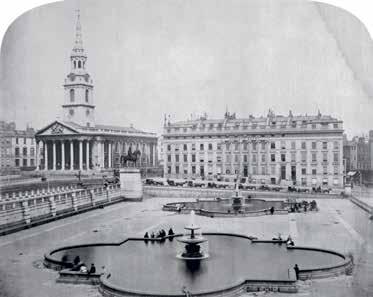
Fig. 4 Roger Fenton, View of the east side of Trafalgar Square with Morley’s Hotel, c. 1850
Amsterdammers, influenced by the French literature of Charles Baudelaire (1821–1867), the De Goncourt brothers and Zola. However, in part due to his introduction to the fashion world, he began to paint increasingly sophisticated subjects. Unlike Zola, whose novel Au bonheur des dames shows the impact of modern department stores on society, particularly on the role of women, and the social upheaval caused by this new commercial world, there is no such social criticism expressed in Israels’ figure pieces. He presented a naturalistic image, viewed through rose-tinted glasses, of Parisians strolling in the Bois de Boulogne, enjoying themselves in the vibrant nightlife of Montmartre or at the horse races in Longchamp, and shopping at one of the many fashion houses [cat. 24, 27 and 33]
Jozef Israëls regularly visited Isaac in Paris, from where they undertook excursions, for example via Biarritz to the Spanish Basque Country. Their last trip together was in 1910. Isaac, his sister and brother-in-law accompanied the 86-year-old artist to the Venice Biennale to visit the gallery with 37 paintings and five drawings in honour of Jozef Israëls [fig. 3] 18 His father passed away on 12 August 1911. Jozef left the house with the studio on the Koninginnegracht to Isaac. The door of his childhood home remained open to everyone, even in Isaac’s absence.
The death of his father marked the beginning of a turbulent period. Although Isaac would continue to visit his Paris studio at least two or three times a year until 1925, the French capital had lost its appeal for him. A new city beckoned, because ‘Paris is too much a part of the past for me to be able to breathe there. London may not be as hostile and closed as Paris, but perhaps that is simply because I don’t have to climb six flights of stairs here!’19
A studio in London
‘Are humans really made to live in the same place forever, and doesn’t that cause you to lose your sharp view of things?’, Israels wrote from London in May 1913.20 He had just moved into Morley’s
Hotel at the junction of Trafalgar Square and the Strand [fig. 4]. From his room, he painted the busy square with its characteristic fountains several times [cat. 48]. He soon found a studio at 6 Fitzroy Street, a street full of studios. London was beginning to rival Paris in the field of art. Israels was impressed by the city and found the English to be a ‘pleasant people who […] were free of the French arrogance’.21
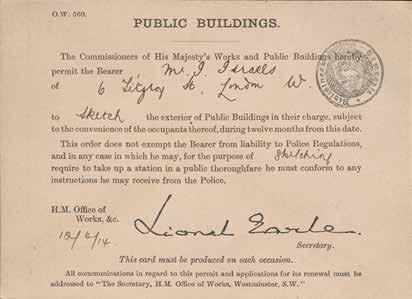
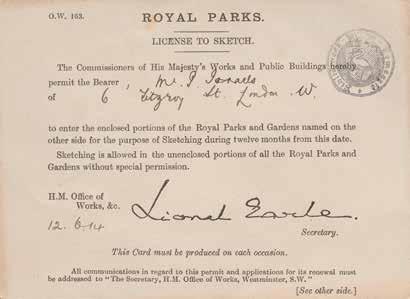
It was not his first visit to London. In May 1897 he stayed for a week at the Buckingham Temperance Hotel on the Strand. He advised Erens not to go there unless he spoke good English or had very distinguished connections, ‘otherwise, believe me, it’s absolutely no good’.22 The letter written in English to collector Maria Drucker-Fraser (1886–1944), most certainly a distinguished connection, with a self-portrait in tailcoat, shows that he was quite adept at navigating social circles at that time [cat. 56]. As in Amsterdam and Paris, he needed permission (in this case even royal permission) to work on the streets and in the parks [cat. 13]. This was essential for an artist who preferred to paint outdoors and for whom ‘the air in the studio’ had a numbing effect.23 Regent Street, Piccadilly Circus, the square in front of the Royal Exchange with its crowds of people, the traffic chaos caused by the cacophony of horses, carriages, cars and omnibuses plastered with advertisements, the ‘bobbies’ (and in 1920 even policewomen24) who brought order to this chaos like true orchestra conductors; the metropolis inspired him [cat. 47 to 52]. ‘But you can also overdo it, and if you walk down the street with your head bowed so that you don’t look up because you know that you’ll see a masterpiece with every glance, then you may be close to having a sudden stroke!!!’25 In contrast to the chaos, he also painted in places where Londoners sought relaxation, including Hyde Park, where he worked mainly at Rotten Row, the meeting place for wealthy Londoners who paraded there on horseback [cat. 53 and 55] He also regularly visited Richmond near London, located on a bend in the Thames, a favourite spot
< Cat. 13 Permits for painting public buildings and Royal Parks, London, June 1914 Haags Gemeentearchief, The Hague
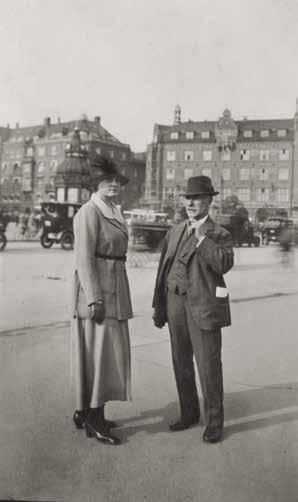
Fig. 5 Isaac Israels with Sophie de Vries-Dalberg on the Rådhuspladsen in Copenhagen, 1920 Haags Gemeentearchief, The Hague
for punting. This traditional activity, in which the punter propels a flat-bottomed boat with a long pole, was an important motif in his London work until the 1920s [cat. 57 & 59].
Travelling during WWI
The First World War broke out on 28 July 1914. Various European powers joined the conflict in quick succession. Although the Netherlands remained neutral, it seemed that Israels was stranded in London, at least temporarily. On 10 August the Dutch Consulate in London issued him with a laissez-passer, a temporary travel document enabling him to return to the European continent [cat. 46]. Two reasons initially prevented him from leaving. Since moving to Paris, he had been granted commuter status, which entitled him to a tax benefit. This meant that he was not allowed to stay in the Netherlands for more than ninety days per year. He mentioned another reason in an interview on 5 May 1915 with art critic Grada Marius (1854–1919): ‘I have sometimes thought that the greatest “honour”, so to speak, for the house [on the Koninginnegracht], and even for the old studio, would be if I were to live and even work there myself. But that is not really possible. Everything there has had too much of its own character and specific purpose for that’.26 The withdrawal of his permits to paint on the street was the deciding factor, and he ventured across to the Netherlands.
‘Do you have to be mad to go travelling at this moment? I ponder this question to no avail, because humans are so foolish and irredeemable.’27 Partly because he wanted to retain his commuter status, Israels travelled via Germany to neutral Switzerland in late December 1914 and again in April 1915, despite his concerns. He enjoyed his stay in Bern, where he could see the peaks of the Alps glistening in the distance ‘like fantastic and magnificent clouds’.28 He took a trip by train on the Jungfraubahn, which opened in 1912, to the summit of the Jungfrau. From the Jungfraujoch station, still the highest railway station in Europe, he marvelled at the
‘almost inconceivable mountain landscapes, like lunar landscapes. You lose all sense of distance. It seems as if you can see someone walking on those comets that are actually miles away. You see clouds rising from the valleys below you. It really is “The Earth”!’29 On Erens’ advice, he visited the nearby towns of Fribourg (Freiburg) and Morat (Murten), both located on the French/German language border. The numerous sketchbooks and the sales exhibition of work from Bern, Fribourg and Londen, held in the autumn of 1915 at his gallery Frans Buffa & Zonen in Amsterdam, attest to an exceptionally productive period.
Meanwhile, he increasingly wondered what had become of his studio and acquaintances in Paris. On 23 June 1915, after much effort, he obtained a passport from the French embassy in Bern to travel to Paris via the border crossing at Pontarlier [cat. 12]. This may have been his first, as not many people possessed a passport at the beginning of the twentieth century.30 Little remained of the vibrant city, and Israels wrote disillusioned to Grada Marius: ‘I don’t believe it’s possible to work in countries at war. They tolerate neutrals, but in reality, they can’t be bothered with them. It’s understandable... Paris is a strange place now, with hardly any foreigners, no theatre, all the cafés closed at half past ten in the evening and the streets dark’.31 After Paris, he also hoped to see his London studio again: ‘I hope I can go to London from here, which is reportedly not easy. We’ll see’. 32 On 5 August he took the ferry to Folkestone, but returned to the Netherlands two weeks later, where he moved into his parental home on the Koninginnegracht.
To Northern Europe
Due to the continuing mistrust between the European powers, there was no question of abolishing border controls and passport requirements after the war. In addition to the passport itself, it was also necessary to apply for visas prior to travelling. Israels’ passport, issued on 9 July 1919, eleven days after the signing of the Treaty of Versailles, shows the stamps and seals required to travel to and through Belgium, France and England in order to make his now customary rounds of his studios [cat. 2].
A year later, he applied for a passport again [cat. 1]. He wanted to take a trip to Scandinavia for a few weeks, provided he could obtain a visa for Sweden.33 On 20 August he took the train via Bentheim to the port of Warnemünde, then the ferry to Gedser in Denmark, to continue his journey to Copenhagen. While he initially thought that the Danish capital would be boring, he actually found the old seventeenth-century districts impressive.34 Among other things, he sketched the Church of Our Saviour in Christianshavn with its distinctive spiral tower, and Kongens Nytorv (New King’s Square) with the equestrian statue of King Christian V (1646–1699) [cat. 70 to 72]. He stayed there for ten days, but not alone. In a preserved photograph taken at Rådhuspladsen (Town Hall Square), he poses with his girlfriend Sophie de Vries-Dalberg (1879–1931) [fig. 5], who had an even greater passion for travel.35 Isaac does not mention her presence in his correspondence, but it is quite possible that she accompanied him to Sweden.
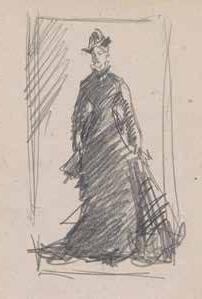
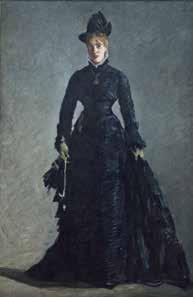
Taking an early ferry to Malmö, followed by a long train journey, he arrived in Stockholm at around half past nine in the evening on 31 August.36 He stayed at the luxurious Grand Hotel Royal, which opened in 1874, making it the first hotel in Sweden to rival the renowned continentalstyle hotels in Europe. He enjoyed the restaurants and wrote comically about his adventures in Swedish bathhouses: ‘Anyway, travelling isn’t always unpleasant’.37 At the National Museum, he studied works that included The Conspiracy
< Cat. 14 Study of Edouard Manet’s ‘La Parisienne’,in Sketchbook XXXV, 1920 Rijksmuseum, Amsterdam
Fig. 6 Edouard Manet, La Parisienne, 1883 Nationalmuseum Stockholm
of Claudius Civilis by Rembrandt van Rijn (1606–1669) and La Parisienne by Manet [cat.14, fig. 6]. The hospitality of the Scandinavians made the greatest impression on him, and he had ‘even fallen a little in love with these countries, because since this trip I no longer find other countries, such as France and England, so interesting’. 38 Israels found the language barrier the most challenging: ‘You can learn to read Danish and Swedish quite quickly, but speaking is very difficult’.39 He would have liked to stay longer, ‘but since I have my painting equipment in London and it’s still a good place to work at the moment, I’m going there tomorrow, via Gothenburg’.40
After his Scandinavian adventure, he found life in The Hague monotonous and he may have felt lonely. De Vries-Dalberg had already embarked on another adventure and ‘left Rome with an Italian expedition to hunt lions in Central Africa!’41 He sought distraction in Paris and London and in the summer of 1921 visited the German spa town of Baden-Baden with Michel Alvarez Correa (1875–1934), a doctor and art collector born in Curaçao. In October he sent postcards from Berlin and Wannsee, where he may have visited his good friend, the artist Max Liebermann (1847–1935), who had a villa built on the shores of Lake Wannsee.42
An adventure outside Europe
At the age of 56 Israels undertook his most adventurous journey. In 1914 he suggested to Erens that they travel to the Dutch East Indies (now Indonesia).43 The idea of going to Java stemmed from his father’s enthusiasm for the four-volume publication Java, geographisch, ethnologisch, historisch (Java, geographical, ethnological, historical) by Professor Pieter Johannes Veth (1814–1895).44 Due to the intervention of the war, it had not yet come to pass, but now that several friends, including Jan (1864–1925) and Anna (1863–1929) Veth, were making concrete plans for the crossing, there was no longer any excuse to postpone it. ‘I am currently in a difficult position, because I have