High lights Frans Hals Museum
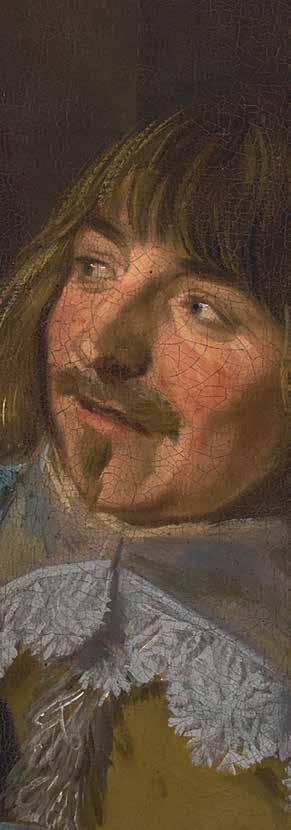
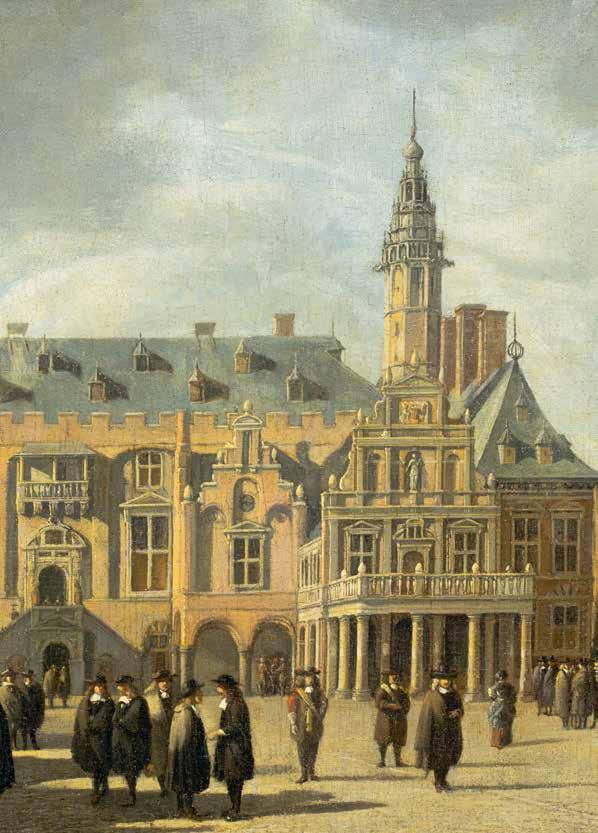
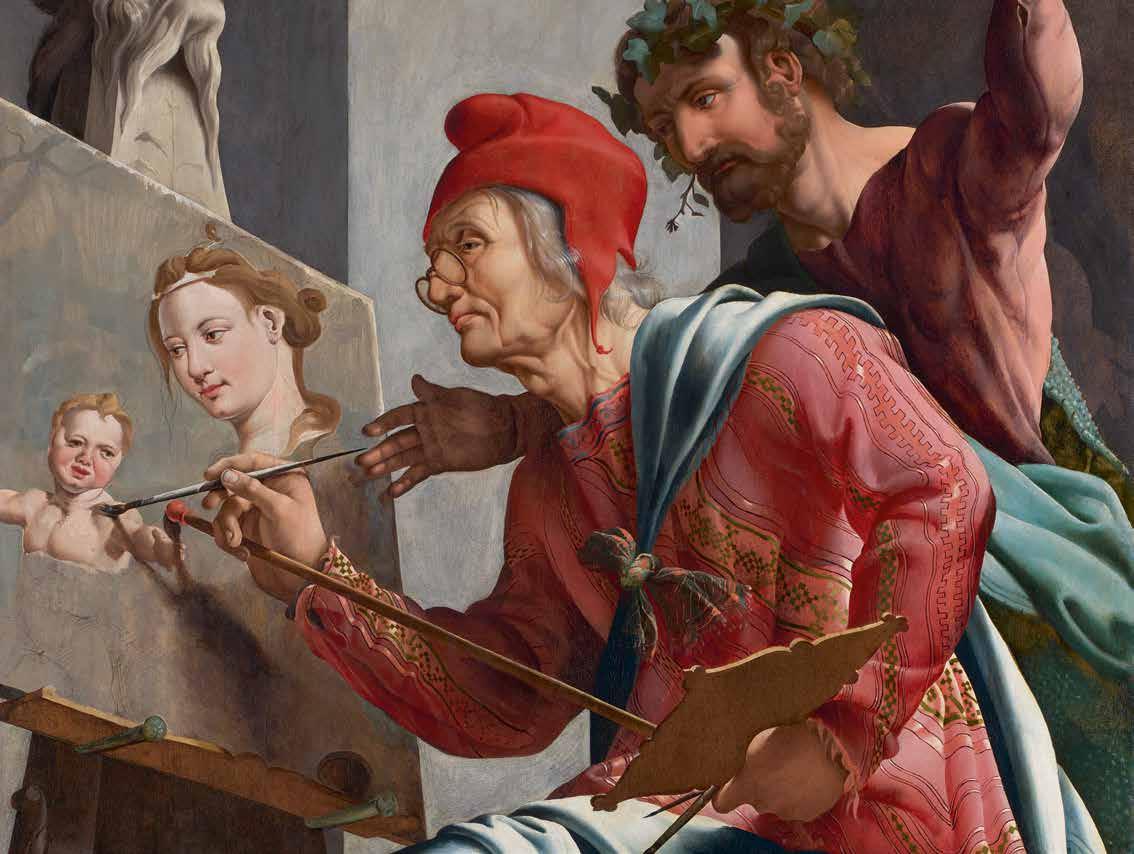
This book is intended as an introduction to the Frans Hals Museum and as a memento for visitors. Showcasing a selection of forty highlights, it demonstrates the richness and diversity of the collection. The museum is home to art of the past six centuries, from 16th- and 17th-century art to modern and contemporary art, from paintings to photography and video art, produced here in Haarlem or elsewhere, by internationally renowned artists.
A municipal collection
It all started with Haarlem town council, which in 1590 commissioned four paintings from Cornelis Cornelisz van Haarlem, one of the town’s leading artists. The paintings were for the town hall on Grote Markt square, where the people of Haarlem and visitors could admire them.
Municipal Museum
Haarlem’s art collection continued to grow over the years, with art taken over from disbanded institutions, including almshouses, orphanages and civic militias. This was how Frans Hals’ civic guard portraits ended up in the collection. From 1862 onwards, visitors could admire the artworks in the Municipal Museum (or ‘Stedelijk Museum’), housed in the town hall. Artists like Édouard Manet, Claude Monet, Max Liebermann and James McNeill Whistler came specially to Haarlem to see Frans Hals’ paintings at the museum.
Groot Heiligland
Half a century later, the collection was moved from the town hall to the Oudemannenhuis, the former old men’s almshouse, built in the early 17th century to accommodate poor men over the age of sixty. From 1810 the building on Groot Heiligland was used as an orphanage. In the early 20th century Haarlem municipal council had the former Oudemannenhuis converted into a new home for the Municipal Museum. It opened in 1913 under a new name, the Frans Hals Museum, after the most important artist in the history of the town. The name does not however mean that the museum’s focus is exclusively on Hals’ paintings – the forty highlights in this book show that there is much more to discover at the Frans Hals Museum.

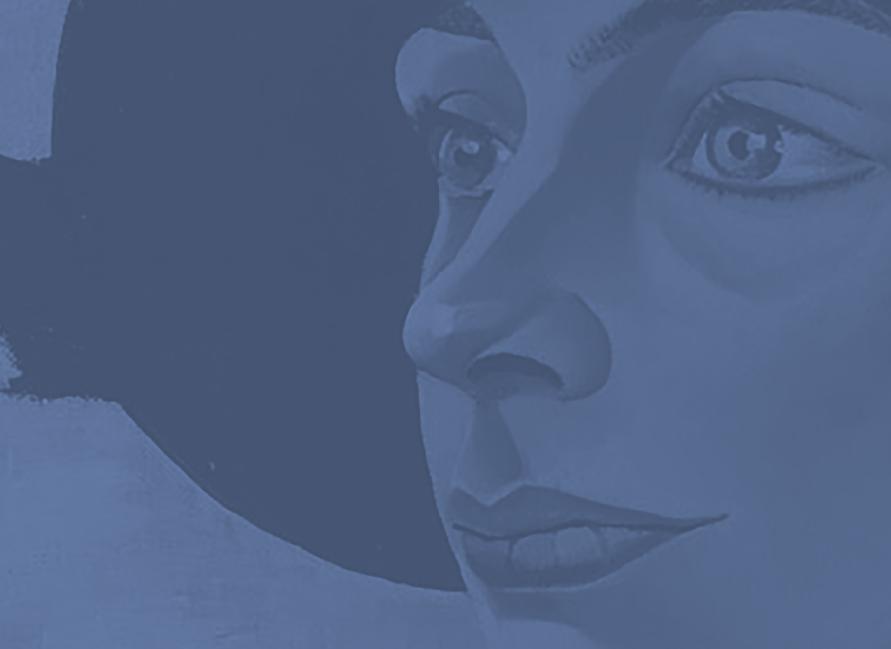



The Frans Hals Museum is home to many portraits. The oldest date from the 16th century, the most recent from the present day. They bring us face to face with people from a distant past or other parts of the world. Despite the fact that the portraits depict people from long ago and far away, they invite us to make eye contact, as if the subject were saying: see me, get to know me.
Love
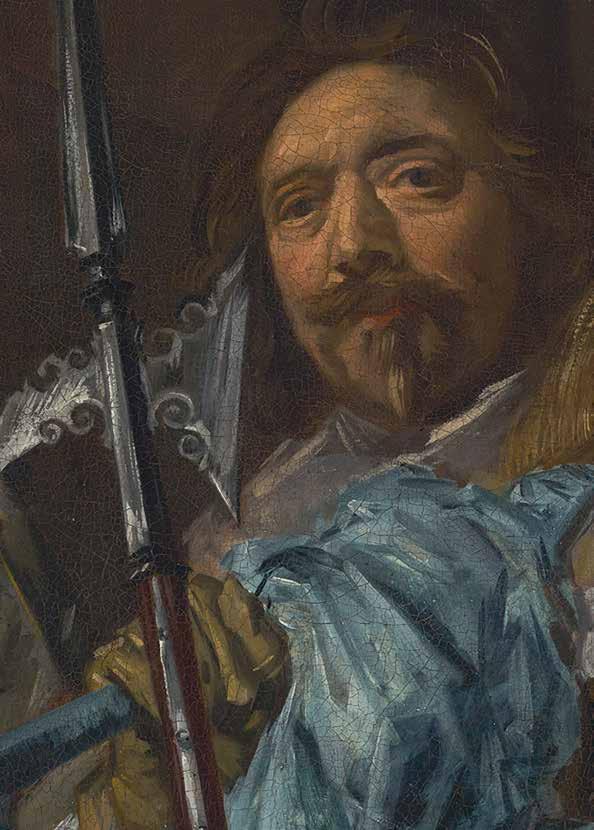
Many of the portraits at the museum are by Frans Hals, who excelled at the lifelike depiction of his subjects. But there are also portraits by Hals’ contemporaries, as well as by artists who came before and after him. Love of portraiture is as enduring as human love itself.
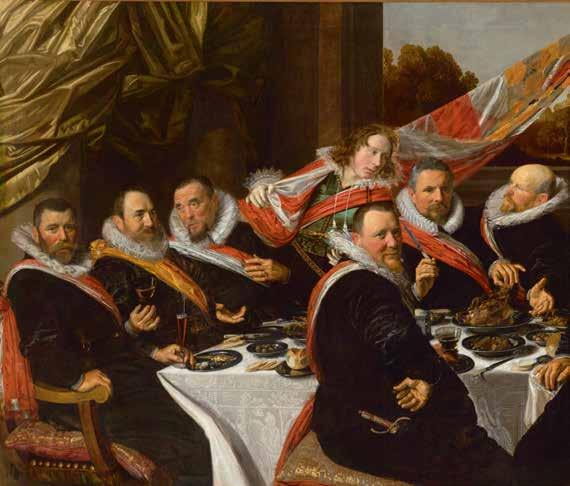
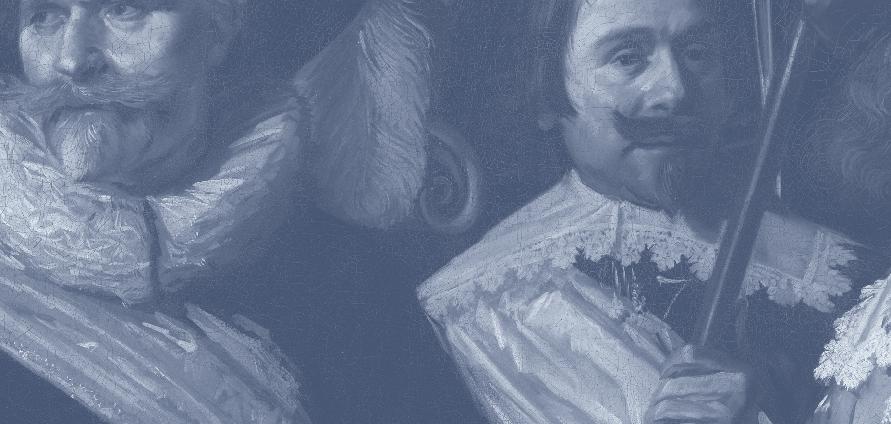
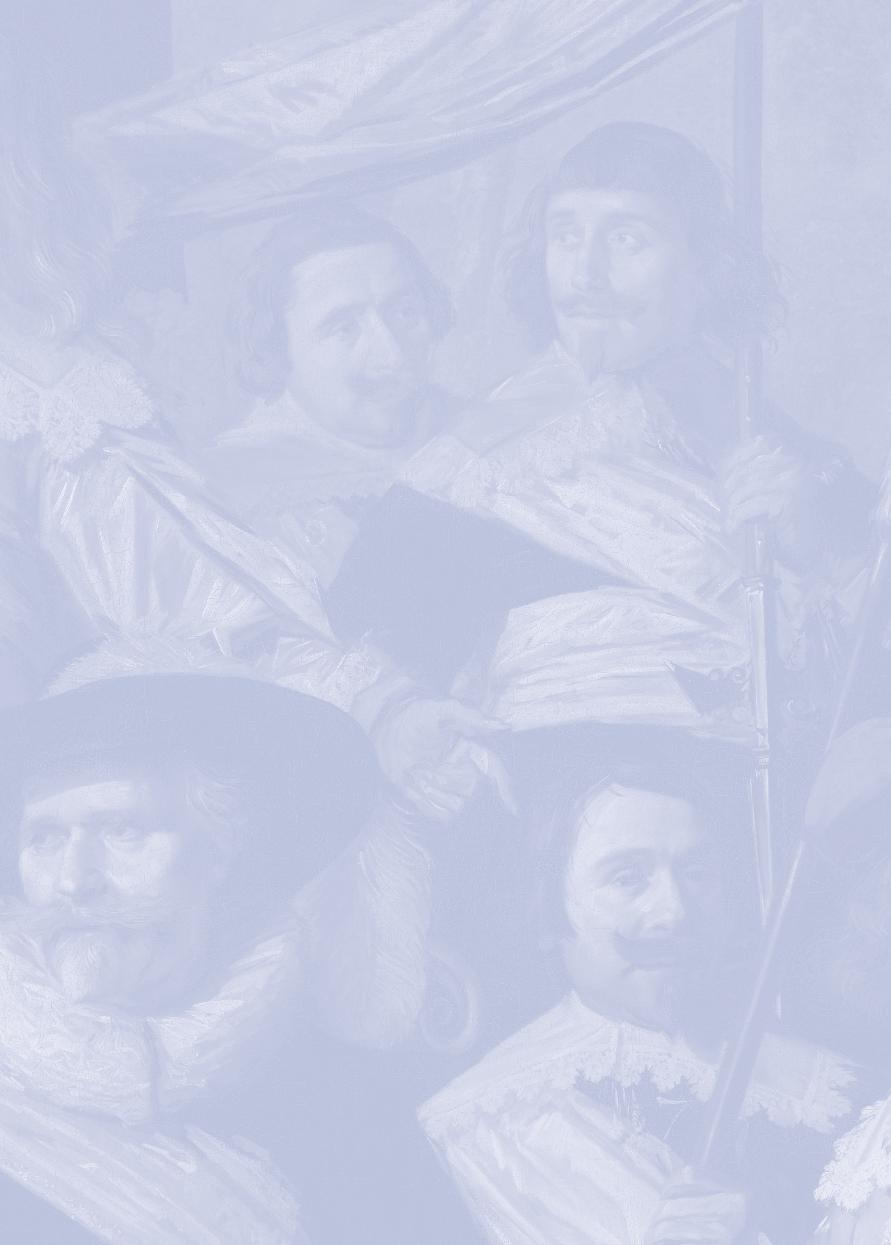
Why have your portrait painted? In the past people commissioned portraits to mark an important occasion, such as a wedding or a new appointment. People also had portraits made of their loved ones, so that they could keep them close. They also commissioned portraits to demonstrate their power and wealth. The civic guard portraits at the Frans Hals Museum are a good example of this.
Photography
Many people could not afford to have their portrait painted. That all changed in the 19th century, however, with the arrival of photography – a much less expensive technique. After a time, portraits were no longer the preserve of the elite, as people of lesser means were able to afford a photographic portrait. Now that almost everyone
has a smartphone with a camera, there is no limit to the number of portraits we can create, of others and of ourselves.
Self-portraits
Artists not only produce portraits for others, they also make self-portraits. This gives them much more freedom to experiment, as they are not obliged to consider the wishes and expectations of their client. What’s more, your own image in the mirror is always a cheap alternative, and a patient model.
Message
Artists – both those working in centuries past and more recently – often have an air of self-confidence in their self-portraits. Contemporary artists also use their own image to raise social issues. One example is the self-portrait by Sarah Lucas. This is more than simply a study of her image in the mirror. It also prompts us to reflect on the nature of femininity and masculinity.
Group portraits
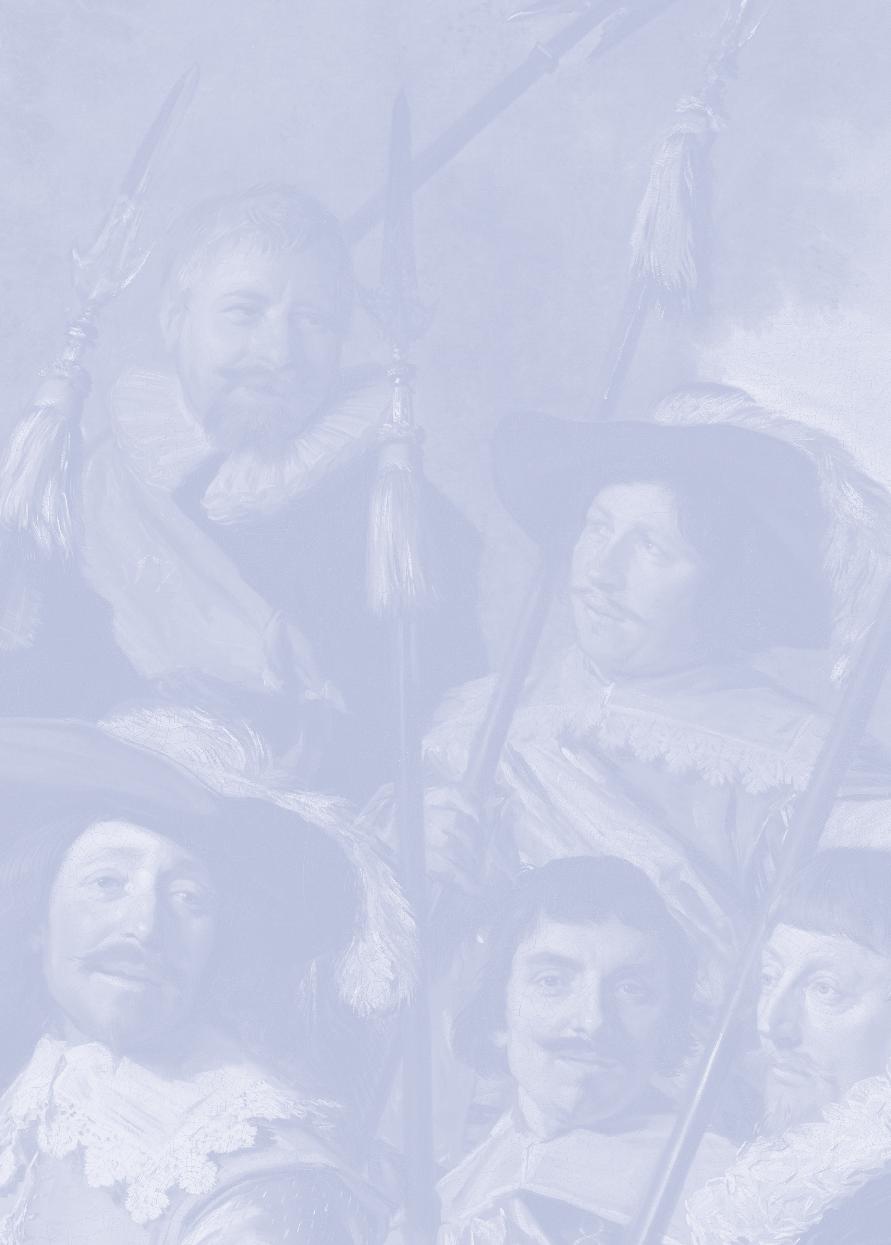
Large group portraits are a Haarlem tradition that goes back centuries. The earliest examples were dignified and serious, but later they became distinctly more lively. Consider for example the large civic guard portraits by Frans Hals. But group portraits are not only a thing of the past, as exemplified by the piece which the museum commissioned from Iriée Zamblé. Her new group portrait puts Black women in the spotlight.

Charley Toorop
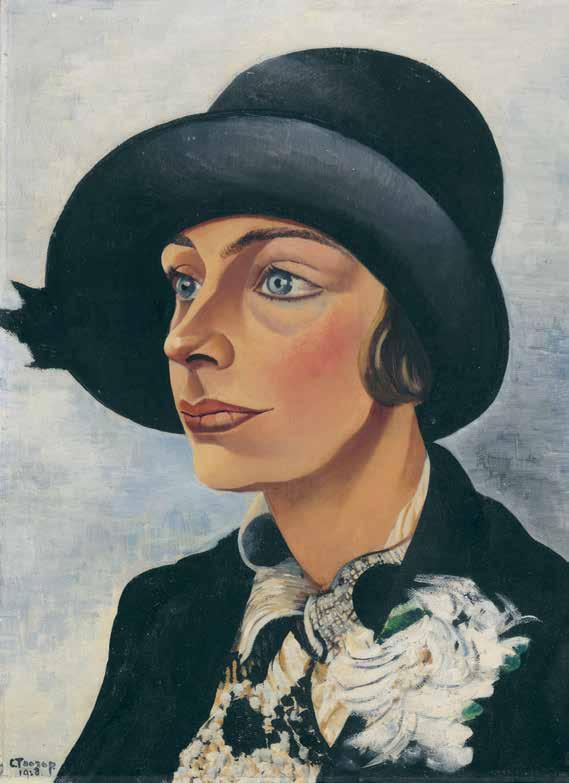
Katwijk, 1891 – Bergen, 1955
Woman in a Black Hat, probably Annie Oud-Dinaux, 1928 oil on canvas
Charley Toorop’s portraits are known for their vivid colours, strong silhouettes and intense eyes, as in this portrait of a woman, probably Annie OudDinaux (1893-1990). She was married to architect J.J.P. Oud, one of the leading lights of the De Stijl movement. Toorop painted the portrait when she was working with Oud on an exhibition at the Stedelijk Museum in Amsterdam. After Oud’s death, Annie Oud-Dinaux preserved her husband’s archive and legacy. It is partly thanks to her efforts that De Stijl is known around the world today.

Leo Gestel
Woerden, 1881 – Hilversum, 1941
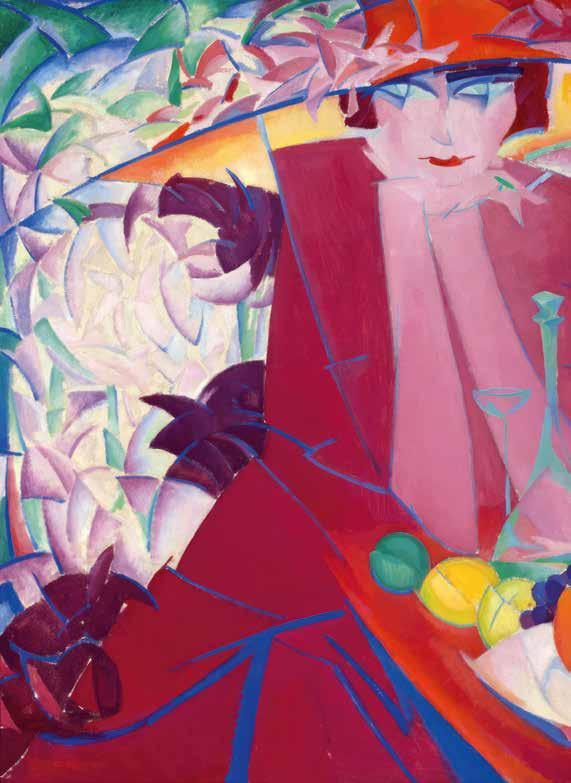
Woman in a Large Hat in a Summer House, 1913 oil on canvas
This is most likely Else Berg, a fellow artist and friend of Leo Gestel’s. The two artists knew each other from Amsterdam and they worked together in Bergen, an artists’ colony in the province of NoordHolland. Berg is holding a cigarette, which was considered ‘unfeminine’ and thus controversial. Her boldness suited Gestel’s experimental style perfectly – his brightly coloured painting is more an exercise in the latest angular style of the Cubist movement than a representative portrait.
Judith Leyster
Haarlem, 1609 – Heemstede, 1660
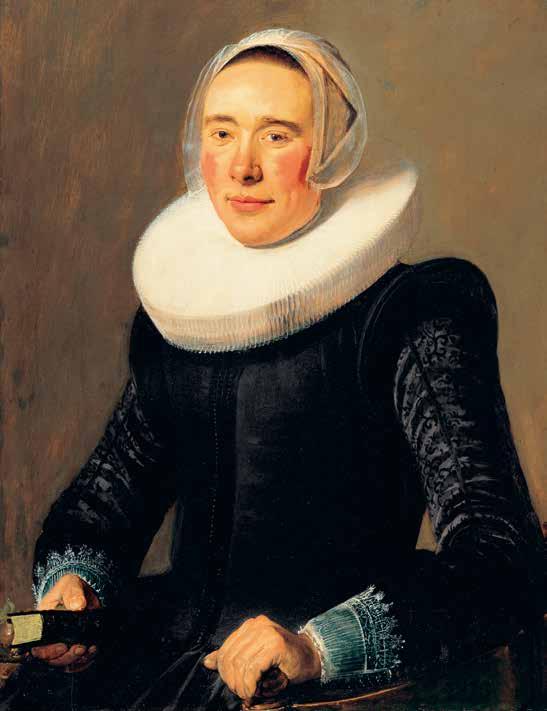
Portrait of an Unknown Woman, 1635 oil on panel
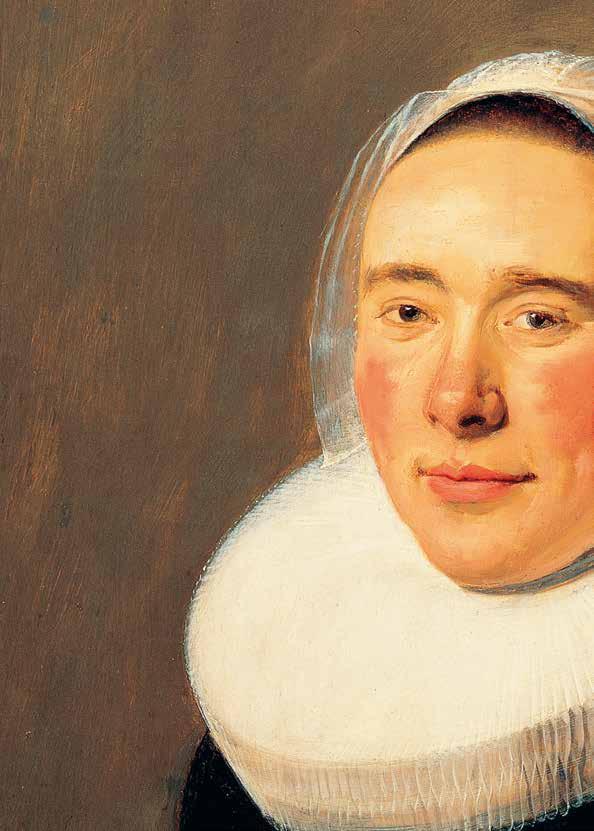
Judith Leyster’s loose brushwork is reminiscent of Frans Hals’ style. As is this woman’s cautious smile, which reveals a dimple in her cheek. This portrait was long thought to have been by Hals, until Judith Leyster’s signature – JL with a star – was discovered.
In 1633 Leyster became a member of the Guild of St Luke, the professional association of painters. She was one of the first women in the Dutch Republic to become a member of a painters’ guild.
acquired with the support of the Rembrandt Association
Cornelis Cornelisz van
Haarlem
Haarlem,
1562 – Haarlem, 1638
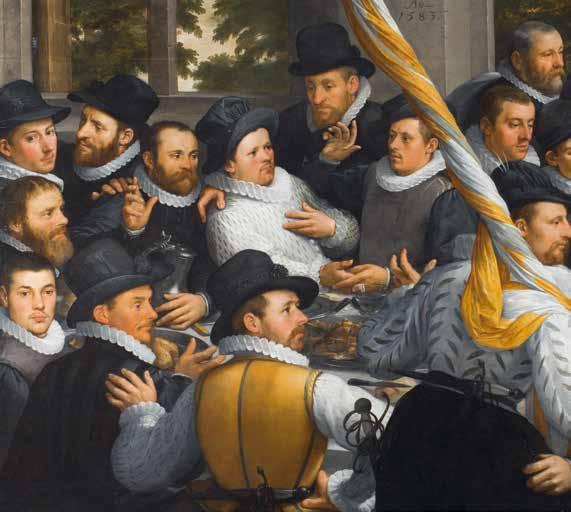
Banquet of Members of the Haarlem
Calivermen Civic Guard, 1583 oil on panel
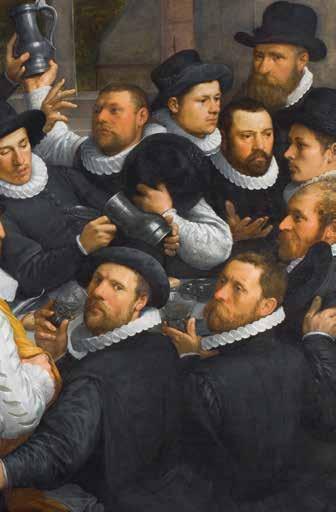
This festive banquet has turned into a lively event. The guardsmen are engaged in animated conversation, and are all in physical contact with each other. Cornelis van Haarlem portrayed the men in an innovative, spontaneous manner, a departure from the usual more formal group portraits. The furled banner that divides the composition diagonally was revolutionary too. Cornelis was actually part of this company. He is the man in the back left, looking directly at us, in what is Haarlem’s earliest known civic guard portrait.
Else
Berg
Ratibor (Poland), 1877 – Auschwitz (Poland), 1942 Self-Portrait with Brushes, c. 1929 oil on canvas
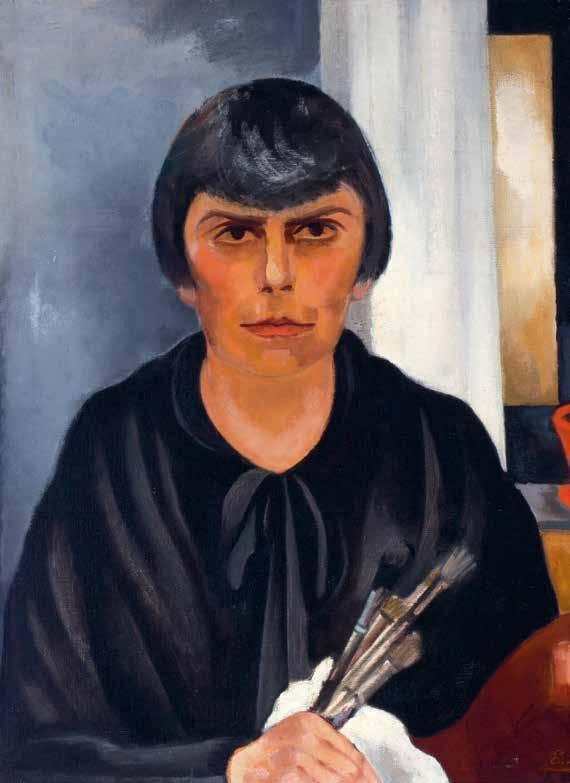
Else Berg’s paintings brought her considerable success. This was unusual at a time when society offered few opportunities for women. She was in her fifties when she painted this selfportrait, presenting herself as a confident artist holding her brush and palette. Her piercing gaze recalls the work of Charley Toorop, and indeed Berg knew Toorop and her work well. The life and career of Else Berg, who was Jewish, came to an abrupt end when she was murdered by the Nazis in Auschwitz.