To my sons Rio en Yenno and my partner Muriel Vandervorst
WIM TELLIER
© Wim Tellier
table of contents
Inhoudstafel
Preface by Guillaume Van der Stighelen
× 7 ×
Woord vooraf door Guillaume Van der Stighelen
PART #1
× 9 ×
DEEL #1
Wim Tellier presenTs: We DriFT
× 11 ×
Wim Tellier presenTeerT: We DriFT
A recognisable line From idea to concept Uncertainty, equality, vulnerability Pure and innovative WE DRIFT into perpetuity
× × × × ×
11 12 13 16 19
Een herkenbare lijn Van idee tot installatie Onvoorspelbaarheid, gelijkheid, kwetsbaarheid Puur en vernieuwend WE DRIFT doen voortleven
Time For acTion: The making oF
× 21 ×
TijD voor acTie: De making oF
Step by step Balancing art and commerce Kite aerial photography: A process of trial and error Around the world in 2.5 years
× 21 × × 24 × × 31 ×
Stap voor stap De combinatie artistiek-commercieel De kite: trial-and-error
× 39 ×
Reis rond de wereld in 2,5 jaar
PART #2
× 51 ×
DEEL #2
a ThousanDs aerial lanDscape phoTographs
× 52 ×
DuizenD lanDschapsFoTo’s vanuiT De luchT
Prior selection and improvisation
× 52 ×
Een kwestie van selectie en improvisatie
PART #3
× 193 ×
DEEL #3
a ThousanD inDiviDuals
× 194 ×
DuizenD inDiviDuen
All different, all equal
× 194 ×
Iedereen verschillend, iedereen gelijk
PART #4
× 271 ×
DEEL #4
Acknowledgements
× 288 ×
Dankwoord
× × × × ×
Preface
woord vooraf
No sooner are you born than you begin to explore reality. Using fingers and nose. You can hear sounds, but have no idea what they are. You can discern shapes and colours, but they have no meaning yet. You are aware of little if anything at all. You just get on with it. You feel and you search with your mouth. Until a source of food is found. Then the restlessness disappears. For a while, at least. Until the next hunger comes. And when all this hunger is satisfied, there comes a new hunger. A hunger to know. To understand where those smells come from, what those images represent, what those sounds mean. Initially, your focus is restricted mainly to your direct surroundings. Later those surroundings grow wider, more expansive. And they also become harder to grasp. As time goes by, it becomes more difficult to sense how everything that is not you is tied together, and how you yourself fit into the picture. Contradictions arise. You discover elements of discord in the seemingly harmonious whole. You come to the unnerving realisation that sometimes you yourself are the element of discord. You try to grasp the sense of it all. With the discovery of every new connection between your own existence and the world around you, new questions present themselves. Including about your own interaction with this external reality.
Het eerste wat je doet als je geboren wordt is de werkelijkheid aftasten. Met je vingers en je neus. Je hoort wel iets, maar je weet niet wat het is. Je ziet wel vormen en kleuren, maar ze betekenen nog niets. Je bent je van weinig of niets bewust. Je doet maar. Je voelt en je zoekt met je mond. Tot er ergens voedsel uit komt. Dan verdwijnt de onrust. Even. Tot de volgende honger komt. En als alle honger gestild is, dan komt er een nieuw soort honger. Honger naar weten. Wat die geuren betekenen. Wat die beelden willen zeggen. Waar die geluiden voor staan. In het begin heb je vooral belangstelling voor je onmiddellijke omgeving, later wordt die omgeving ruimer, groter. Moeilijker te vatten ook. Het valt je met de tijd zwaarder om aan te voelen hoe alles wat je zelf niet bent samenhangt, en hoe je daar deel van uitmaakt. Er ontstaan tegenstrijdigheden. In het harmonische geheel ontdek je storende elementen. Je komt tot de beangstigende vaststelling dat je af en toe zelf ook een storend element bent. Je zoekt naar de zin van dat alles. Elke keer er een nieuw verband tussen je eigen bestaan en de werkelijkheid van de buitenwereld duidelijk wordt, komen er nieuwe vragen. Waaronder de vraag of je met die buiten-ikse werkelijkheid wel verstandig omgaat.
There comes a moment when the vastness of reality overwhelms you. So you call for assistance. From others, who are able to feel, to hear, to look in your place. Now you long to see the world through the eyes of someone else. Preferably someone who perceives it entirely differently from yourself. Exploring reality, that primordially individual action, becomes an activity you engage in with others, a task too daunting to take on alone. And this joint exploration and scrutiny never ends. Because you are concerned. This universe. The solar system. The sun and the moon. The planet on which we live, from which we live. Where does exploitation end and destruction begin?
Er komt een moment dat de werkelijkheid te groot wordt voor jou alleen. Dan roep je hulp in. Van anderen die voor jou voelen, horen, kijken. Je wilt de wereld zien door de ogen van iemand anders. Liefst van iemand die er helemaal anders naar kijkt dan jijzelf. Het aftasten van de werkelijkheid, wat oorspronkelijk een heel persoonlijke bezigheid was, wordt stilaan iets dat je samen met anderen moet doen. De opdracht wordt te groot voor een eenling. Dat aftasten en onderzoeken houdt ook nooit op. Omdat je bezorgd bent. Dat heelal. Dit sterrenstelsel. De zon en de maan. De planeet waarop we leven. Waarvan we leven. Waar houdt het ontginnen op en waar begint het beschadigen?
Guillaume Van der Stighelen
We drifT Ă— 7
PART / DEEL
#1 (the making of)
10 × We drifT
wIm tellIer Presents: we drIft
wIm tellIer Presenteert: we drIft
a recognisable line
een herkenbare lijn
‘The world’s first art installation to be driven by nature’ was the slogan with which WE DRIFT was launched. And rightly so, because this aspect makes the project unique. However, WE DRIFT is not just a world premiere. The end result – an art installation composed of a thousand rafts – has far wider significance, both artistically and in terms of content.
‘De eerste kunstinstallatie ter wereld die door de kracht van de natuur wordt getoond,’ dat is de slagzin waarmee WE DRIFT werd aangekondigd. Begrijpelijk, want het is net dat aspect dat van het project een wereldprimeur maakt. Maar WE DRIFT is veel meer dan die primeur alleen. Achter het eindresultaat – een kunstinstallatie bestaande uit duizend vlotten – schuilt veel meer, zowel op artistiek als inhoudelijk niveau.
As an artist, Wim Tellier strives to maintain a thread through his various projects; a kind of constant or a particular line that makes his work recognisable and unique. The origin of this line lies in the 2006 project we wish, where he integrated a 600m2 blow-up photograph of his newborn son Yenno into various cityscapes around the world, including on Santa Monica Pier in Los Angeles. The effect was quite surreal, as the various elements in the urban backdrop came to resemble toys. The projects that followed similarly consisted in art installations featuring blowups integrated in an unusual setting. In 2009, Protect 7-7 became the world’s first art installation on Antarctica: it was comprised of six blowups each representing one of the six other continents, combined into a single 30,000m2 installation. Each of the blowups featured children symbolising the future of the continent and elders symbolising its legacy. The project also brought together the dreams and visions of 4500 children: they made drawings on transparent Plexiglas, which they subsequently held before their faces as Wim Tellier took their photographs, so that each work instantly assumed an identity. This pure approach, whereby each child was able to contribute in a very simple way, is characteristic of Tellier’s art installations. As is the adventurous aspect: the installation was documented on film from a dpm at -58 °C. But Tellier’s primary aim is recognition. ‘I integrate blowups into a singular context, and I create variations on this theme. This conceptual line yields recognisability and recognition. By associating my latest work with what I‘ve done before, it becomes clear what “Wim Tellier” stands for. I find it important for myself and for the people who believe in what I do to genuinely construct a body of work.’
Artistiek gezien streeft Wim Tellier ernaar om een rode draad aan te houden in zijn verschillende projecten, een soort constante, herkenbare lijn die zijn werk tegelijk herkenbaar en uniek maakt. Die lijn is ingezet met het project we wish, waarbij hij in 2006 een 600 m2 grote blow-upfoto van zijn pasgeboren zoon Yenno integreerde in verschillende wereldsteden, onder andere op de Santa Monica Pier in Los Angeles. Het resultaat was een surrealistisch gegeven: de omringende elementen leken de rol van speelgoed te vervullen. Ook in de volgende projecten kwam dit aspect terug: een kunstinstallatie met blow-upfoto’s geïntegreerd in een verrassende omgeving. Protect 7-7 was bijvoorbeeld de allereerste kunstinstallatie die gehost werd op het zevende continent Antarctica: daar werden de zes andere continenten begin 2009 verenigd en vereeuwigd in één installatie van drie hectare. Elk continent werd vertegenwoordigd door één blow-up, waarbij kinderen symbool stonden voor de toekomst van het continent, terwijl ouderen de nalatenschap vertegenwoordigden. Het project verenigde ook de dromen en visies van 4500 kinderen: zij maakten een tekening op een doorschijnende plexiplaat, die ze vervolgens voor hun gezicht hielden. Zo werden ze gefotografeerd door Wim Tellier, die elk werk een identiteit wilde geven. Die pure manier van werken – elk kind kon gemakkelijk aan het werk bijdragen – is ook een typisch streefdoel in de kunstinstallaties van Tellier, net als het avontuurlijke aspect. De installatie werd immers op beeld vastgelegd vanuit een dpm-vliegtuig, bij een temperatuur van 58°C. Het is Tellier echter vooral te doen om de herkenbaarheid. ‘Ik integreer blow-ups in een aparte context, en daar varieer ik in. Die conceptuele lijn zorgt voor herkenning en erkenning. Door mijn laatste werk te associëren met het vorige, wordt duidelijk waar Wim Tellier voor staat. Ik vind het voor mezelf en de mensen die in me geloven belangrijk echt iets op te bouwen.’
We drifT × 11
From concepT To insTallaTion
van iDee ToT insTallaTie
The concept for WE DRIFT did not come to Wim Tellier out of the blue. It all began with a vague idea that continued on from his previous projects, we wish and Protect 7-7. The basic concept again revolved around blowups in an unconventional setting. Soon the plan took shape to integrate the pictures into rafts, but the original intention was to exhibit them in a bay, conveying an illusory sense of shelter and protection while already at sea. The working title was Bay of Plenty.
Het concept van WE DRIFT is Wim Tellier niet zomaar voor de geest gekomen. Het begon allemaal met een vaag idee, dat in het verlengde moest liggen van zijn vorige projecten we wish en Protect 7-7. Opnieuw zou hij met blow-ups in een verrassende omgeving werken. Al gauw groeide het plan om de foto’s in vlotten te verwerken, maar aanvankelijk wilde hij ze exposeren in een baai, omdat daar een illusie van bescherming en veiligheid bestaat, terwijl je je toch al in zee bevindt. De eerste werktitel luisterde naar de naam Bay of Plenty.
After some brainstorming with his friend Erik Boen, who has been assisting Tellier for many years and has a great understanding of his work, loose ideas were integrated into a well-defined concept that embodied the basic philosophy behind WE DRIFT; the image of the bay was abandoned. This time, the element of surprise – which in the previous project had been ‘the first exhibition on Antarctica’ – would converge on Belgium. Hundreds of kayaks would suddenly appear in a bend on the River Scheldt in Antwerp, followed by the rafts dispersed across the full breadth of the river, in harmony with nature. Tellier pitched his idea to Guillaume Van der Stighelen, whose artistic opinion the young artist values greatly. ‘Guillaume has supported me for many years and he’s always prepared to offer feedback. If he likes a concept, there’s a strong incentive to continue.’ Van der Stighelen was instantly enthusiastic about WE DRIFT, and he spontaneously began to think along. It was not long before the two agreed that the kayaks were not essential: the Scheldt is a tidal river, so if the rafts were placed in the water at high tide, they would be carried downstream passed the city and towards the sea as the tide went out again. This idea would prove crucial to the further conceptualisation of the project. There was one thing that continued to bug Tellier, though: as an artist, he was not satisfied just to show his creation to the public; he wanted the project to yield a more encompassing experience. So he decided to use the full cycle of the tide: rising and falling, back and forth. Timing would be crucial: the rafts would have to reach the highest point of the tide at a moment that would maximise their visibility from the quays along the city centre. Step by step, the plan for the practicalities of WE DRIFT began to take shape. But the choice for rafts, a tidal river and photographs was first and foremost content-based.
12 × We drifT
Na een brainstorming met zijn vriend Erik Boen, die hem al jaren bijstaat en wonderwel begrijpt, werden de ideeën gebundeld in een welomschreven concept. Daarin werd de basisfilosofie achter WE DRIFT verwoord; het idee van de baai kwam er niet meer in voor. Hij wilde het element of surprise – zoals ‘de eerste expositie op Antarctica’ – naar België halen. Honderden kajakkers zouden in Antwerpen uit de bocht van de Schelde komen, met daarachter de vlotten, verspreid over de rivier, in harmonie met de natuur. Met dat idee stapte Tellier naar Guillaume Van der Stighelen, aan wiens oordeel de jonge kunstenaar bijzonder veel waarde hecht. ‘Guillaume steunt me al jaren en is altijd bereid om feedback te geven. Als híj het concept interessant vindt, dan is dat voor mij een belangrijke aanmoediging om verder te gaan.’ Ook over WE DRIFT was Van der Stighelen meteen enthousiast, en begon spontaan mee te denken. In die nieuwe brainstorming werd duidelijk dat de kajakkers niet eens nodig waren. De Schelde is immers een getijdenrivier, dus als de vlotten bij vloed in het water worden gelegd, zouden ze bij eb – als het water weer naar de zee wordt getrokken – weer stroomafwaarts voorbij de stad drijven. Dit was een belangrijke beslissing voor het uitpuren van het concept. Eén ding zat Tellier nog dwars: een kunstenaar wil zijn installatie niet gewoon even ‘tonen’ aan het publiek; hij wil dat de expositie een heuse ervaring wordt. Daarom besloot hij het volledige mechanisme van eb en vloed te gebruiken: heen en terug. Daarom was het belangrijk het juiste moment te bepalen, d.i. de zo lang mogelijke tijdspanne waarin de vlotten vlak voor hoogtij landinwaarts stromen, om daarna bij eb weer stroomafwaarts richting zee te bewegen. Op dat juiste moment zouden de heen en weer bewegende vlotten langdurig te bezichtigen zijn langs de kaaien, aan de rand van de binnenstad. Stap voor stap werd duidelijk hoe de kunstinstallatie WE DRIFT in de praktijk zou worden gerealiseerd. Maar het kiezen voor vlotten, getijdenrivier en foto’s was uiteraard gebaseerd op een inhoudelijk concept.
uncerTainTy, equaliTy, vulnerabiliTy
onvoorspelbaarheiD, gelijkheiD, kWeTsbaarheiD
With WE DRIFT, Wim Tellier endeavours to visualise three important and closely intertwined aspects of human existence: uncertainty, equality and vulnerability.
Met WE DRIFT wil Wim Tellier drie belangrijke kenmerken van het menselijke bestaan laten zien, die in feite sterk met elkaar vervlochten zijn: onvoorspelbaarheid, gelijkheid en kwetsbaarheid.
First, there are the rafts. A raft is not particularly steady; anyone sitting or lying atop a raft, is inevitably exposed to an element of unpredictability or uncertainty. Fearful of the unknown, people hold on to the familiar from their past, in the hope that it will help them cope with an uncertain future. But people are part of a larger whole, a natural force that is immeasurably stronger than themselves. Hence the rafts are let loose on a tidal river. The tide has a beginning and an end, like life itself, but once your raft is floating along the water, there is no way of controlling its course with precision. No-one knows how long his or her journey will take; one raft may take an entirely different course than the next. The image that emerges is a metaphor for the uncertainty surrounding the course and destination of life.
Ten eerste zijn er de vlotten. Een vlot is niet bepaald stabiel; wie erop zit of ligt, is onderhevig aan onvoorspelbaarheid. Uit angst voor het onbekende, houden mensen zich vast aan het bekende uit het verleden, in de hoop zo ook hun toekomst te kennen. Maar mensen maken deel uit van een groter geheel, een natuurkracht die sterker is dan henzelf. Daarom gaan de vlotten varen op een getijdenrivier. Die getijden hebben wel een begin en een einde, zoals het leven zelf, maar eenmaal gelegen op dat vlot heeft de mens geen invloed op zijn lot. Niemand heeft een idee hoe lang zijn tocht gaat duren; de weg van het ene vlot kan er ook helemaal anders uitzien dan die van een ander. Allemaal symbolen voor de onzekerheid over de duur en de afloop van het leven.
We drifT Ă— 13
14 × We drifT
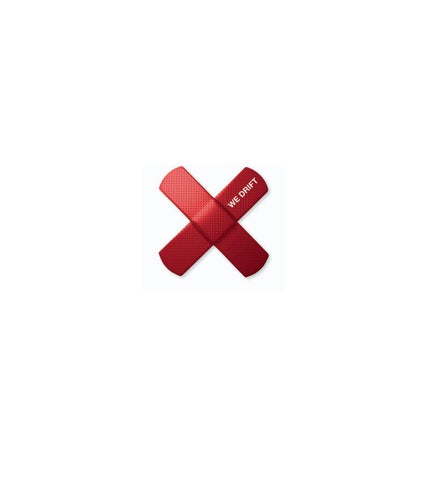
Each raft carries an individual, torn from his or her familiar surroundings and captured in a snapshot as if time had frozen still. Moreover, every individual is represented equally large, to stress humanity’s equality: ‘A baby is rescaled to the size of a basketball player, because whoever you are and whatever you do, ultimately we are all equals.’ All humans try to create their own context, to make the unpredictable predictable, to impose certainty on uncertainty. But stripped of this context – afloat a raft – individuality somehow loses its significance and the circle of life and death becomes the same for all. The present is now, and however hard you try to plan and organise for tomorrow, you are bound by uncertainty; there is no telling whether you will even make it to the next day. We are all equally fragile, vulnerable. Hence every raft carries but one person: every individual must live his or her own life. ‘We come into the world alone and we go out of the world alone; that is the harsh reality of it all.’ And yet the underlying message of WE DRIFT is neither fatalistic nor pessimistic. The individuality emphasises the aspects of vulnerability and uncertainty, but it also holds a positive element: all people are beautiful, all individuals equals. And every person has an opportunity to live consciously, to make life worthwhile, in accordance with his or her abilities, talents and insights. This combination of vulnerability and beauty is contained not only in the portraits, but also in the background photos. Each individual is shown lying on a patchwork of landscape pictures. The fate of nature is after all intertwined with that of man: nature and man are interdependent. Integrated into every landscape photograph is a bandaid – arguably the symbol of WE DRIFT – that at once epitomises the fragile beauty of our world. In 2012, Tellier, accompanied by soldiers of the US army, applied a bandaid to the trail of destruction left by Hurricane Sandy near New York. But most other sites in the project were selected for their beauty (see ‘A thousand aerial landscape photographs’). ‘It’s a way of raising public awareness and reminding people that they should cherish our unique planet.’
Op elk vlot ligt een mens, die uit zijn vertrouwde omgeving is gerukt en gefotografeerd alsof de tijd is stilgezet. Bovendien is elk individu even groot afgebeeld, om de gelijkheid te benadrukken: ‘Een baby is even groot gescaled als een basketbalspeler. Want wie je ook bent of wat je ook doet, als puntje bij paaltje komt, is iedereen gelijk.’ Ieder mens probeert zijn eigen context te creëren, om de onvoorspelbaarheid voorspelbaar of de onzekerheid zeker te maken. Maar eenmaal ontdaan van die context – drijvend op zijn (v)lot – zijn verschillen van geen tel meer en is de cirkel van het leven voor iedereen gelijk. Nu is nu, en hoezeer je de dag van morgen ook probeert te plannen en organiseren, je bent van niets zeker; het is niet eens zeker of je morgen wel haalt. We zijn allemaal even kwetsbaar. Daarom draagt elk vlot slechts één mens: uiteindelijk moet iedereen zijn eigen leven leiden. ‘Je komt alleen op de wereld aan en je gaat alleen weg, dat is de harde realiteit.’ En toch is de boodschap achter WE DRIFT zeker niet fatalistisch, noch pessimistisch. Het individuele aspect drukt wel kwetsbaarheid en onzekerheid uit, maar er schuilt ook een positieve boodschap in: ieder mens is even mooi en intrinsiek gelijkwaardig. Iedereen heeft bovendien de keuze om bewust te leven, om iets van zijn leven te maken en doet dat volgens zijn eigen mogelijkheden, zijn eigen talenten, zijn eigen inzichten. Die combinatie van kwetsbaarheid en schoonheid zit niet alleen vervat in de portretten, maar ook in de achtergrondfoto’s. Elk individu ligt op een patchwork van landschapsfoto’s. Het lot van de natuur is immers verbonden aan dat van de mens: natuur en mens zijn van elkaar afhankelijk. Op elke landschapsfoto is een pleister geïntegreerd – in zekere zin hét symbool van WE DRIFT – die tegelijk de kwetsbaarheid en de schoonheid van de planeet in de verf wil zetten. In 2012 heeft Tellier, onder begeleiding van het Amerikaanse leger, een pleister aangebracht op de ravage die orkaan Sandy nabij New York had aangericht. Maar de meeste sites zijn geselecteerd om vooral de schoonheid van de aarde te benadrukken (zie Deel #2 ‘Duizend landschapsfoto’s vanuit de lucht’). ‘Zo creëer je bij het publiek een awareness rond de problematiek en zet je het aan onze unieke planeet te koesteren.’
We drifT × 15
ThaIlanD
60 × We drifT
We drifT × 61
ausTRalIa
62 × We drifT
We drifT × 63
64 × We drifT
ausTRalIa
We drifT × 65
222 × We drifT
We drifT × 223
224 × We drifT
We drifT × 225
acknoWleDgemenTs
DankWoorD
Jan Adriaenssens, Manuel Aertssen, Pascale Behiels, Erik Boen, Jim Cabus, Guy Campo, the city of Antwerp, Mark Coenen, Broos Colman, Tom Cuylaerts, Jeroen De Greef, Chris De Smet, Werner De Smet, Charlot De Wachter, Sandy Debecker, Didier Delaere, Thijs Delrue, Eric Demaeght, Niels Famaey, Nicolas Geniets, Annemarie Gevers, Fred Int Panis, Vincent Jansen, Bruno Janssens, Luc Janssens, Kristof Krekels, Frank Lauwers, Stef Lerner, Martin Mesuere, Isabelle Michiels, Fons Oerlemans and Kee Arens, Bieke Pillen, Geert Preckler, Dirk Riemaker, Gerard Schroeyers, Stef Selfslagh, Petra Sell, Gert Stevens, Eric Taverniers, Caroline Tellier, Kurt Tellier, Johan Tuyaerts, Wim Van Cappellen, Jurgen Van de Voorde and Dieter, Michel Van den Auweele, Raf Van den Bergh, Christophe Van den Heuvel, Guillaume Van der Stighelen, Joachim Van Dyck, Annik Vandervorst, Jourik Vandervorst, Rik Vandervorst, Jo Verfaillie, Thomas Verheyen, Dirk Vermeiren, Birgitte Vermuyten, John Verrept
Jan Adriaenssens, Manuel Aertssen, Pascale Behiels, Erik Boen, Jim Cabus, Guy Campo, Mark Coenen, Broos Colman, Tom Cuylaerts, Jeroen De Greef, Chris De Smet, Werner De Smet, Charlot De Wachter, Sandy Debecker, Didier Delaere, Thijs Delrue, Eric Demaeght, Niels Famaey, Nicolas Geniets, Annemarie Gevers, Fred Int Panis, Vincent Jansen, Bruno Janssens, Luc Janssens, Kristof Krekels, Frank Lauwers, Stef Lerner, Martin Mesuere, Isabelle Michiels, Fons Oerlemans en Kee Arens, Bieke Pillen, Geert Preckler, Dirk Riemaker, Gerard Schroeyers, Stef Selfslagh, Petra Sell, Stad Antwerpen, Gert Stevens, Eric Taverniers, Caroline Tellier, Kurt Tellier, Johan Tuyaerts, Wim Van Cappellen, Jurgen Van de Voorde en Dieter, Michel Van den Auweele, Raf Van den Bergh, Christophe Van den Heuvel, Guillaume Van der Stighelen, Joachim Van Dyck, Annik Vandervorst, Jourik Vandervorst, Rik Vandervorst, Jo Verfaillie, Thomas Verheyen, Dirk Vermeiren, Birgitte Vermuyten, John Verrept
Thanks are due to all monitors and volunteers who helped set up and dismantle the installation. Thanks also to all the models.
Dank aan alle monitoren en vrijwilligers die geholpen hebben met de opbouw en de afbraak van de installatie. Dank aan al de modellen.
A special thank you goes to all the sponsors and investors who contributed to the realisation of WE DRIFT.
Bijzondere dank aan al de sponsors en investeerders die het kunstproject WE DRIFT hebben mogelijk gemaakt
Special thanks also to my sons Rio and Yenno and partner Muriel Vandervorst.
Speciale dank aan mijn zoontjes Rio en Yenno en aan mijn partner Muriel Vandervorst.
www.wimtellier.com www.lannoo.com Text editor × Tekstredacteur Thijs Delrue Photography × Fotografie Wim Tellier, Stef Lerner, Gert Stevens Graphic design × Grafisch ontwerp Studio Lannoo © Uitgeverij Lannoo nv, Tielt, 2013 isBN 978 94 014 0953 7 D/2013/45/209 NUR 653 Register on our web site and we will regularly send you a newsletter with information about new books and interesting, exclusive offers.
Registreer u op onze website en we sturen u regelmatig een nieuwsbrief met informatie over nieuwe boeken en met interessante, exclusieve aanbiedingen.
All rights reserved. No part of this publication may be reproduced or transmitted in any form or by any means, electronic or mechanical, including printing, photocopying, microfilming, recording, or information storage and retrieval system, without prior permission in writing from the publisher.
Alle rechten voorbehouden. Niets uit deze uitgave mag worden verveelvoudigd, opgeslagen in een geautomatiseerd gegevensbestand en/of openbaar gemaakt in enige vorm of op enige wijze, hetzij elektronisch, mechanisch of op enige andere manier zonder voorafgaande schriftelijke toestemming van de uitgever.