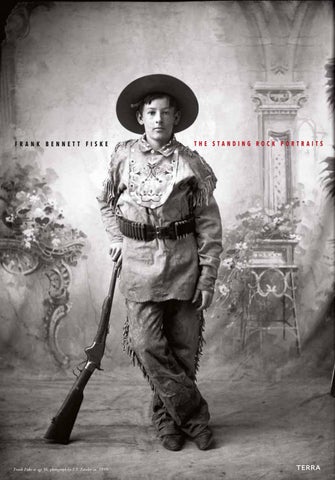
FRANK BENNETT FISKE
THE STANDING ROCK PORTRAITS
Frank Fiske at age 16, photograph by S.T. Fansler ca. 1899
Fiske_Standing Rock Portraits_TERRA_18 March_FINAL@1.indd 1
21-03-18 11:12
Plains Indian Pictograph
‘By the early 1800s, Plains Indian art expressed both the culture’s worldview and its wealth. Spiritual power and beauty imbued ceremonial clothing, headdresses, horse gear, and weaponry. Pictographic histories of men’s achievements in war adorned robes, shirts, and tipis. Visionary images appeared on shields and drums. The sacred geometric imagery used on objects made for women was quilled, beaded, and painted on robes, dresses, moccasins, containers, and ritual objects. Plains Indian art had come of age.’ —Gaylord Torrence, Curator Metropolitan Museum of Art
—Gaylord Torrence, Curator
Fiske_Standing Rock Portraits_TERRA_18 March_FINAL@1.indd 2
21-03-18 11:12
Fiske_Standing Rock Portraits_TERRA_18 March_FINAL@1.indd 3
21-03-18 11:12
Frank Bennett Fiske by Frank Vyzralek
F
rank Bennett Fiske was a rarity among those American photographers
whose work centered upon the American Indian. Unlike most such artists, Fiske was a native of the Dakotas and grew up with many of those people who later became subjects for his camera on the reservation lands bordering the Missouri River. The Sioux Indian people of the Standing Rock agency were friends and neighbors – a part of his life and upbringing. “Fiske was a native of the
The son of a soldier, Fiske was born June 11, 1883 at the military post
Dakotas and grew up with
of Fort Bennett (from whence came his middle name), about 30 miles
many of those people who
north of Pierre, South Dakota on the west bank of the Missouri. After
later became subjects for his
an abortive fling at ranching, George Fiske hired on as a civilian wagon-
camera on the reservation
master with the U.S. Army, and in the spring of 1889 moved to Fort
lands bordering the Missouri
Yates, North Dakota where the military post coexisted with the Standing
River. The Sioux Indian
Rock Indian agency headquarters. During the decade that followed,
people of the Standing Rock
Frank Fiske attended school both at the fort and at the boarding school
agency were friends, neighbors
for Indian children. His summers were spent herding cows for families at
- a part of his life and
the post, practicing his violin, working as a cabin boy on the river boats
upbringing.”
and helping out at the post’s photograph gallery. Fiske’s boyhood ambition was to become a steamboat pilot, and after being hired as a cabin boy he learned the trade from Captain John Belk and other boatmen of that day. Unfortunately, boating on the Missouri River was then in its waning days. Fort Yates was an important river point only because it didn’t have a railroad and was the destination for considerable government freight. Nonetheless, Fiske spent many hours on the river and came to know its ever-changing bends and shoals intimately.
Fiske_Standing Rock Portraits_TERRA_18 March_FINAL@1.indd 4
21-03-18 11:12
P
hotography was another absorbing interest, and the young Frank
“By 1917 he felt
Fiske devoted many hours to learning the business from S. T. “Dick”
knowledgeable enough to
Fansler, operator of the post photo studio at Fort Yates. Most 19th
publish ‘The Taming of the
century Army installations had such galleries; usually the buildings were
Sioux’, his own story of
government property and were made available to the first photographer,
the tribe’s history. Fiske’s
transient or otherwise, who asked for its use. The Fort Yates studio had
attitude toward the Sioux, as
been occupied in the past by such distinguished artists as David F. Barry
demonstrated by his writings,
and Orlando Goff. During October 1899, Fiske learned that his mentor
was generally sympathetic to
Fansler would not return, and successfully won permission from the
the plight of the tribespeople
commanding officer to occupy the building the following spring. Though
though it is clear he viewed
several months short of his seventeenth birthday, by 1900 Frank Fiske
them as a culture largely
had a photographic studio of his very own.
different from his own.”
Business was good until 1903 when the military post of Fort Yates was closed down. With great expectations and even greater enthusiasm, Fiske opened a studio at Bismarck; by March 1905 he was back home again, the Bismarck venture having apparently been something less than successful. With more leisure time, he then concentrated on improving his camera technique and began making portrait studies of the Indian men, women, and children of the Standing Rock agency. As time went on, he became proficient in posing his subjects effectively and his collection of negatives grew. At the same time, his interest in the culture and history of the Sioux people developed and he began reading all he could find on the subject, as well as interviewing any of the reservation old-timers who would talk to him. By 1917, he felt knowledgeable enough to publish The Taming of the Sioux, his own story of the tribe’s history. Fiske’s attitude toward the Sioux, as demonstrated by his writings, was generally sympathetic to the plight of the tribespeople, though it is clear he viewed them as a culture largely different from his own. While chafing at the government
Fiske_Standing Rock Portraits_TERRA_18 March_FINAL@1.indd 5
21-03-18 11:12
Fiske_Standing Rock Portraits_TERRA_18 March_FINAL@1.indd 10
21-03-18 11:12
Fiske_Standing Rock Portraits_TERRA_18 March_FINAL@1.indd 11
21-03-18 11:12
Kicks Iron
Fiske_Standing Rock Portraits_TERRA_18 March_FINAL@1.indd 18
The headdress is of golden eagle feathers tipped with hair strands and porcupine quillwork headband. Deerskin jacket decorated with fine quill work. The breast plate is of cow bone “hair pipes� commercially manufactured for trade to Indians, trimmed with brass tacks in elk hide spacers. [ ca. 1900 ]
21-03-18 11:12
Fiske_Standing Rock Portraits_TERRA_18 March_FINAL@1.indd 19
21-03-18 11:12
White Bull
Fiske_Standing Rock Portraits_TERRA_18 March_FINAL@1.indd 20
21-03-18 11:12
Fiske_Standing Rock Portraits_TERRA_18 March_FINAL@1.indd 21
21-03-18 11:13