
PROJECT OBJECTIVES
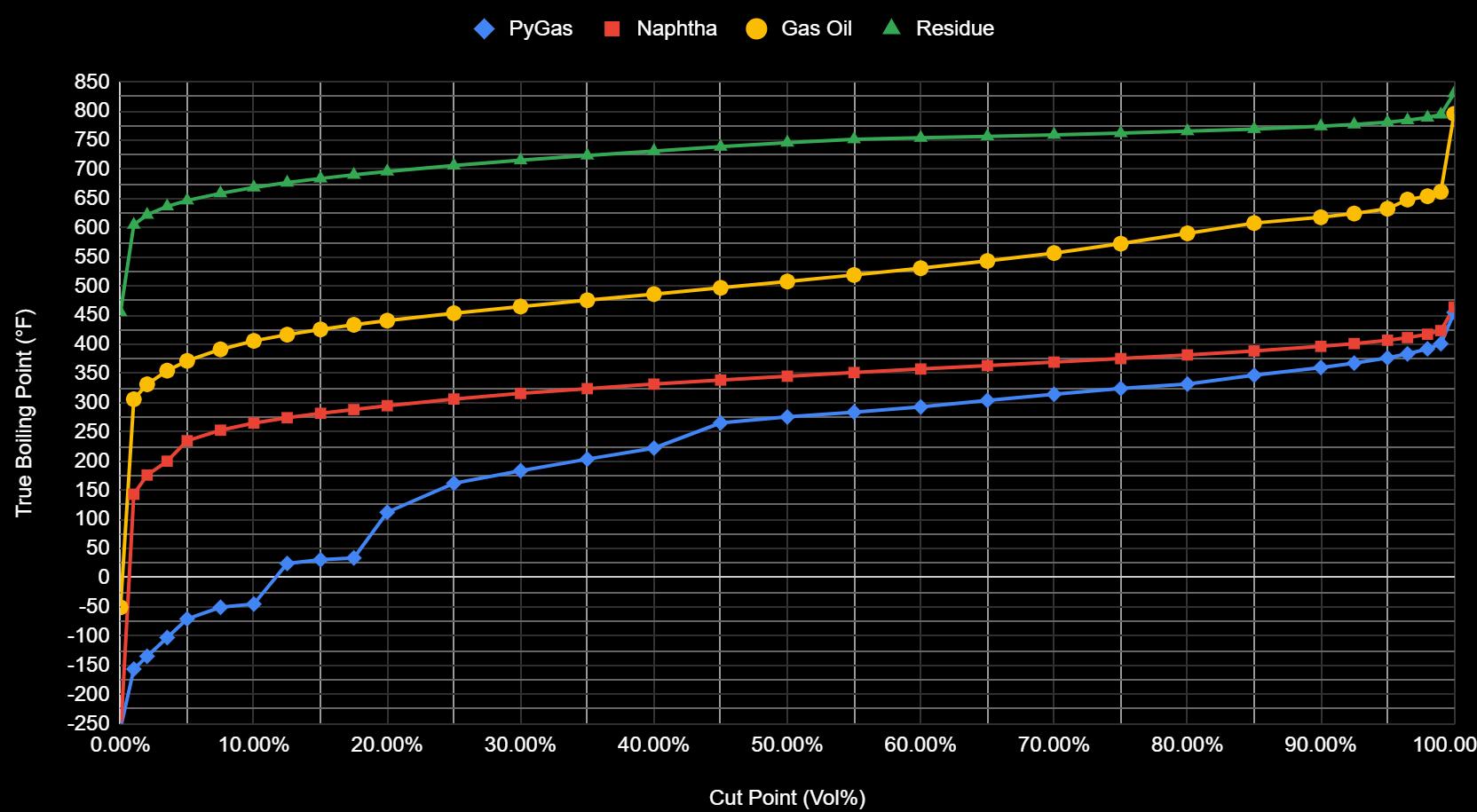
Design a system that separates the pyoil into 4 “cuts”: py gas, naphtha, gas oil, and pitch. Each is defined by their end boiling point (EBP).
Optimize design to minimize both capital and operating expenses. Protect the environment as well as the health and safety of the community.
GLOBAL CIRCULATION OF PLASTICS ECONOMY
Nicholas Rowe , Jonathan Bosse, Joshua Anderson
Chemical & Biological Engineering

BACKGROUND
Plastic waste is a global crisis that needs responsible engineers to solve. Global Petrochemical requested a pyoil purification unit design, which takes pyoil (molten plastic) and separates out 4 different streams that will be used as fuel and feed for an ethylene plant . The project is centered around the island of Bali in Indonesia where infrastructure is not in place to properly handle the island’s annual plastic waste.
PROCESS DESIGN
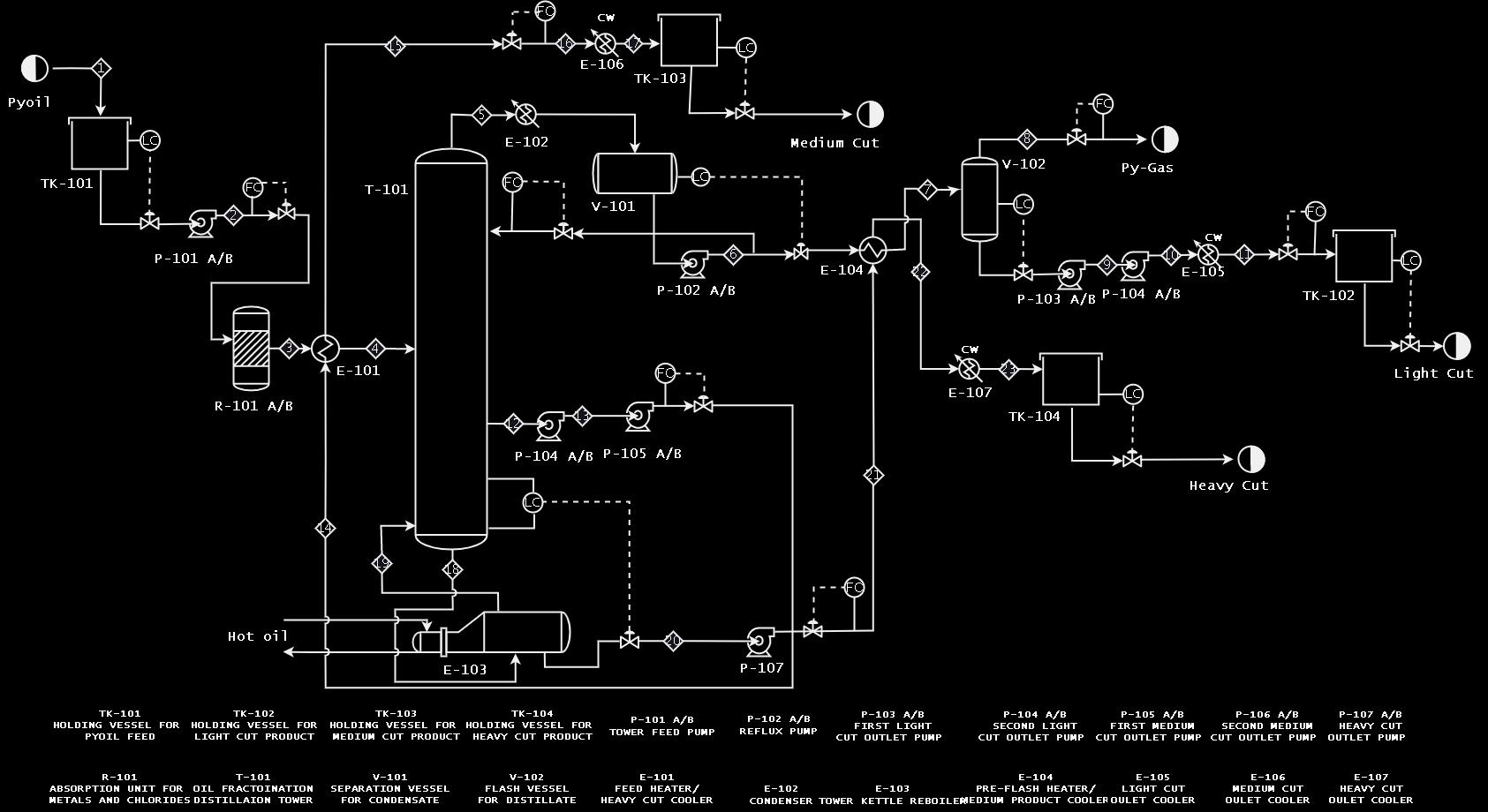
The centerpiece of this design is single distillation tower with 28 stages, a total condenser, and a partial kettle reboiler.
A flash vessel separates py gas and naphtha products from column distillate. A genetic algorithm was used to find operational conditions that improved separation while minimizing cost via interfacing software.
BASF® adsorbent beds used in parallel to remove chloride and metal contaminants. Hot liquid product streams are used to heat cold feed streams to improve energy efficiency.
PROCESS FLOW DIAGRAM
SUSTAINABILITY

Our design uses regenerable adsorption beds that reduce waste, replaces a fired heater with heat integration, and is part of a process that greatly reduces pollution by reusing plastic waste as both a fuel and material.
ECONOMICS
The fixed capital investment (FCIL) is the total cost to purchase and install all equipment, including taxes and fees.
The yearly operating cost (YOC) is the sum of utility costs (cooling water, fuel oil, electricity) and operating labor.
The equivalent annual operating cost (EAOC) amortizes the capital investment of the plant with the annual cost of operating the facility over 10 years with an interest rate of 10%.

FCIL $8,730,000 YOC $4,865,250/year
EAOC $6,227,000 /year
PRODUCT SPECIFICATIONS
Global Petrochemicals’ desired specifications for the naphtha and gas oil streams are their 95% ASTM D86 boiling points (T95): 392°F and 620°F, respectively

This design achieved T95 temperatures of 389.5°F and 604.9°F
CONCLUSION
The design achieves a purity error of 0.6% for the naphtha and 2.44% for the gas oil. The rates of production are 13,239 lb/hr and 33,641 lb/hr, respectively. The emphasis of the process design is to minimize cost while reaching the product specification objectives.