UNIVERSITY OF GEORGIA PRESS
bookS FoR FALL / WInTeR 2026

UNIVERSITY OF GEORGIA PRESS
bookS FoR FALL / WInTeR 2026






32 THe AFRICAn CALLed CARR
Thomas, Velma Maia
28 bARTRAM’S TRAVeLS ILLUSTRATed
Dallmeyer, Dorinda G., and Harriet H. Langford, eds.
50 beTWeen MyTHS And MARGInS Lackey, Dresden N.
12 bLUe HAndS, bRoWn SkIn Ouma, Awuor
38 bRInGInG HoMe THe WHITe HoUSe
Blair, Melissa Estes
41 CAn’T I LoVe WHAT I CRITICIZe?
Mayberry, Susan Neal
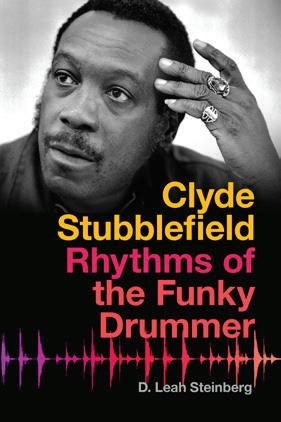
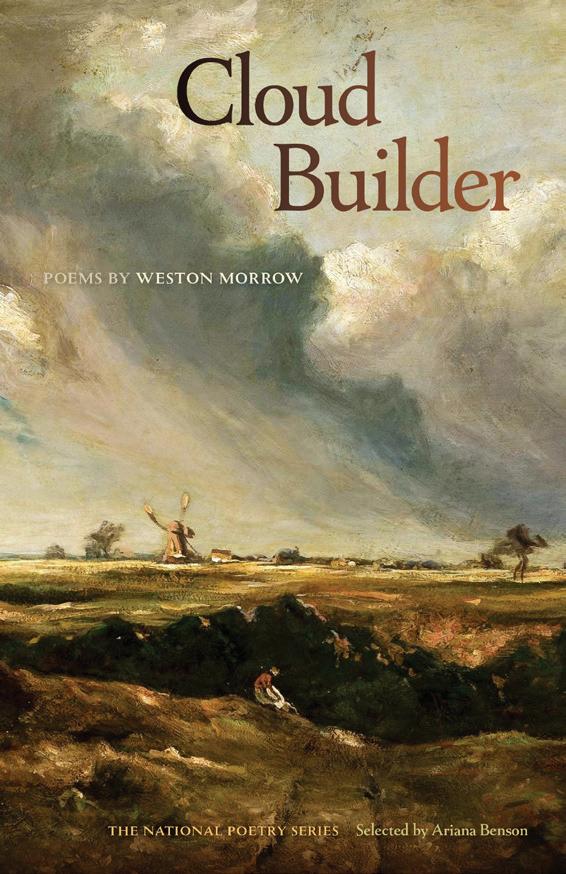
13 CLoUd bUILdeR
Morrow, Weston
14 CLyde STUbbLeFIeLd Steinberg, D. Leah
48 ConTRAdICToRy CookbookS Barth, Ellen
39 deAR ReGInA
Miller, Monica Carol, ed.
25 dReAM, TReMbLe, FLy
Sensbach, Jon F.
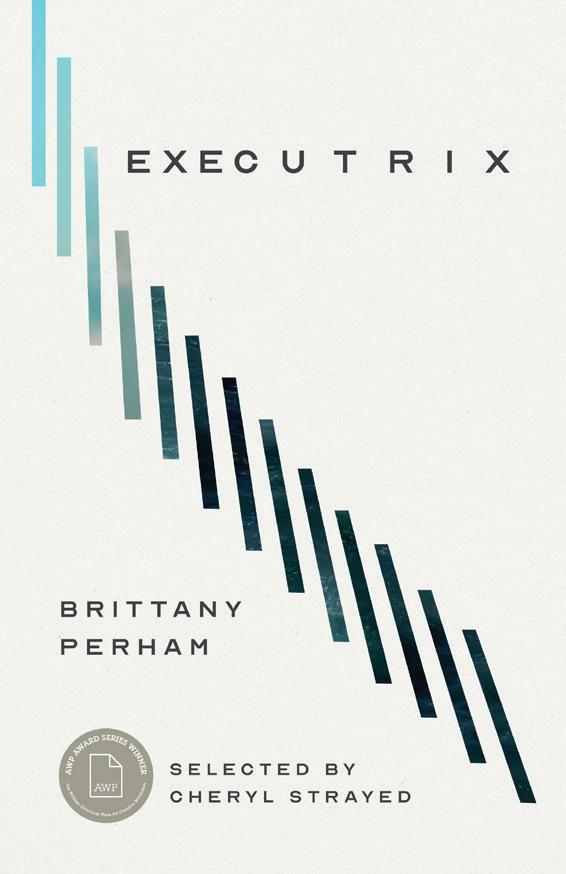
6 eXeCUTRIX
Perham, Brittany
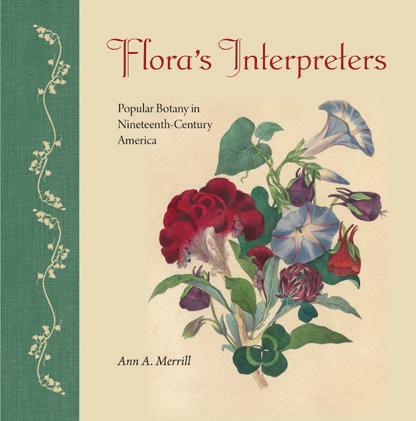
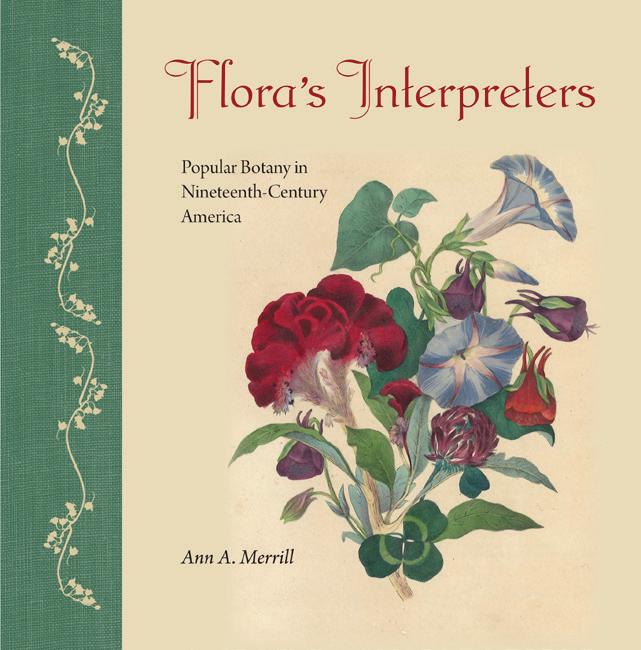
10 FLoRA’S InTeRPReTeRS
Merrill, Ann A.
18 FRedeRICk bILLInGS
And THe LAndSCAPe ARCHITeCTURe IdeAL Nadenicek, Daniel J.
44 FRoM bLood To Ink Larson, Matthew J.
9 THe GeoLoGy oF SeCReTS Hughes, Debra
45 HARd WoMen, HARd WAR Mammina, Laura
22 HISToRIC WATeRMILLS oF THe SoUTH Boyd, Ken
36 HoW To SURVIVe THe APoCALyPSe Trimble, Jacqueline Allen
21 THe LAnd oF CoTTon Giesen, James C.
27 A LeGACy In PeAnUTS Willis, Haisten
40 Look AbRoAd, AnGeL Evans, Jedidiah
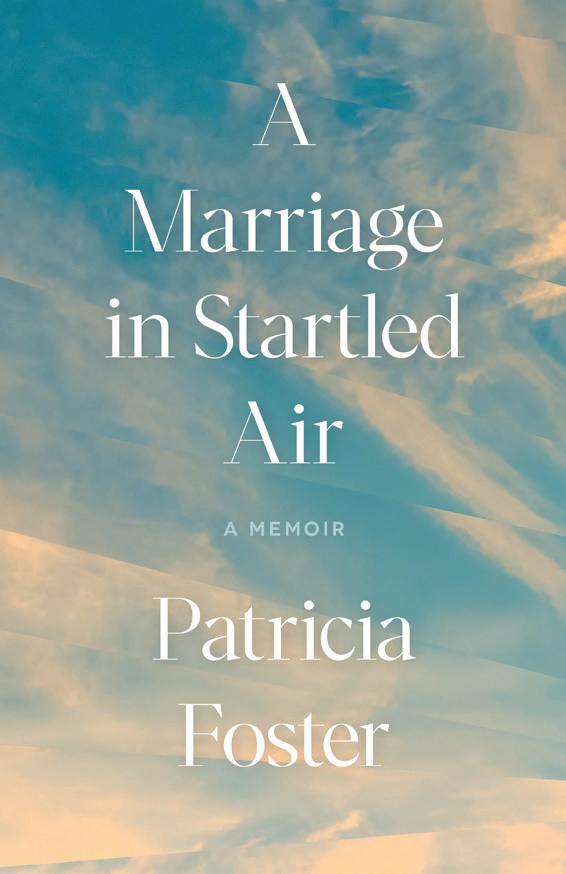
5 A MARRIAGe In STARTLed AIR Foster, Patricia
30 noT dReAMInG Cohen, Robert
17 on noCHAWAy Norton, Anna Gage
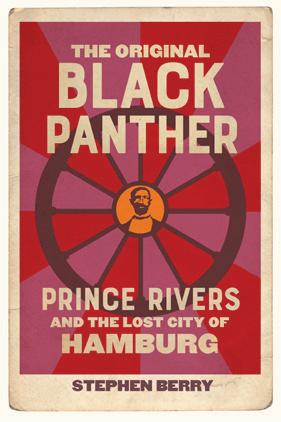
31 THe oRIGInAL bLACk PAnTHeR Berry, Stephen
47 A QUeeR beSTIARy Lloyd, Christopher
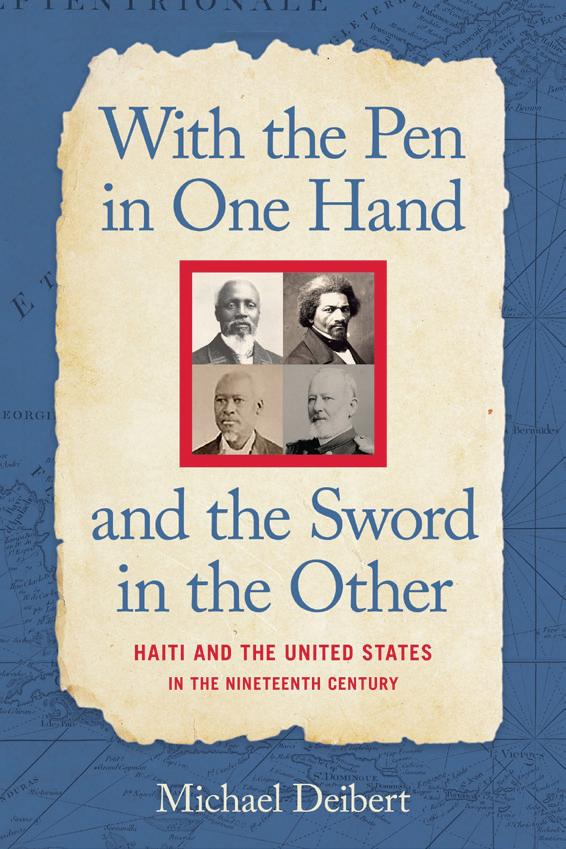
35 WITH THe Pen In one HAnd And THe SWoRd In THe oTHeR Deibert, Michael 14 15 31
49 ReAdInG THe CLASSed CHILd Morris Davis, Maggie E.
24 RUInATe GReen Watson, Jay
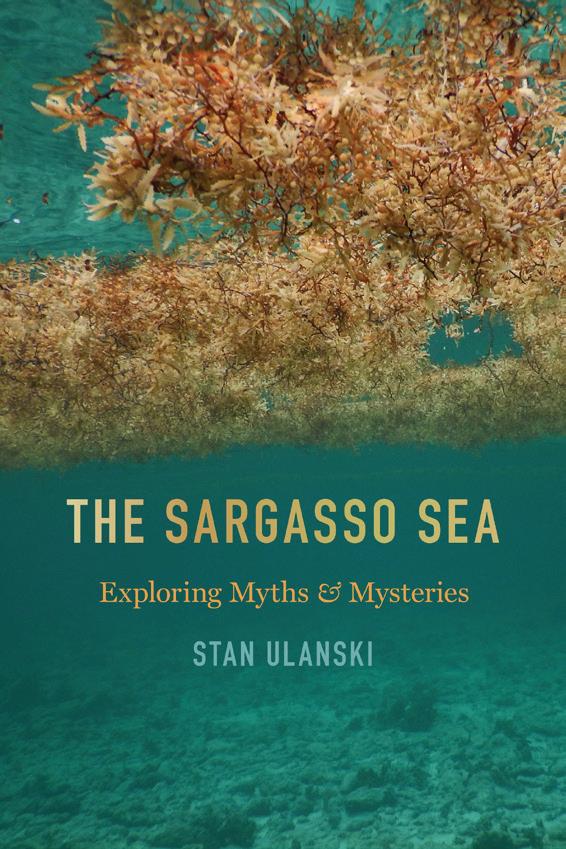
19 THe SARGASSo SeA Ulanski, Stan
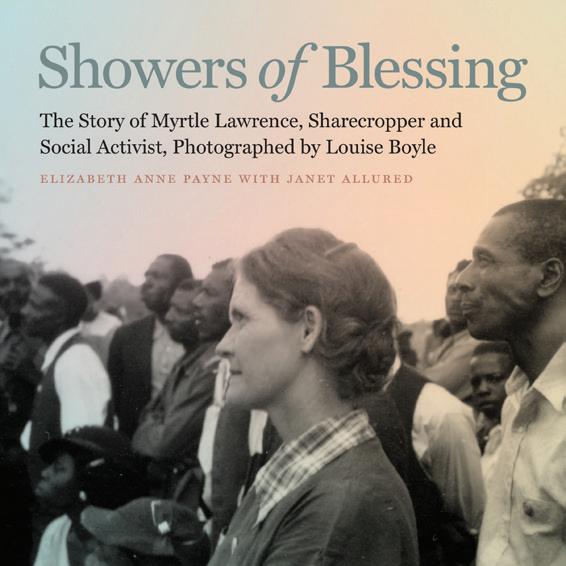
34 SHoWeRS oF bLeSSInG Payne, Elizabeth Anne, and Janet Allured
4 THe SoUnd oF bURnInG Osorio, Kristi D.
37 THe SoUTH neVeR PLAyS ITSeLF Beard, Ben
51 SToReFRonT Tuttle, Steven
7 THe SUbMeRGed Boast, Will
26 TALkInG AboUT CULTS Gleig, Ann
8 THey ARe US Mkangi, Katama
46 ToXIC FeAR Egan, Michael
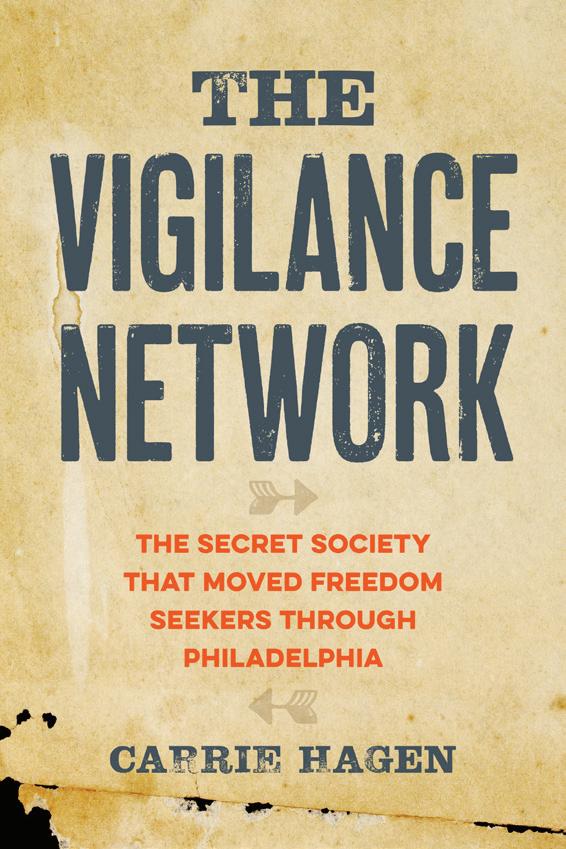
33 THe VIGILAnCe neTWoRk Hagen, Carrie
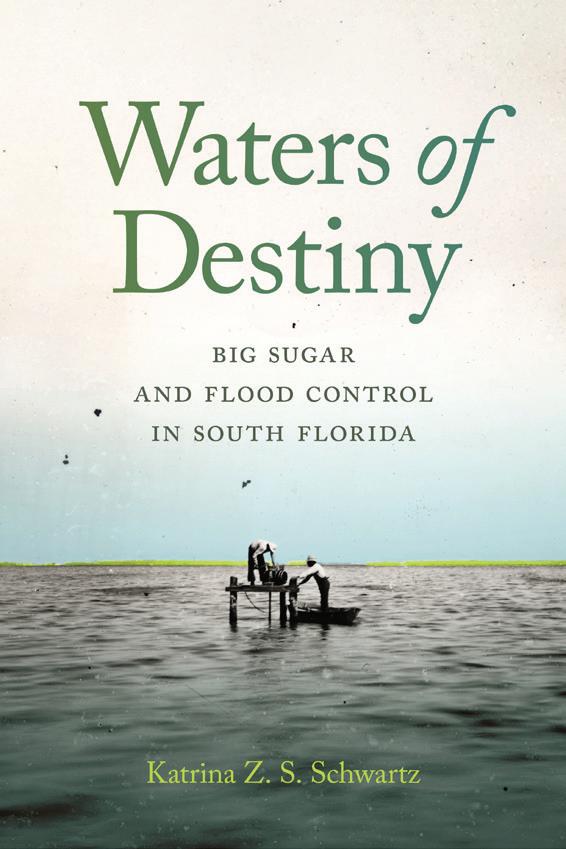
20 WATeRS oF deSTIny Schwartz, Katrina Z. S.
15 WHAT WAS MTV? Thompson, Ethan
SINCE ITS FOUNDING IN 1938, the primary mission of the University of Georgia Press has been to publish innovative scholarship and compelling stories that inspire and inform the people of Georgia and the world.
The University of Georgia Press is the oldest and largest book publisher in the state. We currently publish 70 new books a year and have a long history of publishing significant scholarship, creative and literary works, and books about the state and the region for general readers.
48 BARTH, ELLEN | ContradiCtory CooKbooKs
37 BEARD, BEN | the south never plays itself
31 BERRY, STEPHEN | the original blaCK panther
38 BLAIR, MELISSA ESTES | bringing home the White house
7 BOAST, WILL | the submerged
22 BOYD, KEN | historiC Watermills of the south
30 COHEN, ROBERT | not dreaming
28 DALLMEYER, DORINDA G., AND HARRIET H. LANGFORD, EDS. | bartram’s travels illustrated
35 DEIBERT, MICHAEL | With the pen in one hand and the sWord in the other
46 EGAN, MICHAEL | toXiC fear
40 EVANS, JEDIDIAH | looK abroad, angel
5 FOSTER, PATRICIA | a marriage in startled air
21 GIESEN, JAMES C. | the land of Cotton
26 GLEIG, ANN | talKing about Cults
33 HAGEN, CARRIE | the vigilanCe netWorK
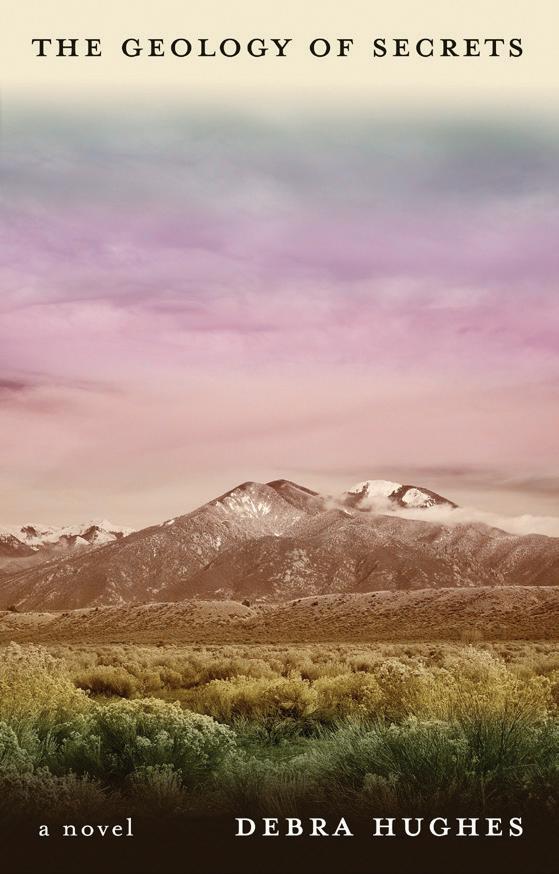
9 HUGHES, DEBRA | the geology of seCrets
50 LACKEY, DRESDEN N. | betWeen myths and margins
44 LARSON, MATTHEW J. | from blood to inK
47 LLOYD, CHRISTOPHER | a queer bestiary
45 MAMMINA, LAURA | hard Women, hard War
41 MAYBERRY, SUSAN NEAL | Can’t i love What i CritiCiZe?
10 MERRILL, ANN A. | flora’s interpreters
39 MILLER, MONICA CAROL, ED. | dear regina
8 MKANGI, KATAMA | they are us
49 MORRIS DAVIS, MAGGIE E. | reading the Classed Child
13 MORROW, WESTON | Cloud builder
18 NADENICEK, DANIEL J. | frederiCK billings and the landsCape arChiteCture ideal
17 NORTON, ANNA GAGE | on noChaWay
4 OSORIO, KRISTI D. | the sound of burning
12 OUMA, AWUOR | blue hands, broWn sKin
34 PAYNE, ELIZABETH ANNE, AND JANET ALLURED | shoWers of blessing
6 PERHAM, BRITTANY | eXeCutriX
20 SCHWARTZ, KATRINA Z. S. | Waters of destiny
25 SENSBACH, JON F. | dream, tremble, fly
14 STEINBERG, D. LEAH | Clyde stubblefield
32 THOMAS, VELMA MAIA | the afriCan Called Carr
15 THOMPSON, ETHAN | What Was mtv?
36 TRIMBLE, JACQUELINE ALLEN | hoW to survive the apoCalypse
51 TUTTLE, STEVEN | storefront
19 ULANSKI, STAN | the sargasso sea
24 WATSON, JAY | ruinate green
27 WILLIS, HAISTEN | a legaCy in peanuts




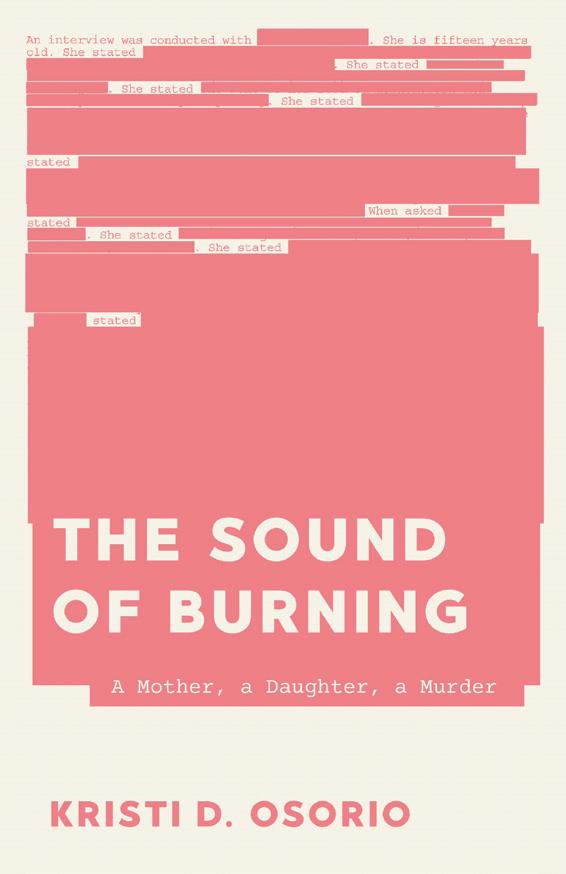
KRISTI D. OSORIO is the winner of the 2023 Indiana Review Creative Nonfiction Prize selected by Camonghne Felix and the Sonora Review “Mercy” Contest in Nonfiction selected by Maggie Nelson. Her work has appeared in The Rumpus, Teachers & Writers Magazine, New Delta Review, and elsewhere. She currently lives and writes in Texas.

OCTOBER
5.5 X 8.5 | 200 PP.
3 B&W IMAGES
PAPERBACK $22.95T
9780820378091
EBOOK AVAILABLE
Part memoir, part cultural critique, this story chronicles coming of age in the shadows of violence
a Daughter, a Murder
CRUX: THE GEORGIA SERIES IN LITERARY NONFICTION
“The Sound of Burning is a simultaneous love letter to a family fractured and an unapologetic reclamation of the narratives stolen and bent through a sensationalist true-crime lens. Osorio’s writing is fierce, yet she never forgets the power of vulnerability, showing the enduring influence of a grandmother’s love and the tender triumph of setting the record straight. The Sound of Burning will never let you look at true crime the same way again.”—
Courtney Ann LaFaive
, author of Follow the Signs
The Sound of Burning: A Mother, a Daughter, a Murder begins the night then-fifteen-year-old Osorio’s mother murdered her grandmother while the author was in her bedroom down the hall. But this book is not simply about that crime. Instead, Osorio examines the true crime obsession that arose in popular American culture parallel to her life, from the Scream franchise and the early 2000s “copaganda” to the more recent podcast boom. She uses her own story to interrogate the ways that true crime narratives often dehumanize the very real people at the center of those stories. Part memoir, part cultural critique, Osorio brings together memory, the lyric, and archival materials to tell her story of coming of age in the shadows of violence.
A story of marriage, illness, and a hidden past in which the consequences of recovery and the revelations of trauma open a marriage to a new map of intimacy
A Memoir
PATRICIA FoSTeR
CRUX:
THE GEORGIA SERIES IN LITERARY NONFICTION
“A Marriage in Startled Air is a brave and beautiful book, a memoir and a love story fused into one. With crystalline honesty and a storyteller’s art, Foster traces the improbable threads of her life and that of her husband, David, as they wind together across decades of time, through suffering and unexpected wonder, all the way from childhood to the gates of mortality.”
—Richard Preston, author of The Hot Zone and The Wild Trees
“Throughout, the prose is lyrical, fresh, and surprising without ever seeming overwrought. The ending is exactly—heart-stoppingly—right.”—Jennifer Brice, author of Another North: Essays in Praise of the World That Is
In A Marriage in Startled Air, Patricia Foster shares the dramatic story of how the diagnosis of her husband’s rare cancer changed the dynamics of their marriage and opened the door to the hidden world of his childhood, revealing the seeds of trauma and childhood PTSD. In vivid, often poetic prose, Foster reflects on how the journey of recovery—and discovery—between two artists in a relatively happy marriage leads to difficult conversations about family, memory, identity, and aging. Within this unburdening, Patricia and David discover a new map of intimacy: Once the illusion of normalcy is broken, what emerges is something sweeter and deeper, as if the broken thing becomes, ironically, the healing thing.
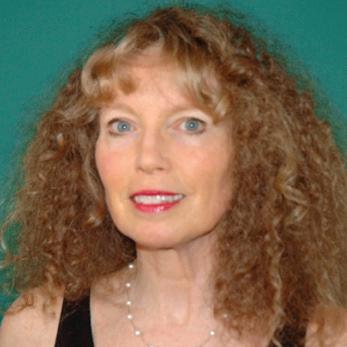
PATRICIA FOSTER is the author of All the Lost Girls, Just Beneath My Skin, Girl from Soldier Creek, and Written in the Sky: Lessons of a Southern Daughter. She has edited four anthologies and received a PEN Award, a Pushcart Prize, a HallWaters Award for Distinguished Southern Writing, a Clarence Cason Award, and an Alabama Truman Capote Prize for fiction and nonfiction. A graduate of the Iowa Writer’s Workshop, she was a professor in the MFA Program in Nonfiction at the University of Iowa for more than twenty-five years, and has taught in France, Australia, Italy, and Spain. She currently lives in Iowa City, Iowa.
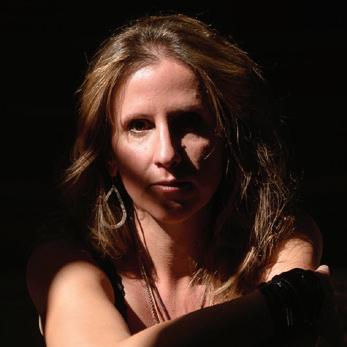
BRITTANY PERHAM is the author of Double Portrait, which received the Barnard Women Poets Prize; The Curiosities; and, with Kim Addonizio, the collaborative word/ art project The Night Could Go in Either Direction. Her poetry, fiction, and nonfiction appear in Poetry, Prairie Schooner, Gulf Coast, Poetry Society of America, The San Francisco Chronicle, and elsewhere. Perham’s work has received support from the Civitella Ranieri Foundation, the Hemingway House, the James Merrill House Foundation, Vermont Studio Center, the Wallace Stegner Fellowship Program, and Yaddo. She lives in San Francisco.
5.5 X 8.5 | 226 PP. PAPERBACK $26.95T 9780820377780
EBOOK AVAILABLE
An innovative memoir that questions narrative structure and the nature of memory itself while exploring the complexity of familial relationships
SeLeCTed by CHeRyL STRAyed
THE SUE WILLIAM SILVERMAN PRIZE FOR CREATIVE NONFICTION
“Executrix is a moving, wise, innovative memoir that captures the experience of loving and losing a complicated parent with such precision and power it lands like a truth bomb on the heart. In lean and vivid prose that’s at turns comic and devastating, poignant and provocative, the author reckons not only with her late father, but also with memory and the form of memoir itself. Masterfully crafted, Executrix is a complex, emotionally exacting, beautiful book that held me in its thrall from page one.”—Cheryl Strayed, author of New York Times bestseller Wild: From Lost to Found on the Pacific Crest Trail
Executrix begins with a mystery: Why would the author’s father, from whom she had been estranged for more than a decade, change his will in the weeks before his death to make her the executor of his estate? Executrix charts the process of sorting out the business of this indebted estate using the language of real estate foreclosure, income tax audits, and medical records. The executor transforms the disjointed details of a life into a tidy financial narrative that meets the demands of claimants; the writer transforms the disjointed details of a life into a story that meets the demands of memory. Through this twin accounting, Perham asks the big questions: What are the implications of being the child of an alcoholic? How do we reconcile memories that are fragmented, elided, or nonexistent? And what does it mean to write true “nonfiction”? With surprising humor, real tenderness, and, above all, a daring formal inventiveness, Executrix launches a critical investigation into family stories and secrets, and the genre of memoir itself.
Stories about crossing oceans and borders of all kinds in search of a new life
“A breathtakingly honest look at the silent compromises we make to remain in the places we love. Lyrical and profound, this is short fiction at its most potent.”—Andrew Porter, author of The Imagined Life
“These profound, revealing stories glow with tenderness and deepfelt compassion. They linger with you long after reading.”—Ling Ma, awardwinning author of Severance and Bliss Montage
“Bursting with compassion and wit and intelligence, The Submerged is a stunning collection that explores what it means to find home—and to lose it. An astonishing new book by one of our most exciting writers.”—Molly Antopol, award-winning author of The UnAmericans
In ten surprising, emotionally devastating stories, Will Boast explores the complex ways in which we long for a home, for connection and purpose. A Sicilian barber takes on a refugee as an apprentice and upends his own quiet village life. A lonely New York architect starts an ill-advised relationship with an aspiring congressman. The comic mayhem of teenage locals in a tourist town suddenly turns deadly serious. A shooting in northern Wisconsin involving an immigrant sets a community against itself. The Submerged draws unforgettable portraits of those forced into exile and those who choose it themselves. Boast asks just what we’ll do when the time comes to leave everything behind.
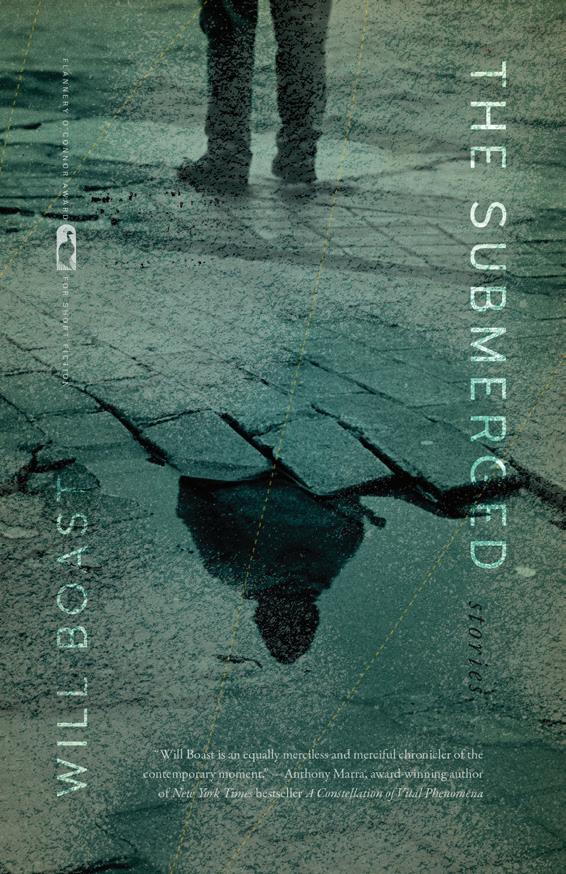
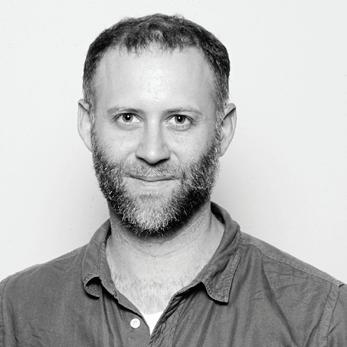
WILL BOAST is the author of a previous story collection, Power Ballads; a memoir, Epilogue; and a novel, Daphne. His short fiction, reporting, and essays have appeared in The New York Times Magazine, The New Republic, The Guardian, The American Scholar, Granta, and Virginia Quarterly Review, among other publications. He’s held fellowships from Stanford University, the American Academy in Rome, the University of East Anglia, Yaddo, and MacDowell, and he’s taught at Stanford, the University of Chicago, Royal Holloway, University of London, and the Joel Nafuma Refugee Center in Rome. He resides in Chicago, Illinois.

KATAMA MKANGI (1944–2004) was a sociologist, activist, and Swahili novelist born in southeast Kenya. In the 1980s, during the authoritarian regime of Daniel arap Moi, he was among several members of the underground Mwakenya Movement to be arrested, imprisoned without trial, and subjected to torture in Nairobi’s infamous Nyayo House. Although he worked as an academic sociologist for most of his life, Mkangi is best known for his novels and has been described as “the founder of the ‘new’ novel in Kenya.” In addition to Walenisi, he wrote the coming-of-age love story Ukiwa and the absurdist allegory Mafuta.
JANUARY
5 X 8 | 168 PP.
PAPERBACK $19.95T
9780820374680
HARDBACK $129.95X
9780820374697
EBOOK AVAILABLE
PUBLISHED WITH THE GENEROUS SUPPORT OF KAREN AND ART DUNNING
A science fiction critique of a corrupt, despotic, cronycapitalist society written by a former Kenyan political prisoner
kATAMA MkAnGI
TRAnSLATed by RICHARd PRInS AFRICAN LANGUAGE LITERATURES IN TRANSLATION
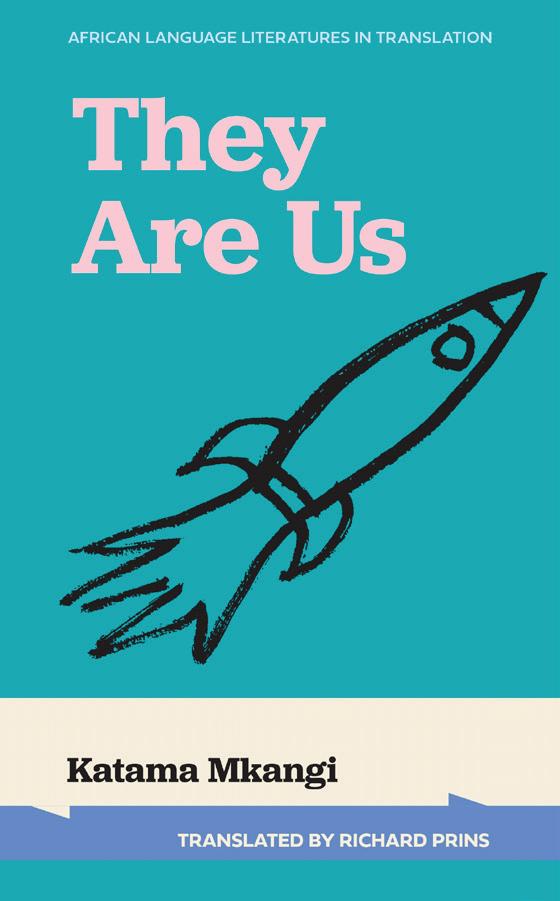
First published in Swahili as Walenisi in 1995, They Are Us is an Afrofuturist take on Kenyan politics from real-life political prisoner Katama Mkangi.
It begins with a death sentence for Dzombo—but not in the traditional sense. Instead of firing squad or hanging, Dzombo is shoved into a rocket and blasted into the sky for “talking too much.” While Dzombo assumes that he will explode like all the other political prisoners sentenced to the same fate, he instead pilots the vessel of death through an asteroid belt of allegorical maladies, such as the “Rock of Ignorance,” and crash-lands on the utopian planet Walenisi.
Faced with remarkable technological advancement and egalitarian prosperity, Dzombo is convinced he has arrived in Heaven. His hosts, however, believe that Dzombo himself is an emissary from Heaven. What follows is a journey, farce, romance, cross-cultural encounter, and self-discovery.

RICHARD PRINS, a lifelong New Yorker who has also lived, worked, studied, and recorded music in Dar es Salaam, currently teaches creative writing at Queens College. He is the author of the chapbook We May Eat Fruit and Brain Flavour: A Lyric History of Swahili Hip Hop. His translation of They Are Us has been recognized with a 2023 PEN/ Heim Translation Fund Grant and 2024 National Endowment for the Arts Translation Fellowship, and he has also translated a selection of poems by Muyaka bin Haji al-Ghassaniy titled We Are Still in the Fort. His translations from Swahili appear in such publications as Bennington Review, The Columbia Review, Harvard Review Online, The Los Angeles Review, and No Edges: Swahili Stories
How the power of the past affects our current relationships with both the people and places we call ours
“The Geology of Secrets explores the long history and diverse uses of land and water in northern New Mexico. Setting a measurable span of human generations and cultural histories against immeasurable eons of geologic time, Hughes raises profound questions around land preservation, the limits of science, and the traditional but endangered wisdom of Indigenous stories. Meticulously researched, superbly written, Hughes’s novel is a fearless meditation on the impermanence and resilience of living things. A unique addition to climate fiction and the literature of the Southwest, The Geology of Secrets easily transcends these categories, promising to captivate a far broader audience of readers.”—Melissa Pritchard, author of Flight of the Wild Swan and A Solemn Pleasure
Don Corely devotes himself to daily walks through his family’s meadowland, seeking solace from the troubling questions of abandonment that surround his mother’s mysterious death when he was a kid: Was it suicide or an accident? So caught in the past, he is blind to the land’s well-being as a warming climate threatens, until a stranger, Sakura Gonzalez, who claims ancestral ties to the land, appears and unleashes family secrets, forcing him to confront a drying, fading meadow. As they toil there one summer, Corely tangles with matters of the heart, landownership, and ways to sustain the meadowland’s past as well as its future.
A family drama set in the American Southwest, The Geology of Secrets explores the power of the past and how it can fuel denial within our relationships with those we care for and the places we call ours. Interconnectedness and land use serve as highstakes issues in the face of climate threat—involving how to sustain or restore native ecosystems in our country and beyond through science and the endangered wisdom of Indigenous and multicultural stories.

DEBRA HUGHES is the author of Albuquerque in Our Time: 30 Voices, 300 Years. Her short fiction has been anthologized in Tierra: Short Fiction of New Mexico and Walking the Twilight: Women Writers of the Southwest and has appeared in Image, New Letters, Blue Mesa Review, and other publications. Her essays and articles, for which she received the International Regional Magazine Silver Award, have been published in Narrative Magazine, Hu ngton Post, The Writer’s Harbrace Handbook, New Mexico Magazine, USA Today, and elsewhere. She served as a founding advisory board member of Narrative Magazine and is a member of the Author’s Guild and New Mexico Writers. She lives in Santa Fe, New Mexico. Read more about the author at debrahughes.com.
JANUARY
5.5 X 8.5 | 256 PP. PAPERBACK $22.95T 9798991456562
EBOOK AVAILABLE PUBLISHED BY


A detailed view of how the lives of everyday nineteenth-century Americans intertwined with plants
Ann A. MeRRILL
“Meticulously researched and ambitious in scope, Flora’s Interpreters offers readers insight into historical, scientific, medicinal, political, emotional, and religious elements of American culture. . . . Beautifully illustrated, this wonder-full book contributes generously to specialized conversations in such areas as critical plant studies as well as to environmental humanities more broadly. Merrill’s accessible prose explores widely published and archival materials, reminding readers of the past while invoking an observant, engaged, and sustainable future.”—Karen L. Kilcup, author of Stronger, Truer, Bolder and Fallen Forests
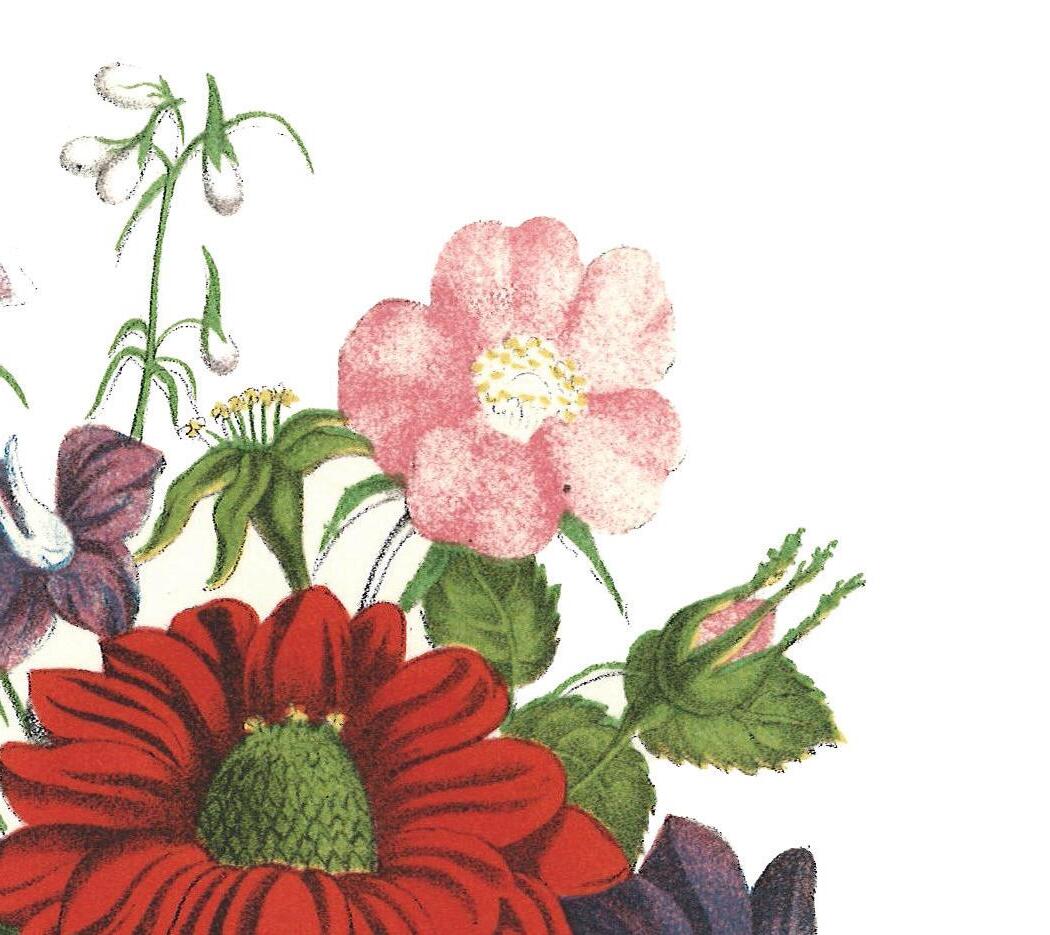
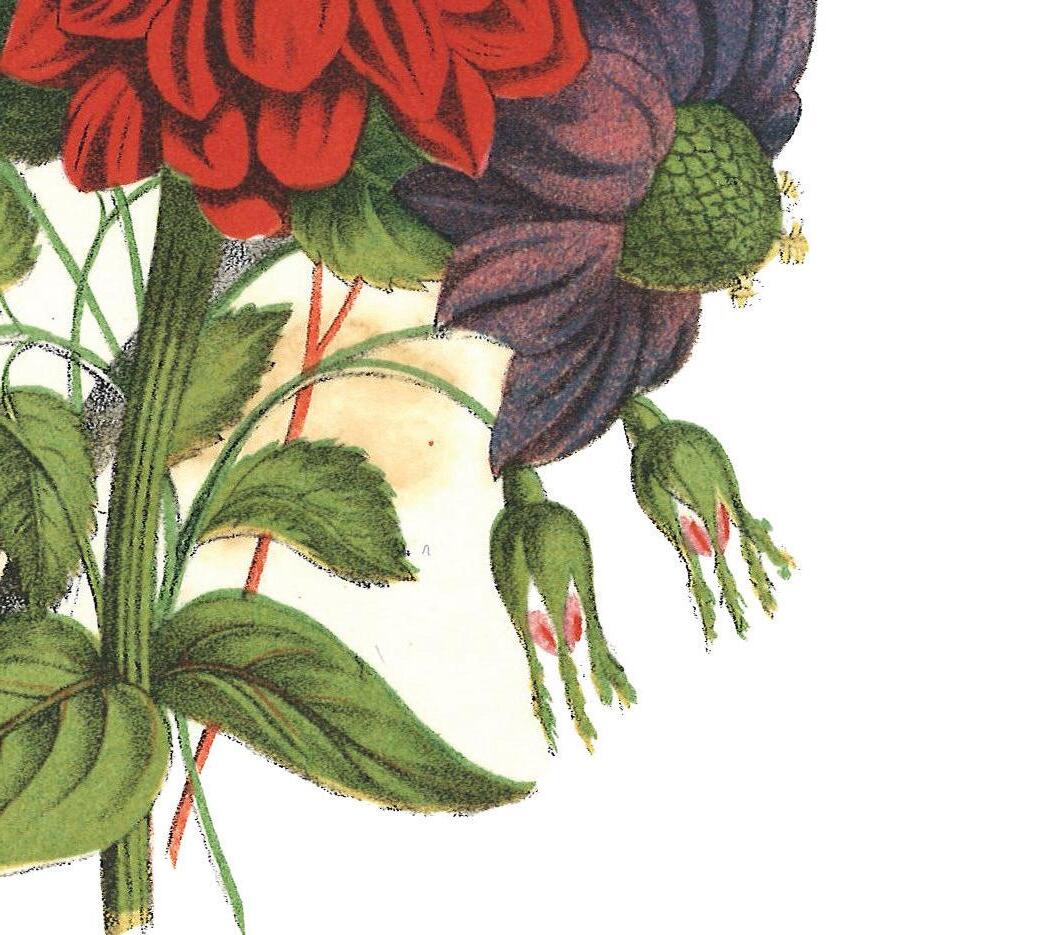
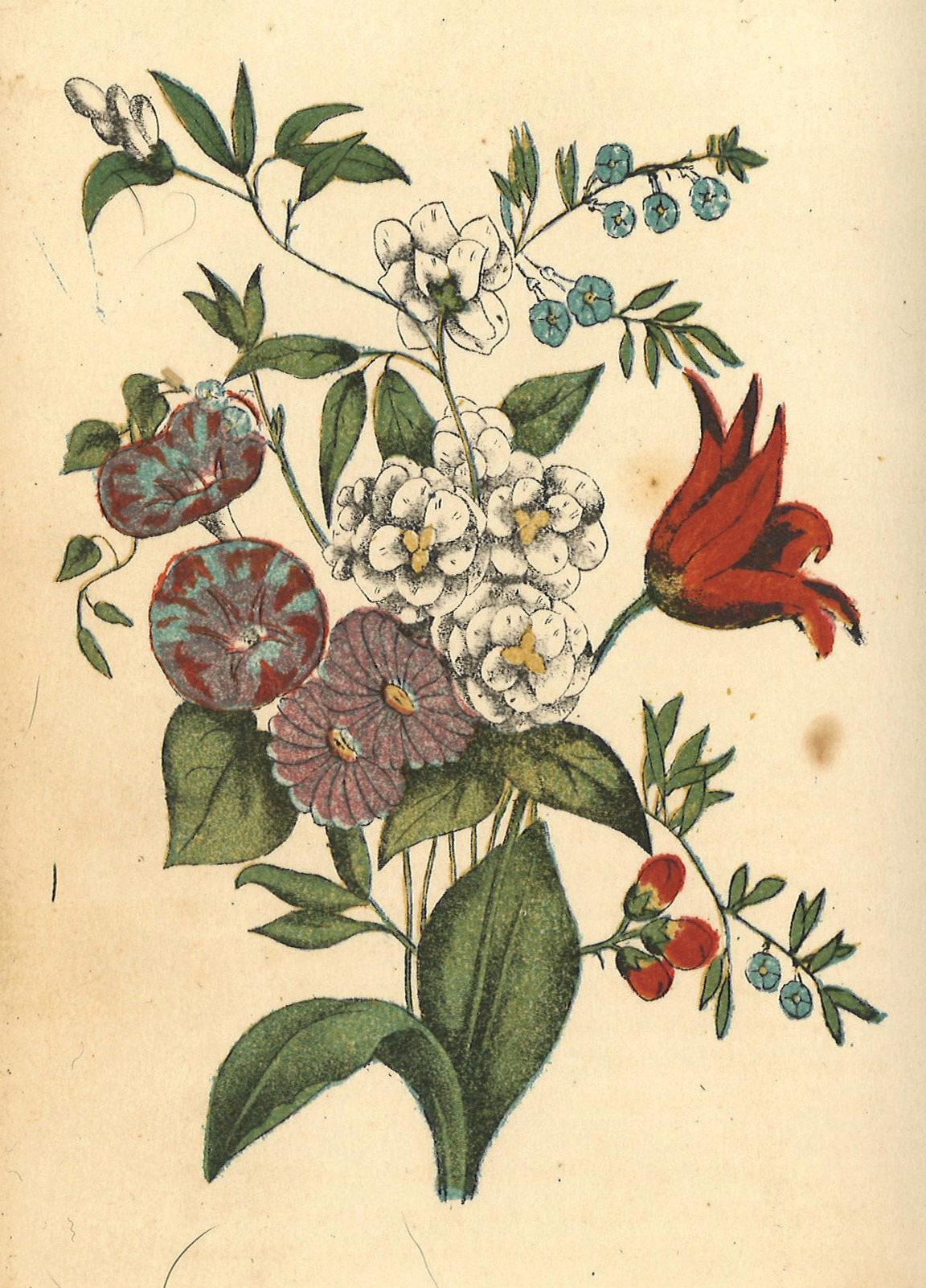
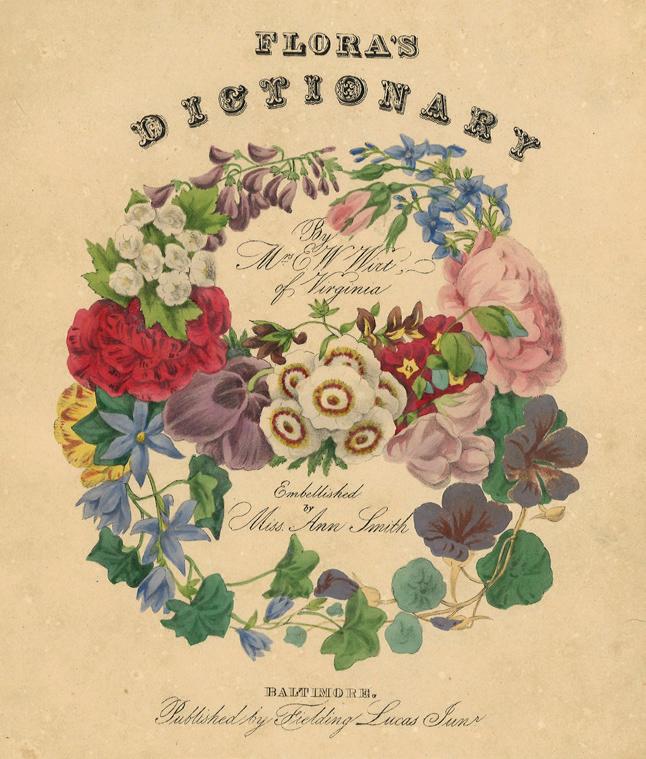
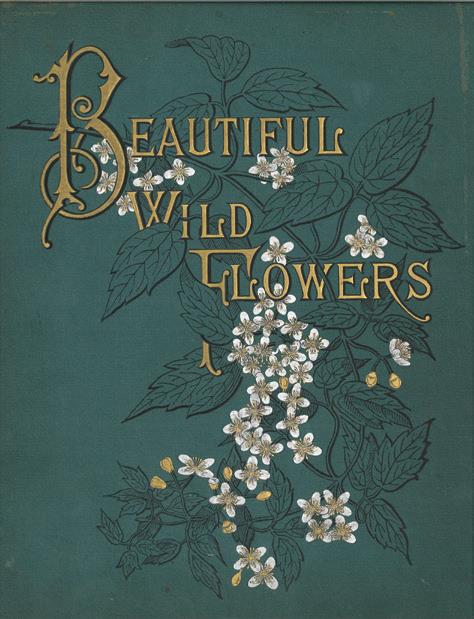
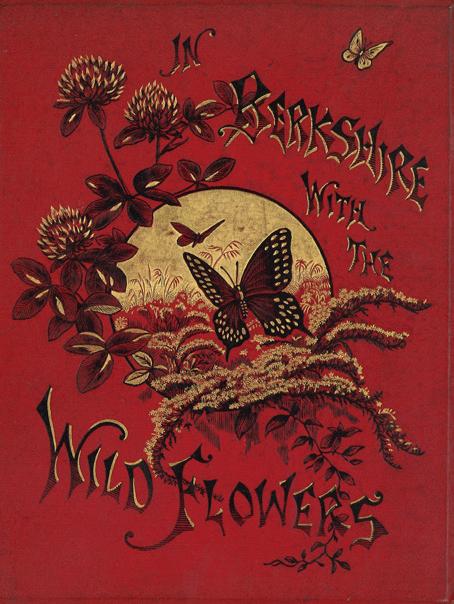
Flora’s Interpreters explores how everyday Americans in the nineteenth century interacted with common plants and recorded these relationships in diaries, books, and material artifacts. Through extensive archival research, Merrill uncovers genres not typically considered by scholars of environmental literature and history, including botany textbooks, herbaria, and flower language dictionaries. These genres shared a commitment to place-based knowledge, encouraging readers to discover, identify, and preserve the plants around them. Popular botany books also celebrated the diversity and abundance of American flora in detailed illustrations and lavish bindings. Beyond their printed contents are the inscriptions, marginalia, sketches, and pressed specimens that provide fascinating evidence of individual botanical encounters. A dialogic structure of genre surveys followed by “From the Archives” chapters highlight the interplay of general and particular that characterizes popular botany.

Combining approaches from environmental humanities, plant studies, material culture analysis, and history of the book, Merrill offers a unique perspective on sources relevant to nineteenth-century American environmentalism. Distinctive for its combination of visual, textual, and material analyses, Flora’s Interpreters is beautifully illustrated with images from primary sources and will appeal to anyone interested in the significance of plants for early American conservation, citizen science, and creative expression.

ANN A. MERRILL is the Thomson Professor Emerita of Environmental Studies at Davidson College, where she taught in the English and Environmental Studies Departments for thirty years. She is coeditor of Coming into Contact: Explorations in Ecocritical Theory and Practice (Georgia) with Ian Marshall, Daniel J. Philippon, and Adam Sweeting. An avid gardener and flower enthusiast, she is committed to raising awareness about the crucial importance of plants both historically and today. She lives in Portland, Oregon.



SEPTEMBER 9 X 9 | 264 PP. 183 COLOR PHOTOGRAPHS, 54 B&W PHOTOGRAPHS HARDBACK $34.95T 9780820374635

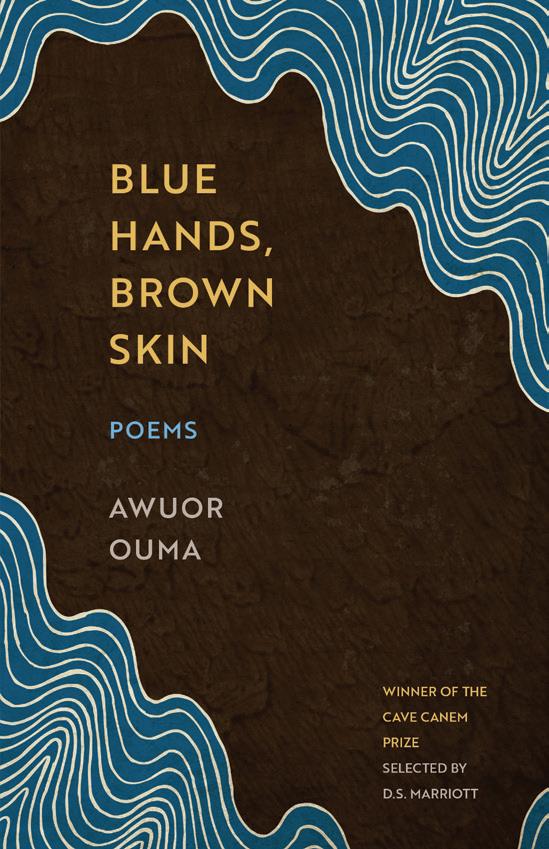
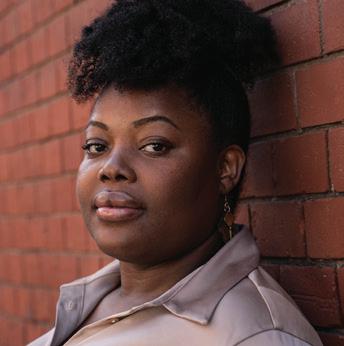
AWUOR OUMA is a Kenyan poet and writer living in Europe. She writes from the spaces between faith and fatigue, love and leaving, memory and migration. After years of writing in obscurity, she turns ordinary conversations about ordinary people into something worth remembering. Her work appears in Doek! and The Kalahari Review. She is the author of Face Me, Darling, her debut novella.
NOVEMBER
5.5 X 8.5 | 112 PP. PAPERBACK $22.95T 9780820381039
EBOOK AVAILABLE
A lyrical exploration of migration, grief, and the resilience of African womanhood
AWUoR oUMA
SeLeCTed by d. S. MARRIoTT THE CAVE CANEM POETRY PRIZE
Blue Hands, Brown Skin is a powerful debut poetry collection about belonging, loss, migration, and the quiet resilience of women who carry entire homelands in their bodies. Moving between Kenya and Berlin, these poems explore how migration reshapes a life and what it means to grieve far from home, to navigate love and language across borders, and to return to oneself after being broken open by the world.
Through storytelling and intimate lyricism, the poet examines how the body remembers what history tries to erase—from girlhood rituals and ancestral wisdom to the bureaucratic coldness of immigration lines and the loneliness of diaspora. Each poem becomes an altar to survival, a place where memory, motherhood, and identity meet.
What makes this collection distinctive is its fusion of personal narrative with cultural myth, its fearless attention to the spiritual and emotional worlds of African women, and its insistence that softness, even in exile, is a form of strength. Blue Hands, Brown Skin is a testament to how we carry home within us, in our grief, in our names, and in the stories that refuse to be burned.
What do we owe the dead? And what do we—who will soon be dead—owe the living?
PoeMS by WeSTon MoRRoW SeLeCTed by ARIAnA benSon
THE NATIONAL POETRY SERIES
“The only thing I wanted to do after reading Cloud Builder was read it again. Morrow gives a master class in how to write a spare, lively lyricism that will speak to readers about fathers, sons, history, place, and how we go on living despite our losses. Elegiac, poignant, tender, and always surprising. This is the real deal: poems that feel and that make you look at your own life and family anew.”—Janice N. Harrington, award-winning author of Yard Show and Even the Hollow My Body Made Is Gone
What do we owe the dead? This is the question at the heart of Cloud Builder, in which Weston Morrow interrogates the burden of legacy and the ever-watchful gaze of our deceased loved ones. His search takes him from the landscapes of the late Romantics to the soccer fields and baseball diamonds of present-day Washington state, along the way reanimating figures from his own and our collective past.
These poems reawaken long-dead painters and musicians, collapsed bridges, derelict ferries, and dormant volcanoes, confronting him with his failure, at times, to ask what it is we owe the living. What do the dead want from us? Or, conversely, is it we who haunt “the past, who can’t stop turning back / for one last look”?
is
print journalist who teaches writing at the Ohio State University. His poems have appeared in venues such as Boulevard, The Adroit Journal, and Barrelhouse. He grew up around Puget Sound in Washington state and currently lives in Columbus, Ohio. You can find him online at westonmorrow.com.


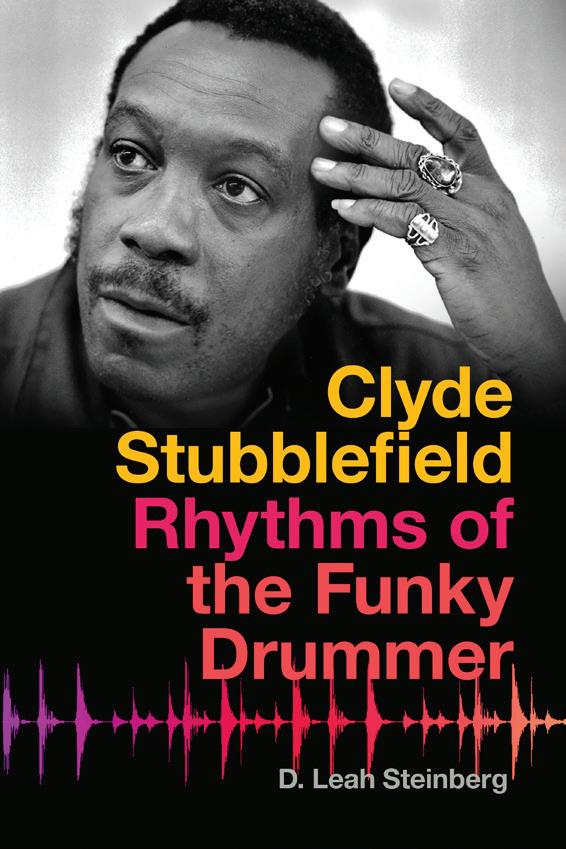
D. LEAH STEINBERG is the author of Raised in the Shadow of the Bomb: Children of the Manhattan Project. She has published two poetry chapbooks and her writing has appeared in Salon. Steinberg lives and writes in Northern California and is currently working on a book of poetry and photography.
OCTOBER
6 X 9 | 280 PP. 25 B&W IMAGES
PAPERBACK $28.95T
9780820377711
HARDBACK $129.95X
9780820377704
EBOOK AVAILABLE
The life and legacy of one of the most influential drummers in history
“A joyous, grooving ride. Leah Steinberg doesn’t simply tell stories; she emulates the dreamscape that Clyde’s playing was for everyone who saw and heard him.”—Rickey Vincent, author of Funk: The Music, the People, and the Rhythm of The One
“This book shows that Clyde’s life was as intriguing and exhilarating as his many popular beats.”—Tom Alesia, author of Then Garth Became Elvis: A Country Music Writer’s Journey with the Stars, 1985–2010
During his lifetime Clyde Stubblefield changed the rhythms and sound of music. Finding his start in the segregated city and musical streets of Chattanooga, Tennessee, Stubblefield became the underappreciated source of the funk rhythm that powered the legendary success of James Brown. After six years of playing with the Godfather of Soul, however, Stubblefield had had enough. In 1970, Stubblefield settled down in Madison, Wisconsin, where he could be found playing funk, jazz, R&B, blues, rock and roll, TexMex, and country music for just about anyone who asked. He found a welcoming and appreciative community of musicians and admirers in the northern city for the final forty-six years of his life. It was in Madison where Steinberg first met Clyde, befriended him, and asked to write the story of how Stubblefield became the most sampled drummer of all time and how the rhythms of the funky drummer emerged as the foundational sound of hip-hop—despite minimal recognition and compensation.
A
richly illustrated cultural history of MTV in its late twentieth-century heyday
Music Television from Launch to Reality
eTHAn THoMPSon
THE PEABODY SERIES IN MEDIA HISTORY
What did people really mean when they said, “I want my MTV”? Long before music videos were instantly searchable online, MTV offered something very different: a nonstop, unpredictable flow of images, sounds, and personalities that reshaped how audiences experienced music, television, and youth culture. What Was MTV? tells the story of how MTV emerged in 1981 and evolved through 1992, tracing its transformation from a risky experiment in roundthe-clock music videos into a powerful cultural force—and by the early 1990s, a pioneer of modern reality television.
Drawing on new interviews with MTV’s creators and producers, trade and popular press coverage, archival collections, and more than one hundred hours of off-the-air recordings preserved by viewers, Ethan Thompson reconstructs what MTV actually was— not just what we remember it to have been. Moving across MTV’s key formats, moments, and experiments—including Yo! MTV Raps, 120 Minutes, Remote Control, and The Real World—the book also features “MTV by the Hour” chapters that re-create a single hour of MTV for each year of its early history. Together, these vivid reconstructions reveal how creative ambition, commercial pressure, and cultural change combined to reinvent television in real time.


ETHAN THOMPSON is a professor of communication and media at Texas A&M University, Corpus Christi. He is the author of Parody and Taste in Postwar American Television Culture and coeditor of How to Watch Television, and he has written widely on television history and popular culture. He is also the producer and director of the historical documentary TV Family. He lives and writes in Texas.
FEBRUARY 6 X 9 | 384 pp.
197 b&W images
paperbaCK $29.95t
9780820380773
hardbaCK $129.95X
9780820380766
ebooK available
A meditation on land and legacy that chronicles the restoration of a longleaf pine ecosystem on family land, revealing how intentional stewardship today creates a more resilient future
AnnA GAGe noRTon NEWSOUTH BOOKS

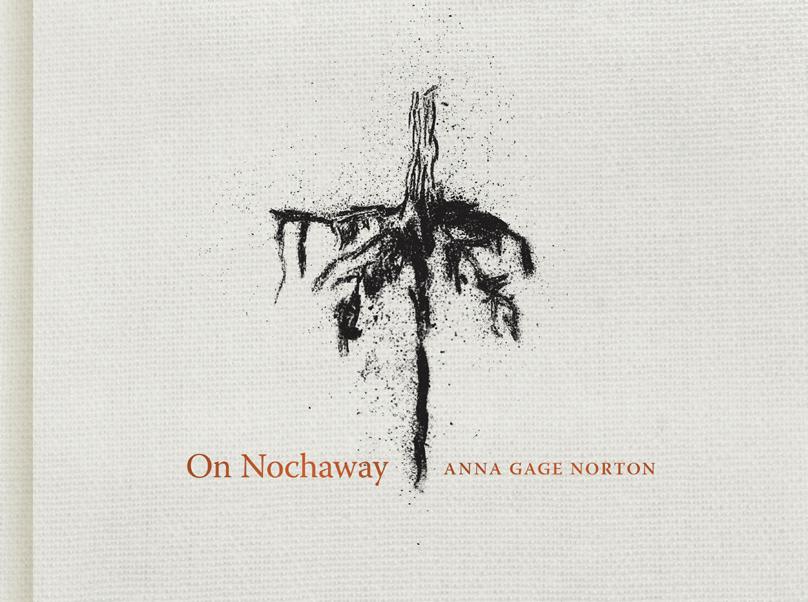
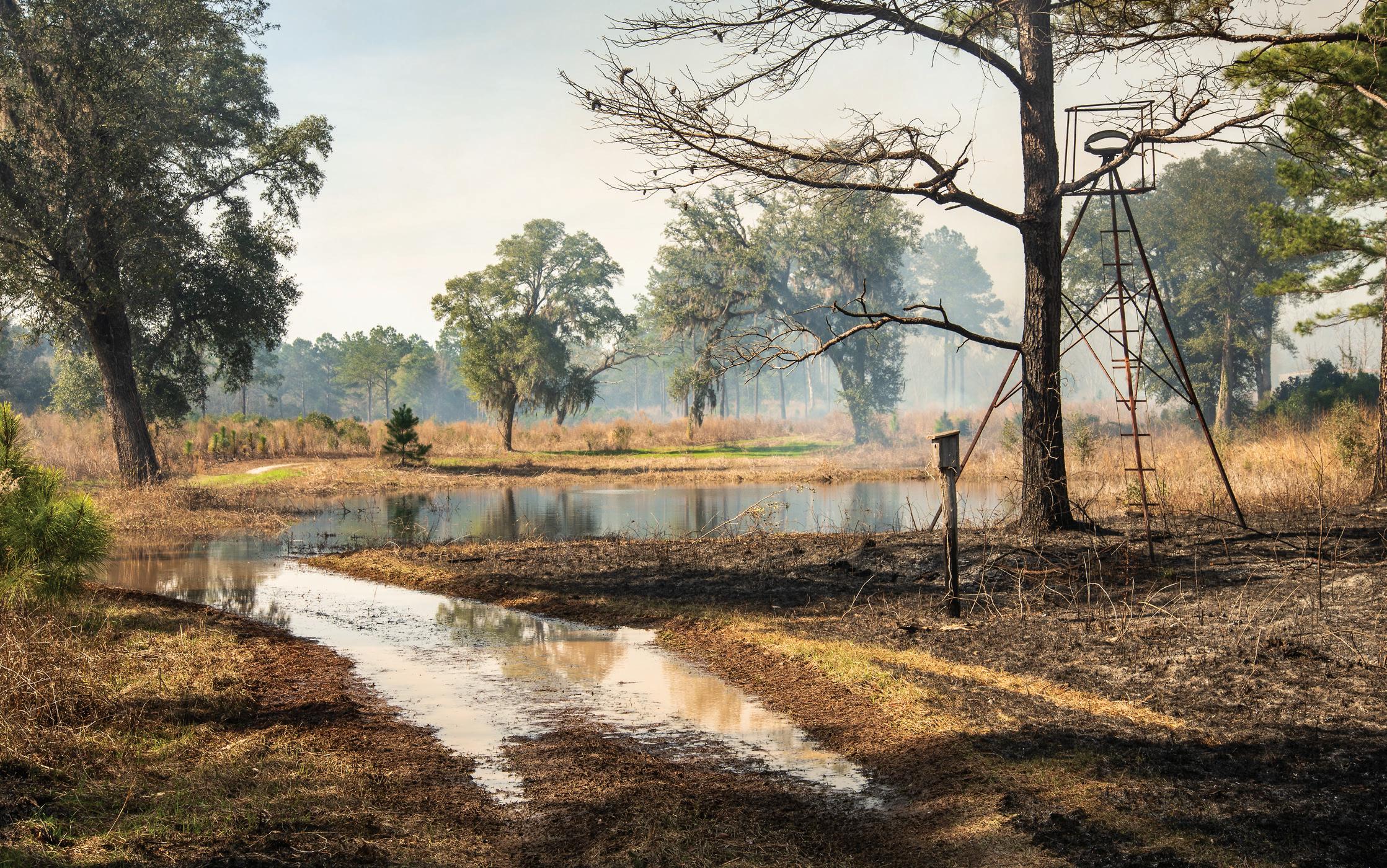
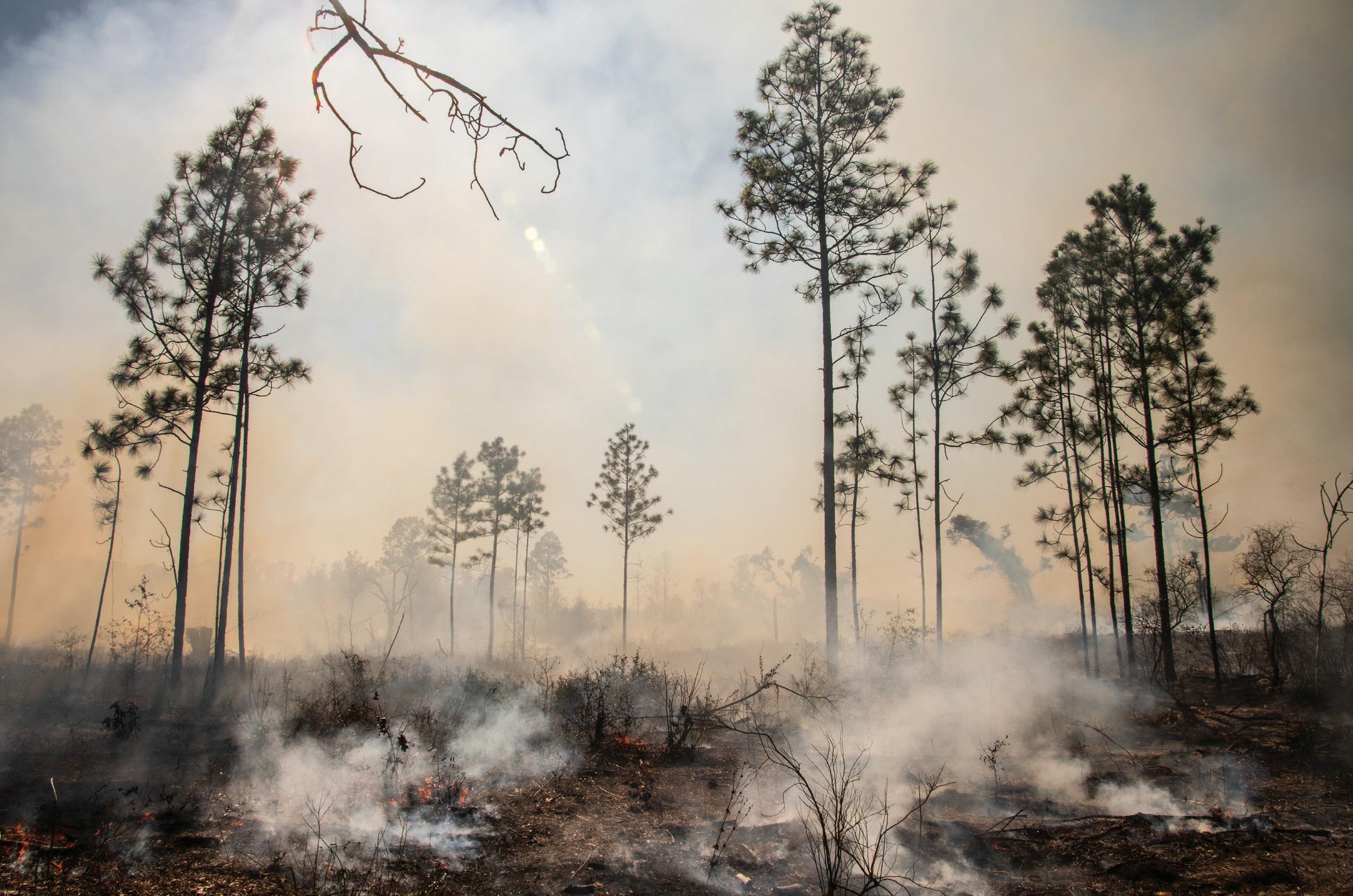
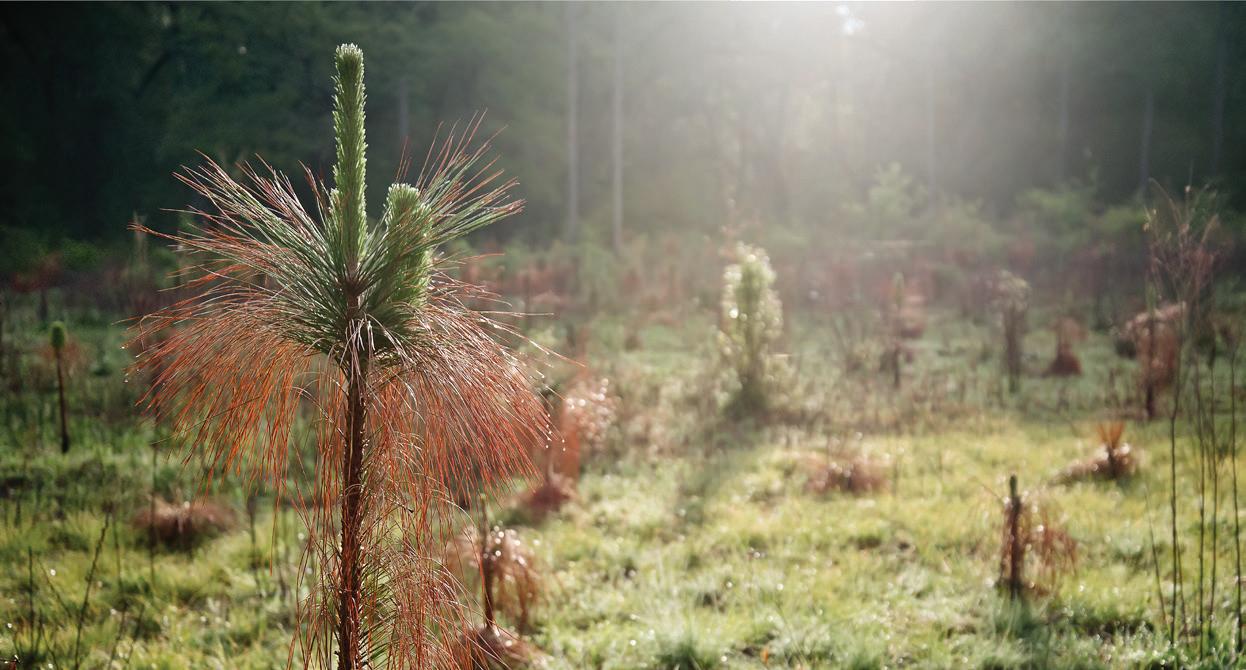
A poignant journey into the heart of a disappearing Southern landscape, On Nochaway weaves together a family’s legacy with the story of a resilient and biodiverse ecosystem. Norton’s photography and prose chronicle the restoration of longleaf pines on her family land in South Georgia—a place she felt little connection to until a prescribed fire sparked a profound and transformative experience.
On Nochaway explores the layered relationships between humans, land, and the passage of time. Through a unique blend of personal narrative and lyrical documentary photography, Norton invites the reader to consider themes of permanence, transience, and the enduring power of place. A deeply personal project, Norton’s story begins with the rediscovery of a family camera and a partially exposed roll of film revealing a forgotten history tied to a specific patch of land. This intimate connection allows the book to move beyond a simple ecological study and become a meditation on heritage, stewardship, and the resilience of both nature and memory. With essays from Janisse Ray, Jeffrey Richmond-Moll, and Rob McDonald, On Nochaway is for anyone who has ever felt called back to their roots or wondered about the stories hidden within a landscape.
ANNA GAGE NORTON, a native of South Georgia, received her MFA in photography from Tyler School of Art. Her work, which explores her relationship to place, has been featured in several publications, including Oxford American’s “Eyes on the South” and Southern Cultures’ “Snapshot: Climate.” Norton lives in western North Carolina, where she continues her work as a photographer.
JANUARY 12 X 9 | 176 PP.
COLOR PLATES, 19 COLOR PHOTOS, 3
PHOTOS, 10 ILLUSTRATIONS, 3 MAPS HARDBACK $42.95T 9781588385895

DANIEL J. NADENICEK is professor emeritus and former dean of the College of Environment and Design at the University of Georgia. He was selected as an honorary member of the Garden Club of America, a fellow of the American Society of Landscape Architects, and a fellow of the Council of Educators in Landscape Architecture. Born in Minnesota, Nadenicek lives and writes in Athens, Georgia.
NOVEMBER
6 X 9 | 352 PP.
53 B&W ILLUSTRATIONS
HARDBACK WITH DUST JACKET $34.95T 9780820380698
EBOOK AVAILABLE
A SOUTHERN HIGHLANDS RESERVE PUBLICATION
PUBLISHED WITH GENEROUS SUPPORT FROM THE LIBRARY OF AMERICAN LANDSCAPE HISTORY
A new interpretation of a towering and contradictory figure in the nineteenth-century emergence of landscape architecture
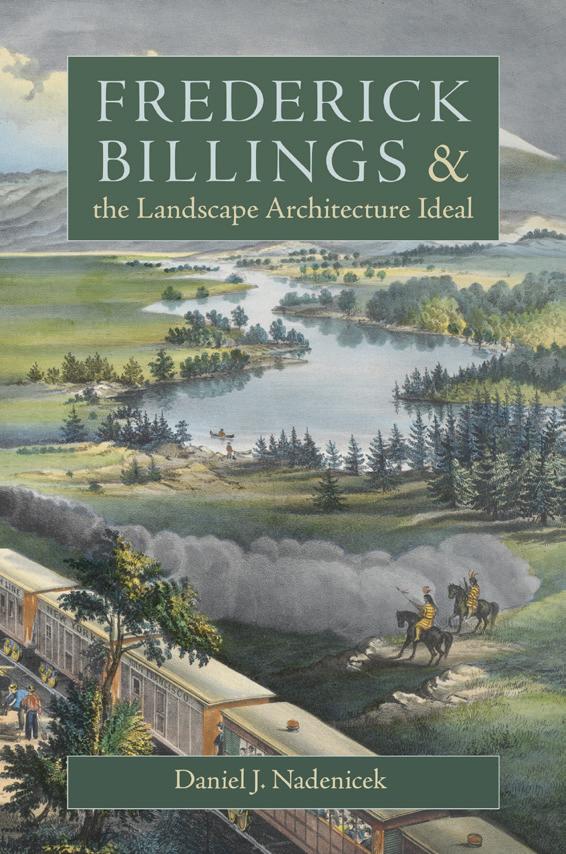
dAnIeL J. nAdenICek
Today, Americans regard access to recreational landscapes as something of a human right and see a direct connection between landscape experiences and health. These assumptions have their philosophical foundations in the nineteenth century and are inextricably linked to the massive social and environmental disruptions of nation building. From the 1820s until the brink of the Progressive Era in the 1890s, a connected set of landscape conservation, planning, design, and management strategies focused on environmental action and social improvement were conceived and implemented across the nation. This movement, for Nadenicek, is best understood as a “landscape architecture ideal.” While Frederick Law Olmstead is usually the heroic figurehead in explaining those nineteenth-century landscape-based theories and actions, in Frederick Billings and the Landscape Architecture Ideal, Nadenicek sees Billings as a rather more forgotten contributor to the development of that ideal, along with numerous other landscape designers, writers, artists, and wealthy experimenters.
A child of Vermont, Billings traveled to California in 1849 and, during the Gold Rush years, made a fortune in real estate development and as a land lawyer. During the 1870s, he joined the Northern Pacific Railroad—America’s second transcontinental railroad—Board of Directors, where he chaired the Land Committee and served as NPRR president. The city of Billings, Montana, bears his name, as does a small town in Missouri, a North Dakota county, two ships, and the Marsh-Billings-Rockefeller National Historical Park in his hometown of Woodstock, Vermont. But Billings was a man of paradox—he saw the landscape as a commodity ripe for conquest at the same time as he saw it as necessary for individual and community advancement.
A deep dive into perhaps one of the most unique and diverse—and mysterious—places on the planet
STAn ULAnSkI
Upon encountering great floating masses of sargassum during his first voyage to the West Indies, Christopher Columbus feared the weed was so thick and tangled as to forever ensnare his ships. For ages, the Sargasso Sea has been shrouded in both myth and mystery, fascinating scientists who are intent on unlocking its secrets and striking fear into most others. According to some romanticists, the Sargasso became known as a sort of marine hell, where ships and crew meet a cruel fate. While early cultures viewed the vast expanse of the Sargasso Sea with trepidation, it would—along with its pinwheel current—become the sea highway linking Europe and the Americas, facilitating exploration, colonization, and commerce.
Generations of scientists have explored the Sargasso, unlocking a number of its secrets. One of the most startling revelations was that it is one of the great biological deserts of the earth—an oceanic badland of clear, blue water. And yet within this desert are oases of life. As Ulanski reveals, the drifting sargassum has been rightly compared to a tropical rainforest because it is a haven of biodiversity, where numerous species—from tiny larvae and small fish to juvenile sea turtles—take up residence in the sargassum’s maze of stems, fronds, and floats. There is also growing recognition of the crucial and vital roles that the Sargasso plays in the wider North Atlantic ecosystem.
Cloaked in myths, including weed-entangled ships, sea serpents, and the Bermuda triangle, the Sargasso remains our most inscrutable sea. Blending history and anecdote, science and legend, geography and nostalgia, Ulanski tells the story of the Atlantic’s sea, setting it against the backdrop of humankind’s intellectual evolution.

STAN ULANSKI is professor emeritus of meteorology, oceanography, and marine resources in the Geology and Environmental Science Department at James Madison University. He is the author of The Billfish Story (Georgia), The California Current, and The Gulf Stream. Although born in New York City, his summer vacations to the New Jersey shore forever changed how he viewed the ocean and its inhabitants. Ulanski lives and writes in coastal Virginia where fishing and boating on the Chesapeake Bay allow him to spend time on the water quite often.

KATRINA Z. S. SCHWARTZ is an interdisciplinary social scientist specializing in environmental politics and (post-)Soviet politics. Her first book, Nature and National Identity after Communism, was awarded the Association for the Advancement of Baltic Studies 2006–7 Book Prize. She has published articles in Environmental Politics, Political Geography, and Environment and Planning A, as well as a coauthored paper in Science. Schwartz has taught at Penn State University and the University of Florida. She lives in Durham, North Carolina.
JANUARY
6 X 9 | 328 PP.
11 B&W IMAGES, 6 MAPS
PAPERBACK $36.95T
9780820380889
HARDBACK $129.95X
9780820380872
EBOOK AVAILABLE
A look into how sugarcane came to be produced at industrial scale in the Florida Everglades—devastating downstream ecosystems and communities
Big Sugar and Flood Control in South Florida
kATRInA Z. S. SCHWARTZ
Waters of Destiny tells the story of how sugarcane came to be produced at industrial scale in the Florida Everglades, thanks to a federal flood-control system that led to the devastation of downstream ecosystems and communities. It tells how the demand for both flood protection and water supply outstripped the system’s capacity to deliver, necessitating painful trade-offs. Water managers and advocates have been trying to solve this operational conundrum for decades, but South Florida’s environment radically limits water-control options. Scientists advocate restoring drained wetlands to allow floodwaters to once again spread across the landscape, but they have been repeatedly foiled by Big Sugar, for whom any loss of cane acreage threatens refineries’ profit margins. Drawing on scores of interviews and years of observation, Schwartz reveals how, in the late 1990s, state and federal officials squandered a moment of peak bipartisan support for Everglades restoration, enacting an $8 billion program that—while much ballyhooed—relied on speculative technological “moonshots” in lieu of confronting Big Sugar. The program’s “failure to launch” in the quarter-century since, Schwartz argues, was an inevitable consequence of this political failure.
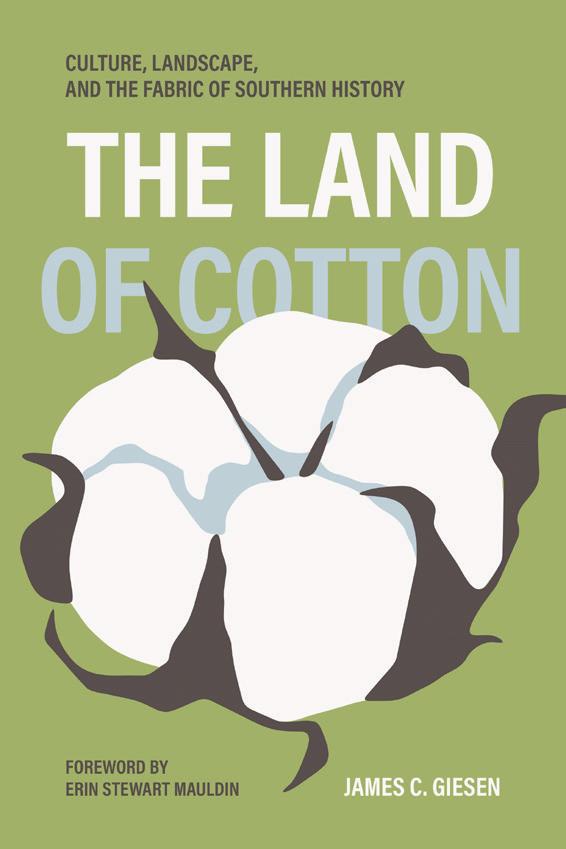
Harvesting the culture of cotton and its enduring importance to a region and its people
JAMeS C. GIeSen
FoReWoRd by eRIn STeWART MAULdIn ENVIRONMENTAL HISTORY AND THE AMERICAN SOUTH
The Land of Cotton is a sweeping environmental and cultural history of cotton’s power in the American South. More than the region’s signature crop, cotton was a material, symbolic, economic, and ideological force. James C. Giesen’s central claim is that the culture of cotton—the ways planters, laborers, boosters, tourist boards, musicians, and a host of others representing the crop— shifted not only with the political moment but in response to the physical world. Cotton lands eroding and becoming forests, labor and technological upheaval, and the rise and fall of constructed environments all changed the rhetorical possibility of the thin white fiber. Cotton festivals, country songs, and sharecroppers’ memories shaped and were shaped by the conditions of terrains. By grounding this history in two distinct Southern landscapes— the South Carolina Piedmont and the Mississippi Delta—Giesen reveals how these local conditions forged cotton’s cultural power and practical uses. Spanning 150 years, this study shows how the South’s most iconic crop remained a literal and figurative site for debates over environmental change, political ideology, and historical memory.
JAMES C. GIESEN is a historian specializing in the environmental and agricultural history of the United States South. His book Boll Weevil Blues: Cotton, Myth, and Power in the American South was awarded the Deep South Book Prize and the Francis B. Simkins Award, and his articles have won awards from the Agricultural History Society and the Southern Historical Association. Giesen has been named a Gulmon Eminent Scholar by the College of Arts and Sciences at Mississippi State University as well as a John Grisham Master Teacher, the university’s highest teaching honor. He is also a fellow and former president of the Agricultural History Society.
OCTOBER 6 X 9 | 264 PP. 17 B&W IMAGES, 1 TABLE, 4 MAPS PAPERBACK $29.95T
9780820377582 HARDBACK $129.95X 9780820377575 EBOOK AVAILABLE
A glimpse into the enduring legacy and historical importance of a once vital aspect of life in the South
“Recognizing the water powered mill’s place in history is vital to understanding how our country’s founders once tamed the backwaters to provide the most basic food needs of any community—ground grains and corn. With each mill description, Ken brings the unique story of its history and contribution to the community.”—Charles Ketchie, editor of Old Mill News, the international publication of the Society for the Preservation of Old Mills
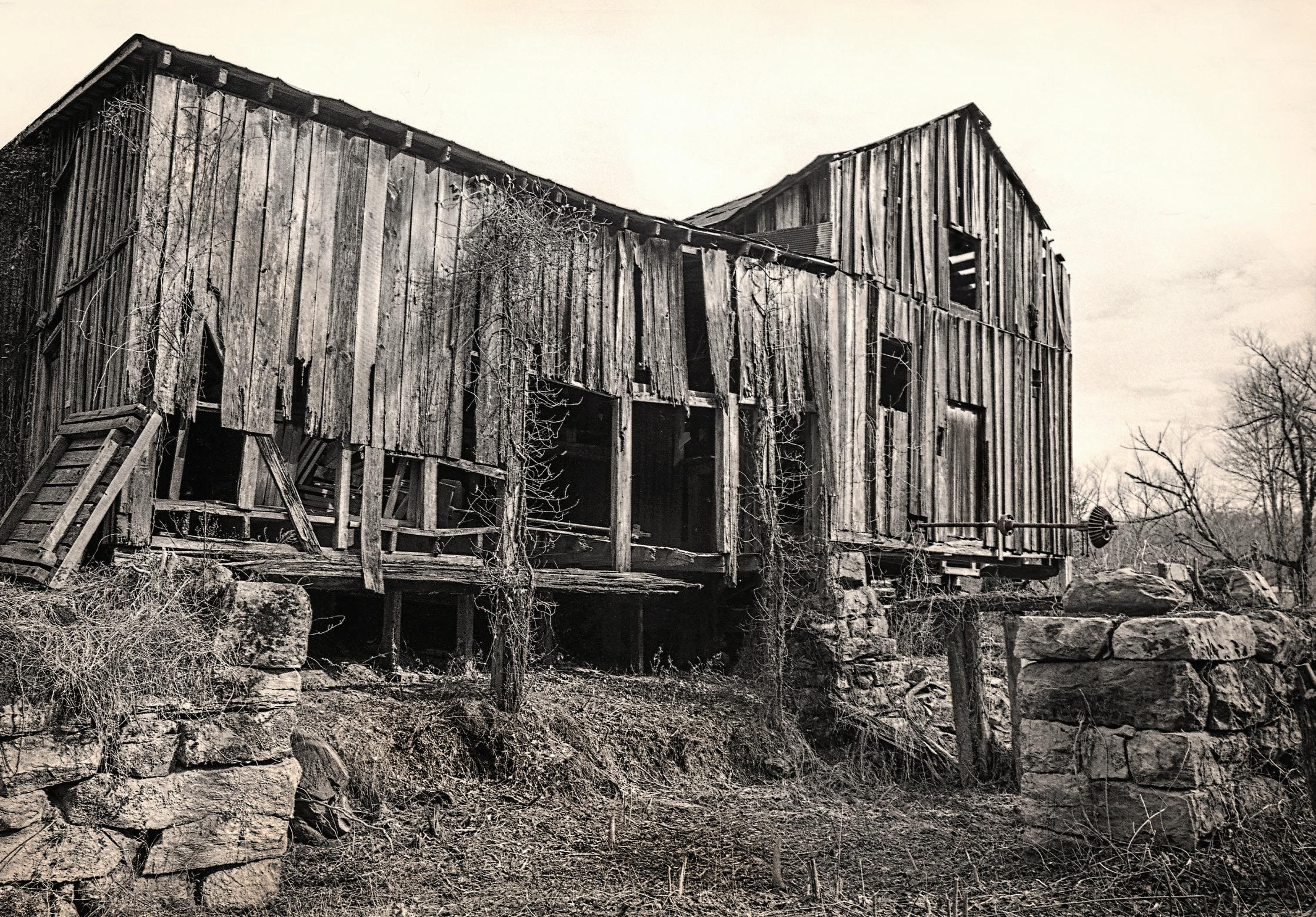

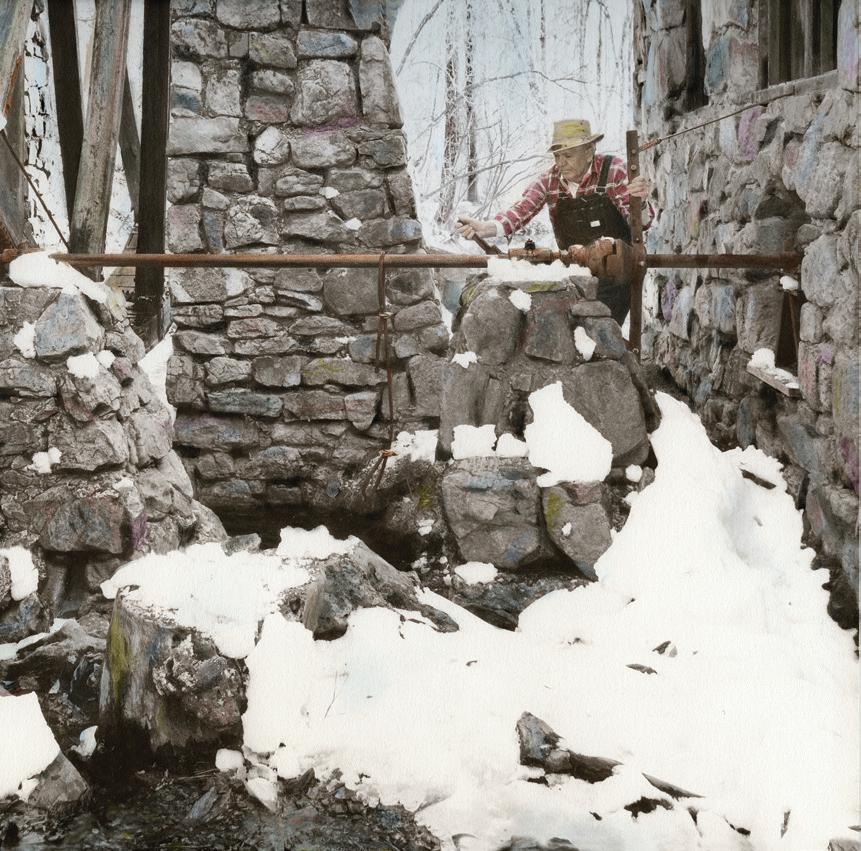
Today, few Southerners are aware of the economic, social, technological, and historical significance of the thousands of watermills that once stood along streams across the Southern landscape in the thousands. Beginning in the early twentieth century, however, the transition to newer technologies was rapid, making the visual preservation and written record of Southern watermills vital to our understanding of regional history. Driven by Ken Boyd’s remarkable photography from the past five decades, Historic Watermills of the South provides a rare glimpse into the history, evolution, and significance of Southern watermills to grind grain, saw lumber, power textile machines, and perform other useful work. Boyd uses more than two hundred fine-art color, black-and-white, and handtinted photographs to present an illustrated history of more than eighty watermills scattered across more than a dozen Southern states. These photographs vividly recount a way of life that has now passed. Indeed, a number of the images in Historic Watermills of the South photographically preserve watermills that no longer exist. And for others, these are the best existing images of mills located in remote, rural, isolated, and often mountainous, marshy, or otherwise difficult locations. Boyd’s Historic Watermills of the South is a true visual preservation of a technology that changed the face of a region.

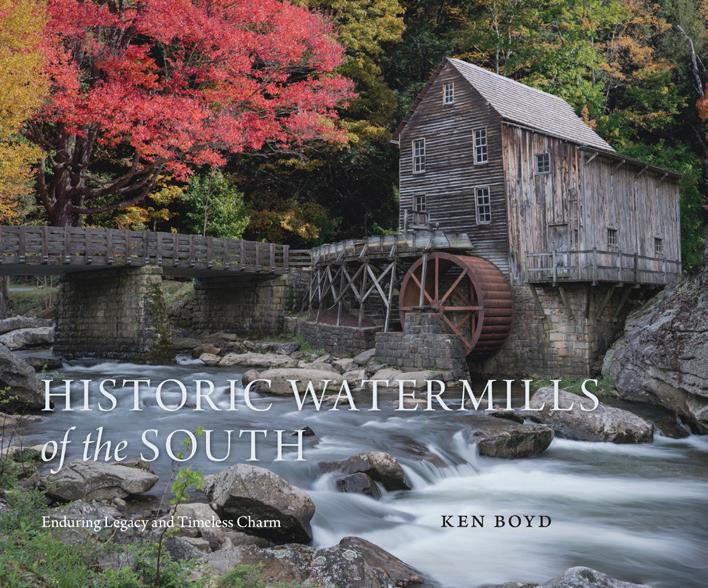
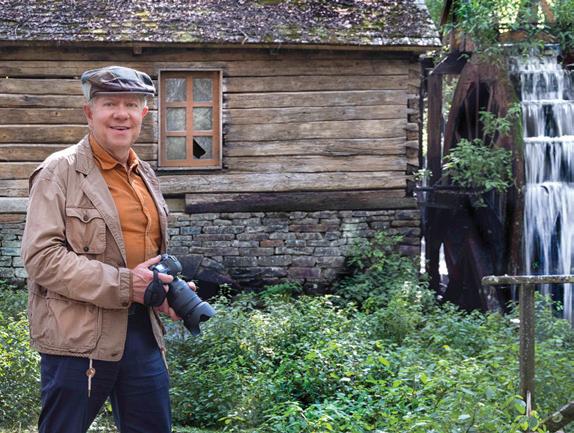
KEN BOYD is a photographer, researcher, and writer who has taught courses and published works on subjects ranging from traditional darkroom methods and vintage nineteenth-century photographic processes to creative digital techniques. He is the author of Historic Watermills of North America: A Visual Preservation, The Art of the Locomotive, and Historic North American Locomotives: An Illustrated Journey. Retired from a career in environmental research at Southern Company, Ken lives with his wife, Dori, also a photographic artist, in Hoover, Alabama.

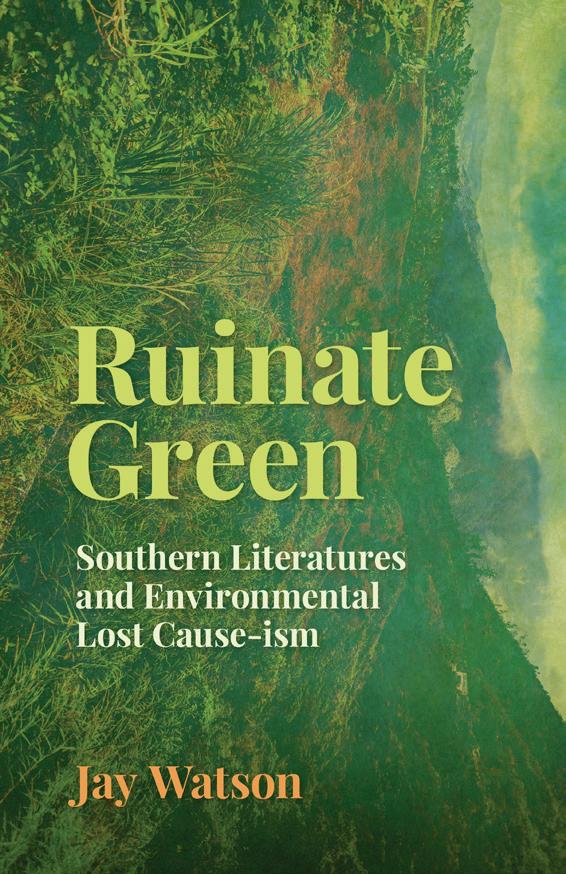
JAY WATSON is Distinguished Emeritus Professor of English and Howry Emeritus Professor of Faulkner Studies at the University of Mississippi. He is author or editor of twenty-one published or forthcoming books, including Fossil Fuel Faulkner: Energy, Modernity, and the U.S. South, which won the 2023 C. Hugh Holman Award from the Society for the Study of Southern Literature; William Faulkner and the Faces of Modernity, which won the 2020 Holman Award; and two University of Georgia Press publications, Reading for the Body: The Recalcitrant Materiality of Southern Fiction, 1893–1985, which received Honorable Mention for the 2013 Holman Award, and Forensic Fictions: The Lawyer Figure in Faulkner. He lives and writes in Mississippi and North Carolina.
What literature of the South, long attuned to the emotional and ideological dead ends of lost cause-ism, has to say to contemporary American environmentalism
Southern Literatures and Environmental Lost Cause-ism
JAy WATSon
MERCER UNIVERSITY LAMAR MEMORIAL LECTURES
The Lost Cause legend has been a stumbling block for artists and progressives in the U.S. South for more than a century and half, but lost causes of an ecological cast have also been a major problem for American environmentalists, whose nostalgia for “wild” landscapes untouched by modernity leaves many inattentive to the affordances and needs of the changing, compromised environments we currently inhabit. As such, the literature of the South, long attuned to the emotional and ideological dead ends of lost causeism, might have something to say to the melancholic accents and preservationist fixations of American environmentalism and might help point it in more just and reparative directions. Ruinate Green takes up a multicultural cast of contemporary Southern writers and filmmakers—along with one formidable twentieth-century precursor—harvesting their work for tools, techniques, and insights to counter the debilitating influence of regional and environmental lost causes. Ranging across the hunting narratives of William Faulkner and Linda Hogan; speculative fables by Cormac McCarthy, Michael Farris Smith, Omar El Akkad, Holly Goddard Jones, and Barbara Kingsolver; young adult fiction by Sherri L. Smith; the “weird” fiction of Jeff VanderMeer; the garden writings of Jamaica Kincaid; and Caribbean novels by Michelle Cliff and Monique Roffey, Ruinate Green finds in the Southern oikos a site and source of environmental critique, resilience, and futurity—a cause worth fighting for.
FEBRUARY
5.5 X 8.5 | 256 PP. 2 B&W IMAGES
PAPERBACK $29.95T
9780820377940
HARDBACK $129.95X
9780820377933
EBOOK AVAILABLE

An exploration of the enchanted interior sacred world of visions, dreams, and prophecies that enabled Southerners to challenge or simply survive slavery during the American War for Independence
Slavery and Sacred Experience in the Revolutionary South
Jon F. SenSbACH
MERCER UNIVERSITY LAMAR MEMORIAL LECTURES
Religion and slavery created a central paradox in Southern history. Whereas thousands of white Southerners used Christianity to justify slavery and racism, some dissenters criticized slavery as unholy. Enslaved Black Southerners sought spiritual freedom through beliefs and practices from many traditions. Dream, Tremble, Fly explores the enchanted interior world of visions, prophecies, and sacred memories that enabled Southerners to challenge or survive slavery during the American War for Independence. At a time when 40 percent of Southerners were enslaved, revelation and revolution were joined.
For one white Quaker in North Carolina, a startling dream forced him to alter his own enslaving ways and embrace the moral cleansing of abolition. In lowcountry Georgia, an enslaved Muslim’s body trembled with the Holy Spirit, transcending the profane captivity of the body. And in Piedmont North Carolina, another enslaved man embarked on two parallel spirit journeys—one toward Christianity, the other a metaphysical return to Africa. Each recounted his experience in a unique way, and each story represents an experiment in reconstructing from bare archival fragments the inner sacred landscape of enslaved and other ordinary people, revealing the entwining of religion with slavery and the quest for freedom.

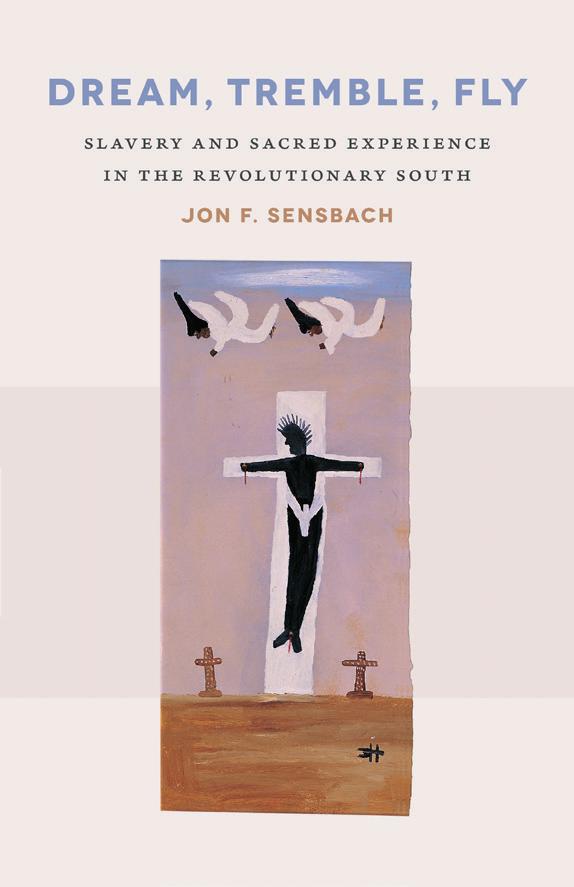
JON F. SENSBACH is a professor emeritus of history at the University of Florida and a specialist in early America and the Atlantic world. He is the author of several books, including Rebecca’s Revival: Creating Black Christianity in the Atlantic World and A Separate Canaan: The Making of an Afro-Moravian World in North Carolina, 1763–1840, and is associate editor of A New History of the American South. He lives in Gainesville, Florida.

ANN GLEIG is professor of religion and cultural studies at the University of Central Florida. Her research specialties include Buddhism in North America and American spiritualities that draw on Buddhism and Hinduism. She is the author of American Dharma: Buddhism Beyond Modernity. Gleig is also the coeditor, with Scott A. Mitchell, of The Oxford Handbook of American Buddhism and coeditor, with Lola Williamson, of Homegrown Gurus: From Hinduism in America to American Hinduism. She lives and writes in Orlando, Florida.

NOVEMBER
5.5 X 8.5 | 152 PP.
PAPERBACK $22.95T
9780820377902
HARDBACK $129.95X
9780820377896
EBOOK AVAILABLE
The importance of understanding how survivors of abuse in minority religious contexts use cult discourse constructively to name, heal from, and prevent future harm
Ann GLeIG
GEORGE H. SHRIVER LECTURE SERIES IN RELIGION IN AMERICAN HISTORY
Talking About Cults explores a series of questions: Why have scholars of minority religion rejected the term “cult” and the wider field of cultic studies? How have they responded to allegations of abuse in minority religion? Why do so many survivors of abuse find cult discourse helpful? What new directions—more attuned to survivors' experience—are emerging and should be encouraged in the study of abuse in new religious movements (NRMs)?
The academic subfield of NRMs developed in reaction to cultic studies and the two fields became polarized in the “Cult Wars,” a charged intellectual and legal battle that has raged on since the 1970s. In this context, a disciplinary consensus formed in the study of NRMs that minimized allegations of abuse within NRMs and discredited the reliability of ex-members who made them. While feminist scholars of religion attempted to draw attention to gendered forms of abuse in these groups, they were largely ignored in consensus NRM scholarship. Inspired by a feminist survivorcentered approach, Ann Gleig argues that rather than automatically rejecting cult discourse, scholars need to ask what its function and value is for survivors of abuse. Through interviews with survivors of abuse in Buddhist contexts, she discovered that they drew on cult discourse selectively and critically to identify, understand, and heal from the dynamics that had caused them harm in their former communities as well as to prevent future abuse.
The story of a business that helped transform the South in the early twentieth century and stood as a symbol of the region for six decades
Tom’s Foods and the Transformation of the Twentieth-Century South HAISTen WILLIS NEWSOUTH BOOKS
In A Legacy in Peanuts, Columbus, Georgia, native Haisten Willis tells the story of Columbus’s own Tom’s Foods, a firm that aided the South’s industrialization and played a major role in establishing the humble peanut as a cash crop. In the 1920s, founder Tom Huston revolutionized both the manufacturing and marketing of peanuts through his patented shelling machines and the creation of the company’s signature product, Tom’s Toasted Peanuts. With an assist from legendary scientist George Washington Carver, Huston turned Tom’s into a multimillion-dollar business in just a few years—before losing it all on another big business bet. Future Columbus mayor Walter Richards then took over, stabilizing Tom’s and expanding its lineup to include crackers and candy during his three decades at the helm.
The stuff of childhood memories, lazy afternoons, and countless workplace break rooms, the story of Tom’s Foods reveals fundamental truths about business, farming, factory labor, race relations, innovation, and class in the twentieth-century South. By following the four largest players in the company’s history— Huston, Richards, longtime president J. W. “Bill” Feighner, and midwestern billionaire Michael Heisley, who purchased Tom’s as a distressed asset in 1993 and proved to be its final owner before a 2005 bankruptcy—Willis illuminates a complex story of the modernizing South.
HAISTEN WILLIS was born in Columbus, Georgia, and grew up hearing a lot about Tom’s Foods— no less than eleven of his relatives worked there at one time or another. Later, he spent summers riding in a Tom’s delivery truck and learning the business from his dad. Willis is a journalist who has written for The Atlanta Journal-Constitution, The Washington Post, and the Washington Examiner. He is the editor of Commonplace magazine and works in Washington, D.C.


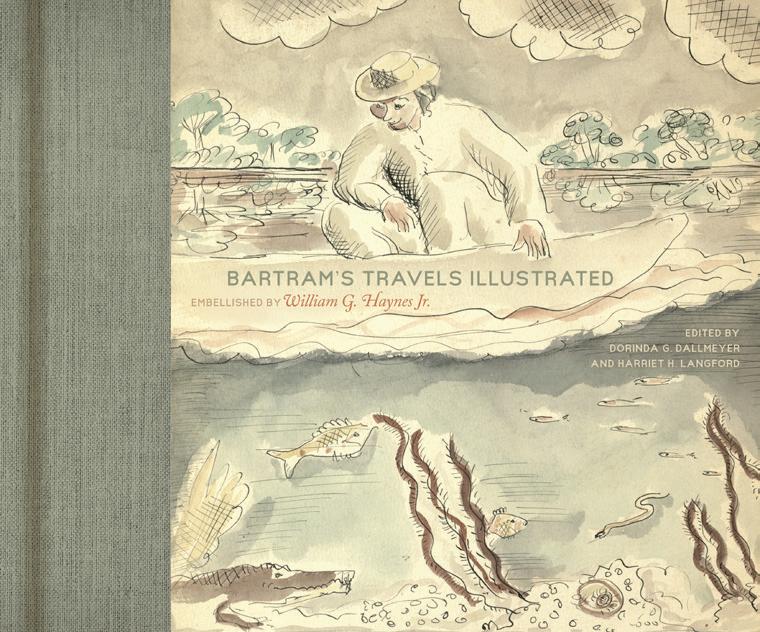
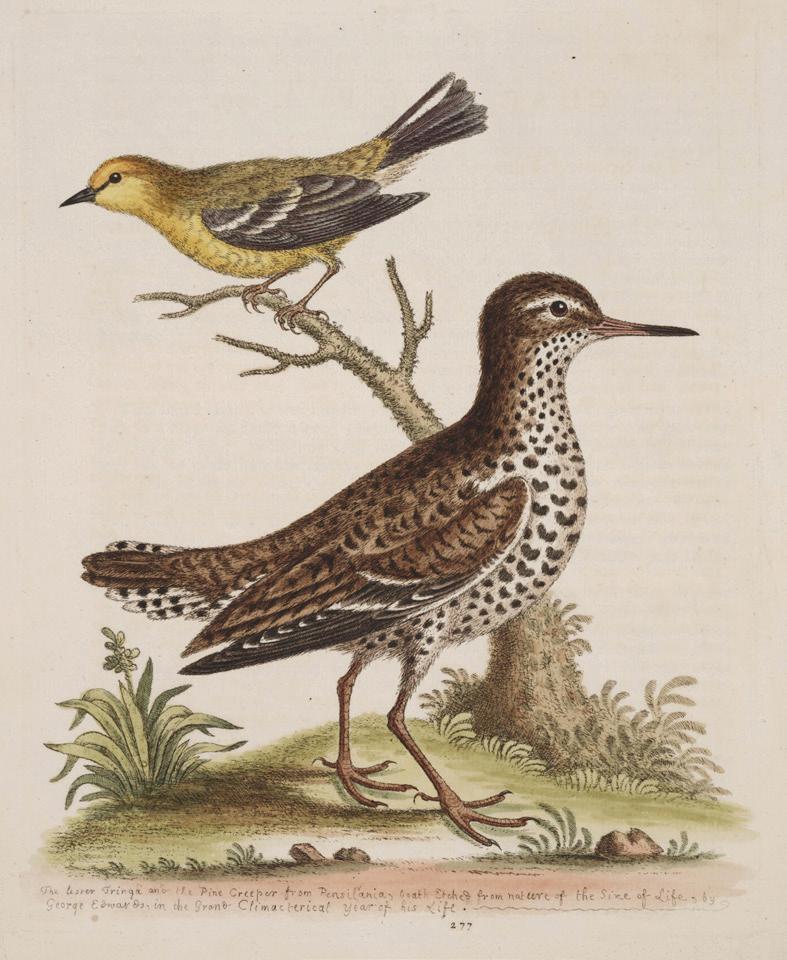
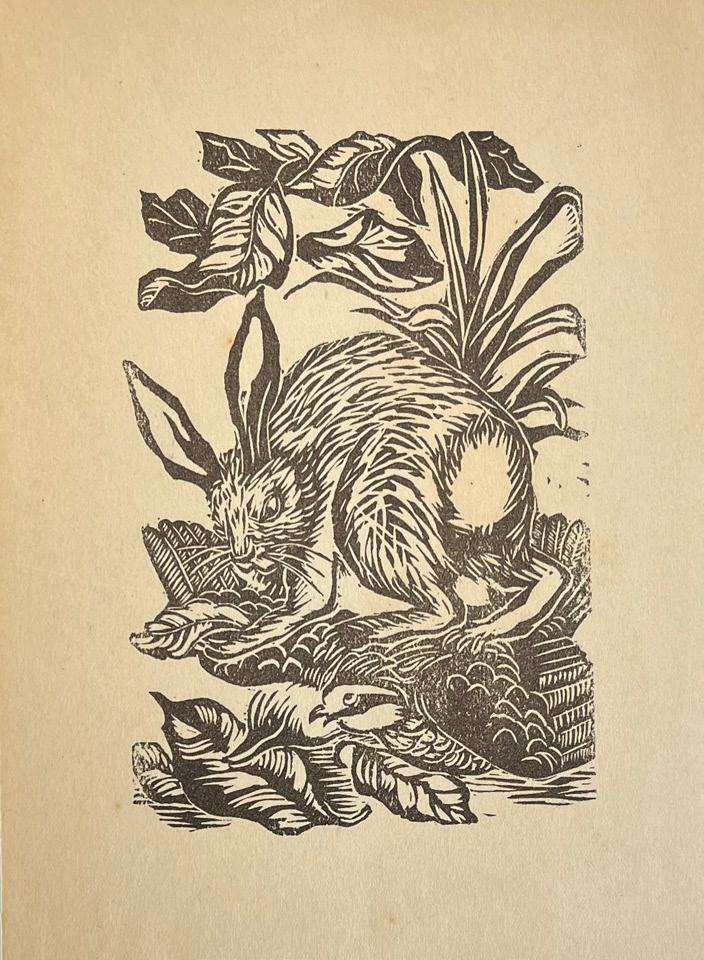
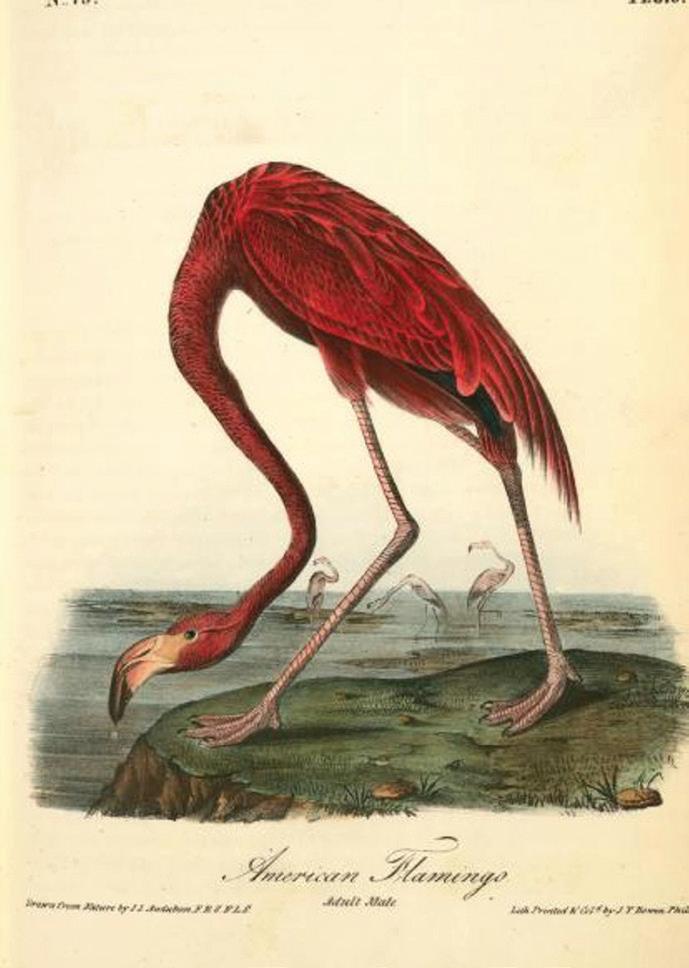
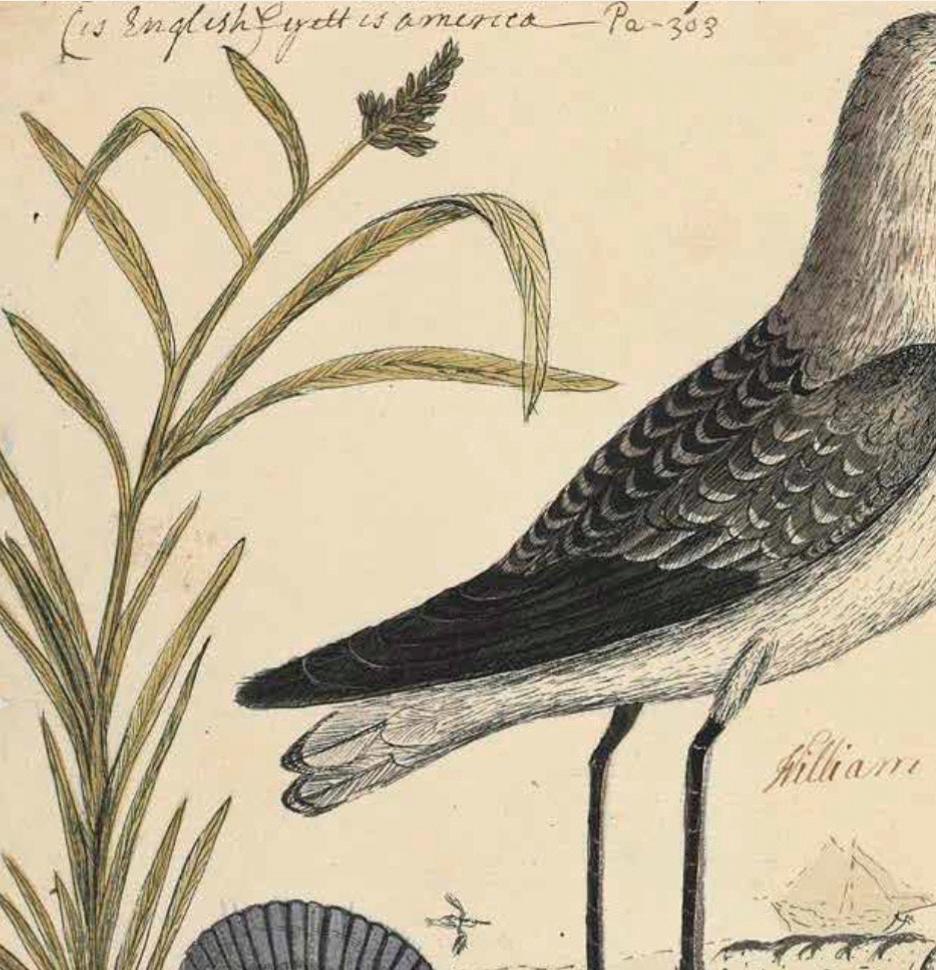
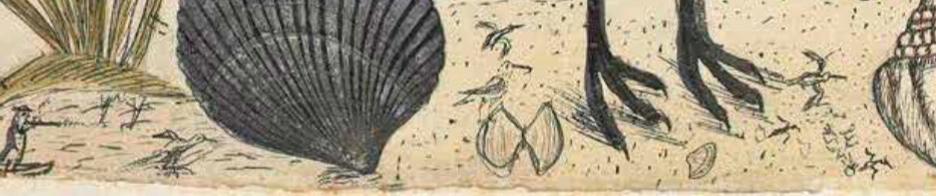
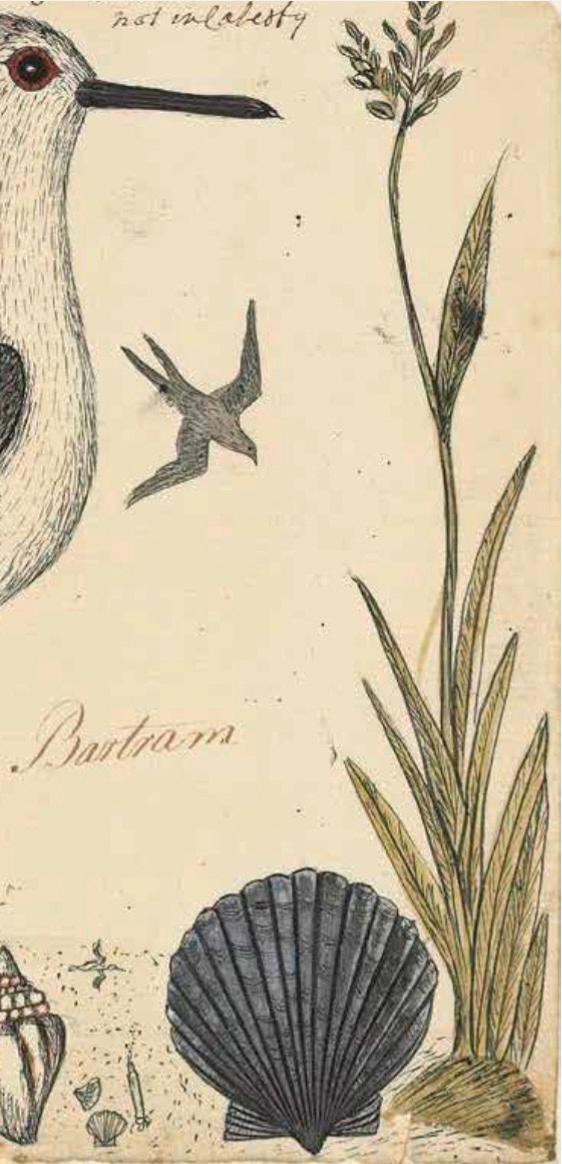
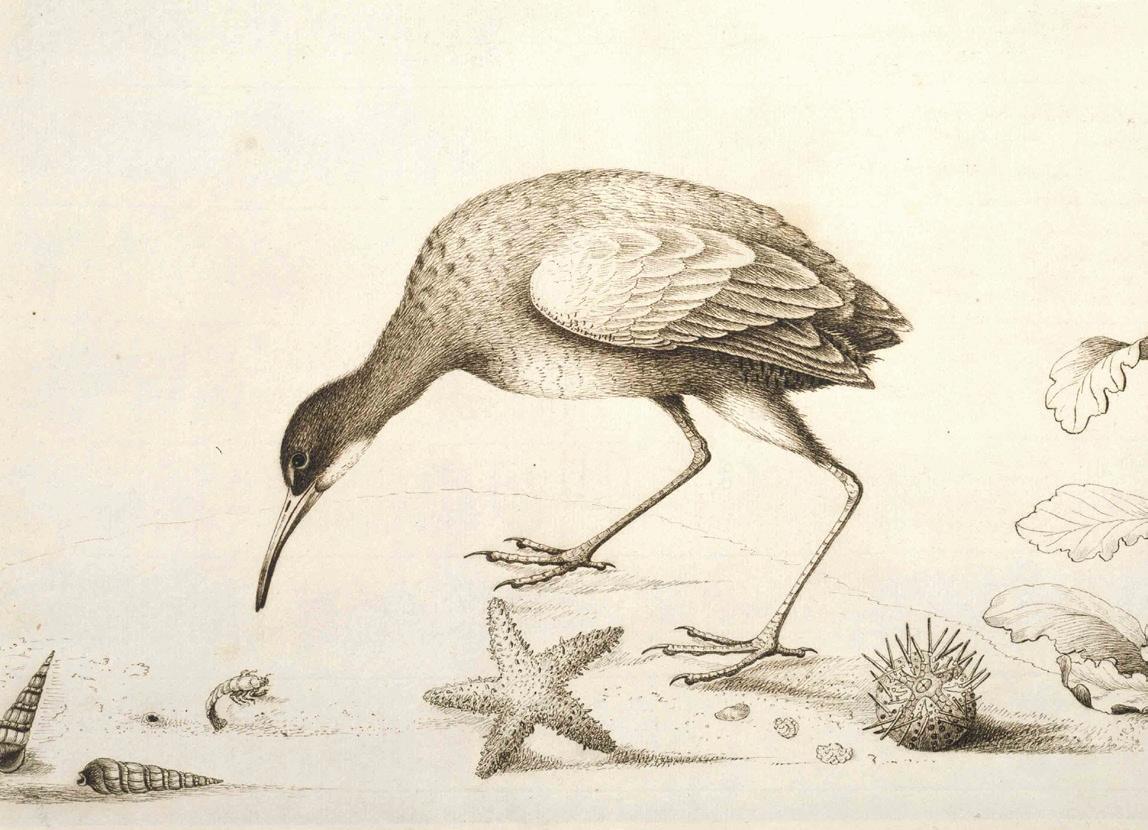
A newly discovered illustrated version of the famous book by William Bartram, American naturalist, writer, and explorer
Bartram’s Travels Illustrated
Embellished by William G. Haynes Jr.
edITed by doRIndA G. dALLMeyeR And HARRIeT H. LAnGFoRd
“For generations, lovers of Southern landscapes have seen the region through the eyes of the great naturalist William Bartram, but the true gift of Bartram’s Travels Illustrated is the painterly vision of Bill Haynes—artist, letterpress printer, historical preservationist, and pioneering Georgia environmentalist. This journey with the two Williams is a treasure.”—Paul S. Sutter, author of Let Us Now Praise Famous Gullies
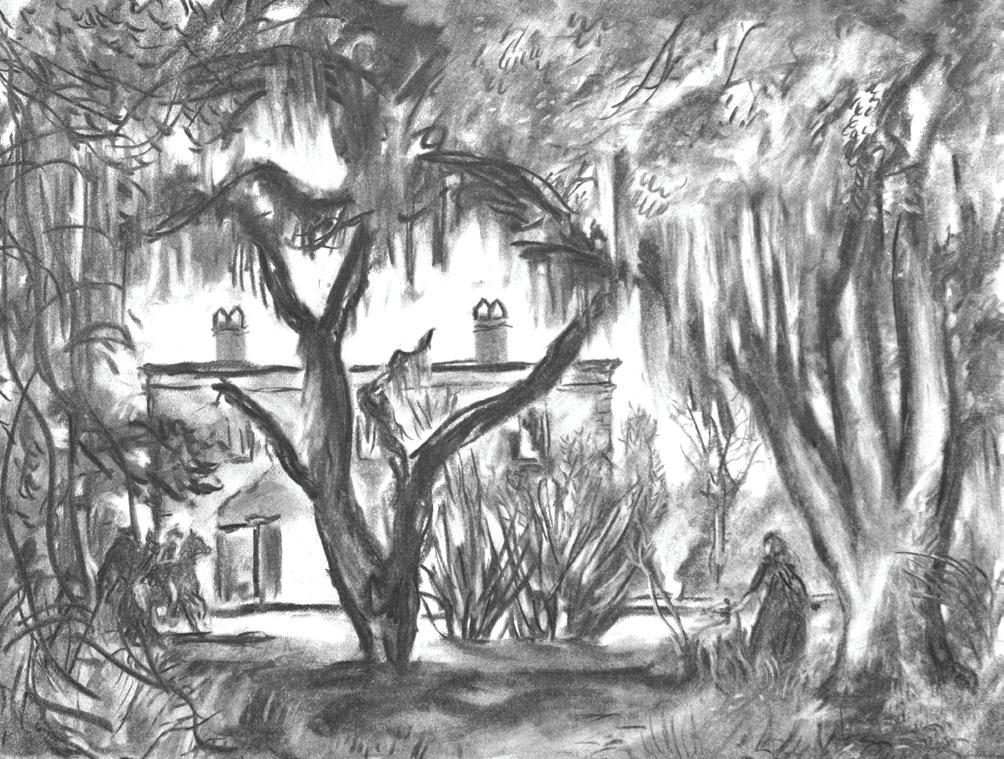
In 1934, when William G. Haynes Jr. was an art student in New York City, he illustrated his own version of the 1791 classic Bartram’s Travels. William Bartram’s poetic descriptions transcended science to deeply influence an array of nineteenth-century Romantic poets in America and abroad. Similarly, Haynes’s watercolors were inspired by vivid descriptions from Bartram’s Southern expedition spanning 1773–1777.
These ninety-five watercolors accompanied by Bartram’s text tell Haynes’s version of the Bartram story, drawn from twentieth-century landscapes Haynes knew intimately from childhood: coastal Georgia, western North Carolina, and northern Florida. Although Bartram never drew a self-portrait, Haynes features Bartram on nearly every page: botanizing, engaging with Native Americans and settlers alike, and sometimes battling alligators and the elements.
Following service in World War II and postwar study of typography, Haynes returned home to Darien, Georgia, in 1955 to start the Ashantilly Press. It became a place not only to create beautiful books and broadsides but also to teach this craft and inspire the next generation of artists and environmentalists. This book is especially timely as America marks the 250th anniversary of Bartram’s travels across the South—a man whose impact is still felt in American science, arts, and letters.
SEPTEMBER
11 X 9 | 164 PP.
DORINDA G. DALLMEYER is an award-winning author, photographer, radio producer, and fi lmmaker with a focus on Southern environmental history. She was formerly director of UGA’s Environmental Ethics Certificate Program and associate director of the Dean Rusk International Law Center. She is the editor of several books, including Altamaha: A River and Its Keeper (Georgia), Bartram’s Living Legacy: The Travels and the Nature of the South , and Values at Sea: Ethics for the Marine Environment (Georgia). A devoted naturalist, Dallmeyer and her husband, David, live on fi fty-four acres in rural Madison County, Georgia.
HARRIET H. LANGFORD graduated from Furman University in 1968 with a BA in English and Education. She began her teaching career at East Rome High School in Rome, Georgia, and in 1970 moved to teach at Glynn County and Brantley County schools. She retired as a professional school counselor at Glynn Middle School in Brunswick in 2003 and afterward worked seven years as a part-time student support specialist with the innovative Georgia Virtual School sponsored by the Georgia State Department of Education. In 2005, the Board of Directors of Ashantilly Center, Inc., invited Harriet to join their volunteer twelve-member board. She has since enjoyed serving on the board as secretary and is currently president. She lives in Darien in McIntosh County close to the tidal Black Island Creek, which flows past Ashantilly Center and the Ashantilly Press.
ROBERT COHEN is a historian of social protest, African American history, and student politics who has written extensively on 1960s America. His most recent book, Confronting Jim Crow: Race, Memory, and the University of Georgia in the Twentieth Century, won the Lillian Smith Book Award. His other works on racism and antiracist protest in the South include Howard Zinn’s Southern Diary: Civil Rights, Sit-ins, and Black Women’s Student Activism and Rebellion in Black and White: Southern Student Activism in the 1960s, coedited by David J. Snyder. He lives and writes in New York.
6 X 9 | 216 PP.
An introduction to the historical King whose enduring social criticism went far beyond racial injustice
Martin Luther King Jr.’s Critique of America
RobeRT CoHen
THE MOREHOUSE COLLEGE KING COLLECTION SERIES ON CIVIL AND HUMAN RIGHTS
“ Not Dreaming combines excellent analysis and engaging and accessible writing with a deep grasp of both Dr. King’s writing and biography and the massive existing scholarship on Dr. King. Inspired by persistent and pervasive misuse of Dr. King’s words and stature, especially excerpts from King’s ‘I Have a Dream’ speech delivered at the March on Washington, Cohen sets out to make King’s radicalism, the ideas that made him an ‘inconvenient hero,’ accessible to all—not just specialists.”—Emilye Crosby, author of A Little Taste of Freedom and editor of Civil Rights History from the Ground Up
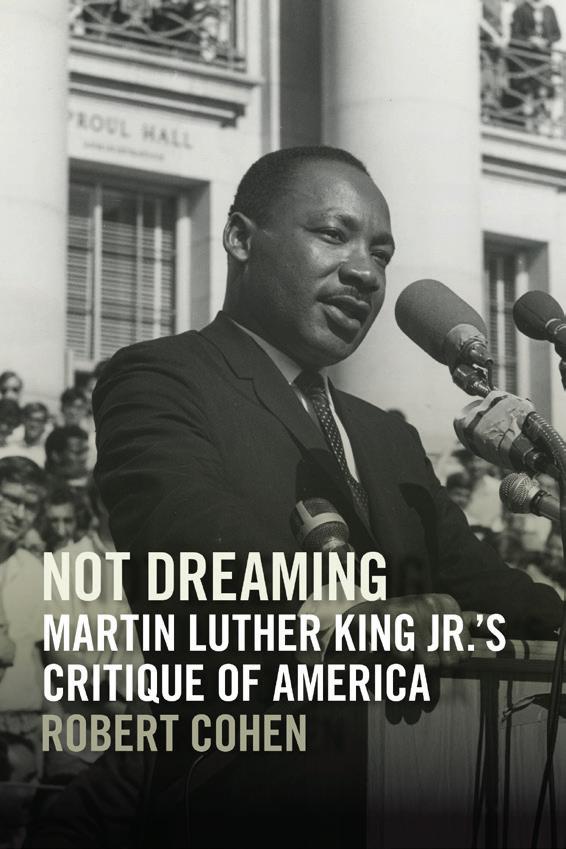
Not Dreaming: Martin Luther King Jr’s Critique of America seeks to deepen the American public’s understanding of its most famous African American protest leader. While Americans venerate MLK as a great orator who dreamed of a world free of racism, most are unfamiliar with King’s penetrating and radical social criticism. Not Dreaming reveals that MLK spoke and wrote extensively about what he termed the “triple evils” afflicting the United States: racism, militarism, and the extreme materialism that yielded vast economic inequality. These flaws that plagued America in MLK’s lifetime persist in twenty-first-century America, giving a striking contemporary relevance to King’s social criticism. His democratic vision of an America that embraced nonviolence, valued people over profits, abolished poverty, rejected war, and broke with its white supremacist past is one our nation badly needs to reconsider. Not Dreaming offers us MLK not merely as a historical figure but as a critic whose ideas can help twenty-first-century America become a more just, humane, and democratic society.
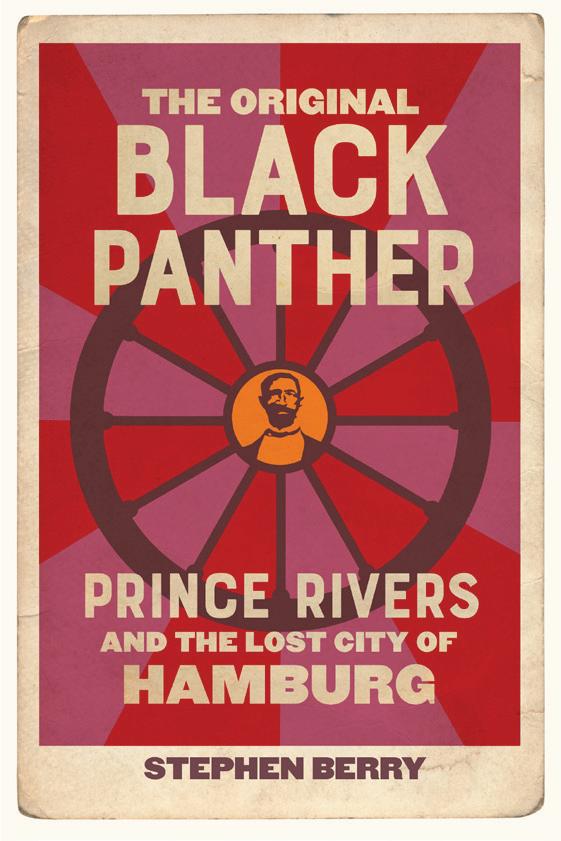
The long-forgotten story of the man who was a living legend
Prince Rivers and the Lost City of Hamburg STePHen beRRy
“A captivating story of a long-forgotten, remarkable man whose deeply consequential life rises out of obscurity in this lyrical, beautifully written biography. Visually rich and emotionally moving, Stephen Berry offers us new insight into the contradictions inherent in what liberty meant and for whom during and, more importantly, after the Civil War.”—Kate Clifford Larson, New York Times best-selling author of Bound for the Promised Land: Harriet Tubman, Portrait of an American Hero
Prince Rivers is one of the most consequential Americans about whom Americans know nothing. Born enslaved near Beaufort, South Carolina, Rivers’s flight to freedom on horseback in November 1861 became legendary during his lifetime. One of the first Black men in Union uniform and one of the longest-serving men in the Union army, Rivers was integral to the formation of the United States Colored Troops. He astounded his own officers with his speed, strength, stamina, and impeccable manners. “If there should ever be a black monarchy in South Carolina,” noted his colonel, “[Rivers] will be its king.” True to this prediction, Rivers went on to serve as a South Carolina state legislator and as one of the first Black mayors in the United States. From his seat in Hamburg, South Carolina, Rivers became known as “The Black Prince” and “The Power of Aiken County” as he presided over one of the most successful experiments in interracial democracy this country has ever known. In this first full-length biography, Rivers takes his rightful place with Frederick Douglass, Sojourner Truth, and Harriet Tubman as one of the most remarkable Black freedom fighters of his age.

STEPHEN BERRY is professor of history at the University of Georgia. His books include Weirding the War: Stories from the Civil War’s Ragged Edges (Georgia); House of Abraham: Lincoln and the Todds, a Family Divided by War; All That Makes a Man: Love and Ambition in the Civil War South; and Princes of Cotton: Four Diaries of Young Men in the South, 1848–1860 (Georgia). He lives and writes in Athens, Georgia.

VELMA MAIA THOMAS is a public historian and a sought-after public speaker who has authored several books. She has served as a subject expert for documentaries streamed on Netflix and PBS and has been featured on NPR’s All Things Considered. She is the creator of the nationally acclaimed Black Holocaust Exhibit, a collection of original documents on slavery and resistance in America, housed in the Shrines of the Black Madonna Cultural Center and Bookstore in Atlanta, Georgia. Velma has interviewed a host of nationally known civil rights activists, taught African American history as an adjunct professor, and researched and crafted text for historical markers. She lives and writes in Atlanta.
A
multifaceted look at slavery, freedom, history, and their connections to modern Black lives
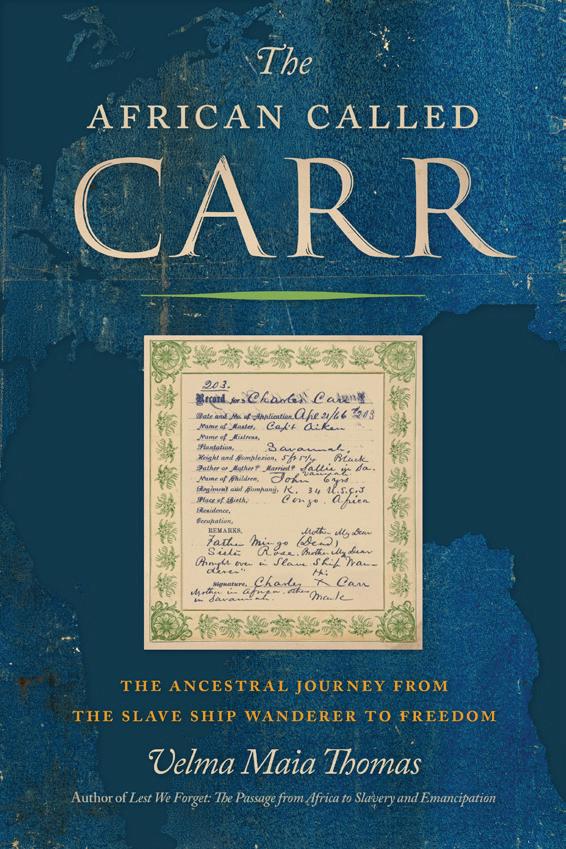
The Ancestral Journey from the Slave Ship Wanderer to Freedom VeLMA MAIA THoMAS
NEWSOUTH BOOKS
In April 1866, Charles Carr entered the Freedman’s Savings and Trust in Savannah, Georgia, to open an account. With the help of an agent, he completed the commonly asked questions on the application. His answers were most intriguing and, in at least one regard, perhaps like none other. According to Carr, he was born in the Congo and, like his father and sister, arrived in the United States aboard the slave ship Wanderer—a vessel that illegally transported more than four hundred Africans to America in 1858, in full defiance of federal laws.
The African Called Carr tells Charles Carr’s story—a sojourn filled with passion, disappointments, setbacks, and determination. Through documents held in the National Archives, Thomas discovers Carr and his community and reveals his account of the Middle Passage, the wisdom and courage of women in his free community, and the pride in the voices of hardworking Black men free from the yoke of bondage. Thomas traces Carr and his descendants as they walk a lonesome path, butting against a system that refuses to yield. In many ways, Carr’s story is the story of being Black in America and serves as a reminder to today’s African American community of the victories of the past and battles yet to be won.
NOVEMBER
6 X 9 | 216 PP.
12 B&W IMAGES PAPERBACK $29.95T 9781588385833 EBOOK AVAILABLE
The
story of a group of interracial abolitionists who defied federal law and helped freedom seekers move through Philadelphia
The Secret Society That Moved Freedom Seekers Through Philadelphia CARRIe HAGen
“A brilliant, chilling page-turner. With style and empathy, Carrie Hagen’s The Vigilance Network brings to life the world of freedom seekers, abolitionists, informants, and everyday Philadelphians in the years leading up to the Civil War. At a time when citizens’ groups for civil rights and mutual aid are once again on the rise, this book is an essential and beautifully told history of movements and conflicts that directly foreground our own time.”—Stephanie Gorton, author of The Icon and the Idealist and Citizen Reporters
The Vigilance Network illuminates the actions of a group of unsung American heroes—the Black and white abolitionists who, driven fiercely by their beliefs and dogged by personal demons, fought threats, prison, and social ostracism to guide freedom seekers in the decades before the Civil War. While much of Carrie Hagen’s narrative focuses on the offices of the Pennsylvania AntiSlavery Society in Philadelphia, located just a block away from Independence Hall, she also follows escapees on the Underground Railroad from Maryland to Ontario. Indeed, characters drive the largely unknown narratives that sit at the center of The Vigilance Network: Robert Purvis, William Still, Lucretia Mott, Hetty Reckless, William Parker, Jane Johnson, and even a brief appearance from Harriet Tubman. By following both abolitionists and escapees— who were sometimes one and the same—through the streets of Philadelphia and its suburbs, Hagen reconstructs the Vigilance Network’s largely unknown role in the Underground Railroad.
A fast-paced and deeply researched work of narrative nonfiction, The Vigilance Network also connects the causes of today’s systemic social injustice to this deep history and reveals what can happen when people refuse to let fear or self-consciousness keep them from assisting the vulnerable.
CARRIE HAGEN is an awardwinning nonfiction writer who teaches writing at Chestnut Hill College in Philadelphia. A longtime contributor to Smithsonianmag .com, she is also a narrative writer of civil rights history for the Thurgood Marshall Institute and the NAACP Legal Defense Fund. She currently resides in Philadelphia.

ELIZABETH ANNE PAYNE (1943–2025) was a professor of history at the University of Mississippi who also taught at the University of Arkansas. Payne’s publications include Reform, Labor, and Feminism: Margaret Dreier Robbins and the Women’s Trade Union League and Mississippi Women: Their Histories, Their Lives, volumes 1 and 2 (Georgia).
JANET ALLURED, retired professor of history and women’s studies at McNeese State University, is an adjunct faculty member at the University of Arkansas. She has numerous publications on Southern women as changemakers, including Louisiana Women: Their Lives and Times, volume 1 (Georgia); Remapping Second-Wave Feminism: The Long Women’s Rights Movement in Louisiana, 1950–1997 (Georgia); and, most recently the coedited volume, Southern Methodist Women and Social Justice: Interracial Activism in the Long Twentieth Century. She currently resides in Arkansas.
An illustrated history of the Southern Tenant Farmers’ Union and one of its organizers, Myrtle Lawrence
The Story of Myrtle Lawrence, Sharecropper and Social Activist, Photographed by Louise Boyle
In 1937, at the invitation of Myrtle Lawrence—a white sharecropper and organizer for the biracial Southern Tenant Farmers’ Union (STFU)—two Vassar graduates visited St. Francis County, Arkansas, to document the lives of sharecroppers and tenant farmers. Louise Boyle, photographer, and Priscilla Robertson, scribe, lived with the Lawrences for ten days and photographed the Lawrence family in their sharecropper shack, at STFU meetings, and in their jobs as cotton pickers. The pair took side trips to document two cooperative farming communities in the Mississippi delta: Dyess and the Delta Cooperative Farm.
Unlike the famous photographers who emerged from the New Deal’s Farm Security Administration, Louise Boyle was not a government employee. Far from serving as propaganda for the New Deal, Boyle’s images demonstrate a social conscience aimed at raising public awareness of the catastrophic effects of New Deal farm programs on Black and white sharecroppers and tenant farmers. In the eighty images reproduced here, Boyle represented Arkansas sharecroppers as dynamic, multifaceted, eager for upward mobility, and curious about the outside world. Boyle and Robertson created a body of work based on a woman-centered feminist ethic that forms the core of this book. Authors Elizabeth Payne and Janet Allured use STFU records, letters of and interviews with the three women, correspondence and interviews with STFU organizers, and newspaper accounts to provide the context and interpretation for Myrtle Lawrence’s stint as an agricultural labor organizer and Boyle’s remarkable photography.
8
A sweeping history of Haiti’s first century that examines its complex internal political dynamics and its tangled relations with the United States
Haiti and the United States in the Nineteenth Century
MICHAeL deIbeRT
Michael Deibert’s With the Pen in One Hand and the Sword in the Other is a sweeping history of Haiti’s first century, examining its complex internal political dynamics, the vital role the nation played in liberation movements throughout the Americas, and its tangled relations with the United States. Weaving the diverse stories of the region into a vibrant tapestry of shared struggle under the shadow of both colonial European powers and an ever-more-assertive United States, Deibert uses decades of experience in the region to bring such historical figures as Frederick Douglass, Simón Bolívar, Anténor Firmin, and Ramón Emeterio Betances to life in new and vivid ways. In doing so, he also examines the shared histories of Haiti and the United States, the hemisphere’s two oldest independent republics, and the values each espoused and claimed to live by, sometimes coalescing and sometimes clashing. A mustread for anyone interested in Latin American and Caribbean history as well as the history of the antebellum and postbellum United States, With the Pen in One Hand and the Sword in the Other restores Haiti to its rightful place as a nation at the forefront of the struggle for human freedom during the era and presents, in dramatic and compelling form, the glories and costs that came from being at the forefront of that battle.
of the author
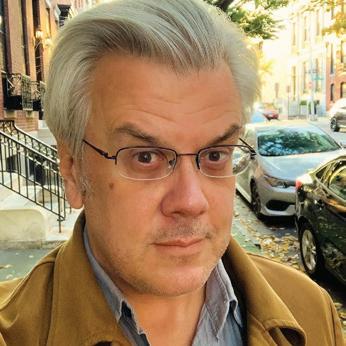
MICHAEL DEIBERT first visited Haiti in 1997 and has been working as a journalist, author, and analyst there for three decades. His writing has appeared in The Guardian, Financial Times, Bloomberg, The Washington Post, The Wall Street Journal, Miami Herald, Foreign Policy, Le Monde diplomatique, and Folha de São Paulo, among other media, and he has been a featured commentator on international affairs for the BBC, Al Jazeera, Channel 4, France 24, and National Public Radio as well as in the pages of The New York Times, The Economist, El País, Der Spiegel, and other publications. He received a fellowship from the International Peace Research Association and was selected as a finalist for the Kurt Schork Award in International Journalism, sponsored by the Institute for War and Peace Reporting, in recognition of his work in the Democratic Republic of Congo.
DECEMBER 6 X 9 | 248 PP. PAPERBACK $29.95T 9780820381008 HARDBACK $129.95X 9780820380995 EBOOK AVAILABLE

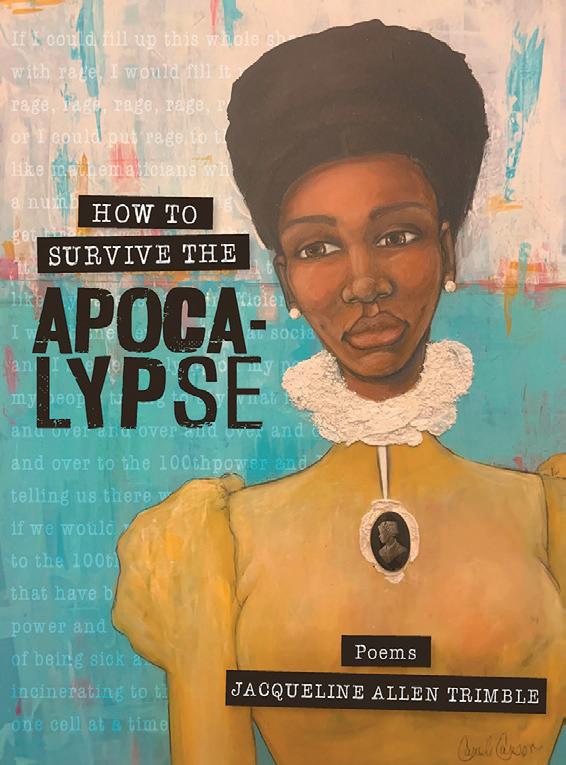
JACQUELINE ALLEN TRIMBLE lives and writes in Montgomery, Alabama, where she is a professor of English and the chairperson of Languages and Literatures at Alabama State University. Serving as the poet laureate for the state of Alabama from 2026 to 2030, she is also a National Endowment for the Arts Creative Writing Fellow, a Cave Canem Fellow, and a two-time Alabama State Council on the Arts Fellow. American Happiness, her first poetry collection, won the Balcones Poetry Prize, and How to Survive the Apocalypse was named one of the ten best poetry books of 2022 by the New York Public Library. Her work has appeared in various publications, including The Griot, The O ng, and The Blue Lake Review
An exploration in poems of the many apocalypses that African Americans have weathered
“In How to Survive the Apocalypse, Jacqueline Trimble has crafted a powerful, clear-eyed guidebook for navigating the world. By turns witty and wry, these sharply observed poems ask us to consider the thin veil between memory and truth. ‘Do you see how we survived?’ asks Trimble in ‘The Fire Shut Up in My Bones.’ These remarkable poems tell us and teach us. An extraordinary book.”—Catherine Pierce, poet laureate of Mississippi, 2021–25, and author of Danger Days
How to Survive the Apocalypse, the second collection from poet Jacqueline Allen Trimble, examines the many apocalypses that African Americans have weathered, advising that those who wish to avoid annihilation should “live by rage and joy and turpentine.” Trimble reimagines the sonnet and the parable, producing poems of ironic indictment and joyous celebration. The book explores aspects of the Black experience in America, from Black woman pride, Nat Turner, kneeling, and the burning down of fast-food restaurants. Sometimes funny, sometimes biting, How to Survive the Apocalypse connects history to the contemporary and proves that the only balm for rage is creativity.
SEPTEMBER
5.830 X 8.270 | 96 PP. PAPERBACK $19.95T 9781588385970 EBOOK AVAILABLE
An answer to the burning question: What do movies know about the South that we don’t?
A Film Buff ’s Journey Through the South on Screen ben beARd
“Ben Beard veers like a man possessed through the fever swamps of Hollywood’s obsession with the South. The result is a clever and deftly written work—equal parts broadside and paean and wholly insightful. Movie aficionados will love this book even as they argue over some of Beard’s strong opinions. Casual moviegoers may very well become film buffs after reading it.”—Ken Wells, author of Meely LaBauve and The Good Pirates of the Forgotten Bayous
“Breezy, jazzy, self-confident, and deeply Southern-fried, The South Never Plays Itself reads like a novel, zipping through the history of films in and about the South with flair and panache and encyclopedic authority. This is a passionate, literate, page-turning deep dive through the films of Southern history; the good, the bad, and the very ugly, with impressive detail throughout. Beard tells it all, without pulling any punches.”
—Wheeler Winston Dixon, author of Synthetic Cinema
Since The Birth of a Nation became the first Hollywood blockbuster in 1915, movies have struggled to reckon with the American South—as both a place and an idea, a reality and a romance, a lived experience and a bitter legacy. Nearly every major American filmmaker, actor, and screenwriter has worked on a film about the South, from Gone with the Wind to 12 Years a Slave, from Deliverance to Forrest Gump. In The South Never Plays Itself, author and film critic Ben Beard explores the history of the Deep South on screen, beginning with silent cinema and ending in the streaming era, from President Wilson to President Trump, from musical to comedy to horror to crime to melodrama. Beard’s idiosyncratic narrative— part cultural history, part film criticism, part memoir—journeys through genres and eras, issues and regions, smash blockbusters and microbudget indies to explore America’s past and troubled present, seen through Hollywood’s distorting lens. Opinionated, obsessive, sweeping, often combative, sometimes funny—a wild narrative tumble into culture both high and low—Beard attempts to answer the haunting question: What do movies know about the South that we don’t?

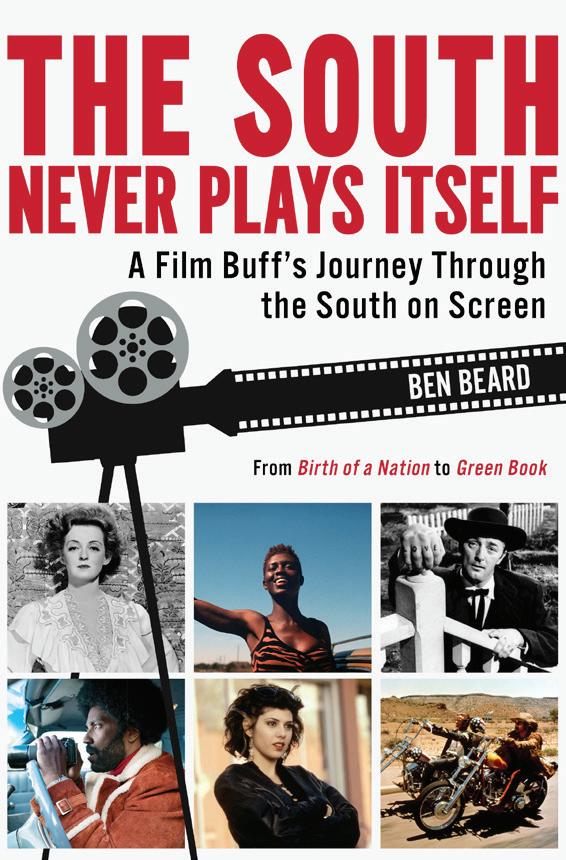
BEN BEARD is a writer and librarian. He is the coauthor of This Day in Civil Rights History and the author of Muhammad Ali: The Greatest and King Midas in Reverse. In the 2000s, Beard reviewed movies and wrote features for InSite Magazine, King Kudzu, and Filmmonthly.com, where he also worked as an editor. Beard, a native of Georgia who spent his formative years in the Florida Panhandle and Alabama, currently lives in Chicago with his wife and three children.

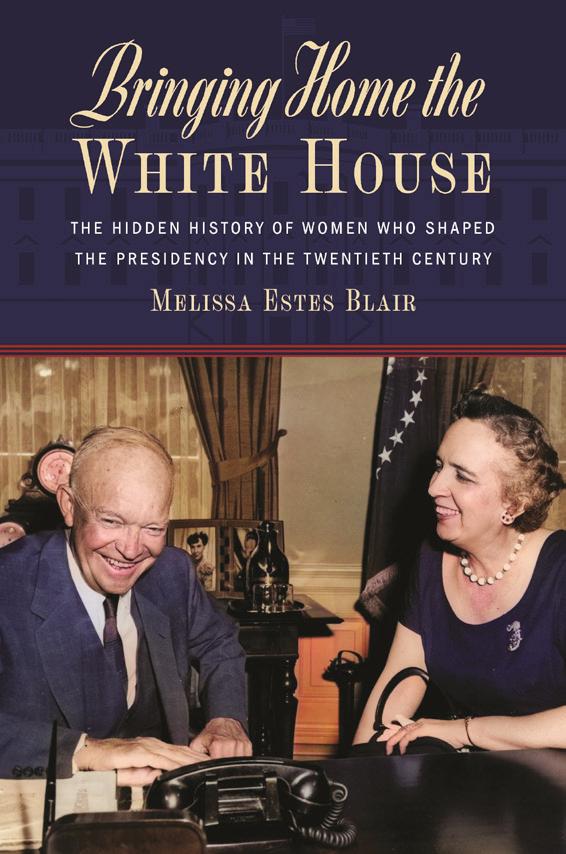
MELISSA ESTES BLAIR is associate professor of history at Auburn University. She is the author of Revolutionizing Expectations: Women’s Organizations, Feminism, and American Politics, 1965–1980 (Georgia). She lives in Auburn, Alabama.
SEPTEMBER
6 X 9 | 224 PP.
11 B&W IMAGES
PAPERBACK $29.95T
9780820365114
EBOOK AVAILABLE
Casting a light on women at the forefront of historic presidential campaigns
The Hidden History of Women Who Shaped the Presidency in the Twentieth Century
“Interesting and crisply written, Bringing Home the White House not only uncovers the significant role of women in mid-twentieth century party politics but also reveals the ways in which women leaders grappled with questions of how to advance women’s equality while acknowledging women’s differences from men.”—
Tamar W. Carroll, American Historical Review
“Bringing Home the White House is a revelation. The story of midcentury party politics usually focuses on powerful men in smoke-filled rooms. But in this vital book, Melissa Estes Blair has recovered the remarkable stories of the powerful women who, at a time when the ideal woman stayed at home, transformed the parties and the presidency.”—Nicole Hemmer, director of the Carolyn T. and Robert M. Rogers Center for the Study of the Presidency, Vanderbilt University
In Bringing Home the White House, Melissa Estes Blair introduces us to five fascinating yet largely unheralded women who were at the heart of campaigns to elect and reelect some of our most beloved presidents. By examining the roles of these political strategists in affecting the outcome of presidential elections, Blair sheds light on their historical importance and the relevance of their individual influence.
In the middle decades of the twentieth century both major political parties had women’s divisions. The leaders of these divisions—five women who held the job from 1932 until 1958—organized tens of thousands of women all over the country, turning them into the “saleswomen for the party” by providing them with talking points, fliers, and other material they needed to strike up political conversations with their friends and neighbors. The leaders of the women’s divisions also produced a huge portion of the media used by the campaigns—over 90 percent of all print material in the 1930s—and were close advisors of the presidents of both parties.
In spite of their importance, these women and their work have been left out of the narratives of midcentury America. In telling the story of these five West Wing women, Blair reveals the ways that women were central to American politics from the depths of the Great Depression to the height of the Cold War.
The first publication of Flannery O’Connor’s letters to her mother
Flannery O’Connor’s Letters from Iowa edITed by MonICA
CARoL MILLeR
STUART A. ROSE MANUSCRIPT, ARCHIVES, AND RARE BOOK LIBRARY AT EMORY UNIVERSITY PUBLICATION
“Dear Regina will thrill O’Connor scholars and fans. But even passive O’Connor readers can delight in the details of daily life in America during the late 1940s, as observed by a serious young woman going to college, making herself during her formative years.”—Melinda Copp, The Post and Courier
Dear Regina offers a remarkable window into the early years of one of America’s best-known literary figures. While at the University of Iowa Writer’s Workshop from 1945 to 1948, Flannery O’Connor wrote to her mother Regina Cline O’Connor (whom she addressed by her first name) nearly every day and sometimes more than once a day. The complete correspondence of more than six hundred letters is housed at the Stuart A. Rose Manuscript, Archives, and Rare Book Library at Emory University. From that number, Miller selects 486 letters to show us a young adult learning to adjust to life on her own for the first time. In these letters, O’Connor shares details about living in a boardinghouse and subsisting on canned food and hotplate dinners, and she asks for advice about a wide range of topics, including how to assuage her relatives’ concerns about her wellbeing and how to buy whiskey to use for cough medicine.
These letters, published for the first time with the unprecedented permission of the Mary Flannery O’Connor Charitable Trust, also offer readers important insights into O’Connor’s intellectually formative years, when her ideas about writing, race, class, and interpersonal relationships were developing and changing. Her preoccupation with money, employment, and other practical matters reveals a side of O’Connor that we do not often see in her previously published letters. Most importantly, the letters show us her relationship with her mother in a much more intimate, positive light than we have seen before. The importance of this aspect of the letters cannot be overstated, given that so much literary analysis conflates her and Regina with the “sour, deformed daughters and self-righteous mothers” that critic Louise Westling sees so often in O’Connor’s work.
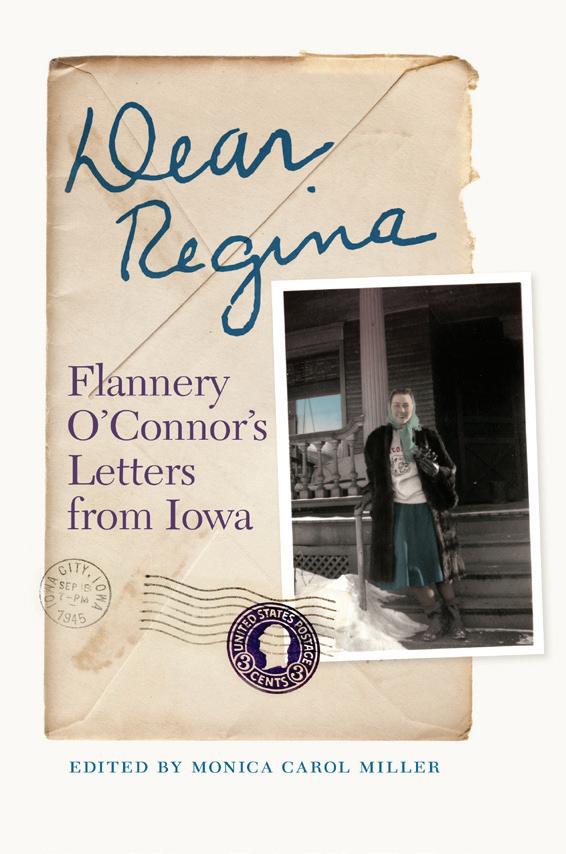
MONICA CAROL MILLER is an associate professor of English at Middle Georgia State University. She is the author of Being Ugly: Southern Women Writers and Social Rebellion
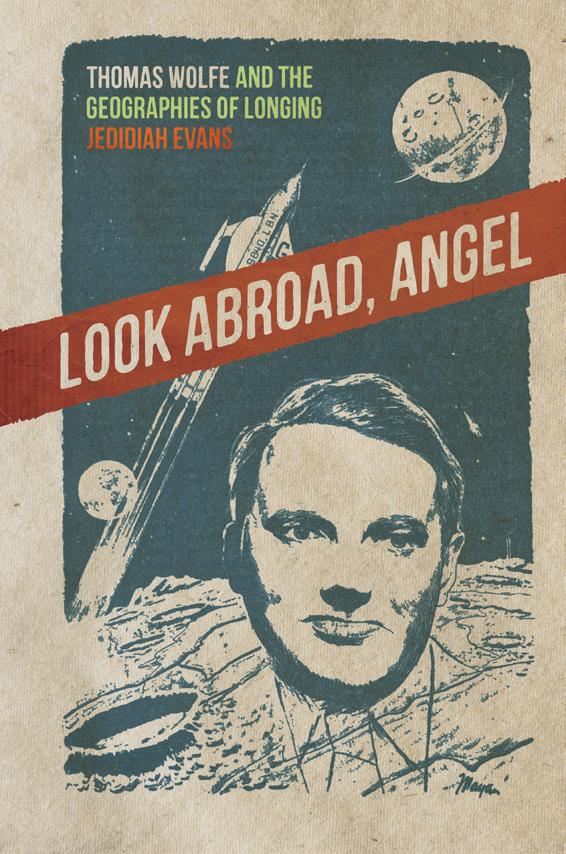
JEDIDIAH EVANS is an associate lecturer in writing studies at the University of Sydney.
OCTOBER
6 X 9 | 252 PP.
6 B&W IMAGES
PAPERBACK $32.95T
9780820381312
EBOOK AVAILABLE
Exploring the global reach and influence of a major American writer
Thomas Wolfe and the Geographies of Longing JedIdIAH eVAnS
THE NEW SOUTHERN STUDIES
Born in Asheville, North Carolina, Thomas Wolfe (1900–1938) was one of the most influential southern writers, widely considered to rival his contemporary, William Faulkner—who believed Wolfe to be one of the greatest talents of their generation. His novels— including Look Homeward, Angel (1929); Of Time and the River (1935); and the posthumously published The Web and the Rock (1939) and You Can’t Go Home Again (1940)—remain touchstones of U.S. literature.
In Look Abroad, Angel, Jedidiah Evans uncovers the “global Wolfe,” reconfiguring Wolfe’s supposedly intractable homesickness for the American South as a form of longing that is instead indeterminate and expansive. Instead of promoting and reinforcing a narrow and cloistered formulation of the writer as merely Southern or Appalachian, Evans places Wolfe in transnational contexts, examining Wolfe’s impact and influence throughout Europe. In doing so, he de-territorializes the response to Wolfe’s work, revealing the writer as a fundamentally global presence within American literature.
The Masculine and Morrison SUSAn neAL MAybeRRy
“A timely and comprehensive exploration of Toni Morrison’s novels to date as they relate to Black masculinity, Mayberry’s Can’t I Love What I Criticize? is a major contribution to ongoing literary, historical, and social discussions regarding African American gender relations and the formation of community.”—Jeffrey B. Leak, author of Racial Myths and Masculinity in African American Literature
“The book is a brilliant and delightful engagement with masculinity in Morrison’s first eight novels. It is, to borrow one reader’s adjective, a ‘fresh’ look at a recurring theme and an important issue in Morrison’s canon.”
—African American Review
Taking a close look at all the key male figures in Toni Morrison’s eight novels, this book explores Morrison’s admitted, but critically neglected, interest in the relationships between African American men and women and the “axes” on which these relationships turn. While most Morrison scholarship deals with her female characters, Can’t I Love What I Criticize? offers a response to this imbalance and to Morrison’s call for more work on men, who remain, in her words, “outside of that little community value thing.”
The book also considers the barriers between Black men and women thrown up by their participation in a larger, historically racist culture of competition, ownership, sexual repression, and fixed ideals about physical beauty and romantic love. Black women, Morrison says, bear their crosses “extremely well,” and Black men, although they have been routinely emasculated by “white men, period,” have managed to maintain a feisty “magic” that everybody wants but nobody else has.
Understanding Morrison’s treatment of her male characters becomes crucial to grasping her success in “countering the damage done by a spectrum of sometimes misguided isms”—including white American feminism. Morrison’s version of masculinity suggests that Black men have “successfully retained their special vitality in spite of white male resistance” and that “their connections to Black women have saved their lives.” To single out her men is not to negate the preeminence of her women; rather, it is to recognize the interconnectedness and balance between them.
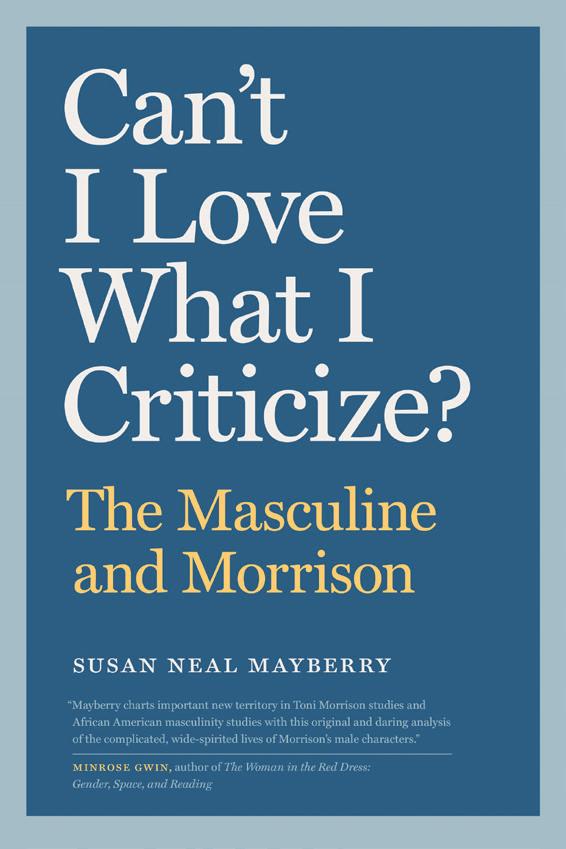
SUSAN NEAL MAYBERRY is a professor of English at Alfred University.
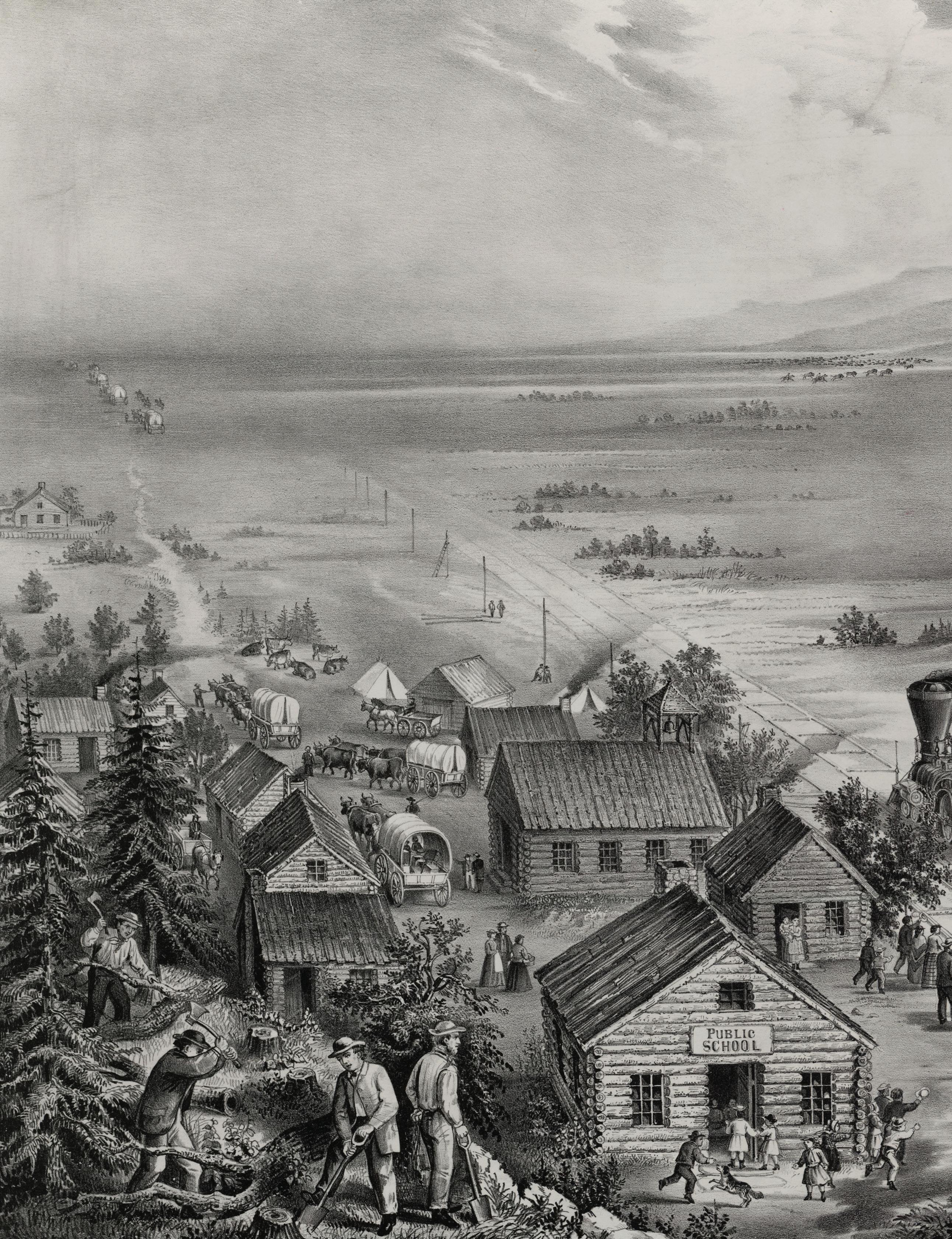
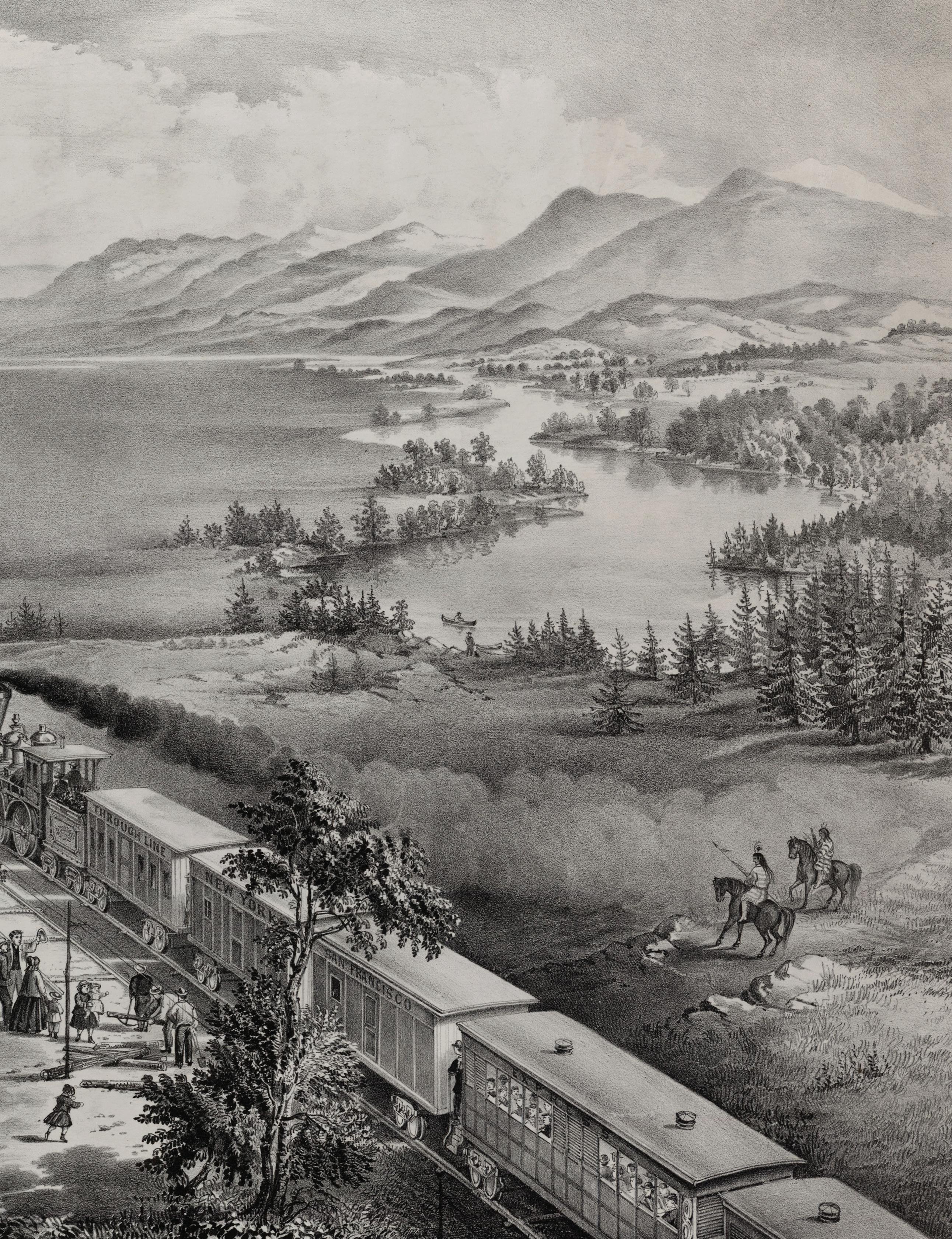
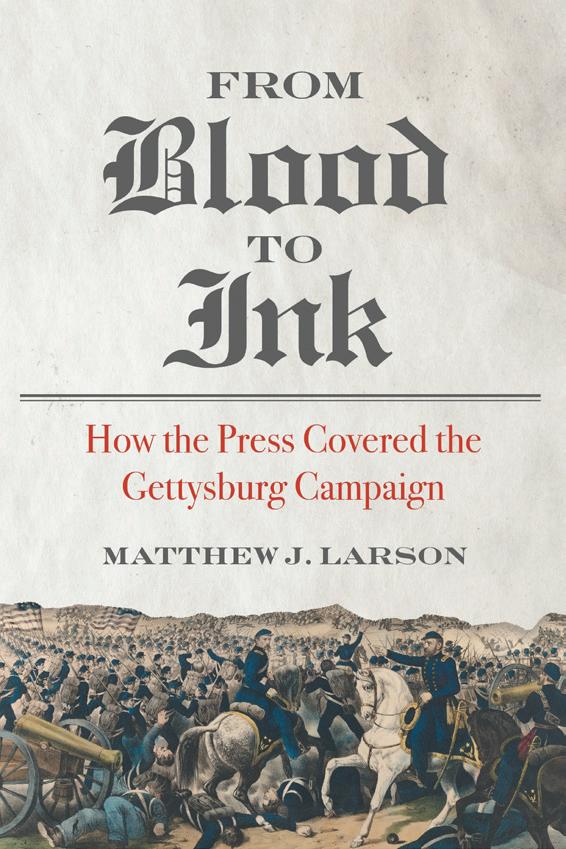
MATTHEW J. LARSON holds a PhD in history from the University of Missouri–Kansas City. He has taught at both the University of Missouri–Kansas City and Utah Valley University. He lives in Utah with his family.
OCTOBER
6 X 9 | 262 PP.
30 B&W IMAGES, 5 MAPS
PAPERBACK $29.95S
9780820377544
HARDBACK $129.95X
9780820377537
EBOOK AVAILABLE
A chronicle of the news reportage throughout the Civil War and how the press covered the most famous clash in American history
How the Press Covered the Gettysburg Campaign
MATTHeW J. LARSon
PRINT CULTURE IN THE SOUTH
“Matthew J. Larson's examination of press coverage regarding the Gettysburg campaign illuminates the power of heavily politicized newspaper cultures in both the United States and the Confederacy. This welcome study complicates a story too often rendered as a simple narrative of unequivocal Union triumph and Confederate defeat, while also shedding light on how Gettysburg came to be almost universally accepted as the turning point of the conflict.”—Gary W. Gallagher, author of The Confederate War and The Union War
The first book ever on how the press covered the Gettysburg campaign, From Blood to Ink chronicles the rise of the press through the Civil War and how its coverage of Gettysburg not only misled the people of two warring factions but also misshaped the battle’s meaning for generations to come. As Matthew J. Larson reveals, newsmen on both sides transformed the battle into what they needed it to be rather than what it truly was. While the Northern press elevated Gettysburg into America’s Waterloo, the Southern press polished it into another hard-won success for Confederate General Robert E. Lee. In both cases, facts bent to bias, narrative eclipsed reality, and Gettysburg itself became the final casualty.
An examination of how Southern women—white and Black—interacted with the Federal army during the U.S. Civil War to secure their homes, privilege, and freedom
How Southern Women Shaped U.S. Policy During the Civil War
LAURA MAMMInA
UNCIVIL WARS
“Hard Women, Hard War restores a diversity of women to their rightful place at the center of contests over military policy in the South. Beautifully written and thoroughly researched, this dynamic book reveals just how civilian women pressed the Federal army to respond to their concerns.”
—Angela Elder, author of Love and Duty: Confederate Widows and the Emotional Politics of Loss
“This excellent book took military actions I thought I knew well and changed my perspective on them. Laura Mammina is right: When we include the negotiations and collaborations of southern women—Black, white, Unionist, Rebel—in our narratives of U.S. military campaigns, the story changes dramatically.”—Lorien Foote, award-winning author of Rites of Retaliation: Civilization, Soldiers, and Campaigns in the American Civil War
Hard Women, Hard War establishes a new interpretation of Southern women’s wartime behavior by examining their interactions with the Federal army. From the very beginning of the war to the bitter end of the conflict, women negotiated military policy toward civilians, motivated by their political loyalties, which were grounded in their ideas of home. Free and enslaved Black women encouraged Federals to destroy the plantation household to make way for homes built in freedom, pushing the military to make hard war on unrepentant rebels. White Unionist enslavers’ loyalty to the United States was predicated on protection of their homes and human property, and when the army moved toward harsher war policies, these women emulated the defiance of elite Confederate ladies. White women’s treason spurred the army to collaborate with loyal Black women while visiting destruction on disloyal enslaving women. Even as the war became more destructive, Southern women refused to stay on the sidelines, insisting that war compelled them to move outside their homes to defend their homes. Women’s very existence—as wealthy enslavers or someone else’s property—hung in the balance, and these hard women waged a hard war to secure future privilege or future freedom.
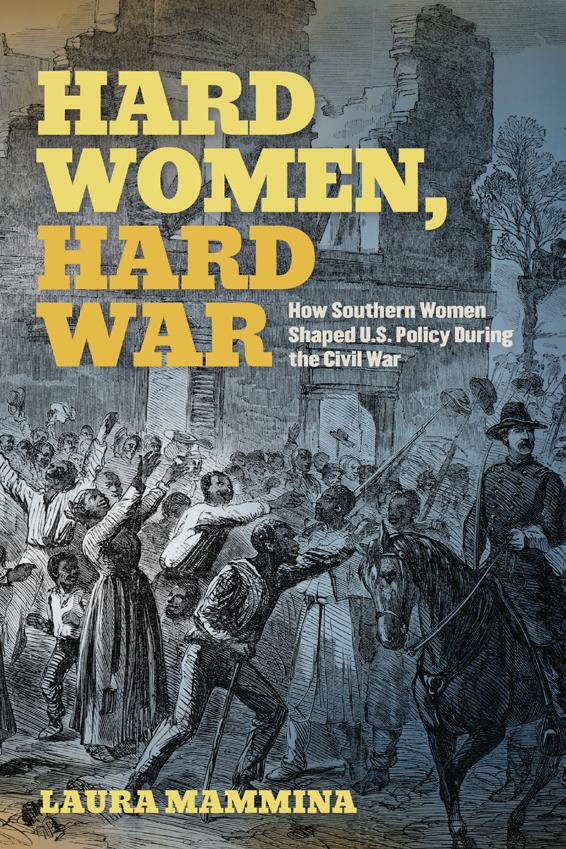
LAURA MAMMINA is assistant professor of history at the University of Southern Mississippi, where she is a faculty fellow in the Dale Center for the Study of War & Society and a faculty affiliate for the Center for Black Studies and the Center for Women’s and Gender Studies. She researches and teaches nineteenth-century U.S. history, civilian-military relations, the history of slavery, and the history of gender and sexuality. She coedited American Discord: The Republic and Its People in the Civil War Era, and her work has also appeared in Civil War History. She lives in Hattiesburg with her family.

MICHAEL EGAN is a historian, academic director of the INSPIRE
Office of Flexible Learning, and multiple award–winning instructor at McMaster University in Hamilton, Ontario. He is the author of Barry Commoner and the Science of Survival: The Remaking of American Environmentalism, and he translated (with Janice Egan)
The Contamination of the Earth: A History of Pollutions in the Industrial Period by François Jarrige and Thomas Le Roux. In the 1990s, he had a professional trial with Oxford United; he is the only academic to have gone to Oxford for soccer.
OCTOBER
6 X 9 | 276 PP.
PAPERBACK $29.95S
9780820377346
HARDBACK $129.95X
9780820377339
EBOOK AVAILABLE
How the American public understood and responded to the dangers posed by pollution in the 1980s
Pollution Anxieties in the American 1980s
MICHAeL eGAn
SINCE 1970: HISTORIES OF COMTEMPORARY AMERICA
Toxic Fear explores how fear shaped the public and private lives of those seeking to make sense of pollution in the 1980s. Driving Egan’s interest in environmental anxieties is an exploration of the social and political infrastructure that took shape during the final quarter of the twentieth century. Egan ties the uncertainties rippling through American communities and across mainstream media to the neoliberal project and its deference to self-interest as the only path to prosperity. In the 1980s, that meant less government intervention, lower taxes, more privatization, and fewer controls. Above and beyond any economic or social theory, fear unsettled established ways of American life. Just as toxic chemicals became a prominent feature of the American social and physical landscape in the 1980s, traditional forms of state oversight designed to provide security for its people were eroded. Social problems and public safety were outsourced to individuals. The onus of responsibility moved from government and government agencies to a public that had, in the previous decade, abdicated environmental oversight and the necessary scientific literacy to experts no longer equipped for the job.
Non/Humans in Contemporary U.S. Literature
CHRISToPHeR LLoyd
“At turns provocative, delightful, and weird, A Queer Bestiary recasts contemporary U.S. literature as a queer contact zone—a space where the lines between human and nonhuman blur and become otherwise.”
—Joshua Trey Barnett, author of Mourning in the Anthropocene
The slippery and mutable boundaries between humans and nonhumans are frequently figured queerly in twenty-first-century U.S. literature. This innovative book examines the ways that nonhumans are brought into intimate, estranging contact with humans in contemporary novels, short stories, poems, and nonfiction. Through detailed attention to a selection of real and imagined flora, fauna, and other phenomena in the bestiary form—for example, horses, taxidermy, dogs, extinction—the book probes the ways in which the humans and the nonhumans are queerly entangled. Organized like a medieval bestiary, this book contributes to a range of fields, including contemporary literary studies, American studies, posthuman and animal studies, queer studies, and more. Non/human relations are explored through close readings of fiction by writers such as Ocean Vuong, Justin Torres, Kristen Arnett, and Percival Everett; poetry by Danez Smith, Tommy Pico, Franny Choi, and Donika Kelly; and nonfiction by Mark Doty, Sabrina Imbler, and Alexis Pauline Gumbs, among others. In all, A Queer Bestiary argues that the human has never been solid, distinct, or singular; that various nonhumans open questions of queerness; and that recent literary representations of humans and nonhumans queer the boundaries between these two categories.

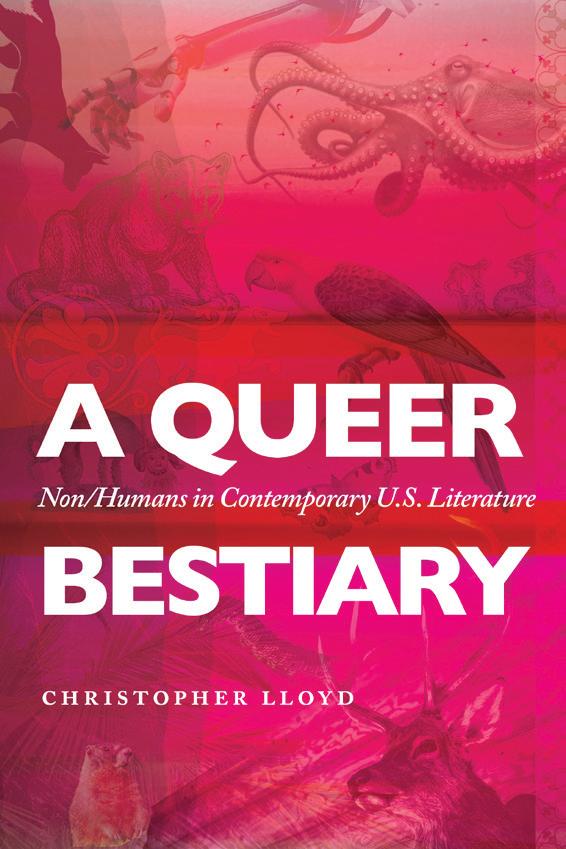
CHRISTOPHER LLOYD is an associate professor of learning and teaching at the University of Hertfordshire. He is the author of two monographs, including Corporeal Legacies in the U.S. South: Memory and Embodiment in Contemporary Culture, and he is the coeditor of two volumes, including The Edinburgh Companion to the Millennial Novel. Lloyd has also published short stories and poetry, such as the poetry pamphlet Pick Up Your Feelings. He is the vicechair of the British Association for American Studies, the host of the Books Up Close podcast and YouTube channel, and the editor/ producer of the Diversifying and Decolonising the University podcast. He was born in Cardiff and now lives in Manchester, U.K.
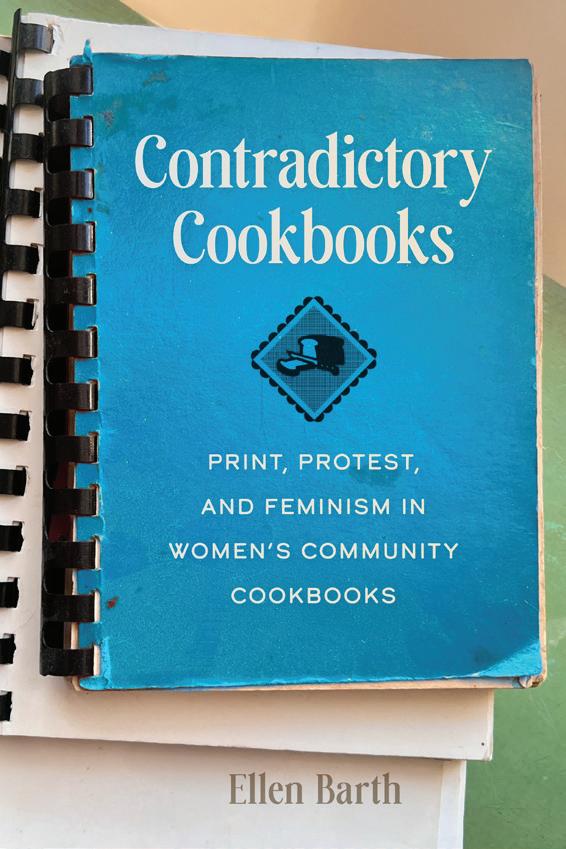
ELLEN BARTH is a research and teaching associate at the University of Münster, where she earned her doctorate in English Philology. Her work centers on book studies, women’s book history, second-wave feminist print culture, and the role of women’s clubs in American publishing and literary history. She has published research on the topics of feminist craftivism and menstrual activism. Originally from the United States, she now resides in Germany.
NOVEMBER
6 X 9 | 218 PP.
10 B&W IMAGES
PAPERBACK $29.95S
9780820380568
HARDBACK $129.95X
9780820380551
EBOOK AVAILABLE
How a surprising set of diverse women used cookbooks to bridge seemingly contradictory aspects of their lives and effect change
Print, Protest, and Feminism in Women’s Community Cookbooks
eLLen bARTH
Contradictory Cookbooks offers a historical exploration of how women merged their voluntary, professional, and political interests through DIY cookbook publishing. Although cookbooks are often associated with the domestic and traditional, Barth reveals that the production of community cookbooks in the second half of the twentieth century was increasingly taken up by working women, women involved in student and civil rights movements, and women fighting for the cause of second-wave feminism. Barth reveals why, at a time that perhaps seems surprising and unlikely, women from a broad range of backgrounds and interest groups produced these culinary texts. Drawing on hundreds of American community cookbooks as well as archival research from American women’s organizations, Contradictory Cookbooks argues that through the production and sale of fundraising cookbooks, women found a means to bridge sometimes contradictory aspects of their lives.
The first examination of the language of children in poverty in Depression-era literature and culture
The Language of Depression-Era Children in Poverty
MAGGIe e. MoRRIS dAVIS
“Creatively conceived and powerfully executed, Reading the Classed Child makes an original intervention in the crowded field of modernist literary studies by examining the 'anti-language' of poor children in Depression-era texts written about, for, and by young people in the United States.”—Julia L. Mickenberg, author of Learning from the Left: Children’s Literature, the Cold War, and Radical Politics in the United States
Drawing from research in multiple archives, Reading the Classed Child is the first to examine the language of children in poverty in Depression-era literature and culture by rereading their language not as tangled errors but as innovative discourse. Drawing on sociolinguistic, literary, and cultural theories, Morris Davis unpacks the ways language represented in literature, culture, and the speech of young people is a dynamic through which mainstream language negotiates with anti-language—language that defines its own parameters against discourses of power and privilege. While some representations of the poor child’s language diminish and even erase the disorder within that speech, many literary constructions of the child’s anti-language, as well as linguistic cultural productions of young people themselves, challenge longheld assumptions of the poor and the young. In this resistance, these texts open the child’s interior complexity and make visible that which has been long ignored in studies of this era. Rereading the language of the classed child in this way expands critical discussions of childhood and poverty and, most important, repositions young people in poverty as active producers of political and cultural meaning.
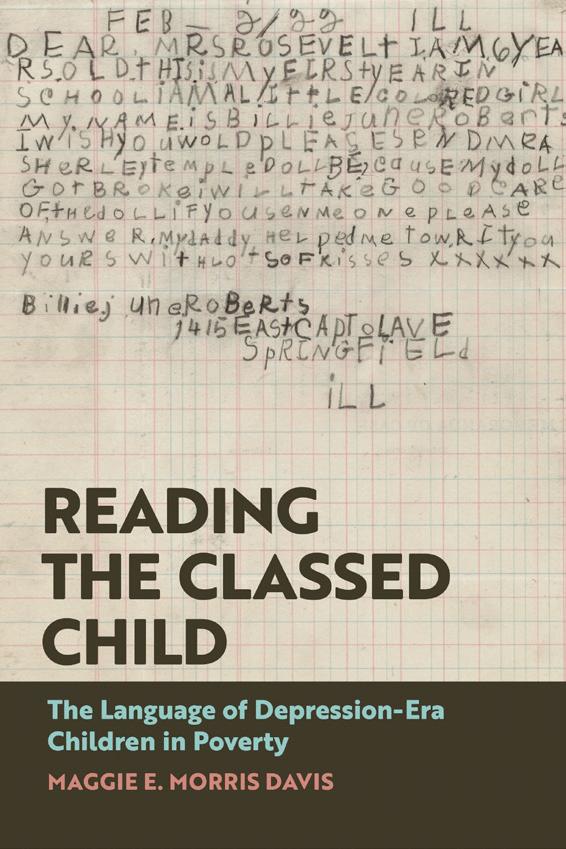
MAGGIE E. MORRIS DAVIS is an assistant professor in the Department of English at Illinois State University. Her work has been published in American Quarterly, Children’s Literature, and Resources for American Literary Study. She lives in Normal, Illinois.
DECEMBER 6 X 9 | 224 PP. 23 B&W IMAGES PAPERBACK $29.95S 9780820375618 HARDBACK $129.95X 9780820375601 EBOOK AVAILABLE
Byers

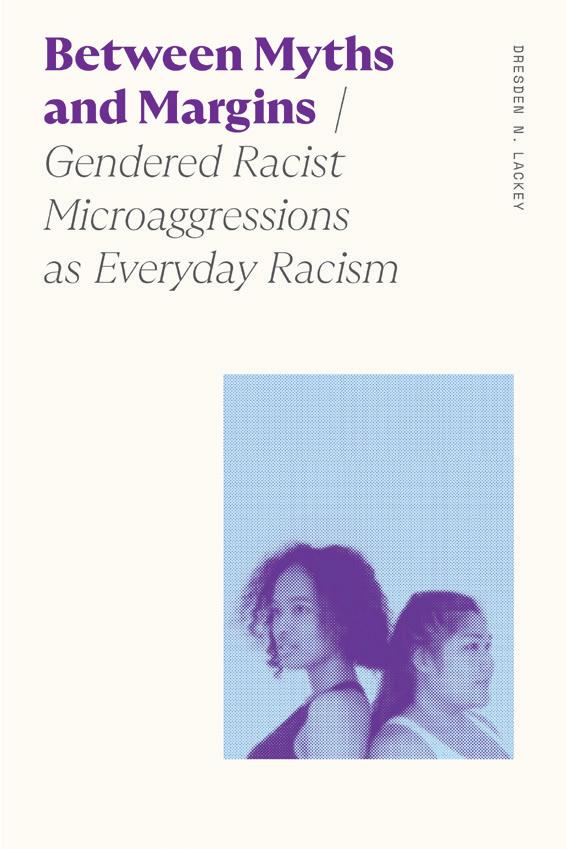
DRESDEN N. LACKEY is an assistant professor of sociology at Wofford College, the coordinator of the Gender Studies Program, and a faculty mentor to several student organizations. Her research examines gendered racisms, cissexism, and the connection of microinteractions to macro social forces, with a particular interest in Black and Asian solidarities. She has published in textbooks, sociological journals, and interdisciplinary readers and is currently the coeditor of Humanity & Society. Lackey has been recognized and awarded for her teaching and mentorship. She currently resides in South Carolina.

OCTOBER
6 X 9 | 160 PP.
PAPERBACK $29.95S
9780820375755
HARDBACK $129.95X
9780820375748
EBOOK AVAILABLE
An examination of the microaggressions that shape everyday racism for Black and Asian American women
Gendered Racist Microaggressions as Everyday Racism
dReSden n. LACkey
SOCIOLOGY OF RACE AND ETHNICITY
“Through fluid writing and thoughtful analysis, Lackey adds depth and breadth to the scholarship regarding microaggressions in a way that honors both the shared yet unique experiences of Black and Asian American women. Her impressive and thoughtful interviewing draws from her respondents' intersectional and inclusive counternarratives that make visible the everyday racism endured by so many. This is a piece that is simultaneously poignant and pedagogical, and I cannot wait to assign it.”
—Marisela
Martinez-Cola, author of The Bricks before Brown
Between Myths and Margins explores the systemic and macro implications of gendered racist microaggressions. To date, microaggression research has largely lived in the field of psychology, focusing on the interpersonal dynamics between aggressor and receiver. Left out of this conversation are the social factors at play that make microaggressions mere bricks in a larger structure of white supremacist cisheteropatriarchy. Through case studies of Black and Asian American women, Lackey unveils microaggressions as facets of everyday racism: commonplace and subtle behaviors, remarks, and beliefs that buttress the normalization of a supremacy of whiteness. Lackey identifies common perpetrators of gendered racist microaggressions— not just interracial perpetrators, but also members of our own communities—pointing to family members and coethnic friends and peers as adopters of a white racial dominant ideology. Stories of women in various family structures, workplaces, education settings, and friend groups identify a common thread that ties each of their experiences together: the underlying structure of white supremacist patriarchy that informs the experiences of women of color in everyday interpersonal exchanges.
Communities, Commercial Gentrification, and the Racialization of Space
STeVen TUTTLe
SOCIOLOGY OF RACE AND ETHNICITY
“After decades of gentrification research, we finally get a book devoted solely to the importance of local businesses for understanding the process. Tuttle's novel work offers a new lens for looking at how different racial and ethnic groups use shops to make place and stake claims in changing urban communities.”—Richard E. Ocejo, author of Sixty Miles Upriver: Gentrification and Race in a Small American City
Based on an ethnographic study of the role and experiences of local businesses, institutions, and community-level actors in Logan Square and Pilsen, two longtime ethnic enclaves experiencing and resisting gentrification in Chicago, Storefront examines local businesses’ contributions to communities, how businesses might promote or protest gentrification, and how streetscape transformations can threaten community members’ sense of belonging in place. Steven Tuttle untangles issues of community and conflict, segregation and integration, alienation and place attachment, and small business social responsibility from the vantage point of local businesses themselves. In addition to insights about community development, local institutions, and social capital common in qualitative neighborhood studies and gentrification scholarship, Storefront also features a unique focus on local businesses and the racialization of space.
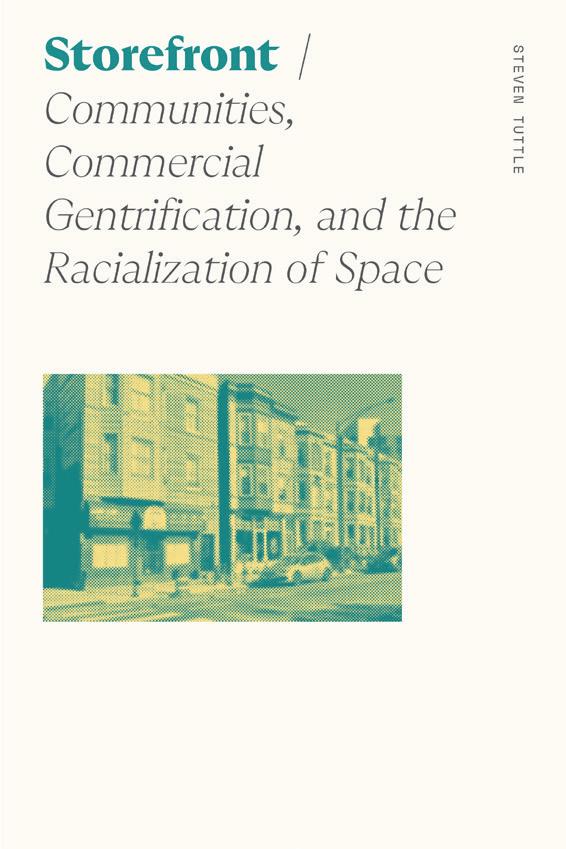
STEVEN TUTTLE is an assistant professor of sociology at St. Joseph’s University–Long Island. His scholarship has appeared in City & Community, Critical Sociology, American Behavioral Scientist, and Rural Sociology, among other venues. Tuttle previously held a postdoctoral researcher position at Ball State University, and his current and future research examines how local resources and community and economic development strategies shape how low-income residents make ends meet in three rural Indiana towns. He currently resides in Queens, New York.
University of Georgia Press c/o Longleaf Services, Inc. 116 S. Boundary Street Chapel Hill, NC 27514-3808
PHONE
800-848-6224 or 919-966-7449
FAX
800-272-6817 or 919-962-2704
orders@longleafservices.org customerservice@longleafservices.org
• Libraries and institutions with established accounts may be billed or may order through a wholesaler.
• Direct orders must be prepaid using Discover, MasterCard, Visa, or American Express.
• Shipping charges are subject to change without notice and shipped via economy methods unless otherwise requested.
• Tax will apply in some states.
• All prices are subject to change without notice.
• Permission to return overstock is not required provided books are returned within 18 months of sale.
• Books must be clean, undamaged, and saleable copies of titles currently in print as listed on our website.
• Full credit allowed if customer supplies copy of original invoice or correct invoice number; otherwise maximum discount applies.
• Please send books prepaid and carefully packed via traceable method to:
Longleaf Services, Inc. c/o IPS Distribution Solutions Returns 1550 Heil Quaker Blvd, Ste 200 LaVergne, TN 37086
SUBSIDIARY RIGHTS
PHOTOCOPY PERMISSIONS
REPRINT PERMISSIONS
Elizabeth Adams elizabethadams@uga.edu / 706-542-1007
PUBLICITY
Jason Bennett jason.bennett@uga.edu / 706-542-9263
Candice Lawrence candice.lawrence@uga.edu / 706-542-4712
MARKETING & SALES
Rachel Watkins rachel.watkins@uga.edu / 706-542-4145
Geoff Rizzo
FL (excluding Panhandle), GA Coast Southern Territory Associates
772-223-7776 rizzosta@gmail.com
Angie Smits East TN, NC, VA, SC Southern Territory Associates 336-574-1879 hasmits@aol.com
Rayner Krause TX, OK, AR
Southern Territory Associates 972-618-1149 knrkrause@aol.com
Tom Caldwell LA, MS, Middle & West TN, Chattanooga, AL, GA (excluding coast), FL panhandle, Pensacola Southern Territory Associates 773-450-2695 tomcaldwell79@gmail .com
Meighan Bell Larbi AWB Company, Books-AMillion Southern Territory Associates 469-362-8126 meighanlarbi@tx.rr.com
CANADA
sales
Ampersand Sales Toronto 866-849-3819 Vancouver 888-323-7118 ampersandinc.ca/contact
Richard McNeace
Northern CA, Bay Area & Coastal Areas, Southern CA Faherty& Associates, Inc. 323-273-7763 richard@fahertybooks .com
Ryan O’Connor AK, HI, OR, WA Faherty& Associates, Inc. 845-521-9204 ryan@fahertybooks .com
Trevin Matlock Northern CA: Sacramento, Davis, Central Valley & Sierras; select Southern CA 909-263-2346 trevin@fahertybooks .com
Jim Sena AZ, CO, ID, MT, NM, NV, UT, WY Wilcher Associates 719-210-5222 sena.wilcher@gmail .com
Gary Lovely KY, MI, OH 800-701-2489 gary@abraham associatesinc.com
Emily Johnson KS, MN, MO, ND, SD, NE, select IA, WI 800-701-2489 emily@abraham associatesinc.com
Sandra Law IL, IN, MO, select MI, select OH 800-701-2489 sandra@abraham associatesinc.com
Alice Mesjak IL, MN, select OH, select KY, new Midwestern accounts 800-701-2489 alice@abraham associatesinc.com
John Mesjak IA, IL, WI, select KY 800-701-2489 john@abraham associatesinc.com
Ted Sehkoa 800-701-2489 ted@abraham associatesinc.com
Eileen Bertelli
Western NY State, NJ, MD, DE, CT, Philadelphia Metro and Eastern PA Parson Weems 845-492-7309 eileenbertelli@ parsonweems.com
Christopher R. Kerr MA, RI, ME, VT, NH Parson Weems 914-329-4961 chriskerr@ parsonweems.com
Jason Kincade New York City Metro, Hudson Valley, Washington, DC Metro Parson Weems 347-244-2165 jasonkincade@ parsonweems.com
Brendan Coyne Western PA & Western NY Parson Weems 443-854-5504 brendancoyne@ parsonweems.com
Causten Stehle Parson Weems 914-948-4259 office@parsonweems .com
distribution University of Toronto Press 1-800-565-9523 utpbooks@utpress.utoronto.ca EDI through Pubnet: SAN 115 1134
Liverpool University Press John Wiley & Sons Ltd European Distribution Centre New Era Estate, Oldlands Way Bognor Regis West Sussex PO22 9NQ, UK +44 (0) 1243 843291 liverpool.csd@wiley.com for individual orders liverpooluniversitypress.co.uk
inquiries and orders
MHM Limited
3-2-3F, Kanda-Ogawamachi Chiyoda-ku, Tokyo 101-0052 03-3518-9181
sales@mhmlimited.co.jp