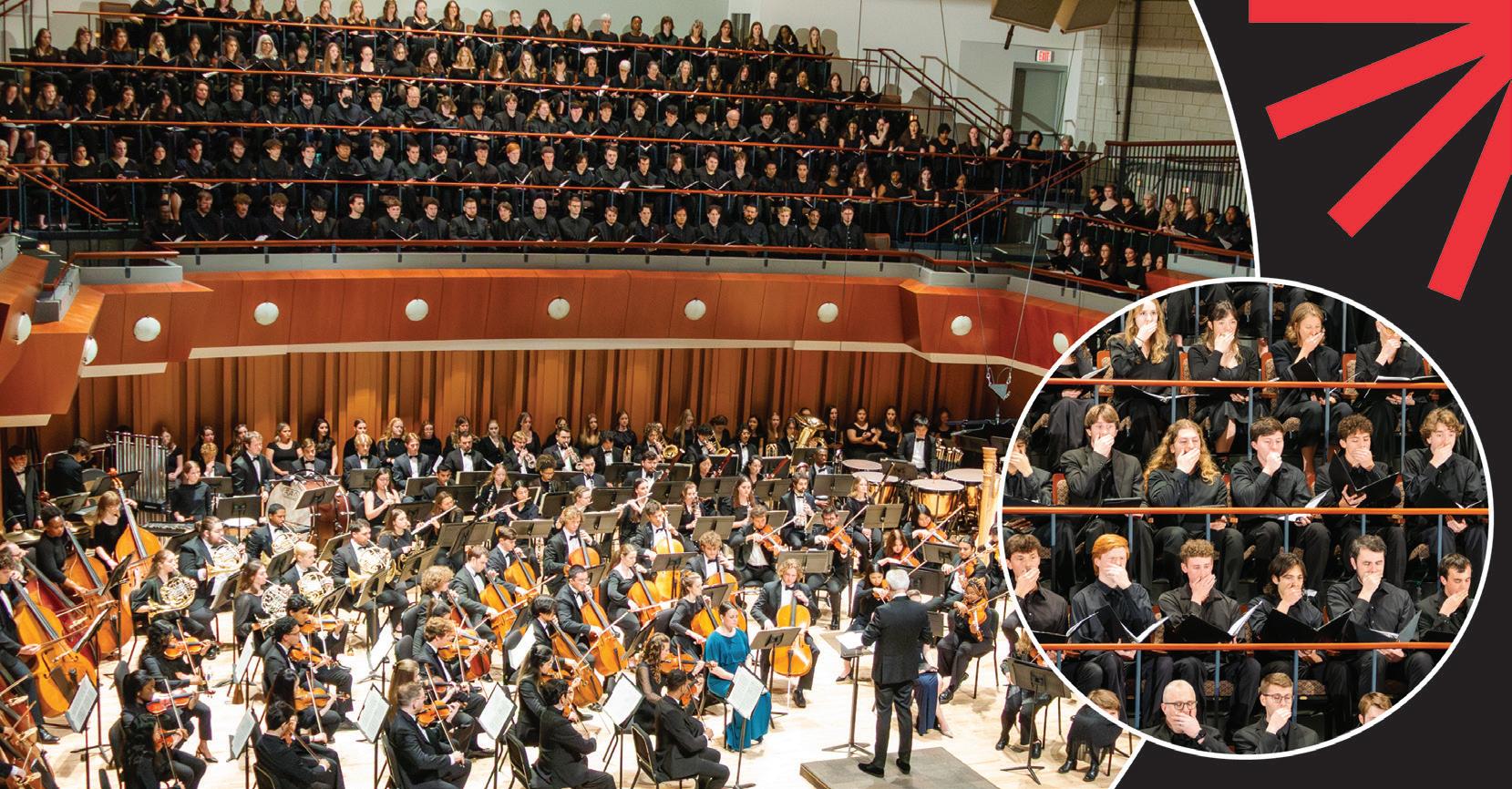
Thursday Scholarship Series: Orff's "Carmina Burana" - Combined Choirs and Symphony Orchestra

Page 1


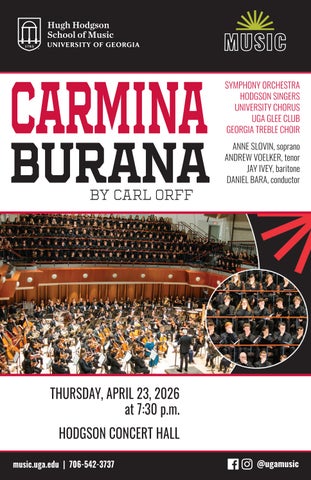
THURSDAY, APRIL 23, 2026 at 7:30 p.m.

HODGSON CONCERT HALL

Thursday, April 23, 2026 at 7:30 p.m.

Hodgson Concert Hall

UGA Performing Arts Center

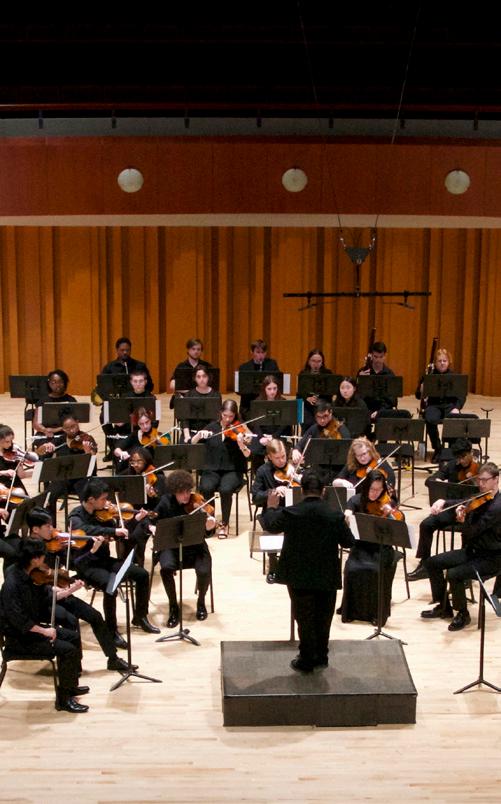
University of Georgia Symphony Orchestra

Mark Cedel, conductor

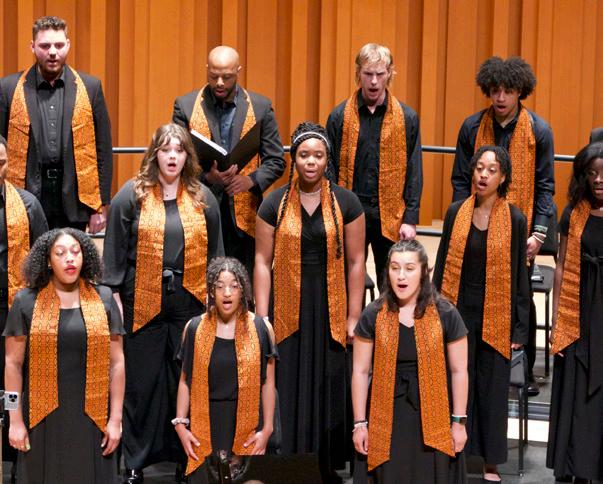
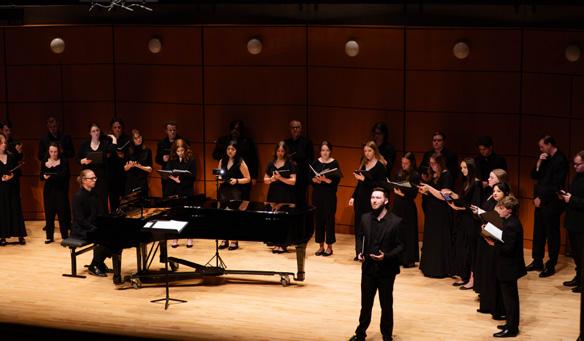
University of Georgia Hodgson Singers

Daniel Bara, conductor

University of Georgia University Chorus

Colin Mann, conductor

University of Georgia Glee Club

Colin Mann, conductor

University of Georgia Georgia Treble Choir

Colin Mann, conductor

Katie Drybrough, graduate choral assistant

Matthew Elsey, graduate choral assistant

Christopher Hickey, graduate choral assistant

Abigail Weller, graduate choral assistant with

Anne Slovin, soprano

Andrew Voelker, tenor

Jay Ivey, baritone

Daniel Bara, conductor

Carmina Burana Carl Orff (1895-1982)

Fortuna Imperatrix Mundi (Fortune, Empress of the World)

1. Chorus – O Fortuna

2. Chorus – Fortune plango vulnera

I. Primo Vere (Spring)

3. Semi-Chorus – Veris leta facies

4. Baritone Solo – Omnia sol temperat

5. Chorus – Ecce gratum

Uf dem Anger (In the Meadow)

6. Tanz (Dance)

7. Chorus – Floret silva nobilis

8. Semi-Chorus – Chramer, gip die varwe mir

9. Chorus – Reie

10. Chorus – Were diu werlt alle min

II. In Taberna (In the Tavern)

11. Baritone Solo – Estuans interius

12. Tenor Solo and Chorus – Olim lacus colueram

13. Baritone Solo and Men’s Chorus – Ego sum abbas

14. Men’s Chorus – In taberna quando sumus

III. Cour d’Amours (The Court of Love)

15. Soprano Solo and Treble Chorus – Amor volat undique

16. Baritone Solo – Dies, nox et omnia

17. Soprano Solo – Stetit puella

18. Baritone Solo and Chorus – Circa mea pectora

19. Baritone Solo and Men’s Chorus – Si puer cum puellula

20. Double Chorus – Veni, veni, venias

21. Soprano Solo – In truitina

22. Chorus with Solo Soprano & Baritone Soloists – Tempus es iocundum

23. Soprano Solo – Dulcissime

24. Chorus – Ave formosissima

25. Chorus – O Fortuna

FORTUNA IMPERATRIX MUNDI

1. O Fortuna

O Fortuna

velut luna statu variabilis, semper crescis aut decrescis; vita detestabilis nunc obdurat et tunc curat ludo mentis aciem, egestatem, potestatem dissolvit ut glaciem. Sors immanis et inanis, rota tu volubilis, status malus, vana salus semper dissolubilis, obumbrata et velata

michi quoque niteris; nunc per ludum dorsum nudum fero tui sceleris. Sors salutis et virtutis michi nunc contraria, est affectus et defectus semper in angaria. Hac in hora sine mora corde pulsum tangite; quod per sortem sternit fortem, mecum omnes plangite!

2. Fortune plango vulnera Fortune plango vulnera stillantibus ocellis quod sua michi munera subtrahit rebellis. Verum est, quod legitur, fronte capillata,

FORTUNE, EMPRESS OF THE WORLD

1. O Fortune

O Fortune, like the moon you are changeable, ever waxing and waning; hateful life first oppresses and then soothes as fancy takes it; poverty and power it melts them like ice. Fate - monstrous and empty, you whirling wheel, you are malevolent, well-being is vain and always fades to nothing, shadowed and veiled you plague me too; now through the game I bring my bare back to your villainy. Fate is against me in health and virtue, driven on and weighted down, always enslaved. So at this hour without delay pluck the vibrating strings; since Fate strikes down the strong man, everyone weep with me!

2. I bemoan the wounds of Fortune I bemoan the wounds of Fortune with weeping eyes, for the gifts she made me she perversely takes away. It is written in truth, that she has a fine head of hair,

sed plerumque sequitur

Occasio calvata. In Fortune solio sederam elatus, prosperitatis vario flore coronatus; quicquid enim florui felix et beatus, nunc a summo corrui gloria privatus. Fortune rota volvitur: descendo minoratus; alter in altum tollitur; nimis exaltatus rex sedet in vertice caveat ruinam! nam sub axe legimus Hecubam reginam.

PRIMO VERE

3. Veris leta facies Veris leta facies mundo propinatur, hiemalis acies victa iam fugatur, in vestitu vario Flora principatur, nemorum dulcisono que cantu celebratur. Flore fusus gremio Phebus novo more risum dat, hac vario iam stipate flore. Zephyrus nectareo spirans in odore. Certatim pro bravio curramus in amore. Cytharizat cantico dulcis Philomena, flore rident vario prata iam serena, salit cetus avium silve per amena, chorus promit iam gaudia millena.

but, when it comes to seizing an opportunity she is bald.

On Fortune’s throne I used to sit raised up, crowned with the many-coloured flowers of prosperity; though I may have flourished happy and blessed, now I fall from the peak deprived of glory. The wheel of Fortune turns; I go down, demeaned; another is raised up; far too high up sits the king at the summitlet him fear ruin! for under the axis is written Queen Hecuba.

SPRING

3. The merry face of spring

The merry face of spring turns to the world, sharp winter now flees, vanquished; bedecked in various colours Flora reigns, the harmony of the woods praises her in song. Ah! Lying in Flora’s lap Phoebus once more smiles, now covered in many-coloured flowers, Zephyr breathes nectarScented breezes. Let us rush to compete for love’s prize. Ah! In harp-like tones sings the sweet nightingale, with many flowers the joyous meadows are laughing, a flock of birds rises up through the pleasant forests, virgin the chorus of maidens already promises a thousand joys. Ah!

4. Omnia sol temperat

Omnia sol temperat purus et subtilis, novo mundo reserat faciem Aprilis, ad amorem properat animus herilis et iocundis imperat deus puerilis. Rerum tanta novitas in solemni vere et veris auctoritas jubet nos gaudere; vias prebet solitas, et in tuo vere fides est et probitas tuum retinere. Ama me fideliter, fidem meam noto: de corde totaliter et ex mente tota sum presentialiter absens in remota, quisquis amat taliter, volvitur in rota.

5. Ecce gratum

Ecce gratum et optatum Ver reducit gaudia, purpuratum floret pratum, Sol serenat omnia. Iamiam cedant tristia! Estas redit, nunc recedit

Hyemis sevitia. Iam liquescit et decrescit grando, nix et cetera; bruma fugit, et iam sugit Ver Estatis ubera; illi mens est misera, qui nec vivit, nec lascivit sub Estatis dextera. Gloriantur et letantur in melle dulcedinis,

4. The sun warms everything The sun warms everything, pure and gentle, once again it reveals to the world April’s face, the soul of man is urged towards love and joys are governed by the boy-god. All this rebirth in spring’s festivity and spring’s power bids us to rejoice; it shows us paths we know well, and in your springtime it is true and right to keep what is yours. Love me faithfully! See how I am faithful: with all my heart and with all my soul, I am with you even when I am far away. Whosoever loves this much turns on the wheel.

5. Behold, the pleasant spring Behold, the pleasant and longed-for spring brings back joyfulness, violet flowers fill the meadows, the sun brightens everything, sadness is now at an end! Summer returns, now withdraw the rigours of winter. Ah! Now melts and disappears ice, snow and the rest, winter flees, and now spring sucks at summer’s breast: a wretched soul is he who does not live or lust under summer’s rule. Ah! They glory and rejoice in honeyed sweetness

qui conantur, ut utantur

premio Cupidinis: simus jussu Cypridis gloriantes et letantes pares esse Paridis.

UF DEM ANGER

7. Floret silva nobilis

Floret silva nobilis floribus et foliis. Ubi est antiquus meus amicus?

Hinc equitavit, eia, quis me amabit?

Floret silva undique, nah min gesellen ist mir we. Gruonet der walt allenthalben, wa ist min geselle alse lange?

Der ist geriten hinnen, o wi, wer sol mich minnen?

8. Chramer, gip die varwe mir

Chramer, gip die varwe mir, die min wengel roete, damit ich die jungen man an ir dank der minnenliebe noete.

Seht mich an, jungen man! lat mich iu gevallen!

Minnet, tugentliche man, minnecliche frouwen! minne tuot iu hoch gemout unde lat iuch in hohen eren schouwen

Seht mich an jungen man! lat mich iu gevallen! Wol dir, werit, daz du bist also freudenriche! ich will dir sin undertan durch din liebe immer sicherliche.

Seht mich an, jungen man! lat mich iu gevallen!

who strive to make use of Cupid’s prize; at Venus’ command let us glory and rejoice in being Paris’ equals. Ah!

IN THE MEADOW

7. The noble woods are burgeoning

The noble woods are burgeoning with flowers and leaves. Where is the lover I knew? Ah!

He has ridden off! Oh! Who will love me? Ah! The woods are burgeoning all over, I am pining for my lover. The woods are turning green all over, why is my lover away so long? Ah! He has ridden off, Oh woe, who will love me? Ah!

8. Shopkeeper, give me color Shopkeeper, give me color to make my cheeks red, so that I can make the young men love me, against their will. Look at me, young men!

Let me please you! Good men, love women worthy of love! Love ennobles your spirit and gives you honour. Look at me young men!

Let me please you! Hail, world, so rich in joys! I will be obedient to you because of the pleasures you afford. Look at me, young men!

Let me please you!

9. Reie

Swaz hie gat umbe, daz sint alles megede, die wellent an man allen disen sumer gan! Chume, chum, geselle min, ih enbite harte din, ih enbite harte din, chume, chum, geselle min. Suzer rosenvarwer munt, chum un mache mich gesunt chum un mache mich gesunt, suzer rosenvarwer munt.

10. Were diu werlt alle min

Were diu werlt alle min von deme mere unze an den Rin des wolt ih mih darben, daz diu chunegin von Engellant lege an minen armen.

IN TABERNA

11. Estuans interius

Estuans interius ira vehementi in amaritudine loquor mee menti: factus de materia, cinis elementi similis sum folio, de quo ludunt venti. Cum sit enim proprium viro sapienti supra petram ponere sedem fundamenti, stultus ego comparor luvio labenti, sub eodem tramite nunquam permanenti. Feror ego veluti sine nauta navis, ut per vias aeris vaga fertur avis; non me tenent vincula, non me tenet clavis, quero mihi similes et adiungor pravis. Mihi cordis gravitas res videtur gravis;

9. Round dance

Those who go round and round are all maidens, they want to do without a man all summer long. Ah! Sla! Come, come, my love, I long for you, I long for you, come, come, my love. Sweet rose-red lips, come and make me better, come and make me better, sweet rose-red lips.

10. Were all the world mine Were all the world mine from the sea to the Rhine, I would starve myself of it so that the queen of England might lie in my arms.

IN THE TAVERN

11. Burning Inside Burning inside with violent anger, bitterly I speak to my heart: created from matter, of the ashes of the elements, I am like a leaf played with by the winds. If it is the way of the wise man to build foundations on stone, then I am a fool, like a flowing stream, which in its course never changes. I am carried along like a ship without a steersman, and in the paths of the air like a light, hovering bird; chains cannot hold me, keys cannot imprison me, I look for people like me and join the wretches. The heaviness of my heart seems like a burden to me;

iocis est amabilis dulciorque favis; quicquid Venus imperat, labor est suavis, que nunquam in cordibus habitat ignavis. Via lata gradior more iuventutis, inplicor et vitiis immemor virtutis, voluptatis avidus magis quam salutis, mortuus in anima curam gero cutis.

12. Cignus ustus cantat

Olim lacus colueram, olim pulcher extiteram, dum cignus ego fueram. Miser, miser! modo niger et ustus fortiter! Girat, regirat garcifer; me rogus urit fortiter; propinat me nunc dapifer, Nunc in scutella iaceo, et volitare nequeo dentes frendentes video.

13. Ego sum abbas

Ego sum abbas Cucaniensis et consilium meum est cum bibulis, et in secta Decii voluntas mea est, et qui mane me quesierit in taberna, post vesperam nudus egredietur, et sic denudatus veste clamabit: Wafna, wafna! quid fecisti sors turpassi Nostre vite gaudia abstulisti omnia!

14. In taberna quando sumus

In taberna quando sumus non curamus quid sit humus, sed ad ludum properamus, cui semper insudamus. Quid agatur in taberna ubi nummus est pincerna, hoc est opus ut queratur,

it is pleasant to joke and sweeter than honeycomb; whatever Venus commands is a sweet duty, she never dwells in a lazy heart. I travel the broad path as is the way of youth, I give myself to vice, unmindful of virtue, I am eager for the pleasures of the flesh more than for salvation, my soul is dead, so I shall look after the flesh.

12. The Roast Swan

Once I lived on lakes, once I looked beautiful when I was a swan. Misery me! Now black and roasting fiercely! The servant is turning me on the spit; I am burning fiercely on the pyre: the steward now serves me up. Now I lie on a plate, and cannot fly anymore, I see bared teeth.

13. I am the abbot

I am the abbot of Cockaigne and my assembly is one of drinkers, and I wish to be in the order of Decius, and whoever searches me out at the tavern in the morning, after Vespers he will leave naked, and thus stripped of his clothes he will call out: Woe! Woe! what have you done, vilest Fate? the joys of my life you have taken all away!

14. When we are in the tavern

When we are in the tavern, we do not think how we will go to dust, but we hurry to gamble, which always makes us sweat. What happens in the tavern, where money is host, you may well ask,

si quid loquar, audiatur. Quidam ludunt, quidam bibunt, quidam indiscrete vivunt.

Sed in ludo qui morantur, ex his quidam denudantur quidam ibi vestiuntur, quidam saccis induuntur.

Ibi nullus timet mortem sed pro Baccho mittunt sortem: Primo pro nummata vini, ex hac bibunt libertini; semel bibunt pro captivis, post hec bibunt ter pro vivis, quater pro Christianis cunctis quinquies pro fidelibus defunctis, sexies pro sororibus vanis, septies pro militibus silvanis. Octies pro fratribus perversis, nonies pro monachis dispersis, decies pro navigantibus undecies pro discordaniibus, duodecies pro penitentibus, tredecies pro iter agentibus. Tam pro papa quam pro rege bibunt omnes sine lege. Bibit hera, bibit herus, bibit miles, bibit clerus, bibit ille, bibit illa, bibit servis cum ancilla, bibit velox, bibit piger, bibit albus, bibit niger, bibit constans, bibit vagus, bibit rudis, bibit magnus. Bibit pauper et egrotus, bibit exul et ignotus, bibit puer, bibit canus, bibit presul et decanus, bibit soror, bibit frater, bibit anus, bibit mater, bibit ista, bibit ille, bibunt centum, bibunt mille. Parum sexcente nummate durant, cum immoderate bibunt omnes sine meta. Quamvis bibant mente leta, sic nos rodunt omnes gentes et sic erimus egentes. Qui nos rodunt confundantur et cum iustis non scribantur.

and hear what I say. Some gamble, some drink, some behave loosely. But of those who gamble, some are stripped bare, some win their clothes here, some are dressed in sacks. Here no-one fears death, but they throw the dice in the name of Bacchus. First of all it is to the wine-merchant the libertines drink, one for the prisoners, three for the living, four for all Christians, five for the faithful dead, six for the loose sisters, seven for the footpads in the wood, Eight for the errant brethren, nine for the dispersed monks, ten for the seamen, eleven for the squabblers, twelve for the penitent, thirteen for the wayfarers. To the Pope as to the king they all drink without restraint. The mistress drinks, the master drinks, the soldier drinks, the priest drinks, the man drinks, the woman drinks, the servant drinks with the maid, the swift man drinks, the lazy man drinks, the white man drinks, the black man drinks, the settled man drinks, the wanderer drinks, the stupid man drinks, the wise man drinks, The poor man drinks, the sick man drinks, the exile drinks, and the stranger, the boy drinks, the old man drinks, the bishop drinks, and the deacon, the sister drinks, the brother drinks, the old lady drinks, the mother drinks, this man drinks, that man drinks, a hundred drink, a thousand drink. Six hundred pennies would hardly suffice, if everyone drinks immoderately and immeasurably. However much they cheerfully drink we are the ones whom everyone scolds, and thus we are destitute. May those who slander us be cursed and may their names not be written in the book of the righteous.

COUR D’AMOURS

15. Amor volat undique

Amor volat undique, captus est libidine. Iuvenes, iuvencule coniunguntur merito. Siqua sine socio, caret omni gaudio; tenet noctis infima sub intimo cordis in custodia: fit res amarissima.

16. Dies, nox et omnia

Dies, nox et omnia michi sunt contraria; virginum colloquia me fay planszer, oy suvenz suspirer, plu me fay temer. O sodales, ludite, vos qui scitis dicite michi mesto parcite, grand ey dolur, attamen consulite per voster honur. Tua pulchra facies me fay planszer milies, pectus habet glacies. A remender statim vivus fierem per un baser.

17. Stetit puella

Stetit puella rufa tunica; si quis eam tetigit, tunica crepuit. Eia. Eia!

Stetit puella tamquam rosula; facie splenduit, os eius fioruit. Eia. Eia!

THE COURT OF LOVE

15. Cupid flies everywhere Cupid flies everywhere seized by desire. Young men and women are rightly coupled. The girl without a lover misses out on all pleasures, she keeps the dark night hidden in the depth of her heart; it is a most bitter fate.

16. Day, night and everything Day, night and everything is against me, the chattering of maidens makes me weep, and often sigh, and, most of all, scares me. O friends, you are making fun of me, you do not know what you are saying, spare me, sorrowful as I am, great is my grief, advise me at least, by your honour. Your beautiful face, makes me weep a thousand times, your heart is of ice. As a cure, I would be revived by a kiss.

17. A girl stood

A girl stood in a red tunic; if anyone touched it, the tunic rustled. Ah!

A girl stood like a little rose: her face was radiant and her mouth in bloom. Ah!

18. Circa mea pectora

Circa mea pectora multa sunt suspiria de tua pulchritudine, que me ledunt misere. Mandaliet, min geselle chumet niet. Tui lucent oculi sicut solis radii, sicut splendor fulguris lucem donat tenebris. Vellet deus, vallent dii quod mente proposui: ut eius virginea reserassem vincula.

19. Si puer cum puellula

Si puer cum puellula moraretur in cellula, felix coniunctio. Amore suscrescente pariter e medio avulso procul tedio, fit ludus ineffabilis membris, lacertis, labii.

20. Veni, veni, venias

Veni, veni, venias Veni, veni, venias, ne me mori facias, hyrca, hyrce, nazaza, trillirivos... Pulchra tibi facies oculorum acies, capillorum series, o quam clara species! Rosa rubicundior, lilio candidior omnibus formosior, semper in te glorior!

21. In truitina

In truitina mentis dubia fluctuant contraria lascivus amor et pudicitia. Sed eligo quod video, collum iugo prebeo: ad iugum tamen suave transeo.

18. In my heart

In my heart there are many sighs for your beauty, which wound me sorely. Mandaliet, my lover does not come. Your eyes shine like the rays of the sun, like the flashing of lightening which brightens the darkness. May God grant, may the gods grant what I have in mind: that I may loose the chains of her virginity.

19. If a boy with a girl

If a boy with a girl tarries in a little room, happy is their coupling. Love rises up, and between them prudery is driven away, an ineffable game begins in their limbs, arms and lips.

20. Come, come, O come Come, come, O come Come, come, O come, do not let me die, hycra, hycre, nazaza, trillirivos!

Beautiful is your face, the gleam of your eye, your braided hair, what a glorious creature! redder than the rose, whiter than the lily, lovelier than all others, I shall always glory in you!

21. In the balance

In the wavering balance of my feelings set against each other lascivious love and modesty. But I choose what I see, and submit my neck to the yoke; I yield to the sweet yoke.

22. Tempus es iocundum

Tempus es iocundum, o virgines, modo congaudete vos iuvenes. Oh, oh, oh, totus floreo, iam amore virginali totus ardeo, novus, novus amor est, quo pereo. Mea me confortat promissio, mea me deportat. Tempore brumali vir patiens, animo vernali lasciviens. Mea mecum ludit virginitas, mea me detrudit simplicitas. Veni, domicella, cum gaudio, veni, veni, pulchra, iam pereo.

23. Dulcissime

Dulcissime, totam tibi subdo me!

BLANZIFLOR ET HELENA

24. Ave formosissima Ave formosissima, gemma pretiosa, ave decus virginum, virgo gloriosa, ave mundi luminar, ave mundi rosa, Blanziflor et Helena, Venus generosa!

22. This is the joyful time This is the joyful time, O maidens, rejoice with them, young men! Oh! Oh! Oh!

I am bursting out all over! I am burning all over with first love! New, new love is what I am dying of! I am heartened by my promise, I am downcast by my refusal. In the winter man is patient, the breath of spring makes him lust. My virginity makes me frisky, my simplicity holds me back. Come, my mistress, with joy, come, come, my pretty, I am dying!

23. Sweetest one Sweetest one! Ah! I give myself to you totally!

BLANCHEFEUR AND HELEN

24. Hail, most beautiful one Hail, most beautiful one, precious jewel, Hail, pride among virgins, glorious virgin, Hail, light of the world, Hail, rose of the world, Blanchefleur and Helen, noble Venus!

25. O Fortuna

O Fortuna

velut luna statu variabilis, semper crescis aut decrescis; vita detestabilis nunc obdurat et tunc curat ludo mentis aciem, egestatem, potestatem dissolvit ut glaciem. Sors immanis et inanis, rota tu volubilis, status malus, vana salus

semper dissolubilis, obumbrata et velata

michi quoque niteris; nunc per ludum dorsum nudum fero tui sceleris.

Sors salutis et virtutis michi nunc contraria, est affectus et defectus semper in angaria. Hac in hora sine mora

corde pulsum tangite; quod per sortem sternit fortem, mecum omnes plangite!

FORTUNE, EMPRESS OF THE WORLD

25. O Fortune O Fortune, like the moon you are changeable, ever waxing and waning; hateful life first oppresses and then soothes as fancy takes it; poverty and power it melts them like ice. Fate - monstrous and empty, you whirling wheel, you are malevolent, well-being is vain and always fades to nothing, shadowed and veiled you plague me too; now through the game I bring my bare back to your villainy. Fate is against me in health and virtue, driven on and weighted down, always enslaved. So at this hour without delay pluck the vibrating strings; since Fate strikes down the strong man, everyone weep with me!

Carl Orff (1895-1982)

PROGRAM NOTES

Brief Primer on the Text Source and Themes by Daniel Bara

Few works in the twentieth-century choral-orchestral repertoire command the immediate recognition and visceral impact of Carl Orff’s Carmina Burana premiered in 1937. From the thunderous opening of “O Fortuna” to its sobering return at the close, the work grips audiences with elemental force—driven by simple, folk-like melodies, insistent rhythms, bold harmonic language, and a directness of expression that feels at once ancient and strikingly modern. Its appeal lies not in complexity for its own sake, but in clarity: music that is bold, theatrical, and unapologetically human. Whether in moments of ecstatic celebration, earthy humor, or quiet introspection, Carmina Burana speaks in a musical language that is immediate and accessible, securing its place as one of the most beloved and frequently performed works in the modern choral-orchestral canon.

At the heart of this powerful score lie observations, sentiments, witticisms, and satire of much older voices. Orff’s work draws on a collection of medieval poems preserved in a manuscript known as the Codex Buranus, compiled in the early thirteenth century, most likely between approximately 1217 and 1230. The manuscript itself was assembled at the Augustinian canonry of Neustift (Novacella), near Brixen in present-day South Tyrol—an important crossroads along a major cultural and commercial route connecting northern Italy with the German-speaking lands of the Holy Roman Empire. The poems themselves are older, originating across the twelfth and early thirteenth centuries in regions that today include Germany, France, and northern Italy, and later gathered into a single anthology.

To understand the spirit of these texts, it is essential to understand the world that produced them. The period from roughly 1100 to 1230 was one of profound transformation in Europe. The High Middle Ages saw the rapid growth of cities, the rise of cathedral schools and early universities, and an increasingly mobile intellectual culture in which Latin served as a shared international language. At the same time, political authority was being actively contested and reshaped. The Holy Roman Empire, under rulers such as Frederick I Barbarossa and later Frederick II, engaged in ongoing struggles with the papacy over questions of governance and legitimacy. These tensions were part of the broader legacy of the Investiture Controversy and culminated in significant efforts at ecclesiastical reform, including the Fourth Lateran Council of 1215 under Pope Innocent III, one of the most powerful and influential figures of the medieval church.

This was therefore not an age of quiet monastic isolation, but one of intellectual curiosity, cultural exchange, and social complexity. Religious institutions such as Neustift were deeply connected to both ecclesiastical and political life, functioning as centers of administration, learning, and influence. The individuals who wrote the poems of the Carmina Burana were likely educated clerics or students—men trained within the structures of the Church but not necessarily bound to cloistered existence. Many lived somewhat fluid professional lives, moving between schools, courts, and patronage positions, and were later associated with the label goliards – traveling minstrels who blended high Latin scholarship with popular secular entertainments - providing a critical, humorous counternarrative to the strict medieval Church orthodoxy. Their poetry reflects mobility and perspective: learned, rhetorically sophisticated, and often sharply observant of the world around them.

To modern audiences, it can seem striking that figures connected to religious life would produce texts preoccupied with drinking, gambling, erotic desire, and the unpredictability of fortune. Yet medieval culture did not draw the rigid boundary between sacred and secular that later periods would assume. Clerics lived fully within the social world of their time, and their writing reflects the same concerns, pleasures, and anxieties experienced by the broader society. Satire and parody were widely accepted literary tools, allowing writers to explore the tension between moral ideals and lived experience. What may appear irreverent is often better understood as an acknowledgment of human contradiction.

The broader historical landscape reinforces this perspective. The twelfth and early thirteenth centuries were marked by crusades, dynastic struggles, and shifting alliances among rulers such as Eleanor of Aquitaine, Henry II of England, and Louis VII of France, alongside the imperial Hohenstaufen dynasty. In such a world, instability was not abstract but deeply felt. The recurring image of Fortune’s wheel—central to Orff’s dramatic design—reflects a worldview in which earthly success, pleasure, and suffering were understood as transient, always subject to sudden reversal.

When Carl Orff encountered these texts in the twentieth century, he did not attempt to recreate their original performance context. Instead, he responded to their immediacy—their rhythmic vitality, humor, sensuality, and direct engagement with the human condition. By selecting and arranging twenty-four poems into a dramatic cycle framed by the return of Fortune, he created a work that captures something essential about their spirit: a vivid celebration of life’s pleasures alongside an awareness of their impermanence.

With this context in mind, the world of Carmina Burana emerges not as shocking or irreverent, but as plainly human. These voices do not present idealized figures, but rather expressions of a medieval understanding of life—one that embraces contradiction, impermanence, and human aspiration. Joy and excess, longing and fulfillment, dignity and folly all unfold beneath the turning wheel of Fortune. In this way, the work’s enduring appeal lies not only in its unforgettable music, but in its recognition that the tension between aspiration and reality is timeless—resonating as strongly today as it did nearly eight centuries ago.

Bibliography

Godman, Peter. Rethinking the Carmina Burana. (2015). Duke University Press.

Stein, Jack M. “Carmina Burana and Carl Orff.” Monatshefte 69, no. 2 (1977): 121–130.

VIOLIN I

Jhonni Campos, co-concertmaster

Alexis Boylan, co-concertmaster

Zeyu Yuan

Jocelyne Andronache-Opris

Sarah Nienhiser

Andre Araujo de Souza

Karla Mejias

Ori Kang

Zhije Xu

Sageiana Codispoti

Haohan Yang

Ruhua Zhang

VIOLIN II

Simms Murray,  principal

Ellis Kim

Mei Takuno

Abigail Kim

Adelmo Gimenez

Briana Darden

Edric Nduwimana

Ahziri Moreno-Martinez

Kiera Johnson

Rea Aiyer

Leo Jahn

Chloe James

Mark Cedel, Conductor

Nicholas Han, Assistant Conductor

VIOLA

Jensi Perng, co-principal

Rachel Liu, co-principal

Devin Bennett

Mason Minutella

Vic Jeon

Daniel Boscan

Jodie Stone

Ashley Belcher

Clinton Stempien

Caleb Paradis

Marissa Evans

Zeb Tate

Danielle Chun

Benedict Nguyen

Dorothy Park

Lily White

CELLO

Mary Allison Swaim, principal

Tianbo Zhang, associate principal

Thomas LaMon, assistant principal

Ryan Dater

Katherine Lamback

Tristan Dempsey

Ian Koontz

Kate Selby

David Zoblisein

Benjamin Hackworth

BASS

Austin Carter, principal

Antonio Peirano

Ricardo Karelisky

Madeline Bower

Peyton Lightcap

Felipe Schutz

FLUTE

Emily Elmore, principal

Blair Carrier

Alexia Toma

OBOE

Marissa Ankeny, principal

Amanda Withrow

Emma Walters

Triston Fieldong

CLARINET

Ryan Hanling, principal

Eleanor Love

Tim Fitzgerald

BASSOON

Jazmyn Barajas-Trujillo, principal

Caleb Jackson

Daniel Johnson

HORN

Jonah Hammett, principal

Patrick Malone

Ava Defillipo

Josh Wood

Ian Welch

TRUMPET

Toby Johnson, principal

Will Cuneo

Antonio Urias

Jack Rozza

TROMBONE

Jose Vasquez, principal

Ian Wolff

Victor Guevara, bass

TUBA

Jack Gordon

PERCUSSION

Carrington Lauck, principal

Henry Campbell

Angelina Vasquez

Grayson Pruitt

Kelly Harbin

Austin Waters

PIANO

Greg Hankins

Soyoung Jeong

LIBRARIAN

Alexis Boylan

PERSONNEL MANAGER

Thomas LaMon

PRODUCTION MANAGER

Ricardo Karelisky

Colin Mann, conductor

Katelin Drybrough, administrative coordinator

Christopher Hickey, administrative coordinator

Eva Panagou, rehearsal pianist

Emma Ai

Lily Kate Akins

Marianna Baccus

Andreea Barca

Katie Boyle

Katie Beth Brewer

Kelsey Bridges

Vincent Calia

Julio Canada-Ramos

Graysen Carlsen

Mackenzie Carr

Laila Carter

Jacob Chardos

Shirley Chen

Jayden Chong

Niya Cobb

Nedra Conrad

Chase Crumbley

Ellen Daniel

Grace Deaton

Elle Dignam

Sherry Downey

Paul Downey

Katie Drybrough

Matthew Elsey

Aiden Emanuel

Bobbie Epting

Elaina Ewers

Julia Gardner

Eliza Gavin

Lizzie Gesner

Mitch Gindlesperger

Amanda Grande

Jim Griffin

Dianne Grove

Rob Grove

Emma Grovijohn

Anna Grubbs

Richard Guyton

Kaitlyn Hartman

Rhonda Herring

Chris Herring

Christopher Hickey

Hailey Hilton

Meredith Hoots

Emmi Horlander

Jana Hornsey

Emma Jackson

Giavanni Jackson

Jasmine Jensen

Cole Jones

Gurpreet Kaur

Jacqueline Kerr

Ethan King

Beata Kochut

Adalyn Ledbetter

Beth Lewis

Xiaokai Liu

Ariana Long

Itzel Lopez

Jonah Madaris

Haleh Mahmoudi

Jorjana Marin

Kaitlyn Martin

Jeanne Marie Martineau

Bryson Maycumber

Alexandria McConkey

Mackenzie McCormick

Kathryn Miller

Nico Mirandilla

Emma Sue Mitchell

Claire Murphy

Caitlien Nguyen

Camilla Nivison

Danielle Olivares

Megan Ostrat

Shaoey Pace

Elizabeth Pearce

Alex Porlier

Brenna Pursley

Addie Pursley

Pierce Roberts

Jacklyn Roland

Mason Rountree

Lorena Santos

Sophie Schug

Lilli Sharp

Brynn Spicer

Ethan Stalinescu

Katie Starker

Judson Stricklin

Amber Sugarman

Selina Sun

Emma Thompson

Kenny Tsao

Matthew Turbeville

Maleah Valerius

Sean VanMeter

Charlotte Varnum

Landon Vaughn

Sarah Visser

Tierney Walton

Gary Weed

Abby Weller

Leigh Williams

Kate Williamson

Sandy Woods

Logan Wynns

Colin Mann, conductor

Matthew Elsey, assistant conductor

Haoying Wu, rehearsal pianist

August Bauer

Lucas Baughcum

Alexander Brainin

West Clayton

Chase Crumbley

Todd Curless

Matthew Elsey

Ronan Gawley

Judah Giedd

Aaron Hardwell

Christopher Hickey

Shane McAlister

Connor McAlister

Gabe McBryde

Jack McKinney

Ben McPherson

Ethan Olah

Chance Salter

Jordan Strong

Kenny Tsao

Nathan Vazquez

Lincon Walker

UNIVERSITY OF GEORGIA TREBLE CHOIR

Colin Mann, conductor

Abigail Weller, assistant conductor

Tzu-Wei Wang, rehearsal pianist

Jade Adebomajo

Avery Armour-Epps

Ella Bateman

Julia Beauchamp

Lucy Biemiller

Josie Bowden

Rachel Brody

Logan Broun

Ellie Brown

Ella Rose Buczek

Isabella Castano

Sofia Castillo

Caroline Connors

Madison Fountain

Alice Gardner

Galilea Guevara

Emily Harrell

Kaitlyn Horn

Abigail Hotard

Audrey Hotard

Giavanni Jackson

Lucy Jones

Bella Knight

Livana Lekas

Carter Lyemance

Finn McClelion

Maeva Moorman

Olivia Nespeca

Emaline Newbury

Ava Obermeier

Maggie Parker

Patty Gail Passmore

Penelope Pennington

Kristen Perot

Michele Presley

Brenna Pursley

Amanda Robinson

Kyra Ross

Brianna Sao

Lillian Scharnweber

Katie Scott

Ava Smith

Sabrina Soriano

Kinley Stitt

Thea Valencia

Andrea Vaughan

Maggie Watson

Linda Williams

Abby Weller

Sylveste Zimmermann

Daniel Bara, John D. Boyd UGA Foundation Professor of Choral Music, conductor

Christopher Hickey, assistant conductor

Gregory Hankins, rehersal pianist

Rylee Aguirre

Julie Alridge

JR Banitt

August Bauer

Lucas Baughcum

Milo Bauman

Ava Bogarde

Anna Bossert

Avery Britt

Benjamin Brown

Colton Carter

West Clayton

Noah Colwell

Briana Darden

Elle Dignam

Quinn Dillard

Peter Dixon

Zaria Doss

Katie Drybrough

Sarah Dudley

Aiden Eclavea

Matthew Elsey

Phoebe Feibus

Elisa Garnia-

Carreras

Alex Gilliam

Page Hall

Justin Herrin

Christopher Hickey

Peter Kandra

Lucy Kellam

Evan Lambert

Andrew Latimer

Caroline Malcom

Owen Margaret-Verrett

Joy McCarthy

Laurel McFarland

Kathryn McWhorter

Shelby Miller

Walter Moody

Liam Mueller

Will Pollard

Julian Riviera-Summerville

Ange Sanches Fuentes

Lillie Sims

Lauren Smith

Sam Son

Meera Srinivasan

Shayna Suddeth

Emily Taylor

Liam Taylor

De’Nasia Thomas

Danielle Vergara

Abigail Weller

Margaret Wilson

Sean Wilson

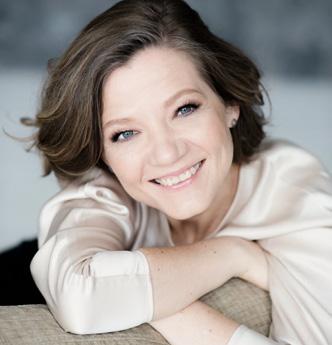
Jay Ivey serves on the voice faculty at the University of Georgia, with a focus on musical theatre and contemporary styles.

His operatic roles include the title roles in Don Giovanni and Gianni Schicchi, as well as Rigoletto, Lescaut (Manon), and Morales (Carmen). He has performed with Opera Theatre of St. Louis, where he appeared as the British Ambassador in the world premiere of the revised edition of The Ghosts of Versailles by John Corigliano. Additional roles include Spalanzani (Les contes d’Hoffmann), the Imperial Commissioner (Madama Butterfly), and the Priest (Troilus and Cressida). He was also named Artist in Residence, performing concerts and the role of Sharpless in the company’s outreach production of Madama Butterfly.

As a concert soloist and narrator, Ivey has performed a wide range of oratorio and large-scale works, including Handel’s Messiah, Fauré’s Requiem, Brahms’s Requiem, A Lincoln Portrait, and Belshazzar’s Feast, among others.

In musical theatre, he has worked extensively as a music director, pianist, and coach, collaborating on more than 75 productions and with multiple Emmy, Grammy, and Tony Award–winning artists. He has previously served on the faculties of Jacksonville University, Eastern Illinois University, and Indiana University, where he served as music director for the School of Theatre, Drama, and Contemporary Dance.

Ivey is the author of Feuer und Eis: Duality in the Life and Lieder of Franz Schubert. If you would like to hear more of his singing, you can follow him on TikTok at @jiveysings, where he shares performances from the Great American Songbook and beyond.

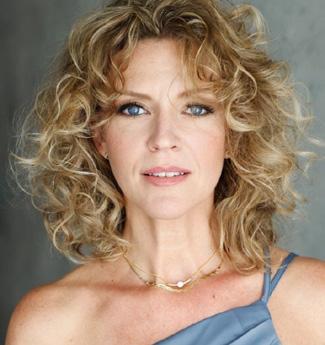
Anne Slovin, soprano, is a versatile performing artist, researcher and voice pedagogue who earned her doctorate from Indiana University’s Jacobs School of Music in 2025. Passionate about crossing genres and exploring new vocal repertoires and styles, this summer she will both perform ElisabethClaude Jacquet de la Guerre’s 1715 cantata Sémélé with Chamber Music Athens and workshop the new opera Rosenbaum and Li, by Dina Pruzhansky and Hai-Ting Chinn, at Atlanta Opera.

Slovin has distinguished herself as an interpreter of contemporary opera, having originated the title role in Shulamit Ran’s Anne Frank in 2023 and performed the role of Clara in the collegiate premiere of Jake Heggie and Gene Scheer’s It’s a Wonderful Life in 2017 at the IU Jacobs School of Music. In 2015, she created the role of Mica Segal in The Property, a klezmer opera with music by Wlad Marhulets and a libretto by Stephanie Fleischmann, at the Lyric Opera of Chicago. Other favorite roles in opera and operetta include Hanna Glawari in The Merry Widow, Pamina in Die Zauberflöte, and Micäela in La Tragédie de Carmen. She is a versatile recitalist, having recently performed a recital of Jewish songs as part of UGA’s Faculty Artist Series, as well as Tom Cipullo’s song cycle A Visit With Emily and the pianoforte songs and duets of 18th-century composer Harriett Abrams. Recent oratorio performances include soprano solos in Brahms’ Ein Deutsches Requiem and Handel’s Messiah and the role of Eve in Haydn’s Creation

Andrew Voelker serves as Vocal Coach and Music Director of Opera Theatre in the Hugh Hodgson School of Music at the University of Georgia. They are in demand as a vocal coach, pianist, tenor, and conductor, specializing in lyric diction and contemporary score analysis. This season, Voelker directed music for Erich Korngold’s The Ring of Polykrates and conducted Jonathan Dove’s Mansfield Park.

Andrew previously served on the faculty of the Crane School of Music at SUNY Potsdam as the music director of the Crane Opera Ensemble. Highlights included the premiere of Computing Venus (Takach/Vincent), as well as stage productions including Pauline Viardot’s Cendrillon and Milton Granger’s Bluebeard’s Waiting Room.

While serving as Associate Instructor of Collaborative Piano at Indiana University’s Jacobs School of Music, Voelker coached productions of Le nozze di Figaro, La traviata, Little Women, Serse, and L’incoronazione di Poppea. They also spent three years as the music director for the graduate opera workshop directed by internationally renowned soprano Heidi Grant Murphy.

As a tenor, Voelker has performed oratorio solos including Handel’s Messiah, Haydn’s Lord Nelson Mass, Rossini’s Stabat Mater, and short sacred works of Mozart and Schubert. Andrew received the Doctor of Music degree in Collaborative Piano from Indiana University under the mentorship of Kevin Murphy and Anne Epperson. They hold a Master of Music degree in Collaborative Piano from the Cleveland Institute of Music and Bachelor of Music degrees in Piano and Voice from Northern Illinois University.

Daniel Bara is the Interim Director of Hugh Hodgson School of Music and serves as the John D. Boyd UGA Foundation Professor of Choral Music and the Director of Choral Activities and Professor of Music at the Hugh Hodgson School of Music at the University of Georgia where oversees seven university choral ensembles as well as the graduate choral conducting program. His university choirs have performed by juried invitation for state, regional, and national conventions of ACDA, MENC, and IMC.

The UGA Hodgson Singers under Bara’s direction won the Grand Prix at the International Choral Competition Ave Verum in Baden, Austria in 2014 and has performed at Southern Division ACDA Conventions in 2014 and 2018 with an invitation to perform in the 2024 conference in Louisville, KY. In May of 2023 the UGA Hodgson Singers won 2nd prize at the prestigious Marktoberdorf International Chamber Choir Competition in Germany, where their performances were categorized as “Excellent on an International Level.” Their 2017 Gothic Records professional recording, Grace Immaculate, is distributed internationally by Naxos. Recent professional collaborations between Bara and the UGA Hodgson Singers include performances with Kathleen Battle, Andrew Bocelli, The Knights Chamber Orchestra, internationally acclaimed vocal sextet The King’s Singers with whom they premiered a jointly commissioned piece by Nico Muhly in 2018, the acclaimed British professional choir. Tenebrae, and the Atlanta Baroque Orchestra.

DIRECTOR BIOGRAPHIES

Now in his 32nd year at UGA, Mark Cedel brings a wealth of professional experience to his position as Director of Orchestral Activities. Prior to his appointment at UGA, he was Associate Conductor of the Charlotte Symphony Orchestra. In his four seasons with that orchestra, he conducted over 200 performances; appearing on every series offered by the orchestra. Before joining the Charlotte Symphony, Cedel was Principal Viola and Assistant Conductor of the Charleston (SC) Symphony Orchestra for nine years. While in Charleston, he served for two seasons as that orchestra’s Acting Music Director. From 1986-1990, he was a member of the artist faculty at the Brevard Music Center and was principal conductor of the Brevard Repertory Training Program.

In addition to directing orchestral activities at UGA, Cedel served as professor of viola from 19942002. During that period he performed, toured, and recorded regularly as extra/substitue viola with the Atlanta Symphony Orchestra, including its northeast tour with concerts in Carnegie Hall. He returned to teaching viola for the 2009-2010 academic year, while a search was conducted to fill the position.

Cedel has been associated with many orchestras in the southeast. This includes Principal Viola of the South Carolina Chamber Orchestra and the Guest Principal Viola of the Savannah Symphony, and orchestras in Augusta, Macon, and Jacksonville. He has performed with many distinguished conductors such as Claudio Abbado, Leonard Bernstein, Riccardo Muti, Zubin Mehta, Eugene Ormancy, and Carlo Maria Giulini.

Colin Mann is Assistant Professor of Music and Associate Director of Choral Activities at the Hugh Hodgson School of Music at the University of Georgia. Mann conducts the Georgia Treble Choir, Glee Club, University Chorus, and Choral Project as well as teaches graduate choral literature and advises graduate conducting students.

In May of 2025, Mann led the Nazareth Treble Choir in a choral tour to Poland where students performed at national festivals in Kraków and collaborated with choirs at the University of Rzeszów. Mann’s current scholarship focuses on national singing trends and new choral music in the Baltic states. His research has been buoyed by contemporary Lithuanian composers, conductors, and professional vocal ensembles like the Vilnius Municipal Choir Jauna Muzika.

He has conducted several choral-orchestral works including Poulenc Gloria, Mozart Vesperae solennes de confessore, Duruflé Requiem, Haydn Lord Nelson Mass, Finzi In terra pax, and he has helped prepare Beethoven Missa Solemnis and Vaughan Williams Dona Nobis Pacem with the EastmanRochester Chorus and Eastman Philharmonia. As chorus master and conductor of the Viva Bach Peterborough Festival in New Hampshire since 2022, Mann has conducted over ten cantatas and three motets with instruments. In 2019, Mann traveled to Kuala Lumpur, Malaysia, to perform Bach St. Matthew Passion with the Malaysia Bach Festival.

HUGH HODGSON SCHOOL OF MUSIC FACULTY

Daniel Bara, Interim Director

Brandon Craswell, Associate Director, Director of Undergraduate Studies

Emily Gertsch, Associate Director, Director of Graduate Studies

Amy Pollard, Associate Director, Director of Performance Activities

PERFORMANCE FACULTY

*Angela Jones-Reus

D. Ray McClellan

Reid Messich

Amy Pollard

Brandon Quarles

Josh Bynum

Brandon Craswell

Jean Martin-Williams

James Naigus

*Matthew Shipes

Gilbert Villagrana

Kimberly Toscano Adams

*Timothy Adams

Gregory Broughton

Jay Ivey

*Elizabeth Knight

Amy Petrongelli

Anne Slovin

Wanda Yang Temko

John Coble

Damon Denton

Scott Higgins

Grace Huang

Emely Phelps

Evgeny Rivkin

Anatoly Sheludyakov

*Liza Stepanova

Alan Woo

Levon Ambartsumian

Shakhida Azimkhodjaeva

*Daniel Bolshoy

Monica Hargrave

Michael Heald

James Kim

Edward Kreitman

Milton Masciadri

Maggie Snyder

Shaun Baer

Levi Dean

Elizabeth Durusau

Heather Gozdan-Bynum

Tony Graves

Scott Higgins

flute clarinet oboe bassoon saxophone trombone trumpet horn horn

tuba/euphonium trumpet percussion percussion voice voice voice voice voice voice organ piano piano piano piano piano piano piano piano

violin violin guitar

harp violin cello

Suziki

double bass viola

BANDS

Mia Athanas

Brett Bawcum

Jack A. Eaddy, Jr.

Marcus Morris

*Nicholas Enrico Williams

CHORAL

Daniel Bara

Colin Mann

Daniel Shafer

COMMUNITY MUSIC SCHOOL

SUMMER CAMPS

Stephen Fischer

COMPOSITION & THEORY

Tyler Beckett

Adrian Childs

Emily Gertsch

Daniel Karcher

*Emily Koh

Peter Lane

Dickie Lee

Jared Tubbs

Trinity Vélez-Justo

JAZZ STUDIES

David D’Angelo

Gregory Satterthwaite

James Weidman

MUSIC EDUCATION

*Rebecca Atkins

Alison Farley

Tyler Goehring

Roy Legette

Kristen Lynch

Michael Robinson

Johanna Royo

Brian Wesolowski

Susan McClure, Administrative Assistant to the Director

Director of Public Relations

Development Associate

Music Library Manager

Undergraduate Academic Advisor

Piano Technician

Senior Piano Technician

Kathleen Powell

Rocky Raffle

James Sewell

Jared Tubbs

Marshall Williams

MUSIC THERAPY

*Ellyn Evans

Sally Ann Nichols

Jenny Stull

MUSICOLOGY & ETHNOMUSICOLOGY

Karen Bergmann

Naomi Graber

*David Haas

Jared Holton

Jean Kidula

Sarah Pickett

Rumya Putcha

Joanna Smolko

OPERA

Daniel Ellis

Andrew Voelker

ORCHESTRA

Mark Cedel

RECORDING & STREAMING

Eric Dluzniewski

Paul Griffith

*Area Chair

Graduate Program Administrator

Administrative Associate in Bands

Production & Events Manager

Sectioning Officer

Director of Admissions

HUGH HODGSON SCHOOL OF MUSIC STAFF

SUPPORT THE SCHOOL OF MUSIC

HOW TO GIVE

Under each of the available funds below is a QR code where you can scan and donate directly to that fund. However, if you would like to learn more about alternative ways to donate, scan the QR code now to visit our “How to Give” page with additional details and options.

Scholarships and Graduate assistantships funded by donations to the Thursday Scholarship Fund make it possible for students to learn and pursue their passions at the Hugh Hodgson School of Music. Please consider a taxdeductible gift to the Thursday Scholarship Fund so we may continue to support our students and make their education possible. Scan the QR code now or reach out to Melissa Roberts at roberts@uga.edu or 706-254-2111.

AREAS OF THE SCHOOL OF MUSIC

In addition to our primary Support and Scholarship Funds, many specialized areas of interest, including our orchestra and choral programs, have support and scholarship funds you can contribute to directly. You can now learn more about all the ways and areas you can support the Hugh Hodgson School of Music. Scan the QR code or visit music.uga.edu/giving-and-alumni to the support the Hugh Hodgson School of Music area of your choice.

JOIN THE DIRECTOR’S CIRCLE

Gifts of all amounts are greatly appreciated. However, annual giving at the $1,500 level and higher provides membership in the Director’s Circle, our Hugh Hodgson School of Music Honor Roll. Director’s Circle members are invited to exclusive events and performances throughout the academic year.

For large gifts, please contact Melissa Roberts at roberts@uga.edu or 706-254-2111. SUPPORT INDIVIDUAL

THANK YOU FOR YOUR CONTINUED SUPPORT OF THE UNIVERSITY OF GEORGIA HUGH HODGSON SCHOOL OF MUSIC.

FRI 4/24

7:30 p.m.

Hodgson Concert Hall

FREE CONCERT

MON 4/27

3:30 p.m.

Ramsey Concert Hall

FREE CONCERT

MON 4/27

7:30 p.m.

Hodgson Concert Hall

FREE CONCERT

UNIVERSITY OF GEORGIA AFRICAN AMERICAN CHORAL ENSEMBLE

Since the 70’s as the Pamoja Singers, the African American Choral Ensemble (AACE) has kept concert halls and churches filled with the powerful musical treasures birthed from the African American experience. AACE is a beacon tower of fellowship and friendship for the university community, conducted by Gregory Broughton.

UNIVERSITY OF GEORGIA REPERTORY SINGERS

The Repertory Singers is a mixed chamber choir directed by graduate student conductors. Its format offers laboratory rehearsal and performance experience for conductors and singers alike.

UNIVERSITY OF GEORGIA

PHILHARMONIA & SYMPHONIC BAND

UGA PHILHARMONIA

As one of the Hugh Hodgson School of Music’s large orchestral ensembles, the University Philharmonia offers an outlet for musical expression to all string players at the University of Georgia. The ensemble performs three times per academic year. The University Philharmonia is under the supervision of Mark Cedel.

UGA SYMPHONIC BAND

University of Georgia Symphonic Band is one of the Hugh Hodgson School of Music’s large wind bands. The Symphonic Band focuses on the classic band repertoire as well as exciting new music, and has recorded for C. Alan Publications. Symphonic Band is conducted by Michael C. Robinson.

Turn static files into dynamic content formats.

Create a flipbook
Thursday Scholarship Series: Orff's "Carmina Burana" - Combined Choirs and Symphony Orchestra by ugamusic - Issuu