
MONDAY, MARCH 30, 2026 at 7:30 p.m.
RAMSEY CONCERT HALL
MONDAY, MARCH 30, 2026 at 7:30 p.m.
RAMSEY CONCERT HALL
Call to order
Ozali
Kaung’a Yachee
Kokoliko
Idumi Yaimala
Monday, March 30, 2026 at 7:30 p.m.
Ramsey Concert Hall
UGA Performing Arts Center
University of Georgia African Music Ensemble
Jean Ngoya Kidula , Director
PROGRAM
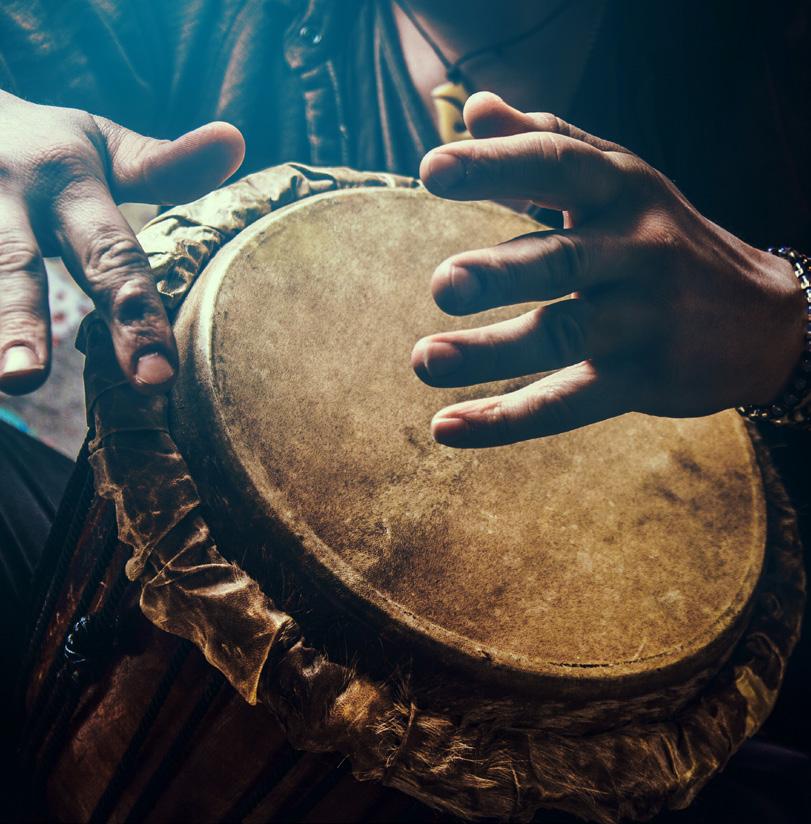
Eric Koome Muriaki, Ohangla
Public domain and Owen Mwatia (b. 1982)
Arr. Rigan Sakorzy, Owen Mwatia, N. Kidula
Lingala and Kiswahili Languages
George Gichero, Piano, Drums
Non-copyrighted
Arr. Boniface Mghanga (1954-2011)
Taita Language
Sylvester Makobi, Kayamba; George Gichero, drums
Henry Wanjala (b. 1948)
Lunyore Language
Sylvester Makobi, Tenor ; Kevin Kimtai, conductor
Public domain
Arr. Ngoya Kidula
Ũrũrũrũ Mwana
Tiriki Language
Sylvester Makobi, Tenor
Kikuyu Language
SSA, Winnie Mburu, leader
Public domain
Arr. Stellah Mbugua (b. 1989)
Baba yetu
Michezo
Malaika
Rhumba Pembeni
Bwana Nipe Pesa
Filimbi
Kevin Kimtai (b. 1991)
Eddie Baraka Mony (b. 1992)
Kiswahili Language
Sylvester Makobi, Tenor; John Musila, piano
Fadhili Williams (1938-2001)
arr. Humphrey Kisia (b. 1979)
Kiswahili Language
Owen Margaret-Verrett, baritone; Tiffany Yin, piano
Shaka Marko Lwaki (b. 2000)
Shaka Lwaki, French Horn
Jasmin Abdunazarova, Piano
Orchestra Super Mazembe (1975)
arr. Shaka Marko Lwaki
Shaka Lwaki, French Horn; Jasmin Abdunazarova, Piano; Sydney E. Passmore, Cello
Public domain
Giriama language
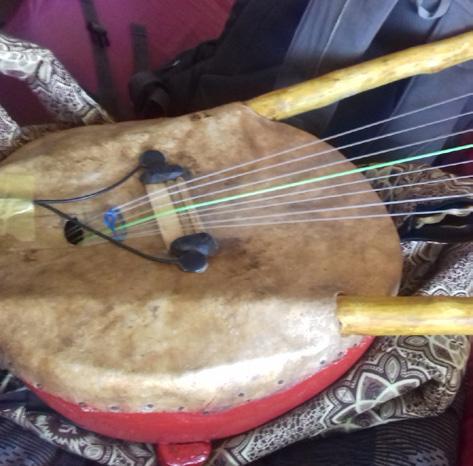
Kevin Kimtai, Everline Ogari soloist; Sylvester Makobi, Chivoti; Ngoya Kidula, Kayamba
Koth Biro
arr. Ayub Ogada (1956-2019)
Luo language
Sylvester Makobi, Nyatiti
Zilizopendwa medley
Embe dodo, O Mama Idi, Mama Zowera
Christina Dada, Ajali Haikingiki, Julieta Uko Wapi
Seben ya Kanisa medley
Wa Milele, Yesu ni Wangu, Hakuna Mungu kama wewe
Kiswahili Language
Fundi Konde (1924-2000)
Habel Kifoto (1949-2011)
Isaya Mwinamo (1932-2005)
Non-copyrighted New Life Band
Eric Murianki, lead guitar; Delroy Owino, bass guitar; George Gichero, drums
Jean Kidula, rhythm guitar; John Musila, keyboard
The program features six contemporary Kenyan choral, vocal, and instrumental traditions. It was curated to reflect the diverse musical systems an undergraduate music student in a Kenyan University is expected to master in order to demonstrate superior proficiency and be certified as a musician from the academy.
Contemporary Choral traditions: Compositions or adaptations of Kenyan/African repertoire in different languages beyond standard European/American vernaculars.
Choral music is a staple in educational institutions at all levels. At the undergraduate level, regardless of major, students typically sing in a choral ensemble featuring large groups with members drawn from departments of music, or the University at large. While repertoire is drawn from a broad global swarth courtesy of the colonial heritage, more uniquely Kenyan repertoire includes compositions by Kenyan composers, or adaptations and arrangements of songs drawn from indigenous music traditions, from continental, regional, national and indigenous popular styles, as well as from Kenyan (African) iterations of religious song. That means that singing in different languages is as normal as breathing. In our presentation, we begin with an arrangement of Ozali, a ‘popular’ gospel song in two languages – Lingala (Congolese lingua franca) and Kiswahili. It is based on a known hymn translation that has been gospelized in an ‘African’ popular style. The song is followed by an arrangement of a religious composition from ~1940s in Taita language (Kaung’a Yachee) arranged by Kenya’s world-famous conductor Boniface Mghanga (1954-2011) and popularized globally by the Muungano (means United, Union, Joint, Collective) National Choir, that he founded in 1979. To form Muungano choir, Mghanga worked with choir directors in Nairobi and refashioned their signature songs for the combined Choir whose members were drawn from different church choirs. Henry Wanjala’s Kokoliko is an SATB composition in Bukusu language based on the styles of early Luyia Christian religious song. The title word is the sound of a cock crow, signifying when Peter realized that he had denied knowing Jesus three times. Wanjala is one of the earliest religious popular musicians who performed in the style of country gospel in the early 1970s. He then studied music education and was a member of the first graduating class of the bachelor’s degree in music education in Kenya in 1981. He is also a patron of the Kenya Boys choir that performed at UGA in 2004. These three first pieces are a nod to the Easter Season that is just around the corner. After these religious songs, we present arrangements of ‘folk’ repertoire. Idumi yaimala is an arrangement of male ritual song of the Tiriki for mixed voices by Ngoya Kidula. It was curated for a course at UGA on ritual and religion in Kenya. Ũrũrũrũ Mwana in Kikuyu language, arranged by Stellah Mbugua, draw on folk traditions, is a well-known lullaby adapted for SSA.
Solo repertoire in ‘classical’ song (or western instrument).
Music schools have traditionally focused on European ‘high art’ singing traditions such as bel canto techniques. While much of the required repertoire was composed in European languages over time, composers have written in languages from different parts of the world. In this performance, we feature compositions and arrangements by Kenyans in languages of the country. In this concert, we will focus on ‘art’ songs in Kiswahili language. Kevin Kimtai’s Baba Yetu is a setting of the Kiswahili translation of the Lord’s Prayer. Eddie Mony’s composition Michezo is part of a song cycle Kumbukumbu za Utotoni based on memories of his childhood. In this piece, Mony invokes a well-known childhood game known as Marobo that was translated into various
languages as the basis for the composition. Malaika, a Kiswahili love ballad, is an arrangement of one of the most performed Kiswahili popular standards that was first recorded in 1960 by Fadhili Williams and the Jambo Boys band. It was later covered by global South African iconic singer and activist Miriam Makeba in collaboration with Harry Belafonte, an American with Jamaican heritage in 1965. Makeba later recorded a solo version that was released in 1974. It received global dissemination due to her already outstanding position and output. Non-East African and international performers produced covers based on Makeba’s version, but most Kiswahili speakers drew from Williams’ work. Mr. Kisia demonstrates recent trends by African composers and arrangers to arrange well-known national, pan African and international popular songs for contemporary choral singing and also as solo ‘art’ songs.
Instrumental repertoire for Western instruments based on Kenyan musical resources
Music students are expected to specialize in a western instrument and/or in a Kenyan instrument. While most repertoire is drawn from classic western art resources, in recent years, Kenyan composers have written works for western instruments. These works may be compositions with a “Kenyan’ flare, or arrangements of known pieces for western chamber and orchestral style orchestras. Lwaki performs one of his compositions – Rumba Pembeni. He draws on Kenyan rumba aesthetics, but the title is also a play on the Kiswahili word for horn ‘Pembe’ which is also the instrument for which he scores the piece. He also presents his arrangement of Bwana Nipe Pesa for Horn, Cello and Piano. The song was performed by Orchestra Super Mazembe whose members relocated from Congo to Nairobi in 1974 to escape the political upheavals in that country and found a ready audience for Congolese style rumba which they then fused with ideas from Kenyan popular styles.
Kenyan indigenous song traditions – with associated accompaniment
Indigenous songs associated with ethnic groups are among the iconic identifiers of Kenya. These songs may be perceived as public domain, but others have known composers who write not just in the styles associated with particular groups, they continue the tradition of storytelling, social commentary, love songs, laments, lullabies and just good time entertainment of not just rural populations, but city dwellers who actively keep their traditions alive. While solo singing exists, we draw on two Kenyan groups – Giriama with the song Filimbi that has not only been a staple in ‘folk’ song repertoire across the country, it has also been arranged for choirs and adapted for popular instrumentation. We present it in its most recognized ‘folk’ performance. The song seems to date to the end of the 19th century with whistles (filimbi) used to bring ‘soldiers’ to attention, and was adopted in ‘folk’ parodies of British colonial practices, but also references reading and writing, satirizing going to school so one can learn to read English in order to understand the Koran, which was in Arabic. Koth Biro was sung by Luo children as a call to get inside the house, bring the cows home etc because it was about to rain. It was introduced to the ‘World music’ stage by legendary performer, Ayub Ogada in 1993, and later adopted for the movie Constant Gardener released in 2005. Ogada first performed it in the 1970s while a member of the band Black Savage, a house band for a gallery called African Heritage that opened in Nairobi in 1972 as a Pan African arts center. Ogada’s rendition not only brought the Luo Thum Nyatiti and gara (leg bells) to the world stage, he set it in the experimental styles of ‘World music to include guitars, bass, other percussion instruments and ambient noises. Slyvester Makobi – who is not of Luo heritage – performs the song while playing the Nyatiti, assisted by a few other musicians.
Popular repertoire of Kenyan, African and global source
In this iteration, we focus on the first Nairobi sound of the 1950s-60s typically referred to in Kenya as Zilizopendwa (The dearly loved ones). The Nairobi sound of the period was well known around the continent thanks to the nascent recording industry studios housed in Nairobi to carter to East and Central Africa, Composer/Recordists such as Fundi Konde (1924-2000), Isaya Mwinamo (1932-2005), Fadhili Williams (1938-2001) Daudi Kabaka (1939-2001), John Nzenze (1940-2020), Habel Kifoto (d. 2011) were household names in the early years of Kenyan independence as the portrayers of a ‘national’ sound in national and indigenous languages. Or else, they sung in English. They not only sung standard pop fare of love desired, lost and found, they were also culture brokers of the ‘new normal’ in Africa. These songs were reintroduced into Kenyan consciousness by the band Avenida Success who began by paying gigs at tourist hotels in Kenya’s coastal towns beginning in the late 1960s. Avenida renamed themselves Them Mushrooms in 1972 and became most famous for their covers of classic Kenya pop of the 1950s and 60s (ZIlizopendwa). It is mostly from the Them Mushrooms covers that later rap and other commercial artists sampled or re-covered these golden classics. This is also how the songs made their way into educational institutions, music festivals, and national celebrations.
In this iteration, we focus on Christian religious songs, more specifically on a song session called ‘seben.’ Most pieces in this category are in public domain. These are spontaneous songs that emerged in Pentecostal denominations that solidified in Kenya the late 1920s, and they were also the classic repertoire of early African-led Christian groups rather than Western missionary organizations. However, new songs in these styles proliferated with the 2nd wave of Pentecostalism of the late 1960s associated with the Jesus movement, as well as the Charismatic catholic renewals of that period that also ushered in unprecedented growth in the Christian music industry that accelerated the dissemination of these pieces in the country and on the continent form the 1980s. Ubiquitous access to internet resources has increased and facilitated the spread of not just the sounds, but also the performance practices globally. Some of the songs are considered public domain or uncopyrighted while a few have known composers. For example, the version of Hakuna Mungu Kama Wewe was written by the Tanzanian group called New Life Band based in Arusha in the 1990s. It was later popularized by the Makwaya outfit known as Uinjilisti Kijitonyama choir and then taken up by popular solo artists with the current most popular iteration by Kenyan singer Evelyn Wanjiru. The ‘seben’ term and idea is associated with popular secular rumba stylistics, although it also has indigenous African performance practice roots. Seben has become a common Christian worship session. It is not just the rumba-ish style but also the role of the lead guitar as provocative, communicative, conversational and instigative, and the techniques on the Bass that are not necessarily about providing a chord structure, but also conversates and provokes the song leader, the lead guitar, and any available instrument. Meanwhile the drum conducts, keeping time but also signaling changes. In this climate, a song leader is freed to improvise, innovate and stimulate the congregation to musical and spiritual heights. The singers are part of the groove. Once you get the text, join in singing.
Kevin Kimtai (b.1991) is a Kenyan composer, educator and choral director. He currently pursuing Ph.D. studies in Music Education at the University of Florida, Gainesville, Florida. His compositional works draws on contemporary African choral traditions and as an educator, he strives towards a culturally responsive pedagogy.
Prior to pursuing his graduate studies at Florida state, Kimtai was not only involved in conducting choirs, he also taught music at two very well-respected high schools in Kenya: Precious Blood in Nairobi and Alliance High School in Kikuyu. He has also authored several music textbooks for use in high school teaching and been involved in the development of national music curricular in Kenya. He has served as an adjudicator in national music festivals and an examiner of high school students in music. He is committed to promoting African music in global performance and education contexts. Kimtai is currently the director of Pazeni Sauti, an ensemble specializing in repertoire from diverse African contemporary choral music traditions, housed at the University of Florida.
Shaka Marko Lwaki (b.2000) is a music student at the Alabama State University in Montgomery Alabama, pursuing an undergraduate degree in French horn performance under Brenda Luchsinger, and studies music composition under Adonis Gonzalez. Hailing from Nairobi, Kenya, he began his musical studies in high school in 2014 through the Harmony Kenya Foundation (HKF), a charitable organization that fosters music education to students in public schools around Nairobi. His biggest musical influence has been his high school music teacher and HKF founder, Mr. Moses Watatua.
Prior to coming to the United States in 2022, Shaka worked as a music arranger, composer, librarian, French Horn performer and tutor for various ensembles, organizations, and schools across Nairobi. He has written a wide array of works ranging from instrumental solos to orchestral pieces that have been performed across the globe, including a performance of his work “Beethoven in Kenya” by the Montgomery Symphony Orchestra, and a reading of his new work “Taifa Overture” by the New England Philharmonic in June 2025. Shaka currently plays horn with the Montgomery Symphony Orchestra.
Eddie Baraka Mony (b. 1992) is a tenor, composer, and educator. Born in Homabay, Kenya in 1992, Eddie Mony got most of his musical influence from his father who passed away when Mony was still young. He then grew up in Rongo, Kenya with his mother and siblings. Mony was a high-achieving student, and he gained admission to Starehe Boys High School, one of Kenya’s top schools, where he continued his musical studies. He later joined Kenyatta University to begin his undergraduate studies in music before moving to the United States where he completed his undergraduate and master’s degrees in music performance, as well as his Doctorate in Music Education, at the Jacobs School of Music, Indiana University.
While studying at Indiana University, he also taught at Kabarak University in Nakuru, Kenya. It is here that he began composing ‘art’ songs for his voice students and also teaching composition. He also composed choral works for his former high school, Starehe Boys as well as embarking on other commissioned compositions for non-Kenyan performers. Tenor Sylvester Makobi has performed, written about and presented papers on Mony’s groundbreaking song cycle Kumbukumbu za Utotoni, in Kiswahili, scored for Tenor voice and piano.
Owen Mwatia (Daddy Owen b. 1982) is a Kenyan Christian-popular-music singer and songwriter. He is most well-known for his Kenyan-rap infused songs that also marry Kenyan musical aesthetics with Congolese ‘rumba’ stylistics but with a global contemporary sound. He was a continental (Anglophone Africa), regional (East African) and national (Kenyan) artist of the year from 2009-2012 during which time he also won several regional awards. Some of his most widely disseminated performances are in collaboration with other artists, including his brother Roy Smith Mwatia (Rufftone).
Featured non-student guest performer
Sylvester Makobi recently completed his DMA in voice performance at the Jacobs School of Music, Indiana University. His artistic journey has taken him across four continents. He made his Carnegie debut in 2024. His repertoire includes soloist in five major concert works, nine operatic roles. Apart from singing, Makobi plays nyatiti, kigamba and chivoti. He is a recipient of the Bloomington Arts Commission Artistic Advancement Award.
Makobi will also begiving a lecture demonstration on composing and performing in Kenyan song at 9.55 a.m. on Tuesday March 31st in Room 521 in the Hugh Hudgson School of Music. He will be assisted by Kevin Kimtai and John Musila. This event is open to the public.
UPCOMING MUSICOLOGY/ETHNOMUSICOLOGY ENSEMBLES
MON 4/13
7:30 p.m.
Hodgson Concert Hall
FREE CONCERT
TUES 4/21
7:30 p.m.
Ramsey Concert Hall
FREE CONCERT
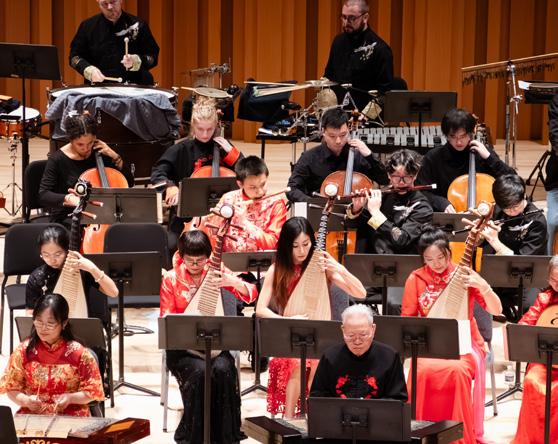
UNIVERSITY OF GEORGIA CHINESE MUSIC ENSEMBLE
Under the direction of Vicki Lu, several distinguished guest artists often join this fan favorite ensemble which features instruments such as the erhu, guzheng, pipa, hulusi, and the yangqin. Typically following the concert, the audience is invited on stage to explore the instruments.
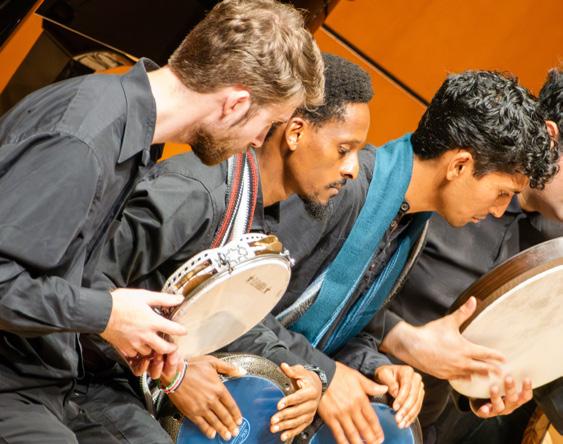
UNIVERSITY OF GEORGIA MIDDLE EAST MUSIC ENSEMBLE
Directed by Jared Holton, this ensemble features music, rhythm, and dance mainly from North Africa and the Eastern Mediterranean. Students perform on regional instruments such as the oud (Arabic lute), nay (reed flute), riqq, daff, and tabla. Performances often include special guest artists.
STUDENT PERFORMERS
Jasmin Abdunazarova
Victoria Adebisi
Nancy Alila
Winnie Mburu,
Quintina Carter-Enyi
Quinn Dillard
Edwina Kwakye-Gyamfi
Evan R. Lambert
Owen Margare-Verrett
Elizabeth B. Mukasa
Sydney E. Passmore
Selorm Sovi
Munei Waliuba
Tiffany Yin
MUSI/AFST 2860, 48/6861
Jean Ngoya Kidula, course instructor
Piano
Soprano
Soprano
Soprano
Soprano
Soprano/Alto
Alto
Baritone
Baritone
Alto
Cello
Alto
Alto
Piano
NON-STUDENT UGA PERFORMER
MM
Ph.D.
Ph.D.
Ph.D.
Ph.D.
Junior
Ph.D.
Sophomore
Junior
Ph.D.
DMA
Ph.D.
Masters
Masters
Piano, High Hodgson School of Music
Mechanical Engineering
Quantitative Methodology, College of Education
Music Ed., Hugh Hodgson School of Music
Ethnomusicology, Hugh Hodgson School of Music
Music Ed., Hugh Hodgson School of Music
Theater and Film Studies
Music Ed. Hugh Hodgson School of Music
Voice, Hugh Hodgson School of Music
School of Social Work
Composition, Hugh Hodgson School of Music
Comparative Biomedical Science
Urban Planning and Design
Piano, Hugh Hodgson School of Music
Joy Mukasa Alto Staff Human Resources
VISITNG GUEST STUDENT PERFORMERS
Cyndicate Kabei
George Gichero
Benard Juma
Kevin Kimtai
Shaka Marko Lwaki
Eric Murianki
John Musila
Delroy Owino
Vitalis Wagome
Soprano/Alto
Baritenor
Piano/Drums
Tenor
Baritenor
Conductor
Baritenor
French Horn
Bass/Guitar
Ohangla
Bass/Piano
Bass
Bass guitar
Bass
Junior Sophomore
Sophomore
Ph.D.
Senior Horn Masters
Masters
Junior Masters
VISITNG NON-STUDENT GUEST PERFORMERS
Sylvester Makobi
Everline K. Ogari
ADDITIONAL SUPPORT
Tenor/ Nyatiti
Chivoti Soprano
Adjunct Instructor
Horn/Music Ed., Alabama State University. Oboe, Alabama State University
Flute/Music Ed., Alabama State University
Music Education, University of Florida
Horn, Alabama State University
Music Therapy, University of Kansas
Music Theory, Indiana University
Clarinet, Alabama State University
Music Ed., Alabama State University
Jacobs School of Music, Indiana University
Andrews University, Michigan
UGA African Studies Institute | UGA Special Collections Library Fellowship
Under each of the available funds below is a QR code where you can scan and donate directly to that fund. However, if you would like to learn more about alternative ways to donate, scan the QR code now to visit our “How to Give” page with additional details and options.
Scholarships and Graduate assistantships funded by donations to the Thursday Scholarship Fund make it possible for students to learn and pursue their passions at the Hugh Hodgson School of Music. Please consider a taxdeductible gift to the Thursday Scholarship Fund so we may continue to support our students and make their education possible. Scan the QR code now or reach out to Melissa Roberts at roberts@uga.edu or 706-254-2111.
In addition to our primary Support and Scholarship Funds, many specialized areas of interest, including our orchestra and choral programs, have support and scholarship funds you can contribute to directly. You can now learn more about all the ways and areas you can support the Hugh Hodgson School of Music. Scan the QR code or visit music.uga.edu/giving-and-alumni to the support the Hugh Hodgson School of Music area of your choice.
Gifts of all amounts are greatly appreciated. However, annual giving at the $1,500 level and higher provides membership in the Director’s Circle, our Hugh Hodgson School of Music Honor Roll. Director’s Circle members are invited to exclusive events and performances throughout the academic year.
For large gifts, please contact Melissa Roberts at roberts@uga.edu or 706-254-2111.
THANK YOU FOR YOUR CONTINUED SUPPORT OF THE UNIVERSITY OF GEORGIA HUGH HODGSON SCHOOL OF MUSIC.
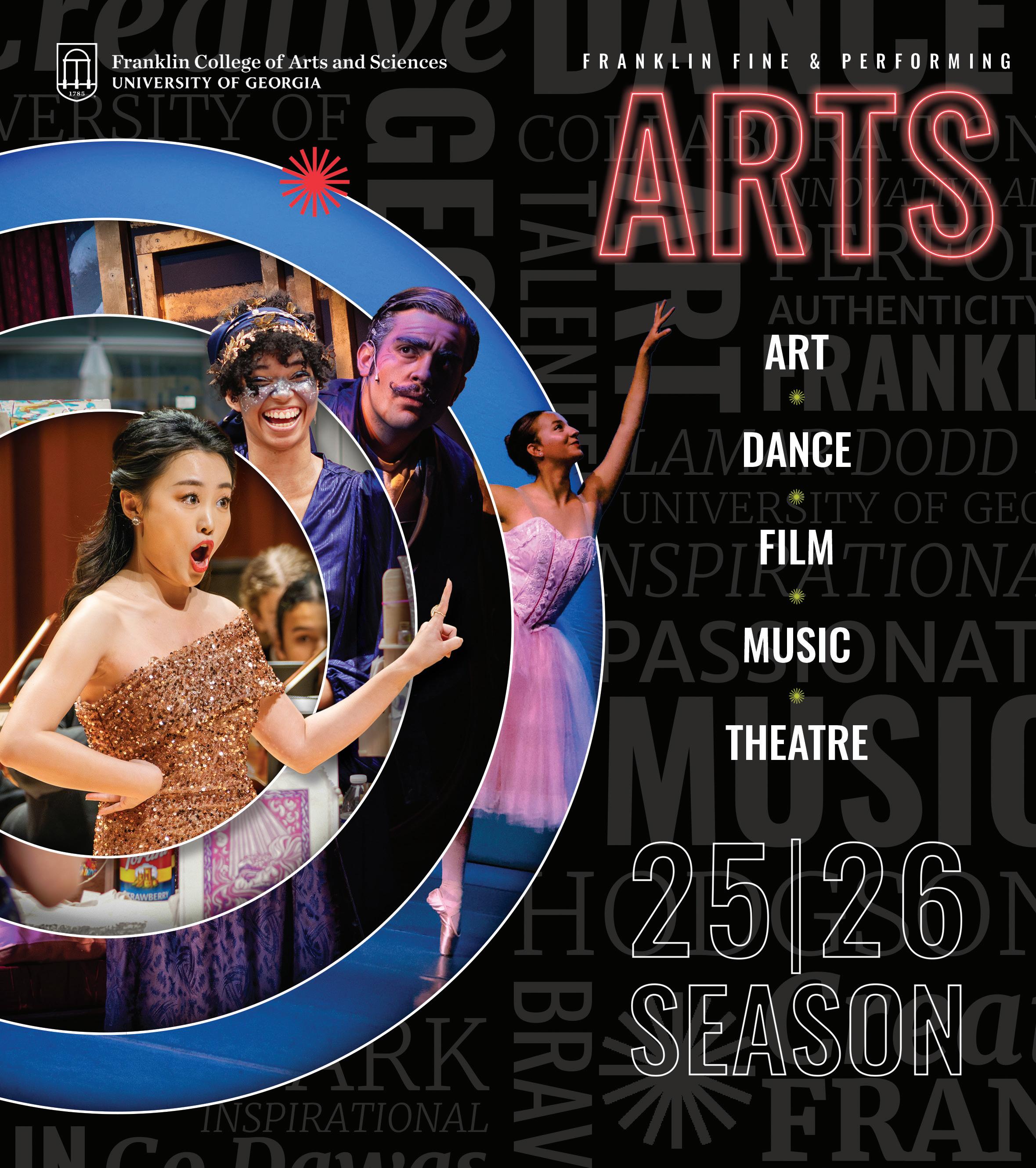
On stage and in the gallery — over 100 performances, exhibitions and lectures await you this season at the Franklin College of Arts and Sciences. Enjoy a dazzling variety of free events plus explore our ticketed seasons in dance, theatre and music starting at just $15. Students, faculty and guests of UGA fine and performing arts offer Athens premier programming all year round.

TUES 3/31
4:30 p.m.
Edge Concert Hall
FREE CONCERT
TUES 3/31
5:30 p.m.
Ramsey Concert Hall
FREE CONCERT
ITALIAN EXCHANGE STUDENT RECITAL
Edge Concert Hall is located on the third floor of the Hugh Hodgson School of Music. 230 River Road, Athens, GA
“NIGHT AT THE MOVIES”
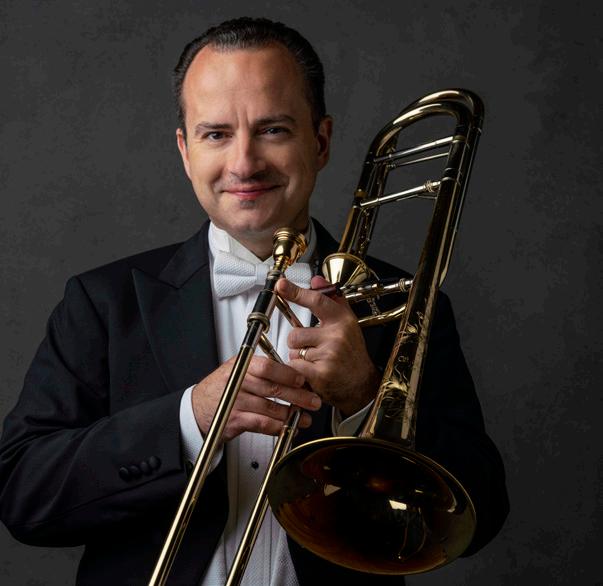
UGA TROMBONE CHOIR
FT. JAMES NOVA OF THE PITTSBURGH SYMPHONY
This concert will feature Nova’s arrangements of music by John Williams, Danny Elfman, and Michael Giacchino.
James Nova joined the Grammy award winning Pittsburgh Symphony Orchestra in 2009 as its Second/Utility Trombone.
In 2012, Jim made his solo debut with the PSO, performing the Tomasi Trombone concerto.
WED 4/1
5:30 p.m.
Ramsey Concert Hall
FREE CONCERT
UNIVERSITY OF GEORGIA JAZZ ENSEMBLES I & II
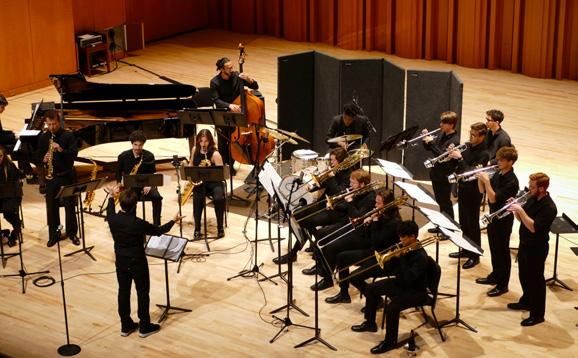
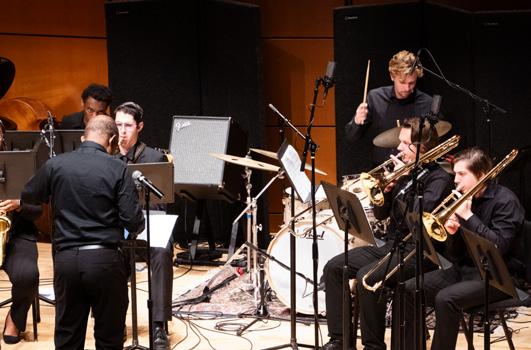
Jazz Ensemble I is the Hugh Hodgson School of Music’s advanced level big band group, comprised of traditional big band instrumentation: saxophones, trombones, trumpets, and a rhythm section featuring drums, piano, guitar, and bass, conducted by David D’Angelo.
Jazz Ensemble II introduces students to the experience of performing in a traditional big band, and teaches students the evolution of big band music, familiarization with stylistic comparisons, and refinement of improvisational skills.
Jazz Ensemble II is co-conducted by Greg Satterthwaite and James Weidman.
THURS 4/9
7:30 p.m.
Hodgson Concert Hall
FREE CONCERT
UNIVERSITY OF GEORGIA BRITISH BRASS BAND SPRING CONCERT
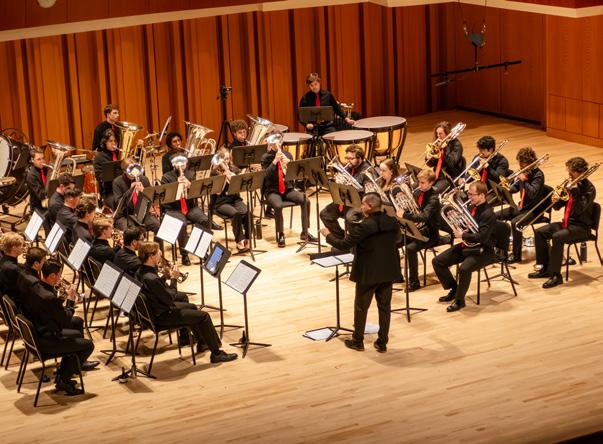
The British Brass Band has become an Athens fan favorite. The repertoire encompasses a wide variety of styles including excellent original works, marvelous transcriptions of orchestral works, as well as marches and other light pieces. British Brass Band is conducted by Gilbert Villagrana.