UGA Dance blends art, academics, and athleticism

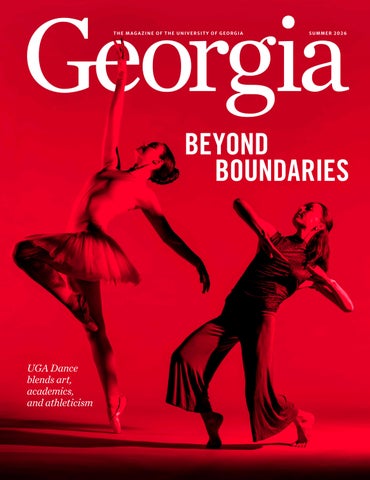
UGA Dance blends art, academics, and athleticism





The President’s Pen
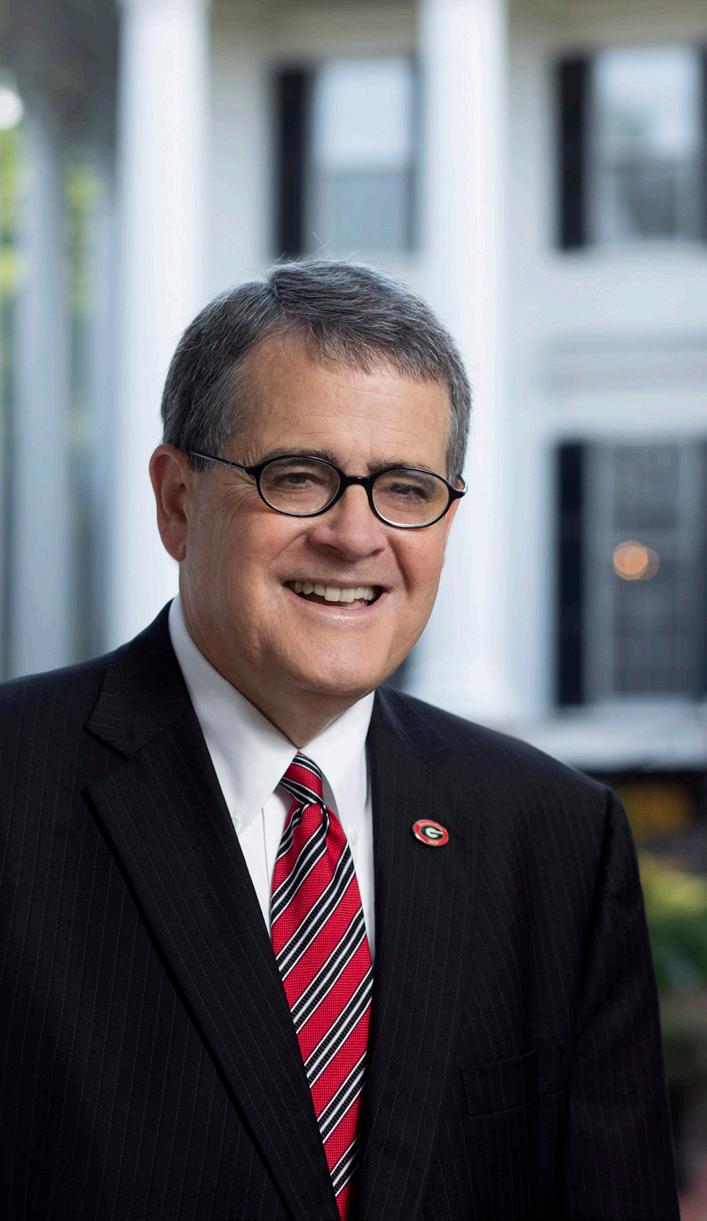
President Jere W. Morehead discusses how the University of Georgia is strengthening health care in our state.
Highlights from across the UGA community.
Join first year students as they study away in Morocco.
News for UGA alumni in Georgia, across the country, and around the world. 40 Class Notes
What do the president of a Big 10 university, an MMA fighter with a doctoral degree, and the driving force behind AthFest have in common? They all graduated from UGA!
Get to know Gagan Agrawal, Professor and Inaugural Director, School of Computing.

Before you win eight national titles, you have to take the reins! See how UGA’s equestrian team makes it happen on page 22.
After two years of preparation, the new University of Georgia School of Medicine is ready to welcome its first class.
Striking a healthy work-life balance is challenging. UGA researchers want to make it easier.
UGA’s equestrian team is celebrating the 25th anniversary of its founding. Go behind the scenes of one of the Bulldogs’ most successful squads. 28
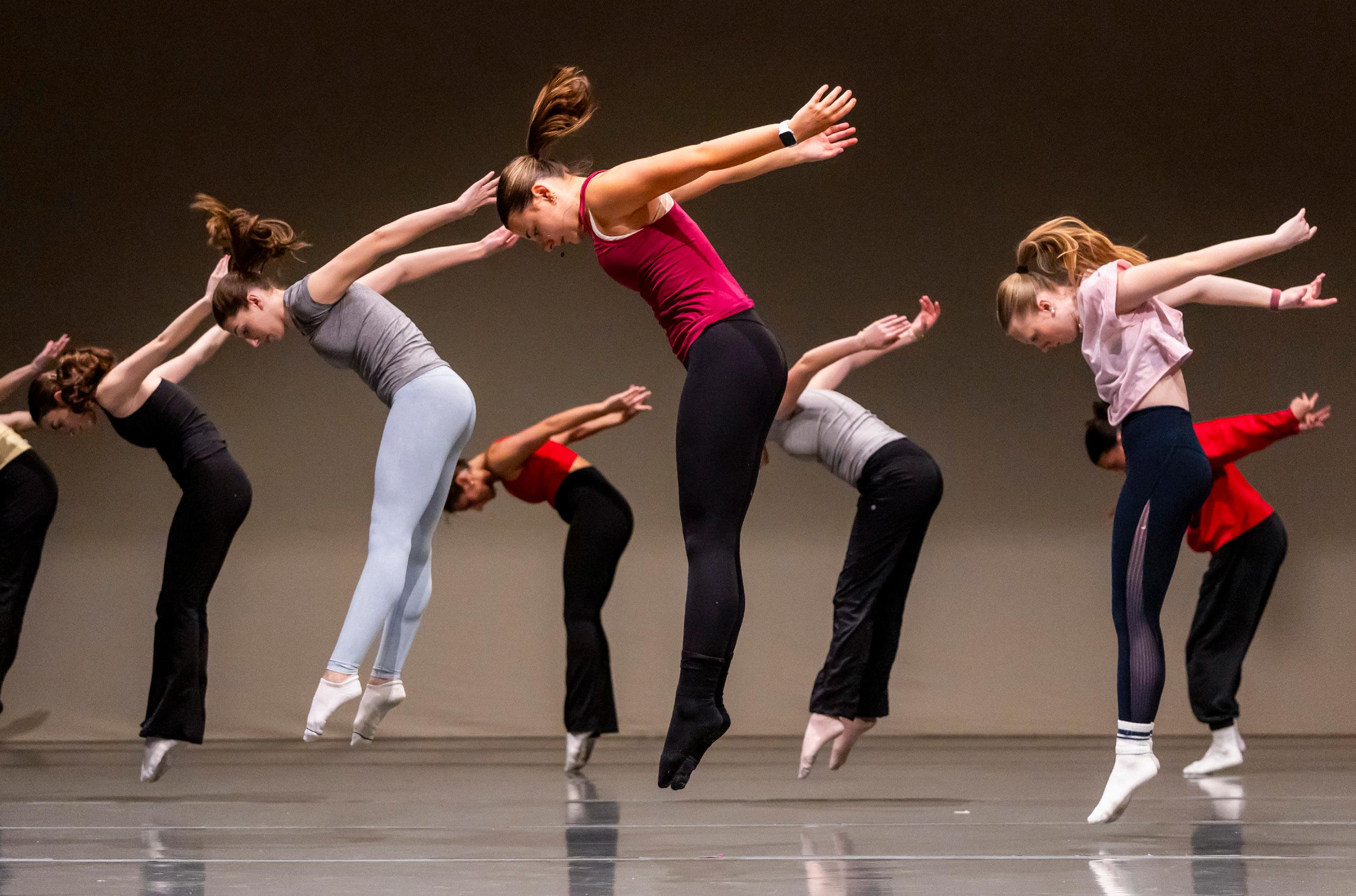
Many UGA dance students double major in other subjects. Faculty encourage students to transcend the artificial walls that keep interests separate. They call it “Dancing Beyond Boundaries.”

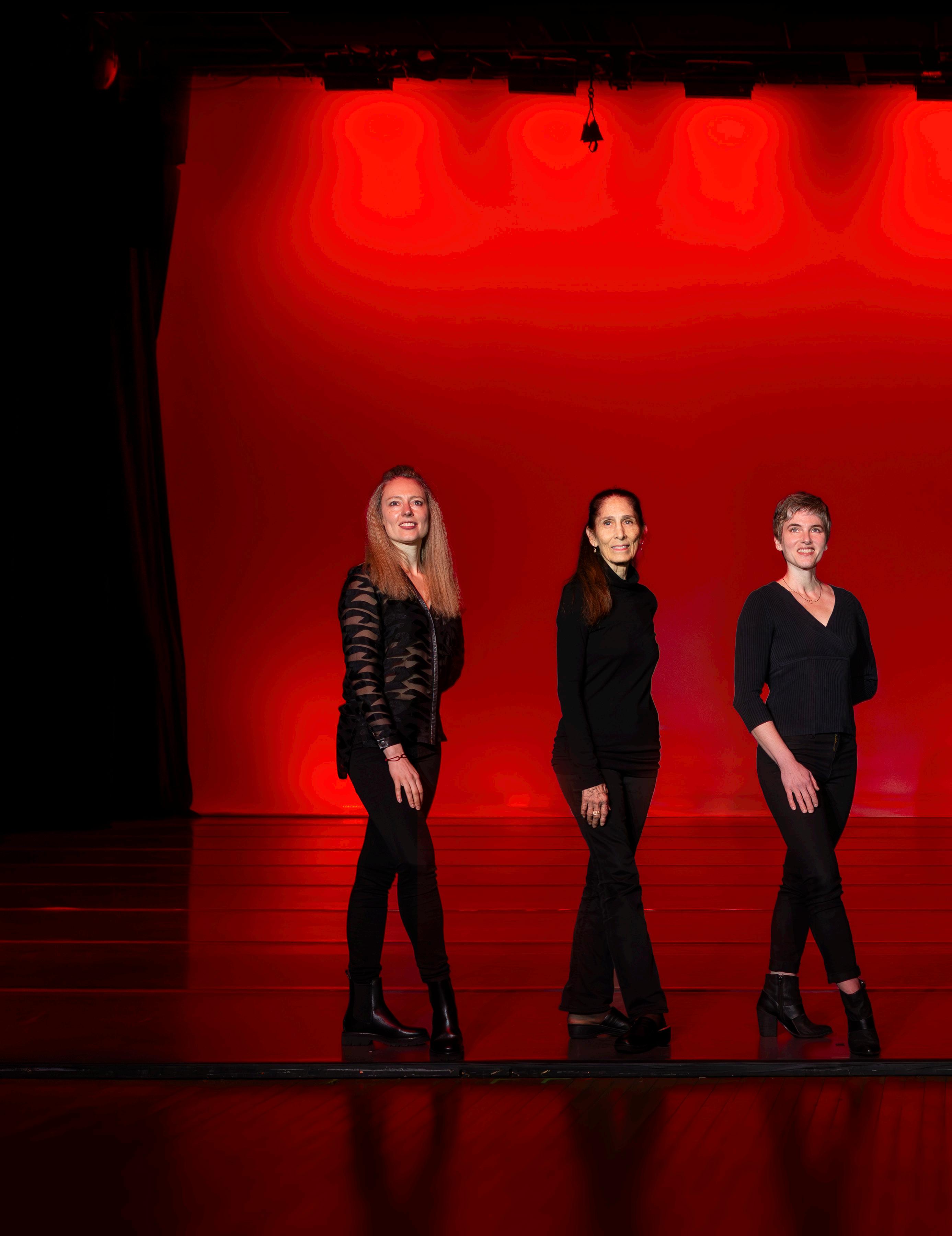
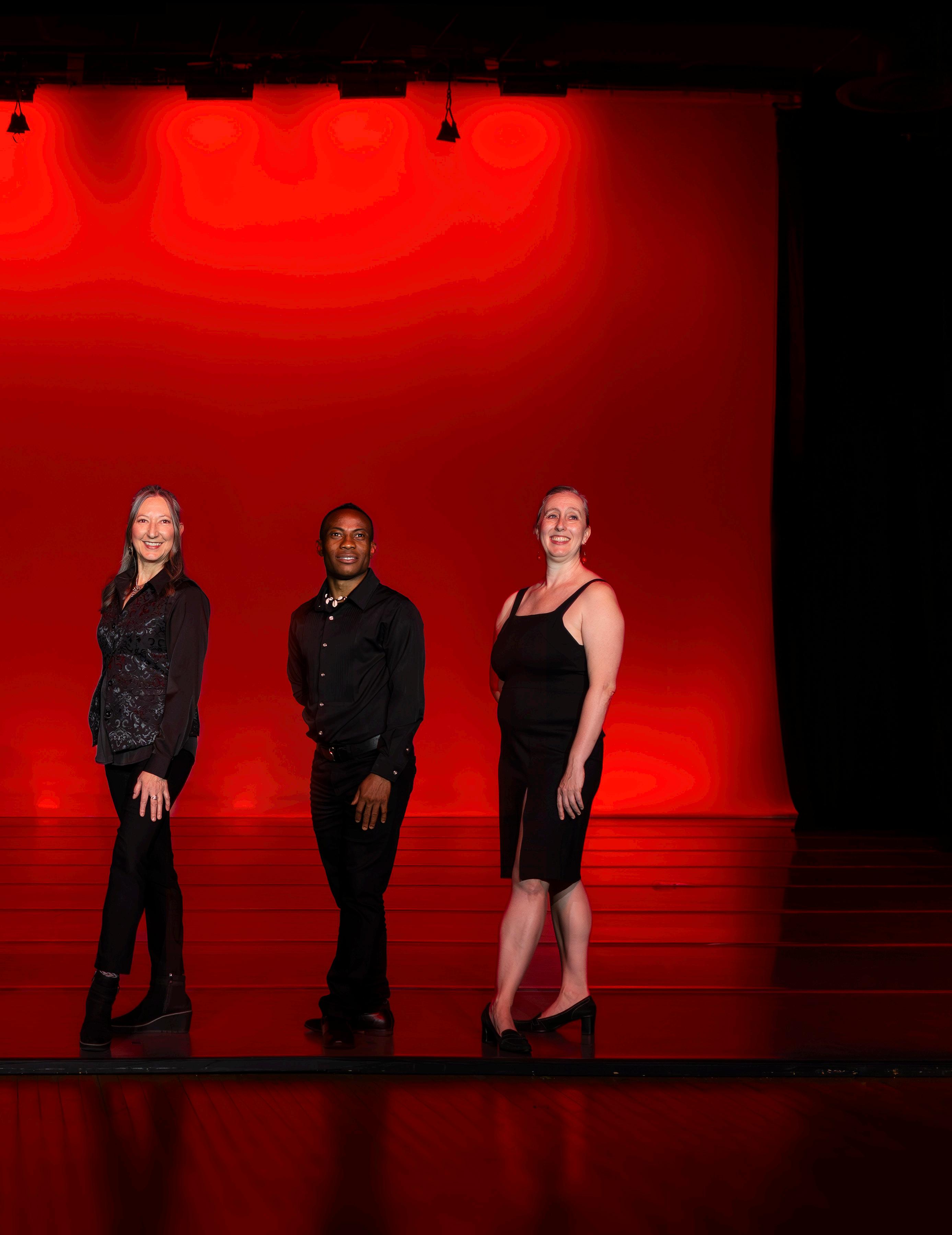
Georgia Magazine photo editor Chamberlain Smith uses red gelled lights on red paper to create a monochromatic effect, highlighting the dance techniques demonstrated by Laura Towner (ballet) and Katherine Stockton (contemporary modern). For an alternate view of our cover dancers, see page 35.


THE STATE BOTANICAL GARDEN OF GEORGIA’S FLOWER garden is the perfect spot to unwind and reflect on the beauty of a morning in Athens.

SUMMER 2026
VOLUME 106 ISSUE NO. 3
Editor · Eric Rangus MA ’94
Associate Editors · Aaron Hale MA ’16 and Leigh Hataway MA ’17
Staff Writers · Cole Sosebee BS ’19, MA ’25 , Jayne Roberts, Kristen Linthicum PhD ’18 , Savannah Peat AB ’19 , and Hannah Gallant
Art Director · Lindsay Robinson ABJ ’06, MPA ’11, MA ’22
Advertising Director · Kipp Mullis ABJ ’93
Photo Editor · Chamberlain Smith ABJ ’18
UGA Photographers · Andrew Davis Tucker, Dorothy Kozlowski BLA ’06, ABJ ’10 , and Billy Schuerman
Contributing Writers · Rachael Andrews BA ’17, MA ’21, Lilli Sosbee AB ’22 , and Ireland Hayes AB ’23
Contributing Designers · Andrea Piazza ABJ ’12, MA ’19 , Whitney Mathisen, Kaiya Plagenhoef, Marisa Castengera, and Jules Sherrill AB ’22, MA ’23
Editorial Intern · Maura Rutledge AB ’26
Research Writing Graduate Assistant · Sydney Barrilleaux BS ’24, MA ’26
Vice President · Kathy Pharr ABJ ’87, MPA ’05, EdD ’11
Senior Director for Integrated
Media Communications · James Hataway MA ’10
Senior Executive Director for Operations & Fiscal Affairs · Fran Burke
Project Manager · Brittney Wurdeman
President · Jere W. Morehead JD ’80
Senior VP for Academic Affairs & Provost · Benjamin C. Ayers
VP for Finance & Administration · Ryan Nesbit MBA ’91
VP for Development & Alumni Relations · Jill S. Walton BSA ’99, MPA ’03
VP for Instruction · Marisa Anne Pagnattaro PhD ’98
Interim VP for Research · Christopher King
VP for Public Service & Outreach · Stacy Jones BSFCS ’93, EdD ’19
VP for Student Affairs · Michelle Cook
VP for Government Relations · Blake Raulerson AB ’14
VP for Information Technology · Timothy M. Chester
Senior Director for Marketing and Communications for Development and Alumni Relations · Lacey Creech
Change your mailing address by contacting e: records@uga.edu or ph: 888-268-5442
Find Georgia Magazine online at news.uga.edu/georgia-magazine
Submit Class Notes or story ideas to gmeditor@uga.edu
ADVERTISE in Georgia Magazine by contacting Kipp Mullis at e: gmsales@uga.edu or ph: 706-542-9877
FINE PRINT
Georgia Magazine (issn 1085-1042) is published quarterly for alumni and friends of UGA.
POSTMASTER | Send address changes to: University of Georgia
286 Oconee Street, Suite 200 North Athens, GA 30602
“Together, the schools of medicine and nursing will help UGA address critical workforce needs while expanding our capacity to improve health outcomes throughout Georgia.”
From medical education to nursing, UGA is building new capacity to meet the health care needs of communities across our state.
This spring, the University of Georgia reached significant milestones in its efforts to strengthen health care education, research, and service across the state.
Among the most important was the School of Medicine’s receipt of preliminary accreditation from the Liaison Committee on Medical Education, which allowed the university to begin the admissions process for the inaugural class. This achievement marked a major step forward for our university and for the future of health care in Georgia.
In the fall, the University of Georgia will welcome its first medical students to campus. They will begin their studies at an institution that is expanding its role in medical education and helping prepare physicians to serve communities across Georgia and beyond. Those students will have access to a state-of-the-art medical education and research facility on schedule to be completed in December on our Health Sciences Campus. Made possible through strong support from the state and the generosity of alumni and friends, the $100 million facility will expand opportunities for teaching, discovery, and collaboration. In addition, private donors have committed more than $10 million in scholarship support to help talented students pursue a medical education at the University of Georgia.
At the same time, we continue to build momentum for the School of Nursing. At press time for this issue, we received a transformational gift from UGA alumnus Doug Ivester and the Ivester Foundation to name the school the Victoria Kay Ivester School of Nursing in honor of his wife. We look forward to telling you more about the endowment the Ivesters have created in our next issue. Meanwhile, the school remains on track to welcome its first class in fall 2027, and we are making progress on its future home on the Health Sciences Campus. Together, the schools of medicine and nursing will help UGA address critical workforce needs while expanding our capacity to improve health outcomes throughout Georgia.
These new schools will join a remarkable community of faculty, students, and researchers already advancing work in preventing diseases, treating illnesses, and improving public health. UGA is one of just 13 institutions nationwide with schools dedicated to plant, animal, and human health on a single campus. That distinction reflects the breadth of the university’s expertise and uniquely positions UGA to help meet some of the most pressing health challenges of our time.
As a land-grant and sea-grant university, we are called to serve the people of Georgia in tangible and lasting ways. Expanding opportunities in medical and nursing education is one more way we are answering that call.

Jere W. Morehead President
Big dreams need the right support. At the University of Georgia Small Business Development Center, we give business owners the tools, training and resources to build lasting success.
Our clients see stronger sales, more job growth and a higher three-year success rate compared to the average Georgia business.
With 17 o ces statewide, expert help is always close to home. LEARN MORE georgiasbdc.org

NEWTON
She grew her family’s culinary legacy into a $6M, 6.5-acre dining destination that’s slated to become a community landmark.
“When you’re working on a project that’s out of your depth, the SBDC has the resources to bring that project to fruition.”
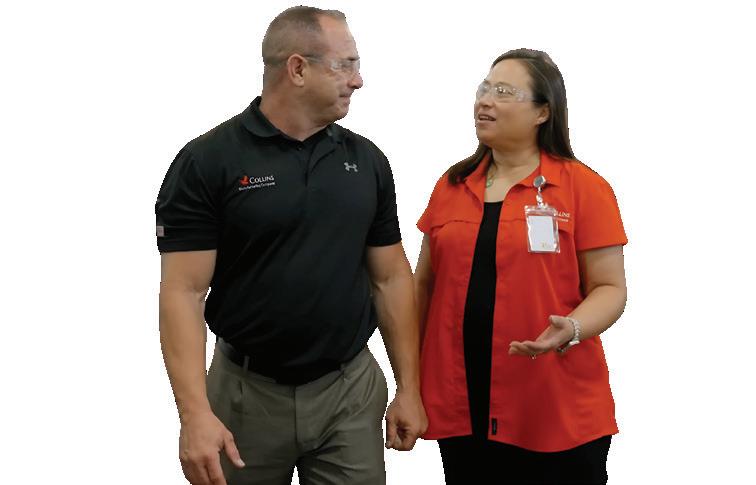
LARRY & GWEN COLLINS COLLINS MANUFACTURING | MACON, GA
They scaled from a small metal shop into a six-facility manufacturer serving industries nationwide.
“Whenever you're trying to make major decisions, you have some confidence. Because you know it's not just you and your knowledge alone; you're getting that expert help from the UGA SBDC.”
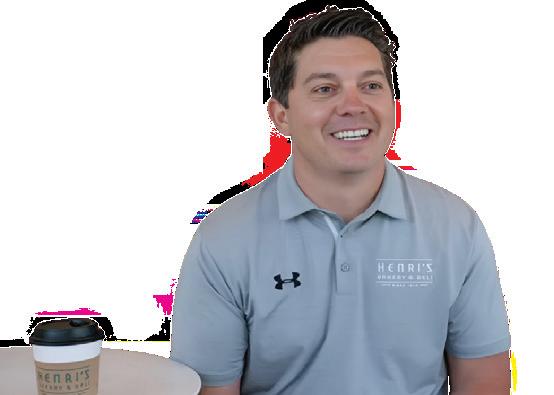
ANTHONY DINARDO HENRI’S BAKERY & DELI | ATLANTA, GA
He turned a nearly 100-year-old family bakery into a fast-growing Atlanta staple with seven locations and counting.
“When things come up or problems arise, I know I can always reach out to the University of Georgia SBDC to help make what we hope are good decisions in our business as we move forward.”

UGA dedicated the new Track and Field Complex on South Milledge Avenue in February, beginning a new phase for one of the Bulldogs’ most successful athletics programs.
Centered around the new Spec Towns Track—named for the legendary track star who in 1936 became the first Bulldog to win an Olympic gold medal—the world-class facility seats more than 4,000 and includes room for building an indoor facility in the future. The $59.8 million project was funded through gifts and donations.
Built for versatility and long-term use, the complex expands access to high-quality track facilities for the local community. In April, the Classic City Track and Field Invitational for area high schools was the first event held at the complex. The state’s high school track and field stars returned in May for the GHSA State Track Meet. The complex’s primary tenants, of course, are the
Bulldogs men’s and women’s track teams. UGA’s track and field teams have won two outdoor national championships, the men in 2018 and the women in 2025. At the Olympic level, UGA track and field athletes have won 18 medals, nine of them gold.
The Bulldogs hosted the Spec Towns Invitational in April and followed up with the Torrin Lawrence Memorial in May. Next year, UGA will host the SEC Championships.
This busy calendar is only the beginning.
“This extraordinary complex places Athens among the premier track and field destinations in the country,” says Josh Brooks, J. Reid Parker Director of Athletics. “From hosting championship-caliber meets to attracting local, regional, and national events, this facility elevates the profile of our program while delivering meaningful economic and cultural benefits to the region.”

The fifth annual Dawg Day of Giving once again demonstrated the strength and generosity of the Bulldog Nation, bringing in more than 13,000 gifts to support University of Georgia students and programs. This year’s total set a new single day giving record for the university.
The 24-hour effort on March 26 aimed for 12,000 gifts and surpassed that goal around 10:30 p.m., continuing the event’s streak of record-breaking participation.
In total, the 13,094 gifts contributed $8.5 million to areas across UGA. Every one of the university’s 20 schools and colleges, along with numerous departments, programs, and initiatives, received support from donors. Some 833 causes and funds were supported.
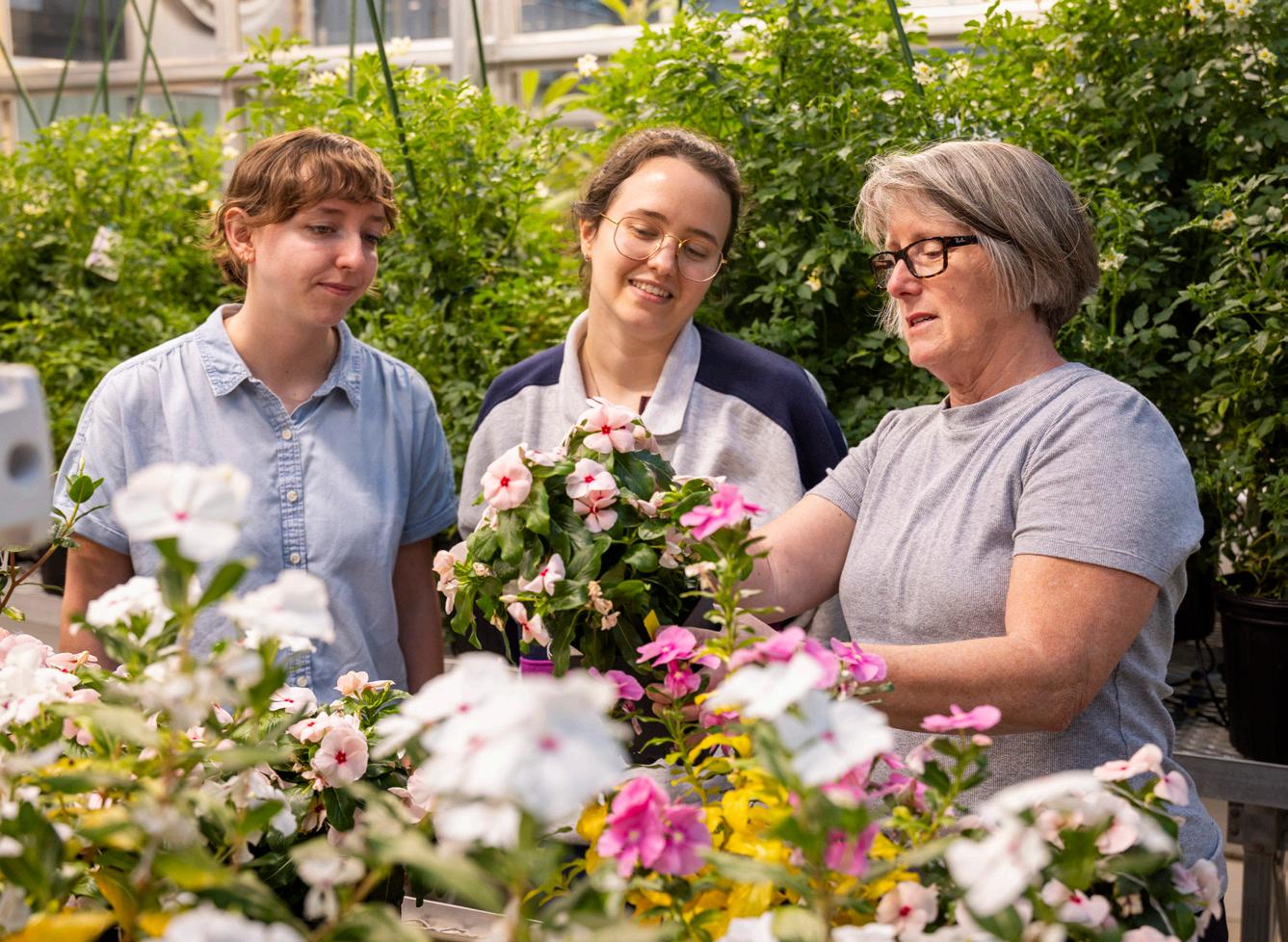
C. Robin Buell, GRA Eminent Scholar in Crop Genomics (far right), seen here with graduate students Anne Jarrell (left) and Anne Pavia, was named the 2026 SEC Professor of the Year. Buell is the third UGA professor in the last five years to receive the award, the SEC’s highest faculty honor.
LEADERSHIP UPDATE
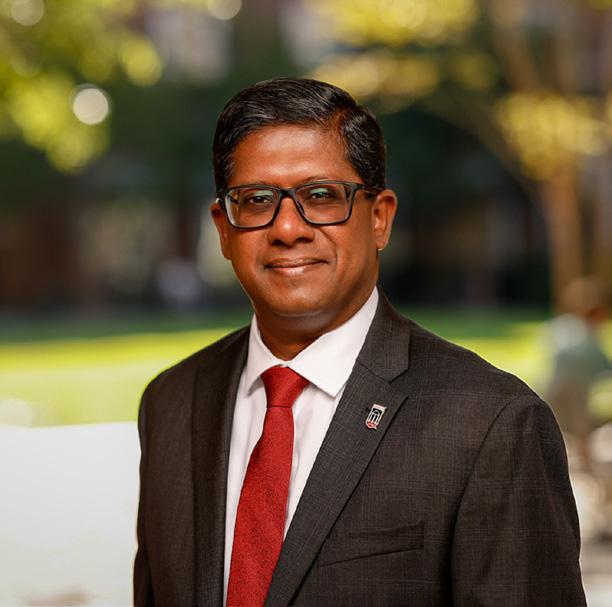
Santanu Chatterjee (below right) has been named the 13th dean of the Terry College of Business. He had been serving as interim dean, and his permanent appointment began on April 1.
Chatterjee holds the Dr. Harold A. Black Distinguished Professorship of Economics and has been a member of the Terry College faculty since 2001. Before his appointment as dean, he served as director of both the fulltime MBA and the Master of Science in Business Analytics programs, in addition to his role as associate dean for graduate programs.
Chatterjee’s leadership of the full-time MBA program helped elevate Terry to national and international recognition. Upon promotion to associate dean in 2021, Chatterjee expanded the college’s interdisciplinary offerings. He championed new dual-degree programs with the College of Engineering, the School of Law, the School of Social Work, and the College of Pharmacy.
C. Robin Buell, a professor in the Department of Crop and Soil Sciences in the College of Agricultural and Environmental Sciences, was named the 2026 Southeastern Conference Professor of the Year, the conference’s highest faculty honor.
Buell, who is the Georgia Research Alliance Eminent Scholar Chair in Crop Genomics, is the fourth UGA faculty member to receive the award. The honor recognizes scholarly excellence and transformational impact in teaching, research, and service at SEC institutions. UGA faculty have claimed three of the last five awards.
Buell’s pioneering contributions have reshaped her discipline. She was part of a team that mapped the first genome sequence in a plant species and later led national efforts to decode the genomes of rice and the potato, two of the world’s most important food crops.
As director of the Plant Center at UGA, Buell leads interdisciplinary efforts to advance plant science through biochemistry, genetics, genomics, synthetic biology, and breeding innovation. Her research focuses on unlocking the full potential of plants to improve agricultural efficiency, develop sustainable biofuels, and create crops that thrive in changing environments.
Buell’s career is marked by several high-level honors. In 2021, she was awarded the McClintock Prize for Plant Genetics and Genome Studies for her contributions to the field. She was elected to the National Academy of Sciences in 2025. She is also a fellow of the American Association for the Advancement of Science and the American Society of Plant Biologists.
U.S. News & World Report ranked multiple online degree programs from the University of Georgia as among the best in the nation in 2026, with several placing in the top 10. Overall, UGA ranked No. 18 for online program offerings, maintaining its position in the top 20 nationally.
Rankings for online programs offered by the Mary Frances Early College of Education include:
• No. 3 (up from No. 11) in Best Online Master’s in Curriculum and Instruction
• No. 3 in Best Online Master’s in Educational/Instructional Media Design
• No. 4 in Best Online Master’s in Special Education
• No. 6 in Best Online Master’s in Educational Administration and Policy
• No. 29 (up from No. 39) in Best Online Bachelor of Science in Special Education
UGA was ranked No. 11 in the Best Online Education Master’s for Veterans category.
The Terry College of Business is ranked No. 10 nationally and No. 7 among public schools in the Best Online Master’s in Business programs. This is the sixth consecutive year Terry has finished in the national top 10.
The university has continued to expand its online portfolio, adding 30 new programs over the past two years.
PRESIDENT’S MEDALISTS
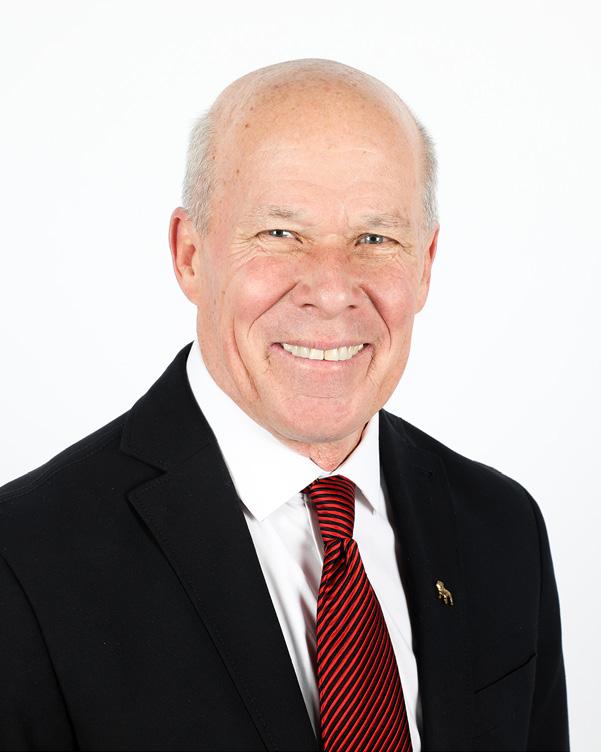
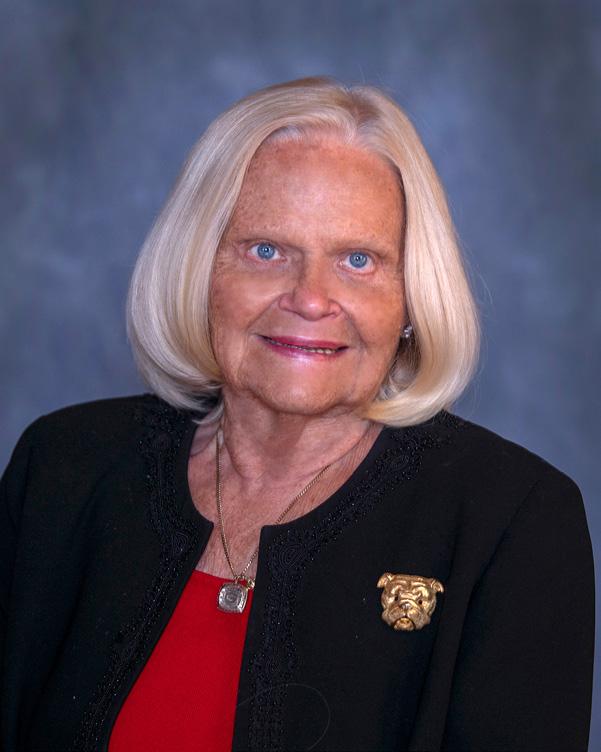
The University of Georgia presented one of its highest honors to Jack Bauerle, retired Tom Cousins Swimming and Diving Head Coach, and Anne L. Sweaney, professor emeritus in the College of Family and Consumer Sciences.
The President’s Medal recognizes individuals not currently employed at the university who have made extraordinary contributions to the UGA community by supporting students and academic programs, advancing research, or engaging in public service to enhance the quality of life of citizens in Georgia.
Bauerle AB ’75 was a four-year letterwinner and a two-time captain of the UGA swimming team before accepting the job as head coach of the UGA women’s swim team in 1979. He later stepped in as men’s head coach in 1983.

With Bauerle at the helm, the Bulldogs won seven team national championships and 12 SEC championships. The Bulldogs also produced 10 SEC Scholar Athlete of the Year winners. Bauerle also coached Team USA at six different Olympic Games, including as head coach of the women’s team at the 2008 Beijing Games, where he led the U.S. to 14 medals, the most of any nation.
Sweaney earned her Ph.D. in business administration from the University of Alabama before starting her career at UGA as a part-time instructor in FACS in 1981. She was named a full professor in 1995.
Her visionary leadership helped spearhead the establishment of UGA’s financial planning program, which is now one of the fastest growing majors in FACS, and she was a key figure in the launch of the Legislative Aide Leadership Fellows program. For many years, her ingenuity and responsive leadership style have played a major role in strengthening the college and amplifying the reputation of the university.
Deer often scrape the ground and rub on trees, and now researchers from the Warnell School of Forestry and Natural Resources think they may know why.
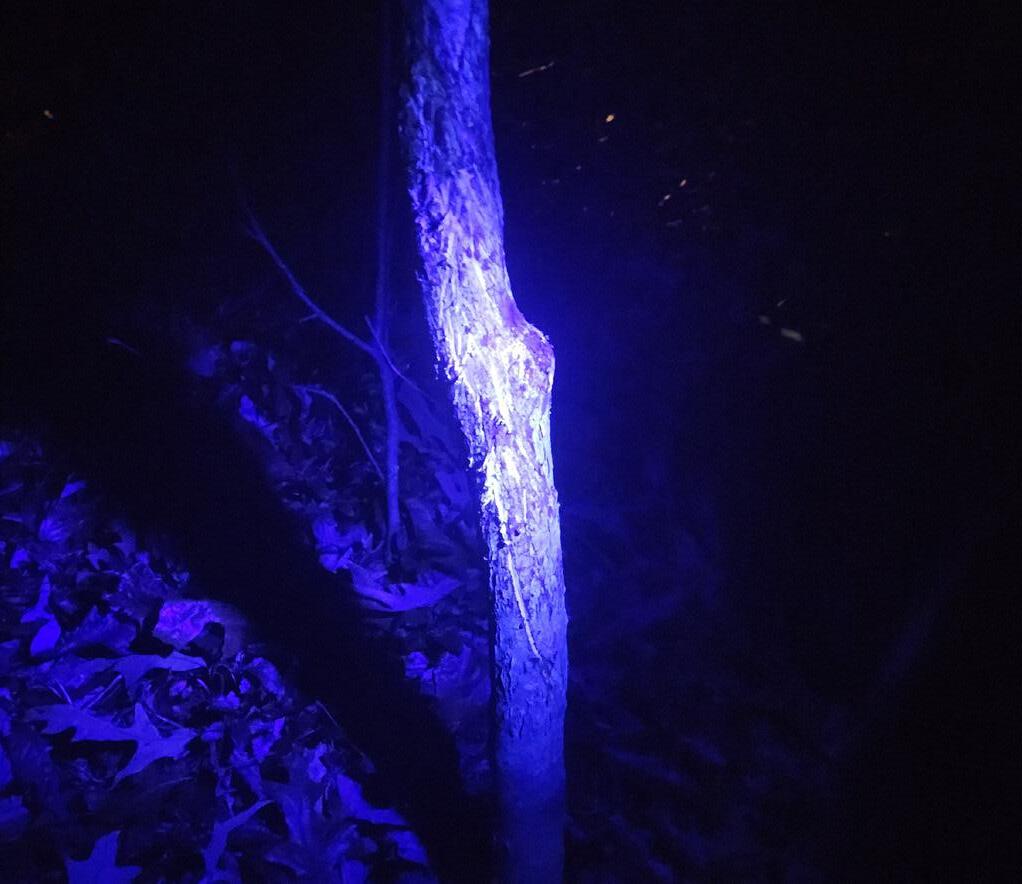
A new study found that the scrapes and rubs glow under ultraviolet light. That glow may be how deer leave “messages” for potential mates.
This is the first study to quantify instances of environmental glowing and connect it to a biological function.
Over three months in Whitehall Forest, south of campus, the researchers searched for deer markings by day and investigated them with UV lights by night.
The researchers believe the glow marks are a visual way deer talk to each other. Deer already use the same scrapes to communicate through scent.
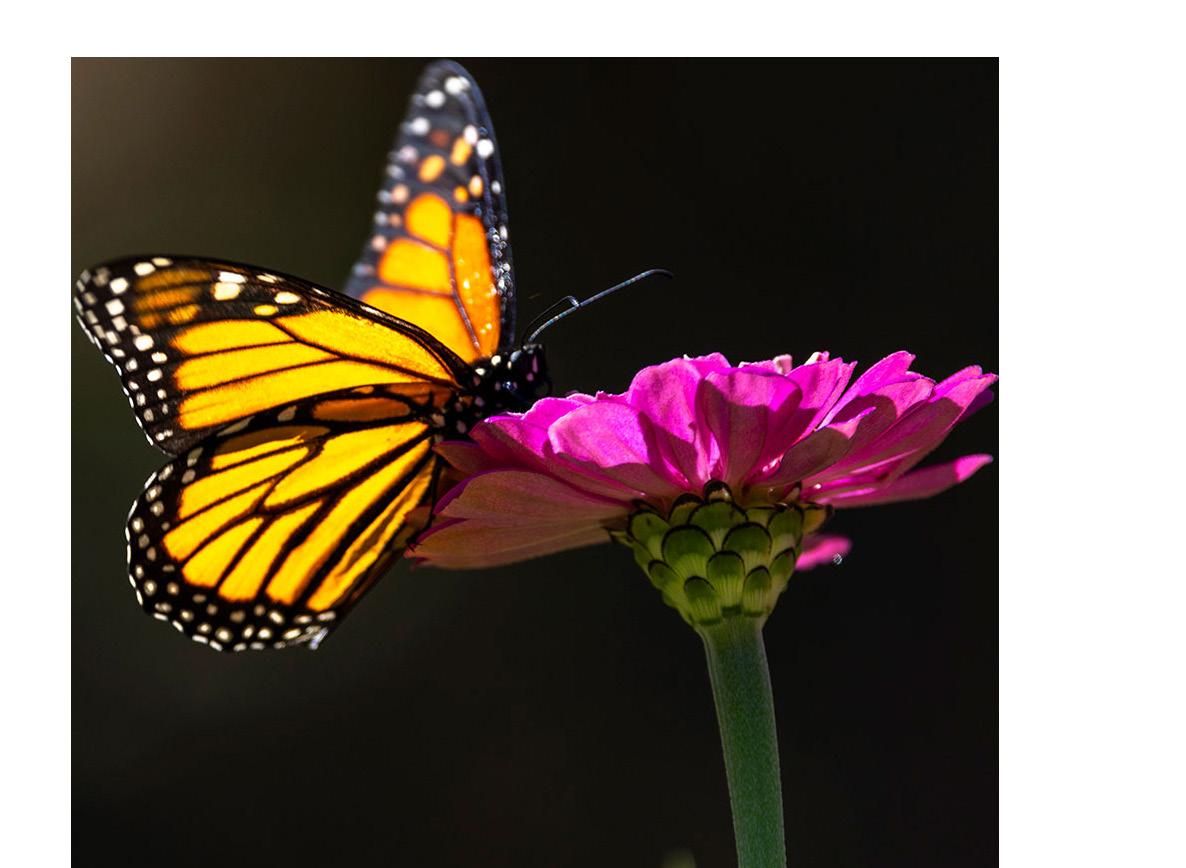
Higher temperatures may make monarch butterflies more vulnerable to parasites, according to new research from the University of Georgia.
“The scrapes become a communication hub where other deer will visit it after it’s created and contribute to it,” says Gino D’Angelo MS ’03, PhD ’07, co-author of the study and an associate professor in the Warnell School. “It’s like a phone booth out in the city when trying to make nighttime plans at a meeting point.”
Monarch infections with a protozoan parasite have skyrocketed, more than tripling since 2002 and causing smaller wingspans, lower weight, and
The new study found that monarchs exposed to elevated temperatures were 22% more likely to develop severe disease. For a species that is already in trouble, that’s bad news.
“In areas where the temperature is warming, we might see infections increase disproportionately,” says Sonia Altizer, lead author of the study and entomology department head in the College of Agricultural and Environmental Sciences. “I think this could mean that a warmer world might be a sicker world for monarchs.”
SMARTY PANTS
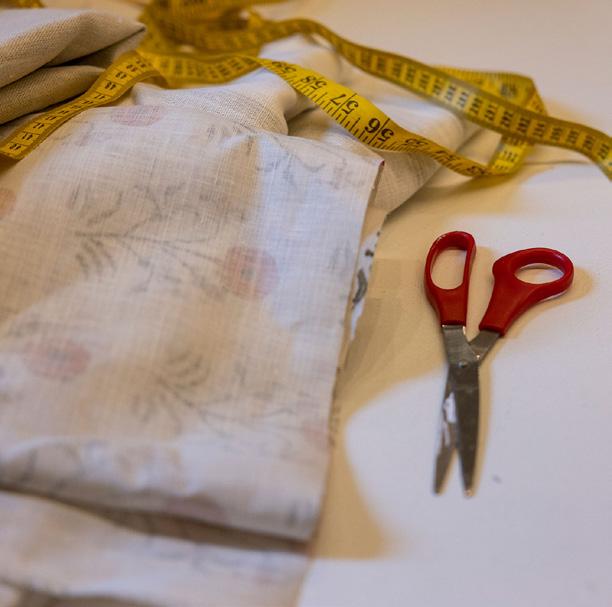
You’re probably used to the sight of smartwatches on people’s wrists. But what about smart clothes?
Researchers at the University of Georgia are exploring how the clothes people wear could potentially track and protect their health.
Smart textiles are fabrics that can monitor the body’s vitals and movement in real time. They’re flexible and lightweight, making them comfortable to wear while moving.
The new research focuses on MXenes, a class of two-dimensional, microscopic materials made from metals that can be coated or printed onto fabrics. UGA scientists conducted a comprehensive analysis of hundreds of published studies to examine the different properties of MXenes and how they could be used in smart textiles.
The researchers found that smart fabrics could track users’ health. And doctors and other health professionals could use the technology to monitor a patient’s vitals, even getting alerts if the fabric detected high blood pressure, an irregular heart rate, or an elevated temperature.
The fabrics could also be used as a source of power. Unlike most smartwatches, smart textiles charge through sunlight. This solar power could not only help the sensors work but also be used as a built-in power bank, the researchers say.
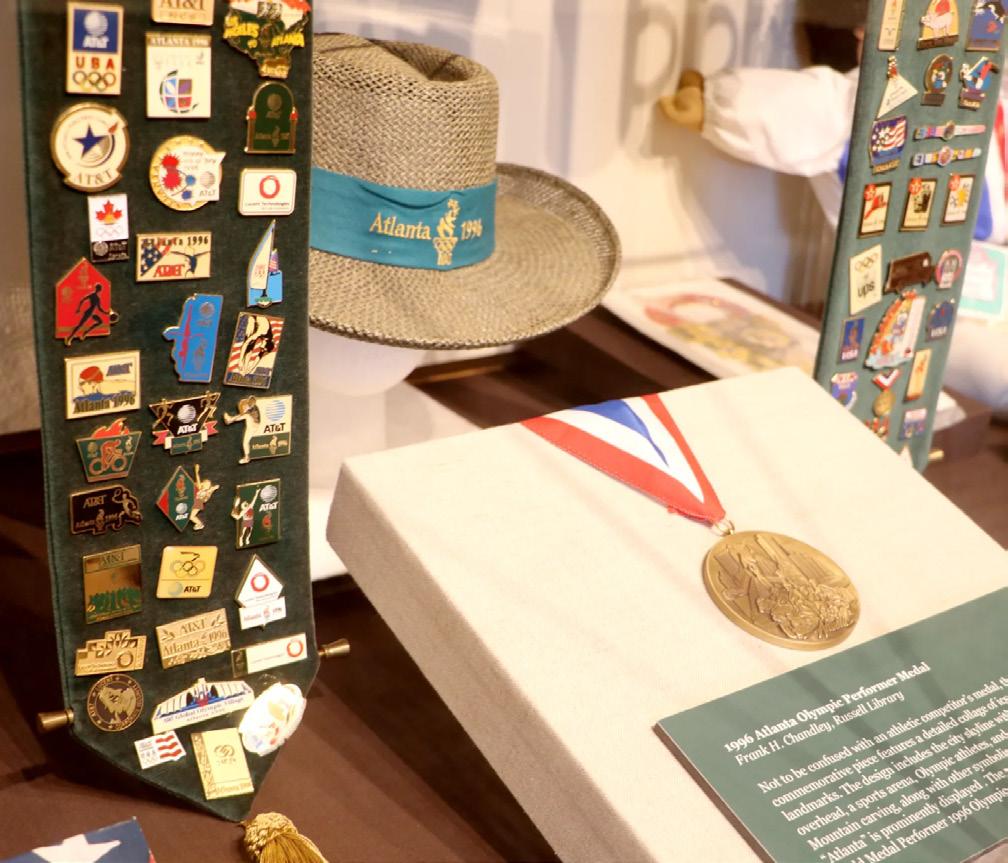
An Olympic participant medal, commemorative pins, and other memorabilia from the 1996 Summer Olympics are on display in the Special Collections Libraries through the end of 2026.
Three decades ago, the world came to Atlanta—and Athens—for the 1996 Summer Olympics.
Now, the mementos from those Centennial Games have arrived at the Richard B. Russell Building Special Collections Libraries.
The exhibit, Beyond the ’96 Games: Atlanta’s Olympics Legacy, features authentic Olympic memorabilia. Along with the medals, commemorative pins, ticket stubs, and other merchandise on display, visitors can trace the planning for Atlanta landmarks such as Centennial Olympic Stadium, which later became Turner Field. The exhibition also documents efforts to build Atlanta’s reputation as a tourist attraction.
In addition, the exhibition spotlights Athens’ role in the Games with photos and mementos from soccer matches at UGA facilities and UGA alumna Teresa Edwards’ BSEd ’89 leadership on the gold medal-winning U.S. women’s basketball team.
The University of Georgia hosted indoor volleyball, rhythmic gymnastics, and the men’s and women’s soccer medal rounds during the games.
A vaccine created by University of Georgia researchers to battle muliple life-threatening fungal infections is also effective against Candida auris in mice, according to a new study from researchers in the UGA Center for Vaccines and Immunology.
C. auris is a type of yeast that spreads easily, particularly in health care settings, and can lead to severe illness or even death. It’s also often resistant to multiple antifungal medications.

“There is a critical need for new strategies for anti-fungal treatment due to the alarming increase in the emergence of drug resistance in C. auris and other life-threatening fungal pathogens,” says Karen Norris, author of the study and GRA Eminent Scholar. Norris is also the CEO and founder of NXT Biologics, the company behind the vaccine.
If successful, the vaccine will be the first to prevent pathogenic fungal infections, which the World Health Organization considers a top public health threat.
Coyotes may be building dens and having litters of pups near you, according to new research from the University of Georgia. But chances are you won’t see them—even if they’re denning right next door.

The exhibition remains open throughout 2026.
The researchers followed 48 urban coyotes fitted with GPS tracking collars, locating 20 dens across Atlanta. They found that more than half of the dens were in natural structures, like burrows and fallen tree trunks. Some dens incorporated human-related items, such as an overturned boat and a large, half-buried tractor tire, demonstrating the species’ adaptability. But that doesn’t mean the canines want to interact with people.
“Basically, we saw that the coyotes were trying to avoid people,” says Summer Fink BS ’18, lead author of the study and a doctoral candidate in the Warnell School of Forestry and Natural Resources.
Though the risk to humans and pets posed by coyotes is low, the researchers recommend keeping dogs on leashes and not investigating holes that could be coyote dens.
Shortly before NBC broadcaster Maria Taylor presented the Lombardi Trophy to coach Mike Macdonald, something rather unexpected took place.
The two embraced. Then they shared a brief conversation, smiling throughout, before they got down to the business at hand. Taylor, broadcasting her first Super Bowl, handed professional football’s ultimate prize to MacDonald, whose Seattle Seahawks had just defeated the New England Patriots, 29-13, to win Super Bowl LX.
But really, nothing about that warm reunion was unexpected. It was the latest chapter in a friendship that goes back more than 20 years.
Both Taylor ABJ ’09, MBA ’13 and Macdonald BBA’10, MS ’13 are Double Dawgs, and they attended UGA at the same time. She earned degrees from the Grady College of Journalism and Mass Communication and the Terry College of Business, while he received both of his from Terry.
Those UGA ties are remarkable, but Taylor and Macdonald actually met years before. They both attended Centennial High School in Roswell. Taylor graduated in 2005 from Centennial, Macdonald a year later.
Both were student athletes in high school. Taylor went on to play both volleyball and basketball as a Bulldog. Macdonald—whose baseball and football playing days were cut short by injury—began his college coaching career as an assistant on Mark Richt’s staff at UGA. It took him just two seasons with the Seahawks to lead the franchise to its second Super Bowl title.
Taylor posted about the experience on X (formerly known as Twitter), and publications ranging from The Athletic to People and Southern Living picked up on the scene.
But the Super Bowl stage wasn’t the first time that Macdonald’s and Taylor’s professional paths crossed. In 2024, Taylor interviewed the then-newly hired Macdonald in Seattle for NBC. She brought along a posterboard decorated with photos from their high school yearbooks.
“Maria was way cooler than I was. Just an absolute champion,” Macdonald joked about his fellow Centennial Knight/Georgia Bulldog.
Now there are two Double Dawg champions in the house.


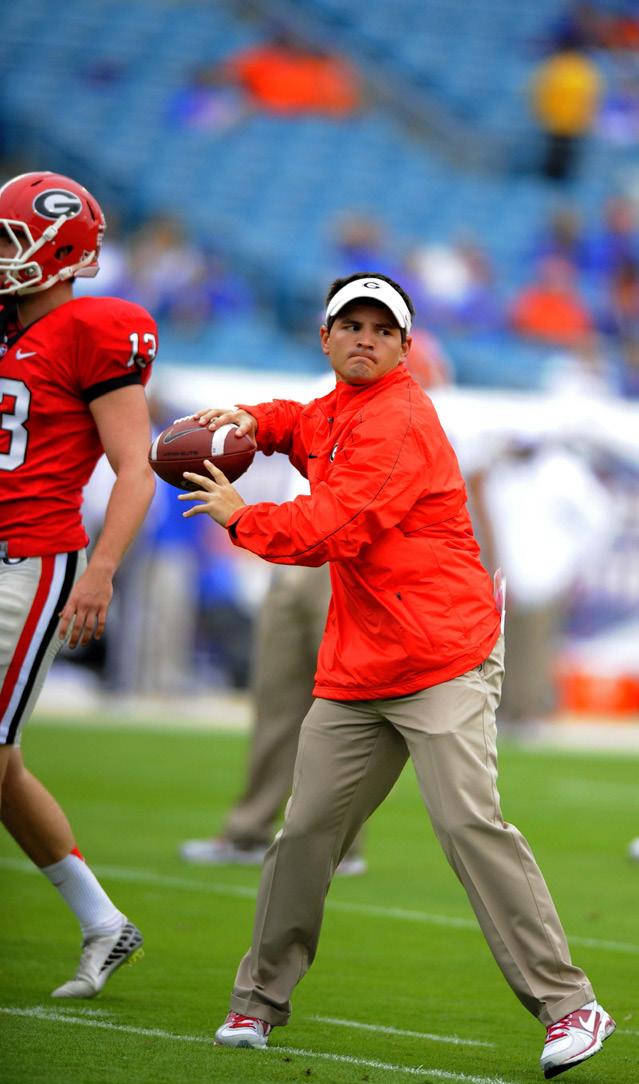
For four seasons, Mike Macdonald served on Bulldogs coach Mark Richt’s staff–first as a graduate assistant, then as a defensive quality control assistant. He won a Super Bowl championship in just his second season.
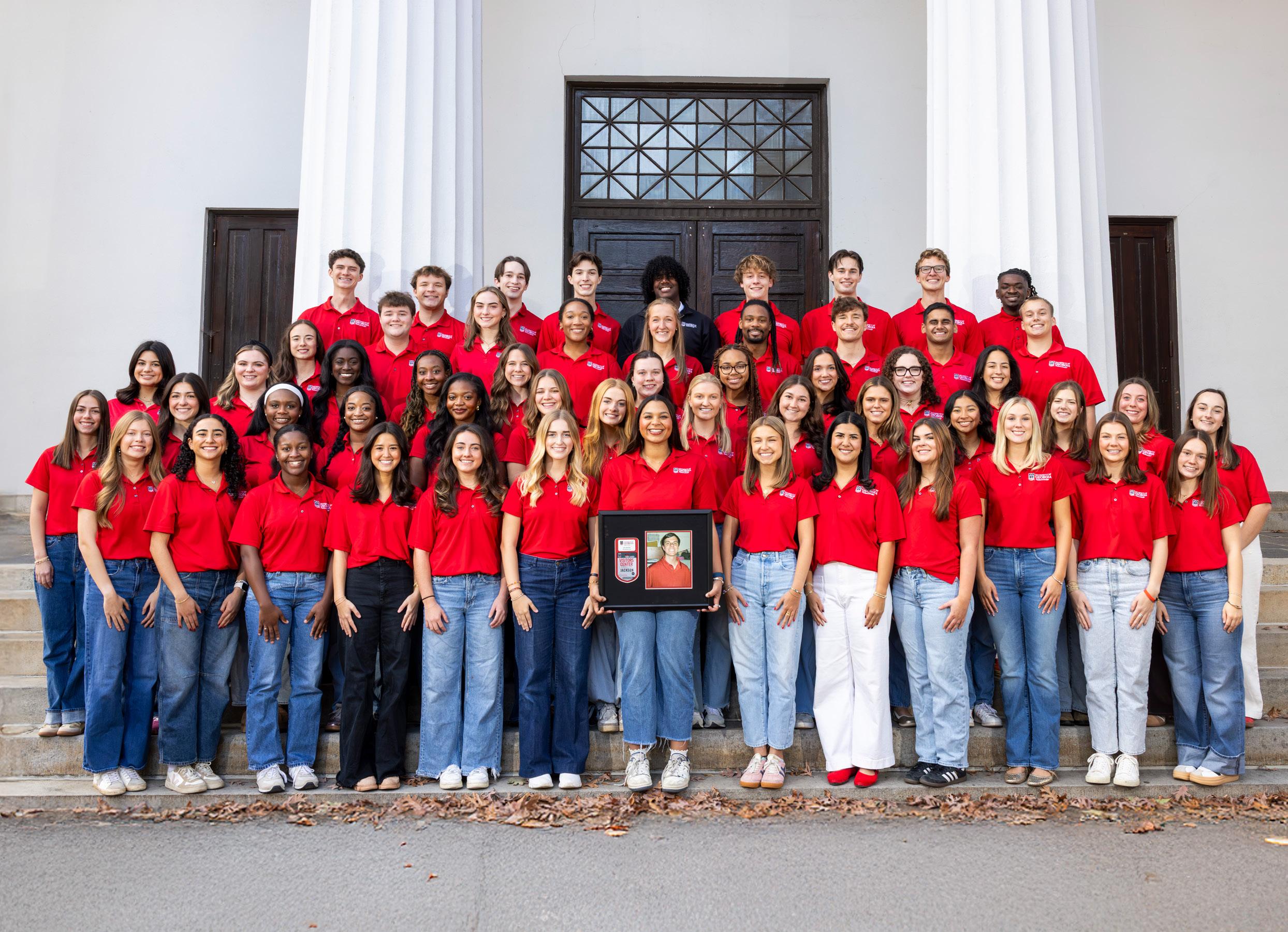
After the loss of their son, the Dodgen family transformed grief into purpose by helping future UGA students feel at home—just as Jackson once did.
For many, the fall season brings to mind bonfires, holidays, and football Saturdays. But for the Dodgen family, fall carries something a bit heavier: memories of a brown- eyed boy with a spirited competitive streak and a deliberate kindness that made him a “once-in-a-lifetime friend” to all who knew him.
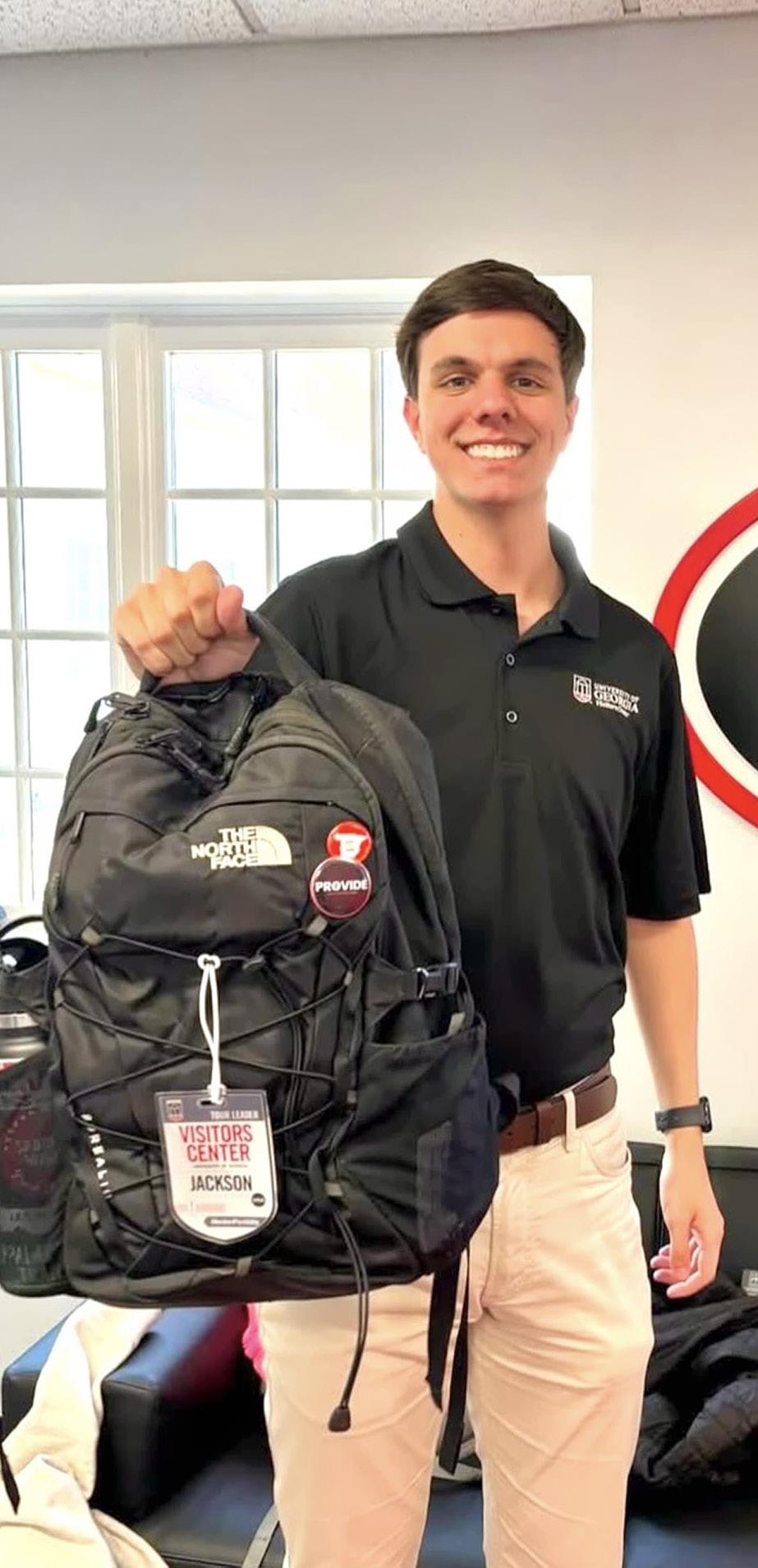
Though Jackson Dodgen’s time at UGA was cut short, he made a home for himself on campus from the beginning of his Bulldog journey in fall 2023. From his very first tour with the UGA Visitors Center alongside his parents, Laina and Jeff, Jackson knew he wanted to welcome future Bulldogs to the campus he already loved so dearly.
“Jackson loved UGA so much that he would sign off emails and texts ‘Glory, glory—Jackson’ or ‘Nothin’ finer in the land—Jackson,’” says his father, Jeff Dodgen AB ’98.
That love made him a natural fit for the Visitors Center. UGA’s best ambassadors
are its students, and Jackson embraced that role wholeheartedly. As a student tour leader, he shared his enthusiasm for UGA with visitors throughout the year.
“He would stand in my office and look at the UGA diploma on my wall, and I’m sure he was imagining his own diploma one day,” Jeff says.
When Jackson was killed in a 2024 car accident, the place that had given him purpose and belonging became the natural home for honoring his memory.
The Jackson Dodgen Memorial Fund, established in 2025, now supports student staff members at the UGA Visitors Center (top), the very community where Jackson formed such strong bonds.
“He’ll never have that diploma now, but I’ve got one,” his father says. “And maybe no one will remember a Jeff Dodgen who graduated in 1998, but they’re going to remember Jackson forever because of this fund.”
For the Dodgens, creating the fund felt like a way to carry forward their love for

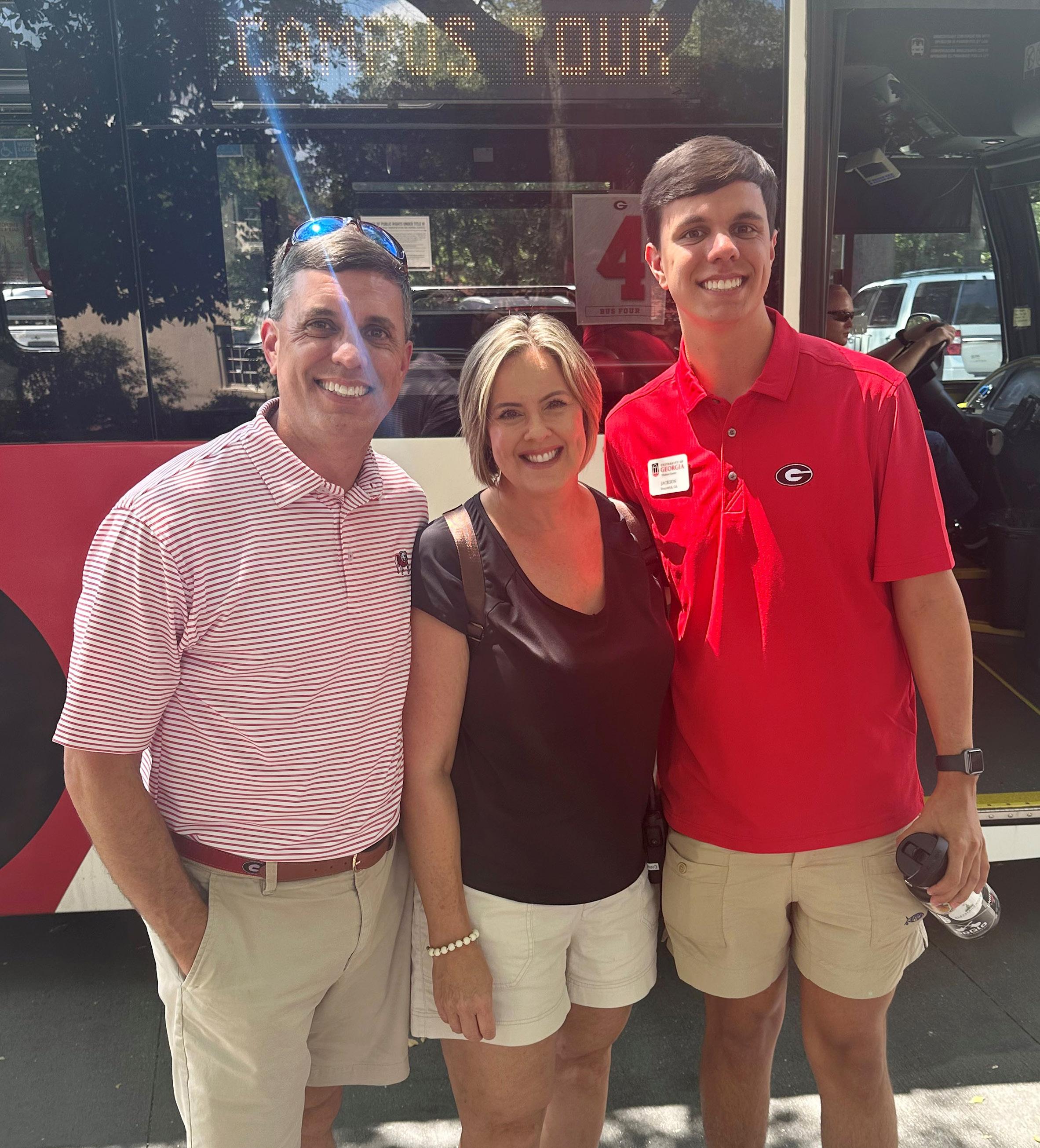
Jackson Dodgen (second from right)—along with his parents; his brother, Bryson (second from left); and sister, Caroline (not pictured)—was a lifelong Georgia Bulldogs fan, and brought his passion for the university to everything he did.
Jackson and the love their son had for the university and the people in it. “We couldn’t think of a better way to honor Jackson’s life and his passion for the University of Georgia than to create a fund that supports students who love what he loved,” Jeff says.
Laina and Jeff’s hope is that the fund will grow to support many students who walk into the Visitors Center and feel the
same sense of belonging Jackson did. This support includes funding for team retreats, travel, professional development opportunities, and team-building activities.
“If we can help students feel at home at UGA through Jackson’s name and through his memory,” Jeff says, “then at least something good will have come from his loss.”
For a young man who once trained for a 10K race just so his friends wouldn’t have to run alone, accompanied a coworker to the gas station late at night so she wouldn’t have to pump her own gas, and memorized his friends’ coffee orders just to surprise them, helping someone feel part of the Bulldog community felt to Jeff and Laina like the right legacy to leave.
For the Dodgen family, establishing a fund in Jackson’s memory was the easy part. The hard part is living each day without him. This fund, however, offers a way for Jackson to remain woven into the fabric of the university he adored.
“It warms our hearts to know that Jackson is still a part of the university, and with an endowed fund, he’ll still be there long after we’re gone,” Jeff says.
Help make UGA a home for generations of Bulldogs by investing in funds that change lives: GIVE.UGA.EDU/COMMIT
“We couldn’t think of a better way to honor Jackson’s life and his passion for the University of Georgia than to create a fund that supports students who love what he loved.”
JEFF DODGEN
Support funds—especially endowed ones—offer the opportunity not only to honor a loved one but to ensure that, despite never knowing them, others feel their impact.
After two years of preparation, the new School of Medicine is welcoming its first class.
WRITTEN BY AARON HALE MA ’16
The University of Georgia School of Medicine’s inaugural class arrives on campus in July, marking a historic landmark in the University of Georgia’s nearly 250-year existence.
Launching a medical school is exhaustive and meticulous work. In just two years, teams of administrators, faculty, and staff tackled a litany of tasks: fundraising, approving building plans, hiring, building a curriculum, and securing community partnerships, to name a few.
That work paid off in February when the school received preliminary accreditation from the Liaison Committee on Medical Education.
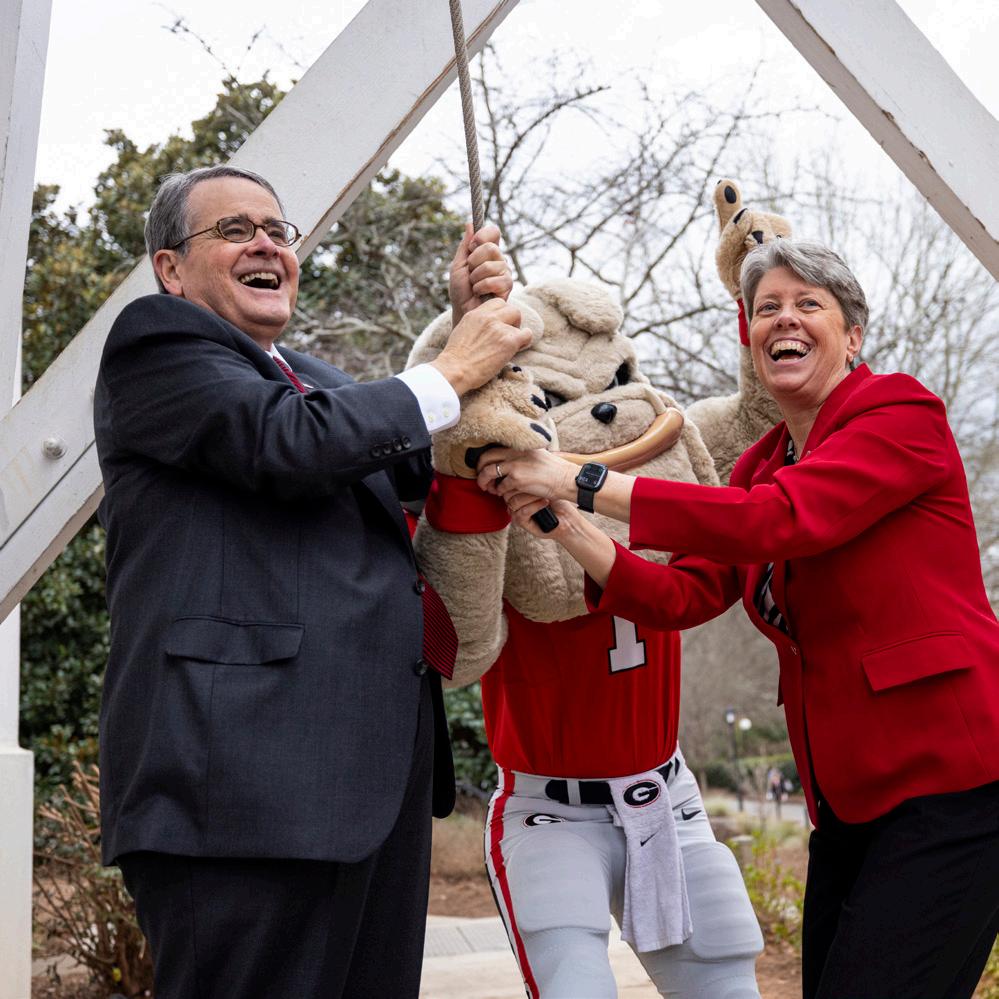
After that, the medical school was ready to launch its admissions process.
“The time is right for UGA to launch a medical school,” says Dr. Shelley Nuss, founding dean of the School of Medicine.
UGA benefits from being a respected, established university with a robust research enterprise and deep connections to public service throughout the state while also getting to build a medical program from scratch.
“We have the freedom to reimagine medical education, research, and clinical care unencumbered by tradition,” she says. “Now, with the new School of Medicine, UGA has the extraordinary combination of strengths to transform medicine as the 21st century demands.”
When the admissions portal opened on Feb. 19, the school drew 875 applications in the first 24 hours alone. Some prospective students were so eager that applications were rolling in a few minutes after it came online.
Interviews took place throughout March and April, as committees met with prospective students from across the country. In the end, 64 students were selected. This inaugural class marks the launch of the state’s second public medical school.
Even with all the work that went into the school’s launch, the real work has only just begun.
Georgia has 10 counties without a single practicing physician, according to a 2024 Board of Health Care Workforce report;
42 counties without an internal medicine doctor; 19 without a doctor in family medicine; 63 without a pediatrician ... This list could go on.
Georgia also has fewer than 28,000 physicians to serve more than 11 million people and growing.
Even as the medical school is poised to address these shortages, the school’s research faculty are already making connections campuswide to collaborate on projects that accelerate medical discoveries into clinical practice.
Meanwhile, construction continues on the $100 million medical education and research facility, scheduled for completion on the Health Sciences Campus in December. The facility will feature advanced clinical simulation, team-based

learning spaces, and biomedical research infrastructure.
In February, when news of the accreditation broke, President Jere W. Morehead JD ’80 lauded the work of the many individuals involved in bringing the medical school to life and the legacy it will leave.
“I am excited to welcome our first class of medical students this fall, and I look forward to the transformative impact UGA-trained physicians will have in communities throughout Georgia for generations to come.” GM

“With the new School of Medicine, UGA has the extraordinary combination of strengths to transform medicine as the 21st century demands.”
DR. SHELLEY NUSS Founding Dean, School of Medicine
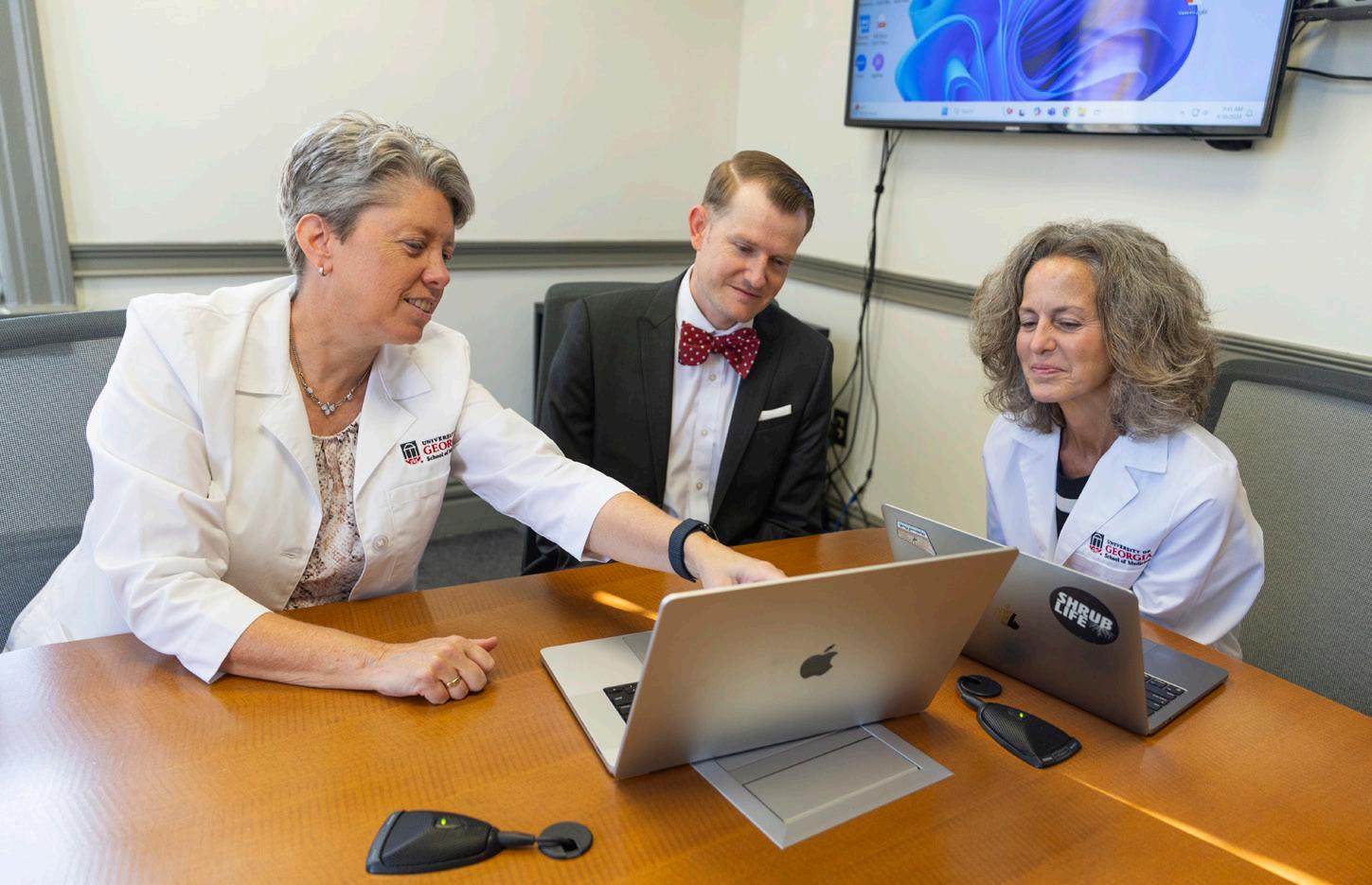
(From
left) Dr. Nuss, Associate Dean Brian Steele, and Senior Associate Dean Dr. Erica Brownfield are part of the core team that brought the medical
The School of Medicine’s curriculum takes a fresh approach to medical training that emphasizes engaging, team-based instruction and hands-on experience.
• Small-Group Learning: The school’s emphasis on teamwork simulates realworld clinical medicine.
• Student-to-Faculty Ratio: The 3-to-1 ratio ensures students receive individualized attention.
school to life.
• Early Clinical Experience: Students begin clinical training in year one by performing initial patient assessments and learning to communicate with patients. In many medical schools, students wait two years before examining patients.
• Active Learning: Instruction is rooted in active learning and emphasizes care-based problem-solving and hands-on training.





Striking a healthy work-life balance is challenging. UGA researchers want to make it easier.
WRITTEN BY LEIGH HATAWAY MA ’17



Laura Little, the Chick-fil-A Distinguished Professor for Leadership Advancement in the Terry College of Business, knows firsthand how difficult it can be to balance work responsibilities and personal life.
Professional athletes work incredibly hard. They exercise. They train intensively in their sport. They eat right.
“But they are working almost as hard, if not actually putting in more time and effort, on recovery,” says Ryan Grant MS ’23, PhD ’25. Grant, who graduated from the University of Georgia Franklin College of Arts and Sciences, is now an assistant professor of psychological and organizational science at the University of North Carolina, Charlotte.
“If we want people to perform well and be healthy, the same thing needs to be true for everyday workers.”
Think about it. If you work out for eight hours every day of the year, your body is going to break down. You’ll get injured. You’ll burn out. The same is true for office folk.
“Why would you expect that working 10 hours a day and never recovering and never taking vacations is going to go well for you?”
Most Americans don’t take all their vacation days. Even fewer fully unplug while they’re out of the office after a typical work day.
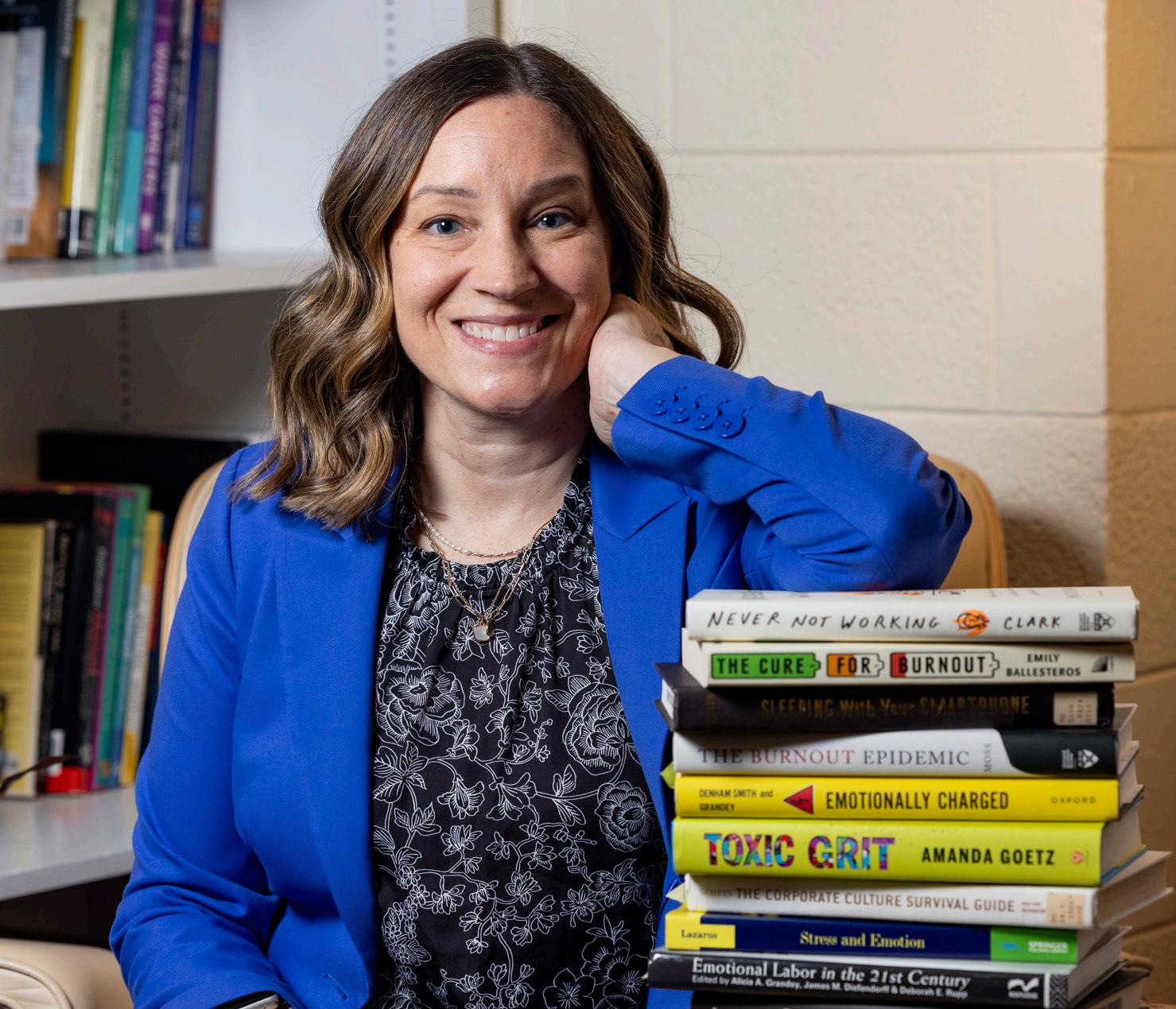
“This ‘always-on hustle culture’ isn’t sustainable,” says Malissa Clark, department head and a professor in UGA’s Department of Psychology. Particularly if we’re concerned about worker burnout, staff turnover, and employee well-being.
In fact, Clark literally wrote the book—Never Not Working—on how the disappearing boundaries that once kept home and work lives separate are creating more problems than they solve.
Research shows that keeping employees happy and healthy isn’t just good for them. It benefits the workplace as well.
“Organizations are so much stronger when workers feel supported,” says Laura Little, Chick-fil-A Distinguished Professor for Leadership Advancement in the Terry College of Business. “Job satisfaction goes up. Turnover and absenteeism go down.”
But how do we get to that ideal work-life balance?
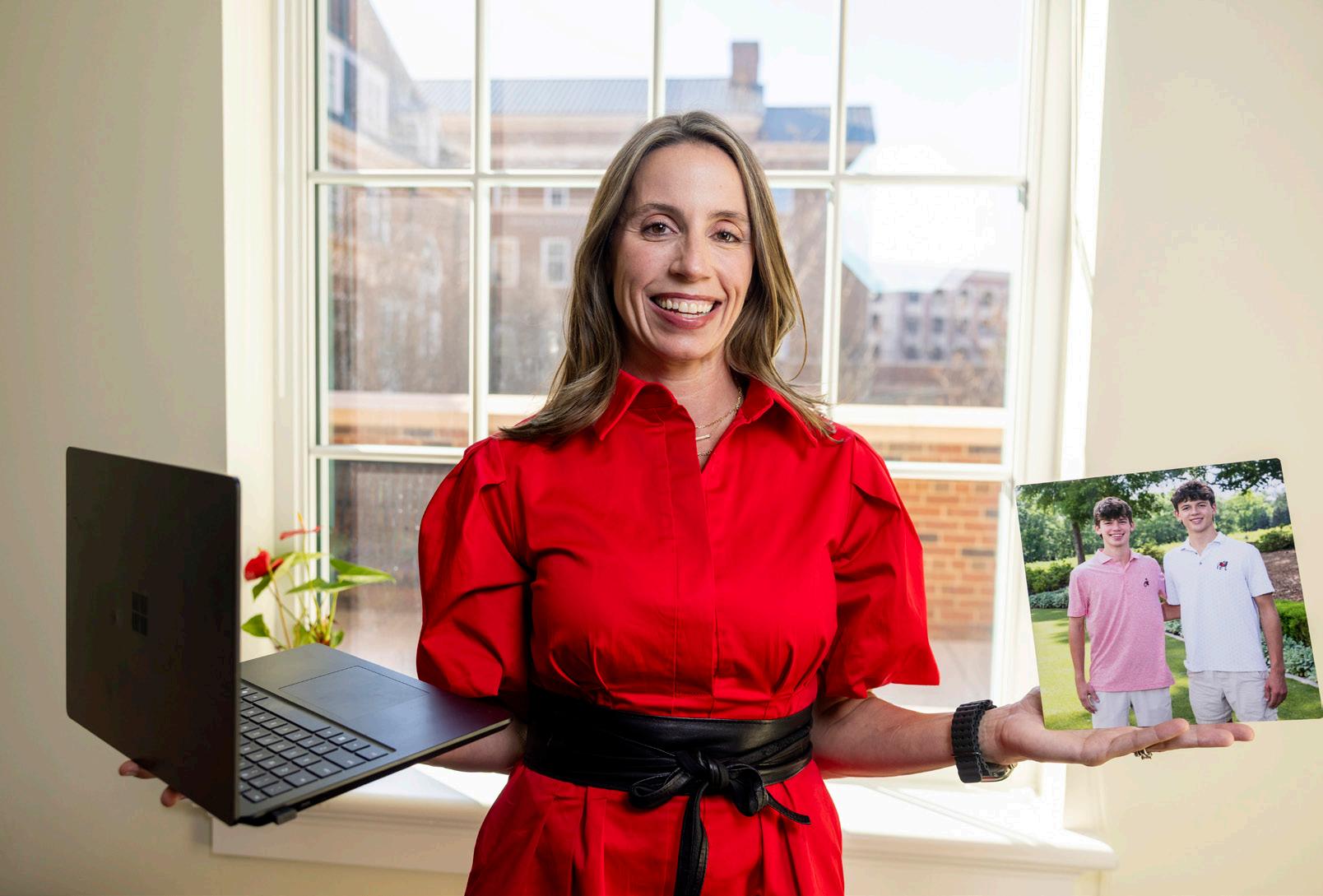
Little hates cooking. Passionately. When her kids were young, though, most nights she found herself cooking in the kitchen. Why? Maybe it was societal expectations. She’s the mom. She’s supposed to be the family chef.
“But if you’re spending time doing stuff you hate and not able to spend time doing stuff you like, and you can change that situation, then change it,” Little says.
Her husband loves to cook. Little embraced that, letting go of her preconceived notions about what she should be doing in her role as a full-time working mom.
She hasn’t cooked a meal in years.
“If someone else is there ready to do it, why do I feel like I have to do that as part of my role?” Little remembers asking herself. “When I talk about boundaries, it’s not just about saying no to other people. It’s also about saying no to yourself.”
Sometimes that looks like a redistribution of household labor. Other times, it’s knowing when you’re stretched too thin at the office and need to delegate.
Keep a close eye on perfectionism, Little warns. Sometimes good enough is just that.


“This ‘always on hustle-culture’ isn’t sustainable.”
MALISSA CLARK, Professor and Head of the Department of Psychology
Set yourself up for success at the office and at home:
Treat the workday like a roller coaster. Tackle your hardest tasks while you’re fresh, Grant suggests. Leave less urgent, easier jobs (hello, emails!) for later in the day. If you can, gradually wind down as the clock creeps closer to 5. Finish up projects and close those open tabs.
Help your brain shut off with “todo” and “to-done” lists. The to-do list keeps you on track with what needs to get done tomorrow, and the to-done list notes your accomplishments from today. “We’re very oriented toward goals, and when we have unfinished tasks or we feel like we haven’t made progress on goals, our brains will just keep ruminating on that,” Grant says.
Have an end-of-day routine. Blast music on the ride home from work. Change into comfy clothes. Shut the door to your home office and don’t go in there again. Whatever it is, establish a ritual to help send a signal to your brain that you’re done with work for the day, Grant suggests.
Set—and keep—your boundaries. Some people literally put their work phone in a box when they get home and try to forget about it. But you don’t have to go that far. Just turning off the automatic Slack or work email notifications can make a huge difference, Clark says. If you have to check in, specify when and how often you’ll do so and stick to it.
Schedule your emails to send during office hours, especially if you’re the boss. You may have seen a brief sentence at the bottom of someone’s email signature saying, “My work hours may be different than yours.” That implies that the responder can wait to respond, but Clark’s research suggests they don’t. “That power dynamic still creates that pressure to respond, even with the disclaimer. Schedule send the email because then it doesn’t put the employee in this awkward position of trying to determine if their boss really means it.” Clark says.
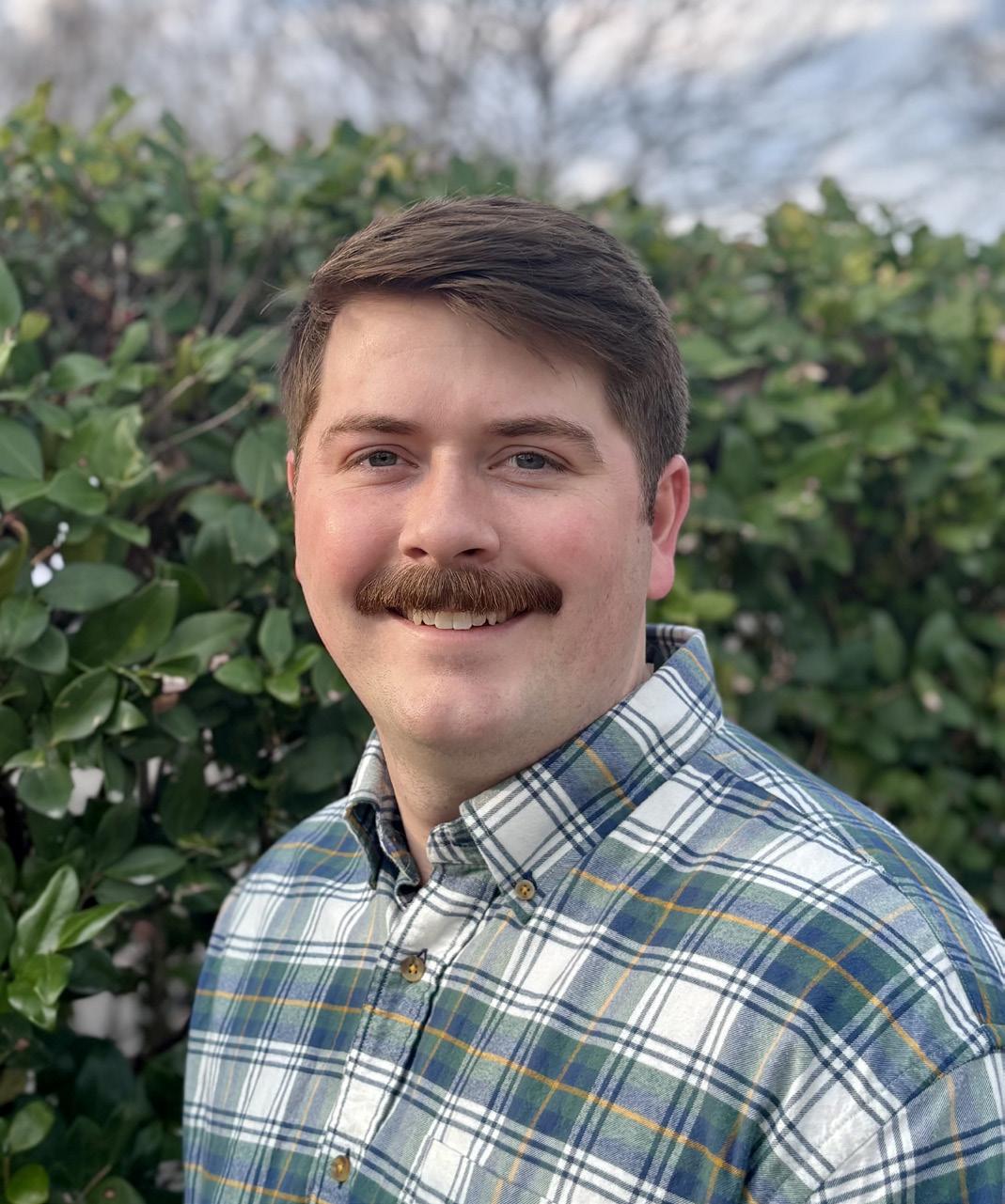
Ryan Grant calls his most recent study, “the Costco study,” as its findings suggest bulk periods of rest and recovery may provide the most benefits to well-being.
Treat recovery like a trip to Costco, Grant says. Budget big blocks of time for things that bring you peace and relaxation. (Research suggests that bigger periods of rest are better for well-being.)
Maybe that means going for a long walk. Or reading that book everyone is talking about. Or learning a new language or skill.
Recovery doesn’t have to equal physical rest, Clark says. Mastery experiences, as they’re known in research, challenge you to think and learn. As a bonus, the focus they require helps you detach from work.
“That psychological detachment has been shown to have a whole host of positive outcomes for your own personal well-being, for your recovery that night, for your sleep, and for your work performance the next day,” Clark says.
All three researchers admitted that their own work-life balancing act is challenging to maintain at times, often leaving them dangerously close to workaholism.
But powering through that one last project with the hope of relaxing later often backfires.
“It’s a trap because what ends up happening after you finish all these things? It just now opens up time for more work,” he says. “In reality, we’re much more productive and better employees and do better at our job when we take recovery seriously.”
For Grant, that means looking at his work week on Sundays to figure out which days will work best for bulk recovery.
For example, if he’s teaching on a Tuesday-Thursday schedule, Grant knows he’ll have more free time on Mondays and Wednesdays. That’s when he can set aside time to work out, catch up with friends, and spend time with loved ones.
The ultimate bulk buy? Using those vacation days. GM
Maximize the well-being benefits of your PTO.
Unplug for real.
Avoid work calls, checking emails, and even thinking about the office. (Easier said than done, we know.)
The more you can disengage while on break, the better.
Get moving.
Walk around town. Snorkel with the fishes. Take a hike through the rainforest. Anything that raises your heart rate can help maximize the restorative benefits of your vacay. Plus, many of these activities aren’t things you can do at home and can make for lasting memories.
Sandwich your trip.
If you can, Grant suggests taking the day before your trip and the day after you get home off from work as well. Taking the day before off can help you shift from work to play mode. Taking the day after your vacation off gives you time to acclimate to the normal swing of things when you get back.


The Chinese zodiac says 2026 is the year of the horse. 2026 also kicks off the 25th anniversary year of the founding of the eight-time NCEA championship-winning UGA equestrian program.
WRITTEN BY SAVANNAH PEAT AB ’19

The day begins before sunrise at the University of Georgia Equestrian Complex in Bishop. It’s just a 20-minute drive from UGA’s main campus, but it feels like another world. By the time the first light reaches the quiet 109-acre farm, the horses that power one of the nation’s most successful collegiate equestrian programs have already been fed, groomed, and turned out for the morning.
For the staff who look after them, the work is a daily labor of love. Caring for nearly 50 equine athletes, each weighing well over 1,000 pounds, is no small task. It takes a dedicated team that operates constantly, well beyond the spotlight of National Collegiate Equestrian Association (NCEA) competition days.
And make no mistake. These horses are elite athletes.
“Student-athletes have an athletic trainer and a nutritionist. We are those things but for the equine athletes,” says barn manager Kayla Jaconette. “We make sure that their nutrition matches their athletic performance and that no matter what treatments they need, we’re keeping the horses healthy and physically at their best.”
Jaconette, farm manager Amber Bradley, and a dedicated team of part-time workers and students take that responsibility seriously. They measure diets carefully. They monitor the horses’ physical and emotional conditions all hours of the day. They know each horse’s habits, moods, and quirks so well that they often joke they’re less like caretakers and more like “horse parents.”
“Every horse is different, and it’s up to us to learn their personalities and needs—their likes and dislikes, whether they require special shoeing, if they prefer living outdoors, whether they want pasture companions, and what type and amount of feed suits them best. Understanding all of this ensures we provide the best care possible,” Bradley says.
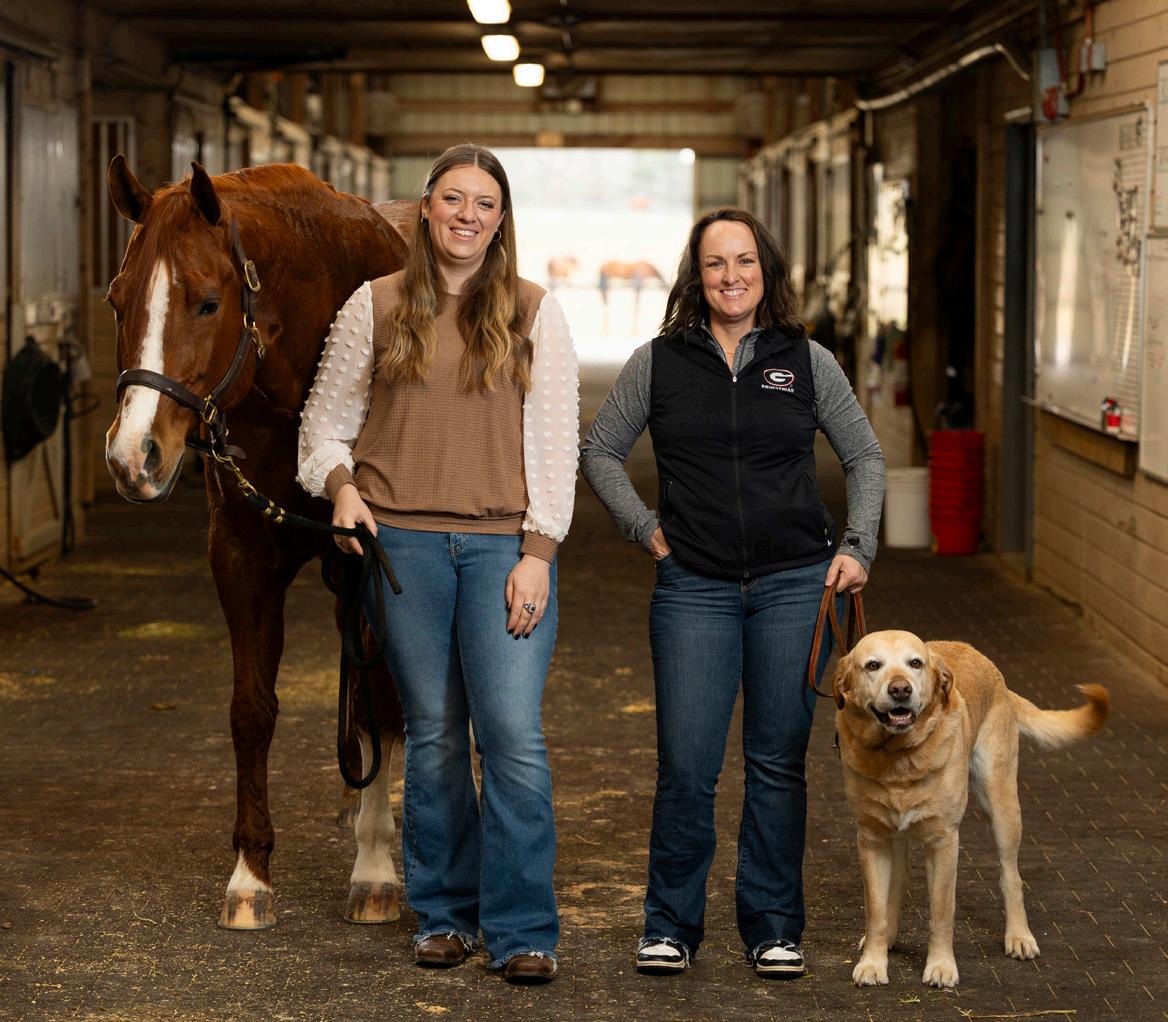
You can find Bradley and Jaconette in the barn or at the adjacent clubhouse at any given time. But the operation extends well beyond those two buildings.
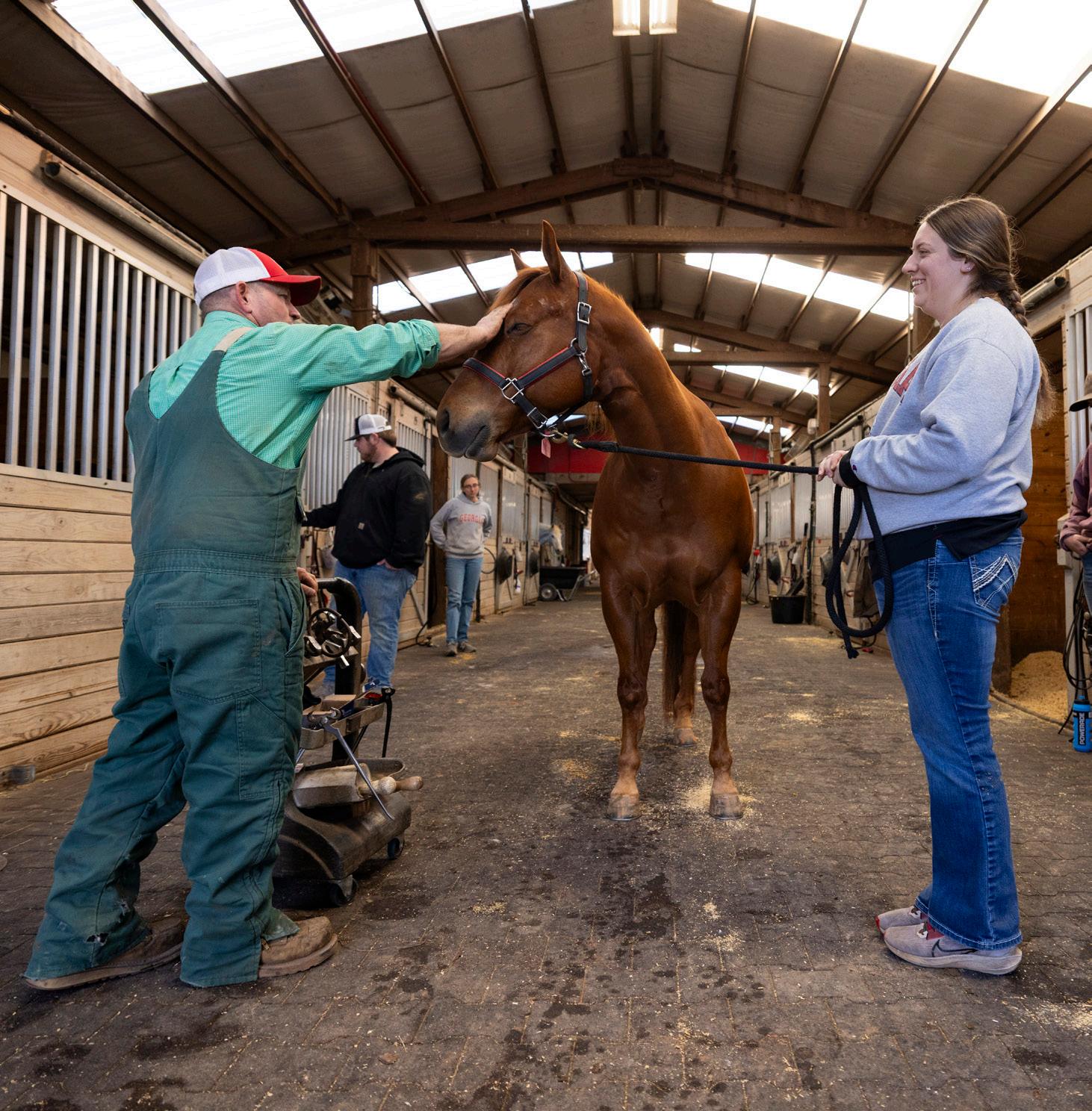
Will McDaniel is the facilities foreman at the UGA Equestrian Complex. His father was a horse trainer who got him to adore not only the species but also the land they inhabit. Now, he’s in charge of managing the grounds. It’s a seasonless job that requires daily maintenance.
But it helps that there’s no commute. He lives in an apartment above the main barn.
“It feels like my own farm sometimes,” he says. “I’m taking care of the horses, the land, you name it. It’s never ending in the best way.”
Bradley and Jaconette have been riding since 5 and 6, respectively. With a collective 40 years of experience under their belts, the staff know when a horse might need an extra hand.
It’s no surprise, then, that the equine specialists at the UGA College of Veterinary Medicine have the farm managers’ phone numbers memorized.
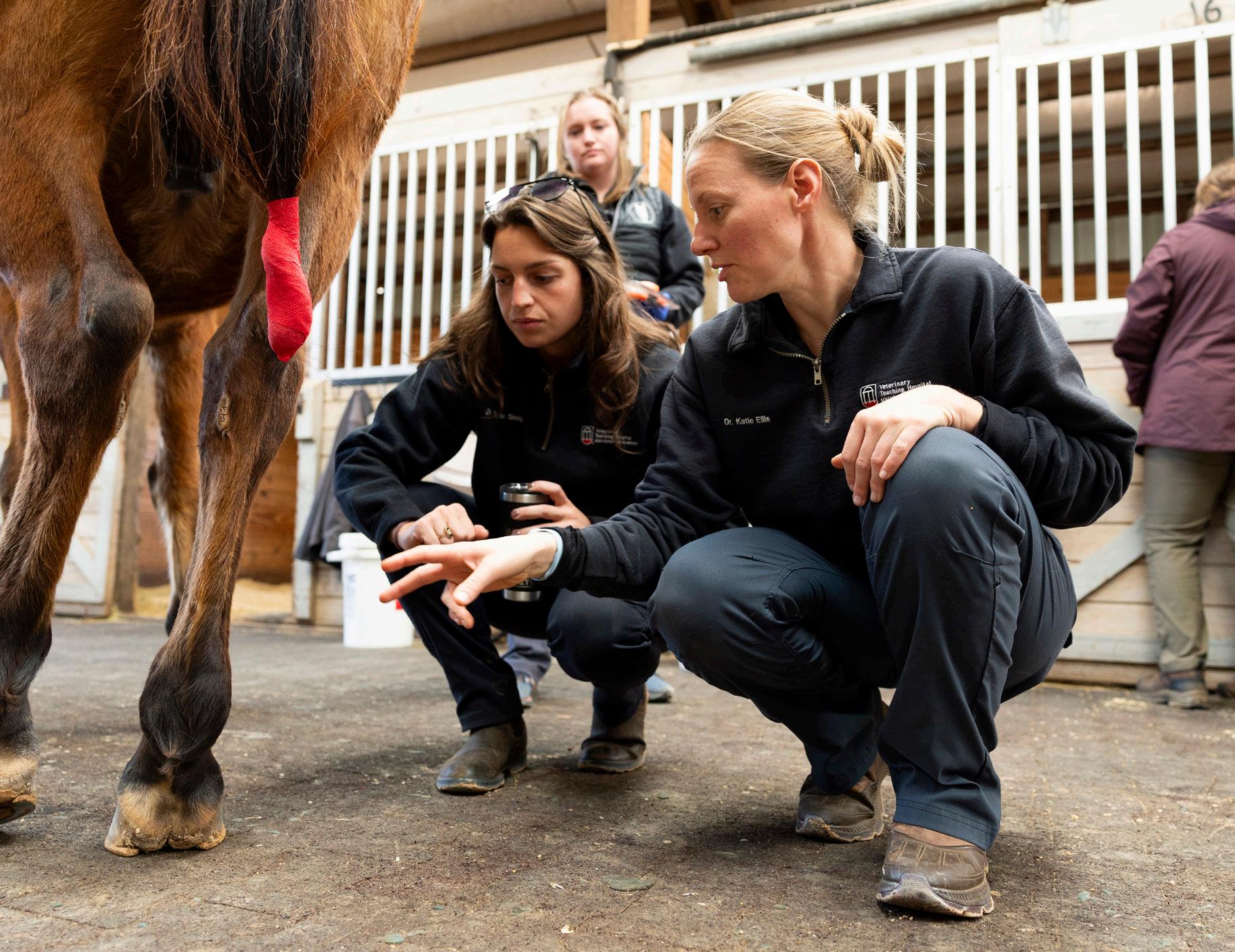
“Once you fall in love with horses, you never fall out of love with them. That’s the case for everyone who works with the UGA horses,” says Dr. Katie Ellis, a clinical associate professor in large animal
Before she taught the next generation of large animal vets, Clinical Associate Professor Dr. Katie Ellis (foreground) was one of those students herself. Ellis credits her hands-on experience with the horses at UGA as what pushed her to go into the field.
Most horses have their own stalls inside the barn, each adorned with a personalized chalk sign. Like the sign, no two steeds are alike. Some prefer cookies, others apples.
medicine. “It is just really nice to have people who are willing to use these horses in a way which not only helps benefit the horse in general, but also our students, the next group of equine veterinarians.”
Ellis is part of a dedicated, on-call crew from the College of Veterinary Medicine. They visit the farm at least once a week to check on the horses’ mobility, strength, and any other issues that may require their attention. The graduate-level veterinary medicine students who accompany the instructors for hands-on learning make it possible to treat every animal in a single day.
Randy Eggleston, a clinical professor in large animal surgery, spent more than 20 years making frequent visits to the farm before his retirement this year. Every day was a new experience.
“Having access to the equestrian team provides a tremendous learning opportunity for our students. These groups of students really want to learn and gain as much as possible from their experience with the horses,” he says. “It’s such a valuable relationship to allow students that amount of freedom. After all these years, I still talk to our graduated veterinarians who reference experiences they had on the farm.”

Third


The culmination of everything behind the scenes can be seen once these steeds hit the competition arena. But it continues win or lose.
Team captain Tessa Brown chose to come to UGA from Connecticut not just to compete with the national champion equestrian team but to be part of the specialized attention riders get to provide to each horse.
“There’s just something about Athens, the culture of this team, the strength of the coaches and the facilities, and the academics,” Brown says. “It’s a pretty fantastic place to be because it makes you step up and learn things about these horses and each other. You can take a breath, slow down, and really be present in the moment.”
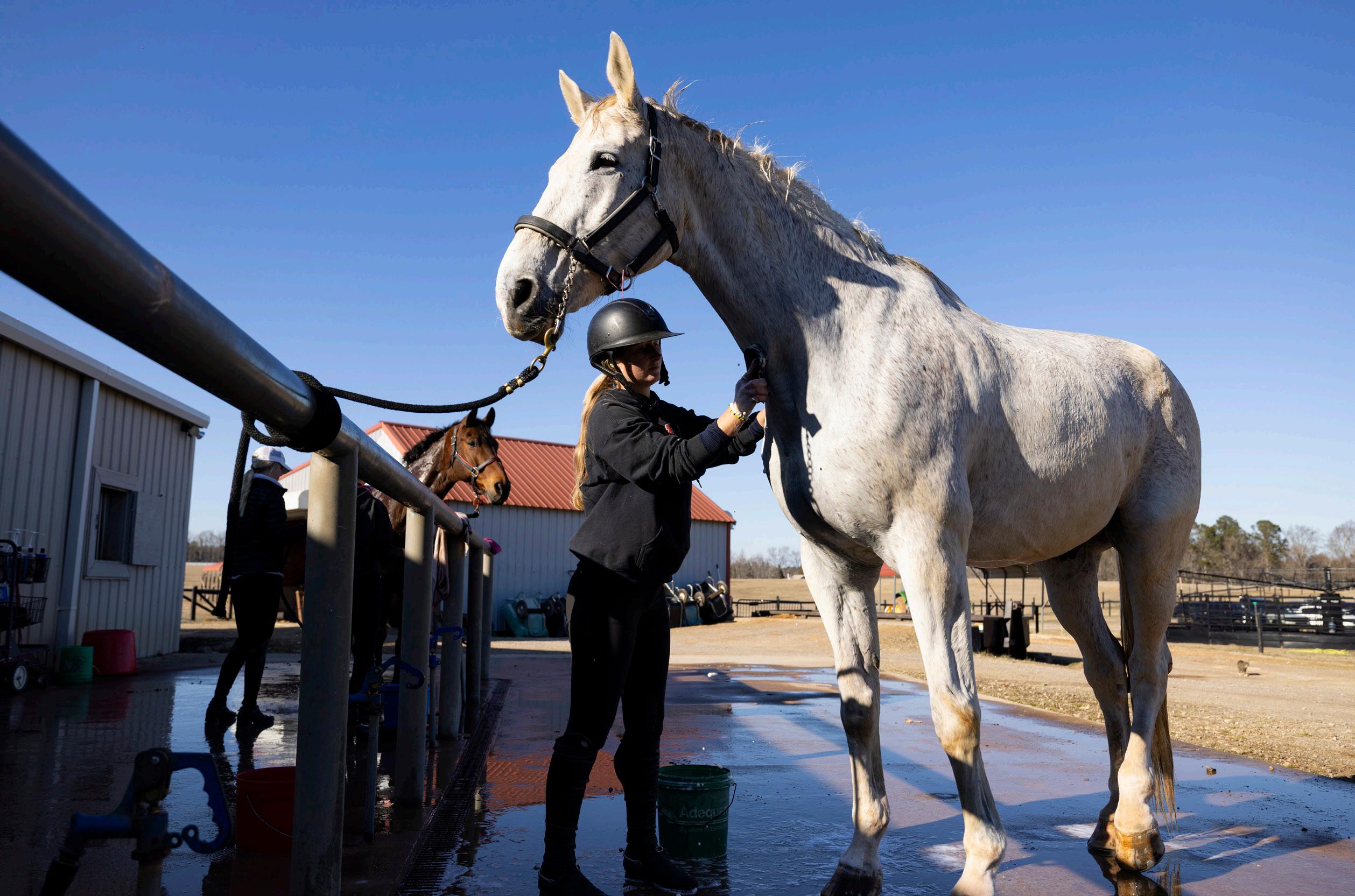
UGA’s equestrian team members are up just as early as barn staff and stay at the complex just as late. They must also ensure the horses are ready to compete—even if it’s for the visiting team. In collegiate equestrian, the host team typically provides horses for both squads. Just 20 horses take
It’s not just the barn staff who handle feeding, grooming, and cleaning up. Student-athletes, including Helena Timpany, play important roles in caring for the horses they ride. Here, she washes Everest following a practice.
“It’s so much more than just feeding an animal. It’s paying attention to every little thing and caring about every little thing. Our team is of one state of mind, and we couldn’t do what we do without every person.”
MEGHAN BOENIG, Head Coach, UGA Equestrian Team
part in regular season meets, with five per event, but they are randomly selected—so all must be ready to ride across the four events.
That can be a challenge. Because just like their human riders, every horse has his or her own unique personality. You can’t think of any of them the exact same way.
“You have your cliques like in high school. There are your jocks and your skater kids,” Bradley jokes. “There is a
wide range of personalities. They’re all individuals and surprisingly clever, which keeps things interesting, and it’s what makes this job so rewarding.”
No matter horse temperament, or the discipline within competition, the women have each other’s and the animals’ backs. With that cohesion, it’s no wonder that UGA is the team to beat.
Still, head coach Meghan Boenig teaches that true success is bigger than each

team captain Tessa Brown, now a senior, has been one of
“listening” to
individual win or even the number of team titles.
“We have a team that understands their role so well,” Boenig says. “Whether they are a student-athlete or staff member, they make this group special because they know it is never about one person. We all have this pride in the university and a willingness to be a representative of Georgia in everything we do. You flower where you’re planted, and we see that in every single sense. We’re supporting these student-athletes and these horses in a way that goes well beyond the sport.”
The Year of the Horse is said to symbolize passion, confidence, and most importantly, momentum. Although the zodiac sign won’t return again until 2038, the spirit of the horse is ever-present in Bishop. GM

See more equestrian photos at:

Jumping seat fences, as it’s known in the NCEA, is what most fans associate with the sport of equestrian. The judges evaluate the rider’s position, consistency on course, smoothness, flow from jump to jump, the number of strides (steps taken by the horse) in a line, and the rider’s plan to complete the course. Just like Ella Witt riding Constantine, above.
All of UGA is a stage for the faculty and students in the Department of Dance.
WRITTEN BY ERIC RANGUS MA ’94
PHOTOGRAPHY BY CHAMBERLAIN SMITH ABJ ’18
Onstage, there is nowhere to hide.
Dancers, and dance professors, accept this. They thrive on it. They love to perform. A wave of a dancer’s hand can say more than someone else’s 30-minute speech.
But performance is just one aspect of the Department of Dance experience. UGA faculty describe dance in broader, more ambitious terms. It is a body of knowledge. And a discipline. And a field of study. Students may not have that perspective at the start, but over time they embrace it wholly.
They also embrace the breadth of a University of Georgia education. Most of the students studying dance are double majors. Their interests spread to engineering, law, business, and so much more. Their calendars are full, but they embrace that, too.
While many academic departments might be possessive of their students, the dance department takes the opposite view. The pairing of dance with other academic disciplines is actively encouraged.
Faculty call it “Dancing Beyond Boundaries.”
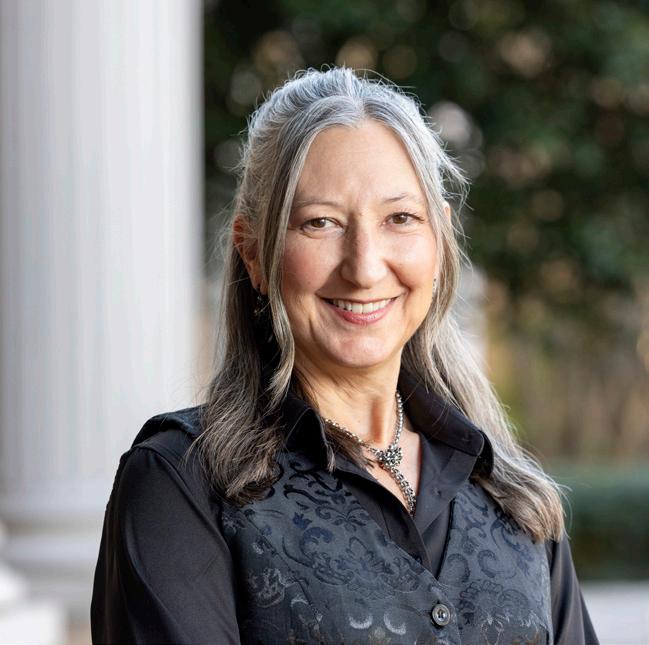
“Dance is not as inaccessible as people might think,” says associate professor Rebecca Gose, chair of the Department of Dance in the Franklin College of Arts and Sciences since 2024.
At its core, dance is storytelling, expressing oneself through movement. Its origins are universal. Think of a baby windmilling his arms to get his mom’s attention. Or reaching up to grab his mobile.
“Moving the body is one of the original urges of humans,” Gose says. “We all move to communicate. We move functionally and expressively.”
And for dancers, that desire to express themselves through movement is a feeling that drives them every moment. But in today’s busy world, finding time to dance at a high level is not easy for students.
“Students’ bodies and minds are engaged in so many different disciplines,” Gose says. “Most of them have danced nearly all their lives, but they have had to keep that separate from their academics.”
That’s because, compared to other arts disciplines, fewer K-12 schools offer dance
as part of their academic curriculum. School during the day, dance at night and on the weekends.
When Gose stepped in as chair, she had been on the UGA faculty for more than 20 years. She knew where the department had been; she also knew where she wanted it to go.
She started conversations with her fellow dance faculty. They wanted to meet their busy, academically and artistically skilled students where they were. Many wanted to double major or pursue dance as a minor or maybe just seek a certificate. Faculty capitalized on this trend and streamlined the curriculum so students could more easily broaden their studies and not be constrained by traditional thinking.
Gose and the department’s five other full-time faculty members also wanted to develop some language they could use as a rallying cry. Something that would transcend the artificial walls that keep our interests separate.
And from that, Dancing Beyond Boundaries was born.
“Moving
the body is one of the original urges of humans. We all move to communicate. We move functionally and expressively.”
REBECCA GOSE, Associate Professor and Department Chair
When thinking about college, Katerina Lazos did not have a dream school. What she did have was ambition. And lots of energy.
She wanted to find a place where she could do all the things she wanted to do. She wanted to have multiple majors. She wanted to be a lawyer. And she wanted to dance, which she’d done since she was 2.
As a high school senior, the Chicago native couldn’t travel to Athens to audition in person, so she performed on Zoom. The distance didn’t matter.
“When I discovered I could do the dance major, the public relations major, and the business minor while still being prelaw, I knew I had to come here. It wasn’t something that was remotely possible anywhere else,” says Lazos, now a thirdyear following that exact academic path.
Lazos’ UGA experience is not out of the ordinary. Fewer than 100 universities in the U.S. offer bachelor’s degrees in dance. Fewer still allow the double major with
dance as one of the options. Many students like Lazos come to UGA specifically so they can attend an elite institution without sacrificing their passion.
To feed that passion, students have a lot of choices.
The UGA Dance Company is an auditionbased group of dance majors and minors that performs works choreographed by faculty or guest artists. The Student Dance Concert Series features work choreographed, stage-managed, and even promoted by dance students themselves.
Dance majors must choreograph an original routine as part of their degree program. Other major- and minor-only opportunities include the Dance Repertory Project, which partners student-dancers with professional companies or dance specific styles, and SANKOFA, an annual faculty-directed celebration of dance and community that takes place each February. Non-majors (as well as a lot of majors, too) can also dance with the Ballroom Performance Group, which is audition based but also a social activity.
“I want to be an entertainment lawyer. I want to be a voice for artists, and the best way to be a professional in the creative world is to be creative yourself.”
KATERINA LAZOS, Third Year, Dance and Public Relations, Pre-Law Track

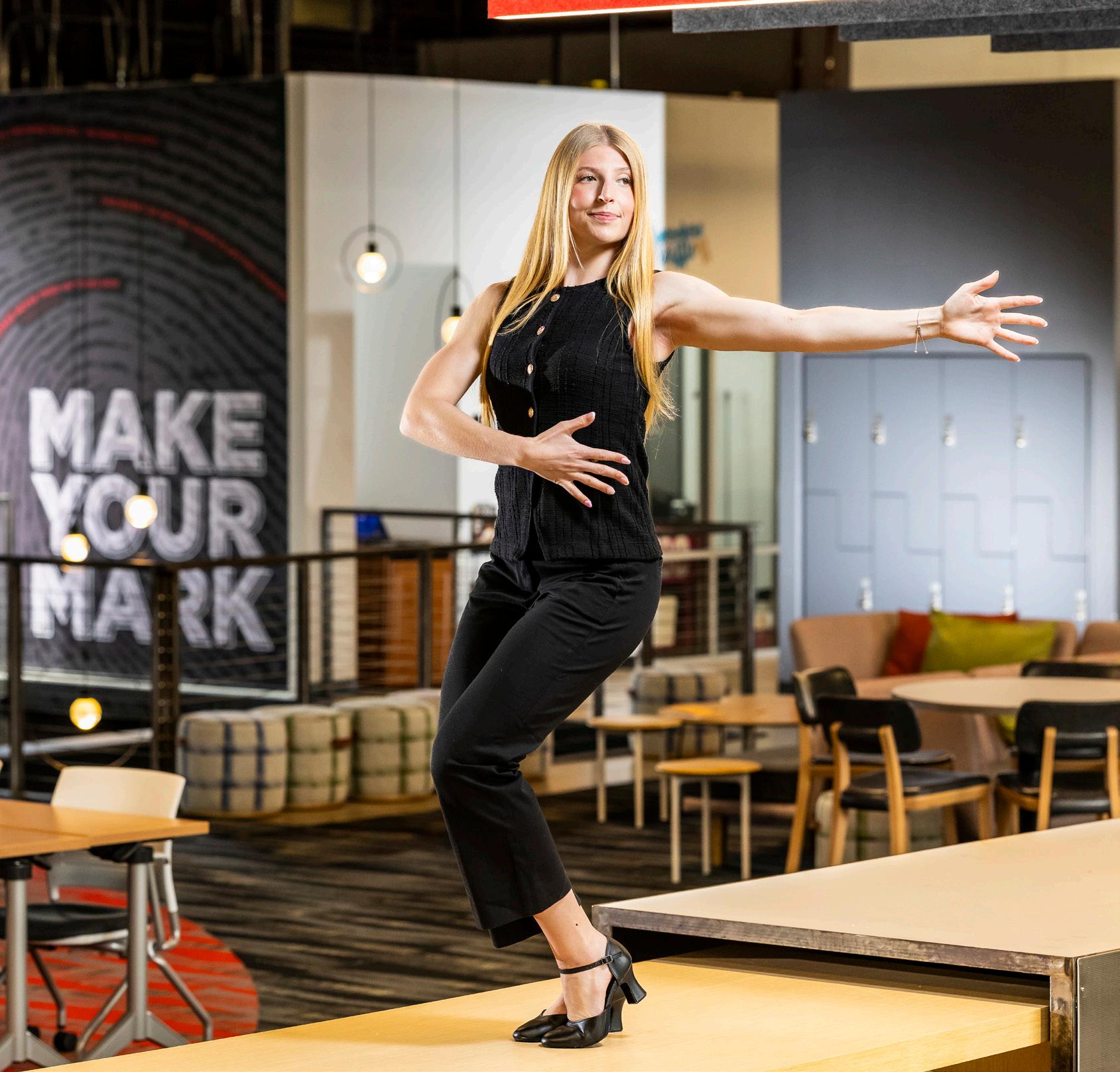
“The end goal for me is to open my own dance studio. I grew up doing competitive dance and wanted to major in it as well as something else, like marketing, that would help me open my own business.”
CALISTA HONICK, Fourth Year, Dance and Marketing
The experience doesn’t stop when the dancers leave the stage. The classroom experience includes indepth exploration of dance history and its cultural contexts.
For the students who want to open their own studio or just stay active on their own time, they learn how to teach dance to others. UGA is the only University System of Georgia school to offer preschool-12th grade certification in dance.
“There are so many different sides of dance that I wouldn’t have been able to dig deeper into if I hadn’t majored in it here,” says Calista Honick, a fourth-year dance and marketing double major. Her next step is pursuing an MBA at the University of Central Florida with the goal of opening her own dance studio.
Calista Honick jazzes up Studio 225, home of Terry College’s Entrepreneurship Program.


“I love choreography. That, in a way, is like engineering. You have to think of all these different aspects of a dance and put them together in a way that is artistic.”
MEGAN FITZGERALD, Third Year, Dance and Environmental Engineering
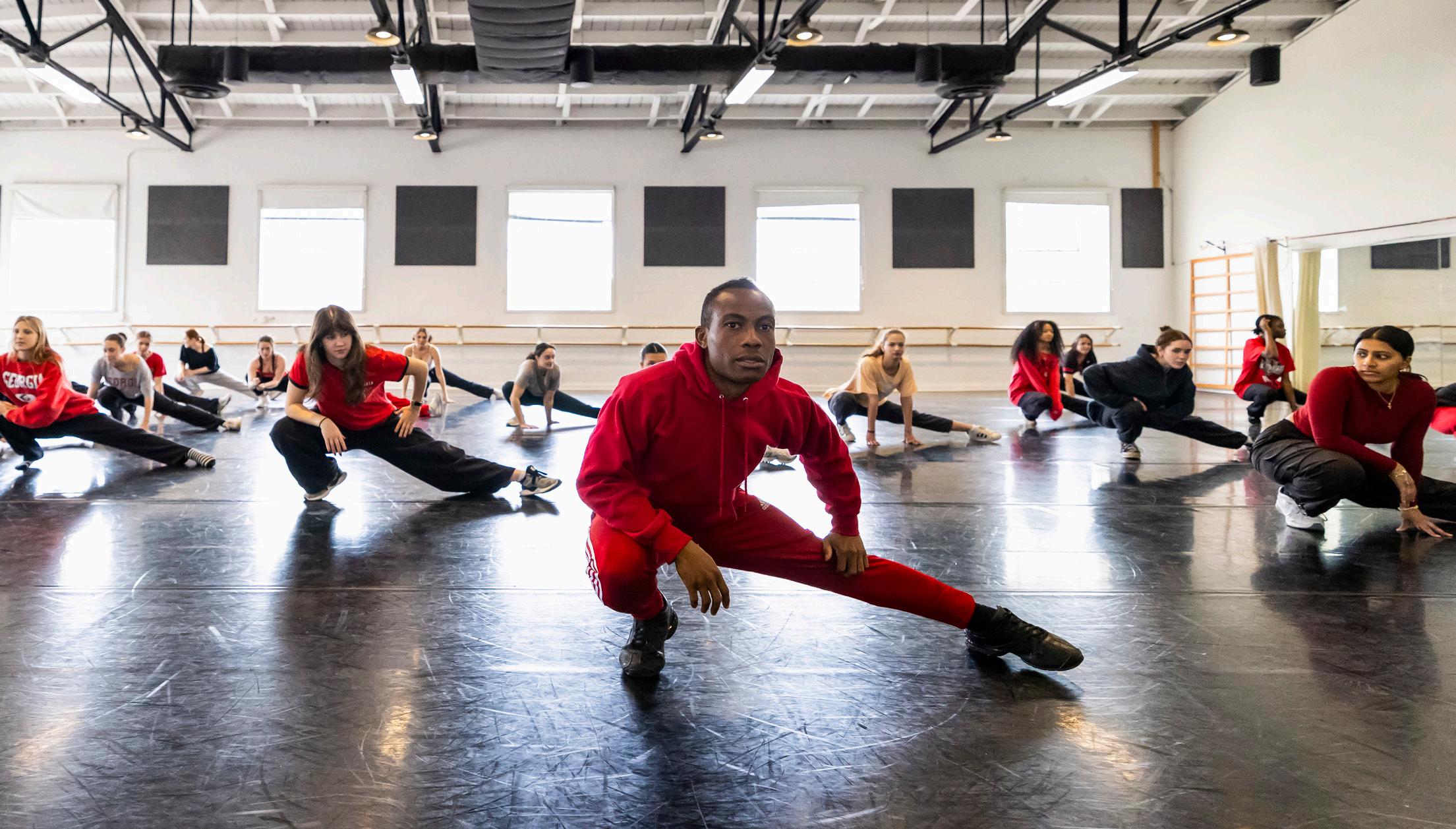
“Dance is probably a lesser known, lesser understood art form,” says Rebecca Gose, who embodies the department’s identity as moving beyond boundaries. As an undergraduate, she majored in education at West Virginia University and minored in dance. She joined a touring dance company immediately out of school and after a decade returned to school for her MFA in dance. She’s taught at the college level ever since.
UGA is distinct in that dance faculty are experts in a wide variety of genres: contemporary modern, ballet, West African, hip-hop, jazz, and aerial arts, just to name a few.
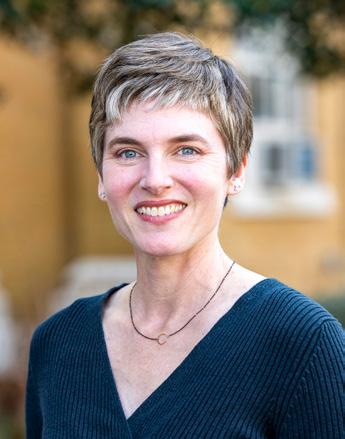
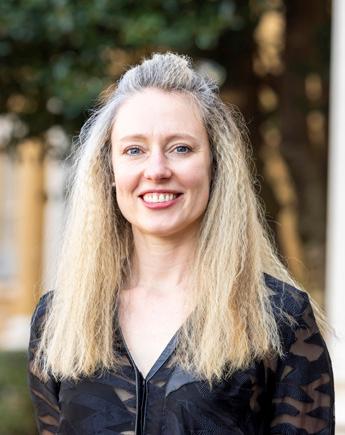
Assistant professor and political science grad Elizabeth Stich AB ’03 minored in dance at UGA, where she was introduced to aerial arts. When she came back to teach in 2022, she was tasked with developing coursework and a curriculum to support the discipline. She co-wrote a book, Aerial Arts and Dance Improvisation: A Practical Guide to Creativity for Aerialists, that was released in December.
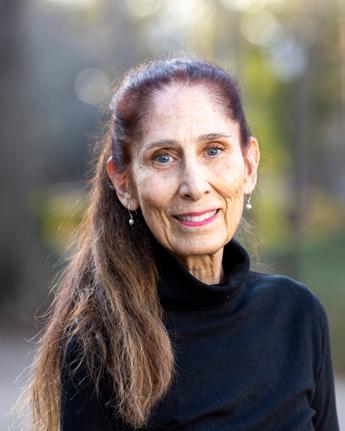
Senior lecturer Barbara Powers spent more than a decade on stage, most notably as a Radio City Rockette. When she turned to teaching, one of her main interests became dancer wellness and mental health. She and Gose co-founded UGA’s Art of Wellness Living Learning Community, which accepts 24 students a year and is open to any arts major or minor on campus.
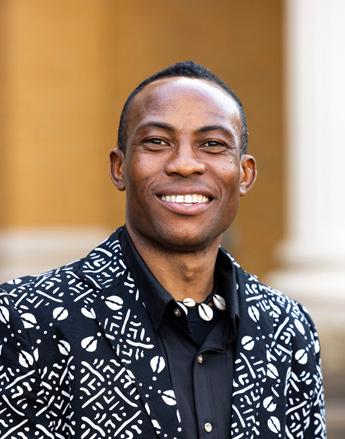
Lecturer Jason Aryeh mixes teaching, research, and performance in West African dance and hip-hop, among others, and leads the department’s study away program to his native Ghana. Like Powers, Aryeh also makes time for mental health conversations with dance students. “We talk about time balance and how to approach new things. It’s part of the class discussion,” he says.
UGA Foundation Professor of the Arts Lisa Fusillo performed and taught across the U.S. and Europe, including in the UGA at Oxford program. On UGA’s main campus, she helped create a Double Dawg program that allows students to earn a bachelor’s degree in dance and a master’s in nonprofit management through the School of Social Work.
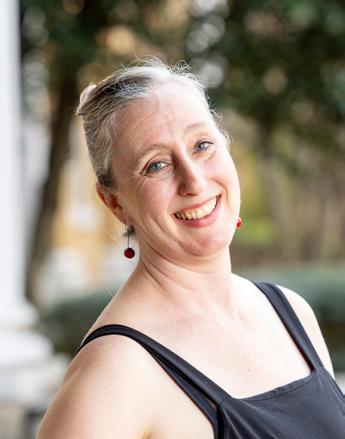
Jennifer Weber, an assistant professor of ballet, is finding her groove as the department’s newest faculty member and embracing the many roles that go along with it. “None of us sit behind a desk eight hours a day,” she says. “We are still movers, so we teach classes, then coordinate rehearsals, and then we’ll eventually sit back down and answer emails.”
“Dance informs my ability to relate to my own body as well as to understand others. I can interpret other people’s movements and, hopefully one day, use dance in a nontraditional approach to help people rehab their own bodies.”
Fourth Year, Dance, PreOccupational Therapy Track

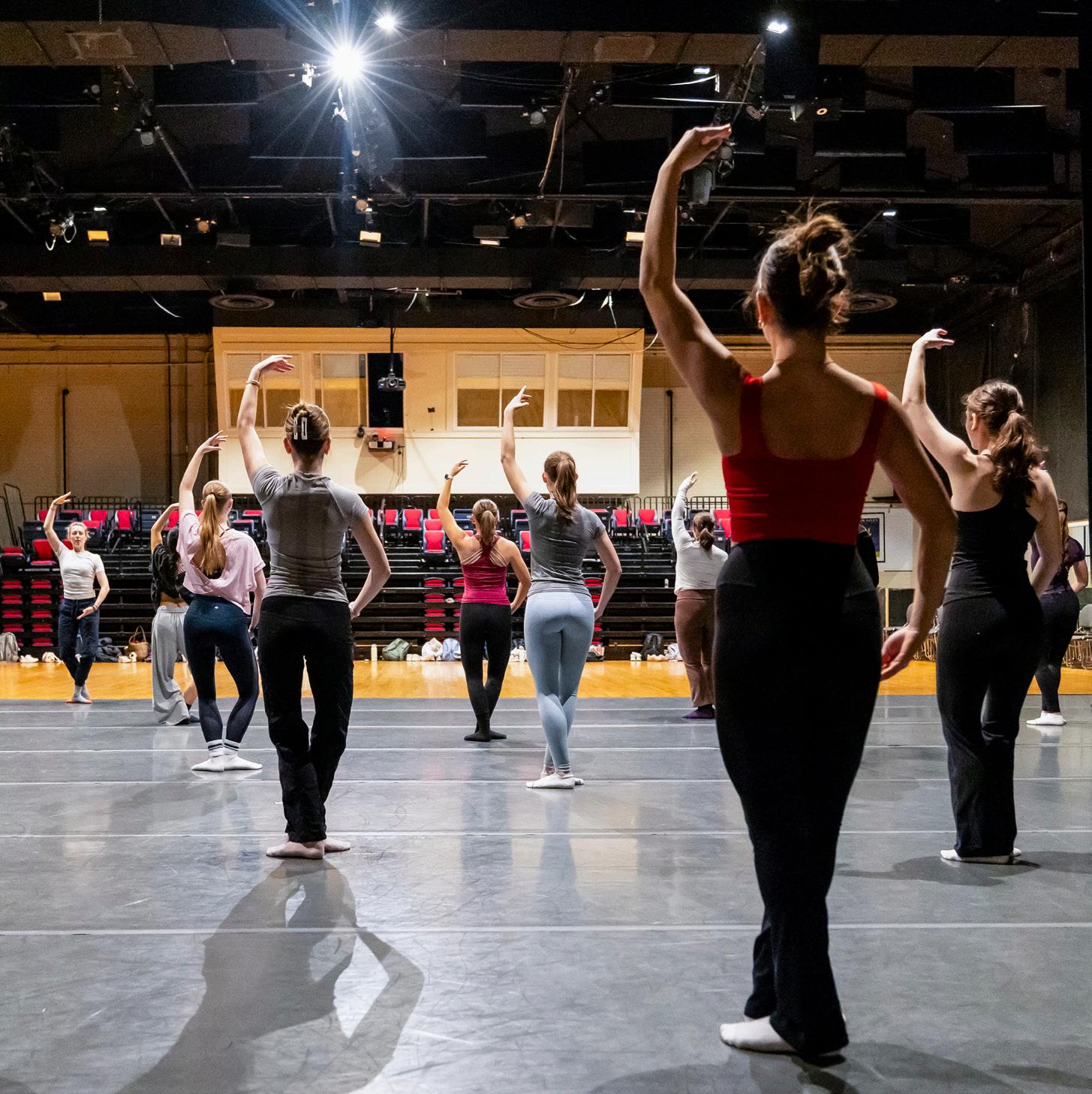
“I think every faculty member and professor in this department has been a meaningful part of my experience at UGA,” says Katherine Stockton, a fourth-year dance major who will attend graduate school for occupational therapy at Georgia State in the fall. “The support system they provide you and all of the wisdom and amazing advice that I’ve gotten has been crucial for me.”
That comment brings a smile to Powers’ face.
“The students get to interact with each of us,” she says, “whether we are teaching a class, asking them questions, or just chatting during a break.
“We encourage students to participate in the things that align with their interests. Their worldview expands when they come here because there are so many different styles and ideas and theories in terms of both the scholarship and the artistry. We have individual conversations with the students to help them pursue these paths.” And another boundary is crossed. GM


“Dance and psychology are leading me toward physical therapy, which is what I ultimately want to do. Dance gives you this ability to cue and instruct people in a way that non-dancers might not do.”
First-year UGA students build relationships and explore new cultures through Connect Abroad.
WRITTEN BY KRISTA RICHMOND PHOTOGRAPHY BY ANDREW DAVIS TUCKER

Morocco is a study in contrast— from the color and chaos of Casablanca to the silence and serenity of the Agafay Desert.
The 29 UGA students who visited Morocco over spring break are just as different and equally as vibrant.
Designed exclusively for first-year students, Connect Abroad: Discover not only introduces participants to UGA’s study abroad opportunities, but it also immerses them in a new culture through hands-on experiences in eight different locations on three continents. The students explore a wide range of cultural, historical, economic, and social topics with UGA faculty and staff members, all while earning class credit.
Here’s a look at what they saw—and learned—in Morocco along the way.

• Welcome dinner with traditional Moroccan appetizers and tagines.
• City tour with stops at the El Badi Palace and the Saadian Tombs.
• Wandering the shops in the medina.
• CAMEL RIDE!
• Sunrises, sunsets, and stargazing.


• Playing Connect Abroad Taboo: What have you learned about Morocco so far?
• Campfire reflection circle to discuss higher education in Morocco.


• Volubilis: the ruins of a once-flourishing Roman city known for its grand basilica, triumphal arch, and intricate murals.
The Forest of Maâmora: one of the largest cork oak forests in the world where Moroccans enjoy shaded trails and bring their livestock to graze.
• Rabat: the capital of Morocco (above) that features an intricate kasbah, or fortress, and seaside eats.

• City tour with stops at the Place El-Hedim and the Bab Mansour gate, and then winding through the UNESCO-listed medina.
• Cooking class: Make your own tagine, a slow-cooked stew served in a North African earthenware pot with a cone-shaped lid.
• Conversations with Moroccan university students while breaking the fast during Ramadan with a traditional iftar meal.



• City tour with stops at Mohammed V Square and the Hassan II Mosque.
• Reflection circle to share insights and what they’ve learned while in Morocco.
• “Here’s looking at you, kid,” a farewell dinner at the iconic Rick’s Cafe.


July 31
Nominate a business at the top of its game for the 2027 Bulldog 100. The nomination period for next year’s class of the fastest growing businesses owned or operated by UGA alumni closes July 31. Details at alumni.uga.edu/b100.


Each year, the University of Georgia recognizes alumni, faculty, and friends whose support of the university has long-lasting impact on our campus community. This year’s Alumni Award honorees include:
• Larry R. Benson BBA ’74 | Alumni Merit Award
• Nancy C. Juneau BSEd ’82 | Alumni Merit Award
• Robert E. Hoyt | Faculty Service Award
• Rene and Jim Nalley BBA ’65 | Family of the Year Award
• Brian E. Harman BBA ’11 | Young Alumni Award
Learn more about these outstanding UGA supporters at alumni.uga.edu/alumniawards

Chapter President: Carrie Campbell AB ’99, ABJ ’00, MPA ’18
Number of Local Alumni: 38,570
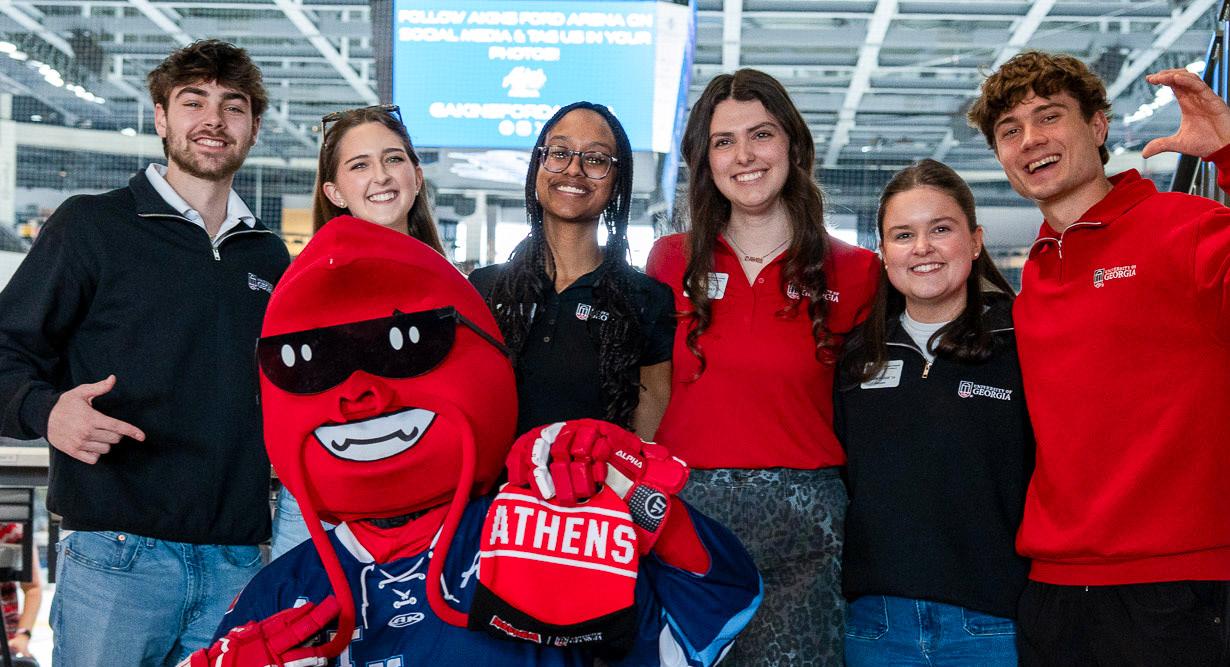
The Athens Area Alumni Chapter brought Dawgs together for a lively UGA Day with the Athens Rock Lobsters, reminding alumni that the Classic City is always home. From a private pregame gathering with fellow alumni and Rock Lobsters mascot Clawdius to cheering on the team at puck drop, the event showcased the chapter’s commitment to fostering connection and school spirit. A portion of ticket sales supported the Athens Area Chapter Scholarship Fund—highlighting the chapter’s dedication to giving back and investing in Athens-area UGA students. Give to the Athens Area Scholarship Fund at tinyurl.com/athensscholarship
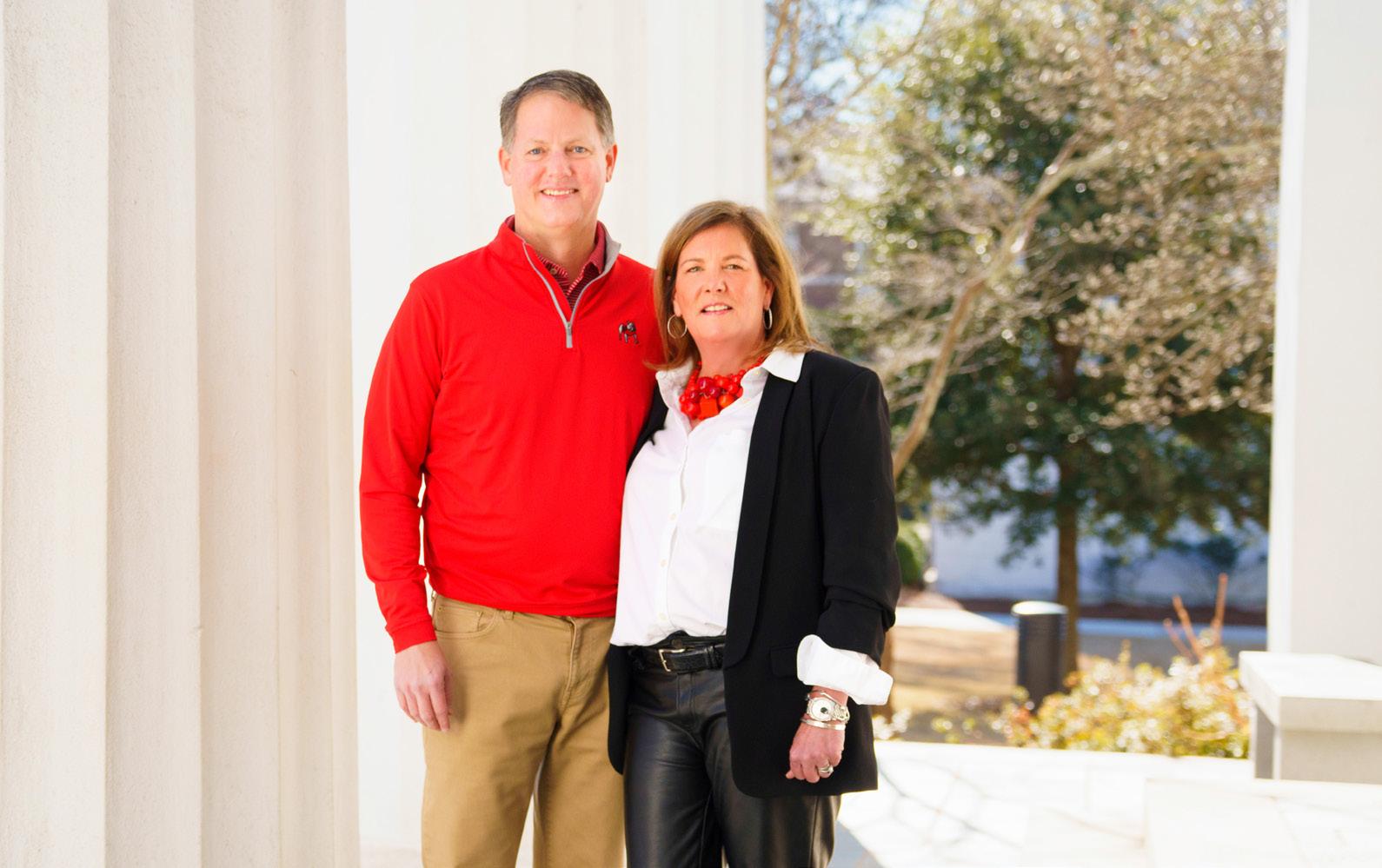
Rooted in connection and committed to service, Fielder and Stephanie Shurling BSFCS ’94 are dedicated to giving back to the communities that have shaped their family. Now stepping into their roles as 2026 chairs of UGA’s Parents Leadership Council (PLC), they’re channeling that passion into supporting students and strengthening campus life. Learn more about the PLC at give.uga.edu/plc
Scholarships help deserving students access a world-class education regardless of background. They reduce student loan debt and attract talented students to UGA, empowering the next generation of leaders, innovators, and gamechangers to become Bulldogs and serve the state of Georgia. This year, UGA raised more than $19 million for undergraduate and graduate scholarships, addressing part of the $61.5 million in unmet need faced by undergraduate students in Fall 2025. Learn more at give.uga.edu/scholarship.

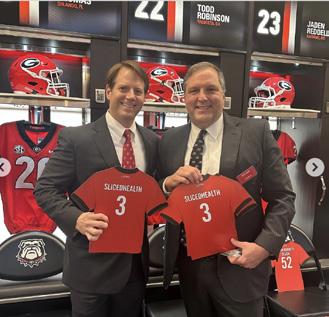
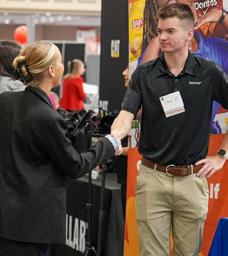
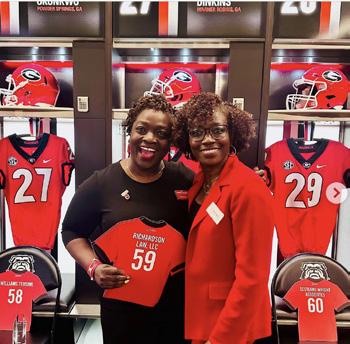
This philanthropic group of UGA alumni, friends, and donors gathered on campus for their annual event, which this year spotlighted creativity, innovation, and design. Highlights included an intimate conversation with Anne Barge Clegg BSEd ’69 about her exhibition at UGA’s Special Collections Library. Guests also attended small-group dinners featuring discussions on the new Victoria Kay Ivester School of Nursing; the CARE Center; the Dining, Learning, and Well-Being Center on West Campus; and UGA’s Active Learning Initiative. Learn more about Georgia Women Give at give.uga.edu/georgiawomengive

Check out what's going on for alumni and update your email or mailing address with UGA. YEAR-ROUND, WORLDWIDE, AND LIFELONG.



Compiled by Maura Rutledge
Robert Jones often meets with aspiring academics who hope to build careers in higher education. Sometimes, they say something that gives him pause: “I want to do what you do. I want to be a university president.”
When that happens, Jones MS ’75, the president of the University of Washington, is already prepared with a response.
“Why do you want to do that?”
Before they can respond, Jones offers advice: “If you want to be a university leader, first of all, prepare yourself academically to be the best professor, best teacher, best scholar, best university community member that you can be,” he says. “And then see where that takes you.”
The theme is clear: Put in the work.
Hard work is a habit Jones has practiced his entire life. His efforts have paid off. Now leading a tier 1 research university for a second time, Jones is one of the country’s most accomplished leaders in higher education. But in some ways, he is just getting started.
Jones was born in Dawson, Georgia, about 20 minutes northwest of Albany. Neither of his parents graduated high school, but they prioritized their son’s education. He embraced learning, even earning the nickname “professor” from his ninth-grade vocational agriculture teacher.
Jones became the first member of his family to attend college and graduated with a degree in agronomy from Fort Valley State College (now University). He then set his sights on graduate school in
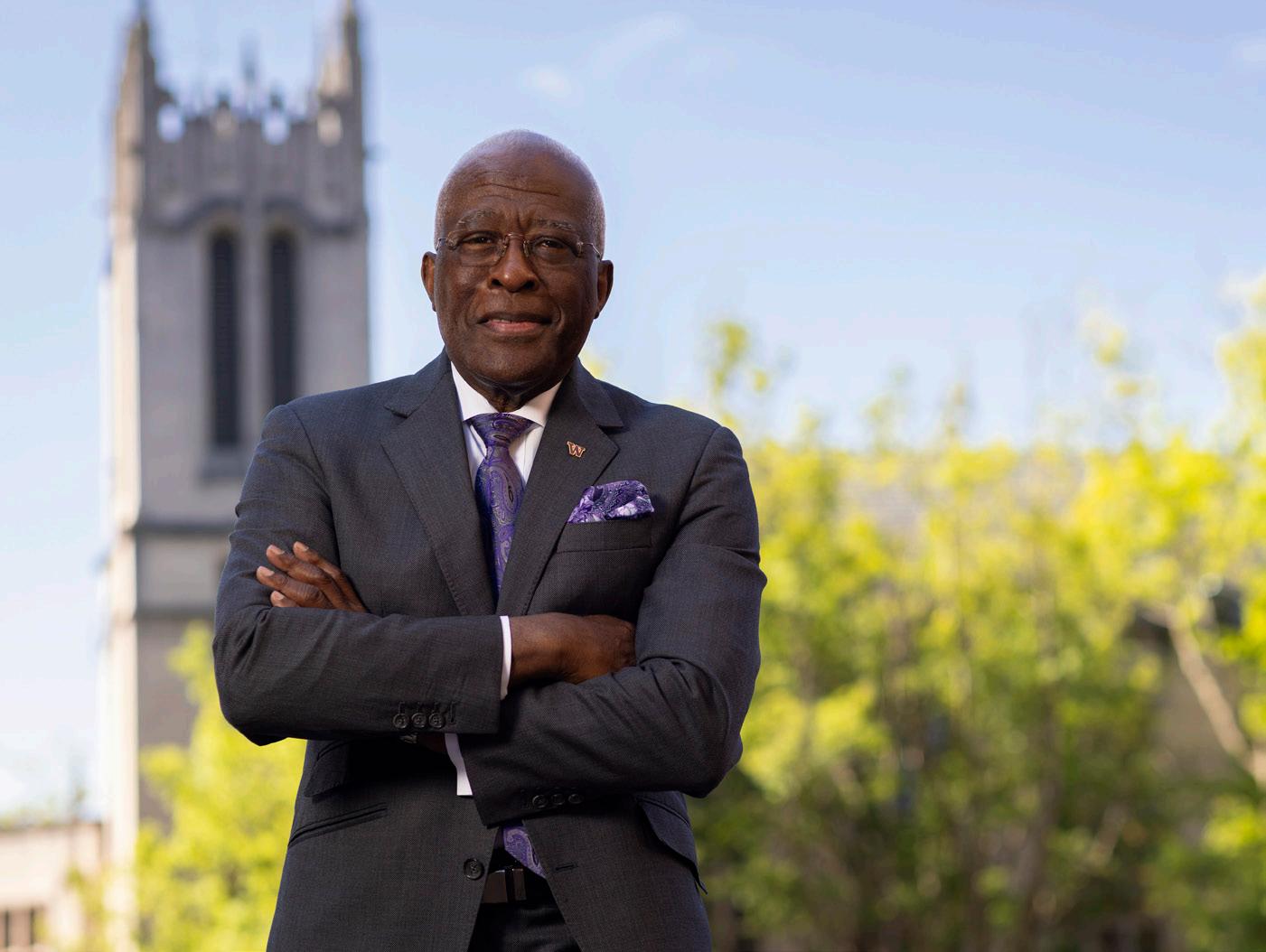
Jones, who earned his master’s degree in crop physiology at the University of Georgia, has served as president of the University of Washington since Aug. 1.
Seattle is in Gerberding Hall, seen here in the background.
Athens because he wanted to learn from UGA faculty.
“I felt very fortunate to be able to come into a university with the reputation and the caliber of research excellence like that of the University of Georgia,” says Jones, who earned a master’s degree in crop physiology in the College of Agricultural and Environmental Sciences.
He credits the mentorship of Harold Brown, now professor emeritus of crop and soil sciences, and the late agronomy professor Doyle Ashley as crucial to his development as a scholar.
UW’s
“I knew I wanted to be a laboratory scientist, I knew I wanted to work under the tutelage of the best people in the country, and I learned a lot from those two gentlemen,” Jones says.
Following doctoral work at the University of Missouri, Jones joined the faculty at the University of Minnesota. It was in the Twin Cities where Jones was drawn into administration.
Beyond just understanding the nuts and bolts of university operations, Jones realized that he enjoyed helping scholars navigate the complexities of academia.
1955-1959
John T. Hill BFA ’55, MFA ’56 has practiced photography for more than 70 years and is a cofounder of the Yale Department of Photography. His work has been featured in galleries such as the Metropolitan Museum of Art and the International Center for Photography.
1965-1969
Terrel D. Ballenger BBA ’69, MBA ’70 retired as senior vice president of communications after 55 years with Blue Ridge Electrical Co-Op.
“You get satisfaction out of providing access and affordability to students whose families can’t afford to pay for an education and helping professors start their careers and be successful by getting promotion and tenure,” he says. “So there are a lot of things that I find to be equally gratifying and satisfying in my administrative responsibility.”
Otherwise, Jones says, he would have just stayed in his lab, the place where he was most comfortable. He conducted groundbreaking research to develop more resilient corn plants and used molecular approaches to make major crops more heat- and drought-tolerant.
But once he decided to travel the administrator’s path, Jones rose quickly, eventually serving as Minnesota’s senior vice president for administration.
Over 34 years, Jones built a life in Minnesota. He gave back to the community by founding the Urban Research and Outreach-Engagement Center, now one of UM’s most impactful community partnerships. The center was named in Jones’ honor in 2015.
He and his wife, Dr. Lynn Hassan Jones, a radiologist, share five children. He also sang with the St. Paul-based Grammy-winning gospel group The Sounds of Blackness, which recorded with local luminaries like Prince, and Jimmy Jam and Terry Lewis.
Jones had many reasons to finish his career in Minnesota. But he was ready for a new challenge. He found one soon enough.
In 2013, Jones was hired as president of the State University of New York at Albany. It would be his first experience outside a
Written by Eric Rangus MA ’94
land-grant institution, but he wasn’t fazed. In just three years, Jones led the largest academic expansion in the university’s history, helping launch two academic units.
His accomplishments caught the attention of the University of Illinois, which hired him in 2016. At Illinois, he oversaw a $2.7 billion fundraising campaign; launched an innovative medical school that combined engineering, data science, and clinical care; and expanded his leadership portfolio. He chaired the boards of the Association of American Universities and the Association of Public and Land-Grant Universities, as well as the Big Ten Council of Presidents and Chancellors, becoming one of the country’s most influential academic administrators.
It was hard work, and after nine years at the helm, Jones was ready to step away. But he wasn’t sure what he wanted to do next. Jones didn’t anticipate taking on the presidency at another institution, but the opportunity at Washington was too appealing to pass up.
“Washington is an absolutely amazing university. From day one, I could feel the energy, the purpose, and the pride that infuses it,” says Jones, who began his tenure as UW’s 34th president on Aug. 1, 2025. He notes UW’s proximity to the 12 Fortune 500 companies headquartered in Seattle and the university’s leadership of a four-state medical school consortium among the highlights.
“A college education today is as vital as it’s ever been,” Jones says. “We need to talk more about its impact.”
1970-1974
John Gray AB ’74 is the director of business development at MCC Solutions, an office technology supplier.
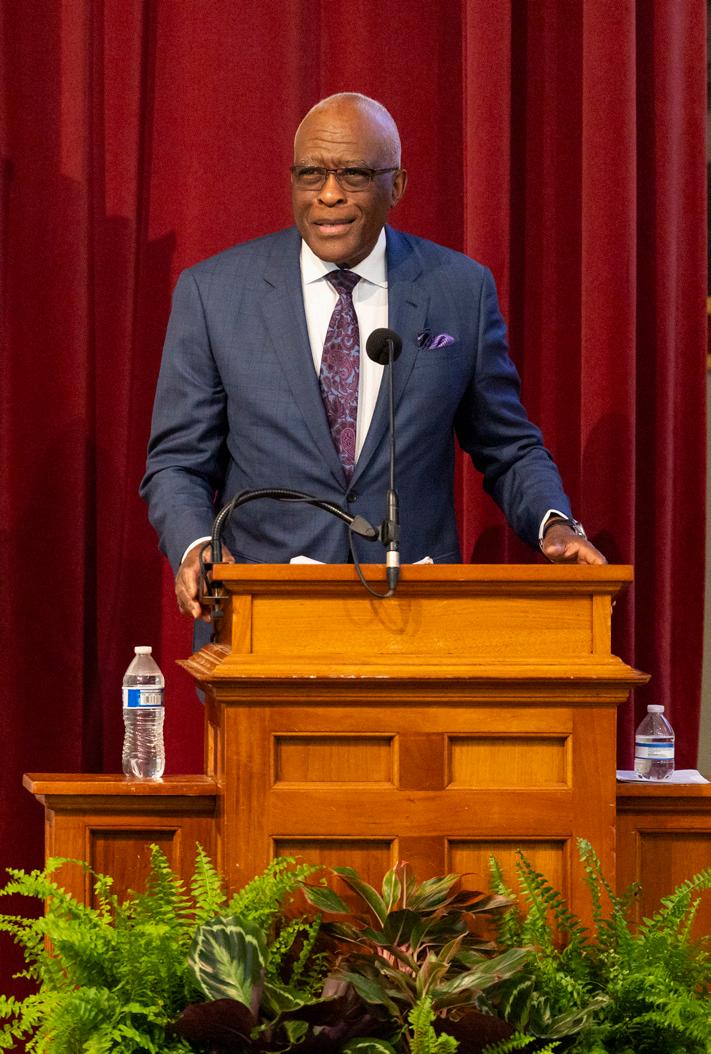
And he does just that, including at the University of Georgia, where his ties remain strong. He delivered the Mary Frances Early Lecture in 2022, and in April, he gave the Louise McBee Lecture in Higher Education.
The bully pulpit Jones stepped up to decades ago remains one of his most cherished tools. He continues to put in the work, lead by example, and be the best community member—university or otherwise—he can be.

1975-1979
Susan Kite BBA ’75 is senior vice president of Small Business Administration development for First Women’s Bank in Chicago.
Frank Baker ABJ ’77 released the book Risk, Resilience, and Redemption: A Holocaust Survivor’s Story
Teresa Gresham BSHE ’79 is a flight attendant with Southwest Airlines.
Andrew McDermott III BLA ’79 retired after more than 42 years with the U.S. Fish and Wildlife Service. He served as a landscape architect and the chief of engineering for the eight-state Midwest Region and earned the Department of the Interior’s Meritorious Service Award.
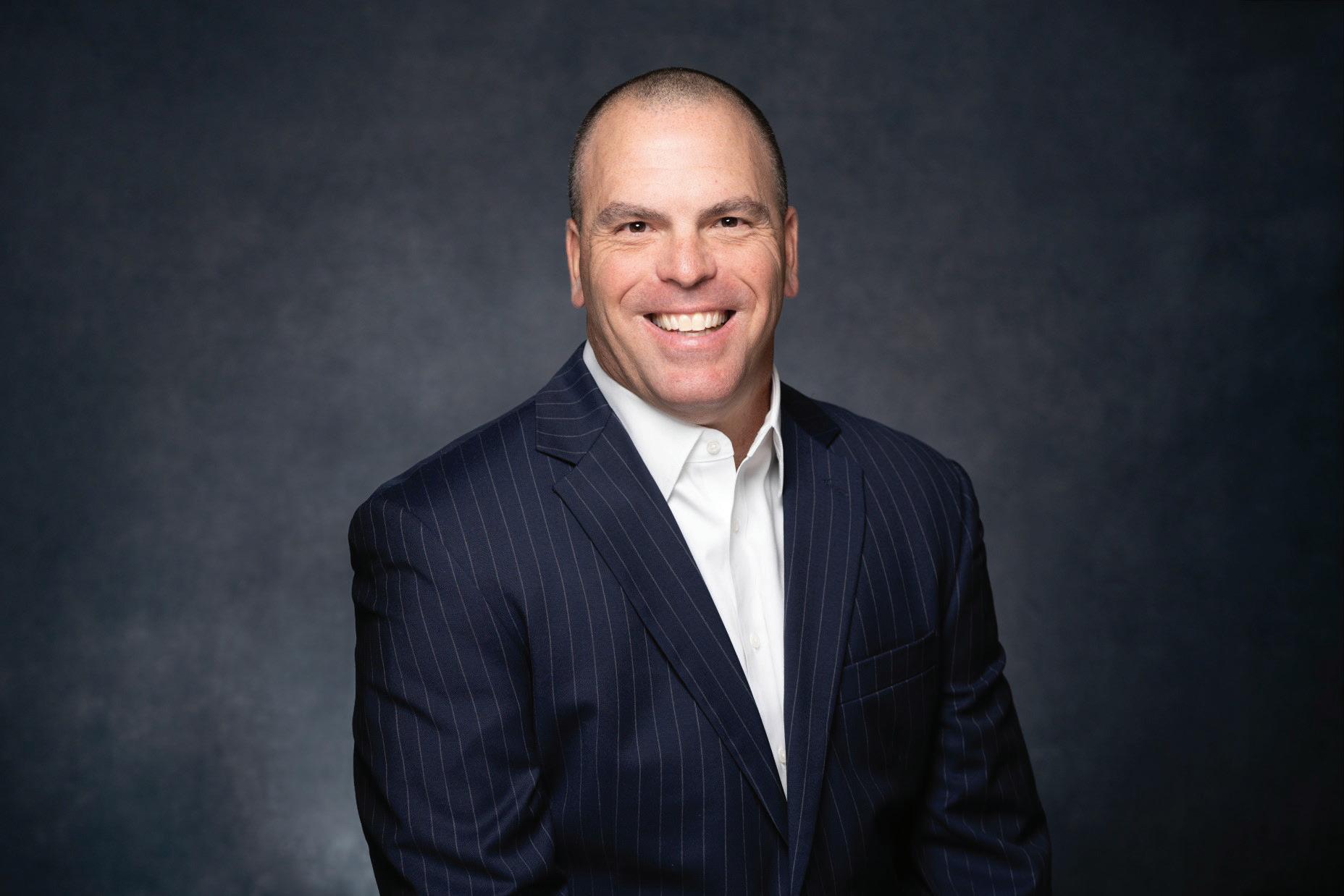

Cheryl Hargrove ABJ ’80 released her second book, Authentic America: 250 Distinctly American Places to Explore, which aims to encourage travel across the U.S. in honor of the nation’s 250th anniversary.
Brad Clark BSPH ’82, PhD ’87 retired from his career as a pharmaceutical scientist.
Mark Murphy BS ’84 founded the Center for Digestive and Liver Health in Savannah and serves on the Board of Directors of Memorial Health University Medical Center,
as the president of the Georgia Medical Society, and as a member of the Franklin College emeriti board. He also released his third novel, Rose Dhu.
Carolyn M. Seefer BBA ’84 released the 14th edition of the college textbook, Business English, co-authored with Mary Ellen Guffey.
Jodi Selvey BSA ’84 is the senior vice president for Colliers International and specializes in office tenant representation. She also serves on the UGA Foundation Board of Trustees.
George Monk BBA ’85 retired as general manager of the Georgia Farm Bureau Mutual Insurance Company.
Terry Fairchild ABJ ’87 MA ’93 is the director of strategic communications for Hazen and Sawyer, a public health and environmental services company.
Jack “Jay” W. Sanson III BSFCS ’91 is the regional director of contract sales for the food distributor Sysco’s Carolinas region.
Jack Bentley BSFCS ’92 retired from the Atlanta Police Department after 30 years.
Paul Brown BSEd ’92 is the chief academic officer for Petersburg City Public Schools in Virginia.
Anne Graham Lerner ABJ ’93 was sworn in as the mayor of the city of Tucker.
Bunnie Claxton BSEd ’93 is the author of 25 textbooks used in universities around the world, with seven more textbooks currently in progress. She is also the founder of Dissertation Research Specialists, a company that supports doctoral candidates and universities worldwide.
Jessica Wright AB ’93 joined HunterMaclean’s litigation practice group.
Megan Montgomery AB ’94 works for Universal Printing in North Carolina and specializes in clinical printing for pharmaceutical and clinical research organizations.
1995-1999
Jaquacer Middlebrooks BBA ’96 is the CEO and principal brand ambassador of box it UP designs, an upscale custom packaging boutique in Conyers.
Noel Arnold AB ’97 is a senior transaction manager with Cushman & Wakefield Americas advisory real estate team.
Anthony Williams BSEd ’97, MEd ’99 is the Southeast United States director for Positive Athlete, a recognition and development program that celebrates high school athletes.
Like thousands of other Americans, Kaitlyn Foley traveled to northern Italy in February for the Winter Olympics. Foley is, without a doubt, a fan, but this trip was strictly business. As the director of ecommerce and retail for U.S. Olympic and Paralympic Properties, she spent more time watching fans navigate the venue at the speed skating oval for the men’s 5,000 meter than she did the racers circling the ice.
“I was surprised. Usually, your highest traffic points are where people are entering or exiting the stadium. But here, the traffic didn’t stop at all,” says Foley BSFCS ’09, who has worked in aspects of sports marketing and retail since she graduated from UGA 17 years ago.
Specifically, constant traffic flowed in and out of the official merchandise shops. That was something Foley was excited to see.
“It’s an extension of a memory,” Foley says about fans’ desire for onsite memorabilia. “People are taking something away. You go to the Super Bowl or the Olympics maybe just one time. I still have mementos my dad bought me at games.”
In her role, Foley is responsible for ecommerce and brick-and-mortar retail stores—specifically inside and outside of venues—for the Los Angeles 2028 Summer Olympic and Paralympic Games, in addition to overseeing Team USA’s retail and ecommerce.
She calls it her dream job. It’s also a bit of a homecoming. Foley was born in Los Angeles. She moved to Georgia in her junior year in high school.
Foley comes from a family of athletes and sports lovers. She played soccer through high school and wanted to continue in college, but injuries ended her career prematurely. Foley also played golf leisurely, and during her second year at UGA, she parlayed that interest into an internship at the 2008 U.S. Open Golf Championship.
“I was in the retail program,” she recalls. “I fell in love with combining the retail operation with the sports world. When I got back to school, I declared my
Written by Eric Rangus MA ’94
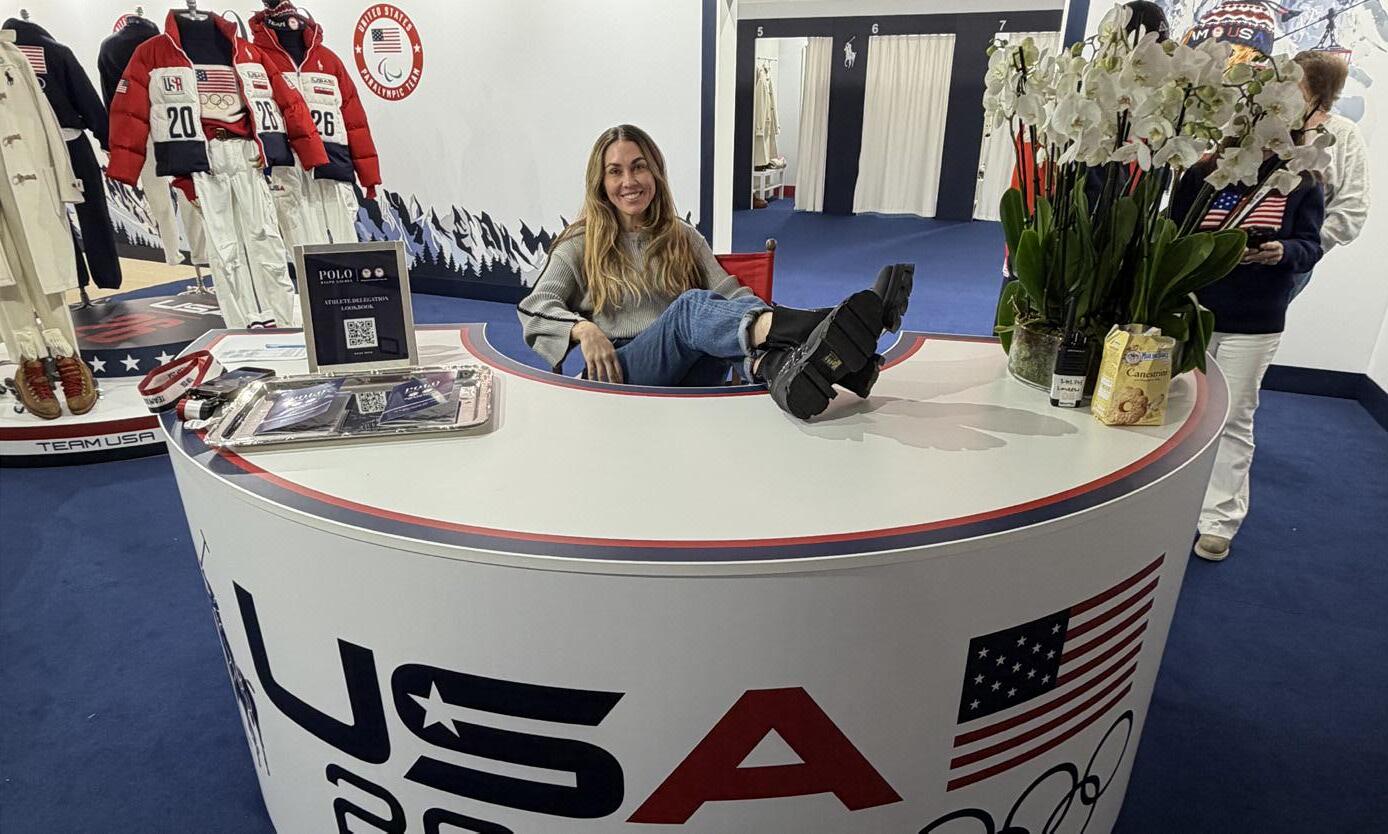
As the director of ecommerce and retail for U.S. Olympic and Paralympic Properties, Kaitlyn Foley didn’t have a lot of time to relax at the 2026 Milan Cortina Olympics, but she took advantage of every moment she could.
major in fashion merchandising, and I knew exactly what I wanted to do.”
Foley graduated with her degree from the College of Family and Consumer Sciences in just three years and returned to the golf world with the corporate merchandising team at the United States Golf Association (USGA).
As Foley made her way up through the business, in addition to working multiple golf majors, she oversaw the retail for the 2019 Stanley Cup Finals, two Super Bowls, and even the Westminster Dog Show, which—make no mistake—is an athletic event.
In 2024, Foley landed with U.S. Olympic and Paralympic Properties, focused specifically on Team USA and the Los Angeles 2028 Games. Her job is to ensure LA28 products are present and accessible at retail spaces at the Games— both in LA and the more than two dozen Summer Games venues—and that the most popular LA28 products remain stocked throughout.
The 2026 Winter Olympics in Milan made for an ideal test run. Foley arrived early enough to see Team USA athletes come in before the opening ceremony. Their first stop was the Team USA

Welcome Experience, where they received their opening and closing ceremonies outfits as well as casual villagewear gear— all custom-tailored onsite. Women’s figure skaters and men’s bobsledders do have different sizing needs, after all.
After that, Foley bounced around Milan for a week, observing operations and how traffic lines moved, what memorabilia sold out the fastest (the cuddly brother and sister stoats, Milo and Tina), and the general mood of the fans.
“It was electric,” she says. “The main Milano Cortina megastore was right by the Duomo in the city center. There were crowds everywhere. Even if you didn’t have a ticket, you could be involved. You felt like you were a part of something.”
And with that experience fresh in her mind, Foley has about two years to plan something that tops it.
“When it comes to challenges, I’ve always been very ambitious,” she says. “I want to do things bigger and better. I want Los Angeles to be the greatest retail experience to ever hit the Olympics, and I hope that will be the takeaway for fans.”
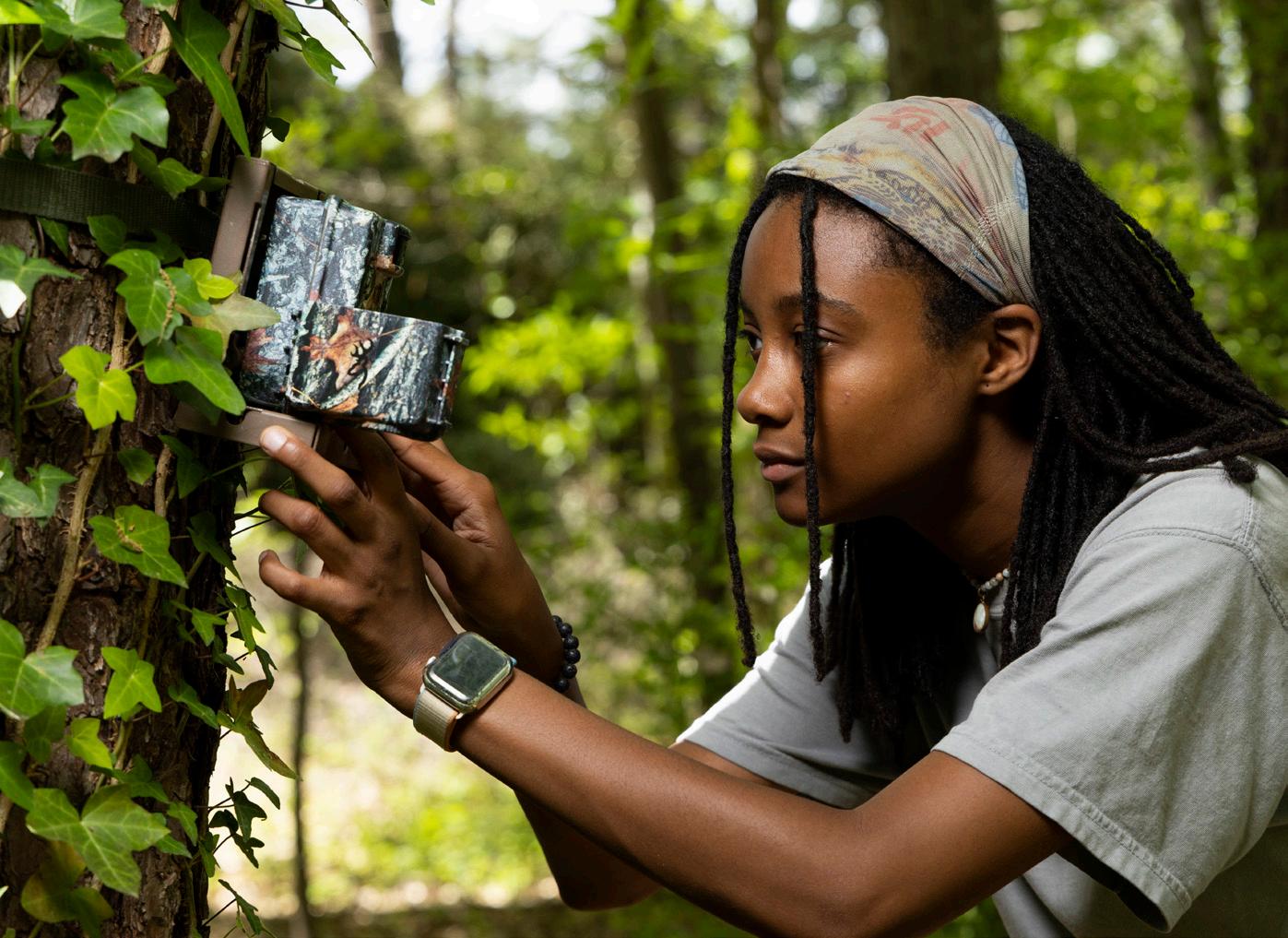

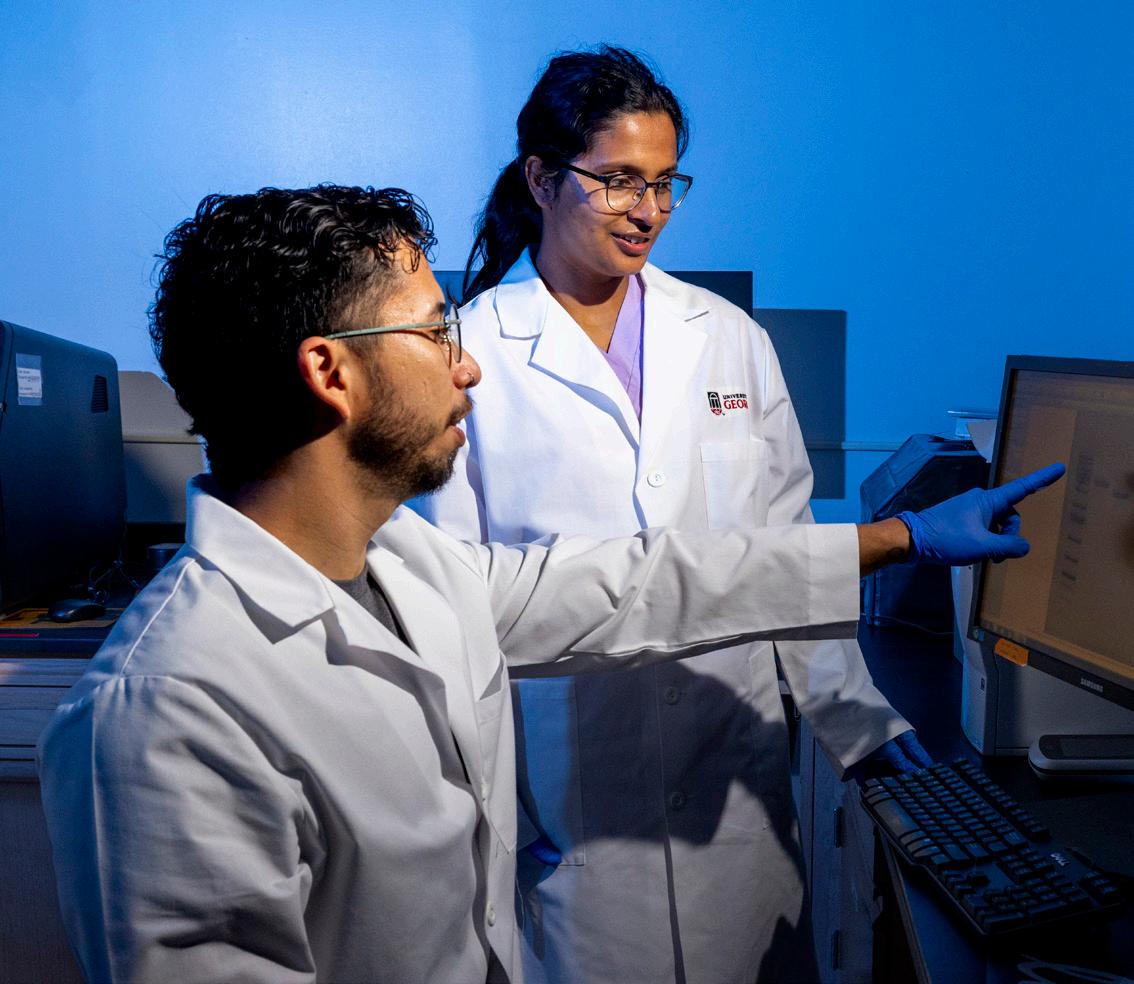

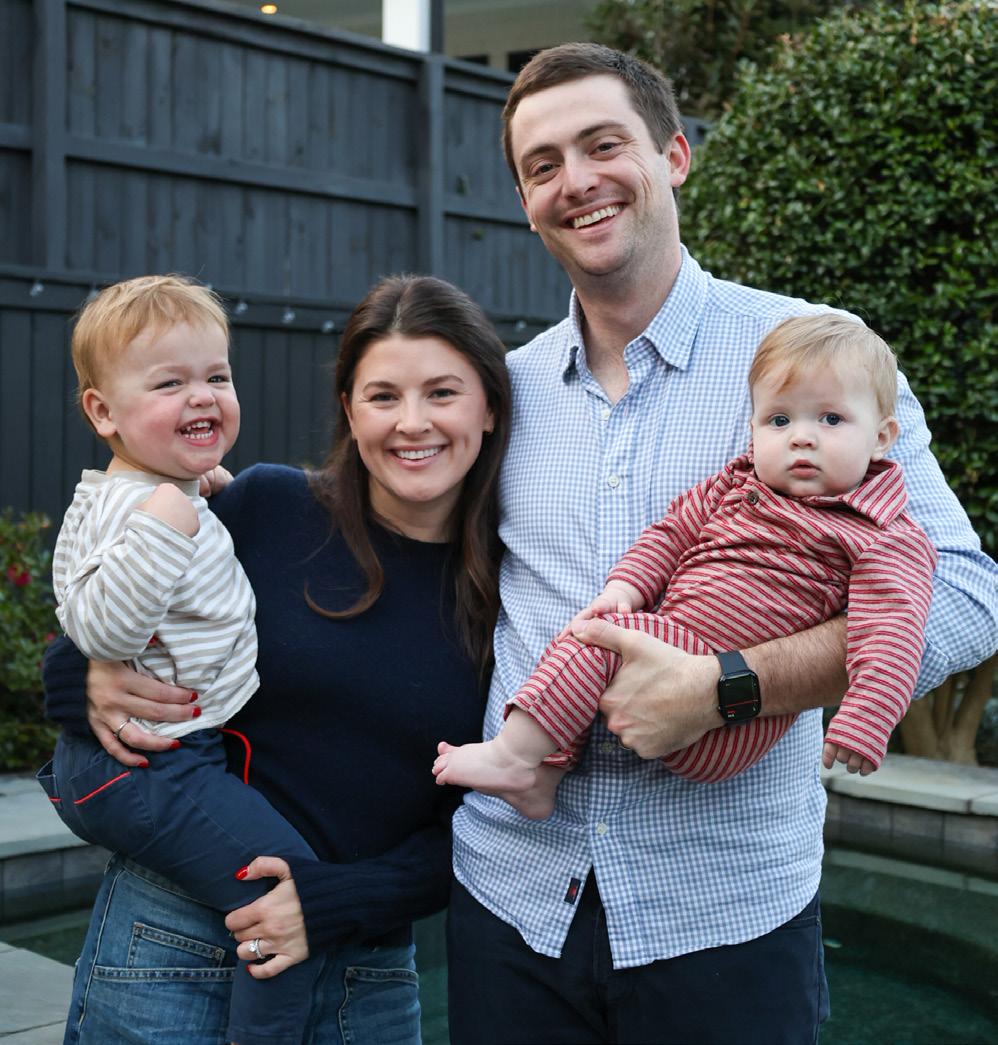
Virginia and Drew Papadopulos, with their children, Moore, 2, and Sam, 9 months, support students through scholarships like the Vaso K. Papadopulos Georgia Commitment Scholarship.
Drew BBA ’16, BBA ’16 and Virginia Papadopulos BHSP ’16 first crossed paths during their junior year at the University of Georgia. In the decade since graduating, the pair have built a life together—marrying and settling in Drew’s hometown of Charlotte, North Carolina. Drew works as a mortgage trader in the investment bank at Wells Fargo, while Virginia serves as a nurse at the Levine Cancer Institute. Parents to two children, Moore and Sam, the Papadopuloses continue to honor their Bulldog roots by giving back to UGA through an endowed scholarship, the Vaso K. Papadopulos Georgia Commitment Scholarship.
Q: Where does your UGA story begin?
Virginia: My grandmother, grandfather, and dad all attended UGA for undergraduate or graduate school. I’m from Atlanta, so I grew up a Dawgs fan. I always knew I wanted to go to UGA, and it was always my No. 1 choice.
Drew: UGA wasn’t on my radar until the end of high school, but as soon as I visited the campus, I immediately loved it and knew it was the place for me.
Want to make an impact on UGA? Join committed alumni like Drew and Virginia Papadopulos and give today: GIVE.UGA.EDU
Q: What keeps you connected to UGA while living out of state?
V: There’s a different type of connection between two people who both went to UGA. I’ve met a lot of people in Charlotte, through work especially, who have also attended Georgia, and it automatically forms a deeper relationship.
D: We have a solid network of UGA folks in Charlotte. Since graduating, we try to get together with our college friends here and fellow alumni as much as possible, especially during football season. Getting more involved in supporting students through giving to scholarships has been another way that we have started to connect with the university.
Q: What motivated you to support students through scholarships?
D: Education has always been important to our family. My grandmother, Vaso Papadopulos, was the head of early childhood education at Chicago State University and taught at Northwestern University prior to that. As Virginia and I began searching for a way to give back, we wanted to honor my grandmother and pay forward the great experience that we had at UGA. We want to make the same great education we received more attainable and help students graduate free of debt.
Q: How has your view of UGA evolved since graduation?
V: As an alumna, I can see the full scope of what UGA does that I did not see as a student. For instance, as a nurse, I am excited to see UGA expand medical education to reach more people with the new UGA School of Medicine and Victoria Kay Ivester School of Nursing.
Q: How do scholarships bridge your legacy as alumni with your investment in future students?
V: As a third generation Bulldog, I grew up with a special appreciation for the university. Helping more people attend UGA, where they’ll get this education themselves and start their own family legacies has been really rewarding and something that we’re proud to be a part of.
Q: What would you say to the UGA community about post-grad involvement and philanthropy?
V: I think as you’re graduating from Georgia, giving back is not something that you might think of right away. But as you settle in, you start to have more of a capacity for outreach and giving back, which has been a great way for us to stay involved with a place that we love so much.
D: UGA has given us so much, from friends and significant others to our education, so we think it’s our job to give back and help future generations of students have the same experience we did.

Located in the heart of Athens, GA, the Georgia Music Collections from the University of Georgia Libraries represents key players in music history across genres, from the beginnings of Soul and R&B in Macon and Augusta to the birth of Alternative Rock and New Wave in Athens and the rise of Southern Hip-Hop in Atlanta. Explore the collections when you attend an event at Athens, GA’s newest venue, Akins Ford Arena.



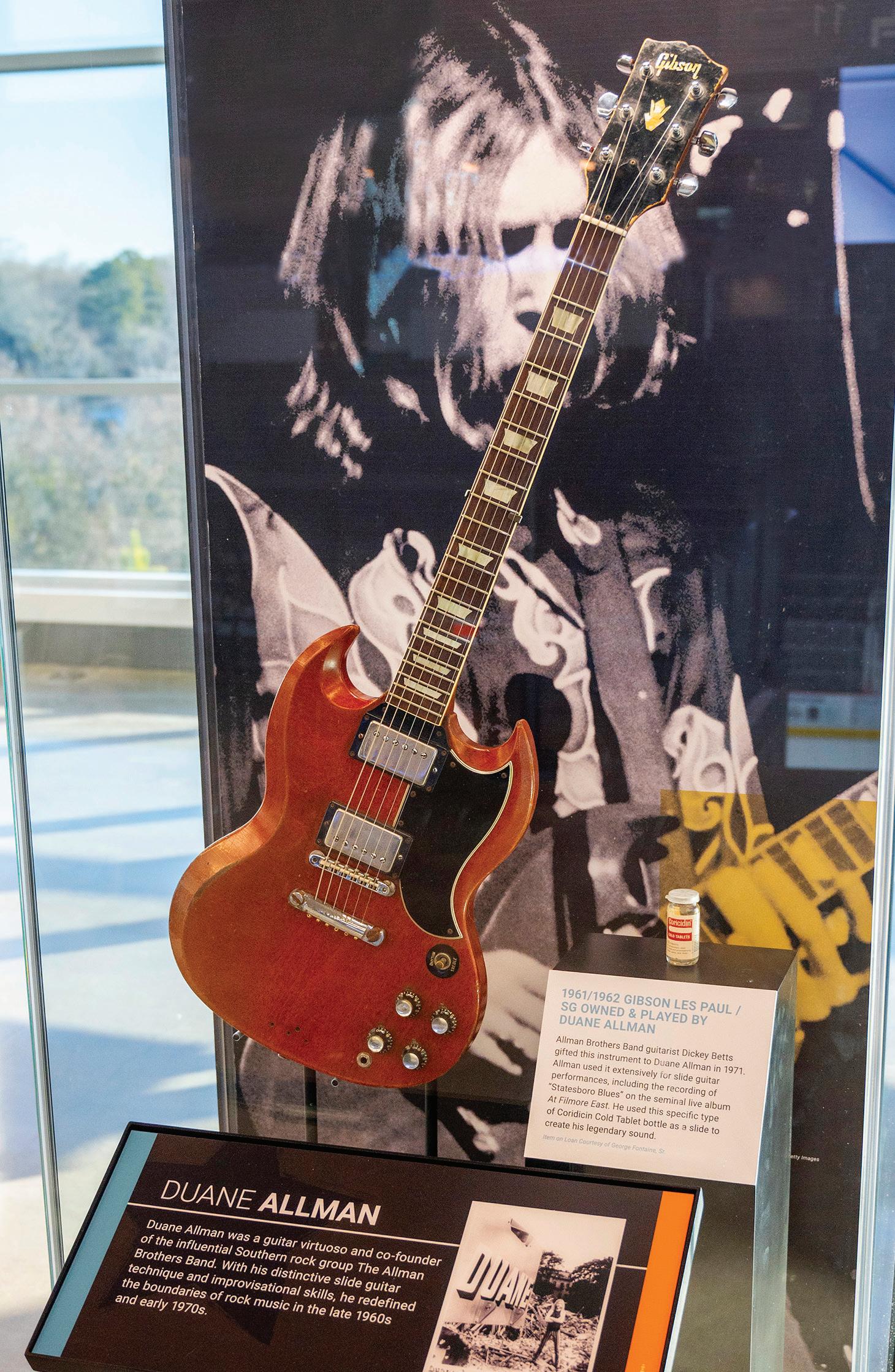
ALUMNI PROFILE

“As I’m climbing the ladder of success, it’s important to me that I bring someone up with me,” says Maranie Brown, a vice president at Black Rock. That’s why she dedicates herself to mentorship and service.
Maranie Brown believes she can change the world.
And through her dedication to her community, nonprofit leadership, and her impressive career in technology, she’s on track to do just that.
“If there are people who need something, who are without, I see it as my duty to do what I can to bring people together and solve those problems,” Brown BSFCS ’12, MBT ’23 says. “As I’m climbing the ladder of success, it’s important to me that I bring someone up with me. I aim to do well and do good in the world.”
Born and raised in Atlanta, Brown originally thought she might take a different path. Growing up, she wanted to be a pediatrician. She planned to attend a university out of state, but when she realized the number of resources and programs available at UGA, she decided to stay closer to home.
Written by Ireland Hayes AB ’23
“One of the women that I admired growing up was my pediatrician. She was smart and liked science and math just like me. I connected with that curiosity,” Brown says. “But I started getting this feeling that there were other things that I could tap into while getting involved on campus.”
As she dug into her studies in math and science, she saw mobile apps and social media rising in popularity. She drifted away from her dream of becoming a physician and realized technology was her true calling. She landed an internship during her senior year with a digital company in Atlanta and commuted from Athens multiple times a week, kickstarting her career in the tech world. Brown held marketing and technology positions at You Are Here and North Highland, an Atlanta-based business consulting firm, before accepting her current position as a vice president at
Maranie Brown BSFCS ’12, MBT ’23
BlackRock, a global investment and asset management company, in 2021. She leads a team responsible for complex data strategy initiatives. Right as she took on that new role, she entered UGA’s master’s program in business technology and completed her degree in 2023.
Outside of her professional endeavors, Brown sits on a number of nonprofit boards around Atlanta: United Way of Greater Atlanta, ATLeaders Council, Hands On Atlanta, and Kenny Leon’s True Colors Theatre Company, to name a few.
Brown’s passions range from the data and numbers in her job to education and the arts beyond it. She says empowering students, especially young girls, to pursue careers in science, technology, engineering, and math (STEM) is critical. Through her work with organizations like the Girl Scouts of Atlanta and its yearly STEM expo, she hopes to get girls excited about the field.
Her efforts have been noticed at the highest levels. In February, the Atlanta Business Chronicle recognized Brown as a 2026 Corporate Citizen of the Year.
“We’re getting young women thinking about the kinds of careers that we may need in the future, helping them to think critically and see themselves in STEM careers, and thinking about those careers in ways that are exciting to them,” she says.
Brown has kept close ties to the university and has been an active member of the UGA College of Family and Consumer Sciences Alumni Board, UGA Young Alumni Leadership Council, and her sorority, Alpha Kappa Alpha. She was named to UGA’s 40 Under 40 list in 2022 and Georgia Trend’s 40 Under 40 in 2024.
“Georgia has such an amazing network, and to be able to talk with recent graduates and students about what it means to be a part of this network and how to leverage it in meaningful ways is both rewarding and a lot of fun,” Brown says. “UGA has given me so much, and I strive to pay it forward.”
Kristen Finley BBA’98 was promoted to director of training and development at Sterling Seacrest Pritchard, where she leads the training and client resource teams.
Jen Reid BBA ’99 works as an intown Atlanta Realtor.
Ginny Phillips BSFCS ’99 is an audiology technician for Expert Hearing in Savannah.
Carrie Olivia Ferguson Adams AB ’00 published her fifth book of poetry, The Book of Marys and Glaciers, with Tupelo Press. She is co-founder and executive editor of Black Ocean, an independent press that is celebrating its 20th anniversary.
Jessica Carlson ABJ ’02 received the 2025 William R. Rivkin Award for Constructive Dissent from the American Foreign Service Association. Following a 14-month tour of Ukraine, she is now working at Microsoft in the Washington, DC, area.
Randall Guarnella ABJ ’00 is vice president of middle market relationship management with Pinnacle Bank in Athens.
Jimmy Weekley BSEd ’03 is a partner at Commercial Insurance Associates in Brentwood, TN.
Jordan W Gerheim AB ’04 is the CEO of Outside Chief Legal and was named to the 2025 MidSouth Super Lawyers list.
Gretchen Cabrera Gose BSFCS ’04 is an education sales representative for Savvas Learning Co.
Augusto Michael Trujillo AB ’05, ABJ ’05 is the regional director of philanthropy at the National Kidney Foundation and vice chair
Erin Reeves McGinnis AB ’06, JD ’09 joined Bradley Arent Boult Cumming’s public companies team as a partner.
Jessica Hamilton AB ’09 was promoted to special agent in charge of the GBI’s Region 4 Investigative Office in Douglas.
Harrison Powell BBA ’09 is a writer and lead producer on the feature film, Da Vinci, which follows the creation of The Last Supper. The film will be produced in Atlanta.
Ryan Giles AB ’11, JD ’18 serves as chief counsel for the U.S. Senate Committee on the Judiciary. He supervises two units of attorneys: nominations & Constitution, and crime & national security.
taught in Gwinnett County and Jefferson City schools.
Jack Loonam BBA ’15 is an associate director of development for life sciences in the Franklin College of Arts and Sciences.
Hannah Carver BBA ’16 is the founder of Carver, an Atlantabased creative agency. She previously worked for the Atlanta Hawks, Tito’s Handmade Vodka, and Marriott.
Gabrielle Lory AB ’16 is the director of camps and conferences at Fairmont State University in New York.
Jordan Jones AB ’17, AB ’17 is a senior associate at Sutton Place
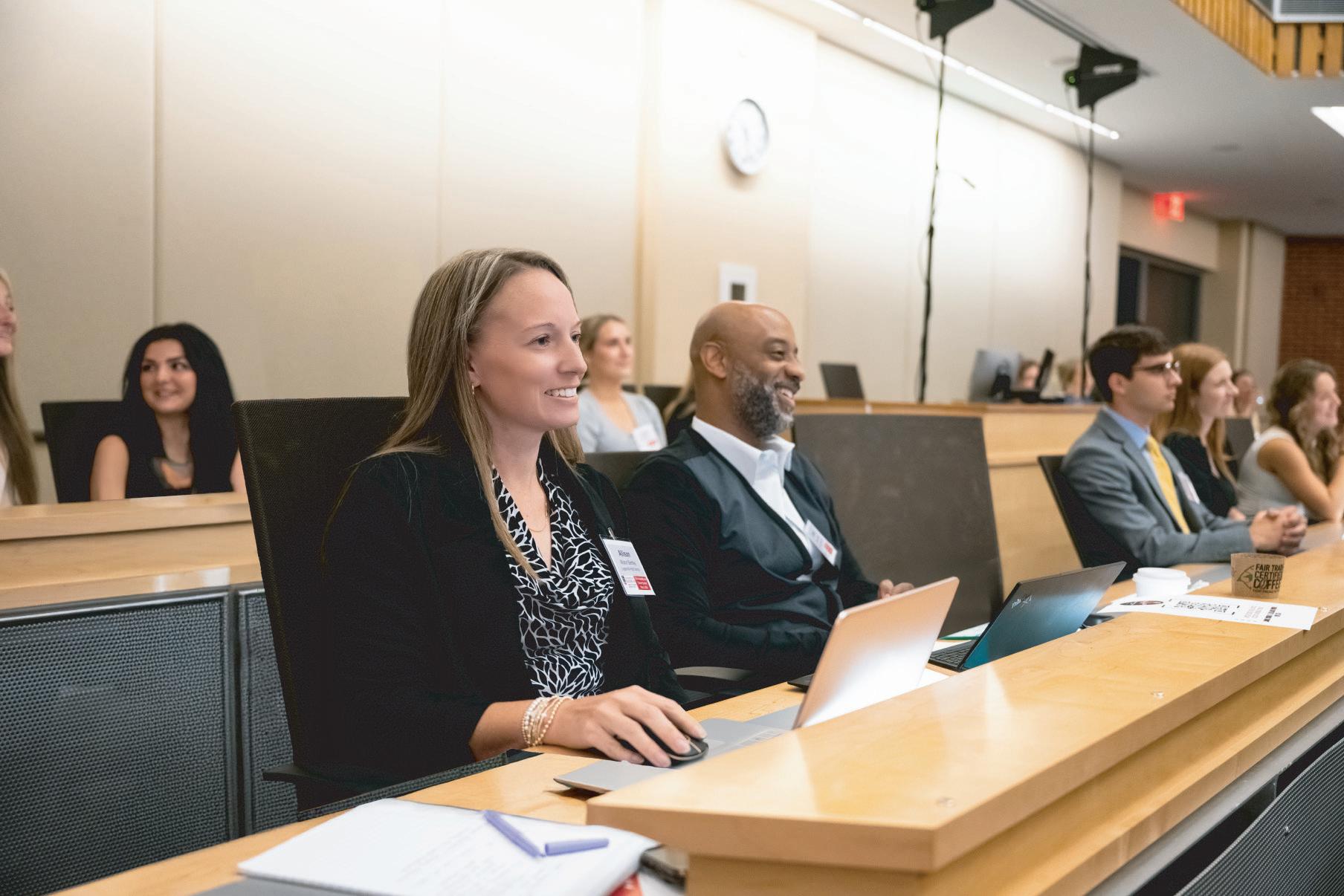



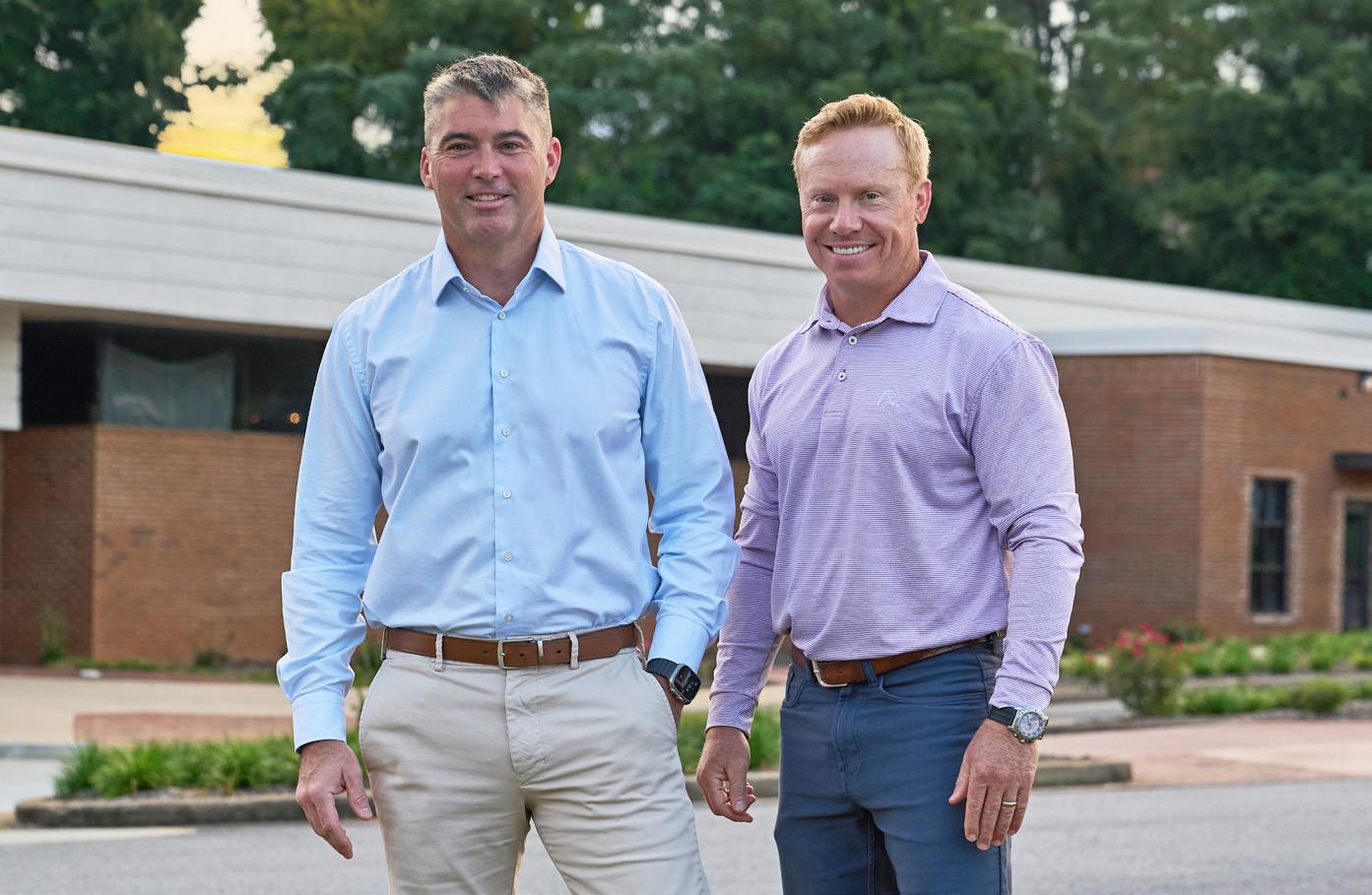
It was a chance encounter, but it sparked a multistate business that now fills a critical gap in rural health care.
More than 20 years ago, Michael Azzolin PHARMD ’02 and Andy Barrs MFR ’02 ran into each other while checking their mail at their shared apartment complex in Athens. The two had grown up in neighboring towns— Azzolin in Hawkinsville and Barrs in Cochran—but had not connected in some time. They weren’t talking business, just catching up.
That reunion would eventually lead to the creation of PharmD On Demand, a company that provides remote pharmacy services to its clients, ensuring medication orders that come through hospital pharmacies are reviewed by a licensed pharmacist even when one is not physically on site.
The idea grew out of Azzolin’s experience as a pharmacist. After graduating from the University of Georgia College of Pharmacy, he worked in both large and small hospitals. In larger facilities, a pharmacist reviews every medication order that comes in around the clock. At smaller ones, the
Written by Ireland Hayes AB ’23
pharmacy staff is often gone at night and on weekends, meaning if an error occurs, no one is there to correct it.
“I noticed that more medication errors were happening whenever we weren’t there,” Azzolin says. “And my dad died from that exact scenario. There was no pharmacist, a doctor ordered a medication, and the nurse grabbed the wrong one. Had a pharmacist been there to verify it, she would have grabbed the right medication, and that never would have happened.”
So Azzolin began logging in from home during evening hours, reviewing scanned physician orders, and calling nurses or doctors if something seemed off.
That personal commitment became the foundation for PharmD On Demand. Azzolin says the company intervenes about 20,000 times a year across the 40 hospitals it serves, preventing potentially deadly medication mix-ups or prescribing errors.
“If a patient is prescribed a medication that they do not need, it’s our job to call and change it,” Azzolin says.
“In no way should these small communities have lesser care,” Barrs says.
Michael Azzolin PHARMD ’02
Andy Barrs MFR ’02
Barrs, who earned a civil engineering degree from Auburn University and a Master of Forest Business from the Warnell School of Forestry and Natural Resources, brought experience in investment strategy and operations. Before co-founding PharmD On Demand, he founded Principle Centered Investments, a real estate firm, and now serves as CEO of Barrs Industries, a family-founded investment company.
Over time, PharmD On Demand has evolved, now managing hospital pharmacies and overseeing federal drug discount programs. A sister company, Aletheia Health Partners, launched four years ago, provides services outside the pharmacy department. Aletheia currently manages two hospitals in Georgia and offers financial management services, human resources consulting, and management support.
PharmD On Demand’s ties to UGA remain strong. Thirty-nine employees— about 15% of the company’s workforce— are UGA alumni, and the Watkinsvillebased company regularly hires interns from the university.
“We feel very fortunate to be in proximity to the university for the talent that we’re able to get before they graduate,” Barrs says.
Many of the company’s team members serve as preceptors for the College of Pharmacy, mentoring students during clinical rotations. The company also works directly with UGA’s College of Veterinary Medicine, reviewing medication orders for the veterinary hospital after hours.
Looking to the future, the founders hope the company can continue to support hospitals and adapt to whatever challenges rural health care presents next.
“There are a lot of communities that we’re not in yet, and our mission is to find a way to help improve their patient care and improve the quality of life in those communities. It’s a big goal, but we’re taking good, solid steps one day at a time to get there,” Barrs says.
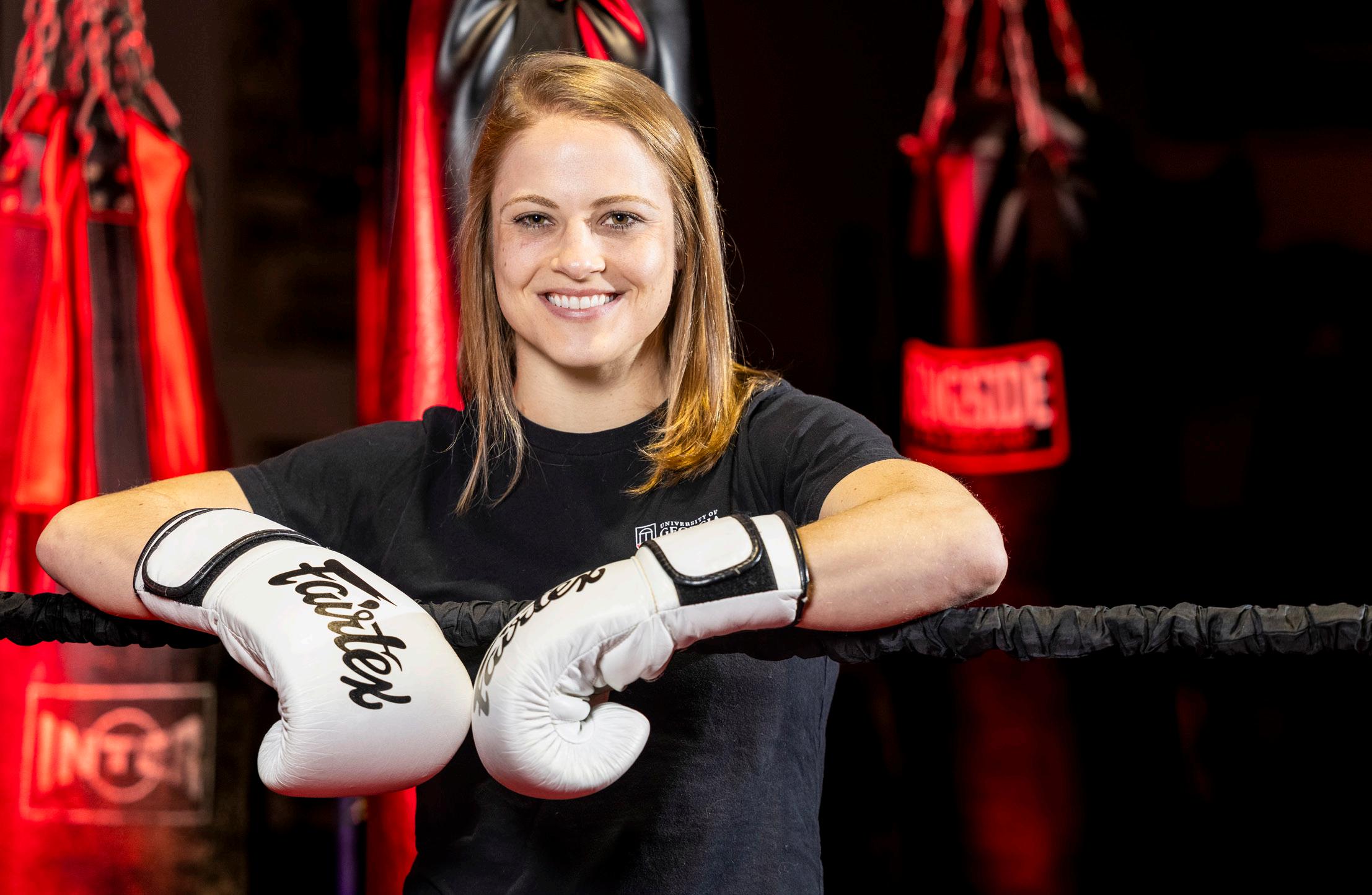
For undefeated mixed martial arts fighter Madeline Schellman, winning in the ring isn’t just about throwing punches and landing kicks. It’s an equation.
“Fighting requires very complex thinking and problem solving, and I feel my brain working the same way it does with math,” says Schellman, who holds degrees in mathematics, quantitative methodology, and psychology. “In work, if I have a really complex data problem, I ask: ‘How am I going to get out of it?’ It feels the same as evading attacks and submission attempts from my opponents.”
With that approach, it makes sense she hasn’t lost a fight yet.
Since debuting in 2022, Schellman has won six major Muay Thai matches, numerous Brazilian jiu-jitsu competitions, and two international MMA championships. She also holds one national title and three
regional titles. Schellman will compete internationally with USA Muaythai later this year.
But before she conquered the body, Schellman BS ’17, BS ’17, MEd ’21, PhD ’24 was captivated by the mind and its capacity to solve problems.
When she got to the University of Georgia, she pursued a double major in mathematics and psychology in the Franklin College of Arts and Sciences— the perfect combination of studies, it seemed.
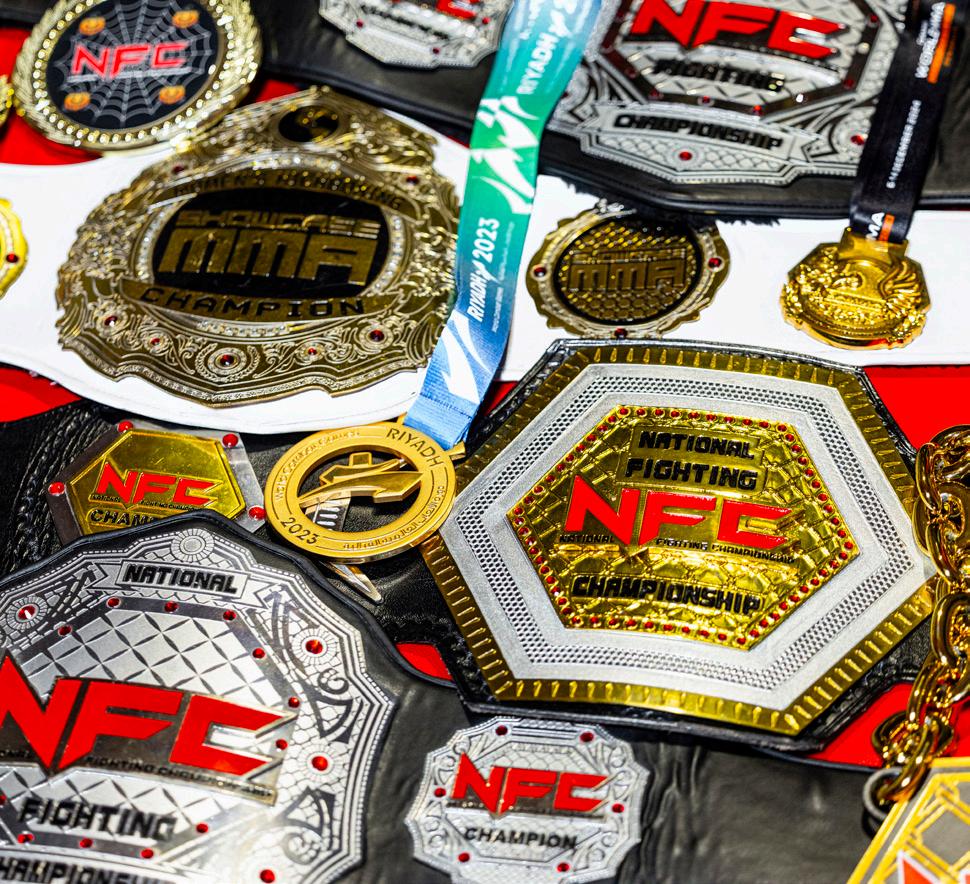
quickly. She could use data analysis and intellectual reasoning to help the next generation grow in their own learning.
There was something missing for her, though: a way to use that mental prowess to help others.
When she was invited to learn more about the educational psychology master’s program in quantitative methodology in 2017, Schellman says that bridged the gap
Schellman started working with Laine Bradshaw BS ’07, MEd ’07, PhD ’11, a former associate professor of the Mary Frances Early College of Education, to create and analyze K-12 standardized, formative assessments. In 2022, Bradshaw’s company, Navvy, was acquired by Pearson, and Schellman continues to crunch educational numbers there today.
Madeline Schellman BS ’17, BS ’17, MEd ’21, PhD ’24 ALUMNI PROFILE
“You take tests growing up and don’t really think too much about who makes them or what happens with the data, but that’s what I do now. We’re helping a lot of students all over the country by seeing what learning is missing,” she says.
Like a lot of folks, Schellman had a hard time sitting still for too long at a desk. In 2020, she took a few boxing classes. When a fighter at Megalodon Gym in Bogart saw her moves, he encouraged her to learn MMA.
Six years later, Schellman is closing out her amateur career and looking for her first pro fight. It’s a milestone she’s been aiming for since she picked up her fighting gloves.
“Getting punched in the face is not as hard as I thought it would be,” says Schellman. “I just tried out a fun hobby, but this fighting community saw some potential in me, and they pushed me to compete. I felt like I wasn’t ready, but they said, ‘Do it anyway.’”
Now she takes on more matches than anyone else in her gym.
In between fights, Schellman is preparing five to six days a week for up to four hours per day with multiple trainers across her disciplines.
“When I started fighting, my family would watch with their eyes covered,” she says. “But today they’re in the audience yelling for me to win. Fighting is an emotional rollercoaster. I couldn’t do it without the support of my coaches, trainers, and team.”
Just like Schellman knows to never stay down during a fight, she knows to never give up in other aspects of her life. That includes one day making her way to the UFC, the highest level of MMA.
“I’m not done. I can go further,” she says. “The hardest part is just showing up and getting better bit by bit every day.”
Written by Savannah Peat AB ’19
Brian Michaels AB ’17, AB ’17 was commissioned as an officer in the U. S. Navy Reserve and as a budget and policy adviser for Texas Gov. Greg Abbott.
Christine Yang BSME ’17 is an aerospace engineer at Firefly Aerospace in Cedar Park, TX.
Caroline Corbitt BFA ’18 is an art director and designer with her namesake creative studio. She also works for the New York Stock Exchange.
Ifeoma Egbulem BS ’18 is the graphic and motion design graduate associate for the NBA’s Detroit Pistons.
Daria Manior-Grosh BSEd ’18 joined the NFL’s Detroit Lions as club seat services manager.
Meredith Selvey BBA ’18, BBA ’18 is a corporate real estate advisor at Colliers Atlanta and the secretary of the Terry College of Business Young Alumni Board.
Grace Smith BS ’18 is a clinical psychologist at Ally Psychiatry.
Alex Krause BBA ’19 joined Robinson Bradshaw’s office in Chapel Hill, NC.
Denny Nolan Jr. BS ’19 is a senior AI solution architect at Infor, a software company.
MacLean Pfister BBA ’19 serves as senior director at Trident Transport, headquartered in Chattanooga, TN. She operates at the intersection of logistics, technology, and leadership.
Katherine Aikins BS ’20 is a sustainable design specialist at HOK, one of the top global architecture firms.
Dr. Tylanna Baker BS ’20, AB ’20 graduated from the Morehouse School of Medicine and started her obstetrician-gynecologist residency in Marietta.
Frank Lumpkin IV BBA ’20, BBA ’20, JD ’23 is an attorney with Hall Booth Smith in Columbus, GA. He previously served in the Middle East as chief of National Security Law for Operation Spartan Shield in the U.S. Army Reserve.
Alexandra Sanders BS ’20 is a program coordinator for the University of Georgia’s TRIO Upward Bound program, supporting firstgeneration and under-resourced students. She is also pursuing her Master of Science in organizational leadership at Columbus State University.
Lori Brown BS ’21 is a senior clinical research educator at Winship Cancer Institute of Emory University.
Grace Beasley AB ’22 is the senior manager of government affairs and policy with the Georgia Department of Economic Development.
Meg Fennelly AB ’22, AB ’22 graduated from the University of St Andrews in Scotland with a master’s degree in art history.
Trish Myrick AB ’22 teaches English language arts in the Fulton County School System.
Taylor Shirk AB ’23, AB ’23 is an operations specialist at ReliaQuest and a cheerleader with the NFL’s Tampa Bay Buccaneers.
Elizabeth Rice AB ’24 is an intern at The Late Show with Stephen Colbert
2025
Andrew Correa BS ’25, AB ’25 joined Fourth Capital, a startup real estate private equity firm in Atlanta.
Payden Devine BBA ’25 is a project manager for Epic Systems, the health care software company responsible for the My Chart app.
Regina Bazan Espinosa BSBCHE ’25 is a chemical designer at Stantec, an engineering, architecture, and environmental consulting company.
Ryan Grayson BBA ’25 is an underwriting analyst for Tokio Marine in Kennesaw.
Jack Miller BBA ’25, BBA ’25 is a consultant with EY financial services in Charlotte. He also ran the New York City Marathon to honor his late father and raised more than $15,000 for Parkinson’s research and support.
Ethan Thomas BLA ’25 is a landscape designer with FIELD Landscape Architecture in Atlanta.
ARTS AND SCIENCES
Jim Bohland MA ’65, PhD ’70 is a professor emeritus of urban environmental policy and planning at Virginia Tech and the editor of the Democracy Advocate in the Washington, DC, area.
William Sodeman PhD ’93 manages n3ed.com, a business consultancy and coaching practice.
Breno Fragomeni PhD ’15 was promoted to associate professor in the College of Agriculture, Health, and Natural Resources at the University of Connecticut.
John Lulewicz PhD ’18 is a professor of anthropology at Penn State University.
Peter Chiarelli MS ’21, PhD ’25 is the CEO and co-founder of JellyCoUSA, a manufacturer of U.S. jellyfish collagen skincare products locally sourced in Georgia.
Surendra Edula MS ’25, PhD ’25 is a postdoctoral associate in plant molecular virology at UGA, researching plant-virus interactions and molecular disease management strategies.
Kelsey Ryan MS ’25 is an associate veterinarian in the A. Watson Armour III Center for Animal Health and Welfare at the Shedd Aquarium in Chicago. She helps oversee preventive exams and veterinary care.

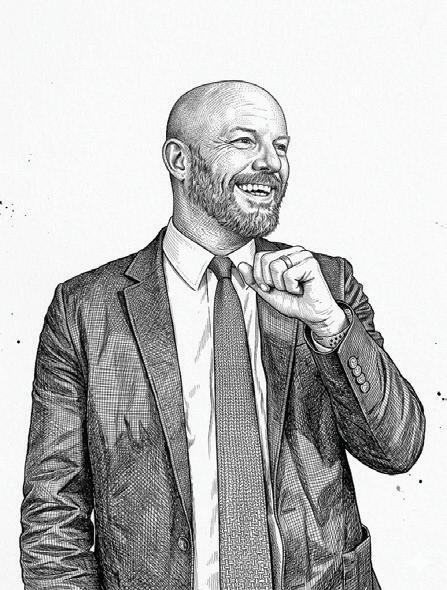
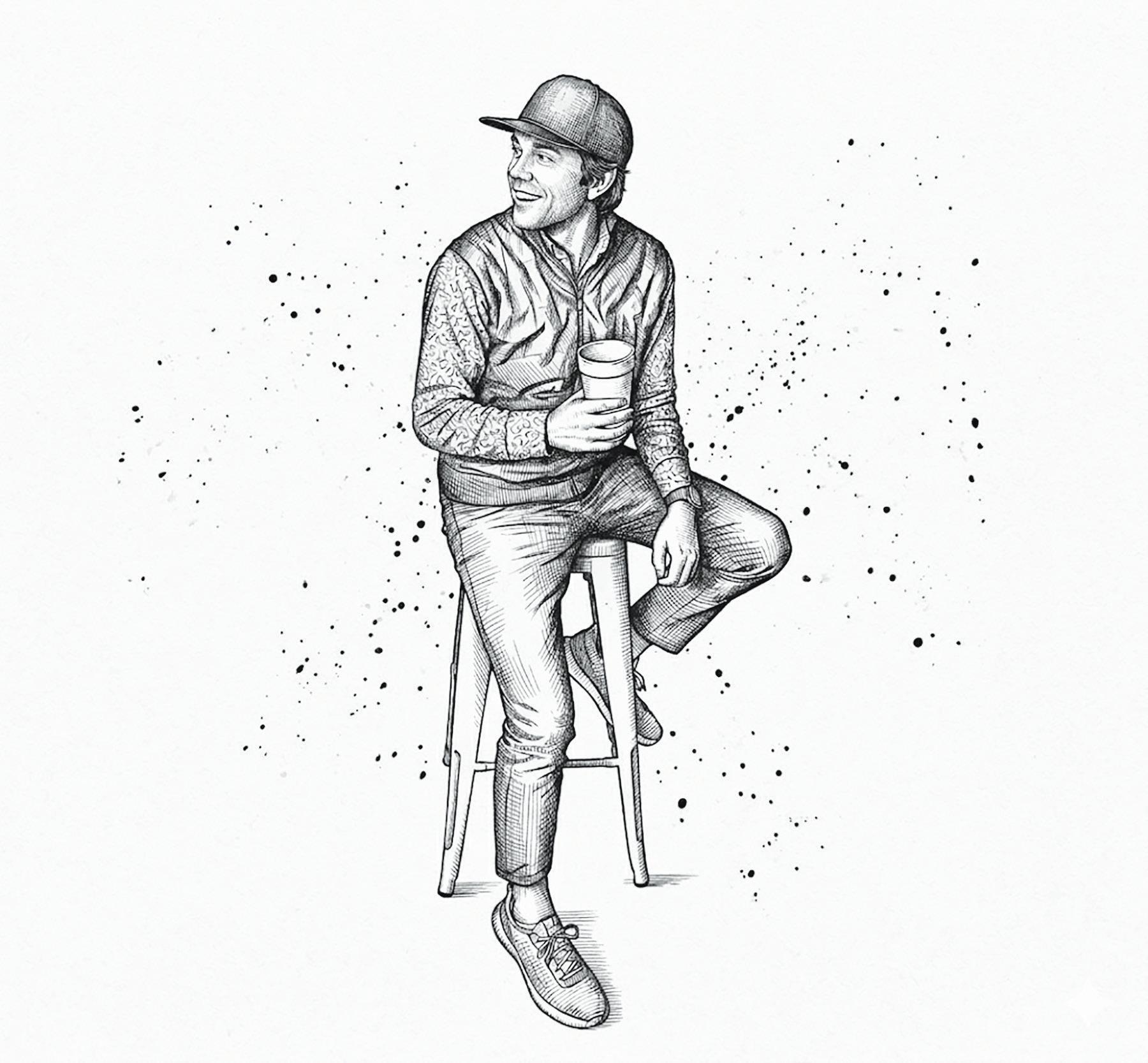
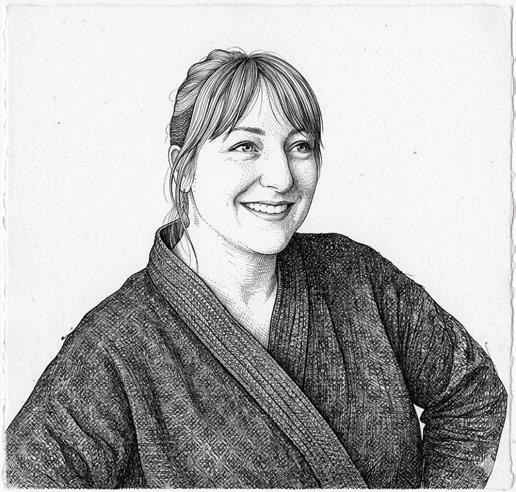


Troy Aubrey ABJ ’94 is a matchmaker but not the candlelit dinner kind. Instead of connecting couples, Aubrey creates musical matches. For more than two decades, Aubrey has been pairing Athens’ musicians with the right rooms, the right crowds, and the right moments.
An indie-folk singer who’s perfect for an intimate wedding. A jazz musician to set the mood at a wine event. A college punk band that needs a stage that can handle chaos, sweat, and volume. In 2019, he launched Aubrey Entertainment to make his calling as a “musical matchmaker” official, but his passion for music started long before he reached Athens.
Aubrey’s mother loved Elvis. She brought a 6-year-old Troy to his first concert to see the King; bought him his first instrument, a violin; and passed her deep love of rock and roll down to her son.
“The Beatles. Chuck Berry. The Beach Boys. There was always a record playing in our house,” Aubrey says. “There are films of me as young as 2 bouncing up and down with my parents’ stereo.”
Once he reached his teenage years, Aubrey graduated from listening to music to playing it. He started with the violin but fell in love with the hypnotic resonance of the electric guitar.
“My parents bought me two electric guitars and two amplifiers. I don’t know why they bought two,” he laughs. “I started playing guitar in like seventh or eighth grade, and it was immediately, ‘Goodbye, violin. Hello, rock and roll!’”
Aubrey was born in Louisville, Kentucky, but his family moved to east Cobb County in the late 1970s. By the time he arrived in Athens in the early ’80s, legends like R.E.M. and Widespread Panic had a national following. More bands were forming in garages and dorm rooms at the University of Georgia hoping to follow their lead. As a student in the Grady College of Journalism and Mass Communication, Aubrey also joined a couple of bands and added the thrum of his bass guitar to the sounds of the city.
Written by Jayne Roberts
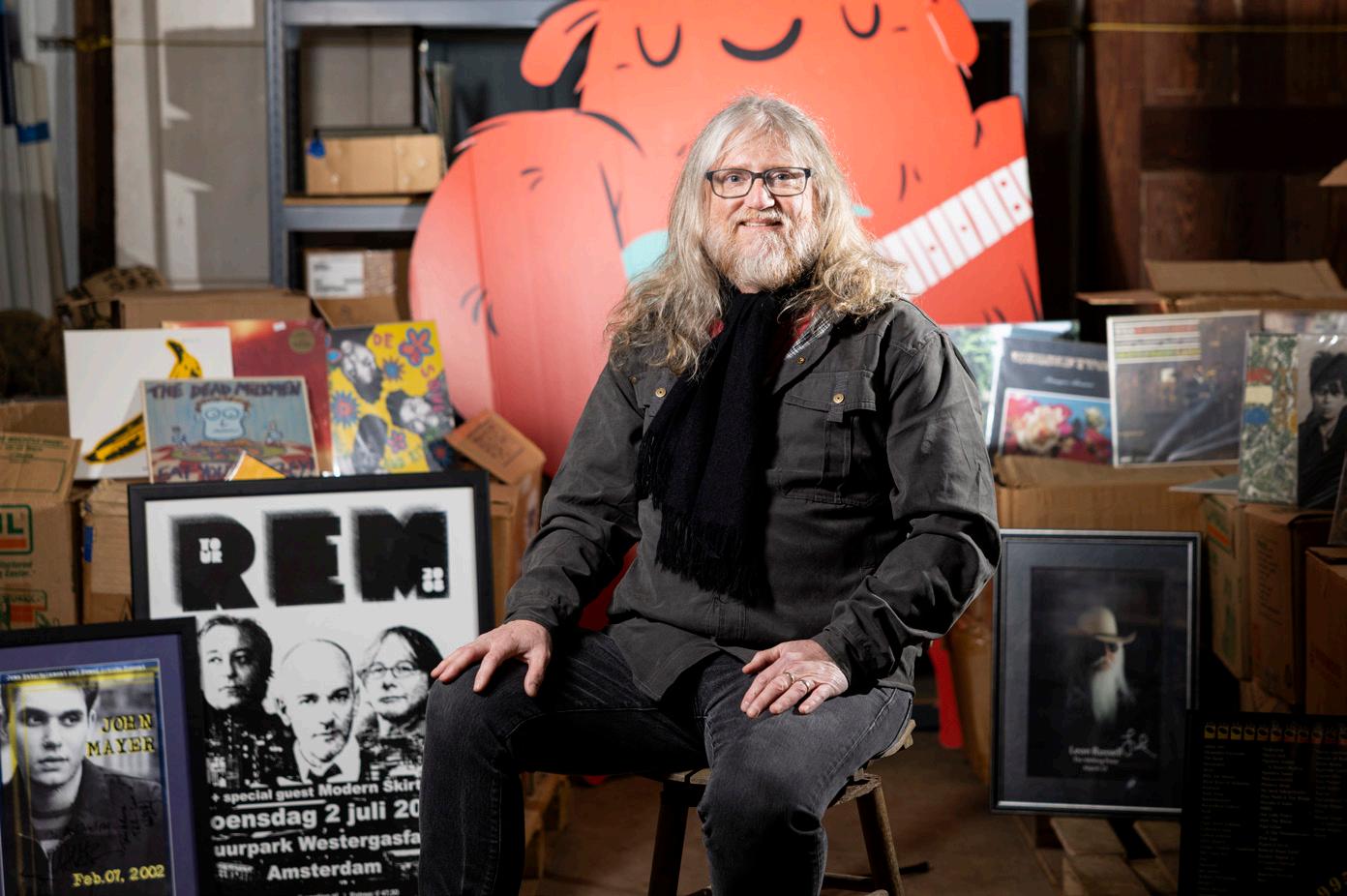
In his early 20s, Aubrey stepped away from performing to help other musicians find the limelight. Over the next 20 years, he touched every part of the music business managing and booking bands as a free agent. He booked gigs, promoted tours, made press kits, and even coordinated a tour through the U.K., driving the van himself while his musicians slept in the back. But the Classic City kept drawing him back.
Aubrey was one of the first organizers to bring live music back to Athens in 2021. He helped the Hotel Indigo attract new acts to their Rialto Club, booked anniversary parties at Creature Comforts, and brought nationally touring talent to the Foundry.
“My heart and soul lie with Athens and the relationships I’ve made here,” Aubrey says. “The musicians, the venues, the restaurants, the breweries, the DJs, the community, the nonprofits, they mean everything to me.”
That devotion runs especially deep through his nonprofit work. AthFest is
a three-day event that brings the city’s eclectic musical history and culture to life. Aubrey has been involved with the festival for more than two decades, since the second year.
He started out as a stage manager. By the next year, Aubrey was booking the talent (including a then-unsigned John Mayer) and shaping the sound of the festival with artists that spoke to the Athens community.
What started as a small stage on the courthouse steps grew into a cornerstone of Athens culture, and Aubrey grew alongside it. The one thing that never changed was his love of music.
Aubrey still has his parents’ 60-yearold stereo, along with several thousand records he’s collected over the years. From vinyl to cassettes to CDs, Aubrey’s collection is a living time capsule of the global music scene.
“Music isn’t just a job for me. It’s my way of life,” says Aubrey. “It’s my career and my legacy. For me, everything goes back to music.”

When Matthew Bonds began his work in Madagascar, one in seven children in the rural, mountainous Ifanadiana District died before they were 5. Women had a one in 14 chance of dying in childbirth. He was determined to use his expertise to change that.
While a student at UGA, Bonds PhD ’03, PhD ’06 found himself split between two worlds. Not only was he working toward a doctorate in economics at the Terry College of Business but also one in ecology at the Odum School of Ecology.
“If you go from one department to another, a lot shifts,” says Bonds. “You go from the college of businesspeople wearing ties to the college of wearing T-shirts with frogs on them.”
Despite the culture shift, Bonds noticed overlap. Economies are complex systems that grow and change as people within them interact. Ecosystems are, too.
Where those two fields truly converged, though, is human health. Infectious diseases arise from interactions with other organisms, and
Written by Sydney Barrilleaux BS ’24, MA ’26
economic status and the strength of health care systems can play a major role in health outcomes.
But Bonds didn’t want only to publish journal articles on health care systems. He wanted to work directly with the people depending on them.
That drive brought him to Rwanda in 2007, when the country was still recovering from the 1994 genocide. While living there, he worked with Partners In Health, a global health and social justice organization, to strengthen the country’s health care system.
Dramatic drops in both maternal and child mortality rates suggested the impact such a program could have. But could the same approach work in other countries?
Partnering with astrophysicistphilanthropists Jim and Robin Herrnstein and physician Michael Rich, Bonds founded Pivot, a data-driven organization focused on improving human health in Madagascar and building data systems that drive further improvements.
Pivot partners with Madagascar’s government to provide emergency transport, improve infrastructure to remote health care centers, and establish health centers for family planning, safe deliveries, and childhood vaccinations. Pivot also conducts research studying the factors affecting access to care and the impact of the organization’s work.
“It’s not that Pivot provides care, and academics study it. The data systems are part of the health care delivery system,” says Bonds, who is also an associate professor of global health and social medicine at Harvard Medical School.
“The goal of our scientists isn’t to produce science. The goal is to save lives. And if we stay focused on the goal, then we will do better science.”
At first, Pivot was “building the plane as we were flying it,” creating and monitoring life-saving systems from the ground up. Now, Bonds balances his responsibilities at Harvard with supporting Pivot through research, strategy, and fundraising. He also spends much of his time writing and giving talks about his team’s research in Madagascar.
“You have to both do the intervention and collect data on it,” says Bonds. “The data tells you whether things are actually working and whether people are getting the services that are being provided.”
Since the organization’s launch in 2014, people seek health care three to four times more than they had before. Mortality rates in Ifanadiana have dropped across the board, with a 30% reduction in mortality for children under 5 and a 50% reduction in maternal mortality.
But these encouraging results don’t mean Pivot’s work is over.
“A challenge for academics is we’re supposed to have answers. It’s our job to find answers,” Bonds says. “But I really do feel like by not having all the answers and having faith in the project of higher education, we’ll learn a lot more, and we’ll be able to solve a lot more problems.
“Let’s produce some good in the world. Let’s test what we know and hold ourselves accountable.”
BUSINESS
Jeff Ertwine MBA ’18 serves as the chief of staff at AmeriPro Health. The 21-year veteran of the Marine Corps was previously selected to the elite Top Gun aviator program and served in corporate roles at Cox Communications and Segra.
Brandan Lark MBA ’22 is the owner and CEO of Baker Paint and Contracting.
Gregory Minter MMEd ’03, MEd ’19 earned his Doctor of Philosophy degree from Liberty University.
Jessica Oliver EdS ’25 is a media specialist at Martha Rawls Smith Elementary and a graduation coach and assistant site director at Coastal Plains High School in Jesup.
LAW
Michele Harris JD ’01 is an assistant district attorney for the Western Judicial Circuit, which serves Athens-Clarke and Oconee counties.
Jenn Coalson JD ’08 was named a partner at Krevolin Horst in Atlanta.
Latrice Rollins MSW ’06, PhD ’10 is the director and principal investigator of the National African American Child and Family Research Center at Morehouse School of Medicine. She is also an assistant professor of community health and preventive medicine.
Brian Aicher MSW ’15 founded the Firm Foundation Treatment Center, an outpatient substance abuse treatment facility, in Woodstock.
Susanna Miller-Raines MSW ’17 is the cofounder and managing director of the Inclusive Postsecondary Education Association.
PHARMACY
Cheryl Love DRPH ’24 is a laboratory director for the Detroit Medical Products Laboratory, a drug-based testing laboratory under the Food and Drug Administration.
VETERINARY
Richard Bruner DMV ’67 provides routine histopathology services for local veterinary practitioners and teaches a course on mechanisms of disease to pre-vet and pre-med students at Clemson University.
Published quarterly and mailed to the household, your advertising message reaches your audience directly, giving you one of the strongest demographic buys in the region. For information on advertising in the award-winning Georgia Magazine, contact gmsales@uga.edu or 706-542-9877.
Help the Bulldog Nation—and especially your classmates—keep up with what’s happening in your personal and professional life. Send us a Class Note!
You can send us notes in two ways: 1. Through the UGA Alumni website or 2. By email directly to Georgia Magazine.
We will run your note in the first available issue. We receive a lot of notes (thank you!) and really appreciate your patience. It may take a few months for your note to appear, and we may need to edit them for length and/or clarity. When submitting a note, please include your current mailing address.
Through the UGA Division of Development and Alumni Relations: alumni.uga.edu/classnote
Email Georgia Magazine: gmeditor@uga.edu
FRANKLIN COLLEGE OF ARTS AND SCIENCES AND COLLEGE OF ENGINEERING
When Gagan Agrawal was in graduate school, he watched the World Wide Web disrupt everyday life as he knew it. Now, more than 30 years later, he’s watching the same thing happen with AI.
Agrawal began serving as the University of Georgia School of Computing’s first director in 2023. He guides both the research conducted by the school and the development of its students, while maintaining his own research portfolio. In the age of machine learning and AI, the work has never been more critical.
What challenges come with working in a rapidly changing field?
AI is changing software development, as well as many other fields, so quickly that we are still trying to figure out what works well, what does not work well, the skills a software engineer might need, and all the opportunities for computing graduates in this evolving world. The curriculum must evolve alongside the field and opportunities as we have a responsibility to produce graduates who make the most impact in changing world.
What are you working on now?
We’re focused on trying to run powerful machine learning models on mobile phones. People might say, “Well, I already use ChatGPT on my mobile phone,” but the actual computation happens at a data center. We’re trying to bring more computation to the mobile phone. That way, you have more control over your data and less power consumption by the data center.
How different will the world look in a few years?
The World Wide Web changed everything— both in good ways and bad ways. I think AI is a big disruptor all around us. But it will take some time before we know exactly what the new normal is. The full potential of AI disruption is 10, 15, 20 years away in terms of impact, but now is a time for opportunity for computing graduates.
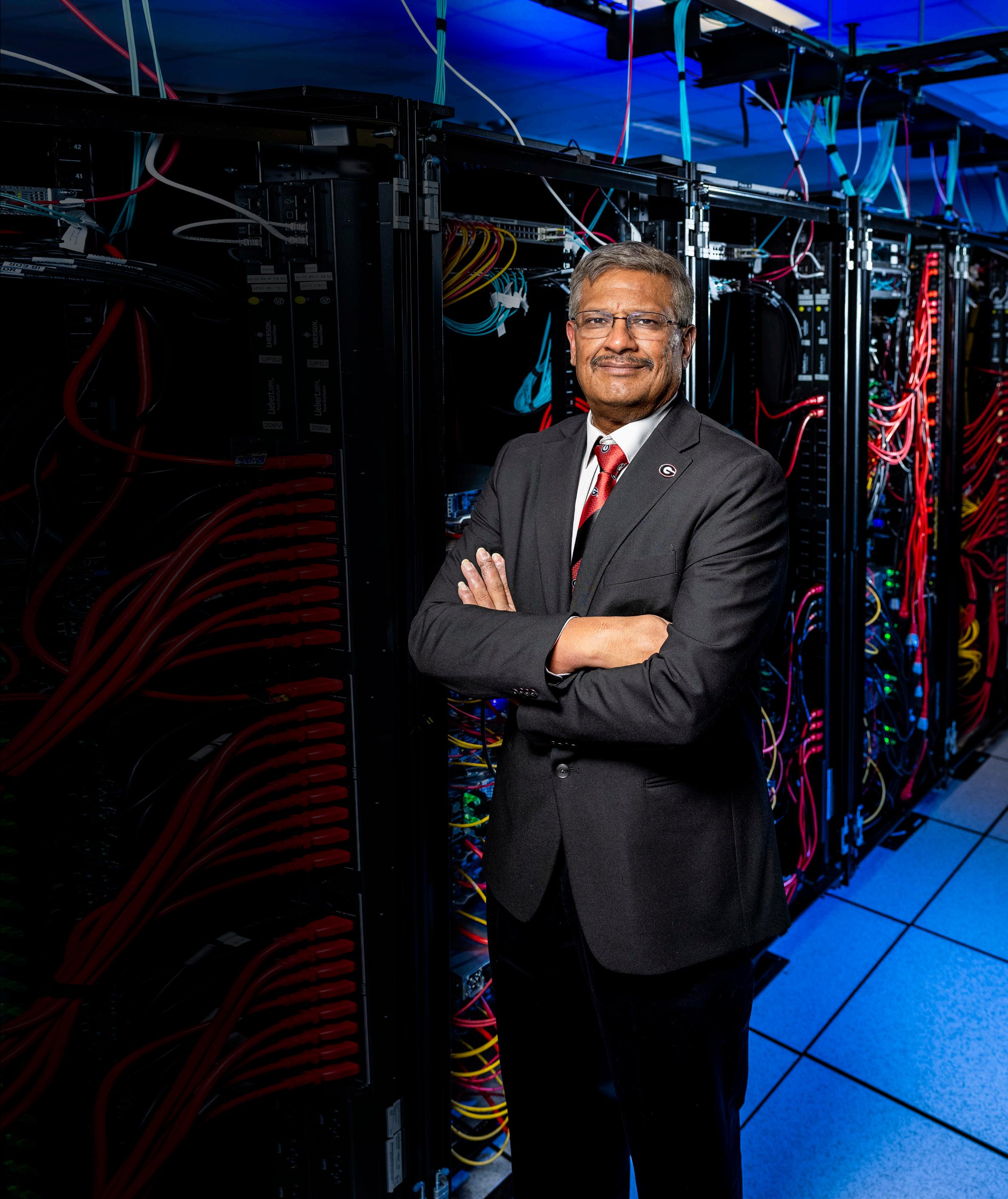
Endowed chairs—positions that receive supplemental support generated from private donations—are essential to recruiting and retaining leading faculty who are committed to world-changing research and preparing the next generation of problem-solvers, pioneers, and leaders. Learn more about supporting UGA’s leading faculty at GIVE.UGA.EDU

Stay connected with your Bulldog while making a meaningful impact at UGA by joining the Parents Leadership Council today.
Learn more at give.uga.edu/plc or scan the QR code.

“It’s such a great opportunity to not only get involved in the school and support its mission, but also meet parents just like us. Reconnecting with friends from college who now have their children and are part of PLC has been a fond and special thing. We’re all in this together one generation later.”
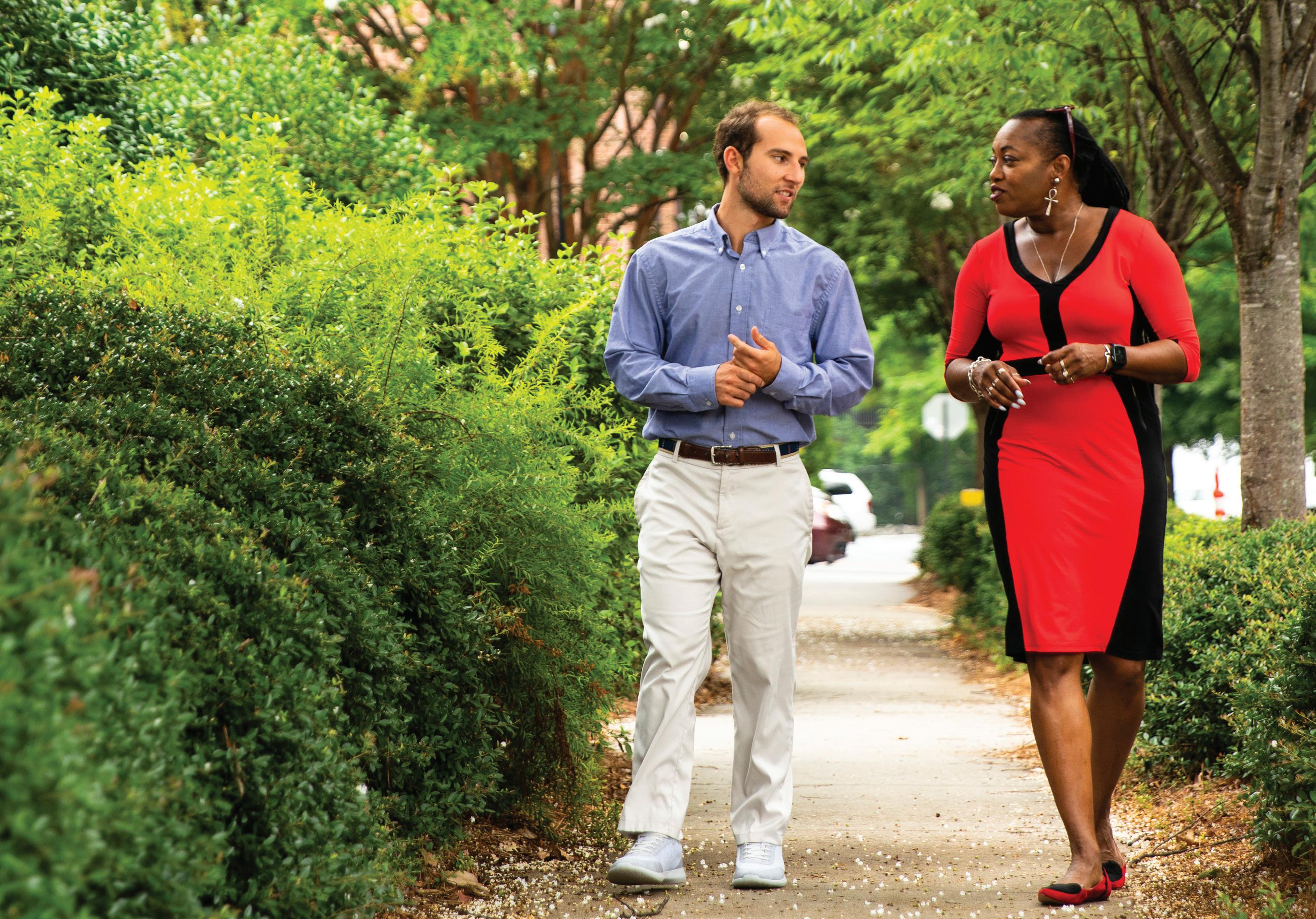
Е Choosing your major
Е Figuring out your goals
Е Finding a job
College and beyond can be an overwhelming time for students, but with your help, it doesn’t have to be. Simply finding a few hours each month to mentor a UGA student can open life-changing doors for them.
The UGA Mentor Program provides a convenient and impactful way for you to invest in a student’s future by connecting you with students no matter where you live and on your schedule. Learn more and sign up to be a