Follow along with members of the Ohio State Urban Food Innovations Team as they share quick snapshots from ongoing research projects-highlighting key questions, early insights, and practical takeaways.
Smart Irrigation for Warm Season Crops in High Tunnels
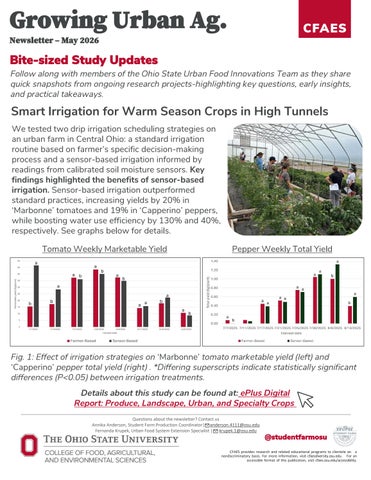
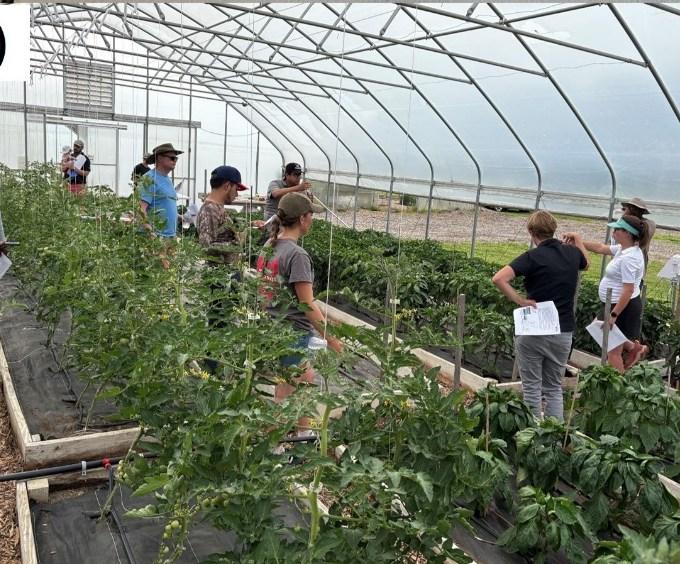
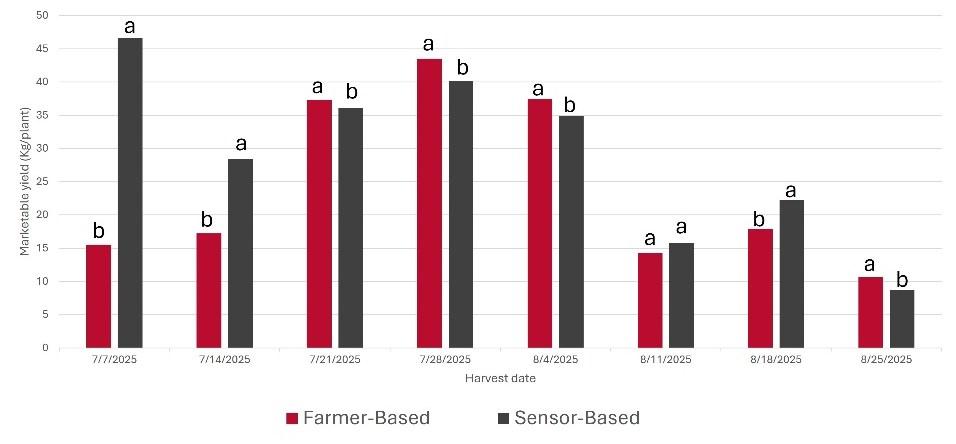
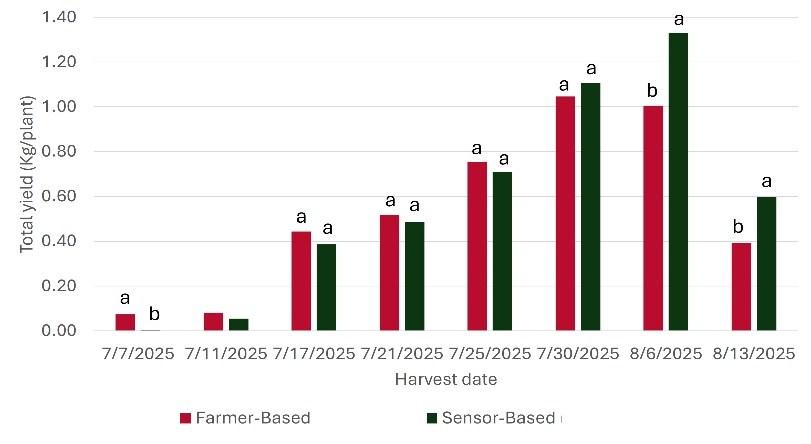
We tested two drip irrigation scheduling strategies on an urban farm in Central Ohio: a standard irrigation routine based on farmer’s specific decision-making process and a sensor-based irrigation informed by readings from calibrated soil moisture sensors. Key findings highlighted the benefits of sensor-based irrigation. Sensor-based irrigation outperformed standard practices, increasing yields by 20% in ‘Marbonne’ tomatoes and 19% in ‘Capperino’ peppers, while boosting water use efficiency by 130% and 40%, respectively. See graphs below for details.
Tomato Weekly Marketable Yield Pepper Weekly Total Yield
Fig. 1: Effect of irrigation strategies on ‘Marbonne’ tomato marketable yield (left) and ‘Capperino’ pepper total yield (right) . *Differing superscripts indicate statistically significant differences (P<0.05) between irrigation treatments.
Details about this study can be found at: ePlus Digital Report: Produce, Landscape, Urban, and Specialty Crops
A Day in the Life of a Student Urban Farmer
Located in Columbus, Ohio, one of the largest cities in the U.S., the Ohio State Student Farm shares many of the successes and challenges common to urban farming. Follow student farmers as they share insights from daily farm life, balancing food production, community engagement, and hands on learning in a dynamic urban setting.
High Tunnel Plastic Replacement Due to Wind Damage
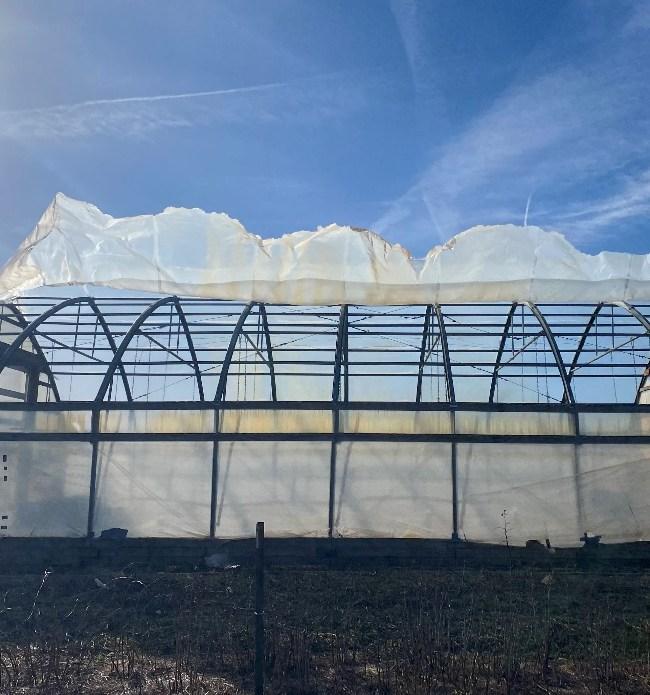
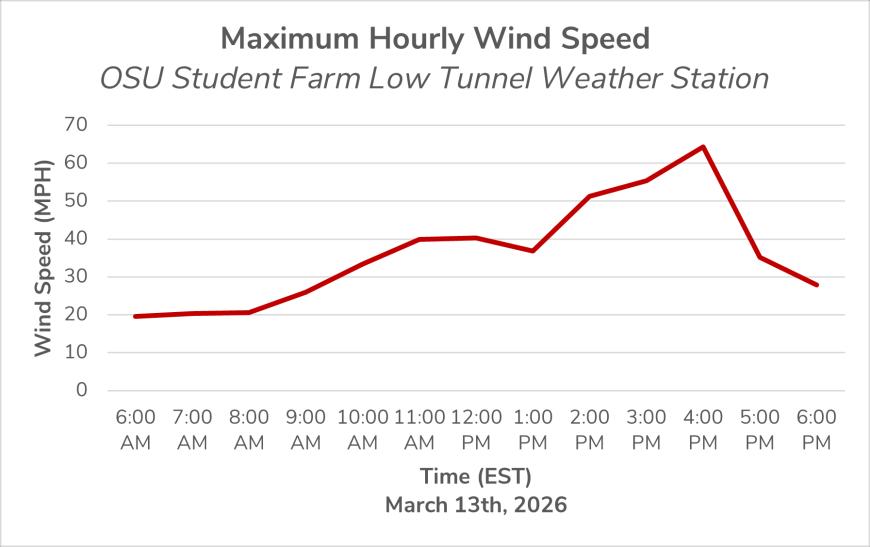
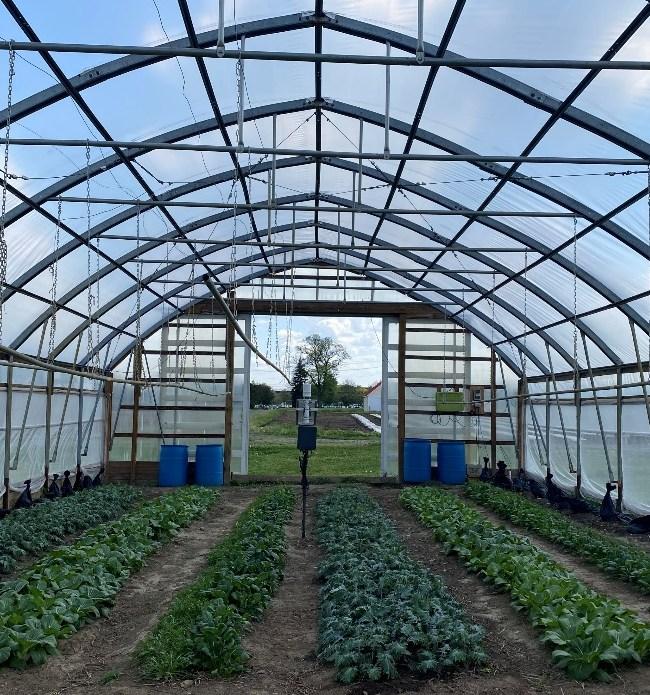
On March 12th, students from the Horticulture and Crop Science (HCS) course Sustainable Vegetable Production planted kale, bok choy, and arugula in the Student Farms’ high tunnel. The following day, Central Ohio was hit with wind speeds of 64 MPH (Fig. 2), and small tears in the high tunnel's plastic led to it fully disconnecting. After a couple weeks of preparations, we replaced the torn plastic with the help of OSU’s Waterman Team and have enjoyed having a functional high tunnel once again. Thanks to heavy frost blankets, students in the same HCS course mentioned above harvested these greens as their final hands-on activity of the semester.
Fig. 2: Wind speed data recorded on the March 13th, the day of high tunnel damage.
Pictured Left: Student Farm high tunnel plastic damage due to extreme winds.
Pictured Right: Replaced Student Farm high tunnel plastic with greens planted.
Tools of the Trade
Step into the world of tools, technologies, and techniques that support successful urban farming. From hand tools to innovative systems, learn how to adapt equipment and practices to maximize efficiency, sustainability, and productivity in city-based farms.
Paper Pot Transplanter
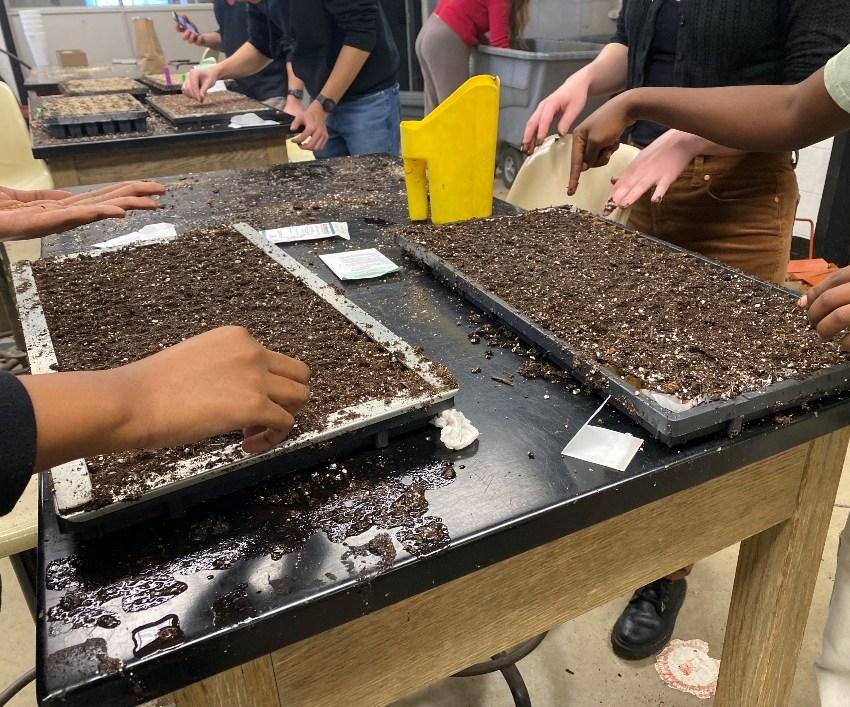
Above: Students seeding greens in paper pot trays.
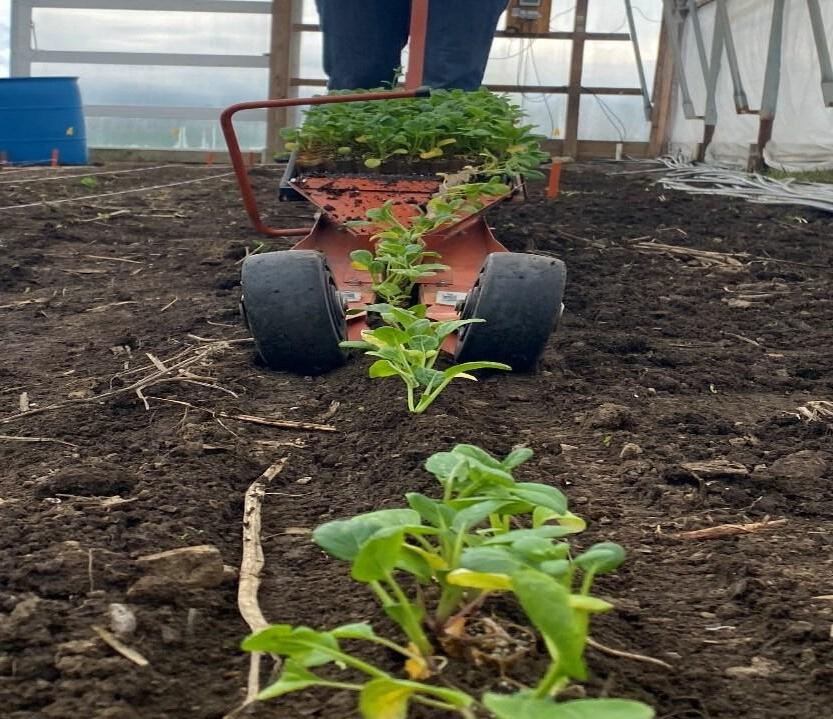
After 5 weeks we attached the paper pot transplanter and gently pulled the machine down each row. Just a couple minutes per 48’ row and we had greens at 4’’ and 6’’ spacing just like that. For detailed instructional information utilize additional video material here.
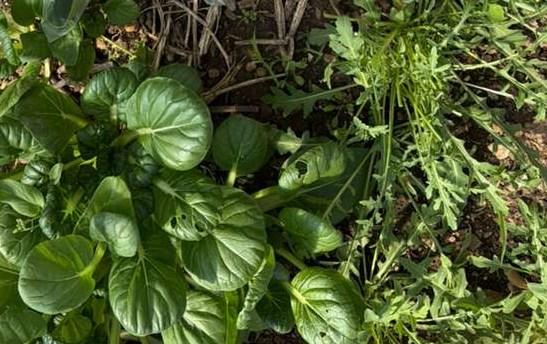
A new tool for the OSU Student Farm, the paper pot transplanter has us wondering why can’t all transplanting be this easy? With the help of paper pot trays, we seeded arugula and tatsoi in 264 and 128 cell paper trays, respectively.
Above: Tatsoi transplants being planted with paper pot planter.
Pictured Left: Tatsoi and Arugula planted with paper pot planter, growth 4 weeks after planting.
Pictured
Pictured
Know Your Farmer, Know Your Food
Learn how local farmers grow food, build community, and strengthen urban food systemsright where people live and eat.
Three Creeks Produce
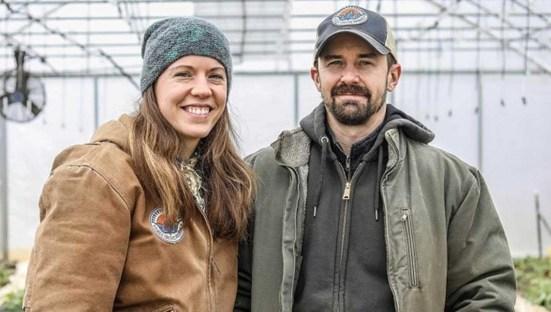
Since 2016, Three Creeks Produce has grown from their first commercial sales to 60+ varieties of year-round veggies. Started, owned, and operated by Kendyl Meadows and Andy Hupp (pictured right), this peri-urban farm is a shining example of USDA-certified organic production.
What led you to start farming?
“Though not from farming backgrounds, both Andy and myself have had lifelong interests in the environment and food. His education in environmental science (a SENR grad!) and previous career in organic certification led him to pursue farming. I had impactful experiences in the food/bev industry, as well as academic introduction to issues of global food security during college (also an OSU grad!), and I have always been interested in entrepreneurship and the impact of the small local business. All of these interests combined made farming a natural next step, though it hasn't been without its challenges!”
- Kendyl Meadows
What advice do you have for students looking to be involved in agriculture?
1) “Read and learn as much as you can
2) Work on a farm, ideally several farms! This is where you will get the practical experience you will depend on.
3) Keep in mind that there are a ton of skill sets and adjunct industries that are essential to agriculture - logistics, software development, academic research, marketing, engineering, you name it. You don't have to be on a tractor to be making an impact in the agricultural sector. Find your niche!”
- Kendyl Meadows
Support Three Creeks Produce directly through joining their CSA here!
Food Leader of the Month
Each newsletter, we feature an emerging Ohio State University’s food leader whose work advances sustainable agriculture, community food access, and innovation - sharing their story, insights, and inspiration.
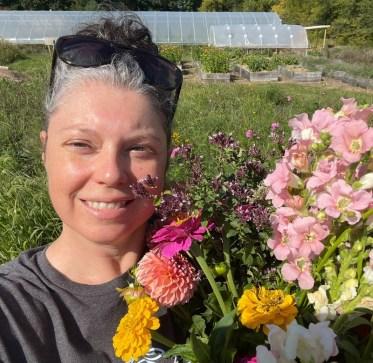
Amy Hurst, MS Horticulture and Crop Science
Amy is a master’s student member of the Urban Food Innovations Team at The Ohio State University’s Department of Horticulture and Crop Science in Columbus, OH. Amy’s graduate research examines cover crop and compost impacts in urban high and low tunnel systems.
What is your research focus?
“My research addresses a question that came directly from Ohio urban farmers: “Does growing summer cover crops in the high tunnel improve crop yield and soil health more than applying cover crop above-ground biomass residue grown outside the tunnel as green mulch?”. In other words, “Is it worth it, for soil health and productivity, to take high tunnel soil out of summer production to grow a cover crop?”. I wanted to work directly on a problem urban farmers want to solve, and hopefully the research results will help growers succeed.”
- Amy Hurst
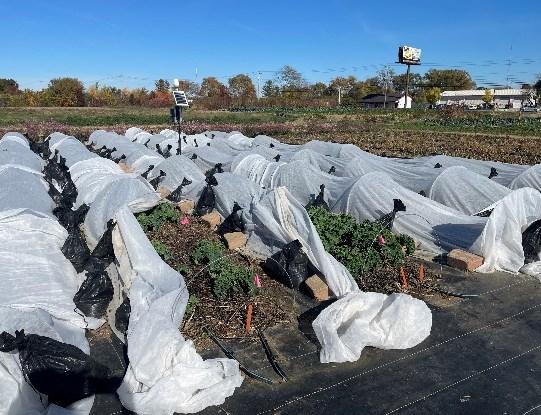
Pictured left: Open field rows of kale grown under row covers for the fall season.
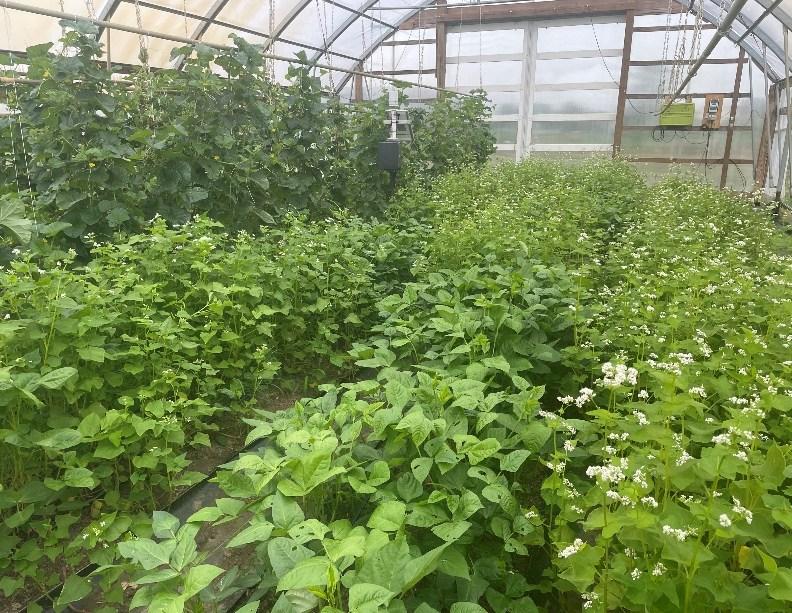
Pictured Above: Rows of cover crops (cowpeas and buckwheat), and trellised melons in the Student Farm high tunnel.
What are your plans after graduation?
“After graduation this summer semester 2026, I plan to continue working with agricultural, conservation and education organizations.” - Amy Hurst
New Fact-Sheet Alert
Stay up to date with the latest Ohio State University’s Extension factsheets and educational scale agriculture. Click each title to learn more!
Ohio Urban Agriculture Practice 101: Navigating the Regulations
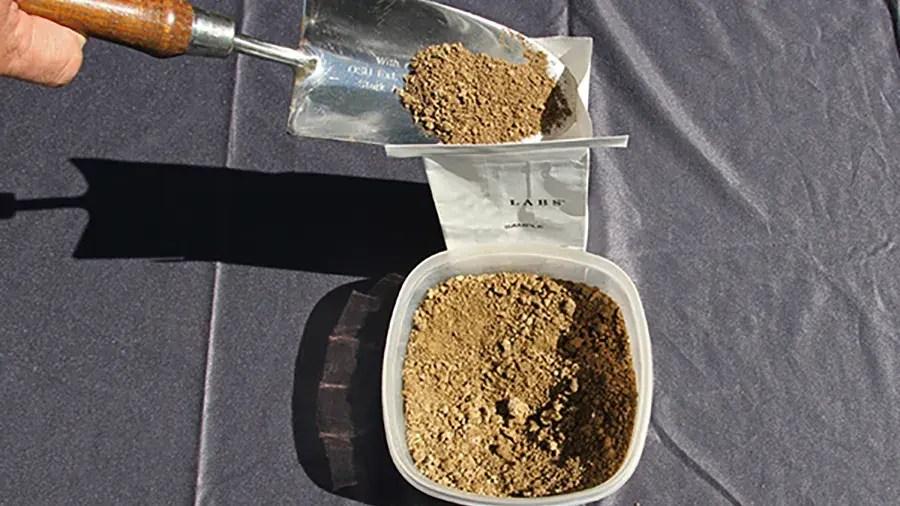
Soil Testing for Horticultural Needs
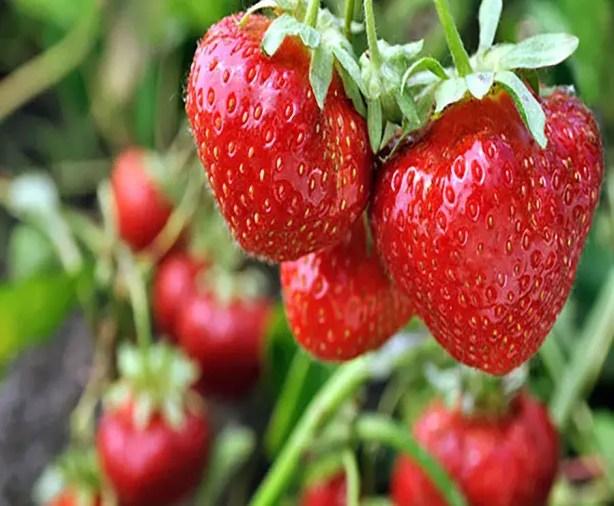
Benefits of Using Seed-Propagated Strawberries as Planting Materials
What’s Growing Next: Upcoming Events in Urban Ag.
Stay connected with upcoming workshops, field days, webinars, and events shaping the future of urban food systems .
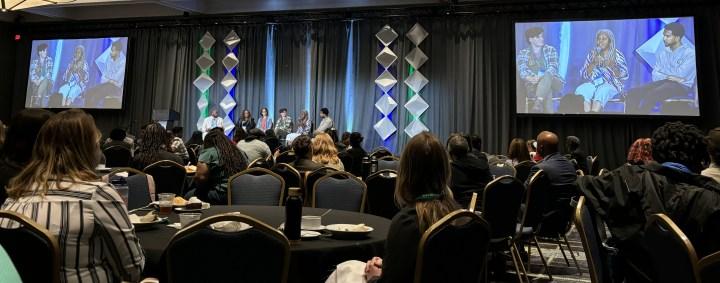
2026 Urban Food Systems Symposium
2026 National Urban Extension Conference
Do you have an urban ag. related event coming up? Share it with us to have it advertised in the next issue of Growing Urban Ag.
Help the Student Farm make further innovations –contribute here: Thanks for your support!
To learn more about upcoming activities and ways to engage use this form: