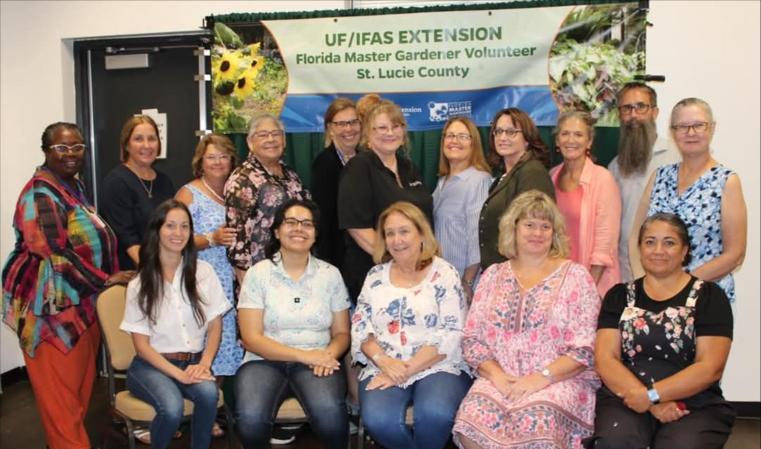
By: UF/IFAS Extension St. Lucie County Master Gardener Volunteers
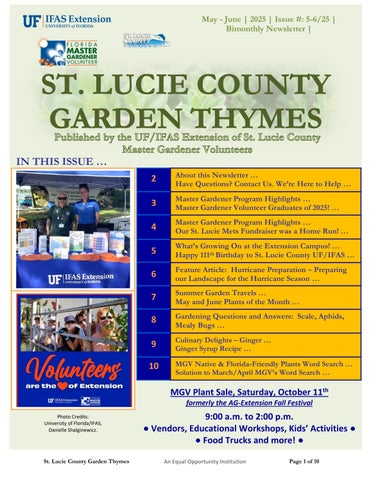
The St. Lucie County Garden Thymes newsletter is a publication created and produced by the University of Florida/IFAS Master Gardener Volunteers of St. Lucie County. The purpose is to share gardening and provide inspiration to fellow gardeners within our community.
All links and QR Codes are live in this publication for easy access to online information.
To view a website link, place your mouse over the web address. A hand will appear. Click your mouse pointer to access the website.
When finished, click the back button on your Internet browser to return to this newsletter.
To use a QR Code, open your camera on your phone and place over the black and white QR Code image to view the website from your phone. We welcome any comments, suggestions, or personal gardening successes you’d like to share. Please email us at: sl-mg@ifas.ufl.edu. ~ Happy Reading!
Master Gardener
Volunteers’ Newsletter Staff
May – June 2025 Edition
Editor-in-Chief: Karen Cartmill
Contributing Writers:
Betty Bianconi
Karen Cartmill
Janet Mackey
Florida Master Gardener Volunteers
Contributing Photographers:
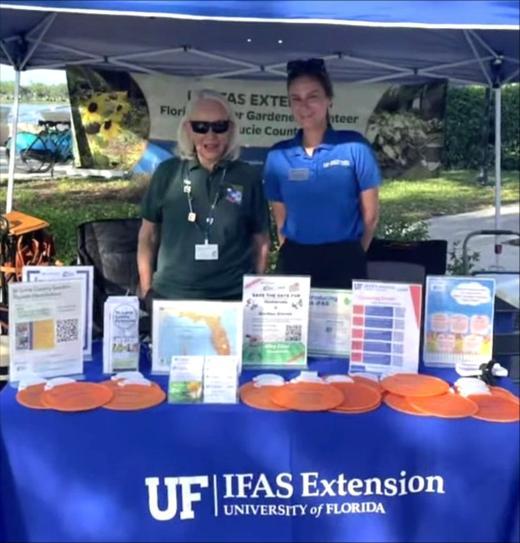
Danielle Shalginewicz, UF/IFAS St. Lucie County Extension Master Gardener Volunteer Program Specialist
Karen Cartmill.
The trends also include gardens and landscapes that are both efficient and climate resilient, and have the presence of a “lived also celebrate National Celery Month ), Pecan Day (March 25 ). And on March 12
Did you know that April is National Garden Month, too! Spring is one of the most popular gardening times of the year. However, gardening in general is one of the best forms of exercise, can lift your mood, is good for your mind and body, and allows you t in the flowers, plants, vegetables, fruits, and herbs that you grow. Not to mention, being able to use your edibles that you grew, in your favorite recipes. excellent time to freshen up your flower beds and landscape. Get creative and plant something new. Redesign a garden bed or create a new one.
Furthermore, gardening can bring families, friend, and communities together. So, next month, try gardening for all its benefits including sharing time together, and get ready to get your hands a little bit dirty, digging in the dirt and creating beautiful Source:
Photo Credits: University of Florida/IFAS, Danielle Shalginewicz and University of Florida.
National Garden Bureau, Month by
Preparing Your Landscape for the Hurricane Season
By: Karen Cartmill, UF/IFAS Extension St. Lucie County Master Gardener Volunteer
The time to prepare your landscape is long before the risk of a hurricane. Hurricane season runs from June 1st to November 30th . If you haven’t already, now is the time to perform the following tasks.
To-Do’s to Prepare:
Assess your landscape and consider mulch.
• Remove debris in your garden beds.
• Mulch to help keep your plants and trees moist and protected from extreme heat during the summer. Avoid volcano mulching around trees.
Prune and prepare your trees.
• Properly pruning trees can make them more wind resistant. Reducing or thinning the crown of a tree can also help decrease the movement of the trunk during hurricane winds.
• Do not prune trees by topping, lion-tailing, over-lifting, or hat-racking.
• Hire a certified arborist to properly prune your trees, if they are too large or the tree is too tall.
• Remove any tree limbs that overhang your home or other structures. Consider hiring an arborist to perform this work.
• Stake newly planted trees to help hold the roots firmer in the soil during strong winds.
Prune your shrubs and plants.
• Remove dead, dying, damaged, and diseased branches or those weakly attached to the plant and trunk area.
Prepare your palms.
• Remove coconuts, fruits, and wooden palm fronds.
• Prune palms, but do not “Hurricane Prune”. Remove completely brown and dead fronds only.
• Never prune above the 3:00 and 9:00 hands on a clock. Consider hiring a certified arborist to properly prune your palms.
Clean gutters and redivert the path of water from extended downspouts.
• Remove debris from your gutters to allow water to flow freely.
• Redivert downspouts to push water away from your home’s foundation and protect against erosion. Additionally, it can protect your plants from drowning in water and root rot.
• Redirect water further out into your garden beds or turf areas. Consider creating a dry river rock bed, too.
QR Code #1: https://gardeningsolutions.ifas.ufl.edu/care/weather/hurricanelandscaping/
QR Code #2: Disaster Recovery Handbook: https://disaster.ifas.ufl.edu/
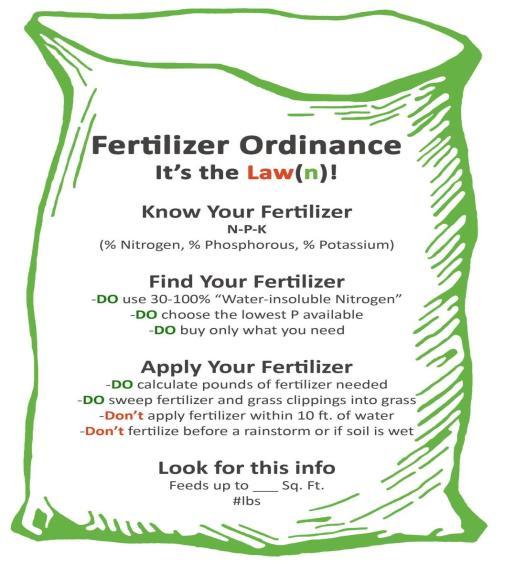
Throughout Florida, fertilizer bans are in effect now, and anytimeoftheyearthat the National Weather Service forecasts heavy rainstooccurwithin24 hours. During these times, fertilizer cannot be applied that contains
nitrogen and phosphorus to your turf or landscape. This is to help protect our waterways from toxic blooms of Blue-Green algae and potential Red Tides. Wait until October to fertilize your plants, trees, palms, and turf. Nitrogen and phosphorus-free summer fertilizer blends that contain lime, iron, manganese, potassium, and otherallowednutrientscanbeused. Have yoursoil tested beforehand to know whatto use.
QR Code 3: St. Lucie County: https://www.stlucieco.gov/depar tments-and-services/planningand-development-services/codecompliance/fertilizer-info
Photo: University of Florida/IFAS.
It’s the Law!
Botanical Gardens to Visit in Florida!
By: Janet Mackey, UF/IFAS Extension St. Lucie County Master Gardener Volunteer
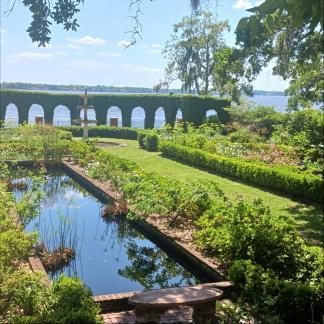
Jacksonville's Cummer Museum of Art and Gardens is comparatively small, 2.5 acres, located on the west bank of the mighty St Johns River. Nina Cummer donated her riverfront home and historic gardens in 1958 to create a "center of beauty and culture". The three formal, adjoining gardens were designed in the early 20th century and represents English, Italian, and colonial revival styles.
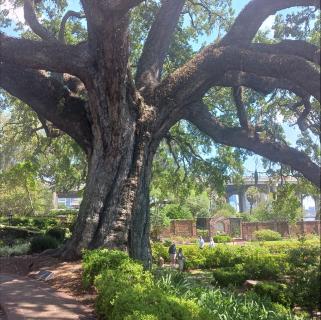
A massive live oak, "the Cummer oak" extends over 150-feet and creates a partial border between the museum and garden areas. A pergola, reflecting pools, marble fountains, stone walls and brick walls set off beds of azaleas, hydrangeas, roses, camellias, snapdragons, and other flowers not seen in South Florida. The museum includes over 5,000 works of art dating back to 2100 BCE and transversing forward into the twenty-first century.
Garden access requires walking through the museum, then descending 5 or 6 steps, and following the brick pathways. Located at 829 Riverside Ave, Jacksonville, Florida, this treasure with its museum and gardens can all be seen in less than 2 hours. There is a cafe inside the museum. Contact the gardens at 905-356-6857 or visit their website at: Home | The Cummer Museum.
Their hours vary. They’re closed on Mondays; open Tuesdays 11:00 a.m. to 9:00 p.m.; Wednesday through Saturday 11:00 a.m. – 4:00 p.m.; and Sundays Noon to 4:00 p.m.
Admission is $10, including the museum. They are closed during major holidays. Outdoor parking across the street from the museum is free.
By: Karen Cartmill, UF/IFAS St. Lucie
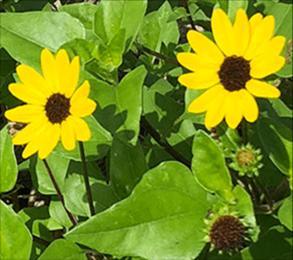
Helianthus debilis
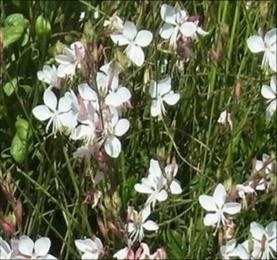
Whirling Butterflies Gaura lindheimeri
A Florida native that’s a drought tolerant plant, that can get by with little to no irrigation, and virtually no care needed. A great groundcover for landscapes. It attracts butterflies and provides erosion control in coastal areas.
A year-round bloomer. Plant in full to partial sun and enjoy.
https://gardeningsolutions.ifas .ufl.edu/plants/ornamentals/b each-sunflower/
A Florida-Friendly perennial that’s drought tolerant and also gets by with little to no irrigation. It virtually needs no care as well. Growing 2-3 feet tall, it thrives in humidity, attracts butterflies, and blooms year-round in South Florida. Plant in full sun. https://sfyl.ifas.ufl.edu/media/ sfylifasufledu/baker/docs/pdf/ horticulture/demonstrationgardens/WhirlingButterflies_Gaura.pdf
County Extension Master Gardener Volunteer
Photo Credit: Janet Mackey
QR CODE: Cummer Museum of Art and Gardens
Beach aka Dune Sunflower
Photo Credits: University of Florida/IFAS
By: Karen Cartmill, UF/IFAS Extension St. Lucie County Master Gardener Volunteer
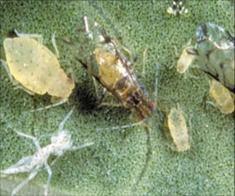
Question: Some of the leaves on my plants feel sticky and there are quite a few ants hanging nearby crawling on the leaves. I also see some white, fluffy, crawling insects and some round bumps on the leaves, and between the branches. There is a cottony appearance as well on many of the stems. What is happening to my plants? Should I be worried and what should I do? ~ Worried
It seems that what you are describing are some common plant insects known as scale, mealy bugs, and possibly aphids or thrips. The best way to diagnose is to send in some photos to https://sfyl.ifas.ufl.edu/stlucie or stop by our plant clinic at the Morningside Library. If taking photos, take pictures of the insects, stems, and leaves. If bringing in a sample, cut these items and place them in a zip-lock bag.
These insects insert their mouthparts into the plant and literally suck the nutrients and life out of plants. While doing so, they produce a sugary substance that is referred to as honey dew. Ants are attracted to the honey dew because this provides a free food source to them. In exchange, the ants protect these insects and ward off the good bugs that come to the plant’s rescue. Overtime, a black, sooty, mold will form on the leaves and stems, and these insects could destroy the plant beyond its ability to be saved.
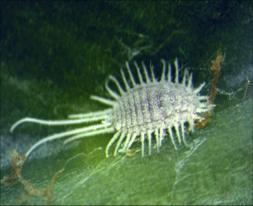
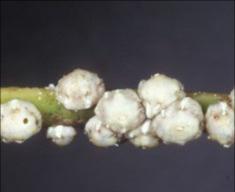
Mealy bugs are white in color and you can watch them move freely around the stems and leaves of the plants. Aphids and scale can have different colorings. Some are white, clear, red, green, and brown, for example. Scale looks like hardened bumps on the leaves and stems.
There are some non-invasive Integrated Pest Management (IPM) options that you can try to get rid of these insects. We try to take the least invasive approach as possible and these include:
• Try using cotton balls soaked in alcohol to rub off the scale and mealy bugs.
• Use a garden hose and give the plant a good hosing down with water from top to bottom Aphids, mealy bugs, and thrips are soft-bodied insects that will not stay attached to the plant after a watering.
• If the plants are in containers, isolate them to help prevent the spread of these insects to other nearby plants and pots.
• Make sure to check under the rim of your containers and in the soil because they like to hide in those places.
• Try spraying your plants with Neem oil.
• If all else fails, purchase an insecticidal soap from a reputable nursery or box store to apply.
• Long term, add some plants that attract the good bugs to your garden that will help destroy the bad insects.
For more information, click on the following websites or scan the QR Codes on the right.
• https://blogs.ifas.ufl.edu/charlotteco/2020/08/1 1/mealybugs-soft-bodied-villains/
• https://edis.ifas.ufl.edu/publication/CH195
• https://blogs.ifas.ufl.edu/stlucieco/2023/03/31/ aphids-on-plants-and-their-management/
Photo credit:
UF/IFAS, Dr. Osborn
Photo Credit: Lyle J. Buss, UF/IFAS
Photo credit:
University of Florida / IFAS Extension
Mealy Bug Scale Aphids
By: Betty Bianconi, UF/IFAS Extension St. Lucie County Master Gardener Volunteer
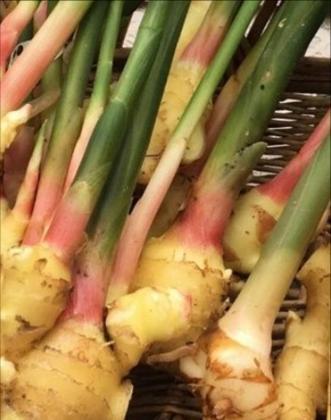
Ginger (Zingiber officinale) is a tropical perennial herb prized for its aromatic rhizomes (underground stems), widely used in many food dishes and its healing properties in traditional medicine.
In our zone (#10) ginger thrives outdoors year-round. Ginger requires well-drained soil that is rich in organic matter (add extra compost), partial shade, and consistent moisture. Planting typically begins in spring using a fresh, organic rhizome with visible buds. You can even start with fresh ginger root purchased from your local supermarket. In about 8–10 months, the plant matures and the rhizomes can be harvested once the leaves begin to yellow and die back.
Beyond its culinary value, ginger offers a wide range of medicinal benefits. It's well known to help soothe muscle aches and pains, including menstrual cramps; reduce nausea, indigestion, and vomiting; calm a cough and help with sore throats; stimulate circulation and is an antioxidant to help fight cancer-causing free radicals. Ginger is also used to support immune health, lower blood sugar levels, and improve heart health.
No matter if it’s used for cooking, healing or grown for fun, ginger is a great herb to plant now.
For more information, click on the following website or scan the QR Code.
https://gardeningsolutions.ifas.ufl.edu/plants/edibles/vegetables/ginger/# :~:text=Plant%20edible%20ginger%20in%20the,plant%20as%20early%20as% 20February
By:
This easy-to-make syrup is great to use to flavor water, club soda or as an additional flavor to other drinks. It’s also delicious over ice cream or fruit.
• 4 ounces fresh ginger root (about 4 inches)
• 1 cup granulated sugar
• 1 cup water
Peel and grate ginger on large holes of a box grater or coarsely chop until it measures a 1/3 packed cup. In a small saucepan, combine ginger, sugar and water. Bring to a boil over medium-high heat, stirring to dissolve sugar. Remove from heat; cool to room temperature, about 1 hour. Place a fine-mesh strainer over a medium bowl; pour syrup through strainer and press on solids to extract as much liquid as possible. Discard solids. Refrigerate syrup in an airtight container for up to 2 weeks or freeze for up to 2 months. Thaw in refrigerator overnight before using. Makes about 1 1/2 cups.
Note: For a stronger ginger flavor, in blender, process cooled ginger-sugar mixture until almost smooth, then strain. Enjoy! ~ Betty
Betty Bianconi, UF/IFAS
Extension
St. Lucie County Master Gardener Volunteer
QR Code: Ginger
Photo Credit: Rosanna Freyre, UF/IFAS
By: Karen Cartmill, UF/IFAS Extension St. Lucie County Master Gardener Volunteer
(Florida-Friendly Landscape Plants)
Beautyberry
Blue Daze
Bougainvillea
Buttonwood
Clusia
Cocoplum
Coontie
Croton
Dune Sunflower
Firebush
Flax Lilly
FFL
Gaillardia
Ginger
Gumbo Limbo
Hibiscus
Ixora
Live-Oak
Native
Pentas
Privet Senna
Podocarpus
Sage
Song of India
Ti-Plants
Vincas
Wild Coffee 28. Yucca
29. Zone 10A