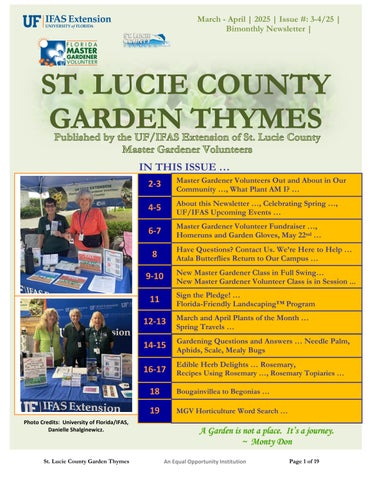
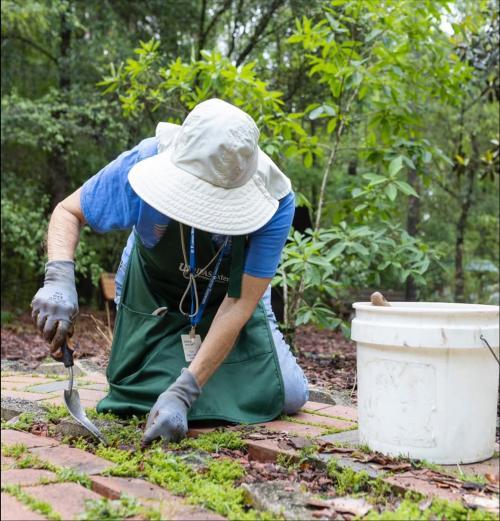
University of Florida/IFAS, Danielle Shalginewicz.
By: Karen Cartmill, UF/IFAS Extension St. Lucie County Master Gardener Volunteer
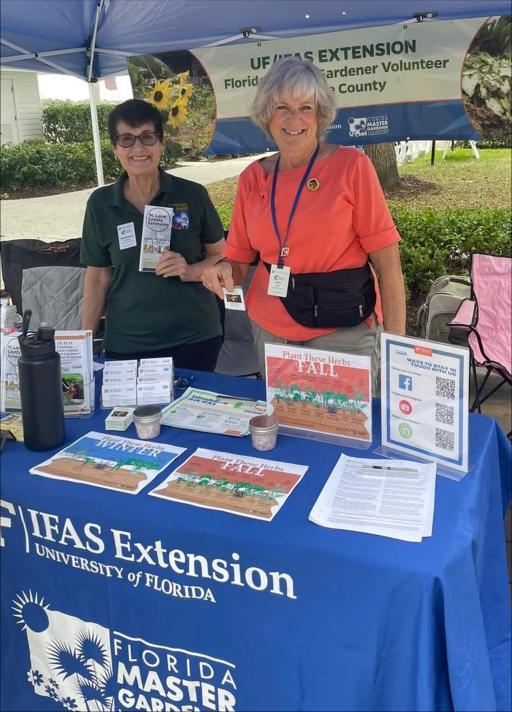
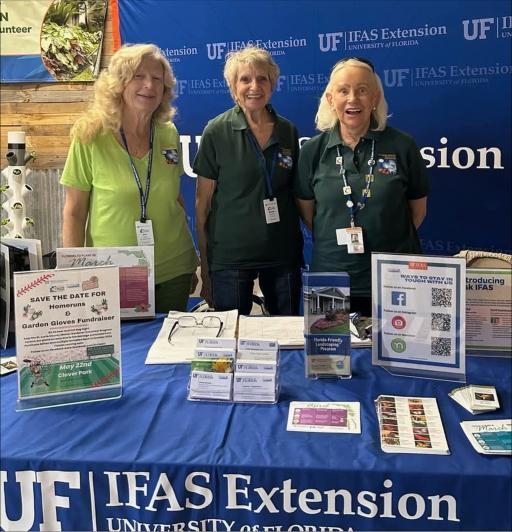
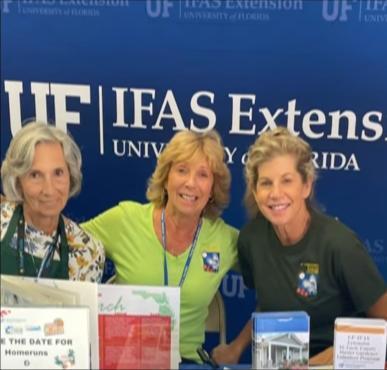
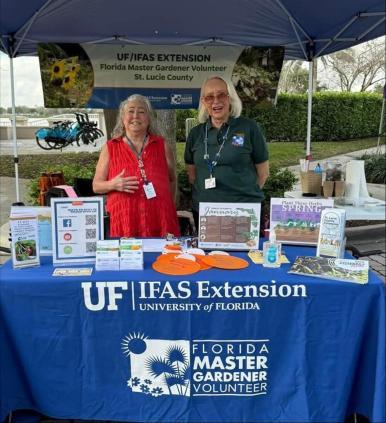
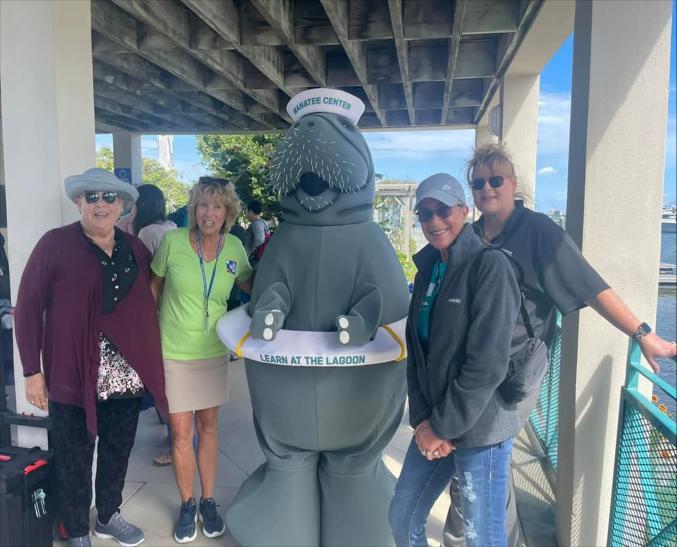
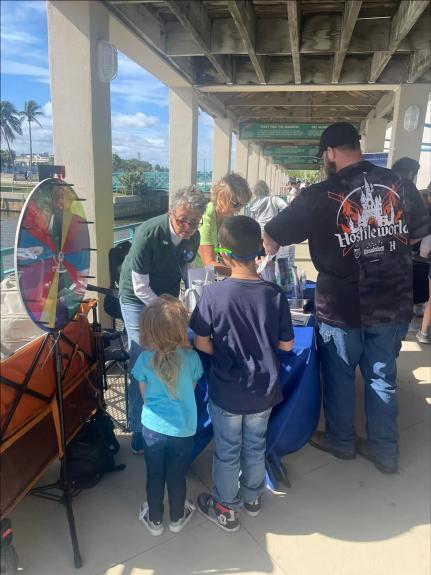
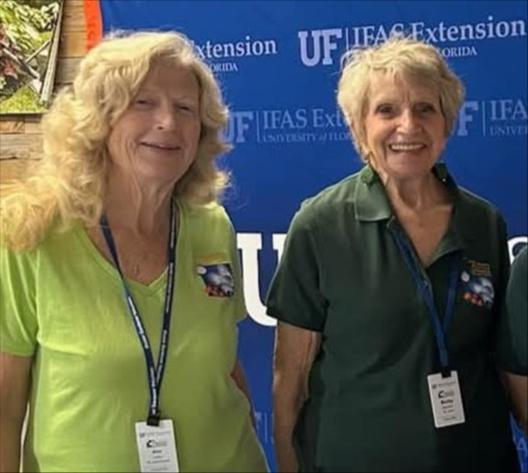
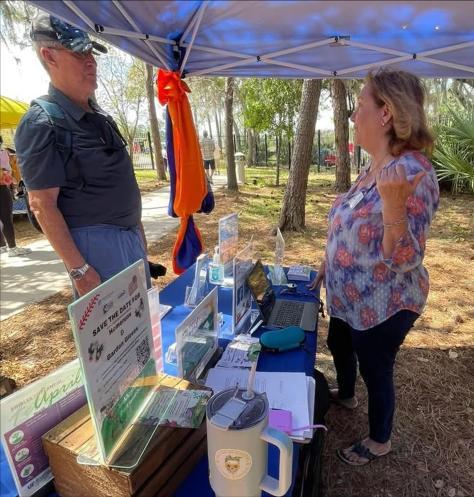
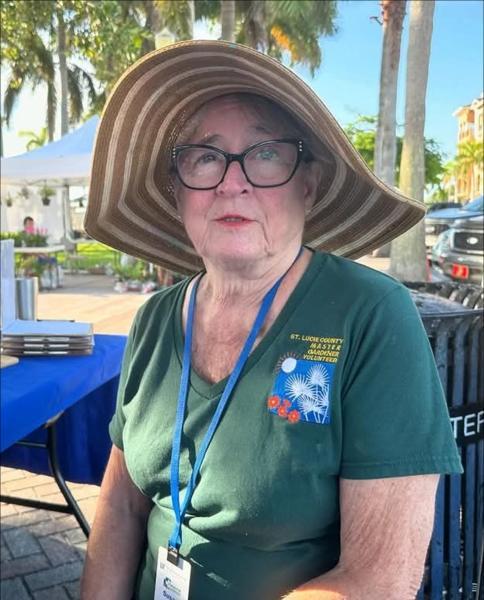
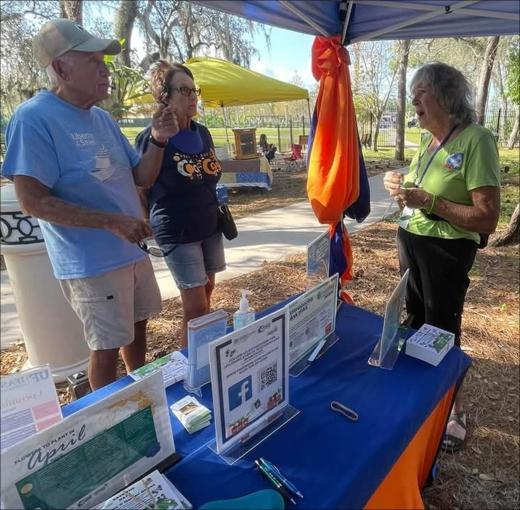
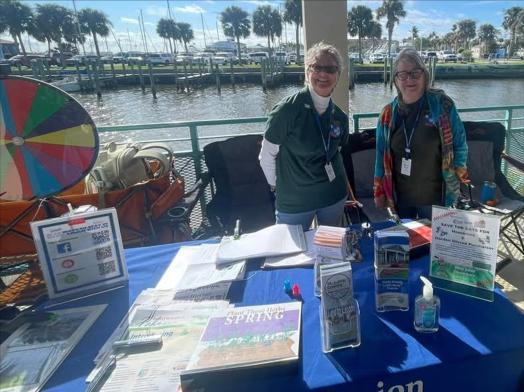
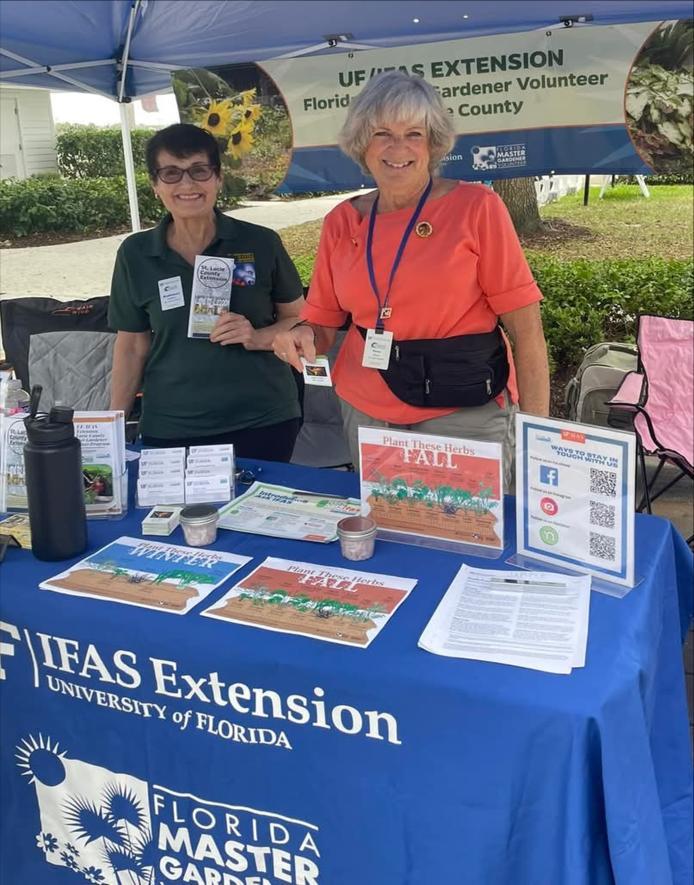
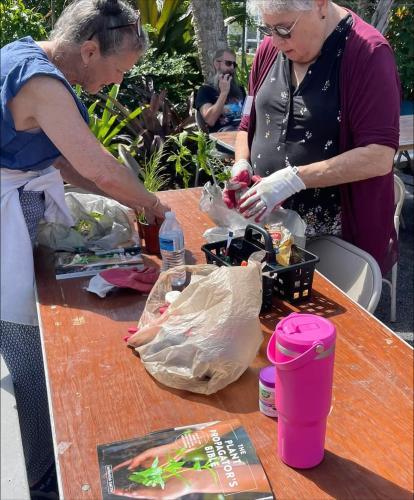
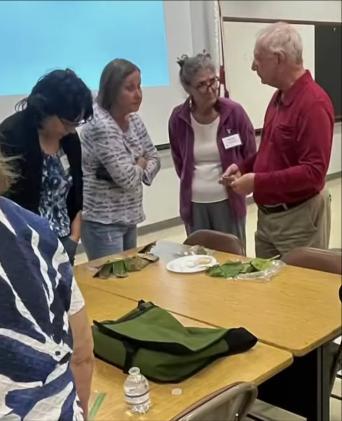
From the Plant Clinic at Morningside Library, to the County Fair, local Botanical Gardens, Oxbow Eco-Center and Preserve to Tradition’s Neighborhood Market, and many other local area events, our Master Gardener Volunteers are out in full force, interacting within our community.
Hurricane Milton and the tornadoes that tore through portions of St. Lucie County this past October may have damaged many areas within our county, but it did not silence the resiliency of our residents and our volunteers. Even though the Master Gardener Volunteer nursery, gardens, and Hurricane House at the UF/IFAS Extension campus in Fort Pierce sustained substantial damage, it has not deterred our program! We may be down, but we’re not out!
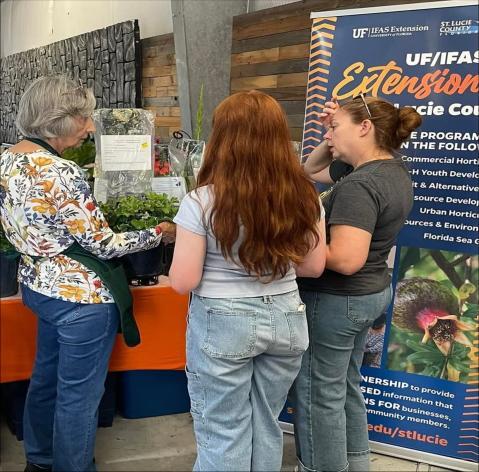
We continue to hold fund-raisers and sell plants that we’ve grown at various events, such as at the recent county fair. Our efforts are geared towards rebuilding the nursery so we can once again hold plant sales at the Extension campus The proceeds of which are used to provide scholarships to help students financially for those who are seeking a degree in horticulture or environmental science
Our upcoming fundraiser, Homeruns and Garden Gloves, is on May 22nd, at Clover Park.
In the meantime, you’ll find us out in the community at events, answering questions and educating residents in the areas of plants, our Master Gardener Program, Florida-Friendly Landscaping™ and it’s 9 principles. Wherever you see our tent at events, stop by and say hi, and bring us your gardening questions to answer!
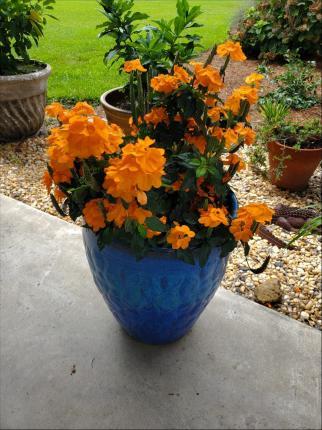
➢ Known as the irecracker F
➢ A
and not Florida, I do well I’m
➢ Considered a and a tropical
➢ I’m
➢ Referred to as a small shrub with a
➢ A red flowers, but
➢ Best in dappled sunlight, to shield from the harsh afternoon heat
➢ In sun
➢ An
➢ H but not tolerant grow best in
➢ I especially Crossandra Orange Marmalade, Florida Sunset, Mona Wallhead, and Lutea varieties.
Photo Credit: Photo courtesy of Daniel Leonard, UF/IFAS.
Photo Credits: University of Florida/IFAS, Danielle Shalginewicz.
St. Lucie County Garden Thymes
Photo Credits: University of Florida/IFAS, Danielle Shalginewicz.
By: UF/IFAS Extension St. Lucie County Master Gardener Volunteers
The St. Lucie County Garden Thymes newsletter is a publication created and produced by the University of Florida/IFAS Master Gardener Volunteers of St. Lucie County. The purpose is to share gardening knowledge and science-based researched information, and provide inspiration to fellow gardeners within our community.
All links and QR Codes are live in this publication for easy access to online information.
To view a website link, place your mouse over the web address. A hand will appear. Click your mouse pointer to access the website.
When finished, click the back button on your Internet browser to return to this newsletter.
To use a QR Code, open your camera on your phone and place over the black and white QR Code image to view the website from your phone. We welcome any comments, suggestions, or personal gardening successes you’d like to share. Please email us at: sl-mg@ifas.ufl.edu.
~ Happy Reading!
Master Gardener Volunteers and Newsletter Staff
March – April
2025 Edition
Editor-in-Chief: Karen Cartmill
Contributing Writers:
Betty Bianconi
Karen Cartmill
Janet Mackey
Florida Master Gardener
Volunteers and Plant Clinics of St. Lucie County
Contributing Photographers:
Danielle Shalginewicz, UF/IFAS St. Lucie County Extension Master Gardener Volunteer Program Specialist.
Karen Cartmill
Spring has arrived! On March 20th of this year, we welcomed the Spring Equinox, and some very popular gardening trends for 2025. These include:
• Vertical Gardening
• Naturalist Gardens, Edible Gardens, and Herb Gardens
The trends also include gardens and landscapes that are both efficient and climate resilient, and have the presence of a “lived-in” feel, rather than a manicured appearance.
In March we also celebrate National Celery Month, Fragrance Day (March 21st), Chia Day (March 23rd), Pecan Day (March 25th), Spinach Day (March 26th), and Weed Appreciation Day (March 28th). And on March 12th was National Plant a Flower Day, which we can plant any day!
QR CODE: National Garden Bureau, Monthby-Month Celebration Events
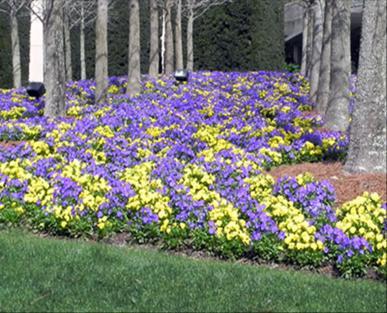
Did you know that April is National Garden Month, too? Spring is one of the most popular gardening times of the year. However, gardening in general is also one of the best forms of exercise, too. It can lift your mood, is good for your mind and body, and allows you to take pride in the flowers, plants, vegetables, fruits, and herbs that you grow. Not to mention being able to use the edibles that you grew in your favorite recipes. With warm days and cool nights, Spring is an excellent time to freshen up your flower beds and landscape. Get creative and plant something new, redesign a garden bed, or create a new one.
Furthermore, gardening can bring families, friends, and communities together. So, next month, try gardening for all its benefits including sharing time together And, get ready to get your hands a little bit dirty, digging in the dirt and creating beautiful spaces and memories!
Source: National Day Of Yearly Calendar - National Garden Bureau.
Photo Credit: Spring Bed, University of Florida.
Welcome Spring! 9th
Now until the end of May. The first and third Sunday’s of the month. (except Easter Sunday, April 20th).
9:00 a.m. to 2:00 p.m.
Questions on Events?
Contact the UF/IFAS Extension
St. Lucie County Office 772-462-1660
10:00 a.m. to 4:00 p.m.
5400 NE Saint James Dr., Port Saint Lucie
Tradition Square
SW Meeting Street, Port Saint Lucie
We’re here to answer your gardening questions!
Admission is Free
We’re here to answer your gardening questions!
Lucie County Garden Thymes
Photo Credit: Danielle Shalginewicz, UF/IFAS Extension St. Lucie County
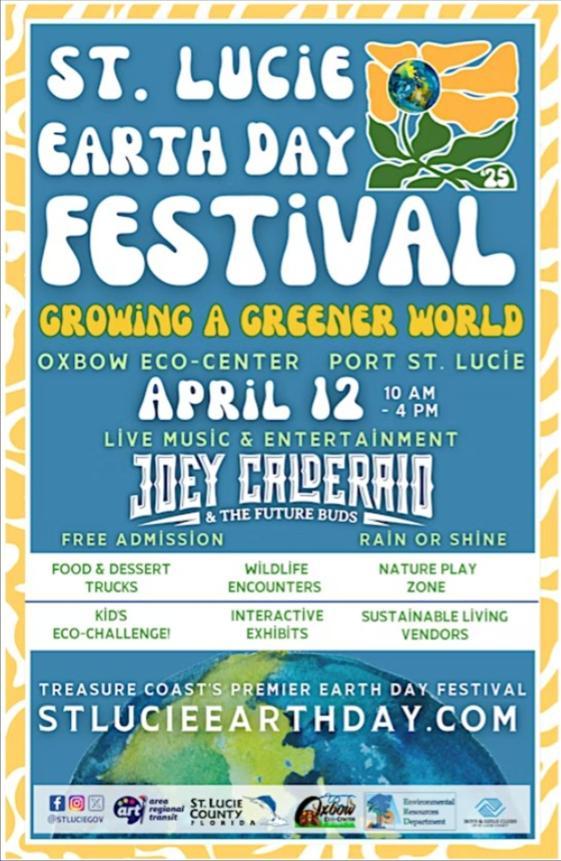
Flyer/Photo Credit: Oxbow Eco-Center
Answer to What Plant Am I?
(from page 2) … Crossandra
Also known as the Firecracker Flower plant
Click on the following UF/IFAS website for more information or scan the QR Code below. Crossandra – Gardening Solutions.
This is an all-hands-on-deck shout-out to our residents of St. Lucie County, our family and friends, too. We are trying to raise funds to rebuild our shade house, install new irrigation, and tables so we can start propagating plants, increase our inventory, and hold our plant sales again to provide scholarships .
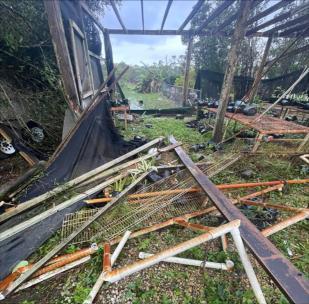
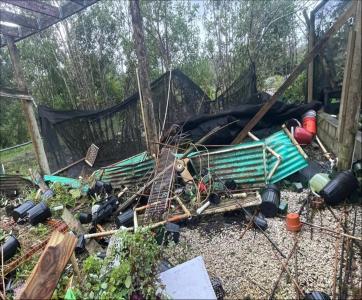
Hurricane Milton and the tornadoes this past fall destroyed our entire nursery, shade house, plants, irrigation, fencing, tables, and all of our equipment. Our goal is to rebuild, but we need help.
The tickets are $10 and the Master Gardener Volunteer Program receives $3 back from every ticket purchased. It is also a $2 beer and $2 hot dog night. The gates open at 5:30 p.m. and game time is 6:10 p.m.
We will also have a table set up to show game goers what we do for the county, our residents, and the impact that we make in the community, including the scholarships we offer to aspiring horticulturists. We need your help and are accepting donations at the table as well. Batter up. Buy a ticket, attend the St. Lucie Mets game, stop by our table, and donate if you can.
Scan the QR Code below to purchase tickets. We thank you in advance for your help.
QR Code: St. Lucie Mets Ticket Purchases
For May 22nd , Game Time: 6:10 p.m.
Photo Credits: Danielle Shalginewicz, University of Florida/IFAS. Damage to the nursery and shade house.
https://sfyl.ifas.ufl.edu/stlucie Main Number: 772-462-1660
Morningside Library
South Plant Clinic 2410 SE Morningside Blvd., Port St Lucie
Tuesday and Thursday 1:00 p.m. to 3:00 p.m.
St. Lucie County Extension Office
North Plant Clinic
8400 Picos Rd., Fort Pierce Call 772-462-1660 for hours
By: Julie Norsworthy, UF/IFAS Extension St. Lucie
Master Gardener Volunteer and President of the Master Gardener Volunteer Executive Committee
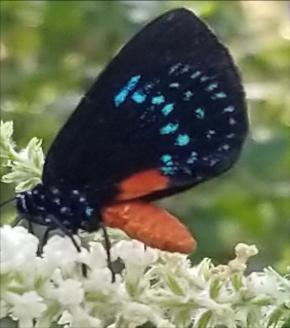
Good news about our Butterfly Garden at the St. Lucie County Extension Office! Our little garden was spared the extensive damage that the tornado ravaged on our beautiful grounds. While it took down very old oak trees, the building protected our area. We had some damage but nothing that stopped the butterflies from enjoying the habitat that we created.
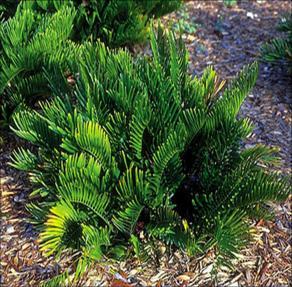
Even better news is the Atala butterflies have returned to their host plant called Coontie or Zamia pumila. Coontie is a very hardy, slow-growing palm-like cycad that works well as a superb, low-maintenance shrub. This small "shrub" grows very slowly from 2-1/2 to 3-feet tall by 3-feet wide. It takes full sun to full shade. Once established, it is very drought tolerate. The bushes at the Extension office are covered with caterpillars and chrysalises waiting to emerge as gorgeous black, red, and Caribbean blue butterflies!
For more information, click on the following website or scan the QR Codes on the right.
• https://edis.ifas.ufl.edu/publication/IN326.
• https://edis.ifas.ufl.edu/publication/FP617.
County
Photo Credit: Julie Norsworthy.
Photo Credit: University of Florida/IFAS.
Graduating This May!
By: Karen Cartmill, UF/IFAS Extension St. Lucie County Master Gardener Volunteer
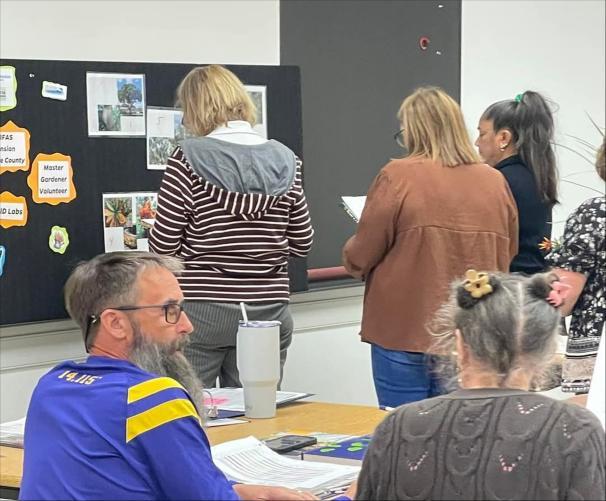
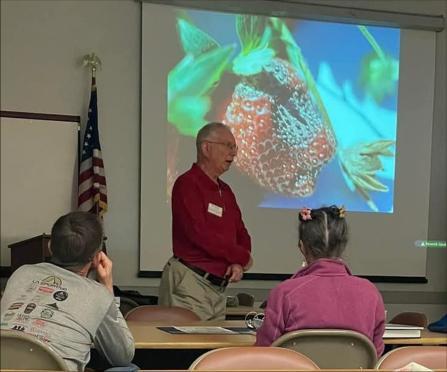
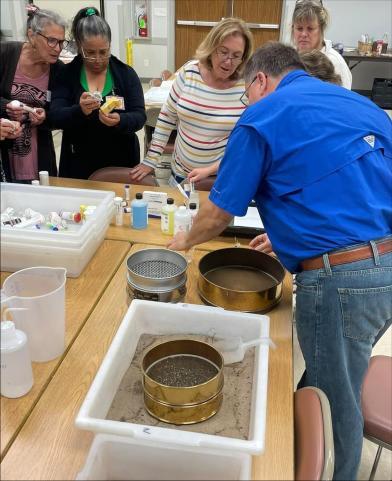
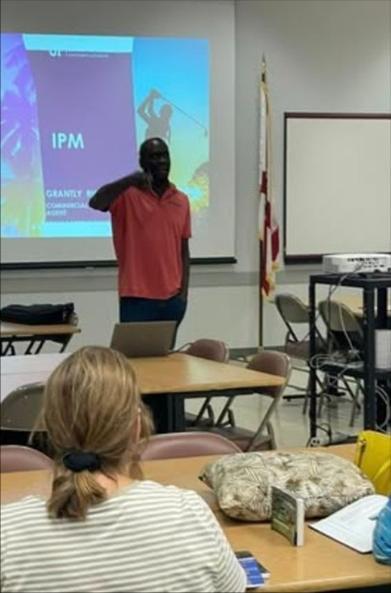
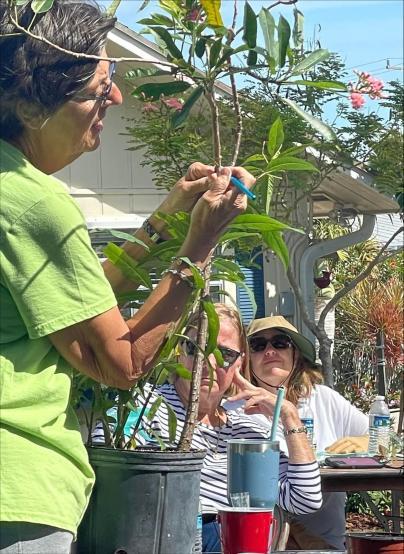
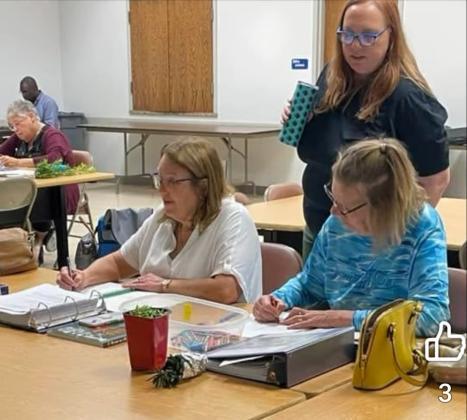
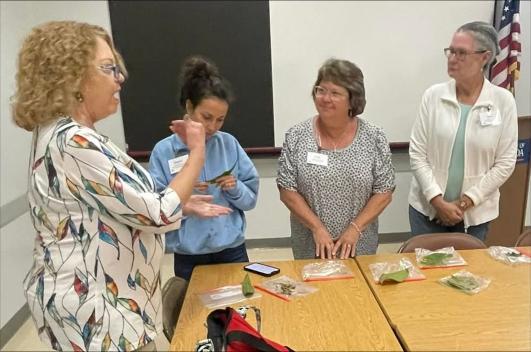
Our Master Gardener Program classes are back with 15, soon to be, Master Gardener Volunteers (MGV’s), who will graduate in May. The MGV students have been busy learning many elements of Florida’s horticulture including plant identification, plant pathology, botany and plant families, propagation, irrigation, pruning, turfgrass, weeds, palm nutrient deficiencies, tropical fruits, vegetables, herbs, landscape design, invasive wildlife and plants, plant and palm diseases, Integrated Pest Management (IPM), and the 9 Principles of the Florida-Friendly Landscaping™ Program to name a few.
The goal of this volunteer program is to train individuals in the science of horticulture, landscaping, and gardening. These individuals pass on the information they’ve learned during their training, advise, and educate the public regarding Florida’s climate and environment. For me, this takes me back to 2018, when I took the class and graduated into the program. This program has taught me so much and I’m still learning all the time. The program helps prepare Master Gardener Volunteers to answer questions that our county residents have related to horticulture, landscaping, and gardening. Through our plant clinics and presence at various events in St. Lucie County, we are here and ready to help our residents with all of their questions and to pass our knowledge along.
Florida has a unique environment with 3 distinct zonal areas, North, Central, and South Florida. In each area different plants, diseases, and horticultural requirements exist. St. Lucie County is in the Southern region of Florida, also known as part of the tropical zone. What grows in Central and North Florida, may not necessarily grow in the Southern region. Additionally, many feel that we only have two seasons, a hot and cool one. But we do have all four seasons where gardeners can grow vegetables, fruits, herbs, and plants. Fall, winter, and spring are popular seasons to plant due to cooler temperatures which provides a lot of choices. We receive many questions on vegetables, fruits, and herbs. We are blessed with being able to grow various vegetables, herbs, and fruits yearround. The University of Florida/IFAS has a terrific site that provides a month-to-month calendar on what to plant and things to do in your garden each month, as well as gardening solutions. And, our Master Gardener Volunteers and soon to be new graduates can help you with your choices, what to do and tasks to accomplish each month to keep your gardens and landscaping thriving and happy.
The website for the calendar is: https://sfyl.ifas.ufl.edu/lawn-andgarden/florida-gardening-calendar/.
For what to plant in March: https://gardeningsolutions.ifas.ufl.edu/plants/edibles/what-to-plant-inmarch/
For what to plant in April: https://gardeningsolutions.ifas.ufl.edu/plants/edibles/what-to-plant-inapril/
If your decision is to grow fruits, vegetables, and/or herbs, the first step is to determine what types you’d like to grow. Research to find out what growing requirements such as soil, water, and lighting are needed as well. The next step is to determine the location in your garden to grow these plants.
Florida Gardening Calendar by Month
For more information about the Master Gardener Volunteer Program, contact Danielle Shalginewicz, UF/IFAS St. Lucie County Extension Master Gardener Volunteer Program Specialist, 772-462-1445, or dshalginewicz@ufl.edu.
QR Code: What to Plant & Do – Scroll Down to March.
QR Code: Master Gardener Volunteer Program
QR Code: What to Plant & Do – Scroll Down to April.
Photo Credit: Danielle Shalginewicz, University of Florida/IFAS
St. Lucie County Garden Thymes
University of Florida/IFAS, Danielle Shalginewicz.
By: UF/IFAS Extension St. Lucie County Master Gardener Volunteers
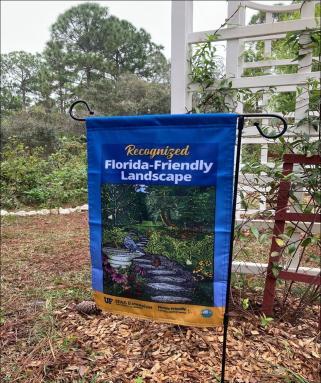
Since 1993, the Florida-Friendly Landscaping™ Program has served as the state of Florida’s premier Extension program that promotes a sustainable alternative to “conventional” landscaping, providing guidance on low impact, environmentally friendly, science-based researched landscape practices that use less inputs such as water and fertilizer, to help reduce pollutants loading into Florida waterways.
Florida-Friendly Landscaping™ Program: https://ffl.ifas.ufl.edu/ Take the Florida-Friendly Pledge: https://ffl.ifas.ufl.edu/about-ffl/ffl-pledge/
For any questions or additional information, feel free to contact: UF/IFAS Extension St. Lucie County, (772) 462-1660 or https://sfyl.ifas.ufl.edu/stlucie
~ Happy Gardening!
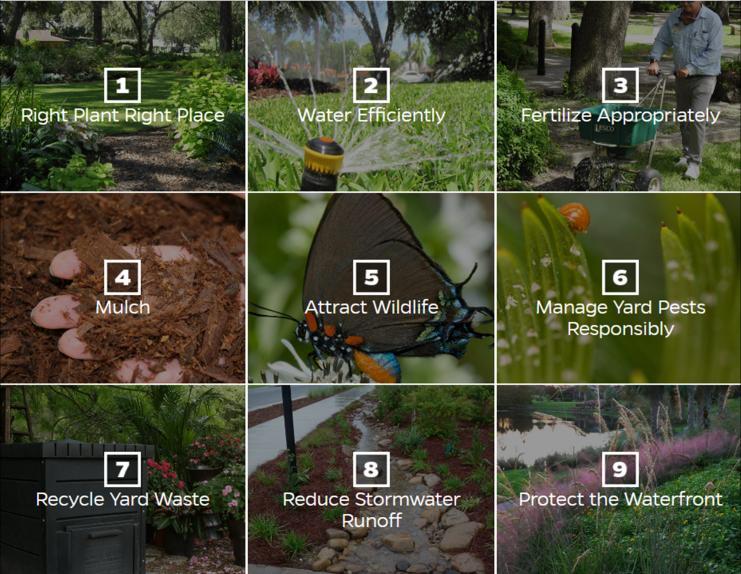
Below are the Nine Florida-Friendly Landscaping™ Program principles that you can follow in your landscape to be more FloridaFriendly and help protect Florida, one landscape at a time!
1. Right Plant Right Place
2. Water Efficiently
3. Fertilize Appropriately
4. Mulch
5. Attract Wildlife
6. Manage Yard Pests Responsibly
7. Recycle Yard Waste/Compost
8. Reduce Stormwater Runoff
9. Protect the Waterfront
To learn more, click on the following links below or scan the QR Codes below on the
Photo Credit: University of Florida / IFAS.
Photo Credit: Kate Rotindo, University of Florida/IFAS.
By: Karen Cartmill, UF/IFAS St. Lucie County Extension Master Gardener Volunteer
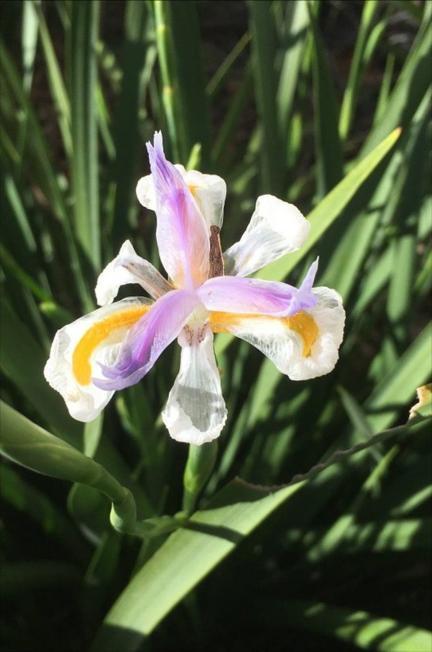
Iris is a perennial that has stiff leaves and spikes standing up and out in a fanshaped pattern. These spikes are topped with 3-inch white flowers with definitive yellow and blue colored markings. Although the flowers are shortlived, they bloom on and off throughout the year, especially in spring and early summer. These plants are a great addition to water gardens and can grow upwards to 4 or 5-feet tall in the standing water.
In soil, Irises can grow approximately 2 to 3-feet, but need a more moistened soil to thrive. It has a spread of 1-2 feet wide, making this a nice upright, vertical, slender plant to add in the landscape. The African Iris also makes an attractive groundcover when used as accent plants in front of taller shrubs and also looks stunning in containers.
Due to its upright, clumping form, showy winter trunk, flowers, and fruits, this plant has a unique presence and interest in the landscape. Irises can be planted year-round in zones 8-11. The plant is a slow grower and can grow in full-sun to part-shade. The cultivar, 'Johnsonii', has larger leaves and flowers.
To learn more about this plant, click on the following link or the QR Code at right: https://edis.ifas.ufl.edu/publication/FP179
Code: March’s Plant of the Month
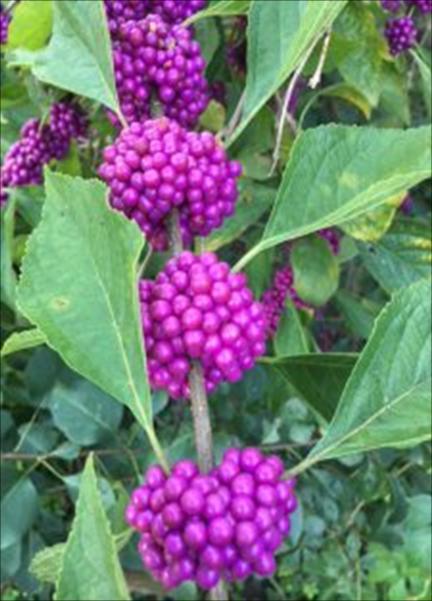
If you are looking for a plant to put in your butterfly garden or something to spark the eye of wildlife, plant some Beautyberry in your garden. Beautyberry attracts many birds that will devour the seeds. It is a small to medium rounded shrub that will grow about 2 to 8 feet tall and 4 to 8 feet wide. Regular pruning can help maintain Beautyberry as a small shrub in the landscape. Once established, this plant is very drought tolerant.
It is a native Florida plant – the botanical name is Callicarpa americana. During the months of June through September, tiny, lavender-pink blossoms appear, but the showy part of this plant are the purple berries that appear during the month of October. The 'Russell Montgomery' cultivator has white berries. Both types of berries are less than a ½ inch in length. A fast grower, this plant grows best in part shade to part sun. Beautyberry grows in both South and North Florida in zones 7 to 11.
To learn more about Beautyberry, click on the following link or the QR Code at right: https://gardeningsolutions.ifas.ufl.edu/plants/treesand-shrubs/shrubs/beautyberry.html.
~ Happy Planting!
QR Code: April’s Plant of the Month Beautyberry
April’s Plant of the Month: Beautyberry, Callicarpa americana
Photo Credit: Larry Williams, UF/IFAS Extension.
QR
African Iris
March’s Plant of the Month: Iris, Also known as African Iris, Butterfly Iris Dietes vegeta
Photo Credit: Mark Tancig, UF/IFAS Extension Leon County. UF/IFAS Extension.
Botanical Gardens to Visit in Florida!
By: Janet Mackey, UF/IFAS Extension St. Lucie County Master Gardener Volunteer
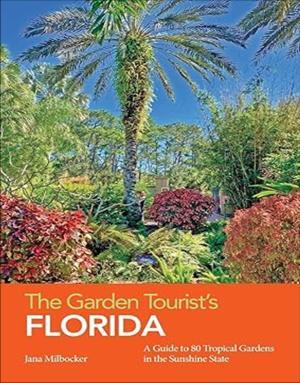
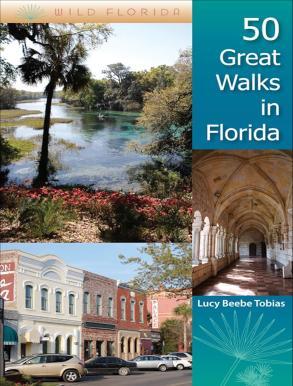
As with many of Master Gardener volunteers, I am interested in visiting other gardens, here in Florida, and in other states. My choices are largely guided by two books, The Garden Tourist's Florida: A Guide to 80 Tropical Gardens in the Sunshine State by Jana Milbocker, Second Edition, August 2024 and 50 Great Walks in Florida (Wild Florida) Paperback by Lucy Beebe Tobias, Illustrated, February 17, 2008.
Last spring I arranged trips to see Sarasota and Jacksonville's botanical gardens. Sarasota, a few hours’ drive across our state, has several tropical gardens but is most famous for its Marie Selby Botanical Gardens. The downtown campus was the home of the late Marie Selby and was donated to the community in 1971. It consists of 15 acres along the shore of Sarasota Bay, and is renowned for the study and conservation of epiphytes. The greenhouse includes the display of 6,000 orchids, as well as a bonsai collection.
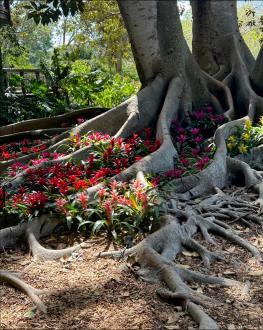
On the grounds, trails pass by cycad and fern gardens, a Koi Pond with a waterfall, cactus and succulent gardens, a palm grove, a hardwood hammock, banyan trees and native mangroves. There is also a small museum, an Herbarium, and a research library. I visited in the morning’s opening hour and was able to walk through the lovely grounds in about an hour. Along my walk, there was also a tropical display house that attracted many visitors, along with the spreading Baobab tree, also known as the tree of life. The campus has its own indoor parking garage, gift store, and a cafe in the newly renovated 1920 Selby Mansion.
The garden’s address is 1534 Mound Street, Sarasota, Florida, 34236 and its website is https://selby.org. Admission is $20, but is free with a reciprocal membership in the American Horticultural Society at www.ahsgardening.org. Hours are daily 10:00 a.m. to 5:00 p.m. The garden’s phone number is 941-366-5731.
Marie Selby Botanical Gardens also acquired another 30-acres in 2020, known as the Historic Spanish Point campus in Osprey, about 15 miles south of Sarasota. The site has a native American / Calusa archeological significance. Today one can walk into a hollowed, 3,500- to 4,500-year-old midden showing layers of shells and pottery shards. This site was a 19th century citrus and sugar cane homestead, along the little Sarasota Bay, when purchased and redesigned by a wealthy Sarasota entrepreneur named Bertha Palmer in the early 20th century.
Current restoration includes a Bougainville-covered pergola overlooking a sunken garden with an ornamental pool. Trails wind through varying native habitats, fern walks beneath an original aqueduct, and a newly designed Butterfly Garden and Butterfly house. The garden offers volunteer-led guided tours but one can self-guide and walk through it in about 1 to 2 hours. Parking is on site. There is no cafe. Admission is $15, and is open daily from 10:00 a.m. to 5:00 p.m., and is also free with an AHS membership. The Historic Spanish Point campus address is located at 337 N. Tamiami Trail, Osprey, Florida, 34229. The website is https://selby.org, and phone number is 941-366-5731.
Happy Spring Travels! ~ Janet.
Next newsletter: Jacksonville's Cummer Museum of Art and Gardens
QR Code: Marie Selby Botanical Gardens and Historic Spanish Point
Photo Credit: Janet Mackey
By: Karen Cartmill, UF/IFAS Extension St. Lucie County Master Gardener Volunteer
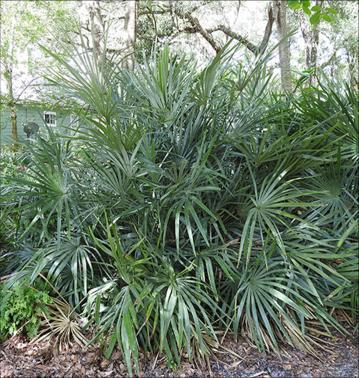
Question: I recently purchased a Needle Palm, but its trunk is full of spiny needles that are very sharp. Is this a good palm to add to my landscape and is it used in Florida?
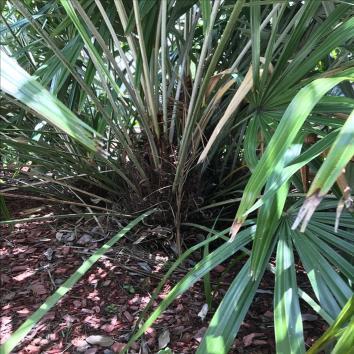
Needle Palm (Rhapidophyllum hystrix) is a native plant to Florida that is used as an accent plant under established tree canopies and as a hedge for security. Its short, reddish-brown trunk consists of very sharp, black needles, hence its name, Needle Palm. This native is a slow-growing, shrubby perennial that will eventually grow into a clump that is eight feet tall and eight feet wide. The needle palm has multiple stems and fan-shaped leaves It doesn’t actually form a trunk but instead the spines or “needles” form as a clump at the base of the plant that are dark brown or black. These needles are very slender and sharp and grow from four to ten inches long
Needle Palm tolerates cold temperatures several degrees below 0°F easily, and thrives in periods of heat and drought. This wide range of accepted temperatures allows this palm to flourish and grow in all three zones in Florida, North, Central, South, and beyond. It thrives in zones 6b to 10b and can give any landscape that tropical feel, even when it’s not in South Florida’s tropical zone. This palm can be grown in full sun, but; prefers partial shade, with a rich, moist well-drained soil The palm’s foliage, aesthetic appearance of a tropical look, its sharp needles that can aid in home security, and its tolerance to temperatures, hot and cold, makes this a very versatile plant in the landscape.
Use caution, however, about where you choose to plant Needle Palm Plant it away from play areas or walkways to avoid any injuries to children and adults due to its sharp needles This is not the type of plant to cozy on up next to or place amongst other landscape plants that require regular pruning and attention. It’s best to plant Needle Palm in a natural landscape Furthermore, if you have pets, it’s best to keep this plant far away to avoid a painful interaction and damage to their face, eyes, and body.
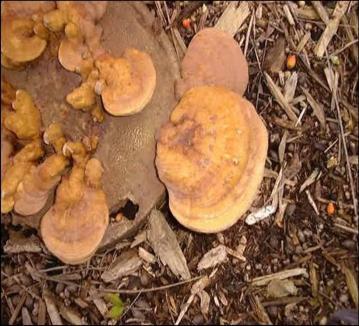
As with the majority of palms in Florida, it is susceptible to the lethal fungal disease, Ganoderma If your palm is diagnosed with this disease, you will lose it However, its tolerance to temperature extremes, defensive security features, and aesthetic appearance makes it an appealing Florida-Friendly option But buyer beware of its very sharp needles, and its susceptibleness to Ganoderma!
For more information, click on the following websites or scan the QR Codes at right:
Photo Credit Above: Scott Zona, University of North Carolina Extension.
Photo Credits Above: Marguerite Beckford University of Florida/IFAS QR
By: Karen Cartmill, UF/IFAS Extension St. Lucie County Master Gardener Volunteer
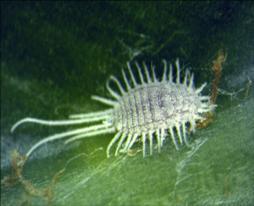
Question: Some of the leaves on my plants feel sticky and there are quite a few ants hanging nearby and crawling on them. I also see some white, fluffy, crawling insects and some round bumps on the leaves and between the branches. There is a cottony appearance as well on many of the stems. Is this something to worry about?
It seems that what you are describing are some common plant insects known as scale, mealy bugs, and possibly aphids or thrips. The best way to diagnose is to send in some photos to https://sfyl.ifas.ufl.edu/stlucie or stop by our plant clinic at the Morningside Library (refer to page 8 in this newsletter for more information regarding the clinic’s days and times that we are open). If taking photos, take pictures of the insects, stems, and both sides of the leaves. If bringing in a sample, cut these items and place them in a zip-lock bag.
These insects insert their mouthparts into the plant and literally suck the nutrients and life out of plants. While doing so, they produce a sugary substance that is referred to as honeydew. Ants are attracted to the honeydew because this provides a free food source. In exchange, the ants protect these insects and ward off the good bugs that have come to the plant’s rescue. Overtime, a black, sooty, mold will form on the leaves and stems, and these insects could destroy the plant beyond its ability to be saved.
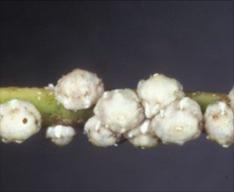
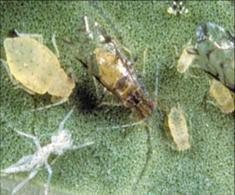
Mealy bugs are white in color and you can watch them move freely around the stems and leaves. Aphids and scale can have different colorings. Some are white, clear, red, green, and brown, for example. Scale looks like hardened bumps on the leaves and stems. A common white-colored scale known as Florida Wax Scale is prevalent throughout the state. There are some non-invasive Integrated Pest Management (IPM) options that you can try to get rid of scale, aphids, mealy bugs, and thrips. We try to take the least invasive approach as possible such as:
• Using cotton balls soaked in alcohol to rub off the scale and mealy bugs.
• Use a garden hose and give the plant a good hosing down with water. Aphids, for example. are soft-bodied insects that won’t last long once off the plants.
• If the plants are in containers, isolate them from the rest of your plants to help prevent the spread of these insects to nearby plants.
• Make sure to check under the rim and around your containers, and in the soil because they do like to hide in those places, especially mealy bugs
• Try spraying your plants with Neem oil.
• If all else fails, purchase an insecticidal soap from a reputable nursery or box store to apply.
• Long term, add some plants that attract the good bugs to your garden that will destroy the bad insects.
For more information, click on the following websites or scan the QR Codes on the right.
Photo credit: Dr. Osborn University of Florida / IFAS Extension Mealy Bug
Photo Credit: Lyle J. Buss, UF/IFAS Florida Wax Scale
Photo credit: Aphids. University of Florida / IFAS Extension
By: Betty Bianconi, UF/IFAS Extension St. Lucie County Master Gardener Volunteer
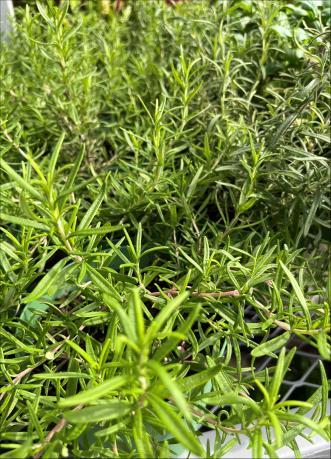
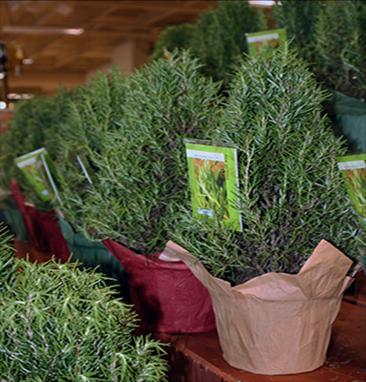
Rosemary (Rosmarinus officinalis) is an aromatic evergreen herb with narrow, needlelike leaves that emit a sharp, somewhat pine-like aroma when crushed. This attractive, drought-tolerant plant works well in containers and landscape beds. It blooms in winter and spring with small pink, lavender, or blue flowers, depending on the cultivar.
Originally from the Mediterranean region it has a long history dating back to ancient civilizations such as the Greeks, Romans, and Egyptians, who valued it for its culinary, medicinal, and aromatic properties. Rosemary is a staple herb in Mediterranean cuisine, particularly in dishes from Italy, Greece, and southern France. The name "rosemary" is derived from the Latin words "ros" (dew) and "marinus" (sea), reflecting its preference for growing near the sea.
Rosemary thrives in Florida's warm climate, making it an ideal herb for Florida. Classified as a woody perennial or small shrub it is scientifically known as Salvia rosmarinus. It can reach up to 6 feet tall and 4 to 5 feet wide when planted in the ground but will remain smaller if pruned or planted in containers. Groundcover forms of rosemary are also available, including the ‘Prostratus’ cultivar.
This wonderful herb prefers full sun and well-drained, sandy soil and is drought-tolerant (once established). To maintain it at its best, water it deeply but infrequently, allowing the soil to dry out between waterings to prevent root rot. Regular pruning helps maintain its shape and promotes bushy growth. Trim lightly after flowering to encourage new growth. Rosemary is generally resistant to pests and diseases but watch for spider mites and aphids. Neem oil or an insecticidal soap can help manage infestations.
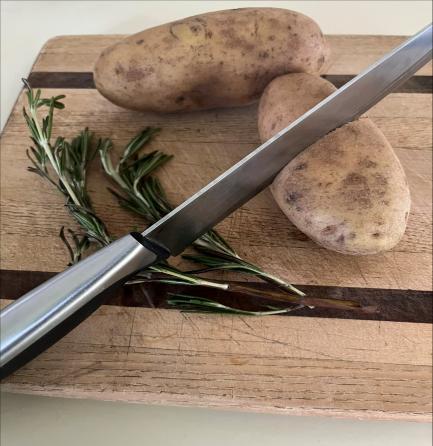
Rosemary is not only used in cooking, where its robust flavor pairs well with roasted meats, potatoes, bread, and vegetables; but also, for its many medicinal properties. Traditionally, rosemary has been used to improve memory, aid digestion, and as a mild pain reliever. It contains antioxidants and anti-inflammatory compounds that contribute to its health benefits. Rosemary is extremely high in iron, calcium, and Vitamin B6. Due to its pleasant fragrance and calming effect the leaves of rosemary are often used in potpourris, sachets, and essential oils. It is also sold around holiday time as topiaries.
Rosemary is not only a versatile herb in the kitchen but also a resilient plant that thrives in Florida's climate. Whether used fresh, dried, or as an essential oil, its aromatic and culinary uses make it a beloved addition to any herb garden and kitchen pantry. And, Rosemary can also be used as a stand-alone feature plant in the landscape or as a hedge. This herb also grows well in containers, too.
Enjoy the many benefits of the herb, Rosemary! ~ Betty
For more information, click on the following websites or scan the QR Codes on the right.
By: Betty Bianconi, UF/IFAS Extension St. Lucie County Master Gardener Volunteer
Rosemary Roasted Potatoes
Makes 4 servings.
• 2 pounds Russet or red potatoes, scrubbed and cut into wedges
• 2-3 tablespoons olive oil
• 2-3 sprigs fresh rosemary, chopped
• Salt and pepper to taste
Preheat oven to 400°F. In a large bowl, toss potatoes with olive oil, rosemary, salt, and pepper until evenly coated. On parchment lined or greased baking sheet spread potatoes in a single layer. Cook for 30-40 minutes, turning once halfway through, until potatoes are golden brown and crispy on the outside.
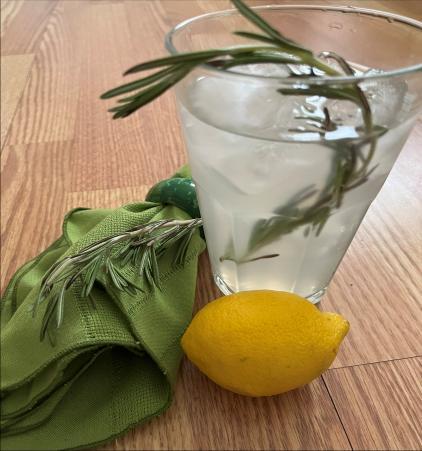
Rosemary Lemonade
Makes (6) 1-cup servings.
• 6 cups water, divided
• 1 cup sugar (adjust to taste)
• 2-3 sprigs fresh rosemary
• 1 cup fresh lemon juice (about 4-6 lemons)
• Ice cubes and rosemary sprigs for garnish
In a small saucepan over medium heat, combine 1 cup of water and sugar. Cook, stirring occasionally, until sugar is completely dissolved to make a simple syrup. Remove from the heat and add rosemary sprigs. Let steep for 15-20 minutes, then strain and discard rosemary. In a large pitcher, combine lemon juice, remaining water, and the rosemary-infused simple syrup. Stir well. Refrigerate until chilled. Serve over ice cubes, garnished with a sprig of fresh rosemary.
Enjoy! ~ Betty
Rosemary Topiaries …
For more information on rosemary topiaries discussed on the previous page, click on the following website or scan the QR Code on the right.
By: Karen Cartmill, UF/IFAS Extension St. Lucie County Master Gardener Volunteer
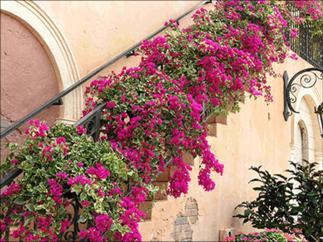
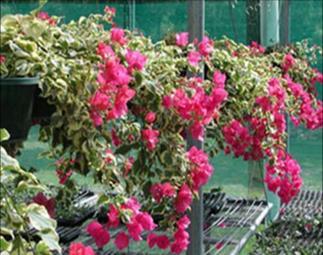
A common question we receive is “Why won’t my bougainvillea bloom?” This was a question that I pondered when I planted my first of many bougainvillea trees. What I learned is that there are two to four very critical needs for your bougainvillea to bloom and they are a must. Simply put, once established, they need full sun, a lack of water, not too much pruning or fertilizer applications. Bougainvillea does not like shade, or even part-shade. Sun is a critical element for blooms and the more sun it gets, the more profuse blooms it will put out. Without direct sun, it just won’t flower.
Water is the other key factor. Bougainvillea thrives in arid environments and cannot tolerate moist or wet soils. This plant is extremely drought tolerant once established In addition, don’t prune your bougainvillea too often because you might be cutting off a majority of the new blooms. If you fertilize your plant too much it will have an excess of nitrogen, which will produce a lot of green leaves, but hardly any flowers.
What I learned is to neglect my bougainvillea plants, and place them in full sun and forget about watering them. In a couple of months, I was rewarded with a happy bougainvillea with many beautiful blooms! It’s not often we hear that neglecting a plant can be actually good for it. We tend to want to baby our plants, and for this one, neglect is actually the best babying you can do.
• Bougainvillea – Gardening Solutions
Enjoy the Blooms! ~ Karen
For more information, click on the following website or scan the QR Code on the right.
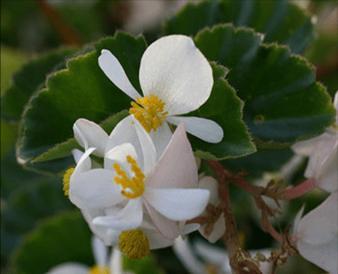
Do begonias have staying power all year long? They can, especially in South Florida. Begonias are a very versatile annual that can be planted throughout the year. They typically bloom from summer and well into the fall, but in South Florida they can live on year-round with the right conditions There are more than 1,800 varieties of begonias. This annual thrives best in partially shaded areas and should be protected from the hot Florida sun, especially during the summer months. Begonias grow in USDA Hardiness Zones 3–11 and are often used on the edges of garden beds, in containers as a filler plant, or in hanging baskets It’s fairly easy to propagate begonias, too, based on the plant’s variety. As we approach the summer months, consider adding some begonias in your landscape!
The many varieties are noted not only for their various petal colors, but also for their vibrate foliage, leaf textures, shapes, and colors, some of which have variegated leaves. Some begonias are of the trailing variety, while others are tuberous. One popular begonia is the Lorraine begonia, also referred to as the Christmas begonia.
For more information, click on the following website or scan the QR Code on the left. ENH1317/EP581: A Beginner's Guide to Begonias: Classification and Diversity
QR Code: Bougainvillea
Photo: Dan Culbert University of Florida/IFAS.
Photo Credits: Richard Schoellhorn and Erin Alvarez University of Florida/IFAS.
Photo Credit: University of Florida/IFAS
QR Code: Begonias
By: Karen Cartmill, UF/IFAS
Extension St. Lucie County Master Gardener Volunteer