

As we bring you the third issue of UF/IFAS Citrus Magazine, I am especially pleased to focus this column on recognizing excellence within UF/IFAS Citrus Research Programs. Florida citrus growers continue to face unprecedented challenges, and progress in this industry depends heavily on the dedication and impact of scientists whose work delivers real value in the grove. It is not often though that we take time to acknowledge those ongoing contributions.
In this issue, we are proud to recognize Dr. Fred Gmitter and Dr. Jude Grosser as recipients of the UF/IFAS CREC Resident Professorship Award. This distinction represents the highest academic honor awarded at the CREC and is reserved for individuals whose careers have had an extraordinary influence on citrus research and the citrus industry. Over the 22-year history of this award, it has been granted only on rare occasions, and this marks the first time two faculty members have been honored simultaneously.
Drs. Gmitter and Grosser are widely regarded as among the most influential citrus breeders and geneticists of the modern era. Together, their work has transformed citrus improvement programs in Florida and around the world. Since 2010, their combined efforts have resulted in the release of more than 50 new scion and rootstock cultivars, with many additional selections currently in evaluation. These varieties provide growers with new options to assess in their own groves as we continue adapting citrus production systems in the HLB era.
Beyond variety releases, their lasting impact lies in the tools, techniques, and scientific foundation they have helped establish. Dr. Gmitter’s leadership in citrus genomics and Dr. Grosser’s pioneering work in tissue culture and somatic hybridization have advanced citrus breeding in ways that will benefit the industry for generations. It is exceptionally rare to have two scientists at one center whose expertise so completely spans these critical areas of citrus improvement.

While HLB continues to shape the realities of citrus production, the careers of Dr. Gmitter and Dr. Grosser demonstrate the longterm value of sustained investment in research and innovation. Their work reflects UF/IFAS’s ongoing dedication and commitment to delivering solutions that matter to growers and to ensuring that Florida citrus research remains globally relevant and industry focused.
On behalf of the citrus programs of UF/IFAS, I encourage you to join me in congratulating Dr. Gmitter and Dr. Grosser on this well-deserved honor! We appreciate your continued engagement with UF/IFAS Extension and hope you find this issue of UF/IFAS Citrus Magazine informative and useful as you plan for the season ahead.

Michael E. Rogers
UF/IFAS Statewide Citrus Research and Extension Coordinator
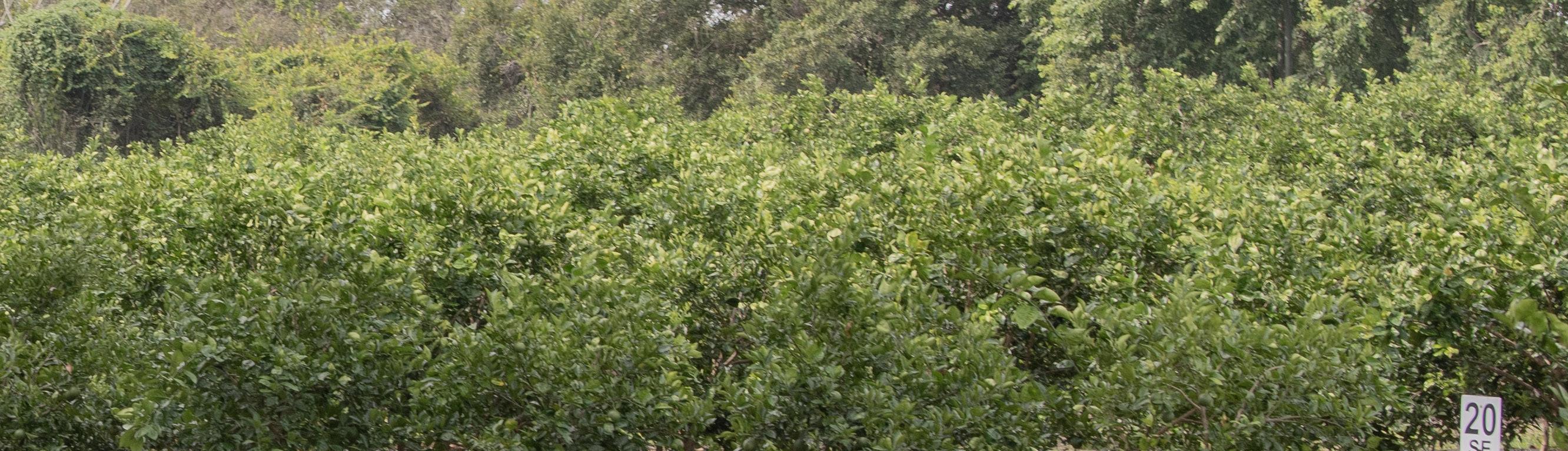
As late spring transitions into summer, trees shift from dry, hot conditions to a hot, increasingly humid environment. During this period, fruit undergoes rapid expansion and a summer vegetative flush emerges. This stage is especially critical, as it establishes the foundation for the anticipated crop load, final fruit yield and quality. Growers should focus on protecting flush and developing fruit while minimizing stress on HLB-affected trees through timely pest, disease, water, and nutrition management.
• Manage irrigation to minimize stress
• Apply balanced, split fertilization
• Reduce competition from weeds
• Use plant growth regulators (PGRs) strategically
• Follow seasonal spray timing
• Manage algal spot proactively
• Protect against Phytophthora diseases
• Coordinate summer phosphite use
• Protect flush from Asian citrus psyllids and citrus leafminer
• Prepare for Diaprepes root weevil emergence
• Monitor and respond early to building populations of insects, snails, and other pests
READ. APPLY. GROW.
Page 6
Horticultural Grove Management
Page 9
Citrus Insect, Mite, and Snail Management
Page 14
Disease Management
RESEARCH: WHAT’S NEXT
Page 17
New Research Updates on Oxytetracycline Trunk Injections
Page 35
Bulimulus bonariensis in Citrus
Page 38
Surviving the Test of Time: How ‘Parson Brown’ Sweet Orange Defies Citrus Greening
Page 42
Fighting Citrus Greening: How Genomics is Helping Build Better Citrus Trees
Page 21 - Page 34
Citrus Variety Guide
The Citrus Variety Guide showcases the UF/IFAS citrus breeding program releases. The purpose of this guide is to provide growers with a concise overview of newly released and advanced citrus varieties that show promise under current production challenges. It highlights key horticultural traits, fruit quality attributes, and recommended production systems to support informed variety selection for fresh and processing markets.
Editorial Committee
Ute Albrecht
Michelle Danyluk
Megan Dewdney
Lauren Diepenbrock
Mark Ritenour
Michael Rogers
Muhammad Adnan Shahid
Matt Smith
Tripti Vashisth
Editorial
Jamie Burrow
Graphic Designer Tonya Weeks
UF/IFAS Citrus Research
https://citrusresearch.ifas.ufl.edu
Contact us at citrusresearch@ifas.ufl.edu
Alissa Hevesh and Tripti Vashisth
May through August is a critical period for fruit development, and pretty much all care-taking during this period will set the stage for fruit size and retention. However, there are dramatic weather changes during this period, so the goal is to mitigate any stress on the trees. May is typically hot and dry in Florida, while June–August marks the onset of the rainy season. During this window, trees may experience both drought stress (May) and nutrient leaching (summer rains), leading to poor growth and development if not properly addressed. Improving growing conditions during this period, maintaining consistent water availability, sustaining balanced nutrition, minimizing weed competition, and judicious use of plant growth regulators (PGRs) can help improve tree productivity.
The goal in this period is to avoid drought from May through early summer and then, during the rainy season, manage to reduce nutrient leaching while keeping the root zone consistently moist.
• Conventional Irrigation: Increase the number of irrigation events per week while reducing duration per event. Growers are encouraged to irrigate at least every day to reduce any impact of water deficit on fruit growth. The trees don’t need more water, just apply more often. So, for example, if the grower generally irrigates for 2 hours every day, consider irrigating 30 minutes twice a day (predawn and afternoon) or once every day for 60 minutes.
• ET-based Irrigation Schedule: Irrigate to meet 100% of crop evapotranspiration (ET) using FAWN or on-farm weather station data. On sandy soils, keep allowable soil water depletion to about 25–33% to protect bloom, fruit set, and early fruit growth.
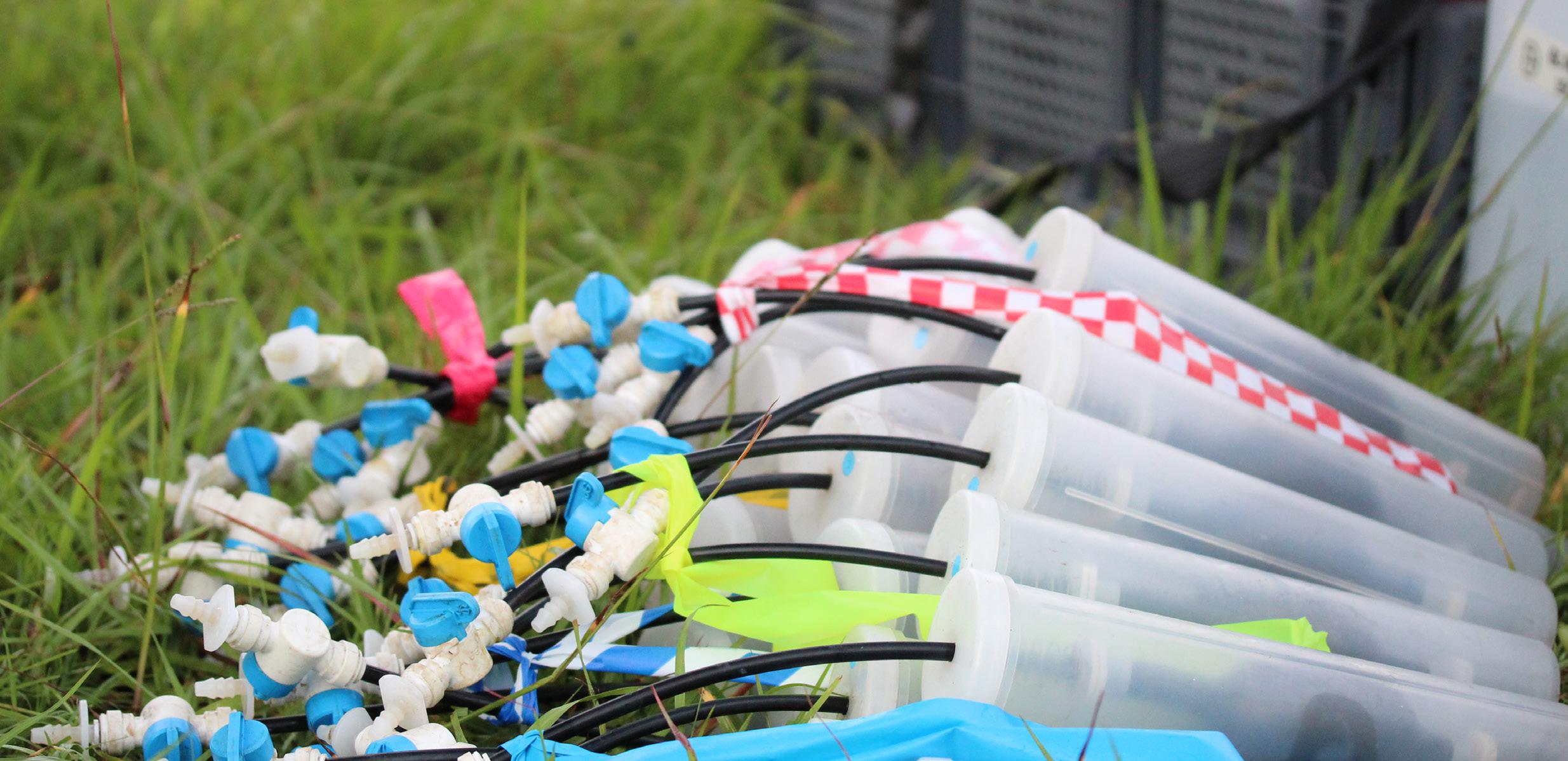
• Soil sensor-based irrigation: Use soil moisture sensors (e.g., 0–12 in. depth) in the wetted pattern to trigger irrigations before depletion limits are reached.
Credit: T. Weeks, UF/IFAS
• Increase allowable depletion to ~50–66% to minimize leaching; resume irrigation promptly after 1–3 rain-free days, depending on ET.
• After flooding events, avoid heavy irrigation. Keep ditches and culverts clean to speed up drainage.
• For young trees, maintain higher frequency (short pulses) regardless of huanglongbing (HLB) status; they benefit from consistent “full” irrigation matched to ET.
UF/IFAS–Aligned Irrigation Scheduling (How-to) Use an ET- and sensor-based approach to avoid waterrelated stress.
1. Get daily reference ET (ETo) from FAWN or your on-farm station. Calculate crop ET (ETc) using a citrus crop factor or a site-specific coefficient from your controller vendor.
2. Track soil moisture in the wetted pattern at 0–12 inch depth. In May–early June, keep allowable depletion near 25–33%. From mid-June to August, increase allowable depletion to ~50–66% to create storage for rainfall.
3. For HLB-affected and young trees, increase irrigation frequency and shorten run time. Match each event to the soil’s intake and the root system’s limited uptake to avoid leaching losses.

4. After more than 1–2 inches of rain, let sensors guide the restart. Resume irrigation when ET demand and sensor trends indicate depletion is approaching the allowable threshold.
5. Check system distribution uniformity monthly. Correct pressure/plugging issues and dry spots immediately (these are the first to show stress and drop fruit).
The goal of fertilization during this period is to supply nutrients that support fruit development while also helping push the summer flush once seasonal rains begin. This requires a balanced approach that supports both vegetative and reproductive growth. Splitting fertilizer applications is recommended to reduce nutrient leaching. By the end of this period, approximately 75% of the total annual nutrient budget should be applied. Please refer to the Nutrition of Florida Citrus Trees or the Florida Citrus Production Guide for the recommended rates of nutrients.
Postbloom fertilization should be relatively high in nitrogen to support flush and early fruit development. As fruit development continues into the summer months, potassium becomes more important for fruit growth and sizing. During fruit enlargement, prioritize potassium while maintaining sufficient nitrogen to sustain canopy function without overstimulating late vegetative growth. In simple terms, nitrogen and potassium rates gradually switch roles as the season progresses (Table 1).
Secondary nutrients and micronutrients should be supplied consistently throughout the growing season. Many of these nutrients are immobile in the plant and cannot move from older tissue to new growth. A steady supply helps prevent deficiencies in actively growing tissues and supports overall tree health.
• Boron: Maintain adequate boron for fruit set and development but avoid over-application. When applying foliarly, use low rates and always follow label directions to prevent toxicity.
• Leaf analysis remains the most reliable indicator of tree nutritional status. Collect samples of 4–6 month old spring leaves from non-fruiting twigs in July, or if possible, collect two leaf samples per year (March and September). Fertilization programs should be adjusted based on these results. Recent findings suggest that refining fertilization programs using leaf nutrient analysis collected in March and again in August–September can improve yields in HLB-affected trees.
• Leaf sampling: From each block, collect ~100 leaves that are 4–6 month old from non-fruiting spring twigs across 15–20 uniform trees (same rootstock/variety/program).
• Soil sampling: Collect 15–20 cores (~8 inch depth) from within the wetted pattern at the dripline across the same area as the leaf sample; composite in a clean plastic bucket; air-dry before shipping.
• Maintaining soil pH between 5.8 and 6.5 is critical. If irrigation water contains high bicarbonate levels, consider acidifying the irrigation water and/ or applying elemental sulfur within the wetted zone. Retest soil pH during the season and make adjustments as needed.
• In calcareous or high pH areas, use chelated sources such as EDDHA for micronutrients. Foliar manganese and zinc applications may be beneficial on actively expanding summer flush if leaf analysis indicates a need. Avoid tankmixing with phosphites unless the label allows.
Reduce competition for water and nutrients, maintain irrigation uniformity, and minimize the risk of fruit drop from herbicide contact. Integrate residual (preemergence) and post-emergence herbicides with precise application.
• Late spring/early summer: apply appropriate residual herbicides (often tank-mixed with a postemergence partner on small weeds) to carry control through mid-summer.
• Shield booms and adjust off-center end nozzles to avoid contacting low fruit and tree skirts. Herbicide contact during later stages of fruit development can increase fruit drop. Prune skirts where needed to improve coverage and safety.
• Young groves: use more frequent, lower-rate residual applications; time post-emergence sprays when weeds are actively growing and not droughtstressed for better control.
• Consult current UF/IFAS quick-reference guides for pre-emergence and post-emergence products, REIs/PHIs, and mode-of-action rotation; always follow the label.
Use PGRs to support canopy development and fruit retention, but tailor timing to goals. For May–August, the emphasis is on building a healthy summer canopy that supports fruit growth. As the fruit progresses to stage 2 and then stage 3 of development, the goal is to strengthen the fruit and reduce the risk of fruit
drop. Recent findings suggest that the fruit that has more leaves surrounding it as they near maturity has higher °Brix. These findings suggest that promoting the summer flush can benefit both fruit quality and fruit retention. Table 2 summarizes a PGR program based on recent trials.
Cytokinin: Cytokinins promote cell division and, when applied in early to mid-summer under adequate soil moisture and nutritional conditions, can stimulate shoot initiation, leaf expansion, and fruit growth. Early-season cytokinin applications encourage new shoot development, helping rebuild the canopy and increase the tree’s photosynthetic capacity. This renewed canopy provides a stronger foundation for fruit development later in the season. Some seaweed extracts have shown cytokinin-like activity, and their use may be considered as part of this strategy.
Gibberellic acid (GA): Summer GA (typically applied July–August) can enhance vegetative growth and increase leaf area, improving the leaf-to-fruit ratio around developing fruit. GA applications should be avoided in May, as they can interfere with the natural June fruit drop, leading to excessive fruit retention. Carrying too much fruit early can stress the tree later in the season as fruit growth demand increases, increasing the likelihood of subsequent fruit drop. As research on plant growth regulators continues, there is growing evidence that multiple GA applications are required to consistently achieve these benefits. Programs with fewer than three applications often show inconsistent results; therefore, a minimum of three GA applications starting in July at 30–45-day intervals is recommended. GA can result in green color retention; thus, post-August GA sprays is not recommended for fresh fruit varieties.
Lauren Diepenbrock
Florida citrus groves experience their highest insect and mite pressure from late spring through summer as temperatures rise, rainfall increases, and trees produce new flush. During this period, careful scouting and well-timed management decisions can protect yield and fruit quality while reducing unnecessary pesticide applications. The pests discussed below are those most likely to cause problems during the April–July window, with emphasis on what growers are likely to see now, how problems typically develop in the grove, and when control actions are most effective.
Asian citrus psyllid activity closely follows flush production. In late spring and early summer, populations often increase as temperatures become favorable and trees, particularly resets and HLB-affected trees, produce frequent new flush. Although very high summer temperatures may temporarily suppress populations, ACP remains a concern throughout this period because adults continue to spread huanglongbing (HLB).
Early detection depends on regular inspection of new flush. Eggs and nymphs are found only on young, expanding leaves, and early feeding causes twisting or cupping of the flush. Tap sampling of adults in mature groves can help track population trends, but visual inspection of flush remains especially important on resets and blocks with off-season growth.
Management is most effective when timed to flush, particularly when targeting nymphs, which are largely immobile and more susceptible to control measures. In nonbearing trees, soil-applied systemic products applied ahead of flush can provide extended protection. In bearing trees, foliar sprays targeting adults are most effective just before or at the beginning of flush. Rotating modes of action and minimizing unnecessary broad-spectrum sprays helps reduce resistance risk and preserve beneficial insects.
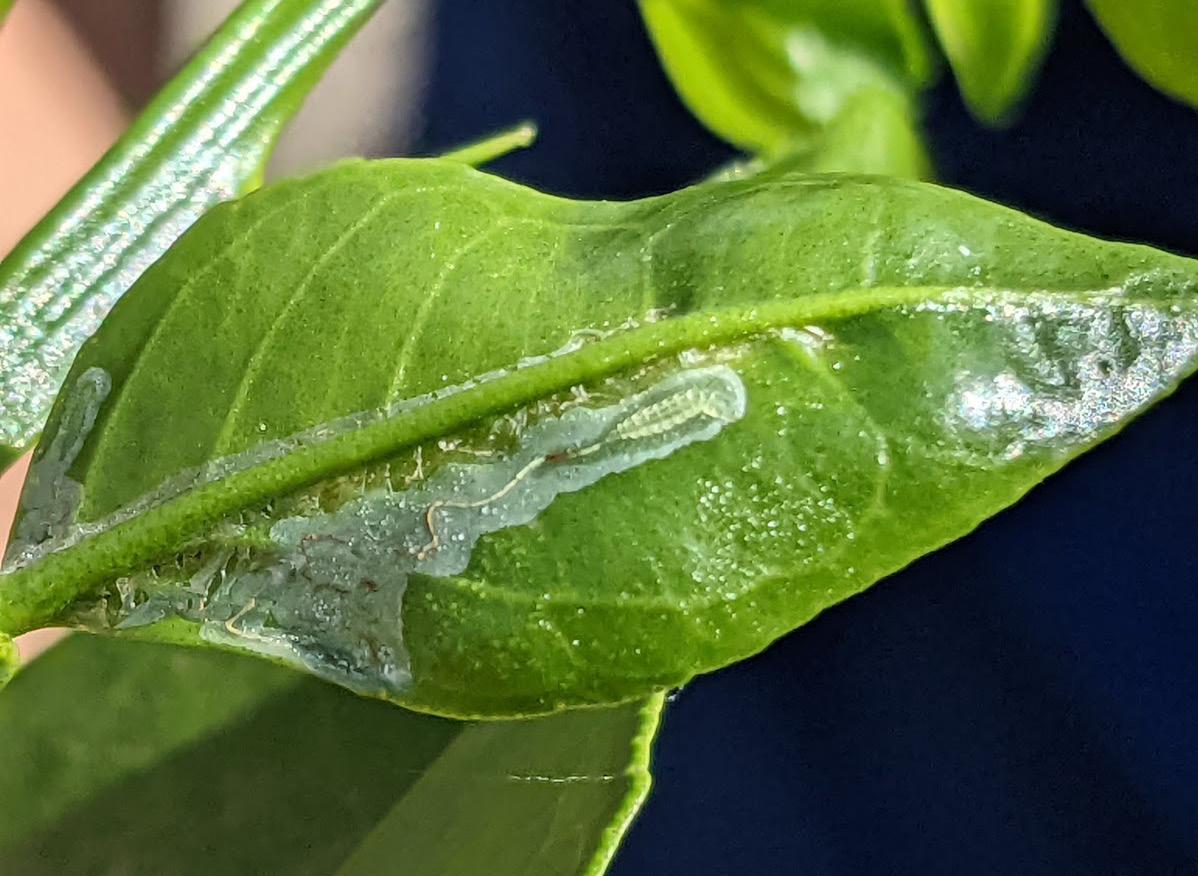
Citrus leafminer populations build rapidly on spring flush and remain active throughout the summer whenever new flush is present. Damage is often most noticeable when flush becomes limited, but moth pressure remains high. In addition to direct injury, leafminer damage increases the susceptibility of leaves to citrus canker.
Developing infestations are detected by scouting young flush for the characteristic serpentine mines, most commonly along the midrib. Early signs include silvery trails and curling of newly expanded leaves. While pheromone traps can be useful for tracking adult activity, they should be considered a supplemental tool rather than a replacement for direct scouting.
Control is most effective when treatments are applied early, targeting larvae at the first appearance of mines, typically around the feather flush stage. Systemic products provide the most consistent protection on young trees, while foliar products are commonly used in bearing groves. Because larvae are confined to developing leaves, good coverage of the outer canopy is usually sufficient.
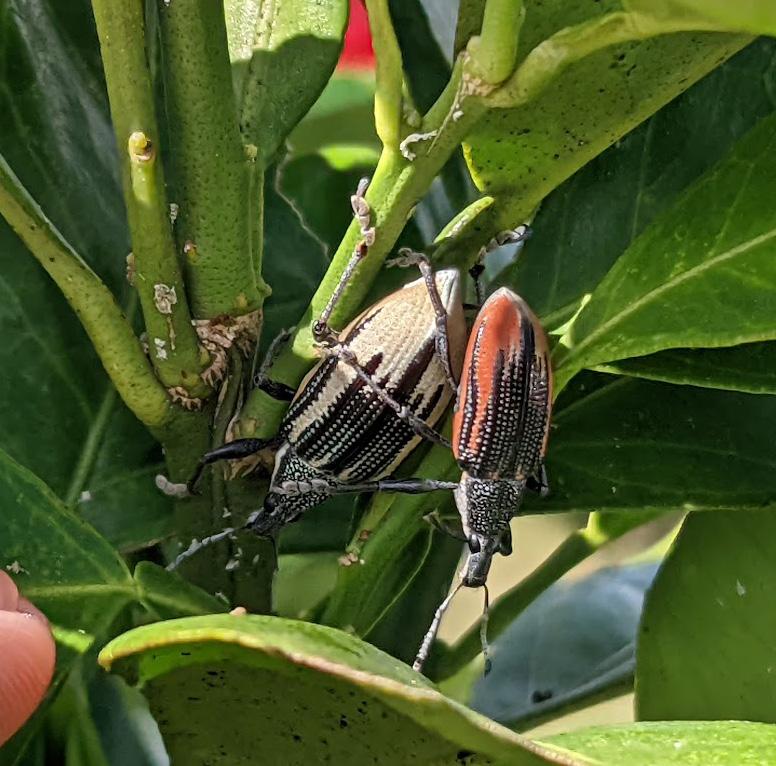
Adult emergence of Diaprepes root weevil typically peaks from late May through early July, often following rainfall events. Feeding and egg laying during this
period set the stage for larval infestations that cause economically significant root damage later in the season, when management options are more limited.
Adult activity is monitored by scouting for fresh leaf notching along the margins of mature leaves and by using visual counts or ground traps to identify emergence peaks. Because larvae feed below ground and cannot be scouted directly, monitoring adult populations is critical for timing management actions.
Foliar sprays targeting adults are most effective when applied during peak emergence and summer flush. Insect growth regulators may be used to reduce egg hatch and subsequent larval pressure. Soil barrier treatments are best timed shortly after peak adult activity to intercept newly hatched larvae. Entomopathogenic nematodes can provide biological control when applied in mid-summer under warm soil temperatures and adequate moisture.
Mealybugs (Including Lebbeck Mealybug)
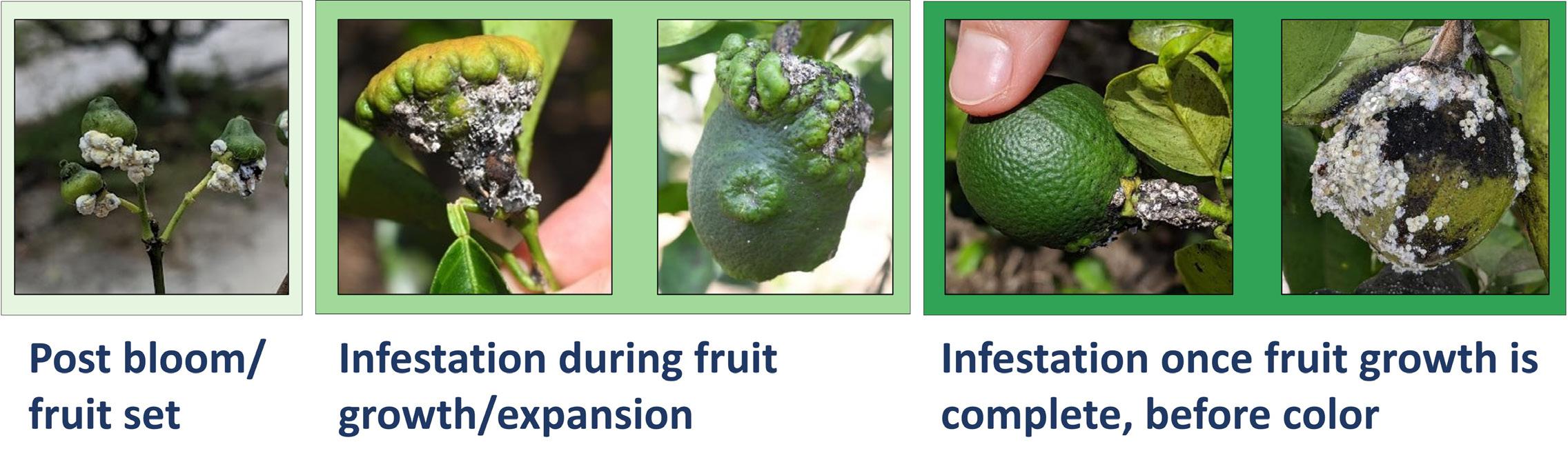
Mealybugs are present year-round in Florida citrus, but fruit injury is most common in spring and early summer. Lebbeck mealybug populations, in particular, can increase rapidly during this period and lead to fruit contamination, honeydew accumulation, and sooty mold development if infestations are not detected early.
Early infestations are often localized and easily overlooked. Scouting should focus on fruit clusters, calyx ends, and sheltered areas of the canopy. The presence of cottony wax, honeydew, ants, or early sooty mold often signals developing problems.
Early intervention is key to preventing population buildup and fruit damage. Systemic products generally provide the most consistent control and are less disruptive to natural enemies. Oils and other contact materials can suppress crawlers and young nymphs but require thorough coverage. Management for lebbeck and other mealybugs can be designed in conjunction with ACP, CLM, and rust mite management actions.
Rust mite populations typically begin increasing in late spring, with peak densities occurring from May through July. Pink citrus rust mite often peaks earlier in the season, while citrus rust mite populations may persist longer into summer. Feeding during early fruit development can permanently affect fruit finish and marketability.
Because rust mites are extremely small and populations can increase rapidly, regular scouting is essential. Fruit and leaves in the outer canopy should be examined with a hand lens beginning in early spring and continuing at two to three-week intervals.
Treatment decisions depend on market destination, with lower tolerance for injury on fresh market fruit. Early intervention at low population levels improves control and reduces the need for repeat applications. Petroleum oils can provide suppression and may fit
well with summer disease management programs. Rotating miticide modes of action is important to manage resistance.
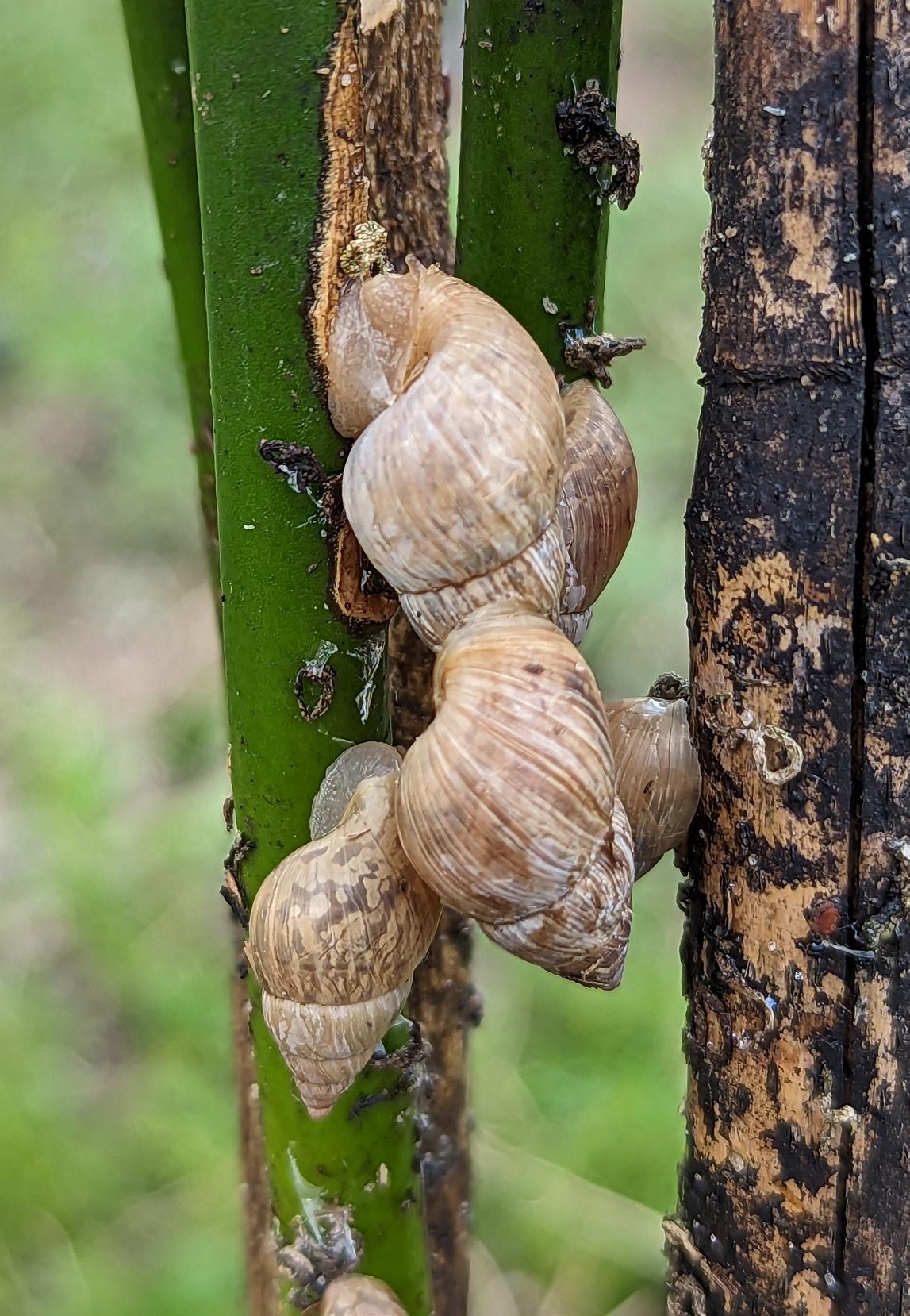
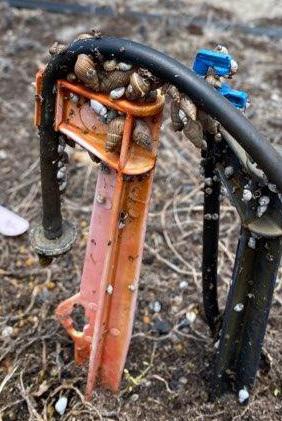
Bulimulus snails typically emerge from the soil in early spring and remain active through summer. Early populations are often overlooked until numbers increase, and snails begin aggregating on trunks, microjets, and other grove structures.
Monitoring involves regular inspection of trunks and grove infrastructure, particularly following rainfall events. Early detection is important to prevent heavy mid-summer infestations.
Management options continue to improve as experience with this pest increases. Bait formulations have shown promise and are most effective when applied early in the season, before large aggregations develop. Control efforts should focus on areas where snails tend to concentrate.
Effective summer pest management depends on regular scouting and timing control actions to pest biology and flush cycles rather than the calendar. Most pests discussed here are easiest and least expensive to manage when populations are detected early. Using selective products, rotating modes of action, and conserving beneficial insects can improve long-term control. Always refer to the Florida Citrus Production Guide and product labels for the most current recommendations.

Ramdas Kanissery
Credit:
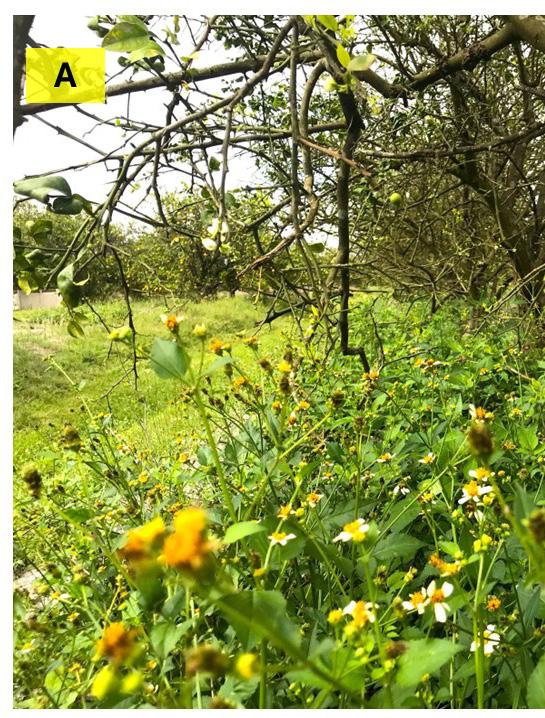
Spanish needles are a common broadleaf weed frequently found in Florida citrus tree rows, ditch banks, and along grove edges. This fast-growing annual or short-lived perennial belongs to the Asteraceae family (sunflower family) and grows well under warm conditions. It readily establishes in citrus tree rows, especially in areas with regular irrigation and full sunlight (Figure 1A). Spanish needles may appear harmless, but their heavy seed production and ability to spread quickly can make them a persistent weed in Florida citrus groves. Regular scouting, preventing seed spread, and well-timed chemical management are important steps for keeping this weed under control.
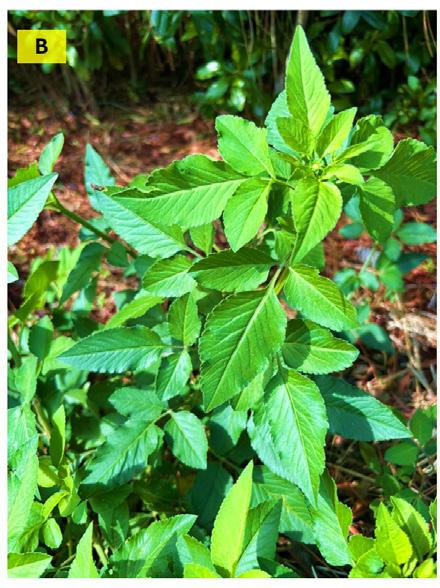
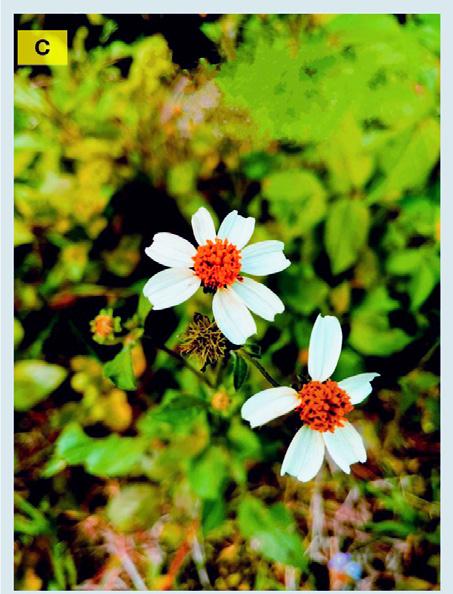
Spanish needles are upright, branching plants that typically grow 2 to 5 feet tall. It has dark green, divided leaves with toothed edges (Figure 1B) and produces small white flowers with a yellow center that resemble daisies (Figure 1C). It reproduces mainly by seed, and a single plant can produce thousands of seeds.
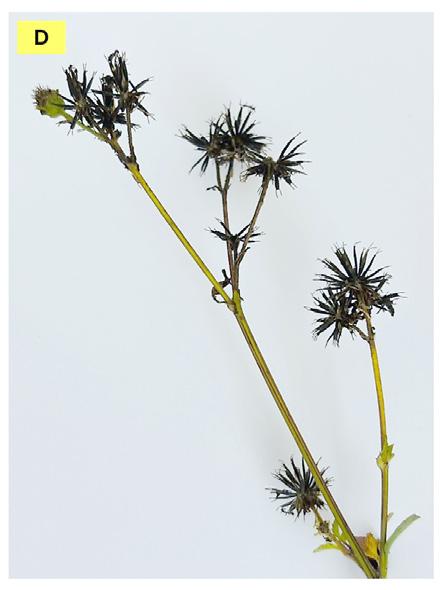
Fun Facts: Spanish needles get their name from their slender needle-shaped seeds (Figure 1D). These seeds act like tiny hitchhikers, allowing the plant to spread well beyond where it first grows. The weed is also known as “beggar’s ticks,” referring to the barbed seeds that cling tightly to anything that brushes against the plant. The flowers are also an important nectar source for pollinators such as bees and butterflies.
• Prevent seed spread: The barbed seeds easily attach to clothing, animals, and equipment. Clean mowing and spraying equipment when moving from infested areas to clean parts of the grove to avoid spreading the weed.
• Include pre-emergence herbicides: Products containing simazine, diuron, flumioxazin, or indaziflam can help reduce new Spanish needles emergence and limit future infestations.
• Use effective post-emergence herbicides: Systemic herbicides such as saflufenacil, glyphosate, and 2,4-D are commonly used to control actively growing Spanish needles in citrus groves. Contact herbicides such as glufosinate can also provide control of young plants. Rotating herbicides with different modes of action can help maintain effective control.
• Be prepared for summer surge: Spanish needles can become more difficult to manage during Florida’s hot summer months because the plants grow rapidly. At the same time, heat or drought stress can reduce herbicide uptake and effectiveness. For this reason, timely applications to small, actively growing plants are especially important.

Megan Dewdney
Citrus diseases do not take a summer vacation, although disease management is generally less intensive than during the spring. As a reminder from the spring edition, applications for citrus canker should begin by early March, and melanose applications should start in mid-to-late April. Treatments targeting citrus black spot usually do not need to begin until early May, unless April is expected to have frequent rain events. Greasy spot applications typically start in late May.
While these diseases may not be top priorities during the summer, they can still contribute to fruit drop and yield loss and should not be completely ignored. In addition, several other diseases require attention during the summer months.
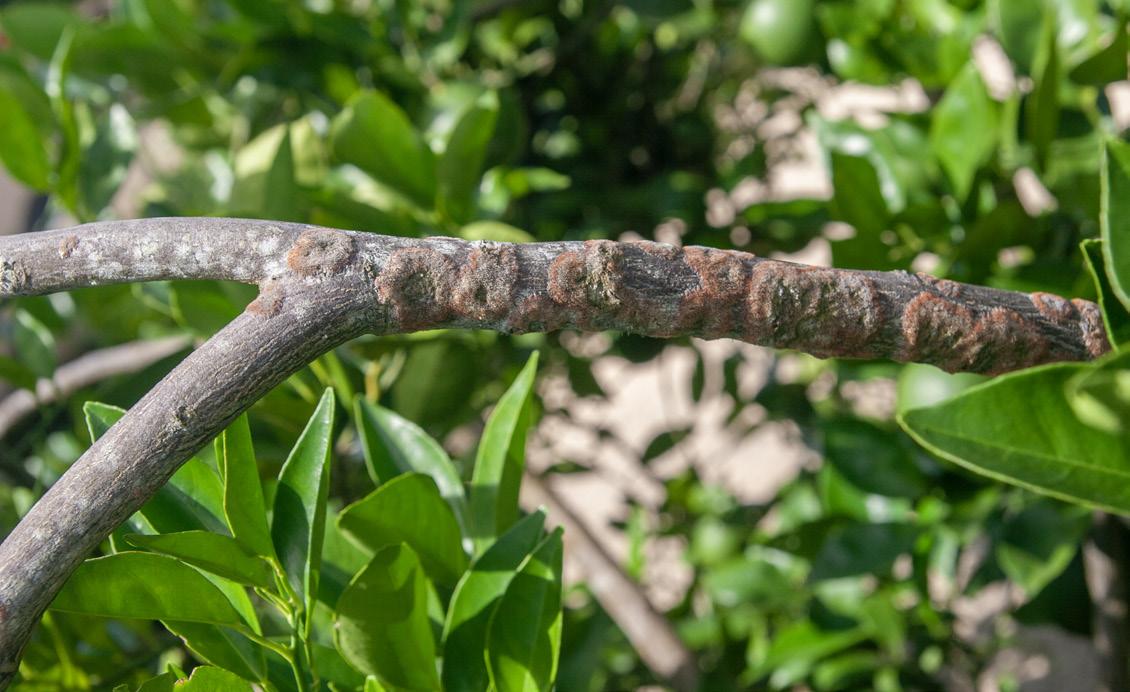
Algal spot has become a chronic problem for many citrus growers over the past decade. This disease, caused by the alga Cephaleuros virescens, primarily affects citrus limbs and branches. It weakens twigs and scaffold branches, cracking the bark over large areas. In severe cases, branches up to 2 inches (5 cm) in diameter can die, resulting in significant canopy loss. Damage has been observed even in trees with otherwise healthy canopies.
Symptoms on leaves and over-ripe, off-season fruit are infrequent and generally not damaging. The most recognizable symptom is the appearance of bright orange to red circular lesions on bark during the summer and fall. These lesions often resemble donuts on branches and twigs and are typically about ½ inch (1.25 cm) in diameter, although they may merge and completely encircle a branch.
The alga is present year-round, but for much of the year, it is difficult to distinguish it from harmless, grey-green lichens commonly found on citrus bark. As a result, disease severity is often underestimated until the alga begins sporulating and lesions turn red, making it seem as though the problem has suddenly exploded.
If algal spot was observed during the previous season, begin postbloom phosphite applications in late April to mid-May, followed by a second application from late June to mid-July. If symptoms are observed for the first time during the summer, it is still worthwhile to apply a treatment to reduce disease intensity. Trial results showed that a single summer application reduced
disease intensity, although control was less effective than with two applications. Even so, treatment will improve algal spot management in the following year.
In UF/IFAS trials, the only consistently effective treatment was ProPhyt® (FRAC Group P 07) applied at 0.5 gal/acre with sufficient water to thoroughly soak the limbs. Good coverage is critical, as the goal is to protect the bark within the canopy. Other phosphitecontaining products labeled as fungicides are expected to perform similarly, although they have not been specifically tested.
Dormant applications from late January to midFebruary were previously recommended, but research has shown that the benefit does not justify the additional cost. Phosphite applications will not eliminate algal spot, and it may take several years to reduce disease severity to a tolerable level.
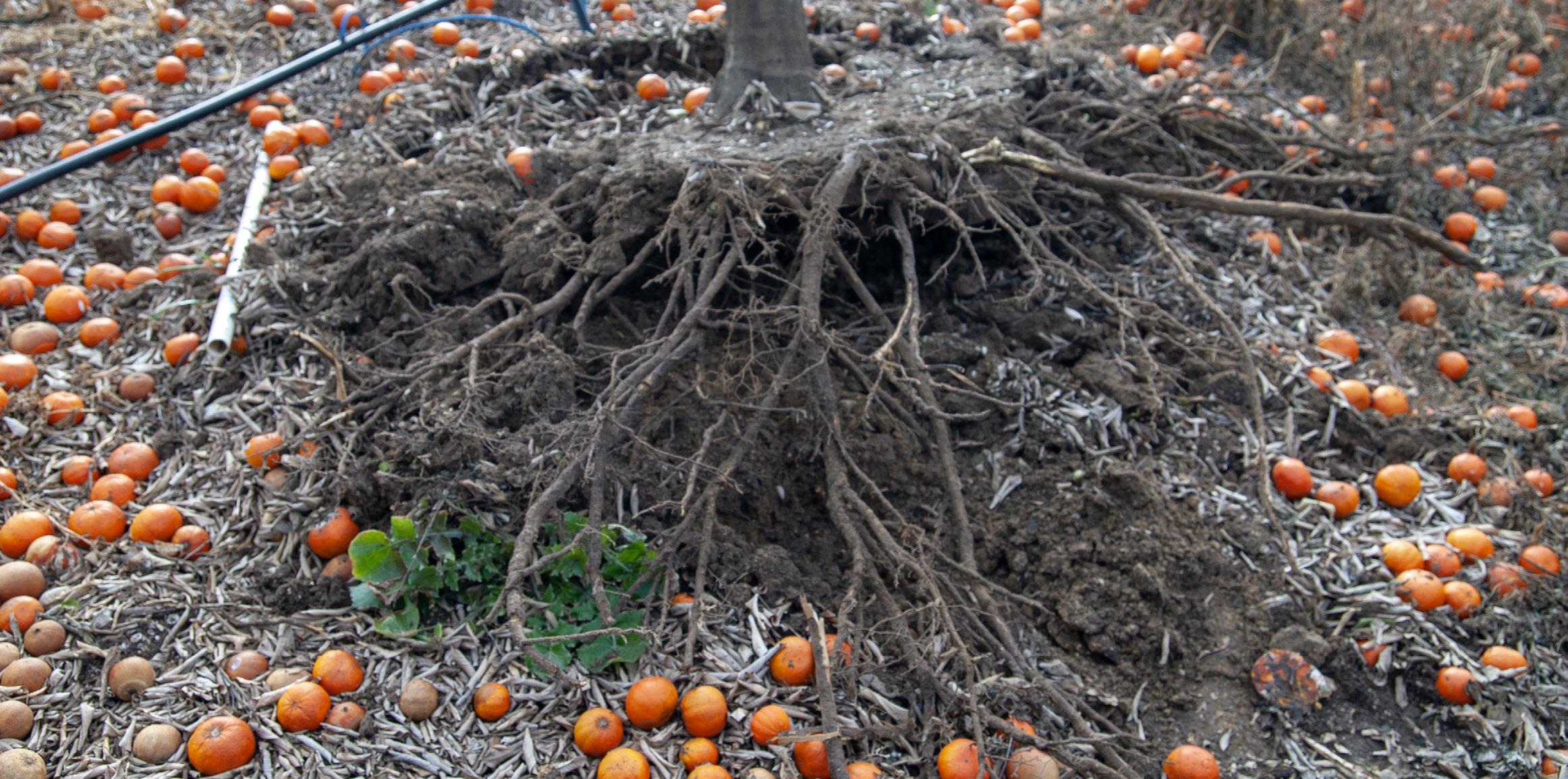
Growers with a history of Phytophthora root rot, foot rot, or crown rot should have measured soil propagule levels in the spring and treated grove blocks where counts exceeded 10 propagules per cm³ of soil. Huanglongbing (HLB)-affected trees experience irregular root flushes. The disease causes root dieback while also stimulating new root growth, creating continuous opportunities for infection.
Phytophthora nicotianae and P. palmivora preferentially infect young, actively growing roots. As a result, the new roots produced in response to HLB are particularly vulnerable. The Phytophthora diseases are interconnected by their disease cycles. Inoculum produced on infected roots can splash onto crowns and trunks, causing the cankers of crown rot and foot rot, and can also infect dropped fruit, increasing inoculum levels that contribute to brown rot.
The first soil application of the year should have been applied in late March or April to protect the spring root flush. Research supports the use of mefenoxamcontaining products such as Ridomil® and UltraFlourish® (FRAC Group 4) and fluopicolide (Presidio®; FRAC Group 43). Consistent disease efficacy data for oxathiopiprolin (Orondis®; FRAC Group 49) under HLB conditions have been difficult to obtain. While results from other locations have been promising, insufficient data prevent a formal recommendation at this time.
A second soil application to protect the fall root flush should be made from October to November. Products should be rotated between applications to reduce the risk of resistance.
As part of a rotational program for Phytophthora root rot, phosphite-containing products or Aliette® (FRAC Group P 07) should be applied during the summer, with optimal timing from May through the end of June. Summer foliar phosphite applications are also recommended in groves with a history of brown rot. These products primarily work by stimulating the immune system of the tree and are most effective when applied preventively.
For brown rot management, the optimal timing for phosphite applications is July. If treatments are needed for both root rot and brown rot, the best approach is to apply in early May and again in late July. Otherwise, growth may be stunted as the tree puts a large proportion of its resources towards the immune system stimulation. Notably, the late July application also aligns well with algal spot management.
Be aware that not all phosphite-containing fungicide labels allow for two summer applications. Always verify label restrictions before finalizing application plans. For additional disease management details, consult the Florida Citrus Production Guide. Always follow pesticide labels, as they are the law.
Sarah Strauss
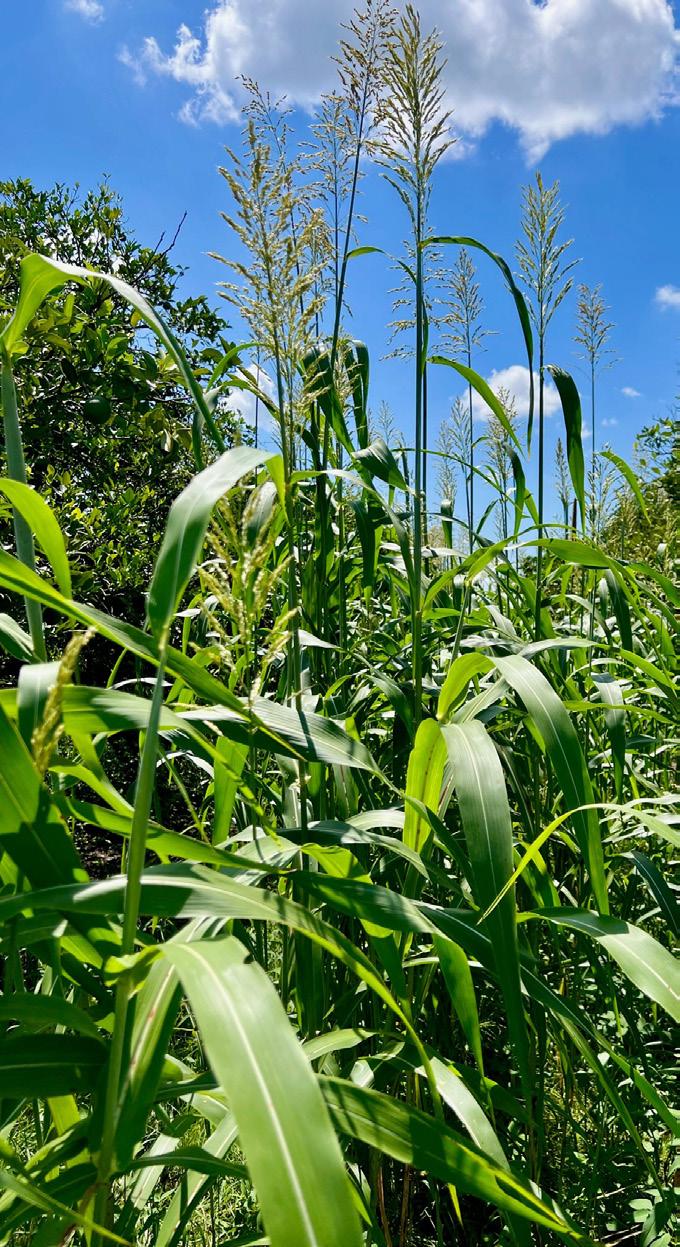
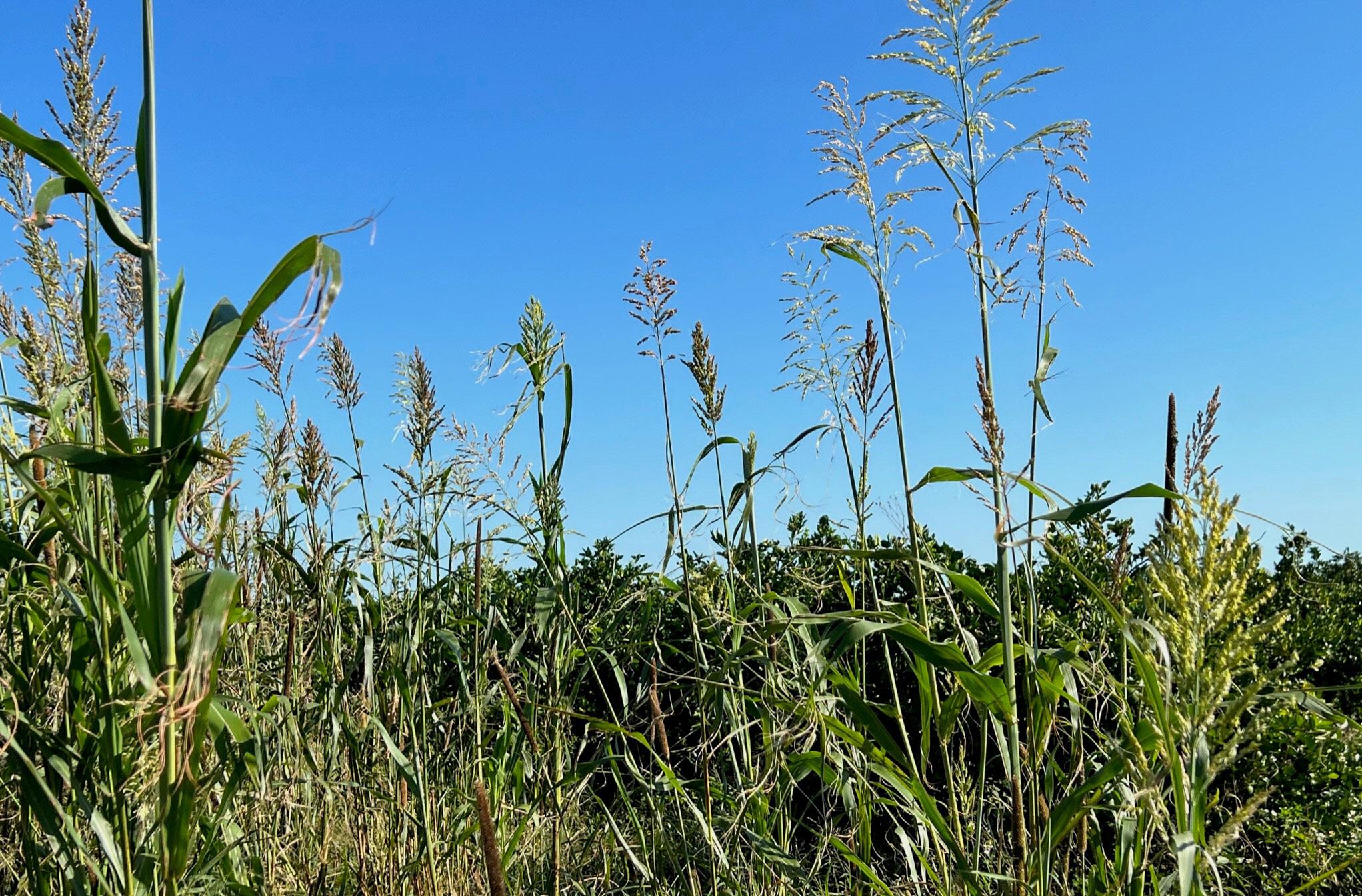
Sorghum bicolor (Egyptian wheat) and Sorghum bicolor (Egyptian wheat) and Sorghum x drummondii (Sorghum-sudangrass) are grass cover crops that grow well during Florida summers. It is recommended to plant these at the beginning of the rainy season (June). They will naturally begin to senesce by October or November, at which time you can mow them and plant a new round of cover crops. Both grasses can provide large amounts of biomass that can contribute to building more carbon in the soil and provide weed suppression. Seeding rates for these grasses are generally 20-30 lbs/acre.
However, it is not recommended to plant both types of Sorghum at the same time to avoid competition between the two. While planting just one of these grasses can provide significant soil carbon benefits and weed suppression, the high carbon-to-nitrogen (C:N) ratio of these grasses could immobilize some soil nutrients, making them less immediately available to plants. Mixing one grass with a legume cover crop (e.g., sunnhemp) lowers the overall C:N ratio, improves nutrient availability, and increases nitrogen fixation.
The Plant Physiology team at UF/IFAS SWFREC continues to explore various questions related to oxytetracycline (OTC) trunk injection in numerous field trials around the state. This article provides research updates addressing several questions centered around how to improve OTC efficacy and other aspects of injection therapy.
Question 1: Does ascorbic acid improve oxytetracycline efficacy?
Last year, a grower posed the idea that Vitamin C (ascorbic acid), known for its antioxidant properties, may improve the stability of the dissolved OTC and thereby enhance its positive effects on tree health and productivity. Upon conducting several preliminary tests in the laboratory, we found that the addition of ascorbic acid did indeed prevent the OTC from discoloring and precipitating after prolonged exposure to temperatures typically observed in Florida during spring and summer. However, large amounts – that is, amounts equal to or higher than OTC – were necessary to see these effects (Figure 1).
A field trial was then established to determine if the addition of ascorbic acid to OTC would translate into any measurable benefits in terms of yield and fruit quality. For that trial, we used 10-year-old ‘Hamlin’ trees in a commercial production site in Central Florida, which had received OTC injections in previous years. We injected the trees in May 2025 with 1 g of OTC per tree, or with 1 g of OTC plus varying amounts of ascorbic acid – 1 g (1:1), 2 g (1:2), and 3 g (1:3). Note that all OTC solutions were acidified with muriatic acid before addition of ascorbic acid (ascorbic acid is a weak acid). We found that all OTC treatments, alone or with added ascorbic acid, improved yield and juice quality significantly compared to the non-injected control. However, no additional benefits were observed with the addition of ascorbic acid. The results are summarized in Table 1. Control trees were not injected in 2025, but had received injections in previous years. Different letters indicate significant differences between means
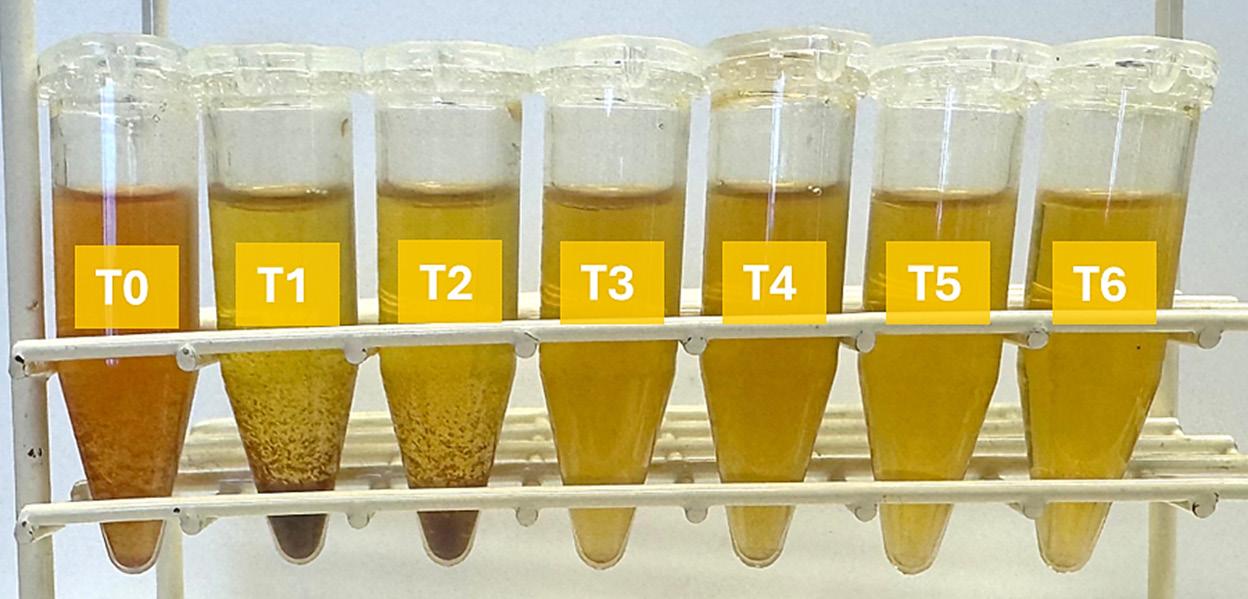
Figure 1. Laboratory experiment to demonstrate ascorbic acid (AA) effects on oxytetracycline (OTC) stability. All solutions had a pH of 1.8-2.0 and were kept for 48 hours in the dark at 86 °F. T0 = OTC without any added AA. T1-T6 = OTC + increasing amounts of AA (T1 = 1: 0.25, T2 = 1:0.5, T3 = 1:0.75, T4 = 1:1, T5 = 1:1.5, T6 = 1:2 OTC:AA).
within columns. It is therefore recommended to continue using OTC without the addition of ascorbic acid. It is also recommended to not add any other materials to the OTC without any research-based evidence supporting such an addition.
Question 2: Should I inject on one side or on two sides of the trunk?
One way to improve the efficacy of OTC is by performing two-sided injections. For example, if the desired OTC dose is 1.1 g per tree, instead of administering it all on one side of the trunk, administer half (0.55 g) on one side and the other half on the other side of the trunk. It is recommended to use an injection volume of 100 mL because, in our experience, a smaller volume (e.g., 50 mL) exerts less pressure on the injection tube, resulting in a slower uptake of the solution. Therefore, if the desired OTC dose is 1.1 g per tree, instead of preparing a 11,000-ppm solution, prepare a 5,500ppm solution and fill each injector with 100 mL. This will result in 0.55 g administered on one side of the trunk and the other 0.55 g on the other side. Two-sided injections performed in this manner will improve OTC distribution in the canopy, reducing sectoring, and increasing overall efficacy. Two-sided injections will also reduce phytotoxicity. To reduce trunk injury, it is advised to use a smaller drill bit and applicator tip
Table 1. Oxytetracycline (OTC) and ascorbic acid (AA) effects on the productivity of ‘Hamlin’ orange trees.
and administer the injections at least one inch away from the previous year’s injection sites. Two-sided injections are especially important for the treatment of older, larger trees to ensure homogeneity of effects in the canopy.
Question 3: Is it necessary to continue OTC injections over consecutive years?
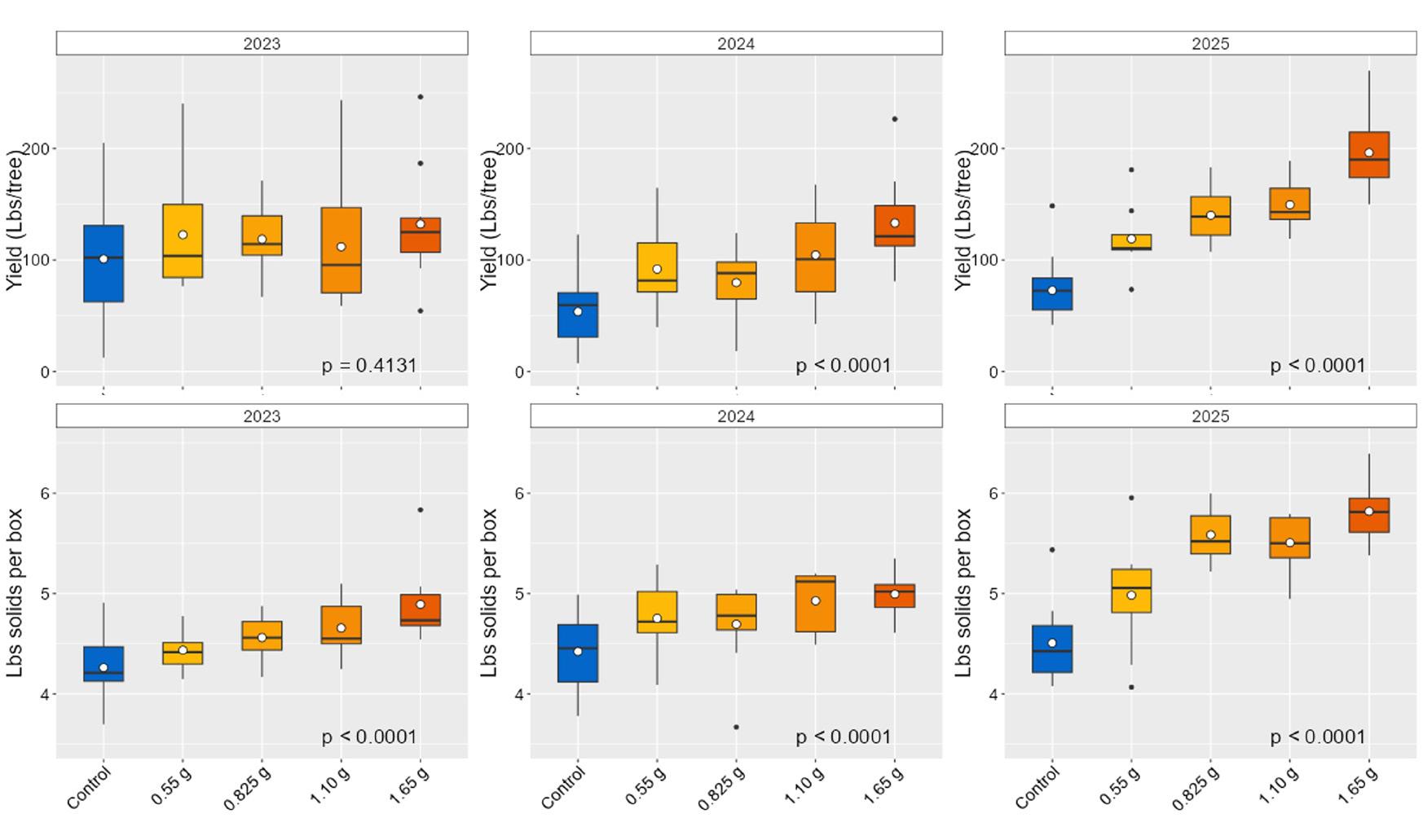
We have several trials in progress that document that multiple years of injection have cumulative effects on tree health and productivity. An example is a ‘Hamlin’ trial that began in 2023. The trees are on a Ridge site in Polk County and were 18 years old at the time of the first injection. Trees were injected with different doses of OTC – 0.55 g, 0.825 g, 1.1 g, and 1.65 g per tree. The 1.65 g-dose was administered by two-sided injection (0.825 g per side) in 2023, 2024, and 2025, while the other doses were administered one-sided in 2023 and 2024 and two-sided in 2025. The injection volume was
Figure 2. Cumulative effects of OTC injections on yield and pounds solids of 'Hamlin'/ Carrizo trees after three years of injection. Control trees never received any injections. The 1.65 g-dose was administered by twosided injection in all three years. The other doses were administered one-sided in 2023 and 2024 and two-sided in 2025. Boxes show the range in which the middle 50% of all data lies; the whiskers indicate the minimum and maximum; the black line indicates the median, and the white circles the mean; black dots indicate outliers.
100 mL per side. Injections were performed in May or early June. Results are summarized in Figure 2.
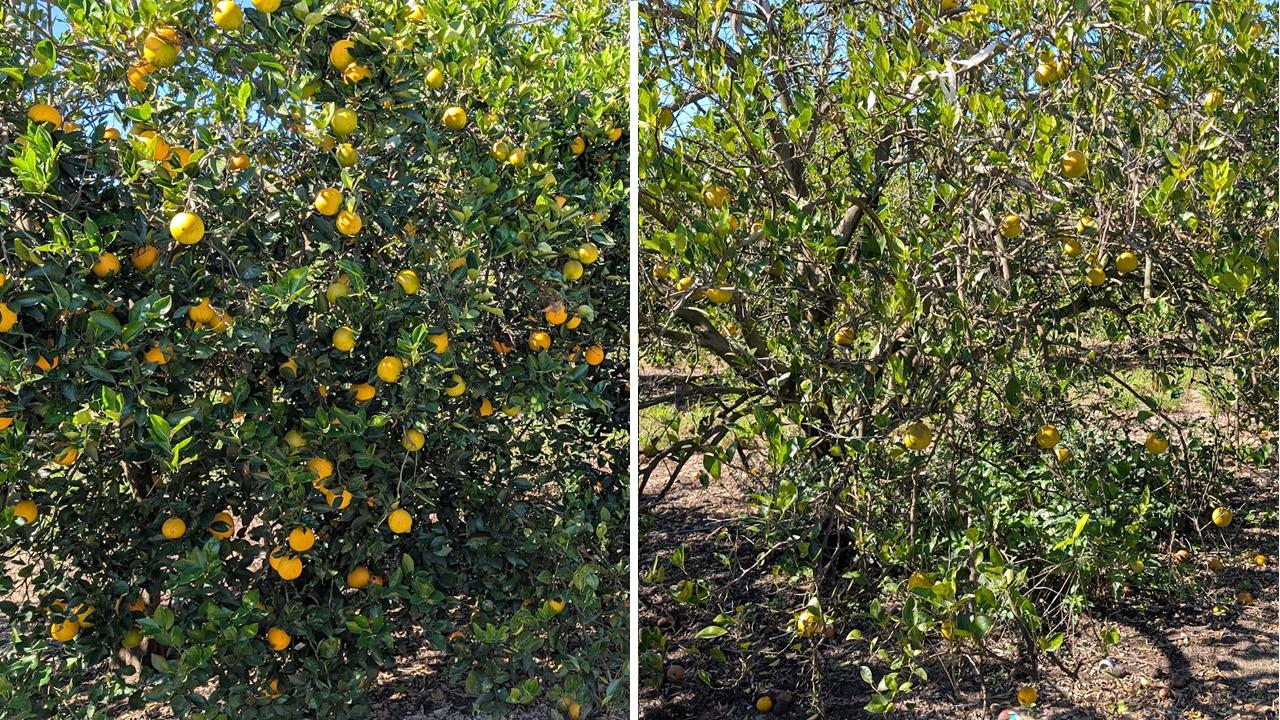
Although there appeared to be some moderate increases in yield in year 1, they were not statistically significant. Yield increases were significant in year 2, after two consecutive years of injection, regardless of the OTC dose; but the largest increase was measured with the 1.65 g-dose administered by two-sided injection. Note that this trial experienced considerable fruit drop in October 2024 due to Hurricane Milton, reducing the harvestable yield. Yield increases were most pronounced in year 3, with the 1.65 g-dose producing nearly threefold the yield compared to the control. The pounds solids increased in all three years in response to OTC, but especially in year 3 after three consecutive years of injection. The data also shows that higher doses of OTC produce more substantial increases in both fruit yield and pounds solids. Administering the 1.65 g-dose by two-sided instead of one-sided injection for three consecutive years has likely contributed to the superior effects of this dose. The effects of OTC are evident not only in terms of yield and juice quality but also in terms of canopy health, fruit size, and peel color (Figure 3).
In addition to the 'Hamlin' trial, a 'Valencia' trial with the same-age trees and the same treatments was conducted. The results confirm what we have seen in the ‘Hamlin’ trial, with yield increases becoming more substantial with consecutive years of injection and
responses being dose dependent.
Another aspect that was investigated in both trials was the effect of an “off-year”. For this, half of the trees received three consecutive years of injection, and the other half received injections in years 1 and 3 only. In year 2, the off-year resulted in lower yields and juice quality compared to consecutive injections. However, compared to never-injected trees, the yield was still larger. Resuming injections in year 3 increased both yield and juice quality again, though the yield did not reach the same levels as the yield of trees that had received three consecutive years of injections. This means that consecutive injections are necessary to sustain the beneficial effects of OTC and maximize production.
OTC fruit residue analyses conducted for both trials showed that to prevent residues from exceeding the maximum allowed levels (0.01 parts per million, or 10 parts per billion), it is recommended to complete injections by the end of May when treating ‘Hamlin’ trees, or by the end of June when treating ‘Valencia’ trees, especially when using high doses. We are awaiting results from this year’s ‘Valencia’ harvest to determine residue levels after July injections. As we have repeatedly found in our trials, later injections improve the total soluble solids content over early injections, which may be desirable in some circumstances, but increase OTC fruit residues.
Credit: Ute Albrecht, UF/IFAS
In conclusion, OTC injections are effective, provided they are performed properly. Various strategies can be used to enhance the efficacy of the antibiotic. These include maximizing the dose based on trunk and canopy size, applying it on two sides rather than one, injecting it over consecutive years, and providing good tree care. OTC may not be the “silver bullet”, but it is the best bullet we have available currently.
We thank all members of the Plant Physiology team for their help, and the grower collaborators for providing trees, tree care, and help with the harvests. We also thank the Citrus Research and Development Foundation for their continued support.

Jude Grosser, Fred Gmitter, John Chater, Debora Fragoso, and Misty Holt
The UF/IFAS Citrus Research and Education Center (CREC) citrus breeding program was born in the mid-1980s with a singular mission: to provide Florida growers with a competitive edge through superior scion and rootstock genetics. Led by Jude Grosser and Fred Gmitter, the program’s first two decades were defined by a relentless pursuit of technological expertise. By pioneering somatic hybridization and exploring somaclonal variation, new tools were developed to expand the limits of conventional breeding. These efforts allowed us to create polyploids for seedless fruit and hardy new rootstocks, while simultaneously diving into the genomic space to develop the linkage maps and molecular markers that improve selection efficiency.
The landscape changed forever in 2005. The arrival of Huanglongbing (HLB, or citrus greening) ushered in a new, more urgent era for the CREC program. As the epidemic swept across the state, program focus shifted towards resilience and tolerance to HLB. We have spent the last two decades meticulously creating genetic diversity and making selections that demonstrate field tolerance to this devastating disease, ensuring that the Florida citrus industry can withstand the pressure of this "new normal".
On the other hand, as the industry adapts, so do we. For growers investing in Citrus Under Protective Screen (CUPS) to bypass HLB entirely, the economic stakes are higher. To support the infrastructure costs of these systems, we are also prioritizing the development of ultra-high-quality cultivars capable of fetching the premium marketplace prices necessary for a solid return on investment. Our current efforts also include the initiation of multiple field trials to combine the best new scions with the best new rootstocks – the fastest way to identify combinations that can be sustainable and profitable in our HLB-endemic Florida.
What follows are brief descriptions of our program's most recent releases—creations designed to keep the Florida citrus industry productive, sustainable, and, most importantly, profitable.
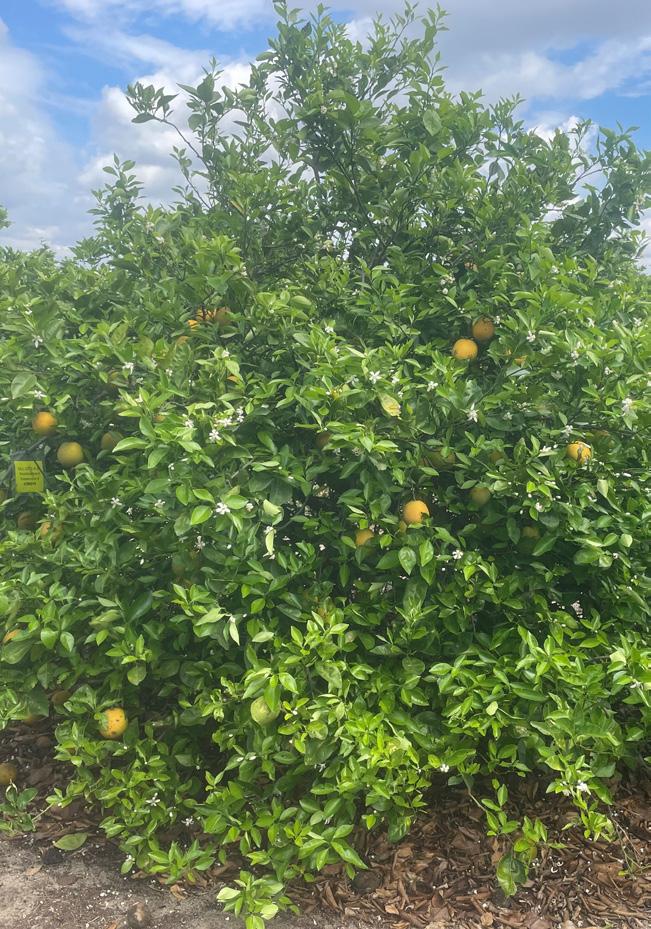
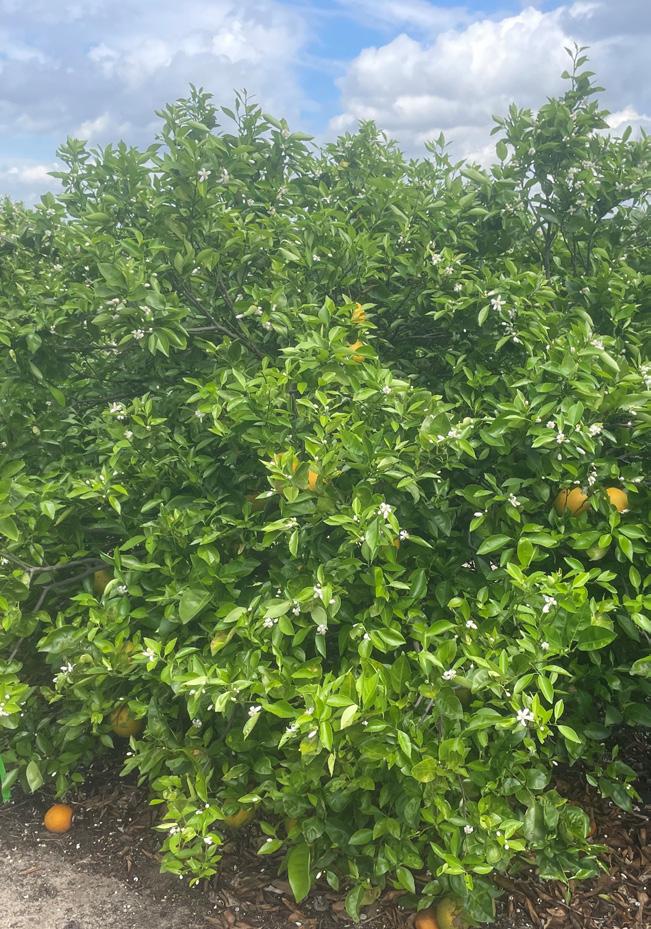
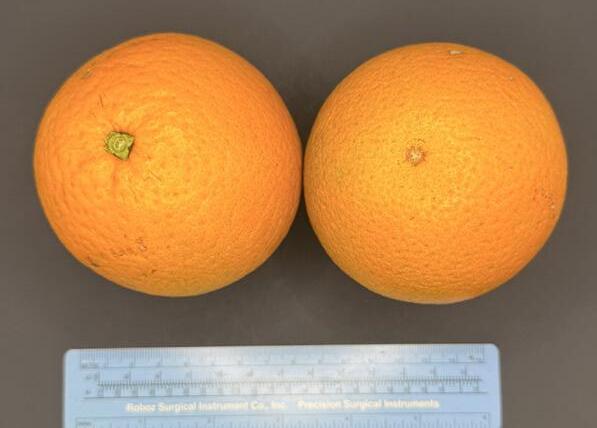
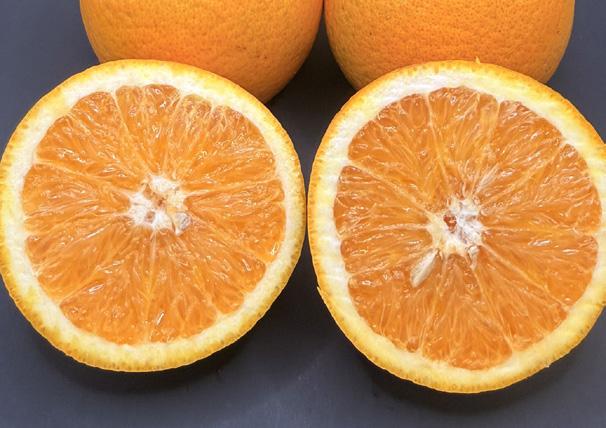
'OLL-DC-3-36' AND 'OLL-DC-3-40' U.S. PPAF
Key Points
• Two new OLL sweet orange clones developed from the nucellar seedlings from 'OLL-8'
• Late maturing selections that more reliably meet maturity standards than Valencia
• Show superior overall tree health, productivity, canopy development, and yield
• Strong candidate for sustainable Florida citriculture
• Recommended Production Systems: Conventional, home garden
• Primary Market Use: Fresh market, processing
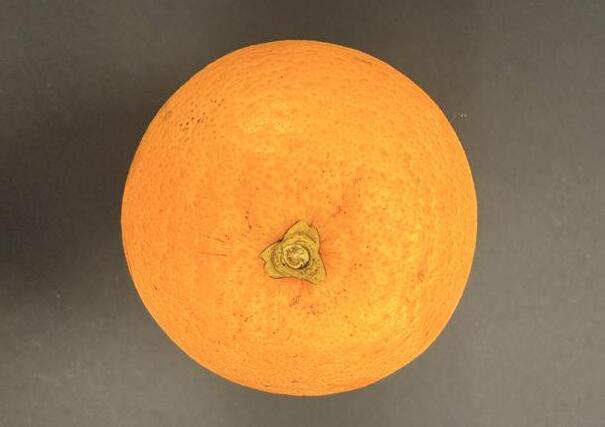
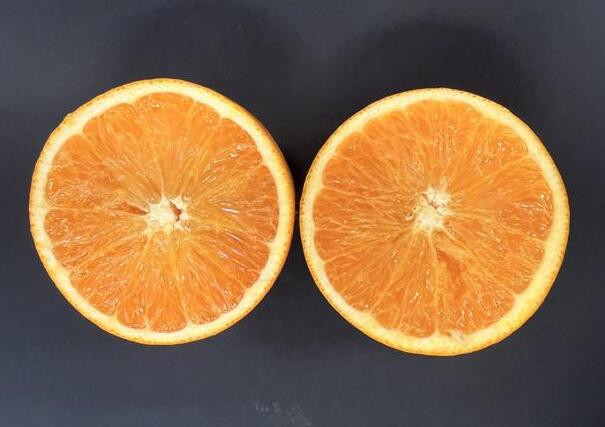
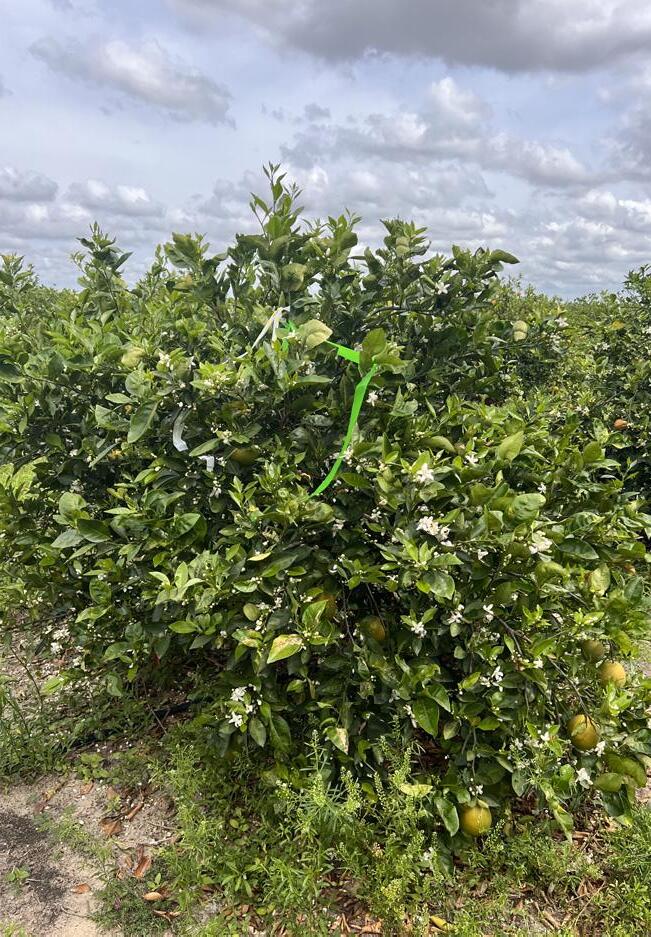
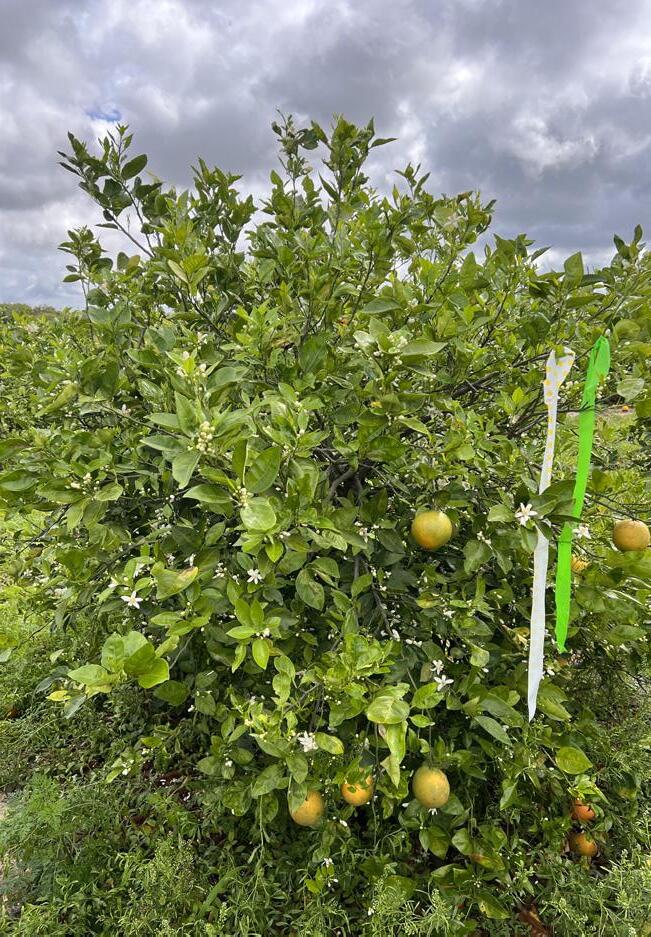
Proposed name: Last Man StandingTM
Key Points
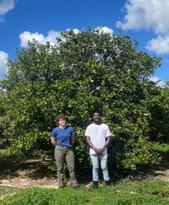
• True 'Valencia' somaclone with strong HLB tolerance comparable to the 'Donaldson' tree
• Original tree 34-years old on Swingle citrumelo rootstock still producing good fruit
• Produces typical late-maturing 'Valencia' fruit with high soluble solids under HLB pressure
• 3-year-old trees (no IPCs or OTC) are larger than adjacent 7-year-old 'Valencia' trees
• Produces Grade A NFC juice without the need for blending
• Recommended Production Systems: Conventional, home garden
• Primary Market Use: Fresh market, processing
Key Points
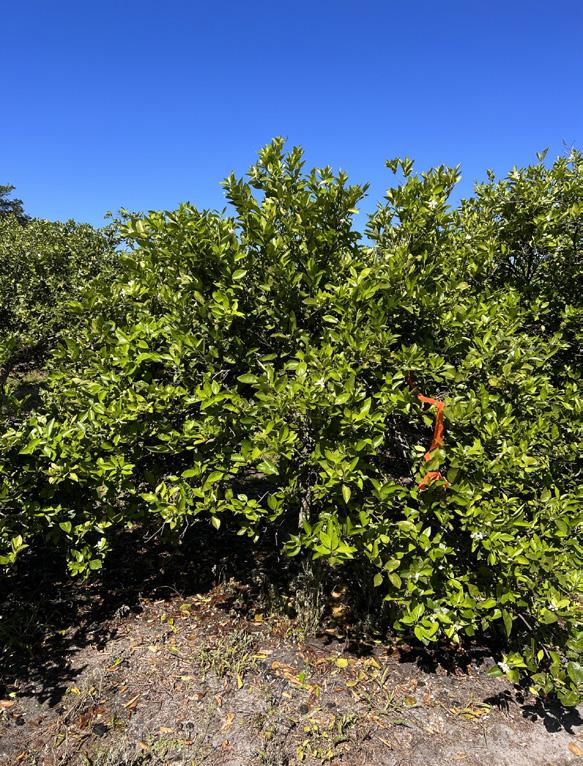
• One of three original 'Hamlin' somaclones selected based on multiple years of juice quality data
• Highest °Brix and soluble solids among hundreds of 'Hamlin' clones evaluated
• Improved °Brix up to 12.2
• Matures a few weeks earlier than the previously released 'Hamlin' clone N13-32
• Provides growers with an early-season 'Hamlin' alternative to battle the current °Brix crisis
• Recommended Production Systems: Conventional, home garden
• Primary Market Use: Fresh market, processing
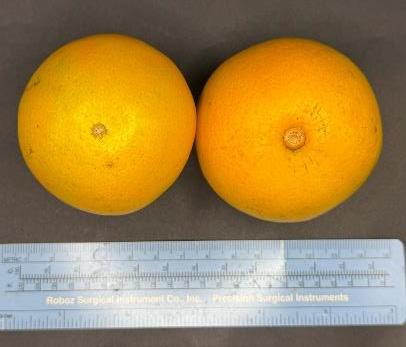
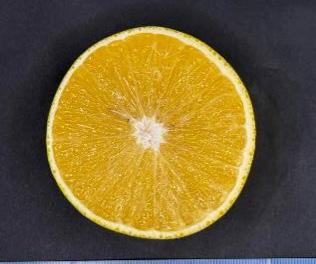
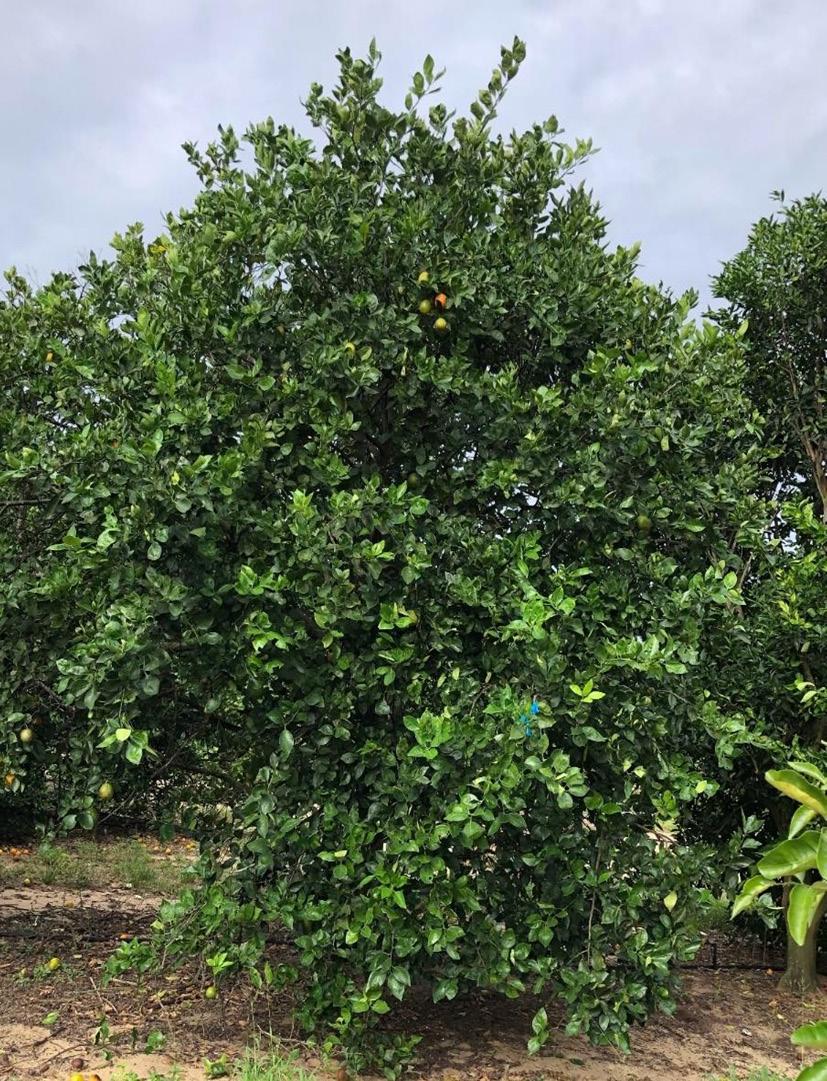
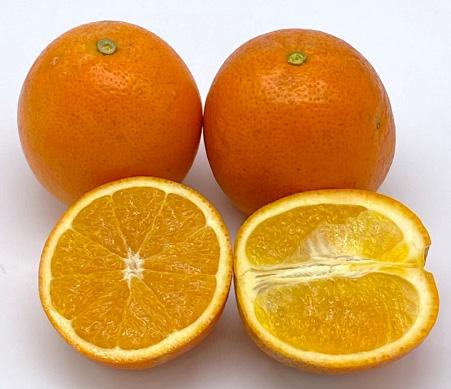
'UF 1859' U.S. PP36743
Key Points
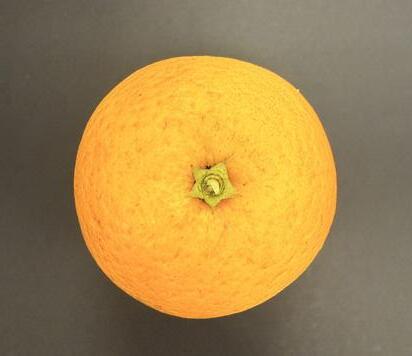
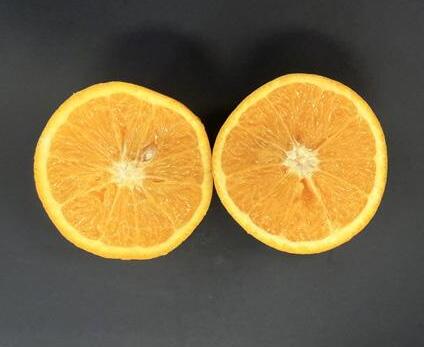
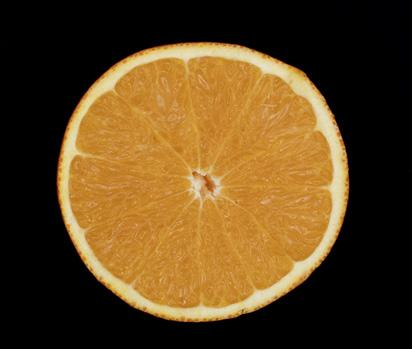
• Sweet orange-like hybrid with potential future classification as a true sweet orange
• Nearly seedless triploid selection developed from an interploid cross of 'LB8-9' Sugar Belle® × ['Nova' mandarin hybrid + 'Succari' sweet orange] somatic hybrid
• Distinctive fruit shape, color, and flavor provide excellent consumer appeal
• Exceptional external and internal color development with minimal cold induction
• Harvest from late November-early January
• Recommended Production Systems: Conventional, screen-protected (CUPS), home garden
• Primary Market Use: Fresh market, processing
'104' U.S. PPAF
Key Points
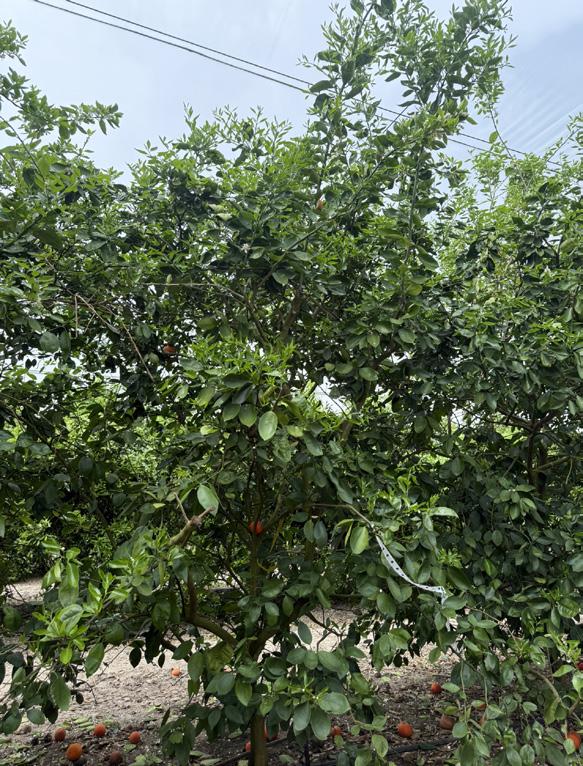
• Sweet orange-like hybrid with potential future classification as a true sweet orange
• Nearly seedless triploid selection developed from an interploid cross of 'LB8-9' Sugar Belle® mandarin × ['Hamlin' orange + LB8-4] (LB8-4 is an unreleased proprietary breeding parent from 'Clementine' × 'Minneola')
• Produces large attractive, usually seedless fruit with a unique flavor profile
• Harvest from December-February
• Recommended Production Systems: Screen-protected (CUPS)
• Primary Market Use: Fresh market, processing
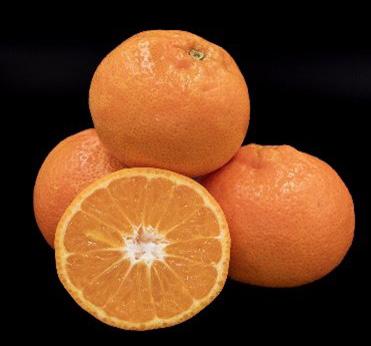
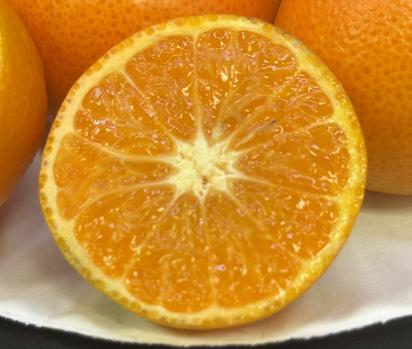
Proposed name: ‘Tough & Tasty’
Key Points
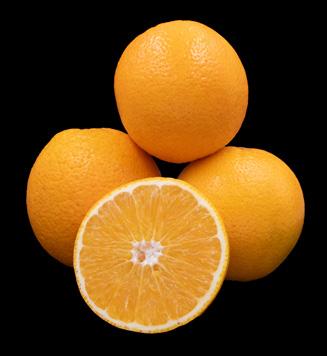
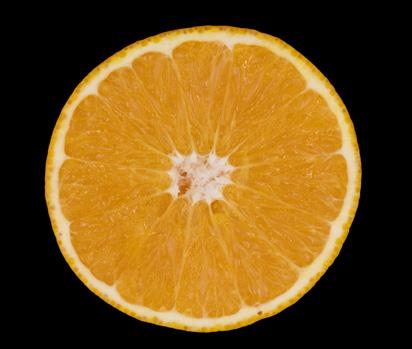
• Seedless triploid mandarin hybrid
• Parentage: 'LB8-9' Sugar Belle® × ['Nova' mandarin hybrid + 'Osceola' mandarin hybrid] somatic hybrid
• Excellent candidate for NFC juice blending at the legal 10% level
• December maturity with very rich, sweet flavor
• Juice color up to 42, with °Brix reaching 18 and maintains excellent flavor after pasteurization
• Potential limitations: small fruit size, and fruit does not peel easily
• Recommended Production Systems: Conventional, home garden
• Primary Market Use: Fresh market, processing (NFC blending candidate)
Key Grower Points
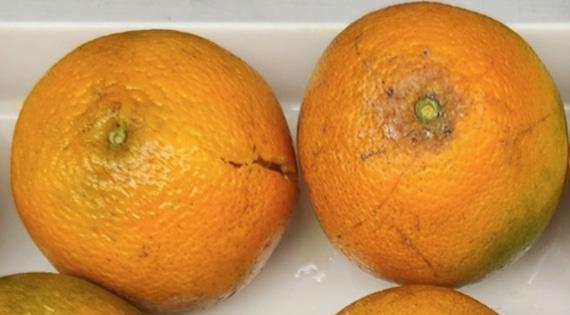
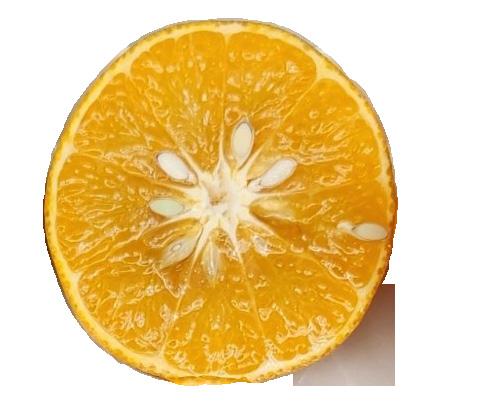
• Diploid hybrid from 'LB8-9' Sugar Belle® × 'Ortanique'
• Ranked in the top 95th percentile for tree health and NDVI in a topwork trial of 200+ accessions
• Fruit matures in December and can hold on the tree into February
• Juice quality: 12–14 °Brix with a 38 color score
• Pasteurized juice has a pleasant, sweet orange-like flavor profile
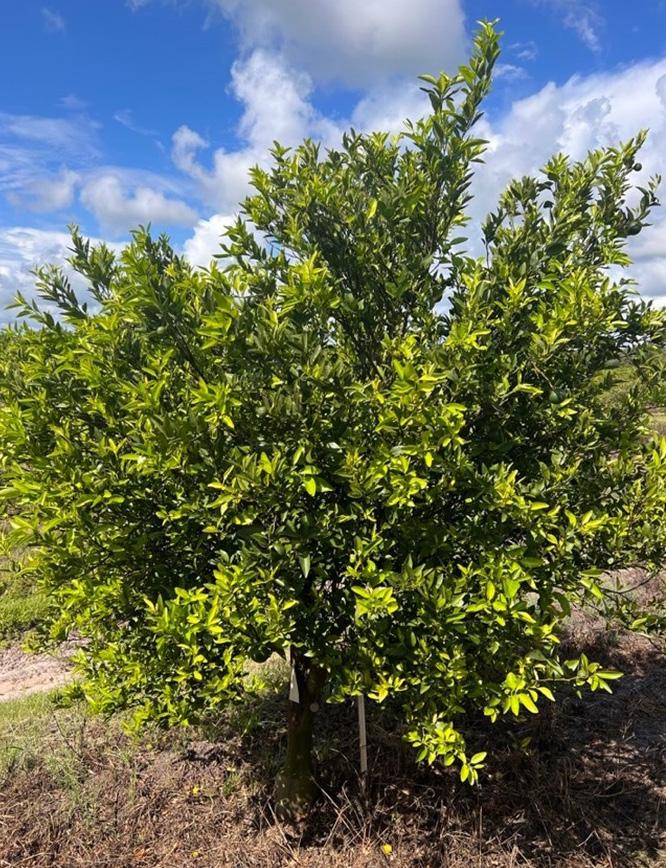
• Low limonin content (1.6 ppm), reducing bitterness risk in juice
• Produces good-sized, firm fruit suitable for trucking to juice plants
• Recommended Production Systems: Conventional, home garden
• Primary Market Use: Processing (NFC blending candidate)
'MARATHON' U.S. PP31347
Key Points
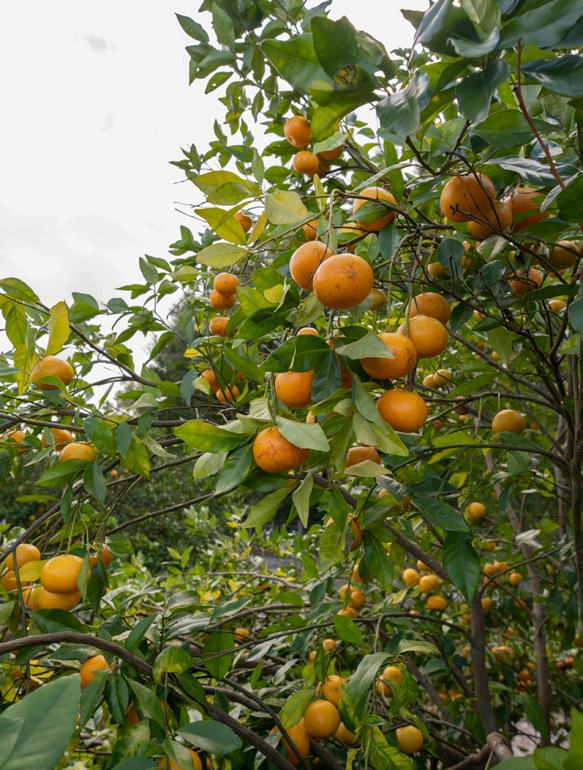
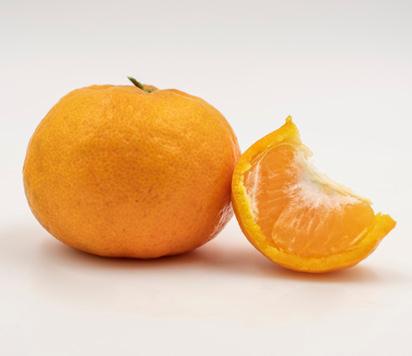
• Diploid mandarin hybrid from 'Daisy' mandarin × 'Mukaku Kishu'
• Vigorous field trees
• Very few symptomatic fruit observed on HLBpositive trees
• Completely seedless under all circumstances, easy to peel, and early maturity
• Good color and flavor with strong fresh market appeal
• Responds well to ethylene degreening
• Firm fruit that performs well in long-term cold storage
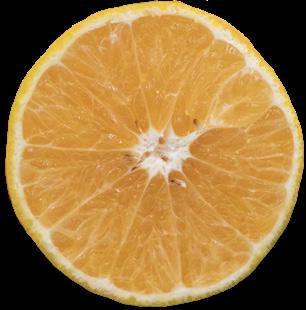
• Recommended Production Systems: Conventional, home garden
• Primary Market Use: Fresh market
'RES 19-56' U.S. PP36744
Key Points
• Diploid mandarin hybrid from 'Daisy' mandarin × 'Mukaku Kishu'
• Rich-flavored, zipper-skin mandarin, Cutie®/ Halo® sized fruit
• Early maturing selection, ready in September ~10 °Brix with a 16.5 maturity ratio
• Holds on the tree through November, extending the harvest window
• Precocious and heavy-bearing trees
• Demonstrates good postharvest storage capability
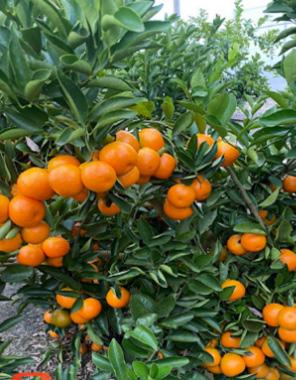
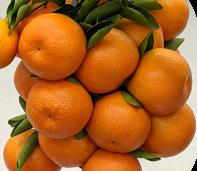
• Recommended Production Systems: Conventional, screen-protected (CUPS), home garden
• Primary Market Use: Fresh market
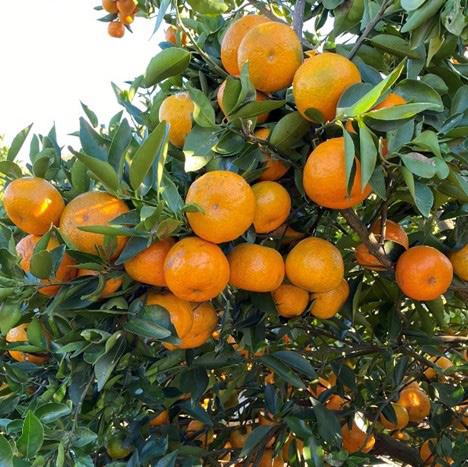
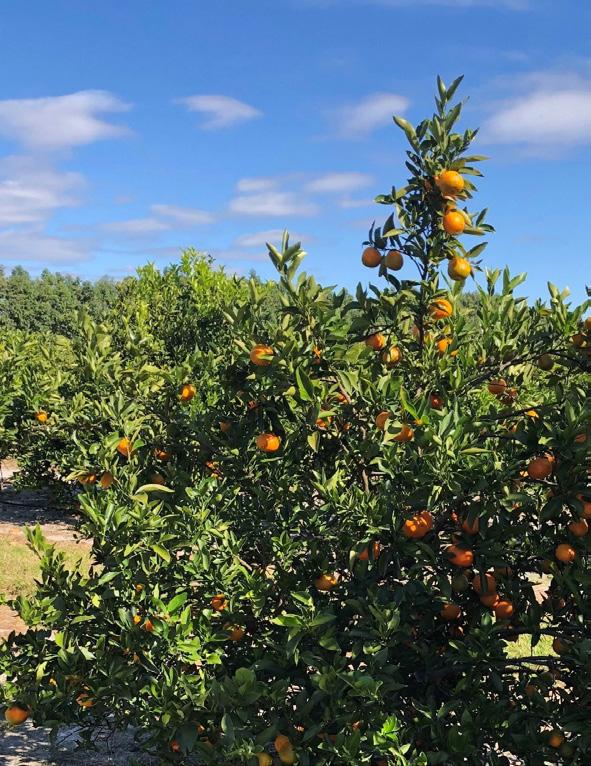
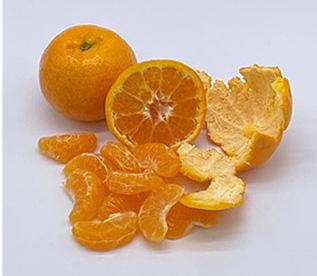
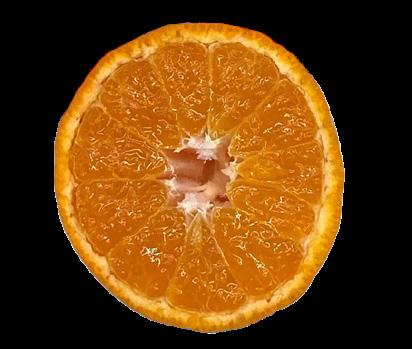
GATOR BITESTM '18A-9-39' U.S. PP36088
Key Points
• Triploid hybrid developed from interploid cross of 'Clementine' × ['Murcott' + 'LB8-9' Sugar Belle®] somatic hybrid via embryo rescue
• Rich-flavored, zipper-skin mandarin that colors on the tree
• Matures around Thanksgiving in CUPS and, about one month later when grown outdoors
• Completely seedless in CUPS; 1–2 seeds per fruit when grown outside in mixed blocks
• Fruit size is similar to Cuties®/Halos® mandarins
• Recommended Production Systems: Conventional, home garden, screen-protected (CUPS)
• Primary Market Use: Fresh market
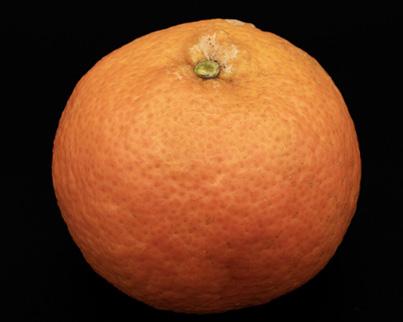
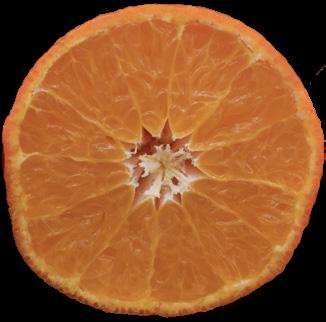
'KE-9-9' U.S. PPAF
Proposed name: ‘Autumn Amour’
Key Points
• Triploid tangerine from an interploid cross of 'FallGlo' × ['Murcott' + LB8-8] (LB8-8 is a low acid sibling of 'LB8-9' Sugar Belle®)
• Produces medium-sized fruit (larger than 'Clementine'), easy to peel, nearly seedless
• Excellent internal and external color development under Florida conditions
• Matures in October and holds well into January
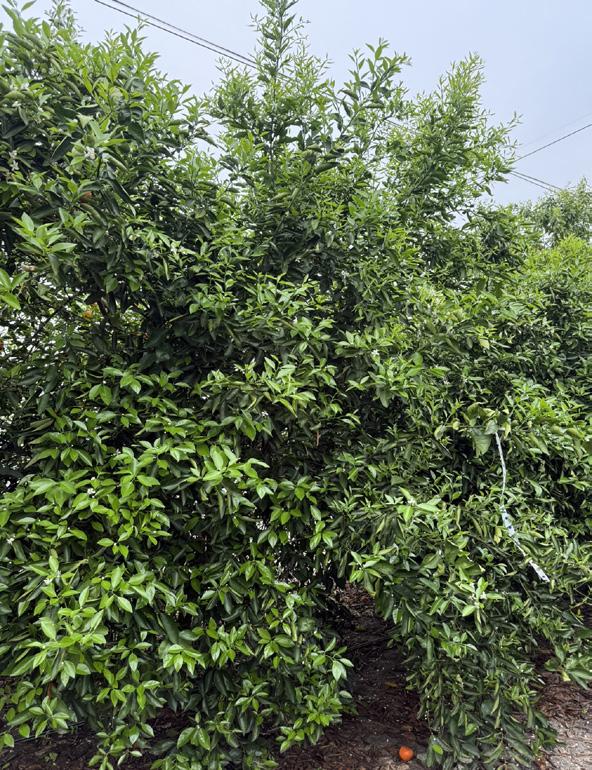
• Completely seedless in CUPS, outside trees may have 1–2 seeds per fruit
• Early harvested fruit responds well to ethylene degreening
• Recommended Production Systems: Screen-protected (CUPS), home garden
• Primary Market Use: Fresh market
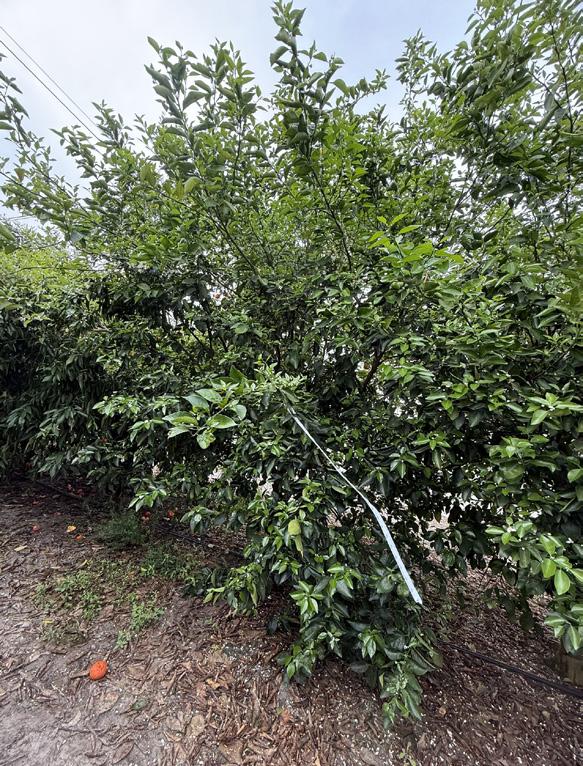
'C7-12-18' U.S. PPAF
Proposed name: ‘Tangeriffic’
Key Points
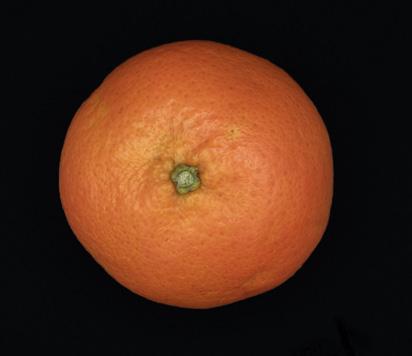
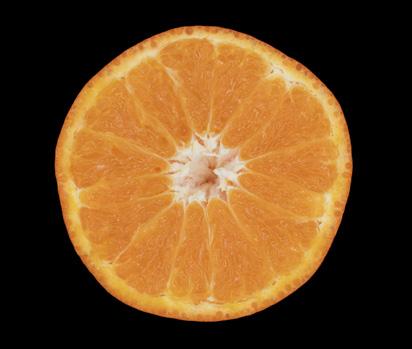
• Triploid tangerine hybrid from an interploid cross of 'LB8-9' Sugar Belle® × ['Succari' sweet orange + 'Murcott' tangor] somatic hybrid
• Produces medium-sized fruit (larger than 'Clementine'), easy to peel, nearly seedless fruit with a very rich, sweet, pleasant flavor
• Matures in November and holds well into January
• Bright orange external color becomes more intense in late November
• Completely seedless in CUPS, outside trees may have 1-2 seeds per fruit
• Recommended Production Systems: Screen-protected (CUPS), home garden
• Primary Market Use: Fresh market
'1424' U.S. PPAF
Proposed name: ‘Sweet Gem’ (previously referred to as Greenie)
Key Points
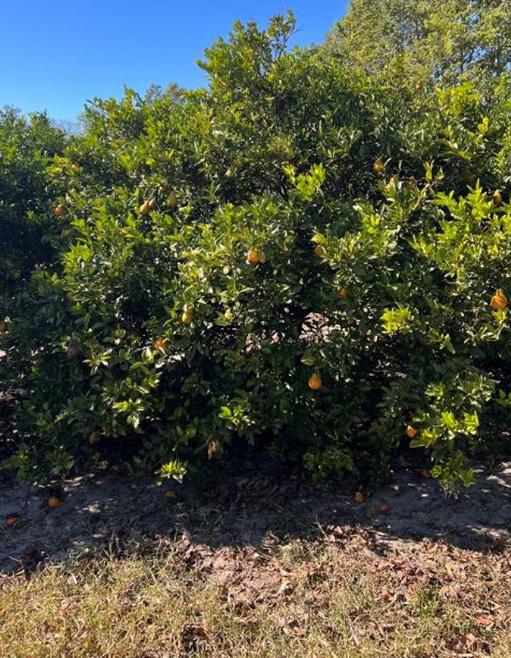
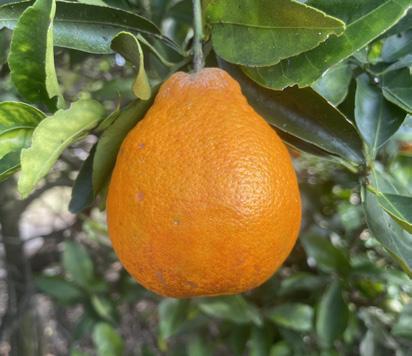
• Diploid mandarin hybrid from LB8-8 (UF proprietary breeding parent from 'Clementine' × 'Minneola') × 'Mukaku Kishu'
• Completely seedless fruit, easy to peel with a distinctive shape, color, flavor, and aroma
• Late September maturity, with harvest extending into mid-November
• Often shows green peel color at maturity in Central Florida (can turn orange with exposure to cool nights)
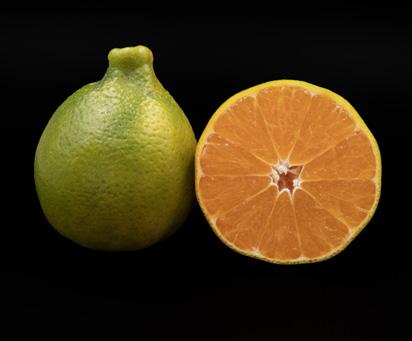
• Consistently ranked as best tasting selection in fruit displays
• Performing very well in North Florida; high °Brix fruit harvested in North Florida performed well on a commercial packing line
• Recommended Production Systems: Conventional, screen-protected (CUPS), home garden
• Primary Market Use: Fresh market
Proposed name: ‘Tangelicious’
Key Points
• Triploid tangelo hybrid from an interploid cross of 'LB8-9' Sugar Belle® × ['Nova' mandarin hybrid ('Clementine' × 'Orlando') + 'Succari' sweet orange] somatic hybrid
• Produces medium-sized, seedless, easy-peel fruit with sweet, pleasant flavor suitable for both fresh market and processing
• Matures in December and holds through January
• Validated by a major juice company as a good NFC juice blending candidate
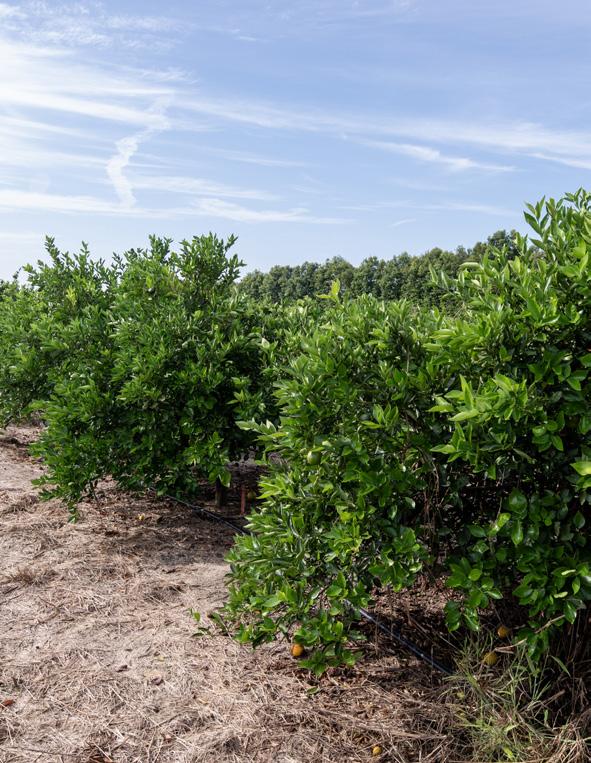
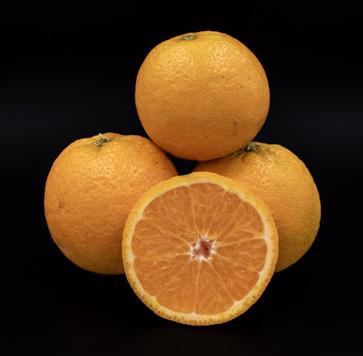
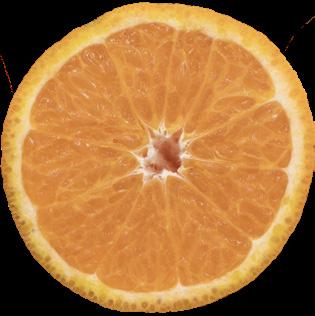
• Demonstrated ability to improve NFC juice color and flavor, juice with 15 °Brix and 42 color score
• Good candidate for the dooryard market
• Recommended Production Systems: Conventional, home garden; has not been tested in CUPS
• Primary Market Use: Fresh market, processing
Proposed name: ‘Wow’ Honey Murcott
Key Points
• Nearly seedless 'Murcott' selection developed via somatic cybridization and budwood irradiation
• Maintains the core traits of standard Honey 'Murcott' with just 0–3 seeds per fruit (1.4 average)
• Peels easier than standard 'Murcott'
• Builds on the established market that already accepts seedy Honey 'Murcotts'
• Recommended Production Systems: Screenprotected (CUPS)
• Primary Market Use: Fresh market, processing
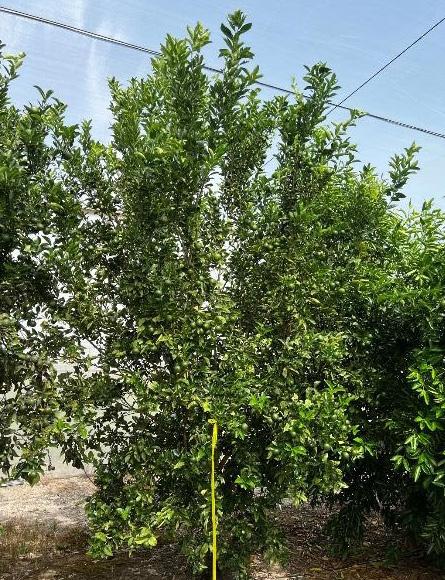
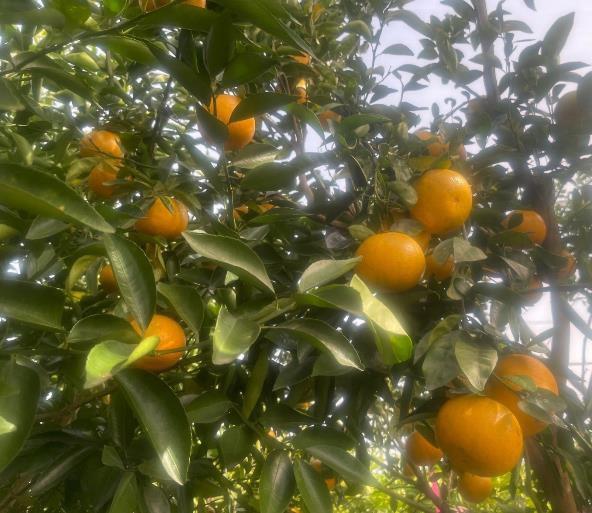
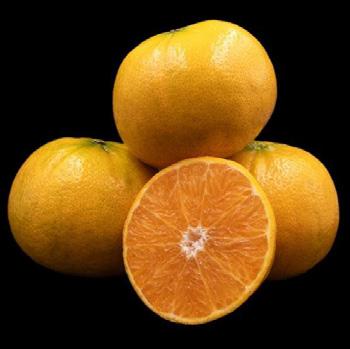
Proposed name: ‘Durable Dancy’
Key Points
• Cybrid 'Dancy' tangerine selection developed via protoplast fusion research
• Originated during efforts to create a G1 'Satsuma' + 'Dancy' somatic hybrid for triploid breeding
• Apparently tolerant of Alternaria brown spot disease (unlike the original 'Dancy')
• Reduced seed count compared to standard 'Dancy' (generally about half as many seeds)
• Recommended Production Systems: Conventional, screen-protected (CUPS), home garden
• Primary Market Use: Fresh market
N40W-5-1
Proposed name: ‘Tasty Snack’
Key Points
• Low-seeded selection derived from 'Nova' developed via budwood irradiation
• Doesn’t exhibit the granulation issue found with sibling 'N40W-6-3' Seedless Snack
• Exceptional flavor and aroma
• Slightly earlier maturity than 'Nova'
• Can be peeled, but not a zipper-skin
• Recommended Production Systems: Home garden; not tested in CUPS
• Primary Market Use: Fresh market
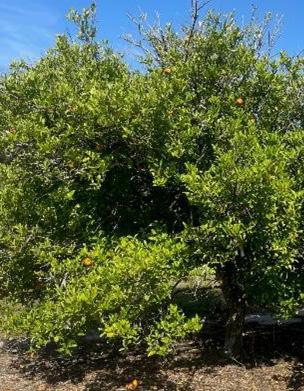
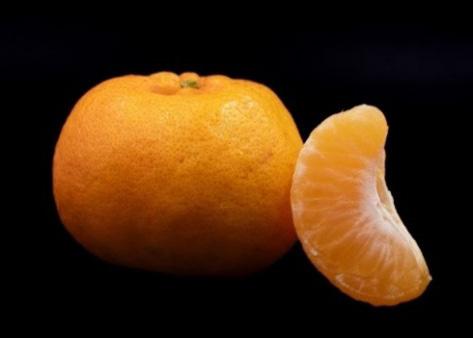
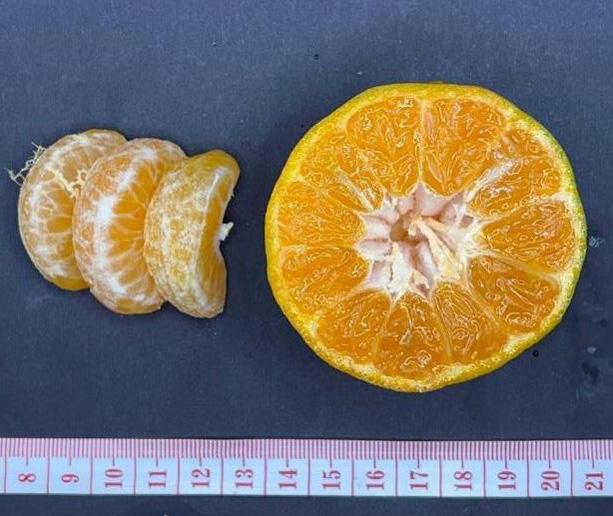
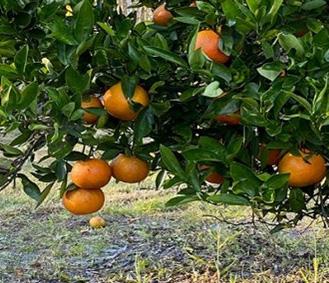
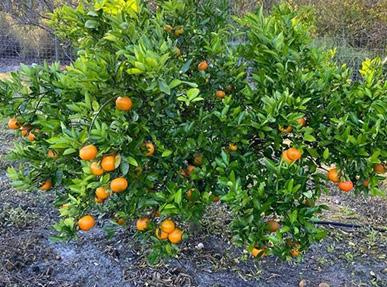
Proposed name: ‘Crimson Queen’
Key Points
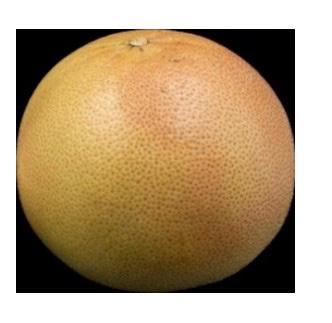
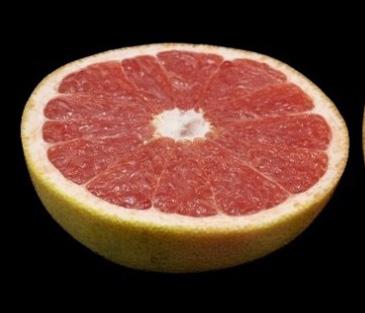
• Dark red grapefruit somaclone developed via somatic embryogenesis from an embryogenic callus line initiated from a commercially purchased red grapefruit
• Selected for superior fruit quality: appearance, deep internal/external color, and flavor
• Fruit quality comparable to 'Star Ruby' with similar attractive blush
• °Brix ranges from 10–13; Juice color scores: range from 40.6 to 41.3
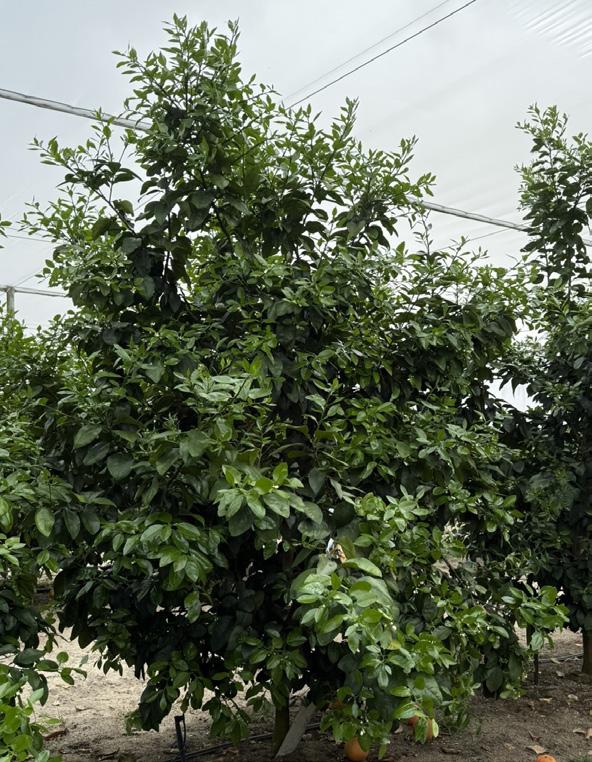
• Does not show common 'Star Ruby' problems observed in the Indian River area (notably heavy leaf blotching and stunted growth)
• Superior performance compared with all available commercial red grapefruit clones in MAC trials
• Recommended Production Systems: Conventional, screen-protected (CUPS), home garden
• Primary Market Use: Fresh market, processing
Proposed name: Pink RosieTM
Key Points
• Triploid grapefruit type hybrid developed from an interploid cross of 'Hirado Buntan Pink' pummelo × ['Succari' sweet orange + 'Hirado Buntan Pink' pummelo] somatic hybrid
• Produces attractive, pink-fleshed, nearly seedless fruit, completely seedless in CUPS
• Very early, maturing in September, ahead of all commercial grapefruit
• Late September fruit quality: ~10 °Brix and ~15 maturity ratio
• Flavor is sweet with a grapefruit-like profile
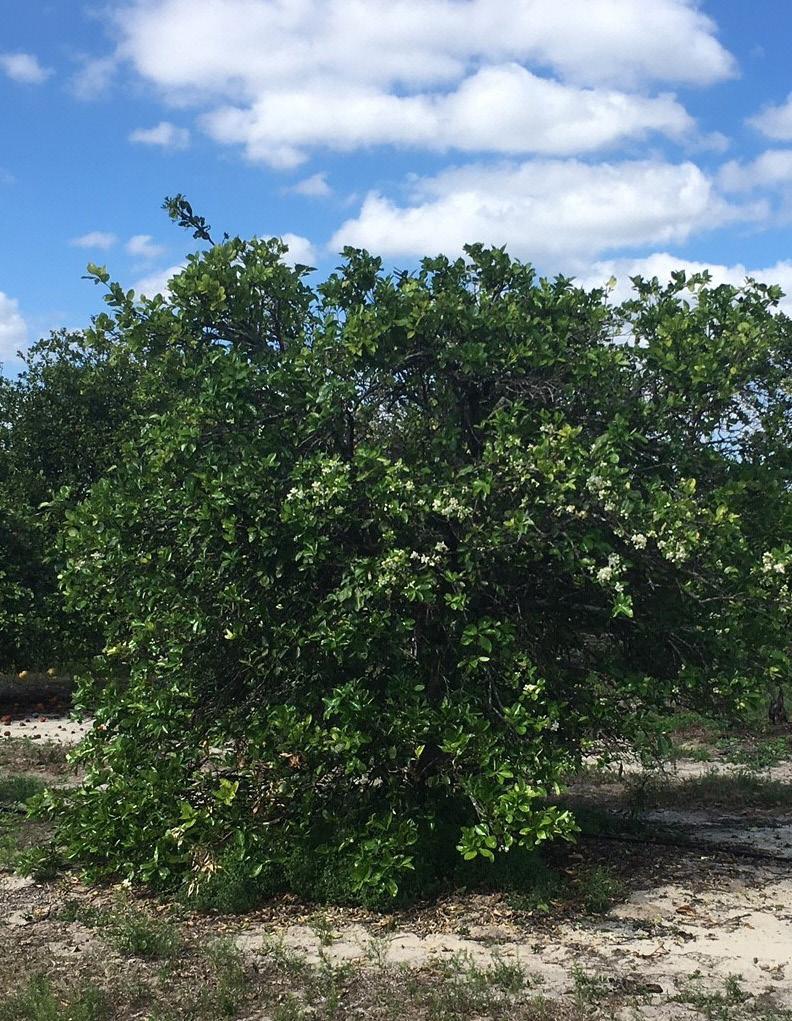
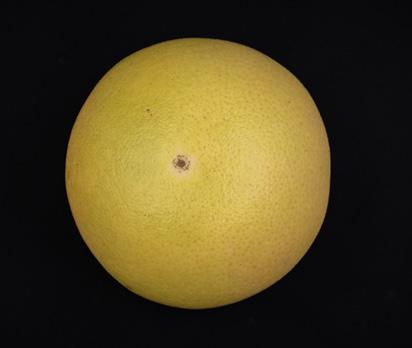
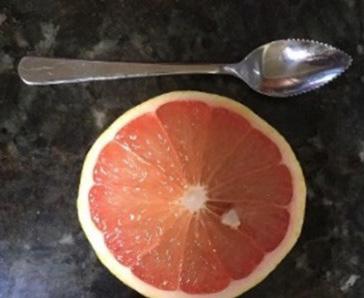
• Trees show better HLB and canker tolerance than standard grapefruit
• Recommended Production Systems: Conventional, screen-protected (CUPS), home garden
• Primary Market Use: Fresh market
'C4-5-14' U.S. PP37293
Proposed name: FiestavilleTM
Key Points
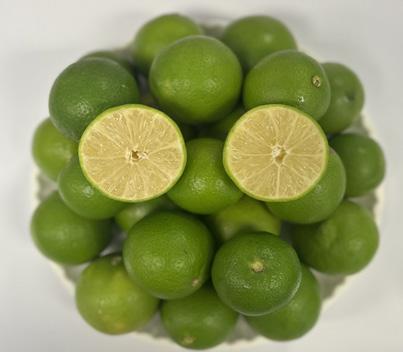
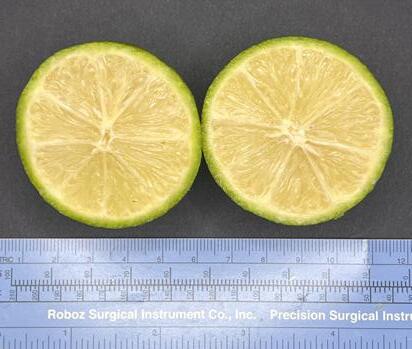
• Triploid, lime-like hybrid developed from an interploid cross of ['Santa Teresa' lemon + 'Lakeland' limequat] somatic hybrid × 'Cook Eureka' lemon
• Fruit resembles 'Key' ('Mexican') lime more than 'Persian' lime in size, color, and flavor
• Average fruit size is smaller than 'Persian' lime
• Interior flesh becomes more yellow as fruit matures (not green like 'Persian' lime)
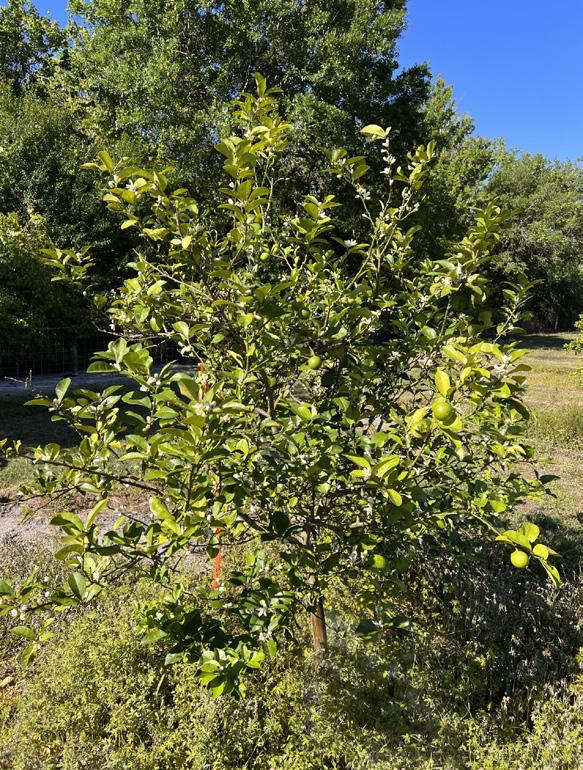
• Fruit is highly aromatic, very juicy, with a strong lime fragrance
• Trees bloom multiple times per year, providing nearly year-round fruit availability
• Recommended Production Systems: Home garden; not tested in CUPS
• Primary Market Use: Fresh market
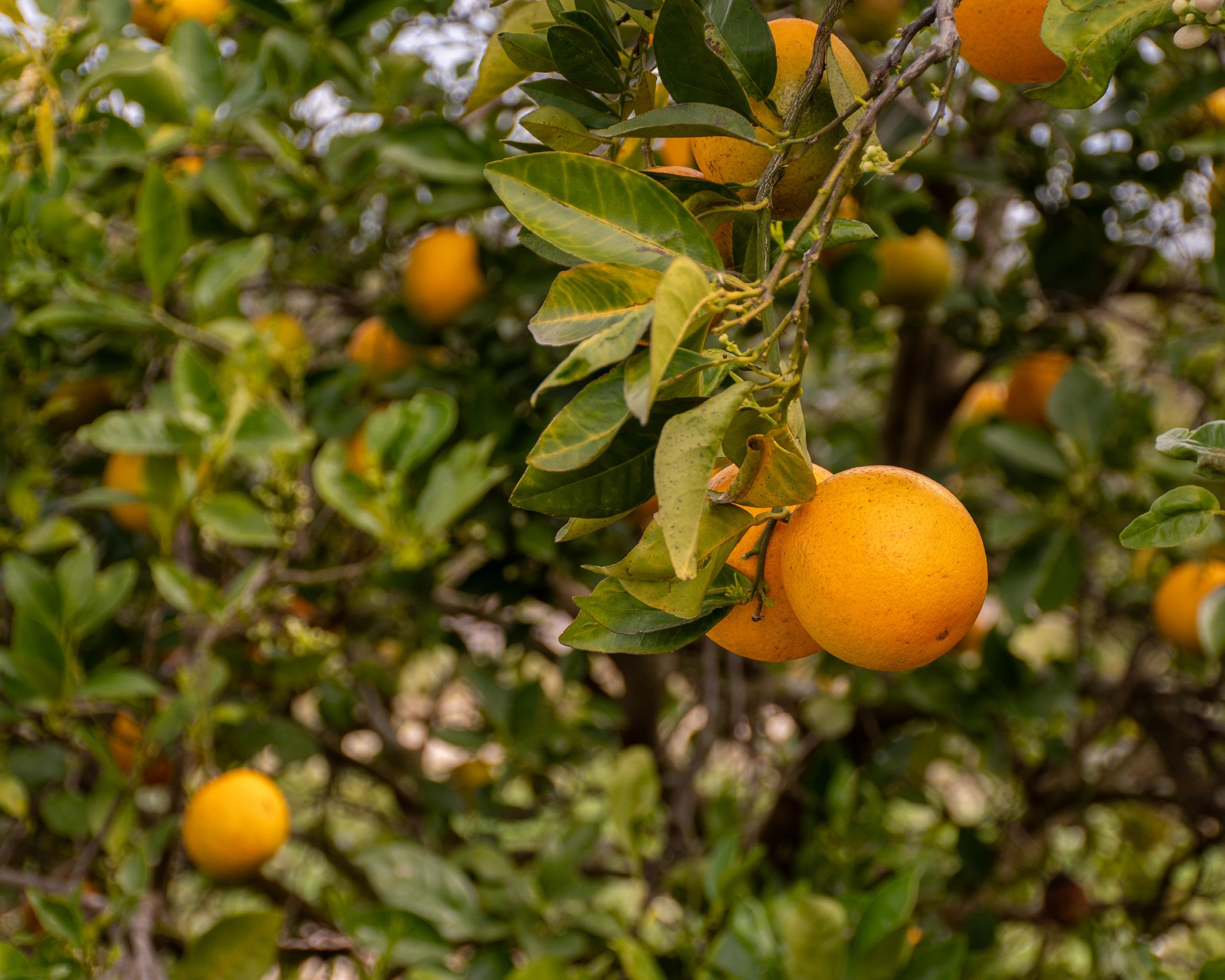
'CE-D5-1-9-42' U.S. PP36742
Proposed name: BeatrizTM
Key Points
• 'Cook Eureka' budwood irradiated and planted in Ft. Pierce grove in 1999
• Part of a large project supported by a major beverage company to increase lemon peel oil production
• Selected in 2017, because of seedlessness and early productivity
• Precocious and productive bearing capability
• Fruit, juice, and peel oil yields in field trials have been in the mid–high ranges, across several seasons
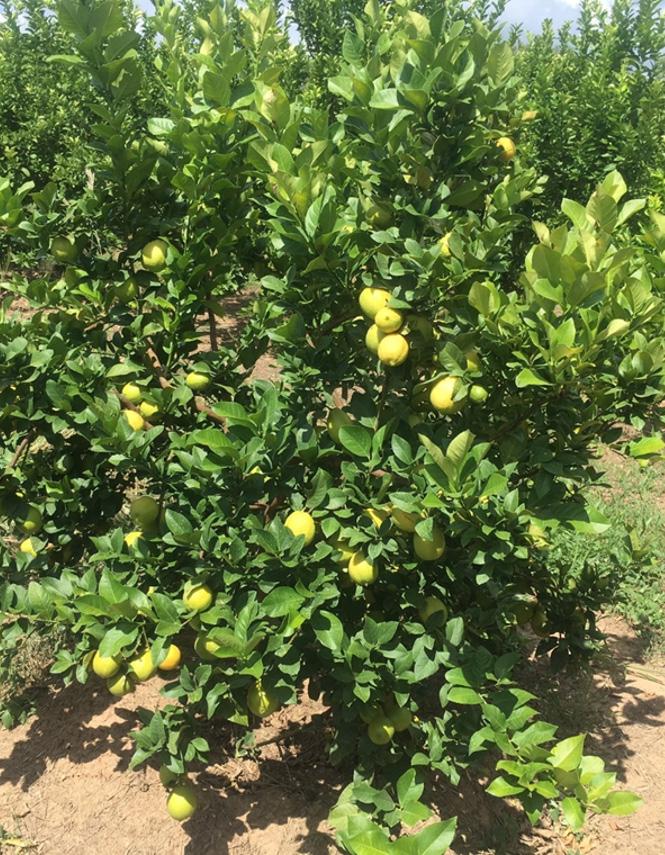
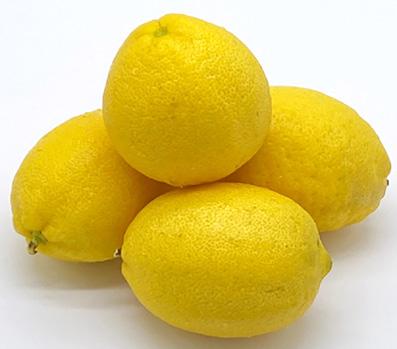
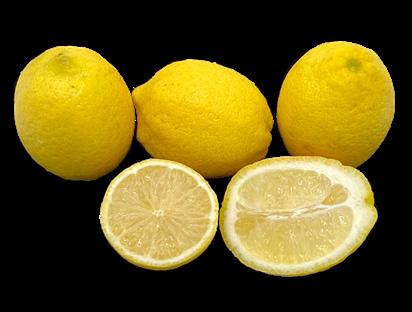
• Fruit shape, size, juice percentage, aroma and flavor are typical of 'Eureka' lemon
• Recommended Production Systems: Conventional, home garden; not tested in CUPS
• Primary Market Use: Fresh market, processing
https://crec.ifas.ufl.edu/citrus-research/newsletter-signup/
Lauren Diepenbrock
Bulimulus bonariensis, commonly known as ghost snails or peanut snails, has become a challenging pest in Florida citrus groves in recent years. The most significant impacts observed to date include interference with irrigation systems and defoliation of young trees when snails become trapped inside individual protective covers (IPCs).
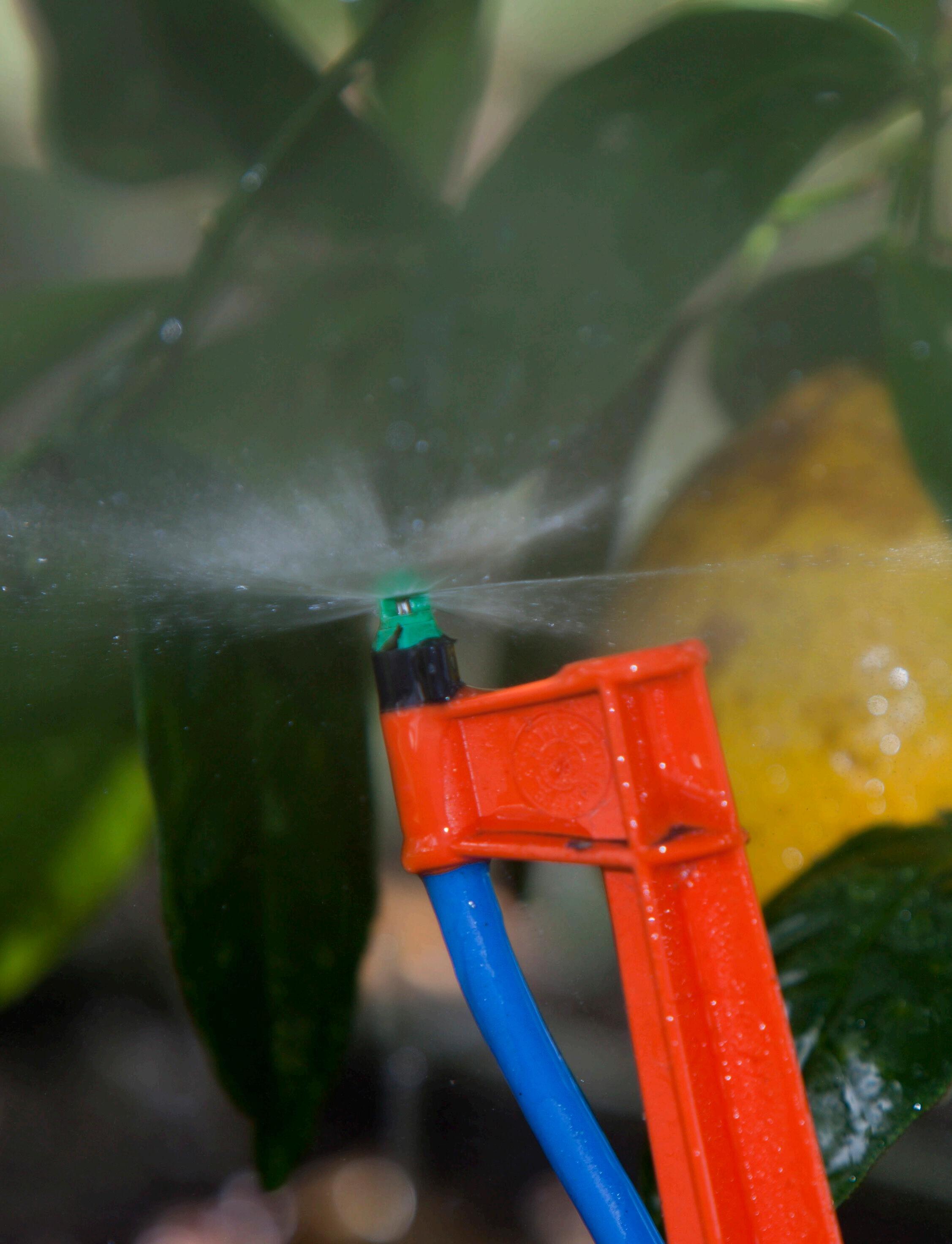
When snails settle on microjet irrigation heads, they can drastically alter water delivery. Instead of the intended dome shaped spray pattern that distributes water to the root zone, the output may be reduced to a narrow fan or even a slow trickle, with water landing much closer to the base of the emitter. This change is especially problematic for trees affected by huanglongbing (HLB). Because HLB reduces root mass, precise delivery of water and nutrients through irrigation and fertigation is critical for maintaining tree health and productivity.
Over the past three years, we have monitored B. bonariensis populations in commercial citrus groves in Central Florida using traps designed to take advantage of snail refuge seeking behavior. These behaviors include climbing and seeking areas with higher moisture. When neither option is available, this species may burrow into the soil; however, that behavior was not evaluated in the current study.
Credit: Lauren Diepenbrock, UF/IFAS
and dry conditions are unfavorable for survival. We observed clear seasonal activity patterns that closely tracked regional soil moisture. When soil moisture readings from nearby Florida Automated Weather Network (FAWN) stations were low, trap counts increased. Conversely, when soil moisture was high, trap counts decreased.
Snail activity was also markedly lower during the coldest parts of the year. We believe that B. bonariensis overwinters underground during these periods, remaining inactive until environmental conditions become favorable for emergence and feeding.
We also examined whether changes in snail density over time suggested movement into or out of citrus blocks. Some snail species exhibit this type of migration, which can sometimes be exploited for management. However, B. bonariensis did not show consistent movement patterns detectable with our sampling methods. This may indicate that populations are already well established in groves with favorable conditions, although our study design cannot confirm this. Ongoing research using individual snail tracking will help determine whether within-grove movement patterns exist.
Our laboratory studies have shown that B. bonariensis requires extremely moist soil conditions to lay eggs. Snails placed in arenas with dry sand did not lay eggs. In contrast, snails placed in arenas with saturated soil began constructing egg chambers and laying eggs within a few days. This strong association between moisture and egg laying is consistent with what is known for other terrestrial snails and slugs.
The traps provided protected refuges that allowed us to quantify relative snail activity during periods when hot
However, excessive moisture can be harmful to snails. In overly saturated soils, we observed increased snail mortality, indicating a narrow range between optimal and excessive moisture conditions. We also documented that B. bonariensis eggs can survive periods of desiccation and resume development
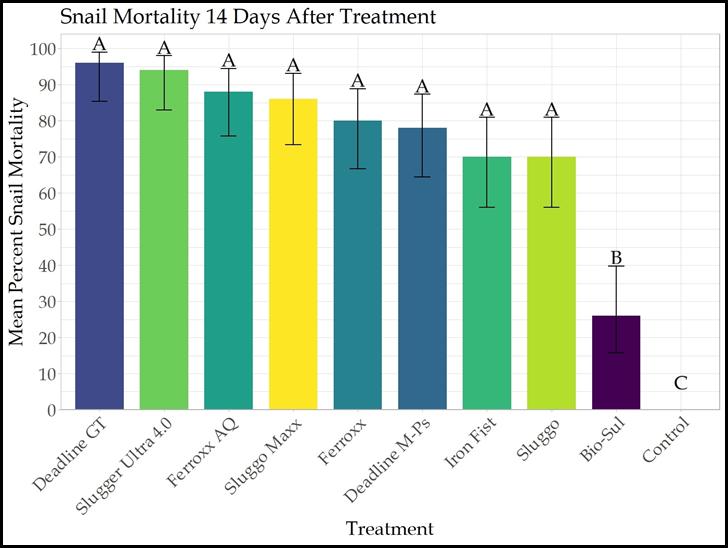
Figure 1. Efficacy of baits in semi-field arenas. All baits were evaluated at 10x labelled rate, the standard for molluscicide efficacy screening (Ganesh M.S. Thesis).
when moisture returns. This suggests that eggs may persist through drought conditions, although the maximum duration of viability under dry conditions remains unknown.
Calcium is another important requirement for B. bonariensis. Calcium is readily available in most citrus groves, and newly hatched juveniles depend on it to harden their initially soft shells. While much remains unknown about the full dietary requirements of this species, calcium is essential for shell development in most snails and slugs.
Although grove conditions in Florida may support nearly year-round reproduction, adult snails must reach reproductive readiness before producing offspring. With support from international collaborators, we have developed methods to assess reproductive status and will continue examining reproductive organs through 2026.
While additional management tools are still under evaluation, chemical control options currently provide the most immediate relief. Most products available for snail control are molluscicidal baits.
MP, and Slugger® Ultra consistently resulted in 90% or greater mortality. One experimental bait developed by Apex Bait Technologies resulted in 100% mortality. This product has a narrower range of potential nontarget effects, and with further testing, it may become available for citrus growers in the coming years.
In other cropping systems, some insecticides, herbicides, and fungicides have shown activity against snails. Using the same semi-field assays, we evaluated several commonly used insecticides to assess their potential impact on B. bonariensis (Figure 2). None of these products are currently labeled for snail control, and these data do not constitute a recommendation for use.
Among the products tested, insecticides containing abamectin produced the highest mortality rates. Abamectin has been reported to affect a limited range of snail species in other regions and may become a useful component of integrated management programs if future label expansions occur and are supported by additional data.
This research was funded by the Citrus Research and Development Foundation (Project 22-014).
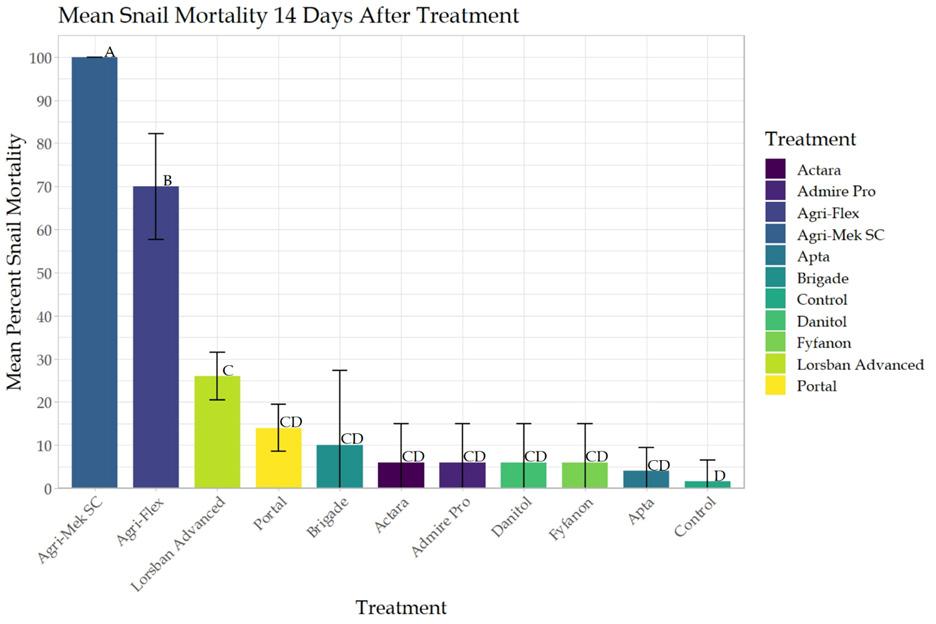
We evaluated baits registered for use in citrus, as well as two products under development, using semifield assays to determine their efficacy against B. bonariensis (Figure 1). Among commercially available products, Deadline® GT, Ferroxx ® AQ, Deadline®
Figure 2. Evaluation of commonly used insecticides against B. bonariensis. None of these products are currently labeled for snail control (Ganesh, M.S. thesis).
Muhammad Adnan Shahid
Assistant Professor, Horticultural Sciences
UF/IFAS North Florida Research and Education Center
Can you briefly describe your current research in simple terms?
My research helps citrus and other tree fruits tolerate environmental stresses like heat, cold, drought, salinity, and flooding. I combine physiological and biochemical studies with applied solutions such as improved nutrition, water management, growth regulators, stress-tolerant varieties, and better farming practices to reduce stress impacts and benefit growers.
What question or problem are you most passionate about solving?
I am passionate about producing profitable, highquality citrus in freeze-prone regions. My work focuses on identifying scion–rootstock combinations for early-maturing, freeze-tolerant cultivars and using exogenous growth hormones to improve cold hardiness. By combining physiological and management strategies, I aim to provide scalable solutions that reduce risk and maintain consistent yields.
What’s a discovery or project you’re especially proud of?
I’m especially proud of taking silicon research from lab to field in citrus production. Field trials showed improved fruit quality, reduced leafminer damage, and better tree recovery after freeze events. Seeing these results influence on-farm decisions and benefit growers has been deeply rewarding.
How has your research evolved over time?
My research has evolved from greenhouse-based studies to applied, field-driven research focused on solving real challenges faced by citrus growers. Over time, I have shifted toward validating nutrient management, rootstock performance, and stressmitigation strategies under on-farm real world conditions to improve adoption and industry impact.
What’s the most exciting part of your work?

The most exciting part of my work is translating research into real-world impact. By addressing grower-driven questions like silicon nutrition or scion–rootstock selection, I see improved grove health, fruit quality, and yield, and collaborating directly with growers makes every challenge worthwhile.
What’s been the biggest challenge in your research, and how did you overcome it?
The biggest challenge in my research is translating lab results to real field conditions, where weather, soil, and management vary. Working closely with growers, testing ideas on their farms, and adapting based on feedback builds trust and demonstrates tangible benefits for adoption.
How do you come up with new ideas or hypotheses?
I get new ideas by observing grove challenges and listening to growers. I connect those observations with plant science and design experiments that fit within their production practices, because I want to do issueoriented research that delivers practical, real-world solutions.
What’s the weirdest or most unexpected thing that’s happened during your research?
The weirdest and most unexpected moment in my research was when a grower accidentally harvested fruit from my on-farm nutrient management trial. I lost the yield data, and all I could do was smile, say “thanks”, and reflect on the unpredictable and sometimes humorous nature of field research.
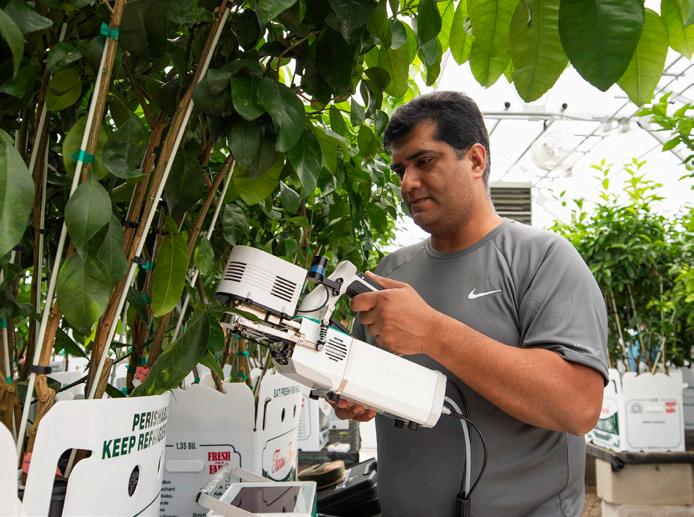
Lamiaa Mahmoud, Manjul Dutt, and Nabil Killiny
Citrus growers have long faced the challenge of balancing fruit quality with disease resistance. With persistent threats such as citrus canker and huanglongbing (HLB) continuing to devastate groves, the need for innovative, durable solutions has never been greater.
Current management strategies, including intensive psyllid control, nutritional therapies, and enhanced cultural practices, have provided only partial mitigation. As a result, identifying citrus varieties that can tolerate HLB and maintain function under infection has become a major research priority. Unlike resistance, which prevents or eliminates infection, tolerance allows plants to endure pathogen presence while minimizing damage and loss of productivity.
The historic sweet orange cultivar ‘Parson Brown’ has recently attracted renewed interest due to observations of slower decline and sustained performance in HLBaffected groves. Originally introduced in Florida in the mid-nineteenth century, ‘Parson Brown’ was widely planted for its early maturity before being replaced by newer cultivars. The present study aims to characterize physiological, biochemical, and molecular responses
associated with HLB tolerance in ‘Parson Brown’ by comparing it with two commercially relevant earlyseason cultivars, ‘Hamlin’ and ‘Roble’.
Advanced molecular and analytical techniques enable researchers to investigate citrus trees’ internal physiological and biochemical responses to stress and disease. By studying both plant biochemicals and gene activity, researchers can link what happens inside the tree to visible symptoms in the field. These approaches are increasingly used to understand HLB. Our recent study combined transcriptomic, metabolomic, and physiological analyses to uncover why ‘Parson Brown’ resists HLB more effectively than other common sweet orange varieties, such as ‘Hamlin’ and ‘Roble’. This study was conducted under controlled conditions in a greenhouse. The findings point to a sophisticated defense strategy that limits pathogen growth, deters insect vectors, and maintains plant health under chronic infection.
One of the first observations was the behavior of ACP on infected and healthy trees. Although psyllids landed on all three varieties, ‘Parson Brown’ recorded the lowest average landing rate. This suggested that
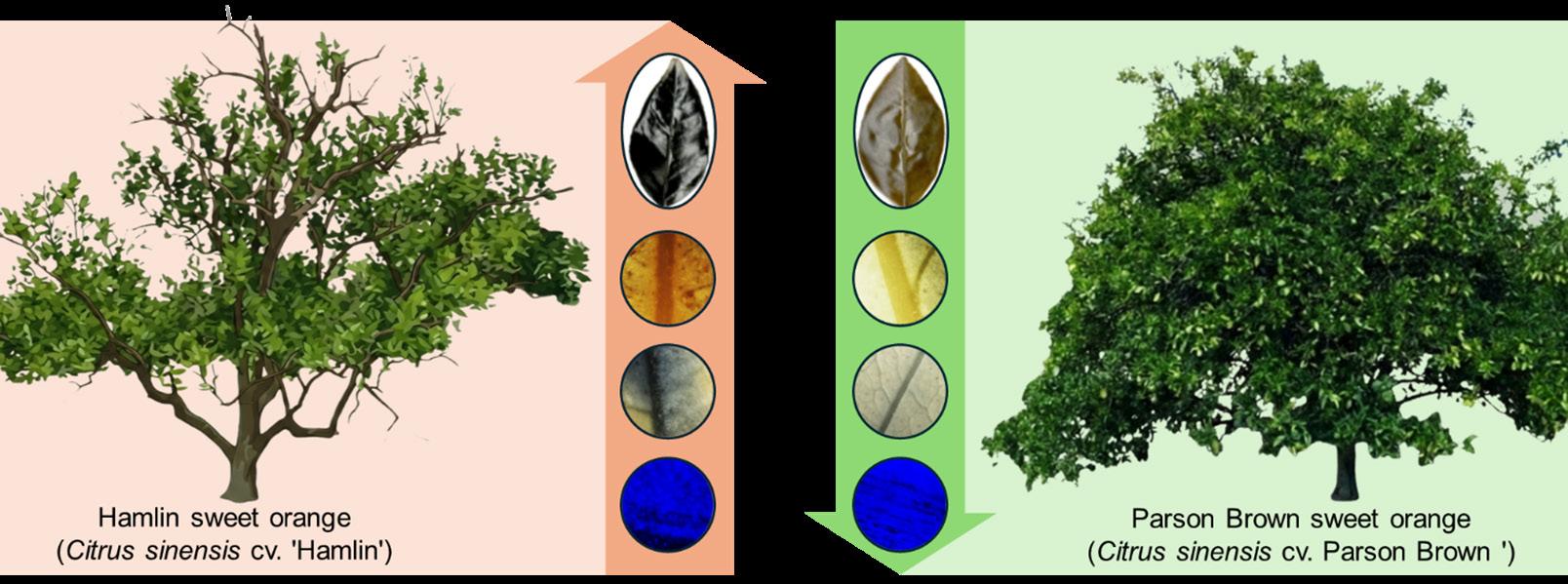
‘Parson Brown’ might be less attractive to the vector. The lower ACP preference is complemented by a reduced bacterial load, as measured by Quantitative PCR. Twelve months of post-inoculation, this trend persisted. This combination of reduced vector attraction and lower pathogen titer suggests that ‘Parson Brown’ naturally limits opportunities for bacterial proliferation.
RNA sequencing of healthy and infected trees revealed extensive transcriptional changes. Across all varieties, thousands of genes were differentially expressed following infection, but the patterns were unique for ‘Parson Brown’. Functional analysis highlighted enrichment in secondary metabolic pathways, particularly terpenoid and flavonoid biosynthesis, pectin catabolism, and cell wall organization. Chloroplast thylakoid membrane processes were also prominent, suggesting that photosynthetic and defense pathways are actively engaged. In the phenylpropanoid pathway, which is critical for producing phenolic compounds, flavonoids, and lignin, ‘Parson Brown’ exhibited the highest induction of genes such as phenylalanine ammonia-lyase, caffeic acid O-methyltransferases, and flavonoid biosynthesis enzymes. These metabolites are essential for strengthening cell walls, scavenging reactive oxygen species (ROS), and directly inhibiting pathogens. Salicylate O-methyltransferase, key for producing methyl salicylate, a mobile signal in systemic acquired resistance, was among the most upregulated genes in ‘Parson Brown’.
Metabolomic Adaptations: Sugars, Phenolics, and
Infected ‘Parson Brown’ trees displayed a distinctive metabolic profile. Total phenolic and total flavonoid content were significantly higher than in ‘Hamlin’ and ‘Roble’, indicating robust biochemical defenses. While monosaccharide levels, crucial for bacterial growth, were lower, disaccharides and sugar alcohols such as chiro-inositol and scyllo-inositol were elevated. These sugars are less efficiently utilized by CLas, potentially restricting its energy supply, while still supporting plant metabolic needs. Volatile organic compounds (VOCs) produced by ‘Parson Brown’ further enhance its defense. Terpenes, including α-pinene, β-pinene, and myrcene, were released at higher levels, which deters psyllids and reduces pathogen transmission. This aligns with previous observations in other tolerant citrus varieties, where VOCs contribute to insect deterrence and antimicrobial activity.
ROS are a double-edged sword in plant defense: essential for signaling but potentially damaging if uncontrolled. ‘Parson Brown’ displayed a unique strategy of ROS homeostasis. Hydrogen peroxide and superoxide levels were lower than in ‘Hamlin’ and ‘Roble’, yet antioxidant enzyme expression, such as glutathione S-transferases, peroxidases, and thioredoxin-like proteins, were higher. This suggests an efficient detoxification system that minimizes oxidative damage while sustaining defense signaling.
Interestingly, callose deposition was reduced in ‘Parson Brown’, indicating a strategy to maintain phloem function while limiting nutrient availability for CLas. Upregulation of glucan 1,3-β-glucosidase genes, responsible for callose degradation, supports this controlled defense mechanism, balancing structural reinforcement with continued transport of essential metabolites.
Understanding the intrinsic tolerance mechanisms of resistant or tolerant citrus varieties offers valuable guidance for growers and breeders. Selecting cultivars that integrate reduced vector attractions, tightly regulated reactive oxygen species responses, and enhanced secondary metabolism could significantly reduce the impact of HLB without heavy reliance on chemical controls. Insights into volatile organic compounds and sugar metabolism further provide promising avenues for the development and breeding of HLB-tolerant cultivars.
Although ‘Parson Brown’ is not completely resistant to HLB, its multifaceted tolerance demonstrates the potential of utilizing natural defense mechanisms. The tolerance of ‘Parson Brown’ arises from a multifaceted defense strategy, highlighting the importance of traditional breeding approaches in combining diverse resistance traits from parental lines. Future research should aim to elucidate the genetic underpinnings of these traits and assess field performance across varying disease pressures, supporting sustainable citrus production in HLB-endemic regions.
For more information, scan the QR code or visit https://doi.org/10.1186/ s12870-025-07372-2.
William Mitchell, Stephanie Brown, Emmy Collins, Taylor O’Bannon, Keith Schneider, and Michelle Danyluk
Now that we are well into the harvest season, the UF/IFAS Produce Safety Extension Team has a midseason checklist for citrus growers to track your produce safety practices and end your season strong. These proactive and preventative steps, many of which are “must-dos” straight from the FDA’s Food Safety Modernization Act (FSMA) Produce Safety Rule (PSR), will optimize your farm performance, reduce audit and inspection headaches, and lower produce safety risks.
• A supervisor has taken a Produce Safety Alliance (PSA) Grower Training
The FSMA PSR requires one responsible party or supervisor for every farm covered by the PSR to take a PSA Grower Training. Mid-season staffing changes may mean your farm no longer has someone who has taken the training. To get trained, check this list of upcoming trainings hosted by the UF/IFAS Produce Safety Extension Team - https://producesafety.ifas.ufl.edu/ upcoming-events-/. Need a training but don’t see one near you? Let your local Extension office know to reach out to the UF/IFAS Produce Safety Extension Team and request one for your area!
• Review your worker training records
Has everyone on the farm who conducts growing, harvesting, packing, or storage activities been trained on the principles of food safety and hygiene, illness and injury, and other training relevant to their job? If not, now is the time! Have you been monitoring your employees and noticed some food safety practices, like cleaning harvest tools before harvest, are not up to your standards? This is a great time to implement a corrective action through a tail gate training and re-train your crew on what you expect. After you have trained or re-trained, document that you did this training! As part of your documentation activities, its important to capture who attended and what topics were taught.
• Conduct your Ag Water System Inspection
For all of your pre- and post-harvest water systems, identify and document any conditions that may introduce food safety hazards such as a cracked well head or trash from your neighbors found near your pond. Document what you may
need to do if a hazard is present, like repairing a broken pipe, to reduce contamination risks.
• Complete your Ag Water Assessment
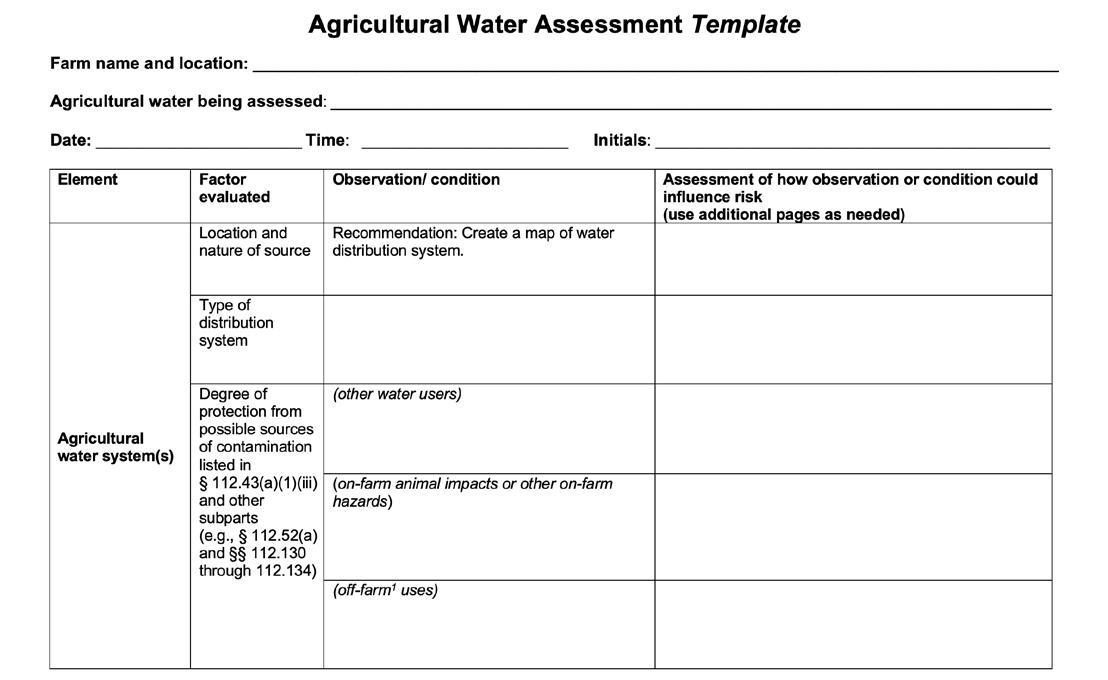
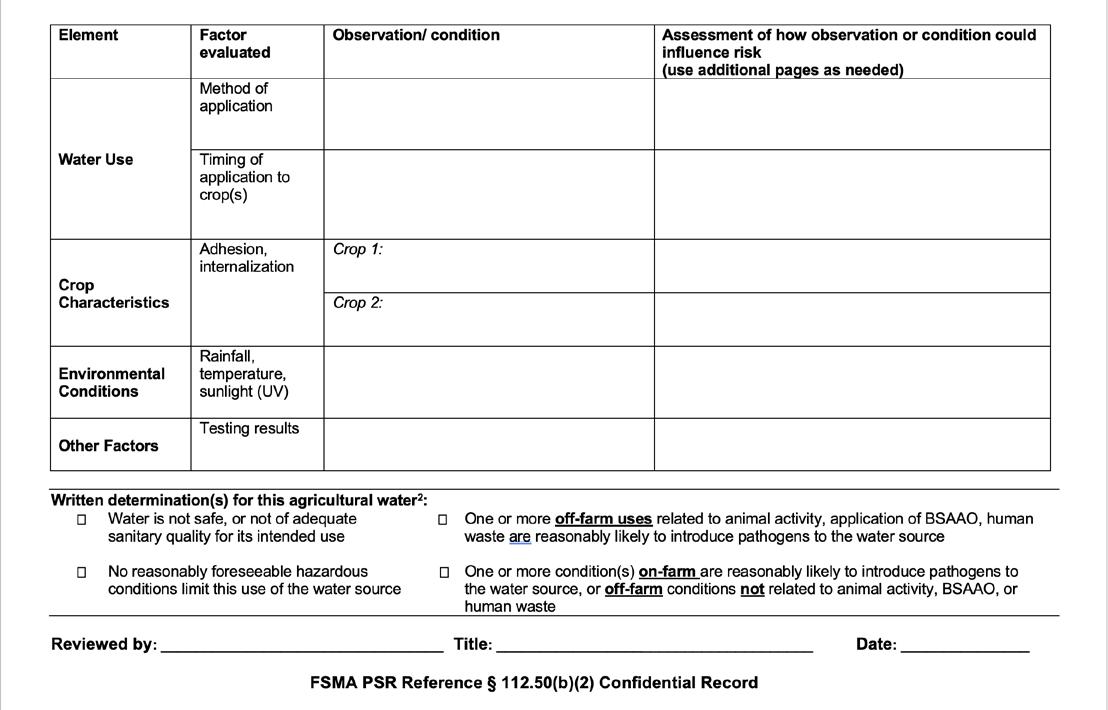
A new “must-do” for pre-harvest water sources, announced by the FDA in May 2024, includes reviewing your pre-harvest water sources, distribution systems, methods of application, timing, and other factors to determine if your water is of adequate sanitary quality for its intended use. For more information, please contact the UF/IFAS Produce Safety Extension Team and visit: https:// www.fda.gov/food/food-safety-modernizationact-fsma/fsma-final-rule-pre-harvest-agriculturalwater
• Test your water sources
The FSMA PSR no longer requires testing your pre-harvest water, but it is still a requirement for many audit schemes and buyers. For post-harvest water, testing is required to ensure that it has no detectable generic E. coli. Even if you already did a pre-season test, conducting a second round of water testing will help you measure the quality of your water source over time and track trends to help with your decision-making. Questions about your water test results? Contact the UF/IFAS Produce Safety Extension Team.
• Spend time with your cleaning and sanitizing crews
Cleaning crews work hard all season. Having another pair of eyes monitoring/supervising these activities will help you celebrate everything that is going well and identify areas for improvement. Examples of improvement areas could include noting which equipment may require maintenance and what tools you could invest in to make their work more effective.
• Review your SOP’s, food safety and recall plans
After using your SOPs and other documents all seasons, schedule some time and discuss what is working well to support your food safety practices and what can be improved. Solving a small problem now will help reduce the risks of big problems later!
• Prepare for the upcoming traceability rule
Separate from the PSR, there may be other FSMA regulations you need to comply with now or in the future that should be considered. The FSMA Additional Traceability Records for Certain Foods, also known as the Food Traceability rule or FSMA 204, will be required for those who manufacture, process, pack, or hold foods on the Food Traceability List (FTL). The complete FTL can be viewed here: https://www.fda.gov/food/food-safetymodernization-act-fsma/food-traceability-list Currently, intact citrus fruits are not on the FTL, but fresh-cut fruits are on the list.
For those who will be required to comply with this rule, the proposed compliance date is July 20, 2028. While training is not required for this rule, UF/IFAS plans to offer traceability rule trainings to support industry compliance later into 2026.
Our team is here to support your food safety needs. From training to technical visits, we are happy to provide support any time during the season as you tune-up and strengthen your produce safety practices. Please visit https://producesafety.ifas.ufl.edu to find out more about our program or email us at crec-foodsafety@ifas.ufl.edu.
For more information, scan the QR code.

In May of 2024, the Food and Drug Administration (FDA) finalized their pre-harvest water rule, requiring all growers covered by the PSR to have a written Agricultural Water Assessment (AgWa) for their pre-harvest/production water. Failure to have a complete, written AgWA during your next PSR inspection will result in a documented observation that may result in follow-up actions.
Ronald Tapia, Frederick Gmitter, Jr., Jodi Humann, Sook Jung, Trevor Rife, and Dorrie Main
Finding longterm solutions to huanglongbing (HLB), also known as citrus greening, is the greatest challenge facing the Florida citrus industry since the disease was first identified in the state in 2005. While no single solution exists, major progress is being made behind the scenes through citrus breeding and genetics.
One of the most important tools supporting this work is the Citrus Genome Database (CGD), a public resource that helps scientists and breeders identify traits, genes, and parent material that may lead to citrus trees with improved tolerance or resistance to HLB. Although CGD is primarily used by researchers, the ultimate goal is straightforward: to help breeders develop better citrus varieties for growers.
Every citrus variety carries thousands of genes that influence how a tree grows, produces fruit, and responds to stress, including disease pressure from HLB. Some citrus types and relatives show better tolerance than others, but understanding why has taken too much precious time.
Today, advances in genomics allow researchers to compare the DNA of many citrus types at once. This makes it possible to:
• Identify genes linked to HLB susceptibility, tolerance, or resistance
• Understand how different citrus types respond to infection
• Select better parents for breeding programs earlier and more accurately
This means breeders can focus their efforts on the most promising material, reducing time and cost while increasing the likelihood of success.
The Citrus Genome Database (CGD) (www. citrusgenomedb.org ) is an online platform that brings together genetic, genomic, and breeding information from citrus and citrus relatives around the world. It currently houses more than eighty sequenced citrus genomes, including mandarins, sweet oranges, lemons, limes, and wild citrus relatives (Figure 1).
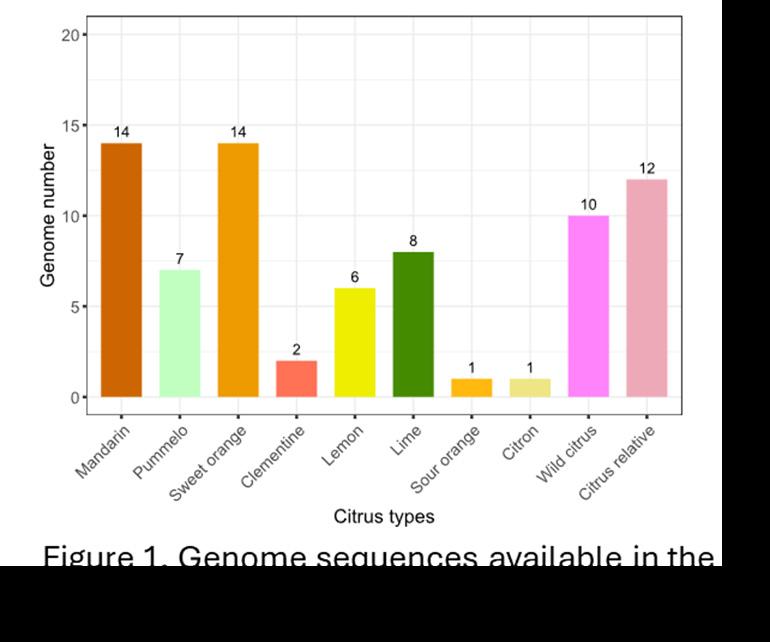
Rather than storing raw data alone, CGD connects information from many studies into a single, searchable system. This allows researchers to:
• Compare genes across citrus types
• Link genetic information to traits such as disease response or growth habit
• Quickly apply discoveries from one citrus type to others
For growers, this means research discoveries move faster from the lab into breeding programs.
CGD also provides breeders with a tool called the Breeding Information Management System (BIMS). BIMS allows breeding programs to securely store and manage enormous amounts of data collected from nurseries, greenhouses, and field trials (Figure 2).
When combined with Field Book, a mobile app used to record tree measurements and observations, breeders can:
• Collect data digitally in the field
• Upload information directly into BIMS
• Search, sort, and analyze results more efficiently
This streamlined data flow helps breeders focus more on selection and decision-making, accelerating progress toward improved cultivars.
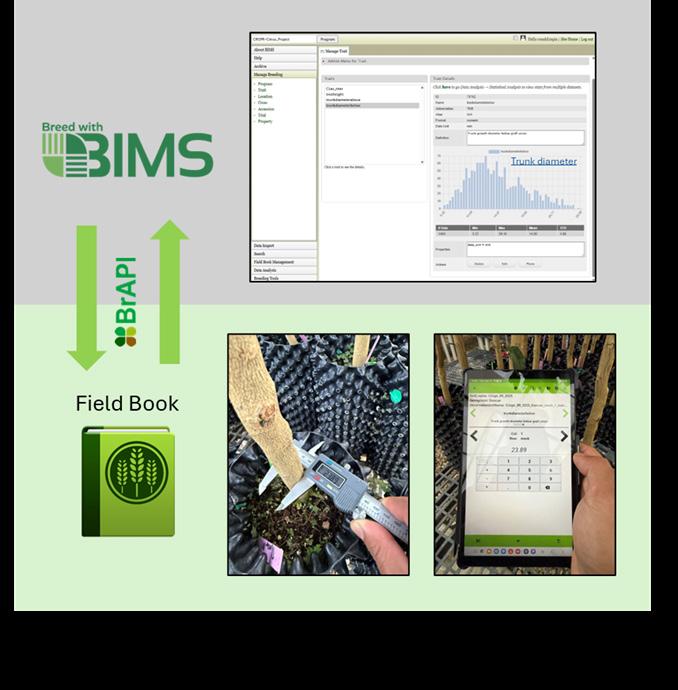
CGD and BIMS play a key role in modern citrus breeding by helping breeders make informed decisions long before trees reach the field. Using CGD and BIMS, breeders can:
• Identify genetic regions associated with HLB tolerance
• Compare candidate parents before crosses are made
• Track valuable traits across generations
Instead of waiting many years to see how trees perform, breeders can use genetic information to screen seedlings early, saving time and resources. This approach does not replace field testing, but it makes field testing far more efficient.
To ensure these tools are widely used, the CGD and BIMS teams provide training through online workshops (Figure 3) and in-person sessions (Figure 4) across the United States. These efforts are supported by USDANIFA and NSF funding and represent a longstanding collaboration between UF/IFAS and Washington State University.
By standardizing how breeding data are collected and shared, researchers and breeders can work together more effectively, avoiding duplication and building on each other’s results.
While CGD does not offer an immediate cure for HLB, it plays a critical role in building the foundation for longterm, sustainable solutions. Genomics allows scientists to understand citrus at a deeper level and helps breeders develop trees that are better suited for today’s disease-pressured environment.
Although the current focus is on HLB, the tools and data in CGD also support improvements in yield, fruit
quality, stress tolerance, and other traits of interest. These benefits will extend well beyond greening in the future.
Growers will not necessarily be using genomic information from the Citrus Genome Database directly in their groves today. Much of this work happens behind the scenes, well before a new tree ever reaches a nursery or field. However, we believe it is important for growers to understand advancements made in citrus breeding technology and research and how extensively genomic tools are now being used to guide decisions.
Although the results of this work are not always immediately visible, UF/IFAS citrus breeders and their collaborators from other institutions are using the most advanced tools available worldwide to understand citrus at a fundamental level. Genomics allows us to identify promising traits, select better parents, and eliminate poor candidates early, saving years of time and significant resources. This is not theoretical research; it directly shapes the breeding pipelines that will determine the next generation of citrus trees.
While progress against HLB is necessarily longterm, this work represents a major shift in the breeding approaches and methods used for citrus improvement compared to just a decade ago. The tools, data, and expertise now in place ensure that Florida’s citrus breeding programs are not only active, but driving innovation, with the ultimate goal of delivering more resilient, productive citrus trees for growers in the future.

Dr. Fred Gmitter and Dr. Jude Grosser

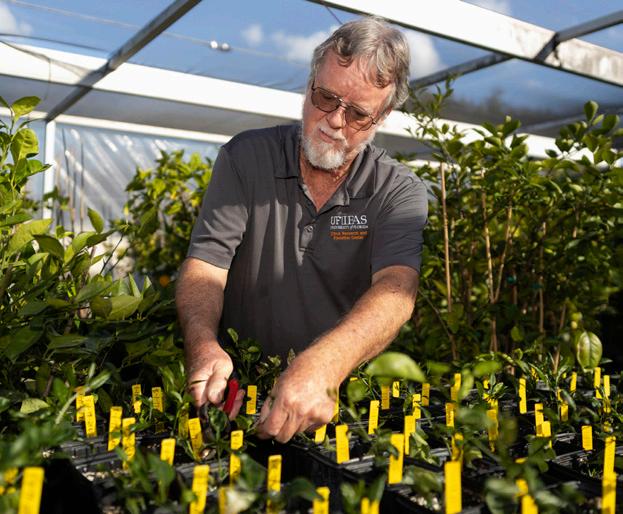
John Chater
• Genetic Background: Developed by Dr. Fred Gmitter, Jr. from a 2005 cross of ‘Daisy’ mandarin × ‘Mukaku Kishu,’ selected in 2010–2011, released, and currently available to growers.
• Harvest and Fruit Characteristics: RES 19-56 is an early-season mandarin, ready for harvest by mid-to-late October. Fruit typically sets in clusters, peels easily, and has classic mandarin flavor.
• Yield and Size: Yields in CUPS range from 85 to 146 lbs. per tree (3.5 to 4.5 year-old trees), with an average fruit diameter of 58.2 mm (2.3 in).
• Performance: It performs well on US-897 in CUPS, and on orange 14 in grove plantings with oxytetracycline trunk injections in Lake County, Florida.
• Fruit Quality and Marketability: In CUPS, °Brix averages 9.5–10.8 with ratios of 19.6–22.0. Fruit colors well, has good postharvest shelf life, and has been well received by consumers in Central Florida markets.
• Outlook: Long-term rootstock compatibility is under evaluation. This cultivar is well-suited for trial plantings in North Florida, where demand for early-season mandarins is high.
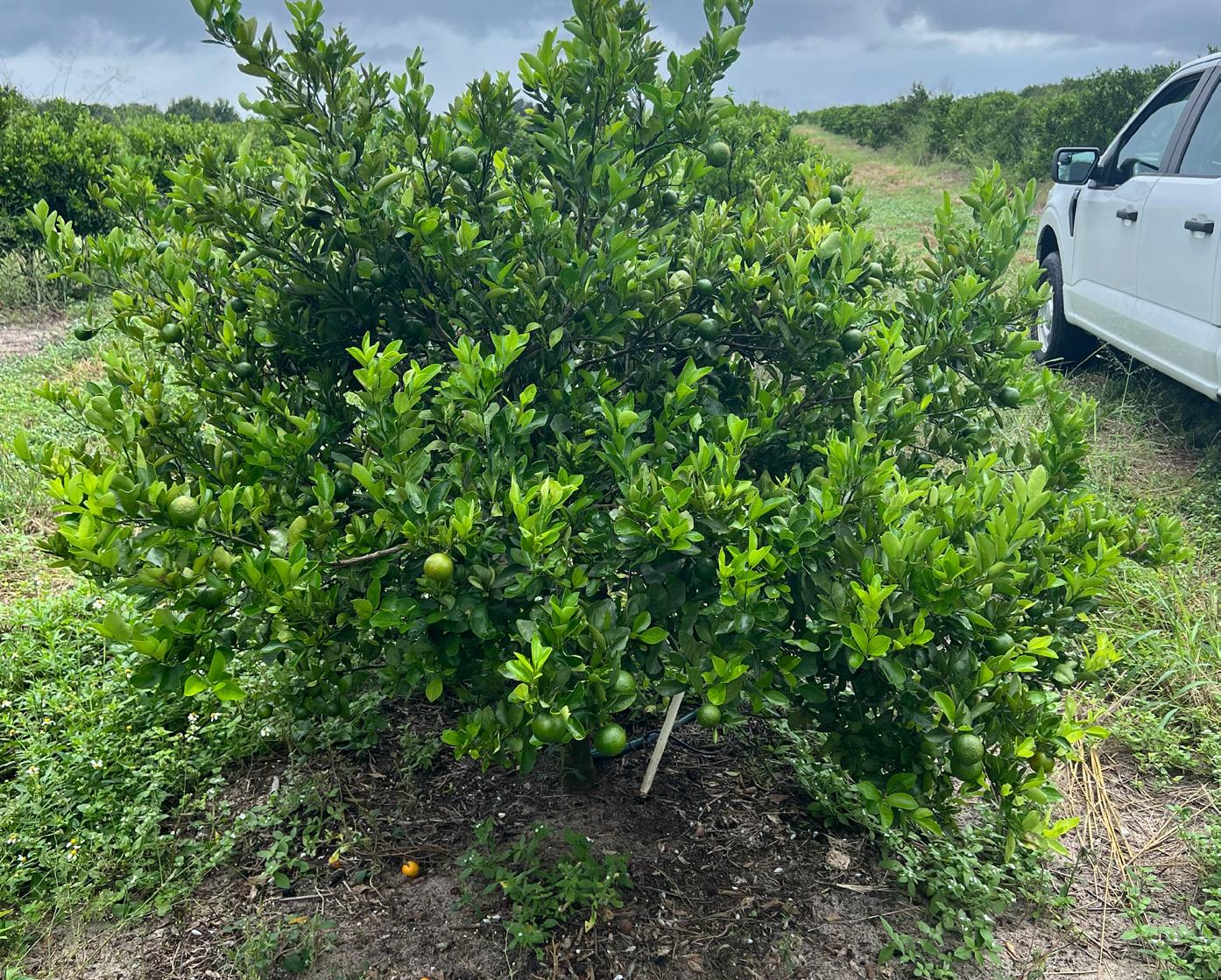
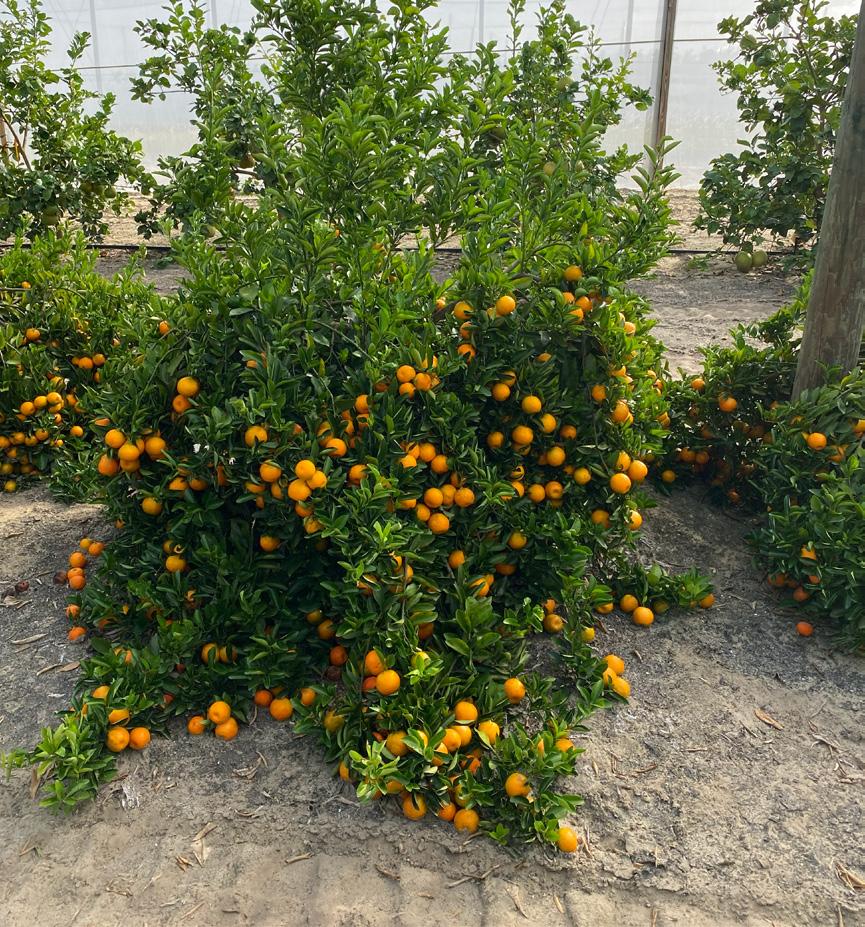
(C) 'OLL-8' sweet orange on UFR-5 in Polk County, Florida in December (five-year-old tree). Credit: Jude Grosser, UF/IFAS
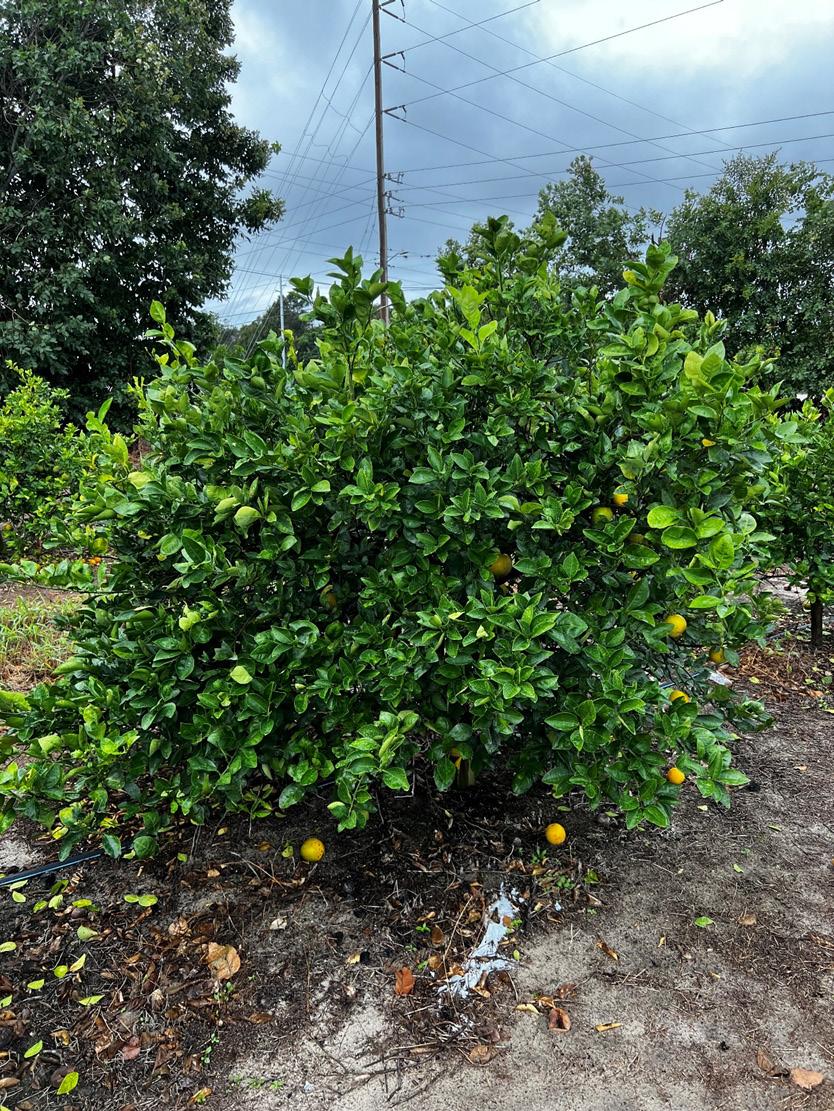
• Genetic Background: UFR-5 is an allotetraploid citrus rootstock developed for tree-size control and enhanced disease tolerance. It is a zygotic hybrid derived from a cross between two somatic hybrids: ‘Nova’ mandarin × ‘Hirado Buntan’ pummelo (seed parent) and ‘Succari’ sweet orange × ‘Argentine’ trifoliate orange (pollen parent).
• Disease Tolerance and Tree Health: UFR-5 is tolerant to Phytophthora in Florida and performs well with 'OLL-8' sweet orange and Sugar Belle® across multiple Polk County sites (Lake Alfred and Haines City). It also shows tolerance to the Diaprepes root weevil–Phytophthora disease complex in greenhouse trials and performs well against at least one nematode species.
• Tree Size, Cold Hardiness, and Performance: UFR-5 produces a medium-sized tree with 'OLL-8' and Sugar Belle®. It is among the most cold-hardy rootstocks evaluated by the UF/ IFAS NFREC Shahid Lab, making it a strong candidate for North Florida. Yield and fruit quality impacts are under evaluation; however, in 2025 composite sampling at Eagle Lake, 'OLL-8' on UFR-5 outperformed ‘Valencia’ on US-942 for °Brix, ratio, color, and poundssolids per box.
• Propagation and Availability: UFR-5 has been commercially available for several years and produces mostly true-to-type, uniform seed.
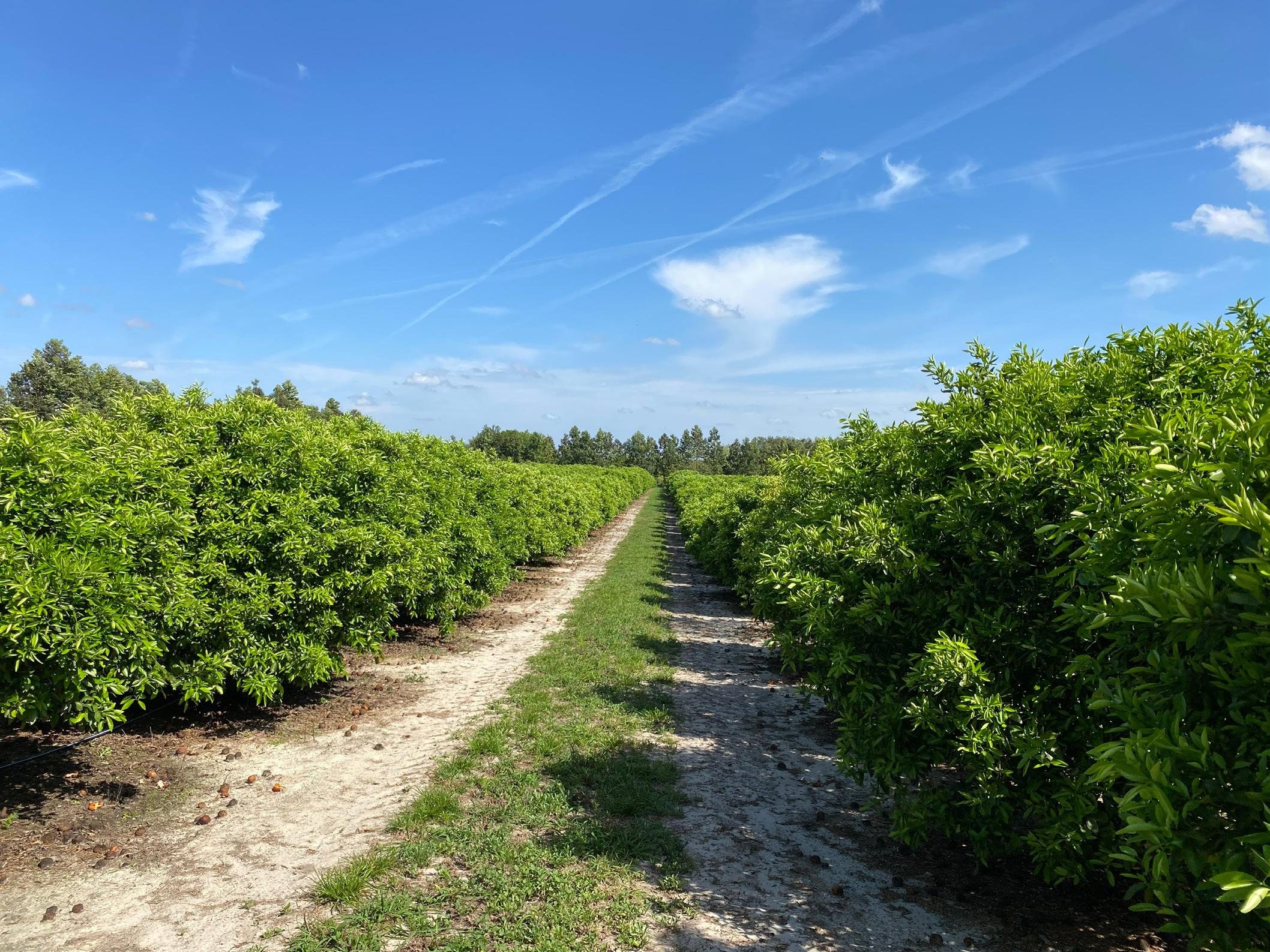
This workshop is open to all agricultural commodities and will include updates on the new pesticide label requirements. Attendees are encouraged to bring a laptop or tablet.
Hosted by the UF/IFAS Citrus Research and Education Center and the UF/IFAS Pesticide Information Office.
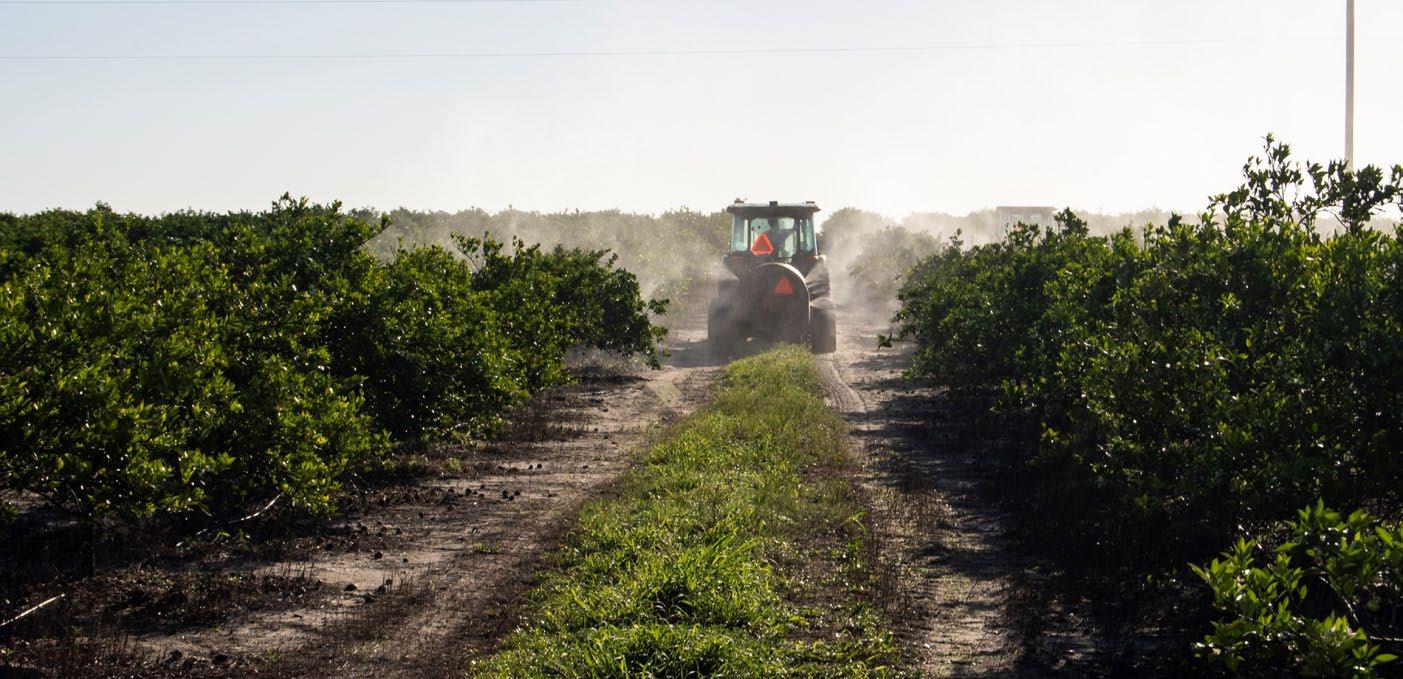
Compliance With New EPA Rules for Pesticides: Understanding How To Comply with Endangered Species Act on the Label
8:30 am Registration
9:00 am – 9:50 am
Understanding How to Read and Follow a Pesticide Label, Matt Smith
9:50 am – 10:40 am
Endangered Species on the Pesticide Label: How to Understand the Rules and How to Make it Work for You Part 1, Brett Bultemeier
10:40 am – 10:55 am BREAK
10:55 am – 12:00 pm
Endangered Species on the Pesticide Label: How to Understand the Rules and How to Make it Work for You Part 2, Brett Bultemeier
12:00 pm LUNCH
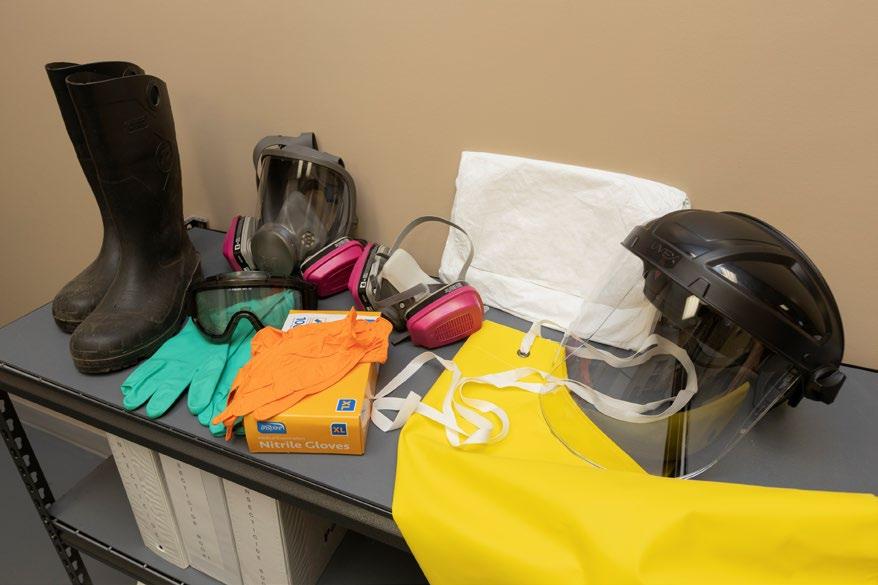
May 19, 2026
9:00 am – 12:00 pm
Location
UF/IFAS Citrus Research and Education Center 700 Experiment Station Road Lake Alfred, FL
Registration Deadline May 12, 2026
There is no cost to attend, but preregistration is required. Space is limited.
For more information, contact Jamie Burrow 863-956-8648 jdyates@ufl.edu Matt Smith 352-343-4101 smith197@ufl.edu
Continuing Education Units (CEU) Available
RUP CORE: 3 CEUs
CCA IPM: 2.5 CEUs
Goal: The goal of leaf and soil sampling is two-fold: 1)
To assess trees’ nutritional requirements to maintain balanced nutrients for optimum tree growth; and 2)
To prevent any nutrient deficiency or toxicity that can compromise tree health and yield or reduce revenue.
Timing
• The best time to collect leaves is July and August, targeting the 4-to-6-month-old spring flush.
• Soil samples should be collected once per year at the end of the summer rainy season and before fall fertilization (August to October) or when a fertilization program is about to start.
• Because the majority of trees in open field conditions have HLB, the leaf and soil nutrient sampling should be done from trees that are representative of the grove.
• Fully expanded, average-size leaves should be collected; don’t collect small leaves or leaves with psyllid damage.
• Severely declining trees should not be considered for nutrient analysis.
Adapted from UF/IFAS HS1355, Citrus Leaf Sampling Procedures for Nutrient Analysis https://go.ufl.edu/leafsample
• Grove area should be 20 acres or less.
• Each sample set should be the same variety and rootstock that has received the same fertilization plan.
• Leaves should be a representation of the entire grove; gather 100 leaves from non-fruiting twigs from 15–20 uniform trees, selected randomly.
• Label a clean, new paper bag with information to reference when results are received.
• Wash and air-dry leaves the day of collection. Do not let the leaves get dehydrated before washing.
• Using thumb and forefinger, rub the leaves gently while soaking in mild detergent solution, and then thoroughly rinse with clean water, and let leaves dry before shipping.
• If you are not able to wash on the day of leaf sample collection, store in the refrigerator overnight.
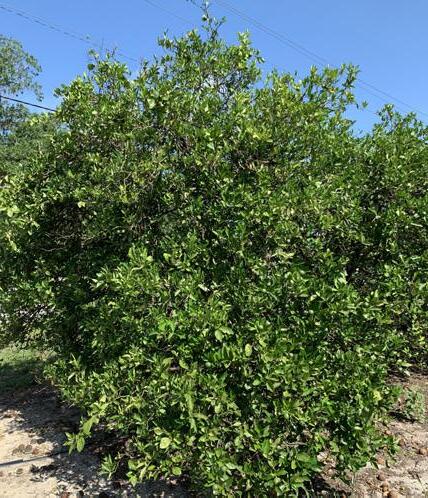
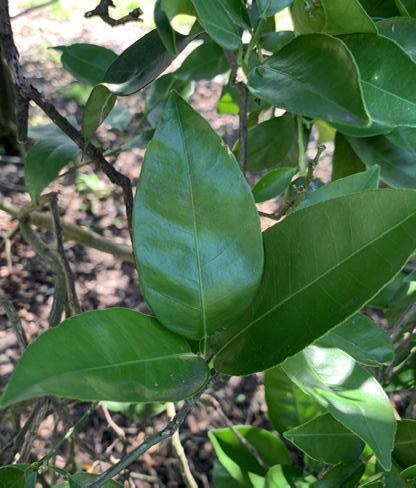
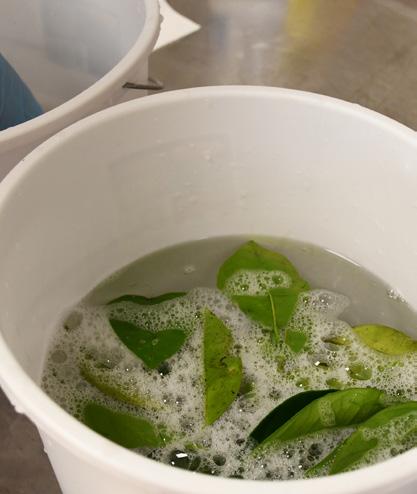
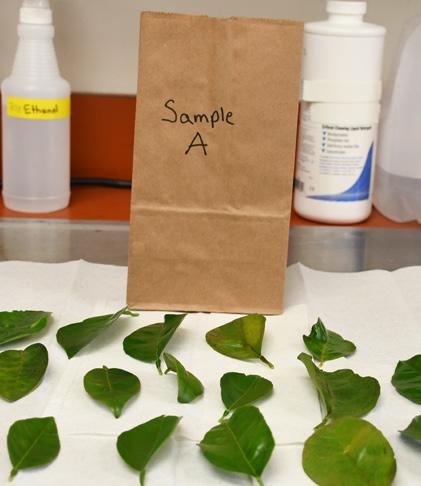
the trees that represent the grove
the
Adapted from UF/IFAS SL454, Soil Sampling Procedures
https://go.ufl.edu/soilsample
• Each soil sample should consist of one soil core taken about 8 inches deep at the dripline or near the wetted area of the microjet.
• Repeat for 15–20 trees within the area wetted by the irrigation system in the zone of maximum root activity and add them to a plastic bucket.
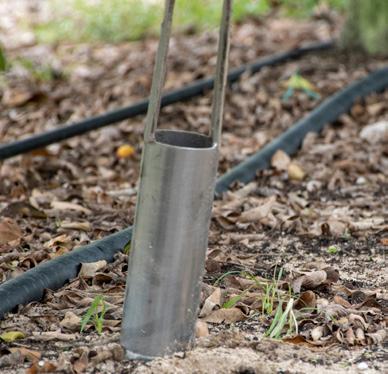
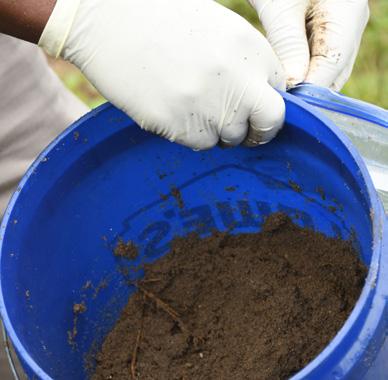
Ute Albrecht
UF/IFAS Southwest Florida Research and Education Center
Stephanie Brown
UF/IFAS Southwest Florida Research and Education Center
John Chater
UF/IFAS Citrus Research and Education Center
Emmy Collins
UF/IFAS Citrus Research and Education Center
Michelle Danyluk
UF/IFAS Citrus Research and Education Center
Megan Dewdney
UF/IFAS Citrus Research and Education Center
Lauren Diepenbrock
UF/IFAS Citrus Research and Education Center
Manjul Dutt
UF/IFAS Citrus Research and Education Center
Debora Fragoso
UF/IFAS Citrus Research and Education Center
Frederick Gmitter, Jr.
UF/IFAS Citrus Research and Education Center
Jude Grosser
UF/IFAS Citrus Research and Education Center
Alissa Hevesh
UF/IFAS Extension Highlands County
Misty Holt
UF/IFAS Citrus Research and Education Center
Jodi Humann Washington State University
Sook Jung Washington State University
• Thoroughly mix the 15–20 cores in a nonmetal bucket to form a composite sample. Take a subsample from this mixture and place about 200 to 400 mL (6 to 12 fl oz, depending on the laboratory) into a labeled plastic bag.
• Soil samples should be air-dried before shipping to the laboratory for analysis.
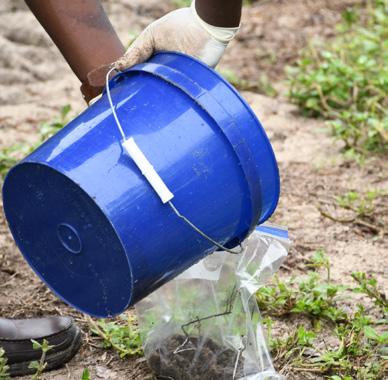
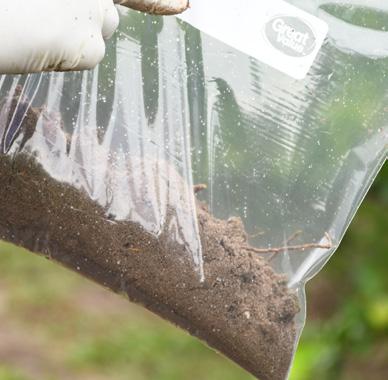
Ramdas Kanissery
UF/IFAS Southwest Florida Research and Education Center
Nabil Killiny
UF/IFAS Citrus Research and Education Center
Lamiaa Mahmoud UF/IFAS Citrus Research and Education Center
Dorrie Main Washington State University
William Mitchell
UF/IFAS Gainesville
Taylor O’Bannon
UF/IFAS Citrus Research and Education Center
Gabriel Pugina
UF/IFAS Southwest Florida Research and Education Center
Trevor Rife Clemson University
Michael Rogers
UF/IFAS Citrus Research and Education Center
Keith Schneider
UF/IFAS Gainesville
Muhammad Adnan Shahid
UF/IFAS North Florida Research and Education Center
Igor Silva
UF/IFAS Southwest Florida Research and Education Center
Sarah Strauss
UF/IFAS Southwest Florida Research and Education Center
Ronald Tapia
UF/IFAS Citrus Research and Education Center
Tripti Vashisth
UF/IFAS Citrus Research and Education Center
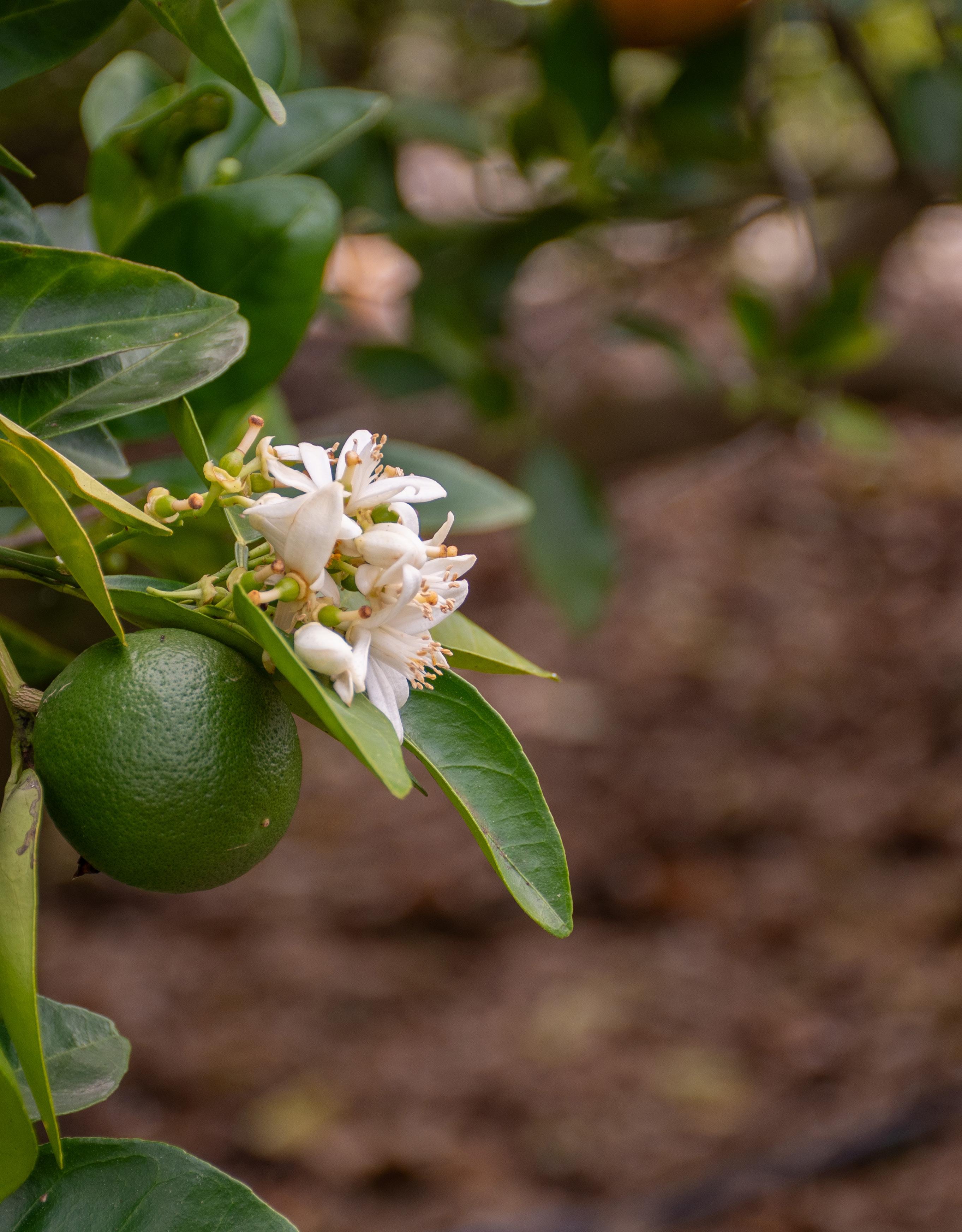

Madelyn Greathouse Sumter, Pasco, and Hernando Counties mgreathouse@ufl.edu
Edwin Gutierrez DeSoto, Hardee, and Manatee Counties edwingr@ufl.edu
Ute Albrecht ualbrecht@ufl.edu
Fernando Alferez alferez@ufl.edu
Yiannis Ampatzidis i.ampatzidis@ufl.edu
Ozgur Batuman obatuman@ufl.edu
Bryony Bonning bbonning@ufl.edu
Stephanie Brown stephaniebrown@ufl.edu
Tom Burks tfburks@ifas.ufl.edu
Liliana Cano lmcano@ufl.edu
José Chaparro jaguey58@ufl.edu
John Chater jchater@ufl.edu
Michelle Danyluk mddanyluk@ufl.edu
Megan Dewdney mmdewdney@ufl.edu
Lauren Diepenbrock ldiepenbrock@ufl.edu
Alissa Hevesh Highlands County ahevesh@ufl.edu
Amir Rezazadeh St. Lucie County amir2558@ufl.edu
Larry Duncan lwduncan@ufl.edu
Manjul Dutt manjul@ufl.edu
Choaa El Mohtar mohtarc@ufl.edu
Svetlana Folimonova svetlana@ufl.edu
Fred Gmitter fgmitter@ufl.edu
Claudio Gonzalez cfgonzalez@ufl.edu
Jude Grosser jgrosser@ufl.edu
Zhengfei Guan guanz@ufl.edu
Sandra Guzmán sandra.guzmangut@ufl.edu
Davie Kadyampakeni dkadyampakeni@ufl.edu
Ramdas Kanissery rkanissery@ufl.edu
Nabil Killiny nabilkilliny@ufl.edu
Mark Kistler mark.kistler@ifas.ufl.edu
Matt Smith Lake and Orange Counties smith197@ufl.edu
Danielle Williams Gadsden County dsprague@ufl.edu
Mongi Zekri Charlotte, Collier, Glades, Hendry, and Lee Counties maz@ufl.edu
Amit Levy amitlevy@ufl.edu
Graciela Lorca glorca@ufl.edu
Xavier Martini xmartini@ufl.edu
Zhonglin Mou zhlmou@ufl.edu
Taylor O’Bannon taylorlangford@ufl.edu
Ahmad Omar omar71@ufl.edu
Dean Pringle td.pringle@ufl.edu
Nicole Quinn nicole.quinn@ufl.edu
Jawwad Qureshi jawwadq@ufl.edu
Mark Ritenour ritenour@ufl.edu
Michael Rogers mrgrs@ufl.edu
Arnold Schumann schumaw@ufl.edu
Muhammad Adnan Shahid mshahid@ufl.edu
Kirsten Pelz-Stelinski pelzstelinski@ufl.edu
Lukasz Stelinski stelinski@ufl.edu
Sarah Strauss strauss@ufl.edu
Eric Triplett ewt@ufl.edu
Nikolaos Tziolas ntziolas@ufl.edu
Tripti Vashisth tvashisth@ufl.edu
Christopher Vincent civince@ufl.edu
Tara Wade tara.wade@ufl.edu
Nian Wang nianwang@ufl.edu
Yu Wang yu.wang@ufl.edu
Flavia Zambon f.zambon@ufl.edu

Scan QR code for a digital version.