UNESCO Chair on Hydrometeorological Risks, Universidad de las Américas Puebla
CHAIR MEMBERS
Director
Polioptro F. Martínez Austria udlap
MEMBERS
Víctor Hugo Alcocer Yamanaka Comisión Nacional del Agua
Erick R. Bandala González Desert Research Institute, EE. UU.
Benito Corona Vázquez udlap
Johanness Cullmann World Meteorological Organization Geneva
Carlos Díaz Delgado Instituto Interamericano de Ciencias del Agua, México
Carlos Escalante Facultad de Ingeniería, unam
Matthew Larsen Smithsonian Tropical Research Institute, EE. UU.
Alison Lee udlap
Benito Corona Vázquez udlap
Humberto Marengo Mogollón Instituto de Ingeniería, unam
Gabriela Moeller Chávez Universidad Politécnica de Morelos
Einar Moreno Quezada udlap
Carlos Patiño Gómez udlap
Sofía Ramos President Luminario Education Strategies, EE.UU.
José Ángel Raynal Villaseñor consultor
José D. Salas Colorado State University, EE. UU.
Jim Thomas Desert Research Institute, EE. UU.
Juan Valdes University of Arizona, EE. UU.
http://www.udlap.mx/catedraunesco/
3
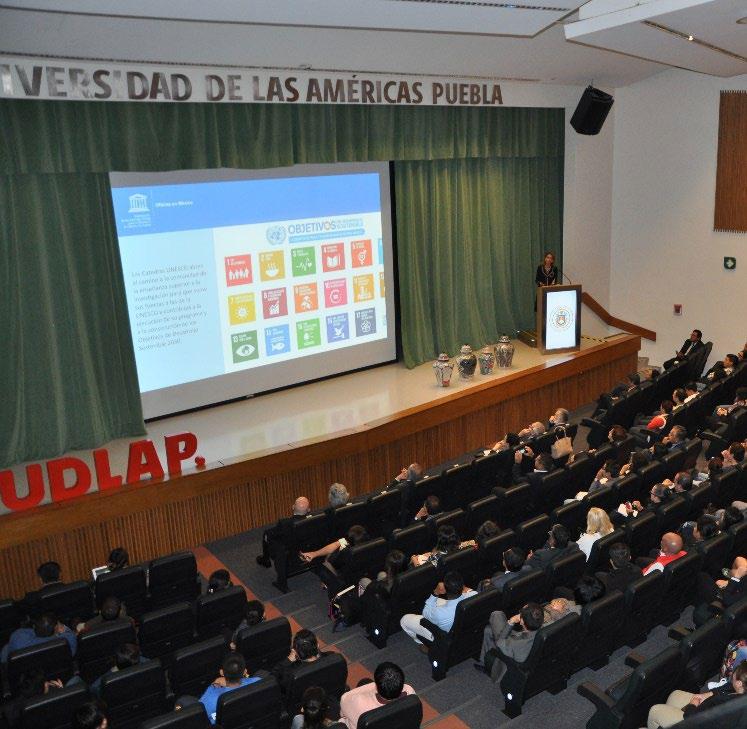
Renewal 2020–2024 of the Unesco Chair
6
Water Services and COVID-19
Webinar organized by the Chair
10
Geoengineering for the climate change
David Eduardo Guevara Polo
Energy data and oceans’ health
Pedro Andrés Sánchez Gutiérrez
8
Water Resources of Mexico New book José Ángel Raynal Villaseñor, member of the Chair
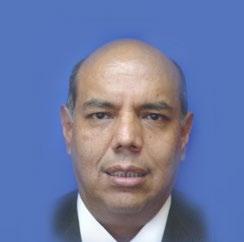
Dr. Humberto Marengo, cila’s new commissioner
RENEWAL OF THE CHAIR 2020-2024
A UNESCO CHAIR IS A RESEARCH-BASED, KNOWLEDGE-SHARING HUMAN-RESOURCES TRAINING PROGRAM THAT WORKS AROUND TOPICS OF GLOBAL OR REGIONAL RELEVANCE. IDEALLY, IT INTEGRATES RESEARCHERS FROM SEVERAL INSTITUTIONS AND/OR UNIVERSITIES FROM SEVERAL COUNTRIES, WHO COLLABORATE IN THE ABOVE-MENTIONED ACTIVITIES.
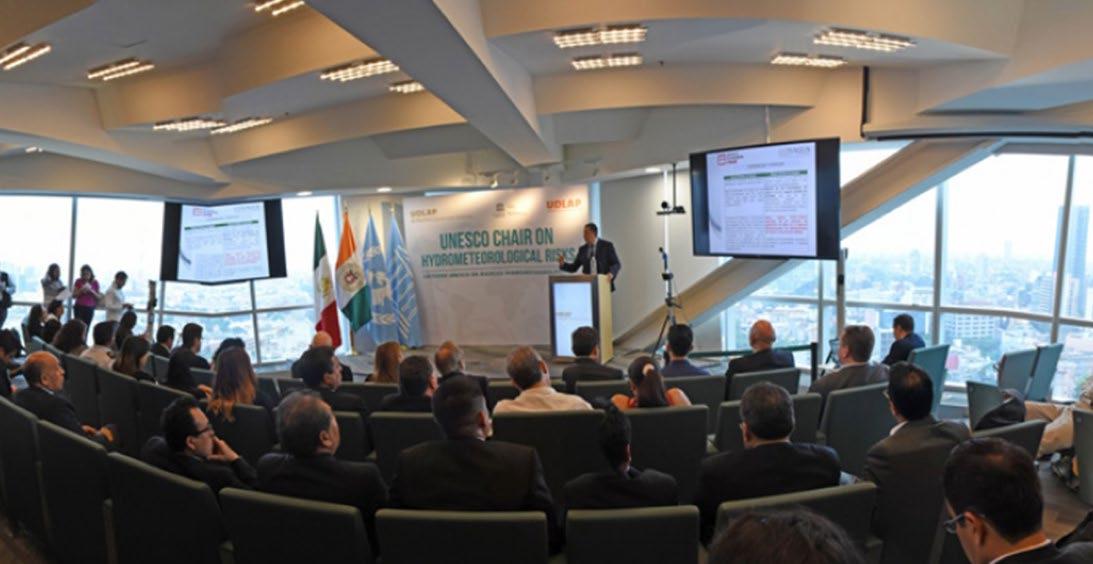
Aunesco Chair is a research-based, knowledge-sharing human-resources training program that works around topics of global or regional relevance. Ideally, it integrates researchers from several institutions and/or universities from several countries, who collaborate in the above-mentioned activities. In all unesco Chairs, there are one or more host institutions. In the case of the Hydrometeorological Risks Chair, the host institution is the Universidad de las Américas Puebla.
The unesco Chairs operate in four-year periods; at the end of these periods, their results and performance are reviewed, thus assessing the authorization for a new period. The assessment performed by the unesco Higher Education Office is thorough and is conducted in coordination with other interested agencies of the organization, i.e., the International Hydrological Program and the unesco regional office in Latin America and the Caribbean. Conversely, the unesco General Conference has recommended that only those Chairs showing significant results, had to be extended.
The unesco Chair on Hydrometeorological Risks started its operations in 2016; therefore, it was subject to a review for determining its renewal, which was stated in the Collaboration Agreement unesco- Universidad de las Américas Puebla (udlap), the host institution. During this review, udlap sent a detailed report of the activities undertaken together with the request for renewal.
Within this context, we are pleased to report that unesco ’s Higher Education Office has communicated to the udlap president, Dr. Luis Ernesto Derbez, that the unesco Chair on Hydrometeorological Risks has been renewed for a period of four years, until October 2024. UNESCO has mentioned the following:
This unesco Chair has developed important work in terms of capacity development (including at PhD level), as well as in terms of research and knowledge dissemination. The active contribution of this Chair to the activities of the Intergovernmental Hydrological Programme (IHP) in the Latin America and the Caribbean region, including its collaboration with other unesco Chairs in water, in the region, are notable.
Among its members, it integrates researchers from the udlap as well as from other institutions in Mexico and other countries, such as the University of Arizona, the University of Colorado, the World Meteorological Organization, the Smithsonian Tropical Research Institute, the Desert Research Institute (USA), the Universidad Nacional Autónoma de México, and the Inter-American Institute of Water Science and Technology.
The unesco -UDLAP Chair develops eight research lines, each of which has and continues to involve several research and development projects. Each of these lines has leading researchers, who are listed below, and who develop their research with the collaboration of researchers from udlap and other institutions in Mexico and/or abroad.
1. Extreme temperature and heat waves
lead researcher: Polioptro F. Martínez Austria
2. Tele-links of climate indexes and extreme events
lead researcher: Polioptro F. Martínez Austria
3. Analysis of climate change trends
lead researcher: Polioptro F. Martínez Austria
4. Analysis of climate scenarios Regionalized Concentrated Pathways (RCP) in hydrological basins
lead researcher: Carlos Patiño Gómez
5. Mathematical, statistical, and probabilistic models applied to hydrology, hydraulic resources, and climate change
lead researcher: Carlos Patiño Gómez
6. Drought analysis
lead researcher: Polioptro F. Martínez Austria
7. Integrated management of water in the Rio Bravo basin under climate change scenarios
lead researchers: Polioptro F. Martínez Austria and Carlos Patiño Gómez
8. Climate and migration
lead researchers: Alison Elizabeth Lee (Universidad de las Américas Puebla) and Justin Stoler (University of Miami)
During the initial years of its activities, the Chair has worked on the preparation of human resources, particularly including those with a doctorate in Water Sciences from UDLAP, as provided for in the unesco-udlap agreement. During this period, two doctoral and twelve undergraduate theses were published in addition to special courses and seminars for students.
The Chair has been established as a national reference point and has undertaken international collaborations. In addition, it has organized several face-to-face and remote round tables, seminars such as the International Seminar on Climate Change and Hydrometeorological Risks, as well as many keynote lectures in different forums; it also conducts workshops and brief courses as a mechanism for knowledge and technology transfer. Furthermore, it participates in the development of public policies, particularly the new water law in Mexico, and it collaborates with unesco in the design of the IX phase of the International Hydrology Program. The Chair is a member of the decision-making committees in Mexico and the Council of the Mexican National Committee for unesco-IHP.
The Chair has established collaboration with several universities and other organizations in Mexico, Latin America, and the United States. Moreover, it collaborates actively with the unesco offices in Paris, Latin America, and Mexico.
During this period, the Chair published two books: Facing the Threat: Climate Change, and The Rio Bravo Basin and Climate Change, which address the impacts of climate change on water availability, as well as the observed and expected effects of extreme events. The second book focuses on a major transboundary basin between Mexico and the United States.
The members of the Chair also published nine chapters, with the most recent one discussing climate change and water resources in Mexico and data models for watershed management in Mexico, in the book Water Resources of Mexico, published by Editorial Springer.
During this period, two research briefs were published, including a position statement by the Mexican Academy of Engineering on water safety in the country, that are intended to influence public policies on national water management.
In addition, the members of the Chair published 17 research papers in journals of international distribution and 18 articles for dissemination.
Undergraduate and doctoral students also collaborate in the activities of the Chair. Students pursuing a doctorate
in Water Sciences at udlap have the greatest participation. First, several of them are preparing their doctoral research in the lines of research of the Chair. Therefore, they not only contribute to the research but also have the guidance, resources, and access to information and counterparts outside udlap that enrich their doctoral theses. Second, a chapter of student members has been created in charge of publishing short articles on the Chair’s blog, which they manage under the supervision of the Chair’s head.
Undergraduate students participate in the Chair’s research through the UDLAP Honors Program.
The Chair has received extensive support from the udlap both in terms of organization as well as financial and administrative aspects.
In the forthcoming period 2020–2024, the Chair will continue to work on these lines of research, as well as support the training of human resources. The main challenge in the future, which is not exclusive to the Chair, is to expand and increase the sources of funding. Currently, both in Mexico and in the rest of the world, this is a major challenge that we are now addressing. Another challenge, as suggested by unesco, is to increase the so-called North–South collaboration, i.e., we will have to increase our collaboration with institutions in the United States, Canada, and Europe.
WATER SERVICES AND COVID-19
WEBINAR ORGANIZED BY THE CHAIR
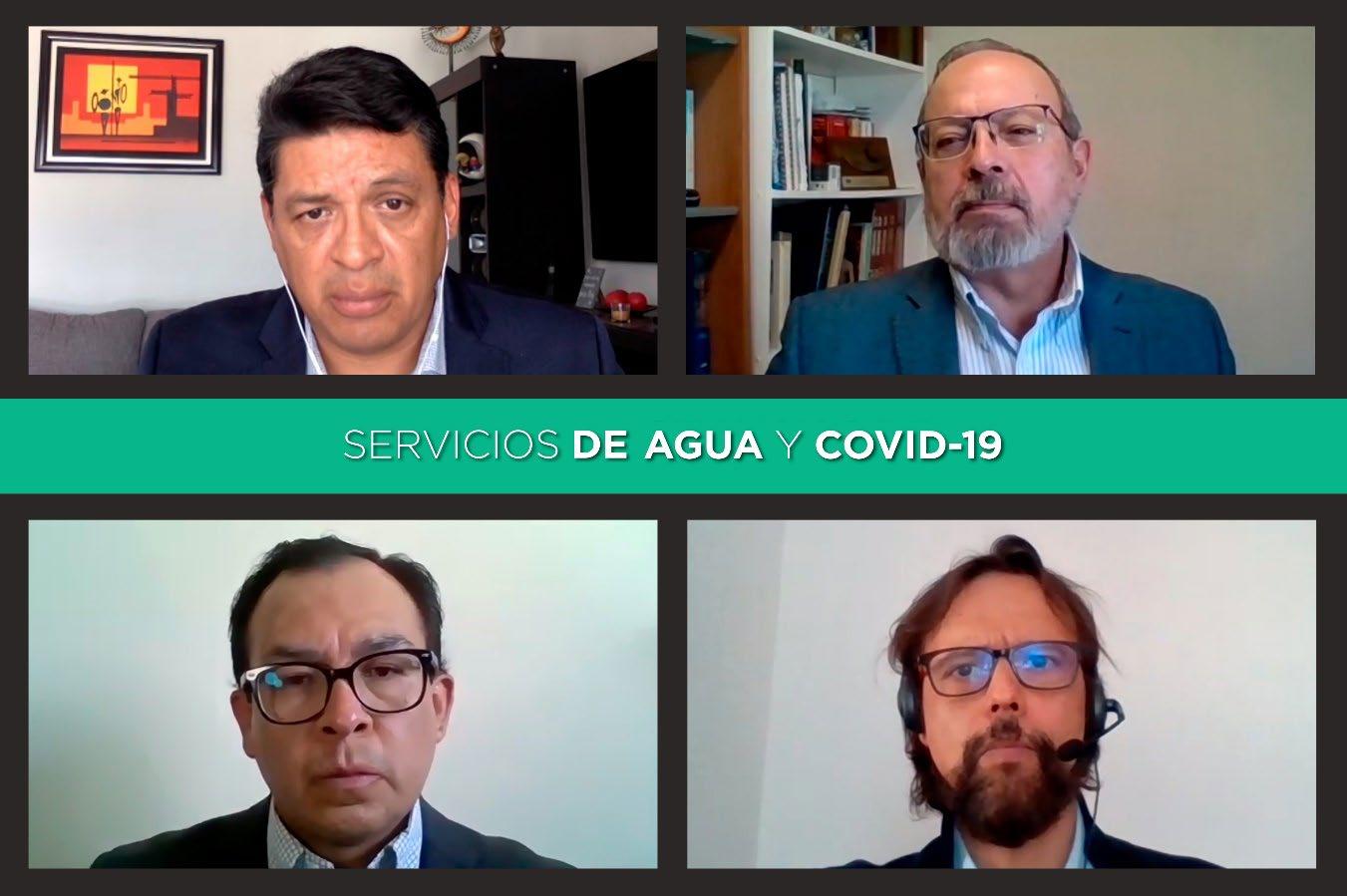
Within the context of the pandemic affecting the entire planet, the unesco Chair on Hydrometeorological Risks has combined the activities of several branches of science and technology to analyze and propose solutions to the consequences that this serious phenomenon poses to all areas of human activities. Thus, among other actions, the Chair organized on the webinar “Water Services and covid 19,” on June 10th, 2020, wherein several specialists and experts analyzed the new challenges posed for the purification and treatment of wastewater, as well as the vulnerability and resilience of water operators.
THE UNESCO CHAIR ON HYDROMETEOROLOGICAL RISKS HAS COMBINED THE ACTIVITIES OF SEVERAL BRANCHES OF SCIENCE AND TECHNOLOGY TO ANALYZE AND PROPOSE SOLUTIONS TO THE CONSEQUENCES THAT THIS SERIOUS PHENOMENON POSES TO ALL AREAS OF HUMAN ACTIVITIES.
The webinar was held with the participation of: Dr. Guillermo Baquerizo Arraya, PhD in Environment and Natural Resources from the Universidad Politécnica de Cataluña, who has collaborated with different academic organizations; Dr. Benito Corona Vásquez, an expert in conventional and nonconventional drinking-water treatment processes, and Minister Juan Carlos Valencia who, among other activities, has been the executive secretary of the National Association of Water and Sanitation Companies of Mexico.
The speakers introduced the state of knowledge on the persistence of sars cov-2 in wastewater, inactivation processes, and drinking-water treatment systems. Furthermore, they analyzed the difficult situations faced by water service providers owing to an unexpected increase in demand while registering greater operational and financial difficulties. They proposed solutions and interacted with the audience, who posed multiple questions through the webinar’s chat.
The session, which was broadcasted both by Zoom and udlap TV, was well attended with more than 500 attendees.
WATER RESOURCES OFMÉXICO
New book José Ángel Raynal Villaseñor (editor)
Owing to its geographical location, Mexico has an extremely complicated climate, and therefore, an extremely complicated hydrological cycle. It is subject to tropical storms that impact the Pacific Ocean, the Atlantic Ocean and the Caribbean Sea. Owing to its latitude, it exhibits a contrast between the South with heavy rainfalls that results in frequent flooding and the semi-arid and arid Center and North, where water scarcity is aggravated by frequent droughts. Climate change is an additional challenge whose effects are beginning to appear. Moreover, its demographic features and its high rate of urbanization poses additional challenges to water managers. Therefore, the study of water resources in Mexico is a problem of interest not only at the national level but also at the international level for scientific reasons.
Recently, Dr. José Ángel Raynal, member of the unesco Chair in Hydrometeorological Risks, acting as editor, published the book Water Resources of Mexico through Springer publishing house. In this new publication, Dr. Raynal gathered specialists of great recognition and experts investigating the water problem in Mexico. Thus, the book is aimed to be an unavoidable reference for scholars, decision makers, and those who are interested in the topic.
The index of the book, which will no doubt arouse your interest, is the following:
1.Precipitation in Mexico
José de Anda Sánchez
2. Groundwater resources of Mexico
Carlos Gutiérrez-Ojeda and Oscar A. Escolero-Fuentes
3. Hydrogeology of Mexico
Ignacio Reyes-Cortes and Abundio Osuna-Vizcarra
4. The water–energy–food nexus in Mexico
Carlos R. Fonseca-Ortiz, Carlos A. Mastachi-Loza, Carlos Díaz-Delgado and María V. Esteller-Alberich
5. Data models for river-basin management in Mexico
Carlos Patino-Gomez and Paul Hernandez-Romero
6. Water use and consumption: Industrial and domestic
Maria E. Raynal-Gutierrez
7. Water resources in Mexico: Some proposal for the future
Humberto Marengo Mogollón
8. Wastewater treatment in Mexico
Cynthia G. Tabla-Vázquez, Alma C. Chávez-Mejía, María T. Orta Ledesma and Rosa M. Ramírez-Zamora
9. Climate change and water resources in Mexico
Polioptro F. Martínez-Austria
10. Water security and sustainability in Mexico
Felipe I. Arreguin-Cortes and Claudia Elizabeth Cervantes-Jaimes
11. Expected impacts on agriculture due to climate change in Northern Mexico
Carlos Escalante-Sandoval
12. Dam-operation policy during hurricane season.
Using regional flows with canonical correlation analysis
Juan Pablo Molina-Aguilar, Alfonso Gutierrez-López and Ivonne Cruz Paz
13. Hydrologic and hydraulic works of Aztec civilization
José A. Raynal-Villasenor
14. Analysis of the spatial dependence of rainfall fields in Southeast of Mexico, using directional variograms
Alfonso Gutierrez-López, Marilú Meza-Ruiz and Jose Vargas-Baecheler
15. Possible scenarios of global-warming impacts on evaporation in Mexico
Jose A. Raynal-Villasenor, Maria E. Raynal-Gutierrez and Bryan Zegarra-Ybarra
THE BOOK CAN BE PURCHASED AT https://www.springer.com/gp/book/9783030406851
GEOENGINEERING FOR THE CLIMATE CHANGE
DAVID EDUARDO GUEVARA POLO
There is scientific consensus that climate change is caused by Homo Sapiens. Since the Industrial Revolution in the 18th century, humans have caused climate changes. However, when this revolution began, the science of the greenhouse effect was not yet known (moreover, there was not the slightest idea about what thermodynamics was), and even less was known about the fact that climate was being altered by industrial activities. The first person to use the concept of the greenhouse effect was Svante Arrhenius (Molina, Sarukhán and Carabias, 2017); however, he did it at the end of the 19th century.
, THE PARADIGM OF CLIMATE CHANGE MITIGATION IS THE REDUCTION OF GREENHOUSE GAS (GHG) EMISSIONS.
Today, however, the paradigm of climate change mitigation is the reduction of greenhouse gas (ghg) emissions. A few years ago, before discussions about reducing these emissions started, a much more radical solution was proposed: geo-engineering.
In 1965, the US President’s Science Advisory Committee ( psac ) warned the White House that GHG concentrations were increasing, enumerated some of the expected repercussions of their effects on atmospheric temperature, and stated that these threatened human civilization. Subsequent to this analysis, they concluded that “the possibilities of deliberately causing compensatory climate change should be fully explored.” In other words, the psac ’s proposal to solve the global-warming problem, prior to even considering reducing GHG emissions, involved deliberately altering the climate. This deliberate alteration of the climate is known as geo-engineering.
Two proposals were included in this report: to disperse reflective particles in the ocean, and alternatively, to cause the formation of cirrus-type clouds in the sky. Both these techniques were aimed at increasing the amount of energy reflected back to the Earth, controlling global warming. Nonetheless, there are several studies on geo-engineering, particularly on its scientific and technical aspects. However, one of the most prominent research studies, considered by many authors to be the one that brought the discussion of geo-engineering to a wider audience, was the Crutzen study (2006).
Albedo is the fraction of the Sun’s radiation that is reflected by surfaces on the Earth. We all have experienced this albedo. If on a hot day, one person dresses in black and another in white, the surface of the former’s clothes will reflect less radiation, which is why he/she will feel “hotter,” while the one who dresses in white will feel “less hot.” Crutzen’s article includes a discussion about increasing the Earth’s albedo by dispersing sulfate particles, which act as condensation nuclei for the clouds and affect their microphysical and optical properties. Furthermore, it discusses sowing clouds to dress the Earth in white and thus feel less heat. However, Crutzen warns about the ecological and public health impacts of sulfates in general and SO2 in particular because they produce acid rain. Therefore, its implementation is debatable.
Despite its side effects, it is interesting to note that this engineering solution is inspired by nature. When the Pinatubo volcano erupted in 1991, it injected about 10 Tg (10 million tons) of sulfur into the troposphere. This caused an increase in the reflection of solar radiation, reducing the global average temperature by 0.5 °C during the year subsequent to the eruption.
It is noteworthy that the technique proposed by Crutzen is not the only one that exists for geo-engineering. There is a broad literature in which new potential techniques are being proposed. For example: the collection and storage of CO2 (which is happening in some parts of the world), the fertilization of the oceans with iron to favor its CO2 absorption, stratospheric aerosols and bleaching of land and ocean surfaces (Caldeira and Bala, 2017). In other words, Homo Sapiens are busy seeking solutions beyondghg reduction to deal with the climate crisis. However, some of these solutions are still in their experimental phase.
One of the arguments for not reducing GHG emissions is the difficult adaptation of the energy matrix of countries from a financial point of view. In other words, for a country like the United States, whose energy matrix comprises 80% fossil fuels, it is difficult to make an abrupt energy transition because of the significant investments involved. In that sense, Wigley (2006) argues that geo-engineering and ghg reduction should be used in a combined way. First, geo-engineering would allow an increase in the time available for adapting the economy and technology to ghg reduction as it would make the reduction of the global temperature possible in a relatively short period of time, similar to what happened with the Pinatubo volcano. Subsequently, with the gradual reduction of GHG emissions, the Earth’s temperature could be stabilized.
In my opinion, geo-engineering is a fascinating field from a scientific point of view. It is interesting to see how the knowledge that has been accumulated about the Earth sciences is useful in trying to solve a problem as complex as climate change. However, it is important to consider that these techniques would most likely affect other natural processes which we depend on. For example, a change in the global temperature would involve changes in the hydrological cycle as it would alter the variables influencing each of its processes, disrupting the food supply chain. Now,
IMAGEN (PIXABAY)
the reader might think that the consequences of not acting could cause more serious impacts on the hydrological cycle, such as prolonged droughts and heavy hurricanes that we are witnessing in these times, and these beliefs are debatable. As previously mentioned, geo-engineering is not well understood, and there is no control over its side effects.
Moreover, we should not lose sight of the fact that geoengineering has economic, political, financial, ethical, and even philosophical dimensions. How would countries agree on its management? How would they ensure that its use benefits everyone and does not negatively affect anyone? Who would regulate its management? Who would be in charge of funding its operation? Who could use these techniques to control the climate? Would their financial costs be less than a reduction in ghgs? Would their likely environmental costs be justified? Would it be possible to use geo-engineering as a weapon, and if so, how would its prevention be ensured? Perhaps these questions are more difficult to answer than the scientific issues being dealt with.
One might begin by considering that the first time Homo Sapiens modified the climate, it was catastrophic. What is the guarantee that if we now do it deliberately, it would not lead to the same consequences or something that is even worse? Interestingly, geo-engineering has divided the scientific community between those who agree with its potential implementation and those who do not. However, the community continues researching the issue. We may be spending extensive amounts of time thinking about whether we
can do it while forgetting to think whether we should do it or not.
When Homo Sapiens started the Industrial Revolution, he knew nothing about thermodynamics and even less about the greenhouse effect. However, that was the beginning of the climate crisis. We should not blame our ancestors; however, we should learn from them. Those inventions were a response to the context of society. It is clear that the world is no longer the same as it was in the 18th century; today we are experiencing a climate crisis. The question is: does geo-engineering serve this context?
References
Caldeira, K. and Bala, G. (2017). Reflecting on 50 years of geoengineering research. Earth’s Future, 10-17.
Crutzen, P. (2006). Albedo enhancement by stratospheric sulfut injections: A contribution to resolve a policy dilemma? Climatic Change, 211-219.
Molina, M., Sarukhán, J. and Carabias, J. (2017). Climate Change. Causes, effects and solutions. FCE
Wigley, T. (2006). A combined mitigation/geoengineering approach to climate stabilization. Science, 1-4.
THE OCEANS CIRCULATE HEAT AROUND THE WORLD THROUGH MASSIVE CURRENTS OF DEEP AND SURFACE WATER, INCLUDING THE LARGEST, THE ATLANTIC MERIDIONAL OVERTURNING CIRCULATION (AMOC), WHICH HELPS TO REGULATE THE GLOBAL CLIMATE (JONES, 2016).
ENERGY DATA AND OCEANS’ HEALTH
Pedro Andrés Sánchez Gutiérrez
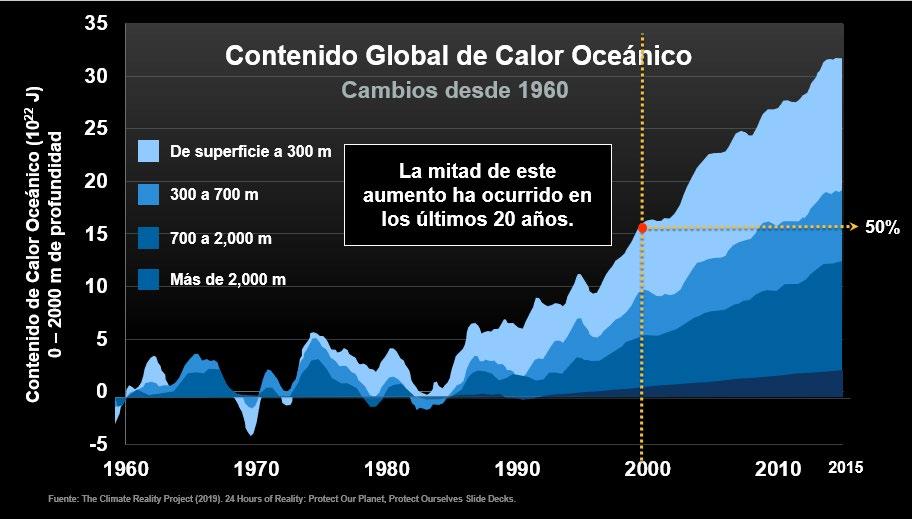
The oceans are absorbing most of the additional thermal energy trapped by the increase in greenhouse gases (Pachauri, et al., 2015)
Between 1971 and 2010, the world’s oceans absorbed more than 90% of the additional accumulated thermal energy resulting from the rising levels of greenhouse gases (Pachauri, et al., 2015).
This extra energy is warming the oceans, particularly in the area of surface water (Pachauri, et al., 2015).
Worldwide, from 1971 to 2010, the upper 75 m of the ocean have been warmed by an average of 0.11 °C per decade (Pachauri, et al., 2015).
Scientists forecast that the oceans will continue warming mostly in the subtropical and tropical regions and in the Northern Hemisphere (Pachauri, et al., 2015).
In deeper waters, the warming will be more extreme in the Southern Hemisphere’s oceans (Pachauri, et al., 2015).
Climate change is altering the way the oceans regulate global temperatures
The oceans circulate heat around the world through massive currents of deep and surface water, including the largest, the Atlantic Meridional Overturning Circulation (AMOC), which helps to regulate the global climate (Jones, 2016).
The warmest and least dense water can slow down the circulation of heat in the ocean, as well as changes in salinity (as a result of runoff from the melting of land-based freshwater ice) (Jones, 2016).
According to the Intergovernmental Panel on Climate Change (IPCC), it is very likely (90%–100% confidence) that the AMOC will weaken between 11% and 34%, on average, during the 21st century (Pachauri, et al., 2015).
This slowdown could imply cooling of the entire Northern hemisphere, whereas parts of the Southern hemisphere would get warmer (Pachauri, et al., 2015).
While cooler temperatures imply good news on account of global warming, this could mean a massive rise in the sea level in Eastern North America along with the changing rainfall patterns that could affect (downstream) river runoff in Europe (Jones, 2016).
Ocean warming is devastating the world’s coral reefs
Coral reefs are the most biodiverse habitats on the planet, home to nearly a quarter of all ocean species; however, they are found in less than1% of the world’s oceans (NOAA Fisheries, 2018).
Prolonged high water temperatures (among other factors) can cause coral polyps to expel their symbiotic algae (zooxanthellae), which help them produce food (NOAA Fisheries, 2018).
This results in coral bleaching, which jeopardizes the health of the entire reef system (NOAA Fisheries, 2018).
The world’s largest reef, the Great Barrier Reef off the Australian coast, often suffers catastrophic bleaching events caused by the stress from regular heat (Smee, 2018).
Climate change is making oceans increasingly acidic, altering natural processes and whole ecosystems.
The ocean plays a key role in storing carbon, as it contains approximately 50 times more carbon than the atmosphere (National Oceanic and Atmospheric Administration, 2011).
The ocean absorbs this carbon largely through a chemical reaction at its surface: CO2 combines with seawater to create carbonic acid that results in a higher acidity of the ocean (US Environmental Protection Agency, 2016).
Since the Industrial Revolution, the world’s oceans have absorbed about 28 percent of the CO2 from burning fossil fuels (US Environmental Protection Agency, 2016).
Ocean acidification makes it harder for creatures such as plankton, coral reefs, and shellfish to produce calcium carbonate, which is the main ingredient of their skeletons or hard shells (US Environmental Protection Agency, 2016).
This can lead to wider changes in the overall structure of ocean and coastal ecosystems, which can affect fish species and the people who depend on them (US Environmental Protection Agency, 2016).
Warmer oceans can encourage the overgrowth of dangerous algae that produce toxins and reduce oxygen levels in the water
An increase in the ocean temperature combined with excessive nutrients such as phosphorus and nitrogen (from the transport of agricultural fertilizers from inland areas) leads to fast algae growth, which is known as algae blooms (Climate Central, 2017).
Algae blooms can produce extremely dangerous toxins, which can cause eye and lung irritation, worsen asthma, and even kill humans and animals (Climate Central, 2017).
Algae growth depletes the oxygen content necessary for the survival of marine organisms, forcing species to flee or perish (Climate Central, 2017).
In the last 50 years, the area of oxygen-depleted water grew by 4.5 million square kilometers, which is more than a third of the size of India (OMZ Microbes, 2018) (US Central Intelligence Agency, 2018).
References
• Climate Central. (2017, August 23). Algae Blooms and Climate Change. Recuperado de http://www.climatecentral.org/gallery/graphics/ algae-blooms-and-climate-change
• Jones, N. (2016). How Climate Changes Could Jam The World’s Ocean Circulation. Yale University, Yale Environment 360. Recuperado de https://e360.yale. edu/features/will_climate_change_jam_the_global_ ocean_conveyor_belt
• National Oceanic and Atmospheric Administration. (2011, February). Carbon Cycle. Recuperado de http:// www.noaa.gov/resource-collections/carbon-cycle
• NOAA Fisheries. (6 de febrero de 2018). Shallow Coral Reef Habitat. Recuperado de https://www.fisheries.noaa.gov/national/habitat-conservation/ shallow-coral-reef-habitat
• OMZ Microbes. (2018, June). How oxygen minimum zones form. Recuperado de http://omz.microbiology. ubc.ca/page2/index.html
• Pachauri, R. K., Allen, M. R., Barros, V. R., Broome, J., Cramer, W., Christ, R.,... Ypersele, J. P. (2015). Climate Change 2014: Synthesis Report. Contribution to the Fifth Assessment Report of the Intergovernmental Panel on Climate Change. Cambridge University Press. Recuperado de https://archive.ipcc.ch/pdf/assessment-report/ar5/syr/SYR_AR5_FINAL_full_wcover.pdf
• Smee, B. (18 de abril de 2018). Great Barrier Reef: 30% of coral died in ‘catastrophic’ 2016 heatwave. The Guardian. Recuperado de https://www.theguardian. com/environment/2018/apr/19/great-barrier-reef-30of-coral-died-in-catastrophic-2016-heatwave
• US Central Intelligence Agency. (4 de junio de 2018). The World Factbook: India. Recuperado de https:// www.cia.gov/library/publications/the-world-factbook/ geos/in.html
• US Environmental Protection Agency. (2016). Climate Change Indicators: Ocean Acidity. Recuperado de https://www.epa.gov/climate-indicators/ climate-change-indicators-ocean-acidity
DR. HUMBERTO MARENGO MOGOLLÓN, NEW COMMISSIONER OF THE INTERNATIONAL BOUNDARY AND WATER COMMISSION (CILA)
USA-MEXICO
Dr. Humberto Marengo Mogollón, member of the unesco Chair on Hydrometeorological Risks, was recently appointed as the Mexican commissioner of the International Boundary and Water Commission (cila for its name in Spanish) between México and the United States.
cila is a binational organization responsible for the implementation of international agreements between both the nations regarding territorial limits and border crossings, as well as distribution and quality of water in the rivers of the transboundary basins they share. The appointment as the cila commissioner is one of the most important positions in terms of water management in North America and entails important obligations that increase during drought periods, such as the one currently experienced by the Colorado and Bravo river basins, or during extreme floods, such as those recently caused by Hurricane Hanna, and where hydraulic infrastructure must be operated in a coordinated fashion between Mexico and the United States.
CONGRATULATIONS TO DR. HUMBERTO MARENGO.
BOLETÍN DE LA CÁTEDRA UNESCO EN RIESGOS HIDROMETEOROLÓGICOS
NEWSLETTER OF THE UNESCO CHAIR ON HYDROMETEOROLOGICAL RISKS
EDITORIAL COORDINATIONS
Editor Polioptro F. Martínez Austria
Style correction
Aldo Chiquini Zamora Andrea Garza Carbajal
Editorial design
Andrea Monserrat Flores Santaella
United Nations Educational, Scientific and Cultural Organization
UNESCO Chair on Hydrometeorological Risks, Universidad de las Américas Puebla
The unesco Chair on Hydrometerological Risks Newsletter is a quarterly publication which reports on the activities of the Chair and its members, unesco news related to it, as well as general information on disasters and hydrometeorological risks. It is elaborated by the Universidad de las Américas Puebla. Ex hacienda Sta. Catarina Martir s/n. C. P. 72810, San Andres Cholula, Mexico.
The authors are responsible for the choice and presentation of the opinions contained in this newsletter. Likewise, of the opinions expressed therein, which are not necessarily those of UNESCO and do not commit the Organization.