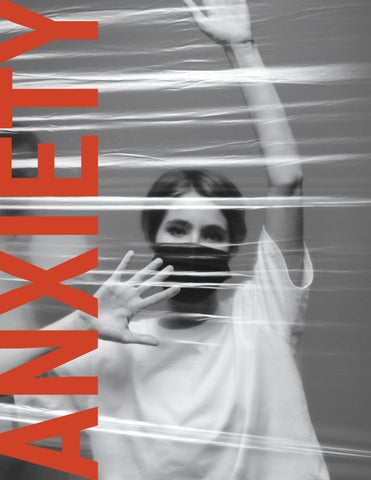
ANXIETY

Ansiedad y depresión desarrollada durante la pandemia de COVID-19 en México
Ansiedad y depresión desarrollada durante la pandemia de COVID-19 en México
Por: Erika Palacios-Rosas · Hayley McLean · Mónica Guadalupe García-Cepeda
RESUMEN
Estudio observacional, transversal y descriptivo en 850 individuos residentes en México para determinar el grado de ansiedad y depresión. Los participantes respondieron un cuestionario en línea con preguntas relacionadas con el estilo de vida, la escala gad-7 y phq-9. Los participantes que cumplieron con el límite clínico para depresión tuvieron los siguientes factores significativos: entre 15 y 29 años de edad (or = 11.187, p = 0.0002), entre 30 y 49 años (or = 4.134, p = 0.0262), mujer ( or = 2.033, p = 0.0040) y estilo de cuarentena (or = 1.850, p = 0.0160). Para corte clínico de ansiedad, los factores significativos fueron tener entre 15 y 29 años (or = 3.326, p = 0.0303), ser mujer (or = 2.994, p = 0.0001) y el estilo de cuarentena (or = 2.320, p = 0.0051). Durante la pandemia de covid-19, la ansiedad clínica y la depresión fueron comunes entre

Recibido: 1 de julio
la población estudiada; ser «mujer» y «joven» fueron factores independientes para sufrir ambos.
PALABRAS CLAVE:
Ansiedad · Depresión · Coronavirus · Salud mental · México · covid-19
ABSTRACT
An observational, transversal, and descriptive study was carried out on 850 individuals living in Mexico to determine the degree of anxiety and depression in this population. Participants answered an online questionnaire about their current lifestyle, the Generalized Anxiety Disorder-7 (gad-7) instrument, and the Patient Health Questionnaire-9 (phq-9). The significant factors found in participants with clinical cut-off for depression included: being of ages 15-29 (or=11.187, p=0.0002),
Aceptado: 13 de junio de
30-49 (or=4.134, p=0.0262), gender (female) ( or =2.033, p=0.0040), and quarantine style ( or =1.850, p=0.0160). For the participants that met the clinical cut-off for anxiety, significant factors found included: being of ages 15-29 (or=3.326, p=0.0303), gender (female) ( or =2.994, p=0.0001), and quarantine style (or=2.320, p=0.0051). During the covid-19 outbreak, clinical anxiety and depression were common among the Mexican population studied, «female» and «young age» represented the independent factors for suffering both.
KEYWORDS:
Anxiety · Depression · Coronavirus · Mental health · Mexico · covid-19
INTRODUCTION
Good mental health is related to mental and psychological well-being and has become an increasingly important topic ( who , 2020b). Anxiety is one of the many mental illnesses that plague the nation, and its direct and indirect causes are often multifaceted. Many factors increase the risk of suffering anxiety: the death of a loved one, arguments or fights, domestic violence, drug abuse, and concerns about family or illnesses (Shao et al., 2020). However, the specific factors that can lead to
anxiety may not: everybody is different and can be affected in diverse ways. Freud defined anxiety as an emotional state that included feelings of apprehension, tension, nervousness, and worry, accompanied by physiological arousal (Wagner et al., 2012). Depression is a mood disorder that can cause sleep disturbances, difficulty concentrating, tiredness, irritable or aggressive behavior, suicidal thoughts, headaches, and other symptoms. The factors that increase the risk of major depression or depressive episodes are similar to factors that cause anxiety (Cohen & DeRubeis, 2018). Anxiety and depression are considered critical illnesses that affect the productivity and lifestyle of a person (Choi et al., 2020).
On December 31, 2019, Wuhan, China, declared a sanitary emergency because of an unknown virus to the Beijing office of the World Health Organization (who). Months later, it reached different countries around the globe (who, 2020a). Some population contracts covid-19 without symptoms; however, the virus retains its communicable properties for transmission to others (who, 2019). According to the available data, the covid-19 virus is transmitted mainly between people through close contact and respiratory droplets (who, 2020b). For this reason, the population must stay home and
isolate themselves from the surrounding community. In March 2020, most countries issued a quarantine order, instructing people to stay home. In Mexico, the quarantine order drastically affected the lifestyle of its citizens due to the abrupt change in the societal norms and activities that maintained its vibrant and social culture. The challenges the virus brought were unpredictable and made it difficult not to worry about the future, work, and the well-being of the loved ones. The lockdown that took place may have developed anxiety and depression in the people. The social distancing order and the new routine people are living in are principal reasons to believe that the covid -19 pandemic will increase anxiety and depression rates in Mexico’s general population and the entire world. According to Medina & Jaramillo-Valverde (2020), Peru’s general population and health personnel presented negative psychological signs, being the main ones: symptoms of post-traumatic stress, confusion, and anger. It is important to determine what percentage of the population will present these psychological changes regarding the presence of anxiety and depression. This study aims to define the prevalence of anxiety and depression in the Mexican population during the confinement of the covid-19 pandemic.
Observational, transversal, and descriptive study in Mexico from May 23 to June 14, 2020. Participants living in Mexico on an age greater than or equal to 15 years, with internet access, answered an online questionnaire developed using Microsoft Forms®. Participants received the questionnaires through different social media outlets. Participation in the study was voluntary. The participants first read the information regarding the research; they had the option to «decline» or «accept». If they accepted, they had to answer demographic questions about residence (state), age, sex, marital status, living arrangement (alone or with others), and workplace. The following section included questions about covid-19 awareness and beliefs, days spent in quarantine, lifestyle, beliefs about quarantine, and risk factors. Participants with previous diagnoses of anxiety or depression were eliminated from the study sample. Questions about anxiety were asked based on the General Anxiety Disorder-7 item instrument (gad-7), which consists of seven questions using a Likert scale to get results. Anxiety level categories from gad-7 are: 0-4 points indicate «no anxiety»; 5-9 points indicate «mild anxiety»; 10-14 points indicate «moderate anxiety», and 15- 21 points indicate «severe anxiety». gad -7 was published in English by Spitzer et al. in 2006, and in Spanish, in 2010 (García-Campayo et al., 2010).
The Patient Health Questionnaire-9 (phq-9) was used to measure depression levels in participants. The phq-9 is a quiz of nine questions; it is a self-administered version of the Primary Care Evaluation of Mental Disorders (prime-md) (Spitzer et al., 1990). The instrument is validat-
THE PARTICIPANTS FIRST READ THE INFORMATION REGARDING THE RESEARCH; THEY HAD THE OPTION TO «DECLINE» OR «ACCEPT». IF THEY ACCEPTED, THEY HAD TO ANSWER DEMOGRAPHIC QUESTIONS ABOUT RESIDENCE (STATE), AGE, SEX, MARITAL STATUS, LIVING ARRANGEMENT (ALONE OR WITH OTHERS), AND WORKPLACE.
ed in Spanish (Baader et al., 2012), and uses a Likert scale to obtain results. The categories for depression levels from phq -9 are «no depression» (0-4 points), «mild depression» (5-9 points), «moderate depression» (10-14 points), «moderate-severe depression» (15-19 points), and «severe depression» (20-27 points).
Variables of interest for this study include age, gender, marital status, presence of a covid -19 risk factor, days spent in quarantine, living arrangement, belief that there is an advantage to quarantine, awareness of covid -19 existence, quarantine method, working in the healthcare sector, and region of residence in Mexico.
All statistical analyses were completed using sas 9.4 ( sas Institute, Cary nc ). Predictor variables initially comprised in the model included demographic factors such as age, gender,

and marital status. Other predictors incorporated days in quarantine, presence of risk factors, knowledge of covid-19 existence, living arrangements and quarantine method, whether the participant worked in the healthcare sector, or not, and region. The outcome variables included the presence of clinical anxiety (gad-7 score ≥ 10) and clinical depression (phq-9 score ≥ 10) (Merz et al., 2011).
Descriptive statistics for each were described and assessed using the Chi-Square Statistic. Missing data are noted as «Not Specified» in the frequency tables in which it applies. This missing information was not included in the Chi-Square Analysis. Univariate analyses were conducted to examine the relationship between each predictor variable, and the outcome variables of clinical anxiety and clinical depression. Next, multivariate analyses were conducted using binomial logistic regression to identify predictors associated with the outcome variables. Predictor variables for both univariate analyses and binomial regression analyses comprised in the model included demographic factors, days in quarantine, presence of risk factors, knowledge of covid-19 existence, living arrangements, and quarantine method.
Table 1 shows the characteristics and frequency of clinical anxiety and depression concerning sociodemographic variables, days in quarantine, presence of risk factors, beliefs about covid-19, living arrangements, and whether they were partial or complete quarantine. The descriptive information in table 1 evinces that when assessing for the presence of clinical depression (phq-9 ≥10), 83 (9.76%) presented with clinical anxiety ( gad -7 ≥ 10) and 139 (16.35%) presented with clinical depression. For clinical depression, there showed to be a significant relationship between gender (p-0.0002), age (p<0.0001), marital status (p=0.0028), and quarantine method (p<0.0001). For clinical anxiety, there showed to be a significant relationship between gender (p=0.0001) and the quarantine method (p=0.0001).
After running univariate logistic regression for the presence of clinical anxiety and clinical depression during quarantine in Mexico, the following factors were associated independently with having a higher odds of presence of de -
PREDICTOR VARIABLES INITIALLY COMPRISED IN THE MODEL INCLUDED DEMOGRAPHIC FACTORS SUCH AS AGE, GENDER, AND MARITAL STATUS.
pression: being of ages 15-29(Odds Ratio [ or]: 12.069; 95% Confidence Interval, [ ci ]: 2.929, 49.732; p=0.0006), female (or=2.216; ci=1.438, 3.414; p=0.0003), being single, divorced or widowed ( or = 2.277; ci = 1.310, 3.956; p=0.0035), spending 56-75 days in quarantine (or=2.880; ci =1.012, 8.197; p=0.0429), and doing a complete quarantine method (or=2.638; ci=1.624, 4.285; p=<0.0001). The following factors were independently associated with having a higher odd of presence of clinical anxiety: being female (Odds Ratio [or]: 3.686; 95% Confidence Interval, [ ci ]: 1.832, 7.419; p=0.0003) and doing a complete quarantine method (or=3.174; ci= 1.705, 5.909; p=0.0003).
Table 2 shows the results of the two binary logistic regression tests conducted to investigate the relationship between the predictor variables, and to learn about the presence of clinical depression (phq-9 score ≥10) and clinical anxiety (gad-7 score ≥10), respectively. For participants that met the clinical cut-off for depression, significant factors found included being of ages 15-29 ( or =14.586; ci =3.221, 66.064; p=0.0005), being of ages 30-49 or= 4.939; ci=1.095, 22.278; p=0.0377), gender (female) ( or =2.058; 1.296, 3.207; p=0.0021), and quarantine style (or=2.058; ci=1.227, 3.452; p=0.0062). For the presence of participants that met the clinical cut-off for anxiety, significant factors found included being ages 15-29 (or=3.326, p=0.0303), being female ( or=3.806; 1.839, 7.876; p=0.0003) and quarantine style (or=3.129; 1.592, 6.152; p=0.0009).
Table 1. Descriptive
and depression during quarantine in Mexico (n=850).
or: Odds Ratio 95% ci: 95% Confidence Interval.
The purpose of the study was to examine the risk factors associated with clinical depression and clinical anxiety during covid-19 in Mexico. It is important to understand these factors because they can enlighten the long-term impact of the pandemic on this population as well as create interventions to improve well-being. The study found that half of the population presented a level of anxiety or depression, similar to
another study conducted in Mexico at the initial phase of the covid-19 pandemic, in which the prevalence of anxiety and depression was 50% and 27.6%, respectively (Garcia-Priego et al., 2020). An investigation in Turkey showed that 23.6% of the population studied had depression, and 41.5% had anxiety (Özdin & Baykrak Özdin, 2020). These results concur with an ample study from China that reported that approximately 35% of people were psychologically af-
fected by the pandemic (Qiu et al., 2020). The results of this study are consistent with previous studies that found that exposing public health emergencies such as the Ebola outbreak (Shultz et al. 2014), earthquakes (Zhang et al., 2011), and sars (Mak et al., 2009) could cause mental health issues.
It is important to note that the study participants did not have any known psychiatric issues, and this study indicated that 16% of the population met the criteria for clinical depression and 10% met the criteria for clinical anxiety. In the multivariate analysis, compared to the older age group (50 years and older), being of a younger age group was associated with odds of clinical anxiety and clinical depression. Being female compared to being male was also associated with higher odds of clinical anxiety and clinical depression. Participants in complete quarantine compared with those in partial quarantine also had higher odds of clinical depression and clinical anxiety.
The results showed that gender represents a risk factor for anxiety and depression, such as that women presented a higher percentage of both mental problems; this agrees with other authors that affirm that women are more vulnerable to developing depression than men during the covid-19 outbreak (Zhou et al., 2020; Özdin & Baykrak Özdin, 2020). Furthermore, anxiety disorder has been seen at three-fold higher levels in women than in men during the covid-19 pandemic in other studies (Wang et al., 2020). Similar to this, in the Republic of Ireland, a study conducted within the general adult population during the covid-19 quarantine showed that the screening positive for depression and anxiety was significantly associated with being younger and female (Hayland et al., 2020). Previous studies have shown that anxiety disorders and depressive disorders are recurrent in women (Alexander et al., 2007; Bobevski et al., 2016). A survey administrated in Mexico in 2016 showed that depression affected 2.095 million men and 4.95 million women, attributing that women may be at higher risk for depression due to hormonal changes, obligations to fulfill the duties associated with motherhood, marriage, oppression of women, and societal expectation of gender-based role fulfillment (Inmujeres, 2016). The latest national mental health survey conducted in Mexico showed that the overall prevalence of anxiety disorders was 14.3% and that 4.5% of the population may suffer from some mood disorder, including depression (Medina-Mora et al.,
SEVERAL FACTORS HAVE BEEN ASSOCIATED WITH ANXIETY AND DEPRESSION DURING THE COVID-19 PANDEMIC, AGE IS ONE OF THEM: IN OUR STUDY, PARTICIPANTS OF AGES
15-29
YEARS OLD WERE MORE LIKELY TO PRESENT ANXIETY
2003). Worth mentioning, that the female gender has been recognized as the most potent predictor of post-traumatic stress disorder symptoms after pandemics (Liu et al., 2020).
Several factors have been associated with anxiety and depression during the covid-19 pandemic, age is one of them: in our study, participants of ages 15-29 years old were more likely to present anxiety and depression. The Complutense University of Madrid (2020) conducted a study where young people between 18 and 39 years of age experience a higher level of anxiety, depression, and stress in confinement than the rest of the age range. Similarly, younger age (18-29) was a risk factor for increased anxiety and depression in the community (students, faculty, and staff) of the University of Cyprus (Solomou & Constantinidou, 2020).
When assessing quarantine style, those who completed quarantine had higher odds of clinical depression and anxiety compared to those who did partial quarantine. These results are similar to previous literature that indicates that higher lockdown restrictions led to bigger mental health impairments (Benke et al., 2020). This finding is consistent with the role of social isolation and disruption of social life in mental health and well-being. Social isolation can lead to loneliness and boredom, which are associated with higher degrees of psychological distress. More importantly, social isolation
and boredom have been shown to predict premature mortality, depression, cardiovascular disease, and other cognitive issues (Smith & Lim, 2020). Given that the long-term impacts of quarantine, social isolation, and loneliness can lead to so many detrimental psychological and well-being consequences, it should be of high consideration to address these issues in Mexico. The risk factors exposed in the present investigation demonstrate the need for effective mental health programs for the implementation of precautionary measures as a public health strategy in Mexico.
The present study did not reach a sufficient number of participants for each geographic region of Mexico, so it cannot be used as a study variable. In addition, it had a limited population sample in terms of internet access; therefore, it may not be representative of the population without internet access. Nevertheless, the study answers an international call for research priority to immediately improve monitoring of the reported rates of anxiety and depression across the general population to inform the global impact of covid -19 (Holmes et al., 2020).
The study provides valuable information on the mental health of the Mexican population during the covid -19 pandemic. We found that half of our studied population presented a level of anxiety or depression. The results of this study offer a useful starting point to identify the presence of anxiety and depression during the covid -19 pandemic in Mexico. Future research should study anxiety and depression in the long term, using larger samples and longitudinal designs.

Erika Palacios-Rosas
autor de correspondencia
Doctora en Farmacología y Fisiología por la Universidad Autónoma de Madrid. Personal investigador en el Department of Biomedical Sciences de la Universidad de Copenhague y en el EccPS, Justus-Liebig Universitat Giessen, Alemania. Desde 2013 se desempeña como profesor de tiempo completo en el Departamento de Ciencias de la Salud de la Universidad de las Américas Puebla. erika.palacios@udlap.mx

Hayley McLean
Licenciada en Ciencias con especialidades en Psicología, cuenta con una maestría de Ciencias en la Salud Pública por la Universidad de Miami. Es estudiante de medicina en Touro College of Osteopathic Medicine. Actualmente, es investigadora como parte del programa NiMHd Minority Health and Health Disparities Research Training (MHRT) de la Universidad de Miami y la UdLAP ham23@miami.edu

Mónica Guadalupe
García-Cepeda
Licenciada en Ciencias Farmacéuticas por la Universidad de las Américas Puebla. monica.garciace@udlap.mx
• Alexander, J. L., Dennerstein, L., Kotz, K. & Richardson, G. (2007). Women, anxiety, and mood: A review of nomenclature, comorbidity, and epidemiology. Expert Review of Neurotherapeutics, 7(11 Suppl.), S45–S58. https://doi.org/10.1586/14737175.7.11s.S45
Arenas, M. C. & Puigcerver, A. (2009). Diferencias entre hombres y mujeres en los trastornos de ansiedad: una aproximación psicobiológica. Escritos de Psicología (Internet), 3(1), 20-29. Recovered from http://scielo.isciii.es/scielo.php?script=sci_arttext&pid=S198938092009000300003&lng=es&tlng=es
Baader, T., Molina, J. L., Venezian, S., Rojas, C., Farías, R., Fierro-Freixenet, C., Backenstrass, M. & Mundt, C. (2012). Validación y utilidad de la encuesta PHQ-9 (Patient Health Questionnaire) en el diagnóstico de depresión en pacientes usuarios de atención primaria en Chile. Revista chilena de neuro-psiquiatría, 50(1), 10-22. https://dx.doi.org/10.4067/S071792272012000100002
• Benke, C., Autenrieth, L. K., Asselmann, E. & Pané-Farré, C. A. (2020). Lockdown, quarantine measures, and social distancing: Associations with depression, anxiety, and distress at the beginning of the COVID-19 pandemic among adults from Germany. Psychiatry Research, 293, 113462. https://doi. org/10.1016/j.psychres.2020.113462
Bobevski, I., Clarke, D. M. & Meadows, G. (2016). Health anxiety and its relationship to disability and service use: Findings from a large epidemiological survey. Psychosomatic Medicine 78(1), 13–25. https://doi.org/10.1097/psy.000000000000025
• Brooks, S., Webster, R., Smith, L., Woodland, L., Wessely, S., Greenberg, N. & Rubin, G. (2020). The psychological impact of quarantine and how to reduce it: rapid review of the evidence. Lancet, (395), 912–20. Recovered from https://www.thelancet. com/pdfs/journals/lancet/PIIS0140-6736(20)304608.pdf
• Choi, E. P. H., Hui, B. P. H. & Wan, E. Y. F. (2020). Depression and anxiety in Hong Kong during COVID-19. International journal of environmental research and public health, 17(10), 3740. https://doi.org/10.3390/ijerph17103740
Cohen, Z. D., & DeRubeis, R. J. (2018). Treatment selection in depression. Annual Review of Clinical Psychology, 14 https://doi.org/10.1146/ annurev-clinpsy-050817-084746
• García-Campayo, J., Zamorano, E., Ruiz, M. A., Pardo, A., Pérez-Páramo, M., López-Gómez, V., Freire, O. & Rejas, J. (2010). Cultural adaptation into Spanish of the generalized anxiety disorder-7 (GAD-7) scale as a screening tool. Health and quality of life outcomes, 8, 8. https://doi. org/10.1186/1477-7525-8-8
Garcia-Priego, B. A., Triana-Romero, A., Pinto-Galvez, S. M., Duran-Ramos, C., Salas-Nolasco, O., Reyes, M. M., ... & Troche, J. M. R. (2020). Anxiety, depression, attitudes, and internet addiction during the initial phase of the 2019 coronavirus disease (COVID-19) epidemic: A cross-sectional study in Mexico. MedRxiv https://doi.org/10.1101/2020.05.10.20095844
Gómez, A. E. (Julio 2007). Salud física y salud mental. Un binomio indisoluble. Elsevier. 21(7), 53-56.
Hawryluck, L., Gold, W. L., Robinson, S., Pogorski, S., Galea, S. & Styra, R. (2004). SARS control and psychological effects of quarantine, Toronto, Canada. Emerging infectious diseases 10(7), 1206–1212. https://doi. org/10.3201/eid1007.030703
• Holmes, E. A, O’Connor, R. C., Perry, V. H. et al. (2020). Multidisciplinary research priorities for the COVID-19 pandemic: a call for action for mental health science. Lancet Psychiatry https://doi.org/10.1016/S22150366(20)30168-1
• Hyland, P., Shevlin, M., McBride, O., Murphy, J., Karatzias, T., Bentall, R. P., ... & Vallières, F. (2020). Anxiety and depression in the Republic of Ireland during the COVID 19 pandemic. Acta Psychiatrica Scandinavica, 142(3), 249256. https://doi.org/10.1111/acps.13219
iNMUjERES. Instituto Nacional de las Mujeres (2016). Mujeres y hombres en México 2016. Recovered from http://cedoc.inmujeres.gob.mx/documentos_download/MHM_2016.pdf
• Liu, N., Zhang, F., Wei, C., Jia, Y., Shang, Z., Sun, L., . . .Liu, W. (2020). Prevalence and predictors of PTSS during COVID-19 outbreak in China hardest-hit areas: Gender differences matter. Psychiatry Research, 287, 112921. https:// doi.org/10.1016/j.psychres.2020.112921
Mak, I. W. C. Chu, C. M., Pan, P. C., Yiu, M. G. C. & Chan, V. L. (2009). Longterm psychiatric morbidities among SARS survivors. Gen. Hosp. Psychiatry, 31, 318–326. https://doi.org/10.1016/j.genhosppsych.2009.03.001
• Merz, E. L. et al. (2011). A multigroup confirmatory factor analysis of the Patient Health Questionnaire-9 among English- and Spanish-speaking Latinas. Cultural diversity & ethnic minority psychology, 17(3), 309–316. https://doi.org/10.1037/a0023883
Medina-Mora, M., Borges, G., Lara-Munoz, Benjet, C., Blanco-Jaime, J., Fleiz-Bautista, C., et al. (2003). Prevalencia de trastornos mentales y uso de servicios: Resultados de la Encuesta Nacional de Epidemiología Psiquiátrica. Salud Mental 26(4), 1-16. https://www.medigraphic.com/cgi-bin/new/ resumenI.cgi?IDARTICULO=17215
• Medina, R. & Jaramillo-Valverde, L. (2020). El COVID-19: Cuarentena y su Impacto Psicológico en la población. https://doi.org/10.1590/SciELOPreprints.452
Özdin, S. & Bayrak Özdin, Ş. (2020). Levels and predictors of anxiety, depression and health anxiety during COVID-19 pandemic in Turkish society: The importance of gender. International Journal of Social Psychiatry 66(5), 504-511. 10.1177/0020764020927051
• Qiu, J., Shen, B., Zhao, M., Wang, Z., Xie, B. & Xu, Y. (2020). A nationwide survey of psychological distress among Chinese people in the COVID-19 epidemic: Implications and policy recommendations. General Psychiatry, 33(2), Article100213. https://doi.org/10.1136/gpsych-2020-100213
Shao, R., He, P., Ling, B., Tan, L., Xu, L., Hou, Y., ... & Yang, Y. (2020). Prevalence of depression and anxiety and correlations between depression, anxiety, family functioning, social support and coping styles among Chinese medical students. BMC psychology 8, 1-19. https://doi.org/10.11144/ Javeriana.upsy19.epbi
• Shultz, J. M., Baingana, F. & Neria, Y. (2015). The 2014 Ebola outbreak and mental health: Current status and recommended response. JAMA J. Am. Med. Assoc. 313, 567–568. doi:10.1001/jama.2014.17934
Smith, B. J. & Lim, M. H. (2020). How the COVID-19 pandemic is focusing attention on loneliness and social isolation. Public health research & practice 30(2), 3022008. https://doi.org/10.17061/phrp3022008
Solomou, I. & Constantinidou, F. (2020). Prevalence and predictors of anxiety and depression symptoms during the COVID-19 pandemic and compliance with precautionary measures: Age and sex matter. International journal of environmental research and public health, 17(14), 4924. https:// doi.org/10.3390/ijerph17144924
• Spitzer, R. L., Kroenke, K., Williams, J. B. & Löwe, B. (2006). A brief measure for assessing generalized anxiety disorder: the GAD-7. Archives of internal medicine, 166(10), 1092-1097. doi:10.1001/archinte.166.10.1092
• Spitzer, R. L., Kroenke, K., Williams, J. B. (1999). Patient Health Questionnaire Primary Care Study Group, & Patient Health Questionnaire Primary Care Study Group. Validation and utility of a self-report version of PRIME-MD: the PHQ primary care study. Jama, 282(18), 1737-1744. doi:10.1001/ jama.282.18.1737
Universidad Complutense de Madrid (2020). Oficina de Transferencia de Resultados de Investigación. Recovered from https://www.ucm.es/otri/ noticias-los-jovenes-sienten-mas-ansiedad-y-depresion-por-el-covid-19que-los-grupos-de-riesgo
Wagner, F. A., González-Forteza, C., Sánchez-García, S., García-Peña, C. & Gallo, J. J. (2012). Enfocando la depresión como problema de salud pública en México. Salud mental 35(1), 3-11. https://dialnet.unirioja.es/servlet/ articulo?codigo=4852639
• Wang, Y., Di, Y., Ye, J. & Wei, W. (2020). Study on the public psychological states and its related factors during the outbreak of coronavirus disease 2019 (COVID-19) in some regions of China. Psychology, Health & Medicine. Advance online publication. https://doi.org/10.1080/135485 06.2020.1746817
World Health Organization (2019). La salud mental en el lugar de trabajo. Retrieved from: https://www.who.int/mental_health/in_the_workplace/ es/
World Health Organization (2020a). Mental Health. Recovered from https://www.who.int/mental_health/en/
World Health Organization (2020b). Preguntas y respuestas sobre la enfermedad por coronavirus (covid-19). Recovered from https://www. who.int/es/emergencies/diseases/novel-coronavirus-2019/advice-for-public/q-a-coronaviruses
• Zhang, Z., Shi, Z., Wang, L. & Liu, M. (2011). One year later: Mental health problems among survivors in hard-hit areas of the Wenchuan earthquake. Public Health, 125, 293–300. https://doi.org/10.1080/09638237.2016.1276525
Zhou, J., Yuan, X., Qi, H. et al. (2020). Prevalence of depression and its correlative factors among female adolescents in China during the coronavirus disease 2019 outbreak. Global Health, 16, 69. https://doi.org/10.1186/ s12992-020-00601-3