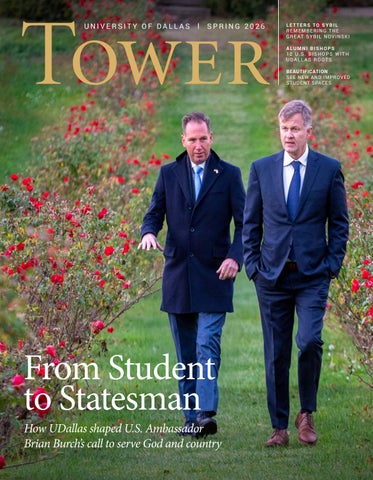
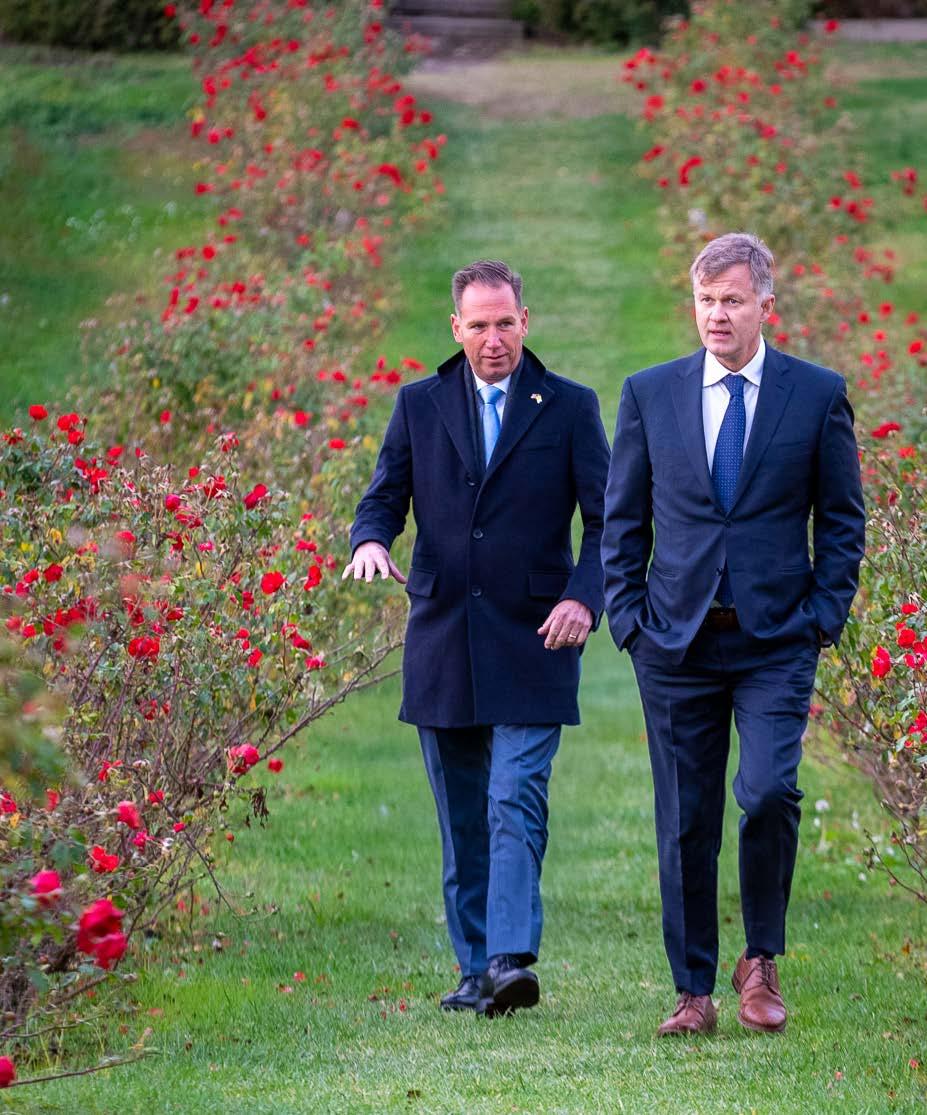
From Student to Statesman
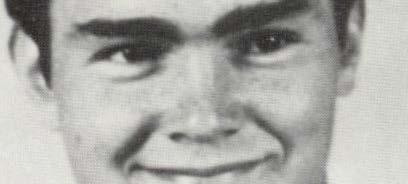
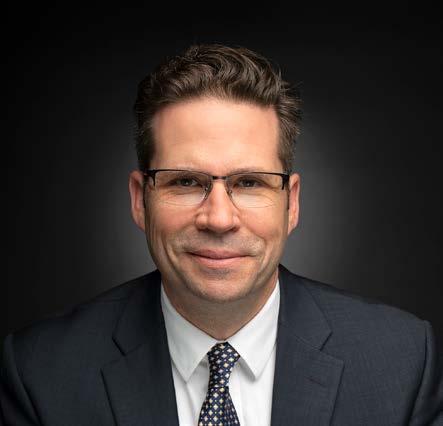
How UDallas shaped U.S. Ambassador Brian Burch’s call to serve God and country
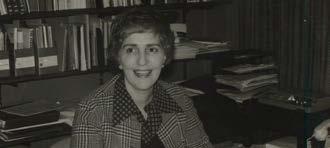
LETTERS TO SYBIL REMEMBERING THE GREAT SYBIL NOVINSKI
ALUMNI BISHOPS
12 U.S. BISHOPS WITH UDALLAS ROOTS
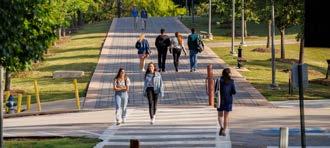
BEAUTIFICATION
SEE NEW AND IMPROVED STUDENT SPACES
Local Lore
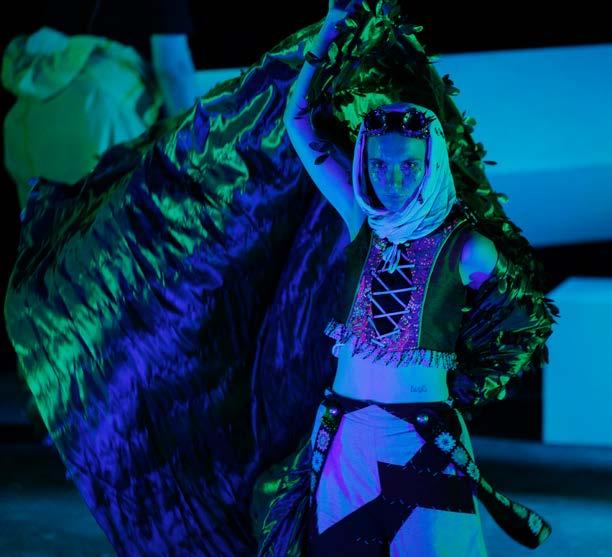
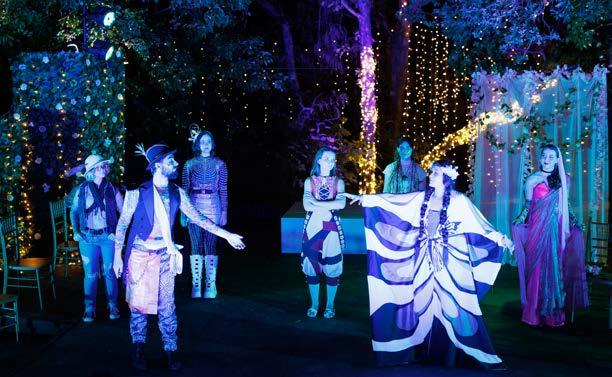
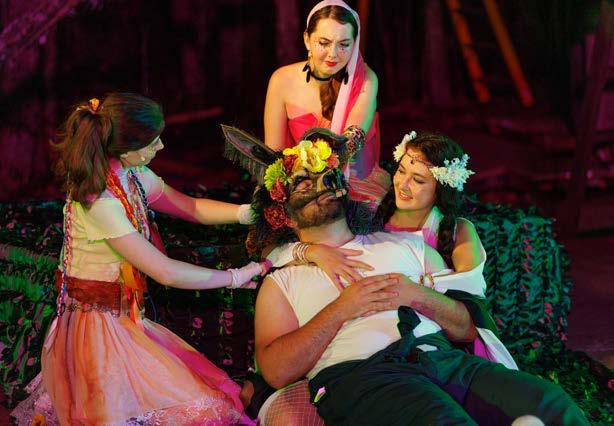

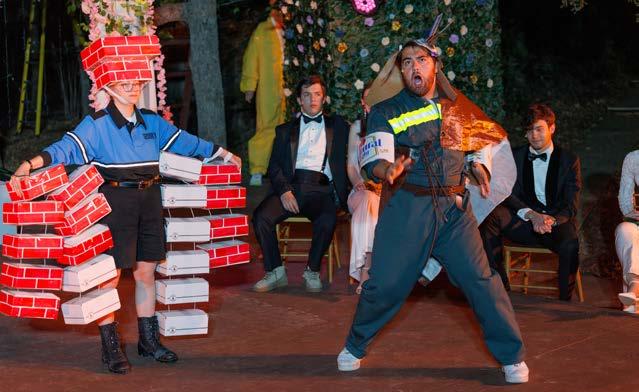
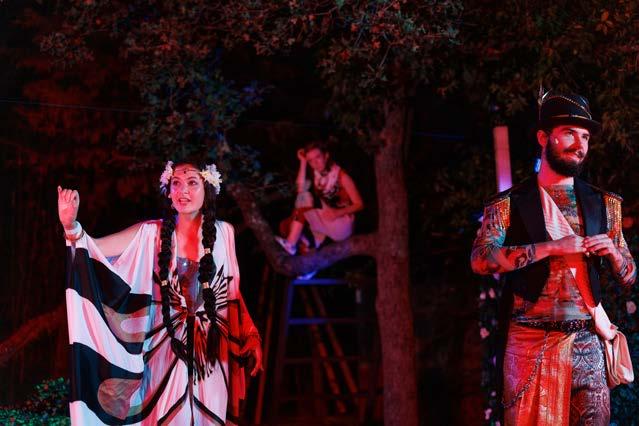
THE DRAMA DEPARTMENT’S PRODUCTION OF MIDSUMMER NIGHT’S DREAM OPENED ON OCT. 27, 2025, AND WAS DIRECTED BY STEFAN NOVINSKI.
CAST MEMBERS INCLUDED JOHN KELLY, HEIDI BURKE, ALLISON PETERMAN, CLARE KELSCH, JACE PETRUTSAS, ISABEL WILLIAMS, JOSEPH FOURNIER, SEAMUS MALLOY, MARY CARLIN, DAVID DAINKO, STELLA NOLEN, ANDREW SANDERS, JUDE SELF, THOMAS LAHER, LUCY GALLAGER, MAGGIE SONNE, CLARA SCHNEIDER, LIANA CROSS, KIT WOOTEN, AND HANNAH KIDD.
PHOTOGRAPHER: NATHAN HUNSINGER
PRESIDENT
Jonathan J. Sanford, PhD
VP FOR MARKETING & COMMUNICATIONS
Clare Venegas
SENIOR EDITOR
Caitlin Bootsma, BA ’06
DESIGNER
Daniela Madriz
CONTRIBUTORS
Jonathan J. Sanford, PhD
Rebecca Grillot, BA ’10
Scott Crider, PhD
Eileen Gregory, PhD
Luke J. Ayers
Syed Naqvi, MBA ’25
Hannah Mohr, BA ’24
Matthias Vorwerk, PhD
Jodi Hunt, PhD
FROM THE PRESIDENT
Seventy Years of Excellence
The University of Dallas is 70 years old this year. At least, it is if we are talking about the university that was founded in 1956 by Bishop Thomas Gorman, with the help of a group of religious sisters and a small lay board remarkable for their strength of vision and transformative philanthropy. In both a historical and metaphysical sense, however, we can say that the University of Dallas is as old as the birth of the university in medieval Europe. For that matter, we could trace our origins even further back to the founding of Plato’s Academy in the fourth century BC. When it comes to the fundamental work of professors and students collaborating in the pursuit of wisdom, truth and virtue, the University of Dallas proudly bears her legacy as an instantiation of the very idea of the university. But the University of Dallas is more than a participant in a grand culture-shaping Form; we are a concrete particular, and that matters a great deal. It matters that we were founded to be a truly great university, and it matters that we are realizing that vision. It matters that, under the leadership of President Donald Cowan, we developed soul-shaping core curricula in both our undergraduate and graduate programs, and it matters that we remain committed to that model still. It matters that we are in Dallas, Texas, and have a second campus in Marino, Italy. It matters that we focus on timeless truths while also adding to the growing body of knowledge through creative and innovative research. It matters that we attend not just to cultivating the virtues of the mind, but the virtues of character as well through our integrated student life and campus ministry programs. It matters that we are a university, and not just a college, or a collection of colleges — we are a unified whole.
Institutions, Aristotle teaches, mediate the virtues. They uphold standards of excellence and they give shape to the character of those who share in them. Institutions of higher education have played a particularly significant role in forming promising young people into the leading citizens our culture needs to build a future in which goodness, truth, and beauty have primacy of place. You can be proud that the University of Dallas remains committed to that core mission. If you need a reason to hope for the future of our country, just spend some time with our remarkable alumni.
Institutionally speaking, we are still relatively young. The University of Dallas is what it was and is becoming more what it is as we continue to advance educational excellence. Happy Birthday, University of Dallas. Many, many happy returns.
Jonathan J. Sanford, PhD President, Professor of Philosophy
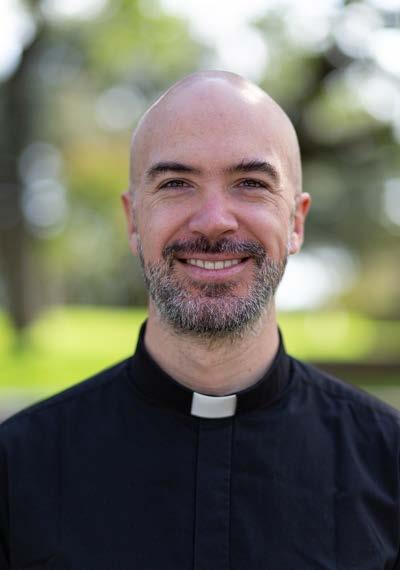
Alumnus Fr. Jerónimo Espinosa Appointed Chaplain
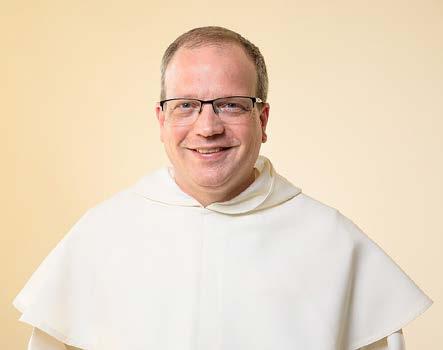
Alumnus Fr. Jerónimo Espinosa, MPM ’23, was appointed chaplain and began his service to the students, faculty and staff of the University of Dallas in August of 2025.
Espinosa is a Colombian priest and member of the St. Joseph Association, a community devoted to serving youth and young adults. With over 15 years of ministry experience, he already has strong ties to the University of Dallas — earning his master’s in pastoral ministry here in 2023.
“We are delighted to welcome Fr. Jerónimo back to the University of Dallas in this important role,” said President Jonathan J. Sanford, PhD. “As both an alumnus and a priest deeply committed to serving young people, he brings a unique combination of pastoral experience and familiarity with our community. I am confident that his presence will strengthen the spiritual life of our campus and encourage our students,
University Receives National Recognition
The University of Dallas recently climbed to rank #2 in Best Value - Regional Universities (West) by U.S. News & World Report. The honor comes on the heels of two others:
the Princeton Review naming UDallas among the best colleges in America in its 2026 guide, and a similar distinction from Money Magazine.
faculty and staff as they seek wisdom, grow in faith, and live abundantly.”
Ordained in Dec. 2021, Espinosa served as a priest-in-residence at Our Lady of Perpetual Help Parish in Dallas while completing his studies, and also supported other local parishes.
“It was an epic,” Espinoza said enthusiastically about his first week. “It was filled with thousands of handshakes, new faces, tons of welcome and bienvenidos. Hundreds of names that I already forgot but brought to prayer, new faces of strangers that in due time will become family, friends and hopefully, spiritual children. I look forward to getting to know, not just know about, the people of God who study and work at UDallas.”
A Bold Conversation about Higher Education
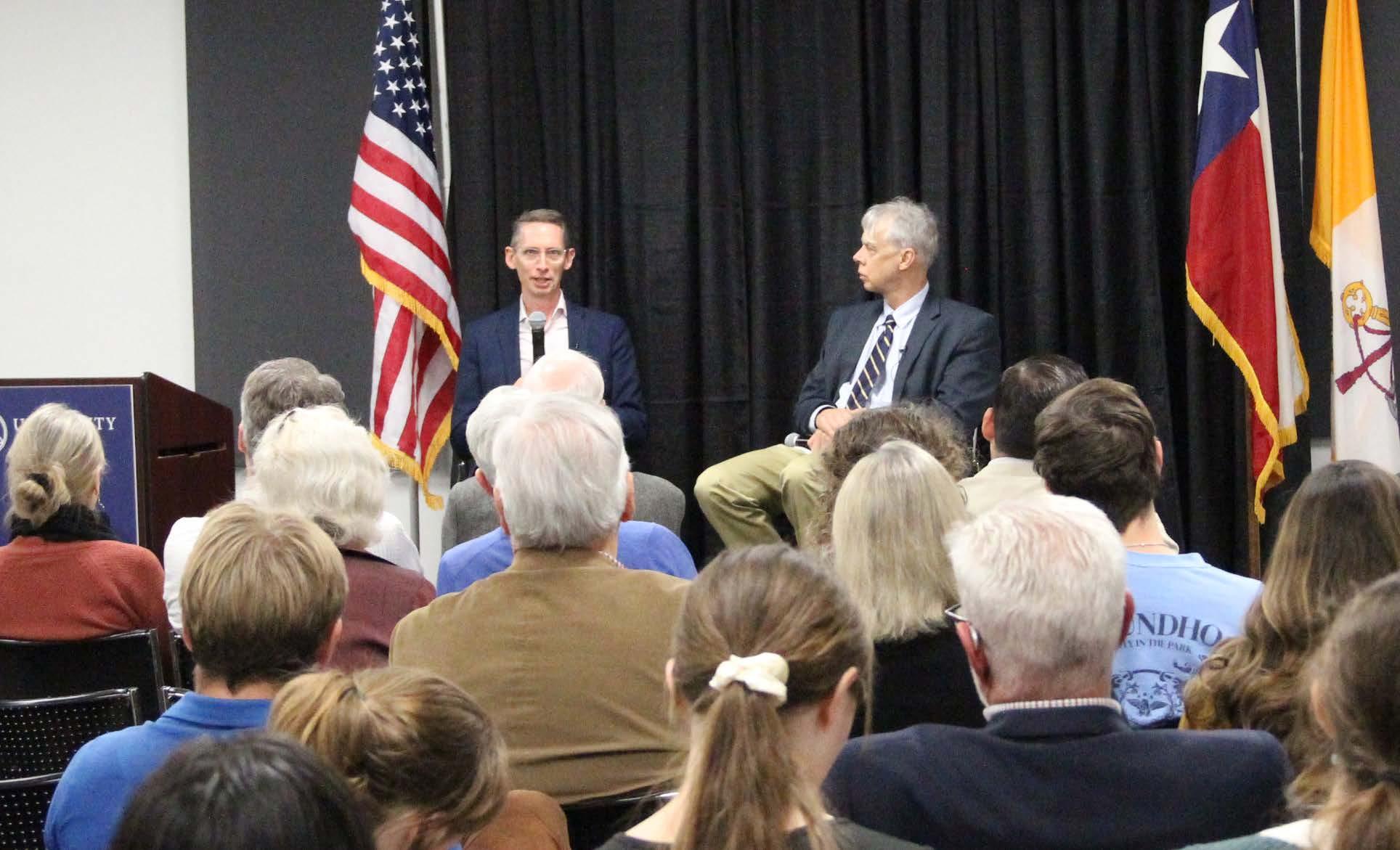
The University of Dallas was honored to host a lecture with First Things Magazine, America’s preeminent journal of religion and public life, featuring UT professor Mark Regnerus, PhD, and Emory University professor emeritus Mark Bauerlein, PhD. With opening remarks by University President Jonathan J. Sanford, PhD, the evening centered on a vital question: “Can Higher Education Be Saved?”
Bauerlein, who hosts the First Things podcast, engaged Regnerus about the state of higher education, in light of the public’s waning trust in institutions of higher education. Regnerus, a sociologist whose two children are UDallas alumni, spoke of his own experience challenging prevailing narratives in his discipline.
The professors also considered three big problems of mainstream higher education, one of which is the question of legitimacy in the higher education system. People realize that there is “something broken” with higher education, due in part to a major shift from seeing a university education as training in thinking, argumentation, writing and analysis to students often just thinking “I am here for credentials.” Another, Regenerus argued, is the bifurcation of the sciences and the humanities. He also discussed value as an obstacle; parents no longer think they are getting their money’s worth from a university education.
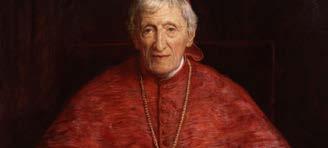
One of the primary goals of a university should be, they stated, St. John Henry Newman’s idea of a university to “distinguish truth and falsity.” While this goal is not commonly understood in society today, both agreed there is still hope for some universities.
Bauerlein observed that holding to a particular religious identity is fruitful. Colleges need to be offering something that is authentic and meaningful to actually draw interested applicants. He pointed to the schools recommended by the Cardinal Newman Society as examples of institutions that are countercultural and experiencing strong enrollment numbers.
Bauerlein also considers an undergraduate core curriculum to be a vital part of a serious education. “Once you start expanding [the core], all the quality goes down. There is no more core; there’s no more coherence,” Bauerlein argued.
New “Light & Truth” Series Offers Timely Insights on Education, Cultural Renewal
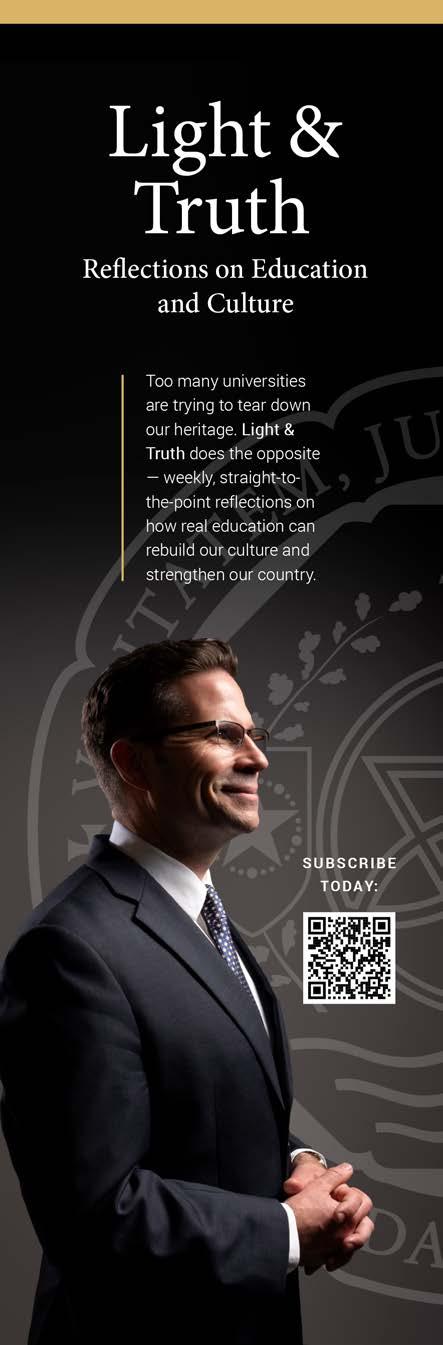
University of Dallas President Jonathan J. Sanford has launched a new LinkedIn reflection series titled, “Light & Truth: Reflections on Education and Culture Today,” featuring weekly short videos and essays on themes of truth, virtue, leadership and the renewal of American education and culture.
In the series’ launch, Sanford points to UDallas’ longstanding educational mission as the foundation for this public-facing initiative. “For nearly seventy years,” he notes, the University of Dallas has formed students “to seek truth, practice virtue and grow in wisdom,” and he aims to bring that same mission to a broader audience through LinkedIn.
Contemporary culture increasingly treats truth as relative and education as merely utilitarian. Sanford argues that a Catholic liberal arts education—grounded in the Judeo-Christian understanding of objective truth and enriched by the Western intellectual tradition—offers a compelling vision for human flourishing, one that could set our present culture on a path toward renewal.
Each reflection draws on enduring thinkers and images to illuminate present-day questions about topics such as artificial intelligence, the mistrust of institutions, higher education, political division and discourse.
Sanford’s first featured reflection in the series is titled “Out of the Cave: How the Liberal Arts Can Save Civilization,” which invokes Plato’s allegory of the cave, suggesting that many students today encounter “shadows—ideologies, slogans, and noise—instead of reality.”
Join the conversation either by following or subscribing to his newsletter on LinkedIn to consider the meaning and purpose of education, and how it can play a pivotal role in the renewal of our culture.
John Paul II Lecture on Aquinas and the Trinity
In September 2025, Fr. Thomas Joseph White, O.P. delivered the annual JPII Lecture, hosted by the Theology Department, titled “Aquinas on the Mystery of Trinitarian Indwelling.” Fr. White offered a deep spiritual reflection on the nature of grace,
the Holy Spirit as the font of grace and the power of grace to conform the human person to Christ. Fr. White is the Rector Magnificus of the Pontifical University of St. Thomas (Angelicum) in Rome.
Intermezzo
Rome in focus.
Witnesses to History
Generations of UDallas students experience five papal conclaves in 50 years
BY REBECCA GRILLOT, BA ’10
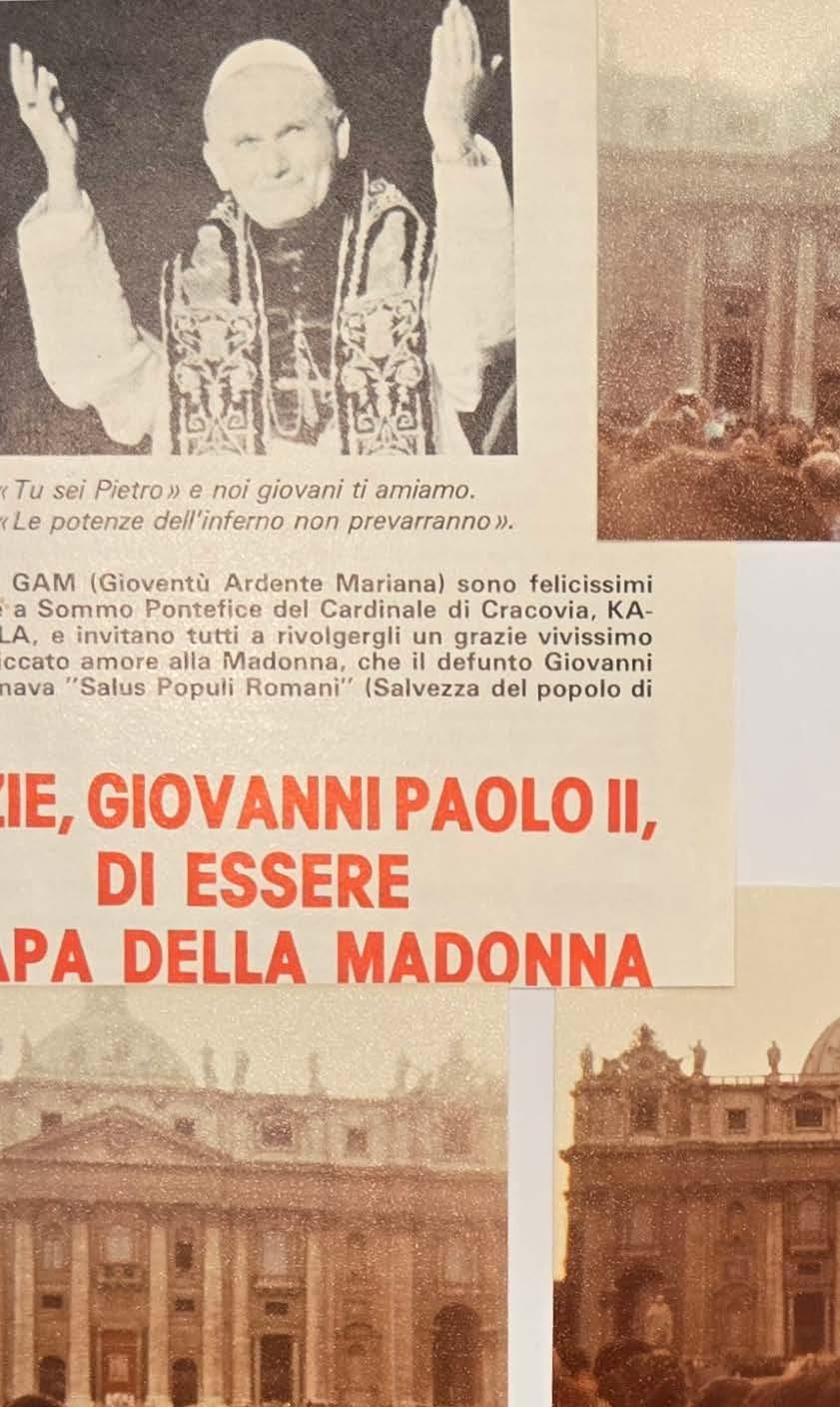
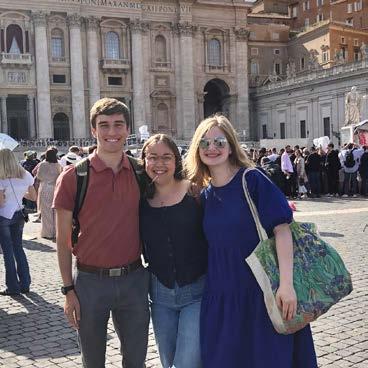
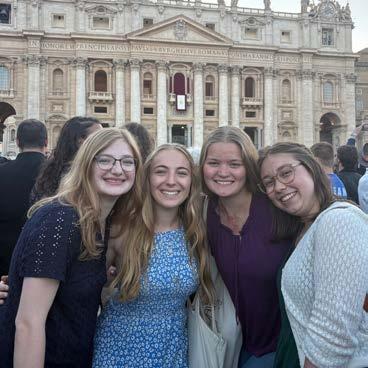
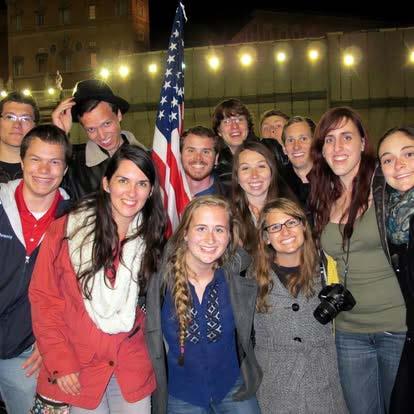
In the 55 years since the inception of the University of Dallas Rome program, four semesters of Romers have had the unique experience of being in the right place at the right time. During the fall of 1978 and the spring semesters of 2005, 2013 and 2025, UDallas students witnessed the papal conclaves that elected our last five popes.
When the fall Rome class of 1978 descended upon the Eternal City, they entered into a momentous season of Church history, as Pope Paul VI had just passed away on Aug. 6. Cheryl (Frost) Dorenbush, BA ’81, recalls that, even though she was among the nearly 50 percent of her class who were not Catholic, they all converged upon St. Peter’s Square for the conclave and installation of John Paul I. What they weren’t expecting was to witness a second conclave six weeks later when the new pontiff passed away, and John Paul II was elected.
“I remember the feeling of being in the square, and you could just feel the people’s hope. It was palpable,” she recalls. “Their hope was palpable, and their devotion and their faith.
It was a very wonderful experience to have.”
From all the time they spent gathered in St. Peter’s square, Dorenbush’s most vivid memory is of the “tiny nuns with umbrellas,” slowly but steadily poking their way to the front. The students, she says, didn’t stand a chance against the persistence of the nuns, and soon they found themselves about halfway back in the crowd.
“I remembered being very polite to them because I admired their devotion and their faith and their vocation … but I really didn’t admire their umbrellas,” Dorenbush laughs. Every time they returned to the square, her mantra became: “Just back away from the nuns.”
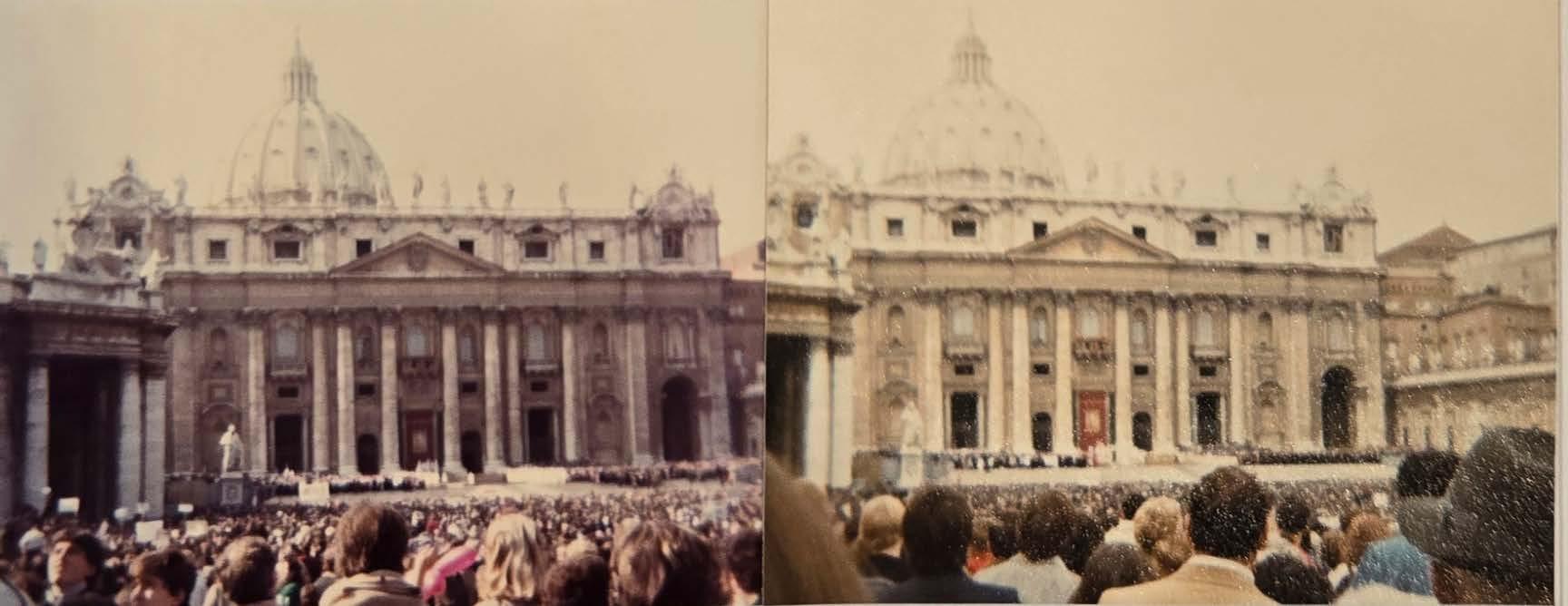
At the installation mass of Pope John Paul II, the UDallas Romers positioned themselves next to the Bernini fountain so that they could easily pop up for a view above the crowd.
“The whole experience was really enhanced by the literal arms of the Church, Bernini’s columns,” Dorenbush describes. “It was like they were embracing everyone. If you stand in the right way in that plaza, you can look out and see in between all of the columns, letting everyone in, the whole world, but if you take a few steps, the perspective changes and they close up, and you’re being held in the arms of the Church.”
Dorenbush says that feeling of embrace in the faith and devotion of the Church spurred her own conversion. When she returned to campus that spring, she began looking into RCIA, and the following year she came into the Church.
Nearly 27 years later, UDallas Spring 2005 Romers knew exactly where to stand to see JPII greet the people from his hospital window. His health was in steep decline and the world knew he would pass soon, but for some, it was more than just knowledge. Many UDallas students and staff say they could sense when his last moments were near.
Dr. Greg Roper, dean of students, who was teaching on the Rome campus at the time, remembers Rome chaplain Fr. Mark Byrne,
SOLT, saying, “Let’s just go down” to St. Peter’s. They weren’t the only ones with that idea, as the square was full of people singing and praying. Roper remembers his wife saying it was more like waiting for a birth than a death – a joyous, peaceful occasion.
Eric Lewis, BA ’07, who was a Romer that semester and now serves as the Music Minister for the Church of the Incarnation, distinctly remembers a rumbling thunder echoing through the vineyard of the Due Santi campus the night JPII died. He turned to his roommate and said, “I think that the pope just died.” Sure enough, he had passed away just hours earlier.
Anne (Johnson) Judge, BA ’02, and Rome RA from 2004-2005, traveled to Krakow that week to spend Divine Mercy Sunday in the home country of St. Faustina.
When she arrived in Krakow, there was a somber tone, and it was clear the people were in mourning, but no one was speaking English. All the businesses were closed, including internet cafes, and in the era before smartphones, Judge needed a way to find out what was going on. She noticed a Fox News van parked on a lawn and knocked on the door. Amy Kellogg, a Fox News foreign correspondent, opened the door and Judge asked her if the pope had died, inadvertently getting interviewed about her devotion to the Divine Mercy at the same time.
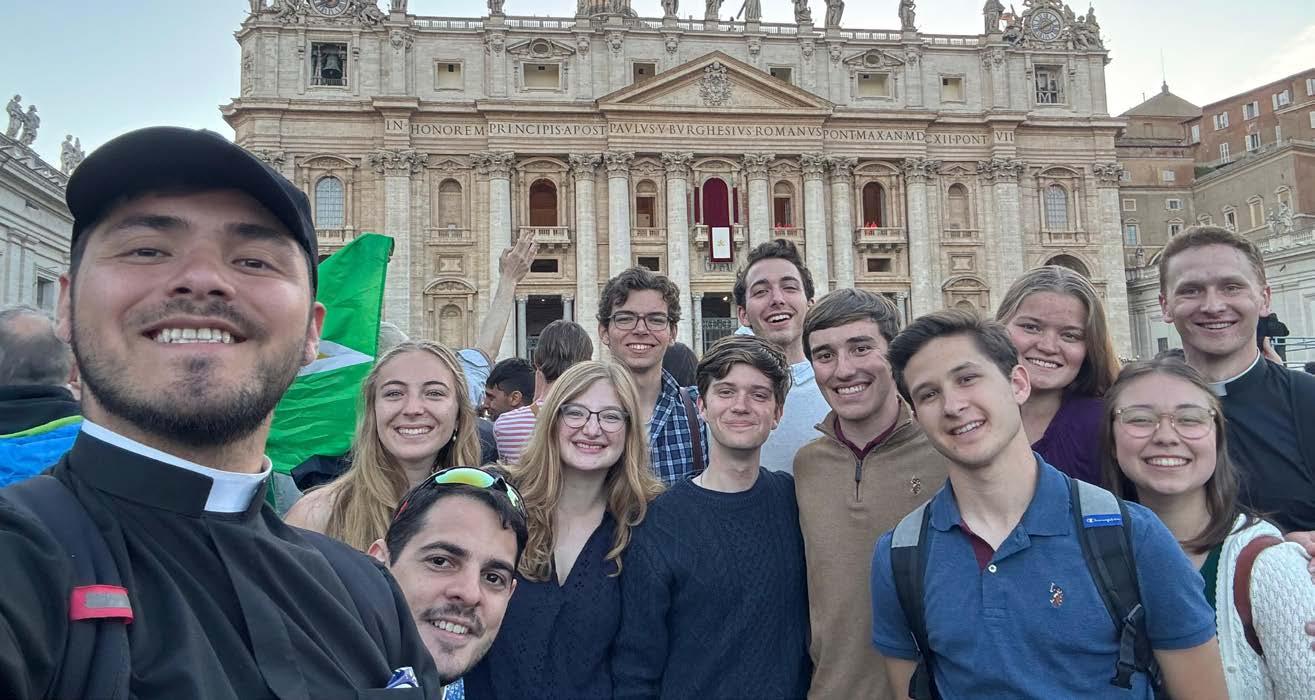
Judge then returned to Rome in time to see JPII lie in state and witness the conclave that elected Pope Benedict XVI Roper, on the other hand, remembers being in the Raphael Rooms of the Vatican Museums, just next door to the Sistine Chapel, while the conclave was going on, when the guards began shooing visitors out long before closing time. No one expected a pope to be chosen so quickly, recalls Roper, because of the difficulty of replacing a pope so long-standing and popular as John Paul II. So they went home, taking a route that didn’t lead them past St. Peter’s square, where unbeknownst to them, white smoke was billowing from the Sistine Chapel chimney. As they walked onto the Rome campus, they learned that the Vatican Museums had closed because a pope had been chosen.
Many realized in hindsight that then-cardinal Ratzinger’s “dictatorship of relativism” homily at the opening mass of the conclave had been a source of unity for the faithful and made him a clear choice as the next leader for the Church.
Less than a decade later, Pope Benedict became the first pope in over 700 years to voluntarily resign, and UDallas Spring 2013 Romers were shocked.
“It was kind of a day of grieving on the Rome campus,” says Sarah Sokora, BA ’15 MS ’22. For Romers during sede vacante, the period
of time between popes, “it’s not just that you don’t have a pope, but there’s actually no bishop. There was this real sense of loss.”
Sokora and her friends camped out in St. Peter’s square on the second day of the conclave, even though, again, no one expected a pope to be chosen so quickly. After the sun had fully set, smoke billowed from the chimney and in the darkness, many thought the smoke was black and began heading home. As they walked away, UDallas Romers heard shouts of “bianco!” as the smoke became more visible, and they returned to the square to meet the new Pope Francis
Sokora remembers being surrounded by thousands of other Catholics brimming with excitement, but no one could communicate with each other. A feeling of isolation settled over the crowd, until a group of seminarians started singing the Salve Regina. The Latin hymn, undeterred by language barriers, chorused over and over again throughout the different parts of the square.
“I’ve never felt more powerfully the universal nature of the Church, what it means to be Catholic, than I did in that moment,” Sokora reflects. “Even that day, I knew this was going to be one of the highlights of my life.”
The spring 2025 Rome semester began with the announcement of Pope Francis’s illness and hospitalization, before UDallas Romers even attended an audience with him. As the semester went on, students began to lose hope that they would get to meet the pontiff at all, until those who spent Easter in St. Peter’s received his final blessing.
As the first Romers to be present for a papal transition in an age of smartphones, these students found out about Francis’s passing in much the same way that those of us here in the U.S. did: they saw the headline as they scrolled their phones while sitting in their dorm rooms.
Though the pope passed away the day after Easter, the Rome semester ended just two weeks later, the day before the conclave was set to begin. A dozen students scrambled to extend their travel plans. One student, Philosophy major Caroline Anderson ’27, providentially already had plans to stay in Rome and meet her family, who were flying in.
A close-knit group of students, seminarians, and the Rome campus chaplain spent the next two days camped out in St. Peter’s square, playing games and praying. On the evening of the second day of the conclave,
Anderson remembers noticing that there was still an hour left until the smoke was scheduled to appear. As she turned away from the chimney, shouts erupted throughout the square. White smoke had appeared. When Cardinal Protodeacon Dominique Mamberti stepped out onto the loggia and announced, “Habemus papam!” Anderson says the cheers were so loud, they almost couldn’t hear the new pope’s name.
“It was so beautiful to see how everyone’s joy was about the fact that we have a new pope, and not about who the pope is. It shows the universality of the Church. The Holy Spirit has chosen who this pope is, so we are elated and overfilled with joy that we have a pope now.”
UDallas Romers soon found that their joy could increase even more when they learned that their new pontiff was an American.
“I think that means a lot for the Church in America,” says spring 2025 Romer and English major Beatrice Ellison ’27. “It’s really inspiring, really motivating for Americans that our pope is one of us.”
After leaving the square, the group of students went to dinner at an American restaurant, ordering burgers and a beer called Leon in honor of the new pope, Leo XIV.
Tim and Brandie Gehan
BY REBECCA GRILLOT, BA ’10
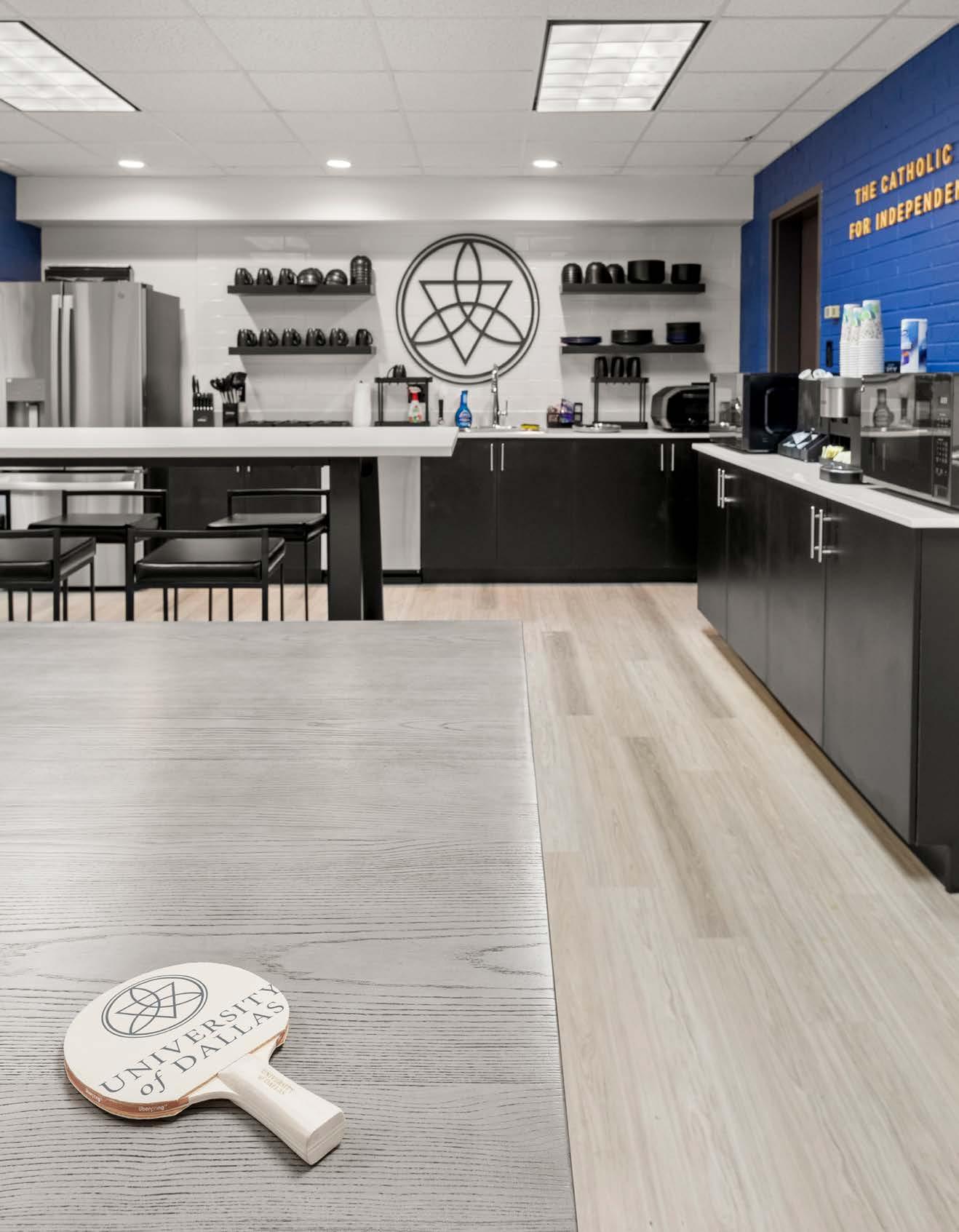
When students returned to campus in August 2025, Gregory Hall residents found a completely redesigned lower lounge and patio area, a generous gift of the time, talent and treasure of Tim, BA ’82, and Brandie Gehan.
The inspiration for the project grew out of the recent lounge renovation in Theresa Hall and the spring 2025 Cor Challenge special challenge fund, donated by Fanny, BA ’88 MBA ’91, and Phil, BA ’90 MBA ’93, Sheumaker. The challenge encouraged donors to vote for the allocation of funds to certain campus improvement projects –including the Gregory Hall lounge.
The Cor Challenge became a springboard for the Gehans, who own and run a home construction business called UnionMain, to donate not only the generous funds for completing the project but also their expertise in the design, overseen by Executive Director of Facilities and Capital Projects Benjamin Gibbs, EdD, BA ’15 MBA ’17.
Motivated by Tim’s experience living in Gregory Hall as an undergraduate and by their care for current students, the Gehans set out to create a community space that would improve the experience of dorm life for students on campus – a place that students would find practical, a place they would gather, and a place that will hopefully attract new students to the university.
“They wanted to treat the lounge as the living room of a home for students who live on campus,” said Gibbs, “and because of that, they were directly involved in designing the space and directly involved in helping the university find some of the contractors who could implement that vision.”
The Gehans visited campus frequently during the renovation process, noticing details, giving feedback and articulating solutions. Their consistent involvement resulted in a cohesive space, achieving the vision of creating a relaxing, comfortable and practical place for students to gather.
“They came to us with a vision,” Gibbs explained. “They had an affinity for the project and an ability to help us realize that vision because of their expertise – being able to do all of those things made the project easier than it would have otherwise been.”
Throughout the project, the Gehans remained deferential to the best interests of the university, continuously seeking to understand what the students would like and involving various staff members in the process.
The striking focal point of the project is a large mural that captures the distinctive culture of both the Irving and Rome campuses through images that are instantly recognizable to students. The mural is a daily reminder that these spaces aren’t just functional; they shape belonging.
Greg Hall Residence Assistant Joe Teson ’27 was among the first students to use the new space. “They really went above and beyond,” he said. “Everyone that I’ve encountered walking in has been blown away by the creativity and the thought behind the design.”
Teson immediately began planning gatherings, including a celebration for the feast day of St. Gregory. The new lounge, he says, “sets Greg apart among the west side halls. It’s going to end up being a space where people come together.”
“It’s an enormous gift that echoes out in a lot of different ways. It’s not just that we made a pretty space – we made an area that the guys want to keep nice. It elevates behavior because the built spaces we live in have an effect on us,” observed Dean of Students Greg Roper, PhD, BA ’84. “The Gehans have been fabulously generous with their time and treasure.”
Connecting With Alumni
A Neurosurgeon Formed By the Core
BY REBECCA GRILLOT, BA ’10

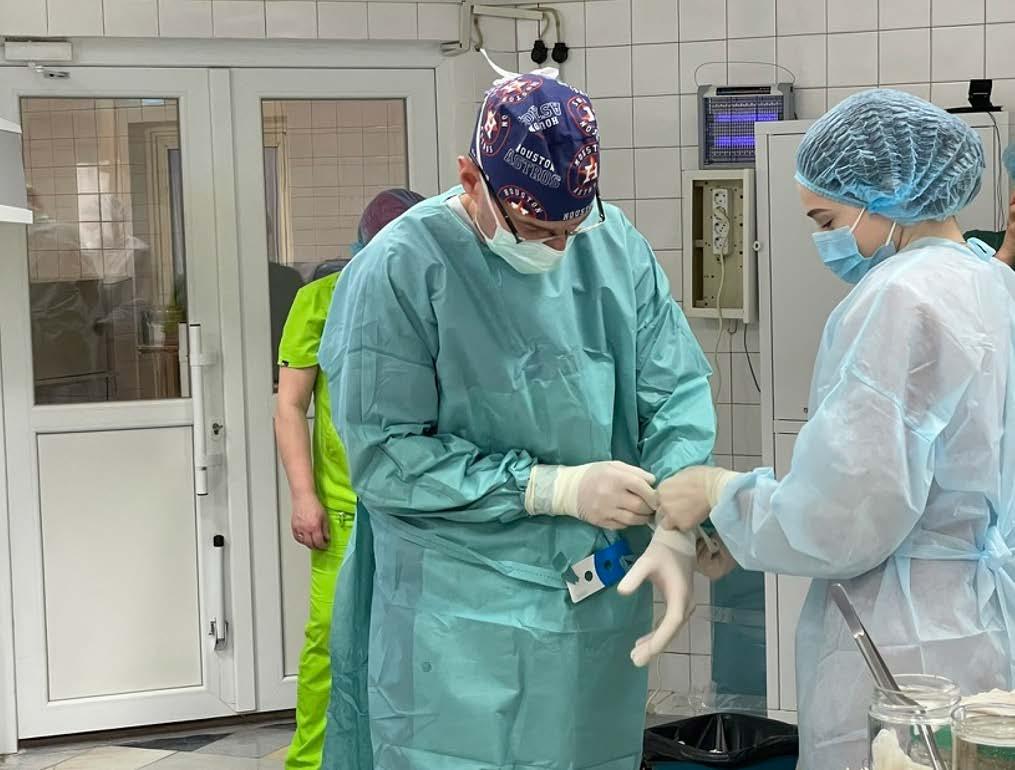
Dr. Alex Valadka, BS & BA ’83, born to Lithuanian parents and raised in Chicago, comes from a long line of doctors, but he is the only person in his family to have attended the University of Dallas.
While all his siblings went to the University of Illinois, Valadka was drawn to the Catholic character of UDallas. Later in life, he realized the gift of the Core Curriculum and the spiritual formation he received, both of which contributed to his growth as a leader and inspired him to service. Affectionately reflecting on how God’s Providence led him to UDallas, Valadka likes to joke, “God looks after fools and UD students…and the two are probably synonymous.”
Valadka’s career path has been marked by impressive growth and intentional thoughtfulness for his family and patients in need of his expertise. After graduating second in his class from UDallas, Valadka went on to attend medical school at the University of Chicago, where he developed an interest
in traumatic brain injury and neurocritical care. He completed his residency at Medical College of Virginia and then secured a faculty spot at Baylor College of Medicine in Houston, enjoying the opportunity to conduct research in addition to treating patients. He has since held positions as chair of the department of neurosurgery at Virginia Commonwealth University, president of the American Association of Neurological Surgeons and as a consultant to Major League Baseball for traumatic brain injury. Valadka currently serves as chief of neurological surgery for the Parkland Health & Hospital System and professor in the Department of Neurological Surgery at UT Southwestern Medical Center, where he specializes in neurotrauma and neurocritical care.
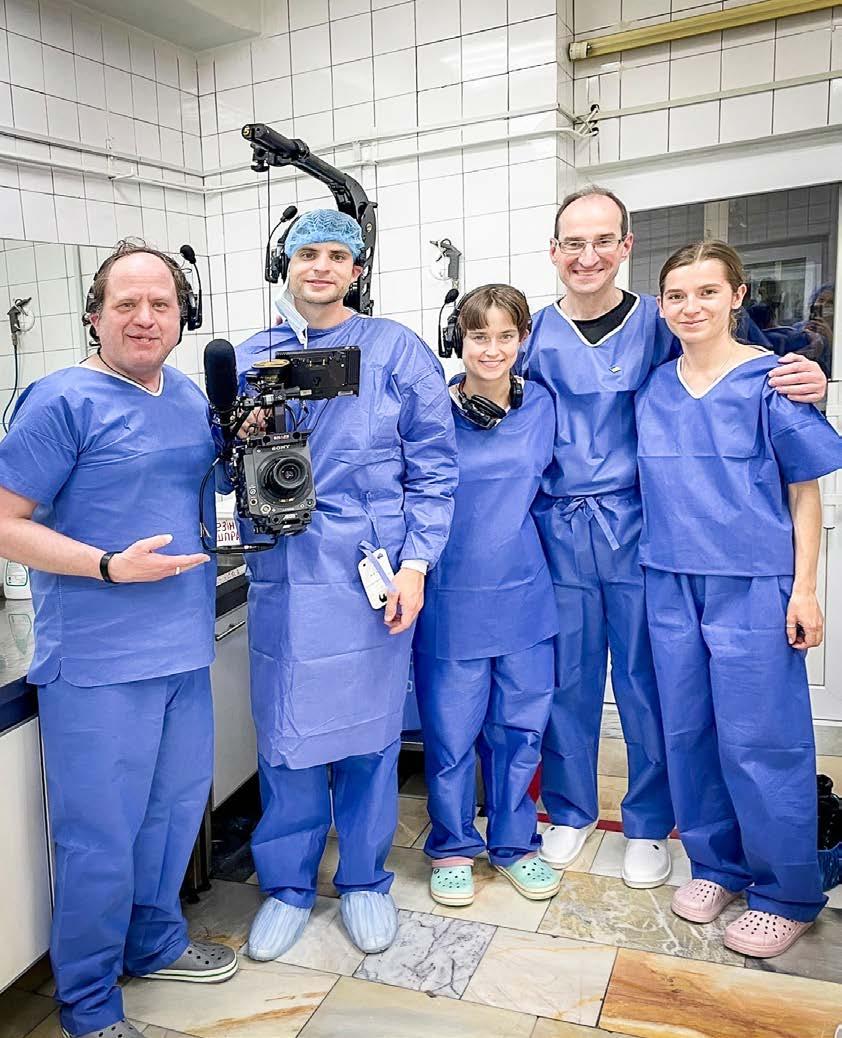
In September 2023, at a conference in Maryland, Valadka met Dr. Rocco Armonda, an acquaintance who also specializes in traumatic brain injury, and learned about his work in Ukraine with soldiers and civilians injured in the war with Russia. That interaction ignited a passion in Valadka. Armonda was working with a group called Razom (meaning “together” in Ukrainian), a non-profit that has been providing aid to Ukraine since the illegal occupation of Crimea in 2014. After their conversation, Valadka pursued a desire to serve close to the front lines and made connections at Mechnikov Hospital in Dnipro, Ukraine, 60 miles from the front lines of the war. He now travels there twice a year to work alongside expert surgeons and ICU doctors, led by head of neurosurgery Dr. Andrii Sirko
Valadka says that his career success pales in comparison to the suffering of the citizens of Ukraine and the difference he can make there. Each visit, he secures donated tools for surgery, marveling at the expertise of the Ukrainian surgeons who carefully perform surgeries without the image guidance and extensive tools available in American hospitals. He also helps his Ukrainian colleagues analyze their data and publish and present their techniques for patient management, which have revolutionized military medicine, at international meetings. Dnipro, the closest major city to the front lines of the war, is constantly under attack itself, and Valadka explained that Mechnikov Hospital sees not only soldiers but also many civilians injured in targeted drone attacks. Doctors and nurses, he says, are not only responding to constant emergency cases, but also worrying for their own families’ safety and filling in for the 30% drop in workforce that the hospital has suffered since the start of the war, due to Ukrainians leaving the country or going to fight in the war.
Valadka initially wondered if he was doing enough to help the Ukrainian people, until he began to realize the value of presence, showing human dignity to those the world has forgotten. Compelled by the urging of a local doctor at the end of one of his visits: “Please don’t forget about us,” Valadka seeks to raise awareness for the ongoing need of the Ukrainian people in hopes that we, too, will not forget them.
2025: Three Campaigns, Exponential Impact
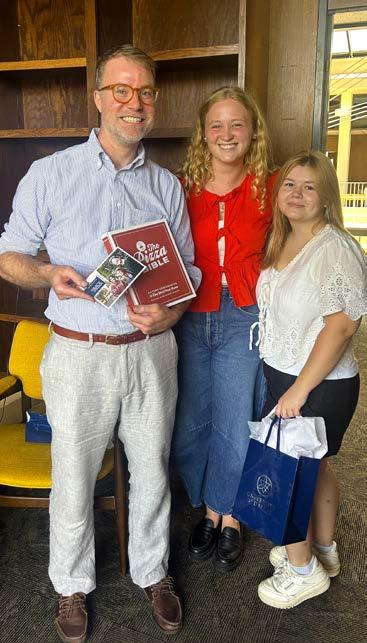
In 2025, your generosity powered three campaigns for the Cor Fund. The Cor Challenge raised over $260,000 from 809 donors and expanded its Challenge Fund from $50,000 to $75,000, immediately supporting initiatives across faculty development, Student Life, the Rome program, Campus Ministry, Gupta College of Business and Athletics. Love Ye Prof, our Back to School campaign, brought in $145,810, delivered 195 gratitude packages to our beloved faculty, and unlocked three Faculty Excellence in Research Awards. And our year-end campaign — Stand With UDallas, Form Heroes — reached $312,093, exceeding our goal and strengthening UDallas’ mission to form everyday heroes for the Church, our country and the world.
Thank you for sustaining the heart of UDallas and multiplying your impact.
Alumnus Serves as U.S. Ambassador to the Holy See
BY CAITLIN (FORST) BOOTSMA, BA ’06

Cover Story
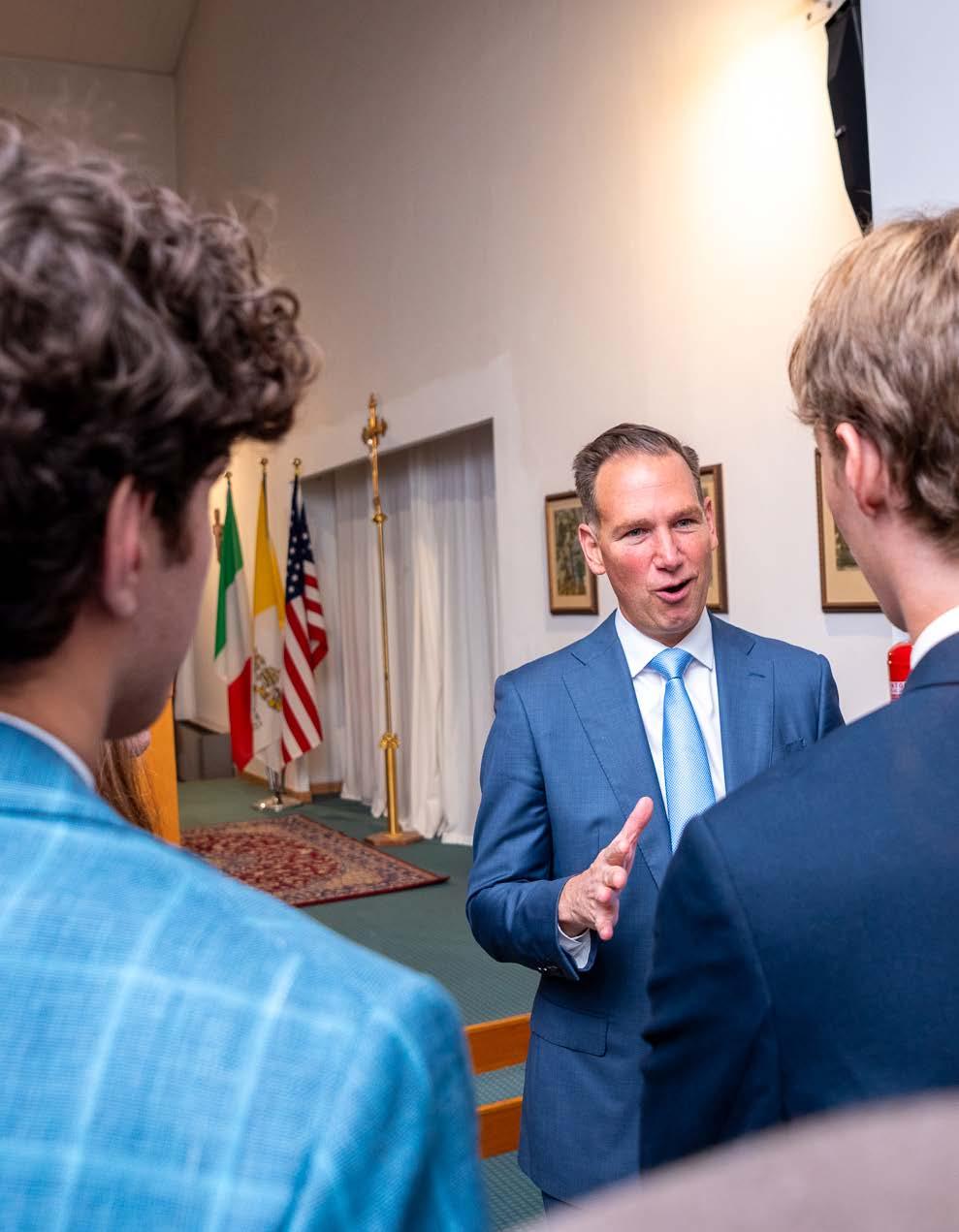
In 2025, Brian Burch, BA ’97, was nominated by President Donald Trump and confirmed by the United States Senate as U.S. Ambassador to the Holy See. A participant in the Rome program and founder of CatholicVote, Ambassador Burch took the time to answer several questions about his experience in this new role and the move back to Rome with his family.
WHAT WAS THE PROCESS LIKE TO BECOME APPOINTED AS AMBASSADOR? WHAT WAS IT LIKE TO RECEIVE THE NEWS?
I first learned that my name was being discussed as the potential U.S. Ambassador to the Holy See in the weeks following the 2024 election. Following every election, a presidential transition team is formed to advise the president on key appointments, which include his cabinet, key agencies and posts within the government, including the State Department, which is charged with the diplomatic work of the United States around the world. I had several conversations with former ambassadors along with advisors to the president that I knew to discuss the prospect of such an appointment and whether I was a good fit for the role. As the process unfolded, I learned that the president had narrowed the list to a few very qualified candidates and that I was among those he was considering.
My wife Sara (UDallas Class of ’97) recommended that we pray the Surrender Novena, as well as prayers to Our Lady of Guadalupe for her intercession. On the Feast of Our Lady of Guadalupe last December, I received a phone call from a friend close to the president. A few days later I received the historic call that began with an advisor saying, “stand by for the President of the United States.” And thus began the extensive process of background investigations and disclosures to the federal government, which cleared me to be considered by the United States Senate. During the next six months, I attended “ambassador school” to learn about the responsibilities of a U.S. diplomat. I also prepared for my confirmation hearing before the Senate Foreign Relations Committee. After being cleared by the committee, I waited an additional three months before the full senate approved my nomination. Three weeks later we departed for Rome.
“The value of an authentic liberal arts education has never been more important.”

I READ YOU HAVE NINE CHILDREN! WHAT WAS IT LIKE PLANNING TO MOVE THE WHOLE FAMILY TO ROME?
Having nine children is not common in the United States, and very uncommon in Italy – at least in recent decades. My children were equally excited by the prospect of moving to Rome, seeing St. Peter’s, and eating pasta regularly. The planning involved deciding what schools they would attend as well as what clothes, books, and toys they would bring to Rome, and which favorite things would have to be left behind for the next three and a half years. Some of my children are recent college graduates and remain in the United States.
We have five kids living with us now at Villa Richardson, the residence of the U.S.
Ambassador to the Holy See, which has been the home of every U.S. Ambassador to the Holy See since the 1980s. The property is approximately one mile from the Vatican on the Janiculum Hill and is designed to allow the ambassador to host regular events and includes beautiful gardens and a yard. Just because we moved to Rome doesn’t mean we ceased living our life as a typical American family. Visitors to the residence can now spot some bikes and soccer balls, and even a few Lego and Playmobil toys if they look closely. The kids often enjoy participating in the dinners and parties we host. It felt odd at first, but we have made it our home over the past few months, and we are honored to regularly welcome guests from the United States and officials from the Vatican.
I’M GUESSING THERE IS NO AVERAGE DAY AS AMBASSADOR. THAT SAID, COULD YOU EXPLAIN A LITTLE ABOUT WHAT YOUR JOB ENTAILS?
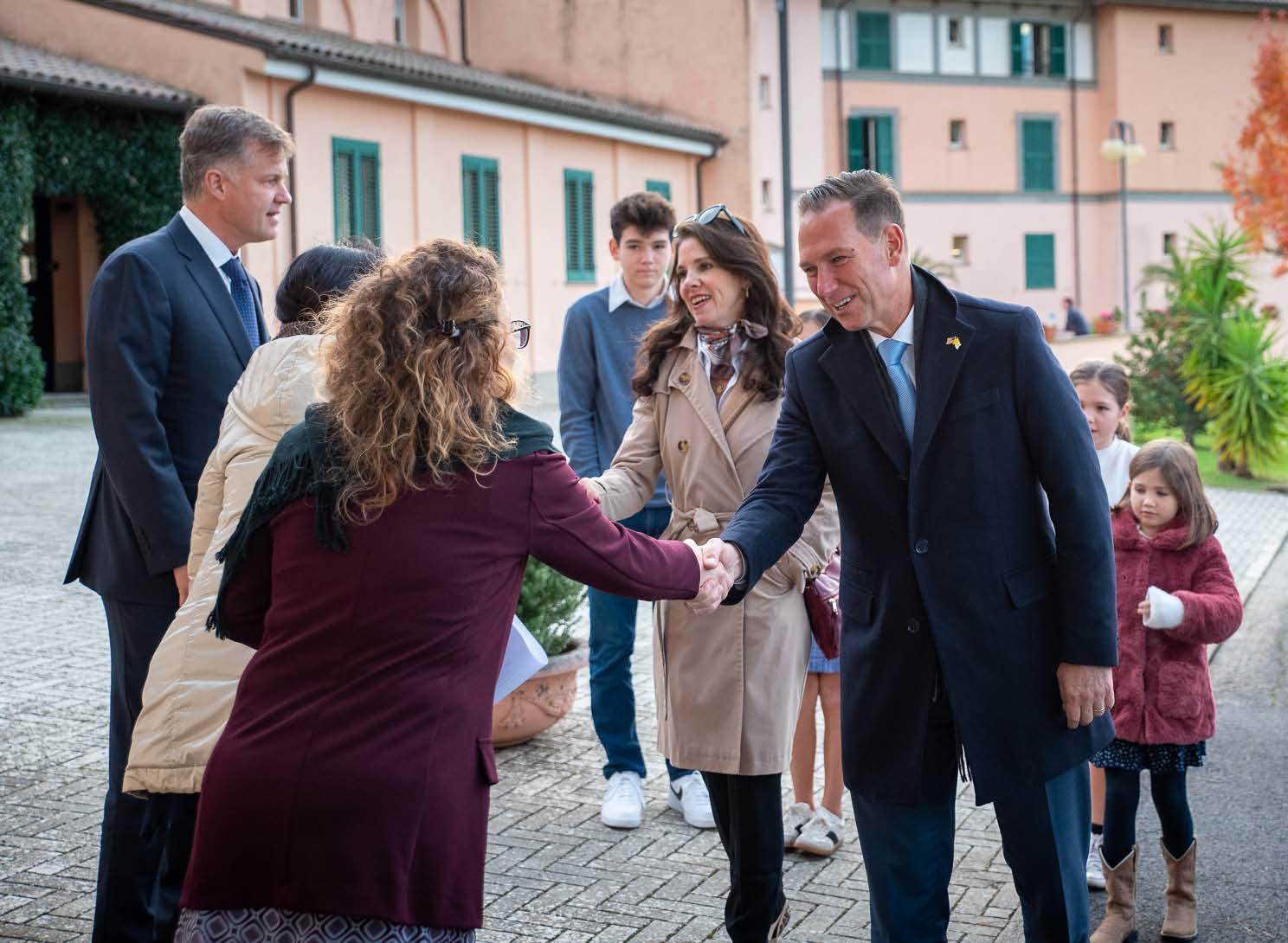
The most important meeting I have had since my arrival was the presentation of my credentials to the Holy Father, Pope Leo XIV. Every ambassador participates in a formal ceremony where they present their diplomatic credentials to the head of state of the host country where they will represent the United States. I handed a personal letter from President Trump to Pope Leo designating me as his representative, and then was able to spend 40 minutes with him in his personal library. Since that time, I regularly have meetings with the heads of dicasteries, which are the administrative
departments in the Vatican, as well as ambassadors from other countries, religious orders, seminaries, non-profit agencies, and other leaders living in Rome, which impact the relationship between the Holy See and the United States. I work each day with a superb team that helps with developing how best to advance U.S. policies at the Vatican, along with our protocol and public diplomacy team. The embassy is a beautiful historic building guarded by the U.S. Marines. It includes a gym, bank, and small market where U.S. employees can buy American things like food and medicines. My kids occasionally ask me to buy them some Doritos or Dr. Pepper!
IS THERE A PART OF THE JOB THAT YOU ARE PARTICULARLY ENJOYING OR LOOKING FORWARD TO?
My UD education prepared me well to take on the work required of an ambassador. As a diplomat, you have to be diplomatic, of course. And that means learning to talk with all kinds of people with differing views and perspectives, as well as priests, bishops and cardinals, all working in unique ways to serve the Church, as well as to advance relations with countries like the United States. This involves conversations about history, philosophy, theology, and of course public policy. I especially enjoy the challenge of thinking anew about how the U.S. and the Holy See can work more closely to preserve and protect the principles of the west that undergird our country and that are shaping U.S. foreign policy. I always enjoyed these theoretical discussions, but my work now involves talking directly with policy makers and key leaders in the Vatican that help influence the pope and inform his words, documents, and addresses that shape the world.
YOU WENT TO ROME AS A UDALLAS STUDENT. WHAT DOES IT FEEL LIKE TO BE BACK?
I had the fortune of being in the first class to study on the campus at Due Santi in 1994. In fact, I arrived a day earlier than my classmates, so I may have been the first real student to step foot on the new campus. Like most students who are fortunate to study in Rome, the experience was hugely formative. Studying in Rome brought everything we were reading and studying alive, and awakened in me a deep appreciation of the great tradition that has informed western civilization. At the heart of Rome, of course, is also the Catholic Church, with its magnificent history, art, sculpture and tradition. Every church is awe inspiring, and a testament to the dedication of generations that sought to glorify God with beauty. While history and beauty abound in Rome, I think my favorite part of my experience at UD, and still today, is the human scale of the city. The winding cobblestone streets, cafes, restaurants and shops sit adjacent to magnificent churches. Every street seems to have a story that makes the whole experience of Rome enchanting.
HOW IS THIS POSITION TIED TO YOUR CATHOLIC FAITH?
You need not be a Catholic to serve as the U.S. Ambassador to the Holy See. But I do believe my Catholic faith helps me to understand the role of the Church in the world, and how the principles that inform Catholic social teaching relate to American foreign policy. The foundational belief in the dignity of every human person, proposed and taught by the Church, also happens to be the basis of our own nation’s founding, exemplified in our Declaration of Independence. For this reason, my efforts to reconcile and advance the
shared interests of the U.S. and the Vatican are of mutual service. It is an extraordinary honor to serve in a capacity where my work involves helping to advance the interests of my country in a way that also seeks to elevate the influence of the Church in the world.
HOW HAS YOUR UD EDUCATION HELPED YOU IN YOUR CAREER THUS FAR?
I was a politics major at UD, in the class of 1997. I can’t think of a better program to prepare a person to serve as a diplomat, let alone as the ambassador to the Holy See. My work regularly involves references to history, philosophy and theology, and of course politics. The value of an authentic liberal arts education has never been more important. I know this to be true, evidenced recently by my conversations with the Vatican around AI. The issue concerns the dignity of work, education, science and technology, and even being itself. A UD education seeks to answer certain fundamental questions, such as what it means to be human, that continue to have relevance today. In fact, the answers to the questions I wrestled with in the classrooms in Irving and Rome remain the same questions being debated today. As our world is being transformed by AI, I can’t help but think about the adage “learn to code.” If UD had an unofficial slogan, it should be “learn to think.” It certainly helped me do so, and I am proud to call it my alma mater.
Forming Shepherds for the Church
BY CAITLIN (FORST) BOOTSMA, BA ’06
From Santa Rosa to Brownsville, 12 University of Dallas alumni are serving as bishops among the 273 active prelates of the U.S. Conference of Catholic Bishops. Their graduation years ranged from the 1970s through 1990s, and a few of them were even classmates.
Many bishops were ordained in Dallas, while others became priests in their home dioceses. These alumni priests went on to serve in a number of parishes and diocesan assignments before being ordained as bishops. Some continued to serve in connection with UDallas, including as trustees, in leadership at Holy Trinity Seminary and even as UDallas chaplain.
The 12 men highlighted in the following pages, along with countless other alumni who devote their lives to faith and service, are evidence of the university’s commitment to forming graduates who serve Church and country.
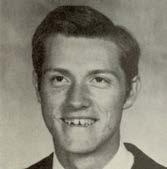
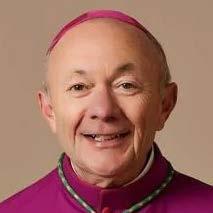
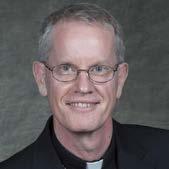
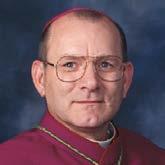
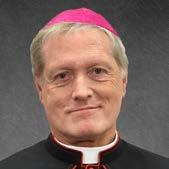
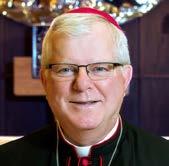
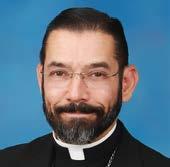
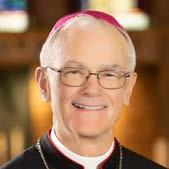
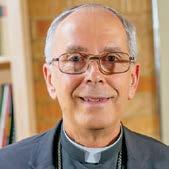
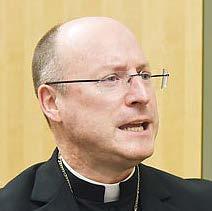
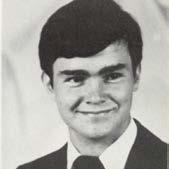
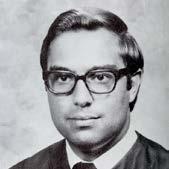
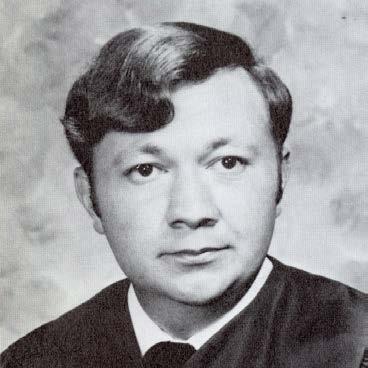
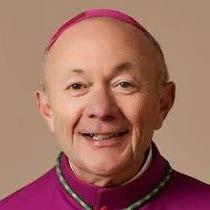
BISHOP J. DOUGLAS DESHOTEL, BA ’74 MDIV ’78
Currently: Bishop of Lafayette, LA
Ordained: 1978, Diocese of Dallas
Diocesan positions included: Presbyteral Council and Priests’ Personnel Board
Other UDallas connections: Former Vice Rector of Holy Trinity Seminary
Also served as: Auxiliary Bishop of Dallas Episcopal motto: “Christ’s love that urges me on.”
“Coming to the University of Dallas my junior year when I entered Holy Trinity Seminary was like arriving late at a banquet after filling up on junk food. It created a hunger to know and understand a truth grand and endlessly attractive and challenging, opening onto the mystery of God, Truth itself. It has also provided a foundation and a horizon for my life as a priest and now as a bishop, a window into the depths of the mystery of Christ, ‘in whom are hidden all the treasures of wisdom and knowledge’ (Colossians 2:3).”
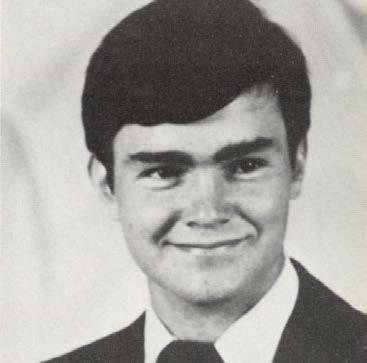
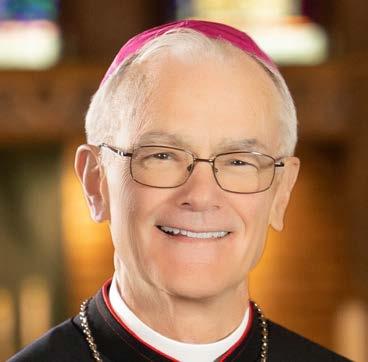
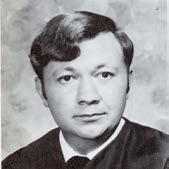
BISHOP GREGORY KELLY, BA ’78 MDIV ’82
Currently: Bishop of Tyler, TX
Ordained: 1982, Diocese of Dallas
Parish assignments: All Saints (Dallas) and St. Gabriel the Archangel (McKinney)
Diocesan positions included: Vocations Director, Vicar for Clergy, Vicar General and Auxiliary Bishop
Other UDallas connections: UDallas Chaplain & Board of Trustees, Interim Rector of Holy Trinity Seminary (2014)
Episcopal motto: “Take courage.”
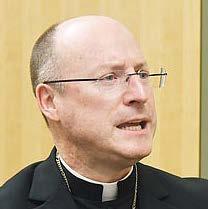
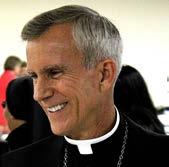
ARCHBISHOP SHAWN MCKNIGHT, BS ’90
Currently: Archbishop of Kansas City, KS
Ordained: 1994, Diocese of Wichita
Parish assignments: parishes in Wichita
Other assignments: Executive Director of the Secretariat of Clergy, Consecrated Life and Vocations for the USCCB; Bishop of Jefferson City, MO
Episcopal motto: “Let us give thanks to the Lord.”
“The classical education at the University of Dallas had a profound impact on my world view. The foundation in the Greco-Roman history and philosophy of the West molded my interest in theology, art and architecture, literature, and philosophy.
These interests and educational foundations have served me well in my 31 years as a priest and 17 years as a bishop. I have used this world view and liberal arts background in my teaching and pastoral leadership over the years.
I continue to deepen and expand this world view through my continued reading, studying, and learning. I challenge myself to expand my understanding of the world, its history, and the beauty and truth of the Creator evident in its multiple cultures throughout history.”
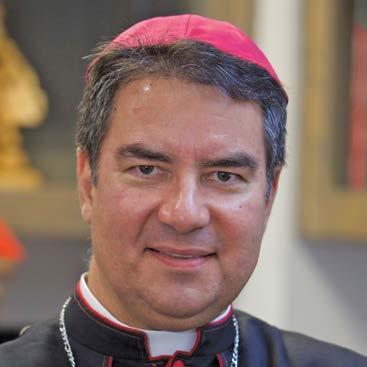
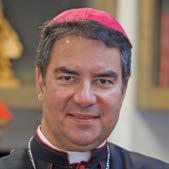
BISHOP OSCAR CANTÚ, BA ’89
Currently: Bishop of San Jose, CA
Ordained: 1994, Diocese of Houston
Parish assignments: St. Christopher and other parishes in the Houston area
Ministry interests: Christian Family Movement and Engaged Encounter
Also served as: Auxiliary Bishop of San Antonio, Bishop of Las Cruces, NM Episcopal motto: “The zeal for your house consumes me.”
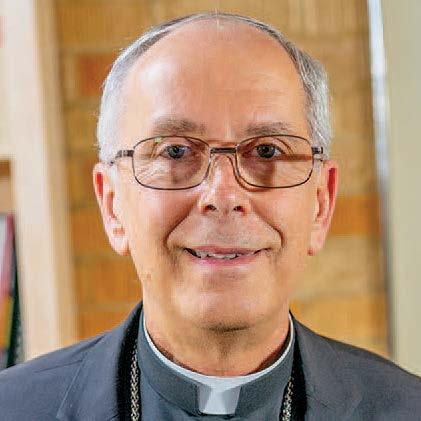
BISHOP MARK SEITZ, BA ’76 MDIV ’82
Currently: Bishop of El Paso, TX
Ordained: 1980, Diocese of Dallas
Parish assignments: Parishes in Garland, Waxahachie and Dallas
Other UDallas connections: Former Liturgy and Sacramental Theology Professor at UDallas and Vice-Rector and Director of Liturgy at Holy Trinity Seminary.
Also served as: Auxiliary Bishop of Dallas Episcopal motto: “My heart is ready.”
“The University of Dallas opened up a whole world of beauty and wisdom for this small town boy.”
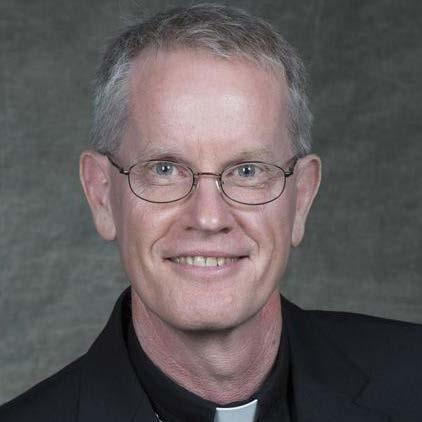
Currently: Bishop of Tulsa and Eastern Oklahoma
Ordained: 1995, Diocese of Austin Parish assignments: St. Mary’s Catholic Center in College Station and other parishes in Austin Diocesan positions included: Vocations director for the Diocese of Austin Episcopal motto: “Unless the Lord builds”
BISHOP DAVID KONDERLA, BA ’89
“I didn’t fully understand the value of my eight years of education at the University of Dallas until I began my active ministry as a priest and certainly now as a bishop. In all aspects of my life from social conversations, theological reflections, writing a weekly column, sermons, and even in spiritual counseling, I find I have a deep academic foundation to move in all these circles of encounter and ministry with confidence. The liberal arts education I received at UD was a profound part of my seminary formation that prepared me for my life as a priest and now bishop.”
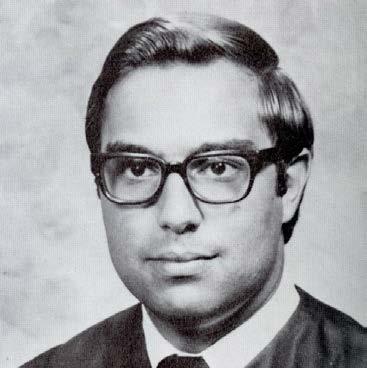
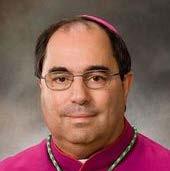
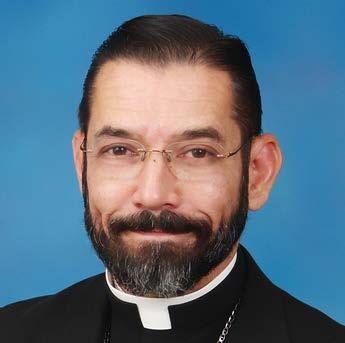
Currently: Bishop of Brownsville, TX
Ordained: 1988, Diocese of Corpus Christi
Parish assignments: Corpus Christi Cathedral
Diocesan positions included: Secretary to the Bishop, Rector of the Saint John Vianney House of Study, Episcopal Vicar for Vocations and Chancellor
Also served as: Auxiliary Bishop for the Archdiocese of Detroit
Episcopal motto: “The WORD is sent breathing forth love.”
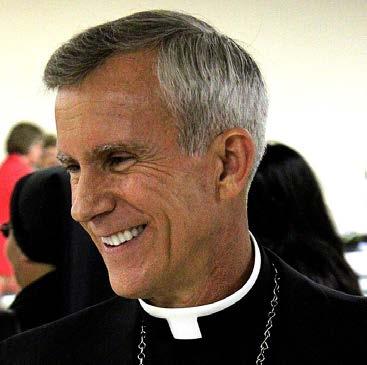
Ordained: 1985, Diocese of Dallas
Parish assignments: Immaculate Conception
Church and other parishes in the Diocese of Tyler, TX
Diocesan positions included: Vocations Director for the Diocese of Tyler
Episcopal motto: “That I may dwell in the house of the Lord.”
Currently: Bishop of Baton Rouge, LA
Ordained: 1978, Diocese of Dallas
Parish assignments: All Saints (Dallas), St. Patrick (Dallas) and St. Luke (Irving)
Diocesan positions included: Diocese of Dallas
Vocations Director
Other UDallas connections: Rector at Holy Trinity Seminary in Dallas, 1996-2008; Former UDallas Board of Trustees member
Episcopal motto: “Hope in the Lord.”
BISHOP DANIEL E. FLORES
BISHOP JOSEPH E. STRICKLAND, BA ’81 MDIV ’85
BISHOP MICHAEL DUCA, BA ’74 MDIV ’78
“My education at the University of Dallas deepened my appreciation of the Western Tradition, especially its philosophical, literary, and theological aspects, which served, I believe, to deepen my own personal integration.”
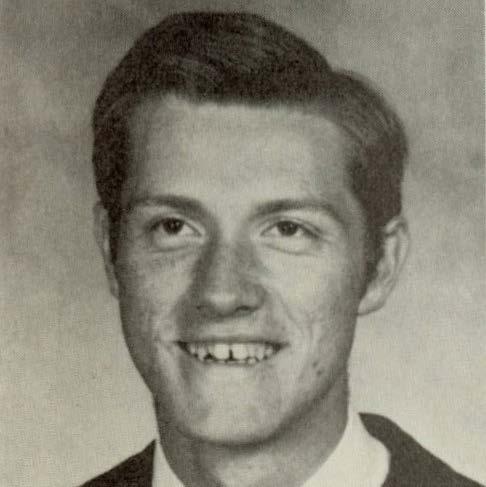
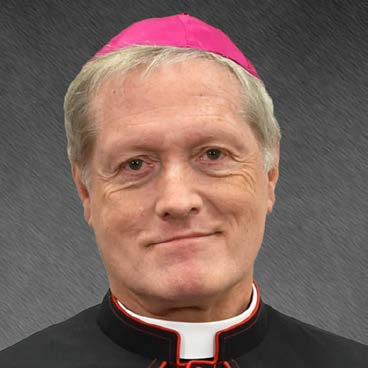
BISHOP ROBERT COERVER, BA ’76
Currently: Bishop of Lubbock, TX
Ordained: 1980, Diocese of Dallas
Parish assignments: Saint Elizabeth of Hungary (Dallas), Saint Elizabeth Ann Seton (Plano), Our Lady of the Lake (Rockwall) and St. Rita (Dallas) Diocesan positions included: Director of the Office of Sacramental Life, Director of Priestly Life and Ministry
Other UDallas connections: Director of Spiritual Formation at Holy Trinity Seminary for 11 years
Episcopal Motto: “Take Lord, receive.”
“I was edified by the witness and example of the Hungarian Cistercians who comprised a majority of the theological faculty at the university. From them, I received solid theological formation for which I am extremely grateful. I am proud to have been a graduate of the university especially as its orthodox reputation has expanded and spread over the past several decades.”
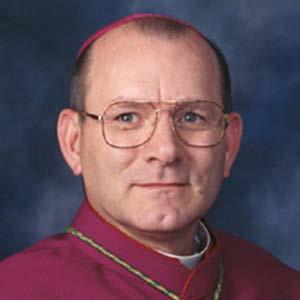
BISHOP ROBERT FRANCIS VASA, BA ’76
Currently: Bishop of Santa Rosa, CA
Ordained: 1976, Diocese of Lincoln
Diocesan positions included: Assistant Chancellor and Judicial Vicar
Also served as: Bishop of Baker, OR Episcopal motto: “Unless a grain of wheat”
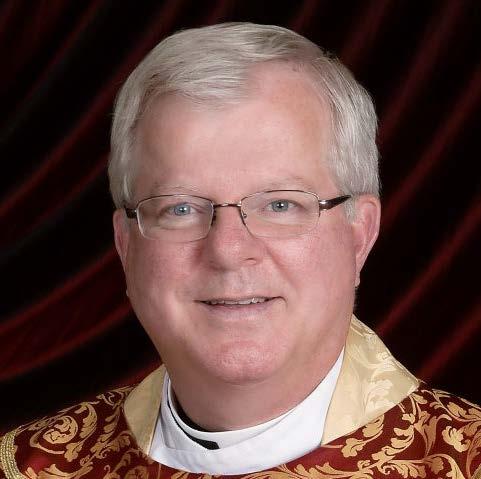
BISHOP FRANCIS MALONE, BA ’74 MDIV ’77
Currently: Bishop of Shreveport, LA
Ordained: 1977, Diocese of Little Rock
Parish assignments: Christ the King and other parishes in the Diocese of Little Rock
Diocesan positions included: Chancellor, Vicar General and more
Other UDallas connections: Vice-Rector at Holy Trinity Seminary (1986-1987)
Episcopal motto: “The cup of salvation I will take up.”
Called to Serve Those Who Serve
Alumna Rebecca Burgess, BA ’06 PhD ’24, draws on UDallas experience to advocate for veterans
BY CAITLIN (FORST) BOOTSMA,
BA ‘06
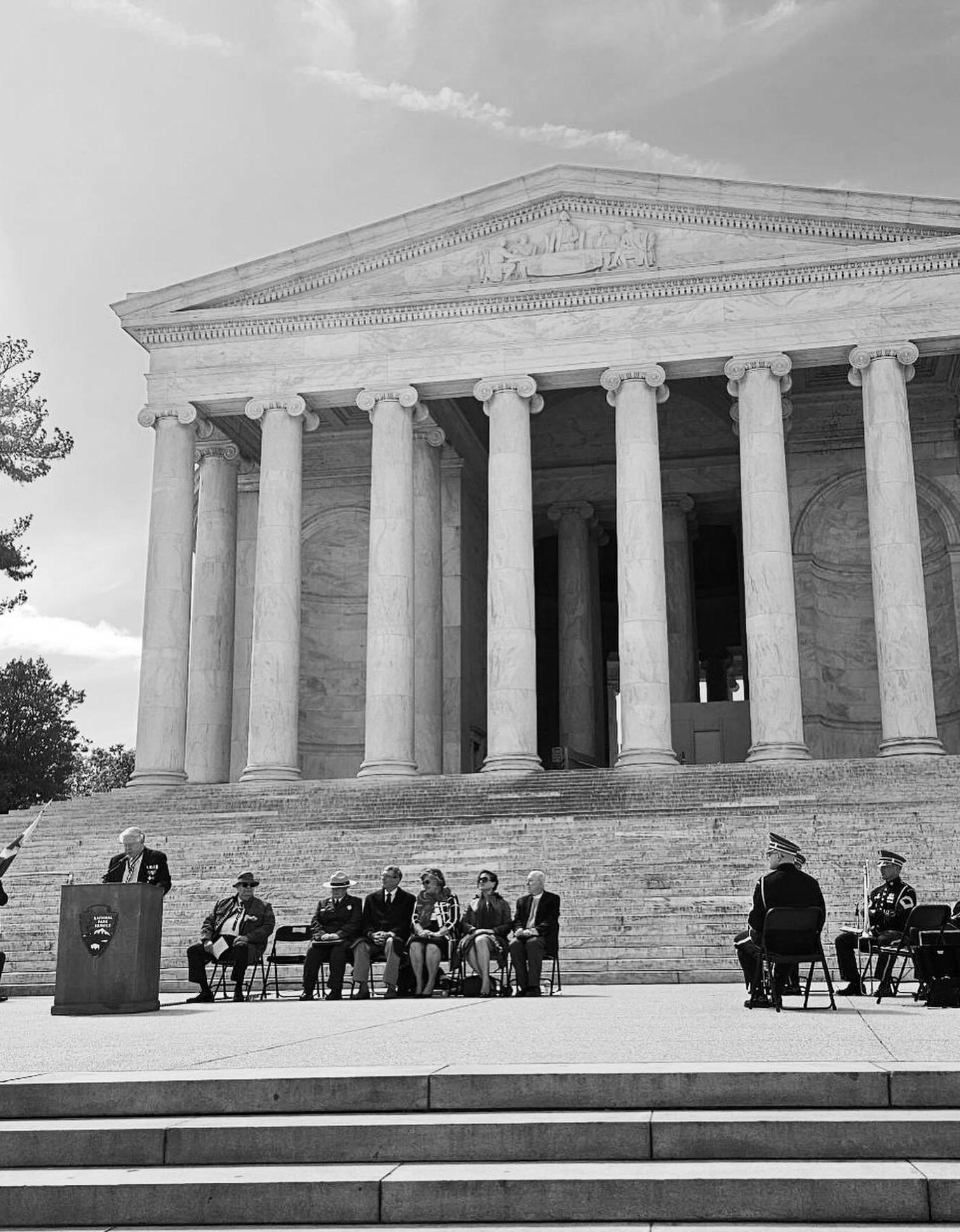

When Rebecca Burgess, BA ’06 PhD ’24, describes life on the UDallas campus, she lightheartedly notes: “I filled every role except for parent.” She worked in the Office of Student Life in a number of positions including Acting Director of Student Life, she was a graduate student and she taught politics as an adjunct instructor. It was in part due to this combination of immersion in academia and in the real-life issues of students that she has become the public policy expert on veterans issues that she is today, one who has testified three times in front of Congress.
After studying literature and French as an undergraduate at UDallas, Burgess thought she was ready to move on. But between professors encouraging her to consider graduate school and a job offer from Student Life, she began a new phase at the university in dual roles as student and administrator.
Burgess readily admits that wearing several hats at once was overwhelming. But looking back she says that experiencing the classroom and human affairs simultaneously “really gave me that kind of grounding on both sides.” She had an opportunity to consider policy and the thought behind it in the classroom, but to see policy-in-action when caring for individual students as an administrator. She explained: “We can talk about John Locke and Rousseau in a classroom, but what truly matters in those arguments?”
When she considered who these thinkers were and why they mattered she had the real life ‘politics’ of the student body to consider:
“What is it that matters to these 18-22 year olds? What causes them angst or true pain?” And importantly to her role on campus and in the future, “How do you run a university and how do you run a society peacefully while giving people latitude and space to become their own person, to be different from each other and to solve conflicts?”
Burgess said her position, where she sometimes interacted with first responders and law enforcement, helped her see how the university community intersected with local and national politics. In these moments in student life, Burgess took to heart the Catholic understanding of the human person, often trying to balance finding the answers to both a “policy problem” and a “human problem.”
Burgess brought this understanding of the juxtaposition of individuals and policy with her throughout her career.
The problems veterans face aren’t just clinical issues or dry policy.
‘They’re about the human soul and what happens to them on the battlefield and afterward’.

TAKING UDALLAS LESSONS OUT INTO THE WORLD
In 2012, Burgess began teaching politics at Hillsdale College where she also served as the deputy editor of Imprimis, a publication which grew to over four million readers during her tenure.
But what she sees as a call to work in public policy came knocking not too long after. Burgess initially turned down an offer to work at the American Enterprise Institute (AEI), a Washington, DC-based think tank, but when she was suddenly hit by a semitruck in the Michigan winter, she changed her mind.
“I can’t believe I am this stubborn that God literally had to send a semi-truck my way
to tell me what I should do. So I moved to Washington, D.C., February of 2014. I’ve been here ever since.”
Looking back, Burgess can now see that she knew she eventually wanted a role that was able to bring together academia and real life issues.
Through various turns of events, veterans came to Burgess’s attention. “No one was studying seriously this immensely interesting, immensely illuminating intersection of veterans and citizenship, veterans and limited government, political theory, history, anthropology, psychology…mental health and the history of medicine.”
And then again, focusing on veteran policy led Burgess back to her UDallas education, recognizing how Aristotle and Plato could be relevant today. The problems veterans face, she said, aren’t just clinical issues or dry policy. “They’re about the human soul and what happens to them on the battlefield and afterward. Thanks to UD, I have access to almost all the tools to try and think about these issues.”
VETERANS AND THE STORY OF AMERICAN CITIZENSHIP
While Burgess didn’t immediately think she was suited to tackle public policy for veterans, she soon realized that the intersection of her academic and professional background was just the experience she needed to be successful.
Burgess’s work led her to realize with others that the Department of Veterans Affairs needed substantial reform. Broadly speaking, she wants to flip the narrative so that as a nation we can recognize veterans as “social assets, not social deficits.”
A paper on this topic led very quickly to her first of three times testifying in front of Congress. She naturally was nervous and at times doubted herself: “Who am I? Little Rebecca Burgess from Kalispell, Montana; Post Falls, Idaho and Irving’s University of Dallas.” But then she realized that she had both the knowledge and the message that needed to be heard. “If I can get you to lis-
ten in the right ways, legislators to listen in the right ways, we could make a real change that could affect 18 million veterans.”
Change has not happened overnight, but Burgess, now a senior fellow at the Yorktown Institute, a strategic think tank, continues to work to ensure that veterans are given the recognition and the tools they need. Going full circle, alongside her policy work, Burgess teaches in two different college programs for veterans, both at the University of San Francisco and the Warrior Scholar Project at Georgetown University.
In both, she teaches the humanities and helps her students look at citizenship, public service and, inevitably she says, what it really means to be a veteran. She admits she is in “seventh heaven,” bringing some UDallas favorites, like Xenophon, Plutarch, de Tocqueville and the Federalist Papers, into her discussions.
From working with Student Life at UDallas to working with veterans and people on Capital Hill, Burgess’s experience in academia and human life continue to intersect. When asked what she would like people to ultimately understand about veterans, she shared:
“The story of veterans is the story of American citizenship. Veterans are social assets, not social deficits. They are the unacknowledged permanent ambassadors of public service and of thinking about the common good in a rights-based—an individual rights-based regime. So we need to think about them as key components of a whole cycle of democratic civic life.”
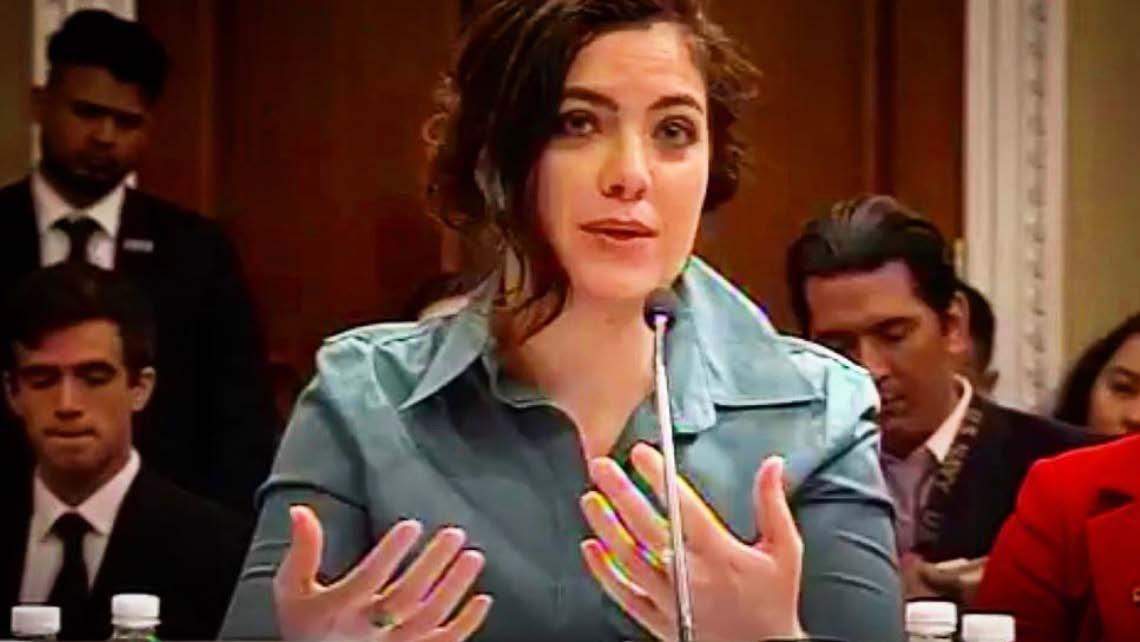
PHOTO:
REBECCA BURGESS, BA ‘06 PHD ‘24, TESTIFYING TO CONGRESS (HOUSE COMMITTEE OF VETERANS AFFAIRS).
Meet University of Dallas’ Newest Coaches
BY CAITLIN (FORST) BOOTSMA, BA ’06
UDallas Athletics is excited to welcome six new head coaches who inspire and guide our Crusader student-athletes on and off the field.

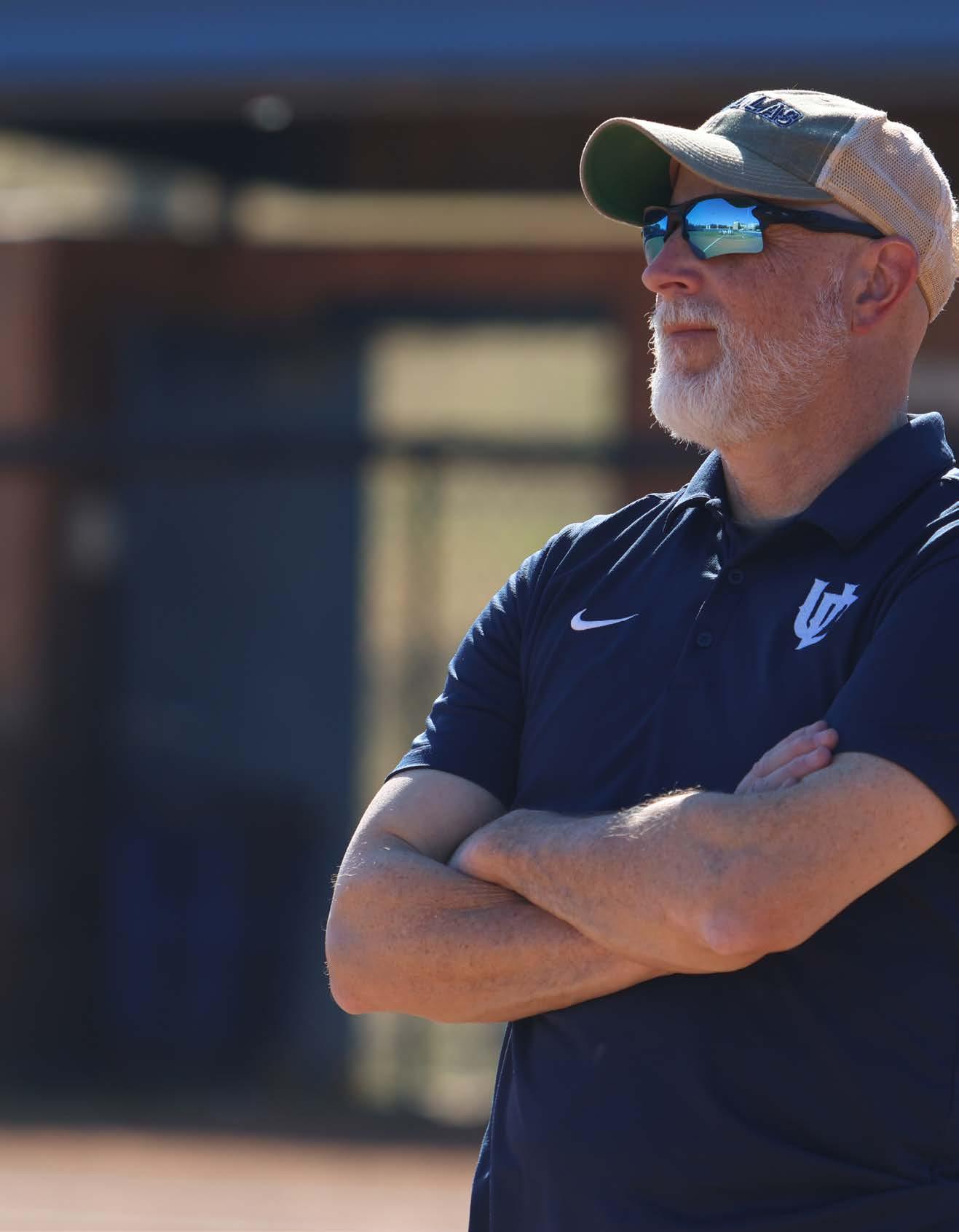
PHOTO ( BY PAULY BARNES): CRUSADERS WELCOMED THE NEW SOFTBALL COACH ERIC OAKLEY TO THE FIELD.
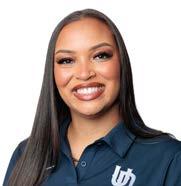
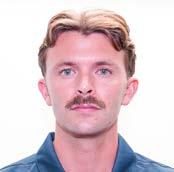
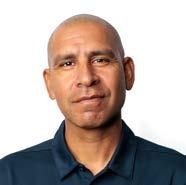
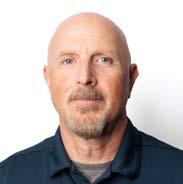

ALEXIS EMANUEL — VOLLEYBALL
Joining ahead of the 2025-26 season, Alexis Emanuel became the 17th head coach of women’s volleyball. A Fort Worth native, Emanuel led Lane College to 48 wins over three seasons and previously coached at
CHASE REYNOLDS - MEN’S SOCCER
UDallas alum Chase Reynolds, BA ’21 MBA ’23, stepped in as interim head coach of men’s soccer ahead of the 2025-26 season and is now the permanent coach. A standout Crusader from 2017–2020,
JEREMIAH NARVAEZ - WOMEN’S SOCCER
Jeremiah Narvaez joined UDallas as the 10th head coach of women’s soccer for the 2025 season. A former assistant coach with San Antonio FC and Lead Coach at SAFC Pro Academy, Narvaez brings proven
ERIC OAKLEY - SOFTBALL
Eric Oakley was named the ninth head coach of the University of Dallas softball program for the 2024-25 season. He joined the Crusaders after serving as an assistant coach
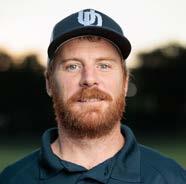
BLAIR CASEY - CROSS COUNTRY
Volunteer Coach Blair Casey has stepped in as interim head coach of the cross country program. Casey, who has been a part of the Crusader staff, steps into the role with excitement and gratitude.
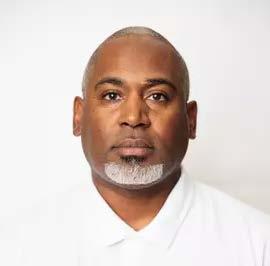
TY ADAMS - WOMEN’S BASKETBALL
Ty Adams became the head coach of the University of Dallas women’s basketball program for the 2024-25 season, following three seasons as an assistant coach for the Colorado College men’s basketball team. In 2024-25, Adams guided the Crusaders
Fisk University, where she also starred as a six-rotation outside hitter. She brings collegiate, club and high school experience — along with a passion for developing student-athletes on and off the court.
Reynolds brings leadership, work ethic and on-field success from his playing career, along with coaching experience at Concordia University (TX) in player development and recruitment.
experience in player development at the academy and professional levels. A University of the Incarnate Word graduate, he now looks to guide Crusader women’s soccer with a player-centered approach.
on the Columbia University staff during the 2023 season. Oakley has many years of experience coaching at both University of North Dakota and Kent State University.
“I’m privileged to be leading a great group of young men and women at the amazing University of Dallas! I’m thrilled with the opportunity and can’t wait to see what we can do. Go Crusaders!” Casey said.
through a year of growth and development, closing the season with a 3-22 overall record and a 2-14 mark in Southern Collegiate Athletic Conference (SCAC) play, capped by a win in the season finale.
Student Life Gallery
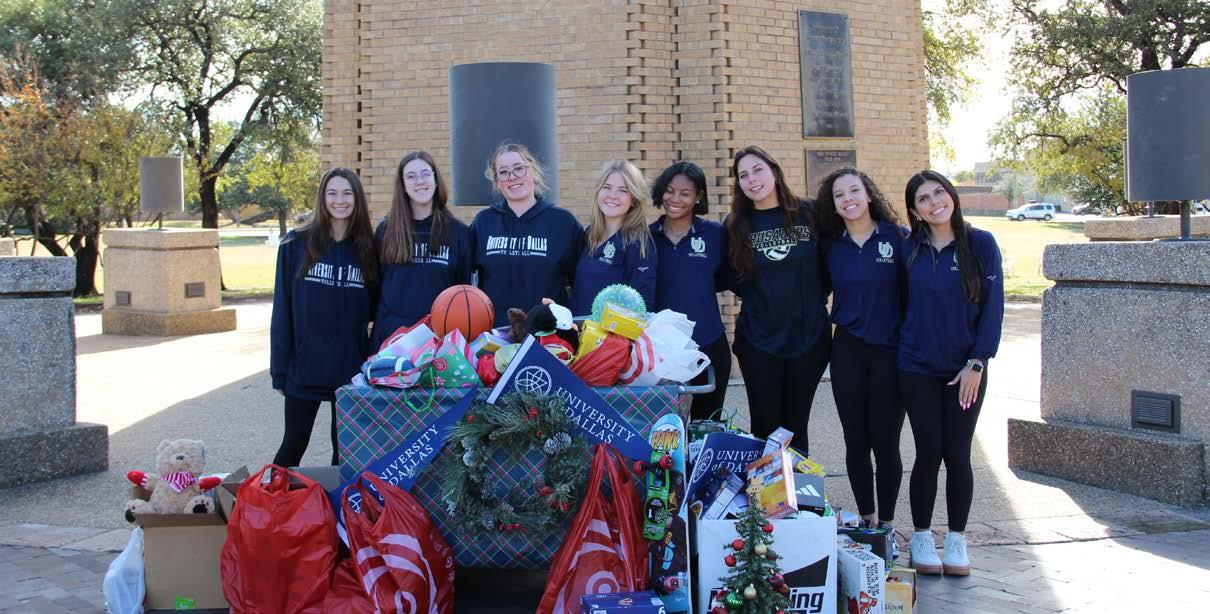
ATHLETES COLLABORATED WITH THE IRVING POLICE AND FIRE DEPARTMENTS FOR THE BLUE CHRISTMAS INITIATIVE, GIVING TO FAMILIES IN NEED.
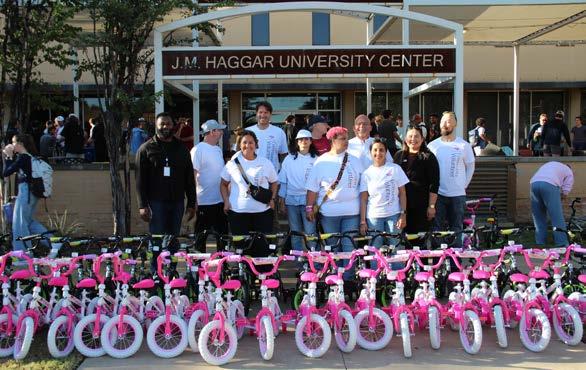
FACULTY, STAFF AND STUDENTS GATHERED FOR THE 5TH ANNUAL BIG BIKE BUILD. DURING THIS ANNUAL EVENT, VOLUNTEERS HELP ASSEMBLE BICYCLES TO BE DONATED TO UNDERSERVED PRE-SCHOOLERS IN DALLAS COUNTY.
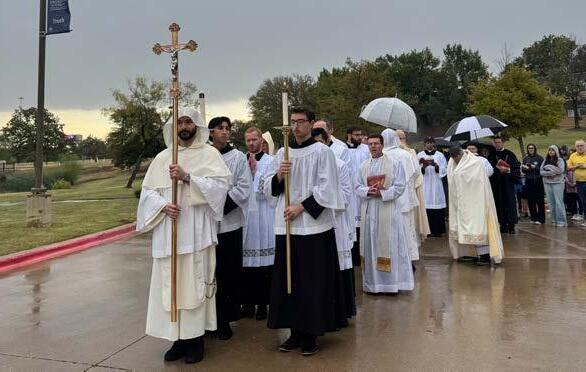
THE UNIVERSITY CELEBRATED ALL SAINTS’ DAY WITH REFLECTIONS ON THE NEWEST DOCTOR OF THE CHURCH, ST. JOHN HENRY NEWMAN, BY PRESIDENT JONATHAN J. SANFORD AND DR. BERNADETTE WATERMAN WARD, FOLLOWED BY A EUCHARISTIC PROCESSION LED BY CHAPLAIN FR. JERÓNIMO ESPINOSA AND CAMPUS MINISTRY DIRECTOR DEACON RYAN SALES
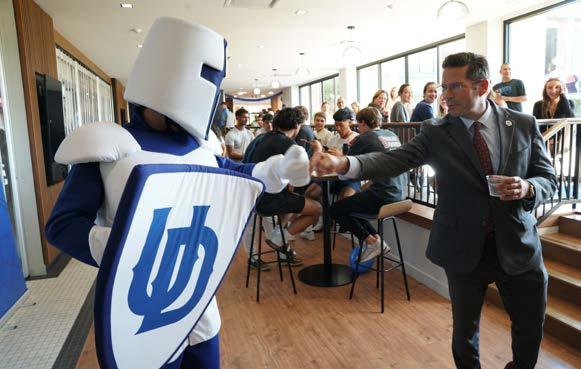
PRESIDENT JONATHAN J. SANFORD FIST BUMPED WITH THE UNIVERSITY’S NEW MASCOT, VALOR.
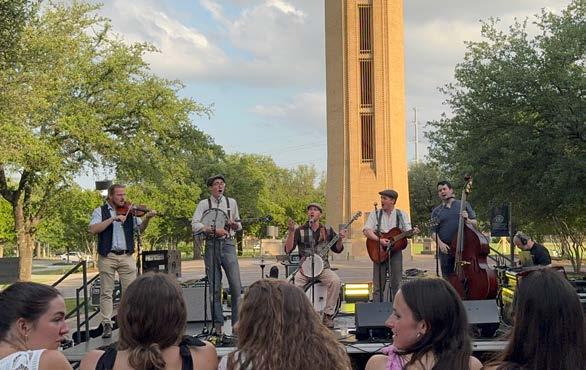
A STUDENT BAND PERFORMED ON CAMPUS FOR THE 2025 MALLAPALOOZA EVENT.
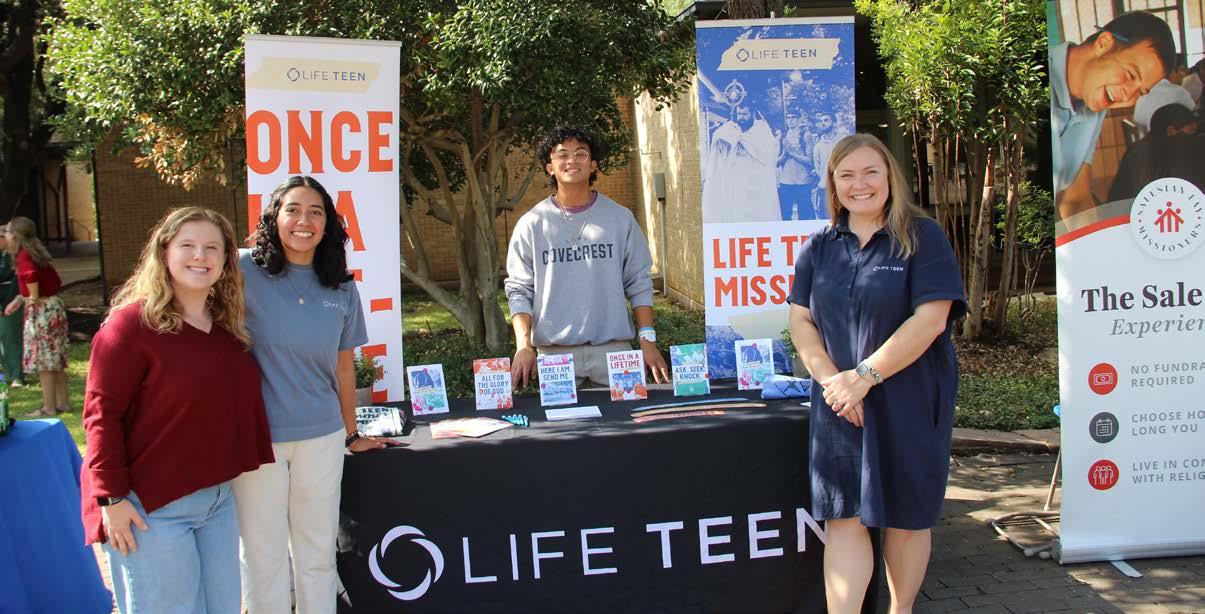
STUDENTS LEARNED ABOUT VOLUNTEER OPPORTUNITIES AND RELIGIOUS ORDERS AT THE ANNUAL VOCATIONS AND VOLUNTEER FAIR.
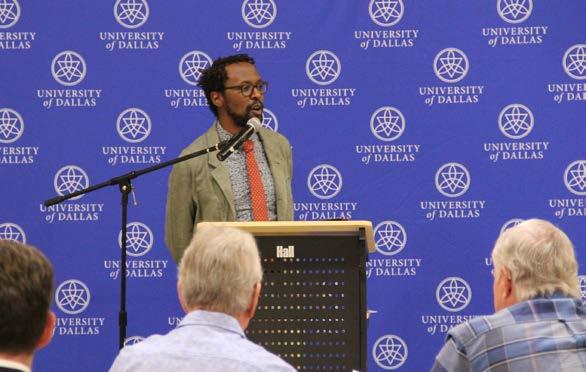
UDALLAS ASSOCIATE PROFESSOR OF PHILOSOPHY DR. KEVIN KAMBO SPOKE AT SEVERAL NEARBY CHURCHES THIS FALL AS PART OF THE UNIVERSITY’S PARISH LECTURE SERIES. HIS TALK, “SCRIPTURAL REFLECTIONS: MARIA MAGDALENA, DOCTOR OF THE TRUE PRESENCE,” EXAMINED MARY MAGDALENE AS A MASTER TEACHER OF EUCHARISTIC DEVOTION.
AND CISTERCIANS
STUDENTS
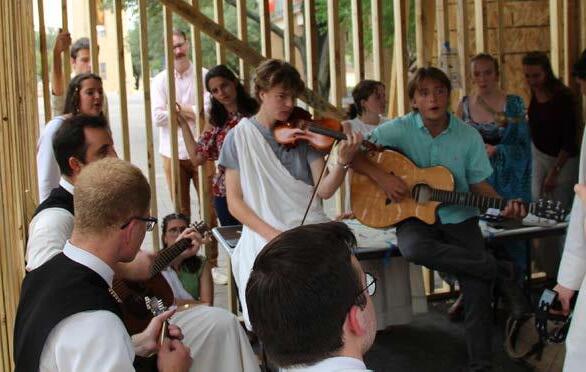
BROUGHT SOME MUSIC TO THEIR TIME IN THE INFAMOUS CHARITY WEEK JAIL.
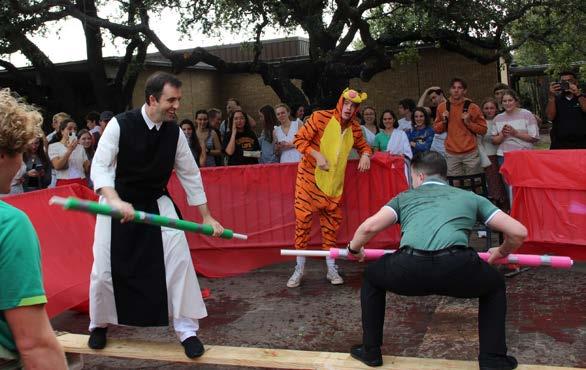
FR. THOMAS ESPOSITO, O. CIST., ENGAGED IN A GLADIATOR ARENA ‘FIGHT’ ON THE MALL FOR A GOOD CAUSE DURING CHARITY WEEK.
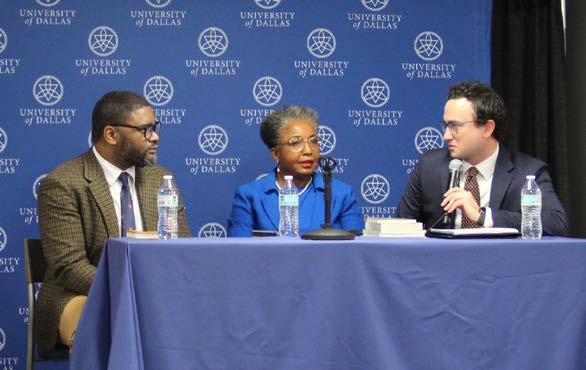
THE 2026 MARTIN LUTHER KING JR. DAY LECTURE FEATURED DR. CAROL SWAIN AND SPECIAL GUEST CHAD JACKSON ON THE TOPIC, “THE UNTOLD STORY OF THE CIVIL RIGHTS MOVEMENT.”
The Salon
Faculty and Alumni Art, Projects and Publications
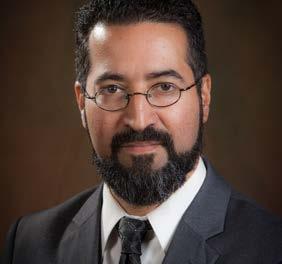
Dr. Jacob-Ivan Eidt, Associate Professor of Modern Languages, recently had an article published in journal Studia theodisca XXXII (2025), entitled, “From Beethoven to Schoenberg: The Micro-Myths of Viennese Classicism and Viennese Modernism in Thomas Mann’s Doktor Faustus.”
University of Dallas students Keira Devlin, Juan Diaz, Peter Warner and Nicholas Cannon presented their summer research at the Bluebonnet Conference, held at Baylor College of Medicine in Houston. Accompanied by Dr. Abdallah Elnwasany, Assistant Professor of Biology, the students showcased their work alongside undergraduate and graduate researchers from across Texas.
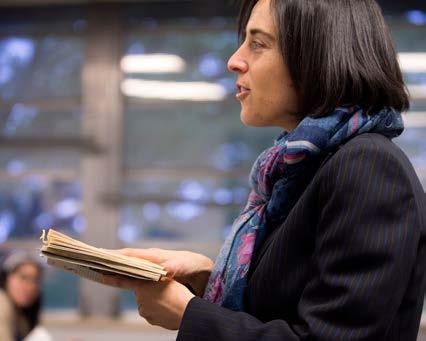
Marisa Pérez-Bernardo, Associate Professor of Modern Languages and Literatures, published articles and presented three papers at various international conferences in Italy, Spain and Colombia. Her work focuses on Spanish and Latin American women writers from the 19th and early 20th twentieth centuries, many of whom were writers and translators. All of them were Catholic and conservative, yet they sought social reforms, particularly in the field of education.
At present, Dr. Perez-Bernardo is finishing a book on Sister María de Jesús de Ágreda. She is well known in Texas as the Lady in Blue, considered the first evangelizer in New Spain. According to tradition, she appeared to the Xumano Indians in Texas before the Franciscan missions were established in this territory. In addition, Sister María de Jesús was a strong advocate of the Immaculate Conception, more than 200 years before it was proclaimed a dogma by Pope Pius IX. Perez-Bernardo’s current research focuses on the literary works of Sister Maria de Jesus, particularly Mística Ciudad de Dios, one of the most important theological treatises of the seventeenth century.
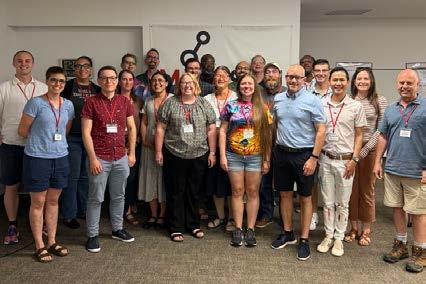
Dr. Prajay Patel, Assistant Professor of Chemistry, was selected as one of 10 faculty around the nation for a new competitive fellowship from the Molecular Software Sciences Institute (MolSSI) that will help our Chemistry/Biochemistry students attain new skills in coding, scientific data analysis and visualization, and AI.
NIME Director of Sacred Shifts and Adjunct Professor of Theology (Constantin College) Dr. J. Marianne Siegmund was recently awarded an Honorable Mention by the Catholic Media Association 2025 Book Awards in Contemporary Spirituality for her latest book: “The Face of Jesus, the Martyr, and the Reciprocity of Abiding Love: Anthropological Considerations in Spiritual Theology Based Upon the Pontifical Writings of Pope Saint John Paul the Great.”
Spreading A ‘Monk Mindset’
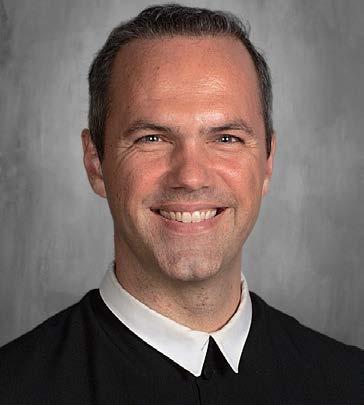
The monastic life stands in such stark contrast to modern life that creating an entire podcast teaching people how to incorporate monastic practices in their own lives seems like a niche passion project at best; a fool’s errand at worst. But place that podcast on Hallow–arguably the most popular prayer and meditation app in the world–and suddenly millions are tuning in to learn from Catholic monks how to cultivate their own interior spiritual life.
One of those monks is Fr. John Bayer, O. Cist., MA ’12 BA ’06, a Cistercian at Our Lady of Dallas and adjunct theology professor at the University of Dallas. Fr. Bayer shared with us how it came to be that millions can hear his insights on the app, and how he sees it as an opportunity to spread valuable spiritual insights of monastic life with the world.
HALLOW’S “MINUTE MONK” REACHES MILLIONS OF PEOPLE WHO MAY NEVER STEP INSIDE A MONASTERY. WHAT DREW YOU TO THIS PROJECT, AND HOW DO YOU SEE IT EXTENDING THE CISTERCIAN CHARISM INTO THE DIGITAL PUBLIC SQUARE?
At [the] SEEK25 [conference] in Washington DC, someone working for Monk Mindset asked if she could record me answering a few questions about the spiritual life. At the end of our conversation, she asked if we could discuss the possibility of future collaboration and if she could send me an agreement. I said sure, and that I would discuss any potential agreement with my abbot. In short, it seemed like a relatively easy task: answer vital questions about the spiritual life and allow someone else to spread the word through the digital methods so popular today. At least at a conceptual level, I imagine this is a successful way to spread awareness about monastic life. However, watching a reel on social media is not a great way to actually experience monastic life. So, my hope is that these clips on social media inspire people to pray personally, to attend the liturgy, to read Scripture and enter into spiritual communion with other people. Then the monastic life — which is not a virtual one — would in some sense truly be extended.
HOW DO MONASTIC PRACTICES HELP LAYPEOPLE, ESPECIALLY BUSY PROFESSIONALS, RECLAIM FOCUS AND PURPOSE IN THEIR DAILY LIVES?
I think the witness of monastic life has an essential gift to offer the world: it is the synthesis of prayer and life, or ora et labora (to use a popular phrase). Most people seem “too busy” to add another discipline or attend another event — however noble the discipline and event might be. What people really need, I think, is to learn to be present to what they are already doing, and to see its spiritual depths and the opportunity within every moment to live for love and encounter God. Monastic life, understood as a way of
BY CLARE VENEGAS
consecrating the entire rhythm of your day as a prayer (eating, working, communicating, managing possessions, recreating and so on), is something the world is thirsting for— even if it doesn’t always know it. I think the essence is to slow down or pay attention well enough to understand that God is here in this present moment. Do what you do as an expression of friendly communion with God. I think that’s the “monk mindset” most essentially.
YOU’VE LONG BEEN INVOLVED IN THE INTELLECTUAL AND SPIRITUAL FORMATION OF UDALLAS STUDENTS. HOW DOES YOUR PARTICIPATION IN “MINUTE MONK” REFLECT THE SAME EDUCATIONAL MISSION—FORMING MINDS AND SOULS FOR THE PURSUIT OF TRUTH?
I understand UDallas as a university that exists “Ex Corde Ecclesiae,” out of the Church’s own heart. Fired by the Church’s missionary impulse, she wants everyone to learn to love truth and justice–veritatem, justitiam diligite [in Latin]. She seems to me to aspire to be able to reach the whole country, even the world. Participation in Monk Mindset feels like an extension of that ambition to go to the margins and reach everyone with the saving truth of the Gospel, and with the power of an intellectual and artistic tradition seeking to be transformed by it.
FOR ALUMNI RAISING FAMILIES OR BUILDING CAREERS, WHAT PRACTICES OR MINDSETS CAN HELP THEM CULTIVATE A SENSE OF ROOTEDNESS, EVEN AMID CONSTANT CHANGE?
I think prayer is the most essential. When we learn to pray truly, we learn to draw closer to the still center of reality, to the heart of God, and that will give us the greatest roots, for then we will be building our lives as Jesus says, namely, on the rock of God’s Word. Concretely, study the faith and frequent the sacraments. Let the fullness of the Gospel shape your heart, and then allow yourself the freedom to pray.
To withSybil, Gratitude
Sybil Novinski was, as one faculty member put it, the “soul of UD.” She knew every student by name, reportedly by Christmas of their freshmen year. As registrar, archivist, colleague, mentor and friend, Sybil’s guidance and encouragement changed lives. Many will recall that these pages have previously been dedicated to a regular column she wrote entitled “Letters from Sybil.” In this special issue, you’ll read just a few of many letters (and a poem!) to Sybil from faculty, staff and students, ranging from the 1960s to the 2020s.

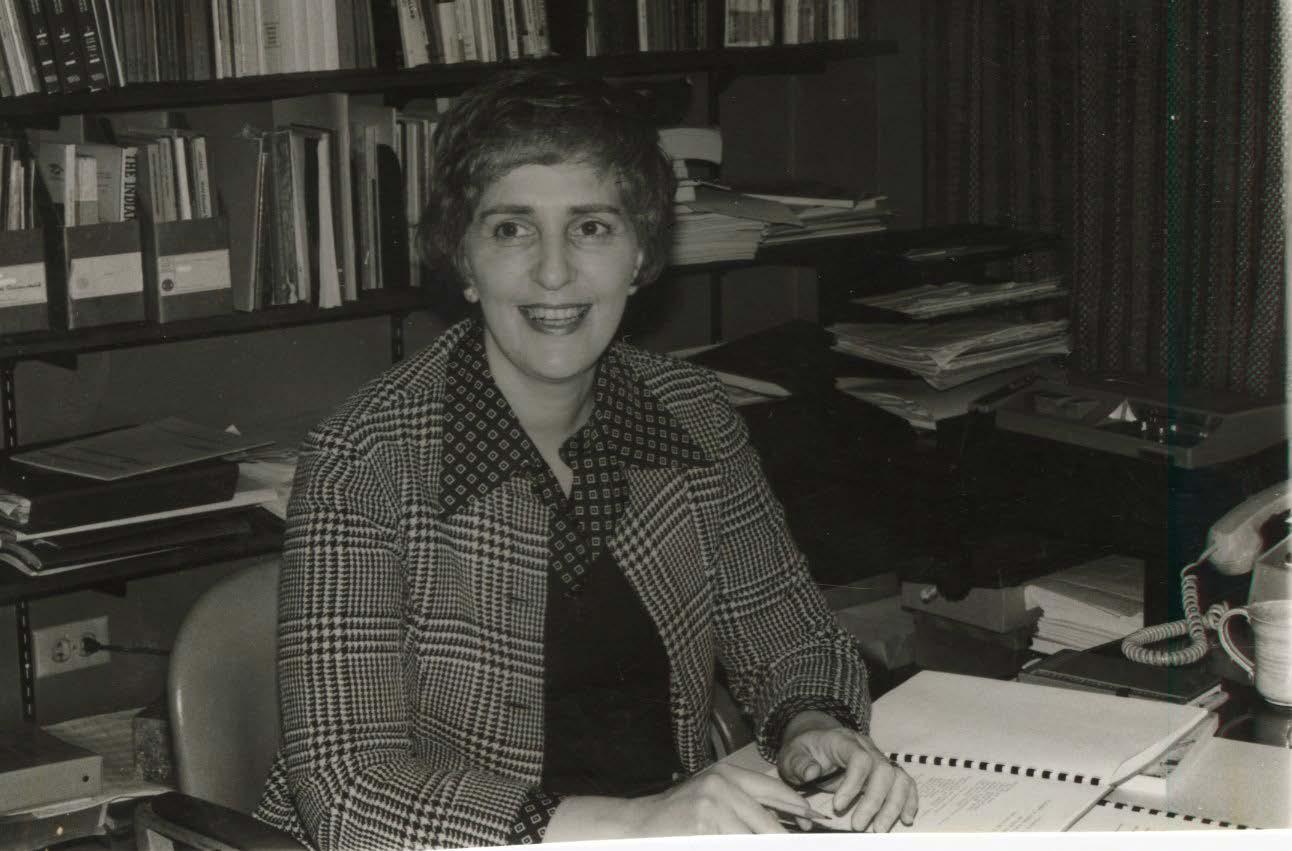
Sybil’s Voice
A POEM BY SCOTT CRIDER
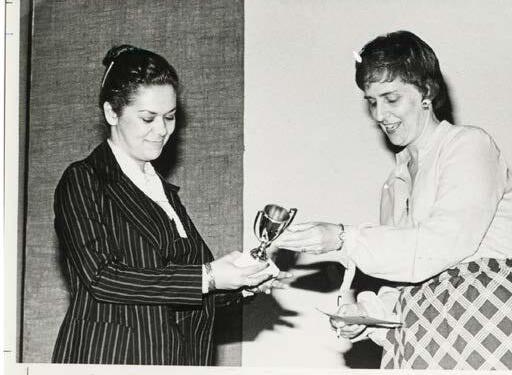
Her voice: when we remember Sybil, first is not her image.
It is her voice, explaining something about the school we need to know, welcoming us to the home she and Lyle made the center of UD, inviting us to her coffee on Friday next. At school, at home with Lyle
and without, what we remember is her voice: it calmed us, it invited us, it relayed something even now hard to put into words. As a dove descending onto the branch of a tree, Sybil’s voice landed on the porch of one’s ear—not just on her children’s, but on every ear within its extensive and embracing range.
Where has that voice gone? Where did it come from? It is not yet faint, but it will be. Where did it come from? From somewhere at the center or the edge— out there, in here—it arrived to announce its love. Where has that loving voice gone? Somewhere to the center or the edge—in here, out there.
Her voice grows faint as the contours of Lyle’s hands dissolve, yet together now somewhere else out there, in here: wings shuddering, the dove ascends.
FOR MICHAEL, GREGORY, SYBIL, STEFAN, AND DAVID
Alumni Tributes
1980 s : AMBER JADE JOHNSON, BA ’89
2010s : ALEX TAYLOR, BA ’15, IPS PHD (CAND.)
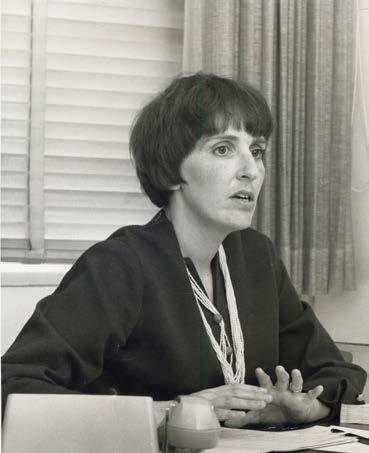
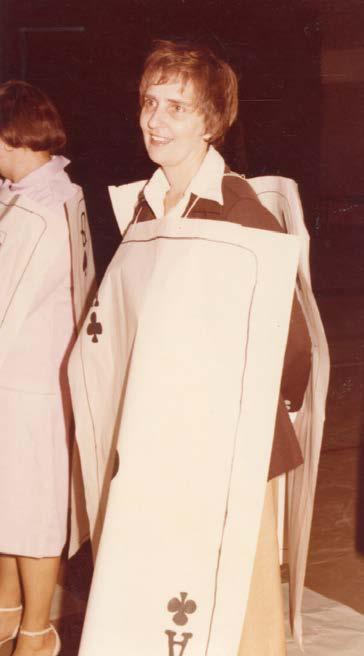
Me: Can I take 8 classes? Sybil: It is your first semester; take a smaller amount and let’s see how it goes. Me: I accept that challenge. Sybil: Good! Second semester: Me: How many classes can I take? Sybil (perusing her computer first, then with a big smile): “You can take as many as you want and I am very proud of you! Can you keep up the good work with more classes?” Me: (with a big smile) I accept that challenge! Sybil Novinski was much more than a registrar. She loved every person who came into her office and challenged them and encouraged them. When I was accepted to graduate school, I ran to Sybil’s office. She was the first person I told. I could not have done it without her encouragement.
1990 s : MATTHEW MORRIS, BA ’94
Attending Cistercian for high school, I already knew some of the Novinski family, but my first encounter with Sybil was during a face-to-face meeting with her and Bob Haaser about possibly transferring to UD after my freshman year at the University of Chicago. UChicago wasn’t a good fit for me, and I needed a new path. As Sybil was UD’s registrar at the time, the meeting naturally focused on enrollment mechanics, credit transfers, etc. I had not met her before, but being a member of the Cistercian family, Sybil made me feel like I was part of her family. Some three decades later, the only thing I actually recall from that meeting was her warmth and kindness and the clear sense that UD was the obvious next step. My transfer to UD was the right decision for me, and it resulted in a fulfilling undergraduate experience. I’ll be forever grateful to Mrs. Novinski and Mr. Haaser for helping me get to where I needed to be.
2000 s : ED SCHAD, BA ’01
My memory of Sybil, as I am sure is the case with many others, involves both her and Lyle together. Together, they ignited a love of art in me that I have carried into my life and career as an art curator for over 20 years. Lyle gave me a well-placed and well-timed compliment on our Rome semester trip to Greece, when we found ourselves alone together in Delphi Archaeological Museum. While looking at the same sarcophagus long after the rest of the class had left, he told me: “This is such a magnificent carving, Ed. I suspect you understand this deeply.” That was all it took to set me on a path that led me a year later to Sybil’s registrar office. I asked her permission to take high-level electives outside of my major so I could follow my passions wherever they led. In short order, her guidance helped me into high-level philosophy, art, and literature courses that enriched every part of my life. The Novinskis were incredible educators and wonderful people.
Dear Sybil: Thank you for your generosity in showing me the University Archives as an undergraduate, sparking a great flame of interest in UD’s history as well as archival research more generally. You were part of that history and brought it to life in discussions of this place you cherished and helped to build with great care and particular devotion.
2020 s : KATHRYN WEBER, MA ’24
Dear Sybil: Thank you for encouraging me to pursue my master’s degree at UD. Besides being my aunt-in-law, you were also a role model for me in so many ways. I had always admired the way you and Lyle hosted UD students for dinners, and how you continued to host events even after Lyle’s death. Your Oct. 15 email to me is a great example: “Just had a dozen alums for coffee over alumni weekend. Amazing folks. So proud.” You were always proud of others, yet humble about yourself, even though you were such an amazing woman! And your actions inspired Mark and me to do likewise and host CUA students that he taught. We miss you greatly! May God grant you eternal rest and peace.
1960s : CARLO ZABBIA, BA ’82 MDIV ’85
I first attended UD as a freshman in ’67-’68. My student work study program included working in the Admissions Department under the divine Sybil. It was such an honor and pleasure. One day, we were addressing envelopes to prospective students. The secretary was new and obviously non-Catholic. She addressed the envelopes to “such and such on street Charles Avenue.” She didn’t realize that St. stood for saint. Sybil noticed the error and asked me to correct the erroneous envelopes. She even hosted a small party in the office for the “Topping of the Tower.” She and Lyle were always smiling. It was an honor to work for her.
1970 s : DENISE SCHULER, BA ’75
I’ve known Sybil for more than 50 years. First as a student worker in the Registrar’s Office, then as a colleague when I coordinated the Rome Program, and always as a friend visiting her whenever I visited the Dallas area. It was a joy to watch her children grow up and hear Sybil’s stories of family activities. I enjoyed working with her and she helped me tremendously when I started working for Fr. Fandal. Some of my fondest memories were the summer Sybil arranged for us, Barbara Lunce, and other staff to take one afternoon off a week to visit places in Dallas that Sybil thought we should see. Ted Karakekes drove us all over Dallas in the minibus that summer. I will miss Sybil and enjoy memories of our times together.
Faculty Tributes
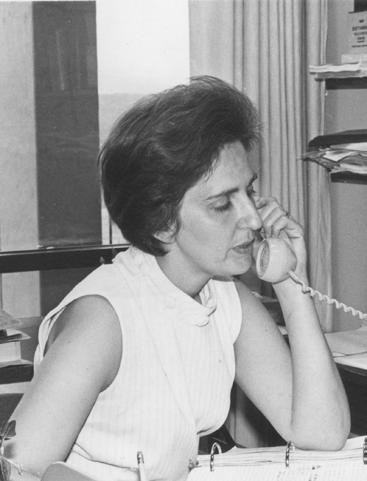
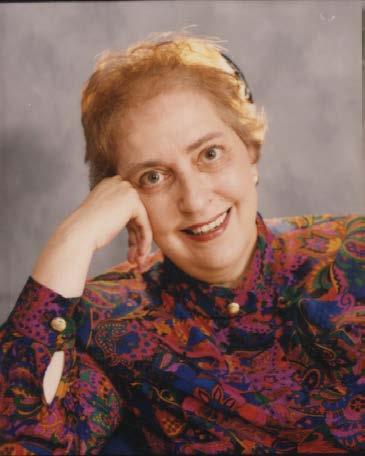
Dear Sybil,
Thank you for your long and dedicated service to UD. You were exceedingly generous to me when I was selected to be UD’s seventh President. Your most extensive knowledge of UD’s history was most helpful in learning about UD’s unique nature and its contributions to students, to alumni, to Dallas, and to the Church. What I remember most, though, is the kind invitation from you and Lyle for me to accompany you and your summer students on the trip to Greece and Rome in 2007. Both you and Lyle had been quite ill during the previous winter, and you invited me to provide back-up teaching and a number of my own lectures on the archaeology of several sites we visited. I loved the opportunity to teach again, and the students were wonderful. Back on campus, I relied on you as Archivist to ensure that we took the steps necessary to keep our records and other important documents well-secured and accessible for those interested. I also loved the role you played on Baccalaureate Day each year, assembling the graduates in the Student Center, leading them in singing “Guadeamus Igitur”, and then sending them off to Mass. There could be no better ending to their life at UD. Thank you most gratefully!
Dr. Frank Lazarus, President Emeritus
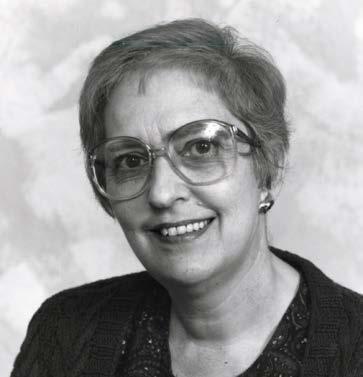
Dear Sybil,
How well I remember asking you, when you were Registrar: Is it true you know every student, and you replying, “well, I do by Christmas.”
Dr. Michael Platt
Sybil embodied the true spirit of UD. Friendly, inquisitive, curious, warm-hearted, and generous. Her presence was edifying, her house a place of respite and inspiration. Sybil was a delight. She will be sorely missed.
Dr. Philip Harold, Dean of the Constantin College of Liberal Arts
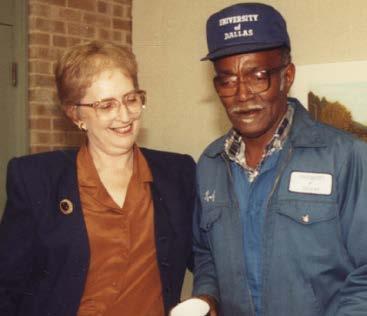
Dear Sybil,
I have been meaning to tell you this all along: For all the years I have known you, I have always thought of you as the soul of UD.
Maybe it was a coincidence, but my warm feeling of connection and gratitude for you started on the day when I visited the campus for a harrowing day of interviews in hopes of getting the position in German. You went to lunch with the committee at a nearby Chinese restaurant. On the way out, you handed me a fortune cookie. When I read the fortune, all anxiety and worry were gone. It said, “You will get the job.” And I did.
And then there were the occasions when I tearfully retreated to your office, when the frequent attacks on the German major became overwhelming. I found strength and comfort from your calm empathy.
And then there were the times when I sent students to see you, because they had lost focus and commitment. One episode has stayed with me: A likable and smart young lady just would not live up to her potential and could not decide on a major or a future career. She just could not be inspired by my advice. So, I decided to consult you and took her downstairs to your office. You asked her what she liked to do and what her aspirations for the future were. She described vividly a life of entertaining, piano recitals and wonderful gourmet experiences. You let her finish and then responded calmly: “I am truly sorry, but the position of princess does not exist anymore.” The story has a happy ending: The student became a dedicated nurse.
I have happy memories of visiting you last year, when I stayed in the Dallas area. We relived many happy moments of my time at UD and caught up with our busy lives in the past years. It was a great joy to me that you actually signed up for the class about the Trojan Women, which I taught last year via ZOOM for the Academy of Learning in Retirement of San Antonio. I was happy to see you on the screen every Friday. Now that you are gone, I remember your kind and engaged face.
Thank you for the calmness and joy you brought to my life.
Hella Hennessee, Faculty
An excerpt of a reflection given at the rosary for Sybil on Nov. 23, 2025
BY DR. EILEEN GREGORY, DISTINGUISHED ENGLISH PROFESSOR EMERITA

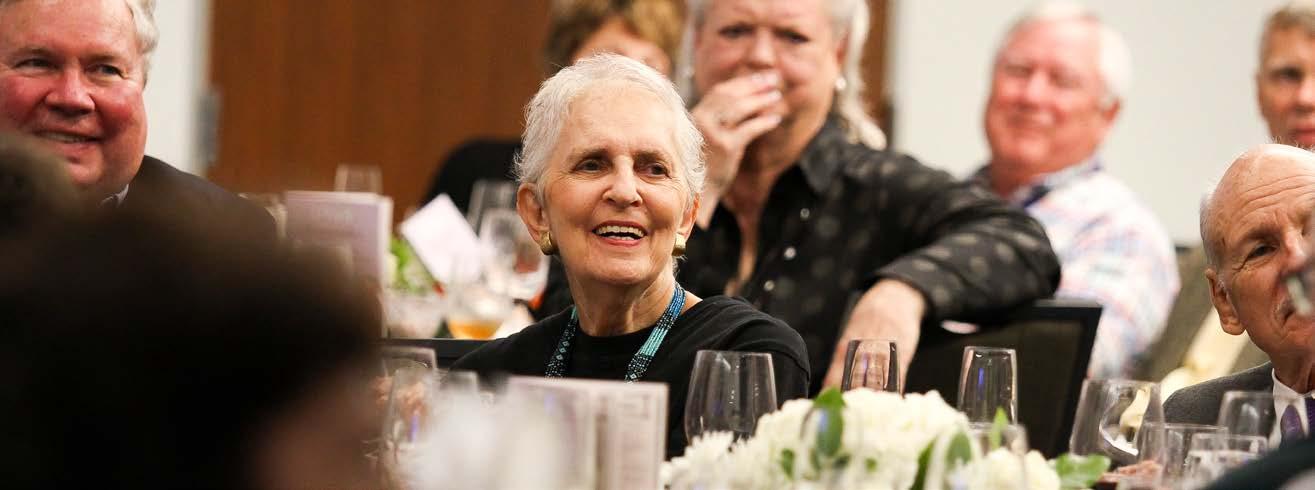
A17-year-old, an intellectually hungry senior at Irving High, I stumbled on to the UD campus by accident during the vacancy of spring break, and met a couple of students who saw I needed attention and alerted Sybil at home. She met me in her office in Carpenter Hall, surrounded by boxes, with piles of files on her desk. I don’t remember exactly what we said – except that at some point she asked, “What would it take to get you to come to UD?” But mainly I remember that within minutes of seeing and hearing her, I knew I had found a home.
She saw me, recognized me, as few did. And I trusted her. And as a student and later as a teacher at the University of Dallas, and then in recent years as a dear friend, I have always trusted her. She has always been a touchstone for me, and now more than ever.
Her simplicity and directness, her steadiness, her unpretentious presence, are amazingly rare. Especially rare, within the heady and intoxicating atmosphere of the early years of the university. As a student I was caught up in the high flying glamor of ideas, intensities of conversations, breathless ambitions – a small and freshly minted school imagining itself in terms of Christian eschatology, carrying auguries of high destiny. It was wonderful!, transformative – but also volatile and unstable in its human effects. Looking back now to that bedazzled and deeply bewildered young woman, I realize that Sybil’s initial quiet gaze and acceptance have been in a way the true center of my love of UD.
When I returned to the university to teach, I encountered that intellectual community in an even more intense form, still coming to be through the guidance of Don and Louise Cowan. It was an exhilarating time – glorious in its way – but high drama too. So many times in my career at UD, I would come flying into Sybil’s office and rehearse the latest drama – and while understanding my fears, she would deflect the tragic outcome by reminding me of some lurking possibility.
In recent years, after Lyle’s retirement, I’ve been privileged to be a steady visitor at the Novinski’s 10 o’clock coffees. And since Lyle’s death, a weekly visitor. It has become a central part of my life. And it is hard to express why the simple gesture of gathering for coffee with Sybil and her son David, and all comers, has come to mean so much. Sybil was at the center, but not at the center. Her being there allowed a space for speech, etymology, astronomy, theorizing, storytelling, lots of laughter. A strange amalgam of characters, in the midst of life, coming together for this mundane ritual of food and drink and talk. Sybil was the praise-singer in these gatherings, introducing those there by speaking of their lives and accomplishments – giving epithets of high praise, finding epithets for all, insisting on the dignity of everyone there. Her presence contained us, her generosity and kindness sustained us. There was not only pleasure, but at times joy in our being together. And joy is very rare.
And in light of this wonderful friendship with Sybil in these last couple of years, I’ve come to see the trajectory of my UD life differently. Within the headiness and flight of ideas and sometimes painful volatility of emotion, all along she has been there, with that quiet and accepting gaze. Her sanity holding people and things together. What is better than trusting in the wholeness of others, trusting that all will be well, as she has always done? A great blessing, to have her in our lives.
Laurels
Alumni awards and achievements.
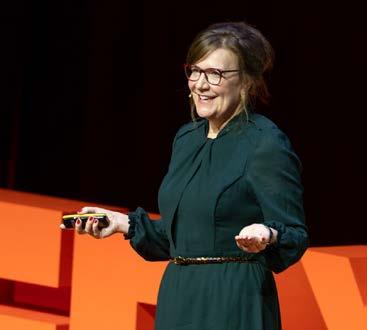
Kristen Pressner, MBA ’99, builds bridges of understanding around neurodiversity. In her TEDx talk, “Why is it that so many people just can’t get it together?”, she invites audiences to rethink “normal” at work and home and design brain-friendly systems.
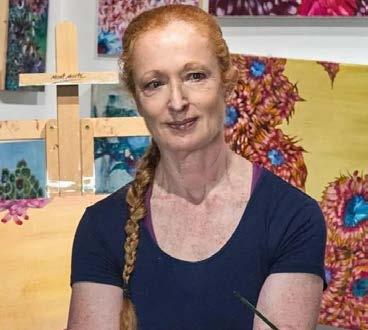
Giselle Castro Brightenburg, BA ’89, exhibited De Profundis: Echoes from the Deep at Irving Arts Center in Irving, Texas, July 12–Oct. 25, 2025, exploring memory, faith and the unseen depths of the human heart through luminous abstract paintings.
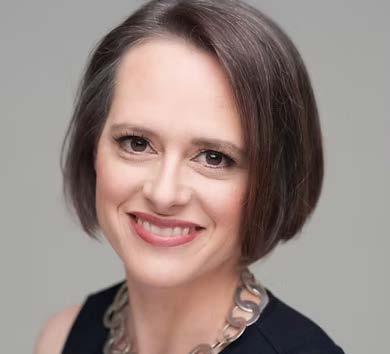
Theology alumna Angela Franks, BA ’95, authored Body and Identity: A History of the Empty Self (Notre Dame Press), winner of a 2025 Expanded Reason award. She moved from St. John’s Seminary to CUA’s Theology and Religious Studies faculty.
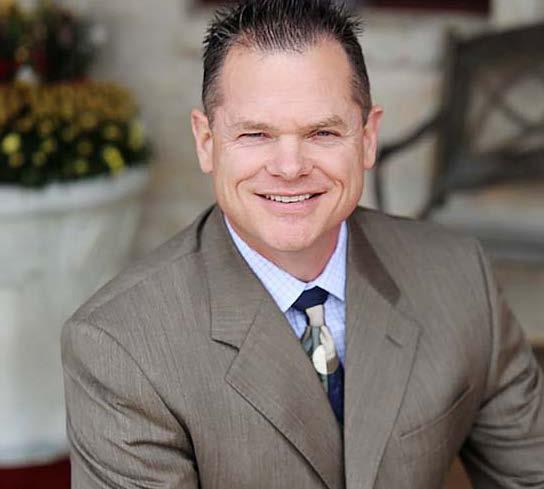
Dentist Michael Wehrle, BA ’85, spearheads the Class of ’85 Memorial Endowed Scholarship and partners with UDallas’ Student Foundation on Campus Beautification Day. He also trains dentists in Mexico in implant techniques to expand access to affordable care.
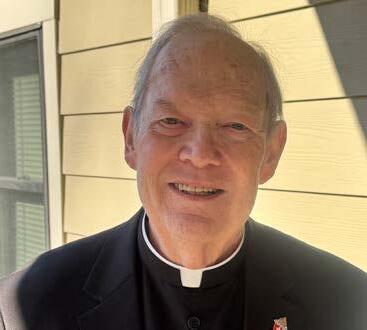
Fr. William (Bill) Burke, BA ’71, celebrated his 50th anniversary of ordination on July 19, 2025, at St. Louis Catholic Church in the Diocese of Memphis, Tennessee, fondly recalling his UDallas days with several classmates in attendance.
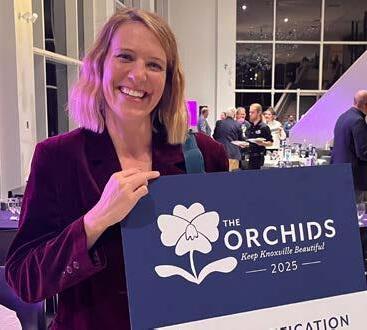
Rebecca Mattingly Harman, BA ’10, received Keep Knoxville Beautiful’s Orchid Award for founding Re-Oak Oakwood, organizing volunteers to plant 100+ oaks to preserve the neighborhood canopy. She also convenes ecologists and serves on the board of Discover Life in America.
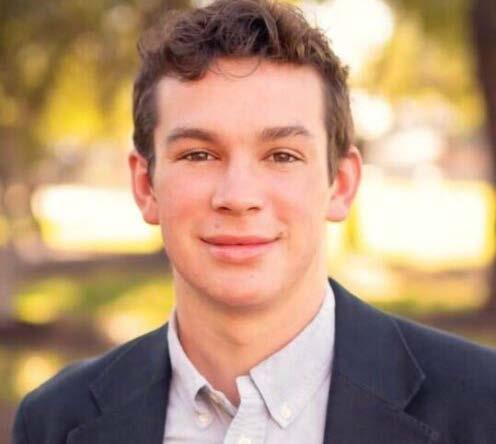
Joe Dunikoski, BA ’24, founded Forum 56 and VersoJobs to connect grads with employers. A politics graduate and devoted Catholic, he roots his vision of work in Scripture, saying, “work is one of the avenues that allows us to glorify God.”
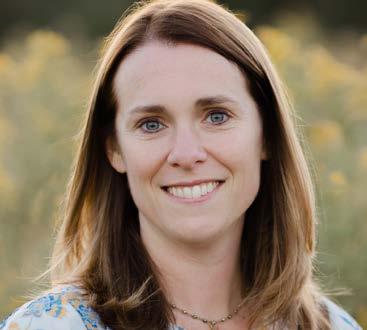
Megan Lengyel, BS ’01, now chief academic officer at Kolbe Academy — a national K–12 Catholic homeschool and one of UDallas’ academic partners — draws on her UDallas physics formation to shape Kolbe’s math and science curriculum for thousands of families.
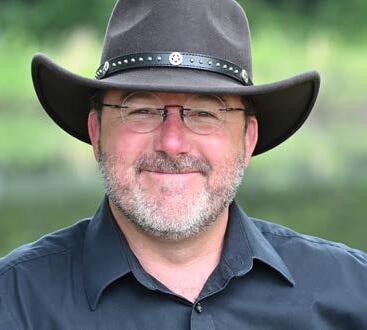
Dr. Marcel Brown, BA ’04, is the new principal of St. Elizabeth Seton Catholic School in Naples. A classical education leader, he has led two Tulsa classical schools and writes on Catholicism, the liberal arts and culture.
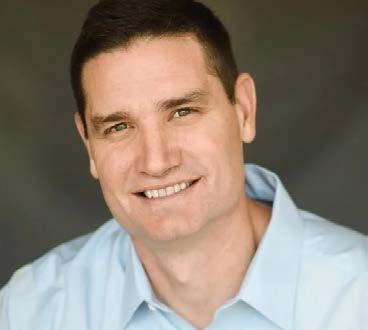
Paul George, MTS ’09, led the “Finding Hope, Living Joy” XLT in Tucson last year. He is author of Rethink Happiness (2018) and best-selling Holy Grit (2023), plus two devotionals for men seeking courageous, Christ-centered lives.
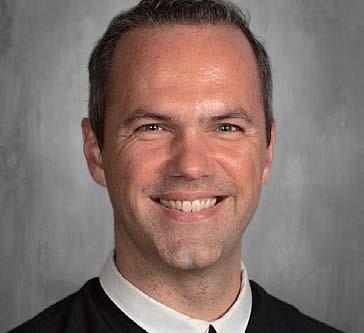
Fr. John Bayer, OCist, BA ’06 MTh ’12, appears in the “Minute Monk” series on Hallow, a popular Catholic prayer and meditation app that helps users build a daily habit of contemplative prayer.
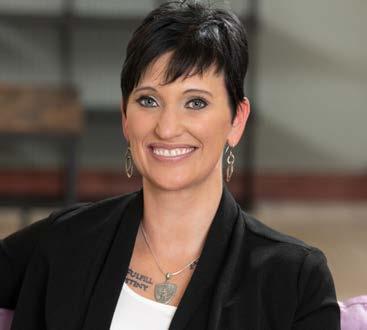
Kelly Doss, MA ’04, Politics, was named executive director of the Alexandria Education Foundation, overseeing programs, fundraising and community outreach for Alexandria Public Schools.
The Doctor Against the Machine
BY LUKE J. AYERS, MA ’26
The recent elevation of St. John Henry Newman to Doctor of the Church may become a prophetic challenge to the AI-driven educational revolution just over the horizon.
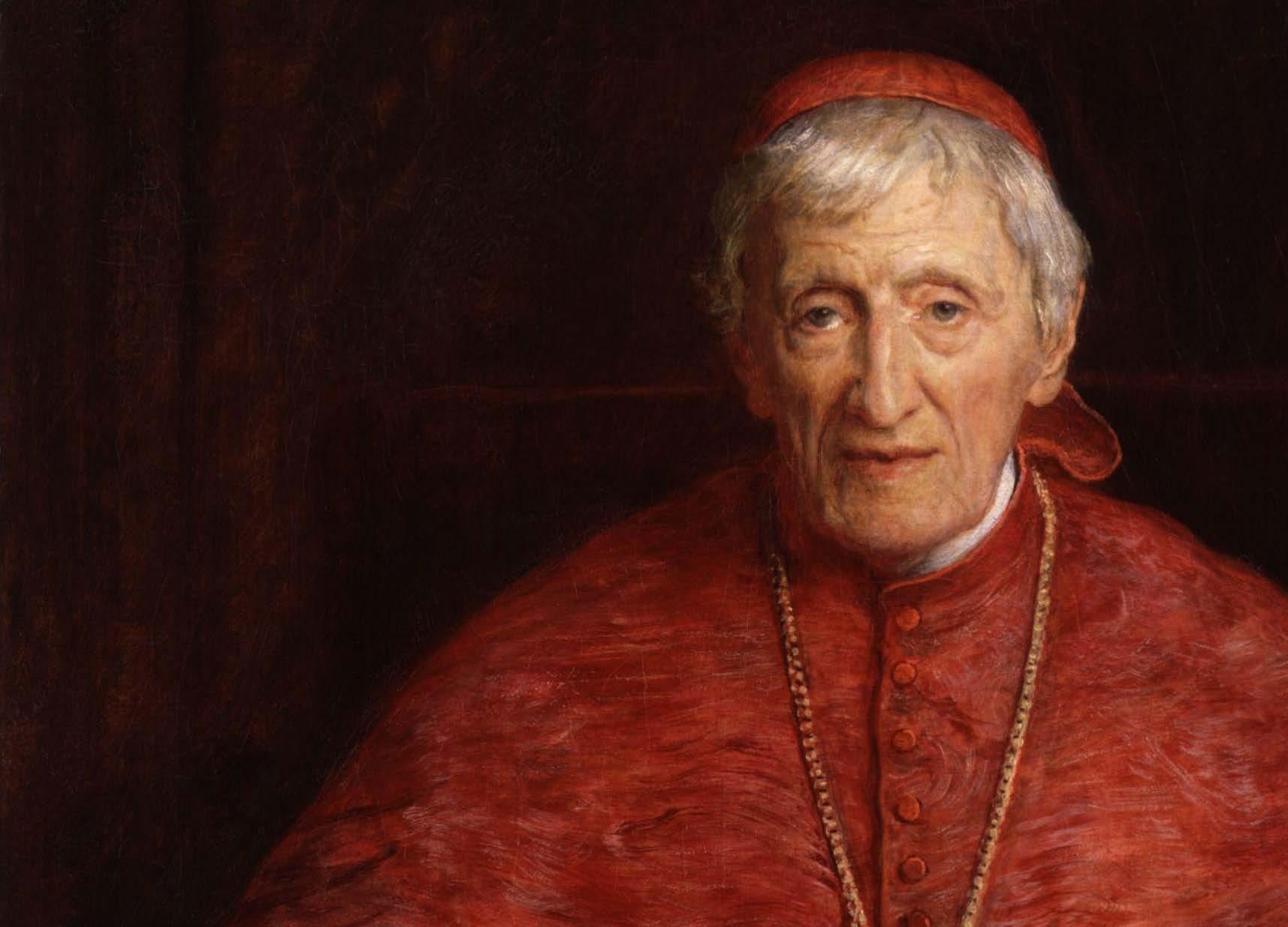
Pope Leo XIII, who made the newest Doctor of the Church, St. John Henry Newman, a cardinal in 1879, established the foundation of modern Catholic social teaching in his encyclical Rerum Novarum, which addressed dehumanizing labor conditions in the face of the industrial revolution, unchecked capitalism, and socialism. Pope Leo XIV took the name Leo as a way to follow in these footsteps—not due to the threat of industrialization but of artificial intelligence. One of his most recent acts was, of course, the elevation of Newman to Doctor of the Church.
While each Leo honored Newman in distinct ways, both recognized in him a defender of the Christian order against systems that reduce the person to function, output, and use. St. John Henry Newman is known in many ways principally as an educator, being an Oxford don and later writing extensively about the university. Newman has been called (alongside Aquinas) a patron saint of universities and (alongside Seton) of Catholic schools, with the Newman Guide and Newman Centers for Catholic campus ministry at colleges across the country both bearing his name. His work is singularly situated to speak to the difficulty that AI presents to K-12 and postsecondary institutions because he understood and articulated what education ought to be and what a school ultimately aims at.
In Rerum Novarum, Leo XIII warned that when labor is treated as a commodity,
REPRINTED
workers are degraded to “mere instruments of money making.” Today, AI threatens a similar degradation—not only in the workplace but in schools too. Students risk being dehumanized and reduced to data points in a digital system, valued only for measurable outputs. Knowledge is fragmented into ever smaller, quantifiable units, severed from the whole. We are very near to forgetting that all “knowledge is intimately united in itself,” since it comes from the same source: God.
Both Popes Leo have fought and are fighting to preserve the rights and dignity of laborers in the face of technological upheaval. But AI poses a particularly insidious threat to education, attacking not just what students do but who they are. It is here that Newman’s vision of the unity of knowledge and the centrality of the soul to education offers both a warning and a path out of this growing mess.
Newman’s claim in The Idea of a University that education is not transmission of information but intellectual formation—a development of one’s “habit of mind”—is in stark contrast to the axioms of modern progressive education. For Newman, the university was not a tool to produce workers but a true alma mater, nourishing her children as individuals, “one by one.”
Today, we have almost completely forgotten what it means for a school to focus on anything other than testable outputs, with terms like “data-driven instruction” truly directing some teachers’ entire professional lives. Newman reminds all educators that each student is a soul to be formed and shaped, not a producer to be programmed or a problem to be solved.
In this light, the rise of so-called artificial intelligence in education should not be treated as, on the one hand, a morally neutral technology to be used or misused according to the individual, or, on the other hand, yet another fad pushed on schools that will fade in time and can be safely ignored. In fact, AI in schools is the latest symptom of our civilizational confusion. Tools that generate whole essays, give rapid feedback, or claim to “personalize” (an ironic word choice if ever there was) promise efficiency, but they only do so by redefining education entirely. What AI accomplishes with such impressive speed is not formation but something more akin to a factory’s output.
Newman’s An Essay in Aid of a Grammar of Assent distinguishes between a logical belief in something and real understanding in one’s heart and mind—this is the fruit of real learning, and it is something that a machine is incapable of ever doing. Pope Leo XIV’s words to the Conference on Artificial
Intelligence in Rome at the end of June are of particular note to teachers, exhorting us not to confuse “access to data—however extensive…with intelligence.” The power of AI is the volume of data it can process. But real learning cannot be mechanized because it involves judgment, struggle, receptivity to a good teacher—all essentially spiritual acts and certainly out of reach for even the most sophisticated computer model. No machine can direct a soul toward the Good, True, or Beautiful.
News articles speak of AI as a “disruption” to schools. But the truth is that it’s less a disruption and more the culmination of the whole project of progressive education. For decades, teachers and students alike have been trained to think of learning as demonstrable, objective performance. What began with bubble sheet college entrance tests comes full circle to AI-graded essays and AI-directed math tutoring sessions for struggling third-graders.
We are quickly moving toward a model where the soul has no place and the teacher is only a facilitator. AI just hastens what the system has always been heading toward: total automation. St. John Henry Newman stands against this reduction, reminding us of the intensely personal dynamic at play in true education. Pope Leo XIII warned against the mechanization of human life in sole service of economic output, and that warning today extends from factory to classroom. The danger is not merely that students will cheat with AI but that they will lose themselves long before they get the chance. Newman knew that education is not a system but a relationship. One of the most beautiful reflections on the nature of teaching I have ever come across comes from
the Congregation for Catholic Education in 1997: “Teaching has an extraordinary moral depth and is one of man’s most excellent and creative activities, for the teacher does not write on inanimate material, but on the very spirits of human beings.”
Pope Leo XIV, in raising up St. John Henry Newman, gives Newman’s vision of education a greater (and richly deserved) place of honor in the modern day. This is a vision which understands that real teaching involves time and love. In a classroom where the teacher has ceded his role to AI, his judgment is replaced and his knowledge is sidelined, his soul no longer part of the work at all.
The teacher must not be relegated to a facilitator of information transfer. She must be a person in her own right and a moral image of who the student is called to become. Pope Leo XIII was prophetic in recognizing the dangers that industrial labor posed to workers. And both Pope Francis and Pope Leo XIV have followed in identifying the threat of AI. St. John Henry Newman offers a critical perspective on true education, as schools are no less at threat than the workplace.
The Holy Father could hardly have chosen a better time to elevate Newman. It is not just a theological or cultural milestone but a moment for cultural instruction, inviting teachers, school leaders, students, and parents to receive him as a living guide in the present struggle over the soul of education. Newman was not a reactionary, and he did not fear innovation; but he did speak with clarity about the purpose of education. As AI attempts to turn the classroom into an elaborate circuit board, the echo of Newman’s words reminds us that true education begins and ends with the soul.
The Boardroom
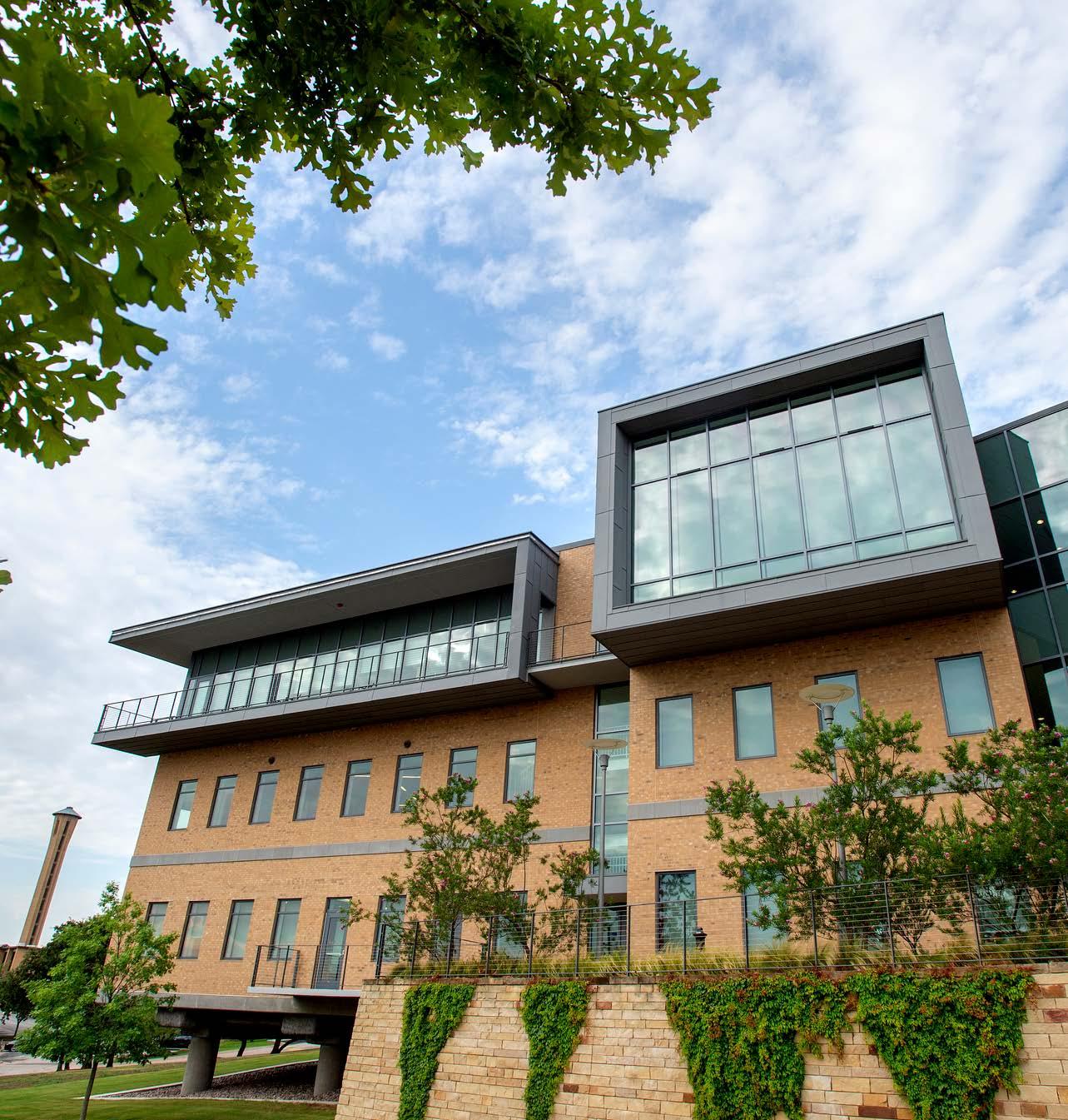
Jack Gibbons Inducted into UDallas Business Hall of Fame
BY SYED NAQVI, MBA ‘25

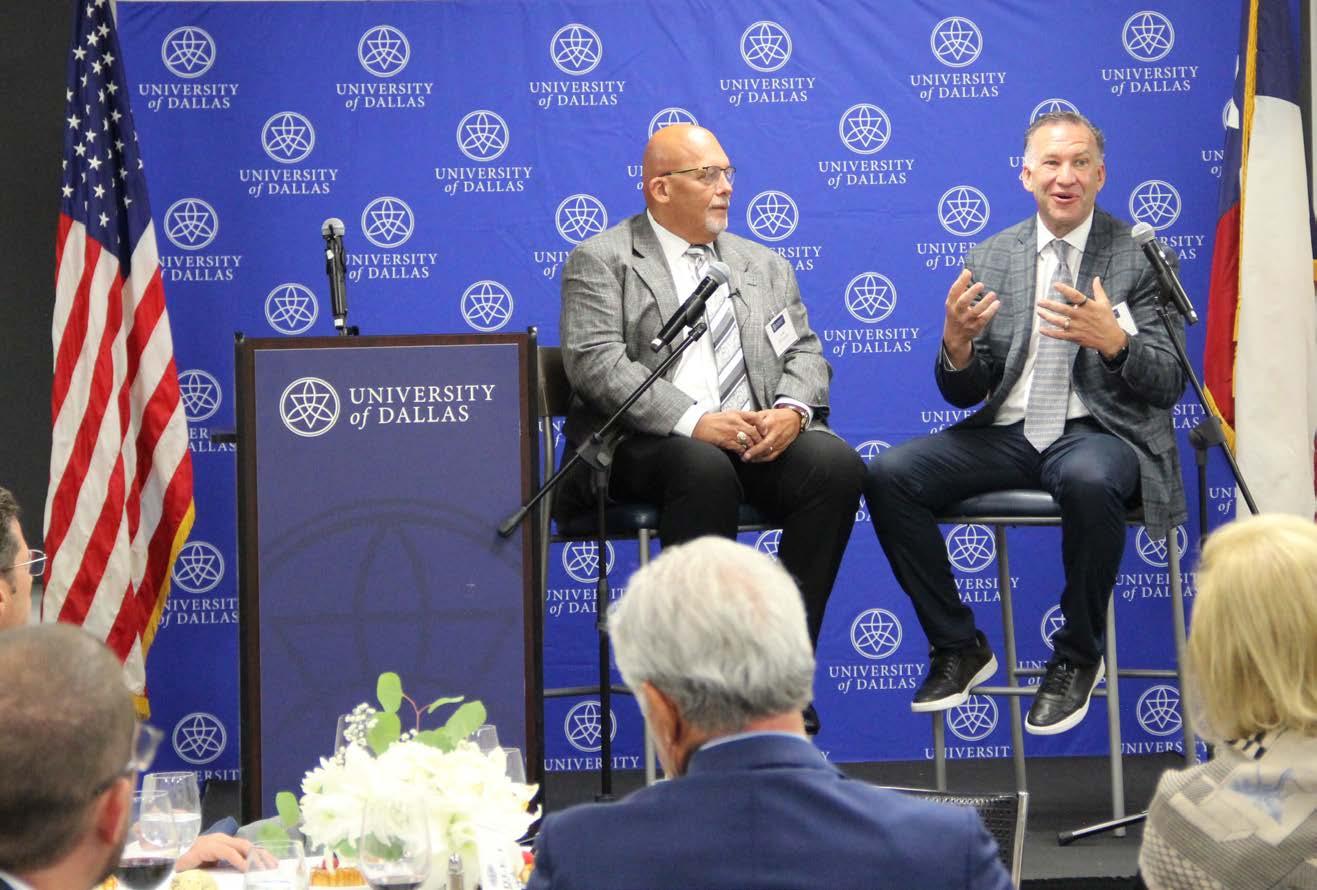
The Satish & Yasmin Gupta College of Business at the University of Dallas proudly inducted alumnus Jack Gibbons, MBA ’05, into its Hall of Fame during a ceremony recently held on campus. Gibbons, the Chief Executive Officer of FB Society, was recognized for his outstanding leadership, entrepreneurial vision and lasting contributions to the restaurant and hospitality industry.
Reflecting on the milestone, Gibbons shared, “When I chose to pursue my MBA at the University of Dallas, I was ready to grow beyond my role and learn from leaders who would challenge and inspire me. I even made a deal with my wife to give up Monday Night Football to invest in myself.”
He continued, “Earning my MBA at UD in 2005 was one of the best decisions I’ve ever made. The program gave me new perspective and the tools to think creatively about business. The professors, the discussions, and the push to think independently continue to shape the way I lead today.”
The event brought Gibbons’s family, friends and colleagues together to celebrate his achievements and contributions. He expressed his gratitude to Dean J. Lee Whittington, one of his professors during his MBA studies, University President Jonathan J. Sanford and the wider UDallas commu-
nity for this honor. He also thanked Fehmi Karahan and fellow alumnus and friend Dan Flaherty, BA ’81 MBA ’82 for their kind introductions and continued friendship. Dean J. Lee Whittington shared, “We were pleased to honor Jack Gibbons as our newest inductee into the Gupta College of Business Hall of Fame. Jack exemplifies the quality of leaders we strive to cultivate here at the University of Dallas: leaders who understand that leadership is an action, not a position, and that people matter more than processes. We are proud to have Jack representing us and modeling the way for other leaders!”
As CEO of FB Society, Gibbons oversees a portfolio of innovative restaurant brands and continues to embody the Gupta College of Business’s mission to develop principled and visionary leaders.
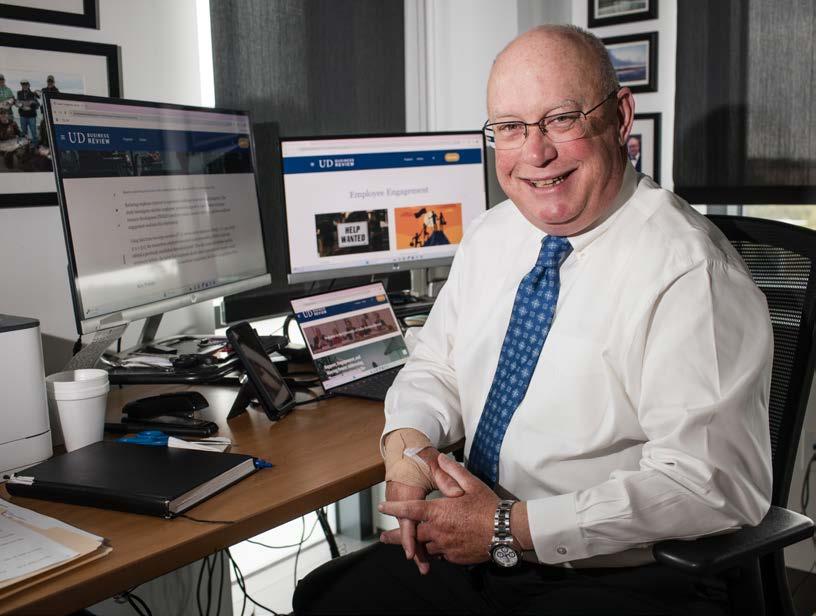
Led by Dr. Greg Bell, the Gupta College of Business launched the UD Business Review (UDBR) to translate Doctor of Business Administration (DBA) student and faculty research into actionable, practitioner-focused insights. UDBR bridges theory and practice, summarizing top peer-reviewed scholarship in clear, relevant ways for industry leaders. Building on the College’s 60-year tradition of applied research with social impact, UDBR has published over 25 articles — eight co-authored by DBA students — earning praise for clarity, relevance and its contribution to real-world business challenges.
“I get a lot of these, but rarely are they this direct and interesting,” noted a fellow business scholar, highlighting the UDBR’s practical value and distinctive voice.
Executives-on-Campus Program Enhances Real-World Learning
Dr. Laura Muñoz led the revival of the Executives-on-Campus program, which brought 48 executives to campus for 34 events during the 2024-25 academic year. Many of them were alumni, eager to give back by offering their time, insights and gratitude for how UDallas prepared them for their successes. For students, the program offered an opportunity to hear firsthand from professionals about current trends and practices in specific fields like cybersecurity and marketing. Alumni speakers especially showcased for students how a UDallas education leads to real-world success and accelerated career growth.
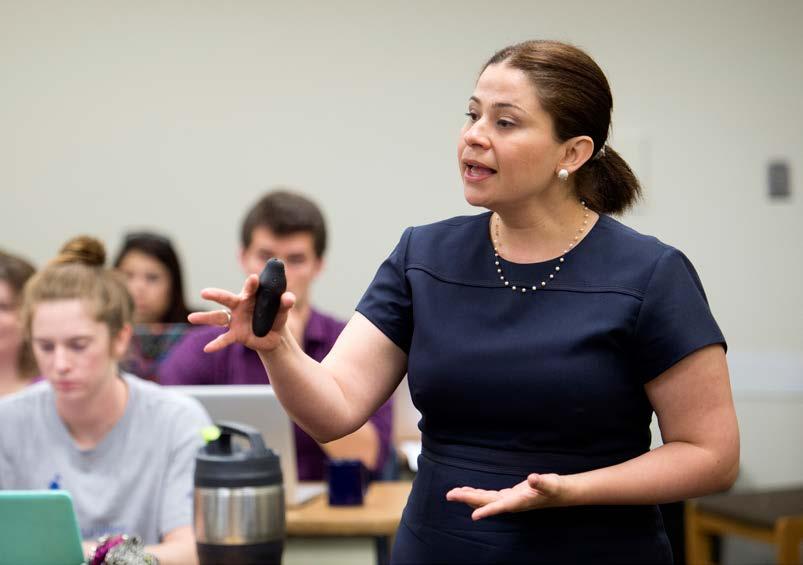

The Future of Business Is Human: UDallas Launches Bold New Graduate Curriculum, Degree Offerings
TheSatish & Yasmin Gupta College of Business at the University of Dallas launched a bold new graduate business curriculum this past fall — one that fuses technical excellence with ethical leadership and human-centered values. Rooted in the liberal arts tradition and reflective of UDallas’ identity as the country’s premiere Catholic university, this reimagined business curriculum positions graduate students for success in a rapidly changing global landscape.
“This is a complete reinvention of how we approach business education,” said Dr. J. Lee Whittington, Dean of the College. “In a world shaped by data, artificial intelligence, and distributed teams, we believe the future of business is human — and we’re breaking the mold again to lead the way forward.” This launch directly aligns with the World Economic Forum’s Future of Jobs Report 2025, which identifies analytical thinking, AI and big data, and leadership/social influence among the top 10 core skills employers will prioritize through 2029. The University of Dallas has anticipated this shift, integrating these competencies across all programs — while uniquely anchoring them in timeless values and moral clarity.
At the heart of the new curriculum is the Business Core — three foundational courses that focus on virtuous leadership, ethical
decision-making and effective communication. These form the bedrock of all MBA, MS and DBA programs and are designed to shape graduates who lead with both insight and integrity.
The new curriculum also includes a new masters degree — a Master of Science in Data Science and AI (MS DSAI). This cutting edge program prepares professionals to ethically harness the power of data and artifcial intelligence.
In addition, students can choose from an expanded MBA program that features new concentrations in a robust suite of specialized Master of Science degrees and certificate programs, offered in flexible formats for today’s working professionals.
Bridging Science, Ethics in Healthcare
The Master of Arts in Medical Humanities is a new degree at the University of Dallas that bridges the sciences and the humanities to examine experiences of health and illness in their fullest context. Designed for students preparing for medical school, healthcare professions,
or careers in research, policy, and administration, the program offers a unique liberal arts approach to medicine. Students gain both scientific grounding and humanistic insight into the complexities of healthcare today.
A Jubilee Pilgrimage to Rome
BY DR. JODI HUNT
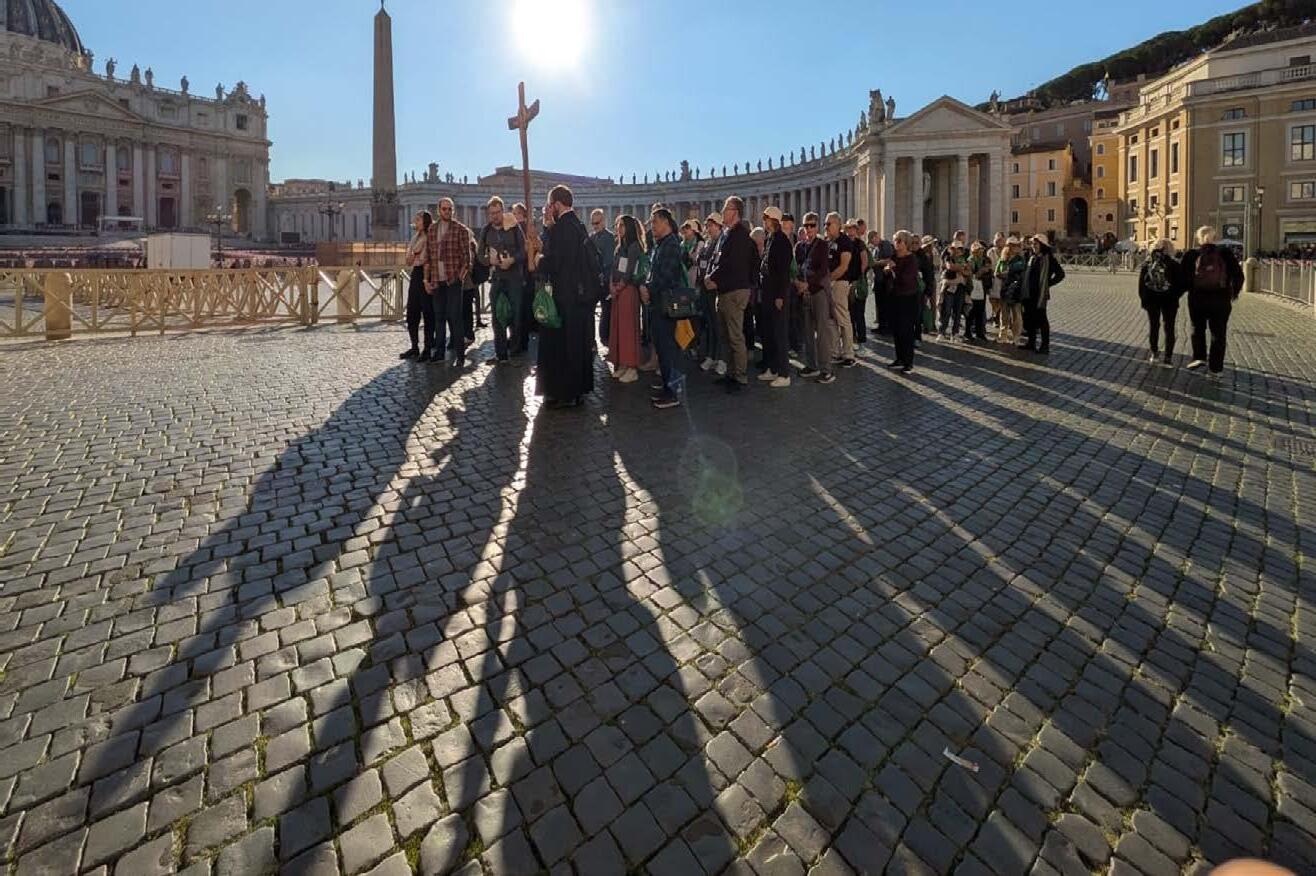

Pilgrims from the Neuhoff Institute for Ministry and Evangelization returned home carrying with them not only the dust of uneven cobblestones walked and the echoes of sacred spaces, but a renewed sense of hope after their recent journey to Rome, Assisi, Siena and Orvieto during the Jubilee Year of Hope.
For many years, the Neuhoff Institute has accompanied pilgrims on sacred journeys to Rome and the Holy Land. After a brief hiatus, Neuhoff is excited to announce that it once again will be hosting pilgrims from all parts of the United States -- and around the globe -- as this year’s pilgrimage for the Jubilee Year of Hope has formally relaunched the pilgrimage program.
Inspired by the journey of pilgrims across the globe, continuing education is not limited to just the classroom. It is our hope that by offering opportunities for others to journey together – in deep prayer and quiet reflection – that they not only will see our Church come to life but that they will form long lasting friendships along the way.
Friendships that continue to accompany them on their pathways home.
To sum up the recent Neuhoff pilgrimage is to say that the pilgrims did not just simply take a tour of historic sites, but that they had a deeply prayerful encounter with the living history of the Church. Each day was met with quiet pauses at the altars as Mass was celebrated in breathtaking sacred spaces which ranged from side chapels tucked away within ancient basilicas to quieter churches found hidden among winding cobblestone streets.
One of the most memorable moments of the trip, however, came early, during a papal audience in Rome with Pope Leo XIV.
Dr. Jodi Hunt is the executive director of the Ann & Joe O. Neuhoff Institute for Ministry and Evangelization at the University of Dallas. Learn more: udallas.edu/ministry.
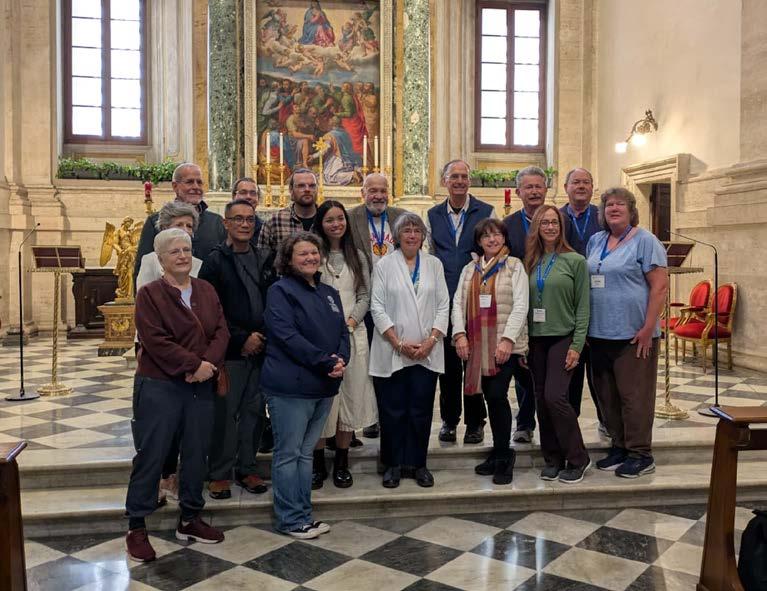
As pilgrims gathered in St. Peter’s Square with thousands from around the world, the presence of the Holy Father was both humbling and exhilarating. For many from the Neuhoff Institute, this experience was a powerful reminder of their own mission in ministry and evangelization, to go forth in hope and proclaim the Gospel with joy. Rome itself offered a profound immersion into the roots of the faith. Pilgrims visited all four major basilicas– St. Peter’s, St. John Lateran, St. Paul Outside the Walls, and St. Mary Major–passing through the Holy Doors opened especially for the Jubilee Year. Walking through these doors was more than symbolic; it was an embodied prayer for renewal, mercy and courage to live the Gospel more fully. A visit to the catacombs proved especially moving, as pilgrims stood in the dark and quiet passages where early Christians worshiped and were buried.
Beyond Rome, the journey unfolded into the heart of Italy. In Assisi, pilgrims followed in the footsteps of St. Francis and St. Clare, absorbing lessons of humility, peace, and joyful simplicity. Orvieto offered moments of awe before its magnificent cathedral and deeper reflection on the Eucharist, while Siena brought pilgrims closer to the fiery faith of St. Catherine, whose life of prayer and boldness continues to inspire the Church today.
Throughout the journey, thoughtful and knowledgeable guides brought the ancient grounds to life. Their stories and insights transformed stone walls and frescoes into witnesses of centuries of prayer, struggle, and sanctity. History and faith intertwined, helping pilgrims see how the past continues to shape the present.
Evenings became sacred in their own way. Over glasses of wine and plates of remarkable Italian food, pilgrims gathered for daily reflections. Laughter mixed with thoughtful conversations as new friendships deepened and faith was shared openly. These moments of fellowship, often unplanned and never hurried, became some of the most cherished memories of the trip.
As the pilgrimage came to an end, participants from the Neuhoff Institute reflected on how the journey had strengthened their sense of calling. They returned not only with photographs and souvenirs, but with renewed hearts ready to bring the hope they encountered in Rome, Assisi, Orvieto and Siena back to their faith communities and own domestic churches. In walking ancient paths together, they discovered, once again, that pilgrimage is not about the miles traveled, but about the transformation that happens along the way.
Class Notes
Got news? Tell us about it at tower.udallas.edu for inclusion in Class Notes.
1960s
Dan Kelly, BA ’65, has retired from The Wall Street Journal after a 55year career that included a stint in the 1970s writing scripts for Walter Cronkite at CBS.
1970s
Eli Zlokas, BA ’73, recently co-presented at the Children’s Hospital of Pittsburgh annual two-day conference on the maltreatment of children. Eli and Attorney James Robertson presented a seminar on Act 21, a little known law involving the continued incarceration of young adults who did not complete their treatment for adjudications of various sex crimes.
1980s
Michael Dunnigan, BA ’87, recently published “Religious Liberty and the Hermeneutic of Continuity: Conservation and Development of Doctrine at Vatican II,” through Emmaus Academic Press.
Academy Securities, the nation’s first Post-9/11 veteran owned and operated investment bank, recently announced the addition of Elaine McCusker, BA ’89, to its Advisory Board and Geopolitical Intelligence Group. Elaine McCusker joins Academy with over 30 years of defense and national security experience across the private sector, academia and government service.
1990s
Coast Guard Commander Richard O. Ellis, BA ’90 (retired) was recognized and presented a Quilt of Valor by quilter Sharon Elliott. Commander Ellis’ active and reserve service included maritime and shore operations, search and rescue, law enforcement and disaster response, including Hurricane Katrina and the Deepwater Horizon Oil Spill. He participated in joint operations with the U.S. Navy in the Persian Gulf, Pacific Ocean, Caribbean and the Atlantic, as well as joint operations with the Federal Emergency Management Agency and several state agencies.
Lisa Mobus, BA ’90, obtained a Fulbright Distinguished Awards in Teaching Research Program grant and is living in Bogota, Colombia for five months. Her project, “Flexible Pathways to Mastery: Colombia as a Model for Educational Innovation,” has the objectives of discovering how educational policies are created in Colombia, both at the national and local levels, to support all types of students in the classroom; how middle and high school principals establish a climate that supports teachers in delivering responsive curriculum and students in learning in different ways; and what preparation pre-service teachers receive before entering the classroom, as well as how they determine what to teach (content) and how to teach it (pedagogy). Lisa received a Masters in Education from Southern New Hampshire University in 2020, and a Ph.D. in Comparative Literature from Selinus University in 2024. Her dissertation was entitled “Schimmerdem Licht, Amara Luce: The Imagery of Light in the Writings of August Wilhelm von Schlegel and Giacomo Leopardi.” Additionally, in June/ July 2024, Lisa walked the 200-mile Camino Primitivo in Spain in honor of her father, Dr. James Fougerousse, BA ’67.
Justin Gullekson, MTS ’96, has joined Edward Jones as a certified financial advisor in Decorah, Iowa. Kayla Swanson, BA ’99, received the Best Horror Screenplay award from the Swedish International Film Festival for her work “Spider Bite.”
2000s
In May 2025, James W. Stroud, STD, BA ’01 MA ’04, received a promotion to the rank of professor of moral theology at Sacred Heart Seminary and School of Theology in Hales Corners, Wisconsin.
2010s
Leslie Eslava, BA ’11, married Javier de los Santos at St. Joseph’s Catholic Church in Grand Junction, Colorado on June 27, 2025. Leslie is a Reading Corps coaching specialist at a non-profit, Colorado Youth for a Change, where she supervises and coaches a caseload of AmeriCorps K-3 Literacy Tutors who are placed in elementary schools across Colorado.
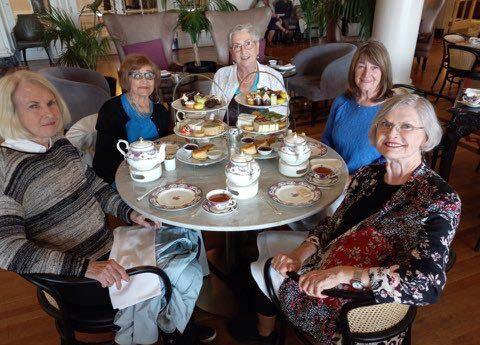
Class of ’67 women gathered for their 17th annual, five-day reunion in September 2024 in Seattle and Victoria, BC. At their 40th UD reunion Penni McTaggart Christman, Celie Chamberlain Tatom, Laura Sue O’Neill Hover and Colleen Eastman Rickert decided to continue to reconnect and rekindle their friendship by gathering in a different city each year to explore the sites, catch up on their lives, and share food, laughter and wine. They have met in cities from Washington, DC, and Philadelphia to St. Louis, Savannah, Denver, San Francisco, Santa Fe and Bentonville, Arkansas. At times, over the years, others have joined the foursome including Anne Mitchell, Fran Goodloe Woodfin, Rosemary Gastring Frame and Estelle Tovar Lara. These women are a testament to the strong friendships made while attending the University of Dallas.
Picture left to right: Fran Goodloe Woodfin, Estelle Tovar Lara, Laura Sue O’Neill Hover, Colleen Eastman Rickert, Celie Chamberlain Tatom
In Memoriam
Mary Ellen Fox, UDallas Trustee 2002-2003 and beloved wife, mother, grandmother, great-grandmother and friend, passed peacefully in her sleep on Oct. 18, at the age of 95. Mary Ellen was a proud midwesterner, a sports fan and a Catholic with a special devotion to Mary. She was a mother of five and was preceded in death by her husband of 49 years, David G. Fox, also a trustee (1987-1993).
Sister Jean Marie Smith, SSND, BA ’67, a School Sister of Notre Dame, died on Nov. 27, Thanksgiving Day. Sr. Jean Marie first started discerning a call to religious life in middle school and once she entered her community, she experienced over 60 years of religious life. Sr. Jean Marie served others through a variety of ministries, including teaching at a variety of levels, including special education.
Penelope McTaggart Christman, BA ’67, died in May 2024. Penni, as she was known, married Joel in 1972 and they raised four boys while living in Denver, Colorado. She and her UDallas roommate, Colleen Eastman Rickert, raised their families together, continuing the strong friendship bond they developed at UDallas. In addition to raising her sons, volunteering in their schools and at a local children’s hospital, Christman had a catering business, and later an event planning agency. She also worked as a fundraiser for the Hemophilia Society and Regis Jesuit High School. She is survived by her husband, four boys, their wives and 12 grandchildren along with several UD women classmates with whom she traveled annually for 17 years.
Michael Ricketts attended UDallas and played for the basketball team as a freshman in the 20072008 season. He passed away on March 5, at the age of 36. He is remembered for his achievement,
grit and perseverance. His love of sports led him to be an assistant to some professional athletes, which enabled him to travel internationally. Deemed a miraculous survival by a surgeon, Ricketts was in a serious car accident in 2020. He believed his life was saved for a reason and was an inspiration to those around him. He leaves behind many family members as well as a beloved fiancee and her son.
Robert K. Wysocki, BA ’65, passed away on July 23. He is remembered as a father, a scholar and a pioneer in the field of project management. During his 55-year career, he worked in academic administration as a consultant to a number of organizations such as Wells Fargo, Walmart, Texas Instruments and many more. He leaves behind five children, 10 grandchildren and one great grandchild.
Richard Drexel III, BA ’01. Richard was a Vietnam era veteran and served six years in the Florida Army National Guards. He leaves behind his wife of 50 years as well as his three children and two grandchildren.
Cassandra (Cassie) L. Clark, BA ’96, died on Oct. 4. Cassandra, 51, is remembered for her welcoming spirit as she worked for years in her family’s souvenir shops and then in her own store, The Connoisseur, for 25 years. She leaves behind a son, a granddaughter and many other relatives and loved ones.
Michael Middlebrook Boyd, BA ’65, died on Oct. 15. Michael served in the Army, then became a teacher at the Hockaday school in Dallas and then had a second career as a general contractor. In his later years, he was a dedicated volunteer for the Roxbury Land Trust and was known for his love of nature and community. Boyd leaves behind his two daughters and many other loved ones.
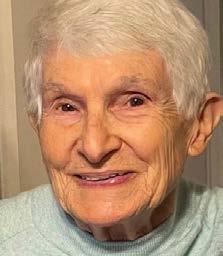
Enrica Zocchi was a Visiting Assistant Professor of Modern Languages from Fall 1994 through Spring 2008. She died at the age of 89 on Aug. 4. Dr. Zocchi was born in Italy where she lived through World War II. She later earned her PhD in foreign language and literature and traveled Europe, learning many languages. She loved classical music, had a renowned green thumb and an intuitive knack for cooking without a recipe. She was preceded in death by her beloved husband of 60 years and now leaves behind her children and grandchildren.
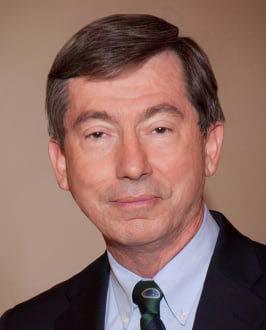
John S. Baker, Jr., BA ’69, a distinguished legal scholar, passed away in September. His education bore fruit as Baker taught at institutions like the Louisiana State University (LSU) Paul M. Hebert Law Center and twice argued before the U.S. Supreme Court. Colleagues and family remember Baker for his character as well as his intellect. The Federalist Society mentions “his generosity of spirit, his faith, his sense of humor, and his unwavering belief in the transformative power of education, debate, and discussion.” Baker is survived by his wife, Dayle—whom he met while studying at UDallas—along with nine living children, 13 grandchildren, four siblings and spouses.
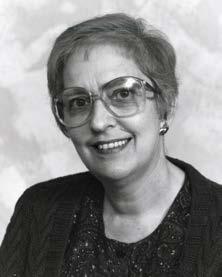
Sybil Novinski, wife, mother, administrator, counselor, community volunteer and “mom away from home” for so many, passed away in her sleep on Oct. 31. She was an incredible human being. Though she would expertly deflect the praise, well-wishers have described her as wise, gentle, iconic, a treasure, a blessing, direct, true, respected, revered, loving, one of the rarest gems, funny, encouraging, knowledgeable and challenging of others to be their best selves. In active gratitude for many blessings, Novinski valued and created community and dispensed grace in all the chapters of her life. She was married to an artist, the late Lyle Novinski, and together they raised five children and a university.
Alumni & Family Weekend
Alumni and their families gathered from near and far for the annual Alumni & Family Weekend. Former Crusaders of all ages–from those celebrating their fifth anniversary to those celebrating their 50th–came to reunite with old friends and to visit campus.
The weekend was filled with events, including ‘Master Classes’ taught by beloved faculty members, a faculty debate, class reunions, an Alumni Business Festival and more.
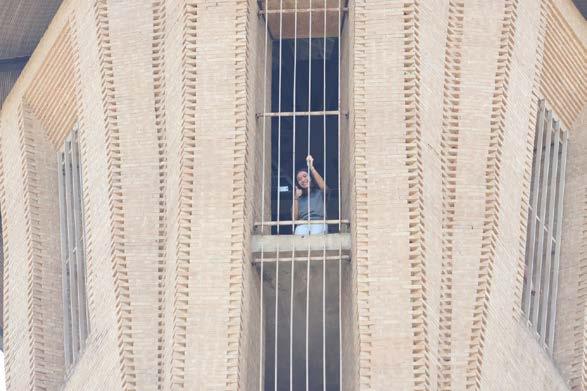
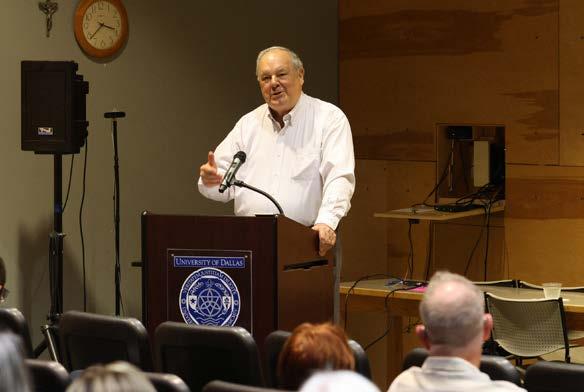
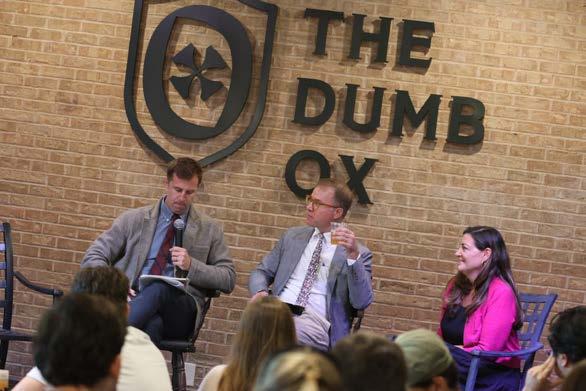
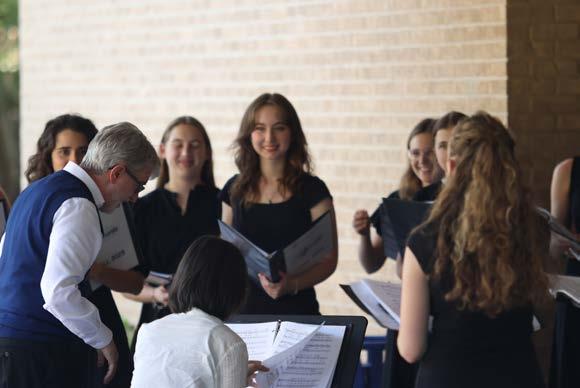
Photo Essay
STUDENT CHOIR, DIRECTED BY BRIAN BENTLEY , M.M., SINGS AT THE DEDICATION OF THE CHURCH LAWN.
ALUMNI ATTEND A MASTER CLASS WITH BELOVED HISTORY PROFESSOR DR. THOMAS JODZIEWICZ TITLED “FREDERICK DOUGLASS: WHAT TO THE SLAVE IS THE FOURTH OF JULY.”
JUNIOR BREANNA BARNES TAKES THE OPPORTUNITY TO CLIMB THE TOWER.
THE NEWLY RENOVATED DUMB OX (FORMERLY THE RATHSKELLAR) HOSTS A FACULTY DEBATE BETWEEN DR. MICHAEL WEST , BA ’06 AND DR. ADAM EITEL , MODERATED BY DR. SUSAN HANSSEN
PHOTOS BY PAULY BARNES
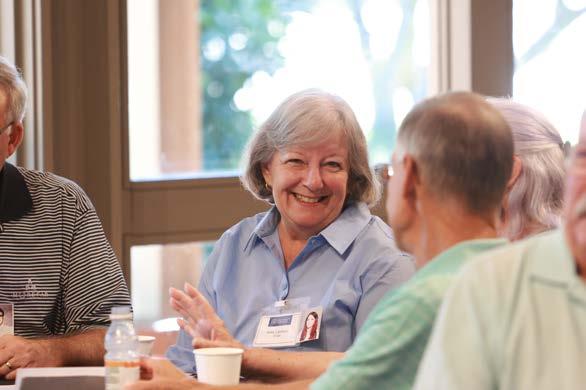
THE CLASS OF 1975 CELEBRATES THEIR 50TH ANNIVERSARY WITH A CONTINENTAL BREAKFAST.
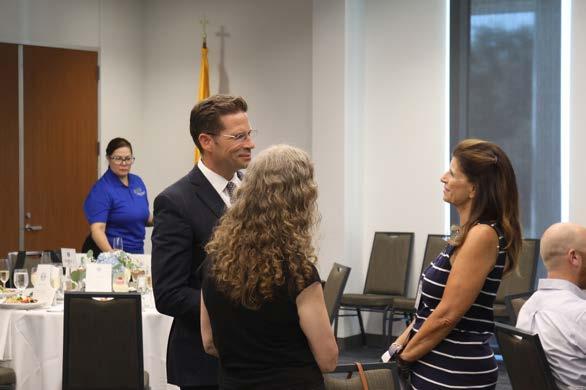
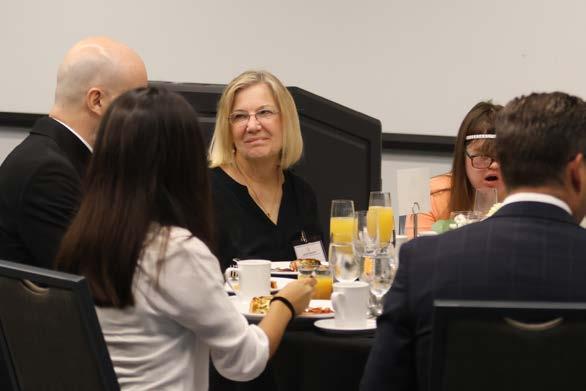
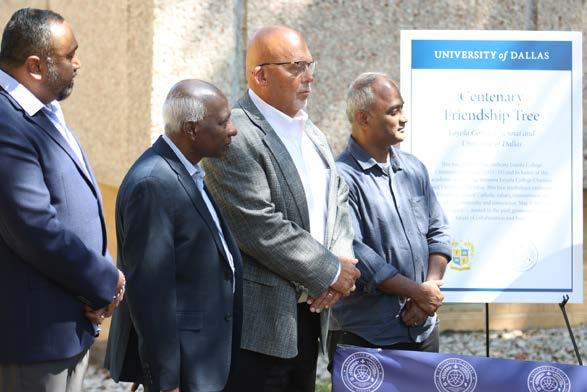
A SPECIAL TREE-PLANTING CEREMONY COMMEMORATING THE 100TH ANNIVERSARY OF SATISH GUPTA’S ALMA MATER, LOYOLA COLLEGE CHENNAI, WAS HELD TO HONOR THE “FRIENDSHIP AND ACADEMIC PARTNERSHIP” BETWEEN UDALLAS AND LOYOLA.
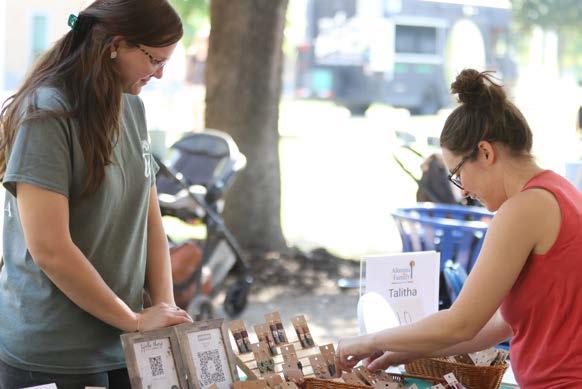
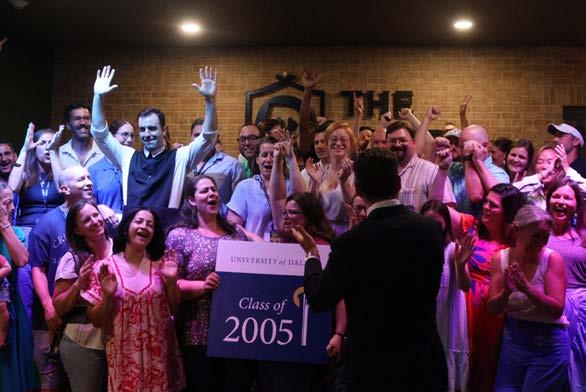
THE CLASS OF 2005 CELEBRATES THEIR 20TH ANNIVERSARY.
ALUMNI AND THEIR FAMILIES BUY AND SELL AT THE ALUMNI BUSINESS FESTIVAL.
PRESIDENT JONATHAN SANFORD , PHD, MEETS WITH CLASS AGENTS AND REGIONAL REPRESENTATIVES.
ALUMNI GATHER FOR A BREAKFAST CELEBRATING THE LEGACY SOCIETY, THOSE WHO ARE SUPPORTING THE FUTURE OF UDALLAS THROUGH PLANNED GIFTS.
Building on Tradition
New Student-Centered Improvements Across Campus
BY HANNAH MOHR, BA ’24
As students enjoyed their summer break last summer, exciting changes were underway at the University of Dallas. University staff and workers dedicated their time to revamping several community spaces across campus, as well as completing major renovation projects begun the previous year. These student-centered beautification projects express the university’s commitment to maintain its traditional atmosphere while adding fresh improvements and reflecting the flourishing souls that fill the space.
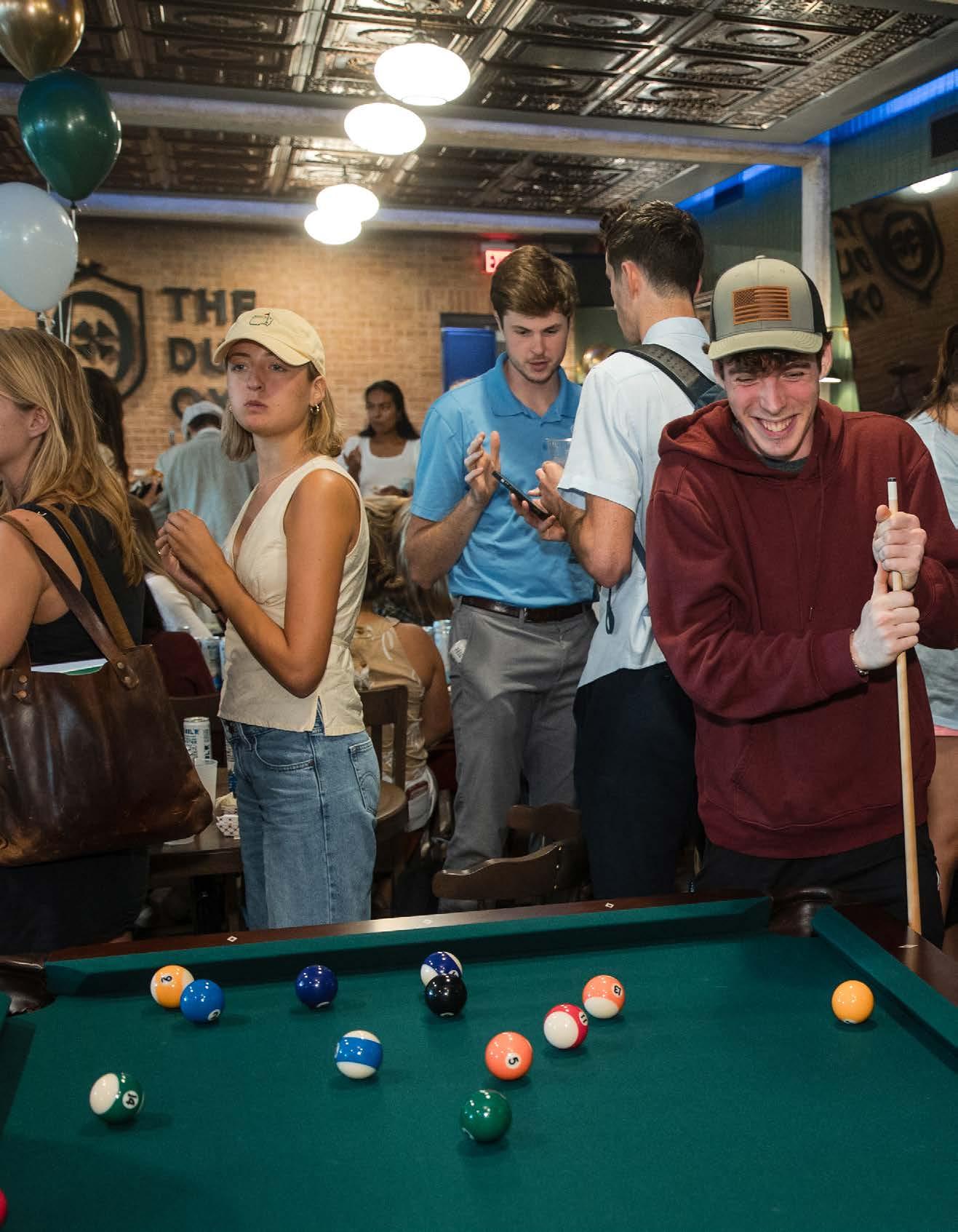

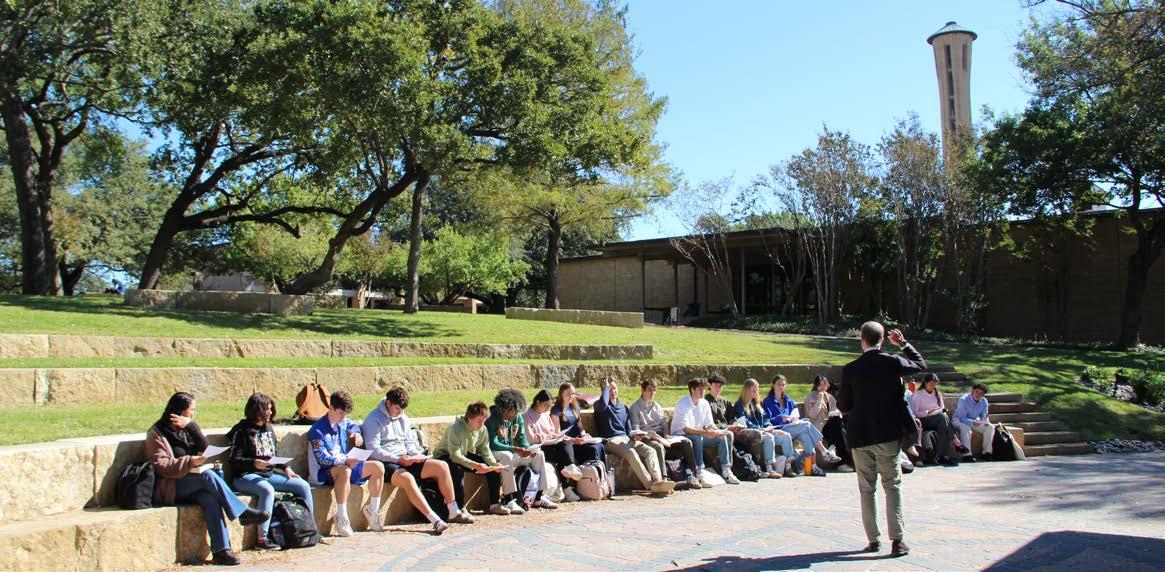
“A major focus of this summer’s renovations was to create more spaces for students, faculty and staff to live and work in community together,” said Benjamin Gibbs, EdD, BA ’15 MBA ’17, Executive Director of Facilities and Capital Projects, who served as a project manager working closely with the university’s construction partners to bring the vision of UDallas leaders and donors to life.
“Community is always a point of focus, and whether it is the church lawn, a residence hall lounge, the Dumb Ox, or something else, these are all spaces for folks to gather together in community,” Gibbs added. “We have some beautiful and inviting spaces that can host moments of friendship, study, prayer, and beyond.”
CHURCH LAWN
Returning students will surely notice the renovations on the lawn outside the Church of the Incarnation. A stone amphitheater set on fresh turf now encircles the church lawn, providing a space for students to gather, review a book of the Iliad before class, or bring their prayer into the sunshine. No doubt this will also become a new beloved spot for professors to hold lectures outside and the space will continue welcom-
ing families to mingle after Sunday Mass.
“It’s encouraging to see the campus being renewed, especially with projects like the landscaping around the chapel,” said National Alumni Board member Gregory Pimentel, BA ’15. “As an alumnus who regularly worships there, it’s meaningful to see the physical heart of campus treated with such care. It makes me hopeful about the future of the university’s mission.”
While some trees and underbrush in the grove were cleared to allow more sunlight to shine through, care was taken to ensure that many trees remained to offer a spot for hammocking and shade. New lighting installations throughout the amphitheater provide a pleasant ambiance by keeping the space warmly lit at night. With an added elevation to the lawn, stairs were included for easy accessibility to the higher levels of the seating space.
Stonework was laid to create a newly designed patio outside the church. The patio fittingly features the triquetra seal of the university incorporated in the mosaic design, which symbolizes the Holy Trinity and is a central representation of UDallas’ commitment to its Catholic tradition.
“We are not gnostics at UD,” said Gregory Roper, Dean of Students, PhD, BA ’84. “We
are sacramental beings, and the spaces we inhabit are important in their beauty. We love Truth and Justice, but we should also bathe in beauty.”
“These kinds of projects aren’t just cosmetic,” noted Pimentel. “They are necessary investments that signal growth and confidence in what UD stands for.”
The stones removed from the previous patio were repurposed for the new terrace area adjacent to the mall, which is yet another campus addition that provides an extended social space for students. In an intentional effort to match the stonework and landscape to other areas of the university, this new terrace includes native foliage and stone retaining walls that are already featured throughout campus.
“Personally, I appreciate the mid-century and Texan character of UD’s architecture. It ties the university to a particular time and place,” said Pimentel. “Preserving and enhancing that identity gives students both a more beautiful environment and a stronger sense of belonging.”
The second phase of the church grounds project is also underway, which includes rock landscaping into the previously wooded area beside the church.
THE DUMB OX
The recent unveiling of the Dumb Ox welcomed students to gather in its pubstyle atmosphere. Formerly known as the Rathskeller, its new namesake holds special importance to the UDallas community as it fondly refers to the beloved St.Thomas Aquinas. Featuring a stage area and an integrated speaker system, it offers an improved space for live music, lectures and student events. Enhancing the dining experience, new pub-style tables and chairs replace the old dining area seating. Couches remain centered around the fireplace for cozy fireside reading and conversation. Students can order from the bar, which is relocated to a central spot in the room and offers draft from a custom Dumb Ox tap.
“The improvements to the Rat were much needed,” said Pimentel, “and it’s great to see the investment. Alumni will always have affection for the old Rathskeller and the memories attached to ‘the Rat,’ but I think everyone welcomes the refreshed space.”
Other improvements to the space include refurbished booths, flooring and windows. New wall treatments and light fixtures complement the Dumb Ox signage and the embossed ceiling adds warmth and character to the environment.
“As professor, Dean of Students, alum, and just a person who loves cool spaces, The Dumb Ox is spectacular, and plays right into what students love when they go to Europe, when they hang out,” said Roper.
ADDITIONAL COMMUNITY
LIFE IMPROVEMENTS
The campus beautification projects extend into the students’ living spaces as well. Following the previous renovations of Theresa Hall, Gregory Hall is now welcoming new freshmen with its transformed lounge area. Its new flooring pairs with custom wallpaper featuring
some of UDallas’ favorites: the Groundhog, the Crusader and the Rome landscape. Aspiring chefs are met with new dishware and kitchen appliances, including a dishwasher and pizza oven. The lounge space is furnished with newly added couches, window blinds and a TV. With its new ping-pong table and custom paddles to match, the Greg lounge provides a space for students to hold friendly ping-pong tournaments and remains a hub for the dorm community.
The outside patio also shared in the Gregory Hall renovations, sporting new outdoor furniture, benches and an electric grill.
The renovations this summer not only aimed to enhance UDallas’ vibrant student life, but also considered spaces for the faculty and staff. In Braniff, the faculty kitchens on the first, third and basement levels were renovated with new cabinets, appliances and plumbing. Replacing the kitchen lighting added a finishing touch and created an inviting atmosphere for faculty to prepare meals and take a break from their lectures.
In the Gorman Lecture Center, the faculty kitchen was completely remodeled. It now features new tiles, cabinets, counters, appliances – everything but the kitchen floor, one might say. The Gorman faculty lounge is ready for university staff to enjoy the new furniture and wall finishes that bring a renewed sense of warmth and comfort to the space. Patio door improvements and energy-efficient lights were also installed, bringing the Gorman lounge project to completion.
Meanwhile, more fundamental upgrades took place. “It might only be exciting for me,” said Gibbs, “but some of the summer improvement projects included upgrades to oft-underappreciated campus infrastructure, including some HVAC work in Gorman, drainage work around the church, and masonry in Haggar. These aren’t the most exciting components of projects, but they pro-
vide a lift from a facilities services standpoint.”
Other ongoing projects across campus were finalized this summer as well. Returning students remember the remodeling of the Cap Bar area and the addition of Frassati’s, which occupies the previous location of the Bookstore and University of Dallas Police Department. Already, this transformed space has been adopted as a favorite for students to enjoy grab-and-go food options and study in the window seating area. This summer, the Frassati’s project reached official completion with new signage to welcome new and returning students.
Following the previous renovations in Gorman Lecture Center classrooms A, B and C, this summer the classrooms D and E followed suit. The original wooden Socratic desks were preserved and carefully refurbished and a new lighting installation finished out the Gorman classroom project.
The Maher Athletic Center gymnasium project also came to completion. In addition to the seats installed last summer, new lighting was recently implemented to offer a cheerier atmosphere for students to support their fellow classmates. With its new maplewood flooring featuring the UD monogram, the gym is primed and ready for this season’s home games and more.
“The physical environment shapes campus culture in subtle but profound ways,” Pimentel noted. “An education aimed at truth, goodness and beauty also requires the formation of the senses and beautification supports that mission.”
“I feel a sense of pride anytime we beautify our campus,” said Gibbs. “As a double UD alumnus and longtime employee, I think it is important that we work toward a built environment that matches the excellence of our academic and spiritual programs.”
An Academic Alamo
As we celebrate the seventieth anniversary of the University of Dallas, it is worth noting its extraordinary fortunes. Situated on a notable elevation in Irving, Texas, the campus overlooks the city of Dallas and the Las Colinas neighborhood. When the university was founded, the campus stood in the middle of nowhere, surrounded by farmland. It was likely far from its founders’ minds that the institution would one day become an “academic Alamo” amid expanding residential and commercial development.
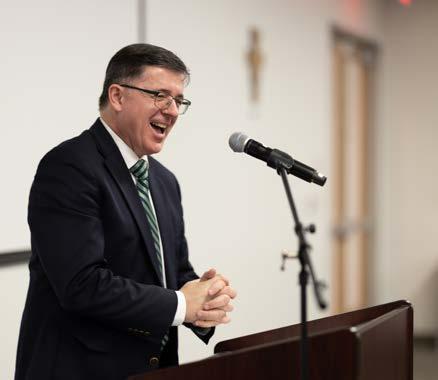
Yet it is not material growth that besieges the university, but rather the cultural, social, and political trends that have marked at least the last half century. The late Professor of English, Dr. John Alvis, drew an analogy between the Alamo and the University of Dallas as places of endurance and community in the struggle for freedom. As the university seeks to educate students in the pursuit of wisdom, truth, and virtue, Alvis suggested, it faces adverse forces that threaten to frustrate its mission. Where “careful reading and quiet conversation” are required, TV, loud music and emotional discourse undermine—indeed, sometimes prevent—the acquisition of necessary intellectual and moral habits. To these concerns we must now add the Internet, social media and artificial intelligence. “The decay of the nation’s founding principle”—a socio-political shift from the ideal of equality to the notion of equity—undermines the very possibility of excellence in the pursuit of wisdom, truth and virtue. In its place, relativism supplants a proper understanding of human nature and its potential for excellence, not to mention its need for salvation, with an arbitrary tolerance of opinions driven by the whims of the day. If Alvis’s analysis was correct in 1989, how much more so today. And yet the academic Alamo is still standing—because we are here to win, not to lose.
What is the source of this strength that sustains the University of Dallas to the present day? It is the confidence and delight, shared by students and faculty alike, in the liberal arts as an age-old yet ever-fresh spring of knowledge, a powerful bond of genuinely human relationships, and a fertile ground for the cultivation of virtue in all its forms. But this is not all. If the liberal arts are the source of our strength, then Christ, who is the way, the truth and the life, is the ultimate orientation of all our efforts, whether we recognize it or not. Upon these two principles, this Alamo stands.
Matthias Vorwerk, PhD Senior Vice President and Provost
1845
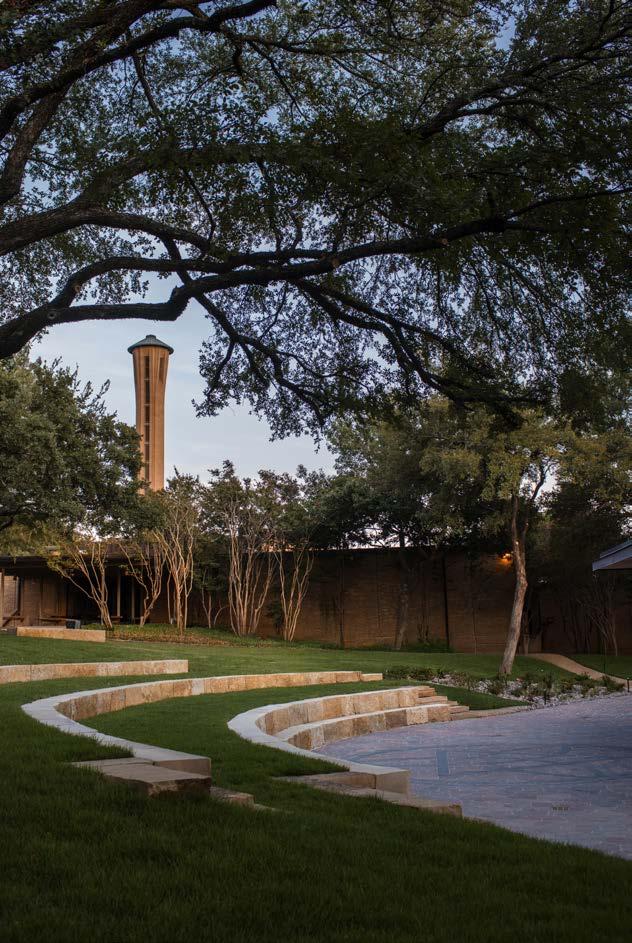
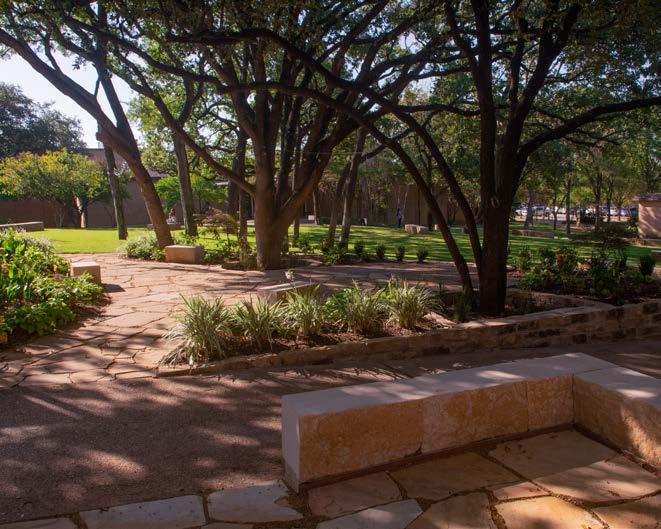
Seats of Wisdom invites supporters to sponsor a $5,000 stone seat on the newly renovated Church of the Incarnation lawn, each with a custom bronze plaque. These seats honor Mary as Sedes Sapientiae while creating lasting spaces for learning, prayer and community. Gifts also help endow the lawn’s longterm care, preserving its beauty for generations.
Contact Koji de Ramos at dderamos@udallas.edu for more information.