
Summer Vacation: A Parent’s Guide
Parents are the primary educators of their children.
This is stated explicitly in the Catechism and supported by both the Church and nature, for, no matter what we parents are doing at any moment in our lives, we are teaching and our children are learning. This is good news because with mindful actions we can have a huge influence on our children’s characters.
Summer vacation is a prime time for your children to experience real growth within the family and as individuals. Some areas of development to keep in mind are: spiritual, moral, intellectual, physical, social and cultural. These are not completely separate categories; they blend and merge seamlessly, but it’s good to be aware of each. Here are some ideas to get you started – your own ideas will be even better.
The fecundity of conjugal love cannot be reduced solely to the procreation of children, but must extend to their moral education and their spiritual formation.
‘The role of parents in education is of such importance that it is almost impossible to provide an adequate substitute.’”
Catechism of the Catholic Church, 2221

Begin
with the end in mind:
PICTURE YOUR CHILDREN AT 18-20 YEARS OLD.
What do you envision? What would you like them to be doing, how would you like them to act, what would you like them to know? What will they love? Now, how can you achieve that?
THIS MIGHT GIVE RISE TO BROADER QUESTIONS WHICH ARE TIED TO FAMILY CULTURE AND IDENTITY.
Who are you as a family? What sets you apart from others? What binds you together? How can you communicate this to your children?
INVOLVE YOUR CHILDREN IN THIS WORK.
Look to the future together, give them a share of responsibility in growing to be the person God is calling them to be, and encourage them to co-create themselves with God.

Education
in the faith by the parents should begin in the child’s earliest years. … Family catechesis precedes,
accompanies, and enriches other forms of instruction in the faith.”
Catechism of the Catholic Church, 2226
Spiritual Growth
Take a pilgrimage to a local holy site.
Read about the saints. Or watch a movie about a saint (see Formed.org). Your local library or online Catholic publisher should have many titles at various age levels about different saints.
Pray together. Learn new and different prayers: litanies, Psalms, novenas, petitions to certain saints, etc.
Go to Adoration together. Experience the beauty of sitting in silence with Our Lord.
Get up early to watch the sun rise and greet the day in thanksgiving and awe. Or do the same at sunset. Combine this with Morning and/or Evening prayer.
Try to attend a public liturgy that is new for your children: an ordination, a wedding, a baptism, a healing Mass, a funeral, etc.
Make a family retreat.
Start a Bible study together, or just read Bible stories with younger children.
Learn about Eucharistic miracles and apparitions around the world.
Learn new hymns and sing them together, especially for long car rides.
Ask your children to ponder their future with questions such as: What are your interests? Your talents? What is God calling you to do? Set some goals for one month from now, one year, five years and so on.
Intellectual Growth
Enjoy summer reading! Read aloud together, listen to audio books, make frequent trips to the library.
Learn about birds, flowers, trees and insects of your area. Take nature walks, identifying what you find.
Grow flowers, study the stars, observe the weather, etc.
Math games: Chess, Go, Hex, backgammon, Sprouts, Nim, etc.
Play any card game that requires quick calculation of points. Allow them to play by counting different coins and dollars quickly or to different amounts.
Dictionary at dinner – each person (or one per day) brings a new word to the dinner table. Show the word, give its definition, use it in a sentence, and provide its etymology. Have fun with it!
The right and duty of parents to educate their children are primordial and inalienable.”
Catechism of the Catholic Church, 2221
Learn a new language or continue to learn one that your children have already been exposed to.
Memorize all the U.S. states and capitals or, for the advanced student, all the countries of the world and their capitals. Also draw and color their flags.
Memorize other lists of things: Native tribes of the Americas, Pharaohs of Egypt, American presidents, the royals of England, etc.
Memorize one poem per week. Everyone can learn the same poem and recite together, or each person can choose and learn a poem to be recited to the family on the weekend.
Encourage your children to do a deep dive into whatever interests them since they have more time in the summer.
Parents’ respect and affection are expressed by the care and attention they devote to bringing up their young children and providing for their physical and spiritual needs.”
Catechism
Physical Growth
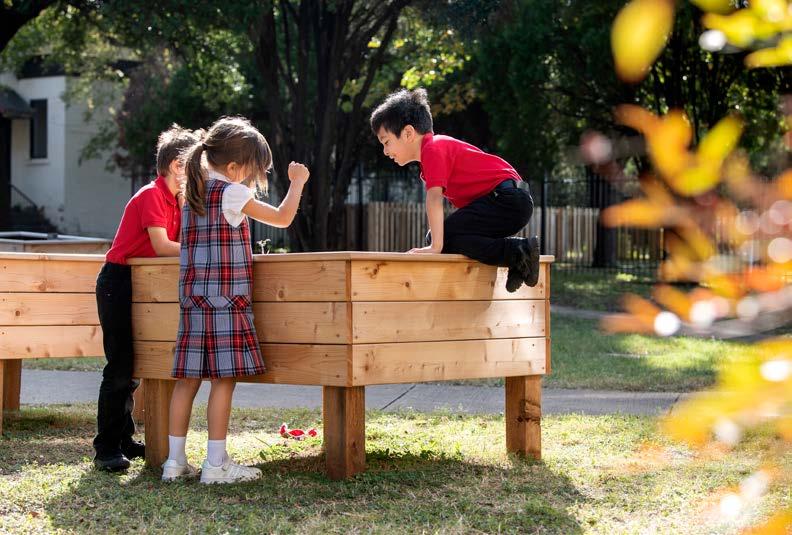
Encourage your children to spend a lot of time outdoors; limit screen time.
Climb trees, explore, build things, use construction toys like Legos and K’Nex Team sports are excellent!
Build things. Use recycled materials like cardboard and scrap lumber to make a castle, a model, a treehouse, a dollhouse, a fort, whatever you can imagine! Paper mache is an excellent medium for smaller projects and is very inexpensive. Play in the neighborhood. Pickup games of foursquare, kickball and hopscotch –all organized by children – are unforgettable.
Go hiking or biking together. Go fishing or hunting together.
Fly a kite. Build a kite first!
Individual sports like dance, gymnastics, swimming, martial arts, horseback riding and acrobatics are good too.
Learn new games like croquet, bocce ball, quoits, skittles, darts, cornhole, etc.
Learn a new or different skill: juggling, throwing a boomerang, archery, riding a unicycle, jumping on a pogo stick, throwing darts, walking on stilts, swinging on a trapeze, using a slingshot, double-dutch jump rope, etc.
Find a U-Pick farm and spend a day (or more) harvesting blueberries or whatever is in season in your area. Ideally, discuss the crop with the people who grew it.
Plant and tend a garden. Eat the food you grow!
Learn to whittle or carve together.
Social Growth
Family time! Play together, pray together, read together, prepare and eat meals together and laugh together!
Help neighbors, maybe carrying groceries, dog walking or doing lawn work. Babysitting or being “mommy’s little helper” is a great service too.
Consider paying a regular visit to an elderly neighbor who is alone.
Run a lemonade stand.
Play board games as a family. Settlers of Catan, Apples to Apples, The Game of Life, Aggravation, Risk and Monopoly are a few classics to start with.
Invite people for picnics, or tea parties or game nights. Telestrations is a very fun game for all ages! Try to exercise the virtue of hospitality any way you can.
Write letters to a faraway relative or exchange letters with a pen pal.
Start a club. Could be focused on anything: making music or art, playing chess, learning Spanish, gardening, learning card tricks, swimming, etc.
Put on a puppet show or play or make a film with friends.
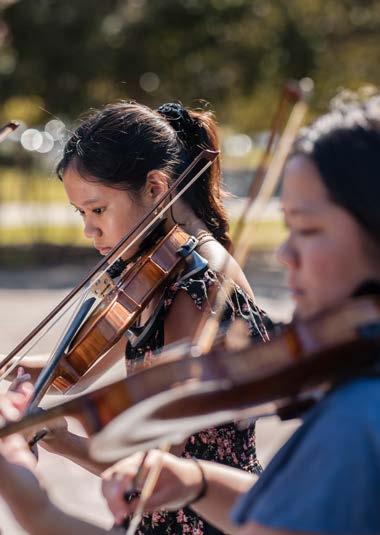
Make music together. Sing, learn to read music and learn to play an instrument.
Try to be involved in parish activities and civic activities when possible.

The home is the natural environment for initiating a human being into solidarity and communal responsibilities.”
Catechism of the Catholic Church, 2224
of the Catholic Church, 2228
Parents have the first responsibility for the education of their children. They bear witness to this responsibility first by creating a home where tenderness, forgiveness, respect, fidelity, and disinterested service are the rule. The home is well-suited for education in the virtues.”
Cultural Growth
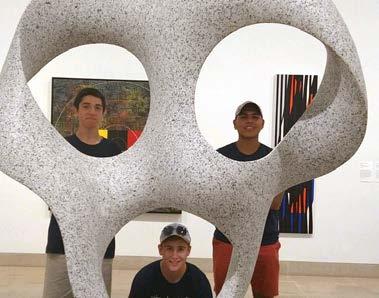
Go to an art museum together, ideally several times.
Attend a concert, play, ballet, opera and/ or ballgame.
Enjoy Shakespeare in the Park.
Study up on table manners and other etiquette. Put it into practice at meals and other areas of family life.
Attend a Fourth of July parade, fireworks display or other civic celebration. Learn about the history of the day and discuss it as a family. Include a Fourth of July Declaration Ceremony (inspired by the Seder) in your celebration .
Try different ethnic cuisines; learn to cook some.
Within the family, try drawing each other’s portraits or have a storytelling time where a different family member gets to tell an original story each day.
Learn about family history or genealogy. Investigate the culture of your grandparents or great-grandparents.
Try to recreate the traditional dress from their country of origin, learn a few phrases of their language, and put on a short play about their lives. Read legends, stories and myths from that area of the world. Study its art.
FOR INFORMATION ABOUT OUR RESOURCES FOR PARENTS, VISIT:
udallas.edu/classes-for-parents