Tiffany Chung traces how histories of climate, conflict and displacement unfold across time — while pointing toward new ways of living with change
UCSB Library partners with the Dust-to-Digital Foundation to preserve a vast collection of historic American music. Anybody is welcome to listen in — for free
Artist
Musical Americana
Discover nationally recognized primary and specialty care in Goleta, Santa Barbara and Montecito.
From the Chancellor
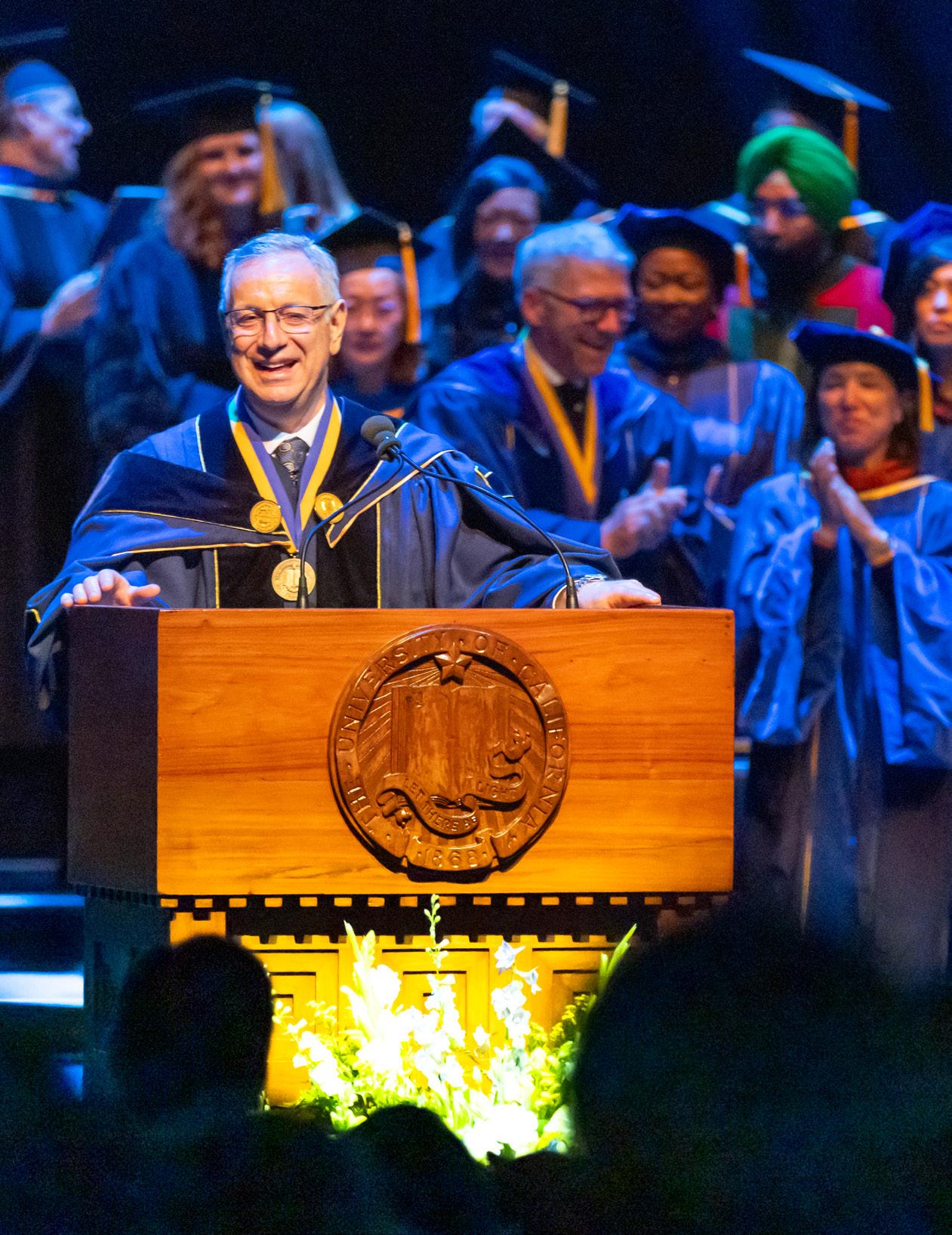
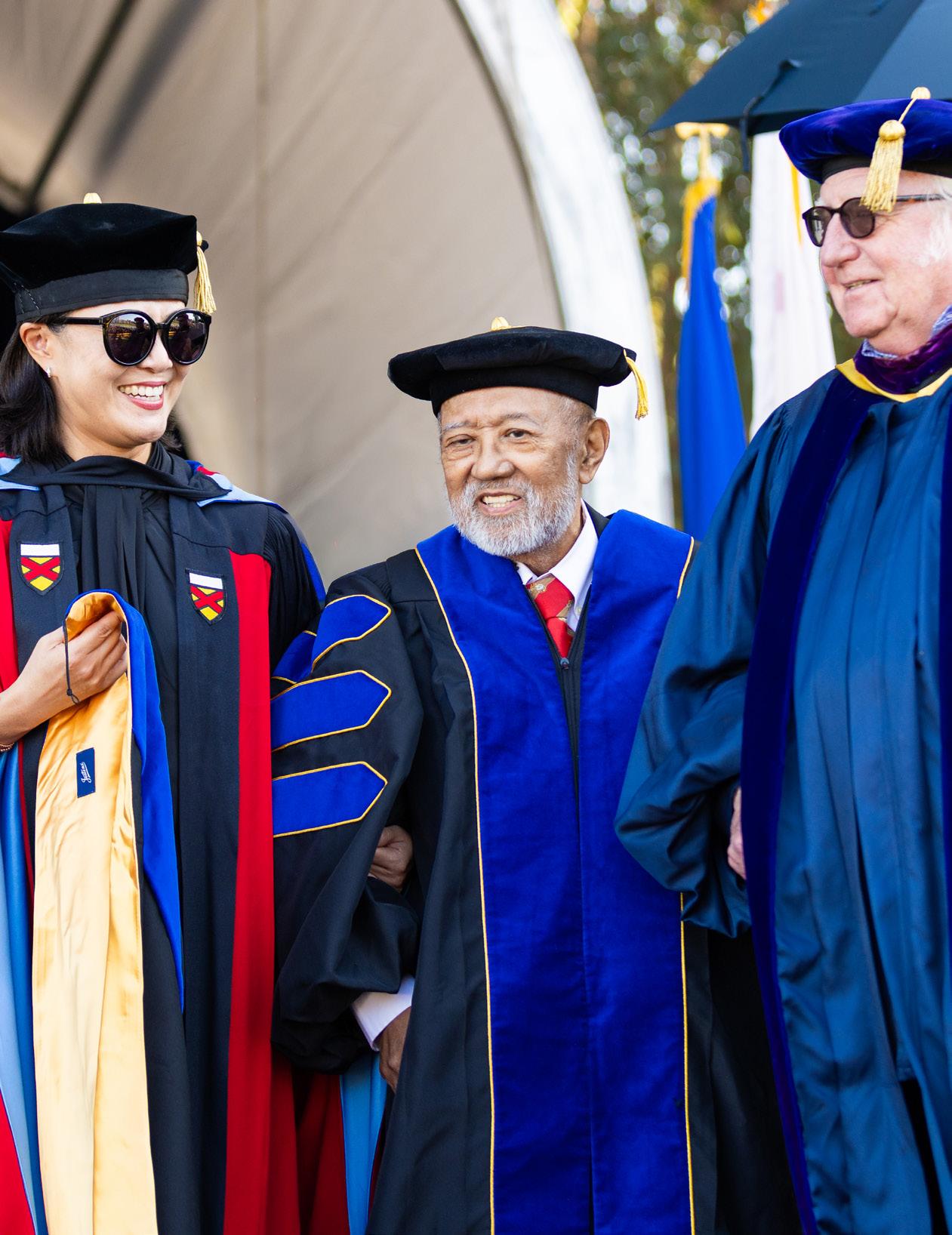
On May 27, our university held a ceremony for my formal inauguration as the sixth chancellor of UC Santa Barbara. It was a powerful and humbling experience that Eleni and I will cherish forever. That day, we celebrated the academic excellence of our university with thought-provoking academic lectures and musical and dance performances, which were brought to life by our remarkable students, faculty and staff. The inspirational events gave us an extraordinary opportunity to celebrate the university’s past and reflect on our limitless future.
In an ever-changing world, UC Santa Barbara has always met the moment and found innovative ways to serve society. From our pioneering Environmental Studies Program and Chicana/o Studies departments to our world-leading research in quantum and materials, our academic community has been defined by its eminence and agility — blazing trails, seizing opportunities and setting a standard of excellence that has cemented the university’s reputation as one of the finest in the world.
Now, our next chapter is beginning. This is a moment for us to build on our historic legacy and boldly innovate across boundaries and frontiers in education, research, service and beyond.
At UC Santa Barbara, we are providing our students with an education that is truly timeless — steeped in the eternal lessons of the liberal arts yet attuned to the blistering pace of technological progress. Our approach is deeply human-centered and interdisciplinary, equipping our students with the critical thinking skills, resilience and creativity needed to thrive across a lifetime.
We are investing in the future of our beautiful campus, significantly expanding student housing, while transitioning our facilities to sustainable power with the goal of becoming the most carbon-free campus in the nation. But we are also redefining what a university campus can be in the 21st century by embracing hybrid and online learning opportunities to reach more talented students.
We are engaging deeply with our communities in Goleta and Santa Barbara, while expanding our presence across the state of California. By holding the inauguration ceremony at the historic Lobero Theatre in downtown Santa Barbara, we showcased our university’s longtime connection and commitment to the city and local communities, which includes our newly acquired State Street properties and the OASIS research facility in Goleta.
We are partnering with leading private companies, foundations and government organizations to develop new pipelines so that faculty breakthroughs — from next-generation semiconductors and hairwidth LEDs to landmark digital humanities archives — can swiftly reach the public. And we are connecting meaningfully with our alumni, making sure that the nearly 300,000 Gauchos worldwide know that we are their university for life.
Eleni and I are thrilled to be a part of this amazing community and excited to work closely with you in the years ahead. Together we will improve our world, serve our students and society, and lift up those around us generously, empathically and brilliantly. Our future is bright and our best chapters are still to come.
Dennis Assanis CHANCELLOR
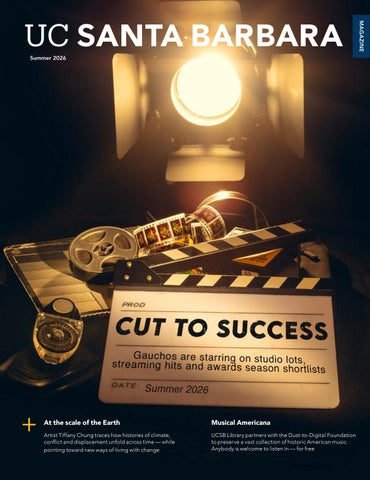
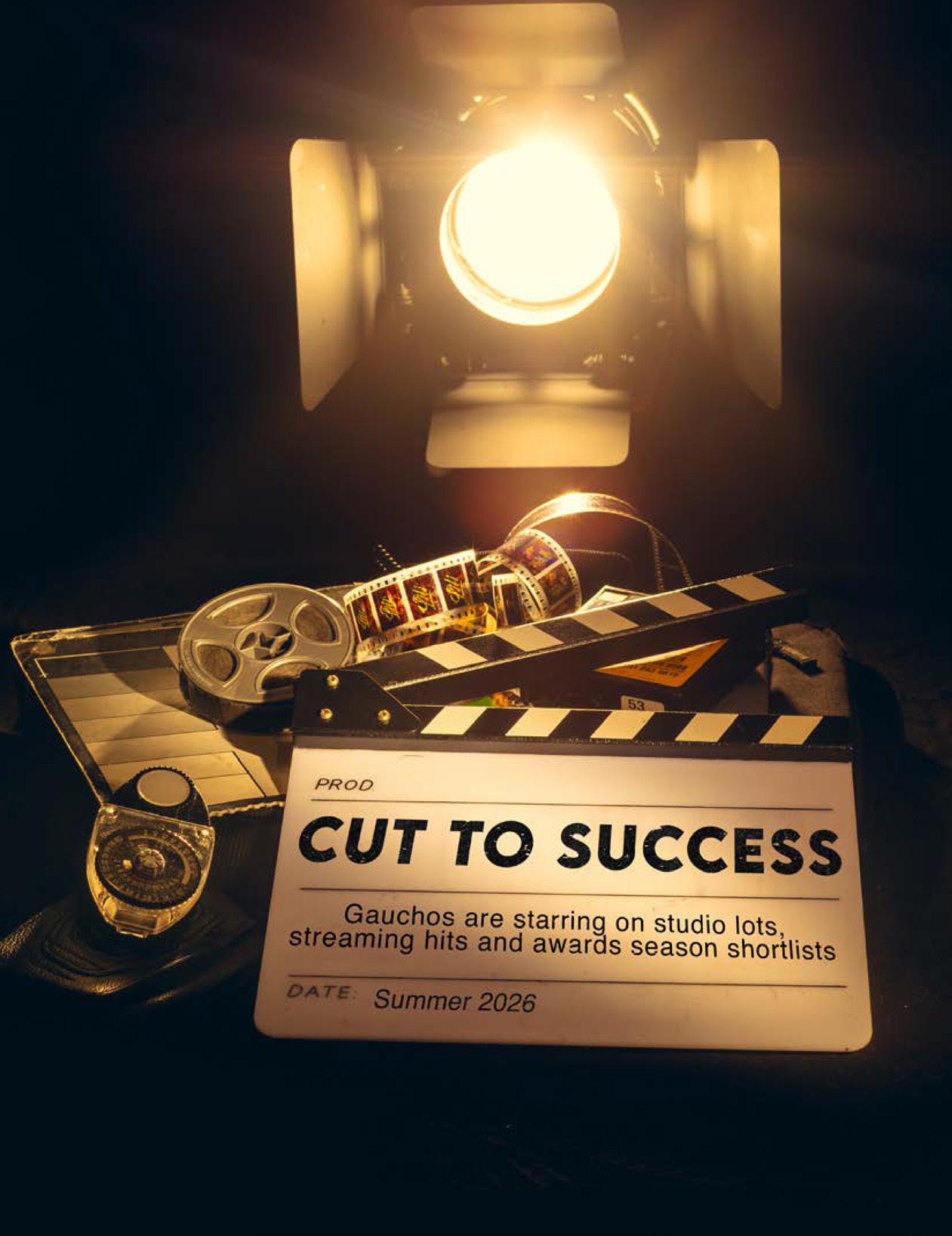
Cut to SuCCeSS
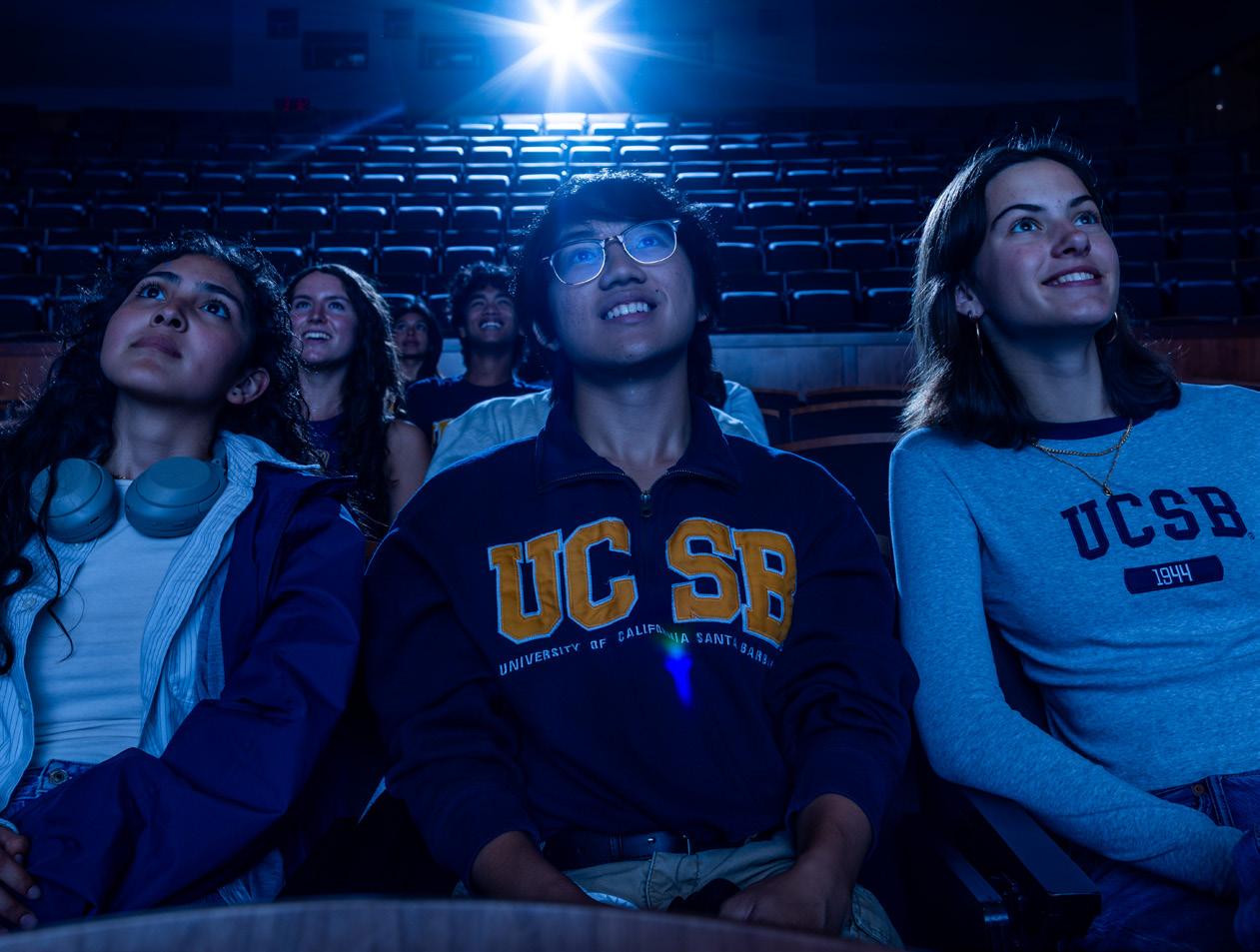
Versed in theory before technique, UCSB film and media alums – and faculty –keep landing on studio lots, streaming hits and awards season shortlists
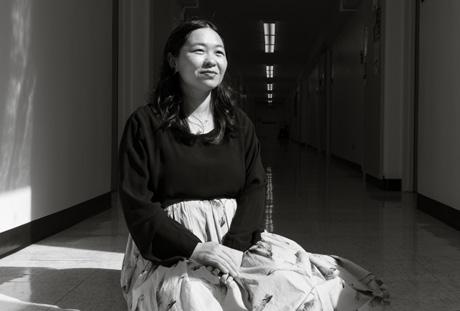
Artist Tiffany Chung traces how histories of climate, conflict and displacement unfold across time — while pointing toward new ways of living with change
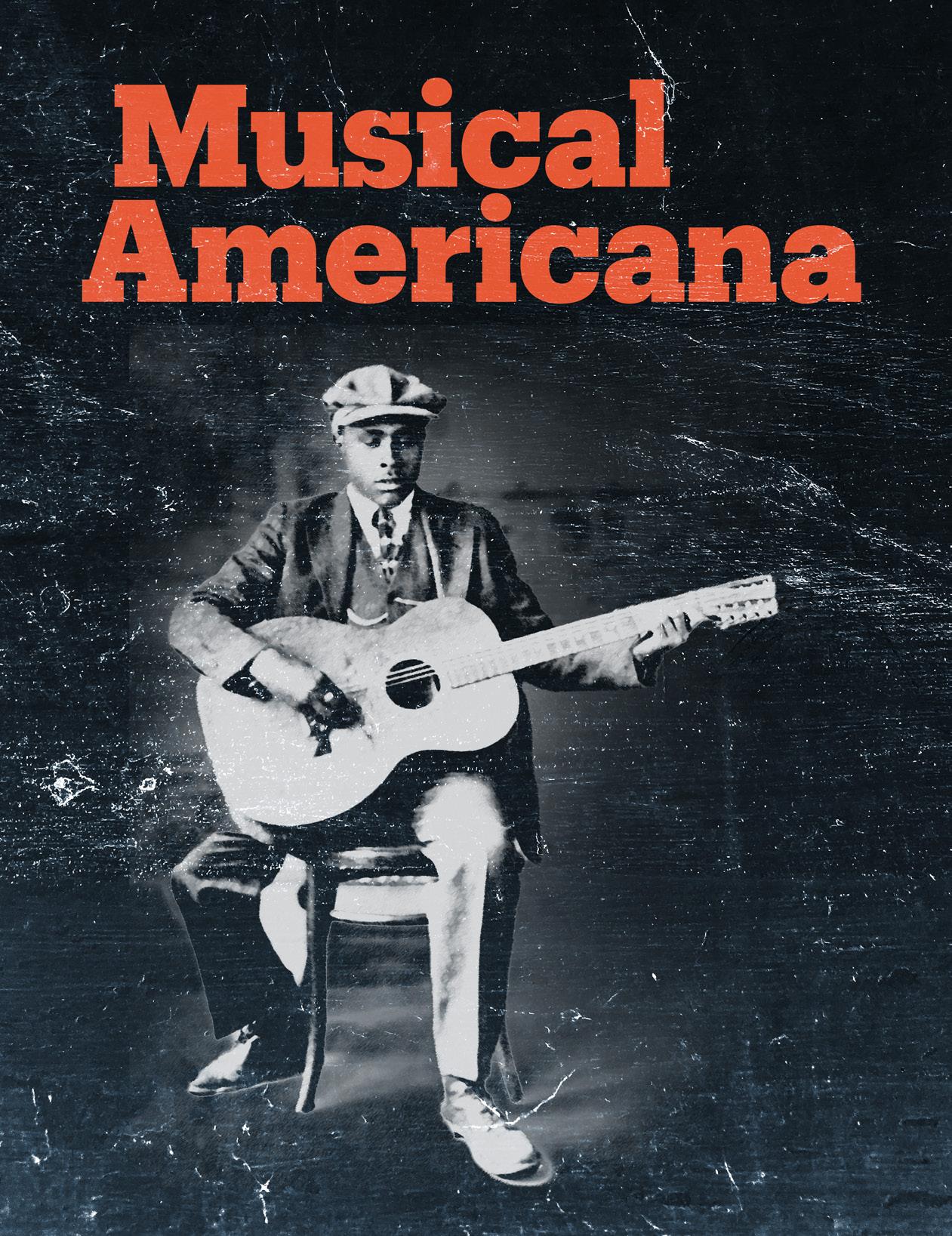
UCSB Library partners with the Dust-to-Digital Foundation to preserve a vast collection of historic American music.
Global Gauchos 62
Ask an Expert
3
From the Chancellor ON
6
News & Notes
Top stories from around campus
Awards & Honors
Then & Now
The REEF
Summer Reading
Five books on life’s shadows and light
Athletics
Making connections Out of the park
60 Second Syllabus
Lighting the Way
The Backstory
Cheri Steinkellner
Research Highlights
UCSB scientists are advancing knowledge in vital fields of research
Gaucho Giving
Chris Kastner ’87
48
Letter From the Executive Director
Bright Spot
Fred Steck ’67 champions human connection as the key to success
Business Spotlight
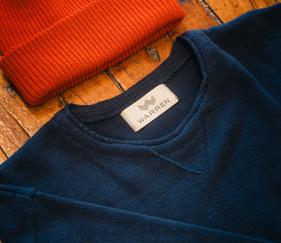
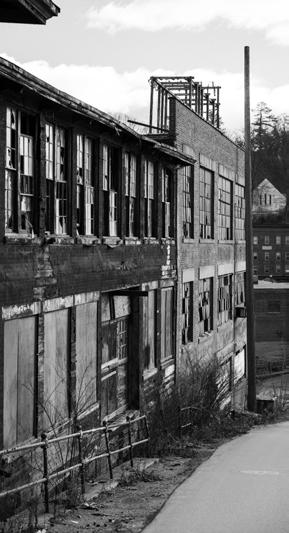
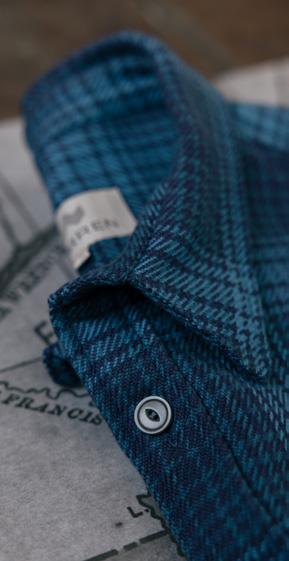
Peter Holoien MA '14 weaves the spirit of New England’s small mill towns into every fiber of his company
Gaucho Creators
Tim O’Neil ’01
Justin Tipping ’07
Shavonne Wieder ’03
Newsmakers & Milestones
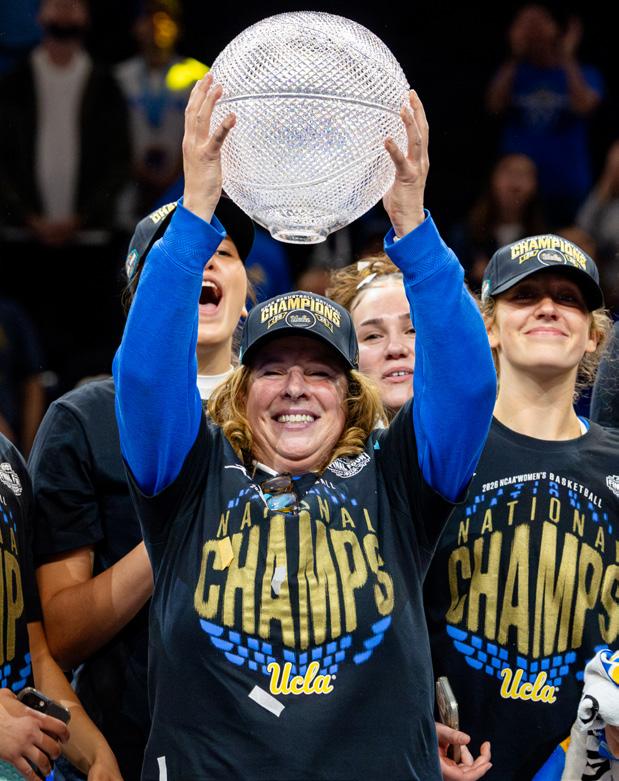
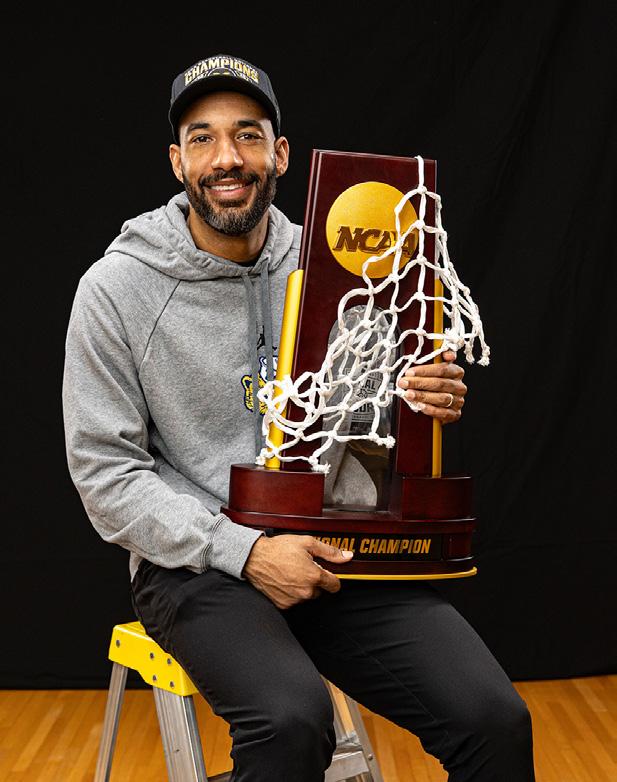
Alums Cori Close ’93 & Justin Joyner ’11
Forbes '30 Under 30' trio
Noteworthy
Alumni successes
Global Gauchos
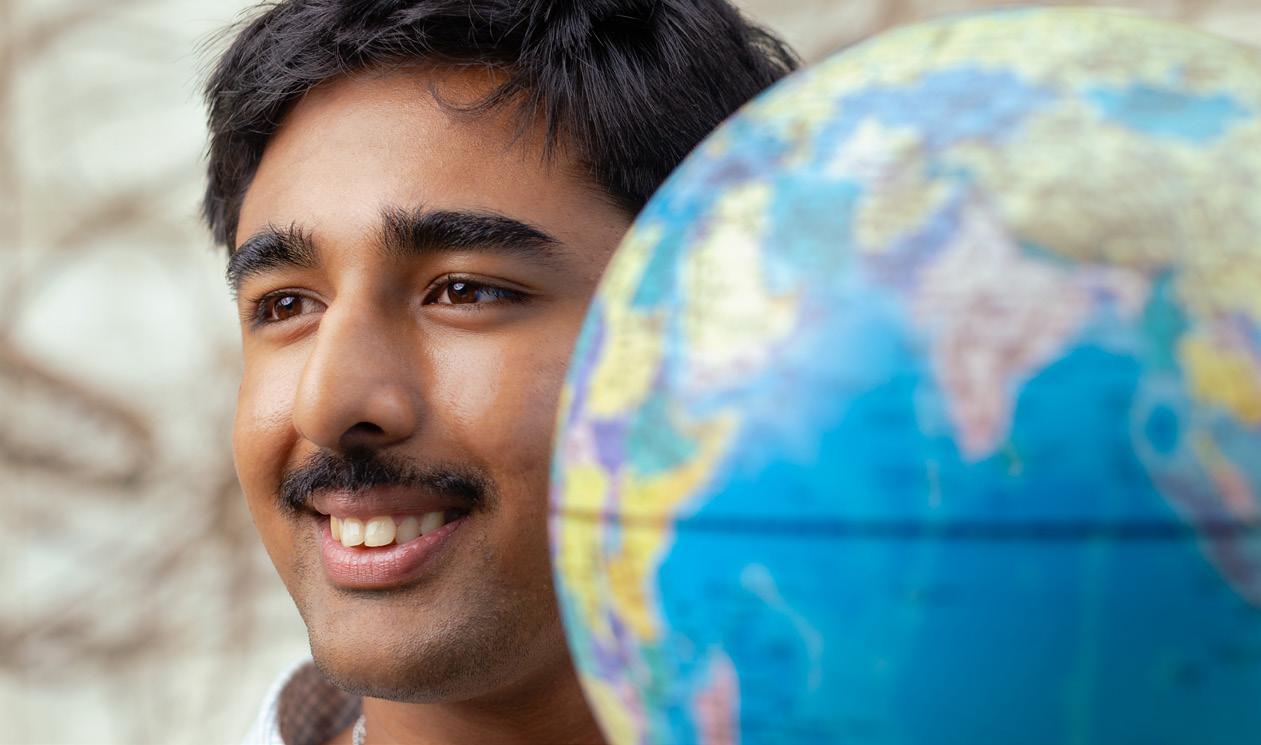
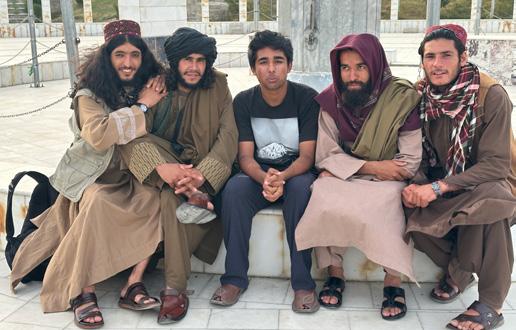
Meet the UCSB student who turned a gap year into 100 countries
64
Good Works
Celebrating 25 years of WiSE and women in STEM
Summer 2026
Volume 5 No. 2
UC SANTA BARBARA MAGAZINE
Executive Editor Shelly Leachman ’99
Associate Editor Debra Herrick Ph.D. ’11
Art Director/Designer Matt Perko
Contributing Writers
Lola Alvarez '27
Samantha Bronson
Nora Drake
Sonia Fernandez '03
Keith Hamm '94
Debra Herrick
Andrew Masuda
Emma Sanchez '28
Jillian Tempesta
Isabella Venegas '27
Copy Editor
Julie Price
Contributing Photographers
Jeff Liang
Matt Perko
UC SANTA BARBARA EXTERNAL RELATIONS
Vice Chancellor
John Longbrake
Executive Director
Alumni Affairs
Samantha Putnam
Editorial Director
Shelly Leachman
Chief Marketing Officer
Alex Parraga
UC Santa Barbara Magazine is published biannually by the University of California, Santa Barbara, Santa Barbara, CA 93106-1120.
UCSB ranks first among U.S. public universities, third among all U.S. institutions, and seventh worldwide for scientific impact in engineering and the physical sciences, according to the latest Leiden Rankings (Open Edition) released by the Centre for Science and Technology Studies at Leiden University in the Netherlands. The results mark the 15th consecutive year that UCSB has placed among the top two public universities nationally for scientific impact.
2
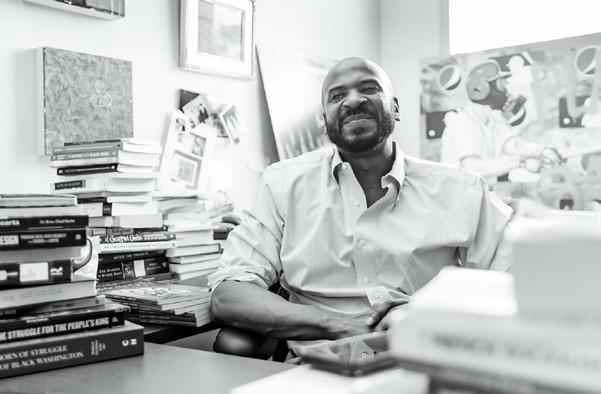
For the first time in the journal’s history, a UCSB professor sits at the helm of Sociology of Race & Ethnicity, a flagship publication and the most widely read outside the discipline. Sociology professor Waverly Duck’s first issue as the new editorin-chief was published in April. He is joined by Jason Turowetz, a lecturer in sociology, as managing editor, and sociology undergraduate students Ally Jobe and Suyan Wang as editorial assistants.
3
UCSB is launching an undergraduate major in artificial intelligence. Courses will be offered starting in the 20262027 academic year, based in the Computer Science (CS) Department. The proposal for a new Bachelor of Science degree program was developed primarily by CS professor Tevfik Bultan, teaching professor and department vice chair Diba Mirza, and department chair and distinguished professor Divyakant Agrawal.
7
5 With funding from grants, foundations, nonprofit organizations and the state, UCSB will offer a Bachelor of Arts degree in comparative literature to qualified students incarcerated at California State Prison, Corcoran in California’s Central Valley. It is the first Bachelor of Arts in literary studies to be offered by a UC in a California prison. The inaugural group of students will begin in fall 2027, with a second cohort to be admitted for fall 2028. Students will take four courses per quarter for six quarters.
4
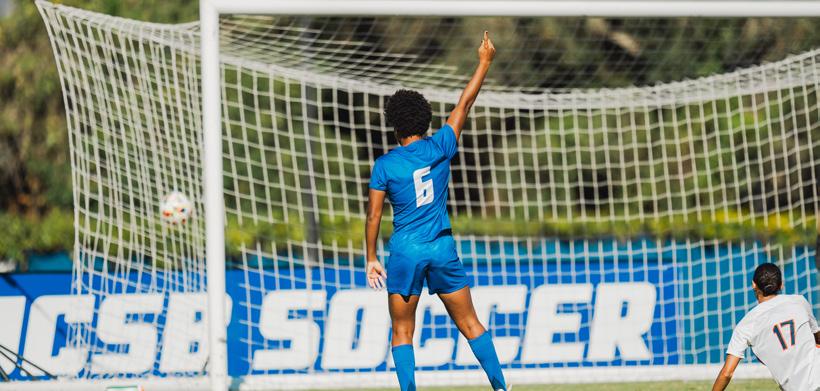
UCSB has accepted a formal invitation to join the West Coast Conference (WCC), where Gauchos will begin competing in 2027-28 in 13 sports programs. The WCC is a nationally recognized, competitive force in Division I intercollegiate athletics, with a footprint that represents the region’s largest metropolitan areas. The move reflects a mutual commitment to elevated competition, expanded visibility and deeper connections across the West Coast.
6 Theater and dance assistant professor Brooke Smiley was selected from over 4,500 applicants as the sole California representative for Creative Capital’s inaugural State of the Art Prize. Her project, “EARTH.SPEAKS,” which fuses ancient, sustainable earth-building with an emerging extended reality platform, has also received grants from the Ford Foundation, the Doris Duke Charitable Foundation and the Anonymous Was A Woman program.
With a major grant from nonprofit Wellcome Leap, a team of UCSB researchers is aiding a global effort investigating if, when and how the early-life gut microbiome influences neurodevelopmental challenges, including autism spectrum disorder. Led by Michelle O’Malley (bioengineering), the group also includes physicist Jean Carlson (physics), ecologist Holly Moeller, and Koegel Autism Center’s Ty Vernon and Fernanda Castellón.
8
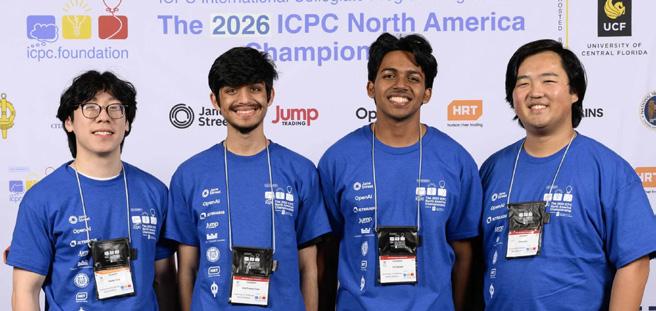
A team of three UCSB students is advancing to the World Finals of the International Collegiate Programming Contest in Dubai. Ezra FurtadoTiwari ’28 (College of Creative Studies computing, mathematics), Om Mahesh ’28 (CCS mathematics; College of Engineering computer science) and David Qiao ’26 (COE computer science; L&S mathematics) comprised the top-ranked UC team and the only UC team to advance directly to the World Finals from the regionals.
ON CAMPUS
AWARDS & HONORS
It was another banner year for UC Santa Barbara faculty, as professors from across campus were recognized for contributions to their fields.
Here are a few highlights.
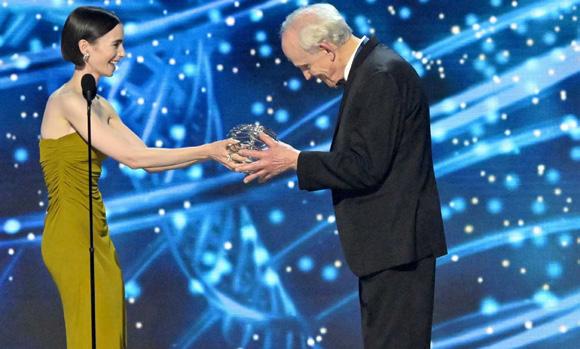
Nobel Prize-winning physicist David Gross, of UCSB’s Kavli Institute for Theoretical Physics, was awarded the 2026 Special Breakthrough Prize in Fundamental Physics, cited for “a lifetime of groundbreaking contributions to theoretical physics, from the strong force to string theory,” and for “tireless advocacy for basic science worldwide.”
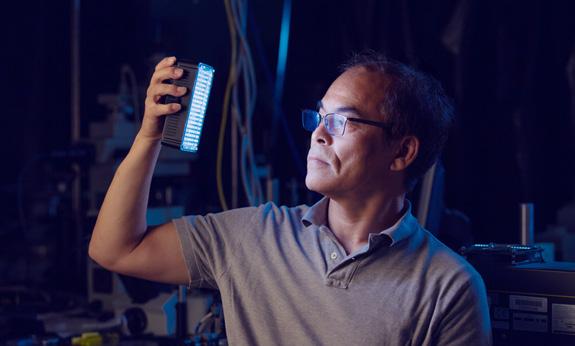
Engineer Shuji Nakamura was selected to receive a prestigious honorary degree from Oxford University, which has recognized individuals “of conspicuous distinction” in academia, business, the arts and public life for more than 500 years. Nakamura, inventor of the blue LED, co-won the 2014 Nobel Prize in Physics for helping to revolutionize energy-efficient lighting.
Three UCSB professors — oceanographer Alice L. Alldredge; astrophysicist and Kavli Institute for Theoretical Physics Director Lars Bildsten; and engineer and Chancellor Emeritus Henry T. Yang — were elected as fellows of the American Academy of Arts & Sciences, recognized for their indelible contributions in scholarship, research, teaching and leadership.
Atmospheric scientist Kelly Caylor, chemist and biochemist Javier Read de Alaniz, social psychologist and Dean of Science Shelly Gable and mathematician David Morrison were elected as fellows of the American Association for the Advancement of Science, a prestigious honor recognizing extraordinary achievements by scientists and innovators across disciplines.
THEN & NOW
Some things never get old
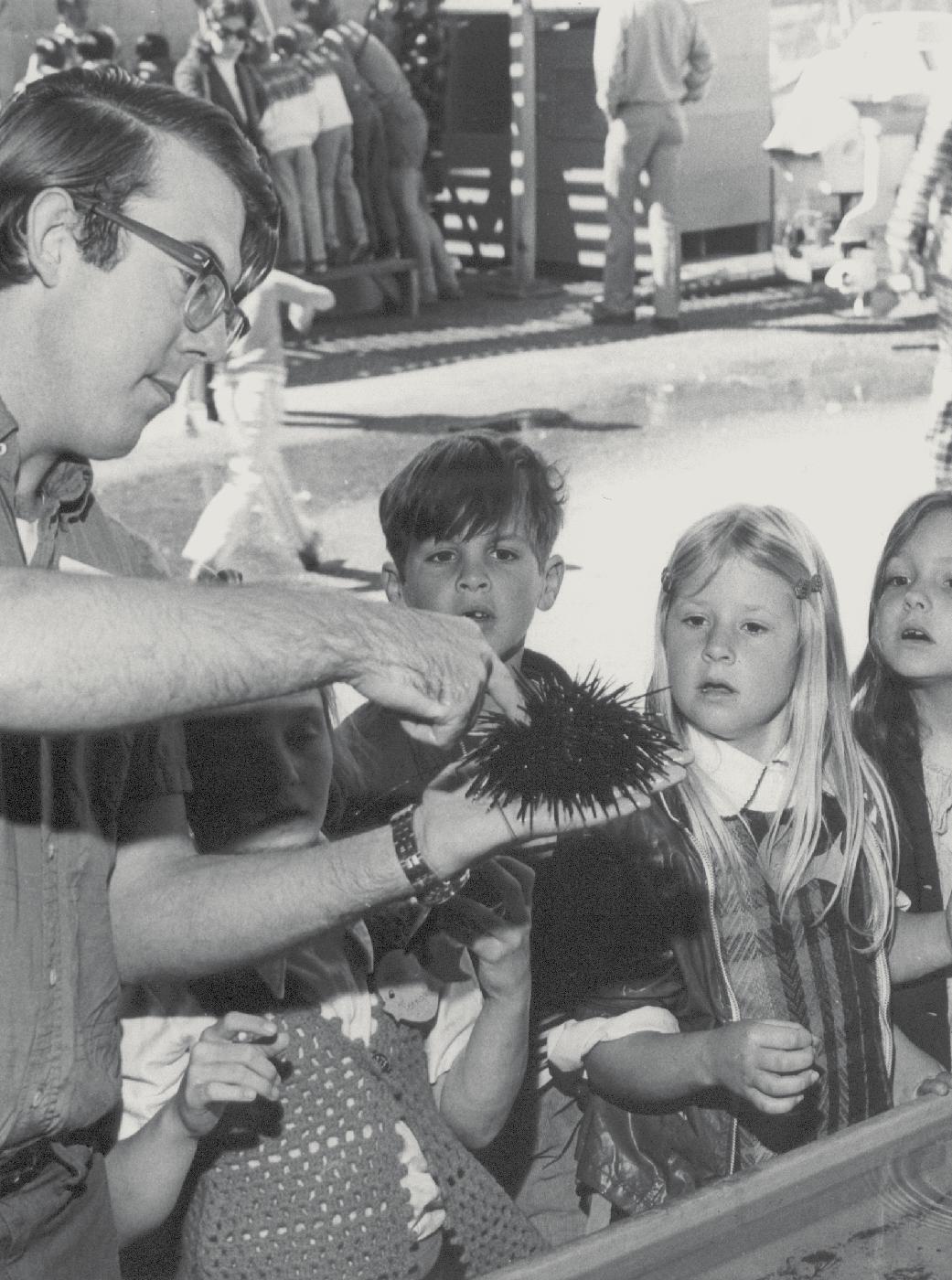
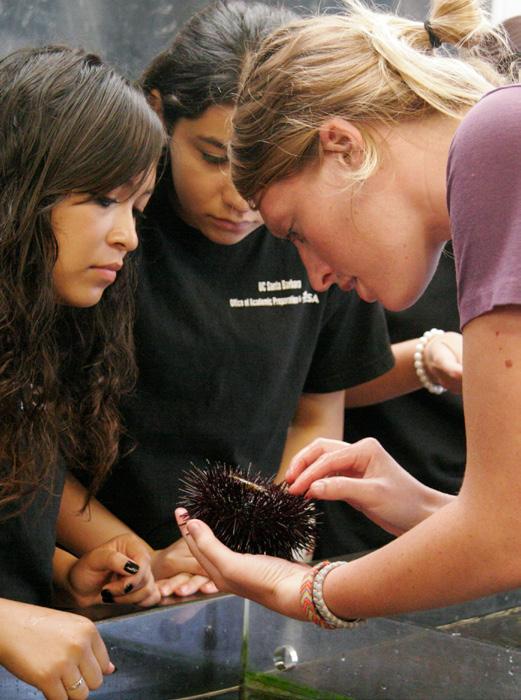
The starfish are sassy, the urchins are ornery, the sharks act like sea puppies and, if you kiss a sea cucumber, you’re in for some good luck (allegedly). UC Santa Barbara's beloved The REEF offers a hands-on intro to marine and environmental sciences, taking advantage of its location just steps from Campus Point. Its state-of-the-art touch tanks are filled with seawater fed directly from the nearby ocean and feature local creatures — denizens of tide pools and the nearshore giant kelp habitats — while its aquariums recreate scenes from UCSB research sites off the Santa Barbara Coast and the Moorea Coral Reef in French Polynesia.
Kids, meet urchins
Graduate student Bill Wheeler gives a group of firstgraders from Santa Barbara’s St. Raphael School a meetand-greet with a sea urchin in this circa-1970s photo. At that time, the Marine Science Institute welcomed more than 900 children annually, angling for some quality time with local sea creatures at UCSB’s original touch tank.
Introducing The REEF
Then came The Research Experience & Education Facility. Established about 25 years ago, The REEF connects ocean research to real educational standards, invites learners of all ages to explore marine life up close and inspires new generations of ocean lovers and stewards. It’s a popular stop for school field trips and tourists alike.
Five books on life’s shadows and light
An assistant professor of global studies, Kai Thaler studies civil wars, political violence, protest and authoritarianism. His research spans Africa, Latin America and beyond, and examines how power is built and contested — and what happens when former rebel movements move from fighting to governing.
His book “When Rebels Win: Ideology, Statebuilding, and Power after Civil Wars” (Cornell University Press, 2025) analyzes how insurgent groups that capture the state translate their ideas into institutions. Outside his academic research, Thaler gravitates toward fiction, poetry and literary essays. The subject matter often overlaps with his research but the form allows for a different kind of engagement.
“Choosing only five was difficult,” Thaler says. “As some books here suggest, they often still explore themes close to my work — conflict, violence, authoritarianism and resistance — so it’s not always a full escape. But I also seek out writing that reminds me of the beauty and laughter in the world, even when things seem dark.”
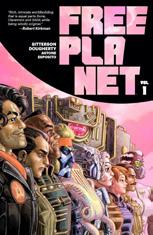
“Free Planet, Vol. 1” by Aubrey Sitterson
This collected first volume of comics writer Aubrey Sitterson’s new science fiction series examines the aftermath of a planet’s successful rebellion against imperial elites, centering the stories of the security force tasked with defending the planet. Based on extensive research, it covers colonialism, economic exploitation, ideological debates and revolutionary fragmentation, anarchist principles, terrorism. I’ll happily admit that it conveys the hopes, disappointments and general messiness after rebel victories in a much more eye-catching, entertaining way than my own book.
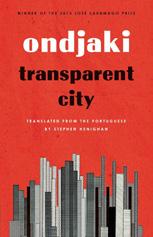
“Transparent City” by Ondjaki
Despite vast oil and mineral wealth and war having ended decades ago, the majority of Angola’s population still struggles under the regime of the MPLA party, which once fought to liberate the country from Portuguese rule. Ondjaki’s beautiful magical realist novel highlights the corruption, infrastructural decay and bureaucratic absurdities of modern authoritarian rule alongside the ways people still get by and find joy.
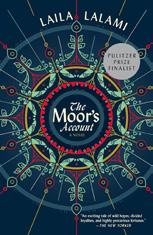
“The Moor’s Account” by Laila Lalami
Laila Lalami’s novel narrates the story of Spanish conquistadors’ ill-fated 16th-century Narváez expedition through the viewpoint of Estebanico, an enslaved African man who must not only survive while traveling across North America but must challenge both his captors and the biases that he has internalized. Lalami replaces the brief mention of Estebanico in the historical record with a full picture of someone finding his way across the swamps of Florida and beyond to a form of redemption.
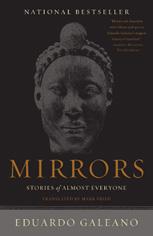
“Mirrors” by Eduardo Galeano
One of the great Latin American writers of the last century, Eduardo Galeano tells the history of humankind poetically, elegantly and critically through short vignettes spanning time and space, mythology and “reality.” This book that will make you rethink conventional wisdom and the versions of history or other stories you may have been taught.
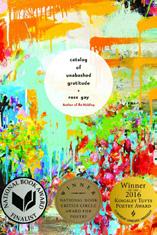
“Catalog of Unabashed Gratitude” by Ross Gay
A poet and essayist who knows how to be devastating, Ross Gay also looks for the beauty in everyday things, occurrences and relationships, both natural and cultivated. This book of poems and Gay’s ongoing “Book of Delights” series offer poignant and frequently funny reminders to wonder at life’s serendipity, silliness, sweetness and simple pleasures, and his work also led me to the similarly wonderful books and poems of Aimee Nezhukumatathil.
ATHLETICS
Making connections through sports
With top-notch facilities, an inclusive community and a friendly environment — not to mention an unmatched location with unparalleled views — it’s no surprise that a growing number of national and international sports organizations are choosing the UC Santa Barbara campus for training camps, games and more.
Who’s got next?
FIFA dreams
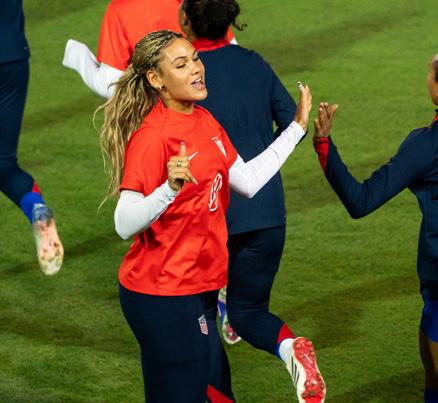
The U.S. Women's National Team wrapped up its January training camp with an international match against Chile at UCSB’s Harder Stadium. In their first visit to the area since 1991, the team packed the stands with boisterous soccer fans from across campus and the greater community. The U.S. won 5-0 in front of a sold-out crowd numbered at 14,797, with fan favorite Trinity Rodman scoring the final goal of the night.
From Austria with love Sharing is caring
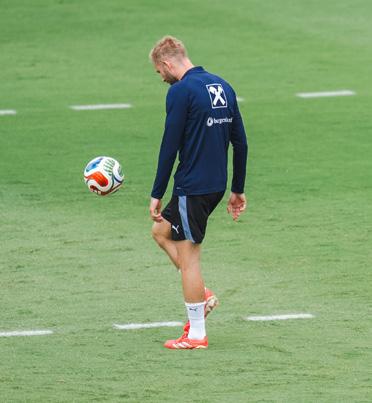
As soccer squads from around the world take up temporary residence in Southern California for the 2026 World Cup in Los Angeles, one of them is on and around the UC Santa Barbara campus. The Austrian National Soccer Team is staying at the Ritz-Carlton Bacara Resort in Goleta, which was named an official host city, and practicing at UCSB’s own Harder Stadium. The World Cup tournament kicked off June 12 at SoFi Stadium in Los Angeles.
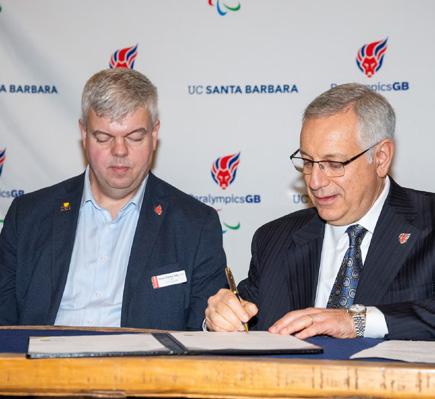
UCSB will host ParalympicsGB as its training base ahead of the LA 2028 Paralympic Games — a preparation camp expected to be one of its largest ever. Athletes will have access to four sports halls, four weight rooms, 12 tennis courts, two swimming pools, multiple studios and meeting spaces and the Pauley athletics track, as well as Campus Point beach, on-site accessible housing, lounges and dining facilities — all of which require no modifications for disabled access.
Out of the park
Multiple UCSB programs had standout seasons, collecting championships and other laurels along the way
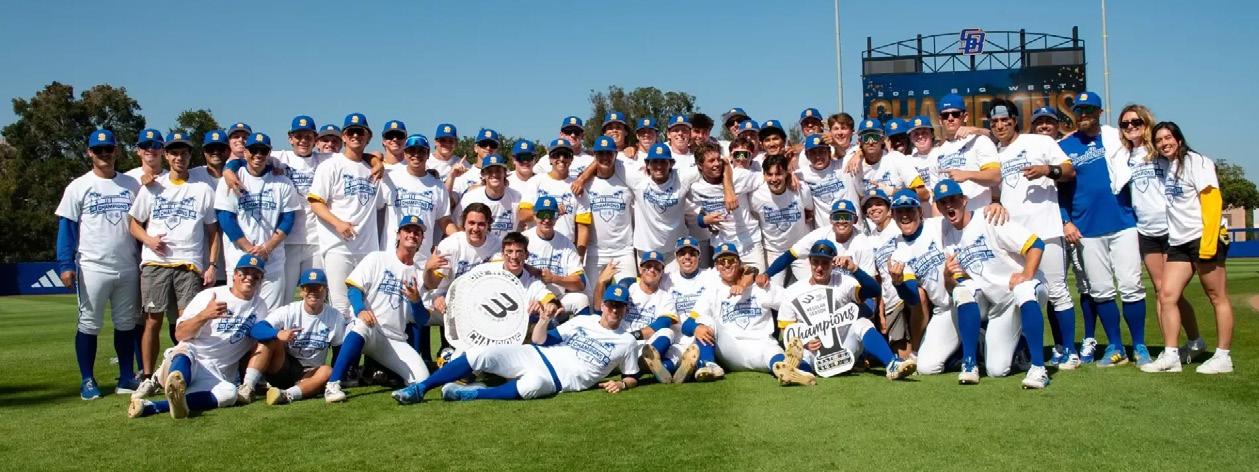
Gaucho Baseball had another big year, riding an overall 40-20 record to the Big West Championship and making it to the final round of the NCAA Tournament Austin Regional.
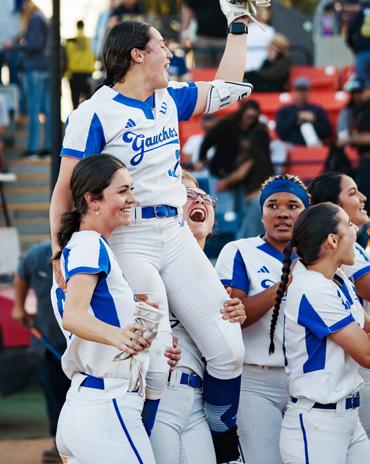
Finishing with an overall record of 31-26 — the squad’s second consecutive 30win season, a feat not seen in more than a decade — UCSB Softball was the Big West runner-up.
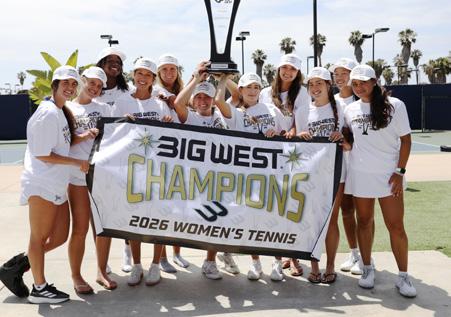
Women’s Tennis closed the year with a 17-9 overall record and a perfect 9-0 mark in Big West play, earning back-toback Big West Championship titles and a bid to the NCAA Tournament.
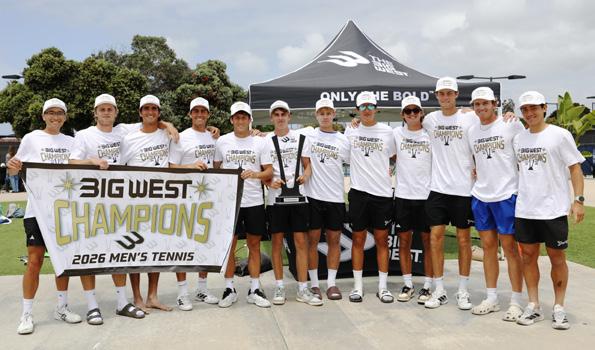
Capturing a share of the Big West regular season title with an 18-8 overall record, UCSB Men’s Tennis won the Big West Championship to earn a berth in the NCAA Tournament.
PHOTO: JEFF LIANG
60 SECOND SYLLABUS
Science class explores the matter of taste
BY SONIA FERNANDEZ
Flavor is in the brain, and nowhere is that clearer than in neuroscientist Matthieu Louis’s introductory neurogastronomy class. The course, “Unraveling the Science of Flavor: From Genetics and Data to Michelin Stars,” part of the campus’s undergraduate Discovery Seminar series, unpacks the multimodal phenomenon we call taste.
“Food perception is a wonderful way to introduce concepts of biochemistry and neuroscience through our own sensory experience,” Louis says. “Our mouth is a magnificent multisensory laboratory.”
In this class, students are both experimentalists and experimental subjects as lectures are augmented with interactive demonstrations designed to highlight how multiple sensory pathways meet to create flavor. There are the ones we’re most familiar with, such as the five basic tastes detected on our tongues, as well as the surprisingly dominant role of smell in constructing flavor. Lesser known perhaps, but no less significant, are the roles of texture, vision and sound, and the expectations they build during food presentation.
“This integration is not redundant; it is a survival mechanism: Animals evaluate food along multiple dimensions simultaneously to make better choices about what to ingest,” Louis says. Humans subsequently elevated this ability to sense complex flavors by creating cuisine, he adds.
Throughout the quarter, students gain insights into the cellular and molecular underpinnings of these sensory pathways while learning to appreciate the individual differences in how humans interpret flavors. Some might discover that they are “supertasters,” with higher-thannormal numbers of taste buds on
their tongues. Others might find they have genetic variants causing them to respond differently to bitter substances or specific odors.
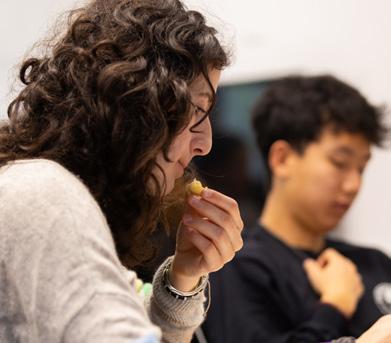
“I was born without a sense of smell,” says student Alisa Moyse. “I took this class because I wanted to get a better idea of what that means in my life compared to others and how I perceive taste.” What fine-tuning of flavor her classmates lost during the jellybean test — one in which the participants had to block airflow through the nose while
eating a jellybean — is a typical situation for Moyse, who has learned to lean on other aspects of flavor perception such as texture and mouthfeel. Fortunately, it turns out, she also has more taste buds than usual.
The class was also revelatory for Claire Corman, who, like Moyse, realized the importance of retronasal olfaction — the smell sensations that reach odorant receptors throughout the air passage in the back of the mouth while eating. “We learned a lot of the chemistry and biochemistry behind our taste buds,” she says, “and I learned why I’m a picky eater and why some people like certain foods more than others.”
The class also features occasional guest experts in flavor, such as Pierre Henry and Nelly Mousseau. The husband-and-wife team behind popular Montecito bakery and café Bree’osh, they are known for their artisanal breads and pastries. The pair brought panettone to demonstrate the varying levels of complexity and texture in flavor yielded in the process of making the iconic Italian yeast cake. The students sampled three variations on the panettone theme, learning about the effects of fermentation and temperature on the final result, and the bakers received feedback through sensory evaluations that drew on the flavor vocabulary and perceptual skills that students had been building throughout the quarter.
The class grew from Louis’s interactions with chefs earlier in his career, when his lab was in Barcelona. “I realized that the empirical knowledge of chefs can be used as a starting point for new experiments,” he says. It gained steam during the pandemic, when quarantines required all UCSB instruction to move online, and he had to find experiments students could run at home. Since then, the course has continued to evolve each quarter by incorporating ever more complex experiments.
Whether it opens the door to future science careers, awakens a love for gastronomy or both, Louis hopes the class makes dry concepts of biochemistry less abstract.
“Showing students that neuroscience is still driven by a near-infinite number of open questions is exciting,” he says, “because it reveals how much room there is for a new generation of bright minds to engage in research.”
PHOTO: MATT PERKO
LIGHTING THE
WAY
Engineering education expands online
BY ANDREW MASUDA
The Robert Mehrabian College of Engineering (COE) will launch the university’s first fully online master’s degree program, an expansion of UCSB’s engineering curriculum designed for working professionals. The Master of Engineering and Technology Leadership (METL) program received final authorization from the University of California and President James B. Milliken in April. The inaugural METL class will start in fall 2027.
The new offering “builds on the interdisciplinary strengths of our campus and our Robert Mehrabian College of Engineering to provide a truly innovative professional degree program bridging technology, business and management,” says Chancellor Dennis Assanis. “I congratulate our campus colleagues who have worked tremendously hard to create this distinctive new online program as part of our unwavering commitment to advance the frontiers of research education and prepare our students for success.”
Designed for early- to mid-career technology professionals, METL is an interdisciplinary professional master’s
technology management education. The fully online format is structured so that students can continue to work while earning a UCSB engineering degree, regardless of geographic location or time zone.
“This program represents a major milestone for UC Santa Barbara,” says COE Dean Umesh Mishra. “METL allows us to extend UCSB’s engineering excellence beyond campus in a way that meets the realities of today’s workforce — providing flexibility, relevance and rigor for professionals who are ready to step into leadership roles.”
METL was developed in response to growing industry demand for professionals who possess both deep technical expertise and the ability to lead teams, manage complex systems and translate innovation into impact. The program is designed to accelerate career advancement for professionals seeking to move into technical leadership, management and executive roles.
Initially, the 38-unit program will offer four specialization tracks that align with areas where UCSB is internationally recognized for research excellence and
AI and machine learning for science and technology, and technology management.
“These fields are central to today’s most pressing technological challenges, and they are disciplines in which our faculty have shaped industries, advanced fundamental science, and trained generations of innovators,” says Mishra. “METL builds directly on that legacy, translating UCSB’s research excellence into a flexible, professionally focused program designed to meet the needs of the modern engineering workforce.”
Students will complete a combination of advanced technical coursework, core leadership and management courses taught by the Department of Technology Management, seminars and workshops led by faculty and industry experts, and a culminating capstone project, which may be completed online, at a company or in a UCSB research lab.
The program can be completed in as little as 10 months with full-time participation; part-time students can take up to four years, providing flexibility for working professionals at
PHOTO: MATT PERKO
THE BACKSTORY
Act like a writer
BY NORA DRAKE
CHERI STEINKELLNER teaches her students to behave as if they are writers, even if they don’t quite believe it yet. It’s an insight she gained over decades working in the entertainment industry. Now she shares that lesson — and many others — with students at UC Santa Barbara.
An Emmy- and Golden Globe-winning writer and producer, Steinkellner teaches classes in TV, screenwriting and creative collaboration. She instructs her students to write 1,000 words a day throughout her courses, in order to “be the writer you wish to read in the world, engaging in daily dialogue with your inner monologue.”
As a child growing up in Fullerton, California, Steinkellner was “an avid audience,” she says. “I didn’t know performing or writing were options for someone like me. I thought, ‘Why would anyone ever want to look at me? Or to listen to me?’ I’m pretty sure I didn’t realize writing words for other people to say was a thing people did.”
She began as an actor — onstage, on TV and as a charter member of L.A.-based comedy troupe the Groundlings. Though Steinkellner was being paid to perform, something felt off. “I didn’t enjoy rehearsing. I didn’t want to take bows,” she says. “After the show, other actors ran out to greet the audience. I just wanted to slip out the back.”
A lightbulb went off when she met her lifelong collaborator and future husband, Bill Steinkellner. “I fell in love with a guy who wanted to be a writer,” she says. “I didn’t realize until a few parties in that I liked talking about what he did better than what I did.”
One day Bill had an idea for a story. Cheri suggested he write it as a stage play. He didn’t know where to begin. She said, “I’ll help.” A creative partnership was born.
That play, which she describes as “a contemporary take on ‘Our Town’ set in L.A. in the 1980s,” got great reviews, won awards and convinced Steinkellner, who was also playing the lead, to give up acting for good. She describes her aha moment onstage, saying: “My leading man got a big laugh with a line I thought of. It sent a sparkle down my spine in a way that performing someone else’s words never did.”
The play’s success — as well as her early association with the Groundlings — led to professional opportunities to pitch and write comedy. “We were like microwave popcorn,” she says. “The first kernel takes a while to pop, then a few more go off, then it’s pop-pop-pop.”
One of their fellow Groundlings eventually popped, becoming a writer for the TV comedy “The Jeffersons.” He invited Steinkellner and Bill to come in and pitch stories.
Overprepared they brought in 100 story ideas on 100 index cards. They sold nothing. The following season, they were invited back, bringing in six stories and selling them all. When the show ended, they were invited to join the writing staff at “Cheers,” the iconic 1980s and ’90s sitcom based in a Boston bar “where everybody knows your name.”
Steinkellner recalls their first story pitch at “Cheers.” “We didn’t sell any of the stories we prepared. We never even got to pitch them. We were sitting around with the producers, schmoozing before the pitch, and something that had happened to us that week ended up inspiring a story and becoming our first assignment.” That story became “Cheers” episode 4, season 6, “I’ll Gladly Pay You Tuesday.”
The Steinkellners went on to become “Cheers” story editors, then producers and eventually showrunners, enjoying rare creative freedom. “The network and studio execs trusted us,” Steinkellner says. “If a story didn’t work at the table reading, they’d say, ‘We know you’ll fix it.’ Then they’d go off to the next table reading and we’d go back to the writers room, to fix it our way. That doesn’t happen often, but it’s great when it does.”
Along with creative freedom came the burden of having to deliver 26 top-notch episodes a season on a tight deadline. Over the years, Steinkellner was often the only female writer on a raucous male staff. “It was like ‘Peter Pan,’ and I was Wendy, playing mother,” she recalls. “She would tell the Lost Boys stories so they could go to sleep. I would say, ‘We’ve gotta write this story, so we can all go home and get some sleep.’”
The Steinkellners left “Cheers” when they ran out of stories to tell. They worked on a couple of other shows, which have been lost to time, including a Bob Newhart-led sitcom that Cheri describes as “pure comedy joy six days a week. Then on the seventh day, the ratings came in and nobody was laughing.”
The next TV show they created brought more challenges. Conflicting story notes from network, studio and actors felt never-ending and nearly impossible to address. “It was like juggling Rubik’s Cubes while you’re trying to solve them,” Steinkellner says. The creative freedom was gone.
At the same time, Cheri realized her personal goals had shifted — from leading a writers’ room to volunteering in her kids’ classrooms. Cheri and Bill sold their home in the San Fernando Valley and moved to Santa Barbara to raise their family.
Colleagues warned that leaving Los Angeles would end their careers: “Nobody dials 805.” But a year later, a Disney visionary called with an invitation to create an animated series for ABC’s “One Saturday Morning” lineup. That series, “Teacher’s Pet,” went on to earn the Steinkellners a couple more Emmys,
plus one for Broadway star Nathan Lane, who voiced the title character. A theatrical feature version came next. With stars including Lane, Kelsey Grammer, Jerry Stiller and Megan Mullalley, it blossomed into a full musical, with songs featuring Cheri’s lyrics. “It was a financial matter of the studio not wanting to pay for extra elements, so we snuck the lyrics into the dialogue, then set them to music, et voila: It’s a musical!”
It worked, and Disney Theatricals invited Cheri and Bill to look through their film catalog for a property to adapt as a stage musical. “Sister Act” was the result, and following successful Broadway and West End runs, the nuns are now singing on tours, in regional theaters and in community and school productions around the world.
Cheri’s new musical, “Get Happy,” is a stage adaptation of the Judy Garland-Gene Kelly MGM B-movie classic “Summer Stock.” She describes it as “everything I ever loved about musical-comedy, all in one show.” The show broke box office
records and was named a New York Times Critics’ Pick when it debuted at the Goodspeed Opera House in Connecticut. It now awaits its Broadway debut.
In the meantime, Steinkellner continues to inspire and embolden her students in the classroom. “Be fearless,” she says.
“In the writers room, you have to be brave enough to say the dumbest, most obvious thing out loud, because your dumbest thing may lead the room to the smartest thing. You have to start the ball, listen, read the room, check your expectations at the door, and accept brilliance when it finds you.”
Cheri practices what she preaches, listening closely and learning from her Gen Z undergraduates. What she learns informs her own writing. “Comedy is a moving target, and what makes us laugh changes constantly,” Steinkellner says. “My students open a window into what makes them laugh, what is meaningful to them. This is incredibly helpful in my own work.”
PHOTO: MATT PERKO
Big Bee Project
The Big Bee Project is modernizing natural history collections across 13 U.S. institutions. Supported by a $3 million grant from the National Science Foundation, the initiative, led by Cheadle Center for Biodiversity and Ecological Restoration Director Katja Seltmann, will create more than 1 million highresolution 2D and 3D images of bee specimens, quantifying their complex phenotypic variation at an unprecedented scale.
RESEARCH HIGHLIGHTS
Insight & Influence
UCSB research is expanding our understanding of everything from the universe and the animal kingdom to society and creativity.
Chirping Supernova
The first evidence of a “chirping” supernova, confirming a longstanding theory about the deaths of massive stars and bridging the fields of relativity and supernova astrophysics, was published in Nature. Physics doctoral student Joseph Farah and his adviser Andy Howell helped show that the strange fluctuations of supernova SN 2024afav can be explained using principles from Einstein's general relativity.
Collective Action
In research that will help foster more informed discourse around public events, and with support from the National Science Foundation, a team led by Nils Reimer of the Department of Psychological & Brain Sciences is developing a model to explain why people differ in how they judge public events such as rallies, marches and other gatherings.
Digital Equity
Analyzing U.S. census data from 2021 and 2024, communication scholars Amy Gonzales and Cecily Zhang found that computers were the strongest predictor of “beneficial internet use,” while smartphone-only access was sometimes negatively associated with essential online services. The findings suggest digital equity policies should prioritize computer access alongside broadband expansion.
Creative Thinking
Psychology and brain sciences researchers Madeleine Gross and Jonathan Schooler delivered some of the strongest evidence yet that viewing art doesn’t just move us emotionally — it changes how we think. People who watched artistic short films showed measurable increases in creative thinking compared with those who viewed entertaining, “nonart,” videos.
Bird Behavior
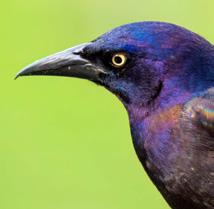
Neuroscience researcher Corina Logan is studying how grackles, highly social birds, adapt to humanmade environments, offering new insight into behavioral flexibility and urban survival. Through her work at Santa Barbara’s Leadbetter Beach Park, she sheds light on the traits that allow some species to thrive alongside people — especially in the face of climate change and habitat loss.
GAUCHO GIVING
Lessons on the water
BY JILLIAN TEMPESTA
In 2005, Chris Kastner ’87 flew from Los Angeles to a Mississippi shipyard then owned by his employer, Northrop Grumman, to inspect damage from Hurricane Katrina. He was entranced by the complex vessels and the maritime world, in which generations of families worked together on the same ships.
Now, as the president and CEO of Virginia-based Huntington Ingalls Industries, the nation’s largest military shipbuilder, Kastner’s career bridges California and D.C. He is the only current Gaucho CEO of a Fortune 500 company, and he continues to give back to UC Santa Barbara, where he received a bachelor’s degree in political science.
“I never thought that I would spend a lot of time in Washington, D.C., but over half my time now is with members of Congress or representatives that work in the Pentagon or U.S. Navy,” Kastner says. “The education I received at UC Santa Barbara really helped me.”
For Kastner, personally and professionally, there is always a connectedness to his home state.
California is the world’s fourth-largest economy, built on a foundation of global trade. Over 40% of America’s containerized imports flow through Los Angeles and Long Beach, the busiest port complex in the Western Hemisphere. Every import and export depends on secure sea lanes protected by the U.S. Navy. The carriers and submarines built by Huntington Ingalls Industries ensure that billions of dollars in California commerce move freely across the Pacific.
“When we talk about U.S. naval power — the most powerful Navy in the world that has supported deterrence for the last 50 years — we’re also talking about protecting Silicon Valley’s supply chains and California’s economic engine,” says Kastner. He credits his critical thinking
skills to his time at UC Santa Barbara, where he thrived in an atmosphere of open dialogue.
“These are skills I use every day, leading over 44,000 employees building the most sophisticated vessels ever conceived. UCSB alumni are everywhere — tech, medicine, law, business — and we all benefit from the stable world order that allows innovation and commerce to flourish,” Kastner says. “That’s what our national defense secures. It isn’t someone else’s responsibility; it’s really the foundation that makes everything else possible.”
Kastner maintains his campus connection as a supporter of UC Santa Barbara rowing and baseball.
His sense of responsibility and ability to grind were forged as part of UCSB Rowing. In 2024, Kastner helped fund a replacement for the team dock, which was originally built for the 1984 Olympic rowing events at Lake Casitas.
Staying involved as an alumnus is important to Kastner in part for the message it sends to students.
“I was an average rower at best on a team that significantly improved because of investment and support from alumni who came before us,” he says. “I want the current team to know there have been people before them who questioned whether it made sense to get up at 5 a.m. to row. I want to let them know that it’s worth it, that at the end of the day, they’re going to learn from the experience of sacrificing for the greater good, and they’re going to develop longlasting friendships.”
Also a longtime supporter and fan of baseball at UCSB, Kastner says his personal connection to the sport started on his high school baseball team and deepened during his son’s college career.
“It’s more than just winning games. It’s about developing the student athletes, not just for baseball but whatever they do in the future,” he says. “I like a program that’s run cleanly and with the right philosophical approach and the right mission. (UCSB) Coach (Andrew) Checketts has that, and so I want to support it.”
“We are grateful for the faithful support of Chris and his wife, Michelle, over the past decade,” Checketts says. “In recruiting for UCSB Baseball, we always emphasize the value of a UCSB degree, and Chris is the perfect example of that. … To be able to show our studentathletes a Fortune 500 CEO who is a Gaucho is invaluable for our program.”
The mission is the through line for Kastner. He urges students to prioritize it. You won’t make the sacrifices necessary, he says, unless you believe in the why.
Decades after graduating, Kastner still feels a deep connection to campus. When he returned to Santa Barbara to celebrate his 30th wedding anniversary with Michelle, also a native Californian, the feeling rushed back. In that moment, he recalls, it felt exactly as he remembered: inspiring, welcoming and full of possibility.
PHOTO: COURTESY
Cut to SuCCeSS
Gauchos are starring on studio lots, streaming hits and award season short lists 24
34 At the scale of the Earth
Artist Tiffany Chung traces how histories of climate, conflict and displacement unfold across time — while pointing toward new ways of living with change
42 Musical Americana
UC Santa Barbara and the nonprofit Dust-to-Digital Foundation make rare American music available to the public for free
features
Cut to SuCCeSS
Versed in theory before technique, UCSB alums — some faculty, too — keep landing on studio lots, streaming hits and awards season shortlists.
By Shelly leachman
PhotoS By Jeff liang & matt Perko
Andy Jurgensen ’04
PHOTO: ASSOCIATED PRESS
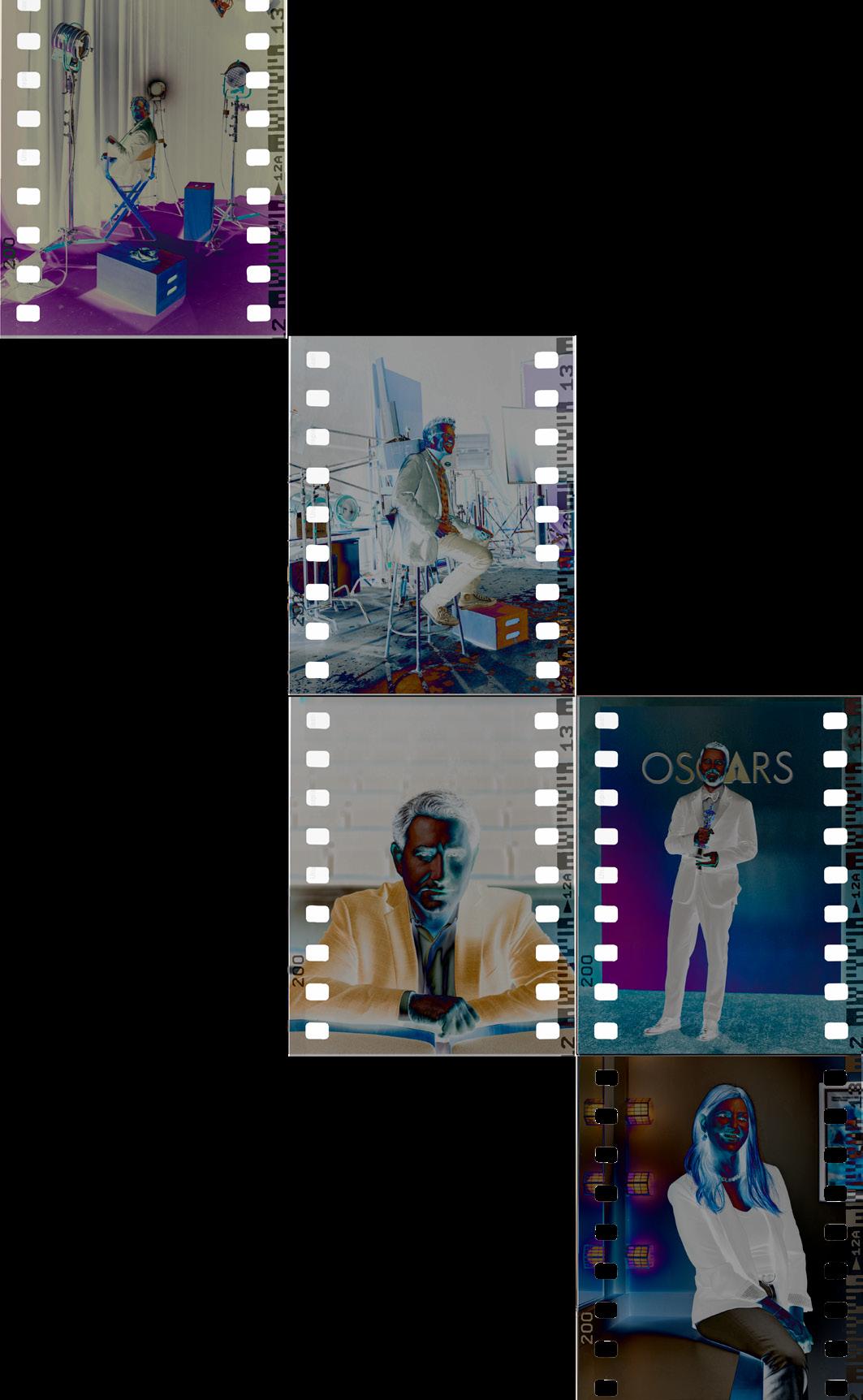
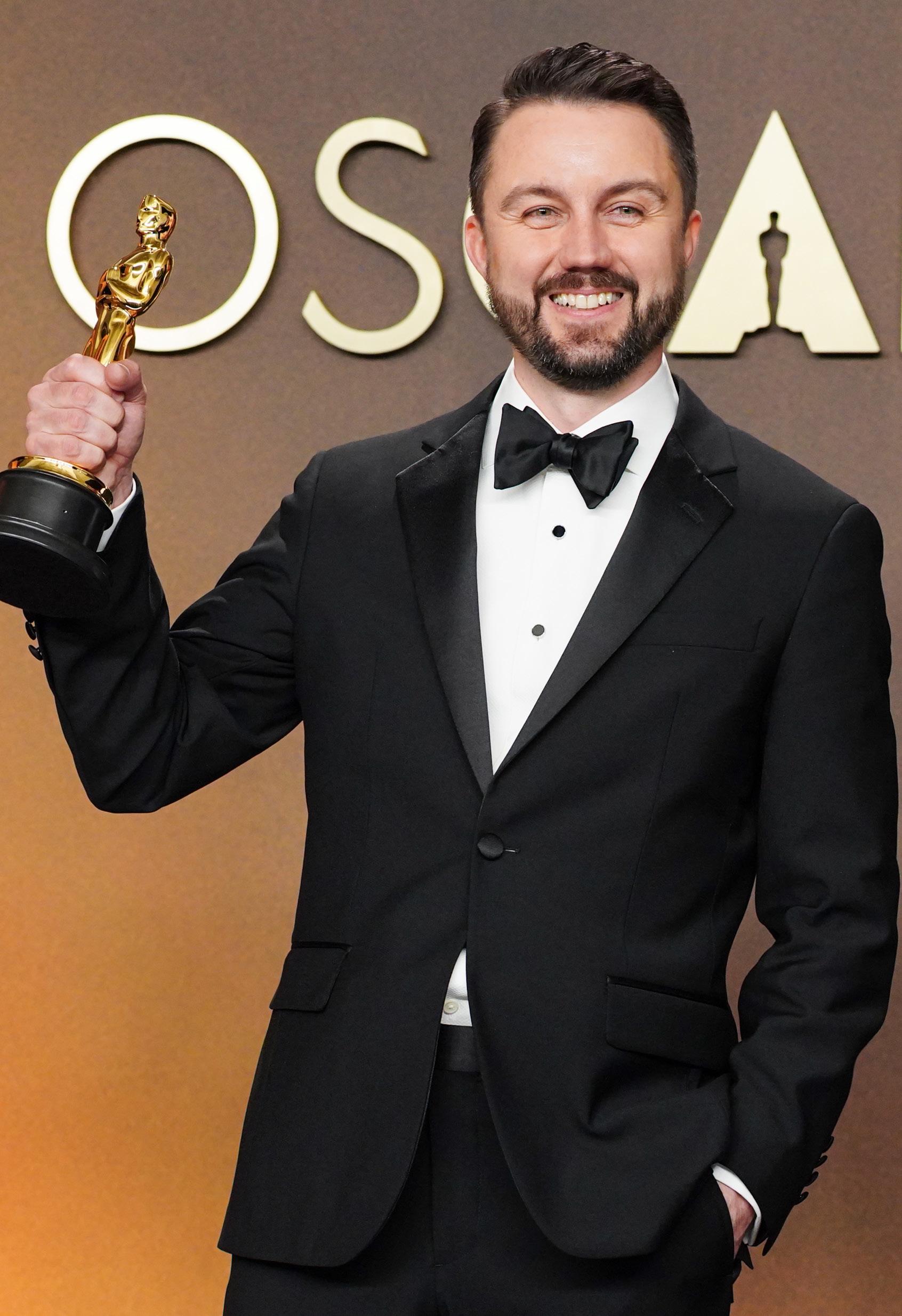
ASK HIM TO REFLECT on the moment and Andy Jurgensen ’04 describes it as “an out-of-body experience.” Who wouldn’t? Not many people hear their name at the end of this sentence: “And the Oscar goes to …”
But Jurgensen has. The UC Santa Barbara film and media studies grad earned the entertainment industry’s most coveted statuette as winner of the 2026 Academy Award for Best Film Editing for Best Picture winner, “One Battle After Another.”
“First just hearing my name called, then all the cameras turning to me and following me up on stage — it was surreal,” he says. “But it was exhilarating.”
It was only his second film as lead editor, but Jurgensen had been building toward it for years, honing his skills in assistant roles and refining an editorial sensibility shaped first more by theory than by technique. Multiple collaborations with director Paul Thomas Anderson — “One Battle” was their fourth film together — helped to sharpen his sense of rhythm and narrative structure.
The foundation for it all, Jurgensen says, came courtesy of UCSB, where the primary focus isn’t on how to frame a shot but how to think about one.
That distinction sits at the heart of the university’s Department of Film and Media Studies, which has quietly
produced an outsized number of industry success stories. In an ever-shifting media landscape that stretches far beyond Hollywood soundstages into a diffuse network of streaming platforms, global audiences and emerging technologies, the department stays true to its guiding premise: that intellectual agility matters as much as technical fluency. Film and media students get training in both at UCSB, where they’re taught to ask and articulate why a story works, or not, before they learn how to shape it into a show. When they do finally step foot onto a set or into a writers’ room, they come packing a unique and valuable toolkit.
“First just hearing my name called, then all the cameras turning to me and following me up on stage — it was surreal.”
— Andy Jurgensen ’04
“Our students are incredibly successful because of how much we really hammer the history and the theoretical and critical foundations of film and media education into what they’re doing,” says department chair Jennifer Holt, who specializes in media and policy and digital media infrastructure. “It really shows in the films and productions they ultimately make.”
Holt is helping to steer the department into one of the industry’s most unsettled frontiers: artificial intelligence. Her new course on AI and media industries — part of a larger initiative on the same topic — examines how AI is reshaping everything from screenwriting to visual effects, pushing students to grapple with what such technology can do and why it matters.
“We’re not here to tell students what to think,” she says. “We’re here to teach them how to think and give them tools to understand what these things mean and how it impacts their process. It’s genuine media literacy that we feel is super important for them to have.”
That emphasis on critical thinking, alumni say, is precisely what gives them an edge in the industry.
In her first industry job, at a talent agency, Kirsten “Cookie” Pierre ’16 was often tasked with writing “coverage” — quick script analyses to save agents time. It was like riding a bike.
“Everything came back to what we did in school. At UCSB, we were constantly reading, watching, breaking things down,” Pierre says. “You’re trained to distill something into a clear argument, a thesis.”
The skills serve her well still today as a writer on HBO’s hit medical drama “The Pitt,” working alongside fellow alum Elyssa Gershman ’16. They knew of each other on campus but bonded later,
Jennifer Holt
PHOTO: MATT PERKO
after moving to Los Angeles and ending up in the same improv class — taught, fittingly, by another UCSB graduate. It was Gershman who later recommended Pierre for the show.
Their path to the writers’ room was anything but linear, a reality both say UCSB prepared them to navigate.
“UCSB isn’t necessarily seen as an ‘industry school,’” Pierre says. “But that’s actually our strength. We were taught to analyze things differently. You come in with a perspective that stands out.”
Gershman was a double major in communications and film and media studies, but Hollywood always had her heart. The critical studies coursework and the hands-on production classes solidified her ambition to be a screenwriter, and the people she met proved just as formative.
“UCSB is the best decision I ever made,” Gershman says. “My best friends — Cookie being No. 1 — are all from UCSB. All the people I lived with when I moved to L.A. were from UCSB. My first job was working for another alum. It becomes such a tight-knit community, and you grow with those people.”
That growth extends into the industry, where alumni seem to surface everywhere.
“There are UCSB alumni all over the industry, from the creative side to the production side, the development side,
marketing, and distribution,” says Ross Melnick, a professor who started his professional journey in Hollywood, too, working in representation, publicity and distribution. “The industry and the jobs available for it are changing so fast and our students are meeting that challenge every day.”
Melnick sees that breadth as a direct result of the curriculum. While many students arrive dreaming of directing or writing, their exposure to
“Everything came back to what we did in school. At UCSB, we were constantly reading, watching, breaking things down. You’re trained to distill something into a clear argument, a thesis.”
— Kirsten “Cookie” Pierre ’16
the industry’s wider ecosystem often expands their ambitions.
“We’re teaching the history of the art form, but also the history of the industry and the infrastructure behind it,” he says. “That combination makes for better storytellers, but also more adaptable professionals.”
That learning extends beyond the classroom at the Carsey-Wolf Center, where Melnick is currently Interim Dick Wolf Endowed Director. The interdisciplinary hub, named for founding benefactors Marcy Carsey and Dick Wolf — industry legends in their own right — hosts screenings, panels and industry conversations. Backed by a dedicated board of prominent alumni and supporters, including Oscar-nominated, Emmy-winning screenwriter and director Scott Frank ’82, the center creates opportunities for students to engage directly with the people shaping the field.
“I think it’s extraordinary,” says Rick Rosen ’75, a veteran talent agent who cofounded Endeavor, now WME Agency. He is a key player in the new AI and Media Industries Initiative housed within the center, where he serves on the executive board. “The faculty is extremely impressive and high-level. And the quality of the students in the film and media studies program is firstrate and incredibly impressive.”
“Dick and Marcy and I and everybody on the board are very committed to maintaining that standard of excellence and continuing to evolve to the everchanging media landscape,” Rosen continues. “The most important thing that someone who wants to get into film and television or media needs to be able to do is to think critically — to read
Ross Melnick
critically, to analyze what you’ve read — and UCSB does a great job of training these students to be critical thinkers.”
It helps that a lot of that training is being done by faculty who are successful practitioners themselves. Auburn Films executive Wendy Eley Jackson, a prolific producer of both documentaries and features, teaches screenwriting. So does multihyphenate Cheri Steinkellner, the Emmy-winning, comedy-writing legend behind “Cheers” and other hits, who has a new musical bound for Broadway. Teaching professor James McNamara, a historian of literature and film, is also the creator, writer and showrunner of current Disney+ hit “The Artful Dodger.”
The department has a knack for attracting faculty members who are modeling exactly what many of its students hope to be doing one day: absolutely crushing it in Hollywood.
“This warmly collegial and intellectually brilliant environment is hugely generative for my work as a scholar of film narrative and as a creative practitioner in television, and I am deeply grateful to be a part of it,” says McNamara. “Alongside theoretical, historical and analytic training, [the department’s] creative production classes are taught by professors with world-class creative practices who have variously created, written, directed, showrun and produced critically acclaimed global streaming television series, iconic
network television series, feature films, documentaries and Broadway plays, and have been nominated for or won Emmy, BAFTA and Australian Academy awards for their work.”
UCSB graduates, too, span the full spectrum of the industry. See, among others: indie film icon Gregg Araki ’82, whose latest film stars Olivia Wilde, Cooper Hoffman and Charli XCX; Geoff
"We have opportunities here to do some very unique stuff — environmentally, for instance, and these programs are knocking it out of the park every year."
— Chris Jenkins
Burdick ’90, senior vice president at James Cameron’s Lightstorm, which won the 2026 Best Visual Effects Oscar for “Avatar: Fire and Ash”; Brad Silberling ’84, a director, producer and writer of TV and features, from “Jane the Virgin” to “City of Angels”; Justin Tipping ’07, director of breakout horror hit “HIM”; Shavonne Wieder ’03, vice president of global brand marketing at Universal
Pictures; and producer Yvett Merino ’94, who won the 2022 Best Animated Feature Academy Award for Disney’s “Encanto” and was nominated this year for “Zootopia 2.”
Writers, directors, editors, actors, executives — the list is long, and continues to grow.
As the department’s head of production, Chris Jenkins has worked with many of them by way of his handson courses. That includes the muchbeloved Film 106, where students pitch and, if selected, hire a student crew and produce their own original short film from scratch, as well as GreenScreen and the Coastal Media Project, which are centered primarily on environmental filmmaking and have resulted in films being showcased in festivals from Santa Barbara to Florence, Italy.
“We have opportunities here to do some very unique stuff — environmentally, for instance, and these programs are knocking it out of the park every year,” says Jenkins, who has also overseen the expansion of courses in sound production and helped to secure major corporate sponsorships for cameras and other equipment. “We’re nimble. We can do things that other schools can’t do, and I’ve tried to focus on those things.”
That’s the sentiment across the department, which integrates production into a broader intellectual framework.
James McNamara
PHOTO: JEFF LIANG
Students don’t just learn how to make films; they learn how to situate them — historically, culturally, politically. In an era when technology can automate almost everything, that humanitiescentric grounding is priceless.
Gershman and Pierre still lean on it every day in the writers’ room, where narrative urgency traces directly back to their education at UCSB.
“Why today?” asks Pierre. “Yes, why today, and why now?” adds Gershman. “The network asks us these questions
all the time. And these are all things we learned at UCSB.”
If the answers sometimes lead to awards, so much the better. But for many alumni, the deeper reward lies in something less visible: the ability to navigate an industry in flux with curiosity, resilience and a clear sense of purpose.
Gershman, who recently won two Writers Guild of America awards for her work on “The Pitt,” frames it in personal terms.
“Television made me feel seen and less alone growing up,” she says. “That’s why I wanted to do this work. I think that art can be so powerful and special, especially now, and I like feeling like I am fostering connection and community, and maybe helping other people the way it helped me.”
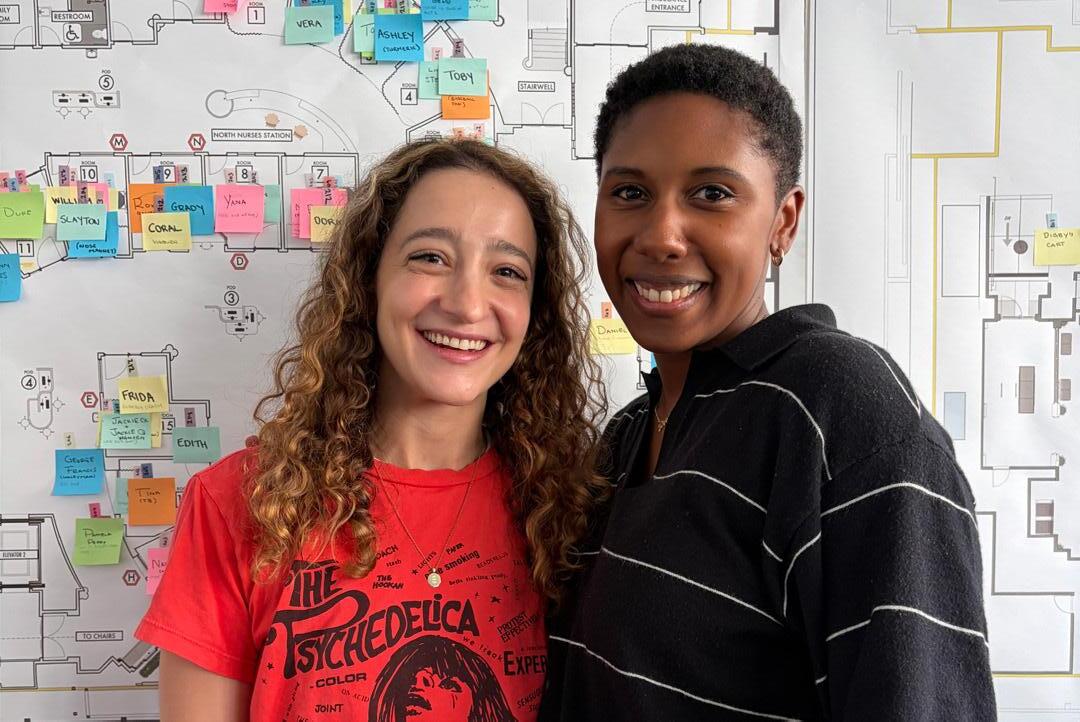
Alums Elyssa Gershman, left, and Kirsten "Cookie" Pierre, right, are colleagues in the writers' room of award-winning HBO drama "The Pitt," where they write to a map of the show's emergency room (pictured behind them).
Chris Jenkins
PHOTO: MATT PERKO
Artist Tiffany Chung traces how histories of climate, conflict and displacement unfold across time — while pointing toward new ways of living with change
By Debra Herrick
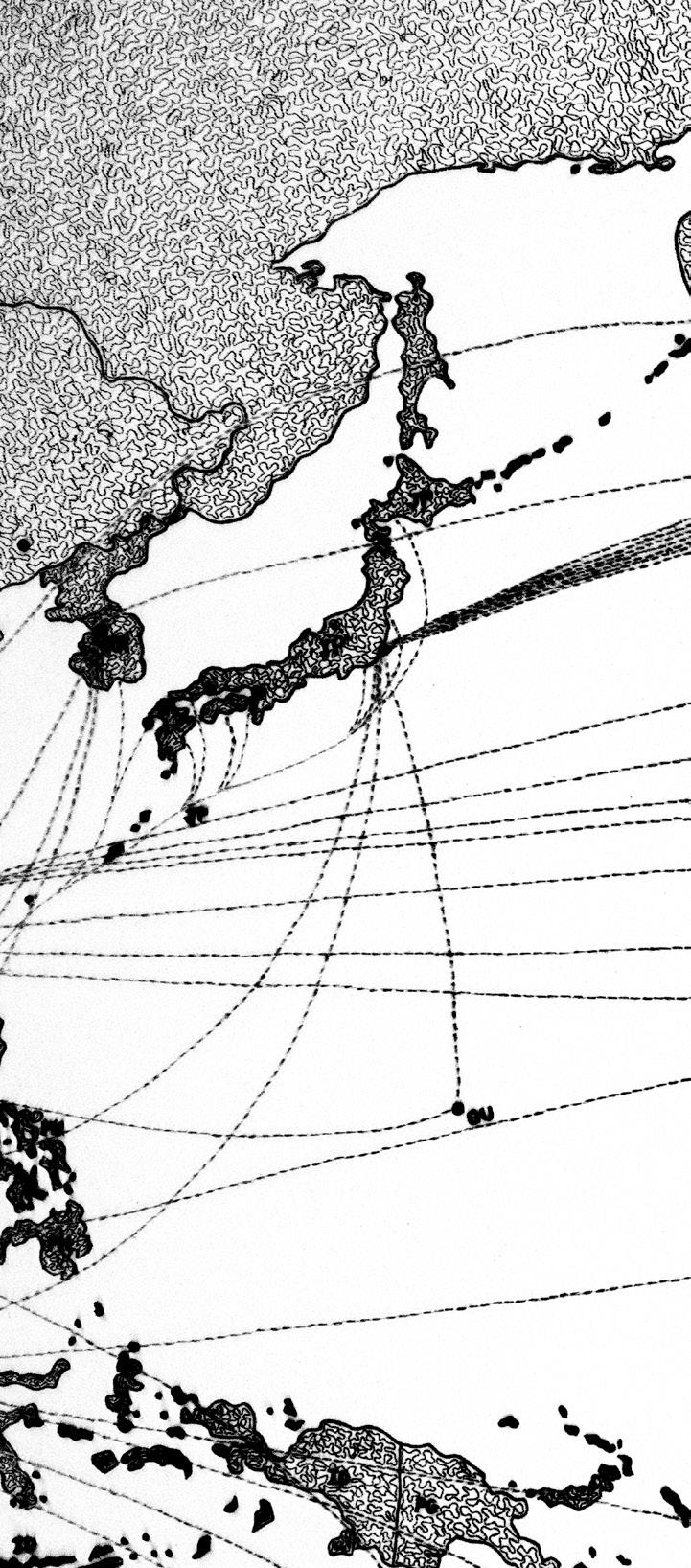
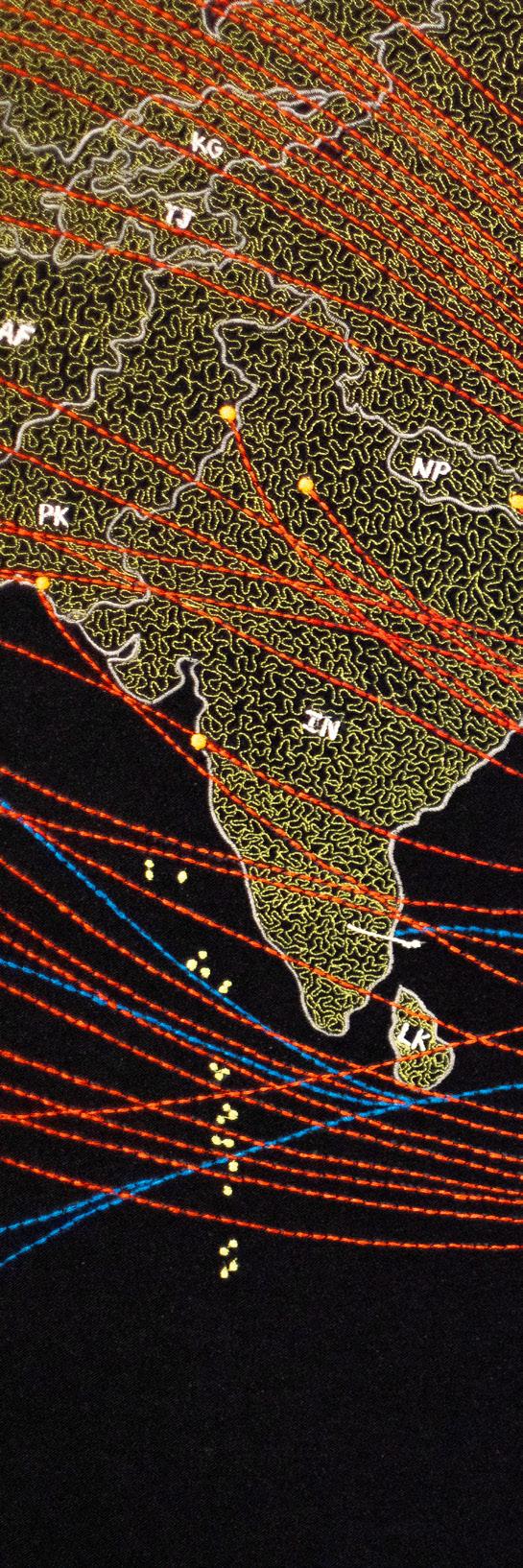
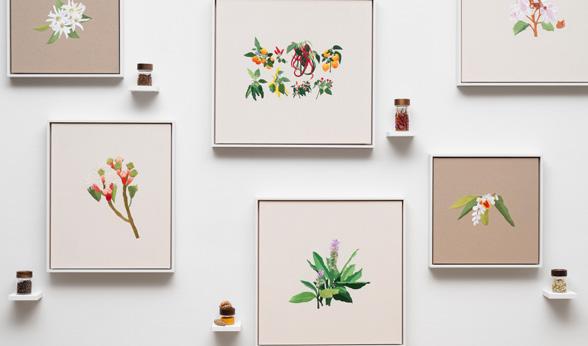
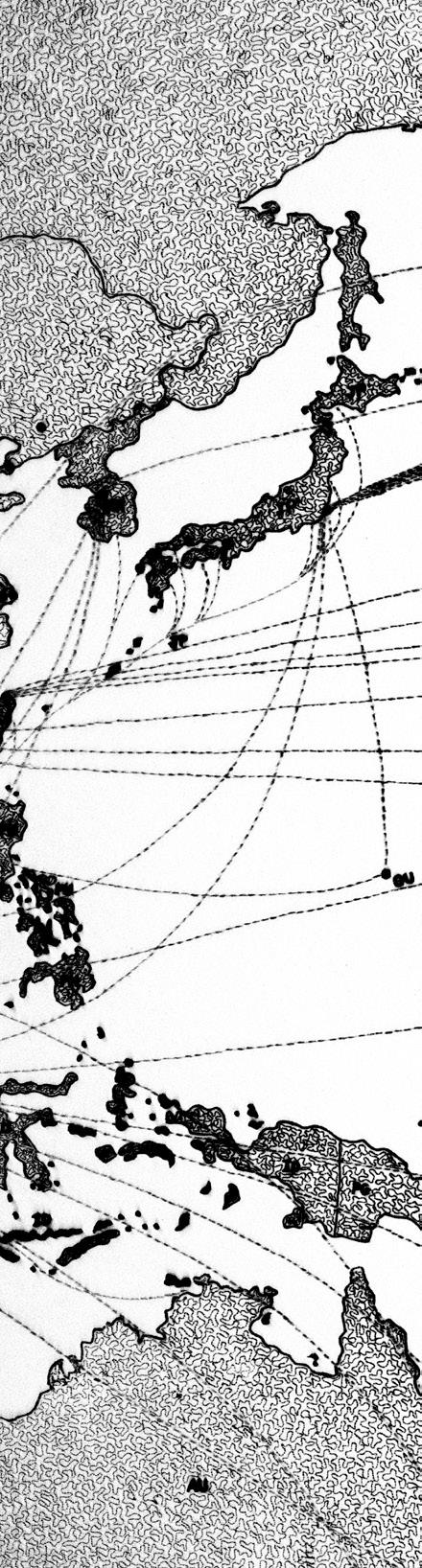
Detail of Tiffany Chung, "Global Spice Trade: routes from ancient time to the age of exploration/exploitation," 2024–2025, embroidery on fabric, 140 x 380 cm.
PHOTO MATT PERKO
Tiffany Chung works at a scale where the usual boundaries of history begin to dissolve. Climate, conflict and migration emerge not as separate events but as intertwined processes unfolding across time and geography.
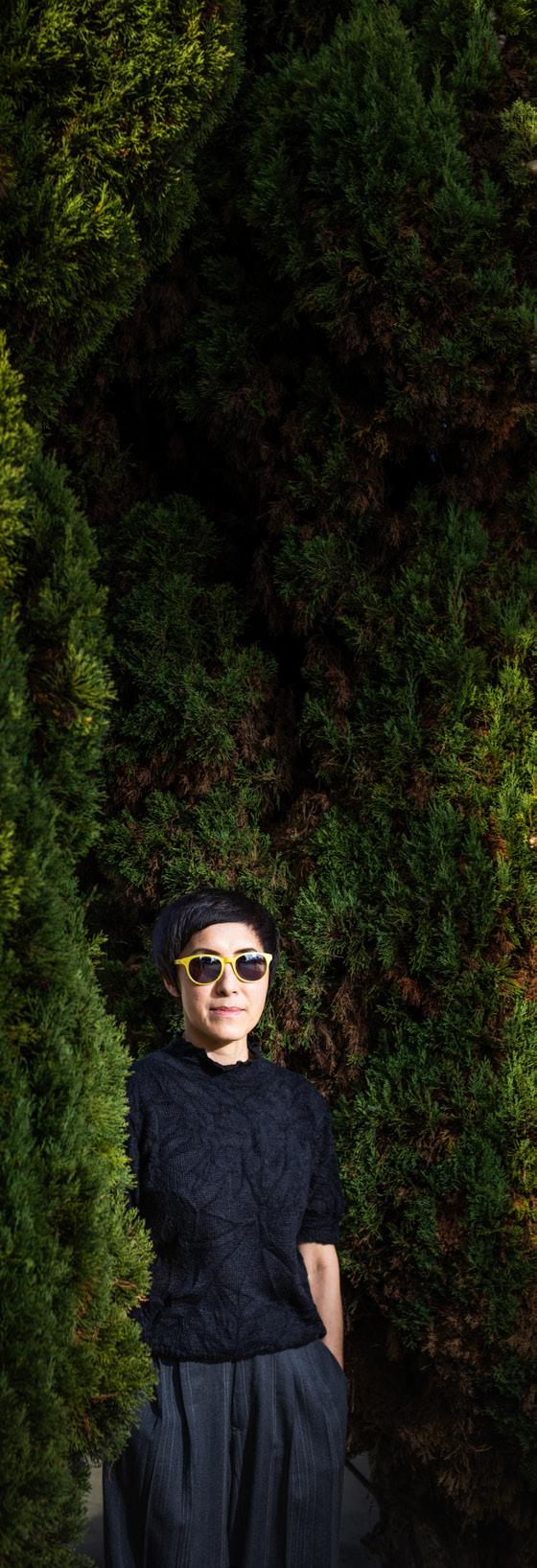
A Vietnamese American artist and UC Santa Barbara alumna, she brings that perspective to her survey exhibition at the university’s Art, Design & Architecture Museum.
Through hand-drawn and embroidered maps, sculptural installations and immersive media, Chung traces those connections. Drawing on statistical data, archival research and lived experience, “Tiffany Chung: indelible traces” follows the movement of people, plants, commodities and ideas — from ancient trade routes to deep geological time.
While much of the work reconstructs the past, it is equally concerned with what lies ahead. Several projects propose responses to climate change, from speculative models of adaptation to research that has entered policy conversations.
Organized by the AD&A Museum and guest curated by Orianna Cacchione, deputy director at the University of Richmond Museums, the exhibition reflects a practice grounded in long-term research, where art becomes a means of rethinking the historical record.
MAPPING WHAT HISTORY OMITS
For Chung, mapping is not simply a tool for orientation, but a way of thinking.
“I’ve been acutely aware of the power of cartography,” she says, noting its long association with colonial authority and state control. Yet mapping can also do the opposite; it can “counter official historical accounts, reclaim what has been erased, and shift established narratives.”
Her work brings together statistical data, archival research and lived experience into layered visual compositions. These maps do not resolve history into a single account; they place competing histories side by side.
They hold contradictions. While they translate information into image, they also make it “both legible and illegible,” revealing some histories while obscuring others, resisting the idea that the past can be fixed or fully known.
“Maps draw out the complexity and the inaccessibility of the past,” Chung says. “They leave space for multiple perspectives.”
As AD&A Museum Director Gabriel Ritter notes, her work “documents and gives voice to the memories etched into these landscapes,” taking on what maps and statistics cannot capture: lived experience.
MAKING CONNECTIONS VISIBLE
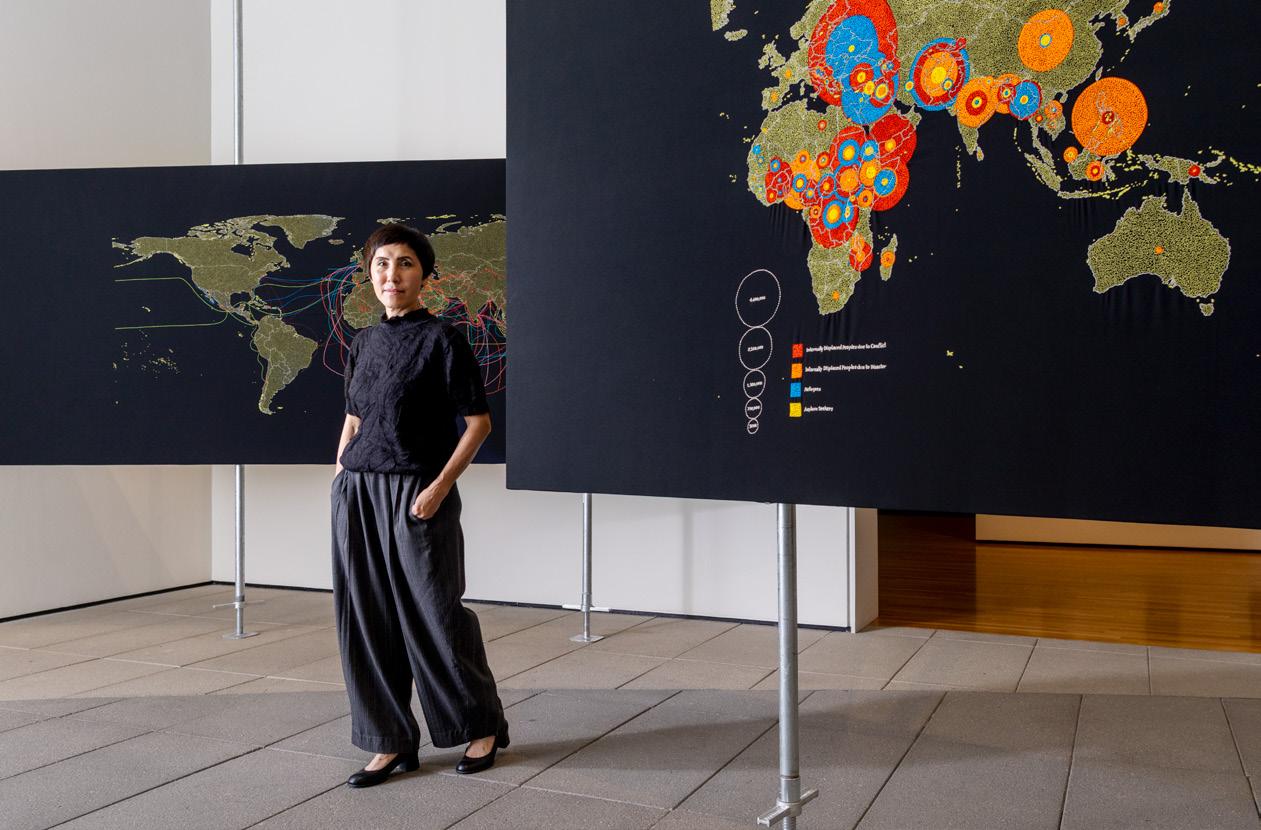
Many of Chung’s projects center on what she calls the climate-conflict-migration nexus — the entanglement of war, environmental change and human displacement. Her maps trace global refugee routes, fossil-fuel emissions and U.S. military bases alongside the places people were forced to leave behind.
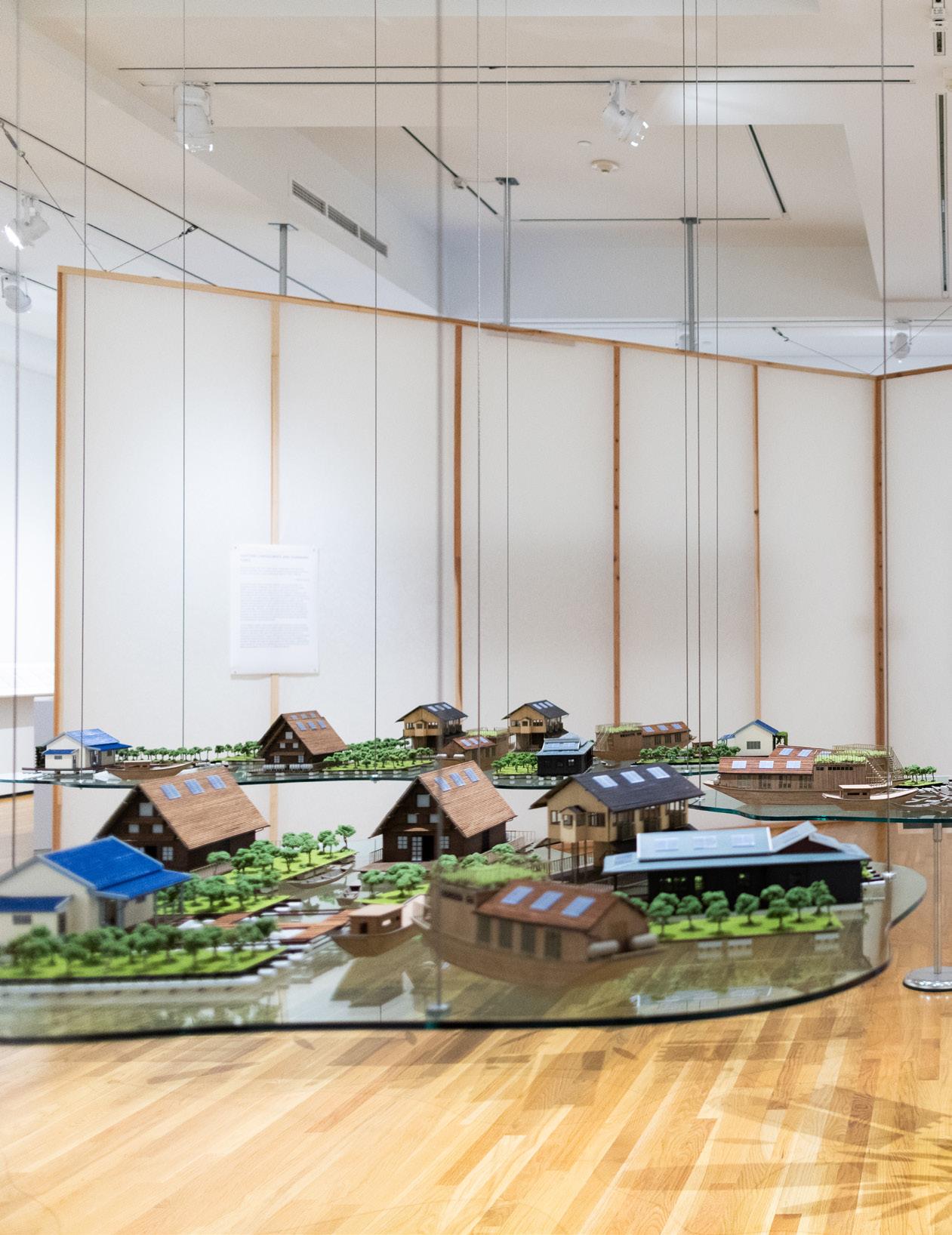
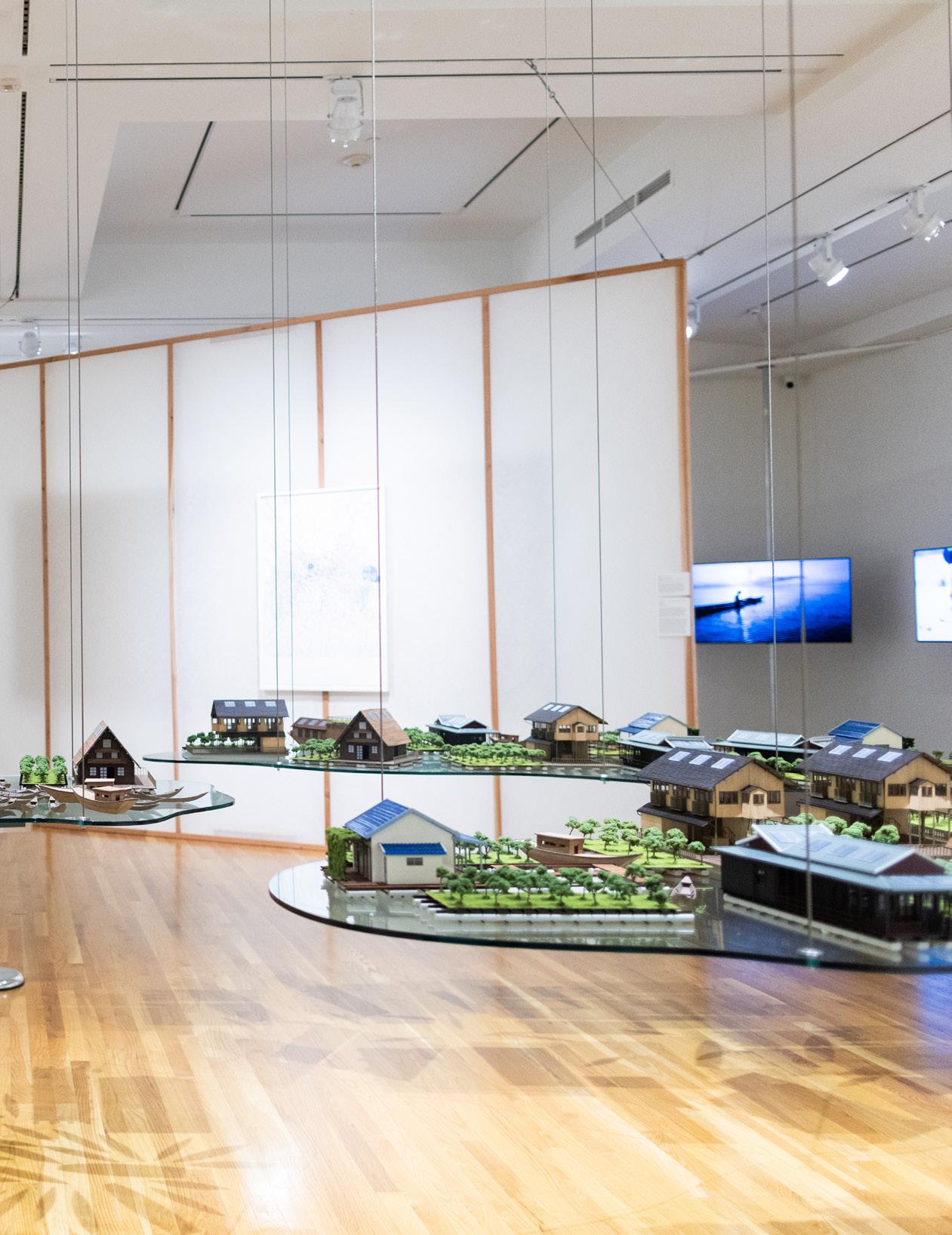
In one project, a floating town installation, Chung models how communities might live with chronic flooding rather than relocate, reframing displacement as something that can, in some cases, be addressed through adaptation. Documentation of the work, including photos of her “floating village” installation and five individual houseboat models, was presented by the United Nations Office for Disaster Risk Reduction alongside its 2024 Asia-Pacific Ministerial Conference, extending the project into policy discussions.
Other works operate through juxtaposition. A large-scale mapping project aligns the global footprint of carbon dioxide emissions with patterns of displacement, placing environmental impact and human movement side by side. The pairing prompts debate, including questions from government officials encountering the work.
“We cannot separate things from one to another,” Chung says, describing the “entanglement” of social, political, economic and environmental processes.
Her projects also create space for dialogue. As part of the Vietnam Exodus Project in Hong Kong, Chung organized and moderated panel discussions bringing together human rights lawyers, former refugees and advocacy organizations to address asylum policy alongside lived experience.
READING THE MAP
For scholars like Heidi Amin-Hong, an assistant professor of English at UCSB who contributed to the exhibition catalog, this layering is central to Chung’s work.
“She’s able to bring together an incredible range of archival material,” Amin-Hong says. “But she also invites viewers to participate in interpreting it.”
In her classes on race, refuge and migration, Amin-Hong brings students to see the exhibition. Many are struck by how Chung’s maps move between global scale and personal recognition.
“One student saw a place on the map that her father told stories about in Guatemala,” Amin-Hong says. “Another student who served in the military recognized a tiny base where he had been stationed.”
Those moments, she says, reveal how mapping can surface histories that remain hidden in official records.
“At the core, these works are about telling stories that are usually missing from statistical or geopolitical narratives.”
MIGRATION BEYOND THE HUMAN
While many of Chung’s works focus on refugees and forced migration, her research extends far beyond human movement.
She traces the spread of spices along ancient trade routes. She studies archaeobotanical evidence of grains and crops traveling across continents. She maps Neolithic earthworks in Southeast Asia and Europe — traces of early human settlements that reshape landscapes thousands of years ago.
These patterns reveal something fundamental: Migration is not a modern anomaly.
“Human movements are ancient,” Chung says.
“Migration has always been what we do.”
Tracking these movements also reveals how deeply human activity has altered ecosystems.
“The transplanting of plants from their native environments to all corners of the Earth shows the extent of human migration and our colonization of nature,” she says. “It has reshaped biodiversity in profound ways.”
Through this broader lens, migration appears less as a crisis and more as a long-standing feature of life on Earth, though one increasingly intensified by climate change and geopolitical conflict.
RESEARCH AS ARTISTIC PRACTICE
For Chung, art and research are inseparable. Her studio practice resembles a laboratory. Tables fill with archival photographs, government reports, maps and handwritten notes. Projects evolve through conversations with historians, scientists, human rights lawyers and former refugees, some of whom participate as local collaborators.
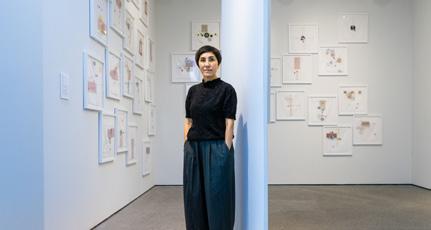
Above: Tiffany Chung stands between two of her largescale woven maps.
PHOTO: MATT PERKO
"Tiffany Chung: indelible traces," Art, Design & Architecture Museum at UC Santa Barbara.
PHOTO MATT PERKO
Sometimes those collaborators become part of the work itself.
While researching Vietnamese refugee camps in Hong Kong, Chung worked closely with former refugees who helped locate the physical sites of detention camps on remote islands. Over years of conversations and shared bus rides, they reconstructed histories largely absent from official documentation.
“People have the need to share,” Chung says. “We just need to listen.”
That openness extends to the materials she uses. Many of her maps are embroidered by hand in collaboration with a Vietnamese craftswoman who has worked with Chung for more than 15 years.
The meticulous stitches transform statistical information into something tactile and intimate — a quiet counterpoint to the vast geopolitical forces they represent.
“Embroidery carries time,” Chung says. “It slows you down.”
FROM MEMORY TO HISTORY
Although much of Chung’s work addresses refugee histories, she rarely centers her own story directly.
Born in Vietnam, she fled with her family after the war and later studied in the U.S., earning her MFA from UCSB’s Department of Art in 2000. The exhibition marks a kind of homecoming.
Kim Yasuda, professor emerita of art at UCSB and one of Chung’s mentors during graduate school, remembers her as an artist deeply engaged with questions of displacement and belonging.
“We connected around experiences of loss, absence and migration,” Yasuda says. “But the challenge was always: How do you create work that resonates beyond your own story?”
Over time, Yasuda says, Chung expanded those questions outward from personal memory to global histories.
“What she has done is extraordinary,” Yasuda says. “She found a way to connect individual stories to larger systems — environmental, political, historical.”
THINKING IN DEEP TIME
A more recent turn in Chung’s work emerged from encounters with geological time.
While researching an early Permian forest buried beneath the city of Chemnitz, Germany, and later visiting the petrified forests of Arizona’s Triassic Chinle Formation, she began to rethink the scale at which history unfolds.
“The most recent shift in my work is realizing how microscopic human history is when placed within the vast stretch of Earth’s deep time,” Chung says.
Fossilized forests and geological strata record climate events that occurred millions of years ago. Seen against that timeline,
PHOTO: MATT PERKO
modern political borders and human conflicts begin to look fleeting.
That sense of scale informs Chung’s immersive installation “Spheres of Time,” currently screening at UCSB’s AlloSphere, which combines 360-degree moving image and sound to situate human activity within planetary history.
For Chung, these encounters are both humbling and clarifying.
They suggest that while human histories are fragile and easily erased, they are also part of a much larger continuum of change.
MAPPING CARE
Despite the immense scope of her work, Chung often returns to small acts of attention.
Throughout her career, she has drawn inspiration from filmmaker and theorist Trinh T. Minh-ha’s idea of “speaking nearby” rather than speaking for others.
“It’s important to recognize the distance between someone’s lived experience and someone observing it,” Chung says. “Empathy is not the same as understanding.”
That awareness shapes how she approaches storytelling.
“When we choose not to listen to someone’s story, it doesn’t make them voiceless,” she says. “We only need to listen.”
Bringing together decades of research and reflection, “Tiffany Chung: indelible traces” offers a body of work that refuses simple conclusions. Through maps, archives and careful acts of reconstruction, it invites viewers to reconsider how histories are made — and how small they appear against the vast timeline of the Earth.
UC Santa Barbara professors provide critical context for Tiffany Chung’s exploration of migration, memory and environmental change.
Heidi Amin-Hong
ASSISTANT PROFESSOR, ENGLISH DEPARTMENT
Amin-Hong studies Asian American and Pacific Islander cultures, examining war, displacement and environmental change across transpacific histories.
“Students wrote about the embroidery — how meticulous and beautiful it is, and how it veils an underlying current of historical violence.”
PROFESSOR EMERITA, ART DEPARTMENT
Yasuda's work explores art’s role in pedagogy, civic life and crossdisciplinary collaboration.
“The identity-based work we connected on had to open up. Graduate school became a testing ground — asking how these narratives function in different spaces and how they speak to a collective condition.”
Kim Yasuda
"Tiffany Chung: indelible traces," Art, Design & Architecture Museum at UC Santa Barbara.
PHOTOS BY MATT PERKO
PHOTOS: YUBO DONG
UCSB Library partners with the Dust-to-Digital Foundation to preserve a vast collection of historic American music. Anybody is welcome to listen in — for free
By Keith Hamm
Thousands of songs representing some of the rarest and most uniquely American music borne from the Jazz Age and the Great Depression would have likely been lost to landfills and faded from memory. Fans and historians have long credited obsessive record collectors for preserving much of that music, and today they can thank a partnership between UC Santa Barbara and the nonprofit Dust-to-Digital Foundation for making it available to the public for free.
UCSB Library’s Special Research Collections has been uploading music from the foundation’s trove of approximately 50,000 songs to the university’s Discography of American Historical Recordings (DAHR) database. So far, more than 5,000 songs from Dust-toDigital have been added, says David Seubert, curator of the library’s performing arts collection. Thousands more are in the pipeline.
“The Dust-to-Digital Foundation has digitized some of the most significant private collections in the country,” Seubert adds. “We are pleased to partner with them to make this rare content accessible.”
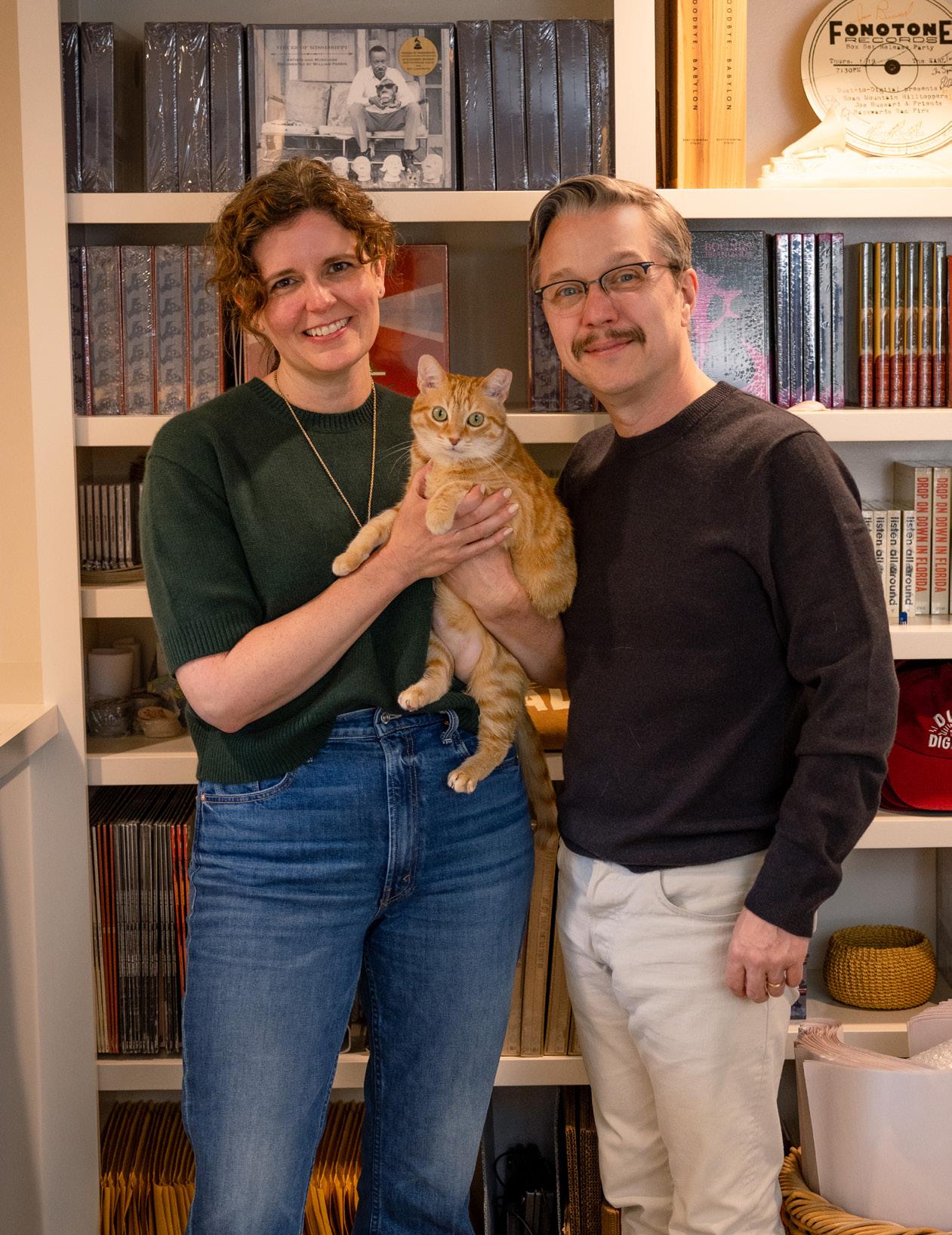
Cofounded by Lance Ledbetter in 1999, Dust-toDigital launched as a commercial label focused on preserving hard-to-find music and producing highquality box sets, vinyl records, CDs, DVDs and books that share the detailed stories behind rare recordings. In 2010, Ledbetter and his wife, April, launched the label’s nonprofit foundation.
Over the years, the Ledbetters have worked closely with collectors to digitize and preserve record collections for educational purposes and public consumption. Earning trust and forging those relationships with often-reclusive collectors takes patience and an authentic appreciation of the music and its place in American history, April says. “We share their passion to keep our musical heritage from being forgotten.”
Once a relationship is established, Dust-to-Digital sets up special turntables and laptops in a collector’s home, with paid technicians painstakingly digitizing and labeling each record, one song at a time. Depending on the size of the collection, the process can take months, even years.
Along the way, the Ledbetters’ efforts have earned Grammys for Best Historical Album, in 2007, for “Art of Field Recording Volume 1: Fifty Years of Traditional American Music Documented by Art Rosenbaum”;
and, in 2019, for Best Historical Album and Best Liner Notes for the box set “Voices of Mississippi: Artists and Musicians Documented by William Ferris.”
“We’ve built our reputation through storytelling,” Lance says.
Seubert describes the library’s partnership with Dust-to-Digital as a symbiotic coming together of an incredible music archive and the university’s established public-access platform.
Launched in 2008 and funded in part by the National Endowment for the Humanities, DAHR (pronounced dar) has documented more than 460,000 master recordings made by record labels during the 78 rpm era, which spanned roughly 60 years starting in the late 1890s. The archive is known for its discographical details, artist bios, free streaming for noncommercial purposes, and the high quality of its digitization in the Henri Temianka Audio Preservation Lab. Recordings in the public domain are also available for free download, in keeping with the UCSB Library’s mission for open access.
“The clarity and sound speaks for itself,” Lance says.
Rare birds
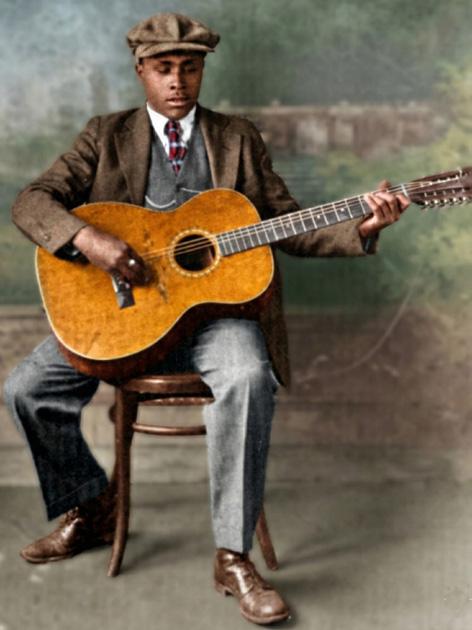
Included in the partnership’s release are two songs by Tennessee-born blues guitarist-singer Lane Hardin, who recorded “Hard Time Blues” and “California Desert Blues.” The songs, regarded as classics of the genre, appear on flip sides of a 78 rpm 10-inch released by Bluebird Records in 1936. Only a handful of copies are known to exist.
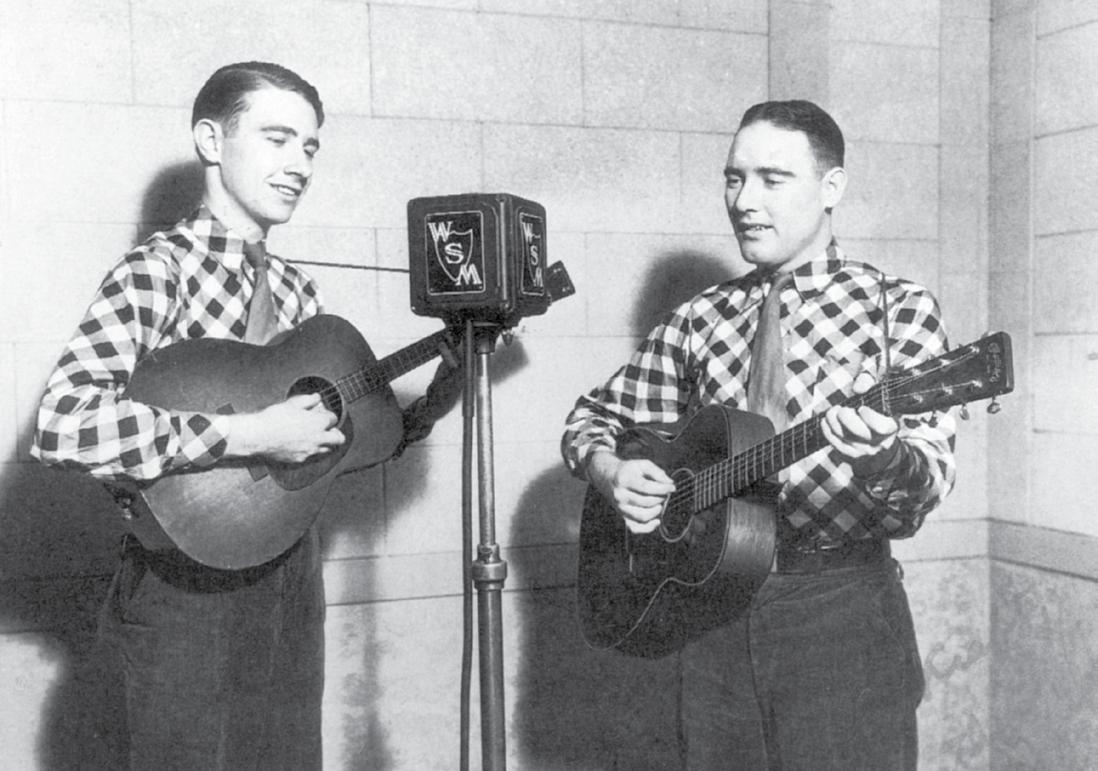
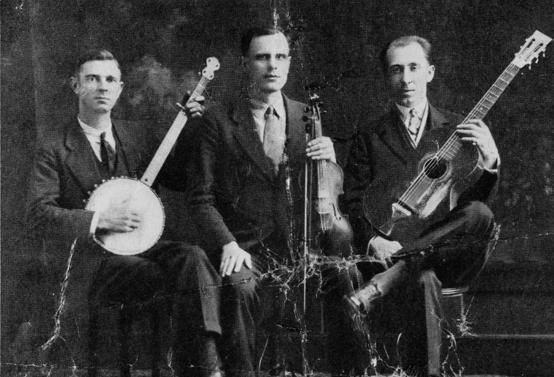
Also in the archive are recordings of guitarist-singer Memphis Minnie, singer and stage actress Eva Taylor, Reverend J.M. Gates, and country music pioneer Fiddlin’ John Carson and his daughter Rosa Lee Carson (popularly known as Moonshine Kate), who became an established solo artist and groundbreaking female performer.
“We felt it was important that this music come out in some fashion,” April says. “DAHR is a great home for music that doesn’t necessarily have a commercial market but is no less valuable to history.”
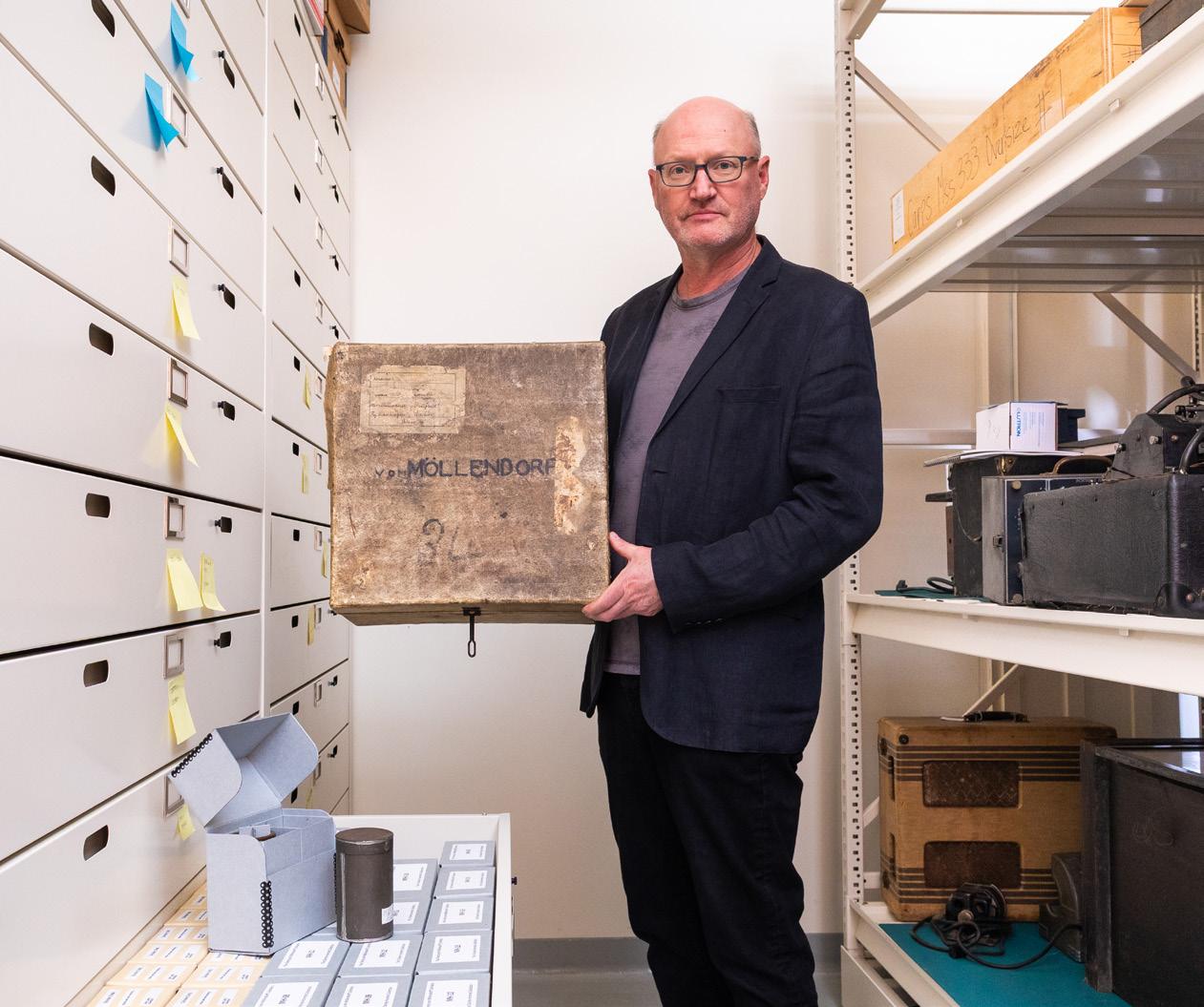
David Seubert, curator at UCSB Library's Special Collections, holds the original box of Paul Georg von Möllendorff Chinese cylinders, a collection of 16 recordings from the late 1800s.
Slashdotted
As the Ledbetters remember it, they first crossed paths with Seubert decades ago at the annual conference of the Association for Recorded Sound Collections. In 2006, they heard about Seubert’s effort to preserve early 19th-century cylinder recordings getting “slashdotted,” a term that describes when a website crashes or receives a sudden and debilitating spike in traffic after being mentioned in an article on Slashdot, a popular news site at the time.
“We were aware of what David was doing with digitization,” Lance remembers. “He had been working for years to put wax cylinder recordings online through a public-facing institution. That was definitely on our radar.”
PHOTO: MATT PERKO
The Saint of 78s
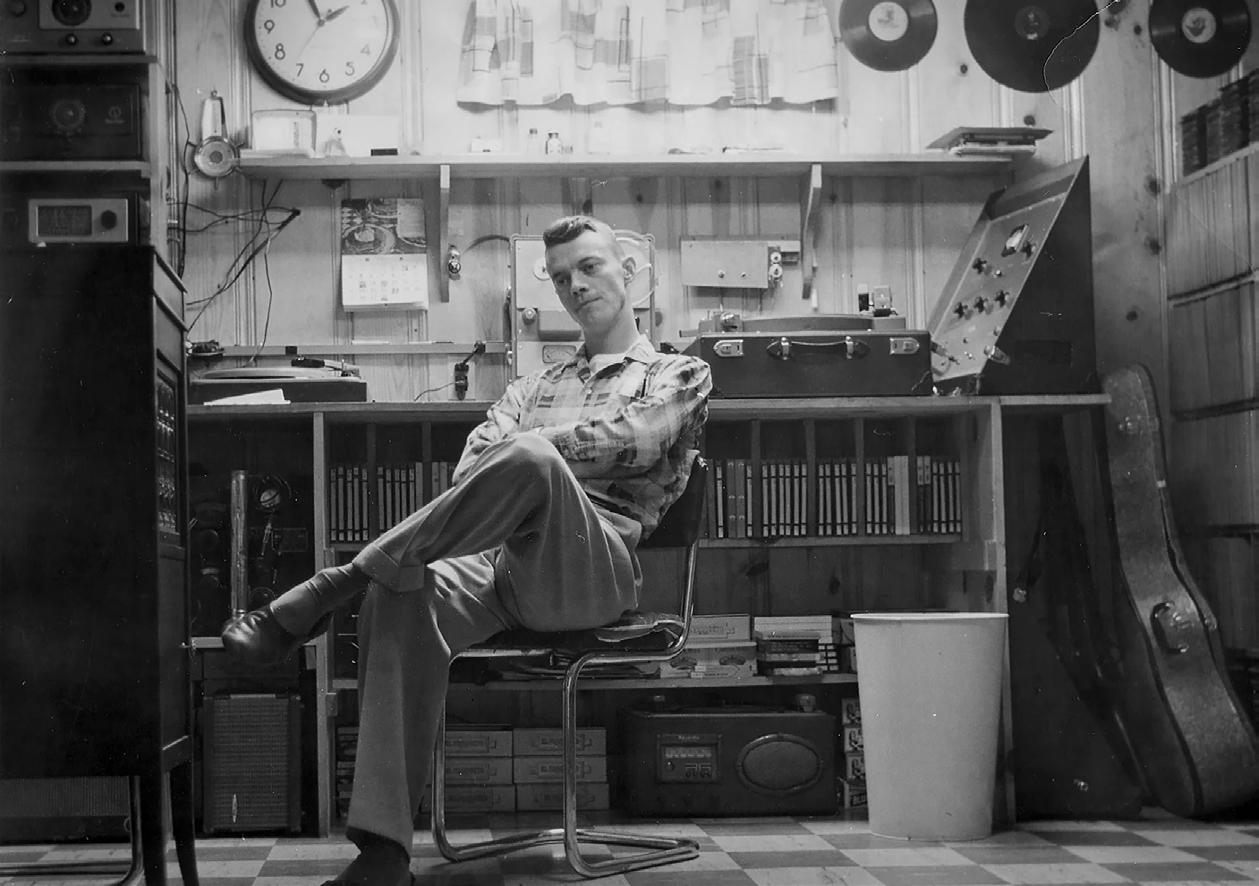
While newly uploaded Dust-to-Digital DAHR recordings come from multiple collectors — including Roger Misiewicz, Frank Mare and Kentucky-born folk artist Nathan Salsburg — the bulk belonged to Joe Bussard.
Bussard grew up in Frederick, Maryland, dancing as a boy alongside the family Victrola and trading records with neighbors and friends. His early favorites were Gene Autry and Jimmie Rodgers, and his search for more of their music launched his 75-year obsession with record collecting.
Past the outskirts of Frederick and into the coal camps of Virginia and deeper south, Bussard scooped up 78s from rural general stores. Knocking door to door, he loaded his trunk with boxes and crates offloaded by families happy to part with dusty collections for some quick cash.
Increasingly, Bussard’s collection grew to include pioneering country string bands, jazz, bluegrass, Cajun
and gospel — many of the musical seeds from which sprung the popular songs of his beloved Jimmie Rodgers and the Singing Cowboy.
In “Joe Bussard: King of Record Collectors,” a 30-minute documentary produced by Dust-to-Digital in 2005, he’s portrayed as an archivist providing an invaluable cultural service, his ever-growing collection preserving musical snapshots of traditional and often highly localized American music of the 1920s and 1930s. The era featured diverse musical dialects that existed only in small regions, sometimes even just a few adjoining rural counties. Musicians and historians note that if it wasn’t for the obsessive collecting of Bussard and others, much of this music would have vanished. When Bussard died in 2022, he left his family approximately 15,000 discs; the rarest among them could fetch several thousands of dollars from hardcore collectors.
“Joe had an exceptional collection that was built at
Below: Joe Bussard
PHOTO: COURTESY DUST-TO-DIGITAL FOUNDATION
“Joe had an exceptional collection that was built at a time when you could actually build something like that,” Seubert says. “You can’t do that anymore. Even if you’re fabulously wealthy, you could never end up with a collection that big and that good.”
Bussard wanted people to enjoy this music, Seubert adds. “But you can’t create a culture of enjoyment if they’re all locked in archives, you know? There was a dichotomy between the collection being so good that it should be in a museum. But Joe didn’t want that. So Dust-to-Digital and UCSB have threaded the needle, making the music accessible to the public for free.”
Dust-to-Digital and UCSB have threaded the needle, making the music accessible to the public for free.”
Right: April & Lance Ledbetter
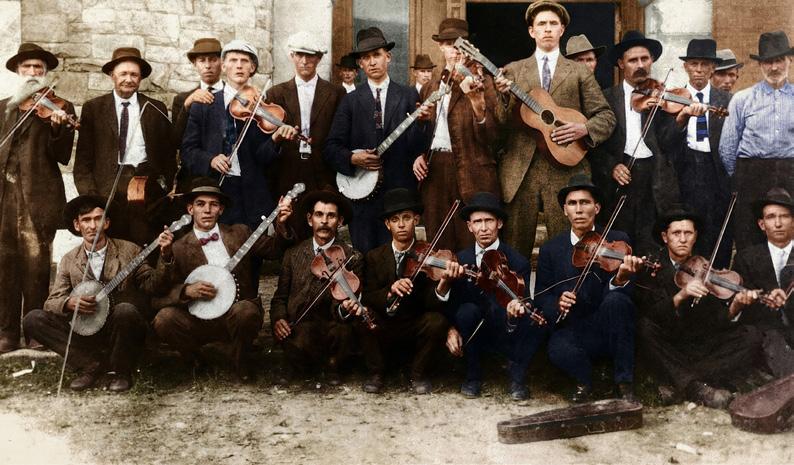
Above left: Fiddlers convention
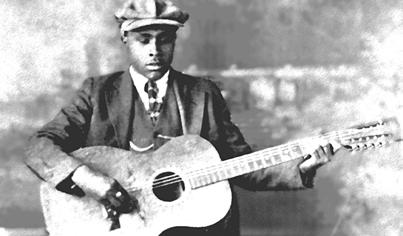
Right: Blind Willie McTell
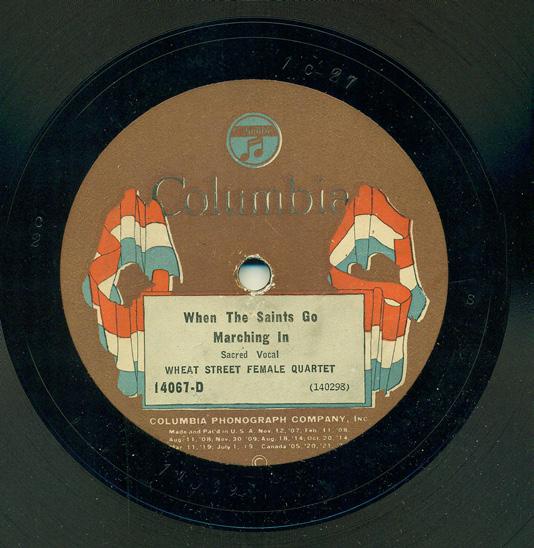
Left, top to bottom: Wheat Street Female Quartet record, Delmore Brothers, Earl Johnson
PHOTO: LIZZY JOHNSTON
Alumni
Tradition and change
A note from Executive Director Samantha Putnam
TRADITION IS AN IMPORTANT PART of any community, especially on university campuses. It connects us to the memories of a place that shaped us and gives us a reason to return. So what happens when you change a tradition?
All Gaucho Reunion, UC Santa Barbara’s annual alumni weekend, was established in 2007. It has been held during the third week of April ever since then -- for nearly 20 years. Over that time, we’ve celebrated major milestones like the 50th anniversary of the Environmental Studies program, brought the community together through signature events like Taste of UCSB, and laced up for the scenic Gaucho Gallop 5K. We’ve also introduced new favorites, including Volver, Volver, Volver and the always energizing Prof Slam.
But as the weekend has evolved, it’s time for our biggest change yet: a new date.
Join us this Oct. 15-18 for All Gaucho Reunion 2026.
Only a small percentage of UCSB alumni live in Santa Barbara. So many others hope to return to this magical place where they spent four years. When you do come back, why not experience it at its very best? Our “endless summer” stretches well into the fall, when much of the country is cooling down.
Return to the campus you once called home. Reconnect with friends. Step away from the pace of everyday life for a weekend. Whether you’re celebrating five years, 10 years, or 50, this is your invitation to reconnect.
We’re building something special for you, and there’s no better time to be in Santa Barbara or Isla Vista than the fall.
Samantha Putnam Executive Director
UCSB Alumni Association Executive Director, Alumni Affairs samantha.putnam@ucsb.edu
Kicking it ‘old school’
Fred Steck ’67 champions human connection as the key to success
BY SHELLY LEACHMAN
Remember when social networking meant actually networking socially, as in: in person? Those were the days.
For Fred Steck, they still are.
In his book “Connectability: Mastering Relationship Building in Business, Sales, and Beyond” (Fast Company Press, 2025), Steck, a former partner at Goldman Sachs, champions good oldfashioned human connection as essential to success.
It’s common sense, sure, but in a screen-based, social mediasaturated world where even talking on the phone feels like a relic (and, to many, a chore), the merits of analog interaction tend to get short shrift.
“Our connective skills are starting to atrophy,” writes Steck, who studied history and philosophy in his undergraduate years at UCSB before his long and fruitful career in finance. “We’d often rather look at our screens than at each other, and communicate through the filters that build in distance and ask less of us. As they ask less of us, though, they also give less in return.”
Steck’s humanistic approach is rooted in his 40-plus-year Wall Street career, with all due credit to Malcolm Skall. As Steck’s first-ever manager at his first-ever finance job, with investment firm A.G. Becker, it was Skall who first instilled in him the “old school” techniques he has used ever since.
Learn about people. Find connections. Remember birthdays. Listen. Show empathy and concern. Be sincere. Visit. Call. Follow up.
The deceptively simple strategies, Steck says, have been central to his life at every turn, from his years at Goldman Sachs, to owning and operating a horse ranch, to his postretirement involvement in the restaurant industry and, certainly, to his ongoing engagement with his alma mater.
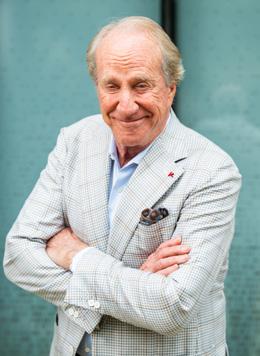
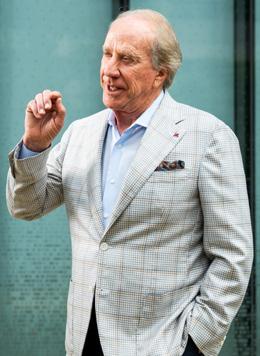
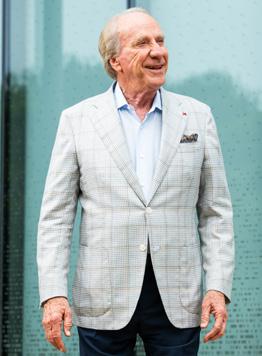
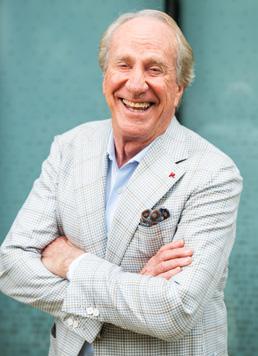
“The same things that succeed in personal relations succeed in business,” says Steck, a former chair and member of the UC Santa Barbara Foundation Board of Trustees. “If I want to get to know somebody, I’m going to think of creative ways to do that. I’m going to listen to them. I’m going to find out what interests them. If I get to know you better, I can better understand what you need and better serve you.
“As humans, until they figure out how to replace us, we have that ability to be vulnerable, to get it wrong, to not manage things particularly well,” Steck says. “We get to learn from that, and it makes us better.”
It’s a message he’s spreading as far and widely as he can, by way of “Connectability” as well as — among other things — podcast appearances, talks in boardrooms, on college campuses (including UCSB) and, of course, in casual conversation. Face-toface conversation, preferably.
“In virtually any instance, your humanity more than your software is what will build great business or personal connections,” Steck writes in his book. “Emojis can only do so much.”
PHOTOS: JEFF LIANG
Kudos, Gauchos
Multiple alums make the prestigious 2026 Forbes ‘30 Under 30’ list
Three UC Santa Barbara grads are among Forbes magazine’s latest crop of “30 Under 30” honorees, recognizing young movers and shakers in 20 categories across the arts, technology and social impact. Forbes staff and a panel of independent judges evaluate candidates on factors including funding, revenue, social impact, scale, inventiveness and potential.
Meet this trio of trailblazers working in marketing, gaming and social media:
Bianca Fernandez ’19
As head of brand engagement at Personal Day, an acne-safe skincare line, Fernandez leads brand strategy, creative campaigns and partnerships as part of the company’s founding team. In 2025, Fernandez won NBC’s advertising competition show “On Brand with Jimmy Fallon,” nabbing a $100,000 prize, a feature in Adweek, a trip to Cannes Lions and the title of Innovator of the Year.
Francisco Rodriguez ’20
Leading the recruitment of developers making user-generated content at Meta Reality Labs’ Horizon Worlds, Rodriguez doubled recruits in two months. After immigrating from El Salvador at age 3 and being the first in his family to go to college, he worked at StreamElements, Twitter, Riot Games, HoYoverse and TikTok, marketing new game launches and improving creators’ revenue.
Hailey Sani ’22
The New York-based creator, writer, director and on-camera personality has 2.7 million followers across platforms. Her popular vlogs include some about her experience as a student at UCSB. She has collaborated with major companies including Uniqlo and Dove, went viral with a Dior Beauty campaign, and hosted press junket interviews with stars including Jennifer Lopez and Chris Pratt.
Warren: Cut from America’s cloth
Peter Holoien MA ’14 weaves the spirit of New England’s small mill towns into every fiber of his company
BY SAMANTHA BRONSON
AFTER PETER HOLOIEN MOVED from Santa Barbara to Boston, he and his wife would spend their weekends taking road trips throughout New England. He quickly got a feel for the region, including its history of textile manufacturing.
“It’s pretty hard to miss out here; there are small mill towns all over New England,” says Holoien, who now lives in Vermont. “Some of the old mill buildings are still standing but abandoned. Some have been repurposed into apartments and museums and more. But there’s still a handful of mills and sewing shops that are very focused on not only making good products but also keeping the tradition alive in New England.
“Over time, this idea of textile mills sort of slowly took hold in my brain. I thought, ‘Maybe I should start a brand and play whatever part I can in restoring the industry here and telling their stories and seeing if we can make some great clothes.’”
The result is Warren, a small clothing company focused on helping rebuild the region’s textile industry. Now in its second year of operation, Warren sells a curated collection of men’s clothing meant to evoke a distinct sense of place — with products inspired by, designed and manufactured in New England. Holoien, the company’s sole employee, works directly with local mills to make the fabric for Warren’s collection and then with local sewing shops to sew it into clothing, which is designed by a New England-based designer.
The response has been overwhelmingly positive. Warren’s core customers are men, typically ages 30 to 55, who are looking for quality craftsmanship and sustainability in their clothing and who are willing to spend more for it. The reaction to Warren’s flannel shirt, in particular, has been great, Holoien says. The shirt retails for $295, and shoppers praise its unique combination of rugged durability and softness.
The story behind the shirt also resonates with customers, Holoien said. As with all Warren’s products, the shirt’s online description includes details of its origins, including where the cotton was grown, where the yarn was made into fabric, and where any other finishing details happened. Item descriptions often name the specific New England mill that created the fabric.
Jacob Long, president of American Woolen Company, praises Holoien’s commitment to understanding what it means for a piece of clothing to truly reflect New England. For example, the flannel shirt, which is made with American Woolen fabric, is weightier than most similar shirts. “Those beefier fabrics are part of what makes New England unique,” Long says. “Warren is really trying to bring back the tradition of the New England apparel scene.”
Holoien, in his own words, loves to nerd out on the history of the textile industry. Textile manufacturing was the first big industry not only in New England, he says, but also in the country. As the country grew up, some production moved to the American South to be closer to where the cotton was grown. Eventually, many larger brands moved production overseas in search of cheaper labor and wider profit margins, leaving abandoned mills in their wake.
Many images of Warren’s products use these abandoned mills as their background, locations Holoien chose intentionally to visually demonstrate the impact of offshoring and to contrast that with the work Warren is doing.
As he continues to grow the brand — he’s recently expanded into several small boutique retailers around New England — Holoien draws on the business philosophies he learned at UCSB. He’s also leaning into the connections he made with fellow classmates, many of whom are entrepreneurs themselves and were among Warren’s first customers, and he’s appreciating the importance of relationships.
PHOTOS: COURTESY
“I work really closely with my manufacturing partners, whether it’s the fabric mills or the sewing shops,” Holoien says. “I know the owners personally and how invested they are in keeping the tradition alive here. I’m excited to do what I can to make that happen. Ultimately, my goal is to make highquality clothing that’s good for the Earth and benefits small businesses in New England.”
GAUCHO CREATORS
A happy mentality
Tim O’Neil’s trailer production agency thrives on the joy of storytelling
BY SAMANTHA BRONSON
STEP INTO THE OFFICE of MENTALiTY Creative and you’ll quickly pick up on a sense of fun.
A pack of employees’ dogs happily greets visitors to the lightfilled office, where an eclectic array of movie and TV posters line the walls. Out on the deck, you’re treated not only to a view of the distinctive red tile roofs of downtown Santa Barbara but also to a sneak peek of the Pacific Ocean.
The vibrant culture and beach vibes are underpinned by a serious commitment to producing award-winning trailers for movies and television series. Outside the hustle and bustle of Los Angeles, this Gaucho-founded boutique agency has made a name for itself. The client list reads like a who’s who of Hollywood studios: Disney, Pixar, Universal, Dreamworks Animation, Apple, Hulu, Amazon. The firm has done campaigns for “The Bear,” “Bill Nye Saves the World,” “The Wild Robot,” “The Paper” and a handful of movies they can’t mention until they arrive in theaters.
“If you find the movie theater to be a sacred place, if you love the experience of going to the movies, and you go in and see your trailer play before a movie on the big screen, there’s nothing like that,” says founder and executive creative director Tim O’Neil ’01. “Our work is hard but it’s also play, and that’s what makes it fun. You’re constantly reading scripts, watching stuff, taking it from long form to short form. You’re thinking, ‘How do we make this 2½-hour movie into two minutes?’”
O’Neil started the agency in 2013, but his experience in the industry extends further back. In fact, he first arrived at UCSB interested not just in film generally but in short-form film specifically. As a kid, he’d always loved movie trailers, calling them one of his “nerd obsessions.”
After completing a double major in film and media studies and economics, O’Neil headed to Los Angeles. He worked as an assistant for a trailer company, then as a writer for trailers before joining what was then a startup, Create Advertising Group. O’Neil helped grow that company from just five people to about 100 in Los Angeles, with an additional 20 in a London office.
The work was rewarding, he says, but over time, also personally depleting. After a lot of soul-searching, O’Neil decided to switch careers and moved to Santa Barbara with his wife and young daughter to pursue a graduate degree in psychology at Pacifica. Yet after classes, internships and homework, he’d head to his garage to work on trailers for friends still in the business. Before long, he was just as consumed as before but, with his
second child on the way, something had to give. O’Neil quit graduate school after a year and MENTALiTY was born.
UCSB was instrumental in helping O’Neil build a local team, he says, crediting UCSB’s head of production, Chris Jenkins, and the film and media program with steering talented students their way. “There’s no one in the trailer business in Santa Barbara,” O’Neil says. “We couldn’t just call our friends and say, ‘Hey, want to work for us?’ You had to train people, so we just started from scratch, hired the key talent to help us train and we built this incredible team.”
O’Neil and the MENTALiTY team – half of whom are Gauchos – juggle anywhere from 10 to 15 projects at a time, all in different phases of production.
When the agency gets an assignment, the first task is understanding the goals of the trailer. Who are the target audiences? What’s the key messaging? What’s the overall tone the client wants? What’s the most emotionally engaging story they need to tell? From there, they gather and sift through everything, from footage to scripts to possible music, and begin assembling a rough structure for the first version. It’s a collaborative process that taps into the creative energy of the team.
“Every trailer is a different jigsaw puzzle that you have to figure out,” says Sydney Black ’18, editor/head of editorial. “They all have their different solutions.”
Throughout, the team reviews, revises and gets feedback from the client. The entire process, from assignment to seeing it on the big screen, can take anywhere from months to a year or longer.
Trailers they work on don’t automatically make it to theaters. That’s because studios typically work with several trailer houses to create potential trailers. O’Neil says MENTALiTY is often competing with three or four other agencies to get the so-called “finish” – the trailer the client at the studio ultimately chooses. When that happens, there’s a celebratory mood in the office and more work usually follows: the rest of the big ad campaign – TV spots, social media spots and creative content spots.
That teamwork vibe is evident in the easy camaraderie among employees, who also often hang out outside of work. It’s an advantage of being a smaller, more nimble agency, O’Neil says, as is the ability to easily take on what MENTALiTY calls its Worthy Cause Creative projects, without the interference of bureaucracy or investors in their way. That’s their way of putting their entertainment skills to use on different causes important to them.
PHOTO: JEFF LIANG
At MENTALiTY Creative, Tim O'Neil (top, center; bottom, far right) and his very Gaucho team keep the vibes inviting and produce winning work.
To be a boutique agency working on big projects, all in this beautiful location, O’Neil says, is a dream.
“When we first started, I wasn’t sure we could do this here. I thought that as soon as I told clients we’re in Santa Barbara that they wouldn’t send me projects since we were outside of L.A.,” he says. “But the location is actually an advantage. Clients love to come up here and see us. We like to tell them, ‘Come look at a cut on a Friday. Come here into the office. We’ve got a rooftop deck. You can see the ocean.’ Maybe we go out to dinner and then they have a weekend in Santa Barbara. Everybody’s happy.”
PHOTOS: JEFF LIANG
GAUCHO CREATORS
Crafting a film career Justin Tipping ’07
BY ISABELLA VENEGAS '27
THE 2025 UNIVERSAL PICTURES supernatural horror film “HIM,” starring Marlon Wayans and Julia Fox, was cowritten and directed by Gaucho alum Justin Tipping, who earned his Bachelor of Arts in film and media studies at UC Santa Barbara. Drawn to film after taking classes and studying abroad in Italy, Tipping credits UCSB’s theorydriven curriculum with shaping his approach to storytelling and cultural analysis. He points to courses in film theory and exposure to postwar cinema as especially formative, helping him understand how film operates not just as entertainment but as a medium that reflects and shapes society.
After UCSB, Tipping earned a Master of Fine Arts in directing from the American Film Institute, where he further developed his voice as a filmmaker. His work has since spanned television and feature films, earning recognition at festivals and establishing him as a director interested in blending genre with grounded, characterdriven storytelling. His projects often explore questions of identity, ambition and belonging, returning to the emotional stakes that underpin even the most stylized narratives.
he approaches directing “more like a sculptor,” uncovering the story as it takes shape.
With “HIM,” Tipping brings together sports and horror to examine the pressures of greatness and the psychological toll of success. The film reflects his interest in unexpected genre combinations, as well as his focus on personal connection to the material. Drawing in part from his own experiences as an athlete, he explores the intensity, ritual and masculinity that can define competitive spaces.
“The process from conception to screen is a very long time,” he said, noting that each version of a project reveals something new. Rather than trying to control every outcome,
Tipping describes filmmaking as an evolving, collaborative process, one that shifts at every stage, from writing through editing. That mindset continues to guide his work as he develops new projects across film and television. “You can’t create anything,” he said, “unless you have experiences.”
Living in Los Angeles, Tipping early on found collaborators among other emerging filmmakers, often trading roles on one another’s projects and building experience through hands-on work. That collaborative spirit continues to inform how he approaches sets today, where experimentation and shared investment in the story are key. For Tipping, there is no single path into the industry, only the commitment to keep making work.
“There really isn’t a ‘right’ way in,” he said, “other than you just have to create.”
ASK AN EXPERT
From mailroom to marketing exec
Shavonne Wieder ’03
BY ISABELLA VENEGAS '27
These days, Shavonne Wieder oversees marketing strategies and audience engagement for major film releases coming out of Universal Pictures, as its vice president for global brand marketing. Not a bad gig if you can get it.
And neither is the mailroom, insists Wieder. That’s where she got her start and, she says now, it was a key part of her journey in the entertainment industry.
“A few months after college, I needed a job, and I knew I wanted to work at a studio,” recalls Wieder, a member of the UCSB Alumni Board of Directors who earned her degree in film and media studies. “I had the opportunity to get into DreamWorks, and my first job was in the mailroom. From there, I worked my way up, seeing how a studio works — first at DreamWorks, then at Paramount, and eventually at Universal.”
It helped that she’d had a sneak peek, courtesy of UCSB. Through opportunities with the Santa Barbara Film Festival and Montecito Picture Company during her undergraduate years, Wieder got a valuable early glimpse into how the industry functions behind the scenes.
“So when I got a chance to move into a studio, I didn’t just have knowledge of how movies are made — I also understood how the studio system worked,” says Wieder. “It helped me understand the background of why things are the way they are in film. I really understood how these different things impacted and connected both the business side and the creative side. Those are all things that have helped me in my career.”
Today, after two decades helping to deliver films to audiences, Wieder’s work revolves around leadership and problem-solving. It’s not just about releasing movies but figuring out how to ensure audiences discover them in a shifting media landscape. “Movies come out all the time,” Wieder says, “so how do you do it differently? How do you innovate?”
The answer lies in adaptability and collaboration, traits she characterizes as crucial in marketing — and traits that, for her, were solidly instilled at UCSB, a training ground for critical thinking and constructive debate.
“In marketing, people will see things differently than you do,” Wieder says. “It’s not that they’re wrong and you’re right. It’s about connecting with how people see things and approach things. That is something really helpful that I’ve taken with me ever since.”
Sage advice for any industry, to be sure.
Wieder’s other top pro tip after 20 years in the business?
Advocate for yourself.
“No one will know what you actually want unless you speak up for yourself,” she says. “That doesn’t mean you have to be the loudest in the room. It doesn’t have to come off as bragging. It just means being your best cheerleader … sharing what you’re doing and speaking up when you want something different. It doesn’t always work out, but the key is to try.”
Worth 1,000 words
Alums Cori Close ’93 and Justin Joyner ’11 are national champions
Cori Close
As a player for the Gauchos, who she would later coach as an assistant, Close reached the second round of the NCAA tournament in 1992 and 1993. This year, as head coach of the UCLA women’s program, she led the Bruins to their first-ever NCAA Division 1 National Championship with a dominant win over South Carolina in the title game.
Justin Joyner
Joyner captained the UCSB men’s basketball team during the Gauchos’ back-to-back NCAA tournament appearances in 2010 and 2011. In 2026, as an assistant coach at the University of Michigan, he helped the Wolverines win an NCAA National Men’s Championship for the first time since 1989. He has since departed Michigan for his first head coaching role, at Oregon State.
PHOTO CREDIT: ROSS TURTELTAUB, UCLA ATHLETICS
PHOTO CREDIT: MICHIGAN PHOTOGRAPHY
Dr. Ashely Alker ’08, an emergency medicine physician and writer, released a new book, “99 Ways to Die: And How to Avoid Them” (St. Martin’s Press), sharing her experiences in life and medicine along with practical advice and humor.
Nick Feldstern ’17
joined Fox Rothschild in Washington, D.C., as an associate attorney working on federal government contract disputes and counseling businesses on legal strategies associated with federal contracting.
Ashley (Johnson ’14) Firven
a graduate of Southern University Law Center in Baton Rouge, Louisiana, was promoted to partner at her firm, after previously serving as an associate.
Tess Kenny ’21,
a newspaper journalist based in Chicago, won the 2026 Pulitzer Prize for Local Reporting as part of the Chicago Tribune team covering the human impact of immigration raids in the city.
Samantha (Booth ’09) Machock
made partner at the law firm of Wilson Sonsini Goodrich & Rosati, which provides legal services to technology, life sciences and growth enterprises worldwide. Machock represents tech and healthcare companies in consumer class and mass actions.
Bertie Magit ’13, a transactional attorney with experience spanning technology, life sciences, financial services, health, and consumer products, joined the full-service law firm Reicker, Pfau, Pyle & McRoy.
Dr. Adolfo Murillo ’79,
a retired optometristturned-spiritmaker, is the founder of Alquimia Tequila. The award-winning organic tequila brand landed on Forbes’ Best Tequila list for 2025.
Dillon Osleger M.S. ’18
published the book “Trail Work: Restoring the Paths and Stories of America’s Public Lands” (Heyday Books), blending geologic history, public lands policy and on-the-ground mapping to explore how forgotten and neglected trail networks reveal the past, and future, of American landscapes.
Caitlin
Richardson ’17, a Bell Nunnally attorney, was named a 2025 “Texas Rising Star,” recognized for her growing impact in the legal community.
Lt. Cam Schneider ’14
was named an officer of the U.S. Navy Blue Angels for the 2026 air show season. Previously assigned to Strike Fighter Squadron 122 (VFA), Schneider was one of three F/A-18E/F Super Hornet pilots selected for the demonstration team. The Blue Angels 2026 show schedule began in March and runs until early November.
Jeannette
(Jinny) Webber ’63, MA '65, Ph.D. ’86
weaves classical scholarship into historical fiction with her novel “Serpent Visions” (Bluetide Books), a story set in Bronze Age Greece that reimagines a Greek myth through the lens of her studies in myth and literature.
To submit your own milestone or noteworthy achievement, visit the alumni website
alumni.ucsb.edu/milestones
Alex Fabros, 80, makes history at UCSB
On June 11, Alex S. Fabros Jr., who turned 80 in May, became the oldest Ph.D. recipient in UCSB history.
Read the full story on The Current
Pictured: Alex Fabros (center) with Associate Dean Jin Sook Lee and Distinguished Professor Paul Spickard, Graduate Division ceremony, June 11, 2026
PHOTO: MATT PERKO
Meet the UCSB student who turned a gap year into 100 countries
BY EMMA SANCHEZ '28
“BECOME COMFORTABLE WITH BEING UNCOMFORTABLE.”
It’s a phrase Arjun Malaviya adheres to, and urges others to embrace.
For the 19-year-old UC Santa Barbara computer engineering student, discomfort isn’t
something to avoid. It’s where growth begins.
Before arriving at UCSB, Malaviya spent 13 months traveling solo through 100 countries. By 19, he had visited 126 in total. But ask him about the number, and he shrugs it off.
His journey wasn’t built on spontaneity though. During the pandemic, Malaviya enrolled in community college courses at Moorpark College. At the same time, he was quietly saving money — collecting recyclables, working part-time as an administrative assistant and investing his earnings.
Like Malaviya, his parents studied electrical and computer engineering at UCSB. Some of his most vivid memories were made from family trips. On a trip to
Peru, he was playing soccer with local kids when he had a life-defining realization. “I just kind of showed up and they were so welcoming,” he says. “They put me on a team and then we played against each other for 45 minutes, and time flew by so fast. It was that kind of experience that motivated me to go out and have even more of those experiences.”
Malaviya was only 16 when he completed his UC transfer credits from Moorpark, but starting university at 16 was not something he envisioned for himself. He remembers thinking, “I don’t want to go into college when I’m 17 as a junior. I want to take a gap year so I don’t burn out.” When he realized he could take a gap year before starting college, he saw
it as an opportunity for a different type of education — one that had been forming since childhood.
“I had this money saved up. I had this passion for traveling,” he says. “Why not combine the two?”
He calculated his budget carefully, choosing multistop flights at a lower cost, relying on public transportation and eating local street food. When possible, Malaviya also reached out to local hosts directly, sometimes receiving discounted stays once he shared his story. In total, Arjun spent $22,500 over 13 months; he compares it to a year of living costs in Isla Vista. However, careful planning didn’t eliminate uncertainty. In Moldova, a short bus
GLOBAL GAUCHOS
ride into Ukraine turned into hours spent in a bomb shelter as airstrikes began.
“Those moments shake you,” he says. “But for a year of travel and me going to where I knew some of these things could happen, it was an accepted risk.”
As he spent more time in communities facing hardship, Malaviya began asking: How can I understand this? How can I help? It wasn’t immediate, but he found himself reconsidering his initial reactions to experiences that were uncomfortable. “If someone tried to rob me,” he says, “could I really judge them? If I was living under an authoritarian government, if I had a family to feed and no opportunities, what would I do?”
The question didn’t excuse harm, but it complicated it. He saw how circumstances shape behavior. This awareness made him quicker to empathize. Despite differences in language, religion and politics, the conversations often circled back to the same core
concerns: family, stability, work, opportunity and dignity. The more he traveled, the more his belief solidified: people are more similar than different.
At UCSB, Malaviya recently took ECE 181, an introductory electrical and computer engineering course on computer
vision, where he has begun exploring how emerging technologies can be applied to global crises. The class has pushed him to think about how tools like drone imaging and visual analysis could assist regions facing conflict or food insecurity. He sees these technologies as a way for humanitarian organizations to better assess crises in areas where aid workers cannot be present.
“It gives me so much more hope of just being able to analyze situations better,” he explains. “Even if we aren’t there, we could be able to determine how we can best help people.”
For Malaviya, UCSB reflects the same spirit of exploration that defined his travels. “I feel just like when I was exploring different cultures,” he says. “I can explore different subcultures within the campus. If you go and travel and you see the similarities between people and start appreciating different cultures and being more open to different people’s perspectives, then when you come to an environment like this, it enriches your life even more.”
This summer, he plans to travel to regions facing severe humanitarian crises, including Sudan and Somalia, with the goal of contributing in any way he can. He hopes to support efforts that help communities rebuild and strengthen local infrastructure.
With Taliban members in Afghanistan
With schoolgirls in Damascus, Syria
With local people in Najaf, Iraq
PHOTOS COURTESY
Celebrating 25 years of WiSE and women in STEM
BY LOLA ALVAREZ ’27
This year marks the 25th anniversary of Women in Science and Engineering (WiSE) at UC Santa Barbara, celebrating a legacy of leadership, community building and mentorship for women in STEM.
“WiSE brings together women and people of other gender identities from across campus,” says Ella Evensen, WiSE co-vice president and mentorship program lead, and a bioengineering doctoral candidate. “Even though we have many departments represented in WiSE, we can all connect through our shared experiences in STEM fields.”
The organization welcomes graduate and undergraduate students from all majors and backgrounds, creating a diverse, interdisciplinary community.
“We have people from environmental sciences and geography, all the way to some of the hardcore engineering. It’s been really great to meet people from all disciplines, who you wouldn’t necessarily have met otherwise,” explains WiSE president and quantitative biosciences
Ph.D. candidate Emily Gemmill.
WiSE was founded in 2001 to support women in STEM, particularly their career development since women were often underrepresented in these fields. Today, the organization continues to uplift women and is working to broaden its scope of outreach and career resources to UCSB students and the local community.
“We were involved in outreach before, but it has really grown, to the point where we have 200 participants in our mentorship program, we hold
science nights at local K-12 schools, and we are working on creating a larger alumni network,” says Gemmill. “We’re definitely trying to support women in STEM from an earlier stage, whether that’s preschool or early college.”
Through WiSE’s mentorship program, undergraduates are paired with graduate students based on their fields of study, allowing mentees to gain valuable insight into STEM careers and research opportunities through conversations with experienced mentors.
“We set up informal social settings for these conversations to occur; we hold coffee hours and craft events, where it may be easier for our mentees to feel more comfortable asking candid questions,” says Evensen. This form of mentorship allows for professional development and personal connections to form outside of the classroom, in a less intimidating, more supportive atmosphere.
The mentorship program also provides mentors with validation and selfassurance in their fields of study and in their own graduate school journeys.
“Mentoring gives a tremendous sense of confidence,” Gemmill says. “When I’m mentoring undergrads, I feel more valid in my own field. I think that all of our mentors get a boost of confidence knowing that they’re supporting future scientists.”
In addition, she says, gaining a greater sense of assurance in their own fields helps mentors limit feelings of imposter
syndrome, which is prevalent in STEM.
Expanding its reach, WiSE will be providing hands-on science experiments for local youths, demystifying the assumption that STEM is inaccessible as a career.
“We created a science demonstration on tissue engineering where the children could drop a dissolved polymer called alginate into a solution of calcium to make a hydrogel, then scoop out the gel and poke it to report how squishy it was,” Evensen explains. “It was cool to walk the kids through this demo, and it helped to connect this engaging and tactile experience to what being a scientist is like. It got the kids very excited about science.”
The organization is growing a vast alumni network to connect experienced WiSE alumni with current graduate students seeking guidance about postgraduate jobs and research opportunities.
“We realized that we have 25 years of alumni who have now gone out into the industry and have a lot of wisdom that we would like to foster within our organization,” says Gemmill. “We’re also considering a graduate student mentorship program where we would pair WiSE alumni with current students at UCSB.”
Building on 25 years of progress for women in STEM, WiSE continues to combat gender inequalities by embracing diversity within its organization and ensuring that members are supported and uplifted.
Pictured are Emily Gemmill (left), WISE president, and Ella Evensen, co-vice president.
PHOTO: JEFF LIANG
You came to Santa Barbara for college. Now you’re back for the wine, the view and that table you finally booked. Santa Barbara grew up with you.