
Letter from the Associate Vice Chancellor Report Contributors
Thinking Ahead: Strategic Enrollment Efforts
Fall 2025 Enrollment Snapshot
Campus Collaboration: Enterprise Systems Renewal
Letter from the Associate Vice Chancellor Report Contributors
Thinking Ahead: Strategic Enrollment Efforts
Fall 2025 Enrollment Snapshot
Campus Collaboration: Enterprise Systems Renewal
In these challenging times of budget cuts and political uncertainties, UC San Diego’s Enrollment Management team comes prepared to persist, evolve, and continue helping our students thrive in whatever environment they encounter. The 2024-2025 academic year had us administering financial aid and scholarships with ever-changing federal and state guidelines, limitations, and scrutiny. It found us serving our campus to support the largest incoming undergraduate class in our history through TritonLink and many other ISIS-driven tools while working toward replacing nearly every system we operate. And it saw us selecting that incoming class from yet another record-breaking applicant pool, and one that continues to be the second-largest in the entire country.
Beyond this, EM continued the important work in our local community through outreach and engagement to help with financial aid literacy and college readiness wherever our local students’ dreams take them. We cannot know what the future holds in regard to availability of need-based aid or the hoops students and families will need to clear in order to receive it, but we do know that we will be in the thick of advocating for all our students to be able to afford the incomparable power of a UC degree and to ensure cost is never an obstacle.
In such a competitive higher education landscape, UC San Diego is very fortunate to have high interest from students throughout the country. Our holistic review process allows us to understand the big picture of each student’s qualifications and readiness using 13 key factors outlined by the UC. As the education environment changes around us, we know that determining readiness and providing access are a pair of objectives that are more complicated than ever. Above all else, we seek to make this UC campus the engine of opportunity it can be, to the fullest extent and with the widest lens.
Last, I’ll note that the Triton Student System (TSS) project will move us forward from systems in place for decades, and deliver new efficiencies and technologies for the benefit of students, staff, and faculty alike. On behalf of the entire campus leadership, I offer my deepest gratitude to the many staff across EM who are engaged in the TSS transformation, as they collaborate with countless colleagues across the rest of the campus. We approach this future with eyes wide open and expertise helping us make this transition as successful as possible.
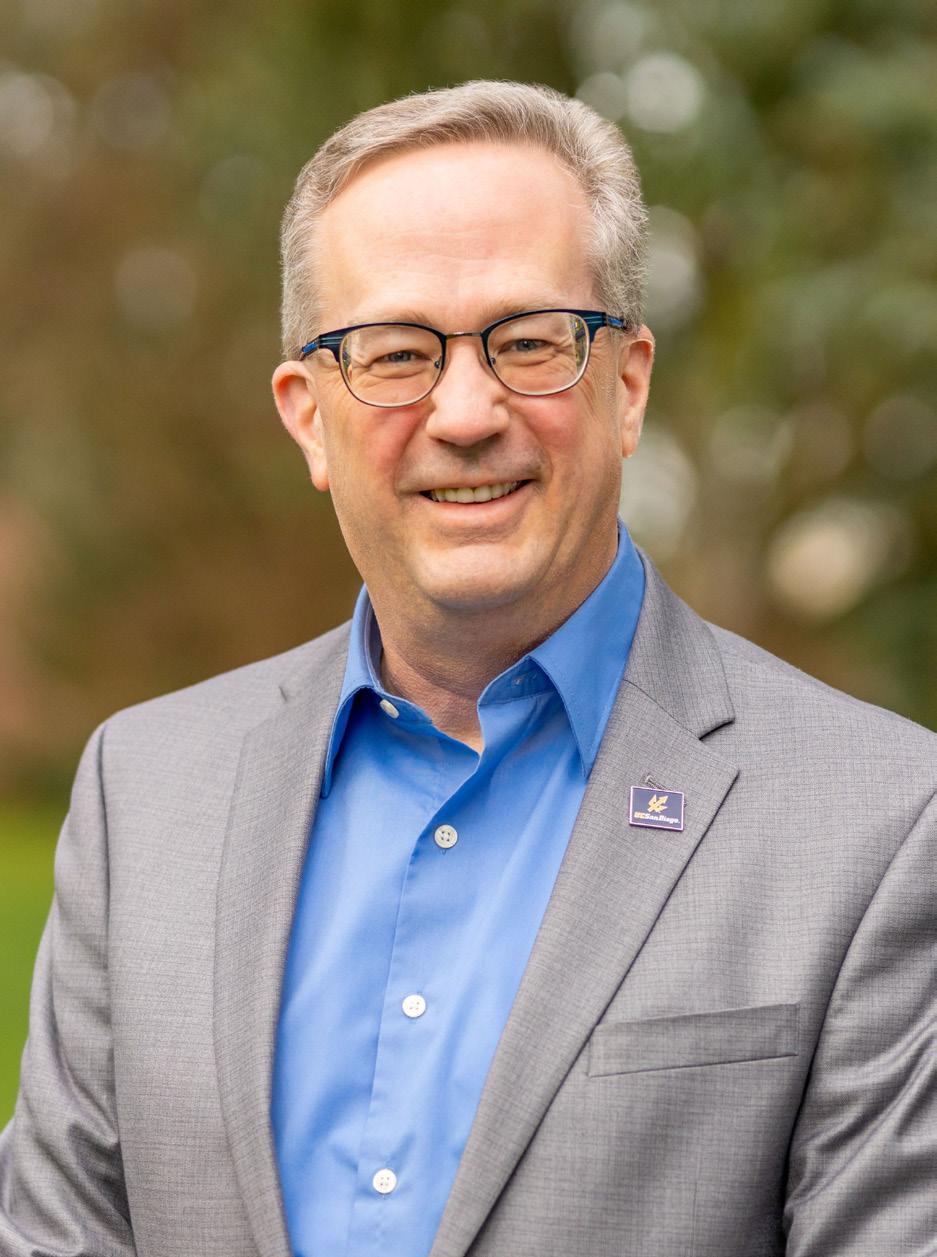
Jim Rawlins
Associate Vice Chancellor for Enrollment Management

Jim Rawlins
Associate Vice Chancellor for Enrollment Management
Raquel Aparicio Director of Student Outreach & Engagement
Lucy Dai Director of Enrollment Management Analytics
Linda Doughty
Director of Cal-SOAP (San Diego & Imperial counties)
Cindy Lyons
University Registrar
Silvia Marquez
Executive Director of Financial Aid & Scholarships
Liz Mondragon HR Generalist, EM Business Office
Stefan Montouth Director of EM Marketing & Communications
Blia Yang
Executive Director of Undergraduate Admissions
Writing: Lisa Wolf
Assistant Director of EM Creative Services
Design: Katie Bailey
Graphic & Media Design Specialist
As UC San Diego continues to see an increase in application numbers year over year, the Undergraduate Admissions team must look to the future to ensure the campus is admitting highly-qualified students while also meeting a variety of enrollment targets set in collaboration with campus leadership, as well as the UC Office of the President.
Meeting these goals is a strategic effort in the best of times, but external factors and geopolitical events must also be factored into admissions decisions as thoughtfully as possible to ensure student needs and behaviors align with enrollment expectations. With the fall 2025 admitted class, unexpected federal changes played a role as the team planned admissions offers.
“When our national government took steps in February/ March that seemed likely to have a chilling effect on international students either gaining their visas, or wanting to select a U.S. school even if the visa was granted, we had to prepare for a wide range of outcomes,” said Jim Rawlins, Associate Vice Chancellor for Enrollment Management.
While current events have posed difficulties for many communities in California and across the U.S., international students were particularly impacted by policy changes and an increase in delayed or denied visas. This uncertainty influenced a strategic decision to increase the number of international students offered admission for fall 2025, with the expectation that many students may melt or request a deferment of their admission.
This decision led to an 9% increase in the admit rate to international students.
new international students enrolled the previous year, marking an intentional increase and meeting planned enrollment targets for this group.
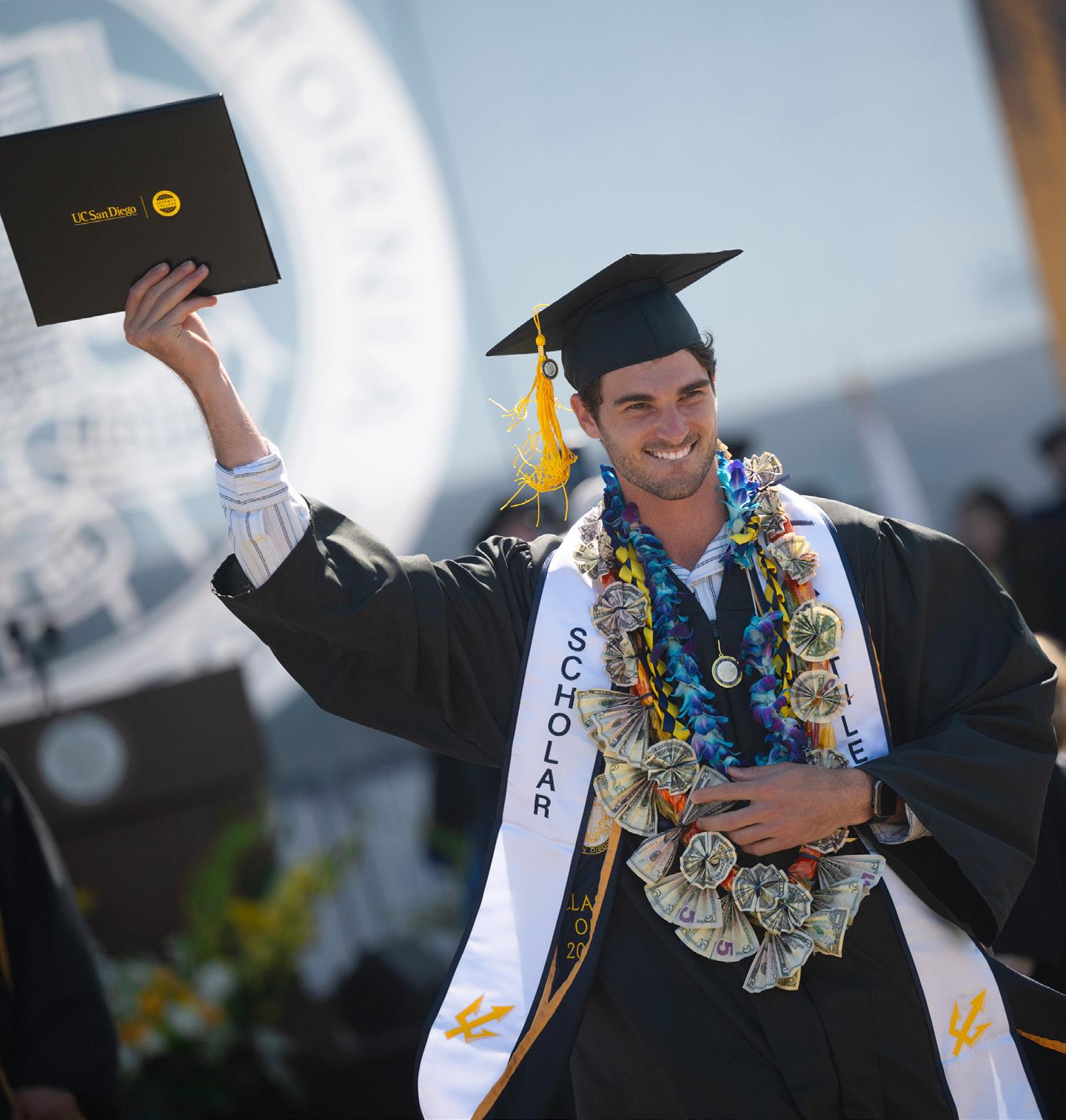
Enrollment numbers for the rest of our incoming class remained strong. We welcomed 7,801 new first-year students (an increase over the 7,330 new first-years in Fall 2024) and 3,585 new transfers (a slight decrease from 3,753 transfers in Fall 2024).
Third-week census data confirmed the success of this strategic increase, with a total of 1,874 new international students enrolling for Fall 2025. By contrast, about 1,400
“We continue to strengthen our approach to enrolling a dynamic and talented incoming class, with careful attention to both academic preparation and longterm potential,” said Blia Yang, Executive Director of Undergraduate Admissions. “Through intentional recruitment strategies, a comprehensive holistic application review process, and collaborative planning with campus partners, the admissions team continues to demonstrate resilience and excellence amid institutional, statewide, and national challenges.”
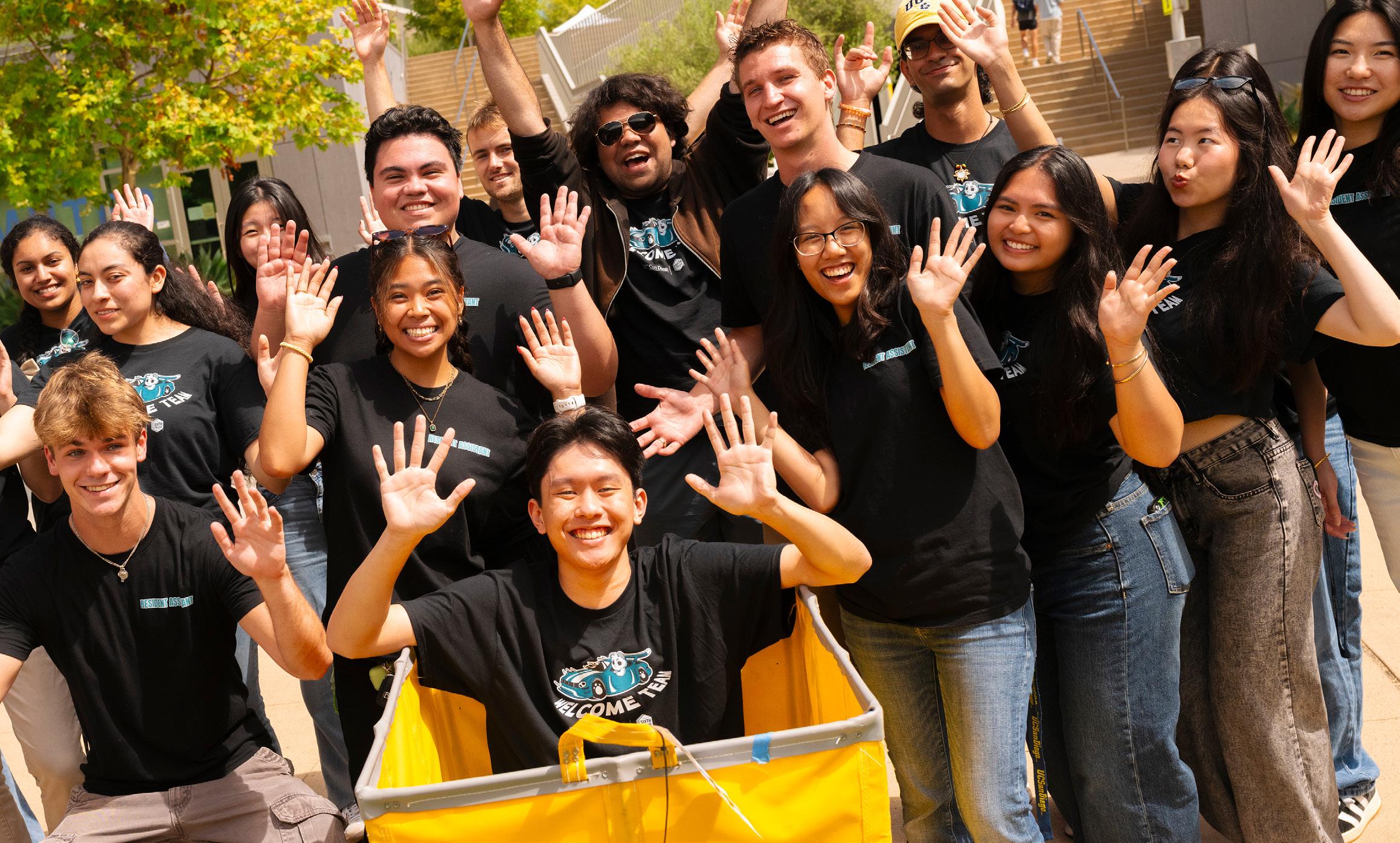


7,801 First-Years
4.07-4.27 Middle-50% GPA 33% First-generation* 13% From San Diego/ Imperial Counties
3,585 Transfers
3.35-3.85 Middle-50% GPA 37% First-generation* 85% From CA Community College 88% Permanent Address in CA
47 States & 2 U.S. Territories
72 Countries
Based on country of citizenship
*First in family to earn a bachelor’s degree
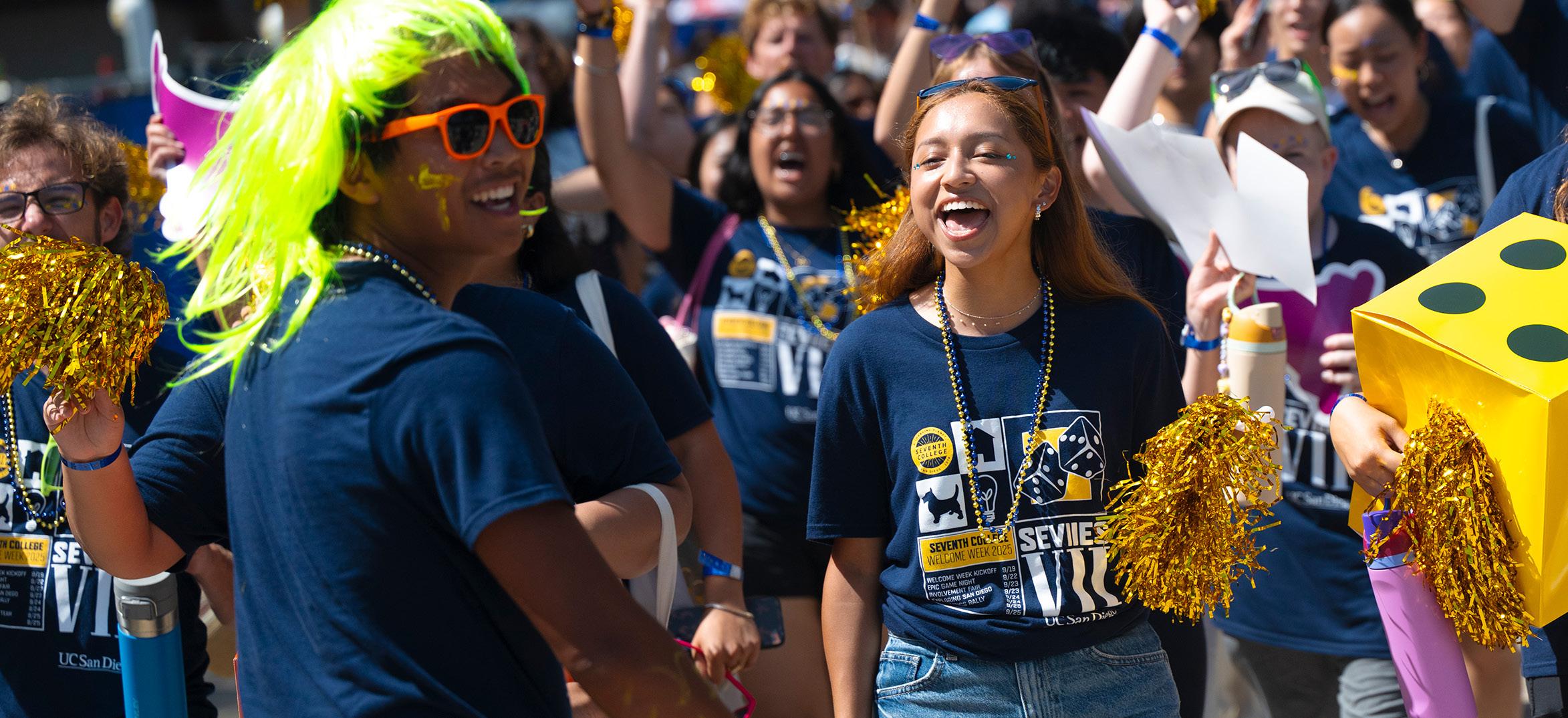

community. The sustained growth in student enrollment brought with it a clear need to address the rapidly evolving needs of the university through improvement and implementation of new business systems to support our growing student population, as well as the important work done by our faculty and staff. The Enterprise Systems Renewal (ESR) program was established in 2018 to do just that.
The highly collaborative ESR initiative is the largest technology improvement program ever undertaken at UC San Diego.
Since 2018, the program has included 23 projects (as of fall 2025) with the goal to transform and streamline core business and administrative processes, implement software solutions to better support campus workflow, and replace outdated systems with new more flexible, cloud-based solutions for better efficiency.
During the past year, the initiative launched or nearly completed several projects. Among those were the introduction of CourseLeaf, a curriculum management system CIM (Curriculum Inventory Measurement) that supports and streamlines course approvals and curriculum processes. CourseLeaf brought the School of Medicine, Skaggs School of Pharmacy and Pharmaceutical Sciences, and the Division of Extended Studies
recent ESR projects include uAchieve Transfer Articulation and Financial Support Payments Tool (FSPT).
The final project in the program is development and implementation of the Triton Student System (TSS), which will replace ISIS as the campus student information system and will allow the main campus and the Division of Extended Studies (DES) to utilize the same system.
University Registrar Cindy Lyons explained, “The Registrar team is deeply involved in launching a highly complex system. This work touches every part of the University’s academic framework—such as the academic calendar, regulations and policies, student records, and accounts receivable. Our team is responsible for ensuring all of these processes and systems are properly managed. We have an ambitious rollout, with plans to go live in summer 2026.”
Preparation and design of the TSS began in winter 2024, with building of a test phase of the project kicking off in winter 2025. The estimated completion and implementation of the TSS will begin as early as summer 2026 and will include a strategic rollout and training for staff and faculty, with additional communications for continuing students to help them navigate the new system.
Through years of working on dozens of projects, the Registrar’s Office is familiar with system implementations and has closely partnered with departments throughout the university to address needs for improvement. However, the size and complexity of the TSS project is unlike any other system implementation, especially unifying the main campus and the Division of Extended Studies into a single SIS instance. Key partners for the SIS initiative include DES, Student Financial Solutions, Health Sciences, Undergraduate Admissions, Financial Aid and Scholarships, ITS, and many others.
Lyons lauds the collaboration with campus partners as a necessity for the initiative’s success and applauds her team’s work in tackling such a significant systems overhaul.
“The Registrar’s team is a dedicated group of professionals who truly care about their work. While they’ve faced moments of being stretched thin and pulled in many directions, their performance has remained outstanding—consistently A+ level.”
To learn more about the ESR Initiative or the associated projects, please visit esr.ucsd.edu.
• ProSAM - Financial Aid and Scholarships
Technolutions Slate - Undergraduate Admissions
• APNext Interfolio
• Degree Audit uAchieve
• OnBase Electronic Document Management
• Student Activity Hub
• Tririga Facilities Real Estate
• Tririga Facilities Space
• UC Outside Activity Tracking
• Ecotime Campus Timekeeping
• Extension Activity Hub
• Financial Activity Hub
• Kuali Research and Kuali COI
• Oracle Financials and Concur
• Research Activity Hub
• Social Login
• UCPath and Employee Activity Hub
• Event and Production Management
• Kuali Institutional Review Board
2023
• Compliance Activity Hub
• Facilities Activity Hub
• Faculty 180
2026
• Triton Student System (TSS)
With nearly 70% of UC San Diego undergraduates receiving some form of financial assistance to cover the cost of higher education, the Financial Aid and Scholarships team always has access and affordability in mind for our students and Pell Grants are a vital necessity for helping lower-income students afford their education.
FAFSA changes implemented for the 2024-25 application aimed to simplify the FAFSA form and introduced new formulas like the Student Aid Index (SAI) to calculate each student’s level of financial need, as well as an expansion of Pell Grant eligibility. The new Pell formulas now determined eligibility for three categories: maximum Pell Grant, minimum Pell Grant, or SAI-calculated Pell Grant.
Thanks to these new formulas, our campus has seen a 14% increase in Pell eligibility for undergraduates, with nearly 38% of undergraduate students receiving a Pell Grant during the fall 2024 academic year. More than 45% of California residents received a Pell Grant, up from almost 42% the previous year. Across all UC campuses, more than 85,700 undergraduates are Pell recipients. Since 2022, UC San Diego has had the most Pell recipients in the system with 13,117 enrolled for fall 2024, and about 70% of those students are first-generation college students (the first in their families to earn a bachelor’s degree).
“The purpose of FAFSA simplification was to remove longstanding barriers to apply for financial aid and expand access to Federal Pell Grants,” said Dr. Silvia Marquez, Executive Director of Financial Aid and Scholarships. “While the initial rollout presented significant technical challenges for students, families and administrators, we did see a nearly 15% increase in our Pell Grant population last year. Fortunately, the 2025-26 aid year reflected a more stable and reliable experience for everyone. Application processing, awarding, and disbursement have largely normalized. I believe our Pell Grant population may decrease slightly from the first year of FAFSA simplification based on the systemic and formulaic corrections the Department of Education has made over the last year, though the final outcome will still reflect expanded access to Pell from pre-FAFSA simplification. We are stabilizing just in time for the next round of significant federal aid changes that will impact students and families in the 2026-27 academic year.”
The ongoing success of Pell recipients highlights the value of access to higher education. According to a February report from the UC Office of the President, Pell recipients at universities throughout the U.S. tend to have lower six-year graduation rates than non-Pell students. While UC campuses also seem to follow this trend, the system’s Pell graduation rates trend higher than the majority of national public universities.
UC San Diego’s six-year graduation rate stands at 83% for Pell recipients and 90% for non-Pell graduates, making the campus third in Pell graduates among other UCs, just behind UCLA (90%) and UC Irvine (84%).

As a university at the forefront of innovation, UC San Diego understands the importance of embracing emerging technologies. With artificial intelligence tools entering mainstream prominence in the last few years and the growth and improvement of other technologies, Enrollment Management has been able to harness new tools to help us serve our students and provide a better user experience.

In February, Enrollment Management signed a contract with College Vine, an AI-driven higher education platform that connects students to college opportunities. This partnership led to the launch of two AI agents, one focused on admissions recruitment and another on general outreach.
We began by launching the outreach agent, named *Cash*, which supports community outreach and engagement and promotes financial aid application completion across the San Diego and Imperial Valley–regardless of where students choose to attend college. Our second agent, *Triton*, assists students specifically interested in UC San Diego. Beginning with the incoming 2025 class, *Triton* communicated important updates and reminders throughout the summer to help students complete key enrollment steps. *Triton*’s work will broaden this fall as we recruit the next class of Tritons for the Fall 2026 application cycle.
College Vine enhances our work by using AI to do outbound phone calls, emails, and text messages that deliver timely calls to action- such as FAFSA/ CADAA deadline and transcript submission reminders. Additionally, our AI agents extend the reach of our public-facing offices by allowing students and families to ask basic questions about admissions and financial aid outside of traditional business hours. This increased accessibility supports both those transitioning to UC San Diego and, through our outreach initiatives, students across the region pursuing other higher education opportunities.
We look forward to building on this success in the coming year as we continue our mission to expand access to college and career pathways for students in our local communities.
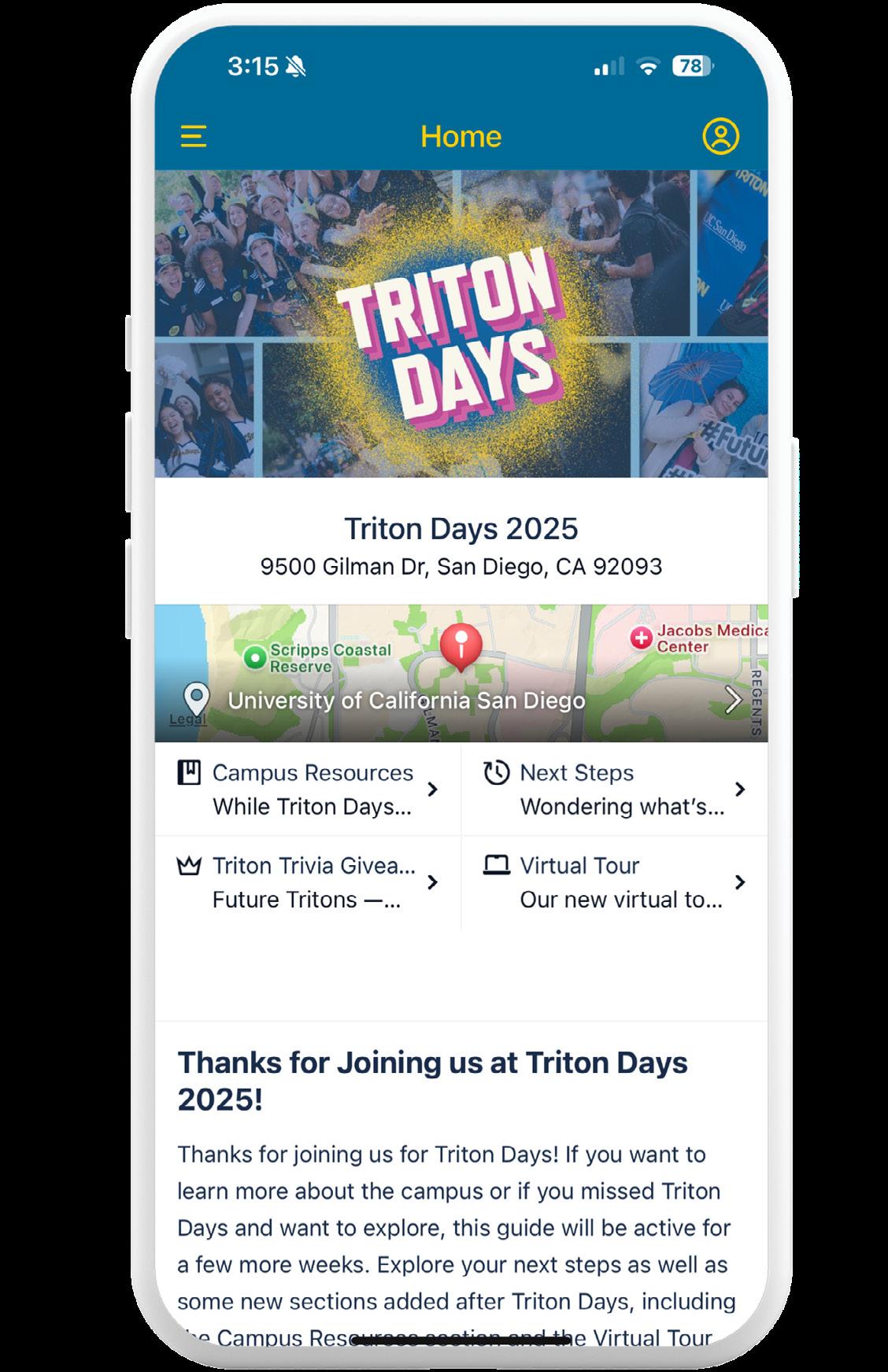
Outside of the AI space, our department also began using the Guidebook app builder for use during Triton Days, our biggest spring yield event. Through Guidebook, our Creative Services and Admissions Events teams were able to build out a Triton Days guide to replace a printed event program, providing a greener option that saved on paper usage while also giving event guests and staff the convenience of having all the event information right on their own devices.
Usage of the Triton Days guide exceeded expectations for the first year with more than 5,200 downloads and more than 155,700 sessions/impressions in the app guide. For context, we saw more than 12,000 guests which includes almost 3,800 students along with their families. Thanks to the success of the Triton Days guide, EM plans to continue utilizing Guidebook for future events and initiatives, and has partnered with several other campus departments who are also using or planning to use the app builder for their own events all hosted on the UC San Diego Guides app available on the Apple Store or Google Play Store.
“This generation of students and families are using technology to consume information and experience events in more convenient ways. It is important that we keep up with the times,” said Stefan Montouth, Director of EM Marketing and Communication. “Embracing platforms such as Guidebook provides opportunities to deliver information to prospective students and their families from the palm of their hands. We look forward to adding more to the UC San Diego Guides app by adding guides for admitted students, prospective students, a self-guided tour, and much more.”

After years of using the Ocelot chatbot as an AI assistant to address the questions of EM website visitors, our department shifted to utilizing the new AI tool offered by campus, TritonGPT, which has offered smoother user experience and better knowledge base pulled from websites across campus.
The main priority for the EM Analytics team in 2024-25 was continuing data-driven support for all units within the departments, including building and maintaining dashboards for the Enrollment Forecast Committee in Admissions, building analytic models to predict the impact of Triton Scholarships with the FAS team, and providing detailed analytical content and visualizations for reports and brochures developed by the EM Creative Services team. The team also worked to enhance projections and deeper-level analytics, including projections for admission offer accepts and enrolls and improved forecasting methodologies to provide earlier, more reliable insights to campus stakeholders.
This year, the Enrollment Management Business Office advanced key operational, HR, and payroll functions across Enrollment Management. The team closed 3,298 ServiceNow tickets and received strong survey feedback highlighting responsive communication and dependable problem-solving. EMBO transitioned all student employees into the Co-Curricular Record, strengthening career-readiness competencies and providing an official record similar to an academic transcript. We increased awareness of Travel guidelines, offering clearer direction for staff and supervisors. The team supported over 140 hires across career, contract, limited, and Per-Diem appointments, ensuring smooth onboarding and policy compliance. EMBO also continues to partner with The Collaborative, working with the intention to strengthen culture, teamwork, innovation, and process efficiency, in a partnership with the Majority Administrative Office of Academic Affairs.
The San Diego and Imperial Counties Cal-SOAP Consortium successfully served over 10,000 students across 47 high schools in 10 school districts during the 2024–2025 academic cycle. Given the geographic and demographic diversity of the region, the Consortium implemented a tiered service delivery model. This model prioritized schools with the highest percentages of low-income and first-generation students, as well as those demonstrating the greatest academic need. This strategic approach, targeted to 18 high schools that could most benefit from additional support. As a result, 12 of these schools demonstrated improved financial aid application rates compared to the previous cycle. Overall, the region experienced an 8% increase in FAFSA and CADAA completion rates over the prior year. Our improvement was driven by the following best practices: Strengthened collaboration with districts, school leadership, and counseling staff; ensuring counselor participation in California Student Aid Commission (CSAC) training sessions; early engagement with parents and community organizations to build awareness and understanding of the financial aid process; and strategic use of data to inform and guide program decisions.
Over the past year, Creative Services delivered several significant accomplishments in support of all of our EM partners. We completed and launched the first EM Strategic Communications Plan and produced a comprehensive Marketing Analytics Report, establishing a new quarterly reporting cadence to keep staff informed of trends across email, social media, EM websites, brochures, the Guidebook app, and more. Creative Services fulfilled more than 300 project requests from EM units and campus partners, launched Guidebook for Triton Days, while finding ways to expand its use for future initiatives. The team redesigned the Cal-SOAP website to better support students and families, refreshed the admit packet while identifying meaningful cost savings, and partnered with Admissions to reimagine recruitment materials that balance budget constraints with an improved digital experience. Creative Services also strengthened collaborations with University Communications, sharing resources and strategies to enhance messaging to prospective and admitted students.
After navigating one of the most challenging years in recent memory with FAFSA simplification, the Financial Aid and Scholarships office was on steadier ground this past year as we entered the first full year of implementation. Compared to last year, this cycle has been more stable and, in many ways, one of our smoother starts despite significant resource changes - from people to institutional knowledge - that limited our overall capacity.
Key improvements came from receiving federal data on time and having a clearer understanding of where data gaps would appear under simplification. That knowledge allowed us to plan earlier and more effectively than last year, when much was still unknown. We were also better prepared to support mixedstatus students through FSA ID exceptions, an area where we actively advocated to address concerns and fears.
At the same time, we are realistic about what lies ahead. Rising cost of attendance and anticipated policy changes–including HR1, the “One Big Beautiful Bill Act”–pose risks to already vulnerable aid programs and signal the likelihood of another challenging aid cycle. We expect these changes to be finalized very late, leaving institutions with minimal time to operationalize. Over the past year, we have closely monitored these developments and are preparing accordingly.
This year, Outreach and Student Engagement strengthened connections with local schools and organizations to enhance access and support student success. Over 1,800 students visited the campus as part of coordinated outreach efforts, including partnerships with LCFF+ programs, middle school AVID initiatives, and early college experiences. Highlights included visits from Fleming Middle School, Mains Elementary AVID students, and families from the Comité Organizador Latino de City Heights. Community partnerships continued to strengthen through collaborations with organizations such as the Young & Prosperous Foundation, Teens Rise, and Reality Changers.
Additionally, we advanced the UCOP-funded Student Academic Preparation and Educational Partnerships (SAPEP) collaborative three-year plan, supported work-based learning through the Promise Zone Jobs & Education Workgroup, and contributed to our regional K–16 initiatives by presenting on math and workbased learning pathways that span high school to community college. An internal quarterly meeting for UC San Diego Outreach Partners was also established to improve collaboration among campus units engaged in community outreach. Support was also extended for data-sharing agreements with community colleges and high school districts to help build a stronger cradle-to-career pipeline.
connected users to all of our digital assets and websites. We plan to continue leveraging technology to increase systems for application review, validating final documents, and maximizing use of data for future outreach and graduates. The team also launched the Student


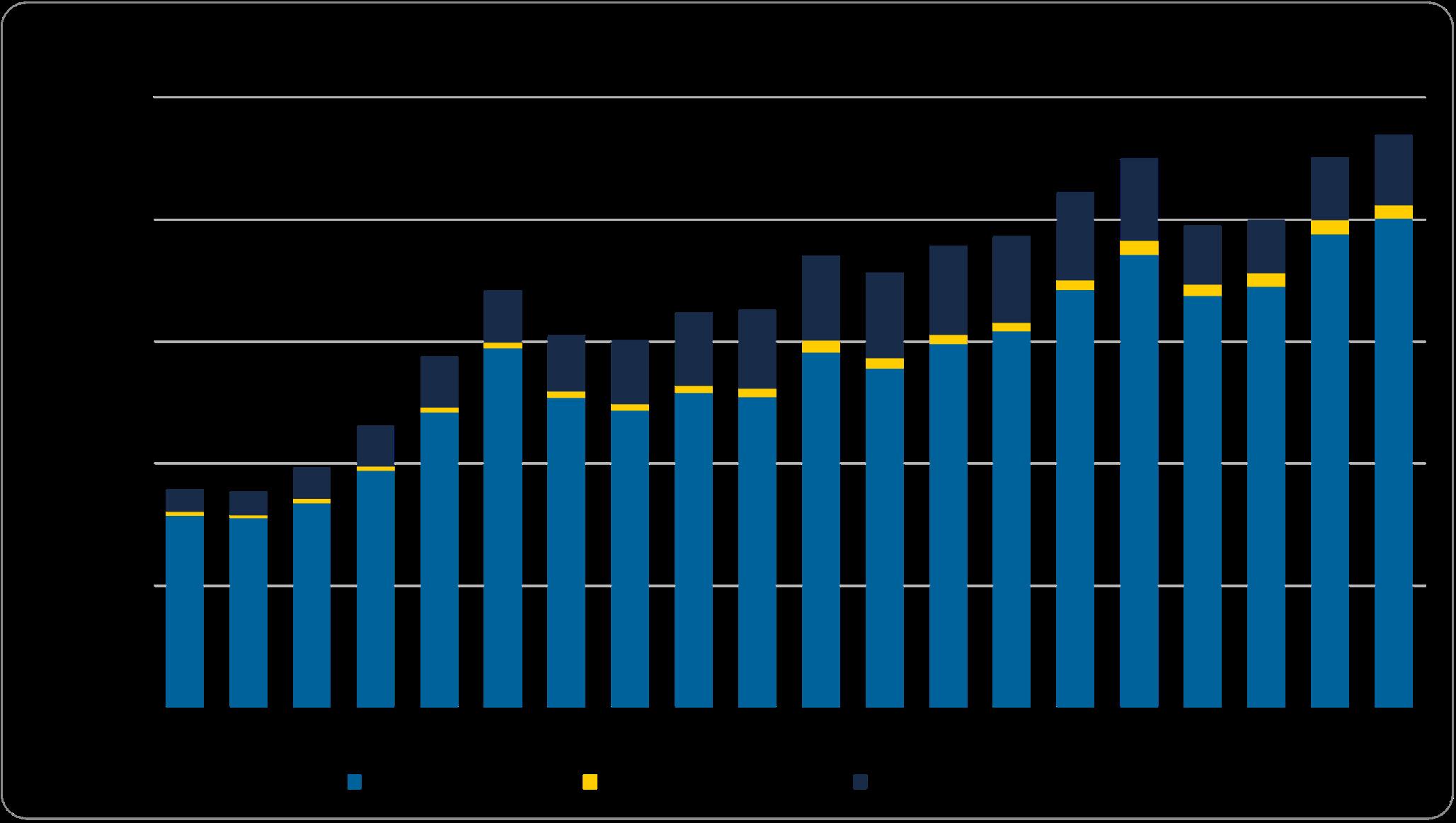
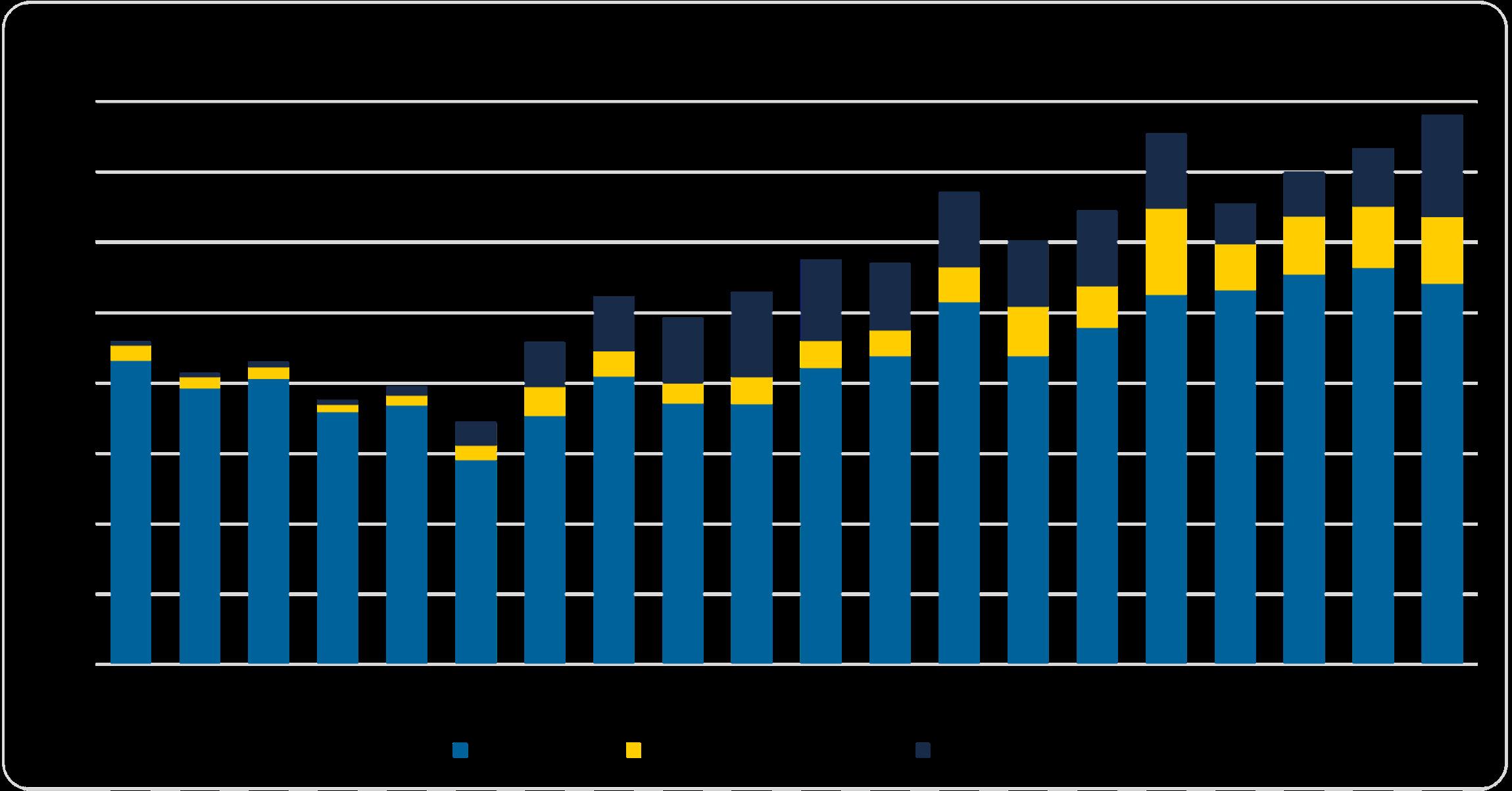
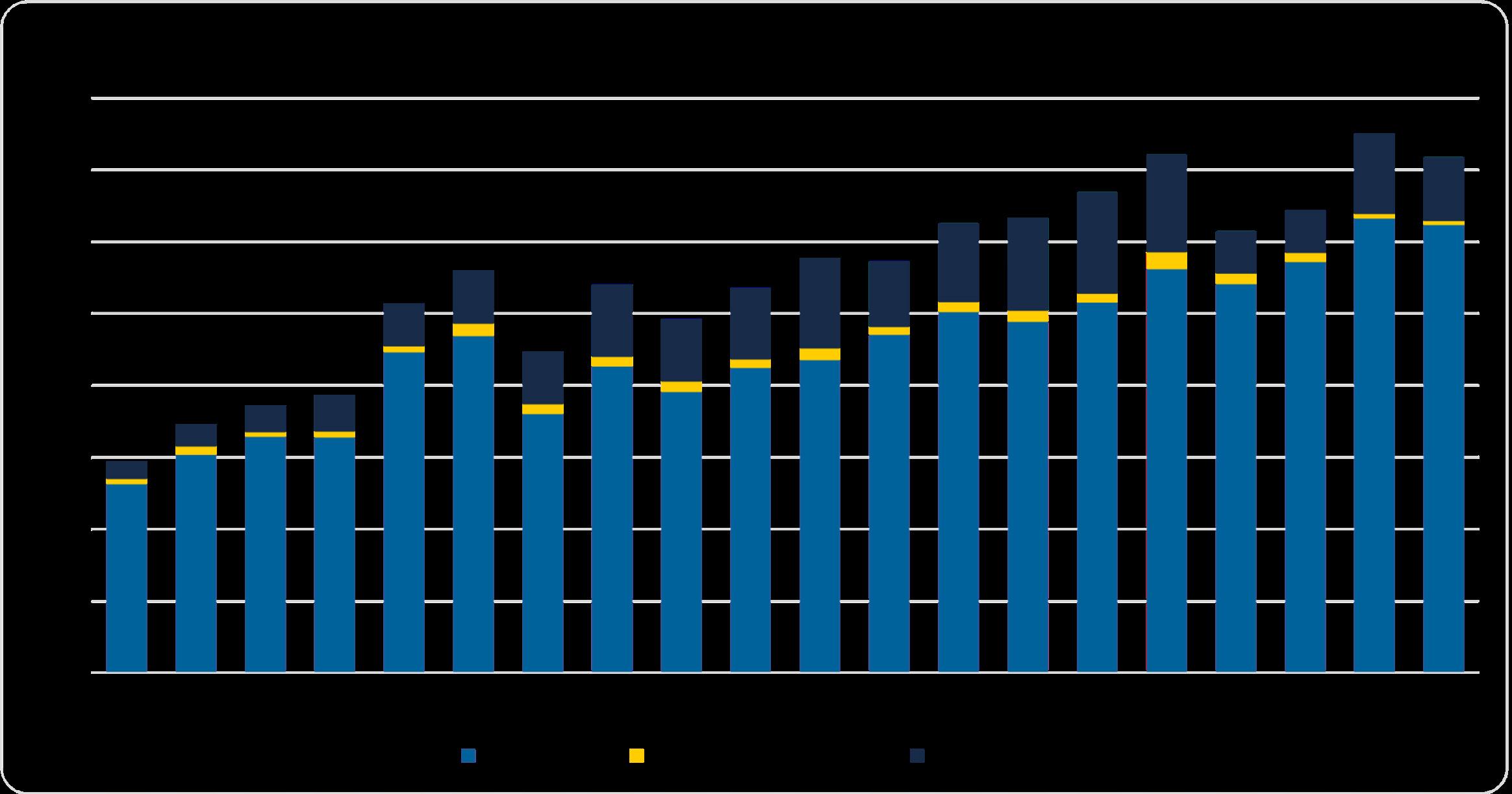
A look at the 20-year enrollment for incoming first-year and transfers overall and broken down by residency status.
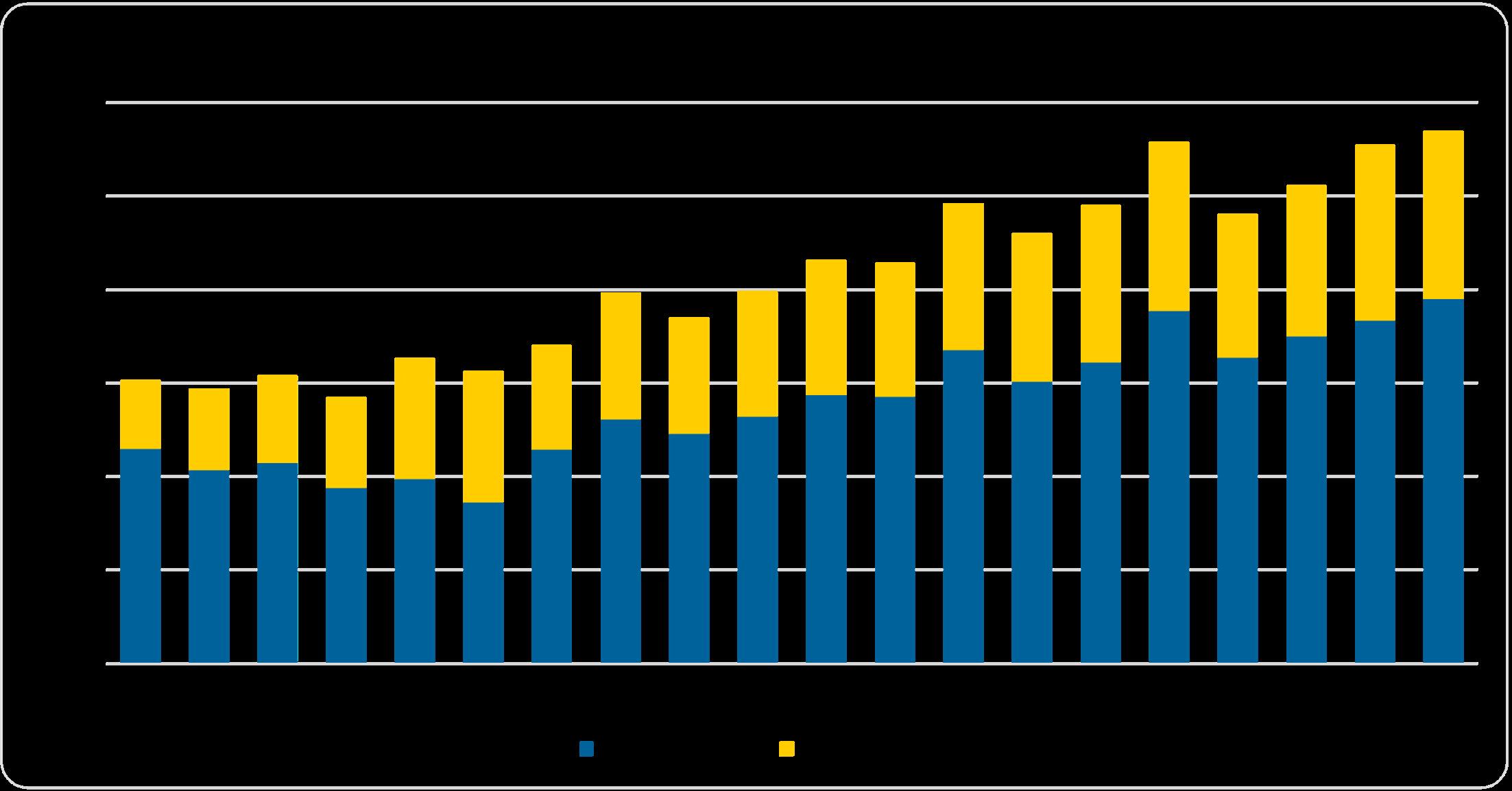


First-Year Enrollment
Transfer Enrollment
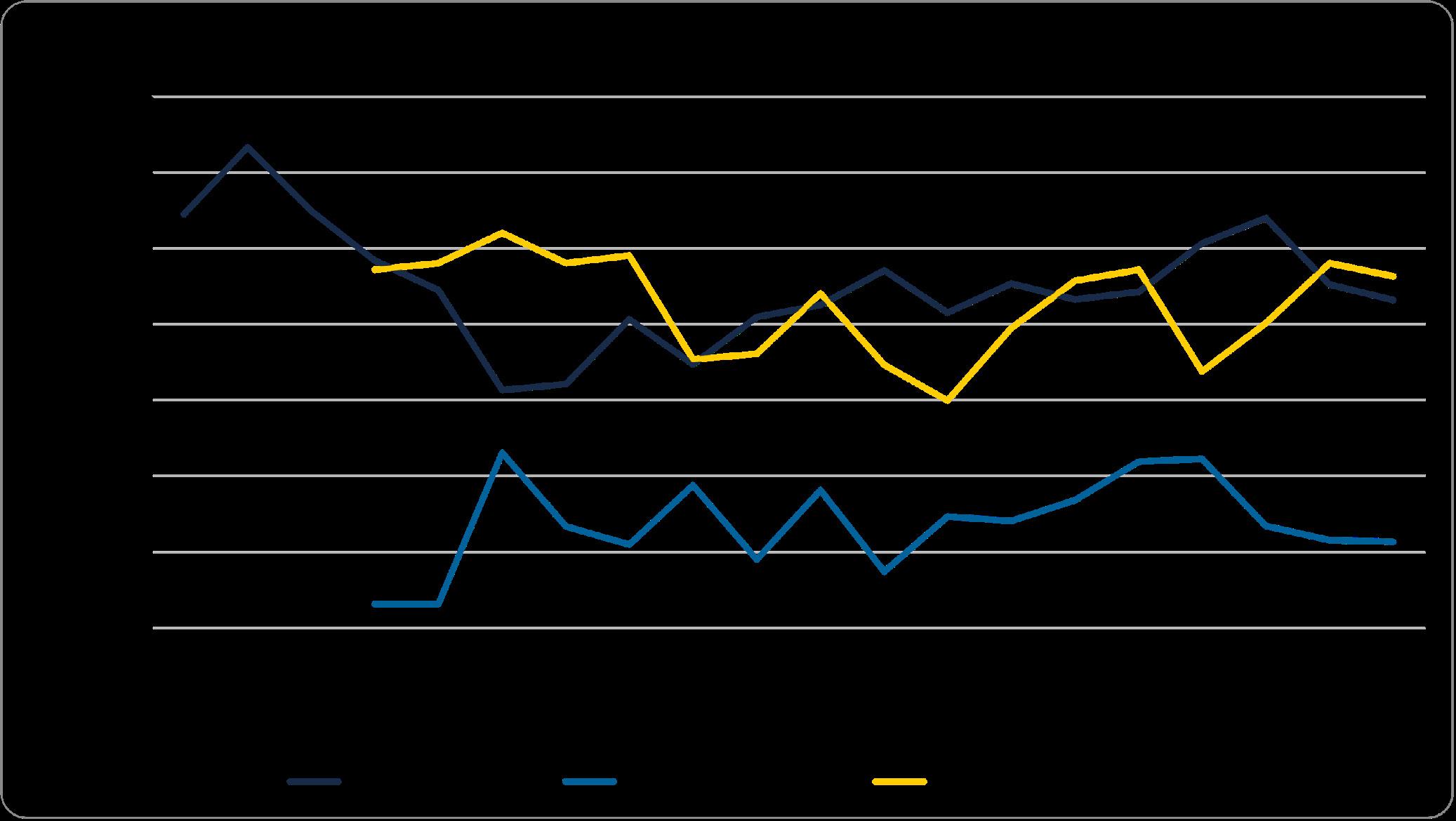
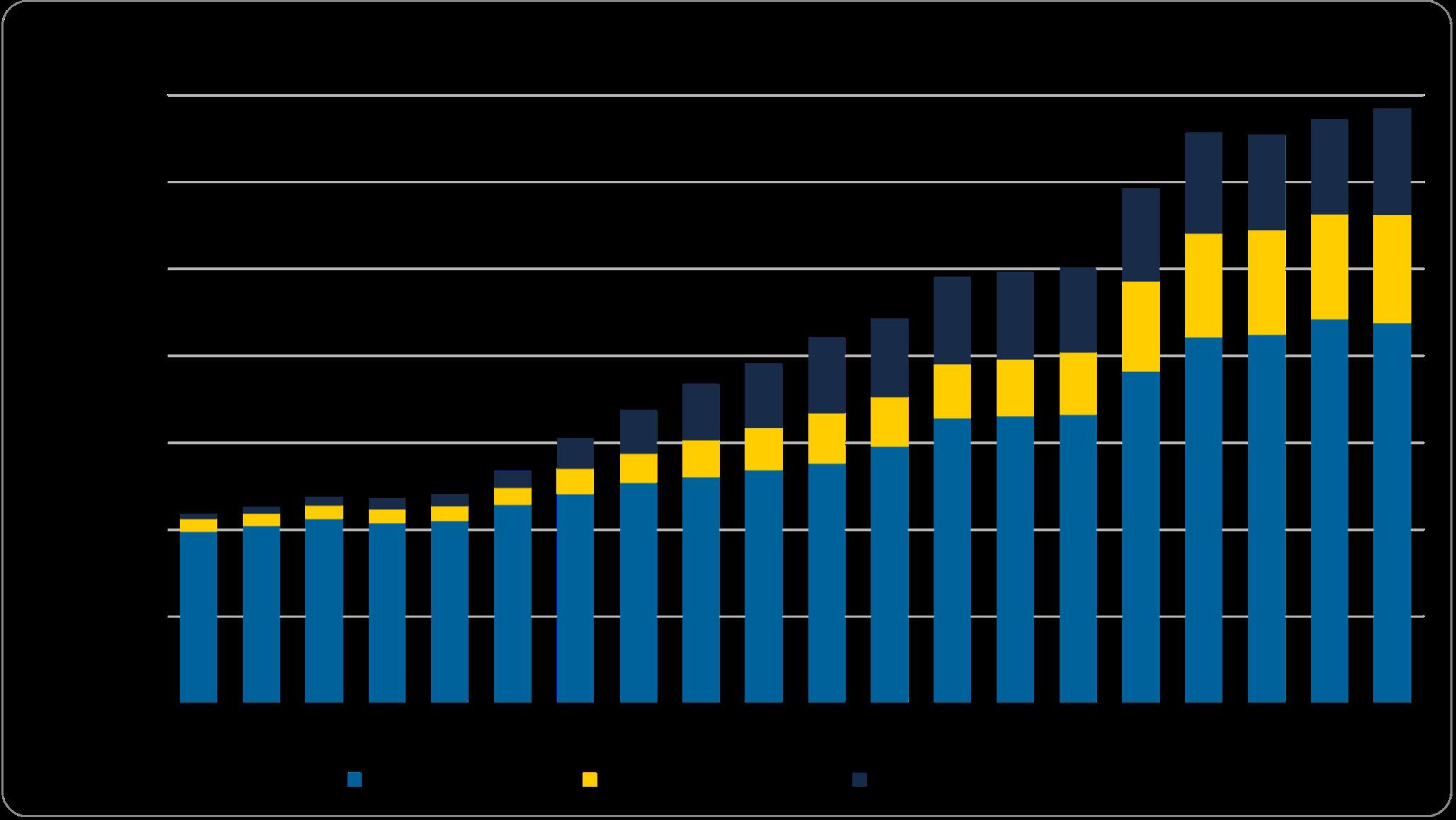
A 20-year look at first-year application numbers, admit rates (percentage of applicants offered admission) and yield rates (percentage of admitted students who accepted their offer of admission).
First-Year Apps




First-Year Admit Rate
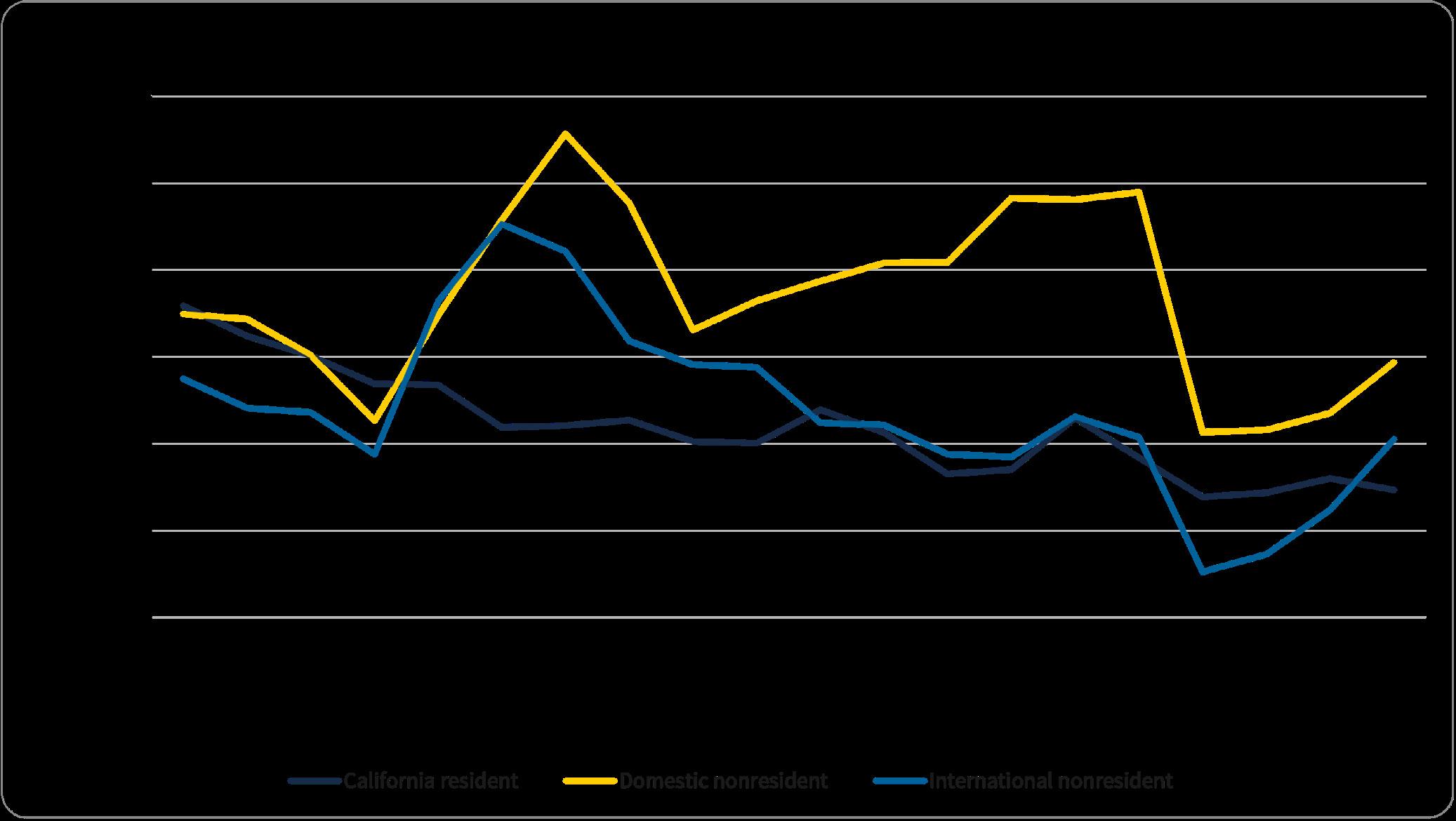
First-Year Yield
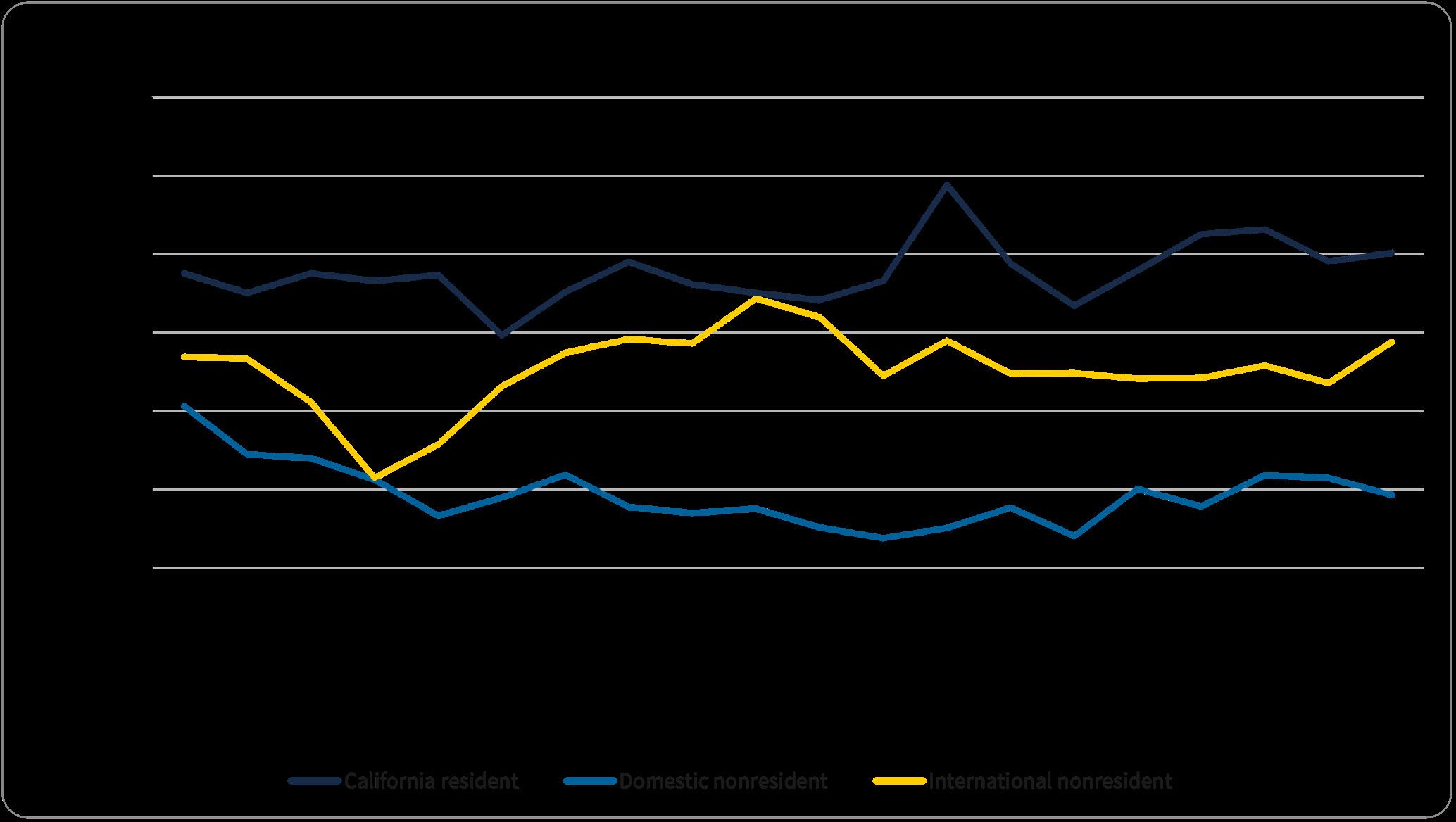
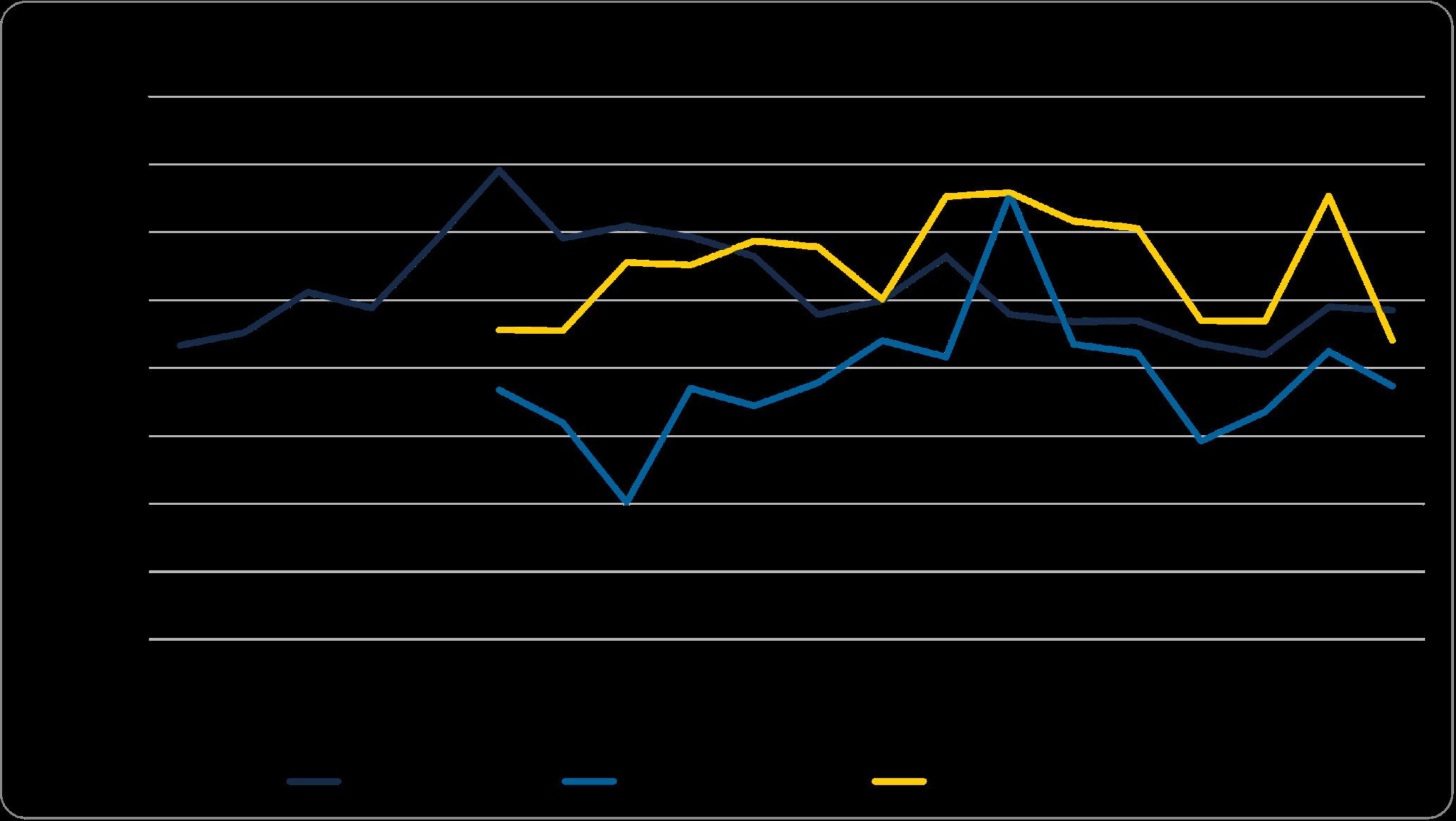
A 20-year look at transfer application numbers, admit rates (percentage of applicants offered admission) and yield rates (percentage of admitted students who accepted their offer of admission).
Transfer Apps