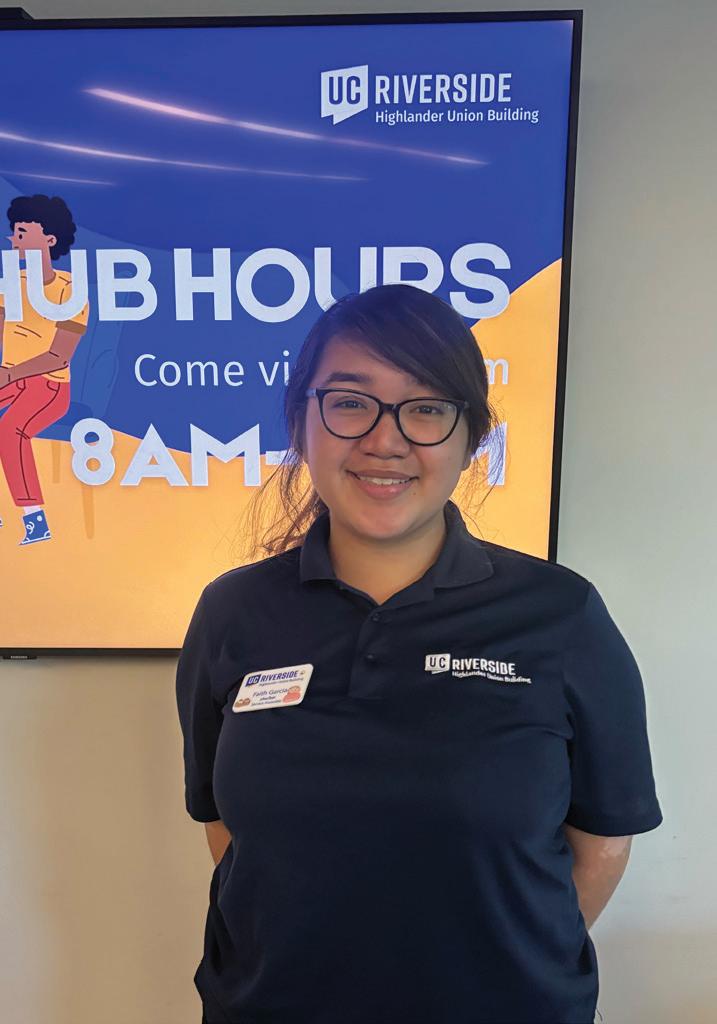
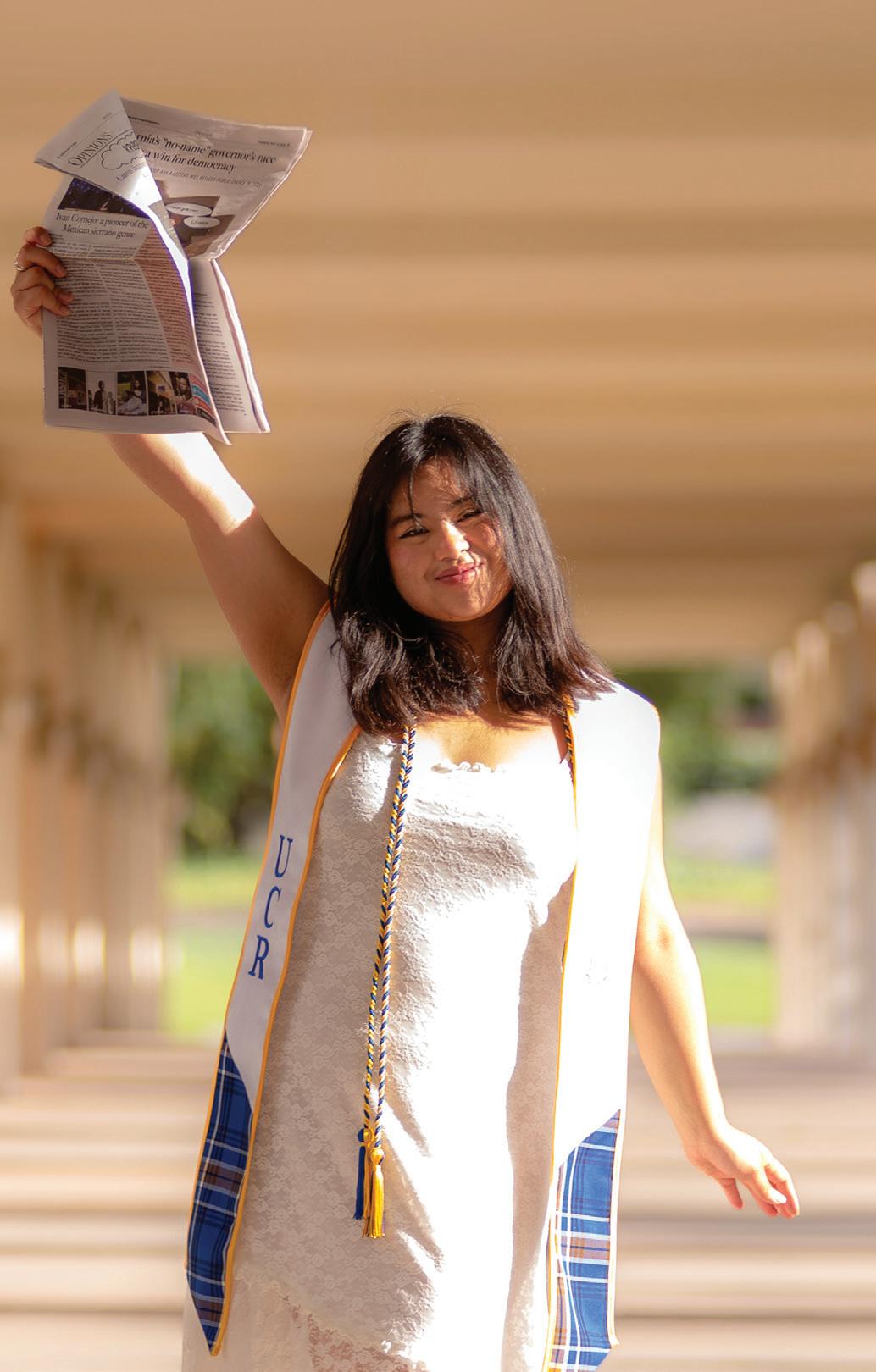
“This is my first year of fully working here [The Hub], and honestly, I feel like for me, even though it’s drastically different from my major and interest, I feel like I’ve learned a lot more working with the community. I’ve always wanted to put myself out there and provide great customer service.
For me it’s very rewarding, and it helps me train myself for the real world and that there are many types of students that come along the way. It also helps me to network myself by enhancing my communication skills, providing answers to certain questions that people may have. Another thing about working at the hub, is not only is it great, but you also meet many people along the way. It’s little things here and there that make this experience at working at the hub so rewarding.”
Third year
Cellular Molecular and Developmental Biology
CONTACT US
The Highlander 101 Highlander Union Building Riverside, CA 92521 www.highlandernews.org editorinchief@highlandernews.org
TIP LINE: (951) 8221-2105
Help the Highlander stay on top of what is happening on campus and in the general UCR community. Call this number and leave a message for the Editorial Board with your tip. Be sure to include your full name, relation to UCR, and a number or email address where you can be reached for more details.
LETTERS TO THE EDITOR
The Highlander accepts letters from the campus community. They must be 600-800 words at length and include the author’s name and contact information. Topics should be UCR-centric and/ or pertain to our generation of students. Contact Opinions Editor Cecile Diroll at opinions@highlandernews.org by Wednesday if interested in writing a letter and submit the completed letter by Saturday at noon. Letters can and will be rejected if it does not meet requirements.
LEGAL
The Highlander is published and copyrighted by the Highlander for the students, faculty and staff of UCR. All rights are reserved. Reprinting of any material in this publication without the written permission of the Highlander is strictly prohibited. Readers are allowed one free copy of the newspaper. For additional copies or for subscription information, please contact the Highlander. The Highlander fully supports the University of California’s policy on nondiscrimination. The student media reserve the right to reject or modify advertising whose content discriminates on the basis of ancestry, color, national origin, race, religion, disability, age, sex or sexual orientation. The Highlander has a media grievance procedure for resolving complaints against it. All inserts that are printed in the Highlander are independently paid publications and do not reflect the views of the Editorial Board, the staff or The University of California or the Associated Students of UCR.
Classified: $2 per line; 121 characters (spaces, dashes, etc.)
Faith Garcia (She/Her)
staff photographEr Elena Versage photo@highlandernews.org
THE EXECUTIVE BRANCH BEGINS TRANSITIONING FOR THE UPCOMING ACADEMIC YEAR.
Writer
On May 20, the Associated Students of California, Riverside (ASUCR) commenced their weekly Senate meeting at 7:02 p.m. and adjourned it at 8:14 p.m.
The meeting began with State of the Association (SOTA) reports from the Office of the President, Office of the Vice President of Marketing & Promotions, Office of the Personnel Director, Office of the First Time College Student Director, Office of the Elections Director and the Office of External Affairs.
With the academic year coming to a close, a majority of the presentations consisted of celebrating the work of their respective offices and gave sitting officials the opportunity to formally close out their terms.
One prominent amendment that was announced was that the Personnel Committee would be permanently
dissolved and that the Personnel Director position would be moved to the Office of the President.
The Senate then opened committee reports with a review of SR-S26-006 or “Resolution to Make Climate Literacy G.E. Requirement.” Presented by Vice President of Sustainability Anahita Hooshyari Far along with the Green Campus Action Plan (GCAP) Policy Team Director Eva Luna and GCAP Policy Team Member Kevin Leung, they explained that they were seeking support from ASUCR to advocate for efforts to make climate literacy a general education requirement in the future. Following questions from the Senate regarding potential specifics of its implementation, the resolution passed 14-0-0.
Executive Director Asha Nettles then presented SB-S26-008 or “Bill to Amend Bylaw Chapter: Hiring & Firing,” which detailed “progressive
discipline” guidelines, beginning with a verbal warning and expanding into suspension and dismissal. ASUCR would need to abide by when considering firing a member to maintain productivity while supporting struggling ASUCR members.
To close committee reports, VPS Hooshyari Far presented SB-S26011, SB-S26-012 and SB-S26-013, stating that the series of legislation would support R’Bus, a service which provides transportation around campus to disabled students, by establishing a structure for committee meetings. The legislation would attempt to support the program’s continuance, all passed 14-0-0.
The Finance Committee’s Finance #21 Hearing Minutes was approved 14-0-0 and then the Senate approved GCAP Grant 24 to fund “Project HydroFlower.” The project would take the unused greenhouse near the
agricultural operations center and turn it into several working hydrochronic systems which would serve as an engineering and agricultural demo passed 13-0-1.
Grant 25 is planned to allocate GCAP funds to repair campus solar tables. The proposal passed 14-0-0. VPS Hooshyari Far called upon ASUCR members to take pride in their work regardless of a lack of recognition. VPS Hooshyari Far stated, “We are proud of the work that we do … I really hope that y’all carry that mindset next year to get rid of your shame.” In round table announcements, VPS Hooshyari Far called on the current and incoming Senators to combat the “culture of shame” within ASUCR which she elaborated has been “added upon by the Highlander,” and that while she plans on “holding people accountable,” she encourages ASUCR members to be proud of their work.
ASUCR 2026 - 2027 special election results
JOSÉ
DEL ÁNGEL News Editor
On Wednesday, May 20, 2026, the Associated Students of the University of California, Riverside (ASUCR) announced the results of the 2026-27 special elections which began at . During a closed-session meeting, ASUCR senators selected and appointed the following students to serve as members of next year’s
student government.
A second meeting, scheduled for May 27, 2026, will continue the appointment process to fill the positions of vice president of finance, personnel director, transfer student director, nontraditional student director and first-time college student director.
Executive Cabinet Results:
Elections Director: Joanna Castro
Senate Election Results:
College of Humanities, Arts & Social Sciences
Senator: Vanessa Anchana & Athena Ibarra
School of Public Policy: Sophia Bai
KASSANDRA AGUIRRE Staff
JUSTIN HSU / THE HIGHLANDER
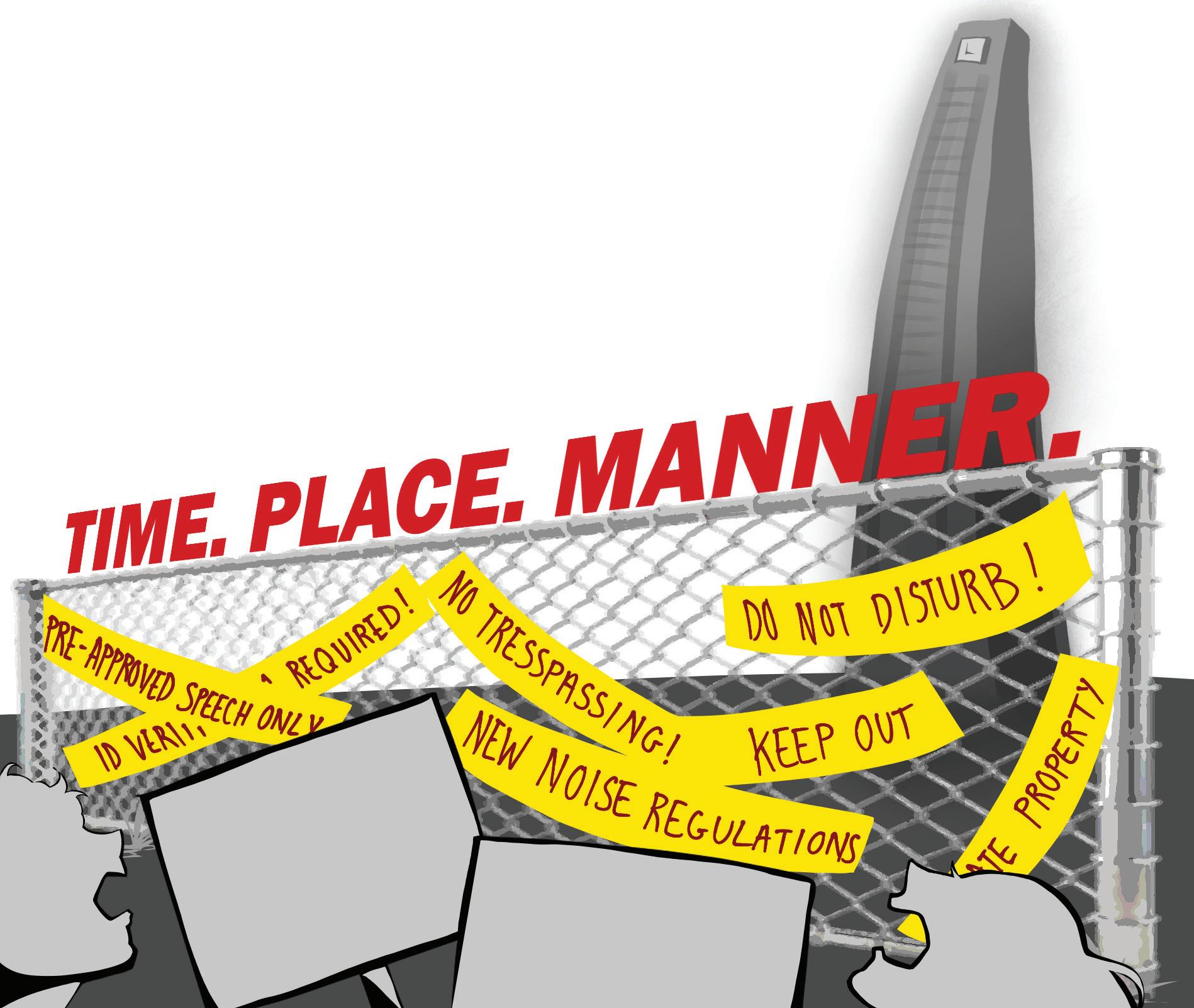
The Expressive Activities: Time, Place and Manner Regulations
UCR REGULATIONS DICTATE HOW, WHERE AND TO WHAT EXTENT STUDENTS ARE ALLOWED TO PROTEST ON CAMPUS.
JOSÉ DEL ÁNGEL News Editor
The University of California, Riverside updated its campus policy governing demonstrations, protests and other expressive activities in an effort to clarify rules surrounding free speech, public assembly and campus operations.
The policy, maintained by the university’s Chief Compliance Office, outlines when, where and how individuals may engage in expressive activities on UCR-owned property. The policy states that the revisions were made to reorganize and clarify existing time, place and manner restrictions, align campus regulations with directives from the University of California Office of the President and clarify how the policy relates to other university rules.
The revised policy first took effect on Sept. 3, 2024, on an interim basis with approval from the chancellor. Final revisions, including additional clarification regarding masking and identity concealment, became effective on Oct. 4, 2024.
According to the policy, UCR “embraces the free expression of ideas as a fundamental part of our public and academic mission,” while also maintaining campus safety and operations. The rules implement PACAOS 30.00, the University of California’s systemwide policy on speech and advocacy.
The policy applies to all individuals on campus property, including students, employees, visitors
and non-affiliates, when participating in expressive activities. Covered activities include demonstrations, protests, rallies, vigils, picketing, speeches, leafleting and other forms of public communication intended to engage a larger audience.
The policy states that campus grounds such as lawns, plazas, patios, sidewalks and pathways are generally open for expressive activities, provided participants comply with university regulations and applicable laws. However, demonstrations inside campus buildings require prior authorization from Vice Chancellor for Planning, Budget & Administration Sandra Kim and Vice Chancellor for Student Affairs Dr. Brian Haynes.
UCR also has established time restrictions for expressive activities. Events are generally prohibited between 8 p.m. and 8 a.m. without prior approval from university officials. Some campus locations may also have additional restrictions if spaces are reserved for university functions or events.
The policy further prohibits activities that block access to university facilities or interfere with campus operations. Demonstrators may not obstruct entrances or exits to buildings, parking structures, walkways, ramps or accessible pathways. The regulations also prohibit disruption of classes, university business or authorized campus events.
Sound amplification, including the use of bullhorns or amplified speakers, requires advanced scheduling and approval. The policy states that the restrictions are intended to prevent disruption to academic and administrative activities.
The policy, which was updated following student protests regarding encampments, also addresses camping and temporary structures on campus property. Camping remains prohibited under existing university policy. Tents, barricades, scaffolding, sound systems and other structures may be erected only with prior authorization. Unauthorized structures or encampments may be removed by the university.
One section of the policy focuses on identity concealment during demonstrations. While masks and face coverings are allowed when consistent with university policy and applicable laws, the policy prohibits concealing one’s identity to intimidate others or evade accountability for violations of law or university regulations.
The policy emphasizes that enforcement will remain content-neutral, meaning restrictions are intended to apply regardless of the viewpoint or message being expressed. University officials authorized to review requests for approval or exceptions include the vice chancellor for Planning, Budget and Administration and the vice chancellor for Student Affairs, or their designees.
Individuals who violate the policy may face disciplinary action under existing university conduct procedures. Students may be subject to disciplinary proceedings under the UC Policy on Student Conduct and Discipline, while employees may face corrective action under applicable university employment policies or collective bargaining agreements. Visitors and non-affiliates may also be ordered to leave campus under Regents regulations.
The policy references several related university rules, including policies on major events, temporary signage, anti-discrimination protection, violence prevention and the prohibition of camping on university property.
University officials said the updated regulations are intended to balance the protection of free speech and academic freedom with maintaining safety, accessibility and normal campus operations.
One of UCR’s oldest buildings restored to its original state
THE UNIVERSITY COTTAGE BY PARKING LOT 4 WILL NOW HOST THE UCR RETIREMENT
CENTER.
JOSÉ DEL ÁNGEL News Editor
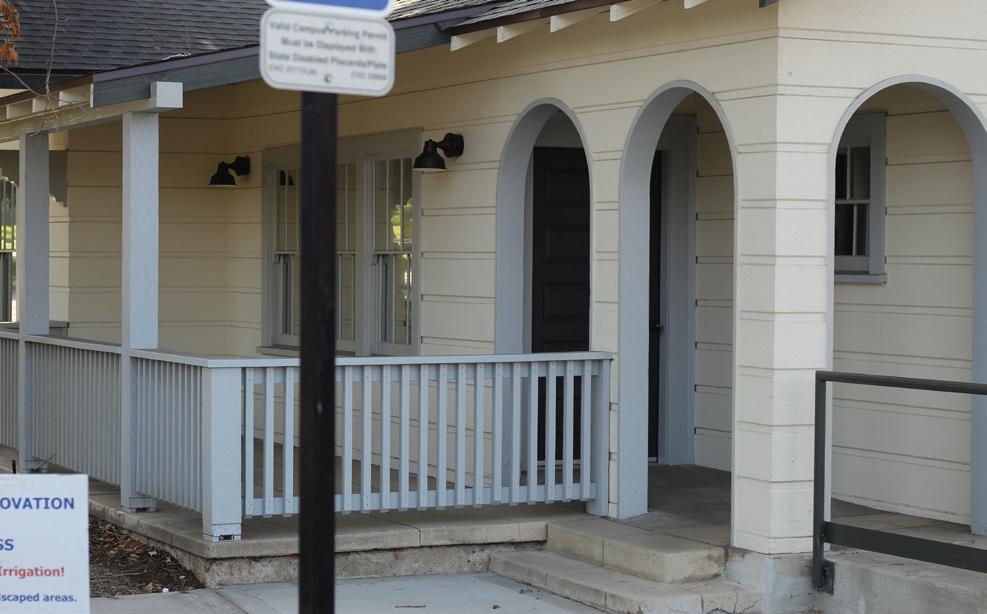
A 109-year-old cottage predating the founding of the University of California, Riverside has been restored following a yearlong renovation project, preserving one of the campus’s oldest remaining original buildings and preparing it to serve as the future home of the UCR Retirement Center.
Originally built in 1917, the cottage was part of the former Citrus Experiment Station, which existed decades before the founding of UCR. The building was one of three residential cottages located near the station’s original barn structures, including a horse stable, carpenter shop, hay barn and wagon sheds.
While the other two cottages were later relocated to Agricultural Operations, the remaining cottage stayed on campus and served several purposes over the years, including office and storage space. In recent years, however, the building sat vacant.
Despite modifications made over time, the cottage retained much of its original architectural
character, according to Jacqueline Norman, Associate Vice Chancellor and campus architect.
“I’m very excited that this tiny, but important, campus facility is at long last receiving the treatment it deserves,” Norman said.
Facilities Services oversaw the renovation project in coordination with Norman’s office. Renovation to the 1,035-square-foot building included repainting the interior and exterior, replacing the roof, upgrading mechanical, electrical and plumbing systems, installing new doors and restoring windows. The front porch was also restored to its original appearance with handrails and a rebuilt ramp.
“It turned out nice,” commented Chad Chambers,a project manager with Facilities Services, who supervised the renovation. “We’re very happy with it.”
The restored cottage will become the new home of the UCR Retirement Center, which was previously housed at University Village and currently shares spaces at Hinderaker Hall.
“We are very much looking forward to having a dedicated space to support and provide services for our emeriti and retiree community who continue to give back to UCR in so many ways,” said Cristina Otegui, director of the Retirement Center.
The center is expected to move into the cottage by fall after furnishing and safety systems are installed.
ISAIAH SIMMONS / THE HIGHLANDER
JUNG-JOE CHANG / THE HIGHLANDER
ANDREW HAGLER Staff Writer
Sandra Kim named new Chief Financial Officer of UCR
HOW KIM’S EXPERIENCE PREPARED HER TO NAVIGATE UCR’S FINANCIAL CHALLENGES.
Sandra Kim was appointed Vice Chancellor for Finance and Administration and Chief Financial Officer (CFO) for the University of California, Riverside (UCR) this month after serving in the role in an interim position for over a year. As Vice Chancellor for Finance and Administration, Kim will head the Office of Planning, Budget & Administration, which oversees a wide variety of campus business, support, safety, facility and auxiliary services. Kim previously served as the interim Vice President of Finance and CFO at Barnard College and Vice President of Finance and Administration and CFO at Saint Mary’s College of California. Kim was the Managing
Director and the Group Head for higher education and non-profits at San Franciscobased UBS Public Finance from 2017 to 2023. From 2008 to 2017, Kim also worked in the UC Office of the President in finance roles, including as Associate Vice President of Finance for Capital Asset Strategies and Finance.
Kim described how serving as the interim Vice Chancellor for Planning, Budget & Administration prepared her for her nowpermanent position by demonstrating the importance of using resources to achieve real outcomes for the campus community. She also highlighted her dedication to the community at UCR, stating, “Given my own belief in education as a pathway for opportunity, I’m looking forward to taking on the role permanently and continuing to support the work across UC Riverside — from student success to research and impact in the Inland Empire.”
UCR Chancellor Jack Hu expressed his pleasure to welcome Kim to the role, considering her extensive experience in higher education financial administration. Hu added that Kim’s leadership experience was well-suited to “help steer UCR through
challenges and toward leadership’s ambitions for a financial strategy that is both sustainable and ambitious.”
Since adopting her interim position, Kim has replaced Gerry Bomotti, who served for eight years as Vice Chancellor of Planning, Budget and Administration. Among the financial challenges facing the school that Kim must navigate are cuts to the state funding UCR receives. In 2025, Governor Gavin Newsom’s new state budget slashed funding for UC and California State University schools by nearly 8%. In the wake of record enrollments at UCR, these cuts posed a substantial risk to both students and faculty alike.
Despite this, since Kim’s term as interim Vice Chancellor of Finance and Administration, UCR has been able to supplement diminished funding through additional tuition, investment income and savings on salaries and leases. UCR has also compensated for cut funds through grants and philanthropy, such as the $800,000 grant it received this year from the W. M. Keck Foundation. The grant supports scientific research in agricultural science, quantum mechanics and regenerative medicine.
Former Riverside City Council member arrested under suspicion of domestic battery
ANDREW HAGLER Staff Writer
RONALDO FIERRO ACCUSED AFTER SERVING ON RIVERSIDE CITY COUNCIL FROM 2019 TO 2024.
On May 17, 2026, at 9:52 a.m., former Riverside City Council member, 41-yearold Ronaldo Guggia Fierro, was arrested on suspicion of domestic battery. Detective Steven Espinosa, a police department spokesman, stated that the victim was Fierro’s wife. Fierro was booked into Robert Presley Detention Center before posting $5,000 bail and being released. As a city council member, Fierro
represented Ward 3, which includes the neighborhoods of Victoria, Hawarden Hills, Magnolia Center and Ramona. Fierro served as a City Council Member for over four years, until he chose not to run for re-election in 2024. He instead ran for the 58th Assembly District seat in the state legislature but lost the primary, coming in third place behind Leticia Castillo and Clarissa Cervantes.
From its opening in 2011 until its shutdown in 2025, Fiero owned and operated the Salted Pig, a prominent restaurant in downtown Riverside. He now operates W. Wolfskill, a cocktail bar on Main Street.
Riversiders may be entitled to millions in refunds
THE CITY HAS BEEN FOUND GUILTY OF ILLEGALLY OVERCHARGING WATER RATES FOR YEARS.
A Riverside Superior Court judge, Harold Hopp, ruled in April 2026 that the City of Riverside’s decades-long practice of transferring 11.5% of water utility revenue to the city’s general fund (GTF) violates the California Constitution, ordering the city to address millions in unauthorized charges collected from ratepayers since approximately 1968.
The unlawful practice rose to light following the ruling of phase one of the Simpson v. City of Riverside case in August 2023, which sought to prove the City was guilty of charging rates exceeding “the proportional cost of providing the service … [and] the rate revenues are being spent for purposes other than that for which the charge was imposed.”
Proposition 218 prohibits the local government from charging more than the cost of providing a utility service, as well as spending said revenues on unrelated costs.
credits, as that would leave former customers without just compensation for the money they have already paid.
However, Hopp noted that the four-yearlook-back period — a designated timeframe preceding a legal action where the court will review past behavior, financial transactions or
to light in 2010 by a group of Riverside residents while reviewing bond documents tied to the City’s Riverside Renaissance program, a massive, multi-year $1.8 billion civic improvement program launched by the City of Riverside in 2006.
Hopp stated on April 20 that plaintiffs are entitled to a refund, and mentioned the possibility of a common fund of approximately $46 million. Although the exact amount has yet to be confirmed, it is expected to be finalized in the next few weeks.
He has also stated that the city cannot solve the issue by simply promising future bill
records — may limit the total of the fund.
Hopp also granted the case’s plaintiffs’ request to cover attorneys’ fees from the common fund that was created by the case, which has been interpreted as being “another sign the court sees a refund remedy as likely.”
Returning to Simpson v. City of Riverside, the city’s unlawful actions were first brought
This case has not been the first occurrence where the city has faced legal challenges over its 11.5% GFT practice, as seen in Parada v. City of Riverside (2018), where a nearly-identical issue arose, only that this case dealt with electrical services rather than water services.
The city ultimately settled for $24 million in refunds.
At this moment in time, the city has to release an official press release statement regarding the issue of the illegal overcharging of water rates: “A city spokesperson told the Gazette on April 27 that it is aware of the ruling and plans to appeal.”
Ultimately, those who may be entitled to compensation include those who have paid a water bill in Riverside in the past four years, but the official refund total remains to be determined in the next few weeks. Prior lawsuits similar, if not identical, in nature to the ongoing one have resulted in plaintiffs receiving millions in compensation.
UCR commuters can expect increased Metrolink fares
METROLINK IS FACING AN ESTIMATED $30 MILLION BUDGET SHORTFALL, AND IS CONSIDERING MORE EXTENSIVE REDUCTIONS TO ITS AVAILABLE SERVICES.
Metrolink, a commuter rail agency serving six counties in Southern California, is cutting rail service. In recent years the agency has been impacted by increasing operational costs, along with reduced fare revenue and county contributions towards its budget. Transit advocates and riders are advocating for full restoration of funding and the Metrolink schedule.
Metrolink has experienced reliability problems concerning their new locomotives, with a March staff report stating, “Persistent
parts shortages have negatively impacted the agency’s ability to repair trains when mechanical issues arise. The agency reached a critical point where current service levels could not be confidently maintained as a result of mechanical-related disruptions.” Consequently, Metrolink decided to temporarily reduce service effective March 23, 2026.
This temporary service reduction will remain in place with Metrolink stating that prior “mechanical issues and supply constraints” along with “additional financial pressures” are the reasons as to why.
Los Angeles Metro and Orange County Transportation Authority have proposed reducing their annual contributions to Metrolink, resulting in an estimated $10 million dollar deficit for the agency. This, along with other funding challenges, has resulted in an
operational deficit of 30 to 35 million dollars according to CEO Darren Kettle in an interview with Southern California News Group.
In response to these issues, Metrolink held hearings on May 13 and 14, with another planned on June 28 to inform its users about expected fare increases and further reductions in service starting as early as October 2026.
In response to LA Metro reducing their funding contribution to Metrolink, transit advocates and riders spoke to the LA Metro Board during a Budget Public Hearing on May 21, 2026. During the hearing, many called for the restoration of complete Metrolink service, with several transit advocates particularly concerned about the possibility of a “transit death spiral” where cuts in funding leads to lower ridership which in turn results in more cuts to transit.
Some advocates during the hearing even suggested ways of paying for the restoration of service including reallocating highway funding truncating the LA Metro Rapid 720 bus at La Cienega and Western, increasing fare enforcement and even congestion pricing as a way to reduce greenhouse gas emissions and increase the funding for Metrolink and LA Metro as a whole.
JOSÉ DEL ÁNGEL, MICHAEL GOI News Editor, Contributing Writer
ALEX WONG / THE HIGHLANDER
MARIBEL HERNANDEZ Staff Writer
ALEX WONG / THE HIGHLANDER
The quiet death of UCR student activism
The Time, Place and Manner Policy’s restrictions and an undercurrent of fear have led to a decline of student protests at UCR.
THE EDITORIAL BOARD
During the historic 2024 spring proPalestinian encampments at the University of California, Riverside (UCR), many students felt the impact of collective student activism. The weeklong protest, led by the Students for Justice in Palestine (SJP), called for a ceasefire in Gaza and pushed university administration to divest from companies doing business with Israel. UCR student protestors became the first in the UC system to negotiate an agreement with upper administration.
Other student organizations, including the Young Democratic Socialists of America (YDSA) and Providing Opportunities, Dreams and Education in Riverside (PODER), also held significant demonstrations during the 2023-2024 academic year. It seemed like UCR was at its strongest in the impact its students could make.
However, when student organizations returned to campus the following fall, they were met with the university’s new policy regulating student demonstrations: the Expressive Activities: Time, Place and Manner (TPM) Regulations.
According to the Chancellor’s Office, the TPM Policy is a framework governing “the conduct of demonstrations and other expressive activities that protects the rights of members of the campus community as well as campus operations.”
It defines expressive activities and imposes time, place and manner restrictions on student demonstrations. For example, student activities can only occur between 8 a.m. through 8 p.m.; erecting structures like tents is not allowed; amplified sound, such as bullhorns, is banned; and blocking “access or free movement” through roads, buildings and campus entrances and exits is prohibited.
The policy also states it is enforced on a “contentneutral basis” and that anyone who violates it is subject to “disciplinary proceedings under applicable policies.” These consequences include sanctions under the UCR Standard of Conduct for students, possible termination for unrepresented staff, dismissal for academic employees and the Collective Bargaining Agreement for represented staff and academic employees.
Over the past two academic years, student protests have quietly declined since the adoption of this policy, as on-campus demonstrations have
become increasingly difficult to organize. Many of the provisions in the TPM Policy are specifically designed to limit students’ freedom of speech and right to assemble.
One major restriction on student activism is the provision stating that “some locations are available only with prior authorization,” which requires student organizations to obtain approval or schedule demonstrations with the university. The Vice Chancellor for Planning, Budget & Administration or the Vice Chancellor for Student Affairs is responsible for processing these requests.
There are several issues with this policy. First, protests often occur spontaneously or in response to unjust events and actions that demonstrators oppose. It is unreasonable to expect students to know weeks in advance whether they want or need to protest, especially under the current federal administration.
Second, the fact that university administrators ultimately decide which protests can or cannot occur on campus is deeply concerning. By concentrating this power in the hands of a few individuals, university officials can shut down or restrict protests on issues they do not want to see on campus.
In addition, the policy contains many inconsistencies between student and third-party organizations. It prohibits “temporary signage posted in the open-air environment of the main campus announcing events, activities, services or products by any entity that has not requested and received approval,” and states that such signage is subject to immediate removal. Yet third-party organizations have displayed signs around campus during their events, including pro-life demonstrations with prolife visuals of fetuses.
A statement from Student Affairs explains that 700-52: Temporary Signage and Banners is “being updated to include references to the new TPM and student posting policies … When third parties arrive anywhere on campus and are in violation of any TPM policies, they can be reported to university police.”
According to Student Affairs, student reports of third-party entities “posting signage in violation of university policy” are redirected to the UC Police Department (UCPD), which then informs these “groups about what needs prior approval.” However, similar to the enforcement of on-campus petitioners, student complaints are the primary way the university
enforces policies for outside organizations. Although enforcement may be consistent with these outside groups, the policy disproportionately penalizes students and student organizations directly overseen by the university. Outside organizations frequently get away with displaying disturbing visuals or signage on-campus without university intervention.
This highlights a growing issue over the past year: third-party organizations increasingly using UCR as a stage to spread hate speech. During the last two academic years, UCR has hosted several ultra-conservative external organizations, from Charlie Kirk’s tour to pro-life tabling events, with minimal representation of alternative viewpoints. As a minority-serving institution, these demonstrators threaten the physical and mental safety of students. While UCR might want to limit student protests through its TPM policy, allowing outside organizations to repeatedly target vulnerable students with offensive rhetoric is unacceptable.
From international student visa revocations to federal immigration directives and cuts to research and Diversity, Equity and Inclusion (DEI) programs, UCR students are understandably scared right now because they are a direct target of the federal administration. Since President Trump returned to office, the chilling effect on participation in student activism has become increasingly evident.
But it is especially disappointing that the university that prides itself on serving, educating and uplifting minority and low-income students has adopted policies that stifle its student body. The university should empower its students to speak up for what they believe in, not discouraging them.
Based on observations of changes among student leaders and organizations, as well as the leadership shifts on-campus and at the federal level, The Highlander Editorial Board believes that student activism at UCR may decline. If these problems continue, future students will not recognize the importance of protests, collective action and civic engagement — skills that past generations of UCR students have developed during their time here.
UCR needs to update its strategies to foster an environment that encourages the expression of diverse viewpoints.
ADELIA URENA / THE HIGHLANDER
UCR is erasing its third places
THE LOSS OF SPOTS LIKE GETAWAY CAFE AND SUB STATION REFLECTS THE DILUTION OF CAMPUS CULTURE.
OVI MATHIVANAN Assistant Opinions Editor
College campuses are more than mere classrooms, dormitories and sleep-deprived college students trudging from lecture to lecture. Today’s campuses include a variety of social and food fixtures that provide informal gathering locations for students, faculty and staff alike. These third places, separate from individuals’ homes and places of study or work, offer a respite from the stressors of their domestic and professional lives.
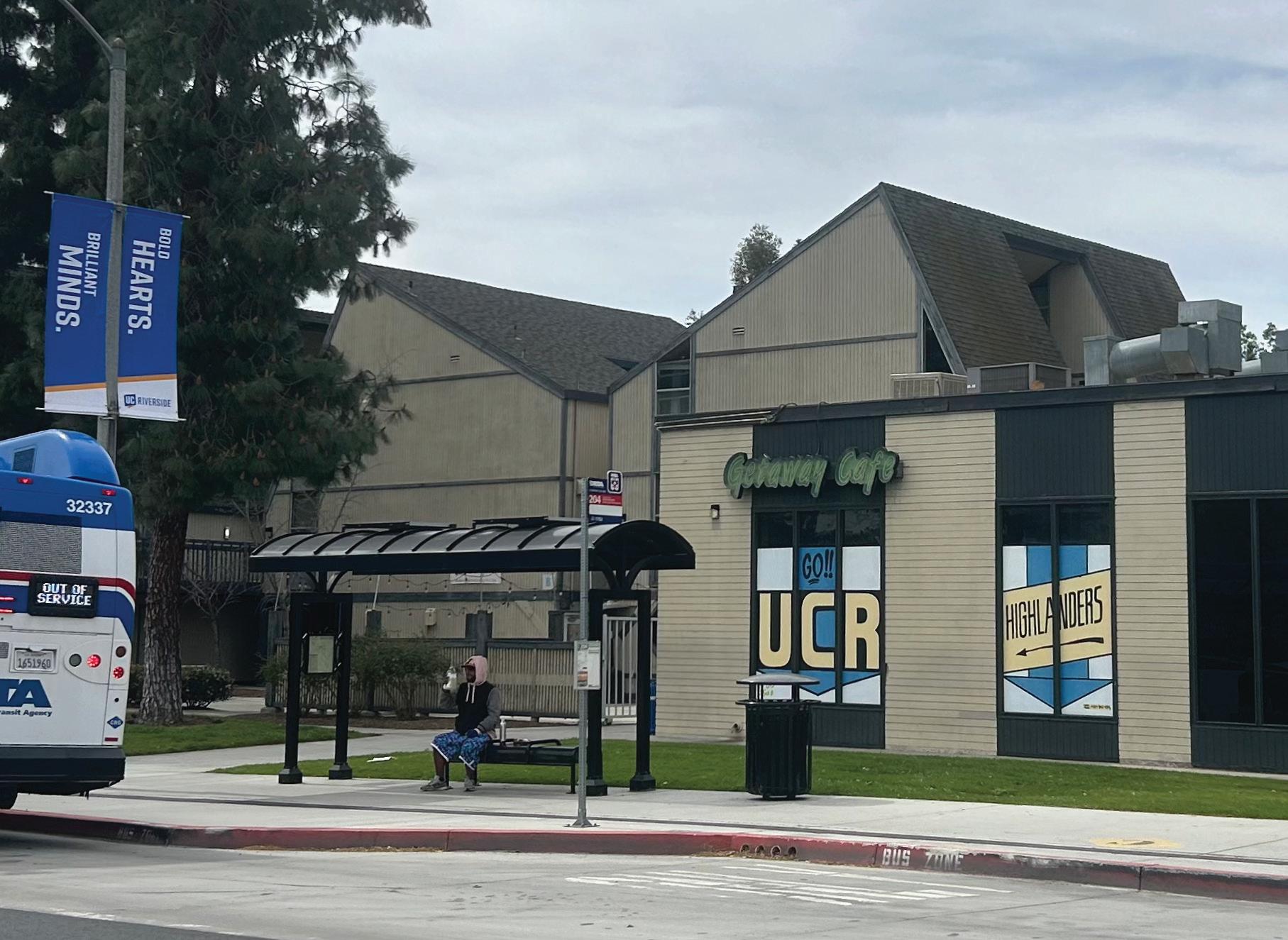
At the University of California, Riverside (UCR), two of the most popular on-campus gathering spaces for students were the Getaway Cafe and Sub Station, both located at the Bannockburn Village apartments on campus.
Getaway Cafe closed its doors on April 29, 2025, after providing members of the campus and local community with a place for conversation, bites and drinks for nearly three decades. Sub Station is also slated to close over the summer as UCR plans to demolish Bannockburn Village; the sandwich place does not offer bar-style drinks, but its wide range of sub and salad options has been a staple for the community since the place opened in 1972.
Although the campus hosts other dining options, including two dining halls and a variety of chains like Coffee Bean & Tea Leaf, Panda Express and Habit Burger & Grill, the appeal of locations like Getaway Cafe and Sub Station was that they were uniquely for UCR students and individually operated.
Without these staple restaurants, the only relatively niche location that students can turn to on campus is The Barn and The Stable, located on 1500 W. Campus Drive near the Humanities and Social Sciences Building.
These places are defined by more than just their menus or the physical buildings alone — they are the lifeline of student social life. The food brought people to the places, but the environment ultimately made places like Getaway Cafe and Sub Station accessible spots on campus where students and others could gather, converse, study and
more. It offered a sanctuary for visitors to connect and unwind despite the lows and highs of their day, taking a moment away from the banalities of daily campus life.
Getaway Cafe and Sub Station were shaped into the campus cultural hubs they were because they were lived in by students, not forced upon by the university or generic chain restaurants that could be found at any street corner off campus. These places were not merely manufactured through strategized business practices or branding; instead, they were formed and molded through student presence. A familiarity and understanding between members of the campus community that transcends beyond transactions or food consumption.
The gradual dissolution of these third places reduces the availability of safe spaces on or near campus where students can connect and develop outside structured classroom and academic settings. Without them, the only outlets that remain for students are homogenous and impersonal dining options that prioritize profit and business over community.
Eventually, each year’s incoming class may as well be entering a campus where there are a narrowing range of commercial experiences. All that’s left for tomorrow’s students is a rotation between transactional dining locations devoid of what made spaces like Getaway Cafe and Sub Station uniquely UCR, including the informal spaces that once defined the odd hours and non-academic moments of students’ college careers.
Furthermore, the absence of these environments may affect how students move through their time at UCR. Without gathering spaces independent of their lecture halls and dormitories, students — even those that live on campus — may spend less time in one space and instead cycle between other locations like the campus libraries and local fast food restaurants. Students may no longer have the flexible spaces that allowed them to exist and connect unapologetically; these spots and routines are instead being replaced by chains that prioritize consumption and turnover rather than social cohesion.
Following Getaway Cafe’s closure, The Stable has been the
only bar on the UCR campus, forcing student social life to survive within university-operated environments while independently run gathering spaces disappear.
Managed by HappiestOurs, a mobile bartending service that brings licensed bartenders to event locations, the After Ours Bar at The Stable offers a variety of alcoholic and non-alcoholic beverage options, including draft beers, wines, cocktails and mocktails. Additionally, The Barn often hosts live concerts and themed events at its venue, many of which are free to the public.
When social life on college campuses becomes institutionalized rather than individualized and community-driven, campus identity and authenticity of gathering spaces begin to flatten into something that needs to be curated rather than experienced. What remains once these spaces disappear entirely is not community or campus culture but planned programming.
Looking beyond legality: Freshmen and seniors should not be dating each other
FOR THOSE WHOSE DATING POOL RESETS EVERY YEAR.
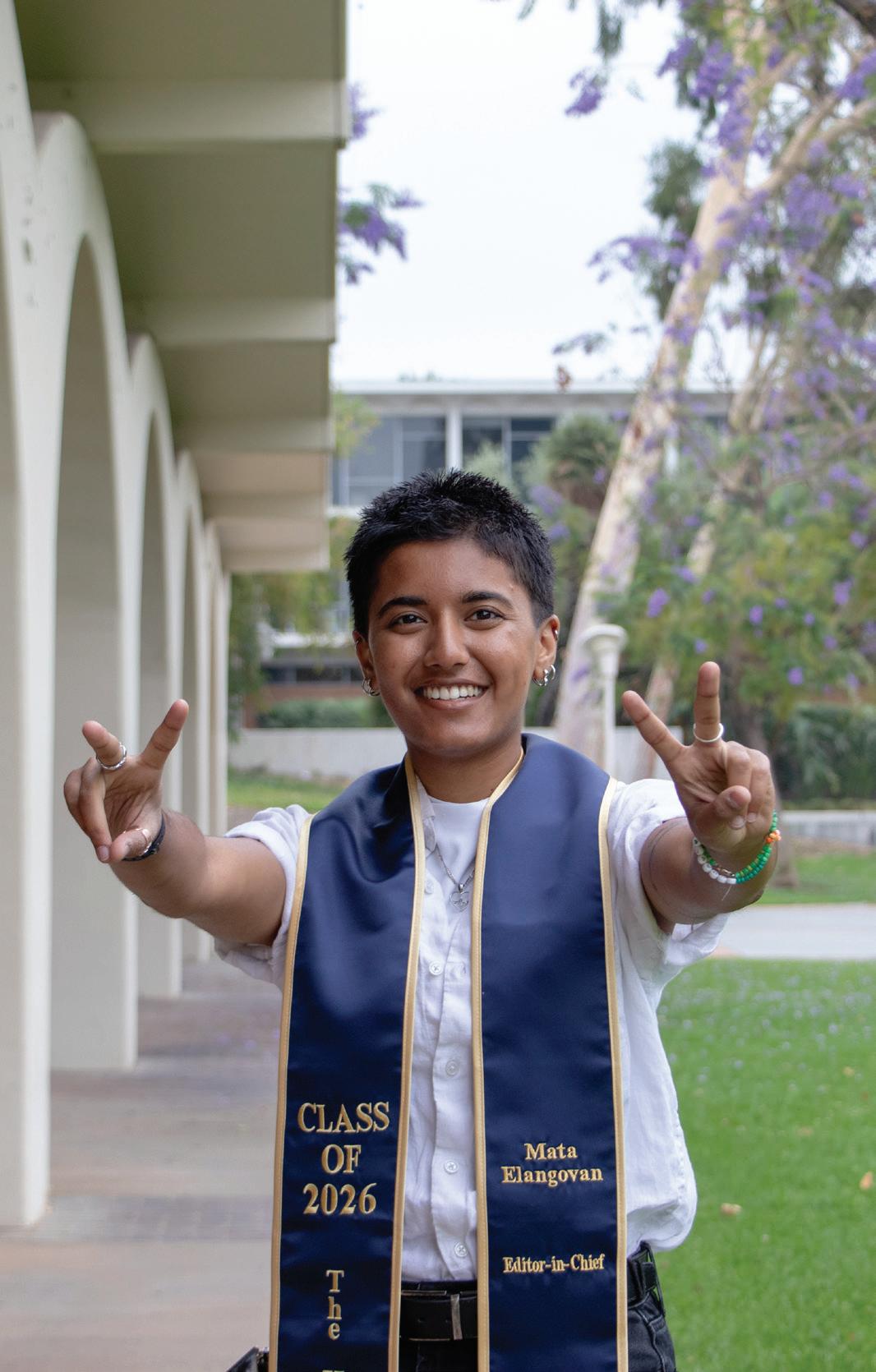
MATA ELANGOVAN Editor-in-Chief
There is perhaps no greater mystery on a college campus than why some seniors — people who are allegedly preparing for careers, graduate school and the terrifying concept known as “real adulthood” — continue pursuing freshmen who moved into the dorms three weeks ago and still get lost finding their lecture halls. Technically, there is nothing illegal about an 18-year-old freshman dating a 22-year-old senior. Both are adults. Both can vote. Both can theoretically make decisions for themselves.
But if your defense of a relationship starts and ends with “it’s legal,” you may already be losing the argument.
The issue with senior-freshman relationships is rarely about the number of years separating two people. Four years between a 28-year-old and a 32-year-old barely registers. Four years between someone learning how to do laundry independently for the first time and someone updating their LinkedIn profile for post-grad jobs feels … different. A little bit peculiar some might say.
This is because college years are not equal.
Freshmen come to campus in survival mode. They are figuring out where their classes are, learning how office hours work and discovering that “I’ll just skip this lecture once,” becomes an incredibly slippery slope. Many are away from home for the first time. They’re finally finding out who they are, separate from their families and hometowns. What a time …
Seniors, meanwhile, have spent years learning campus politics, building social circles and understanding exactly what student organizations have influence. Some have leadership positions. Some have jobs. Some have apartments. Some are debating graduate school applications.
One group is learning to exist in college. The other is preparing to leave it.
And yet, every year, somewhere on campus, there’s a senior who sees a freshman and thinks: Yes. This person in an entirely different stage of life is
definitely my intellectual and emotional equal.
Because that’s the first thing people think when they see someone who is fresh out of the high school womb. How interesting.
Just to be clear, it’s not that age-gap relationships are automatically unhealthy. Not every senior dating a freshman is manipulative, and not every freshman is naïve. Humans are complicated and relationships are nuanced. But nuance does not, and should not, prevent scrutiny.
Experience is power. Knowing how social environments work is power. Having established networks, confidence and years of institutional familiarity is power. Power imbalances do not guarantee harm, but pretending they do not exist because everyone involved is legally an adult feels less like critical thinking and more like a convenient denial.
ability to advocate for oneself, establish boundaries and navigate conflict without disproportionate influence.
College culture often romanticizes dating older people. There is a strange prestige attached to it, as though attracting someone further along in life automatically signals maturity. Spoiler alert: Being chosen by someone older does not magically accelerate emotional development. Likewise, dating younger does not automatically make someone predatory, but at some point, reasonable questions emerge.
If someone is one or two quarters away from graduation and their ideal romantic partner is someone attending their first residence hall icebreaker or their first club meeting, it becomes suspicious. Not because age alone determines compatibility nor because adults cannot make their own choices. At the end of the day, choices still deserve examination, and some things must be scrutinized.
Healthy relationships require more than legality and attraction. They require a relatively equal footing — comparable
College is already an uneven playing field. Some students arrive with connections, money or familiarity with higher education, while others are learning every system from scratch. Relationships can either reinforce those imbalances or challenge them.
Coming into college, many freshmen are struggling to not only make ends meet, but even survive day-to-day. There is a financial barrier present in these relationships as many seniors have more solid footing in terms of income. A reliance is built as these younger folk find a safety net with this more established individual.
The conversation surrounding seniors dating freshmen is not about policing attraction. It is about asking why someone nearing the end of college repeatedly finds themselves interested in people who have barely begun.
At some point, the question stops being “Is this legal?” and becomes “why does your dating preference seem to reset every academic year?” It shouldn’t.
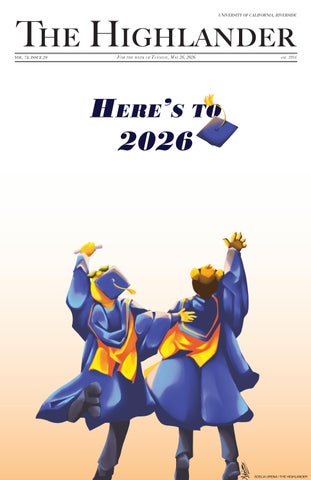
Graduating
VASH CHEN / THE HIGHLANDER
From unexpected origins to an unforgiving end
MATA ELANGOVAN Editor-in-Chief
In true Mata fashion, this farewell is being written on production day, only hours before it is supposed to be published. I have already cried twice today. I had to redo my makeup once. At one point I considered even reliving the glory days by sleeping overnight in the News Office one last time.
Because whether I like it or not, my time at college is ending …
I came into the Highlander as a freshman with the intent of doing page layout. Woe for me, though, the position had already been filled by my arrival. So, like any other newspaper-obsessed teenager who didn’t actually know how to write, I threw myself into photography.
Sometime during that journey I got roped into writing for the news section by my high school friend. And just like that, my entire life became the newspaper.
I never expected to become News Editor. Then Managing Editor. Then Editor-in-Chief. Yet now, looking back, I can’t imagine my college experience unfolding any other way.
Because how many people get to say they spent a week sleeping in a newsroom during campus encampments? Or skipped classes to cover protests because the story felt bigger than attendance? Or argued with fellow editors until 2 a.m. over a single word because accuracy mattered that much? How many people drive to Adelanto at four in the morning for the chance to speak with people held inside detention centers?
Journalism has a strange way of reshaping you. Somewhere between deadlines and interviews and nights spent questioning whether a story was fair enough, balanced enough or impactful enough, I changed. Or more like The Highlander changed me.
I’ve been broken down and rebuilt more times than I can count. I went from someone who hated writing to someone who understands the strange beauty and frustration hidden in every sentence. Someone who knows words matter because they shape how communities remember themselves.
People sometimes describe leadership as mentorship, and I became an unwilling mentor somewhere along the way. But what often goes unsaid is that the people around me changed my life just as much. I’ve witnessed displays of solidarity that few people experience in their lifetimes. I’ve shared meals and drinks with people others would label as the “opposition,” only to discover that human beings are always more complicated than headlines make them seem.
Journalism taught me to listen, and maybe that is the greatest thing this paper ever gave to me. Now for the first time in years, I have to figure out who I am outside of being a college journalist, and that thought terrifies me.
But thank you to The Highlander for the late nights, the chaos, the arguments, the impossible deadlines and the people who became family. Thank you for giving me a place to belong where people welcomed me with a smile.
The hand-me-down editor
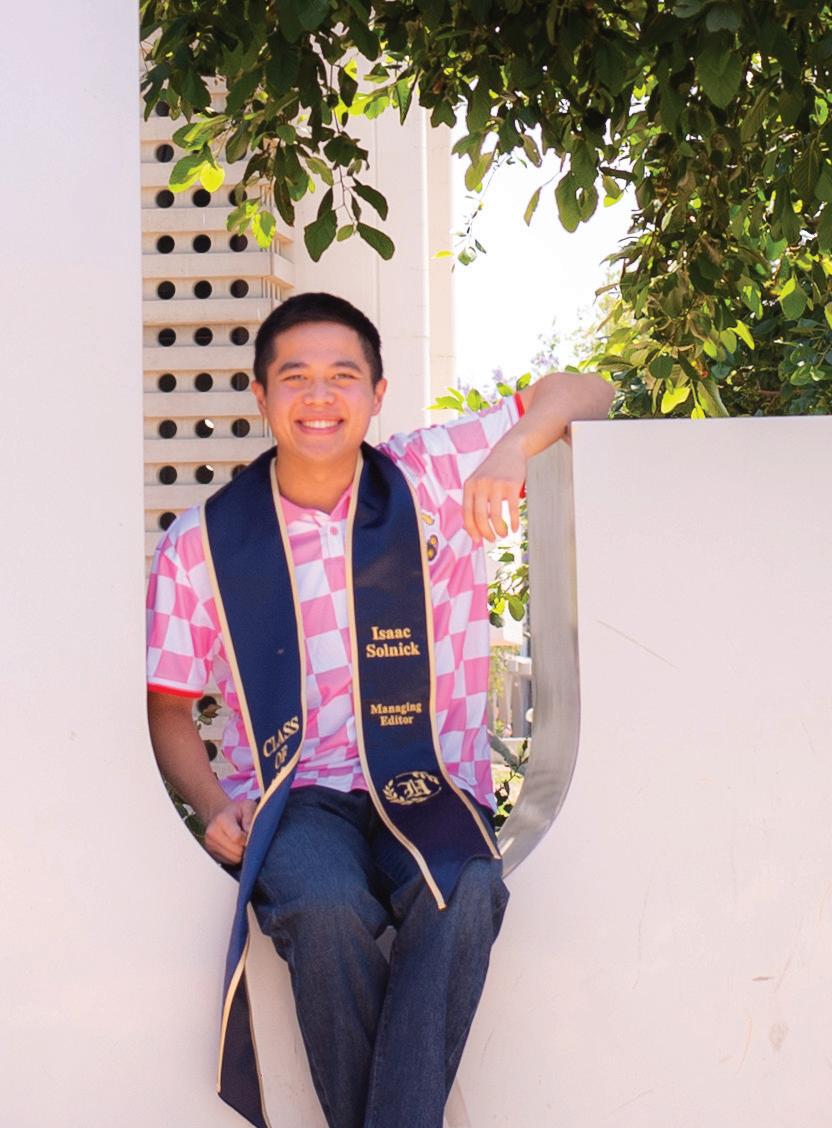
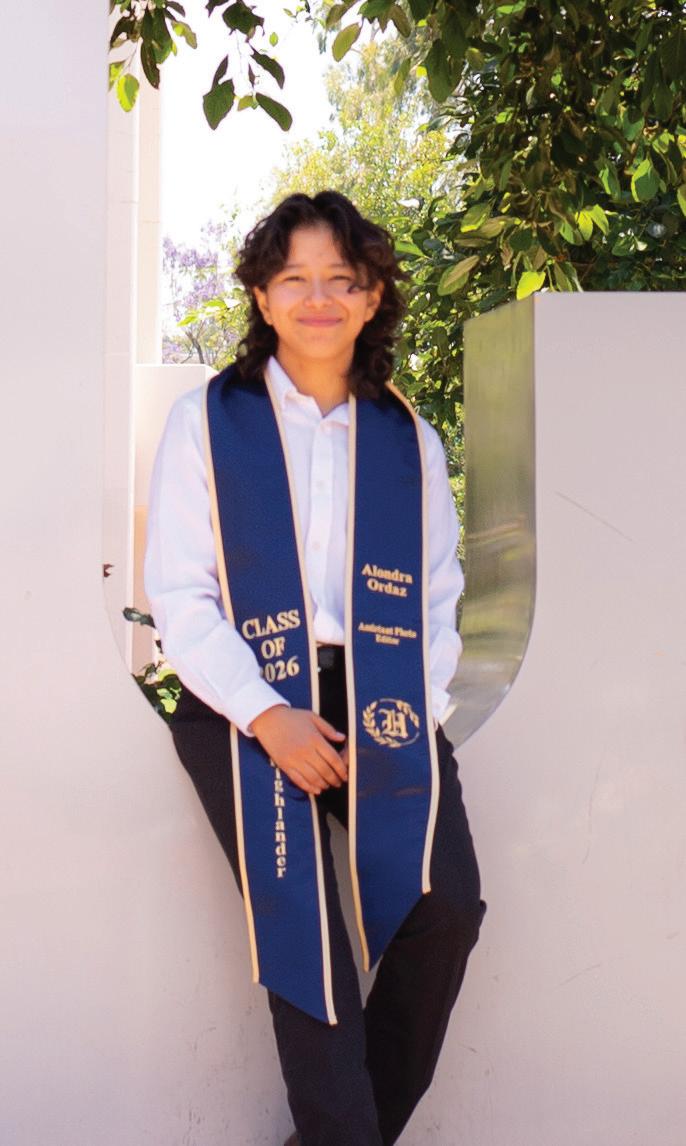
At the beginning of my second year, I scurried into my very first Writer’s Meeting a few minutes late, a precursor for all my future Writers and Production Meetings. I was in desperate need of an older sibling figure at the University of California, Riverside (UCR) at this time. Despite having only started my sophomore year of college, I had already been thrusted into lead-
ership roles in two of my other clubs, Running Club and Ultimate Frisbee Club.
While I was grateful for those positions, I couldn’t help but feel like my college experience was still missing someone who could show me the ropes. But lucky for me, I met my two big brothers that day. It started with a conversation about my Raiders playing the Lions on Monday Night Football that day. It ended with me signing my writer’s contract and picking up my first pitch.
To my former sports editors Hansel Chu and Kia Nooshi, thank you for providing the mentorship and guidance my 19-year-old self needed. Writing for your sports section gave me something to look forward to each week and helped me grow as a human being.
Once Hansel and Kia graduated, I took over the sports section as Sports Editor alongside my main man Terry Nguyen. Despite the excitement I felt about being the Sports Editor, I carried the pressure of needing to live up to my own expectations, but also the pressure of stepping into and filling the shoes of my former mentors.
I struggled. During the fall quarter of that year, my sports section hid in the shadows of the other sections which were being led by older and more experienced editors. As each week passed with us struggling to find writers and write quality articles, the doubt of not being able to be like the big brothers I had aspired to started to creep in.
Fortunately, with the help of Terry and my amazing sports team, we made an incredible second half comeback. We introduced several columns like Highlander in the Arena to beef up our section and let it shine with the rest of the sections in each weekly issue. To my staff writers Sofia Majeed, Kishneet Kaur and Elena Versage, thank you for not only supplying my section with amazing articles every week, but also for also showing everyone that the sports section isn’t just for the boys.
I stepped into the role of Managing Editor my fourth year with a sense of uncertainty. After specializing in sports journalism for two years, I didn’t know if I could lead not just all of the editorial, but also all the other amazing sections of The Highlander. While the Slack messages did catch up to me, I couldn’t be more proud of Volume 74 and this year’s senior staff. Of course, it wouldn’t have been possible without our Editorin-Chief Mata Elangovan. Thank you for always believing in me and seeing things in me that I didn’t see in myself.
Through The Highlander, I was able to meet Marco Fabián and make amazing friends like Alondra Ordaz and Xochitl Gutierrez. To all the amazing people I’ve been blessed to work with at The Highlander over the past three years, I hope I could have been the big brother to you that I had been looking for during my very first Writer’s Meeting.
ISAAC SOLNICK Managing Editor
■ H VASH CHEN / THE HIGHLANDER
NIKO SUWANDI/ THE HIGHLANDER
Thank you, Highlander, for everything
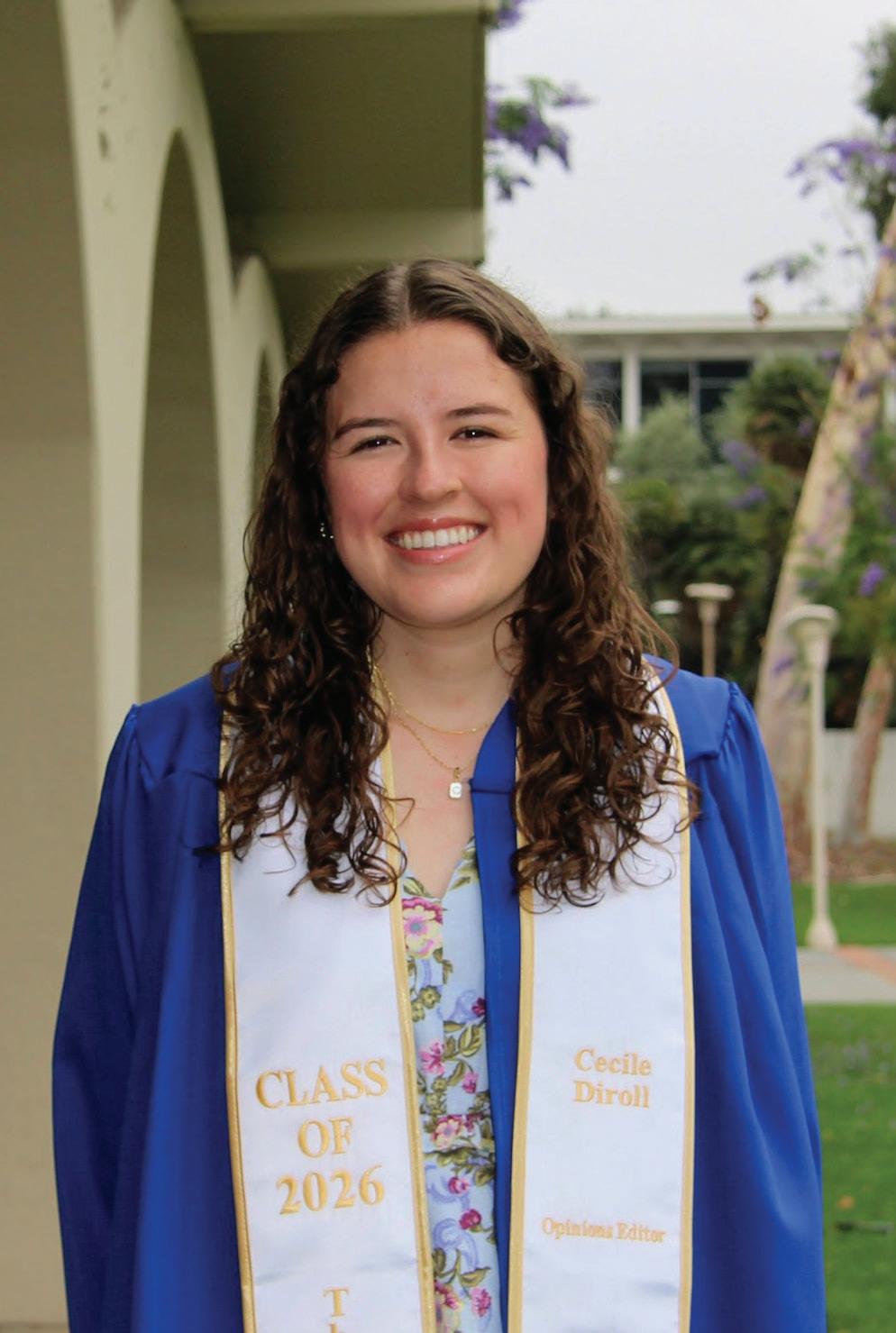
CECILE DIROLL Opinions Editor
Four years ago in fall quarter, I walked into my first Writers Meeting at The Highlander office. I remember sitting nervously in the office chairs for what felt like a long time before the meeting began. With no journalism experience and a doe-eyed perspective on all things college, I had no idea what to expect.
After speaking with the Opinions editors, I signed up for my first article about California’s pink tax — one of the many niche yet intriguing topics I would explore during my time here. The process was tough. I vividly recall spending five hours in a coffee shop, trying to figure out how to write the piece. It was challenging, but I was determined to stick with it. Once that article was published, I was hooked and never looked back.
My experience at The Highlander has been transformative. I realize that may sound dramatic, but it’s true. As someone who is mostly reserved, I wasn’t accustomed to openly sharing my thoughts and opinions before joining The Highlander. However, as the Opinions Editor, I’ve become more confident, both personally and professionally.
Through long nights editing articles, writing multiple stories in a single week, hours-long Sunday production meetings and leading a section of my own, The Highlander pushed me to a place I did not know I could reach. Looking back, it’s incredible to see both my own growth and the Opinions section’s growth during my
time here.
I’ll miss The Highlander’s office and the community we’ve created. This newsroom is home to some of the most talented, kind and supportive people you’ll ever meet. I’ll miss our lengthy editorial meetings (something I never thought I’d say), Coffee Bean runs and hours spent in the Opinions office talking about random topics.
I want to thank my first mentor, Ysabel Nakasone, the original Opinions editor who paved the way for my time at The Highlander. She took me under her wing when I was a first-year and taught me everything I know.
I am also very thankful for my family’s support. My dad is my top reader and unofficial public relations representative, sharing my articles with family and friends on Facebook. My sister, Gabi, has been my lifelong sidekick and partner, always listening to my stories since childhood.
Most importantly, I want to thank my mom. Without her encouragement to attend that first Writers Meeting during my first year, and her continued support since then, I wouldn’t be writing this article today. Gracias, Mommy.
Whether a sorority, campus job or club, everyone has something that characterizes their college experience. For me, that was The Highlander.
Being Opinions Editor for The Highlander over the past two years has been one of the
Heme Aquí
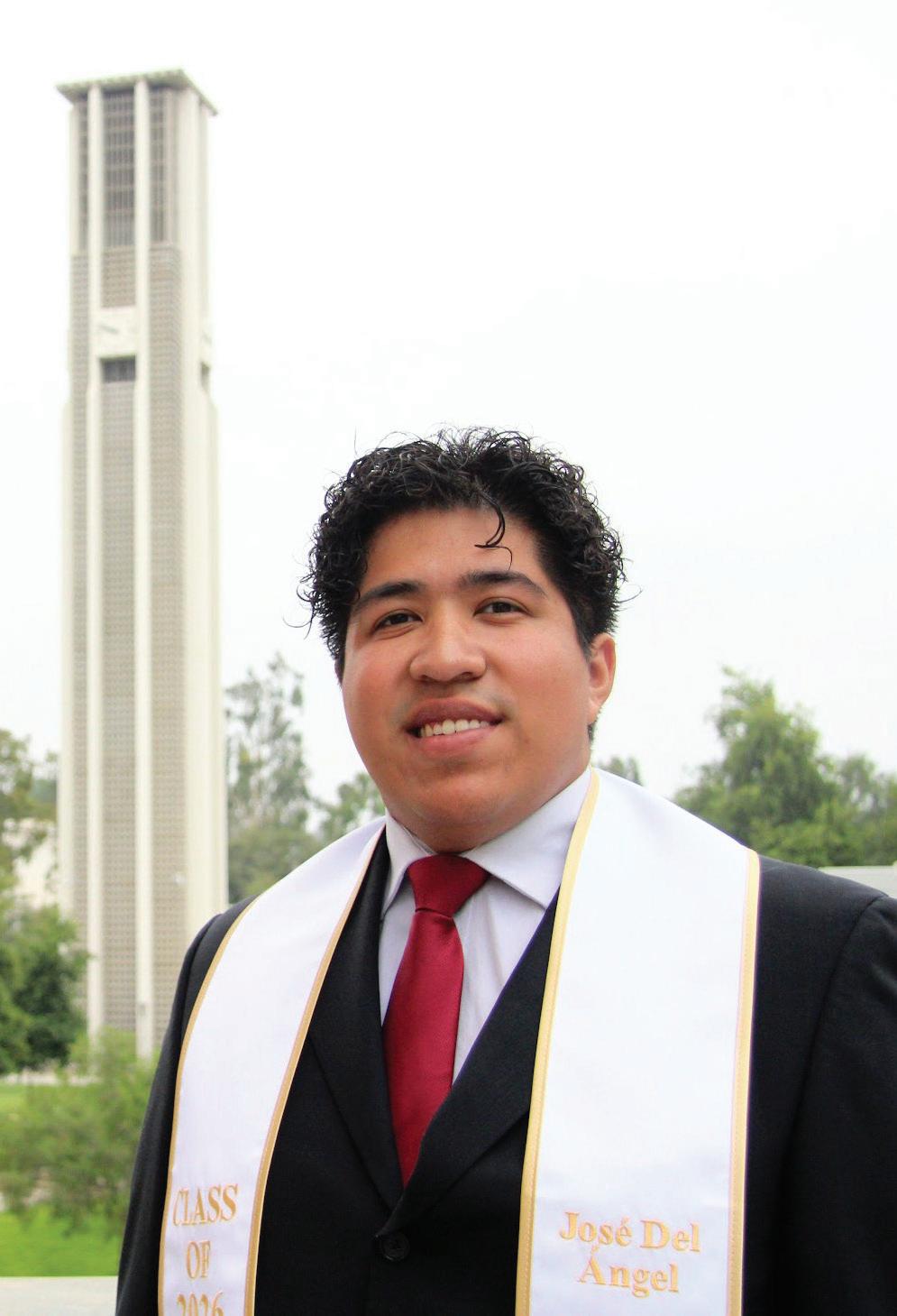
Thank you for trusting me with your stories, your voices, your frustrations, your victories and your truth. Serving as News Editor during my fourth year at the University of California, Riverside (UCR) was one of the greatest honors of my life, and it is difficult to put into words how much this community has shaped me. When I moved to the United States at 15 years
old as an immigrant, I carried uncertainty with me every single day. I was learning a new culture, a new language and trying to understand where I belonged. Like many students at UCR, I knew it meant to work hard while carrying responsibilities that often felt heavier than what people could see.
I am the first person from both sides of my family to have the privilege to attend a university. By the time I arrived at Riverside, I understood that education was not something I could take for granted; it was something I had to fight for.
During my second and third year at UCR, I was involved with Associated Students of UCR while also working both a full-time and a part time job just to afford housing and survive. There were days when exhaustion felt normal. I balanced classes, meetings, deadlines and work schedules that stretched late into the night.
And somehow, despite all the opportunities I experienced afterward, being News Editor became the most meaningful chapter of all.
I had the privilege of working legal internships in Irvine and conducting policy research in both San Diego and Los Angeles, opportunities I once only dreamed of having. Those experiences taught me professionalism and discipline. But no office, no internships and no political environment ever gave me the same sense of purpose that I found inside the newsroom.
The newspaper reminded me why stories matter.
greatest honors of my life and a truly meaningful chapter of my college experience. I will treasure the memories with everyone in this office and the home I discovered in HUB 101. Thank you, Highlander, for everything.
Every interview, every late night edit, every student protest, every city meeting, every cultural event and every conversation I had with UCR students revealed something beautiful about Riverside. UCR is often underestimated by people who do not know it, but those of us who live here understand its uniqueness.
This campus is filled with students who work harder than anyone gives them credit for. Students who commute hours to class. Students supporting families back home. Students navigating immigration struggles, financial hardship, grief, identity and pressure while still showing up every single day with hope.
As News Editor, I saw resilience, I saw brilliance and most importantly, I saw humanity here.
To every UCR student who answered my emails, sat down for an interview, corrected me when I got something wrong, shared a vulnerable experience or simply picked up a copy of the paper, thank you. You made me a better writer, a better listener and a better person.
As an immigrant kid who arrived in this country at 15 unsure of what the future would look like, I never imagined I would one day have the responsibility of helping tell the story of an entire university community. That responsibility changed me forever.
Now that I am moving to Washington D.C. after graduation, I don’t know where my career will take me next. But I know a part of me will always belong to UCR.
JOSÉ DEL ÁNGEL News Editor
VASH CHEN / THE HIGHLANDER
ALEX WONG / THE HIGHLANDER
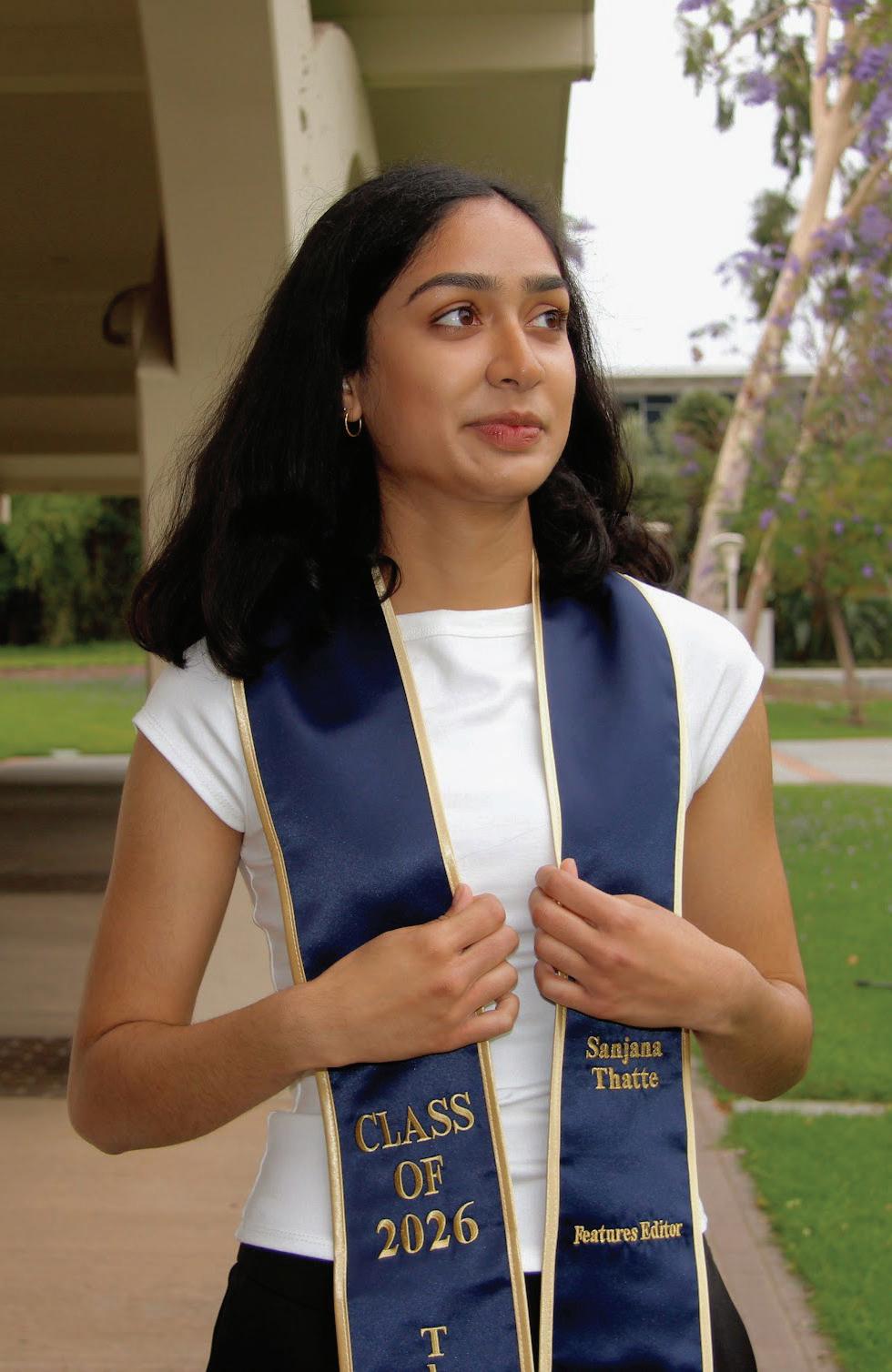
SANJANA THATTE Features Editor
You gave me the words …
The grad issue has always been one of my favorites to read. Not just because you get to see how much this publication has meant to everyone, but because it shows how brilliant every member of this paper is and how they make The Highlander so great. All that to say, I’ve had some time to think about what I would say if anyone asked me what The Highlander has meant to me and a great many times, words fail. After all, working for your school newspaper for three years makes you take a minute to reflect on the time you’ve spent there.
When I came to this school I was coming off a very rough patch in my mental health and was ready to throw myself into a new environment to leave the shadows of the past behind. While my freshman year was an interesting experience to say the least, something that would later shape the course of my college career occurred: I wrote for the news section of the newspaper.
I was frankly surprised at how easy it was to join and after one somewhat awkward professor interview and a few shed tears over the thenNews Editor Mata’s edits, I had my first ever article published in the paper. I shared it on Instagram, on my family group chat … I was so proud.
Who knew that one article would lead to two, and then I would be asked to be Mata’s succes-
sor. After that, everything was a roller coaster of sleepless nights in the office with Senna helping me with my economics homework, in-depth discussions with Cecile about politics and the state of the world, and of course, sparring with Mata over the tiniest of phrases, commas and word choices that would have me yelling over the conference table. Even this year as Features Editor I have had the pleasure of talking to so many brilliant people, be it through club spotlights, working with writers and especially with my lovely Assistant Features Editor, Nola.
There is nothing in the world that could ever replace the time I spent here. I’ve learned so much about this school and the amazing people that make it what it is, and to me there has been no bigger example of that than the people that work here. Over the course of my time here I’ve had many a shoulder to cry on, a friend to confide in, a mentor to believe in me and laughter to share with all. I went from a terrified naive kid to a persevering (albeit slightly jaded) strong young adult. None of that would’ve been possible without the Highlander and everyone’s support.
After writing all of this I’m realizing maybe I did have the words after all … Thank you for the memories everyone! This has been the highlight of my college career, and I owe it all to you.
Let’s do this again sometime …
I’m not sure I remember the first time I stepped into The Highlander office at HUB 101, but I remember feeling intimidated and excited. Most of all, I remember it feeling right. I spent two years writing for The Highlander, first as a contributor and then as a Staff Writer, but I don’t think I fully understood how special this news-
paper was until I became Assistant Features Editor.
The energy that fills the office is unlike any other. The feeling of making a section your own is impossible to describe. The first time you see your name printed on a newspaper feels absolutely surreal.
When Natalie Dahl first presented the Features section to me at Writer’s Meeting, one thing she said stood out to me, “This is the most creative section of The Highlander.” A creative writing major at the time, I instantly knew the Features Section was the one for me — and boy, was I right.
Natalie’s words have stayed with me ever since and I have tried to keep Features up to those standards since I started my senior staff position. I hope the Features section remains a creative outlet for all majors, especially for students who have less opportunity to express their creativity. Its vivid colors and whimsical feel is what makes this section so loved.
The Highlander office was so unique, with the screaming rubber chicken Pepe, the random stacks of past issues on every surface and
the countless office pets. My time here as senior staff was too short and I wish I could have made it last another year. I can’t express how grateful I am for the experience and I am truly saddened by the idea that it is already over.
Mata and Isaac, thank you so much for making The Highlander such a great experience for me. I learned so much from both of you and I don’t think Volume 74 would have been so incredible if it weren’t for you both.
There is one person that this Features Section could not have succeeded without. My rock. My support system. Sanjana, thank you for your help, brilliance and friendship throughout this entire year. I could never have done this without you as my lead.
Although this job sometimes felt like homework, it never felt like a burden and I always welcomed its complexities. I’m not sure how to put into words the feeling I have, knowing I won’t be returning to work at The Highlander next year. I feel nostalgic, and I haven’t even left yet.
Finally, thank you to the University of California, Riverside for giving me the opportunity to be a part of such an incredible school. I have grown so much since my first year here and I am grateful for my time on this beautiful and vibrant campus.
All this to say: it was fun. Let’s do it again sometime.
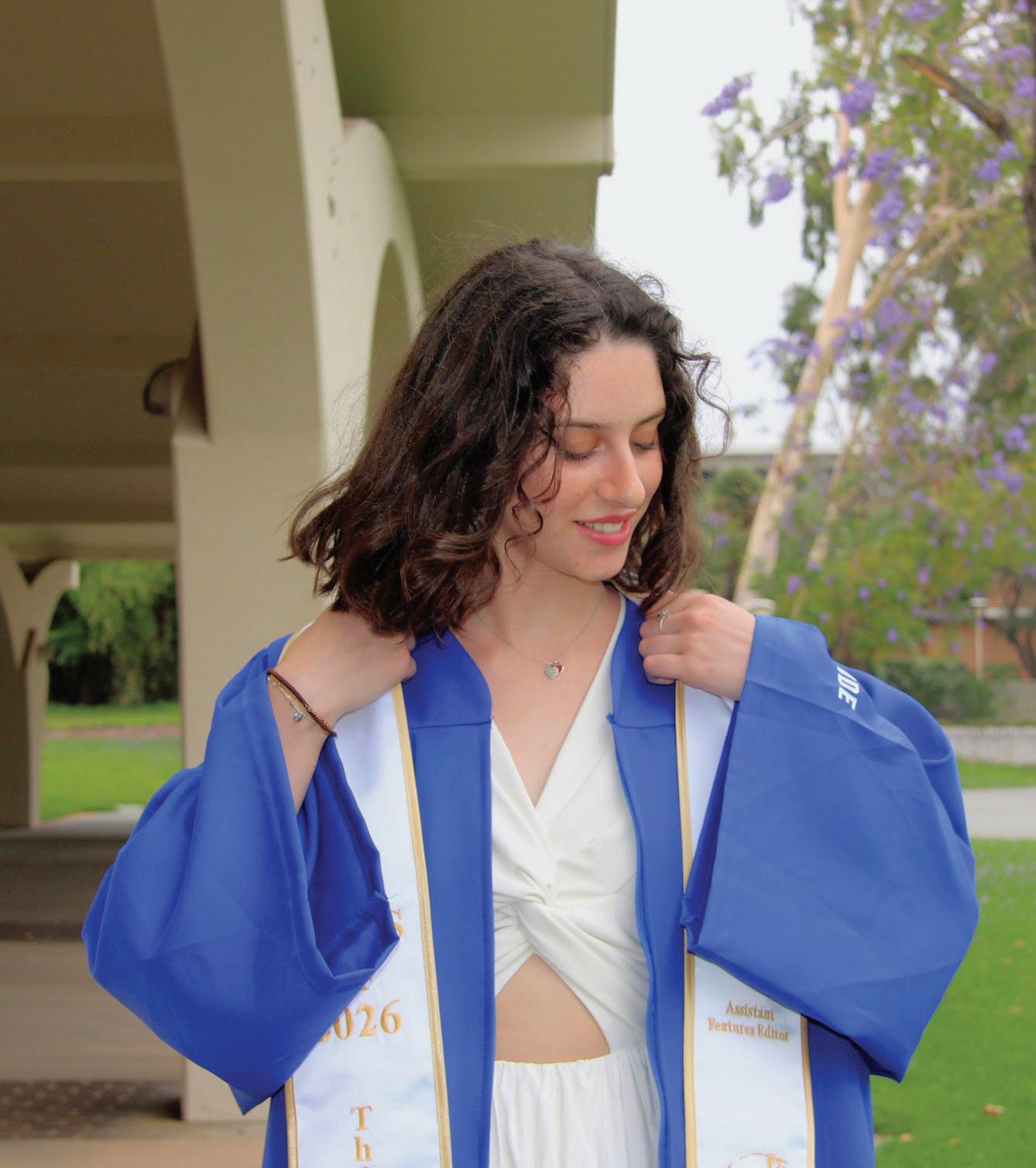
NOLA PERIFEL Assistant Features Editor
■ H
ALEX WONG / THE HIGHLANDER
ALEX WONG / THE HIGHLANDER
My journey in sports media
TERRY NGUYEN Sports Editor
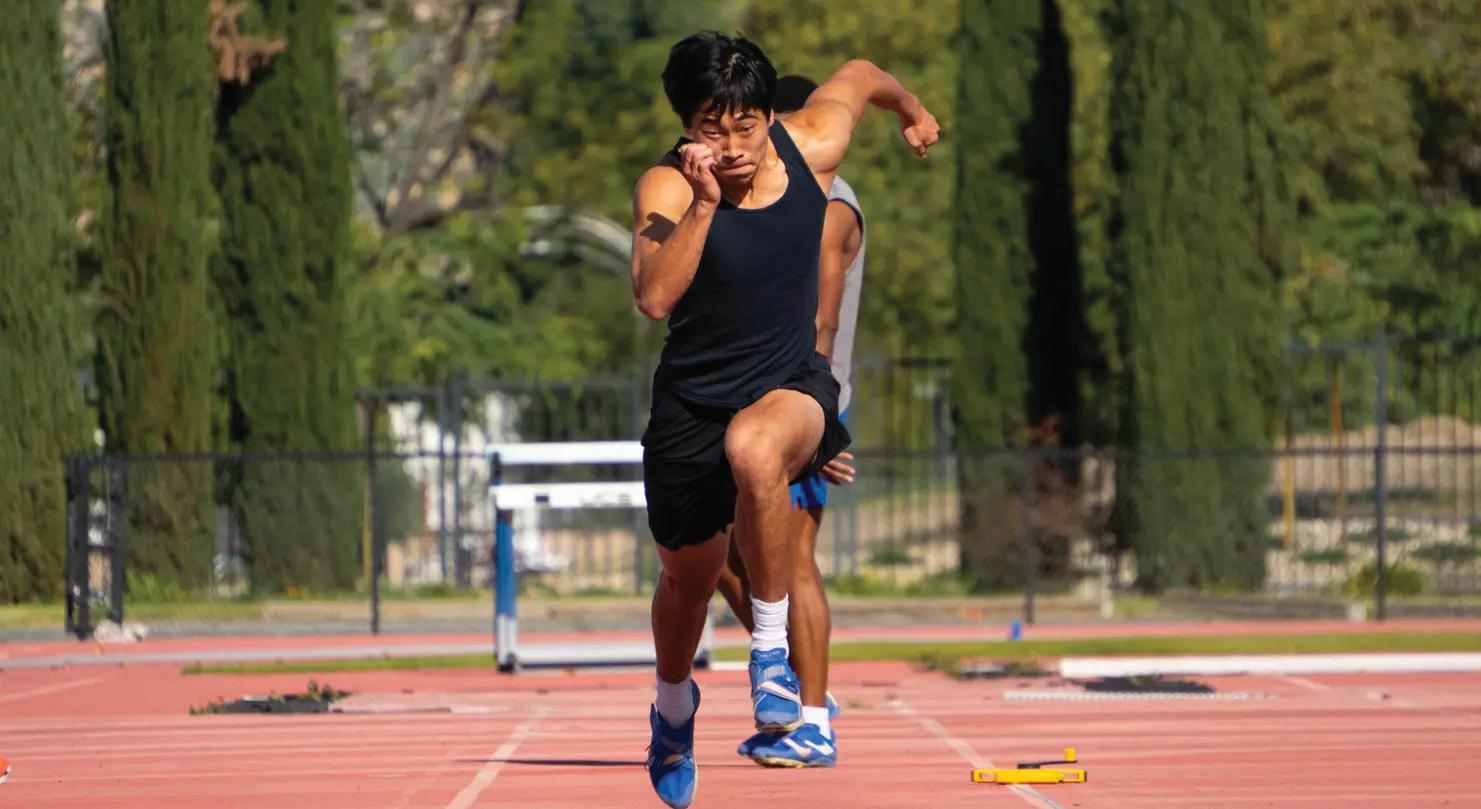
During my childhood, sports were always on the TV in my house, and over time I fell in love with the process of studying sports and athletes. During my first year at the University of California, Riverside, I wanted to work in sports and I found myself writing sports articles with The Highlander.
What I wasn’t expecting was getting the opportunity to cover popular events for The Highlander. I never would have imagined covering NBA and WNBA games or getting to interview athletes at the highest level of competition.
My experience covering sports, particularly basketball at UCR, has allowed me to develop meaningful relationships with those who work in it. Basketball coaches Mike Magpayo and Gus Argenal have taught me lots of things that go on behind the scenes to support a basketball team and university. In addition, former UCR Athletics Director Wes Mallette has been a huge mentor to my work in sports media at UCR, and I’m extremely grateful for all the people who helped me through UCR Athletics.
With graduation looming, I plan to attend a graduate program in sport management, hoping to make working in sports my full time career. Colleagues including Isaac Solnick, Hansel Chu and many others at The Highlander have inspired
me to pursue a career in sports while instilling strong values in my work in media.
A moment that I’ll never forget during my time with The Highlander is getting a phone call from Naismith Basketball Hall of Famer and sports broadcaster, Mike Breen.
How did that happen you ask?
The Highlander took many of its staff members to a conference in New York in 2025 where I got to present my work in sports media to a panelist. He was impressed and referred me to Mike Breen. Breen gave me a phone call three months later when I was least expecting it.
Our phone call lasted exactly 23 minutes … 23 minutes I’ll never forget. That phone call illustrates my experience at The Highlander because I never thought I’d work in sports media entering college. If someone told me back in 2023 I’d get a phone call from the greatest sports broadcaster of all time, I would not be able to comprehend that message.
I’m not sure where sports will take my career,
but I hope to gain new opportunities to work in the sports business industry. For now, I’m focusing on ending my undergraduate career with a Bang
The Highlander, or how I learned to stop worrying and love writing articles
Superhero movie release after superhero movie release, in eager anticipation of watching the newest blockbuster the following Friday, Jeremy Jahns’s reviews kept me fed. Listening to somebody with a “trusted opinion” rave about a film or be gravely disappointed was my first taste before actually going into the movie myself. Eventually, as I got older, I went from watching Jahns
to Karsten Runquist to eventually Roger Ebert, gaining a pension for reading reviews as well.
To me, the reception of a piece of art, and the discourse surrounding it, was as important a conversation as the art itself. Seeing how people discussed Billboard chart-toppers and box-office hits helped me understand what people felt in the zeitgeist. As a massive fan of pop culture, watching the Star Wars movies and listening to The Beatles from a very young age, seeing how popular culture was unfolding in real time was deeply exciting to me.
Going into quarantine, creating an account on the “Letterboxd” website, and watching a plethora of video essays, I got more into the act of writing about art. Watching hundreds of films in a year and writing about each one gave me the opportunity to understand my own feelings about a work and engage with discourse.
ORANGE ST
But just as I stopped writing after hundreds of hours spent reviewing movies, I realized almost no one was reading them. While for myself, the expression of writing was personally fulfilling on the merit of the process, it did feel quite empty writing in an often dark room with little to no perception from anyone else online.
Eventually while at the University of California, Riverside (UCR), working in the department of Residential Education, during summer training I met a member of The Highlander staff
who encouraged me to write for the newspaper. It was during lunch in Glasgow and I was looking at a job listing for The Los Angeles Times for a position as a film critic. She said, “Well if you don’t get that job, you should consider writing for The Highlander.”
Since that time I’ve written more articles than I can count on everything from defending auteur-driven movies, to new album releases, to even fashion guides. I stepped beyond the lines of writing for the Radar section, writing for Opinions, Features and Sports. Working at the newspaper not only gave me an audience to write toward, but also opportunities to expand my writing skills.
I’ve interviewed documentarians and actors and had the opportunity to cover film festivals and early screenings. Writing for The Highlander has made me sustain my passion for art as I study Computer Science and make clear for me the passion I have for writing which is something I will be pursuing in further depth as I move beyond UCR. I’m forever grateful for this opportunity and glad to contribute to such a historical institution, working alongside such incredible talent like Radar editor Ian Palma and Editor-in-Chief Mata Elangovan.
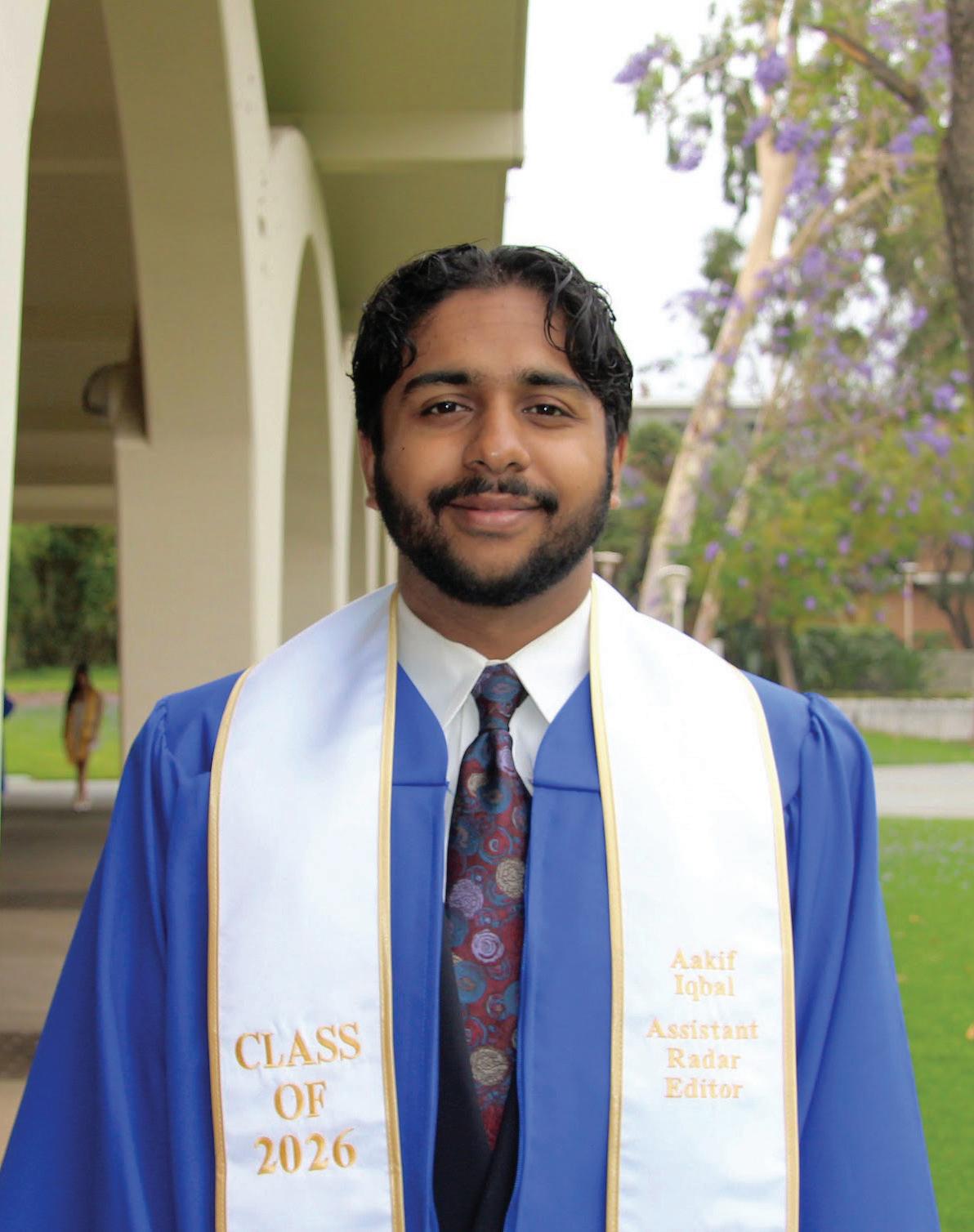
AAKIF IQBAL Assistant Radar Editor
ALEX WONG / THE HIGHLANDER
ALEX WONG / THE HIGHLANDER
ABBY LAZAR Marketing Intern
The art of selling tru
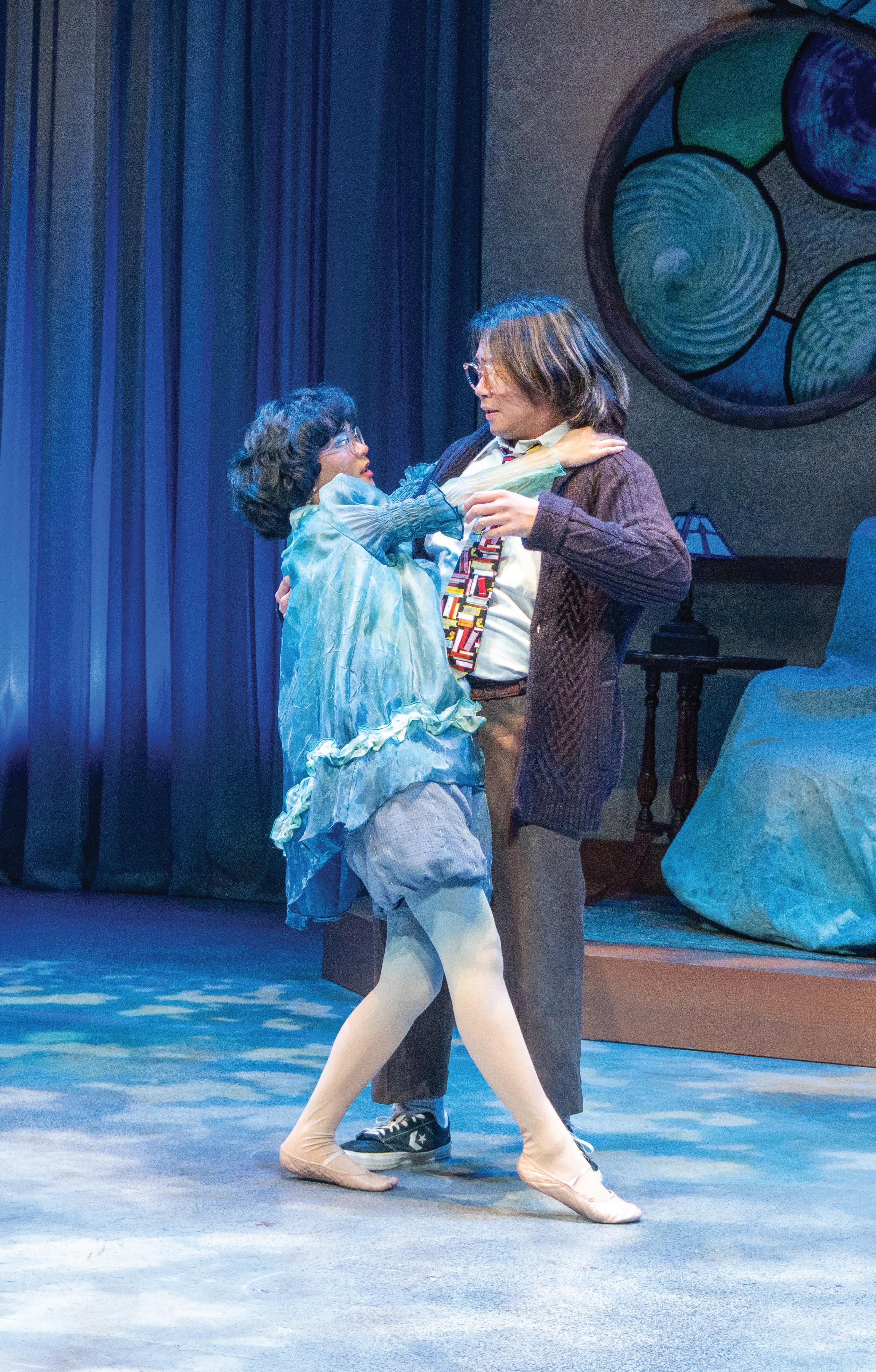
Throughout my four years, I was allowed to explore my creativity in many different ways. I was able to start acting, music production, event planning and of course marketing. I had experience with being a social media chair for R’Brains and Behavior and creating fun trendy TikToks for Asian Americans of Riverside Theatre and event planning for Residential Education, but The Highlander allowed me to explore what it was like consistently.
I have always been proud to talk about how grateful I am for being in this position because I felt like creativity could be mixed with the practical. Being able to create and feature stories about popular culture, news and things around campus made me excited to contribute and I loved being able to find new ways to engage people on Instagram.
I went into college thinking that I wanted to pursue psychology and even though my future is still uncertain, being here made me feel more fulfilled when I was dancing towards my creative pursuits. Honestly, being extremely brainrotted and chronically online got me far (but trust, I still have a few brain cells left) and I was able to use that within the way I created posts.
Testing out certain color schemes, fonts, pictures and everything else that comes with mar-
keting was rewarding because it felt almost like a science experiment by combining what feels right together.
One of my favorite memories is when we went to New York last year for a college convention and it was one of the most insightful moments in my marketing career so far. I attended many marketing and branding talks, but what I learned was that the story is truth.
There is no special trick that you need to do, no flashy arrangements, but a post that highlights the story itself. Consistent branding with a story that is relevant and a topic that people care about will be so much more important, and most especially reach our students. It was so fun going with the marketing team last year and exploring New York together in the late hours of the night, but I am so grateful I got to go with people who are just as passionate about The Highlander.
It was such a privilege to be able to work with people who really cared about it, and I won’t forget the times I had with them. I wish everyone on the team good luck and proud of the people who worked tirelessly to tell our stories.
Two halves
The year I’ve spent in The Highlander has made me wish that my time at the University of California, Riverside (UCR) wouldn’t be ending so soon. But I think that’s what happens when you find yourself in a place surrounded by people you genuinely enjoy being around.
I still remember walking into the office for my interview and realizing I forgot to bring something to take notes, something the email had specifically mentioned. Sitting there empty handed I was spiraling, worried that a little notebook would cost me the position.
But after surviving that INSANELY long application (don’t be discouraged, I promise it has improved) I knew I had to lock in because there was no way I had upgraded my Adobe portfolio subscription for nothing. Thankfully Mata — my amazing Editor-in-Chief, and no, I promise she didn’t force me to say this — saw something in me worth hiring.
Working at The Highlander immediately set the standard high because I had never enjoyed a job as much as I had working there. I had the privilege of attending all kinds of fun events, like photographing THE Marco Fabian while sitting courtside, and somehow being able to call that my job. More than anything, it gave me the confidence to try things out of my comfort zone within the work environment, teaching me that mistakes were something to learn from, not dwell over.
I will never forget the way my heart sank to my toes when I got a Slack message saying we had received a cease and desist over a photo I submitted and incorrectly credited (my bad, guys). I seriously thought my time in The Highlander had ended before it even really began. But instead of calling me out or making me feel terrible, we took accountability as a whole.
We made a public statement without singling
me out, which honestly would’ve been understandable. Instead, we discussed how this happened and how we could prevent something like this from happening again (and thankfully, it didn’t).
As much as I love every second of photography work I put into The Highlander, my time there would have been nearly as impactful if it weren’t for the people behind it. Because, as much as I loved watching the Empire Strykers from up close, what I remember most of that day was the fun I had exploring the arena and covering the game alongside my managing editor and good friend, Isaac.
There is a phrase I’ve heard about life being split into two parts: before something happens, and after. I never understood the sentiment until I joined The Highlander. It feels like my life has been split in two halves: before The Highlander, and after.
Before I leave, my biggest hope is that everyone there understands the impact they’ve had on me. Their dedication and passion for what they love has been deeply inspiring and motivating. I feel insanely lucky to have been surrounded by such a prodigious group of people. I’ve seen the way UCR has been a hub of community building for all kinds of people. I’m grateful I found mine. So, even if it is not here at The Highlander, I hope everyone is able to find their own Highlander family.
P.S Thank you Diana C. for giving me confidence and push to apply. I’m forever grateful.
ALONDRA ORDAZ Assistant Photos Editor
NIKO SUWANDI/ THE HIGHLANDER
NIKO SUWANDI/ THE HIGHLANDER
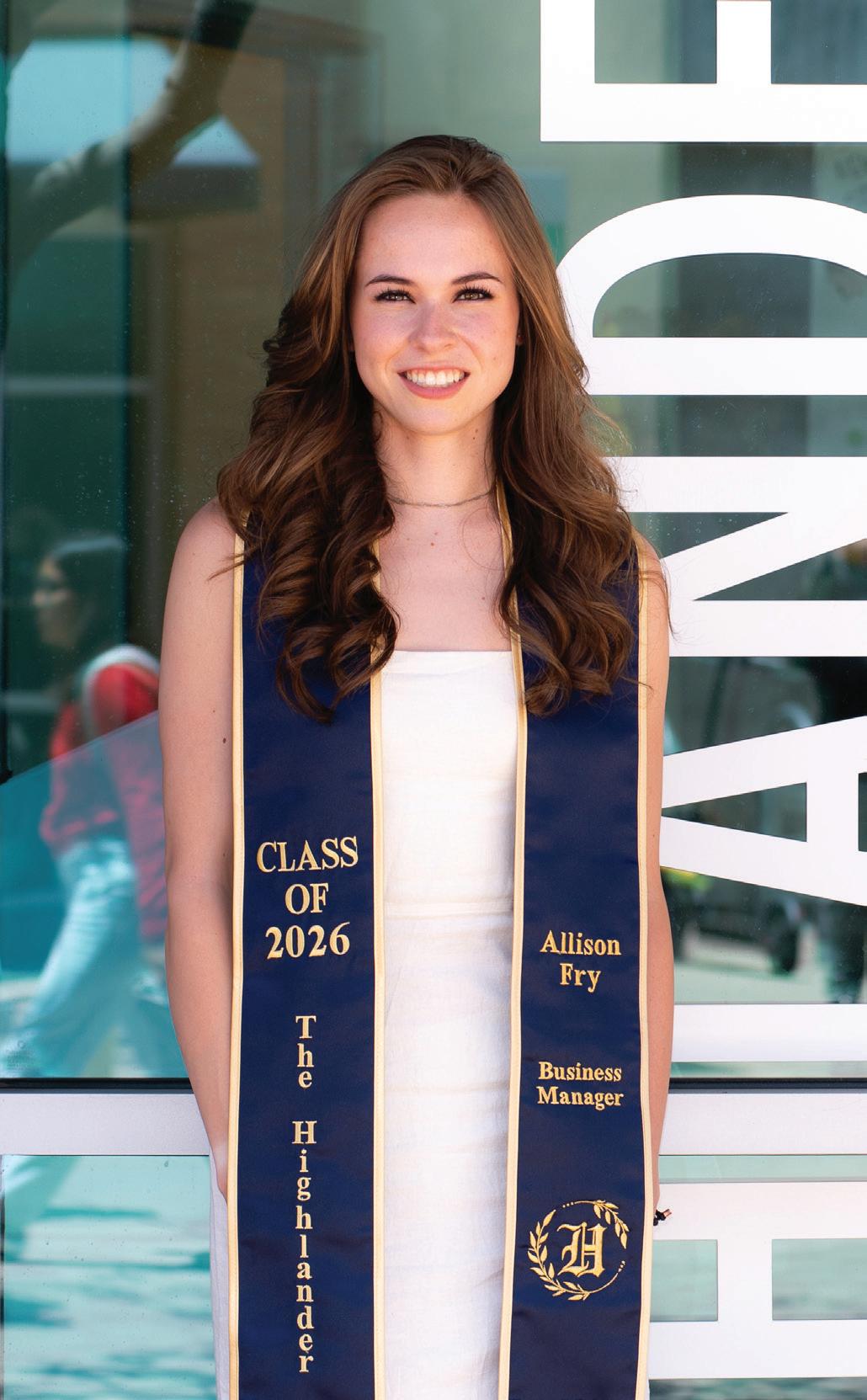
ALLISON FRY Business Manager
With sincerest gratitude
Not to be dramatic, but working at The Highlander has been my greatest college experience by far. Beyond the wonderful work of our team, beyond the impact we can have on our community, beyond even the addition of Business Manager to my resume, are the people. I am lucky to work alongside so many caring, bright individuals who all deserve accolades for their dedication to the paper and its people.
I should have known I was destined to contribute to the newspaper when I toured colleges and grabbed the most current issue from every school. I should have known I would work at The Highlander when I read every issue the day it came out. When I saw the hiring flyer in the paper, I sent in my application that same night. It was one of the best decisions I could have made.
Because of your impact, I’d like to dedicate my graduation message to all of you. In my role as a manager, I have had the privilege of training 5 incredibly talented individuals: Xochitl, Xavier, Paris, Zach and Jeremiah. Please know that you are all so very dear to me, and that you have helped me grow tremendously as both a professional and a person.
To our incredible Editor-in-Chief (EIC), Mata: I am so grateful for — and honestly surprised by — our friendship. Built through hard work and a
great deal of care, it has become one of the hallmarks of my college experience. Thank you for being such a great leader and example to us all (I want to be you when I grow up), and I’m holding you to our plan of creating a paper of our own.
Isaac, you were my first friend at The Highlander. Your caring nature and attention to every member of staff has made you an exemplary leader, and I’m so excited to see all that you will accomplish.
Angelica, I know your time as EIC will be a testament to your dedication to the community we all love so much, and I have every confidence you will do amazing things.
Kassy, thank you for your joy.
To all the rest: please know that you have contributed immensely to my happiness. While I can’t name all of you, every last one of you is a kind, hardworking friend. Please keep in touch.
I am biased, but I truly believe that The Highlander is the greatest organization on campus. To all the readers out there, please take my word that there is always a position, a place and a community open to you here.
There are not nearly enough words to express my gratitude, but thank you for the happiest times. I will miss you all.
Finding my footing
I first came across The Highlander spring quarter of my freshman year. I saw a post that came up on my feed with large letters reading, “We’re hiring!” As a freshman with little to no experience, I applied to any place that would take me. I was extended an interview by the Editor-in-Chief at the time, Senna, and I ended up getting picked to be the next Distribution Manager for the 2025-2026 school year.
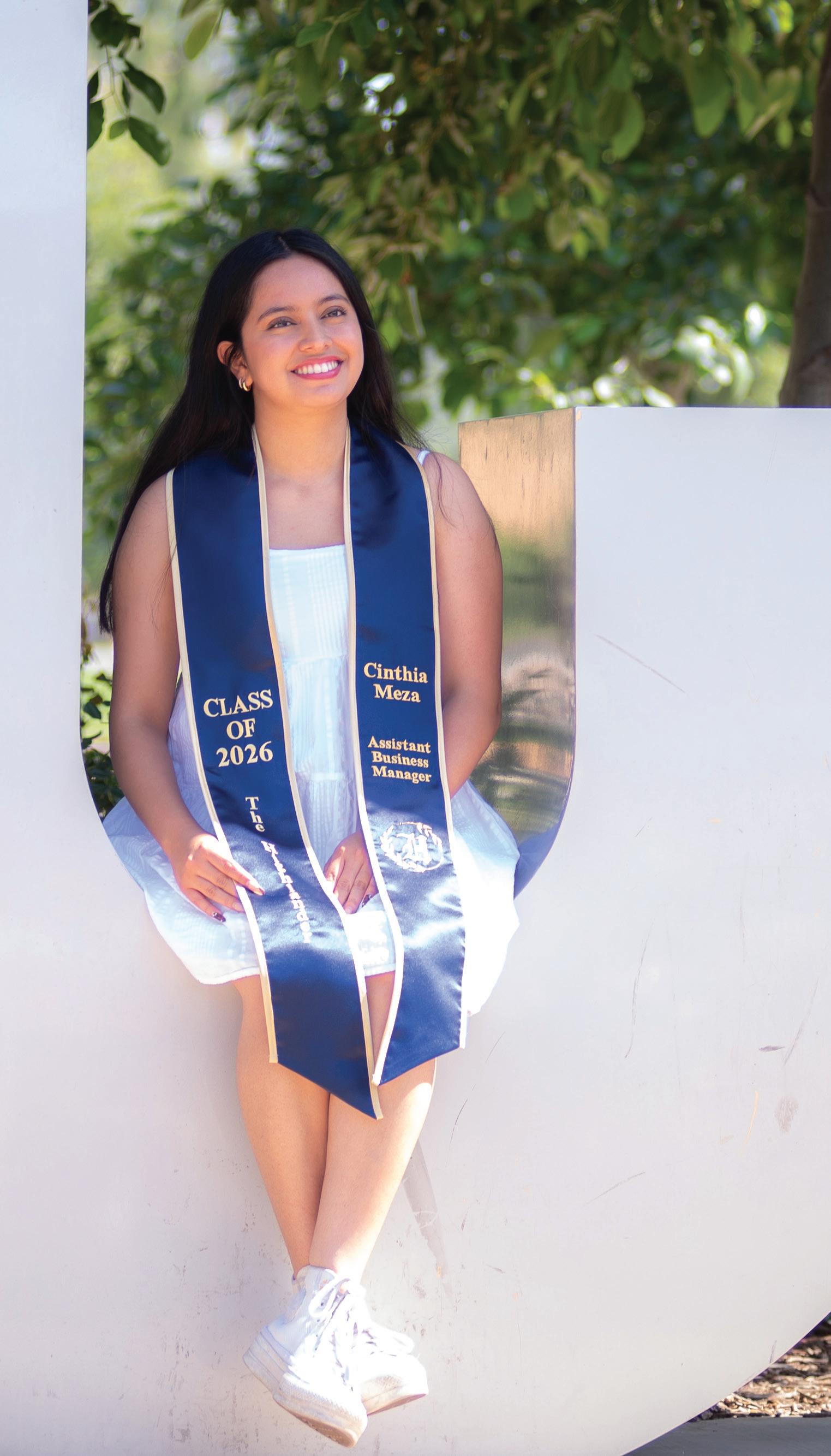
I never thought I would be working for a newspaper because to be very honest … I am not the best writer. But I was still able to find my place here by putting out the final product of our hardworking team every Tuesday around campus. Stepping into my last year of college, I knew that I wanted to be more hands-on with the newspaper, which led me to become the Assistant Business Manager.
I want to give a huge shoutout to my partner Allison, for giving me a lot of grace as I knew almost nothing stepping into the role. There is a lot of behind the scenes work that the business team does and I’m super grateful that we had five amazing Ad Reps, Zach, Xochitl, Jeremiah, Xavier and Paris, that helped make this year enjoyable. The
Highlander is a very unique place on campus, and I’m very thankful that my freshman year self just so happened to stumble upon it.
As a first-generation college student, I found it really hard to put myself out there as it seemed like everyone knew what they wanted to accomplish in life. I am glad that I was able to find spaces on campus that made me feel involved and a part of something. To any student reading this, I would really encourage you to join different clubs, organizations and groups on campus. Each experience will teach you something new and will expand the network of people you meet during your time at the University of California, Riverside (UCR).
I also want to give a shoutout to an organization that played a big part in my college journey, Latino Business Student Association. This organization made me the student I am today. I was able to grow within this organization and I was given the honor to serve as the Vice President this academic year.
To my board, thank you for working so hard and putting up with my endless crashouts. Because of our hard work we were able to rise above and be recognized with a handful of awards. To our advisors, Erika and Arutro, thank you for volunteering your time to extend opportunities to our first generation members at UCR.
Thank you to The Highlander for everything that you have offered me, and I can’t wait to see what the future holds!
CINTHIA MEZA
Assistant Business Manager
NIKO SUWANDI/ THE HIGHLANDER
NIKO SUWANDI/ THE HIGHLANDER
TUESDAY, APRIL 21, 2025
EVENTS THIS WEEK
5/26 5/27 5/28
Becoming Bimo: Shadow Puppetry and Gamelan of Java Featuring Woro Mustiko Siwi @ Culver Center at the Arts at 7 p.m.
Student Performance and Composition (Jonathan Keplinger) (Florence Bayz Music Series) @ ARTS 157 from 12 p.m. to 12:50 p.m.
Spring Forward 2026: “Stories Awakened” @ ATHD 102 from 7 p.m. to 8:30 p.m.
Screening & Conversation: Tripoli / A Tale of Three Cities with Filmmaker Raed El Rafei @ CHASS INTS South 1128 from 10:30 a.m. to 1:30 5/29
The pop group factory malfunction SHAKY
BEGINNINGS OF HYBE X GEFFEN’S NEWEST GIRL GROUP, SAINT SATINE.
A year following the success of global girl group, KATSEYE, the joint label of HYBE x Geffen announced their newest global group project titled PRELUDE. They announced three confirmed members — Emily, Lexie and Samara, former contestants of “Dream Academy” who initially competed for a spot on KATSEYE. The search for their fourth member was found through another survival show called “World Scout: The Final Piece.” On May 12, contestant Sakura was announced as the lucky winner and “final piece” of the new global girl group, now named SAINT SATINE.
accomplished by the end of their journeys in “Dream Academy.”
ELENA VERSAGE / THE HIGHLANDER
The age gap between Sakura and the rest of SAINT SATINE is the biggest tension point that audiences have trouble digesting. At freshly 16, she is the youngest member against her 20+ year old groupmates. Spectators made fun of their first appearance as a group, by claiming that the trio was babysitting Sakura. But the online attention to Sakura’s age is not just a joking matter; it’s a confrontation of the label’s predatory urge to reproduce “the ingénue” archetype.
Son Sung-Deuk states in the show, “I believe that SAINT SATINE will become the best girl group in the global market. Number One.” Suspicions arose that HYBE x Geffen is attempting to ‘restart’ their global group process with SAINT SATINE, while giving up on the KATSEYE girls.
Those who were following the journey of PRELUDE were already concerned that the incoming fourth member would have trouble finding their place. After all, Emily, Lexie and Samara were already making their public appearances during the search. As “Dream Academy” classmates, the girls had a familiarity with each other before even coming on to the scene as their own group. The SAINT SATINE image was plagued from the beginning by reinforcing a trio, despite their intentions of making a quartet.
Sakura’s win came at a surprise to the show’s audience. Seen as an unfavorable match for a multitude of reasons, many were outraged by the production’s decision. Some speculated that the choice was made from the beginning of the show, with the most experienced and well-rounded contestants failing to reach the finale. By the end, Sakura’s skill level still did not match what her groupmates
Spectators are concerned about the involvement of a young teen in such a gruelling industry, especially when advertised on a global scale. Sakura is still learning how to perform, while her groupmates have been training for years at this point. Forcing a young girl to improve while pushing her out as a debuting artist with professionals is enough reason for public scrutiny.
Then, it’s a question of: is this scene appropriate for a young teenager, considered a minor in the majority of the world? One of the featured songs, called “We Ride” was performed in the “World Scout” finale by finalist Ayanna, 19, with the pre-announced SAINT SATINE members. The song’s lyrics contained sexual innuendos that would have been inappropriate had Sakura been the one to perform the song.
The HYBE x Geffen label is infamous amongst the fanbase of their projects. Executive Creator of HYBE America
KATSEYE has reached a slow point in their group’s progress, with KATSEYE member Manon on hiatus since February. The transition from KATSEYE’s “SIS (Soft is Strong)” EP to “Beautiful Chaos” EP made it clear that the group is still figuring out a direction to work out for them as a unit. The group has yet to release a full album, but is set to have another EP release later this summer. Now in their third year since their formation, fans have lost their faith in the joint label that’s struggling to establish even one global project.
HYBE x Geffen’s creative directions have been at odds with their fanbase for a while now. While SAINT SATINE is not even a month old yet, people are apprehensive to show their support for the group. Hopefully their full debut will be a shocking twist for skeptics, living up to the aspirations the group’s executives have in mind. Until then, SAINT SATINE will have to sit with the pressure of proving themselves to the world.
GIANNA ALMARIA Staff Writer
COURTESY OF HYBE X GEFFEN RECORDS
No more mister nice man with ‘ICEMAN’
TORONTO’S HERO REMAINS UNDETERRED.
On May 15, 2026, after a long awaited album rollout that consisted of a series of episodes including snippets of new songs and a giant block of ice melting in the streets of Toronto, Canada, “ICEMAN” dropped. Drake came off of a hyped tour with PartyNextDoor following his presumed truce on the beef between him and Kendrick Lamar.
The diss track “Not Like Us” had blown millions of streams, appearing in the 2025 Super Bowl and became another anthem for the city of Los Angeles. Many critics felt the beef hadn’t been paused, but rather ended on the behalf of Kdot. However, this latest Drake release has been chilling in waiting for the last couple of months.
The first single released during mid 2025, “What Did I Miss?” came after a livestream titled “ICEMAN: Episode 1,” appeared on Drake’s youtube channel. In it, he drove around the city of Toronto in a truck labeled ICEMAN. Snippets of other songs would appear on future episodes, which highlighted his two other albums he’d release alongside “ICEMAN.” This created his H.I.M. Trilogy, “HABIBTI,” “ICEMAN,” and “MAID OF HONOUR.” One being R&B and the other being a more dance genre, with “ICEMAN” maintaining the most Hip Hop curated beats and styles shown.
beef in 2024.
Within the first three tracks, Drake had already dissed a majority of passed artists who also began vendettas in early 2024. From Rick Ross, to Kendrick and Jay-Z,
Drake highlights he aided him since all three of Rick Ross’s #1 hits all have Drake as a feature. The line is also a play on words to shout out streamer Adin Ross who’s a well known supporter of Drake.
he serves plenty of lines offering disses for those that have crossed the 6 God. On “Janice STFU”, he raps “We know how you OGs rockin’ already, my n****, the jig is up”, acknowledging Jay-Z, since Roc Nation pushed for Kendrick to perform at the 2025 Super Bowl, and has had a history of siding with the opposition in beefs against Drake.
Featuring production by Boi-1da who’s produced with Drake since the “Best I Ever Had” days and the song “Forever”, “ICEMAN” boasts an extensive list of respected producers who have had history working with Drake. Showcasing how much he values the loyalty of those who haven’t left his side amidst the beef. The album also features frequent collaborators 21 Savage, Central Cee, Sexyy Red, PartyNextDoor and even Future whose song “Like That” featuring Kendrick Lamar is what ignited the
On the track “Make Them Pay,” Drake continues his onslaught against people who’ve crossed him or he’s sneak dissed in the past. Lines like, “I got all the chains that they ever repped in Virginia” both referencing the prized jewelry from Pharrell Williams Drake had bought, as well as a diss to Pharrell’s frequent collaborators Drake beefs with, Clipse. Other lines “Dog, I was aidin’ Ross with streams before Adin Ross had ever streamed,” calls out Rick Ross who also sided against Drake amidst the Kendrick beef.
Sprinkled within the album are disses aimed at Kendrick, from “Janice STFU,” where he also disses the head of UMG that Drake has been suing since late 2024 to “Whisper My Name,” or “National Treasures,” where he acknowledges the heightened security and police presence to help escort him to the airport when Kendrick performed in Toronto during the Grand National Tour. Even A$AP Rocky caught strays on “Burning Bridges,” as he has been throwing shots at Drake since before releasing his recent album “DON’T BE DUMB.”
From humble beginnings of being featured on an Eminem song, to now being able to credit himself for starting up a lot of other people’s careers, Drake has really made his name iconic in the past over two decades he’s been performing. In his music video for “Make Them Remember,” Toronto Mayor Olivia Chow gave Drake permission to use her city hall office for footage. Even going as far as letting him wear her Chain of Office, as she states, “The world was watching, and he’s making us proud.”
Verdict: Despite the past beefs Drizzy has struggled against, no opponent has yet been able to put away the 6od, as he maintains his reign on the Billboard charts, and approval from fans once more. This album is an excellent solo release from The Boy, and is a great comeback after recent losses. Showing once more, it takes a lot more than witty punchlines and opposition streams blowing in his face to take out a champ.
ANTHONY ASCENCIO-CARVAJAL Staff Writer
PHOTO COURTESY OF OVO SOUND
spOrts
Running is more lit than ever
Running clubs are gaining popularity and Strava is a big reason why.
TERRY NGUYEN Sports Editor
Long distance running is gaining popularity, and it’s common for influencers to post their long runs on social media platforms. One social media app that’s surging in popularity is Strava, which allows users to post their workouts and share them with friends. People use Strava for different reasons including finding motivation, information or other people to exercise with.
Jacob Lam, a first year cell, molecular and developmental biology major, commented, “I check Strava at least once per day … If I do see a friend doing a hard workout, it does give me motivation to go for a run.” Lam is also a member of the Running Club at the University of California, Riverside (UCR), where many members frequently use Strava to document their runs.
“Strava [is] one of our main media sources between our club members. We sometimes post our member’s runs onto our Strava club page where we spotlight their run,” explained Lam.
Fitness organizations in colleges across the country can share their specific workouts on Strava, which can help prospective members learn more about each organization.
Running and Strava are becoming more popular at the same time. A strong facilitator in their growth was COVID-19. During the pandemic, gyms were shut down and one of the few ways people could workout was going on long runs outdoors.
According to Field Mag, 578,374 people entered a raffle for the opportunity to run the London Marathon in 2023 which was a record at the time. In 2025, that number rose to over 1.1 million. According to Strava data, participation in running club organizations increased 59% in 2024 and it seems that running is becoming a “cooler” sport.
Nicole Kennedy, a fourth year neuroscience major, commented “I noticed at the end of each run [at Running Club at UCR], we all ask each other’s
Strava [account]. It’s kinda awkward if you don’t have it.”
Maya Waugh, a third year student at Northeastern University and president of the school’s Elite Heat club, uses Strava regularly but doesn’t overly rely on it for social networking. “I add people on Strava when they’re people I workout with, but to be honest I don’t like adding many people on Strava,” explained Waugh.
Waugh appreciates how Strava feels more “real” than other social media platforms, mentioning “[I post] what I’m truly up to. No lies, no exaggerations. I post my good runs as well as my bad runs.”
Not only does Strava bring people together, but it can create inside jokes and culture amongst friend groups. “In two workout clubs I’m in, we have end of year potlucks where we have presentations and games … one thing we do is vote on the best Strava caption or best activity or best comment or whatever,” said Waugh. ■ H
PHOTO COURTESY OF ISTOCK
PHOTO COURTESY OF WIKIMEDIA COMMONS
Mindset and momentum propel UCR jumpers to Big West podium finishes
DESPITE BATTLING INJURIES, SETBACKS AND MENTAL HURDLES THROUGHOUT THE SEASON, FOUR UCR JUMPERS SHINE AT BIG WEST CHAMPIONSHIPS.
IZZY GRAHAM Asisstant Sports Editor
The University of California, Riverside (UCR) track and field team closed out its season with a strong showing at the Big West Championships, highlighted by four standout performances from jumpers Kazu Kimura, Chelsea Aninyei, Andrew Robinson and Aaron Fudge.
Between conference titles, podium finishes and personal records throughout the season, the Highlanders helped showcase the talent and resilience within the track and field program.
Sophomore Kazu Kimura led the way for UCR with a first place finish in the high jump (2.12m/6-11.50) while also placing fourth in the long jump (7.46m). Despite struggles during last year’s conference meet, Kimura said his biggest improvement came mentally rather than physically.
Kimura emphasized how last season physicality was a driving factor in how he performed, but how “this year, I focused a lot mentally, and I think that is what helped me be so successful this year.”
Kimura explained that entering meets with more confidence and freedom allowed himself to compete without obsessing over marks or podium placements. Instead of letting poor performances define him, he learned to process setbacks constructively and focus on growth moving forward.
Chelsea Aninyei, a redshirt junior, also obtained a conference title, taking first in the triple jump (13.04m) as well as third in the long jump (6.08m). Returning to the same place she suffered an injury during last year’s conference meet, Aninyei viewed this year as an opportunity for redemption.
“My main goal was to prove to myself that whatever I thought about Long Beach and not performing well there was arbitrary,” she said. “It was just in my head.”
Despite battling difficult memories associated with the venue, Aninyei said she entered the weekend with a much healthier mindset than in previous years. Rather than chasing results, she focused on trusting the months of preparation leading up to the championships. That approach ultimately helped her deliver one of the strongest performances of her collegiate career.
“You don’t need to be beating yourself up every day,” Aninyei said. “Even if you didn’t PR at a meet, there’s still something to learn.”
Andrew Robinson emerged as one of the surprise performers of the weekend, earning third place in the triple jump (15.41m) after enduring a season filled with injuries and inconsistent performances. Robinson explained that despite adversity, he entered
the final stretch of the season fully believing he could compete for a podium finish.
“I completely believed in myself,” Robinson shared. “When I hit it, I was happy, but I wasn’t surprised.”
Aaron Fruge rounded out the Highlanders’ successful weekend with a third place finish in the long jump (7.57m). Fruge emphasized how important consistency and mental preparation became after a disappointing performance at last year’s conference championships.
Fruge reiterated how easy it is to allow a negative mentality to affect your college career, but shared, “TThis year, I prepared my mind to be ready for the ups and downs and challenges.”
While the Highlanders celebrated impressive finishes at the conference championships, the athletes repeatedly pointed to something deeper than medals or podium spots.
Across each athlete a common theme emerged. Growth, resilience and learning how to trust themselves through the highs and lows of collegiate athletics. For UCR’s jumpers, the 2026 season became just as much about mental development as it did competitive success.
Be Grand.
The Highlander Newspaper is a great way to keep up with current events and news around campus. If you are interested in the newspaper’s articles or pictures, we offer opportunities in writing, photography and design. Join us every Monday at 5:15 p.m. in HUB 101 to learn more.