The Highlander

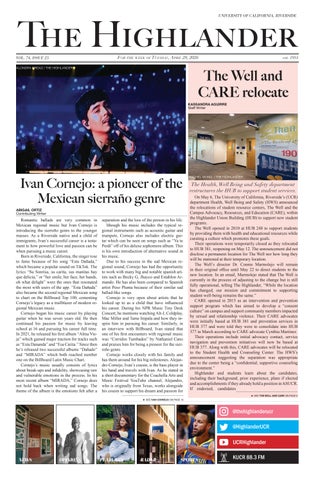
Romantic ballads are very common in Mexican regional music but Ivan Cornejo is introducing the sierreño genre to the younger masses. As a Riverside native and a child of immigrants, Ivan’s successful career is a testament to how powerful love and passion can be when pursuing a music career.
Born in Riverside, California, the singer rose to fame because of his song “Esta Dañada,” which became a popular sound on TikTok. The lyrics “Su Sonrisa, su carita, sus manitas hay que delicia,” or “her smile, her face, her hands, oh what delight” were the ones that resonated the most with users of the app. “Esta Dañada” also became the second regional Mexican song to chart on the Billboard Top 100, cementing Cornejo’s legacy as a trailblazer of modern regional Mexican music.
Cornejo began his music career by playing guitar when he was seven years old. He then continued his passion for music by leaving school at 16 and pursuing his career full time. In 2021, he released his first album “Alma Vieja” which gained major traction for tracks such as “Esta Dananda” and “Esa Carita.” Since then he’s released two successful albums “Dañado” and “MIRADA” which both reached number one on the Billboard Latin Music Chart.
Cornejo’s music usually consists of lyrics about break-ups and infidelity, showcasing raw and vulnerable emotions in the process. In his most recent album “MIRADA,” Cornejo does not hold back when writing sad songs. The theme of the album is the emotions felt after a

separation and the loss of the person in his life. lthough his music includes the typical regional instruments such as acoustic guitar and trumpets, Cornejo also includes electric guitar which can be seen on songs such as “Ya te Perdí” off of his deluxe sophomore album. This is his own introduction of alternative sound in his music.
Due to his success in the sad Mexican regional sound, Cornejo has had the opportunity to work with many big and notable spanish artists such as Becky G, Jhayco and Establon Armando. He has also been compared to Spanish artist Peso Pluma because of their similar sad ballad-like songs.
Cornejo is very open about artists that he looked up to as a child that have influenced his career. During his NPR Music Tiny Desk Concert, he mentions watching Alt-J, Coldplay, Mac Miller and Tame Impala and how they inspire him in pursuing his career. Similarly, in an interview with Billboard, Ivan stated that one of his first encounters with regional music was “Corridos Tumbados” by Nathaniel Cano and praises him for being a pioneer for the sierreño genre.
Cornejo works closely with his family and has them around for his big milestones. Alejandro Cornejo, Ivan’s cousin, is the bass player in his band and travels with Ivan. As he stated in a short documentary for the Coachella Arts and Music Festival YouTube channel, Alejandro, who is originally from Texas, works alongside his cousin to support his dream and passion for

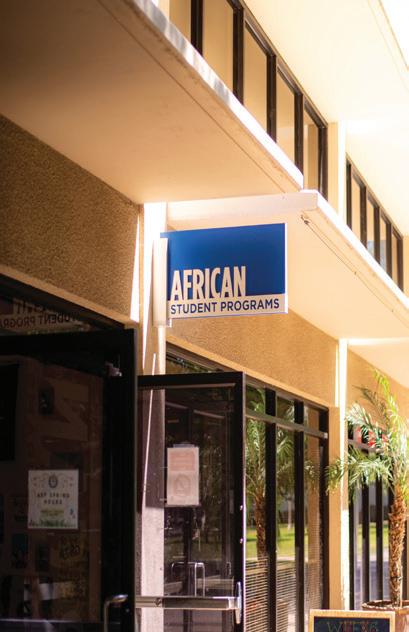

The Health, Well Being and Safety department restructures the HUB to support student services.
On May 6, The University of California, Riverside’s (UCR) department Health, Well Being and Safety (HWS) announced the relocations of student resource centers, The Well and the Campus Advocacy, Resources, and Education (CARE), within the Highlander Union Building (HUB) to support new student programs.
The Well opened in 2010 at HUB 248 to support students by providing them with health and educational resources while curating a culture which promotes these goals.
Their operations were temporarily closed as they relocated to HUB 381, reopening on May 12. The announcement did not disclose a permanent location for The Well nor how long they will be stationed at their temporary location.
The Well’s director Dr. Connie Marmolejo will remain in their original office until May 22 to direct students to the new location. In an email, Marmolejo stated that The Well is currently in the process of adjusting to the change but is still fully operational, telling The Highlander, “While the location has changed, our mission and commitment to supporting student well-being remains the same.”
CARE opened in 2015 as an intervention and prevention support program which has aimed to develop a “consent culture” on campus and support community members impacted by sexual and relationship violence. Their CARE advocates were initially based at HUB 381 and prevention services in HUB 377 and were told they were to consolidate into HUB 377 in March according to CARE advocate Cynthia Martinez. Their operations include initial advocacy contact, service navigation and prevention initiatives will now be based at HUB 377. Along with this, CARE advocates will be relocated to the Student Health and Counseling Center. The HWS’s announcement suggesting the separation was appropriate due to the center being a “confidential, supportive counseling environment.”
Highlander and students learn about the candidates, including their background, prior experience, plans if elected and accomplishments if they already hold a position in ASUCR. If endorsed, candidates

Editor-in-ChiEf
Mata Elangovan
editorinchief@highlandernews.org
Managing Editor
Isaac Solnick
managingeditor@highlandernews.org
nEws Editor
José Del Ángel
news@highlandernews.org
asst nEws Editor
Angelica Brianna Acosta asst.news@highlandernews.org
opinions Editor
Cecile Diroll
opinions@highlandernews.org
asst opinions Editor
Rubaita Iqbal
asst.opinions@highlandernews.org
fEaturEs Editor
Sanjana Thatte features@highlandernews.org
asst fEaturEs Editor
Nola Perifel
asst.features@highlandernews.org
radar Editor
Ian Palma radar@highlandernews.org
assistant radar Editor
Aakif Iqbal asst.radar@highlandernews.org
sports Editor
Terry Nguyen sports@highlandernews.org
asst sports Editor
Sofia Majeed asst.sports@highlandernews.org
photography Editor Vash Chen photo@highlandernews.org
assistant photo Editor
Alondra Ordaz photo@highlandernews.org
produCtion ManagEr
Agna Soneji productionmanager@highlandernews.org
asst produCtion ManagEr
Emma Cabrera prodassistant.highlander@gmail.com
produCtion assistants
Ella Kim
Nishi Girish
Keyanna (Keys) Pinnon
Aashi Jain prodassistant.highlander@gmail.com
art dirECtor
Adelia Urena highlander.art.director@gmail.com
Copy Editor
Rachel Ko copyeditor.highlander@gmail.com
graphiC dEsignEr
Layna Lapikas llapi002@ucr.edu
dEsign intErns
Holly Dawson
Emily Mata
BusinEss ManagEr
Allison Fry highlanderads@gmail.com
asst. BusinEss ManagEr
Cinthia Meza highlanderads@gmail.com
VidEo Editor
Edwin Basurto video.highlander@gmail.com
asst. VidEo Editor
Isabella Hogan video.highlander@gmail.com
MarkEting dirECtor
Sinhayana Srivastava marketing.highlander@gmail.com
asst. MarkEting dirECtor
Isabell Gracia marketing.highlander@gmail.com
MarkEting intErns
Henya Dadem marketing.highlander@gmail.com
Abby Lazar
marketing.highlander@gmail.com
tECh dirECtor
Ashna Pradhan techdirector@highlandernews.org
ad rEps
Paris Cao
Xochitl Gutierrez
Zachary Hoisington
Jeremiah Finister
Xavier Scott highlanderadrep@gmail.com
distriBution ManagEr
Noah Davis Witten
CONTACT US The Highlander 101 Highlander Union Building Riverside, CA 92521 www.highlandernews.org editorinchief@highlandernews.org
TIP LINE: (951) 8221-2105
Help the Highlander stay on top of what is happening on campus and in the general UCR community. Call this number and leave a message for the Editorial Board with your tip. Be sure to include your full name, relation to UCR, and a number or email address where you can be reached for more details.
The Highlander accepts letters from the campus community. They must be 600-800 words at length and include the author’s name and contact information. Topics should be UCR-centric and/ or pertain to our generation of students. Contact Opinions Editor Cecile Diroll at opinions@highlandernews.org by Wednesday if interested in writing a letter and submit the completed letter by Saturday at noon. Letters can and will be rejected if it does not meet requirements.
The Highlander is published and copyrighted by the Highlander for the students, faculty and staff of UCR. All rights are reserved. Reprinting of any material in this publication without the written permission of the Highlander is strictly prohibited. Readers are allowed one free copy of the newspaper. For additional copies or for subscription information, please contact the Highlander. The Highlander fully supports the University of California’s policy on nondiscrimination. The student media reserve the right to reject or modify advertising whose content discriminates on the basis of ancestry, color, national origin, race, religion, disability, age, sex or sexual orientation. The Highlander has a media grievance procedure for resolving complaints against it. All inserts that are printed in the Highlander are independently paid publications and do not reflect the views of the Editorial Board, the staff or The University of California or the Associated Students of UCR.
“My name is Annabelle. I am a second-year economics student living in North District Two this year...I currently serve as the chair of DEI for North District Two RHA...Last year,my friend introduced me to pickleball, and he we was like ‘Oh, im gonna train you to be the best pickleball player ever.’ but I have not reached that status yet, it’s in progress... The friends I’m playing with now are at the same level as me, so they are not mad that I am not as good... I also like playing Pokémon Go on campus sometimes, like a lot of people at UCR play Pokemon Go...We would just walk throughout school in a little herd, not talking to each other... We just all stand in a circle, and we just aggressively tap our phones...It’s kind of fun to build a community of people that you don’t know, but you start recognizing faces when you see more and more of them... There are really cool events on campus like I made a monarch butterfly, well kind of, half the butterfly’s wing is unfortunately orange, but I’m still very proud of it nonetheless...Shout out to The Well for hosting that event... They also had burritos there, but I came too late to get the burritos, so I was kind of sad... I have a course that is listed as an in-person class, but the rest of the lectures are gonna be streamed on YouTube Live. I was really confused but the class is fun... We get to wear lab coats and little glasses and mix chemicals together with pipettes... My favorite spot on campus are the bleachers by the softball fields... I go there sometimes to think... It’s really quiet, really dark, and you can see the stars... Panda Express is my favorite place to eat on campus... I like to get fried rice with beef and broccoli... If I have to seriously lock in, then the lounge in my North District Two floor... One time I stayed there until like 5 a.m. writing my term paper... I’m from the Bay Area. Shout out Fremont, California...Happiest city in America, seven years in a row... But I love SoCal.”



Classified: $2 per line; 121 characters (spaces, dashes, etc.)


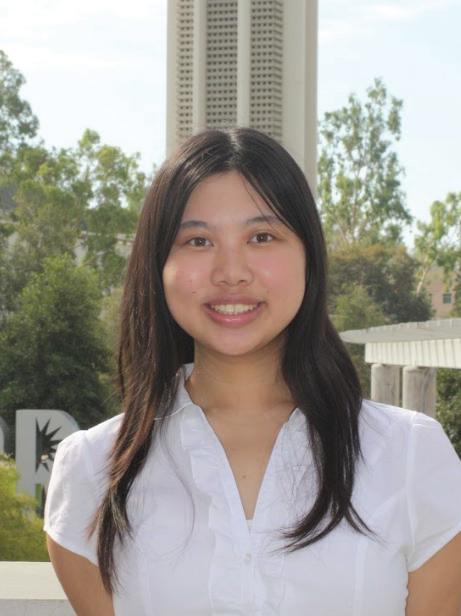
The Associated Students of the University of California, Riverside (ASUCR) convened its weekly Senate meeting at 7 p.m., addressing student government legislation, campus advocacy efforts and funding concerns before adjourning at 7:29 p.m.
During public forum, Riverside Parks Commissioner and UCR alumni Kevin Dawson asked the Senate to support a proposed pedestrian bridge connecting the campus to the Box Spring Mountains trail system. Dawson, a Class of 1977 graduate and Ward 2 parks commissioner for the City of Riverside, explained that the access to the trail was cut off after the rail line near campus became a Metrolink corridor and was fenced for safety roughly a decade ago.
Dawson explained that Friends of Riverside Hills, an environmental organization, had previously secured settlement funds from litigation related to the rail project and used the funds to purchase private property in the Box Springs Mountains before transferring it to county parks. The city is now pursuing grant funding to study construction of a bridge and trailhead connection from Islander Park over the rail line.
“The first step is to write this grant, do the study and then we will write for more grants to find the money to build the bridge,” Dawson told senators while requesting a formal letter of support before the academic year ends.
After public comment, the senate introduced and passed several pieces of legislation and resolutions. Senate Resolution SR-S26-004, titled “Acknowledging Sexual Assault Awareness Month & Expanding Protections for Survivors within the University of California system,” including stronger Title IX representation and policy updates addressing technology-facilitated sexual violance and artificial intelligence-generated imagery.
Senators also approved SB-S26-005, which amends the Office of the Executive Vice President by
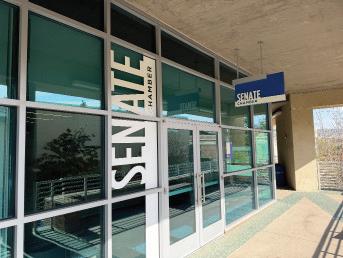
restructuring internal responsibilities and removing the sergeant-at-arms staff position. SB-S26-006 eliminated the Office of the President Pro Tempore, while SB-S26-007 clarified the hiring process for the Elections Committee and aligned portions of the process more closely with the judicial branch procedures.
The Finance Committee reported that its available balance had been reduced to $930 before allocating the remaining funds to the Pacific Islander Student Association (PISA). Committee members noted that both the undergraduate student travel grant and contingency funds remained untouched, while the ASCUR contingency plan account currently stands
at zero.
Executive Vice President Mia Rose Tu’ifua asked about the timing of PISA’s funding request, which she noted had originally been submitted Feb. 24 but was heard later in the quarter after additional grants had already been considered. Tu’ifua also announced that one senate seat is currently vacant.
Additional announcements included reminders about ongoing ASUCR special elections, an upcoming PISA cultural showcase and a campus event featuring Tarana Burke, founder of the Me Too movement, who is scheduled to speak on campus this week on May 20. ■
JOSÉ DEL ÁNGEL & MICHAEL GOI
News Editor & Contributing Writer
A pilot travel training program at the University of California, Riverside (UCR) is helping students learn how to navigate public transportation while encouraging independence, accessibility and community engagement. The program, operated through Transportation and Parking Services (TAPS), introduces students to local and regional transit systems such as Riverside Transit Agency (RTA) buses and Metrolink trains.
TAPS Transportation Demand Management Specialist Tara Pueschel stated the initiative began after staff noticed many students were hesitant to use the university’s free bus pass program because they had little or no experience with public transportation.
The program first started informally several years ago through small transit workshops hosted with RTA
staff. After operations slowed during the COVID-19 pandemic, TAPS revived the idea this academic year as an official pilot program.
According to Pueschel, the first organized events included the Riverside Farmers Market, Los Angeles via Metrolink and the Mission Inn Festival of Lights. The success of those outings encouraged the department to expand programming throughout the year.
Students participating in the program learn practical transit skills such as reading schedules, using transportation apps and purchasing train tickets. Staff members also help students understand how to transfer between transit and safely navigate unfamiliar areas.
According to statistics provided by UCR
Transportation Services, the program has taken 283 students in total on trips throughout the 2025/2026 academic year, with 281 signed up to be a part of the program’s mailing list.
Pueschel encourages students who are unfamiliar with public transportation to contact TAPS directly for route-planning assistance and travel guidance. “We’re here to help them,” Pueschel said. “Sometimes students come into the office, and we’ll sit down together and plan out exactly which bus or train they need to take.”
The final Travel Training event of the school year is expected to be a beach trip scheduled for June. Expanded programming is planned for the fall quarter.
JOSÉ DEL ÁNGEL News Editor
A proposed class action lawsuit has been filed against Instructure following the major cyberattack on its Canvas learning management system that exposed sensitive information tied to millions of students, faculty and education institutions across the country.
The lawsuit, filed last week in federal court in San Diego, alleged that Instructure failed to adequately protect users’ personally identifiable information during a breach claimed by the hacking group ShinyHunters. The complaint was brought on behalf of a San Diego resident whose data was allegedly compromised during the attack.
Canvas, one of the most widely used educational platforms in the United States, is relied upon by universities and school districts to manage grades, assignments, classroom discussions and communication between student and instructor. The breach disrupted academic operations nationwide as some schools temporarily lost access to the platform during finals season.
According to ShinyHunters, hackers accessed information associated with approximately 275 million users across nearly 9,000 educational institutions worldwide. The group threatened to leak the stolen data unless schools paid a ransom by May 6 before later extending the deadline to May 12.
In response to the attack, Instructure announced earlier this week that it had reached
an agreement with the hackers. In a public statement, the company announced the data had been returned and that it had received “digital confirmation” that remaining copies had been destroyed through what it described as “shred logs.”
The company also said it had been informed that no Instructure customer would face extortion tied to the incident.
“Instructure reached an agreement with the unauthorized actor involved in this incident,” the company stated. “While there is never complete certainty when dealing with cybercriminals, we believe it was important to take every step within our control to give customers additional peace of mind.”
Instructure did not disclose whether the agreement involved a ransom payment. Cybersecurity experts, however, expressed skepticism about the long term effectiveness of such deals.
Cynthia Kaiser, former deputy assistant director of the FBI’s Cyber Division and now senior vice president at the Halcyon Ransomware Research Center, said agreements with hackers rarely eliminate future threats.
“What victims must understand is that payment does not end the threat,” Kaiser said in a statement. “Stolen data will be used against clients and users for as long as it remains profitable to do so.”
The lawsuit alleges that Instructure failed to implement “adequate and reasonable
measures” to safeguard user information and claims affected individuals now face risks of identity theft, fraud and misuse of personal data. Plaintiffs are seeking damages as well as a court order requiring proof that compromised data has been permanently deleted and that stronger cyber security protocols are implemented moving forward.
According to Instructure’s chief information security officer, Steve Proud, the compromised information may include names, email addresses, student ID numbers and messages sent through Canvas. The company said there is currently no evidence that passwords, financial information, government identification numbers or birth dates were exposed.
The cyberattack caused widespread concern among students and faculty who rely on Canvas for coursework, exams and final project submissions. Some universities warned students and staff to monitor accounts for suspicious activity while institutions worked to restore access.
Instructure said it is continuing its forensic investigation with outside cybersecurity experts and plans to release additional details about the root cause of the breach and lessons learned. The company also announced plans to host an informational webinar with leadership to discuss the attack and future security improvements.
JIHOON KWON Staff Writer
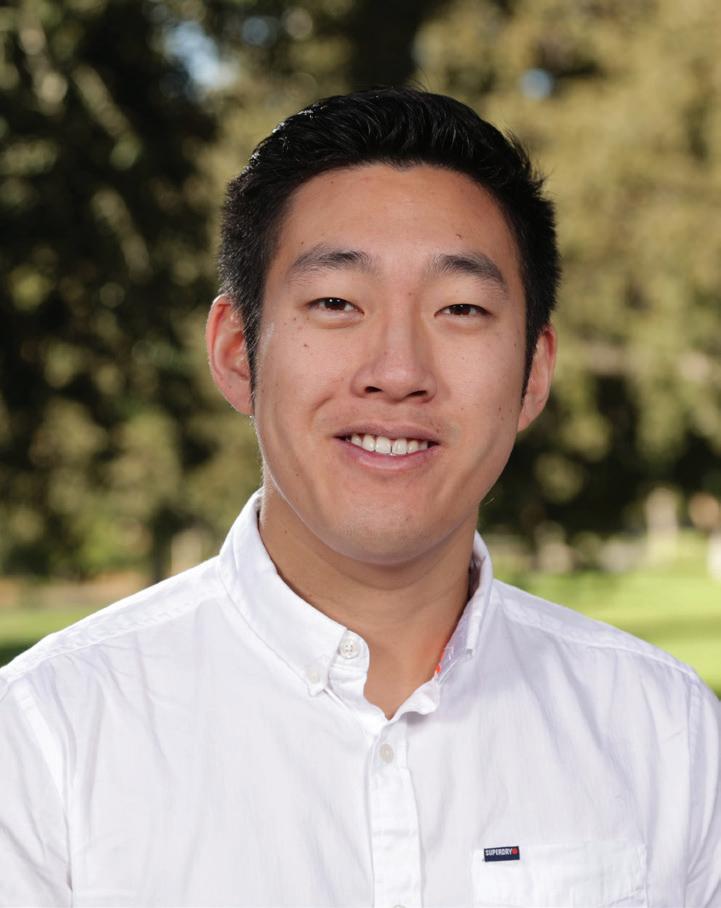
On April 28, 2026, Timothy Su, an assistant professor of chemistry at UC Riverside, received the 2026 Camille Dreyfus Teacher-Scholar Award. This award recognizes chemists in their early career who’s shown excellence both in their scholarship as well as in education for undergraduate students. One of the benefits of winning the award includes a $100,000 funds to spend over the span of five years. Su said that this would allow greater flexibility in his research since federal grants have stricter guidelines and can only be used for purposes stated on the grant application while this funding is less restrictive. This means that he
would be able to pursue new research more freely. Furthermore, Su added that this support is especially helpful given the instability surrounding federal funding for scientific research in recent times.
Beyond the financial support, Su was delighted to receive the award for the sense of personal validation. Su explained that the people that he admires in the field who have made boundary-pushing contributions have also won the award and that to be in company of people that have inspired him brings him immense joy.
Additionally, Su noted that the award gave him a sense of recognition for the dedication he’s put into research as he constantly found himself questioning if his research was making an impact. Su found the award highly encouraging and reassuring.
According to Su, he applies an interdisciplinary approach to his research in the lab, integrating both chemistry and physics oriented perspectives to explore questions regarding synthetic chemistry, molecules and their electronic transport characteristics. While traditionally, there have been clearly set boundaries between different disciplines, Su believes that the most interesting comes from the intersection between these
schools of thought and that “the future of science is to not just walk down the well-trodden paths and continue in these traditional disciplines, but to put yourself in uncomfortable situations you’re not so familiar with and see what kinds of new things can emerge when you mix disciplines together.”
Su emphasized the support he has received from UC Riverside’s strong chemistry department which has made his program possible. Su admitted to feeling that UCR is largely underestimated despite its outstanding resources and faculty members and hopes that the visibility brought to the department with the award would help people realize the great research being done at UCR.
While the award is meant to celebrate the chemists’ achievements in both scholarly and educational settings, Su does not see them as entirely separate as a lot of the time, both happen in the lab. In leading a research group and mentoring students, Su aims to help them become better scientists through teaching them to think critically in a scientific setting. Within the classrooms, Su finds lowerdivision chemistry courses particularly interesting as he is deeply motivated to convince students into seeing that chemistry is not merely abstract
concepts but rather something real and tangible that explains the physical world.
To find ways to make chemistry more approachable for the students, Su incorporated activities that help students engage with the subject in a more familiar lens. An example of this is the TikTok video assignments that mash chemistry concepts with trending TikTok video formats. Su have observed that these activities have led to higher test scores.
Su stated, “While my name is on the award, it’s really my students who should be recognized here. They were the ones who executed all the experiments. [We] often go through very challenging experimental circumstances and difficulty along the path where we don’t know what we’re looking at, we don’t know if the thing we’re going to do is going to work. But they fight through it. They come up with creative ways to solve their problems and their work. So I definitely want it to be made clear that the success, our success, in getting this award is really a recognition of my students, their creativity and efforts, both at the undergraduate and graduate level.”
well-being remains the same.”

On May 6, The University of California, Riverside’s (UCR) department Health, Well Being and Safety (HWS) announced the relocations of student resource centers, The Well and the Campus Advocacy, Resources, and Education (CARE), within the Highlander Union Building (HUB) to support new student programs.
The Well opened in 2010 at HUB 248 to support students by providing them with health and educational resources while curating a culture which promotes these goals.
Their operations were temporarily
closed as they relocated to HUB 381, reopening on May 12. The announcement did not disclose a permanent location for The Well nor how long they will be stationed at their temporary location.
The Well’s director Dr. Connie Marmolejo will remain in their original office until May 22 to direct students to the new location. In an email, Marmolejo stated that The Well is currently in the process of adjusting to the change but is still fully operational, telling The Highlander, “While the location has changed, our mission and commitment to supporting student
CARE opened in 2015 as an intervention and prevention support program which has aimed to develop a “consent culture” on campus and support community members impacted by sexual and relationship violence.
Their CARE advocates were initially based at HUB 381 and prevention services in HUB 377 and were told they were to consolidate into HUB 377 in March according to CARE advocate Cynthia Martinez. Their operations include initial advocacy contact, service navigation and prevention initiatives will now be based at HUB 377. Along with this, CARE advocates will be relocated to the Student Health and Counseling Center. The HWS’s announcement suggesting the separation was appropriate due to the center being a “confidential, supportive counseling environment.”
In their announcement, the HWS stated the relocations would support Foster Youth Support Services (FYSS), an organization which has been established on campus since 2008 and is currently based separate from the main campus at Bannockburn Village K101.
The announcement also referenced
the FYSS’s program Guardian Scholars which provides students who are currently or were formerly a part of the foster care system with a range of resources. It did not disclose how The Well or CARE’s relocation would specifically support FYSS.
In regards to CARE’s consolidation, Martinez raised concern about the possible decrease in confidentiality for those seeking the services of CARE advocates. However she emphasized that their office is still in a transitional phase and the long term effects of the shift were yet to be seen.
Martinez told The Highlander, “It’s okay and I’m happy, but again, it doesn’t hold the same privilege as like the confidentiality that we had on the other side.”
The relocation has also stationed both next to each other in the third floor of the HUB. A change Marmolejo welcomed, stating “We are grateful to continue working next door to the CARE department, as we collectively continue supporting the well-being and success of UCR students.”
As of now, The Well and CARE will run out of their new locations through June 2027 and are fully operational.
ANDREW HAGLER Staff Writer

The Yuhaaviatam of San Manuel Nation announced on May 4, 2026, that its investment arm, the San Manuel Investment Authority (SMIA), had reached an agreement to acquire the Mission Inn — the historic downtown Riverside hotel, restaurant and spa — from its previous owner, Kelly Roberts, marking a major shift in ownership in one of the city’s most recognizable landmarks. The purchase is the tribe’s latest nongaming investment and will support the Tribe and the local community. While negotiations are still underway, the deal is expected to close as early as the end of the month.
Lynn Valbuena, serving her sixth term as the chairwoman of the Yuhaaviatam of San Manuel Nation, described how the Tribe recognizes the Inn’s ”historic, economic and cultural significance to Riverside and the region.” She added that many of their members have a special love for the Inn, highlighting its importance to the city and the Tribe.
The Mission Inn marks the latest hospitality-related business venture carried out by the SMIA on behalf of the Tribal government. These include gaming investments like the Yamaava Resort and Casino. Founded in the mid-1980s, the casino has generated millions in support of the Tribe, while the Tribe’s investments in hotels such as Waldorf Astoria Monarch Beach in Dana Point and the Bear Springs Hotel in Highland reflect its shift toward greater diversification. Through these investments, the Yuhaaviatam of San Manuel Nation supports both Tribal operations and the local community throughout the Inland Empire (IE).
The SMIA is one of the largest employers and philanthropists in the Inland Empire.
For over two decades, the Yuhaaviatam of San Manuel Nation has used its resources, including income from investments like The Mission Inn, to empower the local community through San Manuel Cares (SMC), its philanthropic program.
SMC contributes to nonprofits and governmental organizations throughout the IE, including local schools, clinics and Native Americancentered nonprofits. It emphasizes uplifting education, reinforcing healthy communities and preserving cultural traditions.
Founded in the early 1900s, The Mission Inn is one of Riverside’s most famous landmarks, known for its historical significance, fine dining, suites and Mission Revival architecture. In the late 1980s, Kelly and the late Duane Roberts purchased the Inn on the brink of shutdown and reopened it after a $55 million restoration. Roberts described how proud she was to have served as steward of The Mission Inn for over three decades, adding that she has “great confidence that Yuhaaviatam of San Manuel Nation will carry this legacy forward with the same care, respect and vision.”

CECILE DIROLL Opinions Editor

If you logged into Canvas on Thursday, May 7, 2026, you likely saw the spaceship with a robot operating on it. According to the site, Canvas was “currently undergoing scheduled maintenance.” When the note appeared on my screen, I refreshed my page again, again and again. I checked my Wi-Fi, but I still had a connection. As a student who has used Canvas since high school, I had never encountered this before.
It turned out that “maintenance” meant that Infrastructure, the parent company of Canvas, took the site offline to investigate a cyberattack and determine which student information had been breached.
ShinyHunters, a hacking group, claimed responsibility for the breach and threatened to leak data of 9,000 schools and 275 million individuals if schools did not pay a ransom by May 6. After receiving messages from some schools, the group extended the deadline to May 12 “to negotiate a settlement.”
At the University of California, Riverside (UCR), students and faculty were unable to access Canvas for two days, and access to the learning
management system was eventually restored on Saturday, May 9, 2026. The cyberattack also affected schools across the UC and California State University (CSU) system, particularly as students were preparing for midterms or final exams.
Since the breach, Infrastructure has stated that the data included student ID numbers, email addresses, names and Canvas messages, but that no sensitive personal information, such as passwords, dates of birth, financial aid or government identification, was compromised.
However, many questions remain about whether this data was permanently deleted and how Infrastructure reached an agreement with the hacker group. Infrastructure has not disclosed whether they paid the hackers or identified who was behind the attack. They also stated that their actions were driven by threats to release the data and admitted there is no certainty that student information has been completely erased.
Infrastructure should be more transparent about what was involved in the settlement with the hacker group and what it is doing to protect student data, which contains highly sensitive personal information.
As more personal data is collected online, it is essential to keep sensitive information, such as grades, financial aid information, email addresses and student ID numbers, confidential. Given that Infrastructure is the main educational management system worldwide, it is responsible for ensuring this security.
If there’s one lesson to take away from this experience, it’s that we might need to rethink our dependence on Canvas.
Cyberattacks on educational platforms have
become more frequent, affecting both K-12 schools and universities. In 2022, software provider Finalsite experienced a cyberattack that impacted approximately 5,000 schools. In 2020, ransomware attacks disrupted Baltimore schools in the U.S., leading to the closure of some public schools.
Since the pandemic, learning has shifted increasingly to online platforms. Hackers know that these sites hold valuable information about millions of students and staff, making them an attractive target for data breaches. As awareness of this risk grows, cyberattacks on educational sites will likely continue to rise. Stronger cybersecurity defenses are crucial to safeguarding sensitive data, especially as these platforms become more appealing targets.
Canvas is also the central platform for all course-related activities. It is where students check their grades, access course materials, read announcements, submit assignments and engage with peers on discussion boards. A single shutdown of Canvas disrupted millions of students, leaving them unable to complete coursework or access materials unless their professors contacted them directly.
Interestingly, one of my professors does not use Canvas and instead shares course materials, updates and grades via email. Although the shutdown impacted all my other courses, this class was unaffected.
Moreover, dependence on technology in higher education has increased considerably, with ChatGPT and other artificial intelligence (AI) tools exemplifying this growing trend. The recent platform shutdown highlighted how heavily universities rely on a single system for all courses. This is not to say that universities should return to pre-internet times or ban technology, but Canvas’s monopoly calls for greater action and oversight.
An investigation into Infrastructure should address the system’s security vulnerabilities, including the causes of the failure, details of the hacker group, the student data exposed in the breach and Infrastructure’s agreement with the attackers. Above all, institutions should develop backup plans to avoid future disruptions like this one.
Educators, students and institutions all deserve this safeguard.

For years, California’s gubernatorial races have functioned like franchise reboots, starring a high-budget protagonist with an ending often predictable. From the legendary return of Jerry Brown to the heroic “A-list” polish of Gavin Newsom, the path to the trophy has largely been paved by celebrity and brand recognition.
But 2026 indeed became the year California had been waiting for — the fallout of the celebrity takeover in state government. This instills a “pundit panic,” where the media lacks “celebrity” or “dynasty names” that they can shine all over the news for publicity. This time, California’s governor’s race is looking more legitimate, with a healthy competition between “non-celebrity” candidates or “A-listers,” forcing candidates to lead with policy rather than fame.
The era of the “all talk, no walk” politician is hitting a wall of voter exhaustion as the public shifts from this well-known political illusion to wanting more real life solutions.There is no obvious “hero versus villain” this time because even low-polling candidates refuse to leave the governor’s race, claiming they are more attuned to the “real California” outside of the Sacramento and San Francisco political bubbles.
This is good news for the public in Southern California, especially the Inland Empire, as residents can expect candidates to work harder
to earn their name and recognition for the work they do and start from scratch instead of relying on fame or nepotism.
With this, the field is open to compete on each candidate’s true nature, targeting the working class who feel “voter disconnect,” particularly due to the collapsing home insurance market. Homeowners look up to the candidates to offer regulatory solutions as they see their premiums triple or their policies cancelled entirely.
Voters are no longer looking for a branded figurehead, but a real manager. Whereas elite candidates focus on the optics of state power, the current contenders are more inclined to address the price of housing and insurance tripling.
Honestly, this lack of brand name is giving birth to healthy competition, returning politics to representative ideas for the public. Politicians might start diving more deeply into issues they want to focus on in California overall, rather than centering around the big “political power hubs” in Northern California. This is the most compelling race in ages because the outcome isn’t destined.
This is what makes the 2026 race even more exciting as voters highlight traits that they want to see, rather than hoping that a politician carrying a “brand-name” will do them good. Voters will look forward to having a representative who
can navigate the complexities of the state with a practical solution, rather than just a speech that they will forget when voted in.
On the other hand, some might argue that without an elite politician in the race, the voter turnout might decrease. This may be because there is no excitement about a celebrity brand that is attached to politics, making it less interesting for voters to find a person to connect with or “imagine a potential” for.
However, this might not be true. Voters may be more likely to support a competitive race without a high-profile figure overshadowing other candidates, as they may feel their voices are more likely to be heard. When candidates stop trying to be stars, they start thinking about problem-solving and representing the whole of California, addressing specific, local issues. This effort is what attracts voters, driving them to the polls in hopes that the housing crisis will be improved.
Therefore, the 2026 California governor’s race brings an end to “big name” political outcomes. California needed this healthy competition more than ever, rather than “media candy” that has become the norm in elections. It’s time to start addressing critical issues that Californians face, giving the daily life problems of locals a real solution.
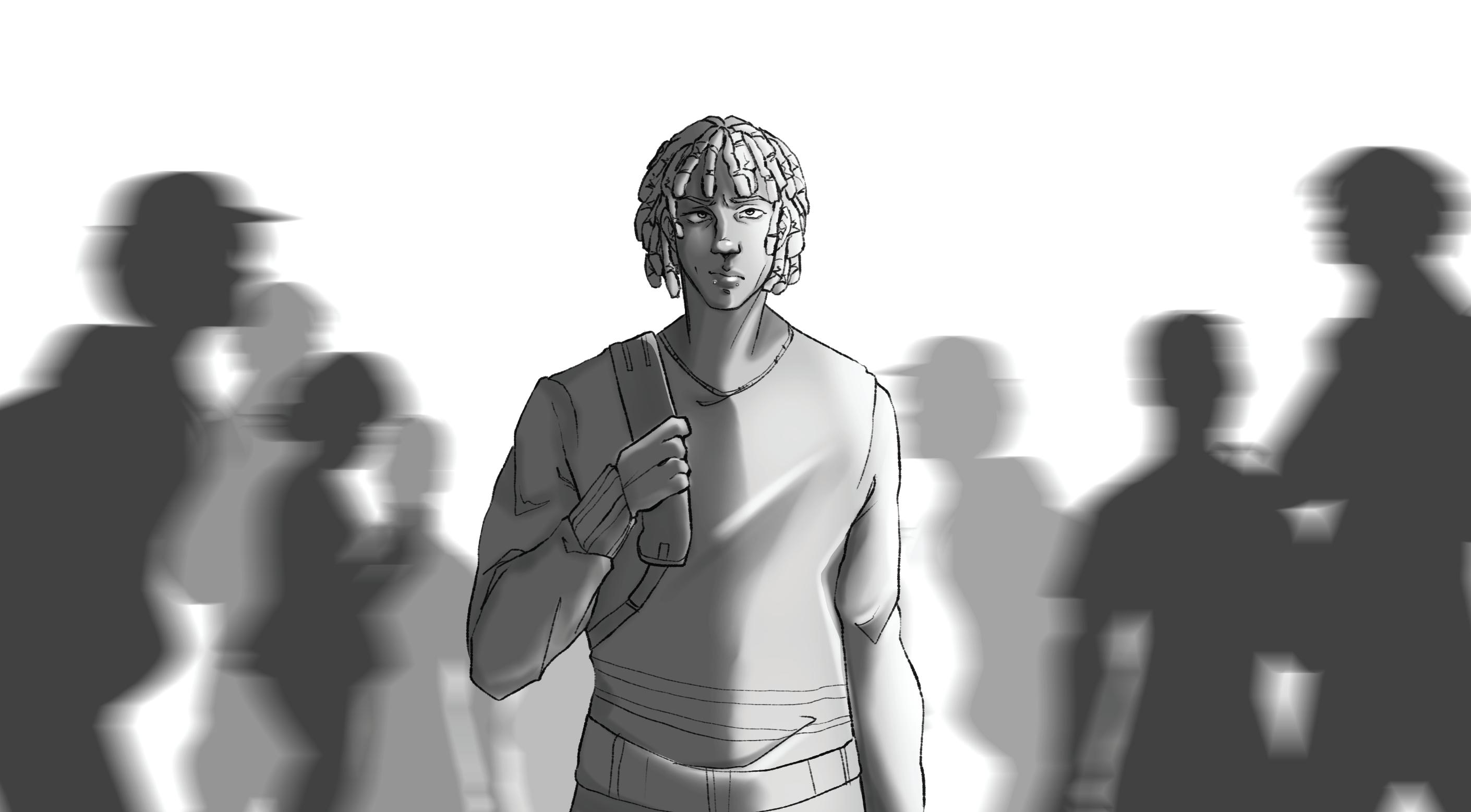
When I talk about pain in your 20s, I am not referring to physical pain. It is not the type of pain from bones developing, getting taller or menstrual cramps. Instead, it is a kind of emotional pain that we experience while growing up. A feeling of confusion, pressure and uncertainty that slowly appears as adulthood nears.
Being in your 20s is exactly where this kind of pain becomes most apparent. At this age, we are no longer young enough to live carefree and we are also not mature enough to feel fully confident about our future. We stand in between, neither here nor there. Twenty feels like a turning point, almost like a milestone in life, where expectations suddenly become too real and decisions start to matter more than before.
The feeling of uncertainty in your 20s often starts with a series of questions about the future, such as what major to choose, what career path to follow or what kind of person you want to become. They seem pretty simple at first, then quickly grow into something much bigger. For instance, a college student picking their major might start by thinking between science, technology, engineering and mathematics (STEM) or business, but later start worrying about their strengths and weaknesses for future life. There are no right answers, and unfortunately, no class teaches you how to figure out those questions.
First-year students might still have time to explore and stay “undecided,” but for those in their second year and above, the pressure to have an answer about filling out a major declaration
form or sending job applications holds more weight. The pressure of selecting a career is even more overwhelming. The image that many students present of themselves is shaped by others’ expectations, such as choosing a popular major and pursuing a “steady” career decided by their parents.
Besides feeling uncertainty, people in their 20s often feel a deeper sense of loneliness and alienation, even in a crowded environment. In high school, everyone shares a similar routine and goals, but in college, those shared structures quickly disappear. People around you start moving in different directions, and we feel less familiar and connected with them.
In high school, it is easier to meet others, but in a busy environment like college, building long-lasting friendships may require a lot more effort. Finding a true friend may take many attempts, and that fragile sense of connection can sometimes make you doubt yourself.
Uncertainty and loneliness are two sides of the same coin, one side being, “I don’t know where I’m going,” and the other side being, “No one really understands me.” When both of these feelings appear at the same time, your 20s feel heavy.
Admitting that you feel lost or anxious is not giving up; rather, it is the first step towards actually seeing the problem clearly. Many people in their 20s feel stagnant, not because they lack ability, but because of pressure. Instead of being trapped in a vicious cycle, it is important to turn
pressure into motivation.
This small change can help you face challenges you ignored in the past. For example, as an international student, I was afraid to speak to native speakers at first because of my accent and grammar issues, so I preferred to stay silent. I often felt sad about my ability to socialize with others.
However, with my roommate’s encouragement, I started with small talk and realized the biggest barrier was my mindset. Overcoming loneliness takes effort. Not every relationship needs to be close, as sometimes even small interactions can turn into meaningful connections. How deep a connection goes is rarely something you can predict ahead of time.
Maybe our 20s are not meant to be easier than they are supposed to be. For ambitious people, their 20s are often painful and filled with the intense pain of growing up. Nevertheless, this pain can be the strongest proof of their vitality and desire to grow. It is meant to challenge us and, in this process, push us out of our comfort zone.
During this period, we will likely feel pressure, loneliness and anxiety. Questioning, doubting and trying again is not a sign of failure, but a necessary part of growth. The pain that can come with being 20 is not something we need to overcome, but a necessary discomfort we need to undergo, as it is this very discomfort that shapes who we become. This pain cannot be fixed or avoided — it is part of becoming ourselves.
SAINA PRASANNA Contributing Writer
Individual creativity and aesthetically appealing patterns are increasingly shaping fashion culture, seen in students incorporating Coach bags, camo hoodies, Yeezy slides and Lululemon jackets into their outfits. At first glance, these choices can appear to be simply self-expression and personal style, but each piece of clothing speaks to a larger idea regarding identity and social perception cultivated through fashionable means.
Fashion is primarily recognized as a form of self-expression in numerous ways, including selecting colors, patterns and silhouettes that represent an individual’s personality and artistic creativity. Beliefs and values can also be self-expressed by purchasing from ethical brands, boycotting fast fashion or buying sustainable fashion to protest against microplastic pollution.
However, according to Fortune Business Insights, the global demand for affordable luxury fashion goods continues to rise due to the middle class seeking high-quality and brand prestige for a budget-friendly price. The transition from self-expression to identity signaling starts with consumers seeking to purchase a product because of the social reputation, image and status attached to it.
The main difference between selfexpression and identity signaling lies in selfexpression being a personal act of showcasing oneself authentically, whereas identity signaling is a communicative strategy to externalize group membership, values and socioeconomic status. Affordable luxury brands pinpointing this upwards trend result in a shift towards them selling exclusivity, status and lifestyle rather than products that only serve for self-expression.
Increasing product value is built on consistent marketing strategies, with artificial scarcity being a paramount one to increase demand. Artificial scarcity involves using limited drops and waitlists to boost desirability. Limited drops evoke a sense of urgency because the difficulty of obtaining scarce items leads consumers to believe them to be more important and highly valuable. Once they are socially perceived as such, people are willing to pay a higher price for them than at their retail value.
For example, Nike resales experienced a 200% increase in resale price compared to retail price because of the scarcity of particular colors and designs the product came in which amplified its status of exclusivity and limited access.

The sense of accomplishment from obtaining what this good represents translates into a subset of identity and status signaling, which uses products or certain behaviors to display financial wealth, social position and economic power. Artificial scarcity contributes to the broader business ecosystem of brand equity, which is the brand’s reputation amongst consumers adding value to the product, elevating its attractiveness.
Companies within the fashion industry invest heavily in trending visuals and strategic partnerships with influencers that display lavish lifestyles to authentically replicate the social meaning luxury brands have. Luxury in recent years has now been defined as quiet luxury, which prioritizes quality and minimalist aesthetics rather than large labels. Focusing on this fashion trend drives up demand since consumers feel socially and emotionally attached to the product. Therefore, this shifts pricing power to the companies, allowing them to steadily raise the price of their products despite catering to the affordable luxury market. Due to budget restraints, consumers’ willingness to pay eventually reaches its limit, causing them to turn to dupes. Rather than authentically creating products, dupes mimic the exact
design and social presence of high end products at a lower price point.
The growth of the dupe market implies that consumption is continuously driven by the desire to appear affluent, as it can boost self confidence and respect, even if the product is not attached to the authentic brand. Secondhand shopping and thrifting can involve purchasing pre-owned, authentic and affordable luxury brands at a lower price, again offering alternative methods to engage in status signaling.
By finding and purchasing these items in a cost-conscious manner — whether that be in the form of affordable luxury, dupes or thrifting — one recognizable item is capable of shaping the ways an entire outfit and its wearer are perceived.
Fashion naturally encompasses selfexpression and identity signaling. However, companies within the fashion industry profit from the social meaning people attach to products, such as attractiveness, wealth and exclusivity, to increase the value of that product and the amount consumers are willing to pay for it.

Oct. 22):
Fakeness
You say one thing and mean the other. While your Oscar winning performances are useful in some scenarios, people are starting to catch on to what you actually think of them and will pull back.

(Dec. 22 – Jan. 19):
Stonewalling
Arguing with you is like talking to a wall. Ignoring, not responding and avoiding is a recipe for disaster for your relationships and yourself. Confront the issues you are facing, especially if they are caused by you.

Rage Quitting
Ah yes, the ragequitter. For you, Aries, controlling your temper is like trying to open a Nature Valley bar. At the slightest indicator that things aren’t going your way, you let loose.

Cancer (June 21 – July 22):
Bystander
You’ve been watching someone around you go through something and you’ve been keeping quiet. Your friend could use a shoulder to cry on and someone to stand up for them. Why won’t you?

Nov.
Grudge Holding
Let it go dude. While self-respect is a virtue you take it a little too far. There are people in your life that you are keeping away from a slight that happened years ago. Learn to forgive, it will make life easier.

20 – Feb. 18):
Gossiper
Ah yes, the drama queen of the group. The joy you’ve been feeling at spreading lies and rumors is coming back to bite you. When the people you’ve talking smack about find you what you’ve been saying … Prepare for the worst.

Rigidity
You are stuck in your own worldview, the rest of us be damned. The people in your life that need empathy aren’t getting it because you can’t see things from another point of view.
Leo (July 23 – Aug. 22):
Bluntness
The line between being honest and being mean is a thin one and you’ve definitely crossed it. People might be having a hard time talking to you because of your lack of sympathy. Don’t lie, but know that words hurt.
SANJANA THATTE Features Editor

Stubborness
I get that this mindset has served you in the past, but times have changed and you will be left behind if you don’t reflect on yourself. Whether it is your family, career or even your lifestyle, nothing can stay the same forever. Surrender yourself to the chaos as difficult as that may be.

March 20):
People Pleasing
Saying “no” is a skill that you need to learn. It’s difficult at first but it will serve you in the long run to protect your peace. So say “no” to someone near you!

Impulsivity
Would it kill you to make a plan and stick to it? I get that matcha seems tempting right now, but the commitments you’ve made need to be honored.

(Aug. 23 – Sept. 22):
Shutting Down
Listen, I get that life gets tough sometimes, but just because your friend said that they couldn’t hang out doesn’t mean that you should sulk for three hours. The people around you don’t deserve to be lashed out at and you should feel the joy of bouncing back.
MALINI JOSEPH Staff Writer
Let’s be honest with ourselves for a moment. Doomscrolling is fun sometimes. That’s why it’s so addicting. It lets us turn our brains off after an exhausting day at school and work. Unfortunately, doomscrolling is starting to lose its appeal. It’s time to do away with the brainrotting and bring back old school hobbies. However, it’s been so long since we truly connected to anachronistic hobbies that it may be difficult to transition back after social media has shortened our attention spans. I may not know much about other hobbies, but I know reading. So, my retired reading baddies, this one’s for you.
The first thing to unlearn is the shame. If you’ve read for the majority of your life, you’re going to try and go straight back into the heavy chapter books you were used to. This will not work. Your brain has adapted to the shortened content form of TikTok and Instagram reels. Attempting to jump into the deep end when you’ve forgotten how to tread water will be quite difficult. This is where unlearning shame comes in. You will feel regret that you can’t do what you used to. Remember that it’s okay. Be patient with yourself as you learn how to re-engage with things that require longer attention spans.
Now, getting into the actual reading part. Because we are training our brains to re-engage with long form content, we need to start small. Pick a novel that doesn’t have a ton of world-building or jargon. Clear your area of sensory distractions by turning off your ringer and putting your phone away. Set a timer for 10 or 15 minutes. Until the timer runs out, you must be reading. Like with meditation, it’s okay if your attention drifts. But it’s important to recognize when it happens and refocus on reading. Do this three times a week to start. This ensures your brain is being retrained while not being fatigued.
Once you feel more confident in your ability to stay focused, start increasing the length of the timer. If you still feel nervous about “failing,” increase the time in five minute increments. This will allow your

brain to feel the dopamine of achieving goals while still expanding your brain’s attention span. You likely won’t see results overnight. This will need to be a consistent process, just like working out. After all, your brain is a muscle. Eventually, through consistency, you will be able to upgrade from time limits to chapter limits. Here, the goal will be to try and finish a singular book in a week. See how many chapters are in the book and divide it up into seven days. Don’t immediately try to overwhelm yourself and pick a book with 50 chapters unless you’re sure you can handle it. The reason this process is working as well as it is is because you’re taking it slow and steady. You’ll be able to read those 50 chapters soon, a hundred chapters if you want. For
now, start with 20 or 30 and keep building upward. Soon enough, you’ll be able to replace doomscrolling with reading, making your brain stronger. Your attention span will increase. Tasks that took forever will be a snap because of the power your brain wields. Finally, you’ll be able to reconnect with the hobby you loved. Think of all the worlds you’ll be able to consume, the lives you’ll get to escape to. Reading is a powerful escape just like doomscrolling. It just takes a little more effort. With this handy little guide that breaks the process down into small increments, you’ll be back to your speed reading era in no time!
OVI MATHIVANAN Assistant Opinions Editor
Love is spoken — gossiped — about as if it’s obvious and explicit. But often love is something I know what I want to say but cannot find the words for it. It sits behind my controlled tongue, dying quietly in my throat. Instead it becomes “text me when you get home?” not to entrap the other person, but to consider their safety, trusting they will answer even when life gets in the way of a timely reply. It is calendar invites, gently adjusting schedules and making time with no time
just to make room for another person in the day.
It is peeling fruit for others, when the tiring aches of life set so deep into one’s bones that such a small effort feels like a marathon.
RECOGNIZING ALL THE UNLISTED, INTIMATE WAYS WE SAY “I LOVE YOU.”
Love is actively and consistently choosing to protect another even at personal detriment and even when it costs something unseen.
Staining one’s hands and clothes with splatters of pomegranate juice just to de-seed the perfect fruit. The scent of orange that lingers even after three hand washes.
Minor inconveniences that are barely inconvenient, because they end in a smile.
It is asking endless questions, staying for the answers and asking more follow-up questions. Anyone can ask “How are you?” as a mere habit or pleasantry, but it takes a lot more to actually care at all for what shapes another’s day.


BRIANNA GALAVIZ-VILLAGOMEZ Contributing Writer
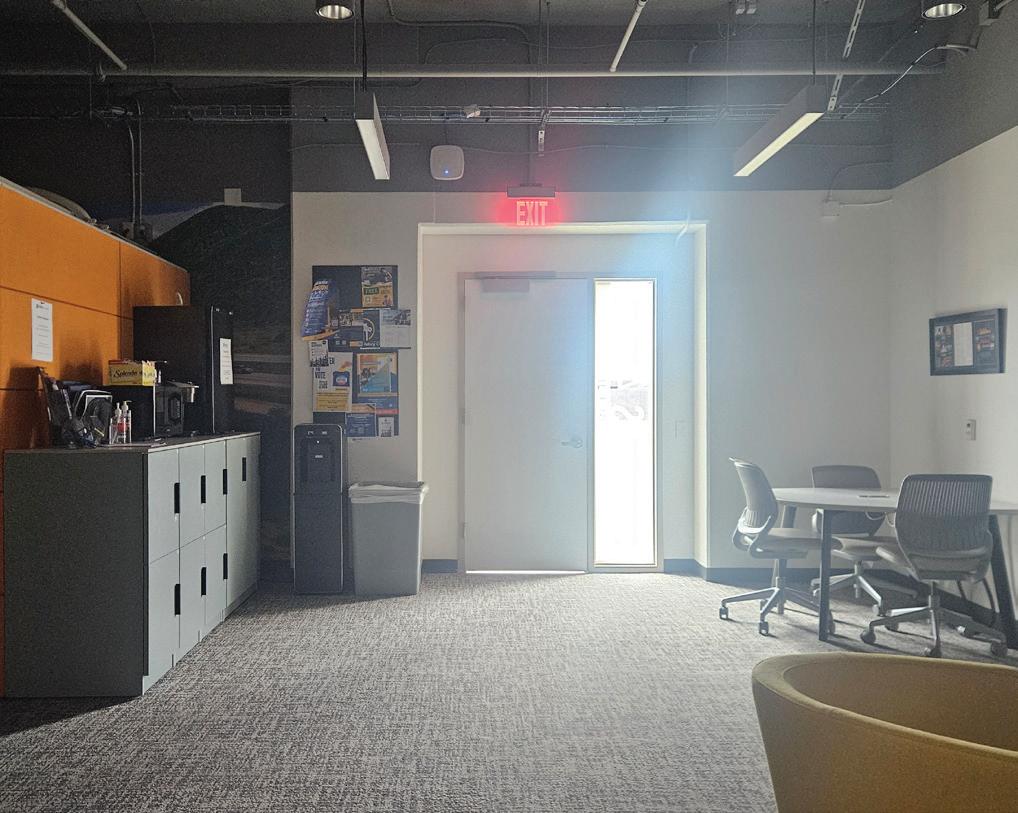
The School of Public Policy opened its study lounge in March of 2025. Inside, there is a large table with eight seats and a large whiteboard. It also includes group study pods and an individual study space. Some of the amenities include a microwave, water and a mini fridge. You don’t have to be a public policy major to study here.
It is located on the fourth floor of the South Interdisciplinary building, which is near the Student Success Center. There is a restroom near the study space and an advising center where you can print papers if you are a public policy major. The center also has charging stations on the tables. The lounge and advising center is open 9 a.m. to 5 p.m. Monday through Thursday and Fridays from 9 a.m. to 4 p.m. ■ H

Scenery chewers 5. Performed 2017’s iconic shirt celebration in El Clásico
Turkish titles 14. Indian intern in “Dilbert”
Highway to Fairbanks
England’s Right Winger
17. Portugal’s CR7 (misspelled)
19. Pretty Little Liar’s Montgomery
fastest soccer player
25. Treaty signed by Carter and Brezhnev
27. Wrinkly-faced dogs
29. Paquin and Pavlova
32. Oohs and ____
35. Times up to the plate
39. “Young Sheldon” network
40. CEO’s degree
41. Young mares
42. “___ Just Not That Into You”
43. According to 44. Search around, as a truffle-hunting pig
45. Sunday service
46. California mission founder Junípero
By K Staff

48. Toni Morrison novel
50. Agreeable answer to your father
54. Sebastián ___ (president of Chile beginning in 2010)
58. “___ _ silly question ...”
60. “_ ___ le roi!”: French Revolution cry
62. Suffix with auto
63. “Now!”
64. Birmingham City’s youngest ever debutant
66. Collector’s suffix
67. Bleated
68. French-derived feminine suffix
69. Top poker cards

70. Take for _ ____
71. Connect the ____ DOWN
1. Czech diacritical mark
2. “Being There” director Hal 3. Virtuous
4. Ends of some winter sports equipment
5. Yoga surface
6. Director Kazan
7. Some hospital procedures
Father Christmas
How tuna may be packed
One degree of neatness
Pelé’s right hand man

12. Sony co-founder Morita
13. Swedish auto 18. Linebacker Junior 24. Mystery writer Marsh
26. Russian news agency
28. Normandy battle site
Describe
By: Nola Perifel, Assistant Features Editor
A collaboration between Asia and Italy
Instructions:
1. Chop green onions and mince ginger and garlic. Add the pork, green onions, ginger, garlic, oyster sauce, pepper, chili flakes, soy sauce, sesame oil and rice vinegar to a bowl and mix well using your hands.
2. In a casserole dish, cover the bottom with dumpling wrappers. Add a half-inch layer of the pork mixture over the dumpling wrappers. Cover the pork with more dumpling wrappers and repeat until the dish is full. Make sure the top layer is dumpling wrappers.
Prep Time: 40 - 45 minutes
Servings: 4 - 6

• 1lb ground pork
• 1/3 cup green onions
• 1 tbsp fresh ginger

3. Pour the chicken broth over the top layer and steam the dish in the oven. To do so, place your dumpling lasagna in a larger casserole dish and fill the bottom with water. Cover the lasagna with aluminum foil and place in the oven.
4. Let steam for 30-35 minutes and take out of the oven. Add soy sauce, some green onions and sesame seeds to garnish.
5. Serve while it’s hot and enjoy!
• 4 garlic cloves
• 1 tbsp oyster sauce
• Some pepper
• 2 tbsp chili flakes
• 3 tbsp soy sauce
• 1 ½ tsp sesame oil
• 1 tbsp rice vinegar
• Dumpling wrappers
• ¼ cup chicken broth
• Sesame seeds


By: Nola Perifel, Assistant Features Editor
1. One of your flaws is that you are:
A. Stubborn
B. Dry, especially with strangers
C. High maintenance
2. Your friends describe you as:
A. A charming and captivating storyteller
B. An adventurous nature lover
C. An eccentric but sweet host
3. Your choice of study break would be:
A. Reading
B. Hiking
C. Picking citrus fruits
4. Your ideal shopping spree would be at:
A. An luxury antique store
B. A flea market
C. A farmer’s market
If you got “A” more often, you are the Mission Inn Hotel & Spa. You have luxurious tastes and your favorite subject is history. The Mission Inn Hotel & Spa is not only famous for being Riverside’s most luxurious hotel, it is also known for its refusal to modernize, as a way to stay in touch with their historic roots, so like this location, you tend to be stubborn. You are charming, romantic and incredible at making good first impressions. Telling stories, fictional or otherwise, is your thing.
If you got “B” more often, you are the Mount Rubidoux Summit. You tend to be adventurous, often opting for activities like hiking and camping. Your middle name is “outdoorsy,” and people know you for your love of nature. Like Mount Rubidoux’s dry land, you tend to be a little dry yourself in your manner of speaking and interacting with strangers, but when you warm up to them once you get to know them.
If you got “C” more often, you are the California Citrus State Historic Park. You are generous and you welcome people with open arms. You are a great shoulder to cry on. Although you tend to be a little bit eccentric, people love you for who you are. Like this citrus park, allowing anyone to pick fruits from its branches for free, you love to share with others. You tend to be high maintenance, but this also means that you care about yourself and set high expectations. Don’t let anyone bring you down. ■ H

3 Oranges
TUESDAY, APRIL 21, 2025
5/19
5/20
5/21 5/22
TFDP Film Showcase @ University Theatre at 7 p.m.
Rafael Montero and John Sloboda: The Songs of Pedro Ximénez Abril Tirado (Florence Bayz Music Series) @ ARTS 157 from 12 p.m. to 12:50 p.m.
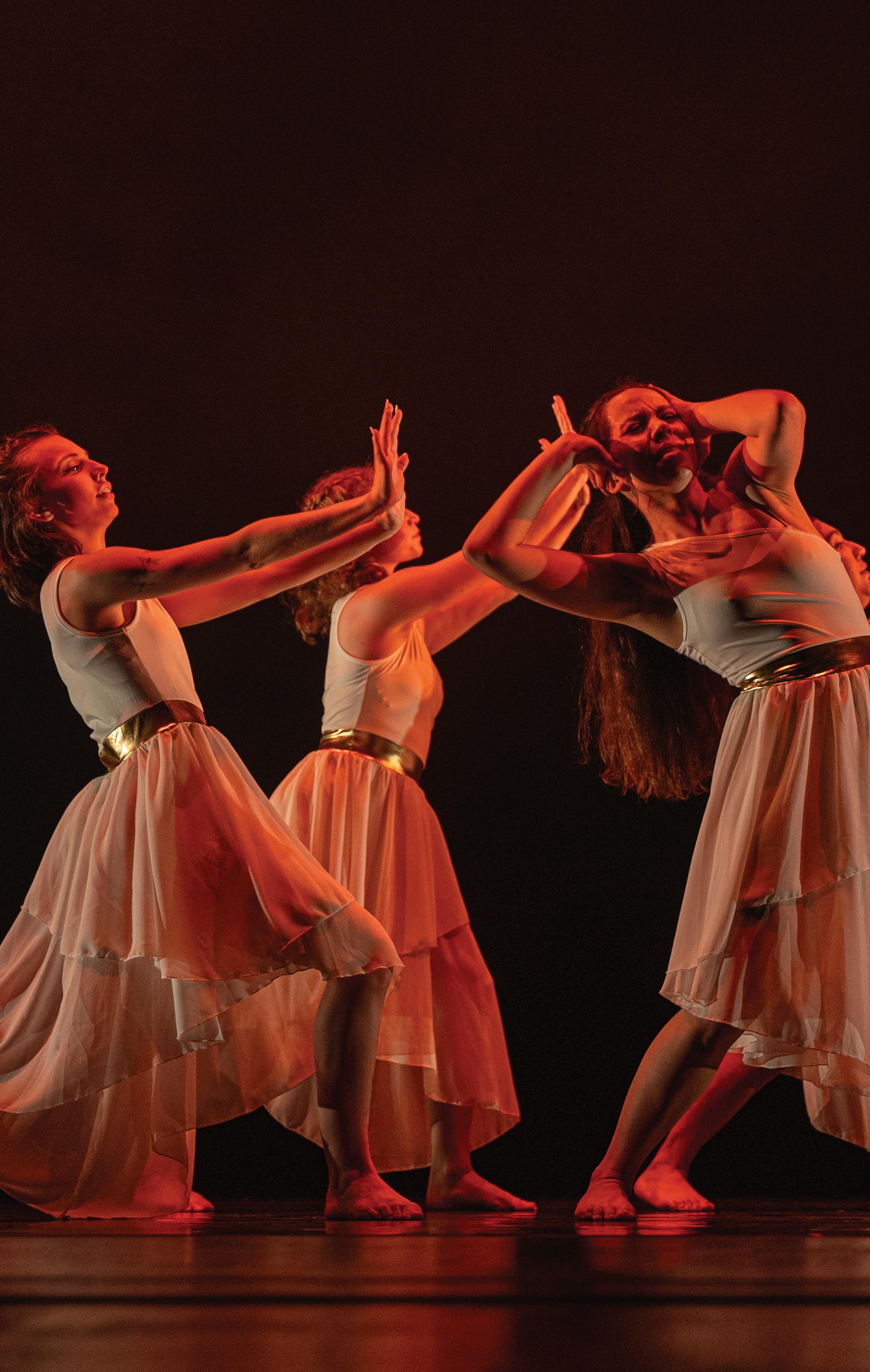
Mexican Music and Dance Concert @ University Theatre at 8 p.m.
43rd Annual UC Riverside Pow Wow @ Riverside Sports Complex from 5 p.m. to 9 p.m.
A SMALL GLIMPSE ON HOW IMMIGRANT WORKERS HAVE FOUGHT THROUGH THE YEARS FOR FAIR WAGES AND BETTER WORKING CONDITIONS.
JOSÉ DEL ÁNGEL News Editor
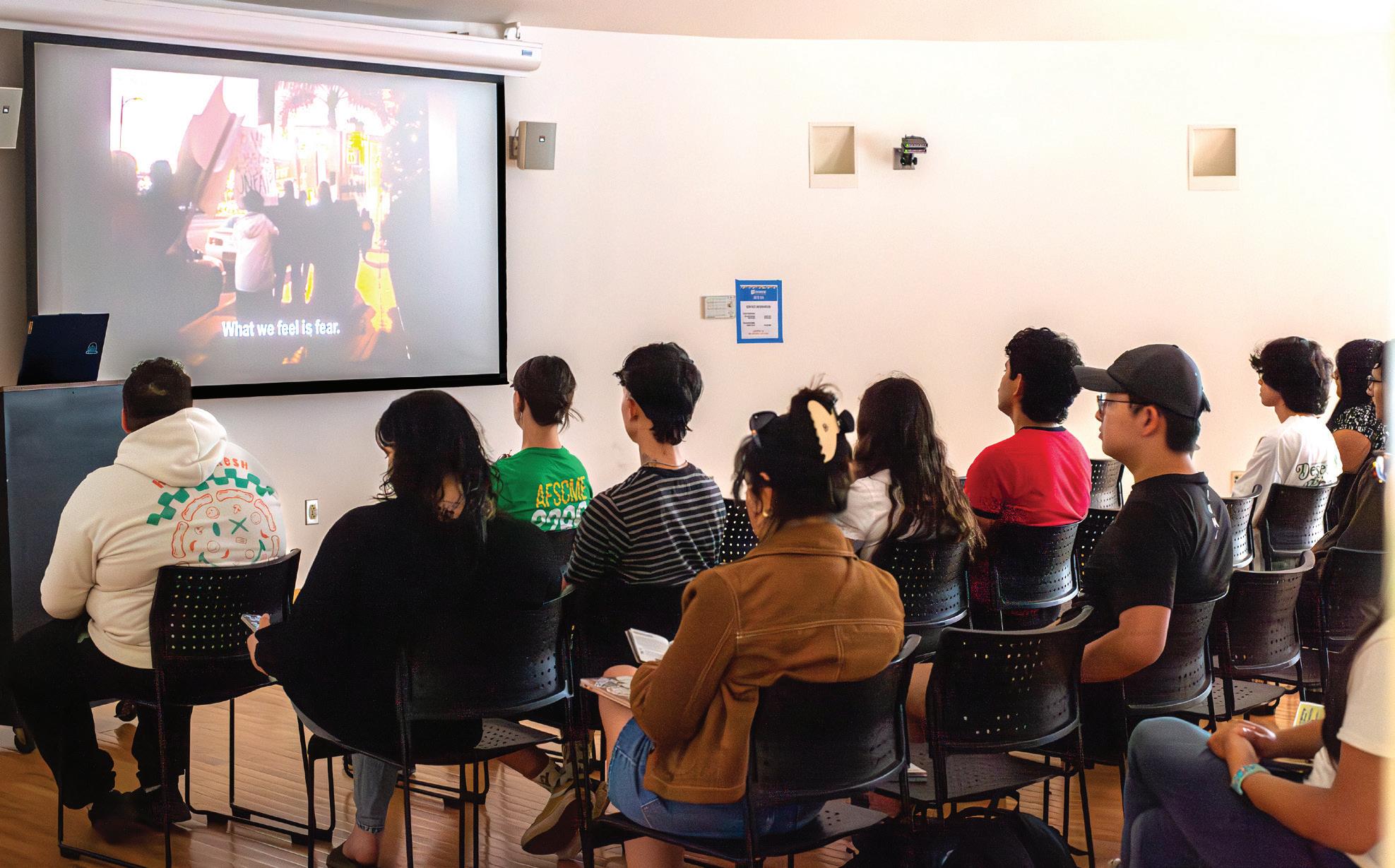
The Inland Empire Labor Council brought students, labor organizers and community members together for a screening of “Made in L.A.” at the University of California, Riverside (UCR) using the documentary as a launching point for a larger discussion on immigrant labor, organizing and solidarity movements in the Inland Empire.
The documentary, which follows immigrant garment workers fighting for labor protections against fashion retailers Forever 21, resonated deeply with audience members during both the screening and the panel discussion that followed. Throughout the film, workers described unsafe conditions, wage theft and exploitation in Los Angeles garment factories while organizers worked to hold corporations accountable for labor violations within subcontracted workplaces.
Audience members watched quietly as the film detailed the workers’ years-long legal battle against Forever 21 and the emotional toll organizing efforts took on immigrant families. The documentary highlighted how labor organizers connected workplace abuses to larger immigrant struggles, a theme that panelists repeatedly returned to during the forum afterward.
One organizer in the documentary explained that “the only way clothes can be produced” under the existing system was “by exploiting workers,” while another emphasized that the campaign represented a groundbreaking challenge to retailers attempting to avoid responsibility for conditions in contracted factories.
The emotional climax of the documentary came when the workers eventually secured a settlement after years of organizing, protests and appeals. The victory drew visible reactions from attendees, particularly students involved in labor and immigrant advocacy organizations on campus.
The forum following the screening featured labor organizers, students activists and community advocates discussing how the film’s theme continues to reflect ongoing labor struggles throughout California and the Inland Empire. Moderated by labor organizer Celine Perez, the panel connected the experiences shown in the documentary to present-day campaigns involving university workers, undocumented students and immigrant communities.
Perez reflected on her own history organizing at UCR during the same period the Forever 21 campaign was unfolding. She described participating in boycott efforts and helping
mobilize students in support of garment workers.
“We were going to the malls and getting kicked out,” Perez reminisced. “But then also going inside the stores, trying to close stores, putting flyers in all the pockets of the different clothes.”
Perez said revisiting the documentary years later remains emotional because of how strongly it reflects the experience of immigrant families and workers. “I see the story of my own family,” she said.
Several student speakers discussed how labor organizing and immigrant rights remain interconnected. Representatives from undocumented students organizations explained ongoing efforts to expand employment opportunities for undocumented students within California public universities.
“Immigrant rights are labor rights,” one panelist stated. “Workers’ rights don’t exist independently because people are attached to their identity.”
Speakers emphasized that organizing requires building relationships within communities rather than only advocating for workplace issues in isolation. Panelists repeatedly stressed that labor organizing must include support for immigrants, LGBTQ+ students and other marginalized communities.
“People are more than just workers,” one speaker said. “Labor is a big part of our lives whether we want to believe it or not.”
The discussion also connected the
documentary themes to ongoing labor disputes involving University of California workers. Panelists referenced current organizing efforts among campus employees, describing strikes and collective action as necessary responses to rising healthcare costs, housing insecurity and stalled bargaining negotiations.
The event also served as an educational experience for students unfamiliar with labor history in the Inland Empire and Southern California. Organizers discussed the region’s long history of immigrant labor including exploitation in agricultural and industrial sectors while encouraging students to view labor advocacy as part of broader social justice work.
By the end of the evening, the screening had evolved beyond the documentary presentation into a broader conversation about activism, organizing and community responsibility.
For many attendees, the combination of the film’s emotional story telling and the personal experience shared during the panel reinforced the continuing relevance of labor organizing in California today.
“This was about seeing possibility,” Perez said while reflecting on her own journey from student organizer to labor leader. “It showed us there were other paths and other ways to create change.”

Romantic ballads are very common in Mexican regional music but Ivan Cornejo is introducing the sierreño genre to the younger masses. As a Riverside native and a child of immigrants, Ivan’s successful career is a testament to how powerful love and passion can be when pursuing a music career.
Born in Riverside, California, the singer rose to fame because of his song “Esta Dañada,” which became a popular sound on TikTok. The lyrics “Su Sonrisa, su carita, sus manitas hay que delicia,” or “her smile, her face, her hands, oh what delight” were the ones that resonated the most with users of the app. “Esta Dañada” also became the second regional Mexican song to chart on the Billboard Top 100, cementing Cornejo’s legacy as a trailblazer of modern regional Mexican music.
Cornejo began his music career by playing guitar when he was seven years old. He then continued his passion for music by leaving school at 16 and pursuing his career full time. In 2021, he released his first album “Alma Vieja” which gained major traction for tracks such as “Esta Dananda” and “Esa Carita.” Since then he’s released two successful albums “Dañado” and “MIRADA” which both reached number one on the Billboard Latin Music Chart.
Cornejo’s music usually consists of lyrics about break-ups and infidelity, showcasing raw and vulnerable emotions in the process. In his most recent album “MIRADA,” Cornejo does not hold back when writing sad songs. The theme of the album is the emotions felt after a separation and the loss of the person in his life.
Although his music includes the typical regional instruments such as acoustic guitar and trumpets, Cornejo also includes electric guitar which can be seen on songs such as “Ya te Perdí” off of his deluxe sophomore album. This is his own introduction of
alternative
Due to his success in the sad Mexican regional sound, Cornejo has had the opportunity to work with many big and notable spanish artists such as Becky G, Jhayco and Establon Armando. He has also been compared to Spanish artist Peso Pluma because of their similar sad balladlike songs.
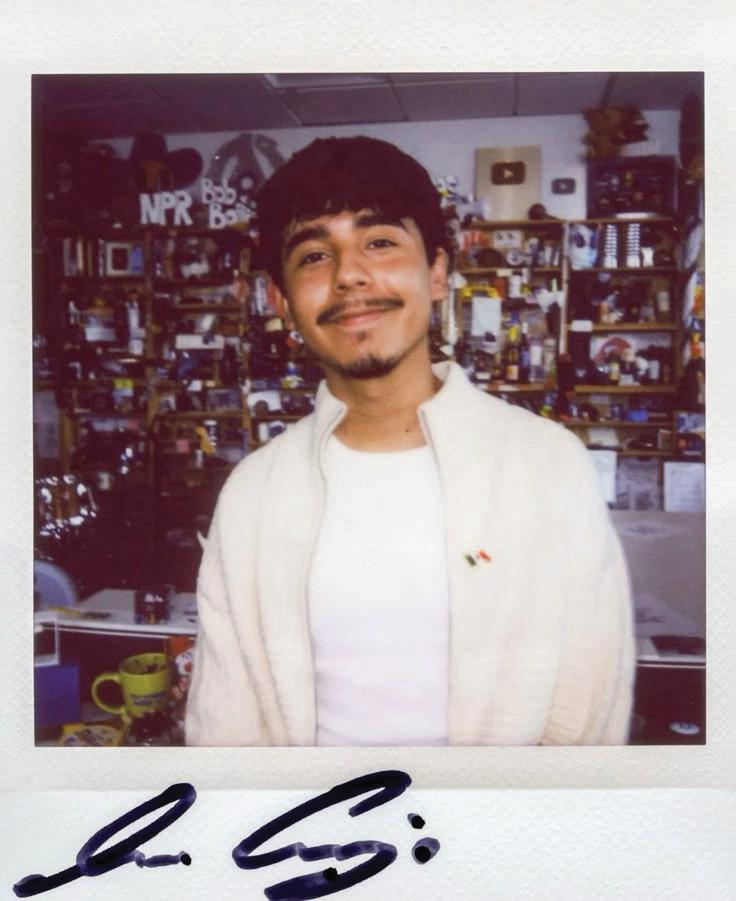
Cornejo is very open about artists that he looked up to as a child that have influenced his career. During his NPR Music Tiny Desk Concert, he mentions watching Alt-J, Coldplay, Mac Miller and Tame Impala and how they inspire him in pursuing his career. Similarly, in an interview with Billboard, Ivan stated that one of his first encounters with regional music was “Corridos Tumbados” by Nathaniel Cano and praises him for being a pioneer for the sierreño genre.
Cornejo works closely with his family and has them around for his big milestones. Alejandro Cornejo, Ivan’s cousin, is the bass player in his band and travels with Ivan. As he stated in a short documentary for the Coachella Arts and Music Festival YouTube channel, Alejandro, who is originally from Texas, works alongside his cousin to support his dream and passion for music.
Ivan also works closely with his sister and manager Pamela Cornejo and stated in the same short documentary that even before any performance, she too feels nervous for her little brother. Cornejo’s family dynamic is unique to his career and provides him with support from his family that allows him to pursue his passion.
As a young Mexican man, talking about heartbreak and emotions is not usually heard of because of the perpetuated “machismo” stereotype in the Latino community. Machismo in simple terms is having to suppress emotions and sad feelings because
it is not seen as manly.
Cornejo with his music breaks this harmful stereotype and teaches the younger generation that it is okay to feel sad and vulnerable after a heartbreak. With his music, he influences his listeners to feel their emotions instead of suppressing them and involuntarily is breaking the stereotype that is imposed onto young Latino men.
Ivan’s musical career is not because of luck or fate, but because of hard work and passion. He stated in an interview with 103.5 KTU that he played his guitar when he was younger, sometimes only for a couple dollars. This fueled his own self determination to turn his career into what it is today.
His career is also unique because although he was born and raised in SoCal, he only makes music in Spanish. He explained in an interview for his Coachella documentary that by writing in Spanish, it invokes feelings and emotions that cannot be captured by the English language. Ivan brings pride to many Latinos but specifically, for Latinos from Riverside.

JOSÉ DEL ÁNGEL News Editor
*Spoilers Ahead*
Season five of “The Boys” has somehow managed to make the world of supers even darker and more emotionally devastating than previous seasons. What started years ago as a violent satire of superhero culture has now transformed into a full-scale political apocalypse. For the most part, the show’s final season has delivered exactly the kind of chaotic endgame fans expected.
The biggest strength of the season so far has been its willingness to finally push characters to irreversible breaking points. Homelander is no longer pretending to be America’s hero. The season fully embraces his descent into authoritarianism, portraying him less as a celebrity superhero and more as a dictator with unchecked power.
The show’s political commentary has always been blunt but season five removes whatever subtlety remained. Homelander dismantling government structures and surrounding himself with loyalists create some of the most disturbing moments the series has produced.
At the same time, the emotional core of the show remains the fractured relationships between the members of The Boys themselves. Billy Butcher continues to spiral deeper into obsession, while Hughie Campbell is forced to confront how hopeless their mission has become. The show has consistently excelled when balancing absurd violence with genuine emotional stakes,
and season five contains arguably some of the strongest performances in the series.
The most shocking moment so far came in episode seven with the death of Frenchie, whose sacrifice instantly became one of the series most heartbreaking scenes. Frenchie and Kimiko have long served as the emotional center of the show, and his death finally gave the season the sense of consequences some viewers felt had been missing in previous years.
Not everything has worked perfectly, however. Some episodes still rely too heavily on shock value and gross out humor rather than meaningful storytelling. One criticism that has followed the show since season four is that it occasionally became the exact type of expressive spectacle it originally set out to parody. The main frustrations are with pacing and the overuse of increasingly graphic scenes, as well as its reliance in setting up Prime’s new show “Vought Rising,” a “The Boys” prequel.
Still, season five feels more focused than the previous season. The story finally feels like it is moving toward a definitive conclusion instead of endlessly resetting conflicts between Homelander and Butcher. The looming collapse of society gives the season urgency, and the inclusion of characters from “Gen V” helps the world feel larger without distracting too much from the central story.
One of the most impressive things about the season is how it refuses to offer easy optimism.
Every victory comes with devastating losses, and nearly every character appears emotionally exhausted by constant violence. Even moments of humor now carry a layer of dread underneath them. That tonal balance is difficult to maintain, but creator Ric Kripke still manages to keep the show entertaining despite its increasingly bleak direction.
As for the finale prediction, it feels increasingly likely that Butcher will ultimately sacrifice himself to stop Homelander once and for all. The season has repeatedly hinted that Butcher’s hatred and obsession are destroying him physically and mentally, and his storyline feels destined for a tragic ending. Homelander may die, but the show seems more interested in exploring whether the systems that created him can ever truly disappear. Ryan will likely play a major role in ending, potentially becoming the deciding factor between repeating Homelander’s legacy or rejecting it entirely.
Verdict: If the finale succeeds, it probably will not end with a clean heroic victory. The most fitting ending for “The Boys” would be messy and very bittersweet. A majority of the protagonists will end up dead by the end of the show, which is exactly the kind of ending this brutal show deserves.
ANGELICA BRIANNA ACOSTA Assistant News Editor
*This review contains Spoilers*
Elle Kennedy’s five-book “Off Campus” series, first published in 2015 was just added to the book to screen ranks on May 13, 2026. Prime Video picked up the show in October of 2024, leaving book readers and romance enthusiasts in great anticipation. The show’s creator Louisa Levy put her own spin on the series, leaving fans torn between loving and hating it. Levy’s adaptation follows the book’s original order starting with “The Deal.”
Kennedy’s series follows a group of college hockey players as they all fall in love. Garrett Graham and Hannah Wells are the main protagonists of the first book, and Levy stays true to this in her adaptation’s first season. While the book portrays Hannah and Garrett’s relationship in more of a physical sense, Levy chose to tone down the physical intimacy for the show.
This decision, though small, made Hannah and Garrett’s relationship more believable and realistic. While authors have the benefit of showing readers a character’s inner monologue, Levy knew she did not have that luxury, so instead, she opted to show the relationship through small moments and dialogue.
Levy also changed the source of the original breakup between the two protagonists. Garrett, in both the series and the show, has an abusive father who becomes a major source of turmoil for all of Garrett’s relationships.
In Levy’s adaptation, it’s Garrett’s fear of becoming his father and potentially being seen in the same light as Hannah’s previous assaulter that leads to their breakup. However in the books, Garrett did not break up with Hannah, something
the fans were quick to point out. Instead Hannah is the one to end the relationship after being manipulated by Garrett’s father who threatens to cut Garrett off, essentially ruining his hockey career.
Levy made the decision to change the source of the breakup because Garrett is no longer financially reliant on his father in the show. College athletes today are able to make money via sponsorships unlike when Kennedy first wrote the series. If Garrett is bound to go pro, it wouldn’t make sense that he would be lacking in sponsorships.
The decision added a new layer of emotional depth that arguably the book was missing. Kennedy heavily focuses on Hannah’s trauma of being assaulted in high school, something Garrett helps her overcome; however, Garrett’s own trauma often feels overlooked in the books. Levy’s decision to change the source of the breakup added to Garrett’s character, showing the viewer how much Garrett cared about Hannah.
The most controversial change Levy made to the story is the “campus-wide hands off rule.” After the breakup enacted by Hannah, not Garrett, in the books, Garrett makes it clear to everyone on their college campus that Hannah is off limits and threatens anyone who tries to be with Hannah. The show chooses not to show this plotline instead making it a misunderstood rumour that Garrett had no part in.
The book plotline itself is outdated, sexist and makes no sense for either character. Garrett, who is afraid of inheriting his father’s violence, wouldn’t threaten everyone on campus and Hannah, who has had her own choice taken away by men already, would not find the gesture
endearing like she does in the books.
Levy’s controversial change did more justice to the characters and their own respective traumas. While in Kennedy’s series Hannah and Garrett’s trauma seemed to be tools to move the plot along, Levy understood that these are things that both characters have to live with, their traumas aren’t healed or gone because they fell in love.
Hannah’s final showcase is a testament to this. In both the book and the show, there is a lead up to this event which is emphasized as a pivotal moment for Hannah. The book did not show lyrics, instead emphasizing Garrett’s admiration of Hannah’s courage and using Hannah’s inner monologue to give the reader an idea of what she was singing about.
Levy opted for an original song by Grammy winning songwriters Amy Allen and Ethan Gruska. The song titled “The Girl That I Am,” felt like a final release for her character, referencing a moment earlier in the show where she told her best friend she wished she still was the same girl she was before the assault.
The song focusing on Hannah’s trauma and coming into herself rather than her relationship with Garret like it was implied in the book, was another thing Levy did right. Louisa Levy’s changes to the story ultimately added to the original essence of the series.
Verdict: The world doesn’t need more hockey romance adaptations, but this one was worth the watch.

LEBRON HAS THIS
After getting eliminated from the NBA Playoffs, LeBron James is an unrestricted free agent for the first time since 2018 when he left Cleveland to join the Los Angeles Lakers. Here’s a list of options on the table for LeBron this summer and what they could mean for the league.
If LeBron re-signs with the Lakers, it could mean many different things. He may simply want to continue living in Southern California with his family and play golf at the amazing courses the area has to offer. It could also mean he believes the roster is talented enough to compete for a title if they acquire key players in the summer. If LeBron takes a pay cut to stay with the purple and gold, it frees up cap space for the Lakers to pursue other players who could improve the team and put them neck and neck with teams like Oklahoma City and San Antonio. Last summer, the Lakers were able to acquire Marcus Smart who wasn’t highly coveted by teams at the time because he was under contract with the Washington Wizards. After negotiating a buyout, he became a free agent and signed with the Lakers and played
a pivotal role in the first round of the NBA Playoffs versus the Houston Rockets. If Rob Pelinka can sign more impactful players this summer, the Lakers could give LeBron one more chance to win his fifth championship.
While this probably won’t happen, LeBron James returning to the Cavs would make them strong title contenders in 2027. Cleveland’s roster is already loaded with talent, and LeBron should have no problem fitting in with Donovan Mitchell and company. A potential starting lineup of Mitchell, James Harden, LeBron, Evan Mobley and Jarrett Allen would be lethal for anyone to compete against.
This move would feel similar to when LeBron returned to the Cavs in 2014, joining Kyrie Irving and Kevin Love. If he can replicate the championship success in Cleveland in 2027, it would be the cherry on top of his legacy in Northeast Ohio.
From a basketball perspective, the Lakers would gain an extra $50 million to spend on free agency to improve their roster around
Luka Doncic and Austin Reaves. Luka will become the undisputed face of the franchise in every way imaginable and only time will tell what his legacy will become in Los Angeles.


THE GOLDEN STATE WARRIORS CAN MAKE ANOTHER DEEP PLAYOFF RUN WITH THE RIGHT MOVE THIS OFFSEASON.
HAYDEN
In a talented Western Conference, the Golden State Warriors seem stuck in the middle. Their current roster remains a step behind the conference’s top contenders, but a step ahead of the teams tanking for top draft picks. Even with Stephen Curry averaging over 26 points per game while shooting nearly 40% from three this season, Golden State still struggles with size, rebounding and interior scoring compared to conference rivals like the Denver Nuggets, Minnesota Timberwolves and Oklahoma City Thunder.
In 2025, the Warriors acquired Jimmy Butler at the trade deadline and he proved to be a reliable second scoring option when on the court. However, Butler has struggled with injuries and is still nursing a torn ACL injury. For this reason, acquiring Giannis Antetokounmpo is a must for Golden State to keep their championship window open in Curry’s final years.
This season, Giannis shot above 60% from the field and averaged over 27 points, nine rebounds and five assists per game. A two-time MVP, Antetokounmpo’s athleticism, interior scoring and playmaking would take the burden of carrying the offense off of Curry’s shoulders.
Curry and Antetokounmpo would instantly create a ferocious offense that can score in the paint and beyond the arc. If multiple defenders help on Curry’s off-ball movement, it gives Giannis an open lane to attack the basket. On the other hand, if the defense brings a help defender to guard Giannis in the paint, Curry is able to get open looks from beyond the arc. Golden State’s offense has always depended on spacing and

ball movement, and Giannis would flourish playing alongside the greatest shooter of all-time.
Giannis would also immediately improve Golden State defensively.
The Warriors struggled throughout the season against larger and more physical frontcourts, especially in rebounding and rim protection. Labeled the Greek Freak, Antetokoumpo’s height, length and speed would give the Warriors elite transition defense, rebounding and versatility. It would also free up Draymond Green on defense. Instead of constantly guarding bigger centers inside the paint, the former Defensive Player of the Year could better maximize his legendary basketball IQ.
Of course, a trade would not come so easily. The Milwaukee Bucks would likely demand a package centered around youngsters Brandin Podziemski, Moses Moody, veteran
Kristaps Porzingis and multiple future first-round picks. The Warriors own their first round picks through the 2029 NBA Draft.
Also, Podziemski emerged as one of Golden State’s most valuable young players this season, averaging nearly 14 points, five rebounds and four assists per game. Podziemski hasn’t hit his prime yet and could be an asset that persuades the Bucks to ship Giannis to Golden State.
Nevertheless, Golden State is running out of time to just wait around. Curry is still performing at an All-NBA level, but the Warriors’ current roster is not complete enough to compete with the top teams in the West. Trading for Giannis would give Golden State one final opportunity to seriously compete for another championship before the Curry era comes to an end.
BASEBALL - MAY 14
BASEBALL - MAY 15
BASEBALL - MAY 16
UCR VS UC SANTA BARBARA
UCR VS UC SANTA BARBARA
UCR VS UC SANTA BARBARA
LOCATION: LONG BEACH STATE
HIGHLIGHTS:
KAZU KIMURA WINS HIGH JUMP TITLE (2.12M)
CHELSEA ANINYEI WINS TRIPLE JUMP TITLE (13.04M) AND 3RD IN LONG JUMP (6.08M)
AARON FRUGE 3RD IN LONG JUMP (7.57M)
ANDREW ROBINSON 3RD IN TRIPLE JUMP (15.41M)
RAYKIYAT OLUKOJU 4TH IN 200 METER DASH (23.46 SECONDS)
MEN’S T/F FINISHES 8TH PLACE
WOMEN’S T/F FINISHES 9TH PLACE