UC Riverside’s suffers one of its most devastating
UC Riverside’s suffers one of its most devastating
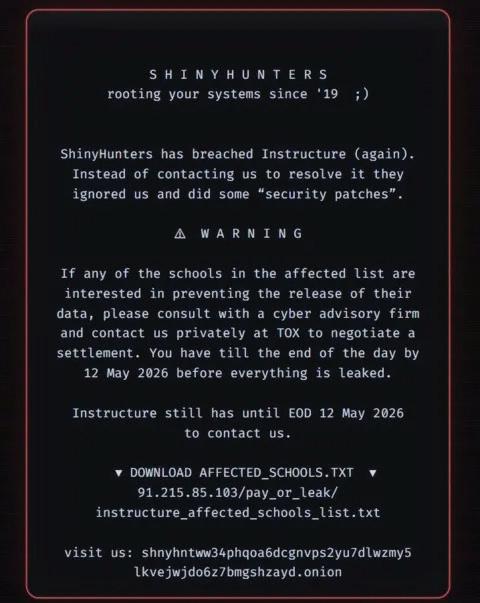
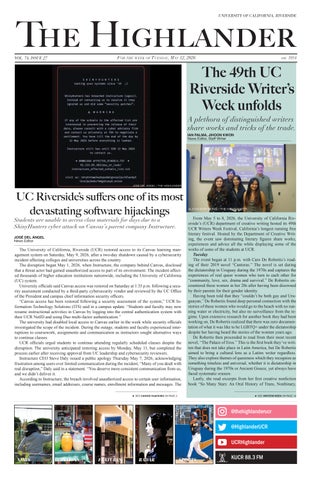
Students are unable to access class materials for days due to a ShinyHunters cyber attack on Canvas’s parent company Instructure.
JOSÉ DEL ÁNGEL News Editor
The University of California, Riverside (UCR) restored access to its Canvas learning management system on Saturday, May 9, 2026, after a two-day shutdown caused by a cybersecurity incident affecting colleges and universities across the country
The disruption began May 1, 2026, when Instructure, the company behind Canvas, disclosed that a threat actor had gained unauthorized access to part of its environment. The incident affected thousands of higher education institutions nationwide, including the University of California (UC) system.
University officials said Canvas access was restored on Saturday at 1:35 p.m. following a security assessment conducted by a third-party cybersecurity vendor and reviewed by the UC Office of the President and campus chief information security officers.
“Canvas access has been restored following a security assessment of the system,” UCR Information Technology Solutions (ITS) said in a campus update. “Students and faculty may now resume instructional activities in Canvas by logging into the central authentication system with their UCR NetID and using Duo multi-factor authentication.”
The university had disabled local access to Canvas earlier in the week while security officials investigated the scope of the incident. During the outage, students and faculty experienced interruptions to coursework, assignments and communication as instructors sought alternative ways to continue classes.
UCR officials urged students to continue attending regularly scheduled classes despite the disruption. The university anticipated restoring access by Monday, May 11, but completed the process earlier after receiving approval from UC leadership and cybersecurity reviewers.
Instructure CEO Steve Daly issued a public apology Thursday May 7, 2026, acknowledging frustration among users over limited communication during the incident, “Many of you dealt with real disruption,” Daly said in a statement. “You deserve more consistent communication from us, and we didn’t deliver it.
According to Instructure, the breach involved unauthorized access to certain user information, including usernames, email addresses, course names, enrollment information and messages. The

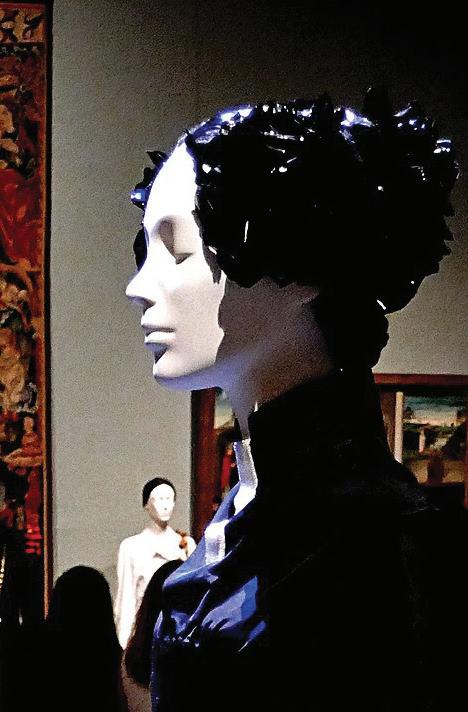
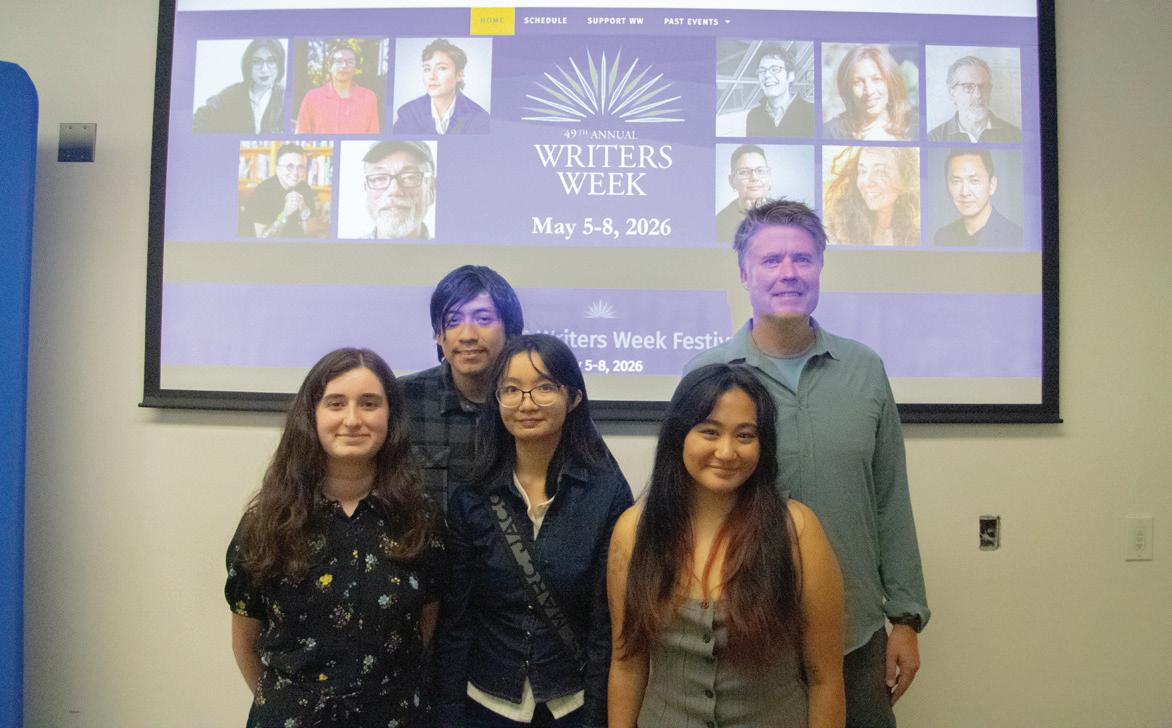
From May 5 to 8, 2026, the University of California Riverside’s (UCR) department of creative writing hosted its 49th UCR Writers Week Festival, California’s longest running free literary festival. Hosted by the Department of Creative Writing, the event saw dominating literary figures share works, experiences and advice all the while displaying some of the works of some of the students at UCR.
Tuesday
The event began at 11 p.m. with Caro De Robertis’s reading of their 2019 novel “Cantoras.” The novel is set during the dictatorship in Uruguay during the 1970s and captures the experiences of real queer women who turn to each other for “community, love, sex, drama and survival.” De Robertis encountered these women in her 20s after having been disowned by their parents for their gender identity.
Having been told that they “couldn’t be both gay and Uruguayan,” De Robertis found deep personal connection with the stories of these women who would go to the beach with no running water or electricity, but also no surveillance from the regime. Upon extensive research for another book they had been working on, De Robertis realized that there was zero documentation of what it was like to be LGBTQ+ under the dictatorship despite her having heard the stories of the women years ago.
De Robertis then proceeded to read from their most recent novel, “The Palace of Eros.” This is the first book they’ve written that does not take place in Latin America, but De Robertis aimed to bring a cultural lens as a Latinx writer regardless. They also explore themes of queerness which they recognize as something timeless and universal, whether it is dictatorship in Uruguay during the 1970s or Ancient Greece, yet always have faced systematic erasure.
Lastly, she read excerpts from her first creative nonfiction book “So Many Stars: An Oral History of Trans, Nonbinary,

Editor-in-ChiEf
Mata Elangovan
editorinchief@highlandernews.org
Managing Editor
Isaac Solnick
managingeditor@highlandernews.org
nEws Editor
José Del Ángel
news@highlandernews.org
asst nEws Editor
Angelica Brianna Acosta asst.news@highlandernews.org
opinions Editor
Cecile Diroll
opinions@highlandernews.org
asst opinions Editor
Rubaita Iqbal
asst.opinions@highlandernews.org
fEaturEs Editor
Sanjana Thatte features@highlandernews.org
asst fEaturEs Editor
Nola Perifel
asst.features@highlandernews.org
radar Editor
Ian Palma radar@highlandernews.org
assistant radar Editor
Aakif Iqbal asst.radar@highlandernews.org
sports Editor
Terry Nguyen sports@highlandernews.org
asst sports Editor
Sofia Majeed asst.sports@highlandernews.org
photography Editor Vash Chen photo@highlandernews.org
assistant photo Editor
Alondra Ordaz photo@highlandernews.org
produCtion ManagEr
Agna Soneji productionmanager@highlandernews.org
asst produCtion ManagEr
Emma Cabrera prodassistant.highlander@gmail.com
produCtion assistants
Ella Kim
Aashi Jain
Keyanna (Keys) Pinzon Nishi Girish prodassistant.highlander@gmail.com
art dirECtor
Adelia Urena highlander.art.director@gmail.com
Copy Editor
Rachel Ko copyeditor.highlander@gmail.com
graphiC dEsignEr
Layna Lapikas llapi002@ucr.edu
dEsign intErns
Holly Dawson
Emily Mata
BusinEss ManagEr
Allison Fry highlanderads@gmail.com
asst. BusinEss ManagEr
Cinthia Meza highlanderads@gmail.com
VidEo Editor
Edwin Basurto video.highlander@gmail.com
asst. VidEo Editor
Isabella Hogan video.highlander@gmail.com
MarkEting dirECtor
Sinhayana Srivastava marketing.highlander@gmail.com
asst. MarkEting dirECtor
Isabell Gracia marketing.highlander@gmail.com
MarkEting intErns
Henya Dadem marketing.highlander@gmail.com
Abby Lazar
marketing.highlander@gmail.com
tECh dirECtor
Ashna Pradhan techdirector@highlandernews.org
ad rEps
Paris Cao
Xochitl Gutierrez
Zachary Hoisington
Jeremiah Finister
Xavier Scott highlanderadrep@gmail.com
distriBution ManagEr
Noah Davis Witten
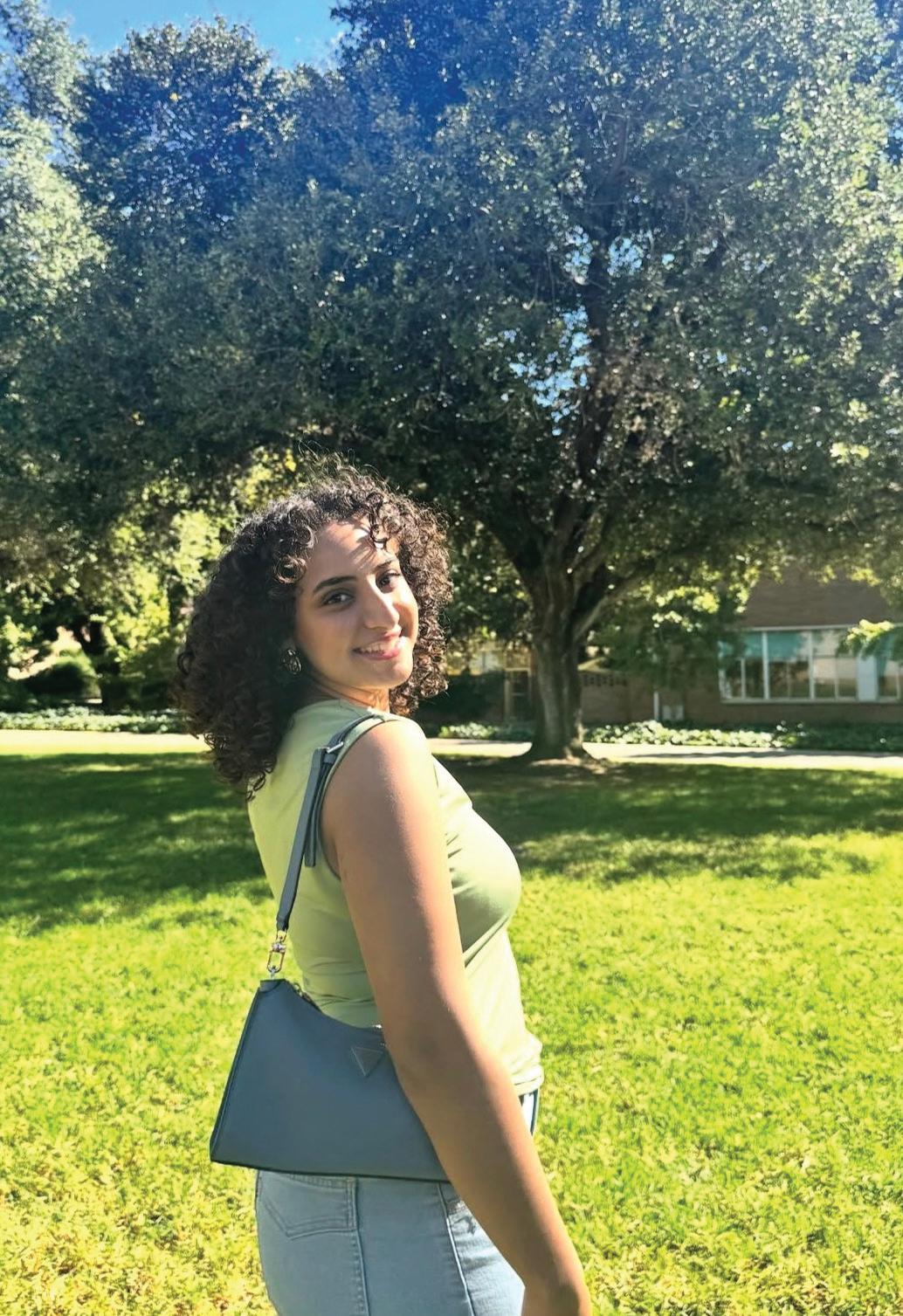
first year psych major she/her
The Highlander 101 Highlander Union Building Riverside, CA 92521 www.highlandernews.org editorinchief@highlandernews.org
Help the Highlander stay on top of what is happening on campus and in the general UCR community. Call this number and leave a message for the Editorial Board with your tip. Be sure to include your full name, relation to UCR, and a number or email address where you can be reached for more details.
The Highlander accepts letters from the campus community. They must be 600-800 words at length and include the author’s name and contact information. Topics should be UCR-centric and/ or pertain to our generation of students. Contact Opinions Editor Cecile Diroll at opinions@highlandernews.org by Wednesday if interested in writing a letter and submit the completed letter by Saturday at noon. Letters can and will be rejected if it does not meet requirements.
The Highlander is published and copyrighted by the Highlander for the students, faculty and staff of UCR. All rights are reserved. Reprinting of any material in this publication without the written permission of the Highlander is strictly prohibited. Readers are allowed one free copy of the newspaper. For additional copies or for subscription information, please contact the Highlander. The Highlander fully supports the University of California’s policy on nondiscrimination. The student media reserve the right to reject or modify advertising whose content discriminates on the basis of ancestry, color, national origin, race, religion, disability, age, sex or sexual orientation. The Highlander has a media grievance procedure for resolving complaints against it. All inserts that are printed in the Highlander are independently paid publications and do not reflect the views of the Editorial Board, the staff or The University of California or the Associated Students of UCR.
“I live in, [the] Central Valley area, yeah. If anyone knows Fresno, that area… My brother used to come to UCR, and I’m just very familiar with the area and on campus, and I also have a large Egyptian community here, so it kind of draws me to UCR more… My very first [class] was PSYC 001, yeah. I really liked learning. I love the human brain and all that, but I also like the biology part of it. Like, learn[ing] about neurons and stuff… I like the amount of clubs. There’s a lot of opportunities to make friends and to join a community…you feel like you guys have the same interests so it’s nice…UCR offers a lot of resources. Also, I feel like there’s always something to do, which is what I like… For fun, honestly, side questing with my friends. We’ll go with the flow. I don’t even care what it is, as long as we do something fun…I’m watching Avatar The Last Airbender. Because I know the movie’s coming out now, so I just wanted to re-watch it. And this is my favorite childhood show…I like Katara, not just water bending, but she can blood bend also, which is scary, but cool to have. And she seems very powerful, but feminine, in a way in which I like the combo… Even though UCR is seen as, like, UC rejects, I think it’s a very underrated school because there’s a lot of opportunities given to us. So like, even though we’re not, like, maybe as prestigious as UCLA, we still, we still, like, have a lot of opportunities where we can maybe do research things like that. So I’d say …UCR is underrated”




JOSÉ DEL ÁNGEL News Editor
n Wednesday, May 6, 2026, at 7:15 p.m., the meeting opened with acknowledgements of absent senators before moving into public forum and new business.
Elections Director Diya Baskaran informed the senate of the special elections happening in the following weeks which aim to fill the following positions: Vice President of Finance, Elections Director, Personnel Director, First Time College Student Director, Non-Traditional Student Director, Transfer Student Director, two College of Humanities, Arts and Social Sciences senators and one School of Public Policy Senator.
A major portion of the meeting focused on a presentation by Executive Director Asha Nettles regarding student leader hiring, appointments and accountability procedures. Nettles introduced a draft framework intended to formalize and clarify appointments process for non-elected student government positions, including directors and staff roles that receive stipends.
Under this project, all non-elected positions would be publicly posted for at least seven calendar days before application deadlines. Job postings would include position titles, summaries
of responsibilities, qualifications, application instructions and contact information for supervising elected officials. Nettles said applications would be distributed through the Associated Students of the University of California, Riverside (ASUCR) communication channels, including the organization’s website, social media pages and campus-wide email newsletter.
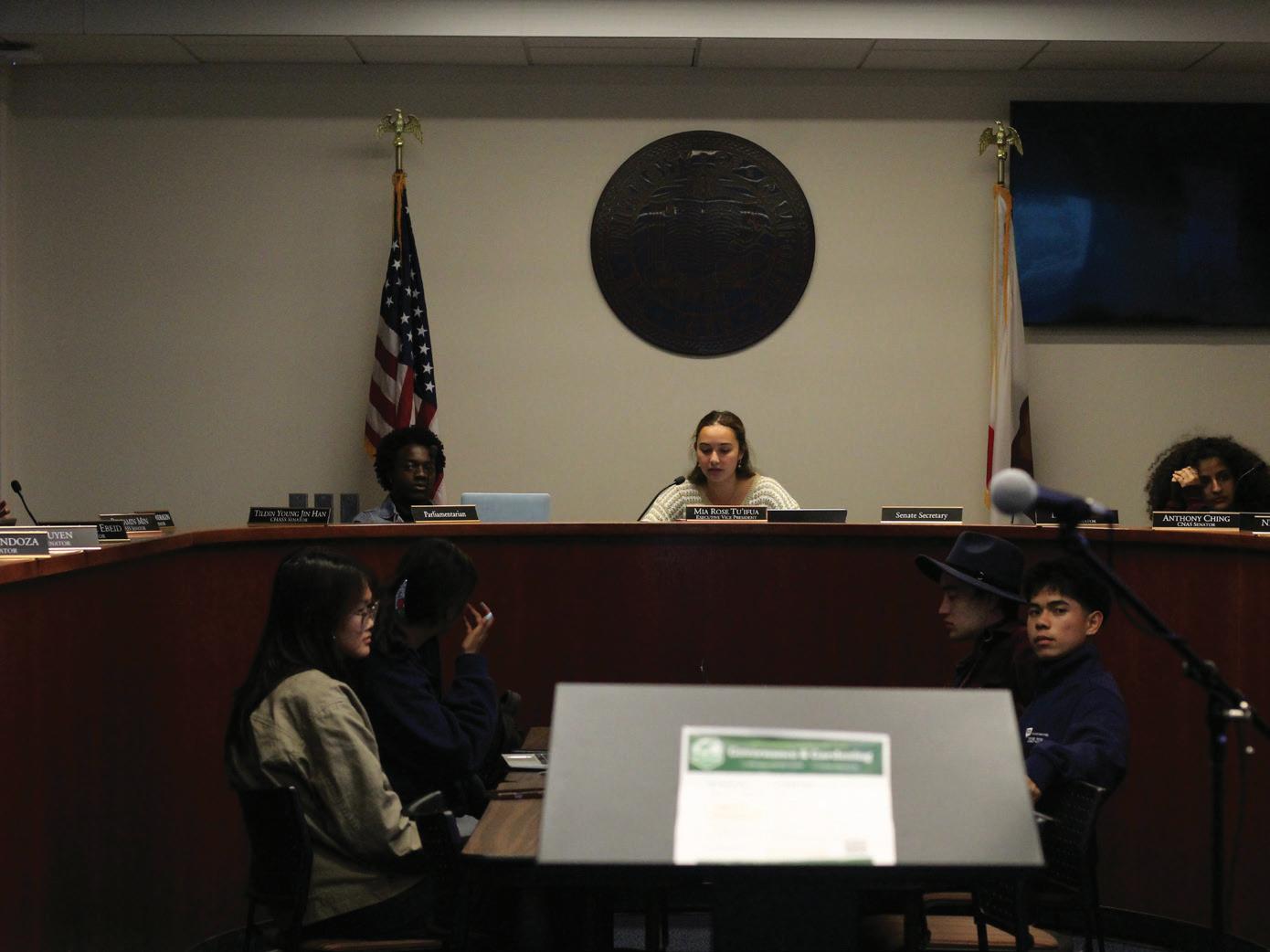
Nettles explained that the reforms are intended to improve transparency and equitable access to student government opportunities. Rather than relying on informal recruitment or internal file-sharing systems, all applications would be centrally hosted on the ASUCR website with detailed job descriptions and office information.
Another key proposal discussed during the meeting would move to start the hiring process
for incoming staff within the next two weeks. Nettles said this timeline would help maintain student engagement and allow the incoming president and vice presidents to recruit staff before students commit to internships or other leadership opportunities during the summer.
The meeting concluded with a brief senator report from Senator Jeevan Rao before adjourning the meeting at 7:35 p.m.
JOSÉ DEL ÁNGEL, MARIBEL HERNANDEZ News Editor, Staff Writer
Following the successful passage of the R’Garden Food Security & Sustainability Referendum, the University of California, Riverside (UCR) students are preparing to expand one of UCR’s most visible food security and sustainable programs into a larger campuswide resource focused on education, student engagement and access to fresh produce.
Beginning in Fall 2026, undergraduates will pay a $10 quarterly fee, excluding summer sessions, to provide the R’Garden with stable sources of long-term funding after years of relying on grants, donations and temporary university support. Organizers said the measure will allow the garden to move from operating roughly 75% capacity to full operations while expanding programming and student services.
The referendum establishes the R’Garden as a permanently funded student-supported initiative aimed at combating food insecurity and increasing sustainability education at UCR. According to referendum documents, 25% of the fee revenue will be returned to students through financial aid in accordance with University of California policy. The remaining funds, estimated at more than $180,000 per quarter, will support staffing, student internships, garden operations and campus programming.
The funding comes at a central moment of the R’Garden, which previously received $170,000 annually through UCR Basic Needs from 2022 to 2024. That funding ended after the 2024-25 academic year. Temporary support from the College of Natural and Agricultural Sciences (CNAS) and the Office of the Provost allowed the garden to continue operating during the 2025-2026 academic year, but according to the referendum the funding was not permanent.
The referendum also notes the intention to hire three full-time staff members and 10 parttime student internship positions. Among the student internship responsibilities are, but are not limited to: maintaining compost piles, harvesting crops, ensuring food safety, weeding, tabling and helping run the R’Garden’s social media and website pages.
One of the full-time positions open to hiring will be a ‘Full-time Student Life Development Specialist’ who will act as a “direct line of communication” between the R’Garden and campus, and they will oversee any student internship-led workshops.
These workshops will be centered around “sustainability and food systems,” including hands-on composting workshops.
The funding will also help implement a
“living, learning laboratory” intended to foster student projects, as well as purchase new tools, maintain equipment and install a permanent restroom and office for the R’Garden.
Additionally, the R’Garden Director seeks to create a new committee — The R’Garden Food Security & Sustainability Referendum Committee, whose goals will be to advise the R’Garden and CNAS on the best uses for the money generated by this referendum for that fiscal year.
The committee will be comprised of two R’Garden student interns, two student representatives from the Office of Sustainability, one representative from Green Campus Action Plan (GCAP), and one Senator representative from the Associated Students of UCR (ASUCR), each chosen by the Office of Sustainability.
Overall, the passage of the R’Garden’s Referendum not only works towards addressing food insecurity on campus.It also helps increase sustainability education, implement new opportunities for students and facilities, and create a new committee of student representation from the Office of Sustainability, GCAP and ASUCR.
JOSÉ DEL ÁNGEL News Editor
The University of California, Riverside (UCR) restored access to its Canvas learning management system on Saturday, May 9, 2026, after a two-day shutdown caused by a cybersecurity incident affecting colleges and universities across the country
The disruption began May 1, 2026, when Instructure, the company behind Canvas, disclosed that a threat actor had gained unauthorized access to part of its environment. The incident affected thousands of higher education institutions nationwide, including the University of California (UC) system.
University officials said Canvas access was restored on Saturday at 1:35 p.m. following a security assessment conducted by a third-party cybersecurity vendor and reviewed by the UC Office of the President and campus chief information security officers.
“Canvas access has been restored following a security assessment of the system,” UCR Information Technology Solutions (ITS) said in a campus update. “Students and faculty may now resume instructional activities in Canvas by logging into the central authentication system with their UCR NetID and using Duo multi-factor authentication.”
The university had disabled local access to Canvas earlier in the week while security officials investigated the scope of the incident. During the outage, students and faculty experienced interruptions to coursework, assignments and communication as instructors sought alternative ways to continue classes.
UCR officials urged students to continue attending regularly scheduled classes despite the disruption. The university anticipated restoring access by Monday, May 11, but completed the process earlier after receiving approval from UC leadership and cybersecurity reviewers.
Instructure CEO Steve Daly issued a public apology Thursday May 7, 2026, acknowledging frustration among users over limited communication during the incident, “Many of you dealt with real disruption,” Daly said in a statement. “You deserve more consistent communication from us, and we didn’t deliver it.”
According to Instructure, the breach involved unauthorized access to certain user information, including usernames, email addresses, course names, enrollment information and messages. The company said core learning data, including courses content, submission and credentials, was not compromised.
The company also disclosed that attackers exploited a vulnerability involving support tickets in its “Free for Teacher” environment, prompting Instructure to temporarily disable that service while conducting a broader security review.
Despite assurance that Canvas was “fully operational and remains safe to use,” several UC campuses, including UCR, kept systems
offline while conducting independent security evaluation.
On Friday, UCR informed students that campuses such as UC Berkeley and UC Merced had restored Canvas services to support final exams and test the platform’s return across the UC system.
Throughout the outage, university officials warned students and employees to remain alert for phishing attempts and fraudulent communications posing as official university messages. “Watch for unexpected messages that seem to come from UC Riverside,” UCR ITS said in campus advisory. “The university will never ask for passwords, Social Security numbers, birthdates, or bank account information through email, text, or phone calls.”
The university directed faculty to instructional continuity resources through the XCITE Center for Teaching and Learning, while technical support remained available through the campusBearHelp service desk.
Students express concerns over missed assignments, disrupted coursework and uncertainty surrounding midterm preparation
during the outage. Faculty members were encouraged to communicate with students through alternative methods while Canvas remained inaccessible.
The UC Office of the President said it continues coordinating with Instructure and campus information security teams as the broader investigation continues. Instructure has launched a dedicated incident update page and said it plans to release a summary of the forensic review once completed. The company stated that no immediate action is required from students or instructions at this time.
Cybersecurity experts say the incident highlights growing risks facing educational institutions, which increasingly rely on cloudbased digital platforms for instructions, communication and data storage. Universities have become frequent targets for cyberattacks because of the large volumes of personal and institutional information they maintain.
As classes resume on Canvas, UCR officials said they will continue monitoring the platform and provide updates to the campus community if additional information emerges.
■ H
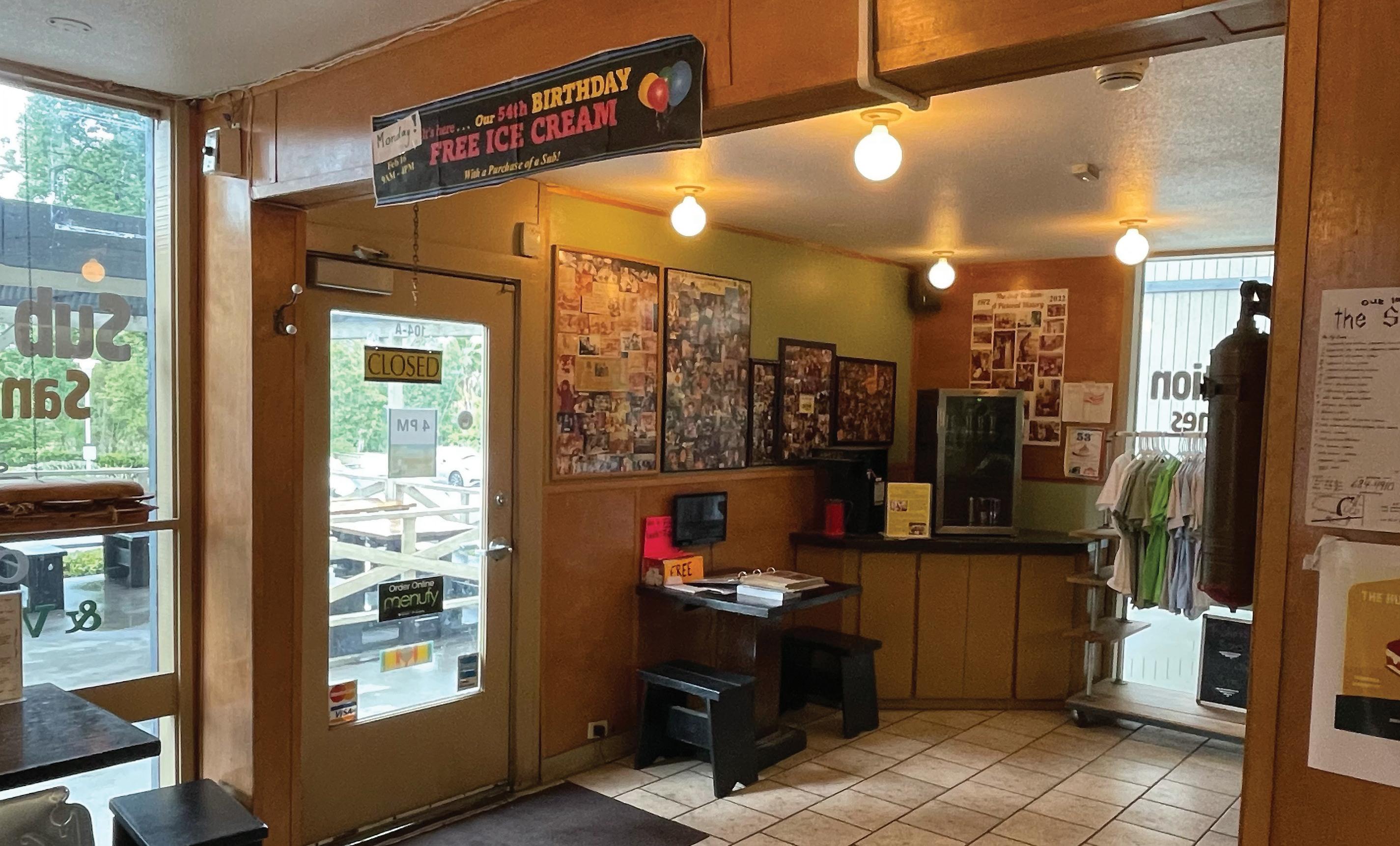
After more than five decades serving the University of California, Riverside (UCR) students, alumni and Riverside residents, The Sub Station near campus is preparing to close, making the end of one of the university’s longest-standing community gathering spaces.
Founded in February 1972, the sandwich shop became a staple of student life at UCR and one of the oldest eateries in the city. Located near Bannockburn Village Apartments, The Sub Station operated during a period when UCR still had a football program and the campus enrolled roughly 6,000 students.
Owner Richard “Richie” Munio stated that the restaurant’s history has always been closely tied to the university community.
“We’ve always been student oriented,” Munio said. “All the employees were UCR students. Fraternities and sororities held their events here. Students came after class to sit on the patio and spend time together.”
The restaurant remained under the same ownership for more than 40 years and became known for its East Coast style sandwiches, longtime employees and unchanged interior. Munio said many of the tables and benches
inside the restaurant were built by hand in the early 1970s and are still in use today.
“The only thing I tell people that changes are the faces and the prices,” Munio said. “The food quality and recipes should all remain the same.”
The closure comes as several longtime businesses connected to the university community have disappeared in recent years. Munio referenced the recent closure of Getaway Cafe, another longtime student gathering place near campus. According to Munio, alumni from across the country have returned to visit The Sub Station in recent weeks after hearing about its closure.
“We have people coming all day that started with us when they were kids,” Munio said. “Now they’re 50 or 60 years old, and they’re saddened that were leaving the last connection to that time.”
The restaurant’s significance extends beyond food service, current students said. Kyle Nguyen, a UCR student, described The Sub Station as a recognizable part of campus culture. “The Sub Station is a symbol of UCR because generations of students have memories connected to it, “ Nguyen stated.
UCR Student Elizabeth Morris said the
restaurant represented a sense of community that many students value. “It feels different from newer business because there’s so much history attached to it,” Morris said.
Munio also reflected on changes in student culture over the years, particularly following the COVID-19 pandemic. He said fewer students participate in campus social activities compared with previous generations, making longtime gathering spaces less central to student life.
Despite those changes, Richie said former students still associate the restaurant with their time at UCR. Many alumni returning to Riverside have made The Sub Station one of their first stops when visiting campus.
The business also served the wider Riverside community through catering partnerships with UCR clubs, local organizations and delivery services. As the closure approaches, Munio encouraged current students to visit the restaurant while it remains open.
No official closing date has been announced, through Munio said the restaurant is expected to close within the coming months.
ANDREW HAGLER Staff Editor
On Jan. 17, 2025, California State University (CSU) signed a $17 million contract with OpenAI, providing students across all 23 campuses with access to ChatGPT Edu, a version of its flagship Artificial Intelligence (AI) model focused on research and academic tasks. As the 18-month contract nears its end in July and the university considers renewal, students continue to highlight concerns they’ve held since its introduction.
Cal State Student Association (CSSA) leadership described numerous student concerns with the implementation of the contract, chiefly among them a lack of guidance, student input and transparency.
In a 2025 report, CSSA Vice President of System-Wide Decision Making Katie Karroum detailed how CSSA representatives reported many students didn’t even know ChatGPT Edu was available to them, nor did they receive any instruction from faculty on how to use it.
CSU students described the introduction of ChatGPT Edu as “rushed, top-down, and lacking transitional support.” CSSA representatives reported that students also
felt conflicting faculty approaches created uncertainty regarding the extent to which AI use was acceptable, with some professors encouraging responsible AI use and others discouraging it altogether.
Students were also concerned that they weren’t involved in the decision-making process for the initial signing of the contract. Karroum stated that CSSA wasn’t included in the decision-making process and didn’t hear about the deal until it was announced to the public.
She argued that the bare minimum needed for student government to represent their constituents is to be informed on issues concerning them, adding that “when we’re not being informed, it essentially removes one of the largest powers that we have as a governing body, and it also removes a lot of trust that our students have with us.”
In a 2025 report, Karroum pointed out that the contract didn’t make clear whether it was being paid for through federal tax money or student tuition. She also highlighted student concerns about a lack of privacy and the
potential for data sharing.
In February 2026, Assemblymember Mike Fong introduced Assembly Bill 2392, which would require CSU schools and California Community Colleges and recommend UC schools, to create and update specific training curricula for students, faculty and staff before introducing any generative AI system.
The bill would also require California Community Colleges and CSU to submit a written report to the legislature detailing the evaluation and selection process before executing a contract and procuring any generative AI system.
Legislative advocate for the Calfiornia Teachers Association Bryan Miramontes spoke in support of the bill before the Assembly Committee on Higher Education. He highlighted how educators and students are operating without consistent policy frameworks for how these tools should be implemented and without reassurance that students’ and faculty’s data will be protected once AI tools are deployed.
FOUR
KASSANDRA AGUIRRE Staff Editor
MEET WITH THE CITY MANAGER TO LEARN ABOUT THE UPCOMING BALLOT MEASURE.
On May 6, Riverside hosted its third of four informational meetings on the proposed tax increase “Measure Z” at the Orange Terrace Community Center. The meeting was a part of their campaign to inform residents about the upcoming ballot measure, which was recently approved to appear on the June 2 ballot.
Attendees were able to directly ask city officials questions regarding the distribution of the collected funds and raised concerns surrounding the city’s previous fiscal practices.
Measure Z was originally passed in 2016 with a 59.64% vote and implemented a one-cent general tax, intending to support underfunded city programs and services following mass city-wide department cuts. From this, the city was estimated to accumulate $48 million annually and ultimately raised $560 million in 10 years.
Although the original tax was approved to continue until 2036, the City Manager’s Office proposed the new measure at the March 3 city council meeting. Attempting to respond to increasing necessity for funding
for the Riverside Fire Department (RFD) and a continued demand for a safety net.
At the informational meeting, City Manager Mike Futrell explained that this new ballot measure would both renew and increase the one-cent sales tax to 1.25 cents. The renovated tax is estimated to generate $21 million annually, raising the sales tax from 8.75% to 9%. Along with the increase, the original 2036 sunset date would be nullified. The new measure would continue until voters called for its removal.
Previously, around 70% of its funding was used to fund public safety measures before being utilized for other projects such as public works and recreation.
Attendees raised concerns that the funding has been improperly allocated, leading to a lack of tangible results. Multiple residents expressed that they felt they were being financially “held hostage” by the city.
Long-time ward four resident Kimberly Roll told The Highlander, “We have a spending problem here in Riverside … I don’t feel they
have the city’s best interest at heart. I don’t feel they are representing their people.”
In response, Futell expressed that previous Measure Z fund spending had been determined by city staff and reviewed by the Budget Engagement Commission (BEC), a group of City Council appointed Riverside Residents who maintain transparency and represent residents by making recommendations and oversee its spending.
Council members are not required to follow BEC recommendations or the projected expenditures that were presented by city staff, as Measure Z is a general tax, permitting them to allocate the funding however they deem necessary without approval.
Those exemptions from the tax do currently and would continue include groceries, prescription drugs, medical devices, farm equipment or personal services such as salon services or car washes.
The city will be hosting a final public meeting on May 21 at the Janet Goeske Senior Center at 6 p.m.
FUAD MALKI Contributing Writer
Every Wednesday at the University of California, Riverside (UCR), the lawn surrounding the Bell Tower becomes the heart of campus life. Walkways lined with tables are adorned with colorful banners and flyers, and the sound of student interactions creates a radiant atmosphere.
Tabling is a critical way for student organizations to recruit new members and promote events. Most don’t realize how much labor is required just to set up a table. Behind every neatly arranged table is a car packed with supplies and a trek to the center of campus. Some students take the risk of unloading behind the Rivera Library, where parking is limited to service vehicles and ParkMobile spaces. For many, the primary obstacle to tabling at the Bell Tower isn’t lack of interest or energy; it’s logistics.
When transporting materials to the Bell Tower becomes difficult, fewer organizations attend and campus life suffers. Although UCR cannot control broader parking concerns, such as limited parking availability and heavy commuter demand, it does have the power to improve accessibility.
Implementing simple measures such as short-term loading zones behind the Rivera Library, digital parking passes via a Google form and storage options for student organizations can remove unnecessary barriers and facilitate greater engagement within the campus community.
These challenges disproportionately impact certain student groups. Commuter students, who rely on personal vehicles, are most exposed to these issues. With a trunk full of tabling supplies, they must choose among spending significant time carrying materials, risking a ticket by unloading closer to the Bell Tower or skipping tabling altogether.
Smaller and newer student organizations are also especially vulnerable. With limited members, funding and access to carts or storage, these groups often rely on one or two representatives to transport everything. The result is that the organizations most in need of visibility to students are the ones least able to show up consistently, leading to a less diverse and representative campus presence.
The challenges are not just about where students can or cannot park; they are about who gets to fully participate in campus

life. UCR highlights nurturing tomorrow’s leaders and fostering a collaborative community, but parking and logistical barriers quietly limit who can actually take part in those experiences. Once it becomes too complicated to table, organizations scale back their presence or halt participation.
That means fewer chances for students to discover new communities, learn from political and cultural groups or find support networks. Over time, this weakens student life and the visibility of organizations to only those who can afford the extra time, money and risk to receive citations. Ultimately, the campus appears engaged on the surface, but is less accessible and inclusive than UCR’s messages suggest.
That is not to say that UCR needs to redesign the entire parking system to address these issues. However, UCR can implement simple, targeted solutions. Establishing 30-minute “tabling loading zones” near the Bell Tower would allow students to safely unload without fear of receiving a citation of $49 or more.
The university could also introduce a temporary unloading pass linked to tabling reservations, granting designated vehicles part-time access to closer spots, such as behind Rivera Library, Lot 1 or Lot 11. For students with long days on campus, shortterm storage options, like lockers or shared storage rooms at the Highlander Union Building (HUB), would minimize the need to repeatedly haul heavy equipment. None of these changes require major reconstruction of the parking policy, but altogether would make it far more feasible for students to show up, stay involved and sustain the vibrant campus life UCR fosters.
Some may argue that granting special accommodations or loosening parking regulations would open the door to abuse of parking passes or confusion with changed parking regulations. The current system is already clear, and making exceptions would lead to more rigorous ticketing and a more unfair, stricter enforcement. However, the solutions proposed are both limited and regulated.
Time-bound load zones, digital unloading passes and storage access are all structured, trackable measures. Rather than weakening parking rules, these measures adapt them to reflect how the campus practically functions. A system that impedes student organizations’ participation is neither fair nor consistent; it fails to support the student engagement UCR prioritizes.
UCR often emphasizes leadership, inclusion and community as its core values, but these ideals should be reflected in the campus rules that shape student life. The inability to easily unload a table and a few boxes may seem like a small inconvenience, but for many student organizations, it is the difference between showing up and being invisible.
Barriers turn what should be a straightforward act of participation into a sometimes costly, stressful gamble, especially for commuters, newer organizations and underrepresented groups. When those most in need of publicity are the ones least able to navigate these obstacles, campus engagement becomes a privilege rather than an accessible opportunity for all. To truly foster a diverse, vibrant and engaged student body, participation should be readily accommodating all students.
SHREYA PATEL Staff Writer
There is no perfect world that exists where students don’t abuse artificial intelligence (AI). Many have faced that two-second pause where they decide whether to ChatGPT their way through the physics homework so they can enjoy the night or actually work through the problems so they can practice for the midterm next week. Most end up choosing the first option.
This raises the question of whether learning is actually happening in classes and can be proven honestly through exams. Facing a crisis in learning and fear of losing critical thinking skills in younger generations, professors across the U.S. are reviving oral exams, forcing students to defend their assignments to instructors in real time. And honestly, it might be the best way to prevent students from skipping the hard work of thinking as AI rises in education.
Cornell University biomedical engineering professor Chris Schaffer sets up oral defense exams for students instead of paper exams. He claims that students cannot AI their way through in-person speaking to prove understanding and defend their ideas. This style of testing involves no writing tools or technology, preventing not only cheating but also outside help.
Educators are no longer just guessing whether students will use generative AI to do their homework for them. They have them prove their comprehension of the assignment verbally, creating a way to determine what students are actually learning. This “old school” type of testing will be a key part of saving critical thinking and comprehension skills.
Other universities are switching from online to in-person exams, including the University of Pennsylvania (UPenn). During the COVID-19
pandemic, many institutions turned to online learning and testing modes, avoiding physical contact and complying with social distancing rules. However, from 2020 to 2022, ChatGPT was launched, and the take-home homework and essays started coming back perfectly. No mistakes, meeting all the rubric criteria and earning a solid 100.
This intensified concerns surrounding online cheating. At UPenn, professors are now pairing in-person exams with oral exams in seminar classes as a way to save cognitive capacity and creativity. Although the usage of AI is forbidden in many classes, it cannot really be enforced, as students will abuse the technology when no one is watching.
But this causes issues when they have to defend their paper face-to-face. This idea is the perfect mixture of the classic paper test, combined with a twist to save one’s material by defending it verbally, allowing professors to gauge how much students are actually retaining from their class.
In science, technology, engineering and math (STEM) and humanities majors, abusive use of AI can lead to more damage than in other disciplines. Educators worry that students might struggle with the necessary problem-solving skills that they need to advance in their upperlevel classes and careers, especially if one plans to attend law or medical school.
One way to combat this might be through oneon-one sessions with professors to build connections, learn or strengthen communication skills and prove their understanding of the material in class. To pass, students would have to pay attention in class so that they are prepared for
the “talking session” later on. It could be nervewracking at first, but oral discussions are a way to build the skill of articulating technical knowledge, as one would need in a job.
For example, if doctors were to use AI to pass their way through medical school and residency, they might find it hard to connect and collaborate with patients. It is especially concerning since they need to prescribe medication to patients or provide them with treatment when the time comes.
Therefore, dependency on AI not only has an effect on students who use it, but also on those who rely on workers, like doctors, who are integral to saving lives. This proves why “old school” techniques should be considered and brought back to test understanding of the course material.
With generative AI becoming more advanced and sleek with its responses, educators must get creative with the ways they test their students, ensuring learning still happens. Students may believe that critical thinking and processing information are optional now with the rise of AI in undergraduate institutions. However, with professors going back to traditional testing, they are taking this option away and ensuring that these essential skills that are needed for real-life careers are developed by students.
Students should join professors in their efforts to save cognitive capacity and go back to the great “lock in” times that were present before the COVID-19 pandemic and AI. Overall, AI usage is not bad or damaging, but the more one relies on it, the less their mind is used, degrading its own capacity and building a dependency on AI.


Agua frescas, a traditional Mexican drink made with fruit and water, is becoming a “wellness trend,” raising important questions about cultural appropriation and who truly benefits from a tradition’s popularity. “Spa water” is a beverage infused with fresh fruits, vegetables or herbs, such as cucumber, lemon or mint, and is designed to be a refreshing, hydrating and low-calorie beverage.
This seems very similar to aguas frescas, but the key difference lies not in the ingredients but in how each drink is marketed. By calling agua frescas “spa water” as a marketing tool, Mexican traditions are being used to sell a trend. This has become increasingly common among social media influencers and wellness trends, where people take important cultural foods and give them new names to make them seem more appealing.
For example, TikTok influencer Gracie Norton is the creator who first began rebranding aguas frescas as “spa water.” In her now-deleted TikTok video, Norton showed herself mashing fruit into a jar and then adding water, ice and some sugar. She presented the drink as her own creation, telling her audience it was “anti-inflammatory and packed with antioxidants.” Nowhere in her video did she mention that Mexican families have been making this exact drink since before the Aztec Empire.
Aguas frescas have deep roots in Mexico. The drink is usually made with fresh fruit, water and sugar, and often sold by street vendors or made at home. The beverage is affordable and connected to family and the community. They are not new or trendy, but something that has been around since the
Aztec Empire, as Aztecs would mix water and flowers like hibiscus (known as agua de jamaica) into a drink.
Agua frescas also connect to Mexico’s climate. They are sold in large jars and enjoyed as a refreshing beverage to stay hydrated in warm climates. It’s more than a drink; it’s a “symbol of the vibrant energy of Mexican street food culture” that’s found at every Hispanic market. However, the drink only became widely recognized online after it was renamed and presented differently.
“Spa water” is the most recent example of cultural appropriation through a social media trend. Influencers like Norton rebrand aguas frescas, calling it a “wellness drink,” and don’t see a problem until after they are called out on it. These creators aren’t sharing authentic and original recipes; they’re selling the idea of “spa water” through sponsored posts or wellness challenges.
Although the two drinks are similar, people see them differently depending on how they’re presented. Moreover, the only thing that changed was the name of the drink and that name erased the culture behind it. It has only become popular now that it has been separated from its original origin.
Part of this trend is repackaging agua frescas to fit mainstream ideas of health and luxury. The drink is shown in a more aesthetic and wellness way. The new name and presentation make people see it as more modern, luxurious and connected to wellness culture instead of a Mexican tradition. This makes it only accessible to people who can pay for the fancy image of “spa waters,” similar to bottled water with fruit served at
expensive spas or hotels.
However, this ignores the fact that aguas frescas have always been an affordable, everyday drink sold by street vendors and made at home, particularly in MexicanAmerican neighborhoods. Cultural foods and drinks like aguas frescas are only “accepted” once they are renamed and adapted to the dominant culture.
Some people may argue that calling aguas frescas “spa water” was not meant to be offensive and that Norton simply did not know about the traditional drink. Although this may be true, the issue is not only about intention but also about its impact. Even if the trend was not intended to be harmful, presenting aguas frescas as something “new” just for the sake of views causes real damage to real people and businesses. What was once a shared everyday tradition has now become a temporary trend.
Aguas frescas are not a social media trend and people should recognize where they come from and stop erasing the people who created them. Social media influencers profit from renaming aguas frescas, while Mexican vendors and grandmothers, the people who kept the tradition alive for centuries, get nothing and are left out of the conversation.
Stripping away the cultural identity of agua frescas and replacing it with a trendy label erases all the Hispanic families who have prepared and shared these drinks for years. Social media trends need to stop culturally appropriating traditional foods and beverages and give proper credit to the original culture.
RYAN SHU Contributing Writer
Obtaining hands-on experience is a current issue for many college students today and is especially pronounced in today’s job market. With an increasing number of college graduates, a weakening economy and increasing development of artificial intelligence (AI) in the workplace, the importance of obtaining hands-on experience rather than solely relying on coursework and a college degree is more important than ever. This is what many workplace environments and graduate programs look for.
Although the University of California, Riverside (UCR) provides career and research opportunities, many of them are not accessible to entry-level students, particularly for students in science, technology, engineering and mathematics (STEM).
The Career Center provides many resources, such as Handshake and the uResearch Portal, but many listed opportunities are not meant for first and second-year students. Most internships and research programs listed require students to already have specific technical lab and coding experience. This reduces the number of available positions, hurting student opportunities.
UCR is the Inland Empire’s only R1 University, a classification for institutions with the highest levels of research activity, but there are still major barriers to access these opportunities. UCR admitted the most low-income and Black first-year students across all UC campuses, and had a record-breaking 8,300 first-year admissions this year. With 46% of UCR’s student body being low-income and 50% identifying as first-generation students, underrepresented populations make up a significant portion.
Moreover, UCR needs to expand opportunities for entry-level internships to support Black, low-income, first-generation and LGBTQ+ students who have a lower participation rate in paid internships than other students. Paid internships matter because they are associated with stronger job outcomes than unpaid internships. According to the National Association of Colleges and Employers (NACE), paid interns received an average of 1.4 job offers, while unpaid interns averaged 0.9. In addition, NACE found that paid interns had a median starting salary of $67,500 compared to $45,000 for unpaid interns. These findings demonstrate that the limitations of entry-level internships only reinforce existing inequalities, emphasizing the importance of introducing paid beginner friendly STEM internships at UCR.
In addition, internships have been shown to reinforce soft skills that are lacking in STEM coursework. Specifically, science and engineering
classes often focus on technical and theoretical skills through exams and technical problem solving. However, STEM work often requires skills such as communication and collaboration to cooperate and communicate ideas effectively among peers and mentors. These skills are undervalued in STEM coursework but are integral to success in a STEM workplace environment.
A 2025 study on internships found that internships support growth in workplace skills, with 85% of students reporting growth in communication skills and 73% reporting growth in teamwork and collaboration. The study found that STEM students initially struggled with effective communication and collaboration, but had substantial improvement when in a teambased internship setting. This demonstrates that internships are increasingly necessary for STEM students to mend gaps in soft skills.
Some university internship funding models are structured around students obtaining internships independently. For example, UCR’s Funding for Professional Internships program provides $2,000 for students who have already secured unpaid or underpaid internships with nonprofits, government agencies or small businesses. Other universities also use similar internship funding models, such as Tufts University, as they require students to secure a formal, unpaid internship before applying for a summer internship grant.
Additionally, Duke University’s Duke Career Center Internship Funding Program explicitly excludes internships and research positions affiliated with Duke to obtain funding for an internship. Students cannot apply for program funding if the internship or research position is affiliated with Duke.
However, reliance on independent navigation heavily biases students with preexisting
OF SERGEI STAROSTIN VIA PEXELS
experience, such as networking, prepared resumés or previous research experience. This would only further increase the inequality gap experienced by underrepresented communities at UCR, as it would create an additional systemic disparity.
UCR already has a strong model for an entry-level STEM paid internship through the Research in Science and Engineering Program (RISE), which is a 10-week summer research program for continuing and transfer students. The internship is a full-time, paid internship that emphasizes increasing representation in STEM students from diverse backgrounds. The paid stipend is important, as it allows students not to give up experiential learning for financial stability.
RISE is an example of what future UCR programs should do to expand entry-level STEM internships across different departments. This program demonstrates that UCR has the capability to address the inequality experienced by underrepresented communities in STEM majors.
Future programs can collaborate with outside organizations such as local hospitals or biotech companies to increase beginner friendly opportunities. Similar to RISE, programs should emphasize training, mentorship, paid work and most importantly, inexperienced eligibility.
UCR students should not have to have multiple internships or lab experience to access basic opportunities necessary for growth. As internships become more important for STEM careers, UCR should begin to provide more entry-level opportunities, especially for underrepresented students. ■ H

Libra (Sept. 23 – Oct. 22):
Five of Cups Reversed
You’re the villain’s sidekick who was left behind. Maybe you left a harmful situation. Focus on your future and let your time of hardship be filled with joy.

(Dec. 22 – Jan. 19):
The Devil Reversed
You won’t be a hero but you will be saved. Don’t focus on your worries, and remember you are not alone. Your hero will come, be patient.

Aries (March 21 – April 19):
Knight of Swords
You will save the day! But be careful of your big hero complex hero complex, too much of your kindness can be unhelpful.

MARIA MARTINEZ Contributing Writer


Scorpio (Oct. 23 – Nov. 21): Sagittarius (Nov. 22 – Dec. 21):
Five of Pentacles
You’re the villain of selfishness, your acts have caught up to you. Maybe that prank that you played on someone on April Fools’ wasn’t the best idea. Being too evil

(Jan. 20 – Feb. 18):
Three of Swords
Villain of hearts. The villain arc is on its way. Maybe your heart break will be too strong and you will do something reckless. Let your emotions pass, and try to avoid getting in trouble.

Taurus (April 20 – May 20):
The Tower Reversed
You are the Tower hero. But it’s probably not the best time to be a savior. Take your time in solving all the problems of the world after a nap, you’re going to need it.

Page of Wands Reversed Villain of time, you will flake on someone at the last minute. You planned something? Keep it in your calendar. Not everything will be remembered in your notes app.

(Feb. 19 – March 20):
Death Reversed
The hero era didn’t work. You are the villain of revenge, but don’t let your actions be too harsh. Take a yoga class or a small vacation.

Gemini (May 21 – June 20):
Death Reversed
You were once a villain, but now you’re the hero of nostalgia. Don’t let your villainous actions from the past haunt you, you’re doing great. Your mistakes are all behind you now. Live in the present.

Cancer (June 21 – July 22): Leo (July 23 – Aug. 22): Virgo (Aug. 23 – Sept. 22):
Six of Pentacles
You’re the villain of money. The check is coming your way! You really don’t want to share but let’s hope your heart softens.
The Emperor Revered
You’re the hero we all need. As the hero Emperor the hero Emperor, there is no one that can take you down. But amidst all the wins and praises, you are your own villain.
Queen of Pentacles
You’re the hero of discipline. Not all tasks are simple to handle. You’re going to need your sidekick quickly! Find that friend to tackle your tasks with, it will make things more manageable
MALINI JOSEPH Staff Writer
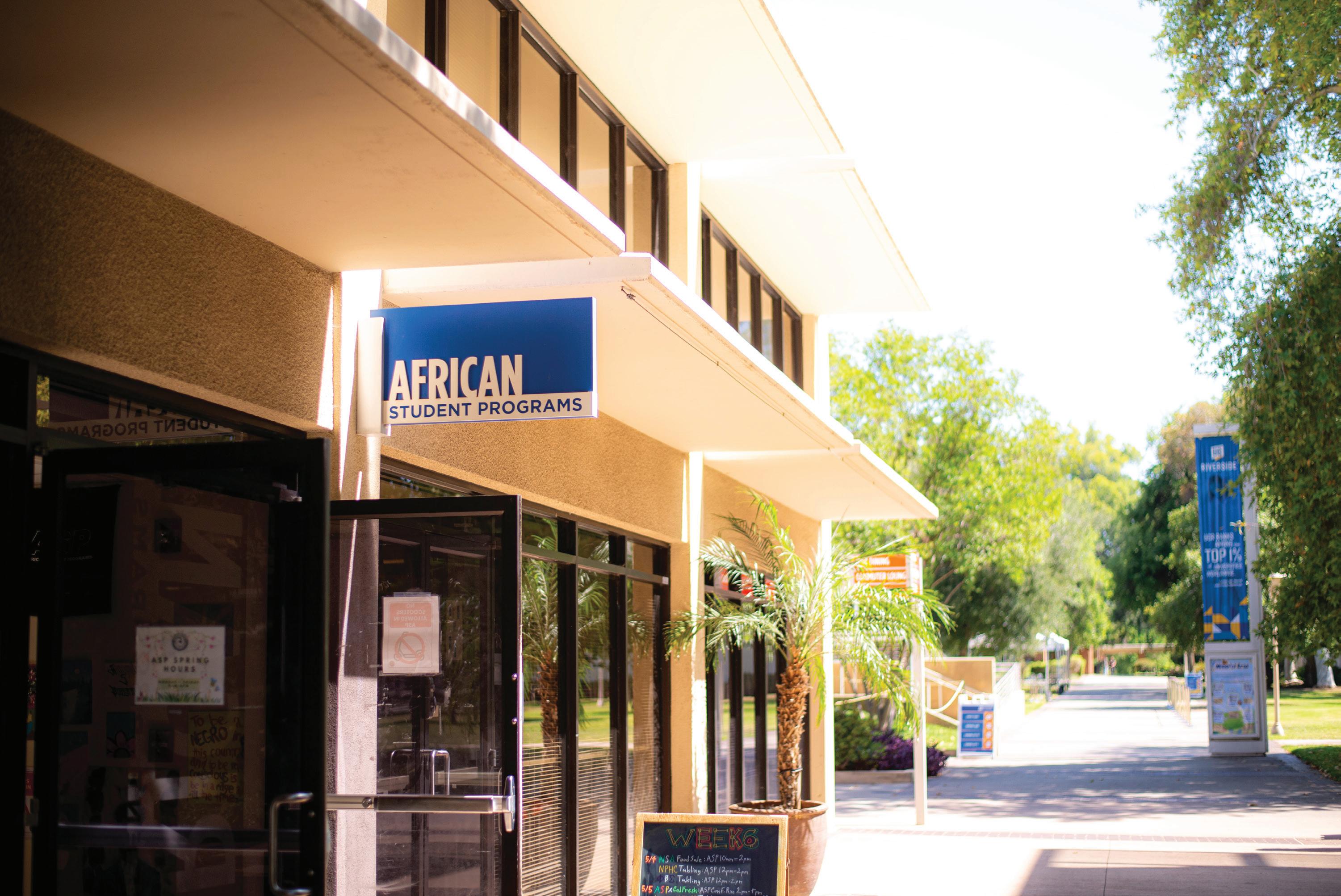
The University of California, Riverside (UCR) is home to a variety of cultural clubs. Everything from dance and music to safe spaces for communities, students will have no trouble finding somewhere to fit in. One of these clubs is the Black Student Union (BSU) and it is one of UCR’s oldest and longest-standing clubs.
As explained by President Kennedi Rawls, the BSU was founded in 1968 by 60 students in order to create space for Black students on campus. Naila Ezekiel, the Director of Communications, explained, “I know especially after [...] the Black House here at UCR was burned down, they just wanted to cultivate more spaces and rebuild the community even stronger after that event.”
For those who may not know, the Black House had been the original meeting space for the BSU, located where the Stonehaven Apartments now sit, and had been a space for community for Black students. Devastatingly, it was burned down in 1972 (“Still Rising: Celebrating 50 Years of African Student Programs”). Since then, the BSU helped establish the African Student Programs, the cultural center for Black students on campus, and it continues to be a stable pillar in the community.
The BSU strives to ensure that their meetings keep a pulse on current events, tailoring the topics to provide their members with the information they need. “College is a very serious environment,” Ezekiel mentioned. “Sometimes you still want to have these important conversations,
but in a social way without having to be [...] as professional, but still being able to connect with your communities and have these conversations.”
In previous meetings, they have covered topics like Black mental health and fashion in Black history. Most recently, their meetings have covered voting. With the midterm election primaries coming up, the BSU has been encouraging Black students to vote, to register to vote and has been educating students on what will be on the ballot. Later this quarter, they will be collaborating with the Black Student Affairs Team as part of their voting series.
The BSU works hard to keep the environment of their meetings open and uplifting. “We want our students to feel welcomed, and it’s not just for Black students,” Rawls acknowledged. “Of course, it’s a space catered towards Black students, but we want everybody that comes into our space to feel welcome.”
The BSU hosts several events throughout the year, such as their tie-dye event on May 8th at African Student Programs. Students brought bags, t-shirts or any other type of fabric and learned how to tie-dye them. Their events are a great way to get to know new people and forge stronger community bonds. Be sure to check some out!
One of their largest events is the BSU’s annual Black People Meet that occurs every fall quarter. Mainly aimed towards incoming Black
freshmen, Black People Meet provides a space for Black identifying organizations to table and perform. It allows Black students to network with each other and establish a community.
Damilola Onikeku, a leadership intern for the BSU, expressed his excitement at seeing the turnout for each event. “Seeing more people come, new faces and returning faces, I think that really is something that is fulfilling to me.”
In the upcoming years, the BSU wants to expand their presence on campus. Onikeku wants to push their name further out into the Black student population. “The way that [people are] like, ‘We’ll go to [an] ASP [event],’ it’s like ‘Let’s go to the BSU event.’ Like that.”
Ezekiel agrees, wanting to go even further than just the Black community and “[collaborate] and [incorporate] our org with other orgs on the campus.”
According to Rawls, one of their goals next year is to bring back their own or establish a section within ASP’s newsletter. This would be another avenue for students to learn more about and sign up for the organization.
The BSU provides a warm and inviting space for people to foster community. Through that community they are able to keep their pulse on what concerns or questions Black students may have and tailor their meetings to provide more security and understanding for them.
KIMBERLY VIERA Contributing Writer
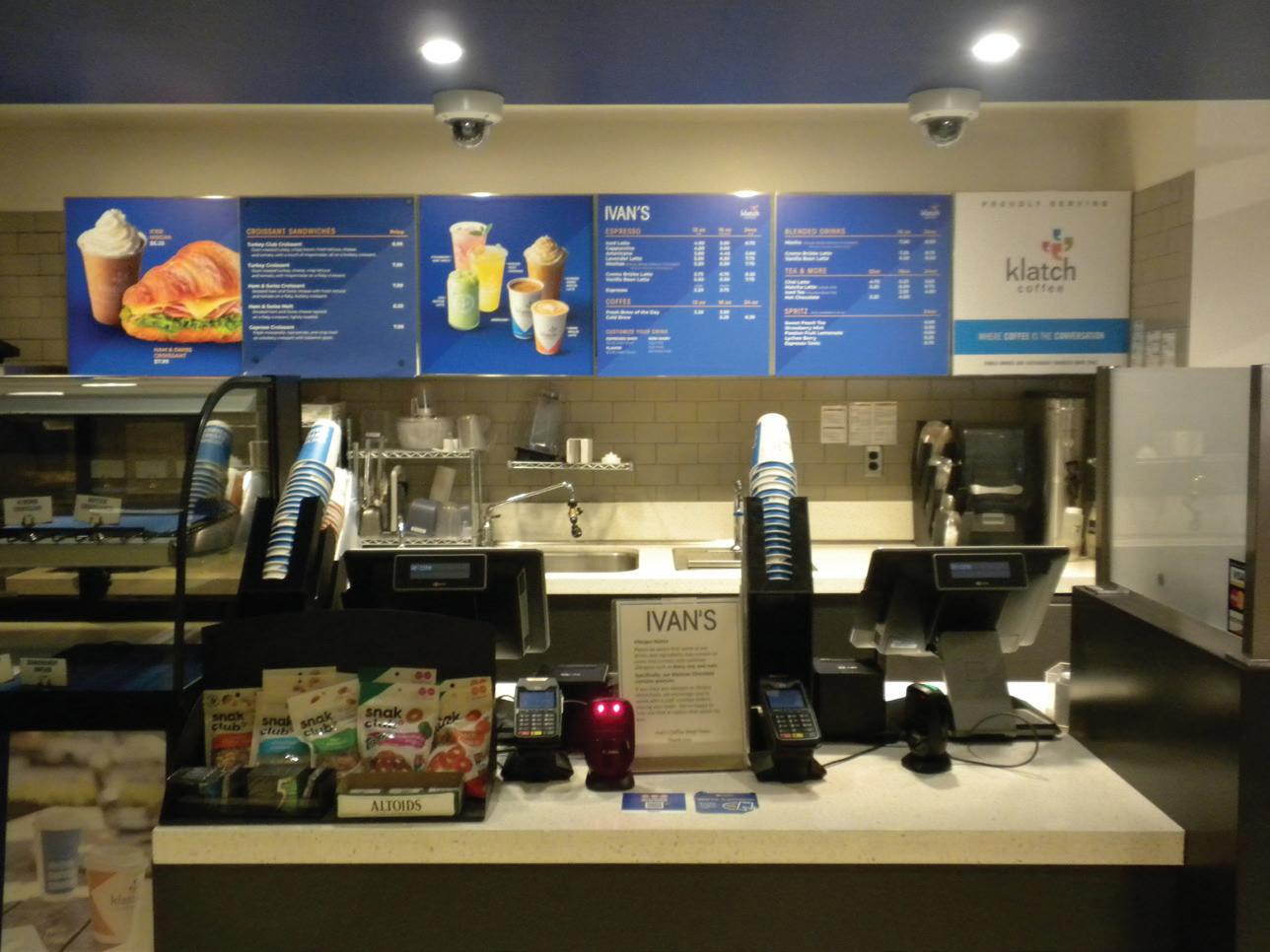
Ivan’s is located inside of Hinderaker Hall. Students can easily grab coffee, snacks or drinks before sitting and enjoying the fresh air, either with friends, solo or while completing assignments. The spot stands out because of its peaceful atmosphere and comfortable and relaxing environment. Surrounded by grass and shaded by large trees, it’s the perfect place to spend some time.
The combination of outdoor scenery and the convenience of the coffee shop makes this area a popular spot for many students. Whether students are stopping by for a quick break or spending time studying outdoors, the areas outside of Ivan’s offer a welcoming space for everybody. Stop by and have a quick drink in fresh air if it’s your cup of tea!

ACROSS
1. Robbie plays the first love interest in this movie about a man with the ability to time-travel
10. Small salamanders
15. Had trust in
16. “_ ____ Grows in Brooklyn”
17. Creating a book or script
18. Nary a soul
19. Soft & ___ (deodorant brand)
20. Nudge
21. Sounded like an owl
22. “_ ___ Around”
(Beach Boys hit)
24. Classic game consoles
26. Flow back
27. State in northeast India
29. YouTube content, for short
30. Reason for an R rating
31. Movie about a team-up of Belle Reve’s deadliest inmates
35. Old Ford model
38. Aptly named backing group for the Turners
39. Margot Robbie cam-
By H Staff




eoed in this Wes Anderson alien dramedy
41. Totals
42. Wrath
43. “No bid.”
47. ___-la-la
48. “Enough already!”
51. “¿Cómo ____ usted?”
52. Margot Robbie’s pinkest leading role
54. Florence’s river
56. Fa follower
57. Loosen, as laces
58. Wife of Marc Antony
60. Including on an email
61. Margot Robbie’s mystery film named for a Dutch city
62. Martial art with bamboo swords
63. Boat that might be hailed DOWN
1. National park in Maine
2. French market towns
3. Some navels
4. Granite State sch.
Sporty car roof
_____ firma
Bonehead

8. “Harvests of Joy” autobiographer
9. School subj.
10. Some iPods
11. African soccer legend Samuel
12. Transcribed
13. Holy Week service, for Catholics
14. Spots for planting
21. Baseball’s Matsui
23. Samples
25. Totes absurd
28. Naturalist John 30. Well-dressed, photogenic guy
32. Côte d’______
33. Egypt’s capital 34. “The X-Files” org.
San _____
By: Brianna Galaviz-Villagomez, Contributing Writer
Quick and nutritious with lots of veggies!
Instructions:
1. Grab a large bowl and add the tuna, drain the water from the corn if it is canned and add the corn, tomato, cucumber, onion and cilantro. Add the serrano pepper if you would like it spicy.
2. Mix well and add the mayonnaise. Cut the avocado in half, remove the pit, slice it vertically into many parts and add it as a garnish.

Prep Time: 15 minutes Servings: 4

Ingredients:
• 2 cans of tuna
• 1 cup of corn
• 1/3 cup of finely chopped cilantro
• 1 tablespoon of mayonnaise
• 1/2 cup of chopped cucumber
• 1/3 cup of chopped red onion
• 1/2 cup of tomato
• 1 avocado
• 1 finely chopped serrano pepper (optional)


By: Camila Rosales, Contributing Writer
1. When studying what tends to distract you?
A. Wanting everything to come out perfect
B. Phone notifications
C. Everything
2. How do you organize your notes?
A. Color coded and neatly organized
B. Not perfect but can find anything you need
C. Did not know you had to take notes
3. What is your reaction when there is a surprise quiz in class?
A. “I’m ready!!”
B. “I should be okay.”
C. “It is what it is, I’ve accepted my fate.”
If you got “A” the most, you most resemble an Overachiever. You are the type of student who has everything planned out. Your notes are neat, reminders are organized and your calendar is always up to date. While everyone panics at a deadline you stay calm. You started early and are on top of your work. When it comes to group projects you are usually the leader and make sure everything is done correctly and with a timely matter. You sometimes stress because you want to make sure everything is done perfectly and to the best of your ability. Although you might stress in the end, your hard work always pays off.
If you got “B” the most, you most resemble Balanced. You have a good balance with your school and personal life. You know when you should start studying but you also know when and how to relax. You don’t overthink assignments too much. You stay calm under pressure and can adapt pretty easily to situations. People enjoy working with you since you’re easy to get along with and know how to work well with others. You make sure things stay moving. Sometimes you might procrastinate but overall you know how to manage your school responsibilities well and do not let it completely take over your personal life.
If you got “C” the most, you most resemble Last minute legend. You work best under pressure, or that’s what you make yourself believe ... When people ask you if you’ve started an assignment you usually say no. You’re known for starting assignments last minute and somehow always finishing them right before the deadline. Your studying tactics are a bit chaotic but you are a very funny and creative person. In group assignments you bring energy and ideas to the group. But sometimes you can make your classmates stressed when you say “I’ll do it later.” A challenge you face is staying focused and avoiding distractions, but once you are able to lock in, you get your work done quickly.

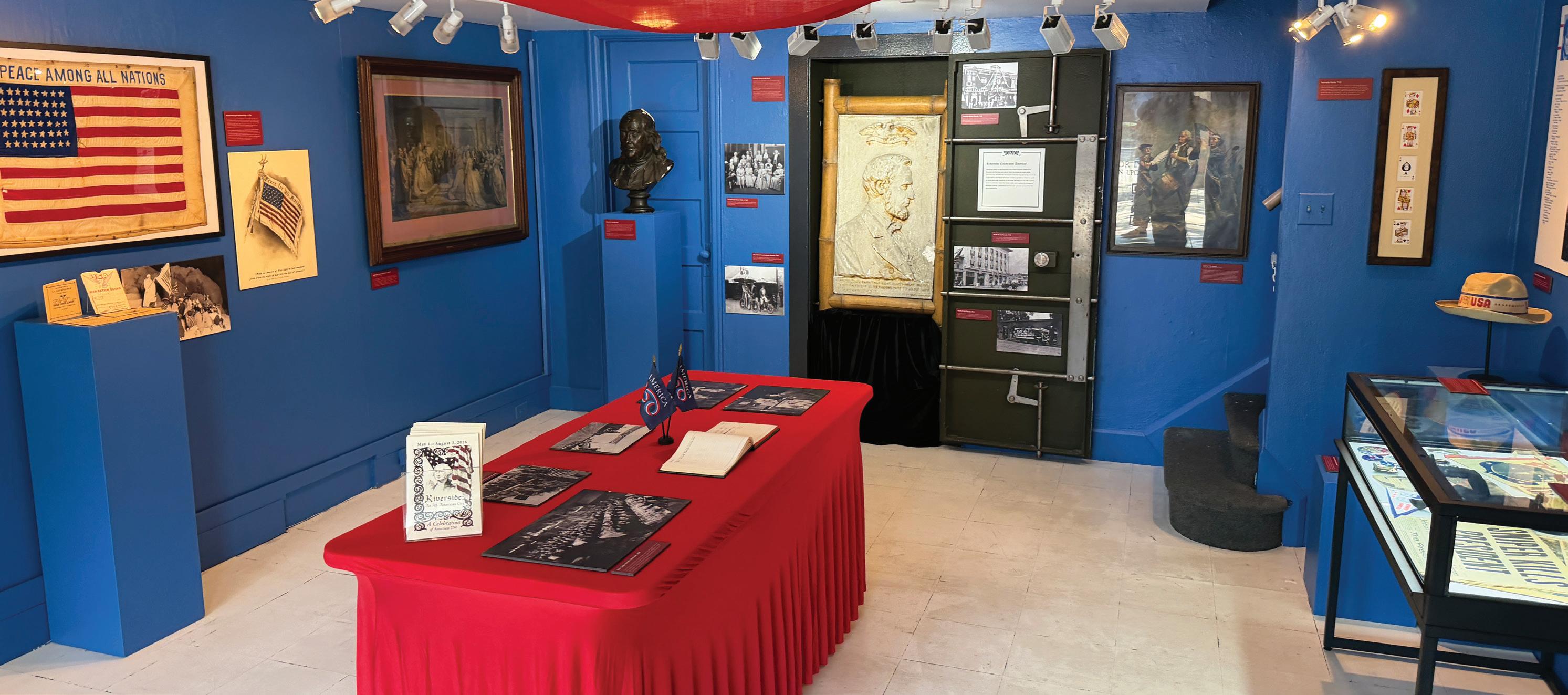
A new exhibit at the Mission Inn Museum is giving visitors a chance to reflect on Riverside’s place in American history ahead of the nation’s 250th anniversary celebration in 2026.
The exhibit, recently installed in the museum’s new downtown gallery space, explores how Riverside evolved from a small citrus colony into a city shaped by migration, industry, politics and culture. Through artifacts, historical photographs, Americana memorabilia and artwork, the collection connects local history to larger conversations about identity and what it means to be American.
Museum staff said the exhibit was intentionally designed to feel accessible to younger audiences and community members who may not be familiar with Riverside’s historical significance.
“We want people to come in and see that Riverside has always been part of a larger American history,” Arman Agahi, the Curator of History and Interpretation said during a recent tour of the gallery. “Not just nationally, but culturally.”
The exhibit arrives at cities across the country begin preparations for the United States semiquincentennial, commemorating 250 years since the signing of the Declaration of Independence. Riverside itself participated in the nation’s bicentennial celebration in 1976 after being designated as one of thousands of official bicentennial cities.
According to Agahi, that recognition reflected Riverside’s Historical influence during the late 19th and early 20th centuries, when the city became nationally known throughout the citrus industry and the prominence of the Mission Inn Hotel & Spa.
Agahi explained that Riverside experienced rapid growth after the introduction of the Washington navel orange by Eliza Tibbets in the 1870s. The citrus boom transformed Riverside into one of California’s wealthiest cities and
attracted visitors, investors and public figures from across the country.
By the early 1900s, the Mission Inn became a destination for politicians, celebrities and international guests. The description at the entrance of the exhibit described the inn as both a symbol of Riverside’s prosperity and a reflection of the city’s ambition to position itself on a national stage.
Part of the exhibit focuses on those high-profile visitors and River’s connection to presidential history. Displays include memorabilia tied to Theodore Roosevelt, William Howard Taft, Richard Nixon and Ronald Reagan.
Agahi shared stories about Taft visiting the inn and having a specially built chair made for him, while Roosevelt famously helped replant one of Riverside’s historic navel orange trees at the hotel. Nixon also maintained ties to Riverside through family connections and was married at the Mission Inn in 1940.
Other notable figures highlighted in the exhibit include Amelia Earhart, Booker T. Washington and Judy Garland, all of whom either visited or stayed at the inn during its peak years.
One of the exhibit’s most striking artifacts is a World War l era textile honoring soldiers and nurses, including women and people of color. Daniela Guzman, another curator at the exhibit said the piece has become one of the gallery’s most talked-about displays because of its representation and historical rarity. “When do you really see people of color and women being celebrated together in artifacts from that period?” Guzman asked.
Agahi connected the piece to the Arts and Crafts movement, which emphasized handmade craftsmanship and artistic individually during the early 20th century. The exhibit includes several works tied to the movement, reflecting Riverside’s cultural development during its years of economic growth.
Another centerpiece is a display of American memorabilia from the personal collection of Riverside City Councilmember Philip Falcone. Items include vintage campaign materials, presidential collectables and rare Kennedy family playing cards that were reportedly pulled from production following the assasination of John F. Kennedy.
Beyond the historical displays, museum staff emphasized the exhibit’s broader message about Riverside’s identity. Rather than presenting American history as a singular narrative, the exhibit highlights Riverside’s diversity and the many communities that shaped the city over time.
Both Agahi and Guzman referenced the experience of immigrant groups, indigenous communities and Japanese American families such as the Harada family as examples of Riverside’s complex and evolving history. “What makes Riverside American is its diversity,” Agahi explained. “Its always been a mixture of people, culture and experience.”
The exhibit also reflects the museum’s efforts to rebuild community visibility following its relocation late last year. Both curators acknowledged that many residents still do not realize the museum has reopened in a new space separate from the hotel itself.
Guzman said she hopes students from UCR and surrounding colleges will continue engaging with the institution through internships, volunteer work and archival research opportunities.
The exhibit ultimately succeeds because it avoids reducing patriotism to nostalgia alone. Instead, it presents Riverside as a city constantly redefining itself through growth, struggle and cultural exchange. By blending presidential history with local stories, artwork and overlooked perspectives, the collection feels grounded in community rather than spectacle.
IAN PALMA, JIHOON KWON Radar Editor, Staff Writer
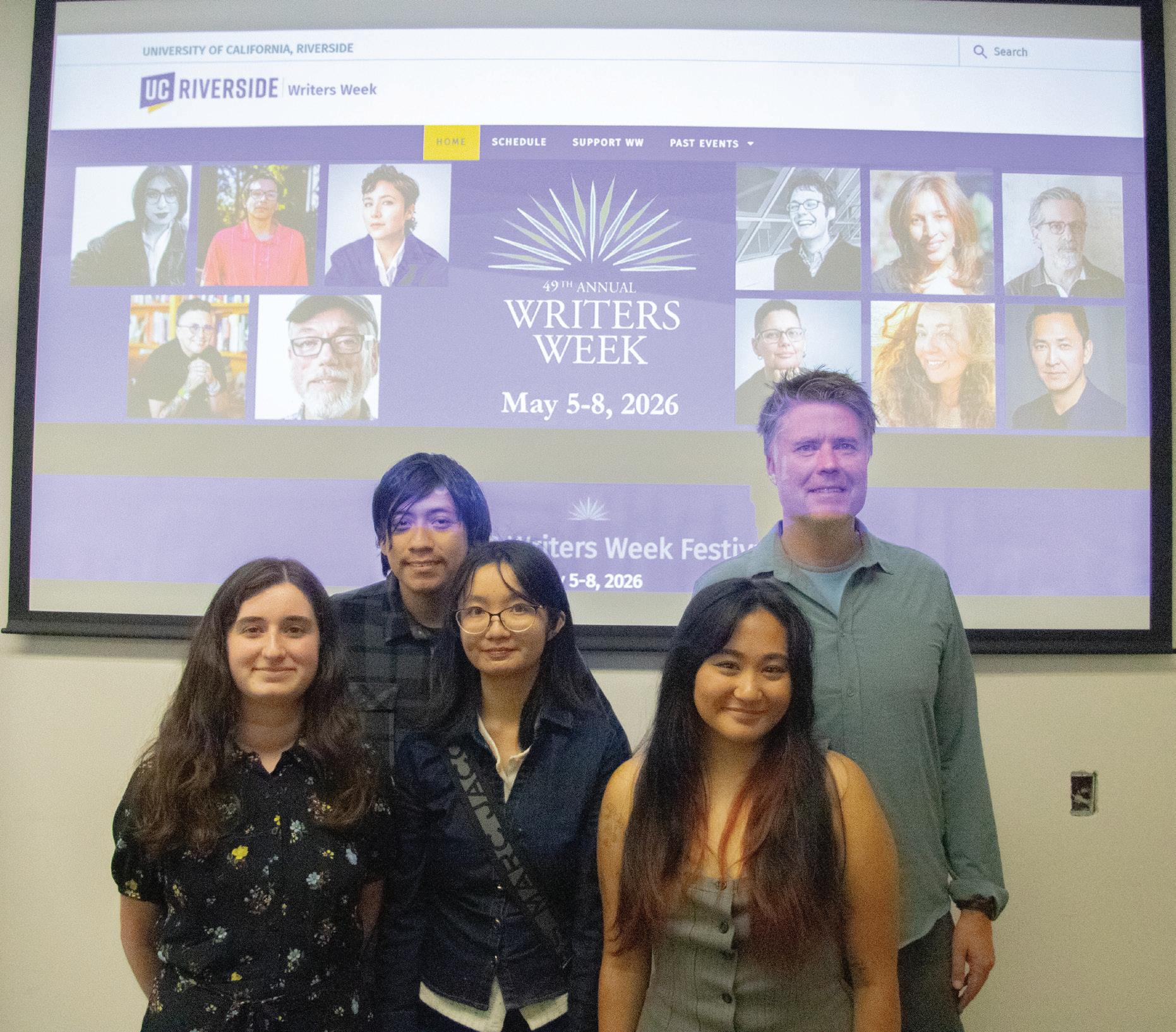
From May 5 to 8, 2026, the University of California Riverside’s (UCR) department of creative writing hosted its 49th UCR Writers Week Festival, California’s longest running free literary festival. Hosted by the Department of Creative Writing, the event saw dominating literary figures share works, experiences and advice all the while displaying some of the works of some of the students at UCR.
The event began at 11 p.m. with Caro De Robertis’s reading of their 2019 novel “Cantoras.” The novel is set during the dictatorship in Uruguay during the 1970s and captures the experiences of real queer women who turn to each other for “community, love, sex, drama and survival.”
De Robertis encountered these women in her 20s after having been disowned by their parents for their gender identity.
Having been told that they “couldn’t be both gay and Uruguayan,” De Robertis found deep personal connection with the stories of these women who would go to the beach with no running water or electricity, but also no surveillance from the regime. Upon extensive research for another book they had been working on, De Robertis realized that there was zero documentation of what it was like to be LGBTQ+ under the dictatorship despite her having heard the stories of the women years ago.
began with reading their poem “Les Maestres” published in “Jota: a Queer Latina and Latinx Anthology.” This strikingly personal film that documents Flores’ journey stands out particularly in its repeated use of names of people and how they’ve affected and influenced Flores as a writer with marginalized background.
Flores then read “Chiclets” from their first book “Empanada,” a piece that uses the act of chewing gum as a euphemism for lesbian desires. In “Sinvergüenza on the Banks of
Writing From a Skateboarder’s Lens.”
Before getting into his latest work, Vadi read an excerpt from his debut work titled “Inter State: Essays from California.” Vadi then went on to read a few passages from “Chipped,” which prominently deals with his upbringing with skateboarding as well as the convergence that skateboarding has with culture, art and identity. He articulates specific details from board customization all the way to the rites of passages skateboarders go through, such as chipping their boards from failed tricks and bruising their bodies.
De Robertis then proceeded to read from their most recent novel, “The Palace of Eros.” This is the first book they’ve written that does not take place in Latin America, but De Robertis aimed to bring a cultural lens as a Latinx writer regardless. They also explore themes of queerness which they recognize as something timeless and universal, whether it is dictatorship in Uruguay during the 1970s or Ancient Greece, yet always have faced systematic erasure.
Lastly, she read excerpts from her first creative nonfiction book “So Many Stars: An Oral History of Trans, Nonbinary, Genderqueer, and Two-Spirit People of Color” in which she captures the lived experiences of 20 LGBTQ+ narrators. Similar to previous two fictional works that De Robertis read, the material of this work is grand in scale as it explores generations of stories, blended with themes that are both personal and socially imperative.
Anel Flores took the floor at 1 p.m. Flores
the Water” published in “Entre Guadalupe y Malinche” which they read next, Flores shows incredible attentiveness towards details in every moment and names of places that seem to carry sentimental value to them and through this Flores lets meaning arise naturally as if the readers are given a direct fragmentation of her own memory.
A.M. Sosa closed off the day with readings of excerpts from his debut novel “And I’ll Take Out Your Eyes.” The book carried an undeniable atmospheric intensity and harshness which Sosa amplified through use of abrasive language and aggressive, occasionally grotesque imagery. Throughout the novel, Sosa aimed to explore different themes including masculinity and agency, especially for individuals from impoverished backgrounds.
Wednesday
José Vadi took the panel at 1 p.m., in which he promoted his most recent book “Chipped:
His essay “Sick Boy” documents the trials and tribulations of skateboarding while making mention and reverence to former Thrasher Magazine Editor-inChief Jake Phelps. His final excerpt, titled “Battle of the Grand Olympic Auditorium” details the substantial history of the Grand Olympic Auditorium as well as Vadi’s experience watching
Rage Against the Machine play their final show at the venue. He then went on to take questions from the audience regarding the importance of journaling as well as how the prominence of social media changed how books are promoted and published.
Poet and Professor Prageeta Sharma followed at 3 p.m., introducing her latest poetry collection titled “Onement Won.” Using clever wordplay, vivid imagery and allusions to other works, Sharma reexamines her relationships of all kinds in the advent of grief such as those with other people as well as religion. Through poems such as “Metaphorically Charged” and “A Memory of its Ceasing,” Sharma confronts loss, race, colonialism, conflict and the intersection between religion and hierarchy. She also shared “Vir Heroicus Sublimis,” an ode to her late husband and his penchant for sleeping in their car.
Thursday
At 1 p.m., writer and lecturer at UCR Emily Doyle read “Thank You No Thank You,” which reflects her own experience as a lawyer prior to becoming a writer and the anxiety she experienced to the point of physical symptoms of illness. Despite her apparent perceptivity for ironic humor, Doyle admitted that this is not something she intends but rather is something that comes naturally from pointing out the absurdity of life.
A screening of “Mija” took place at 5 p.m. as an affiliated event. This documentary film by Isabel Castro follows the journey of music manager Doris Muñoz and emerging singer Jacks Haupt who carry the pressure as well as guilt that comes from being American-born in mixed-status immigrant families while trying to achieve their dreams.
Friday
Ilya Kaminsky, a critically acclaimed Odessan poet and one of the British Broadcasting Company’s (BBC) “12 artists who changed the world,” kicked off Friday’s session with a reading from his poetry collection “The Deaf Republic.” Kaminsky fervently expounded through various poems such as “Gunshot” and “That Map of Bone and Opened Valves,” utilizing intense figurative language to emphasize the brutality of war as well as life under occupation.
Critiques of the capitalist and politically indifferent nature exhibited by the United States were also displayed in poems like “In a Time of Peace” and “We Lived Happily During the War.” In some of his poems, Kaminsky offers moments of respite in which he depicts life with his wife and child. He expanded within the Q&A topics such as the intersection between theater and
poetry, his upbringing with literary art and his influences, with Dylan Thomas being a notable one.
D.A. Powell, whose list of accomplishments include winning the 2012 National Book Critics Circle Award for poetry, followed up after with readings from his collection of poems. “Chronic,” one of his prominent poems which also happens to be the titular name for his 2009 poetry book, offers visually striking nature motifs akin to works by Robert Frost along with clever wordplay and deep philosophical questions.
Powell dove deeper when it came to the queer experience, the struggles it entails, and overall themes of love through poems such as “Landscape With Sections of Aqueduct” and “Boonies.” At the end of the Q&A session, Powell encouraged the audience to let go of the fear of sharing to others. He proclaimed, “Don’t let other people’s opinions matter so much that it kills your joy.”
Viet Thanh Nguyen, the Pulitzer Prize-winning author of the novel “The Sympathizer” and arguably the event’s most anticipated writer who also happens to be a former UCR attendee, made an appearance at 3 p.m. in which he read from his memoir “A Man of Two Faces: A Memoir, A History, A Memorial.” Nguyen gave insight into his life as a Vietnamese refugee, in particular his memory of being separated from his family for a while.
Before reading, Nguyen called out the historical, cyclical and detrimental nature in which immigrants classify themselves as “the good ones” all the while putting down other immigrants of different races and creeds. The passage that Nguyen reads from centers around his upbringing in an area that’s hybridized between American, Chinese and Vietnamese cultures.
The second passage that Nguyen reads focuses on his relationship with his mother as well as her life story. After the reading, Nguyen gave asides to the audience ranging from the time villagers in Vietnam broke the news to his parents about him winning the Pulitzer Prize to his gripe with the one-sidedness of Vietnam War movies, a prominent theme found within “The Sympathizer.” Before opening up the Q&A section, Nguyen gave an anecdote about him reuniting with his long-lost sister. Nguyen answered questions surrounding the adaptation of his work into an HBO Max miniseries. Nguyen further addresses the issues that writing revealing memoirs could have. He states, “Betrayal is inherent in writing an honest story about one’s family. [...] It means that we, as writers and storytellers, have to think about the complexities, the ethical responsibilities and the artistic demands of what it means to write as a form of betrayal.” Right before ending the session, he mentioned how attacks on diversity, equality and inclusion and books prove that literature still matters and gave a humorous account about how his son created a story titled “Chicken of the Sea.”
The event ended with a multi-genre reading by UCR MFA students with excerpts of works ranging from short plays to memoirs. An affiliated literary reading event took place at the Riverside Heritage House. In association with the Save Our Chinatown Committee, Museum of Riverside, Kundiman and Inlandia Institute, the event showcased writers Daniel Kuo, Chris Santiago and Ching-In Chen sharing their works dealing with Asian identity. ■ H
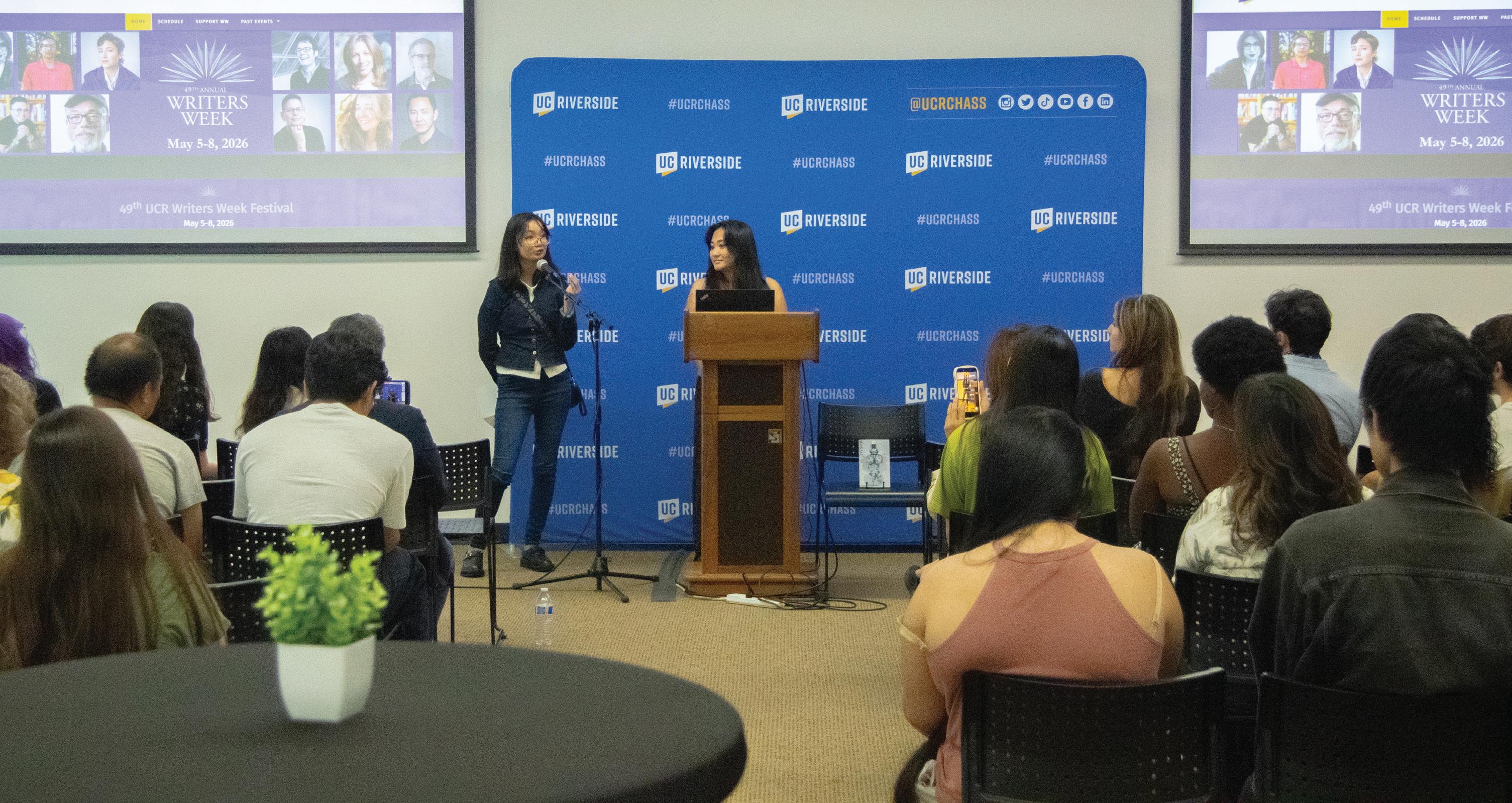
OVI MATHIVANAN
Assistant Opinions Editor
Whether for its unmatchable 2006 nostalgia or returning cast of star-studded comfort actors, fans of the original “Devil Wears Prada” anxiously awaited the release of “Devil Wears Prada 2” on May 1, 2026. The sequel certainly lives up to its name, both in fashion choice and plot content, but it falls short.
Released roughly 20 years after the first installment, the timeline of the second film concurrently mirrors that of the actual world, transitioning from the scarce, printfirst publishing world of the mid-2000s to an equally — if not more — cutthroat digital publishing landscape driven by algorithms and speed rather than quality and true identity.
The film finds the fictional “Runway” magazine’s Editor-in-Chief Miranda Priestly (Meryl Streep) at odds with her once-devoted assistant, Emily Charlton (Emily Blunt). Charlton is now a top-level Dior executive seeking to buy “Runway,” whereas Andrea “Andy” Sachs (Anne Hathaway) returns to “Runway” as a more confident version of herself.
One notable headache in the film’s structure is how it portrays the characters’ relationships. For even in 2026, movies are not yet comfortable with the idea of independent, single women. That’s not to say relationships can never be part of the end goal, but there is little romantic room for development in the film as it primarily focuses on displaying the ways in which women in power hold and wield that power, as well as how top executives survive in an unforgiving publishing society.
As accomplished as Priestly, Sachs and Charlton are, they are accompanied by love interests that play minimal, if even noticeable, roles. In the first film, Sachs’ boyfriend was uniquely framed as a detriment to her tall ambitions and workaholic nature, whereas her current boyfriend is far from the opposite, and rather completely flat.
In the first film, we also saw a rare moment of emotional vulnerability in Priestly during her divorce with her husband. The second film displays at her side a seemingly more patient and present husband, Stuart (Sir Kenneth Branagh), than the one she had in the first film. However, his role as Priestly’s husband primarily serves to be a doting reminder of her life outside her workhorse tendencies and not much more. That said, it’s great to see Priestly’s relationship is healthier and more stable than that of hers in the previous film.
As for Charlton, behind all of her struggles and villainization is her billionaire boyfriend Benji (Justin Theroux), who becomes more of a pawn in her endeavors to overthrow “Runway” than a meaningful life partner. While the film seems to sideline these characters’ romantic

relationships for a more empowering corporate and ambitious approach, the end result is underdeveloped character writing. Viewers are briefly introduced to several romantic partners yet provided little explanation on their contributions to the characters’ lives.
For a movie that attempts to be a commentary of the evolving yet enduringly soul-sucking journalism industry, the movie itself plays into the real-life soul-sucking tendency of the film industry, making viewers question at times if the two-decade wait for a “Devil Wears Prada” sequel was merely a wait for a cash grab film.
Even if it is a cash grab, the film is certainly a cash grab with something to say. The creators definitely did their research in delivering the harsh truths of the increasingly unforgiving and ruthless publishing industry, especially that of the fashion journalism industry.
The film doesn’t just point at the faults of the industry, it boldly delves straight into it, and it does so digestibly by treading on nostalgia and familiar faces in its cast to get viewers to take a seat and listen.
As such, the film introduces a thoughtful look into the digitalization of media and the consequences of companies having to rapidly adapt to such a media landscape, especially amid growing concerns about artificial intelligence usage at the sacrifice of creative integrity and unique magazine layouts.
Traditional media has declined, and the manner in which content is digitally produced and consumed is colder and distant. This rapid death of print media also sees conflicts in Priestly’s esteem and confidence, finding herself feeling obsolete in a world that is pushing out older things for newer, shiny ones.
Fighting to push her creative choices through an uncreative digital media world, Priestly demonstrates an uncharacteristic yet
moderate fragility. Viewers can see that even the icy head of “Runway” is not protected from the covertly lethal erosion of relevance in a digital-first world that waits for no one, not even Priestly. The publishing world shown in the original “Devil Wears Prada” now fails to follow its own arbitrary rules.
Verdict: Like many sequels, “Devil Wears Prada 2” simultaneously delivers too much and too little in comparison to its parent film, but it’s a decent watch for anyone craving the nostalgia of the first installment and missing their favorite comfort characters.
GIANNA ALMARIA Staff Writer
On the first Monday of May, The Metropolitan Museum of Art’s Costume Institute hosts its annual Met Gala, opening up the spring season’s fashion exhibit. With a guest list filled with some of the top celebrities, athletes and socialites, this event has gained a cult following of fashion enthusiasts and pop culture fans alike.
This year’s exhibit, titled Costume Art, is interested in fashion as a mode of artistic expression. The Met Museum announced that the exhibit would be organized through body types, acknowledging traditionally celebrated body aesthetics as well as those that are often ignored by the media, such as the pregnant and aging bodies.
This exhibit seeks to evoke equality amongst all physiques and find unity in shared physical experiences. Costume Art will be available to the public from May 10 to Jan. 10, 2027.
The 2026 Met Gala, hosted on May 4, featured the dress code of “Fashion is Art” to honor this year’s display.
With such a vague theme, there were a number of different interpretations. One of the styling trends among the Gala were direct references to famous historical art pieces, where looks were derived from portrait subjects. Hunter Schafer’s Prada outfit, inspired by the “Mäda Primavesi” by Gustav Klimt, transformed Schafer into the painted girl. Madonna brought a performance art piece onto the carpet with Saint Laurent creative director Anthony Vaccarello. Referencing “The Temptation of St. Anthony,” by Leonora Carrington, Madonna was accompanied by seven models holding her gown to bring the allegorical painting to life.
— remember what made you human.” SZA’s Bode gown was made from fabrics straight off of eBay. Taking inspiration from SZA’s love of nature, it also reinforces how easily beautiful creations can emerge from sustainable methods.
Others fashioned themselves after the Costume Art exhibit’s anatomical focus. Chase Infiniti’s Thom Browne gown and Jeremy Pope’s Vivienne Westwood jacket utilized beadings to
Chaney-Watson, who wore an illustrated jacquard suit straight off KidSuper’s Fall 2026 “Ready to Wear” collection. Chaney-Watson was also sporting a fencing helmet and sword, both painted to match the suit. Bringing in the fencing gear was the perfect homage to ChaneyWatson’s profession, while symbolizing the artistry of his sport.
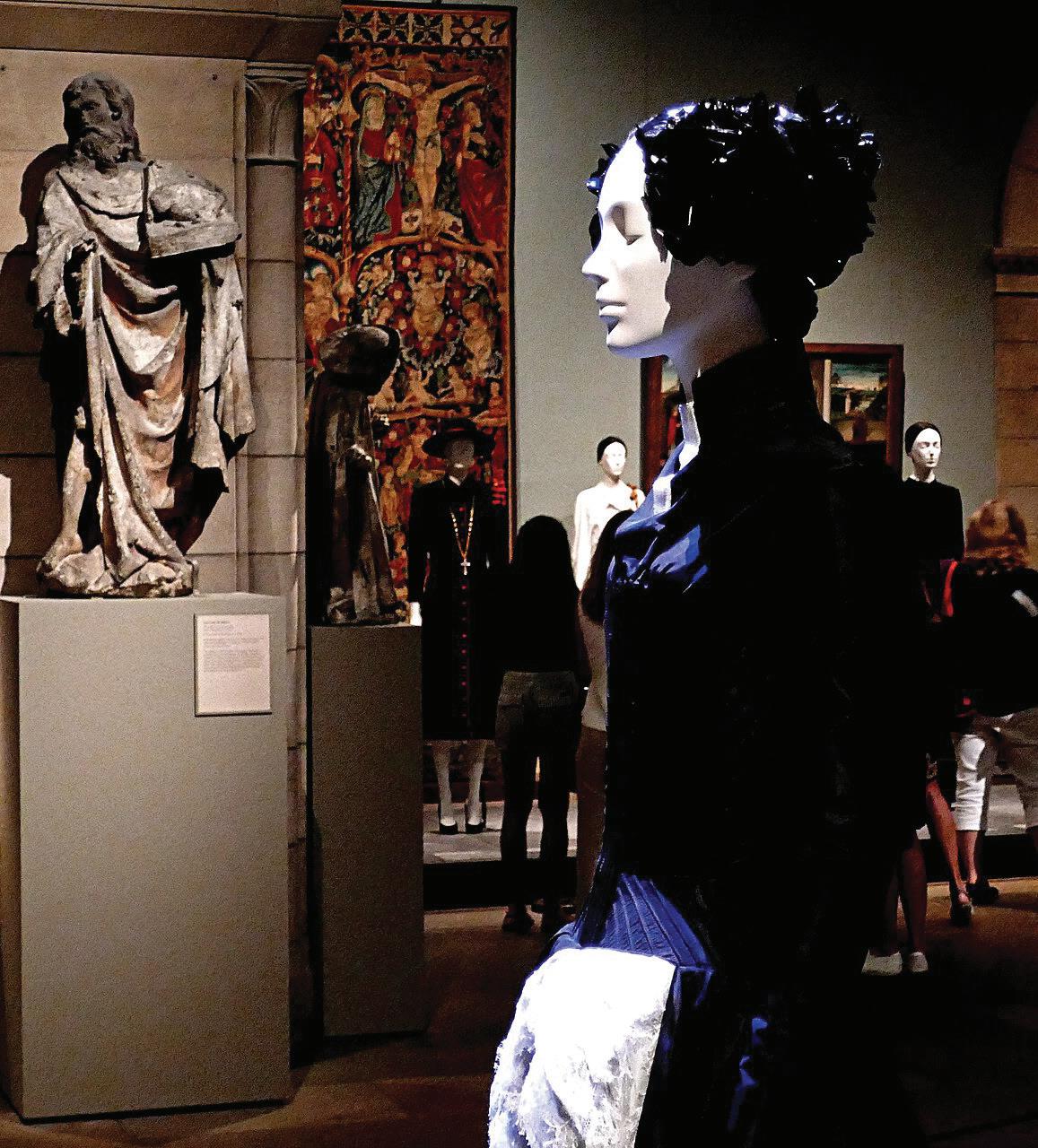
sculpt a bared human body on top of their clothes. Meanwhile, Beyoncé’s styling explores beyond the skin with her glittering dress, designed by Olivier Rousteing, that presents a diamond skeleton.
Some ensembles showcased completely original designs, illuminating the imaginative talents of their styling teams and designers. Janelle Monae donned a custom Christian Siriano look that is better described as a wearable art installation rather than a gown. Through a combination of live plants and functional robotic parts, the look is a representation of the contradictory subjects of nature and futurism.
She quotes on her Instagram, “And as Cindi (Monae’s alter-ego) whispered from the future
Emma Chamberlain’s Mugler look was perhaps the most talked-about look of the night. Inspired by works of Vincent Van Gogh and Edvard Munch, Chamberlain’s dress emulates the distinguishable paint strokes and vibrant color palette of the Impressionist style. The train of her dress splays out on the ground like a fresh stroke on a canvas, and her frayed sleeves drip to the ground like wet paint. Designed by Miguel Castro Freitas and painted by Anna Deller-Yee, the dress perfectly complements the Gala’s carpet as it becomes an extension of Chamberlain’s look. Undoubtedly, Chamberlain’s styling team aced the dress code to a T.
On the other hand, a more underrated appearance was that of Olympian fencer Miles
Every year, spectators expect the most haute couture, avant garde appearances on the Met Gala. Many felt that the majority of the guest list played their appearances too safe, especially when comparing this year to previous Galas, like 2018’s Heavenly Bodies: Fashion and the Catholic Imagination and 2019’s Camp: Notes on Fashion.
For a theme that encourages artistic expression, there seemed to be more blank canvases than complete works of art. Most of the unmentioned attendees came in monotone outfits with conventional silhouettes. The most anticipated fashion event of the year felt overwhelmingly dull for the level of artistry that was expected.
Fashion aside, the Met Gala is ultimately a fundraising event for the hosting department that gained public eyes from its visual extravagance. The Costume Institute is the only part of the Metropolitan Museum that is independent of external funding. The event was once again chaired by Anna Wintour, alongside Beyoncé, Venus Williams and Nicole Kidman.
Jeff Bezos and his wife, Lauren Sánchez Bezos, were named honorary chair members for their hefty donation, allegedly contributing over $10 million. The Bezos sponsorship is supposedly why some highly-anticipated attendees were absent from the gala, including Olivia Rodrigo, Bella Hadid and Taraji P. Henson. Additionally, the sponsorship led to protests outside of the gala, criticizing the Amazon billionaire’s unethical business practices.
The public backlash surrounding the ins and outs of the 2026 Met Gala are beginning signs of the disillusionment of the once alluring event. Until next year, it is unknown whether the Met Gala can regain its reputation as a fashion spectacle or if its loss in pageantry will continue to fizzle out.
‘Después de ti’ is KAROL G’s first taste of a melancholy song
ABIGAIL
ORTIZ Contributing Writer
After making history as the first Latina headliner at Coachella, Carolina Navarro, better known as her stage name, KAROL G performed a melancholic ballad along with lead vocalist and guitarist of the band Cigarettes After Sex, Greg Gonzalez.
“Después de ti” is unlike anything KAROL has put out as of recently. KAROL herself admitted after writing the song that both she and her team decided that this song was not fit for her sound which is why it created such a standout moment during her Coachella set. KAROL usually performs upbeat and joyous dance music that can be seen on her albums “Mañana será Bonito” and “Tropicoqutea.”
KAROL has released emotional songs before such as “Oceans” which is a piano ballad explaining a beautiful and uplifting love between two people that many fans also enjoy. Both weekend one and were able to hear the live rendition of the song and the introduction in which KAROL explains what she had in mind while writing the song.
On the other hand, Greg Gonzalez is no stranger to sad ballads. Cigarettes after Sex are very well known for their moody and melancholic music that invoke sad emotions that can be heard on their albums such as their self-titled “Cigarettes After Sex,” “Cry”
The song that debuted at Coachella was finally released after many fans fell in love with the grief-filled lyrics.
and their newest album “X’s.” The band is famous for their sad and emotional writing about unrequited love and are synonymous with black and white filming, dark clothing and sad but vulnerable lyrics.
KAROL G and Gonzalez leaned their backs against each other while debuting their song onstage with a pond-like scenery underneath them. The song starts off with Gonzalez’s usual sad and moody guitar along with KAROL’s vocals on display which differs from her usual reggaeton sound. The lyrics focus on telling a story of losing a loved one. Whether it’s a breakup, death or separation, many fans will relate to the unusually sad lyrics.
Lyrics such as “Después de ti se me acabó la vida” which translates to “after you my life ended” and “todo sin ti esta mal” which translates to “everything without you is wrong” makes the song relatable to many who have experienced the sudden and sad loss of someone.
Many fans speculate that the song was written because of her recent separation from her long term boyfriend Feid, who is also a reggaeton artist. Their romance reportedly ended late last year and many parasocial fans were left heartbroken due to their relationship
which was very public.
After her Coachella set, KAROL G announced her Tropicoqueta tour which will take place this summer. Many fans anticipate seeing “Después de ti” perform live on tour.
KAROL’s music versatility proves how great of an artist she is especially in traditionally male-dominated genres, such as reggaeton.

ANTHONY ASCENCIO-CARVAJAL Staff Writer
Two of the greatest producers alive, this collaboration is a monumental event for every true hip hop fan out there. On May 4, 2026, DJ Premier and The Alchemist dropped “For The Gig.” In late 2025, the two announced their “He’s The Preemo, I’m The Chemist” European Tour where a multitude of fans had the opportunity to enjoy witnessing timeless beats played from the hand of its innovators. The track “For The Gig,” was first shown during their tour after being inspired by the energy of the fans at the venues they came across.
Both with a history of absolutely bringing the studio to a big commotion, The Alchemist and DJ Premier used their crafty handiwork on the beats. The Alchemist laid the verse after DJ Premier wrote the chorus, using lines that echoed the spirit of the Emcee on stage. “Can you feel it?...one time for your… mind.” The music video on YouTube has the crowd engaged, with them repeating “yeah” after each question in the hook DJ Premier says.
After DJ Premier’s catchy lines, the beat switches for The Alchemist to show off
Hip-hop fans win again.
his pen game that’s still on point. “They’re tramplin’, king of the beats and samplin’, on steel wheels, heavy machinery I’m handlin.” He makes plenty of hip-hop references disc jockeys and breakdancers would appreciate.
The blending of their styles brings in history from different eras. DJ Premier and his New York sound that encompasses hiphop in the East. The Alchemist originating from Los Angeles, still has familiarity with the New York scene from his time producing with other Queens legends such as Mobb Deep.
Their influence on the sound of hiphop has echoed throughout the last couple decades, from the early 90s for fans who grew up listening to Gang Starr. Even now in the 2020s to those who felt Freddie Gibbs’s “Alfredo” was snubbed for Best Rap Album at the Grammys. The Alchemist and DJ Premier are undoubtedly revered artists in their field.
Not only is this incredible to hear the collaborative productions between hip-hop giants such as these two, but hearing them fill the vocals was amazing to hear. Their consistency is admirable, still in their primes and able to continue making new gems for fans around the world to enjoy. Overall, this is a clean track that represents hip-hop at its finest.
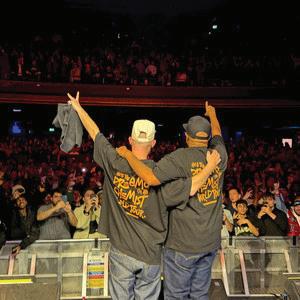

IYANNA WALLACE Staff Writer
Three weeks into the NBA playoffs, the Oklahoma City (OKC) Thunder have yet to lose a game. With the team’s star power, all-around depth and versatility, they might not lose a game these entire playoffs en route to a second straight NBA championship.
In round one, the Thunder swept the Phoenix Suns, and they are on track to do the same to the Los Angeles Lakers in western conference semifinals.
OKC currently leads the Lakers 3-0 with 18-point game victories in the first two games, and a 23-point victory in game three.
Despite commendable performances from LeBron James and Austin Reaves, the Lakers have not been able to make up for the absence of guard Luka Doncic. During game two, Reaves had 31 points and James had 23 points, but they lacked Doncic’s irreplaceable offensive skillset and were defeated for the second time in a row. The same thing happened during game three. The Lakers unraveled in the second half and OKC’s depth overpowered the Lakers and blew the game open.
The Thunder are currently riding a seven-game
winning streak in the playoffs, and it seems as if nothing can get in their way of advancing onto the next round. Their absolutely stacked roster of young talent with adaptability sets them apart from all the other teams in the league.
Unlike many playoff teams that rely on one or two star players, the Thunder have multiple players that can step up offensively and defensively. This depth is important when it comes to playing in a playoff series because it adds versatility.

Thunder guard Shai Gilgeous-Alexander (SGA) is emerging as one of the best scorers the league has ever seen. Recently awarded NBA Clutch Player of the Year, SGA’s offensive abilities and leadership have brought OKC to championship favorites.
The scariest part for the rest of the league is that he’s had mediocre performance thus far versus the Lakers yet the Thunder are dominating. Chet Holmgren, Lu Dort, Cason Wallace and Ajay Mitchell have proven themselves to be key players that have a big impact for winning against contending teams.
So far, OKC’s playoff performance has been packed with fast-paced and highintensity plays that have been overwhelming to opposing teams to say the least. Holmgren’s efficiency in the paint creates more chances for other teammates such as Dort and Mitchell to score, strengthening OKC’s defense.
Once the Thunder advance to the Western Conference Finals, they will face off against either the Minnesota Timberwolves or San Antonio Spurs. Neither team is capable of matching or combating OKC’s relentless proficiency on both ends of the court. Even though the Spurs led the Thunder in the regular season series, OKC has shown that they are playing more strategically and that’s something the Spurs have not seen from them. OKC has championship experience while San Antonio is young and inexperienced.
It is clear the Oklahoma City Thunder are more than ready to win the championship for the second year in a row. They will be the first team in nearly a decade to become back-to–back champions since the Golden State Warriors in 2017-18.
Author’s note: this article was written following Game 3 between the Lakers and Thunder.

On Friday, May 8, the University of California, Riverside (UCR) baseball team faced the UC Irvine (UCI) Anteaters for the final home series of the season. With the end of the season quickly approaching, UCR’s playoff hopes were fading and they desperately needed a win to keep their season alive.
The Anteaters set the tone for the game early on in the top of the first inning. With an early single from Daniel Polasek, and a double from Lucas Schermer to bring in the first run of the game. A wild pitch from UCR’s Joshua Torres brought Schermer home and gave Irvine an early 2-0 advantage to close out the inning.
The Highlanders attempted to respond in the bottom half of the inning, but struggled to generate momentum offensively against the Anteater’s pitching staff. The UCI defense was able to remain composed early on, forcing quick outs and preventing UCR from capitalizing on their opportunities at the plate.
UCI continued to build momentum in the
following innings. The Anteaters consistently found ways to get runners on base, applying pressure through consistent at-bats and successful baserunning. Their offensive rhythm proved difficult for the Highlanders to neutralize, as the Anteaters would extend their lead inning by inning.
As the game continued, the score would continue to slip further away from UCR in the middle innings after UCI extended its lead with another offensive surge. Polasek continued his strong performance at the plate, further extending the Anteater lead as they widened the gap on the scoreboard.
Despite the early struggles, the Highlanders continued to fight offensively. After a basesclearing triple from Robert Pitts in the bottom of the fourth inning, Manoah Chapman and Isaiah Hernandez brought in the first two runs for UCR and got the Highlanders on the board. With a throwing error from UCI to bring Pitts home, UCR brought down the deficit and tied up the game at 3-3 to close out the inning.
UCI eventually broke the game open in the
later innings behind a series of extra base hits and consistent offensive production. UCI’s ability to capitalize on runners in scoring position made it difficult for UCR to recover as the score eventually rose to 17-5.
Although the final score favored the Anteaters, the Highlanders continued to battle through all nine innings in front of the home crowd during one of their final appearances at Riverside Sports Complex this season. The matchup served as another reminder of the competitiveness of Big West conference play as the regular season nears its conclusion.
For UCR, the loss adds pressure heading into the final stretch of conference competition. The Highlanders would bounce back with a 5-3 win on Sunday, but still remain firmly out of contention for a spot at the Big West Championships. UCR will conclude their season during this weekend’s road series against UC Santa Barbara.