Spring Splash 2026 is nothing short of divine

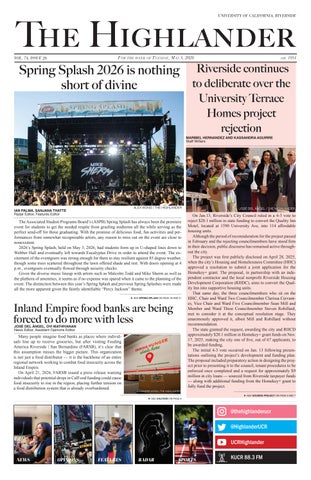
The Associated Student Programs Board’s (ASPB) Spring Splash has always been the premiere event for students to get the needed respite from grueling midterms all the while serving as the perfect send-off for those graduating. With the promise of delicious food, fun activities and performances from somewhat recognizable artists, any reason to miss out on the event are close to nonexistent.
2026’s Spring Splash, held on May 3, 2026, had students form up in U-shaped lines down to Webber Hall and eventually left towards Eucalyptus Drive in order to attend the event. The excitement of the eventgoers was strong enough for them to stay resilient against 85 degree weather, though some trees scattered throughout the lawn offered shade and rest. With doors opening at 4 p.m., eventgoers eventually flowed through security checks.
Given the diverse music lineup with artists such as Malcolm Todd and Mike Sherm as well as the plethora of amenities, it seems as if no expense was spared when it came to the planning of the event. The distinction between this year’s Spring Splash and previous Spring Splashes were made all the more apparent given the faintly identifiable “Percy Jackson” theme.
Inland Empire food banks are being forced to do more with less
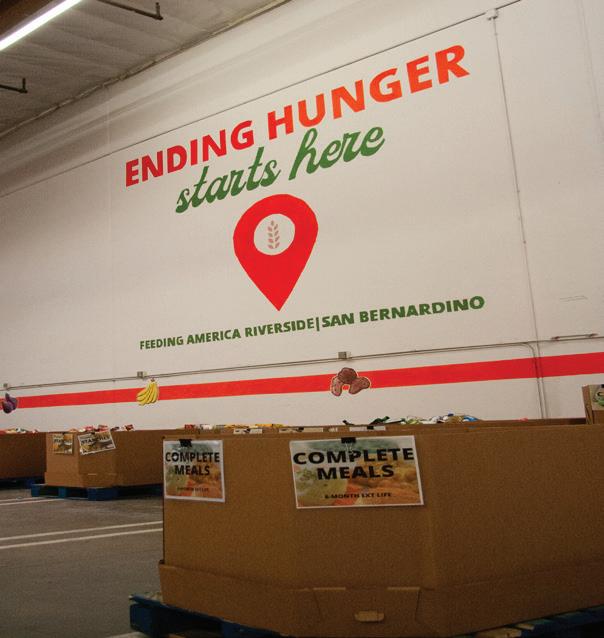
Many people imagine food banks as places where individuals line up to receive groceries, but after visiting Feeding America Riverside | San Bernardino (FARSB), it’s clear that this assumption misses the bigger picture. This organization is not just a food distributor — it is the backbone of an entire regional network working to combat food insecurity across the Inland Empire.
On April 21, 2026, FARSB issued a press release warning individuals that potential drops in CalFood funding could cause food insecurity to rise in the region, placing further tension on a food distribution system that is already overburdened.


Riverside continues to deliberate over the University Terrace Homes project rejection
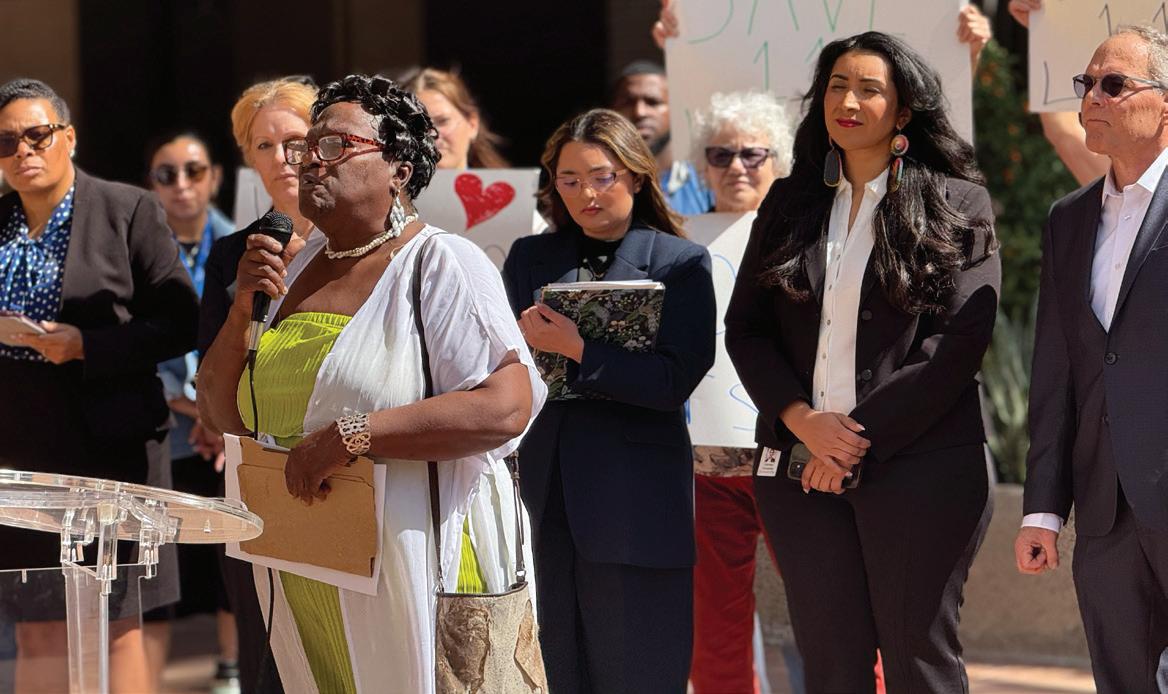
On Jan.13, Riverside’s City Council ruled in a 4-3 vote to reject $20.1 million in state funding to convert the Quality Inn Motel, located at 1590 University Ave, into 114 affordable housing units.
Although the period of reconsideration for the project passed in February and the rejecting councilmembers have stood firm in their decision, public discourse has remained active throughout the city.
The project was first publicly disclosed on April 28, 2025, when the city’s Housing and Homelessness Committee (HHC) approved a resolution to submit a joint application for the Homekey+ grant. The proposal, in partnership with an independent contractor and the local nonprofit Riverside Housing Development Corporation (RHDC), aims to convert the Quality Inn into supportive housing units.
That same day, the three councilmembers who sit on the HHC, Chair and Ward Two Councilmember Clarissa Cervantes, Vice Chair and Ward Five Councilmember Sean Mill and Member and Ward Three Councilmember Steven Robillard, met to consider it at the conceptual resolution stage. They unanimously approved it, albeit Mill and Robillard without recommendation.
The state granted the request, awarding the city and RHCD approximately $20.1 million in Homekey+ grant funds on Nov. 17, 2025, making the city one of five, out of 67 applicants, to be awarded funding.
The initial 4-3 vote occurred on Jan. 13 following presentations outlining the project’s development and funding plan. The proposal included preparatory action in designing the project prior to presenting it to the council, tenant procedures to be enforced once completed and a request for approximately $9 million in city loans — sourced from Riverside taxpayer funds — along with additional funding from the Homekey+ grant to fully fund the project.

IAN PALMA, SANJANA THATTE Radar Editor, Features Editor
ALEX WONG / THE HIGHLANDER
JOSÉ DEL ÁNGEL, OVI MATHIVANAN News Editor, Assistant Opinions Editor
ALEXANDER WONG / THE HIGHLANDER
MARIBEL HERNANDEZ AND KASSANDRA AGUIRRE Staff Writers
JOSÉ DEL ÁNGEL / THE HIGHLANDER
Staff
Editor-in-ChiEf
Mata Elangovan
editorinchief@highlandernews.org
Managing Editor
Isaac Solnick
managingeditor@highlandernews.org
nEws Editor
José Del Ángel
news@highlandernews.org
asst nEws Editor
Angelica Brianna Acosta asst.news@highlandernews.org
opinions Editor
Cecile Diroll
opinions@highlandernews.org
asst opinions Editor
Rubaita Iqbal
asst.opinions@highlandernews.org
fEaturEs Editor
Sanjana Thatte features@highlandernews.org
asst fEaturEs Editor
Nola Perifel asst.features@highlandernews.org
radar Editor
Ian Palma radar@highlandernews.org
assistant radar Editor
Aakif Iqbal asst.radar@highlandernews.org
sports Editor
Terry Nguyen sports@highlandernews.org
asst sports Editor
Sofia Majeed asst.sports@highlandernews.org
photography Editor Vash Chen photo@highlandernews.org
assistant photo Editor
Alondra Ordaz photo@highlandernews.org
Humans of UCR

Second year Biology Major
“My major right now is technically bio, but I’m switching over to psych. I want to go to PA school, so what I’m doing [right now is] all the pre-reqs on the side and just getting the bachelor’s degree.
My aunt brought [PA school] up when I was in middle school, and then I took human anatomy when I was a junior in high school. And then I was like, ‘Okay, let me see if maybe I like this.’ And then I went to volunteer at a hospital. I was there for over a year. and I really liked it. And then I started college, and then all the other medical stuff. I got my MA certification. I work on phlebotomy too, and I did, you know, externships and medical offices and stuff, and I loved it.”
[I also] don’t want to take physics and o-chem. So I’m just completely going to avoid those because I also don’t need them for PA school. They’re unnecessary, and then I’m getting ready to switch [my major] right now.
[In my spare time,] I bake, cook, I bake, I garden, and then I go to the gym with [my friend]. I’ve been wanting to [join more clubs], but I just haven’t had the time. I haven’t been to a lot of other UCs, but I do feel like we are very social, and I do really like that about the school.”
Elena Versage photo@highlandernews.org
produCtion ManagEr
Agna Soneji productionmanager@highlandernews.org
asst produCtion ManagEr
Emma Cabrera prodassistant.highlander@gmail.com
produCtion assistants
Ella Kim Nishi Girish prodassistant.highlander@gmail.com
art dirECtor
Adelia Urena highlander.art.director@gmail.com
Copy Editor
Rachel Ko copyeditor.highlander@gmail.com
graphiC dEsignEr
Layna Lapikas llapi002@ucr.edu
Holly Dawson
Emily Mata dEsign intErns
BusinEss ManagEr
Allison Fry highlanderads@gmail.com
asst. BusinEss ManagEr
Cinthia Meza highlanderads@gmail.com
VidEo Editor
Edwin Basurto video.highlander@gmail.com
asst. VidEo Editor
Isabella Hogan video.highlander@gmail.com
MarkEting dirECtor Sinhayana Srivastava marketing.highlander@gmail.com
asst. MarkEting dirECtor Isabell Gracia marketing.highlander@gmail.com
MarkEting intErns
Henya Dadem marketing.highlander@gmail.com
Abby Lazar marketing.highlander@gmail.com
tECh dirECtor
Ashna Pradhan techdirector@highlandernews.org
asst tECh dirECtor
HIRING staff photographEr
ad rEps
Paris Cao
Xochitl Gutierrez
Zachary Hoisington
Jeremiah Finister
Xavier Scott highlanderadrep@gmail.com
distriBution ManagEr
Noah Davis Witten
CONTACT US The Highlander 101 Highlander Union Building Riverside, CA 92521 www.highlandernews.org editorinchief@highlandernews.org
TIP LINE: (951) 8221-2105
Help the Highlander stay on top of what is happening on campus and in the general UCR community. Call this number and leave a message for the Editorial Board with your tip. Be sure to include your full name, relation to UCR, and a number or email address where you can be reached for more details.
LETTERS TO THE EDITOR
The Highlander accepts letters from the campus community. They must be 600-800 words at length and include the author’s name and contact information. Topics should be UCR-centric and/ or pertain to our generation of students. Contact Opinions Editor Cecile Diroll at opinions@highlandernews.org by Wednesday if interested in writing a letter and submit the completed letter by Saturday at noon. Letters can and will be rejected if it does not meet requirements.
LEGAL
The Highlander is published and copyrighted by the Highlander for the students, faculty and staff of UCR. All rights are reserved. Reprinting of any material in this publication without the written permission of the Highlander is strictly prohibited. Readers are allowed one free copy of the newspaper. For additional copies or for subscription information, please contact the Highlander. The Highlander fully supports the University of California’s policy on non-discrimination. The student media reserve the right to reject or modify advertising whose content discriminates on the basis of ancestry, color, national origin, race, religion, disability, age, sex or sexual orientation. The Highlander has a media grievance procedure for resolving complaints against it. All inserts that are printed in the Highlander are independently paid publications and do not reflect the views of the Editorial Board, the staff or The University of California or the Associated Students of UCR.
For online ads, see website for details.




Dalia Almasarweh (she/her)
Compiled by Rachel Ko, Copy Editor
IRENE TU / THE HIGHLANDER
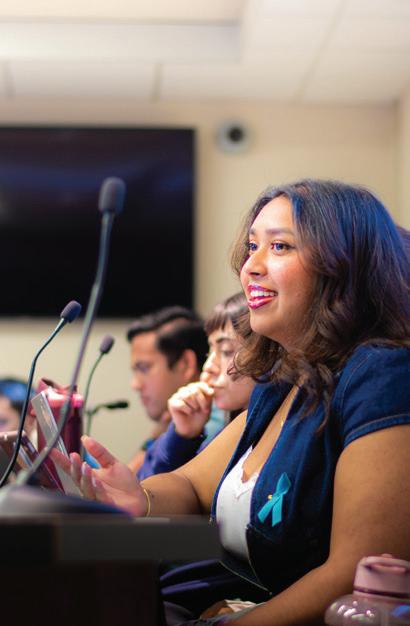
ASUCR Senate Meeting
ELECTIONS UPDATES, A SLATE ADVISING ADDRESS AND GENERAL REPORTS.
On April 29, 2026, the Associated Students of the University of California, Riverside (ASUCR) meeting began at 7:11 p.m. and adjourned at 8:20 p.m.
During public forum, Elections Director Diya Baskaran announced that 2,479 votes — 11.23% of the undergraduate student body — were cast for the 2026-27 ASUCR elections as of 3:48 p.m. on April 29. She noted the Elections Committee has been getting students to vote at the voting tables from 8 a.m. to 5 p.m. everyday, providing incentives for those who vote.
Teri Eckman, Executive Director for Student Information Systems and Alexandra Chrystal, Communications and Training Manager provided an address regarding the Slate for Student Success advising platform. They sought to address concerns about the advising system and seek feedback, encouraging individuals to attend a focus group at the Highlander Union Building (HUB) on May 14 at 12 p.m. to provide further insight on the matter, with Eckman mentioning that “feedback is a gift.”
Eckman and Chrystal further presented a prototypal platform meant to gather student data for insight on how their advising system can be improved.
Vice President (VP) of Sustainability Anahita Hooshyari far shared her personal experiences and prior struggles with using Slate, as well as inquired about the prototypal data collection process.
Associate Justice Nathan Johnson also asked about who would be collecting this data and whether parties such as UCR Student Conduct & Academic Integrity Programs would have access to it, suggesting this could allow parties to bypass the due process in terms of accessing protected student data.

During committee reports, three Senate bills updating ASUCR bylaws were presented and unanimously passed, including SB-S26-005 through SB-S26-007. Additionally, SR-S26-003, a Senate resolution in support of the Opportunity for All Act — which addressed concerns about students’ rights to work regardless of documentation status — was presented by Undocumented Student Representative Aimme Diaz Carbajal and passed by the Senate 120-1.
Three Green Campus Action Plan (GCAP) grant requests were approved unanimously by the Senate
13-0-0, including $800 to cover dining expenses for an end-of-year ScottyEats banquet, $250 for a student’s Create R’Lab project and $8,000 for composing bins to be placed in the Plaza and Oban campus apartment communities.
Meeting minutes for Finance Budget Hearing #18 were also approved unanimously, with CHASS Senator Emmy Tsao reminding individuals that the club budget request form for the 2026-27 academic year is due May 4.
A shared fight: Inland Empire workers rally against ICE, exploitation and inequality
MATA ELANGOVAN, ANDREW HAGLER Editor-in-Chief, Staff Writer
Voices echoed through the streets of downtown San Bernardino on May 1, 2026 as hundreds of Inland Empire (IE) residents took to the streets, marching past City Hall and the Department of Homeland security to demand an end to Immigration & Customs Enforcement (ICE) and better working conditions. Organized by the Inland Empire Labor Council (IELC), the May Day protest drew a broad coalition of labor unions and community groups — from Service Employees International Union (SEIU) and the Coalition for Humane Immigration Rights (CHIRLA) to Amazon Teamsters and the Pomona Day Labor center — uniting around worker protections, immigrant rights, rising costs of living and climate justice in a show of solidarity.
The demonstration was anchored by the IELC which represents over 90 unions and 400,000 members across the Riverside and San Bernardino counties. Executive Secretary-Treasurer Ricardo Cisneros noted that a key part of coordinating the May Day action was mobilizing that network into a unified turnout. Acknowledging the limits of a weekday protest due to working schedules, Cisneros emphasized that the responsibility now falls on those who attended to carry the message before the march, so that “next time around, this crowd can be
much larger.”
Standing before City Hall, Julian, a day laborer from San Bernardino, recounted being detained by ICE while looking for work — an experience that echoed one of the protest’s central concerns: that both immigrant and non-immigrant workers are increasingly forced to navigate their livelihoods under the threats of raids and workplace enforcement.
Julia Vega, a member of the Pomona Economic Opportunity Center who served as Julian’s translator, later emphasized that advocacy work like theirs is crucial amid widespread labor abuses across the IE. She pointed to the human cost of unsafe working environments, “leaving families torn apart. It’s leaving families without fathers, without husbands, without mothers.”
The march paused again outside the Department of Homeland Security (DHS) building in downtown San Bernardino, where Vincent Kraus — an Amazon employee and Teamsters member — addressed the crowd. He spoke to growing frustrations among warehouse workers and union members, accusing Amazon of allowing ICE agents to come into facilities and detain employees without warrants while continuing
to profit from government contracts tied to immigration enforcement.
Sharing the importance of having unions like Amazon Teamsters to show solidarity at events like May Day, Kraus emphasized the shared stakes across movements. While political leaders often blame immigrants for economic hardships, he argued, “In reality, it’s the billionaires like my big boss, Jeff Bezos, who are making our lives worse.”
As the march reached its final stop at E Street and 4th, the crowd gathered around the final set of speakers. Will, a member of the Inland Empire Black Workers Center, drew a direct line between modern immigration enforcement and antebellum slave patrols, urging attendees to recognize what he described as a system of racial control and labor exploitation.
Quoting a letter James Baldwin wrote to an imprisoned Angela Davis in 1970, Will shared how a price had already been paid to bring into existence the American nation, but that “if we know and do nothing, we are worse than the murderers who hide in our name.” He called the crowd to action, exclaiming, “Let’s build the IE. The IE we deserve. One where there is no policing, no terrorization for work that kills us.”
OVI MATHIVANAN
Assistant Opinions Editor
NIKO SUWANDI/ THE HIGHLANDER
ASUCR profiles project
WHAT THESE FIVE ASUCR STUDENT LEADERS HAVE DONE TO IMPACT UCR.
OVI MATHIVANAN & KASSANDRA AGUIRRE Assistant Opinions Editor& Staff Writer
Associated Students of the University of California, Riverside (ASUCR) members impact UCR through advocacy, the creation of initiatives through bills and resolutions and collaboration with the campus community. To familiarize the student body with the actions of their student representatives, The Highlander met with five of them — two Vice Presidents and three Senators — to learn more about their recent and upcoming initiatives.
Anahita Hooshyari far - Vice President of Sustainability
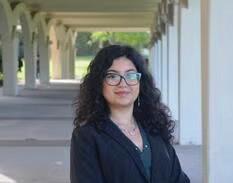
Coming into the Vice President of Sustainability (VPS) position with three years of ASUCR experience, Hooshyari far has been able to implement projects that have been in the office’s pipeline.
For instance, Hooshyari far has planned the Sip n’ Save project since her freshman year and ultimately launched it during winter of 2026. The project is a collaboration between the Green Campus Action Plan (GCAP) and the Highlander Union Building (HUB) Dining, which incentivizes students to bring reusable cups to decrease plastic waste.
Among other recent projects, Hooshyari far also aims to expand her office’s goals to center “climate emotions, climate justice and also the people … people and the environment aren’t separate from each other.”
With this aim, Hooshyari far hosted events such as the Climate Cafe, which allowed students to discuss their emotions regarding climate concerns, and a screening of the HBO film “Katrina Babies,” which discussed the impact of Hurricane Katrina on the Black community in New Orleans.
In her final quarter, Hooshyari far will focus on implementing other projects, such as kickstarting a Recycling Regalia initiative and installing compost bins in campus housing communities.
Brandon Edward Dunbar - Vice President of Diversity, Equity and Inclusion
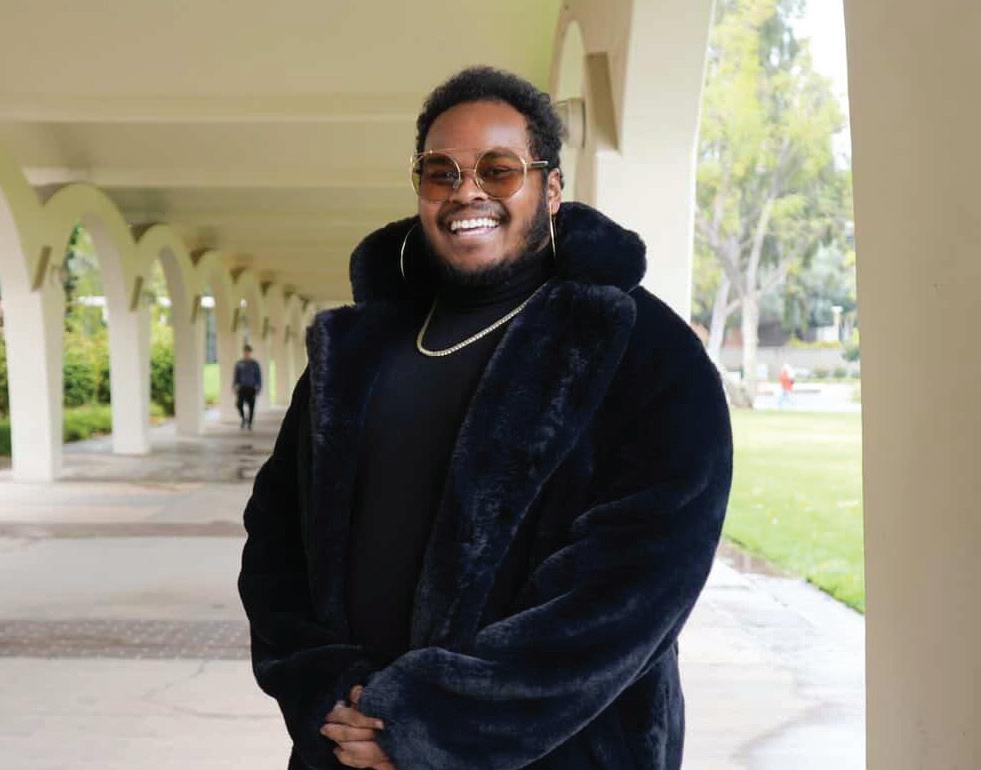
transitioning into the role and working on several initiatives. As such, he has been making efforts to increase inclusivity in the office and be more present in the community.
He notes his intersectionality and unique identity as a non-traditional college student as central to shaping his approach to DEI work, allowing him to have the mindset of “we are DEI first, not ASUCR first.”
He further noted that the Office of DEI hosts a Diversity Council comprising representatives from each of the Student Resource Centers on campus as a means to represent the voices of students from each of the student populations served by those centers.
VP of DEI Dunbar ultimately claimed, “I’m more of a people person than I am more of a student [government] person.”
Anthony Ching - College of Natural and Agricultural Sciences (CNAS) Senator
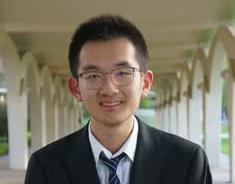
Senator Ching has served as a senator for two years and expanded on two resolutions currently in his legislative pipeline.
The first, a textbook transparency resolution, would call on course descriptions to more accurately reflect fees for required textbooks before a student signs up for a course.
Ching explained that this effort would build upon prior initiatives by senators to advocate for open textbook programs and pave the way for faculty to adopt open textbooks or possibly open low cost courses.
Ching’s other resolution would focus on expanding public knowledge of pre-existing resources to support CNAS students in finding post-graduate opportunities and show administration a demand for more.
To accomplish this, Ching is planning on collaborating with the CNAS Dean Peter W. Atkinson, the Career Center and the post grad career opportunities center.
As a possible upcoming project, Ching is looking to create a resolution to call for further grade transparency in courses. Motivated by his personal experiences and conversations with friends, he is currently looking to survey other students and assess possible demand for this action.
Rohan Vig - College of Natural and Agricultural Sciences (CNAS) Senator
CNAS Senator Vig serves on the Legislative Advocacy Committee and GCAP Committee, and was also a GCAP intern in the year prior. His time as a GCAP intern centered around environmentally progressive legislation, which has influenced his current focus on environmental issues as a senator.
Recent resolutions he has worked on include a UC Student Association housing resolution highlighting

Furthermore, after seeking feedback from student athletes about issues with the We Are Highlander Spirit Committee, he explained efforts to integrate the committee under the Office of the President as an Athletics Liaison.
In terms of his advocacy for environmental justice, Senator Vig has worked on a resolution in regard to lack of consideration for Indigenous people at the 2025 United Nations Climate Change Conference, as well as a resolution advocating for decarbonizing heating systems.
Pia Prashanth - School of Public Policy (SPP) Senator
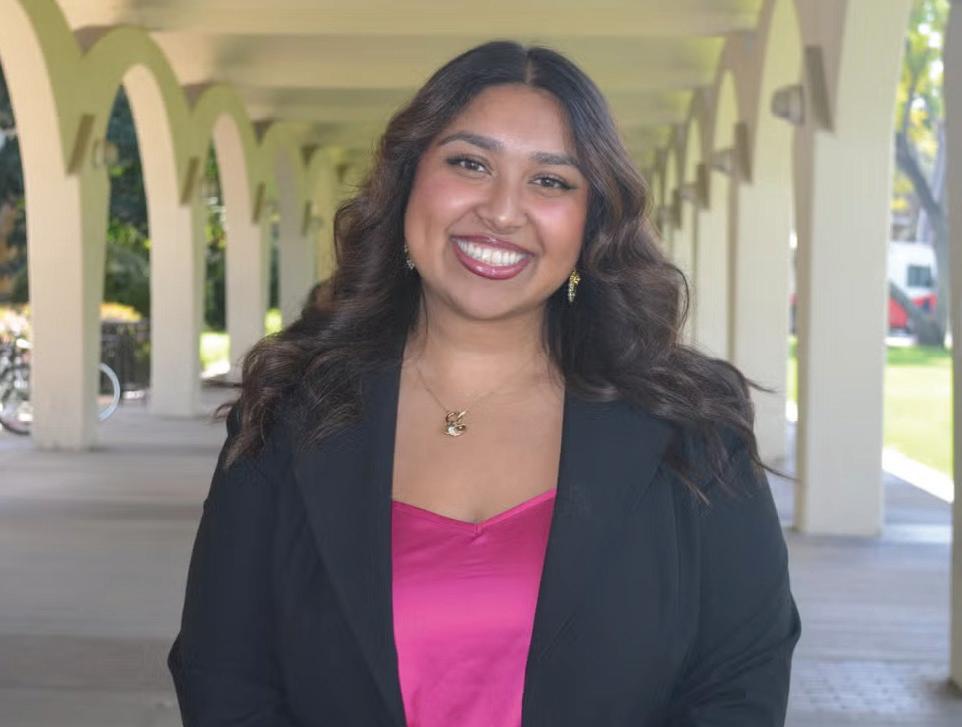
Committee.
Her work in these committees includes championing 24-hour library access, advocacy for the local government, progress on the University Terrace Homes project and generally expanding ways in which she can support SPP students with her unique access to the dean.
Senator Prashanth has spearheaded resolutions asserting ASUCR’s stance in solidarity with the Iranian community and the undocumented and immigrant communities at UCR. Additionally, she has also worked on resolutions acknowledging Women’s History Month and gender inequity within higher education, as well an in-progress resolution acknowledging Sexual Assault Awareness Month. Looking to the future, Senator Prashanth would like to meet with university administration to ensure immigration enforcement activity on California college and university campuses is being properly reported, as outlined in California Senate Bill 98.
Describing herself as cognizant of being only one Senator and individual, Senator Prashanth has initiated a Dean’s Student Advisory Board that represents students across different years and demographics. The board serves to identify and close the gap with any issues experienced by SPP students.
Having stepped into his role at the beginning of the winter quarter, VP of DEI Dunbar has been slowly
CNAS
the struggles students face in regard to accessing affordable housing.
SPP Senator Prashanth sits on the Legislative Advocacy Committee and the Academic Affairs
PHOTO COURTESY OF ASUCR CAMPUS ELEC-
Riverside continues to deliberate over rejection
AN OVERVIEW OF HOW THE CITY’S RESIDENTS, OFFICIALS AND LEGAL
MARIBEL HERNANDEZ , KASSANDRA AGUIRRE Staff Writers
On Jan.13, Riverside’s City Council ruled in a 4-3 vote to reject $20.1 million in state funding to convert the Quality Inn Motel, located at 1590 University Ave, into 114 affordable housing units.
Although the period of reconsideration for the project passed in February and the rejecting councilmembers have stood firm in their decision, public discourse has remained active throughout the city.
The project was first publicly disclosed on April 28, 2025, when the city’s Housing and Homelessness Committee (HHC) approved a resolution to submit a joint application for the Homekey+ grant. The proposal, in partnership with an independent contractor and the local nonprofit Riverside Housing Development Corporation (RHDC), aims to convert the Quality Inn into supportive housing units.
That same day, the three councilmembers who sit on the HHC, Chair and Ward Two Councilmember Clarissa Cervantes, Vice Chair and Ward Five Councilmember Sean Mill and Member and Ward Three Councilmember Steven Robillard, met to consider it at the conceptual resolution stage. They unanimously approved it, albeit Mill and Robillard without recommendation.
sideration of the items at the Feb. 10 meeting, where the decision was upheld.
The council members who rejected the project include Ward 1’s Phillip Falcone, Ward 4’s Chuck Condor and Mill and Robillard, who were skeptical of the project since its initial presentation.
In an interview with The Highlander, Robillard reported that the project would need to be completed within 14 months due to Homekey+ grant requirements. He expressed “There’s no way this will be done in time, or done in that kind of timeline.”
to undermine the others’ understanding of the project, stating, “To me, it was suspicious that they would not, even though we had discussed it and it had been agreed upon. It wasn’t until that January meeting that the rug was pulled off underneath us in real time.”
They also expressed skepticism of the Housing First model, which the city adopted in 2018 to address homelessness.
The Housing First model is recognized as evidence-based at the federal and state levels and was adopted by the HCD in 2016. When adopted in Riverside, it was done so without preconditions. Whilst concerns may still be expressed, Housing First is a component- the city’s Envision Riverside 2025 strategic plan.
What does the rejection of $20.1 Million Housing Grant
The state granted the request, awarding the city and RHCD approximately $20.1 million in Homekey+ grant funds on Nov. 17, 2025, making the city one of five, out of 67 applicants, to be awarded funding.
The initial 4-3 vote occurred on Jan. 13 following presentations outlining the project’s development and funding plan. The proposal included preparatory action in designing the project prior to presenting it to the council, tenant procedures to be enforced once completed and a request for approximately $9 million in city loans — sourced from Riverside taxpayer funds — along with additional funding from the Homekey+ grant to fully fund the project.
A large public turnout followed the presentation, consisting of 60 public comment card requests, 100 e-comments and 50 letters. A majority of the commenters called on the council to approve the resolution.
Following the backlash that ensued the initial rejection, Cervantes called for the recon-
Additionally, the rejecting council members reported that they — along with local businesses — were not included in its planning, whereas Cervantes and organizations, such as non-profits, were kept involved. Robillard stated, “I found out later that she was working with some non-profit groups and hotel owners. But working on this just doesn’t pop out of nowhere, right?”
Regardless, they allowed it to pass the conceptual resolution stage.
Rejecting council members alleged it had been deceptively pitched to suggest it was exclusively intended for unhoused seniors and veterans. Considering that “45% of homeless individuals in California are age 50+,” the council members passed it, yet later expressed feelings of being misled. According to Falcone, it was revealed that these groups would only receive preference over others in the community queue on the day of the initial vote.
A last-minute alteration he expressed seemed
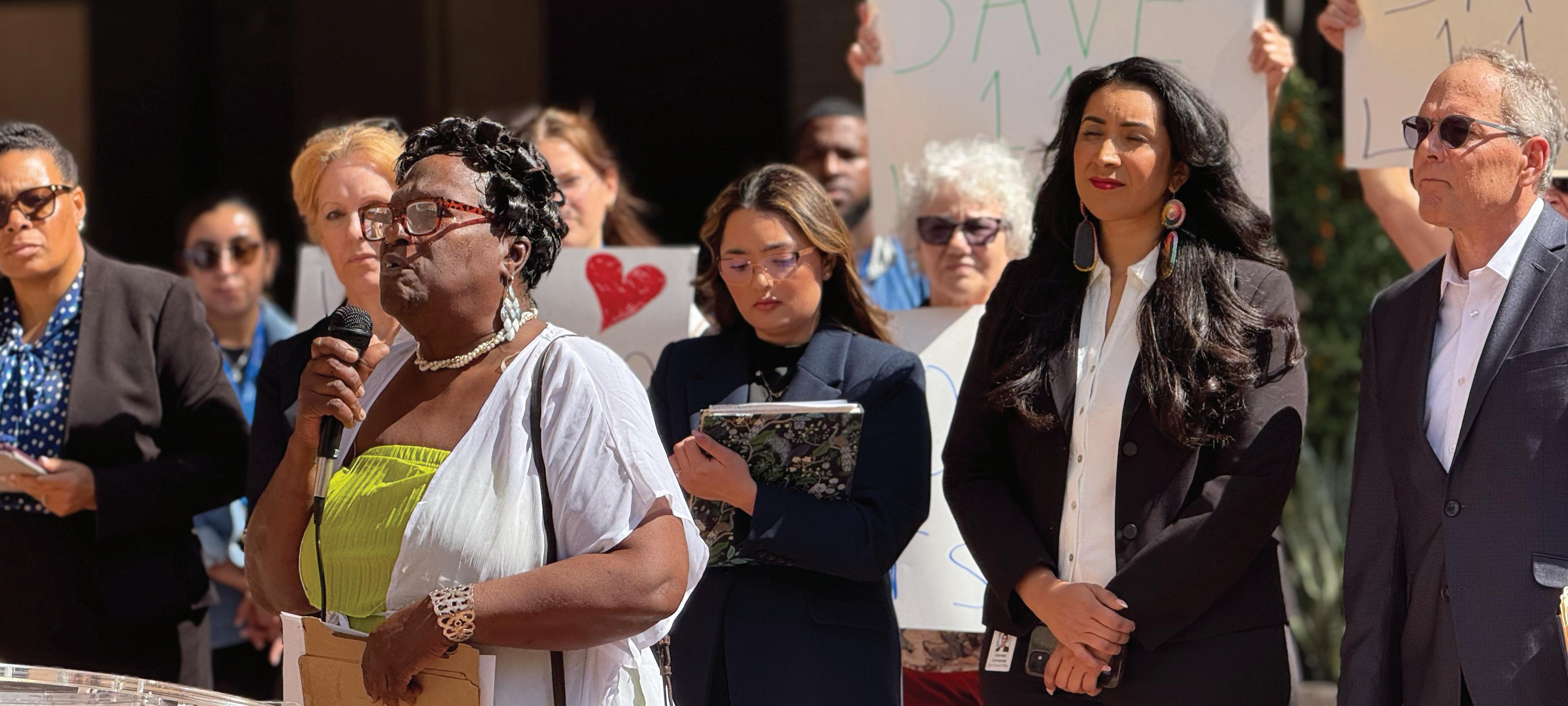
Executive Director of Family Promise, Riverside, Claire Jefferson-Glipa — a non-profit which works to connect families experiencing homelessness with permanent supportive housing — spoke at the “What is Housing First” teach-in. The event was hosted at the Paine Sugar Gallery in downtown Riverside by local groups Ganamos Juntos and the Inland Empire of Reading Group for Political Education.
She emphasized that “the solution to homelessness is housing.” Glipa has found connecting with investors more challenging, as the council’s decision seemed to perpetuate the belief that Riverside is not prioritizing responding to homelessness.
At the April 7 City Council meeting, Jennifer Sampson, an unhoused Riverside resident said that while some people associate homelessness with crime, there are still “those of us that really sincerely need and want, and could use the help [from the community].” At an earlier Jan. 13 meeting, a project opponent argued the development could counteract the investments made into University Avenue and deter new investors, stating, “It’s not that we don’t want to provide affordable housing for the homeless, but this is not the right area.”
Conversation surrounding the project’s rejection seeped from the city’s political and communal sphere and into the University of
the University Terrace Homes project
rejection
LEGAL ENTITIES HAVE RESPONDED TO THE PROJECT’S REJECTION.
fornia, Riverside’s (UCR) Associated Student Body’s (ASUCR) consideration, as ASUCR senators moved 14-0-2 to pass the “ASUCR Resolution in Support of the University Terrace Homes Project and Undergraduate Student Representation,” at their March 11 meeting.
It asserted that the project could have benefited UCR students by increasing access to affordable housing and expressed concerns about the misrepresentation of students in statements by council members who suggested the project posed a risk to the student body.
The College Working Families Party at UCR, Interim Vice President Vir Sinha elaborated, “Due to the implications this has on the student body — both regarding housing affordability and the accurate representation of the student body’s interest in the public sphere — this is something we think the student body should strive to rectify.”
Falcone responded that concerns about student safety were speculative, adding that it’s an “extreme” claim to suggest that UCR students themselves had expressed opposition.
Condor told the Raincross Gazette the project posed “a grave risk to the lives and safety of the over 29,000 students, faculty, who attend and work at (UCR).”
Rhetoric insinuating that the project would have exclusively served seniors and veterans was not corroborated by the City Council Memorandum, which detailed the planning and functioning guidelines of the project. It noted that of the 114 studio apartments which would be developed, 20 would serve very low income residents and the remaining 94 would serve extremely low income individuals with “documented mental health of substance use challenges,” as mandated per Homekey+ regulations.
Before the City Council’s Feb.10 meeting, the Inland Counties Legal Services (ICLS), the American Civil Liberties Union of Southern Calif. (ACLU SoCal) and the Public Interest Law Project (PILP) sent a letter to the City Council asking them to re-consider their decision and cited possible legal consequences ranging from the loss of the Pro-Housing designation and the risk of litigation on the grounds of discrimination.
On April 14, ACLU SoCal filed a complaint against the City of Riverside to the California Civil Rights Department, citing “unlawful discrimination in violation of civil rights law.”
The California Department of Housing and Community Development (HCD) also sent a letter to the City Council following the initial rejection, urging them to reconsider their decision and cautioning a potential investigation into the city’s dedication to its
adopted prohibition element, commitments as a Pro-Housing Designation, them being far from satisfying Regional Housing Needs Allocation (RHNA) mandates.
The HCD’s media team told The Highlander that they could not provide further comment regarding an “open case”.
As of May 1, the Homekey+ funding has not been reallocated, and as proponents continue to advocate for the project, city officials, including dissenting council members, are looking into re-obtaining and reallocating the funding to other housing projects. The precise nature of the housing projects remains unknown, but the council members all expressed their desire for a supportive housing model that holds tenants accountable to participate in supportive resources.
With next steps continuing to be deliberated, the HHC reported during a City Council meeting on April 27 that there are currently 336 affordable housing projects in the committee’s pipeline, which seek to improve Riverside’s low RHNA mandates.
ASUCR 2026 - 2027 election results
JOSÉ DEL ÁNGEL News Editor
On Friday, May 1, 2026, the Associated Students of the University of California, Riverside (ASUCR) announced the results of the 2026-2027 academic year campus elections. Of the 22,063 students attending UCR, 4,890 students turned out to vote in this election, resulting in a 22.16 percent voter turnout.
This year, the 20% voter turnout minimum was met during the election. This allowed for the Highlander Abroad Referendum Fee to pass with 2,409 votes and the R’Garden Food Security and Sustainability Referendum passing with 3,268.
Executive Cabinet:
ASUCR President: Mia Rose Tu’ifua
Received 3,127 votes (polled at 78.2 percent)
Executive Vice President: Chloe Wang
Received 2,284 votes (polled at 58.5 percent)
Vice President of Finance: Emmy Tsao
Received 3,637 votes (polled at 100 percent)
Vice President of Campus Internal Affairs: Pia Prashanth
Received 1,765 votes (polled at 45.7 percent)
Vice President of External Affairs: Joseph Anastacio
Received 3,400 votes (polled at 100 percent)
Vice President of Sustainability: Rahma Ahmed
Received 3,573 votes (polled at 100 percent)
Vice President of Marketing & Promotions: Rosie Liu
Received 1,346 votes (polled at 36.1 percent)
Vice President of Diversity, Equity & Inclusion: Tobi Latinwo
Received 3,580 votes (polled at 100 percent)
International Student Director: Victoria Zhou
Received 1,920 votes (polled at 56.6 percent)
No students applied to run for Personnel Director, Transfer Student Director, Non-Traditional Student Director, First-Time College Student Director. There will also be a special election to fill in the School of Public Policy Senator and two CHASS Senators positions.
When calculating polling percentages, ASUCR abides by Robert’s Rules of Order which dictates that abstentions are not counted in percentage calculations of votes. Only the votes cast, in favor or against, will determine the outcome.
Senate Election Results:
College of Humanities, Arts & Social Sciences
Senator:
Lauren Mendoza
Received 978 votes
Gaby Vasquez
Received 882 votes
Eddie Jezbera
Received 750 votes
Natalie Abel Abeid
Received 713 Votes
Nathan Boylan-Boisvert
Received 655 Votes
Geng Yang Lin
Received 585 Votes
Evan Wei
Received 411 Votes
College of Natural & Agricultural Sciences Senator:
Lydia Fanoos
Received 569 Votes
Arfah Shaukat
Received 552 Votes
Ernesto Mora Garcia
Received 508 Votes
William Nguyen
Received 443 Votes
Jacob Fernandez
Received 276 Votes
Bourns College of Engineering Senator:
Sarah Zohary
Received 354 Votes
Veda Vikram
Received 195 Votes
School of Education Senator: Dulce Maria Ruiz Hernandez
Received 126 Votes
School of Business Senator: Sebastian Zavala
Received 367 Votes
THE HIGHLANDER EDITORIAL
Inland Empire food banks are being forced to do more with less
The pressure has risen on local food banks to provide more support as funding drops.
Editor
Many people imagine food banks as places where individuals line up to receive groceries, but after visiting Feeding America Riverside | San Bernardino (FARSB), it’s clear that this assumption misses the bigger picture. This organization is not just a food distributor — it is the backbone of an entire regional network working to combat food insecurity across the Inland Empire.
On April 21, 2026, FARSB issued a press release warning individuals that potential drops in CalFood funding could cause food insecurity to rise in the region, placing further tension on a food distribution system that is already overburdened.
Rather than serving as a traditional storefront pantry, FARSB operates as a large-scale distribution hub. With a relatively small staff of about 40 people, the organization relies heavily on partnerships with local pantries, churches, nonprofits and universities to get food into the hands of those who need it most. In a comment from Interim CEO Joanna Solario, FARSB programs reportedly served 5.7 million individuals and distributed a total of 39.4 million pounds of food in the 2024-25 fiscal year alone.
Solario further notes that in the same fiscal year, the Fresh Start Pantry served 3,010 individuals, while the Nourish Now program supported 9,899 homebound neighbors that would otherwise face socioeconomic or physical
barriers in accessing food support. Furthermore, during the government shutdown, FARSB saw an approximate 10.3% increase in households seeking assistance.
This model is both efficient and necessary. FARSB’s warehouse is not easily accessible to the public, but its network ensures that food reaches communities where people already feel comfortable seeking help. In this way, partnerships are not just helpful, they are essential.
And yet, this system only functions not because of true stability or security, but rather because of community support. Funding systems have struggled to keep up even as demand has risen across the Inland Empire, leaving it up to volunteers and local community partners to fill the gap.
Food banks are increasingly expected to respond to unprecedented and unforeseen surges in demand for food support services amid economic volatility, while being expected to operate under funding systems that are uncertain themselves.
Programs like the Senior Mobile Pantry Program highlight the organization’s adaptability. Despite its name, the program serves anyone in need and provides consistent monthly food distribution across Riverside and San Bernardino counties. Meanwhile, the Gleaning Program taps into the region’s agricultural roots by sending

volunteers to harvest unused fruit from local homeowners’ trees, turning potential waste into valuable resources for families.
However, demand continues to rise while resources are becoming uncertain. Staff reported increasing numbers of individuals seeking assistance, driven by higher living costs, rising gas prices and broader economic pressures. At the same time, critical funding sources like the CalFood program face potential cuts. CalFood alone accounts for a significant portion of the organization’s inventory, particularly fresh and nutritious items like essential low-sodium staples.
Without that critical funding, the impact would be immediate. Smaller community partners, many of which rely almost entirely on Feeding America’s supplies, could struggle to keep their shelves stocked. Fresh food options would likely decrease, and the strain on the system would intensify.
What stands out most is how proactive the organization is in preparing for these challenges. Staff is already seeking additional grants from organizations like the Albertsons Companies Foundation as well as advocating for continued funding at the state level. But there is only so much a single organization can do without broader community support.
For students and residents in the Inland Empire, this should be a wake-up call. Food insecurity is not a distant issue; it is affecting neighbors, classmates and families across the city. Even at the University of California, Riverside (UCR), many students rely on food assistance programs, and resources remain fragile. Through partnerships such as the R’Pantry and UCR College Corps, FARSB and its network are integrated within campus support systems, underscoring how food insecurity is deeply embedded in campus life.
Supporting Feeding America does not have to mean large financial contributions. Volunteering time, donating when possible or even sharing information about available resources can make a tangible difference. Advocacy, in particular, is often overlooked but plays a critical role in securing the funding that keeps these programs running.
FARSB is doing more than distributing food, it is sustaining a network of care across two counties. But as demand continues to grow, so does urgency for community involvement. Hunger relief is not just the responsibility of one organization. It is a collective effort, and one that cannot afford to fall short.
JOSÉ DEL ÁNGEL, OVI MATHIVANAN News Editor, Assistant Opinions
The Supreme Court’s voting rights retreat signals deeper politicization
THE COURT WAS NEVER TRULY APOLITICAL, BUT IT HAS BECOME SO POLITICAL TO THE EXTENT THAT ITS LEGITIMACY COMES INTO QUESTION.
ALAN LOK Staff Writer
For the majority of the Supreme Court’s history, it has reflected the ideological tensions and questions of the nation. Justices are nominated by the president, confirmed by a majority in the Senate and operate by their own judicial philosophies and interpretations when hearing cases. Yet, traditionally, there has been a clear distinction between ideology and overt partisanship.
For example, past landmark cases like Brown v. Board of Education (1954) were issued unanimously despite a politically divided country, reinforcing the Court’s image as an institution above partisan politics. More recently, however, rulings such as Shelby County v. Holder (2013), which weakened key provisions of the Voting Rights Act, and Dobbs v. Jackson Women’s Health Organization (2022), which overturned Roe v. Wade, have split sharply along ideological lines that mirror the parties of the appointing presidents.
Today, that boundary is thinning quickly, and the consequences for democratic legitimacy are becoming severe.
The recent 6-3 ruling in Louisiana v. Callais is highly significant in illustrating this shift. The case focused on Louisiana’s congressional map, which had been redrawn to include a second Black-majority district after earlier legal challenges argued that the original map diluted Black voting strength in violation of Section 2 of the Voting Rights Act.
The Supreme Court ultimately invalidated this redrawn district, ruling that it constituted an unconstitutional racial gerrymander. In doing so, the Court also raised the standard for proving violations of Section 2, suggesting that plaintiffs must demonstrate clearer evidence of intentional discrimination as opposed to relying on the effects of a map alone.
This marks a major transformation from previous interpretations of the Voting Rights Act
which allowed challenges based on discriminatory results. Ultimately, the decision makes it significantly more difficult to contest maps that weaken minority voting power, reinforcing concerns that the Court’s rulings are aligning more closely with partisan efforts to redraw district lines to benefit their electoral outcomes.
This decision isn’t sudden. It aligns with a pattern where the conservative majority of the court has stunted Voting Rights Act enforcement, giving way for Republican-led redistricting that could decrease Black representation in Congress ahead of the pivotal 2026 midterms that will shape the remainder of the Trump administration’s term in office.
The court’s appointment process itself has grown more controversial and strategic. Senate processes have eroded, most notably in 2016 when President Barack Obama nominated Merrick Garland to fill the vacancy left by former Supreme Court Justice Antonin Scalia. Senate Republicans, led by Mitch McConnell, refused to hold hearings or a vote, arguing that the seat should be filled by the next president in an election year, which became an unprecedented move that left the Court with a vacancy for nearly a year.
However, in 2020, after the death of Justice Ruth Bader Ginsburg, President Donald Trump nominated Amy Coney Barrett, who was confirmed by the Senate in mere weeks, despite the election being imminent. The efficiency of Barrett’s confirmation hearing, compared to the complete restriction of Garland’s nomination under similar circumstances, highlights how control of the Court has become a strategic political objective rather than a constitutional responsibility.
Complete neutrality was never realistic. Judges interpret the law and the Constitution through their own philosophical frameworks, and those
frameworks often have political elements. However, about a decade ago, those views did not always lead to predictable partisan outcomes. In cases like Obergefell v. Hodges (2015) and NFIB v. Sebelius (2012), justices sometimes ruled in ways that did not clearly match the political party of the president who appointed them.
More recently, though, decisions have followed clearer ideological lines. Cases such as Dobbs v. Jackson Women’s Health Organization (2022) and Shelby County v. Holder (2013) were decided in ways that closely reflect the positions of the parties tied to the justices who made those rulings. However, there is still a difference between interpretation and alignment; this transformation over the past decade highlights growing concerns about genuine judicial independence.
If the court is to maintain its credibility, largescale reforms need to be enacted. Proposals such as term limits for justices, reforms in the confirmation process or even changes to the Court’s size have been debated. Among these, term limits for justices and tighter regulations requiring timely Senate hearings and votes would likely be the most effective, as they would reduce the political noise associated with each appointment and prevent strategic delays. Allowing the perception of the Supreme Court as a partisan institution to deepen without addressing these concerns is seriously harmful, especially after rulings that challenge minority representation.
Ultimately, the Supreme Court is in a crisis. It can embrace its current trajectory of a more overt partisan identity, or it can take steps to reinforce its role as a guarantor of the Constitution rather than a tool for partisan ideology. This choice not only shapes the Court’s future, but the wellbeing of American democracy itself.

PHOTO COURTESY OF THE SUPREME COURT
Camera on, free time on: online classes in college are impeding student growth
ALLOWING COLLEGE STUDENTS TO TAKE ONLINE COURSES OBSTRUCTS STUDENT ACADEMIC SUCCESS.
LUIS HERNANDEZ
Contributing Writer

Since the early 2020s, the rise of online learning has drastically increased. The cause of this shift was the COVID-19 pandemic, as many colleges and universities turned to online classes. Zoom became widely used, reaching up to 90,000 schools at its peak. While online classes were beneficial at the time, it has now become detrimental to many college students who aren’t learning from virtual classes and often lose social and academic skills.
Unlike in-person classes, where students must actively listen to lectures and can meet face-to-face, online courses do not provide that. Virtual classes have become known as “free” because the course will give them an easy “A.” Students take this “easy route” by intentionally avoiding the material and simply searching up answers online for their assignments.
Since no supervision is present because they are behind a screen, it’s easier for students to continue taking advantage of online classes and professors. This often leads to poor engagement, constant distractions, weak communication skills and in some cases, academic dishonesty. Additionally, online classes lead to poor engagement. Group discussions between classmates during a project or simple conversations during class work are awkward and uncomfortable interactions. Students can’t express themselves the way they would in a real life classroom, with cameras off, giving brief yes or no responses and only using the chatbox. It’s a challenge for students to contribute value to a lesson or discussion when their only form of engagement is through a microphone. Poor engagement also weakens grades. According to Education Next, students tend to engage much less online, as students’ final
grades can decline by 22%. This is a significant decline as it could mean a drop from an A- to a B+ grade. Therefore, students are often not held accountable in online classes because they may feel less academically pressured to follow consistent in-person deadlines, causing them to procrastinate their work.
MAIN ST
There is also less direct supervision, allowing students to get off topic. Poor engagement has reached a point where academic results are often affected and will worsen as online learning progresses.
Apart from poor engagement and constant distractions, weak communication skills also arise from online classes. It can be hard already to socialize with fellow peers, but online classes make this worse. For example, online classes can cause students to feel more isolated. Since there isn’t much face-to-face communication, interactions often occur without much discussion or real time feedback. It feels asynchronous and removes immediate in-person support, resulting in a harder time for individuals to stay engaged.
ORANGE ST
Professors and students often experience miscommunication because of the lack of physical body language. Oftentimes, people present with weak voices, which causes confusion when students may need assistance or are too afraid to speak up. This highlights that communication skills aren’t and cannot be created in an online environment.
Another reason for poor engagement in online classes is being easily distracted. Constant distractions from external sources, such as the home environment and multitasking, affect focus in online classes. According to the National University, a variety of distractions have increased, including social media and
distractions at home. It is difficult to learn when college students are constantly distracted, making online classes impossible. Poor engagement and constant distractions together demonstrate that online classes are hindering student growth.
Nonetheless, some may claim that online classes are an effective way for students to learn because they provide flexibility, particularly for commuters. It also allows students to spend their time more efficiently, as students can complete homework when it’s most convenient for them. Virtual classes allow students to take a course when their schedule may be too tight for an inperson course.
However, this online flexibility also gives too much leeway for cheating. Taking an online class gives college students the option to take the easy way out with learning, especially when they may feel anonymous. For example, research by the International Journal for Educational Integrity highlighted that “increased cheating has been linked to a greater sense of anonymity in online courses.” Since they may be in larger classes, where too many students make it difficult for professors to manage, students may feel “safe” to cheat and have a sense of evading consequences.
Ultimately, online classes will continue to be an option for students to take in college. Although there may be advantages, it’s still not the best way to learn. Students aren’t developing communication skills, often have weak retention, face many distractions and resort to cheating. It’s important for students to realize that they are hindering their own growth by heavily relying on online classes. If online classes continue to increase in enrollment at college, there may simply be no real purpose in even attending. ■ H
COURTESY OF POLINA TANKILEVITCH VIA
The entertainment industry is very different from the glamorized version of Hollywood
WHILE SEEN AS A ROMANTICIZED CAREER PATH, THE REALITY IS THAT MANY ACTORS FACE CHALLENGES UNIQUE TO THIS PROFESSION.
JUDE JONES
Contributing Writer
The entertainment industry is one of the most competitive industries in the world, with less than 1% of all actors making it to A-List status. There are millions of entertainers in the world, among many disciplines, trying to “make it big” in a career field that doesn’t pay much of anything to those on the lower end of it. This pressure can lead many to make harsh decisions in their careers that put themselves and others at risk of exploitation by the large corporations hiring them.
There are over 160,000 unionized actors, but the large majority of actors in the world are non-unionized and, as such, are not covered by union standards when working on sets. This leaves them liable to extremely long working hours, lack of food or water, harassment, unsafe environments and most importantly, unpaid labor.
Screen Actors Guild-American Federation of Television and Radio Artists (SAG-AFTRA) is the globally recognized labor union for actors, providing benefits such as a pension and secure working environments for performers on set. Some of their standards include actors needing to receive a meal within a six hour working period and an additional meal after that, provided they are working long hours on set. Any violations of these policies can be reported to SAG-AFTRA if an actor feels they were wronged.
It is difficult for actors to receive work, and it is even harder for non-union actors to receive
paid work. Because actors rely on building connections and securing footage to find future work, many feel pressured to work in unsafe environments just to obtain material they can show employers.
Even then, it is not required for producers to release the footage to the actor unless stated otherwise in a contract between the two parties. If a performer does not have an agent, they become their own contractor and only have themselves to blame if they are met with an unfavorable situation.
Actors who put themselves in positions to be exploited lower the market value of every other actor in the industry because it brings a sense of easy replacement. Many actors fear that they are easily replaceable because millions of other actors would love to have their spot in a project.
This leads to easy exploitation by large streaming corporations or anyone producing a theatrical-related project. These companies and producers leverage the fact that some people are more desperate than others to be a part of a project or make ends meet and subsequently choose to utilize them over actors with higher standards.
An example of this would be the 1993 show “Mighty Morphin Power Rangers,” where many of the performers were exploited heavily. The performers of that show were denied royalties and residuals for their work and subjected to strenuous working conditions.
One such actor, Austin St. John, who por-
trayed Jason Lee Scott, the Red Power Ranger, revealed, “We weren’t paid a lot, at all. I could have worked the window at McDonald’s and probably made the same money the first season.” The show ended up making over $1 billion, and not even a fraction of that money went towards the performers, even to this day.
Many actors working on non-union productions can be subjected to harsh exploitation, and almost nothing can be done about it, given the position of the performers needing to make ends meet or continue their passion. Joining a union has its benefits, but it also brings struggles for performers due to the $3,000 paywall required to join only after completing certain milestones as an actor.
While the acting industry as a whole is incredibly corrupt and full of greedy corporations looking to exploit working-class actors, artists still possess something that no corporation can take away — their creativity. Actors, or anyone, for that matter, have the ability to utilize their naturally creative minds to build their own platforms via social media, marking one way to push back against industry greed.
It’s still important to note that creating one’s own content is less about escaping the system entirely and more about building bargaining power within it. When an actor has their own audience, footage and projects, it is harder to undervalue or replace them.

Features Horoscopes
Week six horoscopes

Libra (Sept. 23 – Oct. 22):
Seven of Cups Reversed
Beware of temptations, the luxuries you wrote in your wishing list is not what you need right now. Make good choices and your time will come to celebrate your

22 – Jan. 19):
The World Reversed
You’re feeling like the world is not giving enough, but be patient. You just started that new financial plan, don’t give up just yet. Your journey is just starting.

Aries (March 21 – April 19):
Six of Pentacles Reversed
Be wary of spending. Financially you are doing great! But having more doesn’t mean that you should spend just as much. Keep your wallet in check or it could run away on you.

Cancer (June 21 – July 22):
Six of Pentacles
You worked hard and got yourself a treat. Your concert ticket or an Amazon package has unfortunately been delayed, but be patient, your reward is coming. Don’t stress about things you can’t control.
IN THE SUN OF TAURUS, MONEY ADVICE FOR THE WEEK
TO COME.
MARIA MARTINEZ Contributing Writer


Scorpio (Oct. 23 – Nov. 21): Sagittarius (Nov. 22 – Dec. 21):
The Hermit Reversed
Your financial plan is working but you don’t have to do it alone. Let others know if you’re struggling financially or to simply talk about your future financial goals.

Feb. 18):
Wheel of Fortune
You won the lottery! Or something close. It’s your lucky day, you have never been happier to wait for your time to shine.

MAIN ST
(April 20 – May 20):
Nine of Wands
Whatever you have been working for financially, keep it up! You may feel exhausted but your hard work is paying off.

ORANGE ST
Knight of Pentacles
Your routine is great! Money is flowing and your money prayers have been answered. Go and enjoy! You earned it.

You’re worried about that shopping spree and how much you’ve spent recently, but don’t be. It was a long time coming, just remember that not every purchase is a bad one.

(May 21 – June 20):
Three of Swords
Brace for impact! Your computer, or your phone may leave you with a big hole in your wallet. Have a back up plan just in case, and the storm will pass.

Leo (July 23 – Aug. 22): Virgo (Aug. 23 – Sept. 22):
Ace of Swords Reversed
Even though those new shoes are looking very tempting right now, remember impulsive spending is your enemy. Save for your needs and then buy for your wants.
Six of Swords
Your needs are still present, but so is inflation. Don’t put your necessities aside out of fear of prices rising. At the end of the day you still need to eat.
Three of Wands Reversed
Capricorn (Dec.
Aquarius (Jan. 20 –
Pisces (Feb. 19 – March 20):
Taurus
Gemini
NORM’S NOOK
SPOTLIGHT
The Botanical Gardens
GISSELLE RIOS
Contributing Writer
The University of California, Riverside (UCR) has many scenic options to offer on campus for students and the general public. One in particular is blooming with fun and beautiful trails. The UCR Botanical Garden offers a multitude of museum-like nature exhibits varying from 3,500 plant species to a myriad of wildlife such as their turtle pond. The Botanical Gardens also explores various geographic plant species with their main focus being dry, arid and overall Mediterranean climate plants. Events held here happen every so often, with their most recent one being their Earth Day Pipevine Swallowtail butterfly release.
POKEMON

The overall topography of the gardens enhances the experience as the trail you follow is easy and has a beautiful elevated scenic view. Not only is this a relaxing trip, it also has various educational opportunities with their guided tours, seasonal plant exhibits, rose pruning demonstrations, bird walks and twilight tours. These incredible adventures are worth the visit and are completely free of charge for entry, but donations are much appreciated to help support the continuation of these lovely endeavors for everyone in the Riverside community.

23. Solid, liquid and gas
25. Largest Starbucks size
Cowpoke’s pal
Pokemon with the most evolutions
Simple rhyme scheme
Intestinal parts
Part of a drum kit
Rock’s Jethro ____
Iron fist type
Sheep’s cry
James Bond’s car
“The Time Machine”
48. Air filter acronym
50. Homer’s home
By K Staff
27. Enzyme suffixes
29. “Do the Right Thing” actor Davis
32. ___’_ Club (Costco competitor)
35. Like a slicked back
bun
39. Ginger ___ 40. Cool __ _ cucumber
41. Golden
42. Take advantage of 43. According to 44. Team Rocket’s feline member
45. “____ bien!” 46. Full of attitude
54. Moon valleys
58. Blind as _ ___
60. Eight, in Essen
62. Falls (over)
63. Swiss watch brand
64. classic flame pokemon
66. “Psst! Pass __ __!”
67. The “K” in K-Town
68. “Beloved” author Morrison
69. Puts in stitches
70. Deep sleep
71. Lead-in to much DOWN




1. Type units
2. “It’s _ ____ cause”
3. ____- _ -car
4. Dodge trucks
5. Bilingual subj. 6. “The Neverending Story” author 7. Pole _____ (Olympic event)
8. Mistake 9. Spooky 10. Times up 11. First Pokemon in the Pokedex 12. Wings (Plural) 13. PC keys 18. Double bonded carbon suffixes

24. Smooth transition
26. Lymph ____
28. Hematology prefix
30. “Spring Awakening” girl
31. Wide shoe sizes
32. Drains energy 33. Very briny
34. Ghost like pokemon
36. Famous Youtube dancer Sean
37. Wood strip
38. Old anesthetic 41. ____ nitrate
45. Popular gelato brand with impossible lids 47. Surgical drains
Pikachu’s iconic line
51. Doesn’t have
Sneeze sound
53. Quick-witted 55. Strung along 56. “The Vampire Diaries” protagonist
57. Some antidepressants, for short 58. Onassis and others 59. Diminish 61. Palm smartphone 65. Abbreviation for last month
LAYNA LAPIKAS / THE HIGHLANDER
MATA ELANGOVAN / THE HIGHLANDER
Strawberry shortcake biscuits
By: Haley Klein, Staff Writer

The perfect dessert for the peak of strawberry season.
Instructions:
1. Preheat the oven to 400 °F.
2. Mix together strawberries and ¼ cup sugar. Let sit until serving.
3. Whisk together the flour, ¼ cup sugar, baking powder, baking soda, and salt.
4. Using hands or a pastry cutter, add in the butter and combine until crumbly.
5. Stir in buttermilk until just combined.
6. On a floured surface, roll out the dough into ¾ inch thick rectangle and fold both sides to the center. Rotate the dough 90 degrees and repeat folding and rotating 3 more times.
7. With the dough flattened to ¾ inches thick, cut out 3-inch circles. Place onto a parchment paper-lined baking sheet.
8. Bake for 18-22 minutes or until golden brown on top. Cool for 10 minutes.
9. To serve, slice the biscuits in half and layer together strawberries and whipped
SUDOKU
DIFFICULTY: MEDIUM
Prep Time: 30 minutes
Servings: 10

Ingredients:
• 6-7 cups strawberries, quartered
• ½ cup sugar
• 2 ¾ cups flour
• 4 tsp baking powder
• ½ teaspoon baking soda
• 1 teaspoon salt
• ¾ cup cold butter, cubed
• 1 cup cold buttermilk
• Whipped cream


ORANGE ST
TEST YOURSELF!
Spring Splash
What Spring Splash artist do you resemble the most?
By: Camila Rosales, Contributing Writer
1. In a group setting, which type of person are you?
A. Listener
B. Talkative
C. Jokester
D. Nonchalant
2. What is your favorite weekend activity?
A. Go out to a party
B. Go to coffee shop
C. Play video games
D. Read a book
3. If you have an assignment due when do you tend to work on it?
A. As soon as possible
B. Start when you feel like it
C. Right before its due
D. Two days before the due date
answer key
If you got “A” the most, you most resemble Mike Sherm. You are a bit more serious andtend to overanalyze situations, leading to you coming off as intense instead of relaxed. In a group assignment, you tend to be the leader. You are on top of things and cannot really “chill,” as you like to make sure things are done correctly and often your way.
If you got “B” the most, you most resemble Malcom Todd. You are laid back and things do not bother you easily, and you go with the flow of things. During stressful situations you are the one to stay calm. You come off as approachable and people know they could ask you things and not feel judged. Some people may say you are carefree but you are just living life.
If you got “C” the most, you most resemble Bryant Barnes. You have a very energetic personality. You are able to share your emotions and can easily adapt to environmental shifts and mood changes. You are very lively and you believe in living life to the fullest. You sometimes act without overthinking, which can seem a bit impulsive.
If you got “D” the most, you most resemble RL Grime. You tend to be more quiet, keeping your thoughts and emotions to yourself. As a mysterious person, people are often curious about you. You do not draw attention to yourself nor do you like to. In a group setting you do not show strong reactions, often preferring to stay composed and observe.
PHOTO COURTESY OF NATI VIA PEXELS
Resistance and romp: Ballet Folklorico’s legacy at UCR
FROM SWIRLING
SKIRTS
TO CULTURAL PRESERVATION, BALLET FOLKLORICO’S HISTORY AT UCR IS A RICH ONE.
SANJANA THATTE, Features Editor
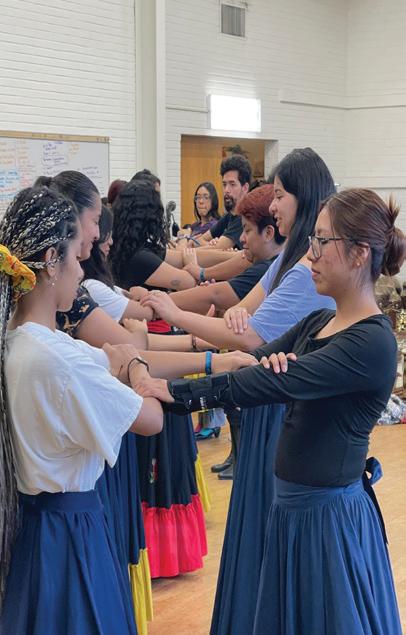
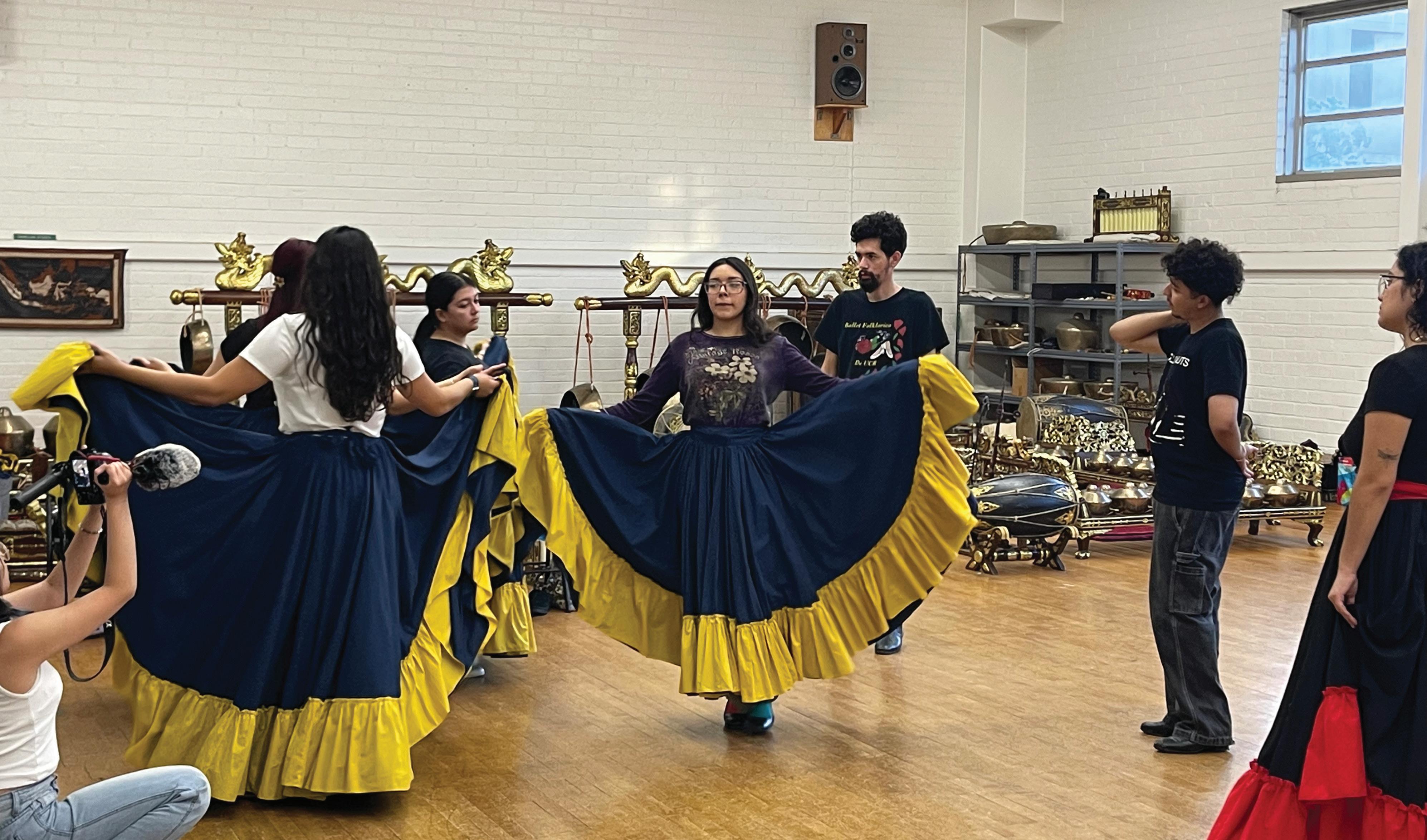
Ballet Folklorico keeps traditional Mexican dance alive while continuing to act as a form of resistance to cultural erasure and political strife.
The club started in the late 80s with a group of students coming together to practice the art form. The club’s Artistic Director Gustavo Sandoval joined because his father was a part of the club in the late 90s.
The dance itself is one that involves both men and women wearing special shoes made of leather and wood with nails attached to the bottom. This creates the famous sounds that are associated with the dance form along with long billowing skirts and sleek suits that dancers sport.
Like the name suggests each of the dances tells a story as Rosemaria Ramirez, Vice President of the club explains, “Most of the songs are about stories like the famous ones, like Son de La Negra, Jarabe Tapatio. They’ve been around for hundreds of years … To this day, a lot of them are forms of resistance. Like, we have revolution dances for the history of Mexico and others are just fun.”
Sandoval described the art forms deeply Indigenous roots that make it unique to the country of Mexico: “You also have the
Indigenous parts as well, where they’re more connected to the culture of Mexico, like us, you have Azteca, which is a part of local. Then some states of their own have indigenous dances.”
There are different styles and forms with each state such as Sinaloa which practices older styles, such as Mestizo, and more modern variations, such as Sinaloa Costa.
In regards to resistance at UCR, Sandoval emphasized the club’s goal to show that the Latin community is here at UCR and had been for a very long time.
The club is currently preparing for their showcase at the University Theatre on May 21. Fall and winter quarter are dedicated to teaching club members who are just joining the club and cementing the basics, whereas spring quarter is spent practicing the choreographed routines. The team of about 22-24 people will be showcasing three different dance styles, Veracruz, Oaxaca and Jalisco. These practices focus on routine, cohesion and stamina with different styles being practiced on different days of the week.
Ramirez said her favorite dance is from Zacatecas, her home state, and noted that each quarter the club highlights a
different region. She described Veracruz dances as elegant and flirtatious, pointing to El Canelo where a “man’s trying to get the woman’s attention,” but the woman remains unbothered and dismisses him by smacking them with a fan.
In regards to some of the struggles the club has faced in recent years, club president Daniela Rivera showed how much of that had to do with the club’s history itself, “I’ve actually been in this club since my first year, and this club kind of disbanded because of COVID-19. Before, there was a professor we had, so it wasn’t more of a club [but] was more of a class type of thing.”
She explained that Dr. Xochitl Chavez helped revive the club by providing a practice room, uniforms and more to help the tradition stay alive in club form.
Rivera explained that her goal for the club is to share and celebrate Mexican culture while building community, calling it a “really great club” that has given her a space to express her identity and find friends. As president, she hopes it continues to show that “Hispanic culture is alive” and remains a welcoming place where students can “come in and breathe” and feel supported.
CECILE DIROLL Opinions Editor
A love letter to UCR
DESPITE A ROCKY START, UCR WAS THE RIGHT PLACE FOR ME.

As someone from an academically competitive high school, I admit I wasn’t sure how I felt about attending the University of California, Riverside (UCR). Many students can relate to those long, anxious months of waiting for college decisions and the constant questions about where they did or didn’t get in. Even now, it gives me flashbacks. UCR was among the first schools I heard from during my senior year, but I initially didn’t consider it much. I had applied to many schools and UCR was just one of the options. However, after receiving all of the decisions — public, private and out-of-state — I realized I preferred to attend a UC campus. I was drawn to the research opportunities and internships available through the UC system and I was also influenced by the positive experiences my family members had shared about their time at UC schools.
So, I chose UCR despite knowing little about it. I had never visited the campus, didn’t know any alumni and had never been to the Inland Empire before. I came to UCR with very little knowledge of the university and the area. Honestly, the transition from high
school to college wasn’t exactly smooth sailing. I grew up in the Bay Area, where urban life and nearby cities and activities were always accessible. When I first arrived in Riverside, it felt isolating. The campus was quiet on weekends due to a large commuter population and exploring the city was difficult without a car. I was also stuck taking lower-division courses that didn’t particularly excite me, which made the beginning quite challenging.
MAIN ST
ORANGE ST
But that’s exactly why it was important for me to get involved on campus and find something I enjoyed here. I can still recall my first time stepping into The Highlander office. It was the first Writers Meeting of fall quarter and I was interested in writing an article. I had no journalism experience because my high school didn’t have a student newspaper. My writing background was limited to Advanced Placement (AP) Literature and high school English classes. But when I met the Opinions editors, something clicked for me.
Working at The Highlander has helped me develop my voice and deepen my understanding of the student body, campus communities and the region as a whole. I also found a community
among the other editors and staff on campus. Without the student newspaper, I probably wouldn’t have developed the same appreciation for this school as I do now.
Many of my experiences at UCR started the same way — opportunities leading to new ones. I joined the University Honors program after hearing about it from others and seeking research experience. Through Honors, I connected with a faculty mentor who introduced me to his Sacramento summer fellowship, which I participated in last year. I also found out about the University of California, Washington Program (UCDC) online. Since I had never been to the East Coast or Washington, D.C., I saw this as the perfect chance to intern in the capital and experience a new part of the country. It turned out to be one of the best experiences of my life and it was made possible by UCR.
This is perhaps what most people overlook or underappreciate about UCR. There are so many opportunities for research, leadership, jobs and internships. At UCR, you don’t have to push people out of your way to get where you want to go, unlike some other schools. That’s not because it isn’t competitive; it’s just because it’s not part of our campus culture. For example, I don’t know if I would have the opportunity to work for the newspaper if I were somewhere else. Staff, faculty and students truly want to see you succeed. In a world that feels more competitive and ruthless, it’s uplifting to find people who support your ambitions and want to help you reach them. I’m not sure I fully experienced this until I came to UCR.
This isn’t to say that UCR is perfect and cannot be improved. If there were ever a serious discussion about how to make Riverside a more walkable and vibrant college town, I would gladly volunteer to lead the meeting. But all in all, I believe I made the right decision to come to UCR.
Now, as I am preparing to graduate, it feels right. One of the best feelings as a soon-to-be graduate is knowing you pursued everything that interested you and that you have no regrets. I’m ready for the next chapter and I’m grateful for everything UCR has given me.
I’m proud to call myself a Highlander.
ADELIA URENA / THE HIGHLANDER

AND
I’M NOT LOOKING FORWARD TO IT.
AAKIF IQBAL Assistant Radar Editor
The end of a major chapter is oftentime cause for celebration. It certainly was as a kid. Finishing preschool, finishing elementary school, finishing middle school and finishing high school. While feelings may have been somewhat dreary for these chapters coming to an end, for the most part, what comes after is much more exciting.
The end of one’s schooling usually reflects some newly gained autonomy and responsibility. Finishing elementary school and going to middle school invites room for bad words. Finishing middle school and moving on to high school involves room for driving and going out. But on the other side of the finish line, when the graduation is college, the upgrade does not feel as glorious.
What’s coming next, presumably for most people, is either graduate school or going straight into the workforce. For those who are diving deeper into their major excitedly with graduate school, they are the exception. That is exciting. But the latter — going into the workforce — this is where the tragedy begins.
One can say “goodbye” to life as they know it. The life of the nine to five is a subtle brutality. Having to move for work, spending less time with friends who have shifts during different hours and being spiritually exhausted five times a week seems terrifying. Perhaps for those who graduated high school and went straight into the work force, they can sympathize with the notion and then some. But this specific feeling is a kind of “ivy dread.”
And what’s worse is if — and mostly like it’s an if — there is no job lined up after school, the feeling becomes more aggressive. For many, the summers were a time to max out on internships and build resumes for post-undergraduate opportunities. However for a quiet but sizeable group of the student population, these summers were a time to decompress from the exhaustion and stress of school life.
To now be in one’s final quarter, looking down the barrel of the gun that is higher education — with a mediocre grade point average and a few random jobs to show for it — things are not looking good.
Certainly this feeling is not new. Gen X’ers in particular made plenty of media on this exact malaise. Take Noah Baumbach’s “Kicking and Screaming” for example. This notion has been sitting with society for decades. But social media makes this a different beast.
Feeling like one is not where they should be is a common feeling but seeing every video online showing people who seem to be “where they should be” makes the dread overwhelming. The “day in a life” video format has been co-opted by people like this. The majority of these videos depict people in
beautiful homes living in beautiful cities with extravagant luxuries and always time for the gym with a good sleep schedule.
For a long time, major studio executives of television and film have maintained that people do not want to watch the lives of boring people, and perhaps that is why there are no videos depicting the day in the life of a student who’s graduating with little to look forward to. There’s something cool and exciting to see somebody voice over about the millions of fun things they get up to in a day. However, making content about dreading the same set of circumstances day after day just sounds sad to engage in.
There are certainly worse situations one can be in. Nobody is going to argue that graduating with a degree is not better than experiencing life in a war-torn country. There are millions of people online that one can see living in much more trying circumstances. But the acknowledgement of this does not always make things easier.
Especially when the degree one is graduating with has a reputation online with having a lack of prospects. While it may be funny to some to see meme after meme about how little job opportunities certain majors end up having, the reality becomes biting when a person is studying that exact major.
It feels like to many previous generations, going to college and getting a bachelors was all that one needed to be set for life. Simply get into a college that matters and then it’s smooth sailing from there. But increasingly within a late-stage capitalist society, as the number of unemployed college graduates increases, without the number of job opportunities increasing proportionally, it feels like everyone is fighting for the same end.
This is a quiet bitterness that is oftentime never spoken of because it feels both selfinflicted and uninteresting. One may ask, “Where can you really go with all of this anger and sadness?” But surely there is hope on the other side. There must be. One must imagine Sisyphus happy, or whatever Albert Camus said. But in the meantime, for those experiencing this secret agony, just know there are many in the same boat.
Diversity
THE ISSUE OF DIVERSITY AND INCLUSION IN SOCIETY TODAY
MARIA MARTINEZ Contributing Writer
What is the meaning of diversity?
Is it the different cultures and races in the same place?
Is it the image that shows no face?
Is it the likelihood of Asians, African Americans, and Hispanics in each place?
Is it the weirdness of seeing a person that’s not Hispanic in the same place you play?
Only if they knew what I see every day
My eyes wondering on a club just for them
Another for culture that happens to only be filled with Chinese food,
And other foods exactly the same
Is diversity, eating at the same table but feet away?
I may not be of their culture, color or race
Might not speak the phrases, or look the same way
But why do we treat each other
As if we don’t need to breathe, and eat
All the same
So what is diversity?
If I may ask
If there is no one that will accept the equality
Of simply their category, race or flag
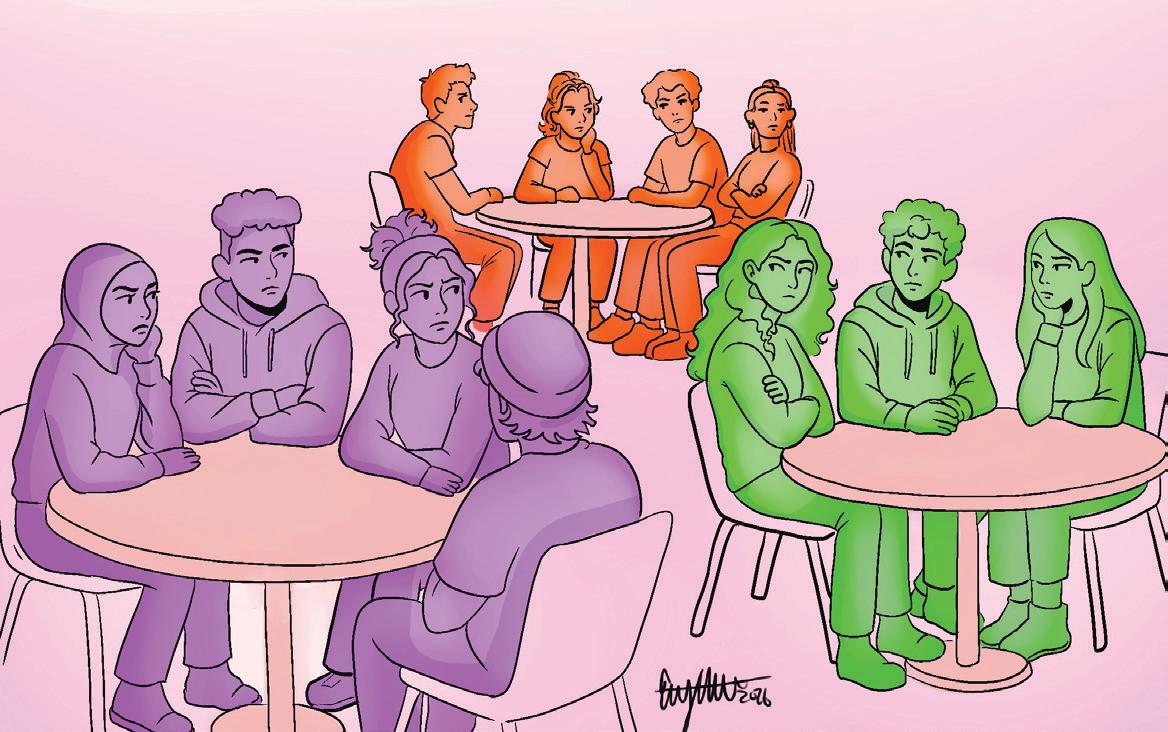
LAYNA LAPIKAS / THE HIGHLANDER
EMILY MATA / THE HIGHLANDER
COmiCs
Pillar The Cat - Susanna Wu
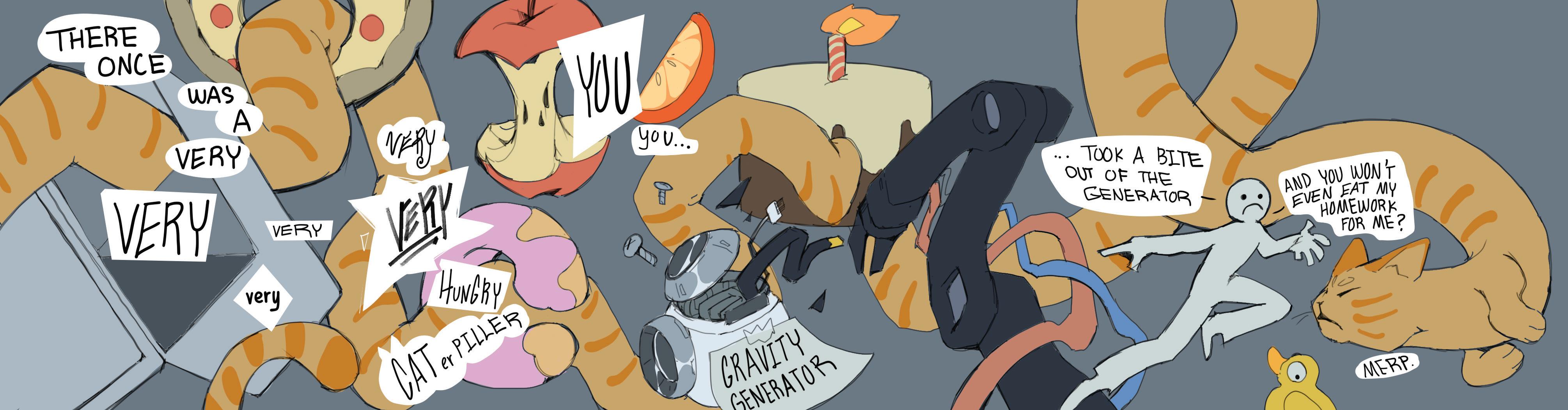
Badvertisements: Legless Table For Sale - JUXWAH


The Simple Life - Hattrik
Spring Splash 2026 is nothing short of divine
THE EVENT BRINGS THE THUNDER (AND LIGHTNING) WITH AMENITIES, ACTIVITIES AND PERFORMANCES MEANT TO CATER TO ALL.
IAN PALMA, SANJANA THATTE Radar Editor, Features Editor
The Associated Student Programs Board’s (ASPB) Spring Splash has always been the premiere event for students to get the needed respite from grueling midterms all the while serving as the perfect send-off for those graduating. With the promise of delicious food, fun activities and performances from somewhat recognizable artists, any reason to miss out on the event are close to nonexistent.
2026’s Spring Splash, held on May 3, 2026, had students form up in U-shaped lines down to Webber Hall and eventually left towards Eucalyptus Drive in order to attend the event. The excitement of the eventgoers was strong enough for them to stay resilient against 85 degree weather, though some trees scattered throughout the lawn offered shade and rest. With doors opening at 4 p.m., eventgoers eventually flowed through security checks.
Given the diverse music lineup with artists such as Malcolm Todd and Mike Sherm as well as the plethora of amenities, it seems as if no expense was spared when it came to the planning of the event. The distinction between this year’s Spring Splash and previous Spring Splashes were made all the more apparent given the faintly identifiable “Percy Jackson” theme.


Merchandise
T-shirts and hats were passed out at two locations in the venue, one designed by progressive graphics and the other by ASPB for the first 600 students. Both ran out within the first half hour and then custom jerseys with the artist’s name on the back were tossed out after Bryant Barnes’ set. Students seem to enjoy the design as they slung it over their shoulders or putting it over their outfits.
Amenities and Activities
This year’s Spring Splash featured a whole host of activities for students to enjoy featuring rock climbing,


the artists. Other sponsors had booths as well, including Raising Canes and Vons, giving out free merchandise such as tote bags and gift cards. The usual Spring Splash photowall was also up for students to grab their staple Instagram post.
available in the lower HUB area offering everything from funnel cake to acai bowls, hot dogs, elote, dubai chocolate strawberries and more. Lines were extravagant for these locations and due to their placement near the outdoor HUB seating, were somewhat hard to navigate between the chairs and Disneylandesque lines.

darts, axe throwing, yard
Lines for the activities were extensive as students waited between performances and many were seen enjoying themselves. While a definite step up from this year’s Block Party amenities, many of them closed down within an hour and half of the event. Furthermore, lines were extensive with students waiting as much as an hour for a single activity. That being said, one could hit at least two to three activities while enjoying the musical performances so there were options available, however big or small, to all.
Food Options
grab mock laurel wreaths
bracelets while they sat at bean bags and tables while watching
Though there were technically only two food carts available at the venue in Fuegomeup and Big Easy Sandwich, there were plenty of other food options
The shortest wait times, if one would even call it that, would be from The Big Easy Sandwich. In the time waiting for the food, students were able to recover from their collective shock at the eyewateringly expensive food. With food items like the Buffalo Chicken Tenders coming out to be a whopping $22 after tax and tip, and the strawberry lemonade coming out to a solid $8.75, one can’t help but feel somewhat cheated. While the number of food vendors solved the problem of there being not enough options, one can only stop and think about the prices students paid for the sake of not passing out from heatstroke.





ADELIA URENA

Musical Performances
The artist lineup for this year’s Spring Splash certainly captured the holy trinity of UCR-centric music genres: indie rock, rap and electronic dance music (EDM) with the addition of lofi R&B as well. Given the eclectic mix of artists performing, it was pretty clear that ASPB was aiming to cater to the music tastes of most, if not all, students within UC Riverside. What’s all the more interesting is that Malcolm Todd, the main staple of the event, marks a return of indie rock artists headlining Spring Splash since the Wallows played back in 2023.
DJ Rani, the event’s host, started off by playing remixes recognizable to many students in UC Riverside. Some of the renditions include “Nasty” by Tinashe, “365” by Charli XCX and “Hot in Herre” by Nelly. A crowd of concertgoers eventually began to converge towards the stage.
Bryant Barnes, given his melancholic and soft alternative R&B sound, was an interesting but welcoming choice when kicking off Spring Splash. Playing yearnful and melodious songs such as “Is This Love To You” and “Why Can’t You,” Barnes gradually won the favor of the audience. More and more potential fans piled to the front as Barnes sang somber yet equally electric tracks like “Don’t Want a Love Song,” a song he specifically dedicated to his day ones.
The artist went on to introduce an unreleased song coming out in two weeks as well as “I’m a Fan,” a track that he recorded just five days before the event. Alongside original music, Barnes also covered “Wicked Games” by The Weeknd, a song that matches
the emotional tone heard throughout Barnes’ discography. The artist additionally played “I’d Rather Pretend,” a pensive and pianodriven song he’s stated to have “got him here.” Barnes ended his set at 5:20 p.m., but not before closing out with a cover of “Sweater Weather” by The Neighbourhood.
Shifting the direction to something more rowdy and turned up, Mike Sherm was next up on the list. Eventgoers quickly flocked to the stage to hear Sherm play quintessential banger tracks such as “Ballin” and “Ima Boy.” Eventgoers familiar with the artist were quick to rap along to prosaically prophetic tracks like “Squirt Squad Cream Team” and “Homecoming.” Additionally, Mike Sherm commendably asked if someone passed out midway through his performance and told the audience to take five steps back. Mike Sherm ended his gig with his most arguably notable track, “A - - - - - -.”
RL Grime went up to indulge the ravers of UC Riverside with good old fashioned EDM music. Playing remixes of songs like “Good Feeling” like Flo Rida and “All of the Lights” by Kanye West, the hype and support RL Grime received from the concertgoers was nothing short of immense. RL Grime continued on with more classic EDM tracks such as “Kernkraft 400” by Zombie Nation and “Sandstorm” by Darude.
With smoke machines accentuating the bombastic music as well as the presence of neon graphics, UC Riverside felt less of a quaint college and more of an all-out rave festival akin to the likes of Beyond Wonderland. Like Mike Sherm, RL Grime had to stop the performance halfway through
in order to have the audience take one big step back as to accommodate for others that might be squished.
At around 8 p.m., Malcolm Todd took to the stage in all of his flanger-filled glory. Starting off with “Earrings,” Todd entranced the audience with blissful vocals and dreamy guitar chords. Other songs played by him include “Make Me a Better Man” and “Sweet Boy.” Throughout the set, Todd made numerous hilarious repartees all the while showing love for UC Riverside, even playing a rendition of Lynyrd Skynyrd’s “Sweet Home Alabama” with “UC Riverside” transposed within the lyrics. The love that Todd showed towards the UC Riverside community, as well as the love reciprocated back to him by the students, was practically immeasurable.




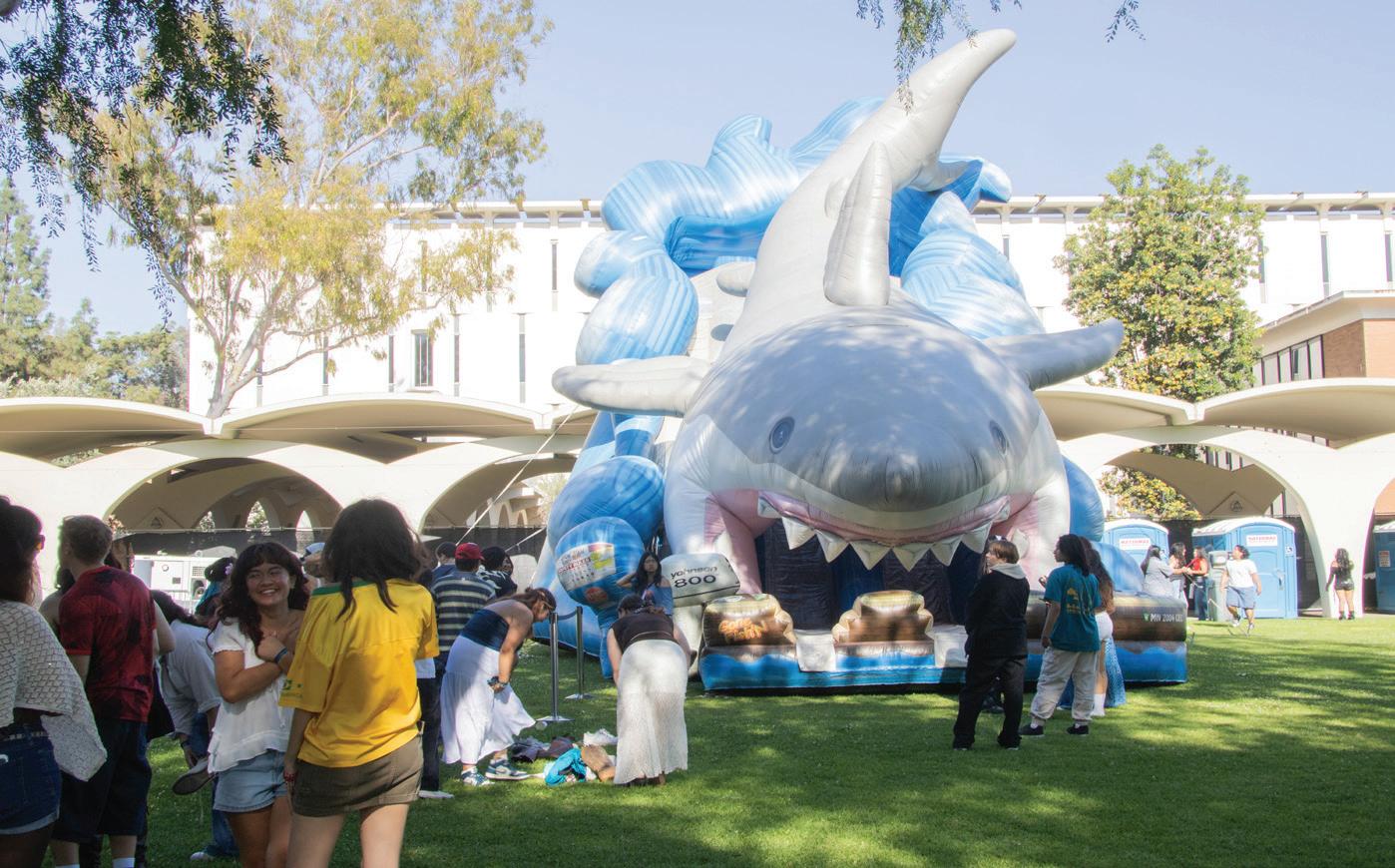
Todd went on through the night playing hits like “Starstudded” and “Attention,” captivating the crowd with gyrating dance moves while showing his guitar chops when playing “Hesitating.” To the approval and knowledge of many of the concertgoers, Todd played “Chest Pain (I Love),” a track that recently took social media by storm. He additionally covered “Leave it All to Me,” the theme song of “iCarly” before finally ending the night with “Roommates.” The sheer rawness and sincerity of his performance was unlike anything that could be heard from the tracks produced. If anything, Todd proved to the audience of UC Riverside that his penchant for performing is just as equally exhilarating as the songs that he puts out.
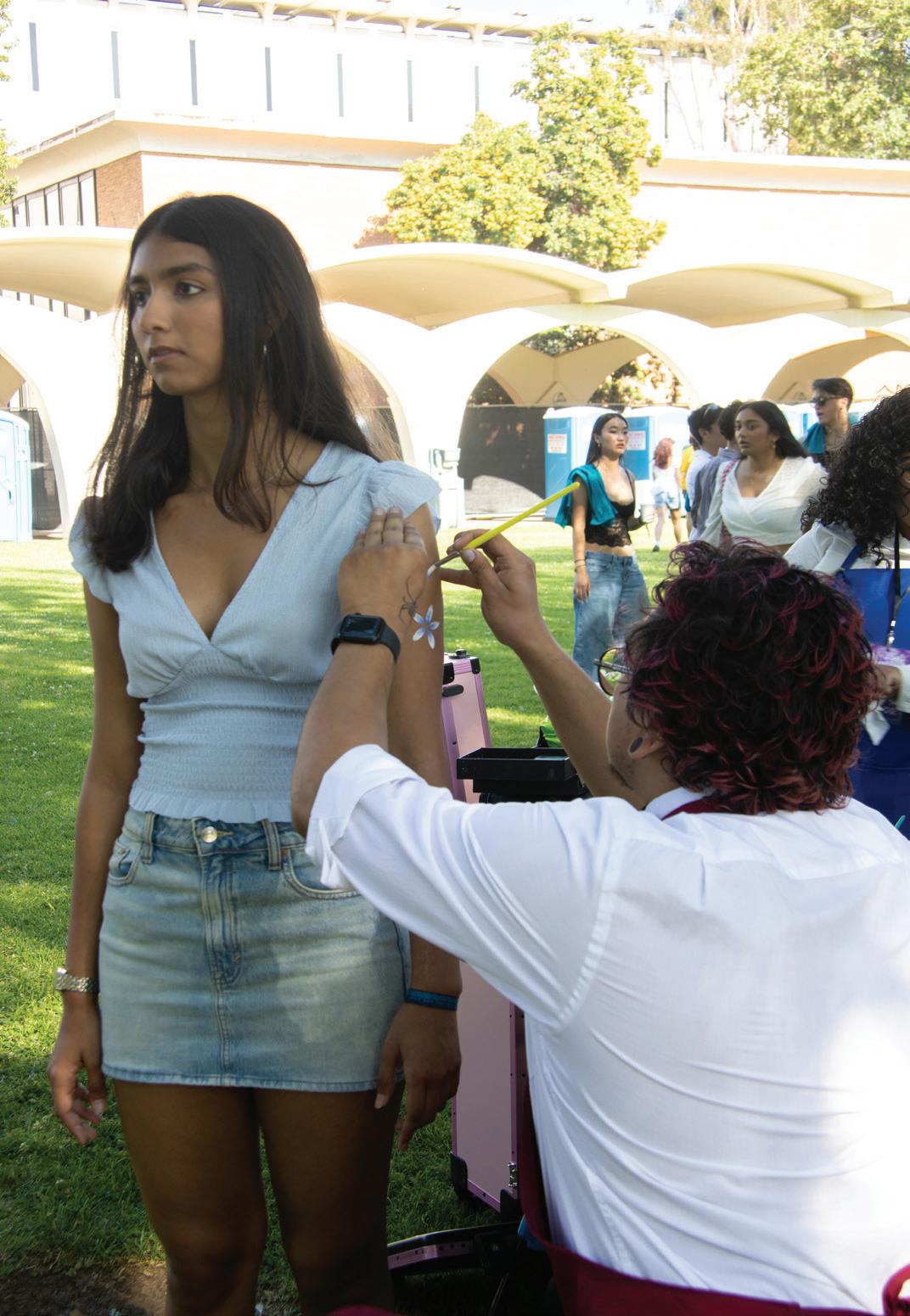
■ H


The tiny tropical country of El Salvador brought a party to the desert
Salvadorean blue and white pride took over the Coachella Valley Music and Arts festival as Salvadorean cumbia was brought by Los Hermanos Flores.

If one has ever been to a party, quinceanera or any lively gettogether put together by a Latino family when cumbias were playing, chances are they’ve probably been dragged to the dance floor to a song by Los Hermanos Flores. Originating from San Vincente, El Salvador, they made history not only as the first Salvadorean band, but also the first Central American band to perform at the Coachella Valley Music and Arts Festival.
Founded in 1962, La Orquestra Los Hermanos Flores was formed by Don Andres Rodriguez with the help of his 10 children and wife, Fildena Flores during a time when music was a luxury to make. Their discography consists of cumbias that showcase their love for Salvadorean culture, people, food and the natural beauty of the country. The cumbias Los Hermanos Flores exhibit Salvadorean pride and love for the country while encouraging everyone to get up and dance with one another.
The group was funnily enough contacted through the communication app WhatsApp by Rene Contreras who also recruited other Latin-American bands such as Los Angeles Azules and Los Tigres De
Tijuana in past years for the Coachella festival. Contreras directly contacted one of the brothers, and asked him to join the Coachella lineup for the 2026 festival.
As the current main vocalist, Nory Flores and her son, Andrés Guerrero, stated in an interview from La Tribu FM that they didn’t believe it was real and thought the offer was fake. But after conversing with Rene about their consideration, he immediately rushed to his mother’s home and began showing the group iconic Coachella performances. No one besides the younger members of the band knew what the Coachella festival is because no one from the rural part of the small country of El Salvador really does.
After months of preparation, Los Hermanos finally showcased their Salvadorean sound at the Coachella Valley Arts and Music festival. They opened their set with a montage of Salvadorean scenery which includes the iconic volcanoes, beach sunsets and instruments that contribute to their cumbia sound such as trumpets, congas and bongos.
In the first week of the festival, they opened their set with the song “Yo Viviré” and Nory Flores walked on stage with a
custom pink dress designed by Rossemburg Rivas and made by fashion students at Universidad Dr. Jose Matias Delgado. Rivas stated in an interview with La Presna Grafica de Noticias El Salvador that the dress itself was inspired by the Maquilishuat which grows in El Salvador. When they bloom, they coat the streets in beautiful pink petals. Nory’s week one dress consisted of over 400 pink flowers made by hand that were individually sewn onto the dress to carefully meet Nory’s personal preferences of a modest but moveable dress to still be able to perform and move around.
On the second weekend, Nory strutted onto stage wearing a striking deep green dress inspired by the Salvadorean national bird el Torogoz that represents freedom and liberty, which Nory has also represented throughout her singing career with Los Hermanos Flores. Rivas stated in the same interview that the deep green dress was accompanied by handmade sleeves which hang on the side of the dress to represent the feathers of the torogoz. Each feather is made using beads to craft a pattern, each differently designed by each student of La Universidad de Dr. Jose Matias Delgado.
Nory was accompanied onstage by the main vocalist of the group Cesar Cortez, along with the rest of their ensemble and band. They played iconic recognizable cumbias such as “La Bala,” “La Enfermera” and “Mi Pasaporte” which made the crowd erupt into a celebration.
The crowd was a sea of blue and white Salvadorean flags showing their own love and pride to be represented on the Coachella stage. The group made several shoutouts to their home country and invited everyone to take a trip to El Salvador and enjoy their beautiful homeland.
The Salvadorean musical act performing at one of the biggest stages recognized around the world is not only historically significant, but important to recognize during a time in which Latinos are constantly targeted by the current government administration. Their representation of Salvadorean culture brings to light the amazing resilience of people from such a small country. Showing how even though the band was formed over 60 years ago by a family that lived through many terrible phases of a country, their music continues to unite people from all backgrounds, spreading Salvadorean love and pride.
ABIGAIL ORTIZ Contributing Writer
PHOTO COURTESY OF COACHELLA
Album Review: “Time Heals Everything”
HOW PASSION CREATES SUCCESS.
ANTHONY ASCENCIO-CARVAJAL Staff Writer

Having the voice and passion for rapping to the likes of Black Thought, over soulful beats packed with inspiration from J Dilla, the legendary underground group Blu & Exile reunite. On April 20, 2026, they came together for another group project called, “Time Heals Everything.” Both longtime veterans of their respective crafts, from rapping to beat making, their formula comes correct once more, creating yet another jazz-rap album that’s been carrying the ears of fans since the days of their debut classic, “Below the Heavens.”
With hip-hop coursing through his veins since a youth, Blu, one half of the duo, is a Los Angeles based rapper who’s been active since the early 2000s. However, while he had the skills to sell out shows at 19 and headline for different local LA venues, his urge to get signed to a record label came with it’s own struggles. After trying to work with Suge Knight under Death Row Records, he decided not to wait for his breakout moment through a label to reach stardom. Blu went independent, releasing his works early one to catch buzz from the hip-hop landscape at the time, leading to him meeting the other half of the duo, the producer Exile.
Influenced by the likes of Madlib and J Dilla, the other half of the duo, Exile is a Los Angeles producer and DJ, who’s been active since the mid-90s. It was then through his collaboration with Aloe Blacc that the now-singer was able to introduce Blu to his producer and the rest was history.
Leaks could be the end of a good project, with many artists in the modern landscape of hip-hop scrapping whole albums entirely. Before “Below
the Heavens” could be released, Blu had three completed projects leaked. However, rather than destroying their careers before it could take off, the buzz that came from the amazing tracks leaked gave them notoriety.
Despite the hassles of Record Label woes, Blu continued on even after the label that ended up releasing “Below the Heavens” went bankrupt. He continued on independently, releasing albums with different artists as well as collaborating with Exile.
Many would’ve faltered with the amount of mishaps Blu & Exile faced early on, but the two continued not just for fame and riches, but because they were passionate about hip-hop. It was an art that never let them down, but rather the people within it that fell through on the duo’s backs. Thus, their future releases exude something that can’t be taught in artists today, rather what they carry through the disappointments, to maintain their grasp on the culture that raised them.
“Time Heals Everything” is a testament to how far the duo has gone despite the pain in the rain they’ve faced together at times. Their style is unique as a result, dubbed as alternative hiphop because their underground persona involves expressing themselves on a deeper level than what mainstream rappers portray.
The first single released for the album, “Crumbs,” is a socially conscious piece talking about the failures of authoritative systems to combat poverty and punishing victims of underserved communities. Featuring Rome Streetz and ICECOLDBISHOP, they use their underground creative freedom to express their frustrations, and preach black empowerment.
The chorus, “They want you livin’ in slums/ they tryna treat you like bums … ’member how crazy it was, back then, you used to get hung for stealing’” shows how they connect history to modern problems today.
Exile’s production masterclass is shown in the track, “The Bag” with crazy beat switches. Featuring Blu, its verses are about the influence money has over our lives. “Hard Times” has Blu and Exile spitting one of his rare verses about their experiences living through poverty at early ages.
The track “I Don’t Rhyme” is an anthem for underground lyricists who perform for nothing more than the art itself they love. “Rap is somethin’ you peep when you curious. Hiphop is somethin’ I speak from my experience.” The track “Lazy Afternoon,” is an positive song to uplift people’s spirits over Exile’s mellow beats. Black Thought makes his appearance on “T.S.O.D.” where he trades bars with Blu over a menacing beat. “Time Heals Everything” is a beautiful ending to a song about revival through hardships..
Verdict:
Another classic from Blu & Exile that showcases their expertise and passion in music. This is pure genuine hip-hop in its finest form, from veterans who never gave it up, and use it to contribute all they can to the culture that taught them everything they know and love.
PHOTO COURTESY OF DIRTY SCIENCE
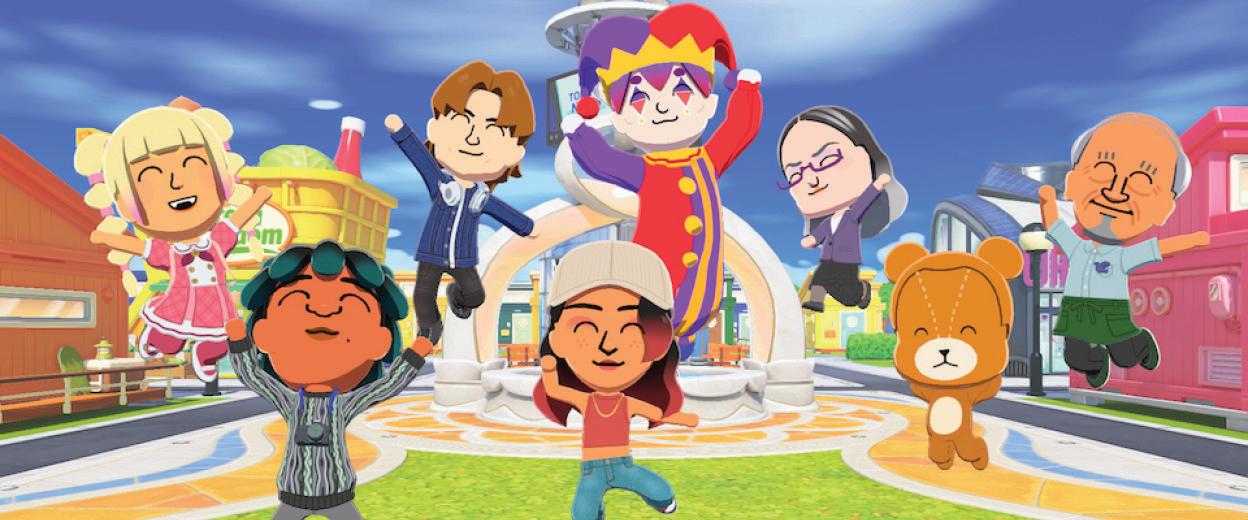
“Tomodachi
Life: Living
the
Dream”
ALL THE WORLD’S A STAGE, AND PLAYERS ARE THE DIRECTOR.
On April 16, Nintendo released “Tomodachi Life: Living the Dream,” available on the Nintendo Switch devices. The Tomodachi series consists of three games: The first one released in 2009 on the DS — only available for Japanese players — and the second game titled “Tomodachi Life” released internationally in 2013 for the 3DS. Nintendo fans have long anticipated this drop since the release of the Switch, which was first put on shelves nearly a decade ago. With many fans agreeing the Switch version has been long overdue, it makes one question if it was all worth the wait.
The Tomodachi series is a single-player, real-time life simulation game that prides itself on its unserious nature. Players are caretakers over residents of the virtual island — called “Miis” — each designed by the player from their appearance to their personalities. Much like a pet simulator, players have to feed, entertain and clothe the Miis, all while helping each Mii as they go about daily life. Miis consult the player like a god or guidance counselor, letting the player make decisions or voice their opinions about their relationships and life choices. Still, the Miis have a mind of their own and players must wait for their Mii’s requests. The game is a constant back-and-forth between waiting for Miis to seek help and spectating their nonsensical interactions.
Mii customs have gone through a major upgrade by expanding their library of options. Previous Tomodachi games had a poor history of inclusivity, with very limited dark skin tones and hair selections. This time around, the developers provided a palette with exactly 100 shades to choose from, consisting of natural and unnatural colors. Aside from the increase in hair sets, users have a selection of front and back hair pieces that they can mix-and-match instead. There is even an option to draw on the face, which many have been using to create lookalikes of their favorite fictional characters. This
release also implemented a nonbinary gender option in addition to male or female. Players can also choose each character’s romantic preferences by checking off which genders they want Miis to fall in love with, with the option to select none as well. For events, such as weddings, players choose if they want their character to dress up feminine, masculine or either in the Mii designer.
However, this does not mean it is allinclusive. The Mii customizations do not have selections for religious headwear, nor are there any mobility-aid options such as wheelchairs. It’s incredible how much inclusivity has been improved from the past of Tomodachi Life. And yet, it’s disappointing that after so many years of development, there are still gaps in representation.
Cutscenes occur randomly upon Mii’s interactions when strolling around the island, adding another layer of excitement to the gameplay. The constant anticipation of scenes makes it all the more addictive. As players interact with their Miis, they’re given opportunities to insert words that develop as the island’s slang and lingo. As a bonus for older players, the game does not have a profanity filter either. In each scene, words are interchanged based on the island’s word list. There are a limited number of potential scenes though, so they quickly get repetitive and underwhelming with time.
The price of about $60 for this game was startling for returning fans, when previous editions were sold for half this cost. However, its island builder and item-design features alone make this space into an endless canvas for daydreamers and artists. Turning the whole island into an interactive space is the biggest improvement from the other games of the series. Miis roam around the island freely and players can even drag their Miis wherever they desire. With 360 degree camera rotation, every unit of the island can be customized. Aside from decorating, players can design their own items like pets,
food and infrastructures to name a few. For those with a creative itch for character and world designing, the price can easily be justified.
While the game is pouring in entertaining content, it does not feel fitted to the Switch console. A lot of this game involves precise interaction with the screen, where players are instructed to use their fingers as a pen for tasks like drawing. It’s not impossible to draw or re-design islands with the swipe of a finger but it makes these tasks tedious and frustrating with a lack of control. Ironically enough, Nintendo does not sell an official stylus internationally. It was an obvious but missed opportunity for the company to release one alongside the game’s release. Without it, designing is more so a means to an end versus a leisurely activity. It doesn’t help that the Switch’s touchscreen is delicate and feels forbidden to be touching at all. Especially for returning players from the DS games, the limitations of the console are underscored by its inability to suit the touchscreen-heavy content.
“Tomodachi Life: Living the Dream” has become a personal multiverse of friends, beloved characters and celebrities, where each player is bound to have a unique experience in their own gameplays. Much like “Animal Crossing: New Horizons” has done in the past, there are plenty of opportunities for content updates, like a new set of cut-scenes or items. Only time will tell if the excitement of the game will withstand past the stages of creative burnout and online traction.
Verdict: The long-awaited game is not flawless, but still exceeds the potential that fans have been predicting prior to the release. However, the complexity of what the game has to offer is overwhelming for the Switch format. This release only highlights the limitations of the Switch’s console design and Nintendo’s oversight for creative-based games.
GIANNA ALMARIA Staff Writer
PHOTO COURTESY OF NINTENDO
Chelsea Anninyei ranks No. 1 in Big West after remarkable triple jump
ANNINYEI NAMED ATHLETE OF THE WEEK FOR THE SECOND TIME THIS YEAR AFTER SETTING PERSONAL BEST IN TRIPLE JUMP.
IYANNA
On April 24 and 25, 2026, University of California Riverside’s (UCR) track and field team competed at the Chris Rinne Invitational, where senior athlete Chelsea Anninyei put on a memorable performance.
Anninyei competed in the triple jump, long jump and 100-meter dash. Despite the rain and strong gusts of wind, Anninyei recorded the third longest triple jump in UCR history, with a personal best of 12.98 meters (42 feet and seven inches).
After her performance this past weekend, she is also ranked No. 1 in women’s triple jump for the Big West conference and No. 5 in Division I. “Even under these crazy conditions, I could still perform well,” Anninyei said. “I did exactly what I could do, and it ended up being a personal record as far as triple jump goes.”
Anninyei’s season did not start off how she hoped it would. “My season was honestly very rocky,” Anninyei explained. “I had an injury that looked like it was going to stay a while … I wasn’t able to run, I wasn’t able to jump, so my conditioning technically did not start until mid winter quarter.”
start competing until March, so compared to most people, I’m already behind,” Anninyei explained.
Anninyei also explained how her coach has been a foundational piece to her performance, providing support and encouragement
competing for yourself ... It made practicing and navigating through the beginning of the season a lot easier.”
Even with her late start conditioning into the season, Anninyei was still named Athlete of the Week during her first month of competing and now not even a month later, she has earned the title again.

Conditioning for track and field typically begins in the fall. That way, athletes can start competing during the winter quarter. “I didn’t
throughout the season and especially after her injury. “[My coach told me] it doesn’t really matter what anybody else is doing because you’re not competing for them; you’re
“As rocky as [this season] was, I’m proud of myself for how far I’ve come,” Anninyei said as she opened up about how she really appreciates her support system. “One of my biggest things is also making my mom and my dad proud [along with] my siblings and everybody that is supporting
Chelsea Anninyei brings a sense of determination every time she competes because of how deeply she values her sport. “For me, [track and field] is an outlet. It’s kind of a break from the academic aspect of being a student athlete. It’s really just a way for me to show my art and just
With the season coming to an end, Anninyei’s reliance has truly defined her memorable senior season.

WALLACE Staff Writer

Softball falls to Hawai’i on Senior Day
UCR shows late resilience but cannot overcome Hawai’i’s offensive surge in a 6-1 season-ending loss.
IZZY GRAHAM Assistant Sports Editor
On Saturday May 2, the University of California, Riverside (UCR) softball team faced the University of Hawai’i (UH) for the third and final time for the 2026 season. After coming off a 6-1 loss in the game prior, the Highlanders were hopeful for their first win of the three-game series.
The Rainbow Wahine set the tone early in the top of the second inning. Carys Murakami was able to nail in a triple down the right field line to put herself in early scoring position. Shortly after, a triple from Ellyanna Cinzori allowed for Murakami to score the first run of the game.
UCR looked to respond, but the Highlanders were quickly halted after a strikeout from leadoff hitter Aubrey Marx. Despite putting runners on base through scattered singles and defensive miscues by Hawai’i, UCR struggled to capitalize with runners in scoring position.
The game remained relatively quiet through the middle innings for the Highlanders. Rebeca Cabezas recorded a
single up the middle in the second, while Jamie McGaughey added some energy in the third after stealing second base. Taylor Wren followed with a single, but again, the Highlanders were unable to convert these chances into runs, leaving runners stranded and allowing Hawai’i to maintain control of the game.
Both teams went down in order in the fourth inning, as pitching and defense briefly took center stage. However, the momentum quickly shifted in the fifth inning in favor of Hawai’i. Despite a standout defensive play from UCR’s Isabel McElroy, who robbed a potential home run with an impressive catch in the outfield, Hawai’i broke the game open shortly after. Fidge delivered a three-run home run to center field, giving Hawai’i a commanding 4-0 lead.
Hawai’i continued to apply pressure in the sixth inning, extending their lead even further. Ellyanna Cinzori launched a tworun home run to center field, bringing in Briana Maio-Silva and pushing the score to 6-0. The Highlanders found themselves
in a difficult position as they headed onto the final inning of the game.
UCR managed to avoid a shutout in the seventh, showing resilience in their final at bats of the season. Trendee Kahunahana delivered an RBI single to right center, allowing Arianna Saldivar to score and cut the deficit to 6-1. While the late push provided a glimpse of fight, it ultimately was not enough to overcome Hawai’i’s earlier offensive surge.
The Highlanders closed out their 2026 season with a 6-1 loss, a result that did not fully reflect the effort shown throughout the game. Although UCR struggled to bring runners home, moments of strong defense and late-game determination highlighted the team’s tenacity.
With Senior Day marking the end of the road for several Highlanders, the game served as both a celebration of their contributions and a reminder of the foundation they leave behind. As the program looks ahead, UCR will aim to build on its experience and continue developing into a competitive force in the conference.
ELENA VERSAGE/ THE HIGHLANDER
RIVERSIDE RECAPS
SOFTBALL - APRIL 26
BASEBALL - APRIL 26
BASEBALL - APRIL 28
SOFTBALL - MAY 1 GAME 1
SOFTBALL - MAY 1 GAME 2
BASEBALL - MAY 1
BASEBALL - MAY 2
SOFTBALL - MAY 2
UC RIVERSIDE VS. CAL STATE
BAKERSFIELD
CAL STATE BAKERSFIELD VS.
UC RIVERSIDE
CBU VS. UC RIVERSIDE
HAWAI’I VS.
HAWAI’I VS.

ELENA VERSAGE / THE HIGHLANDER
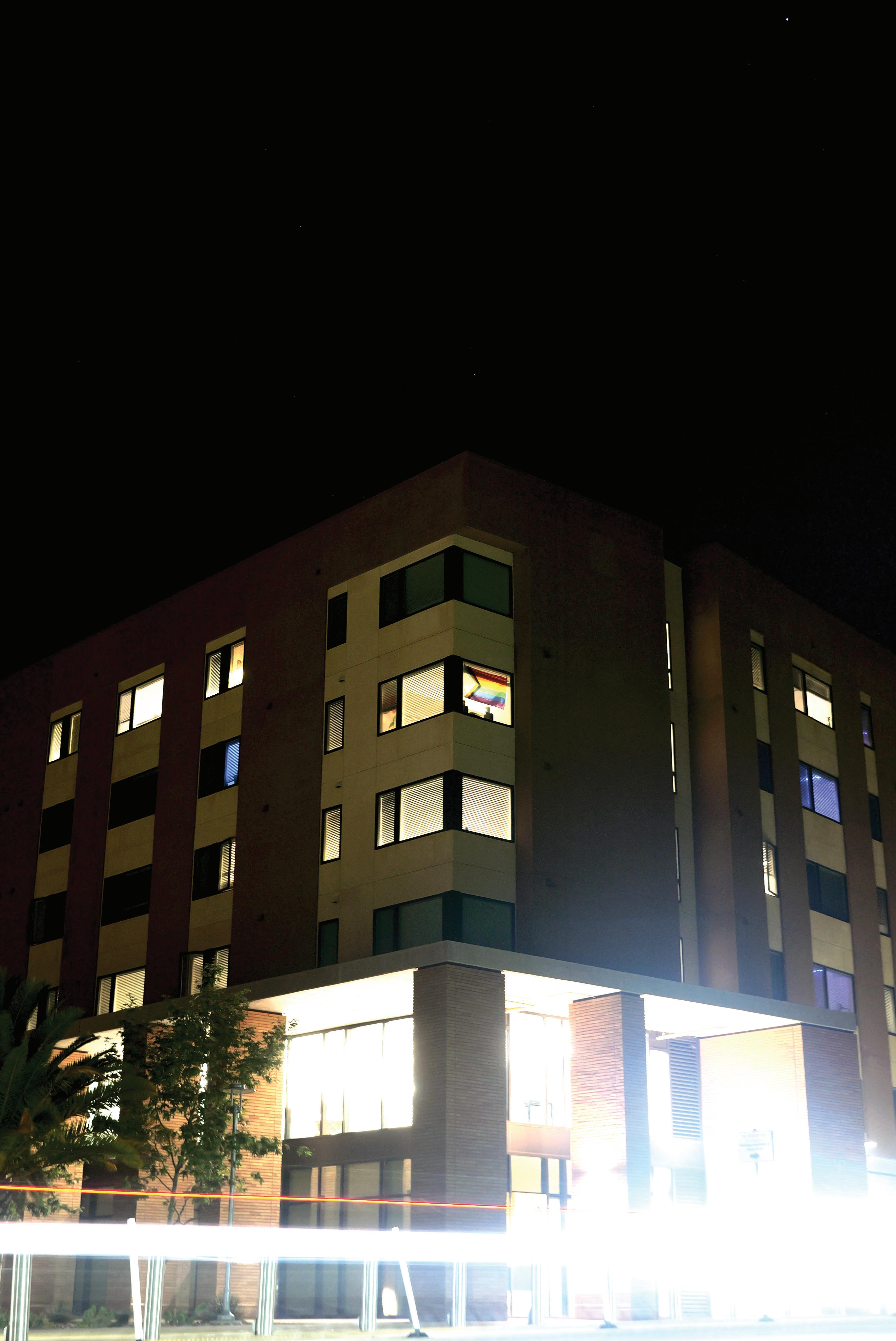
Be Safe.
The Highlander Newspaper is a great way to keep up with current events and news around campus. If you are interested in the newspaper’s articles or pictures, we offer opportunities in writing, photography and design. Join us every Monday at 5:15 p.m. in HUB 101 to learn more.
the highlaNder