UC Riverside goes green with the Earth Day Festival
IAN PALMA, JIHOON KWON Radar Editor, Staff Writer
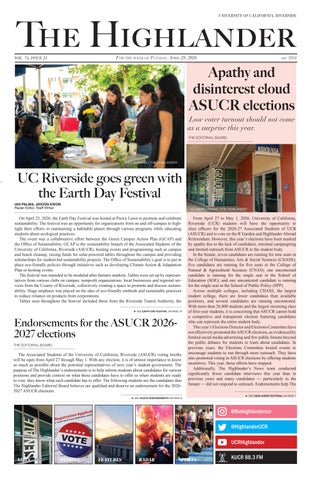
On April 22, 2026, the Earth Day Festival was hosted at Pierce Lawn to promote and celebrate sustainability. The festival was an opportunity for organizations from on and off-campus to highlight their efforts in maintaining a habitable planet through various programs while educating students about ecological practices.
The event was a collaborative effort between the Green Campus Action Plan (GCAP) and the Office of Sustainability. GCAP is the sustainability branch of the Associated Students of the University of California, Riverside (ASUCR), hosting events and programming such as campus and beach cleanup, raising funds for solar-powered tables throughout the campus and providing scholarships for student-led sustainability projects. The Office of Sustainability’s goal is to put in place eco-friendly policies through initiatives such as developing Climate Action & Adaptation Plan or hosting events.
The festival was intended to be modeled after farmers markets. Tables were set up by representatives from various clubs on campus, nonprofit organizations, local businesses and regional services from the County of Riverside, collectively creating a space to promote and discuss sustainability. Huge emphasis was placed on the idea of eco-friendly methods and sustainable practices to reduce reliance on products from corporations.
Tables seen throughout the festival included those from the Riverside Transit Authority, the
Endorsements for the ASUCR 20262027 elections
The Associated Students of the University of California, Riverside (ASUCR) voting booths will be open from April 27 through May 1. With any election, it is of utmost importance to know as much as possible about the potential representatives of next year’s student government. The purpose of The Highlander’s endorsements is to help inform students about candidates for various positions and provide context on what these candidates have to offer so when students are ready to vote, they know what each candidate has to offer. The following students are the candidates that The Highlander Editorial Board believes are qualified and deserve an endorsement for the 20262027 ASUCR elections.



Apathy and disinterest cloud ASUCR elections
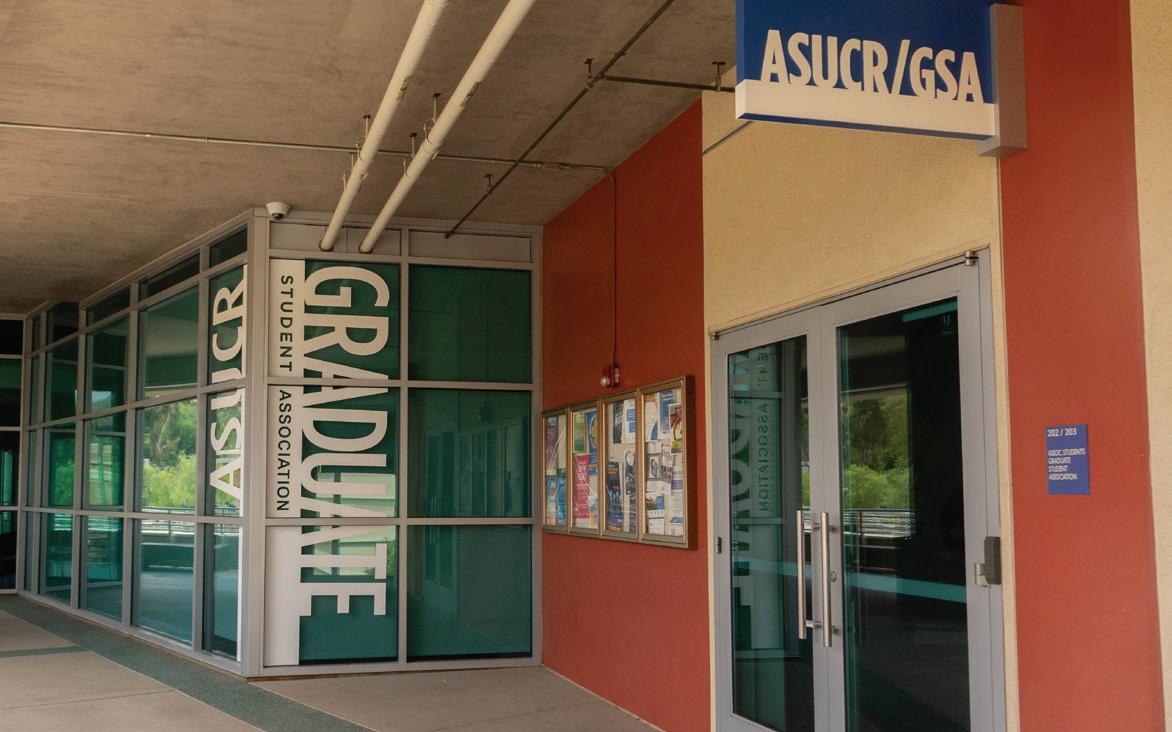
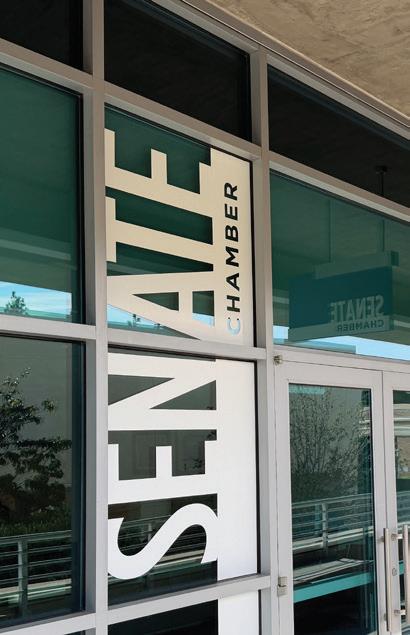
From April 27 to May 1, 2026, University of California, Riverside (UCR) students will have the opportunity to elect officers for the 2026-27 Associated Students of UCR (ASUCR) and to vote on the R’Garden and Highlander Abroad Referendum. However, this year’s elections have been marked by apathy due to the lack of candidates, minimal campaigning and limited outreach from ASUCR to the student body.
In the Senate, seven candidates are running for nine seats in the College of Humanities, Arts & Social Sciences (CHASS); five candidates are running for five seats in the College of Natural & Agricultural Sciences (CNAS); one uncontested candidate is running for the single seat in the School of Education (SOE); and one uncontested candidate is running for the single seat in the School of Public Policy (SPP).
Across multiple colleges, including CHASS, the largest student college, there are fewer candidates than available positions, and several candidates are running uncontested. With more than 26,000 students and the largest incoming class of first-year students, it is concerning that ASUCR cannot hold a competitive and transparent election featuring candidates who can represent the entire student body.
This year’s Elections Director and Elections Committee have not effectively promoted the ASUCR elections, as evidenced by limited social media advertising and few public forums beyond the public debates for students to learn about candidates. In previous years, the Elections Committee hosted events to encourage students to run through more outreach. They have also promoted voting in ASUCR elections by offering students incentives. This year, those efforts have stopped.
Additionally, The Highlander’s News team conducted significantly fewer candidate interviews this year than in previous years and many candidates — particularly in the Senate — did not respond to outreach. Endorsements help The

ALONDRA ORDAZ / THE HIGHLANDER
NIKO SUWANDI / THE HIGHLANDER
Staff
Editor-in-ChiEf
Mata Elangovan
editorinchief@highlandernews.org
Managing Editor
Isaac Solnick
managingeditor@highlandernews.org
nEws Editor
José Del Ángel
news@highlandernews.org
asst nEws Editor
Angelica Brianna Acosta asst.news@highlandernews.org
opinions Editor
Cecile Diroll
opinions@highlandernews.org
asst opinions Editor
Rubaita Iqbal
asst.opinions@highlandernews.org
fEaturEs Editor
Sanjana Thatte features@highlandernews.org
asst fEaturEs Editor
Nola Perifel
asst.features@highlandernews.org
radar Editor
Ian Palma radar@highlandernews.org
assistant radar Editor
Aakif Iqbal asst.radar@highlandernews.org
sports Editor
Terry Nguyen sports@highlandernews.org
asst sports Editor
Sofia Majeed asst.sports@highlandernews.org
photography Editor Vash Chen photo@highlandernews.org
assistant photo Editor
Alondra Ordaz photo@highlandernews.org
produCtion ManagEr
Agna Soneji
productionmanager@highlandernews.org
asst produCtion ManagEr
Emma Cabrera prodassistant.highlander@gmail.com
produCtion assistants
Ella Kim Nishi Girish prodassistant.highlander@gmail.com
art dirECtor
Adelia Urena highlander.art.director@gmail.com
Copy Editor
Rachel Ko copyeditor.highlander@gmail.com
graphiC dEsignEr
Layna Lapikas llapi002@ucr.edu
dEsign intErns
Holly Dawson
Emily Mata
BusinEss ManagEr Allison Fry highlanderads@gmail.com
asst. BusinEss ManagEr
Cinthia Meza highlanderads@gmail.com
VidEo Editor
Edwin Basurto video.highlander@gmail.com
asst. VidEo Editor
Isabella Hogan video.highlander@gmail.com
MarkEting dirECtor
Sinhayana Srivastava marketing.highlander@gmail.com
asst. MarkEting dirECtor
Isabell Gracia marketing.highlander@gmail.com
MarkEting intErns
Henya Dadem marketing.highlander@gmail.com
Abby Lazar marketing.highlander@gmail.com
tECh dirECtor
Ashna Pradhan techdirector@highlandernews.org
ad rEps
Paris Cao
Xochitl Gutierrez
Amelie Casasola
Xavier Scott
highlanderadrep@gmail.com
distriBution ManagEr
Noah Davis Witten
Humans of UCR

Third year art major
CONTACT US
The Highlander 101 Highlander Union Building Riverside, CA 92521 www.highlandernews.org editorinchief@highlandernews.org
TIP LINE: (951) 8221-2105
Help the Highlander stay on top of what is happening on campus and in the general UCR community. Call this number and leave a message for the Editorial Board with your tip. Be sure to include your full name, relation to UCR, and a number or email address where you can be reached for more details.
LETTERS TO THE EDITOR
The Highlander accepts letters from the campus community. They must be 600-800 words at length and include the author’s name and contact information. Topics should be UCR-centric and/ or pertain to our generation of students. Contact Opinions Editor Cecile Diroll at opinions@highlandernews.org by Wednesday if interested in writing a letter and submit the completed letter by Saturday at noon. Letters can and will be rejected if it does not meet requirements.
LEGAL
The Highlander is published and copyrighted by the Highlander for the students, faculty and staff of UCR. All rights are reserved. Reprinting of any material in this publication without the written permission of the Highlander is strictly prohibited. Readers are allowed one free copy of the newspaper. For additional copies or for subscription information, please contact the Highlander. The Highlander fully supports the University of California’s policy on nondiscrimination. The student media reserve the right to reject or modify advertising whose content discriminates on the basis of ancestry, color, national origin, race, religion, disability, age, sex or sexual orientation. The Highlander has a media grievance procedure for resolving complaints against it. All inserts that are printed in the Highlander are independently paid publications and do not reflect the views of the Editorial Board, the staff or The University of California or the Associated Students of UCR.
“I’m from LA. I’m from Santa Monica… I miss the smell of the ocean a lot when I’m here. My main, my main medium, is sculpture. I really like to do sculpture and ceramics. But just like sculpture in general.”
“I like to listen to music. I really like K-pop, yeah I also really like to watch true crime on YouTube.I just watch a lot of YouTube. I was an orchestra kid my whole life. So I played the violin for 11 years, and I am taking a break from it now, but I would like to go back soon, at some point. I like to eat. I’ve been going a lot to Ivan’s lately. Ivan’s and Scotty’s Just getting either like a little sandwich or just like some sort of snacks to keep me satiated throughout the day, either that or just like walking around [in] the nature. It’s really nice. I do have this one spot where I like to sit down and eat lunch. It’s this bench near Costo Hall. It’s behind Costo Hall, and it’s very secluded under trees, and I like to eat lunch there”
“I went to a REX Orange County concert…It was one of the best concerts I’ve been to. I went with my sister, my younger sister, and it was so awesome. We cried quite a bit together, but we sang our hearts out, and [it] was so awesome.”




Camila Sigbaum (she/her)
Compiled by Sanjana Thatte, Features Editor

IRENE TU / THE HIGHLANDER
ASUCR Senate Meeting
MEMBERS APPROVED KEY LEGISLATION AND HEARD SOTA REPORTS.
On April 22, 2026, the Associated Students of the University of California, Riverside (ASUCR) meeting began at 7 p.m. and adjourned at 8:35 p.m.
During public forum, Chief Justice Vaneet Pani noted the upcoming hearings for the 2026-27 ASUCR elections.
State of the Association (SOTA) reports were delivered by Office of the President, Office of the Executive Vice President, Vice President of Diversity, Equity and Inclusion (VP of DEI), Vice President of External Affairs (VPEA) and Office of the Non-Traditional Student Director.
In their SOTA reports, President Leila Haidar and Executive Vice President Mia Tu’ifua both noted restructuring and organizational changes to their offices. Additionally, in regards to the initiatives under the VP of DEI’s office, Chicano Student Programs student employee Nayeli Dominguez noted, “If you don’t know who’s representing you, then there’s a problem there.”
In her SOTA report, VPEA Briana Trujillo acknowledged mistakes in the VPEA office and wanted future members to learn from those mistakes, noted upcoming university affairs dates and provided updates on the Legislative Advocacy and Civic Engagement Committees.
Finally, Non-Traditional Student Director Nina Haywood delivered a SOTA report highlighting the office’s focus on connecting non-traditional students to student services, initiatives to help student parents transition to childcare programs as they enter college and updates on ASUCR’s Committee on Preparatory Education.
VPEA Trujillo presented an update on the Student Regents Empowerment Amendment (ACA 18), a letter which advocates for increasing student representation among the University of California Regents from one to two voting members. The presented letter was approved by the Senate 12-0-1.
During committee reports, the Senate unanimously approved resolution SR-S26-004, which would move the Elections Committee to the Judicial Branch. The resolution was presented by Elections Director Diya
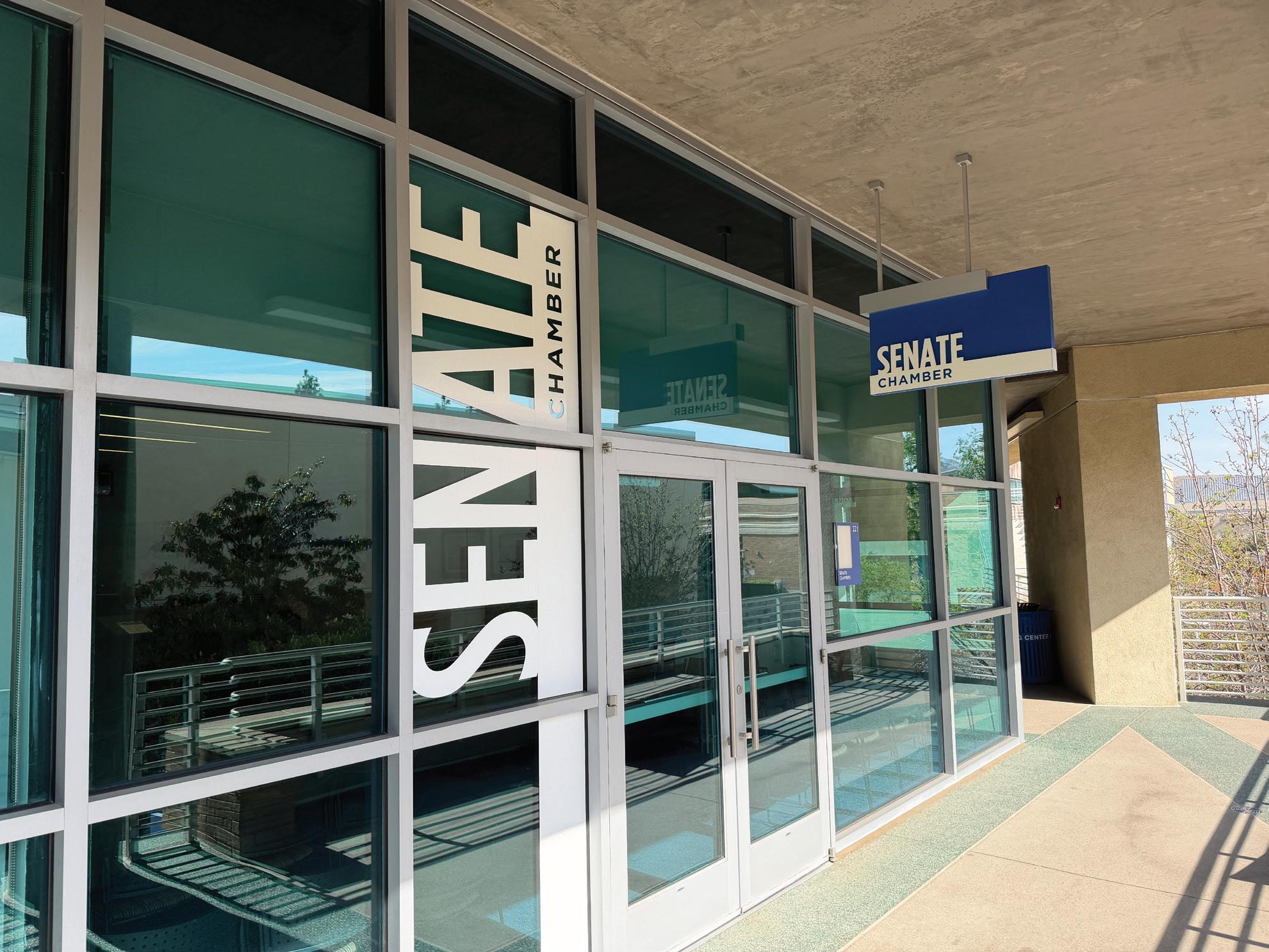
Baskaran, Chief Justice Vaneet Pani and Associate Justice Nathan Johnson, and it aimed to address historical issues with ASUCR elections. Associate Justice Johnson noted that the change would add another check and balance to the association, ensuring that the Elections Director acts in a fair and just manner.
A Green Campus Action Plan Grant 0020, which would provide $60,000 for the R’Bus project, was approved 12-0-0. Vice President of Sustainability
Anahita Hooshyari far noted the recent end of UCR’s Campus Safety Escort Services and raised the R’Bus as a viable alternative. Tentatively, the R’Bus would operate Monday through Friday from 8 a.m. to 5 p.m. once established.
Minutes for Finance Budget Hearing #17 were also approved 11-0-1.
During public comment, VPEA Trujillo highlighted Earth Day programming and upcoming events.
Senator reports by BCOE Senator Sarah Zohary and CHASS Senator An Nguyen highlighted the need for ASUCR to urge the university to improve anonymous sexual assault reporting and an open Student Life role.
Concluding announcements included reminders from President Pro Tempore regarding UCR’s Undergraduate Research and Creative Activities Symposium and legislation submission deadlines, SPP Senator Pia Prashanth regarding an upcoming career fair event and SOE Senator Dulce Ruiz Hernandez regarding the upcoming May 4 SOE Career Readiness Town Hall.
■ H
Suspect killed in shooting with Ontario Police
ANDREW HAGLER Staff Writer
On Sunday, April 19, Ontario police officers shot and killed a man involved in a domestic dispute after he fired upon them with an assault weapon.
Around 8:52 a.m., police responded to multiple 911 calls reporting a domestic disturbance on the 1800 block of East Granada Court along with the threat of an armed man inside the house. Officers spoke to several family members
outside who said there were still people — including the armed man — inside. The suspect then exited the residence carrying a rifle and opened fire on officers. Officers returned fire and shot him, upon which he was taken to a hospital and died from his wounds.
Officers recovered an assault rifle and several casings on the scene. No officers were hurt, and there is no ongoing
danger to the community. The identity of the suspect has not yet been released. The case is ongoing, and anyone with relevant information should contact the Ontario Police Department at (909) 9866711, or Detective Sadeghain at (909) 408-1827.
OVI MATHIVANAN Assistant Opinions Editor
JOSE DEL ANGEL / THE HIGHLANDER
Environmental protest on campus
THE CENTER FOR COMMUNITY ACTION AND ENVIRONMENTAL JUSTICE PUSH TO EDUCATE STUDENTS ON ENVIRONMENTAL ADVOCACY.
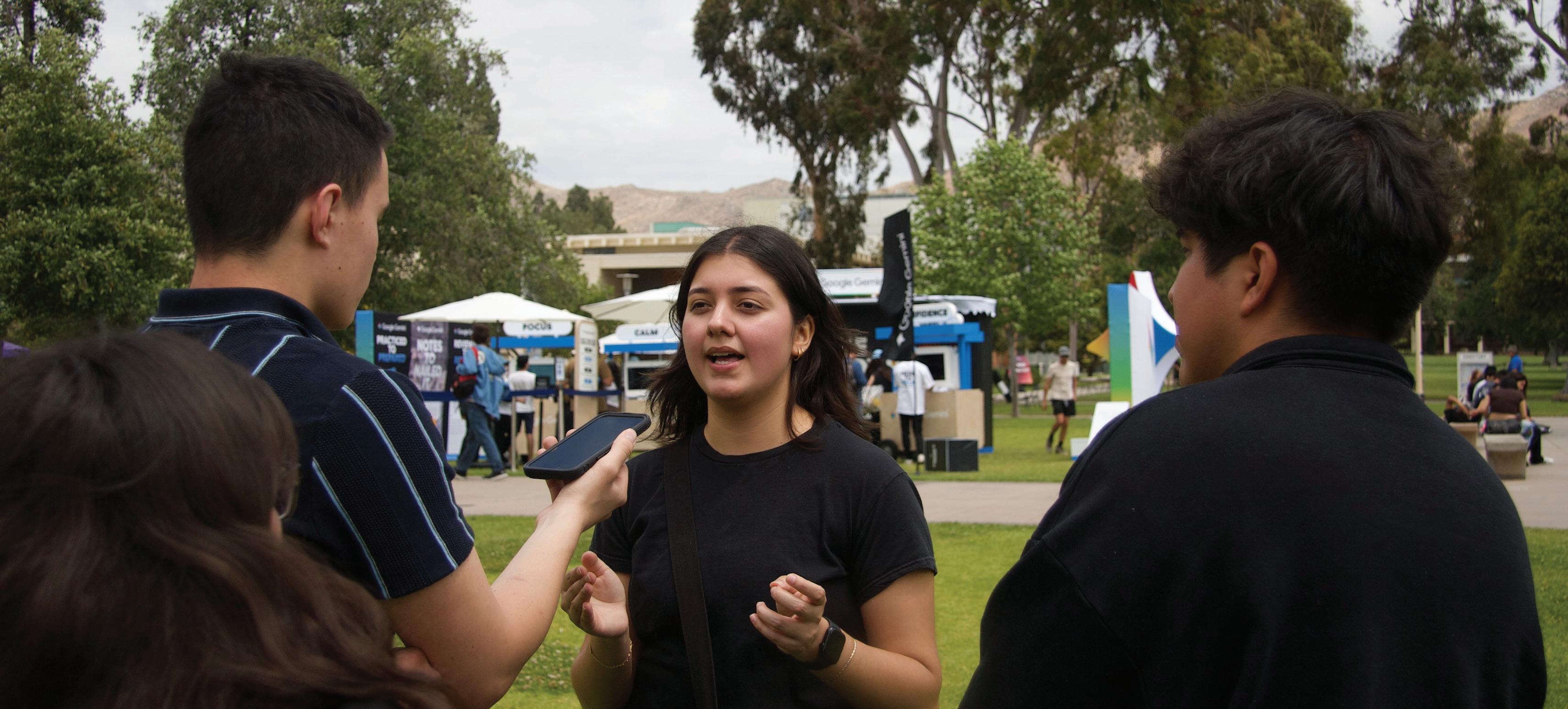
On April 21, the Associated Students at the University of California Riverside (UCR) Office of external affairs alongside the Green Campus Action Plan gathered in front of the bell tower for an environmental protest aimed at raising awareness about climate justice issues affecting the Inland Empire. The demonstration brought together campus groups and local organizations, including the Center for Community Action and Environmental Justice (CCAEJ), to highlight concerns about air pollution, warehouse expansion and the need for stronger community involvement in environmental policy.
Tatiana Flores, a community organizer with CCAEJ, explained that the group joined the protest to advocate against the continued growth of data centers and warehouses in Southern California, which contribute to pollution and environmental degradation. She emphasized the urgency of addressing climate issues locally, pointing to UCR’s industrial boiler as a significant source of emissions in the region. Flores connected these concerns to broad environmental justice efforts, noting that many Inland Empire communities already face some of the worst air quality in the country.
For Flores, the issue is also deeply personal. As a resident of nearby Moreno Valley, she has witnessed firsthand the increasing impact of climate change, including recent wildfires. She stressed that rising temperatures and worsening
air conditions disproportionately affect local commutes, making it essential for residents, especially students, to take action. “All of us deserve to have a safe environment to live in, to play in, and to learn in” urging greater awareness and participation.
A key goal of the protest was to encourage UCR students to become more engaged in local politics and environmental advocacy. Flores highlighted the importance of youth involvement, explaining that many past decisions affecting the region were made without input from younger generations. By organizing events like the protest, CCAEJ hopes to empower students to speak out on issues such as truck routing, warehouse development and regional planning efforts like Riverside’s General Plan update.
Graduate student Miguel Muñoz
Valtierra, who is studying Hispanic Studies at UCR and works with CCAEJ, echoed these sentiments. He described climate change as visible and pressing tissue, pointing to its effects on weather patterns and ecosystems. According to Valtierra, the purpose of the protest was not only to inform but also to remind people that environmental justice remains an ongoing concern “As long as you can hear those things and see them, it reminds you that people still care,” he said.
Valtierra also emphasized the importance of community participation in
decision making processes, particularly regarding warehouse development in nearby areas of Bloomington. He noted that protests and public gatherings serve as a way to amplify awareness and encourage residents to take part in local governance.
Another organizer involved in the event highlighted the policy driven aspects of the movement, focusing on efforts to reduce emissions from industrial sources. They discussed ongoing work with the South Coast Air Quality Management District to strengthen regulations and transitions towards zero emission technologies, such as electric boilers and heat pumps. These efforts are part of a broader campaign to address the Inland Empire’s air quality crisis, which they claimed has been linked to high rates of asthma and respiratory illness.
UCR students stressed that one of the biggest challenges is the lack of public participation in decision making spaces. Monthly air quality board meetings, for example, often see limited attendance from Inland Empire residents. As a result, officials may not feel sufficient pressure to adopt stricter environmental policies. Protest leaders encourage community members to attend these meetings, make public comments and advocate for cleaner air and sustainable practices.
JOSÉ DEL ÁNGEL News Editor
ALEXANDER WONG / THE HIGHLANDER
UCR Libraries’ technological transformations
AS NEED FOR IN-LIBRARY DESKTOP COMPUTERS DECLINES, LAPTOPS COME
IN.
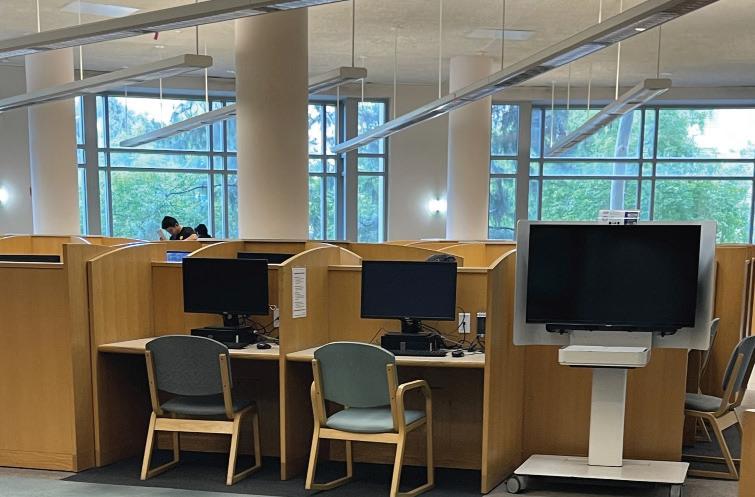
The University of California, Riverside (UCR) libraries — the Tomás Rivera and Orbach Science Libraries — plan to officially begin their plans of phasing out their desktop PCs and replacing them with “new, lightweight laptops.” These efforts have been in motion since 2021, as reported by a statement released by UCR’s Department of Statistics.
Alternatives to the desktop computers include the laptop check-out kiosks that can be found throughout campus, with each housing 30 laptops. These kiosks house a variety of laptop brands available, which include “Apple MacBook Pros, Dell Latitudes and Lenovo Thinkpads.” The checkout kiosks can be found on the first floor of both campus libraries, the Student Success Center (SSC) and the Highlander Union Building (HUB).
These kiosks are available to students at no additional cost, as they are funded through
the Student Technology Fee (STF). The kiosks allow students to check out laptops for up to 24-hours before returning them. When they are returned, “students’ personal information and activity are automatically erased,” ready for other students to use them. However, students are fined $5 for every hour the laptop is late from its return time.
This service allows students who do not own their own electronic devices, such as laptops or tablets, have access to their online assignments. Also, it offers an alternative to those who are experiencing technical difficulties with their own personal devices.
The libraries have also released a report with new updates that are both already in motion and are coming soon, following student participation in the “Love It | Fix It | Add It” campaign that occurred this March. This campaign asked students to provide comments on what they would like
to see implemented, fixed or removed in the libraries in an effort to ensure the libraries are “creating the best possible environment for your academic success.”
Despite the libraries’ intentions of transitioning out of having a leading majority of desktop computers, the libraries appear to plan to keep some of their desktop computers, while simultaneously improving them by “replacing desktop computers on the first floors with new ones, which will include brand-new keyboards.”
Although there has been an increase in personal ownership of technology equipment, leading to an overall drop in demand for desktop computers at both the university and national levels, the California Institute of Technology found that “survey results indicated that students do find having access to desktop computers is still relevant for their research and personal needs.” ■ H
MARIBEL HERNANDEZ Staff Writer
ISAIAH SIMMONS / THE HIGHLANDER
THE HIGHLANDER EDITORIAL
Apathy and disinterest cloud ASUCR elections
Low voter turnout should not come as a surprise this year.
THE EDITORIAL BOARD
From April 27 to May 1, 2026, University of California, Riverside (UCR) students will have the opportunity to elect officers for the 202627 Associated Students of UCR (ASUCR) and to vote on the R’Garden and Highlander Abroad Referendum. However, this year’s elections have been marked by apathy due to the lack of candidates, minimal campaigning and limited outreach from ASUCR to the student body.
In the Senate, seven candidates are running for nine seats in the College of Humanities, Arts & Social Sciences (CHASS); five candidates are running for five seats in the College of Natural & Agricultural Sciences (CNAS); one uncontested candidate is running for the single seat in the School of Education (SOE); and one uncontested candidate is running for the single seat in the School of Public Policy (SPP). Across multiple colleges, including CHASS, the largest student college, there are fewer candidates than available positions, and several candidates are running uncontested. With more than 26,000 students and the largest incoming class of first-year students, it is concerning that ASUCR cannot hold a competitive and transparent election featuring candidates who can represent the entire student body.
This year’s Elections Director and Elections Committee have not effectively promoted the ASUCR
elections, as evidenced by limited social media advertising and few public forums beyond the public debates for students to learn about candidates. In previous years, the Elections Committee hosted events to encourage students to run through more outreach. They have also promoted voting in ASUCR elections by offering students incentives. This year, those efforts have stopped.
Additionally, The Highlander’s News team conducted significantly fewer candidate interviews this year than in previous years and many candidates — particularly in the Senate — did not respond to outreach. Endorsements help The Highlander and students learn about the candidates, including their background, prior experience, plans if elected and accomplishments if they already hold a position in ASUCR. If endorsed, candidates receive a platform in The Highlander to share their campaign goals.
The Highlander sent multiple emails about endorsement meetings and attended Senate meetings to inform ASUCR members and the audience during public comment about the endorsement process. While some ASUCR members have said that their emails were not working, this is simply not an excuse and is concerning, given that they need their email accounts to fulfill their responsibilities.
This is not to say that some candidates’ decision not to seek endorsements should disqualify them,
but it does raise questions about their commitment to campaigning and engaging with the student body. With many candidates running uncontested or in races where they are guaranteed to win, there is nothing to hold them accountable. If they do not want to talk with the student newspaper, it is fair to ask whether they will even engage with UCR students.
Campaigning is more difficult because of restrictions on posting materials around campus, especially at the Highlander Union Building (HUB). The Time, Place and Manner policy has had a chilling effect on student activism, campus culture and now ASUCR elections following the UCR pro-Palestinian encampments.
However, ASUCR’s lack of effort to engage with students is most frustrating. It requires some creativity and work, but candidates could still talk to students by the Bell Tower, visit classrooms, check in with campus resources like Costo Hall and attend community events.
These are all opportunities for them to learn about campus issues and share their campaign goals, yet many candidates seem not to take them because they expect to win. If this campaigning style continues at UCR, it will hurt student representation and lower the standard ASUCR should uphold for student engagement.
Students are busy and stressed about what is happening in this country and may understandably be unable to stay informed about ASUCR. Moreover,
this makes transparency even more important.
Other UC student governments have established initiatives, such as databases that track elected officials’ legislation, meeting attendance, voting records and funding decisions. ASUCR should do something similar or elections will become popularity contests, especially since student turnout has been low recently. If students have this information when voting, they can make informed decisions, leading to greater accountability.
ASUCR has recognized their mistakes for years and pledged to fix them. Now is the time to take action. They should begin by reexamining their campaign strategies and engaging with students both face-to-face and via social media.
UCR students should still vote in this election, especially since referenda like the R’Garden are on the ballot. ASUCR also oversees funding and has authority over many student resources and organizations that directly affect UCR students’ lives, whether they know it or not. By voting in this election, UCR students can shape what student life will be like next year.
But no one should be surprised if student turnout is low.
The Highlander editorials reflect the majority view of the Highlander Editorial Board. They do not necessarily reflect the opinions of the Associated Students of UCR or the University of California system.
ALONDRA ORDAZ / THE HIGHLANDER
Endorsements for the ASUCR 2026-2027 elections
THE EDITORIAL BOARD
THE ASSOCIATED STUDENTS OF THE UNIVERSITY OF CALIFORNIA, RIVERSIDE (ASUCR) VOTING BOOTHS WILL BE OPEN FROM APRIL 27 THROUGH MAY 1. WITH ANY ELECTION, IT IS OF UTMOST IMPORTANCE TO KNOW AS MUCH AS POSSIBLE ABOUT THE POTENTIAL REPRESENTATIVES OF NEXT YEAR’S STUDENT GOVERNMENT. THE PURPOSE OF THE HIGHLANDER’S ENDORSEMENTS IS TO HELP INFORM STUDENTS ABOUT CANDIDATES FOR VARIOUS POSITIONS AND PROVIDE CONTEXT ON WHAT THESE CANDIDATES HAVE TO OFFER SO WHEN STUDENTS ARE READY TO VOTE, THEY KNOW WHAT EACH CANDIDATE HAS TO OFFER. THE FOLLOWING STUDENTS ARE THE CANDIDATES THAT THE HIGHLANDER EDITORIAL BOARD BELIEVES ARE QUALIFIED AND DESERVE AN ENDORSEMENT FOR THE 2026-2027 ASUCR ELECTIONS.
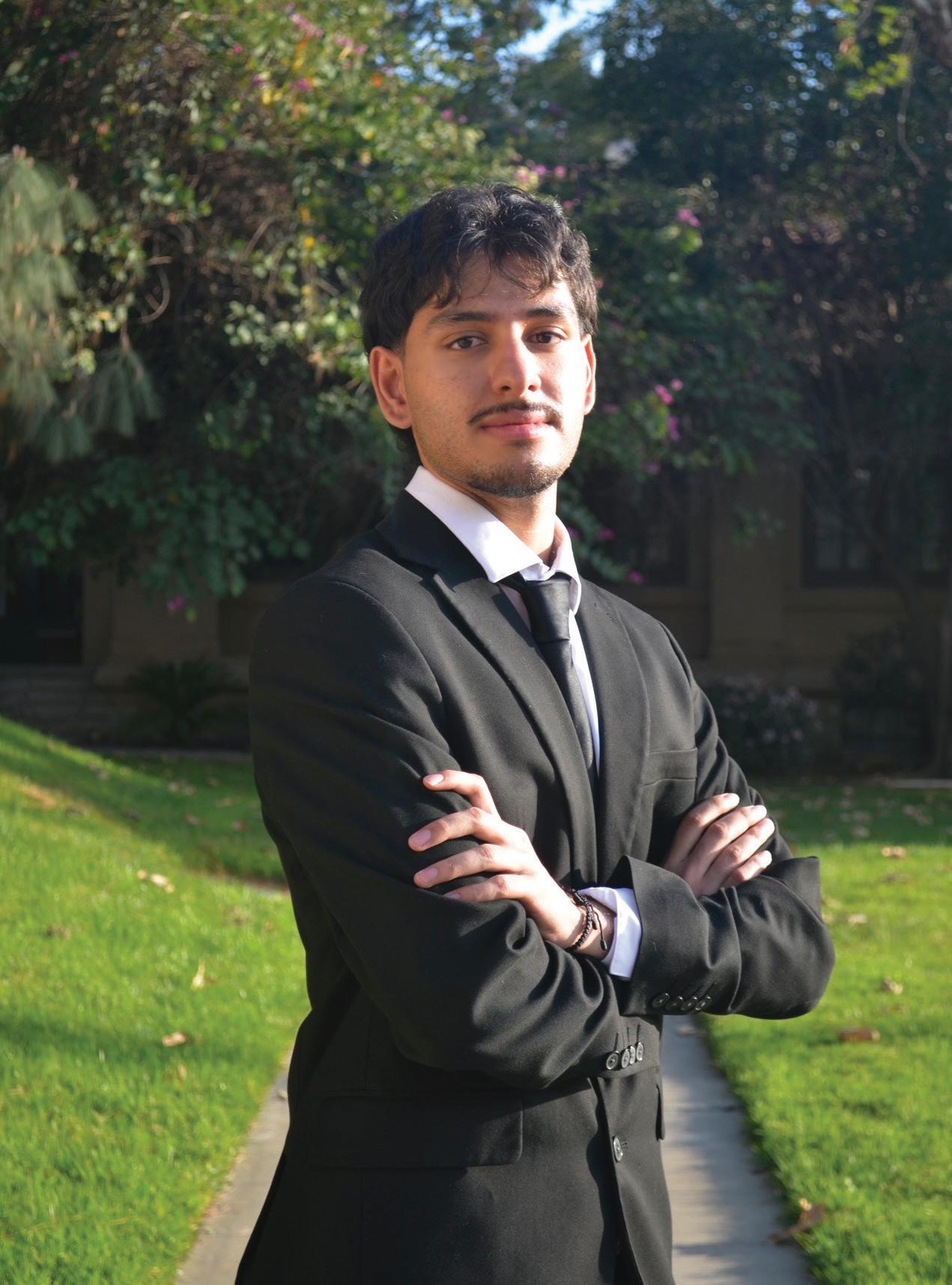
Rohan Vig has been endorsed for Executive Vice President for his clear commitment to bridging environmental health, social justice and student advocacy in ways that feel both personal and actionable. As a neuroscience major, his long-standing interest in these issues is not abstract — it is shaped by his lived experience growing up in Riverside, where poor air quality directly impacted his family. This grounding shows in both his research on local climate action plans and his consistent volunteer work, signaling a candidate who understands how policy translates into real-world consequences.
What sets current Senator Vig apart from other candidates is his ability to connect that awareness to tangible student engagement. His proposals — including “What Happened Wednesdays” and expanded video outreach — reflect a sharp understanding that transparency and accessibility are key to rebuilding student trust in ASUCR. His track record as one of the most communicative senators with student media further reinforces his credibility as a candidate focused on accountability and visibility.
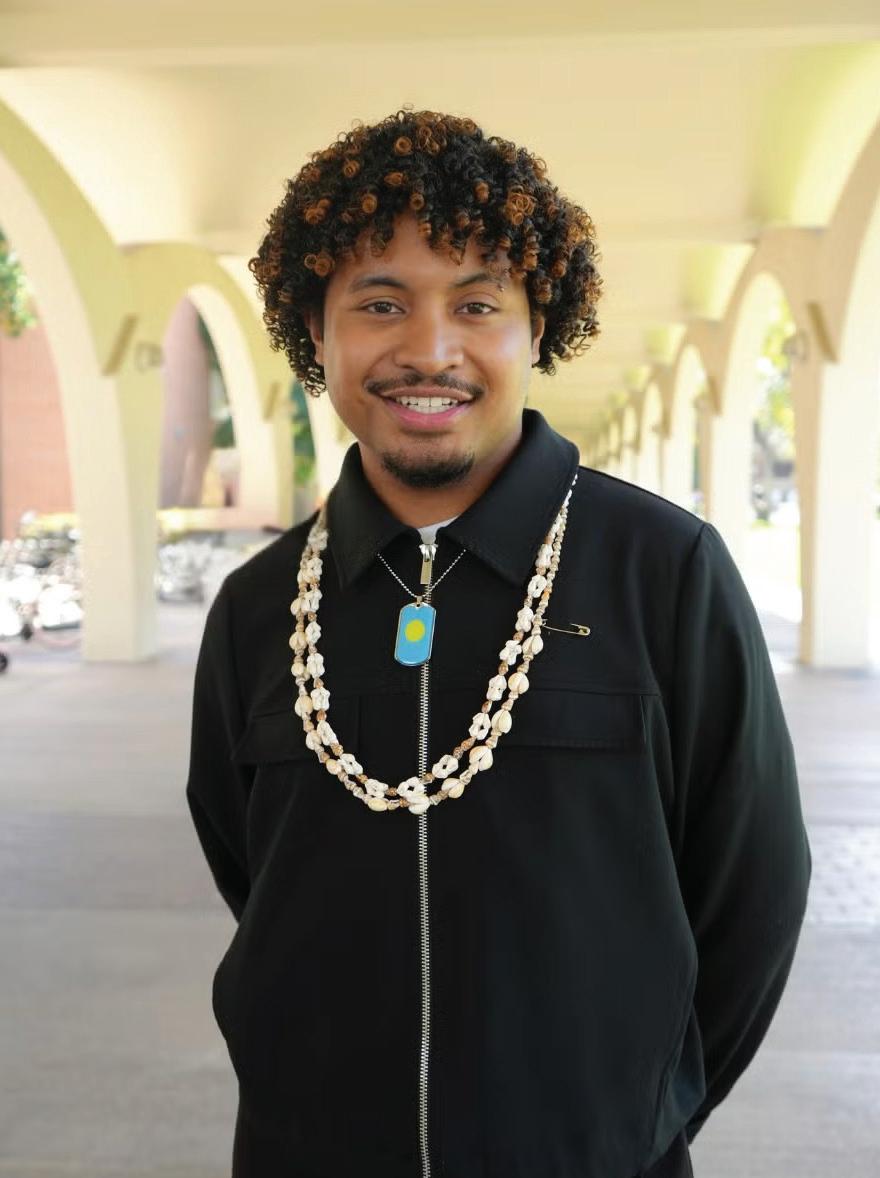
For Joseph Anastacio, external affairs is not just about policy — it’s about visibility. By pointing to the small percentage of Pacific Islander students at UCR and the persistent misunderstandings surrounding communities like the Inland Empire and Central Valley, Anastacio frames advocacy as a matter of representation as much as legislation. His work centers on amplifying voices that are often overlooked and addressing the structural gaps that contribute to that invisibility.
As Legislative Director, he’s already been doing that work — building connections with housing initiatives, engaging in labor conversations and representing students in national spaces like the University of California Student Association (UCSA). His work reflects a strategic approach to external affairs rooted in coalition work. While running uncontested, Anastacio emphasizes that his campaign is more about strengthening communication — particularly through partnerships with student media — to ensure students are aware of and connected to the advocacy being done on their behalf.
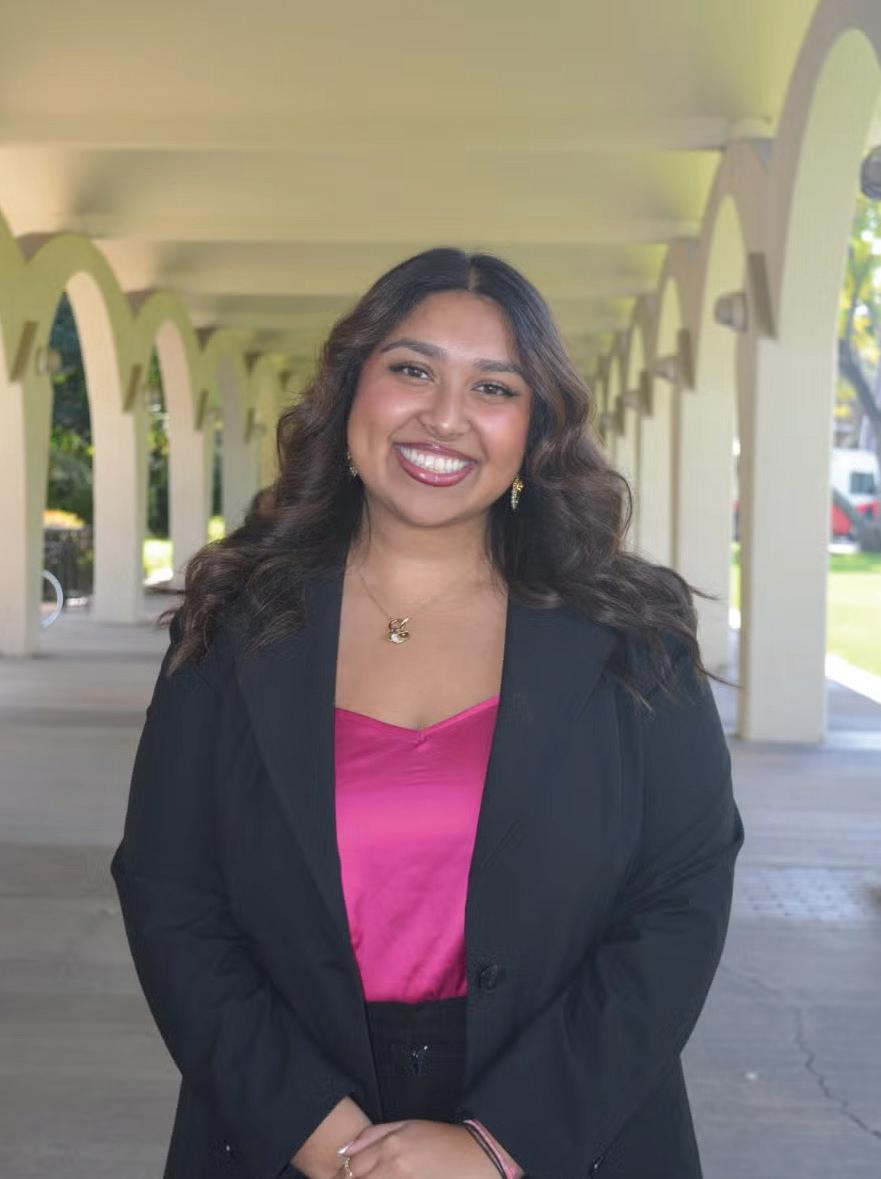
Pia Prashanth isn’t shying away from the reality students are facing — she’s naming it directly. From food insecurity to the rising cost of education, her campaign centers the idea that students shouldn’t have to fight just to stay afloat. As a Cal Grant recipient and longtime advocate for gender equity, Prashanth’s platform is shaped by lived experience, not just policy talking points.
Her proposals focus on expanding what already works — like Scotty Eats, a food recovery and meal redistribution program — while filling in the gaps, including meal support for commuter students and increased transparency over textbook costs. At the same time, she’s calling out what hasn’t worked, pointing to a lack of initiative within the Office of Internal Affairs and pushing for stronger relationships with campus departments to better support students. Whether it’s advocating for campus safety resources or ensuring UCR remains a sanctuary campus, Prashanth’s campaign is rooted in access, accountability and followthrough.
Executive Vice President: Rohan Vig
Vice President of External Affairs: Joseph Anastacio
Vice President of Internal Affairs: Pia Prashanth
Vice
President of Marketing & Promotions: Rosie Liu
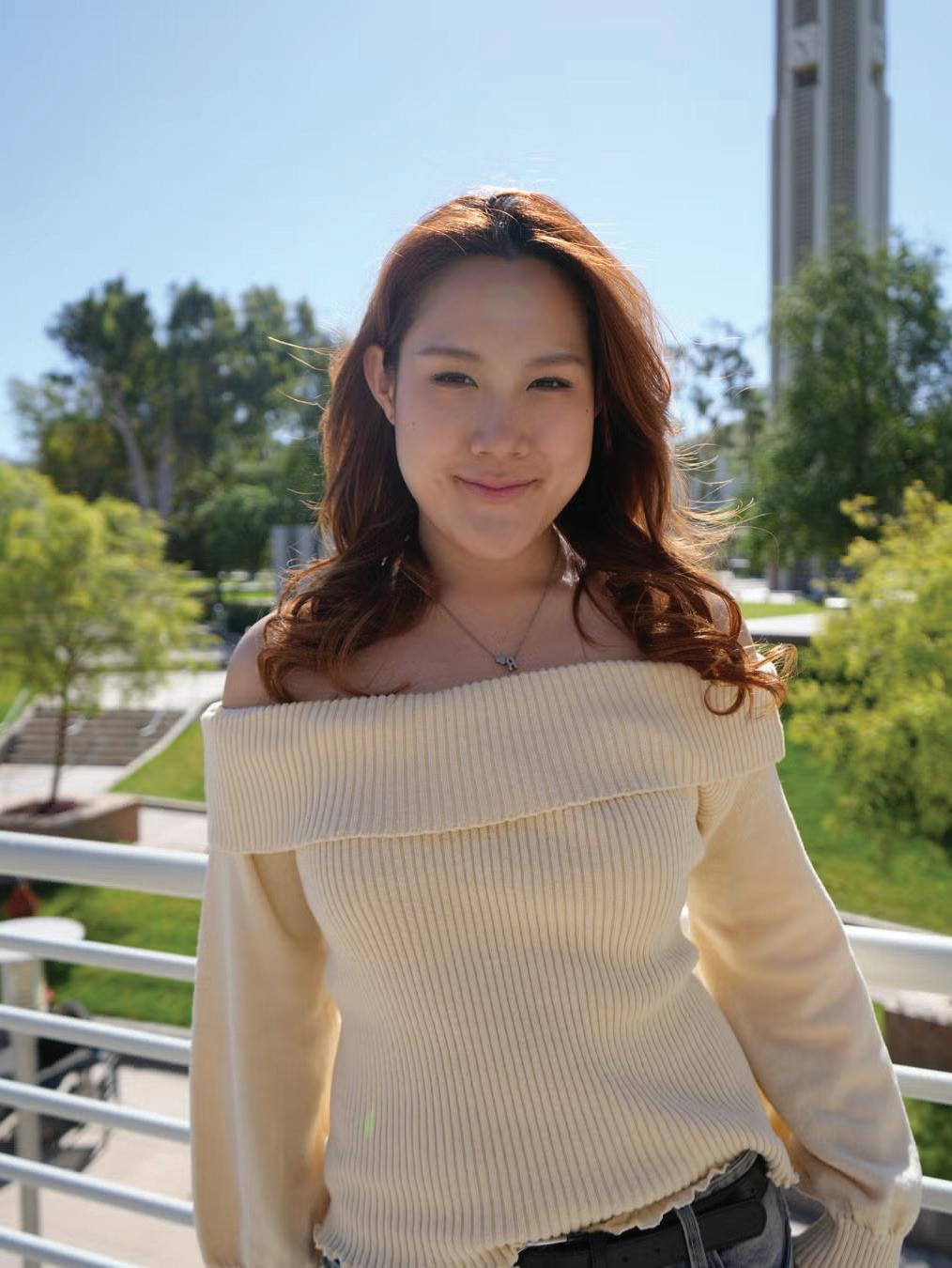
Rosie Liu has been endorsed for her clear-eyed assessment of ASUCR’s current marketing strategy and her forwardthinking approach to improving student engagement. Identifying an overreliance on text-heavy infographics, Liu proposes a shift toward more dynamic, short-form video content — including TikToks and Instagram Reels — to better align with how students consume information. Her emphasis on accessibility, from reducing dense text to creating more digestible and visually engaging content, reflects a broader understanding of the barriers that limit student engagement.
But her platform goes beyond just making content look better. Liu is also focused on fixing what happens behind the scenes, from aligning marketing staff through weekly workshops to streamlining the approval process that slows posts down. She’s thinking about access too — expanding outreach to campus TV screens for students who aren’t on social media, while ensuring graphics are legible and inclusive. With a focus on visibility and restructuring, Liu’s campaign centers making ASUCR communication clearer, faster and harder to miss.
Bourns College of Engineering
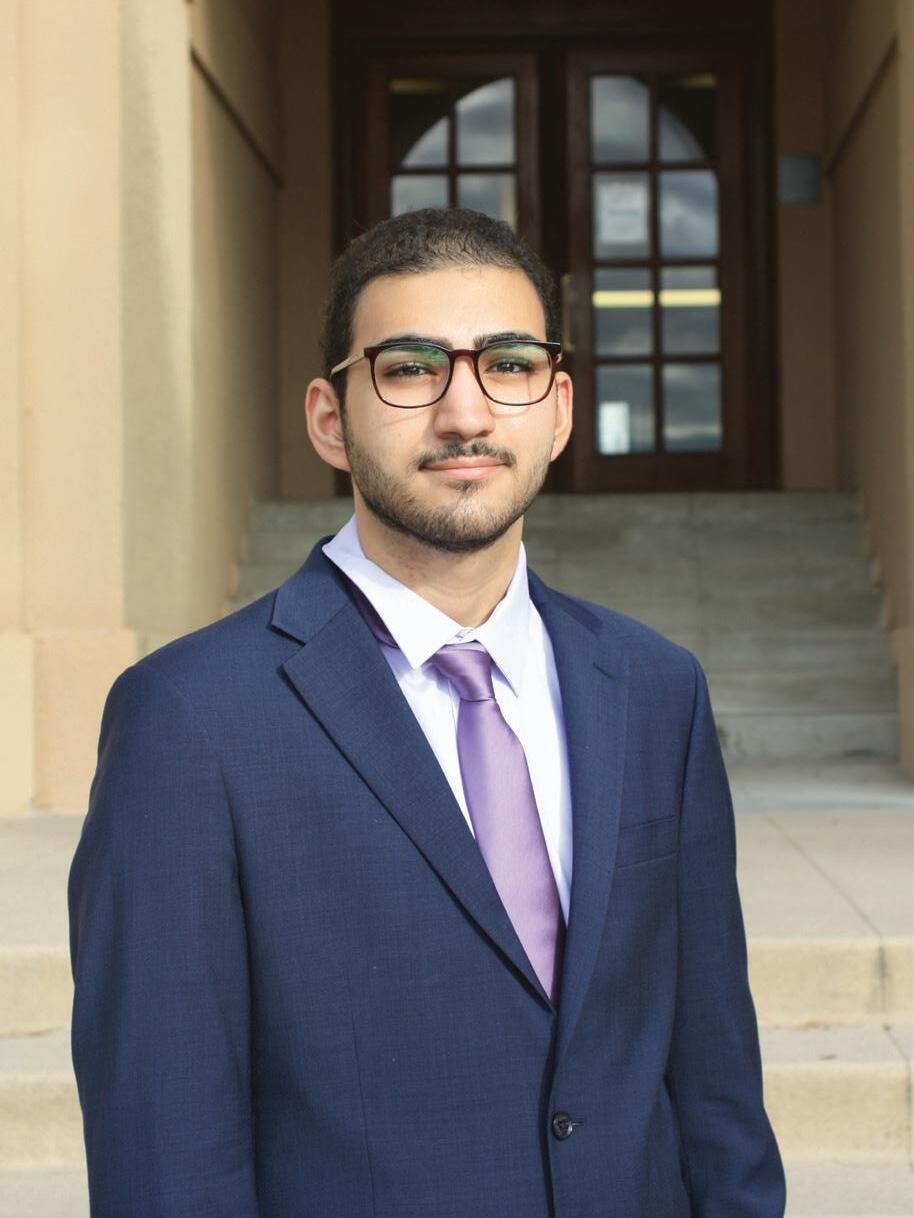
(BCOE) Senator: Hamza Abdallah
Hamza Abdallah is focusing on something a lot of BCOE students quietly struggle with: figuring out what comes next. From navigating technical interviews to even figuring out where to start with internships, Abdallah is calling out the gap between opportunity and access — and pushing for clearer, more accessible support systems.
His platform centers on two key areas: internships and research. Abdallah identifies a disconnect in the internship process, particularly the lack of accessible guidance and preparation for technical interviews, and proposes expanding resources through more accessible campus services. He also highlights disparities in research accessibility for BCOE students, advocating for increased outreach from professors. At the same time, Abdallah is thinking beyond academics, advocating for practical improvements like better bus access and more affordable grocery options. Combined with his emphasis on collaboration and transparency — even being the only candidate to directly ask how to better work with student media — his campaign centers accessibility and follow-through.

From the Editorial Board: Behind the Endorsement Process
To maintain transparency on how we endorsed candidates, The Highlander is releasing the steps we took to ensure that the process was fair and unbiased. Prior to the beginning of the campaign season, The Highlander reached out to ASUCR’s Election Committee to have an email sent with information on how to be endorsed by the paper if the candidate was interested. The email entailed how to sign up for an interview with the News Team. These interviews act as a method of information for the Editorial Board to understand a candidate’s goals and the experience they have gained over the years. Using this information, as well as supplemental information from reports and meetings throughout the year, a profile was made for each candidate who had come for an interview. During a meeting of the Editorial Board, The Highlander discussed each of the interviewed candidates at length in order to determine who we would want to endorse as a paper. In order to receive an endorsement, a candidate needed to receive approval from 80% of the Editorial Board.
Candidates that completed interview with the The Highlander:
For the position of President: Bruce Riazi
For the position of Executive Vice President: Rohan Vig and Chloe Wang
For the position of Vice President of External Affairs: Joseph Anastacio
For the position of Vice President of Internal Affairs: Pia Prashanth
For the position of Vice President of Marketing & Promotions: Rosie Liu, Keith Leung and Dominic Herrera
For the position of Bourns College of Engineering Senator: Hamza Abdallah, Veda Vikram and Sarah Zohary
Positions that did not reach out for an interview with The Highlander:
Vice President of Finance
Vice President of Sustainability
Vice President of Diversity, Equity & Inclusion
International Student Director
College of Humanities, Arts & Social Sciences Senator
College of Natural & Agricultural Sciences Senator
School of Public Policy Senator
School of Business Senator
School of Education Senator
Student perspectives on ASUCR elections
STUDENTS SHARE THEIR THOUGHTS ABOUT THE ONGOING 2026-27 ELECTIONS CYCLE.
Compiled By: Ovi Mathivanan, Assistant Opinions Editor
Are you likely to vote in this year’s ASUCR elections? Why or why not?
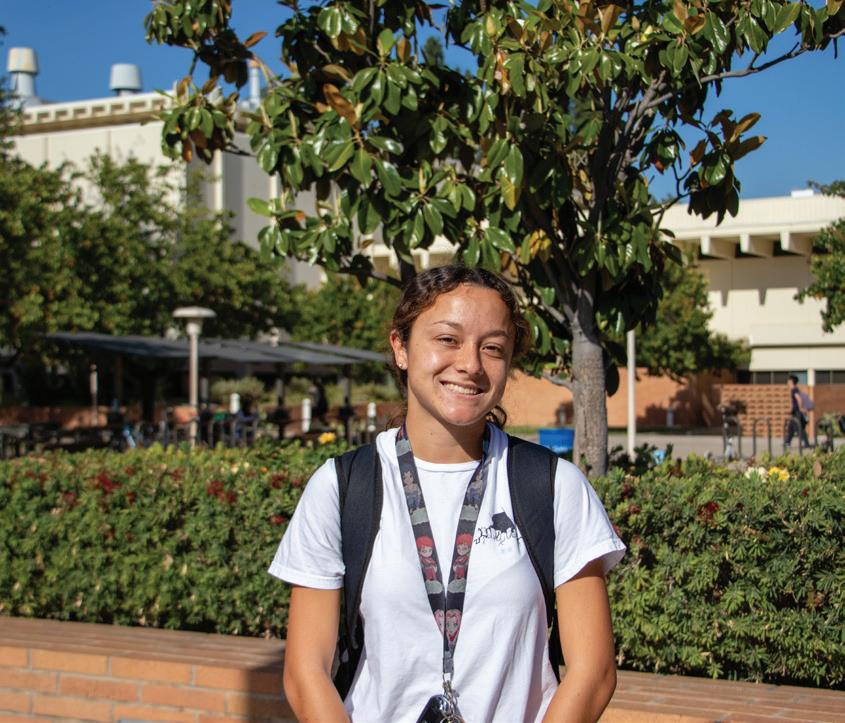
Alexis Corvese
Cell, Molecular and Developmental Biology, Third Year (she/her)
“I think I’m most likely to … like helping with the R’Garden, that’s something I feel that’s very useful for our campus.”
How
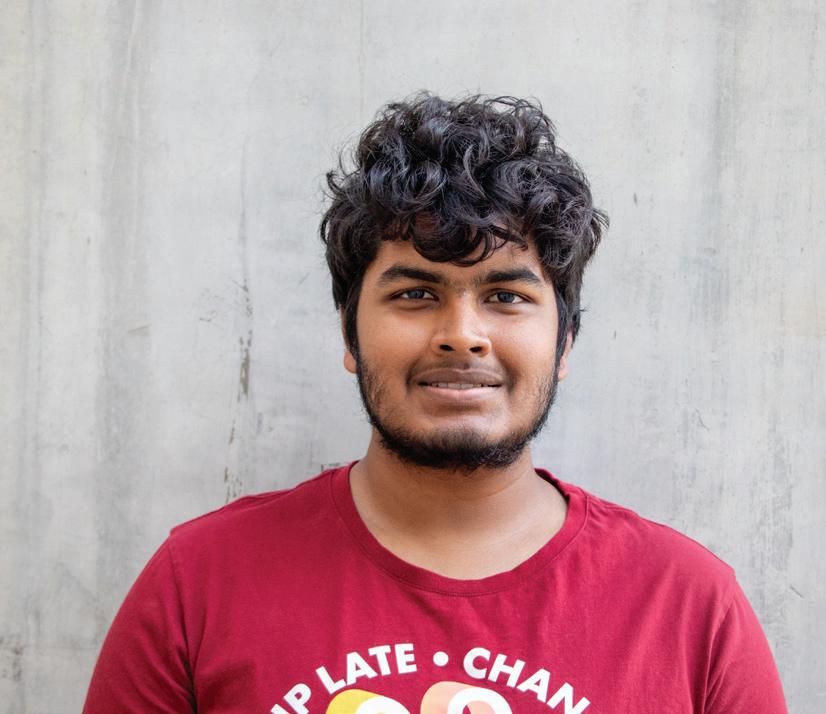
Ritvik Mishra
Computer Engineering, Second Year (he/him)
“Honestly, I think I am going to vote, not because I honestly care what changes are going to occur, but I feel like this represents what we are supposed to do in the real world. We are supposed to be voting for who is going to represent us … who I want to lead the society that I’m in right now.”
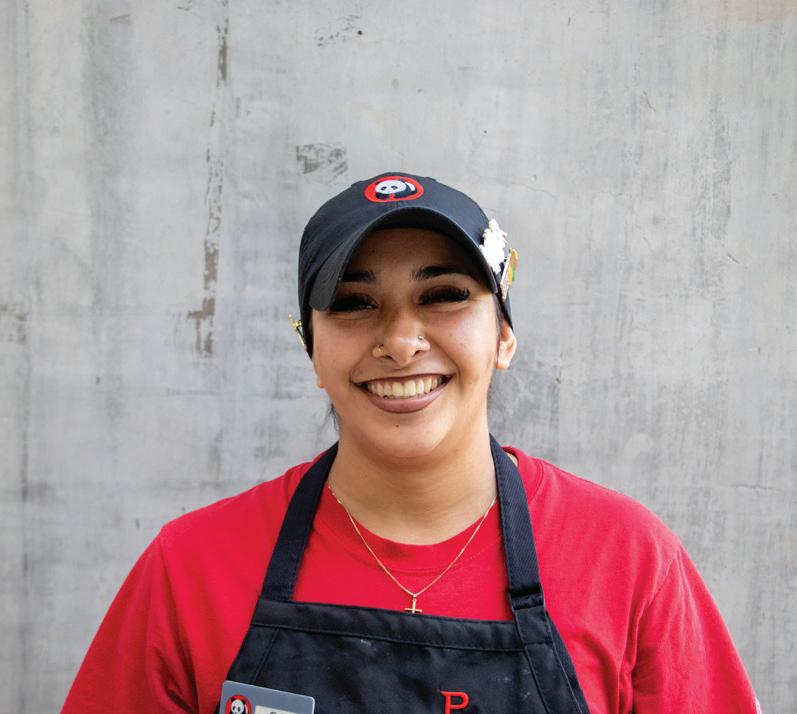
Political Science, Fourth Year (she/her)
“I would say yes because I kind of always just do it. It pops up in my emails … it doesn’t take too long either. I always do it also because all my other friends always tell me to do it, as well.”
accessible do you find information about ASUCR candidates and referendums?
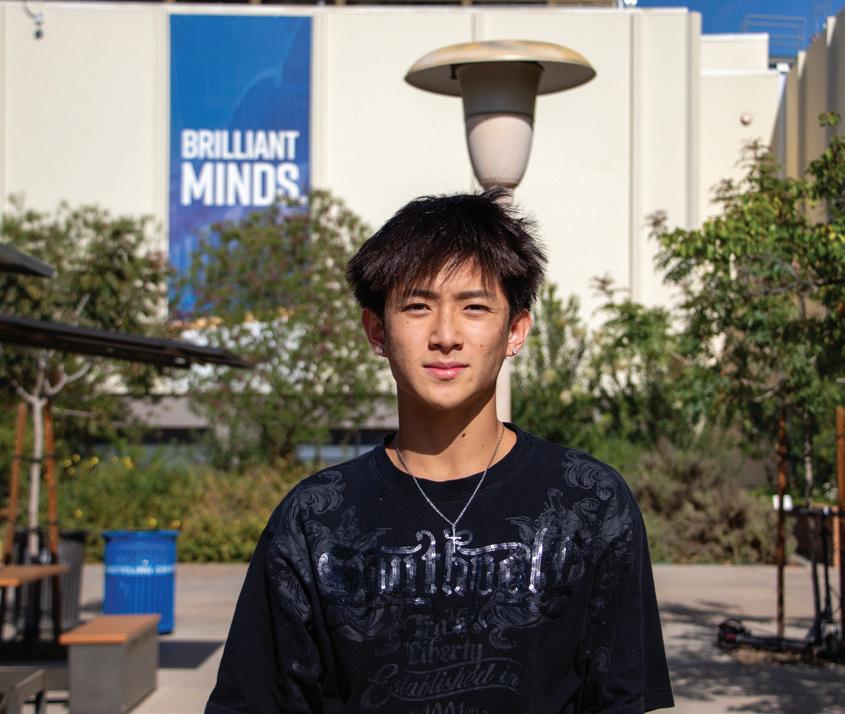
Mitchell Wei
Biology, Third Year (he/him)
“I find it pretty accessible … I saw a whole sign that says ‘Vote for ASUCR elections.’ I’ve been getting emails as well in terms of who I should vote for [in] ASUCR elections, descriptions, goals of all the candidates.”
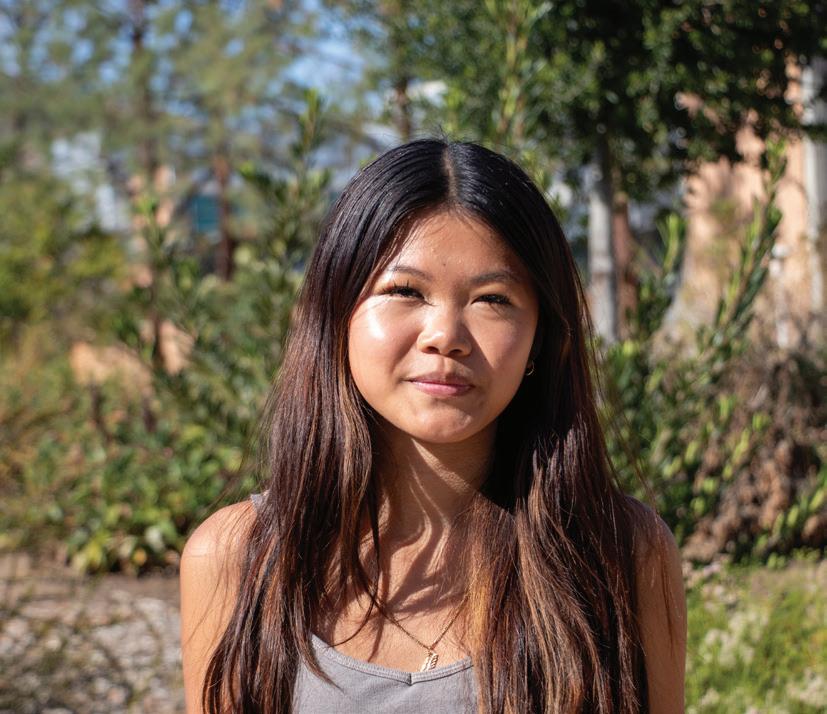
Megan Pham
Pre-Business, First Year (she/her)
“I feel like as a first year, I’m not really aware of a lot of the AS candidates, a lot of them are upperclassmen, or a lot of the people I know don’t really have the strongest connections to those upperclassmen.”
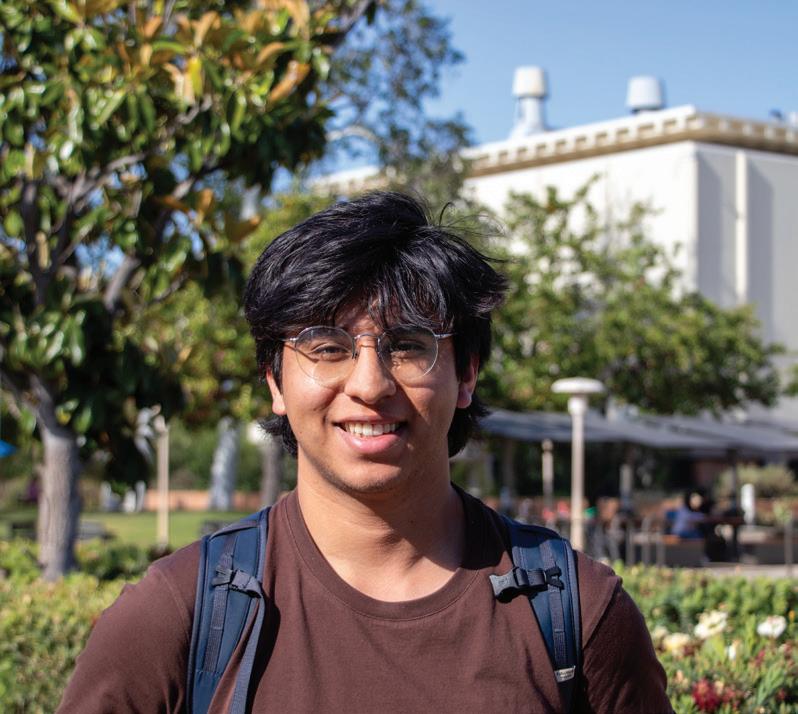
Manny Gaspar Cell, Molecular and Developmental Biology, Third Year (he/him)
“I’d say fairly easy, or they’re accessible in the sense like I’d find it in my Instagram page, I’d find as well as people advocating as I walk to campus.”
If you were to vote in ASUCR elections, what factors would most strongly influence your choices?

Haley Klein
Business Administration, Second Year (she/ her)
“For the referendums … I would want to read the details of it, see what specifically the money is being used for, where the money is coming from … For student representatives, I would want to see what their past experience in leadership roles most similar to that are.”
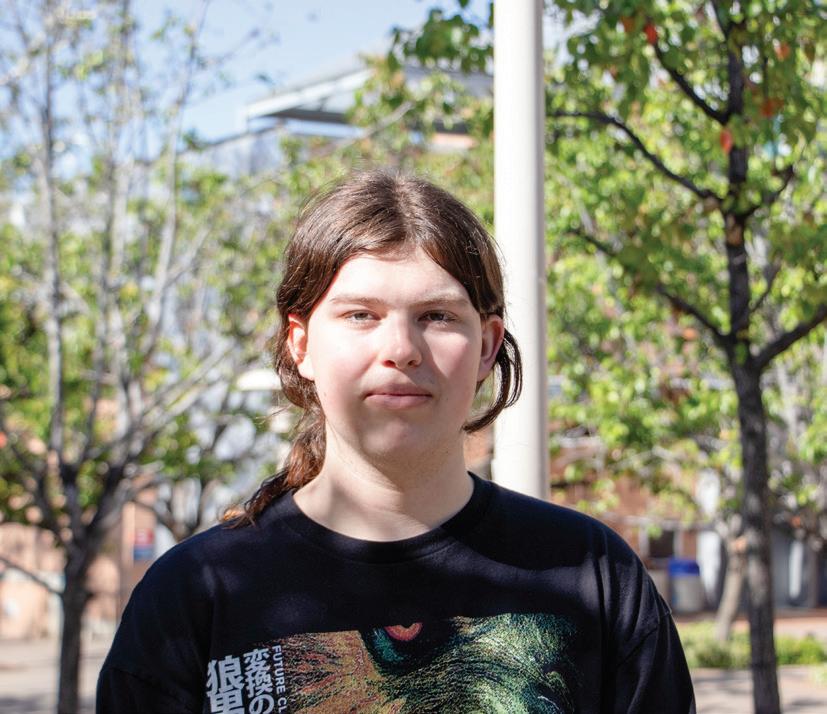
David Sherman
Computer Engineering, First Year (she/her)
“It would just be what the policy actually wants to do … I would look at where the money is going to and what groups they want to fund, what their goals are and if they’re going to use the money wisely.”
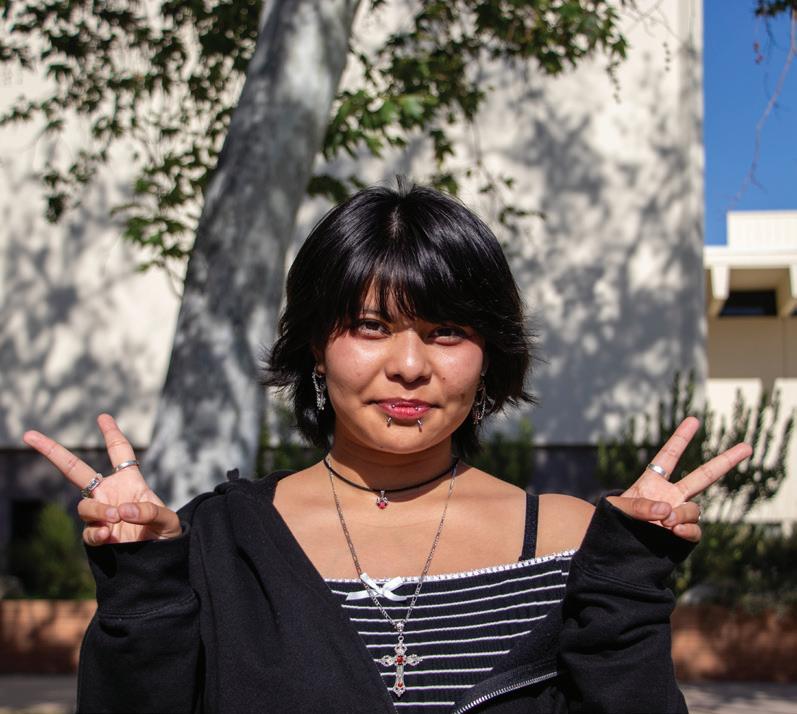
Aru Lopez
Political Science, Third Year (he/they)
“I really value them placing more funds into student resources like the R’Garden. I think that definitely needs more funds. I remember last year, I think they cut how much they put into the Arts department … when voting, I’m going to really take that into account.”
Sonia Barocio

ELISABET RAQUEL GARCÍA, EDUCATION ABROAD OUTREACH COORDINATOR, AND SONJA LIND, ASSISTANT DIRECTOR OF EDUCATION ABROAD, WROTE THIS ARTICLE ON BEHALF OF THE UCR EDUCATION ABROAD OFFICE, WHICH IS PROPOSING THE HIGHLANDER ABROAD REFERENDUM (HAR) FEE. CONTACT THEM AT EDUCATIONABROAD@UCR. EDU IF YOU HAVE ANY QUESTIONS ABOUT THE HAR FEE OR EDUCATION ABROAD.
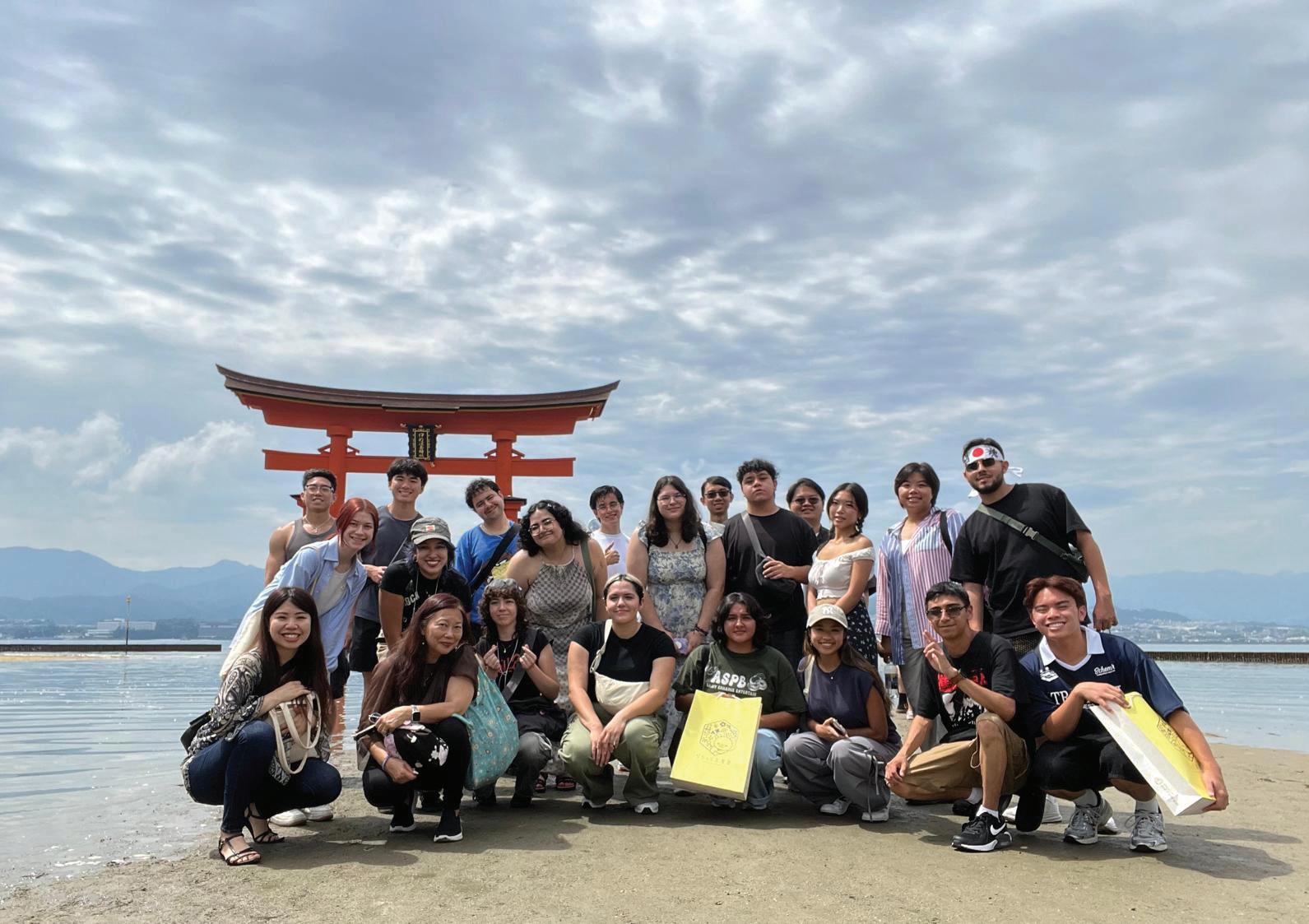
UCR students should vote to renew the HAR fee this ASUCR election
A $3 FEE PER QUARTER CAN FUND UCR STUDY ABROAD PROGRAMS AND CAMPUS WORK OPPORTUNITIES.
BY: ELISABET RAQUEL GARCÍA & SONJA LIND
Since 1962, the University of California, Riverside (UCR) Education Abroad Office has sent thousands of students on study abroad programs, changing lives for generations. Study abroad means studying, interning or participating in experiences in other countries and U.S. states.
At just $3 a student per term, the cost of an iced coffee, the Highlander Abroad Referendum (HAR) Fee is an investment in your present and future, opening doors to educational travel for not just yourself but all Highlanders. The Associated Students of UCR (ASUCR) election runs this week from Monday, April 27 through Friday, May 1, 2026, and the HAR is back on the ballot.
In 2019, UCR students approved the HAR Fee for five years of funding. The fee has been awarded to the Education Abroad Office, which distributed $99,000 in travel grants to 150 students, hired up to 10 student workers each year and funded multiple food-filled events. In 2025, low voter turnout, not opposition, led to the referendum’s failure, and the HAR expired then. This week, we encourage students to vote “Yes” on the HAR Fee again.
There is much at stake. The $3 fee has supported five years of financial support for students from all backgrounds to participate in programming, a budget to sustain the application portal (MyUCR Abroad) and paid student positions in the Education Abroad Office. The Education Abroad Office primarily relies on limited state funds, so without the HAR fee, programs and grants are at risk. This election, students have the opportunity to provide HAR funding for travel grants, more effective outreach events and more student jobs at UCR.
Take it from Brenda Baltazar Basilio, a graduating business economics student who has worked in our office for four years. She says, “As a student who did not have prior marketing
or travel experience, I am grateful for the oncampus job I’ve received through the Education Abroad Office. The office has provided me with stable employment for three years, guaranteeing 15 hours per week with opportunities extending into the summer. I hope the Highlander Abroad Referendum passes successfully so the office can continue providing support not only for study abroad students, but for UCR students at large.”
By voting YES on the HAR fee this week, you are voting for all UCR students to:
MAIN ST
Receive travel grants to study or travel anywhere in the world, including the U.S.
Work as a student employee in the UCR Education Abroad office, regardless of study abroad experience.
Participate in funded education abroad events open to all students.
Be a paid member of the student-led Highlander Abroad Advisory Committee (HAAC), making decisions about how HAR funds are used.
Kalani Gunasekera, a second-year sociology major at UCR, served on HAAC before studying abroad. “Being on [HAAC] allowed me to have hands-on experience in the study abroad process … While on the committee, I took part in putting on multiple events, explaining and presenting on different study abroad programs. Through my experience in the committee, I made the decision to study abroad next school year.”
ORANGE ST
For decades, UCR has sent students abroad, many of whom are first-generation and low-income, needing financial assistance to participate in study abroad programs. In 2022, Lesley Hernandez, a psychology major, received a travel grant to study abroad in Italy on a University of California Education Abroad Program (UCEAP). The grant helped her pay for her flight. “As a low-income first-generation student, I did not understand how much the trip was going to be, so this greatly helped me out
financially.”
Demand for funding is rising, with twice as many UCR students applying for study abroad scholarships in 2026. Additional funding will help more students, including those participating in U.S.-based and non-credit programs (which receive no financial aid).
The HAR fee reduces financial barriers so all Highlanders can participate. Each year, over 300 students rely on this support and we aim to expand access to it. Additionally, 25 cents of the $3 HAR fee will return to financial aid, helping 80% of UCR students who receive aid.
Study abroad offers experiences that build career skills and create global citizens. According to a Forum on Education Abroad survey, most alumni said that studying abroad developed job skills, such as adaptability and intercultural communication, which shaped their careers. Highlanders who study abroad return with new perspectives and stronger resumes.
Karina Chang, a graduating neuroscience pre-med major, received a grant to go to Italy in 2023, and believes that “study abroad changes how students see themselves and their place in the world. The [HAR] helps make that transformation possible to every Highlander, regardless of background.”
Take action and vote in the upcoming election, not only to elect the student government but also to secure the HAR fee and its benefits for UCR students like you.
For more about UCR HAR recipients, please see our HAF Travel Grant Lookbook at https:// tinyurl.com/haflookbook. Vote “Yes” on the HAR fee this week (and “Yes” for the R’Garden). Email us at educationabroad@ucr.edu to learn more about the referendum or studying abroad.
COURTESY OF SONJA LIND

UCR’s status as a temporary “pit stop” hurts campus culture
STUDENTS’ VIEW OF UCR AS TEMPORARY SIGNIFICANTLY IMPACTS SCHOOL IDENTITY AND EXPERIENCE.

The University of California, Riverside (UCR) was not my first choice. However, attending made sense for several reasons: it is closer to home, more financially practical and part of the UC system. After meeting students in my first year, I soon realized many shared the same sentiment. We didn’t want to come here — we just wanted our degree. Nevertheless, part of the reason I have chosen to stay at UCR rather than transfer is my hyperfixation on my postgraduate ambitions. As an aspiring corporate lawyer who ultimately plans to reside in New York, I consider how every organization I join will enhance my resumé or elevate my chances of getting into law school. I abandoned the idea of clubs being a place to find people with whom one might share similar interests; instead, I treated these extracurriculars as a way to make oneself seem more well-rounded or involved.
I realized that this future-driven mindset underpins the success and participation of many of these student organizations, as many of my peers share similar viewpoints and intentions. A major contributor to this mindset is the reality that UCR was not most students’ first choice. This constant forward thinking and perspective of Riverside as a transitional place have discouraged my peers and me from exploring community building at our college. Consequently, our sense of belonging falls short, creating a detached identity from this campus.
Notably, many students are not joining clubs with the intention of making a profound lasting difference in the UCR community because many plan to move away or return home as soon as they
graduate. These organizations’ leaders are usually there to enhance their resumés rather than for the clubs’ true purpose or values. They are there to increase their chances of getting a better job when they graduate and move away from Riverside.
Those who live close by see UCR as merely an extension of their previous community and thus fail to invest additional energy in joining on-campus organizations. Therefore, it is observed that studen ts participate in clubs primarily for future opportunities and later career development, rather than building genuine long-term relationships with their peers. Furthermore, this lack of a shared connection with other students and lack of pride in being a Highlander further erodes a sense of passion and belonging here on this campus.
UCR’s location also significantly impacts campus life. I would much rather live back home in San Francisco or move to New York than stay in Riverside. Most of my friends have shared a similar sentiment by describing their lack of connection to the overall Riverside community as well. We have noticed that this area lacks exciting places and things to do compared to the larger, more favored city, Los Angeles. In fact, some of my favorite memories with my UCR friends are from our random excursions to Los Angeles. Riverside also lacks the social atmosphere associated with college towns. There are few fun hangout spots, limited nightlife options and concerns related to homelessness and safety. The Farm House Collective offers a dependable and enjoyable place to hang out. But with that being said, everyone else thinks so too, making it usually
packed while it continues to gain popularity.
Soon enough, it will probably be overcrowded with locals and students due to the lack of other social hangout spots outside of one’s home and workplace. Overall, Riverside’s poor quality of life has led to a hollow sense of community, leaving UCR students feeling even more detached from campus pride.
However, I don’t think viewing Riverside as a transitional place is necessarily a bad thing. Although it may make campus culture a little lackluster and make students feel less of a sense of belonging, perhaps it is good that they don’t get too attached to “college life.” After all, college is widely perceived to be a transitional phase in which students prepare to navigate adulthood and find stable jobs.
In that regard, college shouldn’t be about forever representing one’s institution; maybe it should be treated as simply the place
that prepares students for the real world. In fact, a strong attachment to one’s college can lead to a lack of professional focus after graduation, as some graduates try to relive their “best years” from college during a time meant for professional development.
I view Riverside as a temporary, transitional place before I move to New York. My time at this place feels short and ultimately irrelevant compared to my life after completing my undergraduate studies. However, college is inherently impermanent, so perhaps it is reasonable to see Riverside solely as a developmental stage rather than a lifelong source of pride for students.
However, viewing Riverside as a temporary place undeniably makes campus culture less vibrant and reduces students’ overall sense of belonging.
EMMA MANAOAT
Contributing Writer
ALONDRA ORDAZ / THE HIGHLANDER
CalTrans on the grind with repairing I-215
CALTRANS IS WORKING TO REPAIR THE 215 FREEWAY IN AND NEAR RIVERSIDE WITH A
SHREYA PATEL Staff Writer
For any drivers out there, especially students who commute to and from the University of California, Riverside (UCR), Highway 215 isn’t just a freeway. It is the road that connects the campus to the rest of the Inland Empire, especially the more southern cities.
As many might have noticed, CalTrans has launched a new project at the nose bridge of freeways 60 and 91 and Ramona Expressway. This is a part of the $58 million pavement rehabilitation project. CalTrans aims to reconstruct Highway I-215 to address long term wear and tear, improve ride quality and extend the freeway’s lifespan and safety, while students can expect to face traffic and lane closures, affecting attendance in classes.
The key improvements with this project aim at pavement rehabilitation, safety upgrades and infrastructure improvements. For example, CalTrans workers are removing and replacing the old asphalt pavement with new material that is more durable and designed to endure high traffic tension.
With safety features, the team is installing new guardrails, updated roadway signage for better traffic flow and refreshed lane stripping for better vision, especially at night, which hopefully minimizes crashes during lane changes or merges. CalTrans also aims to add curb ramp safety features that comply with Americans with Disabilities Act (ADA) standards.
This project is planned to stretch from Riverside, specifically from Martin Luther King Boulevard to SR-60/91, to Perris and Ramona Expressway, down to the city of Menifee. This project has been ongoing since late 2024 and is planned to be completed in late 2026. Although the working times are primarily after evenings, commuters should expect lane and ramp closures weekly from Monday through Friday, 8 p.m. to 8 a.m., concluding early Saturday mornings.
Moreover, the lane closures are sure to affect commuter students at UCR. For instance, one can face daytime traffic disruptions in both directions of the project due to lane closures. Although two interstate lanes will always remain open for through traffic, the closures can cause traffic congestion.
For those with early morning classes, this could mean adjusting schedules and planning earlier rides to beat rush hour. If caught up in traffic, students can face consequences such as being late to class and missing important information in lecture. Also, local communities are at a disadvantage, as they can face more street traffic due to online maps rerouting toward detours into the city.
What’s even more sad is that there is supposed to be a year-long delay in the project as well, but it is between the Perris and Menifee corridor which doesn’t directly affect UCR traffic. This is due to contract bidding being pushed back
$58 MILLION PROJECT.
and the State Highway Operation and Protection Program (SHOPP) rebalancing, which has caused the schedule to shift significantly. This can affect students due to the project lasting longer, causing traffic to stretch for more than just a few months, especially for those who travel from south of Perris.
On the other hand, there are many benefits of this project. While commuters might face delays to class or on the way back home, they are guaranteed a smoother ride on the road with newer asphalt once the project is completed. The public should also expect better signage and more clarity in lane divisions. The ADA-compliant safety features will now include support for those who fall under the act and for others overall. These new updates will make the lifespan of the highway longer and make the drive safer in the future.
Therefore, the $58 million is being put to good use with a brighter future for road construction and transportation despite the temporary tolls on commuter students. Students might have to readjust their schedules and plan ahead to get to class on time, but it will be worth it in the long run
So, until the project completes, be sure to keep those coffee thermoses full and navigation apps open. The I-215 might be a mess, but the commute still continues.

Features
Citrus Hack and ACM give opportunities for students to show their skills
WITH FRUITY FRESH IDEAS, CITRUS HACK LETS STUDENTS’ TECHNOLOGICAL CAPABILITIES SHINE!
SANJANA THATTE Features Editor
Citrus Hack, a hackathon, hosted by the Association for Computing Machinery (ACM) at the University of California, Riverside (UCR), gives students in the Inland Empire access to opportunities in computer science that otherwise wouldn’t be available to them. With keynote speakers, sponsorships, interview opportunities and more, ACM at UCR puts on an event that is a true showcase of hardwork, curiosity and generosity.
The event started with an opening ceremony describing the different sponsors as well as how Citrus Hack found its beginnings here at UCR. Co-president of the club and third year computer engineering major, Allison Pham, explained that Citrus Hack was founded back in 2015, making it one of the first and oldest hackathons here at UCR. This year’s competition workshops range from user interface and user experience to game design. The keynote speaker of the morning, distinguished professor Dr. Rajiv Gupta, spoke about his research into algorithms, graphs and efficiency.
After that, the rules of the competition were set out, as well as the overall schedule during the 24 hour period with meals being provided.
Competitors set out to create their projects working in teams and individually. The club hosts other hackathons such as CutieHack and RoseHack as well as projects of their own, not limited to designing webpages for other clubs on campus. Pham explained that ACM as an organization hopes to provide students with resources related to technical careers as well as opportunities to create projects of their own: “[The] goal is to provide technical professional and also community opportunities through our events, workshops, programs and more. Our goal with Citrus Hack, and just in general, is to provide students with the career skills and development over time in order to prep them for their future.”
Pham herself joined around in the summer of her first year as a business major. She explained that the club helped her make the decision to switch to computer engineering and gave her a space to learn and grow. Chris Zaldivar, second year computer science and business application major, joined the team as operations lead after winning CutieHack in 2024 and a beginner prize at RoseHack.
The average ACM meeting can range in its subject matter but support is always there. Pham explained that board members are always there to support members in their computer science journey providing opportunities to engage with different aspects of the field such as web development, UI/UX design, data science and more.
Furthermore the club aims to provide students with a means of expanding their professional knowledge with a variety of workshops, such as building their resumes and mock interviews. The club aims to provide a friendly environment with their social events like going to the beach.
In regards to the process of bringing Citrus Hack to life, copresident Cristian Roberts compared it to planting and growing a seed. Citrus Hack planning began over the summer, which
Roberts likened to as the “skeleton of the event.” From there, ACM went about finding the right leads to organize it and bring it to life. Roberts shared, “We emphasize trying to make this event successful,” because “if we can’t do the basic things, then we can’t have an event at all.”
Roberts emphasized the presence of industry professionals and representatives to help them in their time after the competition. He hopes that the connections that students make at Citrus Hack will carry them into their future careers. Zaldivar added on, stating that it is a great opportunity for students who have never participated in a hackathon: “When I first came to UCR, I had my first hackathon. It was my first quarter, and I knew nothing. And I know there are plenty of people like that. When you ask people, there were over a dozen people [who] raised their hand [at] just [the] opening ceremony alone, and said that it was their first hackathon.” Because of this, board members and program
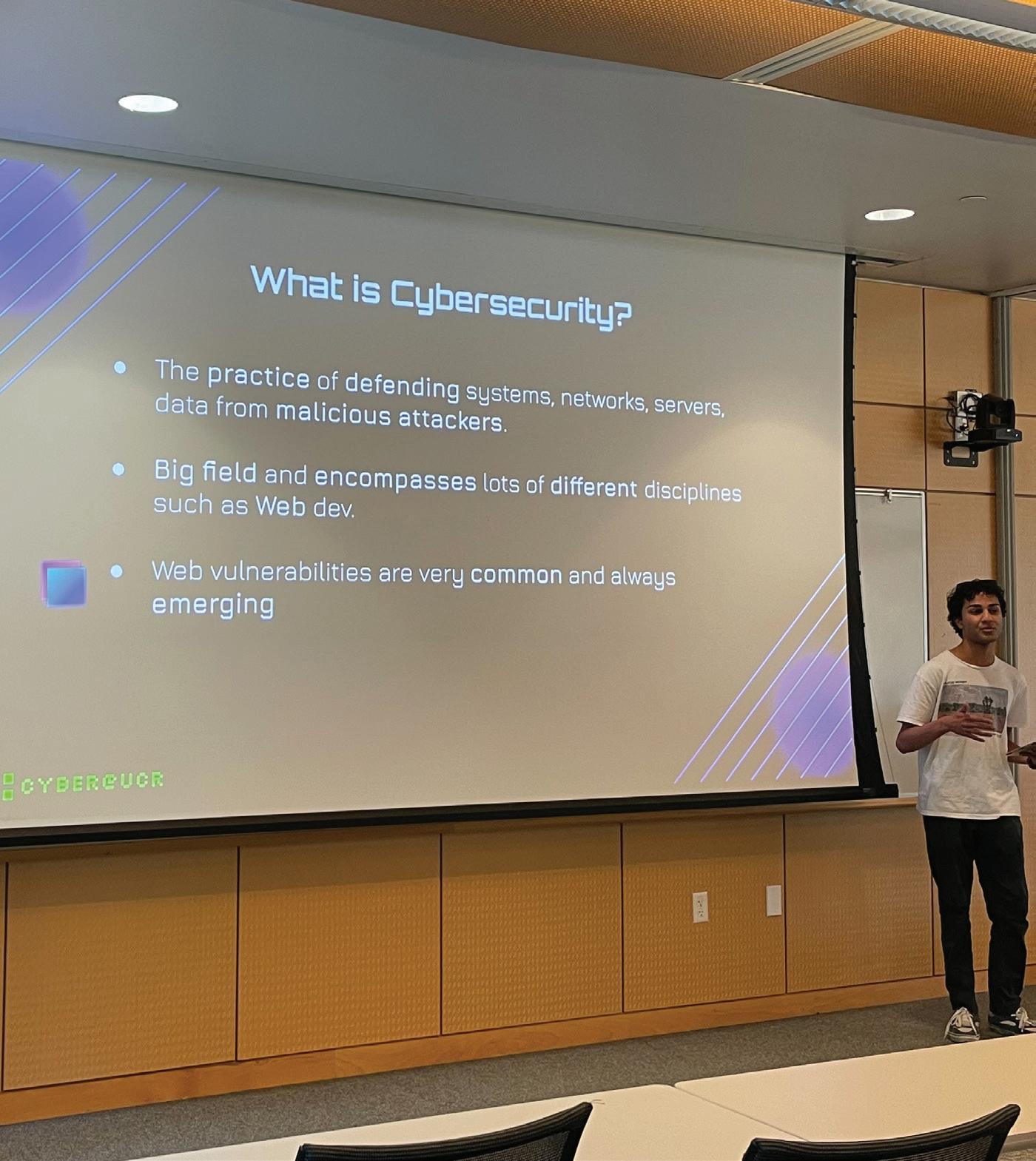
organizers aim to be as helpful and welcoming as possible.
The planning team faced some setbacks in regards to scheduling, as they did fall behind this year. Because the club hosts two other Hackathons during fall and winter quarter, the team is often balancing multiple projects. Pham described how they were able to get back on track coordinating with their finance, marketing and operations team locking down sponsors, industry professionals and company appearances.
The team was most excited to see what projects people came up with as well as to dole out the prizes which went to Mira, iris. and Plock. ACM and Citrus Hack are great ways for students to explore their technological prowess, so be sure to participate next year and check them out!
RACHEL KO / THE HIGHLANDER
Horoscopes
THAI ICE TEA AND CALM OR RASPBERRY LEMONADE AND BROKENESS, WHICH ONE ARE YOU?
Your week 5 horoscope and drink to match

(Sept. 23 – Oct. 22):
Raspberry Lemonade
It’s time to confront those lingering financial responsibilities. Avoiding them won’t help you. Take control of them now and your future self will thank you.

(Dec. 22 – Jan. 19):
Piña Colada
Something lighter and more playful is coming your way. Say “yes” to those plans, go to that party, dress up and enjoy yourself.

Aries (March 21 – April 19):
Strawberry Daiquiri
Finances have been on your mind, but your impulse purchases and tempting spring sales are setting you back. Expect your routine to shift, bringing with it unexpected connections and new relationships.

Cancer (June 21 – July 22):
Iced Macchiato
Things have felt hectic lately, but there has been an important responsibility that you have been putting off. Now is the time to take care of it and lift that weight off of your shoulders.

(Oct. 23 – Nov. 21):
Hot Cocoa with Marshmallows You’ve been running on an empty tank! Slow down and tuck yourself in a little early and get some well needed rest.

(Jan. 20 – Feb. 18):
Iced Banana Pudding Matcha Your environment matters more than you might think. Tidy up your space and watch your mindset shift for the better.

MAIN ST
Taurus (April 20 – May 20):
Thai Iced Tea
It’s time for a good reset. Recharge, refocus and allow yourself to attract positive attention. However, your relationships

ORANGE ST
Leo (July 23 – Aug. 22):
Espresso Martini
You have a big decision coming up and confidence is key. Trust yourself, you know what you’re doing. Still, some liquid courage wouldn’t hurt!

(Nov. 22 – Dec. 21):
Iced Mango Passionfruit Tea
If something isn’t working out, don’t force it. You may be outgrowing people or places and that’s perfectly normal. Better things are ahead.

(Feb. 19 – March 20):
Vietnamese Coffee You’ve got a surge of energy so use it to your advantage. Get things done and be the most productive version of yourself.

Gemini (May 21 – June 20):
Old Fashioned
You’re entering a period full of change, especially in how you view yourself and the people around you. Your old habits won’t do you any good, so be open to trying something new.

(Aug. 23 – Sept. 22):
Herbal Tea with Honey
Someone has been testing your patience, but don’t take the bait. Protect your peace and focus on yourself and what really matters.
HENYA DADEM Marketing Intern
Libra
Scorpio
Sagittarius
Capricorn
Aquarius
Pisces
Virgo
SPOTLIGHT NORM’S NOOK
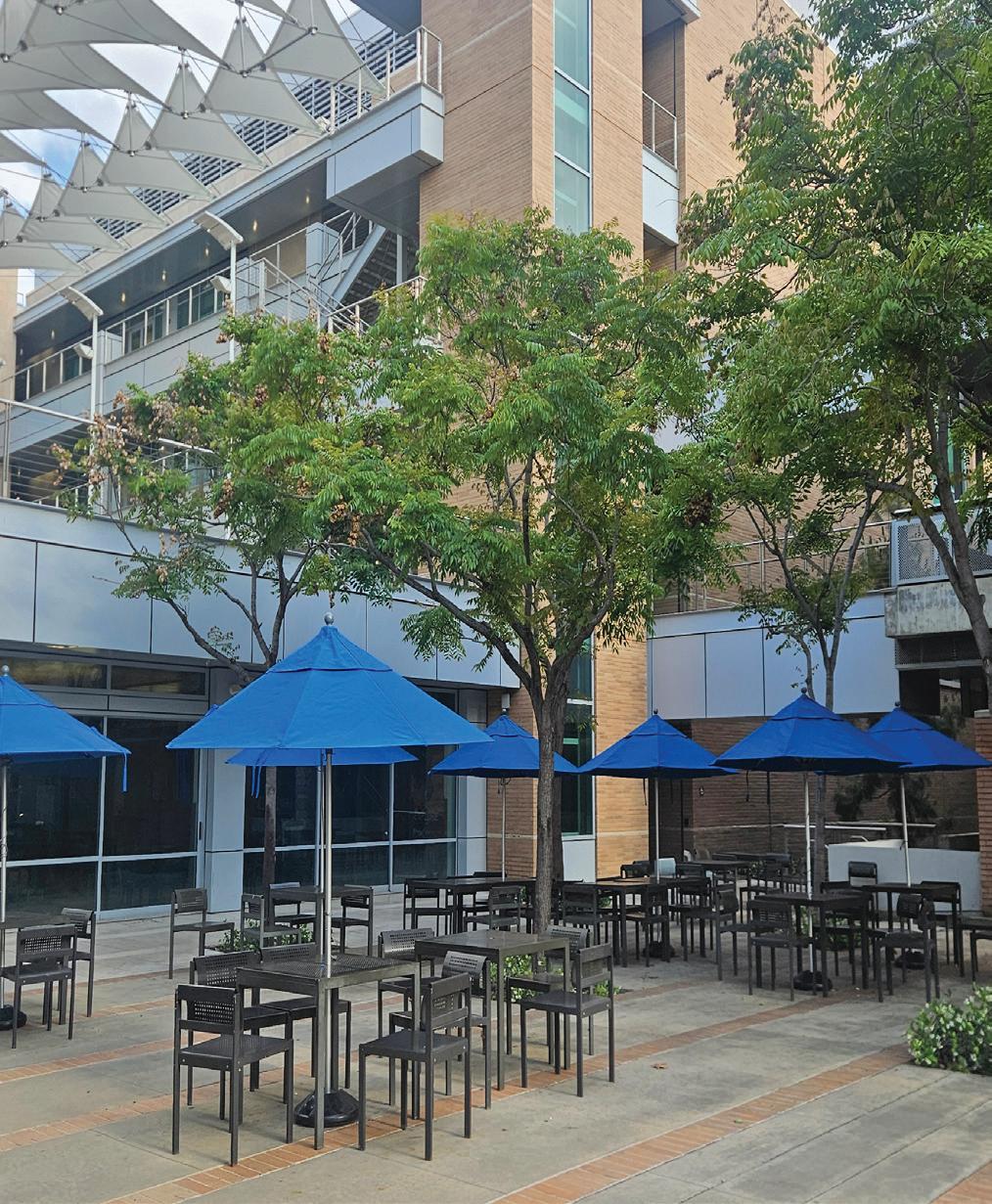
Outside of Bytes
Outside of Bytes at Winston Chung Hall is a nice spot for students looking for a comfortable place to study or simply relax between classes. With outdoor tables and chairs, this provides a refreshing change from crowded indoor spaces while allowing students to enjoy fresh air and sunshine. The area has a cute and welcoming atmosphere that makes it ideal for catching up with friends, reviewing notes, working on assignments, studying for midterms or simply taking a break during a busy day.
UCR ALUMNI
One of the best features in this study spot is how practical it is for students with busy schedules that have a short gap in between classes as it is convenient and easy to find. Because it is outside, you can sit and leave without the hassle of students bunching up at the doors trying to leave the building. The tables give plenty of space to spread out computers, notebooks, iPads — you name it. Whether you need a quiet place to study with friends or alone, this space offers a comfortable setting that works for both. ■ H

28. St. Louis Browns Hall-of-Famer
Tall chair
Bland
Pile
Tack on 38. UCR alum and mystery author known for her 22-book-long series
42. Communication for the deaf: Abbr.
43. Chow 44. Zaps
45. Hideaways
48. “______ Thou Now O Soul” (Whitman poem)
49. Capital of South Korea
By H Staff




50. Singer Grande, to fans
51. “The most popular poet in America,” he was a UCR alumnus and Poet Laureate from 2001 to 2003.
59. Paleontologist’s discovery
62. Garlicky sauce
63. Smoothie berry
64. Long, long time 65. Valuable violin
66. Bradley ____, twotime N.B.A. All-Star
67. Hosp. scans
68. Appears to be 69. Dispatched
DOWN
1. Cutting remark
2. Baseball family name
3. Second to none
4. “Wait _ ___!”
5. Key with three sharps
6. Runners occupying bases
7. Valley where David fought Goliath
8. German refusal
9. Congress meeting abbrev.
10. “Shoot!”
11. How chess players are rated
12. More, in Spanish
13. CIA forerunner

21. “Laughing” scavenger
22. Add-___ (extras)
25. Rough
26. Obergefell v. ______, milestone case for marriage equality
27. Firstborn
28. “Toxic” singer Britney
29. “Maybe”
30. Reach by ship 31. Claiborne of fashion 32. Mookie of the Dodgers
33. Oohs and ____
D&D, for one
Warmth
Arthur of “The Golden Girls”
Online commerce
Rowing tool
Inventor Whitney
Star Wars robots
Scottish girl
LAYNA LAPIKAS / THE HIGHLANDER
KIMBERLY VIERA Contributing Writer
SANJANA THATTE / THE HIGHLANDER
What’s-in-the fridge pasta
By: Sanjana Thatte, Features Editor
Prep Time: 35 minutes
For when your roommate has more leftovers than you.
Instructions:
1. Take your sliced mushrooms and place them in a colander. Rinse them and set aside.
2. Cut a quarter of an onion. Mince your garlic afterwards and then set aside.
3. In a medium sauce pan, heat up some olive oil and then saute your onion and garlic for about four minutes. Then add mushrooms and cook for another 10 minutes.
4. Sprinkle paprika and salt over the mushrooms and then wait for another 10 minutes before adding a dash of milk.
5. When the milk has been thoroughly incorporated into the vegetables and the mushrooms have started to wilt slightly, add them into your chicken and pasta.
6. Mix well and add more milk if it looks dry.
7. Serve and eat while hot.
Servings: 1
Ingredients:
• About one bowlful of leftover chicken and pasta
• 1 tsp of smoked paprika
• 3 tablespoons of olive oil
• 1/4 of an onion
• 5 cloves of garlic
• Salt to taste
• Milk
• 1 cup of sliced mushrooms
SUDOKU
DIFFICULTY: HARD





By: Camila Rosales, Contributing Writer
1. What activity do you prefer to do?
A. Shopping
B. Reading books
C. Hiking
D. Staying in
What music genre do you prefer?
A. Pop
B. Classical music
C. Jazz
D. Metal
What beverage do you prefer?
A. Matcha
B. Coffee
C. Juice
D. Energy drink
Which animal do you prefer?
A. Bunnies
B. Owl
C. Butterflies
D. Bat
If you got “A” the most, you most resemble Starbucks. You bring joy everywhere you go and are very welcoming. You always have a smile on your face and are always happy. Even in a tough situation, you try your best to push through while finding joy in things.
If you got “B” the most, you most resemble Bytes. You are a quiet and studious person who takes their schoolwork seriously and puts in consistent effort. You tend to keep to yourself. You feel most comfortable working independently, staying focused on your tasks and observing what’s going on around you rather than being the center of attention.
If you got “C” the most, you most resemble Coffee Bean. You’re a calm, grounded person with a naturally cool vibe that makes people feel comfortable around you. You enjoy spending time outdoors and have a genuine love for animals, appreciating both adventure and quiet moments in nature. Most of all, you’re reliable and always willing to lend a helping hand as you are someone that others can count on without hesitation.
If you got “D” the most, you most resemble Emerbees. Even when you are in a group setting, you prefer to seclude yourself from everyone else, often prioritizing time alone. You have a low social battery and like to stay in and watch a movie or play video games. ■ H
Arcade Coffee Roasters — The Bakehouse
A BEAUTIFUL STUDY SPACE WITH DISAPPOINTINGLY MID FOOD.
MALINI JOSEPH Staff Writer
Coffee. The college student’s staple drink, rarely to be seen without it. We have become connoisseurs of everything caffeinated, so the urge to seek out new coffee shops and new study spaces becomes more compelling. These little excursions are a fun way to simultaneously spend time with friends and get work done. Enter Arcade Coffee Roasters — The Bakehouse.
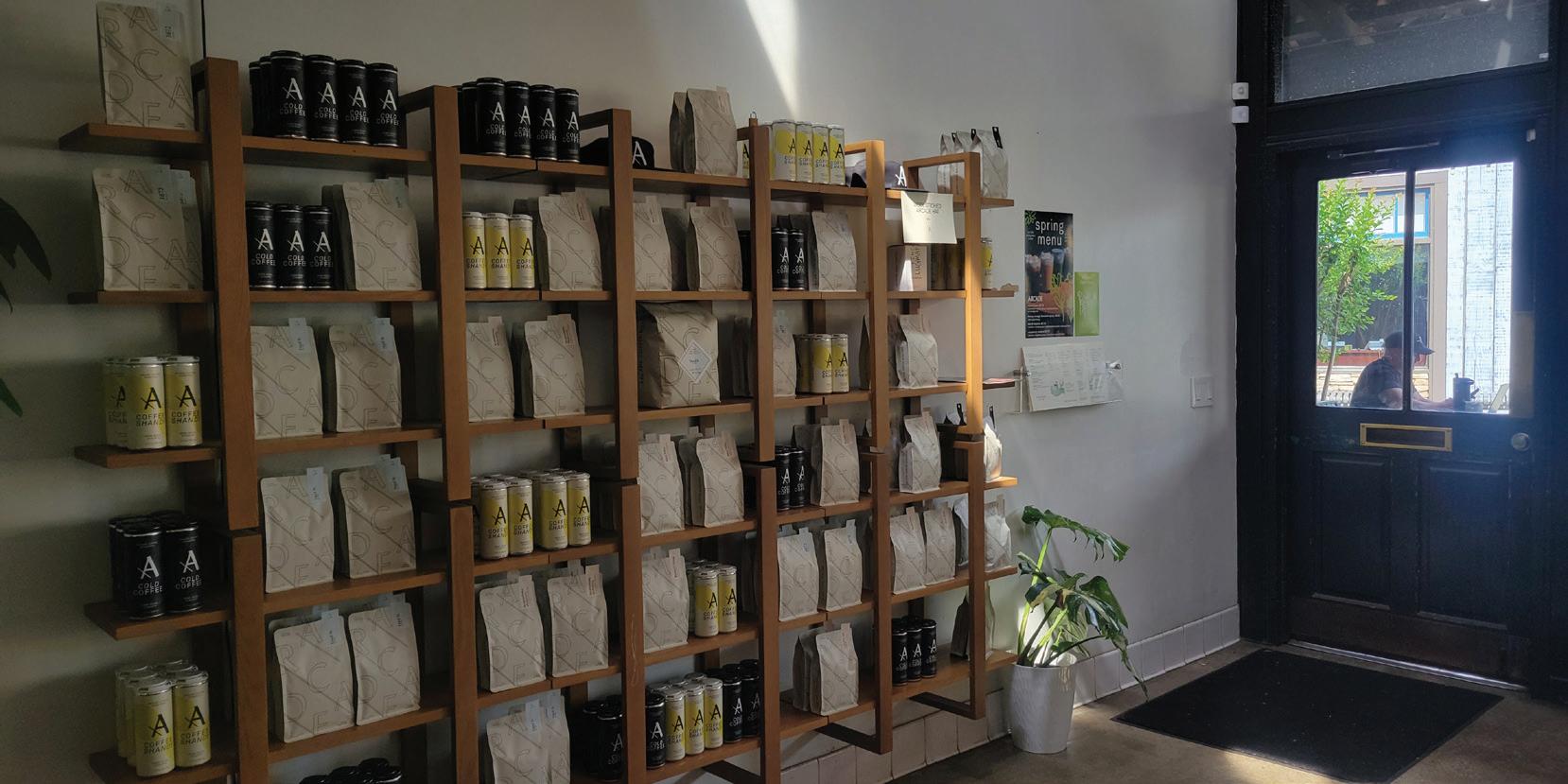
Arcade has four locations across Riverside. The Bakehouse, found in the Canyon Crest Complex, is known for making all the pastries for these locations. When you walk up to the building, you are met with gorgeous curling vines and an open seating area next to a fountain. This creates a serene effect that makes productivity more attainable. Even the inside is open with big windows that don’t detract from this effect.
Next to the front doors is a poster of their spring specials and a tray of menus with non-seasonal items below it. Along with coffee, Arcade offers matcha, kombucha, various teas and hot chocolate. They also offer foods like burgers and burritos alongside pastries like cookies and scones. Here are some of the items I decided to review …
Salted Caramel Latte
Price: $7.25
Rating: 3/5
I ordered a small, hot salted caramel latte which ended up being rather disappointing for the price. The syrups are made in-house and I did add oat milk ($1.10), raising the price from $6.15 to the one you see above. This puts the prices in line with several coffee shops in Riverside, including Coffee Bean. Unfortunately, the flavor just wasn’t to my liking and made spending that much on a non-seasonal coffee seem more painful than normal. However, it was a decent enough coffee fix despite the unsweetened caramel and lingering burnt taste.
Bakehouse Burrito
Price: $17.50
Rating: 2.5/5
I wish I’d known how much The Bakehouse was known for its pastries, but I unfortunately didn’t learn about the different locations and their specialties until I left this one. Normally, the Bakehouse Burrito comes with steak but I asked for it to be removed. What was left was a dense chunk of egg and a thin slice of hashbrown that you didn’t taste until you took several bites. The monotony of the flavors could be broken up with the salsa that comes with it, but it was overall a mid burrito. The Bakehouse has a lovely atmosphere for studying and chatting with friends. The big windows and the environment of Canyon Crest creates a more free space to study than a stuffy library. While perhaps I chose the wrong food and drink this time, there are more than enough options to find your favorite. I would recommend perhaps starting with the specials and the baked goods so that you are getting a bigger bang for your buck. Keep Arcade Coffee Roasters in mind for your rotation of study spots. It opens everyday from 7 a.m. to 4 p.m., bringing with it a bright, open space to study. With its outdoor seating, you are able to breathe easier and it comes with sweet treats!
Spring cleaning, but what
I
kept
OF WHAT CHANGED AND WHAT DIDN’T.
OVI MATHIVANAN Assistant Opinions Editor
I started with the desk drawer that held everything of this year’s college adventures.
Receipts from late night snack breaks, half-used stacks of post-its and every abandoned writing utensil.
Items I once thought I’d need again but never once gave a second thought to.
Those things weren’t hard to let go of.
But somewhere in between deciding which clothes to donate and which ones to put back,
I look to the ones that stayed without question or begging.
These people didn’t need a reason to stay. They just did.
Unlike the accumulation of cords strategically hidden in my desk corner, never was there a quiet debate of whether these people should stay or go.
No second-guessing. Just ease.
They were always chosen, always for me.
Their names and faces could never be misplaced. They could fill a room and it still wouldn’t feel cluttered, but rather, full and somehow brighter.
Amid the process of clearing space for the new and the next, I realized they were never something to sort through.
No deliberation, no piles, no “I’ll come back to this later.”
They were just something I had without ever needing to justify their presence in my life.
Because clearing out the past never meant losing the people who stayed through it.

ADELIA URENA / THE HIGHLANDER
MALINI JOSEPH / THE HIGHLANDER
UC Riverside goes green with the Earth Day Festival
ORGANIZATIONS AND PROGRAMS DEDICATED TO SUSTAINABILITY ARE PUT ON FULL DISPLAY ON PIERCE LAWN.
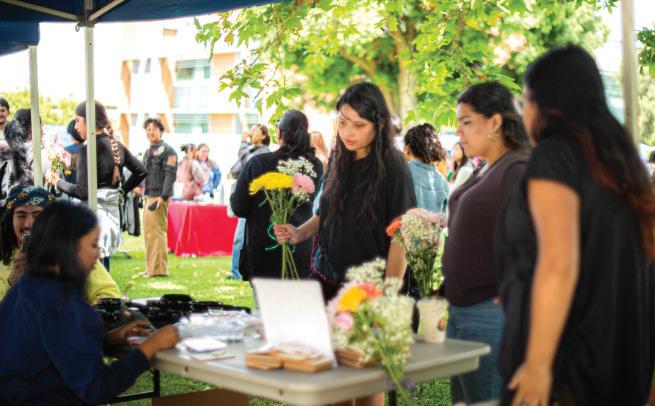
On April 22, 2026, the Earth Day Festival was hosted at Pierce Lawn to promote and celebrate sustainability. The festival was an opportunity for organizations from on and off-campus to highlight their efforts in maintaining a habitable planet through various programs while educating students about ecological practices.
The event was a collaborative effort between the Green Campus Action Plan (GCAP) and the Office of Sustainability. GCAP is the sustainability branch of the Associated Students of the University of California, Riverside (ASUCR), hosting events and programming such as campus and beach cleanup, raising funds for solarpowered tables throughout the campus and providing scholarships for studentled sustainability projects. The Office of Sustainability’s goal is to put in place ecofriendly policies through initiatives such as developing Climate Action & Adaptation Plan or hosting events.
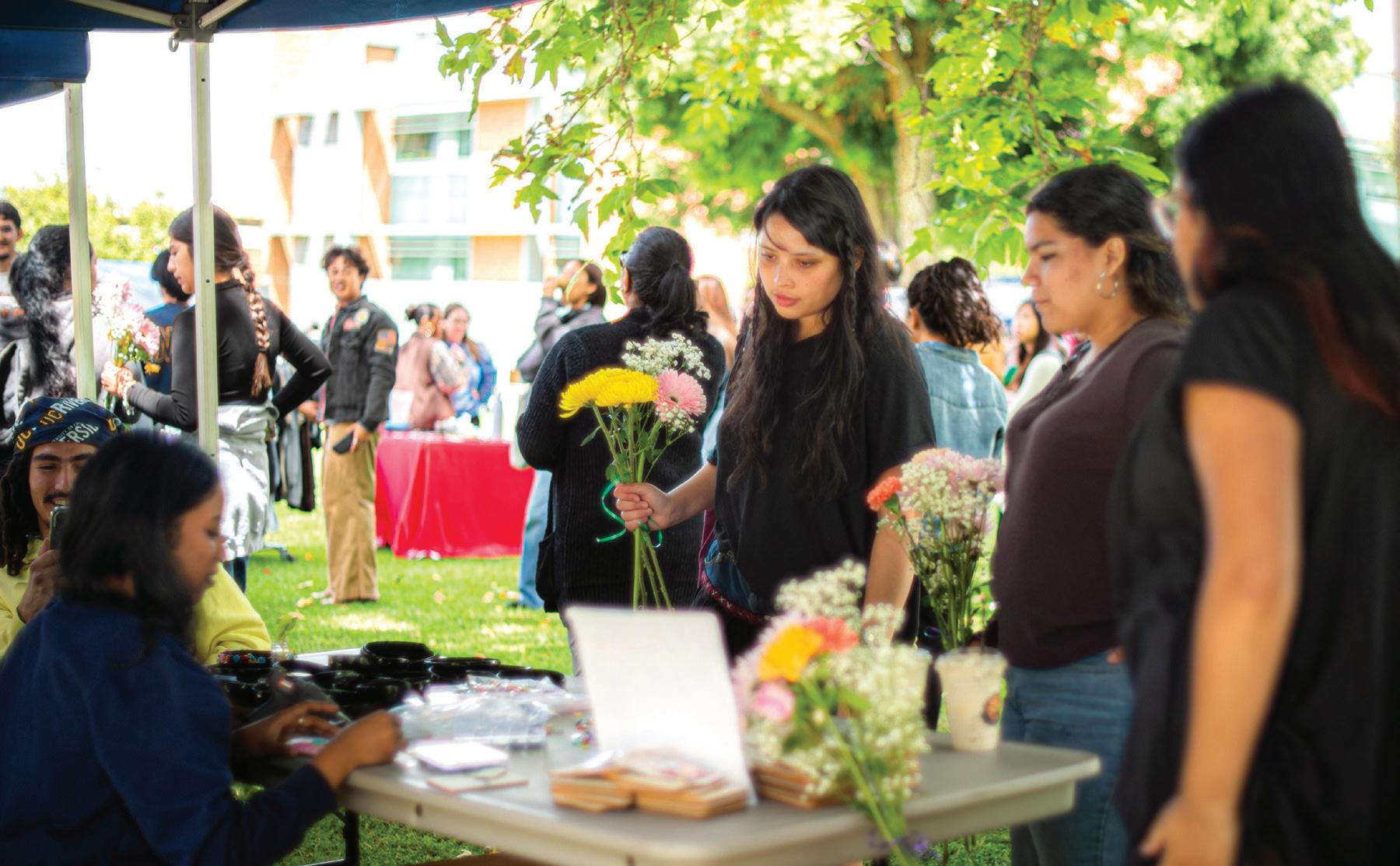
The festival was intended to be modeled after farmers markets. Tables were set up by representatives from various clubs on campus, nonprofit organizations, local businesses and regional services from the County of Riverside, collectively creating a space to promote and discuss sustainability. Huge emphasis was placed on the idea of eco-friendly methods and sustainable practices to reduce reliance on products from corporations.
Tables seen throughout the festival included
those from the Riverside Transit Authority, the Riverside Fire Department, Riverside Public Utilities and the Riverside Office of Sustainability. Organizations typically not associated with the University of California, Riverside (UCR), one of them being the University of Redlands, were also present at the festival in which they promoted certain programs and eco-based facilities such as the sustainable University of Redlands farm.
MAIN ST
Another service in attendance was the Riverside Corona Conservation District, a local government agency dedicated to the preservation of natural resources including soil, water and air. The Riverside Corona Conservation District additionally focuses on restoring wildlife habitats as well as soil testing.
Stands representative of organizations within UCR include the Department of Society, Environment & Health Equity (SEHE). The department offers courses ranging from environmental justice to health disparity and is focused on regional issues happening around the Inland Empire.
ORANGE ST
Angel Teo, a fourth year environmental studies major and ambassador for the SEHE, explains the department’s mission, “We’re promoting awareness of what inequalities and disparities exist within our communities, and also what kinds of collective action that can be taken to combat these issues. A lot of our classes and programs within the department directly prepare students for doing that kind of work in the field.”
UCR based clubs centered on sustainability and support such as Hungry 4 Biscuits, R’Cycle Co-op and the Environmental Science Club were also in attendance at the festival, not to mention the presence of a stand representing UCR’s beloved R’Garden.
Booths providing different amenities could be seen farther down Pierce Lawn. From Rooted in Love selling succulents and houseplants and Palo Altos Honey selling raw local honey, the festival captured the essence of the traditional farmer’s market.
Many of the shops that concentrated on clothing were also an imperative part of the festival, either being given by the GCAP or sold by some of the businesses present. One business, Shop Lady Stardust, sold vintage apparel created from secondhand materials. Another shop, Crochet Classicz, was a family owned business specializing in selling crocheted items, including hats for pets. Food provided at the festival included Pupusas from Pupusas La Familias as well as Packed, which sold açaí bowls and sugarcane juice.
Blue tents signified Do-It-Yourself (DIY) stations, with activities such as button decorating and bouquet making. The tents also housed festivities such as a mini-game in which one has to scoop up trash from a glass box meant to simulate an ocean as well as “smoothie bikes” in which one can power up a blender by pedaling on a bike in order to make smoothies.
Angelique Lawrence, one of the event organizers and California Climate Action Corp Zero Waste Fellow for the Office of Sustainability, explains the aim of the Earth Day Festival, “[the event] basically shows them resources and how to do more in their daily lives, and also support some people while you’re doing it as well.”
Anahita Hooshyari Far, another event organizer, as well as Vice President of Sustainability and Director of GCAP, gave another comment regarding the purpose of the event, “we really want to bring this opportunity to students so they know that they have many avenues to contribute to a more sustainable future.”
The Earth Day Festival boldly displayed the willingness of students, as well as organizations all across Riverside, when it comes to maintaining a habitable and beautiful planet.
IAN PALMA AND JIHOON KWON Radar Editor and Staff Writer
NIKO SUWANDI / THE HIGHLANDER


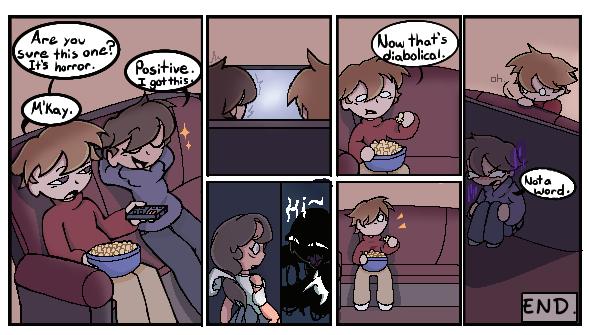
What??Susanna Wu
Horror MovieNatalie Marquez
Celestial Bodies -
‘Ten Times Better’ and ‘About Face’ challenges Asian misrepresentation in ballet
JENNIFER LIN’S DOCUMENTARY FILMS SCREEN AT UCR.
JIHOON KWON Staff Writer
On April 22, 2026, the Department of Theater, Film and Digital Production at the University of California, Riverside (UCR) hosted the screening of two documentaries directed by Jeniffer Lin, “Ten Times Better” and “About Face.” Together, these documentaries examine the eurocentric traditions of ballet that often go unchallenged, offering a contemporary lens on racial representation within the medium.
“Ten Times Better” tells the story of George Lee, an Asian American ballet dancer and the hardships he’s faced due to his ethnic background. Born in Hong Kong, Lee encountered ballet through his mother, who is of Polish descent. He would take dance classes and perform at Russian clubs for rice.
Due to the Chinese Civil War, Lee and his mother had to move to Shanghai, then later to the Philippines and ultimately ended up in the United States. Lee enrolled in the School of American Ballet and was picked up by highly influential ballet choreographer George Balanchine to originate the role of Tea in “The Nutcracker,” which is considered an orientalist caricature. Lee would be put in makeup to make him appear stereotypically Asian for the role.
Lee had hoped for a New York City Ballet membership but was declined due to his “height.” He moved to Broadway due to ballet’s exclusivity toward people of color, being cast in “Flower Drum Song” among numerous others. However, this didn’t last either as he struggled to get roles and was simply told he wasn’t the “type.” Lee was growing old and ultimately settled in Las Vegas as a poker dealer.
The title of the film, “Ten Times Better,” which comes from Lee’s mother’s word to Lee that he has to be “ten times better” to compete against white dancers, perfectly captures the struggle of adversity Lee was faced with simply on the basis of his ethnicity despite his talent.
“About Face” shifts focus from an individual story to a broader scale, following ballerina Georgina Pazcoguin and choreographer Phil Chan’s effort to foster an environment in ballet where racially offensive practices that are prominent even in some canonical works such as “The Nutcracker” and “La Bayadère” to be examined more critically. Rather than “cancelling” these works, Pazcoguin and Chan seek to provide a way of continuing them while maintaining cultural integrity.
They’ve actively taken actions against practices rooted in anti-Asian sentiment that reinforces harmful stereotypes such as yellowface makeup by starting a petition against it which multitudes of major ballet companies signed. Similarly, Chan’s reiteration of “La Bayadère” combats the cultural appropriation that was present by removing them through reinterpretation of the work.
The documentary also revolves around the idea of ballet as a changing art form adapting to the changing society as while it was initially performed for European monarchs, that is no longer the case and cannot ignore non-western representations for its own relevancy.
MAIN ST
The audience were highly engaged with the documentaries, with massive applause at the end of each film and some even shedding tears following George Lee’s story.
After the screenings, a Q&A session was held with Jenifer Lin. During the Q&A, Lin shared that she was initially introduced to Phil Chan’s book “Final Bow for Yellowface” through her daughter in 2020. The book struck a chord with her as she loved ballet as a kid, but felt uneasy about “The Nutcracker” in its portrayal of Asian culture given that her father was Chinese. With an increasing amount of hate crime against Asian people during the pandemic era, Lin felt that it was the right time to make a project about exclusions and misrepresentation of Asians in ballet and approached Phil Chan and Georgina Pazcoguin.
During their conversation, Phil advised Lin to look into the New York Public Library and their archives on the original George Balachine iteration of “The Nutcracker.” Through that, Lin had first learned about George Lee and was intrigued as despite working with Balachine, Lee didn’t seem to have much other work in ballet. Using her journalistic background Lin got in contact with Lee and when she heard the story, she knew this had to be her next project.
Lin feels that these are stories that are relevant in a timely manner and had to be told now as she asserts, “[Diversity, equity and inclusion] has become a radioactive phrase in some corners. I think the issues of diversity, equity and inclusion representation on the stage are still very important and I feel as if what I’m trying to do here is to continue the conversation in a thoughtful and nuanced way.”
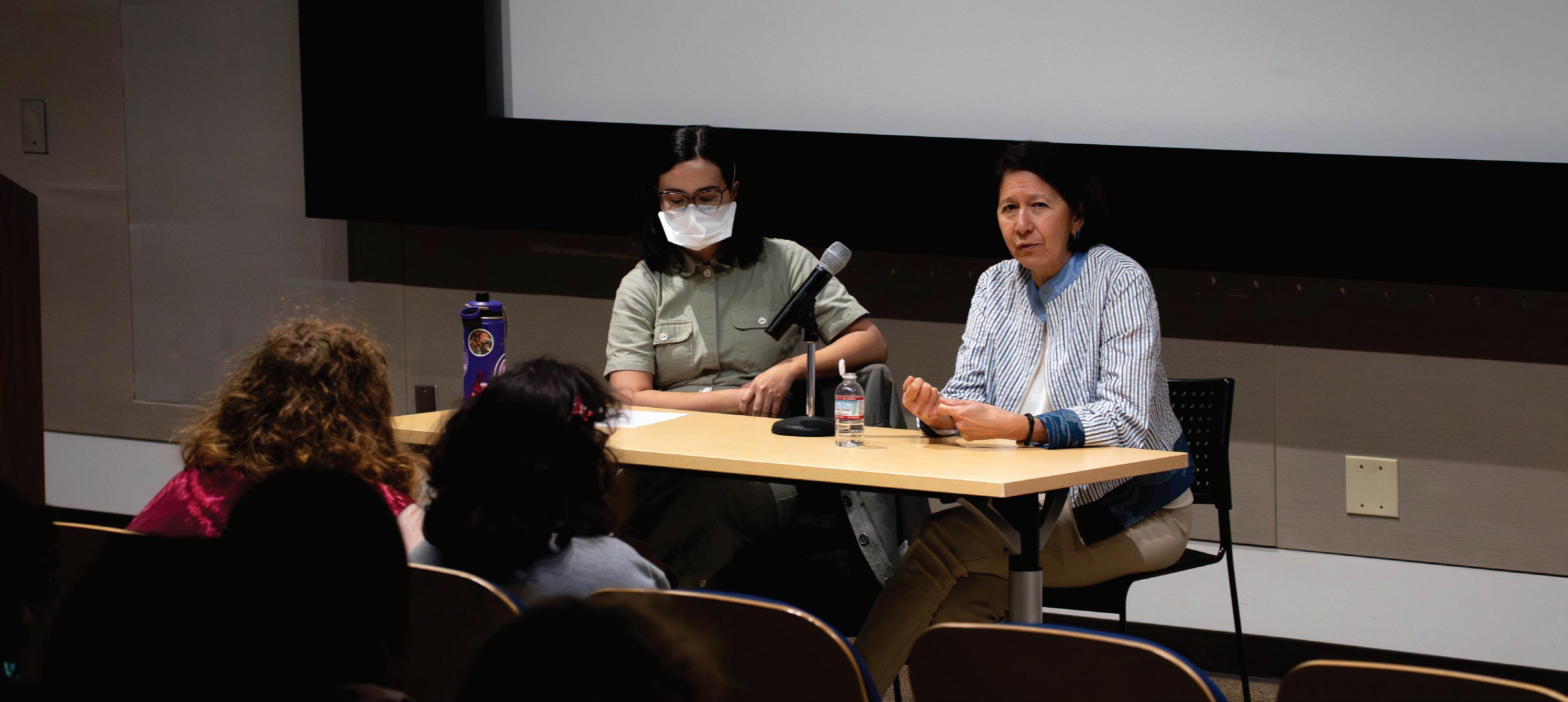
GOUTHAM SRI SAI LAKUMALLA / THE HIGHLANDER.
‘Infinity
Loop’ transforms UC Riverside into
a celebration
of identity and unity
A safe space that’s part choreographic exhibition, part dance party.
IAN PALMA Radar Editor
Intricately constructed by Divina (Sammy Briseno Jimenez) and Icon (Sabree Gilkes), ”Infinity Loop” consisted of skits, choreography, songs, video shorts and more, celebrating themes of identity, positivity and selfdiscovery, especially for those queer and trans. The event, which took place from April 24 through 25, was less of the normal song-and-dance revue and more of an introspective experience into what it means
to be unique and could be summed up in a single word: “stellar.”
The event started at 7 p.m. with a pre-show activity at 6:30 p.m. During the preshow activity, audience members shook hands with one another as a sign of acquaintance and respect, setting the scene for what would eventually be a night of unity and celebration. Given the amount of interaction and camaraderie between the audience and one of the performers, Elevisi “Lucky” Matafari, it was clear that the program was going to be unlike any other traditional dance showcase.
The hallways of Arts Building 166 were decorated and illuminated to evoke that of a portal to another dimension. Carefully placed lights within the dimly lit corridors conveyed a sense of iridescence, making it hard not to be mesmerized even before the actual start of the event. Heading deeper into the building, audiences were greeted with a shrine consisting of stuffed animals, followed by signs on the wall with empowering mantras. Entering the main part of the building where the performance was taking place, viewers were given ample time to walk around to different areas of the room. The area consisted of a photo
booth, an “Infinity Loop closet” where one could try out different clothes and even a booth where merchandise could be bought.
The performance began with Divina and Icon on the floor with heads draped in fabric, slowly rising while taking off the masks before pantomime sprinkling themselves and
runway fashion show. Spectators kept spirits up, clapping and cheering for those strutting up and down the stage. After a 90’s tinged hip-hop dance sequence with Divina, Icon and all of the performers, audience members were also encouraged to boogie, accumulating into one big dance circle for everyone to join.
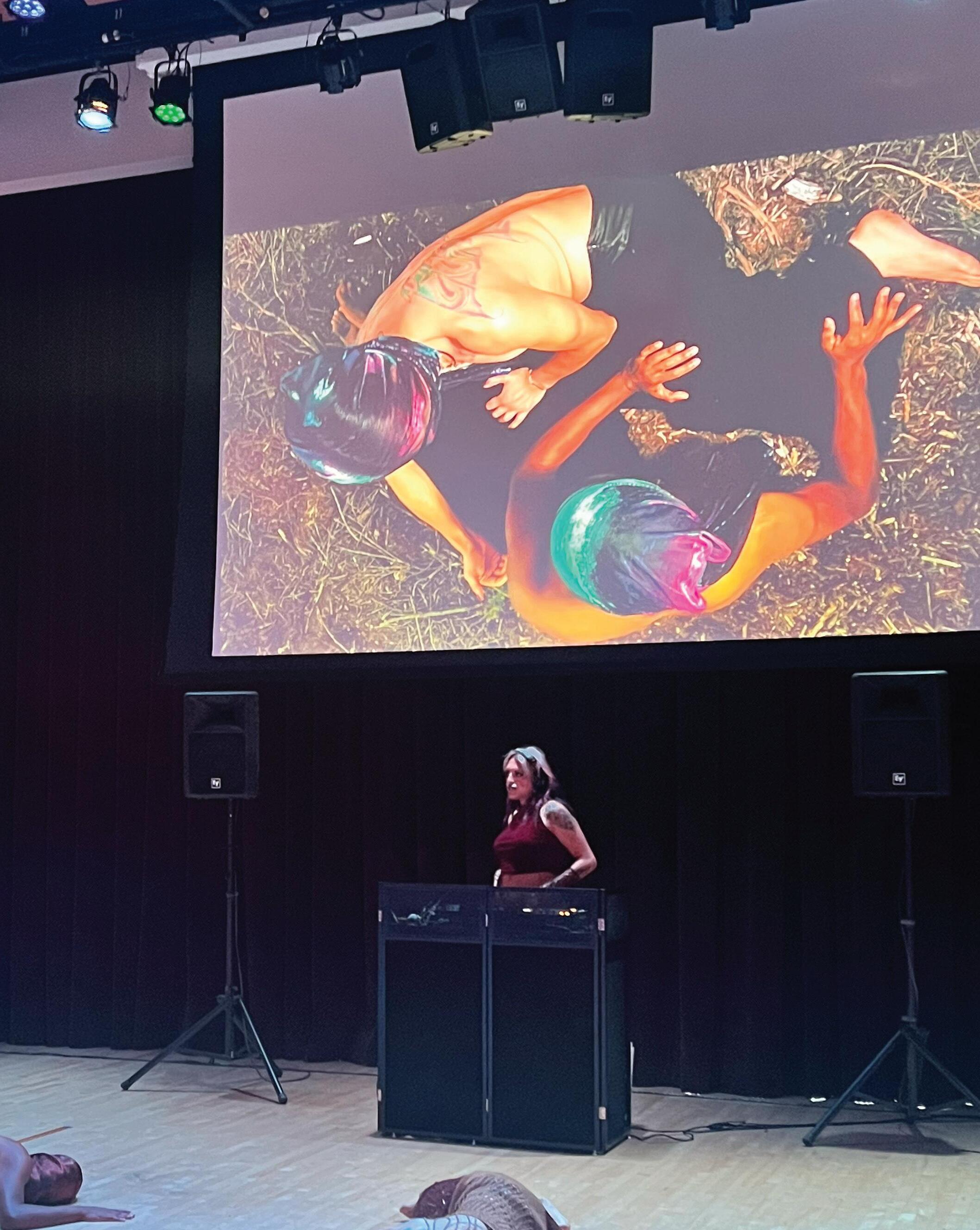
the audience with magic dust. Dancing to original, uplifting songs made by the two, Divina and Icon quickly fascinated the audience with organized choreography, accompanied by tracks from DJ Natasha Backwards.
Audience participation was undoubtedly a main staple for the overall performance. A segment of the program involved audience members being chosen from their seats to pick out clothes and style themselves from the Infinity Loop closet before walking across the stage and back like that of a
Skits, often hilarious ones, also played a significant role throughout the performance. One segment involved Divina and Icon being questioned about their love life in a mock late night show with Lucky. Videos of Divina and Icon in the making of the performance were also displayed, giving testament to the hard work that they’ve put in. Another short introduced the performers in a “choose your character” style typically seen in video games. One would be remiss if they didn’t catch the queer themes present throughout the revue. One such occasion can be seen during the end of one of the videos, in which a broadcast warning signal is displayed with text stating, “Queer love has broken the binary again.”
The audience members, many of whom were unfamiliar with each other prior to the performance, were promised that they would leave the program as “a different person.” Given the level of entertainment expressed through clapping and cheers, as well as the level of companionship evident when hyping each other up during certain parts of the performance, the event seemed to do just that.
PHOTO COURTESY OF OF BENJAMIN FARREN VIA PEXELS
IAN PALMA / THE HIGHLANDER
Radar Replay: Gundam’s magical resurgence
THE NEXT GENERATION OF MECHA HAS ARRIVED IN ALL ITS MAGICAL GLORY AND IT IS A ‘WITCH FROM MERCURY.’
ETHAN KIM Contributing Writer

Four years ago, the release of a prologue started the newest series in the Gundam franchise. After many years of lackluster releases the next generation of the Gundam franchise was born and an audiovisual masterpiece was created.
The franchise of Gundam stretches back to the 1980s starting with “Mobile Suit Gundam.” There were many releases of different TV series since then and many prominent ones being “Mobile Suit Gundam SEED,” “Mobile Suit Gundam Unicorn” and “Mobile Suit Gundam: Iron-Blooded Orphans.” For many years after the release of the “Iron-Blooded Orphans,” there was no real sense of a solid television series of the Gundam franchise. Nevertheless, Studio Sunrise continued to develop newer Gundam series that lead to the release of “Mobile Suit Gundam: The Witch from Mercury.”
“The Witch from Mercury” was Gundam’s long awaited return to mainstream media, attracting the attention of new and old fans of the franchise. Its modern animation style and robust soundtrack garnered attention from newer fans to the series. “The Witch from Mercury” takes the older common tropes of the Gundam series and paints them in a newer and darker picture. The series being a completely new start that is not connected to any other series allows for it to be a good starting point
for many new viewers.
The show follows a girl by the name of Suletta Mercury as she pilots her mobile suit. The audience learns that she is not used to being around other people due to her upbringing in the far away planet of Mercury. Furthermore, the mobile suit she pilots is one considered unorthodox and due to being considered like unholy magic similar to witchcraft thus the title “Witch from Mercury.”
Furthermore, every series in the Gundam franchise is incomplete without the signature political warfare. In this case, it is different. Instead of a war between countries and planets, the conflict is between corporations and industries. The corporate warfare has an extreme level of intensity with the stakes being how much one can generate profit even being a point of life and death.
Additionally, the animation, the soundtrack, the sound design and the voice acting of the series rivals most of the Gundam franchise. Studio Sunrise has matched the quality and care of most modern anime even similar to Mappa studios, another animation studio known for its high amount of quality. Whether it’s the specific detailing on the mobile suits or the plant-life on Earth, Studio Sunrise has done an amazing job with even the minute details.
The soundtrack created by Takashi Ohmama has a level of variety that most modern
television series dream to reach. Whether it is the simple, whimsical vibe of the main character accompanied by her friends or the dramatic build up into the orchestral release of the main theme. The original soundtrack elevates the series at a level that cannot be matched with a generic theme.
The voice acting of the series, especially the performances of Kana Ichinose, Youhei Azakami and Takeo Ootsuka have been able to enunciate such emotion and physical feeling. One can feel the screeching agony of the mobile suit and the shellshocked feeling of the multiple explosions. The performance of Youhei Azakami shows the growth of a character as they mature throughout the series.
Verdict:
The flashy action of the mobile suits and the intense political warfare of “Mobile Suit Gundam: The Witch from Mercury” builds up on what the Gundam franchise is about. However, its new fresh take on the series and incredible animation takes it to the next level and should be watched.
PHOTO COURTESY OF SUNRISE:BANDAI NAMCO FILMWORKS
Taemin’s Coachella performances set a precedent for the longevity of a K-Pop artist
THE SOLOIST TOOK TO THE ICONIC STAGE WITH A BOLD SETLIST AND COMPLEX CHOREOGRAPHY.
K-Pop has many icons that may come to one’s mind, but Taemin is among those who arguably make the very top of the list. Debuting in the boy group SHINee in 2008, as a soloist in 2014 and in the supergroup SuperM in 2019, Taemin has had over 18 years of renowned experience in the music industry at the age of 32.
His talent only continues to shine, and he made that clear at Coachella after coming back from a successful first world tour in 2025. Performing with a setlist composed of iconic and unreleased tracks, Taemin’s performance inspired discussions and acknowledgements of the importance of art and consistent talent in an industry as commercial and fast-paced as K-Pop.
The performer’s set started in the evening, opening with his energetic track titled “Sexy in the Air.” It was bold with a fun sound to it that warmed the crowd up to his more sultry and intense songs. The song also introduced the audience to his smooth dance moves that kept groove while also hitting every beat, which are thanks to his background in popping, contemporary and funk styles of dance.
He then transitioned to “Want,” a spacedisco track about desire. The choreography had a paradoxical smoothness that stands out, while also seeming effortless. In reality, the control needed for the dance takes effort — yet Taemin keeps the illusion of coolness to preserve the sultry vibes of the song.
After a brief intermission, Taemin announced that “Move” would be the next track. It’s still his most popular song to date
for its calm nature and unique dance. The choreography is often remarked as something hard for most to execute, with moves that would feel awkward to do but Taemin pulls off a certain subtlety and elegance needed for the movements to work with the song’s theme.
A somber unreleased track, “Frankenstein,” was sung and played by Taemin on the piano, before transitioning into the piano intro for “Advice,” another popular track with the most energy-intensive choreography out of all his songs. He seamlessly transitioned into a portion of “Idea,” finishing off the performance segment with more captivating choreography.
After a band interlude, Taemin came out with a new, bright outfit and sentimental unreleased songs to go along with it. “Let Me Be The One” carries a vibrant funk influence that’s reminiscent of Bruno Mars in terms of its music and dance. “1004” is a ballad-style track that closed off the set on an emotional note and highlighted Taemin’s ability to put sentimentality into his vocals.
The second weekend proceeded successfully with the same setlist, but with a new outfit that, in Taemin’s words, “showed more skin,” with crystal strings running across a cropped top. Fans remarked that his vocals seemed to sound clearer due to improved vocal processing compared to weekend one. Overall, the performances received very positive feedback throughout various audiences, and his unreleased music has fans anticipating his next album.
The crowd itself was filled with fans
of Shinee and his solo work, with many fan chants being heard on both weekends. Online, non-fans praised his performance skills and were able to appreciate his live vocals and dance talent regardless of if his songs were their thing or not. Some non-fans were spurred to check out his music as well.
His discography and performances have many unique motifs related to religion and works of literature, such as “Damian” by Herman Hesse. The in-between messaging of lyrics and the unique influences adding to his choreography gives a viewer something to question rather than to simply consume. Taemin’s strength and stand-out factor in the K-Pop industry comes from his experience in it, but also his willingness to go outside its lines. After all, “Move” was considered quite different as a release for its time.
Where the industry demands flashiness, the choreography is subtle, and where there is a market for clear boundaries of gender marketed to fans, the song delves into a shadowy place in between a sort of androgynous identity.
Of course, being in an intense industry for so long can take a toll on many performers. Taemin himself has spoken briefly about his own struggles navigating hate and other challenges from youth, and appreciated Justin Bieber’s set at Coachella while reflecting similarities to himself being in the spotlight from a young age. Still, the soloist has continued to deliver on quality and consistent talent that stays true to his style and performance vision, showing that artistic longevity is possible in the K-Pop industry.

JOANNA SIMON Contributing Writer
PHOTO
Seven strikeouts, one statement: Joshua Torres earns Student-Athlete of the week
TORRES’ STRONG PERFORMANCE LIFTS UCR OVER LONG BEACH STATE.
“I felt like I was on top of the world,” said Joshua Torres, a University of California, Riverside (UCR) baseball pitcher who was recently named Student-Athlete of the Week. From battling an arm injury to emerging as one of UCR’s most phenomenal athletes, Torres’ journey hasn’t been a straight shot down the middle. It’s been a long journey defined by hard work, dedication, consistency and doing what it takes to be the best of the best.
The recognition comes from Torres’ successful performance against California State University, Long Beach (CSULB). The Highlanders played CSULB on the road on April 17, where Torres delivered seven strong innings with three hits and one run, while recording seven strikeouts and issuing just two walks. This marked a career high for Torres on both the innings pitched and strikeouts, which helped carry the Highlanders to victory that Friday.
When asked what fueled his performance, Torres credited his strength coach, Thomas Nichols, for helping him prepare in the moments leading up to the game.
me to get in the right mindset.” He also emphasized the role of confidence in athletic performance: “When I go out there, I know I’m going to dominate.”
Before he plays, Torres does his
the same, having his water bottle to his left and glove and hat to his right. From there it’s just tunnel vision.
His journey at UCR has been an exciting experience for him. Torres expressed, “If I had one word to describe the season, I would probably say growth.” His season didn’t start off the way he wanted, but that didn’t stop him and his teammates from taking care of

“He got me right,” said Torres. “We did a little workout before we headed down to Long Beach, and I think that’s what prepared
stretching routine, listens to music, draws a line down the middle of the mound before a pitch, bows his head in prayer and asks for confidence, faith and protection for everyone on the field. During the game his setup stays
“I think a lot of us have learned to grow with the game and grow with each other and grow with our coaches, and I think that’s what’s led us to being so successful recently,” Torres explained.
That chemistry has been a key factor in both his motivation and success. He described the team as “one big family.” Every time he goes out to the field to pitch and comes back, regardless of the performance, his teammates are there to cheer him up. For Torres, family is what truly brings it home.
With four games left in the season, Torres is looking forward to seeing how he and his team perform. Making the conference tournament and winning the rest of the series with his team are goals he has in mind.
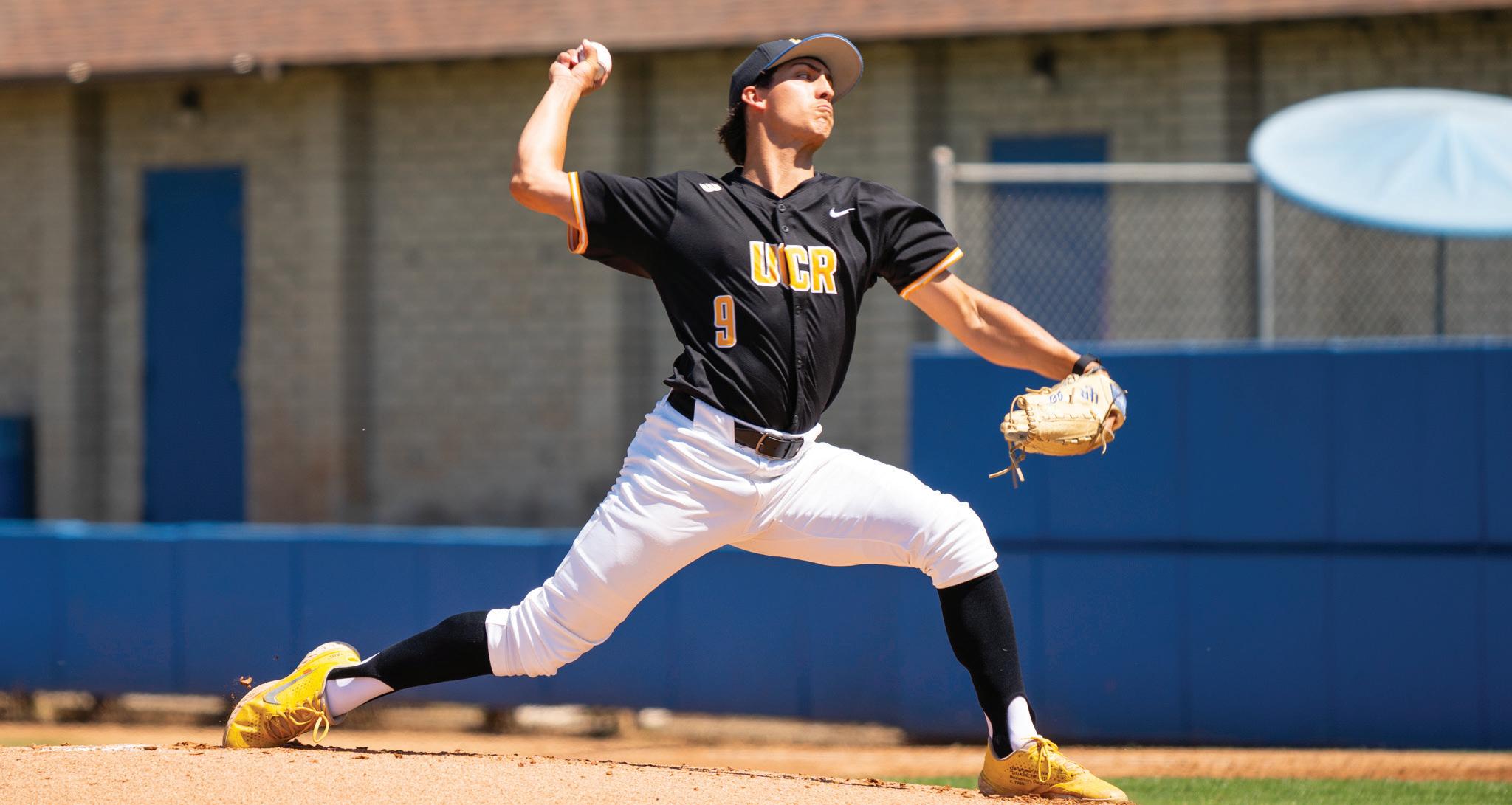
VANESSA CHAVIRA Contributing Writer
JOSHUA TORRES ON THE MOUND ELENA VERSAGE/ THE HIGHLANDER.
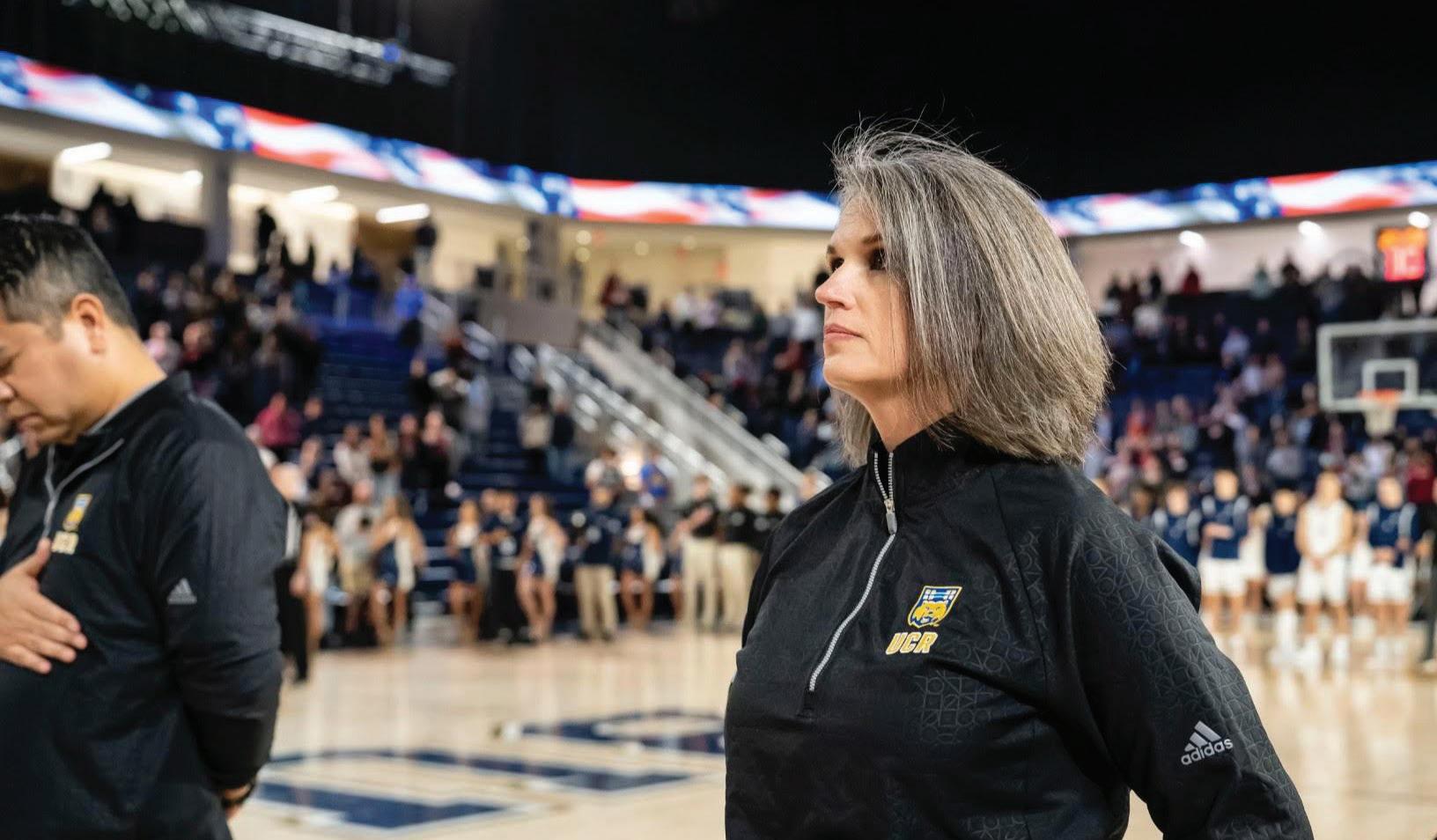
The backbone of UCR Athletics: head athletic trainer Jessika Hunt
Since 2007, Jessika Hunt has been a vital part of UCR Athletics.
SOFIA MAJEED Assistant Sports Editor
19 years ago, Jessika Hunt came to the University of California, Riverside (UCR) looking for a change. The growing UCR Athletics department provided just that. Hunt originally began as an assistant athletic trainer and currently serves as the head athletic trainer. She mainly works with men’s basketball, having recently finished her fourth season with the team. Throughout her tenure at UCR she has worked with most of the sports.
“I joke around that an athletic trainer is a jack of all trades. We do a little bit of everything. We do injury prevention, we do evaluations, rehab and therapy. We coordinate care with physicians and specialists. We do a little bit with nutrition, we do a little bit with mental health, we do a little bit of everything. So we’re kind of like a case manager mixed with healthcare providers all at the same time,” shared Hunt.
Hunt works closely with Dr. Buller, who serves as the head team physician for UCR Athletics. Dr. Buller began as a team physician before he was hired full time in 2021. Underneath Hunt, there are several athletic trainers who work closely with
the athletes to ensure continuity of care if the athletes themselves are traveling, or if their designated sports trainer is traveling.
“If one of my students isn’t traveling but I need them to continue therapy, we all step in, and we will work collectively to make sure that things run smoothly,” she explained, emphasizing her values of teamwork.
Currently, Hunt is in the off-season for men’s basketball, so she uses this time to catch up on any overlooked administration items such as making sure student insurance claims are processed. When she’s in-season, she prepares the team for practice: “Taping, stretching, rehab, blisters, whatever they may need,” said Hunt.
After practice, she joins the team in the weight room and works with the strength coaches to ensure proper form. After weights, she comes back to the clinic and checks in with the athletic trainers and performs treatments on any of her athletes in need.
The clinic is available for all UCR athletes to use. If they don’t need one on one attention, they can use the equipment
provided in the clinic.
“We have Normatech recovery booths, massage guns, foam rolling. [The clinic] is also a big hangout spot, which can be a little hectic when we have a lot of people in here. They’ll come in [and] get warmed up, stretched, prepped for activity, whatever it may be,” said Hunt.
In the future, Hunt has high hopes for what UCR’s athletic training clinic could look like. Hunt shared, “But how athletics, when we do well, how much it can help and promote the campuses as a whole. It helps with visibility. It helps with that feeling of school pride.”
The addition of more athletic trainers, additional strength and conditioning coaches, a full-time nutritionist and a full-time mental health practitioner could be game-changing for UCR athletics, providing athletes with a holistic approach to wellness and recovery.
JESSIKA HUNT AT A BASKETBALL GAME IN 2024 COURTESY JESSIKA HUNT VIA UCR ATHLETICS
From last place to playoff hopefuls: UCR baseball shifts season narrative
AFTER A SEASON OF INCONSISTENCY, UCR’S FIRST CONFERENCE SWEEP KEEPS POSTSEASON HOPES ALIVE.
IZZY GRAHAM Staff Writer
The University of California, Riverside (UCR) baseball team’s 2026 season has been defined by inconsistency, marked by a series of highs and lows throughout Big West play. The Highlanders struggled to find their footing early, dropping multiple conference series and at one point sitting at the bottom of the standings. In the Big West, UCR found themselves unable to maintain momentum, often coming up short in key moments and, in several cases, being swept by conference opponents.
However, as the season has continued to progress, the Highlanders have begun to shift that narrative. As they currently sit 9-12 in conference play, UCR has worked their way back into postseason contention, putting themselves within reach of a Big West Tournament spot despite such a difficult start.
Prior to their recent success, the Highlanders had only secured one conference series win against the California
State University, Northridge (CSUN) Matadors. Outside of that one series, UCR had either dropped the series or been swept entirely, making it difficult to climb the standings and build any sustained confidence.
That all changed in their most recent outing. The Highlanders delivered one of their strongest performances of the season against Long Beach State. UCR did not only win the series, but they also completed their first three-game sweep of a Big West opponent this year, a significant milestone for a team that struggled to close out games early on in conference play.
This sweep marked just the second time all season the Highlanders have won a Big West series, further emphasizing the magnitude of the moment. With improved execution at the plate and more consistent performances on the mound, UCR showed a level of composure and control that had been missing during earlier stretches of the
season.
The impact was immediate. After sitting in last place, the Highlanders climbed to seventh in conference standings, a move that significantly boosts their chances of qualifying for the Big West Tournament. In a tightly contested race, even this incremental progress in the standings can prove to be critical as eleven teams battle for just five postseason spots.
Over the weekend, UCR went 1-2 versus Cal State Bakersfield at home, and they’ll look to bounce back when they travel to Hawai’i to play a three game series this weekend.
As the postseason race tightens, every game carries increased significance, and for the Highlanders, the upcoming series against Hawai’i this weekend could play a detrimental role in determining whether their season continues beyond the regular season.
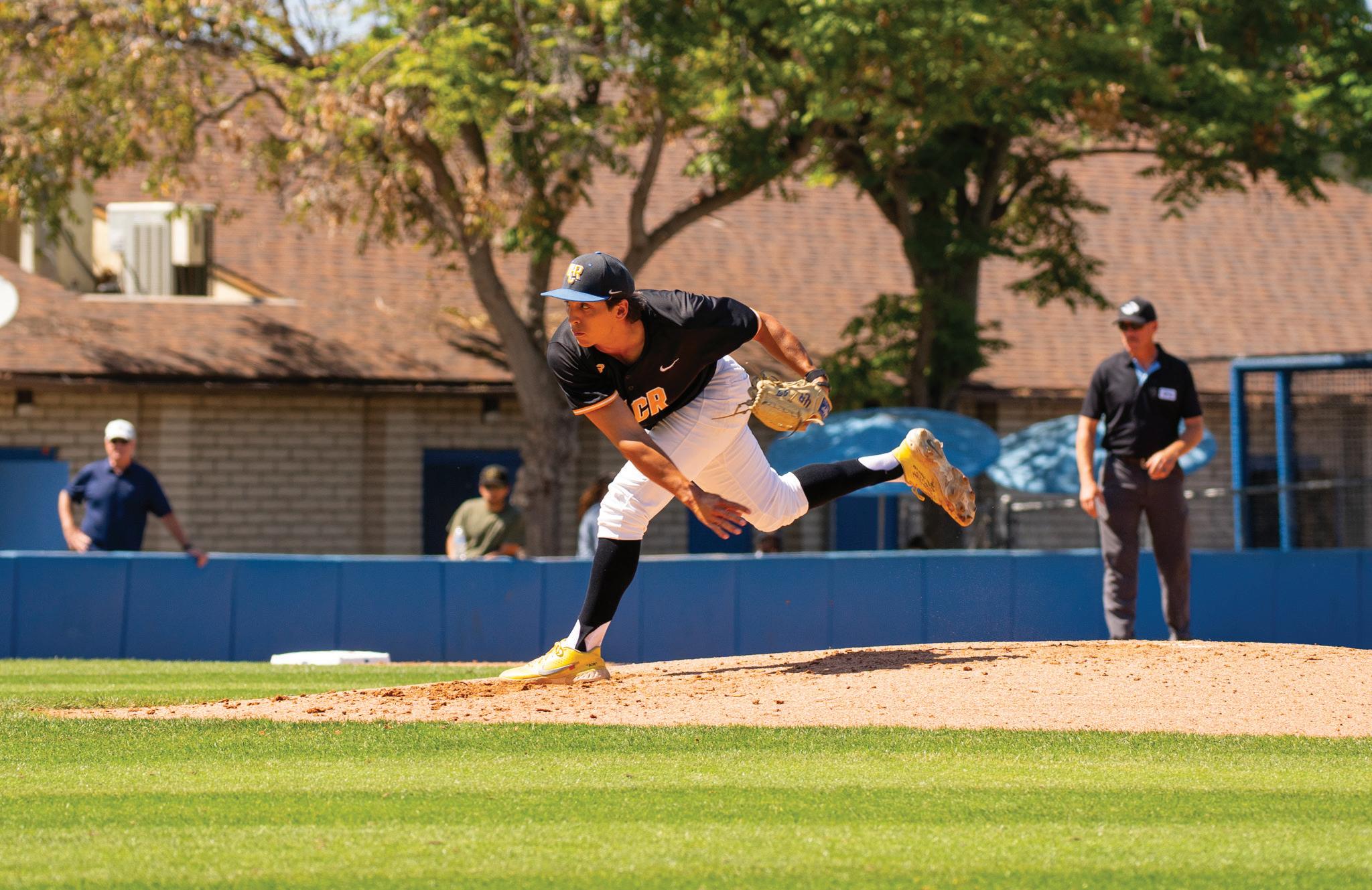
Be a Voter.

The Highlander Newspaper is a great way to keep up with current events and news around campus. If you are interested in the newspaper’s articles or pictures, we offer opportunities in writing, photography and design. Join us every Monday at 5:15 p.m. in HUB 101 to learn more.