The Highlander
For the week oF tuesday, april 14, 2026

For the week oF tuesday, april 14, 2026
The Highlander News team investigates what petitions are being offered around campus.
JOSÉ DEL ÁNGEL News Editor
On April 8, 2026, The Highlander conducted an investigation around campus centered on understanding who is funding the petitioners around campus and what
A list of songs for those who hate being harassed and told what to sign.
IAN PALMA Radar Editor
With campus petitioners coming down on unsuspecting bystanders like moths to a flame and manipulating them to commit to obviously false promises, the time to put one’s foot down and start making informed decisions is now.
For those who are just trying to get to places on time and hate being pestered when it comes to being told what to sign, and for those who just want to have new tunes to listen to, here’s the perfect playlist for avoiding petition tables.
“Got the Time” by Joe Jackson
With a lightning fast tempo that emulates the heartpounding sense one might have when trying to...

they are promoting to students. The investigation concluded with a list of petitions that Riverside locals should be aware of before signing any document in exchange for an energy drink.
The petitioners who stand around campus are not volunteers, the majority are paid by organizations who they have declined to name or provide any information on. Some of them claimed to be paid by the hour while others claimed to be paid per signature.
Some of these organizations have petitioners creating posters with slogans that are provocative and easy to understand such as “end ICE” to attract more students to sign the documents and
provide their personal information.
According to the University of California Policies Applying to Campus Activities Organizations and Students, article 40 details policy on use of university properties. Section 3, Sub-section 42.50, mentions that any form of voter registration is protected because “Such activities shall not be considered to be commercial or noncommercial solicitation, since there is ...
Don’t let some wannabe car salesmen force you to sign your life away.
SANJANA THATTE Features Editor
If you’ve been walking around campus any time in the past five months, you might’ve noticed the petitioners’ tables that seemed to magically spawn at hot spots all around campus. And if by chance you were trying NOT to notice them, they definitely saw you — immediately shoving a clipboard under your nose asking if you want to end homelessness.
Increased presence of petitioners on campus has gone largely unregulated by UCR
Petitioners are misleading students.
To avoid causing a scene and to get people off your back, the people pleaser in you might find it prudent to give strangers your personal information in exchange for a Celsius, and hopefully, being left alone. I’m here to tell you that there is a way to avoid all of that. Here are a few simple sentences that can roll off your tongue just as they attempt to disturb your peace...
If you’ve walked around the University of California, Riverside (UCR) campus in recent months, you’ve likely encountered petitioners holding clipboards and asking whether you are registered to vote and over the age of 18. With tables near the Bell Tower, the Highlander Union Building, Market at Glen Mor and the residence halls, these petitioners often display signs reading “End ICE!” or “Stop Climate Change!” while offering free Celsius drinks andchips to students who sign. The increased presence of petitioners comes ahead of the 2026 midterm elections. In California, the deadline to submit initiative signatures is June 25, 2026, as county elections officials must verify all...
9
Editor-in-ChiEf
Mata Elangovan
editorinchief@highlandernews.org
Managing Editor
Isaac Solnick
managingeditor@highlandernews.org
nEws Editor
José Del Ángel
news@highlandernews.org
asst nEws Editor
Angelica Brianna Acosta asst.news@highlandernews.org
opinions Editor
Cecile Diroll
opinions@highlandernews.org
asst opinions Editor
Rubaita Iqbal
asst.opinions@highlandernews.org
fEaturEs Editor
Sanjana Thatte features@highlandernews.org
asst fEaturEs Editor
Nola Perifel
asst.features@highlandernews.org
radar Editor
Ian Palma radar@highlandernews.org
assistant radar Editor
Aakif Iqbal asst.radar@highlandernews.org
sports Editor
Terry Nguyen sports@highlandernews.org
asst sports Editor
Sofia Majeed asst.sports@highlandernews.org
photography Editor Vash Chen photo@highlandernews.org
assistant photo Editor
Alondra Ordaz photo@highlandernews.org
produCtion ManagEr
Agna Soneji
productionmanager@highlandernews.org
asst produCtion ManagEr
Agna Soneji prodassistant.highlander@gmail.com
produCtion assistants
Keyanna (Keys) Milenia Pinzon Nishi Girish prodassistant.highlander@gmail.com
art dirECtor
Adelia Urena highlander.art.director@gmail.com
Copy Editor
Rachel Ko copyeditor.highlander@gmail.com
graphiC dEsignEr
Layna Lapikas llapi002@ucr.edu
dEsign intErns
Holly Dawson Emily Mata
BusinEss ManagEr
Allison Fry highlanderads@gmail.com
asst. BusinEss ManagEr
Cinthia Meza highlanderads@gmail.com
VidEo Editor
Edwin Basurto video.highlander@gmail.com
asst. VidEo Editor
Isabella Hogan video.highlander@gmail.com
MarkEting dirECtor
Sinhayana Srivastava marketing.highlander@gmail.com
asst. MarkEting dirECtor Isabell Gracia marketing.highlander@gmail.com
MarkEting intErns
Henya Dadem marketing.highlander@gmail.com
Abby Lazar marketing.highlander@gmail.com
tECh dirECtor
Ashna Pradhan techdirector@highlandernews.org
ad rEps
Paris Cao
Xochitl Gutierrez
Amelie Casasola
Xavier Scott
highlanderadrep@gmail.com
distriBution ManagEr
Noah Davis Witten

CONTACT US
The Highlander 101 Highlander Union Building Riverside, CA 92521 www.highlandernews.org editorinchief@highlandernews.org
Help the Highlander stay on top of what is happening on campus and in the general UCR community. Call this number and leave a message for the Editorial Board with your tip. Be sure to include your full name, relation to UCR, and a number or email address where you can be reached for more details.
The Highlander accepts letters from the campus community. They must be 600-800 words at length and include the author’s name and contact information. Topics should be UCR-centric and/ or pertain to our generation of students. Contact Opinions Editor Cecile Diroll at opinions@highlandernews.org by Wednesday if interested in writing a letter and submit the completed letter by Saturday at noon. Letters can and will be rejected if it does not meet requirements.
The Highlander is published and copyrighted by the Highlander for the students, faculty and staff of UCR. All rights are reserved. Reprinting of any material in this publication without the written permission of the Highlander is strictly prohibited. Readers are allowed one free copy of the newspaper. For additional copies or for subscription information, please contact the Highlander. The Highlander fully supports the University of California’s policy on nondiscrimination. The student media reserve the right to reject or modify advertising whose content discriminates on the basis of ancestry, color, national origin, race, religion, disability, age, sex or sexual orientation. The Highlander has a media grievance procedure for resolving complaints against it. All inserts that are printed in the Highlander are independently paid publications and do not reflect the views of the Editorial Board, the staff or The University of California or the Associated Students of UCR.
“I read [Flowers for Algernon], and like, the whole time, I was like, ‘Dude, that’s so cool.’ I wonder how that worked in the brain. The societal aspect also really interested me. For the first three years of my life, I really thought I wanted to be a psychologist”
“A very niche speciality I really want to try and get into would be space medicine. What I understand, it’s half research, half clinical, where you’re basically working with astronauts, screening them, researching how space affects the body”
“Don’t be afraid to make mistakes. I think it means more if you make a mistakes and learn from it, then if you don’t, if you don’t do anything and end up just kind of letting go of opportunities at the fear of making a mistake. I think being a first year, you’re expected to make mistakes. But I think what people don’t always expect is for you to actually grow from them and reflect upon them.
In my first year, I’ve made a lot of mistakes that, and I think when looking upon them, I obviously wish I didn’t make those mistakes, but I’m happy that I had people around me to be able to point that out to me and like, be able to sit me down, explain to me, like, how I can grow. Because of that, I think I’m very grateful for my first year. If I compare myself from August, when school started to April, now I’m a whole different person”





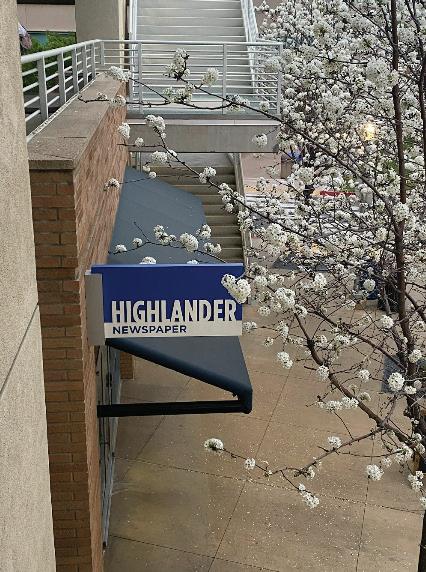
SENATE APPROVES A STATEMENT TO ADDRESS THE PRESENCE OF OFF CAMPUS
KASSANDRA AGUIRRE Staff Writer
On April 7, 2026, the Associated Students of the University of California, Riverside (ASUCR) meeting began at 7:01 p.m. and adjourned at 7:27 p.m.
The Senators opened new business with a review of an edited Associated Students Program Board constitution presented by Vice Chairperson Ethan Davis and Marketing Chairperson Cynthia Nguyen.
The amendments had been rejected at last week’s senate meeting following concerns raised by Executive Vice President Mia Rose Tu’ifua and School of Public Policy Senator Pia Prashanth surrounding ambiguity in its language about the mandated time commitments.
Davis shared that they had revised the constitution once more with the assistance of the Senate to ensure its language reflected their intentions. Ultimately, the amendments removed the organization’s membership division, returning the duties to the Chairperson and adjusted their terms of office to mandate directors work a minimum of eight hours a week.
Tu’ifua and Prashanth both expressed
gratitude for their attentiveness to responding to their suggestions and the Senate passed the amendments 15-0-0.
Vice President of External Affairs Brianna Trujillo and Vice President of Diversity, Equity, and Inclusion Brandon Edward Dunbar then presented ASUCR’s Executive Cabinet’s “Statement Addressing the Rise of Intentionally Divisive Off-Campus Organizations.”
The legislation sought to address instances which have occurred at UCR, and other UC’s where off campus organizations appear to present hate speech on campus. The statement put emphasis on “time place and matter” restrictions and provided students with reporting resources, aiming to support a concerned student body and negatively impact UCR’s campus community.
Tu’ifua thanked them for bringing the legislation to the Senate, noting that she had “noticed these off campus organizations causing a ruckus on campus for a few quarters,” and the statement was approved 15-0-0.
The Legislative Review Committee
opened the Committee Reports by reviewing the “Resolution Calling on the Calif. State Legislature to Pass ACA 18” or SRS26-002. Also authored by Trujillo, the resolution aimed to increase student representation at the Board of Regents and it passed 15-0-0. If the Calif. State Legislature passes ACA 18, it will be put on the state ballot come November.
Tu’ifua then presented the “Implementing the Ezadeen (Ezu) Issak Legacy Award or SB-S26-001 which was authored by Tu’ifua and established the Issak Legacy Award to honor Esadeen Issak, a former member of ASUCR who passed away in 2023 during his time in office within ASUCR bylaws. Regarding the purpose of the award, College of Humanities and Social Science (CHASS) Senator Tildin Young Jin Han stated, “Other than sadly passing away, what exactly had he done to warrant an award.” Tu’ifua responded that “anyone who was a member of our student body- “anyone who was a human being who contributed to our community warrants a legacy award,” and the bill was passed 14-0-1.
ANDREW HAGLER Staff Writer
On Saturday, April 4, 47-yearold Grand Terrace resident Kurt Gruen was arrested on suspicion of burglarizing cars in Riverside while their owners were attending funerals. Gruen’s arrest followed multiple reported thefts at a local cemetery in the 22000 block of Van Buren Boulevard. Various items were stolen, including victims’ credit cards, which were later used for fraudulent transactions.
After identifying the suspect, he was located by officers leaving the crime
scene where the reports were made. Riverside police attempted a traffic stop, which Gruen failed to yield to. This prompted a pursuit by law enforcement, continuing for over 22 miles before ending on Stetson and Cawston avenues in Hemet. Gruen was then taken into custody and booked into the Cois Byrd Detention on several counts of vehicle burglary and fraud-related charges, as well as possession of stolen property and evading a police officer.

JOSÉ DEL ÁNGEL, News Editor

On Tuesday, April 7, 2026, at 1 p.m. City Council hosted the first council meeting of April at City Hall. The meeting began with a public forum where residents continue to express discontent towards the decision made on Jan. 13, 2026, to reject the project aimed at converting the Quality Inn Motel on University Ave into supporting housing for the homeless.
Ward 3 resident Dan Hoxworth has actively been working with members of the Riverside community to bring awareness to the issue, warning that Riverside could face
The
serious financial and legal consequences tied to its housing policies. According to Hoxworth the California Department of Housing and Community Development has indicated the city’s “pro-housing” may be at risk, similar to what occurred in Fresno, which could jeopardize Riverside’s access to millions in state grants.
Hoxworth cited a $1.44 million grant application that may no longer be eligible and stated that “when the state grants vanish, Riverside taxpayers are left holding the bill for affordable housing mandates.”
After public comment the agenda proceeded as scheduled. The council introduced an ordinance amending chapter 2.90 of the Riverside Municipal Code to reduce the memberships of the Budget Engagement Commission to 10 members. Officials also advanced updates to titles 1, 5, 6 and 9 to standardize background investigation procedures for businesses requiring permits, aiming to improve public safety.
The council approved a $183,999 grantfunded purchase of mobile automated license plate reader systems to enhance crime prevention and regional coordination.
In housing matters, the council rejected several nonresponsive demolition bids and
awarded a contract to Precision Works, Inc. for work at 2348/2350 University Avenue. Additionally a $500,000 agreement with Path of Life Ministries supported homelessness services through a social work internship program at local libraries.
Other actions include approval of tract maps for mixed-use development, acceptance of a library grant award and consideration of nominations for the annual City Spirit Award, recognizing outstanding community contributors.
During the closed season the Riverside City Council met to address several legal and personnel matters. Officials conferred with legal counsel regarding ongoing cases including a workers’ compensation claim involving Michael Stamps and a civil lawsuit filed by Genoveva Sanches against the city. Additional discussions focused on anticipated litigation and potential new cases initiation under California Government Code 54956.9.
Councilmembers also consulted with Police Chief Larry Gonzales on potential threats to public services. Lastly, under California Government code 54957.6, they reviewed employee compensation and labor negotiations.
ANVI CHAUBAL Contributing Writer
will begin soon WHAT’S AT STAKE IN THE CALIFORNIA GOVERNOR DEBATES.
The Calif. Governor debate will occur on May 5, at 6 p.m., hosted by CNN in the Los Angeles area. CNN anchors Elex Michaelson and Kaitlan Collins will be moderating the debate, and it will be a primary factor in the primary election on June 2.
Two smaller debates will be hosted on April 22 by radio station KRON, and parent company Nexstar, as well as on April 28 at Pomona College with CBS and Pomona Faculty. There was originally meant to be a gubernatorial debate held at USC in March, though it was cancelled due to controversies about excluding candidates of color due to their debate qualifiers.
But the methods of who is included in these debates is up to the moderators and hosts of the event. For example, CNN’s debate qualifiers include at least, or an average of 3% support among likely primary voters in two polls, conducted by polling organizations whose methodology meets CNN’s standards for reporting.
These poll results for eligibility must be released between Feb. 1 and April 27, and the candidates must have raised, contributed or loaned a minimum of $1 million for
this campaign. The requirements for the Nexstar debate have some differences, including an active campaign through at least four specific activities like media coverage or public appearances, meeting a polling threshold of at least 5% in a primary or 10% in a general election according to a Nexstar-selected poll released within 120 days of the vote, and a fundraising minimum of $100,000.
Six Democratic and two Republican candidates have met all the CNN thresholds so far, and the eligibility window closes on April 27. The two Republicans are Riverside County’s own sheriff Chad Bianco and former Fox News host Steve Hilton. The Democrats include: Xavier Becerra, former secretary of health and human services; Matt Mahan, mayor of San José; former Rep. Katie Porter; former presidential candidate and billionaire Tom Steyer; U.S. Rep. Eric Swalwell; and former Los Angeles mayor Antonio Villaraigosa.
On the other hand, Xavier Becerra and Matt Mahan have not been announced to participate in the Nexstar debate. Furthermore, Tony Thurmond, a Democrat and state superintendent of public
instruction, and Betty Yee, a Democrat and former state Controller, will also be on the ballot, but have not been stated to participate in any debates yet.
But many are worried about California’s nonpartisan primary elections splitting the Democratic party’s votes, and the possibility of a Republican Calif. governor for the first time since Arnold Schwarzenegger in 2011. This could occur through the “The Top Two Candidates Open Primary Act”, which took effect Jan. 1, 2011, and turned the gubernatorial elections into having nonpartisan primaries to find the top two candidates to formally vote for in November’s general election.

Following Riverside County Sheriff Chad Bianco’s seizure of more than 650,000 ballots from November’s Proposition 50 election based on alleged “irregularities,” California’s Supreme Court called for a pause in his electoral probe while judges reviewed the legal challenge against his actions on April 8.
Bianco has claimed that the ballot seizures were done in order “to determine the validity of the allegations of election fraud,” and the goal is to “physically count the ballots and compare that result with the total votes reported”.
However, Riverside County officials remain firm in their stance that “there is no evidence of election fraud,” as Riverside County Supervisor Jose Medina has stated. In fact, Calif. Attorney General Rob Bonta has stipulated that Bianco’s ballot seizures are “designed to sow distrust in elections”.
This is not Bianco’s first time probing the Riverside County election system, as he has been doing so “ since late 2022,” but has previously reported he has “not found any mass fraud in Riverside County in elections.”
Riverside officials, including City Councilmember Clarissa Cervantes is among the critics on this issue who have emphasized that “Our vote is sacred, our elections are sacred,” raising concerns regarding the potential distrust from the public in trusting the legitimacy of elections that Bianco’s actions may foster.
Similarly, Joan Donahue, president of Riverside’s League of Women Voters, adds to this sentiment by declaring that “Actions like this risk undermining the will of voters and eroding trust in outcomes.”
Considering Bianco is the leading Republican candidate for California Gover-
nor, critics suspect that his actions are “a campaign stunt, not an investigation,” as Bryon Gustafson, who served as police chief and Chief Sergeant-at-Arms for the California State Assembly, has stated.
On March 20, Bianco held a press conference where he defended his ballot seizures, and he argued that the investigation “has absolutely nothing to do” with his campaign. He added that the “media, special interest disingenuous politicians and keyboard warriors are misrepresenting facts”, which is “exactly why Californians are sick and tired of
the California government [being] ‘corrupt’”.
Turning back to Medina, following the press conference, he stated, “Sheriff Chad Bianco has chosen to be a fulltime candidate for Governor of the State of California… what is not clear to me is who is running the Riverside County Sheriff’s Office.”
Under state statute, police search warrants become public records within 10 days of being issued, but the warrant Bianco used to seize the ballots currently remains confidentially sealed from the
public until the attorney general can review them. Bianco remains firm in his stance that the warrant used was “approved and signed by a judge.”
Ultimately, the California Supreme Court ordered a pause on Bianco’s seizure of over half a million Riverside County ballots from the November 2025 Proposition 50 election to determine the legal validity of his actions. Until then, the warrant Bianco used to obtain the ballots remains sealed from the public while the investigation is ongoing. ■ H

On Wednesday, April 1, San Bernardino City Council voted unanimously, 6-0, to censure fellow member Treasure Ortiz for unethical conduct following a hearing in which she is said to have lied to voters and police about her criminal history, recorded two private conversations with police without their consent and having impersonated a police officer in a phone call to the California Department of Justice.
Elected in 2024, the censure action against Ortiz alleges she “used her elected position and City resources to promote false claims against the City and police department for her own political and personal benefit.”
The censure action also alleges that
Ortiz filed a “bogus $2 million lawsuit to bury her arrest history, promote her City Council race, with taxpayers paying the bill.” It reasons that her history of two alleged arrests of domestic battery on Jun. 22, 2006 and battery on Mar. 7, 2015, would have threatened to damage her politically, along with claiming an outside investigation found her allegations to be false.
It was allegedly stated that Ortiz “illegally recorded police officials to prop up her false claims.” She was accused of secretly recording a conversation with Lt. Jose Loera on Aug. 15, 2024 and Chief Darren Goodman on Aug. 29, 2024. It is claimed that Ortiz was trying to build evidence for her defense that the police and City officials illegally accessed
records and targeted her.
Furthermore it alleges that Ortiz claimed to have never been arrested and that “there were no public arrest records, because she had those online arrest records deleted to try to hide them from public scrutiny.”
Outside of the censure action, Ortiz is also alleged to have contacted the California Department of Justice while claiming to be a representative of San Bernardino’s Police Department on Sep. 4, 2024.
Defending herself in the censure hearing Ortiz stated that she was not resigning and that she was being censured for telling the truth. Stating “I told the truth, and that’s why I go out these doors and I tell the truth.
That’s why I’m going to trial because I’m going to make sure that the people I met with are put under oath in a court of law, not a court of public opinion, a court of law.”
By night’s end, the City Council had censured Ortiz, but the underlying conflict still remains unresolved, with Ortiz remaining with her claims and city officials insisting that investigations have disproved them.
The League of United Latin American Citizens Inland Empire chapter director Anthony Noriega stated during public comment that the City Council was “destroying her character; undermining, discrediting and isolating her in the eyes of the public. This is political character assassination, plain and simple.”

Victor Glover, a native of Pomona, Calif., is serving as the pilot of the National Aeronautics and Space Administration’s (NASA) historic Artemis II lunar flyby mission. The mission marks a monumental point in Glover’s storied career as a naval aviator, test pilot and NASA astronaut.
Glover was born in Pomona to CaribbeanAmerican and African-American parents. From an early age, his father played a nurturing role in his interest in science and eventual desire to pursue engineering. After graduating from Ontario High School, Glover studied general engineering at California Polytechnic University, San Luis Obispo. He later enrolled in the Naval Postgraduate School after joining the Navy, where he earned a master’s degree in systems engineering.
After completing his education, Glover served in the Navy as a fighter pilot, participating in combat missions during the Iraq War. After his combat service, he was reassigned as a test pilot before being selected as a NASA astronaut in 2013.
In 2020, Glover made history as the first African-American astronaut to join an International Space Station (ISS) expedition, spending nearly six months aboard the station. As part of his work as a spaceflight engineer, Glover conducted four spacewalks to make maintenance
repairs to the station’s exterior. He also served as the mission’s pilot, responsible for overseeing the docking and undocking procedures undertaken by the crew during their journey to the ISS.
After returning from his ISS expedition, Glover was selected for NASA’s highly anticipated Artemis II mission. The crew selection made headlines for its inclusion of a person of color, placing Glover in the spotlight as a pioneering figure for long neglected racial diversity in human space exploration. He was also joined by Christina Koch and Jeremy Hansen, the first woman and first non-American, respectively, to serve on a moon mission. Mission commander Reid Wiseman, a former Navy pilot like Glover, rounded out the four-person crew.
Glover’s role as the pilot of Artemis II involves some key differences from his flight to the ISS. Unlike a trip to the space station, Artemis II does not need to dock while in space. Instead, Glover’s job is to test the Orion Spacecraft, the vehicle used by Artemis astronauts to get to the moon, and see how it performs in preparation for future missions that involve more complex maneuvers.
Artemis II successfully launched on April 1, 2026, lofting Glover and his fellow crew members on a trajectory that
would take them further than any other humans in history. On April 6, the crew flew past the moon, coming within 4,000 miles of the lunar surface, marking the first time humans had entered the vicinity of the moon since the final Apollo landing in 1972. As of April 9, 2026, the mission is expected to return to Earth on April 10, 2026.
At Glover’s former high school in Ontario, California, the mission served as a source of inspiration for students pursuing STEM, with NASA playing an important role in facilitating educational outreach, including arranging a visit by Glover himself prior to the launch.
For Glover, once Artemis II splashes down off the coast of California, he foresees his time at NASA coming to an end. “I personally don’t see how one person could fly multiple Artemis missions with the few missions that we’re going to get in the next several years,” he said, referencing the long gaps anticipated between Artemis missions. Nevertheless, he remains hopeful for the future of the program and emphasizes the value of space exploration. “We explore to learn about where we are, why we are, understanding the big questions about our place in the universe.”
JOSÉ DEL ÁNGEL, News Editor
On April 8, 2026, The Highlander conducted an investigation around campus centered on understanding who is funding the petitioners around campus and what they are promoting to students. The investigation concluded with a list of petitions that Riverside locals should be aware of before signing any document in exchange for an energy drink.
The petitioners who stand around campus are not volunteers, the majority are paid by organizations who they have declined to name or provide any information on. Some of them claimed to be paid by the hour while others claimed to be paid per signature.
Some of these organizations have petitioners creating posters with slogans that are provocative and easy to understand such as “end ICE” to attract more students to sign the documents and provide their personal information.
According to the University of California Policies Applying to Campus Activities Organizations and Students, article 40 details policy on use of university properties. Section 3, Sub-section 42.50, mentions that any form of voter registration is protected because “Such activities shall not be considered to be commercial or noncommercial solicitation, since there is no offer of either goods or services, nor any solicitation of funds or other assistance from students.”
The petition that is most commonly found
on the front page of these tables is Initiative 25-0027A1 a proposed constitutional amendment on California’s ballot that would limit the state’s ability to regulate how individuals hire their attorneys. The measure would prohibit any new state laws that interfere with a person’s right to contract with an attorney of their choice, including agreements that determine how attorneys are paid.
The policy applies only to laws enacted on or after Jan 1, 2026, meaning all current rules governing attorney conduct and contracts would remain in place. Courts would still retain their authority to regulate the legal profession, including the ability to prevent unlawful fee arrangements.
According to the official fiscal estimate, the amendment would have no direct financial impact on local government, as it does not change existing law but instead restricts future legislation.
The second petition we reviewed was Initiative 25-0041A1 which prohibits the state from creating new taxes on personal property, such as retirement accounts, financial assets, investment portfolios, business interests and intellectual property. It would also ban most retroactive taxes, preventing the government from taxing income or activities that occurred before a law’s effective date.
This policy would apply to any taxes enacted or taking effect on or after Jan 1, 2026,
including measures appearing on the same ballot. At petitioning tables, the petitioners described the initiative as a safe guard against unpredictable tax policies, arguing it protects individuals and small businesses from unexpected financial burdens.
The third petition is Initiative 25-0021A1 which proposes limiting the political spending by healthcare unions by requiring unions to obtain explicit permission from members before spending above certain limits on local ballot campaigns. It also mandates that unions send annual notices detailing how much was spent on political activity in the previous year.
When speaking with petitioners about this Initiative most of them were not able to give us exact details on this specific petition. They would simply tell us to read the small description at the top of the page for more information.
After some research, it was found that the official initiative document claims that union dues are often used for political purposes, and this measure would ensure members are fully informed and able to consent on where their funding is going towards. The initiative creates strict penalties, unions that violate consent rules could be fined the full amount of unauthorized spending, while failing to notify members could result in fines up to $1,000 per member.


If you’ve walked around the University of California, Riverside (UCR) campus in recent months, you’ve likely encountered petitioners holding clipboards and asking whether you are registered to vote and over the age of 18. With tables near the Bell Tower, the Highlander Union Building, Market at Glen Mor and the residence halls, these petitioners often display signs reading “End ICE!” or “Stop Climate Change!” while offering free Celsius drinks and chips to students who sign.
The increased presence of petitioners comes ahead of the 2026 midterm elections. In California, the deadline to submit initiative signatures is June 25, 2026, as county elections officials must verify all signatures 131 days before the election. Although UCR is a public university, petitioners have largely operated without regulation by the university administration or the UC Police Department (UCPD) even as they petition near dormitories, commuter parking lots and inside the Tomás Rivera and Orbach Science Libraries.
The Editorial Board investigated who employs these petitioners, how they are paid, the nature of the petitions they ask students to sign, how they present the information to students and how UCPD enforces campus policies regarding outside tabling.
Based on conversations with petitioners and UCPD, The Highlander found that the petitioners are hired by private contractors and are typically
paid between $5 and $10 per signature — meaning they can earn hundreds of dollars from just 50 student signatures. When asked about their employers, petitioners often avoid answering directly or refer students to the California Secretary of State’s “Initiatives and Referenda Cleared for Circulation” website.
It is important to make clear that these individuals are not volunteers. They are paid workers gathering signatures to qualify specific initiatives that their employers want on the state ballot. This may be unclear to many UCR students, who may not realize that private companies can fund petition drives for their own political goals.
Since petitioners work for different contractors, they are effectively competing against each other to collect as many signatures as possible. This leads to pressure tactics, including saying “I’ve been out here all day” or “I won’t be here tomorrow,” and using emotionally and politically charged terms on signs to attract students who care about these broader social issues.
Most petitioners ask students to sign multiple petitions — roughly 10 petitions — organized on a single clipboard, with each having a summary at the top of the page. However, when asked for more details about the initiatives, petitioners usually cannot provide more information and instead direct students to the Secretary of State’s website. The Editorial Board compared the messaging on petitioners’ signs with the official state analyses and found significant discrepancies.
For example, many petitioners use “End ICE” to draw student attention. They are referring to the measure, The People’s Right to Choose Their Attorney Act, which would prohibit the state from denying or interfering with “the right of any person to contract with an attorney of their choice to protect or vindicate their legal rights.”
The initiative focuses on the “middle class Californians and their families” who cannot afford “retainers and hourly fees that large corporations pay for their attorneys.”
This is not to say that this proposal is a good or bad policy. The issue is that framing it as a measure to “End ICE” is misleading. Students will sign the petition under the impression that it explicitly says it will eliminate federal immigration enforcement when it in fact does not.
However, what is most concerning is the lack of consistent enforcement from UCR administration. According to UCPD, petitioners are only allowed to table on campus at the Bell Tower and cannot sell anything without prior approval. UCPD will only respond to specific tables that are reported or called in, meaning enforcement is complaint-driven.
There are several issues with this policy. First, if multiple petitioners are operating outside the Bell Tower, UCPD will only go to those specifically reported and leave the others alone. With dozens of tables spread around campus, it is unrealistic to expect students to report each one individually.
Second, even when UCPD does
enforce the policy, it is temporary. Petitioners can move and resume petitioning elsewhere on campus in less than an hour, bypassing the policy again.
Finally, not all students feel comfortable contacting UCPD. Petitioners frequently target first- and second-year students, who may be unfamiliar with campus policies or hesitant to report them. Enforcement is inconsistent, allowing petitioners to continue unchecked.
The lack of response from UCR is also deeply hypocritical. UCPD will take action against fruit vendors near campus, despite the fact that students want to support their business and buy their goods. Yet petitioners employed by private contractors who earn money from misleading and pressuring students are allowed to operate with less oversight. As a Hispanic-Serving Institution, the university should reconsider its priorities.
Ultimately, without UCR’s enforcement, it is up to students to protect themselves. If you choose to sign, research the initiatives and ask questions — including who the petitioners work for. If you feel uncomfortable, contact UCPD. Be careful about sharing your personal information, as they ask for your full name and address. If you want to learn more about these issues, consider getting involved with campus clubs and organizations that advocate for them in the UCR and Riverside community. Above all, protect yourself.
UCR students share their thoughts on the tables around campus.
Question: When you’re approached by the petition tables on campus, do you feel like you’re given enough clear information to understand what you’re signing?
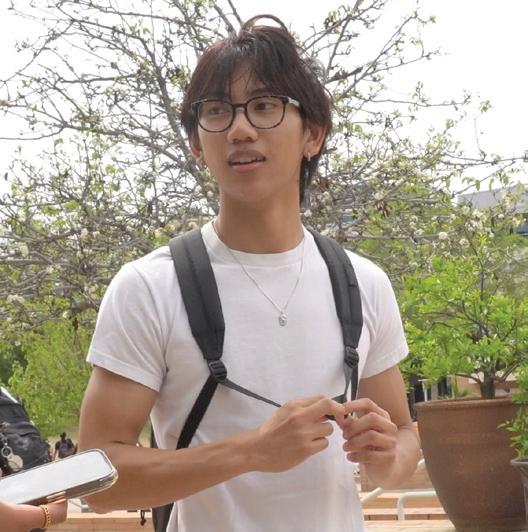
“You definitely don’t know what you’re getting yourself into. Although you see the title, and it’s like, for example, let’s say ‘Put a meal on a kid’s table.’ You’re like, ‘Oh, for sure I’m going to do that, let me sign.” And then, it’s like, ‘Wait, okay, sign one more for me. Okay, right here, one more for me.”
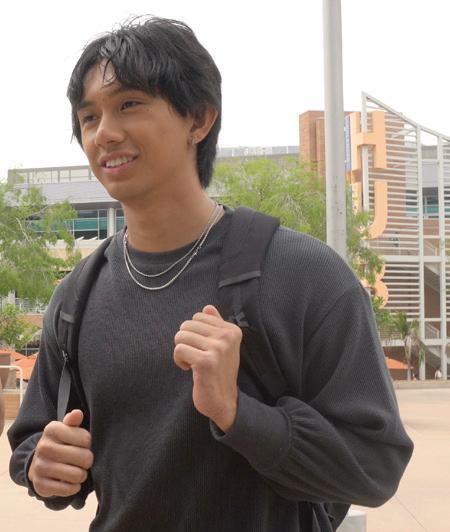
“I think it’s just like very one-sided. They give us what they want us to think about, not like both sides of the story.”
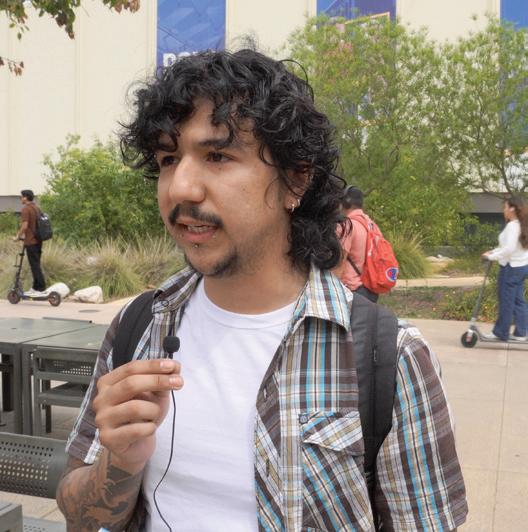
“Me personally, I feel like I’ve always just been hesitant to even take what they’re saying as the truth. I feel like whenever they try to tell you something, in my personal experience, they’ve been kind of misleading me ... I feel like there’s always some kind of ulterior motive and the fact that they kind of give out snacks ... to get you to sign something.”
Question: How do you usually respond when the petition tables approach you and what stands out to you about how they approach you and present their issues?

“I used to sign the petitions, but recently, not anymore ... They put you in a situation where you’re kind of forced to sign or you feel bad ... I think some of them are [predatory]. A few that I’ve witnessed ... they just ask and they don’t really pressure you, but a few definitely do pressure, a lot.”

Engineering First Year
“Usually, they kind of just ... call me out as like a friend. I didn’t really have a problem with it, it’s that sometimes I am going to class … it does make me feel bad and also it kind of does annoy me a little.”

“I feel like I did use to sign them and do all that. But then over time, I just saw more and more of them pop up. I feel like it’s a common thing to see once you sign up for those things, and you just start getting more things on your phone ... and it feels very predatory.”
Question: Do you think UCR administration is doing enough to regulate petition tables on campus or should there be more oversight?
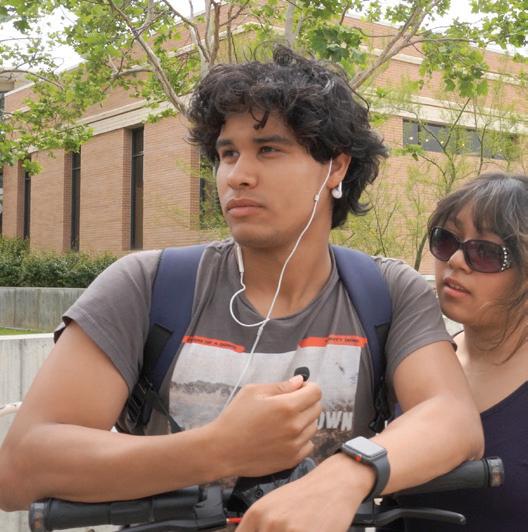
Anthony
Arias Biology First Year
“I think there should be more oversight … I just find it really annoying how it feels very predatory when I could be walking to class and whatnot and somebody is like, ‘Hey, can you sign my petition?’ I always have to lie and tell them ‘Oh, I’m not old enough. I’m not 18 yet.’”

Breanna-Gomez
Quintero Pre-business First Year
“I think more oversight cause I feel like whenever they go up to you … it’s kind of a little aggressive, like [the petitioners] want you to go sign and they want you to say yes … If your first response is ‘no,’ they should just take it [as an answer] and go on with their day.”
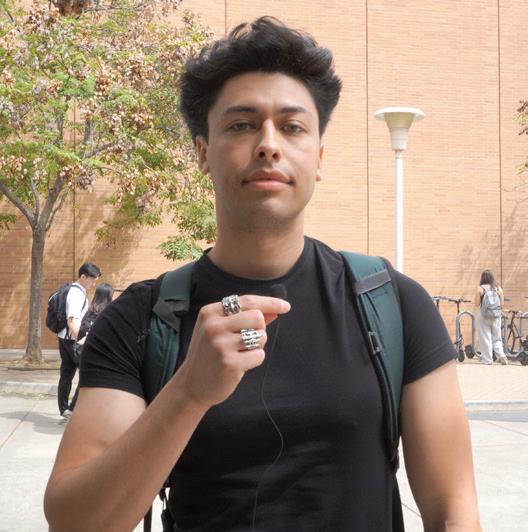
Kevin
Massey Business Finance First
Year
“I don’t think they actually have a say in it, mainly because this is a free public campus. If we were a private university, then you know, they would have full control and say. But because this is an open campus, I feel like it’s really difficult for them to have control on that … What are they supposed to do? Spray people down with water?”
MATA ELANGOVAN Editor-in-Chief
There are ways for organizations to advocate for their beliefs without forcing them onto an unwilling audience. Hosting a forum, inviting discussion and creating space for dialogue are all methods that allow individuals to provide enthusiastic consent and opt into an open conversation. However, it is another thing entirely to occupy the center of campus, using amplified sound and graphic imagery to capture the attention of passing students who never agreed to participate in the first place.
At the University of California, Riverside (UCR), Students for Life in America (SFLA), a national pro-life advocacy organization, recently hosted an event at the Highlander Union Building (HUB). The event, according to their western regional manager, Mary Logan, is to educate students and encourage dialogue around abortion from a pro-life perspective.
Logan explains that many college students only see one viewpoint on abortion, whether it be from social media, their peers or even their classes and that “maybe they’ve never talked to a pro-lifer before.” She expressed that it’s important for SFLA to “make it normal, to balance it out on campus and to actually have real conversations.”
While the organization framed its presence as an opportunity for open conversation, the methods utilized — highly visible displays and amplified sound — complicate the line between invitation and coercion.
Legally speaking, SFLA operated within its rights. The First Amendment protects freedom of speech, allowing individuals and organizations to express ideas without government interference. According to university policy, SFLA reserved the Belltower space in advance and complied with UCR’s Time, Place and Manner regulations. When asked to conclude the event, organizers packed and left without issue.
Free speech often assumes an equal and level playing field. This field is one where it is expected that all voices have equal access to visibility and credibility. In the real world, that balance is one that rarely exists, or some would even say nonexistent. National organizations like SFLA arrive with funding and coordinated messaging set to amplify their presence in ways individual students cannot match.
There is also the question of harm. Free speech arguments prioritize the ability to express oneself, not the impact that follows. Students walking through campus did not consent to engaging with graphic imagery or confrontational messaging, yet were made participants — whether active or not — simply by passing through the middle of campus. In this context, free speech becomes
less about dialogue and more about exposure that cannot be avoided.
As media theorist Steven Shaviro argues, affect often precedes cognition. People feel before they think. The graphic imagery displayed at the event — multiple depictions of fetuses and abortions — exemplifies this. It is designed to evoke an immediate emotional reaction, not encourage the development of open dialogue or critique. Sensation content gets people’s attention more effectively than nuanced discussion, so what spreads and sticks is not necessarily what is most accurate, but more emotionally charged.
The location of the event matters as much as its content. Set in a high-traffic area near the Bell Tower and the HUB, the imagery becomes difficult to avoid. Even for those who choose not to engage, the visuals linger. It carries beyond the immediate moment and into the rest of the day.
While it could still be labeled as advocacy, it could also be described as ambient persuasion through one’s visual surroundings. The repetition and visibility of these images embed a framing of abortion into the everyday campus environment.
SFLA’s presence at UCR underscores a broader tension between the right to speak and the ethics of how that speech is delivered. While the organization operated within its legal and constitutional boundaries, the methods utilized raise important questions about consent and the use of public space. A college campus is built for learning and the open exchange of ideas.
The issue is not whether or not ideas should be shared, but if they can be shared in ways that invite understanding rather than demanding attention.


ANGELICA BRIANNA ACOSTA Assistant News Editor
The concept of faithful adaptations being a myth is flawed. The flaw lies in how filmmakers and audiences view a faithful adaptation. Cinema and literature are two completely different forms of media; however, when creating an “adaptation” of a book, you must take into consideration ownership and authorship.
A director is not simply taking on a completely new idea that they’ve created on their own. They are taking someone else’s intellectual property and adapting it to a new medium. When considering narrative authority, the original author’s voice should hold overarching influence in an adaptation. If a film claims to be an adaptation, then it should remain as true to the source material as possible. If a film claims to be a reimagining of an author’s work, then that allows a director more leeway to reinterpret the original source. However, the two are not the same.
A reimagining implies that the work is a reconstruction of the original text through the
director’s point of view. Disney films derived from the fairy tales of Jacob and Wilhelm Grimm are reimaginings, completely new stories built from the directors’ and screenwriters’ imaginations. By contrast, an adaptation implies that the director is simply moving art from one form to another, keeping the essence and subject the same.
It is difficult to fully adapt a book into film; however, directors are storytellers of their own accord. Whereas a book is able to paint a picture in words, a film allows that picture to be experienced visually. A skilled director can say a million words through one frame, yet many adaptations still fall short where others succeed.
Take the 2019 film adaptation of Louisa May Alcott’s 1868 novel “Little Women,” directed by Greta Gerwig. While not exactly like the book, especially towards the end, Gerwig still captured the overall theme: the director understood that the central premise of the story was sisterhood and women finding their own identity in a society
where they are told what to be.
Gerwig was able to show appreciation for the original story in her film because she was not arrogant about the work and truly understood the novel’s message — that in the end, it didn’t matter whether Jo March published her book, because that’s not what her story was about.
A director who truly understands adaptation and is willing to let go of their own arrogance can appreciate the work and meaning behind a novel. Both film and literature have their own value and role. However, it seems that society has begun to value the voice of a director more than the voice of the author. A perfect film adaptation does not exist; however, a faithful one does. This does not mean films must be completely the same as the book, but rather the audience can still hear the author’s voice coexisting side by side with the director’s rather than being drowned out. A director does not have to be silenced in order to make a faithful adaptation; they just have to be willing to share the spotlight.■ H

As illustrated in “Adaptation” by Spike Jonze, the idea of a faithful adaptation is a myth, a doctrine that every talented filmmaker wrestles with and eventually abandons. Cinema and literature are inherently two different media, each provoking its own experiences, one through camera and the other through prose.
Cinema carries visual precision and kinetic energy as its essence is a moving image, while literature allows deeper complexity and flexibility through verbal explicitness. Because of this, a direct translation is unattainable and the very act of adaptation already becomes a kind of transformation rather than preservation. To argue that a film adaptation must stay faithful to its source material fundamentally ignores the discrepancy between the art forms.
The point of adaptation becomes reinterpretation from the director’s perspective. A film doesn’t exist in isolation, but rather in conversations with various preexisting texts and ideas as well as the cultural and societal climate surrounding it. Consider the most recent Oscars winner, “One Battle After Another.”
Paul Thomas Anderson takes Thomas Pynchon’s “Vineland,” which explores the aftermath of the ‘60s and the death of counterculture, reinventing it into a strikingly contemporary film.
The film is a cultural and political critique of the 2020s under the Trump administration. Through this, Anderson recontextualizes the essence of the original book, shifting the discourse around the film from merely measuring the fidelity of the adaptation to something with greater relevance to the era.
Furthermore, as articulated by François Truffaut in “A Certain Tendency of French Cinema,” pursuing faithfulness is not a particularly meaningful goal and is artistically unambitious and timid. Instead, it argues that a film should be driven entirely by the director’s voice and personality. Many successful adaptations work because of where these films are situated in the director’s filmography.
Greta Gerwig’s “Little Women” is centered around themes of agency and identity of women, filtered through self-awareness similar to her other films.
“Frankenstein” saw Guillermo del Toro revisiting his familiar concept of monstrosity juxtaposed with humanity, with a tint of romanticized naivete buried
under grotesque melancholy. “No Country for Old Men” explores the absurdity of existence in a deadpan, slightly humorous tone, a formula that the Coen brothers have repeatedly visited throughout their careers.
These films are distinctly a work of the directors, independent from the respective authors Louisa May Alcott, Mary Shelley and Cormac McCarthy. In fact, staying true to the original text often ends up betraying the author. Reinterpretation doesn’t take away from the value of the work itself. Despite Stephen King’s dislike for “The Shining,” it is considered canonical in American cinema.
The notion of a faithful adaptation subjugates the film to its original text, depriving it of necessity and satisfying only the expectations of the ones watching the film because they’ve enjoyed the book and are intrinsically biased towards it. Cinema is a self-sufficient art form with a distinct grammar that doesn’t need to borrow authority from another medium. An adaptation doesn’t exist without the source material, but its merit is valued independently.

Two weeks ago, we experienced the warmest March on record. Temperatures rose as if it was already the middle of June, breaking decades of climate data and raising concerns about long-term environmental side effects. People tweeted it, shared it on social media and talked about it in their daily conversations. And then it disappeared almost as quickly as Sonic the Hedgehog. This pattern isn’t unusual for Generation Z. We tend to forget things much more quickly than our parents and grandparents. It’s likely a normal thing that most people experience in our generation.
The short collective memory makes it easier for misinformation to spread and easier for groups, especially political ones, to avoid accountability simply by waiting for more chaos. The problem is not that we don’t care about recent events and impactful situations, such as the major decisions being made by the Trump administration; it’s just the fact that we only care until it’s trending and scrolling under our thumbs.
Today, most news events last only a few days. It’s like we are watching Instagram stories, where it generates a short reaction and then vanishes from all our memories after 24 hours. Because life moves on, as always. Reactions of outrage also seem almost like a performance rather than heartfelt pressure to advocate for the right thing in a given situation.
As if people do it for the plot, outrages feel fake when people post about it, make it trendy, spark conversations and then collectively decide to let it rot in the past as something new pops up on the feed. The social media algorithm aids in the short collective memory of the human mind, encouraging us to move on before anything actually changes and the
case is closed.
This short-lived memory changes how we understand information as well. Instead of treating current events as something that is ongoing, we treat them as a start and an endpoint in one. Once it leaves the top trends chart, it leaves our memories and attention too. It is a similar concept to “out of sight, out of mind,” even when the issue itself is ongoing and more episodes are yet to come.
And this is what helps people in politics nowadays. Our generation has fallen so behind in keeping tabs on current affairs that politicians are taking advantage of it. So much is going on today that it is also almost impossible to keep track of all the information being thrown at us, which is where politicians see a loophole to slip in their personal agendas. They think that once they take an action that might cause outrage, all they have to do is handle it for a few days and then wait for time to pass so that other people can forget and move on. When records eventually come out, the urgency that once surrounded the issue comes back again, just like the Epstein files.
This also affects activism, which mainly relies on continuity. If a matter loses its significance on social media, people tend to stop caring and forget it ever happened. The strikes and walks that advocate for justice and equality become past and social movements don’t succeed due to a lack of demand for change. Then a new week arrives, the topics of trends change and the most recent, still ongoing, advocacy run is put to rest from public attention.
Some might argue that this brevity of the human mind is necessary for moving forward. It allows society to stay optimistic, on trend and learn something new everyday. To a certain

extent, this is true. But there is also a difference between moving forward and skipping closure. Imagine trying to finish a group project where everyone agrees to ignore the unfinished slides. The project will continue, but it wouldn’t be complete nor improved. Real progress relies on people to remember what is unfinished and what still needs to be worked on so that improvements can occur and society can move forward together.
Therefore, collective memory isn’t just about the past. It is also what will shape the future as Gen Z rises as the next world leaders. When attention disappears too quickly, there is a high chance that politicians take advantage to complete tyrannical motives, with outlast consequences and misinformation spreading globally.
If changes and advancements are to be made, we need to stay engaged on the current episodes a little longer than the 24-hour story expiration time. Because when accountability leaves, the same problems will keep finding their way back into headlines we just finished forgetting.
MARIBEL HERNANDEZ Staff Writer
After the Supreme Court heard the Trump administration’s argument on birthright citizenship on Wednesday, Americans should expect the Court to uphold its traditional constitutional interpretation. This attempt to alter its protections is a constitutional threat and a waste of time and resources.
Trump’s solicitor general, D. John Sauer, argued that the 14th Amendment was amended to grant citizenship to former slaves and their children. However, for the past 160 years, the amendment has been widely accepted as ensuring all those born on U.S. soil are automatically classified as U.S. citizens.
To provide some history of the 14th Amendment, it was ratified on July 9, 1868, in an effort to overturn the Dred Scott v. Sanford (1857) case, which ruled that enslaved people born on U.S. soil were not considered U.S. citizens because of their African descent. Following its ratification, the 14th Amendment granted U.S. citizenship to “All persons born or naturalized in the United States,” granting citizenship to formerly enslaved people.
Now, considering that for the past 160 years the issue of birthright citizenship has been interpreted as every person on U.S. soil is automatically considered to be a U.S. citizen, the foundation of Sauer’s argument is built on a technicality. Suggesting that the country has strayed from the original intent of birthright citizenship speaks to the Trump administration’s disregard for the long-standing historical interpretation of the amendment.
In fact, disregarding the traditional interpretation of the 14th Amendment as seen today speaks volumes to the administration’s incompetence in governing the country. If they don’t understand basic constitutional rights, then faith in them upholding the U.S. Constitution and its rights diminishes Americans’ faith in the legitimacy of the governmental system.
With that being said, President Trump became the first sitting president to attend a Supreme Court oral argument, which demonstrates his disregard for democratic norms, as no previous sitting president has ever done this before. His presence during the oral argument is an intimidation tactic, reminding the Supreme Court judges of his authority as president.
Even if his presence was meant to signify the importance of this issue to him, he reportedly left just an hour into the argument, and took to writing on his social media, Truth Social, “We are the only Country in the World STUPID enough to allow ‘Birthright’ Citizenship!” This is a false statement, as the
U.S. is one of three dozen countries that offer birthright citizenship.
President Trump’s immigration crackdown has been focused on targeting “anyone who looks Latino, speaks Spanish, and appears to work a low-paying job.” As Justice Sotomayor stated, many Latinos — especially those born on U.S. soil to immigrant parents — are interpreting the attempt to overturn birthright citizenship as a threat to their entire livelihoods.
For children of immigrants who obtained their U.S. citizenship through birthright citizenship, the federal government’s attempt to overturn the very law that provided them with the opportunity to live the ‘American Dream,’ particularly with the hope for upward mobility and equality, is a personal attack on their existence. If this legal protection were overturned, they would not be legally considered American citizens.
For example, Stephanie Sanchez is a firstgeneration Mexican-American who joined protestors who rallied outside the Supreme Court to demonstrate their support for birthright citizenship. She states, “Here I am representing my community and fighting back,” demonstrating how personal this issue is to Americans of Latino descent.
She references how her very presence at the protest is an act of representation to the Latino community, as many Latinos fear the repercussions of being outspoken in not just the political climate today, but also drawing any unwanted attention from federal law enforcement that could jeopardize their
residence in the U.S.
The very act of considering the overturning of birthright citizenship fosters a sense of fear of being deported to a country where one did not grow up, simply because of one’s parents’ origins. By overturning birthright citizenship, children would be robbed of the opportunities the U.S. offers to its citizens, including K-12 education, financial aid for higher education, upward social and economic mobility and protection via political asylum.
It should also be mentioned that most people who apply for political asylum in the U.S. are denied, so they are faced with two options: risk their lives by remaining in their country of origin or immigrating to another country — whether illegally or legally — in hopes of a better life.
Overall, this issue should be dismissed by the Supreme Court, as birthright citizenship has been widely accepted as upholding automatic citizenship for persons born on U.S. soil for the past 160 years. It would be difficult to overturn nearly two centuries of history, especially when it’s one of the foundational laws that has formed America into what it is today.
The Trump administration should recall what elementary school children are taught about the U.S. being a “melting pot” of cultures because “what is U.S. culture but a collection of others,” something they have clearly forgotten.

Make decisions, choose chaos, tell me all about it.

Libra (Sept. 23 – Oct. 22):
Be charming. You will find more opportunities open to you if you put your sweet nature first this week.

(Dec.
Everything is coming easy to you this week. Make the most of it and make people jealous of how good your life is going.

(March 21 – April 19):
Make a decision. It is time to decide on a career and take the steps to apply what you’ve learned. You’re going to have a serious week, but the motivation now will carry you through the quarter.

Cancer (June 21 – July 22):
Trust your instincts this week. Be distrustful, analytical and judgmental to help inform your next steps.

HOROSCOPES FOR THE WEEK OF APRIL 14: STRATEGIC
ALLISON FRY Business Manager

Scorpio (Oct. 23 – Nov. 21): Sagittarius (Nov. 22 – Dec. 21):
Pick up a new hobby and post about it. Start baking, learn a trade, begin crafting

Whimsical and sure to leave a smile on their face, you’ll use your spontaneous nature to bring joy to someone’s day. Filling someone’s room with balloons will fulfill the surprise factor of a prank but spread the happiness you so naturally exude.

(April 20 – May 20):
Tie your shoes, drink some water and prepare yourself for a week of setbacks. It’ll get better, but first it has to get worse.

Leo (July 23 – Aug. 22):
I know you’re bored. Lean into it and do something dumb. Please come tell me about it after too.

Hot girl summer is fast approaching, and it is time to lock in, make a few fun mistakes, and make plans for summer.

21 – June 20):
You’ve been saying yes to everything, and it is time to step down from the main character energy. You can’t keep up and it is time to focus on health instead.

Virgo (Aug. 23 – Sept. 22):
You’re being watched. Act accordingly. This is your lucky week. Everything is catering itself to help you which means it is the time to act. If you don’t, you might regret it forever.
As you might know, the University of California, Riverside (UCR) didn’t start off as a university at all! It was originally built as a citrus experiment station, where scientists and researchers looked at countless aspects of agriculture pertaining to citrus trees. Now known as Anderson Hall, a building you may have passed when attending lectures in the School of Business, the citrus lab has become famous in the citrus world.
The station was founded in 1907, however it is not the building we see today. Originally, the laboratory was placed on Mount Rubidoux but was later moved to Big Springs and served as the foundation for the construction of our UCR campus. 1954 was the year that UCR first opened its doors to students. The citrus experiment station lives on through Anderson Hall and the thousands of citrus trees that surround and spruce up our campus.

31. Healing plants
Norm’s ____
Taxi
Ceremony
Sean of “The Lord of the Rings”
____ mater
Cave dweller
Abbr. before a summary 42. Tons
French soccer star who won the 2018
Dissuades
Mountain lake 50. Star of Netflix’s Wednesday 53. Do something


By H Staff


56. Wrinkle remover
57. Stadium cheers
58. A loving person
60. Nick at ____
61. Letter-shaped fastener
62. Country rocker Steve 63. ____-do-well
64. Gentlemen
65. No longer fresh DOWN 1. Singer Lambert
Corn syrup brand 3. Coast-to-coast hwy
French possessive
5. Shelley’s elegy to Keats 6. Sense of taste 7. Valley where David fought Goliath
Hertz rival
Approve
Statue base
Green beans
Giraffe’s cousin
Short-term workers
Mine find
Corn covering
Run away
Cutting remark
Figure skater Mali-

28. Football Hall-ofFamer Ronnie
29. The “I” in IV 30. Law, in Lyon 33. Hoof sound 34. Jane Hamilton’s “_ ___ of the World”
Commanded 37. Every variety
Reagan’s “Star Wars” prog.
Mathematician Turing
Supermodel Banks
Rubs the wrong way
Original Easy-Bake Oven toy company
Explosive experiments
By: Brianna Galaviz-Villagomez, Contributing Writer
Quick, nutritious and easy, try this date smoothie for muscle recovery.
Instructions:
1. Cut the dates open with a small knife and take out the seed.
2. Place all ingredients in a blender and mix until smooth.
3. Sprinkle cinnamon on top and serve immediately.
Prep Time: 5 minutes Servings: 4

• 4 pitted dates
• 2 bananas, frozen for the thickness
• 2 cups of milk of choice
• 2 teaspoons of creamy peanut butter
• 1/2 teaspoon cinnamon (optional)




Who are your celebrity parents? answer key
Find out which power couple you most resemble.
By: Nola Perifel, Assistant Features Editor
1. During group presentations, you are:
A. The introverted one who does their work weeks ahead of time.
B. The creative one who gives valuable ideas.
C. The one who adds in comedic punchlines and makes people comfortable.
D. The leader who usually ends up doing most of the work.
2. At school, you tend to:
A. Keep to yourself but take on too many responsibilities.
B. Party and have fun.
C. Chill with a close group of friends.
D. Be the president of five different clubs.
3. Your best qualities are:
A. That you are good at everything you try.
B. That you are independent and laid-back.
C. Your humor and empathy.
D. Your ambition and brilliance.
If you got “A” the most, you most resemble Zendaya and Tom Holland. Like these two celebrities, you are down-to-earth and mature. You prioritize hard work and you let it be known. Privacy is of the utmost importance and “classy” is your middle name. You tend to be playful and energetic but you are also low-maintenance and chill, not requiring much attention. Like Zendaya, you are good at almost everything you try and your confidence is unmatched.
If you got “B” the most, you most resemble Rihanna and A$AP Rocky. This celebrity couple knows how to have fun, and you do too. Music and creativity surround you constantly. You are independent … sometimes too independent, and you like things to be done your way. Like A$AP Rocky, you are calm, cool and honest. Like Rihanna, you are loving and inspiring.
If you got “C” the most, you most resemble John Krasinski and Emily Blunt. Like Krasinski and Blunt, you are sweet, warm and approachable. Like the former “The Office” star, you are young-at-heart, witty and lighthearted. You are also empathetic, sensitive and intelligent, all of which are qualities that you share with the “The Devil Wears Prada” icon.
If you got “D” the most, you most resemble George and Amal Clooney. Not only are you charismatic, you are also incredibly compassionate. You are effortlessly poised, polite and respectful and have a brilliant mind and a sharp wit like Amal. Your ambition and motivation are what drive you in your endeavors and your leadership skills are unmatched ■ H
RACHEL KO Copy Editor
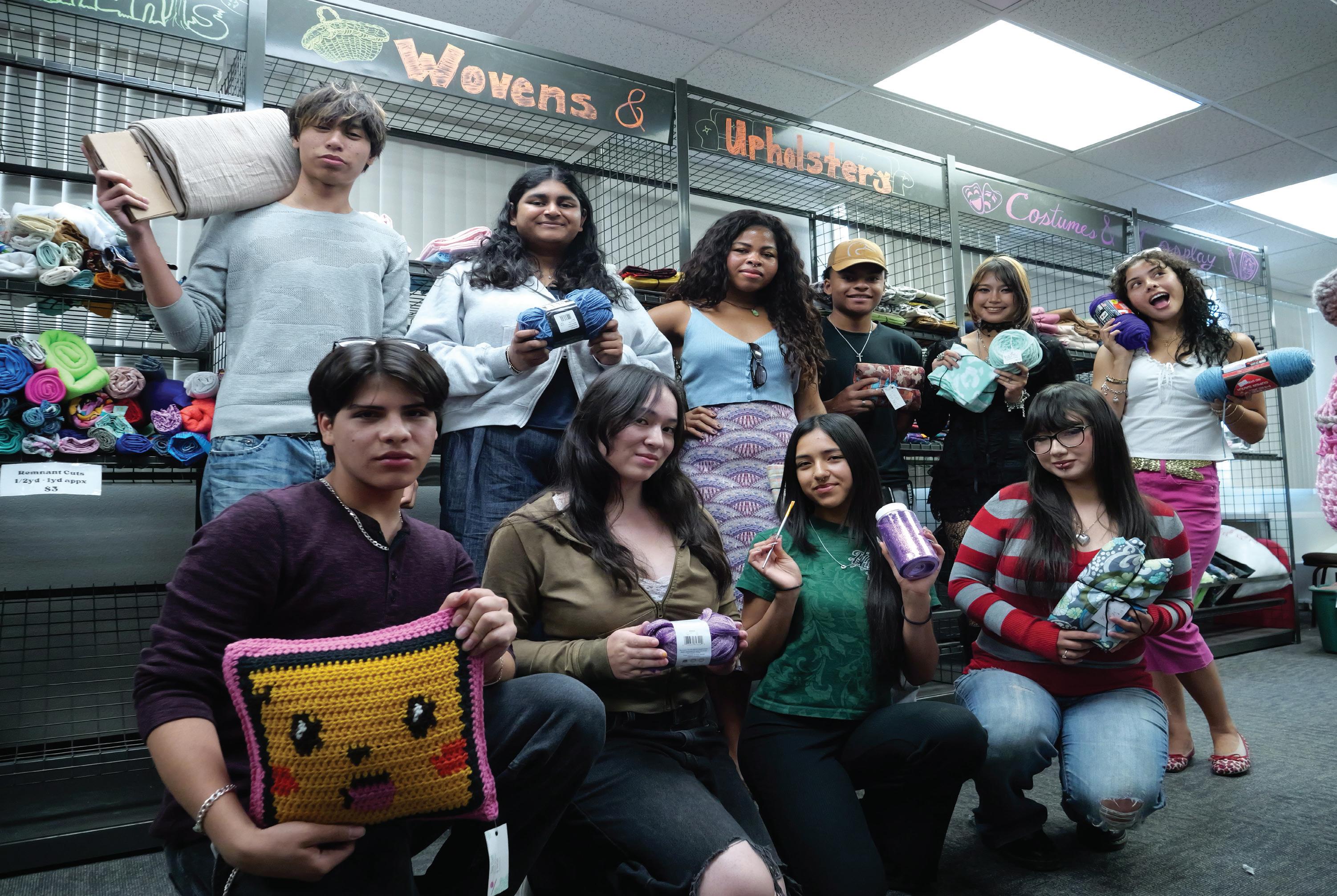
While there are usually no prerequisites to joining a club, for the Fashion in Theory (FIT) club, there is one requirement: you’ve got to be a baddie. As long as you present yourself in any way you’re most confident in, whether it be a chic hairstyle, boldest outfit or your make-orbreak accessory, FIT club may just fit your vibe (pun unintended).
FIT club is a relatively new club, as it found its beginnings last year with a different name, “Healthmate.” They later rebranded to its present name, “Fashion in Theory,” as it more accurately depicts their goals and vision for the club: introducing people to different fashion aesthetics with health altogether.
As one of FIT club’s founding members and current president, third-year biochemistry major Nnamani plays a key role in the club’s operations. She leads the club’s general meetings and events, as well as their monthly editorial issues. Everything is accessible via their Instagram @fit. ucr, so follow to stay updated on their schedule!
Events are the backbone of FIT club. In the past, they’ve hosted a variety of events and workshops, like thrift store pop-ups around campus, scrapbooking workshops, DIY shimmer body cream events and more. The main goal of these events is for attendees to leave with something in their hands, be it a handmade headband or a cute polaroid. Maybe you’re looking to upgrade your wardrobe with some new pieces, or you’re in dire need of some good
pictures for your super nonchalant Instagram. If that’s the case, consider checking out these events to do just that.
In addition, FIT club also regularly collaborates with not just other on-campus clubs, but as well as small businesses outside of UCR. Their most recent collaboration was a social event with Nacho Ann’s Fabrics, a small fabric store located in Downtown Riverside that also sells secondhand clothes, stickers and other little knickknacks. There, FIT club members embroidered new accessories and painted on cute canvases, and each attendee got to take their projects home.
When asked what the community is like in FIT club, Emi Domingue, third-year media and cultural studies major and creative director of the club, described it as very welcoming and open-minded. “We’re all super creative in our own way, which I think really brings new styles to the game,” Domingue says. “So it’s really fun to just work with everyone on that.”
“Everyone’s also really silly and making jokes and having fun,” adds Nnamani. “I’m always laughing a lot with them.”
Others have similar things to say about FIT club’s warm and creative community. Diego Acevedo, a first-year bioengineering major, explained why he joined FIT club. “When I went to their tabling, everyone there was really cool, and had super sick fits. So I just wanted to join the club,” he says.
“Everyone here has positive energy. They’re all vibing or eating it up, and their fits were fitting,” Gio Osorio, first-year political science major and model coordinator, graciously describes.
Domingue understands the intimidation of joining a new club, yet encourages people to still come and check FIT club out. “It’s a way to kind of challenge your creativity,” Domingue says, “and I think it’s really inspiring.” The creative director herself first joined FIT club as a model for their fall editorial issue, showing how it’s not so hard getting involved with the club.
“You’ll find a great community of people here and probably meet some friends,” Nnamani chimes in. “You’ll leave with something at one of our events that you’ve made yourself, and you’ll just have a lot of fun.”
FIT club has a lot of events in store for the upcoming weeks. Their next event is a glitter tattoo social with the Body, Hair, and Self Care Collective club on April 28 from 5 p.m. to 7 p.m. at the Aberdeen-Inverness Knoll, and their next thrift store pop-up is on May 13 from 9 a.m. to 2 p.m..
Whether it be searching for the perfect vintage jacket or altering your old t-shirts, this is the perfect place for fashion enthusiasts. If you’re just starting to dip your toes into this fascinating world of fashion, still join! As legend has it, according to Osorio, a certified baddie, FIT club will “turn you into a top-tier baddie.”
SANJANA THATTE Features Editor
If you’ve been walking around campus any time in the past five months, you might’ve noticed the petitioners’ tables that seemed to magically spawn at hot spots all around campus. And if by chance you were trying NOT to notice them, they definitely saw you — immediately shoving a clipboard under your nose asking if you want to end homelessness.
To avoid causing a scene and to get people off your back, the people pleaser in you might find it prudent to give strangers your personal information in exchange for a Celsius, and hopefully, being left alone. I’m here to tell you that there is a way to avoid all of that. Here are a few simple sentences that can roll off your tongue just as they attempt to disturb your peace.
“I’m not a California resident” Quick, sensible and sure to turn them right around to their next target. Most of the petitions they are asking you to sign are specific to the state of California, so by claiming to be from Arizona, you shift their attention to someone else. Claiming you aren’t registered to vote simply won’t cut it because these tables often have voter registration documents with them as well. By forsaking your home state you can avoid their badgering.
have some semblance of respect for your time, these petitioners are sure to leave you alone.
“I have to pee”
Unless they want you creating a puddle for them to step in, they will clear out as soon as these words leave your lips. Sure to baffle, bamboozle and disgust them, your bodily functions will get them off your case so that
DON’T LET SOME WANNABE CAR SALESMEN FORCE YOU TO SIGN YOUR LIFE AWAY.
reconsider their career choices. Make sure you screw your face up in outrage and even squeeze out a fake tear or two. As you rush off be sure to look over your shoulder and give them a look of distaste. If you do this in front of other people be sure to yell loudly enough that other people turn around and stare judgmentally at them. The collective embarrassment will hopefully be enough to put them out of a job.
“My dog died”
This one is an individualized bombshell and is not to be dropped lightly. Use this one for when they simply won’t leave you alone and have been harassing you for minutes on end. Their faces will drop, they’ll start to stammer and that is when you begin to absolutely rage at them. Use this as an opportunity to have the mother of all crashouts and scream at them for their behavior. It is one thing for them to put you on the spot and ask you for your signature but continuously bothering someone is unacceptable.
“I have a class I need to get to” Make sure you keep on walking as you say this. It especially helps if you put your phone up to your ear and make it seem like you’re on a call. You are a student, and more often than not, these forms take a minute to sign because of how much information they ask you to write. Assuming they are not overly pushy and
they avoid being in the splash zone. Granted, if you are a commuter student who is walking or driving around the parking lot this may not work as well for you, so try to save this excuse for when you are closer to campus.
“I’m late for a funeral”
This one requires a bit of gravitas. The goal is to make them feel as guilty as possible and hopefully ashamed enough to
While participating in civics is a noble pursuit, you should be well informed of what you choose to participate in and not feel pressured to give up your personal information. While these techniques apply for scams in general it’s important to note that these petitioners in particular are taking advantage of your kindness and your desire for change. Remember, nothing good comes easy, and change, however big or small, comes from you knowing what you want and not letting others push you into making a choice that’s not yours.
SOPHIA UCROS Contributing Writer
Everyone hates small talk. It’s usually about surface level topics like colors, weather or food. Yet somehow, it is almost always uncomfortable. Both people mumble over their words, cringe at their own jokes and go silent while staring at their hands. All while counting the minutes in their head until they can go home. But who said small talk is meant to be fun? I’ve made it through my fair share of excruciatingly tense conversations, and over the years I’ve picked up some useful tips that will help you get through your next dreaded interaction.
Let your body do the talking
People are often very easy to read. When your shoulders are stiff, it’s obvious you’re stressed or nervous. When you avert your eyes it shows insecurity or discomfort. Your body speaks before your mouth does. So relax your shoulders, make eye contact and even use your hands naturally as you speak. Many people mirror what they see; so if your body is tense, they will be tense too. Taking a moment to relax before the conversation begins can eradicate any weird energy in the air. When your mind is calm you’re less likely to overthink things and say something that will keep the conversation tense and uncomfortable.
Dip your toes in the water and start neutral
When in conversation it’s natural to fall into the, “this or that” takes. This is usually fine with good friends, family and significant others. However when talking to a new friend or even a stranger, it’s best to take a lighter approach. Stick
to a more neutral, or non-controversial topic at first. This doesn’t mean talking has to be boring. It just means finding the perfect middle ground.
Asking something simple like, “How’s the weather?” can feel a bit stiff, but jumping into something like “What do you think about climate change?” can feel overwhelming. The goal is to ease into the conversation. Differing opinions often bring hesitation, and this is what can lead to that awkward tension. Starting naturally helps avoid the tension and keep things flowing naturally.
Don’t make yourself small or be too hyperaware
You can make small talk without shrinking yourself in the process. Here’s the secret most people don’t tell you, it’s all fake. Confidence is
all in your head, so if you don’t feel like you have it, just say you do and magically you will. Well, you’ll at least have enough to get you through a short conversation. In order to do this you need to avoid being too self-aware.. Occasionally we allow hyper-awareness to keep us paying attention to thoughts like, “How does my hair look?” or “They definitely just hated that joke I just made.” These thoughts will bring down your newfound confidence and blow it all away.
And one last tip: if you start a conversation a little off, it doesn’t mean the rest of it has to go that way. If you do do something a little cringey or even just completely dumb don’t try to overexplain it or fix it, just have a quick laugh and move past it. The moment you try to fix your weird moments, the worse it gets. Remember at the end of the day, awkwardness isn’t even real!

MALINI JOSEPH Contributing Writer
All right, listen up! This isn’t a drill. Your extroverted friend has been begging and pleading to drag you out to the University of California, Riverside (UCR)’s party scene. Finally, after not giving up for two full quarters, they’ve worn you down. You agreed. You’ve signed the contract in blood and your friend has enforced the “no take-backs” rule. Don’t worry. As your resident introvert, I have three survival tools to ensure you make it out of the party alive, and maybe even have a little fun.
Tool #1: Go into it with zero expectations.
Parties can be incredibly overwhelming, especially if you’ve never been. However, the image you build in your head of the event is going to be very different from the reality. If it helps, treat the party like a detective mission. You only know conjecture and disconnected pieces of evidence. To make a final decision that will stand in court (your group of friends), you have to collect observational data. Going in with preconceived biases could
11/20
skew the data and lead to an inconclusive case. Allow yourself to be neutral about the concept of partying. At least until you have enough evidence to prove why you shouldn’t go again.
Tool #2: Find your nearest open space
When you get to the party, your first mission will be to find the largest open space. These events will have a lot of people who don’t necessarily have full control of their limbs or volume. Identifying these exits and spaces ensures you always have access to a space with airflow and without people touching you.
people should dress. The thought of dressing in this style can be incredibly uncomfortable, especially when you’re already mentally preparing for the amount of people. Wear clothes that make you feel good and don’t hinder your ability to move. If you are focusing on how your outfit is resting, you won’t be able to enjoy yourself. When you feel good in your clothes, you will be able to stay in the present. You’ll also be the most prepared if you need to make a quick getaway.
BVRNT/TOUR Jakobs Castle and Strawberry Fuzz with Strange Case @The Barn, 8 p.m. to 10 a.m.
This allows you to recenter, breathe and regather. You can have fun dancing with your friends and still feel exhausted because there are too many people around you. Knowing how to make it back to the front of the house can make all the difference for enjoying a party.
Tool #3: Wear comfortable clothes
Party culture seems to have one idea of how
As an introvert, stepping out of one’s comfort zone is healthy and good exposure therapy. However, if an event or a situation truly makes you uncomfortable to the point of a panic attack, it is okay to leave. This is especially important for the people-pleasers. You may think that you should just thug out the anxiety and exhaustion for the sake of your friends.Your friends would rather you feel safe and are having fun than attempting to stick it out. Parties can be incredibly enjoyable with good friends and better music. You’ve got this, fellow introvert. Go forth with this party survival guide and prosper!
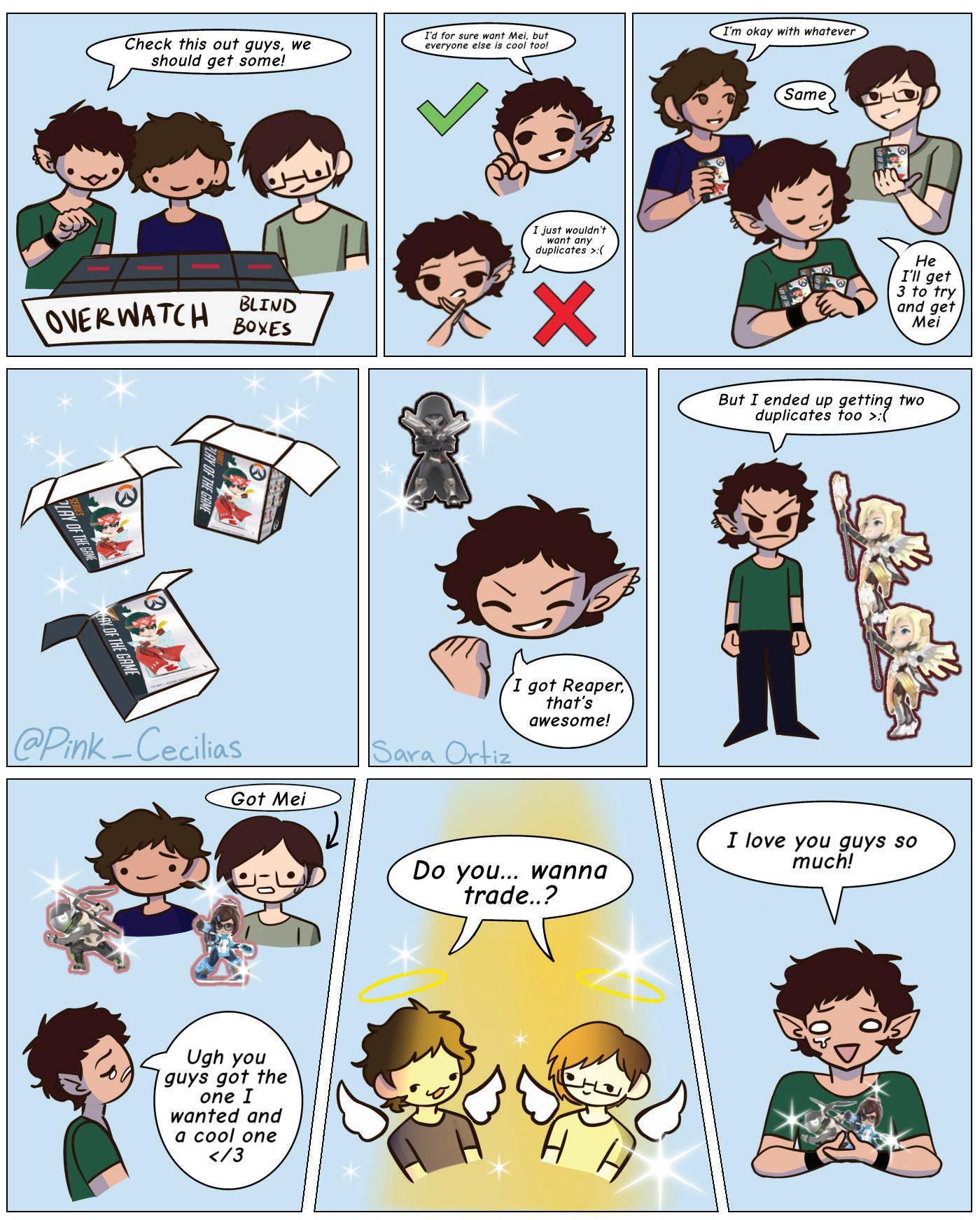




TUESDAY, APRIL 14, 2025
4/144/19 4/15 4/17
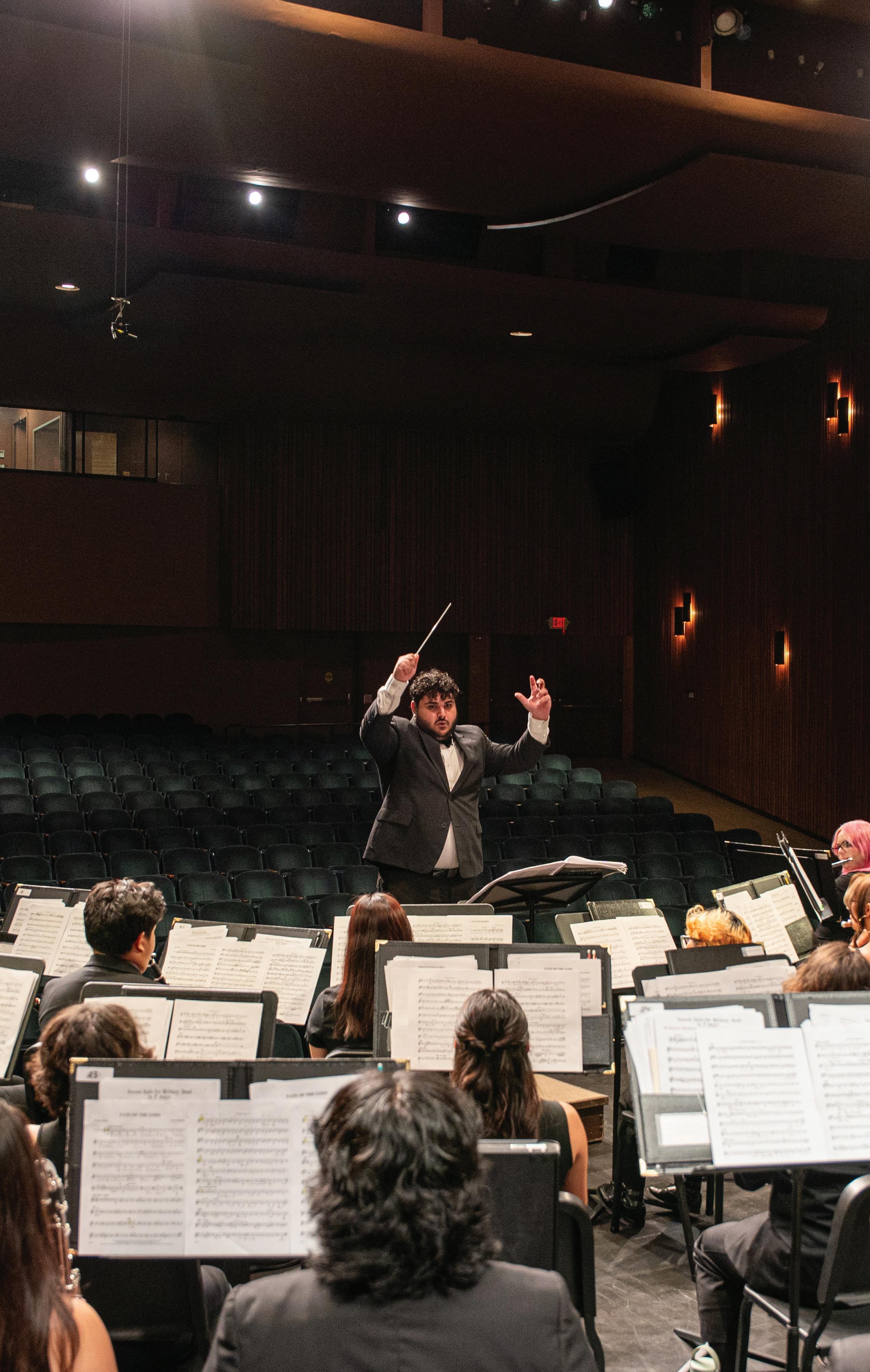
Amazing Stories: A Century of Science Fiction (Exhibit) @ Rivera Library from 7:30 a.m. to 12:00 a.m.
Out of Character, Out of Order: Typographic Reforms in Postwar South Korea @ARTS 335 from 4:00 p.m. to 5:30 p.m.
Mundanity Band Live @ The Barn from 7:00 p.m. to 9:00 p.m.
Listening for Central America Conference @ CHASS South 1113 from 9:30 a.m. to 5:00 p.m.
UC Riverside vogues underneath the big top.
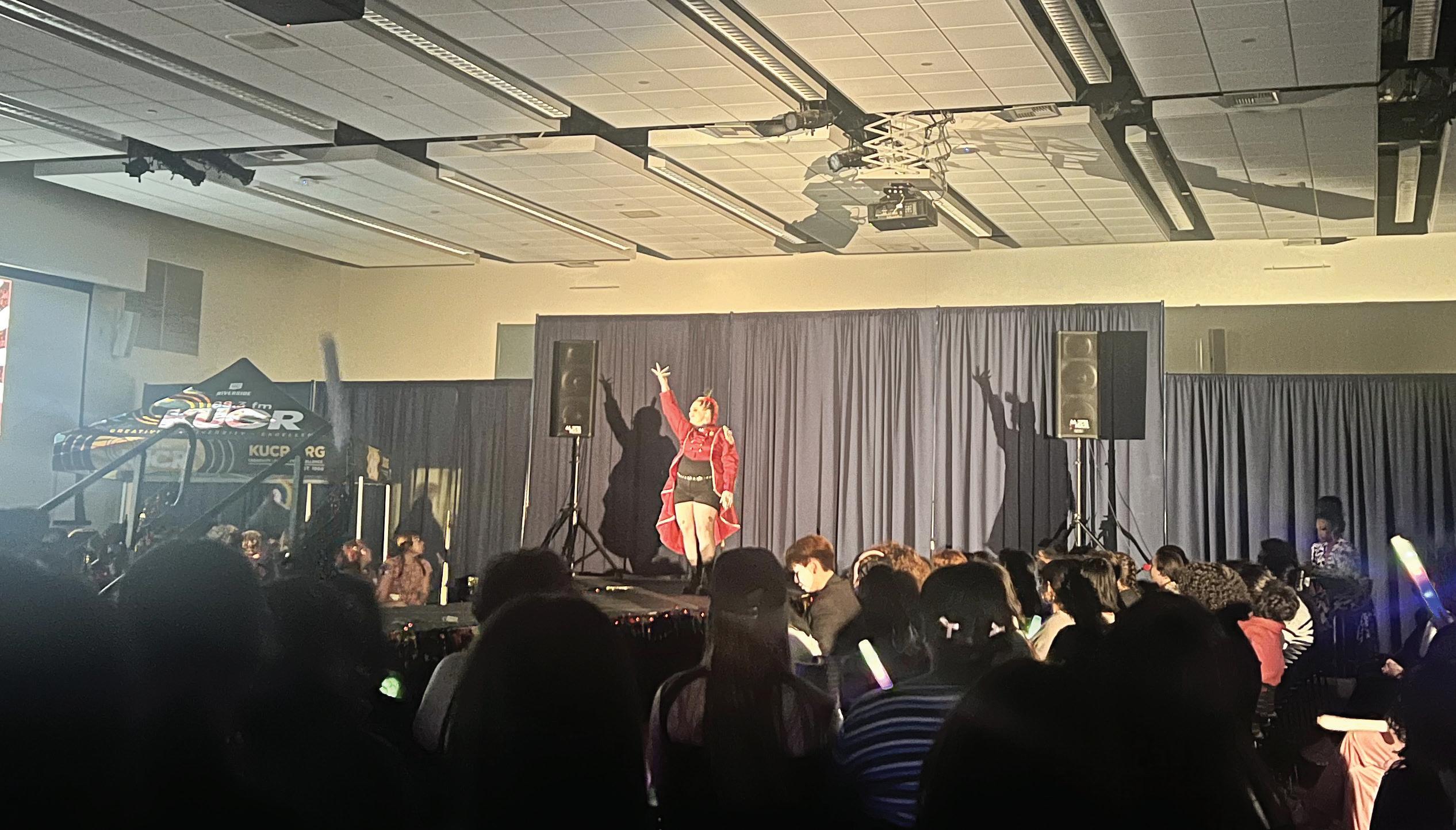
On April 9, 2026, the 22nd Annual Dragalicious Drag Ball debuted at University of California, Riverside’s (UCR) HUB 302, being presented by the KUCR, UCR Drag Club, Queer Alliance UCR and the UCR LGBT Resource Center. The short summary for the event? Looks were served. However, this description won’t do any justice to the dazzling spectacle that the performers had put on. Going for a circus theme this year, the Dragalicious Drag Ball certainly evoked a sense of magnificence and thrill one could get from going to the big top.
Entering the arena at 7:30 p.m., the audience was greeted by tables giving out pins, glowsticks, fans, animal crackers and even balloon swords. Organizations such as the Inland Empire LGBTQ+ Center were also present, inviting and encouraging others to support the community. Guests additionally had the opportunity to take pictures at circus-themed photo ops. Songs like “Bark Like You Want It” by Sir-Mix-A-Lot played prior to the start of the ball, setting the mood for what’s to come.
At 8 p.m., the show started to pomp splendor as event emcee and previous Rupaul’s Drag Race contestant Mayhem Miller appeared on stage donning a lavish black and white dress. Miller, who hosted the ball multiple times in the past, dazzled once again as she lip-synched to DJ Boris Dlugosch’s remix of Moloko’s “Sing It Back.” Before going on with the show, Miller engaged in charismatic crowdwork while educating newcomers of the two fundamental rules that come with drag shows: tip the performers
whenever possible and always keep the energy going. Additionally, Miller gave hilarious asides to the crowds in between sets while performers were setting up.
Bear Bèringer went up afterwards, leaning into the circus theme with a red and black outfit akin to a ringmaster. She additionally did a duet performance of “Die With a Smile” by Bruno Mars and Lady Gaga with Reina Rey.
Reina Rey, most notably wearing checkered pants, stunned the crowd with a diabolo act during her performance before continuing with a lip-synch and dance act. Her dance was nothing short of stunning.
Xerentheum was quick to impress and entertain the crowd as she lip-synched and performed a dance routine to “Join Us For a Bite” by JT Music and Andrea Storm Kaden, a familiar song for die-hard fans of “Five Nights at Freddy’s.” Sporting a white corset and clown makeup, Xerentheum leaned into the spirit of theater and entertainment when lip-synching “Money” from the hit musical “Cabaret” in another performance.
Soulanna dazzled the crowd through her lip-synching of “Oh No!” by Marina. Albeit wearing a purple flashy garment and sporting clown makeup for her performance, Soulanna’s lip-synching and dance skills were no joke. Deveraux mesmerized the crowd with rigid, contortion-esque dance moves.
Minnie Slayy took things in a different direction as she performed a traditional mime act. However, it didn’t take very long until the
performance shifted into an electrifying lip-synch rendition of “Poker Face” by Lady Gaga. Things only got better from there as Minnie switched songs once again, this time playing “Sea Lion” by Yuno Miles. The song was accompanied by Minnie playing around with beach balls akin to a sea lion.
Taffy H. Cashed, in a debut performance, had audiences mystified as predictions were made. Taffy most notably and accurately forecasted, “you’re going to give me a lot of money.” A lipsynch routine immediately followed to the tune of “Hex Girl,” a song performed by the fictional band Hex Girls from “Scooby Doo! And the Witch’s Ghost.”
Jennifer Body encapsulated old fashioned cabaret, especially when it came to outfit choices. From a black corset and fishnets to a red dress evocative of Marilyn Monroe in “Gentlemen Prefer Blondes,” Jennifer entertained the masses by lip-synching songs like “Show Me How You Burlesque” by Christina Aguilera. Jennifer’s stunning kicks were also met to great applause by the audience.
Mayhem Miller ended the night lip-synching to a house music version of “All Night Long” by Mary Jane Girls. Before taking leave, Miller gave the crowd some words of encouragement. She most notably decreed, “You are all beautiful. Don’t let anyone tell you differently.” It’s safe to say that the 22nd Annual Dragalicious Drag Ball slayed, just like it does practically every year.
ANTHONY ASCENCIO-CARVAJAL Staff Writer

From stringing memorable baselines and choruses on Kendrick Lamar’s “To Pimp A Butterfly,” to collabs with Mac Miller and Flying Lotus, Thundercat returns! On April 3, 2026, Thundercat dropped “Distracted” after a five year hiatus. The album includes production by Greg Kurstin, Flying Lotus, Lemon Twigs and Kenny Beats. It also boasts a wide feature selection of Tame Impala, Lil Yachty, A$AP Rocky, Willow, Channel Tres and a posthumous feature of the late great Mac Miller.
The album rollout spanned years, with the single “No More Lies” featuring Tame Impala first releasing on April 25, 2023. Two years later, he released the double single “I Wish I Didn’t Waste Your Time” and “Children of the Baked Potato” featuring Remi Wolf on September 25, 2025. The last three singles all released within the first three months of 2026, with the song featuring Mac Miller having been leaked all the way back on February 6, 2020. Mac Miller and Thundercat have had a close relationship, recording songs together like “What’s the
Use?,” “Self Care” and “Hi.” Additionally, Thundercat also performed on Mac Miller’s Tiny Desk Concert accompanying him by playing the bass. The result of Mac Miller’s death left him very downcast, to the point he dedicated the entire album “It Is What It Is,” after Miller. Since Miller’s passing, Thundercat made it clear that he made several different lifestyle choices to live healthier, saying in an interview with The Guardian, “Either it’s your turn to go or you walk the other way” from personal addictions.
“Distracted” follows “It Is What It Is” by creating a project that radiates a lot of elements and styles blending jazz-fusion, funk, R&B, psychedelia and hip-hop felt throughout Thundercat’s past work while taking communicating to the listener a profound, vulnerable message about heartache and loss.
The first track of the album, “Candlelight,” discusses the loss of a friend as their time comes to a close over a psychedelia jazz-fusion influenced instrumental. Moving on, the third track, “She Knows Too
Much,” continues with a posthumous feature by Mac Miller. Thundercat posted on Instagram about this feature saying, “I always considered Mac a ‘one man rat pack.’ Smooth like Frank, cool like Sammy, suave like Dean. I wish that you all could have been there with us the moment this song was created in his garage … we all knew it was something special.” Despite the track leaking online years ago, it was able to come to fruition with a music video upon the album’s release.
The fourth track of the album, “I Did This To Myself,” features both Flying Lotus, and for the first time, Lil Yachty. The song discusses the relationship between Thundercat and a woman who has Thundercat, “looking like a fool.”
The fifth track, “Funny Friends,” features A$AP Rocky, which is the newest collaboration between the two since Rocky’s song “PLAYA” off of his newest album, “Don’t Be Dumb.” “Funny Friends” involves the two exchanging verses and reciting the chorus, discussing a friendship that contains potential unrequited feelings.
On the sixth track, “What Is Left To Say,” features The Lemon Twigs as Thundercat acknowledges the end of a relationship. The Lemon Twigs join Thundercat along in the chorus and instrumentation of the track.
Overall, “Distracted” is another classic in Thundercat’s discography, that blends the multiple genres he’s known for covering, without skimming on the side of human emotions that carry weight in moments of love and loss one can experience.

With campus petitioners coming down on unsuspecting bystanders like moths to a flame and manipulating them to commit to obviously false promises, the time to put one’s foot down and start making informed decisions is now. For those who are just trying to get to places on time and hate being pestered when it comes to being told what to sign, and for those who just want to have new tunes to listen to, here’s the perfect playlist for avoiding petition tables.
“Got the Time” by Joe Jackson With a lightning fast tempo that emulates the heartpounding sense one might have when trying to catch the last train home, “Got the Time” by Joe Jackson is the perfect tune to race past campus without trying to hear a word out of petitioners mouths. With snarky lines such as “If I tell you what I’m doing today? / Will you shut up and get out of my way,” Jackson turns adrenaline into prose. The riveting post-punk track off of Jackson’s album “Look Sharp!” is an anthem for those who are all too busy with their lives to be distracted by menial sidequests.
“Throw Yourself to the Sword” by Die Spitz
“Throw Yourself to the Sword” by Die Spitz offers a loud and proud grunge sound that’s sure to make one feel untouchable. The song superbly captures the rage one feels when being hassled by people looking to get signatures. With an exhilarating riff that’s sure to evoke a fight-or-flight response, the track will get one going to where they need to go as fast as possible.
“I Don’t F*ck With You” by Big Sean (Ft. E-40)
Although a definitive track for ragers and pregames, “I Don’t F*ck With You” by Big Sean featuring E-40 could just as well work within the context of not giving any attention to what petitioners have to say. The lyrics, as well as the song title itself, perfectly encapsulates what everyone is thinking every time they are met by egregiously annoying inquirers. The song is at its best when at its maximum volume, and those who are feeling extra bold should definitely blurt out the lyrics at those demanding signatures.
“Shut Up” by The Stranglers
Despite being more notable for their melodic 1982 song “Golden Brown,” one cannot forget how The Stranglers played a substantial role in the formation of punk rock with “Shut Up” being a prime example. With a rollicking bassline and straightforward verses, “Shut Up” by The Stranglers gets its point across within a span of a minute. Given lyrics such as “I’ve gotta lotta things to do / I told you to get out of my sight,” the song is the perfect tool to blast out and deter any and all loiterers.
“Painkiller” by Iceage (feat. Sky Ferreria)
This grandiose track from a band rock legend Iggy Pop referred to as “the only current punk band I can think of that sounds really dangerous” is sure to get one’s blood pumping. The song most notably includes a blaring horn section akin to “The Underdog” by Spoon which is sure to drown out the grating voices of askers. For those with a pep in their step, “Painkiller” by Iceage and featuring Sky Ferreira is an upbeat and melodic tune that hits just as hard as a double shot of espresso.
“Killing in the Name” by Rage Against the Machine
This seminal track off Rage Against the Machine’s 1992 debut album perfectly exemplifies what revolution sounds like. Real change doesn’t come from signing papers detailing fruitless promises with one’s names and data while hoping for the best, but from openly shouting out one’s displeasure with the current system whether it’s on campus or at a city hall. Lines such as “I won’t do what you tell me” could just as easily be used to tell off agitating visitors and authority.
“The Stroke” by Billy Squier
Those with a more vintage music taste should absolutely have “The Stroke” by Billy Squier in their anti-petitioning playlist. The song’s subtler lyrics detailing the common trope of signing one’s life away to the music industry can just as well be applied to how people are signing their information away to complete strangers. The song’s dirty hard rock sound and more-or-less cacophonic harmonica playing are added bonuses when muffling out petitioners.
While petitioning has always been a longstanding form of protest, there are undoubtedly better ways to enact change without having to give out personal information to random strangers. It is even less benevolent when petitioners throw in incentives for signing. Although one should always strive to make the world a better place, these acts certainly shouldn’t involve giving away one’s address and details.
JIHOON KWON Staff Writer
**Spoilers Ahead**
While many Hollywood rom-com films aim for an idealized, almost methodical portrayal of love and relationships with clear emotional beats for the audience, Kirstoffer Borgli’s “The Drama” seems far less interested in that. Rather, it is more invested in exploring the complexities that lie in the discrepancy between the idea and the reality of the partner when a secret unravels.
Days prior to their wedding ceremony, Emma (Zendaya) reveals to Charlie (Robert Pattinson) that she almost attempted a school shooting when she was in high school. This leaves Charlie uncertain about his perception of Emma and whether or not he should even carry on with the marriage.
The film doesn’t try to argue that Emma’s attempt was justified. This is very evident in how absurdly young Emma’s logic and actions are portrayed. However, the film also seems to treat the idea of morality and judgement as performative in nature, using Rachel (Alana Haim) who locked a kid up in a closet in the past as
someone claiming to be morally superior. Furthermore, despite Charlie positioning himself as morally superior in his dynamic with Emma throughout the film, he makes unethical decisions as well, namely when he attempts to engage in sexual intercourse with a coworker.
Ultimately the film carries a humanistic angle on relationships as it posits that it is an authentic connection between the partners while accepting their shortcomings which make a relationship work. This is best illustrated when after all the secrets have been revealed and the wedding has gone horribly wrong, they choose to start over in their relationship.
The film takes the strengths that Borgli showed in “Dream Scenario” and expands upon it while addressing some of the weaknesses. Beyond the obvious similarities that both films are very striking in their clever premises, they also share an unsettling atmospheric quality in the sense that something is off. While in “Dream Scenario” this comes directly from the protagonist in addition to the surreality, “The Drama” uses uncomfortable dialogues
and ironic humor to achieve it.
Some of the film’s most memorable scenes invoke Ruben Östlund films such as “Force Majeure” as the audience nearly gets second-hand embarrassment from the unbearably awkward moments throughout the film. One critique of his previous film was that it loses itself and becomes a social critique lacking in depth. Borgli successfully resists this in his latest film despite the premise having heavy societal implications.
It is not very clear, however, if the film’s arguments can stand under close scrutiny. The film at times seems to use the fact that Emma never really killed anyone as a kind of a shield for its ideology and does not really take the risk of testing it out under more severe circumstances. For a film that obviously wants to make the audience uncomfortable, it ends up feeling too safe.
Verdict:
“The Drama” is Kristoffer Borgli’s vision at its best. It is morally provocative and awkwardly funny in its attempt at capturing the messiness of a romantic relationship.

ANGELICA BRIANNA ACOSTA Assistant News Editor
“The Cruel Prince”
by Holly Black
For the fantasy lovers, The 2018 Young Adult classic hits all the spring vibes. Black does a masterful job at capturing the reader’s attention with her vivid world building, transporting the reader into the world under the hill. The book centers around the main character Jude Duterte, a mortal girl who is kidnapped as a child and forced to live in the world of faye. Jude struggles to find her own footing in a world that is so beautiful, but so cruel at the same time. While often confused as a romance novel due to Jude’s tumultuous relationship with the “Cruel Prince,” the novel itself has a lot more to do with Judes own character development and the political climate in the fictional world of Elfhame.
“Practice Makes Perfect” by
Sarah Adams
Sarah Adams’ 2023 romance release is perfect for the romance reader looking for a spring read. Adams’ slow burn romance novel has all the classic romance qualities. It possesses a hardworking female lead and a kind and understanding male lead. The female lead Annie Walker is a socially awkward sweetheart that owns the only flower shop in her small town. Will Griffin is the bodyguard of Annie’s famous sisterin-law. Filled with meet cutes and awkward moments, Annie and Will’s story is a swoon-worthy spring romance.
“The Last House on Needless Street”
by Catriona Ward
This is author Catriona Ward’s 2021 debut novel, which took the Horror genre by storm. With the likes of author Stephen King singing its praises, calling the novel a “true nerve-shredder,” a high honor from the king of horror himself. Ward’s novel is a psychological thriller not for the faint of the heart, a perfect book to spice up your spring reading list. The novel takes a bizarre approach to the horror genre using multiple unreliable narrators to tell the central story

about a missing girl, one of the narrators being a house cat. Ward forces her readers to not take the information given to them at face value because even authors can be liars. In order to understand the book, readers must make their own observations of the world Ward has built. Everything from the color of carpet to the positioning of the picture frames matters in this story.
“The
by John Chu
“Story Book Ending” by
Moira Macdonald
Released in 2025, Moira Macdonald’s fiction novel makes the ordinary, extraordinary. Macdonald’s simple writing style paired with interesting and witty dialogue creates a light, easy read perfect for this spring season. Macdonald turns what would normally be a simple story about a misunderstanding in a bookstore into something that is both heartwarming and magical. This book is not for everyone, it is not action packed and at times the pacing is slow. However, it is definitely for the readers who want to see a little magic in the world. The book centers around three characters: a bookshop worker, a single mother and a tech worker who all are victims of an awkward misunderstanding. However, none of them know that they are a part of this situation. The novel covers themes of friendship and loneliness leading to an unlikely found-family.
Nebula award-winning author John Chu’s new April 7 science fiction release is one that has been on every sci-fi fan’s reading list since it was announced. Chu has mastered the art of world building proven by his short story “The Water That Falls on You from Nowhere.” Chu uses his talent of creation to build an even deeper, more intense novel. One where readers must question their own morality to truly understand the main character Ellie’s motives. Chu balances the deep, sensitive topics of the novel by using unique witty characters.
In this book he explores the topics of generational trauma and morality using his own Taiwanese-American culture as an influence in his story telling.
FLAGG’S SEASON HAS STOOD OUT IN COMPARISON TO KON KNUEPPEL’S.
As the NBA regular season concludes, it’s more than likely Charlotte Hornets forward Kon Knueppel or Dallas Mavericks forward Cooper Flagg will win the NBA Rookie of the Year (ROTY) award.
Going from former teammates at Duke University to NBA rivals, both Knueppel and Flagg have had spectacular rookie seasons. Both have surpassed rookie records, placing their names alongside some of the greatest players the league has ever seen.
Knueppel broke the record of 3-pointers made by a rookie in NBA history. The previous record was held by Keegan Murray who made 206 3-pointers during the 2022-2023 season. Not only did Knueppel shatter that record, but he also surpassed the Hornets’ franchise record of 260 3-pointers made in a single season
that was held by franchise icon Kemba Walker. Knueppel is also a model of consistency, shooting 42.9% from beyond the arc which ranks ninth in the league.
It is clear Knueppel is an elite shooter to say the least, but his accomplishments do not outweigh Cooper Flagg’s.
Entering the league at only 18-years-old and turning 19 in December, Flagg is the youngest person in NBA history to have a 50-point game. He also tied hall-of-famer Wilt Chamberlain for the fifth most points scored by a rookie in a two-game span.
An important note is that Flagg has missed eight games this year compared to Knueppel missing just one. However, Flagg averages 21.2 points per game compared to Knueppel’s 18.7.
Along with averaging more points per game, Flagg also averages more rebounds and assists. Flagg has an average of 6.6
rebounds and 4.5 assists per game while Knueppel only has an average of 5.3 rebounds and 3.4 assists per game.
Cooper Flagg’s versatility on the court is what makes him deserving of ROTY. Between the two, Knueppel is a better 3-point shooter, but Flagg has a more diverse offensive skillset that allows him to score at all three levels while being a primary facilitator for his teammates.
The race towards ROTY for Kon Knueppel and Cooper Flagg will definitely be remembered for years to come. But it would be a disservice to NBA history if Flagg was not awarded the title of ROTY. Flagg has higher averages and is likely going to be a face of the league for years to come. While Knueppel is a great player, his season lacks in comparison to the year Flagg has had.

IZZY GRAHAM Staff Writer
After displaying an amazing offensive performance at the plate, senior Eta Lauti, of the University of California, Riverside (UCR) softball team has been named Student-Athlete of the Week, showing off her production and growth in her final collegiate season.
For Lauti this recognition carries even more meaning: “It feels really nice to be recognized,” she said. “I feel like our softball team hasn’t always gotten that much recognition, so to get it during my senior season makes it extra special.”

UCR, the coaching staff transferred to UCSD. Therefore, facing UCSD meant going up against her former coaching staff from earlier in her collegiate career.
This honor for Lauti comes after a career-best showing against UC San Diego (UCSD), where she recorded two home runs and three RBIs for her team, both of these being season-highs for Lauti.
“I think that weekend was probably my highest performing weekend of my career,” she said. “I surprised myself. I was just focused on wanting to win and treating it like any other game, but it shows that trusting the work really pays off.”
This performance was even more significant for Lauti given the emotional pressure in the context of the matchup. During her sophomore season with
“Going into the game, there were definitely some emotions there,” Lauti emphasized. “Last year, those emotions kind of affected how I played, but this time I just focused on having fun and doing the best I could to help win.”
Now in her fourth and final season with the program, Lauti reflects on a journey shaped by growth and resilience. Early in her career, Lauti expressed a desire to prove herself.
“Earlier on, I was really focused on proving I could make an impact,” she said. “But this year, it’s been more about putting my head down, working hard, and just doing my best, knowing this is my last time playing.”
This mindset shift has given Lauti more freedom while playing, and showed her the support from leaning on her teammates throughout the season.
Looking back, some of her favorite memories come from time spent off the field, including one of the team’s trips to play the University of Hawai’i. Not only was the trip a learning experience for the team, but it also strengthened the team chemistry.
“The trip was just really fun, moments like that are what I’ll remember most.” said Lauti.
As the Highlanders move into the second half of the season, Lauti’s focus remains on continued improvement and making the most of every opportunity.
“I just want to keep getting better and making the most of every moment we have left,” she said. “Especially with my teammates who are also seniors, it is about enjoying it and finishing strong.”
With a season-high performance already under her belt, Eta Lauti is embracing her final season with confidence, proving that trusting the process can lead to some of the biggest moments on the field.

During the week of March 25-28, the University of California, Riverside (UCR)’s competitive boxing club, Highlander Gloves, competed in Las Vegas at the United States Intercollegiate Boxing Association (USIBA) National Tournament. The tournament, hosted by the University of Nevada, Las Vegas featured 49 different universities, making this event the largest collegiate event in USIBA history.
As a result of so many different universities competing at the USIBA event, the competition was fierce. Fighters from the University of Southern California, UC Los Angeles, Michigan State University and other elite boxing programs were present. Nevertheless, the Highlander Gloves came in 1st place for men’s and 2nd for women’s. Led by head coach Israel “Izzy” Salgado, 16 out of 20 UCR fighters won at least one match, including 12 who competed all the way to the final day of the tournament.
Men’s team co-captain Alejandro Sierras, who competed at the USIBA tournament and is a first-year graduate student, has been boxing seriously for three years, but has previous experience in muay Thai and kickboxing. In Vegas, he competed in the men’s novice 125 lbs and brought home first place, winning three fights over the course of three days, three rounds each.
“I fight with a hybrid Mexican pressure-based style and a Japanese relentless pressure and forward movement style,” said Sierras. “I’m always looking to test myself and grow by going against tough competition, even if it means stepping in with more experienced opponents.”
Sierras has been continuing to compete and develop with the help of coach Salgado, and hopes to pursue boxing professionally.
“Boxing has pushed me in ways
nothing else has. It forces you to face yourself, your doubts, your fears, and your limits. Even in moments where things don’t go your way, there’s always something to take from it. For me, this experience reminds me why I belong in this sport and why there’s nothing else I’d rather do, and I’m committed to seeing how far I can go with it,” shared Alejandro.
Lyzandra Ortega Gutierrez, also known as “Two Time” within the world of boxing, is a second year undergraduate who won 1st in the women’s 112 lbs. novice division. At USIBA 2025, she won 1st place in the women’s 119 lbs. beginner division. Her personal record is 4-0, three by referee stoppage.
“I can be the best in the ring one day, and the least experienced and least knowledgeable person in the gym
the next. I have nothing to lose and everything to gain,” said Gutierrez. Her process of preparing for fighting includes aggressive training which spans from running, conditioning, intensive long rounds of sparring as well as visiting other local gyms to train against other girls, as well as one on one sessions with coach Izzy. Ortega Gutierrez has her first local amateur show on May 2, where she will be competing at United Boxing Academy’s, “Future Champions” show in Moreno Valley.
Since returning from Vegas, the Highlander Gloves have not stopped putting in the work. They are eagerly training for some local showcases for the remainder of the quarter and are looking forward to competing at the 2027 USIBA tournament.
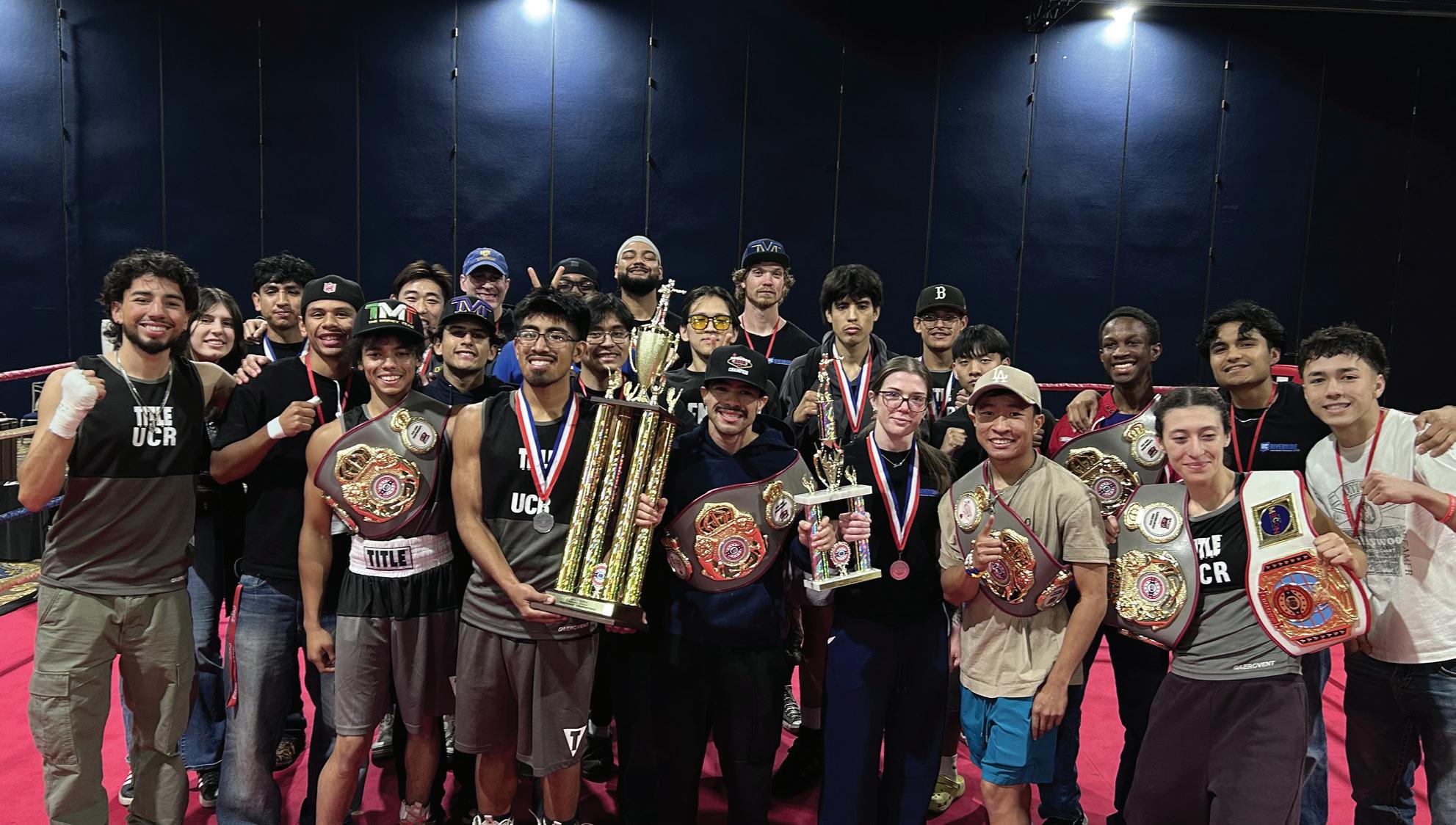

MEN’S TENNIS - APRIL 6
WOMEN’S TENNIS - APRIL 7
SOFTBALL - APRIL 7
BASEBALL - APRIL 7
MEN’S TENNIS - APRIL 9
BASEBALL - APRIL 9
SOFTBALL - APRIL 9
[DOUBLERHEADER GAME 01]
SOFTBALL - APRIL 9
[DOUBLERHEADER GAME 02]
BASEBALL - APRIL 10 SOFTBALL - APRIL 10 BASEBALL - APRIL 11

The Highlander Newspaper is a great way to keep up with current events and news around campus. If you are interested in the newspaper’s articles or pictures, we offer opportunities in writing, photography and design. Join us every Monday at 5:15 p.m. in HUB 101 to learn more.