
The Highlander

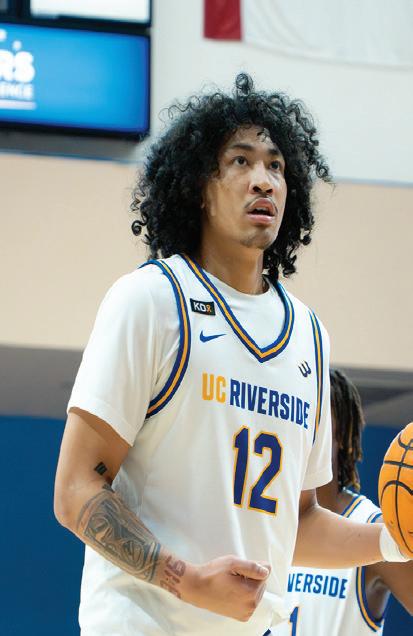
Highlanders bounce back in 63-46 win over Cal Poly
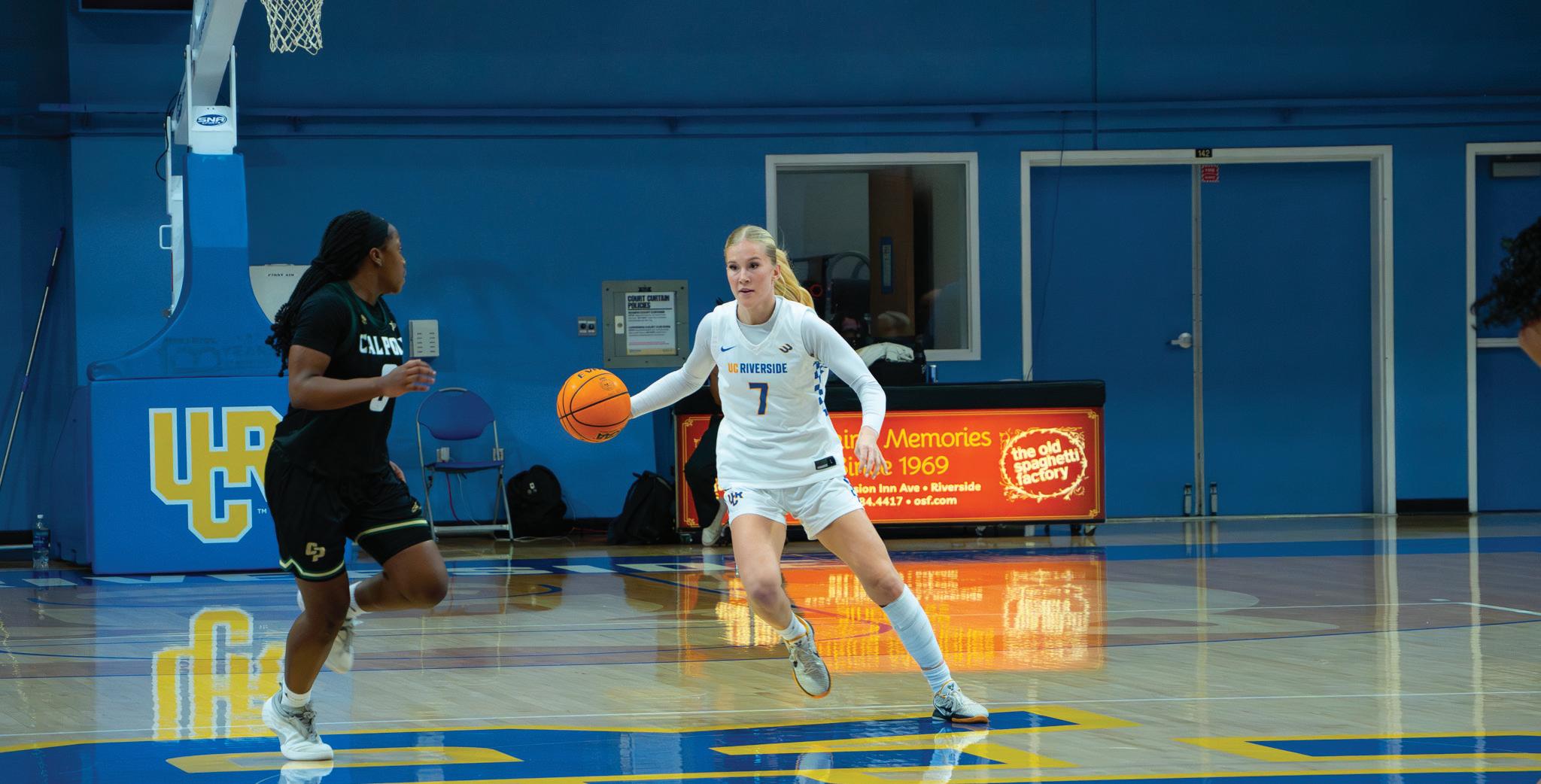
After a tough loss earlier in the week, Hannah Wickstrom leads Highlanders to a win.
ELENA
VERSAGE
Staff Writer
On Saturday Dec. 6, the University of California, Riverside (UCR) women’s basketball team hosted California Polytechnic State Uni-
versity, San Luis Obispo (Cal Poly).
The Highlanders have had a rough start to their season, going 1-6 and facing tough opponents including the likes of California Baptist University and the University of Arizona. Cal Poly has also been struggling, starting 2-5, with the most notable school on their schedule being Stanford University.
UCR entered Saturday’s game coming off a tough loss to UC Irvine. In that game, they trailed 36-
11 at halftime and weren’t able to make it a competitive game. Cal Poly also lost their first conference game of the year to Cal State Fullerton, 96-64. With both teams entering Saturday’s matchup 0-1 in Big West play, this game felt like a must-win, as a slow start in conference play can be difficult to overcome later in the season.
The Highlanders have also...
Indigenous Truthtelling Symposium & Art Exhibit proudly unveils
at UCR
“How
art gives us a spirit of resistance that oppressive colonialism can never extinguish.”
California gubernatorial candidate asks donors to help pay legal bills
Riverside County Sheriff draws criticism for his campaign practices. NEWS
Chad Bianco, the Riverside County Sheriff and 2026 California gubernatorial candidate, quietly started a legal defense fund in October that would allow donors to help pay his legal expenses. The funding request has drawn atten-
tion and criticism due to the timing and the public’s perceived lack of transparency from Bianco’s team. Additionally, there have been concerns about whether Bianco can distinguish between his responsibilities as Sheriff, his campaign activities and his legal battles.
When questioned about the funding, Bianco pointed to biased reporting practices and reinforced that starting a legal defense fund is a standard campaign practice. Despite Bianco maintaining his position that the request for donations to pay his legal expenses are not

a conflict of interest with his gubernatorial campaign, the funding request has still been met with...
On Dec. 2, 2025, an array of acclaimed artists, scholars and journalists congregated into room 1113 of the CHASS Interdisciplinary Studies at the University of California, Riverside (UCR) for the Indigenous Truthtelling Symposium & Art Exhibit. Displaying the works of artists like Mona Kadah and Weshoyot Alvitre while inviting intellectuals to speak, the event focused on the current plight and resilience of indigenous people.
More specifically, the Indigenous Truthtelling Symposium & Art Exhibit touched upon the ongoing genocide in Gaza, highlighting the grave injustices done on Palestinians while noting the bravery of journalists and artists willing to speak out about it.
With many of the atrocities against those native to their land...
UHappy HolidaysU



IAN PALMA & ANTHONY ASCENIO CARVAJAL Radar Editor / Contributing Writer
OVI MATHIVANAN Staff Writer
ELENA VERSAGE / THE HIGHLANDER
COURTESY OF GETTY IMAGES
ALONDRA ORDAZ / THE HIGHLANDER
Staff
Editor-in-Chief
Mata Elangovan
editorinchief@highlandernews.org
Managing Editor
Isaac Solnick
managingeditor@highlandernews.org
News Editor José Del Ángel news@highlandernews.org
Asst. News Editor
Angelica Brianna Acosta asst.news@highlandernews.org
Opinions Editor
Cecile Diroll opinions@highlandernews.org
Asst. Opinions Editor
Rubaita Iqbal asst.opinions@highlandernews.org
Features Editor Sanjana Thatte features@highlandernews.org
Asst. Features Editor
Nola Perifel asst.features@highlandernews.org
Radar Editor Ian Palma radar@highlandernews.org
Assistant Radar Editor Aakif Iqbal asst.radar@highlandernews.org
Sports Editor Terry Nguyen sports@highlandernews.org
Asst. Sports Editor
Sofia Majeed asst.sports@highlandernews.org
Photography Editor Vash Chen photo@highlandernews.org
Assistant Photo Editor Alondra Ordaz photo@highlandernews.org
Production Manager Ashley Cho productionmanager@highlandernews.org
Asst. Production Manager
Agna Soneji prodassistant.highlander@gmail.com
Production Assistants
Keyanna (Keys) Milenia Pinzon Nishi Girish prodassistant.highlander@gmail.com
Art Director
Adelia Urena highlander.art.director@gmail.com
Copy Editor
Rachel Ko
copyeditor.highlander@gmail.com
Graphic Designer Layna Lapikas llapi002@ucr.edu
Design Interns
Holly Dawson Emily Mata
Business Manager Allison Fry highlanderads@gmail.com
Asst. Business Manager
Cinthia Meza highlanderads@gmail.com
Video Editor
Edwin Basurto video.highlander@gmail.com
Asst. Video Editor
Isabella Hogan video.highlander@gmail.com
Marketing Director
Sinhayana Srivastava marketing.highlander@gmail.com
Asst. Marketing Director Isabell Gracia marketing.highlander@gmail.com
Marketing Interns
Henya Dadem marketing.highlander@gmail.com
Abby Lazar marketing.highlander@gmail.com
Tech Director Ashna Pradhan techdirector@highlandernews.org
Ad Reps
Paris Cao
Xochitl Gutierrez
Amelie Casasola
Xavier Scott
Kishneet Kaur highlanderadrep@gmail.com
Distribution Manager
Noah Davis Witten
Humans of UCR

Mokara Bivens (she/her), Undeclared, Second Year CONTACT US
The Highlander 101 Highlander Union Building Riverside, CA 92521 www.highlandernews.org editorinchief@highlandernews.org
TIP LINE: (951) 827-2105
Help the Highlander stay on top of what is happening on campus and in the general UCR community. Call this number and leave a message for the Editorial Board with your tip. Be sure to include your full name, relation to UCR, and a number or email address where you can be reached for more details.
LETTERS TO THE EDITOR
The Highlander accepts letters from the campus community. They must be 600-800 words at length and include the author’s name and contact information. Topics should be UCR-centric and/ or pertain to our generation of students. Contact Opinions Editor Cecile Diroll at opinions@highlandernews.org by Wednesday if interested in writing a letter and submit the completed letter by Saturday at noon. Letters can and will be rejected if it does not meet requirements.
LEGAL
The Highlander is published and copyrighted by the Highlander for the students, faculty and staff of UCR. All rights are reserved. Reprinting of any material in this publication without the written permission of the Highlander is strictly prohibited. Readers are allowed one free copy of the newspaper. For additional copies or for subscription information, please contact the Highlander. The Highlander fully supports the University of California’s policy on nondiscrimination. The student media reserve the right to reject or modify advertising whose content discriminates on the basis of ancestry, color, national origin, race, religion, disability, age, sex or sexual orientation. The Highlander has a media grievance procedure for resolving complaints against it. All inserts that are printed in the Highlander are independently paid publications and do not reflect the views of the Editorial Board, the staff or The University of California or the Associated Students of UCR.
School is my passion. I want to become a doctor. That’s the route I’m on. I’ve wanted to be a dermatologist] ever since I was seven years old and watched Dr. Pimple Popper. [I find] dermatology interesting. Dr. Pimple Popper was the big [TV show] when I was younger. It was gross, but I liked that such a big difference could be made in people’s lives. And it’s just removing something [at the end of the day.]
I do like [the color] brown. I’m like an earth-tone brown and gold type of girl. Don’t call me weird, but I feel like it’s an aura thing. I like more earth tones and I think they look nice.
My high school was online. So a lot of my school friends [I met online.] I made a few best friends, but nobody [from my high school] is going to UCR. [The] online classes prepared me to be independent and by myself. [Since coming to UCR,] the switch up between online and then going to classes inperson took some getting used to.
[The] Lakers are my favorite [NBA team] right now. I think my second favorite would be the Spurs. I really like them right now. My little sister loves OKC. We [both] used to be big LA Lakers fans. And then hot take, [but] when LeBron came to LA, it kind of like ‘cheesed’ it up. I’m not the biggest fan of LeBron and [we felt] like we [couldn’t] like this team anymore.”



Classified: $2 per line; 17 characters (spaces, dashes, etc.)

Staff Photographer Elena Versage photo@highlandernews.org
Compiled by Isaac Solnick, Managing Editor

UC and nurses union reach agreement, strike cancelled
EXTENDED CONTRACT ENSURES HIGHER PAY, BETTER WORKING CONDITIONS, AND PATIENT SAFETY MEASURES.
ANDREW HAGLER Staff Writer
On Sunday, Nov. 16, the California Nurses Association (CNA), a union representing more than 100,000 nurses throughout California, announced that it has ratified a four-year contract with the University of California (UC), securing an 18.5% minimum increase in wages for more than 25,000 registered nurses (RNs). As part of the agreement, nurses called off participation in a two-day, system-wide strike, planned for Nov. 17-18.
Kristan Delmarty, a member of the UC bargaining team and CNA’s board of directors, stated that CNA’s priority was to ensure nurses were provided the resources necessary to care for themselves and their patients effectively after “years of short-staffing and under-resourcing.” CNA leaders have also cited concerns such as the use of artificial intelligence and the practice of floating nurses – needed to ensure patient protections – and the requirement of working across multiple departments and facilities.
The contract also includes provisions that make it easier for RNs to provide care to patients without

being overwhelmed, helping to ensure quality treatment.
These include restrictions against UC floating resident nurses between facilities, adding improvements to meal and rest breaks and workplace violence-prevention policies. It also guarantees RNs a central role in
ASUCR Senate Meeting
SENATE CONCLUDES ITS FALL QUARTER MEETINGS WITH BYLAW REVISIONS AND FUNDING UPDATES.
OVI MATHIVANAN Staff Writer
On Dec. 3, 2025, the Associated Students of the University of California, Riverside (ASUCR) meeting began at 7 p.m. and adjourned at 8:14 p.m, with two agenda items amended.
Senate bills SB-F25-018 through SB-F25-033 proposed updates to ASUCR bylaws, including updating terminology to reflect the renaming of the Ethnic & Gender Centers to the Student Resource Centers and
restructuring or consolidating certain chapters to streamline ASUCR’s operating procedures.
Meeting minutes from the quarter’s eighth Finance Committee hearing were approved. Additionally, the Senate also approved two Green Campus Action Plan (GCAP) grants: $4,000 for the R’Cycle Co-op’s micromobility initiatives and $10,000 for the GCAP winter break shuttling service.
selecting, designing and validating new technology, such as artificial intelligence. The agreement applies to registered nurses across the UC system’s 19 medical centers and campuses and will last from Nov. 1, 2025, to Jan. 31, 2029.
In addition to promising an 18.5%
minimum increase in wages over its duration, CNA stated that the contract also caps health care premium increases and moves to improve patient safety and nurse retention. CNA and UC met earlier this year throughout October and November, but were unable to reach an agreement until now.
Crime Watch: Suspect arrested for criminal threats and stalking
71-YEAR-OLD SUSPECT ARRESTED IN PALM SPRINGS, IN THE CULMINATION OF A SIX-MONTH INVESTIGATION.
ANDREW HAGLER Staff Writer
On Wednesday, Dec. 3, 71-year-old Johnnie Pagels, the leading suspect in an ongoing investigation regarding criminal threats, was arrested by investigators from the Palm Desert Sheriff’s Station at his residence on the 200 block of East Alejo Road, Palm Springs.
After a local news organization received threats by mail, an investigation began in July of 2024. The letters explicitly mentioned members of the news organization by name and were sent via the United States Postal Service (USPS).
Authorities arrested Pagels at his residence following a search warrant, issued after investigators and USPS linked him to the case. Pagels was located and arrested
without incident before being booked at the John Benoit Detention Center on charges of criminal threats and stalking.

COURTESY
President Trump’s immigration crackdown continues
GREEN CARD HOLDERS FROM 19 COUNTRIES OF “CONCERN” FACE REVISION.
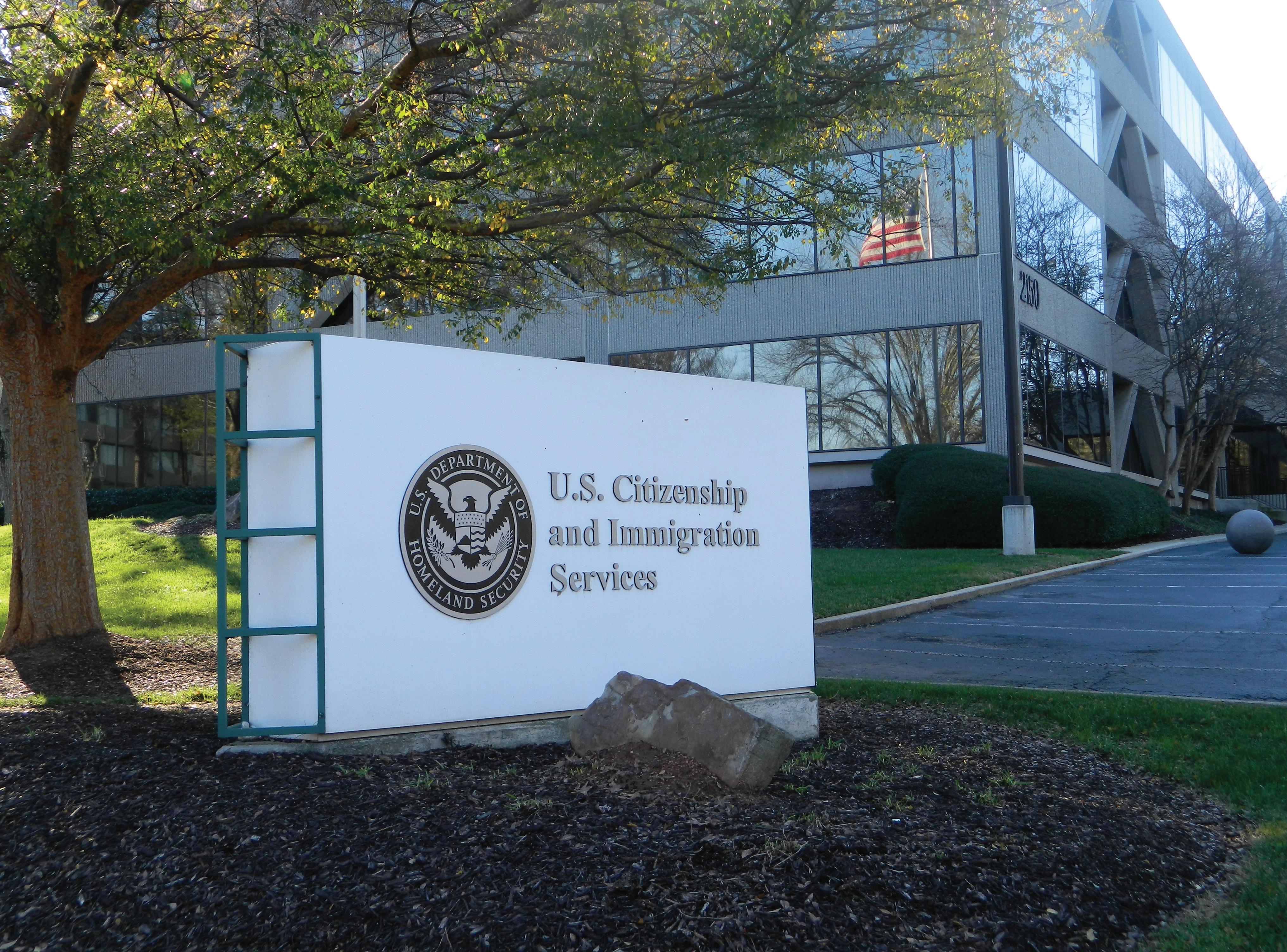
Following the shooting of two U.S. National Guard members that left one dead and another wounded in the hospital, the Trump administration issued a statement announcing its halt of all asylum decisions, reexamination of green card applications of 19 countries of “concern” and suspension of visas issued to travelers using Afghan passports. Both Guard members, the nowdeceased Specialist Sarah Beckstrom and wounded Staff Sgt. Andrew Wolf, were deployed from West Virginia as a part of President Trump’s “crime-fighting mission that federalized the D.C. police force.”
A presidential proclamation dating back to June lists the 19 countries that the administration has set its focus on for green card reexaminations. Some of the highlighted countries include Afghanistan, Cuba, Haiti and Venezuela. The proclamation claims this sanction is attributed to Haiti, Afghanistan and Venezuela’s “lack [of] a central authority” that would not “undermine the national security of the United States” and
deems Cuba a “state sponsor of terrorism.” It should also be noted that 12 of the listed countries already have U.S. travel bans placed on them and the remaining seven have restricted access to them.
Joseph Edlow, head of the U.S. Citizenship and Immigration Services, stated he has been directed by President Trump to conduct a “full-scale, rigorous re-examination of every green card for every alien from every country of concern.” This includes pausing all asylum decisions until “every alien has been vetted and screened to the maximum degree.” There have not been any specifications as to what the reexamination process will entail.
Activists have countered this claim by stating that refugees already undergo rigorous vetting, which at a minimum involves 20 steps, including an “interview with the United Nations,” multiple background checks and an “extensive interview with a U.S. Homeland Security Officer.” It is unknown if each green card holder will be charged a processing
fee for the reexamination process, or if the government will cover the costs using taxpayers’ contributions.
Days before the shooting, the administration stated its intent to “review the cases of all refugees who entered under the Biden administration” under the U.S. Refugee Assistance Program. This would impact the lives of nearly 200,000 refugees.
At the moment, Afghanistan is attracting the most attention from the administration as the suspected shooter, Rahmanullah Lakanwal, is an Afghan national who “worked with the CIA during the Afghanistan War.” Shortly after the shooting, the U.S. announced its complete suspension of all immigration requests from Afghans as a “review of security and vetting protocols.” This new development in Trump’s immigration crackdown would impact Afghans who already live in the U.S. and are actively in the process of applying for green cards to work permits, placing them in a state of immigration limbo.
MARIBEL HERNANDEZ Staff Writer
COURTESY OF WIKIMEDIA COMMONS
Campbell’s executive fired after allegedly calling consumers ‘poor people’
JIHOON KWON Staff Writer
FORMER EMPLOYEE FILES A LAWSUIT, CAMPBELL’S STOCK MARKET TAKES A HIT.
On Nov. 26, 2025, Campbell’s Company announced the removal of a vice president in Campbell’s Information Technology department Martin Bally. This was a response to the lawsuit filed against him by former Campell’s employee Robert Garza.
According to the lawsuit, during a meeting to renegotiate Garza’s salary, Bally made racist remarks which troubled Garza. For instance, he would call Indian workers “idiots” and show dislike of working with them. Furthermore, Bally called Campbell’s “highly processed food” for “poor people.” After reporting these comments to his manager J.D. Aupperle, Garza was fired without an apparent reason.
The conversation was recorded with part of it released to the public. In the audio recording, a voice, alleged to be Bally,
says he doesn’t want to eat Campbell’s products because they use “bioengineered food” and “chicken that came from a 3D printer.” Campbell later confirmed the voice belonged to Bally.
Following the scandal, Campbell’s saw a historic drop in the stock market, reaching a new 52 week low at 29.38 USD according to Investing.com. This is especially fatal to the company considering their struggle in the current market experiencing a 31.01% decline in market value the past year and a small increase they enjoyed prior to the controversy.
Campbell called the comments “vulgar, offensive and false” in their statement. They apologized on behalf of Bally’s behavior, claiming it did not reflect the company’s values and announced his removal from position. They also denounced the statements regarding food
quality as “patently absurd.”
They issued another statement detailing the facts about the chicken they use in their soup in which they emphasized that they do not use “3D-printed chicken, labgrown chicken or any form of artificial or bioengineered meat” and in fact “Campbell’s soups are made with real chicken. Period.” They credited their suppliers for meeting the high standards set by the United States Department of Agriculture.
Campbell’s said in their statement that they carry “enormous pride in the food” they make which has “earned its place in kitchens across America for more than 150 years by making food people love and by acting with character, integrity and transparency.”

COURTESY OF FLICKR
Congressman Eric Swalwell announces plans to join California governor’s race
A WELL-KNOWN CRITIC OF DONALD TRUMP, SWALWELL SEEKS TO SUCCEED GAVIN
ANGELICA BRIANNA ACOSTA Assistant News Editor
With current Governor Gavin Newsom reaching his term limit in 2027, many potential candidates have announced their run for governor, including Eric Swalwell, a 45-year-old Iowa native. Swalwell was originally born in Sac City, Iowa, but moved to Dublin, California at a young age; he later announced his run on Nov. 20, 2025. Swalwell spent the majority of his upbringing in California, adopting the state as his childhood home.
In 2003, Swalwell earned his bachelor’s degree in Government and Politics at the University of Maryland (UMD). While attending UMD, Swalwell interned for Representative Ellen Tauscher of the tenth congressional district. After finishing his degree, Swalwell became a prosecutor and leader of the Alameda County Hate Crime Unit.
Swalwell also served as a city councilmember in his childhood home of Dublin, California. In 2013, Swalwell began serving as a member of congress representing California’s fourteenth district, which includes Swalwell’s childhood home of Dublin.
Some of Swalwell’s campaign key focuses are the economy, housing, healthcare, immigration and gun violence. Swalwell claimed in reference to healthcare that “everyone should have access to quality, affordable healthcare, including preventative services, regardless of their economic background or medical history.”
Bill Pulte, the director of the Federal Housing Finance Agency, accused Swalwell of mortgage fraud in November of 2025. Swalwell responded to the accusation claiming, “As the most vocal critic of Donald Trump over the last decade and as the only person who still has a surviving lawsuit against him, the only thing I am surprised about is that it took him this long to come after me.”
Swalwell filed a lawsuit against Pulte in November, asserting, “Pulte’s brazen practice of obtaining confidential mortgage records from Fannie Mae and/or Freddie Mac and then using them as a basis for referring individual homeowners to [the Department of Justice] for prosecution is unprecedented and unlawful.”
As a well-known critic of Donald Trump, Swalwell’s administration called for the president’s impeachment in 2019, announcing, “Today, I not only voted for the impeachment of President Donald J. Trump, I voted for our national security, for our election’s integrity, and for our Constitution’s sanctity.”
Swalwell has also called for the
resignation of Trump administration member Kristi Noem, the Secretary of Homeland Security. He stated, “Kristi Noem should resign for what has happened under her watch. No one asked for this.” This came after Senator Alex Padilla was forcibly removed from a homeland security press conference.
California gubernatorial candidate asks donors to help pay legal bills
OVI MATHIVANAN Staff Writer
RIVERSIDE COUNTY SHERIFF DRAWS CRITICISM FOR HIS CAMPAIGN PRACTICES.
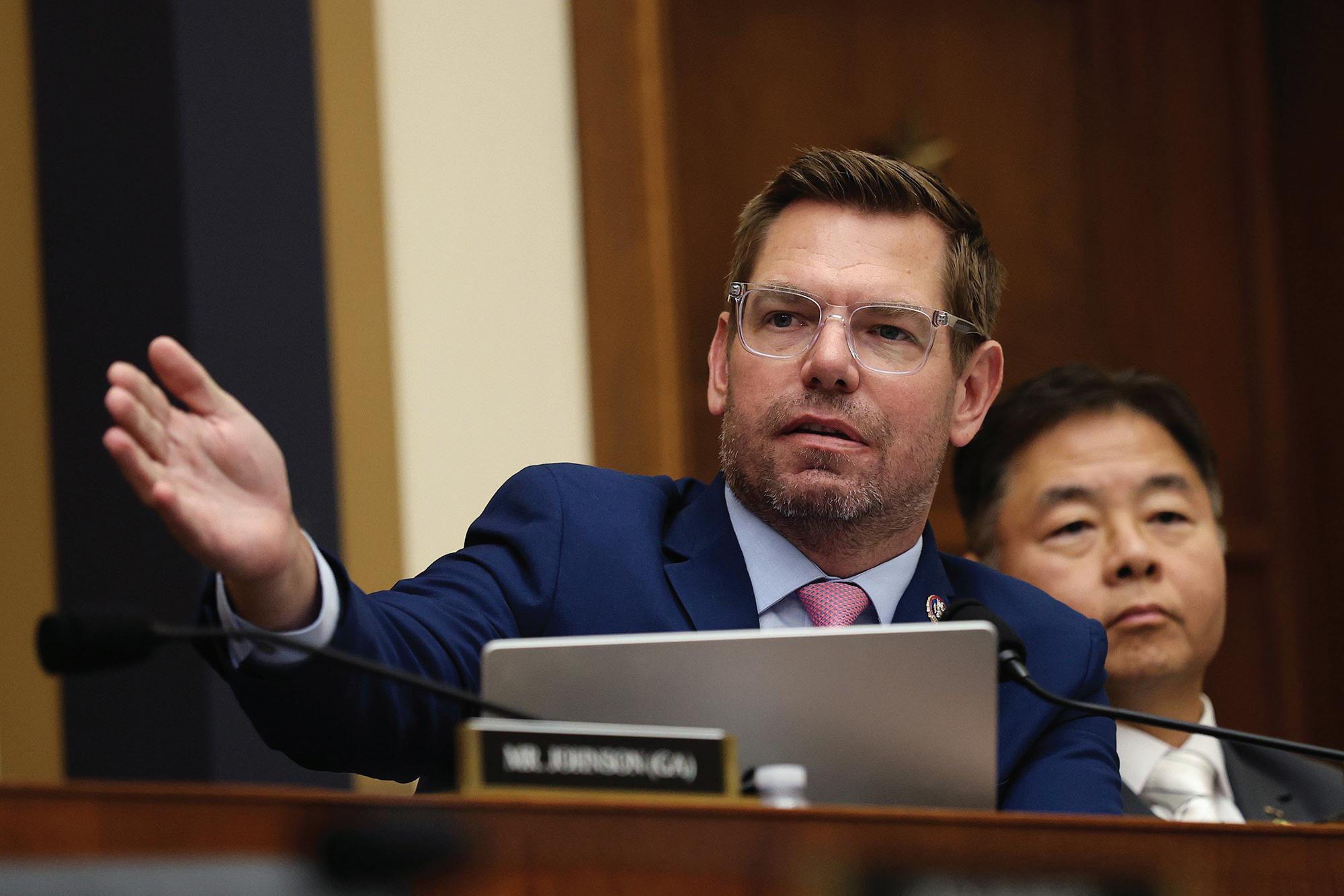
Chad Bianco, the Riverside County Sheriff and 2026 California gubernatorial candidate, quietly started a legal defense fund in October that would allow donors to help pay his legal expenses. The funding request has drawn attention and criticism due to the timing and the public’s perceived lack of transparency from Bianco’s team. Additionally, there have been concerns about whether Bianco can distinguish between his responsibilities as Sheriff, his campaign activities and his legal battles.
When questioned about the funding, Bianco pointed to biased reporting practices and reinforced that starting a legal defense fund is a standard campaign practice. Despite Bianco maintaining his position that the request for donations to pay his legal expenses are not a conflict of interest with his gubernatorial campaign, the funding request has still been met with scrutiny.
Bianco faces a number of complex legal challenges. Among these legal struggles is a sincedismissed lawsuit posed by former Democratic gubernatorial candidate Stephen J. Cloobeck, who alleged that Bianco violated state law by wearing his law enforcement uniform when campaigning.
Bianco also faced a $100 million defamation and emotional distress lawsuit for accusing Vem Miller, who was arrested near an October 2024 Trump rally in Coachella, of trying to assassinate President Donald Trump. Additionally, Bianco’s team at the Riverside County Sheriff’s Department are facing various civil rights lawsuits over concerns of mistreatment and inmate abuse in Riverside County jails.
Despite the concern over potential conflicts and overlaps between his legal fund and campaign accounts, ethical campaign practices require the accounts remain separate and that all donations to the legal fund be thoroughly disclosed, including how the funds are used in paying legal expenses.
Ultimately, regardless of whether candidates set up funding requests, donations to such funds play a complex role of providing support to the campaign while also inviting room for doubt on the ethical propriety of accepting donations in the first place.
Many critics of campaign donation requests suggest that accepting donations in any capacity can create a perception, whether true or false, that the candidate’s political actions and legal decisions are easily influenced by financial support rather than genuine interest in the public’s welfare.
As the 2026 gubernatorial election timeline unfolds, Bianco’s legal fund is likely to remain a rotating topic in discussions about candidates rights and wrongs, shaping how voters perceive and select candidates.

COURTESY
It’s time for Europe to handle Europe without America
ALAN LOK Staff Writer
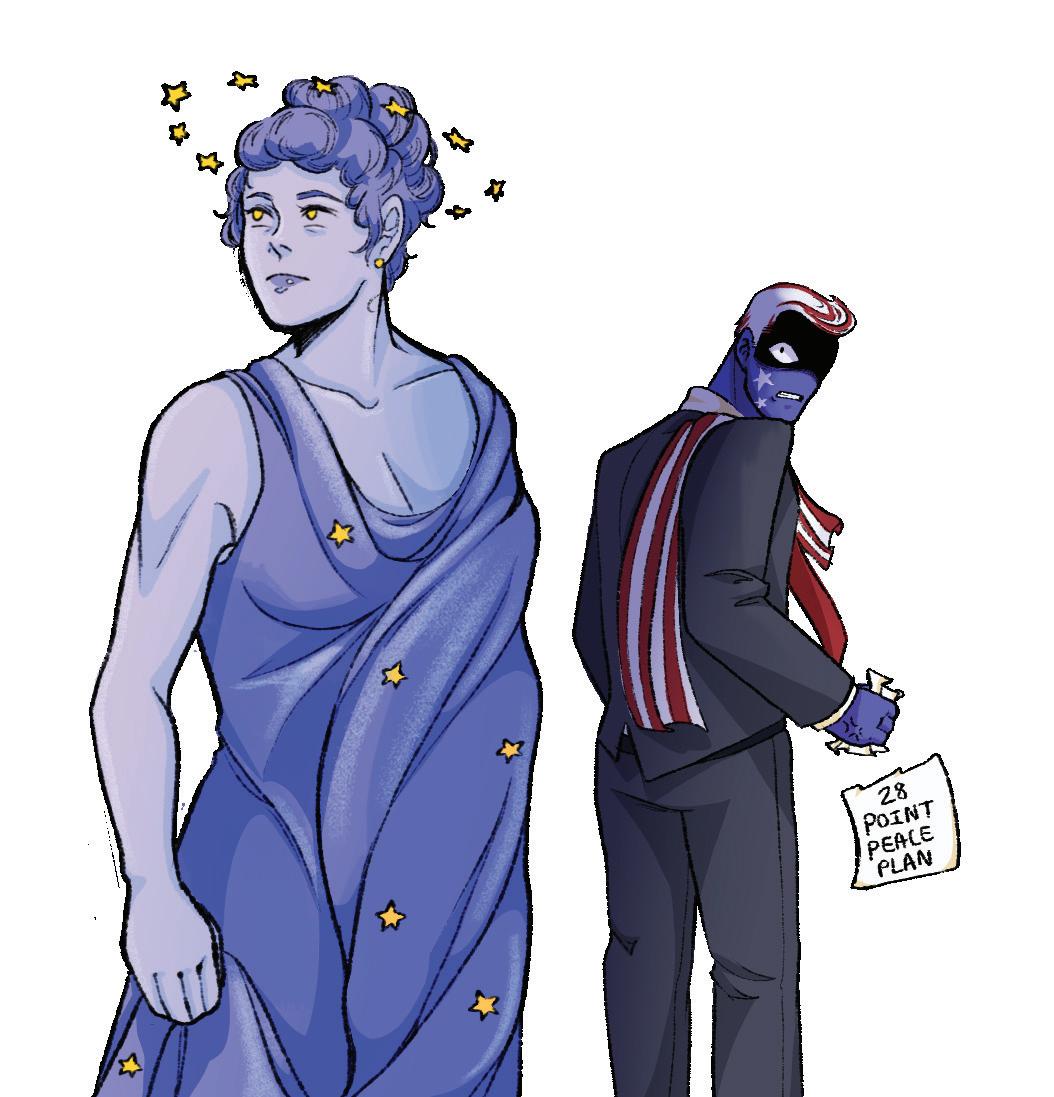
As the U.S. and Russia talks proceeded in Moscow with President Trump’s special envoy, Steve Witkoff and Russian President Vladimir Putin, the group discussed Trump’s 28-point peace plan between Russia and Ukraine. The original proposed plan by Trump just seems awful and is largely negotiations
Numerous European countries have voiced deep concern and labelled certain elements of the plan as rewarding Russia and undermining true justice and a capitulation that threatens the future security of Europe. A broad consensus among the European powers is that any potential peace plan must
territorial integrity. To achieve this, major revisions are needed in this plan.
Europe allowing the Trump Administration, who seems to be the architect of a potential Ukraine peace plan, doesn’t seem to be right when it is European security that is on the line with Russia being the sole, if not the biggest threat to it. Putin time
outcome. Remember that the U.S. has an institutionalized commitment to NATO dating back to 1949 and Trump has made it seem like an optional assignment to complete.
This became apparent during his visit to The Hague 2025 NATO summit when Trump stated that the U.S. commitment to defending its
ADELIA URENA / THE

True crime exploits real-life tragedies for profit
SOCIAL MEDIA AND STREAMING PLATFORMS ARE PROFITING OFF OF REAL-LIFE DEVASTATIONS AND GLAMORIZING CRIMINALS.
Although the purpose of true crime was once to inform the public, honor victims and pressure authorities for justice, the rise of influencer culture and streaming platforms has transformed it into an entertainment-focused genre that often exploits trauma, desensitizes audiences and silences victims in favor of spectacle and monetary gain.
True crime has been around for decades, but the way viewers consume it has changed dramatically. In the modern age of social media, the genre has shifted from journalism to entertainment. It has taken over thirty-second TikToks, long-form YouTube videos and big-budget dramatizations. The true crime genre was once built on spreading awareness and advocating for victims, but it has morphed into casual, digestible content designed to entertain.
A 2024 poll by YouGov found that over half of American adults consume true crime content, showing how massive its reach is. Companies capitalize on the genre’s popularity, often prioritizing profit over ethics. Consumers can now unwind by listening to ASMR murder stories or buy merchandise on Etsy of their favorite cannibal. As the genre has gained popularity, it has also become more exploitative, which has retraumatised victims’ families, profiting off of real suffering and desensitising viewers to violence.
The shift toward entertainment is evident in the rise of YouTubers and influencers who fuse true crime storytelling with completely unrelated, entertainment-focused content such as mukbangs, ASMR or makeup tutorials.
For example, the content creator, Stephanie Soo, is known for filming dramatic retellings of violent crimes while eating a large spread of food. In her video, “He injected HIS FLUID into random women at the grocery store - here’s why | Salmon Sushi Mukbang,” Soo recounts a disturbing assault case while giggling and using animated voices as she reads the case details.
The tone of her video resembles casual gossip between friends rather than a respectful discussion of the case. The combination of casual entertainment with true crime removes the weight of the subject matter and exploits the trauma of others as well as desensitises viewers to such crimes.
Another prominent creator who has been criticized for their true crime content is Bailey Sarian, who is known for her “Murder, Mystery & Makeup” series, which has amassed millions of views per video. While Sarian’s videos are structured and well researched, blending makeup tutorials with discussion of violent crimes trivializes victims’ experiences and violence. These creators show how combining different audience interests by mixing true crime with unrelated, inviting activities shifts the genre towards entertainment rather than thoughtful journalism.
Major streaming services, especially Netflix, have also repeatedly faced criticism for drama-
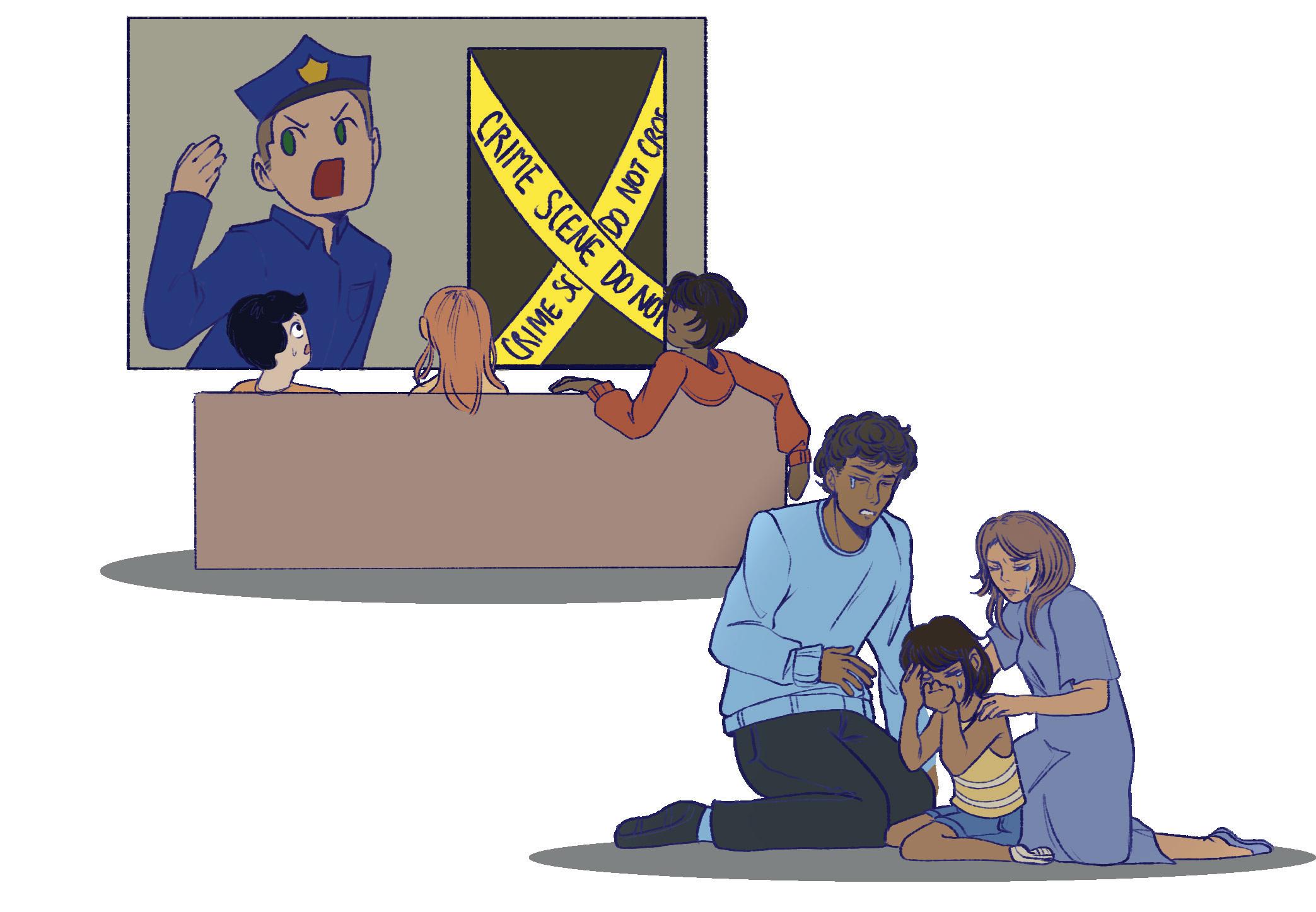
tizing real cases without consent from victims’ families. Netflix’s “Monster: The Jeffrey Dahmer Story (2022)” caused significant backlash. Several families of Dahmer’s victims claim that they were never contacted by Netflix before the creation and release of the show.
“If I didn’t know any better, I would’ve thought it was me,” Rita Isbell, whose courtroom statement was reenacted in the show, told Business Insider. “Her hair was like mine, she had on the same clothes. That’s why it felt like reliving it all over again.”
Netflix continued the pattern with “Monster: The Lyle and Erik Menendez Story,” which dramatized the brothers’ lives without their permission and left out crucial details about their reported childhood abuse. Critics argue that Netflix sexualized and villainized the brothers for money. Because the Menendez brothers could not clear up the inaccuracies, Netflix ultimately rewrote their lives for its own financial gain.
Another concerning trend is the creation of fandoms centered on murderers. A quick search on Etsy reveals pages upon pages of merchandise featuring the faces of serial killers on tote bags, keychains, shirts and more. After the release of “Extremely Wicked, Shockingly Evil and Vile,” TikTok saw an influx of fan edits romanticizing Ted Bundy. Many viewers focused on Zac Efron’s portrayal of Bundy rather than Bundy’s violent crimes, framing him as a charming and misunderstood character instead of a murderer.
The romanticization of criminals blurs the line between reality and entertainment, creating parasocial attachments to these criminals and treating them like celebrities rather than people who have caused real harm. It encourages audiences, especially teenagers, to engage with true crime as a fantasy rather than as a genre rooted in the suffering of real people. When killers are put on a pedestal in this way, victims are reduced to a backdrop for spectacle.
Social media can aid in solving active cases, but it can also cause serious harm and delays. In 2021, the murder of Gabby Petito sparked massive internet engagement, with thousands of people posting theories, reenactments and even tarot-card “readings” theorizing on what happened to her. While some amateur sleuths provided authorities with helpful tips, the boost in online involvement with the case also created significant challenges.
Misinformation spread rapidly during the case, overwhelming authorities and complicating their work. Many social media users reported inaccurate sightings of Petito with good intentions, but the volume of tips law enforcement received slowed the investigation down.
True crime will remain popular, but its evolution into an entertainment genre is concerning. Its popularity has been taken advantage of by creators and companies alike, prioritizing entertainment and shock value rather than presenting accurate information in an ethical and thoughtful manner.
While these creators benefit the most, victims and families receive no compensation and are retraumatized. As long as true crime is profitable, victims’ trauma will be viewed as a product that can be manipulated to maximize profits.
The series “I’ll Be Gone in the Dark” embodies ethical and thoughtful storytelling in the true crime genre that other portrayals should follow. Based on Michelle McNamara’s investigation of the Golden State Killer in the 1970s and 80s, the series highlights victims’ experiences and treats their stories with care rather than fabricating them. This approach matters because true crime is about real people’s lives, and profiting from their suffering is unethical and insensitive.
Audiences should insist that creators carefully research, consult with victims and prioritize authenticity. By supporting ethical storytelling, viewers can help push the genre to prioritize truth, justice and empathy over exploitation and profitability.
HENYA DADEM Marketing Intern
ADELIA URENA / THE HIGHLANDER
Take it or Leave it: Some boundaries protect, others push people away
NAYSHA AGARWAL Staff Writer
BOUNDARIES ARE ALWAYS EVOLVING.
For a long time, I assumed boundaries were straightforward. You set them, people respect them and everyone knows what’s going on — end of story. But lately I’ve learned that boundaries are constantly evolving, sometimes in ways that feel confusing, inconsistent and honestly, kind of painful.
Someone I used to be fairly acquainted with recently stepped into a position where they were in charge of a part of my work life. Things changed, but not in a shocking way. They were still friendly, still willing to talk, still themselves, still treating me like a full person. It felt like we had just adjusted our dynamic to fit the environment and we were both trying to navigate the shift respectfully. That made sense. That felt like healthy boundaries.
But in another shared space, completely separate from the first environment, everything changed. It was like they flipped a switch I didn’t even know existed.
Suddenly, this same person barely acknowledged me. Not out of hostility, just … nothing. No eye contact. No small talk. No “hey, how’s it going?” the way they did with everyone else. A total freezing out that I’m pretty sure they didn’t even realize was happening.
And because most people know them and want to talk to them, their ignorance trickles down to other people. I would walk in and feel myself shrinking, like my presence somehow didn’t register or like I was wearing an invisibility cloak. The silence wasn’t hostile; it was almost accidental, but that didn’t make it any less isolating.
The first time it happened, I brushed it off. The second, I told myself they were busy. The
10th time, I realized it was intentional — it was a boundary.
When I finally asked about it, I was told it was just “keeping work separate.” And I understand the logic. Not mixing work makes sense. Not talking about issues from one workplace in another workplace makes sense. What doesn’t make sense is avoiding a person entirely, creating a distance so big it feels like I don’t belong. That’s not “not mixing work.” That’s alienation.
And it stings more because I know they didn’t do it maliciously. They genuinely think that they are being professional. But somewhere along the way, that boundary stopped being about work and turned into distance and silence. It turned into me walking into a space and feeling like my presence was an inconvenience.
I don’t think they realize that their version of boundaries feels like hypocrisy. They’ll laugh and chat with me in one place, but act like I don’t exist in another. Their imaginary rule is supposed to create separation between roles, yet somehow it ends up creating separation between people.
\This is where boundaries get complicated. When we treat them like strict, invisible rules we assume everyone automatically understands, people end up blindsided. Because boundaries don’t work like that. They shift with context, power, comfort and even when someone decides to interpret professionalism. They’re negotiated, not imposed. And when a boundary shifts without communication, it doesn’t feel protective. It can feel like rejection on the other side.
Boundaries may evolve, but they shouldn’t be used carelessly. They aren’t meant to silence people, or isolate them or decide who deserves acknowledgement in a room. They’re meant to
create understanding, not walls.
Healthy boundaries protect relationships. Unclear ones chip away at them.
I’m not saying they owe me special treatment or endless conversation to everyone. But respect shouldn’t disappear when the setting changes and “professional boundaries” shouldn’t mean stripping someone of basic human warmth just because your job title is different in another building.
As boundaries evolve, the least we can do is evolve with care. Evolve with honesty. Evolve with enough awareness to realize when someone else might feel the impact of the line they didn’t know was drawn or tell them.
Because I don’t think people mean to cause harm. I don’t think most boundary-setting is malicious. I think sometimes, people are so focused on protecting themselves that they forget the ripple effect. They forget that silence also speaks and can hurt people.
The real lesson, I think, is that boundaries only work when they’re communicated and considerate towards others. They should be clear enough not to confuse people and compassionate enough not to hurt them. The moment a boundary becomes a wall instead of a guideline, it stops doing its job.
So yes, boundaries are constantly evolving. But I hope we remember that the people on the other side of those boundaries are evolving too. And nobody deserves to feel invisible in the process.
But evolving boundaries should never make someone feel smaller, quieter or less welcome. If anything, they should help us navigate spaces, not push us out of them.

COURTESY OF WIRESTOCK VIA FREEPIK
Misinformation about the Trump administration’s in-state tuition lawsuit is hurting California’s students
SOCIAL MEDIA’S MISINFORMATION IS DOING MORE DAMAGE TO UNDOCUMENTED STUDENTS THAN ANY LAWSUIT EVER COULD.

JOSÉ DEL ÁNGEL News Editor
Since the first lawsuit by the Trump administration against California over its in-state tuition and financial aid policies for undocumented students, one thing has been clear: most damage isn’t coming from the courts themselves; the real damage is coming from misinformation.
Millions of college students are learning about Trump’s lawsuit on the same platform they receive their news nowadays, through a TikTok video. For example, videos of panicked students wondering whether Free Application for Federal Student Aid (FAFSA) had been “canceled” have circulated on the internet. For college students who lack legal status and rely on California’s financial aid program to continue their education, those short, misleading videos trigger a fearful reaction. And that fear is precisely what misinformation thrives on.
ER
Even before a judge has issued a final verdict on the Trump administration’s complaint, which many legal scholars say is unlikely to succeed, misinformation on social media has already made vulnerable communities confused and doubt the systems they depend on.
This lawsuit itself is part legal maneuver, part political theater. California’s Assembly Bill 540 (AB 540) has allowed students, regardless of immigration status, to qualify for in-state tuition if they meet the education-based requirements. The law deliberately complies with federal restrictions, a fact affirmed in 2010 when the California Supreme Court confirmed that the policy does not rely on residency, the very issue at the center of Trump’s argument. Students who grow up in California, attend state schools and earn their diplomas in California can access its universities, period.
When people on TikTok make content where
they tell people that FAFSA is gone, that college aid is dead, that immigrants are about to be cut off from every opportunity, whether the information is legally accurate or not, fear spreads faster than facts. And for students who are working long hours and navigating college on their own, misinformation becomes a threat to their future.
MAIN ST
Let’s be clear; misinformation doesn’t just materialize. Sometimes it’s deliberately made by political strategies that prioritize emotional reaction over legal reality. The Trump administration could have quietly challenged California’s policy through normal bureaucratic processes.
Instead, they decided to launch a high-profile legal attack, naming the case United States of America v. Newsom to create noise, manufacture panic and count on social media platforms like TikTok to spread misinformation. Students are bearing the cost.
Last year, when FAFSA was rolled out, many students were unable to complete the form, especially those whose parents lacked Social Security numbers. TikTok filled the information gap with theories about how financial aid would be canceled for the next academic year. Now, with Trump back in office and targeting universities, that fear has multiplied. Each new lawsuit over tuition, research funding and financial aid becomes a headline, then a 30-second TikTok clip, then a distorted narrative that students believe is true.
ORANGE ST
The courts operate slowly, while social media operates instantly and relies on quick emotions to keep people entertained. While the legal system will most likely uphold AB 540, many students may have already made irreversible decisions to delay their college plans or skip on aid applications entirely, based on false information
they encountered online.
That is the actual cost of misinformation: it can reshape behavior before the truth has time to catch up.
Many undocumented students provide for their families and work part-time jobs to ensure they have a better future than their parents. They should not have to interpret legal filings or decode TikTok rumors just to understand whether they can afford next semester’s classes.
Students deserve a basic level of truth. They deserve clear communication from their institutions, state leaders and media outlets. They deserve a public explanation that prioritizes understanding, not weaponizing confusion. They deserve a government that does not use their anxiety as leverage.
California’s leaders seem prepared to defend AB 540 in court, and legal experts from across the ideological spectrum agree that federal preemption arguments are unlikely to prevail. But winning in court isn’t enough. The state and the institutions that serve students must also fight the misinformation war.
Partnerships with community colleges, high schools and immigrant-serving organizations are essential because misinformation is not just “bad.” It is corrosive, erodes trust and destabilizes communities. At this moment, misinformation is doing more damage to undocumented students than any lawsuit ever could.
The courts will eventually decide the fate of Trump’s latest attack on California’s education system. But college students cannot wait for a verdict. They need clarity now. And they deserve better than a political environment where fear spreads faster than facts.
EMILY MATA / THE HIGHLAND-
COURTESY OF ANNA TARAZEVICH VIA PEXELS
Features Scotty-Scopes:
Your finals week green-flag horoscope

Libra (Sept. 23 – Oct. 22):
Your theme is balance. You divide your time well, stay fair to yourself and keep a steady routine. You manage work without shutting out the rest of your life.

Capricorn (Dec. 22 – Jan. 19): King of Pentacles
People seem to always rely on you. You meet deadlines, prepare early and keep your standards high. People trust you because you follow through.

Aries (March 21 – April 19): The Chariot
Your discipline is a green flag. You show up, stay focused and move forward even when the week feels chaotic. Your steady pace is the reason your work gets done.

Cancer (June 21 – July 22): The Empress
Nurturing habits take center stage. Your care for yourself and the people around you. You take breaks, eat real meals and check on your friends. Your kindness keeps your whole circle grounded.

Scorpio (Oct. 23 – Nov. 21):
Transformation is in the air. You drop old habits, revise your schedule and start fresh when something is not working. You move forward without fear.

Aquarius (Jan. 20 – Feb. 18): The
Your optimism makes everyone’s day. You look past stress and focus on long-term goals. Your hopefulness helps you stay motivated even when the week feels heavy.

Taurus (April 20 – May 20): Nine of Pentacles
Your green flag is your ability to create calm. You work best in a tidy space with a set plan and your consistency helps you finish assignments without burning out.

Leo (July 23 – Aug. 22): Strength
Patience will always be the way. You handle pressure with confidence, even when deadlines stack up. Your calm presence helps others stay steady too.
YOU’RE DOING RIGHT.
HEALTHY HABITS. GOOD ENERGY. THE TAROT SEES WHAT

Sagittarius (Nov. 22 – Dec. 21):
Moderation keeps everything flowing. You avoid burnout by blending rest and productivity and you know when to step back so you can return with energy.

Pisces (Feb. 19 – March 20):
Intuition plays a major role. You know when to push, when to rest and when you need support. You listen to your inner voice and protect your peace.

Gemini (May 21 – June 20): Two of Swords
Your self awareness will always stand out. You pause before reacting, think through stressful moments and make decisions based on logic rather than panic.

Virgo (Aug. 23 – Sept. 22): The Hermit
Independence is something that stands out with your daily life. You know how to separate from distractions, study alone and trust your own process.
Justice
Death
Temperance
Star
The Moon
Having faith: The Sikh Student Association mark on campus
THE SIKH STUDENT ASSOCIATION AIMS TO CREATE COMMUNITY IN THE INLAND EMPIRE.
SANJANA THATTE Features Editor
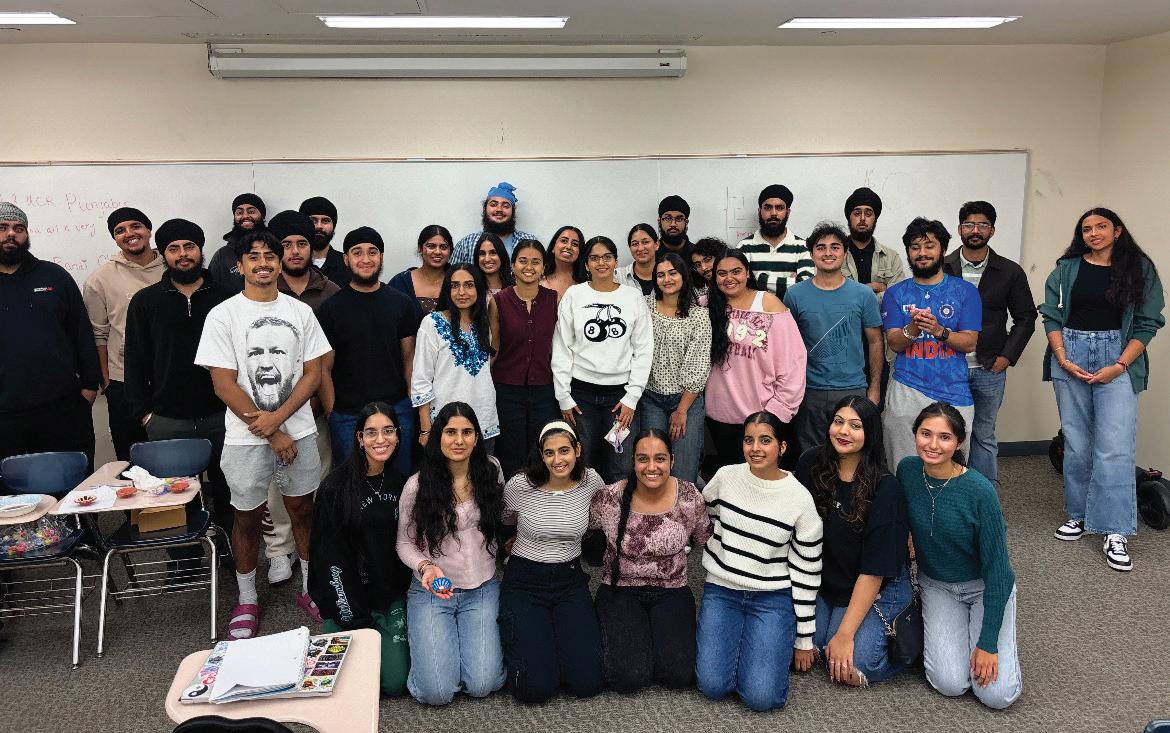
Having exposure to different kinds of people, cultures and ideas is all a part of the college experience. Yet on an increasingly large college campus, all of us want a small taste of home to feel safe and secure. The Sikh Student Association provides that sense of shared community, supportiveness and cultural exploration for Sikh students on campus.
Lavanaya Kaur, a second year biology major and co-president of club, explained that the Sikh Student Association traces back to the University of California, Riverside (UCR)’s beginnings: “Riverside in general, has a big Sikh population, and I’m a local, so I know I’ve had a lot of friends and their older siblings go here for a long time.” She attributes the club’s longevity to Riverside’s large Sikh population.
Both Lavanaya Kaur and Anchit Kaur ended up joining Sikh Student Association for similar reasons. Achint Kaur, co-president and third year psychology major, explained that being from the Bay Area, she wanted to find a community of like-minded people.
The club tries to incorporate some aspects of Sikhism and religious practice into the meeting. Lavanaya Kaur described how this could be a variety of activities, such as talking
about an event or some part of history: “So we will do a short presentation on that at the beginning, and then we also like to keep it a little light-hearted and have an activity towards the end of the meeting. An example could be like for Bandi Chhor or for Diwali we had a meeting on the history of it, and why we celebrate.”
The club recently celebrated Sikh Awareness Week where the club discussed and shared topics for every day of the week such as devotional music or engaging in charity work such as making peanut butter and jelly sandwiches for a women’s shelter. All of these activities relate to some aspect of the Sikh religion such as community service and prayer.
Other club activities include Rehras and Reflections, a time for students to reflect on themselves and their faith as a part of evening prayers, “Once a week, we hold a space for a short reading of scripture. And then after that, we reflect on how our day is and how we incorporate Sikh practices into our daily lives.”
Anchit Kaur explained that this modified version of religious practice reflects their experience growing up in a cultural diaspora, “we’ve changed in our sikhi as we’ve grown
up, and how we practice it differently, and what it means to us. So we provide that open space for dialogue and conversations that might even be tough, because some people didn’t grow up in a Sikh background, or some people did, and their relationship with their religion has changed because it’s such a nuanced topic for many people.”
The club aims to create a space for Sikh students on campus one of the biggest issues facing the Sikh students is representation. Lavanaya Kaur explains, “there’s such a big population of Sikhs even in the Inland Empire alone, and I think under-representation and being a minority group is something that a lot of Sikhs and especially college students focus on. We had an awareness week for just bringing more attention to … the kinds of values we have, and how we want to instill them, and how we can do that as young university kids.”
The club has faced some struggles when it comes to turnout, hoping to combat that by increasing outreach and continuously getting in touch with students on campus.
The club hopes to be more educational in terms of connecting Sikhism back to its history and seeking to help its members learn more about their culture.
SPOTLIGHT NORM’S NOOK
The Highlander Newspaper
TAKE A LOOK INTO OUR WONDERFUL OFFICE!
Since 1954, the student-led newspaper, The Highlander, has been bringing you issues every week. The magic that crafts these issues takes place right in the HUB 101 at the heart of the campus. The comfortable seats in the entrance of the office are great for writing articles, focusing on school work and taking a muchneeded nap. The atmosphere is warm and friendly, encouraging anyone who wants to write to come in and try their hand at student journalism. Writer’s meet-
ings take place every Monday at 5:15 p.m. where people get the opportunity to meet with editors of each section to discuss articles, writing and honestly, anything that is on their mind. The stacks of newspapers cover almost every imaginable surface and the rooms are filled with riveting conversation. Candy canes hang from our Christmas tree and decorations and candy adorn the front desk. Next time you pass by, feel free to come in and say hi! ■ H
HAPPY HOLIDAYS

32. Some Art Deco works 33. Pub orders 34. Christmas ___
Shorthand for Christmas 38. Sealy competitor 40. “Disarming Iraq” author Hans
Bar bill 42. Butcher’s stock 43. _____ mignon
44. Pac-Man and the ghosts, in Pac-Man cereal
47.”Huzzah!” or “Hurray!”
50. Hacienda room 51. Made a phone call




By: K Staff


(Brit.)
54. Shelf above an altar
59. Nerve network
60. North Pole celebrity
62. Hockey Hall of Famer Willie
63. “Rule, Britannia” composer Thomas 64. TV’s “The George & ___ Show”
65. Western Belgian city
66. Residents: Suffix
67. TV’s Goober and others Down
Bridge, in French
2. “Nope”
Partner 4. Circle segments 5. High-ranking angels 6. Sticky-toed lizards 7. Squid’s squirt 8. Worry
9. City on the Southern coast of Lebanon
10. Jeans brand popular in the 1980s
11. Nothing, in Latin 12. Papal vestment
13. Gets one’s feet wet
18. 43,560 square feet 22. Sgts., e.g. 24. Scarcities

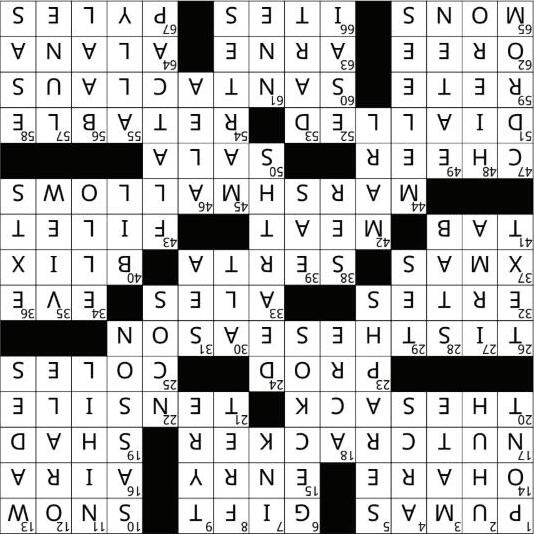
26. Smartphone message
27. “____ la Douce”
28. Take a ____ at it!
29. French possessive 30. PC key
31. Poseidon’s realm 34. London greeting 35. Opinion
36. Office phone nos.
38. Spanish for “to be”
39. _ __ in Echo, in NATO phonetic alphabet
40. Cartoonist Keane 42. Clayey deposit
43. Hat worn by Thomas Shelby in “Peaky Blinders” 44. Brawls
Tuesday, in Spanish
Epithet of Athena
Compact Disc ReadOnly Memory 48. Prefix with glyph
Gobbled up
Actor Morales
Move swiftly
Friend in war
Storm and fertility
of ancient Middle East
Debussy’s “Clair de ____”
Those, in Spanish
Opposite of SSW
GRAPHICS BY LAYNA LAPIKAS & ADELIA URENA / THE HIGHLANDER
NOLA PERIFEL Assistant Features Editor
ALONDRA ORDAZ / THE HIGHLANDER


SUDOKU
DIFFICULTY: EASY



ORANGE ST
TEST YOURSELF!
Who are you over winter break?
Find out what type of winter vacationer you are.
By: Nola Perifel, Assistant Features Editor
1. I describe myself as:
A. Introverted
B. Extroverted
C. Open to trying new things
2. When I have some free time I like to:
A. Sleep
B. Go out with friends
C. Go on hikes and spend time in nature
3. For homework assignments, I tend to:
A. Procrastinate and watch TV shows instead
B. Get them done as early as possible to go out with friends
C. Get side tracked learning about any subject but the one I should be working on
4. On break, I like to:
A. Sleep, do nothing and spend time with my family
B. Exercise and hang out with friends
C. Travel and explore new places
answer key
If you got “A” more often, you are the relaxer. Over winter break you like to chill at home doing nothing. You tend to procrastinate, so you view vacation as the perfect time to relax guilt-free. During break, you like to binge watch shows and movies, drown yourself in books and sleeping is a favorite activity. On top of that, you value time with your family at home and they may be the only thing that pulls you away from your bed.
If you got “B” more often, you are the social butterfly. You love going out all the time to see friends, new and old. Winter break is your time to reconnect with high school friends and to see your family. For you, vacation is not a time to slack off. You exercise and workout to stay in shape, no matter the time of year. You prepare for the next quarter even with no homework to complete. Yes, all this free time is great to pack with activities but you should learn to relax a little bit.
If you got “C” more often, you are the explorer. You cannot envision a break without visiting a new place. Whether it be a country, a city or a small corner of your hometown, you feel the need to explore a new place whenever you have a little bit of free time. You are probably rarely home for the holidays but you love it. You travel alone, with friends, with family, always guided by your sense of adventure. You probably know all the national parks by now. Travelling is the best way to learn more about the world but sometimes, being at home is a great way to spend the holidays too.
COURTESY OF RAWPIXEL
Nola Perifel (Assistant Features Editor):

For Christmas this year, I would like to watch the “Nutcracker” because I used to dance in that ballet and I am suddenly feeling nostalgic. I also wish for joy, love and peace for all of my friends and family.

This year for Christmas, I want Santa to bring me a pair of socks. Ian Palma (Radar Editor):
Isaac Solnick (Managing Editor):


Sofia Majeed (Assistant Sports Editor):
This year for Christmas, I hope Santa brings me a trip to Turks and Caicos!
I hope that this year, Santa brings me two plane tickets for my mom and I to go see my baby cousin in Arizona.
Xavier Scott (Advertising Representative):
This year for Christmas, I would like Santa to bring me a 5070 TI because I need new computer parts.
What the Highlander is hoping Santa brings them for Christmas
KISHNEET KAUR Advertising Representative
My name is Kishneet Kaur, and I am an Advertising Representative here at the Highlander Newspaper! Winter is one of my favorite times of the year as I love seeing how all-out people go with decorations and celebrations! This year for Christmas, I hope that Santa brings me a bag of salt and vinegar chips and a Diet Coke because that is one of my favorite snack combos!
Alondra Ordaz (Assistant Photo Editor):
This year for Christmas, I want Santa to bring me AirPods.
Cinthia Meza (Assistant Business Manager):
This year, I would like Santa to bring me a new phone for Christmas!

Mata Elangovan (Editor-in-Chief):
For Christmas, I want a will to live.

Terry Nguyen (Sports Editor):
This year, I would like Santa to bring me my dream internship. Last year, I applied for the internship and I got to the final round interview, but I did not get the job. So hoping this year I can get a little more lucky, work a little bit harder and if fortune comes my way, I’ll be grateful for the blessings that I got from Santa and we’ll see what happens.

Sanjana Thatte (Features Editor):
This Christmas, I want Santa to bring me an internship and for my family to be happy, healthy and safe.

What I want for Christmas this year is to get as many people writing for the News section as possible. We love our current writers, but we always love more. My second thing I want for Christmas is a bike. I don’t know how to ride a bike, but I want to learn how to ride a bike.
José Del Ángel (News Editor):
First-Gen Life: Finishing fall quarter with momentum
FALL QUARTER ENDS, BUT THE MOMENTUM DRIVING FIRST-GEN STUDENTS THROUGH FINALS STAYS STEADY.
KARMEN LEON Staff Writer
The purpose of this column is to support you. First-Gen Life will offer tips, stories and guidance to help first generation students not just survive, but thrive here at the University of California, Riverside (UCR).
There’s a moment every fall quarter when the pace shifts. Deadlines stack, nights stretch longer and the air on campus feels heavier with the quiet urgency of finals week. But if you pay attention, there’s something else in the air too – momentum – that steady forward force we’ve been building since week one, without even noticing it. Momentum isn’t motivation. Motivation comes and goes. Momentum is earned. It’s the product of every small decision
we made this quarter, every lecture we showed up to even when we were tired, every assignment we completed between work shifts, every time we chose to keep going despite uncertainty. As first-gen students, momentum is one of our greatest strengths because we’ve never had the luxury of coasting. We’re used to constantly pushing and shoving our way through life.
And now, in the final stretch, momentum matters more than ever.
Finals week can feel like a test of intelligence, but really, it’s a test of consistency. The truth is that we’ve been preparing for this final push all quarter long. Every week of adapting, adjusting and recalibrating has built a foundation that doesn’t disappear just because the pressure rises. We know how to study with discipline. We know
Reflection: Who am I at the end of 2025?
A REFLECTION ON GROWTH AND LEARNING TO BE MYSELF –ONE STEP AT A TIME.
NAYSHA AGARWAL Staff Writer
As 2025 comes to a close, a quiet settles over campus. In that stillness, as the campus finally exhales, walking past the Bell Tower one last time before winter break, I can finally hear myself think.
And the simple yet overwhelming question rises: “Who am I at the end of the year?”
This year wasn’t simple. It wasn’t linear. And it definitely wasn’t the year I expected.
But it was the year I learned about myself.
Some lessons came gently, through late-night conversations, moments of clarity or the unexpected pride of stepping into leadership roles I once feared. Others arrived the hard way, through exhaustion, disappointment or realizing that certain aspects of myself no longer fit who I’m becoming.
In 2025, I learned that growth isn’t always loud. Sometimes it looks like choosing rest instead of overcommitting. Sometimes it’s taking up space instead of folding in on yourself to belong. Sometimes it’s saying you’re hurt, admitting you’re not okay or learning to take life one day at a time instead of trying to fix everything at once.
I learned that I don’t have to dim myself to make others more comfortable. I don’t need to carry every responsibility alone. I’m allowed to ask for help or step back when I’m overwhelmed. Asking for
how to balance responsibilities. We know how to keep moving even when the path gets unclear.
What momentum asks of us now is simple: don’t stop. Not because we need to be perfect, but because we’ve already put in too much work to lose faith in ourselves right before the finish line.
And momentum isn’t only academic. It’s emotional, too. It’s confidence in knowing we deserve to be here, even in rooms where no family member before us has stood. It’s the understanding that our efforts hold value, regardless of the grade it produces. It’s the quiet pride we feel when we realize we’ve come further than the version of ourselves who walked onto campus ten weeks ago.
So as we step into finals week, let’s honor that momentum. Protect
it. Trust it. Take breaks when you need to. Momentum isn’t speed, it’s direction. Ask questions. Revisit concepts. Do the next best thing, even if it’s small: review a page of notes, revisit a formula you keep mixing up or rewrite a definition that didn’t fully click the first time. This week isn’t about becoming someone new. It’s about the strength you’ve already built.
Fall quarter is ending, but momentum doesn’t end with it. It follows us into winter, into each new challenge, into every room we walk into with determination.
We’ve been moving forward for ten weeks.
Now we push, not from fear, but from everything we’ve built along the way.
help isn’t weakness, it’s wisdom.
This year forced me to see myself honestly – my strengths, my patterns, my limits, my capacity to love and show up for others. Yet, even through the difficult moments, something steady kept growing: the belief that it is worth the effort it takes to find and be myself.
MAIN ST
For a long time, I lived in comparison. I measured my steps against paths that weren’t mine. I held my progress up to achievements that had nothing to do with me. It took nearly a year to understand something simple but freeing – I don’t need to live in anyone else’s shadow to matter.
My path doesn’t have to mirror anyone else’s to be meaningful.
Impact isn’t borrowed, it’s created.
This truth hit hardest when I stepped into leadership. At first, I tried to perform the role of a perfect leader – confident, composed, on top of everything. But real growth happened when I dropped the performance and started showing up as myself.
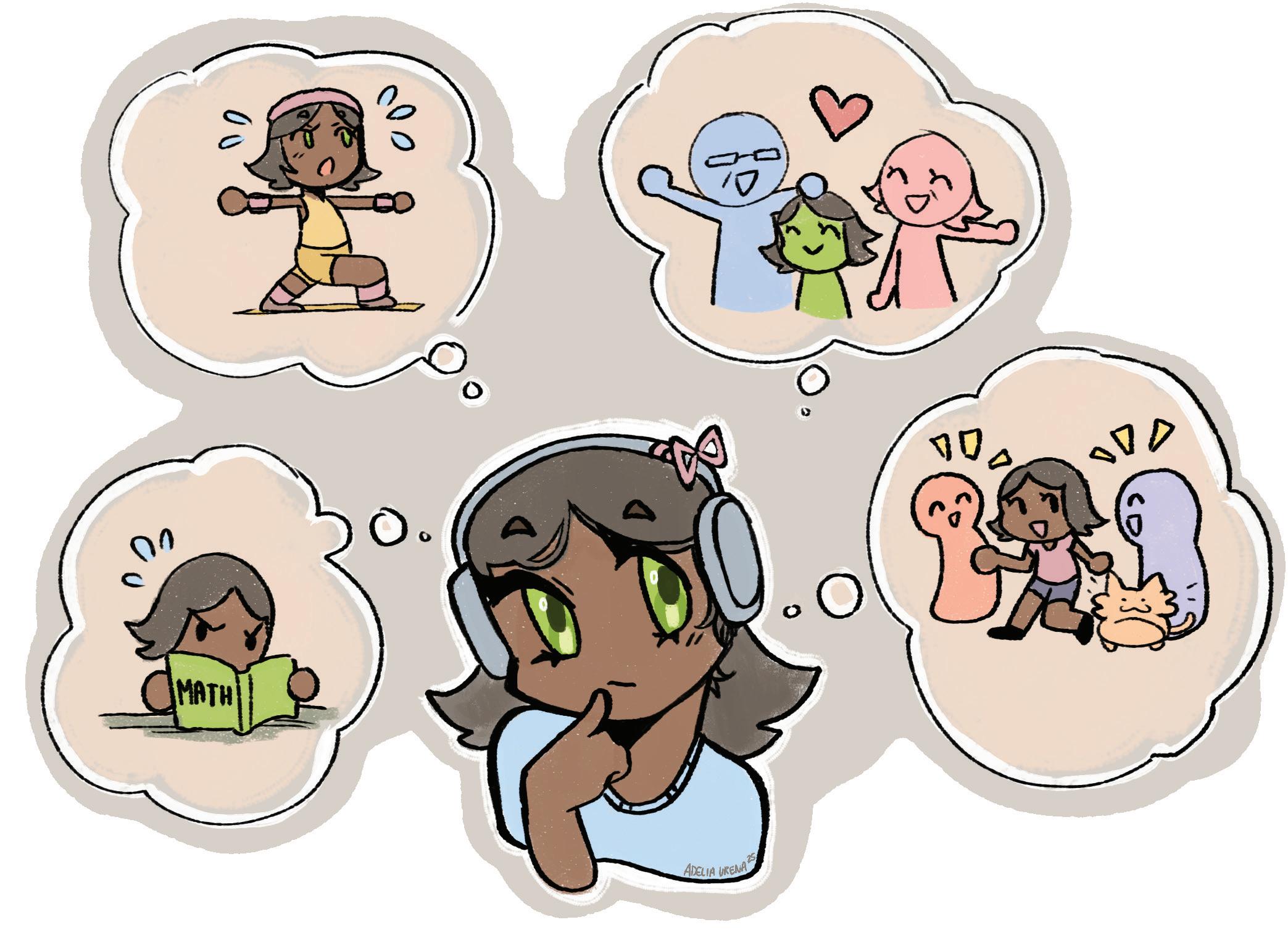
program that came together because I refused to give up on it. These moments weren’t loud, but they mattered. They were mine.
This year, I also learned to sit with the unfiltered version of myself – fears, contradictions, strengths, softness, all tangled together. I learned what drains me, restores me, what I refuse to tolerate, what I need to feel grounded.
ORANGE ST
And I realized that becoming the best version of myself isn’t a finish line.
So who am I at the end of 2025?
I am someone stepping out of the shadows of expectation – my own and others. I am shaping my path with intention, not imitation. I am no longer defined by comparison.
I’ve learned to let go, and find steadiness in vulnerability and direction in uncertainty.
I understand now that impact doesn’t need an audience, it needs authenticity. I have finally learned to breathe, rest, reset and take it step by step.
When I had tough conversations, handled conflict with empathy, sat with someone through a messy moment and realized that leadership isn’t about perfection, it’s about presence.
When I stopped copying someone else’s blueprint, I saw my own impact. The person who said they felt safe talking to me, the friend who thanked me for helping them, the
It’s a daily choice.
To choose myself.
To grow without apology,
To stop comparing my pace to someone else’s sprint
To trust that moving slowly is still moving.
Going into 2026, I’m carrying the version of myself shaped by discomfort, strengthened by perseverance and grounded in the belief that my journey is unfolding exactly as it should.
I’m not done becoming.
But for the first time, I’m not afraid of who that is.
ADELIA URENA / THE HIGHLANDER
GoGo to GoGo Bird
REVIEW OF THE FARMHOUSE COLLECTIVE’S NEWEST RESTAURANT, GOGO BIRD – A SOUTHERN-INSPIRED FRIED CHICKEN RESTAURANT.
KISHNEET
KAUR Advertising Representative
Fried chicken is a staple meal that is enjoyed worldwide. On Nov. 22, 2025, I was able to attend the grand opening of the Southern-inspired fried chicken place in the Farmhouse Collective, GoGo Bird.
This restaurant also offers a 10% student discount.
Walking in, I was cheerfully greeted by the staff, the environment reflecting the southern hospitality that comes with the chicken! There was definitely a minimalistic appeal to the restaurant, following a white and yellow color scheme. On a side note, the altar to the Dodgers’ with players’ faces on candles was quite funny, so if you are a Dodgers’ fan, you will no doubt get a laugh out of that.
Item #1: Tenders
Price: $13
Rating: 4/5
The first dish I tried was the chicken tenders. The presentation was good, and the dish came with two large tenders, a King’s Hawaiian bread roll and some pickles. The tenders were very airy and fluffy, with the breading being very light and having a crunch to it. The outside was slightly greasy, but the tender and juicy went perfectly with the
crispy breading making up for it.
The bread it came with was definitely an acquired taste as it is a confection. It was essentially a pastry with the bread roll having icing on it. As someone with a sweet tooth, I really enjoyed it, but if you don’t, this may not be for you.
Item #2: Chicken Wings
Price: $13
Rating: 3.5/5
The chicken wings were extremely similar to chicken tenders, but they were bone-in. The dish came with six wings, the Hawaiian bread roll and some more pickles. The medley of sauces provided are what truly made the chicken different and completed the dish. The wings were fried to a perfect golden brown and were very crispy.
Item
#3: Cheddar Biscuits
Price: $8
Rating: 4.5/5
The cheddar biscuits were hands down my favorite side dish. On the menu, they were described as “2 biscuits with condensed milk & miso powder.” These biscuits were incredible, the texture was the perfect amount of flakiness and the inside was soft. They had a very good consistency. The biscuits
were layered and you were able to taste the cheddar in each bite.
In addition to this, the bits of cheddar complimented the biscuit very well. I personally loved the condensed milk on top even if it did catch me off guard. Furthermore, if you do not like mixing sweet and savory, consider removing the condensed milk on top, as it was quite sweet. If I could hit the gold buzzer on any food item I tried, it would be this.
Item #4: Mister Miyagi Lemonade
Price: $10
Rating: 4.5/5
The Mister Miyagi Lemonade was described on the menu as a “yuzu green tea lemonade,” something the drink definitely lived up to. It is not a lemonade that you would typically think of having with fried chicken, making it a unique combo –truly something I have never had before.
The lemonade was not overly tart and had a good balance of yuzu and lemonade base, not overpowering each other. It had a smooth and consistent taste, and even though the yuzu flavors were not very strong, it was still refreshing.
Overall, I did enjoy the food at GoGo Bird. While it’s
not something I could eat on a regular basis, I could see myself going for some comfort food there on occasion. The standout element of GoGo Bird had to have been their sauces. The sauces that came with the chicken were unique, taking typical condiments and putting a little twist on them. The lineup consisted of: Hot Sauce, Fuego Ketchup, Tamarind Barbeque, Japanese Ranch, Honey Mustard and Chili Crisp Aioli.
Each sauce truly heightened the chicken, but my top three favorites were the Hot Sauce, Japanese Ranch and Chili Crisp Aioli. The Hot Sauce was an equivalent of a buffalo sauce, which I believe ties perfectly with fried chicken. If you are a ranch fanatic, then the Japanese Ranch is a must have for you. It was creamy, well-seasoned and I could definitely taste the herbiness of the dill and parsley. The Chili Crisp Aioli tasted like a mix between a chipotle sauce and a chili oil. It complemented the chicken very well and had a delicious, balanced flavor.
All in all GoGo Bird is well worth the time it takes to stand in line. So the next time you feel yourself craving some crispy, juicy goodness, make your way down to Farmhouse to check it out.

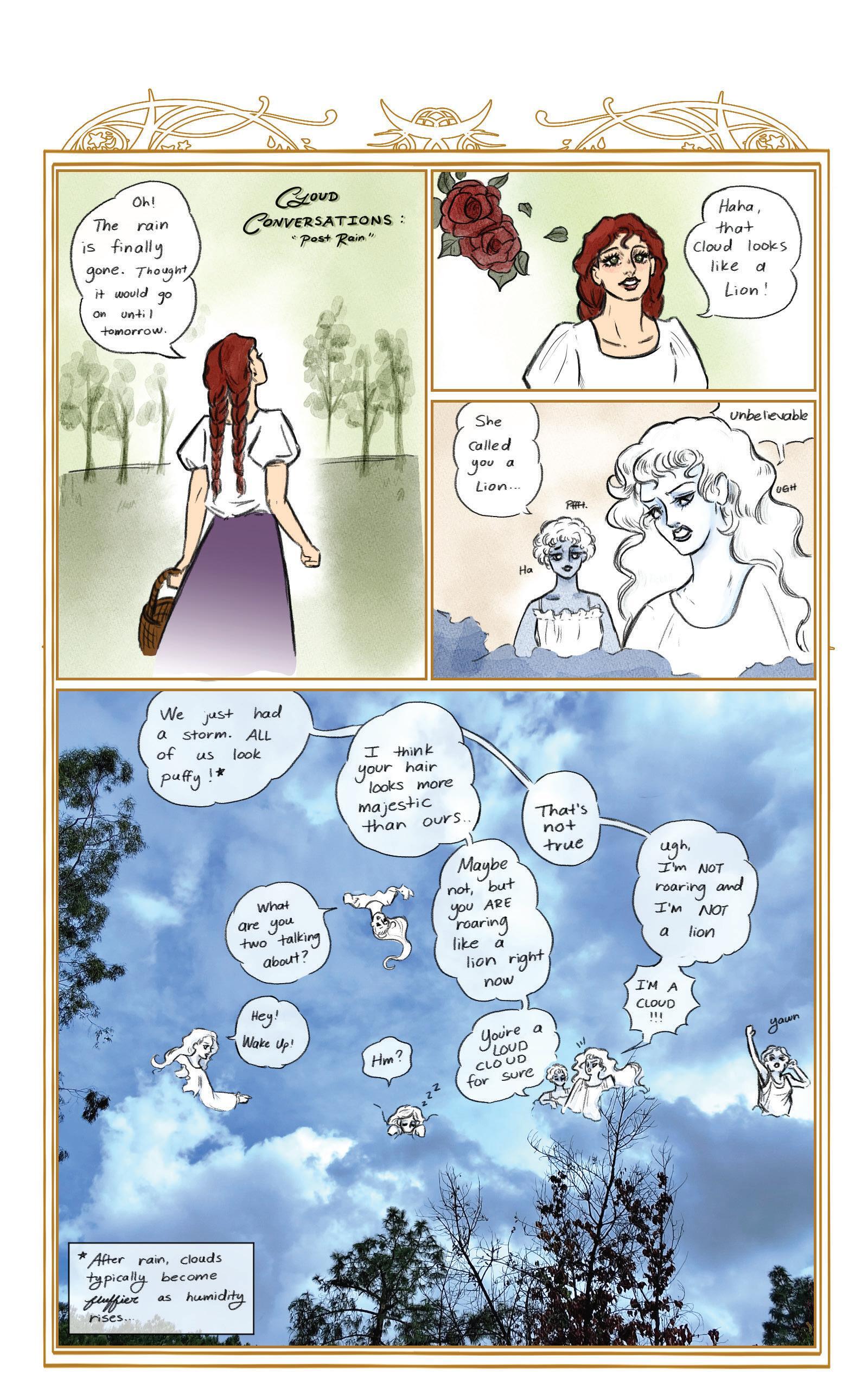
Cloud Conversations Post Rain / By:
Chloe Jane Cuevas
The Simple Life / By: “Hattrik”
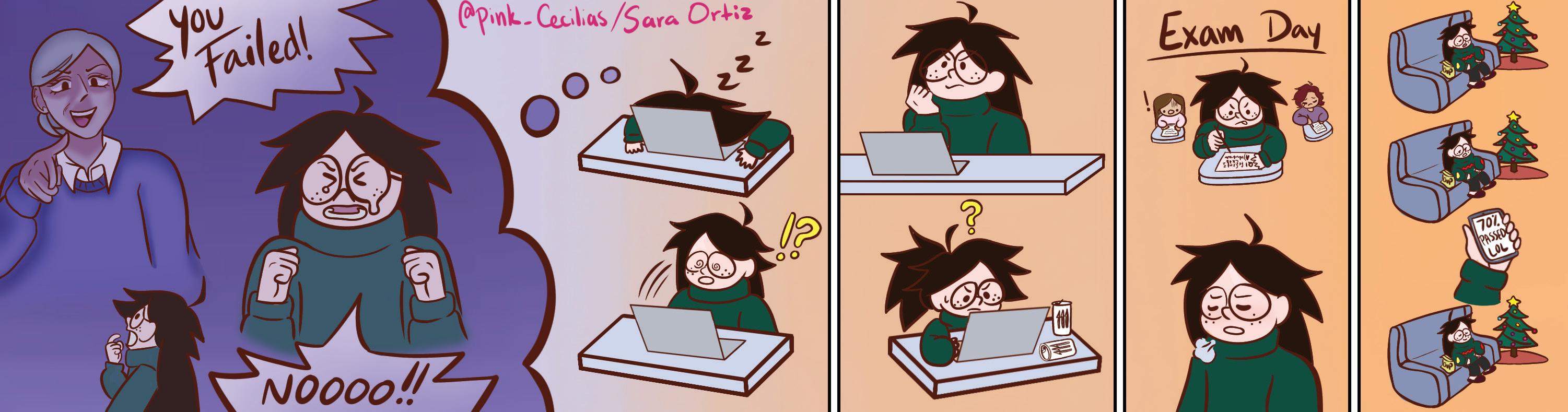
Dreaming of Finals / By: Sara Ortiz Delgadillo
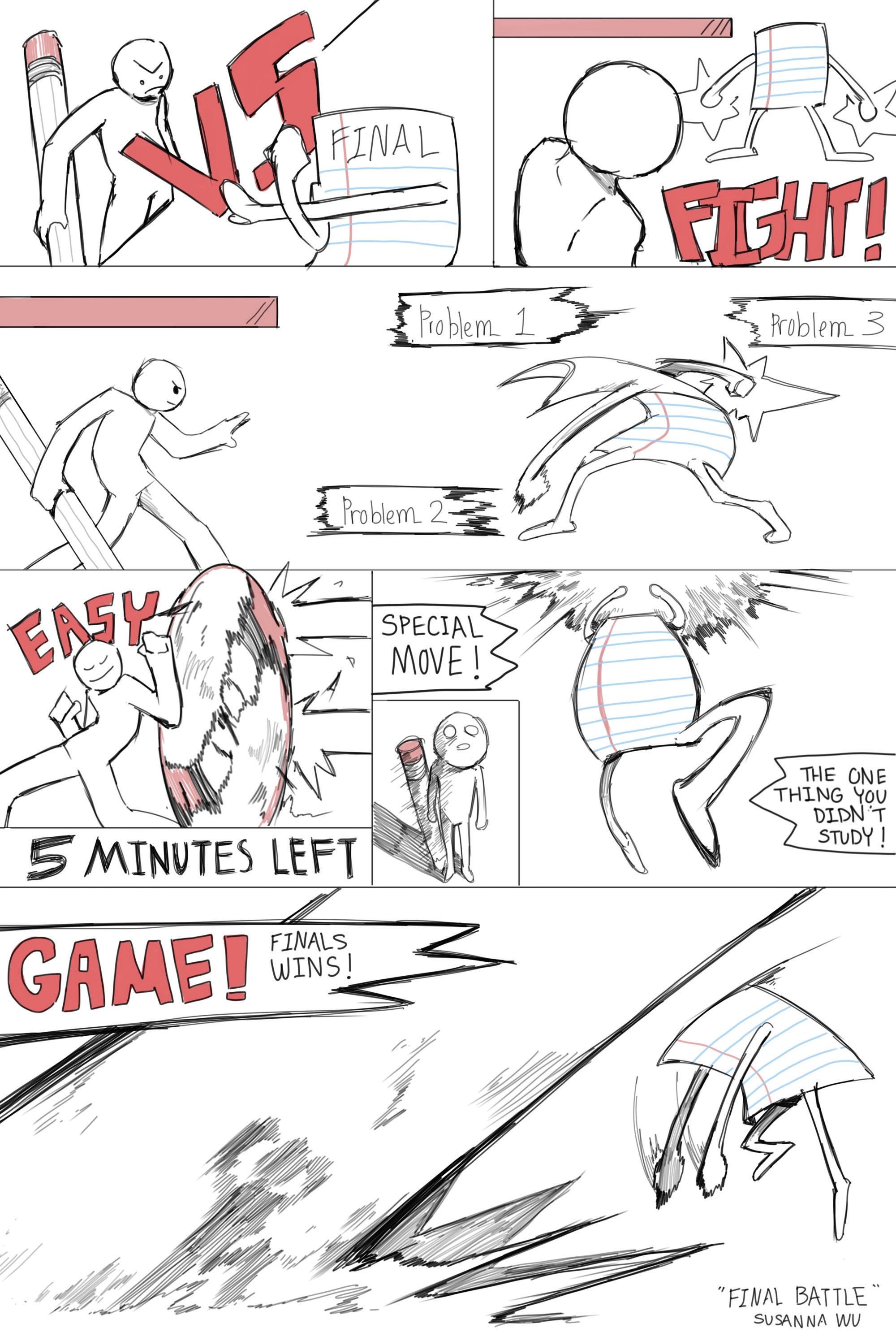
Final Battle / By: Susanna Wu
TUESDAY, DECEMBER 9,
Indigenous Truthtelling Symposium & Art Exhibit proudly unveils at UCR
“HOW ART GIVES US A SPIRIT OF RESISTANCE THAT OPPRESSIVE COLONIALISM CAN NEVER EXTINGUISH.”
IAN PALMA & ANTHONY ASCENIO CARVAJAL Radar Editor / Contributing Writer
On Dec. 2, 2025, an array of acclaimed artists, scholars and journalists congregated into room 1113 of the CHASS Interdisciplinary Studies at the University of California, Riverside (UCR) for the Indigenous Truthtelling Symposium & Art Exhibit. Displaying the works of artists like Mona Kadah and Weshoyot Alvitre while inviting intellectuals to speak, the event focused on the current plight and resilience of indigenous people.
More specifically, the Indigenous Truthtelling Symposium & Art Exhibit touched upon the ongoing genocide in Gaza, highlighting the grave injustices done on Palestinians while noting the bravery of journalists and artists willing to speak out about it. With many of the atrocities against those native to their land being both ongoing and unrectified, the event emphasized the need for solidarity among indigenous people around the world. Journalists, professors and those familiar with indigenous struggles against oppression took the floor, speaking on a variety of topics such as the memorialization of those who died trying to speak out about brutalities as well as strategies on how to fight back against modern day imperialism. Panelists of different indigenous backgrounds spoke about their experiences with imperialism, drawing from both firsthand accounts as well as their own family histories. The symposium additionally called out the failure of Western journalism when it comes to accurately and impartially covering the brutalities happening in occupied territories such as Gaza.
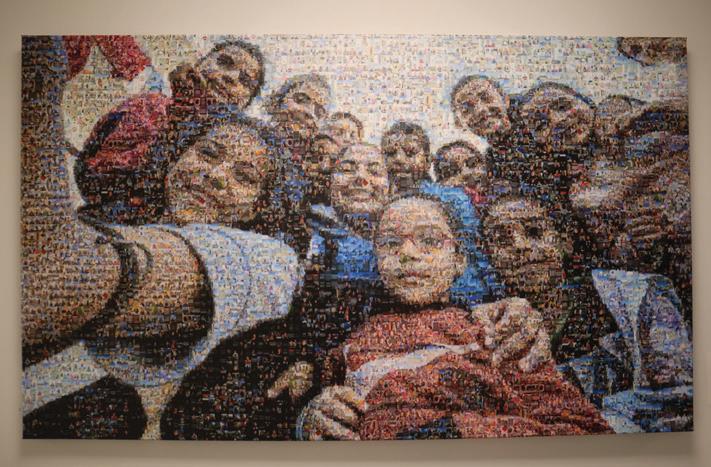
Among the panelists stood the mosaics of those who’ve dared to shed light on atrocities rampant in their homelands, one of them being Shireen Abu Akleh. Shireen was
a prominent Palestinian journalist who reported on the subpar conditions persistent during the occupation of Gaza, being renowned to many as “the voice of Palestine.” She was killed on May 11, 2022 while covering an Israeli raid on the Jenin refugee camp. Her mosaic is made from the photographs of more than 200 journalists who were also killed while reporting on the Gaza occupation.
Additionally, a mosaic dedicated to Bisan Owda was also unveiled at the exhibition. A journalist and filmmaker, Owda has documented the unbearable circumstances that have befallen those in Palestine. Reporting via social media, Bisan’s coverage garnered acclaim by many as an accurate and detailed portrayal of what’s going on in Gaza.
Alongside Al Jazeera, Owda has also made Peabody and Emmy award-winning documentaries focusing on the conditions of Palestinians in Gaza. Her mosaic is made up of more than 700 Instagram posts – a number that continues to grow as she continues to document the ongoing genocide in Gaza to this day.
Some of the artwork displayed during the exhibit comes from Mona Kadah. Mona, an awardwinning watercolor artist, painted true-to-life depictions of the ongoing conditions in Gaza. One of her works, “Gaza Prayer,” candidly depicts the continuation of Muslim prayer amidst city ruins while a minaret symbolically stands damaged but not completely broken.
on a single mother lugging along her children and bags. Poppies are a recurrent motif within her works, symbolizing resilience and hope introubled times.
Weshoyot Alvitre, a Tongvan and Scottish comic book writer and illustrator, also unveiled her artwork during the symposium. Her work primarily focuses on the past, present and future of California, especially in regards to its colonial past. One artwork panel that completely stood out centers around the Spanish influence of California, in which an eclectic mix of objects can be seen such as swords, mission bells and a statue of the Virgin Mary. The last panel of her work depicts a hopeful future for California marked by the presence of blooming flowers. Just like with Mona, the poppies are present throughout her works.
Despite all the oppression and destruction he’s had to sustain across his lifetime, he never wavered in his resistance to fight against oppression, and care for the Palestinian people.
Assistant Professor Charles A. Sepulveda of the Department of Ethnic Studies was in charge of translating Refaat Alareer’s piece into Taraaxam language. He saw many parallels in the Palestinian struggle that connected with the indigenous people’s struggle in the US. The purpose behind the translation was to effectively spread Refaat’s message, symbolizing unity among communities of indigenous peoples from around the world as they face settler colonialism and its atrocities together.
MAIN ST
A prominent figure that stood for uplifting the voice of the people of Gaza, was the late writer, poet and activist Professor Refaat Alareer. With a background in English literature, he utilized his platform to shed light of real accounts of experiences from Palestinian citizens in his 2014 collection of writings “Gaza Writes Back.” He effectively used social media as a tool to continue raising awareness of these events that transpired in Gaza with the help of many students he has worked with in the past.
It is hard not to associate the minaret with the hardy spirit of Palestinians during the ongoing genocide. Another one of her works displayed at the symposium poignantly depicts the displacement of Palestinians, particularly focusing
ORANGE ST
One of Refett Alareer’s last efforts was shown in his posthumously released poem, “If I Must Die,” in which he describes where in the event that he passes away, may those listening continue spreading his message far and wide to bring hope for all those lost in Gaza. He was a selfless man that put his heart and soul into every living moment for none other than his people.
As Poet Yahya Ashour mentions, the form of anger regarding the pain he feels, is expressed within his works of poetry. This is a sentiment felt within his culture and he sees within other cultures affected by the same levels of oppression as well. Historically, groups that expressed their anger were met with grotesque reactions, as the abnormal situations sustained by indigenous groups, psychologically, had to be met with abnormal reactions. By catering with preferred reactions and demonstrations of resistance to their colonizers, really is hurting them more while dealing with tragedy. Yahya Ashour and Dr. Refaat Alareer urge people to think about more than just the “U” in the USA. The same issues faced by other groups is a universal systemic failure that only with the help of those who can listen to their stories, can they be alleviated for the next generation. It is the responsibility of humans to continue helping and uplift others so that all may be free living in peace.

A fashion spotlight on turtlenecks
WITH THE WINTER SEASON IN FULL MOTION, THE IDEA OF WEARING A TURTLENECK SHOULD BE ON THE BACK OF EVERYONE’S MINDS.
IAN PALMA Radar Editor
From professors, revolutionaries, gameshow hosts and Dwayne “The Rock” Johnson, only one piece of clothing can tie all of these people together. Either loved for its ‘70s-esque versatile chic or absolutely despised for being worn by the most pretentious people one could ever come across, there’s no denying that the turtleneck has etched its name in the records of the most recognizable pieces of clothing. With the winter season being here and clear, there’s no better time to rock a turtleneck than right now.
The turtleneck has surprisingly had a long period of existence. It had its roots in medieval times, in which knights would wear it to protect their necks from the coarseness of chainmail. The clothing was later adopted by the working class of the 19th century, particularly factory workers and sailors, for its practicality. By the early-tomid 20th century, the turtleneck was embraced by socialites and celebrities as a fashion statement. Today, the turtleneck continues to thrive as a garment in the halls of iconic fashion pieces. Being a sweater with an elongated collar, the premise of the turtleneck is straightforward. The cloth is usually from wool or cotton, giving it the insulation the body needs. One could not simply doubt the practical advantages of wearing a turtleneck. The most blatantly obvious one being that it protects the neck from being cold. The way in which one styles their turtleneck, such as rolling up one’s sleeves or changing the length of the collar, can say a lot about the person wearing it. Just wearing it by itself, turtlenecks tend to
teeter between an adorably intelligent look and a sassy, no-nonsense vibe.
The fun begins when it comes to styling turtlenecks with various other clothing. Coupling it with a denim or leather jacket further gives off an aesthetic of a movie star from the New Hollywood era à la Steve McQueen or Rick Dalton. There’s always the more preppy route in which turtlenecks can be worn underneath a blazer, invoking a style reminiscent of Carl Sagan. One can even emulate the style of Marilyn Monroe or a member of The Beatles just by tucking a turtleneck into the pants. There are other outerwears that are just as compatible with turtlenecks such as cardigans and trench coats.
If one were to feel bold, putting on pieces of jewelry such as a gold or silver chain can make as much as break the outfit. Trying to emulate Dwayne Johnson in his iconic 1994 high school photo can, and will, yield mixed results for everyone. Alongside this, hats can also be worn in order to accentuate the sophistication that comes with wearing a turtleneck. One of the best chapeaus to wear a turtleneck would either be a beret or a biker cap.
Just like the leather jacket, the turtleneck has made a name for itself as a garment of freedom and resistance against conventional society. A multitude of movements have centered their wardrobes on turtlenecks, including the Beat, the Black Power and the Feminist movements. Additionally, the clothing has been a mainstay for professors and philosophers. The turtleneck
has become synonymous with intelligence and a desire for change.
Of course, turtlenecks have also been appropriated by some of the most insufferable beings ever. Arrogant “intellectuals” who think they’re better than others have been the primary source of why turtlenecks are despised today, so much so that the insult “turtleneck” is also used to describe them. The clothing has been a staple of performative males. Whether they’re actually wearing it to stay warm or if they just want to look vulnerable to women is up to anyone’s guess.
Additionally, turtlenecks have also been annexed by the tech people of Silicon Valley. Many of the people working there mainly adorn turtlenecks in order to imitate the style of famous tech moguls and entrepreneurs such as Steve Jobs and Elizabeth Holmes. When Steve Jobs told people to “think different” back in his Apple ads of the 1990s, he most likely meant it towards those trying to openly copy his flair. Finally, one cannot forget how some of those who wear turtlenecks are the same kinds of people who never shut up whenever the pumpkin spice latte returns to the Starbucks menu.
Despite the ups and downs as well as the different connotations that wearing the clothing can bring, one can’t deny that turtlenecks have its uses, and with the weather being colder and the brew getting stronger, now would be the best time to put one on.

COURTESY OF COTTONBRO STUDIOS VIA PEXELS
‘ Hamnet ’ is atmospherically enticing, emotionally excessive
CHLOÉ ZHAO REINTERPRETS ONE OF THE GREATEST LITERARY WORKS.
JIHOON KWON Staff Writer
*This Review Contains Spoilers*
William Shakespeare’s Sonnet 18 captures the immortalization of the beauty which he deeply admires through his poetry. “So long lives this, and this gives life to thee,” he writes. This implication that writing can breathe life into something one cherishes can extend further than just praising fleeting beauty.
This concept is the very core of Chloé Zhao’s “Hamnet,” centered around the love between Agnes Hathaway (Jesse Buckley) and William Shakespeare (Paul Mescal) and the death of their son Hamnet (Jacobi Jupe). The film, stemming from the theory that Hamlet and Hamnet were interchangeable names, reimagines the creation of one of the most celebrated literary works of mankind as Shakespeare’s mourning of his son’s passing.
This posits an interesting argument regarding the nature of art itself as it is a common belief, especially in the realm of cinema due to Andre Bazin’s influence, that the role of art is to imitate reality as closely as possible. Contrary to the Bazinian theory, the film seems to imply that art is an extension of personal life transmuted into an art form.
As shown in the film, “Hamlet” is an expression
of Shakespeare’s interior grief expressed outward. While this argument for the origin of the play isn’t without its root in academia, the film isn’t particularly interested in approaching it faithfully to try to convey the validity of this theory, nor is it even interested in doing justice for the play “Hamlet” itself.
Despite being a period piece, “Hamnet” is sensual, almost mythical in its atmosphere with characteristics of magical realism. From the very beginning, Agnes’s red clothes complimentary to the green forest which surrounds her emphasizes her spiritual connection with nature. Every frame carries a poetic intimacy and this is especially true in her encounters with William Shakespeare.
In its attempt to repaint the creation of the play, however, the film forgets its own medium of art as it leans more theatrical than cinematic. Rather than showing restraint, it heavily relies on emotional exaggeration of its characters, mainly from Agnes, who nearly risks coming off as insufferable rather than pitiful. Shakespeare also suffers from this portrayal that feels like a performance, especially in one particular scene where he recites the famous “to be or not to be” soliloquy following the death of his son in such a solemn manner that it nearly feels cringe-
worthy.
This is fatal for a film that is heavily centered around the theme of grief. While it succeeds in achieving emotional immediacy, the explicitness makes it feel manufactured, ultimately undermining the impact. The characters themselves are emotional, but it fails to provoke the same level of emotion from the audience.
Unlike Zhao’s previous film “Nomadland,” “Hamnet” is far from being slow paced. The narrative progresses rather quickly within a far more clearly defined structure, often jumping years ahead in time. Occasionally, this feels very abrupt and distracts the audience from the immersive experience. The film fails to linger when it needs to and subsequently, its atmospheric charm slowly diminishes.
VERDICT:
Chloe Zhao’s “Hamnet” strongest quality lies in its enchanting visuals and the atmosphere it creates but its attempt to manipulate the audience into a certain emotional beat ultimately feels draining.
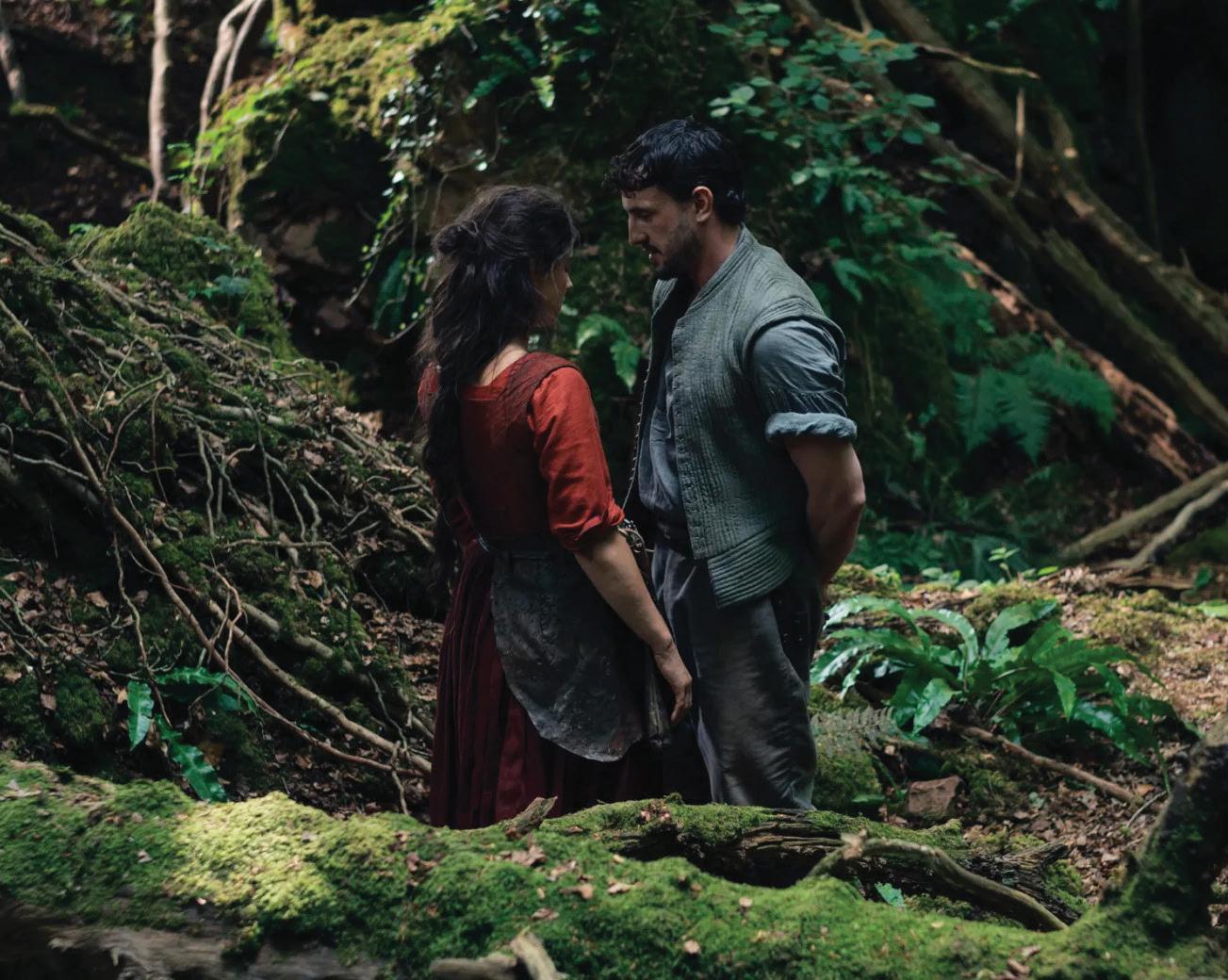
‘Wake Up Dead Man: A Knives Out Mystery’ reveals both the possibilities and limitations of the franchise
THE
LATEST “KNIVES OUT” FILM MOVES AWAY FROM “EAT THE RICH” SATIRE TO MAKE A THOUGHTFUL EXAMINATION OF THE MODERN CATHOLIC CHURCH.

*This review contains spoilers*
“Wake Up Dead Man: A Knives Out Mystery” opens with a priest punching another priest in the face. It’s a bold opening that underscores the Catholic church’s split identity. Priests like Jud (Josh O’Connor) believe in ensuring that the church should be open to everybody. But to an older, more conservative priest like Jefferson Wicks (Josh Brolin), the modern world is a direct attack on the Catholic church and the only way to protect it is to close its ranks.
Constantly using rhetoric that shames and belittles anyone who doesn’t fit with his worldview, Wicks drives away church attendees. This causes Jud and Wick to constantly clash. So when Wicks dies due to mysterious circumstances, Jud becomes the prime suspect.
But like the other “Knives Out” films, the mystery lies more within how the murder was committed than who committed it. The film
delves deeply into Jud, exploring his desire to move away from his violent youth when he almost killed a man, but also find a way to protect the church he’s dedicated his life to. It makes him the most nuanced protagonist in the “Knives Out” franchise to date.
Johnson has always written the “Knives Out” film not just to be murder mysteries, but to tackle social issues as well. In the first film, he used Ana de Armas’ Martha to explore immigration and class divides. A similar theme continued with Janelle Monae’s character Helen in “Glass Onion,” exploring corporate greed. Johnson is explicit and blunt about his politics in these films, which results in characters feeling less like fleshed and more like avatars of the various social issues Johnson wants to explore.
It’s not unusual for murder mystery characters to be one-note in order to concentrate on the mystery itself, but Johnson proves he’s capable of more with O’Connor’s Jud. The film goes out of its way

to explore Jud’s life beyond the murder mystery he’s drawn into, granting him far more interiority than Johnson’s earlier female protagonists. This disparity becomes more troubling when examining the women in “Wake Up Dead Man,” where a similar trend continues. These women are used and abused by the men around them as well as the institution of the Catholic church, but rarely are they explored beyond that.
Vera (Kerry Washington) was bullied by her father into raising a child she didn’t want. Simone (Cailee Spaeny) is coerced into donating thousands of dollars to the church by Wicks. They are the members of the flock taken advantage of by Wicks the most. The film’s biggest female victim, Wick’s mother, was constantly slut-shamed by everyone around her for giving birth out of wedlock.
Johnson explores how men use the church as a tool for the subjugation of women but also how some women, like Martha Delacroix (Glenn Close) aid these men in pushing other women down. It’s an interesting and potent exploration of power and abuse that is more nuanced than Johnson’s previous efforts.
Johnson is clearly interested in centering female characters, as seen by Close’s delightfully arch performance. But, he never explores them beyond what they go through, choosing to focus more on the amoral men surrounding them.
This somewhat weakens the
thematic conclusion in “Wake Up Dead Man,” in which the characters choose to feel empathy for Wick’s mother instead of disgust or shame. Empathy should also include a willingness to understand and know someone, but the women of “Wake Up Dead Man” get very little of that from the men surrounding them or from the film itself.
That isn’t to say there isn’t a lot to enjoy about “Wake Up Dead Man.” The film also steps up its visual language. Cinematographer Steve Yedlin uses key lighting and color decisions to incorporate these ideas into the film itself. None of the “Knives Out” films are ugly to look at but “Wake Up Dead Man” features some of the best cinematography by far, making it criminal how so few people will be able to see this on the big screen.
“Wake Up Dead Man” is the most thematically rich “Knives Out” film by far, even if it is a little less humorous than its predecessors. But in future “Knives Out” films, it would be nice to see a female character afforded the same interiority and nuance Jud is given here.
Verdict:
“Wake Up Dead Man” is a stellar entry into the “Knives Out” franchise that highlights a more thematically rich story while also raising questions about the way the female characters in these films are written.
RAMITA SETTY Staff Writer
PHOTOS COURTESY OF NETFLIX
Highlanders bounce back in 63-46 win over Cal Poly Sports
AFTER A TOUGH LOSS EARLIER IN THE WEEK, HANNAH WICKSTROM LEADS HIGHLANDERS TO A WIN.
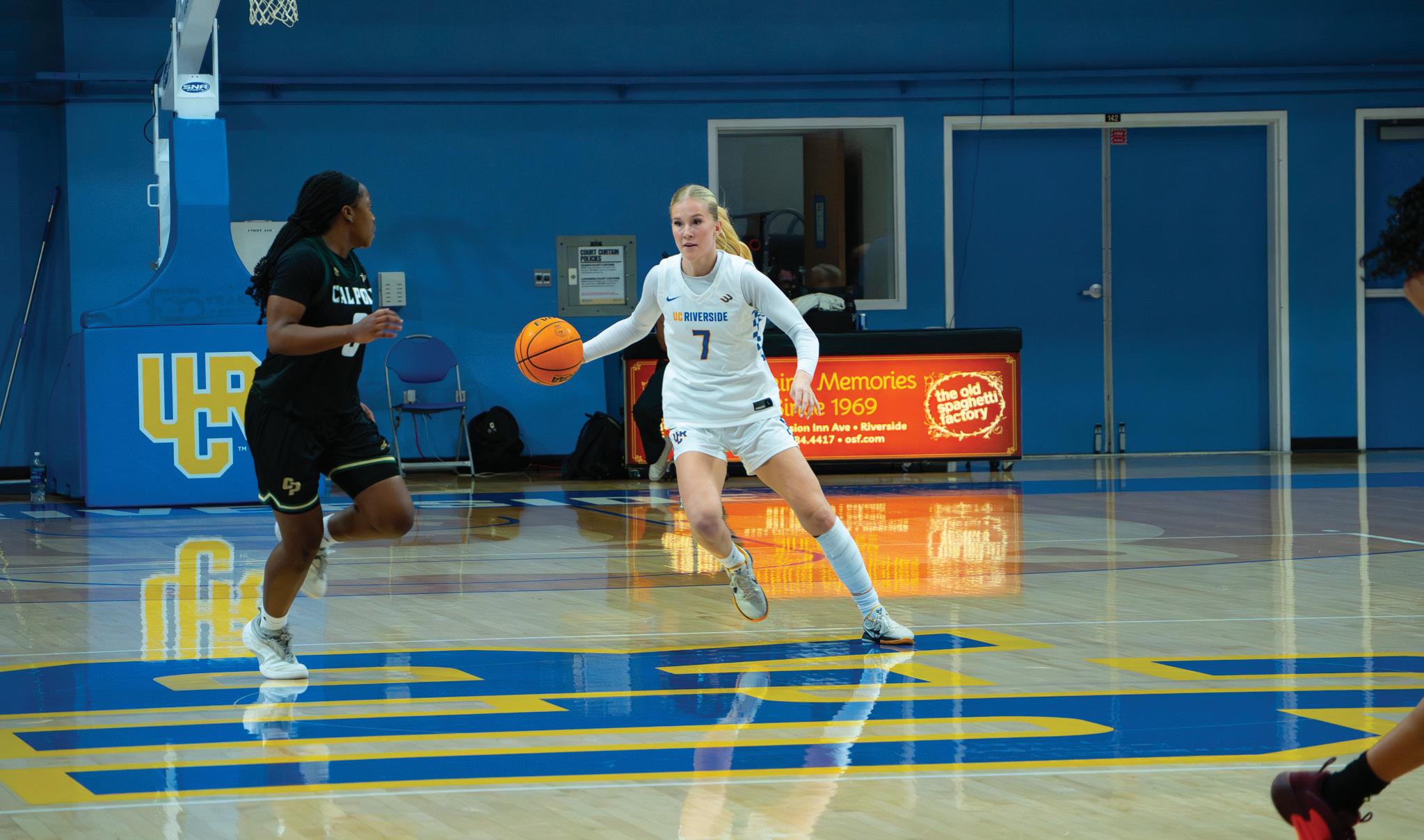
On Saturday Dec. 6, the University of California, Riverside (UCR) women’s basketball team hosted California Polytechnic State University, San Luis Obispo (Cal Poly). The Highlanders have had a rough start to their season, going 1-6 and facing tough opponents including the likes of California Baptist University and the University of Arizona. Cal Poly has also been struggling, starting 2-5, with the most notable school on their schedule being Stanford University.
UCR entered Saturday’s game coming off a tough loss to UC Irvine. In that game, they trailed 36-11 at halftime and weren’t able to make it a competitive game. Cal Poly also lost their first conference game of the year to Cal State Fullerton, 96-64. With both teams entering Saturday’s matchup 0-1 in Big West play, this game felt like a must-win, as a slow start in conference play can be difficult to overcome later in the season.
The Highlanders have also struggled with injuries, losing two key starters from their rotation: Aaliyah Stanton and Shelly Duchemin. Stanton was averaging 9.4 points per game before her lower-body injury, including two double-digit performances against Arizona and Saint Mary’s. Meanwhile, Duchemin contributed 5.5 points and 5.5 rebounds per game in that span. With both players sidelined, the Highlanders were forced to adjust and rely on others to step up.
Cal Poly started out the game with a 10-2 run in the first five minutes. Although UCR had some great plays they struggled to convert them into points. The first quarter ended with Cal Poly in the lead, 14-6.
After the quick break, the Highlanders found their rhythm in the second quarter. A layup from Bria Shine two minutes into the game gave UCR their first lead of the game. The Highlanders adjusted and looked to score inside more, going 5/7
inside the paint. Utilizing quick ball movement, the Highlanders were able to spread the wealth on offense. Defensively, UCR forced four turnovers and held Cal Poly to seven points. The Highlanders stayed in the lead going into halftime, 25-21.
In the third quarter, Maya Chocano opened with a 3-pointer off a Kaylani Polk assist, keeping UCR’s momentum alive. The Highlanders kept building on that energy, hitting several shots from beyond the arc. Hannah Wicktrom stood out with seven points and four rebounds, while UCR’s defense remained strong, forcing five turnovers and collecting seven rebounds.
The fourth quarter was by far the Highlanders’ most efficient offensively this season, scoring 23 points. The team’s depth really showed, with multiple players stepping up and making smart plays. Hannah Wickstrom and Seneca Hackley led the charge on offense. While the defense stayed intense, forcing turnovers, grabbing key rebounds, and
shutting down the Mustangs’ second-chance opportunities.
With 4:30 left, Kaylani Polk got the ball off an inbound, it bounced back to her, and she pulled up from beyond the arc for a 3-pointer, making it 59-33.
UCR’s balanced scoring, tough defense and teamwork let them cruise to a 63-46 win.
After the game, coach Brad Langston reflected on his team’s growth since Thursday’s loss.
“It was a good step in the right direction to have our team have a little flow at home,” he shared, describing his team as resilient and committed to the season’s journey.
Hannah Wickstrom led all scorers with 22 points and has been the leading scorer for the Highlanders this season. Langston praised the sophomore’s poise and mentioned, “She does a great job of taking quality shots for us. That’s huge when you have someone that young making big shots.”
ELENA VERSAGE Staff Writer
ELENA VERSAGE / THE HIGHLANDER
Andrew Henderson brings familiarity to new head coach Gus Argenal
ANDREW HENDERSON NAMED ATHLETE OF THE WEEK AFTER BREAKOUT GAME VERSUS GRAMBLING STATE.
On Nov. 24, the University of California, Riverside (UCR) defeated Grambling State University (GSU) at home to notch their fourth win of the season. The Highlanders pulled away late, aided by Andrew Henderson’s season-high 32 points on 11/16 shooting and 4/8 from 3-point range.
Henderson transferred to UCR from California State University, San Bernardino (CSUSB) with first-year head coach Gus Argenal. When asked about the transition from Division II to Division I basketball, Henderson commented, “The competition level is different at the end of the day, but playing with the same head coach makes it way more comfortable.”
The game against GSU was Henderson’s coming out party, as he delivered his best performance of the season. “It was a good win,” mentioned Henderson after the game. When the month turned over to December, the Highlanders had to shift their focus to the first conference game of the season versus UC Irvine (UCI).
Before battling the Anteaters, Henderson noted it would be a tough and

physical game. “They’re a really good team historically,” he stated. “We just have to pressure them [and] get them to not play their game and let us play our game.”
Unfortunately the Highlanders got off to a slow start, fell behind 27-9 and weren’t able to come back. The Anteaters won 73-60 and showed they’re the team to beat in the Big West this season. UCI was picked to win the conference in the coaches preseason poll.
This season Henderson is continuing to prove himself as a well rounded player as well as trying to better himself on and off the court. As a grad student, Andrew Henderson has to balance his life of sports and athletics. The workload is much more
strenuous, but he still manages to balance both by sticking to the basics and avoiding procrastination all together.
The Highlanders bounced back from their loss to UCI with a win on the road at Cal Poly on Dec. 6, 88-84. Henderson and Marqui Worthy Jr. combined for 52 points and powered the team to their first conference win of the season.
In the next couple of weeks, the Highlanders will face off against notable schools such as Brigham Young University (BYU). When asked about his feelings towards these big games, Henderson stated, “It makes us feel good, just to put our program on the map … we’re gonna play hard no matter who’s in front of us at the end of the day.”
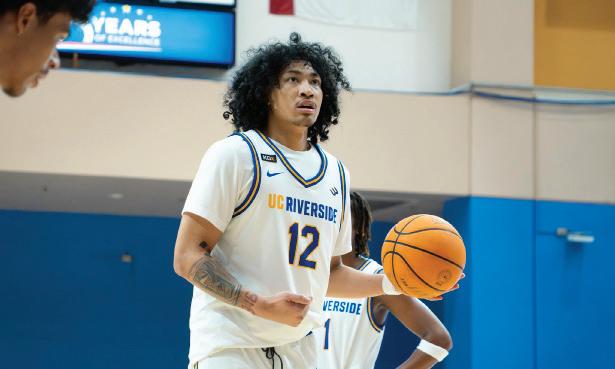
BLAKE BURKEY Contributing Writer
ANDREW HENDERSON ELENA VERSAGE / THE HIGHLANDER

Women’s Basketball - Dec. 4
UC Irvine vs. UC Riverside
77-40 L
UCR Team Leaders:
Points: Hannah Wickstrom (14)
Rebounds: Seneca Hackley (6)
Assists: Hannah Wickstrom (2)
Women’s Basketball - Dec. 6
Cal Poly vs. UC Riverside
63-46 W
UCR Team Leaders:
Points: Hannah Wickstrom (22)
Rebounds: Seneca Hackley, Hannah Wickstrom (7)
Assists: Kaylani Polk (5)
‘BIG WEST BOLD WEEK’

Men’s Basketball - Dec. 4
UC Riverside vs. UC Irvine
73-60 L
UCR Team Leaders:
Points: Marqui Worthy Jr. (26)
Rebounds: Marqui Worthy Jr. (8)
MAIN ST
MAIN ST

Assists: Tyler Jones, Dre Perteete, Osiris Grady (2)
Men’s Basketball - Dec. 6
UC Riverside vs. Cal Poly
88-84 W
UCR Team Leaders:
Points: Andrew Henderson (28)
Rebounds: Andrew Henderson (9)
Assists: Marqui Worthy Jr. (4)
ORANGE ST
ORANGE ST


Be jolly.
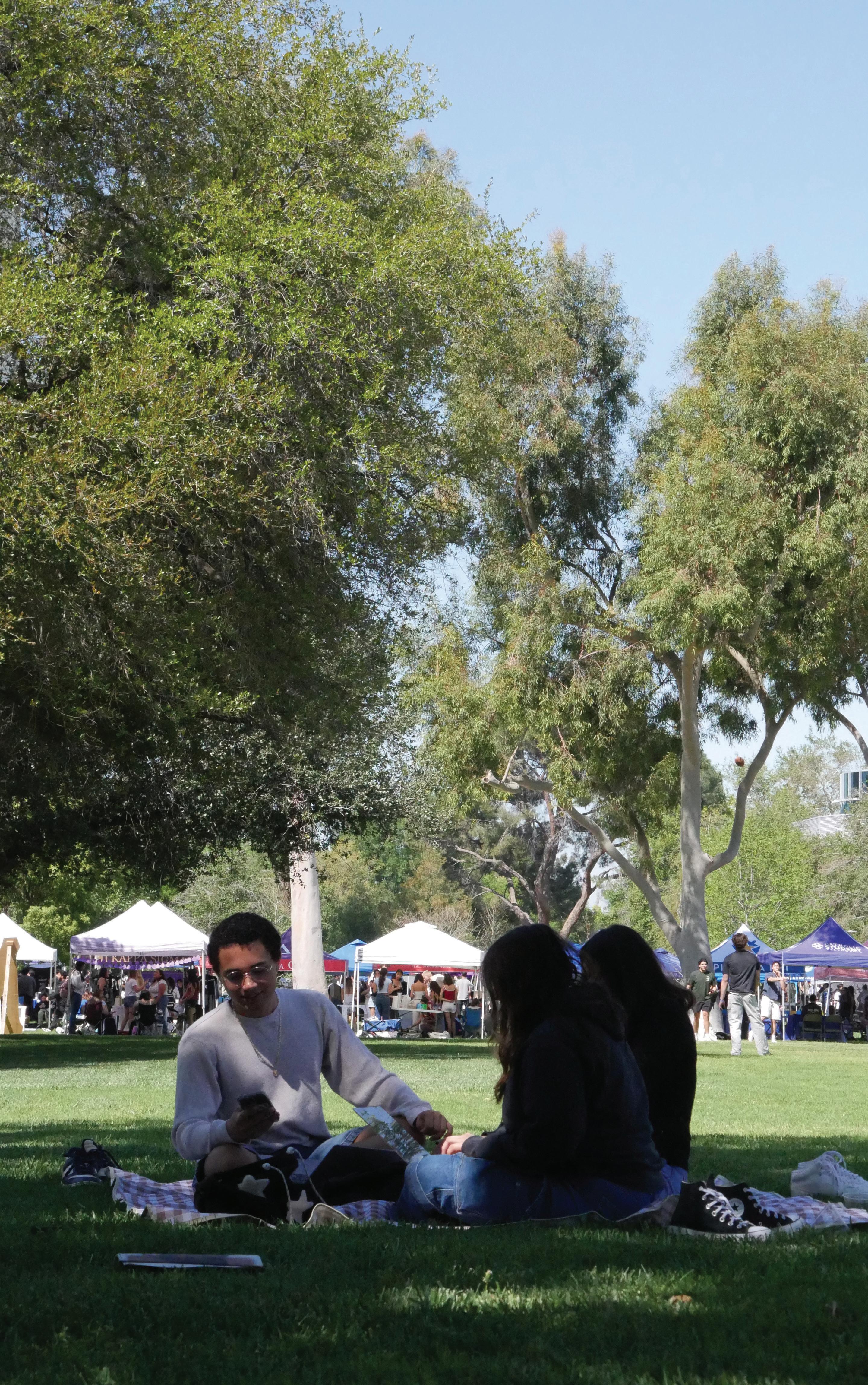
The Highlander Newspaper is a great way to keep up with current events and news around campus. If you are interested in the newspaper’s articles or pictures, we offer opportunities in writing, photography and design. Join us every Monday at 5:15 p.m. in HUB 101 to learn more.